WO2023120350A1 - 水系の微生物汚染抑制方法 - Google Patents
水系の微生物汚染抑制方法 Download PDFInfo
- Publication number
- WO2023120350A1 WO2023120350A1 PCT/JP2022/046153 JP2022046153W WO2023120350A1 WO 2023120350 A1 WO2023120350 A1 WO 2023120350A1 JP 2022046153 W JP2022046153 W JP 2022046153W WO 2023120350 A1 WO2023120350 A1 WO 2023120350A1
- Authority
- WO
- WIPO (PCT)
- Prior art keywords
- oxidizing agent
- chlorine
- based oxidizing
- stabilized
- bromine
- Prior art date
- Legal status (The legal status is an assumption and is not a legal conclusion. Google has not performed a legal analysis and makes no representation as to the accuracy of the status listed.)
- Ceased
Links
Images

Classifications
-
- C—CHEMISTRY; METALLURGY
- C02—TREATMENT OF WATER, WASTE WATER, SEWAGE, OR SLUDGE
- C02F—TREATMENT OF WATER, WASTE WATER, SEWAGE, OR SLUDGE
- C02F1/00—Treatment of water, waste water, or sewage
- C02F1/72—Treatment of water, waste water, or sewage by oxidation
- C02F1/76—Treatment of water, waste water, or sewage by oxidation with halogens or compounds of halogens
-
- B—PERFORMING OPERATIONS; TRANSPORTING
- B01—PHYSICAL OR CHEMICAL PROCESSES OR APPARATUS IN GENERAL
- B01D—SEPARATION
- B01D61/00—Processes of separation using semi-permeable membranes, e.g. dialysis, osmosis or ultrafiltration; Apparatus, accessories or auxiliary operations specially adapted therefor
- B01D61/02—Reverse osmosis; Hyperfiltration ; Nanofiltration
- B01D61/04—Feed pretreatment
-
- B—PERFORMING OPERATIONS; TRANSPORTING
- B01—PHYSICAL OR CHEMICAL PROCESSES OR APPARATUS IN GENERAL
- B01D—SEPARATION
- B01D61/00—Processes of separation using semi-permeable membranes, e.g. dialysis, osmosis or ultrafiltration; Apparatus, accessories or auxiliary operations specially adapted therefor
- B01D61/02—Reverse osmosis; Hyperfiltration ; Nanofiltration
- B01D61/06—Energy recovery
-
- B—PERFORMING OPERATIONS; TRANSPORTING
- B01—PHYSICAL OR CHEMICAL PROCESSES OR APPARATUS IN GENERAL
- B01D—SEPARATION
- B01D61/00—Processes of separation using semi-permeable membranes, e.g. dialysis, osmosis or ultrafiltration; Apparatus, accessories or auxiliary operations specially adapted therefor
- B01D61/02—Reverse osmosis; Hyperfiltration ; Nanofiltration
- B01D61/10—Accessories; Auxiliary operations
-
- B—PERFORMING OPERATIONS; TRANSPORTING
- B01—PHYSICAL OR CHEMICAL PROCESSES OR APPARATUS IN GENERAL
- B01D—SEPARATION
- B01D65/00—Accessories or auxiliary operations, in general, for separation processes or apparatus using semi-permeable membranes
- B01D65/08—Prevention of membrane fouling or of concentration polarisation
-
- C—CHEMISTRY; METALLURGY
- C02—TREATMENT OF WATER, WASTE WATER, SEWAGE, OR SLUDGE
- C02F—TREATMENT OF WATER, WASTE WATER, SEWAGE, OR SLUDGE
- C02F1/00—Treatment of water, waste water, or sewage
- C02F1/50—Treatment of water, waste water, or sewage by addition or application of a germicide or by oligodynamic treatment
-
- C—CHEMISTRY; METALLURGY
- C02—TREATMENT OF WATER, WASTE WATER, SEWAGE, OR SLUDGE
- C02F—TREATMENT OF WATER, WASTE WATER, SEWAGE, OR SLUDGE
- C02F1/00—Treatment of water, waste water, or sewage
- C02F1/68—Treatment of water, waste water, or sewage by addition of specified substances, e.g. trace elements, for ameliorating potable water
-
- B—PERFORMING OPERATIONS; TRANSPORTING
- B01—PHYSICAL OR CHEMICAL PROCESSES OR APPARATUS IN GENERAL
- B01D—SEPARATION
- B01D2311/00—Details relating to membrane separation process operations and control
- B01D2311/04—Specific process operations in the feed stream; Feed pretreatment
-
- B—PERFORMING OPERATIONS; TRANSPORTING
- B01—PHYSICAL OR CHEMICAL PROCESSES OR APPARATUS IN GENERAL
- B01D—SEPARATION
- B01D2311/00—Details relating to membrane separation process operations and control
- B01D2311/26—Further operations combined with membrane separation processes
- B01D2311/263—Chemical reaction
- B01D2311/2634—Oxidation
-
- C—CHEMISTRY; METALLURGY
- C02—TREATMENT OF WATER, WASTE WATER, SEWAGE, OR SLUDGE
- C02F—TREATMENT OF WATER, WASTE WATER, SEWAGE, OR SLUDGE
- C02F1/00—Treatment of water, waste water, or sewage
- C02F1/44—Treatment of water, waste water, or sewage by dialysis, osmosis or reverse osmosis
- C02F1/441—Treatment of water, waste water, or sewage by dialysis, osmosis or reverse osmosis by reverse osmosis
-
- C—CHEMISTRY; METALLURGY
- C02—TREATMENT OF WATER, WASTE WATER, SEWAGE, OR SLUDGE
- C02F—TREATMENT OF WATER, WASTE WATER, SEWAGE, OR SLUDGE
- C02F1/00—Treatment of water, waste water, or sewage
- C02F1/72—Treatment of water, waste water, or sewage by oxidation
- C02F1/76—Treatment of water, waste water, or sewage by oxidation with halogens or compounds of halogens
- C02F1/766—Treatment of water, waste water, or sewage by oxidation with halogens or compounds of halogens by means of halogens other than chlorine or of halogenated compounds containing halogen other than chlorine
-
- C—CHEMISTRY; METALLURGY
- C02—TREATMENT OF WATER, WASTE WATER, SEWAGE, OR SLUDGE
- C02F—TREATMENT OF WATER, WASTE WATER, SEWAGE, OR SLUDGE
- C02F2303/00—Specific treatment goals
- C02F2303/04—Disinfection
-
- C—CHEMISTRY; METALLURGY
- C02—TREATMENT OF WATER, WASTE WATER, SEWAGE, OR SLUDGE
- C02F—TREATMENT OF WATER, WASTE WATER, SEWAGE, OR SLUDGE
- C02F2303/00—Specific treatment goals
- C02F2303/18—Removal of treatment agents after treatment
- C02F2303/185—The treatment agent being halogen or a halogenated compound
-
- C—CHEMISTRY; METALLURGY
- C02—TREATMENT OF WATER, WASTE WATER, SEWAGE, OR SLUDGE
- C02F—TREATMENT OF WATER, WASTE WATER, SEWAGE, OR SLUDGE
- C02F2303/00—Specific treatment goals
- C02F2303/20—Prevention of biofouling
-
- Y—GENERAL TAGGING OF NEW TECHNOLOGICAL DEVELOPMENTS; GENERAL TAGGING OF CROSS-SECTIONAL TECHNOLOGIES SPANNING OVER SEVERAL SECTIONS OF THE IPC; TECHNICAL SUBJECTS COVERED BY FORMER USPC CROSS-REFERENCE ART COLLECTIONS [XRACs] AND DIGESTS
- Y02—TECHNOLOGIES OR APPLICATIONS FOR MITIGATION OR ADAPTATION AGAINST CLIMATE CHANGE
- Y02A—TECHNOLOGIES FOR ADAPTATION TO CLIMATE CHANGE
- Y02A20/00—Water conservation; Efficient water supply; Efficient water use
- Y02A20/124—Water desalination
- Y02A20/131—Reverse-osmosis
Definitions
- the present invention relates to a method for suppressing microbial contamination of water systems.
- INDUSTRIAL APPLICABILITY The method for suppressing microbial contamination of a water system of the present invention is useful, for example, as a method for suppressing slime in a reverse osmosis (RO) membrane water supply system and preventing fouling of the reverse osmosis membrane.
- RO reverse osmosis
- RO membrane devices that can efficiently remove electrolytes and medium- and low-molecular-weight organic components are widely used.
- pretreatment such as pressure filtration equipment, gravity filtration equipment, coagulation sedimentation treatment equipment, pressure flotation filtration equipment, immersion membrane equipment, membrane pretreatment equipment, etc. is usually performed before the RO membrane equipment.
- a device is provided. After being pretreated by these pretreatment devices, the water to be treated is supplied to the RO membrane device and subjected to RO membrane separation treatment.
- microorganisms contained in the water to be treated proliferate in the pipes of the equipment and on the membrane surface to form slime. can cause
- a disinfectant In order to prevent contamination by microorganisms, it is common to add a disinfectant to the water to be treated constantly or intermittently to sterilize the water to be treated or the inside of the device while treating.
- a disinfectant a chlorine-based oxidizing agent such as sodium hypochlorite is used because it is inexpensive and relatively easy to handle.
- RO membranes generally do not have chlorine resistance like polyamide polymer membranes, when a chlorine-based oxidizing agent is added, free chlorine derived from the chlorine-based oxidizing agent causes oxidative deterioration and removal. rate will decline.
- a chlorine-based oxidizing agent is added on the upstream side of the water treatment device, and a reducing agent such as sodium bisulfite (SBS) is added on the inlet side of the RO membrane device to reduce and remove the remaining free chlorine.
- a reducing agent such as sodium bisulfite (SBS)
- SBS sodium bisulfite
- stabilized chlorine-based oxidizing agents such as chloramine and sodium chlorosulfamate, and stabilized bromine are added to suppress microbial contamination of the piping from the point of addition of the reducing agent to the inlet of the RO membrane device and the surface of the RO membrane.
- a slime control agent that suppresses the growth of microorganisms such as an oxidizing agent or an isothiazolone compound.
- stabilized chlorine-based oxidants and stabilized bromine-based oxidants have been widely used because they can suppress microbial contamination.
- Stabilized chlorine-based oxidizing agents and stabilized bromine-based oxidizing agents were found to exhibit the inhibitory effect more easily in some water systems and less so in some systems.
- SBS Sodium bisulfite
- Non-Patent Document 1 Sodium bisulfite (SBS), a reducing agent that is generally added to reduce free chlorine in the preceding stage of the RO membrane, is usually added in an excessive amount to reliably prevent membrane deterioration. SBS is known to damage films by reacting with heavy metals (Non-Patent Document 1).
- a reducing agent such as sodium bisulfite is added and a stabilized chlorine-based oxidizing agent and/or a bromine-based oxidizing agent comprising a chlorine-based oxidizing agent and a sulfamic acid compound are used in an aqueous system containing a residual reducing agent.
- An object of the present invention is to provide a method for suppressing microbial contamination of water systems, which can stably and effectively obtain the effect of suppressing microbial contamination by adding a stabilized brominated oxidizing agent comprising a sulfamic acid compound.
- the present inventors have proposed a stabilized chlorine-based oxidizing agent and/or stabilized bromine having a low sulfamic acid ratio (the ratio of the sulfamic acid compound to the effective chlorine amount of the chlorine-based oxidizing agent and/or the effective chlorine equivalent amount of the bromine-based oxidizing agent).
- a stabilized chlorine-based oxidizing agent and/or stabilized bromine having a low sulfamic acid ratio (the ratio of the sulfamic acid compound to the effective chlorine amount of the chlorine-based oxidizing agent and/or the effective chlorine equivalent amount of the bromine-based oxidizing agent).
- the gist of the present invention is as follows.
- a method for suppressing microbial contamination in a water system containing a reducing agent comprising a chlorine-based oxidizing agent and a sulfamic acid compound, wherein the ratio of the sulfamic acid compound to 1 mol of available chlorine of the chlorine-based oxidizing agent is 1 to 1.5 mol of a stabilized chlorine-based oxidizing agent and/or composed of a bromine-based oxidizing agent and a sulfamic acid compound, wherein the ratio of the sulfamic acid compound to 1 mol of the effective chlorine equivalent of the bromine-based oxidizing agent is 1
- the addition concentration of the stabilized chlorine-based oxidizing agent and/or the stabilized bromine-based oxidizing agent to the concentration of the reducing agent in the aqueous system is 2.5 times in molar ratio.
- a reducing agent such as sodium bisulfite is added to an aqueous system containing a residual reducing agent, and the addition of a stabilized chlorine-based oxidant and/or a stabilized bromine-based oxidant stably and effectively causes microbial contamination. can be suppressed.
- a reducing agent such as sodium bisulfite and heavy metals
- FIG. 1 is a graph showing the results of Example 1 and Comparative Example 1.
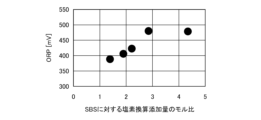
- FIG. 2 is a graph showing the results of Test Example 2.
- a method for suppressing microbial contamination of an aqueous system is a method for suppressing microbial contamination in an aqueous system containing a reducing agent, which comprises a chlorine-based oxidizing agent and a sulfamic acid compound, and the effective chlorine of the chlorine-based oxidizing agent is A stabilized chlorine-based oxidizing agent and/or a bromine-based oxidizing agent and sulfaamine, in which the ratio of the sulfamic acid compound to 1 mol (hereinafter sometimes referred to as "sulfamic acid ratio”) is 1 to 1.5 mol.
- a stabilized bromine-based oxidizing agent having a ratio of 1 to 1.5 mol of the sulfamic acid compound per 1 mol of effective chlorine equivalent of the bromine-based oxidizing agent with respect to the concentration of the reducing agent in the aqueous system.
- the stabilized chlorine-based oxidizing agent and/or the stabilized bromine-based oxidizing agent are added to the aqueous system in such a manner that the added concentration is 2.5 times or more in terms of molar ratio.
- a reducing agent such as sodium bisulfite (SBS) in water also reduces the stabilized chlorine-based oxidant and the stabilized bromine-based oxidant added later.
- SBS sodium bisulfite
- the stabilized chlorine-based oxidant consisting of the chlorine-based oxidant and the sulfamic acid compound and/or the stabilized bromine-based oxidant consisting of the bromine-based oxidant and the sulfamic acid compound release sulfamic acid.
- the higher the residual reducing agent concentration the higher the ratio of sulfamic acid to available chlorine in the system. As the ratio of sulfamic acid increases, the reactivity as a component decreases due to the equilibrium relationship.
- the effect of suppressing microbial contamination can be maintained even after reduction with a reducing agent such as sodium bisulfite. .
- a reducing agent such as sodium bisulfite.
- the water system to be treated in the present invention is not particularly limited as long as it contains a reducing agent.
- the present invention uses a reducing agent such as sodium bisulfite (SBS) in order to prevent oxidation deterioration of the RO membrane after a chlorine-based oxidant is added in the previous stage in a water treatment apparatus including an RO membrane apparatus.
- SBS sodium bisulfite
- sodium bisulfite As a reducing agent contained in the water system, sodium bisulfite (SBS) is typical, but sodium thiosulfate and the like may also be used.
- the reducing agent concentration in the aqueous system containing this residual reducing agent is preferably 0.01 mg/L-Cl 2 or more in order to effectively obtain the effects of the present invention, and this concentration is more preferably 0.1 mg. /L-Cl 2 or more.
- the concentration of the reducing agent is excessively high, the stabilized chlorine-based oxidizing agent and/or the stabilized bromine-based oxidizing agent that are added later are reduced accordingly, resulting in a higher required addition amount and an increase in treatment cost. Therefore, the reducing agent concentration in the water system to be treated is preferably 5 mg/L-Cl 2 or less, particularly 2 mg/L-Cl 2 or less.
- the concentration of the reducing agent is expressed in terms of free chlorine, that is, the concentration of free chlorine (mg/L-Cl 2 ) that can be reduced by the reducing agent at that concentration.
- the stabilized chlorine-based oxidant used in the present invention comprises a chlorine-based oxidant and a sulfamic acid compound.
- the stabilized brominated oxidant used in the present invention comprises a brominated oxidant and a sulfamic acid compound.
- chlorine-based oxidizing agent used in the stabilized chlorine-based oxidizing agent, and examples include chlorine gas, chlorine dioxide, hypochlorous acid or its salts, chlorous acid or its salts, chloric acid or its salts, and perchloric acid. or a salt thereof, chlorinated isocyanuric acid or a salt thereof.
- salt forms include alkali metal hypochlorites such as sodium hypochlorite and potassium hypochlorite; hypochlorites such as calcium hypochlorite and barium hypochlorite; acid alkaline earth metal salts; alkali metal chlorite salts such as sodium chlorite, potassium chlorite; alkaline earth metal chlorite salts such as barium chlorite; other chlorite salts such as nickel chlorite. acid metal salts; ammonium chlorate; alkali metal chlorates such as sodium chlorate and potassium chlorate; alkaline earth metal chlorates such as calcium chlorate and barium chlorate.
- hypochlorite can be preferably used because it is easy to handle.
- the brominated oxidizing agent used in the present invention is not particularly limited, and examples include liquid bromine, bromine chloride, bromic acid or salts thereof, hypobromous acid or salts thereof. These brominated oxidizing agents may be used alone or in combination of two or more.
- sulfamic acid compounds include compounds represented by the following general formula [1] or salts thereof.
- R 1 and R 2 are each independently a hydrogen atom or a hydrocarbon group having 1 to 8 carbon atoms.
- sulfamic acid compounds include sulfamic acid in which both R 1 and R 2 are hydrogen atoms, as well as N-methylsulfamic acid, N,N-dimethylsulfamic acid, and N-phenylsulfamic acid. be able to.
- the salts of the compounds include, for example, alkali metal salts such as sodium salts and potassium salts; alkaline earth metal salts such as calcium salts, strontium salts and barium salts; manganese salts and copper salts; salts, zinc salts, iron salts, cobalt salts, nickel salts and other metal salts; ammonium salts; and guanidine salts, specifically sodium sulfamate, potassium sulfamate, calcium sulfamate, Strontium sulfamate, barium sulfamate, iron sulfamate, zinc sulfamate and the like can be mentioned. Sulfamic acid and these sulfamates can be used singly or in combination of two or more.
- a chlorine-based oxidizing agent such as hypochlorite and/or a bromine-based oxidizing agent
- a sulfamic acid compound such as sulfamate
- these compounds combine to form chlorosulfamate and stabilize it. It is possible to maintain a stable concentration of free chlorine and/or free bromine in water without causing a difference in dissociation due to pH as with chloramine and resulting fluctuations in the concentration of free chlorine and/or free bromine.
- the ratio of the chlorine-based oxidizing agent and/or the bromine-based oxidizing agent to the sulfamic acid compound is sulfamine per 1 mol of the effective chlorine amount in terms of available chlorine of the chlorine-based oxidizing agent and/or the bromine-based oxidizing agent.
- the acid compound is preferably 1.0 to 5.0 mol, more preferably 1.0 to 2.5 mol.
- the stabilized sulfamic acid ratio is 1 to 1.5 mol, preferably 1 to 1.4 mol.
- a chlorine-based oxidant and/or a stabilized bromine-based oxidant is used.
- the sulfamic acid ratio exceeds 1.5 mol, the microbial contamination inhibiting effect of the present invention cannot be sufficiently obtained. If the sulfamic acid ratio is less than 1 mol, decomposition of sulfamic acid will occur during production.
- the chlorine-based oxidizing agent and/or the bromine-based oxidizing agent and the sulfamic acid compound may be added as a mixed aqueous solution or may be added separately.
- the stabilized chlorine-based oxidizing agent and/or the stabilized bromine-based oxidizing agent according to the present invention can be used in addition to the chlorine-based oxidizing agent and/or the bromine-based oxidizing agent and the sulfamic acid compound within a range that does not impair the effects thereof. It may contain ingredients. Other components include alkaline agents, azoles, anionic polymers, phosphonic acids and the like.
- the alkaline agent is used to stabilize the chlorine-based oxidizing agent and/or the bromine-based oxidizing agent in the stabilized chlorine-based oxidizing agent and/or the stabilized bromine-based oxidizing agent.
- Sodium hydroxide, potassium hydroxide and the like are usually used as the alkaline agent.
- the stabilized chlorine-based oxidizing agent and/or the stabilized bromine-based oxidizing agent are added.
- the addition concentration of the stabilized chlorine-based oxidizing agent and/or the stabilized bromine-based oxidizing agent is 2.5 times or more in molar ratio.
- the amount of the stabilized chlorine-based oxidant and/or the stabilized bromine-based oxidant to be added is at least the above lower limit, a good effect of suppressing microbial contamination can be obtained.
- the larger the amount of the stabilized chlorine-based oxidizing agent and/or the stabilized bromine-based oxidizing agent to be added the better in terms of the effect of suppressing microbial contamination, but on the other hand, the chemical cost increases. Therefore, the amount of the stabilized chlorine-based oxidizing agent and/or the stabilized bromine-based oxidizing agent to be added should be 2.5 to 10 times, particularly 2.5 to 5 times, the molar ratio of the concentration of the reducing agent in the aqueous system. It is preferable to add to
- Example 1 Comparative Example 1
- An experiment was conducted to examine the difference in the effect of suppressing microbial contamination depending on the sulfamic acid ratio (H 3 NSO 3 /Cl 2 molar ratio) of the stabilized chlorine-based oxidizing agent.
- the effect of suppressing microbial contamination was evaluated using the membrane fouling simulator described in Non-Patent Document 1, based on the degree of increase in differential pressure (pressure loss in the flow path).
- a substrate was added to raw water (water to be treated) to promote the biofouling effect of microorganisms.
- the raw water contains citric acid: 1.2 mg/L as C, ammonium chloride: 0.6 mg/L as N, and sodium dihydrogen phosphate: 0.2 mg/L as P as substrates.
- the added water was used as the water to be treated.
- the pH of raw water was 7-8.5.
- Test Example 1 Chemical 1 mixed with various concentrations of sodium bisulfite (SBS) in sample water was exposed for 2 hours to observe changes in ATP (adenosine triphosphate) in water. ATP is also called an organism's energy currency, and is used as an indicator of the amount of microorganisms.
- SBS sodium bisulfite
- the chemical treatment conditions are as shown in Table 2, and all were adjusted so that the residual chlorine concentration after reaction with sodium bisulfite was 1 mg/L-Cl 2 (Condition 1 was SBS-free).
- the sample water used was MF and UF treated water from a wastewater recovery system plant in the Kurita Development Center of Kurita Water Industries Ltd.
- ATP ATP measurement kit EnSure manufactured by Hygiena, and Aquasnap Free and Aquasnap Total were used.
- ATP a number obtained by subtracting the Free value from the Total value was used in order to capture the activity of microorganisms. Table 3 shows the results.
- the ATP concentration was effectively lowered, while in conditions 3 and 4, the extent of ATP decrease was smaller.
- the effect of suppressing microbial contamination is low with respect to the amount of SBS in condition 3, the effect of suppressing microbial contamination is sufficient under condition 2 even if SBS is added. From this, it can be seen that the addition concentration of the stabilized chlorine-based oxidizing agent to the reducing agent is preferably 2.5 times or more in molar ratio for the effect of suppressing microbial contamination.
Landscapes
- Chemical & Material Sciences (AREA)
- Water Supply & Treatment (AREA)
- Engineering & Computer Science (AREA)
- Organic Chemistry (AREA)
- Environmental & Geological Engineering (AREA)
- Hydrology & Water Resources (AREA)
- Life Sciences & Earth Sciences (AREA)
- Chemical Kinetics & Catalysis (AREA)
- Nanotechnology (AREA)
- Health & Medical Sciences (AREA)
- Medicinal Chemistry (AREA)
- Treatment Of Water By Oxidation Or Reduction (AREA)
- Agricultural Chemicals And Associated Chemicals (AREA)
Priority Applications (5)
| Application Number | Priority Date | Filing Date | Title |
|---|---|---|---|
| JP2023569360A JP7495017B2 (ja) | 2021-12-20 | 2022-12-15 | 水系の微生物汚染抑制方法 |
| US18/721,662 US20250051203A1 (en) | 2021-12-20 | 2022-12-15 | Microorganism contamination prevention method for water system |
| KR1020247019248A KR20240125568A (ko) | 2021-12-20 | 2022-12-15 | 수계의 미생물 오염 억제 방법 |
| CN202280080148.3A CN118339113A (zh) | 2021-12-20 | 2022-12-15 | 水系统的微生物污染抑制方法 |
| EP22911058.0A EP4455097A4 (en) | 2021-12-20 | 2022-12-15 | METHOD FOR PREVENTING CONTAMINATION BY MICROORGANISMS IN A WATER SUPPLY SYSTEM |
Applications Claiming Priority (2)
| Application Number | Priority Date | Filing Date | Title |
|---|---|---|---|
| JP2021205981 | 2021-12-20 | ||
| JP2021-205981 | 2021-12-20 |
Publications (1)
| Publication Number | Publication Date |
|---|---|
| WO2023120350A1 true WO2023120350A1 (ja) | 2023-06-29 |
Family
ID=86902499
Family Applications (1)
| Application Number | Title | Priority Date | Filing Date |
|---|---|---|---|
| PCT/JP2022/046153 Ceased WO2023120350A1 (ja) | 2021-12-20 | 2022-12-15 | 水系の微生物汚染抑制方法 |
Country Status (7)
| Country | Link |
|---|---|
| US (1) | US20250051203A1 (https=) |
| EP (1) | EP4455097A4 (https=) |
| JP (1) | JP7495017B2 (https=) |
| KR (1) | KR20240125568A (https=) |
| CN (1) | CN118339113A (https=) |
| TW (1) | TW202333806A (https=) |
| WO (1) | WO2023120350A1 (https=) |
Citations (5)
| Publication number | Priority date | Publication date | Assignee | Title |
|---|---|---|---|---|
| JPH01104310A (ja) | 1987-10-14 | 1989-04-21 | Kurita Water Ind Ltd | 膜分離方法 |
| JPH01135506A (ja) | 1987-11-20 | 1989-05-29 | Toray Ind Inc | 精製水の製造方法 |
| JP2006263510A (ja) | 2005-03-22 | 2006-10-05 | Kurita Water Ind Ltd | 膜分離用スライム防止剤及び膜分離方法 |
| JP2014176799A (ja) * | 2013-03-14 | 2014-09-25 | Kurita Water Ind Ltd | 逆浸透膜分離方法 |
| JP2019122943A (ja) * | 2018-01-19 | 2019-07-25 | オルガノ株式会社 | 水処理方法および水処理装置 |
Family Cites Families (9)
| Publication number | Priority date | Publication date | Assignee | Title |
|---|---|---|---|---|
| JP5099045B2 (ja) * | 2009-03-02 | 2012-12-12 | 栗田工業株式会社 | 逆浸透膜分離方法 |
| JP6325658B2 (ja) * | 2014-05-08 | 2018-05-16 | オルガノ株式会社 | ろ過処理方法 |
| WO2016158633A1 (ja) * | 2015-03-31 | 2016-10-06 | 栗田工業株式会社 | 逆浸透膜処理システムの運転方法及び逆浸透膜処理システム |
| JP7013141B2 (ja) | 2017-04-27 | 2022-02-15 | オルガノ株式会社 | 逆浸透膜を用いる水処理方法 |
| KR102101320B1 (ko) * | 2018-11-01 | 2020-04-16 | (주)프라임 텍 인터내쇼날 | 현장에서 직접 제조한 살균제로 역삼투막을 살균처리하는 방법 및 장치 |
| JP7180310B2 (ja) * | 2018-11-20 | 2022-11-30 | 三浦工業株式会社 | 水処理システム |
| JP7250612B2 (ja) * | 2018-12-27 | 2023-04-03 | オルガノ株式会社 | 水系の殺菌方法、および水系のニトロソアミン化合物の除去方法 |
| JP2020131134A (ja) | 2019-02-21 | 2020-08-31 | オルガノ株式会社 | 分離膜用スライム抑制剤、分離膜用スライム抑制剤の製造方法、および分離膜のスライム抑制方法 |
| CN118339112A (zh) * | 2021-12-20 | 2024-07-12 | 栗田工业株式会社 | 水系统的微生物污染抑制方法 |
-
2022
- 2022-12-15 JP JP2023569360A patent/JP7495017B2/ja active Active
- 2022-12-15 KR KR1020247019248A patent/KR20240125568A/ko active Pending
- 2022-12-15 WO PCT/JP2022/046153 patent/WO2023120350A1/ja not_active Ceased
- 2022-12-15 CN CN202280080148.3A patent/CN118339113A/zh active Pending
- 2022-12-15 EP EP22911058.0A patent/EP4455097A4/en active Pending
- 2022-12-15 US US18/721,662 patent/US20250051203A1/en active Pending
- 2022-12-20 TW TW111148831A patent/TW202333806A/zh unknown
Patent Citations (5)
| Publication number | Priority date | Publication date | Assignee | Title |
|---|---|---|---|---|
| JPH01104310A (ja) | 1987-10-14 | 1989-04-21 | Kurita Water Ind Ltd | 膜分離方法 |
| JPH01135506A (ja) | 1987-11-20 | 1989-05-29 | Toray Ind Inc | 精製水の製造方法 |
| JP2006263510A (ja) | 2005-03-22 | 2006-10-05 | Kurita Water Ind Ltd | 膜分離用スライム防止剤及び膜分離方法 |
| JP2014176799A (ja) * | 2013-03-14 | 2014-09-25 | Kurita Water Ind Ltd | 逆浸透膜分離方法 |
| JP2019122943A (ja) * | 2018-01-19 | 2019-07-25 | オルガノ株式会社 | 水処理方法および水処理装置 |
Non-Patent Citations (2)
| Title |
|---|
| See also references of EP4455097A4 |
| WATER SOLUTIONS: "FilmTecTM Reverse Osmosis Membranes Technical Manual", FORM NO. 45-DO1504-EN, REV. 7, February 2021 (2021-02-01), pages 69, Retrieved from the Internet <URL:https://www.dupont.com/content/dam/dupont/amer/us/en/water-solutions/public/documents/en/45-D01504-en.pdf#page64> |
Also Published As
| Publication number | Publication date |
|---|---|
| CN118339113A (zh) | 2024-07-12 |
| JP7495017B2 (ja) | 2024-06-04 |
| US20250051203A1 (en) | 2025-02-13 |
| TW202333806A (zh) | 2023-09-01 |
| JPWO2023120350A1 (https=) | 2023-06-29 |
| KR20240125568A (ko) | 2024-08-19 |
| EP4455097A1 (en) | 2024-10-30 |
| EP4455097A4 (en) | 2025-10-15 |
Similar Documents
| Publication | Publication Date | Title |
|---|---|---|
| CN105517959B (zh) | 次溴酸稳定化组合物的制造方法、次溴酸稳定化组合物、以及分离膜的抑污方法 | |
| US10351444B2 (en) | Filtration treatment system and filtration treatment method | |
| CN107108277B (zh) | 分离膜的黏质抑制方法 | |
| WO2019031430A1 (ja) | 逆浸透膜処理方法及び水処理装置 | |
| TW201709968A (zh) | 逆滲透膜裝置的前處理方法及水處理裝置 | |
| TWI727106B (zh) | 利用逆滲透膜的水處理方法及水處理裝置 | |
| KR20210005853A (ko) | 역침투막 처리 방법, 수계의 바이오파울링 억제 방법 및 그를 위한 장치 | |
| JP7013141B2 (ja) | 逆浸透膜を用いる水処理方法 | |
| JP7552938B2 (ja) | 水系の微生物汚染抑制方法 | |
| JP2016155071A (ja) | 分離膜の殺菌方法 | |
| JP7050414B2 (ja) | 逆浸透膜を用いる水処理方法 | |
| JP2019122943A (ja) | 水処理方法および水処理装置 | |
| JP6682401B2 (ja) | 逆浸透膜を用いる水処理方法 | |
| JP7495017B2 (ja) | 水系の微生物汚染抑制方法 | |
| JP6565966B2 (ja) | 水処理方法 | |
| JP2020131134A (ja) | 分離膜用スライム抑制剤、分離膜用スライム抑制剤の製造方法、および分離膜のスライム抑制方法 | |
| JP7141919B2 (ja) | 逆浸透膜処理方法、逆浸透膜処理システム、水処理方法、および水処理システム | |
| US20260001792A1 (en) | Method for producing slime-suppressing auxiliary agent for reverse osmosis membrane, slime-suppressing auxiliary agent for reverse osmosis membrane, and water treatment method | |
| JP2017148779A (ja) | 逆浸透膜の劣化抑制剤、および水処理方法 | |
| WO2016194443A1 (ja) | 逆浸透膜装置の前処理方法及び水処理装置 | |
| WO2018158943A1 (ja) | 逆浸透膜の劣化抑制剤、および水処理方法 |
Legal Events
| Date | Code | Title | Description |
|---|---|---|---|
| 121 | Ep: the epo has been informed by wipo that ep was designated in this application |
Ref document number: 22911058 Country of ref document: EP Kind code of ref document: A1 |
|
| WWE | Wipo information: entry into national phase |
Ref document number: 2023569360 Country of ref document: JP |
|
| WWE | Wipo information: entry into national phase |
Ref document number: 202280080148.3 Country of ref document: CN |
|
| REG | Reference to national code |
Ref country code: BR Ref legal event code: B01A Ref document number: 112024010314 Country of ref document: BR |
|
| WWE | Wipo information: entry into national phase |
Ref document number: 12024551356 Country of ref document: PH |
|
| WWE | Wipo information: entry into national phase |
Ref document number: 202417045885 Country of ref document: IN |
|
| WWE | Wipo information: entry into national phase |
Ref document number: 2401004015 Country of ref document: TH |
|
| WWE | Wipo information: entry into national phase |
Ref document number: 18721662 Country of ref document: US |
|
| NENP | Non-entry into the national phase |
Ref country code: DE |
|
| ENP | Entry into the national phase |
Ref document number: 2022911058 Country of ref document: EP Effective date: 20240722 |
|
| WWE | Wipo information: entry into national phase |
Ref document number: 11202404028Q Country of ref document: SG |
|
| ENP | Entry into the national phase |
Ref document number: 112024010314 Country of ref document: BR Kind code of ref document: A2 Effective date: 20240523 |