WO2017014290A1 - 発酵乳およびその製造方法 - Google Patents
発酵乳およびその製造方法 Download PDFInfo
- Publication number
- WO2017014290A1 WO2017014290A1 PCT/JP2016/071479 JP2016071479W WO2017014290A1 WO 2017014290 A1 WO2017014290 A1 WO 2017014290A1 JP 2016071479 W JP2016071479 W JP 2016071479W WO 2017014290 A1 WO2017014290 A1 WO 2017014290A1
- Authority
- WO
- WIPO (PCT)
- Prior art keywords
- milk
- raw
- fermented
- fermented milk
- raw material
- Prior art date
- Legal status (The legal status is an assumption and is not a legal conclusion. Google has not performed a legal analysis and makes no representation as to the accuracy of the status listed.)
- Ceased
Links
Images


Classifications
-
- A—HUMAN NECESSITIES
- A23—FOODS OR FOODSTUFFS; TREATMENT THEREOF, NOT COVERED BY OTHER CLASSES
- A23C—DAIRY PRODUCTS, e.g. MILK, BUTTER OR CHEESE; MILK OR CHEESE SUBSTITUTES; PREPARATION THEREOF
- A23C9/00—Milk preparations; Milk powder or milk powder preparations
- A23C9/12—Fermented milk preparations; Treatment using microorganisms or enzymes
- A23C9/123—Fermented milk preparations; Treatment using microorganisms or enzymes using only microorganisms of the genus lactobacteriaceae; Yoghurt
Definitions
- the present invention relates to a production method for obtaining fermented milk having hardness (strength) that can withstand vibration during distribution, and excellent texture, and fermented milk obtained by the production method.
- Fermented milk is made by fermenting milk or milk containing non-fat milk solids comparable to milk with lactic acid bacteria or yeast to make a paste, liquid, solid, or frozen these, It can be roughly divided into two types. One is a pre-fermentation type and the other is a post-fermentation type. In the former (pre-fermentation type), a predetermined amount of starter (lactic acid bacteria, etc.) is added to the raw milk, and the raw milk is used for a predetermined lactate acidity or a predetermined amount using a tank or the like before being packed in a single food container for distribution After fermenting until it reaches pH, etc., and cooling, the obtained fermented milk is crushed and mixed with pulp and sweeteners (sugar solution, etc.) as necessary.
- pre-fermentation type a predetermined amount of starter (lactic acid bacteria, etc.) is added to the raw milk, and the raw milk is used for a predetermined lactate acidity or a predetermined amount using a tank or the like before being packed in a
- Fermented milk is manufactured by adding a starter to sterilized raw milk for fermentation.
- UHT treatment ultra-high temperature sterilization
- the texture becomes very smooth and the palatability is significantly improved, but the hardness of the card is small (brittle) Fermented milk will be obtained.
- the raw material milk is generally sterilized at a high temperature for a short time (HTST treatment, for example, heating at 85 to 95 ° C). Processed) and fermented.
- HTST treatment for example, heating at 85 to 95 ° C.
- Patent Document 1 discloses that the dissolved oxygen concentration of raw material milk is reduced (5 ppm or less), and then raw milk is sterilized at high temperature and short- Describes a method for producing fermented milk that is fermented at ⁇ 37 ° C., has a smooth texture, can maintain a structure during distribution, and has sufficient hardness.
- Patent Document 2 describes a smooth food that reduces the dissolved oxygen concentration of raw milk (5 ppm or less), then sterilizes raw milk for a short time at a high temperature and then ferments at a low temperature (30-40 ° C). A method for producing fermented milk with excellent hardness and sufficient hardness that can maintain the structure in the distribution stage is described.
- an inert gas nitrogen (N 2 ) or the like
- N 2 nitrogen
- Ancillary manufacturing equipment such as equipment, equipment for depressurization, equipment for defoaming is required.
- fermented milk having a sufficiently smooth texture can be obtained as compared with the case where raw material milk is sterilized at an ultrahigh temperature. That is, it is required to improve the texture of the past and improve the smoothness of the texture of the exhaled milk.
- the dissolved oxygen concentration of the raw milk can be reduced, or the raw milk can be converted into milk. It was necessary to sterilize at a temperature lower than the sterilization temperature of milk drinks or to add whey protein ( ⁇ -lactalbumin, ⁇ -lactoglobulin, etc.) to raw milk. Therefore, the manufacturing cost of fermented milk is required, and the production efficiency of fermented milk is inevitably lowered.
- the objective of this invention is providing the manufacturing method of fermented milk which can manufacture fermented milk with sufficient hardness and smooth texture, without reducing the production efficiency of fermented milk. It is in.
- the present inventors have homogenized raw milk and reduced the average particle size of raw milk, thereby subjecting raw milk to ultra-high temperature sterilization treatment.
- fermented milk having sufficient hardness can be produced, and the present invention has been completed.
- the present invention includes a step of homogenizing the raw milk so as to reduce the average particle size of the raw milk, and a step of sterilizing the raw milk at 115 ° C. to 150 ° C. before or after the step of homogenizing the raw milk.
- the process of fermenting the raw milk including the meaning of the fermented milk base, which is the state after adding a starter of lactic acid bacteria to the raw milk) after the steps of homogenizing the raw milk and sterilizing the raw milk
- a method for producing fermented milk is a method for producing fermented milk.
- the present invention provides a method for producing fermented milk, in which the raw material milk is homogenized so that the average particle diameter of the raw material milk is 0.8 ⁇ m or less in the step of homogenizing.
- this invention provides the manufacturing method of fermented milk which further includes the process of reducing the dissolved oxygen concentration of raw material milk before the process of fermenting raw material milk in the said manufacturing method.
- the present invention also provides a method for producing fermented milk, wherein the fermented milk is a set-type yogurt.
- the present invention also includes a step of homogenizing raw material milk, a step of sterilizing raw material milk at 115 ° C. to 150 ° C. before or after the step of homogenizing raw material milk, a step of homogenizing raw material milk, and a raw material A method for improving the hardness of fermented milk, comprising a step of fermenting raw material milk after a step of sterilizing milk.
- the present invention also includes a step of homogenizing raw material milk, a step of sterilizing raw material milk at 115 ° C. to 150 ° C. before or after the step of homogenizing raw material milk, a step of homogenizing raw material milk, and a raw material
- a method for improving the smoothness of the texture of fermented milk including a step of fermenting raw material milk after the step of sterilizing milk.
- the present invention also includes a step of homogenizing raw material milk, a step of sterilizing raw material milk at 115 ° C. to 150 ° C. before or after the step of homogenizing raw material milk, a step of homogenizing raw material milk, and a raw material
- a method for improving the hardness of fermented milk and the smoothness of texture including a step of fermenting raw material milk after a step of sterilizing milk.
- the present invention also provides fermented milk having a hardness of 26 g or more, a penetration angle of a yogurt knife of less than 60 degrees, and an average particle size after stirring of 43 ⁇ m or less.
- this invention provides fermented milk whose adhesive force is 0.0008 J / m ⁇ 2 > or more in the said fermented milk.
- this invention provides the fermented milk manufactured by the manufacturing method of the said fermented milk in the said fermented milk.
- the present invention also provides a fermented milk packaged in the fermented milk.
- the present invention also provides fermented milk that is a set-type yogurt in the fermented milk.
- the present invention also sterilizes the raw milk at 115 ° C. to 150 ° C. before or after the step of homogenizing the raw milk and the step of homogenizing the raw milk so as to reduce the average particle size of the raw milk.
- a process of filling fermented milk including a step, a step of filling raw material milk into a container, a step of homogenizing raw material milk, a step of sterilizing raw material milk and a step of filling raw material milk, and fermenting raw material milk
- a set-type yogurt manufactured by the manufacturing method is provided.
- the present invention also sterilizes the raw milk at 115 ° C. to 150 ° C. before or after the step of homogenizing the raw milk and the step of homogenizing the raw milk so as to reduce the average particle size of the raw milk.
- a process a process of fermenting raw milk to obtain fermented milk, a process of stirring fermented milk (crushing the card of fermented milk), and if necessary, pulp, vegetables, preparation, sauce, sugar solution, etc.
- a soft-type yogurt produced by a method for producing fermented milk, comprising a step of mixing and a step of filling fermented milk into a container.
- the present invention also sterilizes the raw milk at 115 ° C. to 150 ° C. before or after the step of homogenizing the raw milk and the step of homogenizing the raw milk so as to reduce the average particle size of the raw milk.
- a step of fermenting raw material milk to obtain fermented milk a step of stirring fermented milk (crushing the card of fermented milk), and a step of homogenizing the fermented milk (refining the card of fermented milk)
- a drink type produced by a method for producing fermented milk comprising a step of mixing pulp, vegetables, preparation, sauce, sugar solution, etc., and a step of filling fermented milk into a container.
- yogurt Provide yogurt.
- the main requirements are to homogenize the raw milk and sterilize the raw milk at 115 ° C. to 150 ° C. so as to reduce the average particle size of the raw milk.
- the fermented milk having sufficient hardness and smooth texture can be produced without reducing the production efficiency of fermented milk.
- the graph which shows the hardness (card tension) of fermented milk of Example 1 and Comparative Example 1 of the present invention The graph which shows the sensory evaluation of fermented milk of Example 2 and Comparative Example 2 of the present invention.
- the figure which shows the structure of the eating and swallowing measurement apparatus of this invention The graph which shows the adhesive force of the fermented milk of the comparative example 4 and Example 13 of this invention.
- the present invention provides a method for producing fermented milk.
- fermented milk refers to dairy products and processed products obtained by fermenting milk or the like with lactic acid bacteria or yeast, etc., and “fermented milk” and “dairy lactic acid bacteria beverages” defined by a ministerial ordinance. And “lactic acid bacteria beverage”.
- the fermented milk produced according to the present invention may be yogurt, for example.
- Fermented milk produced according to the present invention is a pre-fermentation type yogurt in which raw milk is fermented in a tank or the like and then filled into a container, and a post-fermentation type yogurt in which fermented milk is fermented after being filled into a container Any of these may be used.
- the fermented milk produced by the present invention may be, for example, plain yogurt, set-type yogurt (solid fermented milk), soft yogurt (paste-like fermented milk), drink yogurt (liquid fermented milk), or the like. Since the manufacturing method of this invention can manufacture fermented milk which has sufficient hardness so that it may mention later, it can be utilized suitably for a set type yogurt.
- the production method of the present invention includes a step of homogenizing the raw milk so as to reduce the average particle diameter of the raw milk.
- raw milk is milk, a milk component or a composition containing a milk component.
- Milk components include, for example, raw milk, cow milk, skim milk, whole milk powder, skim milk powder, whole fat concentrated milk, skim concentrated milk, sweetened condensed milk, sweetened skimmed condensed milk, sugar free condensed milk, sugar free skimmed condensed milk, whey , Whey powder, desalted whey, desalted whey powder, whey protein concentrate (WPC), whey protein isolate (WPI), ⁇ -lactalbumin, ⁇ -lactoglobulin, milk protein concentrate (MPC), casein, sodium Caseinate, calcium caseinate, cream, fermented cream, compound cream, cream powder, butter, fermented butter, buttermilk, buttermilk powder, butter oil and the like.
- the raw milk may contain two or more milk components.
- the raw material milk may further contain, for example, water, lipids, proteins, sugars, flavor components, fragrances, pigments, minerals (salts), vitamins and other food additives in addition to the milk components.
- the raw milk may also contain gelatin solution or the like that has been preheated and dissolved.
- the raw milk may be a known yogurt mix, for example.
- the “average particle diameter of raw material milk” is an average value of the particle diameters of particles composed of proteins and / or lipids (fat) contained in raw milk.
- the particles composed of protein and / or fat are, for example, casein micelles and / or fat globules.
- the average particle size of the raw milk may be evaluated by a laser diffraction type particle size distribution measuring device (for example, SALD-2200, Shimadzu Corporation).
- homogenizing raw material milk refers to finely pulverizing (miniaturizing) particles composed of proteins and / or lipids contained in raw material milk.
- a method of passing through a narrow gap while pressing and extruding raw milk, or a method of passing through a narrow gap while reducing and sucking raw milk is used. be able to.
- the pressure and flow rate (flow rate) for homogenizing the raw milk is such that the average particle diameter of the raw milk is 0.8 ⁇ m or less, preferably 0.77 ⁇ m or less, more preferably 0.75 ⁇ m or less, even more preferably 0.73 ⁇ m or less, and most preferably 0.7.
- the pressure for homogenizing the raw milk is preferably 180 kg / cm 2 or more, more preferably 200 kg / cm 2 or more, further preferably 220 kg / cm 2 or more, and further preferably 240 kg / cm 2. 2 or more, more preferably 260 kg / cm 2 or more, further preferably 280 kg / cm 2 or more, and more preferably 300 kg / cm 2 or more.
- the pressure for homogenizing the raw milk is preferably 800 kg / cm 2 or less, more preferably 700 kg / cm 2 or less, further preferably 600 kg / cm 2 or less, and further preferably 550 kg / cm 2. It is as follows.
- the flow rate for homogenizing the raw milk is preferably 100 to 30000 kg / h, more preferably 150 to 25000 kg / h, still more preferably 200 to 20000 kg / h, still more preferably 250 to 15000 kg / h. h.
- the method and equipment for homogenizing raw milk are not limited to the methods described above, and any known method and equipment can be used.
- the step of homogenizing the raw material milk is performed so that the average particle size of the raw material milk reaches 0.8 ⁇ m or less immediately after the step of homogenizing the raw material milk and immediately before the step of fermenting the raw material milk. Also good. That is, the step of homogenizing raw milk is, for example, immediately after the step of homogenizing raw milk, before the step of sterilizing raw milk, after the step of sterilizing raw milk, or immediately before the step of fermenting raw milk. In addition, the raw material milk may have an average particle size of 0.8 ⁇ m or less.
- the step of homogenizing the raw material milk may be performed before the step of sterilizing the raw material milk, after the step of sterilizing the raw material milk, or immediately before the step of fermenting the raw material milk.
- the step of homogenizing the raw milk is preferably performed before (immediately before) the step of sterilizing the raw milk.
- the step of homogenizing the raw material milk may be performed once or may be performed twice or more, but from the viewpoint of simplifying the production method of the present invention, the raw material milk is homogenized.
- the process is preferably performed once. In the production method of the present invention, even when the raw material milk is processed at a high temperature of 115 ° C to 150 ° C by homogenizing the raw material milk under predetermined conditions and adjusting the average particle size of the raw material milk to be small, Fermented milk with sufficient hardness to withstand the vibrations of can be obtained.
- the average particle size of the raw material milk of the present invention is preferably 0.8 ⁇ m or less, more preferably 0.77 ⁇ m or less, further preferably 0.75 ⁇ m or less, more preferably 0.73 ⁇ m or less,
- the thickness is preferably 0.7 ⁇ m or less, more preferably 0.67 ⁇ m or less, and further preferably 0.65 ⁇ m or less.
- the average particle size of the raw material milk of the present invention is preferably 0.2 ⁇ m or more, more preferably 0.25 ⁇ m or more, further preferably 0.3 ⁇ m or more, further preferably 0.35 ⁇ m or more, and further preferably Is 0.4 ⁇ m or more.
- the standard deviation of the particle size of the raw milk of the present invention is preferably 0.16 ⁇ m or less, more preferably 0.15 ⁇ m or less, further preferably 0.14 ⁇ m or less, and further preferably 0.13 ⁇ m or less.
- the standard deviation of the particle size of the raw material milk of the present invention is preferably 0.01 ⁇ m or more, more preferably 0.05 ⁇ m or more, further preferably 0.08 ⁇ m or more, and further preferably 0.1 ⁇ m or more.
- the production method of the present invention includes a step of sterilizing raw milk at 115 ° C. to 150 ° C.
- the step of sterilizing the raw material milk may be performed before the step of homogenizing the raw material milk, or may be performed after the step of homogenizing the raw material milk.
- HTST high temperature sterilization
- UHT ultra high temperature sterilization
- the temperature and time for sterilizing the raw milk may be any temperature and time that can produce fermented milk having sufficient hardness and a smooth texture, and can be set as appropriate.
- the temperature at which the raw milk is sterilized is preferably 115 ° C. or higher, more preferably 116 ° C. or higher, further preferably 120 ° C. or higher, more preferably 125 ° C. or higher, and further preferably 130.
- the temperature which sterilizes raw material milk becomes like this.
- it is 150 degrees C or less, More preferably, it is 145 degrees C or less, More preferably, it is 140 degrees C or less.
- the time for sterilizing the raw milk is preferably 1 to 300 seconds, more preferably 1 to 120 seconds, still more preferably 1 to 60 seconds, still more preferably 1 to 30 seconds, The time is preferably 1 to 10 seconds, and most preferably 1 to 5 seconds.
- the method and equipment for sterilizing raw milk are not limited to the methods described above, and any known method and equipment can be used. By treating raw milk at a high temperature of 115 ° C. to 150 ° C., fermented milk with improved texture can be obtained.
- the production method of the present invention includes a step of fermenting raw milk (including the meaning of a fermented milk base material in a state after adding a lactic acid bacteria starter or the like to the raw milk).
- the process of fermenting raw material milk is performed after the step of homogenizing raw material milk and the step of sterilizing raw material milk.
- lactic acid bacteria and yeast starters, etc. Can be added (inoculated) to ferment raw material milk.
- raw material milk can be homogenized and raw material milk can be fermented.
- the step of adding the starter to the raw milk is after the step of sterilizing the raw milk and before the step of fermenting the raw milk, before the step of homogenizing the raw milk and the raw milk
- the starter may be added to the raw milk from the viewpoint of simplifying the production method of the present invention (e.g. hygienically handling raw milk).
- the step of performing is preferably performed before (immediately before) the step of fermenting raw material milk.
- the step of adding the starter to the raw milk may be performed once or may be performed twice or more, but from the viewpoint of simplifying the production method of the present invention, the starter is added to the raw milk.
- the step of adding is preferably performed once.
- any starter such as lactic acid bacteria, bifidobacteria and yeast can be used.
- Starters include, for example, Lactobacillus bulgaricus (Bulgaria, L. bulgaricus), Streptococcus thermophilus (S. thermophilus), Lactobacillus lactis (L. lactis), Lactobacillus gasseri (Gaseri, L. gasseri), Lactobacillus plantarum (L. plantarum), Lactobacillus casei (L. casei), L.
- the starter is preferably a starter based on a mixed starter of Bulgarian bacteria and Thermophilus bacteria from the viewpoint of being standardized as a yogurt starter in the Codex standard. Further, depending on the fermented milk to be actually obtained, gasseri, bifidobacteria, yeast and the like may be added while using a yogurt starter as a base. At this time, the added amount of the starter may be a quantity generally used in the production of fermented milk. -4% by weight, more preferably 1-3% by weight.
- the starter may be added by any method that is generally used in the production of fermented milk.
- the method and equipment for fermenting raw milk are not limited to the methods described above, and any known method and equipment can be used.
- the method of fermenting raw milk may be a method in which after adding a starter to raw milk, the raw milk is filled in a container and then held in the fermentation chamber, or after adding a starter to raw milk, A method may be used in which milk is filled in a tank or the like and then held in the tank or the like. And in the method of filling the raw milk into a tank or the like and holding it in the tank or the like, after the fermented milk is prepared in the tank or the like, the fermented milk is stirred (the card of fermented milk is crushed) If necessary, a soft type yogurt may be produced by adding a method of mixing pulp, vegetables, preparation, sauce, sugar solution and the like and filling the fermented milk into a container.
- the conditions for fermenting raw material milk may be adjusted in consideration of the type and amount of lactic acid bacteria added to the raw material milk, the flavor, texture and physical properties of the fermented milk to be actually obtained.
- the temperature and time for fermenting the raw material milk may be any temperature and time that can produce fermented milk having sufficient hardness and smooth texture, and can be set as appropriate.
- the temperature at which the raw milk is fermented (fermentation temperature) is preferably 30 ° C. or higher, more preferably 33 ° C. or higher, still more preferably 35 ° C. or higher, and most preferably 37 ° C. or higher.
- the temperature which ferments raw material milk becomes like this.
- the time for fermenting the raw milk is preferably 1 to 24 hours, more preferably 1 to 12 hours, further preferably 2 to 8 hours, and further preferably 2 to 6 hours. More preferably, it is 2 to 4 hours.
- the lactic acidity varies depending on the composition, but if the non-fat milk solid content is about 8% by weight, it preferably reaches 0.5%, more preferably 0.6%. To reach. Further, the lactic acid acidity (acidity) preferably reaches 0.6%, more preferably 0.7% when the non-fat milk solid content is about 10% by weight.
- the lactic acid acidity (acidity) preferably reaches 0.7%, more preferably 0.8% when the non-fat milk solid content is about 12% by weight.
- the lactic acid acidity (acidity) preferably reaches 0.8% and more preferably reaches 1.0% when the non-fat milk solid content is about 14% by weight.
- the lactic acid acidity (acidity) preferably reaches 1.0%, more preferably 1.1% when the non-fat milk solid content is about 16% by weight.
- the lactic acid acidity (acidity) preferably reaches 1.1%, more preferably 1.3% when the non-fat milk solid content is about 18% by weight.
- the lactic acid acidity preferably reaches 1.2%, more preferably 1.4% when the non-fat milk solid content is about 20% by weight.
- the method and equipment for fermenting raw milk are not limited to the methods described above, and any known method and equipment can be used. It should be noted that fermented milk with improved smoothness of texture can be obtained by subjecting the raw milk to fermentation at a low temperature of 35 ° C. to 40 ° C.
- the fineness of the card structure As described in the examples described later, specifically, the fineness of the card structure, the mildness of the aftertaste, the creamy feeling of the flavor, the richness, the milky feeling of the aftertaste, the smoothness and the texture. Fermented milk that is excellent, has a good flavor, and has a smooth texture can be obtained.
- the dissolved oxygen concentration of the raw milk is determined before the step of fermenting raw milk (including the meaning of the fermented milk base material, which is the state after adding a starter of lactic acid bacteria to the raw milk). You may further include the process to reduce.
- the step of reducing the dissolved oxygen concentration of the raw material milk may be performed before the step of fermenting the raw material milk, for example, before the step of homogenizing the raw material milk, after the step of homogenizing the raw material milk, Before the step of sterilizing, after the step of sterilizing raw material milk, before the step of adding a starter to raw material milk, and after the step of adding a starter to raw material milk, it may be performed.
- the step of reducing the dissolved oxygen concentration of the raw milk may be performed once or may be performed twice or more, but from the viewpoint of simplifying the production method of the present invention,
- the step of reducing the dissolved oxygen concentration is preferably performed once or twice before the step of sterilizing the raw milk and before the step of fermenting the raw milk.
- the step of reducing the dissolved oxygen concentration of the raw milk is, for example, 5 ppm or less, preferably 4 ppm or less, more preferably 3 ppm or less, so that the dissolved oxygen concentration of the raw milk at the start of fermentation is lower than usual.
- the treatment is preferably performed to 2 ppm or less, more preferably 1 ppm or less.
- the method of reducing the dissolved oxygen concentration of the raw milk may be a method of injecting an inert gas into the raw milk and replacing the raw milk with an inert gas, or the raw milk is in a low-pressure or vacuum state Alternatively, the raw milk may be deaerated by depressurizing the raw milk to remove oxygen from the raw milk.
- the method and equipment for reducing the dissolved oxygen concentration of the raw material milk are not limited to the methods described above, and known methods and equipment can be used.
- N 2 may be used as the inert gas, or a rare gas such as helium, neon, argon, or xenon may be used.
- the method of reducing the dissolved oxygen concentration of the raw material milk may be a method of setting the retention time at the heating temperature to a predetermined value (somewhat longer) in the method of heating (sterilizing) the raw material milk, For example, when the heating temperature of the raw milk is 115 ° C. to 150 ° C., this holding time is preferably set to 5 to 60 seconds, more preferably 5 to 30 seconds, and further preferably 5 to 10 seconds. At this time, the step of reducing the dissolved oxygen concentration of the raw material milk can be performed simultaneously with the step of sterilizing the raw material milk.
- the production method of the present invention fills a container with raw milk before the step of fermenting raw milk (including the meaning of a fermented milk base, which is a state after adding a starter such as lactic acid bacteria to raw milk) You may further include the process to do.
- the step of filling the raw milk into the container may be performed before the step of fermenting the raw milk.
- a starter is added to the raw milk. It may be performed either before the step of performing and after the step of adding the starter to the raw material milk.
- the step of filling the raw milk into the container may be performed, for example, after homogenizing and sterilizing the raw milk and then adding the starter to the raw milk and then filling the raw milk into the container.
- a container generally used in manufacture of fermented milk (dairy products) for example, a container made from plastic, glass, paper, etc. may be sufficient as a container.
- the average particle size of the raw material milk is reduced, and in the step of sterilizing the raw material milk, the treatment is performed at a high temperature of 115 ° C. It is possible to provide fermented milk that not only has sufficient hardness to withstand, but also has excellent texture. Moreover, in the manufacturing method of this invention, in the process of sterilizing raw material milk, the same sterilization conditions as products other than fermented milk, such as milk and a milk drink, can be set by processing at high temperature 115 degreeC or more.
- the same method and equipment as products other than fermented milk such as milk and milk drinks can be used, and the production of various products can be performed throughout the dairy factory. There is no reduction in efficiency, and there is no need to install new equipment for each type of product.
- the present invention also provides fermented milk having sufficient hardness and excellent texture smoothness.
- the fermented milk of the present invention may have a hardness of 26 g or more.
- the fermented milk of the present invention may have a yogurt knife penetration angle (one of indices indicating smoothness) of less than 60 degrees.
- the fermented milk of the present invention may have an average particle size after stirring (one of indices indicating smoothness) of 43 ⁇ m or less.
- the fermented milk of this invention can be manufactured with the manufacturing method of fermented milk mentioned above.
- the fermented milk of this invention can be adjusted to the physical property which has sufficient hardness and was excellent in the smoothness of food texture by being manufactured by the manufacturing method of fermented milk mentioned above.
- “having sufficient hardness” means having a hardness (strength) that can withstand vibration during distribution and is not crushed by an impact during transportation.
- “hardness” can be restated as strength and card tension.
- the “hardness” in the fermented milk of the present invention may be evaluated as a measured value of the breaking point of the yogurt knife in a card meter (for example, MAX ME-500, iTechno Engineering Co., Ltd.). The temperature may be 5 to 10 ° C. and the load may be 100 g. At this time, the fermented milk of the present invention only needs to have a hardness of 26 g or more, and is effectively suppressed from being crushed by an impact during transportation while stably maintaining the tissue during distribution.
- the hardness of the fermented milk of the present invention is preferably 26 g or more, more preferably 28 g or more, still more preferably 30 g or more, and further preferably 32 g or more. And the hardness of the fermented milk of this invention becomes like this. Preferably it is 100 g or less, More preferably, it is 90 g or less, More preferably, it is 80 g or less, More preferably, it is 70 g or less.
- “excellent smoothness of texture” means that the texture of the card is dense and the tongue is not rough when placed in the oral cavity.
- the “smoothness of texture” in the fermented milk of the present invention may be evaluated as a measured value of the penetration angle of a yogurt knife in a card meter (for example, MAX ME-500, iTechno Engineering Co., Ltd.), specifically The measurement temperature is 5-10 ° C, the load is 100 g, and the measurement curve of the card meter is measured by the angle between the tangent to the breaking point passing through the origin and the time-loading curve after the breaking point. It may be evaluated.
- the penetration angle of the yogurt knife may be less than 60 degrees, and the smoothness of the touch is effectively improved while stably maintaining the tissue during distribution. That is, the penetration angle of the fermented milk of the present invention into the yogurt knife is preferably less than 60 degrees, more preferably less than 56 degrees, still more preferably less than 52 degrees, and even more preferably less than 48 degrees.
- the penetration angle of the fermented milk of the present invention into the yogurt knife is preferably 10 degrees or more, more preferably 15 degrees or more, still more preferably 20 degrees or more, and further preferably 25 degrees or more.
- “Smoothness of texture” in the fermented milk of the present invention may be evaluated as a measured value of the average particle diameter after stirring of the fermented milk (final product, intermediate product), and the average particle diameter after stirring of the fermented milk. May be measured and evaluated by a laser diffraction type particle size distribution measuring apparatus (for example, SALD-2200, Shimadzu Corporation).
- SALD-2200 laser diffraction type particle size distribution measuring apparatus
- the average particle size after stirring may be 43 ⁇ m or less, and the smoothness of the tongue is effectively improved while stably maintaining the circulating tissue. That is, the average particle diameter after stirring of the fermented milk of the present invention is preferably 43 ⁇ m or less, more preferably 42 ⁇ m or less, still more preferably 41 ⁇ m or less, and most preferably 40 ⁇ m or less.
- the fermented milk of the present invention may be yogurt, and may be any of pre-fermentation type yogurt and post-fermentation type yogurt, but is preferably post-fermentation type yogurt.
- the fermented milk of the present invention may be a plain type yogurt, a set type yogurt (solid fermented milk), a soft type yogurt (paste-like fermented milk) and a drink type yogurt (liquid fermented milk). Any of these may be used, but a plain type yogurt is preferable, and a set type yogurt is preferable.
- the fermented milk of the present invention may be packed in a container.
- “packed in a container” means that the container (inside) is filled and sealed.
- the container should just be a container generally used in manufacture of fermented milk (dairy products), for example, may be plastic, glass, paper, etc.
- the fermented milk of the present invention is obtained by fermenting raw milk in a container after filling the container with raw milk (including the meaning of a fermented milk base material after adding a starter of lactic acid bacteria to the raw milk). Or after fermented milk in a tank before filling the container with fermented milk (fermented milk after fermenting the raw milk in the tank, etc.) In a container) (pre-fermentation type).
- the non-fat milk solid content of the raw milk and / or fermented milk (final product and / or intermediate product) is preferably 8% by weight or more, more preferably 8.2% by weight or more, and still more preferably 8.5%.
- % By weight or more, more preferably 8.7% by weight or more, and further preferably 9% by weight or more.
- the non-fat milk solid content of the raw milk and / or fermented milk is preferably 30% by weight or less, more preferably 25% by weight or less, further preferably 20% by weight or less, and further preferably 18% by weight. % Or less, more preferably 15% by weight or less, further preferably 13% by weight or less, more preferably 10% by weight or less, and further preferably less than 10% by weight.
- the fat (lipid) of raw milk and / or fermented milk is preferably 0.3% by weight or more, more preferably 0.5% by weight or more, still more preferably 1% by weight or more, and further preferably Is 1.5% by weight or more, more preferably 2% by weight or more, further preferably 2.5% by weight or more, more preferably 3% by weight or more, and further preferably more than 3% by weight.
- the fat (lipid) of raw milk and / or fermented milk is preferably 8% by weight or less, more preferably 7% by weight or less, further preferably 6% by weight or less, and further preferably 5% by weight.
- the milk fat of the raw milk and / or fermented milk is preferably 0.3% by weight or more, more preferably 0.5% by weight or more, further preferably 1% by weight or more, and further preferably 1.5% by weight.
- % By weight or more, more preferably 2% by weight or more, further preferably 2.5% by weight or more, more preferably 3% by weight or more, and further preferably more than 3% by weight.
- the milk fat of the raw milk and / or fermented milk is preferably 8% by weight or less, more preferably 7% by weight or less, further preferably 6% by weight or less, and further preferably 5% by weight or less. More preferably, it is 4.5% by weight or less, more preferably 4% by weight or less, and further preferably 3.5% by weight or less.
- the carbohydrate of raw milk and / or fermented milk is preferably 3% by weight or more, more preferably 4% by weight or more, further preferably 5% by weight or more, and further preferably 5% by weight. More than%.
- the carbohydrate in the raw milk and / or fermented milk is preferably 15% by weight or less, more preferably 13% by weight or less, further preferably 10% by weight or less, and further preferably 8% by weight or less. More preferably, it is 6% by weight or less.
- the lactose of the raw milk and / or fermented milk is preferably 3% by weight or more, more preferably 4% by weight or more, further preferably 5% by weight or more, and further preferably 5% by weight. More than%.
- the lactose of the raw milk and / or fermented milk is preferably 15% by weight or less, more preferably 13% by weight or less, further preferably 10% by weight or less, and further preferably 8% by weight or less. More preferably, it is 6% by weight or less.
- the adhesive force of the fermented milk of the present invention may be 0.0008 J / m 2 or more, preferably 0.0009 J / m 2 or more. Further, adhesion of the fermented milk of the present invention may also be 0.0050J / m 2 or less, preferably may be less than or equal to 0.0030J / m 2.
- “adhesive force” represents energy consumption per unit area of an inclined surface when flowing down or sliding down on an inclined plate imitating the surface of a living body. The adhesive force can be measured using a measuring device as shown in Test 6 of an example described later. Since the fermented milk of this invention has high adhesive force compared with the conventional fermented milk as shown in the Example mentioned later, it can be set as rich fermented milk.
- the fermented milk of the present invention may be fermented milk having a non-fat milk solid content of 8 to 30% by weight and a hardness of 26 g or more.
- the fermented milk of the present invention may be fermented milk having a non-fat milk solid content of 8 to 10% by weight and a hardness of 26 g or more.
- the fermented milk of the present invention may be fermented milk having a fat (lipid) content of 0.3 to 8% by weight and a hardness of 26 g or more. Further, it may be fermented milk having fat (lipid) of 0.1 to 4% by weight and hardness of 26 g or more.
- the fermented milk of the present invention may be fermented milk having a milk fat of 0.3 to 8% by weight and an adhesive force of 0.0008 J / m 2 or more and 0.0050 J / m 2 or less.
- the fermented milk of the present invention may be fermented milk having a milk fat content of 0.5 to 3.8% by weight and an adhesive strength of 0.0008 J / m 2 or more and 0.0040 J / m 2 or less.
- the fermented milk of the present invention may be fermented milk having a non-fat milk solid content of 8 to 30% by weight and an adhesive force of 0.0008 J / m 2 or more and 0.0040 J / m 2 or less.
- the fermented milk of the present invention may be fermented milk having a non-fat milk solid content of 8 to 10% by weight and an adhesive force of 0.0008 J / m 2 or more and 0.0050 J / m 2 or less. Further, the fermented milk of the present invention may be fermented milk having a fat (lipid) of 0.3 to 8% by weight and an adhesive force of 0.0008 J / m 2 or more. The fermented milk of the present invention may be fermented milk having a fat (lipid) of 0.3 to 3.8% by weight and an adhesive force of 0.0008 J / m 2 or more and 0.0050 J / m 2 or less.
- the fermented milk of the present invention may be fermented milk having a milk fat content of 0.5 to 3.8% by weight and an adhesive strength of 0.0008 J / m 2 or more and 0.0050 J / m 2 or less.
- the fermented milk of the present invention may be fermented milk having a lactose content of 3 to 15% by weight and an adhesive force of 0.0008 J / m 2 or more and 0.0050 J / m 2 or less.
- the raw material labeling of the fermented milk of the present invention may be a combination of any one or more of milk, raw milk, dairy products, milk proteins and / or sugars (sugar, liquid sugar, oligosaccharide) and sweeteners.
- the raw material labeling of the fermented milk of the present invention is preferably only milk (raw milk) and dairy products or milk proteins, more preferably only milk (raw milk) and dairy products, and more preferably milk. (Raw milk) only. That is, the fermented milk of the present invention has a hardness (strength) that can withstand conventional transportation even if the raw material display is only milk (raw milk), specifically, the hardness is 26 g or more. .
- the present invention also provides a method for improving the hardness of fermented milk and a method for improving the smoothness of the texture of fermented milk.
- the method of the present invention includes a step of homogenizing raw material milk, a step of sterilizing raw material milk at 115 ° C. to 150 ° C., And fermenting raw material milk.
- a step of homogenizing raw material milk, a step of sterilizing raw material milk at 115 ° C. to 150 ° C., and a step of fermenting raw material milk are performed in the same manner as the above-described steps for the production method of the present invention. be able to.
- the step of homogenizing raw material milk achieves an average particle size of raw material milk of 0.8 ⁇ m or less immediately after the step of homogenizing raw material milk and immediately before the step of fermenting raw material milk. It may be done as follows.
- the average particle diameter of the raw milk of the present invention is preferably 0.77 ⁇ m or less, more preferably It is 0.75 ⁇ m or less, more preferably 0.73 ⁇ m or less, and most preferably 0.7 ⁇ m or less.
- the method of the present invention may further include a step of reducing the dissolved oxygen concentration of the raw material milk.
- the step of reducing the dissolved oxygen concentration of the raw material milk can be performed in the same manner as the step of reducing the dissolved oxygen concentration of the raw material milk described above for the production method of the present invention.
- Fermented milk with sufficient hardness that can withstand vibration can be obtained.
- fermented milk with improved texture can be obtained by treating raw milk at a high temperature of 115 ° C. to 150 ° C.
- the average particle size of the raw milk is reduced, and in the step of sterilizing the raw milk, the treatment is performed at a high temperature of 115 ° C. It is possible to provide fermented milk that not only has sufficient hardness to withstand vibration but also has an excellent texture.
- the average particle size and standard deviation of raw milk were measured using a laser diffraction particle size distribution analyzer SALD-2200 (Shimadzu Corporation). Specifically, raw milk was diluted with ion-exchanged water, and the maximum value of the diffraction / scattering light intensity distribution was adjusted to 35 to 75% (absolute value: 700 to 1500). Then, using the software WingSALD II for the particle size distribution measuring device, the light intensity distribution was analyzed, and the average particle size ⁇ standard deviation was obtained.
- the hardness (strength or card tension) of fermented milk was measured using a card meter MAX ME-500 (I Techno Engineering). Specifically, a yoghurt knife with a weight of 100 g is placed on the top of the fermented milk, and the fermented milk is continuously raised and weighted at about 2 g / sec. Thus, the measured value of the weight was expressed by a curve. At this time, the elapsed time (seconds) of this weighting is represented by the vertical axis, the measurement value of this weighting is represented by the horizontal axis, and 10 g on the vertical axis and 4 seconds on the horizontal axis are represented as the same distance. When the fermented milk breaks, the yogurt knife enters from the top of the fermented milk, resulting in an inflection point (breaking point) in this time-load curve. It was set as the index of (g).
- Example 1 Raw milk, skim milk powder and water are mixed to prepare raw milk (yogurt mix; fat: 3.1 wt%, nonfat milk solids: 9.70 wt%), and the raw milk is heated (about 80 ° C) to be homogeneous (400 kg / cm 2 ), ultra-high temperature sterilization (UHT; 130 ° C., 2 seconds), and then cooling (about 10 ° C.).
- the average particle size ⁇ standard deviation of the raw material milk was 0.52 ⁇ 0.13 ⁇ m.
- Raw milk, skim milk powder and water are mixed to prepare raw milk (yogurt mix; fat: 3.1% by weight, non-fat milk solid content: 9.7% by weight), and the raw milk is heated (about 80 ° C) to be homogeneous (150 kg / cm 2 ), ultra-high temperature sterilization (UHT; 130 ° C., 2 seconds), and then cooling (about 10 ° C.).
- the average particle size ⁇ standard deviation of the raw material milk was 1.38 ⁇ 0.13 ⁇ m.
- the lactic acid bacteria starter (Meiji Bulgaria Yogurt LB81 (Meiji Co., Ltd.) was added (inoculated) at 3% by weight.
- FIG. 1 is a graph showing the hardness of yogurt of Example 1 and Comparative Example 1.
- the hardness is 26 g or more, it can be said that it is fermented milk capable of maintaining the structure during distribution.
- the yogurt of Comparative Example 1 has a hardness of 25g and less than 26g, and the hardness is insufficient, maintaining the structure during distribution It was shown that it is not possible.
- the yogurt of Example 1 (average particle diameter of raw milk: 0.52 ⁇ 0.13 ⁇ m) has a hardness of 51 g and 26 g or more, indicating that the hardness is sufficient and the structure can be maintained during distribution. It was done. From the above results, when raw milk is sterilized by ultra-high temperature without sufficiently reducing the average particle size of raw milk, fermented milk with sufficient hardness to withstand vibration during distribution cannot be obtained. It could be confirmed. On the other hand, when the average particle diameter of raw material milk was made small, it was confirmed that fermented milk having sufficient hardness that can withstand vibration during distribution can be obtained even when raw milk is subjected to ultrahigh temperature sterilization.
- Example 2 Raw milk, skim milk powder and water are mixed to prepare raw milk (yogurt mix; fat: 3.1% by weight, non-fat milk solid content: 9.7% by weight), and the raw milk is heated (about 80 ° C) to be homogeneous (400 kg / cm 2 ), ultra-high temperature sterilization (UHT; 130 ° C., 2 seconds), and then cooling (about 10 ° C.).
- the average particle size ⁇ standard deviation of the raw material milk was 0.52 ⁇ 0.13 ⁇ m.
- the yogurt of Example 2 (average particle diameter of raw milk: 0.52 ⁇ 0.13 ⁇ m) had a hardness of 49 g and 26 g or more, indicating that the structure can be maintained during distribution.
- the penetration angle of the yogurt knife was 47 degrees, the average particle size after stirring was 27 ⁇ m, and it was shown that the texture was excellent in smoothness. From the above results, when the raw material milk was ultra-high temperature sterilized by reducing the average particle size of the raw milk, it had sufficient hardness to withstand vibration during distribution and excellent texture It was confirmed that fermented milk could be obtained.
- Raw milk, skim milk powder and water are mixed to prepare raw milk (yogurt mix; fat: 3.1 wt%, nonfat milk solids: 9.70 wt%), and the raw milk is heated (about 80 ° C) to be homogeneous (150 kg / cm 2 ), then sterilized at a high temperature for a short time (HTST; 95 ° C., pasteurized at a high temperature) and then cooled (about 10 ° C.).
- HTST high temperature for a short time
- the average particle size ⁇ standard deviation of the raw material milk was 1.40 ⁇ 0.15 ⁇ m.
- the yogurt of Comparative Example 2 (average particle diameter of raw milk: 1.40 ⁇ 0.15 ⁇ m) had a hardness of 55 g and 26 g or more, indicating that the structure can be maintained during distribution. However, the penetration angle of the yogurt knife was 91 degrees, and the average particle size after stirring was 45 ⁇ m, indicating that the texture was poor.
- FIG. 2 is a diagram showing the results of sensory evaluation of yogurt in Example 2 and Comparative Example 2.
- Example 2 In the yogurt of Example 2 (average particle size of raw milk: 0.52 ⁇ 0.13 ⁇ m, sterilization: UHT), compared to the yogurt of Comparative Example 2 (average particle size of raw material milk: 1.40 ⁇ 0.15 ⁇ m, sterilization: HTST), The fineness of the texture (of the card), the mildness of the aftertaste, the creamy feeling of the flavor, the richness, the milky feeling of the aftertaste, the smoothness, the texture, and the overall evaluation were significantly superior. That is, it was confirmed that there was a statistically significant difference between Example 2 and Comparative Example 2 in each of these items.
- the average particle size of the raw milk is adjusted to be small, and the pasteurization treatment is performed at a high temperature, the structure is dense, mellow, creamy, rich, and aftertaste milk. It was confirmed that fermented milk excellent in feeling, smoothness and texture could be obtained. That is, by homogenizing raw material milk, adjusting the average particle size of raw material milk to a small value, and subjecting it to ultra-high temperature sterilization treatment, fermented milk with good flavor and smooth texture can be obtained. It could be confirmed.
- Example 3 Raw milk, skim milk powder and water are mixed to prepare raw milk (yogurt mix; fat: 3.1 wt%, nonfat milk solids: 9.70 wt%), and the raw milk is heated (about 80 ° C) to be homogeneous (400 kg / cm 2 ), sterilized by ultra-high temperature (130 ° C., 2 seconds), and then cooled (about 10 ° C.).
- the average particle size ⁇ standard deviation of the raw material milk was 0.52 ⁇ 0.13 ⁇ m.
- Example 4 Raw milk, skim milk powder and water are mixed to prepare raw milk (yogurt mix; fat: 3.1% by weight, non-fat milk solid content: 9.7% by weight), and the raw milk is heated (about 80 ° C) to be homogeneous (400 kg / cm 2 ), sterilized by ultra-high temperature (130 ° C., 2 seconds), and then cooled (about 10 ° C.).
- the average particle size ⁇ standard deviation of the raw material milk was 0.52 ⁇ 0.13 ⁇ m.
- the raw material milk was prepared by adjusting the conditions (pressure) for homogenizing the raw milk so that the average particle size was changed variously.
- Table 2 shows the average particle diameters after homogenization of the raw milk in the yogurts of Examples 5 to 8 and Comparative Example 3.
- the hardness of fermented milk was measured and shown in Table 2. As shown in Table 2, the yogurt of Comparative Example 3 (average particle size of raw milk: 1.30 ⁇ m) has a hardness of 20 g and less than 26 g, and the hardness is insufficient, and the structure cannot be maintained during distribution. It has been shown. In contrast, in the yogurts of Examples 5 to 8 (average particle diameter of raw milk: 0.40 to 0.73 ⁇ m, 0.73 ⁇ m or less, homogenization pressure of raw milk: 250 to 400 kg / cm 2 ), the hardness is 34 to 59 g. It was shown that the hardness was sufficient and the structure could be maintained during distribution.
- the pressure to homogenize the raw milk is set to 250 to 400 kg / cm 2 (180 kg / cm 2 or higher) and the average particle size of the raw milk is reduced to 1 ⁇ m or less (0.8 ⁇ m or less), the raw material It has been confirmed that fermented milk having sufficient hardness to withstand vibration during distribution can be obtained even when the milk is subjected to ultrahigh temperature sterilization treatment.
- Table 3 shows the average particle diameters after homogenization of the raw milk in the yogurts of Examples 9 to 12.
- a set-type yogurt (Examples 9 to 12) was produced by storing at 10 ° C. or lower.
- the hardness of the yogurts of Examples 9 to 12 was measured and shown in Table 3. As shown in Table 3, in the yogurts of Examples 9 to 12 (average particle diameter of raw milk: 0.45 to 0.57 ⁇ m (0.57 ⁇ m or less), pasteurization temperature of raw milk: 130 to 144 ° C.), the hardness is 50 to 60 g. It was 26 g or more, and the hardness was sufficient, indicating that the structure could be maintained during distribution. From the above results, when the average particle size of raw material milk is reduced to 1 ⁇ m or less (0.8 ⁇ m or less), the temperature for sterilizing raw material milk is set to about 130 to 144 ° C. (115 ° C. or higher), and the raw material milk is heated to an extremely high temperature. Even when sterilized, it was confirmed that fermented milk with sufficient hardness to withstand vibration during distribution could be obtained.
- Example 13 Raw milk, skim milk powder and water are mixed to prepare raw milk (yogurt mix; fat: 3.1% by weight, non-fat milk solid content: 9.7% by weight), and the raw milk is heated (about 80 ° C) to be homogeneous (250 kg / cm 2 +50 kg / cm 2 ), ultra-high temperature sterilization (130 ° C., 2 seconds), and then cooling (about 10 ° C.).
- the average particle size ⁇ standard deviation of the raw material milk was 0.5 ⁇ 0.13 ⁇ m.
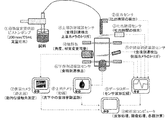
- Fig. 3 shows the configuration of the eating and swallowing measurement device used.
- the eating and swallowing measurement device includes an inclined plate to which a material imitating the surface of a living body (produced by mixing water, hydrophilic polyvinyl alcohol and dimethylsulfosudide) is attached.
- a material imitating the surface of a living body produced by mixing water, hydrophilic polyvinyl alcohol and dimethylsulfosudide
- sample liquid, solid, semi-solid, jelly, etc.
- the eating and swallowing measurement device simulates the phenomenon of eating and swallowing by numerically analyzing and measuring the behavior of a sample flowing down or sliding down on an inclined plate with multiple sensors and multiple cameras. It is a measuring device to quantify.
- the eating and swallowing measurement device includes an inclined plate having an inclined surface, a supply unit (high-precision quantitative supply piston pump) that provides a sample on the inclined surface, and a supply unit.
- a supply sensor discharge confirmation sensor
- an arrival sensor upper arrival confirmation sensor and lower arrival confirmation sensor
- a data logger that records the output of the sensor
- a top camera that captures the sample flowing down on the inclined surface from above the inclined surface and generates a top image
- a sample that flows down on the inclined surface from the side of the inclined surface A side camera that generates a side image
- a calculation unit that uses at least one of the output of the data logger, the side image, and the top image to calculate the state parameter of the sample flowing down on the inclined surface.
- the eating and swallowing measurement device defines the behavior of a bolus that flows down or slides down on an inclined plate as a pseudo swallowing phenomenon, and the speed, acceleration, pressure, force, shear rate, wall shear stress, wall shear stress, wall surface
- the adhesion force means energy consumed by the inclined surface per unit area of the inclined surface.
- Each physical quantity can be calculated by the following formula. Here, it is expressed as shear rate ⁇ , thickness ⁇ , viscosity ⁇ , shear stress ⁇ , force F, area S, length L (distance between sensors), work amount W, and adhesion force fs [J / m 2 ].
- the viscosity is measured by, for example, a rheometer (dynamic viscoelasticity measuring device).
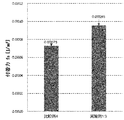
- FIG. 4 is a graph showing the adhesion force between Comparative Example 4 and Example 13.
- the fermented milk of Example 13 has high adhesive force.
- the adhesion of the fermented milk of Example 13 was 0.0008 [J / m 2 ] or more, which was about 1.3 times that of the conventional fermented milk.
- the fermented milk of the present invention was prepared only with “milk” on the display, but it was shown that it can maintain the same hardness as the conventional set type yogurt (such as Meiji Bulgaria yogurt LB81). .
- the present invention can be used for the production of fermented milk such as yogurt, and can be suitably used particularly for the production of set-type yogurt.
Landscapes
- Life Sciences & Earth Sciences (AREA)
- Microbiology (AREA)
- Chemical & Material Sciences (AREA)
- Engineering & Computer Science (AREA)
- Food Science & Technology (AREA)
- Polymers & Plastics (AREA)
- Dairy Products (AREA)
Priority Applications (3)
| Application Number | Priority Date | Filing Date | Title |
|---|---|---|---|
| JP2017529941A JP6937238B2 (ja) | 2015-07-23 | 2016-07-22 | 発酵乳およびその製造方法 |
| SG11201800428VA SG11201800428VA (en) | 2015-07-23 | 2016-07-22 | Fermented milk and method for producing same |
| CN201680042914.1A CN107846915A (zh) | 2015-07-23 | 2016-07-22 | 发酵乳及其制造方法 |
Applications Claiming Priority (2)
| Application Number | Priority Date | Filing Date | Title |
|---|---|---|---|
| JP2015-146115 | 2015-07-23 | ||
| JP2015146115 | 2015-07-23 |
Publications (1)
| Publication Number | Publication Date |
|---|---|
| WO2017014290A1 true WO2017014290A1 (ja) | 2017-01-26 |
Family
ID=57834456
Family Applications (1)
| Application Number | Title | Priority Date | Filing Date |
|---|---|---|---|
| PCT/JP2016/071479 Ceased WO2017014290A1 (ja) | 2015-07-23 | 2016-07-22 | 発酵乳およびその製造方法 |
Country Status (5)
| Country | Link |
|---|---|
| JP (3) | JP6937238B2 (https=) |
| CN (1) | CN107846915A (https=) |
| SG (1) | SG11201800428VA (https=) |
| TW (1) | TW201711568A (https=) |
| WO (1) | WO2017014290A1 (https=) |
Cited By (8)
| Publication number | Priority date | Publication date | Assignee | Title |
|---|---|---|---|---|
| WO2018056455A1 (ja) * | 2016-09-26 | 2018-03-29 | 株式会社明治 | 超高温殺菌処理した材料を含む原料ミックスを用いた発酵乳の製造方法 |
| JP2018170981A (ja) * | 2017-03-31 | 2018-11-08 | 株式会社明治 | 低温発酵による発酵乳の製造方法および該方法により製造された発酵乳 |
| JP2018170980A (ja) * | 2017-03-31 | 2018-11-08 | 株式会社明治 | 発酵乳の高pH製造方法および該方法により製造された発酵乳 |
| WO2019064955A1 (ja) * | 2017-09-26 | 2019-04-04 | 株式会社明治 | 発酵乳の製造方法 |
| WO2019064956A1 (ja) * | 2017-09-26 | 2019-04-04 | 株式会社明治 | 発酵乳の製造方法 |
| JP2019219185A (ja) * | 2018-06-15 | 2019-12-26 | 三栄源エフ・エフ・アイ株式会社 | 飲食品の嚥下特性の評価方法 |
| JPWO2021261423A1 (https=) * | 2020-06-22 | 2021-12-30 | ||
| CN117367918A (zh) * | 2023-12-04 | 2024-01-09 | 内蒙古蒙牛乳业(集团)股份有限公司 | 一种发酵乳感官品质评价模型及构建方法与应用 |
Families Citing this family (1)
| Publication number | Priority date | Publication date | Assignee | Title |
|---|---|---|---|---|
| WO2022075360A1 (ja) * | 2020-10-07 | 2022-04-14 | 株式会社明治 | 液状発酵乳 |
Citations (2)
| Publication number | Priority date | Publication date | Assignee | Title |
|---|---|---|---|---|
| JPH11276067A (ja) * | 1998-03-31 | 1999-10-12 | Snow Brand Milk Prod Co Ltd | ヨ−グルト |
| JP2013150626A (ja) * | 2006-12-01 | 2013-08-08 | Meiji Co Ltd | 発酵乳の製造方法,及び発酵乳 |
Family Cites Families (6)
| Publication number | Priority date | Publication date | Assignee | Title |
|---|---|---|---|---|
| FR2853259B1 (fr) * | 2003-04-04 | 2006-09-08 | Gervais Danone Sa | Procede d'homogeneisation haute pression |
| JP3666871B1 (ja) * | 2004-06-14 | 2005-06-29 | 明治乳業株式会社 | 発酵乳の製造法及び発酵乳 |
| CN101189983A (zh) * | 2006-11-22 | 2008-06-04 | 涂永林 | 一种高温灭菌酸牛奶的加工工艺 |
| KR20150017971A (ko) * | 2013-08-08 | 2015-02-23 | 삼성정밀화학 주식회사 | 세트 타입 발효유 제조용 조성물, 세트 타입 발효유 및 세트 타입 발효유의 제조방법 |
| WO2015068790A1 (ja) | 2013-11-08 | 2015-05-14 | 株式会社明治 | 酸度上昇が抑制された発酵乳およびその製造方法 |
| CN104082408A (zh) * | 2014-04-14 | 2014-10-08 | 青海雪峰牦牛乳业有限责任公司 | 一种在超高温灭菌灌装机上生产常温发酵乳的方法 |
-
2016
- 2016-07-22 CN CN201680042914.1A patent/CN107846915A/zh active Pending
- 2016-07-22 TW TW105123334A patent/TW201711568A/zh unknown
- 2016-07-22 SG SG11201800428VA patent/SG11201800428VA/en unknown
- 2016-07-22 JP JP2017529941A patent/JP6937238B2/ja active Active
- 2016-07-22 WO PCT/JP2016/071479 patent/WO2017014290A1/ja not_active Ceased
-
2021
- 2021-03-05 JP JP2021035867A patent/JP7382360B2/ja active Active
-
2023
- 2023-01-24 JP JP2023008462A patent/JP2023052586A/ja active Pending
Patent Citations (2)
| Publication number | Priority date | Publication date | Assignee | Title |
|---|---|---|---|---|
| JPH11276067A (ja) * | 1998-03-31 | 1999-10-12 | Snow Brand Milk Prod Co Ltd | ヨ−グルト |
| JP2013150626A (ja) * | 2006-12-01 | 2013-08-08 | Meiji Co Ltd | 発酵乳の製造方法,及び発酵乳 |
Non-Patent Citations (3)
| Title |
|---|
| LEE, W. J. ET AL.: "Formation and Physical Properties of Yogurt", ASIAN-AUST. J. ANIM. SCI., vol. 23, no. 9, 2010, pages 1127 - 1136, XP002721316 * |
| SERRA, MAR ET AL.: "Ultra-High Pressure Homogenization-Induced Changes in Skim Milk: Impact on Acid Coagulation Properties", JOURNAL OF DAIRY RESEARCH, vol. 75, 2008, pages 69 - 75, XP009154798 * |
| SFAKIANAKIS, PANAGIOTIS ET AL.: "Conventional and Innovative Processing of Milk for Yogurt Manufacture;", DEVELOPMENT OF TEXTURE AND FLAVOR: A REVIEW, FOODS, vol. 3, 2014, pages 176 - 193, XP002741418 * |
Cited By (13)
| Publication number | Priority date | Publication date | Assignee | Title |
|---|---|---|---|---|
| WO2018056455A1 (ja) * | 2016-09-26 | 2018-03-29 | 株式会社明治 | 超高温殺菌処理した材料を含む原料ミックスを用いた発酵乳の製造方法 |
| JP7385984B2 (ja) | 2017-03-31 | 2023-11-24 | 株式会社明治 | 発酵乳の高pH製造方法および該方法により製造された発酵乳 |
| JP2018170981A (ja) * | 2017-03-31 | 2018-11-08 | 株式会社明治 | 低温発酵による発酵乳の製造方法および該方法により製造された発酵乳 |
| JP2018170980A (ja) * | 2017-03-31 | 2018-11-08 | 株式会社明治 | 発酵乳の高pH製造方法および該方法により製造された発酵乳 |
| JP7471046B2 (ja) | 2017-03-31 | 2024-04-19 | 株式会社明治 | 低温発酵による発酵乳の製造方法および該方法により製造された発酵乳 |
| WO2019064955A1 (ja) * | 2017-09-26 | 2019-04-04 | 株式会社明治 | 発酵乳の製造方法 |
| WO2019064956A1 (ja) * | 2017-09-26 | 2019-04-04 | 株式会社明治 | 発酵乳の製造方法 |
| JP7101056B2 (ja) | 2018-06-15 | 2022-07-14 | 三栄源エフ・エフ・アイ株式会社 | 飲食品の嚥下特性の評価方法 |
| JP2019219185A (ja) * | 2018-06-15 | 2019-12-26 | 三栄源エフ・エフ・アイ株式会社 | 飲食品の嚥下特性の評価方法 |
| JPWO2021261423A1 (https=) * | 2020-06-22 | 2021-12-30 | ||
| CN115916230A (zh) * | 2020-06-22 | 2023-04-04 | 株式会社明治 | 用于促进白细胞介素-10产生的组合物 |
| CN117367918A (zh) * | 2023-12-04 | 2024-01-09 | 内蒙古蒙牛乳业(集团)股份有限公司 | 一种发酵乳感官品质评价模型及构建方法与应用 |
| CN117367918B (zh) * | 2023-12-04 | 2024-02-13 | 内蒙古蒙牛乳业(集团)股份有限公司 | 一种发酵乳感官品质评价模型的构建方法与应用 |
Also Published As
| Publication number | Publication date |
|---|---|
| SG11201800428VA (en) | 2018-02-27 |
| JP2023052586A (ja) | 2023-04-11 |
| JPWO2017014290A1 (ja) | 2018-05-10 |
| JP2021090452A (ja) | 2021-06-17 |
| JP7382360B2 (ja) | 2023-11-16 |
| CN107846915A (zh) | 2018-03-27 |
| TW201711568A (zh) | 2017-04-01 |
| JP6937238B2 (ja) | 2021-09-22 |
Similar Documents
| Publication | Publication Date | Title |
|---|---|---|
| JP7382360B2 (ja) | 発酵乳およびその製造方法 | |
| Nagaoka | Yogurt production | |
| JP6955907B2 (ja) | 発酵乳の製造方法 | |
| JP6719383B2 (ja) | 液状発酵乳及びその製造方法 | |
| US20200045985A1 (en) | Choline ester-containing composition for oral ingestion | |
| JP7046492B2 (ja) | 低酸味発酵乳の製造方法 | |
| WO2012133015A1 (ja) | 液状発酵乳及びその製造方法 | |
| Ichimura | Yogurt production | |
| JP7349814B2 (ja) | 液状発酵乳及びその製造方法 | |
| JP2021141853A (ja) | 発酵乳およびその製造方法 | |
| JP6901837B2 (ja) | 低温殺菌した原料ミックスを用いた発酵乳の製造方法 | |
| AU2006285858B2 (en) | Process for producing fermented milk and fermented milk | |
| JP6334639B2 (ja) | 二層タイプの発酵乳製品及びその製造方法 | |
| JP7385984B2 (ja) | 発酵乳の高pH製造方法および該方法により製造された発酵乳 | |
| JP3946476B2 (ja) | 発酵乳及びその製造方法 | |
| JP7471046B2 (ja) | 低温発酵による発酵乳の製造方法および該方法により製造された発酵乳 | |
| WO2019064955A1 (ja) | 発酵乳の製造方法 | |
| HK1246596A1 (en) | Fermented milk and method for producing same | |
| JP2021073882A (ja) | 常温保存酸乳食品の製造方法及び物性安定性向上方法、並びに酸乳食品の加熱殺菌方法 | |
| CN112770638A (zh) | 容器装多层发酵乳制品、其制造方法及发酵乳制品用的调味汁 | |
| WO2019064956A1 (ja) | 発酵乳の製造方法 | |
| WO2019064954A1 (ja) | 発酵乳及びその製造方法 | |
| WO2018056455A1 (ja) | 超高温殺菌処理した材料を含む原料ミックスを用いた発酵乳の製造方法 | |
| WO2025057716A1 (ja) | 殺菌乳飲料及びその製造方法 | |
| JP2023047901A (ja) | 発酵乳及びその製造方法 |
Legal Events
| Date | Code | Title | Description |
|---|---|---|---|
| 121 | Ep: the epo has been informed by wipo that ep was designated in this application |
Ref document number: 16827850 Country of ref document: EP Kind code of ref document: A1 |
|
| ENP | Entry into the national phase |
Ref document number: 2017529941 Country of ref document: JP Kind code of ref document: A |
|
| WWE | Wipo information: entry into national phase |
Ref document number: 11201800428V Country of ref document: SG |
|
| NENP | Non-entry into the national phase |
Ref country code: DE |
|
| 122 | Ep: pct application non-entry in european phase |
Ref document number: 16827850 Country of ref document: EP Kind code of ref document: A1 |