WO2016129475A1 - 防食塗膜、その形成方法及びその防食塗膜を形成するための防食塗料組成物 - Google Patents
防食塗膜、その形成方法及びその防食塗膜を形成するための防食塗料組成物 Download PDFInfo
- Publication number
- WO2016129475A1 WO2016129475A1 PCT/JP2016/053210 JP2016053210W WO2016129475A1 WO 2016129475 A1 WO2016129475 A1 WO 2016129475A1 JP 2016053210 W JP2016053210 W JP 2016053210W WO 2016129475 A1 WO2016129475 A1 WO 2016129475A1
- Authority
- WO
- WIPO (PCT)
- Prior art keywords
- mass
- vinyl ester
- ester resin
- anticorrosion coating
- coating film
- Prior art date
- Legal status (The legal status is an assumption and is not a legal conclusion. Google has not performed a legal analysis and makes no representation as to the accuracy of the status listed.)
- Ceased
Links
Images
Classifications
-
- B—PERFORMING OPERATIONS; TRANSPORTING
- B05—SPRAYING OR ATOMISING IN GENERAL; APPLYING FLUENT MATERIALS TO SURFACES, IN GENERAL
- B05D—PROCESSES FOR APPLYING FLUENT MATERIALS TO SURFACES, IN GENERAL
- B05D7/00—Processes, other than flocking, specially adapted for applying liquids or other fluent materials to particular surfaces or for applying particular liquids or other fluent materials
- B05D7/14—Processes, other than flocking, specially adapted for applying liquids or other fluent materials to particular surfaces or for applying particular liquids or other fluent materials to metal, e.g. car bodies
-
- B—PERFORMING OPERATIONS; TRANSPORTING
- B05—SPRAYING OR ATOMISING IN GENERAL; APPLYING FLUENT MATERIALS TO SURFACES, IN GENERAL
- B05D—PROCESSES FOR APPLYING FLUENT MATERIALS TO SURFACES, IN GENERAL
- B05D7/00—Processes, other than flocking, specially adapted for applying liquids or other fluent materials to particular surfaces or for applying particular liquids or other fluent materials
- B05D7/24—Processes, other than flocking, specially adapted for applying liquids or other fluent materials to particular surfaces or for applying particular liquids or other fluent materials for applying particular liquids or other fluent materials
-
- B—PERFORMING OPERATIONS; TRANSPORTING
- B32—LAYERED PRODUCTS
- B32B—LAYERED PRODUCTS, i.e. PRODUCTS BUILT-UP OF STRATA OF FLAT OR NON-FLAT, e.g. CELLULAR OR HONEYCOMB, FORM
- B32B1/00—Layered products having a non-planar shape
-
- B—PERFORMING OPERATIONS; TRANSPORTING
- B32—LAYERED PRODUCTS
- B32B—LAYERED PRODUCTS, i.e. PRODUCTS BUILT-UP OF STRATA OF FLAT OR NON-FLAT, e.g. CELLULAR OR HONEYCOMB, FORM
- B32B27/00—Layered products comprising a layer of synthetic resin
- B32B27/30—Layered products comprising a layer of synthetic resin comprising vinyl (co)polymers; comprising acrylic (co)polymers
-
- C—CHEMISTRY; METALLURGY
- C09—DYES; PAINTS; POLISHES; NATURAL RESINS; ADHESIVES; COMPOSITIONS NOT OTHERWISE PROVIDED FOR; APPLICATIONS OF MATERIALS NOT OTHERWISE PROVIDED FOR
- C09D—COATING COMPOSITIONS, e.g. PAINTS, VARNISHES OR LACQUERS; FILLING PASTES; CHEMICAL PAINT OR INK REMOVERS; INKS; CORRECTING FLUIDS; WOODSTAINS; PASTES OR SOLIDS FOR COLOURING OR PRINTING; USE OF MATERIALS THEREFOR
- C09D163/00—Coating compositions based on epoxy resins; Coating compositions based on derivatives of epoxy resins
- C09D163/10—Epoxy resins modified by unsaturated compounds
-
- C—CHEMISTRY; METALLURGY
- C09—DYES; PAINTS; POLISHES; NATURAL RESINS; ADHESIVES; COMPOSITIONS NOT OTHERWISE PROVIDED FOR; APPLICATIONS OF MATERIALS NOT OTHERWISE PROVIDED FOR
- C09D—COATING COMPOSITIONS, e.g. PAINTS, VARNISHES OR LACQUERS; FILLING PASTES; CHEMICAL PAINT OR INK REMOVERS; INKS; CORRECTING FLUIDS; WOODSTAINS; PASTES OR SOLIDS FOR COLOURING OR PRINTING; USE OF MATERIALS THEREFOR
- C09D4/00—Coating compositions, e.g. paints, varnishes or lacquers, based on organic non-macromolecular compounds having at least one polymerisable carbon-to-carbon unsaturated bond ; Coating compositions, based on monomers of macromolecular compounds of groups C09D183/00 - C09D183/16
-
- C—CHEMISTRY; METALLURGY
- C09—DYES; PAINTS; POLISHES; NATURAL RESINS; ADHESIVES; COMPOSITIONS NOT OTHERWISE PROVIDED FOR; APPLICATIONS OF MATERIALS NOT OTHERWISE PROVIDED FOR
- C09D—COATING COMPOSITIONS, e.g. PAINTS, VARNISHES OR LACQUERS; FILLING PASTES; CHEMICAL PAINT OR INK REMOVERS; INKS; CORRECTING FLUIDS; WOODSTAINS; PASTES OR SOLIDS FOR COLOURING OR PRINTING; USE OF MATERIALS THEREFOR
- C09D5/00—Coating compositions, e.g. paints, varnishes or lacquers, characterised by their physical nature or the effects produced; Filling pastes
- C09D5/08—Anti-corrosive paints
-
- C—CHEMISTRY; METALLURGY
- C09—DYES; PAINTS; POLISHES; NATURAL RESINS; ADHESIVES; COMPOSITIONS NOT OTHERWISE PROVIDED FOR; APPLICATIONS OF MATERIALS NOT OTHERWISE PROVIDED FOR
- C09D—COATING COMPOSITIONS, e.g. PAINTS, VARNISHES OR LACQUERS; FILLING PASTES; CHEMICAL PAINT OR INK REMOVERS; INKS; CORRECTING FLUIDS; WOODSTAINS; PASTES OR SOLIDS FOR COLOURING OR PRINTING; USE OF MATERIALS THEREFOR
- C09D7/00—Features of coating compositions, not provided for in group C09D5/00; Processes for incorporating ingredients in coating compositions
- C09D7/40—Additives
-
- C—CHEMISTRY; METALLURGY
- C23—COATING METALLIC MATERIAL; COATING MATERIAL WITH METALLIC MATERIAL; CHEMICAL SURFACE TREATMENT; DIFFUSION TREATMENT OF METALLIC MATERIAL; COATING BY VACUUM EVAPORATION, BY SPUTTERING, BY ION IMPLANTATION OR BY CHEMICAL VAPOUR DEPOSITION, IN GENERAL; INHIBITING CORROSION OF METALLIC MATERIAL OR INCRUSTATION IN GENERAL
- C23C—COATING METALLIC MATERIAL; COATING MATERIAL WITH METALLIC MATERIAL; SURFACE TREATMENT OF METALLIC MATERIAL BY DIFFUSION INTO THE SURFACE, BY CHEMICAL CONVERSION OR SUBSTITUTION; COATING BY VACUUM EVAPORATION, BY SPUTTERING, BY ION IMPLANTATION OR BY CHEMICAL VAPOUR DEPOSITION, IN GENERAL
- C23C26/00—Coating not provided for in groups C23C2/00 - C23C24/00
-
- C—CHEMISTRY; METALLURGY
- C23—COATING METALLIC MATERIAL; COATING MATERIAL WITH METALLIC MATERIAL; CHEMICAL SURFACE TREATMENT; DIFFUSION TREATMENT OF METALLIC MATERIAL; COATING BY VACUUM EVAPORATION, BY SPUTTERING, BY ION IMPLANTATION OR BY CHEMICAL VAPOUR DEPOSITION, IN GENERAL; INHIBITING CORROSION OF METALLIC MATERIAL OR INCRUSTATION IN GENERAL
- C23F—NON-MECHANICAL REMOVAL OF METALLIC MATERIAL FROM SURFACE; INHIBITING CORROSION OF METALLIC MATERIAL OR INCRUSTATION IN GENERAL; MULTI-STEP PROCESSES FOR SURFACE TREATMENT OF METALLIC MATERIAL INVOLVING AT LEAST ONE PROCESS PROVIDED FOR IN CLASS C23 AND AT LEAST ONE PROCESS COVERED BY SUBCLASS C21D OR C22F OR CLASS C25
- C23F11/00—Inhibiting corrosion of metallic material by applying inhibitors to the surface in danger of corrosion or adding them to the corrosive agent
Definitions
- the present invention relates to an anticorrosion coating film excellent in heat resistance, durability, water resistance and workability as compared with a conventional glass lining material, a method for forming the anticorrosion coating film, and an anticorrosion coating for forming the anticorrosion coating film. Relates to the composition.
- anti-corrosion coating and resin lining have been applied to the inner surfaces of heavy oil tanks and various chemical equipment in chemical plants. Among them, glass flaring is performed from the viewpoint of workability and performance.
- Glass flake clinching is a combination of anti-corrosion resin such as unsaturated polyester resin, vinyl ester resin, and epoxy resin with scaly glass flakes, and the glass flakes orientate in the coating film to significantly transmit corrosive substances. It is a lining method that exhibits excellent corrosion resistance by being delayed.
- This frame lining is widely used due to its excellent workability and anti-corrosion performance, but has a problem of lack of heat resistance.
- a certain amount of coating thickness is required, but in order to prevent sagging of the coating film, the number of coatings has been increased to several times in the past, shortening the process.
- the present invention has been made in view of the above circumstances, and the anticorrosion coating film having excellent heat resistance, durability, water resistance, and workability compared to the conventional glass lining material, and the anticorrosion coating film. It aims at providing the anticorrosion coating composition for forming the formation method and its anticorrosion coating film.
- the present inventors have used glass flakes having a small average thickness and a silane-treated surface, specific vinyl ester resin compositions, the glass flakes, and fume. It has been found that when an anticorrosion coating composition containing dosilica in a specific ratio is used, an anticorrosion coating film that is stable by one application and curing and excellent in water resistance and the like can be formed.
- the present invention provides: (1) An anticorrosion coating formed on a metal surface,
- the anticorrosion coating is (A) Vinyl ester resin composition containing 20-50% by mass of radically polymerizable unsaturated monomer and 50-80% by mass of vinyl ester resin: (B) scale-like glass having a surface treated with silane, an average thickness of 0.1 to 3 ⁇ m, and an average particle size of 50 to 600 ⁇ m: and (C) fumed silica: Cured product of anticorrosion coating composition containing 49-84.5% by mass of component (A), 14-49.6% by mass of component (B), and 0.5-5% by mass of component (C) And Anti-corrosion coating film consisting of a single layer having a thickness of 500 ⁇ m or more after curing, (2)
- the vinyl ester resin of the (A) vinyl ester resin composition is one or more selected from a novolac type vinyl ester resin, a bisphenol type vinyl ester resin, and a brominated vinyl ester resin, (1) Anticorrosion coating,
- the anticorrosion coating composition contains (D) a polycarboxylic acid thixotropic agent for 100 parts by mass of the total amount of the (A) component, the (B) component, and the (C) component of the anticorrosion coating composition.
- a method of forming an anticorrosion coating film comprising a single layer of 500 ⁇ m or more, including coating and curing once, (9) The single layer of 500 ⁇ m or more according to (8), wherein the (A) vinyl ester resin is one or more selected from a novolak type vinyl ester resin, a bisphenol type vinyl ester resin, and a brominated vinyl ester resin.
- the vinyl ester resin of the vinyl ester resin composition (A) is synthesized by one or more catalysts selected from the group consisting of a phosphorus catalyst, an ammonium catalyst, and an organic acid chromium salt.
- the anticorrosion coating film comprising a single layer of 500 ⁇ m or more according to any one of (8) to (10), wherein the (C) fumed silica is hydrophilic fumed silica and / or hydrophobic fumed silica.
- Forming method (12)
- the anticorrosive coating composition comprises (D) a polycarboxylic acid thixotropic agent for 100 parts by mass of the total amount of the (A) component, the (B) component, and the (C) component of the anticorrosive coating composition.
- An anticorrosive coating composition containing 49 to 84.5% by mass of component (A), 14 to 49.6% by mass of component (B),
- an anticorrosion coating having higher heat resistance, durability and water resistance than conventional anticorrosion coatings can be obtained, and the anticorrosion coating composition for forming the anticorrosion coating of the present invention comprises the anticorrosion coating. If the film is applied so as to have a thickness of 500 ⁇ m or more, a single application and curing are sufficient, there is no need for repeated coating, and the workability is excellent.
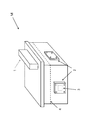
- the apparatus M includes a temperature control means 1, a test piece installation location 2, and a coating surface installation location 3 for hot water in a thermostatic water tank, and the water surface 4 of the hot water provides the coating surface installation location 3 during the test period. Located over the cross.
- the anticorrosion coating film of the present invention will be described.
- the anticorrosive coating film of the present invention is located on a metal surface and comprises 49 to 50 vinyl ester resin compositions containing (A) 20 to 50% by mass of a radically polymerizable unsaturated monomer and 50 to 80% by mass of a vinyl ester resin. 84.5% by mass, (B) 14-49.6% by mass of scaly glass having a silane-treated surface and an average thickness of 0.1-3 ⁇ m, and (C) 0.5-0.0% of fumed silica It consists of a single layer formed by applying and curing an anticorrosive coating composition containing 5% by mass.
- the vinyl ester resin composition used in the present invention is obtained by dissolving a vinyl ester resin in a radically polymerizable unsaturated monomer.
- a vinyl ester resin also called an epoxy (meth) acrylate resin, is a polymerization generally formed by a ring-opening reaction between a compound having a glycidyl group (epoxy group) and a carboxyl group of an ethylenically unsaturated group-containing carboxyl compound such as acrylic acid.
- This compound has a ionic unsaturated bond, and is described in “Polyester Resin Handbook” (published by Nikkan Kogyo Shimbun, 1988) or “Paint Glossary” (edited by Color Material Association, published in 1993).
- Compounds having a glycidyl group as a raw material for vinyl ester resins include bisphenol A diglycidyl ether and its high molecular weight homologues, novolac type polyglycidyl ethers, brominated bisphenol A glycidyl ether, brominated novolac type poly Examples thereof include aliphatic glycidyl ethers such as glycidyl ethers and 1,6-hexanediol diglycidyl ether. Examples of the ethylenically unsaturated group-containing carboxyl compound as a raw material include unsaturated monobasic acids such as acrylic acid and methacrylic acid.
- the vinyl ester resin of the (A) vinyl ester resin composition used in the present invention includes a bisphenol A type vinyl ester resin comprising bisphenol A diglycidyl ether and its high molecular weight homologue from the viewpoint of heat resistance and water resistance.
- a novolak-type vinyl ester resin composed of novolac-type polyglycidyl ethers, a brominated vinyl ester resin composed of brominated bisphenol A glycidyl ether or brominated novolac-type polyglycidyl ethers are preferred.
- the molecular weight of the vinyl ester resin of the present invention is not particularly limited, but is preferably from 100 to 10,000, more preferably from 500 to 7,000, in terms of polystyrene weight average molecular weight.
- the weight average molecular weight in the present invention is a value obtained by using a standard polystyrene calibration curve, measured at room temperature under the following conditions using gel permeation chromatography (Shodex GPC-104 manufactured by Showa Denko KK). is there. Column: Showa Denko KF-402HQ, KF-403HQ, KF-404HQ Column temperature: 40 ° C Sample: 0.3 mass% tetrahydrofuran solution of resin Flow rate: 0.3 ml / min Eluent: Tetrahydrofuran detector: RI
- the catalyst for synthesizing the vinyl ester resin of the (A) vinyl ester resin composition used in the present invention is not particularly limited, and known ones can be used. Specific examples include amine catalysts such as N, N-dimethylbenzylamine and triethylamine, ammonium catalysts such as trimethylammonium chloride, phosphorus catalysts such as triphenylphosphine, and organic acid chromium salts such as chromium naphthenate. However, from the viewpoint of thixotropic properties (thixotropic properties) and stability over time, phosphorus-based catalysts, ammonium-based catalysts, and organic acid chromium salts are preferable.
- the radically polymerizable unsaturated monomer used in the vinyl ester resin composition is not particularly limited, and conventionally known monomers can be used.
- examples of radically polymerizable unsaturated monomers include styrene, ⁇ -, o-, m-, p-alkyl, nitro, cyano, amide, ester derivatives of styrene, styrene such as chlorostyrene, vinyltoluene, and divinylbenzene.
- Type monomers dienes such as butadiene, 2,3-dimethylbutadiene, isoprene, chloroprene; ethyl (meth) acrylate, methyl (meth) acrylate, (meth) acrylic acid-n-propyl, (meth) acrylic acid- i-propyl, hexyl (meth) acrylate, 2-ethylhexyl (meth) acrylate, lauryl (meth) acrylate, dodecyl (meth) acrylate, cyclopentyl (meth) acrylate, cyclohexyl (meth) acrylate, (meth ) Tetrahydrofuryl acrylate, acetoacetoxyethyl (meth) acryl (Meth) acrylic acid esters such as benzoate, dicyclopentenyloxyethyl (meth) acrylate and phenoxyethyl (meth) acrylate; (meth) acrylic acid est
- ethylene glycol di (meth) acrylate diethylene glycol di (meth) acrylate, triethylene glycol di (meth) acrylate, polyethylene glycol di (meth) acrylate and 1,6-hexanediol di (meth) acrylate
- a (meth) acrylic acid ester compound having two or more (meth) acryloyl groups.
- These radically polymerizable unsaturated monomers can be used alone or in combination.
- a styrene monomer is preferable, and styrene is more preferable.
- the vinyl ester resin composition (A) used in the present invention is usually 20 to 50% by mass of the radical polymerizable unsaturated monomer and 50 to 80% by mass of the vinyl ester resin with respect to the total amount of the vinyl ester resin composition.
- the radically polymerizable unsaturated monomer is preferably 25 to 45% by mass and the vinyl ester resin is preferably 55 to 75% by mass.
- the amount of the vinyl ester resin composition used is usually 49 to 84.5% by mass, preferably 60 to 75% by mass, based on the total amount of the anticorrosive coating composition forming the anticorrosive coating film of the present invention.
- the amount used is lower than 49% by mass, a good coating appearance cannot be obtained.
- the amount used is higher than 84.5% by mass, the content of (B) glass flakes decreases, the anticorrosion performance decreases, and good water resistance is also obtained. Since it cannot be obtained, it is not preferable.
- the “total amount of the anticorrosion coating composition” refers to an amount when the total mass of the vinyl ester resin composition, the glass flakes, and the fumed silica is 100% by mass. Therefore, the said mixture ratio says the ratio with respect to this quantity. The same applies to the following.
- the (B) flaky glass used in the present invention known glass can be used, but it is necessary to be flaky glass having an average thickness of 0.1 to 3 ⁇ m. If the average thickness of the glass flakes is other than this, it is not preferable because heat resistance and water resistance are lowered.
- the average particle size of the glass flakes used in the present invention is usually 50 to 600 ⁇ m, preferably 100 to 400 ⁇ m.
- any glass that satisfies the above conditions can be used without limitation as a glass flake, and is commercially available, for example, as RCF-2300A manufactured by Nippon Sheet Glass Co., Ltd.
- RCF-2300A is a glass flake having a particle size of less than 45 ⁇ m, less than 25% by mass, glass flakes having a particle size of 45 to 150 ⁇ m being 20 to 60% by mass, and glass having a particle size of 150 to 1700 ⁇ m. It is contained at 20 to 80% by mass.
- the average thickness of the glass flakes is obtained by observing the cross section of the anticorrosive coating film with SEM, measuring 30 points at the shortest portion of the glass flake cross section selected at random, and describing the average value as “average thickness”.
- the particle size distribution of the glass flake is measured using, for example, a laser diffraction / scattering particle size distribution measuring device (product name: Microtrac MT3000II series, manufactured by Nikkiso), and the average particle size D50 (mass) is obtained from the measurement result. Standard) is calculated.
- the amount of scaly glass used is usually 14 to 49.6% by mass, preferably 20 to 40% by mass, and more preferably 23%, based on the total amount of the anticorrosive coating composition forming the anticorrosive coating film of the present invention. It is ⁇ 38% by mass, still more preferably 25 to 35% by mass. It is not preferred that the amount of scale-like glass used is outside the above range because the anticorrosion performance and the water resistance are lowered.
- the glass flakes are silane-treated on the surface in order to blend with the (A) vinyl ester resin composition.
- this surface treatment can be performed by a known method, silane treatment such as aminosilane, vinyl silane, epoxy silane, and acrylic silane is preferable, and aminosilane treatment or acrylic silane treatment is particularly preferable.
- (C) fumed silica is used.
- Either hydrophilic fumed silica and / or hydrophobic fumed silica whose surface has been hydrophobized can be used.
- a commercially available thing can be used as hydrophilic fumed silica, for example, AEROSIL50, AEROSIL90G, AEROSIL130, AEROSIL200, AEROSIL300 (all are the products made from Japan Aloesil) etc. are mentioned.
- Hydrophobic fumed silica is surface-treated with silanes and siloxanes, and commercially available ones can also be used.
- Leolosil MT-10, MT-10C, DM-10, DM-10C, DM- 20S, DM-30, DM-30S, KS-20S, KS-20SC, HM-20L, HM-30S, PM-20L all manufactured by Tokuyama Corporation.
- the amount of fumed silica used is usually 0.5 to 5% by mass, preferably 0.9 to 4% by mass, based on the total amount of the anticorrosive coating composition forming the anticorrosive coating film of the present invention.
- fumed silica By using fumed silica, sufficient thixotropy (thixotropic properties) can be imparted to prevent settling of the glass flakes and to secure the coating thickness of the vertical surface. If the amount of fumed silica used is outside the above range, workability is lowered, which is not preferable.
- thixotropic agent in addition to fumed silica, another thixotropic agent can be used as long as the effects of the present invention are not impaired.
- the other thixotropic agent include clay, organic bentonite, organic amide wax, polyethylene glycol, glycerin, polyhydroxycarboxylic acid amide, organic quaternary ammonium salt, polycarboxylic acid and the like.
- the (D) polycarboxylic acid-based thixotropic agent when used, the (A) component, the (B) component, and the (C) component of the anticorrosion coating composition.
- 0.5 to 3 parts by mass, preferably 0.5 to 2.5 parts by mass can be used with respect to 100 parts by mass as a total. By using it within this range, good workability can be ensured.
- the thixotropic property (thixotropic index TI value) of the anticorrosive coating composition of the present invention is preferably 3.0 or more, and more preferably 3.5 or more.
- the viscosity is preferably 70 to 150 dPa ⁇ s, more preferably 90 to 130 dPa ⁇ s. If it is 70 dPa ⁇ s or more, sagging of the paint is prevented and thickness unevenness does not occur.
- a uniform coating film is obtained.
- the viscosity is measured using an RVF viscometer (product name: BROOKFIELD VISCOMETER, BROOKFIELD ENGINEERING LABORATORIES, rotor No. 6, temperature: 25 ° C.) at a rotation speed of 20 rpm.
- RVF viscometer product name: BROOKFIELD VISCOMETER, BROOKFIELD ENGINEERING LABORATORIES, rotor No. 6, temperature: 25 ° C.
- the anticorrosion coating composition of the present invention can be easily cured by room temperature curing or heat curing by adding a commonly used radical curing agent and curing accelerator, or by using a photo radical initiator in combination. it can.
- radical curing agents include organic peroxides. Specifically, diacyl peroxides such as benzoyl peroxide, peroxyesters such as t-butylperoxybenzoate, and hydroperoxides such as cumene hydroperoxide.
- Dialkyl peroxides such as dicumyl peroxide, ketone peroxides such as methyl ethyl ketone peroxide, acetylacetone peroxide, peroxyketal, alkyl perester, percarbonate, 328E (manufactured by Kayaku Akzo Co., Ltd.)
- publicly known materials such as mixed hardeners such as 328EM (manufactured by Kayaku Akzo Co., Ltd.) are used.
- These radical curing agents may be added in the range of 0.1 to 6 parts by mass with respect to 100 parts by mass of the total amount of the components (A), (B) and (C) of the anticorrosive coating composition. it can.
- cobalt metal soap As the curing accelerator in the present invention, known ones such as cobalt metal soap can be used.
- cobalt metal soap used as a hardening accelerator is not specifically limited, For example, cobalt naphthenate, cobalt octylate, cobalt hydroxide etc. are mentioned, Cobalt naphthenate and cobalt octylate are preferable.
- the addition amount is 0.02 to 10 parts by mass, preferably 0.1 to 3.0 parts by mass, with respect to 100 parts by mass of the total amount of components (A), (B) and (C) of the anticorrosion coating composition. Part.
- the added amount of cobalt soap is 0.02 parts by mass or more, good quick curability and drying properties can be obtained.
- the addition amount When the addition amount is 5.0 parts by mass or less, good pot life and storage stability can be obtained.
- an aromatic tertiary amine can be blended in the anticorrosive coating composition of the present invention for the purpose of accelerating curing.
- Such an aromatic tertiary amine is not particularly limited, and conventionally known aromatic tertiary amines can be used.
- aromatic tertiary amines include N, N-dimethylaniline, N, N-diethylaniline, N, N-dimethyl-p-toluidine, N-methyl-N- ⁇ -hydroxyethylaniline, N-butyl- N- ⁇ -hydroxyethylaniline, N-methyl-N- ⁇ -hydroxyethyl-p-toluidine, N-butyl-N- ⁇ -hydroxyethyl-p-toluidine, N-methyl-N- ⁇ -hydroxypropylaniline, N-methyl-N- ⁇ -hydroxypropyl-p-toluidine, N, N-di ( ⁇ -hydroxyethyl) aniline, N, N-di ( ⁇ -hydroxypropyl) aniline, N, N-di ( ⁇ -hydroxy Ethyl) -p-toluidine, N, N-di ( ⁇ -hydroxypropyl) -p-toluidine, N, N-diisopropylo
- N, N-dimethylaniline, N, N-dimethyl-p-toluidine, N, N-di ( ⁇ -hydroxyethyl) -p-toluidine, N, N-di ( ⁇ -Hydroxypropyl) -p-toluidine, N, N-diisopropylol-p-toluidine are preferred.
- the aromatic tertiary amine is blended, the blending amount is 0.02 to 10 mass with respect to 100 mass parts of the total amount of the (A) component, (B) component and (C) component of the anticorrosive coating composition. Part is preferable, and 0.1 to 5 parts by mass is more preferable.
- the photo radical initiator is a photo sensitizer, specifically, a benzoin ether type such as benzoin alkyl ether, a benzophenone type such as benzophenone, benzyl, methyl orthobenzoylbenzoate, benzyl dimethyl ketal, or 2,2-diethoxy.
- Acetophenones such as acetophenone, 2-hydroxy-2-methylpropiophenone, 4-isopropyl-2-hydroxy-2-methylpropiophenone, 1,1-dichloroacetophenone, 2-chlorothioxanthone, 2-methylthioxanthone, 2 -Thioxanthone series such as isopropylthioxanthone.
- These photoradical initiators should be added in the range of 0.1 to 6 parts by mass with respect to 100 parts by mass of the total amount of components (A), (B) and (C) of the anticorrosive coating composition. Can do.
- a polymerization inhibitor can be added to the anticorrosive coating composition of the present invention as desired.
- the polymerization inhibitor include those conventionally used for unsaturated polyester resins, such as hydroquinone, trihydrobenzene, benzoquinone, P-benzoquinone, methylhydroquinone, trimethylhydroquinone, hydroquinone monomethyl ether, t-butylhydroquinone, catechol, Examples thereof include t-butylcatechol, 2,6-di-t-butyl-4-methylphenol.
- This polymerization inhibitor can be added in a range of 1 to 1000 ppm with respect to 100 parts by mass of the total amount of the components (A), (B) and (C) of the anticorrosive coating composition.
- fillers such as titanium oxide, calcium carbonate, aluminum hydroxide, fly ash, barium sulfate, talc, clay and glass powder can be used as fillers.
- examples of the aggregate include quartz sand, gravel, and crushed stone.
- the amount of the anticorrosive coating composition of the present invention is preferably 1 to 300 parts by mass with respect to 100 parts by mass of the total amount of the components (A), (B) and (C).
- a fiber reinforcing material can be used.
- the fiber reinforcement used include organic fibers such as glass fibers, amides, aramids, vinylons, polyesters, and phenols, and inorganic fibers such as carbon fibers, metal fibers, and ceramic fibers. You may use independently and may use it in combination of 2 or more types.
- the amount of the anticorrosive coating composition of the present invention is preferably 1 to 300 parts by weight, more preferably 5 to 200 parts by weight, based on 100 parts by weight of the total amount of the components (A), (B) and (C). It is.
- Waxes may be added to the anticorrosion coating composition of the present invention.
- the wax include at least one selected from the group consisting of petroleum wax, olefin wax, polar wax, and special wax.
- petroleum waxes include paraffin wax and microcrystalline wax.
- the olefin wax include polyethylene and polypropylene.
- polar waxes include waxes obtained by introducing polar groups (such as hydroxyl groups and ester groups) into these petroleum waxes and olefin waxes, and unsaturated fatty acid esters such as oleic acid, linoleic acid, and linolenic acid.
- the special wax include Byk LPS-6665 manufactured by Big Chemie.
- waxes can be added in the range of 0.01 to 2 parts by mass with respect to 100 parts by mass of the total amount of the components (A), (B) and (C) of the anticorrosive coating composition.
- the anticorrosion coating composition of the present invention includes colorants such as organic pigments, inorganic pigments and dyes, plasticizers such as chlorinated paraffins, phosphate esters and phthalate esters, magnesium oxide and calcium oxide as long as the performance is not impaired.
- colorants such as organic pigments, inorganic pigments and dyes, plasticizers such as chlorinated paraffins, phosphate esters and phthalate esters, magnesium oxide and calcium oxide as long as the performance is not impaired.
- Metal oxide thickeners such as zinc oxide
- antifoaming agents such as silicon, acrylic and polymers
- benzotriazoles such as 2 (2′-hydroxy-5′-methylphenyl) benzotriazole, 2,4 -Known ones such as benzophenone and benzoate such as dihydroxybenzophenone can be used.
- a hindered amine-based ultraviolet absorber can be used. These can be added in the range of 0.01 to 10 parts by mass with respect to 100 parts by mass of the total amount of the components (
- the object on which the anticorrosion coating film of the present invention is formed is not particularly limited as long as it is a metal structure having a metal surface and needs anticorrosion, for example, a ship, a bridge, etc.
- Marine structures, storage tanks for fuels and raw materials such as heavy oil in chemical factories, mixing tanks and reaction tanks for chemicals, plants and ducts for petroleum plants, desulfurization and desalination equipment, steel plates such as pipes, and steel
- the present invention can be suitably applied to structures, steel parts of buildings, and the like.
- the metal structure is usually made of steel, but may be a non-ferrous metal such as stainless steel or aluminum alloy.
- the anticorrosion coating film according to the present invention may be formed on the metal surface of the metal structure, and the metal surface may be subjected to substrate preparation.
- the substrate preparation method is performed by a known method such as sanding or other kelen treatment, sand or grit blasting, water jet treatment such as high pressure washing, acid treatment or washing with a chemical solution, etc.
- the blasting process is preferable, and the blasting process using a grid is more preferable.
- ⁇ Abrasives used for grid blasting are classified into metallic and non-metallic.
- metal type include cast iron grids and high carbon cast steel grids.
- non-metal type include silica sand, copper slag, and molten alumina, but are not limited thereto.
- the degree of rust removal is Sa2 1/2 or more in accordance with the standard of ISO8501-1.
- the adhesive force can be sufficiently maintained.
- a primer can be used as long as the performance is not impaired.
- the primer to be used is not particularly limited, but an epoxy, urethane, or vinyl ester primer is preferable, and a vinyl ester primer is particularly preferable.
- the coating method of the anticorrosion coating composition for forming the anticorrosion coating in the present invention is not particularly limited, and examples thereof include coating with airless spray, rollers, brushes, trowels, etc., in terms of workability and uniformity of the coating film. Therefore, painting by airless spray is preferable.
- the coating by airless spraying is a coating in which a high pressure (for example, 10 to 20 MPa) is applied to the paint, and when the paint is discharged into the air, it is atomized by collision with air and sprayed onto the object to be coated.
- the pump pressure ratio is preferably 16: 1 to 90: 1, more preferably 25: 1 to 75: 1, and even more preferably 40: 1 to 50: 1.
- the hose diameter of the airless painting gun is preferably 9 mm ( ⁇ ) or more. By being 9 mm ( ⁇ ) or more, it is possible to satisfactorily adjust the discharge amount of the anticorrosive coating composition and the state of atomization, and a desired uniform anticorrosive coating film can be obtained.
- the spray tip to be used is not particularly limited, but it is desirable to use a switch tip (equivalent to # 163-529, 531, 533) manufactured by GRACO. Further, airless spray coating is performed in a range where the distance from the gun tip to the surface to be coated is 30 to 500 cm and the coating amount is 0.7 to 10 kg / m 2 . The above conditions are set so that the anticorrosion coating composition in a dry state by a single application of the anticorrosion coating composition is composed of a single layer of 500 ⁇ m or more.
- the thickness of the anticorrosive coating film in the present invention is 500 ⁇ m or more in a dry state, preferably 600 ⁇ m or more, and more preferably 800 ⁇ m or more. Furthermore, since the anticorrosion coating composition is applied to the metal surface only once and cured only once and is not overcoated, the anticorrosion coating film of the present invention comprises a single layer. If the coating thickness is less than 500 ⁇ m, the heat resistance and water resistance are lowered, which is not preferable. Moreover, it is not preferable that the anticorrosive coating film has an interlayer by repeated coating or the like because swelling or peeling occurs from the interlayer.
- the upper limit of the thickness of the anticorrosion coating is not particularly limited, but is usually 5000 ⁇ m or less, preferably less than 3000 ⁇ m. If it exceeds 5000 ⁇ m, cracks may occur in the coating during curing or during use.
- Synthesis Example 2 A vinyl ester resin (VE-2, weight average molecular weight 1790) was obtained under the same conditions as in Synthesis Example 1 except that triphenylphosphine in Synthesis Example 1 was changed to tetradecyldimethylbenzylammonium chloride: 5.8 g. .
- anticorrosion coating compositions were prepared at the compounding ratios (parts by mass) shown in Table 3.
- a viscosity / thixo index test, a paint stability test, a coating thickness test, a coating appearance test after drying, and a one-side hot water durability test were performed.
- Viscosity and thixo index test> For the viscosity and thixotropic index of the coating compositions of Examples 1 to 8 and Comparative Examples 1 to 8, an RVF viscometer (product name: BROOKFIELD VISCOMETER, BROOKFIELD ENGINEERING LABORATORIES, rotor No. 6, temperature: 25 ° C.) Measured. The rotation speed at the time of viscosity measurement was 20 rpm. The thixotropic index was calculated from the ratio of the measured value at a rotational speed of 20 rpm to the measured value at a rotational speed of 2 rpm. The results are shown in Table 3.
- Cobalt octylate product name: Cobalt O, manufactured by Showa Denko KK, metal content 8 mass% with respect to 100 parts by mass of the coating compositions of Examples 1 to 8 and Comparative Examples 1 to 8
- an air curing agent paraffin wax, manufactured by Showa Denko KK
- curing agent 328E manufactured by Kayaku Akzo Co., Ltd. Stir and mix. This is sprayed onto the vertical surface of the steel plate that has been prepared by grid blasting at a pressure ratio of 45: 1 using an air spray (made by GRACO, finishing paint pump (2-ball piston type, hose diameter 9 ⁇ )). Applied.
- the application was performed by applying and curing once, and by applying twice and applying once and then applying again after curing.
- the curing temperature was 23 ° C.
- curing agent was not mix
- test plate an iron plate (215 ⁇ 115 ⁇ 3 mm) was used, and a primer applied or not applied to the entire iron plate was used.
- the grid blasting process was performed so that the substrate adjustment degree was ISO8501-1 Sa2 1/2. After curing at room temperature for 1 week, it was subjected to the following test.
- the film thickness of the above coating film was measured using an electromagnetic film thickness meter UNIBOY-M manufactured by Sanko Electronics Laboratory Co., Ltd. The measured values are shown in Table 3.
- Table 4 below shows the particle size distribution and average thickness of the flake glass used in the above examples.
Landscapes
- Chemical & Material Sciences (AREA)
- Engineering & Computer Science (AREA)
- Wood Science & Technology (AREA)
- Life Sciences & Earth Sciences (AREA)
- Materials Engineering (AREA)
- Organic Chemistry (AREA)
- Mechanical Engineering (AREA)
- Chemical Kinetics & Catalysis (AREA)
- Metallurgy (AREA)
- Paints Or Removers (AREA)
- Laminated Bodies (AREA)
- Other Surface Treatments For Metallic Materials (AREA)
- Application Of Or Painting With Fluid Materials (AREA)
Abstract
本発明は、従来のガラスフレークライニング材より耐熱性、耐久性、耐水性、作業性に優れた防食塗膜、その防食塗膜の形成方法及びその防食塗膜を形成するための防食塗料組成物を提供することを目的とする。 上記目的を達成するため、(A)特定の組成のビニルエステル樹脂組成物、(B)表面がシラン処理され、かつ平均厚みが0.1~3μm、平均粒径が50~600μmである鱗片状ガラス及び(C)ヒュームドシリカを特定の配合割合で含む防食塗料組成物、当該防食塗料組成物を単回塗布して500μm以上の単一層からなる防食塗膜及びその形成方法を提供する。
Description
本発明は、従来のガラスフレークライニング材よりも、耐熱性、耐久性、耐水性及び作業性に優れた防食塗膜、その防食塗膜の形成方法及びその防食塗膜を形成するための防食塗料組成物に関する。
金属の防食を目的として、従来から化学工場等の重油タンクや各種化学装置の内面には防食塗装や樹脂ライニングが行われている。その中でその作業性や性能の観点から、ガラスフレークライニングが行われている。
ガラスフレークライニングとは、不飽和ポリエステル樹脂やビニルエステル樹脂、エポキシ樹脂等の防食樹脂に鱗片状のガラスフレークを配合し、このガラスフレークが塗膜中で配向することによって腐食性物質の透過を著しく遅らせることにより、優れた耐食性を発現するライニング方法である。
このフレークライニングはその優れた作業性と防食性能から広く使用されているが、耐熱性に欠けるといった問題があった。また、十分な防食性能を確保するためにはある程度の塗膜厚みが必要となるが、塗膜のタレ発生を防止するために従来は塗布回数を複数回に増やして施工されており、工程短縮に関するニーズも高まっていた。そのためメーカー、施工業者においてもあらゆる改良や対策が行われているが、抜本的な対策には至っていなかった。
従って、本発明は、上記のような実情に鑑みてなされたものであり、従来のガラスフレークライニング材より耐熱性、耐久性、耐水性、作業性に優れた防食塗膜、その防食塗膜の形成方法及びその防食塗膜を形成するための防食塗料組成物を提供することを目的とする。
本発明者らは、上記課題を解決するために鋭意検討した結果、平均厚みが小さく、かつ表面がシラン処理された鱗片状ガラスを用い、特定のビニルエステル樹脂組成物、前記鱗片状ガラス及びヒュームドシリカを特定割合で含む防食塗料組成物を用いると、一度の塗布及び硬化で安定した、かつ耐水性等が優れる防食塗膜を形成できることを見出した。
具体的には、本発明は、
(1)金属表面上に形成された防食塗膜であって、
該防食塗膜は、
(A)ラジカル重合性不飽和単量体20~50質量%及びビニルエステル樹脂50~80質量%を含むビニルエステル樹脂組成物:
(B)表面がシラン処理され、かつ平均厚みが0.1~3μm、平均粒径が50~600μmである鱗片状ガラス:及び
(C)ヒュームドシリカ:
を含み、(A)成分を49~84.5質量%、(B)成分を14~49.6質量%及び(C)成分を0.5~5質量%で含む防食塗料組成物の硬化物であり、
硬化後の塗膜の厚みが500μm以上の単一層からなる防食塗膜、
(2)前記(A)ビニルエステル樹脂組成物のビニルエステル樹脂が、ノボラック型ビニルエステル樹脂、ビスフェノール型ビニルエステル樹脂、臭素化ビニルエステル樹脂から選ばれる1種または2種以上である、(1)の防食塗膜、
(3)前記(A)ビニルエステル樹脂組成物のビニルエステル樹脂が、リン系触媒、アンモニウム系触媒、有機酸クロム塩からなる群から選ばれる1種または2種以上の触媒により合成される、(1)又は(2)の防食塗膜。
(4)前記(C)ヒュームドシリカが親水性ヒュームドシリカ及び/又は疎水性ヒュームドシリカである、(1)~(3)のいずれかの防食塗膜、
(5)前記防食塗料組成物が、防食塗料組成物の(A)成分、(B)成分及び(C)成分の合計量100質量部に対して、(D)ポリカルボン酸系揺変剤をさらに0.5~3質量部含む(1)~(4)のいずれかの防食塗膜、
(6)前記金属表面がグリッドブラスト処理されている、(1)~(5)のいずれかの防食塗膜、
(7)(1)~(5)のいずれかの防食塗膜を内壁面に有する金属製タンク、
(8)金属表面上に、
(A)ラジカル重合性不飽和単量体20~50質量%及びビニルエステル樹脂50~80質量%を含むビニルエステル樹脂組成物:
(B)表面がシラン処理され、かつ平均厚みが0.1~3μmである鱗片状ガラス:及び
(C)ヒュームドシリカ:
を含み、(A)成分を49~84.5質量%、(B)成分を14~49.6質量%及び(C)成分を0.5~5質量%で含む防食塗料組成物を、単回塗布及び硬化することを含む、500μm以上の単一層からなる防食塗膜の形成方法、
(9)前記(A)ビニルエステル樹脂が、ノボラック型ビニルエステル樹脂、ビスフェノール型ビニルエステル樹脂、臭素化ビニルエステル樹脂から選ばれる1種または2種以上である、(8)の500μm以上の単一層からなる防食塗膜の形成方法、
(10)前記(A)ビニルエステル樹脂組成物のビニルエステル樹脂が、リン系触媒、アンモニウム系触媒、有機酸クロム塩からなる群から選ばれる1種または2種以上の触媒により合成される、(8)又は(9)に記載の500μm以上の単一層からなる防食塗膜の形成方法、
(11)前記(C)ヒュームドシリカが親水性ヒュームドシリカ及び/又は疎水性ヒュームドシリカである、(8)~(10)のいずれかに記載の500μm以上の単一層からなる防食塗膜の形成方法、
(12)前記防食塗料組成物が、防食塗料組成物の(A)成分、(B)成分及び(C)成分の合計量100質量部に対して、(D)ポリカルボン酸系揺変剤をさらに0.5~3質量部含む、(8)~(11)のいずれかの500μm以上の単一層からなる防食塗膜の形成方法、
(13)前記金属表面がグリッドブラスト処理されている、(8)~(12)のいずれかの500μm以上の単一層からなる防食塗膜の形成方法、
(14)金属表面上に、硬化後の塗膜の厚みが500μm以上の単一層からなる防食塗膜を形成するための防食塗料組成物であって、
(A)ラジカル重合性不飽和単量体20~50質量%及びビニルエステル樹脂50~80質量%を含むビニルエステル樹脂組成物:
(B)表面がシラン処理され、かつ平均厚みが0.1~3μmである鱗片状ガラス:及び
(C)ヒュームドシリカ:
を含み、(A)成分を49~84.5質量%、(B)成分を14~49.6質量%及び(C)成分を0.5~5質量%で含む、防食塗料組成物である。
(1)金属表面上に形成された防食塗膜であって、
該防食塗膜は、
(A)ラジカル重合性不飽和単量体20~50質量%及びビニルエステル樹脂50~80質量%を含むビニルエステル樹脂組成物:
(B)表面がシラン処理され、かつ平均厚みが0.1~3μm、平均粒径が50~600μmである鱗片状ガラス:及び
(C)ヒュームドシリカ:
を含み、(A)成分を49~84.5質量%、(B)成分を14~49.6質量%及び(C)成分を0.5~5質量%で含む防食塗料組成物の硬化物であり、
硬化後の塗膜の厚みが500μm以上の単一層からなる防食塗膜、
(2)前記(A)ビニルエステル樹脂組成物のビニルエステル樹脂が、ノボラック型ビニルエステル樹脂、ビスフェノール型ビニルエステル樹脂、臭素化ビニルエステル樹脂から選ばれる1種または2種以上である、(1)の防食塗膜、
(3)前記(A)ビニルエステル樹脂組成物のビニルエステル樹脂が、リン系触媒、アンモニウム系触媒、有機酸クロム塩からなる群から選ばれる1種または2種以上の触媒により合成される、(1)又は(2)の防食塗膜。
(4)前記(C)ヒュームドシリカが親水性ヒュームドシリカ及び/又は疎水性ヒュームドシリカである、(1)~(3)のいずれかの防食塗膜、
(5)前記防食塗料組成物が、防食塗料組成物の(A)成分、(B)成分及び(C)成分の合計量100質量部に対して、(D)ポリカルボン酸系揺変剤をさらに0.5~3質量部含む(1)~(4)のいずれかの防食塗膜、
(6)前記金属表面がグリッドブラスト処理されている、(1)~(5)のいずれかの防食塗膜、
(7)(1)~(5)のいずれかの防食塗膜を内壁面に有する金属製タンク、
(8)金属表面上に、
(A)ラジカル重合性不飽和単量体20~50質量%及びビニルエステル樹脂50~80質量%を含むビニルエステル樹脂組成物:
(B)表面がシラン処理され、かつ平均厚みが0.1~3μmである鱗片状ガラス:及び
(C)ヒュームドシリカ:
を含み、(A)成分を49~84.5質量%、(B)成分を14~49.6質量%及び(C)成分を0.5~5質量%で含む防食塗料組成物を、単回塗布及び硬化することを含む、500μm以上の単一層からなる防食塗膜の形成方法、
(9)前記(A)ビニルエステル樹脂が、ノボラック型ビニルエステル樹脂、ビスフェノール型ビニルエステル樹脂、臭素化ビニルエステル樹脂から選ばれる1種または2種以上である、(8)の500μm以上の単一層からなる防食塗膜の形成方法、
(10)前記(A)ビニルエステル樹脂組成物のビニルエステル樹脂が、リン系触媒、アンモニウム系触媒、有機酸クロム塩からなる群から選ばれる1種または2種以上の触媒により合成される、(8)又は(9)に記載の500μm以上の単一層からなる防食塗膜の形成方法、
(11)前記(C)ヒュームドシリカが親水性ヒュームドシリカ及び/又は疎水性ヒュームドシリカである、(8)~(10)のいずれかに記載の500μm以上の単一層からなる防食塗膜の形成方法、
(12)前記防食塗料組成物が、防食塗料組成物の(A)成分、(B)成分及び(C)成分の合計量100質量部に対して、(D)ポリカルボン酸系揺変剤をさらに0.5~3質量部含む、(8)~(11)のいずれかの500μm以上の単一層からなる防食塗膜の形成方法、
(13)前記金属表面がグリッドブラスト処理されている、(8)~(12)のいずれかの500μm以上の単一層からなる防食塗膜の形成方法、
(14)金属表面上に、硬化後の塗膜の厚みが500μm以上の単一層からなる防食塗膜を形成するための防食塗料組成物であって、
(A)ラジカル重合性不飽和単量体20~50質量%及びビニルエステル樹脂50~80質量%を含むビニルエステル樹脂組成物:
(B)表面がシラン処理され、かつ平均厚みが0.1~3μmである鱗片状ガラス:及び
(C)ヒュームドシリカ:
を含み、(A)成分を49~84.5質量%、(B)成分を14~49.6質量%及び(C)成分を0.5~5質量%で含む、防食塗料組成物である。
本発明によれば、従来の防食塗料より耐熱性、耐久性、耐水性が高い防食塗膜が得られ、また、本発明の防食塗膜を形成するための防食塗料組成物は、当該防食塗膜が500μm以上の厚さになるように塗布すれば単回の塗布及び硬化で十分であり、重ね塗りの必要がなく、その作業性に優れる。
本発明の防食塗膜について説明する。
本発明の防食塗膜は、金属表面上に位置し、(A)ラジカル重合性不飽和単量体20~50質量%及びビニルエステル樹脂50~80質量%を含むビニルエステル樹脂組成物を49~84.5質量%、(B)表面がシラン処理され、かつ平均厚みが0.1~3μmである鱗片状ガラスを14~49.6質量%、及び(C)ヒュームドシリカを0.5~5質量%で含む防食塗料組成物を塗布し硬化することで形成される単一層からなる。
本発明の防食塗膜は、金属表面上に位置し、(A)ラジカル重合性不飽和単量体20~50質量%及びビニルエステル樹脂50~80質量%を含むビニルエステル樹脂組成物を49~84.5質量%、(B)表面がシラン処理され、かつ平均厚みが0.1~3μmである鱗片状ガラスを14~49.6質量%、及び(C)ヒュームドシリカを0.5~5質量%で含む防食塗料組成物を塗布し硬化することで形成される単一層からなる。
本発明で使用される(A)ビニルエステル樹脂組成物はビニルエステル樹脂をラジカル重合性不飽和単量体に溶解したものである。ビニルエステル樹脂はエポキシ(メタ)アクリレート樹脂とも呼ばれ、一般にグリシジル基(エポキシ基)を有する化合物と、アクリル酸などのエチレン性不飽和基含有カルボキシル化合物のカルボキシル基との開環反応により生成する重合性不飽和結合を持った化合物であり、「ポリエステル樹脂ハンドブック」(日刊工業新聞社、1988年発行)または「塗料用語辞典」(色材協会編、1993年発行)などに記載されている。
ビニルエステル樹脂の原料としてのグリシジル基を有する化合物としては、ビスフェノ-ルAジグリシジルエ-テル及びその高分子量同族体、ノボラック型ポリグリシジルエ-テル類、臭素化ビスフェノールAグリシジルエーテル、臭素化ノボラック型ポリグリシジルエーテル類、1,6ヘキサンジオールジグリシジルエーテル等の脂肪族系グリシジルエーテル類が挙げられる。
原料としてのエチレン性不飽和基含有カルボキシル化合物としては、アクリル酸、メタクリル酸等の不飽和一塩基酸が挙げられる。
原料としてのエチレン性不飽和基含有カルボキシル化合物としては、アクリル酸、メタクリル酸等の不飽和一塩基酸が挙げられる。
本発明に使用する(A)ビニルエステル樹脂組成物のビニルエステル樹脂としては、耐熱性や耐水性の観点から、ビスフェノ-ルAジグリシジルエ-テル及びその高分子量同族体からなるビスフェノールA型ビニルエステル樹脂、ノボラック型ポリグリシジルエ-テル類からなるノボラック型ビニルエステル樹脂、臭素化ビスフェノールAグリシジルエーテルまたは臭素化ノボラック型ポリグリシジルエーテル類からなる臭素化ビニルエステル樹脂が好ましい。本発明のビニルエステル樹脂の分子量は特に限定されるものではないが、ポリスチレン換算の重量平均分子量で、好ましくは100~10000であり、より好ましくは500~7000である。
なお、本発明における重量平均分子量は、ゲルパーミエーションクロマトグラフィー(昭和電工株式会社製Shodex GPC-104)を用いて、下記条件にて常温で測定し、標準ポリスチレン検量線を用いて求めた値である。
カラム:昭和電工製KF-402HQ、KF-403HQ、KF-404HQ
カラム温度:40℃
試料:樹脂の0.3質量%テトラヒドロフラン溶液
流量:0.3ml/分
溶離液:テトラヒドロフラン
検出器:RI
カラム:昭和電工製KF-402HQ、KF-403HQ、KF-404HQ
カラム温度:40℃
試料:樹脂の0.3質量%テトラヒドロフラン溶液
流量:0.3ml/分
溶離液:テトラヒドロフラン
検出器:RI
本発明に使用する(A)ビニルエステル樹脂組成物のビニルエステル樹脂を合成するための触媒としては特に限定せず、公知のものが使用できる。具体的にはN,N-ジメチルベンジルアミン、トリエチルアミン等のアミン系触媒、トリメチルアンモニウムクロライド等のアンモニウム系触媒、トリフェニルフォスフィン等のリン系触媒、ナフテン酸クロム等の有機酸クロム塩等が挙げられるが、揺変性(チクソトロピー性)や経時的な安定性の観点から、リン系触媒、アンモニウム系触媒、有機酸クロム塩が好ましい。
(A)ビニルエステル樹脂組成物に用いられるラジカル重合性不飽和単量体としては、特に限定されることはなく、従来から公知のものを使用することができる。ラジカル重合性不飽和単量体の例としては、スチレン、スチレンのα-,o-,m-,p-アルキル,ニトロ,シアノ,アミド,エステル誘導体、クロルスチレン、ビニルトルエン、ジビニルベンゼン等のスチレン系モノマー;ブタジエン、2,3-ジメチルブタジエン、イソプレン、クロロプレン等のジエン類;(メタ)アクリル酸エチル、(メタ)アクリル酸メチル、(メタ)アクリル酸-n-プロピル、(メタ)アクリル酸-i-プロピル、(メタ)アクリル酸ヘキシル、(メタ)アクリル酸2-エチルヘキシル、(メタ)アクリル酸ラウリル、(メタ)アクリル酸ドデシル、(メタ)アクリル酸シクロペンチル、(メタ)アクリル酸シクロヘキシル、(メタ)アクリル酸テトラヒドロフリル、アセトアセトキシエチル(メタ)アクリレート、ジシクロペンテニルオキシエチル(メタ)アクリレート及びフェノキシエチル(メタ)アクリレート等の(メタ)アクリル酸エステル類;(メタ)アクリル酸アミド及び(メタ)アクリル酸N,N-ジメチルアミド等の(メタ)アクリル酸アミド;(メタ)アクリル酸アニリド等のビニル化合物;シトラコン酸ジエチル等の不飽和ジカルボン酸ジエステル;N-フェニルマレイミド等のモノマレイミド化合物;N-(メタ)アクリロイルフタルイミド等が挙げられる。また、エチレングリコールジ(メタ)アクリレート、ジエチレングリコールジ(メタ)アクリレート、トリエチレングリコールジ(メタ)アクリレート、ポリエチレングリコールジ(メタ)アクリレート及び1,6-ヘキサンジオールジ(メタ)アクリレート等の、分子中に(メタ)アクリロイル基を2個以上有する(メタ)アクリル酸エステル化合物を使用することも可能である。これらのラジカル重合性不飽和単量体は、単独又は組み合わせて使用することが可能である。また、これらの中でも、作業性、コスト及び硬化性の観点から、スチレン系モノマーが好ましく、スチレンがより好ましい。
本発明に使用する(A)ビニルエステル樹脂組成物は、通常、ビニルエステル樹脂組成物総量に対し、ラジカル重合性不飽和単量体が20~50質量%、ビニルエステル樹脂50~80質量%であり、ラジカル重合性不飽和単量体が25~45質量%、ビニルエステル樹脂が55~75質量%であることが好ましい。ビニルエステル樹脂とラジカル重合性不飽和単量体の含有量がこれ以外であると、作業性や耐熱性が低下し、好ましくない。
(A)ビニルエステル樹脂組成物の使用量は、本発明の防食塗膜を形成する防食塗料組成物総量に対し、通常、49~84.5質量%、好ましくは60~75質量%である。使用量が49質量%より低いと良好な塗膜外観が得られず、84.5質量%より高いと(B)鱗片状ガラスの含有量が減って防食性能が低下し、良好な耐水性も得られないため好ましくない。なお、この場合の「防食塗料組成物総量」とは、ビニルエステル樹脂組成物、鱗片状ガラス及びヒュームドシリカの総質量を100質量%としたときの量を言う。従って、上記配合割合はこの量に対する割合を言う。以下も同様である。
本発明に使用する(B)鱗片状ガラスとしては、公知のものが使用できるが、平均厚みが0.1~3μmである鱗片状ガラスであることを要する。鱗片状ガラスの平均厚みがこれ以外であると、耐熱性や耐水性が低下するため好ましくない。また、本発明で使用する鱗片状ガラスの平均粒径は通常、50~600μm、好ましくは100~400μmである。
(B)鱗片状ガラスとして上記条件を満たすものを制限なく使用できることができ、例えば、日本板硝子社製 RCF-2300Aとして市販されている。なお、RCF-2300Aは、粒径が45μm未満の鱗片状ガラスを25質量%未満、粒径が45~150μmの鱗片状ガラスを20~60質量%、粒径が150~1700μmの鱗片状ガラスを20~80質量%で含む。
(B)鱗片状ガラスの平均厚みは、防食塗膜の断面をSEMで観察し、ランダムに選択したガラスフレーク断面の最短部を30点測定し、その平均値を「平均厚み」として記載する。
(B)鱗片状ガラスの粒度分布は、例えば、レーザ回折・散乱式粒度分布測定装置(製品名:マイクロトラックMT3000IIシリーズ、日機装製)を用いて測定し、その測定結果から平均粒径D50(質量基準)を算出する。
(B)鱗片状ガラスの粒度分布は、例えば、レーザ回折・散乱式粒度分布測定装置(製品名:マイクロトラックMT3000IIシリーズ、日機装製)を用いて測定し、その測定結果から平均粒径D50(質量基準)を算出する。
(B)鱗片状ガラスの使用量は、本発明の防食塗膜を形成する防食塗料組成物総量に対し、通常、14~49.6質量%、好ましくは20~40質量%、更に好ましくは23~38質量%、なお更に好ましくは25~35質量%である。鱗片状ガラスの使用量が上記範囲以外であると、防食性能や耐水性が低下するため好ましくない。
(B)鱗片状ガラスは、(A)ビニルエステル樹脂組成物となじませるため、表面をシラン処理する。この表面処理は公知の方法で行えるが、アミノシラン、ビニルシラン、エポキシシラン、アクリルシラン等のシラン処理が好ましく、特にアミノシラン処理またはアクリルシラン処理が好ましい。
本発明では、(C)ヒュームドシリカを使用する。親水性ヒュームドシリカ及び、表面を疎水化処理した疎水性ヒュームドシリカのいずれか、又はその両方を使用することができる。親水性ヒュームドシリカとして、市販のものが使用でき、例えば、AEROSIL50、AEROSIL90G、AEROSIL130、AEROSIL200、AEROSIL300(いずれも日本アロエジル社製)などが挙げられる。疎水性ヒュームドシリカは、シラン類、シロキサン類で表面処理されたものであり、これも市販のものを使用でき、例えばレオロシールMT-10、MT-10C、DM-10、DM-10C、DM-20S、DM-30、DM-30S、KS-20S、KS-20SC、HM-20L、HM-30S、PM-20L(いずれも(株)トクヤマ製)が挙げられる。
(C)ヒュームドシリカの使用量は、本発明の防食塗膜を形成する防食塗料組成物総量に対し、通常、0.5~5質量%であり、0.9~4質量%が好ましい。ヒュームドシリカを使用することにより、鱗片状ガラスの沈降防止や垂直面の塗装厚みを確保するために、十分な揺変性(チクソトロピー性)を付与させることができる。ヒュームドシリカの使用量が上記範囲以外であると、作業性が低下するため好ましくない。
(C)ヒュームドシリカの他に、本発明の効果を損なわない範囲で、別の揺変性付与剤を使用することができる。その他の揺変性付与剤の具体的な例としては、クレー、有機ベントナイト、有機アマイド系ワックス、ポリエチレングリコール、グリセリン、ポリヒドロキシカルボン酸アミド、有機4級アンモニウム塩、ポリカルボン酸等が挙げられる。これら揺変性付与剤を添加することで、樹脂に揺変性(チクソトロピー性)を付与することができ、水平面だけでなく立ち面などにも厚みのある塗膜を形成できる。特に(D)ポリカルボン酸系揺変助剤が好ましい。
本発明の防食塗膜を形成する防食塗料組成物において、(D)ポリカルボン酸系揺変剤を使用する場合は、防食塗料組成物の(A)成分、(B)成分及び(C)成分の合計量100質量部に対して、0.5~3質量部、好ましくは0.5~2.5質量部使用できる。この範囲内で使用することにより、良好な作業性を確保できる。
本発明の防食塗料組成物の揺変性(チクソトロピックインデックスTI値)は3.0以上が好ましく、3.5以上がさらに好ましい。チクソインデックスが3.0以上であると、垂直面で膜厚を十分に確保しやすくなる。また、粘度は好ましくは70~150dPa・sであり、より好ましくは90~130dPa・sである。70dPa・s以上であると、塗料のタレを防止し、厚みムラを生じない。また、150dPa・s以下であると、スプレー機により良好に霧化されるので、均一な塗膜が得られる。
なお、この場合の粘度測定は、RVF型粘度計(製品名 BROOKFIELD VISCOMETER、BROOKFIELD ENGINEERING LABORATORIES社製、ロータNo.6、温度25℃)を使用して、回転数を20rpmで行う。
なお、この場合の粘度測定は、RVF型粘度計(製品名 BROOKFIELD VISCOMETER、BROOKFIELD ENGINEERING LABORATORIES社製、ロータNo.6、温度25℃)を使用して、回転数を20rpmで行う。
本発明の防食塗料組成物には、慣用されているラジカル硬化剤及び硬化促進剤を添加することによって、又は光ラジカル開始剤を併用することにより、容易に常温硬化や加熱硬化によって硬化させることができる。ラジカル硬化剤としては、有機過酸化物が挙げられ、具体的にはベンゾイルパーオキサイドなどのジアシルパーオキサイド系、t-ブチルパーオキシベンゾエートなどのパーオキシエステル系、クメンハイドロパーオキサイドなどのハイドロパーオキサイド系、ジクミルパーオキサイドなどジアルキルパーオキサイド系、メチルエチルケトンパーオキサイド、アセチルアセトンパーオキサイドなどのケトンパーオキサイド系、パーオキシケタール系、アルキルパーエステル系、パーカーボネート系、328E(化薬アクゾ(株)製)や328EM(化薬アクゾ(株)製)等の混合硬化剤のような、公知公用のものが使用される。これらのラジカル硬化剤は、防食塗料組成物の(A)成分、(B)成分及び(C)成分の合計量100質量部に対して、0.1~6質量部の範囲で添加することができる。
本発明における硬化促進剤としてはコバルト金属石鹸等の公知のものが使用できる。硬化促進剤として使用されるコバルト金属石鹸は特に限定されるものではないが、例えば、ナフテン酸コバルト、オクチル酸コバルト、水酸化コバルト等が挙げられ、ナフテン酸コバルト、オクチル酸コバルトが好ましい。添加量は防食塗料組成物の(A)成分、(B)成分及び(C)成分の合計量100質量部に対して、0.02~10質量部、好ましくは0.1~3.0質量部である。コバルト石鹸の添加量が0.02質量部以上であると、良好な速硬化性や乾燥性が得られる。また添加量が5.0質量部以下の場合、良好な可使時間および貯蔵安定性が得られる。
また、本発明の防食塗料組成物には、硬化促進を目的として、芳香族三級アミンを配合することができる。かかる芳香族三級アミンとしては、特に限定されることはなく、従来公知のものを使用することができる。芳香族三級アミンの例としては、N,N-ジメチルアニリン、N,N-ジエチルアニリン、N,N-ジメチル-p-トルイジン、N-メチル-N-β-ヒドロキシエチルアニリン、N-ブチル-N-β-ヒドロキシエチルアニリン、N-メチル-N-β-ヒドロキシエチル-p-トルイジン、N-ブチル-N-β-ヒドロキシエチル-p-トルイジン、N-メチル-N-β-ヒドロキシプロピルアニリン、N-メチル-N-β-ヒドロキシプロピル-p-トルイジン、N,N-ジ(β-ヒドロキシエチル)アニリン、N,N-ジ(β-ヒドロキシプロピル)アニリン、N,N-ジ(β-ヒドロキシエチル)-p-トルイジン、N,N-ジ(β-ヒドロキシプロピル)-p-トルイジン、N,N-ジイソプロピロール-p-トルイジン等が挙げられる。これら芳香族三級アミンは、単独又は組み合わせて用いることが可能である。これらの中でも、硬化性の観点から、N,N-ジメチルアニリン、N,N-ジメチル-p-トルイジン、N,N-ジ(β-ヒドロキシエチル)-p-トルイジン、N,N-ジ(β-ヒドロキシプロピル)-p-トルイジン、N,N-ジイソプロピロール-p-トルイジンが好ましい。芳香族三級アミンを配合する場合、その配合量は、防食塗料組成物の(A)成分、(B)成分及び(C)成分の合計量100質量部に対して、0.02~10質量部が好ましく、0.1~5質量部がより好ましい。芳香族三級アミンの配合量が0.02質量部以上であると良好な低温硬化性が得られる。一方、芳香族三級アミンの配合量が10質量部以下であると、経済的である上、貯蔵安定性も良好である。
光ラジカル開始剤としては、光増感剤であり具体的にはベンゾインアルキルエーテルのようなベンゾインエーテル系、ベンゾフェノン、ベンジル、メチルオルソベンゾイルベンゾエートなどのベンゾフェノン系、ベンジルジメチルケタール、2,2-ジエトキシアセトフェノン、2-ヒドロキシ-2-メチルプロピオフェノン、4-イソプロピル-2-ヒドロキシ-2-メチルプロピオフェノン、1,1-ジクロロアセトフェノンなどのアセトフェノン系、2-クロロチオキサントン、2-メチルチオキサントン、2-イソプロピルチオキサントンなどのチオキサントン系等が挙げられる。これらの光ラジカル開始剤は、防食塗料組成物の(A)成分、(B)成分及び(C)成分の合計量100質量部に対して、0.1~6質量部の範囲で添加することができる。
本発明の防食塗料組成物には、所望により、重合禁止剤を添加することができる。この重合禁止剤としては、不飽和ポリエステル樹脂に公知慣用されているもの、例えば、ハイドロキノン、トリハイドロベンゼン、ベンゾキノン、P-ベンゾキノン、メチルハイドロキノン、トリメチルハイドロキノン、ハイドロキノンモノメチルエーテル、t-ブチルハイドロキノン、カテコール、t-ブチルカテコール、2,6-ジ-t-ブチル-4-メチルフェノール等が挙げられる。この重合禁止剤は、防食塗料組成物の(A)成分、(B)成分及び(C)成分の合計量100質量部に対して、1~1000ppmの範囲で添加することができる。
本発明の防食塗料組成物には、充填材としては、酸化チタン、炭酸カルシウム、水酸化アルミニウム、フライアッシュ、硫酸バリウム、タルク、クレー、ガラス粉末などのフィラーが使用できる。骨材としては、例えば、珪砂・砂利・砕石などが挙げられる。本発明の防食塗料組成物の(A)成分、(B)成分及び(C)成分の合計量100質量部に対して、好ましくは1~300質量部である。
本発明の防食塗料組成物には、繊維補強材を使用することが出来る。使用される繊維補強材としては、例えば、ガラス繊維、アミド、アラミド、ビニロン、ポリエステル、フェノール等の有機繊維、カーボン繊維、金属繊維、セラミック繊維等の無機繊維が挙げられ、これらは一種類のみを単独で用いてもよいし、二種類以上を組み合わせて用いてもよい。本発明の防食塗料組成物の(A)成分、(B)成分及び(C)成分の合計量100質量部に対して、好ましくは1~300質量部であり、より好ましくは5~200質量部である。
本発明の防食塗料組成物には、ワックス類を添加してもよい。ワックスの具体的な例としては、石油系ワックス、オレフィン系ワックス、極性ワックス、特殊ワックスからなる群から選ばれる少なくとも1種が挙げられる。石油系ワックスとしては、例えば、パラフィン系ワックス、マイクロクリスタリンワックスなどが挙げられる。オレフィン系ワックスとしては、例えば、ポリエチレン、ポリプロピレンなどが挙げられる。さらに極性ワックスとしては、これらの石油系ワックス、オレフィン系ワックスに極性基(水酸基・エステル基など)を導入したワックス類やオレイン酸・リノール酸・リノレン酸などの不飽和脂肪酸エステルなどが挙げられる。特殊ワックスとしては、ビックケミー社製のByk LPS-6665などが挙げられる。これらのワックスは、防食塗料組成物の(A)成分、(B)成分及び(C)成分の合計量100質量部に対して0.01~2質量部の範囲で添加することができる。これらのワックスを使用することで、防食塗料組成物が硬化する際に塗膜表面やライニング層表面に析出して酸素遮断剤として有効に働き、塗膜やライニング層の良好な表面乾燥性を得ることができる(表面の空気や酸素による硬化阻害等を防止できる)。
本発明の防食塗料組成物には、性能を損なわない範囲で、有機顔料、無機顔料、染料等の着色剤や塩素化パラフィン、リン酸エステル、フタル酸エステル等の可塑剤、酸化マグネシウム、酸化カルシウム、酸化亜鉛等金属酸化物系増粘剤、シリコン系やアクリル系、ポリマー系等の消泡剤、2(2’-ヒドロキシ-5’-メチルフェニル)ベンゾトリアゾールなどのベンゾトリアゾール系、2,4-ジヒドロキシベンゾフェノンなどのベンゾフェノン系、ベンゾエート系など公知のものが使用できる。更にヒンダードアミン系等の紫外線吸収剤が使用できる。これらは防食塗料組成物の(A)成分、(B)成分及び(C)成分の合計量100質量部に対して0.01~10質量部の範囲で添加することができる。
本発明の防食塗膜が形成される対象物としては、金属表面を有する金属構造物であって、防食を必要とするものであれば特に限定されるものではないが、たとえば、船舶、橋梁等の海洋構造物、化学工場における重油などの燃料や原材料等の貯蔵タンク、化学薬品等の混合槽や反応槽、石油プラント等のプラントやダクト、脱硫・脱塩装置、パイプなどの鋼板または鋼製構造物、建築物の鋼性部分などに対して好適に適用することができる。金属構造物は、通常鉄鋼製であるが、ステンレスやアルミ合金等の非鉄金属であってもよい。
本発明おける防食塗膜は、上記金属構造物の金属表面の上に形成され、当該金属表面は、素地調整が行われていてもよい。素地調整の方法はサンディング等のケレン処理、砂やグリットを使用したブラスト処理、高圧洗浄等のウォータージェット処理、薬液による酸処理や洗浄等の公知の方法で行われるが、下地との接着の観点からブラスト処理が好ましく、グリッドによるブラスト処理がさらに好ましい。
グリッドブラスト処理に使用する研磨剤としては、金属系と非金属系に分類される。金属系としては鋳鉄グリッド、高炭素鋳鋼グリッドがあり、非金属系としてはけい砂、銅スラグ、溶融アルミナなどがあるがこれらに限るものではない。
素地調整の状態としては、ISO8501-1の規格でSa2 1/2以上の除錆度であることが好ましい。これ以上であると金属基材と塗膜の層間に存在する異物等の悪影響が無く、接着力を十分に維持できる。
本発明における防食塗膜は、性能を損なわない範囲でプライマーを使用することができる。使用するプライマーは特に限定はしないが、エポキシ系、ウレタン系、ビニルエステル系プライマーが好ましく、特にビニルエステル系プライマーが好ましい。
本発明における防食塗膜を形成する防食塗膜組成物の塗装方法は特に限定されないが、例えば、エアレススプレー、ローラー、刷毛、コテなどによる塗装が挙げられ、施工性、塗膜の均一性の観点から、エアレススプレーによる塗装が好ましい。
エアレススプレーによる塗装とは、塗料に高圧(例えば10~20MPa)をかけ、その塗料を空気中に吐出する時に空気との衝突により霧化し、それを被塗装物に吹き付ける塗装である。本発明の場合、ポンプ圧力比率は16:1~90:1が好ましく、25:1~75:1がより好ましく、40:1~50:1であることがさらに好ましい。上記圧力比の範囲であると、防食塗料組成物の吐出量の調整や、霧化の状態の調整を良好に行うことができ、目的とする均一な防食塗膜が得られる。また、エアレス塗装ガンのホース径が9mm(φ)以上であることが好ましい。9mm(φ)以上であることにより、防食塗料組成物の吐出量の調整や、霧化の状態の調整を良好に行うことができ、目的とする均一な防食塗膜が得られる。
エアレススプレーによる塗装とは、塗料に高圧(例えば10~20MPa)をかけ、その塗料を空気中に吐出する時に空気との衝突により霧化し、それを被塗装物に吹き付ける塗装である。本発明の場合、ポンプ圧力比率は16:1~90:1が好ましく、25:1~75:1がより好ましく、40:1~50:1であることがさらに好ましい。上記圧力比の範囲であると、防食塗料組成物の吐出量の調整や、霧化の状態の調整を良好に行うことができ、目的とする均一な防食塗膜が得られる。また、エアレス塗装ガンのホース径が9mm(φ)以上であることが好ましい。9mm(φ)以上であることにより、防食塗料組成物の吐出量の調整や、霧化の状態の調整を良好に行うことができ、目的とする均一な防食塗膜が得られる。
また、使用するスプレーチップは特に限定はされないが、GRACO社製のスイッチ・チップ(#163-529、531、533相当)の使用が望ましい。
さらに、ガン先から被塗面までの距離30~500cm、塗布量0.7~10kg/m2となる範囲でエアレススプレー塗装を行う。上記条件は、防食塗料組成物を単回塗布で乾燥状態の防食塗膜が500μm以上の単一層からなるように設定するものである。
さらに、ガン先から被塗面までの距離30~500cm、塗布量0.7~10kg/m2となる範囲でエアレススプレー塗装を行う。上記条件は、防食塗料組成物を単回塗布で乾燥状態の防食塗膜が500μm以上の単一層からなるように設定するものである。
本発明における防食塗膜の厚みは乾燥状態で500μm以上であり、600μm以上が好ましく、800μm以上がより好ましい。更に防食塗料組成物を1回のみで金属表面に塗布、硬化を1回のみとし、重ね塗りはしないため、本発明の防食塗膜は単一層からなる。塗膜厚みが、500μm未満であると、耐熱性や耐水性が低下するため好ましくない。また防食塗膜が重ね塗り等によって層間を有すると、層間から膨れや剥離が発生するため好ましくない。
また、防食塗膜の厚みの上限は特に限定されないが、通常、5000μm以下、好ましくは3000μm未満である。5000μmを越えると硬化時又は使用中に塗膜にクラックを生じる可能性がある。
また、防食塗膜の厚みの上限は特に限定されないが、通常、5000μm以下、好ましくは3000μm未満である。5000μmを越えると硬化時又は使用中に塗膜にクラックを生じる可能性がある。
以下、本発明を実施例及び比較例により更に詳細に説明するが、本発明はこれらの例に限定されるものではない。なお、例中の「部」、「%」は質量基準を示す。
〈合成例1〉
攪拌機、環流冷却器、ガス導入管、温度計を付した反応装置に、エピクロンN-740(DIC株式会社製 フェノールノボラック型エポキシ樹脂:エポキシ当量180):912g、アラルダイトAER-2603(旭化成イーマテリアルズ株式会社製 ビスフェノールA型エポキシ樹脂:エポキシ当量189):410g、トリフェニルホスフィン:5.8g、ハイドロキノン:1.0g、メタクリル酸:623g、スチレン:349gを仕込み、空気を吹き込みながら90℃で20時間反応させ酸価が15mgKOH/gになった時点で反応を終了し、スチレン1030gを加えてビニルエステル樹脂(VE-1、重量平均分子量:1810)を得た。
攪拌機、環流冷却器、ガス導入管、温度計を付した反応装置に、エピクロンN-740(DIC株式会社製 フェノールノボラック型エポキシ樹脂:エポキシ当量180):912g、アラルダイトAER-2603(旭化成イーマテリアルズ株式会社製 ビスフェノールA型エポキシ樹脂:エポキシ当量189):410g、トリフェニルホスフィン:5.8g、ハイドロキノン:1.0g、メタクリル酸:623g、スチレン:349gを仕込み、空気を吹き込みながら90℃で20時間反応させ酸価が15mgKOH/gになった時点で反応を終了し、スチレン1030gを加えてビニルエステル樹脂(VE-1、重量平均分子量:1810)を得た。
(合成例2)
合成例1のトリフェニルホスフィンをテトラデシルジメチルベンジルアンモニウムクロライド:5.8gに変更した以外は、合成例1と同様の条件で行ってビニルエステル樹脂(VE-2、重量平均分子量1790)を得た。
合成例1のトリフェニルホスフィンをテトラデシルジメチルベンジルアンモニウムクロライド:5.8gに変更した以外は、合成例1と同様の条件で行ってビニルエステル樹脂(VE-2、重量平均分子量1790)を得た。
〈合成例3〉
攪拌機、環流冷却器、ガス導入管、温度計を付した反応装置にエピクロンN-740(DIC株式会社製 フェノールノボラック型エポキシ樹脂:エポキシ当量180):782g、エピクロン152(DIC株式会社製 臭素化ビスフェノールA型エポキシ樹脂:エポキシ当量360):1042g、ナフテン酸クロム:5.8g、ハイドロキノン:1.0g、メタクリル酸:623g、スチレン:349gを仕込み、空気を吹き込みながら90℃で20時間反応させ酸価が15mgKOH/gになった時点で反応を終了し、スチレン1030gを加えてビニルエステル樹脂(VE-3、重量平均分子量1830)を得た。
攪拌機、環流冷却器、ガス導入管、温度計を付した反応装置にエピクロンN-740(DIC株式会社製 フェノールノボラック型エポキシ樹脂:エポキシ当量180):782g、エピクロン152(DIC株式会社製 臭素化ビスフェノールA型エポキシ樹脂:エポキシ当量360):1042g、ナフテン酸クロム:5.8g、ハイドロキノン:1.0g、メタクリル酸:623g、スチレン:349gを仕込み、空気を吹き込みながら90℃で20時間反応させ酸価が15mgKOH/gになった時点で反応を終了し、スチレン1030gを加えてビニルエステル樹脂(VE-3、重量平均分子量1830)を得た。
合成例1~3の樹脂を用い、表3に示す配合比(質量部)にて防食塗料組成物を調製した。
粘度・チクソインデックス試験、塗料安定性試験、塗膜厚み試験、乾燥後塗膜外観試験、片面熱水耐久試験を実施した。
粘度・チクソインデックス試験、塗料安定性試験、塗膜厚み試験、乾燥後塗膜外観試験、片面熱水耐久試験を実施した。
<粘度・チクソインデックス試験>
実施例1~8及び比較例1~8の塗料組成物の粘度、チクソトロピックインデックスをRVF型粘度計(製品名 BROOKFIELD VISCOMETER、BROOKFIELD ENGINEERING LABORATORIES社製、ロータNo.6、温度25℃)を使用して測定した。粘度測定時の回転数は20rpmで行った。また、チクソトロピックインデックスは回転数2rpmの測定値に対する回転数20rpmの測定値の比より算出した。結果を表3に示す。
実施例1~8及び比較例1~8の塗料組成物の粘度、チクソトロピックインデックスをRVF型粘度計(製品名 BROOKFIELD VISCOMETER、BROOKFIELD ENGINEERING LABORATORIES社製、ロータNo.6、温度25℃)を使用して測定した。粘度測定時の回転数は20rpmで行った。また、チクソトロピックインデックスは回転数2rpmの測定値に対する回転数20rpmの測定値の比より算出した。結果を表3に示す。
<塗料安定性試験>
実施例1~8及び比較例1~8の塗料組成物を40℃雰囲気に3週間静置して、試験後の粘度・チクソインデックスを、上記と同型のRVF型粘度計を使用して測定した。結果を表3に示す。
実施例1~8及び比較例1~8の塗料組成物を40℃雰囲気に3週間静置して、試験後の粘度・チクソインデックスを、上記と同型のRVF型粘度計を使用して測定した。結果を表3に示す。
・防食塗膜の形成
実施例1~8及び比較例1~8の塗料組成物100質量部に対して、オクチル酸コバルト(製品名:コバルトO、昭和電工社製、金属含有量8質量%)1質量部、および空気硬化剤(昭和電工社製、パラフィンワックス)5質量部を配合して十分に撹拌混合した後に、化薬アクゾ株式会社製の硬化剤328Eを1質量部配合して十分に撹拌混合した。これをエアスプレー(GRACO社製、仕上げ塗装用ポンプ(2ボールピストンタイプ)、ホース口径9Φ)を用いて、圧力比45:1で、グリッドブラスト処理による素地調整を行った鉄板の垂直面に吹き付け塗布した。塗布は、1回で塗布及び硬化、または1回塗布し硬化後に再度塗布する2回塗布及び硬化で行った。硬化温度は23℃で実施した。なお、2回塗布の場合の一層目、すなわち比較例6の一層目については、2層目との接着性を確保するために空気硬化剤を配合しなかった。
実施例1~8及び比較例1~8の塗料組成物100質量部に対して、オクチル酸コバルト(製品名:コバルトO、昭和電工社製、金属含有量8質量%)1質量部、および空気硬化剤(昭和電工社製、パラフィンワックス)5質量部を配合して十分に撹拌混合した後に、化薬アクゾ株式会社製の硬化剤328Eを1質量部配合して十分に撹拌混合した。これをエアスプレー(GRACO社製、仕上げ塗装用ポンプ(2ボールピストンタイプ)、ホース口径9Φ)を用いて、圧力比45:1で、グリッドブラスト処理による素地調整を行った鉄板の垂直面に吹き付け塗布した。塗布は、1回で塗布及び硬化、または1回塗布し硬化後に再度塗布する2回塗布及び硬化で行った。硬化温度は23℃で実施した。なお、2回塗布の場合の一層目、すなわち比較例6の一層目については、2層目との接着性を確保するために空気硬化剤を配合しなかった。
試験板として、鉄板(215×115×3mm)を用いて、鉄板全面にプライマー塗布を行ったもの又は行わなかったものを用いた。グリッドブラスト処理は、素地調整程度がISO8501-1 Sa2 1/2となるように行った。硬化後1週間常温で養生した後以下の試験に供した。


上記塗膜の膜厚は株式会社サンコウ電子研究所製の電磁式膜厚計UNIBOY-Mを使用して測定した。測定値を表3に示す。
<乾燥後塗膜外観>
実施例1~7及び比較例1~8の硬化後の塗膜を、目視にて観察した。外観観察は3段階評価として、3:タレは確認されなかった、2:タレが確認されたが使用上問題の無い、1:タレが確認され作業性不良の場合とした。結果を表3に示す。
実施例1~7及び比較例1~8の硬化後の塗膜を、目視にて観察した。外観観察は3段階評価として、3:タレは確認されなかった、2:タレが確認されたが使用上問題の無い、1:タレが確認され作業性不良の場合とした。結果を表3に示す。
<片面熱水耐久試験>
実施例1~7及び比較例1~8の硬化後の塗膜表面(180mm×85mmサイズ)を、95±1℃の熱水で満たされた恒温水槽中に露出させた状態で静置し、3か月後に試験片を取り外して、目視で外観を確認した。試験装置としては、図1に示す構成のものを用いて行ったが、95±1℃の熱水に曝露できる条件の装置であれば、どのようなものを用いてもよい。
外観観察は3段階評価として、3:異常無し、2:異常発生の兆候が認められるが使用上問題無い、1:膨れ、クラック等の異常があり使用不可とした。結果を表3に示した。
実施例1~7及び比較例1~8の硬化後の塗膜表面(180mm×85mmサイズ)を、95±1℃の熱水で満たされた恒温水槽中に露出させた状態で静置し、3か月後に試験片を取り外して、目視で外観を確認した。試験装置としては、図1に示す構成のものを用いて行ったが、95±1℃の熱水に曝露できる条件の装置であれば、どのようなものを用いてもよい。
外観観察は3段階評価として、3:異常無し、2:異常発生の兆候が認められるが使用上問題無い、1:膨れ、クラック等の異常があり使用不可とした。結果を表3に示した。

表3の結果より、実施例1~8では安定性、塗膜外観、耐久性ともに良好な結果が得られた。これに対し、過剰量の鱗片状ガラスを含有する比較例1では良好な乾燥後塗膜外観が得られなかった。また、過少量の鱗片状ガラスを含有する比較例2やヒュームドシリカを含まない比較例3では、チクソインデックスが小さく、タレが発生するなどして、良好な塗膜外観が得られなかった。平均厚みの大きな鱗片状ガラスのみを含有する比較例4および7、シラン処理をしていない鱗片状ガラスを含有する比較例8、膜厚が薄い比較例5では、片面熱水耐久試験において膨れやクラック等が発生し防食塗膜の性能が不十分であった。また、二回塗布及び硬化を行った比較例6では、一回目と二回目の塗膜層間から?れや膨れが発生し、内容物汚染の観点からも良好な結果が得られないことが分かった。
なお、以下の表4は上記実施例で用いた燐片状ガラスの粒径の分布及び平均厚みを示したものである。

片面熱水耐久試験を行うための装置(恒温水槽):M
温度制御手段:1
試験片設置箇所:2
恒温水槽内の熱水への塗膜表面設置箇所:3
熱水の水面:4
温度制御手段:1
試験片設置箇所:2
恒温水槽内の熱水への塗膜表面設置箇所:3
熱水の水面:4
Claims (14)
- 金属表面上に形成された防食塗膜であって、
該防食塗膜は、
(A)ラジカル重合性不飽和単量体20~50質量%及びビニルエステル樹脂50~80質量%を含むビニルエステル樹脂組成物:
(B)表面がシラン処理され、かつ平均厚みが0.1~3μm、平均粒径が50~600μmである鱗片状ガラス:及び
(C)ヒュームドシリカ:
を含み、(A)成分を49~84.5質量%、(B)成分を14~49.6質量%及び(C)成分を0.5~5質量%で含む防食塗料組成物の硬化物であり、
硬化後の塗膜の厚みが500μm以上の単一層からなる防食塗膜。 - 前記(A)ビニルエステル樹脂組成物のビニルエステル樹脂が、ノボラック型ビニルエステル樹脂、ビスフェノール型ビニルエステル樹脂、臭素化ビニルエステル樹脂から選ばれる1種または2種以上である、請求項1に記載の防食塗膜。
- 前記(A)ビニルエステル樹脂組成物のビニルエステル樹脂が、リン系触媒、アンモニウム系触媒、有機酸クロム塩からなる群から選ばれる1種または2種以上の触媒により合成される、請求項1又は2に記載の防食塗膜。
- 前記(C)ヒュームドシリカが親水性ヒュームドシリカ及び/又は疎水性ヒュームドシリカである、請求項1~3のいずれかに記載の防食塗膜。
- 前記防食塗料組成物が、防食塗料組成物の(A)成分、(B)成分及び(C)成分の合計量100質量部に対して、(D)ポリカルボン酸系揺変剤をさらに0.5~3質量部含む請求項1~4のいずれかに記載の防食塗膜。
- 前記金属表面がグリッドブラスト処理されている、請求項1~5のいずれかに記載の防食塗膜。
- 請求項1~5のいずれかに記載の防食塗膜を内壁面に有する金属製タンク。
- 金属表面上に、
(A)ラジカル重合性不飽和単量体20~50質量%及びビニルエステル樹脂50~80質量%を含むビニルエステル樹脂組成物:
(B)表面がシラン処理され、かつ平均厚みが0.1~3μmである鱗片状ガラス:及び
(C)ヒュームドシリカ:
を含み、(A)成分を49~84.5質量%、(B)成分を14~49.6質量%及び(C)成分を0.5~5質量%で含む防食塗料組成物を、単回塗布及び硬化することを含む、500μm以上の単一層からなる防食塗膜の形成方法。 - 前記(A)ビニルエステル樹脂が、ノボラック型ビニルエステル樹脂、ビスフェノール型ビニルエステル樹脂、臭素化ビニルエステル樹脂から選ばれる1種または2種以上である、請求項8記載の500μm以上の単一層からなる防食塗膜の形成方法。
- 前記(A)ビニルエステル樹脂組成物のビニルエステル樹脂が、リン系触媒、アンモニウム系触媒、有機酸クロム塩からなる群から選ばれる1種または2種以上の触媒により合成される、請求項8又は9に記載の500μm以上の単一層からなる防食塗膜の形成方法。
- 前記(C)ヒュームドシリカが親水性ヒュームドシリカ及び/又は疎水性ヒュームドシリカである、請求項8~10のいずれかに記載の500μm以上の単一層からなる防食塗膜の形成方法。
- 前記防食塗料組成物が、防食塗料組成物の(A)成分、(B)成分及び(C)成分の合計量100質量部に対して、(D)ポリカルボン酸系揺変剤をさらに0.5~3質量部含む、請求項8~11のいずれかに記載の500μm以上の単一層からなる防食塗膜の形成方法。
- 前記金属表面がグリッドブラスト処理されている、請求項8~12のいずれかに記載の500μm以上の単一層からなる防食塗膜の形成方法。
- 金属表面上に、硬化後の塗膜の厚みが500μm以上の単一層からなる防食塗膜を形成するための防食塗料組成物であって、
(A)ラジカル重合性不飽和単量体20~50質量%及びビニルエステル樹脂50~80質量%を含むビニルエステル樹脂組成物:、
(B)表面がシラン処理され、かつ平均厚みが0.1~3μmである鱗片状ガラス:、及び
(C)ヒュームドシリカ:
を含み、(A)成分を49~84.5質量%、(B)成分を14~49.6質量%及び(C)成分を0.5~5質量%で含む、防食塗料組成物。
Priority Applications (3)
| Application Number | Priority Date | Filing Date | Title |
|---|---|---|---|
| MYPI2017702898A MY175817A (en) | 2015-02-10 | 2016-02-03 | Corrosion-prevention film, method for forming same, and corrosion-prevention coating composition for forming corrosion-prevention film |
| CN201680009153.XA CN107429108B (zh) | 2015-02-10 | 2016-02-03 | 防腐蚀涂膜、其形成方法及用于形成该防腐蚀涂膜的防腐蚀涂料组合物 |
| JP2016574755A JP6577966B2 (ja) | 2015-02-10 | 2016-02-03 | 防食塗膜、その形成方法及びその防食塗膜を形成するための防食塗料組成物 |
Applications Claiming Priority (2)
| Application Number | Priority Date | Filing Date | Title |
|---|---|---|---|
| JP2015024131 | 2015-02-10 | ||
| JP2015-024131 | 2015-10-29 |
Publications (1)
| Publication Number | Publication Date |
|---|---|
| WO2016129475A1 true WO2016129475A1 (ja) | 2016-08-18 |
Family
ID=56614621
Family Applications (1)
| Application Number | Title | Priority Date | Filing Date |
|---|---|---|---|
| PCT/JP2016/053210 Ceased WO2016129475A1 (ja) | 2015-02-10 | 2016-02-03 | 防食塗膜、その形成方法及びその防食塗膜を形成するための防食塗料組成物 |
Country Status (4)
| Country | Link |
|---|---|
| JP (1) | JP6577966B2 (ja) |
| CN (1) | CN107429108B (ja) |
| MY (1) | MY175817A (ja) |
| WO (1) | WO2016129475A1 (ja) |
Cited By (5)
| Publication number | Priority date | Publication date | Assignee | Title |
|---|---|---|---|---|
| CN109206997A (zh) * | 2018-09-03 | 2019-01-15 | 成都长江锅炉热能设备制造有限公司 | 用于空冷器换热管的防腐涂层 |
| CN109486369A (zh) * | 2018-12-13 | 2019-03-19 | 河南九阳复合材料有限公司 | 一种环保水性乙烯基酯树脂玻璃鳞片胶泥及其制备工艺 |
| JP2019085460A (ja) * | 2017-11-02 | 2019-06-06 | 日本ペイント株式会社 | 下地調整塗料組成物及び複層塗膜の形成方法 |
| GR20180100239A (el) * | 2018-06-04 | 2020-02-13 | Γεωργιος Κωνσταντινου Κορδας | Εσωτερικες επιστρωσεις προστασιας απο διαβρωση δεξαμενων αποθηκευσης ζεστου νερου με οικολογικες ρητινες για την αντικατασταση του εμαγιε |
| CN113604135A (zh) * | 2021-07-26 | 2021-11-05 | 湖南金裕环保科技有限公司 | 一种水基防护蜡、制备方法及其应用 |
Families Citing this family (1)
| Publication number | Priority date | Publication date | Assignee | Title |
|---|---|---|---|---|
| CN113667362B (zh) * | 2021-08-27 | 2022-04-12 | 浙江东方齐心钢业集团有限公司 | 一种耐高温不锈钢无缝钢管及其表面处理工艺 |
Citations (5)
| Publication number | Priority date | Publication date | Assignee | Title |
|---|---|---|---|---|
| JPH07138506A (ja) * | 1993-11-17 | 1995-05-30 | Hitachi Chem Co Ltd | 導電性フレークライニング組成物 |
| JPH0959499A (ja) * | 1995-08-28 | 1997-03-04 | Hitachi Chem Co Ltd | 防食ライニング組成物 |
| JPH11281603A (ja) * | 1998-03-31 | 1999-10-15 | Nkk Corp | 重防食被覆鋼材の被覆剥離検査方法 |
| JP2001240631A (ja) * | 2000-02-25 | 2001-09-04 | Mitsui Chemicals Inc | 硬化性樹脂組成物 |
| JP2010047683A (ja) * | 2008-08-21 | 2010-03-04 | Showa Highpolymer Co Ltd | 防食塗料組成物およびそれを用いた防食塗膜構造体 |
Family Cites Families (8)
| Publication number | Priority date | Publication date | Assignee | Title |
|---|---|---|---|---|
| JPS5453153A (en) * | 1977-10-04 | 1979-04-26 | Dainippon Toryo Co Ltd | Method of finishing anticorrosion lining |
| JPS5925842A (ja) * | 1982-08-05 | 1984-02-09 | Nippon Oil & Fats Co Ltd | 鉱炭船の船艙防食方法 |
| JPS59177177A (ja) * | 1983-03-28 | 1984-10-06 | Dainippon Toryo Co Ltd | 防錆ライニング仕上げ方法 |
| JPS6143669A (ja) * | 1984-08-08 | 1986-03-03 | Yokohama Rubber Co Ltd:The | 防食塗料組成物 |
| JP4350182B2 (ja) * | 1998-10-26 | 2009-10-21 | 中国塗料株式会社 | 防食塗料組成物、防食塗膜および金属基材表面の防食方法 |
| CN101450983A (zh) * | 2007-12-05 | 2009-06-10 | 华东理工大学华昌聚合物有限公司 | 耐高温环氧乙烯基酯树脂的合成工艺 |
| CN101760115A (zh) * | 2009-11-30 | 2010-06-30 | 北方涂料工业研究设计院 | 低收缩气干性乙烯基酯重防腐涂料的制备方法 |
| CN102719170B (zh) * | 2011-04-25 | 2015-03-18 | 沈阳中科腐蚀控制工程技术中心 | 一种脱硫烟道专用鳞片重防腐涂料及其制备方法 |
-
2016
- 2016-02-03 WO PCT/JP2016/053210 patent/WO2016129475A1/ja not_active Ceased
- 2016-02-03 JP JP2016574755A patent/JP6577966B2/ja active Active
- 2016-02-03 CN CN201680009153.XA patent/CN107429108B/zh active Active
- 2016-02-03 MY MYPI2017702898A patent/MY175817A/en unknown
Patent Citations (5)
| Publication number | Priority date | Publication date | Assignee | Title |
|---|---|---|---|---|
| JPH07138506A (ja) * | 1993-11-17 | 1995-05-30 | Hitachi Chem Co Ltd | 導電性フレークライニング組成物 |
| JPH0959499A (ja) * | 1995-08-28 | 1997-03-04 | Hitachi Chem Co Ltd | 防食ライニング組成物 |
| JPH11281603A (ja) * | 1998-03-31 | 1999-10-15 | Nkk Corp | 重防食被覆鋼材の被覆剥離検査方法 |
| JP2001240631A (ja) * | 2000-02-25 | 2001-09-04 | Mitsui Chemicals Inc | 硬化性樹脂組成物 |
| JP2010047683A (ja) * | 2008-08-21 | 2010-03-04 | Showa Highpolymer Co Ltd | 防食塗料組成物およびそれを用いた防食塗膜構造体 |
Cited By (5)
| Publication number | Priority date | Publication date | Assignee | Title |
|---|---|---|---|---|
| JP2019085460A (ja) * | 2017-11-02 | 2019-06-06 | 日本ペイント株式会社 | 下地調整塗料組成物及び複層塗膜の形成方法 |
| GR20180100239A (el) * | 2018-06-04 | 2020-02-13 | Γεωργιος Κωνσταντινου Κορδας | Εσωτερικες επιστρωσεις προστασιας απο διαβρωση δεξαμενων αποθηκευσης ζεστου νερου με οικολογικες ρητινες για την αντικατασταση του εμαγιε |
| CN109206997A (zh) * | 2018-09-03 | 2019-01-15 | 成都长江锅炉热能设备制造有限公司 | 用于空冷器换热管的防腐涂层 |
| CN109486369A (zh) * | 2018-12-13 | 2019-03-19 | 河南九阳复合材料有限公司 | 一种环保水性乙烯基酯树脂玻璃鳞片胶泥及其制备工艺 |
| CN113604135A (zh) * | 2021-07-26 | 2021-11-05 | 湖南金裕环保科技有限公司 | 一种水基防护蜡、制备方法及其应用 |
Also Published As
| Publication number | Publication date |
|---|---|
| CN107429108A (zh) | 2017-12-01 |
| JP6577966B2 (ja) | 2019-09-18 |
| JPWO2016129475A1 (ja) | 2017-11-16 |
| CN107429108B (zh) | 2020-07-03 |
| MY175817A (en) | 2020-07-10 |
Similar Documents
| Publication | Publication Date | Title |
|---|---|---|
| JP6577966B2 (ja) | 防食塗膜、その形成方法及びその防食塗膜を形成するための防食塗料組成物 | |
| JP5421921B2 (ja) | 水性塗料組成物 | |
| JP6106311B2 (ja) | 自然乾燥型水性塗料組成物 | |
| JP2010047683A (ja) | 防食塗料組成物およびそれを用いた防食塗膜構造体 | |
| JP2020007399A (ja) | 水性メタリック塗料組成物、及び塗装体 | |
| JP4813647B2 (ja) | 低臭気樹脂組成物およびそれを含む被覆材およびそれを用いた被覆工法 | |
| JP7112188B2 (ja) | コンクリート構造物の防食工法 | |
| JP2019157254A (ja) | 金属用耐食層 | |
| CN117730124B (zh) | 底漆用涂料组合物以及涂膜 | |
| CN112996872B (zh) | 分散剂和水性环氧涂料组合物 | |
| JP7094973B2 (ja) | 水性防錆塗料組成物、防錆塗膜、防錆塗膜付き基材および防錆塗膜付き基材の製造方法 | |
| CA2193423A1 (en) | Novolac vinyl ester compositions | |
| JP5645161B2 (ja) | ライニング用樹脂材 | |
| CN106795245B (zh) | 可固化成膜组合物和减少基材上的污垢积累的方法 | |
| JP2019038730A (ja) | 素地調整材 | |
| JP5150910B2 (ja) | 水性樹脂分散体の製造方法、及び該製造方法により得られる水性樹脂分散体、並びに水性塗料 | |
| JP6854104B2 (ja) | 複層塗膜形成方法 | |
| CN112851874B (zh) | 热固性树脂组合物 | |
| WO1994025639A1 (fr) | Tole d'acier revetue d'un materiau composite organique et composition de revetement a la resine utilise pour la production de celle-ci | |
| WO2025039831A1 (en) | 1k coating composition and coated article | |
| KR101035296B1 (ko) | 수성 도료용 수지 조성물, 수성 도료 및 수성 도료용 수지조성물의 제조 방법 | |
| WO2016190365A1 (ja) | 自然乾燥型水性塗料組成物 | |
| WO2024004918A1 (ja) | 樹脂組成物、表面処理方法、及び硬化塗膜含有材料の製造方法 | |
| JP2025103201A (ja) | 樹脂組成物、表面処理方法、及び硬化塗膜含有材料の製造方法 | |
| JPH1036711A (ja) | 水中硬化塗料用組成物 |
Legal Events
| Date | Code | Title | Description |
|---|---|---|---|
| 121 | Ep: the epo has been informed by wipo that ep was designated in this application |
Ref document number: 16749119 Country of ref document: EP Kind code of ref document: A1 |
|
| ENP | Entry into the national phase |
Ref document number: 2016574755 Country of ref document: JP Kind code of ref document: A |
|
| NENP | Non-entry into the national phase |
Ref country code: DE |
|
| 122 | Ep: pct application non-entry in european phase |
Ref document number: 16749119 Country of ref document: EP Kind code of ref document: A1 |