WO2010021276A1 - 調光フィルム - Google Patents
調光フィルム Download PDFInfo
- Publication number
- WO2010021276A1 WO2010021276A1 PCT/JP2009/064192 JP2009064192W WO2010021276A1 WO 2010021276 A1 WO2010021276 A1 WO 2010021276A1 JP 2009064192 W JP2009064192 W JP 2009064192W WO 2010021276 A1 WO2010021276 A1 WO 2010021276A1
- Authority
- WO
- WIPO (PCT)
- Prior art keywords
- light control
- light
- transparent conductive
- primer layer
- film
- Prior art date
- Legal status (The legal status is an assumption and is not a legal conclusion. Google has not performed a legal analysis and makes no representation as to the accuracy of the status listed.)
- Ceased
Links
Images


Classifications
-
- G—PHYSICS
- G02—OPTICS
- G02F—OPTICAL DEVICES OR ARRANGEMENTS FOR THE CONTROL OF LIGHT BY MODIFICATION OF THE OPTICAL PROPERTIES OF THE MEDIA OF THE ELEMENTS INVOLVED THEREIN; NON-LINEAR OPTICS; FREQUENCY-CHANGING OF LIGHT; OPTICAL LOGIC ELEMENTS; OPTICAL ANALOGUE/DIGITAL CONVERTERS
- G02F1/00—Devices or arrangements for the control of the intensity, colour, phase, polarisation or direction of light arriving from an independent light source, e.g. switching, gating or modulating; Non-linear optics
- G02F1/01—Devices or arrangements for the control of the intensity, colour, phase, polarisation or direction of light arriving from an independent light source, e.g. switching, gating or modulating; Non-linear optics for the control of the intensity, phase, polarisation or colour
- G02F1/17—Devices or arrangements for the control of the intensity, colour, phase, polarisation or direction of light arriving from an independent light source, e.g. switching, gating or modulating; Non-linear optics for the control of the intensity, phase, polarisation or colour based on variable-absorption elements not provided for in groups G02F1/015 - G02F1/169
- G02F1/172—Devices or arrangements for the control of the intensity, colour, phase, polarisation or direction of light arriving from an independent light source, e.g. switching, gating or modulating; Non-linear optics for the control of the intensity, phase, polarisation or colour based on variable-absorption elements not provided for in groups G02F1/015 - G02F1/169 based on a suspension of orientable dipolar particles, e.g. suspended particles displays
-
- G—PHYSICS
- G02—OPTICS
- G02F—OPTICAL DEVICES OR ARRANGEMENTS FOR THE CONTROL OF LIGHT BY MODIFICATION OF THE OPTICAL PROPERTIES OF THE MEDIA OF THE ELEMENTS INVOLVED THEREIN; NON-LINEAR OPTICS; FREQUENCY-CHANGING OF LIGHT; OPTICAL LOGIC ELEMENTS; OPTICAL ANALOGUE/DIGITAL CONVERTERS
- G02F1/00—Devices or arrangements for the control of the intensity, colour, phase, polarisation or direction of light arriving from an independent light source, e.g. switching, gating or modulating; Non-linear optics
- G02F1/01—Devices or arrangements for the control of the intensity, colour, phase, polarisation or direction of light arriving from an independent light source, e.g. switching, gating or modulating; Non-linear optics for the control of the intensity, phase, polarisation or colour
- G02F1/13—Devices or arrangements for the control of the intensity, colour, phase, polarisation or direction of light arriving from an independent light source, e.g. switching, gating or modulating; Non-linear optics for the control of the intensity, phase, polarisation or colour based on liquid crystals, e.g. single liquid crystal display cells
- G02F1/133—Constructional arrangements; Operation of liquid crystal cells; Circuit arrangements
- G02F1/1333—Constructional arrangements; Manufacturing methods
- G02F1/1334—Constructional arrangements; Manufacturing methods based on polymer dispersed liquid crystals, e.g. microencapsulated liquid crystals
-
- G—PHYSICS
- G02—OPTICS
- G02F—OPTICAL DEVICES OR ARRANGEMENTS FOR THE CONTROL OF LIGHT BY MODIFICATION OF THE OPTICAL PROPERTIES OF THE MEDIA OF THE ELEMENTS INVOLVED THEREIN; NON-LINEAR OPTICS; FREQUENCY-CHANGING OF LIGHT; OPTICAL LOGIC ELEMENTS; OPTICAL ANALOGUE/DIGITAL CONVERTERS
- G02F2202/00—Materials and properties
- G02F2202/28—Adhesive materials or arrangements
-
- Y—GENERAL TAGGING OF NEW TECHNOLOGICAL DEVELOPMENTS; GENERAL TAGGING OF CROSS-SECTIONAL TECHNOLOGIES SPANNING OVER SEVERAL SECTIONS OF THE IPC; TECHNICAL SUBJECTS COVERED BY FORMER USPC CROSS-REFERENCE ART COLLECTIONS [XRACs] AND DIGESTS
- Y10—TECHNICAL SUBJECTS COVERED BY FORMER USPC
- Y10T—TECHNICAL SUBJECTS COVERED BY FORMER US CLASSIFICATION
- Y10T428/00—Stock material or miscellaneous articles
- Y10T428/26—Web or sheet containing structurally defined element or component, the element or component having a specified physical dimension
- Y10T428/263—Coating layer not in excess of 5 mils thick or equivalent
- Y10T428/264—Up to 3 mils
- Y10T428/265—1 mil or less
-
- Y—GENERAL TAGGING OF NEW TECHNOLOGICAL DEVELOPMENTS; GENERAL TAGGING OF CROSS-SECTIONAL TECHNOLOGIES SPANNING OVER SEVERAL SECTIONS OF THE IPC; TECHNICAL SUBJECTS COVERED BY FORMER USPC CROSS-REFERENCE ART COLLECTIONS [XRACs] AND DIGESTS
- Y10—TECHNICAL SUBJECTS COVERED BY FORMER USPC
- Y10T—TECHNICAL SUBJECTS COVERED BY FORMER US CLASSIFICATION
- Y10T428/00—Stock material or miscellaneous articles
- Y10T428/31504—Composite [nonstructural laminate]
- Y10T428/31855—Of addition polymer from unsaturated monomers
- Y10T428/31935—Ester, halide or nitrile of addition polymer
Definitions
- the primer layer preferably further contains oxide fine particles.
- oxides that may be contained in the primer layer include SiO 2 , ITO, ZrO 2 , TiO 2 , Bi 2 O 3 , Al 2 O 3 , Y 2 O 3 , CeO 2 , ZnO, CuO, SnO 2. And cobalt blue. More preferably, any of SiO 2 , ITO, ZrO 2 or a mixture thereof.
- Urethane acrylates containing a pentaerythritol skeleton can be synthesized by known methods.
- urethane acrylate is generally obtained by reacting a hydroxyl group such as a polyol compound or polyisocyanate compound with a hydroxyl group-containing (meth) acrylate by a known method, the same applies to urethane acrylate containing a pentaerythritol skeleton.
- it can be produced by any one of the following production methods 1 to 4.
- a catalyst may be used for these reactions.
- a tin-based catalyst such as dibutyltin laurate, a tertiary amine-based catalyst, or the like is used.
- the pentaerythritol skeleton-containing (meth) acrylate used in the above production methods 1 to 4 include hydroxyl group-containing (meth) such as pentaerythritol diacrylate, pentaerythritol triacrylate, dipentaerythritol pentaacrylate, and dipentaerythritol tetraacrylate. An acrylate etc. are mentioned.
- Any photopolymerization initiator may be used as long as it can be decomposed by light irradiation to generate radicals to initiate polymerization of the polymerizable compound.
- photopolymerization initiators include IRGACURE 651, IRGACURE 184, IRGACURE 500, IRGACURE 2959, IRGACURE 127, IRGACURE 754, IRGACURE 907, IRGACURE 369, IRGACURE 379, IRGACURE 379EG, IRGACURE 1300, IRGACURE 819D, IRGACURE 819D, IRGACURE 819D 1800, IRGACURE 1870, IRGACURE 784, IRGACURE OXE01, IRGACURE OXE02, IRGACURE PAG103, IRGACURE PAG108, IRGACURE PAG121, IRGACURE PAG203, DAROCURE 1173, DAROCURE MBF, DAROCURE T65, DAROCURE T65, DAROCURE 42 ⁇ The Manufactured by Bread Co., Ltd.), C0014, B1225, D1640, D2375, D2963, M1245, B0103, C1105, C
- the thickness of the primer layer is preferably 500 nm or less, and more preferably 1 nm to 500 nm.
- the thickness is preferably 10 nm to 500 nm, more preferably 10 nm to 500 nm, and more preferably 10 nm to 100 nm. If the film thickness is less than 1 nm, sufficient adhesion strength tends not to be exhibited. If the film thickness exceeds 500 nm, the primer layer has a strong tack, and after the primer layer is applied and wound on a roll, the primer layer However, there is a tendency that it is difficult to align the base film on the side that is transferred to the back surface of the transparent conductive resin base film or laminated at the time of manufacturing the light control film.
- the polymer medium used in the present invention includes (A) a resin having a substituent having an ethylenically unsaturated bond and (B) a photopolymerization initiator, and irradiates energy rays such as ultraviolet rays, visible rays, and electron beams. Can be cured.
- a resin having an ethylenically unsaturated bond a silicone resin, an acrylic resin, a polyester resin and the like are preferable from the viewpoints of ease of synthesis, light control performance, durability, and the like.
- These resins have as substituents alkyl groups such as methyl group, ethyl group, propyl group, isopropyl group, butyl group, isobutyl group, tert-butyl group, amyl group, isoamyl group, hexyl group, cyclohexyl group, phenyl group, etc. It is preferable to have an aryl group such as a naphthyl group from the viewpoints of light control performance and durability.
- silicone resin examples include those described in JP-B-53-36515, JP-B-57-52371, JP-B-58-53656, JP-B-61-17863, and the like. be able to.
- silicone-based resin examples include a bi-terminal silanol polydimethylsiloxane, a bi-terminal silanol polydiphenylsiloxane-dimethylsiloxane copolymer, a bi-terminal silanol siloxane polymer such as a bi-terminal silanol polydimethyldiphenyl siloxane, and a trialkylalkoxysilane such as trimethylethoxysilane.
- a silane compound containing an ethylenically unsaturated bond such as (3-acryloxypropyl) methyldimethoxysilane is subjected to a dehydrogenative condensation reaction and a dealcoholization reaction in the presence of an organotin catalyst such as 2-ethylhexanetin.
- an organotin catalyst such as 2-ethylhexanetin.
- the silicone resin a solventless type is preferably used. That is, when a solvent is used for the synthesis of the silicone resin, it is preferable to remove the solvent after the synthesis reaction.
- the amount of the ethylenically unsaturated bond-containing silane compound such as (3-acryloxypropyl) methoxysilane is 19 to 50 mass of the total amount of the raw material siloxane and the silane compound. %, And more preferably 25 to 40% by mass.
- the amount of the ethylenically unsaturated bond-containing silane compound is less than 19% by mass, the final ethylenically unsaturated bond concentration of the resin tends to be too lower than the desired concentration, and when it exceeds 50% by mass.
- the resulting resin has an ethylenically unsaturated bond concentration that tends to be too high.
- the ethylenically unsaturated bond concentration of the resin having an ethylenically unsaturated bond is preferably 0.3 mol / kg to 0.5 mol / kg. If the concentration is less than 0.3 mol / kg, the end of the light control film cannot be easily processed, and the opposing transparent electrodes tend to short-circuit, and the electrical reliability tends to be inferior. On the other hand, if this concentration exceeds 0.5 mol / kg, the cured polymer medium will be easily dissolved in the dispersion medium constituting the droplets of the light control suspension, and the dissolved polymer medium will adjust the light in the droplets. There exists a tendency for the light control performance to deteriorate by inhibiting the movement of particles.
- the ethylenically unsaturated bond concentration of the resin having an ethylenically unsaturated bond is obtained from the integral intensity ratio of hydrogen in NMR. Further, when the conversion rate of the charged raw material to the resin is known, it can also be obtained by calculation.
- the amount of the photopolymerization initiator used is preferably 0.1 to 20 parts by mass, more preferably 0.2 to 10 parts by mass with respect to 100 parts by mass of the (A) resin.
- the weight average molecular weight in terms of polystyrene measured by an organic solvent-soluble resin or thermoplastic resin for example, gel permeation chromatography is 1,000 to 100,000 polyacrylic acid, polymethacrylic acid and the like can also be used together as a constituent material of the polymer medium.
- additives such as anti-coloring agents such as dibutyltin dilaurate may be added to the polymer medium as necessary.
- the polymer medium may contain a solvent, and as the solvent, tetrahydrofuran, toluene, heptane, cyclohexane, ethyl acetate, ethanol, methanol, isoamyl acetate, hexyl acetate, or the like can be used.
- a dispersion medium in the light control suspension plays the role of a dispersion medium in the light control suspension, and selectively adheres and coats the light control particles, and the light control is performed during phase separation from the polymer medium. It is preferable to use a liquid copolymer that acts to move the particles into phase-separated droplet phases, has no electrical conductivity, and has no affinity for the polymer medium.
- liquid copolymer for example, a (meth) acrylic acid ester oligomer having a fluoro group and / or a hydroxyl group is preferable, and a (meth) acrylic acid ester oligomer having a fluoro group and a hydroxyl group is more preferable.
- a liquid copolymer one monomer unit of either a fluoro group or a hydroxyl group is directed to the light control particle, and the remaining monomer unit is stabilized as a droplet in the polymer medium in the light control suspension. Since it serves to maintain, the light conditioning particles are very homogeneously dispersed in the light conditioning suspension, and during phase separation, the light conditioning particles are guided into the droplets that are phase separated.
- Examples of the (meth) acrylic acid ester oligomer having a fluoro group and / or a hydroxyl group include those copolymerized using a fluoro group-containing monomer and / or a hydroxyl group-containing monomer, and specifically, methacrylic acid.
- These (meth) acrylic acid ester oligomers preferably have a weight average molecular weight in terms of standard polystyrene measured by gel permeation chromatography of 1,000 to 20,000, preferably 2,000 to 10,000. Is more preferable.
- the amount of the fluoro group-containing monomer used as a raw material for these (meth) acrylate oligomers is preferably 6 to 12 mol%, more effectively 7 to 8 mol% of the total amount of monomers as raw materials. is there.
- the amount of the hydroxyl group-containing monomer used as a raw material for these (meth) acrylic acid ester oligomers is preferably 0.5 to 22.0 mol%, and more effectively 1 to 8 mol%. .
- the usage-amount of a hydroxyl-containing monomer exceeds 22.0 mol%, there exists a tendency for a refractive index to become large and for light transmittance to fall.
- the light adjusting suspension used in the present invention is one in which light adjusting particles are dispersed in a dispersion medium so as to be flowable.
- the light control particles for example, there is no affinity with the polymer medium or the resin component in the polymer medium, that is, the resin (A) having a substituent having an ethylenically unsaturated bond, and the light control particles
- a polymer dispersant capable of enhancing dispersibility pyrazine-2,3-dicarboxylic acid dihydrate, pyrazine-2,5-dicarboxylic acid dihydrate, which are precursors of light control particles
- needle-like small crystals of polyiodide produced by reacting one substance selected from the group consisting of pyridine-2,5-dicarboxylic acid monohydrate with iodine and iodide are preferably used.
- Examples of the polymer dispersant that can be used include nitrocellulose.
- Examples of iodide include calcium iodide.
- Examples of the polyiodide thus obtained include the following general formula CaI 2 (C 6 H 4 N 2 O 4 ) ⁇ XH 2 O (X: 1 to 2).
- These polyiodides are preferably acicular crystals.
- inorganic fibers such as carbon fibers
- phthalocyanine compounds such as ⁇ -type metal-free phthalocyanine, metal phthalocyanine, and the like
- examples of the central metal include copper, nickel, iron, cobalt, chromium, titanium, beryllium, molybdenum, tungsten, aluminum, and chromium.
- the size of the light adjusting particles is preferably 1 ⁇ m or less, more preferably 0.1 to 1 ⁇ m, and even more preferably 0.1 to 0.5 ⁇ m.
- the size of the light control particles is a value of a volume average particle diameter measured by a photon correlation spectroscopy measured with a submicron particle analyzer (for example, product name: N4MD (manufactured by Beckman Coulter)).
- the light control suspension used in the present invention preferably comprises 1 to 70% by weight of light control particles and 30 to 99% by weight of a dispersion medium, 4 to 50% by weight of light control particles and 50 to 96% by weight of a dispersion medium. % Is more preferable.
- the refractive index of the polymer medium and the refractive index of the dispersion medium are preferably approximated. Specifically, the difference in refractive index between the polymer medium and the dispersion medium in the present invention is preferably 0.005 or less, more preferably 0.003 or less.
- the light-modulating material usually contains 1 to 100 parts by weight, preferably 6 to 70 parts by weight, more preferably 6 to 60 parts by weight of the light control suspension with respect to 100 parts by weight of the polymer medium.
- polymer film examples include polyester films such as polyethylene terephthalate, polyolefin films such as polypropylene, polyvinyl chloride, acrylic resin films, polyether sulfone films, polyarylate films, and polycarbonate films.
- polyester films such as polyethylene terephthalate, polyolefin films such as polypropylene, polyvinyl chloride, acrylic resin films, polyether sulfone films, polyarylate films, and polycarbonate films.
- a polyethylene terephthalate film is preferable because it is excellent in transparency and excellent in moldability, adhesiveness, workability, and the like.
- the thickness of the transparent conductive film coated on the transparent resin substrate is preferably 10 to 5,000 nm, and the thickness of the transparent resin substrate is not particularly limited. For example, in the case of a polymer film, 10 to 200 ⁇ m is preferable.
- a conductive resin substrate may be used.
- the light control film of the present invention is used for a reflection type light control window (for example, a rear view mirror for automobiles)
- a thin film made of a conductive metal such as aluminum, gold, or silver which is a reflector is used as an electrode. May be used directly.
- the light control film of the present invention can be formed using a light control material, and the light control material includes a resin matrix formed from a polymer medium, and a light control suspension dispersed in the resin matrix. And forming a light control layer.
- the light control layer is sandwiched between two transparent conductive resin base materials having a primer layer for improving adhesion to the light control layer, or a transparent conductive resin base material and a primer layer having a primer layer It is sandwiched between two transparent conductive resin base materials that are transparent conductive resin base materials that do not have any.
- a liquid light adjusting suspension is homogeneously mixed with a polymer medium, and the light adjusting suspension is composed of a mixed liquid dispersed in the polymer medium in the form of droplets.
- a dimming material it is as follows. A liquid in which the light adjusting particles are dispersed in a solvent and a dispersion medium of the light adjusting suspension are mixed, and the solvent is distilled off with a rotary evaporator or the like to prepare a light adjusting suspension.
- the light control suspension and the polymer medium are mixed to obtain a mixed liquid (light control material) in which the light control suspension is dispersed in a droplet state in the polymer medium.
- This light-modulating material is applied to a transparent conductive resin substrate having a primer layer with a certain thickness, and after removing the solvent contained in the light-modulating material by drying as necessary, ultraviolet light is used using a high-pressure mercury lamp or the like.
- ultraviolet light is used using a high-pressure mercury lamp or the like.
- a light control layer in which the light control suspension is dispersed in the form of droplets in the resin matrix made of the cured polymer medium is completed.
- the light transmittance of the light control layer can be adjusted by variously changing the mixing ratio of the polymer medium and the light control suspension.
- a light control film is obtained by sticking the transparent conductive resin base material which has another primer layer on the light control layer formed in this way.
- this light-modulating material is applied to a transparent conductive resin substrate having a primer layer with a constant thickness, and if necessary, the solvent contained in the light-modulating material is removed by drying, and then the other primer layer is removed.
- the polymer medium may be cured by irradiating with ultraviolet rays after laminating with the transparent conductive resin base material. Only one transparent conductive resin substrate may be sufficient as the transparent conductive resin substrate which has a primer layer.
- a light control layer may be formed on both of the two transparent conductive resin substrates, and the light control layers may be laminated so that the light control layers are in close contact with each other.
- the thickness of the light control layer is preferably 5 to 1,000 ⁇ m, more preferably 20 to 100 ⁇ m.
- the droplet size (average droplet diameter) of the light control suspension dispersed in the resin matrix is usually 0.5 to 100 ⁇ m, preferably 0.5 to 20 ⁇ m, more preferably 1 to 5 ⁇ m. .
- the size of the droplets depends on the concentration of each component constituting the light control suspension, the viscosity of the light control suspension and the polymer medium, and the compatibility of the dispersion medium in the light control suspension with the polymer medium. It is decided by etc.
- the average droplet diameter is calculated, for example, by taking an image such as a photograph from one surface direction of the light control film using SEM, measuring a plurality of arbitrarily selected droplet diameters, and calculating the average value thereof. Can do. It is also possible to capture a visual field image of the light control film with an optical microscope into a computer as digital data and calculate it using image processing integration software.
- the primer treatment (formation of the primer layer) of the transparent conductive resin substrate in the present invention includes, for example, a material for forming the primer layer, a bar coater method, a Mayer bar coater method, an applicator method, a doctor blade method, a roll coater method,
- a transparent conductive resin group is used by using a die coater method, a comma coater method, a gravure coating method, a micro gravure coating method, a roll brush method, a spray coating method, an air knife coating method, an impregnation method, a curtain coating method, etc. alone or in combination. This can be done by applying to the material.
- the material of the material which forms a primer layer may be diluted with a suitable solvent as needed, and the solution of the material which forms a primer layer may be used.
- a solvent is used, drying is required after coating on the transparent conductive resin substrate.
- the coating film used as a primer layer may be formed only on one side of a transparent conductive resin base material as needed, and may be formed on both surfaces.
- the solvent used for forming the primer layer may be any solvent that dissolves the material for forming the primer layer and can be removed by drying after the primer layer is formed.
- the light control material For the application of the light control material to be the light control layer, known coating means such as a bar coater, an applicator, a doctor blade, a roll coater, a die coater, and a comma coater can be used.
- a bar coater an applicator, a doctor blade, a roll coater, a die coater, and a comma coater
- the transparent conductive resin substrate It can also be applied directly.
- coating you may dilute a light control material with a suitable solvent as needed. When a solvent is used, drying is required after coating on the transparent conductive resin substrate.
- the solvent used for applying the light control material tetrahydrofuran, toluene, heptane, cyclohexane, ethyl acetate, ethanol, methanol, isoamyl acetate, hexyl acetate, or the like can be used.
- the light control material is mixed with a homogenizer, an ultrasonic homogenizer, or the like.
- a method of finely dispersing a light control suspension in a molecular medium, a phase separation method by polymerization of resin components in a polymer medium, a phase separation method by volatilization of a solvent contained in a light control material, or a phase separation method by temperature, etc. Can be used.
- the light control film which can adjust light transmittance arbitrarily by formation of an electric field. Even when no electric field is formed, the light control film maintains a clear coloring state without light scattering, and is converted into a transparent state when the electric field is formed. This ability exhibits a reversible repeat characteristic of over 200,000 times.
- the refractive index of the liquid light adjusting suspension with the refractive index of the resin matrix.
- the power source used to operate the light control film is alternating current, and can be in the frequency range of 10 to 100 volts (effective value) and 30 Hz to 500 kHz.
- the light control film of the present invention can have a response time to an electric field of 1 to 50 seconds or less when erasing, and 1 to 100 seconds or less when coloring.
- the ultraviolet durability shows a stable variable characteristic even after 250 hours have passed, and even when left at -50 ° C. to 90 ° C. for a long time, It is possible to maintain variable characteristics.
- the liquid crystal When using the water-based emulsion method in the production of light control films using liquid crystal, which is a conventional technology, the liquid crystal often reacts with moisture and loses its light adjustment characteristics, making it difficult to produce films with the same characteristics. There is a problem.
- a liquid crystal not a liquid crystal, but a liquid light adjusting suspension in which light adjusting particles are dispersed in the light adjusting suspension is used. Therefore, unlike a light control film using liquid crystal, an electric field is applied. Even if not, light is not scattered, and it represents a colored state with excellent definition and no viewing angle limitation.
- the light variability can be arbitrarily adjusted by adjusting the content of the light adjusting particles, the droplet form and the film thickness, or adjusting the electric field strength.
- the light control film of the present invention does not use liquid crystal, it is accompanied by a change in color tone due to ultraviolet exposure and a decrease in variable ability, and a voltage drop that occurs between the peripheral part and the central part of a transparent conductive substrate peculiar to large products. Response time difference is also eliminated.
- the light control particles in the light control suspension exhibit a brown motion, and thus show a clear coloring state due to light absorption of the light control particles and a dichroic effect.
- the light adjusting particles in the droplet or the droplet connected body are arranged in parallel to the electric field and converted into a transparent state.
- the liquid light adjusting suspension is used as it is, that is, the liquid suspension between the two transparent conductive resin substrates.
- the liquid crystal is easily deteriorated by ultraviolet rays, and the operating temperature range is narrow due to the thermal characteristics of nematic liquid crystal. Furthermore, also in terms of optical characteristics, when no electric field is applied, it shows a milky white translucent state due to light scattering, and even when an electric field is applied, it is not completely sharpened and the milky state is There are remaining problems. Therefore, in such a light control window, a display function based on light blocking and transmission, which is used as an operation principle in existing liquid crystal display elements, is impossible. However, such a problem can be solved by using the light control film according to the present invention.
- the light control film of the present invention has strong adhesion between the light control layer and the transparent conductive resin base material, and the light control layer is peeled off from the transparent conductive resin base material in the manufacturing process or the processing process after film manufacture. It is an excellent light control film that does not cause any problem.
- the light control film of the present invention includes, for example, indoor and outdoor partitions, window glass / skylights for buildings, various flat display elements used in the electronics industry and video equipment, various instrument panels, and existing liquid crystal display elements. Suitable for applications such as light shutters, various indoor / outdoor advertisements and signboards, window glass for aircraft / railway vehicles / ships, window glass / back mirror / sunroof for automobiles, glasses, sunglasses, sun visors, etc. Can be used.
- As an application method it is possible to directly use the light control film of the present invention. However, depending on the application, for example, the light control film of the present invention may be sandwiched between two base materials or used. It may be used by pasting it on one side. As said base material, glass, the polymer film similar to the said transparent resin base material, etc. can be used, for example.
- FIG. 1 is a structural schematic diagram of a light control film of one embodiment of the present invention, in which a light control layer 1 is composed of two transparent resin base materials 5b coated with a transparent conductive film 5a. It is sandwiched between four. A primer layer 6 is provided between the light control layer 1 and the transparent conductive resin substrate 4. By switching the switch 8, the power supply 7 and the two transparent conductive films 5a are connected or disconnected.
- the light control layer 1 includes a film-like resin matrix 2 obtained by UV-curing a resin having a substituent having an ethylenically unsaturated bond as a polymer medium, and droplets 3 in the resin matrix 2. It consists of a liquid light control suspension dispersed in
- FIG. 2 is a view for explaining the operation of the light control film shown in FIG. 1, and shows a case where the switch 8 is turned off and no electric field is applied.
- incident light 11 is absorbed by the light adjusting particles 10 due to Brownian motion of the light adjusting particles 10 dispersed in the dispersion medium 9 constituting the droplets 3 of the liquid light adjusting suspension. It is scattered or reflected and cannot be transmitted.
- the switch 8 when the switch 8 is connected and an electric field is applied, the light adjusting particles 10 are arranged in parallel with the electric field formed by the applied electric field. 10 passes. In this way, a light transmission function without scattering and a decrease in transparency is provided.
- the light control particles were separated using a centrifuge.
- the reaction solution was centrifuged at a speed of 750 G for 10 minutes to remove precipitates, and further centrifuged at 7390 G for 2 hours to remove suspended matters, and precipitate particles were collected.
- the precipitate particles were needle-like crystals having an average particle size of 0.36 ⁇ m as measured with a submicron particle analyzer (product name: N4MD, manufactured by Beckman Coulter). The precipitate particles were used as light control particles.
- the adhesive strength was measured using a rheometer, STROGRAPH ES (Toyo Seiki Co., Ltd.).
- the transparent conductive resin substrate was peeled from the light control layer of the light control film by 90 ° peel, load load 50N, lifting speed 50mm.
- the adhesive strength was measured by peeling off at / min.
- the primer layer already prepared ITO / PET (preparing the light-controlling layer prepared in Example 1) is formed on the base material on which the light-controlling material has already been applied.
- the transparent conductive resin base material on which the primer layer is formed is laminated.
- AY42-150 trade name, Toray Dow Corning Co., Ltd.
- a light control film was prepared and subjected to various measurements in the same manner as in Example 1 except that the primer layer was formed by photocuring with UV irradiation of 1000 mJ / cm 2 (metal halide lamp). The results are shown in Table 1.
- AY42-150 contains a photopolymerization initiator (1-hydroxy-cyclohexyl-phenyl-ketone). The thickness of the primer layer was 68 nm.
- AY42-150 used for forming the primer layer is a mixture of dipentaerythritol acrylate, a methacrylic acid monomer, and a siloxane compound containing SiO 2 fine particles.
- glycerin diglycidyl ether trade name: Epoxy ester 80MFA, manufactured by Kyoeisha Chemical Co., Ltd.
- Example 4 As a solution for forming the primer layer, a solution obtained by dissolving UVHC7000 (trade name, manufactured by Momentive Performance Materials LLC) in isopropyl alcohol so as to be 1.0% by mass is obtained by a microgravure method (mesh # 150). ) On the transparent conductive film of the transparent conductive resin substrate, dried at 50 ° C./30 s, 60 ° C./30 s, 70 ° C./1 min, and then irradiated with UV irradiation at 500 mJ / cm 2 (mercury lamp). A light control film was prepared and various measurements were performed in the same manner as in Example 1 except that it was cured to form a primer layer. The results are shown in Table 1.
- UVHC7000 contains a photopolymerization initiator (1-hydroxy-cyclohexyl-phenyl-ketone) at 3.5% by mass with respect to UVHC7000.
- the thickness of the primer layer was 35 nm.
- the UVHC 7000 used for forming the primer layer contains no filler, IPDI skeleton-containing pentaerythritol urethane acrylate, tripropylene glycol diacrylate, and 1,6-hexanediol diacrylate.
- Comparative Example 1 Except that a transparent conductive resin substrate made of a PET film (trade name: 300R, manufactured by Toyobo Co., Ltd., thickness 125 ⁇ m) coated with an ITO transparent conductive film is used as it is without providing a primer layer.
- a light control film was prepared and various measurements were performed. The results are shown in Table 2.
- the solution so dissolved was applied onto the transparent conductive film of the transparent conductive resin base material using the applicator method with a gap of 10 ⁇ m and dried at 50 ° C./30 s, 60 ° C./30 s, 70 ° C./1 min.
- a light control film was prepared and subjected to various measurements in the same manner as in Example 1 except that the primer layer was formed by photocuring with UV irradiation of 1000 mJ / cm 2 (metal halide lamp). The results are shown in Table 2. At this time, a photopolymerization initiator (1-hydroxy-cyclohexyl-phenyl-ketone) was added to 3% by mass with respect to Aronics M-405. The thickness of the primer layer was 77 nm.
- a light control film was prepared and subjected to various measurements in the same manner as in Example 1 except that the primer layer was formed by photocuring with UV irradiation of 1000 mJ / cm 2 (metal halide lamp). The results are shown in Table 2. At this time, a photopolymerization initiator (1-hydroxy-cyclohexyl-phenyl-ketone) was added to 3% by mass with respect to Aronics M-315. The thickness of the primer layer was 82 nm.
- a light control film was prepared and various measurements were performed in the same manner as in Example 1 except that the primer layer was formed by photocuring with UV irradiation of 1000 mJ / cm 2 (metal halide lamp). The results are shown in Table 2. At this time, a photopolymerization initiator (1-hydroxy-cyclohexyl-phenyl-ketone) was added to 3% by mass with respect to Aronics M-5600. The thickness of the primer layer was 48 nm.
- the solution so dissolved is applied on the entire surface of the transparent conductive film of the transparent conductive resin base material under the condition of a gap of 10 ⁇ m using the applicator method, 50 ° C./30 s, 60 ° C./30 s, 70 ° C./1 min.
- a light control film was prepared and subjected to various measurements in the same manner as in Example 1 except that the primer layer was formed by photocuring with UV irradiation of 1000 mJ / cm 2 (metal halide lamp). The results are shown in Table 2. At this time, a photopolymerization initiator (1-hydroxy-cyclohexyl-phenyl-ketone) was added to 3% by mass with respect to Aronics M-5400. The thickness of the primer layer was 56 nm.
- Example 2 In the same manner as in Example 1, except that the primer layer was formed by drying at 70 ° C./1 min and then photocuring with UV irradiation 1000 mJ / cm 2 (metal halide lamp), various light control films were prepared. Measurements were made. The results are shown in Table 2. At this time, a photopolymerization initiator (1-hydroxy-cyclohexyl-phenyl-ketone) was added to 3% by mass with respect to light acrylate 1,6HX-A. The thickness of the primer layer was 55 nm.
Landscapes
- Physics & Mathematics (AREA)
- Nonlinear Science (AREA)
- General Physics & Mathematics (AREA)
- Optics & Photonics (AREA)
- Electrochromic Elements, Electrophoresis, Or Variable Reflection Or Absorption Elements (AREA)
- Laminated Bodies (AREA)
Abstract
Description
また分子内に水酸基を有する(メタ)アクリレートは、ペンタエリスリトール骨格を含有するアクリレートであることがさらに好ましい。
このプライマー層に、さらに酸化物微粒子を含有していても良い。また、分子内に水酸基を有する(メタ)アクリレートは、熱硬化あるいは光硬化させたものであることが好ましい。
上記の発明において、プライマー層の膜厚は好ましくは500nm以下である。
本願の開示は、2008年8月19日に出願された特願2008-210561号に記載の主題と関連しており、それらの開示内容は引用によりここに援用される。
<プライマー層>
まず、本発明においてプライマー層に用いられる分子内に水酸基を有する(メタ)アクリレートについて説明する。分子内に水酸基を有する(メタ)アクリレートの例としては、(式1)~(式8)で表される化合物が挙げられる。
水酸基を有する(メタ)アクリレートは、さらには水酸基とペンタエリスリトール骨格とを有する(メタ)アクリレートであることが好ましい。なお、「水酸基とペンタエリスリトール骨格とを有する(メタ)アクリレート」とは、(メタ)アクリレート分子内に水酸基があればペンタエリスリトールの水酸基は全て置換されていても構わないが、好ましくはペンタエリスリトールの少なくとも一つの水酸基が無置換であるものを示す。


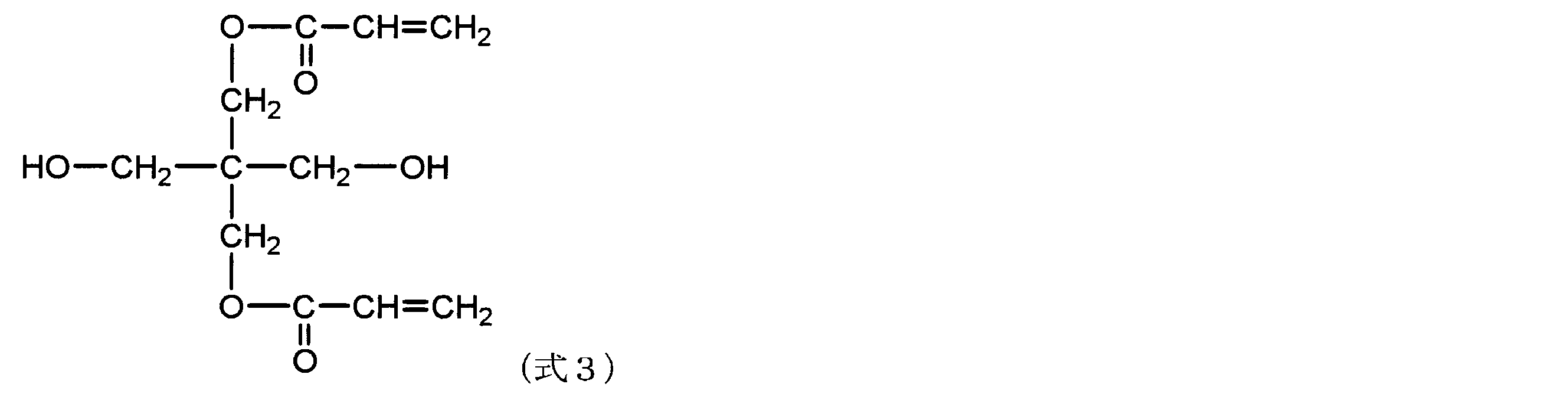

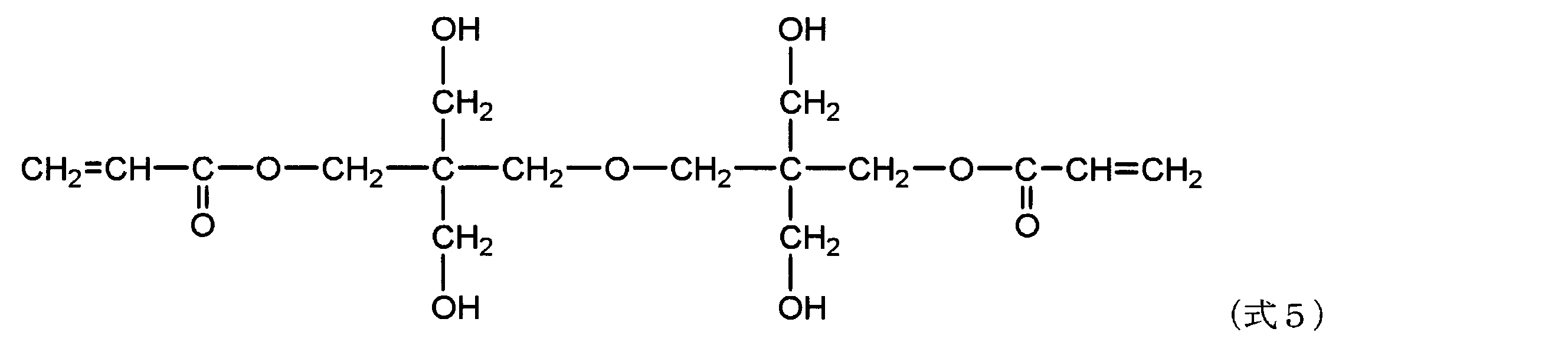

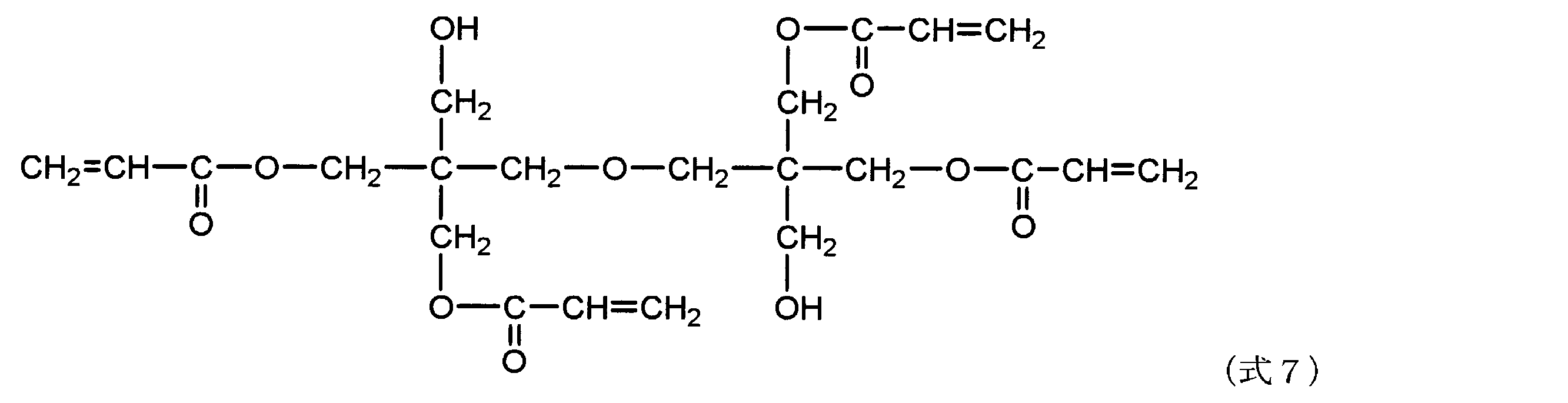




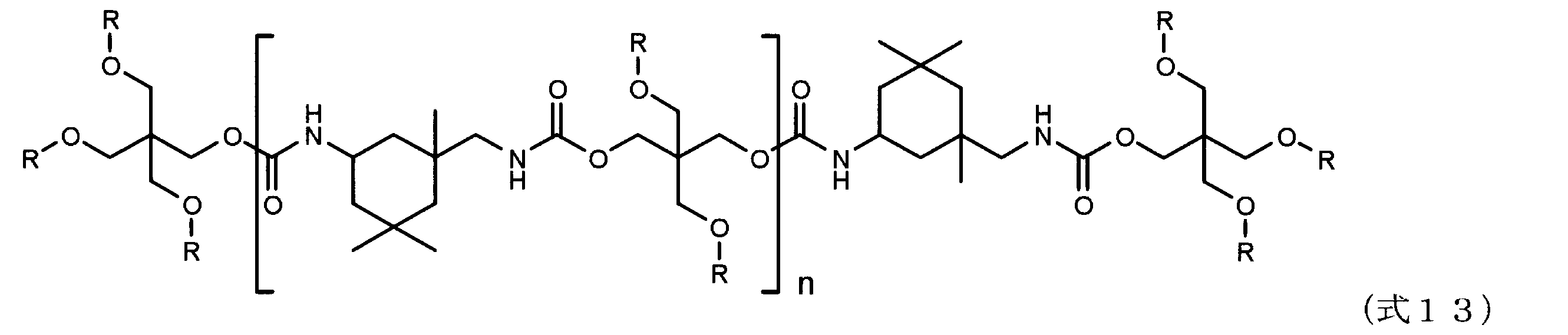




また、「IPDI(3-イソシアネートメチル-3,5,5-トリメチルシクロヘキシルイソシアネート)骨格」とは、下記式(b)に示す構造を示す。

プライマー層に含有されても良い酸化物の例としては、SiO2、ITO、ZrO2、TiO2、Bi2O3、Al2O3、Y2O3、CeO2、ZnO、CuO、SnO2、コバルトブルー等が挙げられる。より好ましくは、SiO2、ITO、ZrO2のいずれかあるいはこれらの混合物である。
酸化物微粒子の好ましい粒径としては、調光フィルムのヘイズ上昇抑制の点から50nm以下である。
本発明において、平均粒径とはBET法による比表面積測定装置より測定した比表面積より、下記式を用いて算出された粒径である。
平均粒径(nm)=6000/(密度[g/cm3]×比表面積[m2/g])
上記範囲の平均粒径を有する金属酸化物微粒子は、市販品を適宜選択すればいい。
エステル化触媒としては、トリエチルアミン、ピリジン誘導体、イミダゾール誘導体等の三級窒素を含有する化合物、トリメチルホスフィン、トリフェニルホスフィン等のリン化合物、またはテトラメチルアンモニウムクロライド、トリエチルアミン等のアミン塩等が用いられる。添加量は0.000001~20質量%、好ましくは0.001~1質量%である。
(製法1):ポリオール化合物、ポリイソシアネート化合物及びペンタエリスリトール骨格含有(メタ)アクリレートを一括して仕込んで反応させる方法。
(製法2):ポリオール化合物及びポリイソシアネート化合物を反応させ、次いでペンタエリスリトール骨格含有(メタ)アクリレートを反応させる方法。
(製法3):ポリイソシアネート化合物及びペンタエリスリトール骨格含有(メタ)アクリレートを反応させ、次いでポリオール化合物を反応させる方法。
(製法4):ポリイソシアネート化合物及びペンタエリスリトール骨格含有(メタ)アクリレートを反応させ、次いでポリオール化合物を反応させ、最後にまたペンタエリスリトール骨格含有(メタ)アクリレートを反応させる方法。
上記製法1~製法4において用いられるペンタエリスリトール骨格含有(メタ)アクリレートとしては、例えば、ペンタエリスリトールジアクリレート、ペンタエリスリトールトリアクリレート、ジペンタエリスリトールペンタアクリレート、ジペンタエリスリトールテトラアクリレート等の水酸基含有(メタ)アクリレート等が挙げられる。
ペンタエリスリトール骨格とIPDI骨格の両方を含有するウレタンアクリレートは、上記製法1~製法4のうち、ポリイソシアネート化合物としてイソホロンジイソシアネートを用いることにより得ることができる。
アリールパーオキシドとしては、ジクミルパーオキシド、クミルヒドロパーオキシド等が挙げられ、アシルパーオキシドとしては、ジラウロイルパーオキシド等が挙げられる。
アロイルパーオキシドとしては、ジベンゾイルパーオキシド等が挙げられる。
ケトンパーオキシドとしては、メチルエチルケトンパーオキシド、シクロヘキサノンパーオキシド等を挙げることができる。
アゾニトリルとしては、アゾビスイソブチロニトリル、アゾビスイソプロピルニトリル等が挙げられる。
本発明における調光層は、樹脂マトリックスと該樹脂マトリックス中に分散した光調整懸濁液とを含む調光材料からなる。なお、樹脂マトリックスは、高分子媒体からなり、光調整懸濁液は、光調整粒子が流動可能な状態で分散媒中に分散したものである。高分子媒体及び分散媒(光調整懸濁液中の分散媒)としては、高分子媒体及びその硬化物と分散媒とが、少なくともフィルム化したときに互いに相分離しうるものを用いる。互いに非相溶又は部分相溶性の高分子媒体と分散媒とを組み合わせて用いることが好ましい。
これら(A)エチレン性不飽和結合を有する樹脂のゲルパーミエーションクロマトグラフィーによって得られるポリスチレン換算の重量平均分子量は、20,000~100,000であることが好ましく、30,000~80,000であることがより好ましい。
CaI2(C6H4N2O4)・XH2O (X:1~2)
CaIa(C6H4N2O4)b・cH2O (a:3~7、b:1~2、c:1~3)
で表されるものが挙げられる。これらのポリヨウ化物は針状結晶であることが好ましい。
本発明による調光材料を利用して調光フィルムを製造するときに使用される透明導電性樹脂基材としては、一般的に、透明樹脂基材に、光透過率が80%以上の透明導電膜(ITO、SnO2、In2O3、有機導電膜等の膜)がコーティングされている、表面抵抗値が3~3000Ωの透明導電性樹脂基材を使用することができる。なお、光透過率はJIS K7105の全光線透過率の測定法に準拠して測定することができる。また、透明樹脂基材としては、例えば、高分子フィルム等を使用することができる。
本発明の調光フィルムは、調光材料を用いて形成することが可能であり、調光材料は、高分子媒体から形成された樹脂マトリックスと、樹脂マトリックス中に分散した光調整懸濁液とからなり、調光層を形成する。調光層は、調光層との密着性を向上させるためのプライマー層を有する2枚の透明導電性樹脂基材に挟持されているか、あるいはプライマー層を有する透明導電性樹脂基材とプライマー層を有さない透明導電性樹脂基材の2枚の透明導電性樹脂基材に挟持されている。
具体的には、以下の通りである。光調整粒子を溶媒に分散した液と光調整懸濁液の分散媒を混合し、ロータリーエバポレーター等で溶媒を留去し、光調整懸濁液を作製する。
次いで、光調整懸濁液及び高分子媒体を混合し、光調整懸濁液が高分子媒体中に液滴状態で分散した混合液(調光材料)とする。
あるいは、この調光材料をプライマー層を有する透明導電性樹脂基材上に一定な厚さで塗布し、必要に応じて調光材料に含まれる溶剤を乾燥除去した後、もう一方のプライマー層を有する透明導電性樹脂基材でラミネートした後に紫外線を照射し、高分子媒体を硬化させてもよい。プライマー層を有する透明導電性樹脂基材は、一方の透明導電性樹脂基材のみでもよい。2枚の透明導電性樹脂基材の両方の上に調光層を形成し、それを調光層同士が密着するようにして積層してもよい。調光層の厚みは、5~1,000μmが好ましく、20~100μmがより好ましい。
調光フィルムを作動させるための使用電源は交流で、10~100ボルト(実効値)、30Hz~500kHzの周波数範囲とすることができる。
本発明の調光フィルムは、電界に対する応答時間を、消色時には1~50秒以内、着色時には1~100秒以内とすることができる。
また、紫外線耐久性は、750W紫外線等を利用した紫外線照射試験の結果、250時間が経過した後にも安定な可変特性を示し、-50℃~90℃で長時間放置した場合にも、初期の可変特性を維持することが可能である。
光調整粒子を製造するために、撹拌機及び冷却管を装着した500mlの四つ口フラスコに、ニトロセルロース1/4LIG(商品名、ベルジュラックNC社製)15質量%の酢酸イソアミル(試薬特級、和光純薬工業(株)製)希釈溶液87.54g、酢酸イソアミル44.96g、脱水CaI2(化学用、和光純薬工業(株)製)4.5g、無水エタノール(有機合成用、和光純薬工業(株)製)2.0g、精製水(精製水、和光純薬工業(株)製)0.6gの溶液に、ヨウ素(JIS試薬特級、和光純薬工業(株)製)4.5gを溶解し、光調整粒子の基盤形成物質であるピラジン-2,5-ジカルボン酸2水和物(PolyCarbon Industries製)3gを添加した。45℃で3時間撹拌して反応を終了させた後、超音波分散機で2時間分散させた。このとき、混合液の色相は、茶色から暗紺色に変化した。次に、反応溶液から一定な大きさの光調整粒子を取り出すために、遠心分離機を用いて光調整粒子を分離した。反応溶液を750Gの速度で10分間遠心分離して沈殿物を取り除き、更に7390Gで2時間遠心分離して、浮遊物を取り除き、沈殿物粒子を回収した。この沈殿物粒子は、サブミクロン粒子アナライザ(製品名:N4MD、ベックマン・コールタ社製)で測定した平均粒径が0.36μmを有する針状結晶であった。この沈殿物粒子を光調整粒子とした。
前記の(光調整粒子の製造例)で得た光調整粒子45.5gを、光調整懸濁液の分散媒としてのアクリル酸ブチル(和光特級、和光純薬工業(株)製)/メタクリル酸2,2,2-トリフルオロエチル(工業用、共栄社化学工業(株)製)/アクリル酸2-ヒドロキシエチル(和光1級、和光純薬工業(株)製)共重合体(モノマーモル比:18/1.5/0.5、重量平均分子量:2,000、屈折率1.4719)50gに加え、撹拌機により30分間混合した。次いで酢酸イソアミルをロータリーエバポレーターを用いて133Paの真空で80℃、3時間減圧除去し、光調整粒子の沈降及び凝集現象のない安定な液状の光調整懸濁液を製造した。
ディーンスタークトラップ、冷却管、撹拌機、加熱装置を備えた四つ口フラスコに、両末端シラノールポリジメチルシロキサン(試薬、チッソ(株)製)17.8g、両末端シラノールポリジメチルジフェニルシロキサン(試薬、チッソ(株)製)62.2g、(3-アクリロキシプロピル)メチルジメトキシシラン(試薬、チッソ(株)製)20g、2-エチルヘキサン錫(和光純薬工業(株)製)0.1gを仕込み、ヘプタン中で100℃で3時間リフラックスし、反応を行った。次いで、トリメチルエトキシシラン(試薬、チッソ(株)製)25gを添加し、2時間リフラックスし、脱アルコール反応させ、ヘプタンをロータリーエバポレーターを用いて100Paの真空で80℃、4時間減圧除去し、重量平均分子量35000、屈折率1.4745のエネルギー線硬化型シリコーン系樹脂を得た。NMRの水素積分比からこの樹脂のエチレン性不飽和結合濃度は、0.31モル/kgであった。なお、エチレン性不飽和結合濃度は下記の方法により測定した。
エチレン性不飽和結合濃度(モル/kg)は、NMRの水素積分比から算出した(エチレン性不飽和結合の水素の6ppm近傍の積分値、フェニル基の水素の7.5ppm近傍の積分値、及びメチル基の水素の0.1ppm近傍の積分値を使用)。測定溶媒はCDCl3とした。上記で製造した樹脂においては、NMRの水素積分比から算出した重量比率がメチル基:フェニル基:エチレン性不飽和結合基=11:6.4:1、全体の中のエチレン性不飽和結合基の割合は5.4%、各々の分子量から1分子あたりのエチレン性不飽和結合基の数は9.35、よって、1kgあたりのモル数は0.31モル/kgと算出した。
上記(エネルギー線硬化型シリコーン系樹脂の製造例)で得たエネルギー線硬化型シリコーン系樹脂10g、光重合開始剤としてのビス(2,4,6-トリメチルベンゾイル)フェニルフォスフィンオキサイド(チバ・スペシャルティ・ケミカルス(株)製)0.2g、着色防止剤としてのジブチル錫ジラウレート0.3gに、前記(光調整懸濁液の製造例)で得た光調整懸濁液2.5gを添加し、1分間機械的に混合し、調光材料を製造した。
プライマー層の厚みは、68nmであった。
目視により調光フィルム端部(調光層が除去され透明導電膜が露出した部分)を観察したところ、調光フィルムの厚み方向中心部へ向かっての透明導電性樹脂基材の曲がりこみは、きわめて小さかった(図4)。なお、調光フィルム中の光調整懸濁液の液滴の大きさ、調光フィルムの光透過率、調光層と透明導電性樹脂基材との接着強度、プライマー層膜厚、プライマー層の転写性、タック性、剥離モードの評価は下記のように測定した。
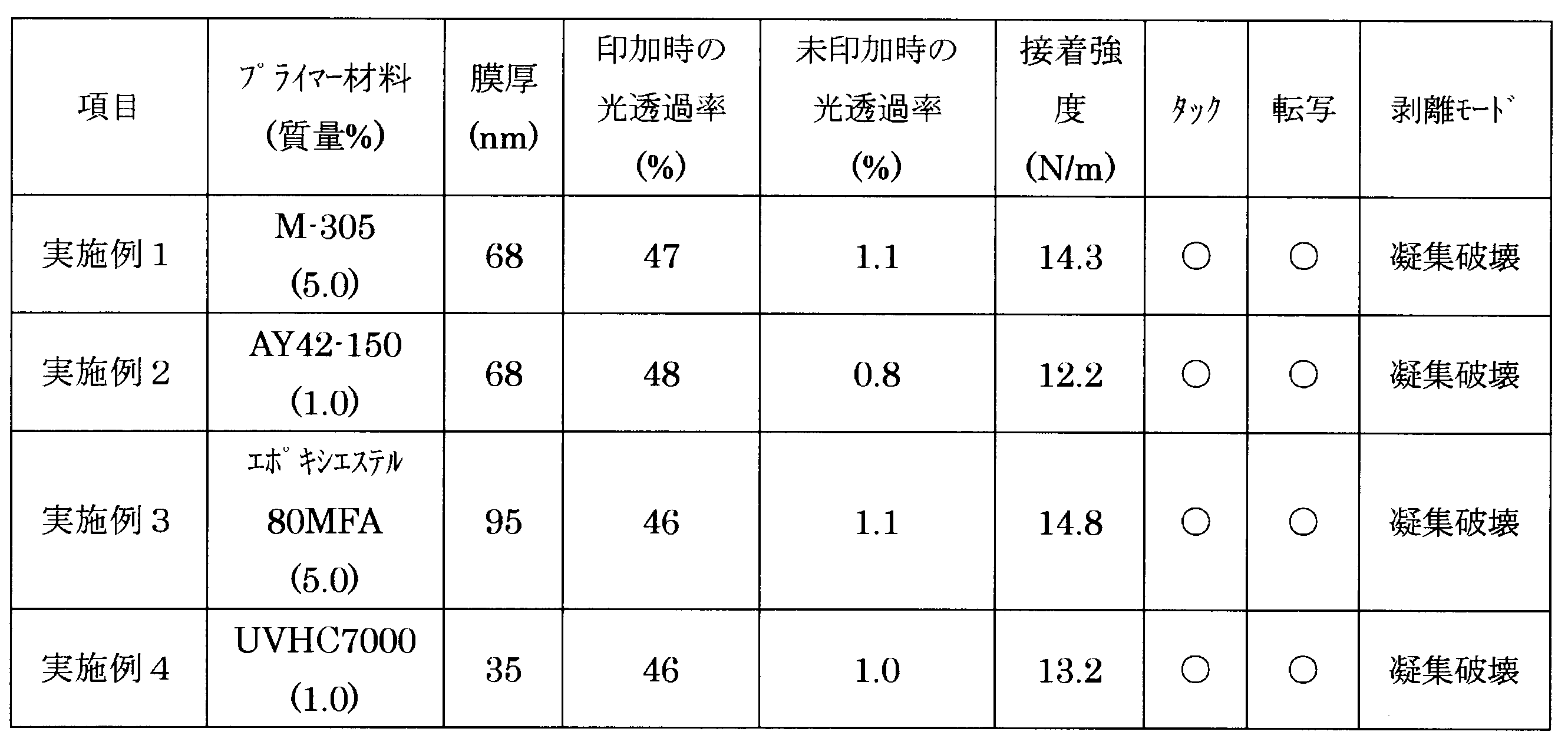
結果を表1に示す。
調光フィルムの一方の面方向からSEM写真を撮影し、任意に選択した複数の液滴直径を測定し、その平均値として算出した。
分光式色差計SZ-Σ90(日本電色工業(株)製)を使用し、A光源、視野角2度で測定したY値(%)を光透過率とした。なお、電界印加時と未印加時の光透過率を測定した。
接着強度の測定はレオメーター、STROGRAPH E-S(東洋精機(株))を使用し、調光フィルムの調光層から透明導電性樹脂基材を、90°ピール、ロード加重50N、引き上げスピード50mm/minで引き剥がすように行い、接着強度を測定した。
プライマー層の膜厚は、瞬間分光光度計F-20(フィルメトリクス(株)製)を用いて測定した。
プライマー層とITO/PETのPET面を重ね合わせて約1kgの重りを乗せた状態で1週間保管し、プライマー層がITO/PETのPET面に転写しているか目視で確認した。転写の割合がプライマー塗工面積全体の5%以下の場合を○、5~30%を△、30%以上を×とした。
プライマー層作製済みITO/PET(実施例1で作製された、調光層を形成する前の、プライマー層が形成された透明導電性樹脂基材)におけるタックの評価は下記のようにして行った。
まず、プライマー層作製済みITO/PET(実施例1で作製された、調光層を形成する前の、プライマー層が形成された透明導電性樹脂基材)に調光材料を塗工する。
上記接着強度の測定後に得られた、透明導電性樹脂基材を引き剥がした調光フィルムにおいて、調光フィルムからの透明導電性樹脂基材の剥離の仕方を下記のように評価基準を設け評価した。2枚の透明導電性樹脂基材の両方に調光層が残っていて、引きはがし時に調光層内部で破壊が起きている場合を凝集破壊とし、また、片方の透明導電性樹脂基材のみに調光層が残っていて、引きはがし時に調光層自体は破壊されない(基材のみが剥がれる)場合を界面剥離とした。
プライマー層を形成する際の溶液として、AY42-150(商品名、東レ・ダウコーニング(株))をイソプロピルアルコール:1-メトキシ-2-プロパノール=1:1混合溶剤に1.0質量%となるように溶解した溶液を、マイクログラビア法(メッシュ#150)を用いて、透明導電性樹脂基材の透明導電膜上に全面塗布して、50℃/30s、60℃/30s、70℃/1min乾燥後、UV照射1000mJ/cm2(メタルハライドランプ)で光硬化してプライマー層を形成したことを除いては、実施例1と同様にして、調光フィルムを作製し各種の測定を行った。結果を表1に示す。なお、AY42-150には光重合開始剤(1-ヒドロキシ-シクロヘキシル-フェニル-ケトン)が含有されている。プライマー層の厚みは、68nmであった。
なお、プライマー層の形成に用いたAY42-150は、SiO2微粒子含有、ジペンタエリスリトール系アクリレートとメタクリル酸モノマーとシロキサン化合物の混合物である。
プライマー層を形成する際の溶液として、グリセリンジグリシジルエーテルのアクリル酸付加物(商品名:エポキシエステル80MFA、共栄社化学(株)製)をメチルエチルケトン/シクロヘキサノン=1:1の混合溶剤に5.0質量%となるように溶解させた溶液を、アプリケーター法を用いてギャップ10μmの条件で透明導電性樹脂基材の透明導電膜上に全面塗布して、50℃/30s、60℃/30s、70℃/1min乾燥後、UV照射1000mJ/cm2(メタルハライドランプ)で光硬化してプライマー層を形成したことを除いては、実施例1と同様にして、調光フィルムを作製し各種の測定を行った。結果を表1に示す。このとき、光重合開始剤(1-ヒドロキシ-シクロヘキシル-フェニル-ケトン)をエポキシエステル80MFAに対して3質量%になるように添加した。
プライマー層の厚みは、95nmであった。
プライマー層を形成する際の溶液として、UVHC7000(商品名、モメンティブ・パフォーマンス・マテリアルズ合同会社製)をイソプロピルアルコールに1.0質量%となるように溶解した溶液を、マイクログラビア法(メッシュ#150)を用いて透明導電性樹脂基材の透明導電膜上に全面塗布して、50℃/30s、60℃/30s、70℃/1min乾燥後、UV照射500mJ/cm2(水銀ランプ)で光硬化してプライマー層を形成したことを除いては、実施例1と同様にして、調光フィルムを作製し各種の測定を行った。結果を表1に示す。なお、UVHC7000には光重合開始剤(1-ヒドロキシ-シクロヘキシル-フェニル-ケトン)がUVHC7000に対して3.5質量%になるように含有されている。
プライマー層の厚みは、35nmであった。
なお、プライマー層の形成に用いたUVHC7000は、フィラー非含有、IPDI骨格含有ペンタエリスリトール系ウレタンアクリレートと、トリプロピレングリコールジアクリレート、1,6-ヘキサンジオールジアクリレートを含有している。
ITOの透明導電膜がコーティングされているPETフィルム(商品名:300R、東洋紡績(株)製、厚み125μm)からなる透明導電性樹脂基材に、プライマー層を設けず、そのまま使用したことを除いては、実施例1と同様にして、調光フィルムを作製し各種の測定を行った。結果を表2に示す。
プライマー層を形成する際の溶液として、ジペンタエリスリトールヘキサアクリレート(商品名:アロニックスM-405、東亞合成(株)製)をメチルエチルケトン/シクロヘキサノン=1:1の混合溶剤に5.0質量%となるように溶解させた溶液を、アプリケーター法を用いてギャップ10μmの条件で透明導電性樹脂基材の透明導電膜上に全面塗布して、50℃/30s、60℃/30s、70℃/1min乾燥後、UV照射1000mJ/cm2(メタルハライドランプ)で光硬化してプライマー層を形成したことを除いては、実施例1と同様にして、調光フィルムを作製し各種の測定を行った。結果を表2に示す。このとき、光重合開始剤(1-ヒドロキシ-シクロヘキシル-フェニル-ケトン)をアロニックスM-405に対して3質量%になるように添加した。
プライマー層の厚みは、77nmであった。
プライマー層を形成する際の溶液として、イソシアヌル酸EO変性トリアクリレート(商品名:アロニックスM-315、東亞合成(株)製)をメチルエチルケトン/シクロヘキサノン=1:1の混合溶剤に5.0質量%となるように溶解させた溶液を、アプリケーター法を用いてギャップ10μmの条件で透明導電性樹脂基材の透明導電膜上に全面塗布して、50℃/30s、60℃/30s、70℃/1min乾燥後、UV照射1000mJ/cm2(メタルハライドランプ)で光硬化してプライマー層を形成したことを除いては、実施例1と同様にして、調光フィルムを作製し各種の測定を行った。結果を表2に示す。このとき、光重合開始剤(1-ヒドロキシ-シクロヘキシル-フェニル-ケトン)をアロニックスM-315に対して3質量%になるように添加した。
プライマー層の厚みは、82nmであった。
プライマー層を形成する際の溶液として、アクリル酸ダイマー(商品名:アロニックスM-5600、東亞合成(株)製)をメチルエチルケトン:シクロヘキサノン=1:1の混合溶剤に5.0質量%となるように溶解させた溶液を、アプリケーター法を用いてギャップ10μmの条件で透明導電性樹脂基材の透明導電膜上に全面塗布して、50℃/30s、60℃/30s、70℃/1min乾燥後、UV照射1000mJ/cm2(メタルハライドランプ)で光硬化してプライマー層を形成したことを除いては、実施例1と同様にして、調光フィルムを作製し各種の測定を行った。結果を表2に示す。このとき、光重合開始剤(1-ヒドロキシ-シクロヘキシル-フェニル-ケトン)をアロニックスM-5600に対して3質量%になるように添加した。
プライマー層の厚みは、48nmであった。
プライマー層を形成する際の溶液として、フタル酸モノヒドロキシエチルアクリレート(商品名:アロニックスM-5400、東亞合成(株)製)をメチルエチルケトン:シクロヘキサノン=1:1の混合溶剤に5.0質量%となるように溶解させた溶液を、アプリケーター法を用いてギャップ10μmの条件で透明導電性樹脂基材の透明導電膜上に全面塗布して、50℃/30s、60℃/30s、70℃/1min乾燥後、UV照射1000mJ/cm2(メタルハライドランプ)で光硬化してプライマー層を形成したことを除いては、実施例1と同様にして、調光フィルムを作製し各種の測定を行った。結果を表2に示す。このとき、光重合開始剤(1-ヒドロキシ-シクロヘキシル-フェニル-ケトン)をアロニックスM-5400に対して3質量%になるように添加した。
プライマー層の厚みは、56nmであった。
プライマー層を形成する際の溶液として、ω-カルボキシ-ポリカプロラクトンモノアクリレート(商品名:アロニックスM-5300、東亞合成(株)製)をメチルエチルケトン:シクロヘキサノン=1:1の混合溶剤に5.0質量%となるように溶解させた溶液を、アプリケーター法を用いてギャップ10μmの条件で透明導電性樹脂基材の透明導電膜上に全面塗布して、50℃/30s、60℃/30s、70℃/1min乾燥後、UV照射1000mJ/cm2(メタルハライドランプ)で光硬化してプライマー層を形成したことを除いては、実施例1と同様にして、調光フィルムを作製し各種の測定を行った。結果を表2に示す。このとき、光重合開始剤(1-ヒドロキシ-シクロヘキシル-フェニル-ケトン)をアロニックスM-5300に対して3質量%になるように添加した。
プライマー層の厚みは、72nmであった。
プライマー層を形成する際の溶液として、1,6-ヘキサンジオールジアクリレート(商品名:ライトアクリレート1,6HX-A、共栄社化学(株)製)をメチルエチルケトン:シクロヘキサノン=1:1の混合溶剤に5.0質量%となるように溶解させた溶液を、アプリケーター法を用いてギャップ10μmの条件で透明導電性樹脂基材の透明導電膜上に全面塗布して、50℃/30s、60℃/30s、70℃/1min乾燥後、UV照射1000mJ/cm2(メタルハライドランプ)で光硬化してプライマー層を形成したことを除いては、実施例1と同様にして、調光フィルムを作製し各種の測定を行った。結果を表2に示す。このとき、光重合開始剤(1-ヒドロキシ-シクロヘキシル-フェニル-ケトン)をライトアクリレート1,6HX-Aに対して3質量%になるように添加した。
プライマー層の厚みは、55nmであった。
プライマー層を形成する際の溶液として、ジメチロール-トリシクロデカンジアクリレート(商品名:ライトアクリレートDCP-A、共栄社化学(株)製)をメチルエチルケトン:シクロヘキサノン=1:1の混合溶剤に5.0質量%となるように溶解させた溶液を、アプリケーター法を用いてギャップ10μmの条件で透明導電性樹脂基材の透明導電膜上に全面塗布して、50℃/30s、60℃/30s、70℃/1min乾燥後、UV照射1000mJ/cm2(メタルハライドランプ)で光硬化してプライマー層を形成したことを除いては、実施例1と同様にして、調光フィルムを作製し各種の測定を行った。結果を表2に示す。このとき、光重合開始剤(1-ヒドロキシ-シクロヘキシル-フェニル-ケトン)をライトアクリレートDCP-Aに対して3質量%になるように添加した。
プライマー層の厚みは、45nmであった。

これに対し、実施例はどの場合も、分子内に水酸基を有する(メタ)アクリレートを含有の材料から成るプライマー層を用いることによって、接着強度が大幅に向上し、剥離も凝集破壊モードで生じており、調光特性を保持したまま密着性を大幅に向上できた。
2 樹脂マトリックス
3 液滴
4 透明導電性樹脂基材
5a 透明導電膜
5b 透明樹脂基材
6 プライマー層
7 電源
8 スイッチ
9 分散媒
10 光調整粒子
11 入射光
12 調光層を除去して露出した透明導電膜の表面
13 透明導電膜に電圧印加する導線
Claims (7)
- 2つの透明導電性樹脂基材と、前記2つの透明導電性樹脂基材に挟持された調光層を有し、該調光層が、樹脂マトリックスと前記樹脂マトリックス中に分散した光調整懸濁液とを含む調光フィルムであって、
前記透明導電性樹脂基材の少なくとも一方の前記調光層側にプライマー層を有し、該プライマー層が、分子内に水酸基を有する(メタ)アクリレートを含有する材料から成る薄膜で形成された調光フィルム。 - 前記水酸基がアルコール性水酸基である請求項1記載の調光フィルム。
- 前記分子内に水酸基を有する(メタ)アクリレートが、ペンタエリスリトール骨格を有する(メタ)アクリレートである請求項1記載の調光フィルム。
- 前記プライマー層が、酸化物微粒子を含有する請求項1~3のいずれか一項記載の調光フィルム。
- 前記酸化物微粒子が、SiO2、ITO、ZrO2のいずれか、あるいはそれらの混合物である請求項4記載の調光フィルム。
- 前記プライマー層が、(メタ)アクリレートを熱硬化あるいは光硬化させた薄膜で形成された請求項1~5のいずれか一項に記載の調光フィルム。
- 前記プライマー層の膜厚が500nm以下である請求項1~6いずれか一項に記載の調光フィルム。
Priority Applications (4)
| Application Number | Priority Date | Filing Date | Title |
|---|---|---|---|
| EP09808212.6A EP2322986B1 (en) | 2008-08-19 | 2009-08-11 | Light-modulating film |
| JP2010525671A JP5104954B2 (ja) | 2008-08-19 | 2009-08-11 | 調光フィルム |
| AU2009283544A AU2009283544B2 (en) | 2008-08-19 | 2009-08-11 | Light-modulating film |
| US13/059,555 US10156767B2 (en) | 2008-08-19 | 2009-08-11 | Light control film |
Applications Claiming Priority (2)
| Application Number | Priority Date | Filing Date | Title |
|---|---|---|---|
| JP2008210561 | 2008-08-19 | ||
| JP2008-210561 | 2008-08-19 |
Publications (1)
| Publication Number | Publication Date |
|---|---|
| WO2010021276A1 true WO2010021276A1 (ja) | 2010-02-25 |
Family
ID=41707154
Family Applications (1)
| Application Number | Title | Priority Date | Filing Date |
|---|---|---|---|
| PCT/JP2009/064192 Ceased WO2010021276A1 (ja) | 2008-08-19 | 2009-08-11 | 調光フィルム |
Country Status (5)
| Country | Link |
|---|---|
| US (1) | US10156767B2 (ja) |
| EP (1) | EP2322986B1 (ja) |
| JP (1) | JP5104954B2 (ja) |
| AU (1) | AU2009283544B2 (ja) |
| WO (1) | WO2010021276A1 (ja) |
Cited By (10)
| Publication number | Priority date | Publication date | Assignee | Title |
|---|---|---|---|---|
| JP2012042521A (ja) * | 2010-08-12 | 2012-03-01 | Hitachi Chem Co Ltd | 調光フィルム |
| JP2012042519A (ja) * | 2010-08-12 | 2012-03-01 | Hitachi Chem Co Ltd | 調光フィルム |
| JP2012042520A (ja) * | 2010-08-12 | 2012-03-01 | Hitachi Chem Co Ltd | 調光フィルム |
| JP2013028082A (ja) * | 2011-07-28 | 2013-02-07 | Hitachi Chemical Co Ltd | 調光フィルム |
| JP5621596B2 (ja) * | 2009-02-13 | 2014-11-12 | 日立化成株式会社 | 調光フィルム |
| US9983456B2 (en) | 2008-08-19 | 2018-05-29 | Hitachi Chemical Company, Ltd. | Light control film |
| US10156767B2 (en) | 2008-08-19 | 2018-12-18 | Hitachi Chemical Company, Ltd. | Light control film |
| US10288976B2 (en) | 2009-02-13 | 2019-05-14 | Hitachi Chemical Company, Ltd. | Light control film |
| WO2024177080A1 (ja) | 2023-02-20 | 2024-08-29 | 積水化学工業株式会社 | 合わせパネル用中間膜構成体、及び合わせパネル構成体 |
| US12343977B2 (en) | 2020-11-05 | 2025-07-01 | Sekisui Chemical Co., Ltd. | Interlayer film structure for laminated panel, and laminated panel structure |
Families Citing this family (3)
| Publication number | Priority date | Publication date | Assignee | Title |
|---|---|---|---|---|
| JP5614415B2 (ja) * | 2010-01-26 | 2014-10-29 | 日立化成株式会社 | 調光フィルム |
| CN104885001B (zh) * | 2012-02-10 | 2017-03-08 | 尖端研究公司 | 具有较暗的关态透光率和较亮的开态透光率的spd膜 |
| CN104144975B (zh) * | 2012-02-25 | 2017-09-22 | 三菱化学株式会社 | 涂布膜 |
Citations (25)
| Publication number | Priority date | Publication date | Assignee | Title |
|---|---|---|---|---|
| US1955923A (en) | 1932-08-11 | 1934-04-24 | Land Edwin Herbert | Light valve and method of operation |
| US1963496A (en) | 1933-01-16 | 1934-06-19 | Edwin H Land | Light valve |
| GB433455A (en) | 1933-01-16 | 1935-08-15 | Edwin Herbert Land | Improvements in and relating to polarizing bodies |
| US2041138A (en) | 1930-03-10 | 1936-05-19 | Sheet Polarizer Company Inc | Process of forming improved light polarizing bodies |
| US2306108A (en) | 1939-05-04 | 1942-12-22 | Polaroid Corp | Method of manufacturing light polarizing material |
| US2375963A (en) | 1943-05-07 | 1945-05-15 | Polaroid Corp | Process of manufacturing lightpolarizing material |
| US3756700A (en) | 1972-02-09 | 1973-09-04 | Research Frontiers Inc | Method and apparatus for increasing optical density ratios of light valves |
| US3912365A (en) | 1971-07-26 | 1975-10-14 | Research Frontiers Inc | Method and apparatus for maintaining the separation of plates |
| US4078856A (en) | 1976-03-17 | 1978-03-14 | Research Frontiers Incorporated | Light valve |
| JPS5336515B1 (ja) | 1971-07-19 | 1978-10-03 | ||
| US4247175A (en) | 1978-10-31 | 1981-01-27 | Research Frontiers Incorporated | Light valve containing improved light valve suspension |
| US4270841A (en) | 1978-10-31 | 1981-06-02 | Research Frontiers Incorporated | Light valve containing suspension of perhalide of alkaloid acid salt |
| US4273422A (en) | 1978-08-10 | 1981-06-16 | Research Frontiers Incorporated | Light valve containing liquid suspension including polymer stabilizing system |
| JPS5752371B2 (ja) | 1979-11-22 | 1982-11-08 | ||
| US4407565A (en) | 1981-01-16 | 1983-10-04 | Research Frontiers Incorporated | Light valve suspension containing fluorocarbon liquid |
| JPS5853656B2 (ja) | 1979-02-02 | 1983-11-30 | テ−・ハ−・ゴルトシユミツト・アクチエンゲゼルシヤフト | 平担な支持体用の不粘着性被覆材料用作用物質として好適なオルガノポリシロキサンの製法 |
| US4422963A (en) | 1977-05-11 | 1983-12-27 | Research Frontiers Incorporated | Light valve polarizing materials and suspensions thereof |
| JPS6117863B2 (ja) | 1983-05-10 | 1986-05-09 | Shinetsu Chem Ind Co | |
| JPS6368642A (ja) | 1986-09-10 | 1988-03-28 | Koei Chem Co Ltd | コ−テイング用組成物及び合成樹脂成形品 |
| JPH05273528A (ja) * | 1992-03-25 | 1993-10-22 | Nippon Kasei Chem Co Ltd | 液晶デバイス及びその製造法 |
| JPH0586972B2 (ja) | 1985-12-17 | 1993-12-15 | Sumitomo Chemical Co | |
| JP2002189123A (ja) | 2000-12-19 | 2002-07-05 | Hitachi Chem Co Ltd | 調光材料、調光フィルム及び調光フィルムの製造方法 |
| JP2003525468A (ja) * | 2000-03-02 | 2003-08-26 | リサーチ フロンティアーズ インコーポレイテッド | Spdフィルムの接着を増強する方法及び材料、及びそれを含む光弁 |
| JP2006505013A (ja) * | 2002-10-31 | 2006-02-09 | シピックス・イメージング・インコーポレーテッド | いくつかのディスプレイセル層を有する電気泳動または電磁気泳動ディスプレイデバイスおよび製造方法 |
| JP2008210561A (ja) | 2007-02-23 | 2008-09-11 | Matsushita Electric Works Ltd | 無電極放電灯装置及びそれを備えた照明器具 |
Family Cites Families (33)
| Publication number | Priority date | Publication date | Assignee | Title |
|---|---|---|---|---|
| US3772874A (en) | 1971-12-09 | 1973-11-20 | Princeton Materials Science | Display apparatus and chronometer utilizing optically variable liquid |
| EP0081308A1 (en) | 1981-12-04 | 1983-06-15 | The Secretary of State for Defence in Her Britannic Majesty's Government of the United Kingdom of Great Britain and | Liquid crystal display devices |
| JPS6451916A (en) | 1987-08-22 | 1989-02-28 | Tigers Polymer | Manufacture of thin rubber sheet |
| JP2992137B2 (ja) | 1990-09-28 | 1999-12-20 | 信越化学工業株式会社 | 全固体調光装置 |
| JPH04335326A (ja) | 1991-05-10 | 1992-11-24 | Nippon Sheet Glass Co Ltd | 調光装置 |
| US5639546A (en) | 1991-09-03 | 1997-06-17 | Minnesota Mining And Manufacturing Company | Coated article having improved adhesion to organic coatings |
| US5463491A (en) * | 1991-11-01 | 1995-10-31 | Research Frontiers Incorporated | Light valve employing a film comprising an encapsulated liquid suspension, and method of making such film |
| JPH06118203A (ja) | 1992-10-08 | 1994-04-28 | Kureha Chem Ind Co Ltd | プラスチックレンズ |
| JPH07219697A (ja) | 1994-02-01 | 1995-08-18 | Seiko Epson Corp | タッチパネル及びその製造法 |
| JPH07296672A (ja) | 1994-04-22 | 1995-11-10 | Seiko Epson Corp | タッチパネル |
| JPH091963A (ja) | 1995-06-15 | 1997-01-07 | Dainippon Printing Co Ltd | 可逆表示可能な転写箔及び可逆表示可能な記録媒体 |
| US5935683A (en) * | 1996-04-24 | 1999-08-10 | Mitsui Chemicals, Inc. | Waterproof material and method for applying it |
| TW594190B (en) | 1996-09-13 | 2004-06-21 | Matsushita Electric Industrial Co Ltd | Polymer dispersion type liquid crystal display element and producing method therefor |
| US6987602B2 (en) | 1999-06-07 | 2006-01-17 | Research Frontiers Incorporated | Anisometrically shaped carbon and/or graphite particles, liquid suspensions and films thereof and light valves comprising same |
| JP3915339B2 (ja) | 1999-09-10 | 2007-05-16 | 富士ゼロックス株式会社 | 調光ガラス |
| JP2002080754A (ja) | 2000-09-11 | 2002-03-19 | C I Kasei Co Ltd | 紫外線硬化型透明導電性塗料 |
| JP3666389B2 (ja) | 2000-12-19 | 2005-06-29 | 日産自動車株式会社 | 車載レーダの照射領域検査装置及び車載レーダの照射領域検査方法 |
| US6480322B2 (en) | 2001-03-14 | 2002-11-12 | 3M Innovative Properties Company | Method of improving the respondability of moveable structures in a display |
| JP2002287884A (ja) | 2001-03-26 | 2002-10-04 | Kawaguchiko Seimitsu Co Ltd | タッチパネル |
| MXPA03009151A (es) * | 2001-04-09 | 2004-02-12 | Toppan Printing Co Ltd | Cuerpo laminado. |
| TWI314237B (en) | 2002-07-17 | 2009-09-01 | Sipix Imaging Inc | Novel methods and compositions for improved electrophoretic display performance |
| JP2004145204A (ja) | 2002-10-28 | 2004-05-20 | Canon Inc | 電気泳動表示素子及びその作成方法 |
| EP1616217B1 (en) | 2003-03-27 | 2010-10-20 | E Ink Corporation | Electro-optic assemblies |
| JP2005032624A (ja) | 2003-07-08 | 2005-02-03 | Nec Kansai Ltd | 電界発光灯及びその製造方法 |
| US7301693B2 (en) | 2004-08-13 | 2007-11-27 | Sipix Imaging, Inc. | Direct drive display with a multi-layer backplane and process for its manufacture |
| JP2006124572A (ja) | 2004-10-29 | 2006-05-18 | Dainippon Toryo Co Ltd | 活性エネルギー線硬化性導電膜形成用組成物 |
| JP2008158043A (ja) | 2006-12-21 | 2008-07-10 | Hitachi Chem Co Ltd | 調光フィルム |
| US8098419B2 (en) | 2006-12-21 | 2012-01-17 | Hitachi Chemical Co., Ltd. | Light control film and light control glass |
| JP2008274177A (ja) | 2007-05-07 | 2008-11-13 | Shin Etsu Chem Co Ltd | プライマー組成物及び被覆物品 |
| US8154791B2 (en) | 2008-01-23 | 2012-04-10 | Hitachi Chemical Company, Ltd. | Light control film |
| JP5152334B2 (ja) | 2008-08-19 | 2013-02-27 | 日立化成工業株式会社 | 調光フィルム |
| AU2009283544B2 (en) | 2008-08-19 | 2013-01-31 | Gauzy Ltd. | Light-modulating film |
| AU2010214431B2 (en) | 2009-02-13 | 2014-05-29 | Hitachi Chemical Company, Ltd. | Light modulation film |
-
2009
- 2009-08-11 AU AU2009283544A patent/AU2009283544B2/en active Active
- 2009-08-11 EP EP09808212.6A patent/EP2322986B1/en active Active
- 2009-08-11 WO PCT/JP2009/064192 patent/WO2010021276A1/ja not_active Ceased
- 2009-08-11 JP JP2010525671A patent/JP5104954B2/ja active Active
- 2009-08-11 US US13/059,555 patent/US10156767B2/en active Active
Patent Citations (25)
| Publication number | Priority date | Publication date | Assignee | Title |
|---|---|---|---|---|
| US2041138A (en) | 1930-03-10 | 1936-05-19 | Sheet Polarizer Company Inc | Process of forming improved light polarizing bodies |
| US1955923A (en) | 1932-08-11 | 1934-04-24 | Land Edwin Herbert | Light valve and method of operation |
| US1963496A (en) | 1933-01-16 | 1934-06-19 | Edwin H Land | Light valve |
| GB433455A (en) | 1933-01-16 | 1935-08-15 | Edwin Herbert Land | Improvements in and relating to polarizing bodies |
| US2306108A (en) | 1939-05-04 | 1942-12-22 | Polaroid Corp | Method of manufacturing light polarizing material |
| US2375963A (en) | 1943-05-07 | 1945-05-15 | Polaroid Corp | Process of manufacturing lightpolarizing material |
| JPS5336515B1 (ja) | 1971-07-19 | 1978-10-03 | ||
| US3912365A (en) | 1971-07-26 | 1975-10-14 | Research Frontiers Inc | Method and apparatus for maintaining the separation of plates |
| US3756700A (en) | 1972-02-09 | 1973-09-04 | Research Frontiers Inc | Method and apparatus for increasing optical density ratios of light valves |
| US4078856A (en) | 1976-03-17 | 1978-03-14 | Research Frontiers Incorporated | Light valve |
| US4422963A (en) | 1977-05-11 | 1983-12-27 | Research Frontiers Incorporated | Light valve polarizing materials and suspensions thereof |
| US4273422A (en) | 1978-08-10 | 1981-06-16 | Research Frontiers Incorporated | Light valve containing liquid suspension including polymer stabilizing system |
| US4247175A (en) | 1978-10-31 | 1981-01-27 | Research Frontiers Incorporated | Light valve containing improved light valve suspension |
| US4270841A (en) | 1978-10-31 | 1981-06-02 | Research Frontiers Incorporated | Light valve containing suspension of perhalide of alkaloid acid salt |
| JPS5853656B2 (ja) | 1979-02-02 | 1983-11-30 | テ−・ハ−・ゴルトシユミツト・アクチエンゲゼルシヤフト | 平担な支持体用の不粘着性被覆材料用作用物質として好適なオルガノポリシロキサンの製法 |
| JPS5752371B2 (ja) | 1979-11-22 | 1982-11-08 | ||
| US4407565A (en) | 1981-01-16 | 1983-10-04 | Research Frontiers Incorporated | Light valve suspension containing fluorocarbon liquid |
| JPS6117863B2 (ja) | 1983-05-10 | 1986-05-09 | Shinetsu Chem Ind Co | |
| JPH0586972B2 (ja) | 1985-12-17 | 1993-12-15 | Sumitomo Chemical Co | |
| JPS6368642A (ja) | 1986-09-10 | 1988-03-28 | Koei Chem Co Ltd | コ−テイング用組成物及び合成樹脂成形品 |
| JPH05273528A (ja) * | 1992-03-25 | 1993-10-22 | Nippon Kasei Chem Co Ltd | 液晶デバイス及びその製造法 |
| JP2003525468A (ja) * | 2000-03-02 | 2003-08-26 | リサーチ フロンティアーズ インコーポレイテッド | Spdフィルムの接着を増強する方法及び材料、及びそれを含む光弁 |
| JP2002189123A (ja) | 2000-12-19 | 2002-07-05 | Hitachi Chem Co Ltd | 調光材料、調光フィルム及び調光フィルムの製造方法 |
| JP2006505013A (ja) * | 2002-10-31 | 2006-02-09 | シピックス・イメージング・インコーポレーテッド | いくつかのディスプレイセル層を有する電気泳動または電磁気泳動ディスプレイデバイスおよび製造方法 |
| JP2008210561A (ja) | 2007-02-23 | 2008-09-11 | Matsushita Electric Works Ltd | 無電極放電灯装置及びそれを備えた照明器具 |
Non-Patent Citations (1)
| Title |
|---|
| J. PHOTOCHEM. SCI. TECHNOL., vol. 2, 1977, pages 283 |
Cited By (12)
| Publication number | Priority date | Publication date | Assignee | Title |
|---|---|---|---|---|
| US9983456B2 (en) | 2008-08-19 | 2018-05-29 | Hitachi Chemical Company, Ltd. | Light control film |
| US10156767B2 (en) | 2008-08-19 | 2018-12-18 | Hitachi Chemical Company, Ltd. | Light control film |
| JP5621596B2 (ja) * | 2009-02-13 | 2014-11-12 | 日立化成株式会社 | 調光フィルム |
| US10175551B2 (en) | 2009-02-13 | 2019-01-08 | Hitachi Chemical Company, Ltd. | Light control film |
| US10288976B2 (en) | 2009-02-13 | 2019-05-14 | Hitachi Chemical Company, Ltd. | Light control film |
| JP2012042521A (ja) * | 2010-08-12 | 2012-03-01 | Hitachi Chem Co Ltd | 調光フィルム |
| JP2012042519A (ja) * | 2010-08-12 | 2012-03-01 | Hitachi Chem Co Ltd | 調光フィルム |
| JP2012042520A (ja) * | 2010-08-12 | 2012-03-01 | Hitachi Chem Co Ltd | 調光フィルム |
| JP2013028082A (ja) * | 2011-07-28 | 2013-02-07 | Hitachi Chemical Co Ltd | 調光フィルム |
| US12343977B2 (en) | 2020-11-05 | 2025-07-01 | Sekisui Chemical Co., Ltd. | Interlayer film structure for laminated panel, and laminated panel structure |
| WO2024177080A1 (ja) | 2023-02-20 | 2024-08-29 | 積水化学工業株式会社 | 合わせパネル用中間膜構成体、及び合わせパネル構成体 |
| EP4671221A1 (en) | 2023-02-20 | 2025-12-31 | Sekisui Chemical Co., Ltd. | FILM STRUCTURE INTERLAYERS OF LAMINATED PANEL AND LAMINATED PANEL STRUCTURE |
Also Published As
| Publication number | Publication date |
|---|---|
| JP5104954B2 (ja) | 2012-12-19 |
| EP2322986A1 (en) | 2011-05-18 |
| US20110143131A1 (en) | 2011-06-16 |
| EP2322986A4 (en) | 2012-01-25 |
| AU2009283544A1 (en) | 2010-02-25 |
| EP2322986B1 (en) | 2019-06-26 |
| AU2009283544B2 (en) | 2013-01-31 |
| US10156767B2 (en) | 2018-12-18 |
| JPWO2010021276A1 (ja) | 2012-01-26 |
Similar Documents
| Publication | Publication Date | Title |
|---|---|---|
| JP5104954B2 (ja) | 調光フィルム | |
| JP5152334B2 (ja) | 調光フィルム | |
| JP6164271B2 (ja) | 調光フィルム | |
| JP5621596B2 (ja) | 調光フィルム | |
| WO2009093657A1 (ja) | 調光フィルム | |
| JP2012037558A (ja) | 調光性構造体 | |
| JP5672813B2 (ja) | 調光フィルム | |
| JP5614416B2 (ja) | 調光フィルム | |
| JP2012032715A (ja) | 調光性構造体 | |
| JP5477226B2 (ja) | 調光フィルム | |
| JP5477225B2 (ja) | 調光フィルム | |
| WO2013030925A1 (ja) | 調光フィルム |
Legal Events
| Date | Code | Title | Description |
|---|---|---|---|
| 121 | Ep: the epo has been informed by wipo that ep was designated in this application |
Ref document number: 09808212 Country of ref document: EP Kind code of ref document: A1 |
|
| WWE | Wipo information: entry into national phase |
Ref document number: 2010525671 Country of ref document: JP |
|
| WWE | Wipo information: entry into national phase |
Ref document number: 13059555 Country of ref document: US |
|
| NENP | Non-entry into the national phase |
Ref country code: DE |
|
| WWE | Wipo information: entry into national phase |
Ref document number: 2009283544 Country of ref document: AU |
|
| WWE | Wipo information: entry into national phase |
Ref document number: 2009808212 Country of ref document: EP |
|
| ENP | Entry into the national phase |
Ref document number: 2009283544 Country of ref document: AU Date of ref document: 20090811 Kind code of ref document: A |