US6795066B2 - Display apparatus and driving method of same - Google Patents
Display apparatus and driving method of same Download PDFInfo
- Publication number
- US6795066B2 US6795066B2 US10/041,902 US4190202A US6795066B2 US 6795066 B2 US6795066 B2 US 6795066B2 US 4190202 A US4190202 A US 4190202A US 6795066 B2 US6795066 B2 US 6795066B2
- Authority
- US
- United States
- Prior art keywords
- scanning
- period
- screen
- idle period
- display
- Prior art date
- Legal status (The legal status is an assumption and is not a legal conclusion. Google has not performed a legal analysis and makes no representation as to the accuracy of the status listed.)
- Expired - Lifetime, expires
Links
Images




Classifications
-
- G—PHYSICS
- G02—OPTICS
- G02F—OPTICAL DEVICES OR ARRANGEMENTS FOR THE CONTROL OF LIGHT BY MODIFICATION OF THE OPTICAL PROPERTIES OF THE MEDIA OF THE ELEMENTS INVOLVED THEREIN; NON-LINEAR OPTICS; FREQUENCY-CHANGING OF LIGHT; OPTICAL LOGIC ELEMENTS; OPTICAL ANALOGUE/DIGITAL CONVERTERS
- G02F1/00—Devices or arrangements for the control of the intensity, colour, phase, polarisation or direction of light arriving from an independent light source, e.g. switching, gating or modulating; Non-linear optics
- G02F1/01—Devices or arrangements for the control of the intensity, colour, phase, polarisation or direction of light arriving from an independent light source, e.g. switching, gating or modulating; Non-linear optics for the control of the intensity, phase, polarisation or colour
- G02F1/13—Devices or arrangements for the control of the intensity, colour, phase, polarisation or direction of light arriving from an independent light source, e.g. switching, gating or modulating; Non-linear optics for the control of the intensity, phase, polarisation or colour based on liquid crystals, e.g. single liquid crystal display cells
- G02F1/133—Constructional arrangements; Operation of liquid crystal cells; Circuit arrangements
-
- G—PHYSICS
- G09—EDUCATION; CRYPTOGRAPHY; DISPLAY; ADVERTISING; SEALS
- G09G—ARRANGEMENTS OR CIRCUITS FOR CONTROL OF INDICATING DEVICES USING STATIC MEANS TO PRESENT VARIABLE INFORMATION
- G09G3/00—Control arrangements or circuits, of interest only in connection with visual indicators other than cathode-ray tubes
- G09G3/20—Control arrangements or circuits, of interest only in connection with visual indicators other than cathode-ray tubes for presentation of an assembly of a number of characters, e.g. a page, by composing the assembly by combination of individual elements arranged in a matrix no fixed position being assigned to or needed to be assigned to the individual characters or partial characters
- G09G3/34—Control arrangements or circuits, of interest only in connection with visual indicators other than cathode-ray tubes for presentation of an assembly of a number of characters, e.g. a page, by composing the assembly by combination of individual elements arranged in a matrix no fixed position being assigned to or needed to be assigned to the individual characters or partial characters by control of light from an independent source
- G09G3/36—Control arrangements or circuits, of interest only in connection with visual indicators other than cathode-ray tubes for presentation of an assembly of a number of characters, e.g. a page, by composing the assembly by combination of individual elements arranged in a matrix no fixed position being assigned to or needed to be assigned to the individual characters or partial characters by control of light from an independent source using liquid crystals
- G09G3/3611—Control of matrices with row and column drivers
- G09G3/3648—Control of matrices with row and column drivers using an active matrix
-
- G—PHYSICS
- G09—EDUCATION; CRYPTOGRAPHY; DISPLAY; ADVERTISING; SEALS
- G09G—ARRANGEMENTS OR CIRCUITS FOR CONTROL OF INDICATING DEVICES USING STATIC MEANS TO PRESENT VARIABLE INFORMATION
- G09G2310/00—Command of the display device
- G09G2310/02—Addressing, scanning or driving the display screen or processing steps related thereto
-
- G—PHYSICS
- G09—EDUCATION; CRYPTOGRAPHY; DISPLAY; ADVERTISING; SEALS
- G09G—ARRANGEMENTS OR CIRCUITS FOR CONTROL OF INDICATING DEVICES USING STATIC MEANS TO PRESENT VARIABLE INFORMATION
- G09G2310/00—Command of the display device
- G09G2310/06—Details of flat display driving waveforms
- G09G2310/065—Waveforms comprising zero voltage phase or pause
-
- G—PHYSICS
- G09—EDUCATION; CRYPTOGRAPHY; DISPLAY; ADVERTISING; SEALS
- G09G—ARRANGEMENTS OR CIRCUITS FOR CONTROL OF INDICATING DEVICES USING STATIC MEANS TO PRESENT VARIABLE INFORMATION
- G09G2320/00—Control of display operating conditions
- G09G2320/02—Improving the quality of display appearance
-
- G—PHYSICS
- G09—EDUCATION; CRYPTOGRAPHY; DISPLAY; ADVERTISING; SEALS
- G09G—ARRANGEMENTS OR CIRCUITS FOR CONTROL OF INDICATING DEVICES USING STATIC MEANS TO PRESENT VARIABLE INFORMATION
- G09G2320/00—Control of display operating conditions
- G09G2320/10—Special adaptations of display systems for operation with variable images
- G09G2320/103—Detection of image changes, e.g. determination of an index representative of the image change
-
- G—PHYSICS
- G09—EDUCATION; CRYPTOGRAPHY; DISPLAY; ADVERTISING; SEALS
- G09G—ARRANGEMENTS OR CIRCUITS FOR CONTROL OF INDICATING DEVICES USING STATIC MEANS TO PRESENT VARIABLE INFORMATION
- G09G2330/00—Aspects of power supply; Aspects of display protection and defect management
- G09G2330/02—Details of power systems and of start or stop of display operation
- G09G2330/021—Power management, e.g. power saving
Definitions
- the present invention relates to reduction of electricity consumption of a matrix-type display apparatus.
- a reflection-type liquid crystal display apparatus draws an attention. Because display of the reflection-type LCD is carried out by reflecting incident light from an outside, the reflection-type LCD requires no back light, thus contributing to low electricity consumption and thin thickness, which leads to a light weight of apparatuses using the LCD of the reflection type.
- Conventional LCDs of the reflection type are broadly classified into (a) one using a segment display method, (b) one using a simple multiplex driving method, and (c) one using an active matrix driving method.
- segment display method it is possible to display only simple numbers or pictorial symbols, which are used in watches and the like.
- the simple multiplex driving method and the active matrix driving method which uses an active element such as a Thin Film Transistor (TFT), can be used for complicated displays of personal computers, portable information terminals and the like. It is desired commonly for all the three methods to have a lower electricity consumption.
- TFT Thin Film Transistor
- Japanese Unexamined Patent Application, Tokukaihei, No. 5-232447 discloses that identical potential is applied into a common electrode and a segment electrode so as to acquire a stable display totally in white or black color during a standby time, that is, while no image is displayed and displayed is an all-while display or an all black-display.
- Japanese Unexamined Patent Application, Tokukaihei, No. 2-210492 discloses a method for making a high impedance state in an MOS transistor, which directly drives a liquid crystal during the standby time, so that electricity consumption of a driving circuit is reduced. Because the prior arts are for the LCD using the segment display method, the prior arts are limited to display the simple numbers and pictorial symbols, and cannot be applied to those apparatuses such as the personal computers and the portable information terminals, which display complicated information.
- a matrix-type LCD of 4 ⁇ 4 size as shown in FIG. 15 have scanning signals as shown in FIG. 16 .
- the scanning signals are respectively supplied to scanning signal lines G( 0 ) to G( 3 ), so that a selective voltage is applied in order into the scanning signals G( 0 ) to G( 3 ).
- data signals are supplied to data signal lines S( 0 ) to S( 3 ), so as to write in each pixel an electric charge, which is in accordance with a data.
- the matrix-type LCD has no such data signal output to drive single pixel alone, unlike a segment output of the segment display method. Therefore, although application of a driving method of the segment display method in the matrix-type LCD keeps the data signal lines and opposite electrode of the pixels at the high impedance state after electric charges are written in pixels on a bottom line on one picture (one picture in one frame), the pixels other than the pixels in a bottom line of the screen does not maintain an electric charge written therein, thereby failing to achieve a stable display on the matrix-type LCD.
- a matrix-type LCD using the simple multiplex driving method has a size of 2-inch and consumes electricity in a range of from 10 mW to 15 mW, which is sufficiently small.
- the matrix-type LCD of the simple multiplex driving method is disadvantaged in its low brightness and contrast and slow responding speed, which are fundamental display qualities.
- the matrix-type LCD employing the active driving method, in which the TFT or the like is used is excellent in brightness and contrast, and has a fast responding speed, thereby being satisfactory in terms of the fundamental display qualities.
- the matrix-type LCD of 2-inch size consumes electricity in a range of from 100 mW to 150 mW, which is unsatisfactorily high.
- Japanese Unexamined Utility Model Application, Jitsukaisho, No. 60-50573 (published on Apr. 9, 1985)
- Japanese Unexamined Patent Application, Tokukaihei, No. 10-10489 disclose methods of achieving low electricity consumption.
- this method also aims to realize a display free from flickering as a whole, by cancelling out flickering on one line with flickering on a neighboring line thereof.
- the flickering is changes of brightness caused between each line, and flickering on each line has an opposite polarity with respect to flickering on neighboring lines thereof.
- Japanese Unexamined Patent Application, Tokukaihei, No. 6-342148 discloses a method in which a ferroelectric liquid crystal is used in a liquid crystal panel so that the liquid crystal panel will function as a memory, so as to reduce a driving frequency (refresh rate), whereby the electricity consumption is lowered.
- the flickering is caused on each line.
- the flickering is cancelled out between neighboring lines, the flickering does not become imperceptible in actuality, thereby deteriorating visibility significantly.
- the reduction of the driving frequency is limited, so that the reduction of the electricity consumption is not satisfactory.
- the multi-field driving method where the scanning of one picture screen is carried out in such a manner that every other scanning signal line or every other several scanning signal lines are scanned so that scanning is performed in installment, it is necessary to read a signal corresponding to the scanning signal line, which is currently being driven, after temporal storing of an image in a frame memory.
- the multi-field driving method have a complicated circuit arrangement.
- it is a demerit of the multi-field driving method that the multi-field driving method requires a large peripheral circuit, resulting in a high cost.
- the invention has an objective to offer a method, of driving a matrix display apparatus, which readily achieves sufficient reduction in electric consumption while satisfying basic display quality requirements including brightness, contrast, responding speed, and gradient, and also to offer a display apparatus to implement the method.
- a method of driving a display apparatus in accordance with the invention in order to achieve the above objective, is a method of driving a display apparatus including a screen which has pixels arranged in a matrix and producing a display by applying a scanning signal to scanning signal lines connected to the pixels and thus selecting a line to scan the screen and also by supplying a data signal to those pixels on the selected line via data signal lines and is characterized in that the method includes the step of providing, after scanning the screen twice or more, an idle period in which all the scanning signal lines are caused to be in a non-scanning state for a period longer than a time taken to scan the screen once.
- all the scanning signal lines are caused to be in a non-scanning state in the idle period, which reduces the number of times to rewrite the picture, that is, the output time of the data signal. Therefore, the provision of the idle period readily reduces the output time of the data signal, in other words, the electric consumption by a data signal line driver (source driver), or the electric power to charge the pixels, which increases in proportion to the supply frequency of the data signal, in, for example, an active-matrix-drive liquid crystal display.
- writing can be carried out repeatedly until, for example, the response for display is completed; therefore, the response can be completed in a period shorter than a repetition interval composed of two or more scanning periods and an idle period.
- a single rewrite of the picture falls short of applying a predetermined voltage to produce desired luminance to the pixel electrodes, and two or more rewrites are required to apply the predetermined voltage.
- Another method of driving a display apparatus in accordance with the invention is a method of driving a display apparatus including a screen which has pixels arranged in a matrix and producing a display by applying a scanning signal to scanning signal lines connected to the pixels and thus selecting a line to scan the screen and also by supplying a data signal to those pixels on the selected line via data signal lines and is characterized in that the method includes the step of providing, when there is no change in an image to be displayed, an idle period in which all the scanning signal lines are caused to be in a non-scanning state for a period longer than a scanning period in which the screen is scanned once after the scanning period and when there has been a change in an image to be displayed, the idle period after the screen is scanned twice or more.
- the method by switching the drive of the display apparatus when there is no change in an image to be displayed and when there has been a change in an image to be displayed, optimum response and display quality as well as lower electric consumption, are achieved for every kind of display image including still pictures and dynamic pictures. For example, according to the method, all the scanning signal lines are caused to be in a non-scanning state in the idle period, which reduces the number of times to rewrite the picture, that is, the output time of the data signal.
- the provision of the idle period readily reduces the output time of the data signal, in other words, the electric consumption by a data signal line driver (source driver), or the electric power to charge the pixels, which increases in proportion to the supply frequency of the data signal, in, for example, an active-matrix-drive liquid crystal display apparatus.
- the screen is scanned only once in a normal situation, that is, when there is no change in an image to be displayed, and the screen scan is repeated twice or more and only when the display is switched, that is, when there has been a change in an image to be displayed; thus, the number of times to rewrite the picture, that is, the output time of the data signal, can be further reduced and the electric consumption can also be further reduced, while ensuring a sufficient display responding speed and satisfy basic display quality requirements, such as brightness, contrast, responding speed, and gradient.
- Another method of driving a display apparatus in accordance with the invention is a method of driving a display apparatus including a screen which has pixels arranged in a matrix and producing a display by applying a scanning signal to scanning signal lines connected to the pixels and thus selecting a line to scan the screen at a predetermined rewrite cycle and also by supplying a data signal to those pixels on the selected line via data signal lines and is characterized in that the method includes the step of scanning the screen at a rewrite cycle longer than the predetermined rewrite cycle when there is no change in an image to be displayed and at the predetermined rewrite cycle only when there has been a change in an image to be displayed.
- the method by switching the drive of the display apparatus when there is no change in an image to be displayed and when there has been a change in an image to be displayed, optimum response and display quality as well as lower electric consumption, are achieved for every kind of display image including still pictures and dynamic pictures.
- the number of times to rewrite the picture that is, the output time of the data signal
- the rewrite cycle in scanning periods longer than usual, that is, longer than the predetermined rewrite cycle.
- the electric consumed in the rewriting of the picture can be reduced in the production of still pictures and other motionless displays (displays of non-animated images) and also dynamic pictures which include few motions, while ensuring basic display quality requirements including brightness, contrast, responding speed, and gradient.
- the display when there has been a change in an image to be displayed, by scanning the screen at a normal rewrite cycle, that is, the predetermined rewrite cycle, the display better follows changes in the image, and the image changes rapidly.
- the screen is scanned twice or more at the predetermined rewrite cycle only when there has been a change in an image to be displayed.
- a display apparatus in accordance with the invention in order to achieve the above objective, is a display apparatus including a screen which has pixels arranged in a matrix and producing a display by applying a scanning signal to scanning signal lines connected to the pixels and thus selecting a line to scan the screen and also by supplying a data signal to those pixels on the selected line via data signal lines and is characterized in that the display apparatus includes a control section for controlling drive of the display apparatus, wherein the control section causes all the scanning signal lines to be in a non-scanning state for a period longer than a time taken to scan the screen once after the screen is scanned twice or more.
- the control section causes all the scanning signal lines to be in a non-scanning state for a period longer than a time taken to scan the screen once after the screen is scanned twice or more, thereby reducing the number of times to rewrite the picture, that is, the output time of the data signal. Therefore, the output time of the data signal, in other words, the electric consumption by a data signal line driver (source driver), or the electric power to charge the pixels, which increases in proportion to the supply frequency of the data signal is readily reduced in, for example, an active-matrix-drive liquid crystal display apparatus.
- the control section scans the screen twice or more and thereafter causes all the scanning signal lines to be in a non-scanning state for a period longer than a time taken to scan the screen once.
- writing can be carried out repeatedly until, for example, the response for display is completed; therefore, the response can be completed in a period shorter than a repetition interval composed of a period (scanning period) in which the screen is scanned twice or more and a period (idle period) in which all the scanning signal lines are caused to be in a non-scanning state for a period longer than a time taken to scan the screen once.
- a display apparatus can be offered with which sufficient reduction in electric consumption can be readily achieved while ensuring a sufficient display responding speed and satisfying basic display quality requirements, such as brightness, contrast, responding speed, and gradient.
- a display apparatus in accordance with the invention in order to achieve the above objective, is a display apparatus including a screen which has pixels arranged in a matrix and producing a display by applying a scanning signal to scanning signal lines connected to the pixels and thus selecting a line to scan the screen and also by supplying a data signal to those pixels on the selected line via data signal lines and is characterized in that the display apparatus includes a control section for controlling drive of the display apparatus; and a detection section for detecting a change in an image to be displayed, wherein according to a result of the detection by the detection section, the control section causes, when there is no change in an image to be displayed, all the scanning signal lines to be in a non-scanning state for a period longer than a time taken to scan the screen once after the screen is scanned once and, when there has been a change in an image to be displayed, all the scanning signal lines to be in a non-scanning state for a period longer than a time taken to scan the screen once after the screen is scanned twice or more.
- the display apparatus includes the control section and the detection section, and the control section controls the drive of the display operation, that is, the display apparatus, switchably when there is no change in an image to be displayed and when there has been a change in an image to be displayed, according to a result of the detection by the detection section; therefore, electric power consumed in the rewriting of the picture can be reduced in the production of still pictures and other motionless displays (displays of non-animated images) and dynamic picture which include few motions, while satisfying basic display quality requirements, such as brightness, contrast, responding speed, and gradient.
- the control section controls the drive of the display operation, that is, the display apparatus, switchably when there is no change in an image to be displayed and when there has been a change in an image to be displayed, according to a result of the detection by the detection section; therefore, electric power consumed in the rewriting of the picture can be reduced in the production of still pictures and other motionless displays (displays of non-animated images) and dynamic picture which include few motions, while satisfying basic display quality requirements, such as brightness
- the number of times to rewrite the picture that is, the output time of the data signal can be reduced by causing all the scanning signal lines to be in a non-scanning state for a period longer than a time taken to scan the screen once. Therefore, by causing all the scanning signal lines to be in a non-scanning state for a period longer than a time taken to scan the screen once, the output time of the data signal, in other words, the electric consumption by a data signal line driver (source driver), or the electric power to charge the pixels, which increases in proportion to the supply frequency of the data signal, can be readily reduced in, for example, an active-matrix-drive liquid crystal display apparatus.
- the response can be completed in a period shorter than a repetition interval composed of a period (scanning period) in which the screen is scanned twice or more and a period (idle period) in which all the scanning signal lines are caused to be in a non-scanning state for a period longer than a time taken to scan the screen once.
- a display apparatus is achieved which further reduces the number of times to rewrite the picture, that is, the output time of the data signal, and the electric consumption while ensuring a sufficient display responding speed and satisfying basic display quality requirements, such as brightness, contrast, responding speed, and gradient.
- a display apparatus including a screen which has pixels arranged in a matrix and producing a display by applying a scanning signal to scanning signal lines connected to the pixels and thus selecting a line to scan the screen at a predetermined rewrite cycle and also by supplying a data signal to those pixels on the selected line via data signal lines and is characterized in that the display apparatus includes a control section for controlling drive of the display apparatus; and a detection section for detecting a change in an image to be displayed, wherein the control section controls application of the scanning signal to the scanning signal lines according to a result of the detection by the detection section so that the screen is scanned at a rewrite cycle longer than a predetermined rewrite cycle when there is no change in an image to be displayed and at the predetermined rewrite cycle only when there has been a change in an image to be displayed.
- the display apparatus includes the control section and the detection section, and the control section controls the drive of the display operation, that is, the display apparatus, switchably when there is no change in an image to be displayed and when there has been a change in an image to be displayed, according to a result of the detection by the detection section; therefore, electric power consumed on the rewriting of the picture can be reduced in the production of still pictures and other motionless displays (displays of non-animated images) and dynamic picture which include few motions, while satisfying basic display quality requirements, such as brightness, contrast, responding speed, and gradient.
- the control section controls the drive of the display operation, that is, the display apparatus, switchably when there is no change in an image to be displayed and when there has been a change in an image to be displayed, according to a result of the detection by the detection section; therefore, electric power consumed on the rewriting of the picture can be reduced in the production of still pictures and other motionless displays (displays of non-animated images) and dynamic picture which include few motions, while satisfying basic display quality requirements, such as brightness
- control section controls the application of the scanning signal to the scanning signal lines according to a result of the detection by the detection section so that the screen is scanned at a rewrite cycle longer than a predetermined rewrite cycle when there is no change in an image to be displayed and at the predetermined rewrite cycle only when there has been a change in an image to be displayed.
- the output time of the data signal in other words, the electric consumption by the data signal line driver (source driver), or the electric power to charge the pixels, which increases in proportion to the supply frequency of the data signal, can be readily reduced in, for example, an active-matrix-drive liquid crystal display apparatus.
- the display when there has been a change in an image to be displayed, by scanning the screen at a predetermined rewrite cycle, the display better follows changes in the image, and the image changes rapidly.
- FIG. 1 is a timing chart explaining how a display apparatus of an embodiment of the present invention is driven after a driving method.
- FIG. 2 is a system block diagram illustrating an arrangement of the display apparatus of the embodiment of the present invention.
- FIG. 3 is a cross sectional view of a liquid crystal panel of the display apparatus shown in FIG. 2 .
- FIG. 4 is a plan perspective view illustrating the liquid crystal panel of the display apparatus shown in FIG. 2 .
- FIG. 5 is a timing chart explaining how the display apparatus is driven when a scanning period and an idle period are repeated in turn per Et vertical cycle.
- FIG. 6 is another timing chart explaining how the display apparatus is driven when a scanning period and an idle period are repeated in turn per a vertical cycle.
- FIG. 7 ( a ) is a circuit diagram illustrating an equivalent circuit of a pixel section of the display apparatus in a white display state.
- FIG. 7 ( b ) is a circuit diagram illustrating an equivalent circuit of a pixel section of the display apparatus in a black display state.
- FIG. 8 is a timing chart explaining how the display apparatus is driven in a still picture mode.
- FIG. 9 is a timing chart explaining how the display apparatus is driven in a changing mode.
- FIG. 10 is a timing chart explaining how the display apparatus is driven in a dynamic picture mode.
- FIG. 11 is a system block diagram illustrating another arrangement of the display apparatus using the driving method of the display apparatus of the embodiment of the present invention.
- FIG. 12 is a system block diagram showing still another arrangement of the display apparatus of the embodiment of the present invention.
- FIG. 13 is a timing chart explaining how the display apparatus of the embodiment of the present invention is driven with another driving method.
- FIG. 14 is a timing chart explaining how the display apparatus of the embodiment of the present invention is driven with still another driving method.
- FIG. 15 is a block diagram illustrating a matrix-type display apparatus.
- FIG. 16 is a timing chart explaining how a conventional display apparatus is driven.
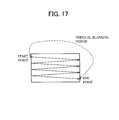
- FIG. 17 is an explanatory view explaining a vertical blanking period.
- FIG. 18 is a timing chart explaining how the display apparatus actuated by A.C. driving is driven in case a scanning period in provided in an even number of times, where repeated is a step, in which the scanning period is provided in twice or more and followed by the idle period.
- FIG. 19 is a timing chart explaining a method of actuating the display apparatus of the embodiment of the present invention by A.C. driving.
- FIG. 20 is a timing chart explaining another method of actuating the display apparatus of the embodiment of the present invention by A.C. driving.
- FIG. 21 is a timing chart explaining still another method of actuating the display apparatus of the embodiment of the present invention by A.C. driving.
- FIGS. 1 to 14 and 18 to 21 Described below is an embodiment of the present invention, with reference to FIGS. 1 to 14 and 18 to 21 .
- a reflective active matrix-type LCD as a display apparatus to carry out the driving method.
- the present invention is not limited to this.
- an LCD 1 as the display apparatus of the present embodiment is a reflective active matrix-type LCD, which is provided with a liquid crystal panel 2 , a gate driver 3 , a source driver 4 , a control IC 5 , and an image memory 6 .
- the liquid crystal panel 2 is provided with a screen, a plurality of scanning signal lines, and a plurality of data signal lines.
- the screen is composed of pixels arranged in matrix.
- the scanning signal lines perform selective scanning on the screen, selecting a line(s), so that the data signal lines supply data signals to pixels on the selected line.
- the scanning lines and the data signal lines cross each other at a right angle.
- the scanning signal lines scan the screen, selecting the lines in a line-by-line manner.
- FIG. 3 shown is a sectional view of the liquid crystal panel 2 .
- FIG. 3 is taken on line A—A in FIG. 4, which is a plan perspective view illustrating an arrangement of the liquid crystal panel 2 .
- FIG. 4 is a plan view showing an arrangement of a layer under a liquid crystal layer 13 shown in FIG. 3 .
- the liquid crystal panel 2 is a reflective active matrix-type liquid crystal panel.
- the liquid crystal panel 2 has a fundamental structure in which the liquid crystal layer 13 , which is for example made of a nematic liquid crystal, is sandwiched between two glass substrates 11 and 12 , and TFTs 14 , as active elements, are formed on the glass substrate 12 .
- TFT is used as the active element in the present embodiment, it is also possible to use for the active element an MIM (Metal Insulator Metal) or an FET (Field Effect Transistor) other than TFT.
- MIM Metal Insulator Metal
- FET Field Effect Transistor
- a phase differential plate 15 On a top surface of the glass substrate 11 , provided are a phase differential plate 15 , a polarizing plate 16 , and an anti-reflection plate 17 , in this order.
- a color filter 18 for RGB, and a transparent common electrode 19 On a bottom surface of the grass substrate 11 , a color filter 18 for RGB, and a transparent common electrode 19 , which acts as a counter electrode, are provided in this order.
- the color filter 18 enables the liquid crystal panel 2 to perform color display.
- a scanning line 31 is formed on the glass substrate 12 (see FIG. 4) in such a matter that a part of the scanning line 31 acts as a gate electrode 20 , and a gate insulating film 21 is formed on top of the gate electrode 20 .
- a part of the scanning line 31 acts as a gate electrode 20
- a gate insulating film 21 is formed on top of the gate electrode 20 .
- Formed in a position that faces the gate electrode 20 is an i-type amorphous silicon layer 22 , while sandwiching the gate insulating film 21 .
- Formed respectively in two positions that sandwich a channel area of the i-type amorphous channel 22 are two n + -type amorphous silicon layers 23 .
- a data electrode 24 On one of the n + -type amorphous silicon layers 23 , provided is a data electrode 24 , which is a part of the date signal line.
- a drain electrode 25 is formed by being drawn out from a top the other n + -type amorphous silicon layers 23 to a flat top surface of the gate insulating film 21 . As shown in FIG. 4, a position where the drawing out of the drain electrode 25 is started, and an end opposed to that position are connected to a support capacitance electrode pad 27 a , which has a rectangular shape, and which opposes to a support capacitance line 33 .
- On top of the TFTs 14 provided is an interlayer insulating 26 .
- reflection electrodes 27 b are reflective section for performing reflection display by using peripheral light.
- the interlayer insulating film 26 has fine projections and the recessions on a surface thereof.
- each of the reflection electrodes 27 b has continuity with the drain electrode 25 via a contact hole 28 , which is provided to the interlayer insulating film 26 .
- a voltage applied from the data electrode 24 and controlled by the TFT 14 is supplied from the drain electrode 25 to the reflection electrode 27 b , via the contact hole 28 , so that the liquid crystal layer 13 is driven by a voltage between the reflection electrode 27 b and the transparent common electrode 19 .
- there is continuity between the support capacitance electrode pad 27 a and the reflection electrode 27 b while there is liquid crystals between the reflection electrode 27 b and the transparent common electrode 19 .
- the support capacitance electrode pad 27 a and the reflection electrode 27 b form a pixel electrode 27 .
- transparent electrodes arranged to correspond to the respective electrodes are such pixel electrodes.
- the liquid panel 2 is provided, on the glass substrate 12 , with scanning signal lines 31 and the data signal lines 32 , in such a manner that the scanning signal lines 31 and the data signal lines 32 cross each other at a right angle.
- the scanning signal line 31 supplies a scanning signal to the gate electrode 20 of the TFT 14
- the data signal line 32 supplies a data signal to the data electrode 24 of the TFT 14 .
- the support capacitance lines 33 (a plurality of the support capacitance line 33 ) are provided as support capacitance electrodes, which provide support capacitance for the pixels, between the respective support capacitance electrode pads 27 a .
- the support capacitance lines 33 are in parallel with the scanning signal lines 31 (that is, not crossing the scanning signal lines 31 ) on the glass substrate 12 so that some of the support capacitance lines 33 are in pairs with the support capacitance electrode pads 27 a , sandwiching the gate insulating film 21 .
- the provision of the support capacitance lines 33 is not limited to this arrangement, provided that the support capacitance lines 33 are so provided as not to cross the scanning signal lines 31 .
- a part of the reflection electrode 27 b is omitted in FIG. 4, in order to explicitly show a positional relationship between the support capacitance electrodes 27 a and the support capacitance lines 33 .
- the projections and the recessions on the surface of the interlayer insulating film 26 shown in FIG. 3 are not illustrated in FIG. 4 .
- the gate driver 3 which is a scanning signal line driver, outputs a voltage to each scanning signal line of the liquid crystal panel 2 .
- the voltage is in accordance with whether the scanning signal line is in a selected period (during which the scanning signal line is selected) or in a non-selected period (during which the scanning signal line is not selected).
- the source driver 4 which is a data signal line driver, outputs the data signal to each data signal line 32 of the liquid crystal panel 2 , so as to supply an image data to each pixel located on the scanning signal line 31 that is selected.
- the control IC 5 receives an image data stored in the image memory 6 , which is located inside a PC or the like, and transmits to the gate driver 3 , a gate starting pulse signal GSP and a gate clock signal GCK, while the control IC 5 transmits to the source driver 4 a gradient data of RGB, a source starting pulse signal SP, a source latch strobing signal SLS, and a source clock signal SCK. All of those signals synchronize to each other.
- the image data stored in the image memory 6 which is image data storing means, is a data on which the data signal is based.
- the control IC 5 acts as control means (control section) for performing a driving method of the display apparatus of the present embodiment, which is explained hereinafter.
- the gate driver 3 starts scanning the liquid crystal panel 2 upon receipt of the gate starting pulse signal GSP from the control IC 5 , and supplies sequential selecting voltage to each scanning signal line in accordance with the gate clock signal GCK.
- the source driver 4 stores in a register each received gradient data respectively for each pixel. Then, the source driver 4 writes the gradient data in each data signal line of the liquid crystal panel 2 in accordance with a next source latch strobing signal.
- control IC 5 is provided, inside thereof, with a GSP converting circuit 7 , which sets a pulse interval of the gate start pulse signal GSP.
- the pulse interval of the gate start pulse signal GSP is about 16.7 msec when a frame frequency of display is 60 Hz as usual.
- the GSP converting circuit 7 can extend the pulse interval of the gate starting pulse signal GSP to 167 msec, for example.
- a scanning period T 1 is a non-scanning period, when all the scanning signal line is not scanned, where the scanning period T 1 is a period in which scanning of the screen is completed once, and where the scanning period T 1 have a usual length, that is, about 16.7 msec.
- the scanning period T 1 and the non-scanning period can be set arbitrarily according to how much an image, such as still pictures or dynamic pictures, to be displayed is moved, while a plurality of the non-scanning period can be provided in accordance with content of the image to be displayed.
- the GSP converting circuit 7 carries out the setting of the pulse interval by arbitrarily setting the scanning period and the non-scanning period.
- control IC 5 may be provided, inside thereof, with a detection circuit (detection section) for detecting whether or not there is a change in the image data, which is transmitted from the image memory 6 with an interval, or whether the image data is changed as a still picture, so that the setting of the non-scanning period will be changed in accordance with the image data.
- the setting of the non-scanning period may be changed in accordance with a plurality of non-scanning period setting signal externally inputted into the GSP converting circuit 7 .
- the GSP converting circuit 7 may be provided with a control dial, a selection switch or the like for adjusting the non-scanning period.
- control dial, a selection switch, or the like may be provided to an exterior of a box body of the liquid crystal display apparatus 1 , so that the user can set the non-scanning period with ease.
- FIG. 2 is an arrangement where the GSP converting circuit 7 is incorporated inside the control IC 5 , the present invention is not limited to this arrangement, and the GSP converting circuit 7 may be provided independently from the control IC 5 .
- the GSP converting circuit 7 can convert the scanning period and the non-scanning period.
- the GSP converting GSP 7 can set the non-scanning period, which is between completion of the scanning period T 1 and the input of another gate starting pulse signal GSP into the gate driver 3 , to be longer than the scanning period T 1 .
- the non-scanning period that is longer than the scanning period T 1 is designated as an idle period T 2 , hereinafter.
- FIG. 5 illustrated in FIG. 5 is a wave form of scanning signals supplied into scanning lines G 1 to Gn, where an idle period T 2 is set as the non-scanning period with respect to a scanning period T 1 having a usual length in one picture.
- the idle period T 2 is the non-scanning period, compared with wave forms of conventional scanning signals shown in FIG. 16 where a vertical blanking period is the non-scanning period.
- a vertical cycle which indicates a frame or a field, is longer in FIG. 5, compared with the conventional case shown in FIG. 16 .
- the GSP converting circuit 7 sets the idle period T 2 as the non-scanning period, one vertical cycle is a sum of the scanning period T 1 and the idle period T 2 .
- the GSP converting circuit 7 can set a plurality of the non-scanning periods (scanning period T) in accordance with content of the image, as discussed above. At least one of the non-scanning periods (scanning period T) is the idle period T 2 in the present embodiment.
- the provision of the idle period T 2 in this manner reduces a number of times to rewrite the picture, that is, a supply frequency of the data signal outputted from the source driver 4 , thereby reducing an electricity to charge the pixel. Therefore, in case that the LCD 1 is an active matrix-type LCD in which fundamental qualities such as brightness, contrast, a responding speed, and a degree of gradient, are ensured, the setting the idle period T 2 as the non-scanning period can reduce electricity consumption of a data signal line driver without spoiling the display qualities. Otherwise, the electricity consumption of the data signal line driver is proportionally increased in accordance with the supply frequency of the data signal.
- the electricity consumption for rewriting the picture can be reduced by setting the non-scanning period to the long idle period T 2 , while keeping the fundamental display qualities.
- a period of rewriting the picture becomes longer, when the scanning period T 1 and the idle period T 2 , during which all the scanning signal lines 31 are in a non-scanning state (that is, all the scanning signal lines 31 are not subjected to the scanning), and which is longer than the scanning period T 1 , are repeated every vertical cycle.
- FIGS. 7 ( a ) and 7 ( b ) are circuit diagrams illustrating an equivalent circuit of a single pixel (pixel section) of the liquid crystal panel 2 of the LCD 1 .
- Display of the liquid panel 2 is varied by a change in a liquid crystal capacitance (Capacitance of Liquid Crystal) CLC.
- FIG. 7 ( a ) shows the equivalent circuit when the liquid crystal panel 2 has the white display
- FIG. 7 ( b ) illustrates the equivalent circuit when the liquid crystal panel 2 has the black display.
- the selective voltage is applied into the scanning signal line 31 during a first scanning period T 1 , so as to turn ON the TFT 14 .
- an initial capacitance for example, 0.1 pF
- the liquid crystal capacitance CLC varied, in accordance with the applied voltage.
- a non-selection voltage is applied into the scanning signal line 31 , so as to turn OFF the TFT 14 in order to keep the liquid crystal capacitance CLC and the support capacitance CCS.
- the liquid crystal has such slow responding speed that it takes several ten msec to complete the change of the liquid crystal capacitance CLC.
- the liquid crystal capacitance CLC is varied in accordance with the voltage applied therein. Because of this, the liquid crystal capacitance CLC is varied in a slow speed even after the TFT 14 is turned OFF.
- a voltage for the black display is applied into the liquid crystal capacitance CLC and the support capacitance CCS from the data signal line 32 , similarly.
- the liquid crystal capacitance CLC is changed.
- an amount of the change of the liquid crystal capacitance CLC is less, because the liquid crystal capacitance CLC has already been changed to some extent. Therefore, the potential of the pixel electrode 27 changed by a small amount after the TFT 14 is turned OFF.
- a change of the potential of the pixel electrode 27 after the TFT 14 is turned OFF is quite small.
- the predetermined voltage is applied so that the display apparatus can perform a predetermined display.
- the voltage applied into the pixel electrode 27 does not yet reach up to the predetermined voltage for achieving the desired luminance for the display satisfactory in the fundamental qualities, such as the brightness, contract, responding speed, and gradient. Therefore, the rewriting needs to be repeated plural times until the received voltage reaches the predetermined voltage.
- the predetermined voltage for example, 0.3 pF
- the predetermined display in this case, the black display
- the rewriting cycle of the picture is 60 Hz, and if the three-time rewriting attains the predetermined voltage, continuous (successive) rewriting achieves the predetermined voltage within about 50 msec.
- the scanning period T 1 and the idle period T 2 are repeated every vertical cycle, as shown in FIG. 6, in order to reduce the electricity consumption, while having the rewriting cycle of the picture extended, for example, to 6 Hz, which is ⁇ fraction (1/10) ⁇ of 60 Hz, it would take about 500 msec before the predetermined voltage is reached. This makes the responding speed of the display slower than the rewriting cycle of the picture, thereby deteriorating the display qualities.
- the idle period T 2 is provided after the scanning period T 1 is provided twice or more as shown in FIG. 1 .
- the control IC 5 is used to control to provide the scanning period T 1 and the idle period T 2 .
- the scanning period T 1 is successively repeated three times, while it is so set by the GSP converting circuit 7 that one scanning takes a time equivalent to 60 Hz as usual.
- the driving method where the idle time is longer than 60 Hz, the scanning periods T 1 and the idle period T 2 are repeated in a repeating interval of a frequency lower than 15 Hz.
- the pixel electrode 27 receives the predetermined voltage within about 50 msec, because the scanning is carried out continuously three times. Therefore, it is possible that the liquid crystal responses in a shorter time than the repeating interval of the plural scanning periods T 1 and the idle period T 2 , which is provided right after the scanning periods T 1 are provided (the scanning period T 1 is provided twice or more).
- the LCD When the LCD is used as a display apparatus in this manner, no vertical blanking period is needed. Therefore, it is possible to carry out the scanning continuously (successively) plural times (twice or more).
- a short non-scanning period may be provided between the respective scanning periods T 1 , besides the vertical blanking period.
- the scanning periods T 1 can be provided successively (the scanning period T 1 is provided two or more successive times) to ensure a responding speed for a sufficient display, it is preferable that a plurality of the scanning periods T 1 are provided continuously (that is, without the non-scanning period between the scanning periods T).
- a number of times of inputting of the gate starting pulse signal GSP (which corresponds to the scanning period T 1 ), that is, a number of times of the repeating of the scanning period T 1 may be arbitrarily repeated in accordance with a responding performance of a liquid crystal material to be used, and a size of the support capacitance CCS. If the liquid crystal material to be used has a fast responding performance, it may be so set that a number of times of the pulse intervals is small. Meanwhile, it may be so set that the number of times of the pulse intervals is large, if the liquid crystal material to be used has a slow responding performance. Moreover, in case the liquid crystal material to be used has the slow responding performance, a short idle period T 2 or a suspension period may be provided between the respective scanning period T 1 . The suspension period will be discussed later.
- number of times of the pulse intervals of the gate starting pulse signal GSP which corresponds to the scanning period T 1 , be set so that the voltage applied into the pixel electrode 27 reaches the predetermined voltage so as to achieve the desired luminance for the display satisfactory in the fundamental qualities such as the brightness, contrast, responding speed and gradient.
- the display apparatus carries out the scanning the screen in plural times, it is possible to repeat rewriting, for example, until the response of the display is completed. Because of this, the response can be completed in a shorter time than the repeating interval which includes the plural scanning periods T 1 and the idle period T 2 therein.
- the idle period T 2 during which all the scanning signal lines 31 are not subjected to the scanning in a period longer than a period of time to be taken for scanning the screen one time, it is possible to ensure a sufficient responding speed of the display, while having the satisfactory fundamental qualities, such as the brightness, contrast, responding speed, and gradient, even though the idle period T 2 is provided.
- the provision of the idle period T 2 reduces the number of times to rewrite the screen, that is, shortens a time during which the data signal is outputted. This easily reduces the time during which the data signal is outputted, in other words, electricity consumption of the source driver 4 , that is, electricity to charge the pixels.
- the source driver 4 is the data signal line driver and the electricity consumption of the source driver 4 is proportionally increased with the supply frequency of the data signal.
- the provision of the idle period after the screen is scanned in plural times that is, after the scanning to rewrite one picture is repeated in plural times, makes it possible to reduce the electricity consumption easily and sufficiently while having the sufficient responding speed of the display and the satisfactory display qualities, such as the brightness, contrast, responding speed and gradient.
- the pulse interval of the gate starting pulse signal GSP which corresponds to the scanning period T 1 , is about 16.7 msec when the frame frequency of the display is 60 Hz as usual.
- the GSP converting circuit 7 successively and repeatedly, outputs the gate starting pulse signal GSP three times with the pulse interval of about 16.7 msec, and where 167 msec is a repeating interval between the three-time outputs of the gate starting pulse signal GSP and the idle period T 2
- the GSP converting circuit 7 is able to set about 7/10 (seven out of ten) of the repeating interval as the idle period T 2 , during which all the scanning signal lines 31 are in the non-scanning state.
- the GSP converting circuit 7 can provide the idle period T 2 within the non-scanning period, after the scanning periods T 1 is repeated in plural times.
- FIG. 1 a scanning signal wave form of this case is illustrated.
- the scanning period T 1 and the non-scanning period may be arbitrarily set in accordance with an amount of movement of the image to be displayed, such as the still picture or the dynamic picture.
- the GSP converting circuit 7 is capable to setting a plurality of the non-scanning periods in accordance with content of the image.
- at least one of the non-scanning period is the idle period T 2 .
- the provision of the idle period T 2 is enough to reduce the electricity consumption, because no scanning is performed during the idle period T 2 .
- a circuit such as an analogue circuit of the source driver 4 ) not related to (unnecessary for) the display is stopped operating.
- the provision of the suspension period within the idle period T 2 indicates that all or part of the idle period T 2 is set as the suspension period. In other words, if it is in the suspension period, it should be in the idle period.
- the gate driver 3 and the source driver 4 are respectively provided with a logic circuit therein.
- Each of the logic circuits consumes the electricity to operate a transistor located inside each logic circuit. Electricity consumption of the logic circuits is proportional to a number of times of the operation of the transistors, and proportional to the clock frequency.
- no signal other than the gate starting pulse signal GSP such as a gate clock signal GCK, a source starting pulse signal SP, a source clock signal SCK, is not inputted the gate driver 3 and the source driver 4 . In this way, eliminated is a need to operate the logic circuits inside the gate driver 3 and the source driver 4 , thereby reducing the electricity consumption.
- the source driver 4 is a digital driver for dealing with a digital data signal
- the source driver 4 is provided, inside thereof, with analogue circuits, such as a gradient generating circuit and a buffer. In the analogue circuit, a current flows always.
- the source driver 4 is an analogue driver for dealing with an analogue data signal
- the source driver 4 is provided with analogue circuits, namely a sampling hold circuit and a buffer.
- the control IC 5 is provided with such analogue circuits inside thereof.
- Electricity consumption of the analogue circuits does not depend on a driving frequency. Therefore, the consumption electricity of the whole apparatus cannot be reduced by stopping the operation of the logic circuits inside the gate driver 3 and the source driver 4 . If the analogue circuits are stopped (suspended) during the idle period T 2 , supply of electricity to the analogue circuit is cut off, thereby reducing the electricity consumption of the analogue circuit, thus further reducing the electricity consumption of the whole LCD 1 . In addition, if the LCD 1 is an active matrix-type LCD, non-selection voltage is applied from the gate driver 3 into the pixels during the idle period T 2 .
- the analogue circuits to be stopped are the analogue circuits at least irrelevant (not relating) to the gate driver 3 , in other words, irrelevant to display performed during the idle period T 2 .
- the analogue circuit of the source driver 4 is stopped, which has the largest electricity consumption among the analogue circuits, it is possible to efficiently reduce the electricity consumption of the whole electricity consumption.
- the control IC 5 requests the image memory 6 to stop transmitting the image data, for example, in accordance with non-scanning period setting signal or the like, which is externally inputted into the GSP converting circuit 7 , as discussed above. This further reduces the electricity consumption of the whole LCD 1 , even though control of stopping the transmission is easy.
- the image memory 6 may or may not be provided inside the LCD 1 .
- the LCD 1 stops operating to receive the image data supplied from the image data supplying means during the idle period T 2 .
- an input section of the control IC 5 has a higher impedance than a section supplying the image data in accordance with the non-scanning period setting signal, reduced is electricity consumed for receiving the image data supplied during the idle period T 2 by using the LCD 1 to stop the operation to receive the image data supplied from the image data supplying means during the idle period T 2 . Therefore, the electricity consumption of the whole LCD 1 is further reduced.
- all the data signal lines 32 are caused to have a higher impedance than the source driver 4 , for example, by disconnecting the data signal lines 32 from the source driver 4 .
- This maintains a potential of each of the data signal lines 32 constant, thereby suppressing a change in a data storing state of each pixel due to a change in the potential of the data signal lines 32 , and thereby sufficiently suppressing the flickering. Because of this, electricity consumption is sufficiently reduced and high display qualities are achieved while the flickering is sufficiently suppressed.
- An example of the change in the data storing state of each pixel is a change in a potential of the pixel electrodes 27 due to combination of capacitances of the data signal lines 32 and the pixel electrodes 27 , which is caused in case the LCD 1 is provided with the pixel electrodes 27 , which are connected with the data signal lines 32 .
- the buffer attains a ground potential.
- the data signal lines 32 connected to the buffer attains simultaneously a ground potential. This causes that the potential of the pixel electrode 27 is changed due to the combination of the capacitances when the LCD 1 is provided with the pixel electrode 27 to be connected with the data signal lines 32 .
- the operation of the analogue circuits irrelevant to the display during the idle period T 2 is stopped after all the data signal lines 32 attain the higher impedance. This makes it possible to suppress the change in the data storing state of the pixels while reducing the electricity consumption of the analogue circuits, whereby the high display qualities are attained with further reduced flickering.
- all the data signal lines 32 attain the higher impedance after all the signal lines 32 attain such a potential with which the change of the data storing state of all the pixels is substantially minimum on average.
- the LCD 1 had a structure in which a liquid crystal is located between the pixel electrodes 27 connected to the data signal lines 32 and opposite electrodes thereof
- all the data signal lines 32 are given a potential equivalent to a center of an amplitude of the A.D. voltage, while all the data signal lines 32 attain a potential equivalent to that of the opposite electrode. In this case, even if A.D.
- a method of driving a display apparatus in accordance with the present invention is a method of driving a display apparatus including a screen which has pixels arranged in a matrix and producing a display by applying a scanning signal to scanning signal lines connected to the pixels a line at a time and thus selecting a line to scan the screen sequentially, for example, and also by supplying a data signal to those pixels on the selected line via data signal lines, wherein the method includes the step of providing, after scanning the screen twice or more, an idle period in which all the scanning signal lines are caused to be in a non-scanning state for a period longer than a time taken to scan the screen once.
- a display apparatus in accordance with the present invention is a display apparatus including a screen which has pixels arranged in a matrix and producing a display by applying a scanning signal to scanning signal lines connected to the pixels a line at a time and thus selecting a line to scan the screen sequentially, for example, and also by supplying a data signal to those pixels on the selected line via data signal lines, and includes control means for controlling drive of the display apparatus, wherein the control means causes all the scanning signal lines to be in a non-scanning state for a period longer than a time taken to scan the screen once after the screen is scanned twice or more.
- a display apparatus requiring no vertical blanking period, such as a case in which an LCD is used as the display apparatus, it is possible to carry out the scanning successively twice or more.
- a display apparatus capable of providing the scanning periods T 1 successively to provide a plurality of the scanning periods T 1 successively, in order to ensure the sufficient responding speed of the display, even though it is also possible to provide a short non-scanning period.
- the idle period T 2 after the scanning period T 1 , during which the screen is scanned once, is successively provided twice or more.
- control means put all the scanning signal lines in the non-scanning state for a duration longer than the scanning period T 1 during which the screen is scanned once.
- the display apparatus has the negative voltage always during the idle period T 2 .
- a direct current is applied into the liquid crystal, thereby deteriorating reliability of the liquid crystal and the display qualities.
- the direct current is applied into the display apparatus, when a polarity of potential difference between two electrodes, that is, the pixel electrode and the opposite electrode of each pixel is constant always during the idle period T 2 .
- the polarity of the potential difference is a polarity of potential difference between the pixel electrode 27 and the transparent common electrode 19 as the opposite electrode, where the pixel electrode 27 drives the liquid crystal layer 13 by applying the voltage into the liquid crystal layer 13 .
- the applying of the direct current into the display apparatus deteriorates the reliability of the display apparatus and the display qualities.
- the following methods may be applied, in repeating the step of providing the idle period T 2 after the scanning period T 1 is provided twice or more.
- a method (I) is to control at least one of the potentials of the pixel electrode and the opposite electrode of the pixel so as to change the polarity of the potential difference between the pixel electrode and the opposite electrode from one scanning period T 1 to next, where the idle period T 2 is provided after the scanning period T 1 is provided in an odd number of times;
- a method (II) is to control at least one of the potentials of the pixel electrode and the opposite electrode of the pixel so that the polarity of the potential difference between the pixel electrode and the opposite electrode during the scanning period T 1 , which is immediately after the idle period T 2 , is identical with that during the idle period T 2 immediately before the scanning period T 1 , and so that the polarity of the potential difference during the scanning period T 1 until next provision of the idle period T 2 is changed from one scanning period T 1 to next, where the idle period T 2 is provided after the scanning period T 1 is provided in an even number of times; or a method (III) is to control at least one of the potentials of the pixel electrode and the
- the display apparatus may be adopted that for example, the control means (such as the control IC 5 shown in FIG. 2) (i) controls at least one of the potentials of the pixel electrode and the opposite electrode of the pixel so that the polarity of the potential difference between the pixel electrode and the opposite electrode is changed from one scanning period T 1 to next, where the idle period T 2 is provided after the scanning period T 1 is provided in an odd number of times, in repeating the step of providing the idle period T 2 after the scanning period T 1 , during which the scanning is performed once, is provided twice or more; (ii) controls at least one of the potentials of the pixel electrode and the opposite electrode of the pixel so that the polarity of the potential difference between the pixel electrode and the opposite electrode during the scanning period T 1 immediately after the idle period T 2 is identical with that during the idle period T 2 immediately before the scanning period T 1 , while the polarity of the potential difference is changed every scanning period T 1 during the scanning periods T 1 until the next idle scanning period, where the idle period T 2 is provided after
- the method (I) is explained below, referring to a timing chart shown in FIG. 19 by way of example.
- the positive voltage for the black display is applied into the liquid crystal in the first scanning period T 1
- the negative voltage is applied in the liquid crystal in the second scanning period T 1
- the positive voltage is applied in the liquid crystal in the third scanning period T 1 .
- the polarity of the voltage applied into the liquid crystal is changed from one scanning period T 1 to next.
- the idle period T 2 following the scanning periods T 1 the positive voltage is maintained in the liquid crystal.
- the negative voltage is applied into the liquid crystal because the liquid crystal maintains the positive voltage at the time.
- the positive voltage is applied, while the negative voltage is applied in the liquid crystal in the third scanning period T 1 .
- the polarity of the voltage applied into the liquid crystal is changed from one scanning period T 1 to next.
- the negative voltage is maintained in the liquid crystal in the following idle period T 2 . Therefore, the polarity of voltage in the liquid crystal during the idle period T 2 is changed from one idle period T 2 to next.
- the scanning during one scanning period T 1 takes about 16.7 msec in case of the normal driving, so that the liquid crystal has the responding speed in a range of from 40 to 50 msec. Therefore, the normal display can be performed by repeating the repeating interval three times.
- the scanning period T 1 are provided in three times when the scanning period T 1 is provided in an odd number of times (that is, the scanning period T 1 is provided in the odd number of times between the idle periods T 2 ), however, the present invention is not limited to this, and the scanning period T 1 may be provided in any number of times, provided that the scanning period T 1 is provided in a plural and odd number of times.
- the scanning period T 1 is provided three times in FIG. 19, the normal display can be achieved by providing the scanning period T 1 twice, in case the liquid crystal has a fast responding speed.
- the method (II) wherein the scanning period T 1 is provided twice when the scanning period T 1 is provided in an even number of times (that is, the scanning period T 1 is provided in the even number of times between the idle periods T 2 ) as shown in FIG. 20 .
- the scanning period T 1 may be provided in any number of times, provided that the scanning period T 1 is provided in a plural and even number of times.
- the positive voltage for the black display is applied into the liquid crystal in the first scanning period T 1 , and the negative voltage is applied into the liquid crystal in the second scanning period T 1 .
- the polarity of the voltage is changed from one scanning period T 1 to next.
- the negative voltage is maintained in the liquid crystal.
- the positive voltage is applied in the first scanning period T 1 immediately after the idle period T 2 .
- the positive voltage is applied in the first scanning period T 1 immediately after the idle period T 2 .
- the positive voltage is applied.
- the polarity of the voltage applied in the liquid crystal is changed from one scanning period T 1 to next.
- the positive voltage is maintained in the liquid crystal in the idle period T 2 thereafter.
- the polarity of the voltage maintained in the liquid crystal during the idle period T 2 is changed from one idle period T 2 to next.
- the polarity of the potential difference is changed each time of scanning. In other words, for example, the polarity of the voltage applied into the liquid crystal is changed from one time of scanning to next.
- the A.D. driving of the liquid crystal is possible, thereby preventing the deterioration of the reliability and the display qualities of the liquid crystal.
- the display apparatus suitable for A.D. driving can have good display qualities and low electricity consumption.
- the positive voltage for the black display is applied into the liquid crystal in the first scanning period T 1 . Thereafter, the positive voltage is applied into the liquid crystal during all the scanning period T 1 until the idle period T 2 . More specifically, as shown in FIG. 21, where the scanning period T 1 is provided twice, followed by the idle period T 2 , if the positive voltage is applied into the liquid crystal in the first scanning period T 1 , the positive voltage is applied into the liquid crystal in the second scanning period T 1 , too. As a result, in the following idle period T 2 , the positive voltage is maintained in the liquid crystal.
- the first scanning period T 1 immediately after the idle period T 2 the negative voltage is applied into the liquid crystal, because the positive voltage is maintained in the liquid crystal. Thereafter, in all the scanning period T 1 until the next idle period T 2 , the negative voltage is applied into the liquid crystal. As a result, the negative voltage is maintained in the liquid crystal in the next idle period T 2 . In this way, the polarity of the voltage maintained in the liquid crystal during the idle period T 2 is changed from one idle period T 2 to next.
- the display apparatus suitable for A.D. driving can have good display quality and low electricity consumption.
- the scanning period T 1 is provided twice when the scanning period T 1 is provided twice or more (that is, the scanning period T 1 is provided twice or more between the idle periods T 2 ).
- the present invention is not limited to this.
- the number of times of the provision of the scanning period T 1 between the idle period T 2 may be even or odd, as long as the number is two or more.
- FIGS. 19-21 illustrate a method to change (control) the polarity of the voltage across the liquid crystal by changing (controlling) the potential of the pixel electrode.
- the invention is not limited to this.
- the polarity of the voltage across the liquid crystal may be changed (controlled) by changing (controlling) the potential(s) of the pixel electrode and/or the opposite electrode, so as to drive the liquid crystal with an alternating current.
- either the potential of the pixel electrode 27 or the potentials of both the pixel electrode 27 and the transparent common. electrode 19 are controlled so that the pixel electrode 27 and the transparent common electrode 19 as the opposite electrode develop a potential difference having a polarity which alternates from one idle period T 2 to next for each idle period T 2 .
- the potentials are controlled of, for example, either the potentials of the data signal lines 32 or the potentials of both the data signal lines 32 and the transparent common electrode 19 while selecting one of the scanning signal lines 31 .
- a voltage of +5 V or ⁇ 5 V is applied to the pixel electrode 27 with the transparent common electrode 19 (opposite electrode) at 0 V (A.C. voltage is applied only to the pixel electrode 27 ).
- a voltage of ⁇ 3 V or +3 V is applied to the transparent common electrode 19 and a voltage of +2 V (when a voltage of ⁇ 3 V is applied to the transparent common electrode 19 ) or ⁇ 2 V (when voltage of +3 V is applied to the transparent common electrode 19 ) is applied to the pixel electrode 27 (A.C. voltage is applied to both the pixel electrode 27 and the transparent common electrode 19 ).
- a voltage of +3 V or ⁇ 3 V is applied to the pixel electrode 27 with the transparent common electrode 19 (opposite electrode) at 0 V (A.C. voltage is applied only to the pixel electrode 27 ) or applied to the transparent common electrode 19 with the pixel electrode 27 at 0 V (A.C. voltage is applied to both the pixel electrode 27 and the transparent common electrode 19 ).
- FIGS. 3, 4 illustrate a liquid crystal display in which the pixel electrodes 27 and the transparent common electrode 19 as the opposite electrode are provided on oppositely positioned, individual glass substrates 11 , 12 ; however, the display apparatus of the invention is not limited to this.
- the display apparatus may be arranged, for example, based on an IPS (in-plane-switching) scheme by which the pixel electrodes and the opposite electrode are formed on a single substrate.
- the display apparatus may be a hyper LCD (liquid crystal display) in which data signal lines are formed on pixel electrodes and a substrate opposite to the pixel electrodes. In this case, the pixels are driven by changing only the data signals fed to the data signal lines provided to the opposite substrate side.
- the pixel electrode and/or opposite electrode include that pixel electrode and/or opposite electrode which are found in display apparatuses of IPS schemes and in hyper LCDs.
- the method is applicable not only to liquid crystal displays, but also to any display apparatus which suitably operates with alternating current drive.
- Another problem in driving the display apparatuses is that the responding speed is low and, when the capacity varies due to applied voltage, the responding speed of the display becomes slower than the rewrite cycle of the picture, which degrades display quality.
- This problem occurs when displaying a constantly changing dynamic picture or switching from still picture to dynamic picture, as well as at other times when the displayed image is changed.
- the display apparatus includes detection means (detection section) which detects a change in an image to be displayed, and the control means (control section) switches the drive of the display operation, that is, the display apparatus, when there is no change in an image to be displayed and when there has been a change in an image to be displayed, according to a result of the detection by the detection means.
- detection means detection section
- control section switches the drive of the display operation, that is, the display apparatus, when there is no change in an image to be displayed and when there has been a change in an image to be displayed, according to a result of the detection by the detection means.
- Optimum response and display quality as well as lower electric consumption are achieved for every kind of display image including still pictures and dynamic pictures.
- the liquid crystal display 1 of the present embodiment may include the motion detection switching section 8 (detection means, switching means) in the control IC 5 .
- the motion detection switching section 8 is a circuit which detects a change in the image to be displayed has changed, that is, whether the image to be displayed has changed or not, for example, whether the image to be displayed is a dynamic picture or a still picture.
- the motion detection switching section 8 is, as shown in FIG. 11, may be adapted so as to detect a change in the image to be displayed by detecting whether the image data fed at a constant interval from the image memory 6 has changed or not changed like a still picture.
- the motion detection switching section 8 as shown in FIG. 12, may be adapted so as to detect a change in the image to be displayed by specifying whether there is a motion or not in the image based on, for example, a mode switching signal fed from the outside of the control IC 5 .
- the motion detection switching section 8 When the motion detection switching section 8 detects a change in the image to be displayed by detecting whether the image data fed at a constant interval from the image memory 6 has changed or not changed like a still picture, the motion detection switching section 8 may be, for example, a circuit arranged from a frame memory and a comparator.
- the motion detection switching section 8 When the motion detection switching section 8 detects a change in the image to be displayed by specifying whether there is a motion or not in the image based on, for example, a mode switching signal fed from the outside of the control IC 5 , the motion detection switching section 8 functions as a mode switching signal receiving section in the control IC 5 , for example.
- the motion detection switching section 8 may include, for example, a scan-mode switching (selecting) switch which is switches between scan modes under the control of the control IC 5 .
- the scan modes are, for example, still mode, change mode, and dynamic picture mode.
- the liquid crystal display 1 may have the scan-mode (e.g., still mode, change mode, dynamic picture mode) switching (selecting) switch on the housing of the liquid crystal display 1 for convenient use. That is, the liquid crystal display 1 may be such that the scan mode (e.g., still mode, change mode, dynamic picture mode) can be switched from the outside. In this case, the liquid crystal display 1 execute a specified scan mode by the control of the control IC 5 in the scan mode specified (selected) by the external scan-mode switching (selecting) switch and detected by the motion detection switching section 8 .
- the scan-mode e.g., still mode, change mode, dynamic picture mode
- FIGS. 11, 12 illustrate an arrangement in which the motion detection switching section 8 is integrated to the control IC 5 .
- the motion detection switching section 8 may be provided separately from the control IC 5 .
- the GSP converting circuit 7 is controlled in accordance with a result of the detection by the motion detection switching section 8 to switch between a single scanning period T 1 or multiple scanning periods T 1 .
- the liquid crystal display 1 when there is no change in an image to be displayed, all the scanning signal lines are caused to be in a non-scanning state for a period longer than a time taken to scan the screen once after the screen is scanned once, and when there has been a change in an image to be displayed, all the scanning signal lines are caused to be in a non-scanning state for a period longer than a time taken to scan the screen once after the screen is scanned twice or more.
- a display is produced by repeat an operation (repetition interval) to provide an idle period T 2 after providing a scanning period T 1 only once.
- the scanning periods T 1 and the idle periods T 2 are provided alternately.
- the scan mode is set to change mode. Specifically, as shown in FIG. 9, only when image data changes, that is, only when the image to be displayed is switched (changed), an idle period T 2 is provided after providing the scanning period. T 1 twice or more (three times in the liquid crystal display 1 ), and thereafter the scanning periods T 1 and the idle periods T 2 are provided alternately. That is, when there is no change in an image to be displayed, the scanning periods T 1 and the idle periods T 2 are provided alternately.
- a display is produced by rewriting the pictures one after the other through the repeating of a repetition interval in which an idle period T 2 is provided after successively repeating a pulse interval (scanning period T 1 ) of a gate start pulse signal GSP twice or more (three times with the liquid crystal display 1 ) That is, when the scan mode is set to dynamic picture mode, the scanning period T 1 is repeated twice or more, and thereafter, the drive to provide the idle period T 2 is repeated.
- the dynamic picture mode corresponds to the case when an image change changes successively in change mode.
- the driving enables a display corresponding to a change in the image, prevents degradation of the image from happening, and achieves reductions in. electric consumption, without carelessly increasing the number of scans.
- the idle period T 2 may of course entirely or partly be a suspension period.
- the method of driving a display apparatus of the present embodiment may be a method of driving a display apparatus including a screen which has pixels arranged in a matrix and producing a display by applying a scanning signal to scanning signal lines connected to the pixels a line at a time and thus selecting a line to scan the screen sequentially, for example, and also by supplying a data signal to those pixels on the selected line via data signal lines and provide, when there is no change in an image to be displayed, an idle period in which all the scanning signal lines are caused to be in a non-scanning state for a period longer than a scanning period in which the screen is scanned once after the scanning period and when there has been a change in an image to be displayed, the idle period after the screen is scanned twice or more.
- a display apparatus of the present embodiment may be a display apparatus including a screen which has pixels arranged in a matrix and producing a display by applying a scanning signal to scanning signal lines connected to the pixels a line at a time and thus selecting a line to scan the screen sequentially, for example, and also by supplying a data signal to those pixels on the selected line via data signal lines and include: control means for controlling the drive of the display apparatus; and detection means for detecting a change in an image to be displayed, wherein according to a result of the detection by the detection means, the control means causes, when there is no change in an image to be displayed, all the scanning signal lines to be in a non-scanning state for a period longer than a time taken to scan the screen once after the screen is scanned once and, when there has been a change in an image to be displayed, all the scanning signal lines to be in a non-scanning state for a period longer than a time taken to scan the screen once after the screen is scanned twice or more.
- the idle period after the screen is scanned twice or more sufficient reduction in electric consumption can be readily achieved while ensuring a sufficient display responding speed is ensured and satisfying basic display quality requirements, such as brightness, contrast, responding speed, and gradient.
- the idle period is provided after the scanning period is provided twice or more successive times when there has been a change in an image to be displayed.
- the control means causes all the scanning signal lines to be in a non-scanning state for a period longer than a scanning period in which the screen is scanned once after providing the scanning period in the screen is scanned once twice or more successive times.
- both good display quality and electric consumption reduction can be achieved by employing any one of the foregoing methods (I)-(III), in other words, any one of the arrangements (i)-(iii) to implement the methods (I)-(III).
- a method of driving a display apparatus in accordance with the invention may include the foregoing arrangement and in addition may provide, in the idle period, a suspension period in which a circuit irrelevant to display is stopped operating.
- the display apparatus in the idle period, there is provided a suspension period in which a circuit irrelevant to display is stopped operating; therefore, the electric power which otherwise would be consumed by the circuit irrelevant to display in the idle period is saved. Thereby, the display apparatus overall consumes less electric power.
- to switch the drive of the display apparatus when there is no change in an image to be displayed and when there has been a change in an image to be displayed by scanning the screen at least once and preferably twice or more at a rewrite cycle longer than a normal rewrite cycle (predetermined rewrite cycle) when there is no change in an image to be displayed and at a normal rewrite cycle (predetermined rewrite cycle) only when there has been a change in an image to be displayed, optimum response and display quality, as well as lower electric consumption, can be achieved for every kind of display image including still pictures and dynamic pictures.
- the liquid crystal display 1 by controlling a GSP converting circuit with the control IC 5 and changing the pulse interval of the gate start pulse signal GSP, according to a result of the detection by the motion detection switching section 8 , depending on whether to produce a still picture display or a dynamic picture display, optimum response and display quality, as well as lower electric consumption, can be achieved for every kind display image including still pictures and dynamic pictures.
- a normal NTSC scanning period (a blanking period may be provided where necessary, in which case the sum of the scanning period and the blanking period) is 16.7 msec, that is, the pulse interval of the gate start pulse signal GSP is about 16.7 msec (that is, as mentioned in the foregoing, the frame frequency for display is normal 60 Hz), as shown in FIG. 13 or 14 , by setting the rewrite cycle (that is, refresh cycle) to 167 msec, which is ten times the normal value, when there is no change in an image to be displayed, electric consumption can be reduced.
- the rewrite cycle corresponds to the vertical period.
- the display better and more quickly follows the image change from A to B.
- a scanning period which is shorter than a rewrite cycle (refresh cycle) twice or more for example, twice as shown in FIG. 13 or preferably, for example, three times as mentioned in the foregoing
- the scan method that is, the driving method of the present embodiment in reference to FIG. 14, taking as an example a case where a short rewrite cycle ⁇ circle around (2) ⁇ (16.7 msec in the example) is interposed between other two rewrite cycles ⁇ circle around (1) ⁇ and ⁇ circle around (2) ⁇ when the display image is switched from A to B.
- the rewrite cycle ⁇ circle around (2) ⁇ (for example, 16.7 msec) is set shorter than the rewrite cycles ⁇ circle around (1) ⁇ , ⁇ circle around (3) ⁇ , ⁇ circle around (4) ⁇ (for example, 167 msec).
- the rewrite cycle ⁇ circle around (2) ⁇ is therefore preferably short. However, if it is excessively short, it is obvious that the pixels will not be sufficiently charged. It is therefore preferable if the rewrite cycle ⁇ circle around (2) ⁇ is more than a predetermined value (here, 16.7 msec) which is determined in accordance with charging characteristics of individual display devices. Therefore, the rewrite cycle ⁇ circle around (2) ⁇ is, preferably, set equal to the cycle (here, 16.7 msec) in normal refresh mode.
- the rewrite cycles ⁇ circle around (1) ⁇ , ⁇ circle around (4) ⁇ are low refresh mode, and these rewrite cycles are both set to 167 msec in FIG. 14; however, the rewrite cycles may differ from each other.
- the rewrite cycle ⁇ circle around (3) ⁇ was defined as the remainder in the substraction of the rewrite cycle ⁇ circle around (2) ⁇ (16.7 msec in FIG. 14) from the rewrite cycle ⁇ circle around (1) ⁇ or ⁇ circle around (4) ⁇ (167 msec in FIG. 14 ), the rewrite cycle ⁇ circle around (3) ⁇ does not have to be strictly defined. This is because in FIG.
- the sum of the rewrite cycles ⁇ circle around (1) ⁇ and ⁇ circle around (4) ⁇ and the sum of the rewrite cycles ⁇ circle around (2) ⁇ and ⁇ circle around (3) ⁇ are both set to 167 msec, whereas the rewrite cycle ⁇ circle around ( 2 ) ⁇ is normally set sufficiently shorter than the other rewrite cycles ⁇ circle around (1) ⁇ , ⁇ circle around (3) ⁇ , ⁇ circle around (4) ⁇ , for example, to 16.7 msec, and the rewrite cycle ⁇ circle around (3) ⁇ is therefore close to the rewrite cycle ⁇ circle around (1) ⁇ or ⁇ circle around (4) ⁇ .
- the individual periods may wholly be a scanning period.
- each period may be arranged from a sum of a scanning period and an idle period, for example.
- the display can better and more quickly follow image changes.
- a method of driving a display apparatus of the present embodiment may include a screen which has pixels arranged in a matrix and producing a display by applying a scanning signal to scanning signal lines connected to the pixels a line at a time and thus selecting a line to scan the screen sequentially, for example, at a predetermined rewrite cycle and also by supplying a data signal to those pixels on the selected line via data signal lines and include the step of scanning the screen at least once, preferably, twice or more, at a rewrite cycle longer than a predetermined rewrite cycle when there is no change in an image to be displayed and at the predetermined rewrite cycle only when there has been a change in an image to be displayed.
- the screen is scanned at a cycle longer than a predetermined rewrite cycle when there is no change in an image to be displayed and at the predetermined rewrite cycle when there has been a change in an image to be displayed.
- the screen is scanned at a shorter rewrite cycle when there has been a change in an image to be displayed than when there is no change in an image to be displayed.
- the screen is scanned twice or more, for example, successively when there has been a change in an image to be displayed at a shorter rewrite cycle than when there is no change in an image to be displayed.
- a display apparatus of the present embodiment may be a display apparatus including a screen which has pixels arranged in a matrix and producing a display by applying a scanning signal to scanning signal lines connected to the pixels a line at a time and thus selecting a line to scan the screen sequentially, for example, at a predetermined rewrite cycle and also by supplying a data signal to those pixels on the selected line via data signal lines and include: control means for controlling the drive of the display apparatus; and detection means for detecting a change in an image to be displayed, wherein the control means controls application of the scanning signal to the scanning signal lines according to a result of the detection by the detection means so that the screen is scanned at least once, preferably, twice or more, for example, successively at a rewrite cycle longer than a predetermined rewrite cycle when there is no change in an image to be displayed and at the predetermined rewrite cycle only when there has been a change in an image to be displayed.
- the electric power consumed in the rewriting of the picture can be reduced in the production of still pictures and other motionless displays (displays of non-animated images) and dynamic picture which include few motions, while ensuring basic display quality requirements, such as brightness, contrast, responding speed, and gradient.
- the voltage applied to the pixel electrodes quickly rises to a predetermined voltage level to produce desired luminance, and image changes can be quickly achieved.
- the screen is not necessarily scanned line by line, but may be scanned every alternate or otherwise selected line.
- Example of other display apparatuses to which the embodiment is applicable include simple multiplex liquid crystal displays, EL (electroluminescense) display apparatuses, PDPs (plasma display panels), and giricons. Further, these display apparatuses can be built in mobile telephones, portable game machines, PDAs (Personal Digital Assistants), mobile television sets, remote controls, and laptop computers, as well as other general portable terminals. These portable electronics, often powered by battery, can operate for an extended period of time thanks to the incorporation of the display apparatus of the present invention which reduces electric consumption while retaining good display quality.
Landscapes
- Physics & Mathematics (AREA)
- Engineering & Computer Science (AREA)
- General Physics & Mathematics (AREA)
- Crystallography & Structural Chemistry (AREA)
- Chemical & Material Sciences (AREA)
- Theoretical Computer Science (AREA)
- Computer Hardware Design (AREA)
- Nonlinear Science (AREA)
- Mathematical Physics (AREA)
- Optics & Photonics (AREA)
- Control Of Indicators Other Than Cathode Ray Tubes (AREA)
- Liquid Crystal Display Device Control (AREA)
- Liquid Crystal (AREA)
Applications Claiming Priority (4)
| Application Number | Priority Date | Filing Date | Title |
|---|---|---|---|
| JP2001005794 | 2001-01-12 | ||
| JP2001-005794 | 2001-01-12 | ||
| JP2001350684A JP3730159B2 (ja) | 2001-01-12 | 2001-11-15 | 表示装置の駆動方法および表示装置 |
| JP2001-350684 | 2001-11-15 |
Publications (2)
| Publication Number | Publication Date |
|---|---|
| US20020093473A1 US20020093473A1 (en) | 2002-07-18 |
| US6795066B2 true US6795066B2 (en) | 2004-09-21 |
Family
ID=26607645
Family Applications (1)
| Application Number | Title | Priority Date | Filing Date |
|---|---|---|---|
| US10/041,902 Expired - Lifetime US6795066B2 (en) | 2001-01-12 | 2002-01-08 | Display apparatus and driving method of same |
Country Status (4)
| Country | Link |
|---|---|
| US (1) | US6795066B2 (enExample) |
| JP (1) | JP3730159B2 (enExample) |
| KR (1) | KR100553326B1 (enExample) |
| TW (1) | TW558707B (enExample) |
Cited By (17)
| Publication number | Priority date | Publication date | Assignee | Title |
|---|---|---|---|---|
| US20030080951A1 (en) * | 2001-10-26 | 2003-05-01 | Koji Fujiwara | Driving method of display device and display device using thereof |
| US20050179633A1 (en) * | 2004-02-18 | 2005-08-18 | Ken Inada | Liquid crystal display device, driving method, driving device, and display control device |
| US20110090183A1 (en) * | 2009-10-16 | 2011-04-21 | Semiconductor Energy Laboratory Co., Ltd. | Liquid crystal display device and electronic device including the liquid crystal display device |
| US20110090204A1 (en) * | 2009-10-16 | 2011-04-21 | Semiconductor Energy Laboratory Co., Ltd. | Liquid crystal display device and electronic apparatus having the same |
| US20110115839A1 (en) * | 2009-11-13 | 2011-05-19 | Semiconductor Energy Laboratory Co., Ltd. | Display device and electronic device including the same |
| US20110148846A1 (en) * | 2009-12-18 | 2011-06-23 | Semiconductor Energy Laboratory Co., Ltd. | Liquid crystal display device and driving method thereof |
| US20110180794A1 (en) * | 2010-01-24 | 2011-07-28 | Semiconductor Energy Laboratory Co., Ltd. | Display device |
| US20120169698A1 (en) * | 2010-12-30 | 2012-07-05 | Samsung Electronics Co., Ltd. | Display apparatus and method of driving the same |
| US8692823B2 (en) | 2010-08-06 | 2014-04-08 | Semiconductor Energy Laboratory Co., Ltd. | Liquid crystal display device and driving method of the same |
| US9019320B2 (en) | 2010-04-28 | 2015-04-28 | Semiconductor Energy Laboratory Co., Ltd. | Liquid crystal display device and electronic appliance |
| US9767748B2 (en) | 2010-01-20 | 2017-09-19 | Semiconductor Energy Laboratory Co., Ltd. | Method for driving display device |
| US9799298B2 (en) | 2010-04-23 | 2017-10-24 | Semiconductor Energy Laboratory Co., Ltd. | Liquid crystal display device and driving method thereof |
| US9984644B2 (en) | 2012-08-08 | 2018-05-29 | Semiconductor Energy Laboratory Co., Ltd. | Liquid crystal display device and method for driving the same |
| US10453380B2 (en) | 2015-12-28 | 2019-10-22 | Semiconductor Energy Laboratory Co., Ltd. | Semiconductor device and transmission system |
| US10559249B2 (en) | 2015-12-28 | 2020-02-11 | Semiconductor Energy Laboratory Co., Ltd. | Device, television system, and electronic device |
| US10847116B2 (en) | 2009-11-30 | 2020-11-24 | Semiconductor Energy Laboratory Co., Ltd. | Reducing pixel refresh rate for still images using oxide transistors |
| US11062667B2 (en) | 2016-11-25 | 2021-07-13 | Semiconductor Energy Laboratory Co., Ltd. | Display device and operating method thereof |
Families Citing this family (67)
| Publication number | Priority date | Publication date | Assignee | Title |
|---|---|---|---|---|
| JP4573552B2 (ja) | 2004-03-29 | 2010-11-04 | 富士通株式会社 | 液晶表示装置 |
| EP2157565A4 (en) | 2007-06-12 | 2012-01-04 | Sharp Kk | Liquid crystal display device, scanning signal driving device, driving method for a liquid crystal display device, scanning signal driving method and television receiver |
| US8115726B2 (en) * | 2007-10-26 | 2012-02-14 | Hewlett-Packard Development Company, L.P. | Liquid crystal display image presentation |
| JP2011107249A (ja) * | 2009-11-13 | 2011-06-02 | Seiko Epson Corp | 電気泳動装置の駆動方法、電気泳動装置、電子機器 |
| CN102656625B (zh) | 2009-12-18 | 2016-08-03 | 株式会社半导体能源研究所 | 用于驱动液晶显示设备的方法 |
| KR101613701B1 (ko) | 2009-12-25 | 2016-04-19 | 가부시키가이샤 한도오따이 에네루기 켄큐쇼 | 액정 표시 장치의 구동 방법 |
| WO2011089832A1 (en) * | 2010-01-20 | 2011-07-28 | Semiconductor Energy Laboratory Co., Ltd. | Method for driving display device and liquid crystal display device |
| KR102011801B1 (ko) * | 2010-01-20 | 2019-08-19 | 가부시키가이샤 한도오따이 에네루기 켄큐쇼 | 액정 표시 장치의 구동 방법 |
| CN102714029B (zh) * | 2010-01-20 | 2016-03-23 | 株式会社半导体能源研究所 | 显示装置的显示方法 |
| WO2011099376A1 (en) * | 2010-02-12 | 2011-08-18 | Semiconductor Energy Laboratory Co., Ltd. | Liquid crystal display device and electronic device |
| KR101848684B1 (ko) * | 2010-02-19 | 2018-04-16 | 가부시키가이샤 한도오따이 에네루기 켄큐쇼 | 액정 표시 장치 및 전자 장치 |
| US9697788B2 (en) * | 2010-04-28 | 2017-07-04 | Semiconductor Energy Laboratory Co., Ltd. | Liquid crystal display device |
| US9230994B2 (en) | 2010-09-15 | 2016-01-05 | Semiconductor Energy Laboratory Co., Ltd. | Liquid crystal display device |
| US9478186B2 (en) * | 2010-10-28 | 2016-10-25 | Sharp Kabushiki Kaisha | Display device with idle periods for data signals |
| US9165525B2 (en) | 2011-04-08 | 2015-10-20 | Sharp Kabushiki Kaisha | Display device and method for driving same |
| KR101531125B1 (ko) * | 2011-04-08 | 2015-07-06 | 샤프 가부시키가이샤 | 표시 장치, 전자 기기, 표시 장치의 제어 방법 및 전자 기기의 제어 방법 |
| WO2012141112A1 (ja) * | 2011-04-15 | 2012-10-18 | シャープ株式会社 | 表示装置、表示装置の駆動方法及び電子機器 |
| EP2710578B1 (en) * | 2011-05-17 | 2019-04-24 | Ignis Innovation Inc. | Systems and methods for display systems with dynamic power control |
| CN103597537B (zh) * | 2011-07-08 | 2016-11-02 | 夏普株式会社 | 液晶显示装置及其驱动方法 |
| WO2013024776A1 (ja) * | 2011-08-16 | 2013-02-21 | シャープ株式会社 | 表示装置およびその駆動方法 |
| JP5236131B1 (ja) * | 2011-09-06 | 2013-07-17 | シャープ株式会社 | 表示装置およびその駆動方法 |
| US9613585B2 (en) | 2012-02-02 | 2017-04-04 | Sharp Kabushiki Kaisha | Display device and method for driving the same |
| CN104081446A (zh) * | 2012-02-10 | 2014-10-01 | 夏普株式会社 | 显示装置及其驱动方法 |
| WO2013118652A1 (ja) * | 2012-02-10 | 2013-08-15 | シャープ株式会社 | 表示装置およびその駆動方法 |
| US20150022509A1 (en) * | 2012-02-10 | 2015-01-22 | Sharp Kabushiki Kaisha | Display device and drive method therefor |
| CN106023917B (zh) * | 2012-02-20 | 2019-03-12 | 夏普株式会社 | 驱动装置和显示装置 |
| US9349335B2 (en) | 2012-02-24 | 2016-05-24 | Sharp Kabushiki Kaisha | Display device, electronic device comprising same, and drive method for display device |
| WO2013125458A1 (ja) | 2012-02-24 | 2013-08-29 | シャープ株式会社 | 表示装置、それを備える電子機器、および表示装置の駆動方法 |
| WO2013129260A1 (ja) * | 2012-03-01 | 2013-09-06 | シャープ株式会社 | 表示装置およびその駆動方法 |
| WO2013140980A1 (ja) | 2012-03-19 | 2013-09-26 | シャープ株式会社 | 表示装置およびその駆動方法 |
| US9690159B2 (en) | 2012-04-09 | 2017-06-27 | Sharp Kabushiki Kaisha | Display device and method of generating supply power therefor |
| JP5955098B2 (ja) | 2012-05-24 | 2016-07-20 | シャープ株式会社 | 液晶表示装置、データ線駆動回路、および液晶表示装置の駆動方法 |
| WO2013187196A1 (ja) * | 2012-06-15 | 2013-12-19 | シャープ株式会社 | 表示装置および表示方法 |
| KR102082794B1 (ko) * | 2012-06-29 | 2020-02-28 | 가부시키가이샤 한도오따이 에네루기 켄큐쇼 | 표시 장치의 구동 방법, 및 표시 장치 |
| US9514697B2 (en) | 2012-07-09 | 2016-12-06 | Sharp Kabushiki Kaisha | Display device and display method |
| JP2014032399A (ja) | 2012-07-13 | 2014-02-20 | Semiconductor Energy Lab Co Ltd | 液晶表示装置 |
| KR20140013931A (ko) | 2012-07-26 | 2014-02-05 | 가부시키가이샤 한도오따이 에네루기 켄큐쇼 | 액정 표시 장치 |
| US9773462B2 (en) | 2012-08-24 | 2017-09-26 | Sharp Kabushiki Kaisha | Liquid crystal display device and method for driving same |
| JP2014052550A (ja) * | 2012-09-07 | 2014-03-20 | Sharp Corp | 画像データ出力制御装置、表示装置、プログラムおよびその記録媒体 |
| WO2014045749A1 (ja) * | 2012-09-21 | 2014-03-27 | シャープ株式会社 | 表示制御システム、プロセッサ、コントローラ、及び、表示制御方法 |
| WO2014050291A1 (ja) * | 2012-09-26 | 2014-04-03 | シャープ株式会社 | 表示装置およびその駆動方法 |
| US9818375B2 (en) | 2012-09-28 | 2017-11-14 | Sharp Kabushiki Kaisha | Liquid-crystal display device and drive method thereof |
| CN104662597B (zh) * | 2012-09-28 | 2017-09-05 | 夏普株式会社 | 液晶显示装置及其驱动方法 |
| US9761201B2 (en) | 2012-09-28 | 2017-09-12 | Sharp Kabushiki Kaisha | Liquid-crystal display device and drive method thereof |
| JP6104266B2 (ja) * | 2012-10-02 | 2017-03-29 | シャープ株式会社 | 液晶表示装置およびその駆動方法 |
| KR102148549B1 (ko) | 2012-11-28 | 2020-08-26 | 가부시키가이샤 한도오따이 에네루기 켄큐쇼 | 표시 장치 |
| WO2014103912A1 (ja) * | 2012-12-27 | 2014-07-03 | シャープ株式会社 | 液晶表示装置およびその駆動方法 |
| CN104838440B (zh) | 2012-12-28 | 2017-06-23 | 夏普株式会社 | 液晶显示装置及其驱动方法 |
| WO2014174888A1 (ja) | 2013-04-23 | 2014-10-30 | シャープ株式会社 | 液晶表示装置 |
| US10013921B2 (en) | 2013-05-22 | 2018-07-03 | Sharp Kabushiki Kaisha | Display apparatus and display control circuit |
| US9959826B2 (en) | 2013-06-27 | 2018-05-01 | Sharp Kabushiki Kaisha | Liquid crystal display device |
| JP6266916B2 (ja) | 2013-08-05 | 2018-01-24 | 株式会社ジャパンディスプレイ | 液晶表示装置 |
| WO2015025772A1 (ja) * | 2013-08-23 | 2015-02-26 | シャープ株式会社 | 液晶表示装置 |
| JP6294629B2 (ja) | 2013-10-11 | 2018-03-14 | 株式会社ジャパンディスプレイ | 液晶表示装置 |
| JP6270411B2 (ja) * | 2013-10-25 | 2018-01-31 | シャープ株式会社 | 表示装置、電子機器、および表示装置の制御方法 |
| CN103745694A (zh) * | 2013-11-27 | 2014-04-23 | 深圳市华星光电技术有限公司 | 一种显示面板的驱动方法和驱动电路 |
| KR102195518B1 (ko) * | 2013-12-13 | 2020-12-29 | 삼성전자 주식회사 | 전자장치의 화면 표시 제어장치 및 방법 |
| JP2016164619A (ja) | 2015-03-06 | 2016-09-08 | 株式会社ジャパンディスプレイ | 表示装置及びセンサ付表示装置 |
| US9922608B2 (en) | 2015-05-27 | 2018-03-20 | Apple Inc. | Electronic device display with charge accumulation tracker |
| KR20160144314A (ko) | 2015-06-08 | 2016-12-16 | 가부시키가이샤 한도오따이 에네루기 켄큐쇼 | 촬상 장치 및 그 동작 방법, 및 전자 기기 |
| CN105047175B (zh) * | 2015-09-17 | 2018-03-30 | 深圳市华星光电技术有限公司 | 显示装置及其驱动方法 |
| KR20170049735A (ko) | 2015-10-28 | 2017-05-11 | 삼성디스플레이 주식회사 | 표시 장치 |
| JP6085739B1 (ja) * | 2016-04-12 | 2017-03-01 | 株式会社セレブレクス | 低消費電力表示装置 |
| JP6812143B2 (ja) | 2016-06-14 | 2021-01-13 | 株式会社ジャパンディスプレイ | 表示装置 |
| JP2016170443A (ja) * | 2016-06-14 | 2016-09-23 | シャープ株式会社 | 液晶表示装置、データ線駆動回路、および液晶表示装置の駆動方法 |
| US10229633B2 (en) * | 2017-03-10 | 2019-03-12 | Intel Corporation | Methods and apparatus for integrating near field communication antenna with display pixel activation line |
| KR102462008B1 (ko) * | 2017-09-22 | 2022-11-03 | 삼성디스플레이 주식회사 | 유기 발광 표시 장치 |
Citations (13)
| Publication number | Priority date | Publication date | Assignee | Title |
|---|---|---|---|---|
| JPS6050573A (ja) | 1983-08-30 | 1985-03-20 | カシオ計算機株式会社 | 電子式文法学習機 |
| JPH02210492A (ja) | 1989-02-10 | 1990-08-21 | Matsushita Electric Ind Co Ltd | 液晶表示駆動装置 |
| EP0406073A1 (fr) * | 1989-06-27 | 1991-01-02 | SAT (SOCIETE ANONYME DE TELECOMMUNICATIONS) Société Anonyme française | Procédé et dispositif de balayage pour systèmes optiques |
| JPH03271795A (ja) | 1990-03-22 | 1991-12-03 | Toshiba Corp | 液晶表示装置 |
| JPH05232447A (ja) | 1992-02-24 | 1993-09-10 | Seiko Instr Inc | 半導体装置 |
| US5337319A (en) * | 1990-10-10 | 1994-08-09 | Fuji Xerox Co., Ltd. | Apparatus and method for reconfiguring an image processing system to bypass hardware |
| JPH06342148A (ja) | 1994-03-14 | 1994-12-13 | Canon Inc | 表示制御装置 |
| JPH09107563A (ja) | 1995-10-09 | 1997-04-22 | Olympus Optical Co Ltd | 映像表示装置 |
| JPH1010489A (ja) | 1996-06-20 | 1998-01-16 | Casio Comput Co Ltd | 液晶表示装置 |
| US5973657A (en) * | 1992-12-28 | 1999-10-26 | Canon Kabushiki Kaisha | Liquid crystal display apparatus |
| US20020036625A1 (en) * | 2000-09-05 | 2002-03-28 | Kabushiki Kaisha Toshiba | Display device and driving method thereof |
| JP3271795B2 (ja) | 1992-06-30 | 2002-04-08 | ユニ・チャーム株式会社 | 使い捨て衛生吸収物品 |
| US20030080951A1 (en) * | 2001-10-26 | 2003-05-01 | Koji Fujiwara | Driving method of display device and display device using thereof |
Family Cites Families (5)
| Publication number | Priority date | Publication date | Assignee | Title |
|---|---|---|---|---|
| JP3630489B2 (ja) * | 1995-02-16 | 2005-03-16 | 株式会社東芝 | 液晶表示装置 |
| JP3342995B2 (ja) * | 1995-08-17 | 2002-11-11 | シャープ株式会社 | 画像表示装置およびそれを用いたプロジェクタ |
| JP3319561B2 (ja) * | 1996-03-01 | 2002-09-03 | 株式会社東芝 | 液晶表示装置 |
| US6072454A (en) * | 1996-03-01 | 2000-06-06 | Kabushiki Kaisha Toshiba | Liquid crystal display device |
| JP3488577B2 (ja) * | 1996-08-30 | 2004-01-19 | 株式会社東芝 | マトリクス型表示装置 |
-
2001
- 2001-11-15 JP JP2001350684A patent/JP3730159B2/ja not_active Expired - Fee Related
- 2001-12-28 TW TW090132777A patent/TW558707B/zh not_active IP Right Cessation
-
2002
- 2002-01-08 US US10/041,902 patent/US6795066B2/en not_active Expired - Lifetime
- 2002-01-12 KR KR1020020001865A patent/KR100553326B1/ko not_active Expired - Fee Related
Patent Citations (13)
| Publication number | Priority date | Publication date | Assignee | Title |
|---|---|---|---|---|
| JPS6050573A (ja) | 1983-08-30 | 1985-03-20 | カシオ計算機株式会社 | 電子式文法学習機 |
| JPH02210492A (ja) | 1989-02-10 | 1990-08-21 | Matsushita Electric Ind Co Ltd | 液晶表示駆動装置 |
| EP0406073A1 (fr) * | 1989-06-27 | 1991-01-02 | SAT (SOCIETE ANONYME DE TELECOMMUNICATIONS) Société Anonyme française | Procédé et dispositif de balayage pour systèmes optiques |
| JPH03271795A (ja) | 1990-03-22 | 1991-12-03 | Toshiba Corp | 液晶表示装置 |
| US5337319A (en) * | 1990-10-10 | 1994-08-09 | Fuji Xerox Co., Ltd. | Apparatus and method for reconfiguring an image processing system to bypass hardware |
| JPH05232447A (ja) | 1992-02-24 | 1993-09-10 | Seiko Instr Inc | 半導体装置 |
| JP3271795B2 (ja) | 1992-06-30 | 2002-04-08 | ユニ・チャーム株式会社 | 使い捨て衛生吸収物品 |
| US5973657A (en) * | 1992-12-28 | 1999-10-26 | Canon Kabushiki Kaisha | Liquid crystal display apparatus |
| JPH06342148A (ja) | 1994-03-14 | 1994-12-13 | Canon Inc | 表示制御装置 |
| JPH09107563A (ja) | 1995-10-09 | 1997-04-22 | Olympus Optical Co Ltd | 映像表示装置 |
| JPH1010489A (ja) | 1996-06-20 | 1998-01-16 | Casio Comput Co Ltd | 液晶表示装置 |
| US20020036625A1 (en) * | 2000-09-05 | 2002-03-28 | Kabushiki Kaisha Toshiba | Display device and driving method thereof |
| US20030080951A1 (en) * | 2001-10-26 | 2003-05-01 | Koji Fujiwara | Driving method of display device and display device using thereof |
Non-Patent Citations (2)
| Title |
|---|
| "Multi-Field Driving Method for Reducing LCD Power Consumption" (H. Okumura, et al., SID 95 Digest, 1995, pp. 249-252). |
| U.S. patent application Ser. No. 09/856,926, Tsuda et al., filed May 2001. |
Cited By (42)
| Publication number | Priority date | Publication date | Assignee | Title |
|---|---|---|---|---|
| US6977639B2 (en) * | 2001-10-26 | 2005-12-20 | Sharp Kabushiki Kaisha | Driving method of display device and display device using thereof |
| US20030080951A1 (en) * | 2001-10-26 | 2003-05-01 | Koji Fujiwara | Driving method of display device and display device using thereof |
| US20050179633A1 (en) * | 2004-02-18 | 2005-08-18 | Ken Inada | Liquid crystal display device, driving method, driving device, and display control device |
| US7999781B2 (en) * | 2004-02-18 | 2011-08-16 | Sharp Kabushiki Kaisha | Liquid crystal display device, driving device, display control device, and method of driving at a frequency higher than an audible frequency band for a human being having a drive period and drive suspension period |
| US8854286B2 (en) | 2009-10-16 | 2014-10-07 | Semiconductor Energy Laboratory Co., Ltd. | Liquid crystal display device and electronic device including the liquid crystal display device |
| US20110090183A1 (en) * | 2009-10-16 | 2011-04-21 | Semiconductor Energy Laboratory Co., Ltd. | Liquid crystal display device and electronic device including the liquid crystal display device |
| US20110090204A1 (en) * | 2009-10-16 | 2011-04-21 | Semiconductor Energy Laboratory Co., Ltd. | Liquid crystal display device and electronic apparatus having the same |
| US9959822B2 (en) | 2009-10-16 | 2018-05-01 | Semiconductor Energy Laboratory Co., Ltd. | Liquid crystal display device and electronic device including the liquid crystal display device |
| US10061172B2 (en) | 2009-10-16 | 2018-08-28 | Semiconductor Energy Laboratory Co., Ltd. | Liquid crystal display device and electronic apparatus having the same |
| US9368082B2 (en) | 2009-10-16 | 2016-06-14 | Semiconductor Energy Laboratory Co., Ltd. | Liquid crystal display device and electronic device including the liquid crystal display device |
| US10310348B2 (en) | 2009-10-16 | 2019-06-04 | Semiconductor Energy Laboratory Co., Ltd. | Liquid crystal display device and electronic apparatus having the same |
| US10565946B2 (en) | 2009-10-16 | 2020-02-18 | Semiconductor Energy Laboratory Co., Ltd. | Liquid crystal display device and electronic device including the liquid crystal display device |
| US20110115839A1 (en) * | 2009-11-13 | 2011-05-19 | Semiconductor Energy Laboratory Co., Ltd. | Display device and electronic device including the same |
| US10332912B2 (en) | 2009-11-13 | 2019-06-25 | Semiconductor Energy Laboratory Co., Ltd. | Display device and electronic device including the same |
| US9520411B2 (en) | 2009-11-13 | 2016-12-13 | Semiconductor Energy Laboratory Co., Ltd. | Display device and electronic device including the same |
| US10847116B2 (en) | 2009-11-30 | 2020-11-24 | Semiconductor Energy Laboratory Co., Ltd. | Reducing pixel refresh rate for still images using oxide transistors |
| US11282477B2 (en) | 2009-11-30 | 2022-03-22 | Semiconductor Energy Laboratory Co., Ltd. | Liquid crystal display device, method for driving the same, and electronic device including the same |
| US11636825B2 (en) | 2009-11-30 | 2023-04-25 | Semiconductor Energy Laboratory Co., Ltd. | Liquid crystal display device, method for driving the same, and electronic device including the same |
| US8698717B2 (en) | 2009-12-18 | 2014-04-15 | Semiconductor Energy Laboratory Co., Ltd. | Liquid crystal display device and driving method thereof |
| US9105256B2 (en) | 2009-12-18 | 2015-08-11 | Semiconductor Energy Laboratory Co., Ltd. | Liquid crystal display device and driving method thereof |
| US20110148846A1 (en) * | 2009-12-18 | 2011-06-23 | Semiconductor Energy Laboratory Co., Ltd. | Liquid crystal display device and driving method thereof |
| US9767748B2 (en) | 2010-01-20 | 2017-09-19 | Semiconductor Energy Laboratory Co., Ltd. | Method for driving display device |
| US11887553B2 (en) | 2010-01-24 | 2024-01-30 | Semiconductor Energy Laboratory Co., Ltd. | Display device |
| US20110180794A1 (en) * | 2010-01-24 | 2011-07-28 | Semiconductor Energy Laboratory Co., Ltd. | Display device |
| US9599860B2 (en) | 2010-01-24 | 2017-03-21 | Semiconductor Energy Laboratory Co., Ltd. | Display device |
| US11557263B2 (en) | 2010-01-24 | 2023-01-17 | Semiconductor Energy Laboratory Co., Ltd. | Display device |
| US11276359B2 (en) | 2010-01-24 | 2022-03-15 | Semiconductor Energy Laboratory Co., Ltd. | Display device |
| US10510309B2 (en) | 2010-01-24 | 2019-12-17 | Semiconductor Energy Laboratory Co., Ltd. | Display device |
| US12183299B2 (en) | 2010-01-24 | 2024-12-31 | Semiconductor Energy Laboratory Co., Ltd. | Display device |
| US8879010B2 (en) | 2010-01-24 | 2014-11-04 | Semiconductor Energy Laboratory Co., Ltd. | Display device |
| US9799298B2 (en) | 2010-04-23 | 2017-10-24 | Semiconductor Energy Laboratory Co., Ltd. | Liquid crystal display device and driving method thereof |
| US9019320B2 (en) | 2010-04-28 | 2015-04-28 | Semiconductor Energy Laboratory Co., Ltd. | Liquid crystal display device and electronic appliance |
| US8692823B2 (en) | 2010-08-06 | 2014-04-08 | Semiconductor Energy Laboratory Co., Ltd. | Liquid crystal display device and driving method of the same |
| US8890859B2 (en) | 2010-08-06 | 2014-11-18 | Semiconductor Energy Laboratory Co., Ltd. | Liquid crystal display device and driving method of the same |
| US20120169698A1 (en) * | 2010-12-30 | 2012-07-05 | Samsung Electronics Co., Ltd. | Display apparatus and method of driving the same |
| US9984644B2 (en) | 2012-08-08 | 2018-05-29 | Semiconductor Energy Laboratory Co., Ltd. | Liquid crystal display device and method for driving the same |
| US10453380B2 (en) | 2015-12-28 | 2019-10-22 | Semiconductor Energy Laboratory Co., Ltd. | Semiconductor device and transmission system |
| US10559249B2 (en) | 2015-12-28 | 2020-02-11 | Semiconductor Energy Laboratory Co., Ltd. | Device, television system, and electronic device |
| US11361726B2 (en) | 2016-11-25 | 2022-06-14 | Semiconductor Energy Laboratory Co., Ltd. | Display device and operating method thereof |
| US11715438B2 (en) | 2016-11-25 | 2023-08-01 | Semiconductor Energy Laboratory Co., Ltd. | Display device and operating method thereof |
| US11062667B2 (en) | 2016-11-25 | 2021-07-13 | Semiconductor Energy Laboratory Co., Ltd. | Display device and operating method thereof |
| US12008975B2 (en) | 2016-11-25 | 2024-06-11 | Semiconductor Energy Laboratory Co., Ltd. | Display device and operating method thereof |
Also Published As
| Publication number | Publication date |
|---|---|
| JP2002278523A (ja) | 2002-09-27 |
| US20020093473A1 (en) | 2002-07-18 |
| KR20020061121A (ko) | 2002-07-22 |
| JP3730159B2 (ja) | 2005-12-21 |
| TW558707B (en) | 2003-10-21 |
| KR100553326B1 (ko) | 2006-02-20 |
Similar Documents
| Publication | Publication Date | Title |
|---|---|---|
| US6795066B2 (en) | Display apparatus and driving method of same | |
| JP3766926B2 (ja) | 表示装置の駆動方法およびそれを用いた表示装置ならびに携帯機器 | |
| JP4137394B2 (ja) | 表示装置の駆動方法、それを用いた表示装置、およびその表示装置を搭載した携帯機器 | |
| US7321353B2 (en) | Display device method of driving same and electronic device mounting same | |
| US5844535A (en) | Liquid crystal display in which each pixel is selected by the combination of first and second address lines | |
| TW567453B (en) | Active matrix liquid crystal display and method of driving the same | |
| US6977639B2 (en) | Driving method of display device and display device using thereof | |
| US7042431B1 (en) | Image display device and driving method of the same | |
| JP3305931B2 (ja) | 液晶表示装置 | |
| JP2008233925A (ja) | 表示装置の駆動方法、それを用いた表示装置、およびその表示装置を搭載した携帯機器 | |
| KR100770506B1 (ko) | 액정 표시 장치의 구동 회로, 액정 표시 장치, 액정 표시장치의 구동 방법, 및 전자기기 | |
| US20080284926A1 (en) | Liquid Crystal Display Device | |
| JP2001083947A (ja) | 表示装置およびその駆動方法 | |
| JPH09243995A (ja) | アクティブマトリックスアレイと液晶表示装置及びその駆動方法 | |
| JPH09243996A (ja) | 液晶表示装置、液晶表示システム及びコンピュータシステム | |
| JP3460989B2 (ja) | 表示装置 | |
| JP2004045662A (ja) | 表示装置およびその駆動方法 | |
| JP4709371B2 (ja) | 液晶表示装置、および液晶表示装置の電圧供給停止方法 | |
| JP2004046180A (ja) | 表示装置およびそれを備えた電子機器 | |
| KR20020022038A (ko) | 표시 장치 | |
| JP2002221943A (ja) | 液晶表示装置及びこれを用いた画像表示応用装置 | |
| JP2012037855A (ja) | 液晶ディスプレイ装置及びこれを有する電子機器 | |
| JP2002221942A (ja) | 液晶表示装置及びこれを用いた画像表示応用装置 | |
| JP2002268608A (ja) | 液晶表示装置及びこれを用いた画像表示応用装置 | |
| JP2005241741A (ja) | 液晶表示装置の駆動法、液晶表示装置及び電子機器 |
Legal Events
| Date | Code | Title | Description |
|---|---|---|---|
| AS | Assignment |
Owner name: SHARP KABUSHIKI KAISHA, JAPAN Free format text: ASSIGNMENT OF ASSIGNORS INTEREST;ASSIGNORS:TANAKA, KYOUSHI;NAGATA, HISASHI;REEL/FRAME:012473/0521 Effective date: 20011210 |
|
| STCF | Information on status: patent grant |
Free format text: PATENTED CASE |
|
| FEPP | Fee payment procedure |
Free format text: PAYER NUMBER DE-ASSIGNED (ORIGINAL EVENT CODE: RMPN); ENTITY STATUS OF PATENT OWNER: LARGE ENTITY Free format text: PAYOR NUMBER ASSIGNED (ORIGINAL EVENT CODE: ASPN); ENTITY STATUS OF PATENT OWNER: LARGE ENTITY |
|
| FPAY | Fee payment |
Year of fee payment: 4 |
|
| FPAY | Fee payment |
Year of fee payment: 8 |
|
| FEPP | Fee payment procedure |
Free format text: PAYER NUMBER DE-ASSIGNED (ORIGINAL EVENT CODE: RMPN); ENTITY STATUS OF PATENT OWNER: LARGE ENTITY Free format text: PAYOR NUMBER ASSIGNED (ORIGINAL EVENT CODE: ASPN); ENTITY STATUS OF PATENT OWNER: LARGE ENTITY |
|
| FPAY | Fee payment |
Year of fee payment: 12 |