EP4538558A2 - Appareil d'épissage de courroie - Google Patents
Appareil d'épissage de courroie Download PDFInfo
- Publication number
- EP4538558A2 EP4538558A2 EP25155838.3A EP25155838A EP4538558A2 EP 4538558 A2 EP4538558 A2 EP 4538558A2 EP 25155838 A EP25155838 A EP 25155838A EP 4538558 A2 EP4538558 A2 EP 4538558A2
- Authority
- EP
- European Patent Office
- Prior art keywords
- power supply
- power
- supply circuit
- heater
- standard
- Prior art date
- Legal status (The legal status is an assumption and is not a legal conclusion. Google has not performed a legal analysis and makes no representation as to the accuracy of the status listed.)
- Pending
Links
Images
















Classifications
-
- B—PERFORMING OPERATIONS; TRANSPORTING
- B29—WORKING OF PLASTICS; WORKING OF SUBSTANCES IN A PLASTIC STATE IN GENERAL
- B29C—SHAPING OR JOINING OF PLASTICS; SHAPING OF MATERIAL IN A PLASTIC STATE, NOT OTHERWISE PROVIDED FOR; AFTER-TREATMENT OF THE SHAPED PRODUCTS, e.g. REPAIRING
- B29C35/00—Heating, cooling or curing, e.g. crosslinking or vulcanising; Apparatus therefor
- B29C35/16—Cooling
-
- B—PERFORMING OPERATIONS; TRANSPORTING
- B29—WORKING OF PLASTICS; WORKING OF SUBSTANCES IN A PLASTIC STATE IN GENERAL
- B29C—SHAPING OR JOINING OF PLASTICS; SHAPING OF MATERIAL IN A PLASTIC STATE, NOT OTHERWISE PROVIDED FOR; AFTER-TREATMENT OF THE SHAPED PRODUCTS, e.g. REPAIRING
- B29C65/00—Joining or sealing of preformed parts, e.g. welding of plastics materials; Apparatus therefor
- B29C65/02—Joining or sealing of preformed parts, e.g. welding of plastics materials; Apparatus therefor by heating, with or without pressure
- B29C65/18—Joining or sealing of preformed parts, e.g. welding of plastics materials; Apparatus therefor by heating, with or without pressure using heated tools
-
- B—PERFORMING OPERATIONS; TRANSPORTING
- B29—WORKING OF PLASTICS; WORKING OF SUBSTANCES IN A PLASTIC STATE IN GENERAL
- B29C—SHAPING OR JOINING OF PLASTICS; SHAPING OF MATERIAL IN A PLASTIC STATE, NOT OTHERWISE PROVIDED FOR; AFTER-TREATMENT OF THE SHAPED PRODUCTS, e.g. REPAIRING
- B29C65/00—Joining or sealing of preformed parts, e.g. welding of plastics materials; Apparatus therefor
- B29C65/02—Joining or sealing of preformed parts, e.g. welding of plastics materials; Apparatus therefor by heating, with or without pressure
- B29C65/18—Joining or sealing of preformed parts, e.g. welding of plastics materials; Apparatus therefor by heating, with or without pressure using heated tools
- B29C65/24—Joining or sealing of preformed parts, e.g. welding of plastics materials; Apparatus therefor by heating, with or without pressure using heated tools characterised by the means for heating the tool
- B29C65/30—Electrical means
-
- B—PERFORMING OPERATIONS; TRANSPORTING
- B29—WORKING OF PLASTICS; WORKING OF SUBSTANCES IN A PLASTIC STATE IN GENERAL
- B29C—SHAPING OR JOINING OF PLASTICS; SHAPING OF MATERIAL IN A PLASTIC STATE, NOT OTHERWISE PROVIDED FOR; AFTER-TREATMENT OF THE SHAPED PRODUCTS, e.g. REPAIRING
- B29C66/00—General aspects of processes or apparatus for joining preformed parts
- B29C66/01—General aspects dealing with the joint area or with the area to be joined
- B29C66/05—Particular design of joint configurations
- B29C66/10—Particular design of joint configurations particular design of the joint cross-sections
- B29C66/11—Joint cross-sections comprising a single joint-segment, i.e. one of the parts to be joined comprising a single joint-segment in the joint cross-section
- B29C66/114—Single butt joints
- B29C66/1142—Single butt to butt joints
-
- B—PERFORMING OPERATIONS; TRANSPORTING
- B29—WORKING OF PLASTICS; WORKING OF SUBSTANCES IN A PLASTIC STATE IN GENERAL
- B29C—SHAPING OR JOINING OF PLASTICS; SHAPING OF MATERIAL IN A PLASTIC STATE, NOT OTHERWISE PROVIDED FOR; AFTER-TREATMENT OF THE SHAPED PRODUCTS, e.g. REPAIRING
- B29C66/00—General aspects of processes or apparatus for joining preformed parts
- B29C66/01—General aspects dealing with the joint area or with the area to be joined
- B29C66/05—Particular design of joint configurations
- B29C66/20—Particular design of joint configurations particular design of the joint lines, e.g. of the weld lines
- B29C66/22—Particular design of joint configurations particular design of the joint lines, e.g. of the weld lines said joint lines being in the form of recurring patterns
- B29C66/223—Particular design of joint configurations particular design of the joint lines, e.g. of the weld lines said joint lines being in the form of recurring patterns being in the form of a triangle wave or of a sawtooth wave, e.g. zigzagged
-
- B—PERFORMING OPERATIONS; TRANSPORTING
- B29—WORKING OF PLASTICS; WORKING OF SUBSTANCES IN A PLASTIC STATE IN GENERAL
- B29C—SHAPING OR JOINING OF PLASTICS; SHAPING OF MATERIAL IN A PLASTIC STATE, NOT OTHERWISE PROVIDED FOR; AFTER-TREATMENT OF THE SHAPED PRODUCTS, e.g. REPAIRING
- B29C66/00—General aspects of processes or apparatus for joining preformed parts
- B29C66/01—General aspects dealing with the joint area or with the area to be joined
- B29C66/349—Cooling the welding zone on the welding spot
- B29C66/3494—Cooling the welding zone on the welding spot while keeping the welding zone under pressure
-
- B—PERFORMING OPERATIONS; TRANSPORTING
- B29—WORKING OF PLASTICS; WORKING OF SUBSTANCES IN A PLASTIC STATE IN GENERAL
- B29C—SHAPING OR JOINING OF PLASTICS; SHAPING OF MATERIAL IN A PLASTIC STATE, NOT OTHERWISE PROVIDED FOR; AFTER-TREATMENT OF THE SHAPED PRODUCTS, e.g. REPAIRING
- B29C66/00—General aspects of processes or apparatus for joining preformed parts
- B29C66/40—General aspects of joining substantially flat articles, e.g. plates, sheets or web-like materials; Making flat seams in tubular or hollow articles; Joining single elements to substantially flat surfaces
- B29C66/41—Joining substantially flat articles ; Making flat seams in tubular or hollow articles
- B29C66/43—Joining a relatively small portion of the surface of said articles
-
- B—PERFORMING OPERATIONS; TRANSPORTING
- B29—WORKING OF PLASTICS; WORKING OF SUBSTANCES IN A PLASTIC STATE IN GENERAL
- B29C—SHAPING OR JOINING OF PLASTICS; SHAPING OF MATERIAL IN A PLASTIC STATE, NOT OTHERWISE PROVIDED FOR; AFTER-TREATMENT OF THE SHAPED PRODUCTS, e.g. REPAIRING
- B29C66/00—General aspects of processes or apparatus for joining preformed parts
- B29C66/40—General aspects of joining substantially flat articles, e.g. plates, sheets or web-like materials; Making flat seams in tubular or hollow articles; Joining single elements to substantially flat surfaces
- B29C66/41—Joining substantially flat articles ; Making flat seams in tubular or hollow articles
- B29C66/43—Joining a relatively small portion of the surface of said articles
- B29C66/432—Joining a relatively small portion of the surface of said articles for making tubular articles or closed loops, e.g. by joining several sheets ; for making hollow articles or hollow preforms
- B29C66/4322—Joining a relatively small portion of the surface of said articles for making tubular articles or closed loops, e.g. by joining several sheets ; for making hollow articles or hollow preforms by joining a single sheet to itself
-
- B—PERFORMING OPERATIONS; TRANSPORTING
- B29—WORKING OF PLASTICS; WORKING OF SUBSTANCES IN A PLASTIC STATE IN GENERAL
- B29C—SHAPING OR JOINING OF PLASTICS; SHAPING OF MATERIAL IN A PLASTIC STATE, NOT OTHERWISE PROVIDED FOR; AFTER-TREATMENT OF THE SHAPED PRODUCTS, e.g. REPAIRING
- B29C66/00—General aspects of processes or apparatus for joining preformed parts
- B29C66/40—General aspects of joining substantially flat articles, e.g. plates, sheets or web-like materials; Making flat seams in tubular or hollow articles; Joining single elements to substantially flat surfaces
- B29C66/41—Joining substantially flat articles ; Making flat seams in tubular or hollow articles
- B29C66/43—Joining a relatively small portion of the surface of said articles
- B29C66/432—Joining a relatively small portion of the surface of said articles for making tubular articles or closed loops, e.g. by joining several sheets ; for making hollow articles or hollow preforms
- B29C66/4324—Joining a relatively small portion of the surface of said articles for making tubular articles or closed loops, e.g. by joining several sheets ; for making hollow articles or hollow preforms for making closed loops, e.g. belts
-
- B—PERFORMING OPERATIONS; TRANSPORTING
- B29—WORKING OF PLASTICS; WORKING OF SUBSTANCES IN A PLASTIC STATE IN GENERAL
- B29C—SHAPING OR JOINING OF PLASTICS; SHAPING OF MATERIAL IN A PLASTIC STATE, NOT OTHERWISE PROVIDED FOR; AFTER-TREATMENT OF THE SHAPED PRODUCTS, e.g. REPAIRING
- B29C66/00—General aspects of processes or apparatus for joining preformed parts
- B29C66/70—General aspects of processes or apparatus for joining preformed parts characterised by the composition, physical properties or the structure of the material of the parts to be joined; Joining with non-plastics material
- B29C66/73—General aspects of processes or apparatus for joining preformed parts characterised by the composition, physical properties or the structure of the material of the parts to be joined; Joining with non-plastics material characterised by the intensive physical properties of the material of the parts to be joined, by the optical properties of the material of the parts to be joined, by the extensive physical properties of the parts to be joined, by the state of the material of the parts to be joined or by the material of the parts to be joined being a thermoplastic or a thermoset
- B29C66/739—General aspects of processes or apparatus for joining preformed parts characterised by the composition, physical properties or the structure of the material of the parts to be joined; Joining with non-plastics material characterised by the intensive physical properties of the material of the parts to be joined, by the optical properties of the material of the parts to be joined, by the extensive physical properties of the parts to be joined, by the state of the material of the parts to be joined or by the material of the parts to be joined being a thermoplastic or a thermoset characterised by the material of the parts to be joined being a thermoplastic or a thermoset
- B29C66/7392—General aspects of processes or apparatus for joining preformed parts characterised by the composition, physical properties or the structure of the material of the parts to be joined; Joining with non-plastics material characterised by the intensive physical properties of the material of the parts to be joined, by the optical properties of the material of the parts to be joined, by the extensive physical properties of the parts to be joined, by the state of the material of the parts to be joined or by the material of the parts to be joined being a thermoplastic or a thermoset characterised by the material of the parts to be joined being a thermoplastic or a thermoset characterised by the material of at least one of the parts being a thermoplastic
- B29C66/73921—General aspects of processes or apparatus for joining preformed parts characterised by the composition, physical properties or the structure of the material of the parts to be joined; Joining with non-plastics material characterised by the intensive physical properties of the material of the parts to be joined, by the optical properties of the material of the parts to be joined, by the extensive physical properties of the parts to be joined, by the state of the material of the parts to be joined or by the material of the parts to be joined being a thermoplastic or a thermoset characterised by the material of the parts to be joined being a thermoplastic or a thermoset characterised by the material of at least one of the parts being a thermoplastic characterised by the materials of both parts being thermoplastics
-
- B—PERFORMING OPERATIONS; TRANSPORTING
- B29—WORKING OF PLASTICS; WORKING OF SUBSTANCES IN A PLASTIC STATE IN GENERAL
- B29C—SHAPING OR JOINING OF PLASTICS; SHAPING OF MATERIAL IN A PLASTIC STATE, NOT OTHERWISE PROVIDED FOR; AFTER-TREATMENT OF THE SHAPED PRODUCTS, e.g. REPAIRING
- B29C66/00—General aspects of processes or apparatus for joining preformed parts
- B29C66/80—General aspects of machine operations or constructions and parts thereof
- B29C66/81—General aspects of the pressing elements, i.e. the elements applying pressure on the parts to be joined in the area to be joined, e.g. the welding jaws or clamps
- B29C66/814—General aspects of the pressing elements, i.e. the elements applying pressure on the parts to be joined in the area to be joined, e.g. the welding jaws or clamps characterised by the design of the pressing elements, e.g. of the welding jaws or clamps
- B29C66/8145—General aspects of the pressing elements, i.e. the elements applying pressure on the parts to be joined in the area to be joined, e.g. the welding jaws or clamps characterised by the design of the pressing elements, e.g. of the welding jaws or clamps characterised by the constructional aspects of the pressing elements, e.g. of the welding jaws or clamps
- B29C66/81451—General aspects of the pressing elements, i.e. the elements applying pressure on the parts to be joined in the area to be joined, e.g. the welding jaws or clamps characterised by the design of the pressing elements, e.g. of the welding jaws or clamps characterised by the constructional aspects of the pressing elements, e.g. of the welding jaws or clamps being adaptable to the surface of the joint
-
- B—PERFORMING OPERATIONS; TRANSPORTING
- B29—WORKING OF PLASTICS; WORKING OF SUBSTANCES IN A PLASTIC STATE IN GENERAL
- B29C—SHAPING OR JOINING OF PLASTICS; SHAPING OF MATERIAL IN A PLASTIC STATE, NOT OTHERWISE PROVIDED FOR; AFTER-TREATMENT OF THE SHAPED PRODUCTS, e.g. REPAIRING
- B29C66/00—General aspects of processes or apparatus for joining preformed parts
- B29C66/80—General aspects of machine operations or constructions and parts thereof
- B29C66/81—General aspects of the pressing elements, i.e. the elements applying pressure on the parts to be joined in the area to be joined, e.g. the welding jaws or clamps
- B29C66/816—General aspects of the pressing elements, i.e. the elements applying pressure on the parts to be joined in the area to be joined, e.g. the welding jaws or clamps characterised by the mounting of the pressing elements, e.g. of the welding jaws or clamps
- B29C66/8161—General aspects of the pressing elements, i.e. the elements applying pressure on the parts to be joined in the area to be joined, e.g. the welding jaws or clamps characterised by the mounting of the pressing elements, e.g. of the welding jaws or clamps said pressing elements being supported or backed-up by springs or by resilient material
-
- B—PERFORMING OPERATIONS; TRANSPORTING
- B29—WORKING OF PLASTICS; WORKING OF SUBSTANCES IN A PLASTIC STATE IN GENERAL
- B29C—SHAPING OR JOINING OF PLASTICS; SHAPING OF MATERIAL IN A PLASTIC STATE, NOT OTHERWISE PROVIDED FOR; AFTER-TREATMENT OF THE SHAPED PRODUCTS, e.g. REPAIRING
- B29C66/00—General aspects of processes or apparatus for joining preformed parts
- B29C66/80—General aspects of machine operations or constructions and parts thereof
- B29C66/81—General aspects of the pressing elements, i.e. the elements applying pressure on the parts to be joined in the area to be joined, e.g. the welding jaws or clamps
- B29C66/818—General aspects of the pressing elements, i.e. the elements applying pressure on the parts to be joined in the area to be joined, e.g. the welding jaws or clamps characterised by the cooling constructional aspects, or by the thermal or electrical insulating or conducting constructional aspects of the welding jaws or of the clamps ; comprising means for compensating for the thermal expansion of the welding jaws or of the clamps
- B29C66/8181—General aspects of the pressing elements, i.e. the elements applying pressure on the parts to be joined in the area to be joined, e.g. the welding jaws or clamps characterised by the cooling constructional aspects, or by the thermal or electrical insulating or conducting constructional aspects of the welding jaws or of the clamps ; comprising means for compensating for the thermal expansion of the welding jaws or of the clamps characterised by the cooling constructional aspects
- B29C66/81811—General aspects of the pressing elements, i.e. the elements applying pressure on the parts to be joined in the area to be joined, e.g. the welding jaws or clamps characterised by the cooling constructional aspects, or by the thermal or electrical insulating or conducting constructional aspects of the welding jaws or of the clamps ; comprising means for compensating for the thermal expansion of the welding jaws or of the clamps characterised by the cooling constructional aspects of the welding jaws
-
- B—PERFORMING OPERATIONS; TRANSPORTING
- B29—WORKING OF PLASTICS; WORKING OF SUBSTANCES IN A PLASTIC STATE IN GENERAL
- B29C—SHAPING OR JOINING OF PLASTICS; SHAPING OF MATERIAL IN A PLASTIC STATE, NOT OTHERWISE PROVIDED FOR; AFTER-TREATMENT OF THE SHAPED PRODUCTS, e.g. REPAIRING
- B29C66/00—General aspects of processes or apparatus for joining preformed parts
- B29C66/80—General aspects of machine operations or constructions and parts thereof
- B29C66/81—General aspects of the pressing elements, i.e. the elements applying pressure on the parts to be joined in the area to be joined, e.g. the welding jaws or clamps
- B29C66/818—General aspects of the pressing elements, i.e. the elements applying pressure on the parts to be joined in the area to be joined, e.g. the welding jaws or clamps characterised by the cooling constructional aspects, or by the thermal or electrical insulating or conducting constructional aspects of the welding jaws or of the clamps ; comprising means for compensating for the thermal expansion of the welding jaws or of the clamps
- B29C66/8182—General aspects of the pressing elements, i.e. the elements applying pressure on the parts to be joined in the area to be joined, e.g. the welding jaws or clamps characterised by the cooling constructional aspects, or by the thermal or electrical insulating or conducting constructional aspects of the welding jaws or of the clamps ; comprising means for compensating for the thermal expansion of the welding jaws or of the clamps characterised by the thermal insulating constructional aspects
- B29C66/81821—General aspects of the pressing elements, i.e. the elements applying pressure on the parts to be joined in the area to be joined, e.g. the welding jaws or clamps characterised by the cooling constructional aspects, or by the thermal or electrical insulating or conducting constructional aspects of the welding jaws or of the clamps ; comprising means for compensating for the thermal expansion of the welding jaws or of the clamps characterised by the thermal insulating constructional aspects of the welding jaws
-
- B—PERFORMING OPERATIONS; TRANSPORTING
- B29—WORKING OF PLASTICS; WORKING OF SUBSTANCES IN A PLASTIC STATE IN GENERAL
- B29C—SHAPING OR JOINING OF PLASTICS; SHAPING OF MATERIAL IN A PLASTIC STATE, NOT OTHERWISE PROVIDED FOR; AFTER-TREATMENT OF THE SHAPED PRODUCTS, e.g. REPAIRING
- B29C66/00—General aspects of processes or apparatus for joining preformed parts
- B29C66/80—General aspects of machine operations or constructions and parts thereof
- B29C66/82—Pressure application arrangements, e.g. transmission or actuating mechanisms for joining tools or clamps
- B29C66/824—Actuating mechanisms
- B29C66/8242—Pneumatic or hydraulic drives
- B29C66/82421—Pneumatic or hydraulic drives using an inflatable element positioned between the joining tool and a backing-up part
-
- B—PERFORMING OPERATIONS; TRANSPORTING
- B29—WORKING OF PLASTICS; WORKING OF SUBSTANCES IN A PLASTIC STATE IN GENERAL
- B29C—SHAPING OR JOINING OF PLASTICS; SHAPING OF MATERIAL IN A PLASTIC STATE, NOT OTHERWISE PROVIDED FOR; AFTER-TREATMENT OF THE SHAPED PRODUCTS, e.g. REPAIRING
- B29C66/00—General aspects of processes or apparatus for joining preformed parts
- B29C66/80—General aspects of machine operations or constructions and parts thereof
- B29C66/83—General aspects of machine operations or constructions and parts thereof characterised by the movement of the joining or pressing tools
- B29C66/832—Reciprocating joining or pressing tools
- B29C66/8322—Joining or pressing tools reciprocating along one axis
-
- B—PERFORMING OPERATIONS; TRANSPORTING
- B29—WORKING OF PLASTICS; WORKING OF SUBSTANCES IN A PLASTIC STATE IN GENERAL
- B29C—SHAPING OR JOINING OF PLASTICS; SHAPING OF MATERIAL IN A PLASTIC STATE, NOT OTHERWISE PROVIDED FOR; AFTER-TREATMENT OF THE SHAPED PRODUCTS, e.g. REPAIRING
- B29C66/00—General aspects of processes or apparatus for joining preformed parts
- B29C66/80—General aspects of machine operations or constructions and parts thereof
- B29C66/84—Specific machine types or machines suitable for specific applications
- B29C66/855—Belt splicing machines
-
- B—PERFORMING OPERATIONS; TRANSPORTING
- B29—WORKING OF PLASTICS; WORKING OF SUBSTANCES IN A PLASTIC STATE IN GENERAL
- B29C—SHAPING OR JOINING OF PLASTICS; SHAPING OF MATERIAL IN A PLASTIC STATE, NOT OTHERWISE PROVIDED FOR; AFTER-TREATMENT OF THE SHAPED PRODUCTS, e.g. REPAIRING
- B29C66/00—General aspects of processes or apparatus for joining preformed parts
- B29C66/80—General aspects of machine operations or constructions and parts thereof
- B29C66/84—Specific machine types or machines suitable for specific applications
- B29C66/861—Hand-held tools
-
- B—PERFORMING OPERATIONS; TRANSPORTING
- B29—WORKING OF PLASTICS; WORKING OF SUBSTANCES IN A PLASTIC STATE IN GENERAL
- B29C—SHAPING OR JOINING OF PLASTICS; SHAPING OF MATERIAL IN A PLASTIC STATE, NOT OTHERWISE PROVIDED FOR; AFTER-TREATMENT OF THE SHAPED PRODUCTS, e.g. REPAIRING
- B29C66/00—General aspects of processes or apparatus for joining preformed parts
- B29C66/90—Measuring or controlling the joining process
- B29C66/91—Measuring or controlling the joining process by measuring or controlling the temperature, the heat or the thermal flux
- B29C66/912—Measuring or controlling the joining process by measuring or controlling the temperature, the heat or the thermal flux by measuring the temperature, the heat or the thermal flux
- B29C66/9121—Measuring or controlling the joining process by measuring or controlling the temperature, the heat or the thermal flux by measuring the temperature, the heat or the thermal flux by measuring the temperature
- B29C66/91211—Measuring or controlling the joining process by measuring or controlling the temperature, the heat or the thermal flux by measuring the temperature, the heat or the thermal flux by measuring the temperature with special temperature measurement means or methods
- B29C66/91212—Measuring or controlling the joining process by measuring or controlling the temperature, the heat or the thermal flux by measuring the temperature, the heat or the thermal flux by measuring the temperature with special temperature measurement means or methods involving measurement means being part of the welding jaws, e.g. integrated in the welding jaws
-
- B—PERFORMING OPERATIONS; TRANSPORTING
- B29—WORKING OF PLASTICS; WORKING OF SUBSTANCES IN A PLASTIC STATE IN GENERAL
- B29C—SHAPING OR JOINING OF PLASTICS; SHAPING OF MATERIAL IN A PLASTIC STATE, NOT OTHERWISE PROVIDED FOR; AFTER-TREATMENT OF THE SHAPED PRODUCTS, e.g. REPAIRING
- B29C66/00—General aspects of processes or apparatus for joining preformed parts
- B29C66/90—Measuring or controlling the joining process
- B29C66/91—Measuring or controlling the joining process by measuring or controlling the temperature, the heat or the thermal flux
- B29C66/912—Measuring or controlling the joining process by measuring or controlling the temperature, the heat or the thermal flux by measuring the temperature, the heat or the thermal flux
- B29C66/9121—Measuring or controlling the joining process by measuring or controlling the temperature, the heat or the thermal flux by measuring the temperature, the heat or the thermal flux by measuring the temperature
- B29C66/91211—Measuring or controlling the joining process by measuring or controlling the temperature, the heat or the thermal flux by measuring the temperature, the heat or the thermal flux by measuring the temperature with special temperature measurement means or methods
- B29C66/91216—Measuring or controlling the joining process by measuring or controlling the temperature, the heat or the thermal flux by measuring the temperature, the heat or the thermal flux by measuring the temperature with special temperature measurement means or methods enabling contactless temperature measurements, e.g. using a pyrometer
-
- B—PERFORMING OPERATIONS; TRANSPORTING
- B29—WORKING OF PLASTICS; WORKING OF SUBSTANCES IN A PLASTIC STATE IN GENERAL
- B29C—SHAPING OR JOINING OF PLASTICS; SHAPING OF MATERIAL IN A PLASTIC STATE, NOT OTHERWISE PROVIDED FOR; AFTER-TREATMENT OF THE SHAPED PRODUCTS, e.g. REPAIRING
- B29C66/00—General aspects of processes or apparatus for joining preformed parts
- B29C66/90—Measuring or controlling the joining process
- B29C66/91—Measuring or controlling the joining process by measuring or controlling the temperature, the heat or the thermal flux
- B29C66/912—Measuring or controlling the joining process by measuring or controlling the temperature, the heat or the thermal flux by measuring the temperature, the heat or the thermal flux
- B29C66/9121—Measuring or controlling the joining process by measuring or controlling the temperature, the heat or the thermal flux by measuring the temperature, the heat or the thermal flux by measuring the temperature
- B29C66/91231—Measuring or controlling the joining process by measuring or controlling the temperature, the heat or the thermal flux by measuring the temperature, the heat or the thermal flux by measuring the temperature of the joining tool
-
- B—PERFORMING OPERATIONS; TRANSPORTING
- B29—WORKING OF PLASTICS; WORKING OF SUBSTANCES IN A PLASTIC STATE IN GENERAL
- B29C—SHAPING OR JOINING OF PLASTICS; SHAPING OF MATERIAL IN A PLASTIC STATE, NOT OTHERWISE PROVIDED FOR; AFTER-TREATMENT OF THE SHAPED PRODUCTS, e.g. REPAIRING
- B29C66/00—General aspects of processes or apparatus for joining preformed parts
- B29C66/90—Measuring or controlling the joining process
- B29C66/91—Measuring or controlling the joining process by measuring or controlling the temperature, the heat or the thermal flux
- B29C66/914—Measuring or controlling the joining process by measuring or controlling the temperature, the heat or the thermal flux by controlling or regulating the temperature, the heat or the thermal flux
- B29C66/9141—Measuring or controlling the joining process by measuring or controlling the temperature, the heat or the thermal flux by controlling or regulating the temperature, the heat or the thermal flux by controlling or regulating the temperature
- B29C66/91441—Measuring or controlling the joining process by measuring or controlling the temperature, the heat or the thermal flux by controlling or regulating the temperature, the heat or the thermal flux by controlling or regulating the temperature the temperature being non-constant over time
- B29C66/91443—Measuring or controlling the joining process by measuring or controlling the temperature, the heat or the thermal flux by controlling or regulating the temperature, the heat or the thermal flux by controlling or regulating the temperature the temperature being non-constant over time following a temperature-time profile
-
- B—PERFORMING OPERATIONS; TRANSPORTING
- B29—WORKING OF PLASTICS; WORKING OF SUBSTANCES IN A PLASTIC STATE IN GENERAL
- B29C—SHAPING OR JOINING OF PLASTICS; SHAPING OF MATERIAL IN A PLASTIC STATE, NOT OTHERWISE PROVIDED FOR; AFTER-TREATMENT OF THE SHAPED PRODUCTS, e.g. REPAIRING
- B29C66/00—General aspects of processes or apparatus for joining preformed parts
- B29C66/90—Measuring or controlling the joining process
- B29C66/91—Measuring or controlling the joining process by measuring or controlling the temperature, the heat or the thermal flux
- B29C66/919—Measuring or controlling the joining process by measuring or controlling the temperature, the heat or the thermal flux characterised by specific temperature, heat or thermal flux values or ranges
- B29C66/9192—Measuring or controlling the joining process by measuring or controlling the temperature, the heat or the thermal flux characterised by specific temperature, heat or thermal flux values or ranges in explicit relation to another variable, e.g. temperature diagrams
- B29C66/91951—Measuring or controlling the joining process by measuring or controlling the temperature, the heat or the thermal flux characterised by specific temperature, heat or thermal flux values or ranges in explicit relation to another variable, e.g. temperature diagrams in explicit relation to time, e.g. temperature-time diagrams
-
- B—PERFORMING OPERATIONS; TRANSPORTING
- B29—WORKING OF PLASTICS; WORKING OF SUBSTANCES IN A PLASTIC STATE IN GENERAL
- B29C—SHAPING OR JOINING OF PLASTICS; SHAPING OF MATERIAL IN A PLASTIC STATE, NOT OTHERWISE PROVIDED FOR; AFTER-TREATMENT OF THE SHAPED PRODUCTS, e.g. REPAIRING
- B29C66/00—General aspects of processes or apparatus for joining preformed parts
- B29C66/90—Measuring or controlling the joining process
- B29C66/94—Measuring or controlling the joining process by measuring or controlling the time
- B29C66/944—Measuring or controlling the joining process by measuring or controlling the time by controlling or regulating the time
- B29C66/9441—Measuring or controlling the joining process by measuring or controlling the time by controlling or regulating the time the time being controlled or regulated as a function of another parameter
-
- B—PERFORMING OPERATIONS; TRANSPORTING
- B29—WORKING OF PLASTICS; WORKING OF SUBSTANCES IN A PLASTIC STATE IN GENERAL
- B29C—SHAPING OR JOINING OF PLASTICS; SHAPING OF MATERIAL IN A PLASTIC STATE, NOT OTHERWISE PROVIDED FOR; AFTER-TREATMENT OF THE SHAPED PRODUCTS, e.g. REPAIRING
- B29C66/00—General aspects of processes or apparatus for joining preformed parts
- B29C66/90—Measuring or controlling the joining process
- B29C66/96—Measuring or controlling the joining process characterised by the method for implementing the controlling of the joining process
- B29C66/967—Measuring or controlling the joining process characterised by the method for implementing the controlling of the joining process involving special data inputs or special data outputs, e.g. for monitoring purposes
- B29C66/9674—Measuring or controlling the joining process characterised by the method for implementing the controlling of the joining process involving special data inputs or special data outputs, e.g. for monitoring purposes involving special data outputs, e.g. special data display means
-
- B—PERFORMING OPERATIONS; TRANSPORTING
- B29—WORKING OF PLASTICS; WORKING OF SUBSTANCES IN A PLASTIC STATE IN GENERAL
- B29D—PRODUCING PARTICULAR ARTICLES FROM PLASTICS OR FROM SUBSTANCES IN A PLASTIC STATE
- B29D29/00—Producing belts or bands
- B29D29/06—Conveyor belts
-
- F—MECHANICAL ENGINEERING; LIGHTING; HEATING; WEAPONS; BLASTING
- F16—ENGINEERING ELEMENTS AND UNITS; GENERAL MEASURES FOR PRODUCING AND MAINTAINING EFFECTIVE FUNCTIONING OF MACHINES OR INSTALLATIONS; THERMAL INSULATION IN GENERAL
- F16G—BELTS, CABLES, OR ROPES, PREDOMINANTLY USED FOR DRIVING PURPOSES; CHAINS; FITTINGS PREDOMINANTLY USED THEREFOR
- F16G3/00—Belt fastenings, e.g. for conveyor belts
- F16G3/003—Apparatus or tools for joining belts
-
- F—MECHANICAL ENGINEERING; LIGHTING; HEATING; WEAPONS; BLASTING
- F16—ENGINEERING ELEMENTS AND UNITS; GENERAL MEASURES FOR PRODUCING AND MAINTAINING EFFECTIVE FUNCTIONING OF MACHINES OR INSTALLATIONS; THERMAL INSULATION IN GENERAL
- F16G—BELTS, CABLES, OR ROPES, PREDOMINANTLY USED FOR DRIVING PURPOSES; CHAINS; FITTINGS PREDOMINANTLY USED THEREFOR
- F16G3/00—Belt fastenings, e.g. for conveyor belts
- F16G3/10—Joining belts by sewing, sticking, vulcanising, or the like; Constructional adaptations of the belt ends for this purpose
-
- F—MECHANICAL ENGINEERING; LIGHTING; HEATING; WEAPONS; BLASTING
- F16—ENGINEERING ELEMENTS AND UNITS; GENERAL MEASURES FOR PRODUCING AND MAINTAINING EFFECTIVE FUNCTIONING OF MACHINES OR INSTALLATIONS; THERMAL INSULATION IN GENERAL
- F16G—BELTS, CABLES, OR ROPES, PREDOMINANTLY USED FOR DRIVING PURPOSES; CHAINS; FITTINGS PREDOMINANTLY USED THEREFOR
- F16G3/00—Belt fastenings, e.g. for conveyor belts
- F16G3/16—Devices or machines for connecting driving-belts or the like
-
- B—PERFORMING OPERATIONS; TRANSPORTING
- B29—WORKING OF PLASTICS; WORKING OF SUBSTANCES IN A PLASTIC STATE IN GENERAL
- B29C—SHAPING OR JOINING OF PLASTICS; SHAPING OF MATERIAL IN A PLASTIC STATE, NOT OTHERWISE PROVIDED FOR; AFTER-TREATMENT OF THE SHAPED PRODUCTS, e.g. REPAIRING
- B29C35/00—Heating, cooling or curing, e.g. crosslinking or vulcanising; Apparatus therefor
- B29C35/16—Cooling
- B29C2035/1658—Cooling using gas
- B29C2035/1666—Cooling using gas dried air
-
- B—PERFORMING OPERATIONS; TRANSPORTING
- B29—WORKING OF PLASTICS; WORKING OF SUBSTANCES IN A PLASTIC STATE IN GENERAL
- B29C—SHAPING OR JOINING OF PLASTICS; SHAPING OF MATERIAL IN A PLASTIC STATE, NOT OTHERWISE PROVIDED FOR; AFTER-TREATMENT OF THE SHAPED PRODUCTS, e.g. REPAIRING
- B29C66/00—General aspects of processes or apparatus for joining preformed parts
- B29C66/70—General aspects of processes or apparatus for joining preformed parts characterised by the composition, physical properties or the structure of the material of the parts to be joined; Joining with non-plastics material
- B29C66/71—General aspects of processes or apparatus for joining preformed parts characterised by the composition, physical properties or the structure of the material of the parts to be joined; Joining with non-plastics material characterised by the composition of the plastics material of the parts to be joined
-
- B—PERFORMING OPERATIONS; TRANSPORTING
- B29—WORKING OF PLASTICS; WORKING OF SUBSTANCES IN A PLASTIC STATE IN GENERAL
- B29C—SHAPING OR JOINING OF PLASTICS; SHAPING OF MATERIAL IN A PLASTIC STATE, NOT OTHERWISE PROVIDED FOR; AFTER-TREATMENT OF THE SHAPED PRODUCTS, e.g. REPAIRING
- B29C66/00—General aspects of processes or apparatus for joining preformed parts
- B29C66/80—General aspects of machine operations or constructions and parts thereof
- B29C66/81—General aspects of the pressing elements, i.e. the elements applying pressure on the parts to be joined in the area to be joined, e.g. the welding jaws or clamps
- B29C66/814—General aspects of the pressing elements, i.e. the elements applying pressure on the parts to be joined in the area to be joined, e.g. the welding jaws or clamps characterised by the design of the pressing elements, e.g. of the welding jaws or clamps
- B29C66/8145—General aspects of the pressing elements, i.e. the elements applying pressure on the parts to be joined in the area to be joined, e.g. the welding jaws or clamps characterised by the design of the pressing elements, e.g. of the welding jaws or clamps characterised by the constructional aspects of the pressing elements, e.g. of the welding jaws or clamps
- B29C66/81453—General aspects of the pressing elements, i.e. the elements applying pressure on the parts to be joined in the area to be joined, e.g. the welding jaws or clamps characterised by the design of the pressing elements, e.g. of the welding jaws or clamps characterised by the constructional aspects of the pressing elements, e.g. of the welding jaws or clamps being made of flexible slats, flexible fins, flexible bristles or springs, e.g. coiled springs
-
- B—PERFORMING OPERATIONS; TRANSPORTING
- B29—WORKING OF PLASTICS; WORKING OF SUBSTANCES IN A PLASTIC STATE IN GENERAL
- B29C—SHAPING OR JOINING OF PLASTICS; SHAPING OF MATERIAL IN A PLASTIC STATE, NOT OTHERWISE PROVIDED FOR; AFTER-TREATMENT OF THE SHAPED PRODUCTS, e.g. REPAIRING
- B29C66/00—General aspects of processes or apparatus for joining preformed parts
- B29C66/80—General aspects of machine operations or constructions and parts thereof
- B29C66/81—General aspects of the pressing elements, i.e. the elements applying pressure on the parts to be joined in the area to be joined, e.g. the welding jaws or clamps
- B29C66/818—General aspects of the pressing elements, i.e. the elements applying pressure on the parts to be joined in the area to be joined, e.g. the welding jaws or clamps characterised by the cooling constructional aspects, or by the thermal or electrical insulating or conducting constructional aspects of the welding jaws or of the clamps ; comprising means for compensating for the thermal expansion of the welding jaws or of the clamps
- B29C66/8181—General aspects of the pressing elements, i.e. the elements applying pressure on the parts to be joined in the area to be joined, e.g. the welding jaws or clamps characterised by the cooling constructional aspects, or by the thermal or electrical insulating or conducting constructional aspects of the welding jaws or of the clamps ; comprising means for compensating for the thermal expansion of the welding jaws or of the clamps characterised by the cooling constructional aspects
- B29C66/81811—General aspects of the pressing elements, i.e. the elements applying pressure on the parts to be joined in the area to be joined, e.g. the welding jaws or clamps characterised by the cooling constructional aspects, or by the thermal or electrical insulating or conducting constructional aspects of the welding jaws or of the clamps ; comprising means for compensating for the thermal expansion of the welding jaws or of the clamps characterised by the cooling constructional aspects of the welding jaws
- B29C66/81812—General aspects of the pressing elements, i.e. the elements applying pressure on the parts to be joined in the area to be joined, e.g. the welding jaws or clamps characterised by the cooling constructional aspects, or by the thermal or electrical insulating or conducting constructional aspects of the welding jaws or of the clamps ; comprising means for compensating for the thermal expansion of the welding jaws or of the clamps characterised by the cooling constructional aspects of the welding jaws the welding jaws being cooled from the outside, e.g. by blowing a gas or spraying a liquid
-
- B—PERFORMING OPERATIONS; TRANSPORTING
- B29—WORKING OF PLASTICS; WORKING OF SUBSTANCES IN A PLASTIC STATE IN GENERAL
- B29C—SHAPING OR JOINING OF PLASTICS; SHAPING OF MATERIAL IN A PLASTIC STATE, NOT OTHERWISE PROVIDED FOR; AFTER-TREATMENT OF THE SHAPED PRODUCTS, e.g. REPAIRING
- B29C66/00—General aspects of processes or apparatus for joining preformed parts
- B29C66/90—Measuring or controlling the joining process
- B29C66/91—Measuring or controlling the joining process by measuring or controlling the temperature, the heat or the thermal flux
- B29C66/919—Measuring or controlling the joining process by measuring or controlling the temperature, the heat or the thermal flux characterised by specific temperature, heat or thermal flux values or ranges
-
- B—PERFORMING OPERATIONS; TRANSPORTING
- B29—WORKING OF PLASTICS; WORKING OF SUBSTANCES IN A PLASTIC STATE IN GENERAL
- B29C—SHAPING OR JOINING OF PLASTICS; SHAPING OF MATERIAL IN A PLASTIC STATE, NOT OTHERWISE PROVIDED FOR; AFTER-TREATMENT OF THE SHAPED PRODUCTS, e.g. REPAIRING
- B29C66/00—General aspects of processes or apparatus for joining preformed parts
- B29C66/90—Measuring or controlling the joining process
- B29C66/92—Measuring or controlling the joining process by measuring or controlling the pressure, the force, the mechanical power or the displacement of the joining tools
- B29C66/929—Measuring or controlling the joining process by measuring or controlling the pressure, the force, the mechanical power or the displacement of the joining tools characterized by specific pressure, force, mechanical power or displacement values or ranges
-
- B—PERFORMING OPERATIONS; TRANSPORTING
- B29—WORKING OF PLASTICS; WORKING OF SUBSTANCES IN A PLASTIC STATE IN GENERAL
- B29C—SHAPING OR JOINING OF PLASTICS; SHAPING OF MATERIAL IN A PLASTIC STATE, NOT OTHERWISE PROVIDED FOR; AFTER-TREATMENT OF THE SHAPED PRODUCTS, e.g. REPAIRING
- B29C66/00—General aspects of processes or apparatus for joining preformed parts
- B29C66/90—Measuring or controlling the joining process
- B29C66/94—Measuring or controlling the joining process by measuring or controlling the time
- B29C66/944—Measuring or controlling the joining process by measuring or controlling the time by controlling or regulating the time
-
- B—PERFORMING OPERATIONS; TRANSPORTING
- B29—WORKING OF PLASTICS; WORKING OF SUBSTANCES IN A PLASTIC STATE IN GENERAL
- B29C—SHAPING OR JOINING OF PLASTICS; SHAPING OF MATERIAL IN A PLASTIC STATE, NOT OTHERWISE PROVIDED FOR; AFTER-TREATMENT OF THE SHAPED PRODUCTS, e.g. REPAIRING
- B29C66/00—General aspects of processes or apparatus for joining preformed parts
- B29C66/90—Measuring or controlling the joining process
- B29C66/94—Measuring or controlling the joining process by measuring or controlling the time
- B29C66/949—Measuring or controlling the joining process by measuring or controlling the time characterised by specific time values or ranges
-
- B—PERFORMING OPERATIONS; TRANSPORTING
- B29—WORKING OF PLASTICS; WORKING OF SUBSTANCES IN A PLASTIC STATE IN GENERAL
- B29C—SHAPING OR JOINING OF PLASTICS; SHAPING OF MATERIAL IN A PLASTIC STATE, NOT OTHERWISE PROVIDED FOR; AFTER-TREATMENT OF THE SHAPED PRODUCTS, e.g. REPAIRING
- B29C66/00—General aspects of processes or apparatus for joining preformed parts
- B29C66/90—Measuring or controlling the joining process
- B29C66/96—Measuring or controlling the joining process characterised by the method for implementing the controlling of the joining process
- B29C66/961—Measuring or controlling the joining process characterised by the method for implementing the controlling of the joining process involving a feedback loop mechanism, e.g. comparison with a desired value
-
- B—PERFORMING OPERATIONS; TRANSPORTING
- B29—WORKING OF PLASTICS; WORKING OF SUBSTANCES IN A PLASTIC STATE IN GENERAL
- B29K—INDEXING SCHEME ASSOCIATED WITH SUBCLASSES B29B, B29C OR B29D, RELATING TO MOULDING MATERIALS OR TO MATERIALS FOR MOULDS, REINFORCEMENTS, FILLERS OR PREFORMED PARTS, e.g. INSERTS
- B29K2101/00—Use of unspecified macromolecular compounds as moulding material
- B29K2101/12—Thermoplastic materials
-
- B—PERFORMING OPERATIONS; TRANSPORTING
- B29—WORKING OF PLASTICS; WORKING OF SUBSTANCES IN A PLASTIC STATE IN GENERAL
- B29L—INDEXING SCHEME ASSOCIATED WITH SUBCLASS B29C, RELATING TO PARTICULAR ARTICLES
- B29L2029/00—Belts or bands
-
- B—PERFORMING OPERATIONS; TRANSPORTING
- B29—WORKING OF PLASTICS; WORKING OF SUBSTANCES IN A PLASTIC STATE IN GENERAL
- B29L—INDEXING SCHEME ASSOCIATED WITH SUBCLASS B29C, RELATING TO PARTICULAR ARTICLES
- B29L2031/00—Other particular articles
- B29L2031/709—Articles shaped in a closed loop, e.g. conveyor belts
- B29L2031/7092—Conveyor belts
Definitions
- the conveying surface may be formed of a thermoplastic material that does not easily absorb liquid from conveyed food, while the carcass may be formed from a woven fabric to provide strength to the conveyor belt.
- the conveying surface may be formed of a thermoplastic material that does not easily absorb liquid from conveyed food, while the carcass may be formed from a woven fabric to provide strength to the conveyor belt.
- belts with uniform thicknesses and smooth continuous surfaces have greater strength, produce less wear on a conveyor system, and operate using smaller rollers than belts with non-uniform thicknesses or non-continuous surfaces.
- Welding ends of a conveyor belt together typically includes preparing the ends of the belt for splicing in a generally overlapping or intermeshing pattern, positioning the prepared belt ends together in a generally end-to-end orientation between a pair of heated plates, and subjecting the belt ends to specific temperatures and pressures applied by one or both of the plates for a specific amount of time to cause the material in the belt ends to melt or soften and flow together. Upon subsequently cooling the belt ends and releasing the pressure therefrom, the material will re-harden, fusing the material of the two belt ends to join the belt ends together.
- prior splice presses may have several deficiencies that limit usage of the splice presses.
- some prior splice presses are electrically inefficient.
- some prior splice presses have thick metal platens, e.g., 20 mm thick, and a substantially rigid insulating member of heat insulating material between the platens of the splice press and the belt ends.
- This substantially rigid member may provide a more desirable heat distribution across the belt ends including a center hot zone and laterally outer cool zones.
- Another disadvantage of thick platens and a substantially rigid insulating member of prior splice presses is that they may increase the time required for heating the belt engaging surfaces of the splice press and for removing heat after the splice is formed. This delay decreases the ability of the user to quickly apply and remove heat from the belt ends. As a result, the quality of the splice may suffer because the quality of the splice depends on the temperature of the heated surfaces applied to the belt ends and the amount of time the belt ends are exposed to the temperature. For example, conveyor belt ends heated for too long of a duration may cause may undesirable amounts of material flow and/or degradation of the belt material.
- the conveyor belt splicing apparatus further includes an air pump and at least one inflatable bladder connected to the air pump and the dwell characteristics include a dwell pressure.
- the power supply circuit is configured to control operation of the air pump to inflate the at least one bladder and apply the dwell pressure to the belt ends that is the same whether the power supply circuit is connected to the high power standard power supply or the low power standard power supply.
- the power supply circuit of the conveyor belt splicing apparatus may be configured to operate the upper and lower heaters according to a first warm-up mode in response to the power supply being connected to the high power standard power supply.
- the power supply circuit may also be configured to operate the upper and lower heaters according to a second warm-up mode in response to the power supply being connected to the low power standard power supply.
- the second time period may be longer than the first time period.
- a method for splicing ends of a conveyor belt between a pair of platens of a portable conveyor belt splicing apparatus.
- the method includes receiving electrical power at a power supply circuit of the conveyor belt splicing apparatus from either one of a high power standard power supply or a low power standard power supply.
- the method further includes energizing heaters operably coupled to the power supply circuit to heat the platens and splice the conveyor belt ends such that predetermined dwell characteristics generated by the heaters are the same regardless of whether the power supply circuit receives electrical power from the high power standard power supply or the low power standard power supply.
- the springs 61 may be compression springs having a helical shape.
- the springs 61 may be made from circular wire or wire having other cross-sectional shapes.
- the wire of the springs 61 has a circular cross section with a cross-sectional diameter of 1.5 mm . This relatively small cross section limits the conduction of heat through the material of the springs 61.
- the springs 61 may be made from a metallic material, such as steel, spring steel, stainless steel. The material of the springs 61 may be selected to provide sufficient strength while providing a relatively low heat conduction to limit conductive heat transfer through the material of the springs 61, such as stainless steel.
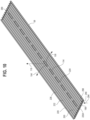
- the upper and lower press assemblies 12, 14 each include a cooling system, such as forced air cooling systems 70, 72 for cooling the platens 46, 48 once the belt ends 20, 22 have been subjected to the desired pressure, temperature, and duration for the particular belt ends 20, 22.
- the forced air cooling systems 70, 72 rapidly cool the platens 46, 48 which may improve splice quality by reducing the duration of a splicing operation.
- the forced air cooling systems 70, 72 also decrease the time it takes to perform splicing operations on multiple conveyor belts 20.
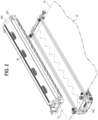
- the fan assemblies 78 include fans 82 rotatable about axes 83 oriented to draw cooler, ambient air into the air flow assembly 76 through screens 86 (see FIG. 2 ).
- the fan assemblies 78 include electric motors to rotate the fans 82 and substantially cylindrical fan shrouds 82A extending around the fans 82.
- Each fan shroud 82A includes an inlet opening at one end of the shroud 82A and an outlet opening at the other end of the shroud 82A.
- the fan shrouds assist in directing airflow through the fan assemblies 78 and improving the efficiency of the fans 82.
- the forced air cooling system 72 of the lower press assembly 14 is similar to the forced air cooling system 70 of the upper press assembly 12 and is configured to direct air into the insulating assembly 58 and rapidly cool the lower platen 48 after a splicing operation.
- One difference between the forced air cooling systems 70, 72 is that the forced air cooling system 72 of the lower press assembly 14 does not include a duct like duct 100 to direct airflow longitudinally before directing the airflow vertically into the insulating assembly 58. Instead, the air cooling system 72 has fan assemblies 174 that direct airflow vertically upward into the insulating assembly 58 rather than having an intervening duct as in the forced air cooling system 70.
- the forced air cooling system 72 may include a duct similar to duct 100 if desired.
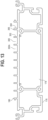
- the lower platen 48 may be laterally wider than the upper platen 46 and the springs 61 of the lower press assembly 14 may have an overall lateral width 280A that is at least half, at least two-thirds, or at least three-quarters a lateral width 282A (see FIG. 5 ) of the platen 48.
- the springs 61 thereby provide support for the majority of the surface area of the platens 46, 48 while at the same time resisting heat loss from the platens 46, 48.
- the splice press 10 may have has the following dimensions: Dimension Measurement (mm) 260 1305 262 1224 280 171 282 290 280A 171
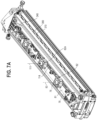
- the end 380 includes an upper end body 460 and a lower end body 462 that are connected respectively to the upper and lower frames 81, 176.
- the end 380 includes a user interface 466 that can be used to program, operate, or otherwise control the splice press 10.
- the user interface 466 may provide prompts for a user to select desired temperatures and durations for the splice operation, and/or may allow the user to select the parameters from a pre-determined collection of options.
- the user interface 466 may include a variety of audio, visual, and tactile interfaces to receive information from or transmit information to the user.
- the clamps 40 include an actuator 510 that is connected to the lower end body 462 at a pivot connection 512.
- the actuator 510 includes a rotatable handle 514 and a link 516.
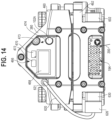
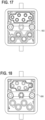
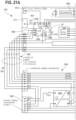
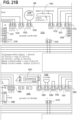
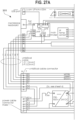
- the connector 602 of each cord 600 has jumpers 1063 connecting two or more of the electrical connectors B3-B6 of the connector 602 to the connector B2 of the connector 602.
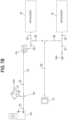
- the memory of the main controller 1050 includes a lookup table 609 of FIG. 22 and permits the main controller 1050 to determine the cord 600 connected to the power supply circuit 50 based on the binary code produced by the electrical connectors B3-B6 of the electrical contacts 1004, 1005, 1006, 1007, 1008, or 1009.
- some binary numbers e.g., 15, 13, 14, 12, 4, and 8 can be associated with different standard power supplies for unique applications of the splice press 10 or additional standard power supplies.
- the power controller 1080 determines the power assigned to the cable 600 by detecting: a "0" for the B3 electrical connector (the first column); a “1” for B4 electrical connector (the second column); a “0” for the B5 electrical connector (the third column); and a "1” for B6 (the fourth column).
- the power controller 1080 can thereby determine that the electrical contacts 1004 connected to the electrical contacts 1062are associated with a cord 600 for single phase, 230 volt, 16 amp standard power supplies.
- voltage may be provided to pin B6 and a binary signal could be produced by using the jumper 1063 to transfer the voltage to selected ones of the electrical connectors B3-B6.
- the power controllers 1030, 1080 can selectively energize outputs 1033, 1083 to selectively energize the fan circuits 1043, 1093 such as at the end of the belt splicing procedure in order to cool down the platens 46, 48.
- the power controllers 1030, 1080 can also energize the fan circuits 1043, 1093 when the power controllers 1030, 1080 detect a temperature of one or both of the platens 46, 48 above a predetermined temperature using the thermocouples 1021, 1071.
- the power controller 1030 operates an electrical circuit 1044 of the compressor 340. To inflate the bladders 96, 98, the main controller 1050 sends a signal to the power controller 1030. The power controller 1030 energizes the power output 1034 and causes the compressor 340 to inflate the bladders 96, 98.
- the solid state relays 1041, 1091 are single pole single throw relays that are normally open.
- the coils of the solid state relays 1041, 1091 are controlled by the power outputs 1031, 1081 of the power controllers 1030, 1080.
- contacts 1041A, 1041B and 1091A, 1091B are connected thus providing power to heating elements 1023, 1073 and series-parallel relays 1042, 1092.
- the splice press 10 may have a variety of different embodiments including versions with different lengths. These versions include 600, 900, 1200, 1500, 1800, and 2100 with the version number generally corresponding to the working length of the splice press 10.
- the splice press 10 disclosed in FIG. 1 is considered a 1200 press.
- Figure 23 includes a table 611 that provides a summary of the different modes of operation of each of the different versions of the splice press 10. Each column represents a different version of the splice press 10.
- the modes of operation are dependent on the standard power supply connected to the splice press 10, as shown by the different rows.
- the modes of operation include whether the heating elements 1023/1024 and 1073/1074 are placed in series or parallel and whether the power supply circuit 50 alternately energizes the upper and lower heaters 42, 44.
- the dwell stage of a splicing operation is primarily for soaking heat into the belt ends 20, 22 after the platens 46, 48 reach the predetermined dwell temperature. In general, the thicker the belt, the longer the dwell time.
- the material of the fingers (see FIG. 2 ) of one of the belt ends 20, 24 begins to flow and joins with the material of the fingers of the other belt ends 20, 24.
- Figure 24 contains two graphs, with graph 2250 showing the average temperature profile of the platens 46, 48 during a splicing operation when the splice press 10 is connected to a low power, 110 volt standard power supply.
- Figure 24 also contains graph 2200 showing the temperature profile of the platens 46, 48 when the splice press 10 is connected to a higher power, 230 volt standard power supply.
- the temperature in FIG. 24 is shown in Celsius and the time is measured in minutes and seconds.
- the terms high power standard supply and low power standard power supply are used to refer to the relative electrical power provided by different standard power supplies. Whether a standard power supply is high power or low power depends on the splice press itself. For example and with reference to FIG.
- the main controller 1050 causes the power controllers 1030, 1080 to alternately energize the heaters 42, 44, i.e., one after the other, during a warm-up mode or stage 2254 of operation when the cord 600 is connected to the 110 volt standard power supply.
- the main controller 1050 causes the power controllers 1030, 1080 to energize both of the heaters 42, 44 continuously and at the same time during a warm-up mode or stage 2200A when the cord 600 is connected to the 230 volt power standard power supply.
- the main controller 1050 may determine whether to utilize the alternating powering of the heaters 42, 44 or the simultaneous powering of the heaters 42, 44 in response to the result of the binary code look-up procedure discussed above with respect to FIGS. 22 and 23 .
- the available number of Watts determine whether the power supplied to the power supply circuit 50 is high or low.
- the operation of the splice press 10 includes the warm-up stages 2200A, 2254 until the platens 46, 48 reach critical temperatures 2202, 2260. Due to the lower power available to the splice press 10 when the splice press is connected to the 110 volt standard power supply, i.e., graph 2250, platens 46, 48 take longer to reach the critical temperature 2260 as the main controller 1050 alternates between energizing the heater 42 and the heater 44. When the splice press 10 is connected to the 230 volt standard power supply, there is more power available to the splice press 10 such that the platens 46, 48 reach the critical temperature 2202 faster.
- the temperature of the platens 46, 48 begins at a starting temperature 2201, 2252 and increases until reaching critical temperature 2202, 2260, which is the same for both graphs 2200, 2250, e.g, 170 degrees Celsius.
- critical temperature 2260 is reached in graph 2250
- the main controller 1050 continues alternately energizing the upper and lower heaters 42, 44 to heat the upper and lower platens 46, 48 at a rate 2262.
- the main controller 1050 energized both the upper and lower heaters 42, 44 together prior to the platens 46, 48 reaching the critical temperature 2202 (hence the faster rate of heating than graph 2250).
- FIG. 24 provides the graph 2200 of temperature of the platens 46, 48 during a splice operation when the cord 600 is connected to a high power standard power supply.
- a user may have selected the cord 600 configured to be connected to three phase, 230 volt, 16 amp standard power supply.
- the connector 602 of this cord 600 includes the electrical contacts 1006 (see FIGS. 16 and 21D ).
- the main controller 1050 uses the lookup table of FIG. 23 and the binary code provided by the connector 602 to determine the phase, voltage, and current rating of the standard power supply.
- the main controller 1050 is configured to alternate between energizing the upper and lower heaters 42, 44 during the warm-up stage when the splice press 10 is connected to a low power standard power supply, which permits the platens 46, 48 to be heated to the critical temperature despite the low power.
- the main controller 1050 is also configured to operate each pair of heating elements 1023, 1024 and 1073, 1074 in series or parallel during the splicing operation depending on the voltage of the standard power supply.
- a user may select a recipe for a particular belt and the power supply circuit 50 takes care of the rest by alternately causing heating of the platens 46, 48 if there is a low power standard power supply available and heating the plates 46, 48 simultaneously if there is a high power standard power supply available.
- the power supply circuit 50 operates the heaters 42, 44 to provide the same heating profile of the platens 46, 48 during the dwell time 2207, 2256 whether there is a lower power or a high power standard power supply available.
- a particular conveyor belt may be a conveyor belt made of a specific material(s) and having a specific thickness and width.
- the relays 1042, 1092 are energized. This causes the heating elements 1023, 1024 to be connected in parallel and the heating elements 1073, 1074 to be connected in parallel. This allows each heating element 1023, 1024, 1073, 1074 to experience the same, or nearly the same, voltage drop whether there is a lower voltage or higher voltage standard power supply available.
- the at least one bladder includes a pair of longitudinally extending bladders and the at least one first fan assembly is configured to direct air past the bladders transverse to the longitudinal extents thereof.
- the first insulating assembly includes walls separating the resilient members.
- a portable conveyor belt splicing apparatus for joining conveyor belt ends together comprises:
- the one platen assembly is elongated along a longitudinal axis thereof and the plurality of resilient members each contact the one platen assembly at a plurality of longitudinally spaced locations along the one platen assembly.
- the one platen assembly includes a platen and a support plate on opposite sides of the heater and the resilient members contact the support plate.
- the support portion includes one or more openings; and at least one fan assembly is configured to direct airflow through the one or more openings and into the insulating assembly.
- a conveyor belt splicing apparatus for joining ends of a conveyor belt comprises:
- the conveyor belt splicing apparatus of the twenty-fourth embodiment further comprises an elongated duct in the gap between the at least one first bladder and the at least one second bladder that receives airflow from the at least one fan assembly and includes openings that permit the airflow to travel toward the platen of the one housing portion.
- the one housing portion includes a frame having at least one opening vertically aligned with the gap between the bladders and the at least one fan assembly is configured to direct airflow through the at least one opening of the frame and through the gap between the bladders to cool the platen.
- the at least one fan assembly includes a plurality of fan assemblies each having a fan rotatable about an axis extending vertically through the gap between the at least one first bladder and the at least one second bladder.
- a portable conveyor belt splicing apparatus comprises:
- the dwell characteristics include a dwell time such that the upper and lower platens are heated for a dwell time that is the same regardless of whether the power supply circuit is connected to the high power standard power supply or the low power standard power supply.
- the conveyor belt splicing apparatus of the thirty-fourth embodiment further comprises an air pump and at least one inflatable bladder connected to the air pump; and the dwell characteristics include a dwell pressure and the power supply circuit is configured to control operation of the air pump to inflate the at least one bladder and apply the dwell pressure to the belt ends that is the same whether the power supply circuit is connected to the high power standard power supply or the low power standard power supply.
- the first warm-up mode lasts for a first time period and the second warm-up mode lasts for a second time period that is longer than the first time period.
- the power supply circuit is configured to alternate between providing more power to the upper heater than the lower heater and providing more power to the lower heater than the upper heater during a warm-up stage of the belt splicing operation in response to the power supply circuit being connected to the low power standard power supply.
- the power supply circuit is configured to alternate between providing more power to the upper heater than the lower heater and providing more power to the lower heater than the upper heater during a dwell stage of the belt splicing operation regardless of whether the power supply circuit is connected to the high power standard power supply or the low power standard power supply.
- the dwell characteristics include dwell temperatures for the platens and energizing the heaters includes energizing the heaters so that the platens each have a dwell temperature that is the same regardless of whether the power supply circuit receives electrical power from the high power standard power supply or the low power standard power supply.
- receiving electrical power at the power supply circuit of the conveyor belt splicing apparatus includes receiving power from a high power standard power supply providing: single phase, 230 volt, 16 amp; single phase, 230 volt, 30 amp; three phase, 230 volt, 16 amp; or three-phase, 400 volt, 16 amp.
- receiving electrical power at the power supply circuit of the conveyor belt splicing apparatus includes receiving power from a high power standard power supply providing: single phase, 230 volt, 30 amp; three phase, 400 volt, 16 amp; three phase, 400 volt; or three phase, 460 volt.
- receiving electrical power at the power supply circuit of the conveyor belt splicing apparatus includes receiving power from a low power standard power supply providing: single phase, 230 volt, 16 amp; or three phase, 230 volt, 16 amp.
Landscapes
- Engineering & Computer Science (AREA)
- Mechanical Engineering (AREA)
- Physics & Mathematics (AREA)
- Thermal Sciences (AREA)
- General Engineering & Computer Science (AREA)
- Health & Medical Sciences (AREA)
- Oral & Maxillofacial Surgery (AREA)
- Fluid Mechanics (AREA)
- Lining Or Joining Of Plastics Or The Like (AREA)
- Belt Conveyors (AREA)
- Press Drives And Press Lines (AREA)
- Treatment Of Fiber Materials (AREA)
Applications Claiming Priority (4)
| Application Number | Priority Date | Filing Date | Title |
|---|---|---|---|
| US201562262905P | 2015-12-03 | 2015-12-03 | |
| EP21186720.5A EP3928959B1 (de) | 2015-12-03 | 2016-12-02 | Riemenspleissvorrichtung |
| PCT/US2016/064757 WO2017096253A1 (en) | 2015-12-03 | 2016-12-02 | Belt splicing apparatus and method |
| EP16871633.0A EP3384179B1 (de) | 2015-12-03 | 2016-12-02 | Riemenspleissvorrichtung |
Related Parent Applications (2)
| Application Number | Title | Priority Date | Filing Date |
|---|---|---|---|
| EP21186720.5A Division EP3928959B1 (de) | 2015-12-03 | 2016-12-02 | Riemenspleissvorrichtung |
| EP16871633.0A Division EP3384179B1 (de) | 2015-12-03 | 2016-12-02 | Riemenspleissvorrichtung |
Publications (2)
| Publication Number | Publication Date |
|---|---|
| EP4538558A2 true EP4538558A2 (de) | 2025-04-16 |
| EP4538558A3 EP4538558A3 (de) | 2025-06-18 |
Family
ID=58797916
Family Applications (3)
| Application Number | Title | Priority Date | Filing Date |
|---|---|---|---|
| EP25155838.3A Pending EP4538558A3 (de) | 2015-12-03 | 2016-12-02 | Appareil d'épissage de courroie |
| EP16871633.0A Active EP3384179B1 (de) | 2015-12-03 | 2016-12-02 | Riemenspleissvorrichtung |
| EP21186720.5A Active EP3928959B1 (de) | 2015-12-03 | 2016-12-02 | Riemenspleissvorrichtung |
Family Applications After (2)
| Application Number | Title | Priority Date | Filing Date |
|---|---|---|---|
| EP16871633.0A Active EP3384179B1 (de) | 2015-12-03 | 2016-12-02 | Riemenspleissvorrichtung |
| EP21186720.5A Active EP3928959B1 (de) | 2015-12-03 | 2016-12-02 | Riemenspleissvorrichtung |
Country Status (6)
| Country | Link |
|---|---|
| US (2) | US9879754B2 (de) |
| EP (3) | EP4538558A3 (de) |
| CN (3) | CN108368913B (de) |
| CA (2) | CA3157290A1 (de) |
| ES (2) | ES2895109T3 (de) |
| WO (1) | WO2017096253A1 (de) |
Families Citing this family (10)
| Publication number | Priority date | Publication date | Assignee | Title |
|---|---|---|---|---|
| EP4538558A3 (de) | 2015-12-03 | 2025-06-18 | Flexible Steel Lacing Company | Appareil d'épissage de courroie |
| US10149411B2 (en) * | 2016-09-09 | 2018-12-04 | Seagate Technology Llc | Rack enclosure cooling systems and related methods |
| CN109203489A (zh) * | 2017-07-07 | 2019-01-15 | 温州红龙工业设备制造有限公司 | 皮带接驳机 |
| CN210770025U (zh) * | 2017-08-30 | 2020-06-16 | 易乔工程有限公司 | 一种用于硫化压力机自动控制的输送带拼接系统 |
| KR20200090228A (ko) * | 2017-11-29 | 2020-07-28 | 이에이치씨 캐나다, 인크. | 핸드레일 또는 다른 세장형 물품에 스플라이스 조인트를 형성하기 위한 몰드 조립체 |
| JP7825563B2 (ja) | 2020-03-06 | 2026-03-06 | フレキシブル・スチール・レーシング・カンパニー | 切断装置及びベルト切断方法 |
| CN115648687B (zh) * | 2022-10-20 | 2023-12-08 | 宁波伏龙同步带有限公司 | 一种超长复合型多层热塑性传送带的加工方法及装置 |
| CN115923149A (zh) * | 2022-12-14 | 2023-04-07 | 温州红龙工业设备制造有限公司 | 皮带接驳机 |
| CN116214937B (zh) * | 2022-12-26 | 2024-07-16 | 温州红龙工业设备制造有限公司 | 施压平衡的皮带接驳机 |
| CN118438686B (zh) * | 2024-05-29 | 2026-02-27 | 上海盛誉传动系统有限公司 | 一种热压装置及采用其进行输送带加工的方法 |
Family Cites Families (89)
| Publication number | Priority date | Publication date | Assignee | Title |
|---|---|---|---|---|
| US839028A (en) | 1905-07-31 | 1906-12-18 | Sherwood L Porter | Belt-stretcher. |
| US1459822A (en) | 1920-09-10 | 1923-06-26 | Walter E Carleton | Film-patching machine |
| US2248499A (en) | 1937-09-07 | 1941-07-08 | James C Heintz | Belt splice vulcanizer |
| GB565475A (en) | 1942-12-30 | 1944-11-13 | George Kitchen Steer | Improvements in and relating to a method of and apparatus for the joining together of lengths of belting |
| US2566262A (en) | 1947-12-18 | 1951-08-28 | Goodrich Co B F | Belt and method of splicing the same |
| DE927315C (de) | 1948-10-02 | 1955-05-05 | Curt Matthaei | Schneidevorrichtung fuer Foerderbaender u. dgl. |
| US2725091A (en) | 1949-10-19 | 1955-11-29 | Us Rubber Co | Apparatus for joining thermoplastic sheet material |
| DE920478C (de) | 1951-05-05 | 1954-11-22 | Curt Matthaei | Verfahren und Vorrichtung zum Verbinden der Enden von Foerderbaendern mittels V-foermiger Drahthaken |
| FR1124656A (fr) * | 1955-04-13 | 1956-10-16 | Polyvalente Des Plastiques Soc | Machine électrique de soudure pour matières thermoplastiques |
| AT252556B (de) * | 1962-10-03 | 1967-02-27 | Electronic Ges Fuer Hochfreque | Maschine zum Schneiden und bzw. oder Schweißen von dünnen Folien oder Folienschläuchen aus Kunststoff |
| US3547743A (en) | 1967-06-30 | 1970-12-15 | Canadian Ind | Heat sealing device with means for moderating the temperature of the seal boundary |
| NL7415181A (nl) | 1972-11-13 | 1976-05-25 | Spherex Inc | Inrichting voor het vormen van ringen. |
| DE2304045A1 (de) | 1972-11-28 | 1974-05-30 | Habasit Ag | Vorrichtung zum verbinden der einander ueberlappenden endabschnitte eines biegsamen materialstreifens |
| US3986765A (en) | 1975-02-07 | 1976-10-19 | Amp Incorporated | Power cord connector |
| US3969051A (en) * | 1975-06-13 | 1976-07-13 | D.G. Rung Industries, Inc. | Vulcanizing apparatus |
| DE2734025C3 (de) * | 1977-07-28 | 1982-01-07 | Wagener Schwelm GmbH & Co, 5830 Schwelm | Vorrichtung für die Reparatur und für das Endlosmachen von Fördergurten |
| US4193341A (en) | 1977-11-03 | 1980-03-18 | Modern Precision Engineers & Associates Limited | Presses |
| GB2033831A (en) * | 1978-09-15 | 1980-05-29 | Crosfield Electronics Ltd | Apparatus for joining edges |
| US4346287A (en) | 1980-05-16 | 1982-08-24 | Watlow Electric Manufacturing Company | Electric heater and assembly |
| DE3028400C2 (de) | 1980-07-26 | 1982-09-23 | Wagener Schwelm GmbH & Co, 5830 Schwelm | Vorrichtung für die Reparatur und zum Endlosmachen von Fördergurten aus Gummi oder Kunststoff |
| DE3028401C2 (de) | 1980-07-26 | 1982-09-23 | Wagener Schwelm GmbH & Co, 5830 Schwelm | Vorrichtung für die Reparatur und zum Endlosmachen von Fördergurten aus Gummi oder Kunststoff |
| US4414048A (en) | 1981-05-07 | 1983-11-08 | Owens-Illinois, Inc. | Web splicing apparatus |
| US4430146A (en) | 1982-02-22 | 1984-02-07 | Scandura, Inc. | Belt splicing apparatus and method and splice formed thereby |
| US4623419A (en) * | 1984-07-09 | 1986-11-18 | Price John G | Steam sack vulcanizing apparatus |
| JPS6241442A (ja) | 1985-08-17 | 1987-02-23 | Bridgestone Corp | 樹脂製コンベアベルトのエンドレス接合方法 |
| DE8531749U1 (de) | 1985-11-09 | 1986-02-20 | Wegener GmbH & Co KG, 5100 Aachen | Schweißeinrichtung |
| SU1612157A1 (ru) | 1987-11-12 | 1990-12-07 | Предприятие П/Я Р-6956 | Вулканизационное устройство дл стыковки конвейерных лент |
| US4900270A (en) | 1989-02-24 | 1990-02-13 | Safe Stress, Inc. | Cable adaptor assembly |
| FR2646579A1 (fr) | 1989-03-20 | 1990-11-02 | Guillemot Gerard | Equipement chauffant electriquement a haute temperature par zones regulees pour la mise en oeuvre de produits en materiaux composites |
| US5020209A (en) | 1989-11-06 | 1991-06-04 | Flexible Steel Lacing Company | Belt lacing and cutter assembly |
| DE69029566T2 (de) * | 1989-11-30 | 1997-04-24 | Hewlett Packard Co | Fehlerkorrektur in einem Kassettenbehandlungssystem |
| US5329094A (en) | 1992-08-24 | 1994-07-12 | Paul Murphy Plastics Company | Portable radiant heater for performing splices in waterstop |
| DE4417668A1 (de) | 1994-05-20 | 1995-11-23 | Memminger Iro Gmbh | Zahnriemen mit Stoßstelle sowie Verfahren zum Erzeugen der Stoßstelle und Vorrichtung hierfür |
| US5562796A (en) * | 1994-05-24 | 1996-10-08 | Dorner Mfg. Corp. | Heat press for joining the spliced ends of a conveyor belt |
| US5499565A (en) | 1994-08-31 | 1996-03-19 | Dorner Mfg. Corp. | Belt cutting apparatus |
| US5601741A (en) | 1994-11-18 | 1997-02-11 | Illinois Tool Works, Inc. | Method and apparatus for receiving a universal input voltage in a welding power source |
| US6233398B1 (en) | 1994-12-29 | 2001-05-15 | Watlow Polymer Technologies | Heating element suitable for preconditioning print media |
| US5714738A (en) | 1995-07-10 | 1998-02-03 | Watlow Electric Manufacturing Co. | Apparatus and methods of making and using heater apparatus for heating an object having two-dimensional or three-dimensional curvature |
| US6086806A (en) | 1996-04-05 | 2000-07-11 | Ronald H. Ball | Method of splicing thermoplastic articles |
| CN1094819C (zh) * | 1997-04-30 | 2002-11-27 | 大兴株式会社 | 环状坯料之制造装置 |
| US5929386A (en) | 1997-09-11 | 1999-07-27 | Ryobi North America, Inc. | Power cord set for an electric tool |
| US6234304B1 (en) | 1998-01-28 | 2001-05-22 | Mol Belting Company | Conveyor belt joint |
| US6321903B1 (en) | 1998-05-08 | 2001-11-27 | Curt Shaffer | Splice joint for plastic coated fabric conveyor belt and method of making the same |
| JPH11348124A (ja) | 1998-06-10 | 1999-12-21 | Dainippon Printing Co Ltd | カード製造用貼り合わせ装置 |
| US6109977A (en) | 1998-08-11 | 2000-08-29 | Motorola, Inc. | Prong for adapter plug for international use |
| US5973296A (en) | 1998-10-20 | 1999-10-26 | Watlow Electric Manufacturing Company | Thick film heater for injection mold runner nozzle |
| FR2785657B1 (fr) | 1998-11-05 | 2000-12-01 | Sde | Procede de fabrication automatise de boucles ou courroies et dispositif mettant en oeuvre ce procede |
| US6263158B1 (en) | 1999-05-11 | 2001-07-17 | Watlow Polymer Technologies | Fibrous supported polymer encapsulated electrical component |
| US6392208B1 (en) | 1999-08-06 | 2002-05-21 | Watlow Polymer Technologies | Electrofusing of thermoplastic heating elements and elements made thereby |
| US6228200B1 (en) | 1999-09-09 | 2001-05-08 | Belt Equipment, Inc. | Belt press using differential thermal expansion |
| US6227881B1 (en) | 1999-12-06 | 2001-05-08 | The Jpm Company | Cable management coupling and shielding interconnect system and method |
| US6433317B1 (en) | 2000-04-07 | 2002-08-13 | Watlow Polymer Technologies | Molded assembly with heating element captured therein |
| US6539171B2 (en) | 2001-01-08 | 2003-03-25 | Watlow Polymer Technologies | Flexible spirally shaped heating element |
| DE20100627U1 (de) | 2001-01-12 | 2001-05-03 | Müssel Maschinenbau GmbH, 95615 Marktredwitz | Heizpresse |
| US6720527B2 (en) | 2001-06-19 | 2004-04-13 | Illinois Tool Works, Inc. | Power cord for a welding-type power supply |
| US7304276B2 (en) | 2001-06-21 | 2007-12-04 | Watlow Electric Manufacturing Company | Thick film heater integrated with low temperature components and method of making the same |
| ES2254339T3 (es) * | 2001-10-24 | 2006-06-16 | Habasit Italiana S.P.A. | Prensa de empalme. |
| DE10162276C5 (de) | 2001-12-19 | 2019-03-14 | Watlow Electric Manufacturing Co. | Rohrförmiger Durchlauferhitzer und Heizplatte sowie Verfahren zu deren Herstellung |
| US6827803B1 (en) * | 2002-03-20 | 2004-12-07 | John A. Willis | Method of joining belt ends |
| US7023167B2 (en) | 2002-05-02 | 2006-04-04 | Smith Otto J M | Control arrangement for an induction motor compressor having at least three windings, a torque-augmentation circuit a starting capacitor and a resistive element |
| US7049523B2 (en) | 2002-08-30 | 2006-05-23 | Belden Technologies, Inc. | Separable multi-member composite cable |
| US6951478B2 (en) | 2002-10-07 | 2005-10-04 | Cheng Chin Y | Method and apparatus for three-phase to single-phase power distribution |
| US6862867B2 (en) | 2003-01-16 | 2005-03-08 | Pack-Tech, L.L.C. | Bag sealing system and method |
| WO2004075349A2 (en) | 2003-02-18 | 2004-09-02 | Medconx, Inc. | Male medical device electrical connector with engineered friction fit |
| US20050098684A1 (en) | 2003-03-14 | 2005-05-12 | Watlow Polymer Technologies | Polymer-encapsulated heating elements for controlling the temperature of an aircraft compartment |
| US7465901B2 (en) | 2004-12-02 | 2008-12-16 | Illinois Tool Works Inc. | Power cord system for welding-type devices |
| US7040931B1 (en) | 2004-12-06 | 2006-05-09 | Illinois Tool Works Inc. | Power plug adapter |
| US7919733B2 (en) | 2005-08-09 | 2011-04-05 | Watlow Electric Manufacturing Company | Modular heater systems |
| US8809751B2 (en) | 2005-08-09 | 2014-08-19 | Watlow Electric Manufacturing Company | Modular heater system |
| US7964826B2 (en) | 2005-08-09 | 2011-06-21 | Watlow Electric Manufacturing Company | Modular heater systems |
| US20070090796A1 (en) | 2005-10-14 | 2007-04-26 | Waatani Norris | Power adapter for power tools |
| CN2918044Y (zh) | 2006-03-09 | 2007-07-04 | 周锡 | 聚胺酯同步传动带热压融接压机 |
| US7629766B2 (en) | 2006-07-17 | 2009-12-08 | Bbs Licensing, Inc. | Adapter system for battery-powered tools |
| US7815043B2 (en) | 2006-08-14 | 2010-10-19 | Fenner Dunlop Americas, Inc. | Laterally flexible reinforced structure |
| US7930043B2 (en) | 2006-09-15 | 2011-04-19 | International Business Machines Corporation | Method and system for discovery, validation and delivery of power through a universal power center |
| ITMI20062377A1 (it) * | 2006-12-12 | 2008-06-13 | Habasit Italiana Spa | Pressa di giunzione per la giunzione delle estremita' particolarmente di un nastro trasportatore e simili. |
| AU2008272791B2 (en) | 2007-07-03 | 2015-03-12 | Flexible Steel Lacing Company | Clamping and cutting apparatus for conveyor belts |
| PL2045054T3 (pl) | 2007-09-14 | 2011-11-30 | Mato Maschinen Und Metallwarenfabrik Curt Matthaei Gmbh & Co Kg | Urządzenie do zaciskania i obróbki końcówki pasa przenośnika oraz proces |
| JP2009257575A (ja) | 2008-03-19 | 2009-11-05 | Denso Corp | トルクリミッタ機能付き回転機器 |
| CL2008002214A1 (es) | 2008-07-29 | 2009-01-02 | William Valenzuela Urrea Ricardo | Prensa portatil empalmadora para unir extremos de banda transportadoras de pvc o pu,operable en terreno por ser desmontable, comprende una estructura superior e inferior con perfiles livianos y medios de calentamiento; colchon de aire como mecanismo de presion y medios de apriete. |
| US9090022B1 (en) * | 2009-09-17 | 2015-07-28 | Flexible Steel Lacing Company | Belt splicing apparatus for conveyor belts |
| US9027623B2 (en) | 2009-09-22 | 2015-05-12 | Flexible Steel Lacing Company | Welding apparatus for conveyor belts and method |
| CN101863124B (zh) * | 2010-06-02 | 2012-11-14 | 芶珍 | 一种塑料管网的焊接方法及焊接设备 |
| KR101180919B1 (ko) | 2010-11-23 | 2012-09-07 | 조치경 | 컨베이어 벨트 접합장치 |
| US8770253B2 (en) * | 2011-11-23 | 2014-07-08 | Flexible Steel Lacing Company | Cutting and splicing apparatus for conveyor belts and method |
| CN202517722U (zh) | 2012-05-03 | 2012-11-07 | 杨毅 | 一种皮带热压机 |
| GB201307592D0 (en) * | 2013-04-26 | 2013-06-12 | Shaw Almex Ind Ltd | Air cooled press |
| US20170210057A1 (en) * | 2015-02-16 | 2017-07-27 | Mol Belting Company | Belt splicer and method of splicing |
| EP4538558A3 (de) | 2015-12-03 | 2025-06-18 | Flexible Steel Lacing Company | Appareil d'épissage de courroie |
-
2016
- 2016-12-02 EP EP25155838.3A patent/EP4538558A3/de active Pending
- 2016-12-02 CN CN201680070959.XA patent/CN108368913B/zh active Active
- 2016-12-02 US US15/368,218 patent/US9879754B2/en active Active
- 2016-12-02 EP EP16871633.0A patent/EP3384179B1/de active Active
- 2016-12-02 CA CA3157290A patent/CA3157290A1/en active Pending
- 2016-12-02 CN CN202011286075.2A patent/CN112519243B/zh active Active
- 2016-12-02 ES ES16871633T patent/ES2895109T3/es active Active
- 2016-12-02 CA CA3006298A patent/CA3006298C/en active Active
- 2016-12-02 ES ES21186720T patent/ES3024373T3/es active Active
- 2016-12-02 WO PCT/US2016/064757 patent/WO2017096253A1/en not_active Ceased
- 2016-12-02 CN CN202310495223.9A patent/CN116476390A/zh active Pending
- 2016-12-02 EP EP21186720.5A patent/EP3928959B1/de active Active
-
2017
- 2017-12-15 US US15/844,208 patent/US10677315B2/en active Active
Also Published As
| Publication number | Publication date |
|---|---|
| CA3157290A1 (en) | 2017-06-08 |
| CN112519243B (zh) | 2023-05-26 |
| WO2017096253A1 (en) | 2017-06-08 |
| EP4538558A3 (de) | 2025-06-18 |
| CN108368913A (zh) | 2018-08-03 |
| US10677315B2 (en) | 2020-06-09 |
| CN116476390A (zh) | 2023-07-25 |
| CA3006298C (en) | 2022-07-19 |
| EP3384179A1 (de) | 2018-10-10 |
| US9879754B2 (en) | 2018-01-30 |
| EP3384179B1 (de) | 2021-07-21 |
| EP3384179A4 (de) | 2019-11-13 |
| CN112519243A (zh) | 2021-03-19 |
| EP3928959A1 (de) | 2021-12-29 |
| ES2895109T3 (es) | 2022-02-17 |
| EP3928959B1 (de) | 2025-02-05 |
| CA3006298A1 (en) | 2017-06-08 |
| ES3024373T3 (en) | 2025-06-04 |
| CN108368913B (zh) | 2020-11-17 |
| US20170159751A1 (en) | 2017-06-08 |
| US20180106326A1 (en) | 2018-04-19 |
| EP3928959C0 (de) | 2025-02-05 |
Similar Documents
| Publication | Publication Date | Title |
|---|---|---|
| EP4538558A2 (de) | Appareil d'épissage de courroie | |
| US9090022B1 (en) | Belt splicing apparatus for conveyor belts | |
| EP2545892B1 (de) | Krankenpflegebereitstellungssystem und Komponenten dafür | |
| US7789643B2 (en) | In situ pipe repair controller and system | |
| US10161996B2 (en) | High power laser diode test system and method of manufacture | |
| US9701063B2 (en) | Air-cooled belt splicer | |
| HK40044713B (en) | Belt splicing apparatus and method | |
| HK40044713A (en) | Belt splicing apparatus and method | |
| HK40097679A (zh) | 带拼接设备和方法 | |
| CN220242147U (zh) | 一种改进型输送带硫化接头机 | |
| EP3323271B1 (de) | Heizsteuerungssystem | |
| CN212194280U (zh) | 一种塑胶传送带快速接驳装置 | |
| US9511537B2 (en) | Bonding tool, system to apply pressure during a bonding process and method to apply pressure during a bonding process |
Legal Events
| Date | Code | Title | Description |
|---|---|---|---|
| PUAI | Public reference made under article 153(3) epc to a published international application that has entered the european phase |
Free format text: ORIGINAL CODE: 0009012 |
|
| STAA | Information on the status of an ep patent application or granted ep patent |
Free format text: STATUS: THE APPLICATION HAS BEEN PUBLISHED |
|
| AC | Divisional application: reference to earlier application |
Ref document number: 3384179 Country of ref document: EP Kind code of ref document: P Ref document number: 3928959 Country of ref document: EP Kind code of ref document: P |
|
| AK | Designated contracting states |
Kind code of ref document: A2 Designated state(s): AL AT BE BG CH CY CZ DE DK EE ES FI FR GB GR HR HU IE IS IT LI LT LU LV MC MK MT NL NO PL PT RO RS SE SI SK SM TR |
|
| REG | Reference to a national code |
Ref country code: DE Ref legal event code: R079 Free format text: PREVIOUS MAIN CLASS: F16G0003160000 Ipc: B29C0065180000 |
|
| PUAL | Search report despatched |
Free format text: ORIGINAL CODE: 0009013 |
|
| AK | Designated contracting states |
Kind code of ref document: A3 Designated state(s): AL AT BE BG CH CY CZ DE DK EE ES FI FR GB GR HR HU IE IS IT LI LT LU LV MC MK MT NL NO PL PT RO RS SE SI SK SM TR |
|
| RIC1 | Information provided on ipc code assigned before grant |
Ipc: B29K 67/00 20060101ALN20250512BHEP Ipc: B29K 75/00 20060101ALN20250512BHEP Ipc: B29K 27/06 20060101ALN20250512BHEP Ipc: B29K 101/12 20060101ALN20250512BHEP Ipc: F16G 3/16 20060101ALI20250512BHEP Ipc: F16G 3/10 20060101ALI20250512BHEP Ipc: F16G 3/00 20060101ALI20250512BHEP Ipc: B29C 65/30 20060101ALI20250512BHEP Ipc: B29C 65/18 20060101AFI20250512BHEP |
|
| STAA | Information on the status of an ep patent application or granted ep patent |
Free format text: STATUS: REQUEST FOR EXAMINATION WAS MADE |
|
| 17P | Request for examination filed |
Effective date: 20251218 |