EP4194202A1 - Mehrschichtiger körper und sekundärer formartikel - Google Patents
Mehrschichtiger körper und sekundärer formartikel Download PDFInfo
- Publication number
- EP4194202A1 EP4194202A1 EP21852674.7A EP21852674A EP4194202A1 EP 4194202 A1 EP4194202 A1 EP 4194202A1 EP 21852674 A EP21852674 A EP 21852674A EP 4194202 A1 EP4194202 A1 EP 4194202A1
- Authority
- EP
- European Patent Office
- Prior art keywords
- carbon nanotubes
- laminated body
- less
- antistatic
- body according
- Prior art date
- Legal status (The legal status is an assumption and is not a legal conclusion. Google has not performed a legal analysis and makes no representation as to the accuracy of the status listed.)
- Pending
Links
Images

Classifications
-
- C—CHEMISTRY; METALLURGY
- C08—ORGANIC MACROMOLECULAR COMPOUNDS; THEIR PREPARATION OR CHEMICAL WORKING-UP; COMPOSITIONS BASED THEREON
- C08J—WORKING-UP; GENERAL PROCESSES OF COMPOUNDING; AFTER-TREATMENT NOT COVERED BY SUBCLASSES C08B, C08C, C08F, C08G or C08H
- C08J7/00—Chemical treatment or coating of shaped articles made of macromolecular substances
- C08J7/04—Coating
- C08J7/044—Forming conductive coatings; Forming coatings having anti-static properties
-
- C—CHEMISTRY; METALLURGY
- C01—INORGANIC CHEMISTRY
- C01B—NON-METALLIC ELEMENTS; COMPOUNDS THEREOF; METALLOIDS OR COMPOUNDS THEREOF NOT COVERED BY SUBCLASS C01C
- C01B32/00—Carbon; Compounds thereof
- C01B32/15—Nano-sized carbon materials
- C01B32/158—Carbon nanotubes
-
- C—CHEMISTRY; METALLURGY
- C08—ORGANIC MACROMOLECULAR COMPOUNDS; THEIR PREPARATION OR CHEMICAL WORKING-UP; COMPOSITIONS BASED THEREON
- C08J—WORKING-UP; GENERAL PROCESSES OF COMPOUNDING; AFTER-TREATMENT NOT COVERED BY SUBCLASSES C08B, C08C, C08F, C08G or C08H
- C08J7/00—Chemical treatment or coating of shaped articles made of macromolecular substances
- C08J7/04—Coating
- C08J7/0427—Coating with only one layer of a composition containing a polymer binder
-
- C—CHEMISTRY; METALLURGY
- C08—ORGANIC MACROMOLECULAR COMPOUNDS; THEIR PREPARATION OR CHEMICAL WORKING-UP; COMPOSITIONS BASED THEREON
- C08K—Use of inorganic or non-macromolecular organic substances as compounding ingredients
- C08K3/00—Use of inorganic substances as compounding ingredients
- C08K3/02—Elements
- C08K3/04—Carbon
- C08K3/041—Carbon nanotubes
-
- C—CHEMISTRY; METALLURGY
- C09—DYES; PAINTS; POLISHES; NATURAL RESINS; ADHESIVES; COMPOSITIONS NOT OTHERWISE PROVIDED FOR; APPLICATIONS OF MATERIALS NOT OTHERWISE PROVIDED FOR
- C09D—COATING COMPOSITIONS, e.g. PAINTS, VARNISHES OR LACQUERS; FILLING PASTES; CHEMICAL PAINT OR INK REMOVERS; INKS; CORRECTING FLUIDS; WOODSTAINS; PASTES OR SOLIDS FOR COLOURING OR PRINTING; USE OF MATERIALS THEREFOR
- C09D133/00—Coating compositions based on homopolymers or copolymers of compounds having one or more unsaturated aliphatic radicals, each having only one carbon-to-carbon double bond, and at least one being terminated by only one carboxyl radical, or of salts, anhydrides, esters, amides, imides, or nitriles thereof; Coating compositions based on derivatives of such polymers
- C09D133/04—Homopolymers or copolymers of esters
-
- C—CHEMISTRY; METALLURGY
- C09—DYES; PAINTS; POLISHES; NATURAL RESINS; ADHESIVES; COMPOSITIONS NOT OTHERWISE PROVIDED FOR; APPLICATIONS OF MATERIALS NOT OTHERWISE PROVIDED FOR
- C09D—COATING COMPOSITIONS, e.g. PAINTS, VARNISHES OR LACQUERS; FILLING PASTES; CHEMICAL PAINT OR INK REMOVERS; INKS; CORRECTING FLUIDS; WOODSTAINS; PASTES OR SOLIDS FOR COLOURING OR PRINTING; USE OF MATERIALS THEREFOR
- C09D133/00—Coating compositions based on homopolymers or copolymers of compounds having one or more unsaturated aliphatic radicals, each having only one carbon-to-carbon double bond, and at least one being terminated by only one carboxyl radical, or of salts, anhydrides, esters, amides, imides, or nitriles thereof; Coating compositions based on derivatives of such polymers
- C09D133/04—Homopolymers or copolymers of esters
- C09D133/06—Homopolymers or copolymers of esters of esters containing only carbon, hydrogen and oxygen, the oxygen atom being present only as part of the carboxyl radical
-
- C—CHEMISTRY; METALLURGY
- C09—DYES; PAINTS; POLISHES; NATURAL RESINS; ADHESIVES; COMPOSITIONS NOT OTHERWISE PROVIDED FOR; APPLICATIONS OF MATERIALS NOT OTHERWISE PROVIDED FOR
- C09D—COATING COMPOSITIONS, e.g. PAINTS, VARNISHES OR LACQUERS; FILLING PASTES; CHEMICAL PAINT OR INK REMOVERS; INKS; CORRECTING FLUIDS; WOODSTAINS; PASTES OR SOLIDS FOR COLOURING OR PRINTING; USE OF MATERIALS THEREFOR
- C09D5/00—Coating compositions, e.g. paints, varnishes or lacquers, characterised by their physical nature or the effects produced; Filling pastes
- C09D5/24—Electrically-conducting paints
-
- C—CHEMISTRY; METALLURGY
- C09—DYES; PAINTS; POLISHES; NATURAL RESINS; ADHESIVES; COMPOSITIONS NOT OTHERWISE PROVIDED FOR; APPLICATIONS OF MATERIALS NOT OTHERWISE PROVIDED FOR
- C09D—COATING COMPOSITIONS, e.g. PAINTS, VARNISHES OR LACQUERS; FILLING PASTES; CHEMICAL PAINT OR INK REMOVERS; INKS; CORRECTING FLUIDS; WOODSTAINS; PASTES OR SOLIDS FOR COLOURING OR PRINTING; USE OF MATERIALS THEREFOR
- C09D7/00—Features of coating compositions, not provided for in group C09D5/00; Processes for incorporating ingredients in coating compositions
- C09D7/40—Additives
- C09D7/60—Additives non-macromolecular
- C09D7/61—Additives non-macromolecular inorganic
-
- C—CHEMISTRY; METALLURGY
- C09—DYES; PAINTS; POLISHES; NATURAL RESINS; ADHESIVES; COMPOSITIONS NOT OTHERWISE PROVIDED FOR; APPLICATIONS OF MATERIALS NOT OTHERWISE PROVIDED FOR
- C09D—COATING COMPOSITIONS, e.g. PAINTS, VARNISHES OR LACQUERS; FILLING PASTES; CHEMICAL PAINT OR INK REMOVERS; INKS; CORRECTING FLUIDS; WOODSTAINS; PASTES OR SOLIDS FOR COLOURING OR PRINTING; USE OF MATERIALS THEREFOR
- C09D7/00—Features of coating compositions, not provided for in group C09D5/00; Processes for incorporating ingredients in coating compositions
- C09D7/40—Additives
- C09D7/70—Additives characterised by shape, e.g. fibres, flakes or microspheres
-
- H—ELECTRICITY
- H01—ELECTRIC ELEMENTS
- H01B—CABLES; CONDUCTORS; INSULATORS; SELECTION OF MATERIALS FOR THEIR CONDUCTIVE, INSULATING OR DIELECTRIC PROPERTIES
- H01B1/00—Conductors or conductive bodies characterised by the conductive materials; Selection of materials as conductors
- H01B1/04—Conductors or conductive bodies characterised by the conductive materials; Selection of materials as conductors mainly consisting of carbon-silicon compounds, carbon or silicon
-
- B—PERFORMING OPERATIONS; TRANSPORTING
- B82—NANOTECHNOLOGY
- B82Y—SPECIFIC USES OR APPLICATIONS OF NANOSTRUCTURES; MEASUREMENT OR ANALYSIS OF NANOSTRUCTURES; MANUFACTURE OR TREATMENT OF NANOSTRUCTURES
- B82Y30/00—Nanotechnology for materials or surface science, e.g. nanocomposites
-
- C—CHEMISTRY; METALLURGY
- C08—ORGANIC MACROMOLECULAR COMPOUNDS; THEIR PREPARATION OR CHEMICAL WORKING-UP; COMPOSITIONS BASED THEREON
- C08J—WORKING-UP; GENERAL PROCESSES OF COMPOUNDING; AFTER-TREATMENT NOT COVERED BY SUBCLASSES C08B, C08C, C08F, C08G or C08H
- C08J2333/00—Characterised by the use of homopolymers or copolymers of compounds having one or more unsaturated aliphatic radicals, each having only one carbon-to-carbon double bond, and only one being terminated by only one carboxyl radical, or of salts, anhydrides, esters, amides, imides, or nitriles thereof; Derivatives of such polymers
- C08J2333/04—Characterised by the use of homopolymers or copolymers of compounds having one or more unsaturated aliphatic radicals, each having only one carbon-to-carbon double bond, and only one being terminated by only one carboxyl radical, or of salts, anhydrides, esters, amides, imides, or nitriles thereof; Derivatives of such polymers esters
-
- C—CHEMISTRY; METALLURGY
- C08—ORGANIC MACROMOLECULAR COMPOUNDS; THEIR PREPARATION OR CHEMICAL WORKING-UP; COMPOSITIONS BASED THEREON
- C08J—WORKING-UP; GENERAL PROCESSES OF COMPOUNDING; AFTER-TREATMENT NOT COVERED BY SUBCLASSES C08B, C08C, C08F, C08G or C08H
- C08J2333/00—Characterised by the use of homopolymers or copolymers of compounds having one or more unsaturated aliphatic radicals, each having only one carbon-to-carbon double bond, and only one being terminated by only one carboxyl radical, or of salts, anhydrides, esters, amides, imides, or nitriles thereof; Derivatives of such polymers
- C08J2333/04—Characterised by the use of homopolymers or copolymers of compounds having one or more unsaturated aliphatic radicals, each having only one carbon-to-carbon double bond, and only one being terminated by only one carboxyl radical, or of salts, anhydrides, esters, amides, imides, or nitriles thereof; Derivatives of such polymers esters
- C08J2333/06—Characterised by the use of homopolymers or copolymers of compounds having one or more unsaturated aliphatic radicals, each having only one carbon-to-carbon double bond, and only one being terminated by only one carboxyl radical, or of salts, anhydrides, esters, amides, imides, or nitriles thereof; Derivatives of such polymers esters of esters containing only carbon, hydrogen, and oxygen, the oxygen atom being present only as part of the carboxyl radical
-
- C—CHEMISTRY; METALLURGY
- C08—ORGANIC MACROMOLECULAR COMPOUNDS; THEIR PREPARATION OR CHEMICAL WORKING-UP; COMPOSITIONS BASED THEREON
- C08J—WORKING-UP; GENERAL PROCESSES OF COMPOUNDING; AFTER-TREATMENT NOT COVERED BY SUBCLASSES C08B, C08C, C08F, C08G or C08H
- C08J2433/00—Characterised by the use of homopolymers or copolymers of compounds having one or more unsaturated aliphatic radicals, each having only one carbon-to-carbon double bond, and only one being terminated by only one carboxyl radical, or of salts, anhydrides, esters, amides, imides, or nitriles thereof; Derivatives of such polymers
- C08J2433/04—Characterised by the use of homopolymers or copolymers of compounds having one or more unsaturated aliphatic radicals, each having only one carbon-to-carbon double bond, and only one being terminated by only one carboxyl radical, or of salts, anhydrides, esters, amides, imides, or nitriles thereof; Derivatives of such polymers esters
-
- C—CHEMISTRY; METALLURGY
- C08—ORGANIC MACROMOLECULAR COMPOUNDS; THEIR PREPARATION OR CHEMICAL WORKING-UP; COMPOSITIONS BASED THEREON
- C08J—WORKING-UP; GENERAL PROCESSES OF COMPOUNDING; AFTER-TREATMENT NOT COVERED BY SUBCLASSES C08B, C08C, C08F, C08G or C08H
- C08J2433/00—Characterised by the use of homopolymers or copolymers of compounds having one or more unsaturated aliphatic radicals, each having only one carbon-to-carbon double bond, and only one being terminated by only one carboxyl radical, or of salts, anhydrides, esters, amides, imides, or nitriles thereof; Derivatives of such polymers
- C08J2433/04—Characterised by the use of homopolymers or copolymers of compounds having one or more unsaturated aliphatic radicals, each having only one carbon-to-carbon double bond, and only one being terminated by only one carboxyl radical, or of salts, anhydrides, esters, amides, imides, or nitriles thereof; Derivatives of such polymers esters
- C08J2433/06—Characterised by the use of homopolymers or copolymers of compounds having one or more unsaturated aliphatic radicals, each having only one carbon-to-carbon double bond, and only one being terminated by only one carboxyl radical, or of salts, anhydrides, esters, amides, imides, or nitriles thereof; Derivatives of such polymers esters of esters containing only carbon, hydrogen, and oxygen, the oxygen atom being present only as part of the carboxyl radical
-
- C—CHEMISTRY; METALLURGY
- C08—ORGANIC MACROMOLECULAR COMPOUNDS; THEIR PREPARATION OR CHEMICAL WORKING-UP; COMPOSITIONS BASED THEREON
- C08J—WORKING-UP; GENERAL PROCESSES OF COMPOUNDING; AFTER-TREATMENT NOT COVERED BY SUBCLASSES C08B, C08C, C08F, C08G or C08H
- C08J2433/00—Characterised by the use of homopolymers or copolymers of compounds having one or more unsaturated aliphatic radicals, each having only one carbon-to-carbon double bond, and only one being terminated by only one carboxyl radical, or of salts, anhydrides, esters, amides, imides, or nitriles thereof; Derivatives of such polymers
- C08J2433/04—Characterised by the use of homopolymers or copolymers of compounds having one or more unsaturated aliphatic radicals, each having only one carbon-to-carbon double bond, and only one being terminated by only one carboxyl radical, or of salts, anhydrides, esters, amides, imides, or nitriles thereof; Derivatives of such polymers esters
- C08J2433/06—Characterised by the use of homopolymers or copolymers of compounds having one or more unsaturated aliphatic radicals, each having only one carbon-to-carbon double bond, and only one being terminated by only one carboxyl radical, or of salts, anhydrides, esters, amides, imides, or nitriles thereof; Derivatives of such polymers esters of esters containing only carbon, hydrogen, and oxygen, the oxygen atom being present only as part of the carboxyl radical
- C08J2433/10—Homopolymers or copolymers of methacrylic acid esters
- C08J2433/12—Homopolymers or copolymers of methyl methacrylate
-
- C—CHEMISTRY; METALLURGY
- C08—ORGANIC MACROMOLECULAR COMPOUNDS; THEIR PREPARATION OR CHEMICAL WORKING-UP; COMPOSITIONS BASED THEREON
- C08K—Use of inorganic or non-macromolecular organic substances as compounding ingredients
- C08K2201/00—Specific properties of additives
- C08K2201/001—Conductive additives
-
- C—CHEMISTRY; METALLURGY
- C08—ORGANIC MACROMOLECULAR COMPOUNDS; THEIR PREPARATION OR CHEMICAL WORKING-UP; COMPOSITIONS BASED THEREON
- C08K—Use of inorganic or non-macromolecular organic substances as compounding ingredients
- C08K2201/00—Specific properties of additives
- C08K2201/002—Physical properties
- C08K2201/003—Additives being defined by their diameter
-
- C—CHEMISTRY; METALLURGY
- C08—ORGANIC MACROMOLECULAR COMPOUNDS; THEIR PREPARATION OR CHEMICAL WORKING-UP; COMPOSITIONS BASED THEREON
- C08K—Use of inorganic or non-macromolecular organic substances as compounding ingredients
- C08K2201/00—Specific properties of additives
- C08K2201/002—Physical properties
- C08K2201/004—Additives being defined by their length
-
- C—CHEMISTRY; METALLURGY
- C08—ORGANIC MACROMOLECULAR COMPOUNDS; THEIR PREPARATION OR CHEMICAL WORKING-UP; COMPOSITIONS BASED THEREON
- C08K—Use of inorganic or non-macromolecular organic substances as compounding ingredients
- C08K2201/00—Specific properties of additives
- C08K2201/002—Physical properties
- C08K2201/006—Additives being defined by their surface area
-
- C—CHEMISTRY; METALLURGY
- C08—ORGANIC MACROMOLECULAR COMPOUNDS; THEIR PREPARATION OR CHEMICAL WORKING-UP; COMPOSITIONS BASED THEREON
- C08K—Use of inorganic or non-macromolecular organic substances as compounding ingredients
- C08K2201/00—Specific properties of additives
- C08K2201/011—Nanostructured additives
-
- C—CHEMISTRY; METALLURGY
- C08—ORGANIC MACROMOLECULAR COMPOUNDS; THEIR PREPARATION OR CHEMICAL WORKING-UP; COMPOSITIONS BASED THEREON
- C08K—Use of inorganic or non-macromolecular organic substances as compounding ingredients
- C08K2201/00—Specific properties of additives
- C08K2201/016—Additives defined by their aspect ratio
Definitions
- the present invention relates to a laminated body and a secondary formed product having an antistatic function.
- an antistatic sheet is used to release static electricity and prevent adhesion of dust.
- the antistatic sheet has, for example, a transparent antistatic layer of a thermoplastic resin containing carbon fibers on the surface of a transparent base material made of a thermoplastic resin.
- Patent Literature 1 proposes an antistatic resin formed product that solves this problem.
- Patent Literature 1 Japanese Patent Application Publication No. HI 1-353947
- Patent Document 1 since the electrical conductivity of the carbon fiber is low, it is necessary to increase the content of the carbon fiber or increase the thickness of the antistatic layer in order to ensure the antistatic property after drawing, as a result manufacturing restrictions are large.
- An object of the present disclosure is to provide a laminated body and a secondary formed product thereof that is able to relax restrictions on manufacturing.
- a laminated body according to a first disclosure includes a base material and an antistatic layer.
- the antistatic layer is provided on the base material and contains carbon nanotubes and resin.
- the specific surface area per unit weight of carbon nanotubes is 350 m 2 /g or more.
- the electrical conductivity of carbon nanotube depends on the specific surface area, and the electrical conductivity increases as the specific surface area increases.
- CNT carbon nanotube
- the antistatic property can be ensured after drawing by thermoforming, and it is possible to relax the restrictions on manufacturing.
- the transparency of the laminated body can be ensured. Furthermore, the transparency of the laminated body can be ensured by reducing the thickness of the antistatic layer.
- the laminated body according to a second disclosure is the laminated body according to the first disclosure, wherein a thickness of the antistatic layer is 0.1 ⁇ m or more and 3 ⁇ m or less.
- the laminated body according to a third disclosure is the laminated body according to the first disclosure, wherein an aspect ratio of the carbon nanotubes is 2000 or more.
- the contact points between the carbon nanotubes after the secondary forming are maintained, and the electrical conductive paths pass through, so that the electrical conductivity can be obtained.
- a laminated body according to a fourth disclosure is the laminated body according to any one of the first to third disclosures, wherein content of carbon nanotubes in the antistatic layer is 0.5 % by weight or more and 10 % by weight or less.
- a laminated body according to a fifth disclosure is the laminated body according to any one of the first to fourth disclosures, wherein the carbon nanotubes are single-walled carbon nanotubes.
- a laminated body according to a sixth disclosure is the laminated body according to any one of the first to fifth disclosures, wherein a specific surface area per unit weight of carbon nanotubes is 1500m 2 /g or more.
- the electrical conductivity of the carbon nanotubes themselves can be improved more than before. Therefore, even when the carbon fiber content is less than before and the thickness of the antistatic layer is made smaller than before, the antistatic property can be ensured after drawing by thermoforming, and it is possible to relax the restrictions on manufacturing. Moreover, since the content of carbon nanotubes can be suppressed, the transparency of the laminated body can be ensured. Furthermore, the transparency of the laminated body can be ensured by reducing the thickness of the antistatic layer.
- a laminated body according to a seventh disclosure is the laminated body according to the fifth disclosure, wherein a diameter of the carbon nanotubes is 0.5nm or more and 6 nm or less, and a length of the carbon nanotubes is 3 ⁇ m or more and 20 ⁇ m or less.
- a laminated body according to an eighth disclosure is the laminated body according to any one of the first to third disclosures, wherein the carbon nanotubes are multi-walled carbon nanotubes and a length of the carbon nanotubes is 100 ⁇ m or more and 3000 ⁇ m or less.
- the contact points between the carbon nanotubes after the secondary forming are maintained and the electrical conductive path passes through, so that the electrical conductivity can be obtained.
- the aspect ratios are large, the contact can be maintained after the secondary forming even with a small amount added, so that an improvement in transparency can be expected.
- a laminated body according to a ninth disclosure is the laminated body according to the eighth disclosure, wherein the carbon nanotubes have 2 or more and 15 or less layers, and a diameter of the carbon nanotubes is 3nm or more and 15nm or less.
- the laminated body according to a tenth disclosure is the laminated body according to any one of the first to ninth disclosures, and the resin is a thermoplastic resin, and acrylic resin is particularly suitable. Moreover, a base material includes a thermoplastic resin.
- a secondary formed product according to a eleventh disclosure is a secondary formed product obtained by thermoforming the laminated body according to any one of the first to tenth disclosures at a forming ratio of 10 times or less, and 1 ⁇ 10 2 ⁇ Rb/Ra is satisfied when a surface resistivity of the antistatic layer before thermoforming is set to Ra ( ⁇ / ⁇ ) and a surface resistivity of the antistatic layer after thermoforming is Rb ( ⁇ / ⁇ ).
- the secondary formed product can also have antistatic properties.
- the laminated body 1 according to the first embodiment of the present disclosure will be described below.
- the laminated body 1 has antistatic properties and is used as an antistatic sheet. Moreover, the laminated body 1 is formed into a secondary product by performing thermoforming.
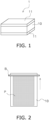
- FIG. 1 is a perspective view of a laminated body 1.
- the laminated body 1 includes a base material 10, and antistatic coat layers 11 (examples of antistatic layers) formed on both surfaces of the base material 10.
- the base material 10 is made of thermoplastic resin.
- thermoplastic resins olefin-based resins such as polypropylene; vinyl-based resins such as polyvinyl chloride, polymethyl methacrylate and polystyrene; ester-based resins such as polycarbonate, polyethylene terephthalate and aromatic polyester; ABS resins; and copolymer resins of each of these resins are preferably used.
- the thickness of the base material 10 it is preferable to set the thickness of the base material 10 to 0.3 mm or more and 15 mm or less.
- the thickness of the base material 10 is made thinner than 0.3 mm, the strength may not be ensured because the base material 10 becomes too thin when it is drawn and formed.
- the thickness of the base material 10 is greater than 15 mm, it may not be possible to form it into the expected shape due to the thickness of the base material 10, and heating takes extra time, which may lead to deterioration of the performance of the coating film.
- the antistatic coating layer 11 includes carbon nanotubes and a thermoplastic resin as a binder.
- the carbon nanotubes are dispersed at such minute intervals that they can contact or conduct electricity, so static electricity can be released and charging can be prevented.
- thermoplastic resins olefin-based resins such as polypropylene; vinyl-based resins such as polyvinyl chloride, polymethyl methacrylate and polystyrene; ester-based resins such as polycarbonate, polyethylene terephthalate and aromatic polyester; ABS resins; and a copolymer resin of each of these resin are preferably used.
- the thermoplastic resin of the base material and the thermoplastic resin of the antistatic coating layer 11 may be of different types or may be of the same type.
- Amorphous thermoplastic resins are preferably used to maintain transparency and formability.
- the transparency after drawing varies greatly depending on the molecular weight of the acrylic resin and whether it is a copolymer resin with other resins.
- a group using a low-molecular-weight acrylic resin can maintain transparency after drawing, particularly a low haze value, compared to a group using a high-molecular-weight acrylic resin. This is considered to be related to compatibility with carbon nanotubes.
- High-molecular-weight resins have long molecular chains and has poor compatibility with carbon nanotubes.
- low-molecular-weight resins have good compatibility with carbon nanotubes, so it is thought that transparency is maintained.
- a group using a copolymer resin of an acrylic resin and other resin components further improves the transparency. It is considered that this is also due to the improvement in compatibility for the same reason as described above.
- a styrene resin can be used as an example.
- the binder resin for the coating film, transparency and compatibility with carbon nanotubes are also important, but considering the actual usage environment, it is preferable that the binder resin has at least chemical resistance to the extent that it can be used for cleaning.
- a single-walled carbon nanotube is used as the carbon nanotube of the present embodiment.
- a carbon nanotube has a structure in which a sheet of benzene rings is rolled into a cylinder.
- a single-walled carbon nanotube is composed of a cylinder with one layer.
- the specific surface area per unit weight of a carbon nanotube is 350 m 2 /g or more.
- the specific surface area is preferably 1500 m 2 /g or more.
- the specific surface area is a calculated value, regarding the carbon nanotube as a cylinder, the specific surface area can be obtained from the length, diameter and density of the cylinder by using the following formula 1.
- the specific surface area per unit weight of the carbon nanotube m 2 / Kg The diameter of the carbon nanotube m ⁇ The length of the carbon nanotube m ⁇ ⁇ The density of the carbon nanotube Kg m 3 ⁇ the diameter of the carbon nanotube m 2 2 ⁇ ⁇ the length of the carbon nanotube m
- the diameter of the single-walled carbon nanotube is preferably set to 0.5 nm or more and 6 nm or less, more preferably 1.5 nm or more and 4 nm or less.
- the length of the single-walled carbon nanotube is preferably set to 3 ⁇ m or more and 20 ⁇ m or less, more preferably 5 ⁇ m or more and 10 ⁇ m or less.
- the aspect ratio (length/diameter) of the carbon nanotube is preferably 2000 or more, more preferably 3000 or more. It is considered that the higher the aspect ratio, the higher the possibility of maintaining the contact between the carbon nanotubes when the carbon nanotubes are drawn. Therefore, it is desirable to use carbon nanotubes with a larger aspect ratio, and high electrical conductivity can be expected.
- the single-walled carbon nanotube has higher electrical conductivity as the specific surface area increases. Since a single layer has a large specific surface area per weight, high electrical conductivity can be exhibited with a small content.
- the content of carbon nanotubes in the antistatic coating layer 11 is preferably set to 0.5% by weight or more and 10% by weight or less. This is because the surface resistivity of the laminated body 1 increases and the antistatic performance is lost when the content of carbon nanotubes is less than the lower limit value of 0.5% by weight, and transparency decreases when the content exceeds the upper limit of 10% by weight.
- the content is preferably 0.75% by weight or more and 7% by weight or less, more preferably 1% by weight or more and 5% by weight or less.
- the thickness of the antistatic coating layer 11 is preferably 0.1 ⁇ m or more and 3 ⁇ m or less, more preferably 0.2 ⁇ m or more and 2 ⁇ m or less, and more preferably 0.3 ⁇ m or more and 1 ⁇ m or less.
- a secondary processed product can be formed by heating the laminated body 1 and performing bending, press forming, vacuum forming, pressure forming, blow forming, press molding, or the like.
- the above-described transparency is also an important item for the laminated body 1 of the present disclosure, and the transparency is represented by total light transmittance and haze.
- the total light transmittance before forming is preferably 80% or more, more preferably 85% or more.
- the total light transmittance is preferably 80% or more, more preferably 85% or more. Since the coating film is thinned by drawing, it is generally considered that the total light transmittance after drawing is higher than that before drawing.
- the haze value is preferably 5% or less, more preferably 3% or less before forming. It is preferably 20% or less, more preferably 10% or less after 5 times forming. Drawing causes interfacial peeling between the carbon nanotubes and the binder resin and conspicuous cohesion sites of the carbon nanotubes in the coating film, resulting in internal haze and a tendency to increase the haze value after drawing.
- the laminated body 1 differs from that of the first embodiment in the configuration of carbon nanotubes.
- the laminated body 1 of the second embodiment includes a base material 10 and antistatic coating layers 11 provided on both surfaces of the base material 10, as in the first embodiment.
- the base material 10 is made of a thermoplastic resin as in the first embodiment.
- the thermoplastic resin the same kind of resin as in the first embodiment can be used.
- the antistatic coating layer 11 has carbon nanotubes and a thermoplastic resin as a binder.
- a thermoplastic resin of the antistatic coating layer 11 the same kind of resin as in the first embodiment can be used.
- a carbon nanotube having a plurality of layers of 2 to 15 layers is used as the carbon nanotube of the present embodiment.
- a carbon nanotube has a structure in which a sheet of benzene rings is rolled into a cylinder.
- a multi-walled carbon nanotube has a cylinder composed of a plurality of layers.
- the specific surface area per unit weight of carbon nanotubes is 350 m 2 /g or more. Furthermore, the specific surface area is preferably 400 m 2 /g or more.
- the specific surface area can be obtained from the following equation 2 by regarding the carbon nanotube as a cylinder and using the length, diameter and density of the cylinder.
- the specific surface area per unit weight of the carbon nanotube m 2 / Kg The diameter of the carbon nanotube m ⁇ The length of the carbon nanotube m ⁇ ⁇ The density of the carbon nanotube Kg m 3 ⁇ the diameter of the carbon nanotube m 2 2 ⁇ ⁇ the length of the carbon nanotube m
- the diameter of the multi-walled carbon nanotubes of the second embodiment is 5 nm or more and 12 nm or less.
- the diameter is 5 nm or more, it is easy to disperse in the dispersion medium during production, and the transparency can be maintained even after drawing.
- the range of 5 nm or more and 12 nm or less is a range in which long carbon nanotubes can be produced.
- the length of the multi-walled carbon nanotubes in the second embodiment is preferably set to 100 ⁇ m or more and 3000 ⁇ m or less, more preferably 1000 ⁇ m or more.
- the carbon nanotube of Embodiment 2 has a smaller specific surface area per unit weight, but is longer in length. So, after secondary forming such as drawing, contacts between carbon nanotubes are easily maintained, electric conductive paths pass through, and electrical conductivity can be maintained.
- the aspect ratio (length/diameter) of the carbon nanotube is preferably 20,000 or more, more preferably 100,000 or more.
- the aspect ratio of the carbon nanotubes increases, the possibility of maintaining contact between the carbon nanotubes even after being drawn several times increases, and maintenance of electrical conductivity can be expected.
- the content of the multi-walled carbon nanotubes in the antistatic coating layer 11 is preferably set to 0.5% by weight or more and 10% by weight or less. This is because when the carbon nanotube content is less than the lower limit of 0.5% by weight, the surface resistivity of the laminated body 1 increases, and when it exceeds the upper limit value of 10% by weight, the transparency decreases.
- the content is preferably 0.75% by weight or more and 7% by weight or less, more preferably 1% by weight or more and 5% by weight or less.
- the thickness of the antistatic coating layer 11 is preferable to set the thickness of the antistatic coating layer 11 to 0.1 ⁇ m or more and 3 ⁇ m or less, more preferably 0.2 ⁇ m or more and 2 ⁇ m or less, more preferably 0.3 ⁇ m or more and 1 ⁇ m or less.
- Transparency is also an important item for the laminated body 1 of the present disclosure, and transparency is represented by total light transmittance and haze.
- the total light transmittance before forming is preferably 80% or more, more preferably 85% or more.
- the total light transmittance is preferably 80% or more, more preferably 85% or more. Since the coating film is thinned by drawing, it is generally considered that the total light transmittance after drawing is higher than that before drawing.
- the haze value is preferably 5% or less, more preferably 3% or less before forming.
- the haze value is preferably 20% or less, more preferably 10% or less after 5 times forming.
- surface resistivity and transparency are evaluated for each of the examples and comparative examples which varies the content of carbon nanotubes (abbreviated as CNT) in the antistatic coating layer 11, the diameter of CNTs, the length of CNTs, the aspect ratio of CNTs, the specific surface area of CNTs, and the thickness of the antistatic coating layer 11 (an example of an antistatic layer).
- CNT carbon nanotubes
- an antistatic acrylic plate with an antistatic plate layer (antistatic layer) formed on the surface with the CNT content and thickness shown in the table was prepared.
- a haze meter NDH 500 (Nippon Denshoku Industries Co., Ltd.) was used to measure the total light transmittance and the haze value.
- a film thickness meter was used for film thickness measurement.
- FIG. 3(a) is a view showing the sample before drawing.
- the prepared antistatic acrylic plate is cut into the shape of a sample S in which a notch d is provided near the center of the opposing sides c. Setting the length of the notch d along the side c to L, in the case of drawing three times, as shown in FIG. 3(b) , an antistatic plate is drawn in one direction (arrow direction along side c) until L reaches 3L.
- an antistatic acrylic plate is drawn 5 times, the antistatic acrylic plate is drawn in one direction until L becomes 5L.
- the surface resistivity of the antistatic acrylic plate drawn 3 times and the surface resistivity of the antistatic acrylic plate drawn 5 times were measured, and Rb (surface resistivity after 3 times forming) / Ra (surface resistivity before forming) and Rb (surface resistivity after 5 times forming)/Ra (surface resistivity before forming) were calculated.
- the decrease in antistatic properties after forming in Comparative Examples 1 and 2 is also due to the aspect ratio and a comparison of the aspect ratios of Examples 1 to 24 and Comparative Examples 1 and 2 shows that the aspect ratio of CNT is preferably 2000 or more.
- the thickness of the antistatic layer is preferably 0.1 ⁇ m or more and 3 ⁇ m or less, more preferably 0.2 ⁇ m or more and 2 ⁇ m or less, more preferably 0.3 ⁇ m or more and 1 ⁇ m or less.
- Examples 1, 2, 3, 4, 5, 6, 7, 8, 9, 11, 12, 14, 15, 17, 18, 20, and 21 has a transmittance of 73% or more when the draw ratio is 3 times, and has a transmittance of 79% or more when the draw ratio is 5 times and has high transparency.
- Examples 10, 13, 16, 19, and 22 in which the film thickness was 2.5 ⁇ m the surface resistivity was sufficiently ensured before and after drawing, but the total light transmittance and haze value indicates that the transparency is somewhat inferior. Therefore, by setting the thickness of the antistatic layer to 0.3 ⁇ m or more and 1 ⁇ m or less, transparency after drawing can be ensured.
- Examples 1 to 7 indicate that a high surface resistivity can be maintained even when the CNT content is low, and high transparency can be ensured due to the low CNT content.
- the content of CNTs in the antistatic layer is preferably 0.5% by weight or more and 10% by weight or less, more preferably 0.75% by weight or more and 7% by weight or less, and 1% by weight or more and 5% by weight or less.
- the CNT diameter is preferably set to 0.5nm or more and 6nm or less, more preferably 1.5nm or more and 4nm or less. In the case of multi-walled carbon nanotubes, it is preferable to set the thickness to 5nm or more and 12nm or less.
- the length of the CNT is preferably set to 3 ⁇ m or more and 20 ⁇ m or less, more preferably 5 ⁇ m or more and 10 ⁇ m or less. In the case of multi-walled carbon nanotubes, the length is preferably set to 100 ⁇ m or more and 3000 ⁇ m or less, more preferably 1000 ⁇ m or more.
- Examples 25 to 36 will be used to show the change in transparency due to the difference in the molecular weight of the binder resin when using single-walled CNTs and long CNTs.
- antistatic acrylic plates were prepared in the same manner as in Example 4 by changing the average molecular weight of the binder resin as shown in Table 2 below.
- antistatic acrylic plates were prepared in the same manner as in Example 17 by changing the average molecular weight of the binder resin as shown in (Table 2).
- the laminated body and the secondary forming product of the present disclosure have the effect of improving antistatic properties, and are useful as equipment covers and partition plates for clean rooms and the like used in the manufacture of semiconductors.
Landscapes
- Chemical & Material Sciences (AREA)
- Organic Chemistry (AREA)
- Materials Engineering (AREA)
- Engineering & Computer Science (AREA)
- Medicinal Chemistry (AREA)
- Polymers & Plastics (AREA)
- Health & Medical Sciences (AREA)
- Chemical Kinetics & Catalysis (AREA)
- Nanotechnology (AREA)
- Life Sciences & Earth Sciences (AREA)
- Wood Science & Technology (AREA)
- Inorganic Chemistry (AREA)
- Laminated Bodies (AREA)
Applications Claiming Priority (3)
| Application Number | Priority Date | Filing Date | Title |
|---|---|---|---|
| JP2020135325 | 2020-08-07 | ||
| JP2021046437 | 2021-03-19 | ||
| PCT/JP2021/022386 WO2022030106A1 (ja) | 2020-08-07 | 2021-06-11 | 積層体および二次成形品 |
Publications (2)
| Publication Number | Publication Date |
|---|---|
| EP4194202A1 true EP4194202A1 (de) | 2023-06-14 |
| EP4194202A4 EP4194202A4 (de) | 2024-08-14 |
Family
ID=80117830
Family Applications (1)
| Application Number | Title | Priority Date | Filing Date |
|---|---|---|---|
| EP21852674.7A Pending EP4194202A4 (de) | 2020-08-07 | 2021-06-11 | Mehrschichtiger körper und sekundärer formartikel |
Country Status (7)
| Country | Link |
|---|---|
| US (1) | US20230242726A1 (de) |
| EP (1) | EP4194202A4 (de) |
| JP (1) | JP7137026B2 (de) |
| KR (1) | KR20230007423A (de) |
| CN (1) | CN115916531A (de) |
| TW (1) | TWI886315B (de) |
| WO (1) | WO2022030106A1 (de) |
Families Citing this family (1)
| Publication number | Priority date | Publication date | Assignee | Title |
|---|---|---|---|---|
| JP2024037457A (ja) * | 2022-09-07 | 2024-03-19 | 積水化学工業株式会社 | 積層体および積層体の製造方法 |
Family Cites Families (19)
| Publication number | Priority date | Publication date | Assignee | Title |
|---|---|---|---|---|
| JP3638660B2 (ja) * | 1995-05-01 | 2005-04-13 | 松下電器産業株式会社 | 感光性樹脂組成物、それを用いたサンドブラスト用感光性ドライフィルム及びそれを用いた食刻方法 |
| JP4087508B2 (ja) | 1998-06-09 | 2008-05-21 | タキロン株式会社 | 制電性樹脂成形品及びその二次成形品 |
| JP5292714B2 (ja) * | 2006-03-28 | 2013-09-18 | 東レ株式会社 | カーボンナノチューブを含有してなる液および透明導電性フィルムのその製造方法 |
| US20080152573A1 (en) * | 2006-12-20 | 2008-06-26 | Noriyuki Juni | Method for producing carbon nanotubes, method for producing liquid dispersion thereof and optical product |
| JP2012166452A (ja) | 2011-02-14 | 2012-09-06 | Inoac Gijutsu Kenkyusho:Kk | 帯電防止フィルム |
| WO2014050440A1 (ja) * | 2012-09-27 | 2014-04-03 | 東レ株式会社 | 透明導電積層体 |
| JP6079390B2 (ja) | 2013-04-05 | 2017-02-15 | 東洋インキScホールディングス株式会社 | コーティング組成物及び該組成物を用いた導電性フィルム |
| JP6877862B2 (ja) * | 2013-04-10 | 2021-05-26 | 日本ゼオン株式会社 | リチウムイオン二次電池用正極およびリチウムイオン二次電池 |
| JPWO2015045417A1 (ja) | 2013-09-30 | 2017-03-09 | 日本ゼオン株式会社 | カーボンナノチューブ分散液の製造方法 |
| KR20160060042A (ko) * | 2013-09-30 | 2016-05-27 | 니폰 제온 가부시키가이샤 | 카본 나노튜브 및 그의 분산액, 및 카본 나노튜브 함유막 및 복합 재료 |
| JP6326834B2 (ja) * | 2014-01-31 | 2018-05-23 | 日本ゼオン株式会社 | カーボンナノチューブ分散液及び導電性フィルム |
| JP2017045689A (ja) | 2015-08-28 | 2017-03-02 | 旭硝子株式会社 | 導電体及びその製造方法 |
| WO2017111122A1 (ja) * | 2015-12-25 | 2017-06-29 | 日本ゼオン株式会社 | 電磁波吸収材料及び電磁波吸収体、並びにこれらの製造方法 |
| US11235560B2 (en) * | 2015-12-25 | 2022-02-01 | Zeon Corporation | Electromagnetic wave absorption material and electromagnetic wave absorber |
| JP7044372B2 (ja) | 2016-02-26 | 2022-03-30 | 学校法人早稲田大学 | 金属粒子を含むカーボンナノチューブ混合物から金属粒子を除去する除去方法、除去装置、および、それらによって得られるカーボンナノチューブと中空炭素粒子との複合体 |
| WO2019194662A1 (ko) * | 2018-04-06 | 2019-10-10 | 주식회사 엘지화학 | 전극, 상기 전극을 포함하는 이차 전지, 및 상기 전극의 제조 방법 |
| JP7378952B2 (ja) | 2018-04-25 | 2023-11-14 | ナガセケムテックス株式会社 | 透明導電膜を有する光学積層体、及びコーティング組成物 |
| JP2019196428A (ja) | 2018-05-08 | 2019-11-14 | ナトコ株式会社 | 硬化性組成物 |
| KR102033930B1 (ko) | 2018-07-02 | 2019-10-21 | (주)고려소재연구소 | 고성능 대전방지성 광경화형 수지 조성물, 이를 적용한 무정전 판넬 및 무정전 판넬의 제조방법 |
-
2021
- 2021-06-11 KR KR1020227041056A patent/KR20230007423A/ko not_active Ceased
- 2021-06-11 CN CN202180045099.5A patent/CN115916531A/zh active Pending
- 2021-06-11 WO PCT/JP2021/022386 patent/WO2022030106A1/ja not_active Ceased
- 2021-06-11 EP EP21852674.7A patent/EP4194202A4/de active Pending
- 2021-06-11 JP JP2021575087A patent/JP7137026B2/ja active Active
- 2021-06-11 US US18/010,284 patent/US20230242726A1/en active Pending
- 2021-08-05 TW TW110128895A patent/TWI886315B/zh active
Also Published As
| Publication number | Publication date |
|---|---|
| US20230242726A1 (en) | 2023-08-03 |
| WO2022030106A1 (ja) | 2022-02-10 |
| TW202214760A (zh) | 2022-04-16 |
| EP4194202A4 (de) | 2024-08-14 |
| TWI886315B (zh) | 2025-06-11 |
| CN115916531A (zh) | 2023-04-04 |
| KR20230007423A (ko) | 2023-01-12 |
| JP7137026B2 (ja) | 2022-09-13 |
| JPWO2022030106A1 (de) | 2022-02-10 |
Similar Documents
| Publication | Publication Date | Title |
|---|---|---|
| KR101728565B1 (ko) | 투명 전도성 복합 필름 | |
| JP2004230690A (ja) | 制電性透明樹脂板 | |
| TWI451446B (zh) | 導電性薄膜及其製造方法 | |
| US7462656B2 (en) | Electrically conductive compositions and method of manufacture thereof | |
| JP4480368B2 (ja) | ナノスケールカーボンを含有する樹脂組成物、導電性ないし制電性樹脂成形体、導電性ないし制電性樹脂コーティング組成物及び帯電防止膜及びこれらの製造法 | |
| JP2005008893A (ja) | カーボンナノチューブ含有分散体 | |
| KR20060008928A (ko) | 전기 전도성 조성물 및 그의 제조 방법 | |
| CN107210091B (zh) | 透明导电性膜 | |
| EP4194202A1 (de) | Mehrschichtiger körper und sekundärer formartikel | |
| KR20150064030A (ko) | 투명 도전 적층체 | |
| JP2011121688A (ja) | 導電性透明ベルト | |
| KR101790707B1 (ko) | 전도성 마스터 배치 및 그 제조방법과 이를 이용한 전도성 필름 제조방법 | |
| KR100948904B1 (ko) | 대전방지성 다층 필름 및 그 제조 방법 | |
| DE102019117660A1 (de) | Kohlenstoff-Nanoröhren in Trägerband, Abdeckband und statischen Abschirmbeuteln | |
| JP6580431B2 (ja) | 透明導電性フィルム | |
| JP6473985B2 (ja) | 空洞含有ポリエステル系フィルムおよびその製造方法 | |
| KR101772779B1 (ko) | 투명 도전성 박막 형성용 분산액 및 투명 도전성 박막 부착 기재 | |
| KR20090026534A (ko) | 대전방지성 다층 필름 및 그 제조 방법 | |
| JP4795780B2 (ja) | 制電性樹脂成形体 | |
| EP3703081A1 (de) | Beschichteter kohlenstoffnanoröhrendraht | |
| JP6467328B2 (ja) | 熱可塑性樹脂製多層シート及び熱可塑性樹脂製段ボール構造体 | |
| JPH01150528A (ja) | 除電性能に優れた熱可塑性樹脂シート状物 | |
| KR20100082428A (ko) | 편광판용 폴리에스테르 이형필름 | |
| KR20140148108A (ko) | 전극기판의 제조방법 | |
| WO2016121662A1 (ja) | 透明導電性フィルム |
Legal Events
| Date | Code | Title | Description |
|---|---|---|---|
| STAA | Information on the status of an ep patent application or granted ep patent |
Free format text: STATUS: THE INTERNATIONAL PUBLICATION HAS BEEN MADE |
|
| PUAI | Public reference made under article 153(3) epc to a published international application that has entered the european phase |
Free format text: ORIGINAL CODE: 0009012 |
|
| STAA | Information on the status of an ep patent application or granted ep patent |
Free format text: STATUS: REQUEST FOR EXAMINATION WAS MADE |
|
| 17P | Request for examination filed |
Effective date: 20221129 |
|
| AK | Designated contracting states |
Kind code of ref document: A1 Designated state(s): AL AT BE BG CH CY CZ DE DK EE ES FI FR GB GR HR HU IE IS IT LI LT LU LV MC MK MT NL NO PL PT RO RS SE SI SK SM TR |
|
| DAV | Request for validation of the european patent (deleted) | ||
| DAX | Request for extension of the european patent (deleted) | ||
| REG | Reference to a national code |
Ref country code: DE Ref legal event code: R079 Free format text: PREVIOUS MAIN CLASS: B32B0027180000 Ipc: C08J0007040000 |
|
| A4 | Supplementary search report drawn up and despatched |
Effective date: 20240716 |
|
| RIC1 | Information provided on ipc code assigned before grant |
Ipc: B82Y 30/00 20110101ALN20240710BHEP Ipc: C08K 3/04 20060101ALI20240710BHEP Ipc: C01B 32/158 20170101ALI20240710BHEP Ipc: C09D 133/06 20060101ALI20240710BHEP Ipc: H01B 1/04 20060101ALI20240710BHEP Ipc: C08J 7/044 20200101ALI20240710BHEP Ipc: C08J 7/04 20200101AFI20240710BHEP |