EP4180340B1 - Vorrichtung zur zufuhr eines chemischen wirkstoffs und verfahren zur zufuhr eines chemischen wirkstoffs - Google Patents
Vorrichtung zur zufuhr eines chemischen wirkstoffs und verfahren zur zufuhr eines chemischen wirkstoffs Download PDFInfo
- Publication number
- EP4180340B1 EP4180340B1 EP21885677.1A EP21885677A EP4180340B1 EP 4180340 B1 EP4180340 B1 EP 4180340B1 EP 21885677 A EP21885677 A EP 21885677A EP 4180340 B1 EP4180340 B1 EP 4180340B1
- Authority
- EP
- European Patent Office
- Prior art keywords
- drug
- cassettes
- group
- allocated
- cassette
- Prior art date
- Legal status (The legal status is an assumption and is not a legal conclusion. Google has not performed a legal analysis and makes no representation as to the accuracy of the status listed.)
- Active
Links
Images



Classifications
-
- B—PERFORMING OPERATIONS; TRANSPORTING
- B65—CONVEYING; PACKING; STORING; HANDLING THIN OR FILAMENTARY MATERIAL
- B65B—MACHINES, APPARATUS OR DEVICES FOR, OR METHODS OF, PACKAGING ARTICLES OR MATERIALS; UNPACKING
- B65B57/00—Automatic control, checking, warning, or safety devices
- B65B57/20—Applications of counting devices for controlling the feed of articles
-
- A—HUMAN NECESSITIES
- A61—MEDICAL OR VETERINARY SCIENCE; HYGIENE
- A61J—CONTAINERS SPECIALLY ADAPTED FOR MEDICAL OR PHARMACEUTICAL PURPOSES; DEVICES OR METHODS SPECIALLY ADAPTED FOR BRINGING PHARMACEUTICAL PRODUCTS INTO PARTICULAR PHYSICAL OR ADMINISTERING FORMS; DEVICES FOR ADMINISTERING FOOD OR MEDICINES ORALLY; BABY COMFORTERS; DEVICES FOR RECEIVING SPITTLE
- A61J7/00—Devices for administering medicines orally, e.g. spoons; Pill counting devices; Arrangements for time indication or reminder for taking medicine
- A61J7/0076—Medicament distribution means
- A61J7/0084—Medicament distribution means for multiple medicaments
-
- B—PERFORMING OPERATIONS; TRANSPORTING
- B65—CONVEYING; PACKING; STORING; HANDLING THIN OR FILAMENTARY MATERIAL
- B65B—MACHINES, APPARATUS OR DEVICES FOR, OR METHODS OF, PACKAGING ARTICLES OR MATERIALS; UNPACKING
- B65B1/00—Packaging fluent solid material, e.g. powders, granular or loose fibrous material, loose masses of small articles, in individual containers or receptacles, e.g. bags, sacks, boxes, cartons, cans, or jars
- B65B1/30—Devices or methods for controlling or determining the quantity or quality or the material fed or filled
-
- B—PERFORMING OPERATIONS; TRANSPORTING
- B65—CONVEYING; PACKING; STORING; HANDLING THIN OR FILAMENTARY MATERIAL
- B65B—MACHINES, APPARATUS OR DEVICES FOR, OR METHODS OF, PACKAGING ARTICLES OR MATERIALS; UNPACKING
- B65B5/00—Packaging individual articles in containers or receptacles, e.g. bags, sacks, boxes, cartons, cans, jars
- B65B5/10—Filling containers or receptacles progressively or in stages by introducing successive articles, or layers of articles
- B65B5/101—Filling containers or receptacles progressively or in stages by introducing successive articles, or layers of articles by gravity
- B65B5/103—Filling containers or receptacles progressively or in stages by introducing successive articles, or layers of articles by gravity for packaging pills or tablets
-
- B—PERFORMING OPERATIONS; TRANSPORTING
- B65—CONVEYING; PACKING; STORING; HANDLING THIN OR FILAMENTARY MATERIAL
- B65B—MACHINES, APPARATUS OR DEVICES FOR, OR METHODS OF, PACKAGING ARTICLES OR MATERIALS; UNPACKING
- B65B61/00—Auxiliary devices, not otherwise provided for, for operating on sheets, blanks, webs, binding material, containers or packages
- B65B61/02—Auxiliary devices, not otherwise provided for, for operating on sheets, blanks, webs, binding material, containers or packages for perforating, scoring, slitting, or applying code or date marks on material prior to packaging
- B65B61/025—Auxiliary devices, not otherwise provided for, for operating on sheets, blanks, webs, binding material, containers or packages for perforating, scoring, slitting, or applying code or date marks on material prior to packaging for applying, e.g. printing, code or date marks on material prior to packaging
-
- G—PHYSICS
- G07—CHECKING-DEVICES
- G07F—COIN-FREED OR LIKE APPARATUS
- G07F17/00—Coin-freed apparatus for hiring articles; Coin-freed facilities or services
- G07F17/0092—Coin-freed apparatus for hiring articles; Coin-freed facilities or services for assembling and dispensing of pharmaceutical articles
-
- G—PHYSICS
- G07—CHECKING-DEVICES
- G07F—COIN-FREED OR LIKE APPARATUS
- G07F9/00—Details other than those peculiar to special kinds or types of apparatus
- G07F9/02—Devices for alarm or indication, e.g. when empty; Advertising arrangements in coin-freed apparatus
Definitions
- the present disclosure relates to a drug supply device and a drug supply method.
- PTL 1 discloses a drug supply device in which drugs specified in the prescription are ejected from a plurality of cassettes housed in a plurality of respective shelves arranged in the up-down direction and left-right direction, and the ejected drugs are divided by collecting them at a hopper disposed below the shelves.
- a group is set by grouping the plurality of cassettes for storing the drug of the same type, and a plurality of the drugs of the same type are simultaneously ejected from the group in order to reduce the time for supplying the drugs.
- a further method and apparatus for controlling a tablet distributing packer is described in JPS60225561A .
- An object of the present disclosure is to reduce the time for supplying the drug in a drug supply device.
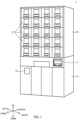
- Drug supply device 1 according to an embodiment of the present disclosure is described below with reference to the drawings. Note that in the following description, the upper side and lower side in FIG. 1 are the upper side and lower side of drug supply device 1, the left side and right side thereof are the left side and right side of drug supply device 1, and the lower left side and upper right side thereof are the front side and rear side of drug supply device 1.
- FIG. 1 is a perspective view illustrating an exemplary drug supply device 1.
- Drug supply device 1 includes first floor section 10 and second floor section 20.
- First floor section 10 includes operation unit 11 and take-out part 12.
- first floor section 10 includes an input unit (not illustrated in the drawing).
- Operation unit 11 is a device operated by the operator and includes a display, an operation button and the like, for example. When operation unit 11 is operated by the user, a variety of information is input to drug supply device 1.
- Drugs divided in drug supply device 1 are taken out from take-out part 12.
- Take-out part 12 includes an opening, and the user takes out drugs from the opening.
- the input unit is an input device to which a variety of information is input from an external device.
- the input unit is connected to a personal computer, and information about prescriptions issued by medical institutions is input from the personal computer, for example.
- second floor section 20 and first floor section 10 are described below with reference to FIG. 2 .
- the plurality of cassettes C are stored along the front-rear direction on both sides in the left-right direction in shelf 21.
- a plurality of drugs is stored in each cassette C.
- a drug of one type is stored in one of the plurality of cassettes C.
- the type of the drug stored in cassettes C different from each other in the plurality of cassettes C may be identical to or different from each other.
- Each of the plurality of cassettes C is configured to eject the stored drug one by one.
- Passage R extends through each of the plurality of shelves 21 in the up-down direction.
- First floor section 10 includes collection part 13, packaging unit 14, and control device 15.
- Collection part 13 receives the drug guided to first floor section 10, and guides the received drug to packaging unit 14 from outlet 13a.
- Outlet 13a is provided at an approximately center portion of collection part 13.
- Collection part 13 is a hopper, for example.
- Packaging unit 14 packages the drug guided to collection part 13.
- Packaging unit 14 includes conveyance part 14a, printer 14b, and sealing device 14c.
- conveyance part 14a feeds the packaging paper, and conveys the fed packaging paper to sealing device 14c side, for example.
- the drug guided from collection part 13 is put on the packaging paper and carried toward sealing device 14c together with the packaging paper.
- Printer 14b is a printer for printing the patient's name, the name of the drug supplied to the packaging paper, the dose date and time and the like on the surface of the packaging paper fed from the roller, for example.
- Sealing device 14c is a device that seals the packaging paper in which the drug is packaged.
- the packaging paper in which the drug is sealed is cut at a predetermined timing, and conveyed by a predetermined device toward take-out part 12, for example.
- Control device 15 is a computer that centrally controls drug supply device 1.
- Control device 15 includes a memory unit storing a predetermined program.
- Control device 15 acquires information input to the input unit, and controls a drug ejection operation of the plurality of cassettes C stored in each shelf 21 on the basis of the acquired information and the program (details are described later).
- the drug ejection operation is an operation of ejecting drugs by cassette C.
- Control device 15 includes a memory unit (not illustrated in the drawing).
- the information of cassette C is the type (e.g., drug name) of the drug stored in cassette C, the installed position of cassette C, the number of remaining drugs stored in cassette C, and the like.
- the number of remaining drugs is calculated by subtracting the number of tablets of the ejected drug from the number of tablets at the time point when the drug is supplied to cassette drug C input from operation unit 11 or the input unit, each time cassette C performs the drug ejection operation.
- control device 15 selects the plurality of cassettes C on the basis of a predetermined condition and sets the group in advance with the selected cassettes C.
- Control device 15 sets a plurality of groups. The group is set on the basis of information input from operation unit 11 or the input unit. Drug location information representing the position of cassette C and the type of drug to be stored thereto is input from operation unit 11 or the input unit.
- the group is set on the basis of the drug location information, i.e., the drug type and the installed position of cassette C.
- One group is composed of cassettes C for storing the drug of the same type.
- the first group includes four cassettes C for storing a drug with a name "drug A".
- control device 15 may set one group by selecting a plurality of cassettes C stored in one shelf 21.
- the plurality of cassettes C making up one of a plurality of groups may be selected from the plurality of cassettes C stored in one shelf 21.
- control device 15 may set another one group by selecting a plurality of cassettes C stored in different shelves 21.
- the plurality of cassettes C making up one of the plurality of groups may be selected to include one or more cassettes C stored in one shelf 21 and one or more cassettes C stored in another shelf.
- control device 15 After setting the group, control device 15 allocates a group number to the set group. Control device 15 causes the memory unit to map and store the group number and the installed positions of cassettes C included in the group with the group number.
- control device 15 when dividing the drug, and a process of control device 15 to select cassette C that performs the drug ejection operation are described with reference to the drawings.
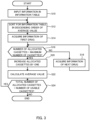
- control device 15 executes a program of the flowchart illustrated in FIG. 3 , for example.
- the information about a medical prescription includes the drug type (e.g., drug name) included in one package and the number of tablets of each drug.
- Control device 15 inputs information to information table T1 at S3 illustrated in FIG. 3 .
- Information table T1 is temporarily generated in the memory unit when a program is executed.
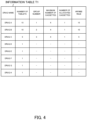
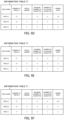
- Information table T1 maps the drug name, the number of tablets, the group number, the maximum number of cassettes, the number of allocated cassettes, and the average value ( FIG. 4 ).
- the drug name and the number of tablets are drug information per package input from the input unit.
- the drug information per package is, for example, information representing 15 tablets for the drug with a name "drug A", 10 tablets for the drug with a name “drug B", five tablets for the drug with a name “drug C”, and one tablet for each of the drugs with names "drug D", “drug E”, “drug F”, “drug G” and “drug H”.
- the drug name and the number of tablets are input to information table T1 as illustrated in FIG. 4 .
- control device 15 inputs the group number of that group in the column of the group number corresponding to the input drug name. In addition, control device 15 inputs the total number of cassettes C included in that group in the column of the maximum number of cassettes corresponding to the input drug name.
- the number of allocated cassettes is the number of cassettes C that perform the drug ejection operation among one of a plurality of groups.
- "1" is input as an initial value of the number of allocated cassettes. Details of the setting of the number of allocated cassettes are described later.
- the average value is an input value that is input when the drug name of the drug stored in cassette C included in the group set in advance is input, and an average value of the number of tablets to be ejected per package by cassette C that performs the drug ejection operation in this group. That is, the average value is a value obtained by dividing the value of the column of the number of tablets of information table T1 by the value of the column of the number of allocated cassettes.
- cassette C that ejects "drug A" is largest in the number of times (15 times) of the drug ejection operation.
- cassettes C that eject other drugs do not perform the drug ejection operation until all "drugs A" have been ejected.
- the time for which "drug A" is ejected 15 times corresponds to the time for which drugs per package is ejected. That is, to reduce the drug ejection time per package, it is preferable to reduce the maximum number of times of the drug ejection operation of cassette C.
- the number of allocated cassettes can be increased up to the maximum number of cassettes. However, in some cases the number of allocated cassettes may not be increased up to the maximum number of cassettes for all drugs. The reason for this is that in drug supply device 1, the maximum number of cassettes C that can perform the drug ejection operation per package is set.
- cassettes C that respectively perform the drug ejection operation for "drug D", "drug E”, “drug F”, “drug G” and “drug H", i.e., a total of five cassettes C are required.
- the maximum total number of cassettes C that can perform the drug ejection operation for "drug A", “drug B” and “drug C” set to the groups is 10 obtained by subtracting 5 from 15. That is, the total number of allocated cassettes of "drug A", “drug B” and “drug C” set to groups is limited to 10.
- control device 15 sets the number of allocated cassettes to reduce the drug ejection time per package in the state where the total number of allocated cassettes is limited. More specifically, in accordance with the following program, control device 15 sets the number of allocated cassettes such that the number of allocated cassettes is increased from the initial value, and that the average value calculated in accordance with the increase of the number of allocated cassettes is levelled among the plurality of groups.
- control device 15 sets the number of allocated cassettes in the state where the total number of allocated cassettes is limited to 10 in information input information table T1 illustrated in FIG. 4 is described below.
- control device 15 sorts the information of the drug set to the group in descending order of the average value in information table T1.
- the average value is arranged in descending order.
- information table T1 is not sorted, and kept in the state illustrated in FIG. 4 .
- control device 15 acquires the information about the first drug. More specifically, control device 15 acquires the information corresponding to "drug A" located at the top in information table T1 of FIG. 4 .
- control device 15 determines whether the number of allocated cassettes in the acquired drug information is smaller than the maximum number of cassettes.
- the number of allocated cassettes "1" of "drug A” acquired is smaller than the maximum number of cassettes "4".
- the process proceeds to S20, and control device 15 increases the acquired the number of allocated cassettes of the drug by one.
- control device 15 determines whether the total number of allocated cassettes is smaller than the number of usable cassettes.
- the number of usable cassettes is a value obtained by subtracting the number of cassettes C that eject drug not set to group from the maximum number of cassettes C that can perform the drug ejection operation per package.
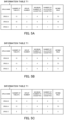
- control device 15 returns the program back to S12, and sorts the information of the drug set to the group in descending order of the average value in information table T1. More specifically, since the average value of "drug A” has become “7.5", information table T1 is sorted as “drug B", “drug A” and “drug C” in this order from the top as illustrated in FIG. 5B .
- control device 15 acquires the information about the first drug. More specifically, control device 15 acquires information corresponding to "drug B" located at the top in information table T1 of FIG. 5B .
- control device 15 returns the program back to S12, and sorts the information of the drug set to the group in descending order of the average value in information table T1. More specifically, since the average value of "drug B" has become "5", the top of information table T1 becomes “drug A” as illustrated in FIG. 5D . In addition, “drug B” and “drug C” have the same average value. When the average value is the same, information table T1 is sorted in accordance with the order of the first sorting. Specifically, information table T1 is sorted as "drug A", “drug B” and “drug C” in this order from the top.
- control device 15 acquires the information about the first drug. More specifically, control device 15 acquires the information corresponding to "drug A" located at the top in information table T1 of FIG. 5D .
- control device 15 returns the program back to S12, and sorts the information of the drug set to the group in descending order of the average value in information table T1.
- information table T1 illustrated in FIG. 5E all average values are the same, and arranged in the order of the first sorting. Accordingly, information table T1 is kept in the state illustrated in FIG. 5E without being sorted.
- control device 15 acquires the information about the first drug. More specifically, control device 15 acquires the information corresponding to "drug A" located at the top in information table T1 of FIG. 5E .
- control device 15 returns the program back to S12, and sorts the information of the drug set to the group in descending order of the average value in information table T1. More specifically, since the average value of "drug A" has become "3.75", information table T1 is sorted as "drug B", "drug C” and "drug A” in this order from the top as illustrated in FIG. 5G .
- control device 15 acquires the information about the first drug. More specifically, control device 15 acquires information corresponding to "drug B" located at the top in information table T1 of FIG. 5G .
- control device 15 returns the program back to S12, and sorts the information of the drug set to the group in descending order of the average value in information table T1. More specifically, since the average value of "drug B" has become "3.3", information table T1 is sorted as "drug C", “drug A” and “drug B” in this order from the top as illustrated in FIG. 5I .
- control device 15 acquires the information about the first drug. More specifically, control device 15 acquires information corresponding to "drug C" located at the top in information table T1 of FIG. 5I .
- control device 15 returns the program back to S12, and sorts the information of the drug set to the group in descending order of the average value in information table T1. More specifically, since the average value of "drug C" has become "2.5", information table T1 is sorted as "drug A", “drug B” and "drug C" in this order from the top as illustrated in FIG. 5K .
- control device 15 acquires the information about the next drug. More specifically, control device 15 acquires the information corresponding to "drug B" located after "drug A" in information table T1 of FIG. 5K .
- control device 15 determines whether the number of allocated cassettes in the acquired drug information is smaller than the maximum number of cassettes.
- the number of allocated cassettes "3" of "drug B" acquired is smaller than the maximum number of cassettes "4".
- the process proceeds to S20, and control device 15 increases the acquired the number of allocated cassettes of the drug by one.
- control device 15 terminates the program.
- the number of allocated cassettes and the average value program are determined to be the values at the time point of the completion, i.e., the values input in information table T1 illustrated in FIG. 5L .
- the average value at the time point of the completion of the program is levelled among the plurality of groups.
- control device 15 selects cassette C that performs the drug ejection operation and determines the number of tablets of the drug to be ejected from the selected cassette C, for each of the plurality of groups.
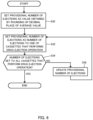
- Control device 15 sets the number of tablets of the drug to be ejected from cassette C that performs the drug ejection operation in a levelled manner in one of the plurality of groups on the basis of the average value levelled among the plurality of groups. Specifically, control device 15 selects cassettes C that perform the drug ejection operation such that the number of tablets of the drug to be ejected from the plurality of cassettes that perform the drug ejection operation is each levelled among one of the plurality of groups and among the plurality of groups. More specifically, control device 15 executes the program illustrated in the flowchart illustrated in FIG. 6 for each group.
- control device 15 executes a program for the first group.
- control device 15 acquires the average value of the first group from information table T1, and sets a provisional number of ejections as a value obtained by rounding up the decimal place of the acquired average value. Since "drug A" of the first group has an average value of "3.75" (see FIG. 5L ), "4" as a value obtained by rounding up the decimal place is the provisional number of ejections.
- control device 15 determines whether the number of ejections has been set to all cassettes C that perform the drug ejection operation. More specifically, control device 15 determines whether the number of ejections is set to cassettes C for the number of the allocated cassettes.
- the number of allocated cassettes of the first group related to "drug A" is "4" (see FIG. 5L ), whereas the number of cassettes C provided with the number of ejections is 1. In this case (NO at S34), at S36, control device 15 updates the provisional number of ejections.
- control device 15 calculates the average value of the number of tablets to be ejected by cassette C provided with no number of ejections. Subsequently, an integer obtained by rounding up the decimal place of the calculated average value is determined. This integer is set as the provisional number of ejections after the update.
- control device 15 terminates the program.
- the number of ejections "4" is set to cassettes C with the cassette numbers "1" to"3
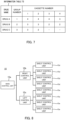
- the number of ejections "3” is set to cassette C with the cassette number "4" as illustrated in ejection table T2 of FIG. 7 .
- control device 15 determines whether the number of ejections has been set to all cassettes C that perform the drug ejection operation.
- the number of allocated cassettes of the second group related to "drug B" is "4" (see FIG. 5L ), whereas the number of cassettes C provided with the number of ejections is 1. In this case (NO at S34), at S36, control device 15 updates the provisional number of ejections.
- control device 15 updates the provisional number of ejections to the calculated average value "3" as a value obtained by rounding up the decimal place of "2.3".
- control device 15 inputs the provisional number of ejections "3" updated as the number of ejections, in the column of cassette number "2" corresponding to the group number "2" of the second group.
- control device 15 When control device 15 repeatedly executes S30 to S36 and the number of ejections is set for all cassettes C for the number of allocated cassettes "4" in the second group (YES at S34), the program is terminated. At the time point of the completion of the program for the second group, the number of ejections "3" is set to cassettes C with the cassette numbers "1" and "2", and the number of ejections "2” is set to the cassettes C with the cassette numbers "3" and "4" as illustrated in ejection table T2 of FIG. 7 .
- control device 15 executes a program for the third group.
- control device 15 acquires the average value of the third group from information table T1, and sets a value obtained by rounding up the decimal place of the acquired average value as a provisional number of ejections. Since the "drug C" of the third group has an average value of "2.5" (see FIG. 5L ), "3" as a value obtained by rounding up the decimal place is the provisional number of ejections.
- control device 15 sets the number of ejections to one cassette C that performs the drug ejection operation in the third group. More specifically, control device 15 inputs the provisional number of ejections "3" as the number of ejections in the column of cassette number "1" corresponding to the group number "3" of the third group in ejection table T2.
- control device 15 determines whether the number of ejections has been set to all cassettes C that perform the drug ejection operation.
- the number of allocated cassettes of the third group related to "drug C" is "2" (see FIG. 5L ), whereas the number of cassettes C provided with the number of ejections is 1. In this case (NO at S34), at S36, control device 15 updates the provisional number of ejections.
- control device 15 updates the provisional number of ejections to "2", which is a value obtained by rounding up the decimal place of the calculated average value "2".
- control device 15 inputs the provisional number of ejections "2" as the number of ejections in the column of cassette number "2" corresponding to the group number "3" of the third group.
- the number of ejections is set for all cassettes C for the number of allocated cassettes "2" in the third group. Then (YES at S34), the program is terminated. At the time point of the completion of the program for the third group, the number of ejections "3" is set to cassette C with the cassette number "1", and the number of ejections "2" is set to cassette C with the cassette number "2" as illustrated in ejection table T2 of FIG. 7 .
- control device 15 has selected cassette C that performs the drug ejection operation from each of the plurality of groups such that the number of tablets of the drug to be ejected from the plurality of cassettes C that perform the drug ejection operation is each levelled in one of the plurality of groups and among the plurality of groups.
- cassettes C for the number of types of the drugs not set to group are selected, and the number of tablets of the drug included in input drug information is set as the number of ejections as it is. More specifically, cassettes C in which "drug D”, “drug E”, “drug F”, “drug G” and “drug H” are respectively stored are selected one by one, and the number of ejections "1" is set for each selected cassette C.
- the maximum number of times of the drug ejection operation of cassette C is the number of ejections "4" of cassettes C with the cassette numbers "1", “2" and “3" of "drug A”. That is, the drug ejection time per package corresponds to the time for ejecting "drug A" four times. Accordingly, the drug ejection time per package is shorter than in the above-described case where the number of allocated cassettes is set to "1" and "drug A" is ejected 15 times. Thus, the time for supplying the drug can be reduced.
- the value included in the input drug information the maximum number of cassettes C that can perform the drug ejection operation per package, the value input to information table T1, and the value input to ejection table T2 described above are examples, and naturally the above-described values are not limitative.
- control device 15 may determine all combinations of the number of cassettes C that perform the drug ejection operation and the number of tablets of the drug ejected by cassettes C that perform the drug ejection operation for each of the plurality of groups without calculating the average value in information table T1. Further, control device 15 may select a most levelled combination from the determined all combinations.
- control device 15 may select cassette C that performs the drug ejection operation such that the remaining numbers of tablets of the drugs stored in the plurality of cassettes C are each levelled among one of the plurality of groups. More specifically, control device 15 repeatedly selects cassette C that performs the drug ejection operation in the order of cassette number. For example, in the above-described example, the drug information related to one package is input and cassettes C with the cassette numbers "1" and "2" in the third group are selected.
- control device 15 selects cassettes C that perform the drug ejection operation in the order of cassettes C with the cassette numbers "3", "4" and "5" that have not performed the drug ejection operation last time. Note that since control device 15 can calculate the number of remaining drugs stored in cassette C as described above, control device 15 may select cassette C that performs the drug ejection operation in descending order of the number of remaining drugs in one of the plurality of groups. In this manner, the number of remaining drugs stored in cassettes C making up the group is levelled in each of the plurality of groups, and therefore the drug replenishing timing can be made approximately the same for the cassettes C making up the group.
- the number of tablets of the drug to be ejected from the plurality of cassettes C that perform the drug ejection operation is each levelled also among the plurality of groups, and thus the drug replenishing timing can be made approximately the same also among the plurality of groups.
- control device 15 may select cassette C that performs the drug ejection operation using a larger number of tablets of the drug than that of cassette C that performs other drug ejection operation, from among the plurality of cassettes C stored in shelf 21 disposed closer to collection part 13 than other shelves 21 among the plurality of shelves 21.
- cassettes C with the cassette numbers "1", “2” and “3” of the first group eject the largest amount of drug. Accordingly, control device 15 selects cassettes C with the cassette numbers "1", "2” and "3" of the first group from among the plurality of cassettes C stored in lowermost shelf 21 located closest to collection part 13.
- control device 15 may select cassette C stored in shelf 21 closest to outlet 13a of collection part 13 among the plurality of shelves 21 located lowermost. More specifically, since outlet 13a is located at the center of collection part 13 in the left-right direction, control device 15 selects cassette C stored in shelf 21 disposed at the center in the left-right direction. In this manner, the distance between outlet 13a and cassette C that performs the drug ejection operation, and in turn the migration length of the ejected drug can be reduced. Thus, the time for supplying the drug can be reduced.
- control device 15 may generate an alarm when the number of remaining drugs stored in one cassette C becomes equal to or smaller than a predetermined number of tablets. In this manner, in the case where cassette C where the number of remaining drugs becomes equal to or smaller than a predetermined number of tablets makes up a group, the drug can be supplied to other cassettes C making up the group in a timely manner. In addition, by replacing all drugs for cassettes C making up the group, mixture of drugs of different lots in one package can be prevented.
- control device 15 may continuously select one cassette C until all the drug stored is consumed, and may select another cassette C storing the drug of the same type as the consumed drug when all the drug stored in one cassette C is consumed.
- control device 15 may include main control unit 15a, right control unit 15b, left control unit 15c, and shelf control units 15d and 15e disposed in each shelf 21.
- FIG. 8 illustrates a total of eight shelf control units 15d and 15e for convenience of illustration, the total number of shelf control units 15d and 15e is the same as the total number of shelves 21
- Main control unit 15a acquires information input to the input unit, and controls right control unit 15b and left control unit 15c on the basis of the acquired information.
- Main control unit 15a includes a memory unit (not illustrated in the drawing).
- Right control unit 15b controls shelf control unit 15d disposed in shelf 21 on the right side in the second floor section on the basis of the acquired information.
- Left control unit 15c controls shelf control unit 15e disposed in shelf 21 on the left side in the second floor section on the basis of the acquired information. Shelf control units 15d and 15e controls the drug ejection operation of the plurality of cassettes C stored in shelf 21 on the basis of the acquired information.
- Cassette C that performs the drug ejection operation is selected by main control unit 15a.
- main control unit 15a transmits a control command value to right control unit 15b.
- right control unit 15b transmits the control command value to shelf control unit 15d disposed in shelf 21 in which cassette C that performs the drug ejection operation is stored. Shelf control unit 15d to which the control command value is transmitted causes cassette C to perform the drug ejection operation on the basis of the control command value.
- main control unit 15a selects cassette C that performs the drug ejection operation so as to reduce the number of shelves 21 in which cassette C that perform the drug ejection operation is stored.
- the number of shelf control units 15d and 15e that control cassettes C decreases, and thus the efficiency of the process in control device 15 is improved.
- the time for supplying the drug can be reduced.
- the present disclosure is widely applicable to drug supply devices.
Landscapes
- Engineering & Computer Science (AREA)
- Mechanical Engineering (AREA)
- Physics & Mathematics (AREA)
- General Physics & Mathematics (AREA)
- Health & Medical Sciences (AREA)
- Animal Behavior & Ethology (AREA)
- General Health & Medical Sciences (AREA)
- Public Health (AREA)
- Veterinary Medicine (AREA)
- Life Sciences & Earth Sciences (AREA)
- Quality & Reliability (AREA)
- Medical Preparation Storing Or Oral Administration Devices (AREA)
- Basic Packing Technique (AREA)
Claims (6)
- Medikamenten-Zuführvorrichtung, die umfasst:eine Vielzahl von Kassetten (C), wobei alle Kassetten so ausgeführt sind, dass sie nacheinander ein Medikament ausgeben; sowieeine Steuerungsvorrichtung (15), die so ausgeführt ist, dass sie eine Vielzahl von Gruppen festlegt, die eine Vielzahl aus der Vielzahl von Kassetten (C) ausgewählter Kassetten (C) enthält, wobei jede Gruppe aus Kassetten besteht, in denen ein Medikament eines gleichen Typs gespeichert ist;dadurch gekennzeichnet, dassdie Steuerungsvorrichtung einen Durchschnittswert einer Anzahl von Tabletten des aus einer Kassette auszugebenden Medikaments berechnet, die einen Medikamenten-Ausgabevorgang für jede der Vielzahl von Gruppen durchführt, indem sie die Anzahl von Tabletten des von der jeweiligen Gruppe auszugebenden Medikaments durch eine Vielzahl zugeordneter Kassetten der jeweiligen Gruppe dividiert, unddie Steuerungsvorrichtung (15) eine Kassette (C), die den Medikamenten-Ausgabevorgang durchführt, aus jeder der Vielzahl von Gruppen entsprechend dem berechneten Durchschnittswert so auswählt, dass die Anzahl von Tabletten eines aus der Vielzahl von Kassetten (C), die den Medikamenten-Ausgabevorgang durchführen, auszugebenden Medikaments jeweils in einer der Vielzahl von Gruppen und unter der Vielzahl von Gruppen ausgeglichen wird, indem sie einen ersten Prozess ausführt,wobei der erste Prozess umfasst:Ermitteln von Medikamenten-Informationen über ein erstes Medikament einer Vielzahl auszugebender Medikamente, wobei die Vielzahl auszugebender Medikamente in absteigender Reihenfolge der jeweiligen Durchschnittswerte sortiert werden,wobei die ermittelten Medikamenten-Informationen eine Anzahl von Tabletten des ersten Medikaments, die für eine Packung auszugeben ist, eine erste Gruppe von Kassetten, in denen das erste Medikament gespeichert ist, eine maximale Anzahl von Kassetten, die die erste Gruppe bilden, sowie die Anzahl zugeordneter Kassetten der ersten Gruppe zum Ausgeben des ersten Medikaments einschließen;Erhöhen der Anzahl zugeordneter Kassetten der ersten Gruppe um einen Schritt, wenn die ermittelte Anzahl zugeordneter Kassetten kleiner ist als die maximale Anzahl von Kassetten der ersten Gruppe;Berechnen eines Durchschnittswertes als die Anzahl von Tabletten des ersten auszugebenden Medikaments pro zugeordneter Kassette unter Verwendung der erhöhten Anzahl zugeordneter Kassetten für die erste Gruppe; sowieVergleichen einer Gesamtzahl zugeordneter Kassetten aus der Vielzahl von Gruppen mit einer Anzahl verwendbarer Kassetten aus einer maximalen Anzahl von Kassetten (C), die den Medikamenten-Ausgabevorgang durchführen können, pro Packung;wobei, wenn die Gesamtzahl zugeordneter Kassetten niedriger ist als die Anzahl verwendbarer Kassetten, die Steuerungsvorrichtung (15) die Medikamenten-Informationen für jedes der Vielzahl von Medikamenten in absteigender Reihenfolge der jeweiligen Durchschnittswerte sortiert und den ersten Prozess für das Medikament mit dem höheren Durchschnittswert als dem ersten Medikament wiederholt, wobei, wenn die Anzahl zugeordneter Kassetten der ersten Gruppe genauso hoch ist wie oder höher als die maximale Anzahl von Kassetten der ersten Gruppe, die Steuerungsvorrichtung den ersten Prozess für ein zweites Medikament wiederholt, das sich in den sortierten Medikamenten-Informationen hinter dem ersten Medikament befindet, undwobei die Steuerungsvorrichtung (15) den ersten Prozess beendet, wenn die Gesamtzahl zugeordneter Kassetten die gleiche Anzahl wie die Anzahl verwendbarer Kassetten ist, wobei der Durchschnittswert für jede Gruppe zum Zeitpunkt des Abschlusses ein unter der Vielzahl von Gruppen ausgeglichener Durchschnittswert ist.
- Medikamenten-Zuführvorrichtung nach Anspruch 1,
wobei die Steuerungsvorrichtung (15) auf Basis des für jede der Vielzahl von Gruppen ausgeglichenen Durchschnittswertes die Anzahl von Tabletten des Medikaments, das aus der Kassette (C) ausgegeben wird, die den Medikamenten-Ausgabevorgang durchführt, so festlegt, dass die Anzahl von Tabletten in einer der Vielzahl von Gruppen ausgeglichen ist, indem sie einen zweiten Prozess durchführt, der umfasst:Ermitteln des für die Gruppe bestimmten Durchschnittswertes und Festlegen einer vorläufigen Anzahl von Ausgabevorgängen durch Aufrunden der Dezimalstelle des ermittelten Durchschnittswertes;Festlegen der vorläufigen Anzahl von Ausgabevorgängen als die Anzahl von Ausgabevorgängen für eine von Kassetten (C), die den Medikamenten-Ausgabevorgang in der Gruppe durchführt;Feststellen, ob die Anzahl von Ausgabevorgängen für alle der Anzahl zugeordneter Kassetten (C) festgelegt worden ist, die den Medikamenten-Ausgabevorgang durchführen; sowieAktualisieren der vorläufigen Anzahl von Ausgabevorgängen auf Basis eines Durchschnittswertes der verbleibenden Anzahl auszugebender Tabletten und der Anzahl zugeordneter Kassetten (C), die nicht auf eine Anzahl von Ausgabevorgängen festgelegt worden sind, und Festlegen der aktualisierten vorläufigen Anzahl von Ausgabevorgängen für eine nächste Kassette, die den Medikamenten-Ausgabevorgang in der Gruppe durchführt, wenn das Ergebnis der Feststellung negativ ist;wobei der zweite Prozess wiederholt ausgeführt wird, bis die Anzahl von Ausgabevorgängen für alle Kassetten (C) für die Anzahl zugeordneter Kassetten in der Gruppe festgelegt ist. - Medikamenten-Zuführvorrichtung nach Anspruch 1 oder 2, wobei die Steuerungsvorrichtung (15) die Kassette (C), die den Medikamenten-Ausgabevorgang durchführt, so auswählt, dass eine verbleibende Anzahl von Tabletten des Medikaments, das in der Vielzahl von Kassetten (C) gespeichert ist, jeweils in einer der Vielzahl von Gruppen ausgeglichen ist, indem sie die Kassette (C), die den Medikamenten-Ausgabevorgang durchführt, in der Reihenfolge einer Kassetten-Zahl wiederholt auswählt.
- Medikamenten-Zuführvorrichtung nach einem der Ansprüche 1 bis 3, die des Weiteren eine Vielzahl von Fächern (21) umfasst, die so ausgeführt sind, dass darin jeweils die Vielzahl von Kassetten (C) gespeichert ist, wobei
die Steuerungsvorrichtung (15) eine Kassette, die eine der Vielzahl von Gruppen bildet, aus der in einem Fach (21) der Vielzahl von Fächern (21) gespeicherten Vielzahl von Kassetten (C) auswählt. - Medikamenten-Zuführvorrichtung nach einem der Ansprüche 1 bis 3, das des Weiteren umfasst:eine Vielzahl von Fächern (21), die so ausgeführt sind, dass darin jeweils die Vielzahl von Kassetten (C) gespeichert ist, sowieeinen Aufnahmeteil (13), der unterhalb der Vielzahl von Fächern (21) angeordnet und so ausgeführt ist, dass er das aus der Kassette (C), die den Medikamenten-Ausgabevorgang durchführt, ausgegebene Medikament aufnimmt,wobei die Steuerungsvorrichtung (15) die Kassette (C), die den Medikamenten-Ausgabevorgang unter Verwendung einer größeren Anzahl an Tabletten des auszugebenden Medikaments als der einer anderen Kassette (C), die den Medikamenten-Ausgabevorgang durchführt, aus der Vielzahl in einem Fach (21) gespeicherter Kassetten (C) auswählt, das näher an dem Aufnahmeteil angeordnet ist als ein anderes Fach (21) der Vielzahl von Fächern (21).
- Medikamenten-Zuführverfahren, das umfasst:Festlegen einer Vielzahl von Gruppen, die eine Vielzahl aus der Vielzahl von Kassetten (C) ausgewählter Kassetten (C) enthält, wobei jede Kassette (C) so ausgeführt ist, dass sie ein Medikament nacheinander ausgibt;Auswählen einer Kassette (C), die einen Medikamenten-Ausgabevorgang durchführt, aus jeder der Vielzahl von Gruppen entsprechend einem berechneten Durchschnittswert so, dass die Anzahl von Tabletten des aus der Vielzahl von Kassetten (C) die den Medikamenten-Ausgabevorgang durchführen, auszugebenden Medikaments jeweils in einer der Vielzahl von Gruppen und zwischen der Vielzahl von Gruppen ausgeglichen ist, durch Ausführen eines ersten Prozesses, wobei der Durchschnittswert berechnet wird, indem die Anzahl von Tabletten des durch die jeweilige Gruppe auszugebenden Medikaments durch eine Anzahl zugeordneter Kassetten der jeweiligen Gruppe dividiert wird,wobei der erste Prozess umfasst:Ermitteln von Medikamenten-Informationen über ein erstes Medikament einer Vielzahl auszugebender Medikamente, wobei die Vielzahl auszugebender Medikamente in aufsteigender Reihenfolge der jeweiligen Durchschnittswerte sortiert werden,wobei die ermittelten Medikamenten-Informationen eine Anzahl von Tabletten des ersten Medikaments, die für eine Packung auszugeben ist, eine erste Gruppe von Kassetten, in denen das erste Medikament gespeichert ist, eine maximale Anzahl von Kassetten, die die erste Gruppe bilden, sowie die Anzahl zugeordneter Kassetten der ersten Gruppe zum Ausgeben des ersten Medikaments einschließen;Erhöhen der Anzahl zugeordneter Kassetten der ersten Gruppe um einen Schritt, wenn die ermittelte Anzahl zugeordneter Kassetten kleiner ist als die maximale Anzahl von Kassetten der ersten Gruppe;Berechnen eines Durchschnittswertes als die Anzahl von Tabletten des ersten auszugebenden Medikaments pro zugeordneter Kassette unter Verwendung der erhöhten Anzahl zugeordneter Kassetten für die erste Gruppe;sowieVergleichen einer Gesamtzahl zugeordneter Kassetten aus der Vielzahl von Gruppen mit einer Anzahl verwendbarer Kassetten aus einer maximalen Anzahl von Kassetten (C), die den Medikamenten-Ausgabevorgang durchführen können, pro Packung;wobei, wenn die Gesamtzahl zugeordneter Kassetten niedriger ist als die Anzahl verwendbarer Kassetten, die Medikamenten-Informationen für jedes der Vielzahl von Medikamenten in absteigender Reihenfolge der jeweiligen Durchschnittswerte sortiert wird und der erste Prozess für das Medikament mit dem höheren Durchschnittswert als dem ersten Medikament wiederholt wird,wobei, wenn die Anzahl zugeordneter Kassetten der ersten Gruppe genauso hoch ist wie oder höher als die maximale Anzahl von Kassetten der ersten Gruppe, der erste Prozess für ein zweites Medikament wiederholt wird, das sich in den sortierten Medikamenten-Informationen hinter dem ersten Medikament befindet, undBeenden des ersten Prozesses, wenn die Gesamtzahl zugeordneter Kassetten die gleiche ist wie die Anzahl verwendbarer Kassetten, wobei der Durchschnittswert für jede Gruppe zum Zeitpunkt des Abschlusses ein unter der Vielzahl von Gruppen ausgeglichener Durchschnittswert ist.
Applications Claiming Priority (2)
| Application Number | Priority Date | Filing Date | Title |
|---|---|---|---|
| JP2020179599 | 2020-10-27 | ||
| PCT/JP2021/031580 WO2022091558A1 (ja) | 2020-10-27 | 2021-08-27 | 薬剤供給装置および薬剤供給方法 |
Publications (3)
| Publication Number | Publication Date |
|---|---|
| EP4180340A1 EP4180340A1 (de) | 2023-05-17 |
| EP4180340A4 EP4180340A4 (de) | 2023-11-22 |
| EP4180340B1 true EP4180340B1 (de) | 2025-05-21 |
Family
ID=81383948
Family Applications (1)
| Application Number | Title | Priority Date | Filing Date |
|---|---|---|---|
| EP21885677.1A Active EP4180340B1 (de) | 2020-10-27 | 2021-08-27 | Vorrichtung zur zufuhr eines chemischen wirkstoffs und verfahren zur zufuhr eines chemischen wirkstoffs |
Country Status (4)
| Country | Link |
|---|---|
| US (1) | US12465554B2 (de) |
| EP (1) | EP4180340B1 (de) |
| JP (1) | JP7369305B2 (de) |
| WO (1) | WO2022091558A1 (de) |
Families Citing this family (1)
| Publication number | Priority date | Publication date | Assignee | Title |
|---|---|---|---|---|
| EP4180340B1 (de) * | 2020-10-27 | 2025-05-21 | PHC Holdings Corporation | Vorrichtung zur zufuhr eines chemischen wirkstoffs und verfahren zur zufuhr eines chemischen wirkstoffs |
Family Cites Families (66)
| Publication number | Priority date | Publication date | Assignee | Title |
|---|---|---|---|---|
| US4018358A (en) * | 1975-09-18 | 1977-04-19 | Pharmaceutical Innovators, Ltd. | Cassette pill storing, dispensing and counting machine |
| JPS60225561A (ja) * | 1984-04-25 | 1985-11-09 | 株式会社 東京商会 | 錠剤分包機の制御方法およびその装置 |
| US4664289A (en) * | 1985-06-03 | 1987-05-12 | Sanyo Electric Co, Ltd. | Drug dispensing apparatus |
| US4697721A (en) * | 1985-06-24 | 1987-10-06 | Pharmaceutical Innovators Ltd. | Pill storage and dispensing cassette |
| JP2779937B2 (ja) * | 1988-06-20 | 1998-07-23 | 大和製衡株式会社 | 重量式計量充填包装機 |
| USRE35743E (en) * | 1988-09-12 | 1998-03-17 | Pearson Ventures, L.L.C. | Patient medication dispensing and associated record keeping system |
| JPH085443B2 (ja) * | 1990-06-08 | 1996-01-24 | 三洋電機株式会社 | 薬剤包装機 |
| JPH0735301U (ja) | 1992-03-26 | 1995-06-27 | 株式会社東京商会 | 錠剤分包機の制御装置 |
| JPH0735301A (ja) | 1993-05-20 | 1995-02-07 | Ebara Corp | コンパクト型省エネルギボイラ |
| JPH086721Y2 (ja) * | 1993-05-31 | 1996-02-28 | 株式会社東京商会 | 薬剤分包機 |
| US5405048A (en) * | 1993-06-22 | 1995-04-11 | Kvm Technologies, Inc. | Vacuum operated medicine dispenser |
| US5720154A (en) * | 1994-05-27 | 1998-02-24 | Medco Containment Services, Inc. | Enhanced drug dispensing system |
| JP3014922B2 (ja) | 1994-06-21 | 2000-02-28 | 東芝テック株式会社 | ロードセル秤 |
| US5709063A (en) * | 1994-09-01 | 1998-01-20 | Kabushiki Kaisha Yuyama Seisakusho | Tablet packing machine |
| US5725125A (en) * | 1995-09-25 | 1998-03-10 | Emperor Tea Company, Ltd. | Method of and means for providing multiple flavored beverages from a dispensing valve from a beverage dispensing unit |
| US5787678A (en) * | 1997-05-01 | 1998-08-04 | Kabushiki Kaisha Yuyama Seisakusho | Drug packaging device |
| US5897024A (en) * | 1997-07-21 | 1999-04-27 | Scriptpro Llc | Medicament dispensing cell |
| KR200213196Y1 (ko) * | 1998-07-14 | 2001-04-02 | 김준호 | 정제자동분포기용 약제호퍼 개폐장치. |
| JP2000103404A (ja) * | 1998-09-29 | 2000-04-11 | Sanyo Electric Co Ltd | 薬剤供給装置 |
| JP2001287702A (ja) * | 2000-04-11 | 2001-10-16 | Yuyama Manufacturing Co Ltd | 錠剤充填装置 |
| JP4360744B2 (ja) * | 2000-07-19 | 2009-11-11 | 株式会社湯山製作所 | 錠剤容器供給装置 |
| DE10109063A1 (de) * | 2001-02-24 | 2002-09-05 | Beiersdorf Ag | Mehrkammerbehälter mit Substanzausgabevorrichtung |
| US7040077B2 (en) * | 2001-09-28 | 2006-05-09 | Yuyama Mfg. Co. Ltd. | Medicine packing apparatus |
| US6684914B2 (en) * | 2001-10-11 | 2004-02-03 | Kirby-Lester, Inc. | Method and system for high-speed discrete object counting and dispensing |
| US6561377B1 (en) * | 2001-12-14 | 2003-05-13 | Pearson Research & Development, Llc | Vacuum drum pill counter |
| TWI225836B (en) * | 2002-02-20 | 2005-01-01 | Sanyo Electric Co | Medicine supply apparatus |
| US20040176873A1 (en) * | 2003-02-25 | 2004-09-09 | Kim Jun Ho | Pharmaceutical automation system |
| KR101146765B1 (ko) * | 2003-04-02 | 2012-05-17 | 가부시키가이샤 유야마 세이사쿠쇼 | 정제포장장치 |
| WO2005065627A1 (ja) * | 2004-01-05 | 2005-07-21 | Tosho Inc. | 自動調剤装置および薬剤フィーダ |
| US7726514B2 (en) * | 2004-07-07 | 2010-06-01 | Rxmedic Systems, Inc. | Automated article dispensation mechanism |
| JP5119593B2 (ja) * | 2005-01-13 | 2013-01-16 | 株式会社湯山製作所 | 物品払出装置、方法及び薬品払出装置 |
| JP4821130B2 (ja) * | 2005-02-16 | 2011-11-24 | 株式会社湯山製作所 | 錠剤充填装置 |
| US7412302B2 (en) * | 2005-04-08 | 2008-08-12 | Jm Smith Corporation | Pharmaceutical singulation counting and dispensing system |
| WO2006119306A2 (en) * | 2005-05-03 | 2006-11-09 | University Of Rochester | Items dispenser |
| US7174693B2 (en) * | 2005-07-15 | 2007-02-13 | Diamond Machine Works, Inc. | Article portioning head system |
| US8261936B2 (en) * | 2006-11-14 | 2012-09-11 | Parata Systems, Llc | Device for dispensing vials useful in system and method for dispensing prescriptions |
| US20080110555A1 (en) * | 2006-11-14 | 2008-05-15 | Steve Bouchelle | Device and method for labeling vials useful in system for dispensing prescriptions |
| US7596932B2 (en) * | 2007-01-17 | 2009-10-06 | Parata Systems, Llc | Devices for capping vials useful in system and method for dispensing prescriptions |
| US7912582B1 (en) * | 2007-05-03 | 2011-03-22 | Innovation Associates, Inc. | Robotic prescription filling system |
| US7837061B2 (en) * | 2007-05-18 | 2010-11-23 | Parata Systems, Llc | Methods and apparatus for dispensing solid pharmaceutical articles |
| US8714405B2 (en) * | 2007-08-10 | 2014-05-06 | Parata Systems, Llc | Device for staging and dispensing tablets useful in system and method for dispensing prescriptions |
| US20090087522A1 (en) * | 2007-10-02 | 2009-04-02 | Casey Theodore R | Packaged protein-enriched food product |
| WO2009091608A1 (en) * | 2008-01-18 | 2009-07-23 | Osgood Industries, Inc. | Improved filling apparatus |
| US8499967B2 (en) * | 2008-07-14 | 2013-08-06 | Parata Systems, Llc | Methods and apparatus for dispensing solid articles |
| TWI485093B (zh) * | 2008-11-21 | 2015-05-21 | Yuyama Mfg Co Ltd | Lozenge delivery device |
| US9493290B2 (en) * | 2008-11-21 | 2016-11-15 | Yuyama Mfg. Co., Ltd. | Tablet dispenser |
| US8054086B2 (en) * | 2009-06-25 | 2011-11-08 | Parata Systems, Llc | Apparatus for dispensing and detecting solid pharmaceutical articles and related methods of operation |
| US8777054B2 (en) * | 2011-01-21 | 2014-07-15 | Parata Systems, Llc | Apparatus for dispensing solid articles and methods for using same |
| EP2771128A4 (de) * | 2011-10-28 | 2015-09-30 | Hewlett Packard Development Co | Paralleles adressierungsverfahren |
| EP2702979B1 (de) * | 2012-08-31 | 2015-06-17 | CareFusion Switzerland 317 Sarl | Vorrichtung zum Verpacken dosierter Mengen von festen Arzneimittelportionen |
| US9296545B2 (en) * | 2012-11-20 | 2016-03-29 | Parata Systems, Llc | Methods and apparatus for dispensing solid articles |
| KR101481967B1 (ko) * | 2013-05-31 | 2015-01-14 | 주식회사 인포피아 | 비정형 정제 디스펜싱 장치 |
| JPWO2016152731A1 (ja) * | 2015-03-23 | 2018-01-18 | 株式会社湯山製作所 | 薬剤分包装置 |
| US10086965B2 (en) * | 2015-04-17 | 2018-10-02 | Carefusion Germany 326 Gmbh | Tube blister packaging apparatus and method |
| US10913648B2 (en) * | 2016-01-04 | 2021-02-09 | Micro Infinity Flow, Llc | Motor and pump system |
| US10561580B2 (en) * | 2016-06-07 | 2020-02-18 | GRAMedical LLC | Pill dispensers, systems and/or methods |
| EP3792190A4 (de) | 2018-06-21 | 2021-08-04 | PHC Holdings Corporation | Arzneimittelzufuhrvorrichtung und arzneimittelverpackungsvorrichtung |
| US10614916B1 (en) * | 2019-04-10 | 2020-04-07 | Tech Pharmacy Services, Llc | Means and methods for providing a continuous pharmaceutical operation service |
| JP7222539B2 (ja) | 2019-04-25 | 2023-02-15 | 株式会社リヒトラブ | クリップボード |
| US11661277B2 (en) * | 2019-06-25 | 2023-05-30 | Parata Systems, Llc | Automated pharmacy dispensing machine with autocalibration station |
| US11594094B2 (en) * | 2020-01-22 | 2023-02-28 | Parata Systems, Llc | Methods and apparatus for dispensing solid articles |
| US11613389B2 (en) * | 2020-03-10 | 2023-03-28 | Blue Sky Ventures (Ontario) Inc. | Bulk feeding apparatus and filling machine and method |
| EP4180340B1 (de) * | 2020-10-27 | 2025-05-21 | PHC Holdings Corporation | Vorrichtung zur zufuhr eines chemischen wirkstoffs und verfahren zur zufuhr eines chemischen wirkstoffs |
| US12521315B2 (en) * | 2021-06-22 | 2026-01-13 | Vmi Holland B.V. | Method, computer program product and dispensing device for dispensing discrete medicaments |
| JP7734915B2 (ja) * | 2021-11-02 | 2025-09-08 | 株式会社トーショー | 薬剤分包機 |
| WO2025053087A1 (ja) * | 2023-09-04 | 2025-03-13 | 株式会社トーショー | 薬剤搬送払出装置及び錠剤カセット |
-
2021
- 2021-08-27 EP EP21885677.1A patent/EP4180340B1/de active Active
- 2021-08-27 JP JP2022558883A patent/JP7369305B2/ja active Active
- 2021-08-27 WO PCT/JP2021/031580 patent/WO2022091558A1/ja not_active Ceased
-
2023
- 2023-02-10 US US18/108,399 patent/US12465554B2/en active Active
Also Published As
| Publication number | Publication date |
|---|---|
| US12465554B2 (en) | 2025-11-11 |
| US20230181426A1 (en) | 2023-06-15 |
| EP4180340A4 (de) | 2023-11-22 |
| EP4180340A1 (de) | 2023-05-17 |
| JPWO2022091558A1 (de) | 2022-05-05 |
| JP7369305B2 (ja) | 2023-10-25 |
| WO2022091558A1 (ja) | 2022-05-05 |
Similar Documents
| Publication | Publication Date | Title |
|---|---|---|
| EP4180340B1 (de) | Vorrichtung zur zufuhr eines chemischen wirkstoffs und verfahren zur zufuhr eines chemischen wirkstoffs | |
| JP7470911B2 (ja) | 薬剤分包ユニット | |
| JPS60225561A (ja) | 錠剤分包機の制御方法およびその装置 | |
| JPH05242169A (ja) | 調剤作業別処方箋処理装置 | |
| JP6358283B2 (ja) | 情報処理装置、錠剤供給装置、制御方法、プログラム | |
| JP2018164724A5 (de) | ||
| JPS62156773A (ja) | 処方箋処理装置 | |
| KR101634444B1 (ko) | 정제 공급 장치, 정제 공급 방법, 정제 취출 유닛 | |
| JPH04307062A (ja) | 調剤業務用処理装置 | |
| JP2019118657A (ja) | 薬剤分包機 | |
| JPS61273303A (ja) | 薬剤分包機の制御装置 | |
| CN121493355A (zh) | 药品分包装置及药品分包方法 | |
| EP4446709B1 (de) | Kombinationswiegevorrichtung | |
| JP6133388B2 (ja) | 錠剤供給装置 | |
| CN104417780B (zh) | 锭剂供给装置、锭剂供给方法、锭剂取出单元 | |
| KR20150070014A (ko) | 정제 공급 장치 및 그 제어 방법 | |
| JPH03182405A (ja) | 薬品の供給方法 | |
| JPH03177210A (ja) | 薬品の取り出し方法 | |
| JP5655315B2 (ja) | ピッキング設備 | |
| JP6070801B2 (ja) | 錠剤取出装置 | |
| JPH09117492A (ja) | 調剤業務用処理装置 | |
| JPH03182404A (ja) | 薬品取り出し装置 | |
| JPS62156771A (ja) | 処方箋処理装置 | |
| JPH08339410A (ja) | 錠剤分包機用処方箋処理装置 | |
| JPH09117491A (ja) | 調剤業務用処理装置 |
Legal Events
| Date | Code | Title | Description |
|---|---|---|---|
| STAA | Information on the status of an ep patent application or granted ep patent |
Free format text: STATUS: THE INTERNATIONAL PUBLICATION HAS BEEN MADE |
|
| PUAI | Public reference made under article 153(3) epc to a published international application that has entered the european phase |
Free format text: ORIGINAL CODE: 0009012 |
|
| STAA | Information on the status of an ep patent application or granted ep patent |
Free format text: STATUS: REQUEST FOR EXAMINATION WAS MADE |
|
| 17P | Request for examination filed |
Effective date: 20230213 |
|
| AK | Designated contracting states |
Kind code of ref document: A1 Designated state(s): AL AT BE BG CH CY CZ DE DK EE ES FI FR GB GR HR HU IE IS IT LI LT LU LV MC MK MT NL NO PL PT RO RS SE SI SK SM TR |
|
| A4 | Supplementary search report drawn up and despatched |
Effective date: 20231023 |
|
| RIC1 | Information provided on ipc code assigned before grant |
Ipc: B65B 5/10 20060101ALI20231017BHEP Ipc: B65B 57/20 20060101ALI20231017BHEP Ipc: G07F 9/02 20060101ALI20231017BHEP Ipc: G07F 17/00 20060101ALI20231017BHEP Ipc: B65B 1/30 20060101AFI20231017BHEP |
|
| DAV | Request for validation of the european patent (deleted) | ||
| DAX | Request for extension of the european patent (deleted) | ||
| STAA | Information on the status of an ep patent application or granted ep patent |
Free format text: STATUS: EXAMINATION IS IN PROGRESS |
|
| 17Q | First examination report despatched |
Effective date: 20240708 |
|
| GRAP | Despatch of communication of intention to grant a patent |
Free format text: ORIGINAL CODE: EPIDOSNIGR1 |
|
| STAA | Information on the status of an ep patent application or granted ep patent |
Free format text: STATUS: GRANT OF PATENT IS INTENDED |
|
| RAP3 | Party data changed (applicant data changed or rights of an application transferred) |
Owner name: PHC HOLDINGS CORPORATION |
|
| INTG | Intention to grant announced |
Effective date: 20250110 |
|
| GRAS | Grant fee paid |
Free format text: ORIGINAL CODE: EPIDOSNIGR3 |
|
| GRAA | (expected) grant |
Free format text: ORIGINAL CODE: 0009210 |
|
| STAA | Information on the status of an ep patent application or granted ep patent |
Free format text: STATUS: THE PATENT HAS BEEN GRANTED |
|
| AK | Designated contracting states |
Kind code of ref document: B1 Designated state(s): AL AT BE BG CH CY CZ DE DK EE ES FI FR GB GR HR HU IE IS IT LI LT LU LV MC MK MT NL NO PL PT RO RS SE SI SK SM TR |
|
| REG | Reference to a national code |
Ref country code: GB Ref legal event code: FG4D |
|
| REG | Reference to a national code |
Ref country code: CH Ref legal event code: EP |
|
| REG | Reference to a national code |
Ref country code: DE Ref legal event code: R096 Ref document number: 602021031279 Country of ref document: DE |
|
| REG | Reference to a national code |
Ref country code: IE Ref legal event code: FG4D Ref country code: NL Ref legal event code: FP |
|
| PGFP | Annual fee paid to national office [announced via postgrant information from national office to epo] |
Ref country code: NL Payment date: 20250826 Year of fee payment: 5 |
|
| PG25 | Lapsed in a contracting state [announced via postgrant information from national office to epo] |
Ref country code: PT Free format text: LAPSE BECAUSE OF FAILURE TO SUBMIT A TRANSLATION OF THE DESCRIPTION OR TO PAY THE FEE WITHIN THE PRESCRIBED TIME-LIMIT Effective date: 20250922 Ref country code: ES Free format text: LAPSE BECAUSE OF FAILURE TO SUBMIT A TRANSLATION OF THE DESCRIPTION OR TO PAY THE FEE WITHIN THE PRESCRIBED TIME-LIMIT Effective date: 20250521 Ref country code: FI Free format text: LAPSE BECAUSE OF FAILURE TO SUBMIT A TRANSLATION OF THE DESCRIPTION OR TO PAY THE FEE WITHIN THE PRESCRIBED TIME-LIMIT Effective date: 20250521 |
|
| PGFP | Annual fee paid to national office [announced via postgrant information from national office to epo] |
Ref country code: DE Payment date: 20250828 Year of fee payment: 5 |
|
| REG | Reference to a national code |
Ref country code: LT Ref legal event code: MG9D |
|
| PG25 | Lapsed in a contracting state [announced via postgrant information from national office to epo] |
Ref country code: GR Free format text: LAPSE BECAUSE OF FAILURE TO SUBMIT A TRANSLATION OF THE DESCRIPTION OR TO PAY THE FEE WITHIN THE PRESCRIBED TIME-LIMIT Effective date: 20250822 Ref country code: NO Free format text: LAPSE BECAUSE OF FAILURE TO SUBMIT A TRANSLATION OF THE DESCRIPTION OR TO PAY THE FEE WITHIN THE PRESCRIBED TIME-LIMIT Effective date: 20250821 |
|
| PG25 | Lapsed in a contracting state [announced via postgrant information from national office to epo] |
Ref country code: PL Free format text: LAPSE BECAUSE OF FAILURE TO SUBMIT A TRANSLATION OF THE DESCRIPTION OR TO PAY THE FEE WITHIN THE PRESCRIBED TIME-LIMIT Effective date: 20250521 |
|
| PG25 | Lapsed in a contracting state [announced via postgrant information from national office to epo] |
Ref country code: BG Free format text: LAPSE BECAUSE OF FAILURE TO SUBMIT A TRANSLATION OF THE DESCRIPTION OR TO PAY THE FEE WITHIN THE PRESCRIBED TIME-LIMIT Effective date: 20250521 |
|
| PGFP | Annual fee paid to national office [announced via postgrant information from national office to epo] |
Ref country code: GB Payment date: 20250827 Year of fee payment: 5 |
|
| PG25 | Lapsed in a contracting state [announced via postgrant information from national office to epo] |
Ref country code: HR Free format text: LAPSE BECAUSE OF FAILURE TO SUBMIT A TRANSLATION OF THE DESCRIPTION OR TO PAY THE FEE WITHIN THE PRESCRIBED TIME-LIMIT Effective date: 20250521 |
|
| PGFP | Annual fee paid to national office [announced via postgrant information from national office to epo] |
Ref country code: FR Payment date: 20250826 Year of fee payment: 5 |
|
| PG25 | Lapsed in a contracting state [announced via postgrant information from national office to epo] |
Ref country code: RS Free format text: LAPSE BECAUSE OF FAILURE TO SUBMIT A TRANSLATION OF THE DESCRIPTION OR TO PAY THE FEE WITHIN THE PRESCRIBED TIME-LIMIT Effective date: 20250821 |
|
| PG25 | Lapsed in a contracting state [announced via postgrant information from national office to epo] |
Ref country code: IS Free format text: LAPSE BECAUSE OF FAILURE TO SUBMIT A TRANSLATION OF THE DESCRIPTION OR TO PAY THE FEE WITHIN THE PRESCRIBED TIME-LIMIT Effective date: 20250921 |
|
| PG25 | Lapsed in a contracting state [announced via postgrant information from national office to epo] |
Ref country code: LV Free format text: LAPSE BECAUSE OF FAILURE TO SUBMIT A TRANSLATION OF THE DESCRIPTION OR TO PAY THE FEE WITHIN THE PRESCRIBED TIME-LIMIT Effective date: 20250521 |
|
| REG | Reference to a national code |
Ref country code: AT Ref legal event code: MK05 Ref document number: 1796562 Country of ref document: AT Kind code of ref document: T Effective date: 20250521 |
|
| PG25 | Lapsed in a contracting state [announced via postgrant information from national office to epo] |
Ref country code: DK Free format text: LAPSE BECAUSE OF FAILURE TO SUBMIT A TRANSLATION OF THE DESCRIPTION OR TO PAY THE FEE WITHIN THE PRESCRIBED TIME-LIMIT Effective date: 20250521 Ref country code: AT Free format text: LAPSE BECAUSE OF FAILURE TO SUBMIT A TRANSLATION OF THE DESCRIPTION OR TO PAY THE FEE WITHIN THE PRESCRIBED TIME-LIMIT Effective date: 20250521 Ref country code: SM Free format text: LAPSE BECAUSE OF FAILURE TO SUBMIT A TRANSLATION OF THE DESCRIPTION OR TO PAY THE FEE WITHIN THE PRESCRIBED TIME-LIMIT Effective date: 20250521 |
|
| PG25 | Lapsed in a contracting state [announced via postgrant information from national office to epo] |
Ref country code: CZ Free format text: LAPSE BECAUSE OF FAILURE TO SUBMIT A TRANSLATION OF THE DESCRIPTION OR TO PAY THE FEE WITHIN THE PRESCRIBED TIME-LIMIT Effective date: 20250521 |
|
| PG25 | Lapsed in a contracting state [announced via postgrant information from national office to epo] |
Ref country code: EE Free format text: LAPSE BECAUSE OF FAILURE TO SUBMIT A TRANSLATION OF THE DESCRIPTION OR TO PAY THE FEE WITHIN THE PRESCRIBED TIME-LIMIT Effective date: 20250521 |
|
| PG25 | Lapsed in a contracting state [announced via postgrant information from national office to epo] |
Ref country code: SK Free format text: LAPSE BECAUSE OF FAILURE TO SUBMIT A TRANSLATION OF THE DESCRIPTION OR TO PAY THE FEE WITHIN THE PRESCRIBED TIME-LIMIT Effective date: 20250521 |
|
| PG25 | Lapsed in a contracting state [announced via postgrant information from national office to epo] |
Ref country code: IT Free format text: LAPSE BECAUSE OF FAILURE TO SUBMIT A TRANSLATION OF THE DESCRIPTION OR TO PAY THE FEE WITHIN THE PRESCRIBED TIME-LIMIT Effective date: 20250521 |
|
| PG25 | Lapsed in a contracting state [announced via postgrant information from national office to epo] |
Ref country code: RO Free format text: LAPSE BECAUSE OF FAILURE TO SUBMIT A TRANSLATION OF THE DESCRIPTION OR TO PAY THE FEE WITHIN THE PRESCRIBED TIME-LIMIT Effective date: 20250521 |
|
| REG | Reference to a national code |
Ref country code: CH Ref legal event code: H13 Free format text: ST27 STATUS EVENT CODE: U-0-0-H10-H13 (AS PROVIDED BY THE NATIONAL OFFICE) Effective date: 20260324 |
|
| PLBE | No opposition filed within time limit |
Free format text: ORIGINAL CODE: 0009261 |
|
| STAA | Information on the status of an ep patent application or granted ep patent |
Free format text: STATUS: NO OPPOSITION FILED WITHIN TIME LIMIT |