EP3897668B1 - Hochaktive verbindungen gegen covid-19 - Google Patents
Hochaktive verbindungen gegen covid-19 Download PDFInfo
- Publication number
- EP3897668B1 EP3897668B1 EP21726031.4A EP21726031A EP3897668B1 EP 3897668 B1 EP3897668 B1 EP 3897668B1 EP 21726031 A EP21726031 A EP 21726031A EP 3897668 B1 EP3897668 B1 EP 3897668B1
- Authority
- EP
- European Patent Office
- Prior art keywords
- compound
- cov
- sars
- amino acid
- acid substitution
- Prior art date
- Legal status (The legal status is an assumption and is not a legal conclusion. Google has not performed a legal analysis and makes no representation as to the accuracy of the status listed.)
- Active
Links
Images




Classifications
-
- A—HUMAN NECESSITIES
- A61—MEDICAL OR VETERINARY SCIENCE; HYGIENE
- A61K—PREPARATIONS FOR MEDICAL, DENTAL OR TOILETRY PURPOSES
- A61K31/00—Medicinal preparations containing organic active ingredients
- A61K31/70—Carbohydrates; Sugars; Derivatives thereof
- A61K31/7042—Compounds having saccharide radicals and heterocyclic rings
- A61K31/7052—Compounds having saccharide radicals and heterocyclic rings having nitrogen as a ring hetero atom, e.g. nucleosides, nucleotides
- A61K31/706—Compounds having saccharide radicals and heterocyclic rings having nitrogen as a ring hetero atom, e.g. nucleosides, nucleotides containing six-membered rings with nitrogen as a ring hetero atom
- A61K31/7064—Compounds having saccharide radicals and heterocyclic rings having nitrogen as a ring hetero atom, e.g. nucleosides, nucleotides containing six-membered rings with nitrogen as a ring hetero atom containing condensed or non-condensed pyrimidines
- A61K31/7076—Compounds having saccharide radicals and heterocyclic rings having nitrogen as a ring hetero atom, e.g. nucleosides, nucleotides containing six-membered rings with nitrogen as a ring hetero atom containing condensed or non-condensed pyrimidines containing purines, e.g. adenosine, adenylic acid
-
- A—HUMAN NECESSITIES
- A61—MEDICAL OR VETERINARY SCIENCE; HYGIENE
- A61K—PREPARATIONS FOR MEDICAL, DENTAL OR TOILETRY PURPOSES
- A61K31/00—Medicinal preparations containing organic active ingredients
- A61K31/70—Carbohydrates; Sugars; Derivatives thereof
- A61K31/7042—Compounds having saccharide radicals and heterocyclic rings
- A61K31/7052—Compounds having saccharide radicals and heterocyclic rings having nitrogen as a ring hetero atom, e.g. nucleosides, nucleotides
- A61K31/706—Compounds having saccharide radicals and heterocyclic rings having nitrogen as a ring hetero atom, e.g. nucleosides, nucleotides containing six-membered rings with nitrogen as a ring hetero atom
-
- A—HUMAN NECESSITIES
- A61—MEDICAL OR VETERINARY SCIENCE; HYGIENE
- A61K—PREPARATIONS FOR MEDICAL, DENTAL OR TOILETRY PURPOSES
- A61K31/00—Medicinal preparations containing organic active ingredients
- A61K31/70—Carbohydrates; Sugars; Derivatives thereof
- A61K31/7042—Compounds having saccharide radicals and heterocyclic rings
- A61K31/7052—Compounds having saccharide radicals and heterocyclic rings having nitrogen as a ring hetero atom, e.g. nucleosides, nucleotides
- A61K31/706—Compounds having saccharide radicals and heterocyclic rings having nitrogen as a ring hetero atom, e.g. nucleosides, nucleotides containing six-membered rings with nitrogen as a ring hetero atom
- A61K31/7064—Compounds having saccharide radicals and heterocyclic rings having nitrogen as a ring hetero atom, e.g. nucleosides, nucleotides containing six-membered rings with nitrogen as a ring hetero atom containing condensed or non-condensed pyrimidines
-
- A—HUMAN NECESSITIES
- A61—MEDICAL OR VETERINARY SCIENCE; HYGIENE
- A61K—PREPARATIONS FOR MEDICAL, DENTAL OR TOILETRY PURPOSES
- A61K9/00—Medicinal preparations characterised by special physical form
- A61K9/0012—Galenical forms characterised by the site of application
- A61K9/0019—Injectable compositions; Intramuscular, intravenous, arterial, subcutaneous administration; Compositions to be administered through the skin in an invasive manner
-
- A—HUMAN NECESSITIES
- A61—MEDICAL OR VETERINARY SCIENCE; HYGIENE
- A61K—PREPARATIONS FOR MEDICAL, DENTAL OR TOILETRY PURPOSES
- A61K9/00—Medicinal preparations characterised by special physical form
- A61K9/0012—Galenical forms characterised by the site of application
- A61K9/0053—Mouth and digestive tract, i.e. intraoral and peroral administration
-
- A—HUMAN NECESSITIES
- A61—MEDICAL OR VETERINARY SCIENCE; HYGIENE
- A61K—PREPARATIONS FOR MEDICAL, DENTAL OR TOILETRY PURPOSES
- A61K9/00—Medicinal preparations characterised by special physical form
- A61K9/08—Solutions
-
- A—HUMAN NECESSITIES
- A61—MEDICAL OR VETERINARY SCIENCE; HYGIENE
- A61K—PREPARATIONS FOR MEDICAL, DENTAL OR TOILETRY PURPOSES
- A61K9/00—Medicinal preparations characterised by special physical form
- A61K9/20—Pills, tablets, discs, rods
- A61K9/2004—Excipients; Inactive ingredients
- A61K9/2013—Organic compounds, e.g. phospholipids, fats
-
- A—HUMAN NECESSITIES
- A61—MEDICAL OR VETERINARY SCIENCE; HYGIENE
- A61K—PREPARATIONS FOR MEDICAL, DENTAL OR TOILETRY PURPOSES
- A61K9/00—Medicinal preparations characterised by special physical form
- A61K9/20—Pills, tablets, discs, rods
- A61K9/2004—Excipients; Inactive ingredients
- A61K9/2013—Organic compounds, e.g. phospholipids, fats
- A61K9/2018—Sugars, or sugar alcohols, e.g. lactose, mannitol; Derivatives thereof, e.g. polysorbates
-
- A—HUMAN NECESSITIES
- A61—MEDICAL OR VETERINARY SCIENCE; HYGIENE
- A61K—PREPARATIONS FOR MEDICAL, DENTAL OR TOILETRY PURPOSES
- A61K9/00—Medicinal preparations characterised by special physical form
- A61K9/20—Pills, tablets, discs, rods
- A61K9/2004—Excipients; Inactive ingredients
- A61K9/2022—Organic macromolecular compounds
- A61K9/205—Polysaccharides, e.g. alginate, gums; Cyclodextrin
- A61K9/2054—Cellulose; Cellulose derivatives, e.g. hydroxypropyl methylcellulose
-
- A—HUMAN NECESSITIES
- A61—MEDICAL OR VETERINARY SCIENCE; HYGIENE
- A61P—SPECIFIC THERAPEUTIC ACTIVITY OF CHEMICAL COMPOUNDS OR MEDICINAL PREPARATIONS
- A61P31/00—Antiinfectives, i.e. antibiotics, antiseptics, chemotherapeutics
- A61P31/12—Antivirals
- A61P31/14—Antivirals for RNA viruses
-
- C—CHEMISTRY; METALLURGY
- C07—ORGANIC CHEMISTRY
- C07H—SUGARS; DERIVATIVES THEREOF; NUCLEOSIDES; NUCLEOTIDES; NUCLEIC ACIDS
- C07H1/00—Processes for the preparation of sugar derivatives
-
- C—CHEMISTRY; METALLURGY
- C07—ORGANIC CHEMISTRY
- C07H—SUGARS; DERIVATIVES THEREOF; NUCLEOSIDES; NUCLEOTIDES; NUCLEIC ACIDS
- C07H17/00—Compounds containing heterocyclic radicals directly attached to hetero atoms of saccharide radicals
- C07H17/02—Heterocyclic radicals containing only nitrogen as ring hetero atoms
-
- C—CHEMISTRY; METALLURGY
- C07—ORGANIC CHEMISTRY
- C07H—SUGARS; DERIVATIVES THEREOF; NUCLEOSIDES; NUCLEOTIDES; NUCLEIC ACIDS
- C07H19/00—Compounds containing a hetero ring sharing one ring hetero atom with a saccharide radical; Nucleosides; Mononucleotides; Anhydro-derivatives thereof
- C07H19/02—Compounds containing a hetero ring sharing one ring hetero atom with a saccharide radical; Nucleosides; Mononucleotides; Anhydro-derivatives thereof sharing nitrogen
- C07H19/04—Heterocyclic radicals containing only nitrogen atoms as ring hetero atom
- C07H19/16—Purine radicals
- C07H19/20—Purine radicals with the saccharide radical esterified by phosphoric or polyphosphoric acids
-
- C—CHEMISTRY; METALLURGY
- C07—ORGANIC CHEMISTRY
- C07H—SUGARS; DERIVATIVES THEREOF; NUCLEOSIDES; NUCLEOTIDES; NUCLEIC ACIDS
- C07H19/00—Compounds containing a hetero ring sharing one ring hetero atom with a saccharide radical; Nucleosides; Mononucleotides; Anhydro-derivatives thereof
- C07H19/02—Compounds containing a hetero ring sharing one ring hetero atom with a saccharide radical; Nucleosides; Mononucleotides; Anhydro-derivatives thereof sharing nitrogen
- C07H19/04—Heterocyclic radicals containing only nitrogen atoms as ring hetero atom
- C07H19/16—Purine radicals
- C07H19/20—Purine radicals with the saccharide radical esterified by phosphoric or polyphosphoric acids
- C07H19/207—Purine radicals with the saccharide radical esterified by phosphoric or polyphosphoric acids the phosphoric or polyphosphoric acids being esterified by a further hydroxylic compound, e.g. flavine adenine dinucleotide or nicotinamide-adenine dinucleotide
Definitions
- the present invention is directed to the use of selected purine nucleotides and their pharmaceutically acceptable salts that have advantageous activity and dosage convenience for the treatment of the SARS-CoV-2 virus that causes COVID-19 in a host, specifically a human, in need thereof.
- SARS-CoV-2 is a coronavirus (CoV), which is in the order Nidovirales, family Coronaviridae, subfamily Coronavirinae, which are enveloped viruses with a single-strand, positive-sense RNA genome.
- SARS-CoV-2 is approximately 30 kilobases in size, which is among the largest known RNA genomes.
- Related coronaviruses include severe acute respiratory syndrome coronavirus (SARS-CoV) and Middle East respiratory syndrome coronavirus (MERS-CoV).
- SARS-CoV-2 only shares 79.5% of its genome with SARS-CoV, and is therefore considered a new human-infecting betacoronavirus ( Zhou et al.
- SARS-CoV-2 Compared to SARS-CoV and MERS-CoV, SARS-CoV-2 exhibits a faster human-to-human transmission rate ( Huang et al., Lancet 2000, 395, 497 ), making it particularly challenging to contain and dangerous.
- CoVs often originate as enzootic infections that cross the animal-human species barrier and progress to establish zoonotic diseases in humans ( Lau et al., PNAS 2005, 102, 14040-5 ; Rest et al., Infect Genet Evol. 2003, 3, 219-25 ).
- Cross-species barrier jumps allowed CoVs such as the SARS CoV and the Middle Eastern respiratory syndrome CoV (MERS) to manifest as virulent human viruses ( Schoeman and Fielding, Virology 2019, 16, 69 ).
- SARS-CoV-2 is 96% identical at the whole-genome level to a bat coronavirus ( Zhou et al. Nature 2020, 579, 270 ) and therefore most likely originated in bats.
- SARS-CoV-2 enters human cells by binding to angiotensin converting enzyme 2 (hACE2) receptors.
- hACE2 angiotensin converting enzyme 2
- Spike glycoproteins on the surface of the virus envelope bind to the ACE2 receptor and then the human transmembrane protease serine 2 cleaves and activates the spike protein, which allows SARS-CoV-2 to enter the cell through endocytosis or direct fusion with the host membrane
- nsp12 RNA-dependent RNA polymerase
- RdRp RNA-dependent RNA polymerase
- the isolated nsp12 subunit is capable of conducting the polymerase reaction by itself, the presence of cofactors nsp7 and nsp8 significantly increases the efficiency of the polymerase reaction ( Ahn et al. Arch Virol. 2012, 157, 2095 ; Subissi et al. Proc. Natl. Acad. Sci., 2014, 111, E3900 ).
- nsp12 contains a polymerase C-terminal RdRp domain that is connected to an N-terminal extension domain referred to as the nidovirus RdRp-associated nucleotidyltransferase (NiRAN) domain.
- NiRAN nidovirus RdRp-associated nucleotidyltransferase
- NiRAN domain which is conserved in all nidoviruses that are able to conduct nucleotidylation activity, is characterized by an ⁇ and ⁇ fold composed of eight ⁇ helices and a five stranded ⁇ -sheet ( Gao et al. Science 2020, 368:779-782 ).
- the C-terminal domain has been characterized as a "cupped right hand" domain with finger, thumb, and palm subdomains.
- the SARS-CoV-2 virus has spread throughout the world, it has exhibited a high rate of mutation and a number of mutated forms of the virus are circulating globally. These mutations have the potential to affect the virus's ability to cause infections and the rate of transmission.
- the United Kingdom identified the B.1.1.7 variant, which was named the Variant of Concern 202012/01 by Public Health England in the fall of 2020.
- This variant has eight mutations in the spike region. There is evidence that this variant spreads more quickly and easily and may be associated with increased risk of death.
- B.1.351 and 501Y.V2 have been identified. Both variants share some mutations with the B.11.7 variant, including the N501Y mutation.
- BERLIBA ET AL.: ANTIMICROB. AGENTS CHEMOTHER, vol. 63, no. 12, 2019, pages e01201-19 relates to the safety, pharmacokinetics, and antiviral activity of AT-527, a purine nucleotide prodrug, in hepatitis C virus-infected subjects with or without cirrhosis.
- WO 2018/048937 A1 relates to 2'-substituted-N 6 -substituted purine nucleotides for RNA virus treatment.
- the present invention provides a compound for use and a composition for use in accordance with the appended claims. Described herein is a treatment for the SARS-CoV-2 virus in a host in need thereof comprising administering an effective amount of a selected purine nucleotide compound as further described herein for the advantageous treatment of the SARS-CoV-2 virus that causes COVID-19. These purine nucleotides exhibit focused activity against the virus.
- these compounds can be administered to hosts, specifically humans, in need thereof, using a simple solid oral dosage form that can be conveniently taken at home or generally outside of a medical facility without requiring parenteral administration or hospitalization.
- the active compounds described herein can alternatively be administered parenterally or orally in a medical facility.
- the therapy can be used to treat mild, moderate or severe disease.
- a compound of the formula: or a pharmaceutically acceptable salt thereof, optionally in a pharmaceutically acceptable carrier is administered in an effective amount to a host, specifically a human, in need thereof with COVID-19 or (described herein but not claimed) a host at risk of infection or reinfection with the SARS-CoV-2 virus, i.e., as a prophylactic (and wherein the term prophylactic means total prevention or minimization of acquired infection relative to disease without such prophylactic treatment).
- the SARS-CoV-2 virus is wild-type.
- the SARS-CoV-2 virus has developed a natural or drug-induced mutation, for example, but not limited to, a mutation in a viral protein selected from an envelope (E) protein, membrane (M) protein, spike (S) protein, nsp1, nsp2, nsp3, nsp4, nsp5, nsp 6, nsp7, nsp8, nsp9, nsp10, nsp12, nsp13, nsp14, nsp15, nsp16, ORF1ab, ORF3a, ORF6, ORF7a, ORF7b, ORF8, and ORF10.
- E envelope
- M membrane
- S spike
- a non-limiting example of a compound of the above formula is Compound 1 or a pharmaceutically acceptable salt thereof.
- Compound 1 or a pharmaceutically acceptable salt thereof optionally in a pharmaceutically acceptable carrier, is administered to a host in need thereof, specifically a human, infected with SARS-CoV-2, or (described herein but not claimed) to a host at risk of infection with the SARS-CoV-2 virus, i.e., as a prophylactic.
- Compound 1 is depicted above without regard to stereochemistry at the phosphorus atom, which is chiral.
- Compound 1 can be used either without regard to stereochemistry at the phosphorus, or a phosphoro-racemic form, or with any desired ratio of phosphorus R- and S-enantiomers of the compound, including enantiomerically enriched (i.e., up to at least 90%, 95%, 98%, 99%, or even 100% free of the opposite enantiomer, which are in fact diastereomers because there are multiple chiral carbons in the molecule).
- Compound 1A is the S-enantiomer and Compound 1B is the R-enantiomer.
- Compound 1, including Compound 1A and Compound 1B are potent inhibitors against COVID-19 caused by the SARS-CoV-2 virus.
- Compound 1A exhibits an EC 90 value of 0.64 ⁇ M against SARS-Cov-2 in HAE cells (human airway epithelial cells).
- HAE cells human airway epithelial cells
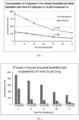
- the assay using HAE cells is an in vitro model of the lung and is a representative system for SARS-CoV-2 replication. It has also surprisingly been discovered that the active triphosphate metabolite of Compound 1A is robustly formed when exposed to normal primary bronchial and nasal epithelial cells.
- Example 7 when Compound 1A was incubated in human nasal and bronchial epithelial cells, the half-life of the active triphosphate species is greater than 1.5 days in both bronchial and nasal epithelial cells. This could not have been predicted in advance and is especially important in treating patients with early stages of the infection when the virus is heavily concentrated in the nasal and bronchial cells.
- Compound 1, such as Compound 1A or Compound 1B or a pharmaceutically acceptable salt thereof, optionally in a pharmaceutically acceptable carrier, is administered in an effective amount to a host, specifically a human, in need thereof infected with the SARS-CoV-2 virus, or (described herein but not claimed) a host at risk of infection with the SARS-CoV-2 virus, i.e., as a prophylactic.
- the pharmaceutically acceptable salt is a hemi-sulfate salt, shown below as Compound 2, Compound 2A, and Compound 2B:
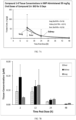
- Compound 2A was administered to non-human primates and the intracellular concentration of the active triphosphate species was measured in lung, kidney, and liver cells. Surprisingly, the active triphosphate metabolite concentrates in the lung over the liver (Table 8) and the half-life of the active metabolite in the lung is 9.4 hours ( FIG. 7A ). This is important because COVID-19 typically presents as a respiratory illness. In fact, the active triphosphate species concentration is 1.6 times higher in the lung than the liver after twice a day oral administration of 30 mg/kg of Compound 2A.
- the compounds used in the present invention may inhibit SARS-CoV-2 infection via a unique mechanism of action that accounts for high selectivity.
- CoV viral replication is achieved at the RNA-dependent RNA polymerase (RdRp) nsp12 subunit, which is activated by cofactors nsp7 and nsp8.
- RdRp RNA-dependent RNA polymerase
- MERS-CoV and other CoVs such as SARS-CoV-1 and SARS-CoV-2, do not exhibit significant structural differences at the RdRp active site. This suggests that polymerase inhibition is not the sole basis for differential activity against these viruses.
- COVID-19 is an acute viral infection for which antiviral therapeutics may be effective within the first stage of the infection when viral load is at its maximum and there is rapid viral replication initially in nasal, throat and pulmonary cells.
- the availability of a potent, safe, oral antiviral administered to individuals infected with SARS-CoV-2 in the early stages of the disease has the potential to avert clinical illness, minimize long term damage, and mitigate the COVID-19 pandemic.
- selected compounds of the present invention are able to concentrate in the lungs over the liver. This is therapeutically beneficial when treating patients in the first stages of infection with the SARS-CoV-2 pathogen when it is desirable to prevent or lessen late-stage viral damage.
- High concentrations in the lung over the heart and liver is also therapeutically beneficial for treating patients in later stages of the infection.
- the phosphorus in any of the formulas described herein may be chiral and thus can be provided as an R or S enantiomer or mixture thereof, including a racemic mixture.
- the compound is typically at least 90% free of the opposite enantiomer, and can be at least 95%, 96%, 97%, 98%, 99% or even 100% free of the opposite enantiomer. Unless described otherwise, the compound is at least 90% free of the opposite enantiomer.
- Compound 1 is depicted without regard to stereochemistry at the phosphorus atom, which is chiral.
- Compound 1 can be used in a racemic form, or with any desired ratio of phosphorus R p - and S p -enantiomers of the compound, including enantiomerically enriched material up to pure enantiomers.
- Compound 1A has S-stereochemistry at the phosphorus and Compound 1B has R-stereochemistry at the phosphorus.
- Compound 1 is used in a form at least 90% free of the opposite enantiomer, and can be at least 98%, 99% or even 100% free of the opposite enantiomer.
- Compound 1A can be at least 90%, 95%, 98%, 99%, or even 100% free of the opposite R p -enantiomer.
- Compound 1B can be at least 90%, 95%, 98%, 99%, or even 100% free of the opposite S p -enantiomer.
- Compound 2 is depicted without regard to stereochemistry at the phosphorus atom, which is chiral.
- Compound 2 can be used in a racemic form, or with any desired ratio of phosphorus R- and S-enantiomers of the compound, including enantiomerically enriched material up to pure enantiomers.
- Compound 2A has S-stereochemistry at the phosphorus and Compound 2B has R-stereochemistry at the phosphorus.
- Compound 2 is used in a form at least 90% free of the opposite enantiomer, and can be at least 98%, 99% or even 100% free of the opposite enantiomer.
- Compound 2A can be at least 90%, 95%, 98%, 99%, or even 100% free of the opposite R p -enantiomer.
- Compound 2B can be at least 90%, 95%, 98%, 99%, or even 100% free of the opposite S p -enantiomer.
- Compounds, compositions, dosage forms, and methods are provided for use in the treatment of COVID-19 caused by the SARS-CoV-2 virus in a host in need thereof via administration of an effective amount of a compound as defined in the appended claims or a pharmaceutically acceptable salt thereof. Described herein but not claimed is the use of such compounds in an effective amount prophylactically to prevent or restrict the progression of COVID-19 in a host in need thereof who has been exposed to the virus or who is at risk of infection or reinfection.
- a loading dose is 1100 mg/day (free base) (i.e., 1200 mg/day hemisulfate salt of Compound 1 ), and a maintenance dose is 550 mg/day (free base) (i.e, 600 mg/day of hemisulfate salt)).
- the loading dose is administered once and the maintenance dose is administered twice a day for at least 3, 4, 5, 6, 7, 8, 9, 10, 11, or 12 days.
- a compound as defined in the appended claims or a pharmaceutically acceptable salt thereof is administered in a dosage form of at least about 100, 200, 250, 300, 350, 400, 450, 500, 550, 600, 650, 700, 750, 800, 850, 900, 950, 1000, 1050, 1100, 1150, 1200, 1250, 1300, 1350, 1400, 1450, 1500, 1550, 1600, 1650, or 1700 mg.
- a compound of as defined in the appended claims or a pharmaceutically acceptable salt thereof is administered at a dose of at least 250 mg, 500 mg, at least 600 mg, at least 700 mg, at least 800 mg, at least 900 mg, at least 1000 mg, at least 1100 mg, at least 1200 mg, at least 1300 mg, at least 1400 mg or at least 1500 mg.
- a compound as defined in the appended claims or a pharmaceutically acceptable salt thereof, including Compound 1 or a pharmaceutically acceptable salt thereof, for example Compound 2 is administered in a dosage form of about 550 mg once day.
- a compound as defined in the appended claims or a pharmaceutically acceptable salt thereof, including Compound 1 or a pharmaceutically acceptable salt thereof, for example Compound 2 is administered in a dosage form of about 600 mg once a day.
- a compound as defined in the appended claims or a pharmaceutically acceptable salt thereof is administered in a dosage form of about 550 mg twice a day.
- a compound as defined in the appended claims or a pharmaceutically acceptable salt thereof is administered in a dosage form of about 600 mg twice a day.
- a compound as defined in the appended claims or a pharmaceutically acceptable salt thereof is administered in a dosage form of about 550 mg twice a day for at least five days, optionally with the standard of care. In one embodiment, Compound 1 or a pharmaceutically acceptable salt thereof is administered in a dosage form of about 550 mg twice a day for at least five days, optionally with the standard of care. In one embodiment, Compound 1 is Compound 1A. In one embodiment, Compound 1 is Compound 1B.
- a compound as defined in the appended claims or a pharmaceutically acceptable salt thereof is administered in a dosage form of about 600 mg twice a day for at least of days, optionally with the standard of care.
- Compound 2 or a pharmaceutically acceptable salt thereof is administered in a dosage form of about 600 mg twice a day for at least five days, optionally with the standard of care.
- Compound 2 is Compound 2A.
- Compound 2 is Compound 2B.
- a compound as defined in the appended claims or a pharmaceutically acceptable salt thereof is administered in a dosage form of about 550 mg twice a day for at least about 5, 6, 7, 8, 9, 10, 11, 12, 13, 14, 15, 16, 17, 18, or more days, optionally with the standard of care.
- Compound 1 or a pharmaceutically acceptable salt thereof is administered in a dosage form of about 550 mg twice a day for at least about 5, 6, 7, 8, 9, 10, 11, 12, 13, 14, 15, 16, 17, 18, or more days, optionally with the standard of care.
- a compound as defined in the appended claims or a pharmaceutically acceptable salt thereof is administered in a dosage form of about 600 mg twice a day for at least about 5, 6, 7, 8, 9, 10, 11, 12, 13, 14, 15, 16, 17, 18, or more days, optionally with the standard of care.
- Compound 2 or a pharmaceutically acceptable salt thereof is administered in a dosage form of about 600 mg twice a day for at least about 5, 6, 7, 8, 9, 10, 11, 12, 13, 14, 15, 16, 17, 18, or more days, optionally with the standard of care.
- a compound as defined in the appended claims or a pharmaceutically acceptable salt thereof, for example Compound 1 or a pharmaceutically acceptable salt thereof, including Compound 2 is administered at an initial dose (or loading dose) followed by a maintenance dose, wherein the loading dose is at the discretion of the physician based on the severity of the presented disease and the size of the patient.
- the loading dose is about or at least 1.5 times greater, about or at least 2 times greater, about or at least 2.5 times greater, or about or at least 3 times greater than the maintenance dose.
- the loading dose is administered once, twice, three, four, or more times before the first maintenance dose, and may be given once, twice, three, or four times a day as instructed by the physician.
- a compound as defined in the appended claims or a pharmaceutically acceptable salt thereof, for example Compound 1 or a pharmaceutically acceptable salt thereof, including Compound 2 is administered at a daily loading dose (which can be provided in one or several dosages throughout the day) of at least about 800 mg, at least about 900 mg, at least about 1000 mg, at least about 1100 mg, at least about 1200 mg, at least about 1300 mg, or at least about 1400 mg followed by a maintenance dose of at least about 300 mg, at least about 350 mg, at least about 400 mg, at least about 450 mg, at least about 500 mg, at least about 550 mg, at least about 600 mg, at least about 650 mg, at least about 700 mg, or at least about 750 mg and the maintenance dose is taken once, twice, or three times a day.
- a daily loading dose which can be provided in one or several dosages throughout the day
- the maintenance dose is taken twice a day, and optionally over 1, 2, 3, or 4 days. In one embodiment, the maintenance dose is thereafter administered 1, 2 or 3 times a day for at least about 4 days, at least about 5 days, at least about 6 days, at least about 7 days, at least about 8 days, at least about 9 days, at least about 10 days, at least about 15 days, at least about 20 days, at least about 25 days, or more.
- Compound 1 or a pharmaceutically acceptable salt thereof, including Compound 2 is administered at a dose of at least about 300 mg, at least about 350 mg, at least about 400 mg, at least about 450 mg, at least about 500 mg, at least about 550 mg, at least about 650, or at least about 750 and the dose is taken once, twice, or three times a day.
- Compound 1 or a pharmaceutically acceptable salt thereof, for example Compound 2 is administered at a dose of at least about 500 mg, at least about 550 mg, or at least 600 mg and the dose is taken twice daily.
- Compound 1 or a pharmaceutically acceptable salt thereof, for example Compound 2 is administered at a loading dose of at least about 1000 mg, at least about 1100 mg, or at least about 1200 mg followed by a maintenance dose of at least about 500 mg, at least about 550 mg, or at least 600 mg twice daily.
- the maintenance dose is administered for at least about 4, 5, 6, 7, 8, 9, 10, or more days.
- Compound 1 is Compound 1A.
- Compound 1B is Compound 2A.
- Compound 2 is Compound 2B.
- Compound 1 is administered at a dose of at about 550 mg and the dose is taken twice daily. In one embodiment, Compound 1 is Compound 1A. In one embodiment, Compound 1 is Compound 1B.
- Compound 2 is administered at a dose of at about 600 mg and the dose is taken twice daily. In one embodiment, Compound 2 is Compound 2A. In one embodiment, Compound 2 is Compound 2B.
- the method of the present invention includes administering a compound as defined in the appended claims, for example Compound 1 or Compound 2, once, twice, three, or four or more times a day as necessary to treat the infection.
- a compound as defined in the appended claims or a pharmaceutically acceptable salt thereof, for example Compound 1 or Compound 2 is administered for at least about 4, 5, 6, 7, 8, 9, 10, 15, 20, 25, or more days, or for a length of time at the discretion of a healthcare provider.
- the compound of the present invention is administered indefinitely until the risk of reinfection no longer exits.
- a compound as defined in the appended claims or a pharmaceutically acceptable salt thereof is administered for at least 1 month, at least 2 months, at least 3 months, at least 4 months, at least 5 months, or at least 6 months or more.
- a compound as defined in the appended claims or a pharmaceutically acceptable salt thereof is administered once, twice, three, or four or more times a day.
- a method to prevent transmission includes administering an effective amount of one of the compounds described herein to a human in need thereof for a sufficient length of time prior to exposure to a high risk situation, including during travel or public events or meetings, or if the host is in a high risk group, including for example, up to 3, 5, 7, 10, 12, 14 or more days prior to a communicable situation, and then during and optionally after the potential exposure.
- the selected compound as described herein can be administered for an indefinite period in a maintenance dosage to protect a person in a high-risk environment.
- the invention disclosed herein is a compound for use in a method for the treatment of the 2019 coronavirus disease (COVID-19) caused by the SARS-CoV-2 virus in a host, specifically a human, in need thereof comprising administering an effective amount of a compound of the following formula or a pharmaceutically acceptable salt thereof:
- Non-limiting examples of a compound of the above formula include Compound 1 and Compound 2.
- the compounds are administered as the S-enantiomer, such as Compound 1A.
- the compounds are administered as the R-enantiomer, such as Compound 1B.
- a compound of Formula I is Compound 2, Compound 2A, or Compound 2B.
- Compound 1 or a pharmaceutically acceptable salt thereof, for example, Compound 2 that can be used include:
- a compound as defined in the appended claims for example Compound 1A, Compound 1B, Compound 2A, or Compound 2B is used in a form at least 90% free of the opposite phosphorus enantiomer, and can be at least 98%, 99% or even 100% free of the opposite phosphorus enantiomer.
- Compound 2 was previously disclosed in U.S. Patent No. 10,519,186 ; 10,906,928 ; 10,894,804 ; and, 10,874,687 and PCT Applications WO 2018/144640 ; WO 2019/200005 ; and, WO 2020/117966 assigned to Atea Pharmaceuticals.
- Compound 2A has demonstrated potent in vitro activity against clinical isolates of hepatitis C virus (HCV) by inhibiting the RNA-dependent RNA polymerase (RdRp) ( Good, S.S. et al. PLoS ONE 15(1), e0227104 (2020 )).
- Compound 2A has been evaluated in a Phase 1b study ( Berliba, E. et al. Antimicrob.
- Compound 2 is provided in a pharmaceutically acceptable composition or solid dosage form thereof.
- a non-limiting illustrative process for the preparation of Compound 2 includes
- the solvent of step (iii) is an alcohol, for example methanol, ethanol, or isopropyl alcohol. In one embodiment, the solvent of step (iii) is an alkyl ester, for example ethyl acetate.
- Scheme 1 provides the metabolic pathway of a compound of the present invention, which involves the initial de-esterification of the phosphoramidate (Compound 1 ) to form metabolite 1-1, which spontaneously decomposes to metabolite 1-2.
- Metabolite 1-2 is next converted to the N 6 -methyl-2,6-diaminopurine-5'-monophosphate derivative (metabolite 1-3 ), which is in turn metabolized to the free 5'-hydroxyl-N 6 -methyl-2,6-diaminopurine nucleoside (metabolite 1-8 ) and ((2 R ,3 R ,4 R ,5 R )-5-(2-amino-6-oxo-1,6-dihydro-9H-purin-9-yl)-4-fluoro-3-hydroxy-4-methyltetrahydrofuran-2-yl)methyl dihydrogen phosphate as the 5'-monophosphate (metabolite 1-4 ).
- Metabolite 1-4 is anabolized to the corresponding diphosphate (metabolite 1-5 ) and then the active triphosphate derivative (metabolite 1-6 ).
- the 5'-triphosphate can be further metabolized to generate 2-amino-9-((2 R ,3 R ,4 R ,5 R )-3-fluoro-4-hydroxy-5-(hydroxymethyl)-3-methyltetrahydrofuran-2-yl)-1,9-dihydro-6H-purin-6-one (1-7).
- Metabolite 1-7 is measurable in plasma and is therefore a surrogate for the active triphosphate (1-6), which is not measurable in plasma.
- a “patient” or “host” or “subject” is a human or non-human animal in need of treatment or prevention of COVID-19 caused by the SARS-CoV-2 virus.
- the host is a human.
- a “patient” or “host” or “subject” also refers to, for example, a mammal, primate (e.g., human), cow, sheep, goat, horse, dog, cat, rabbit, rat, mice, bird, bat and the like.
- prophylactic refers to the administration of an active compound to prevent, reduce the likelihood of an occurrence or a reoccurrence of COVID-19, or to minimize a new infection relative to infection that would occur without such treatment.
- the active compound is administered to a host who has been exposed to and is thus at risk of contracting COVID-19.
- a method to prevent transmission includes administering an effective amount of one of the compounds described herein to humans for a sufficient length of time prior to exposure to crowds that can be infected, including during travel or public events or meetings, including for example, up to 3, 5, 7, 10, 12, 14 or more days prior to a communicable situation.
- coadminister means “coadminister,” “coadministration,” or “in combination” are used to describe the administration of a compound of any of the formulas described herein or a pharmaceutically acceptable salt thereof, according to the present invention in combination with at least one other antiviral active agent.
- the timing of the coadministration is best determined by the medical specialist treating the patient. It is sometimes desired that the agents be administered at the same time. Alternatively, the drugs selected for combination therapy may be administered at different times to the patient. Of course, when more than one viral or other infection or other condition is present, the present compounds may be combined with other agents to treat that other infection or condition as required.
- a “pharmaceutically acceptable salt” is a derivative of the disclosed compound in which the parent compound is modified to an inorganic and organic, acid or base addition salt thereof without undue toxicity.
- the salts of the present compounds can be synthesized from the parent compound with a basic or acidic moiety by conventional chemical methods. Generally, such salts can be prepared by reacting free acid forms of these compounds with a stoichiometric amount of the appropriate base (such as Na, Ca, Mg, or K hydroxide, carbonate, bicarbonate, or the like), or by reacting free base forms of these compounds with a stoichiometric amount of the appropriate acid. Such reactions are typically carried out in water or in an organic solvent, or in a mixture of the two.
- non-aqueous media like ether, ethyl acetate, ethanol, isopropanol, or acetonitrile are typical, where practicable.
- Salts of the present compounds may optionally be provided in the form of a solvate.
- Examples of pharmaceutically acceptable salts include, but are not limited to, mineral or organic acid salts of basic residues such as amines; alkali or organic salts of acidic residues such as carboxylic acids; and the like.
- the pharmaceutically acceptable salts include the conventional salts and the quaternary ammonium salts of the parent compound formed, for example, from inorganic or organic acids that are not unduly toxic.
- acid salts include those derived from inorganic acids such as hydrochloric, hydrobromic, sulfuric, sulfamic, phosphoric, nitric and the like; and the salts prepared from organic acids such as acetic, propionic, succinic, glycolic, stearic, lactic, malic, tartaric, citric, ascorbic, pamoic, maleic, hydroxymaleic, phenylacetic, glutamic, benzoic, salicylic, mesylic, esylic, besylic, sulfanilic, 2-acetoxybenzoic, fumaric, toluenesulfonic, methanesulfonic, ethane disulfonic, oxalic, isethionic, HOOC-(CH2)n-COOH where n is 0-4, and the like, or using a different acid that produces the same counterion.
- inorganic acids such as hydrochloric, hydrobromic, sulfuric, sul
- the compound can be delivered in any molar ratio of salt that delivers the desired result.
- the compound can be provided with less than a molar equivalent of a counter ion, such as in the form of a hemi-sulfate salt.
- the compound can be provided with more than a molar equivalent of counter ion, such as in the form of a di-sulfate salt.
- molar ratios of the compound to the counter ion include 1 : 0.25, 1 : 0.5, 1 : 1, and 1 : 2.
- Alkyl is a straight chain or branched saturated aliphatic hydrocarbon group.
- the alkyl is C 1 -C 2 , C 1 -C 3 , C 1 -C 4 , C 1 -C 5 , or C 1 -C 6 (i.e., the alkyl chain can be 1, 2, 3, 4, 5, or 6 carbons in length).
- the specified ranges as used herein indicate an alkyl group with length of each member of the range described as an independent species.
- C 1 -C 6 alkyl as used herein indicates an alkyl group having from 1, 2, 3, 4, 5, or 6 carbon atoms and is intended to mean that each of these is described as an independent species and C 1 -C 4 alkyl as used herein indicates an alkyl group having from 1, 2, 3, or 4 carbon atoms and is intended to mean that each of these is described as an independent species.
- alkyl examples include, but are not limited to, methyl, ethyl, n-propyl, isopropyl, n-butyl, isobutyl, sec-butyl, t-butyl, n-pentyl, isopentyl, tert-pentyl, neopentyl, n-hexyl, 2-methylpentane, 3-methylpentane, 2,2-dimethylbutane and 2,3-dimethylbutane.
- Cycloalkyl is a saturated mono-cycle hydrocarbon ring system.
- Non-limiting examples of cycloalkyl groups include cyclopropyl, cyclobutyl, cyclopentyl, and cyclohexyl.
- alkenyl refers to a non-aromatic hydrocarbon group which contains at least one double bond between adjacent carbon atoms and a similar structure to an alkyl group as otherwise described herein.
- an alkenyl group can have to 4 carbon atoms (i.e., C 2 -C 4 alkenyl).
- alkynyl refers to a non-aromatic hydrocarbon group containing at least one triple bond between adjacent carbon atoms and a similar structure to an alkyl group as otherwise described herein.
- an alkynyl group can have 2 to 4 carbon atoms (i.e., C 2 -C 4 alkynyl).
- alkynyl groups include, but are not limited to ethynyl and propargyl.
- Aryl indicates aromatic groups containing only carbon in the aromatic ring or rings.
- the aryl groups contain 1 to 3 separate or fused rings and is 6 to about 14 or 18 ring atoms, without heteroatoms as ring members.
- Aryl groups include, for example, phenyl and naphthyl, including 1-naphthyl and 2-naphthyl.
- aryl groups are pendant.
- An example of a pendant ring is a phenyl group substituted with a phenyl group.
- the aryl group is optionally substituted as described above.
- aryl groups include, for example, dihydroindole, dihydrobenzofuran, isoindoline-1-one and indolin-2-one.
- Aryl(alkyl)- is an alkyl group as described herein substituted with an aryl group as described herein.
- aryl(CH 2 )- is benzyl.
- aryl(alkyl)- include benzyl, 2-phenyl(alkyl), 3-phenyl(alkyl), and napthyl(alkyl).
- Heteroaryl refers to a stable monocyclic, bicyclic, or multicyclic aromatic ring which contains from 1 to 3, or in some embodiments from 1, 2, or 3 heteroatoms selected from N, O, S, B, and P (and typically selected from N, O, and S) with remaining ring atoms being carbon, or a stable bicyclic or tricyclic system containing at least one 5, 6, or 7 membered aromatic ring which contains from 1 to 3, or in some embodiments from 1 to 2, heteroatoms selected from N, O, S, B or P with remaining ring atoms being carbon.
- the only heteroatom is nitrogen.
- the only heteroatom is oxygen.
- the only heteroatom is sulfur.
- Monocyclic heteroaryl groups typically have from 5 or 6 ring atoms. When the total number of S and O atoms in the heteroaryl group exceeds 1, these heteroatoms are not adjacent to one another.
- heteroaryl groups include, but are not limited to, pyridinyl (including, for example, 2-hydroxypyridinyl), imidazolyl, imidazopyridinyl, pyrimidinyl (including, for example, 4-hydroxypyrimidinyl), pyrazolyl, triazolyl, pyrazinyl, furyl, thienyl, isoxazolyl, thiazolyl, oxadiazolyl, oxazolyl, isothiazolyl, pyrrolyl, quinolinyl, isoquinolinyl, tetrahydroisoquinolinyl, indolyl, benzimidazolyl, benzofuranyl, cinnolinyl, indazolyl, indoliziny
- heteroalkyl refers to an alkyl, alkenyl, alkynyl, or haloalkyl moiety as defined herein wherein a CH 2 group is either replaced by a heteroatom or a carbon atom is substituted with a heteroatom for example, an amine, carbonyl, carboxy, oxo, thio, phosphate, phosphonate, nitrogen, phosphorus, silicon, or boron.
- the only heteroatom is nitrogen.
- the only heteroatom is oxygen.
- the only heteroatom is sulfur.
- heteroalkyl is used to indicate a heteroaliphatic group (cyclic, acyclic, substituted, unsubstituted, branched or unbranched) having 1-6 carbon atoms.
- phosphoramidate is used throughout the specification to describe a moiety at the 5' position of the furanose ring of the nucleoside and forms a prodrug form of the nucleoside compound, wherein the phosphorus atom is linked through a 5'-O- bond and wherein the phosphorus is also covalently bound to at least one nitrogen, forming a P-N bond.
- the phosphorus is covalently linked to the amino moiety of a natural or synthetic amino acid (which may be in the form of an ester).
- Phosphoramidate groups described herein include, for example, those of the structures:
- R P1 groups include optionally substituted phenyl, naphthyl, and monocyclic heteroaryl groups, especially those groups (particularly lipophilic groups) which enhance bioavailability of the compounds in the cells of the patient and which exhibit reduced toxicity, enhanced therapeutic index and enhanced pharmacokinetics (the compounds are metabolized and excreted more slowly).
- Stabilized phosphate prodrugs are moieties that can deliver a mono, di, or triphosphate in vivo.
- McGuigan has disclosed phosphoramidates in US Patent Nos.: 8,933,053 ; 8,759,318 ; 8,658,616 ; 8,263,575 ; 8,119,779 ; 7,951,787 and 7,115,590 .
- Alios has disclosed thiophosphoramidates in US 8,895,723 and 8,871,737 .
- Alios has also disclosed cyclic nucleotides in US Patent No. 8,772,474 .
- Idenix has disclosed cyclic phosphoramidates and phosphoramidate/SATE derivatives in WO 2013/177219 .
- Idenix has also disclosed substituted carbonyloxymethylphosphoramidate compounds in WO 2013/039920 .
- Hostetler has disclosed lipid phosphate prodrugs, see, for example, US 7,517,858 .
- Hostetler has also disclosed lipid conjugates of phosphonate prodrugs, see, for example, US 8,889,658 ; 8,846,643 ; 8,710,030 ; 8,309,565 ; 8,008,308 ; and 7,790,703 .
- Emory University has disclosed nucleotide sphingoid and lipid derivatives in WO 2014/124430 .
- RFS Pharma has disclosed purine nucleoside monophosphate prodrugs in WO 2010/091386 .
- Cocrystal Pharma Inc. has also disclosed purine nucleoside monophosphate prodrugs in US Patent No.: 9,173,893 .
- HepDirect TM technology is disclosed in the article " Design, Synthesis, and Characterization of a Series of Cytochrome P(450) 3A-Activated Prodrugs (HepDirect Prodrugs) Useful for Targeting Phosph(on)ate-Based Drugs to the Liver," (J. Am. Chem. Soc. 126, 5154-5163 (2004 ).
- Additional phosphate prodrugs include, but are not limited to phosphate esters, 3',5'-cyclic phosphates including CycloSAL, SATE derivatives (S-acyl-2thioesters) and DTE (dithiodiethyl) prodrugs.
- phosphate esters 3',5'-cyclic phosphates including CycloSAL, SATE derivatives (S-acyl-2thioesters) and DTE (dithiodiethyl) prodrugs.
- CycloSAL SATE derivatives
- S-acyl-2thioesters S-acyl-2thioesters
- DTE dithiodiethyl prodrugs
- the stabilized phosphate prodrugs include, but are not limited to those described in U.S. Patent No. 9,173,893 and U.S. Patent No. 8,609,627 , including for processes of preparation.
- 5'-prodrugs can be represented by the group: wherein
- 3',5'-prodrugs can be represented by: wherein:
- the method also comprises administering to a host in need thereof, specifically a human, an effective amount of a compound as defined in the appended claims or a pharmaceutically acceptable salt thereof, optionally in combination with at least one additional bioactive agent, for example, an additional anti-viral agent, further optionally in combination with a pharmaceutically acceptable carrier additive and/or excipient.
- a host in need thereof specifically a human
- an effective amount of a compound as defined in the appended claims or a pharmaceutically acceptable salt thereof optionally in combination with at least one additional bioactive agent, for example, an additional anti-viral agent, further optionally in combination with a pharmaceutically acceptable carrier additive and/or excipient.
- the administration of a compound as defined in the appended claims or a pharmaceutically acceptable salt thereof to a patient in need thereof results in a reduction in the incidence of progressive respiratory insufficiency (PRI) as measured by greater than or equal to a 1-tier or even a 2-tier or more increase in respiratory support methods required to maintain satisfactory oxygenation (SpO 2 ⁇ 93%) using the 6-tier hierarchical levels of respiratory support methods described below.
- PRI progressive respiratory insufficiency
- the reduction in PRI is an increase from level 5 to level 3, level 5 to level 2, or level 5 to level 1. In one embodiment, the reduction in PRI is an increase from level 4 to level 2 or level 4 to level 1. In one embodiment, the reduction in PRI is an increase from level 3 to level 1.
- the administration of a compound as defined in the appended claims or a pharmaceutically acceptable salt thereof reduces respiratory failure or death.
- a method of treating a SARS-CoV-2 infection in a host is provided by administering to the host an effective amount of a compound as defined in the appended claims or a pharmaceutically acceptable salt thereof, wherein the SARS-CoV-2 infection is caused by a viral variant that has developed a natural or drug-induced mutation over the wild-type.
- the SARS-CoV-2 variant has a natural mutation or drug-induced mutation in a viral protein selected from an envelope (E) protein, membrane (M) protein, spike (S) protein, nsp1, nsp2, nsp3, nsp4, nsp5, nsp 6, nsp7, nsp8, nsp9, nsp10, nsp12, nsp13, nsp14, nsp15, nsp16, ORF1ab, ORF3a, ORF6, ORF7a, ORF7b, ORF8, and ORF10.
- the SARS-CoV-2 variant has a mutation which results in the acquired resistance to one or more antiviral drugs.
- the SARS-CoV-2 variant has a deletion of the spike protein amino acids H69 and V70.
- the SARS-CoV-2 variant has a deletion of the spike protein amino acids D614G.
- the SARS-CoV-2 variant has a deletion of the spike protein amino acid Y144.
- the SARS-CoV-2 variant has a spike protein amino acid substitution N501Y.
- the SARS-CoV-2 variant which has a spike protein amino acid substitution A570D.
- the SARS-CoV-2 variant has a spike protein amino acid substitution P681H.
- the SARS-CoV-2 variant has a spike protein amino acid substitution T716I.
- the SARS-CoV-2 variant has a spike protein amino acid substitution S982A.
- the SARS-CoV-2 variant has a spike protein amino acid substitution D1118H.
- the SARS-CoV-2 variant has a premature stop codon mutation Q27stop in the protein product of ORF8.
- the SARS-CoV-2 variant has a spike protein amino acid substitution K417N.
- the SARS-CoV-2 variant has a spike protein amino acid substitution E484K.
- the SARS-CoV-2 variant has a spike protein amino acid substitution K417N.
- the SARS-CoV-2 variant has a spike protein amino acid substitution D215G.
- the SARS-CoV-2 variant has a spike protein amino acid substitution A701V.
- the SARS-CoV-2 variant has a spike protein amino acid substitution L18F.
- the SARS-CoV-2 variant has a spike protein amino acid substitution R246I.
- the SARS-CoV-2 variant has a spike protein deletion at amino acids 242-244
- the SARS-CoV-2 variant has a spike protein amino acid substitution Y453F.
- the SARS-CoV-2 variant has a spike protein amino acid substitution I692V.
- the SARS-CoV-2 variant has a spike protein amino acid substitution M1229I.
- the SARS-CoV-2 variant has a spike protein amino acid substitution N439K.
- the SARS-CoV-2 variant has a spike protein amino acid substitution A222V.
- the SARS-CoV-2 variant has a spike protein amino acid substitution S477N.
- the SARS-CoV-2 variant has a spike protein amino acid substitution A376T.
- the SARS-CoV-2 variant has a nsp 12 protein amino acid substitution P323L.
- the SARS-CoV-2 variant has a nsp 12 protein amino acid substitution Y455I.
- the SARS-CoV-2 variant has a Orf8 protein amino acid substitution R52I.
- the SARS-CoV-2 variant has an ORF8 protein amino acid substitution Y73C.
- the SARS-CoV-2 variant has a nucleoside (N) protein amino acid substitution D3L.
- the SARS-CoV-2 variant has a nucleoside (N) protein amino acid substitution S235F.
- the SARS-CoV-2 variant has a ORF1ab protein amino acid substitution T1001I.
- the SARS-CoV-2 variant has a ORF1ab protein amino acid substitution A1708D.
- the SARS-CoV-2 variant has a ORF1ab protein amino acid substitution I2230T.
- the SARS-CoV-2 variant has a ORF1ab protein amino acid SGF 3675-3677 deletion.
- the SARS-CoV-2 variant has a nsp 12 protein amino acid substitution S861X, wherein X is any amino acid.
- the SARS-CoV-2 variant has a nsp 12 protein amino acid substitution F480V.
- the SARS-CoV-2 variant has a nsp 12 protein amino acid substitution D484Y.
- the SARS-CoV-2 variant includes a deletion of the spike protein amino acids 69-70, deletion of the spike protein amino acid Y144, the spike protein amino acid substitution N501Y, the spike protein amino acid substitution A570D, the spike protein amino acid substitution D614G, the spike protein amino acid substitution P681H, the spike protein amino acid substitution T716I, the spike protein amino acid substitution S982A, the spike protein amino acid substitution D1118H, and a premature stop codon mutation (Q27stop) in the protein product of ORF8.
- the SARS-CoV-2 variant includes amino acid substitutions in the spike protein of N501Y, K417N, E484K, D80A, D215G, L18F, and R246I in the spike protein, and amino acid deletion at amino acids 242-244 of the spike protein.
- the SARS-CoV-2 variant is selected from SARS-CoV-2 clade O, S, L, V, G, GH, or GR as described by Alm et al., "Geographical and temporal distribution of SARS-CoV-2 clades in the WHO European Region, January to June 2020".
- Euro Surveillance: Bulletin European Sur les Maladies Transmissibles European Communicable Disease Bulletin. 25 (32 ).
- the SARS-CoV-2 variant is selected from SARS-CoV-2 clade G614, S84, V251, I378 or D392 as described by Guan et al., A genetic barcode of SARS-CoV-2 for monitoring global distribution of different clades during the COVID-19 pandemic. Int J Infect Dis. 2020 Nov; 100: 216-223 .
- the SARS-CoV-2 variant is selected from SARS-CoV-2 clade 19A, 19B, 20A, or 20C as described by Nextstrain: Genomic epidemiology of novel coronavirus - Global sub-sampling. Available from: https://nextstrain.org/ncov.
- the SARS-CoV-2 variant is selected from SARS-CoV-2 lineage A, B, B.1, B.1.1, or B.1.177 as described by Rambaut et al., Phylogenetic Assignment of Named Global Outbreak LINeages (pangolin). San Francisco: GitHub. Available from: https://github.com/cov-lineages/pangol in; Rambaut et al. A dynamic nomenclature proposal for SARS-CoV-2 lineages to assist genomic epidemiology. Nat Microbiol. 2020 Nov;5(11):1403-1407 ; Rambaut et al. SARS-CoV-2 lineages. Available from: https://cov-lineages.org/.
- the SARS-CoV-2 variant is the "Cluster 5" variant, which includes the spike protein amino acid substitution D614G.
- the SARS-CoV-2 variant is VUI 202012/01 (Variant Under Investigation, year 2020, month 12, variant 01) (also known as B.1.1.7 lineage and 20B/501Y.V1), which has been defined by multiple spike protein changes including deletion of the spike protein amino acids 69-70, deletion of the spike protein amino acid Y144, the spike protein amino acid substitution N501Y, the spike protein amino acid substitution A570D, the spike protein amino acid substitution D614G, the spike protein amino acid substitution P681H, the spike protein amino acid substitution T716I, the spike protein amino acid substitution S982A, the spike protein amino acid substitution D1118H, and a premature stop codon mutation (Q27stop) in the protein product of ORF8.
- the SARS-CoV-2 variant is the B.1.351 lineage variant (also known as 501.V2, 20C/501Y.V2), which includes several mutations in the receptor-binding domain (RBD) in the spike protein: N501Y, K417N, and E484K, which allows the virus to attach more easily to human cells, as well as amino acid substitution D80A in the spike protein, an amino acid substitution D215G in the spike protein, an amino acid substitution A701V in the spike protein, an amino acid substitution L18F in the spike protein, an amino acid substitution R246I in the spike protein, and amino acid deletion at amino acids 242-244 of the spike protein.
- B.1.351 lineage variant also known as 501.V2, 20C/501Y.V2
- RGD receptor-binding domain
- the SARS-CoV-2 variant is the 501Y.V2 lineage variant (also known as 501Y.V2, 20C/20H/501Y.V2), which also includes the spike protein mutations N501Y, K417N, and E484K.
- the SARS-CoV-2 variant is the P.1 lineage variant (also known as the Brazil(ian) variant), which includes ten mutations in the spike protein mutations, including N501Y and E484K.
- the SARS-CoV-2 variant is the B.1.1.207 lineage variant, which includes a P681H mutation in the spike protein.
- the SARS-CoV-2 variant is the danish mink variant which includes an amino acid deletion of H69 and V70 in the spike protein, and an amino acid substitution Y453F in the spike protein.
- the SARS-CoV-2 variant is the danish mink cluster 5 variant, which includes an amino acid deletion of H69 and V70 in the spike protein, an amino acid substitution Y453F in the spike protein, an amino acid substitution I692V in the spike protein, and an amino acid substitution M1229I in the spike protein.
- the SARS-CoV-2 variant includes an amino acid deletion of H69 and V70 in the spike protein, and an amino acid substitution N439K in the spike protein.
- the SARS-CoV-2 variant is the Nexstrain cluster 20A.EU1 variant, which includes an amino acid substitution A222V in the spike protein.
- the SARS-CoV-2 variant is the Nexstrain cluster 20A.EU2 variant, which includes an amino acid substitution S477N in the spike protein, and an amino acid substitution A376T in the nucleocapsid protein.
- the SARS-CoV-2 variant has one or more of the following mutations selected from: an amino acid substitution T10011 in the protein product of ORF1ab; an amino acid substitution A1708D in the protein product of ORF1a; an amino acid substitution I2230T in the protein product of ORF1ab; a deletion of amino acids SGF at 3675-3677 in the protein product of ORF1ab; an amino acid substitution G251V in the protein product of ORF3a; an amino acid substitution S24L in the protein product of ORF8; an amino acid substitution R52I in the protein product of ORF8; an amino acid substitution Y73C in the protein product of ORF8; an amino acid substitution L84S in the protein product of ORF8; an amino acid substitution P323L in the nsp12 domain; an amino acid substitution Y455I in the nsp12 domain; an amino acid substitution Q57H in the protein product of ORF3a; an amino acid substitution R27C in nsp2; an amino acid substitution R
- the SARS-CoV-2 variant contains one or more of the following mutations in the envelope (E) protein: S68F; L73F; P71L; S55F; R69I; T9I; V24M; D72H; T30I; S68C; V75L; V58F; V75F; or L21F; and combinations thereof.
- the SARS-CoV-2 variant contains one or more of the following mutations in the membrane (M) protein: T175M; D3G; V23L; W31C; A2V; V70F; W75L; M109I; I52T; L46F; V70I; D3Y; K162N; H125Y; K15R; D209Y; R146H; R158C; L87F; A2S; A69S; S214I; T208I; L124F; or S4F; and combinations thereof.
- M membrane protein
- the SARS-CoV-2 variant contains one or more of the following mutations in the nucleocapsid (N) protein: RG203KR; S194L; S197L; P13L; D103Y; S193I; S188L; 1292T; S202N; D401Y; S190I; D22G; A208G; T205I; S183Y; S33I; D81Y; T393I; A119S; D377Y; S37P; T247I; A156S; D128Y; P199L; R195I; P207L; E62V; R209T; T362I; G18C; T24N; R185C; S180I; M234I; Q9H; P383L; A35S; P383S; D348H; K374N; R32H; S327L; G179C; G238C; A55S; S190G; H300Y; A119V; D144Y; L139
- the SARS-CoV-2 variant contains one or more of the following mutations in the nsp1 protein: M85; D75E; G82 deletion; V84 deletion; P80 deletion; H83 deletion; V86 deletion; H81 deletion; E87 deletion; L88 deletion; K141 deletion;A79 deletion;V89 deletion; V56I; R124C; D75G; A90 deletion; Y118C; D139N; Y136 deletion; G30D; R24C; D139Y; E37K; H45Y; H110Y; G52S; I71V; D156 deletion; A76T; E37D; S135 deletion; S166G; A138T; F157 deletion; G49C; M85I; or D144A; and combinations thereof.
- the SARS-CoV-2 variant contains one or more of the following mutations in the nsp10 protein: D64E; P136S; A104V; A32V; T12I; T111I; P84S; T51I; I55V; T102I; or T51A; and combinations thereof.
- the SARS-CoV2 variant contains one or more of the following mutations in the nsp12 protein: P323L; T1411; A449V; S434F; M666I; H613Y; S647I; M380I; E922D; M629I; G774S; M601I; E436G; N491S; Q822H; A443V; T85I; A423V; M463I; T26I; A656T; M668I; T806I; T276M; T801N; V588L; K267N; V880I; K718R; L514F; F415S; T252N; Y38H; E744D; H752Q; I171V; S913L; A526V; A382V; G228C; P94L; E84K; K59N; P830S; T908I; P21S; D8
- the SARS-CoV-2 variant contains one or more of the following mutations in the nsp13 protein: Y541C; P504L; A18V; R392C; P47L; S485L; L297P; H290Y; T127I; L176F; V193I; V570L; D260Y; V49I; Q518H; S468L; A598V; D204Y; S74L; T588I; G206C; V226L; V348L; M576I; A302D; P53S; T481M; K524N; A338V; P419S; V479F; P77L; V169F; N124S; P78S; S80G; V496L; A4V; T413I; A296S; A368S; K460R; L297F; P172S; A302S; P402S; T530I; L428F; P504S
- the SARS-CoV-2 variant contains one or more of the following mutations in the nsp14 protein: A320V; F233L; T250I; V182L; A225V; R289C; A274S; P24L; I150T; S374A; H26Y; L177F; L157F; T16I; A482V; P297S; V120A; S255I; P203L; A23 deletion; K311N; M72I; V290F; F431L; K349N; M58I; P140S; R205C; T193A; L409F; P443S; Y260C; D345G; E204D; R163C; R81K; T524I; T113I; T31I; L493F; A119V; D345Y; M501I; A360V; A371V; T206I; V287F; A360S; 174T; M3151; P142L;
- the SARS-CoV-2 variant contains one or more of the following mutations in the nsp15 protein: V320L; A217V; V22L; V172L; D219N; P205S; V127F; Q19H; M218 deletion; A92V; D282G; I252V; T33I; G129S; L331F; A81V; V69L; S312F; T325I; A171V; R206S; D272Y; D87N; S288F; K109R; P270S; P65S; D267Y; D128Y; E215I; T1441; S261L; S287L; T1121; E260K; P205L; S161I; V66L; D39Y; or T114A; or combinations thereof.
- the SARS-CoV-2 variant contains one or more of the following mutations in the nsp16 protein: S33R; K160R; P134S; Q28K; T195I; V78G; T35I; G265V; K249N; A204S; K182N; R287I; A188S; A116V; T140I; L111F; M270T; R216N; A188V; A34V; D108N; L163F; L163H; M17I; T91M; A226S; G77R; L126F; N298L; R216S; T48I; Q238H; or R279K; and combinations thereof.
- the SARS-CoV-2 variant contains one or more of the following mutations in the nsp2 protein: T85I P585S; I559V; D268; G212D; V198I; H237R; F10L; G339S; T166I; R27C; L271F; S211F; P91S; G199E; T3711; A336V; 1120F; S122F; A476V; S138L; V480A; T388I; T634I; P129S; R218C; I188T; T170I; P568L; E574A; I367V; H208Y; S99F; T429I; A306V; M405V; P129L; R222C; T44I; Q275H; R380C; A360V; A361V; G115C; L353F; H237Y; L462F; E261G; R4C; S263F; T57
- the SARS-CoV-2 variant contains one or more of the following mutations in the nsp3 protein: A58T; T1198K; T428I; P153L; S1197R; D218E; S1424F; A1431V; S1285F; P74L; Q1884H; P1326L; L1221F; P141S; P1103S; S126L; Y916H; L557F; E391D; A1311V; S650F; P1103L; Y952H; P340S; A534V; P1787S; L1791F; N1587S; S371N; K1693N; G282V; P278S; T1335I; A1711V; K19R; A994D; K1325R; P822L; K412N; A465V; T1004I; T808I; G489D; S1699F; M1436V; S1265R;
- the SARS-CoV-2 variant contains one or more of the following mutations in the nsp4 protein: F308Y; T295I; M33I; A307V; A457V; G309C; L360F; A231V; H313Y; K399E; V20F; S137L; S34F; A380V; H470Y; T204I; S336L; L264F; L438F; M33L; S209F; C296S; L475I; G79V; T327N; T350I; L206F; M324I; E230G; L436 deletion; T237I; T492I; A260V; A446V; M458I; S395G; S481L; H36Y; T73I; L323F; L349F; S59F; T2141; or T60I; and combinations thereof.
- the SARS-CoV-2 variant contains one or more of the following mutations in the nsp5 protein: G15S; D248E; K90R; L89F; A266V; P108S; A70T; A129V; T45I; G71S; L75F; A191V; L220F; N274D; L67F; P241L; K236R; V157L; K61R; P184S; S62Y; T21I; L50F; P108L; S254F; T93I; A255V; A94V; P132S; A234V; A260V; R60C; P96L; V247F; or T199I; and combinations thereof.
- the SARS-CoV-2 variant contains one or more of the following mutations in the nsp6 protein: L37F; G277S; A46V; L75F; F37 deletion; T10I; V149F; L260F; Q208H; M83I; A136V; V1451; N156D; M86I; Y153C; G188V; L230I; F34 deletion; I189V; R233H; V114A; L33F; A287V; H11Y; A287T; A51V; G188S; I162T; M126V; M183I; N40Y; S104; F35L; M58L; or V84F; and combinations thereof.
- the SARS-CoV-2 variant contains one or more of the following mutations in the nsp7 protein: S25L; S26F; L71F; S15T; M75I; or N78S; and combinations thereof.
- the SARS-CoV-2 variant contains one or more of the following mutations in the nsp8 protein: M129I; I156V; T1451; R51C; T123I; L95F; T89I; P133S; S41F; K37N; T141M; V34F; R51L; A14T; A74V; I107V; A16V; P10S; A194V; D30G; A152V; or T187I; and combinations thereof.
- the SARS-CoV-2 variant contains one or more of the following mutations in the nsp9 protein: T77I; T1091; L42F; T34I; T19I; M101V; T62I; or T19K; and combinations thereof.
- the SARS-CoV-2 variant contains one or more of the following mutations in the protein product of ORF10: L17P; A28V; P10S; I4L; S23F; R24C; *39Q; Q29 stop; Y14C; R20I; orA8V; and combinations thereof.
- the SARS-CoV-2 variant contains one or more of the following mutations in the protein product of ORF3a: Q57H; G251V; V13L; G196V; A54S; A99V; H93Y; T14I; L46F; Q185H; T175I; Q213K; L108F; K61N; Y264C; A72S; T151I; A23S; G224C; K67N; S171L; W69L; H78Y; K136E; L86F; W131C; L147F; S58N; Y91H; I63T; D155Y; G172C; P240L; Y189C; W131R; KN136NY; T223I; G100C; S195Y; V112F; W131L; G44V; D27H; G174C; K21N; S165F; L65F; T229I; T89I; S74F; A99S; G254R; H204N
- the SARS-CoV-2 variant contains one or more of the following mutations in the protein product of ORF6: I33T; W27L; D53G; F22 deletion; P57L; D61Y; D61L; K42N; D53Y; H3Y; I32T; or R20S; or combinations thereof.
- the SARS-CoV-2 variant contains one or more of the following mutations in the protein product of ORF7a: S81L; A8T; L96F; A50V; V104F; Q62 stop; S83L; E16D; T14I; T28I; V93F; G38V; H47Y; T39I; T120S; Q62 deletion; Q62L; S37T; V104; P34S; P99L; T120I; V108L; H73Y; V24F; V29L; A13T; or L5F; or combinations thereof.
- the SARS-CoV-2 variant contains one or more of the following mutations in the protein product of ORF7b: C41F; T40I; A43V; L11F; S31L; C41 deletion; H42; H42L; S5L; L20F; L32F; E33 stop; A15S; or F13 deletion; and combinations thereof.
- the SARS-CoV-2 variant contains one or more of the following mutations in the protein product of ORF8: E110 stop; G66 deletion; S69L; T11I; F104L; F120L; G8R; P38S; D119E; I10S; or I39V; and combinations thereof.
- the SARS-CoV-2 variant contains one or more of the following mutations in the spike protein: D614G; D936Y; P1263L; L5F; N439K; R21I; D839Y; L54F; A879S; L18F; F1121L; R847K; T478I; A829T; Q675H; S477N; H49Y; T29I; G769V; G1124V; V1176F; K1073N; P479S; S1252P; Y145 deletion; E583D; R214L; A1020V; Q1208H; D215G; H146Y; S98F; T95I; G1219C; A846V; I197V; R102I; V367F; T572I; A1078S; A831V; P1162L; T73I; A845S; G1219V; H245Y; L8V; Q675R; S25
- a compound as defined in the appended claims or a pharmaceutically acceptable salt thereof can be administered in an effective amount for the treatment of the 2019 coronavirus disease (COVID-19) caused by the SARS-CoV-2 virus in a host, specifically a human, in need thereof.
- the compound is Compound 1A or a pharmaceutically acceptable salt thereof, for example Compound 2A.
- the compound is Compound 1B or a pharmaceutically acceptable salt thereof, for example Compound 2B.
- the compound or its salt can be provided as the neat chemical but is more typically administered as a pharmaceutical composition that includes an effective amount for a host, specifically a human, in need of a treatment for COVID-19.
- the disclosure provides pharmaceutical compositions comprising an effective amount of a compound as defined in the appended claims or a pharmaceutically acceptable salt thereof, with at least one pharmaceutically acceptable carrier for use in the treatment of COVID-19.
- the pharmaceutical composition may contain a compound as defined in the appended claims or a pharmaceutically acceptable salt thereof, as the only active agent, or, in an alternative embodiment, in combination with at least one additional active agent.
- a compound as defined in the appended claims can be formulated with one or more pharmaceutically acceptable carriers. Oral dosage forms are sometimes selected due to ease of administration and prospective favorable patient compliance.
- a compound as defined in the appended claims or a pharmaceutically acceptable salt thereof is provided in a solid dosage form, such as a tablet or pill, which are well known in the art and described further below. Enteric coated oral tablets may also be used to enhance bioavailability of the compounds for an oral route of administration.
- Pharmaceutical compositions (formulations) may be administered via oral, parenteral, intravenous, inhalation, intramuscular, topical, transdermal, buccal, subcutaneous, suppository, or other route, including intranasal spray routes of delivery.
- a compound as defined in the appended claims or a pharmaceutically acceptable salt thereof is administered intravenously.
- a compound of the present invention is administered intravenously at a loading dose of 550 mg/day and a maintenance dose of 275 mg/day.
- the loading dose is administered once and the maintenance dose is administered twice a day for at least 3, 4, 5, 6, 7, 8, 9, 10, 11, or 12 days.
- an intravenous loading dose is 550 mg/day of Compound 1 (i.e., 600 mg/day hemisulfate salt of Compound 1 ), and a maintenance dose is 275 mg/day (i.e, 300 mg/day of hemisulfate salt)).
- Effective dosage form will depend upon the bioavailability/pharmacokinetic of the particular agent chosen as well as the severity of disease in the patient.
- a compound as defined in the appended claims or a pharmaceutically acceptable salt thereof can be administered, for example, in one or more tablets, capsules, injections, intravenous formulations, suspensions, liquids, emulsions, implants, particles, spheres, creams, ointments, suppositories, inhalable forms, transdermal forms, buccal, sublingual, topical, gel, mucosal, and the like.
- Intravenous and intramuscular formulations are often administered in sterile saline.
- One of ordinary skill in the art may modify the formulations to render them more soluble in water or another vehicle, for example, this can be easily accomplished by minor modifications (salt formulation, esterification, etc.).
- compositions contemplated here optionally include a carrier, as described further below.
- Carriers must be of sufficiently high purity and sufficiently low toxicity to render them suitable for administration to the patient being treated.
- the carrier can be inert or it can possess pharmaceutical benefits of its own.
- the amount of carrier employed in conjunction with the compound is sufficient to provide a practical quantity of material for administration per unit dose of the compound.
- Representative carriers include solvents, diluents, pH modifying agents, preservatives, antioxidants, suspending agents, wetting agent, viscosity agents, tonicity agents, stabilizing agents, and combinations thereof.
- the carrier is an aqueous carrier.
- One or more viscosity agents may be added to the pharmaceutical composition to increase the viscosity of the composition as desired.
- useful viscosity agents include, but are not limited to, hyaluronic acid, sodium hyaluronate, carbomers, polyacrylic acid, cellulosic derivatives, polycarbophil, polyvinylpyrrolidone, gelatin, dextin, polysaccharides, polyacrylamide, polyvinyl alcohol (including partially hydrolyzed polyvinyl acetate), polyvinyl acetate, derivatives thereof and mixtures thereof.
- Solutions, suspensions, or emulsions for administration may be buffered with an effective amount of buffer necessary to maintain a pH suitable for the selected administration.
- Suitable buffers are well known by those skilled in the art. Some examples of useful buffers are acetate, borate, carbonate, citrate, and phosphate buffers.
- the carrier will usually comprise sterile water or aqueous sodium chloride solution, though other ingredients, including those which aid dispersion, also may be included.
- sterile water is to be used and maintained as sterile, the compositions and carriers must also be sterilized.
- injectable suspensions may also be prepared, in which case appropriate liquid carriers, suspending agents, and the like may be employed.
- Liposomal suspensions may also be prepared by conventional methods to produce pharmaceutically acceptable carriers. This may be appropriate for the delivery of free nucleosides, acyl/alkyl nucleosides or phosphate ester pro-drug forms of the nucleoside compounds according to the present invention.
- Amounts and weights mentioned in this disclosure typically refer to the free form (i.e., nonsalt, hydrate or solvate form).
- the typically values described herein represent free-form equivalents, i.e., quantities as if the free form would be administered. If salts are administered the amounts need to be calculated in function of the molecular weight ratio between the salt and the free form.
- the amount of a compound as defined in the appended claims or a pharmaceutically acceptable salt thereof, in the pharmaceutically acceptable formulation according to the present invention is an effective amount to achieve the desired outcome of treating COVID-19, reducing the likelihood of COVID-19, or the inhibition, reduction, and/or elimination of COVID-19 or its secondary effects, including disease states, conditions, and/or complications which occur secondary to the virus.
- a therapeutically effective amount of the present compounds in a pharmaceutical dosage form may range, for example, from about 0.001 mg/kg to about 100 mg/kg per day or more.
- a compound as defined in the appended claims or a pharmaceutically acceptable salt thereof may for example in non-limiting embodiments be administered in amounts ranging from about 0.1 mg/kg to about 15 mg/kg per day of the patient, depending upon the pharmacokinetics of the agent in the patient.
- the weight of active compound in the dosage form described herein is with respect to either the free form or the salt form of the compound unless otherwise specifically indicated.
- approximately 600 mg of Compound 2 is the equivalent of approximately 550 mg of Compound 1.
- the pharmaceutical composition is in a dosage form that contains from about 1 mg to about 2000 mg, from about 10 mg to about 1000 mg, from about 100 mg to about 800 mg, from about 200 mg to about 600 mg, from about 300 mg to about 500 mg, or from about 400 mg to about 450 mg of a compound as defined in the appended claims or a pharmaceutically acceptable salt thereof, in a unit dosage form.
- the pharmaceutical composition is in a dosage form, for example in a solid dosage form, that contains up to about 10, about 50, about 100, about 125, about 150, about 175, about 200, about 225, about 250, about 275, about 300, about 325, about 350, about 375, about 400, about 425, about 450, about 475, about 500, about 525, about 550, about 575, about 600, about 625, about 650, about 675, about 700, about 725, about 750, about 775, about 800, about 825, about 850, about 875, about 900, about 925, about 950, about 975, about 1000 mg, about 1050 mg, about 1100 mg, about 1150 mg, about 1200 mg, about 1250 mg, about 1300 mg, about 1350 mg, about 1400 mg, about 1450 mg, about 1500 mg, about 1550 mg, about 1600 mg, about 1650 mg, about 1700 mg or more of a compound as defined in the appended claims or a pharmaceutically acceptable
- a compound as defined in the appended claims or a pharmaceutically acceptable salt thereof, for example Compound 1 or Compound 2 is administered at an initial dose (or loading dose) followed by a maintenance dose of at least about 300 mg, at least about 350 mg, at least about 400 mg, at least about 450 mg, at least about 500 mg, at least about 550 mg, at least about 650, or at least about 750 and the dose is taken once or twice a day.
- the loading dose is about 1.5 times greater, about 2 times greater, about 2.5 times greater, or 3-fold times greater than the maintenance dose.
- the loading dose is administered once, twice, three, four, or more times before the first maintenance dose.
- the pharmaceutical composition is in a dosage form, for example in a solid dosage form, that contains at least 500 mg, at least 550 mg, 600 mg, at least 700 mg, at least 800 mg, at least 900 mg, at least 1000 mg, at least 1100 mg, at least 1200, at least 1300 mg, at least 1400 mg, or at least 1500 mg of a compound as defined in the appended claims or a pharmaceutically acceptable salt thereof, in a unit dosage form.
- the pharmaceutical composition for example, a solid dosage form, contains at least about 450 mg, 550 mg, 650 mg, 750 mg or 850 mg of Compound 1. In one embodiment, the pharmaceutical composition contains at least about 500 mg, at least about 550 mg, or at least about 600 mg of Compound 1 and the composition is administered twice a day. In one embodiment, the pharmaceutical composition contains at least about 550 mg of Compound 1 and the pharmaceutical composition is administered twice a day.
- the pharmaceutical composition is administered at an initial dose (or loading dose) of at least about 900 mg, 1000 mg, 1100 mg, 1100 mg, or 1200 mg of Compound 1 followed by a dose of at least about 400 mg, at least about 450 mg, at least about 500 mg, at least about 550, at least about 600 mg, or at least about 650 mg of Compound 1 twice a day.
- the pharmaceutical composition is administered at an initial dose (or loading dose) of at least about 1100 mg of Compound 1 followed by a dose of at least about 450 mg, 550 mg, 650 mg, 750 mg, or 850 mg of Compound 1 twice a day.
- the pharmaceutical composition is administered at an initial dose (or loading dose) of at least about 1100 mg of Compound 1 followed by a dose of at least about 550 mg of Compound 1 twice a day.
- the maintenance dose is administered for at about 4, 5, 6, 7, 8, 9, 10, or more days.
- Compound 1 is Compound 1A.
- Compound 1 is Compound 1B.
- an effective amount of a compound of the formula: or a pharmaceutically acceptable salt thereof, optionally in a pharmaceutically acceptable carrier is administered for the treatment of the 2019 coronavirus disease (COVID-19) caused by the SARS-CoV-2 virus in a human in need thereof wherein the compound is administered according to the following schedule:
- the pharmaceutical composition for example, a solid dosage form, contains at least about 400 mg, at least about 500 mg, 600 mg, 700 mg, or 800 mg of Compound 2. In one embodiment, the pharmaceutical composition contains at least about 500 mg, at least about 600 mg, or at least about 700 mg of Compound 2 and the composition is administered twice a day. In one embodiment, the pharmaceutical composition contains at least about 600 mg of Compound 2 and the pharmaceutical composition is administered twice a day.
- the pharmaceutical composition is administered at an initial dose (or loading dose) of at least about 900 mg, 1000 mg, 1100 mg, 1200 mg, or 1300 mg of Compound 2 followed by a dose of at least about 400 mg, 500 mg, 600 mg, 700 mg, or 800 mg of Compound 2 once, twice, or three times a day.
- the pharmaceutical composition is administered at an initial dose (or loading dose) of at least about 1000 mg, 1200 mg, or 1400 mg of Compound 2 followed by a dose of at least about 600 mg of Compound 2 twice a day.
- the pharmaceutical composition is administered at an initial dose (or loading dose) of at least about 1200 mg of Compound 2 followed by a dose of at least about 400 mg, 500 mg, 600 mg, 700 mg, or 800 mg of Compound 2 twice a day. In one embodiment, the pharmaceutical composition is administered at an initial dose (or loading dose) of at least about 1200 mg of Compound 2 followed by a dose of at least about 600 mg of Compound 2 twice a day. In one embodiment, the maintenance dose is administered for at about 4, 5, 6, 7, 8, 9, 10, or more days. In one embodiment, Compound 2 is Compound 2A. In one embodiment, Compound 2 is Compound 1B.
- a compound as defined in the appended claims or a pharmaceutically acceptable salt thereof is administered for at least five days, six days, seven days, eight days, nine days, ten days, two weeks, three weeks, one month, at least two months, at least three months, at least four months, at least five months, at least six months or more.
- a compound as defined in the appended claims or a pharmaceutically acceptable salt thereof is administered once, twice, three, or more times a day. In one embodiment, it is administered orally twice a day.
- a prophylactically or preventive effective amount of the compositions according to the present invention may generally fall within the ranges set out above, and can be determined in the best judgement of the health care provider.
- a compound of the present invention is administered seasonally as the risk of the virus increases to prevent infection, or can be administered, for example, before, during and/or after travel or exposure.
- a therapeutically effective amount will vary with the infection or condition to be treated, its severity, the treatment regimen to be employed, the pharmacokinetic of the agent used, as well as the patient or subject (animal or human) to be treated, and such therapeutic amount can be determined by the attending physician or specialist.
- An aspect of the invention is a solid dosage form for use to treat the 2019 coronavirus disease (COVID-19) in a host in need thereof, wherein the host is a human, that includes an effective amount of a compound as defined in the appended claims (including but not limited to Compound 1, 1A, 1B, 2, 2A or 2B ), or a pharmaceutically acceptable salt thereof, optionally in a pharmaceutically acceptable carrier.
- a compound as defined in the appended claims including but not limited to Compound 1, 1A, 1B, 2, 2A or 2B ), or a pharmaceutically acceptable salt thereof, optionally in a pharmaceutically acceptable carrier.
- the solid dosage form includes a spray dried solid dispersion of a compound as defined in the appended claims or a pharmaceutically acceptable salt thereof, and the composition is suitable for oral delivery.
- the solid dosage form is a granulo layered solid dispersion of a compound as defined in the appended claims or a pharmaceutically acceptable salt thereof, and the composition is suitable for oral delivery.
- the solid dispersion also contains at least one excipient selected from copovidone, poloxamer and HPMC-AS.
- the poloxamer is Poloxamer 407 or a mixture of poloxamers that may include Poloxamer 407.
- HPMC-AS is HPMC-AS-L.
- a solid dosage form prepared from a compound as defined in the appended claims or a pharmaceutically acceptable salt thereof also comprises one or more of the following excipients: a phosphoglyceride; phosphatidylcholine; dipalmitoyl phosphatidylcholine (DPPC); dioleylphosphatidyl ethanolamine (DOPE); dioleyloxypropyltriethylammonium (DOTMA); dioleoylphosphatidylcholine; cholesterol; cholesterol ester; diacylglycerol; diacylglycerolsuccinate; diphosphatidyl glycerol (DPPG); hexanedecanol; fatty alcohol such as polyethylene glycol (PEG); polyoxyethylene-9-lauryl ether; a surface active fatty acid, such as palmitic acid or oleic acid; fatty acid; fatty acid monoglyceride; fatty acid diglyceride; fatty acid amide; sorbit
- polycaprolactam polyacetal, polyether, polyester (e.g., polylactide, polyglycolide, polylactide-co-glycolide, polycaprolactone, polyhydroxyacid (e.g., poly(( ⁇ -hydroxyalkanoate))), poly(orthoester), polycyanoacrylate, polyvinyl alcohol, polyurethane, polyphosphazene, polyacrylate, polymethacrylate, polyurea, polystyrene, and polyamine, polylysine, polylysine-PEG copolymer, and poly(ethyleneimine), poly(ethylene imine)-PEG copolymer, glycerol monocaprylocaprate, propylene glycol, Vitamin E TPGS (also known as d- ⁇ -Tocopheryl polyethylene glycol 1000 succinate), gelatin, titanium dioxide, polyvinylpyrrolidone (PVP), hydroxypropyl methyl cellulose (HPMC), hydroxypropyl cellulose (HPC),
- a solid dosage form prepared from a compound as defined in the appended claims or a pharmaceutically acceptable salt thereof also comprises one or more of the following surfactants: polyoxyethylene glycol, polyoxypropylene glycol, decyl glucoside, lauryl glucoside, octyl glucoside, polyoxyethylene glycol octylphenol, Triton X-100, glycerol alkyl ester, glyceryl laurate, cocamide MEA, cocamide DEA, dodecyldimethylamine oxide, and poloxamers.
- poloxamers include, poloxamers 188, 237, 338 and 407.
- Poloxamer 188 is a block copolymer with an average molecular mass of about 7,000 to about 10,000 Da, or about 8,000 to about 9,000 Da, or about 8,400 Da.
- Poloxamer 237 is a block copolymer with an average molecular mass of about 6,000 to about 9,000 Da, or about 6,500 to about 8,000 Da, or about 7,700 Da.
- Poloxamer 338 is a block copolymer with an average molecular mass of about 12,000 to about 18,000 Da, or about 13,000 to about 15,000 Da, or about 14,600 Da.
- Poloxamer 407 is a polyoxyethylene-polyoxypropylene triblock copolymer in a ratio of between about E101 P56 E101 to about E106 P70 E106, or about E101 P56E101, or about E106 P70 E106, with an average molecular mass of about 10,000 to about 15,000 Da, or about 12,000 to about 14,000 Da, or about 12,000 to about 13,000 Da, or about 12,600 Da.
- a solid dosage form prepared from a compound as defined in the appended claims or a pharmaceutically acceptable salt thereof also comprises one or more of the following surfactants: polyvinyl acetate, cholic acid sodium salt, dioctyl sulfosuccinate sodium, hexadecyltrimethyl ammonium bromide, saponin, sugar esters, Triton X series, sorbitan trioleate, sorbitan mono-oleate, polyoxyethylene (20) sorbitan monolaurate, polyoxyethylene (20) sorbitan monooleate, oleyl polyoxyethylene (2) ether, stearyl polyoxyethylene (2) ether, lauryl polyoxyethylene (4) ether, block copolymers of oxyethylene and oxypropylene, diethylene glycol dioleate, tetrahydrofurfuryl oleate, ethyl oleate, isopropyl myristate, glyceryl monooleate
- a solid dosage form prepared from a compound as defined in the appended claims or a pharmaceutically acceptable salt thereof is prepared by a process that includes solvent or dry granulation optionally followed by compression or compaction, spray drying, nano-suspension processing, hot melt extrusion, extrusion/spheronization, molding, spheronization, layering (e.g., spray layering suspension or solution), or the like.
- Examples of such techniques include direct compression, using appropriate punches and dies, for example wherein the punches and dies are fitted to a suitable tableting press; wet granulation using suitable granulating equipment such as a high shear granulator to form wetted particles to be dried into granules; granulation followed by compression using appropriate punches and dies, wherein the punches and dies are fitted to a suitable tableting press; extrusion of a wet mass to form a cylindrical extrudate to be cut into desire lengths or break into lengths under gravity and attrition; extrusion/spheronization where the extrudate is rounded into spherical particles and densified by spheronization; spray layering of a suspension or solution onto an inert core using a technique such as a convention pan or Wurster column; injection or compression molding using suitable molds fitted to a compression unit; and the like.
- suitable granulating equipment such as a high shear granulator to form we
- Exemplary disintegrants include alginic acid, carboxymethylcellulose calcium, carboxymethylcellulose sodium, cross-linked sodium carboxymethylcellulose (sodium croscarmellose), powdered cellulose, chitosan, croscarmellose sodium, crospovidone, guar gum, low substituted hydroxypropyl cellulose, methyl cellulose, microcrystalline cellulose, sodium alginate, sodium starch glycolate, partially pregelatinized starch, pregelatinized starch, starch, sodium carboxymethyl starch, and the like, or a combination thereof.
- Exemplary lubricants include calcium stearate, magnesium stearate, glyceryl behenate, glyceryl palmitostearate, hydrogenated castor oil, light mineral oil, sodium lauryl sulfate, magnesium lauryl sulfate, sodium stearyl fumarate, stearic acid, zinc stearate, silicon dioxide, colloidal silicon dioxide, dimethyldichlorosilane treated with silica, talc, or a combination thereof.
- the dosage form cores described herein may be coated to result in coated tablets.
- the dosage from cores can be coated with a functional or non-functional coating, or a combination of functional and non-functional coatings.
- “Functional coating” includes tablet coatings that modify the release properties of the total composition, for example, a sustained-release or delayed-release coating.
- “Non-functional coating” includes a coating that is not a functional coating, for example, a cosmetic coating. A non-functional coating can have some impact on the release of the active agent due to the initial dissolution, hydration, perforation of the coating, etc., but would not be considered to be a significant deviation from the non-coated composition.
- a non-functional coating can also mask the taste of the uncoated composition including the active pharmaceutical ingredient.
- a coating may comprise a light blocking material, a light absorbing material, or a light blocking material and a light absorbing material.
- a poly(methacrylic acid, ethyl acrylate) 1:1 e.g., EUDRAGIT L30 D-55, EUDRAGIT L100-55, EASTACRYL 30D, KOLLICOAT MAE 30D AND 30DP; CAS No. 25212-88-8
- a poly(methacrylic acid, methyl methacrylate) 1:1 e.g., EUDRAGIT L 100, EUDRAGIT L 12.5 and 12.5 P; also known as methacrylic acid copolymer, type A NF; CAS No. 25806-15-1 ); d.
- a poly(ethyl acrylate, methylmethacrylate, trimethylammonioethyl methacrylate chloride) 1:2:0.2 or 1:2:0.1 e.g., EUDRAGITS RL 100, RL PO, RL 30 D, RL 12.5, RS 100, RS PO, RS 30 D, or RS 12.5; CAS No. 33434-24-1
- a poly(ethyl acrylate, methyl methacrylate) 2:1 e.g., EUDRAGIT NE 30 D, Eudragit NE 40D, Eudragit NM 30D; CAS No. 9010-88-2 ); and the like, or a combination thereof.
- HPMCAS hydroxypropyl methylcellulose acetate succinate
- CAP cellulose acetate phthalate
- polyvinylacetate phthalate neutral or synthetic waxes, fatty alcohols (such as lauryl, myristyl, stearyl, cetyl or specifically cetostearyl alcohol), fatty acids, including fatty acid esters, fatty acid glycerides (mono-, di-, and tri-glycerides), hydrogenated fats, hydrocarbons, normal waxes, stearic acid, stearyl alcohol, hydrophobic and hydrophilic materials having hydrocarbon backbones, or a combination thereof.
- HPMCAS hydroxypropyl methylcellulose acetate succinate
- CAP cellulose acetate phthalate
- neutral or synthetic waxes such as lauryl, myristyl, stearyl, cetyl or specifically cetostearyl alcohol
- fatty acids including fatty acid esters, fatty acid glycerides (mono-, di-
- Suitable waxes include beeswax, glycowax, castor wax, carnauba wax, microcrystalline wax, candelilla, and wax-like substances, e.g., material normally solid at room temperature and having a melting point of from about 30°C to about 100°C, or a combination thereof.
- a functional coating may include digestible, long chain (e.g., C8-C50, specifically C12-C40), substituted or unsubstituted hydrocarbons, such as fatty acids, fatty alcohols, glyceryl esters of fatty acids, mineral and vegetable oils, waxes, or a combination thereof. Hydrocarbons having a melting point of between about 25 °C and about 90 °C may be used. Specifically, long chain hydrocarbon materials, fatty (aliphatic) alcohols can be used.
- the coatings can optionally contain additional pharmaceutically acceptable excipients such as a plasticizer, a stabilizer, a water-soluble component (e.g., pore formers), an anti-tacking agent (e.g., talc), a surfactant, and the like, or a combination thereof.
- additional pharmaceutically acceptable excipients such as a plasticizer, a stabilizer, a water-soluble component (e.g., pore formers), an anti-tacking agent (e.g., talc), a surfactant, and the like, or a combination thereof.
- a functional coating may include a release-modifying agent, which affects the release properties of the functional coating.
- the release-modifying agent can, for example, function as a pore-former or a matrix disrupter.
- the release-modifying agent can be organic or inorganic, and include materials that can be dissolved, extracted or leached from the coating in the environment of use.
- the release-modifying agent can comprise one or more hydrophilic polymers including cellulose ethers and other cellulosics, such as hydroxypropyl methylcellulose, hydroxypropylcellulose, hydroxyethylcellulose, methyl cellulose, cellulose acetate phthalate, or hydroxypropyl methylcellulose acetate phthalate; povidone; polyvinyl alcohol; an acrylic polymer, such as gastric soluble Eudragit FS 30D, pH sensitive Eudragit L30D 55, L 100, S 100, or L 100-55; or a combination thereof.
- hydrophilic polymers including cellulose ethers and other cellulosics, such as hydroxypropyl methylcellulose, hydroxypropylcellulose, hydroxyethylcellulose, methyl cellulose, cellulose acetate phthalate, or hydroxypropyl methylcellulose acetate phthalate; povidone; polyvinyl alcohol; an acrylic polymer, such as gastric soluble Eudragit FS 30D, pH sensitive Eudra
- exemplary release-modifying agents include a povidone; a saccharide (e.g., lactose, and the like); a metal stearate; an inorganic salt (e.g., dibasic calcium phosphate, sodium chloride, and the like); a polyethylene glycol (e.g., polyethylene glycol (PEG) 1450, and the like); a sugar alcohol (e.g., sorbitol, mannitol, and the like); an alkali alkyl sulfate (e.g., sodium lauryl sulfate); a polyoxyethylene sorbitan fatty acid ester (e.g., polysorbate); or a combination thereof.
- a povidone e.g., a saccharide (e.g., lactose, and the like); a metal stearate; an inorganic salt (e.g., dibasic calcium phosphate, sodium chloride, and the like); a polyethylene glycol (
- Exemplary matrix disrupters include water insoluble organic or inorganic material.
- Organic polymers including but not limited to cellulose, cellulose ethers such as ethylcellulose, cellulose esters such as cellulose acetate, cellulose acetate butyrate and cellulose acetate propionate; and starch can function as matrix disrupters.
- examples or inorganic disrupters include many calcium salts such as mono-, di- and tri calcium phosphate; silica and, talc.
- plasticizers for ethylcellulose and other celluloses include plasticizers such as dibutyl sebacate, diethyl phthalate, triethyl citrate, tributyl citrate, triacetin, or a combination thereof, although it is possible that other water-insoluble plasticizers (such as acetylated monoglycerides, phthalate esters, castor oil, etc.) can be used.
- plasticizers for acrylic polymers include citric acid esters such as triethyl citrate NF, tributyl citrate, dibutyl phthalate, 1,2-propylene glycol, polyethylene glycols, propylene glycol, diethyl phthalate, castor oil, triacetin, or a combination thereof, although it is possible that other plasticizers (such as acetylated monoglycerides, phthalate esters, castor oil, etc.) can be used.
- citric acid esters such as triethyl citrate NF, tributyl citrate, dibutyl phthalate, 1,2-propylene glycol, polyethylene glycols, propylene glycol, diethyl phthalate, castor oil, triacetin, or a combination thereof, although it is possible that other plasticizers (such as acetylated monoglycerides, phthalate esters, castor oil, etc.) can be used.
- Suitable methods can be used to apply the coating material to the surface of the dosage form cores.
- Processes such as simple or complex coacervation, interfacial polymerization, liquid drying, thermal and ionic gelation, spray drying, spray chilling, fluidized bed coating, pan coating, or electrostatic deposition may be used.
- an optional intermediate coating is used between the dosage form core and an exterior coating.
- Such an intermediate coating can be used to protect the active agent or other component of the core subunit from the material used in the exterior coating or to provide other properties.
- Exemplary intermediate coatings typically include water-soluble film forming polymers.
- Such intermediate coatings may include film forming polymers such as hydroxyethyl cellulose, hydroxypropyl cellulose, gelatin, hydroxypropyl methylcellulose, polyethylene glycol, polyethylene oxide, and the like, or a combination thereof; and a plasticizer.
- Plasticizers can be used to reduce brittleness and increase tensile strength and elasticity.
- Exemplary plasticizers include polyethylene glycol propylene glycol and glycerin.
- the compounds or their pharmaceutically acceptable salts as described herein can be administered on top of the current standard of care for COVID patients, or in combination or alternation with any other compound or therapy that the healthcare provider deems beneficial for the patient.
- the combination and/or alternation therapy can be therapeutic, adjunctive, or palliative.
- COVID patients can pass through various stages of disease, and that the standard of care can differ based on what stage of illness the patient presents with or advances to. COVID is noteworthy for the development of "cross-talk" between the immune system and the coagulation system. As the disease progresses, the patient can mount an overreaction by the immune system, which can lead to a number of serious implications, including a cytokine storm. Via the cross-talk between the immune system and the coagulation system, the patient can begin clotting in various areas of the body, including the respiratory system, brain, heart and other organs. Multiple clots throughout the body have been observed in COVID patients, requiring anticoagulant therapy. It is considered that these clots may cause long term, or even permanent damage if not treated and disease alleviated.
- stage 1 early infection
- stage 2 pulmonary phase
- stage 3 hypererinflammation phase / cytokine storm
- Stage 1 is characterized by non-specific, and often mild, symptoms. Viral replication is occurring, and it is appropriate to begin immediate treatment with the compounds described herein and perhaps in combination or alternation with another anti-viral therapy. Interferon- ⁇ may also be administered to augment the innate immune response to the virus. In one embodiment, therefore, a compound as defined in the appended claims or a pharmaceutically acceptable salt thereof is used in an effective amount in combination or alternation with interferon- ⁇ and or an additional antiviral drug. Zinc supplements and or Vitamin C is also sometimes administered at this stage or as the illness progresses.
- Stage 2 of COVID-19 is the pulmonary phase where patients may experience acute hypoxemic respiratory failure.
- the primary organ failure of COVID-19 is hypoxemic respiratory failure.
- moderate immunosuppression via a steroid for example, dexamethasone, can be beneficial to patients with acute hypoxemic respiratory failure and/or patients on mechanical ventilation.
- a compound as defined in the appended claims or a pharmaceutically acceptable salt thereof is used in an effective amount in combination with a corticosteroid which may be a glucocorticoid.
- Non-limiting examples are budesonide (Entocort EC), bethamethasone, (Celestone), prednisone (Prednisone Intensol), prednisolone (Orapred, Prelone), triamcinolone (Aristospan Intra-Articular, Aristospan Intralesional, Kenalog), methylprednisolone (Medrol, Depo-Medrol, Solu-Medrol), hydrocortisone, or dexamethasone (Dexamethasone Intensol, DexPak 10 Day, DexPak 13 Day, DexPak 6 Day).
- the NS5B inhibitor Remdesivir has provided mixed results when given to COVID-19 patients. It can only be administered in a hospital setting, and only by intravenous injection, typically three times a day, which makes it inappropriate for mild to moderate COVID-19 patients.
- a compound as defined in the appended claims or a pharmaceutically acceptable salt thereof is administered in combination or in alternation with Remdesivir to amplify the overall antiviral effect.
- Stage 3 the final stage of the disease, is characterized by progressive disseminated intravascular coagulation (DIC), a condition in which small blood clots develop throughout the bloodstream.
- DIC progressive disseminated intravascular coagulation
- This stage also can include multi-organ failure (e.g. vasodilatory shock, myocarditis).
- cytokine storm There does appear to be a bi-directional, synergistic relationship between DIC and cytokine storm.
- an anti-coagulant agent which may, for example, be an indirect thrombin inhibitor or a direct oral anticoagulant ("DOAC").
- DOAC direct oral anticoagulant
- Non-limiting examples are low-molecular weight heparin, warfarin, bivalirudin (Angiomax), rivaroxaban (Xarelto), dabigatran (Pradaxa), apixaban (Eliquis), or edoxaban (Lixiana).
- a compound as defined in the appended claims or a pharmaceutically acceptable salt thereof is administered in combination or in alternation with anti-coagulant therapy.
- TPA can be administered (tissue plasminogen activator).
- IL-6 interleukin-6
- patients can be administered an IL-6-targeting monoclonal antibody, pharmaceutical inhibitor or protein degrader such as a bispecific compound that binds to IL-6 and also to a protein that mediates degradation.
- IL-6-targeting monoclonal antibody such as a bispecific compound that binds to IL-6 and also to a protein that mediates degradation.
- antibodies include tocilizumab, sarilumab, siltuximab, olokizumab and clazakizumab.
- a compound as defined in the appended claims or a pharmaceutically acceptable salt thereof is administered in combination or in alternation with tocilizumab or sarilumab.
- immunosuppressant drugs used to treat the overreacting immune system include Janus kinase inhibitors (tofacitinib (Xeljanz)); calcineurin inhibitors (cyclosporine (Neoral, Sandimmune, SangCya)), tacrolimus (Astagraf XL, Envarsus XR, Prograf)); mTOR inhibitors (sirolimus (Rapamune), everolimus (Afinitor, Zortress)); and, IMDH inhibitors (azathioprine (Azasan, Imuran), leflunomide (Arava), mycophenolate (CellCept, Myfortic)).
- Additional antibodies and biologics include abatacept (Orencia), adalimumab (Humira), anakinra (Kineret), certolizumab (Cimzia), etanercept (Enbrel), golimumab (Simponi), infliximab (Remicade), ixekizumab (Taltz), natalizumab (Tysabri), rituximab (Rituxan), secukinumab (Cosentyx), tocilizumab (Actemra), ustekinumab (Stelara), vedolizumab (Entyvio), basiliximab (Simulect), and daclizumab (Zinbryta)).
- IL-1 blocks the production of IL-6 and other proinflammatory cytokines. COVID patients are also sometimes treated with anti-IL-1 therapy to reduce a hyperinflammatory response, for example, an intravenous administration of anakinra.
- Anti-IL-1 therapy generally may be for example, a targeting monoclonal antibody, pharmaceutical inhibitor or protein degrader such as a bispecific compound that binds to IL-1 and also to a protein that mediates degradation.
- Treatment for bacterial pneumonia secondary to COVID or for sepsis includes the administration of antibiotics, for example a macrolide antibiotic, including azithromycin, clarithromycin, erythromycin, or roxithromycin. Additional antibiotics include amoxicillin, doxycycline, cephalexin, ciprofloxacin, clindamycin, metronidazole, sulfamethoxazole, trimethoprim, amoxicillin, clavulanate, or levofloxacin.
- antibiotics for example a macrolide antibiotic, including azithromycin, clarithromycin, erythromycin, or roxithromycin. Additional antibiotics include amoxicillin, doxycycline, cephalexin, ciprofloxacin, clindamycin, metronidazole, sulfamethoxazole, trimethoprim, amoxicillin, clavulanate, or levofloxacin.
- a compound as defined in the appended claims or a pharmaceutically acceptable salt thereof is administered in combination or in alternation with an antibiotic, for example, azithromycin.
- an antibiotic for example, azithromycin.
- Some of these antibiotics such as azithromycin have independent anti-inflammatory properties.
- Such drugs may be used both as anti-inflammatory agents for COVID patients and have a treatment effect on secondary bacterial infections.
- analgesics can be added sequentially, and for ongoing anxiety, sedatives can be added sequentially.
- analgesics include acetaminophen, ketamine, and PRN opioids (hydromorphone, fentanyl, and morphine).
- Non-limiting examples of sedatives include melatonin, atypical antipsychotics with sedativepredominant properties (olanzapine, quetiapine), propofol or dexmedetomidine, haloperidol, and phenobarbital.
- a compound of Formula I, Formula II, Formula III, Formula IV, Formula V, Formula VI, Formula VII, Formula VIII, Formula IX, Formula X, or Formula XIII or a pharmaceutically acceptable salt thereof is administered in combination or in alternation with a pain reliever, such as acetaminophen, ketamine, hydromorphone, fentanyl, or morphine.
- a compound as defined in the appended claims or a pharmaceutically acceptable salt thereof is administered in combination or in alternation with a sedative, such as melatonin, olanzapine, quetiapine, propofol, dexmedetomidine, haloperidol, or phenobarbital.
- a sedative such as melatonin, olanzapine, quetiapine, propofol, dexmedetomidine, haloperidol, or phenobarbital.
- Investigational drugs for COVID-19 include chloroquine and hydroxychloroquine.
- a compound as defined in the appended claims or a pharmaceutically acceptable salt thereof is administered in combination or in alternation with chloroquine or hydroxychloroquine.
- a protease inhibitor such as lopinavir or ritonavir, previously approved for HIV, may also be administered.
- Additional drugs that may be used in the treatment of a COVID patient include, but are not limited to favipiravir, fingolimod (Gilenya), methylprednisolone, bevacizumab (Avastin), Actemra (tocilizumab), umifenovir, losartan and the monoclonal antibody combination of REGN3048 and REGN3051 or ribavirin. Any of these drugs or vaccines can be used in combination or alternation with an active compound provided herein to treat a viral infection susceptible to such.
- a compound of the present invention is used in an effective amount in combination with anti-coronavirus vaccine therapy, including but not limited to mRNA-1273 (Moderna, Inc.), AZD-1222 (AstraZeneca and University of Oxford), BNT162 (Pfizer and BioNTech), CoronaVac (Sinovac), NVX-CoV 2372 (NovoVax), SCB-2019 (Sanofi and GSK), ZyCoV-D (Zydus Cadila), and CoVaxin(Bharat Biotech).
- a compound of the present invention is used in an effective amount in combination with passive antibody therapy or convalescent plasma therapy.
- SARS-CoV-2 is constantly mutating, which many increase virulence and transmission rates.
- Drug-resistant variants of viruses may emerge after prolonged treatment with an antiviral agent. Drug resistance may occur by mutation of a gene that encodes for an enzyme used in viral replication.
- the efficacy of a drug against an RNA virus infection in certain cases can be prolonged, augmented, or restored by administering the compound in combination or alternation with another, and perhaps even two or three other, antiviral compounds that induce a different mutation or act through a different pathway, from that of the principle drug.
- the pharmacokinetics, bio distribution, half-life, or other parameter of the drug can be altered by such combination therapy (which may include alternation therapy if considered concerted).
- combination therapy which may include alternation therapy if considered concerted.
- the disclosed purine nucleotides are polymerase inhibitors, it may be useful to administer the compound to a host in combination with, for example a:
- Step 1 Compound 1-1 is dissolved in DCM and the reaction is cooled to 10 °C before benzyl chloroformate is added followed by NEt 3 . The reaction is allowed to cool to room temperature and stir for 12-14 hours. Following appropriate work-up and purification conditions, Compound 1-2 is isolated. In Step 2, Compound 1-2 is dissolved in acetonitrile and cooled to -15 to 5 °C before Morpho DAST is added. The reaction is allowed to stir for 6 hours. Following appropriate work-up and purification conditions, Compound 1-3 is isolated. In Step 3, Compound 1-3 is dissolved in toluene and the reaction is cooled to 0 -10 °C before Red Al is added.
- Step 4 Compound 1-4 is isolated as the diastereomer with (R)-stereochemistry at the hydroxyl position.
- Step 4 Compound 1-4 is dissolved in acetonitrile and cooled to -15 to 5 °C before CBr 4 and PPh 3 are added.
- Step 5 Compound 1-5 is isolated.
- Step 5 Compound 1-5 is dissolved is acetonitrile and t-BuOH, t-BuOK, and 6-chloro-9H-purin-2-amine are added. The reaction is heated to 40 - 50 °C.
- Step 6 Compound 1-6 is dissolved in MeOH and MeNH 2 is added. The reaction is heated to 20 - 30 C. Following appropriate work-up and purification conditions, Compound 1-7 is isolated.
- Part B Synthesis of dihydroquinine salt of isopropyl (hydroxy(phenoxy)phosphoryl)-L-alaninate (1-12)
- Phenyl dichlorophosphate 1-8, 150 g, 1.0 eq. was added into 1300 mL of isopropyl acetate. The solution was cooled to -10°C ⁇ 5°C and then a solution of benzyl alcohol ( 1-9, 80.6 g, 1.05 eq.) and Et 3 N (86.3 g, 1.2 eq.) was added. The mixture was stirred for 3 hours at -10 ⁇ 5°C. The end point of reaction was monitored by TLC.
- L-Alanine isopropyl ester hydrochloride 1-10, 125 g, 1.05 eq.
- Et 3 N 152 g, 2.1 eq.
- the dihydroquinine salt of isopropyl (hydroxy(phenoxy)phosphoryl)-L-alaninate ( 1-12, 5.9 g, 1.5 eq.), Compound 1-7 (2.0 g, 1.0 eq), DIPEA (0.83 g, 1.0 eq), and HATU (3.65 g, 1.5 eq) were added into 100 mL of dichloromethane. The mixture was heated to 40°C and stirred for 18 hours. The reaction was monitored by TLC and HPLC.
- reaction mixture was cooled to room temperature, washed with 1N hydrochloric acid (100 mL ⁇ 2), water (100 mL ⁇ 2), and 5% aqueous sodium bicarbonate 15 mL ⁇ 1).
- the separated organic phase was dried with 2 g of anhydrous sodium sulfate, filtered, and concentrated at 40°C-45°C under vacuum to give a yellow oil.
- NMR spectra were recorded on a 400 MHz Fourier transform Brücker spectrometer. Spectra were obtained from samples prepared in 5 mm diameter tubes in CDCl 3 , CD 3 OD or DMSO-d6. The spin multiplicities are indicated by the symbols s (singlet), d (doublet), t (triplet), m (multiplet) and, br (broad). Coupling constants ( J ) are reported in Hz.
- MS spectra were obtained using electrospray ionisation (ESI) on an Agilent Technologies 6120 quadrupole MS apparatus. The reactions were generally carried out under a dry nitrogen atmosphere using Sigma-Aldrich anhydrous solvents. All common chemicals were purchased from commercial sources.
- Step 1 N-(6-Chloro-9-( (6aR,8R,9R,9aR )-2,2,4,4-tetraisopropyl-9-((trimethylsilyl)oxy)tetrahydro-6H-furo[3,2-f][1,3,5,2,4]trioxadisilocin-8-yl)-9H-purin-2-yl)acetamide:
- a solution of intermediate 2-1 (50.2 g, 92.25 mmol) in DCM (500 mL) and pyridine (75 ml) was added TMSCl (30.1 g, 276.74 mmol) at 0 °C and stirred for 0.5 h at 0 °C.
- Step 2 N-(6-Chloro-9-( (6aR,8R,9R,9aS) -9-hydroxy-2,2,4,4-tetraisopropyltetrahydro-6H-furo[3,2-f][1,3,5,2,4]trioxadisilocin-8-yl)-9H-purin-2-yl)acetamide: To a solution of intermediate 2-2 (53 g, 82.25 mmol) in THF (530 mL) was added p-toluenesulfonic acid monohydrate (5.9 g, 36.67 mmol) at room temperature. The solution was stirred for 1 h at room temperature.
- Step 3 N-(6-Chloro-9-( (6aR,8R,9aR) -2,2,4,4-tetraisopropyl-9-oxotetrahydro-6H-furo[3,2-f)[1,3,5,2,4]trioxadisilocin-8-yl)-9H-purin-2-yl)acetamide: Chromium trioxide (18.9 g, 189.36 mmol) was dispersed in DCM (280 mL), and pyridine (15.0 g, 189.36 mmol) and acetic anhydride (19.3 g, 189.36 mmol) were added dropwise. The reaction mixture turned black.
- Step 4 N-(6-Chloro-9-( (6aR,8R,9S,9aR) -9-hydroxy-2,2,4,4-tetraisopropyl-9-methyltetrahydro-6H-furo[3,2-f][1,3,5,2,4]trioxadisilocin-8-yl)-9H-purin-2-yl)acetamide: Magnesium chips (6.7 g, 278.66 mmol) were dispersed in anhydrous ether (380 mL), deuterated methyl iodide (9.2 g, 63.33 mmol) was added, and the reaction was stirred for 0.5 h at room temperature before being brought to room temperature.
- Step 6 (2R,3R,4S,5R) -5-(2-Acetamido-6-chloro-9H-purin-9-yl)-2-(acetoxymethyl)-4-hydroxy-4-methyltetrahydrofuran-3-yl acetate: To a solution of intermediate 2-6 (20 g, 55.90 mmol) in dry DCM (400 mL) and pyridine (8 ml) was added acetic anhydride (22.8 g, 223.62 mmol). The solution was stirred overnight at 0 °C. Then, EtOAc was added and the suspension was filtered. The solution was washed brine, dried over anhydrous Na 2 SO 4 and concentrated. The residue was purified by column chromatography to afford intermediate 2-7 (8.4 g, 29.8% yield over 3 steps) as a solid.
- Step 7 (2R,3R,4R,5R) -5-(2-Acetamido-6-chloro-9H-purin-9-yl)-2-(acetoxymethyl)-4-fluoro-4-methyltetrahydrofuran-3-yl acetate: To a solution of intermediate 2-7 (5.4 g, 12.22 mmol) in DCM (220 mL) was added DAST (5.9 g, 36.67 mmol) dropwise at -65 °C and the reaction was stirred for 0.5 h. The reaction was allowed to warm to room temperature and stirred for 1 hours. The reaction was quenched by saturated NaHCO 3 and separated.
- Step 8 (2R,3R,4R,5R) -5-(2-Amino-6-(methylamino)-9H-purin-9-yl)-4-fluoro-2-(hydroxymethyl)-4-methyltetrahydrofuran-3-ol:
- a solution of intermediate 2-8 (890 mg, 2.01 mmol) in methylamine (18% in EtOH) (36 mL) in a sealed container was stirred overnight at room temperature and concentrated. Additional sodium methoxide (325.0 mg, 6.02 mmol) was then added before the solution stirred for 1 additional hour at RT. Acetic acid was added to adjust to pH of 7 and the solution was concentrated.
- Step 9 Isopropyl((S)-(( (2R,3R,4R,5R) -5-(2-amino-6-(methylamino)-9H-purin-9-yl)-4-fluoro-3-hydroxy-4-methyltetrahydrofuran-2-yl)methoxy)(phenoxy)phosphoryl)-L-alaninate: To a solution of intermediate 2-9 (230 mg, 0.736 mmol) and isopropyl ((R)-(perfluorophenoxy)(phenoxy)phosphoryl)-L-alaninate (334 mg, 0.736 mmol) in THF (4 ml) was added t-BuMgCl (1.7 N in THF) (912 ⁇ L, 1.55 mmol) dropwise at -5 °C.
- Step 1 (6aR,8R,9R,9aS) -8-(2-Amino-6-chloro-9H-purin-9-yl)-2,2,4,4-tetraisopropyltetrahydro-6H-furo[3,2-f][1,3,5,2,4]trioxadisilocin-9-ol:
- TPDSCl 2 102.6 g, 0.32 mol
- Step 2 N-(6-Chloro-9-( (6aR,8R,9R,9aR) -2,2,4,4-tetraisopropyl-9-((trimethylsilyl)oxy)tetrahydro-6H-furo[3,2-f][1,3,5,2,4]trioxadisilocin-8-yl)-9H-purin-2-yl)isobutyramide: To a solution of intermediate 3-2 (122.6 g 0.225mol) in DCM (1300 mL) and pyridine (184 mL) was added TMSCl (48.7 g, 0.45mol) drop-wise at 0 ⁇ 5°C. The reaction mixture was stirred for 10 min at 0°C.
- Step 4 N-(6-Chloro-9-( (6aR,8R,9aR) -2,2,4,4-tetraisopropyl-9-oxotetrahydro-6H-furo[3,2-f][1,3,5,2,4]trioxadisilocin-8-yl)-9H-purin-2-yl)isobutyramide: To a solution of intermediate 3- 4 (40 g, 0.065mol) in DCM (300 mL) was added DMP (56 g, 0.13mol) at 0 °C. The reaction mixture was stirred at room temperature overnight. Then, ether (2000 mL) was added and the suspension was filtered.
- Step 5 N-(6-Chloro-9-( (6aR,8R,9S,9aR) -9-hydroxy-2,2,4,4-tetraisopropyl-9-((trimethylsilyl)ethynyl)tetrahydro-6H-furo[3,2-f][1,3,5,2,4]trioxadisilocin-8-yl)-9H-purin-2-yl)isobutyramide: To a solution of trimethylsilylacetylene (52 g, 0.529 mol) in dry THF (350 ml) was added n-butyllithium (204 ml, 0.51mol) drop-wise at -15 ⁇ -20°C.
- Step 6 N-(6-Chloro-9-( (6aR,8R,9R,9aR) -9-fluoro-2,2,4,4-tetraisopropyl-9-((trimethylsilyl)ethynyl)tetrahydro-6H-furo[3,2-f][1,3,5,2,4]trioxadisilocin-8-yl)-9H-purin-2-yl)isobutyramide: To a solution of intermediate 3-6 (2 g, 2.81mmol) in DCM (20 mL) and pyridine (0.703 g, 8.85mmol) was added DAST (2.27 g, 14.05 mmol) at -70°C.
- Step 7 N-(9-( (6aR,8R,9R,9aR) -9-Ethynyl-9-fluoro-2,2,4,4-tetraisopropyltetrahydro-6H-furo[3,2-f][1,3,5,2,4]trioxadisilocin-8-yl)-6-(methylamino)-9H-purin-2-yl)isobutyramide:
- Step 8 N-(9-( (6aR,8R,9R,9aR) -9-Fluoro-2,2,4,4-tetraisopropyl-9-vinyltetrahydro-6H-furo[3,2-f][1,3,5,2,4]trioxadisilocin-8-yl)-6-(methylamino)-9H-purin-2-yl)isobutyramide.
- To a solution of intermediate 3-8 (8.8 g, 13.86 mmol) in EtOAc (88 mL) was added Lindlar catalyst (3.52 g). Then, the solution was stirred overnight under hydrogen atmosphere (0.8 MPa) at RT. The reaction mixture was filtered to remove the catalyst, concentrated, and purified by column chromatography (DCM/MeOH 200:1-100:1) to afford intermediate 3-9 (7.5g, 85.2% yield) as a solid.
- Step 9 N-(9-( (2R,3R,4R,5R) -3-Fluoro-4-hydroxy-5-(hydroxymethyl)-3-vinyltetrahydrofuran-2-yl)-6-(methylamino)-9H-purin-2-yl)isobutyramide.
- TBAF 5.56 g, 17.65 mmol
- Step 10 ( (2R,3R,4R,5R) -3-(Benzoyloxy)-4-fluoro-5-(2-isobutyramido-6-(methylamino)-9H-purin-9-yl)-4-vinyltetrahydrofuran-2-yl)methyl benzoate.
- BzCl 2.9 g, 20.64 mmol
- Step 11 ( (2R,3R,4R,5R) -3-(Benzoyloxy)-4-((S)-1,2-dihydroxyethyl)-4-fluoro-5-(2-isobutyramido-6-(methylamino)-9H-purin-9-yl)tetrahydrofuran-2-yl)methyl benzoate.
- NMO NMO
- OsO 4 OsO 4
- Step 12 ( (2R,3R,4R,5R) -3-(Benzoyloxy)-4-fluoro-4-(hydroxymethyl)-5-(2-isobutyramido-6-(methylamino)-9H-purin-9-yl)tetrahydrofuran-2-yl)methyl benzoate.
- Intermediate 3-12 (4 g, 6.28mmol) was dissolved in methanol (40 ml), THF (11.7 ml) and water (7 ml). Then, sodium metaperiodate (2 g, 9.42 mmol) was added to the solution and reaction mixture was stirred for 3h at RT. The reaction mixture was filtered and washed with methanol and THF.
- Step 13 ( (2R,3R,4R,5R) -3-(Benzoyloxy)-4-fluoro-4-(fluoromethyl)-5-(2-isobutyramido-6-(methylamino)-9H-purin-9-yl)tetrahydrofuran-2-yl)methyl benzoate.
- Step 14 (2R,3R,4R,5R) -5-(2-Amino-6-(methylamino)-9H-purin-9-yl)-4-fluoro-4-(fluoromethyl)-2-(hydroxymethyl)tetrahydrofuran-3-ol.
- Step 15 Isopropyl((S)-(( (2R,3R,4R,5R) -5-(2-amino-6-(methylamino)-9H-purin-9-yl)-4-fluoro-4-(fluoromethyl)-3-hydroxytetrahydrofuran-2-yl)methoxy)(phenoxy)phosphoryl)-L-alaninate.
- Intermediate 3-15 (150 mg, 0.45mmol) was dissolved in acetonitrile (6 mL), NMI (895.6 mg, 10.80 mmol) was added at RT.
- Step 1 To a solution of intermediate 4-1 (30 mg, 0.09 mmol) in dry THF (2 mL) was added tert- butylmagnesium chloride (1 M in THF) (112 ⁇ L, 0.11 mmol) drop-wise at 0 °C. The solution was stirred for 15 mins at 0 °C and for 45 mins at RT. Then, the reaction mixture was cooled down to 0 °C and a solution of isopropyl (( R,S )-(pentafluorophenoxy)-phenoxy-phosphoryl)- L -alaninate (51 mg, 0.11 mmol) in dry THF (1 mL) was added drop-wise.
- tert- butylmagnesium chloride (1 M in THF)
- Step 1 (2R,3R,4R,5R) -5-(2-Amino-6-(methylamino)- 9H -purin-9-yl)-4-fluoro-2-(hydroxymethyl) -4-vinyltetrahydrofuran-3-ol (3).
- Step 2 (2S)-Isopropyl 2-(((( (2R,3R,4R,5R) -5-(2-amino-6-(methylamino)-9 H -purin-9-yl)-4-vinyl-4-fluoro-3-hydroxytetrahydrofuran-2-yl)methoxy)(phenoxy)phosphoryl)amino) propanoate.
- Intermediate 5-1 150 mg, 0.47 mmol
- tert -butylmagnesium chloride (1 M in THF)
- Step 1 ( 2R,3R,4R,5R )-5-(2-Amino-6-(methylamino)- 9H -purin-9-yl)-2-((( tert- butyldiphenylsilyl) oxy)methyl)-4-fluoro-4-vinyltetrahydrofuran-3-ol (5).
- intermediate 5-1 185 mg, 0.57 mmol
- dry DMF 7 mL
- imidazole 232 mg, 3.40 mmol
- TDPSCl 445 ⁇ L, 1.70 mmol
- Step 2 ( 2R,3R,4R,5R )-5-(2-Amino-6-(methylamino)- 9H -purin-9-yl)-2-((( tert- butyldiphenylsilyl) oxy)methyl)-4-fluoro-4-(hydroxymethyl)tetrahydrofuran-3-ol (6).
- To a solution of intermediate 6-1 (200 mg, 0.36 mmol) in dioxane (5 mL) was added N- methylmorpholine- N -oxide (220 mg, 1.87 mmol) and OsO 4 (4% in H 2 O) (210 ⁇ L). The solution was stirred for 15 h at room temperature in the dark.
- Step 3 9-(( 2R,3R,4R,5R )-5-((( tert -Butyldiphenylsilyl)oxy)methyl)-3-fluoro-4-((tetrahydro- 2H -pyran-2-yl)oxy)-3-(((tetrahydro- 2H -pyran-2-yl)oxy)methyl)tetrahydrofuran-2-yl)- N 6 - methyl-9 H -purine-2,6-diamine (7) .
- Step 4 (( 2R,3R,4R,5R )-5-(2-Amino-6-(methylamino)-9 H -purin-9-yl)-4-fluoro-3-((tetrahydro-2 H -pyran-2-yl)oxy)-4-(((tetrahydro-2 H -pyran-2-yl)oxy)methyl)tetrahydrofuran-2-yl)methanol (8).
- TBAF (1 M in THF
- the solution was stirred for 1 h at room temperature and concentrated.
- the residue was purified by column chromatography (silica gel, DCM/MeOH 0 to 5%) to afford intermediate 6-4 (81 mg, 92%) as a white solid.
- Step 5 (2S)-Isopropyl 2-((((( 2R,3R,4R,5R )-5-(2-Amino-6-(methylamino)- 9H -purin-9-yl)-4-fluoro -3-hydroxy-4-(hydroxymethyl)tetrahydrofuran-2-yl)methoxy)(phenoxy)phosphoryl) amino) propanoate (9).
- Intermediate 6-4 50 mg, 0.10 mmol
- tert -butylmagnesium chloride (1 M in THF) (130 ⁇ L, 0.13 mmol) drop-wise at 0 °C.
- Step 1 ( 2R,3R,4R,5R )-5-(2-Amino-6-(cyclopropylamino)- 9H -purin-9-yl)-4-fluoro-2-(hydroxymethyl)-4-vinyltetrahydrofuran-3-ol (11).
- EtOH aqueous ethanol
- palladium 5% on BaSO 4
- quinoline aqueous benzyl ether
- the solution was put under an atmosphere of H 2 and stirred for 1 h at RT. Then, the mixture was filtered on Celite and concentrated. The residue was purified by column chromatography (silica gel, DCM/MeOH 0 to 10%) to afford intermediate 7-2 (170 mg, 73%) as a white solid.
- Step 2 ( 2R,3R,4R,5R )-5-(2-Amino-6-(cyclopropylamino)- 9H -purin-9-yl)-2-((( tert butyldiphenylsilyl)oxy)methyl)-4-fluoro-4-vinyltetrahydrofuran-3-ol (12).
- intermediate 7-2 168 mg, 0.48 mmol
- dry DMF 5 mL
- imidazole 200 mg, 2.91 mmol
- TDPSCl 375 ⁇ L, 1.46 mmol
- Step 3 ( 2R,3R,4R,5R )-5-(2-Amino-6-(cyclopropylamino)- 9H -purin-9-yl)-2-((( tert- butyldiphenylsilyl)oxy)methyl)-4-fluoro-4-(hydroxymethyl)tetrahydrofuran-3-ol (13).
- To a solution of intermediate 7-3 (250 mg, 0.42 mmol) in dioxane (6 mL) was added N- methylmorpholine- N -oxide (257 mg, 2.19 mmol) and OsO 4 (4% in H 2 O) (245 ⁇ L). The solution was stirred for 15 h at room temperature in the dark.
- Step 4 9-(( 2R,3R,4R,5R )-5-((( tert -Butyldiphenylsilyl)oxy)methyl)-3-fluoro-4-((tetrahydro- 2H -pyran-2-yl)oxy)-3-(((tetrahydro- 2H -pyran-2-yl)oxy)methyl)tetrahydrofuran-2-yl)- N 6 - cyclopropyl- 9H -purine-2,6-diamine (14).
- Step 5 (( 2R,3R,4R,5R )-5-(2-Amino-6-(cyclopropylamino)- 9H -purin-9-yl)-4-fluoro-3-((tetrahydro- 2H -pyran-2-yl)oxy)-4-(((tetrahydro- 2H -pyran-2-yl)oxy)methyl) tetrahydrofuran-2-yl)methanol (15). To a solution of intermediate 7-5 (140 mg, 0.18 mmol) in dry THF (5 mL) was added TBAF (1 M in THF) (360 ⁇ L, 0.36 mmol). The solution was stirred for 1 h at room temperature and concentrated. The residue was purified by column chromatography (silica gel, DCM/MeOH 0 to 5%) to afford intermediate 7-6 (86 mg, 90%) as a white solid.
- Step 6 (2S)-Isopropyl 2-((((( 2R,3R,4R,5R )-5-(2-amino-6-(methylamino)- 9H -purin-9-yl)-4-fluoro -3-hydroxy-4-(hydroxymethyl)tetrahydrofuran-2-yl)methoxy)(phenoxy)phosphoryl) amino) propanoate (16).
- Intermediate 7-6 51 mg, 0.10 mmol
- tert -butylmagnesium chloride (1 M in THF) (130 ⁇ L, 0.13 mmol) drop-wise at 0 °C.
- Step 1 To a 3-neck round bottom flask was charged with anhydrous tetrahydrofuran (100 mL) and LDA (25 mL, 50 mmol). The mixture was stirred and cooled to -75°C. To this mixture was then slowly added intermediate 8-1 (8.7 g, 50mmol) while maintaining the batch temperature below - 74°C. The mixture was stirred at -76°C for 60 minutes and a solution of freshly distilled D-glyceraldehyde (6.5 g, 50 mmol) in anhydrous THF (20mL) was slowly added while maintaining batch temperature below -74°C. After the addition, the mixture was stirred for approximately 60 minutes and 100 g of 20% NH 4 Cl solution was added.
- Step 2 A mixture of intermediate 8-2 (3.0 g, 10mmol), 20 g EtOH, and 2 g of 12% sulfuric acid was refluxed at 78°C for 5 hours. The mixture was cooled to ambient temperature and 1 g of triethylamine was added to neutralize the acid. The mixture was concentrated to dryness. The residue was mixed with 20 g of toluene and the mixture was again concentrated to dryness. The residue was dissolved in 15 g of acetonitrile. To the solution was added a catalytic amount of 4-dimethylaminopyridine (DMAP) and 4-chlorobenzoylchloride (5g, 36mmol) at room temperature.
- DMAP 4-dimethylaminopyridine
- 4-chlorobenzoylchloride 5g, 36mmol
- Step 3 A dried round bottom flask was charged with intermediate 8-3 (5g, 10mmol) and the solid was dissolved in anhydrous THF (50mL). The solution was cooled to -20° C. Lithium tri-tert-butoxyaluminumy solution (1.0 M in THF) (17mL, 17mmol) was then added via addition funnel for 20 minutes and the resulting mixture was stirred for 1 hour at -20°C. Ethyl acetate (12 mL) was added and the mixture was allowed to warm slowly to 0 ° C. A saturated aqueous solution of ammonium chloride (4.5mL) was then added and the mixture was concentrated in vacuo and diluted with EtOAc (100mL).
- Step 4 Under nitrogen, intermediate 8-4 (1.5 g, 3mmol) was dissolved in dichloromethane (18 ml) at -20°C and PPh 3 (1.5 g, 4.5 mmol) was added. The reaction mixture was stirred for 15 minutes and CBr 4 (2.4 g, 4.5mmol) was added portion-wise. The reaction was stirred for 1.5 hours between -20° C and -15° C. The reaction mixture was purified (without work-up and concentration) by chromatography on a silica gel column to afford intermediate 8-5 (1.18 g,70% yield).
- Step 5 A three-neck round-bottomed flask was charged with 6-chloro-2-aminopurine (1.1 g,6.5 mmol) followed by anhydrous tBuOH (45 mL) with stirring. To the above stirred solution was added potassium tert-butoxide (1.5 g, 7mmol) portion-wise at room temperature. After 30 min, a solution of intermediate 8-5 (1.1g, 2 mol) in anhydrous acetonitrile (4 mL) was added at room temperature. The mixture was slowly heated to 50° C and stirred for 22 h.
- Step 7 A solution of intermediate 8-7 (110 mg, 0.3 mmol) and (S)-2-[((S)-(2,3,4,5,6-pentafluorophenoxy)(phenoxy) phosphoryl)- amino]propionic acid isopropyl ester (150 mg, 0.33 mmol) were suspended in THF (2 mL) and stirred under nitrogen. The suspension was then cooled to a temperature below -15° C and a 1.7 M solution of t-BuMgCl solution (0.5 mL, 0.85 mool) was slowly added while a temperature of -15 to -10° C was maintained. The reaction was stirred for an additional 16 hours, at which point TLC indicated that the intermediate was less than 5% of the solution.
- Isopropyl ((S)-(((2R,3R,5R)-5-(2-amino-6-(methylamino)-9H-purin-9-yl)-4,4-difluoro-3-hydroxytetrahydrofuran-2-yl)methoxy)(phenoxy)phosphoryl)-L-alaninate can be synthesized as described in in Hertel et al. J. Org. Chem. 1988, 53, 2406 and Example 1. A non-limiting example is described below:
- (2R,3R,5R)-5-(2-amino-6-(methylamino)-9H-purin-9-yl)-4,4-difluoro-2-(hydroxymethyl)tetrahydrofuran-3-ol can be synthesized using the same procedures as described in Example 1, Part A, Steps 3-6.
- Isopropyl ((S)-(((2R,3R,5R)-5-(2-amino-6-(methylamino)-9H-purin-9-yl)-4,4-dichloro-3-hydroxytetrahydrofuran-2-yl)methoxy)(phenoxy)phosphoryl)-L-alaninate can be synthesized as described in Pinho et al. J. Org. Chem. 2017, 27, 3468 and Example 1. A non-limiting example is described below:
- Isopropyl 2,2,2-trichloroacetate is coupled to (R)-2,2-dimethyl-1,3-dioxolane-4-carbaldehyde in the presence of Turbo Grignard to afford ethyl (3R)-3-(2,2-dimethyl-1,3-dioxolan-4-yl)-2,2-dichloro-3-hydroxypropanoate, which is then subjected to acetic conditions and lactone closure as described in Pinho et al.
- (2R,3R,5R)-5-(2-amino-6-(methylamino)-9H-purin-9-yl)-4,4-difluoro-2-(hydroxymethyl)tetrahydrofuran-3-ol can be synthesized using the same procedures as described in Example 1, Part A, Steps 3-6.
- (3S,4R)-3-hydroxy-4-(hydroxymethyl)cyclopentan-1-one is first CBz-protected to afford benzyl (((1R,2S)-2-(((benzyloxy)carbonyl)oxy)-4-oxocyclopentyl)methyl) carbonate and then subjected to NFSI (N-fluorobenzenesulfonimide) to afford benzyl (((1R,2R,3S)-2-(((benzyloxy)carbonyl)oxy)-3-fluoro-4-oxocyclopentyl)methyl) carbonate, an intermediate that is then subjected to NCS (N-chlorosuccinimide) to afford benzyl (((1R,2R,3S)-2-(((benzyloxy)carbonyl)oxy)-3-fluoro-4-oxocyclopentyl)methyl) carbonate as described in U.S. Patent '648.
- the fluorination reaction affords a mixture of " ⁇ -fluoro" and " ⁇ -fluoro" lactone derivatives and the compounds are separated by conventional methods known to a skilled artisan, for example, column chromatography or crystallization, to isolate the two diastereomers.
- both diastereomers are carried forward to afford the " ⁇ -fluoro" and " ⁇ -fluoro" final products:
- the fluorination reaction is conducted with N-fluoro-o-benzenedisulfonimide (NFOBS) or Selectfluor.
- NOBS N-fluoro-o-benzenedisulfonimide
- Selectfluor N-fluoro-o-benzenedisulfonimide
- Compound 1A was tested against the human coronaviruses alpha-229E and beta-OC43 in Huh7 cells.
- Huh7 cells were seeded in 96-well plates at a concentration that yielded 80-100% confluent monolayers in each well after overnight incubation.
- Compound 1A was dissolved in DMSO to 10 mg/mL and 8 half-log serial dilutions in test medium (modified Eagle's medium containing 5% fetal bovine serum and 50 ⁇ L gentamicin) were prepared with the highest concentration of 50 ⁇ g/mL. 100 ⁇ L of each concentration were added to 5 test wells on the 96-well plate and 3 wells were infected with test virus in test medium ( ⁇ 100 CCID 50 per well). An equivalent amount of test medium was added to the remaining test wells to assess toxicity to uninfected cells.
- CPE cytopathic effect
- virus yield reduction (VYR) endpoint To obtain the virus yield reduction (VYR) endpoint, supernatant fluid from 3 replicate wells of each compound concentration were pooled and virus titer was measured using a standard endpoint dilution CCID 50 assay and titer calculations using the Reed Muench (1948) equation ( Reed, LJ and Muench, H. Am. J. Hygiene 27:493-497 (1948 )). The concentration of compound required to reduce virus yield by 1 log 10 (EC 90 ) was determined using regression analysis.
- Compound 1A is potent against both the alpha-229E coronavirus and the beta-OC43 coronavirus.
- Compound 1A exhibits an EC 90 value of 0.71 ⁇ M against alpha-229E in the virus yield reduction assay and an EC 90 value of 0.29 ⁇ M against beta-OC43.
- Compound 1A exhibits high CC 50 values and selectivity indexes (SI) against both the alpha and beta coronaviruses.
- SI selectivity indexes
- Compound 1A has a selectivity index of greater than 170 when measured using the viral yield reduction assay and a CC 50 value of greater than 50 ⁇ M when measured in neutral red assay. Table 1.
- Example 4 Activity of Compound 1A and 1B against Coronavirus in BHK-21 and MES-21 cells
- Compound 1A and Compound 1B were tested for activity against human coronavirus in BHK-21 cells (Table 2A and Table 2B) and MES-1 cells (Table 3A and Table 3B). The EC 50 and the CC 50 was determined and compared to Sofosbuvir.
- Compound activity against coronavirus was based on inhibition of virus induced cytopathogenicity acutely infected with a multiplicity of infection (m.o.i.) of .01. After a 3-day incubation at 37 °C cell viability was determined by the MTT method as described by Pauwels et al. (J. Virol. Methods 1988, 20, 309-321 ).
- Activity of Select Compounds against HCoV in BHK-21 Cells Compound CC 50 [uM] a EC 50 [uM] b >100 1.6 >100 2.5 >100 >100 a Compd conc. ( ⁇ M) required to reduce the viability of mock infected BHK cells by 50% as determined by the MTT method after 3 days of incubation b Compd conc. ( ⁇ M) required to achieve 50% protection of BHK cells from virus-induced cytopathogenicity as determined by the MTT method at day 3 post-infection Table 2B.
- Activity of Select Compounds against HCoV in BHK-21 Cells Compound CC 50 [uM] a EC 50 [uM] b >100 2.0 >100 2.9 >100 >100 a Compd conc.
- Compound 1A was tested against SARS-CoV in Huh7 cells and SARS-CoV-2 in differentiated normal human bronchial epithelial (dNHBE, also referred to as HAE (human airway epithelial)) cells and the results are provided in Table 4.
- the CC 50 was determined using the neutral red assay and the EC 90 and SI were determined using the virus yield reduction assay.
- the EC 90 is provided in ⁇ g/mL and ⁇ M.
- Compound 1A exhibits an EC 90 of 0.34 ⁇ M against SARS-CoV and an EC 90 of 0.64 ⁇ M against SARS-CoV-2. Table 4.
- Compound 1A was evaluated in Huh-7 cells infected with SARS-CoV (Urbani) in a neutral red (NR) assay to assess cytotoxicity and then tested using a virus yield reduction (VYR) assay to assess antiviral activity.
- SARS-CoV SARS-CoV
- NR neutral red
- VYR virus yield reduction
- Neutral red assay Compound 1A was dissolved in 100% DMSO at a concentration of 10 mg/mL and serially diluted using eight half-log dilutions in test medium (Minimum Essential Medium supplemented with 5% FBS and 50 ⁇ g/mL gentamicin). The starting (high) test concentration was 50 ⁇ g/mL. Each dilution was added to 5 wells of a 96-well plate with 80-100% confluent Huh7 or RD cells (hCoV beta OC43 only). Three wells of each dilution were infected with virus and two wells remained uninfected as toxicity controls.
- Viruses were diluted to a specific 50% cell culture infectious dose (CCID 50 ) per mL to achieve the lowest possible multiplicity of infection (MOI) that would yield >80% toxicity within 5-7 days.
- the MOI was 0.03 CCID 50 /cell. Plates were incubated at 37 ⁇ 2°C, 5% CO2.
- Virus yield reduction assay Vero76 cells were seeded in 96-well plates and grown overnight (37°C) to 80% confluency. A sample of the supernatant fluid from each compound concentration was collected on day 3 post-infection (3 wells pooled) and tested for virus titer using a standard endpoint dilution CCID 50 assay and titer calculations using the Reed-Muench (1948) equation ( Reed, LJ and Muench, H. Am. J. Hygiene 27:493-497 (1948 )). The concentration of compound required to reduce virus yield by 1 log10 (EC 90 ) was calculated by regression analysis.
- Compound 1A was next evaluated against SARS-CoV-2 (WA1) using differentiated normal human bronchial epithelial (dNHBE; HAE (human airway epithelial) cells made to order by MatTek Corporation (Ashland, MA).
- dNHBE differentiated normal human bronchial epithelial
- HAE human airway epithelial
- Kits of cell inserts (EpiAirwayTM AIR-100, AIR-112) originated from a single donor, # 9831, a 23-year old, healthy, non-smoking, Caucasian male. The cells have unique properties in forming layers, the apical side of which is exposed only to air and that creates a mucin layer.
- the cell transwell inserts were immediately transferred to individual wells of a 6-well plate according to manufacturer's instructions, and 1 mL of MatTek's proprietary culture medium (AIR-100-MM) was added to the basolateral side, whereas the apical side was exposed to a humidified 5% CO 2 environment.
- Cells were cultured at 37°C for one day before the start of the experiment.
- the mucin layer, secreted from the apical side of the cells was removed by washing with 400 ⁇ L pre-warmed 30 mM HEPES buffered saline solution 3X. Culture medium was replenished following the wash steps.
- Virus was diluted in AIR-100-MM medium before infection, yielding a multiplicity of infection (MOI) of approximately 0.0015 CCID 50 per cell.
- MOI multiplicity of infection
- Virus released into the apical compartment of the dNHBE cells was harvested by the addition of 400 ⁇ L of culture medium that was pre-warmed at 37°C. The contents were incubated for 30 minutes, mixed well, collected, thoroughly vortexed and plated on Vero 76 cells for VYR titration. Duplicate wells were used for virus control and cell controls.
- Vero 76 cells were seeded in 96-well plates and grown overnight (37°C) to confluence. Samples containing virus were diluted in 10-fold increments in infection medium and 200 ⁇ L of each dilution transferred into respective wells of a 96-well microtiter plate. Four microwells were used for each dilution to determine 50% viral endpoints. After 5 days of incubation, each well was scored positive for virus if any cytopathic effect (CPE) was observed as compared with the uninfected control and counts were confirmed for endpoint on days 6 and 7.
- CPE cytopathic effect
- the virus dose that was able to infect 50% of the cell cultures was calculated by the Reed-Muench method (1948) ( Reed, LJ and Muench, H. Am. J. Hygiene 27:493-497 (1948 )) and the 90% effective concentration (EC 90 ; concentration to reduce virus yield by 1 log10) was determined by regression analysis. The day 5 values were reported. Untreated, uninfected cells were used as the cell controls.
- Compound 1A and other oral antiviral drugs were tested against various human coronaviruses (Table 5) in various cell lines.
- CPE virus-induced cytopathic effect
- Antiviral activity was assessed by two different methods after exposure of Huh-7 cells to virus and serial dilutions of test compound by determining 1) the EC 50 for virus-induced CPE by neutral red dye staining after a 5-day (229E and OC43) or 7-day (MERS and SARS) incubation and 2) the effective concentration required to reduce secretion of infectious virus into the culture medium by 90% (EC 90 ) after a 3-day incubation using a standard endpoint dilution CCID 50 assay to determine virus yield reduction (VYR).
- Half-maximal cytotoxicity (CC 50 ) was measured by neutral red staining of compound-treated duplicates in the absence of virus.
- Chloroquine and hydroxychloroquine appeared to be quite potent against HCoV-229E and HCoV-OC43 based on their EC 90 values of ⁇ 0.05 ⁇ M obtained using VYR measurements (Table 5).
- the respective EC 50 values for these two drugs (8.1 and 7.4 ⁇ M), obtained using the neutral red assay, were substantially higher and only 2.6- to 3.6-fold less than the corresponding CC 50 values, indicating considerably lower potencies and poor selectivity indices.
- Huh-7 cells were not permissive for replication of SARS-CoV-2.
- An assay was developed using human airway epithelial (HAE) cell preparations, a highly relevant in vitro model of the lung, which has been established as a more representative system than cell lines for SARS-CoV-2 replication ( Jomsdottir, H.R., Virol. J. 13, 24 (2016 )). These primary cells form polarized monolayers, the apical side of which is exposed to air and produces a mucin layer, consistent with the physiology of the human airways ( Jomsdottir, H.R., Virol. J. 13, 24 (2016 )).
- BHK-21 baby hamster kidney cells
- Huh-7 human hepatocarcinoma
- RD human rhabdomyosarcoma
- the seasonal human coronaviruses HoV-229E and HCoV-OC43
- MERS-CoV EMC
- SARS-CoV-1 Urbani
- SARS-CoV-2 USA-WA1/2020
- the HAE cell preparations (EpiAirwayTM AIR-100 or AIR-112) were purchased from MatTek Corporation, Ashland, MA.
- Compound 1A and N4-hydroxycytidine were prepared for Atea Pharmaceuticals by Topharman Shanghai Co., Ltd., Shanghai, China and Oxeltis, adjoin, France, respectively. Chloroquine and hydroxychloroquine were purchased from Mason-Chem, Palo Alto, CA and sofosbuvir was purchased from Pharma Sys, Inc., Cary, NC.
- BHK-21 cells Test compounds were dissolved in DMSO at 100 mM and then diluted in Minimum Essential Medium with Earle's salts (MEM-E) containing 1 mM sodium pyruvate and 25 ⁇ g/mL kanamycin, supplemented with 10% FBS (growth medium) to final concentrations of 100, 20, 4 and 0.8 ⁇ M (two 24-well replica plates each). After BHK-21 cells were grown to confluency in 96-well plates, growth medium was replaced with fresh maintenance medium (growth medium with 1% inactivated FBS in place of 10% FBS) containing serially diluted test compound and HCoV-229E at a multiplicity of infection (MOI) of 0.01.
- MEM-E Minimum Essential Medium with Earle's salts
- Uninfected cells in the presence of serially diluted compound were used to assess the cytotoxicity of compounds. After a 3-day incubation at 37°C in a humidified 5% CO 2 atmosphere, cell viability was determined by the MTT method ( Pauwels, R et al. J. Virol. Methods 20(4):309-321 (1988 )). The effective concentration of test compound required to prevent virus-induced cytopathic effect (CPE) by 50% (EC 50 ) and to cause 50% cell death in the absence of virus (CC 50 ) were calculated by regression analysis.
- CPE virus-induced cytopathic effect
- Huh-7 and RD cells The antiviral activities of test compounds were evaluated against human coronaviruses alpha (229E), beta (OC43), MERS (EMC) and SARS (Urbani) using a neutral red assay to determine inhibition of virus-induced and compound-induced CPE and using a virus yield reduction (VYR) assay as a second, independent determination of the inhibition of virus-induced CPE.
- human coronaviruses alpha (229E), beta (OC43), MERS (EMC) and SARS (Urbani) using a neutral red assay to determine inhibition of virus-induced and compound-induced CPE and using a virus yield reduction (VYR) assay as a second, independent determination of the inhibition of virus-induced CPE.
- Neutral red assay Test compounds were dissolved in DMSO at a concentration of 10 mg/mL and serially diluted using eight half-log dilutions in test medium (Minimum Essential Medium supplemented with 5% FBS and 50 ⁇ g/mL gentamicin) so that the highest test concentration was 50 ⁇ g/mL. Each dilution was added to 5 wells of a 96-well plate with 80-100% confluent Huh-7 or RD cells (OC43 only). Three wells of each dilution were infected with virus, and two wells remained uninfected as toxicity controls. Six untreated wells were infected as virus controls and six untreated wells were left uninfected to use as virus controls.
- Viruses were diluted to achieve MOIs of 0.003, 0.002, 0.001 and 0.03 CCID 50 per cell for 229E, OC43, MERS and SARS, respectively. Plates were incubated at 37 ⁇ 2°C in a humidified atmosphere containing 5% CO 2 .
- Virus yield reduction assay Vero 76 cells were seeded in 96-well plates and grown overnight (37°C) to confluence. A sample of the supernatant fluid from each compound concentration was collected on day 3 post infection (3 wells pooled) and tested for virus titer using a standard endpoint dilution CCID 50 assay and titer calculations using the Reed-Muench equation (1948) ( Reed, LJ and Muench, H. Am. J. Hygiene 27:493-497 (1948 )) and the concentration of compound required to reduce virus yield by 90% (EC 90 ) was determined by regression analysis.
- test compounds were evaluated against SARS-CoV-2 (USA-WA1/2020) using made to order human airway epithelial (HAE) cells.
- HAE human airway epithelial
- Kits of cell inserts originated from a single donor, # 9831, a 23-year old, healthy, non-smoking, Caucasian male. The cells form polarized monolayers, the apical side of which is exposed to air and creates a mucin layer.
- the cell transwell inserts were immediately transferred to individual wells of a 6-well plate according to the manufacturer's instructions, and 1 mL of MatTek's proprietary culture medium (AIR-100-MM) was added to the basolateral side, whereas the apical side was exposed to a humidified 5% CO 2 environment.
- Cells were cultured at 37°C in a humidified atmosphere containing 5% CO 2 for one day before the start of the experiment.
- the mucin layer secreted from the apical side of the cells, was removed by washing with 400 ⁇ L pre-warmed 30 mM HEPES buffered saline solution 3X. Culture medium was replenished following the wash steps.
- Virus was diluted in AIR-100-MM medium before infection to yield a MOI when added to cultures of approximately 0.0015 CCID 50 per cell.
- Virus released into the apical compartment of the HAE cells was harvested by the addition of 400 ⁇ L of culture medium that was pre-warmed at 37°C. The contents were incubated for 30 min, mixed well, collected, thoroughly vortexed and plated on Vero 76 cells for VYR titration. Separate wells were used for virus control and duplicate wells were used for untreated cell controls. Virus titers from each treated culture were determined as described above.
- Compound 1A (10 ⁇ M) was incubated in triplicate with human nasal and bronchial epithelial cells for 8 hours. At the end of the 8-hr exposure to individual test articles, the incubation medium was removed and the cell layer was washed with Hepes buffered saline solution (HBSS). HBSS was removed, followed by the addition of fresh cell culture medium without test article. At 0, 15, 24, 48, and 72 hours after the removal of test article, the extracellular medium was removed, and the cell layer was rinsed with HBSS. The cells were scraped off from plates and suspended in cold 60% methanol in water containing the internal standard AT 9005 and stored at ca.
- HBSS Hepes buffered saline solution
- FIG. 1 is a graph of the concentration of Compound 1-6 at each time point post-exposure in bronchial cells and nasal cells.
- the half-life (t 1/2 ) in nasal cells was 38 hours and 39 hours in bronchial cells.
- the triphosphate level in bronchial cells was greater than in nasal cells, but substantial levels of triphosphate were formed in both.
- the half-life in both cells was over 1.5 days and no toxicity was observed up to 100 ⁇ M. Table 6.
- Intracellular Concentration of Triphosphate Concentrations in Bronchial and Nasal Cells Cell Type Time After Washout Mean IntracellularCompound 1-6 Concentration ( ⁇ M) 1 Human bronchial epithelial cells 0 698 15 560 24 462 48 290 72 217 Human nasal epithelial cells 0 236 15 204 24 170 48 107 72 73.8 1 Calculated using an average volume of 1320 microns 3 for alveolar type I and II epithelial cells ( Crapo, J.D. et al. 1982 Am. Rev. Respir. Dis. 126(2): 332-7. doi:10.1164/arrd.1982.126.2.332 .)
- FIG. 2 and FIG. 3 are bar graphs of the triphosphate levels in bronchial and nasal cells, respectively, at each of the time points.
- FIGS. 2 and 3 compare the triphosphate level formed from Compound 1A to the triphosphate level formed from ALS-8112 (shown below) and the 4'-Me substituted prodrug (isopropyl ((S)-(((2R,3R,4R,5R)-5-(2-amino-6-(methylamino)-9H-purin-9-yl)-4-fluoro-3-hydroxy-2,4-dimethyltetrahydrofuran-2-yl)methoxy)(phenoxy)phosphoryl)-L-alaninate, shown below on the left).
- ALS-8112 is a clinically effective drug against RSV with an in vitro EC 90 of 1.3 - 2.7 ⁇ M in RSV-infected HAE cells ( Deval, J. et al. 2015 PLoS Pathog 11(6): e1004995 ).
- substantially more triphosphate is formed from Compound 1A compared to ALS-8112 or the 4'-Me substituted prodrug in both human bronchial and nasal cells.
- ratios of triphosphate from Compound 1A vs. ALS-8112 and the 4'-Me substituted prodrug were 2 and 84 in bronchial cells and 1 and 14 in nasal cells, respectively.
- Ratios of triphosphate from Compound 1A vs. ALS-8112 and the 4'-Me substituted prodrug were 5 and 54 in bronchial cells and 3 and 8 in nasal cells, respectively, 15 hours after washout.
- Non-human primates were administered a three-day oral dosing regimen of Compound 2A to achieve steady state levels.
- the primates were given one 60 mg/kg dose followed by five 30 mg/kg doses every 12 hours (doses were allometrically scaled from clinical dosing regimen of 100 mg loading dose + 550 mg twice a day (BID)).
- the plasma PK of metabolites Compound 1A, Compound 1-2, and the triphosphate surrogate Compound 1-7 were determined. Just prior to the penultimate dose and at 0.5, 1, 2, 4, 6, 8 and 12 h (just prior to the last dose) thereafter, blood samples were obtained from 3 monkeys and mixed with EDTA. Plasmas were then prepared by centrifugation and analyzed for concentrations of Compound 1A, Compound 1-2, and Compound 1-7 by LC-MS/MS. (Triphosphate Compound 1-6 is produced in the cell and does not leave. It is therefore not measurable in the plasma.
- Plasma PK data for Metabolites 1A, 1-2, and 1-7 following Compound 2A Dosing Compound Mean Plasma Pharmacokinetic Parameters C max ( ⁇ M) C 12 h ( ⁇ M) T max (h) T 1 ⁇ 2 (h) AUC 0-12h ( ⁇ M*h) 1A (parent prodrug) 0.64 Not detected 0.5 - 1 0.74 0.44 1-2 (intermediate prodrug) 0.68 0.20 1-4 8.8 4.4 1-7 (plasma surrogate for intracellular TP) 0.16 0.10 2 17 0.47
- FIGS. 4 , 5, and 6 are graphs of the mean plasma profile of Compound 1A, Compound 1-2, and Compound 1-7, respectively, in the non-human primates following administration of oral doses of Compound 2A (30 mg/kg BID for 3 days).
- Plasma trough concentrations (mean of 0- and 12 h time points) for Compound 1-2 (intermediate prodrug) and Compound 1-7 (surrogate for intracellular TP levels) are 0.20 and 0.11 ⁇ M, respectively.
- the profiles show rapid conversion of Compound 1A to Compound 1-2 and Compound 1-7 (a surrogate for triphosphate Compound 1-6 ).
- Lung, kidney, and liver tissue levels were determined for triphosphate Compound 1-6, Compound 1A, and other metabolites at 12, 24, and 48 hours post last dose (3 males per time point) as shown in FIG. 7A and FIG. 7B .
- three male non-naive cynomolgus monkeys were administered a 60 mg/kg loading dose followed by five 30 mg/kg doses every 12 h of Compound 2A.
- Samples of plasma, lung, kidney and liver tissue were collected at 12, 24, and 48 hours post last dose from the three anesthetized animals at each time point and immediately flash-frozen in liquid nitrogen.
- the trough (12 h) levels of active metabolite triphosphate Compound 1-6 in lung, kidney and liver non-human primate tissues was 0.14 ⁇ M, 0.13 ⁇ M, and 0.09 ⁇ M, respectively.
- the triphosphate species concentration was 1.6-fold greater in the lung compared to the liver at 12-hour steady-state trough levels.
- Table 8 provides the mean intracellular concentration of the triphosphate metabolite Compound 1-6 in lung, kidney, and liver tissue at each of the time points. As shown in FIG. 7A , the half-life of Compound 1-6 in lung, kidney, and liver was 9.4 hours, 8.0 hours, and 4.3 hours, respectively.
- FIG. 8 is a graph comparing the levels in the two species, and as shown in the Figure, triphosphate Compound 1-6 concentrations in human hepatocytes is 7-fold greater than in non-human primate (monkey) hepatocytes assessed by AUC 0-24 values.
- the data is also presented in Table 9.
- Predictions are conservative (at least for the lung) because the ling triphosphate half-life in human bronchial/nasal cells (38 hours) as compared to the non-human primate lung tissue (9.4 hours) predicts higher steady-state levels in humans with BID dosing, but this was not factored into predictions.
- Table 10 Actual (Monkey) and Predicted (Human) Tissue Levels of Compound 1-6 Species Intracellular Triphosphate 1-6 Conc. at 12 hours Post-dose ( ⁇ M) Liver Kidney Lung Non-human primate 0.089 0.13 0.14 Human 0.62 0.91 0.98
- PPK population pharmacokinetic
- lung triphosphate levels of Compound 1-7 were 1.6 the plasma levels of its nucleoside metabolite Compound 1-7 based on the ratio obtained in monkeys for lung-to-liver concentrations of Compound 1-6; and 2) the average in vitro EC 90 of Compound 1A against SARS-CoV-2 was about 0.55 uM in HAE cell preparations.
- the simulated lung Compound 1-6 levels would exceed the in vitro EC 90 shortly after administration of a loading dose of 1100 mg and remain above EC 90 with the 550 BID maintenance doses for the remaining days.
- the simulated lung Compound 1-6 concentration over the course of 5 days is shown in FIG. 9 .
- a second approach to predicting human lung Compound 1-6 concentrations used the same simulated plasma Compound 1-7 data but corrected the plasma values by a factor of 1.2, which is the ratio of the mean steady-state 12-h lung Compound 1-6 concentration in monkies to that of Compound 1-7 in plasma. This prediction provided respective estimates of 1.1 and 0.7 ⁇ M for peak and trough human lung triphosphate concentrations.
- the predicted human lung levels of Compound 1-6 exceed the EC 90 value observed against SARS-CoV-2 replication in HAE cells from within a few hours after the first dose through the end of the dosing period.
- FIG. 10 shows the stimulated Compound 1-6 concentration in human lung using both approaches.
- the solid curve represents predicted lung concentrations of the active triphosphate Compound 1-6 metabolite after correcting for the Compound 1-6 lung-to-liver concentration ratio of 1.6.
- the dotted curve represents predicted lung concentrations of the active triphosphate Compound 1-6 metabolite after correcting for the Compound 1-6 lung-to- Compound 1-7 plasma ratio of 1.2.
- the horizontal line represents the EC 90 of Compound 1A against SARS-CoV-2 in HAE cells in vitro (0.47 ⁇ M).
- Select compounds of the present invention were tested in a SARS-CoV-2 assay.
- the assay was conducted using human airway epithelial (HAE; dNHBE) cells as described in Example 6. Remdesivir was the positive control and the compounds were compared to Sofosbuvir.
- Compounds were tested in singlet using 4 serial dilutions of each compound (10, 2.5, 0.625 and 0.156 ⁇ g/mL. Sofosbuvir was only tested in duplicate at 10 ug/mL, Compound 1A in singlet at 1 and 0.1 ug/mL, and remdesivir in singlet at 4 serial log dilutions with top concentration of 1 ug/mL. The results are shown in Table 11.
- a representative non-limiting batch formula for Compound 2A tablets (50 mg and 100 mg) is presented in Table 12.
- the tablets were produced from a common blend using a direct compression process.
- the active pharmaceutical ingredient (API) was adjusted based on the as-is assay, with the adjustment made in the percentage of microcrystalline cellulose.
- the API and excipients (microcrystalline cellulose, lactose monohydrate, and croscarmellose sodium) were screened, placed into a V-blender (PK Blendmaster, 0.5L bowl) and mixed for 5 minutes at 25 rpm. Magnesium Stearate was then screened, added and the blend was mixed for an additional 2 minutes.
- the common blend was divided for use in producing 50 mg and 100 mg tablets.
- the lubricated blend was then compressed at a speed of 10 tablets/minutes using a single punch research tablet press (Korsch XP1) and a gravity powder feeder.
- the 50 mg tablets were produced using round standard concave 6 mm tooling and 3.5 kN forces.
- the 100 mg tablets were produced using 8 mm round standard concave tooling and 3.9-4.2 kN forces. Table 12.
- Compound 2A was adjusted based on the as-is assay, with the adjustment made in the percentage of microcrystalline cellulose.
- Compound 2A and excipients microcrystalline cellulose, lactose monohydrate, and croscarmellose sodium
- V-blender 0.5L bowl
- Magnesium stearate was then screened, added and the blend was mixed for an additional 2 minutes.
- the common blend was divided for use in producing 50 mg and 100 mg tablets.
- the lubricated blend was then compressed at a speed of 10 tablets/minutes using a single punch research tablet press (Korsch XP1) and a gravity powder feeder.
- the 50 mg tablets were produced using round standard concave 6 mm tooling and 3.5 kN forces.
- the 100 mg tablets were produced using 8 mm round standard concave tooling and 3.9-4.2 kN forces.
- the 50 mg and 100 mg tablets produced as described above were subjected to 6 month stability studies under three conditions: 5°C (refrigeration), 25°C/60% RH (ambient), and 40°C/75% RH (accelerated). Both the 50 mg and 100 mg tablets were chemically stable under all three conditions tested.
- no impurities were reported that were greater than 0.05% for either the 50 mg tablets or the 100 mg tablets.
- the water content after 6 months was also less than 3.0 % w/w for both tablets.
- Similar results were reported when the tablets were subjected to ambient conditions (25 °C/60% RH); no impurities that were greater than 0.05% were reported throughout the 6 months for both tablets and the water content did not exceed 3.0 % w/w at the 6-month mark.
Landscapes
- Health & Medical Sciences (AREA)
- Chemical & Material Sciences (AREA)
- Life Sciences & Earth Sciences (AREA)
- General Health & Medical Sciences (AREA)
- Organic Chemistry (AREA)
- Molecular Biology (AREA)
- Animal Behavior & Ethology (AREA)
- Pharmacology & Pharmacy (AREA)
- Public Health (AREA)
- Veterinary Medicine (AREA)
- Medicinal Chemistry (AREA)
- Epidemiology (AREA)
- Genetics & Genomics (AREA)
- Biotechnology (AREA)
- Biochemistry (AREA)
- Engineering & Computer Science (AREA)
- Virology (AREA)
- Oncology (AREA)
- Chemical Kinetics & Catalysis (AREA)
- General Chemical & Material Sciences (AREA)
- Nuclear Medicine, Radiotherapy & Molecular Imaging (AREA)
- Communicable Diseases (AREA)
- Biophysics (AREA)
- Dermatology (AREA)
- Physiology (AREA)
- Nutrition Science (AREA)
- Pharmaceuticals Containing Other Organic And Inorganic Compounds (AREA)
- Medicinal Preparation (AREA)
- Hydrogenated Pyridines (AREA)
- Saccharide Compounds (AREA)
Claims (26)
- Verbindung der Formel:

- Verbindung zur Verwendung nach Anspruch 1, wobei die Verbindung die Formel

- Verbindung zur Verwendung nach Anspruch 2, wobei die Verbindung die Formel

- Verbindung zur Verwendung nach Anspruch 2, wobei die Verbindung die Formel

- Verbindung zur Verwendung nach Anspruch 1, wobei die Verbindung die Formel

- Verbindung zur Verwendung nach Anspruch 5, wobei die Verbindung die Formel

- Verbindung zur Verwendung nach Anspruch 5, wobei die Verbindung die Formel

- Verbindung zur Verwendung nach Anspruch 1, wobei die Verbindung die Formel
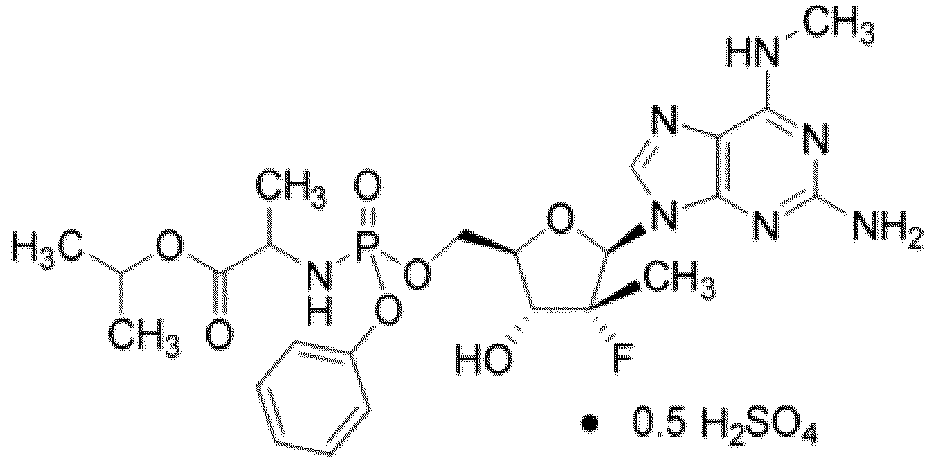
- Verbindung zur Verwendung nach Anspruch 8, wobei die Verbindung die Formel
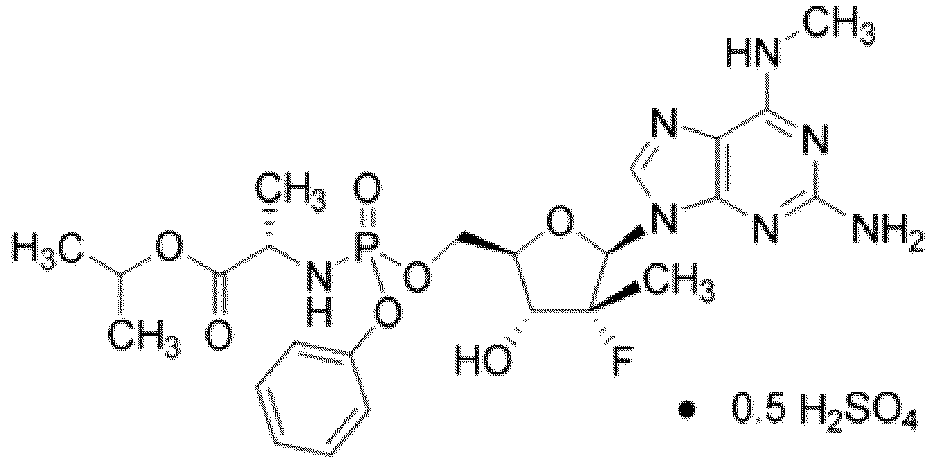
- Verbindung zur Verwendung nach Anspruch 9, wobei die Verbindung die Formel

- Verbindung zur Verwendung nach Anspruch 9, wobei die Verbindung die Formel

- Verbindung zur Verwendung nach Anspruch 8, wobei die Verbindung die Formel
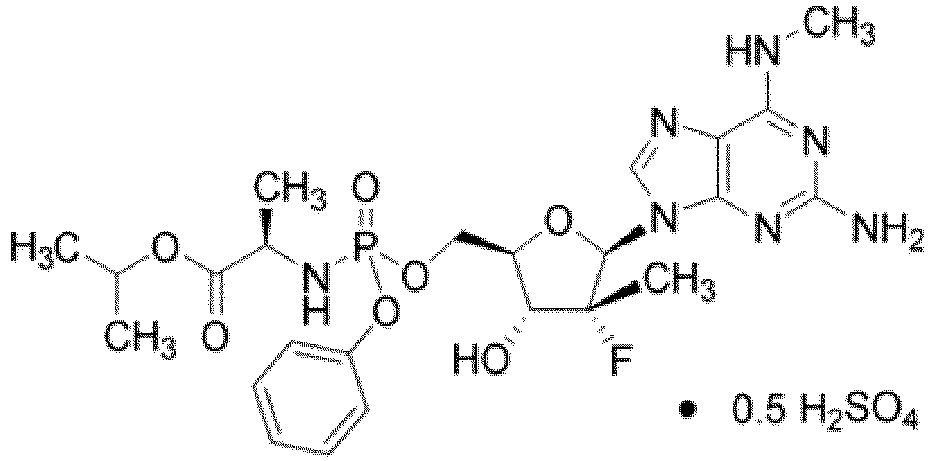
- Verbindung zur Verwendung nach Anspruch 12, wobei die Verbindung die Formel

- Verbindung zur Verwendung nach Anspruch 12, wobei die Verbindung die Formel

- Verbindung zur Verwendung nach einem der Ansprüche 1 bis 12, wobei der pharmazeutisch akzeptable Träger in einer zur oralen Verabreichung geeigneten Darreichungsform vorliegt.
- Verbindung zur Verwendung nach Anspruch 15, wobei die Darreichungsform eine feste Darreichungsform ist.
- Verbindung zur Verwendung nach Anspruch 16, wobei die feste Darreichungsform eine Tablette ist.
- Verbindung zur Verwendung nach Anspruch 16, wobei die feste Darreichungsform eine Kapsel ist.
- Verbindung zur Verwendung nach Anspruch 15, wobei die Darreichungsform eine flüssige Darreichungsform ist.
- Verbindung zur Verwendung nach Anspruch 19, wobei die flüssige Darreichungsform eine Lösung oder eine Suspension ist.
- Pharmazeutische Zusammensetzung zur Verwendung bei der Behandlung der Coronavirus-Krankheit 2019 (COVID-19) bei einem Wirt, der diese benötigt, wobei der Wirt ein Mensch ist, wobei die pharmazeutische Zusammensetzung die Verbindung nach einem der Ansprüche 1 bis 15 umfasst, optional in einem pharmazeutisch verträglichen Träger.
- Pharmazeutische Zusammensetzung zur Verwendung nach Anspruch 21 in einer oralen Darreichungsform.
- Pharmazeutische Zusammensetzung zur Verwendung nach Anspruch 21, wobei die orale Darreichungsform eine feste Darreichungsform ist.
- Pharmazeutische Zusammensetzung zur Verwendung nach Anspruch 23, wobei die feste Darreichungsform eine Tablette oder eine Kapsel ist.
- Pharmazeutische Zusammensetzung zur Verwendung nach Anspruch 22, wobei die orale Darreichungsform eine flüssige Darreichungsform ist.
- Pharmazeutische Zusammensetzung zur Verwendung nach Anspruch 25, wobei die flüssige Darreichungsform eine Suspension oder eine Lösung ist.
Priority Applications (1)
| Application Number | Priority Date | Filing Date | Title |
|---|---|---|---|
| EP23171689.5A EP4234565A3 (de) | 2020-02-27 | 2021-02-24 | Hochaktive verbindungen gegen covid-19 |
Applications Claiming Priority (9)
| Application Number | Priority Date | Filing Date | Title |
|---|---|---|---|
| US202062982670P | 2020-02-27 | 2020-02-27 | |
| US202062994206P | 2020-03-24 | 2020-03-24 | |
| US202063032247P | 2020-05-29 | 2020-05-29 | |
| US202063039352P | 2020-06-15 | 2020-06-15 | |
| US202063040985P | 2020-06-18 | 2020-06-18 | |
| US202063054680P | 2020-07-21 | 2020-07-21 | |
| US202063073328P | 2020-09-01 | 2020-09-01 | |
| US202163146456P | 2021-02-05 | 2021-02-05 | |
| PCT/US2021/019468 WO2021173713A1 (en) | 2020-02-27 | 2021-02-24 | Highly active compounds against covid-19 |
Related Child Applications (2)
| Application Number | Title | Priority Date | Filing Date |
|---|---|---|---|
| EP23171689.5A Division-Into EP4234565A3 (de) | 2020-02-27 | 2021-02-24 | Hochaktive verbindungen gegen covid-19 |
| EP23171689.5A Division EP4234565A3 (de) | 2020-02-27 | 2021-02-24 | Hochaktive verbindungen gegen covid-19 |
Publications (4)
| Publication Number | Publication Date |
|---|---|
| EP3897668A1 EP3897668A1 (de) | 2021-10-27 |
| EP3897668A4 EP3897668A4 (de) | 2022-11-09 |
| EP3897668B1 true EP3897668B1 (de) | 2025-02-26 |
| EP3897668C0 EP3897668C0 (de) | 2025-02-26 |
Family
ID=74039606
Family Applications (2)
| Application Number | Title | Priority Date | Filing Date |
|---|---|---|---|
| EP21726031.4A Active EP3897668B1 (de) | 2020-02-27 | 2021-02-24 | Hochaktive verbindungen gegen covid-19 |
| EP23171689.5A Pending EP4234565A3 (de) | 2020-02-27 | 2021-02-24 | Hochaktive verbindungen gegen covid-19 |
Family Applications After (1)
| Application Number | Title | Priority Date | Filing Date |
|---|---|---|---|
| EP23171689.5A Pending EP4234565A3 (de) | 2020-02-27 | 2021-02-24 | Hochaktive verbindungen gegen covid-19 |
Country Status (21)
| Country | Link |
|---|---|
| US (5) | US10874687B1 (de) |
| EP (2) | EP3897668B1 (de) |
| JP (3) | JP7296460B2 (de) |
| KR (1) | KR20230009361A (de) |
| CN (3) | CN113784721B (de) |
| AU (1) | AU2021225851A1 (de) |
| BR (1) | BR112022016413A2 (de) |
| CA (1) | CA3166914A1 (de) |
| EC (1) | ECSP22075410A (de) |
| ES (1) | ES3019940T3 (de) |
| GE (1) | GEAP202316298A (de) |
| IL (1) | IL295443A (de) |
| JO (1) | JOP20220200A1 (de) |
| MA (1) | MA57933B1 (de) |
| MD (1) | MD20220043A2 (de) |
| MX (1) | MX2022010659A (de) |
| PE (1) | PE20230172A1 (de) |
| PH (1) | PH12022552054A1 (de) |
| TN (1) | TN2022000251A1 (de) |
| TW (1) | TW202140042A (de) |
| ZA (1) | ZA202208947B (de) |
Families Citing this family (25)
| Publication number | Priority date | Publication date | Assignee | Title |
|---|---|---|---|---|
| EP3458037A4 (de) | 2016-05-16 | 2020-01-29 | MTM Research, LLC | Fluorchemische gerichtete therapien |
| JP7066728B2 (ja) | 2017-02-01 | 2022-05-13 | アテア ファーマシューティカルズ, インコーポレイテッド | C型肝炎ウイルスの治療のためのヌクレオチドヘミ硫酸塩 |
| US20250109163A1 (en) * | 2017-02-01 | 2025-04-03 | Atea Pharmaceuticals, Inc. | Nucleotide hemi-sulfate salt for the treatment of hepatitis c virus |
| WO2019200005A1 (en) | 2018-04-10 | 2019-10-17 | Atea Pharmaceuticals, Inc. | Treatment of hcv infected patients with cirrhosis |
| US12239707B2 (en) | 2018-05-07 | 2025-03-04 | Mt Research, Llc | Photodynamic compositions and methods of use |
| US11130994B2 (en) * | 2019-12-13 | 2021-09-28 | Autonomous Medical Devices Inc. | Automated, cloud-based, point-of-care (POC) pathogen and antibody array detection system and method |
| US11446244B2 (en) | 2020-01-17 | 2022-09-20 | Matthew McLeay | Compositions containing verteporfin, ribavirin, gemcitabine, or combinations thereof and methods of use for treating COVID-19, cancer, or non cancer diseases |
| WO2021173713A1 (en) | 2020-02-27 | 2021-09-02 | Atea Pharmaceuticals, Inc. | Highly active compounds against covid-19 |
| US10874687B1 (en) | 2020-02-27 | 2020-12-29 | Atea Pharmaceuticals, Inc. | Highly active compounds against COVID-19 |
| CA3176008A1 (en) | 2020-04-21 | 2021-10-28 | Manfred Groppel | Vidofludimus for use in the treatment or prevention of viral diseases |
| WO2022020793A1 (en) * | 2020-07-24 | 2022-01-27 | The Regents Of The University Of California | Antiviral prodrugs, pharmaceutical formulations, and methods |
| TW202214260A (zh) * | 2020-08-19 | 2022-04-16 | 美商亞堤製藥公司 | 立體選擇性製造選定的嘌呤胺基磷酸酯 |
| WO2022076903A1 (en) * | 2020-10-09 | 2022-04-14 | Atea Pharmaceuticals, Inc. | Niran interfering drugs for sars-cov-2 mutant therapy |
| CN116744939A (zh) | 2021-01-26 | 2023-09-12 | 阿堤亚制药公司 | At-527半硫酸盐的有利形态 |
| US20220370398A1 (en) * | 2021-03-23 | 2022-11-24 | John Scott Perez | Method to destabalize cysteine exposed infectious information vectors |
| RU2754531C1 (ru) * | 2021-03-24 | 2021-09-03 | Павел Владимирович Сорокин | Применение способа введения натриевой соли 2-метилтио-6-нитро-1,2-4-триазоло[5,1-с]-1,2,4-триазин-7-она, дигидрата, обладающей противовирусной активностью, для профилактики коронавирусной инфекции COVID-19 |
| US20240261307A1 (en) * | 2021-05-28 | 2024-08-08 | Arizona Board Of Regents On Behalf Of The University Of Arizona | Inhibitors of sars-cov-2 viral replication and uses thereof |
| JP2024525164A (ja) | 2021-06-17 | 2024-07-10 | アテア ファーマシューティカルズ, インコーポレイテッド | 有利な抗hcv併用療法 |
| CN113735929A (zh) * | 2021-07-21 | 2021-12-03 | 海化生命(厦门)科技有限公司 | 一种抗冠状病毒的化合物及其制备方法与应用 |
| CN115721661A (zh) * | 2021-09-01 | 2023-03-03 | 常晓宇 | 嘌呤核苷类药物预防或治疗冠状病毒感染性疾病的用途 |
| CN116003495A (zh) * | 2021-10-22 | 2023-04-25 | 广州谷森制药有限公司 | 新型氘代嘌呤核苷类化合物、其制备方法、组合物及其应用 |
| US12065404B2 (en) | 2022-03-18 | 2024-08-20 | Enveric Biosciences Canada Inc. | C4-carboxylic acid-substituted tryptamine derivatives and methods of using |
| WO2023194840A1 (en) | 2022-04-05 | 2023-10-12 | Unichem Laboratories Limited | Substituted tricyclic compounds and their use in covid-19 |
| WO2025014360A1 (en) * | 2023-07-07 | 2025-01-16 | Erasmus University Medical Center Rotterdam | Guanosine nucleotide analogs for use in preventing and/or treating hepatitis e virus infection |
| WO2025207791A1 (en) * | 2024-03-26 | 2025-10-02 | Board Of Regents, The University Of Texas System | Covalent inhibition of sars-cov-2 rna methylation for treatment of pan-coronaviral infections |
Family Cites Families (225)
| Publication number | Priority date | Publication date | Assignee | Title |
|---|---|---|---|---|
| CA2297294C (en) | 1989-05-15 | 2005-11-08 | Institute Of Organic Chemistry And Biochemistry Of The Academy Of Sciences Of The Czech Republic | Phosphonomethoxymethylpurine/pyrimidine derivatives |
| IT1249732B (it) | 1991-11-26 | 1995-03-09 | Angeletti P Ist Richerche Bio | Oligonucleotidi antisenso. |
| US5977061A (en) | 1995-04-21 | 1999-11-02 | Institute Of Organic Chemistry And Biochemistry Of The Academy Of Sciences Of The Czech Republic | N6 - substituted nucleotide analagues and their use |
| US7517858B1 (en) | 1995-06-07 | 2009-04-14 | The Regents Of The University Of California | Prodrugs of pharmaceuticals with improved bioavailability |
| JP2001524936A (ja) | 1996-10-16 | 2001-12-04 | アイ・シー・エヌ・フアーマシユーテイカルズ・インコーポレイテツド | プリンl―ヌクレオシド類およびその用途 |
| GB9709945D0 (en) | 1997-05-17 | 1997-07-09 | Glaxo Group Ltd | A novel salt |
| ZA986614B (en) | 1997-07-25 | 1999-01-27 | Gilead Sciences | Nucleotide analog composition |
| MXPA00008348A (es) | 1998-02-25 | 2005-07-15 | Univ Emory | 2-fluronucleosidos. |
| DE60002986T2 (de) | 1999-02-12 | 2004-05-19 | Glaxo Group Ltd., Greenford | Phosphoramidat-, mono-, di-, und triphosphatester von (1r, cis)-4-(6-amino-9h-purin-9-yl)-2-cyclopentene-1-methanol als antivirale mittel |
| IN191496B (de) | 1999-07-30 | 2003-12-06 | Ranbaxy Lab Ltd | |
| AU785355B2 (en) | 1999-12-03 | 2007-02-01 | Regents Of The University Of California At San Diego, The | Phosphonate compounds |
| WO2001079246A2 (en) | 2000-04-13 | 2001-10-25 | Pharmasset, Ltd. | 3'-or 2'-hydroxymethyl substituted nucleoside derivatives for treatment of hepatitis virus infections |
| MY164523A (en) | 2000-05-23 | 2017-12-29 | Univ Degli Studi Cagliari | Methods and compositions for treating hepatitis c virus |
| IL153020A0 (en) | 2000-05-26 | 2003-06-24 | Idenix Cayman Ltd | Methods and compositions for treating flaviviruses and pestiviruses |
| US20030087873A1 (en) | 2000-10-18 | 2003-05-08 | Lieven Stuyver | Modified nucleosides for the treatment of viral infections and abnormal cellular proliferation |
| EP2180064A3 (de) | 2000-10-18 | 2010-08-11 | Pharmasset, Inc. | Multiplex Quantifizierung von Nukleinsäuren in erkrankten Zellen |
| US8481712B2 (en) | 2001-01-22 | 2013-07-09 | Merck Sharp & Dohme Corp. | Nucleoside derivatives as inhibitors of RNA-dependent RNA viral polymerase |
| EP1539188B1 (de) | 2001-01-22 | 2015-01-07 | Merck Sharp & Dohme Corp. | Nukleosidderivate als inhibitoren der rna-abhängigen viralen rna-polymerase |
| US7105499B2 (en) | 2001-01-22 | 2006-09-12 | Merck & Co., Inc. | Nucleoside derivatives as inhibitors of RNA-dependent RNA viral polymerase |
| GB0112617D0 (en) | 2001-05-23 | 2001-07-18 | Hoffmann La Roche | Antiviral nucleoside derivatives |
| GB0114286D0 (en) | 2001-06-12 | 2001-08-01 | Hoffmann La Roche | Nucleoside Derivatives |
| AU2002322325A1 (en) | 2001-06-22 | 2003-01-08 | Emory University | Beta-2'-or 3'-halonucleosides |
| AU2002330154A1 (en) | 2001-09-28 | 2003-04-07 | Centre National De La Recherche Scientifique | Methods and compositions for treating hepatitis c virus using 4'-modified nucleosides |
| GB2383042A (en) | 2001-10-18 | 2003-06-18 | Cipla Ltd | Amorphous alendronate sodium |
| AU2002351077A1 (en) | 2001-11-05 | 2003-05-19 | Exiqon A/S | Oligonucleotides modified with novel alpha-l-rna analogues |
| US7388002B2 (en) | 2001-11-14 | 2008-06-17 | Biocryst Pharmaceuticals, Inc. | Nucleosides, preparation thereof and use as inhibitors of RNA viral polymerases |
| JP2005519916A (ja) | 2001-12-14 | 2005-07-07 | フアーマセツト・リミテツド | ウィルス感染治療用n4−アシルシトシンヌクレオシド類 |
| EP1569658A4 (de) | 2001-12-20 | 2007-05-30 | Pharmassett Ltd | Behandlung einer ebv- und khsv-infektion sowie einer damit zusammenhängenden abnormalen zellproliferation |
| WO2003062256A1 (en) | 2002-01-17 | 2003-07-31 | Ribapharm Inc. | 2'-beta-modified-6-substituted adenosine analogs and their use as antiviral agents |
| RU2004128943A (ru) | 2002-02-28 | 2005-04-20 | Байота, Инк. (Us) | Средства, имитирующие нуклеотиды, и их пролекарственные формы |
| NZ536123A (en) | 2002-05-06 | 2006-09-29 | Genelabs Tech Inc | Nucleoside derivatives for treating hepatitis C virus infection |
| MY140819A (en) | 2002-06-28 | 2010-01-29 | Idenix Caymans Ltd | Modified 2' and 3'-nucleoside prodrugs for treating flaviviridae |
| US7608600B2 (en) | 2002-06-28 | 2009-10-27 | Idenix Pharmaceuticals, Inc. | Modified 2′ and 3′-nucleoside prodrugs for treating Flaviviridae infections |
| BR0312278A (pt) | 2002-06-28 | 2007-06-19 | Idenix Cayman Ltd | éster 2'-c-metil-3'-o-l-valina de ribofuranosil citidina para tratamento de infecções por flaviviridae |
| AP2005003211A0 (en) | 2002-06-28 | 2005-03-31 | Idenix Cayman Ltd | 1'-,2'-and 3'-modified nucleoside derivatives for treating flaviviridae infections. |
| NZ537662A (en) | 2002-06-28 | 2007-10-26 | Idenix Cayman Ltd | 2'-C-methyl-3'-O-L-valine ester ribofuranosyl cytidine for treatment of flaviviridae infections |
| US7323449B2 (en) | 2002-07-24 | 2008-01-29 | Merck & Co., Inc. | Thionucleoside derivatives as inhibitors of RNA-dependent RNA viral polymerase |
| SG174624A1 (en) | 2002-08-01 | 2011-10-28 | Pharmasset Inc | Compounds with the bicyclo[4.2.1]nonane system for the treatment of flaviviridae infections |
| US20040067877A1 (en) | 2002-08-01 | 2004-04-08 | Schinazi Raymond F. | 2', 3'-Dideoxynucleoside analogues for the treatment or prevention of Flaviviridae infections |
| WO2004014312A2 (en) | 2002-08-08 | 2004-02-19 | Sirna Therapeutics, Inc. | Small-mer compositions and methods of use |
| BR0316363A (pt) | 2002-11-15 | 2005-10-04 | Idenix Cayman Ltd | Nucleosìdeos 2'-ramificado e mutação de flaviviridae |
| TWI294882B (en) | 2002-12-09 | 2008-03-21 | Hoffmann La Roche | Anhydrous crystalline azido cytosine hemisulfate derivative |
| AR043006A1 (es) | 2003-02-12 | 2005-07-13 | Merck & Co Inc | Proceso para preparar ribonucleosidos ramificados |
| US20050020675A1 (en) | 2003-02-21 | 2005-01-27 | Parthasaradhi Reddy Bandi | Bicalutamide polymorphs |
| US7691603B2 (en) | 2003-04-09 | 2010-04-06 | Novo Nordisk A/S | Intracellular formation of peptide conjugates |
| US7429565B2 (en) | 2003-04-25 | 2008-09-30 | Gilead Sciences, Inc. | Antiviral phosphonate analogs |
| US20040259934A1 (en) | 2003-05-01 | 2004-12-23 | Olsen David B. | Inhibiting Coronaviridae viral replication and treating Coronaviridae viral infection with nucleoside compounds |
| EP1656093A2 (de) | 2003-05-14 | 2006-05-17 | Idenix (Cayman) Limited | Nucleoside zur behandlung von infektionen mit coronaviren, toga-viren und picorna-viren |
| US20040229839A1 (en) | 2003-05-14 | 2004-11-18 | Biocryst Pharmaceuticals, Inc. | Substituted nucleosides, preparation thereof and use as inhibitors of RNA viral polymerases |
| WO2004106356A1 (en) | 2003-05-27 | 2004-12-09 | Syddansk Universitet | Functionalized nucleotide derivatives |
| PL3521297T3 (pl) | 2003-05-30 | 2022-04-04 | Gilead Pharmasset Llc | Zmodyfikowane fluorowane analogi nukleozydów |
| DE602004003389T2 (de) | 2003-06-19 | 2007-09-13 | F. Hoffmann-La Roche Ag | Verfahren zur herstellung von 4'-azidonukleosidderivaten |
| GB0317009D0 (en) | 2003-07-21 | 2003-08-27 | Univ Cardiff | Chemical compounds |
| BRPI0412849A (pt) | 2003-07-25 | 2006-09-26 | Idenix Cayman Ltd | compostos, composições e usos de análogos de nucleosìdeo de purina para o tratamento de flaviviridae, incluindo hepatite c |
| DE10335061B4 (de) | 2003-07-31 | 2005-11-17 | Wacker-Chemie Gmbh | Verfahren zur Herstellung von OH-geschützten [4-(2,6-damino-9H-purin-9-yl)-1,3-dioxolan-2-yl]methanol-Derivaten |
| CA2537114C (en) | 2003-08-27 | 2012-10-02 | Biota, Inc. | Tricyclic nucleosides or nucleotides as therapeutic agents |
| US7129042B2 (en) | 2003-11-03 | 2006-10-31 | Diagnostic Hybrids, Inc. | Compositions and methods for detecting severe acute respiratory syndrome coronavirus |
| GB0401088D0 (en) | 2004-01-19 | 2004-02-18 | Univ Cardiff | Phosphoramidate derivatives |
| WO2005090370A1 (en) | 2004-02-05 | 2005-09-29 | The Regents Of The University Of California | Pharmacologically active agents containing esterified phosphonates and methods for use thereof |
| US20050182252A1 (en) | 2004-02-13 | 2005-08-18 | Reddy K. R. | Novel 2'-C-methyl nucleoside derivatives |
| AU2005254057B2 (en) | 2004-06-15 | 2011-02-17 | Isis Pharmaceuticals, Inc. | C-purine nucleoside analogs as inhibitors of RNA-dependent RNA viral polymerase |
| WO2006002231A1 (en) | 2004-06-22 | 2006-01-05 | Biocryst Pharmaceuticals, Inc. | Aza nucleosides, preparation thereof and use as inhibitors of rna viral polymerases |
| WO2006012078A2 (en) | 2004-06-24 | 2006-02-02 | Merck & Co., Inc. | Nucleoside aryl phosphoramidates for the treatment of rna-dependent rna viral infection |
| CN101023094B (zh) | 2004-07-21 | 2011-05-18 | 法莫赛特股份有限公司 | 烷基取代的2-脱氧-2-氟代-d-呋喃核糖基嘧啶和嘌呤及其衍生物的制备 |
| PT3109244T (pt) | 2004-09-14 | 2019-06-04 | Gilead Pharmasset Llc | ¿preparação de ribofuranosil pirimidinas e purinas 2¿-fluoro-2¿-alquil substituídas ou outras opcionalmente substituídas e os seus derivados |
| EP1814561A4 (de) | 2004-10-29 | 2012-12-19 | Biocryst Pharm Inc | Therapeutische furopyrimidine und thienopyrimidine |
| CA2589935A1 (en) | 2004-12-09 | 2006-06-15 | Regents Of The University Of Minnesota | Nucleosides with antiviral and anticancer activity |
| JP2008523098A (ja) | 2004-12-10 | 2008-07-03 | エモリー・ユニバーシテイ | ウィルス感染および異常細胞増殖の治療用の2′および3′−置換シクロブチルヌクレオシド類縁体 |
| WO2006063717A2 (en) | 2004-12-16 | 2006-06-22 | Febit Biotech Gmbh | Polymerase-independent analysis of the sequence of polynucleotides |
| AU2006222563A1 (en) | 2005-03-08 | 2006-09-14 | Biota Scientific Management Pty Ltd. | Bicyclic nucleosides and nucleotides as therapeutic agents |
| GB0505781D0 (en) | 2005-03-21 | 2005-04-27 | Univ Cardiff | Chemical compounds |
| WO2006102533A2 (en) | 2005-03-23 | 2006-09-28 | Neopharm, Inc. | Pharmaceutically active lipid-based formulation of nucleoside-lipid conjugates |
| WO2006104945A2 (en) | 2005-03-29 | 2006-10-05 | Biocryst Pharmaceuticals, Inc. | Hepatitis c therapies |
| WO2006130217A2 (en) | 2005-04-01 | 2006-12-07 | The Regents Of The University Of California | Substituted phosphate esters of nucleoside phosphonates |
| WO2006121820A1 (en) | 2005-05-05 | 2006-11-16 | Valeant Research & Development | Phosphoramidate prodrugs for treatment of viral infection |
| AU2006280175B2 (en) | 2005-08-09 | 2011-09-01 | Merck Sharp & Dohme Corp. | Ribonucleoside cyclic acetal derivatives for the treatment of RNA-dependent RNA viral infection |
| CA2618713A1 (en) | 2005-08-12 | 2007-02-22 | Merck & Co., Inc. | Novel 2'-c-methyl and 4'-c-methyl nucleoside derivatives |
| WO2007020193A2 (en) | 2005-08-15 | 2007-02-22 | F. Hoffmann-La Roche Ag | Antiviral phosphoramidates of 4 ' -substituted pronucleotides |
| WO2007095269A2 (en) | 2006-02-14 | 2007-08-23 | Merck & Co., Inc. | Nucleoside aryl phosphoramidates for the treatment of rna-dependent rna viral infection |
| US8895531B2 (en) | 2006-03-23 | 2014-11-25 | Rfs Pharma Llc | 2′-fluoronucleoside phosphonates as antiviral agents |
| ES2600792T3 (es) | 2006-05-03 | 2017-02-10 | Chimerix, Inc. | Alcoxialquilésteres metabólicamente estables de fosfonatos, fosfonatos nucleosídicos y fosfatos nucleosídicos antivirales o antiproliferativos |
| US7842672B2 (en) | 2006-07-07 | 2010-11-30 | Gilead Sciences, Inc. | Phosphonate inhibitors of HCV |
| GB0614947D0 (en) | 2006-07-27 | 2006-09-06 | Isis Innovation | Epitope reduction therapy |
| DK2084174T3 (da) | 2006-10-10 | 2013-11-04 | Gilead Pharmasset Llc | Fremstilling af ribofuranosylpyrimidinnukleotider |
| PL216525B1 (pl) | 2006-10-17 | 2014-04-30 | Ct Badań Molekularnych I Makromolekularnych Polskiej Akademii Nauk | 5'-O-[(N-acylo)amidoditiofosforano] nukleozydy oraz sposób wytwarzania 5'-O-[(N-acylo)amidofosforano]-,5'-O-[(N-acylo)amidotiofosforano]-, 5'-O-[(N-acylo)amidoditiofosforano]nukleozydów |
| GB0623493D0 (en) | 2006-11-24 | 2007-01-03 | Univ Cardiff | Chemical compounds |
| EP2120565B1 (de) | 2006-12-20 | 2012-11-28 | Merck Sharp & Dohme Corp. | Cyclische nukleosid-phosphoramidate für die behandlung von rna-abhängigen rna-virusinfektionen |
| US7951789B2 (en) | 2006-12-28 | 2011-05-31 | Idenix Pharmaceuticals, Inc. | Compounds and pharmaceutical compositions for the treatment of viral infections |
| AU2007342367B2 (en) | 2007-01-05 | 2012-12-06 | Istituto Di Ricerche Di Biologia Molecolare P. Angeletti S.P.A. | Nucleoside aryl phosphoramidates for the treatment of RNA-dependent RNA viral infection |
| WO2008089105A2 (en) | 2007-01-12 | 2008-07-24 | Biocryst Pharmaceuticals, Inc. | Antiviral nucleoside analogs |
| JP2010518015A (ja) | 2007-01-31 | 2010-05-27 | アリオス バイオファーマ インク. | 2−5aアナログ類およびそれらの使用方法 |
| US8324179B2 (en) | 2007-02-09 | 2012-12-04 | Gilead Sciences, Inc. | Nucleoside analogs for antiviral treatment |
| US7964580B2 (en) | 2007-03-30 | 2011-06-21 | Pharmasset, Inc. | Nucleoside phosphoramidate prodrugs |
| PL2155758T3 (pl) | 2007-05-10 | 2013-06-28 | Biocryst Pharm Inc | Pochodne tetrahydrofuro[3,4-d]dioksolanu przeznaczone do stosowania w leczeniu infekcji wirusowych i raka |
| CA2685748A1 (en) | 2007-05-14 | 2008-11-14 | Rfs Pharma, Llc. | Azido purine nucleosides for treatment of viral infections |
| PL2014771T3 (pl) | 2007-06-25 | 2015-05-29 | Anadys Pharmaceuticals Inc | Ciągły proces hydrolizy enzymatycznej |
| GB0712494D0 (en) | 2007-06-27 | 2007-08-08 | Isis Innovation | Substrate reduction therapy |
| US20090060872A1 (en) | 2007-08-31 | 2009-03-05 | Idenix Pharmaceuticals, Inc. | Phosphadiazine hcv polymerase inhibitors v |
| US20090318380A1 (en) | 2007-11-20 | 2009-12-24 | Pharmasset, Inc. | 2',4'-substituted nucleosides as antiviral agents |
| US20090181921A1 (en) | 2007-12-21 | 2009-07-16 | Alios Biopharma Inc. | 2-5a analogs and their methods of use |
| WO2009086192A1 (en) | 2007-12-21 | 2009-07-09 | Alios Biopharma, Inc. | Biodegradable phosphate protected nucleotide derivatives and their use as cancer, anti viral and anti parasitic agents |
| TW200942243A (en) | 2008-03-05 | 2009-10-16 | Biocryst Pharm Inc | Antiviral therapeutic agents |
| EP3042660A3 (de) | 2008-04-15 | 2016-10-26 | RFS Pharma, LLC. | Nukleosidderivate zur behandlung von caliciviridae-infektionen, einschliesslich norovirus-infektionen |
| SI2268642T1 (sl) | 2008-04-23 | 2015-05-29 | Gilead Sciences, Inc. | 1'-substituirani karba-nukleozidni analogi za antivirusno zdravljenje |
| US8173621B2 (en) | 2008-06-11 | 2012-05-08 | Gilead Pharmasset Llc | Nucleoside cyclicphosphates |
| AR072428A1 (es) | 2008-07-01 | 2010-08-25 | Medivir Ab | Derivados de pirimidin nucleotidos inhibidores de polimerasas del virus de la hepatitis c (vhc), composiciones farmaceuticas que los contienen y metodo para prepararlos. |
| WO2010002877A2 (en) | 2008-07-03 | 2010-01-07 | Biota Scientific Management | Bycyclic nucleosides and nucleotides as therapeutic agents |
| JP5731976B2 (ja) | 2008-08-20 | 2015-06-10 | メルク・シャープ・アンド・ドーム・コーポレーションMerck Sharp & Dohme Corp. | 置換ピリジン誘導体および置換ピリミジン誘導体ならびにそれらのウイルス感染の治療における使用 |
| TW201019939A (en) | 2008-08-20 | 2010-06-01 | Schering Corp | Azo-substituted pyridine and pyrimidine derivatives and their use in treating viral infections |
| JP5674661B2 (ja) | 2008-08-20 | 2015-02-25 | メルク・シャープ・アンド・ドーム・コーポレーションMerck Sharp & Dohme Corp. | エチニル置換ピリジンおよびピリミジン誘導体ならびにそれらのウイルス感染の治療における使用 |
| TW201020238A (en) | 2008-08-20 | 2010-06-01 | Schering Corp | Ethenyl-substituted pyridine and pyrimidine derivatives and their use in treating viral infections |
| PA8852101A1 (es) | 2008-12-08 | 2010-07-27 | Medivir Ab | Nucleótidos uracil ciclopropílicos |
| WO2010068708A2 (en) | 2008-12-09 | 2010-06-17 | Rfs Pharma, Llc | 3'-azido purine nucleotide prodrugs for treatment of viral infections |
| NZ617066A (en) | 2008-12-23 | 2015-02-27 | Gilead Pharmasset Llc | Nucleoside analogs |
| AU2009329872B2 (en) | 2008-12-23 | 2016-07-07 | Gilead Pharmasset Llc | Synthesis of purine nucleosides |
| NZ593648A (en) | 2008-12-23 | 2013-09-27 | Gilead Pharmasset Llc | Nucleoside phosphoramidates |
| BRPI1004575A2 (pt) | 2009-01-09 | 2016-04-05 | Inhibitex Inc | composto, composição farmacêutica, método de tratamento de infecções virais, método de separação dos diaestereômeros de fósforo |
| CA2751458C (en) | 2009-02-06 | 2018-06-05 | Rfs Pharma, Llc | Purine nucleoside monophosphate prodrugs for treatment of cancer and viral infections |
| PL2396340T3 (pl) | 2009-02-10 | 2014-05-30 | Gilead Sciences Inc | Analogi karba-nukleozydu do terapii przeciwwirusowych |
| AR075584A1 (es) | 2009-02-27 | 2011-04-20 | Intermune Inc | COMPOSICIONES TERAPEUTICAS QUE COMPRENDEN beta-D-2'-DESOXI-2'-FLUORO-2'-C-METILCITIDINA Y UN DERIVADO DE ACIDO ISOINDOL CARBOXILICO Y SUS USOS. COMPUESTO. |
| JP5690286B2 (ja) | 2009-03-04 | 2015-03-25 | イデニク プハルマセウティカルス,インコーポレイテッド | ホスホチオフェン及びホスホチアゾールhcvポリメラーゼ阻害剤 |
| EP2408306A4 (de) | 2009-03-20 | 2012-11-07 | Alios Biopharma Inc | Substituierte nukleosid- und nukleotid-analoga |
| WO2010108135A1 (en) | 2009-03-20 | 2010-09-23 | Alios Biopharma, Inc. | Protected nucleotide analogs |
| JO3027B1 (ar) | 2009-05-14 | 2016-09-05 | Janssen Products Lp | نيوكليوسيدات يوراسيل سبيرواوكسيتان |
| TWI576352B (zh) | 2009-05-20 | 2017-04-01 | 基利法瑪席特有限責任公司 | 核苷磷醯胺 |
| US8618076B2 (en) | 2009-05-20 | 2013-12-31 | Gilead Pharmasset Llc | Nucleoside phosphoramidates |
| EP2264169A1 (de) | 2009-06-15 | 2010-12-22 | Qiagen GmbH | Modifizierte siNA |
| WO2011005595A2 (en) | 2009-06-24 | 2011-01-13 | Alios Biopharma, Inc. | 2-5a analogs and their methods of use |
| WO2011005860A2 (en) | 2009-07-07 | 2011-01-13 | Alnylam Pharmaceuticals, Inc. | 5' phosphate mimics |
| US7973013B2 (en) | 2009-09-21 | 2011-07-05 | Gilead Sciences, Inc. | 2'-fluoro substituted carba-nucleoside analogs for antiviral treatment |
| US8455451B2 (en) | 2009-09-21 | 2013-06-04 | Gilead Sciences, Inc. | 2'-fluoro substituted carba-nucleoside analogs for antiviral treatment |
| EP2483288B1 (de) | 2009-09-29 | 2016-11-16 | Janssen Products, L.P. | Phosphoramidat-derivate von nukleosiden |
| US8816074B2 (en) | 2009-11-16 | 2014-08-26 | University of Georgia Foundation, Inc. | 2′-fluoro-6′-methylene carbocyclic nucleosides and methods of treating viral infections |
| CN102725302B (zh) | 2009-11-16 | 2016-04-06 | 乔治亚大学研究基金公司 | 2'-氟-6'-亚甲基碳环核苷和治疗病毒感染的方法 |
| KR20120118008A (ko) | 2009-12-18 | 2012-10-25 | 아이데닉스 파마슈티칼스, 인코포레이티드 | 5,5-융합 아릴렌 또는 헤테로아릴렌 간염 c 바이러스 억제제 |
| ES2644990T3 (es) | 2010-03-31 | 2017-12-01 | Gilead Pharmasset Llc | Síntesis estereoselectiva de principios activos que contienen fósforo |
| PL3290428T3 (pl) | 2010-03-31 | 2022-02-07 | Gilead Pharmasset Llc | Tabletka zawierająca krystaliczny (S)-2-(((S)-(((2R,3R,4R,5R)-5-(2,4-diokso-3,4-dihydropirymidyn-1(2H)-ylo)-4-fluoro-3-hydroksy-4-metylotetrahydrofuran-2-ylo)metoksy)(fenoksy)fosforylo)amino)propanian izopropylu |
| CA2795054A1 (en) | 2010-04-01 | 2011-10-06 | Idenix Pharmaceuticals, Inc. | Compounds and pharmaceutical compositions for the treatment of viral infections |
| WO2011130557A2 (en) | 2010-04-14 | 2011-10-20 | The Regents Of The University Of California | Phosphonates with reduced toxicity for treatment of viral infections |
| TW201201815A (en) | 2010-05-28 | 2012-01-16 | Gilead Sciences Inc | 1'-substituted-carba-nucleoside prodrugs for antiviral treatment |
| US9090642B2 (en) | 2010-07-19 | 2015-07-28 | Gilead Sciences, Inc. | Methods for the preparation of diasteromerically pure phosphoramidate prodrugs |
| US8859595B2 (en) | 2010-08-26 | 2014-10-14 | Rfs Pharma, Llc | Potent and selective inhibitors of hepatitis C virus |
| ES2701020T3 (es) | 2010-09-22 | 2019-02-20 | Alios Biopharma Inc | Nucleósidos azido y análogos nucleotídicos |
| SG188497A1 (en) | 2010-09-22 | 2013-05-31 | Alios Biopharma Inc | Substituted nucleotide analogs |
| US20120070411A1 (en) | 2010-09-22 | 2012-03-22 | Alios Biopharma, Inc. | Substituted nucleotide analogs |
| WO2012041965A1 (en) | 2010-09-29 | 2012-04-05 | Universidad Nacional De Quilmes | Process for producing dialkylphosphotriesters of nucleosides by enzymatic transesterification and deprotection thereof for producing nucleoside monophosphates |
| WO2012048013A2 (en) | 2010-10-06 | 2012-04-12 | Inhibitex, Inc. | Phosphorodiamidate derivatives of guanosine nucleoside compounds for treatment of viral injections |
| EP2638054B1 (de) | 2010-11-10 | 2014-12-03 | Janssen Products, L.P. | Uracyl-spirooxetan-nukleosid-phosphoramidate |
| PT3042910T (pt) | 2010-11-30 | 2019-04-16 | Gilead Pharmasset Llc | 2'-espiro-nucleósidos para utilização na terapia da hepatite c |
| US8772474B2 (en) | 2010-12-22 | 2014-07-08 | Alios Biopharma, Inc. | Cyclic nucleotide analogs |
| EP2658857B1 (de) | 2010-12-29 | 2016-11-02 | Inhibitex, Inc. | Substituierte purin-nukleoside, phosphoroamidate und phosphorodiamidatderivate zur behandlung von virusinfektionen |
| CN103403014B (zh) | 2011-01-03 | 2016-07-06 | 河南美泰宝生物制药有限公司 | O-(经取代的苯甲基)氨基磷酸酯化合物及其治疗用途 |
| MX339822B (es) | 2011-03-01 | 2016-06-13 | Nucana Biomed Ltd | Derivados de fosforoamidato de 5-fluoro-2'-desoxiuridina para uso en el tratamiento contra el cancer. |
| US9085599B2 (en) | 2011-03-16 | 2015-07-21 | Enanta Pharmaceuticals, Inc. | 2′allene-substituted nucleoside derivatives |
| EP2691409B1 (de) | 2011-03-31 | 2018-02-21 | Idenix Pharmaceuticals LLC. | Verbindungen und zusammensetzungen zur behandlung von virusinfektionen |
| ES2744587T3 (es) | 2011-04-13 | 2020-02-25 | Gilead Sciences Inc | Análogos de N-nucleósido de pirimidina 1-sustituidos para un tratamiento antiviral |
| US9061041B2 (en) | 2011-04-13 | 2015-06-23 | Merck Sharp & Dohme Corp. | 2′-substituted nucleoside derivatives and methods of use thereof for the treatment of viral diseases |
| WO2012142075A1 (en) | 2011-04-13 | 2012-10-18 | Merck Sharp & Dohme Corp. | 2'-azido substituted nucleoside derivatives and methods of use thereof for the treatment of viral diseases |
| RU2013125713A (ru) | 2011-05-19 | 2015-06-27 | Рфс Фарма, Ллк | Пуринмонофосфатные пролекарства для лечения вирусных инфекций |
| WO2013009737A1 (en) | 2011-07-13 | 2013-01-17 | Merck Sharp & Dohme Corp. | 5'-substituted nucleoside analogs and methods of use thereof for the treatment of viral diseases |
| AU2012290089B2 (en) | 2011-08-01 | 2016-09-29 | Mbc Pharma, Inc. | Vitamin B6 derivatives of nucleotides, acyclonucleotides and acyclonucleoside phosphonates |
| WO2013039855A1 (en) | 2011-09-12 | 2013-03-21 | Idenix Pharmaceuticals, Inc. | Compounds and pharmaceutical compositions for the treatment of viral infections |
| US9403863B2 (en) | 2011-09-12 | 2016-08-02 | Idenix Pharmaceuticals Llc | Substituted carbonyloxymethylphosphoramidate compounds and pharmaceutical compositions for the treatment of viral infections |
| US8575119B2 (en) | 2011-09-23 | 2013-11-05 | Enanta Pharmaceuticals, Inc. | 2′-chloroacetylenyl substituted nucleoside derivatives |
| WO2013056046A1 (en) | 2011-10-14 | 2013-04-18 | Idenix Pharmaceuticals, Inc. | Substituted 3',5'-cyclic phosphates of purine nucleotide compounds and pharmaceutical compositions for the treatment of viral infections |
| WO2013059735A1 (en) | 2011-10-19 | 2013-04-25 | Mercator Medsystems, Inc. | Localized modulation of tissues and cells to enhance therapeutic effects including renal denervation |
| US8889159B2 (en) | 2011-11-29 | 2014-11-18 | Gilead Pharmasset Llc | Compositions and methods for treating hepatitis C virus |
| WO2013090420A2 (en) | 2011-12-12 | 2013-06-20 | Catabasis Pharmaceuticals, Inc. | Fatty acid antiviral conjugates and their uses |
| AU2012358804B2 (en) | 2011-12-22 | 2018-04-19 | Alios Biopharma, Inc. | Substituted phosphorothioate nucleotide analogs |
| SG11201404706XA (en) | 2012-02-14 | 2014-09-26 | Univ Georgia | Spiro [2.4]heptanes for treatment of flaviviridae infections |
| MX352171B (es) | 2012-02-27 | 2017-11-13 | Bristol Myers Squibb Co | Sal de hemisulfato de n-(5s,6s,9r)-5-amino-6-(2,3-difluorofenil)-6 ,7,8,9-tetrahidro-5h-ciclohepta[b]piridin-9-il-4-(2-oxo-2,3-dihid ro-1h-imidazo[4,5-b]piridin-1-il)piperidina-1-carboxilato. |
| WO2013142159A1 (en) | 2012-03-21 | 2013-09-26 | Alios Biopharma, Inc. | Pharmaceutical combinations comprising a thionucleotide analog |
| WO2013142125A1 (en) | 2012-03-21 | 2013-09-26 | Alios Biopharma, Inc. | Methods of preparing substituted nucleotide analogs |
| EP2827876A4 (de) | 2012-03-22 | 2015-10-28 | Alios Biopharma Inc | Pharmazeutische kombinationen mit einem thionucleotidanalog |
| WO2013151975A1 (en) | 2012-04-02 | 2013-10-10 | Northeastern University | Compositions and methods for the inhibition of methyltransferases |
| US8846638B2 (en) | 2012-05-17 | 2014-09-30 | Enanta Pharmaceuticals, Inc. | Macrocyclic nucleoside phosphoramidate derivatives |
| EP2852603B1 (de) | 2012-05-22 | 2021-05-12 | Idenix Pharmaceuticals LLC | D-aminosäure-verbindungen gegen lebererkrankungen |
| EP2852604B1 (de) | 2012-05-22 | 2017-04-12 | Idenix Pharmaceuticals LLC | 3',5'-cyclische phosphoramidat-prodrugs für hcv-infektion |
| WO2013187978A1 (en) | 2012-06-16 | 2013-12-19 | Nanjing Molecular Research, Inc. | Double-liver-targeting phosphoramidate and phosphonoamidate prodrugs |
| CN104583224A (zh) | 2012-07-03 | 2015-04-29 | 百时美施贵宝公司 | 制备用于治疗病毒感染的核苷化合物的富含非对映体的氨基磷酸酯衍生物的方法 |
| WO2014047117A1 (en) | 2012-09-18 | 2014-03-27 | Bristol-Myers Squibb Company | Process for preparing phosphoramidate derivatives of nucleoside compounds for treatment of viral infections |
| EP2900682A1 (de) | 2012-09-27 | 2015-08-05 | IDENIX Pharmaceuticals, Inc. | Ester und malonate aus sate-prodrugs |
| US20140112886A1 (en) | 2012-10-19 | 2014-04-24 | Idenix Pharmaceuticals, Inc. | Dinucleotide compounds for hcv infection |
| BR112015009636A8 (pt) | 2012-10-29 | 2018-04-17 | Cocrystal Pharma Inc | composto, métodos para o tratamento de um hospedeiro infectado, métodos para a prevenção de uma infecção, métodos para a redução da atividade biológica de uma infecção e uso de um composto |
| PT3235824T (pt) | 2012-11-16 | 2019-05-30 | NuCana plc | Mistura de rp/sp gencitabina-[fenil-(benziloxi-l-alaninil)]-fosfato |
| GB201220843D0 (en) | 2012-11-20 | 2013-01-02 | Univ College Cork Nat Univ Ie | Compound |
| US20140205566A1 (en) | 2012-11-30 | 2014-07-24 | Novartis Ag | Cyclic nucleuoside derivatives and uses thereof |
| US9211300B2 (en) | 2012-12-19 | 2015-12-15 | Idenix Pharmaceuticals Llc | 4′-fluoro nucleosides for the treatment of HCV |
| KR102788773B1 (ko) | 2012-12-21 | 2025-03-28 | 얀센 바이오파마, 인코퍼레이트. | 치환된 뉴클레오사이드, 뉴클레오타이드 및 그것의 유사체 |
| HK1216535A1 (zh) | 2012-12-21 | 2016-11-18 | Alios Biopharma, Inc. | 取代的核苷、核苷酸及其類似物 |
| EP2950786B1 (de) | 2013-01-31 | 2019-11-27 | Gilead Pharmasset LLC | Kombinationsformulierung zweier antiviraler verbindungen |
| WO2014124430A1 (en) | 2013-02-11 | 2014-08-14 | Emory University | Nucleotide and nucleoside therapeutic compositions and uses related thereto |
| WO2014137930A1 (en) | 2013-03-04 | 2014-09-12 | Idenix Pharmaceuticals, Inc. | Thiophosphate nucleosides for the treatment of hcv |
| US9187515B2 (en) | 2013-04-01 | 2015-11-17 | Idenix Pharmaceuticals Llc | 2′,4′-fluoro nucleosides for the treatment of HCV |
| JP2016522172A (ja) | 2013-04-12 | 2016-07-28 | アキリオン ファーマシューティカルズ,インコーポレーテッド | Hcvを治療するのに有用な重水素化されたヌクレオシドプロドラッグ |
| CN103435672A (zh) | 2013-04-25 | 2013-12-11 | 刘沛 | 含有取代苄基的新型核苷磷酸酯前药的结构与合成 |
| HK1224229A1 (zh) | 2013-06-26 | 2017-08-18 | Alios Biopharma, Inc. | 取代的核苷,核苷酸及其类似物 |
| CA2916912A1 (en) | 2013-07-02 | 2015-01-08 | Abbvie Inc. | Methods for treating hcv |
| UA117375C2 (uk) | 2013-09-04 | 2018-07-25 | Медівір Аб | Інгібітори полімерази hcv |
| PL3043803T3 (pl) | 2013-09-11 | 2022-11-07 | Emory University | Kompozycje nukleotydowe i nukleozydowe oraz ich zastosowanie |
| US8889701B1 (en) | 2013-10-11 | 2014-11-18 | Alla Chem, Llc | Substituted (S)-(2R,3R,5R)-3-hydroxy-(5-pyrimidin-1-yl)tetrahydrofuran-2-ylmethyl aryl phosphoramidate |
| KR102314960B1 (ko) | 2013-10-11 | 2021-10-19 | 얀센 바이오파마, 인코퍼레이트. | 치환된 뉴클레오사이드, 뉴클레오타이드 및 이의 유사체 |
| EP3063165A1 (de) | 2013-11-01 | 2016-09-07 | Idenix Pharmaceuticals LLC | D-alanin-phosphoramidat-pronukleotide von 2'-methyl-2'-fluor-guanosin-nukleosid-verbindungen zur behandlung von hcv |
| MX2016006919A (es) | 2013-11-27 | 2016-08-17 | Idenix Pharmaceuticals Llc | Nucleotidos para el tratamiento de cancer de higado. |
| WO2015084741A2 (en) | 2013-12-02 | 2015-06-11 | Gilead Pharmasset Llc | Methods of treating hepatitis c virus infection in subjects with cirrhosis |
| WO2015095305A1 (en) | 2013-12-17 | 2015-06-25 | Idenix Pharmaceuticals, Inc. | Production of cyclic phosphate, phosphoramidate, thiophosphate, and phosphonate nucleoside compounds |
| CN106029668B (zh) | 2014-02-20 | 2018-02-23 | 葛兰素史克知识产权第二有限公司 | 吡咯并[3,2]嘧啶衍生物作为人类干扰素诱导剂 |
| US20170022242A1 (en) | 2014-04-17 | 2017-01-26 | Katholieke Universiteit Leuven, KU LEUVEN R&D | Novel antiviral and antitumoral compounds |
| EP3160475B1 (de) | 2014-06-24 | 2024-01-03 | Janssen Pharmaceuticals, Inc. | Substituierte nukleoside und nukleotide zur behandlung von filoviridae infektionen |
| US9603864B2 (en) | 2014-06-24 | 2017-03-28 | Alios Biopharma, Inc. | Substituted nucleosides, nucleotides and analogs thereof |
| WO2016041877A1 (en) | 2014-09-15 | 2016-03-24 | Medivir Ab | Methods for the preparation of diastereomerically pure phosphoramidate prodrugs |
| CN105646629A (zh) | 2014-11-25 | 2016-06-08 | 广州市恒诺康医药科技有限公司 | L-核苷类化合物及其应用 |
| MA41213A (fr) | 2014-12-19 | 2017-10-24 | Alios Biopharma Inc | Nucléosides substitués, nucléotides et analogues de ceux-ci |
| MA41441A (fr) | 2014-12-19 | 2017-12-12 | Alios Biopharma Inc | Nucléosides substitués, nucléotides et analogues de ceux-ci |
| AU2016229966B2 (en) | 2015-03-06 | 2018-09-27 | Atea Pharmaceuticals, Inc. | Beta-D-2'-deoxy-2'alpha-fluoro-2'-beta-C-substituted-2-modified-N6-substituted purine nucleotides for HCV treatment |
| WO2016145142A1 (en) | 2015-03-10 | 2016-09-15 | Emory University | Nucleotide and nucleoside therapeutics compositions and uses related thereto |
| CN106188192B (zh) | 2015-04-29 | 2019-09-10 | 刘沛 | 含d-氨基酸酯的核苷氨基磷酸/膦酸酯衍生物及其医药用途 |
| CN114366745A (zh) | 2015-09-16 | 2022-04-19 | 吉利德科学公司 | 治疗沙粒病毒科和冠状病毒科病毒感染的方法 |
| US10202412B2 (en) | 2016-07-08 | 2019-02-12 | Atea Pharmaceuticals, Inc. | β-D-2′-deoxy-2′-substituted-4′-substituted-2-substituted-N6-substituted-6-aminopurinenucleotides for the treatment of paramyxovirus and orthomyxovirus infections |
| WO2018013937A1 (en) | 2016-07-14 | 2018-01-18 | Atea Pharmaceuticals, Inc. | Beta-d-2'-deoxy-2'-alpha-fluoro-2'-beta-c-substituted-4'-fluoro-n6-substituted-6-amino-2-substituted purine nucleotides for the treatment of hepatitis c virus infection |
| ES2907874T3 (es) * | 2016-09-07 | 2022-04-26 | Atea Pharmaceuticals Inc | Nucleótidos de purina 2'-sustituidos-N6-sustituidos para el tratamiento de virus de ARN |
| JP7066728B2 (ja) | 2017-02-01 | 2022-05-13 | アテア ファーマシューティカルズ, インコーポレイテッド | C型肝炎ウイルスの治療のためのヌクレオチドヘミ硫酸塩 |
| WO2019200005A1 (en) | 2018-04-10 | 2019-10-17 | Atea Pharmaceuticals, Inc. | Treatment of hcv infected patients with cirrhosis |
| CN113164505A (zh) | 2018-12-05 | 2021-07-23 | 阿堤亚制药公司 | 用于治疗丙型肝炎病毒的高活性药物组合 |
| US10874687B1 (en) | 2020-02-27 | 2020-12-29 | Atea Pharmaceuticals, Inc. | Highly active compounds against COVID-19 |
-
2020
- 2020-09-10 US US17/017,443 patent/US10874687B1/en active Active
- 2020-11-10 US US17/094,541 patent/US11707480B2/en active Active
-
2021
- 2021-02-24 EP EP21726031.4A patent/EP3897668B1/de active Active
- 2021-02-24 MD MDA20220043A patent/MD20220043A2/ro not_active Application Discontinuation
- 2021-02-24 BR BR112022016413A patent/BR112022016413A2/pt unknown
- 2021-02-24 PH PH1/2022/552054A patent/PH12022552054A1/en unknown
- 2021-02-24 CN CN202180002433.9A patent/CN113784721B/zh active Active
- 2021-02-24 TN TNP/2022/000251A patent/TN2022000251A1/en unknown
- 2021-02-24 JP JP2021529337A patent/JP7296460B2/ja active Active
- 2021-02-24 GE GEAP202316298A patent/GEAP202316298A/en unknown
- 2021-02-24 ES ES21726031T patent/ES3019940T3/es active Active
- 2021-02-24 MX MX2022010659A patent/MX2022010659A/es unknown
- 2021-02-24 US US17/184,445 patent/US11813278B2/en active Active
- 2021-02-24 CN CN202410988193.XA patent/CN118948877A/zh active Pending
- 2021-02-24 CA CA3166914A patent/CA3166914A1/en active Pending
- 2021-02-24 JO JOP/2022/0200A patent/JOP20220200A1/ar unknown
- 2021-02-24 IL IL295443A patent/IL295443A/en unknown
- 2021-02-24 MA MA57933A patent/MA57933B1/fr unknown
- 2021-02-24 PE PE2022001856A patent/PE20230172A1/es unknown
- 2021-02-24 CN CN202410988215.2A patent/CN119139338A/zh active Pending
- 2021-02-24 EP EP23171689.5A patent/EP4234565A3/de active Pending
- 2021-02-24 AU AU2021225851A patent/AU2021225851A1/en active Pending
- 2021-02-24 KR KR1020227032719A patent/KR20230009361A/ko active Pending
- 2021-02-26 TW TW110107187A patent/TW202140042A/zh unknown
- 2021-05-03 US US17/306,674 patent/US11738038B2/en active Active
-
2022
- 2022-08-10 ZA ZA2022/08947A patent/ZA202208947B/en unknown
- 2022-09-27 EC ECSENADI202275410A patent/ECSP22075410A/es unknown
-
2023
- 2023-06-12 JP JP2023096019A patent/JP7542888B2/ja active Active
- 2023-07-24 US US18/225,452 patent/US12226429B2/en active Active
-
2024
- 2024-08-14 JP JP2024135214A patent/JP2024173929A/ja active Pending
Also Published As
Similar Documents
| Publication | Publication Date | Title |
|---|---|---|
| EP3897668B1 (de) | Hochaktive verbindungen gegen covid-19 | |
| WO2021173713A1 (en) | Highly active compounds against covid-19 | |
| US20230364121A1 (en) | Niran interfering drugs for sars-cov-2 mutant therapy | |
| KR20210100136A (ko) | C형 간염 바이러스를 치료하기 위한 고도의 활성 약물 조합물 | |
| US20170087174A1 (en) | Combination therapy regimen for treatment of hcv | |
| US12458656B2 (en) | Advantageous anti-HCV combination therapy | |
| US12551499B2 (en) | Highly active compounds against COVID-19 | |
| HK40099393A (en) | Highly active compounds against covid-19 | |
| HK40061232B (en) | Highly active compounds against covid-19 | |
| HK40061232A (en) | Highly active compounds against covid-19 | |
| US20180021360A1 (en) | Combination Therapy Regimen For Treatment Of Selected HCV Genotypes |
Legal Events
| Date | Code | Title | Description |
|---|---|---|---|
| STAA | Information on the status of an ep patent application or granted ep patent |
Free format text: STATUS: UNKNOWN |
|
| STAA | Information on the status of an ep patent application or granted ep patent |
Free format text: STATUS: THE INTERNATIONAL PUBLICATION HAS BEEN MADE |
|
| PUAI | Public reference made under article 153(3) epc to a published international application that has entered the european phase |
Free format text: ORIGINAL CODE: 0009012 |
|
| STAA | Information on the status of an ep patent application or granted ep patent |
Free format text: STATUS: REQUEST FOR EXAMINATION WAS MADE |
|
| 17P | Request for examination filed |
Effective date: 20210526 |
|
| AK | Designated contracting states |
Kind code of ref document: A1 Designated state(s): AL AT BE BG CH CY CZ DE DK EE ES FI FR GB GR HR HU IE IS IT LI LT LU LV MC MK MT NL NO PL PT RO RS SE SI SK SM TR |
|
| REG | Reference to a national code |
Ref country code: HK Ref legal event code: DE Ref document number: 40061232 Country of ref document: HK |
|
| RIC1 | Information provided on ipc code assigned before grant |
Ipc: C07H 17/02 20060101ALI20220928BHEP Ipc: C07H 19/207 20060101ALI20220928BHEP Ipc: A61P 31/14 20060101ALI20220928BHEP Ipc: A61K 31/7076 20060101AFI20220928BHEP |
|
| A4 | Supplementary search report drawn up and despatched |
Effective date: 20221010 |
|
| DAV | Request for validation of the european patent (deleted) | ||
| DAX | Request for extension of the european patent (deleted) | ||
| P01 | Opt-out of the competence of the unified patent court (upc) registered |
Effective date: 20230516 |
|
| RAP3 | Party data changed (applicant data changed or rights of an application transferred) |
Owner name: ATEA PHARMACEUTICALS, INC. |
|
| REG | Reference to a national code |
Ref country code: DE Ref legal event code: R079 Free format text: PREVIOUS MAIN CLASS: A61K0031707600 Ipc: A61K0031706400 Ref country code: DE Ref legal event code: R079 Ref document number: 602021026781 Country of ref document: DE Free format text: PREVIOUS MAIN CLASS: A61K0031707600 Ipc: A61K0031706400 |
|
| GRAP | Despatch of communication of intention to grant a patent |
Free format text: ORIGINAL CODE: EPIDOSNIGR1 |
|
| STAA | Information on the status of an ep patent application or granted ep patent |
Free format text: STATUS: GRANT OF PATENT IS INTENDED |
|
| RIC1 | Information provided on ipc code assigned before grant |
Ipc: A61K 9/20 20060101ALI20240918BHEP Ipc: C07H 17/02 20060101ALI20240918BHEP Ipc: C07H 19/207 20060101ALI20240918BHEP Ipc: A61P 31/14 20060101ALI20240918BHEP Ipc: A61K 31/7064 20060101AFI20240918BHEP |
|
| INTG | Intention to grant announced |
Effective date: 20241009 |
|
| GRAS | Grant fee paid |
Free format text: ORIGINAL CODE: EPIDOSNIGR3 |
|
| GRAA | (expected) grant |
Free format text: ORIGINAL CODE: 0009210 |
|
| STAA | Information on the status of an ep patent application or granted ep patent |
Free format text: STATUS: THE PATENT HAS BEEN GRANTED |
|
| AK | Designated contracting states |
Kind code of ref document: B1 Designated state(s): AL AT BE BG CH CY CZ DE DK EE ES FI FR GB GR HR HU IE IS IT LI LT LU LV MC MK MT NL NO PL PT RO RS SE SI SK SM TR |
|
| REG | Reference to a national code |
Ref country code: GB Ref legal event code: FG4D |
|
| REG | Reference to a national code |
Ref country code: CH Ref legal event code: EP |
|
| REG | Reference to a national code |
Ref country code: DE Ref legal event code: R096 Ref document number: 602021026781 Country of ref document: DE |
|
| REG | Reference to a national code |
Ref country code: IE Ref legal event code: FG4D |
|
| U01 | Request for unitary effect filed |
Effective date: 20250226 |
|
| P04 | Withdrawal of opt-out of the competence of the unified patent court (upc) registered |
Free format text: CASE NUMBER: APP_10767/2025 Effective date: 20250304 |
|
| U07 | Unitary effect registered |
Designated state(s): AT BE BG DE DK EE FI FR IT LT LU LV MT NL PT RO SE SI Effective date: 20250307 |
|
| REG | Reference to a national code |
Ref country code: ES Ref legal event code: FG2A Ref document number: 3019940 Country of ref document: ES Kind code of ref document: T3 Effective date: 20250521 |
|
| PG25 | Lapsed in a contracting state [announced via postgrant information from national office to epo] |
Ref country code: RS Free format text: LAPSE BECAUSE OF FAILURE TO SUBMIT A TRANSLATION OF THE DESCRIPTION OR TO PAY THE FEE WITHIN THE PRESCRIBED TIME-LIMIT Effective date: 20250526 |
|
| PG25 | Lapsed in a contracting state [announced via postgrant information from national office to epo] |
Ref country code: PL Free format text: LAPSE BECAUSE OF FAILURE TO SUBMIT A TRANSLATION OF THE DESCRIPTION OR TO PAY THE FEE WITHIN THE PRESCRIBED TIME-LIMIT Effective date: 20250226 |
|
| PG25 | Lapsed in a contracting state [announced via postgrant information from national office to epo] |
Ref country code: IS Free format text: LAPSE BECAUSE OF FAILURE TO SUBMIT A TRANSLATION OF THE DESCRIPTION OR TO PAY THE FEE WITHIN THE PRESCRIBED TIME-LIMIT Effective date: 20250626 Ref country code: NO Free format text: LAPSE BECAUSE OF FAILURE TO SUBMIT A TRANSLATION OF THE DESCRIPTION OR TO PAY THE FEE WITHIN THE PRESCRIBED TIME-LIMIT Effective date: 20250526 |
|
| PG25 | Lapsed in a contracting state [announced via postgrant information from national office to epo] |
Ref country code: HR Free format text: LAPSE BECAUSE OF FAILURE TO SUBMIT A TRANSLATION OF THE DESCRIPTION OR TO PAY THE FEE WITHIN THE PRESCRIBED TIME-LIMIT Effective date: 20250226 |
|
| PG25 | Lapsed in a contracting state [announced via postgrant information from national office to epo] |
Ref country code: GR Free format text: LAPSE BECAUSE OF FAILURE TO SUBMIT A TRANSLATION OF THE DESCRIPTION OR TO PAY THE FEE WITHIN THE PRESCRIBED TIME-LIMIT Effective date: 20250527 |
|
| PG25 | Lapsed in a contracting state [announced via postgrant information from national office to epo] |
Ref country code: SM Free format text: LAPSE BECAUSE OF FAILURE TO SUBMIT A TRANSLATION OF THE DESCRIPTION OR TO PAY THE FEE WITHIN THE PRESCRIBED TIME-LIMIT Effective date: 20250226 |
|
| PG25 | Lapsed in a contracting state [announced via postgrant information from national office to epo] |
Ref country code: CZ Free format text: LAPSE BECAUSE OF FAILURE TO SUBMIT A TRANSLATION OF THE DESCRIPTION OR TO PAY THE FEE WITHIN THE PRESCRIBED TIME-LIMIT Effective date: 20250226 |
|
| PG25 | Lapsed in a contracting state [announced via postgrant information from national office to epo] |
Ref country code: SK Free format text: LAPSE BECAUSE OF FAILURE TO SUBMIT A TRANSLATION OF THE DESCRIPTION OR TO PAY THE FEE WITHIN THE PRESCRIBED TIME-LIMIT Effective date: 20250226 |
|
| PLBE | No opposition filed within time limit |
Free format text: ORIGINAL CODE: 0009261 |
|
| STAA | Information on the status of an ep patent application or granted ep patent |
Free format text: STATUS: NO OPPOSITION FILED WITHIN TIME LIMIT |
|
| 26N | No opposition filed |
Effective date: 20251127 |
|
| U20 | Renewal fee for the european patent with unitary effect paid |
Year of fee payment: 6 Effective date: 20260106 |