EP3847175B1 - Crystalline forms of a phosphoinositide 3-kinase (pi3k) inhibitor - Google Patents
Crystalline forms of a phosphoinositide 3-kinase (pi3k) inhibitor Download PDFInfo
- Publication number
- EP3847175B1 EP3847175B1 EP19858443.5A EP19858443A EP3847175B1 EP 3847175 B1 EP3847175 B1 EP 3847175B1 EP 19858443 A EP19858443 A EP 19858443A EP 3847175 B1 EP3847175 B1 EP 3847175B1
- Authority
- EP
- European Patent Office
- Prior art keywords
- crystalline form
- lymphoma
- compound
- cell
- disease
- Prior art date
- Legal status (The legal status is an assumption and is not a legal conclusion. Google has not performed a legal analysis and makes no representation as to the accuracy of the status listed.)
- Active
Links
Images








Classifications
-
- C—CHEMISTRY; METALLURGY
- C07—ORGANIC CHEMISTRY
- C07D—HETEROCYCLIC COMPOUNDS
- C07D487/00—Heterocyclic compounds containing nitrogen atoms as the only ring hetero atoms in the condensed system, not provided for by groups C07D451/00 - C07D477/00
- C07D487/02—Heterocyclic compounds containing nitrogen atoms as the only ring hetero atoms in the condensed system, not provided for by groups C07D451/00 - C07D477/00 in which the condensed system contains two hetero rings
- C07D487/04—Ortho-condensed systems
-
- A—HUMAN NECESSITIES
- A61—MEDICAL OR VETERINARY SCIENCE; HYGIENE
- A61K—PREPARATIONS FOR MEDICAL, DENTAL OR TOILETRY PURPOSES
- A61K31/00—Medicinal preparations containing organic active ingredients
- A61K31/33—Heterocyclic compounds
- A61K31/395—Heterocyclic compounds having nitrogen as a ring hetero atom, e.g. guanethidine or rifamycins
- A61K31/495—Heterocyclic compounds having nitrogen as a ring hetero atom, e.g. guanethidine or rifamycins having six-membered rings with two or more nitrogen atoms as the only ring heteroatoms, e.g. piperazine or tetrazines
- A61K31/4985—Pyrazines or piperazines ortho- or peri-condensed with heterocyclic ring systems
-
- A—HUMAN NECESSITIES
- A61—MEDICAL OR VETERINARY SCIENCE; HYGIENE
- A61P—SPECIFIC THERAPEUTIC ACTIVITY OF CHEMICAL COMPOUNDS OR MEDICINAL PREPARATIONS
- A61P1/00—Drugs for disorders of the alimentary tract or the digestive system
-
- A—HUMAN NECESSITIES
- A61—MEDICAL OR VETERINARY SCIENCE; HYGIENE
- A61P—SPECIFIC THERAPEUTIC ACTIVITY OF CHEMICAL COMPOUNDS OR MEDICINAL PREPARATIONS
- A61P1/00—Drugs for disorders of the alimentary tract or the digestive system
- A61P1/04—Drugs for disorders of the alimentary tract or the digestive system for ulcers, gastritis or reflux esophagitis, e.g. antacids, inhibitors of acid secretion, mucosal protectants
-
- A—HUMAN NECESSITIES
- A61—MEDICAL OR VETERINARY SCIENCE; HYGIENE
- A61P—SPECIFIC THERAPEUTIC ACTIVITY OF CHEMICAL COMPOUNDS OR MEDICINAL PREPARATIONS
- A61P1/00—Drugs for disorders of the alimentary tract or the digestive system
- A61P1/18—Drugs for disorders of the alimentary tract or the digestive system for pancreatic disorders, e.g. pancreatic enzymes
-
- A—HUMAN NECESSITIES
- A61—MEDICAL OR VETERINARY SCIENCE; HYGIENE
- A61P—SPECIFIC THERAPEUTIC ACTIVITY OF CHEMICAL COMPOUNDS OR MEDICINAL PREPARATIONS
- A61P11/00—Drugs for disorders of the respiratory system
- A61P11/06—Antiasthmatics
-
- A—HUMAN NECESSITIES
- A61—MEDICAL OR VETERINARY SCIENCE; HYGIENE
- A61P—SPECIFIC THERAPEUTIC ACTIVITY OF CHEMICAL COMPOUNDS OR MEDICINAL PREPARATIONS
- A61P13/00—Drugs for disorders of the urinary system
- A61P13/08—Drugs for disorders of the urinary system of the prostate
-
- A—HUMAN NECESSITIES
- A61—MEDICAL OR VETERINARY SCIENCE; HYGIENE
- A61P—SPECIFIC THERAPEUTIC ACTIVITY OF CHEMICAL COMPOUNDS OR MEDICINAL PREPARATIONS
- A61P13/00—Drugs for disorders of the urinary system
- A61P13/12—Drugs for disorders of the urinary system of the kidneys
-
- A—HUMAN NECESSITIES
- A61—MEDICAL OR VETERINARY SCIENCE; HYGIENE
- A61P—SPECIFIC THERAPEUTIC ACTIVITY OF CHEMICAL COMPOUNDS OR MEDICINAL PREPARATIONS
- A61P17/00—Drugs for dermatological disorders
- A61P17/06—Antipsoriatics
-
- A—HUMAN NECESSITIES
- A61—MEDICAL OR VETERINARY SCIENCE; HYGIENE
- A61P—SPECIFIC THERAPEUTIC ACTIVITY OF CHEMICAL COMPOUNDS OR MEDICINAL PREPARATIONS
- A61P19/00—Drugs for skeletal disorders
- A61P19/02—Drugs for skeletal disorders for joint disorders, e.g. arthritis, arthrosis
-
- A—HUMAN NECESSITIES
- A61—MEDICAL OR VETERINARY SCIENCE; HYGIENE
- A61P—SPECIFIC THERAPEUTIC ACTIVITY OF CHEMICAL COMPOUNDS OR MEDICINAL PREPARATIONS
- A61P25/00—Drugs for disorders of the nervous system
- A61P25/28—Drugs for disorders of the nervous system for treating neurodegenerative disorders of the central nervous system, e.g. nootropic agents, cognition enhancers, drugs for treating Alzheimer's disease or other forms of dementia
-
- A—HUMAN NECESSITIES
- A61—MEDICAL OR VETERINARY SCIENCE; HYGIENE
- A61P—SPECIFIC THERAPEUTIC ACTIVITY OF CHEMICAL COMPOUNDS OR MEDICINAL PREPARATIONS
- A61P27/00—Drugs for disorders of the senses
- A61P27/02—Ophthalmic agents
-
- A—HUMAN NECESSITIES
- A61—MEDICAL OR VETERINARY SCIENCE; HYGIENE
- A61P—SPECIFIC THERAPEUTIC ACTIVITY OF CHEMICAL COMPOUNDS OR MEDICINAL PREPARATIONS
- A61P29/00—Non-central analgesic, antipyretic or antiinflammatory agents, e.g. antirheumatic agents; Non-steroidal antiinflammatory drugs [NSAID]
-
- A—HUMAN NECESSITIES
- A61—MEDICAL OR VETERINARY SCIENCE; HYGIENE
- A61P—SPECIFIC THERAPEUTIC ACTIVITY OF CHEMICAL COMPOUNDS OR MEDICINAL PREPARATIONS
- A61P3/00—Drugs for disorders of the metabolism
- A61P3/08—Drugs for disorders of the metabolism for glucose homeostasis
- A61P3/10—Drugs for disorders of the metabolism for glucose homeostasis for hyperglycaemia, e.g. antidiabetics
-
- A—HUMAN NECESSITIES
- A61—MEDICAL OR VETERINARY SCIENCE; HYGIENE
- A61P—SPECIFIC THERAPEUTIC ACTIVITY OF CHEMICAL COMPOUNDS OR MEDICINAL PREPARATIONS
- A61P31/00—Antiinfectives, i.e. antibiotics, antiseptics, chemotherapeutics
- A61P31/04—Antibacterial agents
-
- A—HUMAN NECESSITIES
- A61—MEDICAL OR VETERINARY SCIENCE; HYGIENE
- A61P—SPECIFIC THERAPEUTIC ACTIVITY OF CHEMICAL COMPOUNDS OR MEDICINAL PREPARATIONS
- A61P31/00—Antiinfectives, i.e. antibiotics, antiseptics, chemotherapeutics
- A61P31/12—Antivirals
-
- A—HUMAN NECESSITIES
- A61—MEDICAL OR VETERINARY SCIENCE; HYGIENE
- A61P—SPECIFIC THERAPEUTIC ACTIVITY OF CHEMICAL COMPOUNDS OR MEDICINAL PREPARATIONS
- A61P35/00—Antineoplastic agents
-
- A—HUMAN NECESSITIES
- A61—MEDICAL OR VETERINARY SCIENCE; HYGIENE
- A61P—SPECIFIC THERAPEUTIC ACTIVITY OF CHEMICAL COMPOUNDS OR MEDICINAL PREPARATIONS
- A61P35/00—Antineoplastic agents
- A61P35/02—Antineoplastic agents specific for leukemia
-
- A—HUMAN NECESSITIES
- A61—MEDICAL OR VETERINARY SCIENCE; HYGIENE
- A61P—SPECIFIC THERAPEUTIC ACTIVITY OF CHEMICAL COMPOUNDS OR MEDICINAL PREPARATIONS
- A61P37/00—Drugs for immunological or allergic disorders
-
- A—HUMAN NECESSITIES
- A61—MEDICAL OR VETERINARY SCIENCE; HYGIENE
- A61P—SPECIFIC THERAPEUTIC ACTIVITY OF CHEMICAL COMPOUNDS OR MEDICINAL PREPARATIONS
- A61P37/00—Drugs for immunological or allergic disorders
- A61P37/02—Immunomodulators
- A61P37/06—Immunosuppressants, e.g. drugs for graft rejection
-
- A—HUMAN NECESSITIES
- A61—MEDICAL OR VETERINARY SCIENCE; HYGIENE
- A61P—SPECIFIC THERAPEUTIC ACTIVITY OF CHEMICAL COMPOUNDS OR MEDICINAL PREPARATIONS
- A61P37/00—Drugs for immunological or allergic disorders
- A61P37/08—Antiallergic agents
-
- A—HUMAN NECESSITIES
- A61—MEDICAL OR VETERINARY SCIENCE; HYGIENE
- A61P—SPECIFIC THERAPEUTIC ACTIVITY OF CHEMICAL COMPOUNDS OR MEDICINAL PREPARATIONS
- A61P7/00—Drugs for disorders of the blood or the extracellular fluid
- A61P7/02—Antithrombotic agents; Anticoagulants; Platelet aggregation inhibitors
-
- A—HUMAN NECESSITIES
- A61—MEDICAL OR VETERINARY SCIENCE; HYGIENE
- A61P—SPECIFIC THERAPEUTIC ACTIVITY OF CHEMICAL COMPOUNDS OR MEDICINAL PREPARATIONS
- A61P9/00—Drugs for disorders of the cardiovascular system
-
- A—HUMAN NECESSITIES
- A61—MEDICAL OR VETERINARY SCIENCE; HYGIENE
- A61P—SPECIFIC THERAPEUTIC ACTIVITY OF CHEMICAL COMPOUNDS OR MEDICINAL PREPARATIONS
- A61P9/00—Drugs for disorders of the cardiovascular system
- A61P9/12—Antihypertensives
-
- C—CHEMISTRY; METALLURGY
- C07—ORGANIC CHEMISTRY
- C07B—GENERAL METHODS OF ORGANIC CHEMISTRY; APPARATUS THEREFOR
- C07B2200/00—Indexing scheme relating to specific properties of organic compounds
- C07B2200/13—Crystalline forms, e.g. polymorphs
Definitions
- the present invention relates to salts and crystalline forms of 2-(3-(8-amino-6-(trifluoromethyl)imidazo[1,2-a]pyrazin-3-yl)-4-methylphenyl)-3,3,3-trifluoro-2-hydroxypropanamide, which are PI3K inhibitors useful in the treatment of cancer and other diseases.
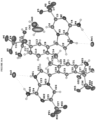
- the compound 2-(3-(8-amino-6-(trifluoromethyl)imidazo[1,2-a]pyrazin-3-yl)-4-methylphenyl)-3,3,3-trifluoro-2-hydroxypropanamide having Formula A: is a phosphoinositide 3-kinase (PI3K) inhibitor useful in the treatment of various diseases including cancer.
- PI3K phosphoinositide 3-kinase
- WO 2017/223414 relates to heterocyclic compounds that modulate the activity of phosphoinositide 3-kinases-gamma (PI3K ⁇ ).
- the present invention provides salts and crystalline forms of the compound of Formula A:
- the present invention further provides a composition comprising the salts and crystalline forms of the compound of Formula A provided herein and at least one pharmaceutically acceptable carrier.
- the present invention further provides a process for preparing salts and crystalline forms of the invention.
- the present invention further provides a method of inhibiting an activity of P13K ⁇ kinase, comprising contacting ex vivo the kinase with a salt or crystalline form of the invention; optionally wherein said a crystalline form is a selective inhibitor for P13K ⁇ over one or more of P13K ⁇ , PI3K ⁇ , and PI3K ⁇ .
- the present invention further provides salts and crystalline forms of the invention for use in treating a disease or disorder in a patient, wherein said disease or disorder is associated with abnormal expression or activity of PI3K ⁇ kinase, wherein the disease or disorder is:
- the present invention relates to, inter alia, salts and crystalline forms of the PI3K inhibitor 2-(3-(8-amino-6-(trifluoromethyl)imidazo[1,2-a]pyrazin-3-yl)-4-methylphenyl)-3,3,3-trifluoro-2-hydroxypropanamide having Formula A: which are useful, for example, in the preparation of solid dosage forms of the above compound for the treatment of various diseases, including cancer.
- crystalline forms of the same substance have different bulk properties relating to, for example, hygroscopicity, solubility, stability, and the like.
- Forms with high melting points often have good thermodynamic stability which is advantageous in prolonging shelf-life drug formulations containing the solid form.
- Forms with lower melting points often are less thermodynamically stable, but are advantageous in that they have increased water solubility, translating to increased drug bioavailability.
- Forms that are weakly hygroscopic are desirable for their stability to heat and humidity and are resistant to degradation during long storage.
- Anhydrous forms are often desirable because they can be consistently made without concern for variation in weight or composition due to varying solvent or water content.
- hydrated or solvated forms can be advantageous in that they are less likely to be hygroscopic and may show improved stability to humidity under storage conditions.
- crystalline form is meant to refer to a certain lattice configuration of a crystalline substance. Different crystalline forms of the same substance typically have different crystalline lattices (e.g., unit cells) which are attributed to different physical properties that are characteristic of each of the crystalline forms. In some instances, different lattice configurations have different water or solvent content.
- the different crystalline lattices can be identified by solid state characterization methods such as by X-ray powder diffraction (XRPD). Other characterization methods such as differential scanning calorimetry (DSC), thermogravimetric analysis (TGA), dynamic vapor sorption (DVS), solid state NMR, and the like further help identify the crystalline form as well as help determine stability and solvent/water content.
- Crystalline forms of a substance include both solvated (e.g., hydrated) and non-solvated (e.g., anhydrous) forms.
- a hydrated form is a crystalline form that includes water in the crystalline lattice. Hydrated forms can be stoichiometric hydrates, where the water is present in the lattice in a certain water/molecule ratio such as for hemihydrates, monohydrates, dihydrates, etc. Hydrated forms can also be non-stoichiometric, where the water content is variable and dependent on external conditions such as humidity.
- Crystalline forms are most commonly characterized by XRPD.
- An XRPD pattern of reflections (peaks) is typically considered a fingerprint of a particular crystalline form. It is well known that the relative intensities of the XRPD peaks can widely vary depending on, inter alia, the sample preparation technique, crystal size distribution, filters, the sample mounting procedure, and the particular instrument employed. In some instances, new peaks may be observed or existing peaks may disappear, depending on the type of instrument or the settings (for example, whether a Ni filter is used or not).
- the term "peak” refers to a reflection having a relative height/intensity of at least about 4% of the maximum peak height/intensity.
- instrument variation and other factors can affect the 2-theta values. Thus, peak assignments, such as those reported herein, can vary by plus or minus about 0.2° (2-theta), and the term “substantially” as used in the context of XRPD herein is meant to encompass the above-mentioned variations.
- temperature readings in connection with DSC, TGA, or other thermal experiments can vary about ⁇ 4 °C depending on the instrument, particular settings, sample preparation, etc.
- DSC it is known that the temperatures observed will depend on the rate of the temperature change as well as the sample preparation technique and the particular instrument employed.
- the values reported herein related to DSC thermograms can vary, as indicated above, by ⁇ 4 ° C. Accordingly, a crystalline form reported herein having a DSC thermogram "substantially" as shown in any of the Figures is understood to accommodate such variation.
- the compound of Formula A can be isolated in numerous crystalline forms, including, for example, crystalline forms which are anhydrous, and/or non-solvated or solvated. In some embodiments, the crystalline forms of the compound of Formula A are solvated. In some embodiments, the crystalline forms of the compound of Formula A are anhydrous. In some embodiments, the crystalline forms of the compound of Formula A are non-solvated. In some embodiments, the crystalline forms of the compound of Formula A are anhydrous and non-solvated.
- anhydrous is meant that the crystalline form of the compound of Formula A contains essentially no bound water in the crystal lattice structure, i.e., the compound does not form a crystalline hydrate.
- the present application provides a process of preparing a crystalline form of the compound 2-(3-(8-amino-6-(trifluoromethyl)imidazo[1,2-a]pyrazin-3-yl)-4-methylphenyl)-3,3,3-trifluoro-2-hydroxypropanamide.
- the process comprises dissolving 2-(3-(8-amino-6-(trifluoromethyl)imidazo[1,2-a]pyrazin-3-yl)-4-methylphenyl)-3,3,3-trifluoro-2-hydroxypropanamide in a solvent to form a mixture and crystallizing the compound from the mixture.
- the solvent comprises isopropyl acetate. In some embodiments, the solvent further comprises heptane.
- the solvent comprises methanol.
- the process further comprises heating the mixture to a temperature of from about 70°C to about 90°C.
- the process further comprises heating the mixture to a temperature of from about 50°C to about 70°C.
- the process further comprises cooling the mixture to room temperature.
- the present application further provides a crystalline form of the compound 2-(3-(8-amino-6-(trifluoromethyl)imidazo[1,2-a]pyrazin-3-yl)-4-methylphenyl)-3,3,3-trifluoro-2-hydroxypropanamide, which is prepared according to a process provided herein.
- the crystalline form is Form IA as described herein.
- the crystalline form is Form IIA as described herein.
- the crystalline form is Form IIIA as described herein.
- the present application provides a process of preparing a hydrobromic acid salt of the compound 2-(3-(8-amino-6-(trifluoromethyl)imidazo[1,2-a]pyrazin-3-yl)-4-methylphenyl)-3,3,3-trifluoro-2-hydroxypropanamide.
- the process comprises dissolving the compound of Formula A in a solvent to form a mixture and adding hydrobromic acid to the mixture.
- the solvent comprises methanol.
- the hydrobromic acid is added to the mixture as an aqueous solution of hydrobromic acid.
- an excess amount of hydrobromic acid is added to the mixture based on 1 equivalent of 2-(3-(8-amino-6-(trifluoromethyl)imidazo[1,2-a]pyrazin-3-yl)-4-methylphenyl)-3,3,3-trifluoro-2-hydroxypropanamide.
- hydrobromic acid salt In some embodiments of the process of preparing the hydrobromic acid salt, about 1.1 to about 1.5 equivalents of hydrobromic acid are added to the mixture based on 1 equivalent of the 2-(3-(8-amino-6-(trifluoromethyl)imidazo[1,2-a]pyrazin-3-yl)-4-methylphenyl)-3,3,3-trifluoro-2-hydroxypropanamide.
- the process further comprises substantially isolating the 2-(3-(8-amino-6-(trifluoromethyl)imidazo[1,2-a]pyrazin-3-yl)-4-methylphenyl)-3,3,3-trifluoro-2-hydroxypropanamide hydrobromic acid salt.
- the 2-(3-(8-amino-6-(trifluoromethyl)imidazo[1,2-a]pyrazin-3-yl)-4-methylphenyl)-3,3,3-trifluoro-2-hydroxypropanamide hydrobromic acid salt is isolated as a crystalline form.
- the 2-(3-(8-amino-6-(trifluoromethyl)imidazo[1,2-a]pyrazin-3-yl)-4-methylphenyl)-3,3,3-trifluoro-2-hydroxypropanamide hydrobromic acid salt is isolated as a methanol solvate crystalline form.
- the present application further provides a hydrobromic acid salt of 2-(3-(8-amino-6-(trifluoromethyl)imidazo[1,2-a]pyrazin-3-yl)-4-methylphenyl)-3,3,3-trifluoro-2-hydroxypropanamide, which is prepared according to a process provided herein.
- the hydrobromic acid salt is crystalline.
- the hydrobromic acid salt is a solvated crystalline form.
- the hydrobromic acid salt is a methanol solvate crystalline form.
- the crystalline forms of the invention are substantially isolated.
- substantially isolated is meant that a particular crystalline form of the compound of Formula A is at least partially isolated from impurities.
- a crystalline form of the invention comprises less than about 50%, less than about 40%, less than about 30%, less than about 20%, less than about 15%, less than about 10%, less than about 5%, less than about 2.5%, less than about 1%, or less than about 0.5% of impurities.
- Impurities generally include anything that is not the substantially isolated crystalline form including, for example, other crystalline forms and other substances.
- a crystalline form of the compound of Formula A is substantially free of other crystalline forms.
- the phrase "substantially free of other crystalline forms" means that a particular crystalline form of the compound of Formula A comprises greater than about 80%, greater than about 90%, greater than about 95%, greater than about 98%, greater than about 99% or greater than about 99.5% by weight of the particular crystalline form.
- the crystalline form of the compound of Formula A is Form IA. In some embodiments, crystalline Form IA of the compound of Formula A is anhydrous and non-solvated.
- the preparation of the compound of Form IA of the compound of Formula A is described in Example 1. Crystalline Form IA of the compound of Formula A can be generally prepared as described in Example 2.
- Crystalline Form IA of the compound of Formula A can be identified by unique signatures with respect to, for example, X-ray powder diffraction (XRPD), differential scanning calorimetry (DSC), and thermogravimetric analysis (TGA).
- XRPD X-ray powder diffraction
- DSC differential scanning calorimetry
- TGA thermogravimetric analysis
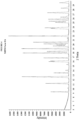
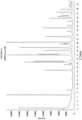
- crystalline Form IA of the compound of Formula A is characterized by an XRPD pattern as shown in Figure 1 . Peaks from the XRPD pattern are listed in Table 1.
- crystalline Form IA of the compound of Formula A is characterized by an XRPD pattern comprising a peak, in terms of 2 ⁇ , at 8.6° ⁇ 0.2°. In some embodiments, crystalline Form IA of the compound of Formula A is characterized by an XRPD pattern comprising a peak, in terms of 2 ⁇ , at 9.5° ⁇ 0.2°. In some embodiments, crystalline Form IA of the compound of Formula A is characterized by an XRPD pattern comprising a peak, in terms of 2 ⁇ , at 10.3° ⁇ 0.2°. In some embodiments, crystalline Form IA of the compound of Formula A is characterized by an XRPD pattern comprising a peak, in terms of 2 ⁇ , at 14.9° ⁇ 0.2°.
- crystalline Form IA of the compound of Formula A has an XRPD pattern comprising the following peaks, in terms of 2 ⁇ : 8.6° ⁇ 0.2°; 9.5° ⁇ 0.2°; 10.3° ⁇ 0.2°; 13.0° ⁇ 0.2°; 13.6° ⁇ 0.2°; 14.2° ⁇ 0.2°; and 14.9° ⁇ 0.2°.
- crystalline Form IA of the compound of Formula A has an XRPD pattern comprising the following peaks, in terms of 2 ⁇ : 8.6° ⁇ 0.2°; 9.5° ⁇ 0.2°; 10.3° ⁇ 0.2°; 14.9° ⁇ 0.2°; 17.3° ⁇ 0.2°; 17.8° ⁇ 0.2°; 19.0° ⁇ 0.2°; 19.2° ⁇ 0.2°; 20.1° ⁇ 0.2°; 20.6° ⁇ 0.2°; 21.2° ⁇ 0.2°; 22.2 ° ⁇ 0.2°; 24.0° ⁇ 0.2°; 26.8° ⁇ 0.2°; and 28.7 ° ⁇ 0.2°.
- crystalline Form IA of the compound of Formula A has an XRPD pattern comprising the following peaks, in terms of 2 ⁇ : 10.3° ⁇ 0.2°; 14.9° ⁇ 0.2°; 17.3° ⁇ 0.2°; 19.2° ⁇ 0.2°; and 24.0° ⁇ 0.2°.
- crystalline Form IA of the compound of Formula A has an XRPD pattern comprising 2 or more, 3 or more, or 4 or more of the following peaks, in terms of 2 ⁇ : 8.6° ⁇ 0.2°; 9.5° ⁇ 0.2°; 10.3° ⁇ 0.2°; 13.0° ⁇ 0.2°; 13.6° ⁇ 0.2°; 14.2° ⁇ 0.2°; 14.9° ⁇ 0.2°; 17.3° ⁇ 0.2°; 19.2° ⁇ 0.2°; 20.6° ⁇ 0.2°; 24.0° ⁇ 0.2°; and 28.7° ⁇ 0.2°.
- crystalline Form IA of the compound of Formula A has an XRPD pattern comprising 2 or more, 3 or more, or 4 or more of the following peaks, in terms of 2 ⁇ : 8.6° ⁇ 0.2°; 9.5° ⁇ 0.2°; 10.3° ⁇ 0.2°; 14.9° ⁇ 0.2°; 17.3° ⁇ 0.2°; 17.8° ⁇ 0.2°; 19.0° ⁇ 0.2°; 19.2° ⁇ 0.2°; 20.1° ⁇ 0.2°; 20.6° ⁇ 0.2°; 21.2° ⁇ 0.2°; 22.2 ° ⁇ 0.2°; 24.0° ⁇ 0.2°; 26.8° ⁇ 0.2°; and 28.7 ° ⁇ 0.2°.
- crystalline Form IA of the compound of Formula A has an XRPD pattern comprising 2 or more, 3 or more, or 4 or more of the following peaks, in terms of 2 ⁇ : 9.5° ⁇ 0.2°; 10.3° ⁇ 0.2°; 14.9° ⁇ 0.2°; 17.3° ⁇ 0.2°; 19.2° ⁇ 0.2°; 20.6° ⁇ 0.2°; 24.0° ⁇ 0.2°; and 28.7° ⁇ 0.2°.
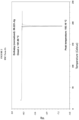
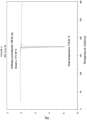
- Form IA of the compound of Formula A is characterized by a DSC thermogram comprising an endothermic peak having a maximum at about 193 °C.
- crystalline Form IA of the compound of Formula A has a DSC thermogram as shown in Figure 2 .
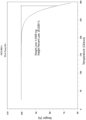
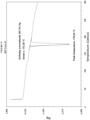
- crystalline Form IA of the compound of Formula A has a TGA trace as shown in Figure 3 .
- the crystalline form of the compound of Formula A is Form IIA. In some embodiments, crystalline Form IIA of the compound of Formula A is anhydrous and non-solvated. This crystalline form can be generally prepared as described in Example 3.
- Crystalline Form IIA of the compound of Formula A can be identified by unique signatures with respect to, for example, X-ray powder diffraction (XRPD), differential scanning calorimetry (DSC), and thermogravimetric analysis (TGA).
- XRPD X-ray powder diffraction
- DSC differential scanning calorimetry
- TGA thermogravimetric analysis
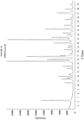
- crystalline Form IIA of the compound of Formula A is characterized by an XRPD pattern as shown in Figure 4 . Peaks from the XRPD pattern are listed in Table 2.
- crystalline Form IIA of the compound of Formula A is characterized by an XRPD pattern comprising a peak, in terms of 2 ⁇ , at 9.1 ⁇ 0.2°. In some embodiments, crystalline Form IIA of the compound of Formula A is characterized by an XRPD pattern comprising a peak, in terms of 2 ⁇ , at 11.1° ⁇ 0.2°. In some embodiments, crystalline Form IIA of the compound of Formula A is characterized by an XRPD pattern comprising a peak, in terms of 2 ⁇ , at 21.9° ⁇ 0.2°.
- crystalline Form IIA of the compound of Formula A is characterized by an XRPD pattern comprising a peak, in terms of 2 ⁇ , at 9.1° ⁇ 0.2° and 12.6° ⁇ 0.2°. In some embodiments, crystalline Form IIA of the compound of Formula A is characterized by an XRPD pattern comprising a peak, in terms of 2 ⁇ , at 9.1° ⁇ 0.2° and 13.5° ⁇ 0.2°. In some embodiments, crystalline Form IIA of the compound of Formula A is characterized by an XRPD pattern comprising a peak, in terms of 2 ⁇ , at 18.0° ⁇ 0.2°. In some embodiments, crystalline Form IIA of the compound of Formula A is characterized by an XRPD pattern comprising a peak, in terms of 2 ⁇ , at 19.0° ⁇ 0.2°.
- crystalline Form IIA of the compound of Formula A has an XRPD pattern comprising the following peaks, in terms of 2 ⁇ : 9.1° ⁇ 0.2°; 11.1° ⁇ 0.2°; 12.6° ⁇ 0.2°; and 13.5° ⁇ 0.2°.
- crystalline Form IIA of the compound of Formula A has an XRPD pattern comprising the following peaks, in terms of 2 ⁇ : 9.1° ⁇ 0.2°; 11.1° ⁇ 0.2°; 12.6° ⁇ 0.2°; 13.5° ⁇ 0.2°; 16.1° ⁇ 0.2°; 16.9° ⁇ 0.2°; 18.0° ⁇ 0.2°; 18.4° ⁇ 0.2°; 19.0° ⁇ 0.2°; 19.7° ⁇ 0.2°; 20.1° ⁇ 0.2°; 20.5° ⁇ 0.2°; 21.9° ⁇ 0.2°; 23.7° ⁇ 0.2°; 23.8° ⁇ 0.2°; 25.1° ⁇ 0.2°; 25.3° ⁇ 0.2°; 25.8° ⁇ 0.2°; and 27.3° ⁇ 0.2°.
- crystalline Form IIA of the compound of Formula A has an XRPD pattern comprising the following peaks, in terms of 2 ⁇ : 12.6° ⁇ 0.2°; 18.0° ⁇ 0.2°; 19.0° ⁇ 0.2°; and 21.9° ⁇ 0.2°.
- crystalline Form IIA of the compound of Formula A has an XRPD pattern comprising 2 or more, 3 or more, or 4 or more of the following peaks, in terms of 2 ⁇ : 9.1° ⁇ 0.2°; 11.1° ⁇ 0.2°; 12.6° ⁇ 0.2°; 13.5° ⁇ 0.2°; 18.0° ⁇ 0.2°; 19.0° ⁇ 0.2°; 20.5° ⁇ 0.2°; and 21.9° ⁇ 0.2°.
- crystalline Form IIA of the compound of Formula A has an XRPD pattern comprising 2 or more, 3 or more, or 4 or more of the following peaks, in terms of 2 ⁇ : 9.1° ⁇ 0.2°; 11.1° ⁇ 0.2°; 12.6° ⁇ 0.2°; 13.5° ⁇ 0.2°; 16.1° ⁇ 0.2°; 16.9° ⁇ 0.2°; 18.0° ⁇ 0.2°; 18.4° ⁇ 0.2°; 19.0° ⁇ 0.2°; 19.7° ⁇ 0.2°; 20.1° ⁇ 0.2°; 20.5° ⁇ 0.2°; 21.9° ⁇ 0.2°; 23.7° ⁇ 0.2°; 23.8° ⁇ 0.2°; 25.1° ⁇ 0.2°; 25.3° ⁇ 0.2°; 25.8° ⁇ 0.2°; and 27.3° ⁇ 0.2°.
- crystalline Form IIA of the compound of Formula A has an XRPD pattern comprising 2 or more, 3 or more, or 4 or more of the following peaks, in terms of 2 ⁇ : 12.6° ⁇ 0.2°; 18.0° ⁇ 0.2°; 19.0° ⁇ 0.2°; 20.5° ⁇ 0.2°; and 21.9° ⁇ 0.2°.
- Form IIA of the compound of Formula A is characterized by a DSC thermogram comprising an endothermic peak having a maximum at about 180 °C.
- crystalline Form IIA of the compound of Formula A has a DSC thermogram as shown in Figure 5 .
- crystalline Form IIA of the compound of Formula A has a TGA trace as shown in Figure 6 .
- the crystalline form of the compound of Formula A is Form IIIA. In some embodiments, crystalline Form IIIA of the compound of Formula A is anhydrous and non-solvated. This crystalline form can be generally prepared as described in Example 4.
- Crystalline Form IIIA of the compound of Formula A can be identified by unique signatures with respect to, for example, X-ray powder diffraction (XRPD), differential scanning calorimetry (DSC), and thermogravimetric analysis (TGA).
- XRPD X-ray powder diffraction
- DSC differential scanning calorimetry
- TGA thermogravimetric analysis
- crystalline Form IIIA of the compound of Formula A is characterized by an XRPD pattern as shown in Figure 7 . Peaks from the XRPD pattern are listed in Table 3.
- crystalline Form IIIA of the compound of Formula A is characterized by an XRPD pattern comprising a peak, in terms of 2 ⁇ , at 8.1° ⁇ 0.2°. In some embodiments, crystalline Form IIIA of the compound of Formula A is characterized by an XRPD pattern comprising a peak, in terms of 2 ⁇ , at 10.6° ⁇ 0.2°. In some embodiments, crystalline Form IIIA of the compound of Formula A is characterized by an XRPD pattern comprising a peak, in terms of 2 ⁇ , at 13.5° ⁇ 0.2°. In some embodiments, crystalline Form IIIA of the compound of Formula A is characterized by an XRPD pattern comprising a peak, in terms of 2 ⁇ , at 14.2° ⁇ 0.2°. In some embodiments, crystalline Form IIIA of the compound of Formula A is characterized by an XRPD pattern comprising a peak, in terms of 2 ⁇ , at 20.3° ⁇ 0.2°.
- crystalline Form IIIA of the compound of Formula A has an XRPD pattern comprising the following peaks, in terms of 2 ⁇ : 8.1° ⁇ 0.2°; 10.6° ⁇ 0.2°; 13.5° ⁇ 0.2°; and 14.2° ⁇ 0.2°.
- crystalline Form IIIA of the compound of Formula A has an XRPD pattern comprising the following peaks, in terms of 2 ⁇ : 10.6° ⁇ 0.2°; 13.5° ⁇ 0.2°; 14.2° ⁇ 0.2°; 16.4° ⁇ 0.2°; 17.1° ⁇ 0.2°; 17.9° ⁇ 0.2°; 20.3° ⁇ 0.2°; 20.8° ⁇ 0.2°; 24.1° ⁇ 0.2°; 24.6° ⁇ 0.2°; 24.8° ⁇ 0.2°; and 27.5° ⁇ 0.2°.
- crystalline Form IIIA of the compound of Formula A has an XRPD pattern comprising the following peaks, in terms of 2 ⁇ : 10.6° ⁇ 0.2°; 13.5° ⁇ 0.2°; 14.2° ⁇ 0.2°; and 20.3° ⁇ 0.2°.
- crystalline Form IIIA of the compound of Formula A has an XRPD pattern comprising 2 or more, 3 or more, or 4 or more of the following peaks, in terms of 2 ⁇ : 8.1° ⁇ 0.2°; 10.6° ⁇ 0.2°; 13.5° ⁇ 0.2°; 14.2° ⁇ 0.2°; 16.4° ⁇ 0.2°; 17.1° ⁇ 0.2°; 17.9° ⁇ 0.2°; 20.3° ⁇ 0.2°; and 24.1° ⁇ 0.2°.
- crystalline Form IIIA of the compound of Formula A has an XRPD pattern comprising 2 or more, 3 or more, or 4 or more of the following peaks, in terms of 2 ⁇ : 10.6° ⁇ 0.2°; 13.5° ⁇ 0.2°; 14.2° ⁇ 0.2°; 16.4° ⁇ 0.2°; 17.1° ⁇ 0.2°; 17.9° ⁇ 0.2°; 20.3° ⁇ 0.2°; 20.8° ⁇ 0.2°; 24.1° ⁇ 0.2°; 24.6° ⁇ 0.2°; 24.8° ⁇ 0.2°; and 27.5° ⁇ 0.2°.
- crystalline Form IIIA of the compound of Formula A has an XRPD pattern comprising 2 or more, 3 or more, or 4 or more of the following peaks, in terms of 2 ⁇ : 10.6° ⁇ 0.2°; 13.5° ⁇ 0.2°; 14.2° ⁇ 0.2°; 16.4° ⁇ 0.2°; 17.1° ⁇ 0.2°; 17.9° ⁇ 0.2°; 20.3° ⁇ 0.2°; and 24.1° ⁇ 0.2°.
- Form IIIA of the compound of Formula A is characterized by a DSC thermogram comprising an endothermic peak having a maximum at about 143 °C.
- crystalline Form IIIA of the compound of Formula A has a DSC thermogram as shown in Figure 8 .
- crystalline Form IIIA of the compound of Formula A has a TGA trace as shown in Figure 9 .
- the present application provides a hydrobromic acid salt of the compound of Formula A.
- the hydrobromic acid salt of the compound of Formula A is a 1:1 stoichiometric ratio of 2-(3-(8-amino-6-(trifluoromethyl)imidazo[1,2-a]pyrazin-3-yl)-4-methylphenyl)-3,3,3-trifluoro-2-hydroxypropanamide to hydrobromic acid.
- the hydrobromic acid salt form can be generally prepared as described in Example 11.
- the hydrobromic acid salt of the compound of Formula A is crystalline. In some embodiments, the hydrobromic acid salt of the compound of Formula A is a solvated crystalline form. In some embodiments, the hydrobromic acid salt of the compound of Formula A is a methanol solvate crystalline form.
- the compound of Formula B can be isolated in numerous crystalline forms, including, for example, crystalline forms which are anhydrous and/or non-solvated.
- the crystalline forms of the compound of Formula B are anhydrous.
- the crystalline forms of the compound of Formula B are non-solvated.
- the crystalline forms of the compound of Formula B are anhydrous and non-solvated.
- anhydrous is meant that the crystalline form of the compound of Formula B contains essentially no bound water in the crystal lattice structure, i.e., the compound does not form a crystalline hydrate.
- the crystalline forms provided herein can be prepared, for example, by a process comprising dissolving 8-amino-N-(2-hydroxy-2-methylpropyl)-3-(2-methyl-5-(1,1,1-trifluoro-2-hydroxypropan-2-yl)phenyl)imidazo[1,2-a]pyrazine-6-carboxamide in a solvent to form a mixture and crystallizing the compound from the mixture.
- the process further comprises heating the mixture to a temperature of from about 70°C to about 90°C. In some embodiments, the process further comprises cooling the mixture to room temperature.
- the solvent comprises isopropyl acetate. In some embodiments, the solvent further comprises heptane.
- the present application provides a crystalline form of the compound 8-amino-N-(2-hydroxy-2-methylpropyl)-3-(2-methyl-5-(1,1, 1-trifluoro-2-hydroxypropan-2-yl)phenyl)imidazo[1,2-a]pyrazine-6-carboxamide, which is prepared according to a process provided herein.
- the crystalline form is Form IB as described herein.
- the crystalline form is Form IIB as described herein.
- the crystalline forms of the invention are substantially isolated.
- substantially isolated is meant that a particular crystalline form of the compound of Formula B is at least partially isolated from impurities.
- a crystalline form of the invention comprises less than about 50%, less than about 40%, less than about 30%, less than about 20%, less than about 15%, less than about 10%, less than about 5%, less than about 2.5%, less than about 1%, or less than about 0.5% of impurities.
- Impurities generally include anything that is not the substantially isolated crystalline form including, for example, other crystalline forms and other substances.
- a crystalline form of the compound of Formula B is substantially free of other crystalline forms.
- the phrase "substantially free of other crystalline forms" means that a particular crystalline form of the compound of Formula B comprises greater than about 80%, greater than about 90%, greater than about 95%, greater than about 98%, greater than about 99% or greater than about 99.5% by weight of the particular crystalline form.
- the crystalline form of the compound of Formula B is Form IB. In some embodiments, crystalline Form IB of the compound of Formula B is anhydrous and non-solvated.
- the preparation of the compound of Formula B is described in Examples 5 and 6. Crystalline Form IB can be generally prepared as described in Example 7.
- Crystalline Form IB of the compound of Formula B can be identified by unique signatures with respect to, for example, X-ray powder diffraction (XRPD) and differential scanning calorimetry (DSC).
- XRPD X-ray powder diffraction
- DSC differential scanning calorimetry
- crystalline Form IB of the compound of Formula B is characterized by an XRPD pattern substantially as shown in Figure 10 . Peaks from the XRPD pattern are listed in Table 4.
- crystalline Form IB of the compound of Formula B is characterized by an XRPD pattern comprising a peak, in terms of 2 ⁇ , at 6.2° ⁇ 0.2°. In some embodiments, crystalline Form IB of the compound of Formula B is characterized by an XRPD pattern comprising a peak, in terms of 2 ⁇ , at 15.6° ⁇ 0.2°. In some embodiments, crystalline Form IB of the compound of Formula B is characterized by an XRPD pattern comprising a peak, in terms of 2 ⁇ , at 20.7° ⁇ 0.2°.
- crystalline Form IB of the compound of Formula B has an XRPD pattern comprising the following peaks, in terms of 2 ⁇ : 6.2° ⁇ 0.2°; 15.6° ⁇ 0.2°; 16.7° ⁇ 0.2°; 20.7° ⁇ 0.2°; and 23.2° ⁇ 0.2°.
- crystalline Form IB of the compound of Formula B has an XRPD pattern comprising the following peaks, in terms of 2 ⁇ : 6.2° ⁇ 0.2°; 10.4° ⁇ 0.2°; 11.4° ⁇ 0.2°; 11.6° ⁇ 0.2°; 12.0° ⁇ 0.2°; 13.9° ⁇ 0.2°; 14.4° ⁇ 0.2°; 15.6° ⁇ 0.2°; 16.0° ⁇ 0.2°; 16.7° ⁇ 0.2°; 20.7° ⁇ 0.2°; and 23.2° ⁇ 0.2°.
- crystalline Form IB of the compound of Formula B has an XRPD pattern comprising the following peaks, in terms of 2 ⁇ : 6.2° ⁇ 0.2°; 12.0 ° ⁇ 0.2°; 15.6° ⁇ 0.2°; 16.0° ⁇ 0.2°; 16.7° ⁇ 0.2°; 19.3° ⁇ 0.2°; 20.7° ⁇ 0.2°; 23.2° ⁇ 0.2°; and 27.1° ⁇ 0.2°.
- crystalline Form IB of the compound of Formula B has an XRPD pattern comprising the following peaks, in terms of 2 ⁇ : 6.2° ⁇ 0.2°; 10.4° ⁇ 0.2°; 11.4° ⁇ 0.2°; 11.6° ⁇ 0.2°; 12.0° ⁇ 0.2°; 13.9° ⁇ 0.2°; and 14.4° ⁇ 0.2°.
- crystalline Form IB of the compound of Formula B has an XRPD pattern comprising 2 or more, 3 or more, or 4 or more of the following peaks, in terms of 2 ⁇ : 2 ⁇ : 6.2° ⁇ 0.2°; 10.4° ⁇ 0.2°; 11.4° ⁇ 0.2°; 11.6° ⁇ 0.2°; 12.0° ⁇ 0.2°; 13.9° ⁇ 0.2°; 14.4° ⁇ 0.2°; 15.6° ⁇ 0.2°; 16.0° ⁇ 0.2°; 16.7° ⁇ 0.2°; 20.7° ⁇ 0.2°; and 23.2° ⁇ 0.2°.
- crystalline Form IB of the compound of Formula B has an XRPD pattern comprising 2 or more, 3 or more, or 4 or more of the following peaks, in terms of 2 ⁇ : 6.2° ⁇ 0.2°; 12.0 ° ⁇ 0.2°; 15.6° ⁇ 0.2°; 16.0° ⁇ 0.2°; 16.7° ⁇ 0.2°; 19.3° ⁇ 0.2°; 20.7° ⁇ 0.2°; 23.2° ⁇ 0.2°; and 27.1° ⁇ 0.2°.
- crystalline Form IB of the compound of Formula B has an XRPD pattern comprising 2 or more, 3 or more, or 4 or more of the following peaks, in terms of 2 ⁇ : 6.2° ⁇ 0.2°; 15.6° ⁇ 0.2°; 16.0° ⁇ 0.2°; 16.7° ⁇ 0.2°; 20.7° ⁇ 0.2°; and 23.2° ⁇ 0.2°.
- crystalline Form IB of the compound of Formula B has an XRPD pattern comprising 2 or more, 3 or more, or 4 or more of the following peaks, in terms of 2 ⁇ : 6.2° ⁇ 0.2°; 10.4° ⁇ 0.2°; 11.4° ⁇ 0.2°; 11.6° ⁇ 0.2°; 12.0° ⁇ 0.2°; 13.9° ⁇ 0.2°; and 14.4° ⁇ 0.2°.
- Form IB of the compound of Formula B is characterized by a DSC thermogram comprising an endothermic peak having a maximum at about 174 °C.
- crystalline Form IB of the compound of Formula B has a DSC thermogram substantially as shown in Figure 11 .
- the crystalline form of the compound of Formula B is Form IIB. In some embodiments, crystalline Form IIB of the compound of Formula B is anhydrous and non-solvated. This crystalline form can be generally prepared as described in Example 8.
- Crystalline Form IIB of the compound of Formula B can be identified by unique signatures with respect to, for example, X-ray powder diffraction (XRPD) and differential scanning calorimetry (DSC).
- XRPD X-ray powder diffraction
- DSC differential scanning calorimetry
- crystalline Form IIB of the compound of Formula B is characterized by an XRPD pattern substantially as shown in Figure 12 . Peaks from the XRPD pattern are listed in Table 5.
- crystalline Form IIB of the compound of Formula B is characterized by an XRPD pattern comprising a peak, in terms of 2 ⁇ , at 4.2° ⁇ 0.2°. In some embodiments, crystalline Form IIB of the compound of Formula B is characterized by an XRPD pattern comprising a peak, in terms of 2 ⁇ , at 7.4° ⁇ 0.2°. In some embodiments, crystalline Form IIB of the compound of Formula B is characterized by an XRPD pattern comprising a peak, in terms of 2 ⁇ , at 13.3° ⁇ 0.2°. In some embodiments, crystalline Form IIB of the compound of Formula B is characterized by an XRPD pattern comprising a peak, in terms of 2 ⁇ , at 20.1° ⁇ 0.2°.
- crystalline Form IIB of the compound of Formula B is characterized by an XRPD pattern comprising a peak, in terms of 2 ⁇ , at 17.0° ⁇ 0.2°. In some embodiments, crystalline Form IIB of the compound of Formula B is characterized by an XRPD pattern comprising a peak, in terms of 2 ⁇ , at 18.8° ⁇ 0.2°.
- crystalline Form IIB of the compound of Formula B has an XRPD pattern comprising the following peaks, in terms of 2 ⁇ : 4.3° ⁇ 0.2°; 7.4° ⁇ 0.2°; 13.3° ⁇ 0.2°; and 15.3° ⁇ 0.2°.
- crystalline Form IIB of the compound of Formula B has an XRPD pattern comprising the following peaks, in terms of 2 ⁇ : 4.3° ⁇ 0.2°; 7.4° ⁇ 0.2°; 15.3° ⁇ 0.2°; 17.0° ⁇ 0.2°; 18.8° ⁇ 0.2°; and 20.1° ⁇ 0.2°.
- crystalline Form IIB of the compound of Formula B has an XRPD pattern comprising the following peaks, in terms of 2 ⁇ : 4.3° ⁇ 0.2°; 7.4° ⁇ 0.2°; 13.3° ⁇ 0.2°; 15.3° ⁇ 0.2°; 15.5° ⁇ 0.2°; 17.0° ⁇ 0.2°; 17.2° ⁇ 0.2°; 18.1° ⁇ 0.2°; 18.8° ⁇ 0.2°; 19.6° ⁇ 0.2°; 20.1° ⁇ 0.2°; 21.4° ⁇ 0.2°; 23.5° ⁇ 0.2°; 25.8° ⁇ 0.2°; 26.2° ⁇ 0.2°; and 27.3° ⁇ 0.2°.
- crystalline Form IIB of the compound of Formula B has an XRPD pattern comprising 2 or more, 3 or more, or 4 or more of the following peaks, in terms of 2 ⁇ : 4.3° ⁇ 0.2°; 7.4° ⁇ 0.2°; 13.3° ⁇ 0.2°; 15.3° ⁇ 0.2°; 15.5° ⁇ 0.2°; 17.0° ⁇ 0.2°; 17.2° ⁇ 0.2°; 18.1° ⁇ 0.2°; 18.8° ⁇ 0.2°; 19.6° ⁇ 0.2°; 20.1° ⁇ 0.2°; 21.4° ⁇ 0.2°; 23.5° ⁇ 0.2°; 25.8° ⁇ 0.2°; 26.2° ⁇ 0.2°; and 27.3° ⁇ 0.2°.
- crystalline Form IIB of the compound of Formula B has an XRPD pattern comprising 2 or more, 3 or more, or 4 or more of the following peaks, in terms of 2 ⁇ : 4.3° ⁇ 0.2°; 7.4° ⁇ 0.2°; 13.3° ⁇ 0.2°; 15.3° ⁇ 0.2°; 15.5° ⁇ 0.2°; 17.0° ⁇ 0.2°; 17.2° ⁇ 0.2°; 18.8° ⁇ 0.2°; and 20.1° ⁇ 0.2°.
- Form IIB of the compound of Formula B is characterized by a DSC thermogram comprising an endothermic peak having a maximum at about 165 °C.
- crystalline Form IIB of the compound of Formula B has a DSC thermogram as shown in Figure 13 .
- the compound of Formula C can be isolated in numerous crystalline forms, including, for example, crystalline forms which are anhydrous and/or non-solvated.
- the crystalline forms of the compound of Formula C are anhydrous.
- the crystalline forms of the compound of Formula C are non-solvated.
- the crystalline forms of the compound of Formula C are anhydrous and non-solvated.
- anhydrous is meant that the crystalline form of the compound of Formula C contains essentially no bound water in the crystal lattice structure, i.e., the compound does not form a crystalline hydrate.
- the present application provides a process of preparing a crystalline form of the compound 8-amino-N-(2-hydroxy-2-methylpropyl)-3-(2-(methyl-d 3 )-5-(1,1,1-trifluoro-2-hydroxypropan-2-yl)phenyl)imidazo[1,2-a]pyrazine-6-carboxamide.
- the process comprises dissolving 8-amino-N-(2-hydroxy-2-methylpropyl)-3-(2-(methyl-d 3 )-5-(1,1,1-trifluoro-2-hydroxypropan-2-yl)phenyl)imidazo[1,2-a]pyrazine-6-carboxamide in a solvent to form a mixture and crystallizing the compound from the mixture.
- the process further comprises heating the mixture to a temperature of from about 70°C to about 90°C. In some embodiments, the process further comprises cooling the mixture to room temperature.
- the solvent comprises isopropyl acetate. In some embodiments, the solvent further comprises heptane.
- the present application further provides a crystalline form of the compound 8-amino-N-(2-hydroxy-2-methylpropyl)-3-(2-(methyl-d 3 )-5-(1,1,1-trifluoro-2-hydroxypropan-2-yl)phenyl)imidazo[1,2-a]pyrazine-6-carboxamide, which is prepared according a process provided herein.
- the crystalline form is Form IC as described herein.
- the crystalline forms of the invention are substantially isolated.
- substantially isolated is meant that a particular crystalline form of the compound of Formula C is at least partially isolated from impurities.
- a crystalline form of the invention comprises less than about 50%, less than about 40%, less than about 30%, less than about 20%, less than about 15%, less than about 10%, less than about 5%, less than about 2.5%, less than about 1%, or less than about 0.5% of impurities.
- Impurities generally include anything that is not the substantially isolated crystalline form including, for example, other crystalline forms and other substances.
- a crystalline form of the compound of Formula C is substantially free of other crystalline forms.
- the phrase "substantially free of other crystalline forms" means that a particular crystalline form of the compound of Formula C comprises greater than about 80%, greater than about 90%, greater than about 95%, greater than about 98%, greater than about 99% or greater than about 99.5% by weight of the particular crystalline form.
- the crystalline form of the compound of Formula C is crystalline Form IC. In some embodiments, crystalline Form IC of the compound of Formula C is anhydrous and non-solvated.
- the preparation of the compound of Formula C of the compound of Formula C is described in Example 9. Crystalline Form IC of the compound of Formula C can be generally prepared as described in Example 10.
- Crystalline Form IC of the compound of Formula C can be identified by unique signatures with respect to, for example, X-ray powder diffraction (XRPD) and differential scanning calorimetry (DSC).
- XRPD X-ray powder diffraction
- DSC differential scanning calorimetry
- crystalline Form IC of the compound of Formula C is characterized by an XRPD pattern as shown in Figure 14 . Peaks from the XRPD pattern are listed in Table 6
- crystalline Form IC of the compound of Formula C is characterized by an XRPD pattern comprising a peak, in terms of 2 ⁇ , at 6.2° ⁇ 0.2°. In some embodiments, crystalline Form IC of the compound of Formula C is characterized by an XRPD pattern comprising a peak, in terms of 2 ⁇ , at 11.9° ⁇ 0.2°. In some embodiments, crystalline Form IC of the compound of Formula C is characterized by an XRPD pattern comprising a peak, in terms of 2 ⁇ , at 16.7° ⁇ 0.2°.
- crystalline Form IC of the compound of Formula C has an XRPD pattern comprising the following peaks, in terms of 2 ⁇ : 6.2° ⁇ 0.2°; 15.6° ⁇ 0.2°; 16.0° ⁇ 0.2°; 16.7° ⁇ 0.2°; 18.8° ⁇ 0.2°; 19.9° ⁇ 0.2°; 20.7° ⁇ 0.2°; 21.2° ⁇ 0.2°; 22.3° ⁇ 0.2°; 23.2° ⁇ 0.2°; and 27.0 ° ⁇ 0.2°.
- crystalline Form IC of the compound of Formula C has an XRPD pattern comprising the following peaks, in terms of 2 ⁇ : 6.2° ⁇ 0.2°; 15.6° ⁇ 0.2°; 16.0° ⁇ 0.2°; 16.7° ⁇ 0.2°; and 21.2° ⁇ 0.2°.
- crystalline Form IC of the compound of Formula C has an XRPD pattern comprising the following peaks, in terms of 2 ⁇ : 6.2° ⁇ 0.2°; 10.4° ⁇ 0.2°; 11.3° ⁇ 0.2°; 11.9° ⁇ 0.2°; and 12.5° ⁇ 0.2°
- crystalline Form IC of the compound of Formula C has an XRPD pattern comprising 2 or more, 3 or more, or 4 or more of the following peaks, in terms of 2 ⁇ : 6.2° ⁇ 0.2°; 15.6° ⁇ 0.2°; 16.0° ⁇ 0.2°; 16.7° ⁇ 0.2°; 18.8° ⁇ 0.2°; 19.9° ⁇ 0.2°; 20.7° ⁇ 0.2°; 21.2° ⁇ 0.2°; 22.3° ⁇ 0.2°; 23.2° ⁇ 0.2°; and 27.0 ° ⁇ 0.2°.
- crystalline Form IC of the compound of Formula C has an XRPD pattern comprising 2 or more, 3 or more, or 4 or more of the following peaks, in terms of 2 ⁇ : 6.2° ⁇ 0.2°; 10.4° ⁇ 0.2°; 11.3° ⁇ 0.2°; 11.9° ⁇ 0.2°; 12.5° ⁇ 0.2°; 13.8° ⁇ 0.2°; 14.4° ⁇ 0.2°; 15.6° ⁇ 0.2°; 16.0° ⁇ 0.2°; 16.7° ⁇ 0.2°; 20.7° ⁇ 0.2°; and 21.2° ⁇ 0.2°.
- crystalline Form IC of the compound of Formula C has an XRPD pattern comprising 2 or more, 3 or more, or 4 or more of the following peaks, in terms of 2 ⁇ : 6.2° ⁇ 0.2°; 15.6° ⁇ 0.2°; 16.0° ⁇ 0.2°; 16.7° ⁇ 0.2°; 20.7° ⁇ 0.2°; and 21.2° ⁇ 0.2°.
- Form IC of the compound of Formula C is characterized by a DSC thermogram comprising an endothermic peak having a maximum at about 179 °C.
- crystalline Form IC of the compound of Formula C has a DSC thermogram as shown in Figure 15 .
- the compounds (e.g., salts and crystalline forms) of the invention described herein inhibit activity of PI3K ⁇ kinase. Accordingly, the salts and crystalline forms of the invention described herein can be used in methods of inhibiting P13K ⁇ kinase by contacting the kinase. In some embodiments, the salts and crystalline forms of the invention can be used in methods of inhibiting activity of PI3Ky in an individual/patient in need of the inhibition by administering an effective amount of a salt or crystalline form described herein. In some embodiments, modulating is inhibiting. In some embodiments, the contacting is in vivo. In some embodiments, the contacting is ex vivo.
- the crystalline forms as described herein demonstrate better efficacy and favorable safety and toxicity profiles in animal studies.
- the P13K ⁇ includes a mutation.
- a mutation can be a replacement of one amino acid for another, or a deletion of one or more amino acids.
- the mutation can be present in the kinase domain of the P13K ⁇ .
- the salt or crystalline form further inhibits PI3K ⁇ .
- the salts and crystalline forms described herein can be selective.
- selective is meant that the salt or crystalline form binds to or inhibits P13K ⁇ with greater affinity or potency, respectively, compared to at least one other kinase.
- the salts and crystalline forms of the disclosure are selective inhibitors of PI3K ⁇ over PI3K ⁇ , PI3K ⁇ , and PI3K ⁇ .
- the salts and crystalline forms of the disclosure are selective inhibitors of PI3K ⁇ over PI3K ⁇ and PI3K ⁇ .
- selectivity can be at least about 2-fold, 3-fold, 5-fold, 10-fold, at or 20-fold over PI3K ⁇ as measured by the assays described herein.
- selectivity can be tested at the 2 ⁇ M ATP concentration of each enzyme.
- the selectivity of salts and crystalline forms of the disclosure can be determined by cellular assays associated with particular PI3K kinase activity.
- a P13Ky-associated disease or disorder can include any disease, disorder or condition that is directly or indirectly linked to expression or activity of the P13K ⁇ , including overexpression and/or abnormal activity levels.
- the disease or disorder is an autoimmune disease or disorder, cancer, cardiovascular disease, or neurodegenerative disease.
- the disease or disorder is lung cancer (e.g., non-small cell lung cancer), melanoma, pancreatic cancer, breast cancer, prostate cancer, liver cancer, color cancer, endometrial cancer, bladder cancer, skin cancer, cancer of the uterus, renal cancer, gastric cancer, or sarcoma.
- lung cancer e.g., non-small cell lung cancer
- melanoma pancreatic cancer
- breast cancer prostate cancer
- liver cancer color cancer
- endometrial cancer bladder cancer
- skin cancer cancer of the uterus
- renal cancer gastric cancer
- sarcoma sarcoma
- the sarcoma is Askin's tumor, sarcoma botryoides, chondrosarcoma, Ewing's sarcoma, malignant hemangioendothelioma, malignant schwannoma, osteosarcoma, alveolar soft part sarcoma, angiosarcoma, cystosarcoma phyllodes, dermatofibrosarcoma protuberans, desmoid tumor, desmoplastic small round cell tumor, epithelioid sarcoma, extraskeletal chondrosarcoma, extraskeletal osteosarcoma, fibrosarcoma, gastrointestinal stromal tumor (GIST), hemangiopericytoma, hemangiosarcoma, Kaposi's sarcoma, leiomyosarcoma, liposarcoma, lymphangiosarcoma, lymphosarcoma, malignant peripheral nerve sheath tumor (MPNST), neurofibrosarcom
- the disease or disorder is mesothelioma or adrenocarcinoma. In some embodiments, the disease or disorder is mesothelioma. In some embodiments, the disease or disorder is adrenocarcinoma.
- the disease or disorder is acute myeloid leukemia (e.g., acute monocytic leukemia), small lymphocytic lymphoma, chronic lymphocytic leukemia (CLL), chronic myelogenous leukemia (CML), multiple myeloma, T-cell actute lymphoblasic leukemia (T-ALL), cutaneous T-cell lymphoma, large granular lymphocytic leukemia, mature (peripheral) t-cell neoplasm (PTCL), anaplastic large cell lymphoma (ALCL), or lymphoblastic lymphoma.
- acute myeloid leukemia e.g., acute monocytic leukemia
- small lymphocytic lymphoma e.g., chronic lymphocytic leukemia (CLL), chronic myelogenous leukemia (CML), multiple myeloma
- T-ALL T-cell actute lymphoblasic leukemia
- PTCL large
- the mature (peripheral) t-cell neoplasm is T-cell prolymphocytic leukemia, T-cell granular lymphocytic leukemia, aggressive NK-cell leukemia, mycosis fungoides/Sezary syndrome, anaplastic large cell lymphoma (T-cell type), enteropathy type T-cell lymphoma, adult T-cell leukemia/lymphoma, or angioimmunoblastic T-cell lymphoma
- the anaplastic large cell lymphoma is systemic ALCL or primary cutaneous ALCL.
- the disease or disorder is Burkitt's lymphoma, acute myeloblastic leukemia, chronic myeloid leukemia, non-Hodgkin's lymphoma, Hodgkin's lymphoma, hairy cell leukemia, Mantle cell lymphoma, small lymphocytic lymphoma, follicular lymphoma, xeroderoma pigmentosum, keratoacanthoma, lymphoplasmacytic lymphoma, extranodal marginal zone lymphoma, Waldenstrom's macroglobulinemia, prolymphocytic leukemia, acute lymphoblastic leukemia, myelofibrosis, mucosa-associated lymphatic tissue (MALT) lymphoma, mediastinal (thymic) large B-cell lymphoma, lymphomatoid granulomatosis, splenic marginal zone lymphoma, primary effusion lymphoma, intravascular large B-cell lymphoma, plasma
- MALT
- MDSC myeloid-derived suppressor cells
- myeloid lineage a family of cells that originate from bone marrow stem cells.
- MDSCs strongly expand in pathological situations such as chronic infections and cancer, as a result of an altered haematopoiesis.
- MDSCs are discriminated from other myeloid cell types in which they possess strong immunosuppressive activities rather than immunostimulatory properties. Similar to other myeloid cells, MDSCs interact with other immune cell types including T cells, dendritic cells, macrophages and natural killer cells to regulate their functions.
- the compounds, etc. described herein can be used in methods related to cancer tissue (e.g., tumors) with high infiltration of MDSCs, including Solid tumors with high basal level of macrophage and/or MDSC infiltration.
- the disease or disorder is Burkitt's lymphoma, acute myeloblastic leukemia, chronic myeloid leukemia, non-Hodgkin's lymphoma, Hodgkin's lymphoma, hairy cell leukemia, Mantle cell lymphoma, small lymphocytic lymphoma, follicular lymphoma, lymphoplasmacytic lymphoma, extranodal marginal zone lymphoma, Waldenstrom's macroglobulinemia, prolymphocytic leukemia, acute lymphoblastic leukemia, myelofibrosis, mucosa-associated lymphatic tissue (MALT) lymphoma, mediastinal (thymic) large B-cell lymphoma, lymphomatoid granulomatosis, splenic marginal zone lymphoma, primary effusion lymphoma, intravascular large B-cell lymphoma, plasma cell leukemia, extramedullary plasmacytoma, smolder
- the non-Hodgkin's lymphoma is relapsed NHL, refractory NHL, recurrent follicular NHL, indolent NHL (iNHL), or aggressive NHL (aNHL).
- the diffuse large B cell lymphoma is activated B-cell like (ABC) diffuse large B cell lymphoma, or germinal center B cell (GCB) diffuse large B cell lymphoma.
- ABSC activated B-cell like
- GCB germinal center B cell
- the Burkitt's lymphoma is endemic Burkitt's lymphoma, sporadic Burkitt's lymphoma, or Burkitt's-like lymphoma.
- the disease or disorder is rheumatoid arthritis, multiple sclerosis, systemic lupus erythematous, asthma, allergy (e.g, allergic rhinitis), pancreatitis, psoriasis, anaphylaxis, glomerulonephritis, inflammatory bowel disease (e.g., Crohn's disease and ulcerative colitis), thrombosis, meningitis, encephalitis, diabetic retinopathy, benign prostatic hypertrophy, myasthenia gravis, Sjögren's syndrome, osteoarthritis, restenosis, or atherosclerosis.
- allergy e.g, allergic rhinitis
- pancreatitis psoriasis
- anaphylaxis glomerulonephritis
- glomerulonephritis glomerulonephritis
- inflammatory bowel disease e.g., Crohn's disease and ulcerative colitis
- thrombosis mening
- the disease or disorder is heart hypertrophy, cardiac myocyte dysfunction, acute coronary syndrome, chronic obstructive pulmonary disease (COPD), chronic bronchitis, elevated blood pressure, ischemia, ischemia-reperfusion, vasoconstriction, anemia (e.g., hemolytic anemia, aplastic anemia, or pure red cell anemia), bacterial infection, viral infection, graft rejection, kidney disease, anaphylactic shock fibrosis, skeletal muscle atrophy, skeletal muscle hypertrophy, angiogenesis, sepsis, graft-versus-host disease, allogeneic or xenogeneic transplantation, glomerulosclerosis, progressive renal fibrosis, idiopathic thrombocytopenic purpura (ITP), idiopathic pulmonary fibrosis, autoimmune hemolytic anemia, vasculitis, lupus nephritis, pemphigus, or membranous nephropathy.
- COPD chronic obstructive
- disease or disorder is heart hypertrophy, cardiac myocyte dysfunction, chronic obstructive pulmonary disease (COPD), elevated blood pressure, ischemia, ischemia-reperfusion, vasoconstriction, anemia (e.g., hemolytic anemia, aplastic anemia, or pure red cell anemia), bacterial infection, viral infection, graft rejection, kidney disease, anaphylactic shock fibrosis, skeletal muscle atrophy, skeletal muscle hypertrophy, angiogenesis, sepsis, graft rejection, glomerulosclerosis, progressive renal fibrosis, idiopathic thrombocytopenic purpura (ITP), autoimmune hemolytic anemia, vasculitis, systemic lupus erythematosus, lupus nephritis, pemphigus, or membranous nephropathy.
- COPD chronic obstructive pulmonary disease
- anemia e.g., hemolytic anemia, aplastic anemia, or pure red cell an
- the disease or disorder is Alzheimer's disease, central nervous system trauma, or stroke.
- the idiopathic thrombocytopenic purpura is relapsed ITP or refractory ITP.
- the vasculitis is Behcet's disease, Cogan's syndrome, giant cell arteritis, polymyalgia rheumatica (PMR), Takayasu's arteritis, Buerger's disease (thromboangiitis obliterans), central nervous system vasculitis, Kawasaki disease, polyarteritis nodosa, Churg-Strauss syndrome, mixed cryoglobulinemia vasculitis (essential or hepatitis C virus (HCV)-induced), Henoch-Schönlein purpura (HSP), hypersensitivity vasculitis, microscopic polyangiitis, Wegener's granulomatosis, or anti-neutrophil cytoplasm antibody associated (ANCA) systemic vasculitis (AASV).
- ANCA anti-neutrophil cytoplasm antibody associated
- the present disclosure further provides a salt or crystalline form described herein, for use in any of the methods described herein.
- the present disclosure further provides use of a crystalline form described herein, or a pharmaceutically acceptable salt thereof, for the preparation of a medicament for use in any of the methods described herein.
- contacting refers to the bringing together of indicated moieties in an in vitro system or an in vivo system.
- "contacting" a PI3K with a salt or crystalline form of the disclosure includes the administration of a crystalline form of the present disclosure to an individual or patient, such as a human, having a PI3K, as well as, for example, introducing a salt or crystalline form of the disclosure into a sample containing a cellular or purified preparation containing the PI3K.
- the salts and crystalline forms provided herein, or any of the embodiments thereof may possess satisfactory pharmacological profile and promising biopharmaceutical properties, such as toxicological profile, metabolism and pharmacokinetic properties, solubility, and permeability. It will be understood that determination of appropriate biopharmaceutical properties is within the knowledge of a person skilled in the art, e.g., determination of cytotoxicity in cells or inhibition of certain targets or channels to determine potential toxicity.
- the term "individual” or “patient,” used interchangeably, refers to any animal, including mammals, preferably mice, rats, other rodents, rabbits, dogs, cats, swine, cattle, sheep, horses, or primates, and most preferably humans.
- the phrase "therapeutically effective amount” refers to the amount of active salt, crystalline form, or pharmaceutical agent that elicits the biological or medicinal response that is being sought in a tissue, system, animal, individual or human by a researcher, veterinarian, medical doctor or other clinician.
- treating can refer to one or more of (1) inhibiting the disease; for example, inhibiting a disease, condition or disorder in an individual who is experiencing or displaying the pathology or symptomatology of the disease, condition or disorder (i.e., arresting further development of the pathology and/or symptomatology); and (2) ameliorating the disease; for example, ameliorating a disease, condition or disorder in an individual who is experiencing or displaying the pathology or symptomatology of the disease, condition or disorder (i.e., reversing the pathology and/or symptomatology) such as decreasing the severity of disease.
- the salts and crystalline forms of the invention are useful in preventing or reducing the risk of developing any of the diseases referred to herein; e.g., preventing or reducing the risk of developing a disease, condition or disorder in an individual who may be predisposed to the disease, condition or disorder but does not yet experience or display the pathology or symptomatology of the disease.
- the PI3K ⁇ inhibitors provided herein can be used in combination with one or more immune checkpoint inhibitors for the treatment of cancer as described herein.
- the combination with one or more immune checkpoint inhibitors as described herein can be used for the treatment of melanoma.
- Salts and crystalline forms of the present disclosure can be used in combination with one or more immune checkpoint inhibitors.
- immune checkpoint inhibitors include inhibitors against immune checkpoint molecules such as CD20, CD28, CD40, CD122, CD96, CD73, CD47, GITR, CSF1R, JAK, PI3K delta, PI3K gamma, TAM, arginase, HPK1, CD137 (also known as 4-1BB), ICOS, B7-H3, B7-H4, BTLA, CTLA-4, LAG3, TIM3, VISTA, TIGIT, PD-1, PD-L1 and PD-L2.
- the immune checkpoint molecule is a stimulatory checkpoint molecule selected from CD27, CD28, CD40, ICOS, OX40, GITR and CD137.
- the immune checkpoint molecule is an inhibitory checkpoint molecule selected from A2AR, B7-H3, B7-H4, BTLA, CTLA-4, IDO, KIR, LAG3, PD-1, TIM3, TIGIT, and VISTA.
- the salts and crystalline forms of the disclosure provided herein can be used in combination with one or more agents selected from KIR inhibitors, TIGIT inhibitors, LAIR1 inhibitors, CD 160 inhibitors, 2B4 inhibitors and TGFR beta inhibitors.
- the PI3K ⁇ inhibitors provided herein can be used in combination with one or more agonists of immune checkpoint molecules, e.g., OX40, CD27, OX40, GITR, and CD 137 (also known as 4-1BB).
- immune checkpoint molecules e.g., OX40, CD27, OX40, GITR, and CD 137 (also known as 4-1BB).
- the inhibitor of an immune checkpoint molecule is anti-PD 1 antibody, anti-PD-L1 antibody, or anti-CTLA-4 antibody.
- the inhibitor of an immune checkpoint molecule is an inhibitor of PD-1, e.g., an anti-PD-1 monoclonal antibody.
- the anti-PD-1 monoclonal antibody is nivolumab, pembrolizumab (also known as MK-3475), durvalumab (Imfinzi ® ), pidilizumab, SHR-1210, PDR001, MGA012, PDR001, AB122, or AMP-224.
- the anti-PD-1 monoclonal antibody is nivolumab or pembrolizumab.
- the anti-PD1 antibody is pembrolizumab.
- the anti-PD-1 monoclonal antibody is MGA012. In some embodiments, the anti-PD1 antibody is SHR-1210.
- Other anti-cancer agent(s) include antibody therapeutics such as 4-1BB (e.g. urelumab, utomilumab).
- the inhibitor of an immune checkpoint molecule is an inhibitor of PD-L1, e.g., an anti-PD-L1 monoclonal antibody.
- the anti-PD-L1 monoclonal antibody is BMS-935559, MEDI4736, MPDL3280A (also known as RG7446), or MSB0010718C.
- the anti-PD-L1 monoclonal antibody is MPDL3280A or MEDI4736.
- the inhibitor of an immune checkpoint molecule is an inhibitor of PD-1 and PD-L1, e.g., an anti-PD-1/PD-L1 monoclonal antibody.
- the anti-PD-1/PD-L1 is MCLA-136.
- the inhibitor is MCLA-145.
- the inhibitor of an immune checkpoint molecule is an inhibitor of CTLA-4, e.g., an anti-CTLA-4 antibody.
- the anti-CTLA-4 antibody is ipilimumab, tremelimumab, AGEN1884, or CP-675,206.
- the inhibitor of an immune checkpoint molecule is an inhibitor of LAG3, e.g., an anti-LAG3 antibody.
- the anti-LAG3 antibody is BMS-986016, LAG525, or INCAGN2385.
- the inhibitor of an immune checkpoint molecule is an inhibitor of TIM3, e.g., an anti-TIM3 antibody.
- the anti-TIM3 antibody is INCAGN2390, MBG453, or TSR-022.
- the inhibitor of an immune checkpoint molecule is an inhibitor of GITR, e.g., an anti-GITR antibody.
- the anti-GITR antibody is TRX518, MK-4166, INCAGN1876, MK-1248, AMG228, BMS-986156, GWN323, or MEDI1873.
- the inhibitor of an immune checkpoint molecule is an agonist of OX40, e.g., OX40 agonist antibody or OX40L fusion protein.
- OX40 e.g., OX40 agonist antibody or OX40L fusion protein.
- the anti-OX40 antibody is MEDI0562, MOXR-0916, PF-04518600, GSK3174998, or BMS-986178.
- the OX40L fusion protein is MEDI6383.
- the inhibitor of an immune checkpoint molecule is an inhibitor of CD20, e.g., an anti-CD20 antibody.
- the anti-CD20 antibody is obinutuzumab or rituximab.
- the salts and crystalline forms of the present disclosure can be used in combination with bispecific antibodies.
- one of the domains of the bispecific antibody targets PD-1, PD-L1, CTLA-4, GITR, OX40, TIM3, LAG3, CD137, ICOS, CD3 or TGF ⁇ receptor.
- the PI3K ⁇ inhibitors provided herein can be used in combination with one or more metabolic enzyme inhibitors.
- the metabolic enzyme inhibitor is an inhibitor of IDO1, TDO, or arginase.
- IDO1 inhibitors include epacadostat, NLG919, BMS-986205, PF-06840003, IOM2983, RG-70099 and LY338196.
- the additional compounds, inhibitors, agents, etc. can be combined with the present compound in a single or continuous dosage form, or they can be administered simultaneously or sequentially as separate dosage forms.
- Cancer cell growth and survival can be impacted by multiple signaling pathways.
- Targeting more than one signaling pathway (or more than one biological molecule involved in a given signaling pathway) may reduce the likelihood of drug-resistance arising in a cell population, and/or reduce the toxicity of treatment.
- the salts and crystalline forms of the present disclosure can be used in combination with one or more other enzyme/protein/receptor inhibitors or one or more therapies for the treatment of diseases, such as cancer.
- diseases and indications treatable with combination therapies include those as described herein.
- cancers include solid tumors and liquid tumors, such as blood cancers.
- One or more additional pharmaceutical agents such as, for example, chemotherapeutics, anti-inflammatory agents, steroids, immunosuppressants, immune-oncology agents, metabolic enzyme inhibitors, chemokine receptor inhibitors, and phosphatase inhibitors, as well as targeted therapies such as Bcr-Abl, Flt-3, EGFR, HER2, JAK, c-MET, VEGFR, PDGFR, c-Kit, IGF-1R, RAF and FAK kinase inhibitors such as, for example, those described in WO 2006/056399 .
- Other agents such as therapeutic antibodies can be used in combination with the salts and crystalline forms of the present disclosure for treatment of PI3K-associated diseases, disorders or conditions.
- the one or more additional pharmaceutical agents can be administered to a patient simultaneously or sequentially.
- the salts and crystalline forms as disclosed herein can be combined with one or more inhibitors of the following kinases for the treatment of cancer and other diseases or disorders described herein: Akt1, Akt2, Akt3, TGF- ⁇ R, PKA, PKG, PKC, CaM-kinase, phosphorylase kinase, MEKK, ERK, MAPK, mTOR, EGFR, HER2, HER3, HER4, INS-R, IGF-1R, IR-R, PDGF ⁇ R, PDGF ⁇ R, CSFIR, KIT, FLK-II, KDR/FLK-1, FLK-4, flt-1, FGFR1, FGFR2, FGFR3, FGFR4, c-Met, Ron, Sea, TRKA, TRKB, TRKC, FLT3, VEGFR/Flt2, Flt4, EphA1, EphA2, EphA3, EphB2, EphB4, Tie2, Src, Fyn, Lck, Fgr, F
- Non-limiting examples of inhibitors that can be combined with the salts and crystalline forms of the present disclosure for treatment of cancer and other diseases and disorders described herein include an FGFR inhibitor (FGFR1, FGFR2, FGFR3 or FGFR4, e.g., INCB54828, INCB62079 and INCB63904), a JAK inhibitor (JAK1 and/or JAK2, e.g., ruxolitinib, baricitinib or INCB39110), an IDO inhibitor (e.g., epacadostat, NLG919, or BMS-986205), an LSD1 inhibitor (e.g., INCB59872 and INCB60003), a TDO inhibitor, a PI3K-delta inhibitor (e.g., INCB50797 and INCB50465), a Pim inhibitor, a CSF1R inhibitor, a TAM receptor tyrosine kinases (Tyro-3, Axl, and Mer), a histone de
- the salts and crystalline forms described herein are administered with a PI3K ⁇ inhibitor. In some embodiments, the salts and crystalline forms described herein are administered with a JAK inhibitor. In some embodiments, the salts and crystalline forms described herein are administered with a JAK1 or JAK2 inhibitor (e.g., baricitinib or ruxolitinib). In some embodiments, the salts and crystalline forms described herein are administered with a JAK1 inhibitor. In some embodiments, the salts and crystalline forms described herein are administered with a JAK1 inhibitor, which is selective over JAK2.
- Example antibodies for use in combination therapy include but are not limited to Trastuzumab (e.g. anti-HER2), Ranibizumab (e.g. anti-VEGF-A), Bevacizumab (trade name Avastin, e.g. anti-VEGF, Panitumumab (e.g. anti-EGFR), Cetuximab (e.g. anti-EGFR), Rituxan (anti-CD20) and antibodies directed to c-MET.
- Trastuzumab e.g. anti-HER2
- Ranibizumab e.g. anti-VEGF-A
- Bevacizumab trade name Avastin, e.g. anti-VEGF, Panitumumab (e.g. anti-EGFR), Cetuximab (e.g. anti-EGFR), Rituxan (anti-CD20) and antibodies directed to c-MET.
- cytostatic agent cisplatin, doxorubicin, taxotere, taxol, etoposide, irinotecan, camptostar, topotecan, paclitaxel, docetaxel, epothilones, tamoxifen, 5-fluorouracil, methoxtrexate, temozolomide, cyclophosphamide, SCH 66336, R115777, L778,123, BMS 214662, IRESSA TM (gefitinib), TARCEVA TM (erlotinib), antibodies to EGFR, intron, ara-C, adriamycin, cytoxan, gemcitabine, uracil mustard, chlormethine, ifosfamide, melphalan, chlorambucil, pipobroman, tri
- the salts and crystalline forms of the present disclosure can further be used in combination with other methods of treating cancers, for example by chemotherapy, irradiation therapy, tumortargeted therapy, adjuvant therapy, immunotherapy or surgery.
- immunotherapy include cytokine treatment (e.g., interferons, GM-CSF, G-CSF, IL-2), CRS-207 immunotherapy, cancer vaccine, monoclonal antibody, adoptive T cell transfer, Toll receptor agonists, STING agonists, oncolytic virotherapy and immunomodulating small molecules, including thalidomide or JAK1/2 inhibitor and the like.
- the salts and crystalline forms can be administered in combination with one or more anti-cancer drugs, such as a chemotherapeutics.
- Example chemotherapeutics include any of: abarelix, aldesleukin, alemtuzumab, alitretinoin, allopurinol, altretamine, anastrozole, arsenic trioxide, asparaginase, azacitidine, bevacizumab, bexarotene, baricitinib, bleomycin, bortezombi, bortezomib, busulfan intravenous, busulfan oral, calusterone, capecitabine, carboplatin, carmustine, cetuximab, chlorambucil, cisplatin, cladribine, clofarabine, cyclophosphamide, cytarabine, dacarbazine, dactinomycin, dalteparin sodium, daunorubicin, decitabine, denileukin, denileukin diftitox, dexrazoxane, docetaxe
- chemotherapeutics include proteosome inhibitors (e.g. , bortezomib), thalidomide, revlimid, and DNA-damaging agents such as melphalan, doxorubicin, cyclophosphamide, vincristine, etoposide, carmustine, and the like.
- Example steroids include corticosteroids such as dexamethasone or prednisone.
- Example Bcr-Abl inhibitors include imatinib mesylate (GLEEVAC TM ), nilotinib, dasatinib, bosutinib, and ponatinib, and pharmaceutically acceptable salts.
- Other example suitable Bcr-Abl inhibitors include the compounds, and pharmaceutically acceptable salts thereof, of the genera and species disclosed in U.S. Pat. No. 5,521,184 , WO 04/005281 , and U.S. Ser. No. 60/578,491 .
- Example suitable Flt-3 inhibitors include midostaurin, lestaurtinib, linifanib, sunitinib, sunitinib, maleate, sorafenib, quizartinib, crenolanib, pacritinib, tandutinib, PLX3397 and ASP2215, and their pharmaceutically acceptable salts.
- Other example suitable Flt-3 inhibitors include compounds, and their pharmaceutically acceptable salts, as disclosed in WO 03/037347 , WO 03/099771 , and WO 04/046120 .
- Example suitable RAF inhibitors include dabrafenib, sorafenib, and vemurafenib, and their pharmaceutically acceptable salts.
- Other example suitable RAF inhibitors include compounds, and their pharmaceutically acceptable salts, as disclosed in WO 00/09495 and WO 05/028444 .
- Example suitable FAK inhibitors include VS-4718, VS-5095, VS-6062, VS-6063, BI853520, and GSK2256098,and their pharmaceutically acceptable salts.
- Other example suitable FAK inhibitors include compounds, and their pharmaceutically acceptable salts, as disclosed in WO 04/080980 , WO 04/056786 , WO 03/024967 , WO 01/064655 , WO 00/053595 , and WO 01/014402 .
- the salts and crystalline forms of the disclosure can be used in combination with one or more other kinase inhibitors including imatinib, particularly for treating patients resistant to imatinib or other kinase inhibitors.
- the salts and crystalline forms of the disclosure can be used in combination with a chemotherapeutic in the treatment of cancer, and may improve the treatment response as compared to the response to the chemotherapeutic agent alone, without exacerbation of its toxic effects.
- the salts and crystalline forms of the disclosure can be used in combination with a chemotherapeutic provided herein.
- additional pharmaceutical agents used in the treatment of multiple myeloma can include, without limitation, melphalan, melphalan plus prednisone [MP], doxorubicin, dexamethasone, and Velcade (bortezomib).
- the agent is an alkylating agent, a proteasome inhibitor, a corticosteroid, or an immunomodulatory agent.
- an alkylating agent include cyclophosphamide (CY), melphalan (MEL), and bendamustine.
- the proteasome inhibitor is carfilzomib.
- the corticosteroid is dexamethasone (DEX).
- the immunomodulatory agent is lenalidomide (LEN) or pomalidomide (POM). Additive or synergistic effects are desirable outcomes of combining a PI3K inhibitor of the present disclosure with an additional agent.
- the salts and crystalline forms of the disclosure can be used in combination with an inhibitor of JAK or PI3K ⁇ .
- the agents can be combined with the present compound in a single or continuous dosage form, or the agents can be administered simultaneously or sequentially as separate dosage forms.
- the salts and crystalline forms of the present disclosure can be used in combination with one or more other inhibitors or one or more therapies for the treatment of infections.
- infections include viral infections, bacterial infections, fungus infections or parasite infections.
- a corticosteroid such as dexamethasone is administered to a patient in combination with the compounds of the disclosure where the dexamethasone is administered intermittently as opposed to continuously.
- the salts and crystalline forms of the present disclosure as described herein can be combined with another immunogenic agent, such as cancerous cells, purified tumor antigens (including recombinant proteins, peptides, and carbohydrate molecules), cells, and cells transfected with genes encoding immune stimulating cytokines.
- tumor vaccines include peptides of melanoma antigens, such as peptides of gp 100, MAGE antigens, Trp-2, MARTI and/or tyrosinase, or tumor cells transfected to express the cytokine GM-CSF.
- the salts and crystalline forms of the present disclosure as described herein can be used in combination with a vaccination protocol for the treatment of cancer.
- the tumor cells are transduced to express GM-CSF.
- tumor vaccines include the proteins from viruses implicated in human cancers such as Human Papilloma Viruses (HPV), Hepatitis Viruses (HBV and HCV) and Kaposi's Herpes Sarcoma Virus (KHSV).
- the salts and crystalline forms of the present disclosure can be used in combination with tumor specific antigen such as heat shock proteins isolated from tumor tissue itself.
- the salts and crystalline forms can be combined with dendritic cells immunization to activate potent anti-tumor responses.
- the salts and crystalline forms of the present disclosure can be used in combination with bispecific macrocyclic peptides that target Fe alpha or Fe gamma receptor-expressing effectors cells to tumor cells.
- the salts and crystalline forms of the present disclosure can also be combined with macrocyclic peptides that activate host immune responsiveness.
- combinations of the salts and crystalline forms of the disclosure with other therapeutic agents can be administered to a patient prior to, during, and/or after a bone marrow transplant or stem cell transplant.
- the salts and crystalline forms of the present disclosure can be used in combination with bone marrow transplant for the treatment of a variety of tumors of hematopoietic origin.
- the salts and crystalline forms can be used in combination with vaccines, to stimulate the immune response to pathogens, toxins, and self antigens.
- pathogens for which this therapeutic approach may be particularly useful, include pathogens for which there is currently no effective vaccine, or pathogens for which conventional vaccines are less than completely effective. These include, but are not limited to, HIV, Hepatitis (A, B, & C), Influenza, Herpes, Giardia, Malaria, Leishmania, Staphylococcus aureus, Pseudomonas Aeruginosa.
- Viruses causing infections treatable by methods of the present disclosure include, but are not limit to human papillomavirus, influenza, hepatitis A, B, C or D viruses, adenovirus, poxvirus, herpes simplex viruses, human cytomegalovirus, severe acute respiratory syndrome virus, ebola virus, measles virus, herpes virus (e.g., VZV, HSV-1, HAV-6, HSV-II, and CMV, Epstein Barr virus), flaviviruses, echovirus, rhinovirus, coxsackie virus, cornovirus, respiratory syncytial virus, mumpsvirus, rotavirus, measles virus, rubella virus, parvovirus, vaccinia virus, HTLV virus, dengue virus, papillomavirus, molluscum virus, poliovirus, rabies virus, JC virus and arboviral encephalitis virus.
- human papillomavirus influenza, hepatitis A,
- Pathogenic bacteria causing infections treatable by methods of the disclosure include, but are not limited to, chlamydia, rickettsial bacteria, mycobacteria, staphylococci, streptococci, pneumonococci, meningococci and conococci, klebsiella, proteus, serratia, pseudomonas, legionella, diphtheria, salmonella, bacilli, cholera, tetanus, botulism, anthrax, plague, leptospirosis, and Lyme's disease bacteria.
- Pathogenic fungi causing infections treatable by methods of the disclosure include, but are not limited to, Candida (albicans, krusei, glabrata, tropicalis, etc.), Cryptococcus neoformans, Aspergillus (fumigatus, niger, etc.), Genus Mucorales (mucor, absidia, rhizophus), Sporothrix schenkii, Blastomyces dermatitidis, Paracoccidioides brasiliensis, Coccidioides immitis and Histoplasma capsulatum.
- Candida albicans, krusei, glabrata, tropicalis, etc.
- Cryptococcus neoformans Aspergillus (fumigatus, niger, etc.)
- Genus Mucorales micor, absidia, rhizophus
- Sporothrix schenkii Blastomyces dermatitidis
- Paracoccidioides brasiliensis C
- Pathogenic parasites causing infections treatable by methods of the disclosure include, but are not limited to, Entamoeba histolytica, Balantidium coli, Naegleriafowleri, Acanthamoeba sp., Giardia lambia, Cryptosporidium sp., Pneumocystis carinii, Plasmodium vivax, Babesia microti, Trypanosoma brucei, Trypanosoma cruzi, Leishmania donovani, Toxoplasma gondi, and Nippostrongylus brasiliensis.
- the compounds (e.g., salts and crystalline forms) of the disclosure can be administered in the form of pharmaceutical compositions.
- These compositions can be prepared in a manner well known in the pharmaceutical art, and can be administered by a variety of routes, depending upon whether local or systemic treatment is desired and upon the area to be treated. Administration may be topical (including transdermal, epidermal, ophthalmic and to mucous membranes including intranasal, vaginal and rectal delivery), pulmonary ( e.g. , by inhalation or insufflation of powders or aerosols, including by nebulizer; intratracheal or intranasal), oral or parenteral.
- topical including transdermal, epidermal, ophthalmic and to mucous membranes including intranasal, vaginal and rectal delivery
- pulmonary e.g. , by inhalation or insufflation of powders or aerosols, including by nebulizer; intratracheal or intranasal
- Parenteral administration includes intravenous, intraarterial, subcutaneous, intraperitoneal intramuscular or injection or infusion; or intracranial, e.g ., intrathecal or intraventricular, administration.
- Parenteral administration can be in the form of a single bolus dose, or may be, for example, by a continuous perfusion pump.
- Pharmaceutical compositions and formulations for topical administration may include transdermal patches, ointments, lotions, creams, gels, drops, suppositories, sprays, liquids and powders. Conventional pharmaceutical carriers, aqueous, powder or oily bases, thickeners and the like may be necessary or desirable.
- compositions which contain, as the active ingredient, the compound of the disclosure or a pharmaceutically acceptable salt thereof, in combination with one or more pharmaceutically acceptable carriers (excipients).
- the composition is suitable for topical administration.
- the active ingredient is typically mixed with an excipient, diluted by an excipient or enclosed within such a carrier in the form of, for example, a capsule, sachet, paper, or other container.
- the excipient serves as a diluent, it can be a solid, semi-solid, or liquid material, which acts as a vehicle, carrier or medium for the active ingredient.
- compositions can be in the form of tablets, pills, powders, lozenges, sachets, cachets, elixirs, suspensions, emulsions, solutions, syrups, aerosols (as a solid or in a liquid medium), ointments containing, for example, up to 10% by weight of the active compound, soft and hard gelatin capsules, suppositories, sterile injectable solutions, and sterile packaged powders.
- the active compound can be milled to provide the appropriate particle size prior to combining with the other ingredients. If the active compound is substantially insoluble, it can be milled to a particle size of less than 200 mesh. If the active compound is substantially water soluble, the particle size can be adjusted by milling to provide a substantially uniform distribution in the formulation, e.g. about 40 mesh.
- the compounds of the disclosure may be milled using known milling procedures such as wet milling to obtain a particle size appropriate for tablet formation and for other formulation types.
- Finely divided (nanoparticulate) preparations of the compounds of the disclosure can be prepared by processes known in the art, e.g., see International App. No. WO 2002/000196 .
- excipients include lactose, dextrose, sucrose, sorbitol, mannitol, starches, gum acacia, calcium phosphate, alginates, tragacanth, gelatin, calcium silicate, microcrystalline cellulose, polyvinylpyrrolidone, cellulose, water, syrup, and methyl cellulose.
- the formulations can additionally include: lubricating agents such as talc, magnesium stearate, and mineral oil; wetting agents; emulsifying and suspending agents; preserving agents such as methyl- and propylhydroxy-benzoates; sweetening agents; and flavoring agents.
- the compositions of the disclosure can be formulated so as to provide quick, sustained or delayed release of the active ingredient after administration to the patient by employing procedures known in the art.
- compositions can be formulated in a unit dosage form, each dosage containing from about 5 to about 1000 mg (1 g), more usually about 100 to about 500 mg, of the active ingredient.
- unit dosage forms refers to physically discrete units suitable as unitary dosages for human subjects and other mammals, each unit containing a predetermined quantity of active material calculated to produce the desired therapeutic effect, in association with a suitable pharmaceutical excipient.
- compositions of the disclosure contain from about 5 to about 50 mg of the active ingredient.
- the compositions of the disclosure contain from about 5 to about 50 mg of the active ingredient.
- One having ordinary skill in the art will appreciate that this embodies compositions containing about 5 to about 10, about 10 to about 15, about 15 to about 20, about 20 to about 25, about 25 to about 30, about 30 to about 35, about 35 to about 40, about 40 to about 45, or about 45 to about 50 mg of the active ingredient.
- compositions of the disclosure contain from about 50 to about 500 mg of the active ingredient.
- compositions of the disclosure contain from about 500 to about 1000 mg of the active ingredient.
- the active compound can be effective over a wide dosage range and is generally administered in a pharmaceutically effective amount. It will be understood, however, that the amount of the compound actually administered will usually be determined by a physician, according to the relevant circumstances, including the condition to be treated, the chosen route of administration, the actual compound administered, the age, weight, and response of the individual patient, the severity of the patient's symptoms, and the like.
- the principal active ingredient is mixed with a pharmaceutical excipient to form a solid preformulation composition containing a homogeneous mixture of a compound of the present disclosure.
- a solid preformulation composition containing a homogeneous mixture of a compound of the present disclosure.
- the active ingredient is typically dispersed evenly throughout the composition so that the composition can be readily subdivided into equally effective unit dosage forms such as tablets, pills and capsules.
- This solid preformulation is then subdivided into unit dosage forms of the type described above containing from, for example, about 0.1 to about 1000 mg of the active ingredient of the present disclosure.
- the tablets or pills of the present disclosure can be coated or otherwise compounded to provide a dosage form affording the advantage of prolonged action.
- the tablet or pill can comprise an inner dosage and an outer dosage component, the latter being in the form of an envelope over the former.
- the two components can be separated by an enteric layer which serves to resist disintegration in the stomach and permit the inner component to pass intact into the duodenum or to be delayed in release.
- enteric layers or coatings such materials including a number of polymeric acids and mixtures of polymeric acids with such materials as shellac, cetyl alcohol, and cellulose acetate.
- liquid forms in which the compounds and compositions of the present disclosure can be incorporated for administration orally or by injection include aqueous solutions, suitably flavored syrups, aqueous or oil suspensions, and flavored emulsions with edible oils such as cottonseed oil, sesame oil, coconut oil, or peanut oil, as well as elixirs and similar pharmaceutical vehicles.
- compositions for inhalation or insufflation include solutions and suspensions in pharmaceutically acceptable, aqueous or organic solvents, or mixtures thereof, and powders.
- the liquid or solid compositions may contain suitable pharmaceutically acceptable excipients as described supra.
- the compositions are administered by the oral or nasal respiratory route for local or systemic effect.
- Compositions can be nebulized by use of inert gases. Nebulized solutions may be breathed directly from the nebulizing device or the nebulizing device can be attached to a face mask, tent, or intermittent positive pressure breathing machine. Solution, suspension, or powder compositions can be administered orally or nasally from devices which deliver the formulation in an appropriate manner.
- Topical formulations can contain one or more conventional carriers.
- ointments can contain water and one or more hydrophobic carriers selected from, for example, liquid paraffin, polyoxyethylene alkyl ether, propylene glycol, white Vaseline, and the like.
- Carrier compositions of creams can be based on water in combination with glycerol and one or more other components, e.g. glycerinemonostearate, PEG-glycerinemonostearate and cetylstearyl alcohol.
- Gels can be formulated using isopropyl alcohol and water, suitably in combination with other components such as, for example, glycerol, hydroxyethyl cellulose, and the like.
- topical formulations contain at least about 0.1, at least about 0.25, at least about 0.5, at least about 1, at least about 2, or at least about 5 wt % of the compound of the disclosure.
- the topical formulations can be suitably packaged in tubes of, for example, 100 g which are optionally associated with instructions for the treatment of the select indication, e.g., psoriasis or other skin condition.
- compositions can be administered to a patient already suffering from a disease in an amount sufficient to cure or at least partially arrest the symptoms of the disease and its complications. Effective doses will depend on the disease condition being treated as well as by the judgment of the attending clinician depending upon factors such as the severity of the disease, the age, weight and general condition of the patient, and the like.
- compositions administered to a patient can be in the form of pharmaceutical compositions described above. These compositions can be sterilized by conventional sterilization techniques, or may be sterile filtered. Aqueous solutions can be packaged for use as is, or lyophilized, the lyophilized preparation being combined with a sterile aqueous carrier prior to administration.
- the pH of the compound preparations typically will be between 3 and 11, more preferably from 5 to 9 and most preferably from 7 to 8. It will be understood that use of certain of the foregoing excipients, carriers, or stabilizers will result in the formation of pharmaceutical salts.
- the therapeutic dosage of a compound of the present disclosure can vary according to, for example, the particular use for which the treatment is made, the manner of administration of the compound, the health and condition of the patient, and the judgment of the prescribing physician.
- the proportion or concentration of a compound of the disclosure in a pharmaceutical composition can vary depending upon a number of factors including dosage, chemical characteristics (e.g., hydrophobicity), and the route of administration.
- the compounds of the disclosure can be provided in an aqueous physiological buffer solution containing about 0.1 to about 10% w/v of the compound for parenteral administration. Some typical dose ranges are from about 1 ⁇ g/kg to about 1 g/kg of body weight per day.
- the dose range is from about 0.01 mg/kg to about 100 mg/kg of body weight per day.
- the dosage is likely to depend on such variables as the type and extent of progression of the disease or disorder, the overall health status of the particular patient, the relative biological efficacy of the compound selected, formulation of the excipient, and its route of administration. Effective doses can be extrapolated from dose-response curves derived from in vitro or animal model test systems.
- compositions of the disclosure can further include one or more additional pharmaceutical agents such as a chemotherapeutic, steroid, anti-inflammatory compound, or immunosuppressant, examples of which are listed herein.
- additional pharmaceutical agents such as a chemotherapeutic, steroid, anti-inflammatory compound, or immunosuppressant, examples of which are listed herein.
- labeled compounds e.g., salts and crystalline forms
- the disclosure radio-labeled, fluorescent-labeled, etc.
- assays both in vitro and in vivo, for localizing and quantitating PI3K in tissue samples, including human, and for identifying PI3K ligands by inhibition binding of a labeled compound.
- Substitution of one or more of the atoms of the compounds of the present disclosure can also be useful in generating differentiated ADME (Adsorption, Distribution, Metabolism and Excretion.)
- ADME Adsorption, Distribution, Metabolism and Excretion.
- the present disclosure includes PI3K assays that contain such labeled or substituted compounds.
- the present disclosure further includes isotopically-labeled compounds of the disclosure.
- An “isotopically” or “radio-labeled” compound is a compound of the disclosure where one or more atoms are replaced or substituted by an atom having an atomic mass or mass number different from the atomic mass or mass number typically found in nature ( i.e., naturally occurring).
- Suitable radionuclides that may be incorporated in compounds of the present disclosure include but are not limited to 2 H (also written as D for deuterium), 3 H (also written as T for tritium), 11 C, 13 C, 14 C, 13 N, 15 N, 15 O, 17 O, 18 O, 18 F, 35 S, 36 Cl, 82 Br, 75 Br, 76 Br, 77 Br, 123 I, 124 I, 125 I and 131 I.
- one or more hydrogen atoms in a compound of the present disclosure can be replaced by deuterium atoms (e.g ., one or more hydrogen atoms of a C 1-6 alkyl group of Formula (I) can be optionally substituted with deuterium atoms, such as -CD 3 being substituted for -CH 3 ).
- deuterium atoms e.g ., one or more hydrogen atoms of a C 1-6 alkyl group of Formula (I) can be optionally substituted with deuterium atoms, such as -CD 3 being substituted for -CH 3 .
- alkyl groups of the disclosed Formulas and/or Forms can be perdeuterated.
- the compound includes at least one deuterium atom.
- one or more hydrogen atoms in a compound presented herein can be replaced or substituted by deuterium (e.g ., one or more hydrogen atoms of a C 1-6 alkyl group can be replaced by deuterium atoms, such as -CD 3 being substituted for -CH 3 ).
- the compound includes two or more deuterium atoms.
- the compound includes 1, 1-2, 1-3, 1-4, 1-5, or 1-6 deuterium atoms.
- all of the hydrogen atoms in a compound can be replaced or substituted by deuterium atoms.
- 1, 2, 3, 4, 5, 6, 7, or 8 hydrogen atoms, attached to carbon atoms of any Formula A substituents are each optionally replaced by a deuterium atom.
- substitution with heavier isotopes may afford certain therapeutic advantages resulting from greater metabolic stability, for example, increased in vivo half-life or reduced dosage requirements, and hence may be preferred in some circumstances.
- substitution at one or more metabolism sites may afford one or more of the therapeutic advantages.
- radionuclide that is incorporated in the instant radio-labeled compounds will depend on the specific application of that radio-labeled compound. For example, for in vitro PI3K labeling and competition assays, compounds that incorporate 3 H, 14 C, 82 Br, 125 I, 131 I or 35 S can be useful. For radio-imaging applications 11 C, 18 F, 125 I, 123 I, 124 I, 131 I, 75 Br, 76 Br or 77 Br can be useful.
- a “radio-labeled” or “labeled compound” is a compound that has incorporated at least one radionuclide.
- the radionuclide is selected from the group consisting of 3 H, 14 C, 125 I, 35 S and 82 Br.
- the present disclosure can further include synthetic methods for incorporating radio-isotopes into compounds of the disclosure. Synthetic methods for incorporating radio-isotopes into organic compounds are well known in the art, and an ordinary skill in the art will readily recognize the methods applicable for the compounds of disclosure.
- a labeled compound of the disclosure can be used in a screening assay to identify/evaluate compounds.
- a newly synthesized or identified compound i.e., test compound
- a test compound which is labeled can be evaluated for its ability to bind a PI3K by monitoring its concentration variation when contacting with the PI3K, through tracking of the labeling.
- a test compound (labeled) can be evaluated for its ability to reduce binding of another compound which is known to bind to a PI3K (i.e., standard compound). Accordingly, the ability of a test compound to compete with the standard compound for binding to the PI3K directly correlates to its binding affinity.
- the standard compound is labeled and test compounds are unlabeled. Accordingly, the concentration of the labeled standard compound is monitored in order to evaluate the competition between the standard compound and the test compound, and the relative binding affinity of the test compound is thus ascertained.
- kits useful useful, for example, in the treatment or prevention of PI3K-associated diseases or disorders, such as cancer, which include one or more containers containing a pharmaceutical composition comprising a therapeutically effective amount of a salts and crystalline forms of the disclosure.
- kits can further include, if desired, one or more of various conventional pharmaceutical kit components, such as, for example, containers with one or more pharmaceutically acceptable carriers, additional containers, etc., as will be readily apparent to those skilled in the art.
- Instructions, either as inserts or as labels, indicating quantities of the components to be administered, guidelines for administration, and/or guidelines for mixing the components, can also be included in the kit.
- Typical preparative reverse-phase high performance liquid chromatography (RP-HPLC) column conditions are as follows:
- X-Ray Powder Diffraction analysis was carried out on a Bruker D8 Advance ECO X-ray Powder Diffractometer (XRPD) instrument with the following parameters: radiation source is Cu at 1.5418 ⁇ and LYNXEYETM detector and X-ray power of 40 KV, 25 mA.
- the sample powder was dispersed on a zero-background sample holder.
- General measurement conditions were: Start Angle - 3°; Stop Angle - 30°; Sampling - 0.015 deg.; and Scan speed - 2 deg/min.
- DSC Differential Scanning Calorimetry
- Thermogravimetric analysis was carried out on a TA Instrument Thermogravimetric Analyzer, TGA5500 with an autosampler at the following conditions: Ramp at 10 °C/min. from 25 °C to 600 °C; nitrogen gas at 25 mL/min balance purge flow; and platinum sample pan.
- reaction mixture was cooled back to 0 °C and treated with water (6.48 mL, 360 mmol) and 1.0 M tetrabutylammonium fluoride in tetrahydrofuran (6.54 mL, 6.54 mmol). The ice bath was removed and the reaction mixture was stirred at ambient temperature for 30 min. The yellow reaction mixture was diluted with brine (150 mL) and extracted with ethyl acetate (200 mL). The organic layer was washed with saturated ammonium chloride (100 mL), dried over sodium sulfate, filtered, and concentrated to give a tan oil.
- the reaction mixture was bubbled with nitrogen for 10 min to remove some of the HCl, cooled to 0 °C, and diluted with brine (200 mL), water (50 mL), and ethyl acetate (200 mL).
- the organic layer was separated and the aqueous layer was diluted with water (100 mL) to dissolve the remaining solids.
- the aqueous layer was extracted with ethyl acetate (100 mL).
- the combined organic extracts were washed with brine, dried over sodium sulfate, filtered, and concentrated to give a brown oil. Purification by flash column chromatography using MTBE in hexanes (0% to 60%) gave the racemic product as a yellow oily solid.
- the racemic mixture was separated via preparative chiral HPLC (Phenomenex Lux Amylose-1 [21.2x250mm, 5 micron], eluting with 95% ethanol in hexanes, at flow rate of 18 mL/min, loading about 100 mg in 2 mL ethanol) to give the desired second eluting enantiomer (4.50 g, 48.8%) as a viscous yellow oil.
- the first enantiomer that eluted had a retention time of 4.0 min.
- the second enantiomer that eluted had a retention time of 5.3 min.
- Step 5 3, 3, 3-Trifluoro-2-hydroxy-2-(4-methyl-3-(4,4, 5, 5-tetramethyl-1,3, 2-dioxaborolan-2-yl)phenyl)propanamide
- the reaction mixture was diluted with ethyl acetate (50 mL), filtered over Celite ® , and rinsed with additional ethyl acetate (100 mL). The filtrate was washed with brine, dried over sodium sulfate, filtered, and concentrated to a brown foam. Purification by flash column chromatography using MTBE in hexanes (0% to 100%) gave the desired product (3.35 g, 81.5%) as a thick yellow foam.
- the reaction mixture was treated with ethyl acetate (200 mL) and brine (50 mL), filtered over Celite and the Celite was rinsed with additional ethyl acetate.
- the aqueous layer from the filtrate was separated and extracted with ethyl acetate (200 mL).
- the combined organic extracts were dried over sodium sulfate, filtered, and concentrated to a brown foam. Purification by flash column chromatography using MeOH in dichloromethane (0% to 10%) gave the desired product as a red/brown foam that was not completely pure.
- This material was repurified by flash column chromatography using MeOH in dichloromethane (0% to 15%) to give the desired product as an orange/brown foam that was still not completely pure.
- This material was repurified by flash column chromatography using ethyl acetate (containing 5% MeOH) in hexanes (0% to 100%) to give the desired product as a white foam that still contained an impurity.
- This material was repurified by flash column chromatography using acetonitrile (containing 5% MeOH) in dichloromethane (0% to 100%) to give the desired product (4.67 g, 40.4%) as a white foam.
- a vial was charged with 2-(3-(8-amino-6-(trifluoromethyl)imidazo[1,2-a]pyrazin-3-yl)-4-methylphenyl)-3,3,3-trifluoro-2-hydroxypropanamide (0.050 g, 0.115 mmol) and stirred at 80 °C while a 1:2 premixed solution of isopropyl acetate (0.676 mL) / heptane (1.34 mL) was added dropwise. After 2 mL was added the solid was not completely dissolved and some remained on the bottom of the vial. After almost all of the solids had dissolved, new solids were forming on the walls of the vial.
- Form IA was confirmed as a crystalline solid according to XRPD analysis.
- the XRPD pattern of Form IA is shown in Figure 1 and the peak data is given below in Table 1.
- Table 1. XRPD Peak Data for Form IA.
- 2-Theta (°) Relative Intensity (%) 8.2 0.9 8.6 21.5 9.5 34.3 10.3 92.1 10.8 1.0 12.8 1.1 13.0 5.0 13.6 7.8 14.2 4.1 14.9 100 16.5 2.3 17.3 43.8 17.8 22.6 18.1 1.3 19.0 29.9 19.2 49.7 19.5 8.1 19.9 1.6 20.1 25.4 20.4 15.1 20.6 39.6 21.2 16.8 21.5 6.6 21.8 0.6 22.2 26.6 22.5 4.0 23.0 0.8 23.6 3.2 24.0 42.4 24.3 8.2 24.6 4.2 25.6 7.4 25.8 7.6 26.3 4.3 26.8 12.9 27.4 9.9 27.9 4.4 28.2 1.7 28.7 37.4 29.6 1.3
- DSC analysis of Form IA revealed one endothermic peak with an onset temperature of 191.9 °C and a maximum at 193.2 °C.
- the DSC thermogram is provided in Figure 2 .
- TGA analysis of Form IA revealed significant weight loss above 200 °C due to decomposition of the sample.
- the TGA thermogram is provided in Figure 3 .
- Form IA was confirmed as an anhydrous, non-solvated crystalline form.
- Form IIA was confirmed as a crystalline solid according to XRPD analysis.
- the XRPD pattern of Form IIA is shown in Figure 4 and the peak data is given below in Table 2.
- Table 2. XRPD Peak Data for Form IIA.
- 2-Theta (°) Relative Intensity (%) 9.1 29.8 10.0 2.2 11.1 38.6 12.6 77.6 13.5 24.8 14.1 5.6 15.4 3.6 16.1 24.0 16.9 41.4 18.0 75.7 18.4 35.0 19.0 77.5 19.7 25.5 19.9 19.5 20.1 40.9 20.5 58.2 21.0 1.1 21.4 2.1 21.6 1.3 21.9 100 23.7 29.4 23.8 39.7 25.1 22.5 25.3 33.1 25.8 33.9 26.3 13.6 26.4 3.3 27.3 35.5 28.3 13.2 29.6 15.4
- DSC analysis of Form IIA revealed one endothermic peak with an onset temperature of 177.2 °C and a maximum at 179.7 °C.
- the DSC thermogram is provided in Figure 5 .
- TGA analysis of Form IIA revealed significant weight loss above 200 °C due to decomposition of the sample.
- the TGA thermogram is provided in Figure 6 .
- Form IIA was confirmed as an anhydrous, non-solvated crystalline form.
- Form IIIA was confirmed as a crystalline solid according to XRPD analysis.
- the XRPD pattern of Form IIIA is shown in Figure 7 and the peak data is given below in Table 3.
- Table 3. XRPD Peak Data for Form IIIA.
- 2-Theta (°) Relative Intensity (%) 8.1 10.0 10.6 44.4 12.4 5.0 12.8 6.7 13.5 100 14.2 60.9 15.8 3.3 16.4 25.7 17.1 28.3 17.9 29.1 19.8 7.8 20.3 60.6 20.8 15.8 21.6 2.7 22.3 6.5 22.8 10.9 23.5 10.8 24.1 24.6 24.6 15.0 24.8 18.0 25.2 10.0 25.8 10.8 26.6 13.0 27.5 24.0 28.8 6.8 29.2 4.8 29.8 2.1
- DSC analysis of Form IIIA revealed one endothermic peak with an onset temperature of 134.3 °C and a maximum at 143.0 °C.
- the DSC thermogram is provided in Figure 8 .
- TGA analysis of Form IIIA revealed significant weight loss above 200 °C due to decomposition of the sample.
- the TGA thermogram is provided in Figure 9 .
- Form IIIA was confirmed as an anhydrous, non-solvated crystalline form.
- Step 8. 8-Amino-N-(2-hydroxy-2-methylpropyl)-3-(2-methyl-5-(1,1,1-trifluoro-2-hydroxypropan-2-yl)phenyl)imidazo[1,2-a]pyrazine-6-carboxamide
- reaction mixture was treated with additonal trimethylaluminum (0.70 ml, 1.40 mmol) (2 M in toluene) and stirred at 80 °C overnight.
- the reaction mixture was cooled to room temperature, diluted with methanol, and filtered over a pad of Celite ® . After rinsing with MeOH (2x), the filtrate was concentrated to an amber oil. Purification via silica gel chromatography (0-5% MeOH/DCM) afforded the title compound as an oily solid (26 mg, 28%) that was a mixture of enantiomers.
- the racemic mixture was separated via preparative chiral HPLC (Phenomenex Lux Amylose-1 [21.2x250mm, 5 micron], eluting with 12% ethanol in hexanes, at flow rate of 18 mL/min, loading ⁇ 8 mg in 800 ⁇ L ethanol).
- the first peak that eluted had a retention time of 11.9 min (Example 1; Enantiomer 1).
- the second peak that eluted had a retention time of 16.1 min (Example 2, Enantiomer 2).
- Form IB was confirmed as a crystalline solid according to XRPD analysis.
- the XRPD pattern of Form IB is shown in Figure 10 and the peak data is given below in Table 4.
- Table 4. XRPD Peak Data for Form IB.
- 2-Theta (°) Relative Intensity (%) 6.2 31.8 9.6 0.6 10.4 8.8 11.4 12.4 11.6 6.7 12.0 15.6 12.4 4.2 12.6 3.9 13.9 6.0 14.4 10.6 15.1 0.5 15.6 100 16.0 26.8 16.7 49.1 16.9 12.6 17.4 2.9 18.3 9.0 18.9 5.4 19.3 4.3 19.9 19.4 20.2 2.6 20.7 68.4 21.0 4.0 21.3 21.9 21.9 5.2 22.3 10.4 22.9 0.6 23.2 29.4 23.8 0.5 24.1 8.9 24.4 1.3 24.8 1.5 25.0 1.1 25.5 8.2 26.0 2.3 27.1 16.8 27.3 2.2 28.0 7.9 29.1 3.0 29.7 0.4
- Form IB DSC analysis of Form IB revealed one endothermic peak with an onset temperature of 172.2 °C and a maximum at 174.2 °C.
- the DSC thermogram is provided in Figure 11 .
- Form IB was confirmed as an anhydrous, non-solvated crystalline form.
- Form IIB was confirmed as a crystalline solid according to XRPD analysis.
- the XRPD pattern of Form IIB is shown in Figure 12 and the peak data is given below in Table 5.
- Table 5. XRPD Peak Data for Form IIB.
- 2-Theta (°) Relative Intensity (%) 4.3 59.1 6.2 0.5 7.4 100 8.6 7.6 11.3 2.1 13.3 34.1 14.7 10.5 14.9 4.1 15.3 58.1 15.5 47.3 17.0 78.5 17.2 41.1 18.1 34.9 18.8 63.6 19.6 15.1 19.8 10.0 20.1 79.7 20.8 0.6 21.4 32.3 22.4 1.5 22.7 6.9 23.5 36.0 24.1 6.8 25.1 6.3 25.8 28.3 26.2 18.0 26.5 13.9 26.9 1.0 27.3 19.5 27.9 14.6 28.4 3.1 28.6 4.0 29.0 3.9 29.3 3.8 29.6 2.4
- Form IIB DSC analysis of Form IIB revealed one endothermic peak with an onset temperature of 161.7 °C and a maximum at 165.4 °C.
- the DSC thermogram is provided in Figure 8 .
- Form IIB was confirmed as an anhydrous, non-solvated crystalline form.
- a suspension of aluminum chloride (13.6 g, 102 mmol) in dichloromethane (24 mL) was treated with 1-(4-(methyl-d 3 )phenyl)ethan-1-one (6.35 g, 46.3 mmol) dropwise via syringe over 5 min.
- the residual material in the syringe was rinsed with dichloromethane (7.0 mL) and added to the reaction mixture dropwise. After the initial exotherm the reaction mixture was allowed to cool to rt for 3 min, stirred at 35 °C for 5 min, and treated with bromine (2.38 mL, 46.3 mmol) dropwise over 5 min.
- the reaction mixture was stirred for 25 min and then added slowly into a mixture of dichloromethane (50 mL), 1 N HCl (100 mL), and ice.
- the residual reaction mixture was rinsed into the dichloromethane/HCl/ice mixture with additional dichloromethane.
- the mixture was warmed to room temperature (rt) and the layers were separated.
- the aqueous layer was extracted with dichloromethane (2 ⁇ 75 mL).
- the combined organic layers were washed with saturated sodium bicarbonate and brine.
- the sodium bicarbonate and brine washes contained product and these were combined, acidified with 1M HCl, and extracted with dichloromethane (2 ⁇ 50 mL).
- the reaction mixture was treated with 1.0 M tetra-n-butylammonium fluoride in tetrahydrofuran (12.6 mL, 12.6 mmol) and water (9.8 mL) and stirred at room temperature for 30 min.
- the reaction mixture was diluted with water (100 mL) and extracted with ethyl acetate (3 ⁇ 50 mL).
- the combined organic layers were washed with brine, dried over magnesium sulfate, filtered, and concentrated to give a crude residue. Purification by flash column chromatography using ethyl acetate in hexanes (0% - 20%) gave the desired product (13.3 g, 111%) as a yellow oil.
- the reaction mixture was treated with bis(triphenylphosphine)palladium(II) dichloride (1.16 g, 1.67 mmol), degassed with nitrogen for another 10 min, and stirred at 100 °C overnight.
- the reaction mixture was cooled to rt, degassed with nitrogen for 5 min, treated with additional bis(triphenylphosphine)palladium(II) dichloride (1.16 g, 1.67 mmol), degassed with nitrogen for another 5 min, and stirred at 100 °C for 4 h.
- the reaction mixture was filtered over Celite ® and rinsed with THF and ethyl acetate. The filtrate was washed with 1:1 water/brine (300 mL).
- the reaction mixture was treated with 1.0 M potassium carbonate in water (107 ml, 107 mmol), degassed with nitrogen for 5 min, and stirred at 80 °C overnight.
- the reaction mixture was cooled to rt and filtered over Celite ® .
- the Celite ® was rinsed with ethyl acetate and water.
- the filtrate was diluted with water (150 mL) and extracted with ethyl acetate (3 ⁇ 100 mL). The combined organic layers were dried over magnesium sulfate, filtered, and concentrated to a dark oil.
- Step 6 Second eluting enantiomer of 2-(3-(8-amino-6-bromoimidazo[1,2-a]pyrazin-3-yl)-4-(methyl-d 3 )phenyl)-1,1,1-trifluoropropan-2-ol
- the racemic mixture of 2-(3-(8-amino-6-bromoimidazo[1,2-a]pyrazin-3-yl)-4-(methyl-d 3 )phenyl)-1,1,1-trifluoropropan-2-ol was separated via preparative chiral HPLC (Phenomenex Lux Amylose-1 [21.2x250mm, 5 micron], eluting with 20% ethanol in hexanes, at flow rate of 20 mL/min, loading ⁇ 200 mg in 4 mL ethanol).
- the first peak that eluted had a retention time of 9.6 min.
- the second peak that eluted had a retention time of 14.6 min.
- Step 7 Methyl 8-amino-3-(2-(methyl-d 3 )-5-(1,1,1-trifluoro-2-hydroxypropan-2-yl)phenyl)imidazo[1,2-a]pyrazine-6-carboxylate (single enantiomer prepared)
- the reaction mixture was treated with Pd(dppf) 2 CH 2 Cl 2 (0.998 g, 1.22 mmol), degassed with nitrogen for another 5 min, saturated with CO by bubbling the gas through the reaction subsurface for 3 min, and heated at 60 °C overnight.
- the reaction mixture was concentrated and the resultant oil was diluted with ethyl acetate and water..
- the aqueous layer was separated and re-extracted with ethyl acetate (3x).
- the combined organic layers were washed with water, saturated ammonium chloride solution, and brine, dried over magnesium sulfate, filtered, and concentrated to a brown oil.
- the combined ethyl acetate layers were extracted with additional 1.0 M sodium hydroxide (3 ⁇ 20 mL).
- the combined basic aqueous layers were adjusted to pH - 5 with citric acid (7.6 g).
- the aqueous layer was extracted with dichloromethane (2 ⁇ 150 mL).
- the aqueous layer was diluted with brine and extracted with ethyl acetate (150 mL).
- the combined organic layers were concentrated to give the desired product (4.06 g, 93.8%) as a tan solid that was used without further purification.
- Step 9 8-Amino-N-(2-hydroxy-2-methylpropyl)-3-(2-(methyl-d 3 )-5-(1,1,1-trifluoro-2-hydroxypropan-2-yl)phenyl)imidazo[1,2-a]pyrazine-6-carboxamide
- reaction mixture was diluted with water (500 mL) and brine (100 mL) and extracted with ethyl acetate (3 ⁇ 150 mL). The combined organics were washed with saturated ammonium chloride (150 mL), 11% sodium carbonate (150 mL), and brine (100 mL), dried over magnesium sulfate, filtered, and concentrated to an amber oil. Purification by flash column chromatography using methanol in dichloromethane (0% - 5%) gave the desired product (4.28 g, 89.0%) as a foam.
- Form IC was confirmed as a crystalline solid according to XRPD analysis.
- the XRPD pattern of Form IC is shown in Figure 14 and the peak data is given below in Table 6. Table 6.
- 2-Theta (°) Relative Intensity (%) 6.2 100 10.4 6.4 11.3 6.0 11.5 3.7 11.9 17.3 12.5 10.1 13.8 3.5 14.4 5.5 15.6 51.0 16.0 55.2 16.7 66.3 16.9 7.5 17.4 2.9 18.3 8.6 18.8 17.1 19.2 1.4 19.9 20.4 20.2 1.4 20.7 24.4 21.0 4.1 21.2 47.0 21.8 3.7 22.3 16.6 23.2 17.0 24.1 12.4 24.4 1.9 24.8 1.7 24.9 0.9 25.3 0.8 25.5 3.9 25.9 1.5 27.0 14.7 27.3 3.4 27.9 5.8 29.1 1.4 29.7 1.2
- Form IC DSC analysis of Form IC revealed one endothermic peak with an onset temperature of 173.4 °C and a maximum at 179.0 °C.
- the DSC thermogram is provided in Figure 15 .
- Form IC was confirmed as an anhydrous, non-solvated crystalline form.
- Table 7 shows atomic coordinates (x10 4 ) and equivalent isotropic displacement parameters ( ⁇ 2 ⁇ 10 3 ).
- U(eq) is defined as one third of the trace of the orthogonalized Uij tensor.
- Table 8 shows bond lengths [ ⁇ ] and angles [deg].
- Table 9 shows anisotropic displacement parameters ( ⁇ 2 ⁇ 10 3 ).
- THP-1 cells Human Acute Monocytic Leukemia
- ATCC Manassas, VA
- FBS Fluorescence-Activated Cell Sorting Factor
- THP-1 cells are serum starved overnight in RPMI, then plated in RPMI (2 ⁇ 10 5 cells/well in 90 ⁇ L) into 96-well flat-bottom tissue culture treated plates (Corning, Coming, NY), in the presence or absence of a concentration range of test compounds.
- the lysates are tested in the Human/Mouse/Rat Phospho-RPS6 ELISA (R&D Systems, Inc. Minn, MN).
- the plate is measured using a microplate reader (SpectraMax M5 - Molecular Devices, LLC Sunnyvale, CA) set to 450 nm with a wavelength correction of 540.
- IC 50 determination is performed by fitting the curve of inhibitor percent inhibition versus the log of the inhibitor concentration using the GraphPad Prism 5.0 software.
- [ ⁇ - 33 P]ATP (10 mCi/mL) and Wheat Germ Agglutinin (WGA) YSi SPA Scintillation Beads was purchased from Perkin-Elmer (Waltham, MA).
- Lipid kinase substrate, D-myo-Phosphatidylinositol 4,5-bisphosphate (PtdIns(4,5)P2)D (+)-sn-1,2-di-O-octanoylglyceryl, 3-O-phospho linked (PIP2), CAS 204858-53-7 was purchased from Echelon Biosciences (Salt Lake City, UT).
- PI3Ky (p110y) Recombinant Human Protein was purchased from Life technology (Grand Island, NY ).
- ATP, MgCl 2 , DTT, EDTA, MOPS and CHAPS were purchased from SigmaAldrich (St. Louis, MO).
- the kinase reaction was conducted in polystyrene 384-well Greiner Bio-one white plate from Thermo Fisher Scientific in a final volume of 25 ⁇ L. Inhibitors were first diluted serially in DMSO and added to the plate wells before the addition of other reaction components. The final concentration of DMSO in the assay was 2%.
- the PI3K ⁇ assay was carried out at room temperature in 20 mM MOPS, pH 6.7, 10 mM MgCl 2 , 5 mM DTT and CHAPS 0.03%.
- Reactions were initiated by the addition of ATP, the final reaction mixture consisted of 20 ⁇ M PIP2, 2 ⁇ M ATP, 0.5 ⁇ Ci [ ⁇ - 33 P] ATP, 13 nM PI3K ⁇ . Reactions were incubated for 120 min and terminated by the addition of 40 ⁇ L SPA beads suspended in quench buffer: 163 mM potassium phosphate pH 7.8, 20% glycerol, 25 mM EDTA. The final concentration of SPA beads is 1.0 mg/mL. After the plate sealing, plates were shaken overnight at room temperature and centrifuged at 1500 rpm for 10 min, the radioactivity of the product was determined by scintillation counting on Topcount (Perkin-Elmer). IC 50 determination was performed by fitting the curve of percent of the solvent control activity versus the log of the inhibitor concentration using the GraphPad Prism 6.0 software.
- [ ⁇ - 33 P]ATP (10 mCi/mL) and Wheat Germ Agglutinin (WGA) YSi SPA Scintillation Beads was purchased from Perkin-Elmer (Waltham, MA).
- Lipid kinase substrate, D-myo-Phosphatidylinositol 4,5-bisphosphate (PtdIns(4,5)P2)D (+)-sn-1,2-di-O-octanoylglyceryl, 3-O-phospho linked (PIP2), CAS 204858-53-7 was purchased from Echelon Biosciences (Salt Lake City, UT).
- PI3K ⁇ (p110 ⁇ / ⁇ 85 ⁇ ) Recombinant Human Protein was purchased from Eurofins (St Charles, MO).
- ATP, MgCl 2 , DTT, EDTA, MOPS and CHAPS were purchased from SigmaAldrich (St. Louis, MO).
- the kinase reaction was conducted in polystyrene 384-well Greiner Bio-one white plate from Thermo Fisher Scientific in a final volume of 25 ⁇ L. Inhibitors were first diluted serially in DMSO and added to the plate wells before the addition of other reaction components. The final concentration of DMSO in the assay was 2%.
- the PI3K ⁇ assay was carried out at room temperature in 20 mM MOPS, pH 6.7, 10 mM MgCl 2 , 5 mM DTT and CHAPS 0.03%.
- Reactions were initiated by the addition of ATP, the final reaction mixture consisted of 20 ⁇ M PIP2, 2 ⁇ M ATP, 0.5 ⁇ Ci [ ⁇ - 33 P] ATP, 3.4 nM PI3K ⁇ . Reactions were incubated for 120 min and terminated by the addition of 40 ⁇ L SPA beads suspended in quench buffer: 163 mM potassium phosphate pH 7.8, 20% glycerol, 25 mM EDTA. The final concentration of SPA beads is 1.0 mg/mL. After the plate sealing, plates were shaken overnight at room temperature and centrifuged at 1500 rpm for 10 min, the radioactivity of the product was determined by scintillation counting on Topcount (PerkinElmer). IC 50 determination was performed by fitting the curve of percent of the solvent control activity versus the log of the inhibitor concentration using the GraphPad Prism 6.0 software.
- IC 50 Values Ex. No. PI3K ⁇ IC 50 (nM) PI3K ⁇ IC 50 (nM) PI3K ⁇ _THP1_RPS6_ELISA IC 50 (nM) 1 + + # 5 + ++ #### 6 + ++ ## 9 + + ## + refers to IC 50 of ⁇ 100 nM; ++ refers to IC 50 of ⁇ 500 nM; +++ refers to an IC 50 of ⁇ 2000 nM; ++++ refers to an IC 50 of ⁇ 2000 nM.
- # refers to IC 50 of ⁇ 100 nM; ## refers to IC 50 of ⁇ 500 nM; ### refers to IC 50 of ⁇ 1000 nM; #### refers to an IC 50 of ⁇ 1000 nM.
Landscapes
- Health & Medical Sciences (AREA)
- Chemical & Material Sciences (AREA)
- Organic Chemistry (AREA)
- Life Sciences & Earth Sciences (AREA)
- Medicinal Chemistry (AREA)
- Veterinary Medicine (AREA)
- Pharmacology & Pharmacy (AREA)
- Animal Behavior & Ethology (AREA)
- General Health & Medical Sciences (AREA)
- Public Health (AREA)
- Chemical Kinetics & Catalysis (AREA)
- General Chemical & Material Sciences (AREA)
- Nuclear Medicine, Radiotherapy & Molecular Imaging (AREA)
- Bioinformatics & Cheminformatics (AREA)
- Engineering & Computer Science (AREA)
- Immunology (AREA)
- Diabetes (AREA)
- Biomedical Technology (AREA)
- Neurosurgery (AREA)
- Neurology (AREA)
- Pulmonology (AREA)
- Hematology (AREA)
- Oncology (AREA)
- Cardiology (AREA)
- Heart & Thoracic Surgery (AREA)
- Rheumatology (AREA)
- Communicable Diseases (AREA)
- Urology & Nephrology (AREA)
- Psychiatry (AREA)
- Hospice & Palliative Care (AREA)
- Epidemiology (AREA)
- Physical Education & Sports Medicine (AREA)
- Transplantation (AREA)
- Virology (AREA)
- Ophthalmology & Optometry (AREA)
- Pain & Pain Management (AREA)
- Orthopedic Medicine & Surgery (AREA)
- Obesity (AREA)
- Endocrinology (AREA)
- Emergency Medicine (AREA)
Priority Applications (6)
| Application Number | Priority Date | Filing Date | Title |
|---|---|---|---|
| HRP20240252TT HRP20240252T1 (hr) | 2018-09-05 | 2019-09-04 | Kristalni oblici inhibitora fosfoinozitid 3 kinaze (pi3k) |
| SM20240144T SMT202400144T1 (it) | 2018-09-05 | 2019-09-04 | Forme cristalline di un inibitore di fosfoinositide 3-chinasi (pi3k) |
| RS20240361A RS65334B1 (sr) | 2018-09-05 | 2019-09-04 | Kristalni oblici inhibitora fosfatidilinozitol 3-kinaze (pi3k) |
| EP24153948.5A EP4338801A3 (en) | 2018-09-05 | 2019-09-04 | Crystalline forms of a phosphoinositide 3-kinase (pi3k) inhibitor |
| SI201930734T SI3847175T1 (sl) | 2018-09-05 | 2019-09-04 | Kristalinične oblike zaviralca fosfoinozitid 3-kinaze (pi3k) |
| MA53561A MA53561B1 (fr) | 2018-09-05 | 2019-09-04 | Formes cristallines d'un inhibiteur de phosphoinositide 3-kinase (pi3k) |
Applications Claiming Priority (5)
| Application Number | Priority Date | Filing Date | Title |
|---|---|---|---|
| US201862727328P | 2018-09-05 | 2018-09-05 | |
| US201862727321P | 2018-09-05 | 2018-09-05 | |
| US201862727339P | 2018-09-05 | 2018-09-05 | |
| US201862746928P | 2018-10-17 | 2018-10-17 | |
| PCT/US2019/049419 WO2020051169A1 (en) | 2018-09-05 | 2019-09-04 | Crystalline forms of a phosphoinositide 3-kinase (pi3k) inhibitor |
Related Child Applications (1)
| Application Number | Title | Priority Date | Filing Date |
|---|---|---|---|
| EP24153948.5A Division EP4338801A3 (en) | 2018-09-05 | 2019-09-04 | Crystalline forms of a phosphoinositide 3-kinase (pi3k) inhibitor |
Publications (3)
| Publication Number | Publication Date |
|---|---|
| EP3847175A1 EP3847175A1 (en) | 2021-07-14 |
| EP3847175A4 EP3847175A4 (en) | 2022-05-11 |
| EP3847175B1 true EP3847175B1 (en) | 2024-02-07 |
Family
ID=69642051
Family Applications (2)
| Application Number | Title | Priority Date | Filing Date |
|---|---|---|---|
| EP19858443.5A Active EP3847175B1 (en) | 2018-09-05 | 2019-09-04 | Crystalline forms of a phosphoinositide 3-kinase (pi3k) inhibitor |
| EP24153948.5A Pending EP4338801A3 (en) | 2018-09-05 | 2019-09-04 | Crystalline forms of a phosphoinositide 3-kinase (pi3k) inhibitor |
Family Applications After (1)
| Application Number | Title | Priority Date | Filing Date |
|---|---|---|---|
| EP24153948.5A Pending EP4338801A3 (en) | 2018-09-05 | 2019-09-04 | Crystalline forms of a phosphoinositide 3-kinase (pi3k) inhibitor |
Country Status (35)
Families Citing this family (3)
| Publication number | Priority date | Publication date | Assignee | Title |
|---|---|---|---|---|
| KR102717072B1 (ko) * | 2017-10-18 | 2024-10-15 | 인사이트 코포레이션 | Pi3k-감마 저해제로서의 3차 하이드록시기로 치환된 축합된 이미다졸 유도체 |
| CR20250050A (es) | 2018-09-05 | 2025-03-19 | Incyte Corp | Formas cristalinas de un inhibidor de fosfoinositida 3–quinasa (pi3k) (divisional 2021-0165) |
| KR20250075303A (ko) * | 2023-11-21 | 2025-05-28 | (주)신테카바이오 | 크레놀라닙 또는 이의 약학적으로 허용 가능한 염을 포함하는 건선의 예방 또는 치료용 조성물 |
Family Cites Families (115)
| Publication number | Priority date | Publication date | Assignee | Title |
|---|---|---|---|---|
| US4269846A (en) | 1979-10-29 | 1981-05-26 | Usv Pharmaceutical Corporation | Heterocyclic compounds useful as anti-allergy agents |
| US5137876A (en) | 1990-10-12 | 1992-08-11 | Merck & Co., Inc. | Nucleoside antiviral and anti-inflammatory compounds and compositions and methods for using same |
| US5521184A (en) | 1992-04-03 | 1996-05-28 | Ciba-Geigy Corporation | Pyrimidine derivatives and processes for the preparation thereof |
| PT1107964E (pt) | 1998-08-11 | 2010-06-11 | Novartis Ag | Derivados de isoquinolina com actividade inibidora da angiogénese |
| US6133031A (en) | 1999-08-19 | 2000-10-17 | Isis Pharmaceuticals Inc. | Antisense inhibition of focal adhesion kinase expression |
| GB9905075D0 (en) | 1999-03-06 | 1999-04-28 | Zeneca Ltd | Chemical compounds |
| GB0004890D0 (en) | 2000-03-01 | 2000-04-19 | Astrazeneca Uk Ltd | Chemical compounds |
| GB0011092D0 (en) | 2000-05-08 | 2000-06-28 | Black James Foundation | Gastrin and cholecystokinin receptor ligands (III) |
| KR100786927B1 (ko) | 2000-06-28 | 2007-12-17 | 스미스클라인비이참피이엘시이 | 습식 분쇄방법 |
| BR0212760A (pt) | 2001-09-19 | 2004-12-07 | Aventis Pharma Sa | Compostos quìmicos |
| BR0213562A (pt) | 2001-10-26 | 2004-08-31 | Aventis Pharma Inc | Benzimidazóis e análogos e seu uso como inibidores de cinases de proteìna |
| FR2831536A1 (fr) | 2001-10-26 | 2003-05-02 | Aventis Pharma Sa | Nouveaux derives de benzimidazoles, leur procede de preparation, leur application a titre de medicament, compositions pharmaceutiques et nouvelle utilisation notamment comme inhibiteurs de kdr |
| DE60213842T2 (de) | 2001-10-30 | 2007-09-06 | Novartis Ag | Staurosporin-derivate als hemmer der flt3-rezeptor-tyrosinkinase-wirkung |
| DE10207843A1 (de) | 2002-02-15 | 2003-09-04 | Schering Ag | Mikrolia-Inhibitoren zur Unterbrechung von Interleukin 12 und IFN-gamma vermittelten Immunreaktionen |
| PE20040522A1 (es) | 2002-05-29 | 2004-09-28 | Novartis Ag | Derivados de diarilurea dependientes de la cinasa de proteina |
| GB0215676D0 (en) | 2002-07-05 | 2002-08-14 | Novartis Ag | Organic compounds |
| TWI335913B (en) | 2002-11-15 | 2011-01-11 | Vertex Pharma | Diaminotriazoles useful as inhibitors of protein kinases |
| UA80767C2 (en) | 2002-12-20 | 2007-10-25 | Pfizer Prod Inc | Pyrimidine derivatives for the treatment of abnormal cell growth |
| US7157460B2 (en) | 2003-02-20 | 2007-01-02 | Sugen Inc. | Use of 8-amino-aryl-substituted imidazopyrazines as kinase inhibitors |
| US7186832B2 (en) | 2003-02-20 | 2007-03-06 | Sugen Inc. | Use of 8-amino-aryl-substituted imidazopyrazines as kinase inhibitors |
| EP1599474B1 (en) | 2003-03-04 | 2013-04-24 | California Institute Of Technology | Heterocyclic oligomeric compounds for DNA recognition |
| GB0305929D0 (en) | 2003-03-14 | 2003-04-23 | Novartis Ag | Organic compounds |
| JP2007501189A (ja) | 2003-08-01 | 2007-01-25 | ジェネラブス テクノロジーズ,インコーポレイテッド | フラビウイルス科に対する二環式イミダゾール誘導体 |
| AR045944A1 (es) | 2003-09-24 | 2005-11-16 | Novartis Ag | Derivados de isoquinolina 1.4-disustituidas |
| UA83509C2 (en) | 2003-10-15 | 2008-07-25 | Оси Фармасьютикалз, Инк. | Imidazopyrazines as tyrosine kinase inhibitors |
| WO2005118580A2 (en) | 2004-05-12 | 2005-12-15 | The Government Of The United States Of America As Represented By The Secretary, Department Of Health | Tricyclic compounds as inhibitors of the hypoxic signaling pathway |
| RU2401265C2 (ru) | 2004-06-10 | 2010-10-10 | Айрм Ллк | Соединения и композиции в качестве ингибиторов протеинкиназы |
| AU2005309019A1 (en) | 2004-11-24 | 2006-06-01 | Novartis Ag | Combinations of JAK inhibitors and at least one of Bcr-Abl, Flt-3, FAK or RAF kinase inhibitors |
| DK1910384T3 (da) | 2005-08-04 | 2012-12-17 | Sirtris Pharmaceuticals Inc | Imidazo [2,1-b] thiazol-derivater som sirtuinmodulerende forbindelser |
| JP2009507032A (ja) * | 2005-09-02 | 2009-02-19 | アボット・ラボラトリーズ | 新規なイミダゾ系複素環 |
| US20080039450A1 (en) | 2006-06-22 | 2008-02-14 | Jensen Annika J | Compounds |
| US20090131481A1 (en) | 2007-03-27 | 2009-05-21 | Paratek Pharmaceuticals, Inc. | Transcription Factor Modulating Compounds and Methods of Use Thereof |
| DE102007035333A1 (de) | 2007-07-27 | 2009-01-29 | Boehringer Ingelheim Pharma Gmbh & Co. Kg | Neue substituierte Arylsulfonylglycine, deren Herstellung und deren Verwendung als Arzneimittel |
| GB0716292D0 (en) | 2007-08-21 | 2007-09-26 | Biofocus Dpi Ltd | Imidazopyrazine compounds |
| UA104849C2 (uk) | 2007-11-16 | 2014-03-25 | Інсайт Корпорейшн | 4-піразоліл-n-арилпіримідин-2-аміни і 4-піразоліл-n-гетероарилпіримідин-2-аміни як інгібітори кіназ janus |
| US20110052562A1 (en) | 2007-12-19 | 2011-03-03 | The Scripps Research Institute | Benzimidazoles and analogs as rho kinase inhibitors |
| AU2009232276B2 (en) | 2008-01-15 | 2013-10-24 | Kineta Four Llc | Antiviral drugs for treatment of arenavirus infection |
| ATE555116T1 (de) | 2008-02-26 | 2012-05-15 | Merck Sharp & Dohme | Ahcy-hydrolasehemmer zur behandlung von hyperhomocysteinämie |
| HUE029767T2 (en) | 2008-03-11 | 2017-04-28 | Incyte Holdings Corp | JAK inhibitor azetidine and cyclobutane derivatives |
| AR071523A1 (es) | 2008-04-30 | 2010-06-23 | Merck Serono Sa | Compuestos biciclicos fusionados, un proceso para su preparacion, el compuesto para ser utilizado como medicamento en el tratamiento y profilaxis de enfermedades, una composicion farmaceutica y un conjunto que comprende paquetes separados del compuesto y de un ingrediente activo del medicamento |
| WO2009158118A2 (en) | 2008-05-30 | 2009-12-30 | University Of Notre Dame Du Lac | Anti-bacterial agents from benzo[d]heterocyclic scaffolds for prevention and treatment of multidrug resistant bacteria |
| WO2010051245A1 (en) | 2008-11-03 | 2010-05-06 | Merck Sharp & Dohme Corp. | Benzimidazole and aza-benzimidazole carboxamides |
| WO2010061903A1 (ja) | 2008-11-27 | 2010-06-03 | 塩野義製薬株式会社 | Pi3k阻害活性を有するピリミジン誘導体およびピリジン誘導体 |
| GB0822981D0 (en) | 2008-12-17 | 2009-01-21 | Summit Corp Plc | Compounds for treatment of duchenne muscular dystrophy |
| WO2010135014A1 (en) | 2009-02-27 | 2010-11-25 | Vertex Pharmaceuticals Incorporated | Tri-cyclic pyrazolopyridine kinase inhibitors |
| BRPI1014572B8 (pt) | 2009-04-16 | 2022-07-19 | Fundacion Centro Nac De Investigaciones Oncologicas Carlos Iii | Imidazopirazinas para uso como inibidores de cinase |
| AR076794A1 (es) | 2009-05-22 | 2011-07-06 | Incyte Corp | Derivados de n-(hetero)aril-pirrolidina de pirazol-4-il-pirrolo [2,3-d]pirimidinas y pirrol-3-il-pirrolo [2,3-d ]pirimidinas como inhibidores de la quinasa janus y composiciones farmaceuticas que los contienen |
| KR101763656B1 (ko) | 2009-06-29 | 2017-08-01 | 인사이트 홀딩스 코포레이션 | Pi3k 저해물질로서의 피리미디논 |
| TW201113285A (en) | 2009-09-01 | 2011-04-16 | Incyte Corp | Heterocyclic derivatives of pyrazol-4-yl-pyrrolo[2,3-d]pyrimidines as janus kinase inhibitors |
| US8759359B2 (en) | 2009-12-18 | 2014-06-24 | Incyte Corporation | Substituted heteroaryl fused derivatives as PI3K inhibitors |
| TW201130842A (en) | 2009-12-18 | 2011-09-16 | Incyte Corp | Substituted fused aryl and heteroaryl derivatives as PI3K inhibitors |
| WO2011099832A2 (en) | 2010-02-12 | 2011-08-18 | Crystalgenomics, Inc. | Novel benzimidazole compound, preparation method thereof and pharmaceutical composition comprising the same |
| AR080754A1 (es) | 2010-03-09 | 2012-05-09 | Janssen Pharmaceutica Nv | Derivados de imidazo (1,2-a) pirazina y su uso como inhibidores de pde10 |
| EP3354652B1 (en) | 2010-03-10 | 2020-05-06 | Incyte Holdings Corporation | Piperidin-4-yl azetidine derivatives as jak1 inhibitors |
| US20130018039A1 (en) | 2010-03-31 | 2013-01-17 | Bodmer Vera Q | Imidazolyl-imidazoles as kinase inhibitors |
| EP2558463A1 (en) | 2010-04-14 | 2013-02-20 | Incyte Corporation | Fused derivatives as i3 inhibitors |
| WO2011149856A1 (en) | 2010-05-24 | 2011-12-01 | Presidio Pharmaceuticals, Inc. | Inhibitors of hcv ns5a |
| WO2011149874A2 (en) | 2010-05-26 | 2011-12-01 | Schering Corporation | N-phenyl imidazole carboxamide inhibitors of 3-phosphoinositide-dependent protein kinase-1 |
| WO2011163195A1 (en) | 2010-06-21 | 2011-12-29 | Incyte Corporation | Fused pyrrole derivatives as pi3k inhibitors |
| TW201307309A (zh) | 2010-10-13 | 2013-02-16 | Millennium Pharm Inc | 雜芳基化合物及其用途 |
| US9034884B2 (en) | 2010-11-19 | 2015-05-19 | Incyte Corporation | Heterocyclic-substituted pyrrolopyridines and pyrrolopyrimidines as JAK inhibitors |
| PE20140146A1 (es) | 2010-11-19 | 2014-02-06 | Incyte Corp | Derivados de pirrolopiridina y pirrolopirimidina sustituidos con ciclobutilo como inhibidores de jak |
| ES2536319T3 (es) | 2010-11-30 | 2015-05-22 | Takeda Pharmaceutical Company Limited | Compuestos bicíclicos como inhibidores de acetil-CoA carboxilasa (ACC) |
| EP3660016A1 (en) | 2010-12-20 | 2020-06-03 | Incyte Holdings Corporation | N-(1-(substituted-phenyl)ethyl)-9h-purin-6-amines as pi3k inhibitors |
| US9108984B2 (en) | 2011-03-14 | 2015-08-18 | Incyte Corporation | Substituted diamino-pyrimidine and diamino-pyridine derivatives as PI3K inhibitors |
| US8673905B2 (en) | 2011-03-17 | 2014-03-18 | Hoffmann-La Roche Inc. | Imidazo pyrazines |
| WO2012135009A1 (en) | 2011-03-25 | 2012-10-04 | Incyte Corporation | Pyrimidine-4,6-diamine derivatives as pi3k inhibitors |
| KR102104125B1 (ko) | 2011-04-21 | 2020-05-29 | 재단법인 한국파스퇴르연구소 | 소염 화합물 |
| CA2836487A1 (en) | 2011-06-09 | 2012-12-13 | Rhizen Pharmaceuticals Sa | Novel compounds as modulators of gpr-119 |
| CN103797010B (zh) | 2011-06-20 | 2016-02-24 | 因塞特控股公司 | 作为jak抑制剂的氮杂环丁烷基苯基、吡啶基或吡嗪基甲酰胺衍生物 |
| TW201313721A (zh) | 2011-08-18 | 2013-04-01 | Incyte Corp | 作為jak抑制劑之環己基氮雜環丁烷衍生物 |
| PT3513793T (pt) | 2011-09-02 | 2021-05-10 | Incyte Holdings Corp | Heterociclilaminas como inibidores de pi3k |
| ES2588186T3 (es) | 2012-01-10 | 2016-10-31 | Bayer Intellectual Property Gmbh | Imidazopirazinas sustituidas como inhibidores de la quinasa Akt |
| WO2013129674A1 (ja) | 2012-03-01 | 2013-09-06 | 学校法人兵庫医科大学 | 新規ベンズイミダゾール誘導体及びその用途 |
| AR090548A1 (es) | 2012-04-02 | 2014-11-19 | Incyte Corp | Azaheterociclobencilaminas biciclicas como inhibidores de pi3k |
| TW201406761A (zh) | 2012-05-18 | 2014-02-16 | Incyte Corp | 做爲jak抑制劑之哌啶基環丁基取代之吡咯并吡啶及吡咯并嘧啶衍生物 |
| WO2013180193A1 (ja) | 2012-05-31 | 2013-12-05 | 住友化学株式会社 | 縮合複素環化合物 |
| SG11201500125QA (en) | 2012-07-11 | 2015-02-27 | Blueprint Medicines Corp | Inhibitors of the fibroblast growth factor receptor |
| CN104619709B (zh) | 2012-07-13 | 2016-11-09 | Ucb生物制药私人有限公司 | 作为tnf活性调节剂的咪唑并吡啶衍生物 |
| TWI646099B (zh) | 2012-11-01 | 2019-01-01 | 英塞特控股公司 | 作爲jak抑制劑之三環稠合噻吩衍生物 |
| TWI687220B (zh) * | 2013-03-01 | 2020-03-11 | 美商英塞特控股公司 | 吡唑并嘧啶衍生物治療PI3Kδ相關病症之用途 |
| WO2014149207A2 (en) | 2013-03-15 | 2014-09-25 | Dow Agrosciences Llc | Benzimidazole-based insecticidal compositions and related methods |
| US8999992B2 (en) | 2013-03-15 | 2015-04-07 | Vm Pharma Llc | Crystalline forms of tryosine kinase inhibitors and their salts |
| WO2014153529A1 (en) | 2013-03-22 | 2014-09-25 | The Scripps Research Institute | Substituted benzimidazoles as nociceptin receptor modulators |
| WO2014182954A1 (en) | 2013-05-08 | 2014-11-13 | Colorado Seminary, Which Owns And Operates The University Of Denver | Antibiotic and anti-parasitic agents that modulate class ii fructose 1,6-bisphosphate aldolase |
| HUE033587T2 (hu) | 2013-05-17 | 2017-12-28 | Incyte Corp | Bipirazol-származékok mint JAK inhibitorok |
| AU2014291142B2 (en) | 2013-07-17 | 2018-10-11 | Otsuka Pharmaceutical Co., Ltd. | Cyanotriazole compounds |
| US9751888B2 (en) | 2013-10-04 | 2017-09-05 | Infinity Pharmaceuticals, Inc. | Heterocyclic compounds and uses thereof |
| SI3129021T1 (sl) | 2014-04-08 | 2021-07-30 | Incyte Corporation | Zdravljenje malignosti B-celic s kombinacijo zaviralcev JAK in PI3K |
| EP2930048A1 (en) | 2014-04-10 | 2015-10-14 | Johnson Controls Automotive Electronics SAS | Head up display projecting visual information onto a screen |
| WO2015191677A1 (en) | 2014-06-11 | 2015-12-17 | Incyte Corporation | Bicyclic heteroarylaminoalkyl phenyl derivatives as pi3k inhibitors |
| BR112017005128A2 (pt) | 2014-09-16 | 2018-07-31 | Celgene Quanticel Res Inc | inibidores de histona desmetilase |
| EP3209665B1 (en) * | 2014-10-22 | 2019-08-14 | Bristol-Myers Squibb Company | Substituted pyrrolotriazine amine compounds as pi3k inhibitors |
| ES2807785T3 (es) | 2014-10-22 | 2021-02-24 | Bristol Myers Squibb Co | Compuestos de heteroarilamina bicíclicos como inhibidores de pi3k |
| MA40933A (fr) | 2014-11-11 | 2017-09-19 | Piqur Therapeutics Ag | Difluorométhyl-aminopyridines et difluorométhyl-aminopyrimidines |
| WO2016106624A1 (en) | 2014-12-31 | 2016-07-07 | Merck Sharp & Dohme Corp. | Tertiary alcohol imidazopyrazine btk inhibitors |
| WO2016130501A1 (en) | 2015-02-09 | 2016-08-18 | Incyte Corporation | Aza-heteroaryl compounds as pi3k-gamma inhibitors |
| US9968604B2 (en) | 2015-04-16 | 2018-05-15 | Chiesi Farmaceutici S.P.A. | Chromene derivatives as phoshoinositide 3-kinases inhibitors |
| US20160362424A1 (en) | 2015-05-11 | 2016-12-15 | Incyte Corporation | Salts of (s)-7-(1-(9h-purin-6-ylamino)ethyl)-6-(3-fluorophenyl)-3-methyl-5h-thiazolo[3,2-a]pyrimidin-5-one |
| US20180201614A1 (en) | 2015-05-12 | 2018-07-19 | Kalyra Pharmaceuticals, Inc. | Bicyclic compounds |
| PT3371190T (pt) | 2015-11-06 | 2022-07-08 | Incyte Corp | Compostos heterocíclicos como inibidores de pi3k-gamma |
| US20170190689A1 (en) | 2016-01-05 | 2017-07-06 | Incyte Corporation | Pyridine and pyridimine compounds as pi3k-gamma inhibitors |
| US10138248B2 (en) | 2016-06-24 | 2018-11-27 | Incyte Corporation | Substituted imidazo[2,1-f][1,2,4]triazines, substituted imidazo[1,2-a]pyridines, substituted imidazo[1,2-b]pyridazines and substituted imidazo[1,2-a]pyrazines as PI3K-γ inhibitors |
| CN109937038A (zh) | 2016-08-26 | 2019-06-25 | 田边三菱制药株式会社 | 双环式含氮杂环化合物 |
| TWI674261B (zh) | 2017-02-17 | 2019-10-11 | 美商英能腫瘤免疫股份有限公司 | Nlrp3 調節劑 |
| DE102017209291A1 (de) | 2017-06-01 | 2018-12-06 | Ziehl-Abegg Se | Ventilator und Vorleitgitter für einen Ventilator |
| RS65492B1 (sr) | 2017-07-24 | 2024-05-31 | Novartis Ag | Jedinjenja i kompozicije za lečenje stanja povezanih sa aktivnošću nlrp |
| US10988454B2 (en) | 2017-09-14 | 2021-04-27 | Abbvie Overseas S.À.R.L. | Modulators of the cystic fibrosis transmembrane conductance regulator protein and methods of use |
| MA50655B1 (fr) | 2017-09-27 | 2021-11-30 | Incyte Corp | Sels de dérivés de pyrrolotriazine utiles en tant qu'inhibiteurs de tam |
| JP2021500334A (ja) | 2017-10-18 | 2021-01-07 | エピザイム,インコーポレイティド | Ehmt2阻害剤としてのアミン置換複素環化合物、その塩、及びそれらの合成方法 |
| KR102717072B1 (ko) | 2017-10-18 | 2024-10-15 | 인사이트 코포레이션 | Pi3k-감마 저해제로서의 3차 하이드록시기로 치환된 축합된 이미다졸 유도체 |
| LT3728271T (lt) | 2017-12-19 | 2022-12-12 | Turning Point Therapeutics, Inc. | Makrocikliniai junginiai, skirti ligų gydymui |
| HRP20230400T1 (hr) | 2017-12-21 | 2023-06-23 | Boehringer Ingelheim International Gmbh | Benzilamino supstituirani piridopirimidinoni i derivati kao inhibitori sos1 |
| ES3039587T3 (en) | 2017-12-21 | 2025-10-22 | Basf Se | Pesticidal compounds |
| CR20250050A (es) | 2018-09-05 | 2025-03-19 | Incyte Corp | Formas cristalinas de un inhibidor de fosfoinositida 3–quinasa (pi3k) (divisional 2021-0165) |
-
2019
- 2019-04-09 CR CR20250050A patent/CR20250050A/es unknown
- 2019-09-04 CA CA3301341A patent/CA3301341A1/en active Pending
- 2019-09-04 TW TW113103842A patent/TWI883805B/zh active
- 2019-09-04 AU AU2019336675A patent/AU2019336675B2/en active Active
- 2019-09-04 MX MX2021002551A patent/MX2021002551A/es unknown
- 2019-09-04 CR CR20250268A patent/CR20250268A/es unknown
- 2019-09-04 PE PE2021000289A patent/PE20211815A1/es unknown
- 2019-09-04 FI FIEP19858443.5T patent/FI3847175T3/fi active
- 2019-09-04 LT LTEPPCT/US2019/049419T patent/LT3847175T/lt unknown
- 2019-09-04 TW TW108131894A patent/TWI833796B/zh active
- 2019-09-04 KR KR1020217009964A patent/KR20210091121A/ko active Pending
- 2019-09-04 PL PL19858443.5T patent/PL3847175T3/pl unknown
- 2019-09-04 MD MDE20210648T patent/MD3847175T2/ro unknown
- 2019-09-04 RS RS20240361A patent/RS65334B1/sr unknown
- 2019-09-04 CN CN202510008871.6A patent/CN120040450A/zh active Pending
- 2019-09-04 EP EP19858443.5A patent/EP3847175B1/en active Active
- 2019-09-04 CR CR20250049A patent/CR20250049A/es unknown
- 2019-09-04 CN CN201980071241.6A patent/CN113677683B/zh active Active
- 2019-09-04 UA UAA202101704A patent/UA129801C2/uk unknown
- 2019-09-04 SG SG11202102224UA patent/SG11202102224UA/en unknown
- 2019-09-04 ES ES19858443T patent/ES2976576T3/es active Active
- 2019-09-04 US US16/560,087 patent/US11186580B2/en active Active
- 2019-09-04 PT PT198584435T patent/PT3847175T/pt unknown
- 2019-09-04 MA MA53561A patent/MA53561B1/fr unknown
- 2019-09-04 CA CA3111629A patent/CA3111629A1/en active Pending
- 2019-09-04 IL IL281262A patent/IL281262B2/en unknown
- 2019-09-04 HR HRP20240252TT patent/HRP20240252T1/hr unknown
- 2019-09-04 WO PCT/US2019/049419 patent/WO2020051169A1/en not_active Ceased
- 2019-09-04 HU HUE19858443A patent/HUE066111T2/hu unknown
- 2019-09-04 SI SI201930734T patent/SI3847175T1/sl unknown
- 2019-09-04 CR CR20210165A patent/CR20210165A/es unknown
- 2019-09-04 MY MYPI2021001132A patent/MY208711A/en unknown
- 2019-09-04 DK DK19858443.5T patent/DK3847175T3/da active
- 2019-09-04 EP EP24153948.5A patent/EP4338801A3/en active Pending
- 2019-09-04 BR BR112021004094-3A patent/BR112021004094A2/pt unknown
- 2019-09-04 JP JP2021512576A patent/JP7592006B2/ja active Active
- 2019-09-04 IL IL309869A patent/IL309869B2/en unknown
- 2019-09-04 SM SM20240144T patent/SMT202400144T1/it unknown
-
2021
- 2021-03-04 CL CL2021000539A patent/CL2021000539A1/es unknown
- 2021-03-04 MX MX2023013908A patent/MX2023013908A/es unknown
- 2021-03-05 PH PH12021550472A patent/PH12021550472A1/en unknown
- 2021-03-31 CO CONC2021/0004061A patent/CO2021004061A2/es unknown
- 2021-03-31 EC ECSENADI202122719A patent/ECSP21022719A/es unknown
- 2021-10-27 US US17/452,507 patent/US12173006B2/en active Active
-
2023
- 2023-11-14 ZA ZA2023/10559A patent/ZA202310559B/en unknown
-
2024
- 2024-09-16 AU AU2024219757A patent/AU2024219757A1/en active Pending
- 2024-11-12 US US18/944,457 patent/US20250243206A1/en active Pending
- 2024-11-19 JP JP2024201479A patent/JP2025037899A/ja active Pending
-
2025
- 2025-10-08 IL IL323830A patent/IL323830A/en unknown
Also Published As
Similar Documents
| Publication | Publication Date | Title |
|---|---|---|
| US12516065B2 (en) | Tertiary alcohols as PI3K-γ inhibitors | |
| US20250243206A1 (en) | Crystalline forms of a phosphoinositide 3-kinase (pi3k) inhibitor | |
| WO2020010003A1 (en) | AMINOPYRAZINE DERIVATIVES AS PI3K-γ INHIBITORS | |
| US11161838B2 (en) | Heterocyclic derivatives as PI3K inhibitors | |
| HK40107642A (en) | Crystalline forms of a phosphoinositide 3-kinase (pi3k) inhibitor | |
| HK40057216B (en) | Crystalline forms of a phosphoinositide 3-kinase (pi3k) inhibitor | |
| HK40057216A (en) | Crystalline forms of a phosphoinositide 3-kinase (pi3k) inhibitor | |
| BR122026000464A2 (pt) | Formas cristalinas de um inibidor de fosfoinositídeo 3-quinase (pi3k), seus usos, sais, composições e processos de preparação | |
| EA044976B1 (ru) | Кристаллические формы ингибитора фосфоинозитид 3-киназы (pi3k) | |
| HK40060200A (en) | Crystalline forms of a phosphoinositide 3-kinase (pi3k) inhibitor | |
| HK40075013A (en) | Condensed imidazole derivatives substituted by tertiary hydroxy groups as pi3k-gamma inhibitors | |
| HK40036959B (en) | Condensed imidazole derivatives substituted by tertiary hydroxy groups as pi3k-gamma inhibitors | |
| HK40036959A (en) | Condensed imidazole derivatives substituted by tertiary hydroxy groups as pi3k-gamma inhibitors | |
| HK40044960A (en) | Aminopyrazine diol compounds as pi3k-y inhibitors |
Legal Events
| Date | Code | Title | Description |
|---|---|---|---|
| REG | Reference to a national code |
Ref country code: HR Ref legal event code: TUEP Ref document number: P20240252T Country of ref document: HR |
|
| STAA | Information on the status of an ep patent application or granted ep patent |
Free format text: STATUS: THE INTERNATIONAL PUBLICATION HAS BEEN MADE |
|
| PUAI | Public reference made under article 153(3) epc to a published international application that has entered the european phase |
Free format text: ORIGINAL CODE: 0009012 |
|
| STAA | Information on the status of an ep patent application or granted ep patent |
Free format text: STATUS: REQUEST FOR EXAMINATION WAS MADE |
|
| 17P | Request for examination filed |
Effective date: 20210317 |
|
| AK | Designated contracting states |
Kind code of ref document: A1 Designated state(s): AL AT BE BG CH CY CZ DE DK EE ES FI FR GB GR HR HU IE IS IT LI LT LU LV MC MK MT NL NO PL PT RO RS SE SI SK SM TR |
|
| REG | Reference to a national code |
Ref country code: HK Ref legal event code: DE Ref document number: 40057216 Country of ref document: HK |
|
| A4 | Supplementary search report drawn up and despatched |
Effective date: 20220413 |
|
| RIC1 | Information provided on ipc code assigned before grant |
Ipc: A61P 35/00 20060101ALI20220407BHEP Ipc: A61P 25/28 20060101ALI20220407BHEP Ipc: A61K 31/4985 20060101ALI20220407BHEP Ipc: A61K 31/495 20060101ALI20220407BHEP Ipc: A61K 31/437 20060101ALI20220407BHEP Ipc: A61K 31/4353 20060101ALI20220407BHEP Ipc: A61K 31/435 20060101ALI20220407BHEP Ipc: A61K 31/395 20060101ALI20220407BHEP Ipc: C07D 471/04 20060101ALI20220407BHEP Ipc: C07D 471/02 20060101ALI20220407BHEP Ipc: C07D 487/04 20060101AFI20220407BHEP |
|
| GRAP | Despatch of communication of intention to grant a patent |
Free format text: ORIGINAL CODE: EPIDOSNIGR1 |
|
| STAA | Information on the status of an ep patent application or granted ep patent |
Free format text: STATUS: GRANT OF PATENT IS INTENDED |
|
| RIC1 | Information provided on ipc code assigned before grant |
Ipc: A61P 35/00 20060101ALI20230724BHEP Ipc: A61P 25/28 20060101ALI20230724BHEP Ipc: A61K 31/4985 20060101ALI20230724BHEP Ipc: A61K 31/495 20060101ALI20230724BHEP Ipc: A61K 31/437 20060101ALI20230724BHEP Ipc: A61K 31/4353 20060101ALI20230724BHEP Ipc: A61K 31/435 20060101ALI20230724BHEP Ipc: A61K 31/395 20060101ALI20230724BHEP Ipc: C07D 471/04 20060101ALI20230724BHEP Ipc: C07D 471/02 20060101ALI20230724BHEP Ipc: C07D 487/04 20060101AFI20230724BHEP |
|
| INTG | Intention to grant announced |
Effective date: 20230821 |
|
| GRAS | Grant fee paid |
Free format text: ORIGINAL CODE: EPIDOSNIGR3 |
|
| GRAA | (expected) grant |
Free format text: ORIGINAL CODE: 0009210 |
|
| STAA | Information on the status of an ep patent application or granted ep patent |
Free format text: STATUS: THE PATENT HAS BEEN GRANTED |
|
| AK | Designated contracting states |
Kind code of ref document: B1 Designated state(s): AL AT BE BG CH CY CZ DE DK EE ES FI FR GB GR HR HU IE IS IT LI LT LU LV MC MK MT NL NO PL PT RO RS SE SI SK SM TR |
|
| REG | Reference to a national code |
Ref country code: GB Ref legal event code: FG4D Ref country code: TN Ref legal event code: VAGR Ref document number: TN/P/2024/000038 Country of ref document: TN |
|
| REG | Reference to a national code |
Ref country code: CH Ref legal event code: EP |
|
| REG | Reference to a national code |
Ref country code: DE Ref legal event code: R096 Ref document number: 602019046301 Country of ref document: DE |
|
| REG | Reference to a national code |
Ref country code: IE Ref legal event code: FG4D |
|
| REG | Reference to a national code |
Ref country code: NL Ref legal event code: FP |
|
| REG | Reference to a national code |
Ref country code: DK Ref legal event code: T3 Effective date: 20240314 |
|
| REG | Reference to a national code |
Ref country code: FI Ref legal event code: FGE |
|
| REG | Reference to a national code |
Ref country code: PT Ref legal event code: SC4A Ref document number: 3847175 Country of ref document: PT Date of ref document: 20240416 Kind code of ref document: T Free format text: AVAILABILITY OF NATIONAL TRANSLATION Effective date: 20240409 |
|
| REG | Reference to a national code |
Ref country code: SE Ref legal event code: TRGR |
|
| REG | Reference to a national code |
Ref country code: HR Ref legal event code: T1PR Ref document number: P20240252 Country of ref document: HR |
|
| REG | Reference to a national code |
Ref country code: GR Ref legal event code: EP Ref document number: 20240400930 Country of ref document: GR Effective date: 20240516 |
|
| REG | Reference to a national code |
Ref country code: SK Ref legal event code: T3 Ref document number: E 43979 Country of ref document: SK |
|
| REG | Reference to a national code |
Ref country code: EE Ref legal event code: FG4A Ref document number: E024269 Country of ref document: EE Effective date: 20240430 |
|
| REG | Reference to a national code |
Ref country code: HU Ref legal event code: AG4A Ref document number: E066111 Country of ref document: HU |
|
| REG | Reference to a national code |
Ref country code: ES Ref legal event code: FG2A Ref document number: 2976576 Country of ref document: ES Kind code of ref document: T3 Effective date: 20240805 |
|
| REG | Reference to a national code |
Ref country code: AT Ref legal event code: UEP Ref document number: 1655309 Country of ref document: AT Kind code of ref document: T Effective date: 20240207 |
|
| REG | Reference to a national code |
Ref country code: MD Ref legal event code: VAGR Ref document number: 3847175 Country of ref document: MD Date of ref document: 20240831 Kind code of ref document: T2 |
|
| REG | Reference to a national code |
Ref country code: HR Ref legal event code: ODRP Ref document number: P20240252 Country of ref document: HR Payment date: 20240902 Year of fee payment: 6 |
|
| VSFP | Annual fee paid to validation state [announced via postgrant information from national office to epo] |
Ref country code: MD Payment date: 20240902 Year of fee payment: 6 |
|
| REG | Reference to a national code |
Ref country code: DE Ref legal event code: R097 Ref document number: 602019046301 Country of ref document: DE |
|
| REG | Reference to a national code |
Ref country code: MA Ref legal event code: VAGR Ref document number: 53561 Country of ref document: MA Kind code of ref document: B1 |
|
| PLBE | No opposition filed within time limit |
Free format text: ORIGINAL CODE: 0009261 |
|
| STAA | Information on the status of an ep patent application or granted ep patent |
Free format text: STATUS: NO OPPOSITION FILED WITHIN TIME LIMIT |
|
| 26N | No opposition filed |
Effective date: 20241108 |
|
| REG | Reference to a national code |
Ref country code: HR Ref legal event code: ODRP Ref document number: P20240252 Country of ref document: HR Payment date: 20250901 Year of fee payment: 7 |
|
| REG | Reference to a national code |
Ref country code: CH Ref legal event code: U11 Free format text: ST27 STATUS EVENT CODE: U-0-0-U10-U11 (AS PROVIDED BY THE NATIONAL OFFICE) Effective date: 20251001 |
|
| PGFP | Annual fee paid to national office [announced via postgrant information from national office to epo] |
Ref country code: FI Payment date: 20250912 Year of fee payment: 7 Ref country code: PT Payment date: 20250901 Year of fee payment: 7 |
|
| PGFP | Annual fee paid to national office [announced via postgrant information from national office to epo] |
Ref country code: DE Payment date: 20250902 Year of fee payment: 7 Ref country code: LT Payment date: 20250901 Year of fee payment: 7 Ref country code: DK Payment date: 20250911 Year of fee payment: 7 |
|
| PGFP | Annual fee paid to national office [announced via postgrant information from national office to epo] |
Ref country code: NO Payment date: 20250909 Year of fee payment: 7 Ref country code: MC Payment date: 20250909 Year of fee payment: 7 Ref country code: GR Payment date: 20250911 Year of fee payment: 7 |
|
| PGFP | Annual fee paid to national office [announced via postgrant information from national office to epo] |
Ref country code: LU Payment date: 20250912 Year of fee payment: 7 Ref country code: TR Payment date: 20250901 Year of fee payment: 7 Ref country code: PL Payment date: 20250903 Year of fee payment: 7 Ref country code: IT Payment date: 20250922 Year of fee payment: 7 Ref country code: NL Payment date: 20250912 Year of fee payment: 7 |
|
| VSFP | Annual fee paid to validation state [announced via postgrant information from national office to epo] |
Ref country code: MD Payment date: 20250902 Year of fee payment: 7 |
|
| PGFP | Annual fee paid to national office [announced via postgrant information from national office to epo] |
Ref country code: BG Payment date: 20250916 Year of fee payment: 7 Ref country code: HU Payment date: 20250929 Year of fee payment: 7 Ref country code: BE Payment date: 20250917 Year of fee payment: 7 Ref country code: GB Payment date: 20250904 Year of fee payment: 7 |
|
| PGFP | Annual fee paid to national office [announced via postgrant information from national office to epo] |
Ref country code: HR Payment date: 20250901 Year of fee payment: 7 |
|
| PGFP | Annual fee paid to national office [announced via postgrant information from national office to epo] |
Ref country code: AL Payment date: 20250919 Year of fee payment: 7 Ref country code: FR Payment date: 20250908 Year of fee payment: 7 Ref country code: AT Payment date: 20250909 Year of fee payment: 7 |
|
| PGFP | Annual fee paid to national office [announced via postgrant information from national office to epo] |
Ref country code: SE Payment date: 20250910 Year of fee payment: 7 Ref country code: MT Payment date: 20250917 Year of fee payment: 7 |
|
| PGFP | Annual fee paid to national office [announced via postgrant information from national office to epo] |
Ref country code: IE Payment date: 20250909 Year of fee payment: 7 Ref country code: RS Payment date: 20250901 Year of fee payment: 7 Ref country code: EE Payment date: 20250909 Year of fee payment: 7 Ref country code: CZ Payment date: 20250902 Year of fee payment: 7 |
|
| PGFP | Annual fee paid to national office [announced via postgrant information from national office to epo] |
Ref country code: RO Payment date: 20250902 Year of fee payment: 7 |
|
| PGFP | Annual fee paid to national office [announced via postgrant information from national office to epo] |
Ref country code: SK Payment date: 20250901 Year of fee payment: 7 |
|
| PGFP | Annual fee paid to national office [announced via postgrant information from national office to epo] |
Ref country code: IS Payment date: 20250917 Year of fee payment: 7 |
|
| PGFP | Annual fee paid to national office [announced via postgrant information from national office to epo] |
Ref country code: LV Payment date: 20250903 Year of fee payment: 7 |
|
| PGFP | Annual fee paid to national office [announced via postgrant information from national office to epo] |
Ref country code: SI Payment date: 20250902 Year of fee payment: 7 |
|
| PGFP | Annual fee paid to national office [announced via postgrant information from national office to epo] |
Ref country code: MK Payment date: 20250902 Year of fee payment: 7 |
|
| VSFP | Annual fee paid to validation state [announced via postgrant information from national office to epo] |
Ref country code: MA Payment date: 20250908 Year of fee payment: 7 Ref country code: MA Payment date: 20241114 Year of fee payment: 6 |
|
| PGFP | Annual fee paid to national office [announced via postgrant information from national office to epo] |
Ref country code: SM Payment date: 20251002 Year of fee payment: 7 |
|
| PGFP | Annual fee paid to national office [announced via postgrant information from national office to epo] |
Ref country code: CH Payment date: 20251001 Year of fee payment: 7 |
|
| PGFP | Annual fee paid to national office [announced via postgrant information from national office to epo] |
Ref country code: ES Payment date: 20251016 Year of fee payment: 7 |
|
| PGFP | Annual fee paid to national office [announced via postgrant information from national office to epo] |
Ref country code: CY Payment date: 20250901 Year of fee payment: 7 |