EP3751586A1 - Silberbeschichtetes harzteilchen - Google Patents
Silberbeschichtetes harzteilchen Download PDFInfo
- Publication number
- EP3751586A1 EP3751586A1 EP19750869.0A EP19750869A EP3751586A1 EP 3751586 A1 EP3751586 A1 EP 3751586A1 EP 19750869 A EP19750869 A EP 19750869A EP 3751586 A1 EP3751586 A1 EP 3751586A1
- Authority
- EP
- European Patent Office
- Prior art keywords
- silver
- resin particle
- particle
- resin
- coated
- Prior art date
- Legal status (The legal status is an assumption and is not a legal conclusion. Google has not performed a legal analysis and makes no representation as to the accuracy of the status listed.)
- Pending
Links
- 239000002245 particle Substances 0.000 title claims abstract description 359
- 229920005989 resin Polymers 0.000 title claims abstract description 276
- 239000011347 resin Substances 0.000 title claims abstract description 276
- BQCADISMDOOEFD-UHFFFAOYSA-N Silver Chemical compound [Ag] BQCADISMDOOEFD-UHFFFAOYSA-N 0.000 title claims abstract description 202
- 229910052709 silver Inorganic materials 0.000 title claims abstract description 202
- 239000004332 silver Substances 0.000 title claims abstract description 202
- 239000011247 coating layer Substances 0.000 claims abstract description 26
- 229920002050 silicone resin Polymers 0.000 claims description 24
- 239000003822 epoxy resin Substances 0.000 claims description 16
- 229920000647 polyepoxide Polymers 0.000 claims description 16
- 229920001577 copolymer Polymers 0.000 claims description 14
- 239000004925 Acrylic resin Substances 0.000 claims description 10
- 229920000178 Acrylic resin Polymers 0.000 claims description 10
- 229920002635 polyurethane Polymers 0.000 claims description 9
- 239000004814 polyurethane Substances 0.000 claims description 9
- 239000005011 phenolic resin Substances 0.000 claims description 7
- 239000004721 Polyphenylene oxide Substances 0.000 claims description 5
- 229920000570 polyether Polymers 0.000 claims description 5
- 239000004760 aramid Substances 0.000 claims description 4
- 229920003235 aromatic polyamide Polymers 0.000 claims description 4
- 239000011258 core-shell material Substances 0.000 claims description 4
- 229920002492 poly(sulfone) Polymers 0.000 claims description 4
- 229920001721 polyimide Polymers 0.000 claims description 4
- 239000009719 polyimide resin Substances 0.000 claims description 4
- 239000004962 Polyamide-imide Substances 0.000 claims description 3
- 229920002312 polyamide-imide Polymers 0.000 claims description 3
- 239000007864 aqueous solution Substances 0.000 description 26
- 239000011230 binding agent Substances 0.000 description 25
- SQGYOTSLMSWVJD-UHFFFAOYSA-N silver(1+) nitrate Chemical compound [Ag+].[O-]N(=O)=O SQGYOTSLMSWVJD-UHFFFAOYSA-N 0.000 description 24
- 239000000203 mixture Substances 0.000 description 22
- 239000000853 adhesive Substances 0.000 description 20
- 230000001070 adhesive effect Effects 0.000 description 20
- 239000002002 slurry Substances 0.000 description 20
- WSFSSNUMVMOOMR-UHFFFAOYSA-N Formaldehyde Chemical compound O=C WSFSSNUMVMOOMR-UHFFFAOYSA-N 0.000 description 19
- 239000003638 chemical reducing agent Substances 0.000 description 19
- 230000035882 stress Effects 0.000 description 18
- 239000002585 base Substances 0.000 description 15
- 239000008139 complexing agent Substances 0.000 description 14
- 239000011231 conductive filler Substances 0.000 description 14
- 238000007747 plating Methods 0.000 description 13
- 239000004820 Pressure-sensitive adhesive Substances 0.000 description 12
- 229920001971 elastomer Polymers 0.000 description 12
- 239000000463 material Substances 0.000 description 12
- 229910001961 silver nitrate Inorganic materials 0.000 description 12
- 230000000052 comparative effect Effects 0.000 description 11
- 239000004020 conductor Substances 0.000 description 11
- 238000002156 mixing Methods 0.000 description 11
- KDLHZDBZIXYQEI-UHFFFAOYSA-N Palladium Chemical compound [Pd] KDLHZDBZIXYQEI-UHFFFAOYSA-N 0.000 description 10
- 239000002199 base oil Substances 0.000 description 10
- 230000017525 heat dissipation Effects 0.000 description 10
- 239000011342 resin composition Substances 0.000 description 10
- 239000005060 rubber Substances 0.000 description 10
- 238000012360 testing method Methods 0.000 description 10
- 238000000034 method Methods 0.000 description 9
- -1 polymetaphenylene isophthalamide Polymers 0.000 description 9
- 125000006850 spacer group Chemical group 0.000 description 8
- XLYOFNOQVPJJNP-UHFFFAOYSA-N water Substances O XLYOFNOQVPJJNP-UHFFFAOYSA-N 0.000 description 8
- 239000004519 grease Substances 0.000 description 7
- 150000003839 salts Chemical class 0.000 description 7
- VEXZGXHMUGYJMC-UHFFFAOYSA-N Hydrochloric acid Chemical compound Cl VEXZGXHMUGYJMC-UHFFFAOYSA-N 0.000 description 6
- PPBRXRYQALVLMV-UHFFFAOYSA-N Styrene Chemical compound C=CC1=CC=CC=C1 PPBRXRYQALVLMV-UHFFFAOYSA-N 0.000 description 6
- 238000010438 heat treatment Methods 0.000 description 6
- RAXXELZNTBOGNW-UHFFFAOYSA-N imidazole Natural products C1=CNC=N1 RAXXELZNTBOGNW-UHFFFAOYSA-N 0.000 description 6
- TXUICONDJPYNPY-UHFFFAOYSA-N (1,10,13-trimethyl-3-oxo-4,5,6,7,8,9,11,12,14,15,16,17-dodecahydrocyclopenta[a]phenanthren-17-yl) heptanoate Chemical compound C1CC2CC(=O)C=C(C)C2(C)C2C1C1CCC(OC(=O)CCCCCC)C1(C)CC2 TXUICONDJPYNPY-UHFFFAOYSA-N 0.000 description 5
- 229910021626 Tin(II) chloride Inorganic materials 0.000 description 5
- 239000000945 filler Substances 0.000 description 5
- 238000004519 manufacturing process Methods 0.000 description 5
- 229910052751 metal Inorganic materials 0.000 description 5
- 239000002184 metal Substances 0.000 description 5
- 229910052763 palladium Inorganic materials 0.000 description 5
- 239000001119 stannous chloride Substances 0.000 description 5
- 235000011150 stannous chloride Nutrition 0.000 description 5
- 239000000126 substance Substances 0.000 description 5
- 239000000758 substrate Substances 0.000 description 5
- CIWBSHSKHKDKBQ-JLAZNSOCSA-N Ascorbic acid Chemical compound OC[C@H](O)[C@H]1OC(=O)C(O)=C1O CIWBSHSKHKDKBQ-JLAZNSOCSA-N 0.000 description 4
- RTZKZFJDLAIYFH-UHFFFAOYSA-N Diethyl ether Chemical compound CCOCC RTZKZFJDLAIYFH-UHFFFAOYSA-N 0.000 description 4
- WQZGKKKJIJFFOK-GASJEMHNSA-N Glucose Natural products OC[C@H]1OC(O)[C@H](O)[C@@H](O)[C@@H]1O WQZGKKKJIJFFOK-GASJEMHNSA-N 0.000 description 4
- OAKJQQAXSVQMHS-UHFFFAOYSA-N Hydrazine Chemical compound NN OAKJQQAXSVQMHS-UHFFFAOYSA-N 0.000 description 4
- QIGBRXMKCJKVMJ-UHFFFAOYSA-N Hydroquinone Chemical compound OC1=CC=C(O)C=C1 QIGBRXMKCJKVMJ-UHFFFAOYSA-N 0.000 description 4
- WQZGKKKJIJFFOK-VFUOTHLCSA-N beta-D-glucose Chemical compound OC[C@H]1O[C@@H](O)[C@H](O)[C@@H](O)[C@@H]1O WQZGKKKJIJFFOK-VFUOTHLCSA-N 0.000 description 4
- 239000003054 catalyst Substances 0.000 description 4
- 238000007906 compression Methods 0.000 description 4
- 238000006073 displacement reaction Methods 0.000 description 4
- 239000010410 layer Substances 0.000 description 4
- BDAGIHXWWSANSR-UHFFFAOYSA-N methanoic acid Natural products OC=O BDAGIHXWWSANSR-UHFFFAOYSA-N 0.000 description 4
- LJCNRYVRMXRIQR-OLXYHTOASA-L potassium sodium L-tartrate Chemical compound [Na+].[K+].[O-]C(=O)[C@H](O)[C@@H](O)C([O-])=O LJCNRYVRMXRIQR-OLXYHTOASA-L 0.000 description 4
- 235000011006 sodium potassium tartrate Nutrition 0.000 description 4
- GGCZERPQGJTIQP-UHFFFAOYSA-N sodium;9,10-dioxoanthracene-2-sulfonic acid Chemical compound [Na+].C1=CC=C2C(=O)C3=CC(S(=O)(=O)O)=CC=C3C(=O)C2=C1 GGCZERPQGJTIQP-UHFFFAOYSA-N 0.000 description 4
- KXGFMDJXCMQABM-UHFFFAOYSA-N 2-methoxy-6-methylphenol Chemical compound [CH]OC1=CC=CC([CH])=C1O KXGFMDJXCMQABM-UHFFFAOYSA-N 0.000 description 3
- HEMHJVSKTPXQMS-UHFFFAOYSA-M Sodium hydroxide Chemical compound [OH-].[Na+] HEMHJVSKTPXQMS-UHFFFAOYSA-M 0.000 description 3
- 239000000654 additive Substances 0.000 description 3
- 230000000996 additive effect Effects 0.000 description 3
- 238000004132 cross linking Methods 0.000 description 3
- 238000011156 evaluation Methods 0.000 description 3
- 239000008103 glucose Substances 0.000 description 3
- 239000000178 monomer Substances 0.000 description 3
- 229920001568 phenolic resin Polymers 0.000 description 3
- 238000001953 recrystallisation Methods 0.000 description 3
- 238000004381 surface treatment Methods 0.000 description 3
- 238000009864 tensile test Methods 0.000 description 3
- XFLNVMPCPRLYBE-UHFFFAOYSA-J tetrasodium;2-[2-[bis(carboxylatomethyl)amino]ethyl-(carboxylatomethyl)amino]acetate;tetrahydrate Chemical compound O.O.O.O.[Na+].[Na+].[Na+].[Na+].[O-]C(=O)CN(CC([O-])=O)CCN(CC([O-])=O)CC([O-])=O XFLNVMPCPRLYBE-UHFFFAOYSA-J 0.000 description 3
- ADTHJEKIUIOLBX-UHFFFAOYSA-N 1,1,3,4,4,5,5,6,6,6-decafluoro-3-(trifluoromethyl)hex-1-ene Chemical compound FC(C(F)(F)F)(C(C(C(F)(F)F)(C=C(F)F)F)(F)F)F ADTHJEKIUIOLBX-UHFFFAOYSA-N 0.000 description 2
- XDOFQFKRPWOURC-UHFFFAOYSA-N 16-methylheptadecanoic acid Chemical compound CC(C)CCCCCCCCCCCCCCC(O)=O XDOFQFKRPWOURC-UHFFFAOYSA-N 0.000 description 2
- OSWFIVFLDKOXQC-UHFFFAOYSA-N 4-(3-methoxyphenyl)aniline Chemical compound COC1=CC=CC(C=2C=CC(N)=CC=2)=C1 OSWFIVFLDKOXQC-UHFFFAOYSA-N 0.000 description 2
- QGZKDVFQNNGYKY-UHFFFAOYSA-N Ammonia Chemical compound N QGZKDVFQNNGYKY-UHFFFAOYSA-N 0.000 description 2
- VHUUQVKOLVNVRT-UHFFFAOYSA-N Ammonium hydroxide Chemical compound [NH4+].[OH-] VHUUQVKOLVNVRT-UHFFFAOYSA-N 0.000 description 2
- LYCAIKOWRPUZTN-UHFFFAOYSA-N Ethylene glycol Chemical compound OCCO LYCAIKOWRPUZTN-UHFFFAOYSA-N 0.000 description 2
- 239000002211 L-ascorbic acid Substances 0.000 description 2
- 235000000069 L-ascorbic acid Nutrition 0.000 description 2
- GRYLNZFGIOXLOG-UHFFFAOYSA-N Nitric acid Chemical compound O[N+]([O-])=O GRYLNZFGIOXLOG-UHFFFAOYSA-N 0.000 description 2
- 239000002033 PVDF binder Substances 0.000 description 2
- 239000004695 Polyether sulfone Substances 0.000 description 2
- 239000004734 Polyphenylene sulfide Substances 0.000 description 2
- 239000004809 Teflon Substances 0.000 description 2
- 229920006362 Teflon® Polymers 0.000 description 2
- 239000002253 acid Substances 0.000 description 2
- 239000003513 alkali Substances 0.000 description 2
- 235000011114 ammonium hydroxide Nutrition 0.000 description 2
- 229960005070 ascorbic acid Drugs 0.000 description 2
- 239000003795 chemical substances by application Substances 0.000 description 2
- 239000011248 coating agent Substances 0.000 description 2
- 238000000576 coating method Methods 0.000 description 2
- 238000012669 compression test Methods 0.000 description 2
- 230000007423 decrease Effects 0.000 description 2
- 230000003247 decreasing effect Effects 0.000 description 2
- 238000004455 differential thermal analysis Methods 0.000 description 2
- 239000000806 elastomer Substances 0.000 description 2
- 230000002349 favourable effect Effects 0.000 description 2
- 235000019253 formic acid Nutrition 0.000 description 2
- 230000020169 heat generation Effects 0.000 description 2
- IPCSVZSSVZVIGE-UHFFFAOYSA-N hexadecanoic acid Chemical compound CCCCCCCCCCCCCCCC(O)=O IPCSVZSSVZVIGE-UHFFFAOYSA-N 0.000 description 2
- 238000004898 kneading Methods 0.000 description 2
- 239000004973 liquid crystal related substance Substances 0.000 description 2
- 238000012986 modification Methods 0.000 description 2
- 230000004048 modification Effects 0.000 description 2
- 229910017604 nitric acid Inorganic materials 0.000 description 2
- 150000002941 palladium compounds Chemical class 0.000 description 2
- 229920002493 poly(chlorotrifluoroethylene) Polymers 0.000 description 2
- 229920003217 poly(methylsilsesquioxane) Polymers 0.000 description 2
- 239000005023 polychlorotrifluoroethylene (PCTFE) polymer Substances 0.000 description 2
- 229920006393 polyether sulfone Polymers 0.000 description 2
- 229920000642 polymer Polymers 0.000 description 2
- 238000006116 polymerization reaction Methods 0.000 description 2
- 229920001955 polyphenylene ether Polymers 0.000 description 2
- 229920000069 polyphenylene sulfide Polymers 0.000 description 2
- 229920000734 polysilsesquioxane polymer Polymers 0.000 description 2
- 229920001343 polytetrafluoroethylene Polymers 0.000 description 2
- 239000004810 polytetrafluoroethylene Substances 0.000 description 2
- 229920002981 polyvinylidene fluoride Polymers 0.000 description 2
- 230000001376 precipitating effect Effects 0.000 description 2
- 239000001476 sodium potassium tartrate Substances 0.000 description 2
- 238000005476 soldering Methods 0.000 description 2
- 239000000243 solution Substances 0.000 description 2
- 238000003756 stirring Methods 0.000 description 2
- 229920003048 styrene butadiene rubber Polymers 0.000 description 2
- KZNICNPSHKQLFF-UHFFFAOYSA-N succinimide Chemical compound O=C1CCC(=O)N1 KZNICNPSHKQLFF-UHFFFAOYSA-N 0.000 description 2
- BFKJFAAPBSQJPD-UHFFFAOYSA-N tetrafluoroethene Chemical compound FC(F)=C(F)F BFKJFAAPBSQJPD-UHFFFAOYSA-N 0.000 description 2
- 238000002411 thermogravimetry Methods 0.000 description 2
- 229920005992 thermoplastic resin Polymers 0.000 description 2
- 229920001187 thermosetting polymer Polymers 0.000 description 2
- 229910052718 tin Inorganic materials 0.000 description 2
- 150000003606 tin compounds Chemical class 0.000 description 2
- ZSUXOVNWDZTCFN-UHFFFAOYSA-L tin(ii) bromide Chemical compound Br[Sn]Br ZSUXOVNWDZTCFN-UHFFFAOYSA-L 0.000 description 2
- JTDNNCYXCFHBGG-UHFFFAOYSA-L tin(ii) iodide Chemical compound I[Sn]I JTDNNCYXCFHBGG-UHFFFAOYSA-L 0.000 description 2
- WRIDQFICGBMAFQ-UHFFFAOYSA-N (E)-8-Octadecenoic acid Natural products CCCCCCCCCC=CCCCCCCC(O)=O WRIDQFICGBMAFQ-UHFFFAOYSA-N 0.000 description 1
- PEVRKKOYEFPFMN-UHFFFAOYSA-N 1,1,2,3,3,3-hexafluoroprop-1-ene;1,1,2,2-tetrafluoroethene Chemical group FC(F)=C(F)F.FC(F)=C(F)C(F)(F)F PEVRKKOYEFPFMN-UHFFFAOYSA-N 0.000 description 1
- MQQKTNDBASEZSD-UHFFFAOYSA-N 1-(octadecyldisulfanyl)octadecane Chemical compound CCCCCCCCCCCCCCCCCCSSCCCCCCCCCCCCCCCCCC MQQKTNDBASEZSD-UHFFFAOYSA-N 0.000 description 1
- LQJBNNIYVWPHFW-UHFFFAOYSA-N 20:1omega9c fatty acid Natural products CCCCCCCCCCC=CCCCCCCCC(O)=O LQJBNNIYVWPHFW-UHFFFAOYSA-N 0.000 description 1
- QSBYPNXLFMSGKH-UHFFFAOYSA-N 9-Heptadecensaeure Natural products CCCCCCCC=CCCCCCCCC(O)=O QSBYPNXLFMSGKH-UHFFFAOYSA-N 0.000 description 1
- 238000012935 Averaging Methods 0.000 description 1
- 239000004215 Carbon black (E152) Substances 0.000 description 1
- KRKNYBCHXYNGOX-UHFFFAOYSA-K Citrate Chemical compound [O-]C(=O)CC(O)(CC([O-])=O)C([O-])=O KRKNYBCHXYNGOX-UHFFFAOYSA-K 0.000 description 1
- 229920001780 ECTFE Polymers 0.000 description 1
- KCXVZYZYPLLWCC-UHFFFAOYSA-N EDTA Chemical compound OC(=O)CN(CC(O)=O)CCN(CC(O)=O)CC(O)=O KCXVZYZYPLLWCC-UHFFFAOYSA-N 0.000 description 1
- 239000004593 Epoxy Substances 0.000 description 1
- JOYRKODLDBILNP-UHFFFAOYSA-N Ethyl urethane Chemical compound CCOC(N)=O JOYRKODLDBILNP-UHFFFAOYSA-N 0.000 description 1
- 239000005977 Ethylene Substances 0.000 description 1
- 229920000459 Nitrile rubber Polymers 0.000 description 1
- REYJJPSVUYRZGE-UHFFFAOYSA-N Octadecylamine Chemical compound CCCCCCCCCCCCCCCCCCN REYJJPSVUYRZGE-UHFFFAOYSA-N 0.000 description 1
- 239000005642 Oleic acid Substances 0.000 description 1
- ZQPPMHVWECSIRJ-UHFFFAOYSA-N Oleic acid Natural products CCCCCCCCC=CCCCCCCCC(O)=O ZQPPMHVWECSIRJ-UHFFFAOYSA-N 0.000 description 1
- CBENFWSGALASAD-UHFFFAOYSA-N Ozone Chemical compound [O-][O+]=O CBENFWSGALASAD-UHFFFAOYSA-N 0.000 description 1
- 235000021314 Palmitic acid Nutrition 0.000 description 1
- OFOBLEOULBTSOW-UHFFFAOYSA-N Propanedioic acid Natural products OC(=O)CC(O)=O OFOBLEOULBTSOW-UHFFFAOYSA-N 0.000 description 1
- BLRPTPMANUNPDV-UHFFFAOYSA-N Silane Chemical compound [SiH4] BLRPTPMANUNPDV-UHFFFAOYSA-N 0.000 description 1
- 239000006087 Silane Coupling Agent Substances 0.000 description 1
- 229920002125 Sokalan® Polymers 0.000 description 1
- 235000021355 Stearic acid Nutrition 0.000 description 1
- KDYFGRWQOYBRFD-UHFFFAOYSA-N Succinic acid Natural products OC(=O)CCC(O)=O KDYFGRWQOYBRFD-UHFFFAOYSA-N 0.000 description 1
- QAOWNCQODCNURD-UHFFFAOYSA-L Sulfate Chemical compound [O-]S([O-])(=O)=O QAOWNCQODCNURD-UHFFFAOYSA-L 0.000 description 1
- ATJFFYVFTNAWJD-UHFFFAOYSA-N Tin Chemical compound [Sn] ATJFFYVFTNAWJD-UHFFFAOYSA-N 0.000 description 1
- 238000010306 acid treatment Methods 0.000 description 1
- NIXOWILDQLNWCW-UHFFFAOYSA-N acrylic acid group Chemical group C(C=C)(=O)O NIXOWILDQLNWCW-UHFFFAOYSA-N 0.000 description 1
- 229920000800 acrylic rubber Polymers 0.000 description 1
- 150000001412 amines Chemical class 0.000 description 1
- 229910021529 ammonia Inorganic materials 0.000 description 1
- 239000012298 atmosphere Substances 0.000 description 1
- 229910052797 bismuth Inorganic materials 0.000 description 1
- DQXBYHZEEUGOBF-UHFFFAOYSA-N but-3-enoic acid;ethene Chemical compound C=C.OC(=O)CC=C DQXBYHZEEUGOBF-UHFFFAOYSA-N 0.000 description 1
- 239000003518 caustics Substances 0.000 description 1
- 238000003776 cleavage reaction Methods 0.000 description 1
- 239000002131 composite material Substances 0.000 description 1
- 150000001875 compounds Chemical class 0.000 description 1
- 230000006835 compression Effects 0.000 description 1
- 229910052802 copper Inorganic materials 0.000 description 1
- 230000007547 defect Effects 0.000 description 1
- 150000001991 dicarboxylic acids Chemical class 0.000 description 1
- 235000014113 dietary fatty acids Nutrition 0.000 description 1
- WNAHIZMDSQCWRP-UHFFFAOYSA-N dodecane-1-thiol Chemical compound CCCCCCCCCCCCS WNAHIZMDSQCWRP-UHFFFAOYSA-N 0.000 description 1
- JRBPAEWTRLWTQC-UHFFFAOYSA-N dodecylamine Chemical compound CCCCCCCCCCCCN JRBPAEWTRLWTQC-UHFFFAOYSA-N 0.000 description 1
- 230000000694 effects Effects 0.000 description 1
- 238000007772 electroless plating Methods 0.000 description 1
- 150000002148 esters Chemical class 0.000 description 1
- 229920000840 ethylene tetrafluoroethylene copolymer Polymers 0.000 description 1
- 239000005038 ethylene vinyl acetate Substances 0.000 description 1
- 239000000194 fatty acid Substances 0.000 description 1
- 229930195729 fatty acid Natural products 0.000 description 1
- 150000004665 fatty acids Chemical class 0.000 description 1
- 238000001914 filtration Methods 0.000 description 1
- 229920001973 fluoroelastomer Polymers 0.000 description 1
- 125000003055 glycidyl group Chemical group C(C1CO1)* 0.000 description 1
- 230000005484 gravity Effects 0.000 description 1
- 229930195733 hydrocarbon Natural products 0.000 description 1
- 150000002430 hydrocarbons Chemical class 0.000 description 1
- WGCNASOHLSPBMP-UHFFFAOYSA-N hydroxyacetaldehyde Natural products OCC=O WGCNASOHLSPBMP-UHFFFAOYSA-N 0.000 description 1
- 238000009616 inductively coupled plasma Methods 0.000 description 1
- 239000012212 insulator Substances 0.000 description 1
- XMBWDFGMSWQBCA-UHFFFAOYSA-M iodide Chemical compound [I-] XMBWDFGMSWQBCA-UHFFFAOYSA-M 0.000 description 1
- 230000001788 irregular Effects 0.000 description 1
- 239000012948 isocyanate Substances 0.000 description 1
- 150000002513 isocyanates Chemical class 0.000 description 1
- QXJSBBXBKPUZAA-UHFFFAOYSA-N isooleic acid Natural products CCCCCCCC=CCCCCCCCCC(O)=O QXJSBBXBKPUZAA-UHFFFAOYSA-N 0.000 description 1
- 150000002576 ketones Chemical class 0.000 description 1
- 239000007788 liquid Substances 0.000 description 1
- VZCYOOQTPOCHFL-UPHRSURJSA-N maleic acid Chemical compound OC(=O)\C=C/C(O)=O VZCYOOQTPOCHFL-UPHRSURJSA-N 0.000 description 1
- 239000011976 maleic acid Substances 0.000 description 1
- 238000005259 measurement Methods 0.000 description 1
- 239000002480 mineral oil Substances 0.000 description 1
- 235000010446 mineral oil Nutrition 0.000 description 1
- WQEPLUUGTLDZJY-UHFFFAOYSA-N n-Pentadecanoic acid Natural products CCCCCCCCCCCCCCC(O)=O WQEPLUUGTLDZJY-UHFFFAOYSA-N 0.000 description 1
- 239000002105 nanoparticle Substances 0.000 description 1
- 239000012299 nitrogen atmosphere Substances 0.000 description 1
- 239000010680 novolac-type phenolic resin Substances 0.000 description 1
- QIQXTHQIDYTFRH-UHFFFAOYSA-N octadecanoic acid Chemical compound CCCCCCCCCCCCCCCCCC(O)=O QIQXTHQIDYTFRH-UHFFFAOYSA-N 0.000 description 1
- OQCDKBAXFALNLD-UHFFFAOYSA-N octadecanoic acid Natural products CCCCCCCC(C)CCCCCCCCC(O)=O OQCDKBAXFALNLD-UHFFFAOYSA-N 0.000 description 1
- ZQPPMHVWECSIRJ-KTKRTIGZSA-N oleic acid Chemical compound CCCCCCCC\C=C/CCCCCCCC(O)=O ZQPPMHVWECSIRJ-KTKRTIGZSA-N 0.000 description 1
- 239000007800 oxidant agent Substances 0.000 description 1
- 230000001590 oxidative effect Effects 0.000 description 1
- PIBWKRNGBLPSSY-UHFFFAOYSA-L palladium(II) chloride Chemical compound Cl[Pd]Cl PIBWKRNGBLPSSY-UHFFFAOYSA-L 0.000 description 1
- GPNDARIEYHPYAY-UHFFFAOYSA-N palladium(ii) nitrate Chemical compound [Pd+2].[O-][N+]([O-])=O.[O-][N+]([O-])=O GPNDARIEYHPYAY-UHFFFAOYSA-N 0.000 description 1
- 239000013034 phenoxy resin Substances 0.000 description 1
- 229920006287 phenoxy resin Polymers 0.000 description 1
- 238000009832 plasma treatment Methods 0.000 description 1
- 229920001200 poly(ethylene-vinyl acetate) Polymers 0.000 description 1
- 229920000058 polyacrylate Polymers 0.000 description 1
- 239000004584 polyacrylic acid Substances 0.000 description 1
- 229920000728 polyester Polymers 0.000 description 1
- 229920005862 polyol Polymers 0.000 description 1
- 150000003077 polyols Chemical class 0.000 description 1
- 229920001296 polysiloxane Polymers 0.000 description 1
- 238000001556 precipitation Methods 0.000 description 1
- 239000011134 resol-type phenolic resin Substances 0.000 description 1
- 229920006395 saturated elastomer Polymers 0.000 description 1
- 230000007017 scission Effects 0.000 description 1
- 229910000077 silane Inorganic materials 0.000 description 1
- 229920002545 silicone oil Polymers 0.000 description 1
- 229920002379 silicone rubber Polymers 0.000 description 1
- 239000004945 silicone rubber Substances 0.000 description 1
- AKHNMLFCWUSKQB-UHFFFAOYSA-L sodium thiosulfate Chemical compound [Na+].[Na+].[O-]S([O-])(=O)=S AKHNMLFCWUSKQB-UHFFFAOYSA-L 0.000 description 1
- 235000019345 sodium thiosulphate Nutrition 0.000 description 1
- 239000012798 spherical particle Substances 0.000 description 1
- ANOBYBYXJXCGBS-UHFFFAOYSA-L stannous fluoride Chemical compound F[Sn]F ANOBYBYXJXCGBS-UHFFFAOYSA-L 0.000 description 1
- 229960002799 stannous fluoride Drugs 0.000 description 1
- 229940108184 stannous iodide Drugs 0.000 description 1
- RCIVOBGSMSSVTR-UHFFFAOYSA-L stannous sulfate Chemical compound [SnH2+2].[O-]S([O-])(=O)=O RCIVOBGSMSSVTR-UHFFFAOYSA-L 0.000 description 1
- 239000008117 stearic acid Substances 0.000 description 1
- KDYFGRWQOYBRFD-UHFFFAOYSA-L succinate(2-) Chemical compound [O-]C(=O)CCC([O-])=O KDYFGRWQOYBRFD-UHFFFAOYSA-L 0.000 description 1
- 229960002317 succinimide Drugs 0.000 description 1
- 150000004763 sulfides Chemical class 0.000 description 1
- 230000008646 thermal stress Effects 0.000 description 1
- 229910001432 tin ion Inorganic materials 0.000 description 1
- CVNKFOIOZXAFBO-UHFFFAOYSA-J tin(4+);tetrahydroxide Chemical compound [OH-].[OH-].[OH-].[OH-].[Sn+4] CVNKFOIOZXAFBO-UHFFFAOYSA-J 0.000 description 1
- 229910000375 tin(II) sulfate Inorganic materials 0.000 description 1
- VZCYOOQTPOCHFL-UHFFFAOYSA-N trans-butenedioic acid Natural products OC(=O)C=CC(O)=O VZCYOOQTPOCHFL-UHFFFAOYSA-N 0.000 description 1
- 238000004073 vulcanization Methods 0.000 description 1
Images
Classifications
-
- C—CHEMISTRY; METALLURGY
- C23—COATING METALLIC MATERIAL; COATING MATERIAL WITH METALLIC MATERIAL; CHEMICAL SURFACE TREATMENT; DIFFUSION TREATMENT OF METALLIC MATERIAL; COATING BY VACUUM EVAPORATION, BY SPUTTERING, BY ION IMPLANTATION OR BY CHEMICAL VAPOUR DEPOSITION, IN GENERAL; INHIBITING CORROSION OF METALLIC MATERIAL OR INCRUSTATION IN GENERAL
- C23C—COATING METALLIC MATERIAL; COATING MATERIAL WITH METALLIC MATERIAL; SURFACE TREATMENT OF METALLIC MATERIAL BY DIFFUSION INTO THE SURFACE, BY CHEMICAL CONVERSION OR SUBSTITUTION; COATING BY VACUUM EVAPORATION, BY SPUTTERING, BY ION IMPLANTATION OR BY CHEMICAL VAPOUR DEPOSITION, IN GENERAL
- C23C18/00—Chemical coating by decomposition of either liquid compounds or solutions of the coating forming compounds, without leaving reaction products of surface material in the coating; Contact plating
- C23C18/16—Chemical coating by decomposition of either liquid compounds or solutions of the coating forming compounds, without leaving reaction products of surface material in the coating; Contact plating by reduction or substitution, e.g. electroless plating
- C23C18/1601—Process or apparatus
- C23C18/1633—Process of electroless plating
- C23C18/1635—Composition of the substrate
-
- C—CHEMISTRY; METALLURGY
- C08—ORGANIC MACROMOLECULAR COMPOUNDS; THEIR PREPARATION OR CHEMICAL WORKING-UP; COMPOSITIONS BASED THEREON
- C08K—Use of inorganic or non-macromolecular organic substances as compounding ingredients
- C08K3/00—Use of inorganic substances as compounding ingredients
- C08K3/02—Elements
- C08K3/08—Metals
-
- C—CHEMISTRY; METALLURGY
- C08—ORGANIC MACROMOLECULAR COMPOUNDS; THEIR PREPARATION OR CHEMICAL WORKING-UP; COMPOSITIONS BASED THEREON
- C08J—WORKING-UP; GENERAL PROCESSES OF COMPOUNDING; AFTER-TREATMENT NOT COVERED BY SUBCLASSES C08B, C08C, C08F, C08G or C08H
- C08J3/00—Processes of treating or compounding macromolecular substances
- C08J3/12—Powdering or granulating
- C08J3/128—Polymer particles coated by inorganic and non-macromolecular organic compounds
-
- C—CHEMISTRY; METALLURGY
- C23—COATING METALLIC MATERIAL; COATING MATERIAL WITH METALLIC MATERIAL; CHEMICAL SURFACE TREATMENT; DIFFUSION TREATMENT OF METALLIC MATERIAL; COATING BY VACUUM EVAPORATION, BY SPUTTERING, BY ION IMPLANTATION OR BY CHEMICAL VAPOUR DEPOSITION, IN GENERAL; INHIBITING CORROSION OF METALLIC MATERIAL OR INCRUSTATION IN GENERAL
- C23C—COATING METALLIC MATERIAL; COATING MATERIAL WITH METALLIC MATERIAL; SURFACE TREATMENT OF METALLIC MATERIAL BY DIFFUSION INTO THE SURFACE, BY CHEMICAL CONVERSION OR SUBSTITUTION; COATING BY VACUUM EVAPORATION, BY SPUTTERING, BY ION IMPLANTATION OR BY CHEMICAL VAPOUR DEPOSITION, IN GENERAL
- C23C18/00—Chemical coating by decomposition of either liquid compounds or solutions of the coating forming compounds, without leaving reaction products of surface material in the coating; Contact plating
- C23C18/16—Chemical coating by decomposition of either liquid compounds or solutions of the coating forming compounds, without leaving reaction products of surface material in the coating; Contact plating by reduction or substitution, e.g. electroless plating
- C23C18/18—Pretreatment of the material to be coated
- C23C18/20—Pretreatment of the material to be coated of organic surfaces, e.g. resins
-
- C—CHEMISTRY; METALLURGY
- C23—COATING METALLIC MATERIAL; COATING MATERIAL WITH METALLIC MATERIAL; CHEMICAL SURFACE TREATMENT; DIFFUSION TREATMENT OF METALLIC MATERIAL; COATING BY VACUUM EVAPORATION, BY SPUTTERING, BY ION IMPLANTATION OR BY CHEMICAL VAPOUR DEPOSITION, IN GENERAL; INHIBITING CORROSION OF METALLIC MATERIAL OR INCRUSTATION IN GENERAL
- C23C—COATING METALLIC MATERIAL; COATING MATERIAL WITH METALLIC MATERIAL; SURFACE TREATMENT OF METALLIC MATERIAL BY DIFFUSION INTO THE SURFACE, BY CHEMICAL CONVERSION OR SUBSTITUTION; COATING BY VACUUM EVAPORATION, BY SPUTTERING, BY ION IMPLANTATION OR BY CHEMICAL VAPOUR DEPOSITION, IN GENERAL
- C23C18/00—Chemical coating by decomposition of either liquid compounds or solutions of the coating forming compounds, without leaving reaction products of surface material in the coating; Contact plating
- C23C18/16—Chemical coating by decomposition of either liquid compounds or solutions of the coating forming compounds, without leaving reaction products of surface material in the coating; Contact plating by reduction or substitution, e.g. electroless plating
- C23C18/18—Pretreatment of the material to be coated
- C23C18/20—Pretreatment of the material to be coated of organic surfaces, e.g. resins
- C23C18/2006—Pretreatment of the material to be coated of organic surfaces, e.g. resins by other methods than those of C23C18/22 - C23C18/30
-
- C—CHEMISTRY; METALLURGY
- C23—COATING METALLIC MATERIAL; COATING MATERIAL WITH METALLIC MATERIAL; CHEMICAL SURFACE TREATMENT; DIFFUSION TREATMENT OF METALLIC MATERIAL; COATING BY VACUUM EVAPORATION, BY SPUTTERING, BY ION IMPLANTATION OR BY CHEMICAL VAPOUR DEPOSITION, IN GENERAL; INHIBITING CORROSION OF METALLIC MATERIAL OR INCRUSTATION IN GENERAL
- C23C—COATING METALLIC MATERIAL; COATING MATERIAL WITH METALLIC MATERIAL; SURFACE TREATMENT OF METALLIC MATERIAL BY DIFFUSION INTO THE SURFACE, BY CHEMICAL CONVERSION OR SUBSTITUTION; COATING BY VACUUM EVAPORATION, BY SPUTTERING, BY ION IMPLANTATION OR BY CHEMICAL VAPOUR DEPOSITION, IN GENERAL
- C23C18/00—Chemical coating by decomposition of either liquid compounds or solutions of the coating forming compounds, without leaving reaction products of surface material in the coating; Contact plating
- C23C18/16—Chemical coating by decomposition of either liquid compounds or solutions of the coating forming compounds, without leaving reaction products of surface material in the coating; Contact plating by reduction or substitution, e.g. electroless plating
- C23C18/18—Pretreatment of the material to be coated
- C23C18/20—Pretreatment of the material to be coated of organic surfaces, e.g. resins
- C23C18/2006—Pretreatment of the material to be coated of organic surfaces, e.g. resins by other methods than those of C23C18/22 - C23C18/30
- C23C18/2046—Pretreatment of the material to be coated of organic surfaces, e.g. resins by other methods than those of C23C18/22 - C23C18/30 by chemical pretreatment
- C23C18/2073—Multistep pretreatment
- C23C18/2086—Multistep pretreatment with use of organic or inorganic compounds other than metals, first
-
- C—CHEMISTRY; METALLURGY
- C23—COATING METALLIC MATERIAL; COATING MATERIAL WITH METALLIC MATERIAL; CHEMICAL SURFACE TREATMENT; DIFFUSION TREATMENT OF METALLIC MATERIAL; COATING BY VACUUM EVAPORATION, BY SPUTTERING, BY ION IMPLANTATION OR BY CHEMICAL VAPOUR DEPOSITION, IN GENERAL; INHIBITING CORROSION OF METALLIC MATERIAL OR INCRUSTATION IN GENERAL
- C23C—COATING METALLIC MATERIAL; COATING MATERIAL WITH METALLIC MATERIAL; SURFACE TREATMENT OF METALLIC MATERIAL BY DIFFUSION INTO THE SURFACE, BY CHEMICAL CONVERSION OR SUBSTITUTION; COATING BY VACUUM EVAPORATION, BY SPUTTERING, BY ION IMPLANTATION OR BY CHEMICAL VAPOUR DEPOSITION, IN GENERAL
- C23C18/00—Chemical coating by decomposition of either liquid compounds or solutions of the coating forming compounds, without leaving reaction products of surface material in the coating; Contact plating
- C23C18/16—Chemical coating by decomposition of either liquid compounds or solutions of the coating forming compounds, without leaving reaction products of surface material in the coating; Contact plating by reduction or substitution, e.g. electroless plating
- C23C18/18—Pretreatment of the material to be coated
- C23C18/20—Pretreatment of the material to be coated of organic surfaces, e.g. resins
- C23C18/28—Sensitising or activating
- C23C18/285—Sensitising or activating with tin based compound or composition
-
- C—CHEMISTRY; METALLURGY
- C23—COATING METALLIC MATERIAL; COATING MATERIAL WITH METALLIC MATERIAL; CHEMICAL SURFACE TREATMENT; DIFFUSION TREATMENT OF METALLIC MATERIAL; COATING BY VACUUM EVAPORATION, BY SPUTTERING, BY ION IMPLANTATION OR BY CHEMICAL VAPOUR DEPOSITION, IN GENERAL; INHIBITING CORROSION OF METALLIC MATERIAL OR INCRUSTATION IN GENERAL
- C23C—COATING METALLIC MATERIAL; COATING MATERIAL WITH METALLIC MATERIAL; SURFACE TREATMENT OF METALLIC MATERIAL BY DIFFUSION INTO THE SURFACE, BY CHEMICAL CONVERSION OR SUBSTITUTION; COATING BY VACUUM EVAPORATION, BY SPUTTERING, BY ION IMPLANTATION OR BY CHEMICAL VAPOUR DEPOSITION, IN GENERAL
- C23C18/00—Chemical coating by decomposition of either liquid compounds or solutions of the coating forming compounds, without leaving reaction products of surface material in the coating; Contact plating
- C23C18/16—Chemical coating by decomposition of either liquid compounds or solutions of the coating forming compounds, without leaving reaction products of surface material in the coating; Contact plating by reduction or substitution, e.g. electroless plating
- C23C18/18—Pretreatment of the material to be coated
- C23C18/20—Pretreatment of the material to be coated of organic surfaces, e.g. resins
- C23C18/28—Sensitising or activating
- C23C18/30—Activating or accelerating or sensitising with palladium or other noble metal
-
- C—CHEMISTRY; METALLURGY
- C23—COATING METALLIC MATERIAL; COATING MATERIAL WITH METALLIC MATERIAL; CHEMICAL SURFACE TREATMENT; DIFFUSION TREATMENT OF METALLIC MATERIAL; COATING BY VACUUM EVAPORATION, BY SPUTTERING, BY ION IMPLANTATION OR BY CHEMICAL VAPOUR DEPOSITION, IN GENERAL; INHIBITING CORROSION OF METALLIC MATERIAL OR INCRUSTATION IN GENERAL
- C23C—COATING METALLIC MATERIAL; COATING MATERIAL WITH METALLIC MATERIAL; SURFACE TREATMENT OF METALLIC MATERIAL BY DIFFUSION INTO THE SURFACE, BY CHEMICAL CONVERSION OR SUBSTITUTION; COATING BY VACUUM EVAPORATION, BY SPUTTERING, BY ION IMPLANTATION OR BY CHEMICAL VAPOUR DEPOSITION, IN GENERAL
- C23C18/00—Chemical coating by decomposition of either liquid compounds or solutions of the coating forming compounds, without leaving reaction products of surface material in the coating; Contact plating
- C23C18/16—Chemical coating by decomposition of either liquid compounds or solutions of the coating forming compounds, without leaving reaction products of surface material in the coating; Contact plating by reduction or substitution, e.g. electroless plating
- C23C18/31—Coating with metals
- C23C18/42—Coating with noble metals
-
- C—CHEMISTRY; METALLURGY
- C23—COATING METALLIC MATERIAL; COATING MATERIAL WITH METALLIC MATERIAL; CHEMICAL SURFACE TREATMENT; DIFFUSION TREATMENT OF METALLIC MATERIAL; COATING BY VACUUM EVAPORATION, BY SPUTTERING, BY ION IMPLANTATION OR BY CHEMICAL VAPOUR DEPOSITION, IN GENERAL; INHIBITING CORROSION OF METALLIC MATERIAL OR INCRUSTATION IN GENERAL
- C23C—COATING METALLIC MATERIAL; COATING MATERIAL WITH METALLIC MATERIAL; SURFACE TREATMENT OF METALLIC MATERIAL BY DIFFUSION INTO THE SURFACE, BY CHEMICAL CONVERSION OR SUBSTITUTION; COATING BY VACUUM EVAPORATION, BY SPUTTERING, BY ION IMPLANTATION OR BY CHEMICAL VAPOUR DEPOSITION, IN GENERAL
- C23C18/00—Chemical coating by decomposition of either liquid compounds or solutions of the coating forming compounds, without leaving reaction products of surface material in the coating; Contact plating
- C23C18/16—Chemical coating by decomposition of either liquid compounds or solutions of the coating forming compounds, without leaving reaction products of surface material in the coating; Contact plating by reduction or substitution, e.g. electroless plating
- C23C18/31—Coating with metals
- C23C18/42—Coating with noble metals
- C23C18/44—Coating with noble metals using reducing agents
-
- H—ELECTRICITY
- H01—ELECTRIC ELEMENTS
- H01B—CABLES; CONDUCTORS; INSULATORS; SELECTION OF MATERIALS FOR THEIR CONDUCTIVE, INSULATING OR DIELECTRIC PROPERTIES
- H01B1/00—Conductors or conductive bodies characterised by the conductive materials; Selection of materials as conductors
- H01B1/02—Conductors or conductive bodies characterised by the conductive materials; Selection of materials as conductors mainly consisting of metals or alloys
-
- C—CHEMISTRY; METALLURGY
- C08—ORGANIC MACROMOLECULAR COMPOUNDS; THEIR PREPARATION OR CHEMICAL WORKING-UP; COMPOSITIONS BASED THEREON
- C08K—Use of inorganic or non-macromolecular organic substances as compounding ingredients
- C08K3/00—Use of inorganic substances as compounding ingredients
- C08K3/02—Elements
- C08K3/08—Metals
- C08K2003/0806—Silver
-
- C—CHEMISTRY; METALLURGY
- C23—COATING METALLIC MATERIAL; COATING MATERIAL WITH METALLIC MATERIAL; CHEMICAL SURFACE TREATMENT; DIFFUSION TREATMENT OF METALLIC MATERIAL; COATING BY VACUUM EVAPORATION, BY SPUTTERING, BY ION IMPLANTATION OR BY CHEMICAL VAPOUR DEPOSITION, IN GENERAL; INHIBITING CORROSION OF METALLIC MATERIAL OR INCRUSTATION IN GENERAL
- C23C—COATING METALLIC MATERIAL; COATING MATERIAL WITH METALLIC MATERIAL; SURFACE TREATMENT OF METALLIC MATERIAL BY DIFFUSION INTO THE SURFACE, BY CHEMICAL CONVERSION OR SUBSTITUTION; COATING BY VACUUM EVAPORATION, BY SPUTTERING, BY ION IMPLANTATION OR BY CHEMICAL VAPOUR DEPOSITION, IN GENERAL
- C23C18/00—Chemical coating by decomposition of either liquid compounds or solutions of the coating forming compounds, without leaving reaction products of surface material in the coating; Contact plating
- C23C18/16—Chemical coating by decomposition of either liquid compounds or solutions of the coating forming compounds, without leaving reaction products of surface material in the coating; Contact plating by reduction or substitution, e.g. electroless plating
- C23C18/1601—Process or apparatus
- C23C18/1633—Process of electroless plating
- C23C18/1635—Composition of the substrate
- C23C18/1639—Substrates other than metallic, e.g. inorganic or organic or non-conductive
- C23C18/1641—Organic substrates, e.g. resin, plastic
-
- H—ELECTRICITY
- H01—ELECTRIC ELEMENTS
- H01B—CABLES; CONDUCTORS; INSULATORS; SELECTION OF MATERIALS FOR THEIR CONDUCTIVE, INSULATING OR DIELECTRIC PROPERTIES
- H01B5/00—Non-insulated conductors or conductive bodies characterised by their form
- H01B5/14—Non-insulated conductors or conductive bodies characterised by their form comprising conductive layers or films on insulating-supports
Definitions
- the present invention relates to a silver-coated resin particle having a resin particle and a silver coating layer provided on a surface of this resin particle.
- a silver-coated resin particle has a similar conductive property to a silver particle, and a resin particle that is a base particle is softer than a silver particle, and thus the silver-coated resin particle has a characteristic of being easily deformed. Therefore, the silver-coated resin particle is used as a conductive filler for a conductive material such as a thermal interface material (TIM material) or a conductive spacer.
- the silver-coated resin particle used as a conductive filler preferably has a high stress relaxation capability so as to prevent a conductive material including the silver-coated resin particle from breaking when a stress is imparted to the conductive material.
- Patent Document 1 discloses, as a silver-coated resin particle having a high stress relaxation capability, a silver-coated resin particle in which, as a resin particle that is a base particle, a resin particle having an average particle diameter of 0.1 to 10 ⁇ m is used, an amount of silver included in a silver coating layer is set to 60 to 90 parts by mass with respect to 100 parts by mass of the silver-coated resin particle, and a heat generation peak temperature at the time of carrying out a differential thermal analysis on the silver-coated resin particle is set to 265°C or higher.
- the silver-coated resin particle described in Patent Document 1 has resistance to a temperature change because the heat generation peak temperature at the time of carrying out a differential thermal analysis is set to 265°C or higher, but there is a case where the relaxation capability for a physical impact such as a tensile or compressive impact or a stress such as a thermal stress is not sufficient.
- the present invention has been made in consideration of the above-described circumstance, and an object of the present invention is to provide a silver-coated resin particle having a high relaxation capability for a stress.
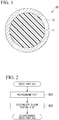
- Fig. 1 is a cross-sectional view of a silver-coated resin particle according to an embodiment of the present invention.
- a silver-coated resin particle 10 has a resin particle 11 and a silver coating layer 12 provided on a surface of the resin particle 11.
- an average value of a 10% compressive elastic modulus is in a range of 500 MPa or more and 15,000 MPa or less, and a variation coefficient of the 10% compressive elastic modulus is set to 30% or less.
- a silicone resin particle for example, a silicone resin particle, an aramid resin particle, a fluororesin particle, a polysulfone resin particle, a polyether resin particle, a polyimide resin particle, a polyamide-imide resin particle, an epoxy resin particle, a phenol resin particle, an acrylic resin particle, an acrylic-styrene copolymer particle, a polyurethane particle, and a resin particle having a core-shell structure can be used.
- a polysilsesquioxane (PSQ) resin particle and a polymethylsilsesquioxane (PMSQ) resin particle are exemplified.
- a polymetaphenylene isophthalamide (MPIA) resin particle and a polyparaphenylene terephthalamide (PPTA) resin particle are exemplified.
- the fluororesin resin particle a polytetrafluoroethylene (PTFE) resin particle, a tetrafluoroethylene-hexafluoropropylene-vinylidene fluoride (THV) resin particle, a polyvinylidene fluoride (PVDF)-based resin particle, a polychlorotrifluoroethylene (PCTFE)-based resin particle, a chlorotrifluoroethylene-ethylene (ECTFE)-based resin particle, a tetrafluoroethylene-ethylene (ETFE)-based resin particle, a tetrafluoroethylene-hexafluoropropylene (FEP)-based resin particle, a tetrafluoroethylene-perfluoroalkyl vinyl ether (PFA)
- polysulfone resin particle a polyphenylene sulfide (PPS) resin, a polyether-sulfone (PES) resin, and the like are exemplified.
- polyether resin particle a polyether ⁇ ether ⁇ ketone (PEEK) resin particle, a polyphenylene ether (PPE) resin particle, and the like are exemplified.
- phenol resin particle a novolac-type phenolic resin, a resol-type phenolic resin, a phenolic resin obtained by partially modifying a part of the above-described phenolic resin, and the like are exemplified.
- polyurethane particle a polyester-based polyurethane particle, a polyol-based polyurethane particle, and the like are exemplified.
- resin particle having a core-shell structure a resin particle having an acrylic resin core and a silicone resin shell is exemplified.
- the resin particle having an acrylic resin core and a silicone resin shell is produced by coating an acrylic resin particle with a silicone resin film.
- a 5% by mass-reduction temperature measured by a thermogravimetric analysis is preferably 265°C or higher.
- the 5% by mass-reduction temperature refers to a temperature at which the initial weight is reduced by 5% by mass at 25°C when a thermogravimetric analysis is carried out in an inert atmosphere on a resin particle from which moisture physically adsorbed in advance has been dried away at 120°C.
- the heat resistance of a conductive film formed of a conductive paste including the silver-coated resin particle 10 in which the 5% by mass-reduction temperature of the resin particle 11 is lower than 265°C as a conductive filler may degrade.
- the conductive film is also heated up to a soldering temperature, and, in a case where the 5% by mass-reduction temperature of the resin particle 11 is lower than 265°C, there is a concern that the resin particle 11 may thermally decompose and it may become difficult to maintain the shape of the conductive film.
- the shape of the resin particle 11 is not particularly limited.
- the resin particle 11 may be a spherical particle or may have, instead of a spherical shape, an irregular shape, for example, a flat shape, a plate shape, or a needle shape.
- the average particle diameter of the resin particle 11 is preferably in a range of 0.1 ⁇ m or more and 30 ⁇ m or less and more preferably in a range of 0.5 ⁇ m or more and 10 ⁇ m or less.
- the average particle diameter of the resin particle 11 is less than 0.1 ⁇ m, the resin particles 11 easily agglomerate, the surface area of the resin particles 11 becomes large, it is necessary to increase the amount of silver in order to obtain a conductive property required as a conductive filler, and there is a concern that it may become difficult to form a favorable silver coating layer 12.
- the average particle diameter of the resin particle 11 refers to an average value calculated from the diameters (particle diameters) of 300 resin particles measured using a scanning electron microscope (manufactured by Hitachi High-Tech Corporation, model name: SU-1500) and software (trade name: PC SEM) at a magnification of 5,000 times.
- the average particle diameter In a case where the resin particle 11 has a non-spherical shape, a value obtained by averaging the long sides of the resin particles 11 is referred to as the average particle diameter.
- the variation coefficient of the particle diameter is 30% or less and the particle diameters are uniform.
- the variation coefficient (unit: %) of the particle diameter of the resin particle 11 is a value obtained from the standard deviation and the average particle diameter of the above-described 300 resin particles 11 using an expression: [(standard deviation/average particle diameter of particle diameters) ⁇ 100].
- the content of the silver coating layer 12 in the silver-coated resin particle 10, that is, the content of silver in the silver-coated resin particle 10 is preferably in a range of 25% by mass or more and 90% by mass or less and more preferably in a range of 40% by mass or more and 85% by mass or less when the mass of the silver-coated resin particles 10 is set to 100.
- the content of silver is less than 25% by mass, there is a concern that a defect may be generated in the silver coating layer 12.
- the content of silver exceeds 90 parts by mass, the specific gravity of the silver-coated resin particle becomes too large, and there is a concern that it may be difficult to uniformly disperse the silver-coated resin particles in a conductive material such as a TIM material or a conductive spacer.
- the conductive property of the silver coating layer 12 is saturated, and thus there is a concern that it may be industrially disadvantageous to contain silver more than that.
- the average particle diameter of the silver-coated resin particle 10 is preferably set in a range of 0.2 ⁇ m to 30.5 ⁇ m and more preferably set in a range of 0.6 ⁇ m to 10.5 ⁇ m. This average particle diameter can be measured and calculated by the same method as the average particle diameter of the resin particle 11.
- the thickness of the silver coating layer 12 is preferably in a range of 0.1 ⁇ m or more and 0.5 ⁇ m or less.
- the thickness of the silver coating layer 12 is less than 0.1 ⁇ m, at the time of using the silver-coated resin particle 10 as a conductive filler, it becomes difficult to form a contact point between the silver-coated resin particles 10, and there is a concern that a sufficient conductive property cannot be imparted.
- the thickness of the silver coating layer 12 exceeds 0.5 ⁇ m, there is a concern that the silver-coated resin particle 10 may not easily deform.
- the 10% compressive elastic modulus of the silver-coated resin particle 10 is less than 500 MPa, it becomes too easy for the silver-coated resin particle 10 to deform, and the strength of a conductive film, a composite, or the like formed of a conductive material including the silver-coated resin particle 10 as a conductive filler decreases.
- the 10% compressive elastic modulus exceeds 15,000 MPa, the silver-coated resin particle 10 does not easily deform, and the relaxation capability for a stress becomes low.
- the 10% compressive elastic modulus of the silver-coated resin particle 10 is set in a range of 500 MPa or more and 15,000 MPa or less.
- the average value of the 10% compressive elastic modulus is particularly preferably in a range of 1,000 MPa or more and 15,000 MPa or less and particularly preferably in a range of 5,000 MPa or more and 12,000 MPa or less.
- the silver-coated resin particle 10 in which the variation coefficient of the 10% compressive elastic modulus of the silver-coated resin particle 10 exceeds 30% is used as a conductive filler for a conductive film, when a stress is applied to the conductive film, the stress is likely to be concentrated on a specific place in the conductive film, and the conductive film is likely to break.
- the variation coefficient of the 10% compressive elastic modulus of the silver-coated resin particle 10 is set to 30% or less.
- the variation coefficient is preferably set to 25% or less.
- the lower limit is not particularly limited and may be 0%.
- the average value of the 10% compressive elastic modulus of the silver-coated resin particle 10 is an arithmetic average value of the 10% compressive elastic modulus measured from 100 silver-coated resin particles 10.
- the variation coefficient (unit: %) of the 10% compressive elastic modulus of the silver-coated resin particle 10 is a value obtained from the arithmetic average value and the standard deviation of the 10% compressive elastic modulus of the above-described 100 silver-coated resin particles 10 using an expression: [(standard deviation of 10% compressive elastic modulus / arithmetic average value of 10% compressive elastic modulus) ⁇ 100].
- the 10% compressive elastic modulus of the silver-coated resin particle 10 is a compressive elastic modulus when the silver-coated resin particle 10 is compressed by 10% in one direction.
- Fig. 2 is a flowchart showing a method for producing a silver-coated resin particle according to an embodiment of the present invention.
- the method for producing the silver-coated resin particle according to the present embodiment has a pretreatment step S01 of carrying out a treatment for facilitating the precipitation of silver by electroless plating on a surface of a resin particle that serves as a base particle and an electroless silver plating step S02 of forming a silver coating layer on the resin particle by electroless silver plating.
- the resin particle that serves as the base particle preferably has an average value of the 10% compressive elastic modulus in a range of 450 MPa or more and 14,000 MPa or less and a variation coefficient of the 10% compressive elastic modulus of 30% or less.
- the average value and the variation rate of the 10% compressive elastic modulus of the resin particle are in the above-described ranges, it becomes easy to adjust the average value and the variation rate of the 10% compressive elastic modulus of the silver-coated resin particle to the above-described values.
- the variation rate of the 10% compressive elastic modulus increases due to the degree of crosslinking or polymerization of a resin configuring the particle or the variation in the amount of a monomer or an oligomer remaining in the resin.
- the variation of the 10% compressive elastic modulus of the resin particle is large, it is preferable to decrease the variation rate of the 10% compressive elastic modulus by decreasing the degree of polymerization of the resin configuring the particle or the variation in the amount of the monomer or the oligomer remaining in the resin with a treatment such as the heating of the resin particle.
- the pretreatment step S01 it is preferable to obtain catalyst-adsorbed resin particles by adsorbing a catalyst to the surfaces of the resin particles or obtain substituted layer-adsorbed resin particles by adsorbing a substituted layer.
- a catalyst palladium or a silver nanoparticle can be used.
- a metal nobler than silver such as tin or a compound thereof can be used.
- Palladium catalyst-adsorbed resin particles can be obtained by, for example, adding a palladium compound, hydrochloric acid, and a reducing agent to a slurry in which the resin particles are dispersed and precipitating palladium on the surfaces of the resin particles.
- a palladium compound such as palladium chloride, palladium sulfate, palladium nitrate, or a palladium ammine complex salt or the like can be used.
- a salt including a divalent tin ion such as stannous chloride or stannous sulfate, formalin, glucose, imidazole, Rochelle salt (sodium potassium tartrate), hydrazine and a derivative thereof, hydroquinone, L-ascorbic acid or formic acid, or the like can be used.
- Tin-substituted layer-adsorbed resin particles can be obtained by, for example, adding a tin compound and hydrochloric acid to a slurry in which the resin particles are dispersed and precipitating, for example, tin hydroxide or the like on the surface of the resin particles.
- a tin compound stannous chloride, stannous fluoride, stannous bromide, stannous iodide, or the like can be used.
- surface modification may be carried out by a plasma treatment, an ozone treatment, an acid treatment, an alkali treatment, an oxidant treatment, a silane treatment, or the like on the resin particles. This surface modification activates the surface of the resin particles and improves the adhesion between the catalyst or the substituted layer and the silver coating layer and the resin particles.
- a silver coating layer is formed on the catalyst-adsorbed resin particles or the substituted layer-adsorbed resin particles obtained in the pretreatment step S01 by electroless silver plating.
- a method of forming the silver coating layer by electroless silver plating (1) a method in which a slurry is prepared by injecting the catalyst-adsorbed resin particles or the substituted layer-adsorbed resin particles into an aqueous solution including a complexing agent, a reducing agent, and the like, and a silver salt aqueous solution containing an additive metal for increasing the recrystallization temperature (Sn, Cu, Bi, or Sb) or a salt thereof is added dropwise to this slurry, (2) a method in which a slurry is prepared by injecting the catalyst-adsorbed resin particles or the substituted layer-adsorbed resin particles into a silver salt aqueous solution including the additive metal for increasing the recrystallization temperature or a salt thereof and
- silver salt silver nitrate, silver dissolved in nitric acid, or the like can be used.
- complexing agent salts such as ammonia, ethylenediaminetetraacetic acid, ethylenediaminetetraacetic acid tetrasodium, nitrotriacetic acid, triethylenetetraamminehexaacetic acid, sodium thiosulfate, succinate, succinimide, citrate, and an iodide salt can be used.
- formalin, glucose, imidazole, Rochelle salt (sodium potassium tartrate), hydrazine and a derivative thereof, hydroquinone, L-ascorbic acid or formic acid, or the like can be used.
- formaldehyde is preferred, a mixture of two or more kinds of reducing agents including at least formaldehyde is more preferred, and a mixture of reducing agents including formaldehyde and glucose is most preferred.
- a surface treatment may be carried out on the obtained silver-coated resin particles.
- fatty acids such as stearic acid, isostearic acid, palmitic acid, and oleic acid, dicarboxylic acids such as maleic acid and succinic acid, carboxylic acid-based polymers such as polyacrylic acid, amine compounds such as dodecylamine and octadecylamine, amine-based polymers such as polyetheramine, sulfide compounds such as octadecyl disulfide, thiol compounds such as dodecanethiol, a silane coupling agent, and the like are exemplified.
- the surface treatment is carried out on the silver-coated resin particles, it is possible to improve the affinity to a binder or the like at the time of using the silver-coated resin particles as a conductive filler in uses described below.
- the silver-coated resin particle 10 of the present embodiment is excellent as a conductive filler and can be optimally applied as a conductive filler for, in particular, a conductive adhesive, a conductive film (sheet), a conductive rubber (elastomer), a conductive pressure-sensitive adhesive, a thermal interface material (TIM material) such as a heat dissipation sheet or a heat dissipation grease, or a conductive material such as a conductive spacer.
- a conductive adhesive e.g., a conductive adhesive
- sheet a conductive film
- elastomer elastomer
- a conductive pressure-sensitive adhesive e.g., a conductive pressure-sensitive adhesive
- TIM material such as a heat dissipation sheet or a heat dissipation grease
- a conductive material such as a conductive spacer.
- the conductive adhesive is classified into an isotropic conductive adhesive (ICA) and an anisotropic conductive adhesive (ACA).
- ICA isotropic conductive adhesive
- ACA anisotropic conductive adhesive
- the conductive adhesive has a paste form, a film form, or an ink form.
- the binder shrinks when the binder is cured, whereby the fillers come into contact with each other in all of the vertical direction, the horizontal direction, and a diagonal direction, and thus the filler comes into contact with a conductive substance to which connection is intended, thereby obtaining a conductive property. It is also possible to form a sheet with the isotropic conductive adhesive.
- the anisotropic conductive adhesive has a filler dispersed in a binder, and the anisotropic conductive adhesive is sandwiched between conductive substances to which connection is intended.
- the anisotropic conductive adhesive and the conductive substances to which connection is intended are pressurized in the vertical direction, whereby the filler between the conductive substances to which connection is intended and the conductive substances to which connection is intended come into contact with each other, and a conductive property is obtained.
- the fillers are disposed in the horizontal direction through the binder, which is an insulator, and do not come into contact with each other, and thus a conductive property is not obtained.
- the conductive adhesive examples include an anisotropic or isotropic conductive paste, an anisotropic or isotropic conductive ink, and the like.
- the conductive adhesive is prepared by uniformly mixing the silver-coated resin particle 10 and an insulating binder resin using a kneader such as a planetary mixer or a three-roll mill.
- the silver-coated resin particle 10 is uniformly dispersed in the insulating binder resin.
- the content of the silver-coated resin particle 10 is not particularly limited and is appropriately determined depending on the use or the like, but is preferably in a range of 0.5 to 90 parts by mass with respect to 100 parts by mass of the binder resin.
- the insulating binder resin in the conductive adhesive is not particularly limited, and examples thereof include a thermoplastic resin, a composition curing by heat or light such as a curable resin composition, and the like.
- examples of the thermoplastic resin include a styrene-butadiene block copolymer, an acrylic resin, an ethylene-vinyl acetate resin, and the like.
- the curable resin composition a resin composition containing an epoxy-based monomer or oligomer having a glycidyl group and a curing agent such as isocyanate is exemplified.
- the conductive film there is an anisotropic or isotropic conductive film formed in a film shape.
- the conductive film is produced by, first, producing a resin composition containing the silver-coated resin particle 10 dispersed in an insulating binder resin and then applying this resin composition to the surface of a support film such as PET.
- This resin composition is prepared by uniformly mixing the silver-coated resin particle 10 and the insulating binder resin using a kneader such as a planetary mixer or a three-roll mill.
- the silver-coated resin particle 10 is uniformly dispersed in the insulating binder resin on the support film.
- a resin composition including a resin such as an acrylic resin, a silicone resin, an epoxy resin, or a phenoxy resin or a mixture thereof as a main component is exemplified.
- the content of the silver-coated resin particles 10 in the resin composition in the conductive film is not particularly limited and is appropriately determined depending on the use or the like, but is preferably in a range of 0.5 to 90 parts by mass with respect to 100 parts by mass of the binder resin.
- the conductive rubber there is a conductive rubber formed in a sheet shape or a rectangular shape, which can be used as a heat dissipation sheet or a conductive connector.
- the conductive rubber is produced by vulcanization and forming carried out by, first, kneading a binder rubber, a vulcanizing agent, and the silver-coated resin particle 10 using a biaxial roll or the like and then carrying out heating or pressurization using a heating press or a dryer.
- the binder rubber in the conductive rubber nitrile rubber, acrylic rubber, styrene butadiene rubber, silicone rubber, fluoro-rubber, and the like are exemplified.
- the content of the silver-coated resin particle 10 in the composition in the conductive rubber is not particularly limited and is appropriately determined depending on the use or the like, but is preferably in a range of 0.5 to 90 parts by mass with respect to 100 parts by mass of the binder rubber.
- the conductive adhesive there is a conductive pressure-sensitive adhesive or conductive gel formed in a sheet shape or a rectangular shape, which can be used as an electric contact material, a heat dissipation sheet, and an electrode.
- the conductive pressure-sensitive adhesive is produced by, first, producing a pressure-sensitive adhesive composition containing the silver-coated resin particle 10 dispersed in a pressure-sensitive adhesive that serves as an insulating binder, and then applying the pressure-sensitive adhesive composition to the surface of a support film such as PET.
- a support film such as PET.
- the binder pressure-sensitive adhesive in the conductive adhesive an acrylic pressure-sensitive adhesive, a urethane-based pressure-sensitive adhesive, a silicone-based pressure-sensitive adhesive, and the like are exemplified.
- the content of the silver-coated resin particle 10 in the composition in the conductive pressure-sensitive adhesive is not particularly limited and is appropriately determined depending on the use or the like, but is preferably in a range of 0.5 to 90 parts by mass with respect to 100 parts by mass of the binder pressure-sensitive adhesive.
- the heat dissipation grease there is a grease obtained by mixing a nonvolatile base oil and the silver-coated resin particle 10, which can be used as a heat dissipation material.
- the heat dissipation grease is prepared by uniformly mixing the base oil and the silver-coated resin particle 10 using a kneader such as a planetary mixer or a three-roll mill.
- a silicone oil-based base oil, a mineral oil-based base oil, a synthetic hydrocarbon-based base oil, an ester-based base oil, an ether-based base oil, a glycol-based base oil, a combination thereof, and the like are exemplified.
- the content of the silver-coated resin particle 10 in the composition in the heat dissipation grease is not particularly limited, and is appropriately determined depending on the use or the like, but is preferably in a range of 0.5 to 90 parts by mass with respect to 100 parts by mass of the base oil.
- the conductive spacer vertically and electrically connects wiring portions of two upper and lower substrates sandwiching a liquid crystal material in a liquid crystal display device and is used with the gap between the substrates maintained at a predetermined scale.
- the conductive spacer is produced by, first, adding the silver-coated resin particle 10 to an insulating binder resin such as a thermosetting resin or an ultraviolet-curable adhesive, then, uniformly mixing the silver-coated resin particle 10 and the binder resin with a kneader such as a planetary mixer or a three-roll mill to prepare a resin composition, and then applying the resin composition to any one or both of the wiring portions of the two upper and lower substrates to stick the two substrates together.
- the content of the silver-coated resin particle 10 is not particularly limited and is appropriately determined depending on the use or and the like, but is preferably in a range of 2 to 10 parts by mass with respect to 100 parts by mass of the binder resin.
- the TIM material or the conductive spacer including the silver-coated resin particle 10 of the present embodiment even when a high shear force is applied thereto at the time of kneading the mixture of the silver-coated resin particle 10 and the insulating binder resin, a cleavage or a cracks is not easily generated in the silver coating layer 12 or the silver coating layer 12 does not easily peel from the resin particle 11, and the conductive property thereof further improves. Therefore, in a case where the silver-coated resin particle 10 of the present embodiment is used in, for example, an anisotropic conductive adhesive, it is possible to avid a short circuit of anisotropic conduction (in the horizontal direction), and the reliability improves.
- the average value of the 10% compressive elastic modulus is in a range of 500 MPa or more and 15,000 MPa or less, the variation coefficient of the 10% compressive elastic modulus is as low as 30% or less, and the variation of the 10% compressive elastic modulus is small, and thus the relaxation capability for a stress is high. Therefore, a conductive material such as a TIM material or a conductive spacer including the silver-coated resin particle 10 of the present embodiment has a high strength against a stress.
- Spherical acrylic-styrene copolymer particles having an average particle diameter of 3 ⁇ m were heated in a vacuum at 250°C for five hours to adjust the degree of crosslinking of the particles.
- the acrylic-styrene copolymer particles after the heating had an average value of the 10% compressive elastic modulus of 5,600 MPa and a variation coefficient of 4.5%.
- Silver-coated resin particles were produced by the following method using the heated acrylic-styrene copolymer particles as base particles.
- a stannous chloride aqueous solution was prepared by mixing 10 parts by mass of stannous chloride, 15 parts by mass of hydrochloric acid having a concentration of 35%, and 300 parts by mass of ion-exchanged water. While maintaining the temperature of the prepared stannous chloride aqueous solution at 30°C, 10 parts by mass of the acrylic-styrene copolymer particles were injected into this solution and stirred for one hour to adsorb a tin-substituted layer to the surfaces of the acrylic-styrene copolymer particles. The generated tin-substituted layer-adsorbed acrylic-styrene copolymer particles were collected by filtration and washed with water.
- Particles having a degree of crosslinking adjusted by heating spherical silicone resin particles having an average particle diameter of 4 ⁇ m in a nitrogen atmosphere at 350°C for five hours were used as base particles.
- the silicone resin particles after the heating had an average value of the 10% compressive elastic modulus of 4,470 MPa and a variation coefficient of 5.8%.
- Tin-substituted layer-adsorbed silicone resin particles were obtained in the same manner as in Example 1.
- Ten parts by mass of the tin-substituted layer-adsorbed silicone resin particles obtained in the pretreatment step were dispersed in 500 parts by mass of ion-exchanged water to prepare a slurry.
- 6 parts by mass of ethylenediaminetetraacetic acid tetrasodium (complexing agent), 8 parts by mass of a 37% by mass formaldehyde aqueous solution (reducing agent), and 15 parts by mass of D-glucose were added to 510 parts by mass of the prepared slurry and stirred to prepare a tin-substituted layer-adsorbed silicone resin particle slurry including the complexing agent and the reducing agent.
- the silver nitrate aqueous solution was added dropwise to the slurry to form a silver coating layer on the surfaces of the silicone resin particles, thereby obtaining a silver-coated resin particle slurry.
- the obtained slurry was washed with water, filtered, and dried to obtain silver-coated silicone resin particles.
- Silver-coated resin particles were produced in the same manner as in Present Invention Example 1 except that particles shown in Table 1 were used as the base particles, and, in the electroless silver plating step, the blending proportions of tin-substituted layer-adsorbed resin particles, aqueous solutions including a complexing agent and a reducing agent, and silver nitrate aqueous solutions were changed such that the contents of silver in the silver-coated resin particles were, similarly, set to values shown in Table 1.
- Styrene resin particles having an average particle diameter of 8 ⁇ m, an average value of the 10% compressive elastic modulus of 3,080 MPa, and a variation coefficient of 30.5% were used as the base particles.
- silver-coated resin particles were produced in the same manner as in Present Invention Example 1 except that, in the electroless silver plating step, the blending proportions of tin-substituted layer-adsorbed resin particles, an aqueous solution including a complexing agent and a reducing agent, and a silver nitrate aqueous solution were changed such that the content of silver in the silver-coated resin particles reached 45% by mass.
- silicone resin particles having an average particle diameter of 4 ⁇ m, an average value of the 10% compressive elastic modulus of 4,020 MPa, and a variation coefficient of 42% were used.
- silver-coated resin particles were produced in the same manner as in Present Invention Example 1 except that, in the electroless silver plating step, the blending proportions of tin-substituted layer-adsorbed resin particles, an aqueous solution including a complexing agent and a reducing agent, and a silver nitrate aqueous solution were changed such that the content of silver in the silver-coated resin particles reached 75% by mass.
- silicone resin particles having an average particle diameter of 2 ⁇ m, an average value of the 10% compressive elastic modulus of 5,300 MPa, and a variation coefficient of 27.2% were used.
- silver-coated resin particles were produced in the same manner as in Present Invention Example 1 except that, in the electroless silver plating step, the blending proportions of tin-substituted layer-adsorbed resin particles, an aqueous solution including a complexing agent and a reducing agent, and a silver nitrate aqueous solution were changed such that the content of silver in the silver-coated resin particles reached 88% by mass.
- polyurethane particles having an average particle diameter of 7 ⁇ m, an average value of the 10% compressive elastic modulus of 400 MPa, and a variation coefficient of 10.8% were used.
- silver-coated resin particles were produced in the same manner as in Present Invention Example 1 except that, in the electroless silver plating step, the blending proportions of tin-substituted layer-adsorbed resin particles, an aqueous solution including a complexing agent and a reducing agent, and a silver nitrate aqueous solution were changed such that the content of silver in the silver-coated resin particles reached 88% by mass.
- the silver-coated resin particles and dilute nitric acid were mixed together to dissolve the silver coating layer and then filtered to remove the resin particles.
- the amount of silver in the obtained silver coating layer-dissolved liquid was measured with an inductively coupled plasma emission spectrometer and was converted to the content of silver of the silver-coated resin particles.
- the 10% compressive elastic modulus of the silver-coated resin particles was calculated as described below.
- a compression test was carried out on one silver-coated resin particle with a plane indenter under conditions of a load change rate of 0.3 mN/s and 20°C using a micro-compression tester (manufactured by Fischer Instruments, model No.: HM500), and the displacement and the load when the silver-coated resin particle was compressed by 10% with respect to the major axis were measured.
- the measurement start point (zero point) of the displacement was not a point at which the micro-compression tester was recognized to come into contact with the silver-coated resin particle, but a point at which the micro-compression tester changed the load imparted to the silver-coated resin particle.
- a silver-coated resin particle-containing resin film was produced as described below.
- thermosetting epoxy resin composition a composition having an elongation at break of 10% when cured in a pure state was used.
- the prepared silver-coated resin particle-containing epoxy resin composition paste was applied to a TEFLON (registered trademark) plate using an applicator and then heated under conditions of 150°C for 2 hours to cure a silver-coated resin particle-containing epoxy resin composition.
- the cured silver-coated resin particle-containing epoxy resin composition was peeled off from the TEFLON plate, and 50 test films for a tensile test were produced based on the method described in JIS K 7161 (Plastics-Determination of tensile properties (Part 1: General principles)).
- a tensile test was carried out using a universal testing machine (manufactured by Shimadzu Corporation, AUTOGRAPH) by a method based on the method described in JIS K7161, and a strain when the test film broke was calculated.
- a strain when the test film broke was measured, and the proportion of test films having a strain at break of 1.0% or less was calculated.
- the proportions of the test films having a strain at break after curing of 1.0% or less increased. This is considered to be because the variation coefficient of the 10% compressive elastic modulus of the silver-coated resin particles became too large, and thus the silver-coated resin particles did not uniformly deform when the stress was imparted thereto, and the relaxation capability of the silver-coated resin particles degraded.
- the proportions of the test films having a strain at break after curing of 1.0% or less increased. This is considered to be because the 10% compressive elastic modulus of the silver-coated resin particles became too large, and thus the relaxation capability of the silver-coated resin particles degraded.
- the proportions of the test films having a strain at break after curing of 1.0% or less decreased. This is considered to be because the relaxation capability of the silver-coated resin particles was high.
Landscapes
- Chemical & Material Sciences (AREA)
- Chemical Kinetics & Catalysis (AREA)
- Organic Chemistry (AREA)
- Materials Engineering (AREA)
- Metallurgy (AREA)
- Mechanical Engineering (AREA)
- General Chemical & Material Sciences (AREA)
- Engineering & Computer Science (AREA)
- Polymers & Plastics (AREA)
- Health & Medical Sciences (AREA)
- Medicinal Chemistry (AREA)
- Inorganic Chemistry (AREA)
- Compositions Of Macromolecular Compounds (AREA)
- Conductive Materials (AREA)
- Non-Insulated Conductors (AREA)
- Processes Of Treating Macromolecular Substances (AREA)
- Chemically Coating (AREA)
Applications Claiming Priority (2)
| Application Number | Priority Date | Filing Date | Title |
|---|---|---|---|
| JP2018019519 | 2018-02-06 | ||
| PCT/JP2019/002636 WO2019155924A1 (ja) | 2018-02-06 | 2019-01-28 | 銀被覆樹脂粒子 |
Publications (2)
| Publication Number | Publication Date |
|---|---|
| EP3751586A1 true EP3751586A1 (de) | 2020-12-16 |
| EP3751586A4 EP3751586A4 (de) | 2021-11-10 |
Family
ID=67548085
Family Applications (1)
| Application Number | Title | Priority Date | Filing Date |
|---|---|---|---|
| EP19750869.0A Pending EP3751586A4 (de) | 2018-02-06 | 2019-01-28 | Silberbeschichtetes harzteilchen |
Country Status (7)
| Country | Link |
|---|---|
| US (1) | US11542381B2 (de) |
| EP (1) | EP3751586A4 (de) |
| JP (1) | JPWO2019155924A1 (de) |
| KR (1) | KR102506730B1 (de) |
| CN (1) | CN111512400B (de) |
| TW (1) | TWI771559B (de) |
| WO (1) | WO2019155924A1 (de) |
Cited By (1)
| Publication number | Priority date | Publication date | Assignee | Title |
|---|---|---|---|---|
| EP4379357A4 (de) * | 2021-07-28 | 2025-08-13 | Sumitomo Chemical Co | Herstellungsverfahren für laminat |
Families Citing this family (7)
| Publication number | Priority date | Publication date | Assignee | Title |
|---|---|---|---|---|
| CN114450352B (zh) * | 2019-10-04 | 2023-12-26 | 三键有限公司 | 导电性树脂组合物 |
| CN115698379B (zh) * | 2020-07-03 | 2024-12-20 | 三菱材料电子化成株式会社 | 金属包覆树脂粒子及其制造方法、包含金属包覆树脂粒子的导电性膏以及导电性膜 |
| JP2023143691A (ja) * | 2022-03-24 | 2023-10-06 | パナソニックIpマネジメント株式会社 | 触媒層付酸化スズ積層膜およびその形成方法 |
| CN115810439B (zh) * | 2022-12-02 | 2024-12-10 | 广东华智芯电子科技有限公司 | 含银复合浆料及其制备方法以及电子互连材料 |
| GR1010610B (el) * | 2022-12-16 | 2024-01-23 | Εθνικο Μετσοβιο Πολυτεχνειο, | Υβριδικα θερμοσκληρυνομενα σφαιριδια μικροκλιμακας με εναποθεσεις νανοσωματιδιων αργυρου |
| JP2025158480A (ja) * | 2024-04-04 | 2025-10-17 | 三菱マテリアル電子化成株式会社 | 銀被覆樹脂粒子、および、フィラー含有ペースト |
| CN119763897B (zh) * | 2024-12-18 | 2026-02-10 | 北京工业大学 | 一种低温无压烧结型银浆料及其制备方法和应用 |
Family Cites Families (26)
| Publication number | Priority date | Publication date | Assignee | Title |
|---|---|---|---|---|
| JPS57196559A (en) * | 1981-05-28 | 1982-12-02 | Nippon Telegr & Teleph Corp <Ntt> | Semiconductor integrated circuit |
| US5503932A (en) * | 1993-11-17 | 1996-04-02 | Nippon Shokubai Co., Ltd. | Organic-inorganic composite particles and production process therefor |
| JP2921740B2 (ja) * | 1995-01-13 | 1999-07-19 | ソニーケミカル株式会社 | 異方性導電接着剤用導電粒子及びそれを用いた異方性導電接着剤 |
| US6359667B1 (en) * | 1998-02-09 | 2002-03-19 | Catalysts & Chemicals Industries Co., Ltd. | Organopolysiloxane fine particles, process for the production thereof and liquid crystal displays |
| JP2001011503A (ja) * | 1999-06-25 | 2001-01-16 | Catalysts & Chem Ind Co Ltd | 新規な導電性微粒子、および該微粒子の用途 |
| JP2001216841A (ja) * | 1999-11-26 | 2001-08-10 | Sekisui Chem Co Ltd | 導電性微粒子及び導電接続構造体 |
| JP4278374B2 (ja) * | 2002-09-24 | 2009-06-10 | 積水化学工業株式会社 | 導電性微粒子、導電性微粒子の製造方法および導電材料 |
| WO2005002002A1 (ja) | 2003-06-25 | 2005-01-06 | Hitachi Chemical Co., Ltd. | 回路接続材料、これを用いたフィルム状回路接続材料、回路部材の接続構造及びその製造方法 |
| JP2006040546A (ja) * | 2004-07-22 | 2006-02-09 | Sanyo Chem Ind Ltd | 導電性微粒子 |
| KR100667374B1 (ko) * | 2004-12-16 | 2007-01-10 | 제일모직주식회사 | 이방전도성 접속부재용 고분자 수지 미립자, 전도성 미립자 및 이를 포함한 이방 전도성 접속재료 |
| KR100650284B1 (ko) * | 2005-02-22 | 2006-11-27 | 제일모직주식회사 | 도전성능이 우수한 고분자 수지 미립자, 전도성 미립자 및이를 포함한 이방 전도성 접속재료 |
| KR101321636B1 (ko) * | 2010-07-02 | 2013-10-23 | 세키스이가가쿠 고교가부시키가이샤 | 절연성 입자 부착 도전성 입자, 이방성 도전 재료 및 접속 구조체 |
| JP2012190795A (ja) * | 2011-02-25 | 2012-10-04 | Sekisui Chem Co Ltd | 異方性導電材料、接続構造体及び接続構造体の製造方法 |
| JP5596767B2 (ja) * | 2011-11-02 | 2014-09-24 | 積水化学工業株式会社 | 異方性導電材料及び接続構造体 |
| JP6014438B2 (ja) * | 2012-09-21 | 2016-10-25 | 株式会社日本触媒 | 導電性微粒子及びそれを用いた異方性導電材料 |
| JP2014207193A (ja) * | 2013-04-15 | 2014-10-30 | 株式会社日本触媒 | 導電性微粒子及びそれを用いた異方性導電材料 |
| JP2015176824A (ja) | 2014-03-17 | 2015-10-05 | 株式会社日本触媒 | 導電性微粒子 |
| KR101860378B1 (ko) * | 2014-04-04 | 2018-05-23 | 쿄세라 코포레이션 | 열경화성 수지 조성물, 반도체 장치 및 전기·전자 부품 |
| JP6719859B2 (ja) * | 2014-11-14 | 2020-07-08 | 株式会社日本触媒 | 重合体微粒子、導電性微粒子および異方性導電材料 |
| WO2016080407A1 (ja) * | 2014-11-17 | 2016-05-26 | 積水化学工業株式会社 | 導電性粒子、導電材料及び接続構造体 |
| JP6639823B2 (ja) | 2015-01-13 | 2020-02-05 | 三菱マテリアル電子化成株式会社 | 銀被覆樹脂粒子及びその製造方法並びにそれを用いた導電性ペースト |
| JP6665514B2 (ja) * | 2015-01-28 | 2020-03-13 | 三菱マテリアル株式会社 | 銀被覆粒子の製造方法 |
| JP6657924B2 (ja) * | 2015-12-22 | 2020-03-04 | 三菱マテリアル株式会社 | 伝熱部材及び伝熱部材の製造方法 |
| JP2018002916A (ja) * | 2016-07-05 | 2018-01-11 | 三菱マテリアル株式会社 | 導電性樹脂組成物 |
| JP2018019519A (ja) | 2016-07-28 | 2018-02-01 | 東芝三菱電機産業システム株式会社 | 誘導電動機および誘導電動機システム |
| JP6216474B1 (ja) * | 2017-03-07 | 2017-10-18 | 宇部エクシモ株式会社 | 有機無機複合粒子 |
-
2019
- 2019-01-28 KR KR1020207018647A patent/KR102506730B1/ko active Active
- 2019-01-28 WO PCT/JP2019/002636 patent/WO2019155924A1/ja not_active Ceased
- 2019-01-28 US US16/959,552 patent/US11542381B2/en active Active
- 2019-01-28 CN CN201980006709.3A patent/CN111512400B/zh active Active
- 2019-01-28 EP EP19750869.0A patent/EP3751586A4/de active Pending
- 2019-01-28 JP JP2019570682A patent/JPWO2019155924A1/ja active Pending
- 2019-01-29 TW TW108103229A patent/TWI771559B/zh active
Cited By (1)
| Publication number | Priority date | Publication date | Assignee | Title |
|---|---|---|---|---|
| EP4379357A4 (de) * | 2021-07-28 | 2025-08-13 | Sumitomo Chemical Co | Herstellungsverfahren für laminat |
Also Published As
| Publication number | Publication date |
|---|---|
| WO2019155924A1 (ja) | 2019-08-15 |
| EP3751586A4 (de) | 2021-11-10 |
| TW201940738A (zh) | 2019-10-16 |
| CN111512400B (zh) | 2023-03-10 |
| KR102506730B1 (ko) | 2023-03-06 |
| CN111512400A (zh) | 2020-08-07 |
| KR20200092369A (ko) | 2020-08-03 |
| TWI771559B (zh) | 2022-07-21 |
| US11542381B2 (en) | 2023-01-03 |
| JPWO2019155924A1 (ja) | 2020-12-03 |
| US20210363322A1 (en) | 2021-11-25 |
Similar Documents
| Publication | Publication Date | Title |
|---|---|---|
| US11542381B2 (en) | Silver-coated resin particle | |
| JP5151902B2 (ja) | 異方導電性フィルム | |
| JP6173215B2 (ja) | 導電性粒子、樹脂粒子、導電材料及び接続構造体 | |
| TW201840418A (zh) | 樹脂組成物、樹脂組成物之製造方法及構造體 | |
| WO2013125388A1 (ja) | 異方性導電接続材料、接続構造体、接続構造体の製造方法及び接続方法 | |
| JP2022163030A (ja) | 銀被覆エラストマー粒子の製造方法 | |
| TW201800510A (zh) | 導電糊及使用彼所形成之導電膜 | |
| CN1252206C (zh) | 粘接剂和粘接膜 | |
| JPWO2009017001A1 (ja) | 回路部材の接続構造 | |
| JP7020029B2 (ja) | 導電性接着フィルム | |
| JP7093639B2 (ja) | 銀被覆樹脂粒子 | |
| JP2008094908A (ja) | 電極接続用接着剤 | |
| US12434263B2 (en) | Metal coated resin particles, method for producing same, conductive paste containing metal coated resin particles, and conductive film | |
| JP2014026971A (ja) | 導電性粒子、導電材料及び接続構造体 | |
| JP4918908B2 (ja) | 異方導電性フィルム | |
| US20210040357A1 (en) | Electroconductive adhesive composition, cured product of electroconductive adhesive, and electronic device | |
| Yim et al. | Electrical and mechanical properties of multiwalled carbon nanotubes-reinforced solderable polymer nanocomposites | |
| JP7125319B2 (ja) | 銀被覆樹脂粒子及びその製造方法 | |
| JP2023044269A (ja) | 導電性接着剤 | |
| WO2020203295A1 (ja) | 接着剤組成物 | |
| JP2024145454A (ja) | 銀被覆樹脂粒子、銀被覆樹脂粒子の製造方法 | |
| TW201903786A (zh) | 樹脂組合物及導通檢查用構件 | |
| KR20050076891A (ko) | 절연성 도전입자, 이의 제조방법 및 이를 포함하는 이방성도전재료 | |
| JPH11250962A (ja) | 導電部材及びこれを用いてなる低抵抗コネクタ | |
| JP2008084545A (ja) | 電極接続用接着剤 |
Legal Events
| Date | Code | Title | Description |
|---|---|---|---|
| STAA | Information on the status of an ep patent application or granted ep patent |
Free format text: STATUS: THE INTERNATIONAL PUBLICATION HAS BEEN MADE |
|
| PUAI | Public reference made under article 153(3) epc to a published international application that has entered the european phase |
Free format text: ORIGINAL CODE: 0009012 |
|
| STAA | Information on the status of an ep patent application or granted ep patent |
Free format text: STATUS: REQUEST FOR EXAMINATION WAS MADE |
|
| 17P | Request for examination filed |
Effective date: 20200708 |
|
| AK | Designated contracting states |
Kind code of ref document: A1 Designated state(s): AL AT BE BG CH CY CZ DE DK EE ES FI FR GB GR HR HU IE IS IT LI LT LU LV MC MK MT NL NO PL PT RO RS SE SI SK SM TR |
|
| AX | Request for extension of the european patent |
Extension state: BA ME |
|
| DAV | Request for validation of the european patent (deleted) | ||
| DAX | Request for extension of the european patent (deleted) | ||
| REG | Reference to a national code |
Ref country code: DE Ref legal event code: R079 Free format text: PREVIOUS MAIN CLASS: H01B0005000000 Ipc: C23C0018160000 |
|
| A4 | Supplementary search report drawn up and despatched |
Effective date: 20211012 |
|
| RIC1 | Information provided on ipc code assigned before grant |
Ipc: C23C 18/30 20060101ALI20211006BHEP Ipc: H01B 5/14 20060101ALI20211006BHEP Ipc: C23C 18/44 20060101ALI20211006BHEP Ipc: C23C 18/20 20060101ALI20211006BHEP Ipc: C23C 18/16 20060101AFI20211006BHEP |
|
| STAA | Information on the status of an ep patent application or granted ep patent |
Free format text: STATUS: EXAMINATION IS IN PROGRESS |
|
| 17Q | First examination report despatched |
Effective date: 20240913 |