EP3662475B1 - Partielles auffrischungsverfahren zum einsparen von speicherauffrischungsleistung - Google Patents
Partielles auffrischungsverfahren zum einsparen von speicherauffrischungsleistung Download PDFInfo
- Publication number
- EP3662475B1 EP3662475B1 EP18731945.4A EP18731945A EP3662475B1 EP 3662475 B1 EP3662475 B1 EP 3662475B1 EP 18731945 A EP18731945 A EP 18731945A EP 3662475 B1 EP3662475 B1 EP 3662475B1
- Authority
- EP
- European Patent Office
- Prior art keywords
- refresh
- bank
- mask
- segment
- par
- Prior art date
- Legal status (The legal status is an assumption and is not a legal conclusion. Google has not performed a legal analysis and makes no representation as to the accuracy of the status listed.)
- Active
Links
Images





Classifications
-
- G—PHYSICS
- G11—INFORMATION STORAGE
- G11C—STATIC STORES
- G11C11/00—Digital stores characterised by the use of particular electric or magnetic storage elements; Storage elements therefor
- G11C11/21—Digital stores characterised by the use of particular electric or magnetic storage elements; Storage elements therefor using electric elements
- G11C11/34—Digital stores characterised by the use of particular electric or magnetic storage elements; Storage elements therefor using electric elements using semiconductor devices
- G11C11/40—Digital stores characterised by the use of particular electric or magnetic storage elements; Storage elements therefor using electric elements using semiconductor devices using transistors
- G11C11/401—Digital stores characterised by the use of particular electric or magnetic storage elements; Storage elements therefor using electric elements using semiconductor devices using transistors forming cells needing refreshing or charge regeneration, i.e. dynamic cells
- G11C11/406—Management or control of the refreshing or charge-regeneration cycles
- G11C11/40622—Partial refresh of memory arrays
-
- G—PHYSICS
- G11—INFORMATION STORAGE
- G11C—STATIC STORES
- G11C11/00—Digital stores characterised by the use of particular electric or magnetic storage elements; Storage elements therefor
- G11C11/21—Digital stores characterised by the use of particular electric or magnetic storage elements; Storage elements therefor using electric elements
- G11C11/34—Digital stores characterised by the use of particular electric or magnetic storage elements; Storage elements therefor using electric elements using semiconductor devices
- G11C11/40—Digital stores characterised by the use of particular electric or magnetic storage elements; Storage elements therefor using electric elements using semiconductor devices using transistors
- G11C11/401—Digital stores characterised by the use of particular electric or magnetic storage elements; Storage elements therefor using electric elements using semiconductor devices using transistors forming cells needing refreshing or charge regeneration, i.e. dynamic cells
- G11C11/406—Management or control of the refreshing or charge-regeneration cycles
- G11C11/40611—External triggering or timing of internal or partially internal refresh operations, e.g. auto-refresh or CAS-before-RAS triggered refresh
-
- G—PHYSICS
- G11—INFORMATION STORAGE
- G11C—STATIC STORES
- G11C11/00—Digital stores characterised by the use of particular electric or magnetic storage elements; Storage elements therefor
- G11C11/21—Digital stores characterised by the use of particular electric or magnetic storage elements; Storage elements therefor using electric elements
- G11C11/34—Digital stores characterised by the use of particular electric or magnetic storage elements; Storage elements therefor using electric elements using semiconductor devices
- G11C11/40—Digital stores characterised by the use of particular electric or magnetic storage elements; Storage elements therefor using electric elements using semiconductor devices using transistors
- G11C11/401—Digital stores characterised by the use of particular electric or magnetic storage elements; Storage elements therefor using electric elements using semiconductor devices using transistors forming cells needing refreshing or charge regeneration, i.e. dynamic cells
- G11C11/406—Management or control of the refreshing or charge-regeneration cycles
- G11C11/40615—Internal triggering or timing of refresh, e.g. hidden refresh, self refresh, pseudo-SRAMs
-
- G—PHYSICS
- G11—INFORMATION STORAGE
- G11C—STATIC STORES
- G11C11/00—Digital stores characterised by the use of particular electric or magnetic storage elements; Storage elements therefor
- G11C11/21—Digital stores characterised by the use of particular electric or magnetic storage elements; Storage elements therefor using electric elements
- G11C11/34—Digital stores characterised by the use of particular electric or magnetic storage elements; Storage elements therefor using electric elements using semiconductor devices
- G11C11/40—Digital stores characterised by the use of particular electric or magnetic storage elements; Storage elements therefor using electric elements using semiconductor devices using transistors
- G11C11/401—Digital stores characterised by the use of particular electric or magnetic storage elements; Storage elements therefor using electric elements using semiconductor devices using transistors forming cells needing refreshing or charge regeneration, i.e. dynamic cells
- G11C11/406—Management or control of the refreshing or charge-regeneration cycles
- G11C11/40618—Refresh operations over multiple banks or interleaving
-
- G—PHYSICS
- G11—INFORMATION STORAGE
- G11C—STATIC STORES
- G11C7/00—Arrangements for writing information into, or reading information out from, a digital store
- G11C7/10—Input/output [I/O] data interface arrangements, e.g. I/O data control circuits, I/O data buffers
- G11C7/1006—Data managing, e.g. manipulating data before writing or reading out, data bus switches or control circuits therefor
-
- G—PHYSICS
- G11—INFORMATION STORAGE
- G11C—STATIC STORES
- G11C7/00—Arrangements for writing information into, or reading information out from, a digital store
- G11C7/10—Input/output [I/O] data interface arrangements, e.g. I/O data control circuits, I/O data buffers
- G11C7/1015—Read-write modes for single port memories, i.e. having either a random port or a serial port
- G11C7/1045—Read-write mode select circuits
-
- G—PHYSICS
- G11—INFORMATION STORAGE
- G11C—STATIC STORES
- G11C2211/00—Indexing scheme relating to digital stores characterized by the use of particular electric or magnetic storage elements; Storage elements therefor
- G11C2211/401—Indexing scheme relating to cells needing refreshing or charge regeneration, i.e. dynamic cells
- G11C2211/406—Refreshing of dynamic cells
-
- G—PHYSICS
- G11—INFORMATION STORAGE
- G11C—STATIC STORES
- G11C8/00—Arrangements for selecting an address in a digital store
- G11C8/12—Group selection circuits, e.g. for memory block selection, chip selection, array selection
Definitions
- the field of the disclosed subject matter relates to memory devices.
- the field of the disclosed subject matter relates to partial refresh operations in memory devices to save power.
- DRAM dynamic random access memories
- US2005/068826 A1 relates to a method of refreshing several memory banks of a memory device that receives command signals from a memory controller.
- the method includes monitoring command signals received by a memory device and refreshing the several memory banks based on the monitored command signals. So as to avoid unnecessary power consumption for refreshing particular ones of the several memory banks with irrelevant contents.
- US2012/026813 A1 discusses a device which includes a plurality of memory areas each including a plurality of memory cells required to perform refresh of information stored therein by a plurality of sense amplifiers, a first control circuit determining, in connection with one refresh requirement signal at a time, a number of refresh target memory areas to produce a determined number, a second control circuit controlling, in accordance with the one refresh requirement signal at a time, refresh operation with respect to the refresh-target memory areas, and a third control circuit adjusting, in connection with the refresh operation, an active time-out time interval according to the determined number.
- the active time-out time interval indicates a time interval from a first time instant when the sense amplifiers are activated to a second time instant when word lines related to the refresh-target memory areas are inactivated.
- US2010/182864 A1 discloses that to provide a plurality of memory banks, each of which is divided into a plurality of segments; a bank address register that designates a memory bank that becomes a refresh target; a segment address register that designates a segment that becomes a refresh target; and a refresh control circuit that prohibits a refresh operation of the memory bank or the segment not designated by at least one of the bank address register and the segment address register.
- This semiconductor device is capable of designating whether to perform a refresh operation not only in a memory bank unit but also in a segment unit within the memory bank, and thus it achieves a further reduction of the power consumption.
- each memory block has a plurality of memory cells, and word lines and bit lines connected to the memory cells.
- Precharge Switches connect the bit lines to a precharge line.
- a Switch control circuit controls an operation of the pre charge switches and sets a cutoff function that turns off connection switches in a standby period in which no access operation of the memory cells is performed. Since connections of the bit lines and the precharge switch and those of the bit lines and the sense amplifier are cut off in the standby period, if a short circuit failure is present between a word line and a bit line, a leak current can be prevented from flowing from the word line to a precharge voltage line and so on.
- US2002/191467 A1 discloses that data specifying details of refresh to be executed in the self-refresh mode is stored in a register circuit in a mode register. A refresh period and refresh region are determined according to data stored in register circuit and a refresh control circuit generates a control signal and a refresh address that are required for refresh. Stored data can be stably held in the self-refresh mode in which data holding is performed with reduced current consumption.
- a non-transitory computer-readable medium storing instructions to execute the method of independent claim 10 in accordance with independent claim 13 is also disclosed.
- a cell of a DRAM typically includes an access transistor and a capacitor. Data is stored as an electrically charge in the capacitor. Over time, the charge in the capacitor leaks. To retain the data in the leaky capacitor, periodic refreshes are performed which consume power. In mobile devices, power consumed to perform refreshes can be of a significant concern.
- DRAM devices including mobile DRAM devices usually support two refresh methods - self-refresh (SR) and auto-refresh (AR).
- SR is used when the DRAM device is in idle or low power state.
- LPDDR4 Low Power Double Data Rate 4
- a DRAM device enters and exits the SR mode when it receives self-refresh enter (SRE) and self-refresh exit (SRX) commands from a memory controller.
- the DRAM device includes a built-in timer which allows it to accommodate the self-refresh operation.
- the SDRAM device can retain data without receiving a refresh command from the memory controller.
- a mobile DRAM device provides a partial array self-refresh (PASR) function which executes a partial array refresh (PAR) during the SR mode.
- PASR partial array self-refresh
- the memory controller programs the mobile DRAM device to refresh only a portion of the memory through a PASR mask.
- the memory controller When the DRAM device is an active state, auto-refresh is used to retain the DRAM cell data.
- the memory controller provides an explicit refresh REF command to the mobile DRAM device.
- IDD5 auto-refresh current
- existing solutions focus on controlling the auto refresh rate tREFI based on temperature. As an illustration, as the device's temperature decreases, the auto refresh rate may also slow down, for example, to half the normal refresh rate or 2 ⁇ tREFI. In effect, the overall IDD5 consumption is reduced in conventional solutions by lengthening the time in between the refreshes, e.g., by slowing down the rate of the REF commands being issued.
- PAAR partial array auto-refresh
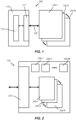
- the memory subsystem 100 includes a system-on-chip (SOC) 110 and one or more memory devices 120 communicating over a link 130.
- the link 130 may comprise a plurality of signal lines including lines to transmit unidirectional signals from the SOC 110 to the memory devices 120 (e.g., clock (CK), chip select (CS), command & address (CA), etc.) and bidirectional directional signals (data (DQ), data strobe (DQS), etc.).
- the SOC 110 includes a memory controller 115 and a PHY block 117.
- the SOC 110 and the memory devices 120 may be in communication with each other over the link 130.
- the memory controller 115 controls the memory devices 120 by exchanging signals to write data to and read data from the memory cells of the memory devices 120.
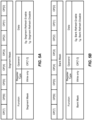
- Memory device 120 is illustrated in FIG. 2 .
- the memory device 120 may include an input/output (I/O) circuit 210 configured to interface with the memory controller 115.
- the I/O circuit 210 may be an example of means for interfacing.
- the memory controller 115 may be considered to be external to the memory device 120.
- the I/O circuit 210 may also be configured to write data to and read data from a plurality of memory cells.
- the memory cells of the memory device 120 are DRAM cells which store data as charges on capacitors.
- the plurality of memory cells may be partitioned into a plurality of memory banks 220 or simply banks 220. As seen, there may be P banks 220-1 ... 220-P, where P may be any integer greater than zero.
- the memory cells in each bank 220 may be further partitioned into a plurality of blocks or segments. Note that the memory cells within a bank may be segmented in various ways including by row addresses, by column address, or a combination there of.
- the memory device 120 further includes a plurality of mode registers (MR) 230.
- the mode registers 230 define the behavior of the memory device 120. As seen, there may be M mode registers 230-1 ... 230-M, where M may be any integer greater than zero.
- Each mode register 230 is a write type, a read type, or a read/write type.
- the SOC 110 e.g., the memory controller 115
- the memory controller 115 issues also a mode register read (MRR) command to designate a particular read or read/write type mode register, and the I/O circuit 210 reads from the designated mode register and provides the read value to the memory controller 115.
- MRR mode register read
- the memory device 120 may be configured to be in a self-refresh (SR) mode or in an auto-refresh (AR) mode.
- SR self-refresh
- AR auto-refresh
- the memory device 120 enters and exits the SR mode upon respectively receiving the self-refresh-enter (SRE) and the self-refresh-exit (SRX) commands from the memory controller 115.
- SRE self-refresh-enter
- SRX self-refresh-exit
- the memory device 120 when the memory device 120 is in the SR mode, the memory device 120 (e.g., the I/O circuit 210 or some other component) is configured to refresh the memory cells without receiving refresh (REF) commands from the memory controller 115. In this mode, the memory device 120 may generate the necessary refresh pulses through a built-in timer (not shown), and thereby negate the need for the memory controller 115 to issue explicit REF commands.
- the SR mode may be considered as a low power refresh mode since the SOC 110 can be put into an idle state to reduce power consumption.
- the memory controller 115 controls the refresh operation through issuing the REF commands.
- the I/O circuit 210 may be configured to refresh the memory cells upon receiving the REF command from the memory controller 115.
- the auto-refresh current e.g., IDD5
- the memory device 120 includes a partial array refresh enable register and a partial array refresh mask register.
- the bits of the PAR enable register indicate whether one, both, or none of the partial array auto-refresh (PAAR) and the partial array self-refresh (PAAR) are enabled.
- a mask value in the PAR mask register indicates the portions of the memory cells in which the refresh operations are to be skipped as well as portions in which the refresh operations are to be performed.
- the PAR enable register comprises a plurality of enable bits including a PAAR enable bit and a PASR enable bit.
- the PAAR enable bit when set or unset, indicates that the PAAR is enabled or disabled.
- the PASR enable bit when set or unset, indicates that the PASR is enabled or disabled.
- One or more of the mode registers 230 are used to implement the PAR enable register. For each mode register 230 used to implement the PAR enable register, the memory controller 115 issues an MRW command along with a corresponding mode value. The I/O circuit 210 in turn may write the corresponding mode value to that mode register 230. In this way, the PAAR enable bit may be set or unset, and the PASR enable bit may be set or unset.
- FIG. 4 illustrates an example of a mode register 230 used to implement the PAR enable register.
- the mode register 230 for the PAR enable register comprises eight operand (OP) bits in which bits OP[1] and OP[0] respectively are the PAAR enable bit and the PASR enable bit.
- the PAAR enable bit when set or unset, indicates that the PAAR is enabled or disabled.
- the PASR enable bit when set or unset, indicates that the PASR is enabled or disabled.
- the value represented by the bits OP[1:0] of the PAR enable register may be referred to as the refresh enable value.
- the PAR mask register may include a plurality of segment mask bits, a plurality of bank mask bits, or both.
- the memory controller 115 may issue an MRW command along with a corresponding mode value.
- the I/O circuit 210 may write the corresponding mode value to that mode register 230. In this way, the mask value may be written to the PAR mask register.
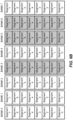
- FIGs. 5A and 5B illustrate examples of the mode registers 230 used to implement the PAR mask register.
- the PAR mask register may include both the segment mask bits and the bank mask bits.
- the eight segment mask bits may be implemented using one of the mode registers 230 as illustrated in FIG. 5A .
- Each OP bit in FIG. 5A may correspond to a segment of a bank, and may indicate whether the refresh is enabled or disabled for the corresponding segment.
- the eight bank mask bits may be implemented using another one of the mode registers 230 as illustrated in FIG. 5B .
- Each OP bit in FIG. 5B may correspond to a bank, and may indicate whether the refresh is enabled or disabled for the corresponding bank.
- the memory device 120 may refresh a subset of the memory cells selected in accordance with the PAR mask register upon receiving the REF command from the memory controller 115.
- the REF command can be a refresh-all-bank (REFab) command or a refresh-per-bank (REFpb) command. Different refresh operations may be carried out depending on the type of the REF command (REFab or REFpb) and on whether the PAR mask includes the segment and/or bank mask bits.
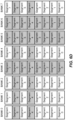
- the memory device 120 may, for each bank, skip the refreshing of each segment whose corresponding segment mask bit indicates that the refreshing is disabled for that segment.
- FIG. 6A An example is illustrated in which the shaded segments represent the segments for which the refresh has been skipped. It is seen that segments 4 and 6 for all for all eight banks are shaded.
- the memory device 120 may, for each bank, skip refreshing that bank when the corresponding bank mask bit indicates that the refreshing is disabled for that bank.
- FIG. 6B An example is illustrated in FIG. 6B in which all segments of banks 3, 5 and 6 are shaded.
- the refresh operation may be skipped for a segment of a bank when both of its corresponding bank and segments mask bits indicate that the refresh is disabled.
- FIG. 6C An example is illustrated in FIG. 6C . Note that if the refresh is skipped for a segment only when both of its bank and segment mask bits indicate that the refresh is disabled, then the first scenario of FIG. 6A may be recreated by enabling all bank mask bits while disabling the segment mask bits of segments 4 and 6, and the second scenario of FIG. 6B may be recreated by enabling all segment mask bits while disabling the bank mask bits of banks 3, 5 and 6.
- the refresh operation may be skipped for a segment of a bank when either of its corresponding bank mask bit or its corresponding segment mask bit indicates that the refresh is disabled.
- FIG. 6D An example is illustrated in FIG. 6D . Note that if the refresh is skipped for a segment of a bank when either of its bank or its segment mask bit indicates that the refresh is disabled, then the first scenario of FIG. 6A may be recreated by disabling all bank mask bits while disabling the segment mask bits of segments 4 and 6, and the second scenario of FIG. 6B may be recreated by disabling all segment mask bits while disabling the bank mask bits of banks 3, 5 and 6.
- the memory device 120 is in the AR mode, the PAAR is enabled, and the REF command is the refresh-per-bank REFpb command (as opposed to the REFab command in the scenarios of FIGs. 6A - 6D ).
- the segment masking assume that segment mask bits indicate that the refreshing is disabled for segments 4 and 6.
- the bank masking assume that the bank mask bits indicate that the refreshing is disabled for banks 3, 5 and 6.
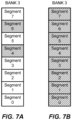
- bank 3 is the current bank for which the REFpb command applies.
- the memory device 120 may skip the refreshing of each segment of the current bank - bank 3 - whose corresponding segment mask bit indicates that the refresh is disabled.
- FIG. 7A An example is illustrated in FIG. 7A . As seen, the refresh operations for segments 4 and 6 of bank 3 are skipped. When only the segment masking is applied, then by stepping through eight REFpb commands, results similar to FIG. 6A may be achieved.
- the memory device 120 may skip refreshing of the current bank in its entirety if the corresponding bank mask bit indicates the refresh is disabled.
- FIG. 7B An example is illustrated in FIG. 7B . As seen, the refresh operations are skipped for all segments of bank 3. When only the bank masking is applied, then by stepping through eight REFpb commands, results similar to FIG. 6B may be achieved.
- both the bank and the segments mask bits may be applied for the REFpb command.
- the segment masking may be applied to skip refreshing of selected segments (e.g., segments 4 and 6) if the refresh is disabled for the current bank (e.g., bank 3).
- the refresh is enabled for the current bank, the entirety of the current bank may be refreshed regardless of the segment mask, i.e., no skipping of refresh for any segment of the current bank (not shown). In this instance, by stepping through eight REFpb commands, results similar to FIG. 6C may be achieved.
- the refresh is skipped for a segment of a bank when either of its bank or segment mask bit indicates that the refresh is disabled.
- the segment masking may be applied to skip refreshing of selected segments (e.g., segments 4 and 6) regardless of whether the refresh is enabled or disabled for the current bank (e.g., bank 3).
- the current bank e.g., bank 3
- the same PAR mask register i.e., the same one or more mode registers 230, may be used when the memory device 120 is in the SR mode. While in the SR mode, the memory device 120 may internally refresh the memory cells without the need to receive explicit REF commands from the memory controller 115. If the PASR is enabled (e.g., the PASR enable bit of the PAR enable register is set) while in the SR mode, the memory device 120 may refresh the subset of the memory cells (e.g., selected banks and/or segments) in accordance with the PAR mask register.
- the memory controller 115 may issue the MRW commands for the PAR enable register, and the I/O circuit 210 may write the refresh enable value in the PAR enable register to set the PASR enable bit.
- the memory controller 115 may also issue the MRW commands for the PAR mask register, and the I/O circuit 210 may write the mask value in the PAR mask register.
- the memory controller 115 may issue the MRW command(s) prior to commanding the mobile device 120 to enter the SR mode.
- the memory device 120 may, for each bank, skip the refreshing of each segment whose corresponding segment mask bit indicates that the refreshing is disabled for that segment. This is similar to the first scenario illustrated in FIG. 6A . If the PAR mask register only includes the bank mask bits or the segment masking is turned off, the memory device 120 may, for each bank, skip the refreshing of that bank when the corresponding bank mask bit indicates that the refresh is disabled for that bank. This is similar to the second scenario illustrated in FIG. 6B .
- the memory device 120 may skip the refresh operations for a segment of a bank when both of its corresponding bank and segments mask bits indicate that the refresh is disabled. This is similar to the third scenario illustrated in FIG. 6C .
- the refresh operation may be skipped for a segment of a bank when either of its corresponding bank mask bit or its corresponding segment mask bit indicates that the refresh is disabled. This is similar to the third scenario illustrated in FIG. 6D .
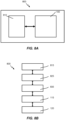
- FIG. 8A illustrates an example block diagram of a computing system 800 which may include a processor 810 and a memory subsystem 100.
- a computing system 800 may include a processor 810 and a memory subsystem 100.
- other components such as input devices (e.g., keyboards, touch pads), output devices (e.g., displays), and non-volatile storage (e.g., flash, disks) are not shown in FIG. 8A .
- the computing system 800 may include one or more processing units (e.g., CPUs), which are collectively represented by the processor 810.
- the memory subsystem 100 has been described in detail above. As seen, the processor 810 and the memory subsystem 100 may communicate with each other.
- FIG. 8A illustrates an example of a hardware makeup of the computing system 800.
- FIG. 8B illustrates an example of a hierarchical arrangement of the same computing system 800.
- the computing system 800 may comprise an application 815, a high level operating system (HLOS) kernel 825, a memory driver 835, the memory controller 115, and the memory device 120, which may be hierarchically arranged in which the application 815 is at the top and the memory device 120 is at the bottom of the hierarchy. Recall that there can be multiple memory devices 120 controlled by the memory controller 115. But for simplicity of description, one memory device 120 is shown.
- HLOS high level operating system
- the memory controller 115 and the memory device 120 may be largely or even exclusively hardware.
- the application 815, the HLOS kernel 825, and the memory driver 835 may be a combination of hardware and software.
- the processor 810 may execute instructions of the application 815, the HLOS kernel 825, and the memory driver 835.
- the memory controller 115 may be in communication with the memory driver 835.
- the higher level components - the application 815, the HLOS kernel and the memory driver 835 - utilize the PAAR feature of the memory devices 120 to save power consumption.
- the memory driver 835 may save attributes of the memory device 120 into a RAM partition table in which the whole of the memory cells of the memory device 120 are divided into regions.
- the RAM partition may be readable.
- the HLOS kernel may generate a memory topology including power attributes, performance attributes, and group physical addresses based on the RAM partition.
- a user interface may be provided to allow a user of the computing system 800 to configure the conditions upon which a power saving mode is triggered.
- the power saving mode can be triggered based on a threshold battery level.
- the power saving mode may be triggered when the computing system has been at low activity for a threshold amount of time. Multiple thresholds can be defined for different levels of active power savings.
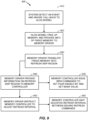
- FIG. 9 illustrates an example runtime interaction among the components of the computing system 800.
- an application 815 such as a system event-handler may detect an event and invoke a call-back to the HLOS kernel 825.
- a user may have exited a user application running on the computing system 800, and the user application data may have been saved to a non-volatile storage. In this instance, the user application data need not be maintained in the memory device 120.
- the HLOS kernel 825 may free up a memory region of the user application data and notify the memory driver 835 of the freed memory region.
- the memory driver 835 may translate the freed memory region into a refresh skip region, in which the refresh skip region comprises one or more portions of the memory cells of the memory device 120 that do not require refreshing.
- the memory driver 835 may provide information on the refresh skip region to the memory controller 115.
- the memory controller 115 may respond by issuing the MRW commands to the memory device 120 to set the PAAR enable bit of the PAR enable register, and to write a mask value corresponding to the refresh skip region to the PAR mask register.
- the memory driver 835 may instruct the memory controller 115 to adjust a refresh interval, e.g., tREFI, based on the freed memory region. For example, when refreshing is skipped for a non-zero portion of the memory cells, less power is consumed, and the memory device 120 can run cooler. Therefore, it may be safe to slow the refreshing rate.
- the memory controller 115 may respond by waiting at least the adjusted refresh interval after issuing one REF command and before issuing another REF command to the memory device 120.
- FIG. 10 illustrates various electronic devices that may be integrated with any of the aforementioned memory subsystem 100.
- a mobile phone device 1002, a laptop computer device 1004, a terminal device 1006 as well as wearable devices, portable systems, that require small form factor, extreme low profile may include a device/package 1000 that incorporates the memory subsystem 100 as described herein.
- the device/package 1000 may be, for example, any of the integrated circuits, dies, integrated devices, integrated device packages, integrated circuit devices, device packages, integrated circuit (IC) packages, package-on-package devices, system in package devices described herein.
- the devices 1002, 1004, 1006 illustrated in FIG. 10 are merely exemplary.
- Other electronic devices may also feature the device/package 1000 including, but not limited to, a group of devices (e.g., electronic devices) that includes mobile devices, hand-held personal communication systems (PCS) units, portable data units such as personal digital assistants, global positioning system (GPS) enabled devices, navigation devices, set top boxes, music players, video players, entertainment units, fixed location data units such as meter reading equipment, communications devices, smartphones, tablet computers, computers, wearable devices, servers, routers, electronic devices implemented in automotive vehicles (e.g., autonomous vehicles), or any other device that stores or retrieves data or computer instructions, or any combination thereof.
- a group of devices e.g., electronic devices
- devices that includes mobile devices, hand-held personal communication systems (PCS) units, portable data units such as personal digital assistants, global positioning system (GPS) enabled devices, navigation devices, set top boxes, music players, video players, entertainment units, fixed location data units such as meter reading equipment, communications devices, smartphones, tablet computers, computers, wearable devices, servers, routers, electronic devices implemented
- a software module may reside in RAM memory, flash memory, ROM memory, EPROM memory, EEPROM memory, registers, hard disk, a removable disk, a CD-ROM, or any other form of storage medium known in the art.
- An exemplary storage medium is coupled with the processor such that the processor can read information from, and write information to, the storage medium. In the alternative, the storage medium may be integral to the processor.
- an aspect can include a computer readable media embodying a method of forming a semiconductor device. Accordingly, the scope of the disclosed subject matter is not limited to illustrated examples and any means for performing the functionality described herein are included.
Landscapes
- Engineering & Computer Science (AREA)
- Microelectronics & Electronic Packaging (AREA)
- Computer Hardware Design (AREA)
- Dram (AREA)
Claims (13)
- Eine Vorrichtung, die ein SOC (System-on-Chip) (110) und eine Speichereinrichtung (120) aufweist, die konfiguriert sind, um miteinander über eine Verbindung (130) zu kommunizieren, wobei das SOC konfiguriert ist zum Vorsehen von Befehlen zu der Speichereinrichtung über die Verbindung (130),
wobei die Speichereinrichtung (120) aufweist:eine Vielzahl von DRAM-Speicherzellen und eine Vielzahl von Modusregistern (MR), die konfiguriert sind zum Implementieren eines Teilarrayauffrischung (Partial Array Refresh bzw. PAR)-Aktivierungsregisters und eines PAR-Maskierungsregisters, wobei das PAR-Aktivierungsregister eine Vielzahl von Aktivierungsbits aufweist, die ein Teilarray-Eigenauffrischung (Partial Array Self-Refresh bzw. PASR)-Aktivierungsbit und ein Teilarray-Autoauffrischung (Partial Array Auto-Refresh bzw. PAAR)-Aktivierungsbit umfassen, wobei das PASR-Aktivierungsbit im gesetzten Zustand angibt, dass eine PASR aktiviert ist, und wobei das PAAR Aktivierungsbit im gesetzten Zustand angibt, dass eine PAAR aktiviert ist, undwobei das SOC konfiguriert ist zum:Ausgeben eines Modusregisterschreibbefehls (Modus Register Write bzw. MRW-Befehls) mit einem entsprechenden Moduswert an die Speichereinrichtung für das Setzen des PAAR-Aktivierungsbits des PAR-Aktivierungsregisters,Ausgeben eines Modusregisterschreibbefehls (Modus Register Write bzw. MRW-Befehls) mit einem entsprechenden Moduswert an die Speichereinrichtung für das Veranlassen des Schreibens eines Maskierungswerts zu dem PAR-Maskierungsregister, wobei der Maskierungswert einem Auffrischungsüberspringungsbereich entspricht, undAusgeben eines Auffrischungsbefehls (Refresh bzw. REF-Befehls) an die Speichereinrichtung,wobei die Speichereinrichtung konfiguriert ist zum Überspringen der Auffrischung des Auffrischungsüberspringungsbereichs basierend auf dem PAR-Maskierungsregister, wenn der REF-Befehl durch das SOC ausgegeben wird und das PAAR-Aktivierungsbit gesetzt ist. - Vorrichtung nach Anspruch 1,wobei die Vielzahl von DRAM-Speicherzellen in eine Vielzahl von Bänken unterteilt ist und jede Bank eine Vielzahl von Segmenten aufweist,wobei das PAR-Maskierungsregister eine Vielzahl von Segmentmaskierungsbits aufweist, wobei jedes Segmentmaskierungsbit einem Segment einer Bank entspricht und angibt, ob eine Auffrischung für das entsprechende Segment aktiviert oder deaktiviert ist, undwobei die Speichereinrichtung konfiguriert ist zum Überspringen der Auffrischung jedes Segments einer aktuellen Bank, dessen entsprechendes Segmentmaskierungsbit angibt, dass die Auffrischung deaktiviert ist, wenn der REF-Befehl ein Auffrischung-pro-Bank-Befehl ist und das PAAR-Aktivierungsbit gesetzt ist.
- Vorrichtung nach Anspruch 2,wobei die Vielzahl von DRAM-Speicherzellen in eine Vielzahl von Bänken unterteilt ist,wobei das PAR-Maskierungsregister eine Vielzahl von Bankmaskierungsbits aufweist, wobei jedes Bankmaskierungsbit einer Bank entspricht und angibt, ob eine Auffrischung für die entsprechende Bank aktiviert oder deaktiviert ist, undwobei die Speichereinrichtung konfiguriert ist zum Überspringen der Auffrischung einer aktuellen Bank, wenn das entsprechende Bankmaskierungsbit angibt, dass die Auffrischung deaktiviert ist, wenn das PAAR aktiviert ist, und der REF-Befehl ein Auffrischung-pro-Bank-Befehl ist.
- Vorrichtung nach Anspruch 2,wobei die Vielzahl von DRAM-Speicherzellen in eine Vielzahl von Bänken unterteilt ist und jede Bank eine Vielzahl von Segmenten aufweist,wobei das PAR-Maskierungsregister eine Vielzahl von Segmentmaskierungsbits aufweist, wobei jedes Segmentmaskierungsbit einem Segment einer Bank entspricht und angibt, ob eine Auffrischung für das entsprechende Segment aktiviert oder deaktiviert ist, undwobei die Speichereinrichtung konfiguriert ist zum, für jede Bank, Überspringen der Auffrischung jedes Segments dieser Bank, dessen entsprechendes Segmentmaskierungsbit angibt, dass die Auffrischung deaktiviert ist, wenn die PAAR aktiviert ist, und der REF-Befehl ein Auffrischung-aller-Bänke-Befehl ist.
- Vorrichtung nach Anspruch 2,wobei die Vielzahl von DRAM-Speicherzellen in eine Vielzahl von Bänken unterteilt ist,wobei das PAR-Maskierungsregister eine Vielzahl von Bankmaskierungsbits aufweist, wobei jedes Bankmaskierungsbit einer Bank entspricht und angibt, ob eine Auffrischung für die entsprechende Bank aktiviert oder deaktiviert ist, undwobei die Speichereinrichtung konfiguriert ist zum Überspringen der Auffrischung jeder Bank, deren entsprechendes Bankmaskierungsbit angibt, dass die Auffrischung deaktiviert ist, wenn die PAAR aktiviert ist, und der REF-Befehl ein Auffrischung-aller-Bänke-Befehl ist.
- Vorrichtung nach Anspruch 2,wobei die Vielzahl von DRAM-Speicherzellen in eine Vielzahl von Bänken unterteilt ist und jede Bank eine Vielzahl von Segmenten aufweist,wobei das PAR-Maskierungsregister eine Vielzahl von Bankmaskierungsbits und eine Vielzahl von Segmentmaskierungsbits enthält, wobei jedes Bankmaskierungsbit einer Bank entspricht und angibt, ob eine Auffrischung für die entsprechende Bank aktiviert oder deaktiviert ist, und wobei jedes Segmentmaskierungsbit einem Segment entspricht und angibt, ob eine Auffrischung für das entsprechende Segment aktiviert oder deaktiviert ist, undwobei die Speichereinrichtung konfiguriert ist zum:Überspringen einer Auffrischung jeder Bank, deren entsprechendes Bankmaskierungsbit angibt, dass die Auffrischung für diese Bank deaktiviert ist, undfür jede Bank, deren entsprechendes Bankmaskierungsbit angibt, dass die Auffrischung für diese Bank aktiviert ist, Überspringen der Auffrischung jedes Segments dieser Bank, dessen entsprechendes Segmentmaskierungsbit angibt, dass die Auffrischung aktiviert ist, wenn die PASR aktiviert ist.
- Vorrichtung nach einem der vorstehenden Ansprüche, wobei das SOC konfiguriert ist zum:Empfangen des Auffrischungsüberspringungsbereichs von einem Speichertreiber eines Rechensystems, undAusgeben der MRS-Befehle für das Setzen des PAAR-Aktivierungsbits des PAR-Aktivierungsregisters und für das Setzen des Maskierungswerts, der den Auffrischungsüberspringungsbereich angibt, auf das Empfangen des Auffrischungsüberspringungsbereichs von dem Speichertreiber folgend.
- Vorrichtung nach Anspruch 1, wobei das SOC konfiguriert ist zum Anpassen einer Dauer zwischen dem Ausgeben der REF-Befehle an die Speichereinrichtung basierend auf dem Auffrischungsüberspringungsbereich.
- Vorrichtung nach einem der vorstehenden Ansprüche, wobei die Vorrichtung in einem Gerät integriert ist, das ein Musikwiedergabegerät, ein Videowiedergabeberät, eine Unterhaltungseinheit, ein Navigationsgerät, ein Kommunikationsgerät, ein Mobilgerät, ein Mobiltelefon, ein Smartphone, ein PDA (Personal Digital Assistant), ein Fixpositionsgerät, ein Tablet-Computer, ein Computer, ein tragbares Gerät, ein Laptop-Computer, ein Server oder ein Gerät in einem Kraftfahrzeug ist.
- Ein Verfahren zum Reduzieren des Speicherstromverbrauchs einer Vorrichtung, wobei die Vorrichtung ein SOC (System-on-Chip) (110) und eine Speichereinrichtung (120) aufweist, die konfiguriert sind, um miteinander über eine Verbindung (130) zu kommunizieren,wobei das SOC konfiguriert ist zum Vorsehen von Befehlen zu der Speichereinrichtung über die Verbindung,wobei die Speichereinrichtung aufweist:eine Vielzahl von DRAM-Speicherzellen und eine Vielzahl von Modusregistern (MR), die konfiguriert sind zum Implementieren eines Teilarrayauffrischung (Partial Array Refresh bzw. PAR)-Aktivierungsregisters und eines PAR-Maskierungsregisters, wobei das PAR-Aktivierungsregister eine Vielzahl von Aktivierungsbits aufweist, die ein Teilarray-Eigenauffrischung (Partial Array Self-Refresh bzw. PASR)-Aktivierungsbit und ein Teilarray-Autoauffrischung (Partial Array Auto-Refresh bzw. PAAR)-Aktivierungsbit umfassen, wobei das PASR-Aktivierungsbit im gesetzten Zustand angibt, dass eine PASR aktiviert ist, und wobei das PAAR Aktivierungsbit im gesetzten Zustand angibt, dass eine PAAR aktiviert ist, undwobei das Verfahren aufweist:Ausgeben, durch das SOC und für jedes für das Implementieren des PAR-Aktivierungsregisters verwendetes Modusregister, eines Modusregisterschreibbefehls (Modus Register Write bzw. MRW-Befehls) mit einem entsprechenden Moduswert an die Speichereinrichtung für das Setzen des PAAR-Aktivierungsbits des PAR-Aktivierungsregisters,Ausgeben, durch das SOC und für jedes für das Implementieren des PAR-Maskierungsregisters verwendetes Modusregister, eines Modusregisterschreibbefehls (Modus Register Write bzw. MRW-Befehls) mit einem entsprechenden Moduswert an die Speichereinrichtung für das Veranlassen des Schreibens eines Maskierungswerts zu dem PAR-Maskierungsregister, wobei der Maskierungswert einem Auffrischungsüberspringungsbereich entspricht,Ausgeben, durch das SOC, eines Auffrischungsbefehls (Refresh bzw. REF-Befehls) an die Speichereinrichtung, undÜberspringen, durch die Speichereinrichtung, der Auffrischung des Auffrischungsüberspringungsbereichs basierend auf dem PAR-Maskierungsregister, wenn der REF-Befehl durch das SOC ausgegeben wird und das PAAR-Aktivierungsbit gesetzt ist.
- Verfahren nach Anspruch 10,wobei die Vielzahl von Speicherzellen in eine Vielzahl von Bänken unterteilt ist und jede Bank eine Vielzahl von Segmenten aufweist,wobei das PAR-Maskierungsregister eine Vielzahl von Segmentmaskierungsbits aufweist, wobei jedes Segmentmaskierungsbit einem Segment einer Bank entspricht und angibt, ob eine Auffrischung für das entsprechende Segment aktiviert oder deaktiviert ist, undwobei das Überspringen der Auffrischung das Überspringen der Auffrischung jedes Segments einer aktuellen Bank, dessen entsprechendes Segmentmaskierungsbit angibt, dass die Auffrischung deaktiviert ist, wenn der REF-Befehl ein Auffrischung-pro-Bank-Befehl ist und das PAAR-Aktivierungsbit gesetzt ist, aufweist.
- Verfahren nach Anspruch 10,wobei die Vielzahl von Speicherzellen in eine Vielzahl von Bänken unterteilt ist und jede Bank eine Vielzahl von Segmenten aufweist,wobei das PAR-Maskierungsregister eine Vielzahl von Segmentmaskierungsbits aufweist, wobei jedes Segmentmaskierungsbit einem Segment einer Bank entspricht und angibt, ob eine Auffrischung für das entsprechende Segment aktiviert oder deaktiviert ist, undwobei das Überspringen der Auffrischung für jede Bank das Überspringen der Auffrischung jedes Segments dieser Bank, dessen entsprechendes Segmentmaskierungsbit angibt, dass die Auffrischung deaktiviert ist, wenn der REF-Befehl ein Auffrischung-aller-Bänke-Befehl ist und das PAAR-Aktivierungsbit gesetzt ist, aufweist.
- Ein nicht-transitorisches, computerlesbares Medium mit darauf gespeicherten computerausführbaren Befehlen, die bei einer Ausführung durch einen Prozessor den Prozessor veranlassen zum Implementieren des Verfahrens gemäß den Ansprüchen 10 bis 12.
Priority Applications (1)
| Application Number | Priority Date | Filing Date | Title |
|---|---|---|---|
| EP23164065.7A EP4220643A1 (de) | 2017-08-02 | 2018-05-25 | Partielle auffrischungstechnik zum einsparen der speicherauffrischungsleistung |
Applications Claiming Priority (2)
| Application Number | Priority Date | Filing Date | Title |
|---|---|---|---|
| US15/667,618 US10332582B2 (en) | 2017-08-02 | 2017-08-02 | Partial refresh technique to save memory refresh power |
| PCT/US2018/034659 WO2019027544A1 (en) | 2017-08-02 | 2018-05-25 | PARTIAL REFRESH TECHNOLOGY TO SAVE THE MEMORY REFRESHMENT POWER |
Related Child Applications (2)
| Application Number | Title | Priority Date | Filing Date |
|---|---|---|---|
| EP23164065.7A Division EP4220643A1 (de) | 2017-08-02 | 2018-05-25 | Partielle auffrischungstechnik zum einsparen der speicherauffrischungsleistung |
| EP23164065.7A Division-Into EP4220643A1 (de) | 2017-08-02 | 2018-05-25 | Partielle auffrischungstechnik zum einsparen der speicherauffrischungsleistung |
Publications (2)
| Publication Number | Publication Date |
|---|---|
| EP3662475A1 EP3662475A1 (de) | 2020-06-10 |
| EP3662475B1 true EP3662475B1 (de) | 2023-06-07 |
Family
ID=62631171
Family Applications (2)
| Application Number | Title | Priority Date | Filing Date |
|---|---|---|---|
| EP23164065.7A Pending EP4220643A1 (de) | 2017-08-02 | 2018-05-25 | Partielle auffrischungstechnik zum einsparen der speicherauffrischungsleistung |
| EP18731945.4A Active EP3662475B1 (de) | 2017-08-02 | 2018-05-25 | Partielles auffrischungsverfahren zum einsparen von speicherauffrischungsleistung |
Family Applications Before (1)
| Application Number | Title | Priority Date | Filing Date |
|---|---|---|---|
| EP23164065.7A Pending EP4220643A1 (de) | 2017-08-02 | 2018-05-25 | Partielle auffrischungstechnik zum einsparen der speicherauffrischungsleistung |
Country Status (7)
| Country | Link |
|---|---|
| US (4) | US10332582B2 (de) |
| EP (2) | EP4220643A1 (de) |
| CN (2) | CN110945589A (de) |
| BR (1) | BR112020001854A2 (de) |
| SG (1) | SG11201912352RA (de) |
| TW (1) | TWI691958B (de) |
| WO (1) | WO2019027544A1 (de) |
Families Citing this family (64)
| Publication number | Priority date | Publication date | Assignee | Title |
|---|---|---|---|---|
| US10490251B2 (en) | 2017-01-30 | 2019-11-26 | Micron Technology, Inc. | Apparatuses and methods for distributing row hammer refresh events across a memory device |
| US10332582B2 (en) | 2017-08-02 | 2019-06-25 | Qualcomm Incorporated | Partial refresh technique to save memory refresh power |
| CN112106138B (zh) | 2018-05-24 | 2024-02-27 | 美光科技公司 | 用于行锤击刷新采样的纯时间自适应采样的设备和方法 |
| US20190378564A1 (en) * | 2018-06-11 | 2019-12-12 | Nanya Technology Corporation | Memory device and operating method thereof |
| US11152050B2 (en) | 2018-06-19 | 2021-10-19 | Micron Technology, Inc. | Apparatuses and methods for multiple row hammer refresh address sequences |
| US10573370B2 (en) | 2018-07-02 | 2020-02-25 | Micron Technology, Inc. | Apparatus and methods for triggering row hammer address sampling |
| US10685696B2 (en) | 2018-10-31 | 2020-06-16 | Micron Technology, Inc. | Apparatuses and methods for access based refresh timing |
| CN113168861B (zh) | 2018-12-03 | 2024-05-14 | 美光科技公司 | 执行行锤刷新操作的半导体装置 |
| CN117198356A (zh) * | 2018-12-21 | 2023-12-08 | 美光科技公司 | 用于目标刷新操作的时序交错的设备和方法 |
| US10957377B2 (en) | 2018-12-26 | 2021-03-23 | Micron Technology, Inc. | Apparatuses and methods for distributed targeted refresh operations |
| US10770127B2 (en) | 2019-02-06 | 2020-09-08 | Micron Technology, Inc. | Apparatuses and methods for managing row access counts |
| GB2578932B (en) * | 2019-02-14 | 2021-02-24 | Imagination Tech Ltd | Allocation of memory |
| US11615831B2 (en) * | 2019-02-26 | 2023-03-28 | Micron Technology, Inc. | Apparatuses and methods for memory mat refresh sequencing |
| US11043254B2 (en) | 2019-03-19 | 2021-06-22 | Micron Technology, Inc. | Semiconductor device having cam that stores address signals |
| US11227649B2 (en) | 2019-04-04 | 2022-01-18 | Micron Technology, Inc. | Apparatuses and methods for staggered timing of targeted refresh operations |
| US11264096B2 (en) | 2019-05-14 | 2022-03-01 | Micron Technology, Inc. | Apparatuses, systems, and methods for a content addressable memory cell with latch and comparator circuits |
| US11158364B2 (en) | 2019-05-31 | 2021-10-26 | Micron Technology, Inc. | Apparatuses and methods for tracking victim rows |
| US11069393B2 (en) | 2019-06-04 | 2021-07-20 | Micron Technology, Inc. | Apparatuses and methods for controlling steal rates |
| US10978132B2 (en) | 2019-06-05 | 2021-04-13 | Micron Technology, Inc. | Apparatuses and methods for staggered timing of skipped refresh operations |
| US11158373B2 (en) | 2019-06-11 | 2021-10-26 | Micron Technology, Inc. | Apparatuses, systems, and methods for determining extremum numerical values |
| US11139015B2 (en) | 2019-07-01 | 2021-10-05 | Micron Technology, Inc. | Apparatuses and methods for monitoring word line accesses |
| US10832792B1 (en) | 2019-07-01 | 2020-11-10 | Micron Technology, Inc. | Apparatuses and methods for adjusting victim data |
| US11386946B2 (en) | 2019-07-16 | 2022-07-12 | Micron Technology, Inc. | Apparatuses and methods for tracking row accesses |
| US10943636B1 (en) | 2019-08-20 | 2021-03-09 | Micron Technology, Inc. | Apparatuses and methods for analog row access tracking |
| US10964378B2 (en) | 2019-08-22 | 2021-03-30 | Micron Technology, Inc. | Apparatus and method including analog accumulator for determining row access rate and target row address used for refresh operation |
| US11200942B2 (en) | 2019-08-23 | 2021-12-14 | Micron Technology, Inc. | Apparatuses and methods for lossy row access counting |
| US11302374B2 (en) | 2019-08-23 | 2022-04-12 | Micron Technology, Inc. | Apparatuses and methods for dynamic refresh allocation |
| US12045113B2 (en) * | 2019-08-26 | 2024-07-23 | Micron Technology, Inc. | Bank configurable power modes |
| US11302377B2 (en) | 2019-10-16 | 2022-04-12 | Micron Technology, Inc. | Apparatuses and methods for dynamic targeted refresh steals |
| CN114902333A (zh) * | 2019-12-20 | 2022-08-12 | 拉姆伯斯公司 | 部分阵列刷新定时 |
| US11309010B2 (en) | 2020-08-14 | 2022-04-19 | Micron Technology, Inc. | Apparatuses, systems, and methods for memory directed access pause |
| US11380382B2 (en) | 2020-08-19 | 2022-07-05 | Micron Technology, Inc. | Refresh logic circuit layout having aggressor detector circuit sampling circuit and row hammer refresh control circuit |
| US11348631B2 (en) | 2020-08-19 | 2022-05-31 | Micron Technology, Inc. | Apparatuses, systems, and methods for identifying victim rows in a memory device which cannot be simultaneously refreshed |
| US11222682B1 (en) | 2020-08-31 | 2022-01-11 | Micron Technology, Inc. | Apparatuses and methods for providing refresh addresses |
| EP4002368A4 (de) | 2020-09-22 | 2022-05-25 | Changxin Memory Technologies, Inc. | Speicherdatenauffrischungsverfahren und steuerung dafür sowie speicher |
| CN114255799B (zh) * | 2020-09-22 | 2023-10-17 | 长鑫存储技术有限公司 | 存储器数据刷新方法及其控制器、存储器 |
| US11557331B2 (en) | 2020-09-23 | 2023-01-17 | Micron Technology, Inc. | Apparatuses and methods for controlling refresh operations |
| US11222686B1 (en) | 2020-11-12 | 2022-01-11 | Micron Technology, Inc. | Apparatuses and methods for controlling refresh timing |
| US11462291B2 (en) | 2020-11-23 | 2022-10-04 | Micron Technology, Inc. | Apparatuses and methods for tracking word line accesses |
| US11264079B1 (en) | 2020-12-18 | 2022-03-01 | Micron Technology, Inc. | Apparatuses and methods for row hammer based cache lockdown |
| US11482275B2 (en) | 2021-01-20 | 2022-10-25 | Micron Technology, Inc. | Apparatuses and methods for dynamically allocated aggressor detection |
| EP4033365B1 (de) * | 2021-01-25 | 2025-12-03 | Nordic Semiconductor ASA | Speicherrückhaltung für funkvorrichtungen |
| CN116897395A (zh) * | 2021-02-25 | 2023-10-17 | 华为技术有限公司 | 一种存储器的刷新方法、存储器、控制器及存储系统 |
| US11600314B2 (en) | 2021-03-15 | 2023-03-07 | Micron Technology, Inc. | Apparatuses and methods for sketch circuits for refresh binning |
| US12248356B2 (en) * | 2021-06-25 | 2025-03-11 | Intel Corporation | Techniques to reduce memory power consumption during a system idle state |
| KR102919051B1 (ko) | 2021-08-12 | 2026-01-28 | 삼성전자주식회사 | 호스트 장치 및 스토리지 장치의 구동 방법 및 스토리지 장치 |
| US11664063B2 (en) | 2021-08-12 | 2023-05-30 | Micron Technology, Inc. | Apparatuses and methods for countering memory attacks |
| US11688451B2 (en) | 2021-11-29 | 2023-06-27 | Micron Technology, Inc. | Apparatuses, systems, and methods for main sketch and slim sketch circuit for row address tracking |
| US12597459B2 (en) | 2021-12-29 | 2026-04-07 | Micron Technology, Inc. | Apparatuses and methods for row hammer counter mat |
| US12165687B2 (en) | 2021-12-29 | 2024-12-10 | Micron Technology, Inc. | Apparatuses and methods for row hammer counter mat |
| TWI796924B (zh) | 2022-01-05 | 2023-03-21 | 華邦電子股份有限公司 | 記憶體裝置 |
| CN114384996B (zh) * | 2022-01-14 | 2023-10-24 | 长鑫存储技术有限公司 | 电源控制电路及控制方法 |
| KR102668495B1 (ko) * | 2022-02-15 | 2024-05-23 | 주식회사 피델릭스 | 반도체 메모리 장치의 오토 리프레쉬 제한 회로 |
| US12332795B2 (en) * | 2022-04-12 | 2025-06-17 | Advanced Micro Devices, Inc. | Reducing probe filter accesses for processing in memory requests |
| US12112787B2 (en) | 2022-04-28 | 2024-10-08 | Micron Technology, Inc. | Apparatuses and methods for access based targeted refresh operations |
| US12125514B2 (en) | 2022-04-28 | 2024-10-22 | Micron Technology, Inc. | Apparatuses and methods for access based refresh operations |
| US20230359373A1 (en) * | 2022-05-03 | 2023-11-09 | Qualcomm Incorporated | Selective refresh for memory devices |
| US12340833B2 (en) | 2022-05-25 | 2025-06-24 | Changxin Memory Technologies, Inc. | Refresh control circuit, memory, and refresh control method |
| CN117174131A (zh) * | 2022-05-25 | 2023-12-05 | 长鑫存储技术有限公司 | 一种刷新控制电路、存储器和刷新控制方法 |
| KR20240059151A (ko) | 2022-10-27 | 2024-05-07 | 삼성전자주식회사 | 메모리 장치, 그것을 포함하는 메모리 시스템 및 그것의 동작 방법 |
| US12592271B2 (en) | 2022-12-22 | 2026-03-31 | Micron Technology, Inc. | Apparatuses and methods for increased reliability row hammer counts |
| US12380029B2 (en) | 2022-12-27 | 2025-08-05 | Advanced Micro Devices, Inc. | Condensed coherence directory entries for processing-in-memory |
| KR20240104989A (ko) | 2022-12-28 | 2024-07-05 | 삼성전자주식회사 | 저장 장치, 이의 동작 방법, 및 전자 장치 |
| CN116543806B (zh) * | 2023-06-13 | 2023-11-21 | 长鑫存储技术有限公司 | 刷新掩蔽信号生成电路、半导体存储装置及其刷新方法 |
Family Cites Families (63)
| Publication number | Priority date | Publication date | Assignee | Title |
|---|---|---|---|---|
| JP3400824B2 (ja) | 1992-11-06 | 2003-04-28 | 三菱電機株式会社 | 半導体記憶装置 |
| JP2001338489A (ja) | 2000-05-24 | 2001-12-07 | Mitsubishi Electric Corp | 半導体装置 |
| JP2002064150A (ja) * | 2000-06-05 | 2002-02-28 | Mitsubishi Electric Corp | 半導体装置 |
| JP5034149B2 (ja) | 2000-10-05 | 2012-09-26 | 富士通セミコンダクター株式会社 | 半導体メモリおよびその制御方法 |
| US6590822B2 (en) | 2001-05-07 | 2003-07-08 | Samsung Electronics Co., Ltd. | System and method for performing partial array self-refresh operation in a semiconductor memory device |
| JP2002373489A (ja) | 2001-06-15 | 2002-12-26 | Mitsubishi Electric Corp | 半導体記憶装置 |
| US6549479B2 (en) | 2001-06-29 | 2003-04-15 | Micron Technology, Inc. | Memory device and method having reduced-power self-refresh mode |
| US6738861B2 (en) | 2001-09-20 | 2004-05-18 | Intel Corporation | System and method for managing data in memory for reducing power consumption |
| KR100437610B1 (ko) | 2001-09-20 | 2004-06-30 | 주식회사 하이닉스반도체 | 정상 모드와 부분 어레이 셀프 리프레쉬 모드를 갖는저전력 반도체 메모리 장치 |
| DE10154770B4 (de) | 2001-11-08 | 2004-11-18 | Infineon Technologies Ag | Dynamische Speichervorrichtung mit einer Auswahleinrichtung für das selektive Ausblenden von nicht belegten Speicherzellen beim Refresh |
| US6650587B2 (en) | 2001-11-19 | 2003-11-18 | Micron Technology, Inc. | Partial array self-refresh |
| US6618314B1 (en) * | 2002-03-04 | 2003-09-09 | Cypress Semiconductor Corp. | Method and architecture for reducing the power consumption for memory devices in refresh operations |
| US7043599B1 (en) | 2002-06-20 | 2006-05-09 | Rambus Inc. | Dynamic memory supporting simultaneous refresh and data-access transactions |
| US6920523B2 (en) | 2002-10-07 | 2005-07-19 | Infineon Technologies Ag | Bank address mapping according to bank retention time in dynamic random access memories |
| JP4205396B2 (ja) | 2002-10-30 | 2009-01-07 | エルピーダメモリ株式会社 | 半導体集積回路装置 |
| JP2004273029A (ja) | 2003-03-10 | 2004-09-30 | Sony Corp | 記憶装置およびそれに用いられるリフレッシュ制御回路ならびにリフレッシュ方法 |
| US6912168B2 (en) | 2003-03-18 | 2005-06-28 | United Memories, Inc. | Non-contiguous masked refresh for an integrated circuit memory |
| US6853591B2 (en) | 2003-03-31 | 2005-02-08 | Micron Technology, Inc. | Circuit and method for decreasing the required refresh rate of DRAM devices |
| KR100605606B1 (ko) | 2003-05-29 | 2006-07-28 | 주식회사 하이닉스반도체 | 반도체 메모리 장치의 동기식 셀프 리프레쉬 제어 방법 및제어 회로 |
| US6956782B2 (en) | 2003-09-30 | 2005-10-18 | Infineon Technologies Ag | Selective bank refresh |
| KR100621619B1 (ko) | 2003-11-14 | 2006-09-13 | 삼성전자주식회사 | 리플레쉬 동작을 수행하는 반도체 메모리 장치 |
| US7345940B2 (en) * | 2003-11-18 | 2008-03-18 | Infineon Technologies Ag | Method and circuit configuration for refreshing data in a semiconductor memory |
| KR100653688B1 (ko) | 2004-04-29 | 2006-12-04 | 삼성전자주식회사 | 반도체 메모리 장치 및 이 장치의 리프레쉬 방법, 및 이장치를 위한 메모리 시스템 |
| KR100611774B1 (ko) | 2004-06-03 | 2006-08-10 | 주식회사 하이닉스반도체 | 반도체 기억 소자의 뱅크 베이스드 부분 어레이 셀프 리프레쉬 장치 및 방법 |
| KR20060084071A (ko) | 2005-01-17 | 2006-07-24 | 삼성전자주식회사 | 반도체 메모리에서의 리프레쉬 제어회로 및 그에 따른제어방법 |
| US7702839B2 (en) * | 2005-04-12 | 2010-04-20 | Nokia Corporation | Memory interface for volatile and non-volatile memory devices |
| US7492656B2 (en) * | 2006-04-28 | 2009-02-17 | Mosaid Technologies Incorporated | Dynamic random access memory with fully independent partial array refresh function |
| JP2008065971A (ja) | 2006-08-10 | 2008-03-21 | Fujitsu Ltd | 半導体メモリおよびメモリシステム |
| JP4299849B2 (ja) | 2006-08-22 | 2009-07-22 | エルピーダメモリ株式会社 | 半導体記憶装置及びそのリフレッシュ制御方法 |
| JP2008084426A (ja) | 2006-09-27 | 2008-04-10 | Fujitsu Ltd | 半導体メモリおよびシステム |
| JP4869011B2 (ja) | 2006-09-29 | 2012-02-01 | 富士通セミコンダクター株式会社 | メモリシステム |
| TWI493556B (zh) | 2006-12-22 | 2015-07-21 | Sidense Corp | 用於混合式記憶體陣列之遮罩可編程及反熔絲架構 |
| JP5098391B2 (ja) | 2007-03-28 | 2012-12-12 | 富士通セミコンダクター株式会社 | 半導体メモリ、システムおよび半導体メモリの動作方法 |
| US9071246B2 (en) * | 2007-09-14 | 2015-06-30 | Agate Logic, Inc. | Memory controller for heterogeneous configurable integrated circuits |
| KR100899394B1 (ko) * | 2007-10-31 | 2009-05-27 | 주식회사 하이닉스반도체 | 리프래쉬 제어 회로 |
| US8161356B2 (en) | 2008-03-28 | 2012-04-17 | Intel Corporation | Systems, methods, and apparatuses to save memory self-refresh power |
| US7983108B2 (en) | 2008-08-04 | 2011-07-19 | Micron Technology, Inc. | Row mask addressing |
| US8762656B2 (en) | 2008-12-30 | 2014-06-24 | Micron Technology, Inc. | Temperature alert and low rate refresh for a non-volatile memory |
| JP5599977B2 (ja) | 2009-01-22 | 2014-10-01 | ピーエスフォー ルクスコ エスエイアールエル | 半導体記憶装置 |
| JP2011034632A (ja) | 2009-07-31 | 2011-02-17 | Elpida Memory Inc | 半導体記憶装置及びそのテスト方法 |
| US8307270B2 (en) | 2009-09-03 | 2012-11-06 | International Business Machines Corporation | Advanced memory device having improved performance, reduced power and increased reliability |
| US20110296098A1 (en) | 2010-06-01 | 2011-12-01 | Dell Products L.P. | System and Method for Reducing Power Consumption of Memory |
| JP2012033228A (ja) | 2010-07-30 | 2012-02-16 | Elpida Memory Inc | 半導体装置および半導体装置の制御方法 |
| US9292426B2 (en) | 2010-09-24 | 2016-03-22 | Intel Corporation | Fast exit from DRAM self-refresh |
| US8705302B2 (en) | 2010-09-24 | 2014-04-22 | Samsung Electronics Co., Ltd. | Semiconductor memory devices having self-refresh capability |
| US20130100755A1 (en) * | 2011-10-21 | 2013-04-25 | Samsung Electronics Co., Ltd. | Semiconductor memory device implementing comprehensive partial array self refresh scheme |
| EP2620838B1 (de) | 2012-01-26 | 2015-04-22 | ST-Ericsson SA | Automatische, partielle Array-Selbstauffrischung |
| JP2013196740A (ja) | 2012-03-22 | 2013-09-30 | Toshiba Corp | 半導体記憶装置およびその駆動方法 |
| US9007862B2 (en) | 2012-07-12 | 2015-04-14 | Rambus Inc. | Reducing memory refresh exit time |
| US10157657B2 (en) | 2012-08-28 | 2018-12-18 | Rambus Inc. | Selective refresh with software components |
| TWI503662B (zh) | 2012-12-27 | 2015-10-11 | Ind Tech Res Inst | 記憶體控制裝置及方法 |
| US9383809B2 (en) | 2013-11-13 | 2016-07-05 | Qualcomm Incorporated | System and method for reducing memory I/O power via data masking |
| JP6425462B2 (ja) * | 2014-08-27 | 2018-11-21 | ルネサスエレクトロニクス株式会社 | 半導体装置 |
| US9418723B2 (en) | 2014-12-23 | 2016-08-16 | Intel Corporation | Techniques to reduce memory cell refreshes for a memory device |
| WO2016126264A1 (en) * | 2015-02-06 | 2016-08-11 | Hewlett Packard Enterprise Development Lp | Refreshing an identified partial array |
| US9607677B2 (en) | 2015-03-31 | 2017-03-28 | Micron Technology, Inc. | Apparatuses for resetting an address counter during refresh operations |
| US10268405B2 (en) | 2016-03-17 | 2019-04-23 | Mediatek, Inc. | Dynamic rank switching for low power volatile memory |
| US9824742B1 (en) | 2016-04-28 | 2017-11-21 | Qualcomm Incorporated | DRAM access in self-refresh state |
| KR102443274B1 (ko) | 2016-05-18 | 2022-09-16 | 에스케이하이닉스 주식회사 | 반도체장치 및 반도체시스템 |
| KR102650828B1 (ko) | 2016-05-20 | 2024-03-26 | 삼성전자주식회사 | 둘 이상의 프로세서에 의해 공유되는 메모리 장치 및 상기 메모리 장치를 포함하는 시스템 |
| US10198204B2 (en) | 2016-06-01 | 2019-02-05 | Advanced Micro Devices, Inc. | Self refresh state machine MOP array |
| KR102717098B1 (ko) | 2016-11-01 | 2024-10-15 | 삼성전자주식회사 | 단계별 저전력 상태들을 갖는 메모리 장치 |
| US10332582B2 (en) | 2017-08-02 | 2019-06-25 | Qualcomm Incorporated | Partial refresh technique to save memory refresh power |
-
2017
- 2017-08-02 US US15/667,618 patent/US10332582B2/en active Active
-
2018
- 2018-05-25 SG SG11201912352RA patent/SG11201912352RA/en unknown
- 2018-05-25 BR BR112020001854-6A patent/BR112020001854A2/pt not_active Application Discontinuation
- 2018-05-25 CN CN201880048140.2A patent/CN110945589A/zh active Pending
- 2018-05-25 EP EP23164065.7A patent/EP4220643A1/de active Pending
- 2018-05-25 WO PCT/US2018/034659 patent/WO2019027544A1/en not_active Ceased
- 2018-05-25 CN CN202311584807.XA patent/CN117524276A/zh active Pending
- 2018-05-25 EP EP18731945.4A patent/EP3662475B1/de active Active
- 2018-05-31 TW TW107118677A patent/TWI691958B/zh active
-
2019
- 2019-03-22 US US16/362,427 patent/US10726904B2/en active Active
-
2020
- 2020-06-19 US US16/907,103 patent/US11164618B2/en active Active
-
2021
- 2021-07-16 US US17/377,799 patent/US11631450B2/en active Active
Also Published As
| Publication number | Publication date |
|---|---|
| US11631450B2 (en) | 2023-04-18 |
| EP4220643A1 (de) | 2023-08-02 |
| US10332582B2 (en) | 2019-06-25 |
| TWI691958B (zh) | 2020-04-21 |
| CN110945589A (zh) | 2020-03-31 |
| US11164618B2 (en) | 2021-11-02 |
| US20200321051A1 (en) | 2020-10-08 |
| US20210343331A1 (en) | 2021-11-04 |
| SG11201912352RA (en) | 2020-02-27 |
| BR112020001854A2 (pt) | 2020-07-28 |
| CN117524276A (zh) | 2024-02-06 |
| TW201923764A (zh) | 2019-06-16 |
| US20190221252A1 (en) | 2019-07-18 |
| US10726904B2 (en) | 2020-07-28 |
| US20190043558A1 (en) | 2019-02-07 |
| EP3662475A1 (de) | 2020-06-10 |
| WO2019027544A1 (en) | 2019-02-07 |
Similar Documents
| Publication | Publication Date | Title |
|---|---|---|
| EP3662475B1 (de) | Partielles auffrischungsverfahren zum einsparen von speicherauffrischungsleistung | |
| US9761298B2 (en) | Method, apparatus and system for responding to a row hammer event | |
| KR101692128B1 (ko) | 리프레시 모드들 동안의 메모리 디바이스들에서의 전력 소비의 감소 | |
| US7395176B2 (en) | Memory controller for controlling a refresh cycle of a memory and a method thereof | |
| KR20170045795A (ko) | 메모리 장치 및 이를 포함하는 메모리 시스템 | |
| KR102376650B1 (ko) | 메모리 디바이스 | |
| KR100655288B1 (ko) | 셀프-리프레쉬 동작을 제어하는 로직 엠베디드 메모리 및그것을 포함하는 메모리 시스템 | |
| EP4141872A1 (de) | Speichersteuergerät und speichersystem damit | |
| US6931479B2 (en) | Method and apparatus for multi-functional inputs of a memory device | |
| US10325643B2 (en) | Method of refreshing memory device and memory system based on storage capacity | |
| HK40022895A (en) | Partial refresh technique to save memory refresh power | |
| US20240347096A1 (en) | Usage-Based Disturbance Counter Clearance | |
| US7721041B2 (en) | PSRAM and method for operating thereof |
Legal Events
| Date | Code | Title | Description |
|---|---|---|---|
| STAA | Information on the status of an ep patent application or granted ep patent |
Free format text: STATUS: UNKNOWN |
|
| STAA | Information on the status of an ep patent application or granted ep patent |
Free format text: STATUS: THE INTERNATIONAL PUBLICATION HAS BEEN MADE |
|
| PUAI | Public reference made under article 153(3) epc to a published international application that has entered the european phase |
Free format text: ORIGINAL CODE: 0009012 |
|
| STAA | Information on the status of an ep patent application or granted ep patent |
Free format text: STATUS: REQUEST FOR EXAMINATION WAS MADE |
|
| 17P | Request for examination filed |
Effective date: 20191217 |
|
| AK | Designated contracting states |
Kind code of ref document: A1 Designated state(s): AL AT BE BG CH CY CZ DE DK EE ES FI FR GB GR HR HU IE IS IT LI LT LU LV MC MK MT NL NO PL PT RO RS SE SI SK SM TR |
|
| AX | Request for extension of the european patent |
Extension state: BA ME |
|
| DAV | Request for validation of the european patent (deleted) | ||
| DAX | Request for extension of the european patent (deleted) | ||
| STAA | Information on the status of an ep patent application or granted ep patent |
Free format text: STATUS: EXAMINATION IS IN PROGRESS |
|
| 17Q | First examination report despatched |
Effective date: 20210128 |
|
| GRAP | Despatch of communication of intention to grant a patent |
Free format text: ORIGINAL CODE: EPIDOSNIGR1 |
|
| STAA | Information on the status of an ep patent application or granted ep patent |
Free format text: STATUS: GRANT OF PATENT IS INTENDED |
|
| RIC1 | Information provided on ipc code assigned before grant |
Ipc: G11C 8/12 20060101ALN20230116BHEP Ipc: G11C 7/10 20060101ALI20230116BHEP Ipc: G11C 11/406 20060101AFI20230116BHEP |
|
| INTG | Intention to grant announced |
Effective date: 20230202 |
|
| RIC1 | Information provided on ipc code assigned before grant |
Ipc: G11C 8/12 20060101ALN20230123BHEP Ipc: G11C 7/10 20060101ALI20230123BHEP Ipc: G11C 11/406 20060101AFI20230123BHEP |
|
| GRAS | Grant fee paid |
Free format text: ORIGINAL CODE: EPIDOSNIGR3 |
|
| GRAA | (expected) grant |
Free format text: ORIGINAL CODE: 0009210 |
|
| STAA | Information on the status of an ep patent application or granted ep patent |
Free format text: STATUS: THE PATENT HAS BEEN GRANTED |
|
| AK | Designated contracting states |
Kind code of ref document: B1 Designated state(s): AL AT BE BG CH CY CZ DE DK EE ES FI FR GB GR HR HU IE IS IT LI LT LU LV MC MK MT NL NO PL PT RO RS SE SI SK SM TR |
|
| REG | Reference to a national code |
Ref country code: GB Ref legal event code: FG4D |
|
| REG | Reference to a national code |
Ref country code: CH Ref legal event code: EP Ref country code: AT Ref legal event code: REF Ref document number: 1577409 Country of ref document: AT Kind code of ref document: T Effective date: 20230615 Ref country code: DE Ref legal event code: R096 Ref document number: 602018051021 Country of ref document: DE |
|
| REG | Reference to a national code |
Ref country code: NL Ref legal event code: FP |
|
| REG | Reference to a national code |
Ref country code: LT Ref legal event code: MG9D |
|
| PG25 | Lapsed in a contracting state [announced via postgrant information from national office to epo] |
Ref country code: SE Free format text: LAPSE BECAUSE OF FAILURE TO SUBMIT A TRANSLATION OF THE DESCRIPTION OR TO PAY THE FEE WITHIN THE PRESCRIBED TIME-LIMIT Effective date: 20230607 Ref country code: NO Free format text: LAPSE BECAUSE OF FAILURE TO SUBMIT A TRANSLATION OF THE DESCRIPTION OR TO PAY THE FEE WITHIN THE PRESCRIBED TIME-LIMIT Effective date: 20230907 Ref country code: ES Free format text: LAPSE BECAUSE OF FAILURE TO SUBMIT A TRANSLATION OF THE DESCRIPTION OR TO PAY THE FEE WITHIN THE PRESCRIBED TIME-LIMIT Effective date: 20230607 |
|
| REG | Reference to a national code |
Ref country code: AT Ref legal event code: MK05 Ref document number: 1577409 Country of ref document: AT Kind code of ref document: T Effective date: 20230607 |
|
| PG25 | Lapsed in a contracting state [announced via postgrant information from national office to epo] |
Ref country code: RS Free format text: LAPSE BECAUSE OF FAILURE TO SUBMIT A TRANSLATION OF THE DESCRIPTION OR TO PAY THE FEE WITHIN THE PRESCRIBED TIME-LIMIT Effective date: 20230607 Ref country code: LV Free format text: LAPSE BECAUSE OF FAILURE TO SUBMIT A TRANSLATION OF THE DESCRIPTION OR TO PAY THE FEE WITHIN THE PRESCRIBED TIME-LIMIT Effective date: 20230607 Ref country code: LT Free format text: LAPSE BECAUSE OF FAILURE TO SUBMIT A TRANSLATION OF THE DESCRIPTION OR TO PAY THE FEE WITHIN THE PRESCRIBED TIME-LIMIT Effective date: 20230607 Ref country code: HR Free format text: LAPSE BECAUSE OF FAILURE TO SUBMIT A TRANSLATION OF THE DESCRIPTION OR TO PAY THE FEE WITHIN THE PRESCRIBED TIME-LIMIT Effective date: 20230607 Ref country code: GR Free format text: LAPSE BECAUSE OF FAILURE TO SUBMIT A TRANSLATION OF THE DESCRIPTION OR TO PAY THE FEE WITHIN THE PRESCRIBED TIME-LIMIT Effective date: 20230908 |
|
| PG25 | Lapsed in a contracting state [announced via postgrant information from national office to epo] |
Ref country code: FI Free format text: LAPSE BECAUSE OF FAILURE TO SUBMIT A TRANSLATION OF THE DESCRIPTION OR TO PAY THE FEE WITHIN THE PRESCRIBED TIME-LIMIT Effective date: 20230607 |
|
| PG25 | Lapsed in a contracting state [announced via postgrant information from national office to epo] |
Ref country code: SK Free format text: LAPSE BECAUSE OF FAILURE TO SUBMIT A TRANSLATION OF THE DESCRIPTION OR TO PAY THE FEE WITHIN THE PRESCRIBED TIME-LIMIT Effective date: 20230607 |
|
| PG25 | Lapsed in a contracting state [announced via postgrant information from national office to epo] |
Ref country code: IS Free format text: LAPSE BECAUSE OF FAILURE TO SUBMIT A TRANSLATION OF THE DESCRIPTION OR TO PAY THE FEE WITHIN THE PRESCRIBED TIME-LIMIT Effective date: 20231007 |
|
| PG25 | Lapsed in a contracting state [announced via postgrant information from national office to epo] |
Ref country code: SM Free format text: LAPSE BECAUSE OF FAILURE TO SUBMIT A TRANSLATION OF THE DESCRIPTION OR TO PAY THE FEE WITHIN THE PRESCRIBED TIME-LIMIT Effective date: 20230607 Ref country code: SK Free format text: LAPSE BECAUSE OF FAILURE TO SUBMIT A TRANSLATION OF THE DESCRIPTION OR TO PAY THE FEE WITHIN THE PRESCRIBED TIME-LIMIT Effective date: 20230607 Ref country code: RO Free format text: LAPSE BECAUSE OF FAILURE TO SUBMIT A TRANSLATION OF THE DESCRIPTION OR TO PAY THE FEE WITHIN THE PRESCRIBED TIME-LIMIT Effective date: 20230607 Ref country code: PT Free format text: LAPSE BECAUSE OF FAILURE TO SUBMIT A TRANSLATION OF THE DESCRIPTION OR TO PAY THE FEE WITHIN THE PRESCRIBED TIME-LIMIT Effective date: 20231009 Ref country code: IS Free format text: LAPSE BECAUSE OF FAILURE TO SUBMIT A TRANSLATION OF THE DESCRIPTION OR TO PAY THE FEE WITHIN THE PRESCRIBED TIME-LIMIT Effective date: 20231007 Ref country code: EE Free format text: LAPSE BECAUSE OF FAILURE TO SUBMIT A TRANSLATION OF THE DESCRIPTION OR TO PAY THE FEE WITHIN THE PRESCRIBED TIME-LIMIT Effective date: 20230607 Ref country code: CZ Free format text: LAPSE BECAUSE OF FAILURE TO SUBMIT A TRANSLATION OF THE DESCRIPTION OR TO PAY THE FEE WITHIN THE PRESCRIBED TIME-LIMIT Effective date: 20230607 Ref country code: AT Free format text: LAPSE BECAUSE OF FAILURE TO SUBMIT A TRANSLATION OF THE DESCRIPTION OR TO PAY THE FEE WITHIN THE PRESCRIBED TIME-LIMIT Effective date: 20230607 |
|
| PG25 | Lapsed in a contracting state [announced via postgrant information from national office to epo] |
Ref country code: PL Free format text: LAPSE BECAUSE OF FAILURE TO SUBMIT A TRANSLATION OF THE DESCRIPTION OR TO PAY THE FEE WITHIN THE PRESCRIBED TIME-LIMIT Effective date: 20230607 |
|
| REG | Reference to a national code |
Ref country code: DE Ref legal event code: R097 Ref document number: 602018051021 Country of ref document: DE |
|
| PLBE | No opposition filed within time limit |
Free format text: ORIGINAL CODE: 0009261 |
|
| STAA | Information on the status of an ep patent application or granted ep patent |
Free format text: STATUS: NO OPPOSITION FILED WITHIN TIME LIMIT |
|
| PG25 | Lapsed in a contracting state [announced via postgrant information from national office to epo] |
Ref country code: DK Free format text: LAPSE BECAUSE OF FAILURE TO SUBMIT A TRANSLATION OF THE DESCRIPTION OR TO PAY THE FEE WITHIN THE PRESCRIBED TIME-LIMIT Effective date: 20230607 |
|
| PG25 | Lapsed in a contracting state [announced via postgrant information from national office to epo] |
Ref country code: SI Free format text: LAPSE BECAUSE OF FAILURE TO SUBMIT A TRANSLATION OF THE DESCRIPTION OR TO PAY THE FEE WITHIN THE PRESCRIBED TIME-LIMIT Effective date: 20230607 |
|
| 26N | No opposition filed |
Effective date: 20240308 |
|
| PG25 | Lapsed in a contracting state [announced via postgrant information from national office to epo] |
Ref country code: SI Free format text: LAPSE BECAUSE OF FAILURE TO SUBMIT A TRANSLATION OF THE DESCRIPTION OR TO PAY THE FEE WITHIN THE PRESCRIBED TIME-LIMIT Effective date: 20230607 Ref country code: IT Free format text: LAPSE BECAUSE OF FAILURE TO SUBMIT A TRANSLATION OF THE DESCRIPTION OR TO PAY THE FEE WITHIN THE PRESCRIBED TIME-LIMIT Effective date: 20230607 |
|
| PG25 | Lapsed in a contracting state [announced via postgrant information from national office to epo] |
Ref country code: BG Free format text: LAPSE BECAUSE OF FAILURE TO SUBMIT A TRANSLATION OF THE DESCRIPTION OR TO PAY THE FEE WITHIN THE PRESCRIBED TIME-LIMIT Effective date: 20230607 |
|
| PG25 | Lapsed in a contracting state [announced via postgrant information from national office to epo] |
Ref country code: BG Free format text: LAPSE BECAUSE OF FAILURE TO SUBMIT A TRANSLATION OF THE DESCRIPTION OR TO PAY THE FEE WITHIN THE PRESCRIBED TIME-LIMIT Effective date: 20230607 |
|
| REG | Reference to a national code |
Ref country code: CH Ref legal event code: PL |
|
| PG25 | Lapsed in a contracting state [announced via postgrant information from national office to epo] |
Ref country code: MC Free format text: LAPSE BECAUSE OF FAILURE TO SUBMIT A TRANSLATION OF THE DESCRIPTION OR TO PAY THE FEE WITHIN THE PRESCRIBED TIME-LIMIT Effective date: 20230607 |
|
| PG25 | Lapsed in a contracting state [announced via postgrant information from national office to epo] |
Ref country code: LU Free format text: LAPSE BECAUSE OF NON-PAYMENT OF DUE FEES Effective date: 20240525 |
|
| PG25 | Lapsed in a contracting state [announced via postgrant information from national office to epo] |
Ref country code: MC Free format text: LAPSE BECAUSE OF FAILURE TO SUBMIT A TRANSLATION OF THE DESCRIPTION OR TO PAY THE FEE WITHIN THE PRESCRIBED TIME-LIMIT Effective date: 20230607 Ref country code: LU Free format text: LAPSE BECAUSE OF NON-PAYMENT OF DUE FEES Effective date: 20240525 Ref country code: CH Free format text: LAPSE BECAUSE OF NON-PAYMENT OF DUE FEES Effective date: 20240531 |
|
| REG | Reference to a national code |
Ref country code: BE Ref legal event code: MM Effective date: 20240531 |
|
| PG25 | Lapsed in a contracting state [announced via postgrant information from national office to epo] |
Ref country code: BE Free format text: LAPSE BECAUSE OF NON-PAYMENT OF DUE FEES Effective date: 20240531 |
|
| PGFP | Annual fee paid to national office [announced via postgrant information from national office to epo] |
Ref country code: NL Payment date: 20250421 Year of fee payment: 8 |
|
| PGFP | Annual fee paid to national office [announced via postgrant information from national office to epo] |
Ref country code: DE Payment date: 20250409 Year of fee payment: 8 |
|
| PGFP | Annual fee paid to national office [announced via postgrant information from national office to epo] |
Ref country code: FR Payment date: 20250409 Year of fee payment: 8 |
|
| PGFP | Annual fee paid to national office [announced via postgrant information from national office to epo] |
Ref country code: IE Payment date: 20250408 Year of fee payment: 8 |
|
| PG25 | Lapsed in a contracting state [announced via postgrant information from national office to epo] |
Ref country code: HU Free format text: LAPSE BECAUSE OF FAILURE TO SUBMIT A TRANSLATION OF THE DESCRIPTION OR TO PAY THE FEE WITHIN THE PRESCRIBED TIME-LIMIT; INVALID AB INITIO Effective date: 20180525 |
|
| PG25 | Lapsed in a contracting state [announced via postgrant information from national office to epo] |
Ref country code: CY Free format text: LAPSE BECAUSE OF FAILURE TO SUBMIT A TRANSLATION OF THE DESCRIPTION OR TO PAY THE FEE WITHIN THE PRESCRIBED TIME-LIMIT; INVALID AB INITIO Effective date: 20180525 |
|
| PGFP | Annual fee paid to national office [announced via postgrant information from national office to epo] |
Ref country code: GB Payment date: 20260320 Year of fee payment: 9 |