EP3576216A1 - Verfahren zur rückgewinnung von wertstoff aus gebrauchten lithium-ionen-batterien - Google Patents
Verfahren zur rückgewinnung von wertstoff aus gebrauchten lithium-ionen-batterien Download PDFInfo
- Publication number
- EP3576216A1 EP3576216A1 EP18745259.4A EP18745259A EP3576216A1 EP 3576216 A1 EP3576216 A1 EP 3576216A1 EP 18745259 A EP18745259 A EP 18745259A EP 3576216 A1 EP3576216 A1 EP 3576216A1
- Authority
- EP
- European Patent Office
- Prior art keywords
- aluminum foil
- magnetic
- sorting
- lithium
- crushed
- Prior art date
- Legal status (The legal status is an assumption and is not a legal conclusion. Google has not performed a legal analysis and makes no representation as to the accuracy of the status listed.)
- Granted
Links
Images
Classifications
-
- C—CHEMISTRY; METALLURGY
- C22—METALLURGY; FERROUS OR NON-FERROUS ALLOYS; TREATMENT OF ALLOYS OR NON-FERROUS METALS
- C22B—PRODUCTION AND REFINING OF METALS; PRETREATMENT OF RAW MATERIALS
- C22B7/00—Working up raw materials other than ores, e.g. scrap, to produce non-ferrous metals and compounds thereof; Methods of a general interest or applied to the winning of more than two metals
- C22B7/005—Separation by a physical processing technique only, e.g. by mechanical breaking
-
- H—ELECTRICITY
- H01—ELECTRIC ELEMENTS
- H01M—PROCESSES OR MEANS, e.g. BATTERIES, FOR THE DIRECT CONVERSION OF CHEMICAL ENERGY INTO ELECTRICAL ENERGY
- H01M10/00—Secondary cells; Manufacture thereof
- H01M10/54—Reclaiming serviceable parts of waste accumulators
-
- B—PERFORMING OPERATIONS; TRANSPORTING
- B02—CRUSHING, PULVERISING, OR DISINTEGRATING; PREPARATORY TREATMENT OF GRAIN FOR MILLING
- B02C—CRUSHING, PULVERISING, OR DISINTEGRATING IN GENERAL; MILLING GRAIN
- B02C23/00—Auxiliary methods or auxiliary devices or accessories specially adapted for crushing or disintegrating not provided for in preceding groups or not specially adapted to apparatus covered by a single preceding group
- B02C23/08—Separating or sorting of material, associated with crushing or disintegrating
- B02C23/14—Separating or sorting of material, associated with crushing or disintegrating with more than one separator
-
- B—PERFORMING OPERATIONS; TRANSPORTING
- B03—SEPARATION OF SOLID MATERIALS USING LIQUIDS OR USING PNEUMATIC TABLES OR JIGS; MAGNETIC OR ELECTROSTATIC SEPARATION OF SOLID MATERIALS FROM SOLID MATERIALS OR FLUIDS; SEPARATION BY HIGH-VOLTAGE ELECTRIC FIELDS
- B03C—MAGNETIC OR ELECTROSTATIC SEPARATION OF SOLID MATERIALS FROM SOLID MATERIALS OR FLUIDS; SEPARATION BY HIGH-VOLTAGE ELECTRIC FIELDS
- B03C1/00—Magnetic separation
- B03C1/02—Magnetic separation acting directly on the substance being separated
-
- B—PERFORMING OPERATIONS; TRANSPORTING
- B07—SEPARATING SOLIDS FROM SOLIDS; SORTING
- B07B—SEPARATING SOLIDS FROM SOLIDS BY SIEVING, SCREENING, SIFTING OR BY USING GAS CURRENTS; SEPARATING BY OTHER DRY METHODS APPLICABLE TO BULK MATERIAL, e.g. LOOSE ARTICLES FIT TO BE HANDLED LIKE BULK MATERIAL
- B07B9/00—Combinations of apparatus for screening or sifting or for separating solids from solids using gas currents; General arrangement of plant, e.g. flow sheets
-
- C—CHEMISTRY; METALLURGY
- C22—METALLURGY; FERROUS OR NON-FERROUS ALLOYS; TREATMENT OF ALLOYS OR NON-FERROUS METALS
- C22B—PRODUCTION AND REFINING OF METALS; PRETREATMENT OF RAW MATERIALS
- C22B1/00—Preliminary treatment of ores or scrap
- C22B1/005—Preliminary treatment of scrap
-
- H—ELECTRICITY
- H01—ELECTRIC ELEMENTS
- H01M—PROCESSES OR MEANS, e.g. BATTERIES, FOR THE DIRECT CONVERSION OF CHEMICAL ENERGY INTO ELECTRICAL ENERGY
- H01M4/00—Electrodes
- H01M4/02—Electrodes composed of, or comprising, active material
- H01M4/36—Selection of substances as active materials, active masses, active liquids
- H01M4/362—Composites
- H01M4/366—Composites as layered products
-
- B—PERFORMING OPERATIONS; TRANSPORTING
- B02—CRUSHING, PULVERISING, OR DISINTEGRATING; PREPARATORY TREATMENT OF GRAIN FOR MILLING
- B02C—CRUSHING, PULVERISING, OR DISINTEGRATING IN GENERAL; MILLING GRAIN
- B02C2201/00—Codes relating to disintegrating devices adapted for specific materials
- B02C2201/06—Codes relating to disintegrating devices adapted for specific materials for garbage, waste or sewage
-
- H—ELECTRICITY
- H01—ELECTRIC ELEMENTS
- H01M—PROCESSES OR MEANS, e.g. BATTERIES, FOR THE DIRECT CONVERSION OF CHEMICAL ENERGY INTO ELECTRICAL ENERGY
- H01M10/00—Secondary cells; Manufacture thereof
- H01M10/05—Accumulators with non-aqueous electrolyte
- H01M10/052—Li-accumulators
- H01M10/0525—Rocking-chair batteries, i.e. batteries with lithium insertion or intercalation in both electrodes; Lithium-ion batteries
-
- H—ELECTRICITY
- H01—ELECTRIC ELEMENTS
- H01M—PROCESSES OR MEANS, e.g. BATTERIES, FOR THE DIRECT CONVERSION OF CHEMICAL ENERGY INTO ELECTRICAL ENERGY
- H01M4/00—Electrodes
- H01M4/02—Electrodes composed of, or comprising, active material
- H01M4/64—Carriers or collectors
- H01M4/66—Selection of materials
- H01M4/661—Metal or alloys, e.g. alloy coatings
-
- Y—GENERAL TAGGING OF NEW TECHNOLOGICAL DEVELOPMENTS; GENERAL TAGGING OF CROSS-SECTIONAL TECHNOLOGIES SPANNING OVER SEVERAL SECTIONS OF THE IPC; TECHNICAL SUBJECTS COVERED BY FORMER USPC CROSS-REFERENCE ART COLLECTIONS [XRACs] AND DIGESTS
- Y02—TECHNOLOGIES OR APPLICATIONS FOR MITIGATION OR ADAPTATION AGAINST CLIMATE CHANGE
- Y02E—REDUCTION OF GREENHOUSE GAS [GHG] EMISSIONS, RELATED TO ENERGY GENERATION, TRANSMISSION OR DISTRIBUTION
- Y02E60/00—Enabling technologies; Technologies with a potential or indirect contribution to GHG emissions mitigation
- Y02E60/10—Energy storage using batteries
-
- Y—GENERAL TAGGING OF NEW TECHNOLOGICAL DEVELOPMENTS; GENERAL TAGGING OF CROSS-SECTIONAL TECHNOLOGIES SPANNING OVER SEVERAL SECTIONS OF THE IPC; TECHNICAL SUBJECTS COVERED BY FORMER USPC CROSS-REFERENCE ART COLLECTIONS [XRACs] AND DIGESTS
- Y02—TECHNOLOGIES OR APPLICATIONS FOR MITIGATION OR ADAPTATION AGAINST CLIMATE CHANGE
- Y02W—CLIMATE CHANGE MITIGATION TECHNOLOGIES RELATED TO WASTEWATER TREATMENT OR WASTE MANAGEMENT
- Y02W30/00—Technologies for solid waste management
- Y02W30/50—Reuse, recycling or recovery technologies
- Y02W30/84—Recycling of batteries or fuel cells
Definitions
- the present invention relates to a method for recovering valuable materials from a used lithium-ion battery. Particularly, the present invention relates to a recovery method of very accurately separating copper, aluminum, and active material compositions from each other which are contained in a lithium-ion battery.
- an electrode structure is accommodated in a metallic exterior material, and the electrode structure is formed of an anode, a cathode, a separator, an electrolyte, lead wires, and the like.
- Aluminum, iron, or the like is used as the material of the exterior material, and the exterior material is formed in a laminate shape, box shape, cylindrical shape, or the like.
- Each of the anode and the cathode of the electrode structure includes a current collector, an active material, and a binder, and has a structure in which layers of fine powder of the active material are stacked on top of each other and bonded together on the surface of a metallic foil of the current collector.
- An anode current collector is mainly formed of a copper foil.
- Graphite is mainly used as an anode active material, and other amorphous carbons, lithium titanate, and the like are also used as the anode active material.
- a cathode current collector is mainly formed of an aluminum foil.
- a mixture obtained by mixing lithium cobaltate (LiCoO 2 ), lithium nickel (LiNiO 2 ), a ternary active material [Li(Co a Mn b Ni 1-a-b )O 2 ] containing manganese, nickel, and cobalt, and the like at a predetermined mixture ratio, is used as a cathode active material.
- PVDF Polyvinylidene fluoride
- the separator is formed of a porous organic film.
- the lithium-ion battery contains valuable materials such as lithium, cobalt, nickel, aluminum, and copper, and a method for recovering the valuable materials from a used lithium-ion battery is examined.
- Patent Document 1 discloses a method for separating aluminum, which is a paramagnetic material, as a magnetized material from copper as a non-magnetized material by applying a high magnetic force of 8,000 gauss or greater to crushed materials that are obtained by crushing a used lithium-ion battery after being heated at a temperature of 300°C or greater and by sieving the crushed lithium-ion battery.
- a separation apparatus with a capacity to generate a high magnetism and high gradient magnetic field of 20,000 gauss is used.
- a used lithium battery built in an aluminum case is calcinated together with the aluminum case, and calcinated materials are separated into a magnetic material and a non-magnetic material by being crushed and magnetically sorted.
- the non-magnetic material is repelled from a magnet by applying a magnetic field from the magnet to the non-magnetic material which has generated eddy current so that the non-magnetic material is separated into a crushed powder mainly formed of aluminum and a crushed powder mainly formed of copper.
- the crushed powder mainly formed of copper is separated into a magnetic material mainly formed of cobalt and a non-magnetic material mainly formed of copper by being magnetically sorted.
- Patent Document 1 a high magnetism and high gradient magnetic field of 8,000 gauss or greater (20,000 gauss in the example) is used to forcibly magnetize aluminum which is not magnetized by a typical magnetic force. For this reason, the magnetic sorting method disclosed in Patent Document 1 puts a large burden on magnetic sorting equipment. In the magnetic sorting method disclosed in Patent Document 2, aluminum is separated from copper due to aluminum or copper being ejected by repulsion between eddy current and the magnetic field of the permanent magnet.
- Patent Document 2 if a large amount of material sticks to aluminum or copper, or if a size or shape is not uniform, an ejection distance varies in a wide range, and thus it is difficult to accurately separate aluminum and copper.
- Specific gravity sorting using a difference in specific gravity (copper: 8.8 g/cm 3 , and aluminum: 2.7 g/cm 3 ) is known as a typical method for sorting the copper foil and the aluminum foil from each other which are contained in the electrode structure.
- the specific gravity sorting if the cathode active material or an oxide thereof is not sufficiently removed from the aluminum foil, the apparent specific gravity of the aluminum foil becomes large, and a difference in apparent specific gravity between the copper foil and the aluminum foil becomes small. For this reason, it becomes difficult to very accurately separate the aluminum foil and the copper foil.
- the cathode active material or the aluminum foil, to which an oxide of the cathode active material sticks is mixed with a heavy product (copper foil concentrate), and it becomes difficult to improve the copper grade of the heavy product.
- a physical impact is repeatedly applied to the aluminum foil in order to thoroughly delaminate the cathode active material from the aluminum foil, the aluminum foil becomes fine particles, and a larger amount of aluminum is mixed with the active material.
- a method has been tried in which while taking advantage of the fact that after a lithium-ion battery is discharged, thermally decomposed, and crushed, because cobalt oxide, nickel oxide, metallic nickel, or the like formed by thermal decomposition of lithium cobalate, lithium nickelate, or the like, which are a cathode active material, are a ferromagnetic material, an aluminum foil is separated as a magnetized material from a copper foil in a state where a small amount of the ferromagnetic material sticks to the aluminum foil (Japanese Patent Application No. 2016-56258 ).
- the method has the advantage of being capable of accurately separating the aluminum foil from the copper foil using a relatively low magnetic force.
- an exterior material is made of aluminum
- a crushed material of the exterior material remains as a non-magnetized material, together with the copper foil, thereby causing a decline in the copper grade of a recovered copper material.
- An object of the present invention is to fundamentally solve the problem that in the magnetic sorting in the related art which is described in Patent Documents 1 and 2, it is difficult to very accurately separate a copper foil and an aluminum foil in a state where a cathode active material or a thermal decomposition product thereof is not sufficiently removed from the aluminum foil of a cathode current collector.
- the present invention provides a method of improving the copper grade of a recovered copper material by sorting a crushed material of an exterior material using a wind power before magnetically sorting an aluminum foil, which is a method of separating the aluminum foil from a copper foil using a relatively low magnetic force.
- a method for recovering a valuable material from a used lithium-ion battery having the following configurations.
- the lithium compound which is a cathode active material
- the lithium compound is reduced into the magnetic oxide by thermally decomposing the lithium-ion battery after being discharged, and in the magnetic sorting step, the aluminum foil with a small amount of residue of the magnetic oxide is separated as a magnetized material from the copper foil as a non-magnetized material. Therefore, it is not necessary to sufficiently remove the magnetic oxide, formed by thermal decomposition of the lithium-ion battery, from the aluminum foil, and it is possible to very accurately separate the aluminum foil with a residue of the magnetic oxide from the copper foil.
- the magnetic oxide delaminating step is provided, and thus the aluminum foil and the magnetic oxide can be separated and recovered from the aluminum foil with the magnetic oxide thereon, which is recovered as a magnetized material in the magnetic sorting step. It is possible to use various mechanical crushing means as means for the magnetic oxide delaminating step. The magnetic oxide is rubbed off from the aluminum foil by such crushing means. Because the magnetic oxide is finer than the aluminum foil, the magnetic oxide can be sieved and recovered. The magnetic oxide delaminating step and the sieving may be performed as necessary.
- the lithium compound which is a cathode active material supported by the aluminum foil of the cathode current collector of the electrode structure, is reduced into the magnetic oxide by the thermal decomposition step, and then part of the magnetic oxide remains in the aluminum foil, and the magnetic oxide is delaminated and recovered by the crushing step.
- the anode active material supported by the copper foil of the anode current collector, or a thermal decomposition product thereof is delaminated and recovered from the copper foil by the crushing step.
- the wind sorting step is performed to separate the oversized product (oversized product obtained by sieving a secondary crushed material if the primary crushing and the secondary crushing are performed), obtained by sieving the crushed material, into the heavy product and the light product, the crushed metallic materials of the exterior material and the electrode structure, contained in the heavy product, are efficiently recovered. Because the wind sorting is performed before the magnetic sorting step of the aluminum foil, it is possible to accurately separate the copper foil and the aluminum foil without an agglomerated crushed metallic material being mixed in the magnetic sorting step. In the wind sorting, the oversized product having a particle size of approximately 5 mm square to approximately 20 mm square is preferably sorted using a wind power with a wind speed of 3 m/s to 12 m/s. Thus, it is possible to satisfactorily separate the copper foil and the aluminum foil from the agglomerated crushed metallic material.
- the ferrous material separating step is provided to magnetically sort the crushed ferrous material contained in the heavy product sorted using a wind power
- the crushed aluminum material and the crushed copper material are satisfactorily separated from the non-magnetized material from which the crushed ferrous material is separated.
- the crushed materials contained in the non-magnetized material are an aluminum agglomerate and a copper agglomerate, each of which is a single body, it is possible to use an existing non-ferrous material sorting apparatus for sorting non-ferrous scraps.
- a color sorting apparatus or a sieving apparatus may be used depending on physical properties such as the sizes, the shapes, and the colors of the aluminum agglomerate and the copper agglomerate.
- the lithium-ion battery is discharged until the battery voltage reaches 0.6 V or less, and thus the lithium-ion battery is over-discharged, and the surface of the anode current collector (copper foil) is electrochemically eluted. Therefore, it is easy to delaminate the anode active material from the anode current collector, and it is possible to easily delaminate the anode active material from the anode current collector.
- the lithium-ion battery is thermally decomposed in a non-oxidative atmosphere at a temperature of 400°C to 600°C, and thus the separator, the electrolyte, and other combustible compositions are decomposed and removed without oxidation of the copper foil and the aluminum foil of the current collectors contained in the electrode structure of the lithium-ion battery.
- the decomposition temperature of PVDF of the binder is approximately 400°C, bonding performance of the active material becomes lost, and it becomes easy to delaminate the active material from the metallic foil. Lithium cobalate or the like, a cathode active material, is reduced into the magnetic oxide.
- the primary crushing step is performed to crush the exterior material and the electrode structure of the lithium-ion battery
- the secondary crushing step is performed to crush the primary oversized product, obtained by sieving the primary crushed material, into fragments of a size suitable for the wind sorting, to allow part of the magnetic oxide to remain in the aluminum foil, and to delaminate a remainder of the magnetic oxide from the aluminum foil. Therefore, each of the exterior material, the copper foil, and the aluminum foil is crushed into an individual single body, and the sorting thereof becomes easy.
- the magnetic oxide and the anode active material composition, formed by thermal decomposition are recovered, and thus it is possible to avoid a large amount of residue of the magnetic oxide, and to prevent a problem such as working environment becoming worse, which is caused by airbone dust derived from the anode active material composition or the magnetic oxide.
- the aluminum foil is separated as a magnetized material from the copper foil in a state where a small amount of the magnetic oxide, formed in the thermal decomposition step, remains in the aluminum foil. Therefore, it is possible to separate the aluminum foil using a relative low magnetic force, to greatly reduce a burden on the magnetic sorting compared to a separation method using a high magnetic force in the related art, and to easily and accurately separate the aluminum foil and the copper foil, which it is difficult to separate from each other. It is possible to recover the majority of the magnetic oxide and the anode active material composition as fine powder containing a small amount of impurities.
- the crushed metallic materials (heavy product) of the exterior material and the electrode structure are separated from the light product such as the aluminum foil or the copper foil by the wind sorting before the aluminum foil is magnetically sorted, it is possible to efficiently recover the metallic materials of the exterior material and the electrode structure. Because the crushed metallic materials of the exterior material and the electrode structure are not mixed with the light product such as the aluminum foil or the copper foil, it is possible to reduce a burden on the magnetic sorting of the aluminum foil, and to improve the accuracy of separation in the magnetic sorting. It is possible to simplify the separating step.
- the separation and recovery method of the present invention the aluminum foil is separated as a magnetized material from the copper foil in a state where a small amount of the magnetic oxide, formed in the thermal decomposition step, remains in the aluminum foil, and thus the separation and recovery method is suitable for a low-cost and high-capacity process.
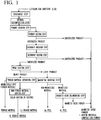
- FIG. 1 is a process steps diagram illustrating one example of a valuable material recovery method of an embodiment.
- an electrode structure is accommodated in a metallic exterior material, and the electrode structure is formed of an anode, a cathode, a separator, an electrolyte, and the like.
- a process method of the embodiment is a method for separating and recovering a copper foil for the anode, an aluminum foil for the cathode, and active materials for the cathode and the anode from a used lithium-ion battery.
- 1 includes a discharge step, a thermal decomposition step, a primary crushing step, a primary sieving step, a secondary crushing step, a secondary sieving step, a wind sorting step, a magnetic sorting step, a magnetic oxide delaminating step, a ferrous material separating step, and a non-ferrous material sorting step for the lithium-ion battery.
- the used lithium-ion battery is discharged.
- the discharge is capable of preventing explosion or fire induced by a short circuit of the battery in a post step, or an electric shock accident induced by contact with high-voltage electrode members.
- the lithium-ion battery is preferably discharged until a single cell battery voltage becomes less than or equal to 0.6 V. If the single cell battery voltage is over-discharged to 0.6 V or less, because the surface of the copper foil (current collector) for the anode is electrochemically eluted, it is possible to easily delaminate an anode active material (graphite or the like) from the copper foil.
- the discharge step it is possible to discharge the lithium-ion battery by applying a resistance between electrodes, for example, it is possible to discharge the lithium-ion battery in a short period of time by controlling voltage or current in a state where the lithium-ion battery is connected to an electronic load apparatus.
- the lithium-ion battery may be soaked in a conductive aqueous solution such as sodium chloride solution for a long period of time such that the lithium-ion battery is naturally discharged.
- the thermal decomposition step is a step of decomposing and removing combustible compositions, for example, the separator (porous organic film or the like), the electrolyte (organic solvent in which lithium salt is dissolved), and other combustible compositions (resin) by thermally decomposing the discharged lithium-ion battery.
- the thermal decomposition step is a step of decomposing a lithium compound such as lithium cobaltate, which is a cathode active material of the electrode structure, into a magnetic oxide such as cobalt oxide by reacting the lithium compounds with carbon and the like or hydrogen fluoride which are formed by the decomposition of polyfluorinated vinylide of a binder, the electrolyte or the like.
- Lithium cobalate which is a cathode active material, is decomposed into cobalt oxide and lithium fluoride by being reduced in the following equation. 4 LiCoO 2 + 4 ⁇ HF + C ⁇ 4 ⁇ CoO + 4 ⁇ LiF + CO 2 + 2 H 2 O
- the discharged lithium-ion battery is preferably heated in a non-oxidative atmosphere at a temperature of 400°C to 600°C. If the heating temperature is much lower than 400°C, the binder, the separator, and the electrolyte are not sufficiently decomposed and removed, and it becomes difficult to delaminate the active materials from current collectors.
- the lithium compound which is a cathode active material, may not be reduced and be changed to the magnetic oxide.
- a reaction to turn lithium cobalate (LiCoO 2 ) or lithium nickelate (LiNiO 2 ), which is a cathode active material, into cobalt oxide (CoO) or nickel oxide (NiO) occurs at a temperature of 400°C or greater.
- lithium cobalate or lithium nickelate is not reduced into the magnetic oxide such as cobalt oxide or nickel oxide.
- the heating temperature is the melting point (660°C) of aluminum or greater, because it may not possible to separate the aluminum foil which is a cathode current collector due to melting the aluminum foil, the heating is preferably performed at a temperature of 600°C or less.
- the heating temperature is preferably within a range of 500°C to 600°C, but is not limited thereto.
- a thermal decomposition time differs depending on conditions such as the capacity of a heating apparatus, and the shape or size of the lithium-ion battery.
- the thermal decomposition time preferably is a period of 10 minutes to 4 hours, more preferably, a period of 20 minutes to 1 hour. It is possible to use a rotary kiln furnace, a fluidized-bed furnace, a tunnel furnace, a muffle furnace, a cupola furnace, a stoker furnace, and the like as the heating apparatus.
- the exterior material, the cathode, and the anode of the lithium-ion battery after the thermal decomposition are crushed.
- the anode (copper foil and anode active material) and the cathode (aluminum foil, cobalt oxide, and the like) are exposed from the exterior material, are disassembled by cutting into fragments of a predetermined size, and thus can be sorted.
- the magnetic oxide and the anode active material composition which weakly stick to the anode and the cathode, are easily delaminated from the current collectors (aluminum foil and copper foil).
- the size of primary crushed materials preferably is, for example, within a range of approximately 10 mm to 50 mm so that a powder of the magnetic oxide or the anode active material composition can be obtained as primary undersized products in the primary sieving step which is a post step. It is possible to use a crushing apparatus such as dual shaft crusher, single shaft crusher, or chain crusher as a crushing apparatus of the primary crushing step.
- the primary crushed materials are separated into a primary oversized product and a primary undersized product by sieving, and the magnetic oxide or the anode active material composition, contained in the primary undersized product, is recovered.
- a powder of the magnetic oxide or the anode active material composition obtainable as the primary crushed material, generally has a particle size of several tens of ⁇ m
- a sieve used in the primary sieving step preferably has an opening of 0.1 mm to 1.0 mm, more preferably, an opening of 0.2 mm to 0.5 mm. If the opening of the sieve is greater than 1.0 mm, there occurs an increase in the mixing ratio between crushed materials of the copper foil and the aluminum foil, which are the current collectors.
- the opening of the sieve is less than 0.1 mm, because a sieving speed becomes slow, and the magnetic oxide or the anode active material composition exists as agglomerates having a size of approximately 0.1 mm, it may not be able to recover the magnetic oxide or the anode active material composition as the undersized product.
- the primary oversized product is crushed into fragments of a size suitable for wind sorting which is a post step, part of the magnetic oxide is allowed to remain in the aluminum foil, and the remainder of the magnetic oxide is delaminated from the aluminum foil.
- the size suitable for the wind sorting preferably is within a range of approximately 3 mm square to 30 mm square, more preferably, within a range of 5 mm square to 20 mm square. It is possible to use an impact crusher such as hammer crusher or cutter mill, or a high-speed shear crusher as a crushing apparatus of the secondary crushing step. It is possible to allow part of the magnetic oxide to remain in the aluminum foil, and to delaminate the remainder of the magnetic oxide from the aluminum foil by crushing the primary oversized product.
- secondary crushed materials are separated into a secondary oversized product and a secondary undersized product by sieving, and the magnetic oxide or the anode active material composition, contained in the secondary undersized product, is recovered.
- a sieve used in the secondary sieving step preferably has an opening of 0.1 mm to 1.0 mm, more preferably, an opening of 0.2 mm to 0.5 mm as with the primary sieving. If the opening of the sieve is greater than 1.0 mm, there occurs an increase in the ratio in which crushed materials of the copper foil and the aluminum foil, which are the current collectors, are mixed into the undersized product.
- the opening of the sieve is less than 0.1 mm, because a sieving speed becomes slow, and the magnetic oxide or the anode active material composition exists as agglomerates having a size of approximately 0.1 mm, it may not be able to recover the magnetic oxide or the anode active material composition as the undersized product.
- a sieving step is provided consecutively after each crushing step of the primary crushing step and the secondary crushing step, and thus crushed materials are separated into metallic compositions and active material concentrates by being sieved immediately after being crushed. If sieving is not performed for each crushing step, there occurs an increase in the percentage of re-sticking of the magnetic oxide, delaminated from the cathode current collector (aluminum foil), to the copper foil.
- the aluminum foil is magnetically sorted in a post step, the copper foil, to which the magnetic oxide has re-stuck, is magnetized together with the aluminum foil, and there occurs a decline in the accuracy of separation of the copper foil and the aluminum foil, thereby causing a loss in the recovery of copper.
- the secondary oversized product is separated into a heavy product and a light product.
- the heavy product is a secondary oversized product which remains without movement when oversized products having a particle size of approximately 5 mm square to approximately 20 mm square are subjected to a wind power with a wind speed of 3 m/s to 12 m/s.
- the light product is a secondary oversized product which is moved or blown away when oversized products having a particle size of approximately 5 mm square to approximately 20 mm square are subjected to a wind power with a wind speed of 3 m/s to 12 m/s.
- the heavy product includes the exterior material and a crushed metallic material (metallic agglomerate) of the electrode structure, and the light product includes the copper foil, and the aluminum foil to which a small amount of the magnetic oxide sticks.
- the oversized product has a size of approximately 5 mm square to approximately 20 mm square
- one copper foil or aluminum fragment of the same size has a weight of approximately 5 to 40 mg
- one exterior material fragment of the same size or one crushed metallic material fragment of the same size of the electrode structure has a weight of 1,000 to 4,000 mg. Both weights differ by approximately 100 times. There is an approximately 100 times difference between both weights. For this reason, the aluminum foil and the copper foil can be satisfactorily separated as light products from heavy products including the exterior material and the crushed metallic material of the electrode structure using a wind power with a wind speed of less than 12 m/s, preferably, a wind speed of 5 to 12 m/s.
- the aluminum foil In the magnetic sorting step, the aluminum foil, to which a small amount of the magnetic oxide sticks, is separated as a magnetized material from the copper foil which is a non-magnetized material.
- the aluminum foil in which the total amount of cobalt and nickel of the magnetic oxide remaining and sticking thereto is within a range of 1% by mass to 15% by mass, preferably, within a range of 1% by mass to 10% by mass, is magnetically sorted using a magnetic force with a surface magnetic flux density of 1,000 gauss or greater and less than 8,000 gauss, preferably, a surface magnetic flux density of 5,000 gauss or greater and less than 8,000 gauss, and thus the aluminum foil is reliably separated as a magnetized material, and is very accurately separated from the copper foil.
- the total amount of cobalt and nickel of the magnetic oxide remaining and sticking to the aluminum foil can be adjusted within the range by adjusting the number of crushing cycles in each of the primary crushing step and the secondary crushing step.
- the total amount of cobalt and nickel may be adjusted by adjusting a crushing time and a crushing power depending on the type of a crusher.
- the total amount of cobalt and nickel is the ratio (% by mass or wt %) of the mass of (cobalt + nickel) contained in the light product to the mass of (aluminum + cathode active material) contained in the light product before the magnetic sorting step.
- the stuck amount of the magnetized material is small, and thus the magnetic property is weak, and it is difficult to sufficiently magnetize the aluminum foil using a magnetic force with a surface magnetic flux density of less than 5,000 gauss.
- a pure aluminum foil, to which the magnetic oxide does not stick at all, is not magnetized even with a surface magnetic flux density of approximately 13,000 gauss.
- a magnetic force of greater than 13,000 gauss is used, and the magnetic oxide sticks to the copper foil, the copper foil is magnetized together with the aluminum foil, and there occurs a decline in the accuracy of separation of the aluminum foil and the copper foil.
- the aluminum foil in which the total amount of cobalt and nickel of the magnetic oxide remaining and sticking thereto exceeds 15% by mass, can be sufficiently magnetized using even a magnetic force with a surface magnetic flux density of approximately 5,000 gauss.
- the copper foil is mixed with the aluminum foil as a magnetized material. Therefore, the accuracy of separation declines, a loss in the recovery of copper becomes large, and the grade of recovered aluminum declines.
- the total amount of cobalt and nickel remaining in the aluminum foil is preferably less than or equal to 15% by mass.
- the total amount of cobalt and nickel of the magnetic oxide sticking to the aluminum foil is required to exceed 15% by mass so that the aluminum foil can be reliably magnetized using a magnetic force with a surface magnetic flux density of less than 5,000 gauss.
- aluminum, recovered from the aluminum foil containing a large total amount of cobalt and nickel, has a low grade.
- the aluminum foil with the magnetic oxide thereon in which the total amount of cobalt and nickel of the magnetic oxide sticking thereto is within a range of 1% by mass to 15% by mass, may be magnetically sorted using a magnetic force with a surface magnetic flux density of 1,000 gauss or greater and less than 8,000 gauss, preferably, a surface magnetic flux density of 5,000 gauss or greater and less than 8,000 gauss.
- the aluminum foil recovered by the magnetic sorting, is separated from the magnetic oxide sticking thereto by being further crushed. Because the magnetic oxide sticks to the surface of the aluminum foil, it is possible to recover the magnetic oxide by delaminating the magnetic oxide from the aluminum foil by friction crushing using an impact crusher such as hammer crusher, or an air crusher, and by sieving the aluminum foil and the magnetic oxide.
- the magnetic oxide may be delaminated from the aluminum foil by crushing in water. The magnetized material crushing step and the sieving of crushed materials may be performed as necessary.
- ferrous materials are magnetically sorted and recovered from the crushed metallic materials contained in the heavy product sorted using a wind power.
- the heavy product sorted using a wind power includes a steel sheet used in the exterior material, and steel bolts, steel screws, and the like mounted in the exterior material.
- the steel sheet, the steel bolts, the steel screws, and the like can be magnetically sorted and recovered.
- the heavy product, from which agglomerated ferrous materials have been separated by the magnetic sorting contains non-ferrous metals such as crushed aluminum material derived from the exterior material and copper material of electrode lead wires contained in the electrode structure.
- the non-ferrous metals can be recovered as non-magnetized materials.
- the ferrous material separating step may be performed as necessary.
- a magnetic force of the ferrous material separating step may be a typical magnetic force to magnetize ferrous materials.
- a magnetic sorting apparatus with a capacity to generate a surface magnetic flux density of 500 gauss or greater and less than 2,000 gauss may be used. If the magnetic flux density is excessively low, it is not possible to sufficiently recover ferrous materials, and there occurs a decline in the grades of non-ferrous metals recovered as non-magnetized materials. On the other hand, if the magnetic flux density is excessively high, magnetization forces of the ferrous materials are excessively strong, and thus it becomes difficult to delaminate the ferrous materials, and a burden on an apparatus becomes large.
- the ferrous material separating step is provided behind the wind sorting step; however, the ferrous material separating step may be provided additionally or alone before the wind sorting step to further improve separability between the heavy product and the light product in the wind sorting step.
- the crushed aluminum material derived from the exterior material and contained in the heavy product from which the agglomerated ferrous materials have been separated, is separated from a crushed copper material used in the electrode lead wires.
- a color sorting apparatus, a grading apparatus, or the like may be used depending on physical properties such as the sizes, the shapes, and the colors of the crushed metallic materials. It is possible to efficiently separate and recover aluminum, derived from the exterior material, and copper material using color sorting based on the fact that copper is a reddish brown color and aluminum is a white-grey color.
- the non-ferrous material sorting step may be performed as necessary.
- the primary crushed materials were subjected to primary sieving using a sieve having an opening of 0.5 mm, and thus a primary undersized product was recovered.
- a primary oversized product was subjected to secondary crushing. In the secondary crushing, the primary oversized product was crushed once using a hammer crusher.
- the secondary crushed materials were subjected to secondary sieving using a sieve having an opening of 0.5 mm, and thus a secondary undersized product was recovered.
- the total amount of the primary undersized product and the secondary undersized product was 0.86 kg, and almost all of the undersized products were an anode active material composition and a magnetic oxide formed by the thermal decomposition, and a recovery rate for active material compositions containing the magnetic oxide was 90 wt %.
- the secondary oversized product was subjected to wind sorting using a wind power with a wind speed of 12 m/s, and 1.06 kg of a heavy product containing a crushed metallic material derived from an exterior material, and 0.54 kg of a light product containing a crushed metallic foil material were obtained.
- the light product was subjected to magnetic sorting.
- an aluminum foil, to which the magnetic oxide, formed by the thermal decomposition, sticks, was sorted as a magnetized material using a rare earth separator and a magnetic force with a magnetic flux density of 500 to 15,000 gauss.
- Table 1 shows the magnetic flux densities of the magnetic sorting, the total amounts of Co and Ni derived from the magnetic oxide sticking to the aluminum foil, and the results of the magnetic sorting.
- the total amount of Co and Ni was adjusted by adjusting the number of crushing cycles in each of the primary crushing and the secondary crushing.
- a non-magnetized material with a Cu concentration of 40.7 wt % is obtained by sorting using repulsion between eddy current and a magnetic field of a permanent magnet.
- a non-magnetized material with a high Cu concentration of 86.9 to 90.4 wt % is obtained.
- the present invention demonstrates a method for recovering non-magnetized materials, which are recovered copper materials, with high copper grades (No. 3 to 5, No. 7 to 9, and No. 11 to 16).
- aluminum foils containing Co and Ni of a total amount of 1 to 10 wt % may be sorted using a magnetic force with a magnetic flux density of 1,000 to 8,000 gauss, and the aluminum concentrations of magnetized materials are greater than or equal to 48 wt % (No. 3 to 5, No. 7 to 9, and No. 11 to 14).
- the aluminum concentrations of magnetized materials are greater than or equal to 87 wt %, and the copper concentration is less than or equal to 8.1 wt % (No. 3 to 5).
- Example 2 Similar to Example 1, 3.32 kg of a used lithium-ion battery (LIB) cell was subjected to the primary crushing, the primary sieving, the secondary crushing, and the secondary sieving, and thus 1.60 kg of secondary oversized products were obtained.
- the secondary oversized products had a particle size of 5 to 20 mm.
- the secondary oversized product were separated into heavy products and light products by being subjected to the wind sorting using wind speeds of 2 m/s, 3 m/s, 10 m/s, 12 m/s, and 15 m/s. Table 2 shows the results.
- the sorting is performed using a wind power with a wind speed of 3 m/s to 12 m/s, the heavy products, containing crushed metallic materials derived from an exterior material and an electrode structure, and the light products, containing aluminum foils and copper foils which are current collectors, can be very accurately separated.
- the valuable material recovery method of the present invention provides a good accuracy of separation of copper, aluminum, and active material compositions from each other contained in a lithium-ion battery. Particularly, it is possible to separate aluminum foils using a relative low magnetic force, to greatly reduce a burden on magnetic sorting compared to a separation method using a high magnetic force in the related art, and to easily and accurately separate the aluminum foils and copper foils from each other, which it is difficult to separate from each other.
Landscapes
- Chemical & Material Sciences (AREA)
- Engineering & Computer Science (AREA)
- Manufacturing & Machinery (AREA)
- Chemical Kinetics & Catalysis (AREA)
- Electrochemistry (AREA)
- General Chemical & Material Sciences (AREA)
- Composite Materials (AREA)
- Materials Engineering (AREA)
- General Life Sciences & Earth Sciences (AREA)
- Environmental & Geological Engineering (AREA)
- Life Sciences & Earth Sciences (AREA)
- Geology (AREA)
- Mechanical Engineering (AREA)
- Metallurgy (AREA)
- Organic Chemistry (AREA)
- Food Science & Technology (AREA)
- Geochemistry & Mineralogy (AREA)
- Processing Of Solid Wastes (AREA)
- Secondary Cells (AREA)
- Manufacture And Refinement Of Metals (AREA)
Applications Claiming Priority (2)
| Application Number | Priority Date | Filing Date | Title |
|---|---|---|---|
| JP2017010563A JP6198027B1 (ja) | 2017-01-24 | 2017-01-24 | 使用済みリチウムイオン電池からの有価物回収方法 |
| PCT/JP2018/001968 WO2018139445A1 (ja) | 2017-01-24 | 2018-01-23 | 使用済みリチウムイオン電池からの有価物回収方法 |
Publications (3)
| Publication Number | Publication Date |
|---|---|
| EP3576216A1 true EP3576216A1 (de) | 2019-12-04 |
| EP3576216A4 EP3576216A4 (de) | 2020-11-04 |
| EP3576216B1 EP3576216B1 (de) | 2024-02-28 |
Family
ID=59895643
Family Applications (1)
| Application Number | Title | Priority Date | Filing Date |
|---|---|---|---|
| EP18745259.4A Active EP3576216B1 (de) | 2017-01-24 | 2018-01-23 | Verfahren zur rückgewinnung von wertstoff aus gebrauchten lithium-ionen-batterien |
Country Status (6)
| Country | Link |
|---|---|
| US (1) | US11088406B2 (de) |
| EP (1) | EP3576216B1 (de) |
| JP (1) | JP6198027B1 (de) |
| KR (1) | KR102473000B1 (de) |
| CN (1) | CN110199429B (de) |
| WO (1) | WO2018139445A1 (de) |
Cited By (5)
| Publication number | Priority date | Publication date | Assignee | Title |
|---|---|---|---|---|
| EP4198151A1 (de) * | 2021-12-16 | 2023-06-21 | Northvolt Revolt AB | Verfahren zur rückgewinnung von aktivmaterialkonzentrat einer batterie |
| WO2024094720A1 (en) | 2022-11-03 | 2024-05-10 | Basf Se | Process and device for producing copper composite material |
| EP3836289B1 (de) | 2019-12-11 | 2025-01-22 | Accurec Recycling GmbH | Verfahren zum aufschliessen von elektro-chemischen energiespeichern sowie thermische behandlungsanlage |
| EP4513620A4 (de) * | 2022-04-19 | 2026-04-29 | Matsuda Sangyo Company Ltd | Verfahren zur rückgewinnung von wertstoffen aus einer lithium-ionen-sekundärbatterie |
| US12671122B2 (en) | 2020-02-18 | 2026-06-30 | Sk Innovation Co., Ltd. | Fluidized bed reactor and method for recovering active metal of lithium secondary battery using same |
Families Citing this family (54)
| Publication number | Priority date | Publication date | Assignee | Title |
|---|---|---|---|---|
| CN108808143B (zh) * | 2018-08-27 | 2020-04-17 | 桑德新能源技术开发有限公司 | 一种废旧锂电池快速放电方法及放电处理设备 |
| KR102566856B1 (ko) * | 2018-11-07 | 2023-08-11 | 에스케이이노베이션 주식회사 | 리튬 전구체 재생 방법 및 리튬 전구체 재생 시스템 |
| KR102249266B1 (ko) * | 2018-11-13 | 2021-05-06 | 부경대학교 산학협력단 | 니켈 및 코발트 회수 방법 |
| KR102269326B1 (ko) * | 2018-12-20 | 2021-06-25 | 동우 화인켐 주식회사 | 리튬이차전지 재생공정을 위한 전처리 방법 |
| JP7423910B2 (ja) * | 2019-04-10 | 2024-01-30 | 住友金属鉱山株式会社 | 廃電池からの有価物の回収方法、粉砕設備 |
| JP7331637B2 (ja) * | 2019-11-05 | 2023-08-23 | トヨタ自動車株式会社 | 付着物除去方法 |
| KR102253804B1 (ko) * | 2019-11-13 | 2021-05-18 | 안효수 | 자동차용 폐이차전지의 블랙파우더 선별분리방법 |
| KR102104562B1 (ko) * | 2019-11-26 | 2020-04-24 | 한국지질자원연구원 | 음극 활물질 분리 방법 |
| CN111180821B (zh) * | 2020-01-05 | 2022-10-21 | 广东省资源综合利用研究所 | 一种废旧锂离子电池无害化回收分选方法 |
| JP6888130B1 (ja) * | 2020-02-06 | 2021-06-16 | Dowaエコシステム株式会社 | 有価物の選別方法 |
| KR102751375B1 (ko) * | 2020-02-10 | 2025-01-06 | 에스케이이노베이션 주식회사 | 리튬 이차 전지의 활성 금속 회수 방법 |
| WO2021177200A1 (ja) * | 2020-03-06 | 2021-09-10 | Dowaエコシステム株式会社 | リチウムイオン二次電池に含まれる有価金属の濃縮方法 |
| JP7409165B2 (ja) * | 2020-03-06 | 2024-01-09 | 住友金属鉱山株式会社 | 廃電池からの有価金属回収方法 |
| WO2021182452A1 (ja) | 2020-03-13 | 2021-09-16 | Dowaエコシステム株式会社 | リチウムの回収方法及びリチウムイオン二次電池の処理方法 |
| WO2021244111A1 (en) * | 2020-06-05 | 2021-12-09 | XProEM Ltd. | Process for physically separating and recovering various components from spent lithium ion batteries |
| CN111644375B (zh) * | 2020-06-19 | 2022-02-08 | 长江师范学院 | 一种能够自动出料的锂电池回收材料分选设备 |
| CN111644377B (zh) * | 2020-06-19 | 2022-02-08 | 长江师范学院 | 一种废锂电池电极材料破碎筛分方法 |
| KR102936351B1 (ko) * | 2020-07-06 | 2026-03-06 | 주식회사 엘지에너지솔루션 | 양극 스크랩을 이용한 활물질 재사용 방법 |
| JP7355713B2 (ja) * | 2020-07-16 | 2023-10-03 | 株式会社神戸製鋼所 | 二次電池から有価元素を回収する際の前処理方法及び二次電池から有価元素を回収する方法 |
| US12334522B2 (en) | 2020-08-17 | 2025-06-17 | Blue Whale Materials Llc | Method, apparatus, and system for lithium ion battery recycling |
| CN116075374A (zh) * | 2020-09-09 | 2023-05-05 | 同和环保再生事业有限公司 | 有价物的回收方法 |
| JP6994093B1 (ja) * | 2020-09-15 | 2022-02-14 | Dowaエコシステム株式会社 | リチウムイオン二次電池からの有価物の回収方法 |
| CN112234272B (zh) * | 2020-09-22 | 2022-02-18 | 华中科技大学 | 一种磷酸铁锂正极片低能耗和低Al含量的回收方法 |
| CN112246835B (zh) * | 2020-10-04 | 2022-03-04 | 湖南金源新材料股份有限公司 | 一种废旧锂离子电池的拆解分离方法 |
| CN112599880B (zh) * | 2020-12-14 | 2022-03-29 | 安徽华铂再生资源科技有限公司 | 一种铅蓄电池废料回收设备及其回收方法 |
| EP4289011A2 (de) * | 2021-02-08 | 2023-12-13 | William Marsh Rice University | Flash-recycling von batterien |
| US20220344735A1 (en) * | 2021-04-22 | 2022-10-27 | Hyo Soo AHN | Separation method of black powder of automotive waste secondary battery |
| CN113793915B (zh) * | 2021-09-15 | 2023-03-24 | 昆明理工大学 | 一种废旧锂离子电池正极材料的修复方法 |
| CN113735196A (zh) * | 2021-11-04 | 2021-12-03 | 北京胜能能源科技有限公司 | 废旧三元前驱体的回收利用方法及回收得到的三元正极材料 |
| CN114151802A (zh) * | 2021-11-30 | 2022-03-08 | 湖南江冶机电科技股份有限公司 | 一种废旧锂电池全组分回收再利用的方法 |
| KR102441685B1 (ko) * | 2021-12-28 | 2022-09-13 | 한국전지연구조합 | 친환경 전지 재활용 방법 |
| KR102447931B1 (ko) * | 2022-01-04 | 2022-09-28 | (주)에코프로머티리얼즈 | 폐전지 친환경 재활용 방법 |
| CN114405827A (zh) * | 2022-01-27 | 2022-04-29 | 武汉大学 | 一种用于熔盐中碳材料分离的风力分选法 |
| KR102426585B1 (ko) | 2022-02-28 | 2022-08-01 | (주)에코프로머티리얼즈 | 폐전지 친환경 재활용을 위한 열처리시스템 |
| CN114558780B (zh) * | 2022-04-28 | 2022-07-15 | 河南中鑫新材料有限公司 | 一种高效锂离子电池正极极片回收再利用系统 |
| KR102462313B1 (ko) * | 2022-07-12 | 2022-11-03 | 주식회사 이디엔지니어링 | 리튬 이온 배터리의 자원 재활용 처리 시스템 |
| KR102471227B1 (ko) * | 2022-07-13 | 2022-11-29 | 주식회사 이디엔지니어링 | 리튬 이온 이차전지의 자원 재활용 처리 시스템 |
| KR102462303B1 (ko) * | 2022-08-03 | 2022-11-03 | 주식회사 이디엔지니어링 | 리튬 이온 배터리의 자원 재활용 처리 시스템 |
| CN115084703B (zh) * | 2022-08-18 | 2022-12-06 | 深圳市杰成镍钴新能源科技有限公司 | 一种退役动力电池回收处理方法、设备及系统 |
| DE102022121095A1 (de) * | 2022-08-20 | 2024-02-22 | Circu Li-ion S.A. | Verfahren zur Aufbereitung von Akkumulatoren |
| KR102499905B1 (ko) * | 2022-09-02 | 2023-02-16 | 에스아이에스 주식회사 | 폐리튬이온배터리팩 재활용시스템 |
| US12463267B2 (en) * | 2022-10-26 | 2025-11-04 | Battelle Memorial Institute | Direct recycling and converting cathode materials into high-performance single crystal cathode materials |
| KR102570909B1 (ko) * | 2022-11-21 | 2023-08-25 | 이춘우 | 폐배터리 회수 설비 |
| CN116004974A (zh) * | 2023-01-16 | 2023-04-25 | 江西环锂新能源科技有限公司 | 一种还原焙烧装置和从废旧锂电池中回收锂的方法 |
| JP7704163B2 (ja) * | 2023-02-10 | 2025-07-08 | トヨタ自動車株式会社 | 電極材料の回収方法 |
| KR102540803B1 (ko) * | 2023-02-15 | 2023-06-08 | 이하백 | 리튬이온 배터리 양극물질 회수 시스템 및 이를 이용한 리튬이온 배터리 양극물질 회수 방법 |
| KR102589992B1 (ko) * | 2023-03-28 | 2023-10-13 | 서중원 | 폐배터리 분쇄 및 건조시스템 |
| CN117352891B (zh) * | 2023-12-05 | 2024-03-12 | 广州天赐高新材料股份有限公司 | 一种废旧锂离子电池破碎分选回收方法和系统 |
| KR20250094338A (ko) * | 2023-12-18 | 2025-06-25 | 포스코홀딩스 주식회사 | 폐배터리 처리 방법 |
| JP7627525B1 (ja) | 2024-07-04 | 2025-02-06 | 日本重化学工業株式会社 | リチウムイオン二次電池の正極の処理方法 |
| KR102822847B1 (ko) * | 2024-10-25 | 2025-06-19 | 주식회사 재영텍 | 사용후 리튬이온 2차전지로부터 고순도의 블랙매스 회수 방법 |
| KR20260066419A (ko) * | 2024-11-04 | 2026-05-12 | 포스코홀딩스 주식회사 | 분리막 제거 장치 및 분리막의 제거 방법 |
| KR102958218B1 (ko) * | 2025-06-24 | 2026-04-29 | 한국자동차연구원 | 폐배터리 재활용 장치 및 폐배터리 재활용 방법 |
| KR102956630B1 (ko) * | 2025-08-07 | 2026-04-24 | 옵티마코리아 주식회사 | 폐 납축전지로부터 납을 회수하기 위한 시스템 및 이를 이용한 처리방법 |
Family Cites Families (17)
| Publication number | Priority date | Publication date | Assignee | Title |
|---|---|---|---|---|
| CH684225A5 (de) * | 1992-09-02 | 1994-07-29 | Inter Recycling Ag | Verfahren zum Entsorgen von Nickel-Cadmium- oder Nickel-Hydrid-Zellen. |
| JP3079285B2 (ja) * | 1996-09-02 | 2000-08-21 | 日鉱金属株式会社 | 使用済みリチウム電池からの有価物回収方法 |
| JP3452769B2 (ja) * | 1997-09-18 | 2003-09-29 | 株式会社東芝 | 電池の処理方法 |
| JP3079287B2 (ja) | 1997-12-25 | 2000-08-21 | 日鉱金属株式会社 | 使用済みリチウム電池からの有価物回収方法 |
| WO2000025382A1 (fr) * | 1998-10-27 | 2000-05-04 | Mitsui Mining & Smelting Co., Ltd. | Procede et systeme de recuperation de metal precieux a partir de batteries mises au rebut |
| TW511306B (en) * | 2001-08-20 | 2002-11-21 | Ind Tech Res Inst | Clean process of recovering metals from waste lithium ion batteries |
| CN100514745C (zh) * | 2007-12-24 | 2009-07-15 | 深圳市格林美高新技术股份有限公司 | 一种废弃电池的控制破碎回收方法及其系统 |
| US8296754B2 (en) | 2009-06-02 | 2012-10-23 | Hand Held Products, Inc. | Indicia reader with programmable indicators of software upgrades |
| JP5709552B2 (ja) * | 2011-01-25 | 2015-04-30 | 三井金属鉱業株式会社 | 水素吸蔵合金組成物の製造方法 |
| JP5703884B2 (ja) * | 2011-03-23 | 2015-04-22 | トヨタ自動車株式会社 | 電池パックのリサイクル方法及び処理装置 |
| JP5729153B2 (ja) * | 2011-06-16 | 2015-06-03 | 三菱マテリアル株式会社 | リチウムイオン二次電池のリサイクル方法 |
| JP6238070B2 (ja) * | 2014-03-31 | 2017-11-29 | 三菱マテリアル株式会社 | 使用済みリチウムイオン電池の処理方法 |
| JP6469362B2 (ja) * | 2014-05-14 | 2019-02-13 | 松田産業株式会社 | リチウムイオン二次電池からの有価物回収方法 |
| JP6333132B2 (ja) | 2014-09-08 | 2018-05-30 | 明成化学工業株式会社 | ポリアルキレンオキサイド |
| CN104577249B (zh) * | 2015-01-14 | 2017-01-11 | 上海交通大学 | 一种废旧钴酸锂锂离子电池资源化的处理方法 |
| CN105428745B (zh) * | 2015-11-30 | 2018-08-14 | 北京赛德美资源再利用研究院有限公司 | 一种废旧锂离子动力电池无害化综合回收利用方法 |
| CN106099239A (zh) * | 2016-08-24 | 2016-11-09 | 赣州市豪鹏科技有限公司 | 一种废旧二次电池铜和铝的回收方法 |
-
2017
- 2017-01-24 JP JP2017010563A patent/JP6198027B1/ja active Active
-
2018
- 2018-01-23 KR KR1020197021241A patent/KR102473000B1/ko active Active
- 2018-01-23 CN CN201880007703.3A patent/CN110199429B/zh not_active Expired - Fee Related
- 2018-01-23 US US16/479,324 patent/US11088406B2/en active Active
- 2018-01-23 WO PCT/JP2018/001968 patent/WO2018139445A1/ja not_active Ceased
- 2018-01-23 EP EP18745259.4A patent/EP3576216B1/de active Active
Cited By (6)
| Publication number | Priority date | Publication date | Assignee | Title |
|---|---|---|---|---|
| EP3836289B1 (de) | 2019-12-11 | 2025-01-22 | Accurec Recycling GmbH | Verfahren zum aufschliessen von elektro-chemischen energiespeichern sowie thermische behandlungsanlage |
| US12671122B2 (en) | 2020-02-18 | 2026-06-30 | Sk Innovation Co., Ltd. | Fluidized bed reactor and method for recovering active metal of lithium secondary battery using same |
| EP4198151A1 (de) * | 2021-12-16 | 2023-06-21 | Northvolt Revolt AB | Verfahren zur rückgewinnung von aktivmaterialkonzentrat einer batterie |
| WO2023111248A3 (en) * | 2021-12-16 | 2023-08-10 | Northvolt Revolt Ab | Process for recovering battery active material concentrate |
| EP4513620A4 (de) * | 2022-04-19 | 2026-04-29 | Matsuda Sangyo Company Ltd | Verfahren zur rückgewinnung von wertstoffen aus einer lithium-ionen-sekundärbatterie |
| WO2024094720A1 (en) | 2022-11-03 | 2024-05-10 | Basf Se | Process and device for producing copper composite material |
Also Published As
| Publication number | Publication date |
|---|---|
| EP3576216A4 (de) | 2020-11-04 |
| KR20190110543A (ko) | 2019-09-30 |
| CN110199429B (zh) | 2022-07-08 |
| US20190386354A1 (en) | 2019-12-19 |
| WO2018139445A1 (ja) | 2018-08-02 |
| JP2018120716A (ja) | 2018-08-02 |
| US11088406B2 (en) | 2021-08-10 |
| JP6198027B1 (ja) | 2017-09-20 |
| KR102473000B1 (ko) | 2022-11-30 |
| EP3576216B1 (de) | 2024-02-28 |
| CN110199429A (zh) | 2019-09-03 |
Similar Documents
| Publication | Publication Date | Title |
|---|---|---|
| EP3576216B1 (de) | Verfahren zur rückgewinnung von wertstoff aus gebrauchten lithium-ionen-batterien | |
| JP6859598B2 (ja) | 使用済みリチウムイオン電池からの有価物回収方法 | |
| CN115244758B (zh) | 锂离子二次电池中所含的有价金属的浓缩方法 | |
| JP6840512B2 (ja) | リチウムイオン二次電池からの有価物の回収方法 | |
| JP6676124B1 (ja) | リチウムイオン二次電池からの有価物の回収方法 | |
| JP6650806B2 (ja) | リチウムイオン二次電池からの有価物の回収方法 | |
| EP4215291B1 (de) | Verfahren zur rückgewinnung von wertstoffen aus einer lithiumionensekundärbatterie | |
| JP2012079630A (ja) | リチウムイオン二次電池からの有価物の回収方法、及び有価物を含有する回収物 | |
| WO2013051305A1 (ja) | リチウムイオン二次電池からの有価物の回収方法 | |
| EP4164027A1 (de) | Verfahren zur wiederverwendung von aktivem material unter verwendung von kathodenabfällen | |
| EP3836288B1 (de) | Verfahren zur rückgewinnung von wertvollem material aus lithium-ionen-sekundärbatterien | |
| KR100358528B1 (ko) | 폐리튬이차전지의 재활용방법 | |
| JP7220340B1 (ja) | リチウムイオン電池からの金属回収方法 | |
| EP4215288A1 (de) | Verfahren zur rückgewinnung von wertstoffen | |
| US20240047775A1 (en) | Lithium ion battery recycling process utilizing magnetic separation of electrode materials | |
| EP4397777A1 (de) | Verfahren zur herstellung von wertmetall | |
| JP3434318B2 (ja) | 使用済みリチウム二次電池からの有価金属の分別回収方法 | |
| EP3832781A1 (de) | Verfahren zur rückgewinnung von wertvollem material aus lithium-ionen-sekundärbatterien | |
| KR20240014468A (ko) | 유가물의 선별 방법 | |
| KR100335664B1 (ko) | 폐리튬이온이차전지로부터 유가금속 농축 방법 | |
| US12107244B2 (en) | Method for recovering valuable material from lithium ion secondary battery | |
| KR100425554B1 (ko) | 폐리튬이온전지로부터 유가금속을 농축하기 위한 고온처리방법 | |
| WO2023204230A1 (ja) | リチウムイオン二次電池からの有価物の回収方法 | |
| JP2023177724A (ja) | リチウムイオン電池滓とその製造方法 | |
| WO2024241618A1 (ja) | 金属回収方法 |
Legal Events
| Date | Code | Title | Description |
|---|---|---|---|
| STAA | Information on the status of an ep patent application or granted ep patent |
Free format text: STATUS: THE INTERNATIONAL PUBLICATION HAS BEEN MADE |
|
| PUAI | Public reference made under article 153(3) epc to a published international application that has entered the european phase |
Free format text: ORIGINAL CODE: 0009012 |
|
| STAA | Information on the status of an ep patent application or granted ep patent |
Free format text: STATUS: REQUEST FOR EXAMINATION WAS MADE |
|
| 17P | Request for examination filed |
Effective date: 20190719 |
|
| AK | Designated contracting states |
Kind code of ref document: A1 Designated state(s): AL AT BE BG CH CY CZ DE DK EE ES FI FR GB GR HR HU IE IS IT LI LT LU LV MC MK MT NL NO PL PT RO RS SE SI SK SM TR |
|
| AX | Request for extension of the european patent |
Extension state: BA ME |
|
| DAV | Request for validation of the european patent (deleted) | ||
| DAX | Request for extension of the european patent (deleted) | ||
| A4 | Supplementary search report drawn up and despatched |
Effective date: 20201005 |
|
| RIC1 | Information provided on ipc code assigned before grant |
Ipc: C22B 1/00 20060101ALI20200929BHEP Ipc: H01M 10/54 20060101AFI20200929BHEP Ipc: C22B 7/00 20060101ALI20200929BHEP |
|
| STAA | Information on the status of an ep patent application or granted ep patent |
Free format text: STATUS: EXAMINATION IS IN PROGRESS |
|
| 17Q | First examination report despatched |
Effective date: 20210326 |
|
| GRAP | Despatch of communication of intention to grant a patent |
Free format text: ORIGINAL CODE: EPIDOSNIGR1 |
|
| STAA | Information on the status of an ep patent application or granted ep patent |
Free format text: STATUS: GRANT OF PATENT IS INTENDED |
|
| INTG | Intention to grant announced |
Effective date: 20231103 |
|
| GRAS | Grant fee paid |
Free format text: ORIGINAL CODE: EPIDOSNIGR3 |
|
| GRAA | (expected) grant |
Free format text: ORIGINAL CODE: 0009210 |
|
| STAA | Information on the status of an ep patent application or granted ep patent |
Free format text: STATUS: THE PATENT HAS BEEN GRANTED |
|
| AK | Designated contracting states |
Kind code of ref document: B1 Designated state(s): AL AT BE BG CH CY CZ DE DK EE ES FI FR GB GR HR HU IE IS IT LI LT LU LV MC MK MT NL NO PL PT RO RS SE SI SK SM TR |
|
| REG | Reference to a national code |
Ref country code: GB Ref legal event code: FG4D |
|
| REG | Reference to a national code |
Ref country code: CH Ref legal event code: EP |
|
| REG | Reference to a national code |
Ref country code: DE Ref legal event code: R096 Ref document number: 602018065860 Country of ref document: DE |
|
| REG | Reference to a national code |
Ref country code: SE Ref legal event code: TRGR |
|
| REG | Reference to a national code |
Ref country code: IE Ref legal event code: FG4D |
|
| REG | Reference to a national code |
Ref country code: LT Ref legal event code: MG9D |
|
| PG25 | Lapsed in a contracting state [announced via postgrant information from national office to epo] |
Ref country code: IS Free format text: LAPSE BECAUSE OF FAILURE TO SUBMIT A TRANSLATION OF THE DESCRIPTION OR TO PAY THE FEE WITHIN THE PRESCRIBED TIME-LIMIT Effective date: 20240628 |
|
| REG | Reference to a national code |
Ref country code: NL Ref legal event code: MP Effective date: 20240228 |
|
| PG25 | Lapsed in a contracting state [announced via postgrant information from national office to epo] |
Ref country code: LT Free format text: LAPSE BECAUSE OF FAILURE TO SUBMIT A TRANSLATION OF THE DESCRIPTION OR TO PAY THE FEE WITHIN THE PRESCRIBED TIME-LIMIT Effective date: 20240228 |
|
| PG25 | Lapsed in a contracting state [announced via postgrant information from national office to epo] |
Ref country code: GR Free format text: LAPSE BECAUSE OF FAILURE TO SUBMIT A TRANSLATION OF THE DESCRIPTION OR TO PAY THE FEE WITHIN THE PRESCRIBED TIME-LIMIT Effective date: 20240529 |
|
| PG25 | Lapsed in a contracting state [announced via postgrant information from national office to epo] |
Ref country code: RS Free format text: LAPSE BECAUSE OF FAILURE TO SUBMIT A TRANSLATION OF THE DESCRIPTION OR TO PAY THE FEE WITHIN THE PRESCRIBED TIME-LIMIT Effective date: 20240528 Ref country code: NL Free format text: LAPSE BECAUSE OF FAILURE TO SUBMIT A TRANSLATION OF THE DESCRIPTION OR TO PAY THE FEE WITHIN THE PRESCRIBED TIME-LIMIT Effective date: 20240228 Ref country code: HR Free format text: LAPSE BECAUSE OF FAILURE TO SUBMIT A TRANSLATION OF THE DESCRIPTION OR TO PAY THE FEE WITHIN THE PRESCRIBED TIME-LIMIT Effective date: 20240228 |
|
| PG25 | Lapsed in a contracting state [announced via postgrant information from national office to epo] |
Ref country code: ES Free format text: LAPSE BECAUSE OF FAILURE TO SUBMIT A TRANSLATION OF THE DESCRIPTION OR TO PAY THE FEE WITHIN THE PRESCRIBED TIME-LIMIT Effective date: 20240228 |
|
| PG25 | Lapsed in a contracting state [announced via postgrant information from national office to epo] |
Ref country code: RS Free format text: LAPSE BECAUSE OF FAILURE TO SUBMIT A TRANSLATION OF THE DESCRIPTION OR TO PAY THE FEE WITHIN THE PRESCRIBED TIME-LIMIT Effective date: 20240528 Ref country code: NO Free format text: LAPSE BECAUSE OF FAILURE TO SUBMIT A TRANSLATION OF THE DESCRIPTION OR TO PAY THE FEE WITHIN THE PRESCRIBED TIME-LIMIT Effective date: 20240528 Ref country code: NL Free format text: LAPSE BECAUSE OF FAILURE TO SUBMIT A TRANSLATION OF THE DESCRIPTION OR TO PAY THE FEE WITHIN THE PRESCRIBED TIME-LIMIT Effective date: 20240228 Ref country code: LT Free format text: LAPSE BECAUSE OF FAILURE TO SUBMIT A TRANSLATION OF THE DESCRIPTION OR TO PAY THE FEE WITHIN THE PRESCRIBED TIME-LIMIT Effective date: 20240228 Ref country code: IS Free format text: LAPSE BECAUSE OF FAILURE TO SUBMIT A TRANSLATION OF THE DESCRIPTION OR TO PAY THE FEE WITHIN THE PRESCRIBED TIME-LIMIT Effective date: 20240628 Ref country code: HR Free format text: LAPSE BECAUSE OF FAILURE TO SUBMIT A TRANSLATION OF THE DESCRIPTION OR TO PAY THE FEE WITHIN THE PRESCRIBED TIME-LIMIT Effective date: 20240228 Ref country code: GR Free format text: LAPSE BECAUSE OF FAILURE TO SUBMIT A TRANSLATION OF THE DESCRIPTION OR TO PAY THE FEE WITHIN THE PRESCRIBED TIME-LIMIT Effective date: 20240529 Ref country code: FI Free format text: LAPSE BECAUSE OF FAILURE TO SUBMIT A TRANSLATION OF THE DESCRIPTION OR TO PAY THE FEE WITHIN THE PRESCRIBED TIME-LIMIT Effective date: 20240228 Ref country code: ES Free format text: LAPSE BECAUSE OF FAILURE TO SUBMIT A TRANSLATION OF THE DESCRIPTION OR TO PAY THE FEE WITHIN THE PRESCRIBED TIME-LIMIT Effective date: 20240228 Ref country code: BG Free format text: LAPSE BECAUSE OF FAILURE TO SUBMIT A TRANSLATION OF THE DESCRIPTION OR TO PAY THE FEE WITHIN THE PRESCRIBED TIME-LIMIT Effective date: 20240228 |
|
| PG25 | Lapsed in a contracting state [announced via postgrant information from national office to epo] |
Ref country code: PL Free format text: LAPSE BECAUSE OF FAILURE TO SUBMIT A TRANSLATION OF THE DESCRIPTION OR TO PAY THE FEE WITHIN THE PRESCRIBED TIME-LIMIT Effective date: 20240228 Ref country code: PT Free format text: LAPSE BECAUSE OF FAILURE TO SUBMIT A TRANSLATION OF THE DESCRIPTION OR TO PAY THE FEE WITHIN THE PRESCRIBED TIME-LIMIT Effective date: 20240628 |
|
| REG | Reference to a national code |
Ref country code: AT Ref legal event code: MK05 Ref document number: 1662093 Country of ref document: AT Kind code of ref document: T Effective date: 20240228 |
|
| PG25 | Lapsed in a contracting state [announced via postgrant information from national office to epo] |
Ref country code: PT Free format text: LAPSE BECAUSE OF FAILURE TO SUBMIT A TRANSLATION OF THE DESCRIPTION OR TO PAY THE FEE WITHIN THE PRESCRIBED TIME-LIMIT Effective date: 20240628 Ref country code: PL Free format text: LAPSE BECAUSE OF FAILURE TO SUBMIT A TRANSLATION OF THE DESCRIPTION OR TO PAY THE FEE WITHIN THE PRESCRIBED TIME-LIMIT Effective date: 20240228 Ref country code: LV Free format text: LAPSE BECAUSE OF FAILURE TO SUBMIT A TRANSLATION OF THE DESCRIPTION OR TO PAY THE FEE WITHIN THE PRESCRIBED TIME-LIMIT Effective date: 20240228 |
|
| PG25 | Lapsed in a contracting state [announced via postgrant information from national office to epo] |
Ref country code: DK Free format text: LAPSE BECAUSE OF FAILURE TO SUBMIT A TRANSLATION OF THE DESCRIPTION OR TO PAY THE FEE WITHIN THE PRESCRIBED TIME-LIMIT Effective date: 20240228 |
|
| PG25 | Lapsed in a contracting state [announced via postgrant information from national office to epo] |
Ref country code: SM Free format text: LAPSE BECAUSE OF FAILURE TO SUBMIT A TRANSLATION OF THE DESCRIPTION OR TO PAY THE FEE WITHIN THE PRESCRIBED TIME-LIMIT Effective date: 20240228 |
|
| PG25 | Lapsed in a contracting state [announced via postgrant information from national office to epo] |
Ref country code: EE Free format text: LAPSE BECAUSE OF FAILURE TO SUBMIT A TRANSLATION OF THE DESCRIPTION OR TO PAY THE FEE WITHIN THE PRESCRIBED TIME-LIMIT Effective date: 20240228 Ref country code: CZ Free format text: LAPSE BECAUSE OF FAILURE TO SUBMIT A TRANSLATION OF THE DESCRIPTION OR TO PAY THE FEE WITHIN THE PRESCRIBED TIME-LIMIT Effective date: 20240228 |
|
| PG25 | Lapsed in a contracting state [announced via postgrant information from national office to epo] |
Ref country code: AT Free format text: LAPSE BECAUSE OF FAILURE TO SUBMIT A TRANSLATION OF THE DESCRIPTION OR TO PAY THE FEE WITHIN THE PRESCRIBED TIME-LIMIT Effective date: 20240228 |
|
| PG25 | Lapsed in a contracting state [announced via postgrant information from national office to epo] |
Ref country code: SK Free format text: LAPSE BECAUSE OF FAILURE TO SUBMIT A TRANSLATION OF THE DESCRIPTION OR TO PAY THE FEE WITHIN THE PRESCRIBED TIME-LIMIT Effective date: 20240228 |
|
| PG25 | Lapsed in a contracting state [announced via postgrant information from national office to epo] |
Ref country code: SM Free format text: LAPSE BECAUSE OF FAILURE TO SUBMIT A TRANSLATION OF THE DESCRIPTION OR TO PAY THE FEE WITHIN THE PRESCRIBED TIME-LIMIT Effective date: 20240228 Ref country code: SK Free format text: LAPSE BECAUSE OF FAILURE TO SUBMIT A TRANSLATION OF THE DESCRIPTION OR TO PAY THE FEE WITHIN THE PRESCRIBED TIME-LIMIT Effective date: 20240228 Ref country code: RO Free format text: LAPSE BECAUSE OF FAILURE TO SUBMIT A TRANSLATION OF THE DESCRIPTION OR TO PAY THE FEE WITHIN THE PRESCRIBED TIME-LIMIT Effective date: 20240228 Ref country code: EE Free format text: LAPSE BECAUSE OF FAILURE TO SUBMIT A TRANSLATION OF THE DESCRIPTION OR TO PAY THE FEE WITHIN THE PRESCRIBED TIME-LIMIT Effective date: 20240228 Ref country code: DK Free format text: LAPSE BECAUSE OF FAILURE TO SUBMIT A TRANSLATION OF THE DESCRIPTION OR TO PAY THE FEE WITHIN THE PRESCRIBED TIME-LIMIT Effective date: 20240228 Ref country code: CZ Free format text: LAPSE BECAUSE OF FAILURE TO SUBMIT A TRANSLATION OF THE DESCRIPTION OR TO PAY THE FEE WITHIN THE PRESCRIBED TIME-LIMIT Effective date: 20240228 Ref country code: AT Free format text: LAPSE BECAUSE OF FAILURE TO SUBMIT A TRANSLATION OF THE DESCRIPTION OR TO PAY THE FEE WITHIN THE PRESCRIBED TIME-LIMIT Effective date: 20240228 |
|
| REG | Reference to a national code |
Ref country code: DE Ref legal event code: R097 Ref document number: 602018065860 Country of ref document: DE |
|
| PG25 | Lapsed in a contracting state [announced via postgrant information from national office to epo] |
Ref country code: IT Free format text: LAPSE BECAUSE OF FAILURE TO SUBMIT A TRANSLATION OF THE DESCRIPTION OR TO PAY THE FEE WITHIN THE PRESCRIBED TIME-LIMIT Effective date: 20240228 |
|
| PG25 | Lapsed in a contracting state [announced via postgrant information from national office to epo] |
Ref country code: IT Free format text: LAPSE BECAUSE OF FAILURE TO SUBMIT A TRANSLATION OF THE DESCRIPTION OR TO PAY THE FEE WITHIN THE PRESCRIBED TIME-LIMIT Effective date: 20240228 |
|
| PLBE | No opposition filed within time limit |
Free format text: ORIGINAL CODE: 0009261 |
|
| STAA | Information on the status of an ep patent application or granted ep patent |
Free format text: STATUS: NO OPPOSITION FILED WITHIN TIME LIMIT |
|
| 26N | No opposition filed |
Effective date: 20241129 |
|
| PG25 | Lapsed in a contracting state [announced via postgrant information from national office to epo] |
Ref country code: SI Free format text: LAPSE BECAUSE OF FAILURE TO SUBMIT A TRANSLATION OF THE DESCRIPTION OR TO PAY THE FEE WITHIN THE PRESCRIBED TIME-LIMIT Effective date: 20240228 |
|
| REG | Reference to a national code |
Ref country code: CH Ref legal event code: PL |
|
| PG25 | Lapsed in a contracting state [announced via postgrant information from national office to epo] |
Ref country code: MC Free format text: LAPSE BECAUSE OF FAILURE TO SUBMIT A TRANSLATION OF THE DESCRIPTION OR TO PAY THE FEE WITHIN THE PRESCRIBED TIME-LIMIT Effective date: 20240228 Ref country code: LU Free format text: LAPSE BECAUSE OF NON-PAYMENT OF DUE FEES Effective date: 20250123 |
|
| GBPC | Gb: european patent ceased through non-payment of renewal fee |
Effective date: 20250123 |
|
| PG25 | Lapsed in a contracting state [announced via postgrant information from national office to epo] |
Ref country code: GB Free format text: LAPSE BECAUSE OF NON-PAYMENT OF DUE FEES Effective date: 20250123 Ref country code: BE Free format text: LAPSE BECAUSE OF NON-PAYMENT OF DUE FEES Effective date: 20250131 |
|
| PG25 | Lapsed in a contracting state [announced via postgrant information from national office to epo] |
Ref country code: CH Free format text: LAPSE BECAUSE OF NON-PAYMENT OF DUE FEES Effective date: 20250131 |
|
| REG | Reference to a national code |
Ref country code: BE Ref legal event code: MM Effective date: 20250131 |
|
| PG25 | Lapsed in a contracting state [announced via postgrant information from national office to epo] |
Ref country code: IE Free format text: LAPSE BECAUSE OF NON-PAYMENT OF DUE FEES Effective date: 20250123 |
|
| PGFP | Annual fee paid to national office [announced via postgrant information from national office to epo] |
Ref country code: SE Payment date: 20260121 Year of fee payment: 9 |
|
| PGFP | Annual fee paid to national office [announced via postgrant information from national office to epo] |
Ref country code: DE Payment date: 20260121 Year of fee payment: 9 |
|
| PGFP | Annual fee paid to national office [announced via postgrant information from national office to epo] |
Ref country code: FR Payment date: 20260123 Year of fee payment: 9 |
|
| PG25 | Lapsed in a contracting state [announced via postgrant information from national office to epo] |
Ref country code: CY Free format text: LAPSE BECAUSE OF FAILURE TO SUBMIT A TRANSLATION OF THE DESCRIPTION OR TO PAY THE FEE WITHIN THE PRESCRIBED TIME-LIMIT Effective date: 20240228 |
|
| PG25 | Lapsed in a contracting state [announced via postgrant information from national office to epo] |
Ref country code: TR Free format text: LAPSE BECAUSE OF FAILURE TO SUBMIT A TRANSLATION OF THE DESCRIPTION OR TO PAY THE FEE WITHIN THE PRESCRIBED TIME-LIMIT Effective date: 20240228 |