EP3428670B1 - Verfahren zur inspektion einer stromspeichervorrichtung auf für kurzschluss und verfahren zur herstellung einer stromspeichervorrichtung - Google Patents
Verfahren zur inspektion einer stromspeichervorrichtung auf für kurzschluss und verfahren zur herstellung einer stromspeichervorrichtung Download PDFInfo
- Publication number
- EP3428670B1 EP3428670B1 EP18179889.3A EP18179889A EP3428670B1 EP 3428670 B1 EP3428670 B1 EP 3428670B1 EP 18179889 A EP18179889 A EP 18179889A EP 3428670 B1 EP3428670 B1 EP 3428670B1
- Authority
- EP
- European Patent Office
- Prior art keywords
- electric power
- storage device
- power storage
- battery
- temperature
- Prior art date
- Legal status (The legal status is an assumption and is not a legal conclusion. Google has not performed a legal analysis and makes no representation as to the accuracy of the status listed.)
- Active
Links
Images





Classifications
-
- G—PHYSICS
- G01—MEASURING; TESTING
- G01R—MEASURING ELECTRIC VARIABLES; MEASURING MAGNETIC VARIABLES
- G01R31/00—Arrangements for testing electric properties; Arrangements for locating electric faults; Arrangements for electrical testing characterised by what is being tested not provided for elsewhere
- G01R31/36—Arrangements for testing, measuring or monitoring the electrical condition of accumulators or electric batteries, e.g. capacity or state of charge [SoC]
-
- H—ELECTRICITY
- H01—ELECTRIC ELEMENTS
- H01M—PROCESSES OR MEANS, e.g. BATTERIES, FOR THE DIRECT CONVERSION OF CHEMICAL ENERGY INTO ELECTRICAL ENERGY
- H01M10/00—Secondary cells; Manufacture thereof
- H01M10/42—Methods or arrangements for servicing or maintenance of secondary cells or secondary half-cells
- H01M10/44—Methods for charging or discharging
-
- G—PHYSICS
- G01—MEASURING; TESTING
- G01R—MEASURING ELECTRIC VARIABLES; MEASURING MAGNETIC VARIABLES
- G01R19/00—Arrangements for measuring currents or voltages or for indicating presence or sign thereof
- G01R19/165—Indicating that current or voltage is either above or below a predetermined value or within or outside a predetermined range of values
- G01R19/16566—Circuits and arrangements for comparing voltage or current with one or several thresholds and for indicating the result not covered by subgroups G01R19/16504, G01R19/16528, G01R19/16533
- G01R19/16571—Circuits and arrangements for comparing voltage or current with one or several thresholds and for indicating the result not covered by subgroups G01R19/16504, G01R19/16528, G01R19/16533 comparing AC or DC current with one threshold, e.g. load current, over-current, surge current or fault current
-
- G—PHYSICS
- G01—MEASURING; TESTING
- G01R—MEASURING ELECTRIC VARIABLES; MEASURING MAGNETIC VARIABLES
- G01R31/00—Arrangements for testing electric properties; Arrangements for locating electric faults; Arrangements for electrical testing characterised by what is being tested not provided for elsewhere
- G01R31/36—Arrangements for testing, measuring or monitoring the electrical condition of accumulators or electric batteries, e.g. capacity or state of charge [SoC]
- G01R31/382—Arrangements for monitoring battery or accumulator variables, e.g. SoC
- G01R31/3842—Arrangements for monitoring battery or accumulator variables, e.g. SoC combining voltage and current measurements
-
- G—PHYSICS
- G01—MEASURING; TESTING
- G01R—MEASURING ELECTRIC VARIABLES; MEASURING MAGNETIC VARIABLES
- G01R31/00—Arrangements for testing electric properties; Arrangements for locating electric faults; Arrangements for electrical testing characterised by what is being tested not provided for elsewhere
- G01R31/36—Arrangements for testing, measuring or monitoring the electrical condition of accumulators or electric batteries, e.g. capacity or state of charge [SoC]
- G01R31/385—Arrangements for measuring battery or accumulator variables
- G01R31/3865—Arrangements for measuring battery or accumulator variables related to manufacture, e.g. testing after manufacture
-
- G—PHYSICS
- G01—MEASURING; TESTING
- G01R—MEASURING ELECTRIC VARIABLES; MEASURING MAGNETIC VARIABLES
- G01R31/00—Arrangements for testing electric properties; Arrangements for locating electric faults; Arrangements for electrical testing characterised by what is being tested not provided for elsewhere
- G01R31/36—Arrangements for testing, measuring or monitoring the electrical condition of accumulators or electric batteries, e.g. capacity or state of charge [SoC]
- G01R31/389—Measuring internal impedance, internal conductance or related variables
-
- G—PHYSICS
- G01—MEASURING; TESTING
- G01R—MEASURING ELECTRIC VARIABLES; MEASURING MAGNETIC VARIABLES
- G01R31/00—Arrangements for testing electric properties; Arrangements for locating electric faults; Arrangements for electrical testing characterised by what is being tested not provided for elsewhere
- G01R31/36—Arrangements for testing, measuring or monitoring the electrical condition of accumulators or electric batteries, e.g. capacity or state of charge [SoC]
- G01R31/392—Determining battery ageing or deterioration, e.g. state of health
-
- G—PHYSICS
- G01—MEASURING; TESTING
- G01R—MEASURING ELECTRIC VARIABLES; MEASURING MAGNETIC VARIABLES
- G01R31/00—Arrangements for testing electric properties; Arrangements for locating electric faults; Arrangements for electrical testing characterised by what is being tested not provided for elsewhere
- G01R31/50—Testing of electric apparatus, lines, cables or components for short-circuits, continuity, leakage current or incorrect line connections
- G01R31/52—Testing for short-circuits, leakage current or ground faults
-
- H—ELECTRICITY
- H01—ELECTRIC ELEMENTS
- H01M—PROCESSES OR MEANS, e.g. BATTERIES, FOR THE DIRECT CONVERSION OF CHEMICAL ENERGY INTO ELECTRICAL ENERGY
- H01M10/00—Secondary cells; Manufacture thereof
- H01M10/42—Methods or arrangements for servicing or maintenance of secondary cells or secondary half-cells
-
- H—ELECTRICITY
- H01—ELECTRIC ELEMENTS
- H01M—PROCESSES OR MEANS, e.g. BATTERIES, FOR THE DIRECT CONVERSION OF CHEMICAL ENERGY INTO ELECTRICAL ENERGY
- H01M10/00—Secondary cells; Manufacture thereof
- H01M10/42—Methods or arrangements for servicing or maintenance of secondary cells or secondary half-cells
- H01M10/4285—Testing apparatus
-
- H—ELECTRICITY
- H01—ELECTRIC ELEMENTS
- H01M—PROCESSES OR MEANS, e.g. BATTERIES, FOR THE DIRECT CONVERSION OF CHEMICAL ENERGY INTO ELECTRICAL ENERGY
- H01M10/00—Secondary cells; Manufacture thereof
- H01M10/42—Methods or arrangements for servicing or maintenance of secondary cells or secondary half-cells
- H01M10/44—Methods for charging or discharging
- H01M10/443—Methods for charging or discharging in response to temperature
-
- H—ELECTRICITY
- H01—ELECTRIC ELEMENTS
- H01M—PROCESSES OR MEANS, e.g. BATTERIES, FOR THE DIRECT CONVERSION OF CHEMICAL ENERGY INTO ELECTRICAL ENERGY
- H01M10/00—Secondary cells; Manufacture thereof
- H01M10/42—Methods or arrangements for servicing or maintenance of secondary cells or secondary half-cells
- H01M10/48—Accumulators combined with arrangements for measuring, testing or indicating the condition of cells, e.g. the level or density of the electrolyte
-
- H—ELECTRICITY
- H01—ELECTRIC ELEMENTS
- H01M—PROCESSES OR MEANS, e.g. BATTERIES, FOR THE DIRECT CONVERSION OF CHEMICAL ENERGY INTO ELECTRICAL ENERGY
- H01M10/00—Secondary cells; Manufacture thereof
- H01M10/42—Methods or arrangements for servicing or maintenance of secondary cells or secondary half-cells
- H01M10/48—Accumulators combined with arrangements for measuring, testing or indicating the condition of cells, e.g. the level or density of the electrolyte
- H01M10/482—Accumulators combined with arrangements for measuring, testing or indicating the condition of cells, e.g. the level or density of the electrolyte for several batteries or cells simultaneously or sequentially
-
- H—ELECTRICITY
- H01—ELECTRIC ELEMENTS
- H01M—PROCESSES OR MEANS, e.g. BATTERIES, FOR THE DIRECT CONVERSION OF CHEMICAL ENERGY INTO ELECTRICAL ENERGY
- H01M10/00—Secondary cells; Manufacture thereof
- H01M10/42—Methods or arrangements for servicing or maintenance of secondary cells or secondary half-cells
- H01M10/48—Accumulators combined with arrangements for measuring, testing or indicating the condition of cells, e.g. the level or density of the electrolyte
- H01M10/486—Accumulators combined with arrangements for measuring, testing or indicating the condition of cells, e.g. the level or density of the electrolyte for measuring temperature
-
- H—ELECTRICITY
- H01—ELECTRIC ELEMENTS
- H01M—PROCESSES OR MEANS, e.g. BATTERIES, FOR THE DIRECT CONVERSION OF CHEMICAL ENERGY INTO ELECTRICAL ENERGY
- H01M10/00—Secondary cells; Manufacture thereof
- H01M10/05—Accumulators with non-aqueous electrolyte
- H01M10/052—Li-accumulators
- H01M10/0525—Rocking-chair batteries, i.e. batteries with lithium insertion or intercalation in both electrodes; Lithium-ion batteries
-
- H—ELECTRICITY
- H01—ELECTRIC ELEMENTS
- H01M—PROCESSES OR MEANS, e.g. BATTERIES, FOR THE DIRECT CONVERSION OF CHEMICAL ENERGY INTO ELECTRICAL ENERGY
- H01M10/00—Secondary cells; Manufacture thereof
- H01M10/05—Accumulators with non-aqueous electrolyte
- H01M10/058—Construction or manufacture
- H01M10/0587—Construction or manufacture of accumulators having only wound construction elements, i.e. wound positive electrodes, wound negative electrodes and wound separators
-
- Y—GENERAL TAGGING OF NEW TECHNOLOGICAL DEVELOPMENTS; GENERAL TAGGING OF CROSS-SECTIONAL TECHNOLOGIES SPANNING OVER SEVERAL SECTIONS OF THE IPC; TECHNICAL SUBJECTS COVERED BY FORMER USPC CROSS-REFERENCE ART COLLECTIONS [XRACs] AND DIGESTS
- Y02—TECHNOLOGIES OR APPLICATIONS FOR MITIGATION OR ADAPTATION AGAINST CLIMATE CHANGE
- Y02E—REDUCTION OF GREENHOUSE GAS [GHG] EMISSIONS, RELATED TO ENERGY GENERATION, TRANSMISSION OR DISTRIBUTION
- Y02E60/00—Enabling technologies; Technologies with a potential or indirect contribution to GHG emissions mitigation
- Y02E60/10—Energy storage using batteries
-
- Y—GENERAL TAGGING OF NEW TECHNOLOGICAL DEVELOPMENTS; GENERAL TAGGING OF CROSS-SECTIONAL TECHNOLOGIES SPANNING OVER SEVERAL SECTIONS OF THE IPC; TECHNICAL SUBJECTS COVERED BY FORMER USPC CROSS-REFERENCE ART COLLECTIONS [XRACs] AND DIGESTS
- Y02—TECHNOLOGIES OR APPLICATIONS FOR MITIGATION OR ADAPTATION AGAINST CLIMATE CHANGE
- Y02P—CLIMATE CHANGE MITIGATION TECHNOLOGIES IN THE PRODUCTION OR PROCESSING OF GOODS
- Y02P70/00—Climate change mitigation technologies in the production process for final industrial or consumer products
- Y02P70/50—Manufacturing or production processes characterised by the final manufactured product
Definitions
- the present invention relates to a method of inspecting an electric power storage device for a short circuit by inspecting the electric power storage device for an internal short circuit, and a method of manufacturing an electric power storage device including the method of inspection for a short circuit.
- an electric power storage device such as a lithium ion secondary battery
- a metallic foreign object of iron, copper, or the like may be mixed in with an electrode body or the like, and an internal short circuit (hereinafter, simply referred to as a short circuit) may be caused in the electric power storage device due to the mixed metallic foreign object.
- the electric power storage device may be inspected for the internal short circuit in the course of manufacturing the electric power storage device.
- the following method of inspection for the internal short circuit is known. That is, the assembled electric power storage device is charged for the first time, and then, the electric power storage device is subjected to aging by placing the electric power storage device under a high temperature condition of higher than or equal to 45°C and lower than or equal to 70°C. Then, the electric power storage device is placed for self-discharge (discharged in a state where all electrode terminals are open), and a voltage decrease amount ⁇ Va caused by self-discharge is acquired from device voltages measured before and after the self-discharge.
- JP 2010-153275 A Japanese Unexamined Patent Application Publication No. 2010-153275 ( JP 2010-153275 A ) is an example of a related technology (refer to the claims and the like in JP 2010-153275 A ).
- US 2013 335 009 A1 discloses a method of inspecting an electric power storage device for an internal short circuit, the method comprising: measuring a pre-detection electric power storage device voltage of the electric power storage device that is pre-charged; a current detecting step of detecting a current flowing to a secondary battery anomaly detecting unit from the electric power storage device by continuously applying an output voltage to the electric power storage device from the external electric power supply; and determining the internal short circuit in the electric power storage device (1) based on the current values
- JP 2016 091 872 A also discloses a method of inspecting an electric power storage device.
- a time period in which the difference between the voltage decrease amount ⁇ Va of a normal product and the voltage decrease amount ⁇ Va of a defective product is sufficiently increased with respect to the measurement resolution of voltage measurement for example, greater than or equal to 20 times the measurement resolution (greater than or equal to 200 ⁇ V) is needed.
- the method of detecting a short circuit in the electric power storage device using the voltage decrease amount ⁇ Va has limits such that the amount of time for inspection for the internal short circuit and the amount of time for manufacturing the electric power storage device are relatively increased, thereby leading to a demand for a new method of inspection.
- the present invention provides a method of inspecting an electric power storage device for a short circuit that enables inspection of an electric power storage device for an internal short circuit using a new method, and a method of manufacturing an electric power storage device including the method of inspection for a short circuit.
- a first aspect of the present invention relates to a method of inspecting an electric power storage device for a short circuit by inspecting the electric power storage device for an internal short circuit.
- the method of inspecting the electric power storage device for a short circuit includes voltage measuring of measuring a pre-detection device voltage of the electric power storage device that is pre-charged, current detecting of detecting a temporal change in a current flowing to the electric power storage device from an external electric power supply or a stable current value of the current by continuously applying an output voltage equal to the pre-detection device voltage to the electric power storage device from the external electric power supply, and determining of determining the internal short circuit in the electric power storage device based on the detected temporal change in the current or the stable current value of the current.
- the voltage measuring, the current detecting, and the determining are performed, and the internal short circuit in the electric power storage device is determined based on the temporal change in the current or the stable current value of the current and not a voltage decrease amount. Accordingly, the electric power storage device can be inspected for the internal short circuit using a new method that uses the current flowing to the electric power storage device from the external electric power supply.
- the method of inspecting the electric power storage device for a short circuit can not only be implemented in the course of manufacturing the electric power storage device but also be implemented for an electric power storage device that is mounted in a vehicle and the like or has been used alone after becoming available on the market.
- the "electric power storage device” is exemplified by, for example, a battery such as a lithium ion secondary battery and a capacitor such as an electric double-layer capacitor and a lithium ion capacitor.
- the method of determining the internal short circuit based on the "stable current value" in the “determining” is exemplified by, for example, a method of determining that the electric power storage device is a defective product when the stable current value of the inspected electric power storage device is higher than a reference current value.
- a method of determination by dividing the degree of the internal short circuit in the electric power storage device into ranks based on the magnitude of the stable current value is also an example.
- the method of determining the internal short circuit based on the "temporal change in the current” is exemplified by a method of determining that the electric power storage device is a defective product when the current increase amount of the current that is increased in a predetermined detection period is larger than a reference increase amount.
- a method of determination by dividing the degree of the internal short circuit in the electric power storage device into ranks based on the magnitude of the current increase amount is also an example.
- the "pre-charged electric power storage device” may be the electric power storage device that is charged to 70% state-of-charge (SOC) or higher and particularly, may be the electric power storage device that is charged to 90% SOC or higher.
- SOC state-of-charge
- the charging state is set to be high (the device voltage is set to be high) as above, the value of the current or the stable current value detected in the current detecting is increased.
- the internal short circuit can be more appropriately determined based on the temporal change in the current or the stable current value of the current in the determining.
- the voltage measuring and the current detecting may be performed under a condition that a device temperature of the electric power storage device is equal to a device inspection temperature as a constant temperature.
- the change in device temperature is excessive in the voltage measuring and the current detecting, there is a possibility that the internal short circuit may not be appropriately determined in the determining.
- the voltage measuring and the current detecting are performed under a condition of the device inspection temperature as a constant temperature.
- the internal short circuit can be appropriately determined in the determining without posing such a problem.
- the "device inspection temperature as a constant temperature” does not need to be a preset temperature (for example, 20°C) for any electric power storage device subjected to the voltage measuring and the current detecting, that is, does not need to be the same temperature for each electric power storage device. That is, the device inspection temperature may be different, for example, 19°C and 21°C, for each electric power storage device. However, for one electric power storage device, the device inspection temperature is desirably constant through the voltage measuring and the current detecting.
- the "constant temperature” refers to the device temperature within an allowed temperature change range (for example, within 20°C ⁇ 0.5°C) that may be regarded as the same temperature (in the present specification, the “same temperature” includes the meaning of "substantially the same temperature”).
- the “device inspection temperature” may be a constant temperature selected from a temperature range of 0°C to 30°C. The reason is that the electric power storage device does not need to be cooled or heated to room temperature or a temperature close to room temperature, or the energy of electric power and the like for cooling or heating can be reduced.
- the method according to the first aspect of the present invention may further include device temperature checking of measuring the device temperature of the electric power storage device a plurality of number of times at intervals before the voltage measuring and in parallel with the voltage measuring and the current detecting in the middle of the voltage measuring and the current detecting, and continuing the voltage measuring and the current detecting when a change in the acquired device temperature is within an allowed temperature change range.
- the method of inspection for a short circuit includes the device temperature checking.
- the voltage measuring and the current detecting can be continued merely when the change in device temperature falls within the allowed temperature change range. Accordingly, the voltage measuring and the current detecting can be performed by setting the device temperature of the electric power storage device to the device inspection temperature as a constant temperature.
- the method according to the first aspect of the present invention may further include ambient temperature checking of measuring an ambient temperature of the electric power storage device a plurality of number of times at intervals before the voltage measuring and in parallel with the voltage measuring and the current detecting in the middle of the voltage measuring and the current detecting, and continuing the voltage measuring and the current detecting when a change in the acquired ambient temperature is within an allowed temperature change range.
- the internal short circuit may not be appropriately determined in the determining.
- the ambient temperature does not directly affect the determination of the internal short circuit unlike the device temperature.
- the device temperature is also changed afterwards.
- the change in ambient temperature may affect the determination of the internal short circuit in the determining.
- the method of inspection for a short circuit includes the ambient temperature checking, and the voltage measuring and the current detecting are continued when the change in ambient temperature is within the allowed temperature change range.
- the internal short circuit can be appropriately determined in the subsequent determining.
- the ambient temperature does not need to be the same temperature for each electric power storage device. That is, the ambient temperature may be different, for example, 19°C and 21°C, for each electric power storage device. In such a case, whether or not the change in ambient temperature is within the allowed temperature change range is determined for each electric power storage device.
- the method according to the first aspect of the present invention may further include high temperature aging of placing the pre-charged electric power storage device under a condition of an ambient temperature of 40°C to 85°C for a preset placing time period before the voltage measuring, and cooling of setting the device temperature of the electric power storage device to the device inspection temperature by forced cooling or placed cooling after the high temperature aging.
- the method of inspection for a short circuit includes the high temperature aging before the voltage measuring. Stabilization of the device voltage can be promoted by performing the high temperature aging. Thus, the voltage measuring and the current detecting can be more promptly performed than when the high temperature aging is not performed.
- the device temperature of the electric power storage device is set to the device inspection temperature by performing the cooling after the high temperature aging. Thus, the voltage measuring can be performed for the electric power storage device set to the device inspection temperature.
- the ambient temperature and the length of the high temperature placing time period in the high temperature aging may be set to a temperature and a length with which the magnitude of a possible change in battery voltage during the period of the current detecting (for example, three hours) for a battery after the high temperature aging and the cooling is expected to fall within an allowed range (for example, the detection precision of a voltmeter).
- the method according to the first aspect of the present invention may further include placing of setting the device temperature of the electric power storage device to the device inspection temperature by placing the pre-charged electric power storage device under a condition of an ambient temperature equal to the device inspection temperature before the voltage measuring.
- the device voltage of the electric power storage device be unstable in the voltage measuring.
- the device voltage can be stabilized by performing the placing before the voltage measuring in the method of inspection for a short circuit.
- the voltage measuring can be performed for the electric power storage device of which the device voltage is stabilized.
- the device temperature of the electric power storage device is set to the device inspection temperature in the placing.
- the voltage measuring can be performed for the electric power storage device set to the device inspection temperature.
- the length of a placing time period may be set to a length with which the magnitude of a possible change in battery voltage during the period of the current detecting (for example, three hours) for a battery after the end of the placing is expected to fall within an allowed range (for example, the detection precision of a voltmeter).
- the voltage measuring and the current detecting may be performed in a state where a positive electrode plate, a negative electrode plate, and a separator interposed between the positive electrode plate and the negative electrode plate in the electric power storage device are compressed in a thickness direction of the separator at a preset compression force from an outside of the electric power storage device.
- the voltage measuring and the current detecting when the positive electrode plate, the separator, and the negative electrode plate of the electric power storage device are compressed as described above, the distance between the positive electrode plate and the negative electrode plate is decreased, and a metallic foreign object that is present between the positive electrode plate and the negative electrode plate is more securely brought into contact with the positive electrode plate or the negative electrode plate. Accordingly, the current that flows to the electric power storage device due to the internal short circuit caused by the metallic foreign object can be more appropriately measured.
- the “compression in the thickness direction of the separator” refers to compression in the stack direction of the positive electrode plate, the separator, and the negative electrode plate when the electric power storage device includes a stacked electrode body in which a plurality of positive electrode plates having a rectangular shape and the like and a plurality of negative electrode plates having a rectangular shape and the like are stacked through the separator.
- the “compression in the thickness direction of the separator” refers to compression in the thickness direction of the flat wound body in which most of the band-shaped separator is compressed in its thickness direction.
- a second aspect of the present invention relates to a method of manufacturing an electric power storage device.
- the method includes first-time charging of charging an assembled non-charged electric power storage device for the first time to a preset charging state to acquire a pre-charged electric power storage device, and inspecting of inspecting the electric power storage device for a short circuit using the method according to the first aspect.
- the inspecting is performed after the first-time charging using the method of inspection for a short circuit including the voltage measuring and the current detecting.
- the electric power storage device that is appropriately inspected for the presence or degree of a short circuit in the early stage of the electric power storage device can be manufactured.
- the electric power storage device may be charged to 70% SOC or higher and particularly, may be charged to 90% SOC or higher.
- the charging state is set to be high (the device voltage is set to be high) as above, the value of the current or the stable current value detected in the current detecting is increased.
- the internal short circuit can be more appropriately determined based on the temporal change in the current or the stable current value of the current in the determining.
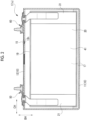
- FIG. 1 and FIG. 2 are respectively a perspective view and a vertical sectional view of a battery (electric power storage device) 1 according to the first embodiment.
- a vertical battery direction BH, a horizontal battery direction CH, and a battery thickness direction DH of the battery 1 are set to directions illustrated in FIG. 1 and FIG. 2 .
- the battery 1 is a cornered airtight lithium ion secondary battery that is mounted in a vehicle such as a hybrid car, a plug-in hybrid car, and an electric vehicle.
- a battery capacity of the battery 1 is 5.0 Ah.
- the battery 1 is configured with a battery case 10, an electrode body 20 accommodated in the battery case 10, and a positive electrode terminal member 50, a negative electrode terminal member 60, and the like supported by the battery case 10.
- a liquid electrolyte 17 is accommodated in the battery case 10. A part of the liquid electrolyte 17 is impregnated in the electrode body 20.
- the battery case 10 is made of metal (in the first embodiment, aluminum) in a rectangular parallelepiped shape.
- the battery case 10 is configured with a cornered cylindrical case main body member 11 that has a bottom and is open merely on its upper side, and a rectangular plate-shaped case lid member 13 that is welded in the form of closing the opening of the case main body member 11.
- the positive electrode terminal member 50 that is made of aluminum is fixed to the case lid member 13 in a state where the positive electrode terminal member 50 is insulated from the case lid member 13.
- the positive electrode terminal member 50 is connected and conducted to a positive electrode plate 21 of the electrode body 20 in the battery case 10, and extends to the outside of the battery through the case lid member 13.
- the negative electrode terminal member 60 that is made of copper is fixed to the case lid member 13 in a state where the negative electrode terminal member 60 is insulated from the case lid member 13.
- the negative electrode terminal member 60 is connected and conducted to a negative electrode plate 31 of the electrode body 20 in the battery case 10, and extends to the outside of the battery through the case lid member 13.
- the electrode body 20 is a flat wound electrode body and is accommodated in the battery case 10 in a state where the axis line of the electrode body 20 is horizontally disposed.
- a pouch-shaped insulation film enclosing body 19 that is configured with an insulation film is disposed between the electrode body 20 and the battery case 10.
- the electrode body 20 is configured by alternately stacking the band-shaped positive electrode plate 21 and the band-shaped negative electrode plate 31 through a pair of band-shaped separators 41 configured with a porous resin film, winding the stack about the axis line, and compressing the wound stack into a flat shape.
- the positive electrode plate 21 is configured by disposing a positive electrode active substance layer in a band shape at a predetermined position on both main surfaces of positive electrode current collecting foil configured with band-shaped aluminum foil.
- the positive electrode active substance layer is configured with a positive electrode active substance, a conductive material, and a binding agent.
- lithium transition metal complex oxide specifically, lithium nickel cobalt manganese-based complex oxide
- the negative electrode plate 31 is configured by disposing a negative electrode active substance layer in a band shape at a predetermined position on both main surfaces of negative electrode current collecting foil configured with band-shaped copper foil.
- the negative electrode active substance layer is configured with a negative electrode active substance, a binding agent, and a thickening agent.
- a carbon material specifically, graphite, is used as the negative electrode active substance.
- a method of manufacturing the battery 1 including a method of inspecting the battery 1 for a short circuit will be described (refer to FIG. 3 ).
- a non-charged battery (non-charged electric power storage device) 1x is assembled.
- the electrode body 20 is formed by alternately stacking the positive electrode plate 21 and the negative electrode plate 31 through the separators 41, winding the stack, and compressing the wound stack into a flat shape.
- the case lid member 13 is prepared, and the positive electrode terminal member 50 and the negative electrode terminal member 60 are fixed to the case lid member 13 (refer to FIG. 1 and FIG. 2 ).
- the positive electrode terminal member 50 and the negative electrode terminal member 60 are welded to the positive electrode plate 21 and the negative electrode plate 31 of the electrode body 20 respectively.
- the electrode body 20 is covered with the insulation film enclosing body 19.
- the electrode body 20 and the insulation film enclosing body 19 are inserted into the case main body member 11, and the opening of the case main body member 11 is closed with the case lid member 13.
- the case main body member 11 and the case lid member 13 are welded together to form the battery case 10.
- the liquid electrolyte 17 is introduced into the battery case 10 from a liquid introduction hole 13h and is impregnated in the electrode body 20.
- the liquid introduction hole 13h is sealed with a sealing member 15, and the non-charged battery 1x is completed.
- the positive electrode plate 21, the negative electrode plate 31, and the separators 41 (electrode body 20) interposed between the positive electrode plate 21 and the negative electrode plate 31 in the assembled non-charged battery 1x are compressed in a thickness direction SH of each separator 41 at a preset compression force from the outside of the non-charged battery 1x.
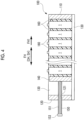
- the compression of the battery 1 is performed using a restraining jig 100 (refer to FIG. 4 ).
- the restraining jig 100 is a jig that restrains a plurality of batteries 1 arranged in the battery thickness direction DH (the thickness direction SH of each separator 41) in a state where the compression force is applied to the batteries 1 in an arrangement direction FH.
- the restraining jig 100 includes a first end plate 110 and a second end plate 120, a plurality of plate-shaped connecting members 130, a movable plate 140, a bolt 150, and a plurality of spacers 160.
- the first end plate 110 and the second end plate 120 are positioned at both ends of the restraining jig 100 in the arrangement direction FH.
- the connecting members 130 connect the first end plate 110 to the second end plate 120.
- the movable plate 140 is positioned between the first end plate 110 and the second end plate 120, and can be moved in the arrangement direction FH.
- the bolt 150 fastens the movable plate 140.
- a female thread hole 121 that passes through the second end plate 120 in the thickness direction of the second end plate 120 is formed at the center of the second end plate 120.
- the bolt 150 is inserted into the female thread hole 121 in the form of screwing a male thread portion 151 of the bolt 150 into the female thread hole 121.
- the compression of the battery 1 using the restraining jig 100 is performed as follows.
- the batteries 1 and the spacers 160 are alternately arranged in the battery thickness direction DH (arrangement direction FH) between the first end plate 110 and the movable plate 140.
- the bolt 150 is moved in a first arrangement direction FH1 by rotating a head portion 153 of the bolt 150 while the male thread portion 151 of the bolt 150 is screwed into the female thread hole 121 of the second end plate 120.
- the movable plate 140 is fastened by bringing the tip end of the male thread portion 151 of the bolt 150 into contact with the movable plate 140.
- the movable plate 140 compresses each battery 1 by pressing each battery 1 at a predetermined pressure in the arrangement direction FH with the arranged batteries 1 and the spacers 160 interposed between the movable plate 140 and the first end plate 110. Accordingly, the electrode body 20 is compressed in the thickness direction SH of each separator 41 (the thickness direction of the electrode body 20).
- “first-time charging step S2" to "current detection step S6" described below are performed in a state where the non-charged battery 1x (battery 1) is compressed.
- first-time charging step S2 the assembled non-charged battery 1x is charged for the first time to a preset charging state.
- CCCV constant current constant voltage
- the value of a stable current value IBs detected in current detection step S6 described below is also increased.
- the stable current value IBs is high, a determination of an internal short circuit based on the stable current value IBs in determination step S9 described below can be more appropriately performed. From such a reason, for example, it is preferable to charge the non-charged battery 1x to higher than or equal to 70% SOC and more preferably, higher than or equal to 90% SOC in first-time charging step S2.
- the battery voltage VB of the battery 1 is unstable immediately after charging, and it takes time for the battery voltage VB to become stable. Regarding such a point, stabilization of the battery voltage VB can be promoted by performing high temperature aging step S3.
- the stabilized battery voltage VB pre-detection battery voltage VB1 can be measured in voltage measurement step S5 described below in a shorter time period than when the battery 1 is simply placed.
- device temperature checking step S7 not only the battery temperature TB(1) is measured before voltage measurement step S5, but also the battery temperature TB(n) is periodically measured in parallel with voltage measurement step S5 and current detection step S6 in the middle of voltage measurement step S5 and current detection step S6 described below.
- the battery temperature TB(n) is detected in a temperature detection device STS by bringing a temperature sensor ST into contact with a predetermined position on the battery case 10 (refer to FIG. 5 ).
- step S7 whether or not a change in the battery temperature TB(n) with respect to the battery temperature TB(1) is within an allowed temperature change range DTB is checked. Specifically, in the first embodiment, whether or not the battery temperature TB(n) measured for the second or subsequent time falls within a range of ⁇ 0.5°C with respect to the battery temperature TB(1) measured for the first time is checked. When the change in the battery temperature TB(n) is within the allowed temperature change range DTB, voltage measurement step S5 or current detection step S6 is continued.
- the execution of voltage measurement step S5 or current detection step S6 is stopped, and the inspection for a short circuit is ended.
- the inspection for a short circuit cannot be appropriately performed because the battery temperature TB has changed for any reason.
- the stable current value IBs is increased as the battery temperature TB is increased.
- device temperature checking step S7 is included in the first embodiment, and an internal short circuit can be appropriately determined in determination step S9 without posing such a problem.
- voltage measurement step S5" as illustrated in FIG 5 , an external electric power supply EP is connected to the battery 1, and the pre-detection battery voltage (pre-detection electric power storage device voltage) VB1 of the battery 1 is measured. Specifically, a pair of probes P1, P2 of the external electric power supply EP is brought into contact with the positive electrode terminal member 50 and the negative electrode terminal member 60 of the battery 1 respectively. While such a contact state is maintained (the probes P1, P2 are not reconnected), voltage measurement step S5 and current detection step S6 described below are performed.
- a wiring resistance Rw indicates a wiring resistance that is distributed in the external electric power supply EP and from the external electric power supply EP to the probes P1, P2.
- the contact resistance R1 is a contact resistance between the probe P1 of the external electric power supply EP and the positive electrode terminal member 50 of the battery 1.
- the contact resistance R2 is a contact resistance between the probe P2 of the external electric power supply EP and the negative electrode terminal member 60 of the battery 1.
- a battery resistance Rs a direct current resistance of the battery 1.
- a short circuit resistance Rp is a resistance that is caused by an internal short circuit in the battery 1.
- the current IB is a current that flows to the battery 1 from the external electric power supply EP.
- a current ID is a self-discharge current that flows in the battery 1 along with self-discharge.
- the external electric power supply EP is a precision direct current electric power supply that is configured to not only change and control an output voltage VS generated by its direct current electric power supply EPE with high precision, but also measure the current IB flowing to the outside from the direct current electric power supply EPE with high precision.
- the battery voltage VB that is, the pre-detection battery voltage VB1 (open-circuit voltage)
- a value around 4.0 V is measured as the pre-detection battery voltage VB1.
- the external electric power supply EP includes not only the voltmeter EPV that can measure the battery voltage VB, but also an ammeter EPI that can measure the current IB flowing to the battery 1 from the external electric power supply EP.
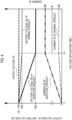
- FIG. 6 A relationship among the voltage application time t, the output voltage VS, the battery voltage VB, and the current IB in current detection step S6 is illustrated in FIG. 6 for each of a normal product and a defective product of the battery 1.
- the output voltage VS applied to the battery 1 from the external electric power supply EP has a magnitude equal to the pre-detection battery voltage VB1 measured in voltage measurement step S5 regardless of the elapse of the voltage application time t.
- the battery voltage VB of the defective product of the battery 1 is decreased more significantly than that of the normal product of the battery 1.
- the value of the stable battery voltage VB2 of the defective product of the battery 1 is lower than that of the normal product of the battery 1.
- the reason for the change in the battery voltage VB is as follows.
- the current ID flows in the battery 1 by the self-discharge, and the battery voltage VB in the battery 1 is gradually decreased.
- the current ID accompanied by the self-discharge is higher than that of the normal product of the battery 1, and the battery voltage VB is significantly decreased.
- the battery voltage VB becomes lower than the output voltage VS (VS > VB)
- the current ID flowing in the battery 1 due to the self-discharge is higher than the current IB flowing into the battery 1 from the external electric power supply EP, and the battery voltage VB is gradually decreased.
- the reason for the change in the current IB is as follows.
- the battery voltage VB is decreased due to the self-discharge, and the battery voltage VB becomes lower than the output voltage VS (VS > VB)
- the current ID accompanied by the self-discharge is higher than that of the normal product of the battery 1, and the battery voltage VB is significantly decreased.
- the current IB flowing to the battery 1 from the external electric power supply EP is increased.
- the battery voltage VB becomes equal to the constant value of the stable battery voltage VB2, and the current IB is stabilized at the constant value of the stable current value IBs.
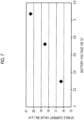
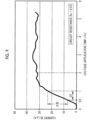
- the current IB becomes equal to the stabilized stable current value IBs after approximately two hours of the voltage application time t elapses (t ⁇ 2h) as illustrated in FIG. 9 .
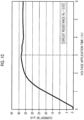
- the current IB becomes equal to the stabilized stable current value IBs after approximately three hours of the voltage application time t elapses (t ⁇ 3h) as illustrated in FIG. 10 .
- the timing of detecting the stable current value IBs in current detection step S6 is set to 3.0 hours as described above. After current detection step S6 is ended, the state of compressing the battery 1 using the restraining jig 100 is released.
- determination step S9 an internal short circuit in the battery 1 is determined based on the magnitude of the stable current value IBs detected in current detection step S6. Specifically, when the stable current value IBs of the inspected battery 1 is higher than a reference current value IK (refer to FIG. 6 ) (IBs > IK), a determination is made that the battery 1 is a defective product, and the battery 1 is discarded. When the stable current value IBs is lower than or equal to the reference current value IK (IBs ⁇ IK), a determination is made that the battery 1 is a normal product. Accordingly, the battery 1 is completed.
- Each of high temperature aging step S3 to determination step S9 in the first embodiment corresponds to "inspection step" of inspecting the battery 1 for an internal short circuit in manufacturing of the battery 1.
- the battery 1 in the method of inspecting the battery 1 for a short circuit, voltage measurement step S5, current detection step S6, and the determination step S9 are performed, and an internal short circuit in the battery 1 is determined based on the stable current value IBs and not a voltage decrease amount ⁇ Va. Accordingly, the battery 1 can be inspected for an internal short circuit using a new method that uses the current IB flowing to the battery 1 from the external electric power supply EP.
- a period of a few days or longer is needed for acquiring the voltage decrease amount ⁇ Va having an appropriate magnitude. Meanwhile, in the first embodiment, it takes approximately three hours to acquire the stable current value IBs.
- the amount of time for inspecting the battery 1 for a short circuit can be decreased, and the amount of time for manufacturing the battery 1 can be decreased.
- the values of the pre-detection battery voltage VB1 and the stable current value IBs become different from each other due to the difference in the battery temperature TB.
- the change in the battery temperature TB is excessive in voltage measurement step S5 and current detection step S6, there is a possibility that an internal short circuit may not be appropriately determined in determination step S9.
- TB1 20°C
- voltage measurement step S5 and current detection step S6 can be continued merely when the change in the device temperature TB(n) falls within the allowed temperature change range DTB. Accordingly, voltage measurement step S5 and current detection step S6 can be performed by setting the battery temperature TB to the battery inspection temperature TB1 as a constant temperature.
- the battery voltage VB of the battery 1 be unstable in voltage measurement step S5.
- stabilization of the battery voltage VB can be promoted by performing high temperature aging step S3 before voltage measurement step S5.
- voltage measurement step S5 and current detection step S6 can be more promptly performed than when high temperature aging step S3 is not performed.
- Cooling step S4 is performed after high temperature aging step S3 to set the battery temperature TB to the battery inspection temperature TB1.
- voltage measurement step S5 can be performed for the battery 1 set to the battery inspection temperature TB1.
- the positive electrode plate 21, the separators 41, and the negative electrode plate 31 of the battery 1 are compressed in the thickness direction SH of each separator 41.
- the distance between the positive electrode plate 21 and the negative electrode plate 31 is decreased, and a metallic foreign object present between the positive electrode plate 21 and the negative electrode plate 31 is more securely brought into contact with the positive electrode plate 21 or the negative electrode plate 31. Accordingly, the current IB that flows to the battery 1 due to an internal short circuit caused by the metallic foreign object can be more appropriately measured.
- the method of manufacturing the battery 1 in the first embodiment includes first-time charging step S2 of charging the non-charged battery 1x for the first time, and inspection steps S3 to S9 of inspecting the battery 1 for an internal short circuit. Accordingly, by performing inspection steps S3 to S9 after first-time charging step S2, the battery 1 that is appropriately inspected for an internal short circuit in the early stage of the battery 1 can be manufactured.
- a first modification example of the first embodiment will be described.
- the stable current value IBs of the current IB flowing to the battery 1 from the external electric power supply EP is detected in current detection step S6, and an internal short circuit in the battery 1 is determined based on the stable current value IBs in determination step S9.
- an internal short circuit in the battery 1 is determined based on a temporal change in the current IB flowing to the battery 1 from the external electric power supply EP.
- determination step S9 when the current increase amount ⁇ IB is larger than a reference increase amount ⁇ IBk ( ⁇ IB > ⁇ IBk), a determination is made that the battery 1 is a defective product. When the current increase amount ⁇ IB is smaller than or equal to the reference increase amount ⁇ IBk ( ⁇ IB ⁇ ⁇ IBk), a determination is made that the battery 1 is a normal product.
- an internal short circuit in the battery 1 can also be determined based on the temporal change in the current IB flowing to the battery 1 from the external electric power supply EP. Accordingly, the method of inspection for a short circuit in the first modification example can also be used for inspecting the battery 1 for an internal short circuit as a new method using the current IB.
- the amount of time for inspecting the battery 1 for a short circuit can be further decreased, and the amount of time for manufacturing the battery 1 can be further decreased.
- a second modification example of the first embodiment will be described (refer to FIG. 3 ).
- device temperature checking step S7 is performed before voltage measurement step S5 and in parallel with voltage measurement step S5 and current detection step S6 in the middle of voltage measurement step S5 and current detection step S6 using the temperature detection device STS and the temperature sensor ST that is brought into contact with the battery 1 to detect the battery temperature TB. Whether or not to continue voltage measurement step S5 and current detection step S6 is determined based on a change in the acquired battery temperature TB(n).
- ambient temperature checking step S8 is performed instead of device temperature checking step S7 to determine whether or not to continue voltage measurement step S5 and current detection step S6 based on a change in the acquired ambient temperature TK(n).
- ambient temperature checking step S8 whether or not a change in the ambient temperature TK(n) with respect to the ambient temperature TK(1) is within an allowed temperature change range DTK is checked. Specifically, in the second modification example, whether or not the ambient temperature TK(n) measured for the second or subsequent time falls within a range of ⁇ 0.5°C with respect to the ambient temperature TK(1) measured for the first time is checked. When the change in the ambient temperature TK(n) is within the allowed temperature change range DTK, voltage measurement step S5 or current detection step S6 is continued. When the change in the ambient temperature TK(n) falls outside the allowed temperature change range DTK, the execution of voltage measurement step S5 or current detection step S6 is stopped, and the inspection for a short circuit is ended.
- the ambient temperature TK does not directly affect the determination of an internal short circuit unlike the battery temperature TB.
- the ambient temperature TK is changed, the battery temperature TB is also changed afterwards.
- the change in the ambient temperature TK may affect the determination of an internal short circuit in determination step S9.
- the method of inspection for a short circuit in the second modification example includes ambient temperature checking step S8, and voltage measurement step S5 and current detection step S6 are continued when the change in the ambient temperature TK(n) is within the allowed temperature change range DTK.
- an internal short circuit can be appropriately determined in subsequent determination step S9.
- a second embodiment will be described (refer to FIG. 11 ). While the battery 1 is inspected for a short circuit in the course of manufacturing the battery 1 in the first embodiment, the second embodiment is different from the first embodiment in that the battery 1 that has been used after becoming available on the market after manufacturing is inspected for a short circuit. While high temperature aging step S3 and cooling step S4 are performed in the first embodiment, the second embodiment is different from the first embodiment in that placing step S12 is performed instead of high temperature aging step S3 and cooling step S4. The same parts as the first embodiment will not be described or will be briefly described.
- CCCV constant current constant voltage
- voltage measurement step S5 can be performed for the battery 1 of which the battery voltage VB is stabilized. Since the battery temperature TB is set to the battery inspection temperature TB1, voltage measurement step S5 can be performed for the battery 1 set to the battery inspection temperature TB1.
- device temperature checking step S7 (or ambient temperature checking step S8), voltage measurement step S5, current detection step S6, and determination step S9 are performed in the same manner as the first embodiment. Accordingly, the inspection of the battery 1 for an internal short circuit is ended.
- the present invention as defined in the appended claims has been described thus far based on the first and second embodiments and the first and second modification examples, the present invention is not limited to the first and second embodiment and the first and second modification examples. Appropriate changes may be applied to the present invention without departing from the scope of the present invention. For example, while a determination as to whether the inspected battery 1 is a normal product or a defective product is performed based on the stable current value IBs or the magnitude of the current increase amount ⁇ IB in determination step S9 in the first and second embodiments and the first and second modification examples, the method of determination is not limited thereto.
- the degree of an internal short circuit in the inspected battery 1 may be divided into ranks based on the stable current value IBs or the magnitude of the current increase amount ⁇ IB. Specifically, not only the battery 1 is divided into a normal product and a defective product, but also the normal product of the battery can be further divided into a plurality of ranks based on the stable current value IBs or the magnitude of the current increase amount ⁇ IB.
- the battery 1 that includes the flat wound electrode body 20 is illustrated as a battery of an inspection target for an internal short circuit in the first and second embodiments and the like, the present invention is not limited thereto.
- the inspection target for an internal short circuit can be a battery that includes a stacked electrode body. In the case of using the stacked electrode body, the battery is compressed in the stack direction of a positive electrode plate, a separator, and a negative electrode plate when the positive electrode plate, the separator, and the negative electrode plate are compressed.
Landscapes
- Engineering & Computer Science (AREA)
- Manufacturing & Machinery (AREA)
- Chemical & Material Sciences (AREA)
- Electrochemistry (AREA)
- Chemical Kinetics & Catalysis (AREA)
- General Chemical & Material Sciences (AREA)
- General Physics & Mathematics (AREA)
- Physics & Mathematics (AREA)
- Secondary Cells (AREA)
- Power Engineering (AREA)
- Materials Engineering (AREA)
- Tests Of Electric Status Of Batteries (AREA)
- Fixed Capacitors And Capacitor Manufacturing Machines (AREA)
Claims (8)
- Verfahren zur Überprüfung einer elektrischen Energiespeichervorrichtung (1) auf einen internen Kurzschluss, wobei das Verfahren Folgendes umfasst:einen Schritt (S5) zum Messen der Spannung, um eine Spannung (VB1) eines elektrischen Energiespeichers vor der Erfassung der elektrischen Energiespeichervorrichtung (1) zu messen, der vorgeladen ist;einen Schritt zum Erfassen eines Stroms (S6) zum Erfassen einer zeitlichen Änderung eines Stroms (IB), der von einer externen Stromversorgung (EP) zur elektrischen Energiespeichervorrichtung (1) fließt, oder eines stabilen Stromwerts (IBs), der ein Wert des Stroms (IB) ist, nachdem die Ausgangsspannung (VS) für eine vorbestimmte Spannungsanlegezeit (ta) an die elektrische Energiespeichervorrichtung angelegt wurde, durch kontinuierliches Anlegen einer Ausgangsspannung (VS) gleich der Spannung (VB1) der elektrischen Energiespeichervorrichtung vor der Erfassung (VS = VB1) an die elektrische Energiespeichervorrichtung (1) von der externen elektrischen Stromversorgung (EP); undeinen Schritt zum Bestimmen (S9) des internen Kurzschlusses in der elektrischen Energiespeichervorrichtung (1) basierend auf der erfassten zeitlichen Änderung des Stroms (IB) oder des stabilen Stromwerts (IBs) des Stroms (IB).
- Verfahren nach Anspruch 1, wobei der Schritt (S5) zum Messen der Spannung und der Schritt (S6) zum Erfassen des Stroms unter der Bedingung durchgeführt werden, dass eine Temperatur (TB) der elektrischen Energiespeichervorrichtung (1) gleich einer Vorrichtungsprüftemperatur (TB1) als einer konstanten Temperatur ist.
- Verfahren nach Anspruch 2, weiter mit einem Schritt (S7) zur Temperaturprüfung einer elektrischen Energiespeichervorrichtung zum Messen der Temperatur (TB(n), wobei n eine natürliche Zahl ist) der elektrischen Energiespeichervorrichtung (1) eine Vielzahl von Malen in Intervallen vor dem Schritt (S5) zum Messen der Spannung und parallel zu dem Schritt (S5) zum Messen der Spannung und dem Schritt (S6) zum Erfassen des Stroms mitten im Schritt (S5) zum Messen der Spannung und im Schritt (S6) zum Erfassen des Stroms und Fortsetzen des Schritts (S5) zum Messen der Spannung und des Schritts (S6) zum Erfassen des Stroms, wenn eine Änderung der erfassten Temperatur (TB(n)) der elektrischen Energiespeichervorrichtung innerhalb eines zulässigen Temperaturänderungsbereichs (DTB) liegt.
- Verfahren nach Anspruch 2 oder 3, das ferner einen Schritt (S8) zum Überprüfen der Umgebungstemperatur umfasst, bei dem eine Umgebungstemperatur (TK(n), wobei n eine natürliche Zahl ist) der elektrischen Energiespeichervorrichtung (1) mehrmals in Intervallen vor dem Schritt (S5) zum Messen der Spannung und parallel zu dem Schritt (S5) zum Messen der Spannung und dem Schritt (S6) zum Erfassen des Stroms mitten im Schritt (S5) zum Messen der Spannung und im Schritt (S6) zum Erfassen des Stroms gemessen wird, und Fortsetzen des Schritts (S5) zum Messen der Spannung und des Schritts (S6) zum Erfassen des Stroms, wenn eine Änderung der erfassten Umgebungstemperatur (TK(n)) innerhalb eines zulässigen Temperaturänderungsbereichs (DTK) liegt.
- Verfahren nach einem der Ansprüche 2 bis 4, weiter mit:einem Schritt (S3) des Hochtemperatur-Alterns, in dem die vorgeladene elektrische Energiespeichervorrichtung (1) vor dem Schritt (S5) zum Messen der Spannung für eine vorab festgelegte Platzierungszeitdauer (PT) einer Umgebungstemperatur (TK) von 40 °C bis 85 °C ausgesetzt ist; undeinem Abkühlen durch Einstellen der Temperatur (TB) der elektrischen Energiespeichervorrichtung (1) auf die Vorrichtungsprüftemperatur (TB1) mittels Zwangskühlung oder platzierte Kühlung nach dem Schritt (S3) des Hochtemperatur-Alterns.
- Verfahren nach einem der Ansprüche 2 bis 4, weiter mit Einstellen der Temperatur (TB) der elektrischen Energiespeichervorrichtung (1) auf die Vorrichtungsprüftemperatur (TB1), indem die vorgeladene elektrische Energiespeichervorrichtung (1) vor dem Schritt (S5) zum Messen der Spannung einer Umgebungstemperatur (TK) ausgesetzt wird, die gleich der Vorrichtungsprüftemperatur (TB1) ist (TK = TB1).
- Verfahren nach einem der Ansprüche 1 bis 6, wobei der Schritt (S5) zum Messen der Spannung und der Schritt (S6) zum Erfassen des Stroms in einem Zustand durchgeführt werden, in dem eine positive Elektrodenplatte (21), eine negative Elektrodenplatte (31) und ein Separator (41) zwischen der positiven Elektrodenplatte (21) und der negativen Elektrodenplatte (31) in der elektrischen Energiespeichervorrichtung (1) in einer Dickenrichtung des Separators (41) mit einer voreingestellten Kompressionskraft von außerhalb der elektrischen Energiespeichervorrichtung (1) zusammengedrückt werden.
- Verfahren zur Herstellung einer elektrischen Energiespeichervorrichtung, wobei das Verfahren folgende Schritte umfasst:einen Schritt (S2) des erstmaligen Ladens zum erstmaligen Laden einer zusammengebauten, nicht geladenen elektrischen Energiespeichervorrichtung (1x) auf einen voreingestellten Ladezustand, um eine vorgeladene elektrische Energiespeichervorrichtung zu erhalten; unddes Überprüfens der elektrischen Energiespeichervorrichtung auf einen Kurzschluss unter Nutzung des Verfahrens gemäß einem der Ansprüche 1 bis 7.
Applications Claiming Priority (1)
| Application Number | Priority Date | Filing Date | Title |
|---|---|---|---|
| JP2017134754A JP6885236B2 (ja) | 2017-07-10 | 2017-07-10 | 蓄電デバイスの短絡検査方法及び蓄電デバイスの製造方法 |
Publications (2)
| Publication Number | Publication Date |
|---|---|
| EP3428670A1 EP3428670A1 (de) | 2019-01-16 |
| EP3428670B1 true EP3428670B1 (de) | 2025-02-12 |
Family
ID=62791621
Family Applications (1)
| Application Number | Title | Priority Date | Filing Date |
|---|---|---|---|
| EP18179889.3A Active EP3428670B1 (de) | 2017-07-10 | 2018-06-26 | Verfahren zur inspektion einer stromspeichervorrichtung auf für kurzschluss und verfahren zur herstellung einer stromspeichervorrichtung |
Country Status (6)
| Country | Link |
|---|---|
| US (1) | US10656212B2 (de) |
| EP (1) | EP3428670B1 (de) |
| JP (1) | JP6885236B2 (de) |
| KR (1) | KR102106949B1 (de) |
| CN (1) | CN109244573B (de) |
| RU (1) | RU2693857C1 (de) |
Families Citing this family (34)
| Publication number | Priority date | Publication date | Assignee | Title |
|---|---|---|---|---|
| USD773989S1 (en) * | 2013-09-26 | 2016-12-13 | Altria Client Services Llc | Electronic smoking article charger |
| JP6907790B2 (ja) * | 2017-08-07 | 2021-07-21 | トヨタ自動車株式会社 | 蓄電デバイスの検査方法および製造方法 |
| CN111108403A (zh) * | 2017-09-21 | 2020-05-05 | 古河电气工业株式会社 | 可充电电池短路预测装置和可充电电池短路预测方法 |
| JP7000847B2 (ja) * | 2017-12-25 | 2022-01-19 | トヨタ自動車株式会社 | 蓄電デバイスの検査方法および製造方法 |
| JP7040369B2 (ja) * | 2018-09-07 | 2022-03-23 | トヨタ自動車株式会社 | 蓄電デバイスの検査方法 |
| CN113519083B (zh) * | 2019-03-12 | 2024-06-18 | 株式会社东芝 | 约束夹具及电池的制造方法 |
| JP7099381B2 (ja) * | 2019-03-18 | 2022-07-12 | トヨタ自動車株式会社 | 電池の製造方法 |
| JP7099382B2 (ja) * | 2019-03-20 | 2022-07-12 | トヨタ自動車株式会社 | 電池の製造方法 |
| CN109884542B (zh) * | 2019-04-08 | 2021-01-05 | 洛阳理工学院 | 磷酸铁锂动力电池并联模组内微短路故障单体的检测方法 |
| KR102772785B1 (ko) * | 2019-05-09 | 2025-02-27 | 주식회사 엘지에너지솔루션 | 이차전지의 제조방법 |
| JP2020201081A (ja) * | 2019-06-07 | 2020-12-17 | 本田技研工業株式会社 | リチウムイオン二次電池の微小短絡判定方法 |
| JP7218684B2 (ja) * | 2019-07-11 | 2023-02-07 | トヨタ自動車株式会社 | 蓄電デバイスの検査方法および製造方法 |
| JP7172891B2 (ja) * | 2019-07-15 | 2022-11-16 | トヨタ自動車株式会社 | 二次電池の製造方法 |
| JP7074731B2 (ja) * | 2019-08-29 | 2022-05-24 | プライムアースEvエナジー株式会社 | 蓄電デバイスの検査方法及び蓄電デバイスの製造方法 |
| JP7271382B2 (ja) * | 2019-09-25 | 2023-05-11 | プライムアースEvエナジー株式会社 | 蓄電デバイスの検査装置、検査方法及び製造方法 |
| JP2021089207A (ja) * | 2019-12-04 | 2021-06-10 | トヨタ自動車株式会社 | 蓄電デバイスの検査方法および製造方法 |
| JP7414543B2 (ja) * | 2020-01-17 | 2024-01-16 | 日置電機株式会社 | 蓄電デバイスの測定装置及び測定方法 |
| JP7146358B2 (ja) | 2020-08-07 | 2022-10-04 | プライムプラネットエナジー&ソリューションズ株式会社 | 二次電池の絶縁検査方法 |
| JP7278312B2 (ja) * | 2021-01-25 | 2023-05-19 | プライムプラネットエナジー&ソリューションズ株式会社 | 蓄電デバイスの自己放電検査方法及び蓄電デバイスの製造方法 |
| JP7209450B2 (ja) | 2021-02-15 | 2023-01-20 | プライムプラネットエナジー&ソリューションズ株式会社 | 蓄電デバイスの自己放電検査方法及び蓄電デバイスの製造方法 |
| JP7267331B2 (ja) * | 2021-02-26 | 2023-05-01 | プライムプラネットエナジー&ソリューションズ株式会社 | 蓄電デバイスの自己放電検査方法及び蓄電デバイスの製造方法 |
| JP7350796B2 (ja) * | 2021-02-26 | 2023-09-26 | プライムプラネットエナジー&ソリューションズ株式会社 | 蓄電デバイスのデバイス電圧調整方法 |
| CN113533966B (zh) * | 2021-07-21 | 2024-04-09 | 欣旺达动力科技股份有限公司 | 电池内短路阻值的测量方法、装置与计算机可读存储介质 |
| JP2023101844A (ja) * | 2022-01-11 | 2023-07-24 | 株式会社片岡製作所 | 二次電池の検査装置、二次電池の検査方法 |
| JP7501546B2 (ja) | 2022-01-11 | 2024-06-18 | トヨタ自動車株式会社 | バッテリ検査方法およびバッテリ検査システム |
| FR3124270B1 (fr) | 2022-07-19 | 2024-08-09 | Verkor | Appareil et procédé d’inspection d’une cellule secondaire |
| FR3124271B1 (fr) * | 2022-07-19 | 2024-08-09 | Verkor | Appareil et procédé d’inspection d’une cellule secondaire |
| WO2024050716A1 (zh) * | 2022-09-07 | 2024-03-14 | 宁德时代新能源科技股份有限公司 | 电芯自放电检测方法、装置、设备、存储介质和程序产品 |
| JP7611205B2 (ja) * | 2022-09-22 | 2025-01-09 | プライムプラネットエナジー&ソリューションズ株式会社 | 蓄電デバイスの検査方法、蓄電デバイスの製造方法、及び、デバイススタックの製造方法 |
| KR20240112658A (ko) | 2023-01-12 | 2024-07-19 | 에스케이온 주식회사 | 결함 배터리셀을 검출하는 장치 및 방법 |
| CN116643186A (zh) * | 2023-05-29 | 2023-08-25 | 湖北亿纬动力有限公司 | 电池自放电的电流检测方法、容量预测方法、筛选方法、设备和介质 |
| CN116754947A (zh) * | 2023-08-21 | 2023-09-15 | 宁德时代新能源科技股份有限公司 | 电池稳定性评估方法、装置、设备、存储介质及系统 |
| WO2025115838A1 (ja) * | 2023-11-30 | 2025-06-05 | パナソニックIpマネジメント株式会社 | 二次電池の検査方法 |
| CN119619897B (zh) * | 2024-12-09 | 2025-10-28 | 武汉理工大学 | 锂离子电池组内短路故障检测与定位方法、设备及介质 |
Citations (1)
| Publication number | Priority date | Publication date | Assignee | Title |
|---|---|---|---|---|
| JP2016091872A (ja) * | 2014-11-07 | 2016-05-23 | トヨタ自動車株式会社 | 二次電池の異常検出方法及び異常検出装置 |
Family Cites Families (20)
| Publication number | Priority date | Publication date | Assignee | Title |
|---|---|---|---|---|
| SU1417079A1 (ru) * | 1986-09-10 | 1988-08-15 | Специальное Проектно-Конструкторское Бюро Технологического Оборудования Для Промышленных Источников Тока | Устройство дл проверки качества моноблока аккумул торной батареи |
| EP1542306A4 (de) * | 2002-08-29 | 2007-08-08 | Matsushita Electric Industrial Co Ltd | Verfahren zum testen eines vorläufers einer sekundärzelle, testinstrument dafür und verfahren zur herstellung einer sekundärzelle unter verwendung des verfahens |
| RU2326473C1 (ru) | 2006-12-18 | 2008-06-10 | Виктор Александрович Дзензерский | Электрический способ контроля качества аккумуляторных батарей |
| WO2008096771A1 (ja) | 2007-02-08 | 2008-08-14 | Panasonic Ev Energy Co., Ltd. | 蓄電装置の異常検出装置及び方法 |
| JP2008243440A (ja) * | 2007-03-26 | 2008-10-09 | Nissan Motor Co Ltd | 二次電池の異常検出装置および電池の異常検出方法 |
| JP4995643B2 (ja) * | 2007-06-11 | 2012-08-08 | パナソニック株式会社 | 非水系電解質二次電池の内部短絡検知方法および装置 |
| JP2009049005A (ja) * | 2007-07-26 | 2009-03-05 | Panasonic Corp | 電池の内部短絡検知装置および方法、電池パック並びに電子機器システム |
| JP2009032506A (ja) * | 2007-07-26 | 2009-02-12 | Panasonic Corp | 非水系電解質二次電池の内部短絡検知方法および装置 |
| JP2010032346A (ja) * | 2008-07-29 | 2010-02-12 | Panasonic Corp | 二次電池用電極群の検査方法 |
| JP2010060300A (ja) * | 2008-09-01 | 2010-03-18 | Panasonic Corp | 2次電池の充電状態検出方法、充電状態検出装置およびこの装置を備えた機器 |
| JP2010153275A (ja) * | 2008-12-26 | 2010-07-08 | Toyota Motor Corp | 2次電池の良否判定方法および製造方法 |
| JP2011069775A (ja) | 2009-09-28 | 2011-04-07 | Nissan Motor Co Ltd | 二次電池検査方法 |
| JP2013134843A (ja) * | 2011-12-26 | 2013-07-08 | Panasonic Corp | 二次電池の検査方法 |
| JP5662968B2 (ja) * | 2012-06-19 | 2015-02-04 | 株式会社日立製作所 | 二次電池の検査システム、充放電機、及び検査方法 |
| JP5692183B2 (ja) * | 2012-07-27 | 2015-04-01 | トヨタ自動車株式会社 | 二次電池の出荷前検査方法 |
| JP6029002B2 (ja) * | 2012-11-13 | 2016-11-24 | トヨタ自動車株式会社 | 二次電池とその製造方法 |
| JP2014222603A (ja) * | 2013-05-13 | 2014-11-27 | トヨタ自動車株式会社 | 電池の検査方法 |
| EP3040733B1 (de) * | 2013-08-30 | 2020-12-16 | NGK Insulators, Ltd. | Vorrichtung, verfahren und programm zur spezifizierung von anomalienauftrittsbereichen in einem sekundärbatteriesystem |
| KR101708885B1 (ko) | 2013-10-14 | 2017-02-21 | 주식회사 엘지화학 | 혼합 양극재를 포함하는 이차 전지의 상태 추정 장치 및 그 방법 |
| WO2015075821A1 (ja) * | 2013-11-22 | 2015-05-28 | 三菱電機株式会社 | 絶縁検出器及び電気機器 |
-
2017
- 2017-07-10 JP JP2017134754A patent/JP6885236B2/ja active Active
-
2018
- 2018-06-20 US US16/013,421 patent/US10656212B2/en active Active
- 2018-06-22 KR KR1020180071870A patent/KR102106949B1/ko active Active
- 2018-06-26 EP EP18179889.3A patent/EP3428670B1/de active Active
- 2018-06-27 CN CN201810674140.5A patent/CN109244573B/zh active Active
- 2018-06-28 RU RU2018123497A patent/RU2693857C1/ru active
Patent Citations (1)
| Publication number | Priority date | Publication date | Assignee | Title |
|---|---|---|---|---|
| JP2016091872A (ja) * | 2014-11-07 | 2016-05-23 | トヨタ自動車株式会社 | 二次電池の異常検出方法及び異常検出装置 |
Also Published As
| Publication number | Publication date |
|---|---|
| JP6885236B2 (ja) | 2021-06-09 |
| EP3428670A1 (de) | 2019-01-16 |
| BR102018013695A2 (pt) | 2019-01-22 |
| CN109244573A (zh) | 2019-01-18 |
| US10656212B2 (en) | 2020-05-19 |
| KR20190006436A (ko) | 2019-01-18 |
| US20190011502A1 (en) | 2019-01-10 |
| RU2693857C1 (ru) | 2019-07-05 |
| KR102106949B1 (ko) | 2020-05-06 |
| CN109244573B (zh) | 2021-11-05 |
| JP2019016558A (ja) | 2019-01-31 |
Similar Documents
| Publication | Publication Date | Title |
|---|---|---|
| EP3428670B1 (de) | Verfahren zur inspektion einer stromspeichervorrichtung auf für kurzschluss und verfahren zur herstellung einer stromspeichervorrichtung | |
| JP6973045B2 (ja) | 蓄電デバイスの自己放電検査方法 | |
| JP5464119B2 (ja) | リチウムイオン二次電池の製造方法 | |
| US9091733B2 (en) | Method of inspecting secondary battery | |
| US10847849B2 (en) | Inspection method of electrical storage device and manufacturing method thereof | |
| JP5464118B2 (ja) | リチウムイオン二次電池の製造方法 | |
| JP6794974B2 (ja) | 蓄電デバイスの自己放電検査方法 | |
| CN110850306B (zh) | 蓄电设备的检查方法和制造方法 | |
| CN112213650B (zh) | 蓄电设备的检查方法及制造方法 | |
| EP3951412B1 (de) | Verfahren zur prüfung der isolation einer sekundärbatterie | |
| JP7074731B2 (ja) | 蓄電デバイスの検査方法及び蓄電デバイスの製造方法 | |
| JP7271382B2 (ja) | 蓄電デバイスの検査装置、検査方法及び製造方法 | |
| CN115047342A (zh) | 蓄电设备的自放电检查方法以及蓄电设备的制造方法 | |
| JP2017199577A (ja) | 二次電池の製造方法 | |
| Ebert et al. | Detection of cell-stack inhomogeneities via mechanical SOC and SOH measurement | |
| JP2018055878A (ja) | 電池の製造方法 | |
| US11777421B2 (en) | Method for adjusting device voltage of power storage device | |
| BR102018013695B1 (pt) | Método de inspeção de dispositivo de armazenamento de energia elétrica para curto-circuito e método de fabricação de dispositivo de armazenamento de energia elétrica | |
| US20210173013A1 (en) | Test method and manufacturing method for electrical storage device |
Legal Events
| Date | Code | Title | Description |
|---|---|---|---|
| PUAI | Public reference made under article 153(3) epc to a published international application that has entered the european phase |
Free format text: ORIGINAL CODE: 0009012 |
|
| STAA | Information on the status of an ep patent application or granted ep patent |
Free format text: STATUS: REQUEST FOR EXAMINATION WAS MADE |
|
| 17P | Request for examination filed |
Effective date: 20180626 |
|
| AK | Designated contracting states |
Kind code of ref document: A1 Designated state(s): AL AT BE BG CH CY CZ DE DK EE ES FI FR GB GR HR HU IE IS IT LI LT LU LV MC MK MT NL NO PL PT RO RS SE SI SK SM TR |
|
| AX | Request for extension of the european patent |
Extension state: BA ME |
|
| STAA | Information on the status of an ep patent application or granted ep patent |
Free format text: STATUS: EXAMINATION IS IN PROGRESS |
|
| 17Q | First examination report despatched |
Effective date: 20220704 |
|
| GRAP | Despatch of communication of intention to grant a patent |
Free format text: ORIGINAL CODE: EPIDOSNIGR1 |
|
| STAA | Information on the status of an ep patent application or granted ep patent |
Free format text: STATUS: GRANT OF PATENT IS INTENDED |
|
| RIC1 | Information provided on ipc code assigned before grant |
Ipc: H01M 10/0587 20100101ALN20240917BHEP Ipc: H01M 10/0525 20100101ALN20240917BHEP Ipc: G01R 31/385 20190101ALI20240917BHEP Ipc: G01R 31/392 20190101ALI20240917BHEP Ipc: H01M 10/48 20060101ALI20240917BHEP Ipc: H01M 10/42 20060101ALI20240917BHEP Ipc: G01R 31/36 20190101AFI20240917BHEP |
|
| INTG | Intention to grant announced |
Effective date: 20241015 |
|
| RAP3 | Party data changed (applicant data changed or rights of an application transferred) |
Owner name: TOYOTA JIDOSHA KABUSHIKI KAISHA |
|
| RIC1 | Information provided on ipc code assigned before grant |
Ipc: H01M 10/0587 20100101ALN20241008BHEP Ipc: H01M 10/0525 20100101ALN20241008BHEP Ipc: G01R 31/385 20190101ALI20241008BHEP Ipc: G01R 31/392 20190101ALI20241008BHEP Ipc: H01M 10/48 20060101ALI20241008BHEP Ipc: H01M 10/42 20060101ALI20241008BHEP Ipc: G01R 31/36 20190101AFI20241008BHEP |
|
| RIN1 | Information on inventor provided before grant (corrected) |
Inventor name: GOTO, TAKESHI Inventor name: KOBAYASHI, KIWAMU |
|
| GRAS | Grant fee paid |
Free format text: ORIGINAL CODE: EPIDOSNIGR3 |
|
| GRAA | (expected) grant |
Free format text: ORIGINAL CODE: 0009210 |
|
| STAA | Information on the status of an ep patent application or granted ep patent |
Free format text: STATUS: THE PATENT HAS BEEN GRANTED |
|
| AK | Designated contracting states |
Kind code of ref document: B1 Designated state(s): AL AT BE BG CH CY CZ DE DK EE ES FI FR GB GR HR HU IE IS IT LI LT LU LV MC MK MT NL NO PL PT RO RS SE SI SK SM TR |
|
| REG | Reference to a national code |
Ref country code: GB Ref legal event code: FG4D |
|
| REG | Reference to a national code |
Ref country code: CH Ref legal event code: EP |
|
| REG | Reference to a national code |
Ref country code: DE Ref legal event code: R096 Ref document number: 602018079023 Country of ref document: DE |
|
| REG | Reference to a national code |
Ref country code: IE Ref legal event code: FG4D |
|
| P01 | Opt-out of the competence of the unified patent court (upc) registered |
Free format text: CASE NUMBER: APP_20535/2025 Effective date: 20250430 |
|
| REG | Reference to a national code |
Ref country code: NL Ref legal event code: MP Effective date: 20250212 |
|
| PG25 | Lapsed in a contracting state [announced via postgrant information from national office to epo] |
Ref country code: RS Free format text: LAPSE BECAUSE OF FAILURE TO SUBMIT A TRANSLATION OF THE DESCRIPTION OR TO PAY THE FEE WITHIN THE PRESCRIBED TIME-LIMIT Effective date: 20250512 |
|
| PG25 | Lapsed in a contracting state [announced via postgrant information from national office to epo] |
Ref country code: FI Free format text: LAPSE BECAUSE OF FAILURE TO SUBMIT A TRANSLATION OF THE DESCRIPTION OR TO PAY THE FEE WITHIN THE PRESCRIBED TIME-LIMIT Effective date: 20250212 |
|
| PG25 | Lapsed in a contracting state [announced via postgrant information from national office to epo] |
Ref country code: PL Free format text: LAPSE BECAUSE OF FAILURE TO SUBMIT A TRANSLATION OF THE DESCRIPTION OR TO PAY THE FEE WITHIN THE PRESCRIBED TIME-LIMIT Effective date: 20250212 |
|
| PGFP | Annual fee paid to national office [announced via postgrant information from national office to epo] |
Ref country code: DE Payment date: 20250429 Year of fee payment: 8 |
|
| PG25 | Lapsed in a contracting state [announced via postgrant information from national office to epo] |
Ref country code: ES Free format text: LAPSE BECAUSE OF FAILURE TO SUBMIT A TRANSLATION OF THE DESCRIPTION OR TO PAY THE FEE WITHIN THE PRESCRIBED TIME-LIMIT Effective date: 20250212 |
|
| PGFP | Annual fee paid to national office [announced via postgrant information from national office to epo] |
Ref country code: GB Payment date: 20250508 Year of fee payment: 8 |
|
| REG | Reference to a national code |
Ref country code: LT Ref legal event code: MG9D |
|
| PG25 | Lapsed in a contracting state [announced via postgrant information from national office to epo] |
Ref country code: IS Free format text: LAPSE BECAUSE OF FAILURE TO SUBMIT A TRANSLATION OF THE DESCRIPTION OR TO PAY THE FEE WITHIN THE PRESCRIBED TIME-LIMIT Effective date: 20250612 Ref country code: NO Free format text: LAPSE BECAUSE OF FAILURE TO SUBMIT A TRANSLATION OF THE DESCRIPTION OR TO PAY THE FEE WITHIN THE PRESCRIBED TIME-LIMIT Effective date: 20250512 |
|
| PG25 | Lapsed in a contracting state [announced via postgrant information from national office to epo] |
Ref country code: NL Free format text: LAPSE BECAUSE OF FAILURE TO SUBMIT A TRANSLATION OF THE DESCRIPTION OR TO PAY THE FEE WITHIN THE PRESCRIBED TIME-LIMIT Effective date: 20250212 |
|
| PG25 | Lapsed in a contracting state [announced via postgrant information from national office to epo] |
Ref country code: HR Free format text: LAPSE BECAUSE OF FAILURE TO SUBMIT A TRANSLATION OF THE DESCRIPTION OR TO PAY THE FEE WITHIN THE PRESCRIBED TIME-LIMIT Effective date: 20250212 |
|
| PG25 | Lapsed in a contracting state [announced via postgrant information from national office to epo] |
Ref country code: PT Free format text: LAPSE BECAUSE OF FAILURE TO SUBMIT A TRANSLATION OF THE DESCRIPTION OR TO PAY THE FEE WITHIN THE PRESCRIBED TIME-LIMIT Effective date: 20250612 Ref country code: LV Free format text: LAPSE BECAUSE OF FAILURE TO SUBMIT A TRANSLATION OF THE DESCRIPTION OR TO PAY THE FEE WITHIN THE PRESCRIBED TIME-LIMIT Effective date: 20250212 |
|
| PGFP | Annual fee paid to national office [announced via postgrant information from national office to epo] |
Ref country code: FR Payment date: 20250508 Year of fee payment: 8 |
|
| PG25 | Lapsed in a contracting state [announced via postgrant information from national office to epo] |
Ref country code: GR Free format text: LAPSE BECAUSE OF FAILURE TO SUBMIT A TRANSLATION OF THE DESCRIPTION OR TO PAY THE FEE WITHIN THE PRESCRIBED TIME-LIMIT Effective date: 20250513 Ref country code: BG Free format text: LAPSE BECAUSE OF FAILURE TO SUBMIT A TRANSLATION OF THE DESCRIPTION OR TO PAY THE FEE WITHIN THE PRESCRIBED TIME-LIMIT Effective date: 20250212 |
|
| REG | Reference to a national code |
Ref country code: AT Ref legal event code: MK05 Ref document number: 1766511 Country of ref document: AT Kind code of ref document: T Effective date: 20250212 |
|
| PG25 | Lapsed in a contracting state [announced via postgrant information from national office to epo] |
Ref country code: SE Free format text: LAPSE BECAUSE OF FAILURE TO SUBMIT A TRANSLATION OF THE DESCRIPTION OR TO PAY THE FEE WITHIN THE PRESCRIBED TIME-LIMIT Effective date: 20250212 |
|
| REG | Reference to a national code |
Ref country code: DE Ref legal event code: R084 Ref document number: 602018079023 Country of ref document: DE |
|
| PG25 | Lapsed in a contracting state [announced via postgrant information from national office to epo] |
Ref country code: SM Free format text: LAPSE BECAUSE OF FAILURE TO SUBMIT A TRANSLATION OF THE DESCRIPTION OR TO PAY THE FEE WITHIN THE PRESCRIBED TIME-LIMIT Effective date: 20250212 |
|
| PG25 | Lapsed in a contracting state [announced via postgrant information from national office to epo] |
Ref country code: DK Free format text: LAPSE BECAUSE OF FAILURE TO SUBMIT A TRANSLATION OF THE DESCRIPTION OR TO PAY THE FEE WITHIN THE PRESCRIBED TIME-LIMIT Effective date: 20250212 |
|
| PG25 | Lapsed in a contracting state [announced via postgrant information from national office to epo] |
Ref country code: IT Free format text: LAPSE BECAUSE OF FAILURE TO SUBMIT A TRANSLATION OF THE DESCRIPTION OR TO PAY THE FEE WITHIN THE PRESCRIBED TIME-LIMIT Effective date: 20250212 |
|
| PG25 | Lapsed in a contracting state [announced via postgrant information from national office to epo] |
Ref country code: AT Free format text: LAPSE BECAUSE OF FAILURE TO SUBMIT A TRANSLATION OF THE DESCRIPTION OR TO PAY THE FEE WITHIN THE PRESCRIBED TIME-LIMIT Effective date: 20250212 |
|
| PG25 | Lapsed in a contracting state [announced via postgrant information from national office to epo] |
Ref country code: EE Free format text: LAPSE BECAUSE OF FAILURE TO SUBMIT A TRANSLATION OF THE DESCRIPTION OR TO PAY THE FEE WITHIN THE PRESCRIBED TIME-LIMIT Effective date: 20250212 Ref country code: CZ Free format text: LAPSE BECAUSE OF FAILURE TO SUBMIT A TRANSLATION OF THE DESCRIPTION OR TO PAY THE FEE WITHIN THE PRESCRIBED TIME-LIMIT Effective date: 20250212 |
|
| PG25 | Lapsed in a contracting state [announced via postgrant information from national office to epo] |
Ref country code: RO Free format text: LAPSE BECAUSE OF FAILURE TO SUBMIT A TRANSLATION OF THE DESCRIPTION OR TO PAY THE FEE WITHIN THE PRESCRIBED TIME-LIMIT Effective date: 20250212 |
|
| PG25 | Lapsed in a contracting state [announced via postgrant information from national office to epo] |
Ref country code: SK Free format text: LAPSE BECAUSE OF FAILURE TO SUBMIT A TRANSLATION OF THE DESCRIPTION OR TO PAY THE FEE WITHIN THE PRESCRIBED TIME-LIMIT Effective date: 20250212 |
|
| REG | Reference to a national code |
Ref country code: DE Ref legal event code: R097 Ref document number: 602018079023 Country of ref document: DE |
|
| PLBE | No opposition filed within time limit |
Free format text: ORIGINAL CODE: 0009261 |
|
| STAA | Information on the status of an ep patent application or granted ep patent |
Free format text: STATUS: NO OPPOSITION FILED WITHIN TIME LIMIT |
|
| REG | Reference to a national code |
Ref country code: CH Ref legal event code: L10 Free format text: ST27 STATUS EVENT CODE: U-0-0-L10-L00 (AS PROVIDED BY THE NATIONAL OFFICE) Effective date: 20251224 |
|
| 26N | No opposition filed |
Effective date: 20251113 |
|
| REG | Reference to a national code |
Ref country code: CH Ref legal event code: H13 Free format text: ST27 STATUS EVENT CODE: U-0-0-H10-H13 (AS PROVIDED BY THE NATIONAL OFFICE) Effective date: 20260127 |
|
| PG25 | Lapsed in a contracting state [announced via postgrant information from national office to epo] |
Ref country code: MC Free format text: LAPSE BECAUSE OF FAILURE TO SUBMIT A TRANSLATION OF THE DESCRIPTION OR TO PAY THE FEE WITHIN THE PRESCRIBED TIME-LIMIT Effective date: 20250212 |
|
| REG | Reference to a national code |
Ref country code: GB Ref legal event code: 746 Effective date: 20260112 |
|
| PG25 | Lapsed in a contracting state [announced via postgrant information from national office to epo] |
Ref country code: LU Free format text: LAPSE BECAUSE OF NON-PAYMENT OF DUE FEES Effective date: 20250626 |
|
| REG | Reference to a national code |
Ref country code: BE Ref legal event code: MM Effective date: 20250630 |
|
| PG25 | Lapsed in a contracting state [announced via postgrant information from national office to epo] |
Ref country code: IE Free format text: LAPSE BECAUSE OF NON-PAYMENT OF DUE FEES Effective date: 20250626 |
|
| PG25 | Lapsed in a contracting state [announced via postgrant information from national office to epo] |
Ref country code: BE Free format text: LAPSE BECAUSE OF NON-PAYMENT OF DUE FEES Effective date: 20250630 |
|
| PG25 | Lapsed in a contracting state [announced via postgrant information from national office to epo] |
Ref country code: CH Free format text: LAPSE BECAUSE OF NON-PAYMENT OF DUE FEES Effective date: 20250630 |