EP3201263B1 - Raucharme, halogenfreie, flammhemmende thermoplastische elastomerzusammensetzungen - Google Patents
Raucharme, halogenfreie, flammhemmende thermoplastische elastomerzusammensetzungen Download PDFInfo
- Publication number
- EP3201263B1 EP3201263B1 EP15781810.5A EP15781810A EP3201263B1 EP 3201263 B1 EP3201263 B1 EP 3201263B1 EP 15781810 A EP15781810 A EP 15781810A EP 3201263 B1 EP3201263 B1 EP 3201263B1
- Authority
- EP
- European Patent Office
- Prior art keywords
- flame retardant
- polymer composition
- retardant polymer
- weight percent
- amount
- Prior art date
- Legal status (The legal status is an assumption and is not a legal conclusion. Google has not performed a legal analysis and makes no representation as to the accuracy of the status listed.)
- Active
Links
Classifications
-
- C—CHEMISTRY; METALLURGY
- C08—ORGANIC MACROMOLECULAR COMPOUNDS; THEIR PREPARATION OR CHEMICAL WORKING-UP; COMPOSITIONS BASED THEREON
- C08K—Use of inorganic or non-macromolecular organic substances as compounding ingredients
- C08K3/00—Use of inorganic substances as compounding ingredients
- C08K3/01—Use of inorganic substances as compounding ingredients characterized by their specific function
- C08K3/016—Flame-proofing or flame-retarding additives
-
- C—CHEMISTRY; METALLURGY
- C08—ORGANIC MACROMOLECULAR COMPOUNDS; THEIR PREPARATION OR CHEMICAL WORKING-UP; COMPOSITIONS BASED THEREON
- C08K—Use of inorganic or non-macromolecular organic substances as compounding ingredients
- C08K3/00—Use of inorganic substances as compounding ingredients
- C08K3/18—Oxygen-containing compounds, e.g. metal carbonyls
- C08K3/20—Oxides; Hydroxides
- C08K3/22—Oxides; Hydroxides of metals
-
- C—CHEMISTRY; METALLURGY
- C08—ORGANIC MACROMOLECULAR COMPOUNDS; THEIR PREPARATION OR CHEMICAL WORKING-UP; COMPOSITIONS BASED THEREON
- C08K—Use of inorganic or non-macromolecular organic substances as compounding ingredients
- C08K5/00—Use of organic ingredients
- C08K5/0008—Organic ingredients according to more than one of the "one dot" groups of C08K5/01 - C08K5/59
- C08K5/0066—Flame-proofing or flame-retarding additives
-
- C—CHEMISTRY; METALLURGY
- C08—ORGANIC MACROMOLECULAR COMPOUNDS; THEIR PREPARATION OR CHEMICAL WORKING-UP; COMPOSITIONS BASED THEREON
- C08K—Use of inorganic or non-macromolecular organic substances as compounding ingredients
- C08K5/00—Use of organic ingredients
- C08K5/16—Nitrogen-containing compounds
- C08K5/34—Heterocyclic compounds having nitrogen in the ring
- C08K5/3467—Heterocyclic compounds having nitrogen in the ring having more than two nitrogen atoms in the ring
- C08K5/3477—Six-membered rings
- C08K5/3492—Triazines
- C08K5/34922—Melamine; Derivatives thereof
-
- C—CHEMISTRY; METALLURGY
- C08—ORGANIC MACROMOLECULAR COMPOUNDS; THEIR PREPARATION OR CHEMICAL WORKING-UP; COMPOSITIONS BASED THEREON
- C08K—Use of inorganic or non-macromolecular organic substances as compounding ingredients
- C08K5/00—Use of organic ingredients
- C08K5/16—Nitrogen-containing compounds
- C08K5/34—Heterocyclic compounds having nitrogen in the ring
- C08K5/3467—Heterocyclic compounds having nitrogen in the ring having more than two nitrogen atoms in the ring
- C08K5/3477—Six-membered rings
- C08K5/3492—Triazines
- C08K5/34924—Triazines containing cyanurate groups; Tautomers thereof
-
- C—CHEMISTRY; METALLURGY
- C08—ORGANIC MACROMOLECULAR COMPOUNDS; THEIR PREPARATION OR CHEMICAL WORKING-UP; COMPOSITIONS BASED THEREON
- C08K—Use of inorganic or non-macromolecular organic substances as compounding ingredients
- C08K5/00—Use of organic ingredients
- C08K5/49—Phosphorus-containing compounds
- C08K5/51—Phosphorus bound to oxygen
- C08K5/52—Phosphorus bound to oxygen only
- C08K5/521—Esters of phosphoric acids, e.g. of H3PO4
- C08K5/523—Esters of phosphoric acids, e.g. of H3PO4 with hydroxyaryl compounds
-
- C—CHEMISTRY; METALLURGY
- C08—ORGANIC MACROMOLECULAR COMPOUNDS; THEIR PREPARATION OR CHEMICAL WORKING-UP; COMPOSITIONS BASED THEREON
- C08K—Use of inorganic or non-macromolecular organic substances as compounding ingredients
- C08K3/00—Use of inorganic substances as compounding ingredients
- C08K3/18—Oxygen-containing compounds, e.g. metal carbonyls
- C08K3/20—Oxides; Hydroxides
- C08K3/22—Oxides; Hydroxides of metals
- C08K2003/2217—Oxides; Hydroxides of metals of magnesium
- C08K2003/2224—Magnesium hydroxide
-
- C—CHEMISTRY; METALLURGY
- C08—ORGANIC MACROMOLECULAR COMPOUNDS; THEIR PREPARATION OR CHEMICAL WORKING-UP; COMPOSITIONS BASED THEREON
- C08K—Use of inorganic or non-macromolecular organic substances as compounding ingredients
- C08K3/00—Use of inorganic substances as compounding ingredients
- C08K3/18—Oxygen-containing compounds, e.g. metal carbonyls
- C08K3/20—Oxides; Hydroxides
- C08K3/22—Oxides; Hydroxides of metals
- C08K2003/2227—Oxides; Hydroxides of metals of aluminium
-
- C—CHEMISTRY; METALLURGY
- C08—ORGANIC MACROMOLECULAR COMPOUNDS; THEIR PREPARATION OR CHEMICAL WORKING-UP; COMPOSITIONS BASED THEREON
- C08K—Use of inorganic or non-macromolecular organic substances as compounding ingredients
- C08K2201/00—Specific properties of additives
- C08K2201/019—Specific properties of additives the composition being defined by the absence of a certain additive
Definitions
- the present invention relates to the field of low smoke halogen free flame retardant compositions comprising thermoplastic elastomers.
- thermoplastic resin compositions are preferably made flame retardant to promote product safety, prevent the spread of fire and reduce destruction of products exposed to fire.
- the conventional practice of imparting flame retardance to thermoplastic resin compositions has been the addition of one or more flame retardants or a flame retardant mixture, which typically include a halogenated organic compound such as brominated polystyrene as the flame retardant and an antimony compound as a synergist for the retardant.
- halogenated flame retardants tend to decompose or degrade at the processing temperatures of thermoplastic resins, which implicates potential health and environmental effects due to the gases that are released. Consequently, there has been a trend away from using halogenated compounds or mixtures containing them to impart flame retardance.
- phosphinate salts that is, salts of phosphinic acids, also known as phosphinates, have been substituted in thermoplastic resin compositions.
- DE Pat. Nos. 2,252,258 and 2,447,727 disclose phosphinates used as flame retardants.
- U.S. Pat. No. 4,180,495 discloses the use of poly(metal phosphinate) salts in flame retardant polyesters and polyamides.
- 6,255,371 discloses flame retardant compositions comprising a) phosphinates, diphosphinates, or polymers of these and b) condensation products of melamine, reaction products of melamine with phosphoric acid, reaction products of condensation products of melamine with phosphoric acid and/or mixtures of these.
- U.S. Pat. No. 6,270,560 discloses salt mixtures made from aluminum phosphinates, aluminum hydroxide, aluminum phosphonates and/or aluminum phosphates suitable as flame retardants for polymeric molding compositions.
- U.S. Pat. Nos. 5,780,534 and 6,013,707 disclose flame retardant polyester compositions containing calcium or aluminum salts of phosphinic acid or disphosphinic acid.
- halogen-free, flame retardant compositions comprising thermoplastic elastomers which exhibit the desired flame retardance as well as low smoke emission properties.
- the present invention is directed to halogen-free flame retardant polymer compositions comprising:
- the amount of flame retardants b) (i.e. b1) + b2) + b3) +b4)) is from about 20 to about 50 weight percent, based on the total weight of the flame retardant polymer composition.
- the amount of magnesium hydroxide b1) is lower than or equal to 30 weight percent, based on the total weight of the flame retardant polymer composition.
- the amount of aluminium trihydrate b2) is lower than or equal to 30 weight percent, based on the total weight of the flame retardant polymer composition.
- the amount of melamine cyanurate b3) is from about 10 to about 20 weight percent, based on the total weight of the flame retardant polymer composition.
- the amount of the phosphate ester flame retardant b4) is lower than or equal to 15 weight percent, based on the total weight of the flame retardant polymer composition and the phosphate ester flame retardant b4) is resorcinol bis(di-2,6-dimethylphenyl phosphate).
- the flame retardant polymer composition according to the present invention comprises a flame retardant mixture b) comprising magnesium hydroxide b1) which is present in the flame retardant polymer composition in an amount from at or about 1 to 30 weight percent based on the total weight of the flame retardant polymer composition, aluminium trihydrate b2) which is present in the flame retardant polymer composition in an amount from at or about 1 to 30 weight percent based on the total weight of the flame retardant polymer composition, melamine cyanurate b3) which is present in the flame retardant polymer composition in an amount from at or about 10 to 30 weight percent based on the total weight of the flame retardant polymer composition and a phosphate ester flame retardant b4) which is present in the flame retardant polymer composition in an amount from at or about 0 to 15 weight percent based on the total weight of the flame retardant polymer composition.
- a flame retardant mixture b) comprising magnesium hydroxide b1) which is present in the flame retardant polymer composition in an amount from at or about 1 to
- the organic phosphate ester b4) is resorcinol bis(di-2,6-dimethylphenyl phosphate) and preferably it is present in the above flame retardant polymer composition in an amount of from about 2 to about 12 weight percent.
- flame retardant polymer compositions having a maximum smoke density Ds,m of about less than or equal to 300 and a VOF4 of about less than or equal to 300, as measured according to ASTM E662 Flaming Mode, and flame retardant polymer composition having a minimum light transmittance of greater than or about 60%, as measured according to IEC61034.
- the terms “about” and “at or about” mean that the amount or value in question may be the value designated or some other value that is approximately or about the same. The phrase is intended to convey that similar values promote equivalent results or effects according to the invention.
- thermoplastic elastomers suitable for use in the flame retardant compositions described herein are preferably present in the compositions of the invention in an amount from at or about 40 to at or about 80 weight percent, the weight percentage being based on the total weight of the flame retardant polymer composition.
- Thermoplastic elastomers include those defined in ISO 18064:2003(E).
- Thermoplastic elastomers defined in ISO 18064:2003(E) include copolyester thermoplastic elastomers (TPC), thermoplastic polyamide copolymers (TPA), thermoplastic polyolefinic elastomers (TPO), styrenic thermoplastic elastomers (TPS), thermoplastic polyurethanes (TPU), and mixtures of these.
- Copolyester thermoplastic elastomers include copolyesterester elastomers or copolycarbonateester elastomers, copolyesterester urethane elastomers, and copolyetherester elastomers.
- Copolyesterester elastomers are block copolymers containing a) hard polyester segments and b) soft and flexible polyester segments.
- hard polyester segments are polyalkylene terephthalates and poly(cyclohexanedicarboxylic acid cyclohexanemethanol).
- soft polyester segments are aliphatic polyesters, including polybutylene adipate, polytetramethyladipate and polycaprolactone.
- the copolyesterester elastomers contain blocks of ester units of a high melting polyester and blocks of ester units of a low melting polyester which are linked together through ester groups and/or urethane groups.
- Copolyesterester elastomers comprising urethane groups may be prepared by reacting the different polyesters in the molten phase, after which the resulting copolyesterester is reacted with a low molecular weight polyisocyanate such as for example diphenylmethylene diisocyanate.
- a low molecular weight polyisocyanate such as for example diphenylmethylene diisocyanate.
- Copolycarbonateester elastomers are block copolymers containing a) hard segments consisting of blocks of an aromatic or semi-aromatic polyester and b) soft segments consisting of blocks of a polycarbonate-containing polymeric component.
- the copolycarbonateester elastomer comprises hard polyester segments made up of repeating units derived from an aromatic dicarboxylic acid and an aliphatic diol, and soft segments comprising repeating units of an aliphatic carbonate, and/or soft segments comprising randomly distributed repeating units of an aliphatic carbonate and either an aliphatic diol and an aliphatic dicarboxylic acid or a lactone, or a combination thereof, wherein the hard segments and the soft segments can be connected with a urethane group.
- These elastomers and their preparation are described in, e.g., EP Pat. No. 0846712 .
- Copolyetherester elastomers are the thermoplastic elastomers in the flame retardant compositions of the present invention and have a multiplicity of recurring long-chain ester units and short-chain ester units joined through head-to-tail through ester linkages, said long-chain ester units being represented by formula (A): and said short-chain ester units being represented by formula (B): wherein
- long-chain ester units as applied to units in a polymer chain refers to the reaction product of a long-chain glycol with a dicarboxylic acid.
- Suitable long-chain glycols are poly(alkylene oxide) glycols having terminal (or as nearly terminal as possible) hydroxy groups and having a number average molecular weight of from about 400 to about 6000, and preferably from about 600 to about 3000.
- Preferred poly(alkylene oxide) glycols include poly(tetramethylene oxide) glycol, poly(trimethylene oxide) glycol, polypropylene oxide) glycol, poly(ethylene oxide) glycol, copolymer glycols of these alkylene oxides, and block copolymers such as ethylene oxide-capped poly(propylene oxide) glycol. Mixtures of two or more of these glycols can be used.
- short-chain ester units refers to low molecular weight compounds or polymer chain units having molecular weights less than about 550. They are made by reacting a low molecular weight diol or a mixture of diols (molecular weight below about 250) with a dicarboxylic acid to form ester units represented by Formula (B) above. Included among the low molecular weight diols which react to form short-chain ester units suitable for use for preparing copolyetheresters are acyclic, alicyclic and aromatic dihydroxy compounds.
- Preferred compounds are diols with about 2 to 15 carbon atoms such as ethylene, propylene, isobutylene, tetramethylene, 1,4-pentamethylene, 2,2-dimethyltrimethylene, hexamethylene and decamethylene glycols, dihydroxycyclohexane, cyclohexane dimethanol, resorcinol, hydroquinone, 1,5-dihydroxynaphthalene, and the like.
- Especially preferred diols are aliphatic diols containing 2 to 8 carbon atoms, and a more preferred diol is 1,4-butanediol.
- bisphenols which can be used are bis( p -hydroxy)diphenyl, bis( p -hydroxyphenyl)methane, and bis( p -hydroxyphenyl)propane.
- Equivalent ester-forming derivatives of diols are also useful (e.g., ethylene oxide or ethylene carbonate can be used in place of ethylene glycol and resorcinol diacetate can be used in place of resorcinol).
- diols includes equivalent ester-forming derivatives such as those mentioned. However, any molecular weight requirements refer to the corresponding diols, not their derivatives.
- Dicarboxylic acids that can react with the foregoing long-chain glycols and low molecular weight diols to produce the copolyetheresters are aliphatic, cycloaliphatic or aromatic dicarboxylic acids of a low molecular weight, i.e., having a molecular weight of less than about 300.
- the term "dicarboxylic acids" as used herein includes functional equivalents of dicarboxylic acids that have two carboxyl functional groups that perform substantially as dicarboxylic acids in reaction with glycols and diols in forming copolyetherester polymers. These equivalents include esters and ester-forming derivatives such as acid halides and anhydrides. The molecular weight requirement pertains to the acid and not to its functionally equivalent ester or ester-forming derivative.
- an ester of a dicarboxylic acid having a molecular weight greater than 300 or another functional equivalent of a dicarboxylic acid having a molecular weight greater than 300 are included provided the corresponding acid has a molecular weight below about 300.
- the dicarboxylic acids can contain any substituent groups or combinations that do not substantially interfere with copolyetherester polymer formation or with the use of the copolyetherester polymer in the flame retardant compositions of the invention.
- aliphatic dicarboxylic acids refers to carboxylic acids having two carboxyl groups each attached to a saturated carbon atom. If the carbon atom to which the carboxyl group is attached is saturated and is in a ring, the acid is cycloaliphatic. Aliphatic or cycloaliphatic acids having conjugated unsaturation often cannot be used because of homopolymerization. However, some unsaturated acids, such as maleic acid, can be used.
- aromatic dicarboxylic acids refer to dicarboxylic acids having two carboxyl groups each attached to a carbon atom in a carbocyclic aromatic ring structure. It is not necessary that both functional carboxyl groups be attached to the same aromatic ring and, where more than one ring is present, they can be joined by aliphatic or aromatic divalent radicals or divalent radicals such as -O- or -SO 2 -.
- Representative useful aliphatic and cycloaliphatic acids include sebacic acid; 1,3-cyclohexane dicarboxylic acid; 1,4-cyclohexane dicarboxylic acid; adipic acid; glutaric acid; 4-cyclohexane-1,2-dicarboxylic acid; 2-ethylsuberic acid; cyclopentanedicarboxylic acid, decahydro-1,5-naphthylene dicarboxylic acid; 4,4'-bicyclohexyl dicarboxylic acid; decahydro-2,6-naphthylene dicarboxylic acid; 4,4'-methylenebis-(cyclohexyl) carboxylic acid; and 3,4-furan dicarboxylic acid.
- Preferred acids are cyclohexane dicarboxylic acids and adipic acid.
- aromatic dicarboxylic acids include phthalic, terephthalic and isophthalic acids; dibenzoic acid; substituted dicarboxy compounds with two benzene nuclei such as bis(p-carboxyphenyl) methane; p-oxy-1,5-naphthalene dicarboxylic acid; 2,6-naphthalene dicarboxylic acid; 2,7-naphthalene dicarboxylic acid; 4,4'-sulfonyl dibenzoic acid; and C 1 -C 12 alkyl and ring substitution derivatives of these acids, such as halo, alkoxy, and aryl derivatives. Hydroxy acids such as p -(beta-hydroxyethoxy)benzoic acid can also be used provided an aromatic dicarboxylic acid is also used.
- Aromatic dicarboxylic acids are a preferred class for preparing the copolyetherester elastomers useful for this invention.
- aromatic acids those with 8 to 16 carbon atoms are preferred, particularly terephthalic acid alone or in a mixture with phthalic and/or isophthalic acids.
- the copolyetherester elastomer preferably comprises from at or about 15 to at or about 99 weight percent short-chain ester units corresponding to Formula (B) above, the remainder being long-chain ester units corresponding to Formula (A) above, wherein 100 weight percent is the sum of the weight percentages of the units of Formula (A) and Formula (B) in the copolyetherester elastomer. More preferably, the copolyetherester elastomers comprise from at or about 20 to at or about 95 weight percent, and even more preferably from at or about 50 to at or about 90 weight percent short-chain ester units, where the remainder is long-chain ester units.
- At least about 70% of the groups represented by R in Formulae (A) and (B) above are 1,4-phenylene radicals and at least about 70% of the groups represented by D in Formula (B) above are 1,4-butylene radicals and the sum of the percentages of R groups which are not 1,4-phenylene radicals and D groups that are not 1,4-butylene radicals does not exceed 30% of the total number of R and D groups.
- isophthalic acid is preferred and if a second low molecular weight diol is used, ethylene glycol, 1,3-propanediol, cyclohexanedimethanol, or hexamethylene glycol are preferred.
- a blend or mixture of two or more copolyetherester elastomers can be used.
- the copolyetherester elastomers used in the blend need not on an individual basis come within the values disclosed hereinbefore for the elastomers.
- the blend of two or more copolyetherester elastomers must conform to the values described herein for the copolyetheresters on a weighted average basis.
- one copolyetherester elastomer can contain 60 weight percent short-chain ester units and the other resin can contain 30 weight percent short-chain ester units for a weighted average of 45 weight percent short-chain ester units.
- Preferred copolyetherester elastomers include, but are not limited to, copolyetherester elastomers prepared from monomers comprising (1) poly(tetramethylene oxide) glycol; (2) a dicarboxylic acid selected from isophthalic acid, terephthalic acid and mixtures thereof; and (3) a diol selected from 1,4-butanediol, 1,3-propanediol and mixtures thereof, or from monomers comprising (1) poly(trimethylene oxide) glycol; (2) a dicarboxylic acid selected from isophthalic acid, terephthalic acid and mixtures thereof; and (3) a diol selected from 1,4-butanediol, 1,3-propanediol and mixtures thereof, or from monomers comprising (1) ethylene oxide-capped polypropylene oxide) glycol; (2) a dicarboxylic acid selected from isophthalic acid, terephthalic acid and mixtures thereof; and (3) a diol selected from 1,4
- the copolyetherester elastomers described herein are prepared from esters or mixtures of esters of terephthalic acid and/or isophthalic acid, 1,4-butanediol and poly(tetramethylene ether)glycol or poly(trimethylene ether) glycol or ethylene oxide-capped polypropylene oxide glycol, or are prepared from esters of terephthalic acid, e.g., dimethylterephthalate, 1,4-butanediol and poly(ethylene oxide)glycol. More preferably, the copolyetheresters are prepared from esters of terephthalic acid, e.g., dimethylterephthalate, 1,4-butanediol and poly(tetramethylene ether)glycol.
- thermoplastic polyetherester elastomers are used in a wide range of applications including for example wire and cable coatings, automotive applications, components for household appliances, components for buildings or mechanical devices and tubes and pipes for conveying fluids.
- suitable copolyetherester elastomers are commercially available under the trademark Hytrel® from E. I. du Pont de Nemours and Company, Wilmington, Delaware.
- TPA's Thermoplastic polyamide copolymers consist of copolymers containing a) hard polyamide segments and b) soft and flexible segments.
- TPA's include polyesteramides (PEA's), polyetherester-amides (PEEA's), polycarbonate-esteramides (PCEA's) and polyether-block-amides (PE-b-A's).
- the TPA consists of a linear and regular chain of polyamide segments and flexible polyether or polyester segments or soft segments with both ether and ester linkages as represented by formula (C): wherein "PA” represents a polyamide sequence and "PE” represents for example a polyoxyalkylene sequence formed from linear or branched aliphatic polyoxyalkylene glycols or a long-chain polyol with either ether or ester or both linkages and mixtures thereof or a copolyether or copolyester sequence derived therefrom.
- the polyamide may be aliphatic or aromatic.
- the softness of the copolyetheramide or the copolyesteramide block copolymers generally decreases as the relative amount of polyamide units is increased. Examples of thermoplastic polyamide block copolymers are commercially available from Arkema, Inc. (formerly Atofina or Elf Atochem) of King of Prussia, Pennsylvania, under the trademark PebaxTM.
- Thermoplastic polyolefinic elastomers consist of certain rubbery olefin-type polymers, for example propylene or polyethylene, as well as thermoplastics blended with a rubber.
- thermoplastic polyolefinic elastomers include random block copolymers such as alpha-olefin copolymers, including ethylene-propylene copolymers (EPM), ethylene propylene diene copolymers (EPDM), copolymers of ethylene or propylene or butene with higher alpha-olefin copolymers (e.g.
- ethylene-hexene ethylene-octene (for example EngageTM which is commercially available from The Dow Chemical Co. of Midland, Michigan)); random stereoblock polypropylene; hydrogenated diene block copolymers such as hydrogenated polybutadiene and hydrogenated polyisoprene, a mixture of hydrogenated polybutadiene and polybutadiene; graft copolymers such as EPDM-g-polypivalolactone (PPVL).
- PVL polyolefin blend thermoplastic elastomers
- iPP isotactic polypropylene
- EPM or EPDM with polyethylene and polypropylene blends of EPM or EPDM with polyethylene and polypropylene.
- Styrenic thermoplastic elastomers consist of block copolymers of styrene and rubbery polymeric materials like for example polybutadiene (TPS-SBS), a mixture of hydrogenated polybutadiene and polybutadiene, poly(ethylene-butylene) (TPS-SEBS), polyisoprene (TPS-SIS) and poly(ethylene-propylene) (TPS-SEPS).
- TPS-SBS polybutadiene
- TPS-SEBS poly(ethylene-butylene)
- TPS-SIS polyisoprene
- TPS-SEPS poly(ethylene-propylene)
- Thermoplastic polyurethanes consist of linear segmented block copolymer composed of hard segments comprising polyisocyanate and a chain extender and soft segments comprising diisocyanate and a long chain polyol as represented by the general formula (D): wherein "X” represents a hard segment comprising a polyisocyanate and a chain extender, preferably a short-chain glycol, "Z” represents a soft segment comprising a polyisocyanate and a long-chain polyol and "Y” represents the residual group of the polyisocyanate compound of the urethane bond linking the X and Z segments.
- the polyisocyanate is a diisocyanate.
- diisocyanate examples include 4,4'-diphenylmethane diisocyanate (MDI), toluene diisocyanate (TDI), hexamethylene diisocyanate (HDI), 4,4'-dicyclohexylmethane diisocyanate (H12-MDI), trans-trans-4,4'-dicyclohexylmethane diisocyanate, 3,3'-dimethyl-4,4'-biphenyl diisocyanate (TODI) and 1,4-benzene diisocyanate.
- the long-chain polyol includes those of a polyether type such as poly(alkylene oxide)glycol or those of polyester type.
- Flame retardance in the flame retardant thermoplastic elastomer compositions described herein is imparted by flame retardant mixtures also referred herein as flame retardant compositions.
- These flame retardant mixtures b) comprise a flame retardant b1) which is magnesium hydroxide.
- the flame retardant mixtures b) comprise a flame retardant b1) in an amount from at or about 1 to at or about 30 weight percent, more preferably in an amount from at or about 5 to at or about 20 weight percent and even more preferably in an amount from at or about 7 to at or about 15 weight percent, the weight percentage being based on the total weight of the flame retardant polymer composition.
- the flame retardant mixtures of the present invention also comprise aluminium trihydrate as component b2).
- the flame retardant mixtures b) comprise a flame retardant b2) in an amount from at or about 1 to at or about 30 weight percent, more preferably in an amount from at or about 5 to at or about 20 weight percent and even more preferably in an amount from at or about 7 to at or about 15 weight percent, the weight percentage being based on the total weight of the flame retardant polymer composition.
- Aluminium oxide could be used as an alternative to aluminium trihydrate.
- the flame retardant polymer mixtures of the invention also comprise melamine cyanurate as component b3).
- Melamine cyanurate also known as melamine-cyanuric acid adduct or melamine-cyanuric acid complex, is a crystalline complex formed from a 1:1 mixture of melamine and cyanuric acid.
- Melamine cyanurate is the commonly used name for adducts of 2,4,6-triamino-1,3,5-triazine (melamine) and 2,4,6-trihydroxy-1,3,5-triazine or its tautomer ((iso)cyanuric acid) as described for example in U.S. Pat. No. 4,180,496 .
- the amount of melamine cyanurate present in the flame retardant polymer composition of the present invention is higher than or equal to 10 weight percent based on the total weight of the flame retardant polymer composition. Lower amounts may not be effective to impart flame retardance to the polymer composition. More preferably, the amount of melamine cyanurate present in the flame retardant polymer composition of the present invention is from 10 to 30 weight percent, even more preferably from 15 to 25 weight percent, the weight percent being based on the total weight of the flame retardant polymer composition. Amounts higher than 30 weight percent may be detrimental to the mechanical properties of the flame retardant polymer composition.
- the flame retardant polymer compositions of the present invention are free of organic or inorganic phosphinate flame retardant derivatives, such as those described in U.S. Pat. No. 6,255,371 (e.g., aluminium diethylphosphinate) and in U.S. Pat. No. 7,700,680 (e.g., aluminium phosphinate).
- the flame retardant polymer compositions of the present invention may further comprise one or more phosphate ester flame retardants b4), such as those described in EP Pat. No. 0 947 547 .
- Preferred phosphate ester flame retardants are selected from the group consisting of resorcinol bis(di-2,6-dimethylphenyl phosphate), also referred as tetrakis(2,6-dimethylphenyl)-m-phenylene biphosphate ( CAS number 139189-30-3 ) described in Japanese Kokai H9-143350 and available under the tradename PX-200 from the Daihachi Chemical Industry Corporation of Osaka, Japan, and bisphenol bis(di-2,6-dimethylphenyl phosphate), also available from Daihachi under the tradename PX-202.
- the preferred amount of phosphate ester flame retardant present in the flame retardant polymer composition of the present invention is lower than or equal to 15 weight percent, based on the total weight of the flame retardant polymer composition. More preferably, the amount of phosphate ester flame retardant present in the flame retardant polymer composition of the present invention is from 2 to 12 weight percent based on the total weight of the flame retardant polymer composition.
- phosphate ester flame retardants notably of resorcinol bis(di-2,6-dimethylphenyl phosphate
- phosphate flame retardants of formula (I) may also be used in the in the flame retardant polymer composition of the present invention.
- R 4 and R 5 each independently represent a hydrogen atom or a methyl group and n represents a number of 1 to 5.
- R 4 and R 5 represent a hydrogen atom.
- the phosphate ester flame retardant b4) may be a mixture of the monomers or oligomers of compound of formula (I), e.g., a mixture of compounds wherein n is equal to 1 and one or more compounds wherein n is equal to 2, 3, 4 or 5.
- Phosphate ester flame retardants useful in the present invention may be obtained according to the processes described in U.S. Patent Appln. Publn. No. 2011/0084242 , for example, or under CAS number 1003300-73-9 from Adeka Palmarole of Mulhouse, France.
- the flame retardant polymer compositions described herein may further comprise additives that include, but are not limited to, one or more of the following components as well as combinations of these: metal deactivators, such as hydrazine and hydrazide; heat stabilizers; antioxidants; modifiers; colorants; lubricants; fillers and reinforcing agents; impact modifiers; flow enhancing additives; antistatic agents; crystallization promoting agents; conductive additives; viscosity modifiers; nucleating agents; plasticizers; mold release agents; scratch and mar modifiers; drip suppressants; adhesion modifiers; and other processing aids known in the polymer compounding art.
- metal deactivators such as hydrazine and hydrazide
- heat stabilizers such as heat stabilizers; antioxidants; modifiers; colorants; lubricants; fillers and reinforcing agents; impact modifiers; flow enhancing additives; antistatic agents; crystallization promoting agents; conductive additives; viscosity modifiers; nucleating agents
- the flame retardant compositions described herein may further comprise agents that increase softness, such as poly(alkyl(meth)acrylate) or polyethylene/(allkyl (meth)acrylate) or polethylene/vinyl acetate.
- agents that increase softness such as poly(alkyl(meth)acrylate) or polyethylene/(allkyl (meth)acrylate) or polethylene/vinyl acetate.
- (meth)acrylate refers to methacrylate and/or acrylate
- poly(meth)acrylate refers to polymers derived from the polymerization of methacrylate and/or acrylate monomers.
- the acrylate rubber may be prepared by copolymerizing one or more alkyl (meth)acrylate monomers with one or more olefins.
- a preferred olefin is ethylene.
- the acrylate rubbers include poly(alkyl (meth)acrylate) rubbers, ethylene/alkyl (meth)acrylate copolymer rubbers and poly(perfluoroalkyl (meth)acrylate) rubbers. More preferably, the acrylate rubbers are ethylene/alkyl (meth)acrylate copolymer rubbers where the alkyl group has from 1 to 4 carbons. Preferred ethylene/alkyl (meth)acrylate copolymers are those derived from less than about 80 weight percent of copolymerized ethylene and more than about 20 weight percent of copolymerized alkyl (meth)acrylate, based on the total weight of the ethylene/alkyl (meth)acrylate copolymer.
- the alkyl acrylate or vinyl acetate polymers may optionally comprise additional repeat units derived from one or more functionalized comonomers, such as (meth)acrylate, glycidyl esters, such as glycidyl methacrylate, maleic acid, or other comonomers having one or more reactive groups including acid, anhydride, hydroxyl, epoxy, isocyanates, amine, oxazoline, chloroacetate, carbon monoxide or diene functionality.
- the acrylate rubbers may also be prepared from more than two alkyl (meth)acrylate monomers. Examples are acrylate rubbers made by polymerizing ethylene, methyl acrylate, and a second alkyl acrylate, such as butyl acrylate.
- the additives described above may be present in the flame retardant polymer compositions of the invention in amounts and in forms known in the art, including in the form of so-called nanomaterials where at least one of the dimensions of the particles is in the range of 1 to 1000 nm.
- the flame retardant polymer compositions described herein are melt-mixed blends, wherein all of the polymeric components are preferably well-dispersed within each other and all of the non-polymeric ingredients are preferably well-dispersed in and bound by the polymer matrix, such that the blend forms a unified whole. Any melt-mixing method may be used to combine the polymeric components and non-polymeric ingredients of the present invention.
- the polymeric components and non-polymeric ingredients of the flame retardant polymer compositions of the invention may be added to a melt mixer, such as, for example, a single or twin-screw extruder; a blender; a single or twin-screw kneader; or a Banbury mixer, either simultaneously through a single step addition, or in a stepwise fashion, and then melt-mixed.
- a melt mixer such as, for example, a single or twin-screw extruder; a blender; a single or twin-screw kneader; or a Banbury mixer, either simultaneously through a single step addition, or in a stepwise fashion, and then melt-mixed.
- a melt mixer such as, for example, a single or twin-screw extruder; a blender; a single or twin-screw kneader; or a Banbury mixer, either simultaneously through a single step addition, or in a stepwise fashion, and then melt-mix
- the components of the flame retardant mixture may be combined by mixing in a blender, Banbury mixer, roll mill, or any method for mixing and dispersing chemical compounds known to those skilled in the art, so long as the method does not result in degradation of the components.
- the components of the flame retardant mixture may also be blended individually with the additives and/or the thermoplastic elastomer by a method that does not degrade the ingredients of the flame retardant mixture, for example in a Banbury mixer or an extruder.
- Also described herein are methods for imparting flame retardance and low smoke emission to an article made of a flame retardant polymer composition comprising melt blending a) the one or more thermoplastic elastomers described herein with a flame retardant composition comprising b1) magnesium hydroxide, b2) aluminium trihydrate; b3) melamine cyanurate and b4) a phosphate ester flame retardant which is preferably resorcinol bis(di-2,6-dimethylphenyl phosphate), wherein the flame retardant composition is present in an amount from at or about 20 to at or about 50 weight percent (the weight percentage being based on the total weight of the flame retardant polymer composition), b1) is present in the flame retardant composition in an amount from at or about 1 to at or about 30 weight percent, b2) is present in the flame retardant composition in an amount from at or about 1 to at or about 30 weight percent, b3) is present in the flame retardant composition in an amount from at or about 10 to at or about 30 weight percent
- the flame retardant polymer compositions described herein may be shaped into articles using methods known to those skilled in the art, such as injection molding, blow molding, injection blow molding, extrusion, thermoforming, melt casting, vacuum molding, rotational molding, calendar molding, slush molding, filament extrusion and fiber spinning.
- Such articles may include films, fibers and filaments, wire and cable coatings; photovoltaic cable coatings, optical fiber coatings, tubing and pipes; fabrics or texiles made fibers and filaments, e.g., used in clothing or carpets; films and membranes such breathable membranes in roofing and building/construction; motorized vehicle parts such as body panels, air bag doors, dashboards, engine covers, rocker panels or air filter covers; components for household appliances, such as washers, dryers, refrigerators and heating-ventilation-air conditioning appliances; connectors in electrical/electronic applications; components for electronic devices, such as computers; components for office-, indoor-, and outdoor-furniture; and footwear components.
- Copolyester Thermoplastic Elastomer a copolyetherester elastomer comprising about 44.9 weight percent of poly(tetramethylene oxide) having an average molecular weight of about 1000 g/mol as polyether block segments, the weight percentage being based on the total weight of the copolyetherester elastomer, the short chain ester units of the copolyetherester being polybutylene terephthalate and polybutylene isophthalate segments.
- the copolyetherester elastomer contained up to 6 weight percent of heat stabilizers, antioxidants and metal deactivators.
- MDH Magnesium Hydroxide Flame Retardant
- Aluminum Trihydroxide flame retardant (ATH) Hydral 710, supplied by J.M. Huber Corporation of Edison, New Jersey.
- Phosphinate flame retardant Exolit® OP1230, an aluminum salt of diethylene phosphinate supplied by the Clariant Corporation of Frankfurt, Germany.
- Phosphate PX-200, a Resorcinol bis(di-2,6-dimethylphenyl phosphate), supplied by Daihachi Chemical Industry Corporation of Osaka, Japan.
- compositions of the Examples are identified as “E” and compositions of the Comparative Examples are identified as “C”.
- Flame retardant polymer compositions of the invention and comparative compositions were prepared as follows: The above described materials, in the amounts listed in Tables 1 and 2, were melt blended in a twin screw extruder. The compounded melt blended mixtures of examples E1 to E10 and comparative examples C1 to C10 were extruded in the form of laces or strands, cooled in a water bath, chopped into granules and placed in sealed aluminum-lined bags in order to prevent exposure to adventitous moisture.
- Flammability testing was performed according to UL 94 test standard, 20 mm vertical burning test.
- Test specimens were formed from the compositions of the invention and from comparative compositions by injection molding the compositions in the form of test bars having dimensions of 125 mm long by 13 mm wide and a thickness of 1.6 mm.
- the granules of the flame retardant compositions prepared according to the above-described method were dried to provide granulated compositions having a moisture level below 0.08 percent.
- the test specimens were conditioned for 48 hours at 23°C and 50% relative humidity. Test specimens were clamped with the longitudinal axis of the specimen in the vertical direction, so that the lower end of the specimen was 300 mm above a horizontal layer of dry absorbent surgical cotton.
- a burner producing a blue flame 20 mm high was placed so that the flame was applied centrally to the mid-point of the bottom edge of the specimen for 10 seconds. After the application of the flame to the specimen for 10 seconds, the burner was withdrawn from the sample and the after-flame time, t1, was measured. When after-flaming of the test specimen ceased, the burner was again placed beneath the specimen for an additional 10 seconds. The flame was then withdrawn from the test specimen and the second after-flame time, t2, was measured. Materials are classified according to the test specifications as V-0, V-1 or V-2, based on the behavior of the material during burning, V-2 being the least demanding classification. When the composition failed to meet the criteria for the least demanding classification (V-2), it is reported as "failed" in the tables.
- Table 1 E1 E2 E3 E4 E5 E6 C1 C2 C3 C4 C5 TPC 65.4 59.4 57.4 57.4 57.4 57.4 67.4 70.9 57.4 70.9 70.9 ATH 13.5 13.5 13.5 17.3 6.8 3 6.8 4.5 6.8 MDH 6.8 6.8 6.8 3 13.5 17.3 3.5
Landscapes
- Chemical & Material Sciences (AREA)
- Health & Medical Sciences (AREA)
- Chemical Kinetics & Catalysis (AREA)
- Medicinal Chemistry (AREA)
- Polymers & Plastics (AREA)
- Organic Chemistry (AREA)
- Compositions Of Macromolecular Compounds (AREA)
- Inorganic Insulating Materials (AREA)
- Organic Insulating Materials (AREA)
Claims (15)
- Halogenfreie, flammhemmende Polymerzusammensetzung, umfassend:a) ein oder mehr thermoplastische Elastomere; undb) eine flammhemmende Mischung umfassend:b1) Magnesiumhydroxidb2) Aluminiumtrihydratb3) Melamincyanuratb4) und wahlweise ein Phosphatester-Flammschutzmittelwobei das eine oder mehr thermoplastischen Elastomere Copolyetheresterelastomere sind, die eine Mehrzahl sich wiederholender langkettiger Estereinheiten und kurzkettiger Estereinheiten aufweisen, die Schwanz an Kopf durch Esterverknüpfungen verbunden sind, wobei die langkettigen Estereinheiten durch die Formel (A):
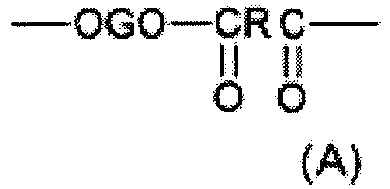
 G ein zweiwertiges Radikal ist, das nach Entfernung von endstädigen Hydroxylgruppen von Poly(alkylenoxid)glycolen, die ein zahlendurchschnittliches Molekulargewicht zwischen 400 und 6000 aufweisen, verbleibt;R ein zweiwertiges Radikal ist, das nach Entfernung von Carboxylgruppen von einer Dicarbonsäure, die ein Molekulargewicht von weniger als 300 aufweist, verbleibt; undD ein zweiwertiges Radikal ist, das nach Entfernung von Hydroxylgruppen von einem Diol, das ein zahlendurchschnittliches Molekulargewicht von weniger als 250 aufweist, verbleibt.
 - Flammhemmende Polymerzusammensetzung nach Anspruch 1, wobei das eine oder mehr thermoplastische Elastomere Copolyetheresterelastomere sind, die aus Monomeren hergestellt sind umfassend(1) Poly(tetramethylenoxid)glycol;(2) ein Dicarbonsäure ausgewählt aus der Gruppe bestehend aus Isophthalsäure, Terephthalsäure und Mischungen davon; und(3) ein Diol ausgewählt aus der Gruppe bestehend aus 1,4-Butandiol, 1,3-Propandiol und Mischungen davon.
- Flammhemmende Polymerzusammensetzung nach einem vorhergehenden Anspruch, wobei das eine oder mehr thermoplastische Elastomere Copolyetheresterelastomere sind, die aus Monomeren hergestellt sind umfassend(1) Poly(tetramethylenoxid)glycol;(2) ein Dicarbonsäure ausgewählt aus der Gruppe bestehend aus Isophthalsäure, Terephthalsäure und Mischungen davon; und(3) ein Diol ausgewählt aus der Gruppe bestehend aus 1,4-Butandiol, 1,3-Propandiol und Mischungen davon.
- Flammhemmende Polymerzusammensetzung nach einem vorhergehenden Anspruch, wobei das eine oder mehr thermoplastische Elastomere Copolyetheresterelastomere sind, die aus Monomeren hergestellt sind umfassend(1) mit Ethylen gekapptes Poly(propylenoxid)glycol;(2) Dicarbonsäure ausgewählt aus der Gruppe bestehend aus Isophthalsäure, Terephthalsäure und Mischungen davon; und(3) ein Diol ausgewählt aus der Gruppe bestehend aus 1,4-Butandiol, 1,3-Propandiol und Mischungen davon.
- Flammhemmende Polymerzusammensetzung nach einem vorhergehenden Anspruch, wobei die Menge an Flammschutzmitteln b1) bis b4) 20 bis 30 Gewichtsprozent, auf das Gesamtgewicht des Flammschutzmittel-Polymerzusammensetzung bezogen, beträgt.
- Flammhemmende Polymerzusammensetzung nach einem vorhergehenden Anspruch, wobei die Menge an b1) geringer als oder gleich 30 Gewichtsprozent, auf das Gesamtgewicht der flammhemmenden Polymerzusammensetzung bezogen, ist.
- Flammhemmende Polymerzusammensetzung nach einem vorhergehenden Anspruch, wobei die Menge an b2) geringer als oder gleich 30 Gewichtsprozent, auf das Gesamtgewicht der flammhemmenden Polymerzusammensetzung bezogen, ist.
- Flammhemmende Polymerzusammensetzung nach einem vorhergehenden Anspruch, wobei die Menge an b3) 10 bis 30 Gewichtsprozent, auf das Gesamtgewicht der flammhemmenden Polymerzusammensetzung bezogen, beträgt.
- Flammhemmende Polymerzusammensetzung nach einem vorhergehenden Anspruch, wobei die Menge des Phosphatester-Flammschutzmittels b4) geringer als oder gleich 15 Gewichtsprozent, auf das Gesamtgewicht der flammhemmenden Polymerzusammensetzung bezogen, ist.
- Flammhemmende Polymerzusammensetzung nach einem vorhergehenden Anspruch, wobei das Phosphatester-Flammschutzmittel b4) Resorcinbis(di-2,6-dimethylphenylphosphat) ist.
- Flammhemmende Polymerzusammensetzung nach einem vorhergehenden Anspruch, wobei die Flammschutzmittelmischung b) Magnesiumhydroxid b1), das in der flammhemmenden Polymerzusammensetzung in einer Menge von 1 bis 30 Gewichtprozent, auf das Gesamtgewicht der flammhemmenden Polymerzusammensetzung bezogen, vorliegt; Aluminiumtrihydrat b2), das in der flammhemmenden Polymerzusammensetzung in einer Menge von 1 bis 30 Gewichtprozent, auf das Gesamtgewicht der flammhemmenden Polymerzusammensetzung bezogen, vorliegt; Melamincyanurat b3), das in der flammhemmenden Polymerzusammensetzung in einer Menge von 10 bis 30 Gewichtprozent, auf das Gesamtgewicht der flammhemmenden Polymerzusammensetzung bezogen, vorliegt; und ein Phosphatester-Flammschutzmittel b4), das in der flammhemmenden Polymerzusammensetzung in einer Menge von 0 bis 15 Gewichtprozent, auf das Gesamtgewicht der flammhemmenden Polymerzusammensetzung bezogen, vorliegt, umfasst.
- Flammhemmende Polymerzusammensetzung nach einem vorhergehenden Anspruch, die eine maximale Rauchdichte Ds,m von weniger als oder gleich 300 und einen VOF4-Wert von weniger als oder gleich 300, wie ASTM E662 Flammbildungsmodus entsprechend gemessen, aufweist und/oder eine Mindestlichtdurchlässigkeit von mehr als 60 %, die IEC61034 entsprechend gemessen, aufweist.
- Geformter, extrudierter oder gestalteter Artikel und Faser oder Filament umfassend die flammhemmende Polymerzusammensetzung, die in irgendeinem der Ansprüche 1 bis 12 ausgeführt ist.
- Draht, Kabel oder optisches Kabel umfassend eine Beschichtung, die aus der flammhemmenden Polymerzusammensetzung hergestellt ist, die in irgendeinem der Ansprüche 1 bis 12 aufgeführt ist.
- Verwendung einer flammhemmenden Polymerzusammensetzung nach einem der Ansprüche 1 oder 12 zum Herstellen eines isolierten Drahts und/oder Kabels.
Applications Claiming Priority (2)
| Application Number | Priority Date | Filing Date | Title |
|---|---|---|---|
| US201462058179P | 2014-10-01 | 2014-10-01 | |
| PCT/US2015/052844 WO2016053976A1 (en) | 2014-10-01 | 2015-09-29 | Low smoke halogen free flame retardant thermoplastic elastomer compositions |
Publications (2)
| Publication Number | Publication Date |
|---|---|
| EP3201263A1 EP3201263A1 (de) | 2017-08-09 |
| EP3201263B1 true EP3201263B1 (de) | 2019-01-02 |
Family
ID=54330873
Family Applications (1)
| Application Number | Title | Priority Date | Filing Date |
|---|---|---|---|
| EP15781810.5A Active EP3201263B1 (de) | 2014-10-01 | 2015-09-29 | Raucharme, halogenfreie, flammhemmende thermoplastische elastomerzusammensetzungen |
Country Status (5)
| Country | Link |
|---|---|
| US (2) | US11066533B2 (de) |
| EP (1) | EP3201263B1 (de) |
| JP (1) | JP6826032B2 (de) |
| CN (1) | CN106795362B (de) |
| WO (1) | WO2016053976A1 (de) |
Families Citing this family (6)
| Publication number | Priority date | Publication date | Assignee | Title |
|---|---|---|---|---|
| EP3201263B1 (de) | 2014-10-01 | 2019-01-02 | E. I. du Pont de Nemours and Company | Raucharme, halogenfreie, flammhemmende thermoplastische elastomerzusammensetzungen |
| CN106700130B (zh) * | 2016-12-29 | 2019-06-21 | 湖州利鹏新材料科技有限公司 | 一种复合改性三聚氰胺氰尿酸盐阻燃剂及其制备方法和应用 |
| WO2018235369A1 (ja) * | 2017-06-19 | 2018-12-27 | 株式会社オートネットワーク技術研究所 | 絶縁電線およびワイヤーハーネス |
| CN111201579B (zh) * | 2017-07-14 | 2022-07-19 | 杜邦聚合物公司 | 低烟阻燃缆线 |
| JP7738459B2 (ja) * | 2021-11-05 | 2025-09-12 | 信越ポリマー株式会社 | 熱可塑性ポリウレタンエラストマー組成物 |
| US20250304772A1 (en) * | 2024-04-01 | 2025-10-02 | Celanese Polymers Holding, Inc. | Flame Retardant Polymer Composition with Increased Thermal Shock Resistance |
Family Cites Families (42)
| Publication number | Priority date | Publication date | Assignee | Title |
|---|---|---|---|---|
| DE2252258A1 (de) | 1972-10-25 | 1974-05-09 | Hoechst Ag | Schwerentflammbare thermoplastische polyester |
| DE2447727A1 (de) | 1974-10-07 | 1976-04-08 | Hoechst Ag | Schwerentflammbare polyamidformmassen |
| JPS6033850B2 (ja) | 1977-01-17 | 1985-08-05 | 日産化学工業株式会社 | 難燃性樹脂組成物 |
| US4180495A (en) | 1978-04-13 | 1979-12-25 | Pennwalt Corporation | Polyester resins flame retarded by poly(metal phosphinate)s |
| JPH0480281A (ja) * | 1990-07-23 | 1992-03-13 | Mitsubishi Cable Ind Ltd | 難燃耐火性シーリング材 |
| GB9111220D0 (en) | 1991-05-24 | 1991-07-17 | Raychem Ltd | Polymer composition |
| JP3308633B2 (ja) * | 1993-03-22 | 2002-07-29 | 積水化学工業株式会社 | 発泡性難燃樹脂組成物 |
| JP3414817B2 (ja) * | 1994-02-03 | 2003-06-09 | 昭和電線電纜株式会社 | 難燃性樹脂組成物 |
| DE4430932A1 (de) | 1994-08-31 | 1996-03-07 | Hoechst Ag | Flammgeschützte Polyesterformmasse |
| JPH09143350A (ja) | 1995-11-27 | 1997-06-03 | Kanegafuchi Chem Ind Co Ltd | 難燃性ポリエステル樹脂組成物 |
| BE1010792A3 (nl) | 1996-12-06 | 1999-02-02 | Dsm Nv | Copolyester elastomeer. |
| DE19708726A1 (de) | 1997-03-04 | 1998-09-10 | Hoechst Ag | Flammgeschützte Polymerformmassen |
| JPH11343382A (ja) | 1998-04-01 | 1999-12-14 | Daihachi Chemical Industry Co Ltd | 難燃性樹脂組成物 |
| DE19933901A1 (de) | 1999-07-22 | 2001-02-01 | Clariant Gmbh | Flammschutzmittel-Kombination |
| JP2001329141A (ja) | 2000-05-22 | 2001-11-27 | Mitsubishi Rayon Co Ltd | 難燃剤およびポリオレフィン系難燃性樹脂組成物 |
| JP4055511B2 (ja) | 2002-08-15 | 2008-03-05 | 株式会社明電舎 | アナログ入力モジュール |
| CN100545954C (zh) | 2003-07-30 | 2009-09-30 | 住友电气工业株式会社 | 非卤类阻燃电缆 |
| US7700680B2 (en) | 2004-06-10 | 2010-04-20 | Italmatch Chemicals S.P.A. | Polyester compositions flame retarded with halogen-free additives |
| JP2006271700A (ja) | 2005-03-29 | 2006-10-12 | Fuji Photo Film Co Ltd | 放射線像変換パネルおよび放射線画像診断システム |
| JP2007216144A (ja) | 2006-02-16 | 2007-08-30 | Hitachi Plant Technologies Ltd | 蒸気処理方法及びその装置 |
| US7799838B2 (en) * | 2006-07-26 | 2010-09-21 | Sabic Innovative Plastics Ip B.V. | Elastomer blends of polyesters and copolyetheresters derived from polyethylene terephthalate, method of manufacture, and articles therefrom |
| US7790790B2 (en) | 2006-11-14 | 2010-09-07 | E. I. Du Pont De Nemours And Company | Flame retardant thermoplastic elastomer compositions |
| JP5306632B2 (ja) * | 2007-11-01 | 2013-10-02 | 古河電気工業株式会社 | 難燃性樹脂組成物およびそれが被覆されている絶縁電線 |
| JP2009263597A (ja) * | 2008-04-30 | 2009-11-12 | Sumitomo Electric Ind Ltd | 難燃性樹脂組成物及びフレキシブルフラットケーブル |
| US8968611B2 (en) | 2008-06-09 | 2015-03-03 | Adeka Corporation | Process for solidification of phosphoric ester-based flame retardants |
| JP2010198898A (ja) * | 2009-02-25 | 2010-09-09 | Autonetworks Technologies Ltd | 自動車用絶縁電線及び自動車用ワイヤーハーネス |
| US20110315423A1 (en) | 2010-06-29 | 2011-12-29 | E.I. Du Pont De Nemours And Company | Abrasion resistant and flame retardant thermoplastic vulcanizate compositions |
| WO2012024280A1 (en) | 2010-08-17 | 2012-02-23 | E. I. Du Pont De Nemours And Company | Heat stable halogen-free flame retardant copolyester thermoplastic elastomer compositions |
| US20120225291A1 (en) | 2011-03-02 | 2012-09-06 | E.I. Du Pont De Nemours And Company | Low smoke halogen free flame retardant thermoplastic vulcanizate compositions containing zeolites |
| US8781278B2 (en) | 2011-03-02 | 2014-07-15 | E I Du Pont De Nemours And Company | Low smoke halogen free flame retardant thermoplastic elastomer compositions containing zeolites |
| KR102197372B1 (ko) | 2012-03-13 | 2021-01-04 | 바스프 에스이 | 알루미늄을 주성분으로 하는 피복된 금속 수산화물을 포함하는 난연성 열가소성 폴리우레탄 |
| WO2013135258A2 (de) | 2012-03-13 | 2013-09-19 | Brose Fahrzeugteile GmbH & Co. Kommanditgesellschaft Würzburg | Elektrische maschine |
| KR102070206B1 (ko) * | 2012-06-06 | 2020-01-29 | 이 아이 듀폰 디 네모아 앤드 캄파니 | 개선된 절연 저항성을 갖는 무할로겐 난연성 열가소성 엘라스토머 조성물 |
| CN103665776A (zh) | 2012-09-06 | 2014-03-26 | 杜邦公司 | 阻燃剂共聚醚酯组合物和包含其的物品 |
| CN103665779B (zh) | 2012-09-06 | 2016-06-01 | 杜邦公司 | 阻燃剂共聚醚酯组合物和包含其的物品 |
| CN105026476B (zh) | 2013-03-06 | 2017-08-04 | 帝斯曼知识产权资产管理有限公司 | 包含热塑性共聚醚酯弹性体的阻燃剂组合物 |
| WO2014135377A1 (en) | 2013-03-06 | 2014-09-12 | Dsm Ip Assets B.V. | Flame retardant composition comprising a thermoplastic polyetherester elastomer. |
| WO2014135680A1 (en) | 2013-03-08 | 2014-09-12 | Abb Research Ltd | Overcurrent protection device and method |
| JP2015052572A (ja) | 2013-09-09 | 2015-03-19 | 株式会社パイロットコーポレーション | 温度センサおよびその製造方法 |
| CN103724949A (zh) * | 2013-12-09 | 2014-04-16 | 青岛大都新材料科技有限公司 | 低浮纤阻燃增强pbt塑料 |
| CN103724946B (zh) * | 2013-12-19 | 2016-04-06 | 广州凯恒科塑有限公司 | 汽车线束用热塑性聚酯弹性体热缩套管及制备方法与应用 |
| EP3201263B1 (de) | 2014-10-01 | 2019-01-02 | E. I. du Pont de Nemours and Company | Raucharme, halogenfreie, flammhemmende thermoplastische elastomerzusammensetzungen |
-
2015
- 2015-09-29 EP EP15781810.5A patent/EP3201263B1/de active Active
- 2015-09-29 WO PCT/US2015/052844 patent/WO2016053976A1/en not_active Ceased
- 2015-09-29 US US15/514,971 patent/US11066533B2/en active Active
- 2015-09-29 JP JP2017518115A patent/JP6826032B2/ja active Active
- 2015-09-29 CN CN201580054016.3A patent/CN106795362B/zh active Active
-
2021
- 2021-07-19 US US17/379,932 patent/US12234340B2/en active Active
Non-Patent Citations (1)
| Title |
|---|
| None * |
Also Published As
| Publication number | Publication date |
|---|---|
| US20170247529A1 (en) | 2017-08-31 |
| CN106795362B (zh) | 2019-11-05 |
| EP3201263A1 (de) | 2017-08-09 |
| US12234340B2 (en) | 2025-02-25 |
| JP6826032B2 (ja) | 2021-02-03 |
| US11066533B2 (en) | 2021-07-20 |
| JP2017531711A (ja) | 2017-10-26 |
| US20210340352A1 (en) | 2021-11-04 |
| WO2016053976A1 (en) | 2016-04-07 |
| CN106795362A (zh) | 2017-05-31 |
Similar Documents
| Publication | Publication Date | Title |
|---|---|---|
| US12234340B2 (en) | Low smoke halogen free flame retardant thermoplastic elastomer compositions | |
| US8781278B2 (en) | Low smoke halogen free flame retardant thermoplastic elastomer compositions containing zeolites | |
| US8415415B2 (en) | Heat stable halogen-free flame retardant copolyester thermoplastic elastomer compositions | |
| KR101457236B1 (ko) | 난연성 열가소성 탄성중합체 조성물 | |
| US10319492B2 (en) | Halogen free flame retardant thermoplastic elastomer compositions having improved insulation resistance | |
| WO2006106824A1 (ja) | 難燃性ポリエステル樹脂組成物 | |
| US20190106568A1 (en) | Halogen free flame retardant thermoplastic elastomer compositions containing cyclodextrins | |
| JP2005306975A (ja) | 難燃性ポリエステル樹脂組成物 | |
| JPH10316843A (ja) | 難燃性ポリエステル樹脂組成物 | |
| JP2001302894A (ja) | 難燃静電防止性ポリエステル樹脂組成物 | |
| CN103146152A (zh) | 阻燃的共聚醚酯组合物及包含其的制品 | |
| JPH0881619A (ja) | ポリエステル組成物 | |
| JPH10139987A (ja) | 難燃性ポリエステル樹脂組成物 | |
| KR20180076699A (ko) | 열가소성 난연 수지 조성물, 이의 제조방법 및 이를 포함하는 성형품 |
Legal Events
| Date | Code | Title | Description |
|---|---|---|---|
| STAA | Information on the status of an ep patent application or granted ep patent |
Free format text: STATUS: THE INTERNATIONAL PUBLICATION HAS BEEN MADE |
|
| PUAI | Public reference made under article 153(3) epc to a published international application that has entered the european phase |
Free format text: ORIGINAL CODE: 0009012 |
|
| STAA | Information on the status of an ep patent application or granted ep patent |
Free format text: STATUS: REQUEST FOR EXAMINATION WAS MADE |
|
| 17P | Request for examination filed |
Effective date: 20170330 |
|
| AK | Designated contracting states |
Kind code of ref document: A1 Designated state(s): AL AT BE BG CH CY CZ DE DK EE ES FI FR GB GR HR HU IE IS IT LI LT LU LV MC MK MT NL NO PL PT RO RS SE SI SK SM TR |
|
| AX | Request for extension of the european patent |
Extension state: BA ME |
|
| DAV | Request for validation of the european patent (deleted) | ||
| DAX | Request for extension of the european patent (deleted) | ||
| STAA | Information on the status of an ep patent application or granted ep patent |
Free format text: STATUS: EXAMINATION IS IN PROGRESS |
|
| 17Q | First examination report despatched |
Effective date: 20180226 |
|
| REG | Reference to a national code |
Ref country code: DE Ref legal event code: R079 Ref document number: 602015022873 Country of ref document: DE Free format text: PREVIOUS MAIN CLASS: C08K0003000000 Ipc: C08K0003220000 |
|
| GRAP | Despatch of communication of intention to grant a patent |
Free format text: ORIGINAL CODE: EPIDOSNIGR1 |
|
| STAA | Information on the status of an ep patent application or granted ep patent |
Free format text: STATUS: GRANT OF PATENT IS INTENDED |
|
| RIC1 | Information provided on ipc code assigned before grant |
Ipc: C08K 5/00 20060101ALI20180704BHEP Ipc: C08K 5/523 20060101ALI20180704BHEP Ipc: C08K 5/3492 20060101ALI20180704BHEP Ipc: C08K 3/016 20180101ALI20180704BHEP Ipc: C08K 3/22 20060101AFI20180704BHEP |
|
| INTG | Intention to grant announced |
Effective date: 20180802 |
|
| GRAS | Grant fee paid |
Free format text: ORIGINAL CODE: EPIDOSNIGR3 |
|
| GRAA | (expected) grant |
Free format text: ORIGINAL CODE: 0009210 |
|
| STAA | Information on the status of an ep patent application or granted ep patent |
Free format text: STATUS: THE PATENT HAS BEEN GRANTED |
|
| AK | Designated contracting states |
Kind code of ref document: B1 Designated state(s): AL AT BE BG CH CY CZ DE DK EE ES FI FR GB GR HR HU IE IS IT LI LT LU LV MC MK MT NL NO PL PT RO RS SE SI SK SM TR |
|
| REG | Reference to a national code |
Ref country code: GB Ref legal event code: FG4D |
|
| REG | Reference to a national code |
Ref country code: CH Ref legal event code: EP Ref country code: AT Ref legal event code: REF Ref document number: 1084297 Country of ref document: AT Kind code of ref document: T Effective date: 20190115 |
|
| REG | Reference to a national code |
Ref country code: IE Ref legal event code: FG4D |
|
| REG | Reference to a national code |
Ref country code: DE Ref legal event code: R096 Ref document number: 602015022873 Country of ref document: DE |
|
| REG | Reference to a national code |
Ref country code: NL Ref legal event code: MP Effective date: 20190102 |
|
| REG | Reference to a national code |
Ref country code: LT Ref legal event code: MG4D |
|
| REG | Reference to a national code |
Ref country code: AT Ref legal event code: MK05 Ref document number: 1084297 Country of ref document: AT Kind code of ref document: T Effective date: 20190102 |
|
| PG25 | Lapsed in a contracting state [announced via postgrant information from national office to epo] |
Ref country code: NL Free format text: LAPSE BECAUSE OF FAILURE TO SUBMIT A TRANSLATION OF THE DESCRIPTION OR TO PAY THE FEE WITHIN THE PRESCRIBED TIME-LIMIT Effective date: 20190102 |
|
| PG25 | Lapsed in a contracting state [announced via postgrant information from national office to epo] |
Ref country code: PL Free format text: LAPSE BECAUSE OF FAILURE TO SUBMIT A TRANSLATION OF THE DESCRIPTION OR TO PAY THE FEE WITHIN THE PRESCRIBED TIME-LIMIT Effective date: 20190102 Ref country code: FI Free format text: LAPSE BECAUSE OF FAILURE TO SUBMIT A TRANSLATION OF THE DESCRIPTION OR TO PAY THE FEE WITHIN THE PRESCRIBED TIME-LIMIT Effective date: 20190102 Ref country code: LT Free format text: LAPSE BECAUSE OF FAILURE TO SUBMIT A TRANSLATION OF THE DESCRIPTION OR TO PAY THE FEE WITHIN THE PRESCRIBED TIME-LIMIT Effective date: 20190102 Ref country code: ES Free format text: LAPSE BECAUSE OF FAILURE TO SUBMIT A TRANSLATION OF THE DESCRIPTION OR TO PAY THE FEE WITHIN THE PRESCRIBED TIME-LIMIT Effective date: 20190102 Ref country code: NO Free format text: LAPSE BECAUSE OF FAILURE TO SUBMIT A TRANSLATION OF THE DESCRIPTION OR TO PAY THE FEE WITHIN THE PRESCRIBED TIME-LIMIT Effective date: 20190402 Ref country code: PT Free format text: LAPSE BECAUSE OF FAILURE TO SUBMIT A TRANSLATION OF THE DESCRIPTION OR TO PAY THE FEE WITHIN THE PRESCRIBED TIME-LIMIT Effective date: 20190502 Ref country code: SE Free format text: LAPSE BECAUSE OF FAILURE TO SUBMIT A TRANSLATION OF THE DESCRIPTION OR TO PAY THE FEE WITHIN THE PRESCRIBED TIME-LIMIT Effective date: 20190102 |
|
| PG25 | Lapsed in a contracting state [announced via postgrant information from national office to epo] |
Ref country code: LV Free format text: LAPSE BECAUSE OF FAILURE TO SUBMIT A TRANSLATION OF THE DESCRIPTION OR TO PAY THE FEE WITHIN THE PRESCRIBED TIME-LIMIT Effective date: 20190102 Ref country code: GR Free format text: LAPSE BECAUSE OF FAILURE TO SUBMIT A TRANSLATION OF THE DESCRIPTION OR TO PAY THE FEE WITHIN THE PRESCRIBED TIME-LIMIT Effective date: 20190403 Ref country code: HR Free format text: LAPSE BECAUSE OF FAILURE TO SUBMIT A TRANSLATION OF THE DESCRIPTION OR TO PAY THE FEE WITHIN THE PRESCRIBED TIME-LIMIT Effective date: 20190102 Ref country code: IS Free format text: LAPSE BECAUSE OF FAILURE TO SUBMIT A TRANSLATION OF THE DESCRIPTION OR TO PAY THE FEE WITHIN THE PRESCRIBED TIME-LIMIT Effective date: 20190502 Ref country code: BG Free format text: LAPSE BECAUSE OF FAILURE TO SUBMIT A TRANSLATION OF THE DESCRIPTION OR TO PAY THE FEE WITHIN THE PRESCRIBED TIME-LIMIT Effective date: 20190402 Ref country code: RS Free format text: LAPSE BECAUSE OF FAILURE TO SUBMIT A TRANSLATION OF THE DESCRIPTION OR TO PAY THE FEE WITHIN THE PRESCRIBED TIME-LIMIT Effective date: 20190102 |
|
| REG | Reference to a national code |
Ref country code: DE Ref legal event code: R097 Ref document number: 602015022873 Country of ref document: DE |
|
| PG25 | Lapsed in a contracting state [announced via postgrant information from national office to epo] |
Ref country code: AL Free format text: LAPSE BECAUSE OF FAILURE TO SUBMIT A TRANSLATION OF THE DESCRIPTION OR TO PAY THE FEE WITHIN THE PRESCRIBED TIME-LIMIT Effective date: 20190102 Ref country code: RO Free format text: LAPSE BECAUSE OF FAILURE TO SUBMIT A TRANSLATION OF THE DESCRIPTION OR TO PAY THE FEE WITHIN THE PRESCRIBED TIME-LIMIT Effective date: 20190102 Ref country code: EE Free format text: LAPSE BECAUSE OF FAILURE TO SUBMIT A TRANSLATION OF THE DESCRIPTION OR TO PAY THE FEE WITHIN THE PRESCRIBED TIME-LIMIT Effective date: 20190102 Ref country code: SK Free format text: LAPSE BECAUSE OF FAILURE TO SUBMIT A TRANSLATION OF THE DESCRIPTION OR TO PAY THE FEE WITHIN THE PRESCRIBED TIME-LIMIT Effective date: 20190102 Ref country code: DK Free format text: LAPSE BECAUSE OF FAILURE TO SUBMIT A TRANSLATION OF THE DESCRIPTION OR TO PAY THE FEE WITHIN THE PRESCRIBED TIME-LIMIT Effective date: 20190102 Ref country code: AT Free format text: LAPSE BECAUSE OF FAILURE TO SUBMIT A TRANSLATION OF THE DESCRIPTION OR TO PAY THE FEE WITHIN THE PRESCRIBED TIME-LIMIT Effective date: 20190102 Ref country code: IT Free format text: LAPSE BECAUSE OF FAILURE TO SUBMIT A TRANSLATION OF THE DESCRIPTION OR TO PAY THE FEE WITHIN THE PRESCRIBED TIME-LIMIT Effective date: 20190102 |
|
| PGFP | Annual fee paid to national office [announced via postgrant information from national office to epo] |
Ref country code: CZ Payment date: 20190923 Year of fee payment: 5 |
|
| PLBE | No opposition filed within time limit |
Free format text: ORIGINAL CODE: 0009261 |
|
| STAA | Information on the status of an ep patent application or granted ep patent |
Free format text: STATUS: NO OPPOSITION FILED WITHIN TIME LIMIT |
|
| PG25 | Lapsed in a contracting state [announced via postgrant information from national office to epo] |
Ref country code: SM Free format text: LAPSE BECAUSE OF FAILURE TO SUBMIT A TRANSLATION OF THE DESCRIPTION OR TO PAY THE FEE WITHIN THE PRESCRIBED TIME-LIMIT Effective date: 20190102 |
|
| 26N | No opposition filed |
Effective date: 20191003 |
|
| PGFP | Annual fee paid to national office [announced via postgrant information from national office to epo] |
Ref country code: GB Payment date: 20190926 Year of fee payment: 5 |
|
| PG25 | Lapsed in a contracting state [announced via postgrant information from national office to epo] |
Ref country code: SI Free format text: LAPSE BECAUSE OF FAILURE TO SUBMIT A TRANSLATION OF THE DESCRIPTION OR TO PAY THE FEE WITHIN THE PRESCRIBED TIME-LIMIT Effective date: 20190102 |
|
| PG25 | Lapsed in a contracting state [announced via postgrant information from national office to epo] |
Ref country code: TR Free format text: LAPSE BECAUSE OF FAILURE TO SUBMIT A TRANSLATION OF THE DESCRIPTION OR TO PAY THE FEE WITHIN THE PRESCRIBED TIME-LIMIT Effective date: 20190102 |
|
| PG25 | Lapsed in a contracting state [announced via postgrant information from national office to epo] |
Ref country code: MC Free format text: LAPSE BECAUSE OF FAILURE TO SUBMIT A TRANSLATION OF THE DESCRIPTION OR TO PAY THE FEE WITHIN THE PRESCRIBED TIME-LIMIT Effective date: 20190102 |
|
| REG | Reference to a national code |
Ref country code: CH Ref legal event code: PL |
|
| PG25 | Lapsed in a contracting state [announced via postgrant information from national office to epo] |
Ref country code: CH Free format text: LAPSE BECAUSE OF NON-PAYMENT OF DUE FEES Effective date: 20190930 Ref country code: LU Free format text: LAPSE BECAUSE OF NON-PAYMENT OF DUE FEES Effective date: 20190929 Ref country code: IE Free format text: LAPSE BECAUSE OF NON-PAYMENT OF DUE FEES Effective date: 20190929 Ref country code: LI Free format text: LAPSE BECAUSE OF NON-PAYMENT OF DUE FEES Effective date: 20190930 |
|
| REG | Reference to a national code |
Ref country code: BE Ref legal event code: MM Effective date: 20190930 |
|
| PG25 | Lapsed in a contracting state [announced via postgrant information from national office to epo] |
Ref country code: BE Free format text: LAPSE BECAUSE OF NON-PAYMENT OF DUE FEES Effective date: 20190930 |
|
| PG25 | Lapsed in a contracting state [announced via postgrant information from national office to epo] |
Ref country code: CZ Free format text: LAPSE BECAUSE OF NON-PAYMENT OF DUE FEES Effective date: 20200929 |
|
| GBPC | Gb: european patent ceased through non-payment of renewal fee |
Effective date: 20200929 |
|
| PG25 | Lapsed in a contracting state [announced via postgrant information from national office to epo] |
Ref country code: CY Free format text: LAPSE BECAUSE OF FAILURE TO SUBMIT A TRANSLATION OF THE DESCRIPTION OR TO PAY THE FEE WITHIN THE PRESCRIBED TIME-LIMIT Effective date: 20190102 |
|
| PG25 | Lapsed in a contracting state [announced via postgrant information from national office to epo] |
Ref country code: HU Free format text: LAPSE BECAUSE OF FAILURE TO SUBMIT A TRANSLATION OF THE DESCRIPTION OR TO PAY THE FEE WITHIN THE PRESCRIBED TIME-LIMIT; INVALID AB INITIO Effective date: 20150929 Ref country code: MT Free format text: LAPSE BECAUSE OF FAILURE TO SUBMIT A TRANSLATION OF THE DESCRIPTION OR TO PAY THE FEE WITHIN THE PRESCRIBED TIME-LIMIT Effective date: 20190102 |
|
| PG25 | Lapsed in a contracting state [announced via postgrant information from national office to epo] |
Ref country code: GB Free format text: LAPSE BECAUSE OF NON-PAYMENT OF DUE FEES Effective date: 20200929 |
|
| PG25 | Lapsed in a contracting state [announced via postgrant information from national office to epo] |
Ref country code: MK Free format text: LAPSE BECAUSE OF FAILURE TO SUBMIT A TRANSLATION OF THE DESCRIPTION OR TO PAY THE FEE WITHIN THE PRESCRIBED TIME-LIMIT Effective date: 20190102 |
|
| REG | Reference to a national code |
Ref country code: DE Ref legal event code: R081 Ref document number: 602015022873 Country of ref document: DE Owner name: DUPONT POLYMERS INC., WILMINGTON, US Free format text: FORMER OWNER: E.I. DU PONT DE NEMOURS AND COMPANY, WILMINGTON, DEL., US |
|
| PGFP | Annual fee paid to national office [announced via postgrant information from national office to epo] |
Ref country code: FR Payment date: 20220808 Year of fee payment: 8 |
|
| P01 | Opt-out of the competence of the unified patent court (upc) registered |
Effective date: 20230528 |
|
| PG25 | Lapsed in a contracting state [announced via postgrant information from national office to epo] |
Ref country code: FR Free format text: LAPSE BECAUSE OF NON-PAYMENT OF DUE FEES Effective date: 20230930 |
|
| PGFP | Annual fee paid to national office [announced via postgrant information from national office to epo] |
Ref country code: DE Payment date: 20250820 Year of fee payment: 11 |