EP3154566B1 - Actrii antagonist for the treatment or prevention of a cutaneous ulcer in a subject that has anemia - Google Patents
Actrii antagonist for the treatment or prevention of a cutaneous ulcer in a subject that has anemia Download PDFInfo
- Publication number
- EP3154566B1 EP3154566B1 EP15806256.2A EP15806256A EP3154566B1 EP 3154566 B1 EP3154566 B1 EP 3154566B1 EP 15806256 A EP15806256 A EP 15806256A EP 3154566 B1 EP3154566 B1 EP 3154566B1
- Authority
- EP
- European Patent Office
- Prior art keywords
- activin
- actriib
- actrii
- amino acid
- seq
- Prior art date
- Legal status (The legal status is an assumption and is not a legal conclusion. Google has not performed a legal analysis and makes no representation as to the accuracy of the status listed.)
- Active
Links
Images


















Classifications
-
- C—CHEMISTRY; METALLURGY
- C07—ORGANIC CHEMISTRY
- C07K—PEPTIDES
- C07K14/00—Peptides having more than 20 amino acids; Gastrins; Somatostatins; Melanotropins; Derivatives thereof
- C07K14/435—Peptides having more than 20 amino acids; Gastrins; Somatostatins; Melanotropins; Derivatives thereof from animals; from humans
- C07K14/475—Growth factors; Growth regulators
-
- A—HUMAN NECESSITIES
- A61—MEDICAL OR VETERINARY SCIENCE; HYGIENE
- A61K—PREPARATIONS FOR MEDICAL, DENTAL OR TOILETRY PURPOSES
- A61K31/00—Medicinal preparations containing organic active ingredients
- A61K31/16—Amides, e.g. hydroxamic acids
-
- A—HUMAN NECESSITIES
- A61—MEDICAL OR VETERINARY SCIENCE; HYGIENE
- A61K—PREPARATIONS FOR MEDICAL, DENTAL OR TOILETRY PURPOSES
- A61K31/00—Medicinal preparations containing organic active ingredients
- A61K31/33—Heterocyclic compounds
- A61K31/395—Heterocyclic compounds having nitrogen as a ring hetero atom, e.g. guanethidine or rifamycins
- A61K31/41—Heterocyclic compounds having nitrogen as a ring hetero atom, e.g. guanethidine or rifamycins having five-membered rings with two or more ring hetero atoms, at least one of which being nitrogen, e.g. tetrazole
- A61K31/4196—1,2,4-Triazoles
-
- A—HUMAN NECESSITIES
- A61—MEDICAL OR VETERINARY SCIENCE; HYGIENE
- A61K—PREPARATIONS FOR MEDICAL, DENTAL OR TOILETRY PURPOSES
- A61K31/00—Medicinal preparations containing organic active ingredients
- A61K31/33—Heterocyclic compounds
- A61K31/395—Heterocyclic compounds having nitrogen as a ring hetero atom, e.g. guanethidine or rifamycins
- A61K31/435—Heterocyclic compounds having nitrogen as a ring hetero atom, e.g. guanethidine or rifamycins having six-membered rings with one nitrogen as the only ring hetero atom
- A61K31/44—Non condensed pyridines; Hydrogenated derivatives thereof
- A61K31/4422—1,4-Dihydropyridines, e.g. nifedipine, nicardipine
-
- A—HUMAN NECESSITIES
- A61—MEDICAL OR VETERINARY SCIENCE; HYGIENE
- A61K—PREPARATIONS FOR MEDICAL, DENTAL OR TOILETRY PURPOSES
- A61K38/00—Medicinal preparations containing peptides
- A61K38/16—Peptides having more than 20 amino acids; Gastrins; Somatostatins; Melanotropins; Derivatives thereof
- A61K38/17—Peptides having more than 20 amino acids; Gastrins; Somatostatins; Melanotropins; Derivatives thereof from animals; from humans
- A61K38/177—Receptors; Cell surface antigens; Cell surface determinants
- A61K38/179—Receptors; Cell surface antigens; Cell surface determinants for growth factors; for growth regulators
-
- A—HUMAN NECESSITIES
- A61—MEDICAL OR VETERINARY SCIENCE; HYGIENE
- A61K—PREPARATIONS FOR MEDICAL, DENTAL OR TOILETRY PURPOSES
- A61K38/00—Medicinal preparations containing peptides
- A61K38/16—Peptides having more than 20 amino acids; Gastrins; Somatostatins; Melanotropins; Derivatives thereof
- A61K38/17—Peptides having more than 20 amino acids; Gastrins; Somatostatins; Melanotropins; Derivatives thereof from animals; from humans
- A61K38/177—Receptors; Cell surface antigens; Cell surface determinants
- A61K38/1793—Receptors; Cell surface antigens; Cell surface determinants for cytokines; for lymphokines; for interferons
-
- A—HUMAN NECESSITIES
- A61—MEDICAL OR VETERINARY SCIENCE; HYGIENE
- A61K—PREPARATIONS FOR MEDICAL, DENTAL OR TOILETRY PURPOSES
- A61K38/00—Medicinal preparations containing peptides
- A61K38/16—Peptides having more than 20 amino acids; Gastrins; Somatostatins; Melanotropins; Derivatives thereof
- A61K38/17—Peptides having more than 20 amino acids; Gastrins; Somatostatins; Melanotropins; Derivatives thereof from animals; from humans
- A61K38/18—Growth factors; Growth regulators
- A61K38/1816—Erythropoietin [EPO]
-
- A—HUMAN NECESSITIES
- A61—MEDICAL OR VETERINARY SCIENCE; HYGIENE
- A61K—PREPARATIONS FOR MEDICAL, DENTAL OR TOILETRY PURPOSES
- A61K45/00—Medicinal preparations containing active ingredients not provided for in groups A61K31/00 - A61K41/00
- A61K45/06—Mixtures of active ingredients without chemical characterisation, e.g. antiphlogistics and cardiaca
-
- A—HUMAN NECESSITIES
- A61—MEDICAL OR VETERINARY SCIENCE; HYGIENE
- A61K—PREPARATIONS FOR MEDICAL, DENTAL OR TOILETRY PURPOSES
- A61K47/00—Medicinal preparations characterised by the non-active ingredients used, e.g. carriers or inert additives; Targeting or modifying agents chemically bound to the active ingredient
- A61K47/50—Medicinal preparations characterised by the non-active ingredients used, e.g. carriers or inert additives; Targeting or modifying agents chemically bound to the active ingredient the non-active ingredient being chemically bound to the active ingredient, e.g. polymer-drug conjugates
- A61K47/51—Medicinal preparations characterised by the non-active ingredients used, e.g. carriers or inert additives; Targeting or modifying agents chemically bound to the active ingredient the non-active ingredient being chemically bound to the active ingredient, e.g. polymer-drug conjugates the non-active ingredient being a modifying agent
- A61K47/68—Medicinal preparations characterised by the non-active ingredients used, e.g. carriers or inert additives; Targeting or modifying agents chemically bound to the active ingredient the non-active ingredient being chemically bound to the active ingredient, e.g. polymer-drug conjugates the non-active ingredient being a modifying agent the modifying agent being an antibody, an immunoglobulin or a fragment thereof, e.g. an Fc-fragment
- A61K47/6801—Drug-antibody or immunoglobulin conjugates defined by the pharmacologically or therapeutically active agent
- A61K47/6803—Drugs conjugated to an antibody or immunoglobulin, e.g. cisplatin-antibody conjugates
- A61K47/6811—Drugs conjugated to an antibody or immunoglobulin, e.g. cisplatin-antibody conjugates the drug being a protein or peptide, e.g. transferrin or bleomycin
-
- A—HUMAN NECESSITIES
- A61—MEDICAL OR VETERINARY SCIENCE; HYGIENE
- A61P—SPECIFIC THERAPEUTIC ACTIVITY OF CHEMICAL COMPOUNDS OR MEDICINAL PREPARATIONS
- A61P17/00—Drugs for dermatological disorders
- A61P17/02—Drugs for dermatological disorders for treating wounds, ulcers, burns, scars, keloids, or the like
-
- A—HUMAN NECESSITIES
- A61—MEDICAL OR VETERINARY SCIENCE; HYGIENE
- A61P—SPECIFIC THERAPEUTIC ACTIVITY OF CHEMICAL COMPOUNDS OR MEDICINAL PREPARATIONS
- A61P7/00—Drugs for disorders of the blood or the extracellular fluid
- A61P7/06—Antianaemics
-
- A—HUMAN NECESSITIES
- A61—MEDICAL OR VETERINARY SCIENCE; HYGIENE
- A61K—PREPARATIONS FOR MEDICAL, DENTAL OR TOILETRY PURPOSES
- A61K31/00—Medicinal preparations containing organic active ingredients
- A61K31/16—Amides, e.g. hydroxamic acids
- A61K31/17—Amides, e.g. hydroxamic acids having the group >N—C(O)—N< or >N—C(S)—N<, e.g. urea, thiourea, carmustine
-
- A—HUMAN NECESSITIES
- A61—MEDICAL OR VETERINARY SCIENCE; HYGIENE
- A61K—PREPARATIONS FOR MEDICAL, DENTAL OR TOILETRY PURPOSES
- A61K38/00—Medicinal preparations containing peptides
-
- A—HUMAN NECESSITIES
- A61—MEDICAL OR VETERINARY SCIENCE; HYGIENE
- A61K—PREPARATIONS FOR MEDICAL, DENTAL OR TOILETRY PURPOSES
- A61K38/00—Medicinal preparations containing peptides
- A61K38/16—Peptides having more than 20 amino acids; Gastrins; Somatostatins; Melanotropins; Derivatives thereof
- A61K38/43—Enzymes; Proenzymes; Derivatives thereof
- A61K38/45—Transferases (2)
-
- C—CHEMISTRY; METALLURGY
- C07—ORGANIC CHEMISTRY
- C07K—PEPTIDES
- C07K14/00—Peptides having more than 20 amino acids; Gastrins; Somatostatins; Melanotropins; Derivatives thereof
- C07K14/435—Peptides having more than 20 amino acids; Gastrins; Somatostatins; Melanotropins; Derivatives thereof from animals; from humans
- C07K14/705—Receptors; Cell surface antigens; Cell surface determinants
- C07K14/71—Receptors; Cell surface antigens; Cell surface determinants for growth factors; for growth regulators
-
- C—CHEMISTRY; METALLURGY
- C07—ORGANIC CHEMISTRY
- C07K—PEPTIDES
- C07K14/00—Peptides having more than 20 amino acids; Gastrins; Somatostatins; Melanotropins; Derivatives thereof
- C07K14/435—Peptides having more than 20 amino acids; Gastrins; Somatostatins; Melanotropins; Derivatives thereof from animals; from humans
- C07K14/705—Receptors; Cell surface antigens; Cell surface determinants
- C07K14/715—Receptors; Cell surface antigens; Cell surface determinants for cytokines; for lymphokines; for interferons
-
- C—CHEMISTRY; METALLURGY
- C07—ORGANIC CHEMISTRY
- C07K—PEPTIDES
- C07K16/00—Immunoglobulins [IG], e.g. monoclonal or polyclonal antibodies
- C07K16/18—Immunoglobulins [IG], e.g. monoclonal or polyclonal antibodies against material from animals or humans
- C07K16/22—Immunoglobulins [IG], e.g. monoclonal or polyclonal antibodies against material from animals or humans against growth factors ; against growth regulators
-
- C—CHEMISTRY; METALLURGY
- C07—ORGANIC CHEMISTRY
- C07K—PEPTIDES
- C07K19/00—Hybrid peptides, i.e. peptides covalently bound to nucleic acids, or non-covalently bound protein-protein complexes
-
- C—CHEMISTRY; METALLURGY
- C07—ORGANIC CHEMISTRY
- C07K—PEPTIDES
- C07K2317/00—Immunoglobulins specific features
- C07K2317/30—Immunoglobulins specific features characterized by aspects of specificity or valency
- C07K2317/31—Immunoglobulins specific features characterized by aspects of specificity or valency multispecific
-
- C—CHEMISTRY; METALLURGY
- C07—ORGANIC CHEMISTRY
- C07K—PEPTIDES
- C07K2317/00—Immunoglobulins specific features
- C07K2317/50—Immunoglobulins specific features characterized by immunoglobulin fragments
- C07K2317/52—Constant or Fc region; Isotype
-
- C—CHEMISTRY; METALLURGY
- C07—ORGANIC CHEMISTRY
- C07K—PEPTIDES
- C07K2317/00—Immunoglobulins specific features
- C07K2317/70—Immunoglobulins specific features characterized by effect upon binding to a cell or to an antigen
- C07K2317/76—Antagonist effect on antigen, e.g. neutralization or inhibition of binding
-
- C—CHEMISTRY; METALLURGY
- C07—ORGANIC CHEMISTRY
- C07K—PEPTIDES
- C07K2319/00—Fusion polypeptide
- C07K2319/30—Non-immunoglobulin-derived peptide or protein having an immunoglobulin constant or Fc region, or a fragment thereof, attached thereto
-
- C—CHEMISTRY; METALLURGY
- C07—ORGANIC CHEMISTRY
- C07K—PEPTIDES
- C07K2319/00—Fusion polypeptide
- C07K2319/31—Fusion polypeptide fusions, other than Fc, for prolonged plasma life, e.g. albumin
-
- C—CHEMISTRY; METALLURGY
- C07—ORGANIC CHEMISTRY
- C07K—PEPTIDES
- C07K2319/00—Fusion polypeptide
- C07K2319/32—Fusion polypeptide fusions with soluble part of a cell surface receptor, "decoy receptors"
-
- C—CHEMISTRY; METALLURGY
- C07—ORGANIC CHEMISTRY
- C07K—PEPTIDES
- C07K2319/00—Fusion polypeptide
- C07K2319/90—Fusion polypeptide containing a motif for post-translational modification
-
- C—CHEMISTRY; METALLURGY
- C12—BIOCHEMISTRY; BEER; SPIRITS; WINE; VINEGAR; MICROBIOLOGY; ENZYMOLOGY; MUTATION OR GENETIC ENGINEERING
- C12Y—ENZYMES
- C12Y207/00—Transferases transferring phosphorus-containing groups (2.7)
- C12Y207/11—Protein-serine/threonine kinases (2.7.11)
- C12Y207/1103—Receptor protein serine/threonine kinase (2.7.11.30)
Definitions
- anemia is a condition that develops when a subject's blood lacks enough healthy red blood cells or less than the normal quantity of hemoglobin.
- Anemia may also be diagnosed when there is decreased oxygen-binding capacity of red blood cells, which may result from a deformity in one or more hemoglobin subunits.
- oxygen-binding capacity of red blood cells As human cells depend on oxygen for survival, anemia can result in a wide range of clinical complications including, e.g ., tissue damage.
- ulcers are the one of most common cutaneous manifestation of chronic anemia disorders, particularly in hemolytic anemias such as sickle-cell disease and thalassemia. See, e.g., Keast et al.
- the amino acid at the position corresponding to position 79 of SEQ ID NO: 1 is an aspartic acid. In another instance, the amino acid at the position corresponding to position 79 of SEQ ID NO: 1 is a glutamic acid.
- the polypeptide is a fusion protein further comprising an immunoglobulin Fc domain. In one instance, the polypeptide comprises one or more amino acid modification selected from: a glycosylated amino acid, a PEGylated amino acid, a farnesylated amino acid, an acetylated amino acid, a biotinylated amino acid, an amino acid conjugated to a lipid moiety, and an amino acid conjugated to an organic derivatizing agent. In one instance, the ActRII antagonist is comprised within a composition.
- ActRII antagonists can be used to alter various blood parameters (e.g. , red blood cell levels, hemoglobin levels, iron levels, bilirubin levels, nitrogen levels, etc.) in patients that have anemia as well as treat complications associated with anemia including, for example, ulcers.
- administration of a GDF Trap polypeptide which is soluble form of an ActRIIB polypeptide having an acidic amino acid at position 79 with respect to instant SEQ ID NO:1, increases red blood cell levels and/or hemoglobin levels in patients having various types of hemolytic anemia, particularly the hemoglobinopathic anemias, thalassemia and sickle-cell disease.
- the disclosed ActRII antagonist ameliorates other complications associated with anemia.
- treatment with a GDF Trap protein was shown to increase hemoglobin levels and promote wound healing of a cutaneous (skin) ulcer in a human patient having thalassemia.
- amelioration of these associated complications is of equal or greater importance to patient health and quality of life as the treatment of the underlying anemia. Therefore, in certain instances, the disclosure provides compositions comprising one or more ActRII antagonists for use in increasing red blood cell levels and/or hemoglobin levels in patients in need thereof and for treating or preventing one or more complications associated with low red blood cell levels and/or hemoglobin levels in these patients.
- the disclosure provides the use of one or more ActRII antagonists in the manufacture of a medicament for preventing an ulcer, particularly a cutaneous ulcer, in a subject that has a thalassemia syndrome. In some instances, the disclosure provides the use of one or more ActRII antagonists in the manufacture of a medicament for treating or preventing an ulcer, particularly a cutaneous ulcer, in a subject that has sickle-cell disease. In some instances, the disclosure provides the use of one or more ActRII antagonists in the manufacture of a medicament for treating an ulcer, particularly a cutaneous ulcer, in a subject that has sickle-cell disease.
- the portion derived from ActRIIB corresponds to a sequence beginning at any one of amino acids 20-29 (e.g., 20, 21, 22, 23, 24, 25, 26, 27, 28, or 29) of SEQ ID NO: 1 or 4 [optionally beginning at 22-25 (e.g., 22, 23, 24, or 25) of SEQ ID NO:1 or 4] and ending at any one of amino acids 109-133 (e.g., 109, 110, 111, 112, 113, 114, 115, 116, 117, 118, 119, 120, 121, 122, 123, 124, 125, 126, 127, 128, 129, 130, 131, 132, or 133) of SEQ ID NO: 1 or 4.
- amino acids 20-29 e.g., 20, 21, 22, 23, 24, 25, 26, 27, 28, or 29
- SEQ ID NO: 1 or 4 [optionally beginning at 22-25 (e.g., 22, 23, 24, or 25) of SEQ ID NO:1 or 4] and ending at any one of amino acids 109-133 (
- the portion derived from ActRIIB corresponds to a sequence beginning at any one of amino acids 20-24 (e.g., 20, 21, 22, 23, or 24) of SEQ ID NO: 1 or 4 and ending at any one of amino acids 128-133 (e.g., 128, 129, 130, 131, 132, or 133) of SEQ ID NO: 1 or 4.
- the portion derived from ActRIIB corresponds to a sequence beginning at any of amino acids 20-24 (e.g., 20, 21, 22, 23, or 24) of SEQ ID NO: 1 or 39 and ending at any of amino acids 128-133 (e.g., 128, 129, 130, 131, 132, or 133) of SEQ ID NO: 1 or 39.
- the portion derived from ActRIIB corresponds to a sequence beginning at any one of amino acids 20-29 (e.g., 20, 21, 22, 23, 24, 25, 26, 27, 28, or 29) of SEQ ID NO: 1 or 4 and ending at any one of amino acids 118-133 (e.g., 118, 119, 120, 121, 122, 123, 124, 125, 126, 127, 128, 129, 130, 131, 132, or 133) of SEQ ID NO: 1 or 4.
- amino acids 20-29 e.g., 20, 21, 22, 23, 24, 25, 26, 27, 28, or 29
- amino acids 118-133 e.g., 118, 119, 120, 121, 122, 123, 124, 125, 126, 127, 128, 129, 130, 131, 132, or 133
- ActRIIA polypeptides and ActRIIA-based GDF-Trap polypeptides for use in accordance with the compositions for use disclosed herein, comprises an amino acid sequence that comprises, consists of, or consists essentially of, the amino acid sequence of SEQ ID NOs: 9, 10, 22, 26, or 28, and polypeptides that are at least 80%, 85%, 90%, 95%, 96%, 97%, 98%, or 99% identical to any of the foregoing.
- ActRII polypeptides e.g . an ActRIIA or ActRIIB polypeptides
- GDF Trap polypeptides of the disclosure comprise one or more modified amino acid residues selected from: a glycosylated amino acid, a PEGylated amino acid, a farnesylated amino acid, an acetylated amino acid, a biotinylated amino acid, an amino acid conjugated to a lipid moiety, and an amino acid conjugated to an organic derivatizing agent.
- an ActRII polypeptide e. g. an ActRIIA or ActRIIB polypeptide
- GDF Trap polypeptide of the disclosure may be a fusion protein that has, as one domain, an ActRII polypeptide or GDF Trap polypeptide (e.g., a ligand-binding domain of an ActRII receptor, optionally with one or more sequence variations) and one or more additional heterologous domains that provide a desirable property, such as improved pharmacokinetics, easier purification, targeting to particular tissues, etc.
- ActRII polypeptides GDF Trap polypeptides inhibit ActRII signaling, such as ActRIIA and/or ActRIIB intracellular signal transduction events triggered by an ActRII ligand (e.g., SMAD 2/3 and/or SMAD 1/5/8 signaling).
- ActRII signaling such as ActRIIA and/or ActRIIB intracellular signal transduction events triggered by an ActRII ligand (e.g., SMAD 2/3 and/or SMAD 1/5/8 signaling).
- an ActRIIA polypeptide, and ActRIIB polypeptide, or a GDF Trap polypeptide be expressed in a mammalian cell line that mediates suitably natural glycosylation of the polypeptide so as to diminish the likelihood of an unfavorable immune response in a patient.
- Human and CHO cell lines have been used successfully, and it is expected that other common mammalian expression vectors will be useful.
- preferable ActRIIA polypeptides, ActRIIB polypeptides, and GDF Trap polypeptides are glycosylated and have a glycosylation pattern that is obtainable from a mammalian cell, preferably a CHO cell.
- an isolated polynucleotide coding for a GDF Trap may comprise a full-length ActRII polynucleotide sequence such as SEQ ID NO: 1, 4, or 9 or having one or more variations, or a partially truncated version, said isolated polynucleotide further comprising a transcription termination codon at least six hundred nucleotides before the 3'-terminus or otherwise positioned such that translation of the polynucleotide gives rise to an extracellular domain optionally fused to a truncated portion of a full-length ActRII.
- Nucleic acids disclosed herein may be operably linked to a promoter for expression, and the disclosure provides cells transformed with such recombinant polynucleotides.
- the cell is a mammalian cell, such as a CHO cell.
- ActRII Two related Type II receptors (ActRII), ActRIIA and ActRIIB, have been identified as the Type II receptors for activins. See, e.g., Mathews and Vale (1991) Cell 65:973-982 ; and Attisano et al. (1992) Cell 68: 97-108 . Besides activins, ActRIIA and ActRIIB can biochemically interact with several other TGF- ⁇ family proteins including, for example, BMP6, BMP7, Nodal, GDF8, and GDF11. See, e.g., Yamashita et al. (1995) J. Cell Biol. 130:217-226 ; Lee and McPherron (2001) Proc. Natl. Acad.
- the GDF8 propeptide can noncovalently bind to the mature GDF8 domain dimer, inactivating its biological activity. See, e.g., Miyazono et al. (1988) J. Biol. Chem., 263: 6407-6415 ; Wakefield et al. (1988) J. Biol. Chem., 263: 7646-7654 ; and Brown et al. (1990) Growth Factors, 3: 35-43 ].
- Other proteins which bind to GDF8 or structurally related proteins and inhibit their biological activity include follistatin, and potentially, follistatin-related proteins. See, e.g., Gamer et al. (1999) Dev. Biol., 208: 222-232 .
- the data of the present disclosure indicates that the observed biological activity of an ActRII polypeptide, with respect to red blood cell parameters and ulcers, is not dependent on activin A inhibition.
- the unmodified ActRIIB polypeptide, which retains activin A binding still demonstrates the capacity to increase red blood cells in vivo.
- an ActRIIB or ActRIIA polypeptide that retains activin A inhibition may be better suited in some applications, in comparison to a GDF Trap having diminished binding affinity for activin A, where more modest gains in red blood cell levels are desirable and/or where some level of off-target activity is acceptable (or even desirable).
- hematopoiesis is a complex process, regulated by a variety of factors, including erythropoietin, G-CSF and iron homeostasis.
- the terms “increase red blood cell levels” and “promote red blood cell formation” refer to clinically observable metrics, such as hematocrit, red blood cell counts, and hemoglobin measurements, and are intended to be neutral as to the mechanism by which such changes occur.
- EPO receptor Effects of EPO are mediated through its binding to, and activation of, a cell surface receptor belonging to the cytokine receptor superfamily and designated the EPO receptor.
- the human and murine EPO receptors have been cloned and expressed. See, e.g., D'Andrea et al. (1989) Cell 57:277 ; Jones et al. (1990) Blood 76:31 ; Winkelman et al. (1990) Blood 76:24 ; and U.S. Pat. No. 5,278,065 .
- the human EPO receptor gene encodes a 483 amino acid transmembrane protein comprising an extracellular domain of approximately 224 amino acids and exhibits approximately 82% amino acid sequence identity with the murine EPO receptor.
- soluble ActRII polypeptides and GDF Trap polypeptides of the disclosure may affect red blood cell levels and/or cutaneous ulcers through a mechanism other than GDF (e.g. GDF11 and/or GDF8) antagonism [ e.g., GDF11 and/or GDF8 inhibition may be an indicator of the tendency of an agent to inhibit the activities of a spectrum of additional agents, including, perhaps, other members of the TGF-beta superfamily (e.g., activin B, activin C, activin E, BMP6, BMP7, and/or Nodal) and such collective inhibition may lead to the desired effect on, e.g.
- GDF11 and/or GDF8 inhibition may be an indicator of the tendency of an agent to inhibit the activities of a spectrum of additional agents, including, perhaps, other members of the TGF-beta superfamily (e.g., activin B, activin C, activin E, BMP6, BMP7, and/or Nodal) and such collective inhibition may lead to the
- compositions for use comprising ActRII polypeptides to prevent an anemia in a subject in need thereof and/or prevent one or more complications of anemia including, for example, cutaneous ulcers in a subject having anemia.
- the ActRII polypeptides are ActRIIA polypeptides.
- the ActRII polypeptides are ActRIIB polypeptides.
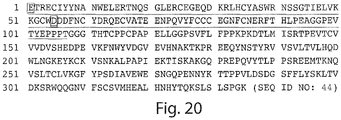
- the protein may be produced with an "SGR" sequence at the N-terminus.
- the C-terminal "tail" of the extracellular domain is indicated by single underline.
- the sequence with the "tail” deleted is as follows: GRGEAETRECIYYNANWELERTNQSGLERCEGEQDKRLHCYASWRNSSGTIELVKK GCWLDDFNCYDRQECVATEENPQVYFCCCEGNFCNERFTHLPEA (SEQ ID NO:3).
- Attisano et al. showed that a deletion of the proline knot at the C-terminus of the extracellular domain of ActRIIB reduced the affinity of the receptor for activin.
- An ActRIIB-Fc fusion protein containing amino acids 20-119 of present SEQ ID NO:1, "ActRIIB(20-119)-Fc”, has reduced binding to GDF-11 and activin relative to an ActRIIB(20-134)-Fc, which includes the proline knot region and the complete juxtamembrane domain. See, e.g., U.S. Patent No. 7,842,663 .
- ActRIIB polypeptides and ActRIIB-based GDF Traps beginning at position 20, 21, 22, 23, and 24 should retain general ligand-biding activity
- ActRIIB polypeptides and ActRIIB-based GDF Traps beginning at positions 25, 26, 27, 28, and 29 are also expected to retain ligand-biding activity.
- Data shown herein as well as in, e.g., U.S. Patent No. 7,842,663 demonstrates that, surprisingly, an ActRIIB construct beginning at 22, 23, 24, or 25 will have the most activity.
- Variants within these ranges are also contemplated, particularly those having at least 80%, 81%, 82%, 83%, 84%, 85%, 86%, 87%, 88%, 89%, 90%, 91%, 92%, 93%, 94%, 95%, 96%, 97%, 98%, 99%, or 100% identity to the corresponding portion of SEQ ID NO: 1.
- the ActRIIB polypeptide consists essentially of, or consists of, an amino acid sequence that is at least 80%, 81%, 82%, 83%, 84%, 85%, 86%, 87%, 88%, 89%, 90%, 91%, 92%, 93%, 94%, 95%, 96%, 97%, 98%, 99%, or 100% identical to an amino acid sequence selected from SEQ ID NOs: 1, 2, 3, 4, 5, 6, 29, 31, and 49.
- fusion domains are particularly useful for isolation of the fusion proteins by affinity chromatography.
- relevant matrices for affinity chromatography such as glutathione-, amylase-, and nickel- or cobalt-conjugated resins are used.
- Many of such matrices are available in "kit” form, such as the Pharmacia GST purification system and the QIAexpress TM system (Qiagen) useful with (HIS 6 ) fusion partners.
- a fusion domain may be selected so as to facilitate detection of the ligand Trap polypeptides.
- the present disclosure provides ActRII or GDF Trap fusion proteins comprising an immunoglobulin Fc domain.
- the immunoglobulin Fc domain is a mammalian immunoglobulin domain.
- the immunoglobulin Fc domain is a human immunoglobulin domain.
- the immunoglobulin Fc domain is a mouse immunoglobulin domain.
- the immunoglobulin Fc domain is an IgA, IgD, IgE, IgG, or IgM Fc domain.
- the immunoglobulin Fc domain is an IgG 1 , IgG 2 , IgG 3 , IgG 4 , IgA 1 , or IgA 2 Fc domain.
- the immunoglobulin Fc domain is a human IgG1 Fc domain, or a human IgG2 Fc domain.
- ActRII polypeptides disclosed herein can be combined with one or more additional ActRII antagonist agents of the disclosure to achieve the desired effect (e.g., treat or prevent an anemia, treat or prevent one or more complications of anemia such as cutaneous ulcers, etc.).
- the desired effect is treating one or more complications of anemia such as cutaneous ulcers.
- the desired effect is preventing one or more complications of anemia such as cutaneous ulcers.
- any of a wide variety of expression control sequences that control the expression of a DNA sequence when operatively linked to it may be used in these vectors to express DNA sequences encoding an ActRII or GDF Trap polypeptide.
- useful expression control sequences include, for example, the early and late promoters of SV40, tet promoter, adenovirus or cytomegalovirus immediate early promoter, RSV promoters, the lac system, the trp system, the TAC or TRC system, T7 promoter whose expression is directed by T7 RNA polymerase, the major operator and promoter regions of phage lambda , the control regions for fd coat protein, the promoter for 3-phosphoglycerate kinase or other glycolytic enzymes, the promoters of acid phosphatase, e .
- the antibody, or combination of antibodies further binds to and/or inhibits activity of GDF11 (e.g., GDF11-mediated activation of ActRIIA and/or ActRIIB signaling transduction, such as SMAD 2/3 signaling), particularly in the case of a multi-specific antibody that has binding affinity for both GDF8 and GDF11 or in the context of a combination of one or more anti-GDF8 antibodies and one or more anti-GDF11 antibodies.
- an antibody, or combination of antibodies, of the disclosure does not substantially bind to and/or inhibit activity of activin A (e.g., activin A-mediated activation of ActRIIA or ActRIIB signaling transduction, such as SMAD 2/3 signaling).
- K D is measured by RIA performed with the Fab version of an antibody of interest and its target antigen as described by the following assay.
- Solution binding affinity of Fabs for the antigen is measured by equilibrating Fab with a minimal concentration of radiolabeled antigen (e.g., 125 I-labeled) in the presence of a titration series of unlabeled antigen, then capturing bound antigen with an anti-Fab antibody-coated plate. See, e.g., Chen et al. (1999) J. Mol. Biol. 293:865-881 .
- multi-well plates e.g., MICROTITER ® from Thermo Scientific
- a capturing anti-Fab antibody e.g., from Cappel Labs
- bovine serum albumin preferably at room temperature (approximately 23°C).
- radiolabeled antigen are mixed with serial dilutions of a Fab of interest [e.g., consistent with assessment of the anti-VEGF antibody, Fab-12, in Presta et al., (1997) Cancer Res. 57:4593-4599 ].
- an antigen can be diluted with 10 mM sodium acetate, pH 4.8, to 5 ⁇ g/ml (about 0.2 ⁇ M) before injection at a flow rate of 5 ⁇ l/minute to achieve approximately 10 response units (RU) of coupled protein.
- 1 M ethanolamine is injected to block unreacted groups.
- two-fold serial dilutions of Fab (0.78 nM to 500 nM) are injected in PBS with 0.05% polysorbate 20 (TWEEN-20 ® ) surfactant (PBST) at at a flow rate of approximately 25 ⁇ l/min.
- anti-GDF 11 antibody generally refers to an antibody that is capable of binding to GDF11 with sufficient affinity such that the antibody is useful as a diagnostic and/or therapeutic agent in targeting GDF11.
- the extent of binding of an anti-GDF11 antibody to an unrelated, non-GDF11 protein is less than 10%, 9%, 8%, 7%, 6%, 5%, 4%, 3%, 2%, or less than 1% of the binding of the antibody to GDF11 as measured, for example, by a radioimmunoassay (RIA).
- RIA radioimmunoassay
- an anti-GDF 11 antibody binds to an epitope of GDF 11 that is conserved among GDF11 from different species.
- an anti-GDF8 antibody of the present disclosure is an antagonist antibody that can inhibit GDF8 activity.
- an anti-GDF8 antibody of the disclosure may inhibit GDF8 from binding to a cognate receptor (e.g., ActRIIA or ActRIIB receptor) and/or inhibit GDF8-mediated signal transduction (activation) of a cognate receptor, such as SMAD2/3 signaling by ActRIIA and/or ActRIIB receptors.
- anti-GDF8 antibodies of the present disclosure do not substantially bind to and/or inhibit activity of activin A. It should be noted that GDF8 has high sequence homology to GDF11 and therefore antibodies that bind and/or to GDF8, in many cases, may also bind to and/or inhibit GDF11.
- An anti-ActRIIA antibody refers to an antibody that is capable of binding to ActRIIA with sufficient affinity such that the antibody is useful as a diagnostic and/or therapeutic agent in targeting ActRIIA.
- the extent of binding of an anti-ActRIIA antibody to an unrelated, non-ActRIIA protein is less than 10%, 9%, 8%, 7%, 6%, 5%, 4%, 3%, 2%, or less than 1% of the binding of the antibody to ActRIIA as measured, for example, by a radioimmunoassay (RIA).
- RIA radioimmunoassay
- an anti-ActRIIA antibody binds to an epitope of ActRIIA that is conserved among ActRIIA from different species.
- an anti-ActRIIA antibody of the disclosure that inhibits GDF11 and/or GDF8 from binding to and/or activating an ActRIIA receptor further inhibits one or more of activin A, activin B, activin AB, activin C, activin E, activin A, GDF8, BMP6, and BMP7 from binding to and/or activating the ActRIIA receptor.
- anti-ActRIIB antibodies of the present disclosure inhibit GDF11 from binding to the ActRIIB receptor and/or inhibit GDF11 from activating ActRIIB signaling.
- anti-ActRIIB antibodies of the disclosure further inhibit GDF8 from binding to the ActRIIB receptor and/or inhibit GDF8 from activating ActRIIB signaling.
- anti-ActRIIB antibodies of the present disclosure do not substantially inhibit activin A from binding to the ActRIIB receptor and/or do not substantially inhibit activin A-mediated activation of ActRIIB signaling.
- a humanized antibody optionally may comprise at least a portion of an antibody constant region derived from a human antibody.
- a "humanized form" of an antibody e . g ., a non-human antibody, refers to an antibody that has undergone humanization.
- an antibody provided herein is a multi-specific antibody, for example, a bispecific antibody.
- Multi-specific antibodies typically monoclonal antibodies
- multi-specific antibodies of the present disclosure that bind to and/or inhibit GDF11 further bind to and/or inhibit at least GDF8.
- multi-specific antibodies of the disclosure that bind to and/or inhibit GDF11 do not substantially bind to and/or substantially inhibit activin A.
- multi-specific antibodies of the disclosure that bind to and/or inhibit GDF11 and GDD8 further bind to and/or inhibit one or more of activin A, activin B, activin AB, activin C, activin E, BMP6, BMP7 and/or Nodal.
- the antibodies disclosed herein are monoclonal antibodies.
- Monoclonal antibody refers to an antibody obtained from a population of substantially homogeneous antibodies, i.e., the individual antibodies comprising the population are identical and/or bind the same epitope, except for possible variant antibodies, e . g ., containing naturally occurring mutations or arising during production of a monoclonal antibody preparation, such variants generally being present in minor amounts.
- the monoclonal antibodies to be used in accordance with the present compositions for use may be made by a variety of techniques, including but not limited to the hybridoma method, recombinant DNA methods, phage-display methods, and methods utilizing transgenic animals containing all or part of the human immunoglobulin loci, such methods and other exemplary methods for making monoclonal antibodies being described herein.
- An immunogenic portion of a GDF11 or GDF8 polypeptide can be administered in the presence of adjuvant.
- the progress of immunization can be monitored by detection of antibody titers in plasma or serum.
- Standard ELISA or other immunoassays can be used with the immunogen as antigen to assess the levels of antibody production and/or level of binding affinity.
- Hybridoma cells can be screened immunochemically for production of antibodies specifically reactive with a GDF11 or GDF8 polypeptide, and monoclonal antibodies isolated from a culture comprising such hybridoma cells.
- the techniques used to screen antibodies in order to identify a desirable antibody may influence the properties of the antibody obtained. For example, if an antibody is to be used for binding an antigen in solution, it may be desirable to test solution binding.
- a variety of different techniques are available for testing interaction between antibodies and antigens to identify particularly desirable antibodies. Such techniques include ELISAs, surface plasmon resonance binding assays (e.g., the Biacore TM binding assay, Bia-core AB, Uppsala, Sweden), sandwich assays (e.g., the paramagnetic bead system of IGEN International, Inc., Gaithersburg, Maryland), western blots, immunoprecipitation assays, and immunohistochemistry.
- a small molecule antagonist, or combination of small molecule antagonists, of the present disclosure is an indirect inhibitor of one or more of GDF11, GDF8, activin A, activin B, activin AB, activin C, activin E, BMP6, Nodal, ActRIIA, and ActRIIB.
- a small molecule antagonist, or combination of small molecule antagonists, of the present disclosure may inhibit the expression (e.g., transcription, translation, cellular secretion, or combinations thereof) of at least GDF11.
- such a small molecule antagonist, or combination of small molecule antagonists may further inhibit expression of GDF8.
- a polynucleotide antagonist, or combination of polynucleotide antagonists, of the disclosure that inhibits the activity and/or expression of GDF8 and/or GDF11 may further inhibit the activity and or expression of one or more of activin A, activin B, activin AB, activin C, activin E, BMP6, BMP7, Nodal, ActRIIA, and/or ActRIIB.
- a polynucleotide antagonist, or combination of polynucleotide antagonists, of the disclosure inhibits the activity and/or expression (e.g., transcription, translation, secretion, or combinations thereof) of at least ActRIIB.
- a polynucleotide antagonist, or combination of polynucleotide antagonists, of the disclosure does not substantially inhibit the activity and/or expression of activin A.
- the larger the hybridizing nucleic acid the more base mismatches with an RNA it may contain and still form a stable duplex (or triplex as the case may be).
- One skilled in the art can ascertain a tolerable degree of mismatch by use of standard procedures to determine the melting point of the hybridized complex.
- Vectors can be constructed by recombinant DNA technology methods standard in the art.
- Vectors can be plasmid, viral, or others known in the art, used for replication and expression in vertebrate cells. Expression of the sequence encoding desired genes of the instant disclosure, or fragments thereof, can be by any promoter known in the art to act in vertebrate, preferably human cells. Such promoters can be inducible or constitutive.
- promoters include, but are not limited to, the SV40 early promoter region [ see, e.g., Benoist and Chambon (1981) Nature 29:304-310 ], the promoter contained in the 3' long terminal repeat of Rous sarcoma virus ( see, e.g., Yamamoto et al.
- the polynucleotide antagonists are interfering RNA or RNAi molecules that target the expression of one or more of: GDF11, GDF8, activin A, activin B, activin C, activin E, BMP6, BMP7, Nodal, ActRIIA, and ActRIIB.
- RNAi refers to the expression of an RNA which interferes with the expression of the targeted mRNA. Specifically, RNAi silences a targeted gene via interacting with the specific mRNA through a siRNA (small interfering RNA). The ds RNA complex is then targeted for degradation by the cell.
- stem lengths can range anywhere from 25 to 30 nt, and loop size can range between 4 to 25 nt without affecting silencing activity. While not wishing to be bound by any particular theory, it is believed that these shRNAs resemble the double stranded RNA (dsRNA) products of the DICER RNase and, in any event, have the same capacity for inhibiting expression of a specific gene.
- the shRNA can be expressed from a lentiviral vector.
- RNAi molecules that mediate RNAi, including without limitation siRNA
- chemical synthesis Hohjoh, FEBS Lett 521:195-199, 2002
- hydrolysis of dsRNA Yang et al., Proc Natl Acad Sci USA 99:9942-9947, 2002
- T7 RNA polymerase Donzeet et al., Nucleic Acids Res 30:e46, 2002 ; Yu et al., Proc Natl Acad Sci USA 99:6047-6052, 2002
- hydrolysis of double-stranded RNA using a nuclease such as E. coli RNase III ( Yang et al., Proc Natl Acad Sci USA 99:9942-9947, 2002 ).
- the SELEX method includes steps of contacting the mixture with the target under conditions favorable for binding; partitioning unbound nucleic acids from those nucleic acids which have bound specifically to target molecules; dissociating the nucleic acid-target complexes; amplifying the nucleic acids dissociated from the nucleic acid-target complexes to yield a ligand enriched mixture of nucleic acids.
- the steps of binding, partitioning, dissociating and amplifying are repeated through as many cycles as desired to yield highly specific high affinity nucleic acid ligands to the target molecule.
- follistatin polypeptides of the disclosure bind to and/or inhibit activin activity, particularly activin A (e.g., activin-mediated activation of ActRIIA and/or ActRIIB SMAD 2/3 signaling).
- activin A e.g., activin-mediated activation of ActRIIA and/or ActRIIB SMAD 2/3 signaling.
- Variants of follistatin polypeptides that retain activin binding properties can be identified based on previous studies involving follistatin and activin interactions.
- WO2008/030367 discloses specific follistatin domains ("FSDs") that are shown to be important for activin binding.
- Follistatin polypeptides include polypeptides derived from the sequence of any known follistatin having a sequence at least 80% identical to the sequence of a follistatin polypeptide, and optionally at least 85%, 90%, 95%, 96%, 97%, 98%, 99% or greater identity.
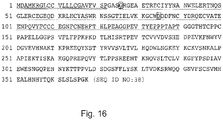
- follistatin polypeptides include the mature follistatin polypeptide or shorter isoforms or other variants of the human follistatin precursor polypeptide (SEQ ID NO: 16) as described, for example, in WO2005/025601 .
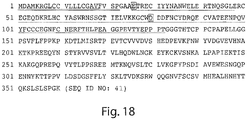
- the signal peptide is underlined; also underlined above are the last 27 residues in which represent the C-terminal extension distinguishing this follistatin isoform from the shorter follistatin isoform FST317 shownbelow.
- the FSD1 and FSD2 sequences are as follows:
- an agent for use in accordance with the compositions for use disclosed herein is a follistatin-like related gene (FLRG), also known as follistatin-related protein 3 (FSTL3).
- FLRG follistatin-like related gene
- FSTL3 follistatin-related protein 3
- the agent is used to treat a complication of anemia including, for example, cutaneous ulcers.
- the agent is used to prevent a complication of anemia including, for example, cutaneous ulcers.
- FLRG polypeptide includes polypeptides comprising any naturally occurring polypeptide of FLRG as well as any variants thereof (including mutants, fragments, fusions, and peptidomimetic forms) that retain a useful activity.
- FLRG polypeptides of the disclosure bind to and/or inhibit activin activity, particularly activin A (e.g., activin-mediated activation of ActRIIA and/or ActRIIB SMAD 2/3 signaling).
- activin A e.g., activin-mediated activation of ActRIIA and/or ActRIIB SMAD 2/3 signaling.
- Variants of FLRG polypeptides that retain activin binding properties can be identified using routine methods to assay FLRG and activin interactions. See, e.g., US 6,537,966 .
- the human FLRG (follistatin-related protein 3 precursor) polypeptide is as follows:
- the signal peptide is underlined.
- a follistatin polypeptide disclosed herein can be used in combination with i) one or more additional follistatin polypeptides disclosed herein, ii) one or more ActRII polypeptides disclosed herein (e.g., ActRIIA and/or ActRIIB polypeptides), iii) one or more GDF Traps disclosed herein; iv) one or more ActRII antagonist antibodies disclosed herein (e.g., an anti-GDFl 1 antibody, an anti-activin B antibody, an anti-activin C antibody, an anti-activin E antibody, an anti-GDF11 antibody, an anti-GDF8 antibody, an anti-BMP6 antibody, an-anti-BMP7 antibody, an anti-ActRIIA antibody, or an anti-ActRIIB antibody); v) one or more small molecule ActRII antagonists disclosed herein (e.g., a small molecule antagonist of one or more of GDF11, GDF8, activin A, activin B, activin
- any of the FLRG polypeptides disclosed herein may be combined with one or more additional ActRII antagonist agents of the disclosure to achieve the desired effect (e.g., treat or prevent an anemia in a subject in need thereof and/or treat or prevent one or more complications of anemia including, for example, cutaneous ulcers).
- a FLRG polypeptide disclosed herein can be used in combination with i) one or more additional FLRG polypeptides disclosed herein, ii) one or more ActRII polypeptides disclosed herein (e.g., ActRIIA and/or ActRIIB polypeptides), iii) one or more GDF Traps disclosed herein; iv) one or more ActRII antagonist antibodies disclosed herein (e.g., an anti-GDF11 antibody, an anti-activin B antibody, an anti-activin C antibody, an anti-activin E antibody, an anti-GDFl 1 antibody, an anti-GDF8 antibody, an anti-BMP6 antibody, an-anti-BMP7 antibody, an anti-ActRIIA antibody, or an anti-ActRIIB antibody); v) one or more small molecule ActRII antagonists disclosed herein (e.g., a small molecule antagonist of one or more of GDF11, GDF8, activin A, activin B, activin AB, activin C
- the present disclosure relates to the use of the subject ActRII polypeptides (e.g., ActRIIA and ActRIIB polypeptides) and GDF Trap polypeptides to identify compounds (agents) which are agonist or antagonists of ActRIIB polypeptides.
- Compounds identified through this screening can be tested to assess their ability to modulate red blood cell, hemoglobin, and/or reticulocyte levels as well as effect cutaneous ulcers. These compounds can be tested, for example, in animal models.
- ActRII signaling e.g., ActRIIA and/or ActRIIB SMAD 2/3 and/or SMAD 1/5/8 signaling.
- high-throughput screening of compounds can be carried out to identify agents that perturb ActRII-mediated effects on a selected cell line.
- the assay is carried out to screen and identify compounds that specifically inhibit or reduce binding of an ActRII polypeptide or GDF Trap polypeptide to its binding partner, such as an ActRII ligand (e.g., activin A, activin B, activin AB, activin C, Nodal, GDF8, GDF11 or BMP7).
- an ActRII ligand e.g., activin A, activin B, activin AB, activin C, Nodal, GDF8, GDF11 or BMP7.
- the assay can be used to identify compounds that enhance binding of an ActRII polypeptide or GDF Trap polypeptide to its binding partner such as an ActRII ligand.
- the compounds can be identified by their ability to interact with an ActRII polypeptide or GDF Trap polypeptide.
- test compounds (agents) of the disclosure may be created by any combinatorial chemical method.
- the subject compounds may be naturally occurring biomolecules synthesized in vivo or in vitro.
- Compounds (agents) to be tested for their ability to act as modulators of tissue growth can be produced, for example, by bacteria, yeast, plants or other organisms (e.g., natural products), produced chemically (e.g., small molecules, including peptidomimetics), or produced recombinantly.
- Test compounds contemplated by the present disclosure include non-peptidyl organic molecules, peptides, polypeptides, peptidomimetics, sugars, hormones, and nucleic acid molecules.
- the test agent is a small organic molecule having a molecular weight of less than about 2,000 Daltons.
- test compounds of the disclosure can be provided as single, discrete entities, or provided in libraries of greater complexity, such as made by combinatorial chemistry.
- libraries can comprise, for example, alcohols, alkyl halides, amines, amides, esters, aldehydes, ethers and other classes of organic compounds.
- Presentation of test compounds to the test system can be in either an isolated form or as mixtures of compounds, especially in initial screening steps.
- the compounds may be optionally derivatized with other compounds and have derivatizing groups that facilitate isolation of the compounds.
- Nonlimiting examples of derivatizing groups include biotin, fluorescein, digoxygenin, green fluorescent protein, isotopes, polyhistidine, magnetic beads, glutathione S transferase (GST), photoactivatible crosslinkers or any combinations thereof.
- the compound of interest is contacted with an isolated and purified ActRIIB polypeptide which is ordinarily capable of binding to an ActRIIB ligand, as appropriate for the intention of the assay.
- an isolated and purified ActRIIB polypeptide which is ordinarily capable of binding to an ActRIIB ligand, as appropriate for the intention of the assay.
- an ActRIIB ligand e.g., GDF11
- Detection and quantification of ActRIIB/ActRIIB ligand complexes provides a means for determining the compound's efficacy at inhibiting (or potentiating) complex formation between the ActRIIB polypeptide and its binding protein.
- the efficacy of the compound can be assessed by generating dose response curves from data obtained using various concentrations of the test compound.
- a control assay can also be performed to provide a baseline for comparison.
- isolated and purified ActRIIB ligand is added to a composition containing the ActRIIB polypeptide, and the formation of ActRIIB/ActRIIB ligand complex is quantitated in the absence of the test compound.
- the order in which the reactants may be admixed can be varied, and can be admixed simultaneously.
- cellular extracts and lysates may be used to render a suitable cell-free assay system.
- Complex formation between an ActRII polypeptide or GDF Trap polypeptide and its binding protein may be detected by a variety of techniques. For instance, modulation of the formation of complexes can be quantitated using, for example, detectably labeled proteins such as radiolabeled (e.g., 32 P, 35 S, 14 C or 3 H), fluorescently labeled (e.g., FITC), or enzymatically labeled ActRII polypeptide or GDF Trap polypeptide and/or its binding protein, by immunoassay, or by chromatographic detection.
- detectably labeled proteins such as radiolabeled (e.g., 32 P, 35 S, 14 C or 3 H), fluorescently labeled (e.g., FITC), or enzymatically labeled ActRII polypeptide or GDF Trap polypeptide and/or its binding protein, by immunoassay, or by chromatographic detection.
- detectably labeled proteins such as radiolabeled (e.g., 32 P
- the present disclosure contemplates the use of fluorescence polarization assays and fluorescence resonance energy transfer (FRET) assays in measuring, either directly or indirectly, the degree of interaction between an ActRII polypeptide of GDF Trap polypeptide and its binding protein.
- FRET fluorescence resonance energy transfer
- other modes of detection such as those based on optical waveguides (see, e.g., PCT Publication WO 96/26432 and U.S. Pat. No. 5,677,196 ), surface plasmon resonance (SPR), surface charge sensors, and surface force sensors, are compatible with many instances of the disclosure.
- This may include a solid phase or fluid phase binding event.
- the gene encoding an ActRII polypeptide or GDF Trap polypeptide can be transfected with a reporter system (e.g., ⁇ -galactosidase, luciferase, or green fluorescent protein) into a cell and screened against the library preferably by a high throughput screening or with individual members of the library.
- a reporter system e.g., ⁇ -galactosidase, luciferase, or green fluorescent protein
- Other mechanism based binding assays may be used, for example, binding assays which detect changes in free energy. Binding assays can be performed with the target fixed to a well, bead or chip or captured by an immobilized antibody or resolved by capillary electrophoresis. The bound compounds may be detected usually using colorimetric endpoints or fluorescence or surface plasmon resonance.
- an ActRII antagonist agent, or combination of ActRII antagonist agents, of the present disclosure can be used to increase red blood cell levels in a subject (e.g., a patient) in need thereof, particularly mammals such as rodents, primates, and humans.
- an ActRII antagonist agent, or combination of ActRII antagonist agents, of the present disclosure can be used to treat or prevent an anemia in a subject (e.g., a patient) in need thereof and/or one or more complications of anemia including, for example, an ulcer, particularly a cutaneous ulcer.
- an ActRII antagonist agent, or combination of ActRII antagonist agents, of the present disclosure can be used to treat or prevent an ulcer in a subject (e.g., a patient) having anemia, particularly mammals such as rodents, primates, and humans.
- an ActRII antagonist agent, or combination of ActRII antagonist agents, of the present disclosure can be used to treat or prevent an ulcer that is associated with anemia in a subject (e.g., a patient) in need thereof, particularly mammals such as rodents, primates, and humans.
- an ActRII antagonist agent, or combination of ActRII antagonist agents, of the present disclosure can be used to treat or prevent an ulcer (e.g., a cutaneous ulcer) in a subject (e.g., patient) having a hemolytic anemia, particularly mammals such as rodents, primates, and humans.
- an ActRII antagonist agent, or combination of ActRII antagonist agents, of the present disclosure can be used to treat or prevent an ulcer (e.g., a cutaneous ulcer) in a subject (e.g., patient) having a hemoglobinopathy anemia, particularly mammals such as rodents, primates, and humans.
- treating includes amelioration or elimination of the condition once it has been established. In either case, prevention or treatment may be discerned in the diagnosis provided by a physician or other health care provider and the intended result of administration of the therapeutic agent. In some instances, treating an ulcer refers to promoting wound healing of ulcer tissues.
- Ulcers are associated with many hereditary and acquired anemias, including hereditary spherocytosis, hereditary elliptocytosis, hereditary stomachytosis, glucose6-phosphate dehydrogenase deficiency, sickle cell disease, thalassemia (both alpha and beta), paroxysmal nocturnal hemoglobinuria. Sickle cell disease and the thalassemias are particularly noted for causing ulcers, probably because all of the risk factors are present in these diseases. Ulcers are associated with many hemolytic anemias, which describes an anemic condition that results from excessive destruction of red blood cells.
- one or more ActRII antagonist agents of the disclosure may be used in combination with supportive therapies for ulcers.
- Conventional care of cutaneous ulcers involves debridement and cleansing of the wound followed by application of occlusive dressing. See, e.g., Marti-Carvajal et al (2012) The Cochrane Collaboration, Published by Wiley & Sons, Ltd .
- Additional interventions can generally be classified into two major treatment groups: pharmaceutical interventions (systemic and topical agents) and non-pharmaceutical interventions.
- Systemic pharmaceutical interventions include, for example, vascular drugs (e.g., pentoxifylline, isoxsuprine hydrochloride, and xanthinol nicotinate), antioxidant agents (e.g., L-carnitine), EPO and EPO-stimulating agents, growth factors (e.g., Bosentan), minerals (e.g., zinc sulphate), agonists of HbF synthesis (e.g., arginine butyrate), and antibiotics.
- vascular drugs e.g., pentoxifylline, isoxsuprine hydrochloride, and xanthinol nicotinate
- antioxidant agents e.g., L-carnitine
- EPO and EPO-stimulating agents e.g., EPO and EPO-stimulating agents
- growth factors e.g., Bosentan
- minerals e.g., zinc sulphate
- agonists of HbF synthesis e.g.,
- Topical pharmaceutical interventions include, for example, antibiotics, antiseptics, growth factors (e.g., GM-CSF, RGD peptide matrix, Solcoseryl ® ), steroids (e.g., cortisone), and pain relievers (e.g., opioids).
- Non-pharmaceutical interventions include, for example, reconstructive surgery, cell therapy, laser therapy, and hyperbaric oxygen.
- the membrane damage is manifested, in part, by a redistribution of membrane lipids leading to the expression of phosphatidylserine on the outer leaflet of the erythrocyte membrane.
- Externalized phosphatidylserine promotes adhesion to both macrophages and activated endothelial cells, which contributes to vascular (vaso) occlusion.
- the red cell's hemoglobin precipitates into long crystals that cause it to elongate, morphologically switching into a "sickled" red blood cell.
- Both genotype and the extent and degree of deoxygenation contribute to the severity of hemoglobin polymerization. It has been demonstrated that the presence of fetal hemoglobin proportionally reduces the amount of pathological hemoglobin polymers and is protective from vaso-occlusive crises.
- Vaso-occlusive crises are one of the clinical hallmarks of SCD. See, e.g., Rees et al. (2010) Lancet, 376: 2018-2031 .
- Hypoxia, acidosis, inflammatory stress, and endothelial cell activation promote the entrapment of rigid, polymerized sickled erythrocytes and leukocytes within small vessels.
- Sickled red blood cells obstruct capillaries and restrict blood flow to the organ, leading to ischemia, pain, tissue necrosis, and damage to various organs. This can cause vascular obstruction, leading to tissue ischemia.
- one or more ActRII antagonist agents of the disclosure may be used to treat or prevent vaso-occlusive crisis in a SCD patient.
- one or more ActRII antagonist agents of the disclosure may be used to treat or prevent vaso-occlusion in a SCD patient.
- one or more ActRII antagonist agents of the disclosure may be used to treat or prevent splenic sequestration of red blood cells in a SCD patient.
- one or more ActRII antagonist agents of the disclosure may be used to treat or prevent splenomegaly in a SCD patient.
- one or more ActRII antagonist agents of the disclosure may be used to treat splenomegaly in a SCD patient.
- one or more ActRII antagonist agents of the disclosure, optionally in combination with one or more agents and/or supportive therapies for treating SCD may be used to treat splenomegaly in a SCD patient.
- one or more ActRII antagonist agents of the disclosure optionally in combination with one or more agents and/or supportive therapies for treating SCD, may be used to prevent splenomegaly in a SCD patient.
- Aplastic crises arise when erythropoiesis is impaired. Because of the constant overproduction of erythrocytes, an aplastic crisis can rapidly result in severe anemia. Infections, such as parvovirus B19, streptococci, salmonella, and Epstein-Barr virus, are common causes for the transient arrest of erythropoiesis. Circulating erythrocytes and reticulocytes are both decreased during aplastic crises.
- one or more ActRII antagonist agents of the disclosure may be used to treat or prevent aplastic crises in a SCD patient.
- one or more ActRII antagonist agents of the disclosure may be used to treat or prevent aplastic anemia in a SCD patient.
- one or more ActRII antagonist agents of the disclosure may be used to treat aplastic crises in a SCD patient.
- one or more ActRII antagonist agents of the disclosure may be used to prevent aplastic crises in a SCD patient.
- ActRII antagonist agents of the disclosure may be used to treat or prevent a cardiac complication of SCD.
- chronic anemia in SCD causes a compensatory increased cardiac output. This, in turn, leads to cardiomegaly and left ventricular hypertrophy with left ventricular dysfunction. See, e.g., Adebayo et al. (2002) Niger J Med, 11: 145-152 ; Sachdev et al. (2007) J Am Coll Cardiol, 49: 472-279 ; and Zilberman et al. (2007) Am J Hematol 82: 433-438 .
- ActRII antagonist agents of the disclosure may be used to treat or prevent a pulmonary complication of SCD.
- SCD frequently results in both acute and chronic pulmonary complications. See, e.g., Rucknagel, DL (2001) Pediatr Pathol MOl Med, 20: 137-154 ; Haynes et al. (1986) Am J Med 80: 833-840 .
- Acute complications may include infection, pulmonary emboli from thrombi, bone marrow infarction, and fat emboli. Pulmonary dysfunction may occur because of local pain from rib and sternal infarctions, leading to hypoventilation and atelectasis with hypoxemia.
- Acute chest syndrome is unique to people with sickle disease and is defined by a new pulmonary infiltrate involving at least 1 complete lung segment, chest pain, and temperature above 38.5°C along with tachypnea, wheeze, or cough. See, e.g., Vichinsky et al. (2000) N Engl J Med, 342: 1855-1865 . Development of pulmonary infarction, fat embolism, and infections may all contribute to ACS. Infection is a major cause of morbidity and mortality in ACS patients.
- ActRII antagonist agents of the disclosure may be used to treat or prevent a hepatic complication of SCD.
- Liver pathology is common in SCD, with hepatomegaly being observed in ⁇ 90% of autopsy cases. See, e.g., Bauer et al. (1980) Am J med 69: 833-837 ; Mills et al. (1988) Arch Pathol Lab Med 112: 290-294 .
- the effects of sickle cell anemia on the liver include intrasinusoidal sickling with proximal sinusoidal dilation, Kupffer cell hyperplasia with erythrophagocytosis, and hemosiderosis.
- ActRII antagonist agents of the disclosure may be used to treat or prevent a splenic complication of SCD.
- Splenic sequestration occurs as a result of vaso-occlusion of erythrocytes within the spleen. Acute exacerbations result in splenomegaly and occasionally splenic infarction. More commonly, subclinical splenic sequestration may lead to the gradual loss of splenic function, leading to functional hyposplenia and asplenia. This, in turn, can lead to an increased susceptibility to sepsis as a result of encapsulated bacteria.
- Ischemic strokes are more common in children under 9 years of age, whereas hemorrhagic strokes are more common in adults. Ischemic strokes occur because of the occlusion of large intracranial arteries, leading to ischemia.
- the ischemia is secondary to occlusion of smaller vessels by rigid erythrocytes, exacerbated by chronic anemia, a hypercoagulable state, and flow-related hemodynamic injury to the arterial endothelium, further increasing the likelihood of erythrocyte adhesion.
- hemorrhagic strokes may occur in intraventricular, intraparenchymal, and subarachnoid spaces. See, e.g., Anson, et al. (1991) J Neurosurg, 75: 552-558 .
- one or more ActRII antagonist agents of the disclosure may be used to treat a chronic iron-deficiency.
- a GDF-ActRII antagonist, an ActRIIA polypeptide, an ActRIIB polypeptide, a GDF Trap, etc. may be used to treat a chronic iron-deficiency.
- patient suffering from MDS may be treated using a combination of one or more ActRII antagonist agents of the disclosure (e.g., a GDF-ActRII antagonist, an ActRIIA polypeptide, an ActRIIB polypeptide, a GDF Trap, etc.) and one or more additional therapeutic agents for treating MDS including, for example, thalidomide, lenalidomide, azacitadine, decitabine, erythropoietins, deferoxamine, antithymocyte globulin, and filgrastrim (G-CSF).
- ActRII antagonist agents of the disclosure e.g., a GDF-ActRII antagonist, an ActRIIA polypeptide, an ActRIIB polypeptide, a GDF Trap, etc.
- additional therapeutic agents for treating MDS including, for example, thalidomide, lenalidomide, azacitadine, decitabine, erythropoietins, deferoxamine, antithy
- in combination with or “conjoint administration” refers to any form of administration such that the second therapy is still effective in the body (e.g., the two agents or compounds are simultaneously effective in the patient, which may include synergistic effects of the two agents or compounds). Effectiveness may not correlate to measurable concentration of the agent in blood, serum, or plasma.
- the different therapeutic agents or compounds can be administered either in the same formulation or in separate formulations, either concomitantly or sequentially, and on different schedules. Thus, an individual who receives such treatment can benefit from a combined effect of different therapies.
- Any blood pressure lowering agent appropriate for the individual patient's condition may be used including, for example, diuretics, adrenergic inhibitors (including alpha blockers and beta blockers), vasodilators, calcium channel blockers, angiotensin-converting enzyme (ACE) inhibitors, or angiotensin II receptor blockers.
- Blood pressure may alternatively be treated using a diet and exercise regimen.
- the patient may be treated with an appropriate regimen of diet and/or iron supplements until the patient's iron stores have returned to a normal or acceptable level.
- administration of the one or more antagonists of the disclosure may be delayed until the levels have returned to a normal or acceptable level.
- a therapeutic regimen may be developed involving one or more ActRII antagonist agents of the disclosure (e.g., a GDF-ActRII antagonist, an ActRIIA polypeptide, an ActRIIB polypeptide, a GDF Trap, etc.) and iron supplementation.
- ActRII antagonist agents of the disclosure e.g., a GDF-ActRII antagonist, an ActRIIA polypeptide, an ActRIIB polypeptide, a GDF Trap, etc.
- baseline parameter(s) for one or more hematologic parameters may be established for a patient who is a candidate to be treated with one or more ActRII antagonist agents of the disclosure (e.g., a GDF-ActRII antagonist, an ActRIIA polypeptide, an ActRIIB polypeptide, a GDF Trap, etc.) and an appropriate dosing regimen established for that patient based on the baseline value(s).
- ActRII antagonist agents of the disclosure e.g., a GDF-ActRII antagonist, an ActRIIA polypeptide, an ActRIIB polypeptide, a GDF Trap, etc.
- established baseline parameters based on a patient's medical history could be used to inform an appropriate antagonist dosing regimen for a patient.
- dosing with the one or more antagonist of the disclosure may continue at the same level and a blood pressure lowering agent is added to the treatment regimen, dosing with the one or more antagonist of the disclosure may be reduce (e.g., in amount and/or frequency) and a blood pressure lowering agent is added to the treatment regimen, or dosing with the one or more antagonist of the disclosure may be terminated and the patient may be treated with a blood pressure lowering agent.
- a blood pressure lowering agent e.g., in amount and/or frequency
- one or more ActRII antagonist agents of the present disclosure may be formulated with a pharmaceutically acceptable carrier.
- a pharmaceutically acceptable carrier refers to an ingredient in a pharmaceutical formulation, other than an active ingredient, which is generally nontoxic to a subject.
- a pharmaceutically acceptable carrier includes, but is not limited to, a buffer, excipient, stabilizer, and/or preservative.
- pharmaceutical formulations for use in the present disclosure are in a pyrogen-free, physiologically-acceptable form when administered to a subject.
- Therapeutically useful agents other than those described herein, which may optionally be included in the formulation as described above, may be administered in combination with the subject ActRII antagonist agents in the compositions for use of the present disclosure.
- the pharmaceutical compositions comprising an ActRII antagonist, or combination of ActRII antagonists, and a pharmaceutically acceptable carrier of the present disclosure are used to treat an ulcer (e.g., a cutaneous ulcer) in a subject (e.g., patient) having anemia (e.g., hemolytic anemia, hemoglobinopathy anemia, a thalassemia syndrome (e.g., ⁇ -thalassemia syndrome, ⁇ -thalassemia intermedia, etc.), sickle-cell disease, etc.).
- anemia e.g., hemolytic anemia, hemoglobinopathy anemia, a thalassemia syndrome (e.g., ⁇ -thalassemia syndrome, ⁇ -thalassemia intermedia, etc.), sickle-cell disease, etc.).
- the pharmaceutical compositions comprising an ActRII antagonist, or combination of ActRII antagonists, and a pharmaceutically acceptable carrier of the present disclosure are used to prevent an ulcer (e.g., a cutaneous ulcer) in a subject (e.g., patient) having anemia (e.g., hemolytic anemia, hemoglobinopathy anemia, a thalassemia syndrome (e.g., ⁇ -thalassemia syndrome, ⁇ -thalassemia intermedia, etc.), sickle-cell disease, etc.).
- anemia e.g., hemolytic anemia, hemoglobinopathy anemia, a thalassemia syndrome (e.g., ⁇ -thalassemia syndrome, ⁇ -thalassemia intermedia, etc.), sickle-cell disease, etc.
- the subject having anemia has sickle cell disease.
- the ActRII antagonist agents or the pharmaceutical compositions of the disclosure will be administered parenterally [e.g., by intravenous (I.V.) injection, intraarterial injection, intraosseous injection, intramuscular injection, intrathecal injection, subcutaneous injection, or intradermal injection].
- Pharmaceutical compositions suitable for parenteral administration may comprise one or more ActRII antagonist agents of the disclosure in combination with one or more pharmaceutically acceptable sterile isotonic aqueous or nonaqueous solutions, dispersions, suspensions or emulsions, or sterile powders which may be reconstituted into sterile injectable solutions or dispersions just prior to use.
- a pharmaceutical composition of the present disclosure may be administered systemically, or locally, from an implant or device. Further, the pharmaceutical composition of the present disclosure may be encapsulated or injected in a form for delivery to a target tissue site (e.g., bone marrow or muscle).
- the pharmaceutical compositions of the present disclosure may include a matrix capable of delivering one or more of the agents of the present disclosure to a target tissue site (e.g., bone marrow or muscle), providing a structure for the developing tissue and optimally capable of being resorbed into the body.
- the matrix may provide slow release of one or more agents of the present disclosure.
- Such matrices may be formed of materials presently in use for other implanted medical applications.
- Topical compositions in the liquid form may include pharmaceutically acceptable solutions, emulsions, microemulsions, and suspensions.
- the liquid dosage form may contain an inert diluent commonly used in the art including, for example, water or other solvent, a solubilizing agent and/or emulsifier [e.g., ethyl alcohol, isopropyl alcohol, ethyl carbonate, ethyl acetate, benzyl alcohol, benzyl benzoate, propylene glycol, or 1,3-butylene glycol, an oil (e.g., cottonseed, groundnut, corn, germ, olive, castor, and sesame oil), glycerol, tetrahydrofuryl alcohol, a polyethylene glycol, a fatty acid ester of sorbitan, and mixtures thereof].
- an inert diluent commonly used in the art including, for example, water or other solvent, a solubilizing agent and/or e
- carboxymethylcellulose an alginate, gelatin, polyvinyl pyrrolidone, sucrose, and acacia
- a humectant e.g., glycerol
- a disintegrating agent e.g., agar-agar, calcium carbonate, potato or tapioca starch, alginic acid, a silicate, and sodium carbonate
- a solution retarding agent e.g. paraffin
- an absorption accelerator e.g.
- Solid compositions of a similar type may also be employed as fillers in soft and hard-filled gelatin capsules using one or more excipients including, e.g., lactose or a milk sugar as well as a high molecular-weight polyethylene glycol.
- an isotonic agent including, for example, a sugar or sodium chloride
- prolonged absorption of an injectable pharmaceutical form may be brought about by the inclusion of an agent that delay absorption including, for example, aluminum monostearate and gelatin.
- the present disclosure also provides gene therapy for the in vivo production of one or more of the ActRII antagonist agents of the present disclosure.
- Such therapy would achieve its therapeutic effect by introduction of the agent sequences into cells or tissues having one or more of the disorders as listed above. Delivery of the agent sequences can be achieved, for example, by using a recombinant expression vector such as a chimeric virus or a colloidal dispersion system.
- therapeutic delivery of one or more of agent sequences of the disclosure is the use of targeted liposomes.
- colloidal dispersion systems include, for example, macromolecule complexes, nanocapsules, microspheres, beads, and lipid-based systems including oil-in-water emulsions, micelles, mixed micelles, and liposomes.
- the colloidal system of this disclosure is a liposome.
- Liposomes are artificial membrane vesicles which are useful as delivery vehicles in vitro and in vivo. RNA, DNA, and intact virions can be encapsulated within the aqueous interior and be delivered to cells in a biologically active form. See, e.g., Fraley, et al. (1981) Trends Biochem. Sci., 6:77 . Methods for efficient gene transfer using a liposome vehicle are known in the art. See, e.g., Mannino, et al. (1988) Biotechniques, 6:682, 1988 .
- the selected form employs the TPA leader and has the following unprocessed amino acid sequence:
- the study employed four groups of five male and five female cynomolgus monkeys each, with three per sex per group scheduled for termination on Day 29, and two per sex per group scheduled for termination on Day 57.
- Each animal was administered the vehicle (Group I) or ActRIIA-Fc at doses of 1, 10, or 30 mg/kg (Groups 2, 3 and 4, respectively) via intravenous (IV) injection on Days 1, 8, 15 and 22.
- the dose volume was maintained at 3 mL/kg.
- Various measures of red blood cell levels were assessed two days prior to the first administration and at days 15, 29 and 57 (for the remaining two animals) after the first administration.
- the ActRIIA-hFc fusion protein described in Example 1 was administered to human patients in a randomized, double-blind, placebo-controlled study that was conducted to evaluate, primarily, the safety of the protein in healthy, postmenopausal women. Forty-eight subjects were randomized in cohorts of 6 to receive either a single dose of ActRIIA-hFc or placebo (5 active:1 placebo). Dose levels ranged from 0.01 to 3.0 mg/kg intravenously (IV) and 0.03 to 0.1 mg/kg subcutaneously (SC). All subjects were followed for 120 days. In addition to pharmacokinetic (PK) analyses, the biologic activity of ActRIIA-hFc was also assessed by measurement of biochemical markers of bone formation and resorption as well as FSH levels.
- PK pharmacokinetic
- hemoglobin and RBC numbers were examined in detail for all subjects over the course of the study and compared to the baseline levels. Platelet counts were compared over the same time as the control. There were no clinically significant changes from the baseline values over time for the platelet counts.
- ActRIIA-hFc caused a rapid, sustained dose-dependent increase in serum levels of bone-specific alkaline phosphatase (BAP), which is a marker for anabolic bone growth, and a dose-dependent decrease in C-terminal type 1 collagen telopeptide and tartrate-resistant acid phosphatase 5b levels, which are markers for bone resorption.
- BAP bone-specific alkaline phosphatase
- Other markers, such as P1NP showed inconclusive results.
- BAP levels showed near saturating effects at the highest dosage of drug, indicating that half-maximal effects on this anabolic bone biomarker could be achieved at a dosage of 0.3 mg/kg, with increases ranging up to 3 mg/kg.
- ActRIIA-Fc fusion proteins have been further demonstrated to be effective in increasing red blood cell levels in various models of anemia including, for example, chemotherapy-induced anemia and anemia associated with chronic kidney disease. See, e.g., U.S. Patent Application Publication No. 2010/0028331 .
- ActRIIA variants that may be used according to the compositions for use described herein are described in the International Patent Application published as WO2006/012627 (see e.g., pp. 59-60).
- An alternative construct may have a deletion of the C-terminal tail (the final 15 amino acids of the extracellular domain of ActRIIA. The sequence for such a construct is presented below (Fc portion underlined) (SEQ ID NO:28):
- Applicant constructed a soluble ActRIIB fusion protein that has the extracellular domain of human ActRIIB fused to a human or mouse Fc domain with a minimal linker (three glycine amino acids) in between.
- the constructs are referred to as ActRIIB-hFc and ActRIIB-mFc, respectively.
- the ActRIIB-hFc and ActRIIB-mFc proteins were expressed in CHO cell lines. Three different leader sequences were considered:
- the selected form employs the TPA leader and has the following unprocessed amino acid sequence (SEQ ID NO: 31):
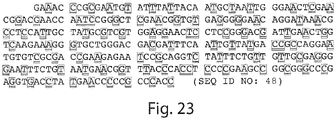
- This polypeptide is encoded by the following nucleic acid sequence (SEQ ID NO:32):
- HEK293T cells were produced in HEK293T cells by transient transfection.
- HEK293T cells were set up at 6 ⁇ 10 5 cells/ml in Freestyle (Invitrogen) media in 250ml volume and grown overnight. Next day, these cells were treated with DNA:PEI (1:1) complex at 0.5 ug/ml final DNA concentration. After 4 hrs, 250 ml media was added and cells were grown for 7 days. Conditioned media was harvested by spinning down the cells and concentrated.
- Mutants were purified using a variety of techniques, including, for example, a protein A column and eluted with low pH (3.0) glycine buffer. After neutralization, these were dialyzed against PBS.
- Hematology, coagulation, and clinical chemistry parameters were evaluated twice prior to initiation of dosing and on Days 59, 143, 199, 227, and on Days 267 (for groups dosed every 4 weeks) or 281 (for groups dosed every 2 weeks). The evaluations on Days 267/281 occured 2 weeks after the final dose was administered.
- ActRIIB(20-134)-hFc resulted in non-adverse, dose-related changes to hematology parameters in male and female monkeys. These changes included increased red blood cell count, reticulocyte count and red cell distribution width and decreased mean corpuscular volume, mean corpuscular hemoglobin, and platelet count.
- RBC count was increased at all dose levels and the magnitude of increase was generally comparable whether ActRIIB(20-134)-hFc was administered every 2 weeks or every 4 weeks.
- Mean RBC count was increased at all time points between Days 59 and 267/281 (except RBC count was not increased in Group 2 males [0.6 mg/kg every 2 weeks] on Day 281).
- RBC count was increased at ⁇ 3 mg/kg every 2 weeks and the changes occurred between Days 143 and 281; at 15 mg/kg every 4 weeks mean RBC count was increased between Days 59 and 267.
- Applicant constructed a GDF Trap as follows.
- a polypeptide having a modified extracellular domain of ActRIIB (amino acids 20-134 of SEQ ID NO:1 with an L79D substition) with greatly reduced activin
- a binding relative to GDF 11 and/or myostatin (as a consequence of a leucine-to-aspartate substitution at position 79 in SEQ ID NO:1) was fused to a human or mouse Fc domain with a minimal linker (three glycine amino acids) in between.
- the constructs are referred to as ActRIIB(L79D 20-134)-hFc and ActRIIB(L79D 20-134)-mFc, respectively.
- the GDF Trap ActRIIB(L79D 20-134)-hFc is shown below as purified from CHO cell lines (SEQ ID NO:36).
- This polypeptide is encoded by the following nucleic acid sequence (SEQ ID NO:39):
- Purification could be achieved by a series of column chromatography steps, including, for example, three or more of the following, in any order: protein A chromatography, Q sepharose chromatography, phenylsepharose chromatography, size exclusion chromatography, and cation exchange chromatography.
- the purification could be completed with viral filtration and buffer exchange.
- the cell culture medium is passed over a protein A column, washed in 150 mM Tris/NaCl (pH 8.0), then washed in 50 mM Tris/NaCl (pH 8.0) and eluted with 0.1 M glycine, pH 3.0.
- the low pH eluate is kept at room temperature for 30 minutes as a viral clearance step.
- the eluate is then neutralized and passed over a Q sepharose ion exchange column and washed in 50 mM Tris pH 8.0, 50 mM NaCl, and eluted in 50 mM Tris pH 8.0, with an NaCl concentration between 150 mM and 300 mM.
- the eluate is then changed into 50 mM Tris pH 8.0, 1.1 M ammonium sulfate and passed over a phenyl sepharose column, washed, and eluted in 50 mM Tris pH 8.0 with ammonium sulfate between 150 and 300 mM.
- the eluate is dialyzed and filtered for use.
- A-204 reporter gene assay was used to evaluate the effects of ActRIIB-Fc proteins and GDF Traps on signaling by GDF-11 and activin A.
- Cell line human rhabdomyosarcoma (derived from muscle).
- Reporter vector pGL3(CAGA)12 (described in Dennler et al, 1998, EMBO 17: 3091-3100 ).
- the CAGA12 motif is present in TGF-Beta responsive genes (e.g. , PAI-1 gene) , so this vector is of general use for factors signaling through SMAD2 and 3.
- Activin A showed 10-fold stimulation of reporter gene expression and an ED50 ⁇ 2 ng/ml.
- GDF-11 16 fold stimulation, ED50: ⁇ 1.5 ng/ml.
- ActRIIB(20-134) is a potent inhibitor of activin A, GDF-8, and GDF-11 activity in this assay. As described below ActRIIB variants were also tested in this assay.
- ActRIIB-Fc Variations Portion of ActRIIB (corresponds to amino acids of SEQ ID NO:1) GDF 11 Inhibition Activity Activin Inhibition Activity R64 20-134 +++ (approx. 10 -8 M K I ) +++ (approx. 10 -8 M K I ) A64 20-134 + (approx. 10 -6 M Ki) + (approx.
- ActRIIB(20-134)-Fc has a serum half-life of approximately 70 hours.
- ActRIIB(A24N 20-134)-Fc has a serum half-life of approximately 100-150 hours.
- the A24N variant has activity in the cell-based assay (above) and in vivo assays (below) that is equivalent to the wild-type molecule. Coupled with the longer half-life, this means that over time an A24N variant will give greater effect per unit of protein than the wild-type molecule.
- the A24N variant, and any of the other variants tested above, may be combined with the GDF Trap molecules, such as the L79D or L79E variants.
- Example 12 GDF-11 and Activin A Binding.
- GDF Trap ActRIIB polypeptide
- SC subcutaneous injection
- Treatment with the GDF Trap did not have a statistically significant effect on the number of white blood cells (WBC) compared to the vehicle controls.
- Red blood cell (RBC) numbers were increased in the treated group relative to the controls (see table below). Both the hemoglobin content (HGB) and hematocrit (HCT) were also increased due to the additional red blood cells.
- the average width of the red blood cells (RDWc) was higher in the treated animals, indicating an increase in the pool of immature red blood cells. Therefore, treatment with the GDF Trap leads to increases in red blood cells, with no distinguishable effects on white blood cell populations.
- mice Nineteen-week-old male C57BL/6NTac mice were randomly assigned to one of three groups. Mice were dosed with vehicle (10 mM Tris Buffered Saline, TBS), wild-type ActRIIB(20-134)-mFc, or GDF trap ActRIIB(L79D 20-134)-hFc by subcutaneous injection twice per week for three weeks. Blood was collected cheek bleed at baseline and after three weeks of dosing and analyzed for cell distribution using a hematology analyzer (HM2, Abaxis, Inc.)
- HM2 hematology analyzer
- a GDF Trap referred to as ActRIIB(L79D 20-134)-hFc was generated by N-terminal fusion of TPA leader to the ActRIIB extracellular domain (residues 20-134 in SEQ ID NO:1) containing a leucine-to-aspartate substitution (at residue 79 in SEQ ID NO:1) and C-terminal fusion of human Fc domain with minimal linker (three glycine residues) ( Figure 16 ).
- a nucleotide sequence corresponding to this fusion protein is shown in Figures 17A and 17B .
- Methylcellulose-based medium for BFU-E determination included recombinant murine stem cell factor, interleukin-3, and interleukin-6, which were not present in methylcellulose medium for CFU-E determination (MethoCult M3334, Stem Cell Technologies), while both media contained erythropoietin, among other constituents.
- MethodhoCult M3334, Stem Cell Technologies included recombinant murine stem cell factor, interleukin-3, and interleukin-6, which were not present in methylcellulose medium for CFU-E determination
- both media contained erythropoietin, among other constituents.
- the number of colonies were determined in duplicate culture plates derived from each tissue sample, and statistical analysis of the results was based on the number of mice per treatment group.
- GDF Trap fusion proteins have been further demonstrated to be effective in increasing red blood cell levels in various models of anemia including, for example, chemotherapy-induced anemia, nephrectomy-induced anemia, and in a blood loss anemia. See, e.g., International Patent Application Publication No. WO 2010/019261 .
- GDF Traps ActRIIB(L79D 20-134)-hFc and ActRIIB(L79D 25-131)-hFc, were evaluated for their ability to stimulate red blood cell production in cynomolgus monkey.
- ActRIIB5 an alternate, soluble form of ActRIIB (designated ActRIIB5), in which exon 4, including the ActRIIB transmembrane domain, has been replaced by a different C-terminal sequence. See, e.g., WO 2007/053775 .
- An leucine-to-aspartate substitution, or other acidic substitutions, may be performed at native position 79 (underlined) as described to construct the variant ActRIIB5(L79D), which has the following sequence:
- This construct may be expressed in CHO cells.
- EPO induces formation of red blood cells by increasing the proliferation of erythroid precursors, whereas GDF Traps could potentially affect formation of red blood cells in ways that complement or enhance EPO's effects. Therefore, Applicants investigated the effect of combined treatment with EPO and ActRIIB(L79D 25-131)-hFc on erythropoietic parameters.
- Male C57BL/6 mice (9 weeks old) were given a single i.p. injection of recombinant human EPO alone (epoetin alfa, 1800 units/kg), ActRIIB(L79D 25-131)-hFc alone (10 mg/kg), both EPO and ActRIIB(L79D 25-131)-hFc, or vehicle (Tris-buffered saline). Mice were euthanized 72 h after dosing for collection of blood, spleens, and femurs.
- Spleens and femurs were processed to obtain erythroid precursor cells for flow cytometric analysis. After removal, the spleen was minced in Iscove's modified Dulbecco's medium containing 5% fetal bovine serum and mechanically dissociated by pushing through a 70- ⁇ m cell strainer with the plunger from a sterile 1-mL syringe. Femurs were cleaned of any residual muscle or connective tissue and ends were trimmed to permit collection of marrow by flushing the remaining shaft with Iscove's modified Dulbecco's medium containing 5% fetal bovine serum through a 21-gauge needle connected to a 3-mL syringe.
- Erythroid differentiation in spleen or bone marrow was assessed by the degree of CD71 labeling, which decreases over the course of differentiation, and Ter119 labeling, which is increased during terminal erythroid differentiation beginning with the proerythroblast stage ( Socolovsky et al., 2001, Blood 98:3261-3273 ; Ying et al., 2006, Blood 108:123-133 ).
- flow cytometry was used to determine the number of proerythroblasts (CD71 high Ter119 low ), basophilic erythroblasts (CD71 high Ter119 high ), polychromatophilic + orthochromatophilic erythroblasts (CD71 med Ter119 high ), and late orthochromatophilic erythroblasts + reticulocytes (CD71 low Ter119 high ), as described.
- a GDF Trap with a truncated ActRIIB extracellular domain can be administered in combination with EPO to synergistically increase red blood cell formation in vivo.
- a GDF trap can moderate the strong proliferative effect of an EPO receptor activator alone and still permit target levels of red blood cells to be attained with lower doses of an EPO receptor activator, thereby avoiding potential adverse effects or other problems associated with higher levels of EPO receptor activation.
- endogenous EPO levels are typically elevated and contribute to disease etiology in thalassemia syndromes as well as other disorders of ineffective erythropoiesis; therefore, therapeutic use of recombinant EPO may be inappropriate.
- alternative therapies for thalassemia and other disorders of ineffective erythropoiesis that would increase RBC levels without the iron overload that accompanies chronic transfusions.
- Hbb - / - ⁇ -thalassemic mice C57BL/6J- Hbb d3th /J at 2-5 months of age were randomly assigned to receive ActRIIB(L79D 25-131)-mFc (10 mg/kg) or vehicle (Tris-buffered saline) by subcutaneous injection twice-weekly. Wildtype littermates dosed with vehicle served as additional controls. Blood samples (100 ⁇ l) were collected by cheek bleed before the onset of dosing and at regular intervals thereafter for CBC analysis.
- a GDF Trap polypeptide with truncated ActRIIB extracellular domain can provide therapeutic benefit for anemia in a murine model of ⁇ -thalassemia by increasing both RBC number and morphology.
- GDF Trap polypeptides can treat ineffective erythropoiesis.
- hypoxia associated with ineffective erythropoiesis causes elevated EPO levels that can drive massive expansion of erythroblasts both within and outside the bone marrow, leading to splenomegaly (spleen enlargement), erythroblast-induced bone pathology, and tissue iron overload, even in the absence of therapeutic RBC transfusions.
- Hbb - / - ⁇ -thalassemic mice C57BL/6J- Hbb d3th /J
- Wildtype littermates dosed with vehicle (n 13) served as additional controls.
- Blood samples (100 ⁇ l) were collected at study termination for CBC analysis.
- bone mineral density was determined by dual energy x-ray absorptiometry (DEXA), serum EPO levels were determined by ELISA, reactive oxygen species (ROS) were quantitated with 2',7'-dicblorodihydrofluorescein diacetate and flow cytometry ( Suragani et al., 2012, Blood 119:5276-5284 ), and hepcidin mRNA levels were determined by quantitative polymerase chain reaction.
- DEXA dual energy x-ray absorptiometry
- ROS reactive oxygen species
- This GDF Trap polypeptide exerted multiple hematologic effects consistent with alleviation of ineffective erythropoiesis.
- Treatment of Hbb - / - mice with ActRIIB(L79D 25-131)-mFc for 2 months increased RBC counts by 25% compared with vehicle-dosed Hbb - / - mice ( Figure 35 ).
- ActRIIB(L79D 25-131)-mFc treatment also increased hemoglobin concentration and hematocrit significantly at 2 months compared to vehicle controls. These changes were accompanied by reduced levels of circulating reticulocytes (31.3 ⁇ 2.3% vs.
- Serum iron consists of both unbound (free) iron and iron bound to apotransferin (forming transferin), a specialized protein for transporting elemental iron in the circulation. Serum iron constitutes a relatively small and labile component of total body iron, whereas serum levels of ferritin, another form of iron storage found mainly intracellularly, represent a larger and less labile component. A third measure of iron load is transferin saturation, the degree to which the iron binding capacity of transferin is occupied. In Hbb - / - mice , ActRIIB(L79D 25-131)-mFc treatment for 2 months reduced each of these indicators of iron overload significantly compared to vehicle ( Figures 40A-C ).
- GDF Trap polypeptides can treat ineffective erythropoiesis, including anemia and elevated EPO levels, as well as complications such as splenomegaly, erythroblast-induced bone pathology, and iron overload, and their attendant pathologies.
- erythropoiesis including anemia and elevated EPO levels
- complications such as splenomegaly, erythroblast-induced bone pathology, and iron overload, and their attendant pathologies.
- pathologies include thoracic or abdominal pain and reticuloendothelial hyperplasia.
- Extramedullary hematopoiesis can occur not only in the spleen but potentially in other tissues in the form of extramedullary hematopoietic pseudotumors (Musallam et al., 2012, Cold Spring Harb Perspect Med 2:a013482).
- GDF Trap polypeptides such as ActRIIB(L79D 25-131)-mFc are able to reduce iron overloading in murine models while concurrently increasing RBC levels.
- This novel capability distinguishes GDF Trap polypeptides from blood transfusions, which inherently burden the body with exogenous iron in the course of treating anemia and do so without alleviating the underlying condition of ineffective erythropoiesis.
- Example 24 GDF Trap Increases Hemoglobin Levels and Substantially Resolves a Cutaneous Ulcer in a Thalassemia Patient.
- One patient with a baseline hemoglobin level of approximately 9.2 g/dL received 4 doses of ActRIIB(L79D 25-13 1)-hFc at the 0.4 mg/kg level, resulting in a hemoglobin level of approximately 10.6 g/dL after three months of treatment.
- the patient's thalassemia was ⁇ -thalassemia intermedia, and the patient was non-transfusion dependent.
- this patient had been afflicted with recurrent skin ulcers in the lower limbs. Such ulcers are common cutaneous complications of thalassemia. See, e.g., Rassi et al. (2008) Pediatric Annals 37(5): 322-328 .
- ActRIIB(L79D 25-13 1)-hFc After five doses of ActRIIB(L79D 25-13 1)-hFc at 1.0 mg/kg the ulcer was substantially resolved and remained so for the duration of the study. Accordingly, ActRIIB(L79D 25-131)-hFc can be used to effectively treat ulcers that manifest in non-transfusion and transfusion dependent thalassemia patients.
- Mice homozygous for the human ⁇ S allele exhibit the major features (e.g., sever hemolytic anemia, irreversibly sickled red cells, vascular (vaso) occlusion, and multi-organ pathology) found in humans with SCD. See , e.g. , Wu et al., (2006) Blood, 108(4): 1183-1188 ; Ryan et al. (1997) Science 278: 873-876 .
- SCD mice ( ⁇ S / ⁇ S ) at 3 months of age were randomly assigned to receive ActRIIB(L79D 25-131)-mFc (1 mg/kg) or vehicle [Tris-buffered saline (TBS)] by subcutaneous injections twice weekly.
- ActRIIB Liquid saline
- TBS Tris-buffered saline
- Non-symptomatic compound heterozygote ( ⁇ / ⁇ S ) litermates dosed with vehicle served as additional controls (Wt animals).
- SCD mice had reduced RBC levels (-28%, P ⁇ 0.01) and hemoglobin levels (-14.5%, P ⁇ 0.05) and increased reticulocyte levels (+50%, P ⁇ 0.001) compared to the compound heterozygote mice, demonstrating that the SCD mice were severely anemic.
- PS phosphatidylserine
- ActRIIB(L79D 25-13 1)-mFc may be useful in the treatment of other complications associated with SCD including, for example, splenic sequestration of red blood cells, which can result in splenic sequestration crisis and/or spenomegaly.
- a GDF Trap comprising a truncated ActRIIB extracellular domain can provide various therapeutic benefits in a murine model of SCD.
- the data demonstrate improvement in RBC morphology. This observed improvement in RBC morphology indicates that GDF Trap treatment may be used to treat or prevent various other complications of SCD (e.g., complications arising from vaso-occlusion) in addition to anemia. This is further supported by the observed decrease in spleen size in ActRIIB(L79D 25-131)-mFc-treated subjects.
- GDF Trap polypeptides can be used to treat a variety of complications of sickle-cell disease. Unlike red blood cell transfusions, which are inherently a source of exogenous iron, a GDF Trap polypeptide can raise RBC levels by promoting use of endogenous iron stores via erythropoiesis and thus avoid iron overloading and its negative consequences.
- ActRIIB(L79D 25-13 1)-Fc treatment alleviates many of these sickle-cell disease associated conditions. Accordingly, the data disclosed herein suggests that, as was observed in thalassemia patients described above, ActRII antagonists may be used in the treatment and prevention of ulcers in patients that have sickle-cell disease.
Landscapes
- Health & Medical Sciences (AREA)
- Life Sciences & Earth Sciences (AREA)
- Chemical & Material Sciences (AREA)
- General Health & Medical Sciences (AREA)
- Medicinal Chemistry (AREA)
- Veterinary Medicine (AREA)
- Public Health (AREA)
- Animal Behavior & Ethology (AREA)
- Pharmacology & Pharmacy (AREA)
- Engineering & Computer Science (AREA)
- Bioinformatics & Cheminformatics (AREA)
- Epidemiology (AREA)
- Organic Chemistry (AREA)
- Proteomics, Peptides & Aminoacids (AREA)
- Gastroenterology & Hepatology (AREA)
- Zoology (AREA)
- Immunology (AREA)
- Cell Biology (AREA)
- Nuclear Medicine, Radiotherapy & Molecular Imaging (AREA)
- Chemical Kinetics & Catalysis (AREA)
- General Chemical & Material Sciences (AREA)
- Molecular Biology (AREA)
- Genetics & Genomics (AREA)
- Biophysics (AREA)
- Biochemistry (AREA)
- Toxicology (AREA)
- Diabetes (AREA)
- Hematology (AREA)
- Dermatology (AREA)
- Medicines That Contain Protein Lipid Enzymes And Other Medicines (AREA)
- Peptides Or Proteins (AREA)
- Pharmaceuticals Containing Other Organic And Inorganic Compounds (AREA)
- Medicines Containing Material From Animals Or Micro-Organisms (AREA)
- Medicines Containing Antibodies Or Antigens For Use As Internal Diagnostic Agents (AREA)
- Medicinal Preparation (AREA)
- Acyclic And Carbocyclic Compounds In Medicinal Compositions (AREA)
Applications Claiming Priority (3)
| Application Number | Priority Date | Filing Date | Title |
|---|---|---|---|
| US201462012109P | 2014-06-13 | 2014-06-13 | |
| US201462045808P | 2014-09-04 | 2014-09-04 | |
| PCT/US2015/035706 WO2015192111A1 (en) | 2014-06-13 | 2015-06-12 | Methods and compositions for treating ulcers |
Publications (3)
| Publication Number | Publication Date |
|---|---|
| EP3154566A1 EP3154566A1 (en) | 2017-04-19 |
| EP3154566A4 EP3154566A4 (en) | 2018-01-24 |
| EP3154566B1 true EP3154566B1 (en) | 2022-08-03 |
Family
ID=54834477
Family Applications (1)
| Application Number | Title | Priority Date | Filing Date |
|---|---|---|---|
| EP15806256.2A Active EP3154566B1 (en) | 2014-06-13 | 2015-06-12 | Actrii antagonist for the treatment or prevention of a cutaneous ulcer in a subject that has anemia |
Country Status (12)
| Country | Link |
|---|---|
| US (4) | US9850298B2 (enExample) |
| EP (1) | EP3154566B1 (enExample) |
| JP (2) | JP6669673B2 (enExample) |
| CN (2) | CN114699529A (enExample) |
| AP (1) | AP2017009674A0 (enExample) |
| AU (2) | AU2015274277B2 (enExample) |
| BR (2) | BR112016029226A2 (enExample) |
| CA (1) | CA2951926C (enExample) |
| MA (1) | MA40008A (enExample) |
| MX (2) | MX2016016531A (enExample) |
| TN (1) | TN2016000553A1 (enExample) |
| WO (1) | WO2015192111A1 (enExample) |
Families Citing this family (30)
| Publication number | Priority date | Publication date | Assignee | Title |
|---|---|---|---|---|
| US8216997B2 (en) | 2008-08-14 | 2012-07-10 | Acceleron Pharma, Inc. | Methods for increasing red blood cell levels and treating anemia using a combination of GDF traps and erythropoietin receptor activators |
| DK3750552T5 (da) | 2008-08-14 | 2024-08-26 | Acceleron Pharma Inc | Gdf-fælder |
| US10098857B2 (en) | 2008-10-10 | 2018-10-16 | The Board Of Trustees Of The Leland Stanford Junior University | Topical and transdermal delivery of HIF-1 modulators to prevent and treat chronic wounds |
| MX355042B (es) | 2009-06-08 | 2018-04-02 | Acceleon Pharma Inc | Metodos para aumentar adipositos termogenicos. |
| RU2678117C2 (ru) | 2012-11-02 | 2019-01-23 | Селджин Корпорейшн | Антагонисты активина-actrii и их применение для лечения нарушений костной ткани и других нарушений |
| CN114699529A (zh) | 2014-06-13 | 2022-07-05 | 阿塞勒隆制药公司 | 用于治疗溃疡的方法和组合物 |
| MA41052A (fr) | 2014-10-09 | 2017-08-15 | Celgene Corp | Traitement d'une maladie cardiovasculaire à l'aide de pièges de ligands d'actrii |
| EP3227675B1 (en) | 2014-12-03 | 2023-03-15 | Celgene Corporation | Activin-actrii antagonists and uses for treating myelodysplastic syndrome |
| MA41119A (fr) | 2014-12-03 | 2017-10-10 | Acceleron Pharma Inc | Méthodes de traitement de syndromes myélodysplasiques et d'anémie sidéroblastique |
| CA2983440C (en) | 2015-04-22 | 2024-03-12 | Alivegen Usa Inc. | Novel hybrid actriib ligand trap proteins for treating muscle wasting diseases |
| EP3298034A4 (en) | 2015-05-20 | 2019-02-13 | Celgene Corporation | IN VITRO CELL CULTURE PROCEDURE FOR BETA THALASSEMIA BY MEANS OF ACTIVIN TYPE II RECEPTOR LIGANDS |
| EP3370754B1 (en) | 2015-11-04 | 2026-04-29 | Acceleron Pharma, Inc. | Methods for increasing red blood cell levels and treating ineffective erythropoiesis |
| JP7072507B2 (ja) | 2015-11-23 | 2022-05-20 | アクセルロン ファーマ インコーポレイテッド | 眼の障害を処置するための方法 |
| AU2017296040C1 (en) | 2016-07-15 | 2023-06-22 | Acceleron Pharma Inc. | Compositions and methods for treating pulmonary hypertension |
| LT3490582T (lt) | 2016-07-27 | 2024-07-25 | Acceleron Pharma Inc. | Kompozicijos, skirtos naudoti gydant mielofibrozę |
| AU2017338916B2 (en) * | 2016-10-05 | 2022-03-24 | Acceleron Pharma Inc. | Variant ActRIIB proteins and uses thereof |
| EP3522912A4 (en) | 2016-10-05 | 2020-10-14 | Acceleron Pharma Inc. | HETEROMULTIMERS OF TYPE I AND TYPE II RECEIVERS OF THE TGF-BETA SUPERFAMILY AND THEIR USES |
| WO2018067740A1 (en) * | 2016-10-05 | 2018-04-12 | Acceleron Pharma, Inc. | Compositions and method for treating kidney disease |
| JOP20190085A1 (ar) | 2016-10-20 | 2019-04-17 | Biogen Ma Inc | طرق علاج الضمور العضلي ومرض العظام باستخدام بروتينات احتجاز مركب ترابطي actriib هجين حديثة |
| CA3043184A1 (en) | 2016-11-10 | 2018-05-17 | Keros Therapeutics, Inc. | Activin receptor type iia variants and methods of use thereof |
| WO2018231905A1 (en) * | 2017-06-14 | 2018-12-20 | Celgene Corporation | Methods for treating myeloproliferative neoplasm-associated myelofibrosis and anemia |
| US11331288B2 (en) | 2017-09-14 | 2022-05-17 | The Board Of Trustees Of The Leland Stanford Junior University | Conditioning irradiated tissue for increasing vascularity |
| EP3706777B1 (en) | 2017-11-09 | 2024-05-22 | Keros Therapeutics, Inc. | Activin receptor type iia variants and methods of use thereof |
| IL320014A (en) | 2018-01-12 | 2025-06-01 | Keros Therapeutics Inc | Activin receptor type iib variants and methods of use thereof |
| US20210113498A1 (en) * | 2018-03-27 | 2021-04-22 | Tautona Group Ip Holding Company, L.L.C. | Topical and transdermal delivery of an iron chelator to prevent and treat chronic wounds |
| IL278546B2 (en) | 2018-05-09 | 2026-03-01 | Keros Therapeutics Inc | Activin receptor type IIA variants and methods of using them |
| EP4121078A4 (en) | 2020-03-20 | 2024-08-14 | Keros Therapeutics, Inc. | ACTIVIN RECEPTOR TYPE II CHIMERAS AND METHODS OF USE THEREOF |
| EP4121088A4 (en) | 2020-03-20 | 2024-07-03 | Keros Therapeutics, Inc. | Methods of using activin receptor type iib variants |
| US20230174620A1 (en) | 2020-04-28 | 2023-06-08 | Acceleron Pharma Inc. | Actrii proteins and use in treating post-capillary pulmonary hypertension |
| US12186370B1 (en) | 2020-11-05 | 2025-01-07 | Celgene Corporation | ACTRIIB ligand trap compositions and uses thereof |
Family Cites Families (255)
| Publication number | Priority date | Publication date | Assignee | Title |
|---|---|---|---|---|
| US4816567A (en) | 1983-04-08 | 1989-03-28 | Genentech, Inc. | Recombinant immunoglobin preparations |
| JPH0637520B2 (ja) | 1985-07-03 | 1994-05-18 | 味の素株式会社 | ポリペプチド |
| US6548640B1 (en) | 1986-03-27 | 2003-04-15 | Btg International Limited | Altered antibodies |
| US4973577A (en) | 1986-04-04 | 1990-11-27 | The Salk Institute For Biological Studies | FSH-releasing peptides |
| IL85035A0 (en) | 1987-01-08 | 1988-06-30 | Int Genetic Eng | Polynucleotide molecule,a chimeric antibody with specificity for human b cell surface antigen,a process for the preparation and methods utilizing the same |
| US5080891A (en) | 1987-08-03 | 1992-01-14 | Ddi Pharmaceuticals, Inc. | Conjugates of superoxide dismutase coupled to high molecular weight polyalkylene glycols |
| US5223409A (en) | 1988-09-02 | 1993-06-29 | Protein Engineering Corp. | Directed evolution of novel binding proteins |
| FI903489A7 (fi) | 1988-11-11 | 1990-07-10 | Medical Res Council | Yhden osan sisältävät ligandit, näitä ligandeja sisältävät reseptorit, menetelmiä niiden valmistamiseksi sekä ligandien ja reseptorien käytt ö |
| US5198346A (en) | 1989-01-06 | 1993-03-30 | Protein Engineering Corp. | Generation and selection of novel DNA-binding proteins and polypeptides |
| US5096815A (en) | 1989-01-06 | 1992-03-17 | Protein Engineering Corporation | Generation and selection of novel dna-binding proteins and polypeptides |
| WO1990008822A1 (en) | 1989-02-03 | 1990-08-09 | Genetics Institute, Inc. | Erythropoietin receptor |
| DE3920358A1 (de) | 1989-06-22 | 1991-01-17 | Behringwerke Ag | Bispezifische und oligospezifische, mono- und oligovalente antikoerperkonstrukte, ihre herstellung und verwendung |
| US6075181A (en) | 1990-01-12 | 2000-06-13 | Abgenix, Inc. | Human antibodies derived from immunized xenomice |
| US6150584A (en) | 1990-01-12 | 2000-11-21 | Abgenix, Inc. | Human antibodies derived from immunized xenomice |
| US5580737A (en) | 1990-06-11 | 1996-12-03 | Nexstar Pharmaceuticals, Inc. | High-affinity nucleic acid ligands that discriminate between theophylline and caffeine |
| US5567588A (en) | 1990-06-11 | 1996-10-22 | University Research Corporation | Systematic evolution of ligands by exponential enrichment: Solution SELEX |
| ATE318832T1 (de) | 1990-06-11 | 2006-03-15 | Gilead Sciences Inc | Verfahren zur vervendung von nukleinsäureliganden |
| US5270163A (en) | 1990-06-11 | 1993-12-14 | University Research Corporation | Methods for identifying nucleic acid ligands |
| US5763177A (en) | 1990-06-11 | 1998-06-09 | Nexstar Pharmaceuticals, Inc. | Systematic evolution of ligands by exponential enrichment: photoselection of nucleic acid ligands and solution selex |
| US5707796A (en) | 1990-06-11 | 1998-01-13 | Nexstar Pharmaceuticals, Inc. | Method for selecting nucleic acids on the basis of structure |
| US5770429A (en) | 1990-08-29 | 1998-06-23 | Genpharm International, Inc. | Transgenic non-human animals capable of producing heterologous antibodies |
| EP0548276A4 (en) | 1990-09-13 | 1993-12-29 | Children's Hospital Medical Center Of Northern California | Method for increasing red blood cell production by treatment with activin or activin-related peptides |
| DE69129154T2 (de) | 1990-12-03 | 1998-08-20 | Genentech, Inc., South San Francisco, Calif. | Verfahren zur anreicherung von proteinvarianten mit geänderten bindungseigenschaften |
| US5571894A (en) | 1991-02-05 | 1996-11-05 | Ciba-Geigy Corporation | Recombinant antibodies specific for a growth factor receptor |
| US5118667A (en) | 1991-05-03 | 1992-06-02 | Celtrix Pharmaceuticals, Inc. | Bone growth factors and inhibitors of bone resorption for promoting bone formation |
| AU654724B2 (en) | 1991-05-10 | 1994-11-17 | Salk Institute For Biological Studies, The | Cloning and recombinant production of receptor(s) of the activin/TGF-beta superfamily |
| US6162896A (en) | 1991-05-10 | 2000-12-19 | The Salk Institute For Biological Studies | Recombinant vertebrate activin receptors |
| US5885794A (en) | 1991-05-10 | 1999-03-23 | The Salk Institute For Biological Studies | Recombinant production of vertebrate activin receptor polypeptides and identification of receptor DNAs in the activin/TGF-β superfamily |
| US20050186593A1 (en) | 1991-05-10 | 2005-08-25 | The Salk Institute For Biological Studies | Cloning and recombinant production of CRF receptor(s) |
| EP0590058B1 (en) | 1991-06-14 | 2003-11-26 | Genentech, Inc. | HUMANIZED Heregulin ANTIBODy |
| US6287816B1 (en) | 1991-06-25 | 2001-09-11 | Genetics Institute, Inc. | BMP-9 compositions |
| CA2108770C (en) | 1991-06-25 | 2007-04-03 | John M. Wozney | Bmp-9 compositions |
| GB9114948D0 (en) | 1991-07-11 | 1991-08-28 | Pfizer Ltd | Process for preparing sertraline intermediates |
| FI941572L (fi) | 1991-10-07 | 1994-05-27 | Oncologix Inc | Anti-erbB-2-monoklonaalisten vasta-aineiden yhdistelmä ja käyttömenetelmä |
| CA2372813A1 (en) | 1992-02-06 | 1993-08-19 | L.L. Houston | Biosynthetic binding protein for cancer marker |
| US6692925B1 (en) | 1992-11-17 | 2004-02-17 | Ludwig Institute For Cancer Research | Proteins having serine/threonine kinase domains, corresponding nucleic acid molecules, and their use |
| CA2153652A1 (en) | 1993-01-12 | 1994-07-21 | The Johns Hopkins University School Of Medicine | Growth differentiation factor-3 |
| ATE265529T1 (de) | 1993-05-12 | 2004-05-15 | Inst Genetics Llc | Bmp-10 zusammensetzungen |
| US5637480A (en) | 1993-05-12 | 1997-06-10 | Genetics Institute, Inc. | DNA molecules encoding bone morphogenetic protein-10 |
| US5677196A (en) | 1993-05-18 | 1997-10-14 | University Of Utah Research Foundation | Apparatus and methods for multi-analyte homogeneous fluoro-immunoassays |
| US5831050A (en) | 1993-06-07 | 1998-11-03 | Creative Biomolecules, Inc. | Morphogen cell surface receptor |
| DE69434934D1 (de) | 1993-10-14 | 2007-04-12 | Harvard College | Verfahren zur induzierung und zur erhaltung neuronalen zellen |
| US5525490A (en) | 1994-03-29 | 1996-06-11 | Onyx Pharmaceuticals, Inc. | Reverse two-hybrid method |
| US5658876A (en) | 1994-04-28 | 1997-08-19 | The General Hospital Corporation | Activin antagonists as novel contraceptives |
| US5885574A (en) | 1994-07-26 | 1999-03-23 | Amgen Inc. | Antibodies which activate an erythropoietin receptor |
| US5760010A (en) | 1995-01-01 | 1998-06-02 | Klein; Ira | Method of treating liver disorders with a macrolide antibiotic |
| US5814565A (en) | 1995-02-23 | 1998-09-29 | University Of Utah Research Foundation | Integrated optic waveguide immunosensor |
| EP0830459B1 (en) | 1995-04-11 | 2007-01-24 | The General Hospital Corporation | Reverse two-hybrid systems |
| US5869046A (en) | 1995-04-14 | 1999-02-09 | Genentech, Inc. | Altered polypeptides with increased half-life |
| US6699843B2 (en) | 1995-06-07 | 2004-03-02 | Gilead Sciences, Inc. | Method for treatment of tumors using nucleic acid ligands to PDGF |
| US6132988A (en) | 1995-10-27 | 2000-10-17 | Takeda Chemical Industries, Ltd. | DNA encoding a neuronal cell-specific receptor protein |
| GB9526131D0 (en) | 1995-12-21 | 1996-02-21 | Celltech Therapeutics Ltd | Recombinant chimeric receptors |
| US20050244867A1 (en) | 1996-03-26 | 2005-11-03 | Human Genome Sciences, Inc. | Growth factor HTTER36 |
| US6004780A (en) | 1996-03-26 | 1999-12-21 | Human Genome Sciences, Inc. | Growth factor HTTER36 |
| CA2268001A1 (en) | 1996-10-25 | 1998-05-07 | G.D. Searle & Co. | Circularly permuted erythropoietin receptor agonists |
| US6605699B1 (en) | 1997-01-21 | 2003-08-12 | Human Genome Sciences, Inc. | Galectin-11 polypeptides |
| US6034062A (en) | 1997-03-13 | 2000-03-07 | Genetics Institute, Inc. | Bone morphogenetic protein (BMP)-9 compositions and their uses |
| US6231880B1 (en) | 1997-05-30 | 2001-05-15 | Susan P. Perrine | Compositions and administration of compositions for the treatment of blood disorders |
| US6011577A (en) | 1997-06-30 | 2000-01-04 | Polaroid Corporation | Modular optical print head assembly |
| US6891082B2 (en) | 1997-08-01 | 2005-05-10 | The Johns Hopkins University School Of Medicine | Transgenic non-human animals expressing a truncated activintype II receptor |
| WO1999006559A1 (en) | 1997-08-01 | 1999-02-11 | The Johns Hopkins University School Of Medicine | Methods to identify growth differentiation factor (gdf) receptors |
| US6656475B1 (en) | 1997-08-01 | 2003-12-02 | The Johns Hopkins University School Of Medicine | Growth differentiation factor receptors, agonists and antagonists thereof, and methods of using same |
| US6696260B1 (en) | 1997-08-01 | 2004-02-24 | The Johns Hopkins University School Of Medicine | Methods to identify growth differentiation factor (GDF) binding proteins |
| AU8921698A (en) | 1997-08-29 | 1999-03-16 | Human Genome Sciences, Inc. | Follistatin-3 |
| US6953662B2 (en) | 1997-08-29 | 2005-10-11 | Human Genome Sciences, Inc. | Follistatin-3 |
| AU750453B2 (en) | 1997-10-03 | 2002-07-18 | Chugai Seiyaku Kabushiki Kaisha | Natural human antibody |
| US6610833B1 (en) | 1997-11-24 | 2003-08-26 | The Institute For Human Genetics And Biochemistry | Monoclonal human natural antibodies |
| WO1999029888A1 (en) | 1997-12-05 | 1999-06-17 | The Scripps Research Institute | Humanization of murine antibody |
| US6696411B1 (en) | 1998-04-22 | 2004-02-24 | Cornell Research Foundation, Inc. | Canine erythropoietin gene and recombinant protein |
| US6335155B1 (en) | 1998-06-26 | 2002-01-01 | Sunesis Pharmaceuticals, Inc. | Methods for rapidly identifying small organic molecule ligands for binding to biological target molecules |
| WO2000015224A1 (en) | 1998-09-17 | 2000-03-23 | Eli Lilly And Company | Protein formulations |
| JP2002526073A (ja) | 1998-09-22 | 2002-08-20 | 龍 余 | 新規のヒト生長分化因子のコード配列、そのdna配列によりコードされるポリペプチド、およびこれらの製造方法。 |
| US6472179B2 (en) | 1998-09-25 | 2002-10-29 | Regeneron Pharmaceuticals, Inc. | Receptor based antagonists and methods of making and using |
| US6548634B1 (en) | 1998-09-30 | 2003-04-15 | Chiron Corporation | Synthetic peptides having FGF receptor affinity |
| US6238860B1 (en) | 1998-11-05 | 2001-05-29 | Dyax Corp. | Binding moieties for human parvovirus B19 |
| US6777205B1 (en) | 1998-11-06 | 2004-08-17 | Sterrenbeld Biotechnologie North America, Inc. | Host cells expressing recombinant human erythropoietin |
| US20040009535A1 (en) | 1998-11-27 | 2004-01-15 | Celltech R&D, Inc. | Compositions and methods for increasing bone mineralization |
| CA2355215A1 (en) | 1998-12-28 | 2000-07-06 | Jim Wells | Identifying small organic molecule ligands for binding |
| US6737056B1 (en) | 1999-01-15 | 2004-05-18 | Genentech, Inc. | Polypeptide variants with altered effector function |
| JP2003517580A (ja) | 1999-01-21 | 2003-05-27 | メタモーフイクス・インコーポレーテツド | 増殖分化因子インヒビター及びそれらの用途 |
| US6914128B1 (en) | 1999-03-25 | 2005-07-05 | Abbott Gmbh & Co. Kg | Human antibodies that bind human IL-12 and methods for producing |
| CA2365449A1 (en) | 1999-04-19 | 2000-10-26 | Kyowa Hakko Kogyo Co., Ltd. | Inhibitor of the growth of androgen-independent tumor |
| US6468543B1 (en) | 1999-05-03 | 2002-10-22 | Zymogenetics, Inc. | Methods for promoting growth of bone using ZVEGF4 |
| DE60042021D1 (de) | 1999-07-29 | 2009-05-28 | Gilead Sciences Inc | Nukleinsäureliganden für den hepatozytischen wachstumsfaktor/dispersionsfaktor (hgf/sf) und seines c-met rezeptors |
| JP2003513681A (ja) | 1999-11-12 | 2003-04-15 | マキシゲン・ホールディングス・リミテッド | インターフェロンガンマ・コンジュゲート |
| JP2003516755A (ja) | 1999-12-15 | 2003-05-20 | ジェネンテック・インコーポレーテッド | ショットガン走査、すなわち機能性タンパク質エピトープをマッピングするための組み合わせ方法 |
| IL150198A0 (en) | 1999-12-15 | 2002-12-01 | Res Dev Foundation | Betaglycan as an inhibin receptor and uses thereof |
| US20030224501A1 (en) | 2000-03-17 | 2003-12-04 | Young Paul E. | Bone morphogenic protein polynucleotides, polypeptides, and antibodies |
| JP4487376B2 (ja) | 2000-03-31 | 2010-06-23 | 味の素株式会社 | 腎疾患治療剤 |
| PT2857516T (pt) | 2000-04-11 | 2017-08-28 | Genentech Inc | Anticorpos multivalentes e utilizações dos mesmos |
| MEP90708A (hr) | 2000-05-15 | 2011-12-20 | Nova farmaceutska smješa | |
| US6627424B1 (en) | 2000-05-26 | 2003-09-30 | Mj Bioworks, Inc. | Nucleic acid modifying enzymes |
| EP1303605A2 (en) | 2000-07-19 | 2003-04-23 | Eli Lilly And Company | Nucleic acids, vectors, host cells, polypeptides, and uses thereof |
| US6632180B1 (en) | 2000-09-07 | 2003-10-14 | John H. Laragh | Method for evaluating and treating hypertension |
| DE10045591A1 (de) | 2000-09-15 | 2002-04-04 | Klaus Pfizenmaier | Ortsspezifische, antikörpervermittelte Aktivierung proapoptotischer Zytokine - AMAIZe (Antibody-Mediated Apoptosis Inducing Zytokine) |
| US6596541B2 (en) | 2000-10-31 | 2003-07-22 | Regeneron Pharmaceuticals, Inc. | Methods of modifying eukaryotic cells |
| US7087224B2 (en) | 2000-10-31 | 2006-08-08 | Amgen Inc. | Method of treating anemia by administering IL-1ra |
| CN1474831A (zh) | 2000-11-20 | 2004-02-11 | ����ŵ˹������ѧ�йܻ� | 膜支架蛋白 |
| DE60131456T2 (de) | 2000-11-30 | 2008-07-10 | Medarex, Inc., Milpitas | Transchromosomale transgen-nagetiere zur herstellung von humanen antikörpern |
| US20030082233A1 (en) | 2000-12-01 | 2003-05-01 | Lyons Karen M. | Method and composition for modulating bone growth |
| EP1370287A2 (en) | 2000-12-01 | 2003-12-17 | Wyeth | Method and composition for modulating bone growth |
| TWI329129B (en) | 2001-02-08 | 2010-08-21 | Wyeth Corp | Modified and stabilized gdf propeptides and uses thereof |
| US20040132675A1 (en) | 2002-02-08 | 2004-07-08 | Calvin Kuo | Method for treating cancer and increasing hematocrit levels |
| US7294472B2 (en) | 2001-03-14 | 2007-11-13 | Caden Biosciences | Method for identifying modulators of G protein coupled receptor signaling |
| US20040121008A1 (en) | 2001-03-16 | 2004-06-24 | Keiko Shiraishi | Process for producing sustained release preparation |
| PL403488A1 (pl) | 2001-05-24 | 2013-07-08 | Zymogenetics, Inc. | Zastosowanie bialka fuzyjnego TACI-immunoglobulina, bialko fuzyjne, czasteczka kwasu nukleinowego kodujaca bialko fuzyjne, kompozycja farmaceutyczna i sposób wytwarzania bialka fuzyjnego TACI-immunoglobulina |
| WO2002094864A2 (en) | 2001-05-25 | 2002-11-28 | Genset S.A. | Human cdnas and proteins and uses thereof |
| AUPR638101A0 (en) | 2001-07-13 | 2001-08-09 | Bioa Pty Limited | Composition and method for treatment of disease |
| KR100912852B1 (ko) | 2001-07-17 | 2009-08-18 | 데이진 가부시키가이샤 | PPAR δ활성화 작용을 측정하는 것을 특징으로 하는물질의 선택방법 및 약제 |
| US6855344B2 (en) | 2001-07-17 | 2005-02-15 | Integrated Chinese Medicine Holdings, Ltd. | Compositions and methods for prostate and kidney health and disorders, an herbal preparation |
| KR100453877B1 (ko) | 2001-07-26 | 2004-10-20 | 메덱스젠 주식회사 | 연쇄체화에 의한 면역 글로블린 융합 단백질의 제조 방법 및 이 방법에 의해 제조된 TNFR/Fc 융합 단백질, 상기 단백질을 코딩하는 DNA, 상기 DNA를 포함하는벡터, 및 상기 벡터에 의한 형질전환체 |
| US7320789B2 (en) | 2001-09-26 | 2008-01-22 | Wyeth | Antibody inhibitors of GDF-8 and uses thereof |
| US6784154B2 (en) | 2001-11-01 | 2004-08-31 | University Of Utah Research Foundation | Method of use of erythropoietin to treat ischemic acute renal failure |
| HU229475B1 (en) | 2001-12-06 | 2014-01-28 | Fibrogen | Methods of increasing endogenous erythropoietin (epo) |
| US20030144203A1 (en) | 2001-12-19 | 2003-07-31 | Voyager Pharmaceutical Corporation | Methods for slowing senescence and treating and preventing diseases associated with senescence |
| US20060234918A1 (en) | 2001-12-19 | 2006-10-19 | Voyager Pharmaceutical Corporation | Methods for treating and preventing cancers that express the hypothalamic-pituitary-gonadal axis of hormones and receptors |
| US6998118B2 (en) | 2001-12-21 | 2006-02-14 | The Salk Institute For Biological Studies | Targeted retrograde gene delivery for neuronal protection |
| MXPA04007583A (es) | 2002-02-11 | 2005-04-25 | Genentech Inc | Variantes de anticuerpo con tasas mas rapidas de asociacion a antigeno. |
| BR0307907A2 (pt) | 2002-02-21 | 2011-07-05 | Wyeth Corp | gasp1: proteìna contendo domìnio de folistatina |
| US20030219846A1 (en) | 2002-02-28 | 2003-11-27 | Pfizer Inc. | Assay for activity of the ActRIIB kinase |
| AU2003232485A1 (en) | 2002-04-18 | 2003-10-27 | Mtm Laboratories Ag | Neopeptides and methods useful for detection and treatment of cancer |
| EP1513879B1 (en) | 2002-06-03 | 2018-08-22 | Genentech, Inc. | Synthetic antibody phage libraries |
| DE10234192B4 (de) | 2002-07-26 | 2009-11-26 | Epoplus Gmbh Co.Kg | Verwendung von Erythropoetin |
| AU2003261246A1 (en) | 2002-08-16 | 2004-03-03 | Wyeth | Bmp-2 estrogen responsive element and methods of using the same |
| US7261893B2 (en) | 2002-10-22 | 2007-08-28 | Wyeth | Neutralizing antibodies against GDF-8 and uses therefor |
| US20040223966A1 (en) | 2002-10-25 | 2004-11-11 | Wolfman Neil M. | ActRIIB fusion polypeptides and uses therefor |
| AU2002953327A0 (en) | 2002-12-12 | 2003-01-09 | Monash University | Methods of diagnosing prognosing and treating activin associated diseases and conditions |
| AU2004205631A1 (en) | 2003-01-16 | 2004-08-05 | Genentech, Inc. | Synthetic antibody phage libraries |
| BRPI0407276A (pt) | 2003-02-07 | 2006-01-31 | Prometic Biosciences Inc | ácidos graxos, glicerìdeos e análogos com comprimento de cadeia médio, como estimulantes de eritropoiese |
| US20040197828A1 (en) | 2003-03-26 | 2004-10-07 | Gaddy Dana P. | Method for diagnosis and treatment of bone turnover |
| WO2005028517A2 (en) | 2003-05-09 | 2005-03-31 | The General Hospital Corporation | SOLUBLE TGF-β TYPE III RECEPTOR FUSION PROTEINS |
| WO2004108157A2 (en) | 2003-06-02 | 2004-12-16 | Wyeth | Use of myostatin (gdf8) inhibitors in conjunction with corticosteroids for treating neuromuscular disorders |
| CN1835974A (zh) | 2003-06-16 | 2006-09-20 | 细胞技术研究与发展公司 | 对硬化素特异的抗体和用于增加骨矿化的方法 |
| WO2005009460A2 (en) | 2003-07-25 | 2005-02-03 | Medexis, S.A. | Pharmaceutical composition comprising activin a, alk-4 or derivatives thereof for the treatment of ophthalmic disorders or cancer |
| WO2005025601A1 (en) | 2003-09-15 | 2005-03-24 | Monash University | Follistatin isoforms and uses thereof |
| US8895540B2 (en) | 2003-11-26 | 2014-11-25 | DePuy Synthes Products, LLC | Local intraosseous administration of bone forming agents and anti-resorptive agents, and devices therefor |
| CA2553883C (en) | 2004-01-22 | 2013-04-02 | Merck Patent Gesellschaft Mit Beschraenkter Haftung | Anti-cancer antibodies with reduced complement fixation |
| US20050197292A1 (en) | 2004-01-30 | 2005-09-08 | Glennda Smithson | Compositions and methods for treating T-cell mediated pathological conditions |
| JP2007530055A (ja) | 2004-03-26 | 2007-11-01 | アクセルロン ファーマ インコーポレーテッド | Bmp−3プロペプチドおよび関連する方法 |
| CA2561809A1 (en) | 2004-03-31 | 2005-10-20 | Xencor, Inc. | Bmp-7 variants with improved properties |
| CN1961003B (zh) | 2004-03-31 | 2013-03-27 | 健泰科生物技术公司 | 人源化抗TGF-β抗体 |
| US7785903B2 (en) | 2004-04-09 | 2010-08-31 | Genentech, Inc. | Variable domain library and uses |
| WO2005100402A1 (en) | 2004-04-13 | 2005-10-27 | F.Hoffmann-La Roche Ag | Anti-p-selectin antibodies |
| WO2005113590A2 (en) | 2004-05-12 | 2005-12-01 | Acceleron Pharma Inc. | Bmp10 propeptides and related methods |
| EP1771557B1 (en) | 2004-06-24 | 2014-12-31 | Acceleron Pharma Inc. | GDF3 Propeptides and Related Methods |
| JP2008507288A (ja) | 2004-07-23 | 2008-03-13 | アクセルロン ファーマ インコーポレーテッド | ActRII受容体ポリペプチド、方法、および組成物 |
| CN101098854B (zh) | 2004-07-23 | 2012-12-05 | 恩多塞特公司 | 二价连接体及其轭合物 |
| JP2008508878A (ja) | 2004-08-05 | 2008-03-27 | ザ・レジェンツ・オブ・ザ・ユニバーシティ・オブ・カリフォルニア | 細胞の発生および機能に対する効果を有する分子 |
| MX2007000976A (es) | 2004-08-12 | 2007-04-10 | Wyeth Corp | Tratamiento combinado para diabetes, obesidad y enfermedades cardiovasculares utilizando inhibidores del factor 8 de crecimiento y diferenciacion. |
| TWI309240B (en) | 2004-09-17 | 2009-05-01 | Hoffmann La Roche | Anti-ox40l antibodies |
| TR201808537T4 (tr) | 2004-09-23 | 2018-07-23 | Genentech Inc | Sistein değiştirilmiş antikorlar ve konjugatlar. |
| EP1804824B1 (en) | 2004-09-29 | 2017-01-04 | Icahn School of Medicine at Mount Sinai | Fsh and fsh receptor modulator compositions and methods for inhibiting osteoclastic bone resorption and bone loss in osteoporosis |
| NZ538097A (en) | 2005-02-07 | 2006-07-28 | Ovita Ltd | Method and compositions for improving wound healing |
| EP2954903A1 (en) | 2005-02-16 | 2015-12-16 | The General Hospital Corporation | Use of bmp antagonists to regulate hepcidin-mediated iron metabolism |
| JPWO2006115274A1 (ja) | 2005-04-26 | 2008-12-18 | 味の素株式会社 | 骨髄赤血球前駆細胞分化促進剤 |
| KR20140053410A (ko) | 2005-08-19 | 2014-05-07 | 아보트 러보러터리즈 | 이원 가변 도메인 면역글로불린 및 이의 용도 |
| JP2007099764A (ja) | 2005-09-09 | 2007-04-19 | Ajinomoto Co Inc | 血糖低下剤 |
| BRPI0616589A2 (pt) | 2005-09-28 | 2011-06-28 | Zymogenetics Inc | polipeptìdeo, e, métodos para produzir um anticorpo para um polipeptìdeo, para reduzir ou inibir a inflamação e para tratar um mamìfero afligido com uma doença inflamatória |
| US8067562B2 (en) | 2005-11-01 | 2011-11-29 | Amgen Inc. | Isolated nucleic acid molecule comprising the amino acid sequence of SEQ ID NO:1 |
| EP1957531B1 (en) | 2005-11-07 | 2016-04-13 | Genentech, Inc. | Binding polypeptides with diversified and consensus vh/vl hypervariable sequences |
| US8128933B2 (en) | 2005-11-23 | 2012-03-06 | Acceleron Pharma, Inc. | Method of promoting bone growth by an anti-activin B antibody |
| BRPI0618947B1 (pt) | 2005-11-23 | 2022-07-19 | Acceleron Pharma Inc | Polipeptídeo actriia que se liga à ativina, polinucleotídeo isolado, polinucleotídeo recombinante, métodopara preparar um polipeptídeo actriia que se liga à ativina, preparação farmacêutica e uso de uma proteína de fusão actriia-fc para promover o crescimento ósseo e inibir a ressorção óssea |
| WO2007064919A2 (en) | 2005-12-02 | 2007-06-07 | Genentech, Inc. | Binding polypeptides with restricted diversity sequences |
| US20070149458A1 (en) | 2005-12-06 | 2007-06-28 | Amgen Inc. | Uses of myostatin antagonists |
| WO2007071023A1 (en) | 2005-12-20 | 2007-06-28 | Merck Frosst Canada Ltd. | Heteroaromatic compounds as inhibitors of stearoyl-coenzyme a delta-9 desaturase |
| CA2634940A1 (en) | 2005-12-21 | 2007-07-05 | Schering Corporation | Treatment of nonalcoholic fatty liver disease using cholesterol lowering agents and h3 receptor antagonist/inverse agonist |
| WO2007076127A2 (en) | 2005-12-22 | 2007-07-05 | Biogen Idec Ma Inc | Condensed imidazoles or pyrazoles and their use as transforming growth factor modulators |
| JP4925364B2 (ja) | 2006-01-20 | 2012-04-25 | ベックマン コールター, インコーポレイテッド | 鉄欠乏を検出する方法 |
| US7820721B2 (en) | 2006-01-25 | 2010-10-26 | Wellstat Therapeutics Corporation | Compounds for the treatment of metabolic disorders |
| KR20080098615A (ko) | 2006-02-28 | 2008-11-11 | 웰스태트 테러퓨틱스 코포레이션 | 물질대사 장애의 치료용 화합물 |
| CA2650131A1 (en) | 2006-04-14 | 2007-10-25 | Amgen Inc. | Agonist erythropoietin receptor antibodies |
| WO2007123391A1 (en) | 2006-04-20 | 2007-11-01 | Academisch Ziekenhuis Leiden | Therapeutic intervention in a genetic disease in an individual by modifying expression of an aberrantly expressed gene. |
| EP2016101A2 (en) | 2006-05-09 | 2009-01-21 | Genentech, Inc. | Binding polypeptides with optimized scaffolds |
| AU2007249827A1 (en) | 2006-05-09 | 2007-11-22 | Colorado State University Research Foundation | Methods for treating blood disorders |
| MX2009000722A (es) | 2006-07-21 | 2009-06-11 | Lyne Lab | Composiciones liquidas de acetato de calcio. |
| GB0615129D0 (en) | 2006-07-29 | 2006-09-06 | Univ Cardiff | Anti-cancer activity of BMP-9 and BMP-10 and their use in cancer therapies |
| WO2008030367A2 (en) | 2006-09-01 | 2008-03-13 | The General Hospital Corporation | Selective myostatin inhibitors |
| CL2007002567A1 (es) | 2006-09-08 | 2008-02-01 | Amgen Inc | Proteinas aisladas de enlace a activina a humana. |
| US7547781B2 (en) | 2006-09-11 | 2009-06-16 | Curis, Inc. | Quinazoline based EGFR inhibitors containing a zinc binding moiety |
| WO2008060139A1 (en) | 2006-11-17 | 2008-05-22 | Erasmus University Medical Center Rotterdam | Methods for controlling mineralization of extracellular matrix, therapeutic methods based thereon and medicaments for use therein |
| WO2008073292A2 (en) | 2006-12-08 | 2008-06-19 | Caritas St. Elizabeth's Medical Center Of Boston, Inc. | Method for protecting renal tubular epithelial cells from radiocontrast nephro parhy (rcn) |
| CA2672581A1 (en) | 2006-12-14 | 2008-06-19 | Forerunner Pharma Research Co., Ltd. | Anti-claudin 3 monoclonal antibody and treatment and diagnosis of cancer using the same |
| US20100028332A1 (en) | 2006-12-18 | 2010-02-04 | Acceleron Pharma Inc. | Antagonists of actriib and uses for increasing red blood cell levels |
| US8895016B2 (en) | 2006-12-18 | 2014-11-25 | Acceleron Pharma, Inc. | Antagonists of activin-actriia and uses for increasing red blood cell levels |
| CA2672758C (en) | 2006-12-18 | 2019-07-30 | Acceleron Pharma Inc. | Activin-actrii antagonists and uses for increasing red blood cell levels |
| TWI584815B (zh) | 2007-02-01 | 2017-06-01 | 艾瑟勒朗法瑪公司 | 活化素-ActRIIa拮抗劑及其治療或預防乳癌之用途 |
| TW201627320A (zh) | 2007-02-02 | 2016-08-01 | 艾瑟勒朗法瑪公司 | 衍生自ActRIIB的變體與其用途 |
| MX2009008510A (es) | 2007-02-09 | 2010-01-15 | Acceleron Pharma Inc | Antagonistas de activina-actriia y usos para promover el crecimiento de huesos en pacientes con cancer. |
| US9610327B2 (en) | 2007-03-06 | 2017-04-04 | Amgen Inc. | Variant activin receptor polypeptides, alone or in combination with chemotherapy, and uses thereof |
| TW201718635A (zh) | 2007-03-06 | 2017-06-01 | 安美基公司 | 變異之活動素受體多肽及其用途 |
| US8501678B2 (en) | 2007-03-06 | 2013-08-06 | Atara Biotherapeutics, Inc. | Variant activin receptor polypeptides and uses thereof |
| CN100592373C (zh) | 2007-05-25 | 2010-02-24 | 群康科技(深圳)有限公司 | 液晶显示面板驱动装置及其驱动方法 |
| EP2150560A1 (en) | 2007-06-01 | 2010-02-10 | Wyeth | Methods and compositions for modulating bmp-10 activity |
| WO2009009059A1 (en) | 2007-07-09 | 2009-01-15 | Biogen Idec Ma Inc. | Spiro compounds as antagonists of tgf-beta |
| AU2008285289A1 (en) | 2007-08-03 | 2009-02-12 | Biomarin Iga Limited | Drug combinations for the treatment of Duchenne muscular dystrophy |
| GB0715087D0 (en) | 2007-08-03 | 2007-09-12 | Summit Corp Plc | Drug combinations for the treatment of duchenne muscular dystrophy |
| GB0715938D0 (en) | 2007-08-15 | 2007-09-26 | Vastox Plc | Method of treatment of duchenne muscular dystrophy |
| WO2009025651A1 (en) | 2007-08-17 | 2009-02-26 | University Of Maine System Board Of Trustees | Biologically active peptide and method of using the same |
| US20100279409A1 (en) | 2007-09-13 | 2010-11-04 | Neil Robson | Method for modifying celluar immune resonse by modulating activin activity |
| CA2699936A1 (en) | 2007-09-18 | 2009-03-26 | Acceleron Pharma Inc. | Activin-actriia antagonists and uses for decreasing or inhibiting fsh secretion |
| PE20091163A1 (es) | 2007-11-01 | 2009-08-09 | Wyeth Corp | Anticuerpos para gdf8 |
| CN101925611A (zh) | 2007-11-21 | 2010-12-22 | 安姆根有限公司 | Wise结合剂和表位 |
| EP2265603B1 (en) | 2008-03-13 | 2014-05-07 | The General Hospital Corporation | Inhibitors of the bmp signaling pathway |
| WO2009137613A2 (en) | 2008-05-06 | 2009-11-12 | Joslin Diabetes Center, Inc. | Methods and compositions for inducing brown adipogenesis |
| WO2009137075A1 (en) | 2008-05-06 | 2009-11-12 | Acceleron Pharma Inc. | Anti-activin antibodies and uses for promoting bone growth |
| EP2315602A4 (en) | 2008-06-26 | 2011-11-02 | Acceleron Pharma Inc | METHOD OF DOSING AN ACTRIIB ANTAGONIST AND MONITORING TREATED PATIENTS |
| KR20110031951A (ko) | 2008-06-26 | 2011-03-29 | 악셀레론 파마 인코포레이티드 | 액티빈-actriia의 길항물질 및 적혈구 수준을 증가시키기 위한 이들의 용도 |
| DK3750552T5 (da) | 2008-08-14 | 2024-08-26 | Acceleron Pharma Inc | Gdf-fælder |
| US8216997B2 (en) * | 2008-08-14 | 2012-07-10 | Acceleron Pharma, Inc. | Methods for increasing red blood cell levels and treating anemia using a combination of GDF traps and erythropoietin receptor activators |
| US20110293526A1 (en) | 2008-11-20 | 2011-12-01 | University Of Southern California | Compositions and methods to modulate hair growth |
| PE20150680A1 (es) | 2008-11-26 | 2015-05-16 | Amgen Inc | Variantes de polipeptidos receptores de activina iib y aplicaciones de estos |
| AU2010204985A1 (en) | 2009-01-13 | 2011-08-04 | Acceleron Pharma Inc. | Methods for increasing adiponectin |
| US8110355B2 (en) | 2009-02-20 | 2012-02-07 | GenRemedy, LLC | Methods for identifying agents that inhibit cell migration, promote cell adhesion and prevent metastasis |
| ES2655877T3 (es) | 2009-04-27 | 2018-02-22 | Novartis Ag | Composiciones y métodos para aumentar el crecimiento muscular |
| MX355042B (es) | 2009-06-08 | 2018-04-02 | Acceleon Pharma Inc | Metodos para aumentar adipositos termogenicos. |
| CN107267520A (zh) | 2009-06-12 | 2017-10-20 | 阿塞勒隆制药公司 | 截短的actriib‑fc融合蛋白 |
| KR102170682B1 (ko) * | 2009-08-13 | 2020-10-28 | 악셀레론 파마 인코포레이티드 | 적혈구 수준을 증가시키기 위한 gdf 트랩과 에리트로포이에틴 수용체 활성인자의 병용 |
| EP3202459B1 (en) | 2009-09-09 | 2021-04-14 | Acceleron Pharma Inc. | Actriib antagonists and dosing and uses thereof for treating obesity or type 2 diabetes by regulating body fat content |
| EP3260130B1 (en) | 2009-11-03 | 2021-03-10 | Acceleron Pharma Inc. | Methods for treating fatty liver disease |
| ES2658292T3 (es) | 2009-11-17 | 2018-03-09 | Acceleron Pharma, Inc. | Proteínas ActRIIB y variantes y usos de las mismas con respecto a la inducción de la utrofina para el tratamiento de la distrofia muscular |
| WO2012027065A2 (en) * | 2010-08-27 | 2012-03-01 | Celgene Corporation | Combination therapy for treatment of disease |
| US9595813B2 (en) | 2011-01-24 | 2017-03-14 | Soraa Laser Diode, Inc. | Laser package having multiple emitters configured on a substrate member |
| US8580922B2 (en) | 2011-03-04 | 2013-11-12 | Shire Human Genetic Therapies, Inc. | Peptide linkers for polypeptide compositions and methods for using same |
| JP6472999B2 (ja) | 2011-07-01 | 2019-02-20 | ノバルティス アーゲー | 代謝障害を治療するための方法 |
| DK3520805T3 (da) * | 2011-10-17 | 2021-04-19 | Acceleron Pharma Inc | Sammensætninger til behandling af myelofibrose |
| US8765385B2 (en) | 2011-10-27 | 2014-07-01 | Ravindra Kumar | Method of detection of neutralizing anti-actriib antibodies |
| WO2013063536A1 (en) * | 2011-10-27 | 2013-05-02 | Acceleron Pharma, Inc. | Actriib binding agents and uses thereof |
| CA2853187A1 (en) | 2011-10-28 | 2013-05-02 | Paranta Biosciences Limited | A method of treating mucus hypersecretion |
| US10501512B2 (en) | 2012-04-02 | 2019-12-10 | Modernatx, Inc. | Modified polynucleotides |
| US9102212B2 (en) | 2012-05-14 | 2015-08-11 | Paccar Inc | Fresh air system for heavy duty vehicle cab/sleeper combination |
| US9663569B2 (en) | 2012-06-14 | 2017-05-30 | The Medical Research, Infrastructure, And Health Services Fund Of The Tel Aviv Medical Center | Use of blocking agents of bone morphogenic protein (BMP) signalling for the treatment of neuroinflammatory and neurodegenerative diseases |
| CA2874117C (en) | 2012-07-02 | 2021-10-12 | Kyowa Hakko Kirin Co., Ltd. | Pharmaceutical agent comprising anti-bmp9 antibody as active ingredient for treatment of anemia such as renal anemia and cancer anemia |
| JP6401172B2 (ja) | 2012-10-24 | 2018-10-10 | セルジーン コーポレイション | 貧血の治療方法 |
| CA2889209C (en) | 2012-10-24 | 2023-08-22 | Celgene Corporation | Biomarker for use in treating anemia |
| WO2014064292A1 (en) | 2012-10-26 | 2014-05-01 | Universite Pierre Et Marie Curie (Paris 6) | A method for preventing or treating atrial fibrillation |
| RU2678117C2 (ru) | 2012-11-02 | 2019-01-23 | Селджин Корпорейшн | Антагонисты активина-actrii и их применение для лечения нарушений костной ткани и других нарушений |
| AU2013342275B2 (en) | 2012-11-08 | 2017-11-09 | Clearside Biomedical, Inc. | Methods and devices for the treatment of ocular diseases in human subjects |
| WO2014093531A1 (en) | 2012-12-11 | 2014-06-19 | Los Angeles Biomedical Research Institute At Harbor-Ucla Medical Center | Modulation of myofiber repair by anti-myostatin in strategies with stem cells |
| US20140220033A1 (en) | 2013-02-01 | 2014-08-07 | Santa Maria Biotherapeutics, Inc. | Administration of an Anti-Activin-A Compound to a Subject |
| WO2014152940A1 (en) | 2013-03-14 | 2014-09-25 | Shire Human Genetic Therapies, Inc. | Mrna therapeutic compositions and use to treat diseases and disorders |
| TWI655207B (zh) | 2013-07-30 | 2019-04-01 | 再生元醫藥公司 | 抗活化素a之抗體及其用途 |
| WO2015022658A2 (en) | 2013-08-14 | 2015-02-19 | Novartis Ag | Methods of treating sporadic inclusion body myositis |
| WO2015089575A1 (en) | 2013-12-16 | 2015-06-25 | Paranta Biosciences Limited | Method of diagnosis and treatment |
| WO2015108972A1 (en) | 2014-01-14 | 2015-07-23 | Santa Maria Biotherapeutics, Inc. | Activin inhibitor response prediction and uses for treatment |
| EP3100056A2 (en) | 2014-01-27 | 2016-12-07 | Novartis AG | Biomarkers predictive of muscle atrophy, method and use |
| WO2015152183A1 (ja) | 2014-03-31 | 2015-10-08 | 大日本住友製薬株式会社 | 進行性骨化性線維異形成症の予防剤及び治療剤 |
| EP3131931B1 (en) | 2014-04-18 | 2020-10-21 | Acceleron Pharma Inc. | Methods for increasing red blood cell levels and treating sickle-cell disease |
| TW201622746A (zh) | 2014-04-24 | 2016-07-01 | 諾華公司 | 改善或加速髖部骨折術後身體復原之方法 |
| JP6568110B2 (ja) | 2014-06-04 | 2019-08-28 | アクセルロン ファーマ, インコーポレイテッド | フォリスタチンポリペプチドによる障害の処置のための方法および組成物 |
| CN114699529A (zh) | 2014-06-13 | 2022-07-05 | 阿塞勒隆制药公司 | 用于治疗溃疡的方法和组合物 |
| PE20170471A1 (es) | 2014-06-13 | 2017-05-14 | Santa Maria Biotherapeutics Inc | Polipeptidos receptores formulados y metodos relacionados |
| MA41119A (fr) * | 2014-12-03 | 2017-10-10 | Acceleron Pharma Inc | Méthodes de traitement de syndromes myélodysplasiques et d'anémie sidéroblastique |
| CA2983440C (en) | 2015-04-22 | 2024-03-12 | Alivegen Usa Inc. | Novel hybrid actriib ligand trap proteins for treating muscle wasting diseases |
| TWI814187B (zh) | 2015-05-13 | 2023-09-01 | 美商西建公司 | 使用ACTRII配位體捕捉以治療β-地中海型貧血 |
| JP7072507B2 (ja) * | 2015-11-23 | 2022-05-20 | アクセルロン ファーマ インコーポレイテッド | 眼の障害を処置するための方法 |
-
2015
- 2015-06-12 CN CN202210176369.2A patent/CN114699529A/zh active Pending
- 2015-06-12 MA MA040008A patent/MA40008A/fr unknown
- 2015-06-12 WO PCT/US2015/035706 patent/WO2015192111A1/en not_active Ceased
- 2015-06-12 EP EP15806256.2A patent/EP3154566B1/en active Active
- 2015-06-12 TN TN2016000553A patent/TN2016000553A1/en unknown
- 2015-06-12 CA CA2951926A patent/CA2951926C/en active Active
- 2015-06-12 AP AP2017009674A patent/AP2017009674A0/en unknown
- 2015-06-12 BR BR112016029226A patent/BR112016029226A2/pt not_active Application Discontinuation
- 2015-06-12 MX MX2016016531A patent/MX2016016531A/es unknown
- 2015-06-12 BR BR122023023170-8A patent/BR122023023170A2/pt not_active Application Discontinuation
- 2015-06-12 AU AU2015274277A patent/AU2015274277B2/en active Active
- 2015-06-12 US US14/738,761 patent/US9850298B2/en active Active
- 2015-06-12 CN CN201580043170.0A patent/CN107135646B/zh active Active
- 2015-06-12 JP JP2016572453A patent/JP6669673B2/ja active Active
-
2016
- 2016-12-13 MX MX2021010528A patent/MX2021010528A/es unknown
-
2017
- 2017-11-21 US US15/818,974 patent/US10487144B2/en active Active
-
2019
- 2019-10-18 US US16/657,287 patent/US11260107B2/en active Active
-
2020
- 2020-02-27 JP JP2020031654A patent/JP7154243B2/ja active Active
-
2021
- 2021-02-24 AU AU2021201185A patent/AU2021201185A1/en not_active Abandoned
- 2021-10-29 US US17/514,345 patent/US20220133853A1/en not_active Abandoned
Also Published As
| Publication number | Publication date |
|---|---|
| CN114699529A (zh) | 2022-07-05 |
| US9850298B2 (en) | 2017-12-26 |
| US20220133853A1 (en) | 2022-05-05 |
| AU2015274277B2 (en) | 2021-03-18 |
| CN107135646A (zh) | 2017-09-05 |
| JP2017523140A (ja) | 2017-08-17 |
| US20160039922A1 (en) | 2016-02-11 |
| EP3154566A4 (en) | 2018-01-24 |
| US10487144B2 (en) | 2019-11-26 |
| MX2021010528A (es) | 2021-10-01 |
| JP7154243B2 (ja) | 2022-10-17 |
| AP2017009674A0 (en) | 2017-01-31 |
| CA2951926A1 (en) | 2015-12-17 |
| JP2020097629A (ja) | 2020-06-25 |
| TN2016000553A1 (en) | 2018-04-04 |
| EP3154566A1 (en) | 2017-04-19 |
| JP6669673B2 (ja) | 2020-03-18 |
| HK1243640A1 (zh) | 2018-07-20 |
| US20180194834A1 (en) | 2018-07-12 |
| WO2015192111A1 (en) | 2015-12-17 |
| AU2015274277A1 (en) | 2016-12-01 |
| US11260107B2 (en) | 2022-03-01 |
| MX2016016531A (es) | 2017-04-25 |
| CA2951926C (en) | 2023-01-10 |
| AU2021201185A1 (en) | 2021-03-11 |
| MA40008A (fr) | 2021-05-05 |
| BR122023023170A2 (pt) | 2024-02-20 |
| CN107135646B (zh) | 2022-03-15 |
| US20200109193A1 (en) | 2020-04-09 |
| BR112016029226A2 (pt) | 2017-10-17 |
Similar Documents
| Publication | Publication Date | Title |
|---|---|---|
| JP7154243B2 (ja) | 潰瘍を処置するための方法および組成物 | |
| AU2021202382B2 (en) | Methods for increasing red blood cell levels and treating sickle-cell disease | |
| EP3370754B1 (en) | Methods for increasing red blood cell levels and treating ineffective erythropoiesis | |
| EP3226887B1 (en) | Actriib polypeptides for use in the treatment sideroblastic anemia | |
| EP3119418B1 (en) | Composition for use in a method of treating or preventing anemia by inhibiting activin b and gdf11 | |
| HK1236427A1 (en) | Actrii antagonist for the treatment or prevention of a cutaneous ulcer in a subject that has anemia | |
| HK1236427B (en) | Actrii antagonist for the treatment or prevention of a cutaneous ulcer in a subject that has anemia | |
| HK1234417B (en) | Methods for increasing red blood cell levels and treating sickle-cell disease | |
| OA19001A (en) | Methods and compositions for treating ulcers |
Legal Events
| Date | Code | Title | Description |
|---|---|---|---|
| STAA | Information on the status of an ep patent application or granted ep patent |
Free format text: STATUS: THE INTERNATIONAL PUBLICATION HAS BEEN MADE |
|
| PUAI | Public reference made under article 153(3) epc to a published international application that has entered the european phase |
Free format text: ORIGINAL CODE: 0009012 |
|
| STAA | Information on the status of an ep patent application or granted ep patent |
Free format text: STATUS: REQUEST FOR EXAMINATION WAS MADE |
|
| 17P | Request for examination filed |
Effective date: 20161216 |
|
| AK | Designated contracting states |
Kind code of ref document: A1 Designated state(s): AL AT BE BG CH CY CZ DE DK EE ES FI FR GB GR HR HU IE IS IT LI LT LU LV MC MK MT NL NO PL PT RO RS SE SI SK SM TR |
|
| AX | Request for extension of the european patent |
Extension state: BA ME |
|
| A4 | Supplementary search report drawn up and despatched |
Effective date: 20171222 |
|
| RIC1 | Information provided on ipc code assigned before grant |
Ipc: C07K 19/00 20060101ALI20171218BHEP Ipc: A61K 38/18 20060101AFI20171218BHEP Ipc: A61K 39/395 20060101ALI20171218BHEP Ipc: A61P 17/02 20060101ALI20171218BHEP |
|
| REG | Reference to a national code |
Ref country code: HK Ref legal event code: DE Ref document number: 1236427 Country of ref document: HK |
|
| STAA | Information on the status of an ep patent application or granted ep patent |
Free format text: STATUS: EXAMINATION IS IN PROGRESS |
|
| 17Q | First examination report despatched |
Effective date: 20190523 |
|
| GRAP | Despatch of communication of intention to grant a patent |
Free format text: ORIGINAL CODE: EPIDOSNIGR1 |
|
| STAA | Information on the status of an ep patent application or granted ep patent |
Free format text: STATUS: GRANT OF PATENT IS INTENDED |
|
| INTG | Intention to grant announced |
Effective date: 20201118 |
|
| GRAJ | Information related to disapproval of communication of intention to grant by the applicant or resumption of examination proceedings by the epo deleted |
Free format text: ORIGINAL CODE: EPIDOSDIGR1 |
|
| STAA | Information on the status of an ep patent application or granted ep patent |
Free format text: STATUS: EXAMINATION IS IN PROGRESS |
|
| INTC | Intention to grant announced (deleted) | ||
| GRAP | Despatch of communication of intention to grant a patent |
Free format text: ORIGINAL CODE: EPIDOSNIGR1 |
|
| STAA | Information on the status of an ep patent application or granted ep patent |
Free format text: STATUS: GRANT OF PATENT IS INTENDED |
|
| INTG | Intention to grant announced |
Effective date: 20210517 |
|
| GRAJ | Information related to disapproval of communication of intention to grant by the applicant or resumption of examination proceedings by the epo deleted |
Free format text: ORIGINAL CODE: EPIDOSDIGR1 |
|
| STAA | Information on the status of an ep patent application or granted ep patent |
Free format text: STATUS: EXAMINATION IS IN PROGRESS |
|
| GRAS | Grant fee paid |
Free format text: ORIGINAL CODE: EPIDOSNIGR3 |
|
| STAA | Information on the status of an ep patent application or granted ep patent |
Free format text: STATUS: GRANT OF PATENT IS INTENDED |
|
| INTC | Intention to grant announced (deleted) | ||
| GRAP | Despatch of communication of intention to grant a patent |
Free format text: ORIGINAL CODE: EPIDOSNIGR1 |
|
| INTG | Intention to grant announced |
Effective date: 20220215 |
|
| GRAA | (expected) grant |
Free format text: ORIGINAL CODE: 0009210 |
|
| STAA | Information on the status of an ep patent application or granted ep patent |
Free format text: STATUS: THE PATENT HAS BEEN GRANTED |
|
| AK | Designated contracting states |
Kind code of ref document: B1 Designated state(s): AL AT BE BG CH CY CZ DE DK EE ES FI FR GB GR HR HU IE IS IT LI LT LU LV MC MK MT NL NO PL PT RO RS SE SI SK SM TR |
|
| REG | Reference to a national code |
Ref country code: AT Ref legal event code: REF Ref document number: 1508204 Country of ref document: AT Kind code of ref document: T Effective date: 20220815 Ref country code: CH Ref legal event code: EP |
|
| REG | Reference to a national code |
Ref country code: DE Ref legal event code: R096 Ref document number: 602015080173 Country of ref document: DE |
|
| REG | Reference to a national code |
Ref country code: IE Ref legal event code: FG4D |
|
| REG | Reference to a national code |
Ref country code: LT Ref legal event code: MG9D |
|
| REG | Reference to a national code |
Ref country code: NL Ref legal event code: MP Effective date: 20220803 |
|
| PG25 | Lapsed in a contracting state [announced via postgrant information from national office to epo] |
Ref country code: SE Free format text: LAPSE BECAUSE OF FAILURE TO SUBMIT A TRANSLATION OF THE DESCRIPTION OR TO PAY THE FEE WITHIN THE PRESCRIBED TIME-LIMIT Effective date: 20220803 Ref country code: RS Free format text: LAPSE BECAUSE OF FAILURE TO SUBMIT A TRANSLATION OF THE DESCRIPTION OR TO PAY THE FEE WITHIN THE PRESCRIBED TIME-LIMIT Effective date: 20220803 Ref country code: PT Free format text: LAPSE BECAUSE OF FAILURE TO SUBMIT A TRANSLATION OF THE DESCRIPTION OR TO PAY THE FEE WITHIN THE PRESCRIBED TIME-LIMIT Effective date: 20221205 Ref country code: NO Free format text: LAPSE BECAUSE OF FAILURE TO SUBMIT A TRANSLATION OF THE DESCRIPTION OR TO PAY THE FEE WITHIN THE PRESCRIBED TIME-LIMIT Effective date: 20221103 Ref country code: NL Free format text: LAPSE BECAUSE OF FAILURE TO SUBMIT A TRANSLATION OF THE DESCRIPTION OR TO PAY THE FEE WITHIN THE PRESCRIBED TIME-LIMIT Effective date: 20220803 Ref country code: LV Free format text: LAPSE BECAUSE OF FAILURE TO SUBMIT A TRANSLATION OF THE DESCRIPTION OR TO PAY THE FEE WITHIN THE PRESCRIBED TIME-LIMIT Effective date: 20220803 Ref country code: LT Free format text: LAPSE BECAUSE OF FAILURE TO SUBMIT A TRANSLATION OF THE DESCRIPTION OR TO PAY THE FEE WITHIN THE PRESCRIBED TIME-LIMIT Effective date: 20220803 Ref country code: FI Free format text: LAPSE BECAUSE OF FAILURE TO SUBMIT A TRANSLATION OF THE DESCRIPTION OR TO PAY THE FEE WITHIN THE PRESCRIBED TIME-LIMIT Effective date: 20220803 Ref country code: ES Free format text: LAPSE BECAUSE OF FAILURE TO SUBMIT A TRANSLATION OF THE DESCRIPTION OR TO PAY THE FEE WITHIN THE PRESCRIBED TIME-LIMIT Effective date: 20220803 |
|
| REG | Reference to a national code |
Ref country code: AT Ref legal event code: MK05 Ref document number: 1508204 Country of ref document: AT Kind code of ref document: T Effective date: 20220803 |
|
| PG25 | Lapsed in a contracting state [announced via postgrant information from national office to epo] |
Ref country code: PL Free format text: LAPSE BECAUSE OF FAILURE TO SUBMIT A TRANSLATION OF THE DESCRIPTION OR TO PAY THE FEE WITHIN THE PRESCRIBED TIME-LIMIT Effective date: 20220803 Ref country code: IS Free format text: LAPSE BECAUSE OF FAILURE TO SUBMIT A TRANSLATION OF THE DESCRIPTION OR TO PAY THE FEE WITHIN THE PRESCRIBED TIME-LIMIT Effective date: 20221203 Ref country code: HR Free format text: LAPSE BECAUSE OF FAILURE TO SUBMIT A TRANSLATION OF THE DESCRIPTION OR TO PAY THE FEE WITHIN THE PRESCRIBED TIME-LIMIT Effective date: 20220803 Ref country code: GR Free format text: LAPSE BECAUSE OF FAILURE TO SUBMIT A TRANSLATION OF THE DESCRIPTION OR TO PAY THE FEE WITHIN THE PRESCRIBED TIME-LIMIT Effective date: 20221104 |
|
| PG25 | Lapsed in a contracting state [announced via postgrant information from national office to epo] |
Ref country code: SM Free format text: LAPSE BECAUSE OF FAILURE TO SUBMIT A TRANSLATION OF THE DESCRIPTION OR TO PAY THE FEE WITHIN THE PRESCRIBED TIME-LIMIT Effective date: 20220803 Ref country code: RO Free format text: LAPSE BECAUSE OF FAILURE TO SUBMIT A TRANSLATION OF THE DESCRIPTION OR TO PAY THE FEE WITHIN THE PRESCRIBED TIME-LIMIT Effective date: 20220803 Ref country code: DK Free format text: LAPSE BECAUSE OF FAILURE TO SUBMIT A TRANSLATION OF THE DESCRIPTION OR TO PAY THE FEE WITHIN THE PRESCRIBED TIME-LIMIT Effective date: 20220803 Ref country code: CZ Free format text: LAPSE BECAUSE OF FAILURE TO SUBMIT A TRANSLATION OF THE DESCRIPTION OR TO PAY THE FEE WITHIN THE PRESCRIBED TIME-LIMIT Effective date: 20220803 Ref country code: AT Free format text: LAPSE BECAUSE OF FAILURE TO SUBMIT A TRANSLATION OF THE DESCRIPTION OR TO PAY THE FEE WITHIN THE PRESCRIBED TIME-LIMIT Effective date: 20220803 |
|
| REG | Reference to a national code |
Ref country code: DE Ref legal event code: R097 Ref document number: 602015080173 Country of ref document: DE |
|
| PG25 | Lapsed in a contracting state [announced via postgrant information from national office to epo] |
Ref country code: SK Free format text: LAPSE BECAUSE OF FAILURE TO SUBMIT A TRANSLATION OF THE DESCRIPTION OR TO PAY THE FEE WITHIN THE PRESCRIBED TIME-LIMIT Effective date: 20220803 Ref country code: EE Free format text: LAPSE BECAUSE OF FAILURE TO SUBMIT A TRANSLATION OF THE DESCRIPTION OR TO PAY THE FEE WITHIN THE PRESCRIBED TIME-LIMIT Effective date: 20220803 |
|
| PLBE | No opposition filed within time limit |
Free format text: ORIGINAL CODE: 0009261 |
|
| STAA | Information on the status of an ep patent application or granted ep patent |
Free format text: STATUS: NO OPPOSITION FILED WITHIN TIME LIMIT |
|
| P01 | Opt-out of the competence of the unified patent court (upc) registered |
Effective date: 20230418 |
|
| PG25 | Lapsed in a contracting state [announced via postgrant information from national office to epo] |
Ref country code: AL Free format text: LAPSE BECAUSE OF FAILURE TO SUBMIT A TRANSLATION OF THE DESCRIPTION OR TO PAY THE FEE WITHIN THE PRESCRIBED TIME-LIMIT Effective date: 20220803 |
|
| 26N | No opposition filed |
Effective date: 20230504 |
|
| PG25 | Lapsed in a contracting state [announced via postgrant information from national office to epo] |
Ref country code: SI Free format text: LAPSE BECAUSE OF FAILURE TO SUBMIT A TRANSLATION OF THE DESCRIPTION OR TO PAY THE FEE WITHIN THE PRESCRIBED TIME-LIMIT Effective date: 20220803 |
|
| PG25 | Lapsed in a contracting state [announced via postgrant information from national office to epo] |
Ref country code: MC Free format text: LAPSE BECAUSE OF FAILURE TO SUBMIT A TRANSLATION OF THE DESCRIPTION OR TO PAY THE FEE WITHIN THE PRESCRIBED TIME-LIMIT Effective date: 20220803 |
|
| PG25 | Lapsed in a contracting state [announced via postgrant information from national office to epo] |
Ref country code: MC Free format text: LAPSE BECAUSE OF FAILURE TO SUBMIT A TRANSLATION OF THE DESCRIPTION OR TO PAY THE FEE WITHIN THE PRESCRIBED TIME-LIMIT Effective date: 20220803 |
|
| REG | Reference to a national code |
Ref country code: CH Ref legal event code: PL |
|
| REG | Reference to a national code |
Ref country code: BE Ref legal event code: MM Effective date: 20230630 |
|
| PG25 | Lapsed in a contracting state [announced via postgrant information from national office to epo] |
Ref country code: LU Free format text: LAPSE BECAUSE OF NON-PAYMENT OF DUE FEES Effective date: 20230612 |
|
| REG | Reference to a national code |
Ref country code: IE Ref legal event code: MM4A |
|
| PG25 | Lapsed in a contracting state [announced via postgrant information from national office to epo] |
Ref country code: LU Free format text: LAPSE BECAUSE OF NON-PAYMENT OF DUE FEES Effective date: 20230612 |
|
| PG25 | Lapsed in a contracting state [announced via postgrant information from national office to epo] |
Ref country code: IE Free format text: LAPSE BECAUSE OF NON-PAYMENT OF DUE FEES Effective date: 20230612 |
|
| PG25 | Lapsed in a contracting state [announced via postgrant information from national office to epo] |
Ref country code: IE Free format text: LAPSE BECAUSE OF NON-PAYMENT OF DUE FEES Effective date: 20230612 Ref country code: CH Free format text: LAPSE BECAUSE OF NON-PAYMENT OF DUE FEES Effective date: 20230630 |
|
| PG25 | Lapsed in a contracting state [announced via postgrant information from national office to epo] |
Ref country code: IT Free format text: LAPSE BECAUSE OF FAILURE TO SUBMIT A TRANSLATION OF THE DESCRIPTION OR TO PAY THE FEE WITHIN THE PRESCRIBED TIME-LIMIT Effective date: 20220803 Ref country code: BE Free format text: LAPSE BECAUSE OF NON-PAYMENT OF DUE FEES Effective date: 20230630 |
|
| PG25 | Lapsed in a contracting state [announced via postgrant information from national office to epo] |
Ref country code: BG Free format text: LAPSE BECAUSE OF FAILURE TO SUBMIT A TRANSLATION OF THE DESCRIPTION OR TO PAY THE FEE WITHIN THE PRESCRIBED TIME-LIMIT Effective date: 20220803 |
|
| PG25 | Lapsed in a contracting state [announced via postgrant information from national office to epo] |
Ref country code: BG Free format text: LAPSE BECAUSE OF FAILURE TO SUBMIT A TRANSLATION OF THE DESCRIPTION OR TO PAY THE FEE WITHIN THE PRESCRIBED TIME-LIMIT Effective date: 20220803 |
|
| PG25 | Lapsed in a contracting state [announced via postgrant information from national office to epo] |
Ref country code: CY Free format text: LAPSE BECAUSE OF FAILURE TO SUBMIT A TRANSLATION OF THE DESCRIPTION OR TO PAY THE FEE WITHIN THE PRESCRIBED TIME-LIMIT; INVALID AB INITIO Effective date: 20150612 |
|
| PG25 | Lapsed in a contracting state [announced via postgrant information from national office to epo] |
Ref country code: HU Free format text: LAPSE BECAUSE OF FAILURE TO SUBMIT A TRANSLATION OF THE DESCRIPTION OR TO PAY THE FEE WITHIN THE PRESCRIBED TIME-LIMIT; INVALID AB INITIO Effective date: 20150612 |
|
| VS25 | Lapsed in a validation state [announced via postgrant information from nat. office to epo] |
Ref country code: MA Free format text: FAILURE TO ELECT DOMICILE IN THE NATIONAL COUNTRY Effective date: 20221104 |
|
| PG25 | Lapsed in a contracting state [announced via postgrant information from national office to epo] |
Ref country code: TR Free format text: LAPSE BECAUSE OF FAILURE TO SUBMIT A TRANSLATION OF THE DESCRIPTION OR TO PAY THE FEE WITHIN THE PRESCRIBED TIME-LIMIT Effective date: 20220803 |
|
| PGFP | Annual fee paid to national office [announced via postgrant information from national office to epo] |
Ref country code: GB Payment date: 20260518 Year of fee payment: 12 |
|
| PGFP | Annual fee paid to national office [announced via postgrant information from national office to epo] |
Ref country code: DE Payment date: 20260514 Year of fee payment: 12 |
|
| PGFP | Annual fee paid to national office [announced via postgrant information from national office to epo] |
Ref country code: FR Payment date: 20260512 Year of fee payment: 12 |