EP3004166B1 - Methods for enhancing allergen-specific immunotherapy by administering an il-4r inhibitor - Google Patents
Methods for enhancing allergen-specific immunotherapy by administering an il-4r inhibitor Download PDFInfo
- Publication number
- EP3004166B1 EP3004166B1 EP14733922.0A EP14733922A EP3004166B1 EP 3004166 B1 EP3004166 B1 EP 3004166B1 EP 14733922 A EP14733922 A EP 14733922A EP 3004166 B1 EP3004166 B1 EP 3004166B1
- Authority
- EP
- European Patent Office
- Prior art keywords
- pharmaceutical composition
- antibody
- once
- allergen
- subject
- Prior art date
- Legal status (The legal status is an assumption and is not a legal conclusion. Google has not performed a legal analysis and makes no representation as to the accuracy of the status listed.)
- Active
Links
Images






Classifications
-
- A—HUMAN NECESSITIES
- A61—MEDICAL OR VETERINARY SCIENCE; HYGIENE
- A61K—PREPARATIONS FOR MEDICAL, DENTAL OR TOILETRY PURPOSES
- A61K38/00—Medicinal preparations containing peptides
- A61K38/16—Peptides having more than 20 amino acids; Gastrins; Somatostatins; Melanotropins; Derivatives thereof
- A61K38/17—Peptides having more than 20 amino acids; Gastrins; Somatostatins; Melanotropins; Derivatives thereof from animals; from humans
- A61K38/19—Cytokines; Lymphokines; Interferons
- A61K38/20—Interleukins [IL]
-
- C—CHEMISTRY; METALLURGY
- C07—ORGANIC CHEMISTRY
- C07K—PEPTIDES
- C07K16/00—Immunoglobulins [IG], e.g. monoclonal or polyclonal antibodies
- C07K16/18—Immunoglobulins [IG], e.g. monoclonal or polyclonal antibodies against material from animals or humans
- C07K16/28—Immunoglobulins [IG], e.g. monoclonal or polyclonal antibodies against material from animals or humans against receptors, cell surface antigens or cell surface determinants
- C07K16/2866—Immunoglobulins [IG], e.g. monoclonal or polyclonal antibodies against material from animals or humans against receptors, cell surface antigens or cell surface determinants against receptors for cytokines, lymphokines, interferons
-
- A—HUMAN NECESSITIES
- A61—MEDICAL OR VETERINARY SCIENCE; HYGIENE
- A61K—PREPARATIONS FOR MEDICAL, DENTAL OR TOILETRY PURPOSES
- A61K39/00—Medicinal preparations containing antigens or antibodies
- A61K39/395—Antibodies; Immunoglobulins; Immune serum, e.g. antilymphocytic serum
-
- A—HUMAN NECESSITIES
- A61—MEDICAL OR VETERINARY SCIENCE; HYGIENE
- A61K—PREPARATIONS FOR MEDICAL, DENTAL OR TOILETRY PURPOSES
- A61K45/00—Medicinal preparations containing active ingredients not provided for in groups A61K31/00 - A61K41/00
- A61K45/06—Mixtures of active ingredients without chemical characterisation, e.g. antiphlogistics and cardiaca
-
- A—HUMAN NECESSITIES
- A61—MEDICAL OR VETERINARY SCIENCE; HYGIENE
- A61P—SPECIFIC THERAPEUTIC ACTIVITY OF CHEMICAL COMPOUNDS OR MEDICINAL PREPARATIONS
- A61P37/00—Drugs for immunological or allergic disorders
-
- A—HUMAN NECESSITIES
- A61—MEDICAL OR VETERINARY SCIENCE; HYGIENE
- A61P—SPECIFIC THERAPEUTIC ACTIVITY OF CHEMICAL COMPOUNDS OR MEDICINAL PREPARATIONS
- A61P37/00—Drugs for immunological or allergic disorders
- A61P37/02—Immunomodulators
-
- A—HUMAN NECESSITIES
- A61—MEDICAL OR VETERINARY SCIENCE; HYGIENE
- A61P—SPECIFIC THERAPEUTIC ACTIVITY OF CHEMICAL COMPOUNDS OR MEDICINAL PREPARATIONS
- A61P37/00—Drugs for immunological or allergic disorders
- A61P37/08—Antiallergic agents
-
- A—HUMAN NECESSITIES
- A61—MEDICAL OR VETERINARY SCIENCE; HYGIENE
- A61K—PREPARATIONS FOR MEDICAL, DENTAL OR TOILETRY PURPOSES
- A61K39/00—Medicinal preparations containing antigens or antibodies
- A61K2039/505—Medicinal preparations containing antigens or antibodies comprising antibodies
-
- A—HUMAN NECESSITIES
- A61—MEDICAL OR VETERINARY SCIENCE; HYGIENE
- A61K—PREPARATIONS FOR MEDICAL, DENTAL OR TOILETRY PURPOSES
- A61K39/00—Medicinal preparations containing antigens or antibodies
- A61K2039/545—Medicinal preparations containing antigens or antibodies characterised by the dose, timing or administration schedule
-
- A—HUMAN NECESSITIES
- A61—MEDICAL OR VETERINARY SCIENCE; HYGIENE
- A61K—PREPARATIONS FOR MEDICAL, DENTAL OR TOILETRY PURPOSES
- A61K39/00—Medicinal preparations containing antigens or antibodies
- A61K2039/57—Medicinal preparations containing antigens or antibodies characterised by the type of response, e.g. Th1, Th2
- A61K2039/577—Medicinal preparations containing antigens or antibodies characterised by the type of response, e.g. Th1, Th2 tolerising response
-
- A—HUMAN NECESSITIES
- A61—MEDICAL OR VETERINARY SCIENCE; HYGIENE
- A61K—PREPARATIONS FOR MEDICAL, DENTAL OR TOILETRY PURPOSES
- A61K2300/00—Mixtures or combinations of active ingredients, wherein at least one active ingredient is fully defined in groups A61K31/00 - A61K41/00
-
- C—CHEMISTRY; METALLURGY
- C07—ORGANIC CHEMISTRY
- C07K—PEPTIDES
- C07K2317/00—Immunoglobulins specific features
- C07K2317/20—Immunoglobulins specific features characterized by taxonomic origin
- C07K2317/21—Immunoglobulins specific features characterized by taxonomic origin from primates, e.g. man
-
- C—CHEMISTRY; METALLURGY
- C07—ORGANIC CHEMISTRY
- C07K—PEPTIDES
- C07K2317/00—Immunoglobulins specific features
- C07K2317/90—Immunoglobulins specific features characterized by (pharmaco)kinetic aspects or by stability of the immunoglobulin
Definitions
- the present invention relates to the use of interleukin-4 receptor inhibitors to improve the efficacy and/or safety of allergen-specific immunotherapy regimens.
- Allergic reactions can result from contact or exposure to a variety of products such as certain food items, insect venom, plant-derived material (e.g ., pollen), chemicals, drugs/medications, and animal dander.
- Current treatment options for allergies include avoidance, pharmacological symptom treatment and prophylaxis using allergen-specific immunotherapies (SIT).
- SIT allergen-specific immunotherapies
- Immunotherapeutic approaches involve deliberate administration of allergen to susceptible individuals and is therefore inherently risky with the potential for unwanted severe allergic reactions or anaphylaxis. Accordingly, an unmet need exists in the art for novel therapeutic approaches that prevent or treat allergic responses and improve the safety and/or efficacy of immunotherapeutic treatment strategies.
- the present invention provides a pharmaceutical composition comprising an interleukin-4 receptor (IL-4R) antagonist for use in a method for enhancing the efficacy and/or safety of an allergen-specific immunotherapy (SIT) regimen, the method comprising administering a therapeutically effective amount of said composition to a subject just prior to or concurrent with the SIT regimen, wherein the allergen is an allergen contained within a food item, wherein the IL-4R antagonist is an IL-4R ⁇ antibody or antigen-binding fragment thereof, wherein the HCVR of the antibody or antigen binding fragment thereof comprises the amino acid sequence of SEQ ID NO: 1 and the LCVR comprises the amino acid sequence of SEQ ID NO: 2.
- IL-4R interleukin-4 receptor
- the pharmaceutical composition comprising the IL-4R antagonist is administered to the subject either just before the commencement of the SIT regimen or during the course of the SIT regimen.
- the pharmaceutical composition comprising the IL-4R antagonist may be administered during the up-dosing phase of the SIT regimen and/or during the maintenance phase of the SIT regimen.
- the pharmaceutical composition comprising the IL-4R antagonist is administered orally, sub-cutaneously, epi-cutaneously or intravenously to a subject in need thereof.
- the IL-4R antagonist employed is an IL-4R ⁇ antibody or antigen-binding fragment thereof, wherein the HCVR of the antibody or antigen binding fragment thereof comprises the amino acid sequence of SEQ ID NO: 1 and the LCVR comprises the amino acid sequence of SEQ ID NO 2.
- the IL-4R ⁇ antibody or antigen-binding fragment thereof t binds the IL-4R ⁇ chain and blocks signaling by IL-4, IL-13, or both IL-4 and IL-13.
- One such I L-4Ra antibody that can be used in the context of the present invention is dupilumab.
- the methods comprise administering a therapeutically effective amount of a pharmaceutical composition comprising an interleukin-4 receptor (IL-4R) antagonist to a subject in need thereof.
- IL-4R interleukin-4 receptor
- the terms “treat”, “treating”, or the like mean to alleviate symptoms, eliminate the causation of symptoms either on a temporary or permanent basis, or to prevent or slow the appearance of symptoms of an allergic reaction.
- a subject in need thereof means any human or non-human animal who: (a) is prone to allergic reactions or responses when exposed to one or more allergens; (b) has previously exhibited an allergic response or reaction to one or more allergens; (c) has a known history of allergies; and/or (d) exhibits a sign or symptom of an allergic response or anaphylaxis.
- a reduction in serum IgE level means that the amount of IgE measured in the serum of a subject who has been exposed to an allergen and who has been treated with an IL-4R antagonist, is at least 5%, 10%, 20%, 50%, 80%, or 90% lower than the serum IgE level measured in the same or an equivalent subject that has not been treated with the IL-4 antagonist.
- a reduction in serum IgE level means that no or negligible amounts of allergen-specific IgE are detected in the serum of a subject.
- the phrases "allergic response,” “allergic reaction,” “allergic symptom,” and the like include one or more signs or symptoms selected from the group consisting of urticaria (e.g ., hives), angioedema, rhinitis, asthma, vomiting, sneezing, runny nose, sinus inflammation, watery eyes, wheezing, bronchospasm, reduced peak expiratory flow (PEF), gastrointestinal distress, flushing, swollen lips, swollen tongue, reduced blood pressure, anaphylaxis, and organ dysfunction/failure.
- An “allergic response,” “allergic reaction,” “allergic symptom,” etc. also includes immunological responses and reactions such as, e.g ., increased IgE production and/or increased allergen-specific immunoglobulin production.
- allergen includes any substance, chemical, particle or composition which is capable of stimulating an allergic response in a susceptible individual.
- the allergen is an allergen contained within a food item such as, e.g ., dairy products (e.g. , cow's milk), egg, celery, sesame, wheat, soy, fish, shellfish, sugars ( e.g ., sugars present on meat such as alpha-galactose), peanuts, other legumes ( e.g ., beans, peas, soybeans, etc.), and tree nuts.
- the methods comprise administering a pharmaceutical composition comprising an IL-4R antagonist to a subject before, after and/or during allergen exposure.
- the disclosed methods comprise administering a pharmaceutical composition comprising an IL-4R antagonist to a subject less than 12 hours, less than 10 hours, less than 8 hours, less than 6 hours, less than 4 hours, less than 2 hours, less than 1 hour, or less than 30 minutes before allergen exposure.
- the pharmaceutical composition comprising an IL-4R antagonist is administered to a subject several days to weeks prior to allergen exposure ( e.g ., from about 1 day to about 2 weeks before allergen exposure).
- Also disclosed are methods comprising administering a pharmaceutical composition comprising an IL-4R antagonist to a subject less than 12 hours, less than 10 hours, less than 8 hours, less than 6 hours, less than 4 hours, less than 2 hours, less than 1 hour, or less than 30 minutes after allergen exposure.
- allergen exposure means any incident, episode or occurrence during which a subject ingests, inhales, touches or otherwise is in direct or indirect contact with an allergen.
- methods comprising administering a pharmaceutical composition comprising an IL-4R antagonist to a subject immediately after, 30 minutes after, 1 hour after, 2 hours after, 4 hours after, 6 hours after, 8 hours after, 10 hours after, or 12 hours after the initial manifestation of one or more allergic symptoms in the subject.
- a food item e.g ., milk, egg, wheat, soy, fish, shellfish, peanut or tree nut.
- methods for treating, preventing or reducing the severity of an allergic reaction triggered by a non-food allergen e.g ., insect venom, dust, mold, animal dander, pollen, latex, medication, ragweed, grass, or birch.
- the therapeutic dosing regimen may comprise administering multiple doses of the pharmaceutical composition to the subject at a frequency of about once a day, once every two days, once every three days, once every four days, once every five days, once every six days, once a week, once every two weeks, once every three weeks, once every four weeks, once a month, once every two months, once every three months, once every four months, or less frequently.
- the methods comprise administering to a subject a therapeutically effective amount of a pharmaceutical composition comprising an IL-4R antagonist in combination with a second therapeutic agent.
- the second therapeutic agent may be an agent selected from the group consisting of, e.g ., steroids, antihistamines, decongestants, and anti-lgE agents.
- the phrase "in combination with” means that the pharmaceutical composition comprising an IL-4R antagonist is administered to the subject at the same time as, just before, or just after administration of the second therapeutic agent.
- the second therapeutic agent is administered as a co-formulation with the IL-4R antagonist.
- Also disclosed are method comprising administering a therapeutically effective amount of a pharmaceutical composition comprising an IL-4R antagonist to a subject who is on a background anti-allergy therapeutic regimen.
- the background anti-allergy therapeutic regimen may comprise a course of administration of, e.g ., steroids, antihistamines, decongestants, anti-lgE agents, etc.
- the IL-4R antagonist may be added on top of the background anti-allergy therapeutic regimen.
- the IL-4R antagonist is added as part of a "background step-down" scheme, wherein the background anti-allergy therapy is gradually withdrawn from the subject over time ( e.g ., in a stepwise fashion) while the IL-4R antagonist is administered the subject at a constant dose, or at an increasing dose, or at a decreasing dose, over time.
- the present invention provides a pharmaceutical composition comprising an interleukin-4 receptor (IL-4R) antagonist for use in a method for enhancing the efficacy and/or safety of an allergen-specific immunotherapy (SIT) regimen, the method comprising administering a therapeutically effective amount of said composition to a subject just prior to or concurrent with the SIT regimen, wherein the allergen is an allergen contained within a food item, wherein the IL-4R antagonist is an IL-4R ⁇ antibody or antigen-binding fragment thereof, wherein the HCVR of the antibody or antigen binding fragment thereof comprises the amino acid sequence of SEQ ID NO: 1 and the LCVR comprises the amino acid sequence of SEQ ID NO: 2.
- the methods therefore comprise administering a therapeutically effective amount of a pharmaceutical composition comprising the IL-4R antagonist to a subject just prior to or concurrent with a SIT regimen.
- allergen-specific immunotherapy refers to the repeated administration of an allergen to a subject over time as means for treating or preventing allergies and allergic reactions, or to reduce or eliminate allergic responses.
- SIT regimen small amounts of allergen are initially administered to an allergic subject, followed by administration of increased amounts of allergen.
- the SIT regimen comprises at least two consecutive phases: (1) an up-dosing phase, and (2) a maintenance phase.
- up-dosing phase increasing doses of allergen are administered until an effective and safe dose is achieved.
- the dose that is established at the end of the up-dosing phase is then administered to the subject throughout the course of the maintenance phase.
- the duration of the up-dosing phase can be several weeks or several months. In certain embodiments, however, the up-dosing phase is of substantially shorter duration ( e.g ., less than one week, less than 6 days, less than 5 days, less than 4 days, less than 3 days, or less than 2 days).
- SIT regimens comprising an up-dosing phase of less than 5 days are sometimes referred to as "Rush” immunotherapy or "Rush SIT.”
- the maintenance phase of an SIT regimen can last several weeks, several months, several years, or indefinitely.
- the allergen is an allergen contained within a food item, for instance the SIT regimen may comprise administration of a food allergen selected from the group consisting of dairy product, egg, wheat, soy, fish, shellfish, peanut and tree nut.
- the IL-4R antagonist can be administered to the subject throughout the entire course of the SIT regimen, or for only a portion of the SIT regimen.
- the methods include administration of a therapeutically effective amount of a pharmaceutical composition comprising the IL-4R antagonist to a subject at a frequency of about once a week, once every two weeks, once every three weeks, once a month, once every two months, once every four months, once every six months, or less frequently, prior to or during the up-dosing phase.
- the pharmaceutical composition comprising an IL-4R antagonist is administered to the subject at a frequency of about once a week, once every two weeks, once every three weeks, once a month, once every two months, once every four months, once every six months, or less frequently, during or after the maintenance phase.
- the efficacy and/or safety of an SIT regimen is "enhanced” if one or more of the following outcomes or phenomena are observed or achieved in a subject: (1) the duration of the up-dosing phase is decreased without compromising efficacy or safety; (2) the duration of the maintenance phase is decreased without compromising efficacy or safety; (3) the number of doses of allergen administered during the up-dosing or maintenance phase is reduced without compromising efficacy or safety; (4) the frequency of allergen administration during the up-dosing or maintenance phase is reduced without compromising efficacy or safety; (5) the dose of allergen administered during the up-dosing or maintenance phase is increased without compromising efficacy or safety; (6) the frequency of allergic responses or adverse side-effects triggered by the SIT regimen is reduced or eliminated; (7) the use of or need for conventional allergy medications (e.g., steroids, antihistamines, decongestants, anti-lgE agents, etc.) is reduced or eliminated during the up-do
- conventional allergy medications
- kits for weaning a subject off of an SIT regimen comprise administering to the subject one or more doses of a pharmaceutical composition comprising an IL-4R antagonist, and gradually reducing the frequency and/or quantity of allergen administered to the subject during the course of the SIT regimen.
- the quantity of IL-4R antagonist is increased while the quantity of allergen administered as part of the SIT regimen is decreased.
- administration of the IL-4R antagonist will allow the SIT regimen to be terminated while still providing adequate protection from unwanted allergic reactions.
- the IL-4R antagonist employed in the invention is an IL-4R ⁇ antibody or antigen-binding fragment thereof, wherein the HCVR of the antibody or antigen binding fragment thereof comprises the amino acid sequence of SEQ ID NO: 1 and the LCVR comprises the amino acid sequence of SEQ ID NO: 2.
- the "IL-4R antagonist” (also referred to herein as an "IL-4R ⁇ antagonist,” an "IL-4R blocker,” an “IL-4R ⁇ blocker,” etc.) inhibits or attenuates the normal biological signaling function a type 1 and/or a type 2 IL-4 receptor.
- Human IL-4R ⁇ has the amino acid sequence of SEQ ID NO: 11.
- a type 1 IL-4 receptor is a dimeric receptor comprising an IL-4R ⁇ chain and a ⁇ c chain.
- a type 2 IL-4 receptor is a dimeric receptor comprising an IL-4R ⁇ chain and an IL-13R ⁇ 1 chain.
- Type 1 IL-4 receptors interact with and are stimulated by IL-4
- type 2 IL-4 receptors interact with and are stimulated by both IL-4 and IL-13.
- the IL-4R antagonists that can be used in the methods of the present invention may function by blocking IL-4-mediated signaling, IL-13-mediated signaling, or both IL-4- and IL-13-mediated signaling.
- the IL-4R antagonists of the present invention may thus prevent the interaction of IL-4 and/or IL-13 with a type 1 or type 2 receptor.
- each heavy chain comprises a heavy chain variable region (abbreviated herein as HCVR or V H ) and a heavy chain constant region.
- the heavy chain constant region comprises three domains, C H 1, C H 2 and C H 3.
- Each light chain comprises a light chain variable region (abbreviated herein as LCVR or V L ) and a light chain constant region.
- the light chain constant region comprises one domain (C L 1).
- V H and V L regions can be further subdivided into regions of hypervariability, termed complementarity determining regions (CDRs), interspersed with regions that are more conserved, termed framework regions (FR).
- CDRs complementarity determining regions
- FR framework regions
- Each V H and V L is composed of three CDRs and four FRs, arranged from amino-terminus to carboxy-terminus in the following order: FR1, CDR1, FR2, CDR2, FR3, CDR3, FR4.
- the FRs of the anti-IL-4R antibody may be identical to the human germline sequences, or may be naturally or artificially modified.
- An amino acid consensus sequence may be defined based on a side-by-side analysis of two or more CDRs.
- the IL-4R antagonist employed in the invention is an IL-4R ⁇ antibody or antigen-binding fragment thereof, wherein the HCVR of the antibody or antigen binding fragment thereof comprises the amino acid sequence of SEQ ID NO: 1 and the LCVR comprises the amino acid sequence of SEQ ID NO: 2
- antibody also includes antigen-binding fragments of full antibody molecules.
- antigen-binding portion of an antibody, “antigen-binding fragment” of an antibody, and the like, as used herein, include any naturally occurring, enzymatically obtainable, synthetic, or genetically engineered polypeptide or glycoprotein that specifically binds an antigen to form a complex.
- Antigen-binding fragments of an antibody may be derived, e.g. , from full antibody molecules using any suitable standard techniques such as proteolytic digestion or recombinant genetic engineering techniques involving the manipulation and expression of DNA encoding antibody variable and optionally constant domains.
- DNA is known and/or is readily available from, e.g ., commercial sources, DNA libraries (including, e.g., phage-antibody libraries), or can be synthesized.
- the DNA may be sequenced and manipulated chemically or by using molecular biology techniques, for example, to arrange one or more variable and/or constant domains into a suitable configuration, or to introduce codons, create cysteine residues, modify, add or delete amino acids, etc.
- Non-limiting examples of antigen-binding fragments include: (i) Fab fragments; (ii) F(ab')2 fragments; (iii) Fd fragments; (iv) Fv fragments; (v) single-chain Fv (scFv) molecules; (vi) dAb fragments; and (vii) minimal recognition units consisting of the amino acid residues that mimic the hypervariable region of an antibody (e.g ., an isolated complementarity determining region (CDR) such as a CDR3 peptide), or a constrained FR3-CDR3-FR4 peptide.
- CDR complementarity determining region
- engineered molecules such as domain-specific antibodies, single domain antibodies, domain-deleted antibodies, chimeric antibodies, CDR-grafted antibodies, diabodies, triabodies, tetrabodies, minibodies, nanobodies (e.g. monovalent nanobodies, bivalent nanobodies, etc.), small modular immunopharmaceuticals (SMIPs), and shark variable IgNAR domains, are also encompassed within the expression "antigen-binding fragment," as used herein.
- SMIPs small modular immunopharmaceuticals
- the V H and V L domains may be situated relative to one another in any suitable arrangement.
- the variable region may be dimeric and contain V H -V H , V H -V L or V L -V L dimers.
- the antigen-binding fragment of an antibody may contain a monomeric V H or V L domain.
- an antigen-binding fragment of an antibody may contain at least one variable domain covalently linked to at least one constant domain.
- variable and constant domains that may be found within an antigen-binding fragment of an antibody of the present invention include: (i) V H -C H 1; (ii) V H -C H 2; (iii) V H -C H 3; (iv) V H -C H 1-C H 2; ( V ) V H -C H 1-C H 2-C H 3; (vi) V H -C H 2-C H 3; (vii) V H -C L ; (viii) V L -C H 1; (ix) V L -C H 2; (x) V L -C H 3; (xi) V L -C H 1-C H 2; (xii) V L -C H 1-C H 2-C H 3; (xiii) V L -C H 2-C H 3; and (xiv) V L
- variable and constant domains may be either directly linked to one another or may be linked by a full or partial hinge or linker region.
- a hinge region may consist of at least 2 ( e.g ., 5, 10, 15, 20, 40, 60 or more) amino acids which result in a flexible or semi-flexible linkage between adjacent variable and/or constant domains in a single polypeptide molecule.
- an antigen-binding fragment of an antibody of the present invention may comprise a homo-dimer or hetero-dimer (or other multimer) of any of the variable and constant domain configurations listed above in non-covalent association with one another and/or with one or more monomeric V H or V L domain ( e.g ., by disulfide bond(s)).
- antibody also includes multispecific (e.g. , bispecific) antibodies.
- a multispecific antibody or antigen-binding fragment of an antibody will typically comprise at least two different variable domains, wherein each variable domain is capable of specifically binding to a separate antigen or to a different epitope on the same antigen.
- Any multispecific antibody format may be adapted for use in the context of an antibody or antigen-binding fragment of an antibody of the present invention using routine techniques available in the art.
- the present invention includes the use of bispecific antibodies wherein one arm of an immunoglobulin is specific for IL-4R ⁇ or a fragment thereof, and the other arm of the immunoglobulin is specific for a second therapeutic target or is conjugated to a therapeutic moiety.
- Exemplary bispecific formats that can be used in the context of the present invention include, without limitation, e.g ., scFv-based or diabody bispecific formats, IgG-scFv fusions, dual variable domain (DVD)-Ig, Quadroma, knobs-into-holes, common light chain ( e.g ., common light chain with knobs-into-holes, etc.), CrossMab, CrossFab, (SEED)body, leucine zipper, Duobody, IgG1/IgG2, dual acting Fab (DAF)-IgG, and Mab 2 bispecific formats (see, e.g., Klein et al.
- Bispecific antibodies can also be constructed using peptide/nucleic acid conjugation, e.g ., wherein unnatural amino acids with orthogonal chemical reactivity are used to generate site-specific antibody-oligonucleotide conjugates which then self-assemble into multimeric complexes with defined composition, valency and geometry. (See, e.g., Kazane et al., J. Am. Chem. Soc. [ Epub: Dec. 4, 2012 ]) .
- the antibodies used in the present invention may be human antibodies.
- the term "human antibody,” as used herein, is intended to include antibodies having variable and constant regions derived from human germline immunoglobulin sequences.
- the human antibodies of the invention may nonetheless include amino acid residues not encoded by human germline immunoglobulin sequences (e.g., mutations introduced by random or site-specific mutagenesis in vitro or by somatic mutation in vivo ), for example in the CDRs and in particular CDR3.
- the term "human antibody,” as used herein is not intended to include antibodies in which CDR sequences derived from the germline of another mammalian species, such as a mouse, have been grafted onto human framework sequences.
- the antibodies used in the present invention may be recombinant human antibodies.
- the term "recombinant human antibody,” as used herein, is intended to include all human antibodies that are prepared, expressed, created or isolated by recombinant means, such as antibodies expressed using a recombinant expression vector transfected into a host cell (described further below), antibodies isolated from a recombinant, combinatorial human antibody library (described further below), antibodies isolated from an animal (e.g., a mouse) that is transgenic for human immunoglobulin genes (see e.g., Taylor et al. (1992) Nucl. Acids Res.
- Such recombinant human antibodies have variable and constant regions derived from human germline immunoglobulin sequences. In certain embodiments, however, such recombinant human antibodies are subjected to in vitro mutagenesis (or, when an animal transgenic for human Ig sequences is used, in vivo somatic mutagenesis) and thus the amino acid sequences of the V H and V L regions of the recombinant antibodies are sequences that, while derived from and related to human germline V H and V L sequences, may not naturally exist within the human antibody germline repertoire in vivo.
- the antibodies used in the methods of the present invention specifically bind IL-4R ⁇ .
- the term "specifically binds,” or the like, means that an antibody or antigen-binding fragment thereof forms a complex with an antigen that is relatively stable under physiologic conditions. Methods for determining whether an antibody specifically binds to an antigen are well known in the art and include, for example, equilibrium dialysis, surface plasmon resonance, and the like.
- an antibody that "specifically binds" IL-4R ⁇ includes antibodies that bind IL-4R ⁇ or portion thereof with a K D of less than about 1000 nM, less than about 500 nM, less than about 300 nM, less than about 200 nM, less than about 100 nM, less than about 90 nM, less than about 80 nM, less than about 70 nM, less than about 60 nM, less than about 50 nM, less than about 40 nM, less than about 30 nM, less than about 20 nM, less than about 10 nM, less than about 5 nM, less than about 4 nM, less than about 3 nM, less than about 2 nM, less than about 1 nM or less than about 0.5 nM, as measured in a surface plasmon resonance assay.
- An isolated antibody that specifically binds human IL-4R ⁇ may, however, have cross-reactivity to other antigens, such as IL
- the IL-4R antagonist employed in the invention is an IL-4R ⁇ antibody or antigen-binding fragment thereof, wherein the HCVR of the antibody or antigen binding fragment thereof comprises the amino acid sequence of SEQ ID NO: 1 and the LCVR comprises the amino acid sequence of SEQ ID NO: 2.
- the present invention comprises the use of the anti-IL-4R ⁇ antibody referred to and known in the art as dupilumab, or a bioequivalent thereof.
- the present invention provides a pharmaceutical composition comprising an interleukin-4 receptor (IL-4R) antagonist for use in a method for enhancing the efficacy and/or safety of an allergen-specific immunotherapy (SIT) regimen, the method comprising administering a therapeutically effective amount of said composition to a subject just prior to or concurrent with the SIT regimen, wherein the allergen is an allergen contained within a food item, wherein the IL-4R antagonist is an IL-4R ⁇ antibody or antigen-binding fragment thereof, wherein the HCVR of the antibody or antigen binding fragment thereof comprises the amino acid sequence of SEQ ID NO: 1 and the LCVR comprises the amino acid sequence of SEQ ID NO: 2.
- IL-4R interleukin-4 receptor
- compositions of the invention may be formulated with suitable carriers, excipients, and other agents that provide suitable transfer, delivery, tolerance, and the like.
- suitable carriers excipients, and other agents that provide suitable transfer, delivery, tolerance, and the like.
- a multitude of appropriate formulations can be found in the formulary known to all pharmaceutical chemists: Remington's Pharmaceutical Sciences, Mack Publishing Company, Easton, PA .
- formulations include, for example, powders, pastes, ointments, jellies, waxes, oils, lipids, lipid (cationic or anionic) containing vesicles (such as LIPOFECTINTM), DNA conjugates, anhydrous absorption pastes, oil-in-water and water-in-oil emulsions, emulsions carbowax (polyethylene glycols of various molecular weights), semi-solid gels, and semi-solid mixtures containing carbowax. See also Powell et al. "Compendium of excipients for parenteral formulations" PDA (1998) J Pharm Sci Technol 52:238-311 .
- compositions of the invention e.g ., encapsulation in liposomes, microparticles, microcapsules, recombinant cells capable of expressing the mutant viruses, receptor mediated endocytosis (see, e.g., Wu et al., 1987, J. Biol. Chem. 262:4429-4432 ).
- Methods of administration include, but are not limited to, intradermal, intramuscular, intraperitoneal, intravenous, subcutaneous, intranasal, epidural, and oral routes.
- composition may be administered by any convenient route, for example by infusion or bolus injection, by absorption through epithelial or mucocutaneous linings (e.g., oral mucosa, rectal and intestinal mucosa, etc.) and may be administered together with other biologically active agents.
- infusion or bolus injection by absorption through epithelial or mucocutaneous linings (e.g., oral mucosa, rectal and intestinal mucosa, etc.) and may be administered together with other biologically active agents.
- epithelial or mucocutaneous linings e.g., oral mucosa, rectal and intestinal mucosa, etc.
- a pharmaceutical composition of the present invention can be delivered subcutaneously or intravenously with a standard needle and syringe.
- a pen delivery device readily has applications in delivering a pharmaceutical composition of the present invention.
- Such a pen delivery device can be reusable or disposable.
- a reusable pen delivery device generally utilizes a replaceable cartridge that contains a pharmaceutical composition. Once all of the pharmaceutical composition within the cartridge has been administered and the cartridge is empty, the empty cartridge can readily be discarded and replaced with a new cartridge that contains the pharmaceutical composition. The pen delivery device can then be reused.
- a disposable pen delivery device there is no replaceable cartridge. Rather, the disposable pen delivery device comes prefilled with the pharmaceutical composition held in a reservoir within the device. Once the reservoir is emptied of the pharmaceutical composition, the entire device is discarded.
- the pharmaceutical composition can be delivered in a controlled release system.
- a pump may be used.
- polymeric materials can be used; see, Medical Applications of Controlled Release, Langer and Wise (eds.), 1974, CRC Pres., Boca Raton, Florida .
- a controlled release system can be placed in proximity of the composition's target, thus requiring only a fraction of the systemic dose (see, e.g ., Goodson, 1984, in Medical Applications of Controlled Release, supra, vol. 2, pp. 115-138 ).
- Other controlled release systems are discussed in the review by Langer, 1990, Science 249:1527-1533 .
- the injectable preparations may include dosage forms for intravenous, subcutaneous, intracutaneous and intramuscular injections, drip infusions, etc. These injectable preparations may be prepared by known methods. For example, the injectable preparations may be prepared, e.g ., by dissolving, suspending or emulsifying the antibody or its salt described above in a sterile aqueous medium or an oily medium conventionally used for injections.
- aqueous medium for injections there are, for example, physiological saline, an isotonic solution containing glucose and other auxiliary agents, etc., which may be used in combination with an appropriate solubilizing agent such as an alcohol (e.g., ethanol), a polyalcohol (e.g., propylene glycol, polyethylene glycol), a nonionic surfactant [e.g., polysorbate 80, HCO-50 (polyoxyethylene (50 mol) adduct of hydrogenated castor oil)], etc.
- an alcohol e.g., ethanol
- a polyalcohol e.g., propylene glycol, polyethylene glycol
- a nonionic surfactant e.g., polysorbate 80, HCO-50 (polyoxyethylene (50 mol) adduct of hydrogenated castor oil
- oily medium there are employed, e.g., sesame oil, soybean oil, etc., which may be used in combination with a solubilizing agent such as benzyl benzoate, benzyl alcohol, etc.
- a solubilizing agent such as benzyl benzoate, benzyl alcohol, etc.
- the pharmaceutical compositions for oral or parenteral use described above are prepared into dosage forms in a unit dose suited to fit a dose of the active ingredients.
- dosage forms in a unit dose include, for example, tablets, pills, capsules, injections (ampoules), suppositories, etc.
- compositions comprising an anti-IL-4R antibody that can be used in the context of the present invention are disclosed, e.g ., in US Patent Application Publication No. 2012/0097565 .
- the amount of anti-IL-4R ⁇ antibody or antigen-binding fragment thereof administered to a subject a is, generally, a therapeutically effective amount.
- therapeutically effective amount means an amount of IL-4R antagonist that results in one or more of: (a) a reduction in the severity or duration of an allergic reaction; (b) the alleviation of one or more symptoms or indicia of an allergic reaction; (c) prevention or alleviation of anaphylaxis; (d) a reduction in serum IgE level; (e) a reduction in the use or need for conventional allergy therapy (e.g ., reduced or eliminated use of antihistamines, decongestants, nasal or inhaled steroids, anti-lgE treatment, epinephrine, etc.); and (f) a reduced frequency of allergic responses to allergen-specific immunotherapy (SIT).
- SIT allergen-specific immunotherapy
- a therapeutically effective amount can be from about 0.05 mg to about 600 mg, e.g. , about 0.05 mg, about 0.1 mg, about 1.0 mg, about 1.5 mg, about 2.0 mg, about 10 mg, about 20 mg, about 30 mg, about 40 mg, about 50 mg, about 60 mg, about 70 mg, about 80 mg, about 90 mg, about 100 mg, about 110 mg, about 120 mg, about 130 mg, about 140 mg, about 150 mg, about 160 mg, about 170 mg, about 180 mg, about 190 mg, about 200 mg, about 210 mg, about 220 mg, about 230 mg, about 240 mg, about 250 mg, about 260 mg, about 270 mg, about 280 mg, about 290 mg, about 300 mg, about 310 mg, about 320 mg, about 330 mg, about 340 mg, about 350 mg, about 360 mg, about 370 mg, about 380 mg, about 390 mg, about 400 mg, about 410 mg, about 420 mg, about 430 mg, about
- the amount of IL-4R antagonist contained within the individual doses may be expressed in terms of milligrams of antibody per kilogram of patient body weight (i.e., mg/kg).
- the IL-4R antagonist may be administered to a patient at a dose of about 0.0001 to about 10 mg/kg of patient body weight.
- Example 1 IL-4R Blockade Prevents Systemic Anaphylaxis in a Mouse Model of Peanut Allergy
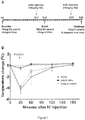
- FIG. 1A An outline of the experimental protocol is shown in Figure 1A . Briefly, three groups of 5 C57BL/6 mice were each sensitized with 100 ⁇ g of crude peanut extract and Alum (2mg/ml) administered by subcutaneous injection on Day 0, followed by a boost injection on Day 14. On Day 28 a challenge injection of 50 ⁇ g of peanut extract was administered intravenously. The first group of mice received no treatment. The second group of mice were administered an anti-mouse IL-4R ⁇ antibody ("anti-mIL-4R ⁇ ”) subcutaneously at a dose of 25mg/kg on Day 13 and Day 27.
- anti-mIL-4R ⁇ anti-mouse IL-4R ⁇
- the third group of mice received an isotype control antibody on Day 13 and Day 27.
- the anti-mIL-4R ⁇ antibody used in this and the following Examples was an antibody comprising an HCVR with an amino acid sequence of SEQ ID NO:9 and an LCVR with an amino acid sequence comprising SEQ ID NO:10.
- the terminal IgE level was also measured for each experimental group ( Figure 2 ). As shown, IL-4R ⁇ blockade significantly decreased total IgE levels below the limit of detection as compared to untreated and isotype control-treated animals.
- IgE levels were measured in samples taken from the animals at Day 12, Day 26 and Day 28. Results are shown in Figure 5A (Day13 administration) and Figure 5B (Day 27 administration).
- the effect of anti-mIL-4R ⁇ antibody on systemic anaphylaxis correlated with the degree of IgE inhibition.
- the reduction in IgE levels was not immediate following anti-mIL-4R ⁇ treatment but appeared to require about 13 days from the time of antibody administration until the time at which IgE levels were fully suppressed. This Example therefore supports a role for IL-4R antagonism in preventing allergic reactions.
- This Example was to determine the effects of IL-4R ⁇ blockade when added to an allergen-specific immunotherapy (SIT) regimen.
- SIT allergen-specific immunotherapy
- a mouse peanut specific immunotherapy model was developed based in part on the model of Kulis et al., J. Allergy Clin. Immunol. 127(1):81-88 (2011 ). Two sets of experiments were conducted, as described below.
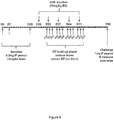
- FIG. 6 An outline of the experimental protocol used in the first set of experiments is shown in Figure 6 .
- Four groups of mice were used in these experiments. Three of the four groups of mice were subjected to a peanut specific immunotherapy regimen comprising a Sensitization Phase, a Build-up Phase, and a Challenge.
- the Sensitization Phase consisted of administration of 0.5mg peanut extract + 2mg Alum administered intraperitoneally on Days 0, 7 and 28.
- the Build-up Phase consisted of twelve separate administrations of various doses of peanut extract without Alum on Days 49, 51, 53, 56, 58, 60, 63, 65, 67, 70, 72 and 74.
- the Challenge consisted of administration of 1 mg of peanut extract on Day 98.
- the various treatment groups for these experiments were as follows: Group A received no immunotherapy and no antibody ("No IT”); Group B received immunotherapy only, without antibody (“IT”); Group C received immunotherapy plus isotype control antibody on Days 36, 50, 57, 64 and 71 ("IT + isotype control”); and Group D received immunotherapy plus anti-mIL-4R ⁇ antibody (25mg/kg, subcutaneous) on Days 36, 50, 57, 64 and 71 ("IT + anti-IL-4R ⁇ ").
- the anti-mIL-4R ⁇ antibody used in these experiments was the same antibody as used in Example 1, herein.
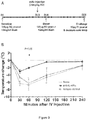
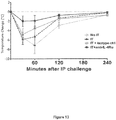
- mice core temperature was measured over the course of 180 minutes following the challenge injection.
- serum samples were collected throughout the experiment (at Days 35, 46, 77 and 98) for immunoglobulin measurements.
- Anaphylaxis results are shown in Figure 7 .
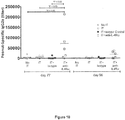
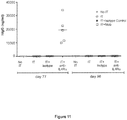
- Total IgE, IgG1, IgG2a and IgG levels at Days 77 and 96 are shown in Figures 8 , 9 , 10 and 11 , respectively.
- IL-4R ⁇ blockade was also observed to cause an increase in peanut-specific IgG2a (see Figure 10 ).
- the results from this first set of experiments provide experimental support for the use of IL-4R blockade as a means to potentially improve the efficacy and safety of allergen-specific immunotherapy.
- a second set of experiments was next conducted to determine the effect of IL-4R blockade in a SIT regimen with fewer allergen doses during the Build-up Phase.
- An outline of the experimental protocol used in this second set of experiments is shown in Figure 12 .
- four groups of mice were used in these experiments.
- Three of the four groups of mice were subjected to a peanut specific immunotherapy regimen identical to the regimen used in the first set of experiments except that fewer doses of allergen were administered during the Build-up Phase.
- the Build-up Phase in these experiments consisted of only eight (as opposed to twelve) separate administrations of various doses of peanut extract without Alum on Days 51 and 53 (0.1 mg), 58 and 60 (0.25 mg), 65 and 67 (0.5 mg), and 72 and 74 (0.5 mg).
- IL-4R blockade can substantially improve the safety of allergen-specific immunotherapy regimens by allowing for reduced maintenance phase dosing. Less frequent allergen dosing would also be more convenient and would result in greater patient compliance in SIT regimens.
Landscapes
- Health & Medical Sciences (AREA)
- Chemical & Material Sciences (AREA)
- Life Sciences & Earth Sciences (AREA)
- Immunology (AREA)
- Medicinal Chemistry (AREA)
- General Health & Medical Sciences (AREA)
- Organic Chemistry (AREA)
- Animal Behavior & Ethology (AREA)
- Public Health (AREA)
- Veterinary Medicine (AREA)
- Pharmacology & Pharmacy (AREA)
- Bioinformatics & Cheminformatics (AREA)
- Engineering & Computer Science (AREA)
- Epidemiology (AREA)
- Proteomics, Peptides & Aminoacids (AREA)
- General Chemical & Material Sciences (AREA)
- Nuclear Medicine, Radiotherapy & Molecular Imaging (AREA)
- Chemical Kinetics & Catalysis (AREA)
- Biochemistry (AREA)
- Biophysics (AREA)
- Genetics & Genomics (AREA)
- Molecular Biology (AREA)
- Mycology (AREA)
- Microbiology (AREA)
- Pulmonology (AREA)
- Zoology (AREA)
- Gastroenterology & Hepatology (AREA)
- Medicines Containing Antibodies Or Antigens For Use As Internal Diagnostic Agents (AREA)
- Medicines That Contain Protein Lipid Enzymes And Other Medicines (AREA)
- Peptides Or Proteins (AREA)
- Pharmaceuticals Containing Other Organic And Inorganic Compounds (AREA)
- Endocrinology (AREA)
Priority Applications (5)
| Application Number | Priority Date | Filing Date | Title |
|---|---|---|---|
| EP19202527.8A EP3617233A1 (en) | 2013-06-04 | 2014-06-03 | Methods for enhancing allergen-specific immunotherapy by administering an il-4r inhibitor |
| SI201431427T SI3004166T1 (sl) | 2013-06-04 | 2014-06-03 | Metode za okrepitev alergensko specifične imunoterapije z aplikacijo zaviralca IL-4R |
| HRP20200185TT HRP20200185T1 (hr) | 2013-06-04 | 2014-06-03 | Metode za unaprjeđenje alergen-specifične imunoterapije primjenom inhibitora il-4r |
| RS20200093A RS59883B1 (sr) | 2013-06-04 | 2014-06-03 | Postupci za pospešenje imunoterapije specifične za alergen isporučivanjem il-4r inhibitora |
| PL14733922T PL3004166T3 (pl) | 2013-06-04 | 2014-06-03 | Sposoby ulepszania swoistej immunoterapii alergenowej przez podawanie inhibitora IL-4R |
Applications Claiming Priority (2)
| Application Number | Priority Date | Filing Date | Title |
|---|---|---|---|
| US201361830919P | 2013-06-04 | 2013-06-04 | |
| PCT/US2014/040695 WO2014197470A1 (en) | 2013-06-04 | 2014-06-03 | Mehods for treating allergy and enhancing allergen-specific immunotherapy by administering an il-4r inhibitor |
Related Child Applications (2)
| Application Number | Title | Priority Date | Filing Date |
|---|---|---|---|
| EP19202527.8A Division-Into EP3617233A1 (en) | 2013-06-04 | 2014-06-03 | Methods for enhancing allergen-specific immunotherapy by administering an il-4r inhibitor |
| EP19202527.8A Division EP3617233A1 (en) | 2013-06-04 | 2014-06-03 | Methods for enhancing allergen-specific immunotherapy by administering an il-4r inhibitor |
Publications (2)
| Publication Number | Publication Date |
|---|---|
| EP3004166A1 EP3004166A1 (en) | 2016-04-13 |
| EP3004166B1 true EP3004166B1 (en) | 2019-11-20 |
Family
ID=51023185
Family Applications (2)
| Application Number | Title | Priority Date | Filing Date |
|---|---|---|---|
| EP14733922.0A Active EP3004166B1 (en) | 2013-06-04 | 2014-06-03 | Methods for enhancing allergen-specific immunotherapy by administering an il-4r inhibitor |
| EP19202527.8A Withdrawn EP3617233A1 (en) | 2013-06-04 | 2014-06-03 | Methods for enhancing allergen-specific immunotherapy by administering an il-4r inhibitor |
Family Applications After (1)
| Application Number | Title | Priority Date | Filing Date |
|---|---|---|---|
| EP19202527.8A Withdrawn EP3617233A1 (en) | 2013-06-04 | 2014-06-03 | Methods for enhancing allergen-specific immunotherapy by administering an il-4r inhibitor |
Country Status (25)
| Country | Link |
|---|---|
| US (5) | US10392439B2 (enExample) |
| EP (2) | EP3004166B1 (enExample) |
| JP (6) | JP6499167B2 (enExample) |
| KR (3) | KR102355114B1 (enExample) |
| CN (3) | CN117982639A (enExample) |
| AU (3) | AU2014275094C1 (enExample) |
| CA (1) | CA2914203C (enExample) |
| CY (1) | CY1124095T1 (enExample) |
| DK (1) | DK3004166T3 (enExample) |
| ES (1) | ES2767080T3 (enExample) |
| HR (1) | HRP20200185T1 (enExample) |
| HU (1) | HUE048655T2 (enExample) |
| IL (3) | IL312710B1 (enExample) |
| LT (1) | LT3004166T (enExample) |
| MX (2) | MX384112B (enExample) |
| NZ (1) | NZ630183A (enExample) |
| PL (1) | PL3004166T3 (enExample) |
| PT (1) | PT3004166T (enExample) |
| RS (1) | RS59883B1 (enExample) |
| RU (1) | RU2679920C2 (enExample) |
| SG (3) | SG10201913835XA (enExample) |
| SI (1) | SI3004166T1 (enExample) |
| TW (3) | TWI755763B (enExample) |
| WO (1) | WO2014197470A1 (enExample) |
| ZA (1) | ZA201508174B (enExample) |
Families Citing this family (52)
| Publication number | Priority date | Publication date | Assignee | Title |
|---|---|---|---|---|
| US7608693B2 (en) * | 2006-10-02 | 2009-10-27 | Regeneron Pharmaceuticals, Inc. | High affinity human antibodies to human IL-4 receptor |
| IL312711A (en) | 2012-08-21 | 2024-07-01 | Regeneron Pharma | Methods for the treatment or prevention of asthma through the administration of an antagonist to 4R-IL |
| KR102576903B1 (ko) | 2012-09-07 | 2023-09-13 | 리제너론 파아마슈티컬스, 인크. | Il-4r 길항제 투여로 아토피성 피부염을 치료하는 방법 |
| TWI755763B (zh) | 2013-06-04 | 2022-02-21 | 美商再生元醫藥公司 | 藉由投與il-4r抑制劑以治療過敏及增強過敏原-特異之免疫療法的方法 |
| KR20210132232A (ko) | 2013-06-21 | 2021-11-03 | 사노피 바이오테크놀로지 | Il-4r 길항제를 투여함에 의한 비용종증의 치료 방법 |
| TWI634900B (zh) | 2013-07-11 | 2018-09-11 | 再生元醫藥公司 | 藉由投與il-4r抑制劑治療嗜酸性食道炎的方法 |
| KR102927870B1 (ko) | 2014-02-28 | 2026-02-19 | 리제너론 파아마슈티컬스, 인크. | Il-4r 길항제의 투여에 의한 피부 감염의 치료 방법 |
| TW201628649A (zh) | 2014-10-09 | 2016-08-16 | 再生元醫藥公司 | 減少醫藥調配物中微可見顆粒之方法 |
| WO2016077675A1 (en) | 2014-11-14 | 2016-05-19 | Sanofi Biotechnology | Methods for treating chronic sinusitis with nasal polyps by administering an il-4r antagonist |
| JP6938383B2 (ja) | 2015-04-02 | 2021-09-22 | インターベット インターナショナル ベー. フェー. | イヌインターロイキン4受容体アルファに対する抗体 |
| CA3005696A1 (en) | 2015-12-18 | 2017-06-22 | Intervet International B.V. | Caninized human antibodies to human and canine il-4r alpha |
| US11091556B2 (en) | 2015-12-18 | 2021-08-17 | Intervet Inc. | Caninized human antibodies to human IL-4R alpha |
| AU2017220184B2 (en) * | 2016-02-19 | 2024-04-18 | Regeneron Pharmaceuticals, Inc. | Methods for enhancing efficacy of a vaccine by administering an IL-4R antagonist |
| MX390517B (es) * | 2016-03-01 | 2025-03-20 | Corcept Therapeutics Inc | Uso de moduladores del receptor de glucocorticoides para potenciar inhibidores de puntos de regulacion. |
| KR20230041834A (ko) | 2016-08-16 | 2023-03-24 | 리제너론 파아마슈티컬스, 인크. | 혼합물로부터 개별 항체들을 정량하는 방법 |
| US11771743B2 (en) * | 2016-09-01 | 2023-10-03 | Regeneron Pharmaceuticals, Inc. | Methods for preventing or treating allergy by administering an IL-4R antagonist |
| KR102513485B1 (ko) * | 2016-09-16 | 2023-03-23 | 다케다 파머수티컬 컴패니 리미티드 | 접촉 활성화 시스템과 연관된 질환을 위한 단백질 바이오마커 |
| US10485844B2 (en) | 2016-09-22 | 2019-11-26 | Regeneron Pharmaceuticals, Inc. | Methods for treating severe atopic dermatitis by administering an IL-4R inhibitor |
| CN119492842A (zh) | 2016-10-25 | 2025-02-21 | 里珍纳龙药品有限公司 | 用于色谱数据分析的方法和系统 |
| TWI857389B (zh) | 2016-12-01 | 2024-10-01 | 美商再生元醫藥公司 | 治療發炎症狀的方法 |
| WO2019028367A1 (en) | 2017-08-04 | 2019-02-07 | Regeneron Pharmaceuticals, Inc. | METHODS OF TREATING ESOPHAGITIS WITH ACTIVE EOSINOPHILES |
| CN118416215A (zh) | 2017-09-19 | 2024-08-02 | 里珍纳龙药品有限公司 | 减少粒子形成的方法以及由其形成的组合物 |
| EP3703818B1 (en) | 2017-10-30 | 2023-11-01 | Sanofi Biotechnology | Il-4r antagonist for use in a method for treating or preventing asthma |
| US11460452B2 (en) | 2017-12-13 | 2022-10-04 | Regeneron Pharmaceuticals, Inc. | Devices and systems for chromatography column bed support management and related methods |
| WO2019148405A1 (zh) * | 2018-02-01 | 2019-08-08 | 北京凯因科技股份有限公司 | IL-4Rα抗体及其用途 |
| CN108373505B (zh) * | 2018-04-20 | 2019-08-20 | 北京智仁美博生物科技有限公司 | 抗il-4r抗体及其用途 |
| CA3096582A1 (en) * | 2018-04-25 | 2019-12-05 | Kiniksa Pharmaceuticals, Ltd. | Treatment of skin diseases or disorders by delivery of anti-osmr.beta. antibodies |
| TWI903214B (zh) | 2018-05-02 | 2025-11-01 | 美商里珍納龍藥品有限公司 | 用於評估生化過濾器的適合性的方法 |
| MA52624A (fr) | 2018-05-13 | 2021-03-24 | Regeneron Pharma | Méthodes de traitement de la dermatite atopique par administration d'un inhibiteur de l'il-4r |
| TWI853823B (zh) | 2018-07-02 | 2024-09-01 | 美商里珍納龍藥品有限公司 | 自混合物製備多肽之系統及方法 |
| AR115730A1 (es) * | 2018-07-10 | 2021-02-17 | Regeneron Pharma | Modificación de moléculas de unión para minimizar interacciones pre-existentes |
| MX2021002971A (es) * | 2018-09-14 | 2021-05-12 | Kindred Biosciences Inc | Anticuerpos del receptor anti-interleucina 4 para uso veterinario. |
| CN113166259A (zh) | 2018-11-09 | 2021-07-23 | 亚洲大学校产学协力团 | 对人IL-4受体α具有高亲和力的人抗体及其用途 |
| CN111494625B (zh) | 2018-12-25 | 2022-06-21 | 江苏荃信生物医药股份有限公司 | 用于治疗il-4和/或il-13介导的信号转导相关的疾病的药物组合物 |
| WO2020135710A1 (zh) * | 2018-12-27 | 2020-07-02 | 中山康方生物医药有限公司 | 抗人il-4ra的抗体及其用途 |
| RU2700788C1 (ru) * | 2019-01-17 | 2019-09-23 | Федеральное государственное бюджетное учреждение "Государственный научный центр "Институт иммунологии" Федерального медико-биологического агентства России (ФГБУ "ГНЦ Институт иммунологии" ФМБА России) | Способ оценки эффективности проведения аллерген-специфической иммунотерапии при аллергическом рините |
| EP3934620A1 (en) | 2019-03-05 | 2022-01-12 | Regeneron Pharmaceuticals, Inc. | Human serum albumin in formulations |
| SG11202109002XA (en) | 2019-03-21 | 2021-09-29 | Regeneron Pharma | Combination of il-4/il-13 pathway inhibitors and plasma cell ablation for treating allergy |
| CA3147436A1 (en) | 2019-07-16 | 2021-01-21 | Sanofi Biotechnology | Methods for treating or preventing asthma by administering an il-4r antagonist |
| EP4010373A1 (en) | 2019-08-05 | 2022-06-15 | Regeneron Pharmaceuticals, Inc. | Methods for treating atopic dermatitis by administering an il-4r antagonist |
| AU2020325021B2 (en) | 2019-08-05 | 2024-05-30 | Regeneron Pharmaceuticals, Inc. | Methods for treating allergy and enhancing allergen-specific immunotherapy by administering an IL-4R antagonist |
| CN111825766B (zh) * | 2019-10-31 | 2021-05-11 | 上海洛启生物医药技术有限公司 | 抗il-4r单域抗体及其应用 |
| WO2021102186A1 (en) * | 2019-11-20 | 2021-05-27 | Aimmune Therapeutics, Inc. | Methods and systems for managing distribution and treatment of a food allergy oral immunotherapy drug |
| EP3992974A1 (en) | 2020-11-02 | 2022-05-04 | Sanofi Biotechnology | Methods for treating digitally-identified il-4/il-13 related disorders |
| IL293487A (en) | 2019-12-09 | 2022-08-01 | Sanofi Biotechnology | Methods for the treatment of digitally identified il-4/il-13-related disorders |
| MX2022007677A (es) | 2019-12-20 | 2022-07-19 | Intervet Int Bv | Anticuerpos para receptor alfa de interleucina-4 canino. |
| CN113527485B (zh) | 2020-04-17 | 2024-11-15 | 湖南麦济生物技术股份有限公司 | 抗人白细胞介素-4受体α抗体及其制备方法和应用 |
| WO2022015049A1 (ko) * | 2020-07-17 | 2022-01-20 | (주)지아이이노베이션 | IgE Fc 수용체 알파서브유닛의 세포외 도메인 및 항-IL-4R 항체를 포함하는 융합단백질 및 이의 용도 |
| MX2023007945A (es) * | 2021-01-08 | 2023-09-21 | Regeneron Pharma | Metodos para tratar la alergia al cacahuate y mejorar la inmunoterapia especifica de alergeno del cacahuate mediante la administracion de un antagonista de il-4r. |
| WO2023009437A1 (en) * | 2021-07-26 | 2023-02-02 | Sanofi Biotechnology | Methods for treating chronic spontaneous urticaria by administering an il-4r antagonist |
| CN115960236B (zh) * | 2023-01-05 | 2024-08-06 | 江苏荃信生物医药股份有限公司 | 一种定量检测血清中抗人白介素4受体α单克隆抗体含量的酶联免疫分析方法 |
| WO2025264860A2 (en) | 2024-06-18 | 2025-12-26 | Yale University | Methods of treating post-covid airway disease |
Family Cites Families (78)
| Publication number | Priority date | Publication date | Assignee | Title |
|---|---|---|---|---|
| GB8808015D0 (en) | 1988-04-06 | 1988-05-05 | Ritter M A | Chemical compounds |
| WO1990005183A1 (en) | 1988-10-31 | 1990-05-17 | Immunex Corporation | Interleukin-4 receptors |
| BR9205967A (pt) | 1991-05-03 | 1994-07-26 | Seragen Inc | Moléculas marcadas com receptor de interleucina tratamento de artrite inflamatória |
| JP3315427B2 (ja) | 1992-03-05 | 2002-08-19 | 大日本除蟲菊株式会社 | 皮膚炎治療剤 |
| US5714146A (en) | 1992-08-26 | 1998-02-03 | Board Of Regents Of The University Of Washington | IL-4 bone therapy |
| EP0604693A1 (en) | 1992-12-29 | 1994-07-06 | Schering-Plough | Monoclonal antibodies against the human interleukin-4 receptor and hybridomas producing the same |
| ZA946875B (en) | 1993-09-07 | 1995-07-06 | Smithkline Beecham Corp | Recombinant il4 antibodies useful in treatment of il4 mediated disorders |
| US6598603B1 (en) | 1997-12-31 | 2003-07-29 | Astra Aktiebolag | Method for treating respiratory diseases |
| AU766492B2 (en) | 1998-09-18 | 2003-10-16 | Dynavax Technologies Corporation | Methods of treating IgE-associated disorders and compositions for use therein |
| WO2001092340A2 (en) | 2000-05-26 | 2001-12-06 | Immunex Corporation | Use of interleukin-4 antagonists and compositions thereof |
| US7879328B2 (en) | 2000-06-16 | 2011-02-01 | Human Genome Sciences, Inc. | Antibodies that immunospecifically bind to B lymphocyte stimulator |
| AU2001267917A1 (en) | 2000-07-26 | 2002-02-05 | Kenjirou Tsuchida | Antipruritic compositions and compositions promoting wound healing |
| US20030103938A1 (en) | 2001-05-09 | 2003-06-05 | Alk-Abello A/S | Pharmaceutical compositions for preventing or treating Th1 and Th2 cell related diseases by modulating the Th1/Th2 ratio |
| US20050031609A1 (en) | 2001-05-11 | 2005-02-10 | Thomas Hultsch | Compositions for use in treating ige-associated disorders |
| CA2447795A1 (en) | 2001-05-23 | 2002-11-28 | Duotol Ab | Suppression of allergic reactions by transdermal administration of allergens in conjunction with or conjugated to toxin subunits or fragments thereof |
| AU2002357770B2 (en) | 2001-11-30 | 2008-07-31 | Biogen Ma Inc. | Antibodies against monocyte chemotactic proteins |
| ATE435239T1 (de) | 2002-03-29 | 2009-07-15 | Schering Corp | Menschliche monoklonale antikörper gegen interleukin-5 sowie diese umfassende verfahren und zusammensetzungen |
| WO2004047793A1 (en) * | 2002-11-26 | 2004-06-10 | Alk-Abelló A/S | Pharmaceutical allergen product |
| EP1592777A4 (en) | 2003-02-01 | 2008-06-04 | Tanox Inc | METHOD OF GENERATING HIGH-ANTIBODY ANTIBODIES |
| US7923209B2 (en) | 2003-03-14 | 2011-04-12 | Anergis, S.A. | Allergen peptide fragments and use thereof |
| NZ547588A (en) | 2003-11-07 | 2009-05-31 | Immunex Corp | Antibodies that bind interleukin-4 receptor |
| CA2550933A1 (en) | 2003-12-22 | 2005-07-14 | Amgen Inc. | Methods for identifying functional antibodies |
| EP1723173B1 (en) | 2004-02-27 | 2008-05-14 | Regeneron Pharmaceuticals, Inc. | Il-4/il-13 specific polypeptides and therapeutic uses thereof |
| US20090098142A1 (en) | 2004-06-09 | 2009-04-16 | Kasaian Marion T | Methods and compositions for treating and monitoring treatment of IL-13-associated disorders |
| TWI307630B (en) | 2004-07-01 | 2009-03-21 | Glaxo Group Ltd | Immunoglobulins |
| JP5234445B2 (ja) | 2004-10-05 | 2013-07-10 | 源一郎 杣 | 薬剤 |
| WO2006083390A2 (en) | 2004-12-07 | 2006-08-10 | Children's Hospital Medical Center | Eotaxin-3 in eosinophilic esophagitis |
| TW200902555A (en) | 2005-01-03 | 2009-01-16 | Hoffmann La Roche | Antibodies against IL-13 receptor alpha 1 and uses thereof |
| US8324192B2 (en) | 2005-11-12 | 2012-12-04 | The Regents Of The University Of California | Viscous budesonide for the treatment of inflammatory diseases of the gastrointestinal tract |
| US8679545B2 (en) | 2005-11-12 | 2014-03-25 | The Regents Of The University Of California | Topical corticosteroids for the treatment of inflammatory diseases of the gastrointestinal tract |
| JP4221018B2 (ja) | 2006-08-31 | 2009-02-12 | トヨタ自動車株式会社 | 頭部保護エアバッグ装置 |
| US7608693B2 (en) * | 2006-10-02 | 2009-10-27 | Regeneron Pharmaceuticals, Inc. | High affinity human antibodies to human IL-4 receptor |
| LT2769992T (lt) | 2006-10-02 | 2021-04-12 | Regeneron Pharmaceuticals, Inc. | Didelio afiniškumo žmogaus antikūnai, atpažįstantys žmogaus il-4 receptorių |
| SI2132230T1 (sl) | 2007-03-22 | 2014-07-31 | Genentech, Inc. | Apoptotska protitelesa, ki veĹľejo membransko-vezan IgE |
| EP2022507A1 (en) | 2007-08-07 | 2009-02-11 | Universität Hamburg | Antibody compositions specific for lgE, lgG4 and lgA epitopes as tools for the design of hypoallergenic molecules for specific immunotherapy |
| US8637239B2 (en) | 2007-11-05 | 2014-01-28 | The Board Of Trustees Of The University Of Illinois | Minimally-invasive measurement of esophageal inflammation |
| US8092804B2 (en) | 2007-12-21 | 2012-01-10 | Medimmune Limited | Binding members for interleukin-4 receptor alpha (IL-4Rα)-173 |
| DE202008006598U1 (de) | 2008-04-11 | 2008-10-02 | Alk-Abelló A/S | Allergie-Impfstoff-Formulierung zur mucosalen Verabreichung |
| US20090264392A1 (en) | 2008-04-21 | 2009-10-22 | Meritage Pharma, Inc. | Treating eosinophilic esophagitis |
| US20110301046A1 (en) | 2008-12-01 | 2011-12-08 | Children's Hospital Medical Center | Methods of Determining Efficacy of Glucocorticoid Treatment of Eosinophilic Esophagitis |
| US20120088814A1 (en) | 2009-03-31 | 2012-04-12 | Isis Pharmaceuticals, Inc. | Methods of modulating an immune response to a viral infection |
| US8497528B2 (en) | 2010-05-06 | 2013-07-30 | Taiwan Semiconductor Manufacturing Company, Ltd. | Method for fabricating a strained structure |
| BR112012005117A2 (pt) | 2009-09-07 | 2016-05-03 | Dbv Tech | método de tratamento de esofagite eosinofílica |
| US8993347B2 (en) | 2009-12-17 | 2015-03-31 | Cornell University | Methods for detecting antibodies in mucosal samples and device for sampling mucosal material |
| ES2894936T3 (es) | 2010-06-24 | 2022-02-16 | Viropharma Biologics Llc | Métodos de tratamiento para la inflamación del esófago |
| CN106267189B (zh) | 2010-10-06 | 2021-02-26 | 瑞泽恩制药公司 | 含有抗白介素-4受体(il-4r)的抗体的稳定制剂 |
| RU2453303C1 (ru) | 2010-12-23 | 2012-06-20 | Общество с ограниченной ответственностью "ЦитоНИР" (ООО "ЦитоНИР") | Фармацевтическая композиция для лечения атопического дерматита |
| WO2012094643A2 (en) | 2011-01-06 | 2012-07-12 | Children's Hospital Medical Center | Esophageal cytokine expression profiles in eosinophilic esophagitis |
| US20130052190A1 (en) | 2011-02-22 | 2013-02-28 | Oxagen Limited | CRTH2 Antagonists for Treatment of Eosinophilic Diseases and Conditions |
| EP2723899B1 (en) | 2011-06-21 | 2020-11-18 | Children's Hospital Medical Center | Diagnostic methods for eosinophilic esophagitis |
| US20140303067A1 (en) | 2011-10-06 | 2014-10-09 | N.V. Nutricia | Treatment of eosinophilic esophagitis |
| KR20140113667A (ko) | 2011-12-16 | 2014-09-24 | 아토픽스 테라퓨릭스 리미티드 | 호산구성 식도염의 치료를 위한 crth2 길항제 및 양성자 펌프 저해제의 조합 |
| WO2013155010A1 (en) | 2012-04-09 | 2013-10-17 | Children's Hospital Medical Center | Non-invasive biomarkers for eosinophilic esophagitis |
| IL312711A (en) | 2012-08-21 | 2024-07-01 | Regeneron Pharma | Methods for the treatment or prevention of asthma through the administration of an antagonist to 4R-IL |
| KR102576903B1 (ko) * | 2012-09-07 | 2023-09-13 | 리제너론 파아마슈티컬스, 인크. | Il-4r 길항제 투여로 아토피성 피부염을 치료하는 방법 |
| US10132809B2 (en) | 2012-10-10 | 2018-11-20 | Rhote Island Hospital | Differential expression of protein markers for the diagnosis and treatment of eosinophilic esophagitis |
| US9963513B2 (en) | 2013-02-05 | 2018-05-08 | Engmab Sàrl | Method for the selection of antibodies against BCMA |
| TWI755763B (zh) * | 2013-06-04 | 2022-02-21 | 美商再生元醫藥公司 | 藉由投與il-4r抑制劑以治療過敏及增強過敏原-特異之免疫療法的方法 |
| KR20210132232A (ko) | 2013-06-21 | 2021-11-03 | 사노피 바이오테크놀로지 | Il-4r 길항제를 투여함에 의한 비용종증의 치료 방법 |
| TWI634900B (zh) | 2013-07-11 | 2018-09-11 | 再生元醫藥公司 | 藉由投與il-4r抑制劑治療嗜酸性食道炎的方法 |
| IL315136A (en) | 2014-02-21 | 2024-10-01 | Sanofi Biotechnology | Methods for treating or preventing asthma by administering an il-4rantagonist |
| KR102927870B1 (ko) | 2014-02-28 | 2026-02-19 | 리제너론 파아마슈티컬스, 인크. | Il-4r 길항제의 투여에 의한 피부 감염의 치료 방법 |
| WO2016077675A1 (en) | 2014-11-14 | 2016-05-19 | Sanofi Biotechnology | Methods for treating chronic sinusitis with nasal polyps by administering an il-4r antagonist |
| AU2017220184B2 (en) | 2016-02-19 | 2024-04-18 | Regeneron Pharmaceuticals, Inc. | Methods for enhancing efficacy of a vaccine by administering an IL-4R antagonist |
| TWI777515B (zh) | 2016-08-18 | 2022-09-11 | 美商愛戴爾製藥股份有限公司 | 治療嗜伊紅性食道炎之方法 |
| US11771743B2 (en) | 2016-09-01 | 2023-10-03 | Regeneron Pharmaceuticals, Inc. | Methods for preventing or treating allergy by administering an IL-4R antagonist |
| US10485844B2 (en) | 2016-09-22 | 2019-11-26 | Regeneron Pharmaceuticals, Inc. | Methods for treating severe atopic dermatitis by administering an IL-4R inhibitor |
| KR20190053250A (ko) | 2016-09-22 | 2019-05-17 | 리제너론 파아마슈티컬스, 인크. | Il-4r 저해제 투여에 의한 중증 아토피 피부염의 치료 방법 |
| JP2020507605A (ja) | 2017-02-17 | 2020-03-12 | フレッド ハッチンソン キャンサー リサーチ センター | Bcma関連癌および自己免疫疾患の治療のための併用療法 |
| US20200179511A1 (en) | 2017-04-28 | 2020-06-11 | Novartis Ag | Bcma-targeting agent, and combination therapy with a gamma secretase inhibitor |
| WO2019028367A1 (en) | 2017-08-04 | 2019-02-07 | Regeneron Pharmaceuticals, Inc. | METHODS OF TREATING ESOPHAGITIS WITH ACTIVE EOSINOPHILES |
| EP3703818B1 (en) | 2017-10-30 | 2023-11-01 | Sanofi Biotechnology | Il-4r antagonist for use in a method for treating or preventing asthma |
| MA52624A (fr) | 2018-05-13 | 2021-03-24 | Regeneron Pharma | Méthodes de traitement de la dermatite atopique par administration d'un inhibiteur de l'il-4r |
| SG11202109002XA (en) | 2019-03-21 | 2021-09-29 | Regeneron Pharma | Combination of il-4/il-13 pathway inhibitors and plasma cell ablation for treating allergy |
| EP4010373A1 (en) | 2019-08-05 | 2022-06-15 | Regeneron Pharmaceuticals, Inc. | Methods for treating atopic dermatitis by administering an il-4r antagonist |
| AU2020325021B2 (en) | 2019-08-05 | 2024-05-30 | Regeneron Pharmaceuticals, Inc. | Methods for treating allergy and enhancing allergen-specific immunotherapy by administering an IL-4R antagonist |
| IL293487A (en) | 2019-12-09 | 2022-08-01 | Sanofi Biotechnology | Methods for the treatment of digitally identified il-4/il-13-related disorders |
| IL298257A (en) | 2020-05-22 | 2023-01-01 | Regeneron Pharma | Methods for treating eosinophilic esophagitis by administering an il-4r inhibitor |
-
2014
- 2014-05-30 TW TW109120861A patent/TWI755763B/zh active
- 2014-05-30 TW TW103118916A patent/TWI633891B/zh active
- 2014-05-30 TW TW107126334A patent/TWI697334B/zh active
- 2014-06-03 SG SG10201913835XA patent/SG10201913835XA/en unknown
- 2014-06-03 RS RS20200093A patent/RS59883B1/sr unknown
- 2014-06-03 EP EP14733922.0A patent/EP3004166B1/en active Active
- 2014-06-03 HU HUE14733922A patent/HUE048655T2/hu unknown
- 2014-06-03 CA CA2914203A patent/CA2914203C/en active Active
- 2014-06-03 KR KR1020157034008A patent/KR102355114B1/ko active Active
- 2014-06-03 MX MX2015016473A patent/MX384112B/es unknown
- 2014-06-03 EP EP19202527.8A patent/EP3617233A1/en not_active Withdrawn
- 2014-06-03 IL IL312710A patent/IL312710B1/en unknown
- 2014-06-03 SG SG11201509044QA patent/SG11201509044QA/en unknown
- 2014-06-03 IL IL273678A patent/IL273678B2/en unknown
- 2014-06-03 HR HRP20200185TT patent/HRP20200185T1/hr unknown
- 2014-06-03 PT PT147339220T patent/PT3004166T/pt unknown
- 2014-06-03 CN CN202410184683.4A patent/CN117982639A/zh active Pending
- 2014-06-03 PL PL14733922T patent/PL3004166T3/pl unknown
- 2014-06-03 CN CN202410184651.4A patent/CN118001391A/zh active Pending
- 2014-06-03 LT LTEP14733922.0T patent/LT3004166T/lt unknown
- 2014-06-03 RU RU2015156628A patent/RU2679920C2/ru active
- 2014-06-03 WO PCT/US2014/040695 patent/WO2014197470A1/en not_active Ceased
- 2014-06-03 AU AU2014275094A patent/AU2014275094C1/en active Active
- 2014-06-03 US US14/294,544 patent/US10392439B2/en active Active
- 2014-06-03 NZ NZ630183A patent/NZ630183A/en unknown
- 2014-06-03 DK DK14733922.0T patent/DK3004166T3/da active
- 2014-06-03 JP JP2016518408A patent/JP6499167B2/ja active Active
- 2014-06-03 CN CN201480032190.3A patent/CN105377894A/zh active Pending
- 2014-06-03 KR KR1020237002686A patent/KR102580468B1/ko active Active
- 2014-06-03 ES ES14733922T patent/ES2767080T3/es active Active
- 2014-06-03 SI SI201431427T patent/SI3004166T1/sl unknown
- 2014-06-03 KR KR1020227001662A patent/KR102492826B1/ko active Active
- 2014-06-03 SG SG10201709670XA patent/SG10201709670XA/en unknown
-
2015
- 2015-11-04 ZA ZA2015/08174A patent/ZA201508174B/en unknown
- 2015-11-04 IL IL242456A patent/IL242456B/en active IP Right Grant
- 2015-11-30 MX MX2021002173A patent/MX2021002173A/es unknown
-
2017
- 2017-12-14 US US15/842,865 patent/US10669341B2/en active Active
- 2017-12-14 US US15/842,868 patent/US10676530B2/en active Active
-
2019
- 2019-03-13 JP JP2019045324A patent/JP6754857B2/ja active Active
- 2019-06-27 AU AU2019204577A patent/AU2019204577B2/en active Active
-
2020
- 2020-02-10 CY CY20201100122T patent/CY1124095T1/el unknown
- 2020-04-24 US US16/858,488 patent/US11485788B2/en active Active
- 2020-08-21 JP JP2020139935A patent/JP7061163B2/ja active Active
-
2021
- 2021-09-10 AU AU2021229250A patent/AU2021229250B2/en active Active
-
2022
- 2022-04-14 JP JP2022066688A patent/JP7284313B2/ja active Active
- 2022-09-23 US US17/935,003 patent/US20230159647A1/en not_active Abandoned
-
2023
- 2023-05-17 JP JP2023081214A patent/JP7575526B2/ja active Active
-
2024
- 2024-10-16 JP JP2024180470A patent/JP2025011257A/ja active Pending
Non-Patent Citations (1)
| Title |
|---|
| None * |
Also Published As
Similar Documents
| Publication | Publication Date | Title |
|---|---|---|
| US20230159647A1 (en) | Methods for treating allergy and enhancing allergen-specific immunotherapy by administering an il-4r inhibitor | |
| HK40022146A (en) | Methods for enhancing allergen-specific immunotherapy by administering an il-4r inhibitor | |
| HK1216898B (en) | Methods for enhancing allergen-specific immunotherapy by administering an il-4r inhibitor | |
| RU2789047C2 (ru) | Способы лечения аллергии и повышения эффективности аллерген- специфической иммунотерапии путем введения ингибитора ил-4р |
Legal Events
| Date | Code | Title | Description |
|---|---|---|---|
| PUAI | Public reference made under article 153(3) epc to a published international application that has entered the european phase |
Free format text: ORIGINAL CODE: 0009012 |
|
| 17P | Request for examination filed |
Effective date: 20151202 |
|
| AK | Designated contracting states |
Kind code of ref document: A1 Designated state(s): AL AT BE BG CH CY CZ DE DK EE ES FI FR GB GR HR HU IE IS IT LI LT LU LV MC MK MT NL NO PL PT RO RS SE SI SK SM TR |
|
| AX | Request for extension of the european patent |
Extension state: BA ME |
|
| DAX | Request for extension of the european patent (deleted) | ||
| REG | Reference to a national code |
Ref country code: HK Ref legal event code: DE Ref document number: 1216898 Country of ref document: HK |
|
| STAA | Information on the status of an ep patent application or granted ep patent |
Free format text: STATUS: EXAMINATION IS IN PROGRESS |
|
| 17Q | First examination report despatched |
Effective date: 20170707 |
|
| REG | Reference to a national code |
Ref country code: DE Ref legal event code: R079 Ref document number: 602014057074 Country of ref document: DE Free format text: PREVIOUS MAIN CLASS: C07K0016280000 Ipc: A61P0037020000 |
|
| RIC1 | Information provided on ipc code assigned before grant |
Ipc: A61P 37/02 20060101AFI20190418BHEP |
|
| GRAP | Despatch of communication of intention to grant a patent |
Free format text: ORIGINAL CODE: EPIDOSNIGR1 |
|
| STAA | Information on the status of an ep patent application or granted ep patent |
Free format text: STATUS: GRANT OF PATENT IS INTENDED |
|
| INTG | Intention to grant announced |
Effective date: 20190613 |
|
| GRAS | Grant fee paid |
Free format text: ORIGINAL CODE: EPIDOSNIGR3 |
|
| GRAA | (expected) grant |
Free format text: ORIGINAL CODE: 0009210 |
|
| STAA | Information on the status of an ep patent application or granted ep patent |
Free format text: STATUS: THE PATENT HAS BEEN GRANTED |
|
| AK | Designated contracting states |
Kind code of ref document: B1 Designated state(s): AL AT BE BG CH CY CZ DE DK EE ES FI FR GB GR HR HU IE IS IT LI LT LU LV MC MK MT NL NO PL PT RO RS SE SI SK SM TR |
|
| REG | Reference to a national code |
Ref country code: GB Ref legal event code: FG4D |
|
| REG | Reference to a national code |
Ref country code: CH Ref legal event code: NV Representative=s name: VENI GMBH, CH Ref country code: CH Ref legal event code: EP |
|
| REG | Reference to a national code |
Ref country code: IE Ref legal event code: FG4D |
|
| REG | Reference to a national code |
Ref country code: DE Ref legal event code: R096 Ref document number: 602014057074 Country of ref document: DE |
|
| REG | Reference to a national code |
Ref country code: AT Ref legal event code: REF Ref document number: 1203525 Country of ref document: AT Kind code of ref document: T Effective date: 20191215 |
|
| REG | Reference to a national code |
Ref country code: RO Ref legal event code: EPE |
|
| REG | Reference to a national code |
Ref country code: DK Ref legal event code: T3 Effective date: 20191219 |
|
| REG | Reference to a national code |
Ref country code: PT Ref legal event code: SC4A Ref document number: 3004166 Country of ref document: PT Date of ref document: 20200114 Kind code of ref document: T Free format text: AVAILABILITY OF NATIONAL TRANSLATION Effective date: 20191226 |
|
| REG | Reference to a national code |
Ref country code: SE Ref legal event code: TRGR |
|
| REG | Reference to a national code |
Ref country code: HR Ref legal event code: TUEP Ref document number: P20200185T Country of ref document: HR |
|
| REG | Reference to a national code |
Ref country code: NO Ref legal event code: T2 Effective date: 20191120 |
|
| REG | Reference to a national code |
Ref country code: NL Ref legal event code: FP |
|
| REG | Reference to a national code |
Ref country code: EE Ref legal event code: FG4A Ref document number: E018557 Country of ref document: EE Effective date: 20191227 |
|
| REG | Reference to a national code |
Ref country code: SK Ref legal event code: T3 Ref document number: E 33224 Country of ref document: SK |
|
| REG | Reference to a national code |
Ref country code: HR Ref legal event code: T1PR Ref document number: P20200185 Country of ref document: HR |
|
| REG | Reference to a national code |
Ref country code: GR Ref legal event code: EP Ref document number: 20200400351 Country of ref document: GR Effective date: 20200518 |
|
| PG25 | Lapsed in a contracting state [announced via postgrant information from national office to epo] |
Ref country code: IS Free format text: LAPSE BECAUSE OF FAILURE TO SUBMIT A TRANSLATION OF THE DESCRIPTION OR TO PAY THE FEE WITHIN THE PRESCRIBED TIME-LIMIT Effective date: 20200320 |
|
| REG | Reference to a national code |
Ref country code: HR Ref legal event code: ODRP Ref document number: P20200185 Country of ref document: HR Payment date: 20200522 Year of fee payment: 7 |
|
| REG | Reference to a national code |
Ref country code: ES Ref legal event code: FG2A Ref document number: 2767080 Country of ref document: ES Kind code of ref document: T3 Effective date: 20200616 |
|
| PG25 | Lapsed in a contracting state [announced via postgrant information from national office to epo] |
Ref country code: AL Free format text: LAPSE BECAUSE OF FAILURE TO SUBMIT A TRANSLATION OF THE DESCRIPTION OR TO PAY THE FEE WITHIN THE PRESCRIBED TIME-LIMIT Effective date: 20191120 |
|
| REG | Reference to a national code |
Ref country code: DE Ref legal event code: R097 Ref document number: 602014057074 Country of ref document: DE |
|
| REG | Reference to a national code |
Ref country code: HU Ref legal event code: AG4A Ref document number: E048655 Country of ref document: HU |
|
| PG25 | Lapsed in a contracting state [announced via postgrant information from national office to epo] |
Ref country code: SM Free format text: LAPSE BECAUSE OF FAILURE TO SUBMIT A TRANSLATION OF THE DESCRIPTION OR TO PAY THE FEE WITHIN THE PRESCRIBED TIME-LIMIT Effective date: 20191120 |
|
| PLBE | No opposition filed within time limit |
Free format text: ORIGINAL CODE: 0009261 |
|
| STAA | Information on the status of an ep patent application or granted ep patent |
Free format text: STATUS: NO OPPOSITION FILED WITHIN TIME LIMIT |
|
| 26N | No opposition filed |
Effective date: 20200821 |
|
| REG | Reference to a national code |
Ref country code: AT Ref legal event code: UEP Ref document number: 1203525 Country of ref document: AT Kind code of ref document: T Effective date: 20191120 |
|
| REG | Reference to a national code |
Ref country code: HR Ref legal event code: ODRP Ref document number: P20200185 Country of ref document: HR Payment date: 20210531 Year of fee payment: 8 |
|
| PG25 | Lapsed in a contracting state [announced via postgrant information from national office to epo] |
Ref country code: MK Free format text: LAPSE BECAUSE OF FAILURE TO SUBMIT A TRANSLATION OF THE DESCRIPTION OR TO PAY THE FEE WITHIN THE PRESCRIBED TIME-LIMIT Effective date: 20191120 |
|
| REG | Reference to a national code |
Ref country code: HR Ref legal event code: ODRP Ref document number: P20200185 Country of ref document: HR Payment date: 20220603 Year of fee payment: 9 |
|
| REG | Reference to a national code |
Ref country code: HR Ref legal event code: ODRP Ref document number: P20200185 Country of ref document: HR Payment date: 20230526 Year of fee payment: 10 |
|
| P01 | Opt-out of the competence of the unified patent court (upc) registered |
Effective date: 20230517 |
|
| REG | Reference to a national code |
Ref country code: HR Ref legal event code: ODRP Ref document number: P20200185 Country of ref document: HR Payment date: 20240522 Year of fee payment: 11 |
|
| PGFP | Annual fee paid to national office [announced via postgrant information from national office to epo] |
Ref country code: NL Payment date: 20250520 Year of fee payment: 12 |
|
| REG | Reference to a national code |
Ref country code: HR Ref legal event code: ODRP Ref document number: P20200185 Country of ref document: HR Payment date: 20250521 Year of fee payment: 12 |
|
| PGFP | Annual fee paid to national office [announced via postgrant information from national office to epo] |
Ref country code: MC Payment date: 20250526 Year of fee payment: 12 |
|
| PGFP | Annual fee paid to national office [announced via postgrant information from national office to epo] |
Ref country code: FI Payment date: 20250520 Year of fee payment: 12 |
|
| PGFP | Annual fee paid to national office [announced via postgrant information from national office to epo] |
Ref country code: PL Payment date: 20250522 Year of fee payment: 12 Ref country code: DE Payment date: 20250520 Year of fee payment: 12 |
|
| PGFP | Annual fee paid to national office [announced via postgrant information from national office to epo] |
Ref country code: GB Payment date: 20250520 Year of fee payment: 12 Ref country code: DK Payment date: 20250520 Year of fee payment: 12 |
|
| PGFP | Annual fee paid to national office [announced via postgrant information from national office to epo] |
Ref country code: LT Payment date: 20250520 Year of fee payment: 12 |
|
| PGFP | Annual fee paid to national office [announced via postgrant information from national office to epo] |
Ref country code: RS Payment date: 20250522 Year of fee payment: 12 Ref country code: NO Payment date: 20250522 Year of fee payment: 12 |
|
| PGFP | Annual fee paid to national office [announced via postgrant information from national office to epo] |
Ref country code: LU Payment date: 20250523 Year of fee payment: 12 Ref country code: BE Payment date: 20250520 Year of fee payment: 12 Ref country code: IT Payment date: 20250520 Year of fee payment: 12 |
|
| PGFP | Annual fee paid to national office [announced via postgrant information from national office to epo] |
Ref country code: HR Payment date: 20250521 Year of fee payment: 12 |
|
| PGFP | Annual fee paid to national office [announced via postgrant information from national office to epo] |
Ref country code: LV Payment date: 20250520 Year of fee payment: 12 Ref country code: PT Payment date: 20250521 Year of fee payment: 12 |
|
| PGFP | Annual fee paid to national office [announced via postgrant information from national office to epo] |
Ref country code: EE Payment date: 20250605 Year of fee payment: 12 Ref country code: HU Payment date: 20250613 Year of fee payment: 12 Ref country code: FR Payment date: 20250521 Year of fee payment: 12 |
|
| PGFP | Annual fee paid to national office [announced via postgrant information from national office to epo] |
Ref country code: MT Payment date: 20250530 Year of fee payment: 12 Ref country code: GR Payment date: 20250522 Year of fee payment: 12 Ref country code: BG Payment date: 20250527 Year of fee payment: 12 |
|
| PGFP | Annual fee paid to national office [announced via postgrant information from national office to epo] |
Ref country code: RO Payment date: 20250602 Year of fee payment: 12 Ref country code: AT Payment date: 20250522 Year of fee payment: 12 |
|
| PGFP | Annual fee paid to national office [announced via postgrant information from national office to epo] |
Ref country code: TR Payment date: 20250526 Year of fee payment: 12 Ref country code: SK Payment date: 20250526 Year of fee payment: 12 |
|
| PGFP | Annual fee paid to national office [announced via postgrant information from national office to epo] |
Ref country code: CZ Payment date: 20250528 Year of fee payment: 12 |
|
| PGFP | Annual fee paid to national office [announced via postgrant information from national office to epo] |
Ref country code: IE Payment date: 20250522 Year of fee payment: 12 |
|
| PGFP | Annual fee paid to national office [announced via postgrant information from national office to epo] |
Ref country code: SI Payment date: 20250527 Year of fee payment: 12 Ref country code: SE Payment date: 20250520 Year of fee payment: 12 |
|
| PGFP | Annual fee paid to national office [announced via postgrant information from national office to epo] |
Ref country code: ES Payment date: 20250701 Year of fee payment: 12 |
|
| PGFP | Annual fee paid to national office [announced via postgrant information from national office to epo] |
Ref country code: CH Payment date: 20250701 Year of fee payment: 12 |
|
| PGFP | Annual fee paid to national office [announced via postgrant information from national office to epo] |
Ref country code: CY Payment date: 20250521 Year of fee payment: 12 |