EP2997134B1 - Human application of engineered chimeric antigen receptor (car) t-cells - Google Patents
Human application of engineered chimeric antigen receptor (car) t-cells Download PDFInfo
- Publication number
- EP2997134B1 EP2997134B1 EP14798046.0A EP14798046A EP2997134B1 EP 2997134 B1 EP2997134 B1 EP 2997134B1 EP 14798046 A EP14798046 A EP 14798046A EP 2997134 B1 EP2997134 B1 EP 2997134B1
- Authority
- EP
- European Patent Office
- Prior art keywords
- cells
- car
- cell
- antigen
- herv
- Prior art date
- Legal status (The legal status is an assumption and is not a legal conclusion. Google has not performed a legal analysis and makes no representation as to the accuracy of the status listed.)
- Revoked
Links
- 0 CNC1*(*)=*1 Chemical compound CNC1*(*)=*1 0.000 description 1
Images




















Classifications
-
- C—CHEMISTRY; METALLURGY
- C07—ORGANIC CHEMISTRY
- C07K—PEPTIDES
- C07K14/00—Peptides having more than 20 amino acids; Gastrins; Somatostatins; Melanotropins; Derivatives thereof
- C07K14/435—Peptides having more than 20 amino acids; Gastrins; Somatostatins; Melanotropins; Derivatives thereof from animals; from humans
- C07K14/705—Receptors; Cell surface antigens; Cell surface determinants
- C07K14/70503—Immunoglobulin superfamily
- C07K14/7051—T-cell receptor (TcR)-CD3 complex
-
- C—CHEMISTRY; METALLURGY
- C12—BIOCHEMISTRY; BEER; SPIRITS; WINE; VINEGAR; MICROBIOLOGY; ENZYMOLOGY; MUTATION OR GENETIC ENGINEERING
- C12N—MICROORGANISMS OR ENZYMES; COMPOSITIONS THEREOF; PROPAGATING, PRESERVING, OR MAINTAINING MICROORGANISMS; MUTATION OR GENETIC ENGINEERING; CULTURE MEDIA
- C12N15/00—Mutation or genetic engineering; DNA or RNA concerning genetic engineering, vectors, e.g. plasmids, or their isolation, preparation or purification; Use of hosts therefor
- C12N15/09—Recombinant DNA-technology
- C12N15/63—Introduction of foreign genetic material using vectors; Vectors; Use of hosts therefor; Regulation of expression
- C12N15/79—Vectors or expression systems specially adapted for eukaryotic hosts
- C12N15/85—Vectors or expression systems specially adapted for eukaryotic hosts for animal cells
-
- A—HUMAN NECESSITIES
- A61—MEDICAL OR VETERINARY SCIENCE; HYGIENE
- A61K—PREPARATIONS FOR MEDICAL, DENTAL OR TOILETRY PURPOSES
- A61K35/00—Medicinal preparations containing materials or reaction products thereof with undetermined constitution
- A61K35/12—Materials from mammals; Compositions comprising non-specified tissues or cells; Compositions comprising non-embryonic stem cells; Genetically modified cells
- A61K35/14—Blood; Artificial blood
- A61K35/17—Lymphocytes; B-cells; T-cells; Natural killer cells; Interferon-activated or cytokine-activated lymphocytes
-
- A—HUMAN NECESSITIES
- A61—MEDICAL OR VETERINARY SCIENCE; HYGIENE
- A61K—PREPARATIONS FOR MEDICAL, DENTAL OR TOILETRY PURPOSES
- A61K40/00—Cellular immunotherapy
- A61K40/10—Cellular immunotherapy characterised by the cell type used
- A61K40/11—T-cells, e.g. tumour infiltrating lymphocytes [TIL] or regulatory T [Treg] cells; Lymphokine-activated killer [LAK] cells
-
- A—HUMAN NECESSITIES
- A61—MEDICAL OR VETERINARY SCIENCE; HYGIENE
- A61K—PREPARATIONS FOR MEDICAL, DENTAL OR TOILETRY PURPOSES
- A61K40/00—Cellular immunotherapy
- A61K40/10—Cellular immunotherapy characterised by the cell type used
- A61K40/15—Natural-killer [NK] cells; Natural-killer T [NKT] cells
-
- A—HUMAN NECESSITIES
- A61—MEDICAL OR VETERINARY SCIENCE; HYGIENE
- A61K—PREPARATIONS FOR MEDICAL, DENTAL OR TOILETRY PURPOSES
- A61K40/00—Cellular immunotherapy
- A61K40/30—Cellular immunotherapy characterised by the recombinant expression of specific molecules in the cells of the immune system
- A61K40/31—Chimeric antigen receptors [CAR]
-
- A—HUMAN NECESSITIES
- A61—MEDICAL OR VETERINARY SCIENCE; HYGIENE
- A61K—PREPARATIONS FOR MEDICAL, DENTAL OR TOILETRY PURPOSES
- A61K40/00—Cellular immunotherapy
- A61K40/30—Cellular immunotherapy characterised by the recombinant expression of specific molecules in the cells of the immune system
- A61K40/32—T-cell receptors [TCR]
-
- A—HUMAN NECESSITIES
- A61—MEDICAL OR VETERINARY SCIENCE; HYGIENE
- A61K—PREPARATIONS FOR MEDICAL, DENTAL OR TOILETRY PURPOSES
- A61K40/00—Cellular immunotherapy
- A61K40/40—Cellular immunotherapy characterised by antigens that are targeted or presented by cells of the immune system
- A61K40/41—Vertebrate antigens
- A61K40/42—Cancer antigens
-
- A—HUMAN NECESSITIES
- A61—MEDICAL OR VETERINARY SCIENCE; HYGIENE
- A61K—PREPARATIONS FOR MEDICAL, DENTAL OR TOILETRY PURPOSES
- A61K40/00—Cellular immunotherapy
- A61K40/40—Cellular immunotherapy characterised by antigens that are targeted or presented by cells of the immune system
- A61K40/41—Vertebrate antigens
- A61K40/42—Cancer antigens
- A61K40/4202—Receptors, cell surface antigens or cell surface determinants
- A61K40/4203—Receptors for growth factors
- A61K40/4204—Epidermal growth factor receptors [EGFR]
-
- A—HUMAN NECESSITIES
- A61—MEDICAL OR VETERINARY SCIENCE; HYGIENE
- A61K—PREPARATIONS FOR MEDICAL, DENTAL OR TOILETRY PURPOSES
- A61K40/00—Cellular immunotherapy
- A61K40/40—Cellular immunotherapy characterised by antigens that are targeted or presented by cells of the immune system
- A61K40/41—Vertebrate antigens
- A61K40/42—Cancer antigens
- A61K40/4202—Receptors, cell surface antigens or cell surface determinants
- A61K40/4203—Receptors for growth factors
- A61K40/4205—Her-2/neu/ErbB2, Her-3/ErbB3 or Her 4/ ErbB4
-
- A—HUMAN NECESSITIES
- A61—MEDICAL OR VETERINARY SCIENCE; HYGIENE
- A61K—PREPARATIONS FOR MEDICAL, DENTAL OR TOILETRY PURPOSES
- A61K40/00—Cellular immunotherapy
- A61K40/40—Cellular immunotherapy characterised by antigens that are targeted or presented by cells of the immune system
- A61K40/41—Vertebrate antigens
- A61K40/42—Cancer antigens
- A61K40/4202—Receptors, cell surface antigens or cell surface determinants
- A61K40/4203—Receptors for growth factors
- A61K40/4208—Vascular endothelial growth factor receptors [VEGFR]
-
- A—HUMAN NECESSITIES
- A61—MEDICAL OR VETERINARY SCIENCE; HYGIENE
- A61K—PREPARATIONS FOR MEDICAL, DENTAL OR TOILETRY PURPOSES
- A61K40/00—Cellular immunotherapy
- A61K40/40—Cellular immunotherapy characterised by antigens that are targeted or presented by cells of the immune system
- A61K40/41—Vertebrate antigens
- A61K40/42—Cancer antigens
- A61K40/4202—Receptors, cell surface antigens or cell surface determinants
- A61K40/4203—Receptors for growth factors
- A61K40/4209—Hepatocyte growth factor receptor [HGFR] or c-met]
-
- A—HUMAN NECESSITIES
- A61—MEDICAL OR VETERINARY SCIENCE; HYGIENE
- A61K—PREPARATIONS FOR MEDICAL, DENTAL OR TOILETRY PURPOSES
- A61K40/00—Cellular immunotherapy
- A61K40/40—Cellular immunotherapy characterised by antigens that are targeted or presented by cells of the immune system
- A61K40/41—Vertebrate antigens
- A61K40/42—Cancer antigens
- A61K40/4202—Receptors, cell surface antigens or cell surface determinants
- A61K40/421—Immunoglobulin superfamily
- A61K40/4211—CD19 or B4
-
- A—HUMAN NECESSITIES
- A61—MEDICAL OR VETERINARY SCIENCE; HYGIENE
- A61K—PREPARATIONS FOR MEDICAL, DENTAL OR TOILETRY PURPOSES
- A61K40/00—Cellular immunotherapy
- A61K40/40—Cellular immunotherapy characterised by antigens that are targeted or presented by cells of the immune system
- A61K40/41—Vertebrate antigens
- A61K40/42—Cancer antigens
- A61K40/4202—Receptors, cell surface antigens or cell surface determinants
- A61K40/421—Immunoglobulin superfamily
- A61K40/4212—CD22, BL-CAM, siglec-2 or sialic acid binding Ig-related lectin 2
-
- A—HUMAN NECESSITIES
- A61—MEDICAL OR VETERINARY SCIENCE; HYGIENE
- A61K—PREPARATIONS FOR MEDICAL, DENTAL OR TOILETRY PURPOSES
- A61K40/00—Cellular immunotherapy
- A61K40/40—Cellular immunotherapy characterised by antigens that are targeted or presented by cells of the immune system
- A61K40/41—Vertebrate antigens
- A61K40/42—Cancer antigens
- A61K40/4202—Receptors, cell surface antigens or cell surface determinants
- A61K40/4214—Receptors for cytokines
- A61K40/4217—Receptors for interleukins [IL]
-
- A—HUMAN NECESSITIES
- A61—MEDICAL OR VETERINARY SCIENCE; HYGIENE
- A61K—PREPARATIONS FOR MEDICAL, DENTAL OR TOILETRY PURPOSES
- A61K40/00—Cellular immunotherapy
- A61K40/40—Cellular immunotherapy characterised by antigens that are targeted or presented by cells of the immune system
- A61K40/41—Vertebrate antigens
- A61K40/42—Cancer antigens
- A61K40/4202—Receptors, cell surface antigens or cell surface determinants
- A61K40/4214—Receptors for cytokines
- A61K40/4218—Receptors for interferons [IFN]
-
- A—HUMAN NECESSITIES
- A61—MEDICAL OR VETERINARY SCIENCE; HYGIENE
- A61K—PREPARATIONS FOR MEDICAL, DENTAL OR TOILETRY PURPOSES
- A61K40/00—Cellular immunotherapy
- A61K40/40—Cellular immunotherapy characterised by antigens that are targeted or presented by cells of the immune system
- A61K40/41—Vertebrate antigens
- A61K40/42—Cancer antigens
- A61K40/4202—Receptors, cell surface antigens or cell surface determinants
- A61K40/4221—CD20
-
- A—HUMAN NECESSITIES
- A61—MEDICAL OR VETERINARY SCIENCE; HYGIENE
- A61K—PREPARATIONS FOR MEDICAL, DENTAL OR TOILETRY PURPOSES
- A61K40/00—Cellular immunotherapy
- A61K40/40—Cellular immunotherapy characterised by antigens that are targeted or presented by cells of the immune system
- A61K40/41—Vertebrate antigens
- A61K40/42—Cancer antigens
- A61K40/4202—Receptors, cell surface antigens or cell surface determinants
- A61K40/4224—Molecules with a "CD" designation not provided for elsewhere
-
- A—HUMAN NECESSITIES
- A61—MEDICAL OR VETERINARY SCIENCE; HYGIENE
- A61K—PREPARATIONS FOR MEDICAL, DENTAL OR TOILETRY PURPOSES
- A61K40/00—Cellular immunotherapy
- A61K40/40—Cellular immunotherapy characterised by antigens that are targeted or presented by cells of the immune system
- A61K40/41—Vertebrate antigens
- A61K40/42—Cancer antigens
- A61K40/4238—Regulators of development
- A61K40/424—Apoptosis related proteins, e.g. survivin or livin
- A61K40/4241—Apoptosis related proteins, e.g. survivin or livin p53
-
- A—HUMAN NECESSITIES
- A61—MEDICAL OR VETERINARY SCIENCE; HYGIENE
- A61K—PREPARATIONS FOR MEDICAL, DENTAL OR TOILETRY PURPOSES
- A61K40/00—Cellular immunotherapy
- A61K40/40—Cellular immunotherapy characterised by antigens that are targeted or presented by cells of the immune system
- A61K40/41—Vertebrate antigens
- A61K40/42—Cancer antigens
- A61K40/4244—Enzymes
- A61K40/4253—GTPases, e.g. Ras or Rho
-
- A—HUMAN NECESSITIES
- A61—MEDICAL OR VETERINARY SCIENCE; HYGIENE
- A61K—PREPARATIONS FOR MEDICAL, DENTAL OR TOILETRY PURPOSES
- A61K40/00—Cellular immunotherapy
- A61K40/40—Cellular immunotherapy characterised by antigens that are targeted or presented by cells of the immune system
- A61K40/41—Vertebrate antigens
- A61K40/42—Cancer antigens
- A61K40/4254—Adhesion molecules, e.g. NRCAM, EpCAM or cadherins
- A61K40/4255—Mesothelin [MSLN]
-
- A—HUMAN NECESSITIES
- A61—MEDICAL OR VETERINARY SCIENCE; HYGIENE
- A61K—PREPARATIONS FOR MEDICAL, DENTAL OR TOILETRY PURPOSES
- A61K40/00—Cellular immunotherapy
- A61K40/40—Cellular immunotherapy characterised by antigens that are targeted or presented by cells of the immune system
- A61K40/41—Vertebrate antigens
- A61K40/42—Cancer antigens
- A61K40/4256—Tumor associated carbohydrates
- A61K40/4257—Mucins, e.g. MUC-1
-
- A—HUMAN NECESSITIES
- A61—MEDICAL OR VETERINARY SCIENCE; HYGIENE
- A61K—PREPARATIONS FOR MEDICAL, DENTAL OR TOILETRY PURPOSES
- A61K40/00—Cellular immunotherapy
- A61K40/40—Cellular immunotherapy characterised by antigens that are targeted or presented by cells of the immune system
- A61K40/41—Vertebrate antigens
- A61K40/42—Cancer antigens
- A61K40/4256—Tumor associated carbohydrates
- A61K40/4258—Gangliosides, e.g. GM2, GD2 or GD3
-
- A—HUMAN NECESSITIES
- A61—MEDICAL OR VETERINARY SCIENCE; HYGIENE
- A61K—PREPARATIONS FOR MEDICAL, DENTAL OR TOILETRY PURPOSES
- A61K40/00—Cellular immunotherapy
- A61K40/40—Cellular immunotherapy characterised by antigens that are targeted or presented by cells of the immune system
- A61K40/41—Vertebrate antigens
- A61K40/42—Cancer antigens
- A61K40/4261—Proteoglycans, e.g. glypican, brevican or CSPG4
-
- A—HUMAN NECESSITIES
- A61—MEDICAL OR VETERINARY SCIENCE; HYGIENE
- A61K—PREPARATIONS FOR MEDICAL, DENTAL OR TOILETRY PURPOSES
- A61K40/00—Cellular immunotherapy
- A61K40/40—Cellular immunotherapy characterised by antigens that are targeted or presented by cells of the immune system
- A61K40/41—Vertebrate antigens
- A61K40/42—Cancer antigens
- A61K40/4264—Cancer antigens from embryonic or fetal origin
- A61K40/4266—Carcinoembryonic antigen [CEA]
-
- A—HUMAN NECESSITIES
- A61—MEDICAL OR VETERINARY SCIENCE; HYGIENE
- A61K—PREPARATIONS FOR MEDICAL, DENTAL OR TOILETRY PURPOSES
- A61K40/00—Cellular immunotherapy
- A61K40/40—Cellular immunotherapy characterised by antigens that are targeted or presented by cells of the immune system
- A61K40/41—Vertebrate antigens
- A61K40/42—Cancer antigens
- A61K40/4271—Melanoma antigens
-
- A—HUMAN NECESSITIES
- A61—MEDICAL OR VETERINARY SCIENCE; HYGIENE
- A61K—PREPARATIONS FOR MEDICAL, DENTAL OR TOILETRY PURPOSES
- A61K40/00—Cellular immunotherapy
- A61K40/40—Cellular immunotherapy characterised by antigens that are targeted or presented by cells of the immune system
- A61K40/41—Vertebrate antigens
- A61K40/42—Cancer antigens
- A61K40/4274—Prostate associated antigens e.g. Prostate stem cell antigen [PSCA]; Prostate carcinoma tumor antigen [PCTA]; Prostatic acid phosphatase [PAP]; Prostate-specific G-protein-coupled receptor [PSGR]
- A61K40/4275—Prostate specific antigen [PSA]
-
- A—HUMAN NECESSITIES
- A61—MEDICAL OR VETERINARY SCIENCE; HYGIENE
- A61K—PREPARATIONS FOR MEDICAL, DENTAL OR TOILETRY PURPOSES
- A61K40/00—Cellular immunotherapy
- A61K40/40—Cellular immunotherapy characterised by antigens that are targeted or presented by cells of the immune system
- A61K40/46—Viral antigens
-
- A—HUMAN NECESSITIES
- A61—MEDICAL OR VETERINARY SCIENCE; HYGIENE
- A61P—SPECIFIC THERAPEUTIC ACTIVITY OF CHEMICAL COMPOUNDS OR MEDICINAL PREPARATIONS
- A61P35/00—Antineoplastic agents
-
- A—HUMAN NECESSITIES
- A61—MEDICAL OR VETERINARY SCIENCE; HYGIENE
- A61P—SPECIFIC THERAPEUTIC ACTIVITY OF CHEMICAL COMPOUNDS OR MEDICINAL PREPARATIONS
- A61P35/00—Antineoplastic agents
- A61P35/02—Antineoplastic agents specific for leukemia
-
- A—HUMAN NECESSITIES
- A61—MEDICAL OR VETERINARY SCIENCE; HYGIENE
- A61P—SPECIFIC THERAPEUTIC ACTIVITY OF CHEMICAL COMPOUNDS OR MEDICINAL PREPARATIONS
- A61P37/00—Drugs for immunological or allergic disorders
-
- C—CHEMISTRY; METALLURGY
- C07—ORGANIC CHEMISTRY
- C07K—PEPTIDES
- C07K14/00—Peptides having more than 20 amino acids; Gastrins; Somatostatins; Melanotropins; Derivatives thereof
- C07K14/435—Peptides having more than 20 amino acids; Gastrins; Somatostatins; Melanotropins; Derivatives thereof from animals; from humans
- C07K14/52—Cytokines; Lymphokines; Interferons
- C07K14/54—Interleukins [IL]
- C07K14/5443—IL-15
-
- C—CHEMISTRY; METALLURGY
- C07—ORGANIC CHEMISTRY
- C07K—PEPTIDES
- C07K14/00—Peptides having more than 20 amino acids; Gastrins; Somatostatins; Melanotropins; Derivatives thereof
- C07K14/435—Peptides having more than 20 amino acids; Gastrins; Somatostatins; Melanotropins; Derivatives thereof from animals; from humans
- C07K14/705—Receptors; Cell surface antigens; Cell surface determinants
- C07K14/70503—Immunoglobulin superfamily
- C07K14/70521—CD28, CD152
-
- C—CHEMISTRY; METALLURGY
- C07—ORGANIC CHEMISTRY
- C07K—PEPTIDES
- C07K16/00—Immunoglobulins [IGs], e.g. monoclonal or polyclonal antibodies
- C07K16/18—Immunoglobulins [IGs], e.g. monoclonal or polyclonal antibodies against material from animals or humans
- C07K16/28—Immunoglobulins [IGs], e.g. monoclonal or polyclonal antibodies against material from animals or humans against receptors, cell surface antigens or cell surface determinants
- C07K16/2896—Immunoglobulins [IGs], e.g. monoclonal or polyclonal antibodies against material from animals or humans against receptors, cell surface antigens or cell surface determinants against molecules with a "CD"-designation, not provided for elsewhere
-
- C—CHEMISTRY; METALLURGY
- C07—ORGANIC CHEMISTRY
- C07K—PEPTIDES
- C07K16/00—Immunoglobulins [IGs], e.g. monoclonal or polyclonal antibodies
- C07K16/18—Immunoglobulins [IGs], e.g. monoclonal or polyclonal antibodies against material from animals or humans
- C07K16/28—Immunoglobulins [IGs], e.g. monoclonal or polyclonal antibodies against material from animals or humans against receptors, cell surface antigens or cell surface determinants
- C07K16/30—Immunoglobulins [IGs], e.g. monoclonal or polyclonal antibodies against material from animals or humans against receptors, cell surface antigens or cell surface determinants from tumour cells
-
- C—CHEMISTRY; METALLURGY
- C12—BIOCHEMISTRY; BEER; SPIRITS; WINE; VINEGAR; MICROBIOLOGY; ENZYMOLOGY; MUTATION OR GENETIC ENGINEERING
- C12N—MICROORGANISMS OR ENZYMES; COMPOSITIONS THEREOF; PROPAGATING, PRESERVING, OR MAINTAINING MICROORGANISMS; MUTATION OR GENETIC ENGINEERING; CULTURE MEDIA
- C12N15/00—Mutation or genetic engineering; DNA or RNA concerning genetic engineering, vectors, e.g. plasmids, or their isolation, preparation or purification; Use of hosts therefor
- C12N15/09—Recombinant DNA-technology
- C12N15/87—Introduction of foreign genetic material using processes not otherwise provided for, e.g. co-transformation
-
- C—CHEMISTRY; METALLURGY
- C12—BIOCHEMISTRY; BEER; SPIRITS; WINE; VINEGAR; MICROBIOLOGY; ENZYMOLOGY; MUTATION OR GENETIC ENGINEERING
- C12N—MICROORGANISMS OR ENZYMES; COMPOSITIONS THEREOF; PROPAGATING, PRESERVING, OR MAINTAINING MICROORGANISMS; MUTATION OR GENETIC ENGINEERING; CULTURE MEDIA
- C12N5/00—Undifferentiated human, animal or plant cells, e.g. cell lines; Tissues; Cultivation or maintenance thereof; Culture media therefor
- C12N5/06—Animal cells or tissues; Human cells or tissues
- C12N5/0602—Vertebrate cells
- C12N5/0634—Cells from the blood or the immune system
- C12N5/0636—T lymphocytes
-
- A—HUMAN NECESSITIES
- A61—MEDICAL OR VETERINARY SCIENCE; HYGIENE
- A61K—PREPARATIONS FOR MEDICAL, DENTAL OR TOILETRY PURPOSES
- A61K39/00—Medicinal preparations containing antigens or antibodies
- A61K2039/505—Medicinal preparations containing antigens or antibodies comprising antibodies
-
- A—HUMAN NECESSITIES
- A61—MEDICAL OR VETERINARY SCIENCE; HYGIENE
- A61K—PREPARATIONS FOR MEDICAL, DENTAL OR TOILETRY PURPOSES
- A61K39/00—Medicinal preparations containing antigens or antibodies
- A61K2039/51—Medicinal preparations containing antigens or antibodies comprising whole cells, viruses or DNA/RNA
- A61K2039/515—Animal cells
- A61K2039/5154—Antigen presenting cells [APCs], e.g. dendritic cells or macrophages
-
- A—HUMAN NECESSITIES
- A61—MEDICAL OR VETERINARY SCIENCE; HYGIENE
- A61K—PREPARATIONS FOR MEDICAL, DENTAL OR TOILETRY PURPOSES
- A61K2239/00—Indexing codes associated with cellular immunotherapy of group A61K40/00
- A61K2239/31—Indexing codes associated with cellular immunotherapy of group A61K40/00 characterized by the route of administration
-
- A—HUMAN NECESSITIES
- A61—MEDICAL OR VETERINARY SCIENCE; HYGIENE
- A61K—PREPARATIONS FOR MEDICAL, DENTAL OR TOILETRY PURPOSES
- A61K2239/00—Indexing codes associated with cellular immunotherapy of group A61K40/00
- A61K2239/38—Indexing codes associated with cellular immunotherapy of group A61K40/00 characterised by the dose, timing or administration schedule
-
- A—HUMAN NECESSITIES
- A61—MEDICAL OR VETERINARY SCIENCE; HYGIENE
- A61K—PREPARATIONS FOR MEDICAL, DENTAL OR TOILETRY PURPOSES
- A61K2239/00—Indexing codes associated with cellular immunotherapy of group A61K40/00
- A61K2239/46—Indexing codes associated with cellular immunotherapy of group A61K40/00 characterised by the cancer treated
- A61K2239/57—Skin; melanoma
-
- C—CHEMISTRY; METALLURGY
- C07—ORGANIC CHEMISTRY
- C07K—PEPTIDES
- C07K2317/00—Immunoglobulins specific features
- C07K2317/60—Immunoglobulins specific features characterized by non-natural combinations of immunoglobulin fragments
- C07K2317/62—Immunoglobulins specific features characterized by non-natural combinations of immunoglobulin fragments comprising only variable region components
- C07K2317/622—Single chain antibody (scFv)
-
- C—CHEMISTRY; METALLURGY
- C07—ORGANIC CHEMISTRY
- C07K—PEPTIDES
- C07K2319/00—Fusion polypeptide
- C07K2319/01—Fusion polypeptide containing a localisation/targetting motif
- C07K2319/02—Fusion polypeptide containing a localisation/targetting motif containing a signal sequence
-
- C—CHEMISTRY; METALLURGY
- C07—ORGANIC CHEMISTRY
- C07K—PEPTIDES
- C07K2319/00—Fusion polypeptide
- C07K2319/01—Fusion polypeptide containing a localisation/targetting motif
- C07K2319/03—Fusion polypeptide containing a localisation/targetting motif containing a transmembrane segment
-
- C—CHEMISTRY; METALLURGY
- C12—BIOCHEMISTRY; BEER; SPIRITS; WINE; VINEGAR; MICROBIOLOGY; ENZYMOLOGY; MUTATION OR GENETIC ENGINEERING
- C12N—MICROORGANISMS OR ENZYMES; COMPOSITIONS THEREOF; PROPAGATING, PRESERVING, OR MAINTAINING MICROORGANISMS; MUTATION OR GENETIC ENGINEERING; CULTURE MEDIA
- C12N2501/00—Active agents used in cell culture processes, e.g. differentation
- C12N2501/20—Cytokines; Chemokines
-
- C—CHEMISTRY; METALLURGY
- C12—BIOCHEMISTRY; BEER; SPIRITS; WINE; VINEGAR; MICROBIOLOGY; ENZYMOLOGY; MUTATION OR GENETIC ENGINEERING
- C12N—MICROORGANISMS OR ENZYMES; COMPOSITIONS THEREOF; PROPAGATING, PRESERVING, OR MAINTAINING MICROORGANISMS; MUTATION OR GENETIC ENGINEERING; CULTURE MEDIA
- C12N2501/00—Active agents used in cell culture processes, e.g. differentation
- C12N2501/20—Cytokines; Chemokines
- C12N2501/23—Interleukins [IL]
- C12N2501/2301—Interleukin-1 (IL-1)
-
- C—CHEMISTRY; METALLURGY
- C12—BIOCHEMISTRY; BEER; SPIRITS; WINE; VINEGAR; MICROBIOLOGY; ENZYMOLOGY; MUTATION OR GENETIC ENGINEERING
- C12N—MICROORGANISMS OR ENZYMES; COMPOSITIONS THEREOF; PROPAGATING, PRESERVING, OR MAINTAINING MICROORGANISMS; MUTATION OR GENETIC ENGINEERING; CULTURE MEDIA
- C12N2501/00—Active agents used in cell culture processes, e.g. differentation
- C12N2501/20—Cytokines; Chemokines
- C12N2501/23—Interleukins [IL]
- C12N2501/2321—Interleukin-21 (IL-21)
-
- C—CHEMISTRY; METALLURGY
- C12—BIOCHEMISTRY; BEER; SPIRITS; WINE; VINEGAR; MICROBIOLOGY; ENZYMOLOGY; MUTATION OR GENETIC ENGINEERING
- C12N—MICROORGANISMS OR ENZYMES; COMPOSITIONS THEREOF; PROPAGATING, PRESERVING, OR MAINTAINING MICROORGANISMS; MUTATION OR GENETIC ENGINEERING; CULTURE MEDIA
- C12N2502/00—Coculture with; Conditioned medium produced by
- C12N2502/11—Coculture with; Conditioned medium produced by blood or immune system cells
-
- Y—GENERAL TAGGING OF NEW TECHNOLOGICAL DEVELOPMENTS; GENERAL TAGGING OF CROSS-SECTIONAL TECHNOLOGIES SPANNING OVER SEVERAL SECTIONS OF THE IPC; TECHNICAL SUBJECTS COVERED BY FORMER USPC CROSS-REFERENCE ART COLLECTIONS [XRACs] AND DIGESTS
- Y02—TECHNOLOGIES OR APPLICATIONS FOR MITIGATION OR ADAPTATION AGAINST CLIMATE CHANGE
- Y02A—TECHNOLOGIES FOR ADAPTATION TO CLIMATE CHANGE
- Y02A50/00—TECHNOLOGIES FOR ADAPTATION TO CLIMATE CHANGE in human health protection, e.g. against extreme weather
- Y02A50/30—Against vector-borne diseases, e.g. mosquito-borne, fly-borne, tick-borne or waterborne diseases whose impact is exacerbated by climate change
Definitions
- the present invention relates generally to the fields of medicine, immunology, cell biology, and molecular biology.
- the field of the invention concerns immunotherapy. More particularly, it concerns the manufacture of clinical-grade chimeric antigen receptor (CAR) T cells and therapeutic methods using such cells.
- CAR clinical-grade chimeric antigen receptor
- TAAs tumor-associated antigens
- Such a combination of gene therapy with immunotherapy can redirect the specificity of T cells for B-lineage antigens and patients with advanced B-cell malignancies benefit from infusion of such tumor-specific T cells (Jena et al ., 2010; Till et al ., 2008; Porter et al ., 2011; Brentjens et al ., 2011; Cooper and Bollard, 2012; Kalos et al ., 2011; Kochenderfer et al ., 2010; Kochenderfer et al ., 2012; Brentjens et al ., 2013).
- CAR chimeric antigen receptor
- the present invention relates to:
- a method of providing a T-cell response in a human subject having a disease comprising obtaining a sample of cells from the subject, (comprising T-cells or T-cell progenitors); transfecting the cells with a nucleic acid encoding chimeric T-cell receptor (CAR), capable of integration into the genome of the cells, and administering an effective amount of the transgenic cells to the subject to provide a T-cell response.
- a sample of cells from the subject comprising obtaining a sample of cells from the subject, (comprising T-cells or T-cell progenitors); transfecting the cells with a nucleic acid encoding chimeric T-cell receptor (CAR), capable of integration into the genome of the cells, and administering an effective amount of the transgenic cells to the subject to provide a T-cell response.
- CAR chimeric T-cell receptor
- a method of the present disclosure comprises: (a) obtaining a sample of cells from the subject, the sample comprising T-cells or T-cell progenitors; (b) transfecting the cells with a DNA encoding a transposon-flanked chimeric antigen receptor (CAR) and a transposase effective to integrate the DNA encoding the CAR into the genome of the cells, to provide a population of transgenic CAR-expressing cells; (c) optionally, culturing the population of transgenic CAR cells ex vivo in a medium that selectively enhances proliferation of CAR-expressing T-cells, wherein the transgenic CAR cells are cultured, if at all, no more than 21 days; and (d) administering an effective amount of the transgenic CAR cells to the subject to provide a T-cell response.
- CAR transposon-flanked chimeric antigen receptor
- the transgenic CAR cells are cultured ex vivo for less than 21 days, such as for less than 18, 17, 16, 15, 14, 13, 12, 11, 10, 9, 8, 7, 6, 5, 4, 3, 2 days or less.
- the CAR cells are cultured ex vivo no more that 3 to 5 days.
- steps (a)-(d) of the instant method i.e., obtaining cell samples to administering CAR T cells is completed in no more that 21, 20, 19, 18, 17, 16, 15, 14, 13, 12, 11, 10, 9, 8, 7, 6, or 5 days.
- a method of providing a T-cell response in a human subject having a disease comprises: (a) obtaining a sample of cells from the subject, the sample comprising T-cells or T-cell progenitors and having an initial volume of between about 20 and 200 mls when obtained from the subject; (b) transfecting the cells with a DNA encoding a transposon-flanked chimeric antigen receptor (CAR) and a transposase effective to integrate the DNA encoding the CAR into the genome of the cells, to provide a population of transgenic CAR-expressing T-cells; (c) optionally, culturing the population of transgenic CAR cells ex vivo in a medium that selectively enhances proliferation of CAR-expressing T-cells; and (d) administering an effective amount of the transgenic CAR T-cells to the subject to provide a T-cell response.
- CAR transposon-flanked chimeric antigen receptor
- the sample of cells from the subject may be a sample of less than about 200 mls of a peripheral blood or umbilical cord blood.
- the sample may be collected by apheresis.
- the sample is collected by a method that does not involved apheresis ( e.g ., by venipuncture).
- the sample of cells has an initial volume of less than about 175, 150, 125, 100, 75, 50 or 25 mls ( e . g ., the sample of cells has an initial volume of between about 50 and 200 mls, 50 and 100mls, or 100 and 200 mls when obtained from the subject).
- the cells comprise DNA encoding the CAR integrated into the genome of the cell (e.g., CAR DNA flanked by transposon repeat sequences).
- the CAR sequence can comprise the CDR sequences (e.g ., CDRs 1-6) of monoclonal antibody 6H5 or the scFv sequence of monoclonal antibody 6H5.
- HERV-K-targeted CAR is at least 85% identical to the amino acid sequence of SEQ ID NO: 4 (e.g ., a sequence at least about 90%, 91%, 92%, 93%, 94%, 95%, 96%, 97%, 98% or 99% identical to SEQ ID NO: 4).
- a cell of the embodiments e.g ., a human HERV-K-targeted CAR cell
- the membrane-bound IL-15 comprises a fusion protein between IL-15 and IL-15R ⁇ .
- the membrane-bound IL-15 comprises an amino acid sequence at least about 85%, 90%, 91%, 92%, 93%, 94%, 95%, 96%, 97%, 98% or 99% identical to SEQ ID NO: 6 (referred to herein as mIL15).
- the membrane-bound IL-15 is encoded by a RNA or a DNA (e.g., an extra chromosomal or episomal vector).
- the cell comprises DNA encoding the membrane-bound IL-15 integrated into the genome of the cell (e.g., coding DNA flanked by transposon repeat sequences).
- a cell of the present disclosure e.g., human CAR cell, expressing a membrane-bound cytokine
- methods of the present disclosure concern transfecting the cells with a DNA encoding a chimeric T-cell receptor (CAR) and, in some cases, a transposase.
- CAR chimeric T-cell receptor
- Methods of transfecting of cells are well known in the art, but in certain aspects, highly efficient transfections methods such as electroporation are employed.
- nucleic acids may be introduced into cells using a nucleofection apparatus.
- the transfection step does not involve infecting or transducing the cells with virus, which can cause genotoxicity and/or lead to an immune response to cells containing viral sequences in a treated subject.
- the CAR expression vector is a DNA expression vector such as a plasmid, linear expression vector or an episome.
- the vector comprises additional sequences, such as sequence that facilitate expression of the CAR, such a promoter, enhancer, poly-A signal, and/or one or more introns.
- the CAR coding sequence is flanked by transposon sequences, such that the presence of a transposase allows the coding sequence to integrate into the genome of the transfected cell.
- cells are further transfected with a transposase that facilitates integration of a CAR coding sequence into the genome of the transfected cells.
- the transposase is provided as DNA expression vector.
- the transposase is provided as an expressible RNA or a protein such that long-term expression of the transposase does not occur in the transgenic cells.
- the transposase is provided as an mRNA (e.g., an mRNA comprising a cap and poly-A tail). Any transposase system may be used in accordance with the present disclosure.
- the transposase is salmonid-type Tc1-like transposase (SB).
- SB salmonid-type Tc1-like transposase
- the transposase can be the so called "Sleeping beauty" transposase, see e.g., U.S. Patent 6,489,458 .
- the transposase is an engineered enzyme with increased enzymatic activity.
- Some specific examples of transposases include, without limitation, SB10, SB11 or SB100x transposase (see, e.g., Mates et al ., 2009).
- a method can involve electroporation of cells with a mRNA encoding a SB10, SB11 or SB100x transposase.
- a transgenic CAR cell of the present disclosure further comprises an expression vector for expression of a membrane-bound cytokine that stimulates proliferation and/or survival of T-cells.
- CAR cells comprising such cytokines can proliferate and/or persist with little or no ex vivo culture with activating and propagating cells (AaPCs) or artificial antigen presenting cells (aAPCs) due the simulation provided by the cytokine expression.
- AaPCs activating and propagating cells
- aAPCs artificial antigen presenting cells
- such CAR cells can proliferate in vivo even when large amounts of antigen recognized by the CAR is not present (e.g., as in the case of a cancer patient in remission or a patient with minimal residual disease).
- the CAR cells comprise a DNA or RNA expression vector for expression of a Cy cytokine and elements (e.g., a transmembrane domain) to provide surface expression of the cytokine.
- the CAR cells can comprise membrane-bound versions of IL-7, IL-15 or IL-21.
- the cytokine is tethered to the membrane by fusion of the cytokine coding sequence with the receptor for the cytokine.
- a cell can comprise a vector for expression of a IL-15-IL-15R ⁇ fusion protein (e.g., a protein comprising the sequence of SEQ ID NO: 6).
- a vector encoding a membrane-bound C ⁇ cytokine is a DNA expression vector, such as vector integrated into the genome of the CAR cells or an extra-chromosomal vector ( e . g ., and episomal vector).
- expression of the membrane-bound C ⁇ cytokine is under the control of an inducible promoter (e.g ., a drug inducible promoter) such that the expression of the cytokine in the CAR cells (and thereby the proliferation of the CAR cells) can be controlled by inducing or suppressing promoter activity.
- an inducible promoter e.g ., a drug inducible promoter
- aspects of the present disclosure concern obtaining a sample from a patient comprising NK cells, NKT cells, T-cells or T-cell progenitor cells.
- the sample is an umbilical cord blood sample, a peripheral blood sample (e.g ., a mononuclear cell fraction) or a sample from the subject comprising pluripotent cells.
- a sample from the subject can be cultured to generate induced pluripotent stem (iPS) cells and these cells used to produce NK cells, NKT cells or T-cells.
- iPS induced pluripotent stem
- Cell samples may be cultured directly from the subject or may be cryopreserved prior to use.
- obtaining a cell sample comprises collecting a cell sample.
- the sample is obtained by a third party.
- a sample from a subject can be treated to purify or enrich the T-cells or T-cell progenitors in the sample.
- the sample can be subjected to gradient purification, cell culture selection and/or cell sorting (e.g., via fluorescence-activated cell sorting (FACS)).
- FACS fluorescence-activated cell sorting
- a method of the present disclosure further comprises obtaining, producing or using antigen presenting cells.
- the antigen presenting cells can be dendritic cells, activating and propagating cells (AaPCs), or inactivated ( e.g ., irradiated) artificial antigen presenting cells (aAPCs).
- AaPCs activating and propagating cells
- aAPCs inactivated artificial antigen presenting cells
- Methods for producing such aAPCs are know in the art and further detailed herein.
- transgenic CAR cells are co-cultured with inactivated aAPCs ex vivo for a limited period of time in order to expand the CAR cell population.
- the step of co-culturing CAR cells with aAPCs can be done in a medium that comprises, for example, interleukin-21 (IL-21) and/or interleukin-2 (IL-2).
- the co-culturing is performed at a ratio of CAR cells to inactivated aAPCs of about 10:1 to about 1:10; about 3:1 to about 1:5; or about 1:1 to about 1:3.
- the co-culture of CAR cells and aAPCs can be at a ratio of about 1:1, about 1:2 or about 1:3.
- cells for culture of CAR cells such as AaPCs or aAPCs are engineered to express specific polypeptide to enhance growth of the CAR cells.
- the cells can comprise (i) an antigen targeted by the CAR expressed on the transgenic CAR cells; (ii) CD64; (ii) CD86; (iii) CD137L; and/or (v) membrane-bound IL-15, expressed on the surface of the aAPCs.
- the AaPCs or aAPCS comprise a CAR-binding antibody or fragment thereof expressed on the surface of the AaPCs or aAPCs.
- AaPCs or aAPCs for use in the instant methods are tested for, and confirmed to be free of, infectious material and/or are tested and confirmed to be inactivated and non-proliferating.
- ex vivo culturing the transgenic CAR cells (c) is for no more than 14 days, no more than 7 days or no more than 3 days.
- the ex vivo culture e . g ., culture in the presence of AaPCs or aAPCs
- the transgenic cells are not cultured ex vivo in the presence of AaPCs or aAPCs.
- a method of the present disclosure comprises a step for enriching the cell population for CAR-expressing T-cells after transfection of the cells (step (b)) or after ex vivo expansion of the cells (step (c)).
- the enrichment step can comprise sorting of the cell (e.g., via FACS), for example, by using an antigen bound by the CAR or a CAR-binding antibody.
- the enrichment step comprises depletion of the non-T-cells or depletion of cells that lack CAR expression.
- CD56+ cells can be depleted from a culture population.
- a sample of CAR cells is preserved (or maintained in culture) when the cells are administered to the subject. For example, a sample may be cryopreserved for later expansion or analysis.
- transgenic CAR cells of the embodiments are inactivated for expression of an endogenous T-cell receptor and/or endogenous HLA.
- T cells can be engineered to eliminate expression of endogenous alpha/beta T-cell receptor (TCR).
- CAR + T cells are genetically modified to eliminate expression of TCR.
- ZFNs zinc finger nucleases
- the T-cell receptor ⁇ -chain in CAR-expressing T cells is knocked-out, for example, by using zinc finger nucleases.
- CAR cells of the present disclosure can be for usein treating a wide range of diseases and conditions. Essentially any disease that involves the specific or enhanced expression of a particular antigen can be treated by targeting CAR cells to the antigen.
- autoimmune diseases, infections, and cancers can be treated with methods and/or compositions of the present disclosure. These include cancers, such as primary, metastatic, recurrent, sensitive-to-therapy, refractory-to-therapy cancers ( e . g ., chemo-refractory cancer).
- the cancer may be of the blood, lung, brain, colon, prostate, breast, liver, kidney, stomach, cervix, ovary, testes, pituitary gland, esophagus, spleen, skin, bone, and so forth (e.g ., B-cell lymphomas or a melanomas).
- CAR cells typically target a cancer cell antigen (also known as a tumor-associated antigen (TAA)).
- TAA tumor-associated antigen
- transgenic CAR cells of the present disclosure may be for use in treating subject having minimal residual disease (e.g ., a subject having very low amounts of CAR-targeted antigen present), such as cancer patients that are in apparent remission.
- subject having minimal residual disease e.g ., a subject having very low amounts of CAR-targeted antigen present
- cancer-associated antigens or cancer cells
- transgenic CAR cells for targeting of residual disease further comprise expression of a membrane-bound proliferative cytokine, as these cells will retain the ability to expand in vivo despite the low amount to target antigen.
- CAR + T cells for various tumor antigens (e.g ., CD19, ROR1, CD56, EGFR, CD123, c-met, GD2).
- CAR + T cells generated using this technology can be used to treat patients with leukemias (AML, ALL, CML), infections and/or solid tumors.
- methods of the present disclosure can be used to treat cell proliferative diseases, fungal, viral, bacterial or parasitic infections.
- Pathogens that may be targeted include, with limitation, Plasmodium , trypanosome, Aspergillus , Candida , HSV, RSV, EBV, CMV, JC virus, BK virus, or Ebola pathogens.
- Further examples of antigens that can be targeted by CAR cells of the embodiments include, without limitation, CD19, CD20, carcinoembryonic antigen, alphafetoprotein, CA-125, 5T4, MUC-1, epithelial tumor antigen, melanoma-associated antigen, mutated p53, mutated ras, HER2/Neu, ERBB2, folate binding protein, HIV-1 envelope glycoprotein gp120, HIV-1 envelope glycoprotein gp41, GD2, CD123, CD23,CD30 , CD56, c-Met, meothelin, GD3, HERV-K, IL-11Ralpha, kappa chain, lambda chain, CSPG4, ERBB2, EGFRvIII,
- method of the present disclosure concern targeting of CD19 or HERV-K-expressing cells.
- a HERV-K targeted CAR cell can comprise a CAR including the scFv sequence of monoclonal antibody 6H5.
- a CAR of the present disclosure can be conjugated or fused with a cytokine, such as IL-2, IL-7, IL-15, IL-21 or a combination thereof.
- methods for treating an individual with a medical condition comprising the step of providing an effective amount of cells from the population of cells described herein, including more than once in some aspects, such as at least 1, 2, 3, 4, 5, 6, 7, 8, 9, 10, 11, 12, 13, 14, or more days apart.
- the cancer is lymphoma, leukemia, non-Hodgkin's lymphoma, acute lymphoblastic leukemia, chronic lymphoblastic leukemia, chronic lymphocytic leukemia, or B cell-associated autoimmune diseases.
- an isolated or recombinant polypeptide comprising the a CD19-targeted CAR comprising an amino acid sequence at least about 85%, 90%, 91%, 92%, 93%, 94%, 95%, 96%, 97%, 98% or 99% identical to SEQ ID NO: 1.
- an isolated or recombinant polynucleotide sequence is described encoding a CD19-targeted CAR (e.g ., encoding an amino acid sequence 85%, 90%, 91%, 92%, 93%, 94%, 95%, 96%, 97%, 98% or 99% identical to SEQ ID NO: 1).
- the polynucleotide sequence is 85%, 90%, 91%, 92%, 93%, 94%, 95%, 96%, 97%, 98% or 99% identical to SEQ ID NO: 3 (which encodes the CD-19-targeted CAR) or SEQ ID NO: 4 (which encodes the CD-19-targeted CAR, expression control sequences and flanking transposon repeats).
- SEQ ID NO: 3 which encodes the CD-19-targeted CAR
- SEQ ID NO: 4 which encodes the CD-19-targeted CAR, expression control sequences and flanking transposon repeats.
- a host cell is described comprising polypeptide encoding a CD19-targeted CAR and/or a polynucleotide encoding a CD19-targeted CAR of the aspects of the present disclosure.
- the host cell can be a T-cell or T-cell precursor.
- the host cell is a human cell.
- an isolated or recombinant polypeptide comprising the a HERV-K-targeted CAR comprising an amino acid sequence at least about 85%, 90%, 91%, 92%, 93%, 94%, 95%, 96%, 97%, 98% or 99% identical to SEQ ID NO: 4.
- an isolated or recombinant polynucleotide sequence is described encoding a HERV-K-targeted CAR (e.g ., encoding an amino acid sequence 85%, 90%, 91%, 92%, 93%, 94%, 95%, 96%, 97%, 98% or 99% identical to SEQ ID NO: 4).
- the polynucleotide sequence is 85%, 90%, 91%, 92%, 93%, 94%, 95%, 96%, 97%, 98% or 99% identical to SEQ ID NO: 5 (which encodes the HERV-K-targeted CAR, expression control sequences and flanking transposon repeats).
- SEQ ID NO: 5 which encodes the HERV-K-targeted CAR, expression control sequences and flanking transposon repeats.
- a host cell comprising polypeptide encoding a HERV-K-targeted CAR and/or a polynucleotide encoding a HERV-K-targeted CAR of the aspects of the present disclosure.
- the host cell can be a T-cell or T-cell precursor.
- the host cell is a human cell.
- any of the forgoing polypeptides, polynucleotides or host cells may be used in accordance with the methods detailed herein.
- an isolated or recombinant polypeptide comprising the a membrane-bound IL-15 comprising an amino acid sequence at least about 85%, 90%, 91%, 92%, 93%, 94%, 95%, 96%, 97%, 98% or 99% identical to SEQ ID NO: 6.
- an isolated or recombinant polynucleotide sequence is provided encoding a membrane-bound IL-15 (e.g., encoding an amino acid sequence 85%, 90%, 91%, 92%, 93%, 94%, 95%, 96%, 97%, 98% or 99% identical to SEQ ID NO: 6).
- the polynucleotide sequence is 85%, 90%, 91%, 92%, 93%, 94%, 95%, 96%, 97%, 98% or 99% identical to SEQ ID NO: 7 (a membrane-bound IL-15, expression control sequences and flanking transposon repeats).
- a host cell comprising polypeptide encoding a membrane-bound IL-15 and/or a polynucleotide encoding a membrane-bound IL-15 of the embodiments.
- the host cell can be a T-cell, T-cell precursor or aAPC.
- the host cell is a human cell.
- any of the forgoing polypeptides, polynucleotides or host cells may be used in accordance with the methods detailed herein.
- Clinical trials have demonstrated anti-tumor effects in patients that have received T cells genetically modified to have desired specificity.
- a new approach to manufacturing antigen-specific CAR + T cells in compliance with cGMP is detailed.
- the system employs a highly efficient transfection system in conjunction with a transposon and transposase system CAR gene integration.
- These non-viral approaches have significant advantages as an alternative to viral-mediated transduction since clinical grade CAR + T cells preferably should not include added viral sequences.
- High quality cGMP CAR T-cells were achieved by electro-transfer of DNA plasmids derived from a transposon system, such as from Sleeping Beauty or piggyBac, and propagation of the genetically modified T cells on aAPC.
- CAR + T cells that demonstrated specificity for their target antigen (e . g ., CD19).
- target antigen e . g ., CD19.
- the cells met release criteria established by the FDA for use in clinical trials. These methods avoid genotoxicity due to virus-mediated transduction and immunogenicity due to use of virus.
- a chimeric antigen receptor recognizes cell-surface tumor-associated antigen independent of human leukocyte antigen (HLA) and employs one or more signaling molecules to activate genetically modified T cells for killing, proliferation, and cytokine production (Jena et al., 2010).
- Adoptive transfer of T cells expressing CAR has shown promise in multiple clinical trials. It is now possible to use a modular approach to manufacture clinical grade genetically modified T cells.
- the platform technologies disclosed herein comprise (i) non-viral gene transfer using an electroporation device (e.g., a nucleofector), (ii) transposition (e.g., an SB transposon, see, U.S.
- Patent 6,489,458 (iii) CARs that signal through endodomains (e.g., CD28/CD3- ⁇ , CD137/CD3- ⁇ , or other combinations), (iv) CARs with variable lengths of extracellular domains connecting the antigen-recognition domain to the cell surface, and, in some cases, (v) artificial antigen presenting cells (aAPC) derived from K562 to be able to robustly and numerically expand CAR + T cells (Singh et al ., 2008; Singh et al ., 2011; Huang et al ., 2012).
- endodomains e.g., CD28/CD3- ⁇ , CD137/CD3- ⁇ , or other combinations
- aAPC artificial antigen presenting cells
- the presently disclosed process can be used to genetically modify T cells derived from peripheral blood and/or umbilical cord blood to express CAR(s) that can be numerically expanded in vitro using aAPC (Singh et al ., 2008; Singh et al ., 2011).
- the process has implications for cell and gene therapy, due to the relative ease of DNA plasmid production, electroporation, use of thawed ⁇ -irradiated master-bank aAPC, and can be readily transferred to facilities operating in compliance with current good manufacturing practice (cGMP) for Phase I/II trials.
- cGMP current good manufacturing practice
- the disclosed method of manufacturing T cells is unique at least in that it does not use (i) viral-transduction or (ii) naked DNA electroporation followed by rapid expansion on a PBMC/LCL feeder layer.
- methods are disclosed for targeting CD19 through the enforced expression of a CAR that recognizes CD19 independent of HLA.
- These T cells meet release criteria defined by sterility, phenotype, viability, and cell number.
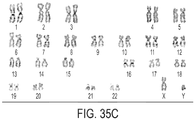
- In-process testing revealed that the electroporated/propagated T cells express CAR in a memory/na ⁇ ve population, have a normal karyotype, preserved TCR V ⁇ repertoire, and are able to recognize and lyse CD19 + tumor targets in a CAR-dependent manner.
- the electro-transfer of non-viral plasmids is an appealing alternative to transduction since DNA species can be produced to clinical grade at approximately 1/10 th the cost of recombinant GMP-grade virus.
- SB Sleeping Beauty
- the inventor's SB system uses two DNA plasmids that comprise a transposon coding for a gene of interest (e . g ., 2 nd generation CD19-specific CAR transgene, such as designated CD19RCD28) and a transposase (e.g., SB11), which inserts the transgene into TA dinucleotide repeats in the target cell genome (Geurts et al ., 2006; Ivics et al ., 1997; Izsvak and Ivics, 1997).
- a transposon coding for a gene of interest e . g ., 2 nd generation CD19-specific CAR transgene, such as designated CD19RCD28
- a transposase e.g., SB11
- the inventor's 2 nd generation CAR (Kowolik et al ., 2006) signals through CD28 and CD3- ⁇ with the expectation that this will sustain T-cell proliferation and recycle effector functions in vivo.
- CARs with varying extracellular lengths and different endodomain signaling motifs can be expressed using the SB system.
- K562 aAPC (clone #4) were developed, expressing the desired antigen (e . g ., CD19) along with costimulatory molecules, such as CD86, CD137L, a membrane-bound version of interleukin (IL)-15 (peptide fused to modified IgG4 Fc region or cytokine peptide fused to IL-15 receptor alpha), and CD64 (Fc- ⁇ receptor 1), to select for T cells in vitro that are capable of sustained CAR-mediated propagation.
- costimulatory molecules such as CD86, CD137L, a membrane-bound version of interleukin (IL)-15 (peptide fused to modified IgG4 Fc region or cytokine peptide fused to IL-15 receptor alpha), and CD64 (Fc- ⁇ receptor 1), to select for T cells in vitro that are capable of sustained CAR-mediated propagation.
- costimulatory molecules such as CD86, CD137L, a membrane-bound version of interleukin (IL)-15
- T cells can be scaled back employing fewer cuvettes and carrying forward just a sub-set of the numerically expanded T cells for 0, 1, or more rounds of proliferation on aAPC (added at the beginning of each stimulation cycle).
- aAPC added at the beginning of each stimulation cycle.
- at least 90% of the propagated T cells express CAR and are cryopreserved for infusion.
- this approach can be harnessed to generate T cells to diverse tumor types by pairing the specificity of the introduced CAR with expression of the tumor-associated antigen (TAA) recognized by the CAR on the aAPC.
- TAA tumor-associated antigen
- the ex vivo expansion platform has also been adapted to manufacture NK cells, NK T cells, and ⁇ T cells.
- the outgrowth of CD4 + and CD8 + T cells expressing the 2 nd generation CAR include cells with a stem-cell/memory/naive phenotype and exhibit three hallmarks of re-directed specificity.
- the genetically modified T cells specifically lyse CD19 + targets.
- they produce cytokine (e.g., IFN- ⁇ ) in response to CD19 + stimulator cells.
- the aAPC and tissue culture environment have been modified to generate patient- and donor-derived CD19-specific T cells for infusion after hematopoietic stem-cell transplantation (Singh et al ., 2011; Singh et al . 2008).
- the inventors can produce CAR + T cells from peripheral blood simply obtained by venipuncture, which avoids the cost, discomfort, and inconvenience of obtaining mononuclear cells by apheresis.
- the ability to derive large numbers of CAR + T cells from small numbers of mononuclear cells is particularly appealing for infusing T cells after allogeneic umbilical cord blood transplantation.
- the small size and anonymity of the neonatal donor precludes re-accessing this individual at a later time point and only limited numbers of harvested mononuclear cells are available as starting material for T cell manufacture to avoid interfering with hematopoiesis. Further advances to the manufacturing process include a high throughput electroporation device coupled with a fully closed WAVE bioreactor to minimize handling.
- the present approach to manufacturing includes the implementation of processing and culturing systems to reduce work load and safeguard against a breach in sterility.
- the inventors co-cultured T cells with ⁇ -irradiated aAPC in bioreactors and/or bags rather than flasks. This transition typically occurs after day 14 following electroporation.
- the aAPC as source material are numerically expanded in bioreactors and/or bags, and the inventors adapted the Sepax device to process the aAPC for cryopreservation.
- the Sepax harvest procedure has additional advantages beyond automation when using large volumes of culture media (>900 mL) as it reduces additional centrifuging steps required by the manual process.
- CARs chimeric antigen receptors
- T-cell receptors may refer to artificial T-cell receptors, chimeric T-cell receptors, or chimeric immunoreceptors, for example, and encompass engineered receptors that graft an artificial specificity onto a particular immune effector cell.
- CARs may be employed to impart the specificity of a monoclonal antibody onto a T cell, thereby allowing a large number of specific T cells to be generated, for example, for use in adoptive cell therapy.
- CARs direct specificity of the cell to a tumor associated antigen, for example.
- CARs comprise an intracellular activation domain, a transmembrane domain, and an extracellular domain comprising a tumor associated antigen binding region.
- CARs comprise fusions of single-chain variable fragments (scFv) derived from monoclonal antibodies, fused to CD3-zeta a transmembrane domain and endodomain.
- the specificity of other CAR designs may be derived from ligands of receptors (e.g., peptides) or from pattern-recognition receptors, such as Dectins.
- one can target malignant B cells by redirecting the specificity of T cells by using a CAR specific for the B-lineage molecule, CD19.
- CARs comprise domains for additional co-stimulatory signaling, such as CD3-zeta, FcR, CD27, CD28, CD137, DAP10, and/or OX40.
- molecules can be co-expressed with the CAR, including co-stimulatory molecules, reporter genes for imaging (e.g., for positron emission tomography), gene products that conditionally ablate the T cells upon addition of a pro-drug, homing receptors, chemokines, chemokine receptors, cytokines, and cytokine receptors.
- T-cell receptor refers to a protein receptor on T cells that is composed of a heterodimer of an alpha ( ⁇ ) and beta ( ⁇ ) chain, although in some cells the TCR consists of gamma and delta ( ⁇ / ⁇ ) chains.
- the TCR may be modified on any cell comprising a TCR, including a helper T cell, a cytotoxic T cell, a memory T cell, regulatory T cell, natural killer T cell, and gamma delta T cell, for example.
- tumor-associated antigen and “cancer cell antigen” are used interchangeably herein. In each case, the terms refer to proteins, glycoproteins or carbohydrates that are specifically or preferentially expressed by cancer cells.
- an antigen is a molecule capable of being bound by an antibody or T-cell receptor.
- An antigen is additionally capable of inducing a humoral immune response and/or cellular immune response leading to the production of B and/or T lymphocytes.
- nucleic acids including nucleic acids encoding an antigen-specific chimeric antigen receptor (CAR) polypeptide, including a CAR that has been humanized to reduce immunogenicity (hCAR), comprising an intracellular signaling domain, a transmembrane domain, and an extracellular domain comprising one or more signaling motifs.
- CAR antigen-specific chimeric antigen receptor
- the CAR may recognize an epitope comprised of the shared space between one or more antigens.
- Pattern recognition receptors such as Dectin-1, may be used to derive specificity to a carbohydrate antigen.
- the binding region can comprise complementary determining regions of a monoclonal antibody, variable regions of a monoclonal antibody, and/or antigen binding fragments thereof.
- that specificity is derived from a peptide (e.g ., cytokine) that binds to a receptor.
- a complementarity determining region is a short amino acid sequence found in the variable domains of antigen receptor (e.g ., immunoglobulin and T-cell receptor) proteins that complements an antigen and therefore provides the receptor with its specificity for that particular antigen.
- antigen receptor e.g ., immunoglobulin and T-cell receptor
- Each polypeptide chain of an antigen receptor contains three CDRs (CDR1, CDR2, and CDR3). Since the antigen receptors are typically composed of two polypeptide chains, there are six CDRs for each antigen receptor that can come into contact with the antigen -- each heavy and light chain contains three CDRs.
- CDR3 shows the greatest variability as it is encoded by a recombination of the VJ (VDJ in the case of heavy chain and TCR ⁇ chain) regions.
- the human CAR nucleic acids are human genes to enhance cellular immunotherapy for human patients.
- described herein is a full length CAR cDNA or coding region.
- the antigen binding regions or domain can comprise a fragment of the V H and V L chains of a single-chain variable fragment (scFv) derived from a particular human monoclonal antibody, such as those described in U.S. Patent 7,109,304 .
- the fragment can also be any number of different antigen binding domains of a human antigen-specific antibody.
- the fragment is an antigen-specific scFv encoded by a sequence that is optimized for human codon usage for expression in human cells.
- the arrangement could be multimeric, such as a diabody or multimers.
- the multimers are most likely formed by cross pairing of the variable portion of the light and heavy chains into what has been referred to by Winters as a diabody.
- the hinge portion of the construct can have multiple alternatives from being totally deleted, to having the first cysteine maintained, to a proline rather than a serine substitution, to being truncated up to the first cysteine.
- the Fc portion can be deleted. Any protein that is stable and/or dimerizes can serve this purpose.
- One could use just one of the Fc domains, e.g ., either the CH2 or CH3 domain from human immunoglobulin.
- One could also use just the hinge portion of an immunoglobulin.
- the intracellular signaling domain of the chimeric receptor disclosed herein is responsible for activation of at least one of the normal effector functions of the immune cell in which the chimeric receptor has been placed.
- effector function refers to a specialized function of a differentiated cell. Effector function of a T cell, for example, may be cytolytic activity or helper activity including the secretion of cytokines. Effector function in a naive, memory, or memory-type T cell includes antigen-dependent proliferation.
- intracellular signaling domain refers to the portion of a protein that transduces the effector function signal and directs the cell to perform a specialized function.
- intracellular signaling domain While usually the entire intracellular signaling domain will be employed, in many cases it will not be necessary to use the entire intracellular polypeptide. To the extent that a truncated portion of the intracellular signaling domain may find use, such truncated portion may be used in place of the intact chain as long as it still transduces the effector function signal.
- the term intracellular signaling domain is thus meant to include any truncated portion of the intracellular signaling domain sufficient to transduce the effector function signal.
- Examples include the zeta chain of the T-cell receptor or any of its homologs (e.g ., eta, delta, gamma, or epsilon), MB1 chain, B29, Fc RIII, Fc RI, and combinations of signaling molecules, such as CD3 ⁇ and CD28, CD27, 4-1BB, DAP-10, OX40, and combinations thereof, as well as other similar molecules and fragments.
- Intracellular signaling portions of other members of the families of activating proteins can be used, such as Fc ⁇ RIII and Fc ⁇ RI. See Gross et al . (1992), Stancovski et al . (1993), Moritz et al . (1994), Hwu et al .
- the antigen-specific extracellular domain and the intracellular signaling-domain may be linked by a transmembrane domain, such as the human IgG 4 Fc hinge and Fc regions.
- a transmembrane domain such as the human IgG 4 Fc hinge and Fc regions.
- Alternatives include the human CD4 transmembrane domain, the human CD28 transmembrane domain, the transmembrane human CD3 ⁇ domain, or a cysteine mutated human CD3 ⁇ domain, or other transmembrane domains from other human transmembrane signaling proteins, such as CD16 and CD8 and erythropoietin receptor.
- the CAR nucleic acid comprises a sequence encoding other costimulatory receptors, such as a transmembrane domain and a modified CD28 intracellular signaling domain.
- costimulatory receptors include, but are not limited to one or more of CD28, CD27, OX-40 (CD134), DAP10, and 4-1BB (CD137).
- CD28 CD27
- OX-40 CD134
- DAP10 DAP10
- 4-1BB CD137
- an additional signal provided by a human costimulatory receptor inserted in a human CAR is important for full activation of T cells and could help improve in vivo persistence and the therapeutic success of the adoptive immunotherapy.
- the present disclosure describes isolated nucleic acid segments and expression cassettes incorporating DNA sequences that encode the CAR.
- Vectors of the present disclosure are designed, primarily, to deliver desired genes to immune cells, preferably T cells under the control of regulated eukaryotic promoters, for example, MNDU3 promoter, CMV promoter, EF1alpha promoter, or Ubiquitin promoter.
- the vectors may contain a selectable marker, if for no other reason, to facilitate their manipulation in vitro.
- the CAR can also be expressed from mRNA in vitro transcribed from a DNA template.
- Chimeric antigen receptor molecules are recombinant and are distinguished by their ability to both bind antigen and transduce activation signals via immunoreceptor activation motifs (ITAM's) present in their cytoplasmic tails.
- Receptor constructs utilizing an antigen-binding moiety afford the additional advantage of being "universal” in that they bind native antigen on the target cell surface in an HLA-independent fashion.
- non-human antigen binding regions are typically used in constructing a chimeric antigen receptor.
- a potential problem with using non-human antigen binding regions, such as murine monoclonal antibodies, is the lack of human effector functionality and inability to penetrate into tumor masses. In other words, such antibodies may be unable to mediate complement-dependent lysis or lyse human target cells through antibody-dependent cellular toxicity or Fc-receptor mediated phagocytosis to destroy cells expressing CAR.
- non-human monoclonal antibodies can be recognized by the human host as a foreign protein, and therefore, repeated injections of such foreign antibodies can lead to the induction of immune responses leading to harmful hypersensitivity reactions.
- HAMA Human Anti-Mouse Antibody
- the chimeric antigen receptor comprises: a) an intracellular signaling domain, b) a transmembrane domain, and c) an extracellular domain comprising an antigen binding region.
- intracellular receptor signaling domains in the CAR include those of the T cell antigen receptor complex, such as the zeta chain of CD3, also Fc ⁇ RIII costimulatory signaling domains, CD28, CD27, DAP10, CD137, OX40, CD2, alone or in a series with CD3zeta, for example.
- the intracellular domain (which may be referred to as the cytoplasmic domain) comprises part or all of one or more of TCR zeta chain, CD28, CD27, OX40/CD134, 4-1BB/CD137, Fc ⁇ RI ⁇ , ICOS/CD278, IL-2Rbeta/CD122, IL-2Ralpha/CD132, DAP10, DAP12, and CD40.
- One or multiple cytoplasmic domains may be employed, as so-called third generation CARs have at least two or three signaling domains fused together for additive or synergistic effect, for example.
- the antigen-specific portion of the receptor (which may be referred to as an extracellular domain comprising an antigen binding region) comprises a tumor associated antigen or a pathogen-specific antigen binding domain including carbohydrate antigen recognized by pattern-recognition receptors, such as Dectin-1.
- a tumor associated antigen may be of any kind so long as it is expressed on the cell surface of tumor cells.
- tumor associated antigens examples include CD19, CD20, carcinoembryonic antigen, alphafetoprotein, CA-125, MUC-1, CD56, EGFR, c-Met, AKT, Her2, Her3, epithelial tumor antigen, melanoma-associated antigen, mutated p53, mutated ras, and so forth.
- the CAR can be co-expressed with a membrane-bound cytokine to improve persistence when there is a low amount of tumor-associated antigen.
- CAR can be co-expressed with membrane-bound IL-15.
- intracellular tumor associated antigens may be targeted, such as HA-1, survivin, WT1, and p53.
- This can be achieved by a CAR expressed on a universal T cell that recognizes the processed peptide described from the intracellular tumor associated antigen in the context of HLA.
- the universal T cell may be genetically modified to express a T-cell receptor pairing that recognizes the intracellular processed tumor associated antigen in the context of HLA.
- the pathogen may be of any kind, but in specific embodiments the pathogen is a fungus, bacteria, or virus, for example.
- exemplary viral pathogens include those of the families of Adenoviridae, Epstein-Barr virus (EBV), Cytomegalovirus (CMV), Respiratory Syncytial Virus (RSV), JC virus, BK virus, HSV, HHV family of viruses, Picornaviridae, Herpesviridae, Hepadnaviridae, Flaviviridae, Retroviridae, Orthomyxoviridae, Paramyxoviridae, Papovaviridae, Polyomavirus, Rhabdoviridae, and Togaviridae.
- Exemplary pathogenic viruses cause smallpox, influenza, mumps, measles, chickenpox, ebola, and rubella.
- Exemplary pathogenic fungi include Candida, Aspergillus, Cryptococcus, Histoplasma, Pneumocystis, and Stachybotrys.
- Exemplary pathogenic bacteria include Streptococcus , Pseudomonas , Shigella , Campylobacter , Staphylococcus , Helicobacter , E . coli , Rickettsia , Bacillus , Bordetella , Chlamydia , Spirochetes , and Salmonella .
- the pathogen receptor Dectin-1 can be used to generate a CAR that recognizes the carbohydrate structure on the cell wall of fungi.
- T cells genetically modified to express the CAR based on the specificity of Dectin-1 can recognize Aspergillus and target hyphal growth.
- CARs can be made based on an antibody recognizing viral determinants (e.g., the glycoproteins from CMV and Ebola) to interrupt viral infections and pathology.
- the pathogenic antigen is an Aspergillus carbohydrate antigen for which the extracellular domain in the CAR recognizes patterns of carbohydrates of the fungal cell wall, such as via Dectin-1.
- a chimeric immunoreceptor as disclosed herein can be produced by any means known in the art, though preferably it is produced using recombinant DNA techniques.
- a nucleic acid sequence encoding the several regions of the chimeric receptor can be prepared and assembled into a complete coding sequence by standard techniques of molecular cloning (genomic library screening, PCR, primer-assisted ligation, scFv libraries from yeast and bacteria, site-directed mutagenesis, etc .).
- the resulting coding region can be inserted into an expression vector and used to transform a suitable expression host allogeneic T-cell line.
- nucleic acid construct or nucleic acid sequence or polynucleotide is intended to mean a DNA molecule that can be transformed or introduced into a T cell and be transcribed and translated to produce a product (e.g., a chimeric antigen receptor).
- the promoter is operably linked to the nucleic acid sequence encoding the chimeric receptor of the present invention, i.e ., they are positioned so as to promote transcription of the messenger RNA from the DNA encoding the chimeric receptor.
- the promoter can be of genomic origin or synthetically generated.
- a variety of promoters for use in T cells are well-known in the art (e . g ., the CD4 promoter disclosed by Marodon et al . (2003)).
- the promoter can be constitutive or inducible, where induction is associated with the specific cell type or a specific level of maturation, for example.
- Promoters of interest include the ⁇ -actin promoter, SV40 early and late promoters, immunoglobulin promoter, human cytomegalovirus promoter, retrovirus promoter, and the Friend spleen focus-forming virus promoter.
- the promoters may or may not be associated with enhancers, wherein the enhancers may be naturally associated with the particular promoter or associated with a different promoter.
- the sequence of the open reading frame encoding the chimeric receptor can be obtained from a genomic DNA source, a cDNA source, or can be synthesized ( e.g ., via PCR), or combinations thereof.
- a genomic DNA source e.g ., a cDNA source
- synthesized e.g ., via PCR
- endogenous or exogenous noncoding regions to stabilize the mRNA.
- the naturally occurring or endogenous transcriptional initiation region of the nucleic acid sequence encoding N-terminal components of the chimeric receptor can be used to generate the chimeric receptor in the target host.
- an exogenous transcriptional initiation region can be used that allows for constitutive or inducible expression, wherein expression can be controlled depending upon the target host, the level of expression desired, the nature of the target host, and the like.
- a signal sequence directing the chimeric receptor to the surface membrane can be the endogenous signal sequence of N-terminal component of the chimeric receptor.
- the signal sequence selected should be compatible with the secretory pathway of T cells so that the chimeric receptor is presented on the surface of the T cell.
- a termination region may be provided by the naturally occurring or endogenous transcriptional termination region of the nucleic acid sequence encoding the C-terminal component of the chimeric receptor.
- the termination region may be derived from a different source.
- the source of the termination region is generally not considered to be critical to the expression of a recombinant protein and a wide variety of termination regions can be employed without adversely affecting expression.
- a few amino acids at the ends of the antigen binding domain in the CAR can be deleted, usually not more than 10, more usually not more than 5 residues, for example. Also, it may be desirable to introduce a small number of amino acids at the borders, usually not more than 10, more usually not more than 5 residues.
- the deletion or insertion of amino acids may be as a result of the needs of the construction, providing for convenient restriction sites, ease of manipulation, improvement in levels of expression, or the like.
- the substitute of one or more amino acids with a different amino acid can occur for similar reasons, usually not substituting more than about five amino acids in any one domain.
- the chimeric construct that encodes the chimeric receptor as disclosed herein can be prepared in conventional ways. Because, for the most part, natural sequences may be employed, the natural genes may be isolated and manipulated, as appropriate, so as to allow for the proper joining of the various components. Thus, the nucleic acid sequences encoding for the N-terminal and C-terminal proteins of the chimeric receptor can be isolated by employing the polymerase chain reaction (PCR), using appropriate primers that result in deletion of the undesired portions of the gene. Alternatively, restriction digests of cloned genes can be used to generate the chimeric construct. In either case, the sequences can be selected to provide for restriction sites that are blunt-ended, or have complementary overlaps.
- PCR polymerase chain reaction
- the various manipulations for preparing the chimeric construct can be carried out in vitro and in the context of particular aspects of the present invention the chimeric construct is introduced into vectors for cloning and expression in an appropriate host using standard transformation or transfection methods.
- the resulting construct from joining of the DNA sequences is cloned, the vector isolated, and the sequence screened to ensure that the sequence encodes the desired chimeric receptor.
- the sequence can be screened by restriction analysis, sequencing, or the like.
- the chimeric constructs disclosed herein find application in subjects having or suspected of having cancer by reducing the size of a tumor or preventing the growth or re-growth of a tumor in these subjects. Accordingly, further disclosed herein is a method for reducing growth or preventing tumor formation in a subject by introducing a chimeric construct of the present invention into an isolated T cell of the subject and reintroducing into the subject the transformed T cell, thereby effecting anti-tumor responses to reduce or eliminate tumors in the subject.
- Suitable T cells that can be used include cytotoxic lymphocytes (CTL) or any cell having a T cell receptor in need of disruption.
- CTL cytotoxic lymphocytes
- various methods are readily available for isolating these cells from a subject. For example, using cell surface marker expression or using commercially available kits (e . g ., ISOCELLTM from Pierce, Rockford, I11.).
- the chimeric construct can be introduced into the subject's own T cells as naked DNA or in a suitable vector.
- Methods of stably transfecting T cells by electroporation using naked DNA are known in the art. See, e.g., U.S. Pat. No. 6,410,319 .
- naked DNA generally refers to the DNA encoding a chimeric receptor of the present invention contained in a plasmid expression vector in proper orientation for expression.
- the use of naked DNA reduces the time required to produce T cells expressing the chimeric receptor disclosed herein.
- a viral vector e.g ., a retroviral vector, adenoviral vector, adeno-associated viral vector, or lentiviral vector
- Suitable vectors for use in accordance with the method of the present invention are non-replicating in the subject's T cells.
- a large number of vectors are known that are based on viruses, where the copy number of the virus maintained in the cell is low enough to maintain the viability of the cell.
- Illustrative vectors include the pFB-neo vectors (STRATAGENE®) disclosed herein as well as vectors based on HIV, SV40, EBV, HSV, or BPV.
- the transfected or transduced T cell is capable of expressing the chimeric receptor as a surface membrane protein with the desired regulation and at a desired level, it can be determined whether the chimeric receptor is functional in the host cell to provide for the desired signal induction. Subsequently, the transduced T cells are reintroduced or administered to the subject to activate anti-tumor responses in the subject.
- the transduced T cells according to the invention can be made into a pharmaceutical composition or made into an implant appropriate for administration in vivo, with appropriate carriers or diluents, which further can be pharmaceutically acceptable.
- the transduced T cells can be formulated into a preparation in semisolid or liquid form, such as a capsule, solution, injection, inhalant, or aerosol, in the usual ways for their respective route of administration.
- a preparation in semisolid or liquid form such as a capsule, solution, injection, inhalant, or aerosol, in the usual ways for their respective route of administration.
- Means known in the art can be utilized to prevent or minimize release and absorption of the composition until it reaches the target tissue or organ, or to ensure timed-release of the composition.
- a pharmaceutically acceptable form is employed that does not ineffectuate the cells expressing the chimeric receptor.
- the transduced T cells can be made into a pharmaceutical composition containing a balanced salt solution, preferably Hanks' balanced salt solution, or normal saline.
- disclosed herein is a method of making and/or expanding the antigen-specific redirected T cells that comprises transfecting T cells with an expression vector containing a DNA construct encoding the hCAR, then, optionally, stimulating the cells with antigen positive cells, recombinant antigen, or an antibody to the receptor to cause the cells to proliferate.
- a method is disclosed herein of stably transfecting and re-directing T cells by electroporation, or other non-viral gene transfer (such as, but not limited to sonoporation) using naked DNA.
- Most investigators have used viral vectors to carry heterologous genes into T cells.
- naked DNA By using naked DNA, the time required to produce redirected T cells can be reduced.
- naked DNA means DNA encoding a chimeric T-cell receptor (cTCR) contained in an expression cassette or vector in proper orientation for expression.
- the electroporation method as disclosed herein produces stable transfectants that express and carry on their surfaces the chimeric TCR (cTCR).
- Chimeric TCR means a receptor that is expressed by T cells and that comprises intracellular signaling, transmembrane, and extracellular domains, where the extracellular domain is capable of specifically binding in an MHC unrestricted manner an antigen that is not normally bound by a T-cell receptor in that manner. Stimulation of the T cells by the antigen under proper conditions results in proliferation (expansion) of the cells and/or production of IL-2.
- the exemplary CD19- and HERV-K specific chimeric receptors of the instant application are examples of a chimeric TCR.
- the method is applicable to transfection with chimeric TCRs that are specific for other target antigens, such as chimeric TCRs that are specific for HER2/Neu (Stancovski et al ., 1993), ERBB2 (Moritz et al ., 1994), folate binding protein (Hwu et al ., 1995), renal cell carcinoma (Weitjens et al ., 1996), and HIV-1 envelope glycoproteins gp120 and gp41 (Roberts et al ., 1994).
- cell-surface target antigens include, but are not limited to, CD20, carcinoembryonic antigen, mesothelin, ROR1, c-Met, CD56, GD2, GD3, alphafetoprotein, CD23, CD30, CD123, IL-11Ralpha, kappa chain, lambda chain, CD70, CA-125, MUC-1, EGFR and variants, epithelial tumor antigen, and so forth.
- the T cells are primary human T cells, such as T cells derived from human peripheral blood mononuclear cells (PBMC), PBMC collected after stimulation with G-CSF, bone marrow, or umbilical cord blood. Conditions include the use of mRNA and DNA and electroporation. Following transfection the cells may be immediately infused or may be stored. In certain aspects, following transfection, the cells may be propagated for days, weeks, or months ex vivo as a bulk population within about 1, 2, 3, 4, 5 days or more following gene transfer into cells.
- PBMC peripheral blood mononuclear cells
- the transfectants are cloned and a clone demonstrating presence of a single integrated or episomally maintained expression cassette or plasmid, and expression of the chimeric receptor is expanded ex vivo.
- the clone selected for expansion demonstrates the capacity to specifically recognize and lyse CD19 expressing target cells.
- the recombinant T cells may be expanded by stimulation with IL-2, or other cytokines that bind the common gamma-chain (e.g., IL-7, IL-12, IL-15, IL-21, and others).
- the recombinant T cells may be expanded by stimulation with artificial antigen presenting cells.
- the recombinant T cells may be expanded on artificial antigen presenting cell or with an antibody, such as OKT3, which cross links CD3 on the T cell surface. Subsets of the recombinant T cells may be deleted on artificial antigen presenting cell or with an antibody, such as Campath, which binds CD52 on the T cell surface.
- the genetically modified cells may be cryopreserved.
- T-cell propagation (survival) after infusion may be assessed by: (i) q-PCR using primers specific for the CAR; (ii) flow cytometry using an antibody specific for the CAR; and/or (iii) soluble TAA.
- aspects of the present disclosure also concern the targeting of a B-cell malignancy or disorder including B cells, with the cell-surface epitope being CD19-specific using a redirected immune T cell.
- Malignant B cells are an excellent target for redirected T cells, as B cells can serve as immunostimulatory antigen-presenting cells for T cells.
- Preclinical studies that support the anti-tumor activity of adoptive therapy with donor-derived CD19-specific T-cells bearing a human or humanized CAR include (i) redirected killing of CD19 + targets, (ii) redirected secretion/expression of cytokines after incubation with CD19 + targets/stimulator cells, and (iii) sustained proliferation after incubation with CD19 + targets/stimulator cells.
- the CAR cells are delivered to an individual in need thereof, such as an individual that has cancer or an infection.
- the cells then enhance the individual's immune system to attack the respective cancer or pathogenic cells.
- the individual is provided with one or more doses of the antigen-specific CAR T-cells.
- the duration between the administrations should be sufficient to allow time for propagation in the individual, and in specific aspects the duration between doses is 1, 2, 3, 4, 5, 6, 7, or more days.
- the source of the allogeneic T cells that are modified to include both a chimeric antigen receptor and that lack functional TCR may be of any kind, but in specific aspects the cells are obtained from a bank of umbilical cord blood, peripheral blood, human embryonic stem cells, or induced pluripotent stem cells, for example.
- Suitable doses for a therapeutic effect would be at least 10 5 or between about 10 5 and about 10 10 cells per dose, for example, preferably in a series of dosing cycles.
- An exemplary dosing regimen consists of four one-week dosing cycles of escalating doses, starting at least at about 10 5 cells on Day 0, for example increasing incrementally up to a target dose of about 10 10 cells within several weeks of initiating an intra-patient dose escalation scheme.
- Suitable modes of administration include intravenous, subcutaneous, intracavitary (for example by reservoir-access device), intraperitoneal, and direct injection into a tumor mass.
- a pharmaceutical composition as disclosed herein can be used alone or in combination with other well-established agents useful for treating cancer. Whether delivered alone or in combination with other agents, the pharmaceutical composition of the present invention can be delivered via various routes and to various sites in a mammalian, particularly human, body to achieve a particular effect.
- a particular route can provide a more immediate and more effective reaction than another route.
- intradermal delivery may be advantageously used over inhalation for the treatment of melanoma.
- Local or systemic delivery can be accomplished by administration comprising application or instillation of the formulation into body cavities, inhalation or insufflation of an aerosol, or by parenteral introduction, comprising intramuscular, intravenous, intraportal, intrahepatic, peritoneal, subcutaneous, or intradermal administration.
- a composition as disclosed herein can be provided in unit dosage form wherein each dosage unit, e.g., an injection, contains a predetermined amount of the composition, alone or in appropriate combination with other active agents.
- unit dosage form as used herein refers to physically discrete units suitable as unitary dosages for human and animal subjects, each unit containing a predetermined quantity of the composition of the present invention, alone or in combination with other active agents, calculated in an amount sufficient to produce the desired effect, in association with a pharmaceutically acceptable diluent, carrier, or vehicle, where appropriate.
- the specifications for the novel unit dosage forms of the present invention depend on the particular pharmacodynamics associated with the pharmaceutical composition in the particular subject.
- an effective amount or sufficient number of the isolated transduced T cells is present in the composition and introduced into the subject such that long-term, specific, anti-tumor responses are established to reduce the size of a tumor or eliminate tumor growth or regrowth than would otherwise result in the absence of such treatment.
- the amount of transduced T cells reintroduced into the subject causes a 10%, 20%, 30%, 40%, 50%, 60%, 70%, 80%, 90%, 95%, 98%, or 100% decrease in tumor size when compared to otherwise same conditions wherein the transduced T cells are not present.
- the amount of transduced T cells administered should take into account the route of administration and should be such that a sufficient number of the transduced T cells will be introduced so as to achieve the desired therapeutic response.
- the amounts of each active agent included in the compositions described herein e.g ., the amount per each cell to be contacted or the amount per certain body weight
- the concentration of transduced T cells desirably should be sufficient to provide in the subject being treated at least from about 1 ⁇ 10 6 to about 1 ⁇ 10 9 transduced T cells, even more desirably, from about 1 ⁇ 10 7 to about 5 ⁇ 10 8 transduced T cells, although any suitable amount can be utilized either above, e.g., greater than 5 ⁇ 10 8 cells, or below, e.g., less than 1 ⁇ 10 7 cells.
- the dosing schedule can be based on well-established cell-based therapies (see, e.g ., Topalian and Rosenberg, 1987; U.S. Pat. No. 4,690,915 ), or an alternate continuous infusion strategy can be employed.
- CD19 a cell surface glycoprotein of the immunoglobulin superfamily, is a potentially attractive target for antibody therapy of B cell-associated malignancies.
- This antigen is absent from hematopoietic stem cells, and in healthy individuals its presence is exclusively restricted to the B-lineage and possibly some follicular dendritic cells (Scheuermann et al ., 1995). In fact, it is present on B cells from the earliest recognizable B-lineage cells during development to B-cell blasts but is lost on maturation to plasma cells.
- CD19 is not shed from the cell surface and rarely lost during neoplastic transformation (Scheuermann et al ., 1995).
- CD19 primarily acts as a B cell co-receptor in conjunction with CD21 and CD81. Upon activation, the cytoplasmic tail of CD19 becomes phosphorylated, which leads to binding by Src-family kinases and recruitment of PI-3 kinase.
- compositions and methods described herein concern human CD19-specific chimeric T cell receptor (or chimeric antigen receptor, CAR) polypeptide (designated hCD19CAR) comprising an intracellular signaling domain, a transmembrane domain, and an extracellular domain, the extracellular domain comprising a human CD19 binding region.
- the CD19 binding region is a F(ab')2, Fab', Fab, Fv, or scFv.
- the binding region may comprise an amino acid sequence that is at least, at most, or about 70%, 75%, 80%, 85%, 90%, 95%, 96%, 97%, 98%, 99%, or 100% identical to the wild-type amino acid sequence.
- the intracellular domain may comprise an intracellular signaling domain of human CD3 ⁇ and may further comprise human CD28 intracellular segment.
- the transmembrane domain is a CD28 transmembrane domain.
- compositions described herein include a nucleic acid encoding the polypeptide described above.
- the nucleic acid sequence is optimized for human codon usage.
- compositions described hereinin include cells expressing the polypeptide described herein.
- the T cell may comprise an expression cassette encoding hCD19CAR polypeptide.
- the expression cassette can be comprised in a non-viral vector, such as a transposon, or a human transposon, or recombinant variant thereof.
- the expression cassette can be comprised in a viral vector or recombinant variant thereof.
- the expression cassette can be genomically integrated or episomally maintained or expressed from mRNA.
- the present disclosure includes a method of making a T cell expressing a human CD19-specific CAR comprising introducing an expression cassette into the cell, wherein the expression cassette encodes a polypeptide comprising a human extracellular CD19 binding domain, a transmembrane domain, and one or more intracellular signaling domain(s).
- the method may further comprise stimulating the cells with CD19 + cells, recombinant CD19, or an antibody to the receptor to cause the cells to proliferate, kill, and/or make cytokines; for example, the cells may be stimulated to proliferate or expand with CD19 + artificial antigen presenting cells.
- the present disclosure includes methods of treating a human disease condition associated with a cell expressing endogenous CD19 comprising infusing a patient with an amount of a recombinant cell expressing a human CD19-specific CAR sufficient to treat the condition, wherein the human CD19-specific CAR comprises a human CD19 extracellular binding domain, a transmembrane domain, and an intracellular signaling domain.
- the condition can be lymphoma, leukemia, Non-Hodgkin's lymphoma, acute lymphoblastic leukemia, chronic lymphoblastic leukemia, chronic lymphocytic leukemia, or B cell-associated autoimmune diseases, for example.
- hCD19RCD28 or hCAR human CD19-specific chimeric antigen receptor
- recombinant cells expressing hCAR have improved in vivo persistence and anti-tumor efficacy.
- the human hCAR has a reduced immunogenicity compared to murine hCAR, which comprises a scFv segment derived from a murine CD19-specific monoclonal antibody (mAb).
- mAb monoclonal antibody
- Anti-tumor effects can be augmented by genetically modified cells, rendered specific for CD19.
- T cell specificity is achieved by electrotransfer of an expression cassette encoding hCAR.
- the hCAR may be a chimeric receptor comprising one or more activation endodomain(s), such as a CD3- ⁇ -derived activation domain. Additional T-cell activation motifs include, but are not limited to, CD28, CD27, OX-40, DAP10, and 4-1BB. In certain aspects the activation domain can also include a CD28 transmembrane and/or activation domain. In a further aspect the hCAR encoding region and/or expression cassette codon optimized for expression in human cells and subjects, e .
- the scFv region obtained from VH and VL sequences of a CD19-specific human antibodies are incorporated into the CD19 binding segment of the hCAR (for example see U.S. Patent No. 7,109,304 ).
- the hCAR expression cassette is episomally maintained or integrated into the genome of the recombinant cell.
- the expression cassette is comprised in a nucleic acid capable of integration by using an integrase mechanism, a viral vector, such as a retroviral vector, or a nonviral vector, such as a transposon mechanism.
- the expression cassette is included in a transposon based nucleic acid.
- the expression cassette is part of a two component Sleeping Beauty (SB) or piggyBac system that utilizes a transposon and transposase for enhanced non-viral gene transfer.
- Recombinant hCAR expressing cells can be numerically expanded to clinically-meaningful numbers.
- One example of such expansion uses artificial antigen presenting cells (aAPC).
- Recombinant hCAR expressing cells can be verified and identified by flow cytometry and western blot analyses.
- Recombinant hCAR expressing T cells, expressing a CD19-specific CAR can recognize and kill CD19 expressing target cells.
- hCAR can be expressed into Universal cells that can be infused across transplantation barriers to help prevent immunogenicity.
- the hCAR can be used along with human genes for imaging (such as by positron emission tomography, PET) and conditional ablation of T cells, in the event of cytotoxicity.
- the recombinant cells disclosed herein can be used in CD19-specific cellular therapies.
- HERVs human endogenous retrovirus
- HERV-K was found as an oncogenic allelic variant involved in melanoma, breast cancer, ovarian cancer, teratocarcinoma and prostate cancer along with various autoimmune diseases like multiple sclerosis and rheumatoid arthritis (Buscher et al ., 2005; Dreyfus, 2011; Seifarth et al ., 1995).
- the oncogenic potential of HERV-K is contributed by the envelope (env) and GAG protein (Rec).
- T-cell therapy for melanoma To generate T-cell therapy for melanoma, the inventors targeted a TAA derived from HERV, whose genome stably integrated into humans millions of years ago.
- T cells were engineered to express a CAR specific for the env protein by replacing the antigen-binding exodomain of CD19-specific CAR with the single chain antibody (scFv) sequence of an anti-HERV-K env-specific monoclonal antibody. This new CAR was cloned as a transposon into the SB system.
- scFv single chain antibody
- DNA plasmids coding for the HERV-K env-specific CAR and SB transposase were electro-transferred into primary human T cells and genetically modified CAR + T cells were selectively propagated on irradiated artificial antigen presenting cells (aAPC) expressing HERV-K env and desired T-cell co-stimulatory molecules. After co-culture on ⁇ -irradiated aAPC, 95% of CD3 + T cells expressed the CAR and these CAR + T cells were able to specifically kill HERV-K env + , but not HERV-K env - , tumor targets in vitro in contrast to CAR + T cells.
- aAPC irradiated artificial antigen presenting cells
- CAR + T cells Specificity of these CAR + T cells was proven by expressing the HERV-K env protein in antigen negative EL4 mouse cells which were preferentially killed compared to HERV-K env - EL4 parental cells and HERV-K knockdown by shRNA (specific targeting for HERV-K env RNA) on A888-mel cells resulted in reduced killing compared to parental.
- the CAR + T cells were also successful in reducing tumor growth and metastasis of A375-super metastatic (SM) tumor cells from lungs to liver in vivo. The mice with tumor receiving the CAR + T cells lived longer and appeared healthier than the tumor alone mice group.
- T cells targeting an active retrovirus can be used as an immunotherapy for melanoma, using an approach that has translational appeal for clinical trials.
- HERV-K-specific CAR + T cells can specifically target and abolish tumor cells without any adverse side effects. They may be infused to treat HERV-K + malignancies at many stages along the cancer spectrum, from minimal residual disease, to bulk tumors, to disease that is refractory to conventional therapies.
- HERV-K is expressed on many tumor types, including, but not limited to, melanoma (Muster et al ., 2003; Buscher et al ., 2005; Li et al ., 2010; Reiche et al ., 2010; Serafino et al ., 2009), breast cancer (Patience et al ., 1996; Wang-Johanning et al ., 2003; Seifarth et al ., 1995), ovarian cancer (Wang-Johanning et al ., 2007), lymphoma (Contreras-Galindo et al ., 2008), and teratocarcinoma (Bieda et al ., 2001; Lower et al ., 1993).
- infected cells including those infected by HIV (Jones et al ., 2012), also express HERV-K. This provides an attractive opportunity that one CAR design targeting HERV-K may be used to treat a variety of cancers and infections.
- B-ALL B-lineage acute lymphoblastic leukemia
- HSCT allogeneic hematopoietic stem cell transplantation
- Donor lymphocyte infusions have been used to enhance the ability of engrafted T cells to target residual B-ALL after allogeneic HSCT, but this treatment approach for such patients achieves less than a 10% remission rate and is associated with a high degree of morbidity and mortality from the frequency and severity of graft-versus-host disease (GVHD).
- GVHD graft-versus-host disease
- adoptive therapy using peripheral blood mononuclear cells (PBMC)-derived T cells after HSCT may be used to increase the anti-tumor effect, or graft-versus-leukemia (GVL) effect, by retargeting the specificity of donor T cells to a tumor-associated antigen (TAA).
- PBMC peripheral blood mononuclear cells
- TAA tumor-associated antigen
- CAR-based therapies Numerous formulations of CARs specific for target antigens have been developed, with CD19-specific CAR targeting the CD19 antigen on the cell surface of B-ALL. Observing long-term persistence of CAR + cells and achieving durable responses in patients across different clinical protocols remains a critical issue hampering the therapeutic efficacy of CAR-based therapies.
- CAR-modified T cells are reliant on obtaining survival signaling through the CAR which occurs only upon encounter with the tumor antigen.
- these CAR-modified T cells are infused into patients with bulky disease, there is ample tumor antigen present to provide sufficient activation and survival signaling via the CAR.
- patients with relapsed B-ALL are often conditioned with myeloablative chemotherapy followed by HSCT and present with minimal residual disease (MRD).
- MRD minimal residual disease
- patients have a low tumor load and the minute level of TAA severely restricts the CAR-mediated signaling necessary for supporting the infused T cells consequently compromising therapeutic potential.
- An alternate CAR-independent means for improving T cell persistence would be anticipated to improve the engraftment of CAR-modified T cells.
- Cytokines in the common gamma chain receptor family are important costimulatory molecules for T cells that are critical to lymphoid function, survival, and proliferation.
- IL-15 possesses several attributes that are desirable for adoptive therapy.
- IL-15 is a homeostatic cytokine that supports the survival of long-lived memory cytotoxic T cells, promotes the eradication of established tumors via alleviating functional suppression of tumor-resident cells, and inhibits AICD.
- IL-15 is tissue restricted and only under pathologic conditions is it observed at any level in the serum, or systemically. Unlike other yC cytokines that are secreted into the surrounding milieu, IL-15 is trans-presented by the producing cell to T cells in the context of IL-15 receptor alpha (IL-15R ⁇ ).
- IL-15R ⁇ IL-15 receptor alpha
- the present disclosure a method of generating chimeric antigen receptor (CAR)-modified T cells with long-lived in vivo potential for the purpose of treating, for example, leukemia patients exhibiting minimal residual disease (MRD).
- CAR chimeric antigen receptor
- MRD minimal residual disease
- this method describes how soluble molecules such as cytokines can be fused to the cell surface to augment therapeutic potential.
- the core of this method relies on co-modifying CAR T cells with a human cytokine mutein of interleukin-15 (IL-15), henceforth referred to as mIL15.
- the mIL15 fusion protein is comprised of codon-optimized cDNA sequence of IL-15 fused to the full length IL15 receptor alpha via a flexible serine-glycine linker.
- This IL-15 mutein was designed in such a fashion so as to: (i) restrict the mIL15 expression to the surface of the CAR + T cells to limit diffusion of the cytokine to non-target in vivo environments, thereby potentially improving its safety profile as exogenous soluble cytokine administration has led to toxicities; and (ii) present IL-15 in the context of IL-15R ⁇ to mimic physiologically relevant and qualitative signaling as well as stabilization and recycling of the IL-15/IL-15Ra complex for a longer cytokine half-life. T cells expressing mIL15 are capable of continued supportive cytokine signaling, which is critical to their survival post-infusion.
- the mIL15 + CAR + T cells generated by non-viral Sleeping Beauty System genetic modification and subsequent ex vivo expansion on a clinically applicable platform yielded a T cell infusion product with enhanced persistence after infusion in murine models with high, low, or no tumor burden. Moreover, the mIL15 + CAR + T cells also demonstrated improved anti-tumor efficacy in both the high or low tumor burden models.
- mIL15 + CAR + T cells may be more efficacious than CAR + T cells in treating leukemia patients with active disease where tumor burden is prevalent.
- mIL15 + CAR + T cells could supplant CAR + T cells in adoptive therapy in the broadest of applications.
- the capability of mIL15 + CAR + T cells to survive independent of survival signaling via the CAR enables these modified T cells to persist post-infusion despite the lack of tumor antigen.
- Membrane-bound cytokines such as mIL15
- mIL15 membrane-bound cytokines
- the membrane-bound cytokines can also be extended to cell surface expression of other molecules associated with activating and propagating cells used for human application. These include, but are not limited to cytokines, chemokines, and other molecules that contribute to the activation and proliferation of cells used for human application.
- Membrane-bound cytokine such as mIL15 can be used ex vivo to prepare cells for human application(s) and can be on infused cells (e.g., T cells) used for human application.
- infused cells e.g., T cells
- membrane-bound IL-15 can be expressed on artificial antigen presenting cells (aAPC), such as derived from K562, to stimulate T cells and NK cells (as well as other cells) for activation and/or proliferation.
- aAPC artificial antigen presenting cells
- the population of T cells activated/propagated by mIL15 on aAPC includes genetically modified lymphocytes, but also tumor-infiltrating lymphocytes, and other immune cells. These aAPC are not infused.
- mIL15 and other membrane-bound molecules
- T cells and other cells, that are infused.
- Therapeutic efficacy of MRD treatment with CAR-modified T cells is hampered by a lack of persistence after adoptive transfer of the T cells.
- the capability of mIL15 + CAR + T cells to survive long-term in vivo independently of tumor antigen indicates great potential for treating patients with MRD.
- mIL15 and the persisting T cells that it supports would address a need, as current approaches for MRD patients are insufficient.
- the persistence of T cells and other lymphocytes that are infused in patients with MRD applies beyond CAR + T cells. Any immune cell that is used to treat and prevent malignancy, infection or auto-immune disease must be able to persist over the long term if continued therapeutic impact is to be achieved.
- T cells for persistence beyond the signal derived from endogenous T-cell receptor or an introduced immunoreceptor is important to many aspects of adoptive immunotherapy.
- the expression of membrane-bound cytokine(s) thus can be used to augment the therapeutic potential and persistence of T cells and other immune cells infused for a variety of pathologic conditions.
- the inventors have generated a mutein of IL-15 that is expressed as a membrane-bound fusion protein of IL-15 and IL-15R ⁇ (mIL15) on CAR + T cells.
- the mIL15 construct was co-electro-transferred with a CD19-specific CAR (on Day 0) into primary human T cells as two Sleeping Beauty DNA transposon plasmids.
- Clinically relevant numbers of mIL15 + CAR + T cells were generated by co-culture on CD19 + artificial antigen presenting cells and supplemented IL-21.
- T cells Signaling through the IL-15 receptor complex in genetically modified T cells was validated by phosphorylation of STAT5 (pSTAT5) and these T cells demonstrated redirected specific lysis of CD19 + tumor targets equivalent to CAR + T cells. Furthermore, after antigen withdrawal, signaling generated by mIL15 increased the prevalence of T cells with a less differentiated/younger phenotype that possessed memory-associated attributes including specific cell surface markers, transcription factors, and the capacity to secrete IL-2. These characteristics are desirable traits in T cells used in adoptive transfer as they are correlated with T cell subsets with demonstrated capability to persist long-term in vivo.
- mIL15 + CAR + T cells were capable of persistence independent of stimulation from TAA, mIL15 +/- CAR + T cells were adoptively transferred into NSG mice with no tumor. Only mIL15 + CAR + T cells were capable of persisting in this in vivo environment without exogenous cytokine support or the presence of CD19 TAA. These data demonstrate that mIL15 can be co-expressed on CAR + T cells resulting in enhanced in vivo persistence without the need for TAA or exogenous cytokine support.
- this cytokine fusion molecule (i) provides stimulatory signals via pSTAT5 leading to augmented in vivo T-cell persistence while maintaining tumor-specific functionality, (ii) maintains T-cell subsets that promotes a memory-like phenotype, (iii) eliminates the need and cost for clinical-grade IL-2 for in vitro and in vivo T-cell expansion and persistence, and (iv) mitigates the need for clinical-grade soluble IL-15.
- a medical disorder is to be treated by transfer of a redirected T cell that elicits a specific immune response.
- B-cell lineage malignancy or disorder is treated by transfer of a redirected T cell that elicits a specific immune response.
- the cells of the adaptive immune system are a type of leukocyte, called a lymphocyte.
- B cells and T cells are the major types of lymphocytes.
- B cells and T cells are derived from the same pluripotent hematopoietic stem cells, and are indistinguishable from one another until after they are activated.
- B cells play a large role in the humoral immune response, whereas T cells are intimately involved in cell-mediated immune responses. They can be distinguished from other lymphocyte types, such as B cells and NK cells by the presence of a special receptor on their cell surface called the T-cell receptor (TCR).
- TCR T-cell receptor
- T cells travel to and develop in the thymus, from which they derive their name. In humans, approximately 1%-2% of the lymphocyte pool recirculates each hour to optimize the opportunities for antigen-specific lymphocytes to find their specific antigen within the secondary lymphoid tissues.
- T lymphocytes arise from hematopoietic stem cells in the bone marrow, and typically migrate to the thymus gland to mature. T cells express a unique antigen binding receptor on their membrane (T-cell receptor), which can only recognize antigen in association with major histocompatibility complex (MHC) molecules on the surface of other cells.
- T-cell receptor a unique antigen binding receptor on their membrane
- MHC major histocompatibility complex
- T helper cells There are at least two populations of T cells, known as T helper cells, known as T helper cells, known as T helper cells, known as T helper cells and T cytotoxic cells. T helper cells and T cytotoxic cells are primarily distinguished by their display of the membrane bound glycoproteins CD4 and CD8, respectively. T helper cells secret various lymphokines that are crucial for the activation of B cells, T cytotoxic cells, macrophages, and other cells of the immune system.
- T helper cells secret various lymphokines that are crucial for the activation of B cells, T cyto
- CTLs cytotoxic T lymphocytes
- Natural killer cells or NK cells are a type of cytotoxic lymphocyte that constitutes a major component of the innate immune system. NK cells play a major role in the rejection of tumors and cells infected by viruses. The cells kill by releasing small cytoplasmic granules of proteins called perforin and granzyme that cause the target cell to die by apoptosis.
- Antigen-presenting cells which include macrophages, B lymphocytes, and dendritic cells, are distinguished by their expression of a particular MHC molecule. APCs internalize antigen and re-express a part of that antigen, together with the MHC molecule on their outer cell membrane.
- the major histocompatibility complex (MHC) is a large genetic complex with multiple loci. The MHC loci encode two major classes of MHC membrane molecules, referred to as class I and class II MHCs. T helper lymphocytes generally recognize antigen associated with MHC class II molecules, and T cytotoxic lymphocytes recognize antigen associated with MHC class I molecules. In humans the MHC is referred to as the HLA complex and in mice the H-2 complex.
- T-cell receptor is a molecule found on the surface of T lymphocytes (or T cells) that is generally responsible for recognizing antigens bound to major histocompatibility complex (MHC) molecules. It is a heterodimer consisting of an alpha and beta chain in 95% of T cells, while 5% of T cells have TCRs consisting of gamma and delta chains. Engagement of the TCR with antigen and MHC results in activation of its T lymphocyte through a series of biochemical events mediated by associated enzymes, co-receptors, and specialized accessory molecules.
- MHC major histocompatibility complex
- the CD3 antigen (CD stands for cluster of differentiation) is a protein complex composed of four distinct chains (CD3y, CD3 ⁇ , and two times CD3 ⁇ ) in mammals, that associate with molecules known as the T-cell receptor (TCR) and the ⁇ -chain to generate an activation signal in T lymphocytes.
- TCR T-cell receptor
- the CD3 ⁇ , CD3 ⁇ , and CD3 ⁇ chains are highly related cell surface proteins of the immunoglobulin superfamily containing a single extracellular immunoglobulin domain.
- the transmembrane region of the CD3 chains is negatively charged, a characteristic that allows these chains to associate with the positively charged TCR chains (TCR ⁇ and TCR ⁇ ).
- the intracellular tails of the CD3 molecules contain a single conserved motif known as an immunoreceptor tyrosine-based activation motif or ITAM for short, which is essential for the signaling capacity of the TCR.
- CD28 is one of the molecules expressed on T cells that provide co-stimulatory signals, which are required for T cell activation.
- CD28 is the receptor for B7.1 (CD80) and B7.2 (CD86). When activated by Toll-like receptor ligands, the B7.1 expression is upregulated in antigen presenting cells (APCs). The B7.2 expression on antigen presenting cells is constitutive.
- CD28 is the only B7 receptor constitutively expressed on naive T cells. Stimulation through CD28 in addition to the TCR can provide a potent co-stimulatory signal to T cells for the production of various interleukins (IL-2 and IL-6 in particular).
- lymph node Malignant B cells appear to be an excellent targets for redirected T cells, as B cells can serve as immunostimulatory antigen-presenting cells for T cells (Glimcher et al ., 1982). Lymphoma, by virtue of its lymph node tropism, is anatomically ideally situated for T cell-mediated recognition and elimination. The localization of infused T cells to lymph node in large numbers has been documented in HIV patients receiving infusions of HIV-specific CD8 + CTL clones. In these patients, evaluation of lymph node biopsy material revealed that infused clones constituted approximately 2%-8% of CD8 + cells of lymph nodes.
- Lymph node homing might be further improved by co-transfecting T cells with a cDNA construct encoding the L-selection molecule under a constitutive promoter since this adhesion molecule directs circulating T cells back to lymph nodes and is downregulated by in vitro expansion (Chao et al ., 1997).
- Described herein is alsoa method of treating a human disease condition associated with a cell expressing endogenous CD19 comprising infusing a patient with a therapeutically effective dose of the recombinant human CD19-specific CAR expressing cell as described above.
- the human disease condition associated with a cell expressing endogenous CD19 may be selected from the group consisting of lymphoma, leukemia, non-Hodgkin's lymphoma, acute lymphoblastic leukemia, chronic lymphoblastic leukemia, chronic lymphocytic leukemia, and B cell-associated autoimmune diseases.
- Leukemia is a cancer of the blood or bone marrow and is characterized by an abnormal proliferation (production by multiplication) of blood cells, usually white blood cells (leukocytes). It is part of the broad group of diseases called hematological neoplasms. Leukemia is a broad term covering a spectrum of diseases. Leukemia is clinically and pathologically split into its acute and chronic forms.
- Acute leukemia is characterized by the rapid proliferation of immature blood cells. This crowding makes the bone marrow unable to produce healthy blood cells. Acute forms of leukemia can occur in children and young adults. In fact, it is a more common cause of death for children in the U.S. than any other type of malignant disease. Immediate treatment is required in acute leukemia due to the rapid progression and accumulation of the malignant cells, which then spill over into the bloodstream and spread to other organs of the body. Central nervous system (CNS) involvement is uncommon, although the disease can occasionally cause cranial nerve palsies. Chronic leukemia is distinguished by the excessive build up of relatively mature, but still abnormal, blood cells.
- Chronic leukemia mostly occurs in older people, but can theoretically occur in any age group. Whereas acute leukemia must be treated immediately, chronic forms are sometimes monitored for some time before treatment to ensure maximum effectiveness of therapy.
- the diseases are classified into lymphocytic or lymphoblastic, which indicate that the cancerous change took place in a type of marrow cell that normally goes on to form lymphocytes, and myelogenous or myeloid, which indicate that the cancerous change took place in a type of marrow cell that normally goes on to form red cells, some types of white cells, and platelets (see lymphoid cells vs. myeloid cells).
- Acute lymphocytic leukemia also known as acute lymphoblastic leukemia, or ALL
- ALL acute lymphoblastic leukemia
- CLL Chronic lymphocytic leukemia
- AML acute myelogenous leukemia
- Lymphoma is a type of cancer that originates in lymphocytes (a type of white blood cell in the vertebrate immune system). There are many types of lymphoma. According to the U.S. National Institutes of Health, lymphomas account for about five percent of all cases of cancer in the United States, and Hodgkin's lymphoma in particular accounts for less than one percent of all cases of cancer in the United States. Because the lymphatic system is part of the body's immune system, patients with a weakened immune system, such as from HIV infection or from certain drugs or medication, also have a higher incidence of lymphoma.
- lymphoma is broadly categorized as Hodgkin's lymphoma and non-Hodgkin lymphoma (all other types of lymphoma). Scientific classification of the types of lymphoma is more detailed. Although older classifications referred to histiocytic lymphomas, these are recognized in newer classifications as of B, T, or NK cell lineage.
- Autoimmune disease is the failure of an organism to recognize its own constituent parts (down to the sub-molecular levels) as "self," which results in an immune response against its own cells and tissues. Any disease that results from such an aberrant immune response is termed an autoimmune disease.
- Prominent examples include Coeliac disease, diabetes mellitus type 1 (IDDM), systemic lupus erythematosus (SLE), Sjögren's syndrome, multiple sclerosis (MS), Hashimoto's thyroiditis, Graves' disease, idiopathic thrombocytopenic purpura, and rheumatoid arthritis (RA).
- Inflammatory diseases including autoimmune diseases are also a class of diseases associated with B-cell disorders.
- autoimmune diseases include, but are not limited to, acute idiopathic thrombocytopenic purpura, chronic idiopathic thrombocytopenic purpura, dermatomyositis, Sydenham's chorea, myasthenia gravis, systemic lupus erythematosus, lupus nephritis, rheumatic fever, polyglandular syndromes, bullous pemphigoid, diabetes mellitus, Henoch-Schonlein purpura, post-streptococcalnephritis, erythema nodosum, Takayasu's arteritis, Addison's disease, rheumatoid arthritis, multiple sclerosis, sarcoidosis, ulcerative colitis, erythema multiforme, IgA nephropathy, polyarteritis no
- aAPCs are useful in preparing therapeutic compositions and cell therapy products as disclosed herein.
- antigen-presenting systems see, e.g ., U.S. Pat. Nos. 6,225,042 , 6,355,479 , 6,362,001 and 6,790,662 ; U.S. Patent Application Publication Nos. 2009/0017000 and 2009/0004142 ; and International Publication No. WO2007/103009 ).
- aAPCs are typically incubated with a peptide of an optimal length that allows for direct binding of the peptide to the MHC molecule without additional processing.
- the cells can express and antigen of interest (i.e., in the case of MHC-independent antigen recognition).
- the aAPC systems may also comprise at least one exogenous assisting molecule. Any suitable number and combination of assisting molecules may be employed.
- the assisting molecule may be selected from assisting molecules such as co-stimulatory molecules and adhesion molecules.
- co-stimulatory molecules include CD70 and B7.1 (B7.1 was previously known as B7 and also known as CD80), which among other things, bind to CD28 and/or CTLA-4 molecules on the surface of T cells, thereby affecting, for example, T-cell expansion, Th1 differentiation, short-term T-cell survival, and cytokine secretion such as interleukin (IL)-2 (see Kim et al., 2004, Nature, Vol. 22(4), pp. 403-410 ).
- IL interleukin
- Adhesion molecules may include carbohydrate-binding glycoproteins such as selectins, transmembrane binding glycoproteins such as integrins, calcium-dependent proteins such as cadherins, and single-pass transmembrane immunoglobulin (Ig) superfamily proteins, such as intercellular adhesion molecules (ICAMs), that promote, for example, cell-to-cell or cell-to-matrix contact.
- Ig intercellular adhesion molecules
- Exemplary adhesion molecules include LFA-3 and ICAMs, such as ICAM-1.
- Cells selected to become aAPCs preferably have deficiencies in intracellular antigen-processing, intracellular peptide trafficking, and/or intracellular MHC Class I or Class II molecule-peptide loading, or are poikilothermic ( i.e ., less sensitive to temperature challenge than mammalian cell lines), or possess both deficiencies and poikilothermic properties.
- cells selected to become aAPCs also lack the ability to express at least one endogenous counterpart (e.g ., endogenous MHC Class I or Class II molecule and/or endogenous assisting molecules as described above) to the exogenous MHC Class I or Class II molecule and assisting molecule components that are introduced into the cells.
- aAPCs preferably retain the deficiencies and poikilothermic properties that were possessed by the cells prior to their modification to generate the aAPCs.
- Exemplary aAPCs either constitute or are derived from a transporter associated with antigen processing (TAP)-deficient cell line, such as an insect cell line.
- TEP antigen processing
- An exemplary poikilothermic insect cells line is a Drosophila cell line, such as a Schneider 2 cell line (see, e.g . Schneider, J. Embryol. Exp. Morph. 1972 Vol 27, pp. 353-365 ).
- Illustrative methods for the preparation, growth, and culture of Schneider 2 cells are provided in U.S. Pat. Nos. 6,225,042 , 6,355,479 , and 6,362,001 .
- aAPCs are also subjected to a freeze-thaw cycle.
- the aAPCs may be frozen by contacting a suitable receptacle containing the aAPCs with an appropriate amount of liquid nitrogen, solid carbon dioxide (i.e ., dry ice), or similar low-temperature material, such that freezing occurs rapidly.
- the frozen aAPCs are then thawed, either by removal of the aAPCs from the low-temperature material and exposure to ambient room temperature conditions, or by a facilitated thawing process in which a lukewarm water bath or warm hand is employed to facilitate a shorter thawing time.
- aAPCs may be frozen and stored for an extended period of time prior to thawing. Frozen aAPCs may also be thawed and then lyophilized before further use.
- preservatives that might detrimentally impact the freeze-thaw procedures such as dimethyl sulfoxide (DMSO), polyethylene glycols (PEGs), and other preservatives, are absent from media containing aAPCs that undergo the freeze-thaw cycle, or are essentially removed, such as by transfer of aAPCs to media that is essentially devoid of such preservatives.
- DMSO dimethyl sulfoxide
- PEGs polyethylene glycols
- xenogenic nucleic acid and nucleic acid endogenous to the aAPCs may be inactivated by crosslinking, so that essentially no cell growth, replication or expression of nucleic acid occurs after the inactivation.
- aAPCs are inactivated at a point subsequent to the expression of exogenous MHC and assisting molecules, presentation of such molecules on the surface of the aAPCs, and loading of presented MHC molecules with selected peptide or peptides. Accordingly, such inactivated and selected peptide loaded aAPCs, while rendered essentially incapable of proliferating or replicating, retain selected peptide presentation function.
- the crosslinking also yields aAPCS that are essentially free of contaminating microorganisms, such as bacteria and viruses, without substantially decreasing the antigen-presenting cell function of the aAPCs.
- crosslinking maintains the important APC functions of aAPCs while helping to alleviate concerns about safety of a cell therapy product developed using the aAPCs.
- methods related to crosslinking and aAPCs see for example, U.S. Patent Application Publication No. 20090017000 .
- compositions described herein may be comprised in a kit.
- allogeneic CAR T-cells are provided in the kit, which also may include reagents suitable for expanding the cells, such as media, aAPCs, growth factors, antibodies ( e.g ., for sorting or characterizing CAR T-cells) and/or plasmids encoding CARs or transposase.
- a chimeric receptor expression construct In a non-limiting example, a chimeric receptor expression construct, one or more reagents to generate a chimeric receptor expression construct, cells for transfection of the expression construct, and/or one or more instruments to obtain allogeneic cells for transfection of the expression construct (such an instrument may be a syringe, pipette, forceps, and/or any such medically approved apparatus).
- an instrument may be a syringe, pipette, forceps, and/or any such medically approved apparatus.
- an expression construct for eliminating endogenous TCR ⁇ / ⁇ expression, one or more reagents to generate the construct, and/or CAR + T cells are provided in the kit.
- the kit comprises reagents or apparatuses for electroporation of cells.
- kits may comprise one or more suitably aliquoted compositions as disclosed herein or reagents to generate compositions as disclosed herein.
- the components of the kits may be packaged either in aqueous media or in lyophilized form.
- the container means of the kits may include at least one vial, test tube, flask, bottle, syringe, or other container means, into which a component may be placed, and preferably, suitably aliquoted. Where there is more than one component in the kit, the kit also will generally contain a second, third, or other additional container into which the additional components may be separately placed. However, various combinations of components may be comprised in a vial.
- the kits as disclosed herein also will typically include a means for containing the chimeric receptor construct and any other reagent containers in close confinement for commercial sale. Such containers may include injection or blow molded plastic containers into which the desired vials are retained, for example.
- Example 1 Clinical application of Sleeping Beauty and artificial antigen presenting cells to genetically modify T cells from peripheral and umbilical cord blood - Materials and Methods
- MNC Mononuclear Cells
- CCM Complete Culture Media
- MNC can be used for electroporation (Nucleofection) or cryopreserved for future use.
- aAPC-mediated Stimulation of CAR + T Cells on Day 1 Beginning of 1 st and Subsequent Stimulation Cycles Mix the electroporated cells (expressing CAR) and ⁇ -irradiated aAPC (clone #4) in a sterile container at a ratio of 1:2 (CAR + cell: viable aAPC) in CCM. Note that the aAPC ratio is adjusted for the expression of CAR based on flow cytometry the day after electroporation. Add IL-21 (30 ng/mL) to the cell suspension. Aliquot in T-75 cm 2 flask(s) and/or VueLife Culture bags at a concentration of 10 6 cells/mL and return to the incubator.
- Example 2 Clinical application of Sleeping Beauty and artificial antigen presenting cells to genetically modify T cells from peripheral and umbilical cord blood-Results
- Electro-transfer of DNA plasmids and propagation of T cells on ⁇ -irradiated aAPC can be used to generate clinically-appealing numbers of T cells derived from PB and UCB for human applications.
- These genetically modified T cells express an introduced CAR that recognizes the TAA CD19, independent of major histocompatibility complex.
- the plasmids used in the current study were produced commercially by Waisman Clinical Biomanufacturing Facility (Madison, WI).
- aAPC derived from K562 cells (parental line obtained from American Type Culture Collection), co-express desired T cell co-stimulatory molecules (each introduced molecule at 90% on cell surface of aAPC), as previously described (Manuri et al., 2010).
- CD19-specific T cells could be generated from mononuclear cells (MNC) derived from PB or UCB using SB transposition to introduce the CAR followed by addition of aAPC to numerically expand the T cells in a CAR-dependent manner ( FIGs. 1 and 4 ) (Singh et al., 2011; Singh et al., 2008).
- T cell viability between 40%-50%.
- Recursive additions of ⁇ -irradiated aAPC in the presence of soluble recombinant human IL-2 and IL-21 retrieve T cells stably expressing CAR (CD19RCD28).
- CD3 neg CD56 + NK cells are depleted from the culture using CD56-specific paramagnetic beads if the percentage of these NK cells is ⁇ 10% and especially if the percentage of CAR expressed on the T cells is low. This depletion prevents the rapid overgrowth of NK cells which interferes with the ability of aAPC to sustain the proliferation of CAR + T cells.
- T cells were grown in a functionally closed system using VueLife culture bags past Day 14.
- a subset of the genetically modified and propagated T cells are typically cryopreserved at Day 14 or Day 21 (end of Stimulation cycles #2 or #3) of co-culture on aAPC to serve as a source of archived material for future analyses and to be thawed if unanticipated problems subsequently occur during the manufacturing process.
- T cells are typically harvested on or about Day 28 of culture ( FIG. 3 ) that routinely express >90% CAR and are >80% viable ( FIGs.
- CD3 + T cells After four weeks of co-culture on aAPC, the average fold-expansion of CD3 + T cells is 19,800 ⁇ 11,313 with CAR + expression being 90% ⁇ 7.5% (Singh et al., 2011). These T cells are cryopreserved and undergo in-process and release testing that informs on the safety and therapeutic potential of the manufactured product. Release testing is undertaken in compliance with clinical laboratory improvement amendments (CLIA) to generate a certificate of analysis prior to infusion into recipients on clinical trials.
- CLIA clinical laboratory improvement amendments
- Example 3 Manufacture of clinical-grade CD19-specific T cells stably expressing chimeric antigen receptor using Sleeping Beauty and artificial antigen presenting cells - Materials and Methods
- the SB transposon, CoOpCD19RCD28/pSBSO expresses the human codon optimized (CoOp) 2 nd generation CoOpCD19RCD28 CAR (SEQ ID NO: 1) under EF-1/HTLV hybrid composite promoter (InvivoGen) comprised of Elongation Factor-la (EF-1 ⁇ ) (Kim et al., 1990) and 5' untranslated region of the Human T-Cell Leukemia Virus (HTLV) (Singh et al., 2011; Davies et al., 2010). The derivation of this DNA plasmid is described in FIG. 10 .
- EF-1 ⁇ Elongation Factor-la
- HTLV Human T-Cell Leukemia Virus
- the SB transposase, SB11, under the cytomegalovirus (CMV) promoter was expressed in cis from the DNA plasmid pCMV-SB11 (Singh et al., 2011). The derivation of this DNA plasmid is described in FIG. 11 . Both plasmids were sequenced in their entirety and manufactured by Waisman Clinical Biomanufacturing Facility (Madison, WI) using kanamycin for selection of the bacterial strain E. coli DH5 ⁇ . The release criteria for the DNA plasmids are shown in Table 1. CD19 was expressed using the DNA plasmid ⁇ CD19C o O p -F2A-Neo/pSBSO ( FIG. 12 ).
- Table 1 Release criteria for DNA plasmids coding for SB transposon and transposase. Test Specification Appearance Clear colorless liquid Restriction Mapping & Agarose Gel Digest with Nde I; AflIII & NheI; HindIII & AvrII; Xba & NcoI for transposon.
- PBMC peripheral blood mononuclear cells
- the kit was spike-connected to a 1,000 mL bag containing CliniMACS buffer (PBS/EDTA, Miltenyi, Cat#70026) with 20 mL 25% Human Serum Albumin (HSA) (Baxter) (2% v/v, wash buffer) for washes, a final product bag [300 mL Transfer Pack with Coupler (Baxter/Fenwal 4R2014)] and a reagent/blood bag.
- HSA Human Serum Albumin
- v126 density gradient-based separation protocol
- the syringe piston was loaded into the centrifuge chamber and the cover of the Sepax unit closed.
- the reagent/blood bag and product bags were hung and all stopcocks were seated on the rotary pins in the 'T' position.
- the kit was validated by automatic single-use test and then manually primed using gravity flow. After completion of the cycle, the final product was aseptically transferred into a centrifuge tube and washed once each with wash buffer and phosphate buffered saline (PBS) at 400g for 10 minutes.
- PBS phosphate buffered saline
- cryopreservation media 50% HSA, 40% Plasmalyte, 10% DMSO
- CryoMACS Freeze bags Memts
- vials Memts
- BM5 program 4°C to -4°C at rate -2°C/min, -4°C to -60°C at rate -35°C/min, -60°C to -20°C at rate 8°C/min, -20°C to -45°C at rate -2.5°C/min, -45°C to -80°C at rate -10°C/min
- Plant Kryo 750 Plant Kryo 750
- aAPC (clone #4) master and working cell banks. K562 were transduced by lentivirus at the University of Pennsylvania to generate aAPC (clone #4, designated CJK64.86.41BBL.GFP.IL-15.CD19) that co-express (i) CD19, (ii) CD64, (iii) CD86, (iv) CD137L, and (v) membrane bound IL-15 (mIL15) as a bi-cistronic vector with EGFP.
- the aAPC were numerically expanded in HyQ RPMI 1640 (Hyclone) containing 10% heat-inactivated defined FBS (Hyclone) and 2 mM Glutamax-1 (Life Technologies-Invitrogen) culture media (CM) maintaining the cells at 5x10 5 cells/mL.
- a master cell bank (MCB) of 320 vials was produced through Production Assistance of Cellular Therapies (PACT) ( Table 2 ).
- a 200 vial working cell bank (WCB) of Clone 4 aAPC derived from the MCB was then generated at MDACC and tested (Table 3 ). Table 2: Release criteria for K562-derived aAPC (clone #4) master cell bank.
- aAPC (clone #4) to selectively propagate CAR + T cells.
- the ⁇ -irradiated aAPC were used to numerically expand the genetically modified T cells.
- Thawed aAPC from WCB were propagated in CM for up to 60 days in VueLife cell culture bags and harvested using Biosafe Sepax II harvest procedure. Briefly, a CS-490.1 kit was connected to a 300 mL output bag (transfer pack) via Luer lock connection. The separation chamber was installed in the pit and the tubing was inserted into the optical sensor and stopcocks aligned in the T position. After connecting the pressure sensor line, the product bag and supernatant/plasma bags were hung on the holder.
- the modified protocol PBSCv302 was selected from the Sepax menu and the volume of input product to be processed (initial volume) was set to ⁇ 840 mL. After validation and kit test, the procedure was started. Following completion, the bags were removed, clamps closed and the kit was removed. The cells from the final product bag were aseptically removed, washed twice with wash media (10% HSA in Plasmalyte) and counted. aAPC were irradiated (100 Gy) using a CIS BIO International radiator (IBL-437 C#09433) and cryopreserved for later use in cryopreservation media using a controlled-rate freezer (Planer Kryo 750).
- LM Loading Medium
- This mixture was immediately transferred to a cuvette (Lonza), electroporated (defining culture day 0) using Nucleofector II (Amaxa/Lonza), rested in 10% RPMI complete media for 2 to 3 hours, and after a half-media change, incubated overnight at 37°C, 5% CO 2 .
- the following day, cells were harvested, counted, phenotyped by flow cytometry, and co-cultured with ⁇ -irradiated aAPC at a ratio of 1:2 (CAR + T cell:aAPC), which marked culture day 1 and the beginning of a 7-day stimulation cycle.
- IL-21 (cat # AF-200-21, PeproTech) and IL-2 (cat # NDC 65483-116-07, Novartis) were added on a Monday-Wednesday-Friday schedule onwards of day 1 and day 7, respectively.
- NK cells can prevent the numeric expansion of CAR + T cells, especially if their overgrowth occurs early in the tissue culturing process. Therefore, CD56-depletion was performed if CD3 neg CD56 + cells ⁇ 10% using CD56 beads (cat #70206, Miltenyi Biotech, 20 ⁇ L beads/10 7 cells) on LS columns (cat #130-042- 401, Miltenyi Biotech) in CliniMACS buffer containing 25% HSA (80 ⁇ L/10 7 cells).
- T cells were cryopreserved as backup on culture day 21 after electroporation and the end of the 3 rd stimulation cycle using a controlled-rate freezer (Planer Kryo 750) as described above, and stored in liquid nitrogen (vapor-layer).
- the cell counts for total, CD3 + , and CAR+ T cells were plotted over time and slopes determined using linear regression.
- the fold-expansion results were compared using a Student's t-test.
- CD4/CD8 ratios were calculated for each time point and validation runs and averaged.
- CAR neg control T cells 5x10 6 mock transfected PBMC were co-cultured with irradiated and anti-CD3 (OKT3) loaded K562-derived aAPC clone #4 at a ratio of 1:1 in a 7-day stimulation cycle. All the cultures were supplemented with IL-21 (30 ng/mL) from culture day 1 onwards, and IL-2 (50 U/mL) starting 7 days after the start of the culture. All cytokines were subsequently added on a Monday-Wednesday-Friday schedule.
- CD19 + Daudi ⁇ 2 m [Burkitt lymphoma, co-expressing ⁇ 2 microglobulin, (Rabinovich et al ., 2008)] and CD19 + NALM-6 (pre-B cell) were cultured as described previously (Singh et al ., 2011).
- EL-4 cells mouse T-cell lymphoma line from ATCC were modified to express CD19 using the construct ⁇ CD19CoOp-F2A-Neo/pSBSO.
- EL-4 cells were resuspended in 100 ⁇ L of Amaxa Mouse T cell Nucleofector kit (Catalogue #VPA-1006) with SB transposon ( ⁇ CD19CoOp-F2A-Neo/pSBSO, 3 ⁇ g) and SB transposase (pCMV-SB11, 1 ⁇ g) and electroporated (program X-001) using Nucleofector II (Lonza).
- the transfectants were cultured in a cytocidal concentration of G418 (0.8 mg/mL) and underwent fluorescent activated cell sorting (FACS) for homogeneous expression of CD19 to obtain a clone (clone #17).
- FACS fluorescent activated cell sorting
- Jurkat cell were obtained from ATCC and electroporated (Program T-14, Nucleofector II, Lonza) with CoOpCD19RCD28mz (CoOp)/pSBSO using the Amaxa/Lonza Nucleofector solution (Kit V). Two weeks after electroporation, Jurkat cells stably expressing CAR underwent FACS for homogeneous expression of CAR to obtain a clone (clone #12) (Maiti et al ., 2013).
- HyQ RPMI 1640 Hyclone
- FCS heat-inactivated Fetal Calf Serum
- Telomere Length Analysis by Fluorescence in situ Hybridization and Flow Cytometry (Flow-FISH). Telomere length of the T cells was measured by using the Telomere PNA Kit/FITC for Flow Cytometry (DAKO) according to the manufacturer's instructions.
- isolated cells CD4 or CD8 and control cells (cat # 85112105, CEM-1301 cell line; ECACC) were mixed in equal measure in hybridization solution with or without FITC-labeled telomere PNA probe for 10 minutes at 82°C; hybridized overnight in the dark at room temperature; washed twice with a wash solution at 40°C; resuspended in PBS containing 2% FCS and propidium iodide (1 ⁇ g/mL); and analyzed on a FACSCalibur (BD Biosciences).
- FITC-labeled fluorescent calibration beads catalog # 824A, QuantumTM FITC MESF, Bangs Laboratories
- T cells were evaluated for their cytotoxicity in a standard 4-hour chromium release assay using 51 Cr-labeled target cells. T cells were plated in triplicate at 1x10 5 , 0.5x10 5 , 0.25x10 5 , 0.125x10 5 and 0.0625x10 5 cells/well with 5x10 3 target cells in a 96-well V-bottom plate (Costar).
- Endotoxin Testing Endotoxin level in final products was determined using Endosafe®-PTS Portable Test System (Charles River Laboratories) as per the manufacturer's guidelines. The test has a detection limit of 0.01-10 EU/mL, which can be converted to EU/patient weight.
- Mycoplasma testing Mycoplasma detection by PCR was performed using the TaKaRa Mycoplasma Detection Kit (Clontech) according to manufacturer's instructions.
- T-cell receptor V ⁇ repertoire T-cell receptor (TCR)-V ⁇ usage of culture day 28 and day 35 CAR + T cells was determined using a panel of 24 TCR V ⁇ -specific mAbs (cat # IM3497, IO TEST Beta Mark TCR-V ⁇ repertoire kit, Beckman Coulter) used in association with CD3-specific mAb (cat # 340949, BD Biosciences, 10 ⁇ L) and isotype-matched control mAbs (cat # 552834, BD Biosciences).
- RNAse P gene was used as an internal control.
- Serially-diluted genomic DNA from a genetically modified Jurkat-cell (clone # 12) containing 1 copy of CAR from CD19RCD28mz (CoOp)/pSBSO DNA plasmid was used to generate a standard curve (Maiti et al ., 2013). All the primers, probes and TaqMan Gene Expression Master Mix were purchased from Applied Biosystems.
- GAPDH was used as the housekeeping gene and was amplified in the same PCR reaction using the primers, forward (5'-TCTCCAGAACATCATCCCTGCCAC-3'; SEQ ID NO: 13) and reverse (5'-TGGGCCATGAGGTCCACCACCCTG-3'; SEQ ID NO: 14).
- Linearized pCMV-SB11 plasmid DNA (1 ng) and genomic DNA (20 ng) from genetically modified Jurkat cells stably expressing SB11 and EGFP (expressed from DNA plasmid SB11-IRES2-EGFP) (Maiti et al ., 2013) were used as a positive control.
- Mock electroporated (no DNA) and OKT3-aAPC-propagated T cells were used as a negative control.
- the genetically modified T cells passed the assay when total viable cells at day 18 were (i) >2x10 5 cells for CAR + T cells cultured with aAPC and cytokines and (ii) ⁇ 2x10 4 cells for CAR + T cells cultured without aAPC and cytokines.
- Example 4 Manufacture of clinical-grade CD19-specific T cells stably expressing chimeric antigen receptor using Sleeping Beauty and artificial antigen presenting cells - Results
- aAPC (clone #4). K562 functioning as aAPC (clone #4) were employed to selectively propagate CAR + T cells.
- the cultured aAPC were harvested from VueLife bags by a Sepax II device using the volume reduction procedure, which took ⁇ 40 minutes.
- the mean preprocessing volume and aAPC counts were 575 mL (range 500-700mL) and 4.9x10 8 (range 3.2x10 8 to 7.7x10 8 ), respectively.
- mean recovery of cells was 108% (range 75% to 136%), with an output volume of 125 mL (range 50-200 mL) resulting in mean volume reduction of 78.3% (range 60% to 91.6%, FIGs.
- aAPC were regularly monitored by flow cytometry for >80% expression of the introduced transgenes coding for CD19, CD64, CD86, CD137L, and EGFP (as a marker for expression of mIL15).
- the immunophenotyping was undertaken upon generating the MCB and WCB and upon each addition of ⁇ -irradiated aAPC to T-cell cultures (that marked the beginning of each stimulation cycle, FIG. 5C ).
- MCB and WCB for Clone 4 aAPC tested negative for sterility and mycoplasma on cells and cell supernatant.
- CAR + T cells Manufacture of CAR + T cells. Validation studies were undertaken for large scale production of CD19-specific CAR + T cells to establish that PBMC can be electroporated and propagated to clinically meaningful numbers (Huls et al., 2013) ( FIG. 6 ) and meet pre-established release criteria ( Table 6 ).
- Two normal donor apheresis products were processed to isolate mononuclear cells (MNC) using the Sepax cell-processing system.
- the apheresis products 201 mL (donor 1) and 202 mL (donor 2) were processed in two batches ( ⁇ 100 mL/batch) generating a 50 mL output product.
- the preprocessing counts were similar to post-processing counts of the apheresis products.
- a total of 5.3x10 9 and 7.1x10 9 cells were isolated containing 40.5% and 51% CD3 + T cells respectively from donor 1 and donor 2.
- Cells were then cryopreserved in aliquots (4x10 7 cells/mL) in CryoMACS freeze bags (10 mL) and reference cryovials (1 mL) for later use.
- Three separate validation experiments were performed and are summarized in Table 6 . For validation run 1 and 2 (V1, V2) cells from donor 1 and for validation 3 (V3) cells from donor 2 were used.
- the inventors further confirmed CAR expression by Western blot of whole-cell lysates of electroporated/propagated T cells using CD3- ⁇ chain-specific mAb revealing an expected 73-kDa chimeric ⁇ chain (Singh et al ., 2008) ( FIG. 7B ).
- the CAR+ T cells at the end of the propagation period (culture day 28) were activated (CD69 expression, mean 43.6%; HLA-DR expression, mean 61.2%), capable of cytolysis (Granzyme B expression, mean 92.3%) and expressed markers of memory/na ⁇ ve T cells (CD62L expression, mean 45.6%; CD28 expression, mean 66.4%; CD27 expression, mean 77.5%, CD45RA expression, mean 99.7%).
- the inventors were not able to detect cell-surface markers of exhaustion/senescence (PD-1 expression, mean 2.7%; CD57 expression, mean 3.3%) ( FIG. 7D ). These data are consistent with the aAPC supporting the outgrowth of a heterogeneous population of CAR + T cells.
- T cells generated from all three validation runs were able to specifically lyse CD19 + tumor targets.
- CD19-specific killing was demonstrated by average 6.2 ⁇ 2.6 (mean ⁇ SD)-fold higher killing of CD19 + EL-4 (range, 4.2 to 9.2 fold) as compared to the CD19 neg parental EL-4 cells at effector/target ratio of 20:1 with a 1.4 ⁇ 1 (mean ⁇ SD)-fold background CD19-specific lysis by CAR neg (mock electroporated) controls ( FIGs. 8D , 14 ). This implies that the CAR in the electroporated and propagated T cells redirected killing to CD19.
- the inventors evaluated growth of CAR + T cells in the presence/absence of K562 aAPC and cytokines (IL-2 and IL-21) to rule out aberrant T-cell growth due to potential genotoxicity caused by SB transposition. At the end of 18 days of culture the inventors observed ⁇ 2 ⁇ 10 4 cells (average 2,800, range 0.0-5.6 ⁇ 10 3 ) in the genetically modified T cells receiving no cytokines and aAPC, while the control group receiving cytokines and aAPC numerically expanded to an average of 7.6 ⁇ 10 7 cells, range 4.12 ⁇ 10 7 to 12.8 ⁇ 10 7 ( Table 8 ).
- Telomere length in CAR + T cells Telomere length is an important measure of cellular differentiation and progression to senescence. Therefore to evaluate the effect of SB transposition and ex vivo numeric expansion of CAR + T cells on telomere length, the inventors compared telomere lengths from CAR + T cells (culture day 28) to their respective matched unmanipulated controls (prior to electroporation) using Flow-FISH assay.
- telomere lengths of CD8 + T cells for V1 and V2 and CD4 + T cells for V3 to CD8 + and CD4 + T cells, respectively, from prior to propagation FIG. 9A .
- the average telomere length of T cells after ex vivo numeric expansion (culture day 28, 8.93% ⁇ 1.33%) was similar to that of unmanipulated control T cells (day 0, 7.77% ⁇ 1.21%).
- Copy number of CAR transgene The copy number of integrated CD19RCD28 transgenes was determined using CD19RCD28 + Jurkat cell clone #12 as reference and endogenous RNase P as a normalizer (Maiti et al., 2013). The average transgene copy per T cells generated in the validation runs was 0.96 ⁇ 0.09 (range, 0.75 to 1.07, FIG. 9B ). These data indicate that SB transposition resulted in approximately one integrated copy of CAR per T-cell genome.
- TCR V ⁇ usage The electroporation and propagation of T cells may lead to emergence of oligoclonal or clonal population of T cells that could be indicative of preferential growth and thus an indicator of a genotoxic event. Therefore, the inventors evaluated TCR V ⁇ usage by flow cytometry as a means to assess repertoire diversity. All 24 TCR V ⁇ families tested were preserved in T cells after 28 days of co-culture on aAPC and similar to the pre-electroporation repertoire. Further, the TCR V ⁇ families were preserved upon prolong culture time (culture day 35, FIG. 9C ). These data suggest maintenance of a broad TCR diversity in cultured CAR + T cells and do not reveal an imbalance in the use of TCR sequences.
- Example 5 Targeting an ancient retrovirus expressed in cancers and infections using adoptive T cells engineered to express chimeric antigen receptor - Methods
- Tissue microarray (#ME1004a, ME2082b, FDA998t) obtained from U.S. Biomax (Rockville, MD) was hydrated with DiH 2 O. Antigen retrieval using citrate buffer pH 6 without EDTA was performed. Slides were blocked with 3% hydrogen peroxide (Biocare Medical, Concord, CA), avidin (Biocare Medical), biotin (Biocare Medical) and a polyvalent whole serum (Biocare Medical).
- Plasmids The scFv sequence (from mAb clone 6H5) against HERV-K envelope protein was codon optimized (CoOp) (Invitrogen, Carlsbad, CA) and cloned into the SB transposon under control of the human elongation factor-la (hEF-1 ⁇ ) promoter, flanked by SB inverted repeats forming CoOp 6H5CD28/pSBSO.
- CoOp codon optimized
- hEF-1 ⁇ human elongation factor-la
- HERV-K antigen was expressed from SB plasmid containing bidirectional promoters hEF-1 ⁇ and cytomegalovirus (CMV).
- CMV cytomegalovirus
- the codon optimized full length antigen sequence with the viral transmembrane domain was cloned under the control of the hEF-1 ⁇ promoter and the neomycin gene was transcribed under the control of the CMV promoter in a bi-directional vector.
- the transposase (SB11) was expressed in cis from the plasmid pCMV-SB11 (Davies et al ., 2010).
- A375-mel and A888-mel were a kind gift from Dr. Lazlo Radvanyi, The University of Texas MD Anderson Cancer Center (Houston, TX).
- A624-mel and EL4 parental were obtained from American Type Culture Collection (Rockville, MD).
- A375-SM super-metastatic melanoma cell line
- All cell lines were cultured in RPMI (Thermo Scientific, Rockford, IL) with 10% FBS (Thermo Scientific) and 5% glutamax (Gibco Life technologies, Grand Island, NY). All cell lines were verified by morphology, cell finger printing and/or flow cytometry. They were tested for Mycoplasma and conserved in research cell banks.
- PBMCs from healthy donors were isolated by Ficoll-Paque density gradient centrifugation (GE Healthcare Bio-Sciences, Piscataway, NJ), and electroporated with the HERV-K SB transposon and SB 11 transposase using the Amaxa electroporation system. Briefly, 2x10 7 PBMC cells were washed and incubated in complete RPMI supplemented with 10% fetal bovine serum (Thermo Scientific) and 1% glutamax (Gibco Life technologies) for 2 h.
- K562 express endogenous HERV-K antigen and thus serve as aAPC to propagate HERV-K-specific CAR + T cells.
- the electroporated T cells cultured in RPMI containing 10% FBS were supplemented with ⁇ -irradiated (100 Gy) K562-aAPC at a 1:2 T cell:aAPC ratio. Irradiated aAPCs were added at the end of every week for T cell stimulation at the same ratio.
- Soluble IL-21 (eBioscience) and IL-2 (Chiron) cytokines were supplemented at a concentration of 30 ng/ml and 50 U/ml, respectively, to complete RPMI media every other day in the culture after electroporation.
- the T cell cultures were monitored for the presence of CD3 neg CD56 + cells and were depleted if the population exceeded 10% of the total population. This depletion usually occured between 10 and 14 days of initial co-culture with aAPCs. The depletion was carried out using CD56 beads (Miltenyi Biotech Inc, Auburn, CA) on Automax (Miltenyi Biotech) using the positive selection "possel" according to manufacturer's instruction.
- T-cell viability was assessed based on trypan blue exclusion using a Cellometer automated cell counter (Auto T4 Cell Counter, Nexcelom Bioscience, Lawrence, MA). The viability was analyzed using the program "PBMC_human_frozen” and "activated T cell,” during electroporation and co-culture period. The fold expansion (compared to day 1) of total, CD3 + , CD4 + , CD8 + and CAR + cells at the end of 7, 14, 28, 32 days of co-culture for individual donors was calculated and the average of 3 donors were compared between the CD19CAR + T cells and No DNA control cells using a Student's t test.
- FITC fluorescein isothiocyanate
- PE phycoerythrin
- PerCPCy5.5 peridinin chlorophyll protein conjugated to cyanine dye
- API allophycocyanin
- the antibodies used include anti-CD3 FITC (5 ⁇ l), anti-CD3 PerCPCy5.5 (2.5 ⁇ l), anti-CD3 PE (2 ⁇ l) anti-CD4 APC (2.5 ⁇ l), anti-CD8 PerCPCy5.5 (4 ⁇ l), anti-CD56 APC (2.5 ⁇ l), AnnexinV (5 ⁇ l), anti-CD32 FITC (5 ⁇ l), anti-CD45RA FITC (5 ⁇ l), anti-CD45RO APC (2.5 ⁇ l), anti-Granzyme B FITC (5 ⁇ l), anti-CD62L APC (2.5 ⁇ l), anti-IFN-y APC (2 ⁇ l), anti-CD27 PE (2 ⁇ l), anti-apTCR FITC (5 ⁇ l), anti- ⁇ TCR PE (2 ⁇ l), and anti-CCR7 PerCPCy5.5 (2.5 ⁇ l, Biolegend).
- FITC-conjugated (3 ⁇ l, Invitrogen) and PE-conjugated (2.5 ⁇ l, Invitrogen) F(ab')2 fragment of goat anti-human Fc ⁇ was used to detect cell surface expression of the HERV-K-specific CAR. Blocking of nonspecific antibody binding was achieved using FACS wash buffer (2% FBS and 0.1% sodium azide in PBS). Data acquisition was on a FACSCalibur (BD Biosciences) using CellQuest version 3.3 (BD Biosciences). Analyses and calculation of median fluorescence intensity (MFI) was undertaken using FlowJo version 7.5.5.
- MFI median fluorescence intensity
- nCounter analysis digital gene expression system Difference in gene expression between HERV-K-specific CAR + T cells and No DNA control T cells were evaluated using the nCounter Analysis System (model no. NCT-SYST-120, NanoString Technologies; Geiss et al ., 2008). Briefly, 10 4 HERV-K-specific CAR + T cells or No DNA T cells were lysed in RNeasy lysis buffer (RLT; 5 ⁇ l, Qiagen, Gaithersburg, MD) and the mRNA were hybridized with a reported code set and a capture code set custom designed using the nCounter Gene Expression Assay Kit for 12 h at 65°C. An nCounter prep station was used for the post-hybridiztion processes.
- RLT 5 ⁇ l, Qiagen, Gaithersburg, MD
- Nanomir software was used to normalize the mRNA levels with an internal control.
- R-program, tree-view and clustal view were used to output the data with statistical analysis.
- the normalized results were expressed as the relative mRNA level.
- Ingenuity Pathway Analysis (IPA) (Ingenuity Systems, www.ingenuity.com) was performed on statistically significant genes to understand their biological interaction based on a database derived from literature sources.
- Genomic DNA from HERV-K-specific CAR + T cells was isolated using a QIAamp DNA mini kit (Qiagen) and real-time PCR was performed as previously described (Maiti et al ., 2013).
- Genomic DNA from Jurkat cells (Clone #14) bearing a single integration of the CAR copy previously described was used as a positive control (Maiti et al ., 2013).
- the experiment was done in triplicate with 100 ng of genomic DNA mixed with 10 ⁇ l of TaqMan Gene Expression Master Mix (Applied Biosystems, Foster City, CA), 1 ⁇ l (1x probe at 250 nM and1x primer at 900 nM) of 20x FAM-labeled CAR-specific TaqMan probe primer set specific for IgG4Fc [forward (5'-GAGGGCAACGTCTTTAGCTG-3'; SEQ ID NO: 15) and reverse (5'-GATGATGAAGGCCACTGTCA-3'; SEQ ID NO: 16) primers and carboxyfluorescein (FAM)-labeled probe (5'-AGATGTTCTGGGTGCTGGTC-3'; SEQ ID NO: 17)] and 1 ⁇ l (1x primer at 900 nM and 1x probe at 250 nM) of 20x VIC labeled TaqMan RNaseP Probe Primer set (Applied Biosystems) in a total reaction volume of 20 ⁇ l.
- the primer hybridization occurred at the IgGFc4 portion of the CAR.
- the amplification cycle included 2 minutes at 50°C, 10 minutes at 95°C, and forty cycles of 15 seconds at 95°C and 1 minute at 60°C.
- Detection was performed with a StepOnePlus Real-Time PCR System (Applied Biosystems).
- the autosomal RNaseP gene present at 2 copies per diploid cell, was used as an endogenous reference for normalization (Jin et al., 2011).
- the ⁇ C T method (Applied Biosystems, CA) was used to calculate the number of integrations with reference to RNaseP and Jurkat Clone as normalization controls.
- CRA Chromium Release Assay
- Time-lapse Bio-imaging To visualize CAR engagement with the antigen on the tumor cells, time lapse imaging was performed using a BioStation IM CellS1/Cell-S1-P system (Nikon, Melville, NY). K562 parental cells were stained with anti-HERV-K APC antibody (1 ⁇ g) and the HERV-K-specific CAR + T cells were stained for CAR surface expression using FITC labeled F(ab')2 fragment of goat anti-human Fc ⁇ antibody (5 ⁇ l, BD Biosciences). The T cells and target cells were mixed at a ratio of 5:1 and plated in complete RPMI culture medium on a T-35 mm glass bottom plate (Fisher Scientific, Hampton, NH).
- the cells were immediately imaged every 2 minute at 37°C for up to 8 h. Each image was recorded at 1600 ⁇ 1200 pixels with a 20X objective, using phase-contrast, fluorescence channel 2 to observe green HERV-K-specific CAR + T cells, and fluorescence channel 3 to observe red K562 cells with an exposure time of 1/125 and 1/5 sec, respectively. CAR engagement with antigen was seen when the APC-labeled antigen overlapped with the green-labeled CAR.
- Intracellular IFN- ⁇ release assay HERV-K-specific CAR + T cells were co-cultured with tumor cells at a 1:10 ratio in a round-bottom 96-well plate with 200 ⁇ l of complete RPMI culture medium. Protein transport inhibitor (BD Golgi Plug containing Brefeldin A) was added in all wells to trap the IFN- ⁇ inside the cell. The co-culture was incubated for 4 h at 37°C and then stained for HERV-K-specific CAR expression for 20 min at 4°C. The cells were then washed, fixed, and permeabilized with 100 ⁇ l of Cytofix/Cytoperm buffer (catalogue no. 555028) for 20 min at 4°C.
- Cytofix/Cytoperm buffer catalogue no. 555028
- the permeabilized cells were then stained for the cytokine with anti-IFN-y APC conjugated antibody.
- the cells were washed and analyzed by FACSCalibur.
- PMA phorbol 12 myristate 13 acetate
- ionomycin- BD Biosciences
- HERV-K +ve EL4 cell line Two million EL4 cells were suspended in AMAXA mouse T cell nuclofector solution (Amaxa, USA) with HERV-K antigen-expressing SB transposon and SB11 transposase (2 ⁇ g of total DNA) to a final volume of 100 ml. This suspension was transferred to a single cuvette and electroporated using the C-09 program in Amexa electroporator. The cells were incubated for 4 h at 37°C in electroporation media supplied with the kit supplemented with 10% FBS (Thermo Scientific Pierce). The cells were then transferred to DMEM, 10% FBS (Thermo Scientific Pierce) and 5% glutamax (Gibco Life Technologies). These cells were then grown in the presence of 0.8 mg/ml of G418 and neomycin-resistant HERVK +ve EL4 cells were sorted using HERV-K antibody and grown to obtain a pure population of cells.
- A888-mel cells were grown to 90% confluence in a 6-well plate. The media was later replaced using 100 ⁇ l of either HERV-K-specific shRNA or scrambled shRNA lentivirus and polybrene (5 ⁇ g/ml) and transduced for 4 h at 37°C and then replaced with regular RPMI media. The cells were then sorted based on GFP expression and grown. Scrambled shRNA-transduced A888-mel cells were used as control. An immunoblot assay of the cell line lysates was performed to determine the extent of HERV-K knockdown.
- the 6H5 HERV-K antibody was used to detect the HERV-K antigen expression on A888-mel cells with HERV-K shRNA or scrambled shRNA or parental cells. Ten million cells were lysed with RIPA buffer containing protease inhibitor (Roche Applied Science, San Francisco, CA). BCA assay was performed to detect protein concentration (Thermo Scientific Pierce). A 4%-20% gradient gel (Biorad, Hercules, CA) was used to run 10 ⁇ g of protein boiled in SDS loading buffer. The protein was then transferred to a nitrocellulose membrane and blocked with 5% milk in PBST and incubated with 6H5 HERV-K antibody (mg/ml).
- Binding was detected by goat anti-mouse Fc-HRP (Sigma-Aldrich) and developed using ECL WestfemtoTM substrate (Thermo Scientific Pierce). The blot was imaged using Versa doc QuantityoneTM software (Biorad) and blot quantified using Image J software.
- Metastatic melanoma model 5-week-old female NOD .
- Cg -PrkdcscidIl2rgtmiwji /SzJ (NSG) mice (Jackson Laboratories, Bar Harbor, ME) were intravenously injected with 10 6 A375-SM cells on Day 0.
- A375-SM cells were previously stably transduced with mKate-rRLuc and cell sorted for homogenous population.
- Mice in the treatment cohorts (n 7) started receiving 2x10 6 HERV-K-specific CAR-FfLuc + T cells starting on Days 7, 14 and 21.
- IL-2 600 U; eBioscience
- IL-2 600 U; eBioscience
- Bioluminescence imaging was performed every week to image the tumor and T cell activity in vivo. Mice were anesthetized and placed in anterior-posterior position for BLI using a Xeno IVIS 100 series system (Caliper Life Sciences) as previously descreibed (Singh et al., 2007). To image the HERV-K-specific CAR-ffLuc + T cell activity, 150 ⁇ l (200 ⁇ g/mouse) of D-Luciferin potassium salt (Caliper Life Sciences) was injected intraperitoneal (i.p.). Ten minutes after injection emitted photons were quantified using the Living Image 2.50.1 (Caliper Life Sciences) program.
- Statistical Analysis For analyzing statistical differences in antigen expression between various grades and stages of melanoma and normal tissue, student's t-tests and ANOVA were used. For analyzing the differences between control versus HERV-K-specific CAR + T cell expansion, phenotype analysis, and functional assays, student's t-tests, means, standard deviations, and 95% confidence intervals (CIs) were calculated. For the metastatic melanoma model, in vivo, student's t-tests were used to analyze the significance in the flux data between the tumor and treatment group. All statistical tests were two-sided and performed using Graph Pad Prism software (GraphPad Software Inc, San Diego, CA). All P values less than 0.05 were considered statistically significant.
- Example 6 Targeting an ancient retrovirus expressed in cancers and infections using adoptive T cells engineered to express chimeric antigen receptor - Results
- HERV-K expression of HERV-K in melanoma patient samples.
- the inventors sought to assess the expression of the tumor antigen HERV-K envelope protein in biopsies obtained from patients with various stages of melanoma. Malignant tumor tissues from two hundred sixty-eight patients and benign skin and breast tissue from forty patients were analyzed using IHC. The tumor tissue staining was graded based on the percentage of tumor cells positive for HERV-K and the intensity of staining and their product was calculated to obtain the H-index. Tumor tissues showed varied level of staining intensity and were scored 0, 1, 2 or 3 ( FIG.
- FIG. 16A when compared to the isotype control staining on the same tissue.
- the antigen was expressed on the cells either in a punctuate form along the cell surface as shown with a solid arrow or as diffuse cytoplasmic staining as shown with dotted arrow ( FIG. 16B ). This may suggest the circulation and accumulation of the antigen onto the cell surface for the purpose of shedding the viral protein (REF).
- Tumor cells express significantly higher H-index of HERV-K antigen compared to benign tumor ( FIG. 16C ). Though there is no difference in H-index between the malignant and metastatic tumor, a significant difference can be seen between the tumors in stage I and II compared to tumors in stage III and IV ( FIGS. 16D , E).
- HERV-K env-specific monoclonal antibody was developed in mouse and the 6H5 mAb clone was found most sensitive in detecting antigen in vitro (Wang-Johanning et al., 2003).
- the scFv sequence of the 6H5 mAb clone was used to construct the CAR.
- the scFv cassette was fused to IgG4Fc region by a flexible linker, followed by the CD28 transmembrane and CD28 and CD3z intracellular domains. This was then cloned into the SB transposon vector ( FIG. 17A ).
- PBMCs peripheral blood mononuclear cells
- SB11 transposase the inventors electroporated peripheral blood mononuclear cells
- these aAPC which endogenously express the HERV-K antigen, were genetically modified to co-express desired T-cell co-stimulatory molecules CD86, 4-1BBL, and membrane bound IL-15 (co-expressed with enhanced green fluorescent protein, EGFP) (Singh et al ., 2008).
- the expression of CAR was detected using a polyclonal Fc antibody specific for the IgG4Fc region.
- the CAR + T cells were stained with Fc antibody every seventh day before supplementing the culture with irradiated aAPCs.
- the flow data revealed that 95% of T cells express CAR on its surface, which could be detected for up to 35 days of culture ( FIG. 17B ).
- No significant difference was seen in the growth kinetics of HERV-K-specific CAR + T cells when compared to No DNA control cells, and all the HERV-K-specific CAR + T cells were CD3 + T cells by day 14 of culture ( FIGS. 17C, D ).
- the percent average number of CAR + CD4 increases while CAR + CD8 cells decreases along the culture period ( FIG.
- FIG. 17D The cultured CAR + T cells have an effector memory phenotype, which includes CD3 + CD56 + CD45RO + TCR ⁇ + CD27 neg CCR7 neg cells with substantial lytic potential observed by Granzyme B levels ( FIG. 17F ).
- HERV-K-specific CAR + T cells had significantly higher levels of chemoattractants, transcriptional regulators and activators. Increased levels of Perforin1 and Granzyme H in CAR + T cells shows the higher lytic potential of these cells ( FIG. 23B ). Ingenuity Pathway Analysis (IPA) (p ⁇ 0.05) suggested several of these upregulated genes in HERV-K-specific CAR + T cells were involved in NF- ⁇ B activation.
- IPA Ingenuity Pathway Analysis
- HERV-K-specific CAR + T cells have a central effector phenotype.
- HERV-K CAR + T cell functionality Characterization of HERV-K CAR + T cell functionality.
- the antigen expression on melanoma cell lines, such as A888, A375, A375-SM, A624 were analyzed using the monoclonal 6H5 antibody directed against the HERV-K env protein ( FIG. 18A ).
- the HERV-K antigen expression on melanoma cells were compared with the isotype control (mouse IgG2a).
- HERV-K + tumor cells were pulsed with radioactive chromium and cultured with varying ratios of HERV-K-specific CAR + T cells.
- CRA was performed with no DNA control as a negative control.
- FIG. 18B Significantly higher levels of HERV-K + tumor cell lysis were observed with HERV-K-specific CAR + T cells when compared to no DNA control T cells.
- An unrelated CAR, such as CD19-specific CAR + T cells were also used to perform CRA and basal levels of non-specific killing were observed with HERV-K antigen positive tumor cells when compared to CD19 antigen positive tumor cells, such as EL-4 cells bearing CD19 antigen ( FIG. 24A ).
- HERV-K-specific CAR + T cells In order to further prove the functionality of these HERV-K-specific CAR + T cells, a four-hour IFN- ⁇ release was performed. Melanoma tumor targets were co-cultured with HERV-K-specific CAR + T cells or No DNA control T cells at a 1:10 ratio and intracellular cytokine levels were analyzed using flow cytometry. T cells cultured with PMA-Ionomycin served as a positive control. The HERV-K-specific CAR + T cells showed higher levels of IFN- ⁇ release compared to the no DNA control T cells ( FIG. 18C ) and this result correlates with the CRA.
- HERV-K-specific CAR + T cells To show the specificity of the HER-K-specific CAR, HERV-K neg EL-4 cells were electroporated with bi-directional SB vector encoding HERV-K antigen under the hEF-1 ⁇ promoter and neomycin resistance under the CMV promoter ( FIG. 25A ). The EL-4 HERV-K +ve cells were then single cell sorted and grown in the presence of mammalian selection marker, neomycin, to obtain a pure HERV-K env-expressing population. Interestingly, these cells lost the HERV-K antigen expression within ten days of culture due post-translational modification and proteolytic cleavage.
- HERV-K env antigen was knocked down in A888 melanoma cells using shRNA lentivirus.
- An immunoblot analysis showed about 50% knockdown in the HERV-K protein level compared to the A888 parent and control scrambled shRNA ( FIG. 19C ).
- a CRA of HERV-K-specific CAR + T cells with the HERV-K knockdown cells, A888 parental, and A888-with scrambled shRNA showed significant reduction in killing with HERV-K knockdown compared to the parent and control tumor cells ( FIG. 19D ).
- Time lapse imaging was performed to visualize and quantify the time taken for CAR + T cells to kill the tumor target and the number of tumor cells killed over a period of 15 h.
- the tumor cells and T cells were cultured at a ratio of 1:5 in the presence of Sytox®, which turns cells green when the cell membrane is damaged.
- Sytox® which turns cells green when the cell membrane is damaged.
- K562 cells were stained positive for HERV-K antigen in red and HERV-K-specific CAR was stained for Fc in green. The overlap of CAR and antigen was seen over a period of 5 h after which the antibody-bound antigen and CAR were internalized by the cells ( FIG. 26A ).
- HERV-K-specific CAR + T cells Tumor killing ability of HERV-K-specific CAR + T cells in vivo.
- PBMCs were double electroporated with SB vectors encoding HERV-K-specific CAR and myc-FFLuc with SB11 transpsosase.
- the SB vector with the myc-ffLuc gene has a neomycin resistance gene attached through a linker ( FIG. 27A ).
- These HERV-K-specific CAR-ffLuc + T cells had similar growth kinetics as the HERV-K-specific-CAR + T cells and their tumor killing ability and specificity was comparable ( FIGS. 27B, C ).
- IL-2 i.p.
- Bioluminescence imaging was used to assess the rRLuc activity in each group of mice.
- the mouse group with tumor cells alone had significantly higher luciferase activity by day 25 compared to the mouse group with tumor cells that received the HERV-K CAR + T cells ( FIGS. 21A, B ).
- mice with tumor alone became moribund by day 28 due to the high metastasis of the tumor to the liver while the mouse group receiving the CAR + T cells exhibited a healthy appetite and activity.
- Ex vivo imaging of mKate on tumor cells showed that the tumor alone mice had substantially more tumor colonies on the liver than the treatment group ( FIG. 21C ).
- Pathological examination proved this observation where the tumor group had significantly higher metastatic colonies in the liver compared to the treatment group suggesting the role of HERV-K CAR + T cells in reducing tumor growth and metastasis ( FIG. 21D ).
- HERV-K env is markedly up-regulated during melanoma metastasis and exclusively present on tumor cells and not on adjacent normal melanocytes.
- HERV-K env protein is associated with MEK-ERK and p16 INK4A -CDK4 pathway activation relating to tumor progression (Li et al ., 2010).
- HERV-K molecular mimicry also results in reduced glutathione peroxidase levels resulting in increased reactive oxygen species in tissue leading to melanomogenesis (Krone et al ., 2005).
- HERV-K env expression Abnormal levels of HERV-K env expression appear to be a trigger factor involved in melanoma onset resulting in morphological and cellular modifications resulting in tumor progression (Serafino et al ., 2009). Modulation of viral transcription of HERV-K resulted in increased inflammation and morphological differentiation in melanoma cells (Sciamanna et al ., 2005).
- the tissue microarray represents increased levels of antigen expression correlating with melanoma progression while the normal human tissue has a basal level or an absence of HERV-K expression.
- T cell-based therapy One of the major limitations on T cell-based therapy is the HLA-based restriction on TCR, which limits antigen recognition (Garrido et al ., 1997. Genetically modifying T cells to express tumor antigen specific receptor circumvents this restriction and confers non-HLA-based antigen recognition (Gross et al ., 1989).
- the T cell modifications can be brought about by using either viral or non-viral vectors.
- the Sleeping Beauty vector is a non-viral approach to introduce genes into T cells.
- HERV-K-specific CAR + T cells were grown in a similar manner to the clinical-grade CD19 CAR + T cells. These HERV-K-specific CAR + T cells were mainly of an effector memory phenotype, which are well adapted to target and kill tumor cells.
- HERV-K env antigen is known to circulate between the cell membrane and cytoplasm and also bud off from the cell surface in certain tumor conditions.
- adoptive T cell therapy can be a favorable treatment strategy that only requires transient antigen expression on the cell surface.
- HERV-K env antigen is also found associated with breast cancer, ovarian cancer, prostate cancer, lymphoma, teratocarcinoma, autoimmune diseases, such as multiple sclerosis, and infectious diseases, such as HIV (Wang-Johanning et al ., 2003; Contreras-Galindo et al ., 2008; Jones et al ., 2012; Ono, 1986; Wang-Johanning et al ., 2007).
- targeting the env antigen using adoptive T cell therapy can be a treatment option for multiple disease conditions.
- HERV-K env can be successfully and selectively targeted by HERV-K CAR + T cells. Infusing these genetically modified CAR + T cells in vivo was associated with tumor regression and reduced metastasis showing the antitumor activity of these cells.
- Example 7 Using membrane-bound cytokine(s) to generate T cells with long-lived in vivo potential for use in immunotherapy of minimal residual disease
- the mIL15 construct ( FIG. 28 ) fuses the IL-15 cDNA sequence (NM_000585.4) to the full length IL-15R ⁇ (NM_002189.3) with a serine-glycine linker.
- the signal peptides for IL-15 and IL-15R ⁇ were omitted and the IgE signal peptide (gb
- This construct will produce an IL-15 that is membrane-bound, but also presented in the context of IL-15R ⁇ which is akin to the trans-presentation model described above.
- the DNA plasmids were synthesized by GeneArt (Regensburg, Germany) and subsequently subcloned into a Sleeping Beauty plasmid (a non-viral gene transfer method).
- Primary human T cells were co-electroporated with a CAR plasmid (specific for CD19), with or without the mIL15 plasmid, and the SB-11 transposon. Propagation and expansion of the genetically modified T cells was achieved by weekly stimulation a CD19 + K562 artificial antigen presenting cell (aAPC) variant expressing 41BBL and CD86 co-stimulatory molecules.
- the CAR used is a 2nd generation CAR containing CD3 ⁇ and CD28 signaling cytoplasmic domains.
- the presence of CD19 on the aAPC allows for the selective outgrowth of antigen-specific T cells while the costimulatory molecules improve in vitro expansion.
- the mIL15 molecule can be stably co-expressed with the CAR by the modified T cells and the co-expressing T cells represent the bulk of population ( FIG. 29 ). Additionally, total CAR-expression in the modified T cells reaches greater than 90% for the mIL15-CAR-modified T cells ( FIG. 29 ).
- IL-15 receptor complex signaling primarily induces phosphorylation of signal transducer and activator of transcription 5.
- STAT5 phosphorylated STAT5
- pSTAT5 levels were elevated in CAR + T cells having had cytokine supplementation with these levels abrogated under serum and cytokine starvation. Under starvation conditions, pSTAT5 levels in mIL15 + CAR + T cells were maintained ( FIG. 30 ).
- the phenotype of the ex vivo expanded mIL15 + CAR + T cells are largely similar to the CAR + T cells except for IL-7Ra expression.
- the general phenotype of the cells, which at this time point represents the infusion product, are predominantly CD8 + (cytotoxic) T cells with moderate to high expression of the activation markers CD45RO and CD25.
- mIL15 + CAR + T cell subsets persist long-term in vitro and remain functional.
- four aAPC stimulation expanded mIL15 +/- CAR + T cells were cultured long-term without further antigen re-stimulation.
- CAR + T cells received IL-2, IL-15, or no cytokine supplementation while mIL15 + CAR + T cells did not receive exogenous cytokines.
- CAR + T cells receiving no cytokine supplementation did not persist.
- the maintenance of mIL15 + CAR + T cell relative expansion near zero also suggests that these modified cells are not growing in an unrestricted manner.
- CAR + T cells must remain responsive to antigen.
- these T cells at 75+ days from antigen encounter were challenged with: no target, CD19 - EL-4, CD19 + EL-4, CD19 + Nalm-6 (a human leukemia cell line), or lymphocyte activating cocktail (LAC) and interferon ⁇ (IFNg) production was assessed by intracellular cytokine staining after 6 hours incubation with the targets.
- CD19 - EL-4, CD19 + EL-4, CD19 + Nalm-6 a human leukemia cell line
- LAC lymphocyte activating cocktail
- IFNg interferon ⁇
- CAR + T cells cultured with IL-2 now had IL-2 and IL-21 provided, the IL-15 culture T cells then received IL-15 and IL-21, and the mIL15 + CAR + T cells were supplemented with IL-21 only.
- T cell viability was assessed via Annexin V staining eight days after the aAPC stimulation.
- the mIL15 + CAR + T cells were shown to have the greatest live cell population (Annexin V neg ) ( FIG. 33C ) and indicates a resistance to activation induced cell death.
- Persisting mIL15 + CAR + T cells possess traits of less differentiated T cells.
- the constitutive presence, and thus possible constitutive signaling during the ex vivo culture of the mIL15 + CAR + T cells, the inventors assessed if these T cells had a molecular programming for a less differentiated state that would yield cells with a persistence advantage.
- the inventors then characterized the long-term persisting mIL15 + CAR + T cells.
- their phenotype was assessed using CD45RA and CCR7 markers to phenotypically describe their differentiation state. These markers characterize the differentiation state of T cells as CD45RA + CCR7 + ⁇ CD45RA - CCR7 + ⁇ CD45RA - CCR7 - ⁇ CD45RA + CCR7 - representing cells from the least to most differentiated state.
- CCR7 neg and CCR7 + subsets were assessed by Annexin V staining of mIL15 + CAR + T cells, CAR + T cells receiving IL-2 (50U/ml), and CAR + T cells receiving soluble IL-15 (5ng/ml) after antigen withdrawal. It was found that irrespective of the type of cytokine stimulation (IL-2, IL-15 complex, or mIL15), CCR7 neg T cells showed equal frequencies of live cells. In contrast, CCR7 + T cells exposed to mIL15 had significantly higher viability than the CAR T cells receiving IL-2 or IL-15 complex (both P ⁇ 0.05; FIG. 34 ).
- mIL15 is sufficient to support the CCR7 + phenotype which thus contributes to maintaining the less differentiated CD45RA + CCR7 + T cell subset.
- the capacity for the mIL15 + CAR + T cells to promote the persistence of less differentiated T cells is a desired phenotype for adoptive therapy and appears to corroborate other studies reporting that long-lived T cells subsets possess a less differentiated phenotype. Additionally, the survival of a highly differentiated subset was also observed, possibly supported by constitutive IL-15 signaling.
- mIL15 + CAR + T cells Long-tenn persisting mIL15 + CAR + T cells display some molecular markers associated with less differentiated T cell subsets.
- the T cells were analyzed for their gene expression patterns using the nCounter Analysis System and a heirarchically clustered heat map of differentially expressed genes between mIL15 + CAR + T cells from stimulation 4 and those surviving to day 75 of withdrawal was produced (>2-fold cutoff, P ⁇ 0.05, FDR q ⁇ 0.05). These studies identified 108 significantly differentially expressed genes (>2-fold cutoff, P ⁇ 0.05, FDR q ⁇ 0.05). Gene Ontology classification was assessed using DAVID functional annotation.
- the functional classification of the differentially expressed genes can be grouped into broad categories: T cell activation, differentiation, proliferation, and apoptosis. Namely, there were greater numbers of genes in mIL15 + CAR + T cells that were down-regulated in the positive regulation of differentiation, regulation of apoptosis, and induction of apoptosis. Greater numbers of genes in mIL15 + CAR + T cells were up-regulated in the negative regulation of differentiation and the Wnt signaling pathway ( FIG. 36 ). This suggests that the molecular signature of persisting mIL15 + CAR + T cells is less differentiated than mIL15 + CAR + T cells at stimulation 4 (T cells at experiment initiation).
- Tcf-7 transcription factors associated with a less differentiated state
- Blimp-1 and Tbet acquisition of effector function/differentiated state
- Tcf-7 transcription factors associated with a less differentiated state
- Blimp-1 and Tbet acquisition of effector function/differentiated state
- IL-7Ra and CCR7 were assessed as they are characteristically expressed by less differentiated T cell subsets.
- the persisting mIL15 + CAR + T cells have increased expression of these markers associated with long-lived T cell subsets ( FIG. 38 ).
- T cell differentiation is by the capacity of less differentiated T cells to produce IL-2.
- the mIL15 + CAR + T cells from either stimulation 4 or the 75-day withdrawal cultures were mock-treated or treated with LAC for 6 hours and then assessed for IL-2 production by intracellular cytokine staining.
- the stimulation 4 T cells were unable to produce IL-2 whereas the persisting 75-day withdrawal T cells acquired the capability to produce IL-2 ( FIG. 39 ).
- mIL15 + CAR + T cells and CAR + T cells were co-modified to express firefly luciferase (ffLuc) to enable longitudinal monitoring of T cells in vivo using bioluminescence imaging (BLI).
- ffLuc firefly luciferase
- BBI bioluminescence imaging
- mIL15 + CAR + T cells demonstrated tumor control in the peripheral blood ( FIG. 40D ), but complete tumor clearance was not observed.
- mIL15 + CAR + T cells were infused into the NSG mice with no exogenous cytokines and allowed to engraft for six days before an infusion of renilla luciferase (rLuc)-modified Nalm-6.
- the mice underwent BLI over the course of 30 days.
- modified T cells mIL15 +/- CAR + ffLuc + . were infused into mice (with no tumor or exogenous cytokines) and monitored for up to 47 days. Testing the T cells in this manner will also elucidate whether the persisting T cells demonstrate unrestricted growth or if they maintain their population in a homeostatic-like manner.
- the mIL15 + CAR + T cells in continuous long-term culture were activated with aAPCs, phenotyped and submitted for karyotyping. Phenotyping showed that these T cells expressed mIL15 and karyoptyping results for all submitted donors showed normal metaphase-spreads ( FIG. 35B-C ).
- FIG. 35B-C The mIL15 + CAR + T cells in continuous long-term culture (1.5 to 2.45 years) were activated with aAPCs, phenotyped and submitted for karyotyping. Phenotyping showed that these T cells expressed mIL15 and karyoptyping results for all submitted donors showed normal metaphase-spreads ( FIG. 35B-C ).
- FIG. 35B-C The mIL15 + CAR + T cells in continuous long-term culture (1.5 to 2.45 years) were activated with aAPCs, phenotyped and submitted for karyotyping. Phenotyping showed that these
- 35D shows the memory kinetics after stimulation of cells using K562 aAPCs: Stim 1- CAR versus mIL15 + CAR conditions during withdrawal: For these studies CAR T cells got only IL-21 during the first 9 days of the stimulation and then only IL2 during Ag withdrawal conditions; mIL5 + CAR T cells got IL-21 during the first 9 days and then no exogenous cytokines during withdrawal conditions. Results indicate that there is no difference in CCR7 and IL-7Ra expression at Day 19 post-Stiml between CAR and mIL15 + CAR T cells. CCR7 and IL-7Ra expression increases with time away from antigen exposure (Day 29 vs Day 19) for mIL15-modified T cells only.
- FIG. 35E shows memory kinetics 1 versus 2 stimulations of CAR and mIL15 + CAR T cells.
- Conditions during withdrawal CAR T cells got only IL2 during Ag withdrawal which was instituted 10 days after the stimulation; mIL15 + CAR T cells got no exogenous cytokines during withdrawal. Comparing CCR7 and IL-7Ra expression at similar time points after 1 Stim and 2 Stims indicated no memory difference between CAR vs mIL15 + CAR with the 1 Stim at 19 days.
- FIG. 44A the percentage of T-cells stably expressing CAR increases significantly from day 9 (8.3%) to day 16 (66.2%). The T-cells grow quickly and amplify by 20-folds to day 16 after electroporation ( FIG. 44B ). Further studies shown in FIG. 44D were used to assess the number of central memory T-cells (Tcm) at day 9 (left panel) and day 17 (right panel) post electroporation. These results show that though the number of less differentiated central memory T-cells (Tcm) declines between day 9 and day 17, it still remains relatively high (27%).
- chromium release assays were used to determine the cytotoxic activity of the cells. As shown in FIG. 44C the CAR T-cell produced provided CD-19-specific cytotoxicity against target cells, while essentially no cytotoxic activity was seen for unmodified T-cells.
- FIG. 45A the CAR T-cell produced from this donor also provided CD-19-specific cytotoxicity against target cells and essentially no cytotoxic activity was seen for unmodified T-cells (right panels). Moreover, the modified T-cells kill CD19-positive target cells on day 9 and day 15 with similar efficiency despite the different number of CAR-positive cells.
- FIG. 45B the results of studies to assess CAR copy number and expression as shown. These results indicate that CAR DNA copy number decreases from 1.5 to 0.9 from day 15 to day 22 and stays stable after that time point.
Landscapes
- Health & Medical Sciences (AREA)
- Life Sciences & Earth Sciences (AREA)
- General Health & Medical Sciences (AREA)
- Veterinary Medicine (AREA)
- Public Health (AREA)
- Animal Behavior & Ethology (AREA)
- Chemical & Material Sciences (AREA)
- Epidemiology (AREA)
- Organic Chemistry (AREA)
- Immunology (AREA)
- Engineering & Computer Science (AREA)
- Genetics & Genomics (AREA)
- Zoology (AREA)
- Biomedical Technology (AREA)
- Medicinal Chemistry (AREA)
- Bioinformatics & Cheminformatics (AREA)
- Biochemistry (AREA)
- Biotechnology (AREA)
- Cell Biology (AREA)
- Wood Science & Technology (AREA)
- Molecular Biology (AREA)
- Biophysics (AREA)
- Proteomics, Peptides & Aminoacids (AREA)
- General Engineering & Computer Science (AREA)
- Microbiology (AREA)
- Pharmacology & Pharmacy (AREA)
- Gastroenterology & Hepatology (AREA)
- Toxicology (AREA)
- Hematology (AREA)
- Nuclear Medicine, Radiotherapy & Molecular Imaging (AREA)
- General Chemical & Material Sciences (AREA)
- Chemical Kinetics & Catalysis (AREA)
- Oncology (AREA)
- Physics & Mathematics (AREA)
- Plant Pathology (AREA)
- Mycology (AREA)
- Developmental Biology & Embryology (AREA)
- Virology (AREA)
- Micro-Organisms Or Cultivation Processes Thereof (AREA)
- Medicines Containing Material From Animals Or Micro-Organisms (AREA)
Priority Applications (2)
| Application Number | Priority Date | Filing Date | Title |
|---|---|---|---|
| EP21191676.2A EP3974520A1 (en) | 2013-05-14 | 2014-05-14 | Human application of engineered chimeric antigen receptor (car) t-cells |
| EP20181477.9A EP3783098A1 (en) | 2013-05-14 | 2014-05-14 | Human application of engineered chimeric antigen receptor (car) t-cells |
Applications Claiming Priority (2)
| Application Number | Priority Date | Filing Date | Title |
|---|---|---|---|
| US201361823253P | 2013-05-14 | 2013-05-14 | |
| PCT/US2014/038005 WO2014186469A2 (en) | 2013-05-14 | 2014-05-14 | Human application of engineered chimeric antigen receptor (car) t-cells |
Related Child Applications (2)
| Application Number | Title | Priority Date | Filing Date |
|---|---|---|---|
| EP20181477.9A Division EP3783098A1 (en) | 2013-05-14 | 2014-05-14 | Human application of engineered chimeric antigen receptor (car) t-cells |
| EP21191676.2A Division EP3974520A1 (en) | 2013-05-14 | 2014-05-14 | Human application of engineered chimeric antigen receptor (car) t-cells |
Publications (3)
| Publication Number | Publication Date |
|---|---|
| EP2997134A2 EP2997134A2 (en) | 2016-03-23 |
| EP2997134A4 EP2997134A4 (en) | 2016-11-09 |
| EP2997134B1 true EP2997134B1 (en) | 2020-06-24 |
Family
ID=51898999
Family Applications (3)
| Application Number | Title | Priority Date | Filing Date |
|---|---|---|---|
| EP14798046.0A Revoked EP2997134B1 (en) | 2013-05-14 | 2014-05-14 | Human application of engineered chimeric antigen receptor (car) t-cells |
| EP21191676.2A Pending EP3974520A1 (en) | 2013-05-14 | 2014-05-14 | Human application of engineered chimeric antigen receptor (car) t-cells |
| EP20181477.9A Withdrawn EP3783098A1 (en) | 2013-05-14 | 2014-05-14 | Human application of engineered chimeric antigen receptor (car) t-cells |
Family Applications After (2)
| Application Number | Title | Priority Date | Filing Date |
|---|---|---|---|
| EP21191676.2A Pending EP3974520A1 (en) | 2013-05-14 | 2014-05-14 | Human application of engineered chimeric antigen receptor (car) t-cells |
| EP20181477.9A Withdrawn EP3783098A1 (en) | 2013-05-14 | 2014-05-14 | Human application of engineered chimeric antigen receptor (car) t-cells |
Country Status (9)
| Country | Link |
|---|---|
| US (5) | US9629877B2 (enExample) |
| EP (3) | EP2997134B1 (enExample) |
| JP (4) | JP6463577B2 (enExample) |
| KR (3) | KR102095700B1 (enExample) |
| CN (2) | CN112795594B (enExample) |
| AU (2) | AU2014265487B2 (enExample) |
| DK (1) | DK2997134T3 (enExample) |
| ES (1) | ES2828982T3 (enExample) |
| WO (1) | WO2014186469A2 (enExample) |
Families Citing this family (254)
| Publication number | Priority date | Publication date | Assignee | Title |
|---|---|---|---|---|
| WO2009126789A2 (en) | 2008-04-09 | 2009-10-15 | Maxcyte, Inc. | Engineering and delivery of therapeutic compositions of freshly isolated cells |
| JP6251570B2 (ja) | 2010-09-21 | 2017-12-20 | アルター・バイオサイエンス・コーポレーション | 多量体il−15可溶性融合分子並びにその製造及び使用方法 |
| US10704021B2 (en) | 2012-03-15 | 2020-07-07 | Flodesign Sonics, Inc. | Acoustic perfusion devices |
| US9752113B2 (en) | 2012-03-15 | 2017-09-05 | Flodesign Sonics, Inc. | Acoustic perfusion devices |
| US9745548B2 (en) | 2012-03-15 | 2017-08-29 | Flodesign Sonics, Inc. | Acoustic perfusion devices |
| US10967298B2 (en) | 2012-03-15 | 2021-04-06 | Flodesign Sonics, Inc. | Driver and control for variable impedence load |
| US10322949B2 (en) | 2012-03-15 | 2019-06-18 | Flodesign Sonics, Inc. | Transducer and reflector configurations for an acoustophoretic device |
| US9458450B2 (en) | 2012-03-15 | 2016-10-04 | Flodesign Sonics, Inc. | Acoustophoretic separation technology using multi-dimensional standing waves |
| US9950282B2 (en) | 2012-03-15 | 2018-04-24 | Flodesign Sonics, Inc. | Electronic configuration and control for acoustic standing wave generation |
| US10689609B2 (en) | 2012-03-15 | 2020-06-23 | Flodesign Sonics, Inc. | Acoustic bioreactor processes |
| US10737953B2 (en) | 2012-04-20 | 2020-08-11 | Flodesign Sonics, Inc. | Acoustophoretic method for use in bioreactors |
| EP2934532B1 (en) | 2012-12-20 | 2019-10-23 | Purdue Research Foundation | Chimeric antigen receptor-expressing t cells as anti-cancer therapeutics |
| SG11201505858VA (en) | 2013-01-28 | 2015-09-29 | St Jude Childrens Res Hospital | A chimeric receptor with nkg2d specificity for use in cell therapy against cancer and infectious disease |
| EP3569313A1 (en) | 2013-03-15 | 2019-11-20 | GPB Scientific, LLC | On-chip microfluidic processing of particles |
| US10324011B2 (en) | 2013-03-15 | 2019-06-18 | The Trustees Of Princeton University | Methods and devices for high throughput purification |
| US20150064153A1 (en) | 2013-03-15 | 2015-03-05 | The Trustees Of Princeton University | High efficiency microfluidic purification of stem cells to improve transplants |
| EP2997134B1 (en) * | 2013-05-14 | 2020-06-24 | Board of Regents, The University of Texas System | Human application of engineered chimeric antigen receptor (car) t-cells |
| EP3004168A4 (en) | 2013-05-24 | 2017-03-01 | Board of Regents, The University of Texas System | Chimeric antigen receptor-targeting monoclonal antibodies |
| US9745569B2 (en) | 2013-09-13 | 2017-08-29 | Flodesign Sonics, Inc. | System for generating high concentration factors for low cell density suspensions |
| WO2015105955A1 (en) | 2014-01-08 | 2015-07-16 | Flodesign Sonics, Inc. | Acoustophoresis device with dual acoustophoretic chamber |
| US11028143B2 (en) | 2014-01-21 | 2021-06-08 | Novartis Ag | Enhanced antigen presenting ability of RNA CAR T cells by co-introduction of costimulatory molecules |
| WO2015120187A1 (en) | 2014-02-05 | 2015-08-13 | The University Of Chicago | Chimeric antigen receptors recognizing cancer-spevific tn glycopeptide variants |
| MX369513B (es) | 2014-02-14 | 2019-11-11 | Univ Texas | Receptores de antígenos quiméricos y métodos de realización. |
| JP6788573B6 (ja) | 2014-04-10 | 2020-12-16 | シアトル チルドレンズ ホスピタル, ディービーエー シアトル チルドレンズ リサーチ インスティテュート | メトトレキサートによる選択と組み合わせたSleeping Beautyトランスポゾンによる遺伝子改変T細胞の製造 |
| CN106459917B (zh) | 2014-04-23 | 2021-03-09 | 朱诺治疗学股份有限公司 | 分离、培养和遗传工程改造用于过继治疗的免疫细胞群的方法 |
| EP3805371A1 (en) | 2014-05-15 | 2021-04-14 | National University of Singapore | Modified natural killer cells and uses thereof |
| EP3673915A1 (en) * | 2014-06-30 | 2020-07-01 | Altor BioScience Corporation | Il-15-based molecules and methods of use thereof |
| US9744483B2 (en) | 2014-07-02 | 2017-08-29 | Flodesign Sonics, Inc. | Large scale acoustic separation device |
| GB201506423D0 (en) | 2015-04-15 | 2015-05-27 | Tc Biopharm Ltd | Gamma delta T cells and uses thereof |
| JP7054622B2 (ja) | 2014-07-21 | 2022-04-14 | ノバルティス アーゲー | ヒト化抗bcmaキメラ抗原受容体を使用した癌の処置 |
| WO2016014535A1 (en) | 2014-07-21 | 2016-01-28 | Novartis Ag | Treatment of cancer using a cll-1 chimeric antigen receptor |
| JP6831777B2 (ja) | 2014-07-21 | 2021-02-17 | ノバルティス アーゲー | Cd33キメラ抗原受容体を使用する癌の処置 |
| JP6625627B2 (ja) | 2014-10-14 | 2019-12-25 | ハロザイム インコーポレイテッド | アデノシンデアミナーゼ−2(ada2)、その変異体の組成物およびそれを使用する方法 |
| EP3215534B1 (en) | 2014-11-05 | 2020-04-15 | Board of Regents, The University of Texas System | Chimeric antigen receptors (car) to selectively target protein complexes |
| WO2016109668A1 (en) * | 2014-12-31 | 2016-07-07 | Anthrogenesis Corporation | Methods of treating hematological disorders, solid tumors, or infectious diseases using natural killer cells |
| WO2016115445A1 (en) * | 2015-01-16 | 2016-07-21 | The Johns Hopkins University | Synthetic enhancement of the t-cell armamentarium as an anti-cancer therapy |
| US10377988B2 (en) | 2015-01-23 | 2019-08-13 | Musc Foundation For Research Development | Cytokine receptor genes and the use thereof to enhance therapy |
| HK1245287A1 (zh) | 2015-01-26 | 2018-08-24 | The University Of Chicago | IL13RAα2结合剂和其在癌症治疗中的用途 |
| EP3250611B1 (en) | 2015-01-26 | 2021-04-21 | The University of Chicago | Car t-cells recognizing cancer-specific il 13r-alpha2 |
| EP3256496B1 (en) * | 2015-02-12 | 2020-12-30 | University Health Network | Chimeric antigen receptors |
| JP6947647B2 (ja) | 2015-02-24 | 2021-10-13 | ボード オブ リージェンツ, ザ ユニバーシティ オブ テキサス システムBoard Of Regents, The University Of Texas System | 遺伝子改変t細胞の選択方法 |
| EP3268470B1 (en) * | 2015-03-11 | 2020-11-18 | Board of Regents, The University of Texas System | Transposase polypeptides and uses thereof |
| CN108473957B (zh) | 2015-04-17 | 2024-07-16 | 诺华股份有限公司 | 改善嵌合抗原受体表达细胞的功效和扩增的方法 |
| US11708572B2 (en) | 2015-04-29 | 2023-07-25 | Flodesign Sonics, Inc. | Acoustic cell separation techniques and processes |
| US11377651B2 (en) | 2016-10-19 | 2022-07-05 | Flodesign Sonics, Inc. | Cell therapy processes utilizing acoustophoresis |
| US11021699B2 (en) | 2015-04-29 | 2021-06-01 | FioDesign Sonics, Inc. | Separation using angled acoustic waves |
| GB201507368D0 (en) | 2015-04-30 | 2015-06-17 | Ucl Business Plc | Cell |
| CA2989347A1 (en) * | 2015-06-12 | 2016-12-15 | Lentigen Technology, Inc. | Method to treat cancer with engineered t-cells |
| TW202444897A (zh) * | 2015-06-25 | 2024-11-16 | 美商生物細胞基因治療有限公司 | 嵌合抗原受體(car)、組合物及其使用方法 |
| AR105433A1 (es) | 2015-07-21 | 2017-10-04 | Novartis Ag | Métodos para mejorar la eficacia y expansión de las células inmunes |
| US11474085B2 (en) | 2015-07-28 | 2022-10-18 | Flodesign Sonics, Inc. | Expanded bed affinity selection |
| US11459540B2 (en) | 2015-07-28 | 2022-10-04 | Flodesign Sonics, Inc. | Expanded bed affinity selection |
| CA2994412A1 (en) | 2015-07-31 | 2017-02-09 | Memorial Sloan-Kettering Cancer Center | Antigen-binding proteins targeting cd56 and uses thereof |
| US10976232B2 (en) | 2015-08-24 | 2021-04-13 | Gpb Scientific, Inc. | Methods and devices for multi-step cell purification and concentration |
| MA44909A (fr) | 2015-09-15 | 2018-07-25 | Acerta Pharma Bv | Association thérapeutique d'un inhibiteur du cd19 et d'un inhibiteur de la btk |
| AU2016323153B2 (en) | 2015-09-15 | 2021-04-22 | Board Of Regents, The University Of Texas System | T-cell receptor (TCR)-binding antibodies and uses thereof |
| WO2017075147A1 (en) | 2015-10-27 | 2017-05-04 | Board Of Regents, The University Of Texas System | Chimeric antigen receptor molecules and uses thereof |
| TW202344686A (zh) | 2015-10-30 | 2023-11-16 | 美國加利福尼亞大學董事會 | 從幹細胞產生t細胞之方法及使用該t細胞之免疫療法 |
| US10691773B2 (en) | 2015-12-30 | 2020-06-23 | General Electric Company | Cell processing techniques |
| WO2017123548A1 (en) * | 2016-01-14 | 2017-07-20 | Seattle Children's Hospital (dba Seattle Children's Research Institute) | Tumor-specific ifna secretion by car t-cells to reprogram the solid tumor microenvironment |
| US20200063157A9 (en) * | 2016-02-26 | 2020-02-27 | Poseida Therapeutics, Inc. | Transposon system and methods of use |
| WO2019055946A1 (en) * | 2017-09-18 | 2019-03-21 | F1 Oncology, Inc. | METHODS AND COMPOSITIONS FOR THE GENETIC MODIFICATION AND EXPANSION OF LYMPHOCYTES AND THE REGULATION OF THE ACTIVITY THEREOF |
| US11111505B2 (en) | 2016-03-19 | 2021-09-07 | Exuma Biotech, Corp. | Methods and compositions for transducing lymphocytes and regulating the activity thereof |
| EP3430136A2 (en) * | 2016-03-19 | 2019-01-23 | F1 Oncology, Inc. | Methods and compositions for transducing lymphocytes and regulated expansion thereof |
| US11325948B2 (en) | 2016-03-19 | 2022-05-10 | Exuma Biotech Corp. | Methods and compositions for genetically modifying lymphocytes to express polypeptides comprising the intracellular domain of MPL |
| CA3177398A1 (en) | 2016-04-01 | 2017-10-05 | Kite Pharma, Inc. | Chimeric receptors and methods of use thereof |
| AR108067A1 (es) | 2016-04-01 | 2018-07-11 | Kite Pharma Inc | Moléculas de unión y métodos de uso de los mismos |
| CN109328074A (zh) | 2016-04-01 | 2019-02-12 | 凯德药业股份有限公司 | 嵌合抗原和t细胞受体及使用的方法 |
| CA3019835A1 (en) | 2016-04-08 | 2017-10-12 | Purdue Research Foundation | Methods and compositions for car t cell therapy |
| WO2017180587A2 (en) | 2016-04-11 | 2017-10-19 | Obsidian Therapeutics, Inc. | Regulated biocircuit systems |
| US10188749B2 (en) | 2016-04-14 | 2019-01-29 | Fred Hutchinson Cancer Research Center | Compositions and methods to program therapeutic cells using targeted nucleic acid nanocarriers |
| ES2933961T3 (es) | 2016-04-15 | 2023-02-15 | Memorial Sloan Kettering Cancer Center | Células T transgénicas y composiciones de células T de receptor de antígeno quimérico y métodos relacionados |
| US11085035B2 (en) | 2016-05-03 | 2021-08-10 | Flodesign Sonics, Inc. | Therapeutic cell washing, concentration, and separation utilizing acoustophoresis |
| US11214789B2 (en) | 2016-05-03 | 2022-01-04 | Flodesign Sonics, Inc. | Concentration and washing of particles with acoustics |
| CN105968210B (zh) * | 2016-05-13 | 2019-05-31 | 深圳生创精准医疗科技有限公司 | 靶向cd22的强杀伤性嵌合抗原受体t细胞及其在制备治疗肿瘤的药物中的用途 |
| EP3463401A4 (en) * | 2016-06-03 | 2020-01-22 | Memorial Sloan Kettering Cancer Center | ADOPTIVE CELL THERAPIES AS EARLY TREATMENT OPTIONS |
| AU2017279548B2 (en) | 2016-06-08 | 2024-08-08 | Precigen, Inc. | CD33 specific chimeric antigen receptors |
| US11472856B2 (en) | 2016-06-13 | 2022-10-18 | Torque Therapeutics, Inc. | Methods and compositions for promoting immune cell function |
| CA3029197A1 (en) * | 2016-06-24 | 2017-12-28 | Icell Gene Therapeutics Llc | Chimeric antigen receptors (cars), compositions and methods thereof |
| AU2017299854A1 (en) * | 2016-07-18 | 2019-01-31 | Helix Biopharma Corp. | CAR immune cells directed to carcinoembryonic antigen related cell adhesion molecule 6 to treat cancer |
| CN109804246B (zh) * | 2016-08-01 | 2022-05-17 | 健康研究公司 | 用于快速克隆t细胞受体的组合物和方法 |
| CN106222201B (zh) * | 2016-08-27 | 2017-11-28 | 北京艺妙神州医疗科技有限公司 | 一种制备car‑t细胞的方法以及制得的car‑t细胞及其应用 |
| US20190119636A1 (en) | 2017-10-23 | 2019-04-25 | Poseida Therapeutics, Inc. | Modified stem cell memory t cells, methods of making and methods of using same |
| KR102588469B1 (ko) * | 2016-09-30 | 2023-10-11 | 포세이다 테라퓨틱스, 인크. | 변형된 줄기세포 기억 t 세포, 이의 제조 방법 및 사용 방법 |
| CN110381963A (zh) | 2016-10-13 | 2019-10-25 | 朱诺治疗学股份有限公司 | 涉及色氨酸代谢途径调节剂的免疫治疗方法和组合物 |
| JP2020513248A (ja) | 2016-10-19 | 2020-05-14 | フロデザイン ソニックス, インク.Flodesign Sonics, Inc. | 音響による親和性細胞抽出 |
| US20190290728A1 (en) * | 2016-10-21 | 2019-09-26 | Children's Medical Center Corporation | Methods related to breaking t cell exhaustion |
| BR112019011277A2 (pt) | 2016-12-02 | 2019-10-22 | University Of Southern California | polinucleotídeo, sistema de expressão recombinante, vetor, polipeptídeo, célula recombinante, polipeptídeo de receptor imune sintético isolado ou heterodímero de polipeptídeo, célula efetora imune ou célula-tronco, população de células imunes ou efetoras, métodos de fabricação de uma célula efetora imune que expressa sir, de geração de uma população de células modificadas por rna, de fornecimento de imunidade antidoença e de tratamento ou prevenção de uma doença, composição, uso ou método, kit, e, sequência de aminoácidos. |
| US20200095547A1 (en) * | 2016-12-02 | 2020-03-26 | Darya ALIZADEH | Methods for manufacturing t cells expressing of chimeric antigen receptors and other receptors |
| JP7275043B2 (ja) | 2016-12-16 | 2023-05-17 | ビー-モーゲン・バイオテクノロジーズ,インコーポレーテッド | 増大したhATファミリートランスポゾン媒介遺伝子導入ならびに関連する組成物、システムおよび方法 |
| US11278570B2 (en) | 2016-12-16 | 2022-03-22 | B-Mogen Biotechnologies, Inc. | Enhanced hAT family transposon-mediated gene transfer and associated compositions, systems, and methods |
| GB201621889D0 (en) * | 2016-12-21 | 2017-02-01 | Autolus Ltd | Cell |
| EP3567049A4 (en) | 2016-12-28 | 2020-08-26 | Green Cross Lab Cell Corporation | CHEMERICAL ANTIGENIC RECEPTOR AND NATURAL KILLER CELLS EXPRESSING THE SAME |
| CN108250301A (zh) * | 2016-12-29 | 2018-07-06 | 天津天锐生物科技有限公司 | 一种多靶点嵌合抗原受体 |
| EP3565535A4 (en) | 2017-01-05 | 2020-12-30 | Fred Hutchinson Cancer Research Center | SYSTEMS AND METHODS FOR IMPROVING THE EFFECTIVENESS OF A VACCINE |
| US11466088B2 (en) * | 2017-01-05 | 2022-10-11 | Helix Biopharma Corp. | VEGFR-2 car immune cells to treat cancers |
| SG11201906213UA (en) | 2017-01-10 | 2019-08-27 | Intrexon Corp | Modulating expression of polypeptides via new gene switch expression systems |
| MX2019008503A (es) | 2017-01-18 | 2019-09-13 | F1 Oncology Inc | Receptores de antigenos quimericos contra axl o ror2 y metodos de uso de los mismos. |
| US11649288B2 (en) | 2017-02-07 | 2023-05-16 | Seattle Children's Hospital | Phospholipid ether (PLE) CAR T cell tumor targeting (CTCT) agents |
| US11850262B2 (en) | 2017-02-28 | 2023-12-26 | Purdue Research Foundation | Compositions and methods for CAR T cell therapy |
| SG11201907814SA (en) * | 2017-03-03 | 2019-09-27 | F1 Oncology Inc | Methods and compositions for transducing and expanding lymphocytes and regulating the activity thereof |
| US11629340B2 (en) | 2017-03-03 | 2023-04-18 | Obsidian Therapeutics, Inc. | DHFR tunable protein regulation |
| KR102746901B1 (ko) * | 2017-03-03 | 2024-12-26 | 옵시디안 테라퓨틱스, 인크. | Cd19 조성물 및 면역요법을 위한 방법 |
| WO2018169922A2 (en) | 2017-03-13 | 2018-09-20 | Kite Pharma, Inc. | Chimeric antigen receptors for melanoma and uses thereof |
| IL269553B2 (en) | 2017-03-27 | 2025-10-01 | Nat Univ Singapore | Truncated NKG2D chimeric receptors and their uses in immunotherapy with natural killer cells |
| MX2019011570A (es) | 2017-03-27 | 2019-11-18 | Nat Univ Singapore | Lineas celulares estimuladoras para expansion y activacion ex vivo de celulas asesinas naturales. |
| EP3600323A4 (en) | 2017-03-31 | 2020-11-11 | The Board of Trustees of the Leland Stanford Junior University | METHODS OF TREATING T-LYMPHOCYTE DEPLETION BY INHIBITIONING OR MODULATING T-LYMPHOCYTE RECEPTOR SIGNALING |
| CN110770345A (zh) * | 2017-04-14 | 2020-02-07 | 托尔奈公司 | 免疫调节多核苷酸、抗体缀合物及其使用方法 |
| AU2018254442B2 (en) * | 2017-04-18 | 2024-03-28 | FUJIFILM Cellular Dynamics, Inc. | Antigen-specific immune effector cells |
| CN110753555A (zh) * | 2017-04-19 | 2020-02-04 | 得克萨斯州大学系统董事会 | 表达工程化抗原受体的免疫细胞 |
| JOP20180042A1 (ar) | 2017-04-24 | 2019-01-30 | Kite Pharma Inc | نطاقات ربط مولد ضد متوافقة مع البشر وطرق الاستخدام |
| US12384830B2 (en) | 2017-06-02 | 2025-08-12 | Regents Of The University Of Minnesota | Compositions and methods for improving immunotherapy |
| CA3067226A1 (en) * | 2017-06-16 | 2018-12-20 | Mayo Foundation For Medical Education And Research | Materials and methods for increasing immune responses |
| WO2018237022A1 (en) | 2017-06-21 | 2018-12-27 | Icell Gene Therapeutics Llc | Chimeric antigen receptors (cars), compositions and methods thereof |
| CA3068286A1 (en) * | 2017-06-22 | 2018-12-27 | Board Of Regents, The University Of Texas System | Methods for producing regulatory immune cells and uses thereof |
| KR20200032174A (ko) * | 2017-07-25 | 2020-03-25 | 보드 오브 리전츠, 더 유니버시티 오브 텍사스 시스템 | 강화된 키메라 항원 수용체 및 이의 용도 |
| CN109337872B (zh) * | 2017-07-27 | 2023-06-23 | 上海细胞治疗研究院 | 高效扩增car-t细胞的人工抗原递呈细胞及其用途 |
| ES2992909T3 (en) * | 2017-08-09 | 2024-12-19 | Juno Therapeutics Inc | Methods and compositions for preparing genetically engineered cells |
| CA3074495A1 (en) | 2017-09-01 | 2019-03-07 | Gpb Scientific, Llc | Methods for preparing therapeutically active cells using microfluidics |
| US11447745B2 (en) | 2017-09-01 | 2022-09-20 | Lonza Walkersville, Inc. | End-to-end cell therapy automation |
| KR20210032924A (ko) | 2017-09-05 | 2021-03-25 | 토크 테라퓨틱스, 인코포레이티드 | 치료용 단백질 조성물 및 그의 제조 및 사용 방법 |
| AU2018347601B2 (en) * | 2017-10-12 | 2025-09-04 | Icell Gene Therapeutics, Llc | Compound chimeric antigen receptor (cCAR) targeting multiple antigens, compositions and methods of use thereof |
| JP2021500882A (ja) | 2017-10-18 | 2021-01-14 | プレシゲン,インコーポレイテッド | スペーサーを含むポリペプチド組成物 |
| CA3079999A1 (en) * | 2017-11-07 | 2019-05-16 | The Board Of Regents Of The University Of Texas System | Targeting lilrb4 with car-t or car-nk cells in the treatment of cancer |
| EP3710020A4 (en) * | 2017-11-14 | 2021-06-23 | Memorial Sloan-Kettering Cancer Center | IL-36 SECRECTING IMMUNOREACTIVE CELLS AND RELATED USES |
| US12116417B2 (en) | 2017-11-14 | 2024-10-15 | GC Cell Corporation | Anti-HER2 antibody or antigen-binding fragment thereof, and chimeric antigen receptor comprising same |
| US11649294B2 (en) | 2017-11-14 | 2023-05-16 | GC Cell Corporation | Anti-HER2 antibody or antigen-binding fragment thereof, and chimeric antigen receptor comprising same |
| EP3710034A4 (en) * | 2017-11-14 | 2022-01-26 | Arcellx, Inc. | MULTIFUNCTIONAL IMMUNOCELLULAR THERAPIES |
| WO2019099707A1 (en) | 2017-11-16 | 2019-05-23 | Kite Pharma, Inc | Modified chimeric antigen receptors and methods of use |
| CN107974460B (zh) * | 2017-11-30 | 2021-06-01 | 山东兴瑞生物科技有限公司 | 针对hiv-1的嵌合抗原受体基因、具有该基因的质粒、t细胞、试剂盒及应用 |
| BR112020009889A2 (pt) | 2017-12-14 | 2020-11-03 | Flodesign Sonics, Inc. | acionador e controlador de transdutor acústico |
| CN108251376B (zh) * | 2017-12-21 | 2021-08-13 | 王文举 | 人工抗原递呈细胞及其构建方法与在嵌合抗原受体t细胞扩增中的应用 |
| CU24545B1 (es) * | 2017-12-29 | 2021-09-07 | Ct Ingenieria Genetica Biotecnologia | Péptido antagonista de la actividad de la interleucina-15 |
| US12491153B2 (en) | 2018-01-03 | 2025-12-09 | Qu Biologics Inc. | Innate targeting of adoptive cellular therapies |
| EP3735255A4 (en) * | 2018-01-05 | 2021-09-22 | Maxcyte, Inc. | CHRONIC CANCER TREATMENT BY CARS |
| CN120154716A (zh) | 2018-01-22 | 2025-06-17 | 恩多塞特公司 | Car t细胞的使用方法 |
| WO2019147604A2 (en) * | 2018-01-23 | 2019-08-01 | Vanderbilt University | Self-antigen specific t-cells as vacines for augmenting engraftment and stability of autologous transfer |
| CN110093351B (zh) * | 2018-01-29 | 2023-06-23 | 华南生物医药研究院 | 可分离的核酸、多肽、重组载体、重组细胞及应用 |
| JP7774961B2 (ja) | 2018-02-06 | 2025-11-25 | シアトル チルドレンズ ホスピタル ディー/ビー/エイ シアトル チルドレンズ リサーチ インスティテュート | フルオレセイン結合エーテルリン脂質(fl-ple)で標識された腫瘍に対して最適なt細胞機能を示すフルオレセイン特異的car |
| US12258381B2 (en) | 2018-02-09 | 2025-03-25 | National University Of Singapore | Activating chimeric receptors and uses thereof in natural killer cell immunotherapy |
| MX2020008327A (es) | 2018-02-09 | 2020-10-28 | Immatics Us Inc | Metodos para preparar celulas t. |
| EP3752203A1 (en) * | 2018-02-13 | 2020-12-23 | Novartis AG | Chimeric antigen receptor therapy in combination with il-15r and il15 |
| SG11202007513PA (en) | 2018-02-16 | 2020-09-29 | Kite Pharma Inc | Modified pluripotent stem cells and methods of making and use |
| EP3755349A4 (en) | 2018-02-21 | 2021-11-17 | Board of Regents, The University of Texas System | PROCESS FOR ACTIVATION AND EXPANSION OF NATURAL KILLER CELLS AND THEIR USES |
| CA3091674A1 (en) | 2018-02-23 | 2019-08-29 | Endocyte, Inc. | Sequencing method for car t cell therapy |
| JP7438123B2 (ja) * | 2018-03-14 | 2024-02-26 | シアトル チルドレンズ ホスピタル (ディービーエイ シアトル チルドレンズ リサーチ インスティテュート) | 腫瘍特異的T細胞免疫療法用のIL-13受容体α2(IL13Rα2)標的キメラ抗原受容体 |
| CA3093791A1 (en) * | 2018-03-14 | 2019-09-19 | Seattle Children's Hospital (dba Seattle Children's Research Institute) | Il-13 receptor alpha 2 targeted, zetakine directed t cell immunotherapy |
| CN112055717B (zh) | 2018-04-02 | 2024-04-26 | 新加坡国立大学 | 用在免疫细胞中表达的膜结合抗细胞因子非信号传导粘合剂中和人细胞因子 |
| WO2019195586A1 (en) | 2018-04-06 | 2019-10-10 | The Regents Of The University Of California | Methods of treating egfrviii expressing glioblastomas |
| AU2019249221A1 (en) | 2018-04-06 | 2020-10-22 | The Regents Of The University Of California | Methods of treating glioblastomas |
| US10869888B2 (en) | 2018-04-17 | 2020-12-22 | Innovative Cellular Therapeutics CO., LTD. | Modified cell expansion and uses thereof |
| CN112055695A (zh) * | 2018-05-01 | 2020-12-08 | 弗莱德哈钦森癌症研究中心 | 用于基因表达的纳米粒子和其用途 |
| UY38247A (es) | 2018-05-30 | 2019-12-31 | Novartis Ag | Anticuerpos frente a entpd2, terapias de combinación y métodos de uso de los anticuerpos y las terapias de combinación |
| JP2021525534A (ja) * | 2018-06-04 | 2021-09-27 | プレシゲン,インコーポレイテッド | Muc16特異的キメラ抗原受容体およびそれらの使用 |
| WO2019241315A1 (en) | 2018-06-12 | 2019-12-19 | Obsidian Therapeutics, Inc. | Pde5 derived regulatory constructs and methods of use in immunotherapy |
| WO2019241241A1 (en) * | 2018-06-12 | 2019-12-19 | Apdn (B.V.I), Inc. | Engineered lymphocyte compositions, methods and systems |
| CN112203725A (zh) | 2018-06-13 | 2021-01-08 | 诺华股份有限公司 | Bcma嵌合抗原受体及其用途 |
| WO2019246486A2 (en) | 2018-06-21 | 2019-12-26 | B-Mogen Biotechnologies, Inc. | ENHANCED hAT FAMILY TRANSPOSON-MEDIATED GENE TRANSFER AND ASSOCIATED COMPOSITIONS, SYSTEMS, AND METHODS |
| CN120775065A (zh) | 2018-07-09 | 2025-10-14 | 普瑞赛格恩公司 | 融合构建体及其使用方法 |
| AU2019301147A1 (en) | 2018-07-10 | 2021-01-21 | Precigen, Inc. | ROR-1 specific chimeric antigen receptors and uses thereof |
| WO2020014528A1 (en) * | 2018-07-13 | 2020-01-16 | The Regents Of The University Of California | Retrotransposon-based delivery vehicle and methods of use thereof |
| CN108949695A (zh) * | 2018-08-14 | 2018-12-07 | 杭州荣泽生物科技有限公司 | 一种非病毒载体共表达il18的car-t细胞构建及其应用 |
| WO2020037142A1 (en) | 2018-08-17 | 2020-02-20 | Yale University | Compositions and methods for high-throughput activation screening to boost t cell effector function |
| CN110862967A (zh) * | 2018-08-27 | 2020-03-06 | 天津天锐生物科技有限公司 | 一种不依赖细胞因子培养的自然杀伤细胞系silk-nk |
| EP3844186A4 (en) | 2018-08-29 | 2022-08-17 | National University of Singapore | METHOD OF SPECIFIC STIMULATION OF SURVIVAL AND EXPANSION OF GENETICALLY MODIFIED IMMUNE CELLS |
| US12240915B2 (en) | 2018-08-30 | 2025-03-04 | Innovative Cellular Therapeutics Holdings, Ltd. | Chimeric antigen receptor cells for treating solid tumor |
| KR20210053925A (ko) | 2018-08-31 | 2021-05-12 | 노일 이뮨 바이오테크 가부시키가이샤 | Car 발현 t 세포 및 car 발현 벡터 |
| AU2019335014A1 (en) * | 2018-09-05 | 2021-03-25 | Poseida Therapeutics, Inc. | Allogeneic cell compositions and methods of use |
| CN109320615B (zh) * | 2018-09-25 | 2023-09-22 | 上海恒润达生生物科技股份有限公司 | 靶向新型bcma的嵌合抗原受体及其用途 |
| CN112752847B (zh) | 2018-09-28 | 2025-03-28 | 奥克泰生物科技股份有限公司 | 磁性分离 |
| US12331320B2 (en) | 2018-10-10 | 2025-06-17 | The Research Foundation For The State University Of New York | Genome edited cancer cell vaccines |
| US11701408B2 (en) * | 2018-10-11 | 2023-07-18 | Nantcell, Inc. | Treatment of immunosuppressed subjects |
| US20210386788A1 (en) | 2018-10-24 | 2021-12-16 | Obsidian Therapeutics, Inc. | Er tunable protein regulation |
| WO2020092696A1 (en) * | 2018-10-31 | 2020-05-07 | Musc Foundation For Research Development | Ex vivo activation and expansion of t cells for adoptive cell transfer therapy |
| CN116286665A (zh) * | 2018-11-16 | 2023-06-23 | 上海煦顼技术有限公司 | 嵌合抗原受体细胞分泌治疗剂 |
| US10918667B2 (en) | 2018-11-20 | 2021-02-16 | Innovative Cellular Therapeutics CO., LTD. | Modified cell expressing therapeutic agent and uses thereof |
| WO2020106843A1 (en) * | 2018-11-20 | 2020-05-28 | Innovative Cellular Therapeutics Holdings, Ltd. | Modified cell expressing therapeutic agent and uses thereof |
| CN113395972A (zh) * | 2018-11-30 | 2021-09-14 | 细胞结构公司 | 胎盘源性同种异体car-t细胞及其用途 |
| CN120025452A (zh) | 2018-12-12 | 2025-05-23 | 凯德药业股份有限公司 | 嵌合抗原和t细胞受体及使用的方法 |
| SG11202106384YA (en) | 2018-12-21 | 2021-07-29 | Octane Biotech Inc | Carousel for modular biologic production units |
| KR20210108406A (ko) | 2018-12-21 | 2021-09-02 | 론자 워커스빌 아이엔씨. | 바이러스 벡터의 자동화된 생산 |
| US12404347B2 (en) | 2019-02-07 | 2025-09-02 | Board Of Regents, The University Of Texas System | Glucuronoxylomannan (GXM) receptor chimeric antigen receptors and use thereof |
| US12297259B2 (en) | 2019-02-07 | 2025-05-13 | Board Of Regents, The University Of Texas System | Aspergillus antigen chimeric receptors and use thereof |
| KR20210125510A (ko) | 2019-02-08 | 2021-10-18 | 론자 워커스빌 아이엔씨. | 자동화 생물반응기에서 사용하기 위한 세포 농축 방법 및 장치 |
| KR20210137085A (ko) * | 2019-03-05 | 2021-11-17 | 엔카르타, 인크. | Cd19 유도된 키메라 항원 수용체 및 면역 요법에서 이의 용도 |
| CA3134500A1 (en) * | 2019-03-22 | 2020-10-01 | Spotlight Therapeutics | Targeted active gene editing agent and methods of use |
| EP3964568A4 (en) * | 2019-04-04 | 2023-01-11 | Shanghai Pharmaceuticals Holding Co., Ltd. | IMMUNE CELL CONTAINING A TUMOR ANTIGEN RECOGNITION RECEPTOR AND THEIR APPLICATION |
| EP3999081A1 (en) | 2019-07-18 | 2022-05-25 | GPB Scientific, Inc. | Ordered processing of blood products to produce therapeutically active cells |
| US20220268762A1 (en) * | 2019-07-28 | 2022-08-25 | H. Lee Moffitt Cancer Center And Research Institute, Inc. | Methods, systems, and computer-readable media for predicting a cancer patient's response to immune-based or targeted therapy |
| WO2021019706A1 (ja) * | 2019-07-31 | 2021-02-04 | 国立大学法人信州大学 | Car発現免疫細胞を含む細胞集団の製造方法 |
| US12116578B2 (en) | 2019-08-07 | 2024-10-15 | APDN (B.V.1.) 1nc. | Methods and systems of PCR-based recombinant adeno-associated virus manufacture |
| US20230092895A1 (en) | 2019-08-30 | 2023-03-23 | Obsidian Therapeutics, Inc. | Tandem cd19 car-based compositions and methods for immunotherapy |
| WO2021046451A1 (en) | 2019-09-06 | 2021-03-11 | Obsidian Therapeutics, Inc. | Compositions and methods for dhfr tunable protein regulation |
| EP4028413A1 (en) | 2019-09-10 | 2022-07-20 | Obsidian Therapeutics, Inc. | Ca2-il15 fusion proteins for tunable regulation |
| EP4031578A1 (en) | 2019-09-18 | 2022-07-27 | Novartis AG | Entpd2 antibodies, combination therapies, and methods of using the antibodies and combination therapies |
| US20230210984A1 (en) * | 2019-10-23 | 2023-07-06 | The Council Of The Queensland Institute Of Medical Research | Adoptive immunotherapy |
| CN114729292A (zh) | 2019-10-24 | 2022-07-08 | 奥克泰生物科技股份有限公司 | 具有经改进的细胞接触表面的细胞培养室 |
| WO2021096850A1 (en) | 2019-11-11 | 2021-05-20 | Lonza Walkersville, Inc. | Quality control methods for automated cell processing |
| PH12022551290A1 (en) | 2019-11-26 | 2023-11-29 | Novartis Ag | Cd19 and cd22 chimeric antigen receptors and uses thereof |
| CN115315434A (zh) * | 2019-12-05 | 2022-11-08 | 免疫靶向有限公司 | 白细胞介素15融合蛋白和前药及其组合物和方法 |
| TW202136317A (zh) * | 2019-12-20 | 2021-10-01 | 美商再生元醫藥公司 | 新穎之il2促效劑及其使用方法(二) |
| JP2023508465A (ja) | 2019-12-28 | 2023-03-02 | ジーピービー・サイエンティフィック・インコーポレイテッド | 粒子および細胞を処理するためのマイクロ流体カートリッジ |
| WO2021163191A1 (en) | 2020-02-10 | 2021-08-19 | Board Of Regents, The University Of Texas System | Methods for rapid cloning and expression of hla class i cells |
| US12076343B2 (en) | 2020-02-19 | 2024-09-03 | Innovative Cellular Therapeutics Holdings, Ltd. | Engineered safety in cell therapy |
| US20220169694A1 (en) * | 2020-02-20 | 2022-06-02 | Kite Pharma, Inc. | Chimeric antigen receptor t cell therapy |
| EP4121071A4 (en) * | 2020-03-19 | 2024-07-24 | Vascular Biosciences | PEPTIDE CAR FOR IMPROVED CORONAVIRUS SURVIVAL |
| WO2021191870A1 (en) * | 2020-03-27 | 2021-09-30 | Dcprime B.V. | Ex vivo use of modified cells of leukemic origin for enhancing the efficacy of adoptive cell therapy |
| AU2021249123A1 (en) * | 2020-03-31 | 2022-10-27 | Walking Fish Therapeutics | Modified B cells and methods of use thereof |
| EP4127188A4 (en) | 2020-03-31 | 2024-08-21 | Walking Fish Therapeutics | MODIFIED B CELLS AND METHODS OF USE THEREOF |
| US12043654B2 (en) | 2020-06-02 | 2024-07-23 | Innovative Cellular Therapeutics Holdings, Ltd. | Anti-GCC antibody and CAR thereof for treating digestive system cancer |
| EP4171617A1 (en) | 2020-06-30 | 2023-05-03 | Mendus B.V. | Use of leukemia-derived cells in ovarian cancer vaccines |
| WO2022011256A1 (en) | 2020-07-10 | 2022-01-13 | Precigen, Inc. | Fusion constructs and methods of using thereof |
| US20240059787A1 (en) * | 2020-09-17 | 2024-02-22 | SunnyBay Bio Tech, Inc. | HERV-K Antibody Therapeutics |
| AU2021377699A1 (en) | 2020-11-13 | 2023-06-15 | Catamaran Bio, Inc. | Genetically modified natural killer cells and methods of use thereof |
| US20220162288A1 (en) | 2020-11-25 | 2022-05-26 | Catamaran Bio, Inc. | Cellular therapeutics engineered with signal modulators and methods of use thereof |
| US11459372B2 (en) | 2020-11-30 | 2022-10-04 | Crispr Therapeutics Ag | Gene-edited natural killer cells |
| KR20230118887A (ko) | 2020-12-03 | 2023-08-14 | 센츄리 쎄라퓨틱스 인코포레이티드 | 유전자 조작 세포 및 이의 용도 |
| US11661459B2 (en) | 2020-12-03 | 2023-05-30 | Century Therapeutics, Inc. | Artificial cell death polypeptide for chimeric antigen receptor and uses thereof |
| CN116635064A (zh) | 2020-12-18 | 2023-08-22 | 世纪治疗股份有限公司 | 具有适应性受体特异性的嵌合抗原受体系统 |
| AU2021410788A1 (en) * | 2020-12-23 | 2023-08-03 | TCR2 Therapeutics Inc. | Compositions and methods for tcr reprogramming using fusion proteins |
| WO2022144632A1 (en) | 2020-12-30 | 2022-07-07 | Crispr Therapeutics Ag | Compositions and methods for differentiating stem cells into nk cells |
| US12234473B2 (en) | 2020-12-31 | 2025-02-25 | Immatics US, Inc. | CD8 polypeptides, compositions, and methods of using thereof |
| CA3204211A1 (en) * | 2021-01-11 | 2022-07-14 | Helen SABZEVARI | Chimeric receptor therapy |
| MX2023008162A (es) * | 2021-01-19 | 2023-07-24 | Obsidian Therapeutics Inc | Composiciones y metodos para la expansion de celulas t y linfocitos infiltrantes del tumor. |
| KR20230155521A (ko) * | 2021-03-11 | 2023-11-10 | 카이트 파마 인코포레이티드 | 면역 세포 기능의 향상 |
| KR20230167416A (ko) * | 2021-04-08 | 2023-12-08 | 주식회사 지씨셀 | 키메라 항원 수용체 및 il-15를 포함하는 융합 단백질 |
| EP4342983A4 (en) * | 2021-05-18 | 2025-07-23 | Cells & Genes Biotech Shanghai Co Ltd | CELL MODIFICATION PROCESS |
| TW202307210A (zh) | 2021-06-01 | 2023-02-16 | 瑞士商諾華公司 | Cd19和cd22嵌合抗原受體及其用途 |
| EP4108247A1 (en) | 2021-06-23 | 2022-12-28 | Ostravska univerzita | Urine progenitor cells for use in cancer therapy |
| CN117616116A (zh) * | 2021-07-09 | 2024-02-27 | 南京传奇生物科技有限公司 | 突变体il-15组合物及其方法 |
| CA3231204A1 (en) * | 2021-09-18 | 2023-03-23 | Feng Wang-Johanning | Herv-k antibody, cell, vaccine, and drug therapeutics |
| PE20241173A1 (es) | 2021-10-14 | 2024-05-28 | Arsenal Biosciences Inc | Celulas inmunitarias que tienen arnhc coexpresados y sistemas de compuerta logica |
| EP4180049A1 (en) | 2021-11-16 | 2023-05-17 | Ostravska univerzita | Therapeutic composition for cancer treatment |
| WO2023150562A1 (en) * | 2022-02-01 | 2023-08-10 | Alaunos Therapeutics, Inc. | Methods for activation and expansion of t cells |
| AU2023221839A1 (en) * | 2022-02-15 | 2024-08-22 | Kite Pharma, Inc. | Predicting adverse events from immunotherapy. |
| US20250228940A1 (en) * | 2022-03-11 | 2025-07-17 | Yale University | Compositions and methods for efficient and stable genetic modification of eukaryotic cells |
| WO2023194911A1 (en) * | 2022-04-04 | 2023-10-12 | Gammadelta Therapeutics Ltd | Cells expressing an anti-mesothelin car |
| KR20240170816A (ko) | 2022-04-04 | 2024-12-04 | 감마델타 테라퓨틱스 엘티디 | 신규의 유전자 아모링 |
| US20250295773A1 (en) | 2022-05-10 | 2025-09-25 | Miltenyi Biotec B.V. & Co. KG | Compositions comprising il-15, il-15 receptor alpha and the intracellular signaling domain of cd2 for immune cell therapy |
| KR20250013199A (ko) * | 2022-05-27 | 2025-01-31 | 카이트 파마 인코포레이티드 | 세포 요법 작제물의 비-바이러스 전달 |
| CN119698467A (zh) | 2022-06-08 | 2025-03-25 | 世纪治疗股份有限公司 | 衍生自遗传工程化以具有膜结合的il12的诱导多能干细胞的免疫效应细胞及其用途 |
| CN115807020A (zh) * | 2022-09-23 | 2023-03-17 | 卡瑞济(北京)生命科技有限公司 | 白介素15受体α装甲CAR-T细胞在降低白介素15诱导的细胞毒性中的用途 |
| IL320312A (en) * | 2022-10-25 | 2025-06-01 | Kyverna Therapeutics Inc | Methods for treating lupus nephritis using anti-cd19 car-t cell therapies |
| WO2024102838A1 (en) | 2022-11-09 | 2024-05-16 | Century Therapeutics, Inc. | Engineered interleukin-7 receptors and uses thereof |
| JP2025537284A (ja) | 2022-11-10 | 2025-11-14 | センチュリー セラピューティクス,インコーポレイテッド | 抗ネクチン4キメラ抗原受容体を有する遺伝子操作細胞、およびその使用 |
| CN120265664A (zh) * | 2022-11-25 | 2025-07-04 | 苏州沙砾生物科技有限公司 | 一种融合多肽及其用途 |
| CN115873803B (zh) * | 2022-11-28 | 2025-06-17 | 上海恩凯细胞技术有限公司 | 提高nk细胞存活和抗肿瘤活性的方法及应用 |
| WO2024150828A1 (ja) * | 2023-01-12 | 2024-07-18 | 積水化学工業株式会社 | 遺伝子導入方法 |
| WO2024153124A1 (zh) * | 2023-01-18 | 2024-07-25 | 南京传奇生物科技有限公司 | 经修饰的原代t细胞及其用途 |
| WO2025059162A1 (en) | 2023-09-11 | 2025-03-20 | Dana-Farber Cancer Institute, Inc. | Car-engager containing il-2 variants to enhance the functionality of car t cells |
| WO2025101938A2 (en) | 2023-11-10 | 2025-05-15 | Century Therapeutics, Inc. | Genetically engineered cells having multi-transmembrane domain chimeric antigen receptors utilizing g protein-coupled receptor scaffolds, and uses thereof |
| WO2025106626A1 (en) | 2023-11-15 | 2025-05-22 | Century Therapeutics, Inc. | Genetically engineered cells expressing c-x-c chemokine receptor type 4, and uses thereof |
| WO2025226918A1 (en) * | 2024-04-24 | 2025-10-30 | La Jolla Institute For Immunology | Herv-k envelope protein binders and compositions and methods of use thereof |
| CN120365387B (zh) * | 2025-06-25 | 2025-08-29 | 海南大学三亚南繁研究院 | 一种植物免疫诱抗蛋白EqBPIE1及其应用 |
Citations (2)
| Publication number | Priority date | Publication date | Assignee | Title |
|---|---|---|---|---|
| US20070041941A1 (en) | 2003-06-13 | 2007-02-22 | Weiner David B | Nucleic acid sequences encoding and compositions comrpising ige signal peptide and/or il-15 and methods for using the same |
| WO2014186469A2 (en) | 2013-05-14 | 2014-11-20 | Board Of Regents, The University Of Texas System | Human application of engineered chimeric antigen receptor (car) t-cells |
Family Cites Families (80)
| Publication number | Priority date | Publication date | Assignee | Title |
|---|---|---|---|---|
| US4690915A (en) | 1985-08-08 | 1987-09-01 | The United States Of America As Represented By The Department Of Health And Human Services | Adoptive immunotherapy as a treatment modality in humans |
| US8211422B2 (en) | 1992-03-18 | 2012-07-03 | The United States Of America, As Represented By The Secretary, Department Of Health And Human Services | Chimeric receptor genes and cells transformed therewith |
| IL104570A0 (en) | 1992-03-18 | 1993-05-13 | Yeda Res & Dev | Chimeric genes and cells transformed therewith |
| AU720201B2 (en) | 1995-03-08 | 2000-05-25 | Scripps Research Institute, The | Antigen presenting system and methods for activation of T-cells |
| WO1997046256A1 (en) | 1996-05-23 | 1997-12-11 | The Scripps Research Institute | Mhc class ii antigen-presenting systems and methods for activating cd4+ t cells |
| AU745049B2 (en) | 1997-03-11 | 2002-03-07 | Regents Of The University Of Minnesota | DNA-based transposon system for the introduction of nucleic acid into DNA of a cell |
| AU6869198A (en) | 1997-03-25 | 1998-10-20 | Morphogenesis, Inc. | Universal stem cells |
| AU2472400A (en) | 1998-10-20 | 2000-05-08 | City Of Hope | CD20-specific redirected T cells and their use in cellular immunotherapy of CD20+ malignancies |
| US6790662B1 (en) | 1999-03-12 | 2004-09-14 | Ortho-Mcneil Pharmaceutical, Inc. | Method of isolating CD8+ cells, and related hybridoma cells antibodies and polypeptides |
| JP5312721B2 (ja) | 2000-11-07 | 2013-10-09 | シティ・オブ・ホープ | Cd19特異的再指向免疫細胞 |
| US20040071671A1 (en) | 2001-02-20 | 2004-04-15 | Leturcq Didier J. | Cell therapy method for the treatment of tumors |
| US20030157561A1 (en) | 2001-11-19 | 2003-08-21 | Kolkman Joost A. | Combinatorial libraries of monomer domains |
| US20030171546A1 (en) | 2001-04-30 | 2003-09-11 | City Of Hope | Chimeric immunoreceptor useful in treating human cancers |
| CA2476006A1 (en) | 2002-02-05 | 2003-08-14 | Japan Science And Technology Agency | Egf/egfr complex |
| US20030194704A1 (en) | 2002-04-03 | 2003-10-16 | Penn Sharron Gaynor | Human genome-derived single exon nucleic acid probes useful for gene expression analysis two |
| WO2003089618A2 (en) | 2002-04-22 | 2003-10-30 | Regents Of The University Of Minnesota | Transposon system and methods of use |
| US7446190B2 (en) | 2002-05-28 | 2008-11-04 | Sloan-Kettering Institute For Cancer Research | Nucleic acids encoding chimeric T cell receptors |
| US7833706B2 (en) | 2003-01-30 | 2010-11-16 | Celera Corporation | Genetic polymorphisms associated with rheumatoid arthritis, methods of detection and uses thereof |
| US8802643B1 (en) | 2003-05-30 | 2014-08-12 | University Of South Florida | Method for the treatment of malignancies |
| US7109304B2 (en) | 2003-07-31 | 2006-09-19 | Immunomedics, Inc. | Humanized anti-CD19 antibodies |
| US7888121B2 (en) | 2003-08-08 | 2011-02-15 | Sangamo Biosciences, Inc. | Methods and compositions for targeted cleavage and recombination |
| US20070134796A1 (en) | 2005-07-26 | 2007-06-14 | Sangamo Biosciences, Inc. | Targeted integration and expression of exogenous nucleic acid sequences |
| US20050113564A1 (en) | 2003-11-05 | 2005-05-26 | St. Jude Children's Research Hospital | Chimeric receptors with 4-1BB stimulatory signaling domain |
| US7435596B2 (en) | 2004-11-04 | 2008-10-14 | St. Jude Children's Research Hospital, Inc. | Modified cell line and method for expansion of NK cell |
| US20130266551A1 (en) | 2003-11-05 | 2013-10-10 | St. Jude Children's Research Hospital, Inc. | Chimeric receptors with 4-1bb stimulatory signaling domain |
| WO2007037780A2 (en) | 2004-10-08 | 2007-04-05 | Government Of The United States Of America, Represented By The Secretary, Department Of Health And Human Services | Adoptive immunotherapy with enhanced t lymphocyte survival |
| US8124084B2 (en) | 2005-05-17 | 2012-02-28 | University Of Connecticut | Compositions and methods for immunomodulation in an organism using IL-15 and soluble IL-15Ra |
| US20070036773A1 (en) | 2005-08-09 | 2007-02-15 | City Of Hope | Generation and application of universal T cells for B-ALL |
| EP1777294A1 (en) * | 2005-10-20 | 2007-04-25 | Institut National De La Sante Et De La Recherche Medicale (Inserm) | IL-15Ralpha sushi domain as a selective and potent enhancer of IL-15 action through IL-15Rbeta/gamma, and hyperagonist (IL15Ralpha sushi -IL15) fusion proteins |
| KR20080090413A (ko) * | 2005-12-08 | 2008-10-08 | 유니버시티 오브 루이빌 리서치 파운데이션, 인코포레이티드 | T 조절 세포의 확장을 위한 방법 및 조성물 |
| BRPI0708446A2 (pt) | 2006-03-01 | 2011-06-07 | Janssen Pharmaceutica Nv | tratamento de cáncer combinando agente de linfodepleção com ctls e citocinas |
| GB0606946D0 (en) | 2006-04-06 | 2006-05-17 | Asterion Ltd | Polypeptide antagonist |
| US20070283453A1 (en) | 2006-05-31 | 2007-12-06 | Juan Carlos Rodriguez Cimadevilla | Animal models of tumor metastasis and toxicity |
| RU2355763C2 (ru) | 2006-09-13 | 2009-05-20 | Закрытое акционерное общество "Научно-исследовательский институт Аджиномото-Генетика" (ЗАО АГРИ) | Мутантная ацетолактатсинтаза и способ продукции разветвленных l-аминокислот |
| CA2665568C (en) | 2006-10-04 | 2018-01-09 | Janssen Pharmaceutica, N.V. | Preparation of inactivated artificial antigen presenting cells and their use in cell therapies |
| JP5840837B2 (ja) | 2007-03-30 | 2016-01-06 | メモリアル スローン−ケタリング キャンサー センター | 養子移入tリンパ球における副刺激リガンドの構成性発現 |
| EP2724727A1 (en) * | 2007-06-27 | 2014-04-30 | The United States of America, as Represented by The Secretary, Department of Health and Human Services | Complexes of IL-15 and IL-15R alpha and uses thereof |
| WO2009091826A2 (en) | 2008-01-14 | 2009-07-23 | The Board Of Regents Of The University Of Texas System | Compositions and methods related to a human cd19-specific chimeric antigen receptor (h-car) |
| US20100105140A1 (en) | 2008-07-16 | 2010-04-29 | Fahrenkrug Scott C | Plaice dna transposon system |
| CA2736851A1 (en) | 2008-09-11 | 2010-03-18 | Lung-Ji Chang | System and method for producing t cells |
| NZ594665A (en) | 2009-03-20 | 2013-08-30 | Genentech Inc | Bispecific anti-her antibodies |
| CN106978441A (zh) | 2009-06-11 | 2017-07-25 | 大学共同利用机关法人情报·系统研究机构 | 生产蛋白质的方法 |
| EP2483301A1 (en) | 2009-10-01 | 2012-08-08 | The United States Of America, As Represented By The Secretary, Department of Health and Human Services | Anti-vascular endothelial growth factor receptor-2 chimeric antigen receptors and use of same for the treatment of cancer |
| WO2011059836A2 (en) * | 2009-10-29 | 2011-05-19 | Trustees Of Dartmouth College | T cell receptor-deficient t cell compositions |
| US8956828B2 (en) | 2009-11-10 | 2015-02-17 | Sangamo Biosciences, Inc. | Targeted disruption of T cell receptor genes using engineered zinc finger protein nucleases |
| WO2011159847A2 (en) | 2010-06-15 | 2011-12-22 | The Regents Of The University Of California | Receptor tyrosine kinase-like orphan receptor 1 (ror1) single chain fv antibody fragment conjugates and methods of use thereof |
| AU2011281062B2 (en) | 2010-07-21 | 2015-01-22 | Board Of Regents, The University Of Texas System | Methods and compositions for modification of a HLA locus |
| JP6251570B2 (ja) * | 2010-09-21 | 2017-12-20 | アルター・バイオサイエンス・コーポレーション | 多量体il−15可溶性融合分子並びにその製造及び使用方法 |
| PH12013501201A1 (en) | 2010-12-09 | 2013-07-29 | Univ Pennsylvania | Use of chimeric antigen receptor-modified t cells to treat cancer |
| US9476028B2 (en) * | 2011-04-13 | 2016-10-25 | Immunicum Ab | Method for proliferation of antigen-specific T cells |
| JP4857396B1 (ja) | 2011-04-13 | 2012-01-18 | 日本製薬株式会社 | 融合蛋白質 |
| WO2013040557A2 (en) | 2011-09-16 | 2013-03-21 | The Trustees Of The University Of Pennsylvania | Rna engineered t cells for the treatment of cancer |
| BR112014008849A2 (pt) | 2011-10-20 | 2017-09-12 | Us Health | receptores quiméricos de antígeno anti-cd22 |
| US9272002B2 (en) | 2011-10-28 | 2016-03-01 | The Trustees Of The University Of Pennsylvania | Fully human, anti-mesothelin specific chimeric immune receptor for redirected mesothelin-expressing cell targeting |
| JP6117515B2 (ja) | 2011-11-01 | 2017-04-19 | 国立大学法人名古屋大学 | 髄膜腫治療用医薬組成物 |
| WO2013074916A1 (en) | 2011-11-18 | 2013-05-23 | Board Of Regents, The University Of Texas System | Car+ t cells genetically modified to eliminate expression of t- cell receptor and/or hla |
| WO2013084147A2 (en) | 2011-12-05 | 2013-06-13 | Novartis Ag | Antibodies for epidermal growth factor receptor 3 (her3) |
| KR102086874B1 (ko) | 2012-04-11 | 2020-03-10 | 더 유나이티드 스테이츠 오브 어메리카, 애즈 리프리젠티드 바이 더 세크러테리, 디파트먼트 오브 헬쓰 앤드 휴먼 서비씨즈 | B-세포 성숙 항원을 표적화하는 키메라 항원 수용체 |
| US20130280220A1 (en) | 2012-04-20 | 2013-10-24 | Nabil Ahmed | Chimeric antigen receptor for bispecific activation and targeting of t lymphocytes |
| CN111676196A (zh) | 2012-05-25 | 2020-09-18 | 塞勒克提斯公司 | 工程化异体和免疫抑制耐受性t细胞的方法 |
| US9719066B2 (en) | 2012-09-07 | 2017-08-01 | Biolamina Ab | Stem cell bank |
| AU2013204922B2 (en) | 2012-12-20 | 2015-05-14 | Celgene Corporation | Chimeric antigen receptors |
| US20160024175A1 (en) | 2013-03-10 | 2016-01-28 | Baylor College Of Medicine | Chemotherapy-resistant immune cells |
| US9657105B2 (en) | 2013-03-15 | 2017-05-23 | City Of Hope | CD123-specific chimeric antigen receptor redirected T cells and methods of their use |
| EP3004168A4 (en) | 2013-05-24 | 2017-03-01 | Board of Regents, The University of Texas System | Chimeric antigen receptor-targeting monoclonal antibodies |
| EP3060059A4 (en) | 2013-10-25 | 2017-11-01 | Board of Regents, The University of Texas System | Polyclonal gamma delta t cells for immunotherapy |
| MX369513B (es) | 2014-02-14 | 2019-11-11 | Univ Texas | Receptores de antígenos quiméricos y métodos de realización. |
| EP3593812A3 (en) | 2014-03-15 | 2020-05-27 | Novartis AG | Treatment of cancer using chimeric antigen receptor |
| JP2017514471A (ja) | 2014-04-23 | 2017-06-08 | ボード・オブ・リージエンツ,ザ・ユニバーシテイ・オブ・テキサス・システム | キメラ抗原受容体(car)並びにその製造及び使用方法 |
| CN106459918A (zh) | 2014-04-24 | 2017-02-22 | 得克萨斯州大学系统董事会 | 施加诱导多能干细胞产生过继细胞疗法产品 |
| EP3805371A1 (en) | 2014-05-15 | 2021-04-14 | National University of Singapore | Modified natural killer cells and uses thereof |
| EP3174974B1 (en) | 2014-07-29 | 2020-05-20 | Novartis AG | Il-15 and il-15ralpha heterodimer dose escalation regimens for treating conditions |
| US20170333480A1 (en) | 2014-11-05 | 2017-11-23 | Board Of Regents, The University Of Texas System | Gene modified immune effector cells and engineered cells for expansion of immune effector cells |
| EP3215534B1 (en) | 2014-11-05 | 2020-04-15 | Board of Regents, The University of Texas System | Chimeric antigen receptors (car) to selectively target protein complexes |
| JP6947647B2 (ja) | 2015-02-24 | 2021-10-13 | ボード オブ リージェンツ, ザ ユニバーシティ オブ テキサス システムBoard Of Regents, The University Of Texas System | 遺伝子改変t細胞の選択方法 |
| EP3268470B1 (en) | 2015-03-11 | 2020-11-18 | Board of Regents, The University of Texas System | Transposase polypeptides and uses thereof |
| AU2016323153B2 (en) | 2015-09-15 | 2021-04-22 | Board Of Regents, The University Of Texas System | T-cell receptor (TCR)-binding antibodies and uses thereof |
| CN108463239A (zh) | 2015-09-25 | 2018-08-28 | 阿尔托生物科学有限公司 | 白介素-15超激动剂显著提升移植物抗肿瘤活性 |
| WO2017075147A1 (en) | 2015-10-27 | 2017-05-04 | Board Of Regents, The University Of Texas System | Chimeric antigen receptor molecules and uses thereof |
| WO2017177063A1 (en) | 2016-04-06 | 2017-10-12 | The United States Of America As Represented By The Secretary Of The Department Of Health And Human Services | Use of heterodimeric il-15 in adoptive cell transfer |
-
2014
- 2014-05-14 EP EP14798046.0A patent/EP2997134B1/en not_active Revoked
- 2014-05-14 KR KR1020157035444A patent/KR102095700B1/ko active Active
- 2014-05-14 KR KR1020217009887A patent/KR102452767B1/ko active Active
- 2014-05-14 US US14/890,977 patent/US9629877B2/en active Active
- 2014-05-14 AU AU2014265487A patent/AU2014265487B2/en not_active Ceased
- 2014-05-14 DK DK14798046.0T patent/DK2997134T3/da active
- 2014-05-14 EP EP21191676.2A patent/EP3974520A1/en active Pending
- 2014-05-14 WO PCT/US2014/038005 patent/WO2014186469A2/en not_active Ceased
- 2014-05-14 ES ES14798046T patent/ES2828982T3/es active Active
- 2014-05-14 CN CN202011100578.6A patent/CN112795594B/zh active Active
- 2014-05-14 EP EP20181477.9A patent/EP3783098A1/en not_active Withdrawn
- 2014-05-14 KR KR1020207008493A patent/KR102238226B1/ko active Active
- 2014-05-14 CN CN201480039592.6A patent/CN105408473B9/zh active Active
- 2014-05-14 JP JP2016514063A patent/JP6463577B2/ja not_active Expired - Fee Related
-
2017
- 2017-02-16 US US15/434,595 patent/US20170224798A1/en not_active Abandoned
-
2018
- 2018-12-29 JP JP2018248786A patent/JP2019047830A/ja active Pending
-
2019
- 2019-08-19 US US16/543,980 patent/US20200085929A1/en not_active Abandoned
-
2021
- 2021-01-05 AU AU2021200029A patent/AU2021200029C1/en not_active Ceased
- 2021-02-26 JP JP2021030381A patent/JP7351533B2/ja active Active
- 2021-04-06 US US17/223,597 patent/US11786582B2/en active Active
-
2023
- 2023-03-14 JP JP2023039485A patent/JP2023063429A/ja active Pending
- 2023-09-12 US US18/465,547 patent/US20240156929A1/en active Pending
Patent Citations (2)
| Publication number | Priority date | Publication date | Assignee | Title |
|---|---|---|---|---|
| US20070041941A1 (en) | 2003-06-13 | 2007-02-22 | Weiner David B | Nucleic acid sequences encoding and compositions comrpising ige signal peptide and/or il-15 and methods for using the same |
| WO2014186469A2 (en) | 2013-05-14 | 2014-11-20 | Board Of Regents, The University Of Texas System | Human application of engineered chimeric antigen receptor (car) t-cells |
Non-Patent Citations (8)
| Title |
|---|
| CHUBET ET AL.: "Vectors for Expression and Secretion of FLAG Epitope-Tagged Proteins in Mammalian Cells", BIOTECHNIQUES, vol. 20, January 1996 (1996-01-01), pages 136 - 141, XP002155659 |
| HURTON ET AL.: "Improved Costimulation of CD 19-Specific T Cells Transpresenting a Membrane-Bound IL -15", MOLECULAR THERAPY, vol. 9, no. Supplement 1, May 2011 (2011-05-01), XP055795381 |
| IVICS ET AL.: "Molecular Reconstruction of Sleeping Beauty, a Tc1- like Transposon from Fish, and Its Transposition in Human Cells", CELL, vol. 91, 14 November 1997 (1997-11-14), pages 501 - 510, XP002072766, DOI: 10.1016/S0092-8674(00)80436-5 |
| KENTEN ET AL.: "Cloning and sequence determination of the gene for the human immunoglobulin epsilon chain expressed in a myeloma cell line", PNAS, vol. 79, November 1982 (1982-11-01), pages 6661 - 6665, XP000942568, DOI: 10.1073/pnas.79.21.6661 |
| LENKA V. HURTON ET AL: "Tethered IL-15 augments antitumor activity and promotes a stem-cell memory subset in tumor-specific T cells", PROCEEDINGS NATIONAL ACADEMY OF SCIENCES PNAS, vol. 113, no. 48, 14 November 2016 (2016-11-14), US, pages E7788 - E7797, XP055436232, ISSN: 0027-8424, DOI: 10.1073/pnas.1610544113 * |
| MEAZZA RAFFAELLA, AZZARONE BRUNO, ORENGO ANNA MARIA, FERRINI SILVANO: "Role of Common-Gamma Chain Cytokines in NK Cell Development and Function: Perspectives for Immunotherapy", JOURNAL OF BIOMEDICINE AND BIOTECHNOLOGY, vol. 2011, 2011, pages 1 - 16, XP055795380, DOI: 10.1155/2011/861920 |
| MORTIER ERWAN ET AL.: "Soluble Interleukin-15 Receptor alpha( IL -15Ralpha)-sushi as a Selective and Potent Agonist of IL -15 Action through IL - 15Rbeta/gamma", THE JOURNAL OF BIOLOGICAL CHEMISTRY, vol. 281, no. 3, 20 January 2006 (2006-01-20), pages 1612 - 1619, XP002394330, DOI: 10.1074/jbc.M508624200 |
| ROWLEY ET AL.: "Expression of IL -15RA or an IL -15/ IL -15RA fusion on CD 8+ T cells modifies adoptively transferred T- cell function in cis", EUR. J. IMMUNOL., vol. 39, 2009, pages 491 - 506, XP002679900, DOI: 10.1002/EJI.200838594 |
Also Published As
Similar Documents
| Publication | Publication Date | Title |
|---|---|---|
| US11786582B2 (en) | Human application of engineered chimeric antigen receptor (CAR) T-cells | |
| US11344577B2 (en) | Car+ T cells genetically modified to eliminate expression of T-cell receptor and/or HLA | |
| HK40072250A (en) | Human application of engineered chimeric antigen receptor (car) t-cells | |
| CA2911961C (en) | Human application of engineered chimeric antigen receptor (car) t-cells | |
| HK40051840A (en) | Human application of engineered chimeric antigen receptor (car) t-cells | |
| HK1222674B (en) | Human application of engineered chimeric antigen receptor (car) t-cells | |
| US20220387493A1 (en) | Method for producing cytotoxic effector memory t-cells for car t-cell treatment of cancer |
Legal Events
| Date | Code | Title | Description |
|---|---|---|---|
| PUAI | Public reference made under article 153(3) epc to a published international application that has entered the european phase |
Free format text: ORIGINAL CODE: 0009012 |
|
| 17P | Request for examination filed |
Effective date: 20151214 |
|
| AK | Designated contracting states |
Kind code of ref document: A2 Designated state(s): AL AT BE BG CH CY CZ DE DK EE ES FI FR GB GR HR HU IE IS IT LI LT LU LV MC MK MT NL NO PL PT RO RS SE SI SK SM TR |
|
| AX | Request for extension of the european patent |
Extension state: BA ME |
|
| RIN1 | Information on inventor provided before grant (corrected) |
Inventor name: COOPER, LAURENCE, J.N. Inventor name: OLIVARES, SIMON Inventor name: TORIKAI, HOROKI Inventor name: ZHANG, LING Inventor name: HULS, HELEN Inventor name: HURTON, LENKA Inventor name: WANG-JOHANNING, FENG Inventor name: KRISHNAMURTHY, JANANI |
|
| DAX | Request for extension of the european patent (deleted) | ||
| A4 | Supplementary search report drawn up and despatched |
Effective date: 20161010 |
|
| RIC1 | Information provided on ipc code assigned before grant |
Ipc: C07K 14/725 20060101ALI20161004BHEP Ipc: C12N 15/85 20060101ALI20161004BHEP Ipc: A61P 37/00 20060101ALI20161004BHEP Ipc: A61K 35/14 20060101ALI20161004BHEP Ipc: C07K 14/54 20060101ALI20161004BHEP Ipc: C12N 5/0783 20100101AFI20161004BHEP Ipc: A61K 35/17 20150101ALI20161004BHEP Ipc: C12N 5/10 20060101ALI20161004BHEP |
|
| REG | Reference to a national code |
Ref country code: HK Ref legal event code: DE Ref document number: 1222674 Country of ref document: HK |
|
| STAA | Information on the status of an ep patent application or granted ep patent |
Free format text: STATUS: EXAMINATION IS IN PROGRESS |
|
| 17Q | First examination report despatched |
Effective date: 20180323 |
|
| GRAP | Despatch of communication of intention to grant a patent |
Free format text: ORIGINAL CODE: EPIDOSNIGR1 |
|
| STAA | Information on the status of an ep patent application or granted ep patent |
Free format text: STATUS: GRANT OF PATENT IS INTENDED |
|
| INTG | Intention to grant announced |
Effective date: 20190917 |
|
| GRAJ | Information related to disapproval of communication of intention to grant by the applicant or resumption of examination proceedings by the epo deleted |
Free format text: ORIGINAL CODE: EPIDOSDIGR1 |
|
| STAA | Information on the status of an ep patent application or granted ep patent |
Free format text: STATUS: EXAMINATION IS IN PROGRESS |
|
| GRAS | Grant fee paid |
Free format text: ORIGINAL CODE: EPIDOSNIGR3 |
|
| STAA | Information on the status of an ep patent application or granted ep patent |
Free format text: STATUS: GRANT OF PATENT IS INTENDED |
|
| GRAP | Despatch of communication of intention to grant a patent |
Free format text: ORIGINAL CODE: EPIDOSNIGR1 |
|
| INTC | Intention to grant announced (deleted) | ||
| RAP1 | Party data changed (applicant data changed or rights of an application transferred) |
Owner name: BOARD OF REGENTS, THE UNIVERSITY OF TEXAS SYSTEM |
|
| INTG | Intention to grant announced |
Effective date: 20200225 |
|
| GRAA | (expected) grant |
Free format text: ORIGINAL CODE: 0009210 |
|
| STAA | Information on the status of an ep patent application or granted ep patent |
Free format text: STATUS: THE PATENT HAS BEEN GRANTED |
|
| AK | Designated contracting states |
Kind code of ref document: B1 Designated state(s): AL AT BE BG CH CY CZ DE DK EE ES FI FR GB GR HR HU IE IS IT LI LT LU LV MC MK MT NL NO PL PT RO RS SE SI SK SM TR |
|
| REG | Reference to a national code |
Ref country code: GB Ref legal event code: FG4D |
|
| REG | Reference to a national code |
Ref country code: CH Ref legal event code: EP |
|
| REG | Reference to a national code |
Ref country code: AT Ref legal event code: REF Ref document number: 1283915 Country of ref document: AT Kind code of ref document: T Effective date: 20200715 |
|
| REG | Reference to a national code |
Ref country code: DE Ref legal event code: R096 Ref document number: 602014067038 Country of ref document: DE |
|
| REG | Reference to a national code |
Ref country code: IE Ref legal event code: FG4D |
|
| REG | Reference to a national code |
Ref country code: DK Ref legal event code: T3 Effective date: 20200921 |
|
| REG | Reference to a national code |
Ref country code: CH Ref legal event code: NV Representative=s name: STOLMAR AND PARTNER INTELLECTUAL PROPERTY S.A., CH Ref country code: NL Ref legal event code: FP |
|
| REG | Reference to a national code |
Ref country code: SE Ref legal event code: TRGR |
|
| PG25 | Lapsed in a contracting state [announced via postgrant information from national office to epo] |
Ref country code: GR Free format text: LAPSE BECAUSE OF FAILURE TO SUBMIT A TRANSLATION OF THE DESCRIPTION OR TO PAY THE FEE WITHIN THE PRESCRIBED TIME-LIMIT Effective date: 20200925 Ref country code: FI Free format text: LAPSE BECAUSE OF FAILURE TO SUBMIT A TRANSLATION OF THE DESCRIPTION OR TO PAY THE FEE WITHIN THE PRESCRIBED TIME-LIMIT Effective date: 20200624 Ref country code: LT Free format text: LAPSE BECAUSE OF FAILURE TO SUBMIT A TRANSLATION OF THE DESCRIPTION OR TO PAY THE FEE WITHIN THE PRESCRIBED TIME-LIMIT Effective date: 20200624 |
|
| REG | Reference to a national code |
Ref country code: LT Ref legal event code: MG4D |
|
| REG | Reference to a national code |
Ref country code: NO Ref legal event code: T2 Effective date: 20200624 |
|
| PG25 | Lapsed in a contracting state [announced via postgrant information from national office to epo] |
Ref country code: BG Free format text: LAPSE BECAUSE OF FAILURE TO SUBMIT A TRANSLATION OF THE DESCRIPTION OR TO PAY THE FEE WITHIN THE PRESCRIBED TIME-LIMIT Effective date: 20200924 Ref country code: HR Free format text: LAPSE BECAUSE OF FAILURE TO SUBMIT A TRANSLATION OF THE DESCRIPTION OR TO PAY THE FEE WITHIN THE PRESCRIBED TIME-LIMIT Effective date: 20200624 Ref country code: RS Free format text: LAPSE BECAUSE OF FAILURE TO SUBMIT A TRANSLATION OF THE DESCRIPTION OR TO PAY THE FEE WITHIN THE PRESCRIBED TIME-LIMIT Effective date: 20200624 Ref country code: LV Free format text: LAPSE BECAUSE OF FAILURE TO SUBMIT A TRANSLATION OF THE DESCRIPTION OR TO PAY THE FEE WITHIN THE PRESCRIBED TIME-LIMIT Effective date: 20200624 |
|
| REG | Reference to a national code |
Ref country code: AT Ref legal event code: MK05 Ref document number: 1283915 Country of ref document: AT Kind code of ref document: T Effective date: 20200624 |
|
| PG25 | Lapsed in a contracting state [announced via postgrant information from national office to epo] |
Ref country code: AL Free format text: LAPSE BECAUSE OF FAILURE TO SUBMIT A TRANSLATION OF THE DESCRIPTION OR TO PAY THE FEE WITHIN THE PRESCRIBED TIME-LIMIT Effective date: 20200624 |
|
| PG25 | Lapsed in a contracting state [announced via postgrant information from national office to epo] |
Ref country code: PT Free format text: LAPSE BECAUSE OF FAILURE TO SUBMIT A TRANSLATION OF THE DESCRIPTION OR TO PAY THE FEE WITHIN THE PRESCRIBED TIME-LIMIT Effective date: 20201026 Ref country code: AT Free format text: LAPSE BECAUSE OF FAILURE TO SUBMIT A TRANSLATION OF THE DESCRIPTION OR TO PAY THE FEE WITHIN THE PRESCRIBED TIME-LIMIT Effective date: 20200624 Ref country code: EE Free format text: LAPSE BECAUSE OF FAILURE TO SUBMIT A TRANSLATION OF THE DESCRIPTION OR TO PAY THE FEE WITHIN THE PRESCRIBED TIME-LIMIT Effective date: 20200624 Ref country code: SM Free format text: LAPSE BECAUSE OF FAILURE TO SUBMIT A TRANSLATION OF THE DESCRIPTION OR TO PAY THE FEE WITHIN THE PRESCRIBED TIME-LIMIT Effective date: 20200624 Ref country code: RO Free format text: LAPSE BECAUSE OF FAILURE TO SUBMIT A TRANSLATION OF THE DESCRIPTION OR TO PAY THE FEE WITHIN THE PRESCRIBED TIME-LIMIT Effective date: 20200624 Ref country code: CZ Free format text: LAPSE BECAUSE OF FAILURE TO SUBMIT A TRANSLATION OF THE DESCRIPTION OR TO PAY THE FEE WITHIN THE PRESCRIBED TIME-LIMIT Effective date: 20200624 |
|
| PG25 | Lapsed in a contracting state [announced via postgrant information from national office to epo] |
Ref country code: PL Free format text: LAPSE BECAUSE OF FAILURE TO SUBMIT A TRANSLATION OF THE DESCRIPTION OR TO PAY THE FEE WITHIN THE PRESCRIBED TIME-LIMIT Effective date: 20200624 Ref country code: SK Free format text: LAPSE BECAUSE OF FAILURE TO SUBMIT A TRANSLATION OF THE DESCRIPTION OR TO PAY THE FEE WITHIN THE PRESCRIBED TIME-LIMIT Effective date: 20200624 Ref country code: IS Free format text: LAPSE BECAUSE OF FAILURE TO SUBMIT A TRANSLATION OF THE DESCRIPTION OR TO PAY THE FEE WITHIN THE PRESCRIBED TIME-LIMIT Effective date: 20201024 |
|
| REG | Reference to a national code |
Ref country code: DE Ref legal event code: R026 Ref document number: 602014067038 Country of ref document: DE |
|
| PLBI | Opposition filed |
Free format text: ORIGINAL CODE: 0009260 |
|
| PLAX | Notice of opposition and request to file observation + time limit sent |
Free format text: ORIGINAL CODE: EPIDOSNOBS2 |
|
| 26 | Opposition filed |
Opponent name: MAIWALD PATENT- UND RECHTSANWALTSGESELLSCHAFT MBH Effective date: 20210324 |
|
| REG | Reference to a national code |
Ref country code: ES Ref legal event code: FG2A Ref document number: 2828982 Country of ref document: ES Kind code of ref document: T3 Effective date: 20210528 |
|
| PGFP | Annual fee paid to national office [announced via postgrant information from national office to epo] |
Ref country code: NO Payment date: 20210511 Year of fee payment: 8 Ref country code: IT Payment date: 20210412 Year of fee payment: 8 Ref country code: NL Payment date: 20210512 Year of fee payment: 8 Ref country code: DE Payment date: 20210420 Year of fee payment: 8 Ref country code: FR Payment date: 20210412 Year of fee payment: 8 |
|
| PLBB | Reply of patent proprietor to notice(s) of opposition received |
Free format text: ORIGINAL CODE: EPIDOSNOBS3 |
|
| RDAF | Communication despatched that patent is revoked |
Free format text: ORIGINAL CODE: EPIDOSNREV1 |
|
| REG | Reference to a national code |
Ref country code: DE Ref legal event code: R103 Ref document number: 602014067038 Country of ref document: DE Ref country code: DE Ref legal event code: R064 Ref document number: 602014067038 Country of ref document: DE |
|
| PG25 | Lapsed in a contracting state [announced via postgrant information from national office to epo] |
Ref country code: SI Free format text: LAPSE BECAUSE OF FAILURE TO SUBMIT A TRANSLATION OF THE DESCRIPTION OR TO PAY THE FEE WITHIN THE PRESCRIBED TIME-LIMIT Effective date: 20200624 |
|
| PGFP | Annual fee paid to national office [announced via postgrant information from national office to epo] |
Ref country code: CH Payment date: 20210519 Year of fee payment: 8 Ref country code: ES Payment date: 20210601 Year of fee payment: 8 Ref country code: DK Payment date: 20210511 Year of fee payment: 8 Ref country code: IE Payment date: 20210511 Year of fee payment: 8 Ref country code: SE Payment date: 20210511 Year of fee payment: 8 Ref country code: GB Payment date: 20210422 Year of fee payment: 8 Ref country code: BE Payment date: 20210415 Year of fee payment: 8 |
|
| RDAG | Patent revoked |
Free format text: ORIGINAL CODE: 0009271 |
|
| STAA | Information on the status of an ep patent application or granted ep patent |
Free format text: STATUS: PATENT REVOKED |
|
| REG | Reference to a national code |
Ref country code: CH Ref legal event code: PL |
|
| REG | Reference to a national code |
Ref country code: FI Ref legal event code: MGE |
|
| 27W | Patent revoked |
Effective date: 20210830 |
|
| GBPR | Gb: patent revoked under art. 102 of the ep convention designating the uk as contracting state |
Effective date: 20210830 |
|
| PG25 | Lapsed in a contracting state [announced via postgrant information from national office to epo] |
Ref country code: LU Free format text: LAPSE BECAUSE OF NON-PAYMENT OF DUE FEES Effective date: 20210514 Ref country code: MC Free format text: LAPSE BECAUSE OF FAILURE TO SUBMIT A TRANSLATION OF THE DESCRIPTION OR TO PAY THE FEE WITHIN THE PRESCRIBED TIME-LIMIT Effective date: 20200624 |
|
| REG | Reference to a national code |
Ref country code: SE Ref legal event code: ECNC |
|
| PG25 | Lapsed in a contracting state [announced via postgrant information from national office to epo] |
Ref country code: MK Free format text: LAPSE BECAUSE OF FAILURE TO SUBMIT A TRANSLATION OF THE DESCRIPTION OR TO PAY THE FEE WITHIN THE PRESCRIBED TIME-LIMIT Effective date: 20200624 |
|
| PG25 | Lapsed in a contracting state [announced via postgrant information from national office to epo] |
Ref country code: CY Free format text: LAPSE BECAUSE OF FAILURE TO SUBMIT A TRANSLATION OF THE DESCRIPTION OR TO PAY THE FEE WITHIN THE PRESCRIBED TIME-LIMIT; INVALID AB INITIO Effective date: 20140514 |
|
| PG25 | Lapsed in a contracting state [announced via postgrant information from national office to epo] |
Ref country code: TR Free format text: LAPSE BECAUSE OF FAILURE TO SUBMIT A TRANSLATION OF THE DESCRIPTION OR TO PAY THE FEE WITHIN THE PRESCRIBED TIME-LIMIT Effective date: 20200624 |