EP2935303B1 - 4'-fluoro-nucleosides, 4'-fluoro-nucleotides and analogs thereof for the treatment of hcv - Google Patents
4'-fluoro-nucleosides, 4'-fluoro-nucleotides and analogs thereof for the treatment of hcv Download PDFInfo
- Publication number
- EP2935303B1 EP2935303B1 EP13864403.4A EP13864403A EP2935303B1 EP 2935303 B1 EP2935303 B1 EP 2935303B1 EP 13864403 A EP13864403 A EP 13864403A EP 2935303 B1 EP2935303 B1 EP 2935303B1
- Authority
- EP
- European Patent Office
- Prior art keywords
- optionally substituted
- compound
- alkyl
- hydrogen
- pharmaceutically acceptable
- Prior art date
- Legal status (The legal status is an assumption and is not a legal conclusion. Google has not performed a legal analysis and makes no representation as to the accuracy of the status listed.)
- Active
Links
- 0 **NC(*)(*)C(*)=O Chemical compound **NC(*)(*)C(*)=O 0.000 description 31
- RCOYIXSAFYMLFE-LUTQBAROSA-N C#C[C@@]([C@@H]1O)([C@H]([n]2c(N=C(N)NC3=O)c3nc2)O[C@@]1(CO)F)F Chemical compound C#C[C@@]([C@@H]1O)([C@H]([n]2c(N=C(N)NC3=O)c3nc2)O[C@@]1(CO)F)F RCOYIXSAFYMLFE-LUTQBAROSA-N 0.000 description 2
- RBHCVMLOUXMSMJ-SCVMZPAESA-N C[C@@]([C@@H]1O)([C@H]([n]2c(N=C(N)NC3=O)c3nc2)O[C@@]1(CO)F)F Chemical compound C[C@@]([C@@H]1O)([C@H]([n]2c(N=C(N)NC3=O)c3nc2)O[C@@]1(CO)F)F RBHCVMLOUXMSMJ-SCVMZPAESA-N 0.000 description 2
- RBORCVVVRBDVHM-JEOFQXJGSA-N C#CC([C@@H]([C@@](CO)(O[C@H](C1)C1[n]1c(N=C(N)NC2=O)c2nc1)F)O)F Chemical compound C#CC([C@@H]([C@@](CO)(O[C@H](C1)C1[n]1c(N=C(N)NC2=O)c2nc1)F)O)F RBORCVVVRBDVHM-JEOFQXJGSA-N 0.000 description 1
- FYGSULGPSNHJFD-LUTQBAROSA-N C#C[C@@]([C@@H]1O)([C@H]([n]2c(N=C(N)NC3=O)c3nc2)O[C@@]1(COP(O)(OP(O)(OP(O)(O)=O)=O)=O)F)F Chemical compound C#C[C@@]([C@@H]1O)([C@H]([n]2c(N=C(N)NC3=O)c3nc2)O[C@@]1(COP(O)(OP(O)(OP(O)(O)=O)=O)=O)F)F FYGSULGPSNHJFD-LUTQBAROSA-N 0.000 description 1
- LZVPCEJBKNVOBE-NTEBQIRNSA-N C#C[C@]([C@H]([n]1c(N=C(N)NC2=O)c2nc1)O[C@@]1(C2O)F)([C@]12O)O Chemical compound C#C[C@]([C@H]([n]1c(N=C(N)NC2=O)c2nc1)O[C@@]1(C2O)F)([C@]12O)O LZVPCEJBKNVOBE-NTEBQIRNSA-N 0.000 description 1
- GVCVIEBYEZOVSU-UHFFFAOYSA-N CC(C(CC1O)C11OP(OC2)=O)OC12F Chemical compound CC(C(CC1O)C11OP(OC2)=O)OC12F GVCVIEBYEZOVSU-UHFFFAOYSA-N 0.000 description 1
- SSKKRIOCIFTVBP-QKTGLDTBSA-N CC(C(OC1CCCCC1)=O)NP(OC[C@](C1)([C@]1([C@@]1(C)O)O)O[C@H]1[n]1c(N=C(N)NC2=O)c2nc1)(Oc1ccccc1)=O Chemical compound CC(C(OC1CCCCC1)=O)NP(OC[C@](C1)([C@]1([C@@]1(C)O)O)O[C@H]1[n]1c(N=C(N)NC2=O)c2nc1)(Oc1ccccc1)=O SSKKRIOCIFTVBP-QKTGLDTBSA-N 0.000 description 1
- YWYHFNMEACTMCC-TXCSNJEZSA-N CC(C)(C)[C@@H](C(N(CCC1)[C@@H]1C(O)=O)=O)NC(O[C@H]1[C@H](CCCCCc2nc(ccc(OC)c3)c3nc2[O-2])C1)=O Chemical compound CC(C)(C)[C@@H](C(N(CCC1)[C@@H]1C(O)=O)=O)NC(O[C@H]1[C@H](CCCCCc2nc(ccc(OC)c3)c3nc2[O-2])C1)=O YWYHFNMEACTMCC-TXCSNJEZSA-N 0.000 description 1
- XRWSZZJLZRKHHD-WVWIJVSJSA-N CC(C)(C)[C@@H](C(N(C[C@@H](C1)Oc(nc2)c(cc(cc3)Cl)c3c2OC)[C@@H]1C(N[C@](C1)([C@@H]1C=C)C(NS(C1CC1)(=O)=O)=O)=O)=O)NC(OC(C)(C)C)=O Chemical compound CC(C)(C)[C@@H](C(N(C[C@@H](C1)Oc(nc2)c(cc(cc3)Cl)c3c2OC)[C@@H]1C(N[C@](C1)([C@@H]1C=C)C(NS(C1CC1)(=O)=O)=O)=O)=O)NC(OC(C)(C)C)=O XRWSZZJLZRKHHD-WVWIJVSJSA-N 0.000 description 1
- LVRTXRONCBUBNJ-UHFFFAOYSA-N CC(C)C(OCC(C)(C)C)=[O][O](c1ccccc1)[P](OCC(C(C1(C)O)O)OC1[n]1c2ncnc(N)c2nc1)=S Chemical compound CC(C)C(OCC(C)(C)C)=[O][O](c1ccccc1)[P](OCC(C(C1(C)O)O)OC1[n]1c2ncnc(N)c2nc1)=S LVRTXRONCBUBNJ-UHFFFAOYSA-N 0.000 description 1
- KBGYNTWDQMYQJF-XWZWUAFPSA-N CC(C)OC(C(C)NP(OC[C@H]([C@H]([C@@]1(C)O)O)O[C@H]1N(C=CC(N1)=O)C1=O)(Oc1c(cccn2)c2ccc1)=S)=O Chemical compound CC(C)OC(C(C)NP(OC[C@H]([C@H]([C@@]1(C)O)O)O[C@H]1N(C=CC(N1)=O)C1=O)(Oc1c(cccn2)c2ccc1)=S)=O KBGYNTWDQMYQJF-XWZWUAFPSA-N 0.000 description 1
- OMGDLZVDNGWCDF-MQOINIMASA-N CC(C)OC(C(Cc1ccccc1)NP(OC[C@H]([C@H]([C@@]1(C)O)O)O[C@H]1N(C=CC(N1)=O)C1=O)(Oc1ccccc1)=S)=O Chemical compound CC(C)OC(C(Cc1ccccc1)NP(OC[C@H]([C@H]([C@@]1(C)O)O)O[C@H]1N(C=CC(N1)=O)C1=O)(Oc1ccccc1)=S)=O OMGDLZVDNGWCDF-MQOINIMASA-N 0.000 description 1
- UWOCPKGZKNBBDO-OBNJBMLMSA-N CC(C)OC(OCOP(OC[C@]([C@H]([C@@]1(C)O)O)(O[C@H]1[n]1c(N=C(N)NC2=O)c2nc1)F)(OCOC(OC(C)C)=O)=O)=O Chemical compound CC(C)OC(OCOP(OC[C@]([C@H]([C@@]1(C)O)O)(O[C@H]1[n]1c(N=C(N)NC2=O)c2nc1)F)(OCOC(OC(C)C)=O)=O)=O UWOCPKGZKNBBDO-OBNJBMLMSA-N 0.000 description 1
- VPEYHQILLMEZLP-YHHKIOAOSA-N CC(C)OC([C@H](C)NP(OC(C1)C1([C@H]([C@@]1(C)F)O)O[C@H]1N(C=CC(N1)=O)C1=O)(Oc1ccccc1)=O)=O Chemical compound CC(C)OC([C@H](C)NP(OC(C1)C1([C@H]([C@@]1(C)F)O)O[C@H]1N(C=CC(N1)=O)C1=O)(Oc1ccccc1)=O)=O VPEYHQILLMEZLP-YHHKIOAOSA-N 0.000 description 1
- WTUZTYLDZXBLKX-HHNAVHHCSA-N CC(C)OC([C@H](C)NP(OC[C@]([C@H]([C@@]1(C)O)O)(O[C@H]1N(C=CC(N1)=O)C1=O)F)(Oc1ccccc1)=S)=O Chemical compound CC(C)OC([C@H](C)NP(OC[C@]([C@H]([C@@]1(C)O)O)(O[C@H]1N(C=CC(N1)=O)C1=O)F)(Oc1ccccc1)=S)=O WTUZTYLDZXBLKX-HHNAVHHCSA-N 0.000 description 1
- FKRSSPOQAMALKA-CUPIEXAXSA-N CC(C)[C@@H](C(N(CCC1)[C@@H]1c1ncc(-c(cc2)ccc2-c(cc2)ccc2-c2cnc([C@H](CCC3)N3C([C@H](C(C)C)NC(OC)=O)=O)[nH]2)[nH]1)=O)NC(OC)=O Chemical compound CC(C)[C@@H](C(N(CCC1)[C@@H]1c1ncc(-c(cc2)ccc2-c(cc2)ccc2-c2cnc([C@H](CCC3)N3C([C@H](C(C)C)NC(OC)=O)=O)[nH]2)[nH]1)=O)NC(OC)=O FKRSSPOQAMALKA-CUPIEXAXSA-N 0.000 description 1
- YFNBYBNNGILYEY-ZEYKVLFBSA-N CCOc1c2nc[N](CO[C@](COP(NC(C)C(OCC(C)(C)C)=O)(Oc3cccc4c3cccn4)=O)([C@H]3O)F)(C3(C)F)c2nc(N)n1 Chemical compound CCOc1c2nc[N](CO[C@](COP(NC(C)C(OCC(C)(C)C)=O)(Oc3cccc4c3cccn4)=O)([C@H]3O)F)(C3(C)F)c2nc(N)n1 YFNBYBNNGILYEY-ZEYKVLFBSA-N 0.000 description 1
- BEYOMWKBSCSLJY-OCAILWRJSA-N CCOc1c2nc[n](C(C)([C@@H]([C@@](COP(NC(C)C(OC(C)C)=O)(Oc3ccccc3)=O)(OC)F)O)F)c2nc(N)n1 Chemical compound CCOc1c2nc[n](C(C)([C@@H]([C@@](COP(NC(C)C(OC(C)C)=O)(Oc3ccccc3)=O)(OC)F)O)F)c2nc(N)n1 BEYOMWKBSCSLJY-OCAILWRJSA-N 0.000 description 1
- CVJNTTXRVIFBBA-LEEBRIGOSA-N CCOc1c2nc[n](C([C@@](C)([C@@H]3OP([O-]C(C)C)(OC4)=O)O)O[C@@]34F)c2nc(N)n1 Chemical compound CCOc1c2nc[n](C([C@@](C)([C@@H]3OP([O-]C(C)C)(OC4)=O)O)O[C@@]34F)c2nc(N)n1 CVJNTTXRVIFBBA-LEEBRIGOSA-N 0.000 description 1
- ZPUNZSJZZGWNSN-MEPUPQIQSA-N CCOc1c2nc[n]([C@@H]([C@@](C)([C@@H]3O)F)O[C@@]3(COP(NC(C)C(OC(C)C)=O)(Oc3ccccc3)=O)F)c2nc(N)n1 Chemical compound CCOc1c2nc[n]([C@@H]([C@@](C)([C@@H]3O)F)O[C@@]3(COP(NC(C)C(OC(C)C)=O)(Oc3ccccc3)=O)F)c2nc(N)n1 ZPUNZSJZZGWNSN-MEPUPQIQSA-N 0.000 description 1
- AXPZRRYJJBWEBT-JEIQJTEQSA-N CCOc1c2nc[n]([C@@H]([C@@](C)([C@@H]3O)F)O[C@@]3(COP(NC(C)C(OC3CCCCC3)=O)(Oc3ccccc3)=O)F)c2nc(N)n1 Chemical compound CCOc1c2nc[n]([C@@H]([C@@](C)([C@@H]3O)F)O[C@@]3(COP(NC(C)C(OC3CCCCC3)=O)(Oc3ccccc3)=O)F)c2nc(N)n1 AXPZRRYJJBWEBT-JEIQJTEQSA-N 0.000 description 1
- NOLPTENPUCJTEE-KWNUSORESA-N CCOc1c2nc[n]([C@@H]([C@@](C)([C@@H]3O[P@@](OC(C)C)(OC4)=O)O)O[C@@]34F)c2nc(N)n1 Chemical compound CCOc1c2nc[n]([C@@H]([C@@](C)([C@@H]3O[P@@](OC(C)C)(OC4)=O)O)O[C@@]34F)c2nc(N)n1 NOLPTENPUCJTEE-KWNUSORESA-N 0.000 description 1
- QLRZMSZTAWDSGJ-OUVAMTEUSA-N CCOc1nc(N)nc2c1nc[n]2[C@@H]([C@@](C)([C@@H]1O)O)O[C@@]1(COP(OCOC(OC(C)C)=O)(OCOC(OC(C)C)=O)=O)F Chemical compound CCOc1nc(N)nc2c1nc[n]2[C@@H]([C@@](C)([C@@H]1O)O)O[C@@]1(COP(OCOC(OC(C)C)=O)(OCOC(OC(C)C)=O)=O)F QLRZMSZTAWDSGJ-OUVAMTEUSA-N 0.000 description 1
- GPQKNHQHXFOYIB-XZDHLRITSA-N CCOc1nc(N)nc2c1nc[n]2[C@@H]([C@]([C@@H]1[O]#C)(C#C)F)O[C@@]1(COP(NC(C)C(OC1CCCCC1)=O)(Oc1ccccc1)=O)[F]#C Chemical compound CCOc1nc(N)nc2c1nc[n]2[C@@H]([C@]([C@@H]1[O]#C)(C#C)F)O[C@@]1(COP(NC(C)C(OC1CCCCC1)=O)(Oc1ccccc1)=O)[F]#C GPQKNHQHXFOYIB-XZDHLRITSA-N 0.000 description 1
- SLVAPEZTBDBAPI-GDLZYMKVSA-N CCc1nc(CC)cc(CC[C@@](CC(O)=C2Cc3n[n]4c(C)cc(C)nc4n3)(C3CCCC3)OC2=O)c1 Chemical compound CCc1nc(CC)cc(CC[C@@](CC(O)=C2Cc3n[n]4c(C)cc(C)nc4n3)(C3CCCC3)OC2=O)c1 SLVAPEZTBDBAPI-GDLZYMKVSA-N 0.000 description 1
- JBPUGFODGPKTDW-SFHVURJKSA-N COc(cc(cc1)NC(Nc2cccc(CNC(O[C@@H]3COCC3)=O)c2)=O)c1-c1cnc[o]1 Chemical compound COc(cc(cc1)NC(Nc2cccc(CNC(O[C@@H]3COCC3)=O)c2)=O)c1-c1cnc[o]1 JBPUGFODGPKTDW-SFHVURJKSA-N 0.000 description 1
- RDOXTESZEPMUJZ-UHFFFAOYSA-N COc1ccccc1 Chemical compound COc1ccccc1 RDOXTESZEPMUJZ-UHFFFAOYSA-N 0.000 description 1
- NVGHRKFZVNJJFZ-MVHNUAHISA-N C[C@@]([C@@H]1O)([C@H](N(C=CC(N2)=O)C2=O)O[C@@]1(CO)F)O Chemical compound C[C@@]([C@@H]1O)([C@H](N(C=CC(N2)=O)C2=O)O[C@@]1(CO)F)O NVGHRKFZVNJJFZ-MVHNUAHISA-N 0.000 description 1
- XGSUSKGZKSXOGO-NPBFIMSOSA-N C[C@@]1([C@H](N(C=CC(N2)=O)C2=O)O[C@H](CO2)[C@H]1OP2(OC)=S)O Chemical compound C[C@@]1([C@H](N(C=CC(N2)=O)C2=O)O[C@H](CO2)[C@H]1OP2(OC)=S)O XGSUSKGZKSXOGO-NPBFIMSOSA-N 0.000 description 1
- LLRYCAROZUHBGR-SXXOBIIDSA-N C[C@@]1([C@H](N(C=CC(N2)O)C2=O)O2)OC(OC)O[C@@H]1[C@]2(CO)F Chemical compound C[C@@]1([C@H](N(C=CC(N2)O)C2=O)O2)OC(OC)O[C@@H]1[C@]2(CO)F LLRYCAROZUHBGR-SXXOBIIDSA-N 0.000 description 1
- FDWXRVZNLSPUFQ-MATVPAEPSA-N C[C@@]1([C@H]([n]2c(N=C(N)NC3=O)c3nc2)OC(CO[P@](O)(OP(O)(OP(O)(O)=O)=O)=S)[C@H]1O)F Chemical compound C[C@@]1([C@H]([n]2c(N=C(N)NC3=O)c3nc2)OC(CO[P@](O)(OP(O)(OP(O)(O)=O)=O)=S)[C@H]1O)F FDWXRVZNLSPUFQ-MATVPAEPSA-N 0.000 description 1
- WSGKTWSCNUOIFI-ZUVPCJJHSA-N C[C@]([C@H]([n]1c(N=C(N)NC2=O)c2nc1)O[C@@]1(C2O)F)([C@]12O)F Chemical compound C[C@]([C@H]([n]1c(N=C(N)NC2=O)c2nc1)O[C@@]1(C2O)F)([C@]12O)F WSGKTWSCNUOIFI-ZUVPCJJHSA-N 0.000 description 1
- IWUCXVSUMQZMFG-AFCXAGJDSA-N NC(c1n[n]([C@@H]([C@@H]2O)O[C@H](CO)[C@H]2O)cn1)=O Chemical compound NC(c1n[n]([C@@H]([C@@H]2O)O[C@H](CO)[C@H]2O)cn1)=O IWUCXVSUMQZMFG-AFCXAGJDSA-N 0.000 description 1
Images

























Classifications
-
- C—CHEMISTRY; METALLURGY
- C07—ORGANIC CHEMISTRY
- C07H—SUGARS; DERIVATIVES THEREOF; NUCLEOSIDES; NUCLEOTIDES; NUCLEIC ACIDS
- C07H19/00—Compounds containing a hetero ring sharing one ring hetero atom with a saccharide radical; Nucleosides; Mononucleotides; Anhydro-derivatives thereof
- C07H19/02—Compounds containing a hetero ring sharing one ring hetero atom with a saccharide radical; Nucleosides; Mononucleotides; Anhydro-derivatives thereof sharing nitrogen
- C07H19/04—Heterocyclic radicals containing only nitrogen atoms as ring hetero atom
- C07H19/06—Pyrimidine radicals
- C07H19/10—Pyrimidine radicals with the saccharide radical esterified by phosphoric or polyphosphoric acids
-
- C—CHEMISTRY; METALLURGY
- C07—ORGANIC CHEMISTRY
- C07H—SUGARS; DERIVATIVES THEREOF; NUCLEOSIDES; NUCLEOTIDES; NUCLEIC ACIDS
- C07H19/00—Compounds containing a hetero ring sharing one ring hetero atom with a saccharide radical; Nucleosides; Mononucleotides; Anhydro-derivatives thereof
- C07H19/02—Compounds containing a hetero ring sharing one ring hetero atom with a saccharide radical; Nucleosides; Mononucleotides; Anhydro-derivatives thereof sharing nitrogen
- C07H19/04—Heterocyclic radicals containing only nitrogen atoms as ring hetero atom
- C07H19/16—Purine radicals
- C07H19/20—Purine radicals with the saccharide radical esterified by phosphoric or polyphosphoric acids
- C07H19/213—Purine radicals with the saccharide radical esterified by phosphoric or polyphosphoric acids containing cyclic phosphate
-
- A—HUMAN NECESSITIES
- A61—MEDICAL OR VETERINARY SCIENCE; HYGIENE
- A61K—PREPARATIONS FOR MEDICAL, DENTAL OR TOILETRY PURPOSES
- A61K31/00—Medicinal preparations containing organic active ingredients
- A61K31/70—Carbohydrates; Sugars; Derivatives thereof
- A61K31/7042—Compounds having saccharide radicals and heterocyclic rings
- A61K31/7052—Compounds having saccharide radicals and heterocyclic rings having nitrogen as a ring hetero atom, e.g. nucleosides, nucleotides
- A61K31/706—Compounds having saccharide radicals and heterocyclic rings having nitrogen as a ring hetero atom, e.g. nucleosides, nucleotides containing six-membered rings with nitrogen as a ring hetero atom
- A61K31/7064—Compounds having saccharide radicals and heterocyclic rings having nitrogen as a ring hetero atom, e.g. nucleosides, nucleotides containing six-membered rings with nitrogen as a ring hetero atom containing condensed or non-condensed pyrimidines
- A61K31/7076—Compounds having saccharide radicals and heterocyclic rings having nitrogen as a ring hetero atom, e.g. nucleosides, nucleotides containing six-membered rings with nitrogen as a ring hetero atom containing condensed or non-condensed pyrimidines containing purines, e.g. adenosine, adenylic acid
-
- A—HUMAN NECESSITIES
- A61—MEDICAL OR VETERINARY SCIENCE; HYGIENE
- A61P—SPECIFIC THERAPEUTIC ACTIVITY OF CHEMICAL COMPOUNDS OR MEDICINAL PREPARATIONS
- A61P31/00—Antiinfectives, i.e. antibiotics, antiseptics, chemotherapeutics
- A61P31/12—Antivirals
- A61P31/14—Antivirals for RNA viruses
-
- A—HUMAN NECESSITIES
- A61—MEDICAL OR VETERINARY SCIENCE; HYGIENE
- A61P—SPECIFIC THERAPEUTIC ACTIVITY OF CHEMICAL COMPOUNDS OR MEDICINAL PREPARATIONS
- A61P31/00—Antiinfectives, i.e. antibiotics, antiseptics, chemotherapeutics
- A61P31/12—Antivirals
- A61P31/20—Antivirals for DNA viruses
-
- C—CHEMISTRY; METALLURGY
- C07—ORGANIC CHEMISTRY
- C07H—SUGARS; DERIVATIVES THEREOF; NUCLEOSIDES; NUCLEOTIDES; NUCLEIC ACIDS
- C07H19/00—Compounds containing a hetero ring sharing one ring hetero atom with a saccharide radical; Nucleosides; Mononucleotides; Anhydro-derivatives thereof
- C07H19/02—Compounds containing a hetero ring sharing one ring hetero atom with a saccharide radical; Nucleosides; Mononucleotides; Anhydro-derivatives thereof sharing nitrogen
- C07H19/04—Heterocyclic radicals containing only nitrogen atoms as ring hetero atom
- C07H19/06—Pyrimidine radicals
-
- C—CHEMISTRY; METALLURGY
- C07—ORGANIC CHEMISTRY
- C07H—SUGARS; DERIVATIVES THEREOF; NUCLEOSIDES; NUCLEOTIDES; NUCLEIC ACIDS
- C07H19/00—Compounds containing a hetero ring sharing one ring hetero atom with a saccharide radical; Nucleosides; Mononucleotides; Anhydro-derivatives thereof
- C07H19/02—Compounds containing a hetero ring sharing one ring hetero atom with a saccharide radical; Nucleosides; Mononucleotides; Anhydro-derivatives thereof sharing nitrogen
- C07H19/04—Heterocyclic radicals containing only nitrogen atoms as ring hetero atom
- C07H19/16—Purine radicals
-
- C—CHEMISTRY; METALLURGY
- C07—ORGANIC CHEMISTRY
- C07H—SUGARS; DERIVATIVES THEREOF; NUCLEOSIDES; NUCLEOTIDES; NUCLEIC ACIDS
- C07H19/00—Compounds containing a hetero ring sharing one ring hetero atom with a saccharide radical; Nucleosides; Mononucleotides; Anhydro-derivatives thereof
- C07H19/02—Compounds containing a hetero ring sharing one ring hetero atom with a saccharide radical; Nucleosides; Mononucleotides; Anhydro-derivatives thereof sharing nitrogen
- C07H19/04—Heterocyclic radicals containing only nitrogen atoms as ring hetero atom
- C07H19/16—Purine radicals
- C07H19/173—Purine radicals with 2-deoxyribosyl as the saccharide radical
-
- C—CHEMISTRY; METALLURGY
- C07—ORGANIC CHEMISTRY
- C07H—SUGARS; DERIVATIVES THEREOF; NUCLEOSIDES; NUCLEOTIDES; NUCLEIC ACIDS
- C07H19/00—Compounds containing a hetero ring sharing one ring hetero atom with a saccharide radical; Nucleosides; Mononucleotides; Anhydro-derivatives thereof
- C07H19/02—Compounds containing a hetero ring sharing one ring hetero atom with a saccharide radical; Nucleosides; Mononucleotides; Anhydro-derivatives thereof sharing nitrogen
- C07H19/04—Heterocyclic radicals containing only nitrogen atoms as ring hetero atom
- C07H19/16—Purine radicals
- C07H19/20—Purine radicals with the saccharide radical esterified by phosphoric or polyphosphoric acids
-
- C—CHEMISTRY; METALLURGY
- C07—ORGANIC CHEMISTRY
- C07H—SUGARS; DERIVATIVES THEREOF; NUCLEOSIDES; NUCLEOTIDES; NUCLEIC ACIDS
- C07H19/00—Compounds containing a hetero ring sharing one ring hetero atom with a saccharide radical; Nucleosides; Mononucleotides; Anhydro-derivatives thereof
- C07H19/02—Compounds containing a hetero ring sharing one ring hetero atom with a saccharide radical; Nucleosides; Mononucleotides; Anhydro-derivatives thereof sharing nitrogen
- C07H19/04—Heterocyclic radicals containing only nitrogen atoms as ring hetero atom
- C07H19/16—Purine radicals
- C07H19/20—Purine radicals with the saccharide radical esterified by phosphoric or polyphosphoric acids
- C07H19/207—Purine radicals with the saccharide radical esterified by phosphoric or polyphosphoric acids the phosphoric or polyphosphoric acids being esterified by a further hydroxylic compound, e.g. flavine adenine dinucleotide or nicotinamide-adenine dinucleotide
Definitions
- the present application relates to the fields of chemistry, biochemistry and medicine. More particularly, disclosed herein are nucleotide analogs, pharmaceutical compositions that include one or more nucleotide analogs and methods of synthesizing the same. Also disclosed herein are methods of treating diseases and/or conditions with a nucleotide analog, alone or in combination therapy with one or more other agents.
- US2005009737 relates to modified fluorinated nucleoside analogues.
- WO2008121634 relates to nucleoside phosphoramidate prodrugs.
- WO2009152095 relates to nucleoside cyclicphosphates.
- WO2012088155 relates to cyclic nucleotide ANALOGS.
- WO2014209979 relates to substituted nucleosides, nucleotides and analogs thereof.
- WO2014186637 relates to 4'-fluoro-2'-methyl substituted nucleoside derivatives.
- WO2014099941 relates to 4'-fluoro nucleosides for the treatment of HCV.
- Nucleoside analogs are a class of compounds that have been shown to exert antiviral and anticancer activity both in vitro and in vivo, and thus, have been the subject of widespread research for the treatment of viral infections. Nucleoside analogs are usually therapeutically inactive compounds that are converted by host or viral enzymes to their respective active anti-metabolites, which, in turn, may inhibit polymerases involved in viral or cell proliferation. The activation occurs by a variety of mechanisms, such as the addition of one or more phosphate groups and, or in combination with, other metabolic processes.
- a compound of Formula (I) as defined in appended claim 1 or a pharmaceutically acceptable salt thereof there is provided a pharmaceutical composition as defined in appended claim 28 comprising an effective amount of the compound of Formula (I), or a pharmaceutically acceptable salt thereof, and a pharmaceutically acceptable carrier, diluent, excipient or combination thereof.
- a pharmaceutically acceptable carrier diluent, excipient or combination thereof.
- the compound of Formula (I), or a pharmaceutically acceptable salt thereof for use in ameliorating or treating an HCV infection as defined in appended claim 29.
- the compound of Formula (I), or a pharmaceutically acceptable salt thereof for use in inhibiting NS5B polymerase activity of a hepatitis C virus as defined in appended claim 30.
- the compound of Formula (I), or a pharmaceutically acceptable salt thereof for use in inhibiting replication of a hepatitis C virus as defined in appended claim 31.
- Also disclosed herein is a method of ameliorating and/or treating a hepatitis C viral (HCV) infection that can include administering to a subject identified as suffering from the HCV infection an effective amount of one or more compounds of Formula (I), or a pharmaceutically acceptable salt thereof, or a pharmaceutical composition that includes one or more compounds of Formula (I), or a pharmaceutically acceptable salt thereof. Also described herein is using one or more compounds of Formula (I), or a pharmaceutically acceptable salt thereof, in the manufacture of a medicament for ameliorating and/or treating a HCV infection.
- HCV hepatitis C viral
- Also described herein is one or more compounds of Formula (I), or a pharmaceutically acceptable salt thereof, or a pharmaceutical composition that includes one or more compounds of Formula (I), or a pharmaceutically acceptable salt thereof, that can be used for ameliorating and/or treating a HCV infection.
- Also disclosed herein is a method of ameliorating and/or treating a HCV infection that can include contacting a cell infected with the hepatitis C virus with an effective amount of one or more compounds described herein, or a pharmaceutically acceptable salt of one or more compounds described herein, or a pharmaceutical composition that includes one or more compounds described herein, or a pharmaceutically acceptable salt thereof. Also described herein is using one or more compounds described herein, or a pharmaceutically acceptable salt of one or more compounds described herein, in the manufacture of a medicament for ameliorating and/or treating a HCV infection that can include contacting a cell infected with the hepatitis C virus with an effective amount of said compound(s).
- Also described herein is one or more compounds described herein, or a pharmaceutically acceptable salt of one or more compounds described herein, or a pharmaceutical composition that includes one or more compounds described herein, or a pharmaceutically acceptable salt thereof, that can be used for ameliorating and/or treating a HCV infection by contacting a cell infected with the hepatitis C virus with an effective amount of said compound(s).
- Also disclosed herein is a method of inhibiting replication of a hepatitis C virus that can include contacting a cell infected with the hepatitis C virus with an effective amount of one or more compounds described herein, or a pharmaceutically acceptable salt of one or more compounds described herein, or a pharmaceutical composition that includes one or more compounds described herein, or a pharmaceutically acceptable salt thereof. Also described herein is using one or more compounds described herein, or a pharmaceutically acceptable salt of one or more compounds described herein, in the manufacture of a medicament for inhibiting replication of a hepatitis C virus that can include contacting a cell infected with the hepatitis C virus with an effective amount of said compound(s).
- Also described herein is one or more compounds described herein, or a pharmaceutically acceptable salt of one or more compounds described herein, or a pharmaceutical composition that includes one or more compounds described herein, or a pharmaceutically acceptable salt thereof, that can be used for inhibiting replication of a hepatitis C virus by contacting a cell infected with the hepatitis C virus with an effective amount of said compound(s).
- Also disclosed herein is a method of ameliorating and/or treating a HCV infection that can include administering to a subject identified as suffering from the HCV infection an effective amount of a compound described herein or a pharmaceutically acceptable salt thereof (for example, one or more compounds of Formula (I), or a pharmaceutically acceptable salt thereof), or a pharmaceutical composition that includes a compound described herein, or a pharmaceutically acceptable salt thereof, in combination with an agent selected from an interferon, ribavirin, a HCV protease inhibitor, a HCV polymerase inhibitor, a NS5A inhibitor, an other antiviral compound, a compound of Formula (AA), a compound of Formula (BB) and a compound of Formula (CC), or a pharmaceutically acceptable salt of any of the foregoing.
- a compound described herein or a pharmaceutically acceptable salt thereof for example, one or more compounds of Formula (I), or a pharmaceutically acceptable salt thereof
- a pharmaceutical composition that includes a compound described herein, or a pharmaceutically acceptable salt thereof, in combination
- Also disclosed herein is a method of ameliorating and/or treating a HCV infection that can include contacting a cell infected with the HCV infection with an effective amount of a compound described herein or a pharmaceutically acceptable salt thereof (for example, one or more compounds of Formula (I), or a pharmaceutically acceptable salt thereof), or a pharmaceutical composition that includes a compound described herein, in combination with an agent selected from an interferon, ribavirin, a HCV protease inhibitor, a HCV polymerase inhibitor, a NS5A inhibitor, an other antiviral compound, a compound of Formula (AA), a compound of Formula (BB) and a compound of Formula (CC), or a pharmaceutically acceptable salt of any of the foregoing.
- a compound described herein or a pharmaceutically acceptable salt thereof for example, one or more compounds of Formula (I), or a pharmaceutically acceptable salt thereof
- a pharmaceutical composition that includes a compound described herein, in combination with an agent selected from an interferon, ribavirin, a
- Also disclosed herein is a method of inhibiting replication of a hepatitis C virus that can include administering to a subject identified as suffering from a HCV infection an effective amount of a compound described herein or a pharmaceutically acceptable salt thereof (for example, a compound of Formula (I), or a pharmaceutically acceptable salt thereof), or a pharmaceutical composition that includes a compound described herein, or a pharmaceutically acceptable salt thereof, in combination with an agent selected from an interferon, ribavirin, a HCV protease inhibitor, a HCV polymerase inhibitor, a NS5A inhibitor, another antiviral compound, a compound of Formula (AA), a compound of Formula (BB) and a compound of Formula (CC), or a pharmaceutically acceptable salt of any of the foregoing.
- a compound described herein or a pharmaceutically acceptable salt thereof for example, a compound of Formula (I), or a pharmaceutically acceptable salt thereof
- a pharmaceutical composition that includes a compound described herein, or a pharmaceutically acceptable salt thereof, in combination
- the agent can be a compound, or a pharmaceutically acceptable salt thereof, selected from Compound 1001-1016, 2001-2012, 3001-3014, 4001-4012, 5001-5012, 6001-6078, 7000-7027 and 8000-8016, or a pharmaceutical composition that includes one or more of the aforementioned compounds, or a pharmaceutically acceptable salt of the foregoing.
- the method can include administering a second agent selected from an interferon, ribavirin, a HCV protease inhibitor, a HCV polymerase inhibitor, a NS5A inhibitor, an other antiviral compound, a compound of Formula (AA), a compound of Formula (BB) and a compound of Formula (CC), or a pharmaceutically acceptable salt of any of the foregoing.
- any "R" group(s) such as, without limitation, R 1 , R 2 , R 3 , R 4 , R 5A , R 5B , R 6A , R 6B , R 6C , R 6D , R 6E , R 6F , R 6G , R 6H , R 7A , R 7B , R 8 , R 9 , R 10 , R 11 , R 12 , R 13 , R 14 , R 15 , R 16 , R 17 , R 18 , R A1 , R A2 , R A3 and R A4 represent substituents that can be attached to the indicated atom.
- An R group may be substituted or unsubstituted.
- R groups are described as being “taken together” the R groups and the atoms they are attached to can form a cycloalkyl, cycloalkenyl, aryl, heteroaryl or heterocycle.
- R a and R b of an NR a R b group are indicated to be “taken together,” it means that they are covalently bonded to one another to form a ring:
- the R groups are not limited to the variables or substituents defined previously.
- the indicated “optionally substituted” or “substituted” group may be substituted with one or more group(s) individually and independently selected from alkyl, alkenyl, alkynyl, cycloalkyl, cycloalkenyl, aryl, heteroaryl, heterocyclyl, aryl(alkyl), heteroaryl(alkyl), (heterocyclyl)alkyl, hydroxy, alkoxy, acyl, cyano, halogen, thiocarbonyl, O-carbamyl, N-carbamyl, O-thiocarbamyl, N-thiocarbamyl, C-amido, N-amido, S-sulfonamido, N-sulfonamido, C-carboxy, O-carboxy, isocyanato, thiocyanato, isothiocyanato, nitro, silyl, sulfenyl,
- Ca to Cb in which "a” and “b” are integers refer to the number of carbon atoms in an alkyl, alkenyl or alkynyl group, or the number of carbon atoms in the ring of a cycloalkyl, cycloalkenyl, aryl, heteroaryl or heterocyclyl group. That is, the alkyl, alkenyl, alkynyl, ring of the cycloalkyl, ring of the cycloalkenyl, ring of the aryl, ring of the heteroaryl or ring of the heterocyclyl can contain from “a” to "b", inclusive, carbon atoms.
- a "C 1 to C 4 alkyl” group refers to all alkyl groups having from 1 to 4 carbons, that is, CH 3 -, CH 3 CH 2 -, CH 3 CH 2 CH 2 -, (CH 3 ) 2 CH-, CH 3 CH 2 CH 2 CH 2 -, CH 3 CH 2 CH(CH 3 )- and (CH 3 ) 3 C-. If no "a” and "b” are designated with regard to an alkyl, alkenyl, alkynyl, cycloalkyl cycloalkenyl, aryl, heteroaryl or heterocyclyl group, the broadest range described in these definitions is to be assumed.
- alkyl refers to a straight or branched hydrocarbon chain that comprises a fully saturated (no double or triple bonds) hydrocarbon group.
- the alkyl group may have 1 to 20 carbon atoms (whenever it appears herein, a numerical range such as “1 to 20” refers to each integer in the given range; e.g., "1 to 20 carbon atoms” means that the alkyl group may consist of 1 carbon atom, 2 carbon atoms, 3 carbon atoms, etc., up to and including 20 carbon atoms, although the present definition also covers the occurrence of the term "alkyl” where no numerical range is designated).
- the alkyl group may also be a medium size alkyl having 1 to 10 carbon atoms.
- the alkyl group could also be a lower alkyl having 1 to 6 carbon atoms.
- the alkyl group of the compounds may be designated as "C 1 -C 4 alkyl” or similar designations.
- “C 1 -C 4 alkyl” indicates that there are one to four carbon atoms in the alkyl chain, i.e., the alkyl chain is selected from methyl, ethyl, propyl, iso-propyl, n-butyl, iso-butyl, sec-butyl and t-butyl.
- Typical alkyl groups include, but are in no way limited to, methyl, ethyl, propyl, isopropyl, butyl, isobutyl, tertiary butyl, pentyl and hexyl.
- the alkyl group may be substituted or unsubstituted.
- alkenyl refers to an alkyl group that contains in the straight or branched hydrocarbon chain one or more double bonds.
- An alkenyl group may be unsubstituted or substituted.
- alkynyl refers to an alkyl group that contains in the straight or branched hydrocarbon chain one or more triple bonds.
- An alkynyl group may be unsubstituted or substituted.
- cycloalkyl refers to a completely saturated (no double or triple bonds) mono- or multi- cyclic hydrocarbon ring system. When composed of two or more rings, the rings may be joined together in a fused fashion. Cycloalkyl groups can contain 3 to 10 atoms in the ring(s) or 3 to 8 atoms in the ring(s). A cycloalkyl group may be unsubstituted or substituted. Typical cycloalkyl groups include, but are in no way limited to, cyclopropyl, cyclobutyl, cyclopentyl, cyclohexyl, cycloheptyl and cyclooctyl.
- cycloalkenyl refers to a mono- or multi- cyclic hydrocarbon ring system that contains one or more double bonds in at least one ring; although, if there is more than one, the double bonds cannot form a fully delocalized pi-electron system throughout all the rings (otherwise the group would be "aryl,” as defined herein). When composed of two or more rings, the rings may be connected together in a fused fashion.
- a cycloalkenyl can contain 3 to 10 atoms in the ring(s) or 3 to 8 atoms in the ring(s).
- a cycloalkenyl group may be unsubstituted or substituted.
- aryl refers to a carbocyclic (all carbon) monocyclic or multicyclic aromatic ring system (including fused ring systems where two carbocyclic rings share a chemical bond) that has a fully delocalized pi-electron system throughout all the rings.
- the number of carbon atoms in an aryl group can vary.
- the aryl group can be a C 6 -C 14 aryl group, a C 6 -C 10 aryl group, or a C 6 aryl group.
- Examples of aryl groups include, but are not limited to, benzene, naphthalene and azulene.
- An aryl group may be substituted or unsubstituted.
- heteroaryl refers to a monocyclic, bicyclic and tricyclic aromatic ring system (a ring system with fully delocalized pi-electron system) that contain(s) one or more heteroatoms (for example, 1 to 5 heteroatoms), that is, an element other than carbon, including but not limited to, nitrogen, oxygen and sulfur.
- the number of atoms in the ring(s) of a heteroaryl group can vary.
- the heteroaryl group can contain 4 to 14 atoms in the ring(s), 5 to 10 atoms in the ring(s) or 5 to 6 atoms in the ring(s).
- heteroaryl includes fused ring systems where two rings, such as at least one aryl ring and at least one heteroaryl ring, or at least two heteroaryl rings, share at least one chemical bond.
- heteroaryl rings include, but are not limited to, furan, furazan, thiophene, benzothiophene, phthalazine, pyrrole, oxazole, benzoxazole, 1,2,3-oxadiazole, 1,2,4-oxadiazole, thiazole, 1,2,3-thiadiazole, 1,2,4-thiadiazole, benzothiazole, imidazole, benzimidazole, indole, indazole, pyrazole, benzopyrazole, isoxazole, benzoisoxazole, isothiazole, triazole, benzotriazole, thiadiazole, tetrazole, pyridine, pyridazine, pyrimidine
- heterocyclyl or “heteroalicyclyl” refers to three-, four-, five-, six-, seven-, eight-, nine-, ten-, up to 18-membered monocyclic, bicyclic and tricyclic ring system wherein carbon atoms together with from 1 to 5 heteroatoms constitute said ring system.
- a heterocycle may optionally contain one or more unsaturated bonds situated in such a way, however, that a fully delocalized pi-electron system does not occur throughout all the rings.
- the heteroatom(s) is an element other than carbon including, but not limited to, oxygen, sulfur and nitrogen.
- a heterocycle may further contain one or more carbonyl or thiocarbonyl functionalities, so as to make the definition include oxo-systems and thio-systems such as lactams, lactones, cyclic imides, cyclic thioimides and cyclic carbamates. When composed of two or more rings, the rings may be joined together in a fused fashion. Additionally, any nitrogens in a heteroalicyclic may be quaternized. Heterocyclyl or heteroalicyclic groups may be unsubstituted or substituted.
- heterocyclyl or “heteroalicyclyl” groups include but are not limited to, 1,3-dioxin, 1,3-dioxane, 1,4-dioxane, 1,2-dioxolane, 1,3-dioxolane, 1,4-dioxolane, 1,3-oxathiane, 1,4-oxathiin, 1,3-oxathiolane, 1,3-dithiole, 1,3-dithiolane, 1,4-oxathiane, tetrahydro-1,4-thiazine, 2H-1,2-oxazine, maleimide, succinimide, barbituric acid, thiobarbituric acid, dioxopiperazine, hydantoin, dihydrouracil, trioxane, hexahydro-1,3,5-triazine, imidazoline, imidazolidine, isoxazoline, isoxazol
- aralkyl and “aryl(alkyl)” refer to an aryl group connected, as a substituent, via a lower alkylene group.
- the lower alkylene and aryl group of an aryl(alkyl) may be substituted or unsubstituted. Examples include but are not limited to benzyl, 2-phenylalkyl, 3-phenylalkyl and naphthylalkyl.
- heteroarylkyl and “heteroaryl(alkyl)” refer to a heteroaryl group connected, as a substituent, via a lower alkylene group.
- the lower alkylene and heteroaryl group of heteroaralkyl may be substituted or unsubstituted. Examples include but are not limited to 2-thienylalkyl, 3-thienylalkyl, furylalkyl, thienylalkyl, pyrrolylalkyl, pyridylalkyl, isoxazolylalkyl, imidazolylalkyl and their benzo-fused analogs.
- a “(heteroalicyclyl)alkyl” and “(heterocyclyl)alkyl” refer to a heterocyclic or a heteroalicyclylic group connected, as a substituent, via a lower alkylene group.
- the lower alkylene and heterocyclyl of a (heteroalicyclyl)alkyl may be substituted or unsubstituted. Examples include but are not limited tetrahydro-2H-pyran-4-yl)methyl, (piperidin-4-yl)ethyl, (piperidin-4-yl)propyl, (tetrahydro-2H-thiopyran-4-yl)methyl and (1,3-thiazinan-4-yl)methyl.
- Lower alkylene groups are straight-chained -CH 2 - tethering groups, forming bonds to connect molecular fragments via their terminal carbon atoms. Examples include but are not limited to methylene (-CH 2 -), ethylene (-CH 2 CH 2 -), propylene (-CH 2 CH 2 CH 2 -) and butylene (-CH 2 CH 2 CH 2 CH 2 -).
- a lower alkylene group can be substituted by replacing one or more hydrogen of the lower alkylene group with a substituent(s) listed under the definition of "substituted.”
- alkoxy refers to the formula -OR wherein R is an alkyl, an alkenyl, an alkynyl, a cycloalkyl, a cycloalkenyl, aryl, heteroaryl, heterocyclyl, aryl(alkyl), (heteroaryl)alkyl or (heterocyclyl)alkyl is defined herein.
- R is an alkyl, an alkenyl, an alkynyl, a cycloalkyl, a cycloalkenyl, aryl, heteroaryl, heterocyclyl, aryl(alkyl), (heteroaryl)alkyl or (heterocyclyl)alkyl is defined herein.
- alkoxys are methoxy, ethoxy, n-propoxy, 1-methylethoxy (isopropoxy), n-butoxy, iso-butoxy, sec-butoxy, tert-butoxy, phenoxy and benzoxy.
- acyl refers to a hydrogen, alkyl, alkenyl, alkynyl, or aryl connected, as substituents, via a carbonyl group. Examples include formyl, acetyl, propanoyl, benzoyl and acryl. An acyl may be substituted or unsubstituted.
- hydroxyalkyl refers to an alkyl group in which one or more of the hydrogen atoms are replaced by a hydroxy group.
- exemplary hydroxyalkyl groups include but are not limited to, 2-hydroxyethyl, 3-hydroxypropyl, 2-hydroxypropyl and 2,2-dihydroxyethyl.
- a hydroxyalkyl may be substituted or unsubstituted.
- haloalkyl refers to an alkyl group in which one or more of the hydrogen atoms are replaced by a halogen (e.g., mono-haloalkyl, di-haloalkyl and trihaloalkyl).
- a halogen e.g., mono-haloalkyl, di-haloalkyl and trihaloalkyl.
- groups include but are not limited to, chloromethyl, fluoromethyl, difluoromethyl, trifluoromethyl, 1-chloro-2-fluoromethyl and 2-fluoroisobutyl.
- a haloalkyl may be substituted or unsubstituted.
- haloalkoxy refers to an -O-alkyl group in which one or more of the hydrogen atoms are replaced by a halogen (e.g., mono-haloalkoxy, di- haloalkoxy and tri- haloalkoxy).
- a halogen e.g., mono-haloalkoxy, di- haloalkoxy and tri- haloalkoxy.
- groups include but are not limited to, chloromethoxy, fluoromethoxy, difluoromethoxy, trifluoromethoxy, 1-chloro-2-fluoromethoxy and 2-fluoroisobutoxy.
- a haloalkoxy may be substituted or unsubstituted.
- a “sulfenyl” group refers to an "-SR" group in which R can be hydrogen, alkyl, alkenyl, alkynyl, cycloalkyl, cycloalkenyl, aryl, heteroaryl, heterocyclyl, aryl(alkyl), (heteroaryl)alkyl or (heterocyclyl)alkyl.
- R can be hydrogen, alkyl, alkenyl, alkynyl, cycloalkyl, cycloalkenyl, aryl, heteroaryl, heterocyclyl, aryl(alkyl), (heteroaryl)alkyl or (heterocyclyl)alkyl.
- a sulfenyl may be substituted or unsubstituted.
- a sulfinyl may be substituted or unsubstituted.
- a “sulfonyl” group refers to an “SO 2 R" group in which R can be the same as defined with respect to sulfenyl.
- a sulfonyl may be substituted or unsubstituted.
- R can be hydrogen, alkyl, alkenyl, alkynyl, cycloalkyl, cycloalkenyl, aryl, heteroaryl, heterocyclyl, aryl(alkyl), (heteroaryl)alkyl or (heterocyclyl)alkyl, as defined herein.
- An O-carboxy may be substituted or unsubstituted.
- An ester and C-carboxy may be substituted or unsubstituted.
- a thiocarbonyl may be substituted or unsubstituted.
- a “trihalomethanesulfonyl” group refers to an "X 3 CSO 2 -" group wherein each X is a halogen.
- a “trihalomethanesulfonamido” group refers to an "X 3 CS(O) 2 N(R A )-" group wherein each X is a halogen, and R A is hydrogen, alkyl, alkenyl, alkynyl, cycloalkyl, cycloalkenyl, aryl, heteroaryl, heterocyclyl, aryl(alkyl), (heteroaryl)alkyl or (heterocyclyl)alkyl.
- amino refers to a -NH 2 group.
- hydroxy refers to a -OH group.
- a “cyano” group refers to a "-CN” group.
- azido refers to a -N 3 group.
- An “isocyanato” group refers to a "-NCO” group.
- a “thiocyanato” group refers to a "-CNS” group.
- An “isothiocyanato” group refers to an " -NCS” group.
- a “mercapto” group refers to an "-SH” group.
- S-sulfonamido refers to a "-SO 2 N(R A R B )" group in which R A and R B can be independently hydrogen, alkyl, alkenyl, alkynyl, cycloalkyl, cycloalkenyl, aryl, heteroaryl, heterocyclyl, aryl(alkyl), (heteroaryl)alkyl or (heterocyclyl)alkyl.
- R A and R B can be independently hydrogen, alkyl, alkenyl, alkynyl, cycloalkyl, cycloalkenyl, aryl, heteroaryl, heterocyclyl, aryl(alkyl), (heteroaryl)alkyl or (heterocyclyl)alkyl.
- An S-sulfonamido may be substituted or unsubstituted.
- N-sulfonamido refers to a "RSO 2 N(R A )-" group in which R and R A can be independently hydrogen, alkyl, alkenyl, alkynyl, cycloalkyl, cycloalkenyl, aryl, heteroaryl, heterocyclyl, aryl (alkyl), (heteroaryl)alkyl or (heterocyclyl)alkyl.
- R and R A can be independently hydrogen, alkyl, alkenyl, alkynyl, cycloalkyl, cycloalkenyl, aryl, heteroaryl, heterocyclyl, aryl (alkyl), (heteroaryl)alkyl or (heterocyclyl)alkyl.
- An N-sulfonamido may be substituted or unsubstituted.
- An O-carbamyl may be substituted or unsubstituted.
- R and R A can be independently hydrogen, alkyl, alkenyl, alkynyl, cycloalkyl, cycloalkenyl, aryl, heteroaryl, heterocyclyl, aryl(alkyl), (heteroaryl)alkyl or (heterocyclyl)alkyl.
- An N-carbamyl may be substituted or unsubstituted.
- R A and R B can be independently hydrogen, alkyl, alkenyl, alkynyl, cycloalkyl, cycloalkenyl, aryl, heteroaryl, heterocyclyl, aryl (alkyl), (heteroaryl)alkyl or (heterocyclyl)alkyl.
- An O-thiocarbamyl may be substituted or unsubstituted.
- R and R A can be independently hydrogen, alkyl, alkenyl, alkynyl, cycloalkyl, cycloalkenyl, aryl, heteroaryl, heterocyclyl, aryl (alkyl), (heteroaryl)alkyl or (heterocyclyl)alkyl.
- An N-thiocarbamyl may be substituted or unsubstituted.
- a C-amido may be substituted or unsubstituted.
- R and R A can be independently hydrogen, alkyl, alkenyl, alkynyl, cycloalkyl, cycloalkenyl, aryl, heteroaryl, heterocyclyl, aryl(alkyl), (heteroaryl)alkyl or (heterocyclyl)alkyl.
- An N-amido may be substituted or unsubstituted.
- halogen atom or "halogen” as used herein, means any one of the radio-stable atoms of column 7 of the Periodic Table of the Elements, such as, fluorine, chlorine, bromine and iodine.
- substituents there may be one or more substituents present.
- haloalkyl may include one or more of the same or different halogens.
- C 1 -C 3 alkoxyphenyl may include one or more of the same or different alkoxy groups containing one, two or three atoms.
- nucleoside is used herein in its ordinary sense as understood by those skilled in the art, and refers to a compound composed of an optionally substituted pentose moiety or modified pentose moiety attached to a heterocyclic base or tautomer thereof via a N-glycosidic bond, such as attached via the 9-position of a purine-base or the 1-position of a pyrimidine-base.
- examples include, but are not limited to, a ribonucleoside comprising a ribose moiety and a deoxyribonucleoside comprising a deoxyribose moiety.
- a modified pentose moiety is a pentose moiety in which an oxygen atom has been replaced with a carbon and/or a carbon has been replaced with a sulfur or an oxygen atom.
- a "nucleoside” is a monomer that can have a substituted base and/or sugar moiety. Additionally, a nucleoside can be incorporated into larger DNA and/or RNA polymers and oligomers. In some instances, the nucleoside can be a nucleoside analog drug.
- nucleotide is used herein in its ordinary sense as understood by those skilled in the art, and refers to a nucleoside having a phosphate ester bound to the pentose moiety, for example, at the 5'-position.
- heterocyclic base refers to an optionally substituted nitrogen-containing heterocyclyl that can be attached to an optionally substituted pentose moiety or modified pentose moiety.
- the heterocyclic base can be selected from an optionally substituted purine-base, an optionally substituted pyrimidine-base and an optionally substituted triazole-base (for example, a 1,2,4-triazole).
- purine-base is used herein in its ordinary sense as understood by those skilled in the art, and includes its tautomers.
- pyrimidine-base is used herein in its ordinary sense as understood by those skilled in the art, and includes its tautomers.
- a non-limiting list of optionally substituted purine-bases includes purine, adenine, guanine, hypoxanthine, xanthine, alloxanthine, 7-alkylguanine (e.g. 7-methylguanine), theobromine, caffeine, uric acid and isoguanine.
- pyrimidine-bases include, but are not limited to, cytosine, thymine, uracil, 5,6-dihydrouracil and 5-alkylcytosine (e.g., 5-methylcytosine).
- An example of an optionally substituted triazole-base is 1,2,4-triazole-3-carboxamide.
- heterocyclic bases include diaminopurine, 8-oxo-N 6 -alkyladenine (e.g., 8-oxo-N 6 -methyladenine), 7-deazaxanthine, 7-deazaguanine, 7-deazaadenine, N 4 ,N 4 -ethanocytosin, N 6 ,N 6 -ethano-2,6-diaminopurine, 5-halouracil (e.g., 5-fluorouracil and 5-bromouracil), pseudoisocytosine, isocytosine, isoguanine, and other heterocyclic bases described in U.S. Patent Nos. 5,432,272 and 7,125,855 .
- a heterocyclic base can be optionally substituted with an amine or an enol protecting group(s).
- N-linked amino acid refers to an amino acid that is attached to the indicated moiety via a main-chain amino or mono-substituted amino group.
- amino acid is attached in an -N-linked amino acid, one of the hydrogens that is part of the main-chain amino or mono-substituted amino group is not present and the amino acid is attached via the nitrogen.
- N-linked amino acids can be substituted or unsubstituted.
- ester derivative refers to an amino acid in which a main-chain carboxylic acid group has been converted to an ester group.
- -O-linked amino acid refers to an amino acid that is attached to the indicated moiety via the hydroxy from its main-chain carboxylic acid group.
- the amino acid is attached in an -O-linked amino acid, the hydrogen that is part of the hydroxy from its main-chain carboxylic acid group is not present and the amino acid is attached via the oxygen.
- O-linked amino acids can be substituted or unsubstituted.
- amino acid refers to any amino acid (both standard and non-standard amino acids), including, but not limited to, ⁇ -amino acids, ⁇ -amino acids, ⁇ -amino acids and ⁇ -amino acids.
- suitable amino acids include, but are not limited to, alanine, asparagine, aspartate, cysteine, glutamate, glutamine, glycine, proline, serine, tyrosine, arginine, histidine, isoleucine, leucine, lysine, methionine, phenylalanine, threonine, tryptophan and valine.
- suitable amino acids include, but are not limited to, ornithine, hypusine, 2-aminoisobutyric acid, dehydroalanine, gamma-aminobutyric acid, citrulline, beta-alanine, alpha-ethyl-glycine, alpha-propyl-glycine and norleucine.
- phosphorothioate and “phosphothioate” refer to a compound of the general formula its protonated forms (for example, and ) and its tautomers (such as ).
- phosphate is used in its ordinary sense as understood by those skilled in the art, and includes its protonated forms (for example, ).
- diphosphate diphosphate
- triphosphate triphosphate
- protecting group and “protecting groups” as used herein refer to any atom or group of atoms that is added to a molecule in order to prevent existing groups in the molecule from undergoing unwanted chemical reactions.
- Examples of protecting group moieties are described in T. W. Greene and P. G. M. Wuts, Protective Groups in Organic Synthesis, 3. Ed. John Wiley & Sons, 1999 , and in J.F.W. McOmie, Protective Groups in Organic Chemistry Plenum Press, 1973 .
- the protecting group moiety may be chosen in such a way, that they are stable to certain reaction conditions and readily removed at a convenient stage using methodology known from the art.
- a non-limiting list of protecting groups include benzyl; substituted benzyl; alkylcarbonyls and alkoxycarbonyls (e.g., t-butoxycarbonyl (BOC), acetyl, or isobutyryl); arylalkylcarbonyls and arylalkoxycarbonyls (e.g., benzyloxycarbonyl); substituted methyl ether (e.g.
- methoxymethyl ether substituted ethyl ether; a substituted benzyl ether; tetrahydropyranyl ether; silyls (e.g., trimethylsilyl, triethylsilyl, triisopropylsilyl, t-butyldimethylsilyl, tri- iso -propylsilyloxymethyl, [2-(trimethylsilyl)ethoxy]methyl or t-butyldiphenylsilyl); esters (e.g. benzoate ester); carbonates (e.g. methoxymethylcarbonate); sulfonates (e.g. tosylate or mesylate); acyclic ketal (e.g.
- cyclic ketals e.g., 1,3-dioxane, 1,3-dioxolanes and those described herein
- acyclic acetal e.g., those described herein
- acyclic hemiacetal e.g., 1,3-dithiane or 1,3-dithiolane
- orthoesters e.g., those described herein
- triarylmethyl groups e.g., trityl; monomethoxytrityl (MMTr); 4,4'-dimethoxytrityl (DMTr); 4,4',4"-trimethoxytrityl (TMTr); and those described herein).
- pharmaceutically acceptable salt refers to a salt of a compound that does not cause significant irritation to an organism to which it is administered and does not abrogate the biological activity and properties of the compound.
- the salt is an acid addition salt of the compound.
- Pharmaceutical salts can be obtained by reacting a compound with inorganic acids such as hydrohalic acid (e.g., hydrochloric acid or hydrobromic acid), sulfuric acid, nitric acid and phosphoric acid.
- compositions can also be obtained by reacting a compound with an organic acid such as aliphatic or aromatic carboxylic or sulfonic acids, for example formic, acetic, succinic, lactic, malic, tartaric, citric, ascorbic, nicotinic, methanesulfonic, ethanesulfonic, p-toluenesulfonic, salicylic or naphthalenesulfonic acid.
- organic acid such as aliphatic or aromatic carboxylic or sulfonic acids
- Pharmaceutical salts can also be obtained by reacting a compound with a base to form a salt such as an ammonium salt, an alkali metal salt, such as a sodium or a potassium salt, an alkaline earth metal salt, such as a calcium or a magnesium salt, a salt of organic bases such as dicyclohexylamine, N-methyl-D-glucamine, tris(hydroxymethyl)methylamine, C 1 -C 7 alkylamine, cyclohexylamine, triethanolamine, ethylenediamine, and salts with amino acids such as arginine and lysine.
- a salt such as an ammonium salt, an alkali metal salt, such as a sodium or a potassium salt, an alkaline earth metal salt, such as a calcium or a magnesium salt, a salt of organic bases such as dicyclohexylamine, N-methyl-D-glucamine, tris(hydroxymethyl)methylamine, C 1 -C 7 alkylamine, cyclohexy
- the term “comprising” is to be interpreted synonymously with the phrases “having at least” or “including at least”.
- the term “comprising” means that the process includes at least the recited steps, but may include additional steps.
- the term “comprising” means that the compound, composition or device includes at least the recited features or components, but may also include additional features or components.
- a group of items linked with the conjunction 'and' should not be read as requiring that each and every one of those items be present in the grouping, but rather should be read as 'and/or' unless expressly stated otherwise.
- a group of items linked with the conjunction 'or' should not be read as requiring mutual exclusivity among that group, but rather should be read as 'and/or' unless expressly stated otherwise.
- each center may independently be of R-configuration or S-configuration or a mixture thereof.
- the compounds provided herein may be enantiomerically pure, enantiomerically enriched, racemic mixture, diastereomerically pure, diastereomerically enriched, or a stereoisomeric mixture.
- each double bond may independently be E or Z a mixture thereof.
- valencies are to be filled with hydrogens or isotopes thereof, e.g., hydrogen-1 (protium) and hydrogen-2 (deuterium).
- each chemical element as represented in a compound structure may include any isotope of said element.
- a hydrogen atom may be explicitly disclosed or understood to be present in the compound.
- the hydrogen atom can be any isotope of hydrogen, including but not limited to hydrogen-1 (protium) and hydrogen-2 (deuterium).
- reference herein to a compound encompasses all potential isotopic forms unless the context clearly dictates otherwise.
- the methods and combinations described herein include crystalline forms (also known as polymorphs, which include the different crystal packing arrangements of the same elemental composition of a compound), amorphous phases, salts, solvates and hydrates.
- the compounds described herein exist in solvated forms with pharmaceutically acceptable solvents such as water, ethanol, or the like.
- the compounds described herein exist in unsolvated form.
- Solvates contain either stoichiometric or non-stoichiometric amounts of a solvent, and may be formed during the process of crystallization with pharmaceutically acceptable solvents such as water, ethanol, or the like. Hydrates are formed when the solvent is water, or alcoholates are formed when the solvent is alcohol.
- the compounds provided herein can exist in unsolvated as well as solvated forms. In general, the solvated forms are considered equivalent to the unsolvated forms for the purposes of the compounds and methods provided herein.
- B 1 can be selected from an optionally substituted and an optionally substituted R 1 can be selected from an optionally substituted C 1-6 alkyl, an optionally substituted C 2-6 alkenyl, an optionally substituted C 2-6 alkynyl and an optionally substituted C 3-6 cycloalkyl; each -------- is absent and R p is absent;
- R 2 can be halo, N 3 , -OR 7A or -N(R 7B R 7C );
- R 2 and R 3 can be each an oxygen atom which are linked together by a carbonyl group; and
- R 4 can be hydrogen or R 5A , can be selected from O - , OH, an optionally substituted N-linked amino acid, an optionally substituted N-linked amino acid ester,
- R 5B can be selected from O - , OH,
- R 2 can be halo.
- R 2 can be fluoro or chloro.
- R 2 can be N 3 .
- R 2 can be -OH.
- Suitable alkyl groups include, but are not limited to optionally substituted variants of the following: methyl, ethyl, n-propyl, isopropyl, n-butyl, isobutyl, tert-butyl, pentyl (branched and straight-chained) and hexyl (branched and straight-chained).
- Suitable cycloalkyl groups include, but are not limited to optionally substituted variants of the following: cyclopropyl, cyclobutyl, cyclopentyl and cyclohexyl.
- R 2 can be-N(R 7B R 7C ), wherein R 7B , and R 7C can be independently hydrogen or an optionally substituted C 1-6 alkyl.
- R 7B , and R 7C can be both hydrogen, such that R 2 can be -NH 2 .
- at least one of R 7B and R 7C can be an optionally substituted C 1-6 alkyl.
- R 7B , and R 7C can be both an optionally substituted C 1-6 alkyl.
- R 7B , and R 7C can be the same. In other embodiments, R 7B , and R 7C can be different.
- R 3 can be -OH.
- R 1 can be an optionally substituted C 1-6 alkyl. In some embodiments, R 1 can be an unsubstituted C 1-6 alkyl. For example, R 1 can be unsubstituted methyl, unsubstituted ethyl, unsubstituted n-propyl, unsubstituted isopropyl, unsubstituted n-butyl, unsubstituted isobutyl, unsubstituted tert-butyl, unsubstituted pentyl (branched and straight-chained) or unsubstituted hexyl (branched and straight-chained).
- R 1 can be a substituted C 1-6 alkyl. Suitable substitutions are described herein. As an example, R 1 can be a halo-substituted C 1-6 alkyl (such as -CF 3 or -CH 2 CH 2 F). In other embodiments, R 1 can be an optionally substituted C 2-6 alkenyl.
- Suitable alkenyl groups include, but are not limited to optionally substituted variants of the following: ethenyl, n-propenyl, isopropenyl, n-butenyl, isobutenyl, tert-butenyl, pentenyl (branched and straight-chained), hexenyl (branched and straight-chained), vinyl and allenyl.
- R 1 can be an optionally substituted C 2-6 alkynyl.
- R 1 can be an optionally substituted C 3-6 cycloalkyl, such as those described herein.
- R 4 can be hydrogen. In other embodiments, R 4 can be In some embodiments, the compound of Formula (I) can be a monophosphate. In other embodiments, the compound of Formula (I) can be a thiomonophosphate. In some embodiments, the compound of Formula (I) can be a diphosphate. In other embodiments, the compound of Formula (I) can be an alpha-thiodiphosphate. In some embodiments, the compound of Formula (I) can be a triphosphate. In other embodiments, the compound of Formula (I) can be an alpha-thiotriphosphate.
- R 4 can be R 5A , can be O - or OH; and R 5B can be O - or OH. In other embodiments, R 4 can be R 5A , can be O - or OH; R 5B can be and n can be 0. In still other embodiments, R 4 can be R 5A , can be O - or OH; R 5B can be and n can be 1.
- the substituents attached to the phosphorus can vary.
- a compound of Formula (I) can be a phosphoroamidate.
- a compound of Formula (I) can be a thiophosphoroamidate.
- a compound of Formula (I) can be a phosphorbisamidate. In yet still other embodiments, a compound of Formula (I) can be a thiophosphorbisamidate.
- R 5A can be an optionally substituted N-linked amino acid.
- Various amino acids are suitable, including those described herein. Examples of suitable amino acids include, but are not limited to, alanine, asparagine, aspartate, cysteine, glutamate, glutamine, glycine, proline, serine, tyrosine, arginine, histidine, isoleucine, leucine, lysine, methionine, phenylalanine, threonine, tryptophan and valine.
- R 5A can be an optionally substituted N-linked amino acid ester.
- N-linked amino acid esters include, but are not limited to, esters of any of the following amino acids: alanine, asparagine, aspartate, cysteine, glutamate, glutamine, glycine, proline, serine, tyrosine, arginine, histidine, isoleucine, leucine, lysine, methionine, phenylalanine, threonine, tryptophan and valine.
- Additional examples of N-linked amino acid esters include, but are not limited to, an ester of any of the following amino acids: alpha-ethyl-glycine, alpha-propyl-glycine and beta-alanine.
- the N-linked amino acid ester can be a C 1-6 alkyl ester, for example, an isopropyl ester of alanine. In other embodiments, the N-linked amino acid ester can be a C 3-6 cycloalkyl ester, such as a cyclohexyl ester of alanine.
- R 5A can have the structure wherein R 13 can be selected from hydrogen, an optionally substituted C 1-6 -alkyl, an optionally substituted C 3-6 cycloalkyl, an optionally substituted aryl, an optionally substituted aryl(C 1-6 alkyl) and an optionally substituted haloalkyl; R 14 can be selected from hydrogen, an optionally substituted C 1-6 alkyl, an optionally substituted C 1-6 haloalkyl, an optionally substituted C 3-6 cycloalkyl, an optionally substituted C 6 aryl, an optionally substituted C 10 aryl and an optionally substituted aryl(C 1-6 alkyl); and R 15 can be hydrogen or an optionally substituted C 1-4 -alkyl; or R 14 and R 15 can be taken together to form an optionally substituted C 3-6 cycloalkyl.
- R 14 When R 14 is substituted, R 14 can be substituted with one or more substituents selected from N-amido, mercapto, alkylthio, an optionally substituted aryl, hydroxy, an optionally substituted heteroaryl, O-carboxy and amino.
- R 14 can be an unsubstituted C 1-6 -alkyl, such as those described herein.
- R 14 can be hydrogen.
- R 14 can be methyl.
- R 13 can be an optionally substituted C 1-6 alkyl.
- optionally substituted C 1-6 -alkyls include optionally substituted variants of the following: methyl, ethyl, n-propyl, isopropyl, n-butyl, isobutyl, tert-butyl, pentyl (branched and straight-chained) and hexyl (branched and straight-chained).
- R 13 can be methyl or isopropyl.
- R 13 can be ethyl or neopentyl.
- R 13 can be an optionally substituted C 3-6 cycloalkyl.
- optionally substituted C 3-6 cycloalkyl examples include optionally substituted variants of the following: cyclopropyl, cyclobutyl, cyclopentyl and cyclohexyl.
- R 13 can be an optionally substituted cyclohexyl.
- R 13 can be an optionally substituted aryl, such as phenyl and naphthyl.
- R 13 can be an optionally substituted aryl(C 1-6 alkyl).
- R 13 can be an optionally substituted benzyl.
- R 13 can be an optionally substituted C 1-6 haloalkyl, for example, CF 3 .
- R 15 can be hydrogen. In other embodiments, R 15 can be an optionally substituted C 1-4 alkyl, such as methyl, ethyl, n-propyl, isopropyl, n-butyl, isobutyl or tert-butyl. In some embodiments, R 15 can be methyl. In some embodiments, R 14 and R 15 can be taken together to form an optionally substituted C 3-6 cycloalkyl. Examples of optionally substituted C 3-6 cycloalkyl include optionally substituted variants of the following: cyclopropyl, cyclobutyl, cyclopentyl and cyclohexyl.
- the carbon to which R 14 and R 15 are attached may be a chiral center.
- the carbon to which R 14 and R 15 are attached may be a (R)-chiral center.
- the carbon to which R 14 and R 15 are attached may be a (S)-chiral center.
- R 5B can be an -O-optionally substituted aryl.
- R 5B can be an -O-optionally substituted phenyl.
- the ring can be substituted 1, 2, 3 or more than 3 times.
- Suitable mono-substituted phenyl groups include, ortho-substituted phenyl, meta-substituted phenyl and para-substituted phenyl.
- R 5B can be an -O-unsubstituted aryl.
- R 5B can be an -O-optionally substituted naphthyl.
- R 5B can be an -O-optionally substituted heteroaryl.
- R 5B can be an -O-optionally substituted quinolinyl.
- R 5B can be an -O-optionally substituted heterocyclyl.
- R 5B is an optionally substituted N-linked amino acid, such as those described for R 5A .
- R 5B is an optionally substituted N-linked amino acid ester, for example, those described herein.
- R 5B can have the structure wherein R 16 can be selected from hydrogen, an optionally substituted C 1-6 -alkyl, an optionally substituted C 3-6 cycloalkyl, an optionally substituted aryl, an optionally substituted aryl(C 1-6 alkyl) and an optionally substituted haloalkyl;
- R 17 can be selected from hydrogen, an optionally substituted C 1-6 alkyl, an optionally substituted C 1-6 haloalkyl, an optionally substituted C 3-6 cycloalkyl, an optionally substituted C 6 aryl, an optionally substituted C 10 aryl and an optionally substituted aryl(C 1-6 alkyl);
- R 18 can be hydrogen or an optionally substituted C 1-4 -al
- R 17 When R 17 is substituted, R 17 can be substituted with one or more substituents selected from N-amido, mercapto, alkylthio, an optionally substituted aryl, hydroxy, an optionally substituted heteroaryl, O-carboxy and amino.
- R 17 can be an unsubstituted C 1-6 -alkyl, such as those described herein.
- R 17 can be hydrogen.
- R 17 can be methyl.
- R 16 can be an optionally substituted C 1-6 alkyl.
- optionally substituted C 1-6 -alkyls include optionally substituted variants of the following: methyl, ethyl, n-propyl, isopropyl, n-butyl, isobutyl, tert-butyl, pentyl (branched and straight-chained) and hexyl (branched and straight-chained).
- R 16 can be methyl or isopropyl.
- R 16 can be ethyl or neopentyl.
- R 16 can be an optionally substituted C 3-6 cycloalkyl.
- optionally substituted C 3-6 cycloalkyl examples include optionally substituted variants of the following: cyclopropyl, cyclobutyl, cyclopentyl and cyclohexyl.
- R 16 can be an optionally substituted cyclohexyl.
- R 16 can be an optionally substituted aryl, such as phenyl and naphthyl.
- R 16 can be an optionally substituted aryl(C 1-6 alkyl).
- R 16 can be an optionally substituted benzyl.
- R 16 can be an optionally substituted C 1-6 haloalkyl, for example, CF 3 .
- R 18 can be hydrogen. In other embodiments, R 18 can be an optionally substituted C 1-4 -alkyl, such as methyl, ethyl, n-propyl, isopropyl, n-butyl, isobutyl or tert-butyl. In some embodiments, R 18 can be methyl. In some embodiments, R 17 and R 18 can be taken together to form an optionally substituted C 3-6 cycloalkyl. Examples of optionally substituted C 3-6 cycloalkyl include optionally substituted variants of the following: cyclopropyl, cyclobutyl, cyclopentyl and cyclohexyl.
- the carbon to which R 17 and R 18 are attached may be a chiral center.
- the carbon to which R 17 and R 18 are attached may be a (R)-chiral center.
- the carbon to which R 17 and R 18 are attached may be a (S)-chiral center.
- R 5A can be an optionally substituted N-linked amino acid or an optionally substituted N-linked amino acid ester and R 5B can be an -O-optionally substituted aryl. In other embodiments, R 5A , can be an optionally substituted N-linked amino acid or an optionally substituted N-linked amino acid ester and R 5B can be an -O-optionally substituted heteroaryl. In some embodiments, R 5A , can be an optionally substituted N-linked amino acid or an optionally substituted N-linked amino acid ester and R 5A , can be an optionally substituted N-linked amino acid or an optionally substituted N-linked amino acid ester.
- R 5A can be When R 5A , is R 8A and R 9A can be independently selected from hydrogen, an optionally substituted C 1-24 alkyl and an optionally substituted aryl; and R 10A can be selected from hydrogen, an optionally substituted C 1-24 alkyl, an optionally substituted aryl, an optionally substituted -O-C 1-24 alkyl, an optionally substituted -O-aryl, an optionally substituted -O-heteroaryl and an optionally substituted -O-monocyclic heterocyclyl. In some embodiments, R 8A and R 9A can be hydrogen.
- R 8A and R 9A can be an optionally substituted C 1-24 alkyl or an optionally substituted aryl.
- R 10A can be hydrogen.
- R 10A can be an optionally substituted C 1-24 alkyl.
- R 10A can be an unsubstituted C 1-4 alkyl.
- R 10A can be an optionally substituted aryl.
- R 10A can be -O-C 1-24 alkyl, an optionally substituted -O-aryl, an optionally substituted -O-heteroaryl or an optionally substituted -O-monocyclic heterocyclyl.
- R 10A can be an unsubstituted - O-C 1-4 alkyl.
- R 5B can be When R 5B is R 8B and R 9B can be independently selected from hydrogen, an optionally substituted C 1-24 alkyl and an optionally substituted aryl; and R 10B can be selected from hydrogen, an optionally substituted C 1-24 alkyl, an optionally substituted aryl, an optionally substituted -O-C 1-24 alkyl, an optionally substituted -O-aryl, an optionally substituted -O-heteroaryl and an optionally substituted -O-monocyclic heterocyclyl. In some embodiments, R 8B and R 9B can be hydrogen.
- R 8B and R 9B can be an optionally substituted C 1-24 alkyl or an optionally substituted aryl.
- R 10B can be hydrogen.
- R 10B can be an optionally substituted C 1-24 alkyl.
- R 10B can be an unsubstituted C 1-4 alkyl.
- R 10B can be an optionally substituted aryl.
- R 10B can be -O-C 1-24 alkyl, an optionally substituted -O-aryl, an optionally substituted -O-heteroaryl or an optionally substituted -O-monocyclic heterocyclyl.
- R 10B can be an unsubstituted-O-C 1-4 alkyl.
- R 5A can be and R 5B can be
- R 5A can be wherein R 11A and R 12A can be independently selected from hydrogen, an optionally substituted C 1-24 alkyl and an optionally substituted aryl; R 13A can be independently selected from hydrogen, an optionally substituted C 1-24 alkyl, an optionally substituted aryl, an optionally substituted -O-C 1-24 alkyl, an optionally substituted -O-aryl, an optionally substituted -O-heteroaryl and an optionally substituted -O-monocyclic heterocyclyl; and Z 1A can be independently O (oxygen) or S (sulfur). In some embodiments, R 11A and R 12A can be hydrogen.
- R 11A and R 12A can be an optionally substituted C 1-24 alkyl or an optionally substituted aryl.
- R 13A can be an optionally substituted C 1-24 alkyl.
- R 13A can be an unsubstituted C 1-4 alkyl.
- R 13A can be an optionally substituted aryl.
- R 13A can be an optionally substituted -O-C 1-24 alkyl, an optionally substituted -O-aryl, an optionally substituted -O-heteroaryl or an optionally substituted -O-monocyclic heterocyclyl.
- R 13A can be an unsubstituted-O-C 1-4 alkyl.
- Z 1A can be O (oxygen). In other embodiments, Z 1A can be or S (sulfur).
- R 5B can be wherein R 11B and R 12B can be independently selected from hydrogen, an optionally substituted C 1-24 alkyl and an optionally substituted aryl; R 13B can be independently selected from hydrogen, an optionally substituted C 1-24 alkyl, an optionally substituted aryl, an optionally substituted -O-C 1-24 alkyl, an optionally substituted -O-aryl, an optionally substituted -O-heteroaryl and an optionally substituted -O-monocyclic heterocyclyl; and Z 1B can be independently O (oxygen) or S (sulfur). In some embodiments, R 11B and R 12B can be hydrogen.
- R 11B and R 12B can be an optionally substituted C 1-24 alkyl or an optionally substituted aryl.
- R 13B can be an optionally substituted C 1-24 alkyl.
- R 13B can be an unsubstituted C 1-4 alkyl.
- R 13B can be an optionally substituted aryl.
- R 13B can be an optionally substituted -O-C 1-24 alkyl, an optionally substituted -O-aryl, an optionally substituted -O-heteroaryl or an optionally substituted -O-monocyclic heterocyclyl.
- R 13B can be an unsubstituted-O-C 1-4 alkyl.
- Z 1B can be O (oxygen). In other embodiments, Z 1B can be or S (sulfur).
- R 5A can be and R 5B can be
- R 5A can be In some embodiments, R 14A can be hydrogen. In other embodiments, R 14A can be an optionally substituted C 1-24 alkyl. In still other embodiments, R 14A can be an optionally substituted aryl. In some embodiments, R 14A can be a C 1-6 alkyl, for example, methyl, ethyl, n-propyl, isopropyl, n-butyl, isobutyl, tert-butyl, pentyl (branched and straight-chained), and hexyl (branched and straight-chained). In some embodiments, p can be 1. In other embodiments, p can be 2.
- R 5B can be In some embodiments, R 14B can be hydrogen. In other embodiments, R 14B can be an optionally substituted C 1-24 alkyl. In still other embodiments, R 14B can be an optionally substituted aryl. In some embodiments, R 14B can be a C 1-6 alkyl, for example, methyl, ethyl, n-propyl, isopropyl, n-butyl, isobutyl, tert-butyl, pentyl (branched and straight-chained), and hexyl (branched and straight-chained). In some embodiments, q can be 1. In other embodiments, q can be 2. In some embodiments, R 5A , can be and R 5B can be
- R 5A can be In some embodiments, R 15A can be hydrogen. In other embodiments, R 15A can be an optionally substituted C 1-24 alkyl. In still other embodiments, R 15A can be an optionally substituted aryl, for example, an optionally substituted phenyl. In some embodiments, R 15A can be an optionally substituted C 1-6 alkyl. In some embodiments, R 15A can be an unsubstituted C 1-6 alkyl. In some embodiments, s can be 3. In other embodiments, s can be 4. In still other embodiments, s can be 5.
- R 5B can be In some embodiments, R 15B can be hydrogen. In other embodiments, R 15B can be an optionally substituted C 1-24 alkyl. In still other embodiments, R 15B can be an optionally substituted aryl, for example, an optionally substituted phenyl. In some embodiments, R 15B can be an optionally substituted C 1-6 alkyl. In some embodiments, R 15B can be an unsubstituted C 1-6 alkyl. In some embodiments, t can be 3. In other embodiments, t can be 4. In still other embodiments, t can be 5. In some embodiments, R 5A , can be and R 5B can be
- R 5A , and/or R 5B can be isopropyloxycarbonyloxymethoxy (POC) group. In some embodiments, R 5A , and/or R 5B can be pivaloyloxymethoxy (POM) group. In some embodiments, R 5A , and R 5B can be both a isopropyloxycarbonyloxymethoxy (POC) group, and form a bis(isopropyloxycarbonyloxymethoxy) (bis(POC)) prodrug.
- POC isopropyloxycarbonyloxymethoxy
- POM pivaloyloxymethoxy
- R 5A , and R 5B can be both a isopropyloxycarbonyloxymethoxy (POC) group, and form a bis(isopropyloxycarbonyloxymethoxy) (bis(POC)) prodrug.
- R 5A , and R 5B can be both a pivaloyloxymethoxy (POM) group, and form a bis(pivaloyloxymethoxy) (bis(POM)) prodrug.
- R 5A , and R 5B can be both a S-acylthioethyl (SATE)-O- group and form a SATE ester prodrug.
- R 5A , and R 5B can be the same. In other embodiments, R 5A , and R 5B can be different.
- the nucleobase can vary.
- B 1 can be guanine.
- B 1 can be an optionally substituted
- B 1 can be an optionally substituted wherein R 6B , can be selected from hydrogen, an unsubstituted C 1-6 alkyl, an unsubstituted C 3-6 alkenyl, an unsubstituted C 3-6 alkynyl and an unsubstituted C 3-6 cycloalkyl.
- R 6B can be an unsubstituted C 1-6 alkyl.
- R 6B can be methyl, ethyl, n-propyl, isopropyl, n-butyl, isobutyl, tert-butyl, pentyl (branched and straight-chained) or hexyl (branched and straight-chained).
- R 6B can be an unsubstituted C 3-6 alkenyl.
- R 6B can be an unsubstituted C 3-6 alkynyl.
- R 6B can be an unsubstituted C 3-6 cycloalkyl, for example, cyclopropyl, cyclobutyl, cyclopentyl or cyclohexyl.
- B 1 can be an optionally substituted wherein R 6C can be selected from hydrogen, an unsubstituted C 1-6 alkyl, an unsubstituted C 3-6 alkenyl, an unsubstituted C 3-6 alkynyl and an unsubstituted C 3-6 cycloalkyl. In some embodiments, B 1 can be unsubstituted In some embodiments, R 6C can be hydrogen. In some embodiments, R 6C can be an unsubstituted C 1-6 alkyl.
- R 6C can be methyl, ethyl, n-propyl, isopropyl, n-butyl, isobutyl, tert-butyl, pentyl (branched and straight-chained) or hexyl (branched and straight-chained).
- R 6C can be an ethyl.
- R 6C can be an unsubstituted C 3-6 alkenyl.
- R 6C can be an unsubstituted C 3-6 alkynyl.
- R 6C can be an unsubstituted C 3-6 cycloalkyl, for example, cyclopropyl, cyclobutyl, cyclopentyl or cyclohexyl.
- Z 1 can be O (oxygen). In other embodiments, Z 1 can be S (sulfur).
- R 2 is not halo. In some embodiments, R 2 is not fluoro. In some embodiments, R 5B is not an -O-optionally substituted aryl. In some embodiments, R 5B is not an -O-unsubstituted aryl. In some embodiments, R 5A , is not N-alanine isopropyl ester. In some embodiments, R 1 is not an optionally substituted C 1-6 alkyl. For example, R 1 is not an unsubstituted C 1-6 alkyl, such as methyl.
- R 2 is F; and
- R 1 is methyl, ethyl or ethenyl; then R 4 cannot be selected from H and wherein R 5B is an -O-unsubstituted aryl; R 5A , is and Z 1 is oxygen.
- a compound of Formula (I) is not a compound in WO 2013/092481 (filed December 17, 2012 ).
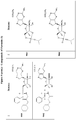
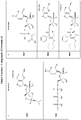
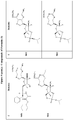
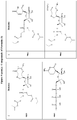
- Example structures of a compound of Formula (I) include the following: or a pharmaceutically acceptable salt of the foregoing.
- R 3 can be OH.
- R 6C can be an unsubstituted C 1-6 alkyl, such as CH 2 CH 3 .
- R 4 can be H.
- R 4 can be a phosphoroamidate group.
- R 4 can be a phosphate group (such as a mono-, di- or tri-phosphate).
- R 4 can be a thiophosphoroamidate group.
- R 4 can be thiophosphate group (such as an alpha-thiomono-, alpha-thiodi- or alpha-thiotri-phosphate).
- R p1 can be - O-ethyl, -O-isopropyl or -O-isobutyl.
- Examples of compounds of Formula (I) include the following: and or a pharmaceutically acceptable salt of the foregoing.
- a compound of Formula (I), or a pharmaceutically acceptable salt thereof can have R 4 being R 5A , being an optionally substituted N-linked amino acid or an optionally substituted N-linked amino acid ester; and R 5B , being an -O-optionally substituted aryl, an -O-optionally substituted heteroaryl, an -O-optionally substituted heterocyclyl, an optionally substituted N-linked amino acid or an optionally substituted N-linked amino acid ester.
- R 4 being R 5A , being an optionally substituted N-linked amino acid or an optionally substituted N-linked amino acid ester
- R 5B being an -O-optionally substituted aryl, an -O-optionally substituted heteroaryl, an -O-optionally substituted heterocyclyl, an optionally substituted N-linked amino acid or an optionally substituted N-linked amino acid ester.
- the groups attached to the phosphorus can be easily removed by esterases, proteases and/or other enzymes.
- the groups attached to the phosphorus can be removed by simple hydrolysis. Inside the cell, the phosphate thus released may then be metabolized by cellular enzymes to the diphosphate or the active triphosphate. Likewise, the thio-phosphate may be metabolized to the alpha-thiodiphosphate or the alpha-thiotriphosphate.
- varying the substituents on a compound described herein, such as compound of Formula (I) can help maintain the efficacy of such the compound by reducing undesirable effects, such as isomerization.
- the phosphorylation of a thio-monophosphate of a compound of Formula (I), or pharmaceutically acceptable salt thereof can be stereoselective.
- a thio-monophosphate of a compound of Formula (I) can be phosphorylated to give an alpha-thiodiphosphate and/or an alpha-thiotriphosphate compound that can be enriched in the ( R ) or ( S ) diastereomer with respect to the 5'-O-phosphorous atom.
- one of the (R) and ( S ) configuration with respect to the 5'-O-phosphorous atom of the alpha-thiodiphosphate and/or the alpha-thiotriphosphate compound can be present in an amount > 50%, ⁇ 75%, ⁇ 90%, ⁇ 95% or ⁇ 99% compared to the amount of the other of the (R) or (S) configuration with respect to the 5'-O-phosphorous atom.
- phosphorylation of a compound of Formula (I), or pharmaceutically acceptable salt thereof can result in the formation of a compound that has the ( R )-configuration at the 5'-O-phosphorous atom.
- phosphorylation of a compound of Formula (I), or pharmaceutically acceptable salt thereof can result in formation of a compound that has the ( S )-configuration at the 5'-O-phosphorous atom.
- a compound of Formula (I), or a pharmaceutically acceptable salt thereof can act as a chain terminator of HCV replication.
- compounds of Formula (I) can contain a moiety at the 2'-carbon position such that once the compound is incorporated into an RNA chain of HCV no further elongation is observed to occur.
- a compound of Formula (I) can contain a 2'-carbon modification wherein R 1 is a non-hydrogen group selected from an optionally substituted C 1-6 alkyl, an optionally substituted C 2-6 alkenyl, an optionally substituted C 2-6 alkynyl and an optionally substituted C 3-6 cycloalkyl.
- a compound of Formula (I), or a pharmaceutically acceptable salt thereof can have increased metabolic and/or plasma stability.
- a compound of Formula (I), or a pharmaceutically acceptable salt thereof can be more resistant to hydrolysis and/or more resistant to enzymatic transformations.
- a compound of Formula (I), or a pharmaceutically acceptable salt thereof can have increased metabolic stability, increased plasma stability, can be more resistant to hydrolysis and/or can be more resistant to enzymatic transformations compared to a compound that is identical in structure but for having a hydrogen in place of the fluoro at the 4'-position.
- a compound of Formula (I), or a pharmaceutically acceptable salt thereof can have improved properties.
- a non-limiting list of example properties include, but are not limited to, increased biological half-life, increased bioavailability, increase potency, a sustained in vivo response, increased dosing intervals, decreased dosing amounts, decreased cytotoxicity, reduction in required amounts for treating disease conditions, reduction in viral load, reduction in time to seroconversion (i.e., the virus becomes undetectable in patient serum), increased sustained viral response, a reduction of morbidity or mortality in clinical outcomes, increased subject compliance, decreased liver conditions (such as liver fibrosis, liver cirrhosis and/or liver cancer), and compatibility with other medications.
- a compound of Formula (I), or a pharmaceutically acceptable salt thereof can have a biological half-life of greater than 24 hours.
- a compound of Formula (I), or a pharmaceutically acceptable salt thereof can have a biological half-life greater than a compound that is identical in structure but for having a hydrogen in place of the fluoro at the 4'-position.
- a compound of Formula (I), or a pharmaceutically acceptable salt thereof can have more potent antiviral activity (for example, a lower EC 50 in an HCV replicon assay) as compared to the current standard of care.
- a compound of Formula (I), or a pharmaceutically acceptable salt thereof does not significantly inhibit mitochondrial function of the mitochondrial RNA polymerase.
- a compound of Formula (I), or a pharmaceutically acceptable salt thereof is incorporated in the human mitochondrial RNA polymerase less than 10% compared to the natural 5'-triphosphate nucleotide with the same B 1 .
- the presence of a thiophosphoroamidate, phosphoroamidate, thiophosphorbisamidate or phosphorbisamidate in a compound of Formula (I) can increase the stability of the compound by inhibiting its degradation. Also, in some embodiments, the presence of a thiophosphoroamidate, phosphoroamidate, thiophosphorbisamidate or phosphorbisamidate can make the compound more resistant to cleavage in vivo and provide sustained, extended efficacy.
- a thiophosphoroamidate, phosphoroamidate, thiophosphorbisamidate or phosphorbisamidate can facilitate the penetration of the cell membrane by a compound of Formula (I) by making the compound more lipophilic.
- a thiophosphoroamidate, phosphoroamidate, thiophosphorbisamidate or phosphorbisamidate can have improved oral bioavailability, improved aqueous stability and/or reduced risk of byproduct-related toxicity.
- a compound of Formula (I) can be compared to a compound that is identical in structure but for having a hydrogen in place of the fluoro at the 4'-position.
- Compounds of Formula (I) can be prepared using various methods known to those skilled in the art. Examples of methods are shown in Schemes 1 and 2. Suitable phosphorus containing precursors can be commercially obtained or prepared by synthetic methods known to those skilled in the art. Examples of general structures of phosphorus containing precursors are shown in Schemes 1 and 2, and include phosphorochloridates and thiophosphorochloridates. Suitable phosphorochloridates and thiophosphorochloridates are commercially available and/or can be synthetically prepared.
- a compound of Formula (I) can be generated from a compound of Formula (A) and a compound of Formula (B) or a compound of Formula (A) and a compound of Formula (C) using an organometallic reagent, such as a Grignard reagent.
- organometallic reagent such as a Grignard reagent.
- Suitable Grignard reagents are known to those skilled in the art and include, but are not limited to, alkylmagnesium chlorides and alkylmagnesium bromides.
- an appropriate base can be used to form a compound of Formula (I).
- suitable bases include, but are not limited to, an amine base, such as an alkylamine (including mono-, di- and trialkylamines (e.g., triethylamine)), optionally substituted pyridines (e.g. collidine) and optionally substituted imidazoles (e.g., N-methylimidazole)).
- the sulfur can be added in various manners.
- the sulfur can be part of the phosphorus containing precursor, for example, Alternatively, one of the oxygens attached to the phosphorus can be exchanged with a sulfur using a sulfurization reagent.
- Suitable sulfurization agents are known to those skilled in the art, and include, but are not limited to, elemental sulfur, Lawesson's reagent, cyclooctasulfur, 3H-1,2-Benzodithiole-3-one-1,1-dioxide (Beaucage's reagent), 3-((N,N-dimethylaminomethylidene)amino)-3H-1,2,4-dithiazole-5-thione (DDTT) and bis(3-triethoxysilyl)propyl-tetrasulfide (TEST).
- elemental sulfur Lawesson's reagent
- cyclooctasulfur 3H-1,2-Benzodithiole-3-one-1,1-dioxide
- Beaucage's reagent 3-((N,N-dimethylaminomethylidene)amino)-3H-1,2,4-dithiazole-5-thione
- a phosphorus containing precursor can be coupled to the nucleoside, for example, a compound of Formula (A). Following the coupling of the phosphorus containing precursor, any leaving groups can be cleaved under suitable conditions, such as hydrolysis.
- R 1a , R 2a , R 3a and B 1a can be the same as R 1 , R 2 , R 3 and B 1 as described herein for Formula (I).
- Further phosphorus containing groups can be added using methods known to those skilled in the art, for example using a pyrophosphate. If desired, one or more bases can be used during the addition of each phosphorus-containing group. Examples of suitable bases are described herein.
- R 2 and R 3 can be each an oxygen atom, wherein the oxygen atoms are linked together by a carbonyl groups.
- a compound of Formula (I), wherein R 2 and R 3 are both hydroxy groups can be treated with 1,1'-carbonyldiimidazole (CDI).
- a compound of Formula (I), wherein R 2 and R 3 are both hydroxy groups can be treated with an alkyl anhydride (e.g., acetic anhydride and propionic anhydride) or an alkyl acid chloride (e.g., acetylchloride).
- a catalyst can be used to facilitate the reaction.
- Suitable catalyst is 4-dimethylaminopyridine (DMAP).
- DMAP 4-dimethylaminopyridine
- alkyl acid e.g. acetic acid and propionic acid
- carbodiimides include, but are not limited to, N,N'-dicyclohexylcarbodiimide (DCC), N,N'-diisopropylcarbodiimide (DIC) and 1-ethyl-3-(3-dimethylaminopropyl) carbodiimide (EDC).
- one or more the groups attached to the pentose ring can be protected with one or more suitable protecting groups.
- suitable protecting groups such as triarylmethyl and/or silyl groups.
- triarylmethyl groups include but are not limited to, trityl, monomethoxytrityl (MMTr), 4,4'-dimethoxytrityl (DMTr), 4,4',4"-trimethoxytrityl (TMTr),.
- Suitable silyl groups include trimethylsilyl (TMS), tert -butyldimethylsilyl (TBDMS), triisopropylsilyl (TIPS), tert-butyldiphenylsilyl (TBDPS), tri- iso -propylsilyloxymethyl and [2-(trimethylsilyl)ethoxy]methyl.
- R 2 and/or R 3 can be protected by a single achiral or chiral protecting group, for example, by forming an orthoester, a cyclic acetal or a cyclic ketal.
- Suitable orthoesters include methoxymethylene acetal, ethoxymethylene acetal, 2-oxacyclopentylidene orthoester, dimethoxymethylene orthoester, 1-methoxyethylidene orthoester, 1-ethoxyethylidene orthoester, methylidene orthoester, phthalide orthoester 1,2-dimethoxyethylidene orthoester, and alpha-methoxybenzylidene orthoester;
- suitable cyclic acetals include methylene acetal, ethylidene acetal, t-butylmethylidene acetal, 3-(benzyloxy)propyl acetal, benzylidene acetal, 3,4-dimethoxybenzylidene acetal and p-acetoxybenzylidene acetal; and suitable cyclic ketals include 1-t-butylethylidene ketal, 1-phenylethylid
- a pharmaceutical composition that can include an effective amount of one or more compounds described herein (e.g., a compound of Formula (I)), or a pharmaceutically acceptable salt thereof) and a pharmaceutically acceptable carrier, diluent, excipient or combination thereof.
- the pharmaceutical composition can include a single diastereomer of a compound of Formula (I), or a pharmaceutically acceptable salt thereof, (for example, a single diastereomer is present in the pharmaceutical composition at a concentration of greater than 99% compared to the total concentration of the other diastereomers).
- the pharmaceutical composition can include a mixture of diastereomers of a compound of Formula (I), or a pharmaceutically acceptable salt thereof.
- the pharmaceutical composition can include a concentration of one diastereomer of > 50%, ⁇ 60%, ⁇ 70%, ⁇ 80%, ⁇ 90%, ⁇ 95%, or ⁇ 98%, as compared to the total concentration of the other diastereomers.
- the pharmaceutical composition includes a 1:1 mixture of two diastereomers of a compound of Formula (I), or a pharmaceutically acceptable salt thereof.
- composition refers to a mixture of one or more compounds disclosed herein with other chemical components, such as diluents or carriers.
- the pharmaceutical composition facilitates administration of the compound to an organism.
- Pharmaceutical compositions can also be obtained by reacting compounds with inorganic or organic acids such as hydrochloric acid, hydrobromic acid, sulfuric acid, nitric acid, phosphoric acid, methanesulfonic acid, ethanesulfonic acid, p-toluenesulfonic acid and salicylic acid.
- Pharmaceutical compositions will generally be tailored to the specific intended route of administration.
- a pharmaceutical composition is suitable for human and/or veterinary applications.
- physiologically acceptable defines a carrier, diluent or excipient that does not abrogate the biological activity and properties of the compound.
- a “carrier” refers to a compound that facilitates the incorporation of a compound into cells or tissues.
- DMSO dimethyl sulfoxide
- DMSO dimethyl sulfoxide
- a "diluent” refers to an ingredient in a pharmaceutical composition that lacks pharmacological activity but may be pharmaceutically necessary or desirable.
- a diluent may be used to increase the bulk of a potent drug whose mass is too small for manufacture and/or administration. It may also be a liquid for the dissolution of a drug to be administered by injection, ingestion or inhalation.
- a common form of diluent in the art is a buffered aqueous solution such as, without limitation, phosphate buffered saline that mimics the composition of human blood.
- an “excipient” refers to an inert substance that is added to a pharmaceutical composition to provide, without limitation, bulk, consistency, stability, binding ability, lubrication, disintegrating ability etc., to the composition.
- a “diluent” is a type of excipient.
- compositions described herein can be administered to a human patient per se, or in pharmaceutical compositions where they are mixed with other active ingredients, as in combination therapy, or carriers, diluents, excipients or combinations thereof. Proper formulation is dependent upon the route of administration chosen. Techniques for formulation and administration of the compounds described herein are known to those skilled in the art.
- compositions disclosed herein may be manufactured in a manner that is itself known, e.g ., by means of conventional mixing, dissolving, granulating, dragee-making, levigating, emulsifying, encapsulating, entrapping or tableting processes. Additionally, the active ingredients are contained in an amount effective to achieve its intended purpose. Many of the compounds used in the pharmaceutical combinations disclosed herein may be provided as salts with pharmaceutically compatible counterions.
- Multiple techniques of administering a compound exist in the art including, but not limited to, oral, rectal, topical, aerosol, injection and parenteral delivery, including intramuscular, subcutaneous, intravenous, intramedullary injections, intrathecal, direct intraventricular, intraperitoneal, intranasal and intraocular injections.
- compositions may, if desired, be presented in a pack or dispenser device which may contain one or more unit dosage forms containing the active ingredient.
- the pack may for example comprise metal or plastic foil, such as a blister pack.
- the pack or dispenser device may be accompanied by instructions for administration.
- the pack or dispenser may also be accompanied with a notice associated with the container in form prescribed by a governmental agency regulating the manufacture, use, or sale of pharmaceuticals, which notice is reflective of approval by the agency of the form of the drug for human or veterinary administration. Such notice, for example, may be the labeling approved by the U.S. Food and Drug Administration for prescription drugs, or the approved product insert.
- Compositions that can include a compound described herein formulated in a compatible pharmaceutical carrier may also be prepared, placed in an appropriate container, and labeled for treatment of an indicated condition.
- Also disclosed herein is a method of treating and/or ameliorating a disease or condition that can include administering to a subject an effective amount of one or more compounds described herein, such as a compound of Formula (I), or a pharmaceutically acceptable salt thereof, or a pharmaceutical composition that includes a compound described herein, or a pharmaceutically acceptable salt thereof. Also disclosed herein is a method of treating and/or ameliorating a disease or condition that can include administering to a subject identified as suffering from the disease or condition an effective amount of one or more compounds described herein, such as a compound of Formula (I), or a pharmaceutically acceptable salt thereof, or a pharmaceutical composition that includes a compound described herein, or a pharmaceutically acceptable salt thereof.
- Also disclosed herein is a method of ameliorating or treating a HCV infection that can include administering to a subject identified as suffering from a HCV infection an effective amount of one or more compounds described herein (for example, a compound of Formula (I)), or a pharmaceutical composition that includes one or more compounds described herein, or a pharmaceutically acceptable salt thereof. Also described herein is using one or more compounds described herein, or a pharmaceutically acceptable salt of a compound described herein, in the manufacture of a medicament for ameliorating and/or treating a HCV infection that can include administering to a subject identified as suffering from a HCV infection an effective amount of one or more compounds described herein.
- a method of ameliorating or treating a HCV infection that can include administering to a subject identified as suffering from a HCV infection an effective amount of one or more compounds described herein.
- Also described herein is one or more compounds described herein, or a pharmaceutically acceptable salt of a compound described herein, that can be used for ameliorating and/or treating a HCV infection by administering to a subject identified as suffering from a HCV infection an effective amount of one or more compounds described herein.
- Also disclosed herein is methods of ameliorating and/or treating a HCV infection that can include contacting a cell infected with the hepatitis C virus with an effective amount of one or more compounds described herein, or a pharmaceutically acceptable salt of a compound described herein, or a pharmaceutical composition that includes one or more compounds described herein, or a pharmaceutically acceptable salt thereof. Also described herein is using one or more compounds described herein, or a pharmaceutically acceptable salt of a compound described herein, in the manufacture of a medicament for ameliorating and/or treating a HCV infection that can include contacting a cell infected with the hepatitis C virus with an effective amount of said compound(s).
- Also described herein is one or more compounds described herein, or a pharmaceutically acceptable salt of a compound described herein, that can be used for ameliorating and/or treating a HCV infection by contacting a cell infected with the hepatitis C virus with an effective amount of said compound(s).
- Also disclosed herein is methods of inhibiting replication of a hepatitis C virus that can include contacting a cell infected with the hepatitis C virus with an effective amount of one or more compounds described herein, or a pharmaceutically acceptable salt of a compound described herein, or a pharmaceutical composition that includes one or more compounds described herein, or a pharmaceutically acceptable salt thereof. Also described herein is using one or more compounds described herein, or a pharmaceutically acceptable salt of a compound described herein, in the manufacture of a medicament for inhibiting replication of a hepatitis C virus that can include contacting a cell infected with the hepatitis C virus with an effective amount of said compound(s).
- Also described herein is a compound described herein, or a pharmaceutically acceptable salt of a compound described herein, that can be used for inhibiting replication of a hepatitis C virus by contacting a cell infected with the hepatitis C virus with an effective amount of said compound(s).
- the compound can be a compound of Formula (I), or a pharmaceutical acceptable salt thereof, wherein R 4 is hydrogen.
- the compound can be a compound of Formula (I), wherein compound of Formula (I) is a mono, di, or triphosphate, or a pharmaceutically acceptable salt of the foregoing.
- the compound can be a compound of Formula (I), wherein compound of Formula (I) is a thiomonophosphate, alpha-thiodiphosphate, or alpha-thiotriphosphate, or a pharmaceutically acceptable salt of the foregoing.
- the compound can be a compound of Formula (I), wherein compound of Formula (I) is phosphoroamidate or phosphorbisamidate, or a pharmaceutically acceptable salt of the foregoing.
- the compound can be a compound of Formula (I), wherein compound of Formula (I) is thiophosphoroamidate or thiophosphorbisamidate, or a pharmaceutically acceptable salt of the foregoing.
- the compound of Formula (I), or a pharmaceutical acceptable salt thereof, that can be used to ameliorating and/or treating a viral infection (for example, a HCV infection) and/or inhibit replication of a virus (such as a HCV virus) can be any of the embodiments provided in any of the embodiments described in any of the paragraphs beginning with the first paragraph under the subheading "Compounds" to the paragraph beginning "Further examples of compounds of Formula (I) include the following:
- HCV is an enveloped positive strand RNA virus in the Flaviviridae family.
- NS5B is believed to be an RNA-dependent RNA polymerase involved in the replication of HCV RNA.
- a method of inhibiting NS5B polymerase activity that can include contacting a cell infected with hepatitis C virus with an effective amount of a compound of Formula (I), or a pharmaceutical acceptable salt thereof. Also described herein is a method of inhibiting NS5B polymerase activity that can include administering to a subject infected with hepatitis C virus an effective amount of a compound of Formula (I), or a pharmaceutical acceptable salt thereof.
- a compound of Formula (I), or a pharmaceutically acceptable salt thereof can inhibit a RNA dependent RNA polymerase, and thus, inhibit the replication of HCV RNA.
- a compound of Formula (I), or a pharmaceutically acceptable salt thereof can inhibit a HCV polymerase (for example, NS5B polymerase).
- Described herein is a method of treating a condition selected from liver fibrosis, liver cirrhosis and liver cancer in a subject suffering from one or more of the aforementioned liver conditions that can include administering to the subject an effective amount of a compound or a pharmaceutical composition described herein (for example, a compound of Formula (I), or a pharmaceutical acceptable salt thereof), wherein the liver condition is caused by a HCV infection.
- a method of increasing liver function in a subject having a HCV infection that can include administering to the subject an effective amount of a compound or a pharmaceutical composition described herein (for example, a compound of Formula (I), or a pharmaceutical acceptable salt thereof).
- This method can include slowing or halting the progression of liver disease. The course of the disease can be reversed, and stasis or improvement in liver function is contemplated.
- liver fibrosis, liver cirrhosis and/or liver cancer can be treated; liver function can be increased; virus-caused liver damage can be reduced or eliminated; progression of liver disease can be slowed or halted; the course of the liver disease can be reversed and/or liver function can be improved or maintained by contacting a cell infected with hepatitis C virus with an effective amount of a compound described herein (for example, a compound of Formula (I), or a pharmaceutically acceptable salt thereof.)
- a compound described herein for example, a compound of Formula (I), or a pharmaceutically acceptable salt thereof.
- genotypes of HCV there are a variety of genotypes of HCV, and a variety of subtypes within each genotype. For example, at present it is known that there are eleven (numbered 1 through 11) main genotypes of HCV, although others have classified the genotypes as 6 main genotypes. Each of these genotypes is further subdivided into subtypes (1a-1c; 2a-2c; 3a-3b; 4a-4e; 5a; 6a; 7a- 7b; 8a-8b; 9a; 10a; and 11a).
- an effective amount of a compound of Formula (I), or a pharmaceutical acceptable salt thereof, or a pharmaceutical composition that includes an effective amount of a compound of Formula (I), or a pharmaceutical acceptable salt thereof can be effective to treat at least one genotype of HCV.
- a compound described herein for example, a compound of Formula (I), or a pharmaceutical acceptable salt thereof
- a compound described herein for example, a compound of Formula (I), or a pharmaceutical acceptable salt thereof
- a compound of Formula (I), or a pharmaceutical acceptable salt thereof can be more effective against a larger number of HCV genotypes than the standard of care. In some embodiments, a compound of Formula (I), or a pharmaceutical acceptable salt thereof, can be more effective against a particular HCV genotype than the standard of care (such as genotype 1, 2, 3, 4, 5 and/or 6).
- Suitable indicators include, but are not limited to, a reduction in viral load, a reduction in viral replication, a reduction in time to seroconversion (virus undetectable in patient serum), an increase in the rate of sustained viral response to therapy, a reduction of morbidity or mortality in clinical outcomes, a reduction in the rate of liver function decrease; stasis in liver function; improvement in liver function; reduction in one or more markers of liver dysfunction, including alanine transaminase, aspartate transaminase, total bilirubin, conjugated bilirubin, gamma glutamyl transpeptidase and/or other indicator of disease response.
- successful therapy with an effective amount of a compound or a pharmaceutical composition described herein (for example, a compound of Formula (I), or a pharmaceutical acceptable salt thereof) can reduce the incidence of liver cancer in HCV infected subjects.
- an effective amount of a compound of Formula (I), or a pharmaceutically acceptable salt thereof is an amount that is effective to reduce HCV viral titers to undetectable levels, for example, to about 100 to about 500, to about 50 to about 100, to about 10 to about 50, or to about 15 to about 25 international units/mL serum.
- an effective amount of a compound of Formula (I), or a pharmaceutically acceptable salt thereof is an amount that is effective to reduce HCV viral load compared to the HCV viral load before administration of the compound of Formula (I), or a pharmaceutically acceptable salt thereof.
- an effective amount of a compound of Formula (I), or a pharmaceutically acceptable salt thereof can be an amount that is effective to reduce HCV viral load to lower than about 25 international units/mL serum.
- an effective amount of a compound of Formula (I), or a pharmaceutically acceptable salt thereof is an amount that is effective to achieve a reduction in HCV viral titer in the serum of the subject in the range of about 1.5-log to about a 2.5-log reduction, about a 3-log to about a 4-log reduction, or a greater than about 5-log reduction compared to the viral load before administration of the compound of Formula (I), or a pharmaceutically acceptable salt thereof.
- the HCV viral load can be measured before administration of the compound of Formula (I), or a pharmaceutically acceptable salt thereof, and again after completion of the treatment regime with the compound of Formula (I), or a pharmaceutically acceptable salt thereof (for example, 1 month after completion).
- a compound of Formula (I), or a pharmaceutically acceptable salt thereof can result in at least a 1, 2, 3, 4, 5, 10, 15, 20, 25, 50, 75, 100-fold or more reduction in the replication of the hepatitis C virus relative to pre-treatment levels in a subject, as determined after completion of the treatment regime (for example, 1 month after completion).
- a compound of Formula (I), or a pharmaceutically acceptable salt thereof can result in a reduction of the replication of the hepatitis C virus relative to pre-treatment levels in the range of about 2 to about 5 fold, about 10 to about 20 fold, about 15 to about 40 fold, or about 50 to about 100 fold.
- a compound of Formula (I), or a pharmaceutically acceptable salt thereof can result in a reduction of the hepatitis C virus replication in the range of 1 to 1.5 log, 1.5 log to 2 log, 2 log to 2.5 log, 2.5 to 3 log, 3 log to 3.5 log or 3.5 to 4 log more reduction of the hepatitis C virus replication compared to the reduction of the hepatitis C virus reduction achieved by pegylated interferon in combination with ribavirin, administered according to the standard of care, or may achieve the same reduction as that standard of care therapy in a shorter period of time, for example, in one month, two months, or three months, as compared to the reduction achieved after six months of standard of care therapy with ribavirin and pegylated interferon.
- an effective amount of a compound of Formula (I), or a pharmaceutically acceptable salt thereof is an amount that is effective to achieve a sustained viral response, for example, non-detectable or substantially non-detectable HCV RNA (e.g., less than about 500, less than about 200, less than about 100, less than about 25, or less than about 15 international units per milliliter serum) is found in the subject's serum for a period of at least about one month, at least about two months, at least about three months, at least about four months, at least about five months, or at least about six months following cessation of therapy.
- HCV RNA e.g., less than about 500, less than about 200, less than about 100, less than about 25, or less than about 15 international units per milliliter serum
- an effective amount of a compound of Formula (I), or a pharmaceutically acceptable salt thereof can reduce a level of a marker of liver fibrosis by at least about 10%, at least about 20%, at least about 25%, at least about 30%, at least about 35%, at least about 40%, at least about 45%, at least about 50%, at least about 55%, at least about 60%, at least about 65%, at least about 70%, at least about 75%, or at least about 80%, or more, compared to the level of the marker in an untreated subject, or to a placebo-treated subject.
- markers are known to those skilled in the art and include immunological-based methods, e.g., enzyme-linked immunosorbent assays (ELISA), radioimmunoassays, and the like, using antibody specific for a given serum marker.
- immunological-based methods e.g., enzyme-linked immunosorbent assays (ELISA), radioimmunoassays, and the like, using antibody specific for a given serum marker.
- ELISA enzyme-linked immunosorbent assays
- markers includes measuring the levels of serum alanine aminotransferase (ALT), aspartate aminotransferase (AST), alkaline phosphatase (ALP), gamma-glutamyl transpeptidase (GGT) and total bilirubin (TBIL) using known methods.
- ALT serum alanine aminotransferase
- AST aspartate aminotransferase
- ALP alkaline phosphatase
- GTT gamma-gluta
- an ALT level of less than about 45 IU/L (international units/liter), an AST in the range of 10-34 IU/L, ALP in the range of 44-147 IU/L, GGT in the range of 0-51 IU/L, TBIL in the range of 0.3-1.9 mg/dL is considered normal.
- an effective amount of a compound of Formula (I), or a pharmaceutically acceptable salt thereof can be an amount effective to reduce ALT, AST, ALP, GGT and/or TBIL levels to with what is considered a normal level.
- Subjects who are clinically diagnosed with HCV infection include "naive" subjects (e.g., subjects not previously treated for HCV, particularly those who have not previously received IFN-alpha-based and/or ribavirin-based therapy) and individuals who have failed prior treatment for HCV ("treatment failure" subjects).
- Treatment failure subjects include "non-responders" (i.e., subjects in whom the HCV titer was not significantly or sufficiently reduced by a previous treatment for HCV ( ⁇ 0.5 log IU/mL), for example, a previous IFN-alpha monotherapy, a previous IFN-alpha and ribavirin combination therapy, or a previous pegylated IFN-alpha and ribavirin combination therapy); and "relapsers” (i.e., subjects who were previously treated for HCV, for example, who received a previous IFN-alpha monotherapy, a previous IFN-alpha and ribavirin combination therapy, or a previous pegylated IFN-alpha and ribavirin combination therapy, whose HCV titer decreased, and subsequently increased).
- non-responders i.e., subjects in whom the HCV titer was not significantly or sufficiently reduced by a previous treatment for HCV ( ⁇ 0.5 log IU/mL), for example, a previous IFN
- a compound of Formula (I), or a pharmaceutically acceptable salt thereof can be administered to a treatment failure subject suffering from HCV. In some embodiments, a compound of Formula (I), or a pharmaceutically acceptable salt thereof, can be administered to a non-responder subject suffering from HCV. In some embodiments, a compound of Formula (I), or a pharmaceutically acceptable salt thereof, can be administered to a relapsed subject suffering from HCV.
- infectious agents can develop resistance to one or more therapeutic agents.
- resistance refers to a viral strain displaying a delayed, lessened and/or null response to a therapeutic agent(s).
- the viral load of a subject infected with a resistant virus may be reduced to a lesser degree compared to the amount in viral load reduction exhibited by a subject infected with a non-resistant strain.
- a compound of Formula (I), or a pharmaceutically acceptable salt thereof can be administered to a subject infected with an HCV strain that is resistant to one or more different anti-HCV agents (for example, an agent used in a conventional standard of care).
- development of resistant HCV strains is delayed when a subject is treated with a compound of Formula (I), or a pharmaceutically acceptable salt thereof, compared to the development of HCV strains resistant to other HCV drugs (such as an agent used in a conventional standard of care).
- an effective amount of a compound of Formula (I), or a pharmaceutically acceptable salt thereof can be administered to a subject for whom other anti-HCV medications are contraindicated.
- administration of pegylated interferon alpha in combination with ribavirin is contraindicated in subjects with hemoglobinopathies (e.g., thalassemia major, sickle-cell anemia) and other subjects at risk from the hematologic side effects of current therapy.
- a compound of Formula (I), or a pharmaceutically acceptable salt thereof can be provided to a subject that is hypersensitive to interferon and/or ribavirin.
- viral load rebound refers to a sustained ⁇ 0.5 log IU/mL increase of viral load above nadir before the end of treatment, where nadir is a ⁇ 0.5 log IU/mL decrease from baseline.
- a compound of Formula (I), or a pharmaceutically acceptable salt thereof can be administered to a subject experiencing viral load rebound, or can prevent such viral load rebound when used to treat the subject.
- a compound of Formula (I), or a pharmaceutically acceptable salt thereof can decrease the number and/or severity of side effects that can be observed in HCV patients being treated with ribavirin and pegylated interferon according to the standard of care.
- a compound of Formula (I), or a pharmaceutically acceptable salt thereof can be provided to a subject that discontinued a HCV therapy because of one or more adverse effects or side effects associated with one or more other HCV agents (for example, an agent used in a conventional standard of care).
- Table 1 provides some embodiments of the percentage improvement obtained using a compound of Formula (I), or a pharmaceutically acceptable salt thereof, as compared to the standard of care. Examples include the following: in some embodiments, a compound of Formula (I), or a pharmaceutically acceptable salt thereof, results in a percentage of non-responders that is 10% less than the percentage of non-responders receiving the standard of care; in some embodiments, a compound of Formula (I), or a pharmaceutically acceptable salt thereof, results in a number of side effects that is in the range of about 10% to about 30% less than compared to the number of side effects experienced by a subject receiving the standard of care; and in some embodiments, a compound of Formula (I), or a pharmaceutically acceptable salt thereof, results in a severity of a side effect (such as one of those described herein) that is 25% less than compared to the severity of the same side effect experienced by a subject receiving the standard of care.
- a compound of Formula (I), or a pharmaceutically acceptable salt thereof results in a severity of a side effect (such
- a "subject” refers to an animal that is the object of treatment, observation or experiment.
- Animal includes cold- and warm-blooded vertebrates and invertebrates such as fish, shellfish, reptiles and, in particular, mammals.
- “Mammal” includes, without limitation, mice, rats, rabbits, guinea pigs, dogs, cats, sheep, goats, cows, horses, primates, such as monkeys, chimpanzees, and apes, and, in particular, humans.
- the subject is human.
- treating do not necessarily mean total cure or abolition of the disease or condition. Any alleviation of any undesired signs or symptoms of a disease or condition, to any extent can be considered treatment and/or therapy. Furthermore, treatment may include acts that may worsen the patient's overall feeling of well-being or appearance.
- an effective amount of compound can be the amount needed to prevent, alleviate or ameliorate symptoms of disease or prolong the survival of the subject being treated This response may occur in a tissue, system, animal or human and includes alleviation of the signs or symptoms of the disease being treated. Determination of an effective amount is well within the capability of those skilled in the art, in view of the disclosure provided herein.
- the effective amount of the compounds disclosed herein required as a dose will depend on the route of administration, the type of animal, including human, being treated, and the physical characteristics of the specific animal under consideration. The dose can be tailored to achieve a desired effect, but will depend on such factors as weight, diet, concurrent medication and other factors which those skilled in the medical arts will recognize.
- the useful in vivo dosage to be administered and the particular mode of administration will vary depending upon the age, weight, the severity of the affliction, and mammalian species treated, the particular compounds employed, and the specific use for which these compounds are employed.
- the determination of effective dosage levels that is the dosage levels necessary to achieve the desired result, can be accomplished by one skilled in the art using routine methods, for example, human clinical trials and in vitro studies.
- the dosage may range broadly, depending upon the desired effects and the therapeutic indication. Alternatively dosages may be based and calculated upon the surface area of the patient, as understood by those of skill in the art. Although the exact dosage will be determined on a drug-by-drug basis, in most cases, some generalizations regarding the dosage can be made.
- the daily dosage regimen for an adult human patient may be, for example, an oral dose of between 0.01 mg and 3000 mg of each active ingredient, preferably between 1 mg and 700 mg, e.g. 5 to 200 mg.
- the dosage may be a single one or a series of two or more given in the course of one or more days, as is needed by the subject.
- the compounds will be administered for a period of continuous therapy, for example for a week or more, or for months or years.
- a compound of Formula (I), or a pharmaceutically acceptable salt thereof can be administered less frequently compared to the frequency of administration of an agent within the standard of care.
- a compound of Formula (I), or a pharmaceutically acceptable salt thereof can be administered one time per day.
- a compound of Formula (I), or a pharmaceutically acceptable salt thereof can be administered one time per day to a subject suffering from a HCV infection.
- the total time of the treatment regime with a compound of Formula (I), or a pharmaceutically acceptable salt thereof can less compared to the total time of the treatment regime with the standard of care.
- human dosages for compounds have been established for at least some condition, those same dosages may be used, or dosages that are between about 0.1% and 500%, more preferably between about 25% and 250% of the established human dosage.
- a suitable human dosage can be inferred from ED 50 or ID 50 values, or other appropriate values derived from in vitro or in vivo studies, as qualified by toxicity studies and efficacy studies in animals.
- dosages may be calculated as the free base.
- dosages may be calculated as the free base.
- Dosage amount and interval may be adjusted individually to provide plasma levels of the active moiety which are sufficient to maintain the modulating effects, or minimal effective concentration (MEC).
- MEC minimal effective concentration
- the MEC will vary for each compound but can be estimated from in vitro data. Dosages necessary to achieve the MEC will depend on individual characteristics and route of administration. However, HPLC assays or bioassays can be used to determine plasma concentrations. Dosage intervals can also be determined using MEC value.
- Compositions should be administered using a regimen which maintains plasma levels above the MEC for 10-90% of the time, preferably between 30-90% and most preferably between 50-90%. In cases of local administration or selective uptake, the effective local concentration of the drug may not be related to plasma concentration.
- the attending physician would know how to and when to terminate, interrupt, or adjust administration due to toxicity or organ dysfunctions. Conversely, the attending physician would also know to adjust treatment to higher levels if the clinical response were not adequate (precluding toxicity).
- the magnitude of an administrated dose in the management of the disorder of interest will vary with the severity of the condition to be treated and to the route of administration. The severity of the condition may, for example, be evaluated, in part, by standard prognostic evaluation methods. Further, the dose and perhaps dose frequency, will also vary according to the age, body weight, and response of the individual patient. A program comparable to that discussed above may be used in veterinary medicine.
- the toxicology of a particular compound, or of a subset of the compounds, sharing certain chemical moieties may be established by determining in vitro toxicity towards a cell line, such as a mammalian, and preferably human, cell line. The results of such studies are often predictive of toxicity in animals, such as mammals, or more specifically, humans.
- a cell line such as a mammalian, and preferably human, cell line.
- the results of such studies are often predictive of toxicity in animals, such as mammals, or more specifically, humans.
- the toxicity of particular compounds in an animal model, such as mice, rats, rabbits, or monkeys may be determined using known methods.
- the efficacy of a particular compound may be established using several recognized methods, such as in vitro methods, animal models, or human clinical trials. When selecting a model to determine efficacy, the skilled artisan can be guided by the state of the art to choose an appropriate model, dose, route of administration and/or regime.
- the compounds disclosed herein such as a compound of Formula (I), or a pharmaceutically acceptable salt thereof, or a pharmaceutical composition that includes a compound described herein, or a pharmaceutically acceptable salt thereof, can be used in combination with one or more additional agent(s).
- Examples of additional agents that can be used in combination with a compound of Formula (I), or a pharmaceutically acceptable salt thereof, or a pharmaceutical composition that includes a compound of Formula (I), or a pharmaceutically acceptable salt thereof include, but are not limited to, agents currently used in a conventional standard of care for treating HCV, HCV protease inhibitors, HCV polymerase inhibitors, NS5A inhibitors, other antiviral compounds, compounds of Formula (AA), (including pharmaceutically acceptable salts and pharmaceutical compositions that can include a compound of Formula (AA), or a pharmaceutically acceptable salt thereof), compounds of Formula (BB) (including pharmaceutically acceptable salts and pharmaceutical compositions that can include a compound of Formula (BB), or a pharmaceutically acceptable salt thereof), compounds of Formula (CC) (including pharmaceutically acceptable salts and pharmaceutical compositions that can include a compound of Formula (CC), or a pharmaceutically acceptable salt thereof), and/or combinations thereof.
- agents currently used in a conventional standard of care for treating HCV include, HCV protease inhibitors, HCV polymerase inhibitor
- a compound of Formula (I), or a pharmaceutically acceptable salt thereof, or a pharmaceutical composition that includes a compound of Formula (I), or a pharmaceutically acceptable salt thereof can be used with one, two, three or more additional agents described herein.
- a non-limiting list of examples of combinations of a compound of Formula (I), or a pharmaceutically acceptable salt thereof, or a pharmaceutical composition that includes a compound of Formula (I), or a pharmaceutically acceptable salt thereof, is provided in Tables A, B, C, D and E.
- a compound of Formula (I), or a pharmaceutically acceptable salt thereof, or a pharmaceutical composition that includes a compound of Formula (I), or a pharmaceutically acceptable salt thereof can be used in combination with an agent(s) currently used in a conventional standard of care therapy.
- a compound disclosed herein can be used in combination with Pegylated interferon-alpha-2a (brand name PEGASYS®) and ribavirin, Pegylated interferon-alpha-2b (brand name PEG-INTRON®) and ribavirin, Pegylated interferon-alpha-2a, Pegylated interferon-alpha-2b, or ribavirin.
- a compound of Formula (I), or a pharmaceutically acceptable salt thereof, or a pharmaceutical composition that includes a compound of Formula (I), or a pharmaceutically acceptable salt thereof can be substituted for an agent currently used in a conventional standard of care therapy.
- a compound of Formula (I), or a pharmaceutically acceptable salt thereof, or a pharmaceutical composition that includes a compound of Formula (I), or a pharmaceutically acceptable salt thereof can be used in place of ribavirin.
- a compound of Formula (I), or a pharmaceutically acceptable salt thereof, or a pharmaceutical composition that includes a compound of Formula (I), or a pharmaceutically acceptable salt thereof can be used in combination with an interferon, such as a pegylated interferon.
- an interferon such as a pegylated interferon.
- suitable interferons include, but are not limited to, Pegylated interferon-alpha-2a (brand name PEGASYS®), Pegylated interferon-alpha-2b (brand name PEG-INTRON®), interferon alfacon-1 (brand name INFERGEN®), pegylated interferon lambda and/or a combination thereof.
- a compound of Formula (I), or a pharmaceutically acceptable salt thereof, or a pharmaceutical composition that includes a compound of Formula (I), or a pharmaceutically acceptable salt thereof can be used in combination with a HCV protease inhibitor.
- HCV protease inhibitors include the following: VX-950 (TELAPREVIR®), MK-5172, ABT-450, BILN-2061, BI-201335, BMS-650032, SCH 503034 (BOCEPREVIR®), GS-9256, GS-9451, IDX-320, ACH-1625, ACH-2684, TMC-435, ITMN-191 (DANOPREVIR®) and/or a combination thereof.
- HCV protease inhibitors suitable for use in combination with a compound of Formula (I), or a pharmaceutically acceptable salt thereof, or a pharmaceutical composition that includes a compound of Formula (I), or a pharmaceutically acceptable salt thereof include VP-19744, PSI-879, VCH-759/VX-759, HCV-371, IDX-375, GL-60667, JTK-109, PSI-6130, R1479, R-1626, R-7182, MK-0608, INX-8014, INX-8018, A-848837, A-837093, BILB-1941, VCH-916, VCH-716, GSK-71185, GSK-625433, XTL-2125 and those disclosed in PCT Publication No.
- HCV protease inhibitors include disclosure of HCV protease inhibitors, HCV polymerase inhibitors and NS5A inhibitors.
- a non-limiting list of example HCV protease inhibitors includes the compounds numbered 1001-1016 in Figure 1 .
- a compound of Formula (I), or a pharmaceutically acceptable salt thereof, or a pharmaceutical composition that includes a compound of Formula (I), or a pharmaceutically acceptable salt thereof can be used in combination with a HCV polymerase inhibitor.
- the HCV polymerase inhibitor can be a nucleoside inhibitor. In other embodiments, the HCV polymerase inhibitor can be a non-nucleoside inhibitor.
- nucleoside inhibitors examples include, but are not limited to, RG7128, PSI-7851, PSI-7977, INX-189, PSI-352938, PSI-661, 4'-azidouridine (including known prodrugs of 4'-azidouridine), GS-6620, IDX-184, and TMC649128 and/or combinations thereof.
- a non-limiting list of example nucleoside inhibitors includes compounds numbered 2001-2012 in Figure 2 .
- non-nucleoside inhibitors include, but are not limited to, ABT-333, ANA-598, VX-222, HCV-796, BI-207127, GS-9190, PF-00868554 (FILIBUVIR®), VX-497 and/or combinations thereof.
- a non-limiting list of example non-nucleoside inhibitors includes the compounds numbered 3001-3014 in Figure 3 .
- HCV polymerase inhibitors suitable for use in combination with a compound of Formula (I), or a pharmaceutically acceptable salt thereof, or a pharmaceutical composition that includes a compound of Formula (I), or a pharmaceutically acceptable salt thereof include VX-500, VX-813, VBY-376, TMC-435350, EZ-058, EZ-063, GS-9132, ACH-1095, IDX-136, IDX-316, ITMN-8356, ITMN-8347, ITMN-8096, ITMN-7587, VX-985, and those disclosed in PCT Publication No. WO 2012/142085 .
- a compound of Formula (I), or a pharmaceutically acceptable salt thereof, or a pharmaceutical composition that includes a compound of Formula (I), or a pharmaceutically acceptable salt thereof can be used in combination with a NS5A inhibitor.
- NS5A inhibitors include BMS-790052, PPI-461, ACH-2928, GS-5885, BMS-824393 and/or combinations thereof.
- a non-limiting list of example NS5A inhibitors includes the compounds numbered 4001-4012 in Figure 4 .
- Additional NS5A inhibitors suitable for use in combination with a compound of Formula (I), or a pharmaceutically acceptable salt thereof, or a pharmaceutical composition that includes a compound of Formula (I), or a pharmaceutically acceptable salt thereof include A-832, PPI-1301 and those disclosed in PCT Publication No. WO 2012/142085 .
- a compound of Formula (I), or a pharmaceutically acceptable salt thereof, or a pharmaceutical composition that includes a compound of Formula (I), or a pharmaceutically acceptable salt thereof can be used in combination with other antiviral compounds.
- other antiviral compounds include, but are not limited to, Debio-025, MIR-122, cyclosporin A and/or combinations thereof.
- a non-limiting list of example other antiviral compounds includes the compounds numbered 5001-5012 in Figure 5 .
- a compound of Formula (I), or a pharmaceutically acceptable salt thereof, or a pharmaceutical composition that includes a compound of Formula (I), or a pharmaceutically acceptable salt thereof can be used in combination with a compound of Formula (AA), or a pharmaceutically acceptable salt thereof, or a pharmaceutical composition that includes a compound of Formula (AA), or a pharmaceutically acceptable salt thereof (see, U.S. Publication No.
- B AA1 can be an optionally substituted heterocyclic base or an optionally substituted heterocyclic base with a protected amino group
- R AA1 can be selected from O - , OH, an optionally substituted N-linked amino acid and an optionally substituted N-linked amino acid ester
- a compound of Formula (I), or a pharmaceutically acceptable salt thereof, or a pharmaceutical composition that includes a compound of Formula (I), or a pharmaceutically acceptable salt thereof can be used in combination with a compound of Formula (BB), or a pharmaceutically acceptable salt thereof, or a pharmaceutical composition that includes a compound of Formula (BB), or a pharmaceutically acceptable salt thereof (see, U.S. Publication No.
- B BB1 can be an optionally substituted heterocyclic base or an optionally substituted heterocyclic base with a protected amino group
- X BB can be O (oxygen) or S (sulfur)
- R BB1 can be selected from -Z BB -R BB9 , an optionally substituted N-linked amino acid and an optionally substituted N-linked amino acid ester derivative
- Z BB can be selected from O (oxygen), S (sulfur) and N(R BB10 )
- R BB2 and R BB3 can be independently selected from hydrogen, an optionally substituted C 1-6 alkyl, an optionally substituted C 2-6 alkenyl, an optionally substituted C 2-6 alkynyl, an optionally substituted C 1-6 haloalkyl and an optionally substituted aryl(C 1-6 alkyl); or R BB2 and R BB3 can be taken together to form a group selected from an optionally substituted C 3-6 cycl
- a compound of Formula (I), or a pharmaceutically acceptable salt thereof, or a pharmaceutical composition that includes a compound of Formula (I), or a pharmaceutically acceptable salt thereof can be used in combination with a compound of Formula (CC), or a pharmaceutically acceptable salt thereof, or a pharmaceutical composition that includes a compound of Formula (CC), or a pharmaceutically acceptable salt thereof (see, U.S. Publication No.
- B CC1 can be an optionally substituted heterocyclic base or an optionally substituted heterocyclic base with a protected amino group
- R CC1 can be selected from O - , OH, an optionally substituted N-linked amino acid and an optionally substituted N-linked amino acid ester derivative
- R CC2 can be selected from an optionally substituted aryl, an optionally substituted heteroaryl, an optionally substituted heterocyclyl and wherein R CC19 , R CC20 and R CC21 can be independently absent or hydrogen, and n CC can be 0 or 1; provided that when R CC1 is O - or OH, then R CC2 is R CC3a and R CC3b can be independently selected from hydrogen, deuterium, an optionally substituted C 1-6 alkyl, an optionally substituted C 2-6 alkenyl, an optionally substituted C 2-6 alkynyl, an optionally substituted C 1-6 haloalky
- R CC3a , R CC3b , R CC4 , R CC5 , R CC7 , R CC8 and R CC9 are all hydrogen, then R CC6 is not azido.
- R CC2 cannot be A non-limiting list of examples of compounds of Formula (CC) includes the compounds numbered 6000
- Described herein is a method of ameliorating or treating a HCV infection that can include contacting a cell infected with the HCV infection with an effective amount of a compound of Formula (I), or a pharmaceutically acceptable salt thereof, in combination with one or more agents selected from an interferon, ribavirin, a HCV protease inhibitor, a HCV polymerase inhibitor, a NS5A inhibitor, an antiviral compound, a compound of Formula (AA), a compound of Formula (BB) and a compound of Formula (CC), or a pharmaceutically acceptable salt of any of the aforementioned compounds.
- Described herein is a method of ameliorating or treating a HCV infection that can include administering to a subject suffering from the HCV infection an effective amount of a compound of Formula (I), or a pharmaceutically acceptable salt thereof, in combination with one or more agents selected from an interferon, ribavirin, a HCV protease inhibitor, a HCV polymerase inhibitor, a NS5A inhibitor, an antiviral compound, a compound of Formula (AA), a compound of Formula (BB) and a compound of Formula (CC), or a pharmaceutically acceptable salt of any of the aforementioned compounds.
- Described herein is a method of inhibiting the replication of a hepatitis C virus that can include contacting a cell infected with the hepatitis C virus with an effective amount of a compound of Formula (I), or a pharmaceutically acceptable salt thereof, in combination with one or more agents selected from an interferon, ribavirin, a HCV protease inhibitor, a HCV polymerase inhibitor, a NS5A inhibitor, an antiviral compound, a compound of Formula (AA), a compound of Formula (BB) and a compound of Formula (CC), or a pharmaceutically acceptable salt of any of the aforementioned compounds.
- a compound of Formula (I) or a pharmaceutically acceptable salt thereof
- Described herein is a method of inhibiting the replication of a hepatitis C virus that can include administering to a subject infected with the hepatitis C virus an effective amount of a compound of Formula (I), or a pharmaceutically acceptable salt thereof, in combination with one or more agents selected from an interferon, ribavirin, a HCV protease inhibitor, a HCV polymerase inhibitor, a NS5A inhibitor, an antiviral compound, a compound of Formula (AA), a compound of Formula (BB) and a compound of Formula (CC), or a pharmaceutically acceptable salt of any of the aforementioned compounds.
- a compound of Formula (I), or a pharmaceutically acceptable salt thereof can be administered with one or more additional agent(s) together in a single pharmaceutical composition.
- a compound of Formula (I), or a pharmaceutically acceptable salt the thereof can be administered with one or more additional agent(s) as two or more separate pharmaceutical compositions.
- a compound of Formula (I), or a pharmaceutically acceptable salt thereof can be administered in one pharmaceutical composition, and at least one of the additional agents can be administered in a second pharmaceutical composition.
- one or more of the additional agents can be in a first pharmaceutical composition that includes a compound of Formula (I), or a pharmaceutically acceptable salt thereof, and at least one of the other additional agent(s) can be in a second pharmaceutical composition.
- the dosing amount(s) and dosing schedule(s) when using a compound of Formula (I), or a pharmaceutically acceptable salt thereof, or a pharmaceutical composition that includes a compound of Formula (I), or a pharmaceutically acceptable salt thereof, and one or more additional agents are within the knowledge of those skilled in the art.
- a compound of Formula (I), or a pharmaceutically acceptable salt thereof, or a pharmaceutical composition that includes a compound of Formula (I), or a pharmaceutically acceptable salt thereof can be administered in addition to that therapy, or in place of one of the agents of a combination therapy, using effective amounts and dosing protocols as described herein.
- a compound of Formula (I), or a pharmaceutically acceptable salt thereof can be administered prior to all additional agents.
- a compound of Formula (I), or a pharmaceutically acceptable salt thereof can be administered prior to at least one additional agent.
- a compound of Formula (I), or a pharmaceutically acceptable salt thereof can be administered concomitantly with one or more additional agent(s).
- a compound of Formula (I), or a pharmaceutically acceptable salt thereof can be administered subsequent to the administration of at least one additional agent.
- a compound of Formula (I), or a pharmaceutically acceptable salt thereof can be administered subsequent to the administration of all additional agents.
- the combination of a compound of Formula (I), or a pharmaceutically acceptable salt thereof, in combination with one or more additional agent(s) in Figures 1-8 (including pharmaceutically acceptable salts and prodrugs thereof) can result in an additive effect.
- the combination of a compound of Formula (I), or a pharmaceutically acceptable salt thereof, in combination with one or more additional agent(s) in Figures 1-8 (including pharmaceutically acceptable salts and prodrugs thereof) can result in a synergistic effect.
- the combination of a compound of Formula (I), or a pharmaceutically acceptable salt thereof, in combination with one or more additional agent(s) in Figures 1-8 (including pharmaceutically acceptable salts and prodrugs thereof) can result in a strongly synergistic effect.
- the combination of a compound of Formula (I), or a pharmaceutically acceptable salt thereof, in combination with one or more additional agent(s) in Figures 1-8 (including pharmaceutically acceptable salts and prodrugs thereof) is not antagonistic.
- the term “antagonistic” means that the activity of the combination of compounds is less compared to the sum of the activities of the compounds in combination when the activity of each compound is determined individually (i.e. as a single compound).
- the term “synergistic effect” means that the activity of the combination of compounds is greater than the sum of the individual activities of the compounds in the combination when the activity of each compound is determined individually.
- the term “additive effect” means that the activity of the combination of compounds is about equal to the sum of the individual activities of the compound in the combination when the activity of each compound is determined individually.
- a potential advantage of utilizing a compound of Formula (I), or a pharmaceutically acceptable salt thereof, in combination with one or more additional agent(s) in Figures 1-8 (including pharmaceutically acceptable salts thereof) may be a reduction in the required amount(s) of one or more compounds of Figures 1-8 (including pharmaceutically acceptable salts thereof) that is effective in treating a disease condition disclosed herein (for example, HCV), as compared to the amount required to achieve same therapeutic result when one or more compounds of Figures 1-8 (including pharmaceutically acceptable salts thereof) are administered without a compound of Formula (I), or a pharmaceutically acceptable salt thereof.
- a disease condition disclosed herein for example, HCV
- the amount of a compound in Figures 1-8 can be less compared to the amount of the compound in Figures 1-8 (including a pharmaceutically acceptable salt thereof), needed to achieve the same viral load reduction when administered as a monotherapy.
- Another potential advantage of utilizing a compound of Formula (I), or a pharmaceutically acceptable salt thereof, in combination with one or more additional agent(s) in Figures 1-8 (including pharmaceutically acceptable salts thereof) is that the use of two or more compounds having different mechanism of actions can create a higher barrier to the development of resistant viral strains compared to the barrier when a compound is administered as monotherapy.
- Additional advantages of utilizing a compound of Formula (I), or a pharmaceutically acceptable salt thereof, in combination with one or more additional agent(s) in Figures 1-8 (including pharmaceutically acceptable salts thereof) may include little to no cross resistance between a compound of Formula (I), or a pharmaceutically acceptable salt thereof, and one or more additional agent(s) in Figures 1-8 (including pharmaceutically acceptable salts thereof) thereof; different routes for elimination of a compound of Formula (I), or a pharmaceutically acceptable salt thereof, and one or more additional agent(s) in Figures 1-8 (including pharmaceutically acceptable salts thereof); little to no overlapping toxicities between a compound of Formula (I), or a pharmaceutically acceptable salt thereof, and one or more additional agent(s) in Figures 1-8 (including pharmaceutically acceptable salts thereof); little to no significant effects on cytochrome P450; little to no pharmacokinetic interactions between a compound of Formula (I), or a pharmaceutically acceptable salt thereof, and one or more additional agent(s) in Figures 1-8 (including pharmaceutically acceptable salts thereof); greater percentage
- a non-limiting list of example combination of compounds of Formula (I), or a pharmaceutically acceptable salt thereof, or a pharmaceutical composition that includes a compound described herein, with one or more additional agent(s) are provided in Tables A, B, C, D and E.
- Each numbered X and Y compound in Tables A, B, C, D and E has a corresponding name and/or structure provided in Figures 1-8 .
- the numbered compounds in Tables A, B, C, D and E includes pharmaceutically acceptable salts of the compounds and pharmaceutical compositions containing the compounds or a pharmaceutically acceptable salt thereof.
- 1001 includes the compound corresponding to 1001, pharmaceutically acceptable salts thereof, and pharmaceutical compositions that include compound 1001 and/or a pharmaceutically acceptable salt thereof.
- the combinations exemplified in Tables A, B, C, D and E are designated by the formula X:Y, which represents a combination of a compound X with a compound Y.
- the combination designated as 1001:9004 in Table A represents a combination of compound 1001 with compound 9004, including pharmaceutically acceptable salts of compound 1001 and/or 9004, and pharmaceutical compositions including compound 1001 and 9004 (including pharmaceutical compositions that include pharmaceutically acceptable salts of compound 1001 and/or compound 9004).
- the combination designated as 1001:9004 in Table A represents the combination of Telaprevir (compound 1001, as shown in Figure 1 ) and (compound 9004, as shown in Figure 9 ), including pharmaceutically acceptable salts of compound 1001 and/or 9004, and pharmaceutical compositions including compound 1001 and 9004 (including pharmaceutical compositions that include pharmaceutically acceptable salts of compound 1001 and/or compound 9004).
- Each of the combinations provided in Tables A, B, C, D and E can be used with one, two, three or more additional agents described herein.
- the combination of agents can be used to treat, ameliorate and/or inhibit a virus and/or a viral infection, wherein the virus can be HCV and the viral infection can be an HCV viral infection.
- Tetra-butylammonium hydroxide (288 mL as 54-56% aqueous solution, 576 mmol) was adjusted to pH ⁇ 4 by adding TFA (48 mL). The resulting solution was treated with a solution of 23-5 (14 g, 24 mmol) in DCM (200 mL). m -Cloroperbenzoic acid (30 g, 60-70%, 120 mmol) was added portion wise with vigorous stirring, and the mixture was stirred overnight. The organic layer was separated and washed with brine. The resulting solution was dried over magnesium sulfate and concentrated under reduced pressure. The residue was purified by column chromatography to give 23-6 (7.5 g, 68%)
- the Gradient was 25-75% ACN in 20 mins at 24mL/mins, 254nM detection.
- the compound eluted at 16.0 minutes; and the pure fractions were pooled and lyophilized.
- TEAA was removed by dissolving the compound in DMSO (2 mL) and using the same column and same gradient, using only H 2 O and ACN. Pure fractions were pooled and lyophilized to give compound 51 (18 mg).
- MS: m/z 1197 [2M+1] + .
- Compound 53-1 (70 mg, 58%) was prepared from 32-3 (90 mg; 0.1 mmol) and triethylammonium bis(isopropyloxycarbonyloxymethyl)phosphate (0.2 mmol) with DIPEA (87 ⁇ L), BopCl (44 mg), and 3-nitro-1,2,4-triazole (29 mg) in THF (2 mL) according to a method described for compound 51-2. Purification was done with hexanes/EtOAc solvent system, 20-80% gradient.
- the intermediate was dissolved in a solution of TBAF/THF (1N, 20 mL). The mixture was stirred at R.T. for 2 h and then concentrated at low pressure.
- Compound 52-2 (158 mg, 50%) was from 52-1 (0.21 g; 0.35 mmol) and triethylammonium bis(isopropyloxycarbonyloxymethyl)phosphate (0.54 mmol) with DIPEA (0.18 mL), BopCl (178 mg), and 3-nitro-1,2,4-triazole (80 mg) in THF (4 mL).
- Compound 14-3 (137 mg, 75%) was prepared from 14-2 (93 mg, 0.29 mmol) and triethylammonium bis(isopropyloxycarbonyloxymethyl)phosphate (0.44 mmol) with DIPEA (0.2 mL), BopCl (147 mg), and 3-nitro-1,2,4-triazole (66 mg) in THF (3 mL). Purification was done with CH 2 Cl 2 /i-PrOH solvent system (3-10% gradient).
- m -CPBA (1.85 g, 10.74 mmol) was added portion-wise under vigorous stirring, and the mixture was stirred for 12 h.
- the mixture was diluted with EA (100 mL), and washed with sat. sodium bicarbonate.
- the organic phase was concentrated at low pressure.
- the residue was purified by column chromatography (50% EA in PE) to give 45-8 (350 mg, 41.1%) as a white solid.
- Compound 56-C (1.02 g, 23%, a colorless oil) was prepared using a procedure similar to the preparation of 54-C using 54-A (2.00 g, 13.16 mmol) and 4-chlorophenol (1.68 g, 13.16 mmol).
- the nucleoside (140 mg, 0.42 mmol) was dissolved in n-butylamine (0.5 mL). The mixture was kept for 2 h at R.T., and the amine was then evaporated. The residue was dissolved in EtOAc, and the organic layer was washed twice with 10% citric acid, dried over Na 2 SO 4 , and evaporated. The residue purified by column chromatography on silica gel in linear gradient of methanol in DCM from 0% to 12% over 10 column volumes. The fractions containing the product were concentrated and treated with 80% HCOOH for 1 h at R.T. The mixture was evaporated to dryness, and suspended in CH 3 CN. The precipitate was separated, washed with CH 3 CN (1 mL) and dried to yield compound 68 (27 mg, 50%). MS: m/z 326.5 [M-1] - .
- Tetra-butylammonium hydroxide (9 mL as 54-56% aqueous solution, 72 mmol) was neutralized with TFA to pH ⁇ 4 (1.5 mL), and the mixture was added to a solution of 65-7 (375 mg, 0.75 mmol) in DCM (9 mL).
- m -Chloroperbenzoic acid (924 mg, 60-70%, 3.75 mmol) was added in portions with vigorous stirring, and the mixture was stirred overnight. The mixture was washed with brine, dried over magnesium sulfate and concentrated under reduced pressure. The residue was purified by column chromatography (EA 50% in PE) to give 65-8 (230 mg, 78.8%) as a white foam.
- EA 50% in PE chromatography
- the MsO-product (41 g, 55 mmol) was treated with TBAF (1 N in THF, 500 mL), and the mixture was stirred at 70-80°C for 3 d. The mixture was concentrated at low pressure, and the residue was dissolved in EA (200 mL). The solution was washed with brine, dried over anhydrous MgSO 4 and evaporated at low pressure. The residue was purified by chromatography using 10% EA in PE to give 75-9 (9.9 g, 27%).
- the oil was purified by column chromatography using 7%-20% EA in PE as the eluent to give a yellow oil.
- the residue triturated with CH 3 OH and filtered.
- the filter cake was concentrated in vacuo to give 73-4 as a white solid (30.0 g, 36.4%).
- the mixture was heated to 70°C, and then stirred overnight and then monitored by LCMS.
- the mixture was cooled to R.T., and quenched with a sat. NaHCO 3 solution.
- the solution was extracted with EA.
- the organic layer was dried over Na 2 SO 4 , and then concentrated at low pressure.
- the residue was purified using a silica gel column eluted with 10%-50% EA in PE to give 73-5 as a white solid (45 g, 50.9%).
- the cyclopentyl dimethoxy acetal and 73-6 (20 g, 74.63 mmol) was dissolved in DCE (200 mL), and then treated with TsOH•H 2 O (0.71 g, 3.73 mmol). The mixture was stirred at 50°C for 12 h, and then concentrated at low pressure. The residue was purified by silica gel column chromatography (1-10% MeOH in DCM) to give 73-7 (15.4 g, 61.8%) as a white solid.
- Tetraethylammonium fluoride hydrate (650 g, 3.7 mol) was added into a solution of 66-5 (490 g, 1.6 mol) in anhydrous dioxane (3 L), and the mixture was heated to 120°C for 16 h. The mixture was then cooled to ambient temperature. 2,2-Dimethoxypropane (3 L) was added followed by conc. aq hydrochloric acid (200 mL). The mixture was stirred for 3 h at ambient temperature. The solvent was concentrated to 1 ⁇ 3 of the original volume, and then diluted with EA (3 L). The mixture was washed with cold sat. aq. sodium bicarbonate and brine. The combined aqueous layer was back-extracted with EA (1 L). The combined organic layer was dried over anhydrous Na 2 SO 4 , filtered, and concentrated at low pressure to give crude 66-6 (220 g, 70.8%).
- Compound 81-3 was prepared using a similar procedure as for the preparation of 80-3 using 81-2 (124 mg, 0.7 mmol) and 83-A (310 mg, 0.5 mmol). Compound 81-3 (300 mg, 83%) was obtained as a solid.
- Tetra-butylammonium hydroxide (21 mL as 54-56% aqueous solution, ⁇ 42 mmol, 24 eq.) was adjusted with TFA to pH ⁇ 4 ( ⁇ 3.5 mL), and the solution was treated with a solution of 82-13 (900 mg, 1.7 mmol) in DCM (21 mL).
- m -Cloroperbenzoic acid (2.1 g, 60-70%, ⁇ 8.75 mmol, ⁇ 5 eq.) was added portionwise under vigorous stirring, and the mixture was stirred overnight. The mixture was diluted with CH 2 Cl 2 (30 mL), and washed with a saturated NaHCO 3 solution.
- Compound 85 was prepared using a similar procedure as for the preparation of compound 84 using 85-2 (205 mg, 0.674 mol, in DCM (5 mL) obtained from (S)-isopropyl 2-aminopropanoate hydrochloride and 85-1 ) and 83-A (300 mg, 0.337 mmol). Compound 85 (50 mg, 74%) was obtained as a white solid. ESI-MS: m/z 615.2 [M+H] + .
- Compound 90-1 was prepared using a similar procedure as for the preparation of compound 89-1 using phosphoryl trichloride (2.00 g, 13.16 mmol), 1-naphthol (1.882 g, 13.16 mmol) and ( S )-neopentyl 2-aminopropanoate hydrochloride (2.549 g, 13.16 mmol).
- Compound 90-1 600 mg, 12%) was obtained as a colorless oil.
- the mixture was stirred at 25 °C for 48 h and then washed with a sat. NaHCO 3 solution.
- the organic layer was directly passed through basic Al 2 O 3 column, and the solvent was concentrated at low pressure.
- the residue was purified by a silica gel column (20%-30% EA in PE) to give 77-9 (123 mg, 24.3%) as a white solid.
- Huh-7 cells containing the self-replicating, subgenomic HCV replicon with a stable luciferase (LUC) reporter were cultured in Dulbecco's modified Eagle's medium (DMEM) containing 2mM L-glutamine and supplemented with 10% heat-inactivated fetal bovine serum (FBS), 1% penicillin-streptomyocin, 1% nonessential amino acids, and 0.5 mg/mL G418.
- DMEM Dulbecco's modified Eagle's medium
- FBS heat-inactivated fetal bovine serum
- penicillin-streptomyocin 1% nonessential amino acids
- Determination of 50% inhibitory concentration (EC 50 ) of compounds in HCV replicon cells were performed by the following procedure. On the first day, 5,000 HCV replicon cells were plated per well in a 96-well plate. On the following day, test compounds were solubilized in 100% DMSO to 100x the desired final testing concentration. Each compound was then serially diluted (1:3) up to 9 different concentrations. Compounds in 100% DMSO are reduced to 10% DMSO by diluting 1:10 in cell culture media. The compounds were diluted to 10% DMSO with cell culture media, which were used to dose the HCV replicon cells in 96-well format. The final DMSO concentration was 1%.
- the HCV replicon cells were incubated at 37 °C for 72 h. At 72 h, cells were processed when the cells are still subconfluent. Compounds that reduce the LUC signal are determined by Bright-Glo Luciferase Assay (Promega, Madison, WI). % Inhibition was determined for each compound concentration in relation to the control cells (untreated HCV replicon) to calculate the EC 50 .
- Compounds of Formula (I) are active in the replicon assay.
- the antiviral activity of exemplary compounds is shown in Table 2, where 'A' indicates an EC 50 ⁇ 1 ⁇ M, 'B' indicates an EC 50 ⁇ 1 ⁇ M and ⁇ 10 ⁇ M, and 'C' indicates an EC 50 ⁇ 10 ⁇ M and ⁇ 100 ⁇ M.
- the enzyme activity of NS5B570-Con1 was measured as an incorporation of tritiated NMP into acid-insoluble RNA products.
- the complementary IRES (cIRES) RNA sequence was used as a template, corresponding to 377 nucleotides from the 3'-end of HCV (-) strand RNA of the Con-1 strain, with a base content of 21% Ade, 23% Ura, 28% Cyt, and 28% Gua.
- the cIRES RNA was transcribed in vitro using a T7 transcription kit (Ambion, Inc.) and purified using the Qiagen RNeasy maxi kit.
- HCV polymerase reactions contained 50 nM NS5B570-Con1, 50 nM cIRES RNA, about 0.5 ⁇ Ci tritiated NTP, 1 ⁇ M of competing cold NTP, 20 mM NaCl, 40 mM Tris-HCl (pH 8.0), 4 mM dithiothreitol, and 4 mM MgCl 2 . Standard reactions were incubated for 2 h at 37°C, in the presence of increasing concentration of inhibitor. At the end of the reaction, RNA was precipitated with 10% TCA, and acid-insoluble RNA products were filtered on a size exclusion 96-well plate.
- a value of 'A' in the table below indicates an IC 50 of ⁇ 1 ⁇ M
- a value of 'B' indicates an IC 50 ⁇ 1 ⁇ M and ⁇ 10 ⁇ M
- a value of 'C' indicates an IC 50 value of ⁇ 10 ⁇ M and ⁇ 100 ⁇ M.
- Table 3* Compound # IC 50 6 A 7a A 7b B 9 A 12 A 15 A 26 A 28 A 38 A 44 A 46 A 50 A 63 A 64 A 69 A 76 A Wherein compounds 6, 12, 26, 38, 46, 50, 63, 64, 69 and 76 are reference compounds
- Drug-associated dysfunction of mitochondria is believed to play a role in the etiology of the various adverse symptoms that occur in patients treated with antiviral nucleoside/nucleotides. For this reason, evaluation of compounds for their potential to inhibit mitochondrial function is useful.
- nucleotide/nucleoside analogs to interfere with normal mitochondrial functions and exhibit mitochondrial toxicity: (1) the ability of nucleotides to be incorporated by human mitochondrial RNA polymerase in vitro and (2) the cellular inhibition of the synthesis of the mitochondrial DNA (mtDNA)-encoded protein, cytochrome c oxidase (COX-I), relative to the nuclear DNA (nDNA)-encoded mitochondrial protein succinate dehydrogenase subunit A (SDH-A) in HepG2 cells. Control compounds and compounds of Formula (I) were studied in these assays.
- mtDNA mitochondrial DNA
- COX-I cytochrome c oxidase
- SDH-A succinate dehydrogenase subunit A
- HMRP human mitochondrial RNA polymerase
- the DdRp assay with human mitochondrial RNA polymerase was performed under single turnover conditions where enzyme concentration is in excess of the primer/template.
- the 33 P-RNA/DNA primer/template was used at a concentration of 100 nM, together with 320 nM enzyme.
- the standard 10- ⁇ L reactions were carried out at 30°C for 1 minute with 100 ⁇ M of each nucleotide 5'-triphosphate (NTP), 10 mM MgCl 2 , 50 mM NaCl, 40 mM Tris, pH 7.5, and 1 mM DTT.
- NTP nucleotide 5'-triphosphate
- the reaction was stopped by adding 20 ⁇ L of formamide loading dye containing 50 mM EDTA.
- RNA products were resolved by electrophoresis on 22.5% TBE Urea polyacrylamide sequencing gels that were scanned using a TYPHOON PhosphorImager.
- CTP was incorporated to a lesser extent relative to UTP.
- compounds of Formula (I) and 2'-Me-2'-F-UTP were not efficient substrates for incorporation by HMRP as demonstrated by the lack of product band.
- the template strand shown in Figure 11 was designed to measure the incorporation of GTP analogs.
- Primer/Template (SEQ ID NO: 3) UUUUGCCGCGCC and (SEQ ID NO: 4) GGGAATGCACGGCGCGGC.
- no incorporation was observed as indicated by the lack of product band.
- GTP and 3'-deoxy-GTP were found to be efficient substrates for incorporation as demonstrated by the significant product bands.
- the potential for misincorporation was assessed using the control nucleotide ATP. As shown by the lack of product band in Figure 11 , control ATP was a poor substrate for incorporation.
- Nucleotide analog 2'-Me-GTP (the nucleotide metabolite of monophosphate prodrug INX-0189/BMS-986094) was tested and found to be a good substrate for incorporation by HMRP as indicated by the product band.
- Nucleotide analog 2'-Me-2'-F-GTP (nucleotide metabolite of monophosphate prodrug GS-938) was tested and also found to be incorporated by HMRP.
- compounds of Formula (I) were not efficient substrates for incorporation into the template strand by HMRP as indicated by the lack of product bands in Figure 11 .
- MitoBiogenesisTM In Cell ELISA kits (Cat. #MS643) were obtained from Mitosciences, OR, USA.
- the MitoBiogenesisTM In Cell ELISA kit is a duplexing 96 well assay that ratios both an mtDNA and an nDNA encoded mitochondrial protein. Cells were seeded in 96 microplates and after exposure to compounds for several cell doublings, the levels of the two mitochondrial proteins were measured simultaneously in each well.
- the two proteins assayed were each subunits of different oxidative phosphorylation enzyme complexes, one protein being subunit I of Complex IV (cytochrome c oxidase; COX I) that is mtDNA encoded and the other being the 70 kDa subunit of Complex II (succinate dehydrogenase subunit A; SDH A) that is nDNA encoded.
- Complex IV includes several proteins that are encoded by the mtDNA while the proteins of Complex II are entirely encoded by nDNA. To control for the density of cells present at the end of the culture period, the number of cells were assessed by staining with Janus Green and the levels of COX I/SDH A normalized to the final cell density.
- HepG2 cells were grown either in media/DMSO alone or in a series of compound concentrations in 15 cm 2 dishes or 6 well plates at an initial cell seeding density of 5 x 10 6 and 5 x 10 4 cells/mL, respectively. Cells were then incubated and observed for 8 days at 37°C and 5% CO 2 . After 8 days, the cells were harvested by trypsinization, counted, and seeded in 96 well plates at a density of 25,000 cells/well in 16 replicate wells. Cells were allowed to adhere overnight and then the plates were processed as described below in the assay procedure.
- the assay was performed according to the manufacturer's instructions. Briefly, after the end of the culture period the cell culture media was gently aspirated from the wells of the plate and replaced with 100 ⁇ L of 4% (v/v) paraformaldehyde solution in phosphate buffered saline (PBS, Electron Microscopy Sciences Cat. #15713). After a 20 mins incubation at R.T., the solution was removed and the wells washed 3 x with 300 ⁇ L of PBS. After the final wash, the PBS was removed and the wells overlayed with 100 ⁇ L PBS. The plates were then sealed and stored at 4°C until used.
- PBS phosphate buffered saline
- the PBS overlay was removed by blotting on a paper towel and 100 ⁇ L of 0.5% (v/v) acetic acid added to each well to block endogenous alkaline phosphatase activity. After a 5 mins incubation at R.T., the acetic acid solution was removed and the cells washed once with 200 ⁇ L PBS. Then, 100 ⁇ L of permeabilization buffer (0.1% (v/v) Triton X 100) was added to each well. After 30 mins incubation at R.T., the permeabilization buffer was removed and each well was blocked with 200 ⁇ L of 2 x blocking solution for 2 h at R.T.
- 0.5% (v/v) acetic acid added to each well to block endogenous alkaline phosphatase activity. After a 5 mins incubation at R.T., the acetic acid solution was removed and the cells washed once with 200 ⁇ L PBS. Then, 100 ⁇ L of permeabilization buffer (0.1% (v
- the 2 x blocking solution was then removed and 100 ⁇ L of primary antibody solution containing anti COX I and anti SDH A antibodies in 1 ⁇ blocking solution was added to each well. Plates were then sealed and incubated overnight at 4°C. The primary antibody/blocking solution was removed and the plate washed 3 x with 250 ⁇ L 0.05% (v/v) Tween 20 in PBS. Then, 100 ⁇ L of secondary antibody solution containing alkaline phosphatase (AP) labeled anti SDH A antibody and horseradish peroxidase (HRP) labeled anti COX I antibody was added and incubated for 1 h at R.T.
- AP alkaline phosphatase
- HRP horseradish peroxidase
- the plate was then washed 4 ⁇ with 250 ⁇ L 0.05% (v/v) Tween 20 in PBS. After blotting the plate dry 100 ⁇ L of AP detection reagent was added to each well, and the plate incubated in the dark for 30 mins at R.T. The optical density of each well was then measured at 405 nm. The AP detection reagent was then removed and replaced with 100 ⁇ L of HRP detection reagent, and the plate incubated in the dark for a further 30 mins at R.T. The optical density of each well was then measured at 600 nm. The HRP detection reagent was then removed and each well was then stained with 50 ⁇ L of 1 x Janus Green Stain for 5 mins at R.T.
- the plates were washed 5 ⁇ in ultrapure water to remove any remaining dye.
- the Janus Green stain was then solubilized by the addition of 100 ⁇ L of 0.5 M HCl and incubated for 10 mins. The optical density of each well was then measured at 595 nm.
- Control compound d4T was tested and found not to inhibit mitochondrial protein synthesis at concentrations up to 100 ⁇ M as shown in Figures 12A-D .
- Control compound ddC was tested and found to strongly inhibit mitochondrial protein synthesis. See Figures 12A-D .
- nucleoside monophosphate prodrug INX-08189/BMS-986094 which delivers 2'-Me-GTP was tested in the assay and found to strongly inhibit mitochondrial protein synthesis.
- compounds of Formula (I) were tested and found to not inhibit mitochondrial protein synthesis at concentrations up to 100 ⁇ M as shown in Figures 12B-D .
- HCV HCV replicon harbored in Huh7 cells with a stable luciferase (LUC) reporter.
- LOC stable luciferase
- Cells were cultured under standard conditions in Dulbecco's modified Eagle's medium (DMEM; Mediatech Inc, Herndon, VA) containing 10% heat-inactivated fetal bovine serum (FBS; Mediatech Inc, Herndon, VA) 2mM L-glutamine, and nonessential amino acids (JRH Biosciences).
- DMEM Dulbecco's modified Eagle's medium
- FBS heat-inactivated fetal bovine serum
- JRH Biosciences nonessential amino acids
- the culture medium was replaced with DMEM containing either no compound as a control, the test compounds serially diluted in the presence of 2% FBS and 0.5% DMSO, or a combination of compound 18 with one or more test compounds serially diluted in the presence of 2% FBS and 0.5% DMSO.
- the cells were incubated with no compound as a control, with the test compounds, or the combination of compounds for 72 h.
- the direct effects of the combination of the test compounds were examined using a luciferase (LUC) based reporter as determined by the Bright-Glo Luciferase Assay (Promega, Madison, WI). Dose-response curves were determined for individual compounds and fixed ratio combinations of two or more test compounds.
- LOC luciferase
- MacSynergy II The method utilized for evaluating combination effects used a program called MacSynergy II.
- MacSynergy II software was kindly provided by Dr. M. Prichard (University of Michigan).
- the Prichard Model allows for a three-dimensional examination of drug interactions and a calculation of the synergy volume (units: ⁇ M 2 %) generated from running the replicon assay using a checkerboard combination of two or more inhibitors.
- the volumes of synergy (positive volumes) or antagonism (negative volumes) represent the relative quantity of synergism or antagonism per change in the concentrations of the two drugs.
- Synergy and antagonism volumes are defined based on the Bliss independence model.
- synergy volumes of less than -25 indicate antagonistic interactions
- volumes in the -25 - 25 range indicate additive behavior
- volumes in the 25 - 100 range indicate synergistic behavior
Landscapes
- Chemical & Material Sciences (AREA)
- Health & Medical Sciences (AREA)
- Organic Chemistry (AREA)
- Life Sciences & Earth Sciences (AREA)
- General Health & Medical Sciences (AREA)
- Molecular Biology (AREA)
- Biotechnology (AREA)
- Engineering & Computer Science (AREA)
- Biochemistry (AREA)
- Genetics & Genomics (AREA)
- Virology (AREA)
- Public Health (AREA)
- Veterinary Medicine (AREA)
- Animal Behavior & Ethology (AREA)
- Pharmacology & Pharmacy (AREA)
- Medicinal Chemistry (AREA)
- Oncology (AREA)
- Communicable Diseases (AREA)
- Chemical Kinetics & Catalysis (AREA)
- General Chemical & Material Sciences (AREA)
- Nuclear Medicine, Radiotherapy & Molecular Imaging (AREA)
- Epidemiology (AREA)
- Pharmaceuticals Containing Other Organic And Inorganic Compounds (AREA)
- Saccharide Compounds (AREA)
- Medicines That Contain Protein Lipid Enzymes And Other Medicines (AREA)
- Measuring Or Testing Involving Enzymes Or Micro-Organisms (AREA)
Priority Applications (7)
| Application Number | Priority Date | Filing Date | Title |
|---|---|---|---|
| EP18168337.6A EP3421482A1 (en) | 2012-12-21 | 2013-12-19 | Substituted nucleosides, nucleotides and analogs thereof |
| RS20210536A RS61767B1 (sr) | 2012-12-21 | 2013-12-19 | 4'-fluor-nukleozidi, 4'-fluor-nukleotidi i njihovi analozi za lečenje hcv |
| HRP20210510TT HRP20210510T1 (hr) | 2012-12-21 | 2013-12-19 | 4'-fluor-nukleozidi, 4'-fluor-nukleotidi i njihovi analozi za liječenje hcv |
| SI201331877T SI2935303T1 (sl) | 2012-12-21 | 2013-12-19 | 4'-fluoro-nukleozidi, 4'-fluoro-nukleotidi in njihovi analogi za zdravljenje HCV |
| PL13864403T PL2935303T3 (pl) | 2012-12-21 | 2013-12-19 | 4'-fluoronukleozydy, 4'-fluoronukleotydy i ich analogi do leczenia HCV |
| SM20210259T SMT202100259T1 (it) | 2012-12-21 | 2013-12-19 | 4'-fluoro-nucleosidi, 4'-fluoro-nucleotidi e loro analoghi per il trattamento di hcv s |
| EP20216445.5A EP3912984A1 (en) | 2012-12-21 | 2013-12-19 | 4'-fluoro-nucleosides, 4'-fluoro-nucleotides and analogs thereof for the treatment of hcv |
Applications Claiming Priority (3)
| Application Number | Priority Date | Filing Date | Title |
|---|---|---|---|
| US201261745466P | 2012-12-21 | 2012-12-21 | |
| US201361890125P | 2013-10-11 | 2013-10-11 | |
| PCT/US2013/076740 WO2014100505A1 (en) | 2012-12-21 | 2013-12-19 | Substituted nucleosides, nucleotides and analogs thereof |
Related Child Applications (4)
| Application Number | Title | Priority Date | Filing Date |
|---|---|---|---|
| EP20216445.5A Division-Into EP3912984A1 (en) | 2012-12-21 | 2013-12-19 | 4'-fluoro-nucleosides, 4'-fluoro-nucleotides and analogs thereof for the treatment of hcv |
| EP20216445.5A Division EP3912984A1 (en) | 2012-12-21 | 2013-12-19 | 4'-fluoro-nucleosides, 4'-fluoro-nucleotides and analogs thereof for the treatment of hcv |
| EP18168337.6A Division EP3421482A1 (en) | 2012-12-21 | 2013-12-19 | Substituted nucleosides, nucleotides and analogs thereof |
| EP18168337.6A Division-Into EP3421482A1 (en) | 2012-12-21 | 2013-12-19 | Substituted nucleosides, nucleotides and analogs thereof |
Publications (3)
| Publication Number | Publication Date |
|---|---|
| EP2935303A1 EP2935303A1 (en) | 2015-10-28 |
| EP2935303A4 EP2935303A4 (en) | 2016-08-10 |
| EP2935303B1 true EP2935303B1 (en) | 2021-02-17 |
Family
ID=50975302
Family Applications (3)
| Application Number | Title | Priority Date | Filing Date |
|---|---|---|---|
| EP13864403.4A Active EP2935303B1 (en) | 2012-12-21 | 2013-12-19 | 4'-fluoro-nucleosides, 4'-fluoro-nucleotides and analogs thereof for the treatment of hcv |
| EP20216445.5A Pending EP3912984A1 (en) | 2012-12-21 | 2013-12-19 | 4'-fluoro-nucleosides, 4'-fluoro-nucleotides and analogs thereof for the treatment of hcv |
| EP18168337.6A Withdrawn EP3421482A1 (en) | 2012-12-21 | 2013-12-19 | Substituted nucleosides, nucleotides and analogs thereof |
Family Applications After (2)
| Application Number | Title | Priority Date | Filing Date |
|---|---|---|---|
| EP20216445.5A Pending EP3912984A1 (en) | 2012-12-21 | 2013-12-19 | 4'-fluoro-nucleosides, 4'-fluoro-nucleotides and analogs thereof for the treatment of hcv |
| EP18168337.6A Withdrawn EP3421482A1 (en) | 2012-12-21 | 2013-12-19 | Substituted nucleosides, nucleotides and analogs thereof |
Country Status (31)
Families Citing this family (88)
| Publication number | Priority date | Publication date | Assignee | Title |
|---|---|---|---|---|
| WO2011035250A1 (en) | 2009-09-21 | 2011-03-24 | Gilead Sciences, Inc. | Processes and intermediates for the preparation of 1'-substituted carba-nucleoside analogs |
| ES2524356T3 (es) | 2010-07-22 | 2014-12-05 | Gilead Sciences, Inc. | Métodos y compuestos para tratar infecciones provocadas por virus Paramyxoviridae |
| EP2619215B1 (en) | 2010-09-22 | 2018-09-05 | Alios Biopharma, Inc. | Azido nucleosides and nucleotide analogs |
| EP2655392B1 (en) | 2010-12-22 | 2018-04-18 | Alios Biopharma, Inc. | Cyclic nucleotide analogs |
| US8980865B2 (en) | 2011-12-22 | 2015-03-17 | Alios Biopharma, Inc. | Substituted nucleotide analogs |
| SG10201610936RA (en) | 2011-12-22 | 2017-02-27 | Alios Biopharma Inc | Substituted nucleosides, nucleotides and analogs thereof |
| US8916538B2 (en) | 2012-03-21 | 2014-12-23 | Vertex Pharmaceuticals Incorporated | Solid forms of a thiophosphoramidate nucleotide prodrug |
| US9441007B2 (en) | 2012-03-21 | 2016-09-13 | Alios Biopharma, Inc. | Substituted nucleosides, nucleotides and analogs thereof |
| USRE48171E1 (en) | 2012-03-21 | 2020-08-25 | Janssen Biopharma, Inc. | Substituted nucleosides, nucleotides and analogs thereof |
| EP2827876A4 (en) | 2012-03-22 | 2015-10-28 | Alios Biopharma Inc | PHARMACEUTICAL COMBINATIONS WITH A THIONUCLEOTIDE ANALOG |
| HUE029038T2 (en) | 2012-05-25 | 2017-01-30 | Janssen Sciences Ireland Uc | Uracil spirooxetan nucleosides |
| UA111305C2 (uk) | 2012-12-21 | 2016-04-11 | Пфайзер Інк. | Конденсовані лактами арилу та гетероарилу |
| US9598457B2 (en) | 2012-12-21 | 2017-03-21 | Alios Biopharma, Inc. | Substituted nucleosides, nucleotides and analogs thereof |
| GEP201706757B (en) | 2012-12-21 | 2017-10-25 | Alios Biopharma Inc | Substituted nucleosides, nucleotides and analogs thereof |
| EP2981542B1 (en) | 2013-04-01 | 2021-09-15 | Idenix Pharmaceuticals LLC | 2',4'-fluoro nucleosides for the treatment of hcv |
| AU2014248116A1 (en) | 2013-04-05 | 2015-11-12 | Alios Biopharma, Inc. | Hepatitis C viral infection treatment using a combination of compounds |
| US20180200280A1 (en) * | 2013-05-16 | 2018-07-19 | Riboscience Llc | 4'-Fluoro-2'-Methyl Substituted Nucleoside Derivatives as Inhibitors of HCV RNA Replication |
| MA46490A1 (fr) * | 2013-05-16 | 2021-04-30 | Riboscience Llc | Dérivés de nucléosides 4'- fluoro-2' - méthyle substitués |
| EP3424938B1 (en) | 2013-06-26 | 2020-07-22 | Janssen BioPharma, Inc. | 4'-azidoalkyl-substituted nucleosides, nucleotides and analogs thereof |
| HK1224229A1 (zh) | 2013-06-26 | 2017-08-18 | Alios Biopharma, Inc. | 取代的核苷,核苷酸及其类似物 |
| JP6306164B2 (ja) * | 2013-10-04 | 2018-04-04 | エルジー エレクトロニクス インコーポレイティド | 無線通信システムにおける端末のack/nack送信方法及び装置 |
| JP6562908B2 (ja) * | 2013-10-11 | 2019-08-21 | ヤンセン バイオファーマ インク. | 置換ヌクレオシド、置換ヌクレオチドおよびその類似体 |
| MA39317A1 (fr) | 2014-02-06 | 2018-01-31 | Riboscience Llc | Dérivés de nucléosides à substitution 4'-difluorométhyle utilisés en tant qu'inhibiteurs de la réplication de l'arn du virus de la grippe |
| AP2016009605A0 (en) | 2014-06-17 | 2016-12-31 | Pfizer | Substituted dihydroisoquinolinone compounds |
| BR112016029994A2 (pt) * | 2014-06-24 | 2017-08-22 | Alios Biopharma Inc | métodos de preparação de análogos de nucleotídeo substituídos |
| HUE051986T2 (hu) | 2014-06-24 | 2021-04-28 | Janssen Biopharma Inc | Helyettesített nukleozidok, nukleotidek és analógjaik virális fertõzés kezelésére való alkalmazásra |
| TN2016000566A1 (en) | 2014-06-24 | 2018-04-04 | Alios Biopharma Inc | Substituted nucleosides, nucleotides and analogs thereof |
| HK1243714A1 (zh) | 2014-10-28 | 2018-07-20 | Alios Biopharma, Inc. | 制备取代的核苷类似物的方法 |
| TWI740546B (zh) | 2014-10-29 | 2021-09-21 | 美商基利科學股份有限公司 | 製備核糖苷的方法 |
| CN104478976A (zh) * | 2014-11-12 | 2015-04-01 | 苏州明锐医药科技有限公司 | 索非布韦的制备方法 |
| MA41441A (fr) | 2014-12-19 | 2017-12-12 | Alios Biopharma Inc | Nucléosides substitués, nucléotides et analogues de ceux-ci |
| MA41213A (fr) | 2014-12-19 | 2017-10-24 | Alios Biopharma Inc | Nucléosides substitués, nucléotides et analogues de ceux-ci |
| IL296496B2 (en) | 2014-12-26 | 2024-10-01 | Univ Emory | N4-hydroxycytidine and derivatives and anti-viral uses related thereto |
| WO2016134054A1 (en) * | 2015-02-18 | 2016-08-25 | Abbvie Inc. | Anti-viral compounds |
| GEP20217282B (en) | 2015-03-06 | 2021-08-10 | Atea Pharmaceuticals Inc | β-D-2'-DEOXY-2'α-FLUORO-2'-β-C-SUBSTITUTED-2-MODIFIED-N6-SUBSTITUTED PURINE NUCLEOTIDES FOR HCV TREATMENT |
| EA036776B1 (ru) | 2015-03-11 | 2020-12-21 | Янссен Байофарма, Инк. | Соединения азапиридона и способы их применения |
| CN106146433B (zh) * | 2015-03-26 | 2019-04-26 | 常州制药厂有限公司 | 一种索非布韦的中间体的制备方法 |
| MX2018002707A (es) | 2015-09-02 | 2018-08-01 | Abbvie Inc | Derivados de tetrahidrofurano antivirales. |
| HRP20220355T1 (hr) | 2015-09-16 | 2022-05-13 | Gilead Sciences, Inc. | Postupci za liječenje infekcija coronaviridae |
| CN109311885A (zh) | 2016-03-24 | 2019-02-05 | 诺华股份有限公司 | 炔基核苷类似物作为人类鼻病毒的抑制剂 |
| JP7129703B2 (ja) * | 2016-04-28 | 2022-09-02 | エモリー ユニバーシティー | アルキン含有ヌクレオチド及びヌクレオシド治療組成物並びにそれらに関連した使用 |
| CN107337702B (zh) * | 2016-04-29 | 2021-11-05 | 江苏豪森药业集团有限公司 | 结晶型hcv抑制剂及其制备方法和应用 |
| EP3455219A4 (en) | 2016-05-10 | 2019-12-18 | C4 Therapeutics, Inc. | AMINE-RELATED C3-GLUTARIMIDE DEGRONIMERS FOR TARGET PROTEIN REDUCTION |
| CN109562107A (zh) | 2016-05-10 | 2019-04-02 | C4医药公司 | 用于靶蛋白降解的杂环降解决定子体 |
| CN109641874A (zh) | 2016-05-10 | 2019-04-16 | C4医药公司 | 用于靶蛋白降解的c3-碳连接的戊二酰亚胺降解决定子体 |
| EP4483875A3 (en) | 2016-05-10 | 2025-04-02 | C4 Therapeutics, Inc. | Spirocyclic degronimers for target protein degradation |
| CN106083773B (zh) * | 2016-05-31 | 2019-06-14 | 杭州惠诺医药科技有限公司 | 3,5-二苯甲酰基-2-去氧-2-氟-2-甲基-D-核糖-γ-内酯的制备方法 |
| US10202412B2 (en) | 2016-07-08 | 2019-02-12 | Atea Pharmaceuticals, Inc. | β-D-2′-deoxy-2′-substituted-4′-substituted-2-substituted-N6-substituted-6-aminopurinenucleotides for the treatment of paramyxovirus and orthomyxovirus infections |
| WO2018013937A1 (en) | 2016-07-14 | 2018-01-18 | Atea Pharmaceuticals, Inc. | Beta-d-2'-deoxy-2'-alpha-fluoro-2'-beta-c-substituted-4'-fluoro-n6-substituted-6-amino-2-substituted purine nucleotides for the treatment of hepatitis c virus infection |
| WO2018017989A1 (en) * | 2016-07-22 | 2018-01-25 | Janssen Pharmaceuticals, Inc. | Combination therapy regimen for treatment of selected hcv genotypes |
| US20190169221A1 (en) | 2016-08-12 | 2019-06-06 | Janssen Biopharma, Inc. | Substituted nucleosides, nucleotides and analogs thereof |
| PT3512863T (pt) | 2016-09-07 | 2022-03-09 | Atea Pharmaceuticals Inc | Nucleótidos de purina 2'-substituídos-n6-substituídos para tratamento de vírus de rna |
| CN110248951B (zh) | 2017-02-01 | 2022-10-28 | 阿堤亚制药公司 | 用于治疗丙型肝炎病毒的核苷酸半硫酸盐 |
| CN116036112A (zh) | 2017-03-14 | 2023-05-02 | 吉利德科学公司 | 治疗猫冠状病毒感染的方法 |
| WO2018204198A1 (en) | 2017-05-01 | 2018-11-08 | Gilead Sciences, Inc. | Crystalline forms of (s) 2 ethylbutyl 2 (((s) (((2r,3s,4r,5r) 5 (4 aminopyrrolo[2,1-f] [1,2,4]triazin-7-yl)-5-cyano-3,4-dihydroxytetrahydrofuran-2 yl)methoxy)(phenoxy) phosphoryl)amino)propanoate |
| EP3641762B1 (en) | 2017-06-20 | 2026-02-18 | C4 Therapeutics, Inc. | N/o-linked degrons and degronimers for protein degradation |
| EP4512475A3 (en) | 2017-07-11 | 2025-05-14 | Gilead Sciences, Inc. | Compositions comprising an rna polymerase inhibitor and cyclodextrin for treating viral infections |
| AU2018335411B2 (en) * | 2017-09-21 | 2024-06-27 | Riboscience Llc | 4'-fluoro-2'-methyl substituted nucleoside derivatives as inhibitors of HCV RNA replication |
| US11110180B2 (en) | 2017-10-04 | 2021-09-07 | Avidity Biosciences Inc. | Nucleic acid-polypeptide compositions and uses thereof |
| KR102626210B1 (ko) | 2017-12-07 | 2024-01-18 | 에모리 유니버시티 | N4-하이드록시사이티딘 및 유도체 및 이와 관련된 항-바이러스 용도 |
| IL277160B2 (en) * | 2018-03-07 | 2024-10-01 | Univ Emory | 4'-halogen containing nucleotide and nucleoside therapeutic compositions and uses related thereto |
| WO2019200005A1 (en) | 2018-04-10 | 2019-10-17 | Atea Pharmaceuticals, Inc. | Treatment of hcv infected patients with cirrhosis |
| WO2019237297A1 (en) * | 2018-06-14 | 2019-12-19 | Janssen Pharmaceuticals, Inc. | Processes for preparing compounds/intermediates useful in the treatment of viral infections |
| WO2020219464A1 (en) * | 2019-04-22 | 2020-10-29 | Ligand Pharmaceuticals, Inc. | Cyclic phosphate compounds |
| CA3142283A1 (en) * | 2019-06-06 | 2020-12-10 | Avidity Biosciences, Inc. | Nucleic acid-polypeptide compositions and uses thereof |
| EP3999519A4 (en) | 2019-07-17 | 2023-08-16 | Nucorion Pharmaceuticals, Inc. | CYCLIC DEOXYRIBONUCLEOTIDE COMPOUNDS |
| WO2021140471A1 (en) * | 2020-01-10 | 2021-07-15 | Janssen Biopharma, Inc. | Method for synthesis of 2'-alkyl- or 2'-alkenyl- or 2'-alkynyl-4'-fluoro-adenosine derivatives and intermediates thereof |
| AU2021214911A1 (en) | 2020-01-27 | 2022-07-21 | Gilead Sciences, Inc. | Methods for treating SARS CoV-2 infections |
| TWI874791B (zh) | 2020-02-18 | 2025-03-01 | 美商基利科學股份有限公司 | 抗病毒化合物 |
| TWI794742B (zh) | 2020-02-18 | 2023-03-01 | 美商基利科學股份有限公司 | 抗病毒化合物 |
| AU2021224588B2 (en) | 2020-02-18 | 2024-07-18 | Gilead Sciences, Inc. | Antiviral compounds |
| US10874687B1 (en) | 2020-02-27 | 2020-12-29 | Atea Pharmaceuticals, Inc. | Highly active compounds against COVID-19 |
| CN118994170A (zh) | 2020-03-12 | 2024-11-22 | 吉利德科学公司 | 制备1'-氰基核苷的方法 |
| EP4132651B1 (en) | 2020-04-06 | 2026-03-18 | Gilead Sciences, Inc. | Inhalation formulations of 1'-cyano substituted carbanucleoside analogs |
| EP4139319A4 (en) | 2020-04-21 | 2024-06-19 | Ligand Pharmaceuticals, Inc. | BENZYLOXY-PHOSPH(ON)ATE COMPOUNDS |
| ES3041698T3 (en) | 2020-05-29 | 2025-11-13 | Gilead Sciences Inc | Remdesivir for the treatment of viral infections |
| CA3187821A1 (en) | 2020-06-24 | 2021-12-30 | Gilead Sciences, Inc. | 1'-cyano nucleoside analogs and uses thereof |
| MX2023002233A (es) | 2020-08-24 | 2023-03-15 | Gilead Sciences Inc | Compuestos fosfolipidos y usos de estos. |
| WO2022047065A2 (en) | 2020-08-27 | 2022-03-03 | Gilead Sciences, Inc. | Compounds and methods for treatment of viral infections |
| TWI811812B (zh) | 2020-10-16 | 2023-08-11 | 美商基利科學股份有限公司 | 磷脂化合物及其用途 |
| US12274700B1 (en) | 2020-10-30 | 2025-04-15 | Accencio LLC | Methods of treating symptoms of coronavirus infection with RNA polymerase inhibitors |
| JP7688152B2 (ja) | 2021-04-16 | 2025-06-03 | ギリアード サイエンシーズ, インコーポレイテッド | アミドを使用してカルバヌクレオシドを調製する方法 |
| CN113234102A (zh) * | 2021-05-18 | 2021-08-10 | 宁波大学 | 一种三配位磷衍生物及中间体及制备方法 |
| BR112023026356A2 (pt) | 2021-06-17 | 2024-03-05 | Atea Pharmaceuticals Inc | Método para tratar vírus da hepatite c ou uma condição resultante de uma infecção por hepatite c, combinação, uso da combinação, composição farmacêutica, e, kit para o tratamento de vírus da hepatite c |
| JP7719954B2 (ja) | 2021-08-18 | 2025-08-06 | ギリアード サイエンシーズ, インコーポレイテッド | リン脂質化合物並びにその製造方法及び使用方法 |
| TW202525810A (zh) | 2022-03-02 | 2025-07-01 | 美商基利科學股份有限公司 | 用於治療病毒感染的化合物及方法 |
| US20250282812A1 (en) | 2022-04-20 | 2025-09-11 | Shanghai Institute Of Materia Medica , Chinese Academy Of Sciences | Antiviral nucleoside analogue, and pharmaceutical composition and use thereof |
| US12357577B1 (en) | 2024-02-02 | 2025-07-15 | Gilead Sciences, Inc. | Pharmaceutical formulations and uses thereof |
Family Cites Families (210)
| Publication number | Priority date | Publication date | Assignee | Title |
|---|---|---|---|---|
| US112966A (en) * | 1871-03-21 | Improvement in hay and cotton-presses | ||
| US3817978A (en) | 1971-06-16 | 1974-06-18 | Syntex Inc | 4-fluoro nucleosides and sugar intermediates, and methods of preparing |
| US3852267A (en) | 1972-08-04 | 1974-12-03 | Icn Pharmaceuticals | Phosphoramidates of 3{40 ,5{40 -cyclic purine nucleotides |
| DE3239986A1 (de) | 1982-10-28 | 1984-05-03 | Robert Bosch Gmbh, 7000 Stuttgart | Handwerkzeugmaschine mit einem kreisscheibenfoermigen werkzeug |
| US4713383A (en) | 1984-10-01 | 1987-12-15 | Ciba-Geigy Corporation | Triazoloquinazoline compounds, and their methods of preparation, pharmaceutical compositions, and uses |
| US5679342A (en) | 1987-11-18 | 1997-10-21 | Chiron Corporation | Hepatitis C virus infected cell systems |
| US5712088A (en) | 1987-11-18 | 1998-01-27 | Chiron Corporation | Methods for detecting Hepatitis C virus using polynucleotides specific for same |
| US6171782B1 (en) | 1987-11-18 | 2001-01-09 | Chiron Corporation | Antibody compositions to HCV and uses thereof |
| US5698390A (en) | 1987-11-18 | 1997-12-16 | Chiron Corporation | Hepatitis C immunoassays |
| US5714596A (en) | 1987-11-18 | 1998-02-03 | Chiron Corporation | NANBV diagnostics: polynucleotides useful for screening for hepatitis C virus |
| IN167775B (enExample) | 1988-06-24 | 1990-12-22 | Hoechst India | |
| US6027729A (en) | 1989-04-20 | 2000-02-22 | Chiron Corporation | NANBV Diagnostics and vaccines |
| DE3932052A1 (de) | 1989-09-26 | 1991-04-04 | Basf Ag | Oxazol- bzw. thiazolcarbonsaeureamide |
| MY106399A (en) | 1990-07-24 | 1995-05-30 | Pfizer | Cephalosporins and homologeus, preparation and pharmaceutical composition |
| US5432272A (en) | 1990-10-09 | 1995-07-11 | Benner; Steven A. | Method for incorporating into a DNA or RNA oligonucleotide using nucleotides bearing heterocyclic bases |
| JP2889408B2 (ja) | 1991-09-17 | 1999-05-10 | 富士写真フイルム株式会社 | アゾメチン化合物及びこれを含有する熱転写色素供与材料 |
| GB9202791D0 (en) | 1992-02-11 | 1992-03-25 | British Bio Technology | Compounds |
| AU729657B2 (en) | 1992-05-11 | 2001-02-08 | Ribozyme Pharmaceuticals, Inc. | Method and reagent for inhibiting viral replication |
| DE4232852A1 (de) | 1992-09-30 | 1994-03-31 | Bayer Ag | Imidazolinyl-pyridazine |
| ZA943999B (en) | 1993-06-09 | 1995-02-03 | Lonza Ag | Quaternary ammonium and waterproofing/preservative compositions |
| JPH09506335A (ja) | 1993-09-22 | 1997-06-24 | ザ、ウェルカム、ファンデーション、リミテッド | 抗ウイルス剤としてのビス(アミノベンズイミダゾリル)アルカン |
| DE4341161A1 (de) | 1993-12-02 | 1995-06-08 | Michael Prof Dr Zeppezauer | Membrangängiger Wirkstoff zur Störung der DNA-Biosynthese |
| JPH07242544A (ja) | 1994-03-01 | 1995-09-19 | Takeda Chem Ind Ltd | 抗腫瘍剤 |
| PT879056E (pt) | 1996-01-23 | 2002-10-31 | Ribapharm Inc | Modulacao da expressao das citocinas th1/th2 atraves de ribavirina em linfocitos t activados |
| DE69729887T2 (de) | 1996-10-16 | 2005-07-28 | ICN Pharmaceuticals, Inc., Costa Mesa | Purin-L-Nukleoside, Analoga und deren Verwendung |
| AU738170B2 (en) | 1996-10-16 | 2001-09-13 | Icn Pharmaceuticals, Inc. | Monocyclic L-nucleosides, analogs and uses thereof |
| CA2303299C (en) | 1997-09-12 | 2016-02-23 | Exiqon A/S | Oligonucleotide analogues |
| EP1058686B1 (en) | 1998-02-25 | 2006-11-02 | Emory University | 2'-fluoronucleosides |
| US20030203862A1 (en) | 1998-03-26 | 2003-10-30 | Miraglia Loren J. | Antisense modulation of MDM2 expression |
| WO1999061583A2 (en) | 1998-05-28 | 1999-12-02 | Incara Pharmaceuticals Corp. | Carbohydrate-based scaffold compounds, combinatorial libraries and methods for their construction |
| DE19855963A1 (de) | 1998-12-04 | 2000-06-08 | Herbert Schott | Amphiphile Glycerylnucleotide, Verfahren zu ihrer Herstellung und ihre Verwendung |
| US6432975B1 (en) | 1998-12-11 | 2002-08-13 | Targacept, Inc. | Pharmaceutical compositions and methods for use |
| NZ514348A (en) | 1999-05-04 | 2004-05-28 | Exiqon As | L-ribo-LNA analogues |
| US6495677B1 (en) | 2000-02-15 | 2002-12-17 | Kanda S. Ramasamy | Nucleoside compounds |
| PY0111577A (es) | 2000-05-23 | 2017-01-02 | Idenix Cayman Ltd | Métodos y composiciones para el tratamiento del virus de la hepatitis c |
| AP2006003708A0 (en) | 2000-05-26 | 2006-08-31 | Idenix Cayman Ltd | Methods and compositions for treating flavivirusesand pestiviruses |
| US6815542B2 (en) | 2000-06-16 | 2004-11-09 | Ribapharm, Inc. | Nucleoside compounds and uses thereof |
| UA72612C2 (en) | 2000-07-06 | 2005-03-15 | Pyrido[2.3-d]pyrimidine and pyrimido[4.5-d]pyrimidine nucleoside analogues, prodrugs and method for inhibiting growth of neoplastic cells | |
| GB0019124D0 (en) | 2000-08-03 | 2000-09-27 | Pfizer | Novel process |
| JP2004533406A (ja) | 2000-10-18 | 2004-11-04 | フアーマセツト・リミテツド | ウイルス感染症および異常細胞増殖を治療するための修飾ヌクレオシド |
| SI1355916T1 (sl) * | 2001-01-22 | 2007-04-30 | Merck & Co Inc | Nukleozidni derivati kot inhibitorji RNA-odvisne RNA virusne polimeraze |
| US8481712B2 (en) | 2001-01-22 | 2013-07-09 | Merck Sharp & Dohme Corp. | Nucleoside derivatives as inhibitors of RNA-dependent RNA viral polymerase |
| GB0114286D0 (en) | 2001-06-12 | 2001-08-01 | Hoffmann La Roche | Nucleoside Derivatives |
| US6962991B2 (en) | 2001-09-12 | 2005-11-08 | Epoch Biosciences, Inc. | Process for the synthesis of pyrazolopyrimidines |
| AU2002330154A1 (en) | 2001-09-28 | 2003-04-07 | Centre National De La Recherche Scientifique | Methods and compositions for treating hepatitis c virus using 4'-modified nucleosides |
| EP1438054A4 (en) | 2001-09-28 | 2006-07-26 | Idenix Cayman Ltd | METHODS AND COMPOSITIONS FOR TREATING FLAVIVIRUS AND PESTIVIRUS USING MODIFIED NUCLEOSIDE AT 4 'POSITION |
| AU2002351077A1 (en) | 2001-11-05 | 2003-05-19 | Exiqon A/S | Oligonucleotides modified with novel alpha-l-rna analogues |
| AT411065B (de) | 2001-12-27 | 2003-09-25 | Dsm Fine Chem Austria Gmbh | Verfahren zur herstellung von heterocyclischen (r)- und (s)-cyanhydrinen |
| WO2003068244A1 (en) | 2002-02-13 | 2003-08-21 | Merck & Co., Inc. | Methods of inhibiting orthopoxvirus replication with nucleoside compounds |
| US20120041184A1 (en) | 2002-02-20 | 2012-02-16 | Leonid Beigelman | RNA INTERFERENCE MEDIATED INHIBITION OF HUMAN IMMUNODEFICIENCY VIRUS (HIV) GENE EXPRESSION USING SHORT INTERFERING NUCLEIC ACID (siNA) |
| WO2003073989A2 (en) | 2002-02-28 | 2003-09-12 | Biota, Inc. | Nucleoside 5'-monophosphate mimics and their prodrugs |
| WO2003099840A1 (en) | 2002-05-24 | 2003-12-04 | Isis Pharmaceuticals, Inc. | Oligonucleotides having modified nucleoside units |
| AU2003269892A1 (en) | 2002-06-27 | 2004-01-19 | Isis Pharmaceuticals, Inc. | Nucleoside derivatives as inhibitors of rna-dependent rna viral polymerase |
| PT1523489E (pt) | 2002-06-28 | 2014-06-24 | Centre Nat Rech Scient | Profármacos de nucleósido modificado em 2' e 3' para tratamento de infecções por flaviridae |
| US7608600B2 (en) | 2002-06-28 | 2009-10-27 | Idenix Pharmaceuticals, Inc. | Modified 2′ and 3′-nucleoside prodrugs for treating Flaviviridae infections |
| AU2003269902A1 (en) | 2002-07-16 | 2004-02-02 | Isis Pharmaceuticals, Inc. | Nucleoside derivatives as inhibitors of rna-dependent rna viral polymerase |
| WO2004014312A2 (en) | 2002-08-08 | 2004-02-19 | Sirna Therapeutics, Inc. | Small-mer compositions and methods of use |
| WO2004037159A2 (en) | 2002-10-23 | 2004-05-06 | Obetherapy Biotechnology | Compounds, compositions and methods for modulating fat metabolism |
| US7393954B2 (en) | 2002-12-12 | 2008-07-01 | Reliable Biopharmaceutical Corporation | Process for the production of pentostatin aglycone and pentostatin |
| AU2003225705A1 (en) | 2003-03-07 | 2004-09-30 | Ribapharm Inc. | Cytidine analogs and methods of use |
| EP1613261A4 (en) | 2003-04-09 | 2011-01-26 | Novo Nordisk As | INTRA-CELLULAR FORMATION OF PEPTIDE CONJUGATES |
| MXPA05011103A (es) | 2003-04-16 | 2005-12-12 | Hoffmann La Roche | Compuestos de quinazolina. |
| US20040259934A1 (en) | 2003-05-01 | 2004-12-23 | Olsen David B. | Inhibiting Coronaviridae viral replication and treating Coronaviridae viral infection with nucleoside compounds |
| EP1656093A2 (en) | 2003-05-14 | 2006-05-17 | Idenix (Cayman) Limited | Nucleosides for treatment of infection by corona viruses, toga viruses and picorna viruses |
| US20040229839A1 (en) | 2003-05-14 | 2004-11-18 | Biocryst Pharmaceuticals, Inc. | Substituted nucleosides, preparation thereof and use as inhibitors of RNA viral polymerases |
| WO2004106356A1 (en) | 2003-05-27 | 2004-12-09 | Syddansk Universitet | Functionalized nucleotide derivatives |
| BRPI0419345B8 (pt) * | 2003-05-30 | 2021-05-25 | Gilead Pharmasset Llc | uso do (2r)-2-desoxi-2-flúor-2-c-metil nucleosídeo e de uma composição farmacêutica que o compreende |
| EP1644479A4 (en) | 2003-06-16 | 2008-04-23 | Mark W Grinstaff | FUNCTIONAL SYNTHETIC MOLECULES AND MACROMOLECULES FOR GENERAL FEEDING |
| DK1658302T3 (da) | 2003-07-25 | 2010-11-22 | Idenix Pharmaceuticals Inc | Purinnukleosidanaloge til behandling af sygdomme forårsaget af Flavirividae, herunder hepatitis C |
| KR20060123707A (ko) | 2003-08-27 | 2006-12-04 | 바이오타, 인코포레이티드 | 치료제로서의 신규 트리시클릭 뉴클레오시드 또는뉴클레오티드 |
| WO2005034878A2 (en) | 2003-10-08 | 2005-04-21 | President And Fellows Of Harvard College | Pyrovalerone analogs and therapeutic uses thereof |
| WO2006000922A2 (en) | 2004-06-23 | 2006-01-05 | Idenix (Cayman) Limited | 5-aza-7-deazapurine derivatives for treating infections with flaviviridae |
| CA2571079A1 (en) | 2004-06-24 | 2006-02-02 | Merck & Co., Inc. | Nucleoside aryl phosphoramidates for the treatment of rna-dependent rna viral infection |
| EP1828217A2 (en) | 2004-12-16 | 2007-09-05 | Febit Biotech GmbH | Polymerase-independent analysis of the sequence of polynucleotides |
| EP1858889A1 (en) | 2005-03-08 | 2007-11-28 | Biota Scientific Management Pty. Ltd. | Bicyclic nucleosides and nucleotides as therapeutic agents |
| WO2007144686A1 (en) | 2005-03-09 | 2007-12-21 | Idenix (Cayman) Limited | Nucleosides with non-natural bases as anti-viral agents |
| US7250416B2 (en) | 2005-03-11 | 2007-07-31 | Supergen, Inc. | Azacytosine analogs and derivatives |
| EP1877054A2 (en) | 2005-03-30 | 2008-01-16 | Sirtris Pharmaceuticals, Inc. | Nicotinamide riboside and analogues thereof |
| EP1876894A1 (en) | 2005-04-26 | 2008-01-16 | The Board of Trustees of the University of Illinois | Nucleoside compounds and methods of use thereof |
| JP2009504704A (ja) | 2005-08-15 | 2009-02-05 | エフ.ホフマン−ラ ロシュ アーゲー | 抗ウイルス4′−置換プロヌクレオチドホスホルアミダート |
| EP2010553A1 (en) | 2006-04-03 | 2009-01-07 | AstraZeneca AB | Substituted adenines and the uses thereof |
| GB0614947D0 (en) | 2006-07-27 | 2006-09-06 | Isis Innovation | Epitope reduction therapy |
| MX2009003452A (es) * | 2006-10-10 | 2009-04-14 | Medivir Ab | Inhibidores nucleosidicos del vhc. |
| US20120135091A1 (en) | 2007-01-18 | 2012-05-31 | Roth Mark B | Methods and compositions for enhancing lifespan involving sirtuin-modulating compounds and chalcogenides |
| KR20100014878A (ko) | 2007-01-31 | 2010-02-11 | 앨리오스 바이오파마 인크. | 2-5a 유도체, 및 항암제, 항바이러스제 및 항기생충제로서 이의 용도 |
| JP2008214305A (ja) | 2007-03-07 | 2008-09-18 | Kotobuki Seiyaku Kk | 置換アミン誘導体及びこれを有効成分とする医薬組成物 |
| WO2008117047A1 (en) | 2007-03-27 | 2008-10-02 | Astrazeneca Ab | Pyrazolo[3, 4-d]pyrimidine derivatives as antibacterial compounds |
| US7964580B2 (en) | 2007-03-30 | 2011-06-21 | Pharmasset, Inc. | Nucleoside phosphoramidate prodrugs |
| US20080255038A1 (en) | 2007-04-11 | 2008-10-16 | Samuel Earl Hopkins | Pharmaceutical compositions |
| EP1980568A1 (de) | 2007-04-13 | 2008-10-15 | Eberhard Karls Universität Tübingen | Ethinylierte Heterodinucleosidphosphatanaloga, Verfahren zu deren Herstellung und deren Verwendung |
| PL2014771T3 (pl) | 2007-06-25 | 2015-05-29 | Anadys Pharmaceuticals Inc | Ciągły proces hydrolizy enzymatycznej |
| GB0712494D0 (en) | 2007-06-27 | 2007-08-08 | Isis Innovation | Substrate reduction therapy |
| EP2019100A1 (en) | 2007-07-19 | 2009-01-28 | Santhera Pharmaceuticals (Schweiz) AG | Substituted heteroarylpiperidine derivatives as melanocortin-4 receptor modulators |
| US20090076062A1 (en) | 2007-09-13 | 2009-03-19 | Juergen Klaus Maibaum | Organic Compounds |
| GB0718575D0 (en) | 2007-09-24 | 2007-10-31 | Angeletti P Ist Richerche Bio | Nucleoside derivatives as inhibitors of viral polymerases |
| WO2009058800A2 (en) | 2007-10-29 | 2009-05-07 | President And Fellows Of Harvard College | Synthesis of nucleosides |
| US20090318380A1 (en) | 2007-11-20 | 2009-12-24 | Pharmasset, Inc. | 2',4'-substituted nucleosides as antiviral agents |
| US8293720B2 (en) | 2007-12-20 | 2012-10-23 | Dogwood Pharmaceuticals, Inc. | Substituted 4-{3-[6-amino-9-(3, 4-dihydroxy-tetrahydro-furan-2-yl)-9H-purin-2-yl]-prop-2-ynyl}-piperidine-1-carboxylic acid esters as A2AR agonists |
| US20090181921A1 (en) | 2007-12-21 | 2009-07-16 | Alios Biopharma Inc. | 2-5a analogs and their methods of use |
| US20090176732A1 (en) | 2007-12-21 | 2009-07-09 | Alios Biopharma Inc. | Protected nucleotide analogs |
| ATE551342T1 (de) | 2008-02-22 | 2012-04-15 | Irm Llc | Heterocyclische verbindungen und zusammensetzungen als c-kit- und pdgfr- kinasehemmer |
| WO2009129120A2 (en) | 2008-04-15 | 2009-10-22 | Rfs Pharma, Llc | Nucleoside derivatives for treatment of caliciviridae infections, including norovirus infections |
| US8173621B2 (en) | 2008-06-11 | 2012-05-08 | Gilead Pharmasset Llc | Nucleoside cyclicphosphates |
| EP2313102A2 (en) | 2008-07-03 | 2011-04-27 | Biota Scientific Management | Bycyclic nucleosides and nucleotides as therapeutic agents |
| GB0815968D0 (en) | 2008-09-03 | 2008-10-08 | Angeletti P Ist Richerche Bio | Antiviral agents |
| US20110171192A1 (en) | 2008-09-05 | 2011-07-14 | Hiroshi Tomiyama | Substituted amine derivative and medicinal composition comprising same as the active ingredient |
| TW201023858A (en) | 2008-09-18 | 2010-07-01 | Ortho Mcneil Janssen Pharm | Synergistic combinations of a macrocyclic inhibitor of HCV and a nucleoside |
| TW201026715A (en) | 2008-12-23 | 2010-07-16 | Pharmasset Inc | Nucleoside phosphoramidates |
| CL2009002206A1 (es) * | 2008-12-23 | 2011-08-26 | Gilead Pharmasset Llc | Compuestos derivados de pirrolo -(2-3-d]-pirimidin-7(6h)-tetrahidrofuran-2-il fosfonamidato, composicion farmaceutica; y su uso en el tratamiento de enfermedades virales. |
| JP6104504B2 (ja) | 2008-12-23 | 2017-03-29 | ギリアド ファーマセット エルエルシー | ヌクレオシド類似体 |
| GB0900914D0 (en) | 2009-01-20 | 2009-03-04 | Angeletti P Ist Richerche Bio | Antiviral agents |
| WO2010088924A1 (en) | 2009-02-06 | 2010-08-12 | Telormedix Sa | Pharmaceutical compositions comprising imidazoquinolin(amines) and derivatives thereof suitable for local administration |
| EP2393815A4 (en) | 2009-02-06 | 2012-11-21 | Rfs Pharma Llc | PURIN NUCLEOSIDE MONOPHOSPHATE PRODRUGS FOR THE TREATMENT OF CANCER AND VIRUS INFECTIONS |
| US20100240604A1 (en) | 2009-03-20 | 2010-09-23 | Alios Biopharma, Inc. | Protected nucleotide analogs |
| AU2010226466A1 (en) | 2009-03-20 | 2011-10-20 | Alios Biopharma, Inc. | Substituted nucleoside and nucleotide analogs |
| TWI583692B (zh) | 2009-05-20 | 2017-05-21 | 基利法瑪席特有限責任公司 | 核苷磷醯胺 |
| EP2264169A1 (en) | 2009-06-15 | 2010-12-22 | Qiagen GmbH | Modified siNA |
| US20100331397A1 (en) | 2009-06-24 | 2010-12-30 | Alios Biopharma, Inc. | 2-5a analogs and their methods of use |
| WO2011005860A2 (en) | 2009-07-07 | 2011-01-13 | Alnylam Pharmaceuticals, Inc. | 5' phosphate mimics |
| TW201111378A (en) | 2009-09-11 | 2011-04-01 | Bayer Schering Pharma Ag | Substituted (heteroarylmethyl) thiohydantoins |
| WO2011039221A2 (en) * | 2009-09-29 | 2011-04-07 | Centocor Ortho Biotech Products L.P. | Phosphoramidate derivatives of nucleosides |
| US20150018301A1 (en) | 2009-11-06 | 2015-01-15 | The Johns Hopkins University | LRRK-2-Mediated Neuronal Toxicity |
| US20130137728A1 (en) | 2010-03-24 | 2013-05-30 | MUSC Foundation for Research and Development | Compositions and Methods for the Treatment of Degenerative Diseases |
| PL3290428T3 (pl) | 2010-03-31 | 2022-02-07 | Gilead Pharmasset Llc | Tabletka zawierająca krystaliczny (S)-2-(((S)-(((2R,3R,4R,5R)-5-(2,4-diokso-3,4-dihydropirymidyn-1(2H)-ylo)-4-fluoro-3-hydroksy-4-metylotetrahydrofuran-2-ylo)metoksy)(fenoksy)fosforylo)amino)propanian izopropylu |
| WO2011133871A2 (en) | 2010-04-22 | 2011-10-27 | Alnylam Pharmaceuticals, Inc. | 5'-end derivatives |
| FR2960234B1 (fr) | 2010-05-18 | 2013-11-01 | Inst Francais Du Petrole | Procede de dimerisation de l'ethylene en butene-1 utilisant une composition comprenant un complexe a base de titane et un ligand alcoxy fonctionnalise par un hetero-atome. |
| FR2960235B1 (fr) | 2010-05-18 | 2013-11-01 | Inst Francais Du Petrole | Procede d'oligomerisation des olefines utilisant une composition comprenant un complexe organometallique contenant un ligand alcoxy fonctionnalise par un hetero-atome. |
| EA025311B1 (ru) | 2010-07-19 | 2016-12-30 | Гайлид Сайэнсиз, Инк. | Способы получения диастереомерно чистых фосфорамидатных пролекарств |
| ES2524356T3 (es) | 2010-07-22 | 2014-12-05 | Gilead Sciences, Inc. | Métodos y compuestos para tratar infecciones provocadas por virus Paramyxoviridae |
| WO2012016713A1 (en) | 2010-08-05 | 2012-02-09 | Ruprecht-Karls-Universität Heidelberg | Tumour targeting with polypeptides |
| WO2012025857A1 (en) | 2010-08-23 | 2012-03-01 | Hetero Research Foundation | Cycloalkyl methoxybenzyl phenyl pyran derivatives as sodium dependent glucose co transporter (sglt2) inhibitors |
| TW201305185A (zh) | 2010-09-13 | 2013-02-01 | 吉李德科學股份有限公司 | 用於抗病毒治療之2’-氟取代之碳-核苷類似物 |
| WO2012040126A1 (en) | 2010-09-22 | 2012-03-29 | Alios Biopharma, Inc. | Substituted nucleotide analogs |
| EP2619215B1 (en) | 2010-09-22 | 2018-09-05 | Alios Biopharma, Inc. | Azido nucleosides and nucleotide analogs |
| GEP20156313B (en) | 2010-09-22 | 2015-07-10 | Alios Biopharma Inc | Substituted nucleotide analogs |
| WO2012041965A1 (en) | 2010-09-29 | 2012-04-05 | Universidad Nacional De Quilmes | Process for producing dialkylphosphotriesters of nucleosides by enzymatic transesterification and deprotection thereof for producing nucleoside monophosphates |
| US20120082795A1 (en) | 2010-10-01 | 2012-04-05 | Ppg Industries Ohio, Inc. | Method for using a primer comprising a self-emulsified polyester microgel |
| WO2012074547A2 (en) | 2010-11-29 | 2012-06-07 | New York University | STEROID COMPOUNDS AS RORγt MODULATORS AND USES THEREOF |
| EP2655392B1 (en) | 2010-12-22 | 2018-04-18 | Alios Biopharma, Inc. | Cyclic nucleotide analogs |
| CN103403014B (zh) | 2011-01-03 | 2016-07-06 | 河南美泰宝生物制药有限公司 | O-(经取代的苯甲基)氨基磷酸酯化合物及其治疗用途 |
| US9289445B2 (en) | 2011-01-20 | 2016-03-22 | University Of Rochester | Compositions and methods for treating or preventing a retrovirus infection |
| WO2012161799A1 (en) | 2011-02-24 | 2012-11-29 | Georgia Health Sciences University Research Institute, Inc | Epidithiodioxopiperazines and uses thereof in treating cancer |
| ES2744587T3 (es) | 2011-04-13 | 2020-02-25 | Gilead Sciences Inc | Análogos de N-nucleósido de pirimidina 1-sustituidos para un tratamiento antiviral |
| EP2696681B1 (en) | 2011-04-13 | 2018-10-03 | Merck Sharp & Dohme Corp. | 2'-substituted nucleoside derivatives and methods of use thereof for the treatment of viral diseases |
| WO2012167133A2 (en) | 2011-06-01 | 2012-12-06 | The Regents Of The University Of California | Inhibitors of anandamide transport and their therapeutic uses |
| FR2977586B1 (fr) | 2011-07-08 | 2013-07-12 | Rhodia Operations | Procede de fabrication de composes comprenant des fonctions nitriles |
| DE102011108874A1 (de) | 2011-07-28 | 2013-01-31 | Hydac System Gmbh | Steuervorrichtung |
| CA2843885C (en) | 2011-08-01 | 2020-03-10 | Mbc Pharma, Inc. | Vitamin b6 derivatives of nucleotides, acyclonucleotides and acyclonucleoside phosphonates |
| US8575119B2 (en) | 2011-09-23 | 2013-11-05 | Enanta Pharmaceuticals, Inc. | 2′-chloroacetylenyl substituted nucleoside derivatives |
| CN103102345B (zh) | 2011-11-14 | 2015-06-03 | 广东东阳光药业有限公司 | 氨基喹唑啉类衍生物及其盐和使用方法 |
| FR2982858B1 (fr) | 2011-11-18 | 2013-11-29 | Rhodia Operations | Procede de fabrication de composes comprenant des fonctions nitriles |
| FR2984322B1 (fr) | 2011-12-16 | 2013-12-20 | Rhodia Operations | Procede de fabrication de composes comprenant des fonctions nitriles |
| UA111761C2 (uk) * | 2011-12-20 | 2016-06-10 | Рібосаєнс Ллс | 2',4'-дифтор-2'-метилзаміщені нуклеозидні похідні як інгібітори реплікації phk вірусу гепатиту c |
| US8980865B2 (en) | 2011-12-22 | 2015-03-17 | Alios Biopharma, Inc. | Substituted nucleotide analogs |
| SG10201610936RA (en) | 2011-12-22 | 2017-02-27 | Alios Biopharma Inc | Substituted nucleosides, nucleotides and analogs thereof |
| WO2013138210A1 (en) | 2012-03-14 | 2013-09-19 | Ning Xi | Substituted cyclic compounds and methods of use |
| US8916538B2 (en) | 2012-03-21 | 2014-12-23 | Vertex Pharmaceuticals Incorporated | Solid forms of a thiophosphoramidate nucleotide prodrug |
| RS58437B1 (sr) | 2012-03-21 | 2019-04-30 | Alios Biopharma Inc | Supstituisani nukleozidi, nukleotidi i njihovi analozi |
| WO2013142159A1 (en) | 2012-03-21 | 2013-09-26 | Alios Biopharma, Inc. | Pharmaceutical combinations comprising a thionucleotide analog |
| USRE48171E1 (en) | 2012-03-21 | 2020-08-25 | Janssen Biopharma, Inc. | Substituted nucleosides, nucleotides and analogs thereof |
| US9441007B2 (en) | 2012-03-21 | 2016-09-13 | Alios Biopharma, Inc. | Substituted nucleosides, nucleotides and analogs thereof |
| HK1203513A1 (en) | 2012-03-21 | 2015-10-30 | 艾丽奥斯生物制药有限公司 | Methods of preparing substituted nucleotide analogs |
| EP2827876A4 (en) | 2012-03-22 | 2015-10-28 | Alios Biopharma Inc | PHARMACEUTICAL COMBINATIONS WITH A THIONUCLEOTIDE ANALOG |
| AP3913A (en) | 2012-05-22 | 2016-11-26 | Idenix Pharamaceuticals Inc | D-amino acid compounds for liver disease |
| EP2676987A1 (en) | 2012-06-21 | 2013-12-25 | Universidad De Burgos | Cross-linked aramid |
| EP2870169A1 (en) | 2012-07-03 | 2015-05-13 | Bristol-Myers Squibb Company | Process for preparing diastereomerically enriched phosphoramidate derivatives of nucleoside compounds for treatment of viral infections |
| US9724351B2 (en) | 2012-08-23 | 2017-08-08 | Alios Biopharma, Inc. | Compounds for the treatment of paramoxyvirus viral infections |
| WO2014047117A1 (en) | 2012-09-18 | 2014-03-27 | Bristol-Myers Squibb Company | Process for preparing phosphoramidate derivatives of nucleoside compounds for treatment of viral infections |
| RU2650107C2 (ru) | 2012-09-26 | 2018-04-09 | Мерк Патент Гмбх | Производные хиназолинона в качестве ингибиторов parp |
| WO2014048939A1 (en) | 2012-09-26 | 2014-04-03 | F. Hoffmann-La Roche Ag | Cyclic ether pyrazol-4-yl-heterocyclyl-carboxamide compounds and methods of use |
| MX2015005500A (es) | 2012-10-29 | 2016-02-09 | Cocrystal Pharma Inc | Nucleotidos de pirimidina y sus profarmacos de monofosfato para el tratamiento de infecciones virales y cancer. |
| EP2935304A1 (en) | 2012-12-19 | 2015-10-28 | IDENIX Pharmaceuticals, Inc. | 4'-fluoro nucleosides for the treatment of hcv |
| HK1217325A1 (zh) | 2012-12-20 | 2017-01-06 | 奥尔德拉医疗公司 | 迫位原醇 |
| US8993555B2 (en) | 2012-12-21 | 2015-03-31 | Epizyme, Inc. | PRMT5 inhibitors and uses thereof |
| CA2895808A1 (en) | 2012-12-21 | 2014-06-26 | Quanticel Pharmaceuticals, Inc. | Histone demethylase inhibitors |
| CN104870466B (zh) | 2012-12-21 | 2018-05-18 | 霍夫曼-拉罗奇有限公司 | 作为催产素激动剂的肽 |
| GEP201706757B (en) | 2012-12-21 | 2017-10-25 | Alios Biopharma Inc | Substituted nucleosides, nucleotides and analogs thereof |
| SMT201800230T1 (it) | 2012-12-21 | 2018-07-17 | Plexxikon Inc | Composti e metodi per la modulazione della chinasi e loro indicazioni |
| FR3000065A1 (fr) | 2012-12-21 | 2014-06-27 | Univ Lille Ii Droit & Sante | Composes bicycliques ayant une activite potentialisatrice de l'activite d'un antibiotique actif contre les mycobacteries-composition et produit pharmaceutiques comprenant de tels composes |
| US9233974B2 (en) | 2012-12-21 | 2016-01-12 | Gilead Sciences, Inc. | Antiviral compounds |
| JP2016506401A (ja) | 2012-12-21 | 2016-03-03 | サノフイ | 二重glp1/gipまたは三方glp1/gip/グルカゴンアゴニストとしてのエキセンジン−4誘導体 |
| US9598457B2 (en) | 2012-12-21 | 2017-03-21 | Alios Biopharma, Inc. | Substituted nucleosides, nucleotides and analogs thereof |
| UA111305C2 (uk) | 2012-12-21 | 2016-04-11 | Пфайзер Інк. | Конденсовані лактами арилу та гетероарилу |
| LU92126B1 (fr) | 2012-12-31 | 2014-07-01 | Cesa Alliance Sa | Composé pharmaceutique pour la prévention et le traitement d'un trouble ou d'une maladie de la mémoire, neurodégénérative ou neuronale |
| TW201526899A (zh) | 2013-02-28 | 2015-07-16 | Alios Biopharma Inc | 醫藥組成物 |
| BR112015020914B1 (pt) | 2013-03-04 | 2020-03-17 | Bayer Animal Health Gmbh | Compostos halogênio-substituídos, seu uso, composições farmacêuticas, e processo de preparo de composições para proteção de cultivos agrícolas |
| WO2014164533A1 (en) | 2013-03-11 | 2014-10-09 | Vertex Pharmaceuticals Incorporated | Methods of stereoselective synthesis of substituted nucleoside analogs |
| AU2014248116A1 (en) | 2013-04-05 | 2015-11-12 | Alios Biopharma, Inc. | Hepatitis C viral infection treatment using a combination of compounds |
| MA46490A1 (fr) * | 2013-05-16 | 2021-04-30 | Riboscience Llc | Dérivés de nucléosides 4'- fluoro-2' - méthyle substitués |
| EP3424938B1 (en) | 2013-06-26 | 2020-07-22 | Janssen BioPharma, Inc. | 4'-azidoalkyl-substituted nucleosides, nucleotides and analogs thereof |
| HK1224229A1 (zh) | 2013-06-26 | 2017-08-18 | Alios Biopharma, Inc. | 取代的核苷,核苷酸及其类似物 |
| PH12021550330A1 (en) | 2013-08-21 | 2022-09-28 | Janssen Biopharma Inc | Antiviral compounds |
| KR102323515B1 (ko) | 2013-09-12 | 2021-11-05 | 얀센 바이오파마, 인코퍼레이트. | 아자-피리돈 화합물 및 이의 용도 |
| LT3030549T (lt) | 2013-09-12 | 2019-06-25 | Janssen Biopharma, Inc. | Piridazinono junginiai ir jų panaudojimas |
| JP6562908B2 (ja) | 2013-10-11 | 2019-08-21 | ヤンセン バイオファーマ インク. | 置換ヌクレオシド、置換ヌクレオチドおよびその類似体 |
| TN2016000566A1 (en) | 2014-06-24 | 2018-04-04 | Alios Biopharma Inc | Substituted nucleosides, nucleotides and analogs thereof |
| HUE051986T2 (hu) | 2014-06-24 | 2021-04-28 | Janssen Biopharma Inc | Helyettesített nukleozidok, nukleotidek és analógjaik virális fertõzés kezelésére való alkalmazásra |
| JP2017525681A (ja) | 2014-07-22 | 2017-09-07 | アリオス バイオファーマ インク. | パラミクソウイルスの治療方法 |
| JP2017523988A (ja) | 2014-08-05 | 2017-08-24 | アリオス バイオファーマ インク. | パラミクソウイルスを治療するための併用療法 |
| HK1243714A1 (zh) | 2014-10-28 | 2018-07-20 | Alios Biopharma, Inc. | 制备取代的核苷类似物的方法 |
| MA41213A (fr) | 2014-12-19 | 2017-10-24 | Alios Biopharma Inc | Nucléosides substitués, nucléotides et analogues de ceux-ci |
| MA41614A (fr) | 2015-02-25 | 2018-01-02 | Alios Biopharma Inc | Composés antiviraux |
| EA036776B1 (ru) | 2015-03-11 | 2020-12-21 | Янссен Байофарма, Инк. | Соединения азапиридона и способы их применения |
| AU2017231824B2 (en) | 2016-03-09 | 2021-07-01 | Alios Biopharma, Inc. | Acyclic antivirals |
| WO2017156407A1 (en) | 2016-03-10 | 2017-09-14 | Alios Biopharma, Inc. | Method of preparing aza-pyridone compounds |
| WO2017223231A1 (en) | 2016-06-21 | 2017-12-28 | Alios Biopharma, Inc. | (s)-8-(benzhydryl )-6-isopropyl-3,5-dioxo- 5, 6,7,8,-tetrahydro-3h-pyrazino-[1,2-b]pyridazin-yl-isobutyrate antiviral agent for use in treating influenza |
| WO2018081449A1 (en) | 2016-10-27 | 2018-05-03 | Alios Biopharma, Inc. | Methods for treating respiratory syncytial virus infection |
| WO2018222774A1 (en) | 2017-05-30 | 2018-12-06 | Alios Biopharma, Inc. | Methods for treating pneumoviruses |
| AU2019398792A1 (en) | 2018-12-12 | 2021-06-10 | Janssen Biopharma, Inc. | Cyclopentyl nucleoside analogs as anti-virals |
| CA3122470A1 (en) | 2018-12-12 | 2020-06-18 | Janssen Biopharma, Inc. | Cyclobutyl nucleoside analogs as anti-virals |
-
2013
- 2013-12-19 GE GEAP201313892A patent/GEP201706757B/en unknown
- 2013-12-19 AU AU2013361200A patent/AU2013361200A1/en not_active Abandoned
- 2013-12-19 SG SG11201504554UA patent/SG11201504554UA/en unknown
- 2013-12-19 KR KR1020237015721A patent/KR102788773B1/ko active Active
- 2013-12-19 PL PL13864403T patent/PL2935303T3/pl unknown
- 2013-12-19 PE PE2015001032A patent/PE20151433A1/es unknown
- 2013-12-19 EP EP13864403.4A patent/EP2935303B1/en active Active
- 2013-12-19 IL IL296551A patent/IL296551B2/en unknown
- 2013-12-19 KR KR1020207029698A patent/KR102327888B1/ko active Active
- 2013-12-19 ES ES13864403T patent/ES2865402T3/es active Active
- 2013-12-19 WO PCT/US2013/076740 patent/WO2014100505A1/en not_active Ceased
- 2013-12-19 KR KR1020157019672A patent/KR102168621B1/ko active Active
- 2013-12-19 CN CN201910638928.5A patent/CN110684067A/zh active Pending
- 2013-12-19 US US14/135,488 patent/US9249174B2/en active Active
- 2013-12-19 KR KR1020217037049A patent/KR102532198B1/ko active Active
- 2013-12-19 SM SM20210259T patent/SMT202100259T1/it unknown
- 2013-12-19 HU HUE13864403A patent/HUE053946T2/hu unknown
- 2013-12-19 DK DK13864403.4T patent/DK2935303T3/da active
- 2013-12-19 AP AP2015008533A patent/AP2015008533A0/xx unknown
- 2013-12-19 EP EP20216445.5A patent/EP3912984A1/en active Pending
- 2013-12-19 MX MX2015007925A patent/MX2015007925A/es active IP Right Grant
- 2013-12-19 SI SI201331877T patent/SI2935303T1/sl unknown
- 2013-12-19 LT LTEP13864403.4T patent/LT2935303T/lt unknown
- 2013-12-19 CN CN201380072742.9A patent/CN105073766A/zh active Pending
- 2013-12-19 PT PT138644034T patent/PT2935303T/pt unknown
- 2013-12-19 CA CA2894542A patent/CA2894542C/en active Active
- 2013-12-19 HR HRP20210510TT patent/HRP20210510T1/hr unknown
- 2013-12-19 JP JP2015549746A patent/JP6284547B2/ja active Active
- 2013-12-19 US US14/135,484 patent/US9243022B2/en active Active
- 2013-12-19 BR BR112015014457A patent/BR112015014457A2/pt not_active Application Discontinuation
- 2013-12-19 EA EA201590943A patent/EA201590943A1/ru unknown
- 2013-12-19 SG SG10201802325TA patent/SG10201802325TA/en unknown
- 2013-12-19 RS RS20210536A patent/RS61767B1/sr unknown
- 2013-12-19 EP EP18168337.6A patent/EP3421482A1/en not_active Withdrawn
- 2013-12-20 TW TW107131086A patent/TW201900182A/zh unknown
- 2013-12-20 TW TW102147608A patent/TWI641615B/zh not_active IP Right Cessation
-
2015
- 2015-06-10 IL IL239324A patent/IL239324B/en active IP Right Grant
- 2015-06-17 CL CL2015001699A patent/CL2015001699A1/es unknown
- 2015-06-19 PH PH12015501423A patent/PH12015501423A1/en unknown
- 2015-07-20 EC ECIEPI201531144A patent/ECSP15031144A/es unknown
- 2015-08-26 US US14/836,896 patent/US20160024136A1/en not_active Abandoned
- 2015-08-26 US US14/836,822 patent/US20160039858A1/en not_active Abandoned
- 2015-08-26 US US14/836,784 patent/US20160016987A1/en not_active Abandoned
-
2016
- 2016-09-02 US US15/256,345 patent/US10144755B2/en active Active
- 2016-09-02 US US15/256,337 patent/US10112966B2/en active Active
-
2017
- 2017-07-04 CL CL2017001769A patent/CL2017001769A1/es unknown
- 2017-12-20 JP JP2017243925A patent/JP6637023B2/ja active Active
-
2018
- 2018-05-14 AU AU2018203337A patent/AU2018203337B2/en active Active
- 2018-10-16 US US16/161,705 patent/US10487104B2/en active Active
- 2018-11-28 US US16/203,409 patent/US10683320B2/en active Active
-
2019
- 2019-11-22 US US16/692,858 patent/US10793591B2/en active Active
- 2019-12-19 JP JP2019229193A patent/JP7196054B2/ja active Active
-
2020
- 2020-01-23 AU AU2020200499A patent/AU2020200499B2/en active Active
- 2020-05-25 IL IL274901A patent/IL274901B2/en unknown
- 2020-10-05 US US17/063,545 patent/US11485753B2/en active Active
-
2021
- 2021-05-12 CY CY20211100406T patent/CY1124742T1/el unknown
-
2022
- 2022-06-09 US US17/836,763 patent/US12173025B2/en active Active
- 2022-09-20 JP JP2022149411A patent/JP2022180507A/ja active Pending
Non-Patent Citations (1)
| Title |
|---|
| None * |
Also Published As
Similar Documents
| Publication | Publication Date | Title |
|---|---|---|
| US12173025B2 (en) | Substituted nucleosides, nucleotides and analogs thereof | |
| EP2935305A1 (en) | Substituted nucleosides, nucleotides and analogs thereof | |
| HK40064928A (en) | 4’-fluoro-nucleosides, 4’-fluoro-nucleotides and analogs thereof for the treatment of hcv | |
| HK1216536B (en) | 4'-fluoro-nucleosides, 4'-fluoro-nucleotides and analogs thereof for the treatment of hcv |
Legal Events
| Date | Code | Title | Description |
|---|---|---|---|
| PUAI | Public reference made under article 153(3) epc to a published international application that has entered the european phase |
Free format text: ORIGINAL CODE: 0009012 |
|
| 17P | Request for examination filed |
Effective date: 20150616 |
|
| AK | Designated contracting states |
Kind code of ref document: A1 Designated state(s): AL AT BE BG CH CY CZ DE DK EE ES FI FR GB GR HR HU IE IS IT LI LT LU LV MC MK MT NL NO PL PT RO RS SE SI SK SM TR |
|
| AX | Request for extension of the european patent |
Extension state: BA ME |
|
| A4 | Supplementary search report drawn up and despatched |
Effective date: 20160713 |
|
| RIC1 | Information provided on ipc code assigned before grant |
Ipc: C07H 19/213 20060101ALI20160707BHEP Ipc: C07H 19/20 20060101ALI20160707BHEP Ipc: A61K 31/7072 20060101ALI20160707BHEP Ipc: C07H 19/073 20060101ALI20160707BHEP Ipc: A61K 31/708 20060101ALI20160707BHEP Ipc: C07H 19/067 20060101AFI20160707BHEP Ipc: C07H 19/10 20060101ALI20160707BHEP Ipc: A61K 31/7076 20060101ALI20160707BHEP Ipc: A61P 31/14 20060101ALI20160707BHEP Ipc: A61K 31/7068 20060101ALI20160707BHEP Ipc: C07H 19/167 20060101ALI20160707BHEP Ipc: C07H 19/173 20060101ALI20160707BHEP |
|
| REG | Reference to a national code |
Ref country code: HK Ref legal event code: DE Ref document number: 1216536 Country of ref document: HK |
|
| STAA | Information on the status of an ep patent application or granted ep patent |
Free format text: STATUS: EXAMINATION IS IN PROGRESS |
|
| 17Q | First examination report despatched |
Effective date: 20170728 |
|
| RAP1 | Party data changed (applicant data changed or rights of an application transferred) |
Owner name: JANSSEN BIOPHARMA, INC. |
|
| GRAP | Despatch of communication of intention to grant a patent |
Free format text: ORIGINAL CODE: EPIDOSNIGR1 |
|
| STAA | Information on the status of an ep patent application or granted ep patent |
Free format text: STATUS: GRANT OF PATENT IS INTENDED |
|
| INTG | Intention to grant announced |
Effective date: 20200327 |
|
| GRAJ | Information related to disapproval of communication of intention to grant by the applicant or resumption of examination proceedings by the epo deleted |
Free format text: ORIGINAL CODE: EPIDOSDIGR1 |
|
| STAA | Information on the status of an ep patent application or granted ep patent |
Free format text: STATUS: EXAMINATION IS IN PROGRESS |
|
| GRAP | Despatch of communication of intention to grant a patent |
Free format text: ORIGINAL CODE: EPIDOSNIGR1 |
|
| STAA | Information on the status of an ep patent application or granted ep patent |
Free format text: STATUS: GRANT OF PATENT IS INTENDED |
|
| INTC | Intention to grant announced (deleted) | ||
| INTG | Intention to grant announced |
Effective date: 20200818 |
|
| GRAS | Grant fee paid |
Free format text: ORIGINAL CODE: EPIDOSNIGR3 |
|
| GRAA | (expected) grant |
Free format text: ORIGINAL CODE: 0009210 |
|
| STAA | Information on the status of an ep patent application or granted ep patent |
Free format text: STATUS: THE PATENT HAS BEEN GRANTED |
|
| AK | Designated contracting states |
Kind code of ref document: B1 Designated state(s): AL AT BE BG CH CY CZ DE DK EE ES FI FR GB GR HR HU IE IS IT LI LT LU LV MC MK MT NL NO PL PT RO RS SE SI SK SM TR |
|
| AX | Request for extension of the european patent |
Extension state: BA ME |
|
| REG | Reference to a national code |
Ref country code: GB Ref legal event code: FG4D |
|
| REG | Reference to a national code |
Ref country code: CH Ref legal event code: EP |
|
| REG | Reference to a national code |
Ref country code: DE Ref legal event code: R096 Ref document number: 602013075752 Country of ref document: DE |
|
| REG | Reference to a national code |
Ref country code: AT Ref legal event code: REF Ref document number: 1361338 Country of ref document: AT Kind code of ref document: T Effective date: 20210315 |
|
| REG | Reference to a national code |
Ref country code: IE Ref legal event code: FG4D |
|
| REG | Reference to a national code |
Ref country code: HR Ref legal event code: TUEP Ref document number: P20210510T Country of ref document: HR |
|
| REG | Reference to a national code |
Ref country code: FI Ref legal event code: FGE |
|
| REG | Reference to a national code |
Ref country code: RO Ref legal event code: EPE |
|
| REG | Reference to a national code |
Ref country code: PT Ref legal event code: SC4A Ref document number: 2935303 Country of ref document: PT Date of ref document: 20210430 Kind code of ref document: T Free format text: AVAILABILITY OF NATIONAL TRANSLATION Effective date: 20210426 |
|
| REG | Reference to a national code |
Ref country code: DK Ref legal event code: T3 Effective date: 20210426 |
|
| REG | Reference to a national code |
Ref country code: SE Ref legal event code: TRGR |
|
| REG | Reference to a national code |
Ref country code: NL Ref legal event code: FP |
|
| REG | Reference to a national code |
Ref country code: HR Ref legal event code: T1PR Ref document number: P20210510 Country of ref document: HR |
|
| REG | Reference to a national code |
Ref country code: SK Ref legal event code: T3 Ref document number: E 37109 Country of ref document: SK |
|
| REG | Reference to a national code |
Ref country code: EE Ref legal event code: FG4A Ref document number: E020724 Country of ref document: EE Effective date: 20210428 |
|
| REG | Reference to a national code |
Ref country code: GR Ref legal event code: EP Ref document number: 20210401274 Country of ref document: GR Effective date: 20210614 |
|
| REG | Reference to a national code |
Ref country code: NO Ref legal event code: T2 Effective date: 20210217 |
|
| REG | Reference to a national code |
Ref country code: HU Ref legal event code: AG4A Ref document number: E053946 Country of ref document: HU |
|
| REG | Reference to a national code |
Ref country code: ES Ref legal event code: FG2A Ref document number: 2865402 Country of ref document: ES Kind code of ref document: T3 Effective date: 20211015 |
|
| REG | Reference to a national code |
Ref country code: DE Ref legal event code: R097 Ref document number: 602013075752 Country of ref document: DE |
|
| PLBE | No opposition filed within time limit |
Free format text: ORIGINAL CODE: 0009261 |
|
| STAA | Information on the status of an ep patent application or granted ep patent |
Free format text: STATUS: NO OPPOSITION FILED WITHIN TIME LIMIT |
|
| REG | Reference to a national code |
Ref country code: HR Ref legal event code: ODRP Ref document number: P20210510 Country of ref document: HR Payment date: 20211217 Year of fee payment: 9 |
|
| 26N | No opposition filed |
Effective date: 20211118 |
|
| REG | Reference to a national code |
Ref country code: HR Ref legal event code: ODRP Ref document number: P20210510 Country of ref document: HR Payment date: 20221214 Year of fee payment: 10 |
|
| REG | Reference to a national code |
Ref country code: AT Ref legal event code: UEP Ref document number: 1361338 Country of ref document: AT Kind code of ref document: T Effective date: 20210217 |
|
| P01 | Opt-out of the competence of the unified patent court (upc) registered |
Effective date: 20230514 |
|
| REG | Reference to a national code |
Ref country code: HR Ref legal event code: ODRP Ref document number: P20210510 Country of ref document: HR Payment date: 20231109 Year of fee payment: 11 |
|
| REG | Reference to a national code |
Ref country code: HR Ref legal event code: ODRP Ref document number: P20210510 Country of ref document: HR Payment date: 20241106 Year of fee payment: 12 |
|
| PGFP | Annual fee paid to national office [announced via postgrant information from national office to epo] |
Ref country code: NL Payment date: 20251112 Year of fee payment: 13 |
|
| REG | Reference to a national code |
Ref country code: CH Ref legal event code: U11 Free format text: ST27 STATUS EVENT CODE: U-0-0-U10-U11 (AS PROVIDED BY THE NATIONAL OFFICE) Effective date: 20260101 |
|
| REG | Reference to a national code |
Ref country code: HR Ref legal event code: ODRP Ref document number: P20210510 Country of ref document: HR Payment date: 20251110 Year of fee payment: 13 |
|
| PGFP | Annual fee paid to national office [announced via postgrant information from national office to epo] |
Ref country code: IS Payment date: 20251215 Year of fee payment: 13 Ref country code: DE Payment date: 20251028 Year of fee payment: 13 |
|
| PGFP | Annual fee paid to national office [announced via postgrant information from national office to epo] |
Ref country code: LT Payment date: 20251118 Year of fee payment: 13 Ref country code: GB Payment date: 20251030 Year of fee payment: 13 |
|
| PGFP | Annual fee paid to national office [announced via postgrant information from national office to epo] |
Ref country code: NO Payment date: 20251210 Year of fee payment: 13 Ref country code: MC Payment date: 20251127 Year of fee payment: 13 |
|
| PGFP | Annual fee paid to national office [announced via postgrant information from national office to epo] |
Ref country code: SM Payment date: 20251127 Year of fee payment: 13 Ref country code: MK Payment date: 20251104 Year of fee payment: 13 Ref country code: PT Payment date: 20251217 Year of fee payment: 13 Ref country code: AT Payment date: 20251126 Year of fee payment: 13 |
|
| PGFP | Annual fee paid to national office [announced via postgrant information from national office to epo] |
Ref country code: IT Payment date: 20251121 Year of fee payment: 13 Ref country code: FI Payment date: 20251211 Year of fee payment: 13 Ref country code: DK Payment date: 20251212 Year of fee payment: 13 |
|
| PGFP | Annual fee paid to national office [announced via postgrant information from national office to epo] |
Ref country code: LU Payment date: 20251215 Year of fee payment: 13 Ref country code: HR Payment date: 20251110 Year of fee payment: 13 Ref country code: HU Payment date: 20251127 Year of fee payment: 13 Ref country code: FR Payment date: 20251110 Year of fee payment: 13 |
|
| PGFP | Annual fee paid to national office [announced via postgrant information from national office to epo] |
Ref country code: TR Payment date: 20251212 Year of fee payment: 13 Ref country code: AL Payment date: 20251216 Year of fee payment: 13 Ref country code: BE Payment date: 20251117 Year of fee payment: 13 Ref country code: GR Payment date: 20251114 Year of fee payment: 13 |
|
| PGFP | Annual fee paid to national office [announced via postgrant information from national office to epo] |
Ref country code: SE Payment date: 20251112 Year of fee payment: 13 |
|
| PGFP | Annual fee paid to national office [announced via postgrant information from national office to epo] |
Ref country code: IE Payment date: 20251111 Year of fee payment: 13 Ref country code: CZ Payment date: 20251205 Year of fee payment: 13 Ref country code: CY Payment date: 20251128 Year of fee payment: 13 |
|
| PGFP | Annual fee paid to national office [announced via postgrant information from national office to epo] |
Ref country code: LV Payment date: 20251104 Year of fee payment: 13 Ref country code: MT Payment date: 20251222 Year of fee payment: 13 |
|
| PGFP | Annual fee paid to national office [announced via postgrant information from national office to epo] |
Ref country code: PL Payment date: 20251113 Year of fee payment: 13 Ref country code: BG Payment date: 20251113 Year of fee payment: 13 |
|
| PGFP | Annual fee paid to national office [announced via postgrant information from national office to epo] |
Ref country code: EE Payment date: 20251117 Year of fee payment: 13 |
|
| PGFP | Annual fee paid to national office [announced via postgrant information from national office to epo] |
Ref country code: SK Payment date: 20251112 Year of fee payment: 13 Ref country code: RO Payment date: 20251128 Year of fee payment: 13 |
|
| PGFP | Annual fee paid to national office [announced via postgrant information from national office to epo] |
Ref country code: RS Payment date: 20251120 Year of fee payment: 13 |
|
| PGFP | Annual fee paid to national office [announced via postgrant information from national office to epo] |
Ref country code: SI Payment date: 20251113 Year of fee payment: 13 |
|
| PGFP | Annual fee paid to national office [announced via postgrant information from national office to epo] |
Ref country code: ES Payment date: 20260112 Year of fee payment: 13 |
|
| PGFP | Annual fee paid to national office [announced via postgrant information from national office to epo] |
Ref country code: CH Payment date: 20260101 Year of fee payment: 13 |