EP2918714B1 - Vollflächiges Gewirk zur Herstellung von witterungsbeständigen Stoffen und Verfahren zu seiner Herstellung - Google Patents
Vollflächiges Gewirk zur Herstellung von witterungsbeständigen Stoffen und Verfahren zu seiner Herstellung Download PDFInfo
- Publication number
- EP2918714B1 EP2918714B1 EP15000251.7A EP15000251A EP2918714B1 EP 2918714 B1 EP2918714 B1 EP 2918714B1 EP 15000251 A EP15000251 A EP 15000251A EP 2918714 B1 EP2918714 B1 EP 2918714B1
- Authority
- EP
- European Patent Office
- Prior art keywords
- knitted fabric
- guide bar
- courses
- full
- disposed
- Prior art date
- Legal status (The legal status is an assumption and is not a legal conclusion. Google has not performed a legal analysis and makes no representation as to the accuracy of the status listed.)
- Not-in-force
Links
- 239000004744 fabric Substances 0.000 title claims description 43
- 238000004519 manufacturing process Methods 0.000 title claims description 9
- 239000000463 material Substances 0.000 title claims description 8
- 238000009940 knitting Methods 0.000 claims description 10
- 238000000034 method Methods 0.000 description 3
- 230000002411 adverse Effects 0.000 description 1
- 238000001035 drying Methods 0.000 description 1
- 238000002474 experimental method Methods 0.000 description 1
- 238000004898 kneading Methods 0.000 description 1
- 229920000728 polyester Polymers 0.000 description 1
- 238000009423 ventilation Methods 0.000 description 1
- 230000003313 weakening effect Effects 0.000 description 1
Images


Classifications
-
- D—TEXTILES; PAPER
- D04—BRAIDING; LACE-MAKING; KNITTING; TRIMMINGS; NON-WOVEN FABRICS
- D04B—KNITTING
- D04B21/00—Warp knitting processes for the production of fabrics or articles not dependent on the use of particular machines; Fabrics or articles defined by such processes
- D04B21/10—Open-work fabrics
Definitions
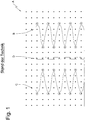
- the invention relates to a full-surface knit fabric for the production of weather-resistant materials with a plurality of courses formed from warp threads and rods, wherein the knitted fabric is provided with spaced microholes, which are arranged offset to one another.
- Such a prior art is for example from the DE 10 2011 008 054.6 the applicant known.
- a full-surface knit fabric for the production of weather-resistant fabrics, flags, advertising surfaces od.
- each course of the knitted fabric is provided with spaced microholes and that the micro holes of adjacent courses are arranged offset to each other.
- This knitted fabric of the prior art has in practice a good air passage, good drying properties and due to its homogeneity and structure in an excellent way also good digital printing properties, however, the durability of this knitted fabric is considered to be in need of improvement, especially with regard to the use as flag material.
- the object of the invention is to provide a new knit for the production of weather-resistant materials, which has the advantages of the above-mentioned prior art, but in addition also a greater resistance.
- the inventive advantage is that due to the larger number of warp threads per wale and per unit area a larger number of unmeshed crossing points are present in the knitted fabric according to the invention, in which the threads are superposed frictionally. Due to the large number of frictional connections within the knitted fabric, there is therefore no serious weakening of the knitwear even if one thread fails.
- each warp is not only two, but three wales involved, so the backing is much larger, so that when a thread is damaged, this is held in the knit structure.
- the full-surface knitted fabric is characterized in that the first guide bar an atlas laying 1,0 / 4,5 / 8,9 / 5,4, the second laying bar an atlas laying 8,9 / 5,4 / 1.0 / 4.5 and the third guide bar has a fringe coverage of 1.0 / 0.1.
- the solution is that the base rails are reversed after two courses.
- FIG. 1 First of all, from the prior art, an alignment pattern of a full-surface knitted fabric with a velvet weave (1.0 / 4.5) is shown.
- the lapping pattern A shows the yarn courses resulting from the lapping as well as from the movement of the basic rails B and C. (see left and right illustration), whereby the fabric structures produced thereby are merely intermeshed by the laying rail D, whereby the knitted fabric becomes the necessary one Stability should receive.
- Fig. 2 is a device for producing a full-surface knitted fabric of weather-resistant fabrics for flags, advertising surfaces od. Like., Hereinafter called knitting machine, designated by the reference numeral 10.
- the knitting machine 10 has two parallel arranged base rails 11 and 12, which move twice in opposite directions horizontally according to the directional arrows x 1 and x 2 during the kneading process.
- Each of the base rails 11 and 12 is provided with a plurality of hole needles 13.
- the knitting machine 10 is filled with a plurality of thread bobbins 14, wherein the threads 15 stored on each base rail 11 and 12 occupy only half of the hole needles 13.
- 20 to 36, preferably 28, hole needles 13 are arranged on the base rails 11 and 12 per inch (25.4 mm).
- the knitting machine 10 also has a third guide bar 16, which only the meshing of the.
- the Basic rails 11 and 12 made laying serves.
- the manufactured fabric 17 is able to absorb forces.
- the fabric 17 created by the knitting machine and moving in the direction y is ultimately rolled up on a drum 18.
- the fabric 17 has, as shown schematically, alternating courses of stitches 19 in which evenly spaced microholes 20 are present, and courses 21 having no microholes.
- the microholes 20 of adjacent rows of stitches 19 are offset from one another.
- the microholes 20 only have an area of less than 0.5 mm 2 .
- the knit fabric 17 from polyester yarns, preferably with a total dtex of 150, this results in a basis weight of about 150 g / m 2 .
- the lapping pattern 22 of a full-surface knitted fabric 17 is shown with an atlas binding.
- the shows Fig. 4 a greatly enlarged view of a section of the created by the knitting machine 10 fabric 17 can be seen next to the rows of stitches 19 with the equally spaced micro holes 20 each arranged therebetween mesh rows 21 having no micro holes 20, wherein moreover in the courses 19, the micro holes 20th each offset from one another.
- the knit 17 has a very uniform structure and homogeneity.
- the illustrated fabric 17 per m 2 actually has a number of 1,190 holes / dm 2 (about 119,000 holes / m 2 ), which ensure excellent passage of air.
Landscapes
- Engineering & Computer Science (AREA)
- Textile Engineering (AREA)
- Knitting Of Fabric (AREA)
Description
- Die Erfindung betrifft ein vollflächiges Gewirk zur Herstellung von witterungsbeständigen Stoffen mit einer Vielzahl von aus Kettfäden gebildeten Maschenreihen und Stäbchen, wobei das Gewirk mit beabstandeten Mikrolöchern versehen ist, die zueinander versetzt angeordnet sind.
- Ein derartiger Stand der Technik ist beispielsweise aus der
DE 10 2011 008 054.6 der Anmelderin bekannt. Darin ist ein vollflächiges Gewirk zur Herstellung von witterungsbeständigen Stoffen, Fahnen, Werbeflächen od. dgl. mit einer Vielzahl von Maschenreihen offenbart, bei der jede Maschenreihe des Gewirks mit beabstandeten Mikrolöchern versehen ist und dass die Mikrolöcher benachbarter Maschenreihen zueinander versetzt angeordnet sind. - Dieses Gewirk nach dem Stand der Technik weist in der Praxis einen guten Luftdurchgang, gute Trocknungseigenschaften und aufgrund seiner Homogenität sowie seiner Struktur auf hervorragende Weise auch gute Digitaldruckeigenschaften auf, jedoch wird die Beständigkeit dieses Gewirks insbesondere im Hinblick auf den Einsatz als Fahnenstoff als verbesserungswürdig angesehen.
- Die Aufgabe der Erfindung besteht deshalb darin, ein neues Gewirk zur Herstellung von witterungsbeständigen Stoffen zu schaffen, welches die Vorteile des oben genannten Standes der Technik aufweist, jedoch zusätzlich auch eine größere Beständigkeit.
- Die Lösung der Aufgabe ergibt sich aus den Merkmalen des Anspruchs 1.
- Entsprechende Bewetterungsversuche haben ergeben, dass das erfindungsgemäße Gewirk eine deutlich größere Beständigkeit aufweist, was insbesondere im Hinblick auf den Einsatz als Fahnenstoff von sehr großer Bedeutung ist.
- Der erfinderische Vorteil liegt darin, dass aufgrund der größeren Anzahl von Kettfäden pro Maschenstäbchen sowie pro Flächeneinheit eine größere Anzahl von unvermaschten Kreuzungspunkten im erfindungsgemäßen Gewirk vorhanden sind, in denen die Fäden reibschlüssig aufeinanderliegen. Aufgrund der großen Anzahl von reibschlüssigen Verbindungen innerhalb des Gewirks kommt es daher selbst bei Ausfall eines Fadens zu keiner gravierenden Schwächung des Gewirks.
- Darüber hinaus ist jeder Kettfaden nicht nur über zwei, sondern über drei Maschenstäbchen eingebunden, also die Unterlegung ist wesentlich größer, so dass bei einer Beschädigung eines Fadens dieser in der Wirkstruktur gehalten wird.
- Besonders bevorzugt ist eine Ausführungsform, bei der das vollflächige Gewirk dadurch gekennzeichnet ist, dass die erste Legeschiene eine Atlaslegung 1,0/4,5/8,9/5,4, die zweite Legeschiene eine Atlaslegung 8,9/5,4/1,0/4,5 und die dritte Legeschiene eine Fransenlegung 1,0/0,1 aufweist.
- Des Weiteren betrifft die Erfindung ein Verfahren zur Herstellung von einem vollflächigen Gewirk für witterungsbeständige Stoffe für Fahnen, Werbeflächen oder dergleichen mittels einer Wirkmaschine - mit zwei sich mindestens über eine Maschenreihe gegenläufig horizontal bewegenden, parallel angeordneten Grundlegeschienen, wobei an jeder Grundlegeschiene nur die Hälfte der Lochnadeln mit Fäden belegt ist,
- wobei die parallel angeordneten Grundlegeschienen eine versetzt angeordnete Lochnadelbelegung aufweisen und
- wobei durch mindestens eine dritte Legeschiene das Gewirk vermascht wird.
- Ausgehend von dem oben genannten Stand der Technik sowie der ebenfalls oben dargelegten Aufgabe besteht die Lösung darin, dass die Grundlegeschienen nach zwei Maschenreihen umkehren.
- Die Vorteile des erfindungsgemäßen Verfahrens ergeben sich aus den obigen Ausführungen zu den Vorteilen des erfindungsgemäßen Gewirks.
- Weitere Vorteile der Erfindung ergeben sich aus der nachfolgenden Beschreibung eines Ausführungsbeispiels. Es zeigen:
-
Fig. 1 eine Darstellung eines vollflächigen Gewirks mit einer Samtbindung (1,0/4,5) nach dem Stand der Technik, -
Fig. 2 eine schematische Darstellung einer Vorrichtung zur Herstellung eines vollflächigen Gewirks zur Herstellung von witterungsbeständigen Stoffen für Fahnen, Werbeflächen od. dgl., -
Fig. 3 eine Darstellung eines vollflächigen Gewirks mit einer Atlasbindung und -
Fig. 4 eine stark vergrößerte Abbildung des mit der Vorrichtung gemäßFig. 2 hergestellten Gewirks. - In der
Fig. 1 ist zunächst aus dem Stand der Technik ein Legungsbild eines vollflächigen Gewirks mit einer Samtbindung (1,0/4,5) dargestellt. In dem Legungsbild A sind die sich aus der Legung wie auch aus der Bewegung der Grundlegeschienen B und C ergebenden Fadenverläufe (s. linke und rechte Darstellung) zu erkennen, wobei die dadurch erzeugten Gewirkstrukturen durch die Legeschiene D lediglich vermascht werden, wodurch das Gewirk die notwendige Stabilität erhalten soll. - Auf nachteilige Weise hat sich jedoch herausgestellt, dass insbesondere beim Einsatz als Fahnenstoff eine ausreichende Stabilität nicht vorhanden ist, was offensichtlich an der geringen Anzahl von Kreuzungspunkten und der ebenfalls geringen Unterlegung liegt.
- In der
Fig. 2 ist eine Vorrichtung zur Herstellung eines vollflächigen Gewirks von witterungsbeständigen Stoffen für Fahnen, Werbeflächen od. dgl., nachfolgend kurz Wirkmaschine genannt, mit der Bezugsziffer 10 bezeichnet. - Die Wirkmaschine 10 weist zwei parallel angeordnete Grundlegeschienen 11 und 12 auf, die sich zweifach gegenläufig horizontal gemäß der Richtungspfeile x1 und x2 während des Wirkprozesses bewegen. Jede der Grundlegeschienen 11 und 12 ist mit einer Vielzahl von Lochnadeln 13 versehen. Darüber hinaus ist die Wirkmaschine 10 mit einer Vielzahl von Fadenspulen 14 besetzt, wobei die darauf gespeicherten Fäden 15 an jeder Grundlegeschiene 11 und 12 nur die Hälfte der Lochnadeln 13 belegen. Grundsätzlich sind auf den Grundlegeschienen 11 und 12 je Zoll (25,4 mm) 20 bis 36, vorzugsweise 28, Lochnadeln 13 angeordnet.
- Schließlich ist darüber hinaus die Lochnadelbelegung der parallel verlaufenden Grundlegeschienen 11 und 12 versetzt angeordnet.
- Letztlich weist die Wirkmaschine 10 auch noch eine dritte Legeschiene 16 auf, welche lediglich der Vermaschung der durch die Grundlegeschienen 11 und 12 erfolgten Legung dient. Dadurch wird das hergestellte Gewirk 17 in die Lage versetzt, Kräfte aufzunehmen.
- Das von der Wirkmaschine erstellte, sich in Richtung y bewegende Gewirk 17 wird letztlich auf eine Trommel 18 aufgerollt.
- Das Gewirk 17 weist - wie schematisch dargestellt - abwechselnd Maschenreihen 19 auf, in denen gleichmäßig beabstandete Mikrolöcher 20 vorhanden sind, und Maschenreihen 21, die keine Mikrolöcher aufweisen. Hinzu kommt, dass die Mikrolöcher 20 benachbarter Maschenreihen 19 versetzt zueinander angeordnet sind. Darüber hinaus weisen die Mikrolöcher 20 lediglich eine Fläche von weniger als 0,5 mm2 auf.
- Bei der Herstellung des Gewirks 17 aus Polyesterfäden, vorzugsweise mit einem Gesamt-Dtex von 150, ergibt sich dabei ein Flächengewicht von ca. 150 g/m2.
- In der
Fig. 3 ist das Legungsbild 22 eines vollflächigen Gewirks 17 mit einer Atlasbindung dargestellt. Im Einzelnen zeigt dieFig. 3 die sich aus der Legung wie aus der Bewegung der Grundlegeschienen 11 und 12 ergebenden Fadenverläufe (s. linke und rechte Darstellung), wobei die dadurch erzeugten Gewirkstrukturen durch die Legeschienen 16 lediglich vermascht werden, wodurch das Gewirk 17 die notwendige Stabilität erhält. - Darüber hinaus ist zu erkennen, dass beim erfindungsgemäßen Gewirk 17 nur jede zweite Maschenreihe 19 Mikrolöcher 20 aufweist, die jeweils an den so genannten Umkehrstellen 23 der Legeschienen 11/13 angeordnet sind, die bedeuten, dass an diesen Stellen Mikrolöcher 20 entstehen.
- Des Weiteren ist insbesondere auch im Vergleich zu
Fig. 1 eine deutlich größere Einbindung jedes Fadens beim erfindungsgemäßen Gewirk gemäßFig. 3 zu erkennen, welche sich aus dem Fadenverlauf von Umkehrstelle 23 zu Umkehrstelle 23 über neun Maschenstäbchen S hinweg ergibt. - Letztlich zeigt die
Fig. 4 eine stark vergrößerte Darstellung eines Ausschnitts des durch die Wirkmaschine 10 erstellten Gewirks 17. Man erkennt neben den Maschenreihen 19 mit den gleich beabstandeten Mikrolöchern 20 die jeweils dazwischen angeordneten Maschenreihen 21, die keine Mikrolöcher 20 aufweisen, wobei darüber hinaus in den Maschenreihen 19 die Mikrolöcher 20 jeweils zueinander versetzt angeordnet sind. Auf vorteilhafte Weise weist das Gewirk 17 eine sehr gleichmäßige Struktur und Homogenität auf. - Hervorzuheben ist, dass das dargestellte Gewirk 17 pro m2 tatsächlich eine Zahl von 1.190 Löchern/dm2 (ca. 119.000 Löcher/m2) aufweist, die einen hervorragenden Luftdurchgang gewährleisten.
- Darüber hinaus zeigt die
Fig. 4 , dass die ungefähre Breite a der Mikrolöcher 20 in etwa 0,9 mm und der Abstand A zwischen den Mikrolöchern 20 ungefähr 1,8 mm beträgt. Hierbei muss berücksichtigt werden, dass dies nur für das beispielhaft abgebildete, mit 28 Lochnadeln 13 je Zoll auf den Grundlegeschienen 11 und 12 hergestellte Gewirk 17 gilt. -
- 10
- Wirkmaschine
- 11
- Grundlegeschiene
- 12
- Grundlegeschiene
- 13
- Lochnadeln
- 14
- Fadenspulen
- 15
- Fäden
- 16
- Legeschiene
- 17
- Gewirk
- 18
- Trommel
- 19
- Maschenreihen mit Mikrolöchern
- 20
- Mikrolöcher
- 21
- Maschenreihen ohne Mikrolöcher
- 22
- Legungsbild
- 23
- Umkehrstelle
- 24
- Kreuzungspunkte
- A
- Legungsbild
- B
- Grundlegeschiene
- C
- Grundlegeschiene
- D
- Legeschiene
- a
- Abstand zwischen den Mikrolöchern 20
- x1
- Richtungspfeil
- x2
- Richtungspfeil
- S
- Maschenstäbchen
-
- 10
- Wirkmaschine
- 11
- Grundlegeschiene
- 12
- Grundlegeschiene
- 13
- Lochnadeln
- 14
- Fadenspulen
- 15
- Fäden
- 16
- Legeschiene
- 17
- Gewirk
- 18
- Trommel
- 19
- Maschenreihen mit Mikrolöchern
- 20
- Mikrolöcher
- 21
- Maschenreihen ohne Mikrolöcher
- 22
- Legungsbild
- 23
- Umkehrstelle
- 24
- Kreuzungspunkte
- A
- Legungsbild
- B
- Grundlegeschiene
- C
- Grundlegeschiene
- D
- Legeschiene
- a
- Abstand zwischen den Mikrolöchern 20
- x1
- Richtungspfeil
- x2
- Richtungspfeil
- S
- Maschenstäbchen
Claims (3)
- Vollflächiges Gewirk (17) zur Herstellung von witterungsbeständigen Stoffen mit einer Vielzahl von aus Kettfäden gebildeten Maschenreihen (19, 21) und Stäbchen, (S) wobei das Gewirk (17) mit beabstandeten Mikrolöchern (20) versehen ist, die zueinander versetzt angeordnet sind, jedes Maschenstäbchen (S) aus wenigstens vier Kettfäden besteht und der Materialeinsatz im Bereich der Maschenreihen (19, 21) mit und ohne Mikrolöcher (20) im Wesentlichen identisch ist , dadurch gekennzeichnet, dass nur jede zweite Maschenreihe (19) mit beabstandeten Mikrolöchern (20) versehen ist und das Gewirk (17) Atlasbindungen aufweist.
- Vollflächiges Gewirk (17) nach Anspruch1, dadurch gekennzeichnet, dass die erste Legeschiene (11) eine Atlaslegung 1,0/4,5/8,9/5,4, die zweite Legeschiene (12) eine Atlaslegung 8,9/5,4/1,0/4,5 und die dritte Legeschiene (16) eine Fransenlegung 1,0/0,1 aufweist.
- Verfahren zur Herstellung eines vollflächigen Gewirks (17) für witterungsbeständige Stoffe für Fahnen, Werbeflächen oder dergleichen mittels einer Wirkmaschine (10)- mit zwei sich mindestens über eine Maschenreihe gegenläufig horizontal bewegenden, parallel angeordneten Grundlegeschienen, (11, 12) wobei an jeder Grundlegeschiene (11, 12) nur die Hälfte der Lochnadeln (13) mit Fäden belegt ist,- wobei die parallel angeordneten Grundlegeschienen (11, 12) eine versetzt angeordnete Lochnadelbelegung aufweisen und- wobei durch mindestens eine dritte Legeschiene (16) das Gewirk (17) vermascht wird,
dadurch gekennzeichnet, dass die Grundlegeschienen (11, 12) nach zwei Maschenreihen (19, 21) umkehren.
Applications Claiming Priority (1)
| Application Number | Priority Date | Filing Date | Title |
|---|---|---|---|
| DE102014003275.2A DE102014003275B3 (de) | 2014-03-12 | 2014-03-12 | Vollflächiges Gewirk zur Herstellung von witterungsbeständigen Stoffen |
Publications (2)
| Publication Number | Publication Date |
|---|---|
| EP2918714A1 EP2918714A1 (de) | 2015-09-16 |
| EP2918714B1 true EP2918714B1 (de) | 2016-12-21 |
Family
ID=52468872
Family Applications (1)
| Application Number | Title | Priority Date | Filing Date |
|---|---|---|---|
| EP15000251.7A Not-in-force EP2918714B1 (de) | 2014-03-12 | 2015-01-28 | Vollflächiges Gewirk zur Herstellung von witterungsbeständigen Stoffen und Verfahren zu seiner Herstellung |
Country Status (2)
| Country | Link |
|---|---|
| EP (1) | EP2918714B1 (de) |
| DE (1) | DE102014003275B3 (de) |
Family Cites Families (5)
| Publication number | Priority date | Publication date | Assignee | Title |
|---|---|---|---|---|
| ATE50076T1 (de) * | 1985-04-16 | 1990-02-15 | Fahnenfleck | Gewirk fuer flaggen, wimpel, banner und dergl. |
| DE4425308C1 (de) * | 1994-07-18 | 1995-09-21 | Aurich Gmbh Geb | Vollflächiges Gewirke zur Herstellung von witterungsbeständigen Stoffen für Fahnen, Werbeflächen od. dgl. |
| NL1015685C2 (nl) * | 2000-07-12 | 2002-01-23 | Faber Groep N V | Doek voor een vlag of dergelijke, alsmede werkwijze voor vervaardiging hiervan. |
| DE20320868U1 (de) * | 2002-03-28 | 2005-04-28 | Berliner Stoffdruckerei Gmbh | Fahne aus einem textilen Flächengebilde |
| DE202011001211U1 (de) * | 2011-01-06 | 2011-03-31 | Gebrüder Aurich GmbH | Vollflächiges Gewirk zur Herstellung von witterungsbeständigen Stoffen für Fahnen, Werbeflächen od. dgl. |
-
2014
- 2014-03-12 DE DE102014003275.2A patent/DE102014003275B3/de not_active Expired - Fee Related
-
2015
- 2015-01-28 EP EP15000251.7A patent/EP2918714B1/de not_active Not-in-force
Non-Patent Citations (1)
| Title |
|---|
| None * |
Also Published As
| Publication number | Publication date |
|---|---|
| EP2918714A1 (de) | 2015-09-16 |
| DE102014003275B3 (de) | 2015-09-10 |
Similar Documents
| Publication | Publication Date | Title |
|---|---|---|
| EP3707299B1 (de) | Abstandsgestrick | |
| DE102013012323B4 (de) | Verfahren zum Stricken von Gestricken | |
| DE3909013C2 (de) | ||
| EP0547332B1 (de) | Kettenwirkware sowie Kettenwirkmaschine und Verfahren zu ihrer Herstellung | |
| DE10026405A1 (de) | Abstandsgewirke und Vorrichtung zu seiner Herstellung | |
| DE102011008054A1 (de) | Vollflächiges Gewirk zur Herstellung von witterungsbeständigen Stoffen für Fahnen, Werbeflächen od. dgl. sowie ein Verfahren zur Herstellung des oben genannten Gewirkes | |
| DE19647508C1 (de) | Verfahren und Kettenwirkmaschine zur Herstellung von Polware | |
| DE102013014586B4 (de) | Knotenlos gewirktes Netz mit diagonalem Schussfadenverlauf und Verfahren zur Herstellung | |
| EP2770097B1 (de) | Verfahren zur herstellung einer schlingenware, kettenwirkmaschine und schieberbarre | |
| DE202014002124U1 (de) | Vollflächiges Gewirk zur Herstellung von witterungsbeständigen Stoffen | |
| EP0798688B1 (de) | Nicht-vollflächiges Gewirk für Flaggen, Wimpel, Banner und dergleichen | |
| DE102014003275B3 (de) | Vollflächiges Gewirk zur Herstellung von witterungsbeständigen Stoffen | |
| EP2551392B1 (de) | Verfahren zur Herstellung eines Gestricks mit Zierstichen | |
| DE4312706C2 (de) | Kettenwirkware mit Pol sowie Verfahren und Kettenwirkmaschine zu deren Herstellung | |
| DE102011016885B3 (de) | Textile Struktur für hinterleuchtete Werbeelemente sowie Verfahren zur Herstellung | |
| CH644410A5 (de) | Verfahren und kettenwirkmaschine zur herstellung eines gemusterten polschlingengewirkes. | |
| WO2016091552A1 (de) | Rundstrickmaschine | |
| DE202018105243U1 (de) | Fahnenstoff | |
| EP3002353A1 (de) | Abstandsgewirke und Verfahren zum Herstellen eines Abstandsgewirkes | |
| DE102011008011B4 (de) | Vollflächiges Gewirk aus texturierten Kunstfäden zur Herstellung von chirurgischen Abdecktüchern und Operationskleidung sowie ein Verfahren zur Herstellung des oben genannten Gewirkes | |
| DE1585082A1 (de) | Kettenwirkware,insbesondere Gardinenstoff,sowie Verfahren und Maschine zu ihrer Herstellung | |
| EP0228660A1 (de) | Kettenwirkware mit einem Warengrund, bestehend aus einer Trikotlegung und einer Fransenlegung sowie eingewirkten Polschlaufen | |
| DE202013002770U1 (de) | Vollflächiges Gewirk für den Einsatz als witterungsbeständiger Stoff für Fahnen, Werbeflächen oder dergleichen | |
| DE3734416C2 (de) | Verfahren zur Herstellung eines textilen Flächengebildes, wie Häkelborte | |
| EP3358057A1 (de) | Verfahren zum herstellen einer wirkware und wirkware |
Legal Events
| Date | Code | Title | Description |
|---|---|---|---|
| PUAI | Public reference made under article 153(3) epc to a published international application that has entered the european phase |
Free format text: ORIGINAL CODE: 0009012 |
|
| AK | Designated contracting states |
Kind code of ref document: A1 Designated state(s): AL AT BE BG CH CY CZ DE DK EE ES FI FR GB GR HR HU IE IS IT LI LT LU LV MC MK MT NL NO PL PT RO RS SE SI SK SM TR |
|
| AX | Request for extension of the european patent |
Extension state: BA ME |
|
| 17P | Request for examination filed |
Effective date: 20151014 |
|
| RBV | Designated contracting states (corrected) |
Designated state(s): AL AT BE BG CH CY CZ DE DK EE ES FI FR GB GR HR HU IE IS IT LI LT LU LV MC MK MT NL NO PL PT RO RS SE SI SK SM TR |
|
| GRAP | Despatch of communication of intention to grant a patent |
Free format text: ORIGINAL CODE: EPIDOSNIGR1 |
|
| RIC1 | Information provided on ipc code assigned before grant |
Ipc: G09F 17/00 20060101ALN20160617BHEP Ipc: D04B 21/10 20060101AFI20160617BHEP |
|
| RIC1 | Information provided on ipc code assigned before grant |
Ipc: D04B 21/10 20060101AFI20160628BHEP Ipc: G09F 17/00 20060101ALN20160628BHEP |
|
| INTG | Intention to grant announced |
Effective date: 20160720 |
|
| GRAS | Grant fee paid |
Free format text: ORIGINAL CODE: EPIDOSNIGR3 |
|
| STAA | Information on the status of an ep patent application or granted ep patent |
Free format text: STATUS: GRANT OF PATENT IS INTENDED |
|
| GRAA | (expected) grant |
Free format text: ORIGINAL CODE: 0009210 |
|
| STAA | Information on the status of an ep patent application or granted ep patent |
Free format text: STATUS: THE PATENT HAS BEEN GRANTED |
|
| RBV | Designated contracting states (corrected) |
Designated state(s): AL AT BE BG CH CY CZ DK EE ES FI FR GB GR HR HU IE IS IT LI LT LU LV MC MK MT NL NO PL PT RO RS SE SI SK SM TR |
|
| REG | Reference to a national code |
Ref country code: DE Ref legal event code: R108 |
|
| AK | Designated contracting states |
Kind code of ref document: B1 Designated state(s): AL AT BE BG CH CY CZ DK EE ES FI FR GB GR HR HU IE IS IT LI LT LU LV MC MK MT NL NO PL PT RO RS SE SI SK SM TR |
|
| REG | Reference to a national code |
Ref country code: GB Ref legal event code: FG4D Free format text: NOT ENGLISH |
|
| REG | Reference to a national code |
Ref country code: CH Ref legal event code: EP |
|
| REG | Reference to a national code |
Ref country code: IE Ref legal event code: FG4D Free format text: LANGUAGE OF EP DOCUMENT: GERMAN |
|
| REG | Reference to a national code |
Ref country code: AT Ref legal event code: REF Ref document number: 855612 Country of ref document: AT Kind code of ref document: T Effective date: 20170115 |
|
| REG | Reference to a national code |
Ref country code: FR Ref legal event code: PLFP Year of fee payment: 3 |
|
| PG25 | Lapsed in a contracting state [announced via postgrant information from national office to epo] |
Ref country code: LV Free format text: LAPSE BECAUSE OF FAILURE TO SUBMIT A TRANSLATION OF THE DESCRIPTION OR TO PAY THE FEE WITHIN THE PRESCRIBED TIME-LIMIT Effective date: 20161221 |
|
| REG | Reference to a national code |
Ref country code: NL Ref legal event code: FP |
|
| REG | Reference to a national code |
Ref country code: LT Ref legal event code: MG4D |
|
| PG25 | Lapsed in a contracting state [announced via postgrant information from national office to epo] |
Ref country code: LT Free format text: LAPSE BECAUSE OF FAILURE TO SUBMIT A TRANSLATION OF THE DESCRIPTION OR TO PAY THE FEE WITHIN THE PRESCRIBED TIME-LIMIT Effective date: 20161221 Ref country code: SE Free format text: LAPSE BECAUSE OF FAILURE TO SUBMIT A TRANSLATION OF THE DESCRIPTION OR TO PAY THE FEE WITHIN THE PRESCRIBED TIME-LIMIT Effective date: 20161221 Ref country code: NO Free format text: LAPSE BECAUSE OF FAILURE TO SUBMIT A TRANSLATION OF THE DESCRIPTION OR TO PAY THE FEE WITHIN THE PRESCRIBED TIME-LIMIT Effective date: 20170321 Ref country code: GR Free format text: LAPSE BECAUSE OF FAILURE TO SUBMIT A TRANSLATION OF THE DESCRIPTION OR TO PAY THE FEE WITHIN THE PRESCRIBED TIME-LIMIT Effective date: 20170322 |
|
| PG25 | Lapsed in a contracting state [announced via postgrant information from national office to epo] |
Ref country code: HR Free format text: LAPSE BECAUSE OF FAILURE TO SUBMIT A TRANSLATION OF THE DESCRIPTION OR TO PAY THE FEE WITHIN THE PRESCRIBED TIME-LIMIT Effective date: 20161221 Ref country code: RS Free format text: LAPSE BECAUSE OF FAILURE TO SUBMIT A TRANSLATION OF THE DESCRIPTION OR TO PAY THE FEE WITHIN THE PRESCRIBED TIME-LIMIT Effective date: 20161221 Ref country code: FI Free format text: LAPSE BECAUSE OF FAILURE TO SUBMIT A TRANSLATION OF THE DESCRIPTION OR TO PAY THE FEE WITHIN THE PRESCRIBED TIME-LIMIT Effective date: 20161221 |
|
| PG25 | Lapsed in a contracting state [announced via postgrant information from national office to epo] |
Ref country code: EE Free format text: LAPSE BECAUSE OF FAILURE TO SUBMIT A TRANSLATION OF THE DESCRIPTION OR TO PAY THE FEE WITHIN THE PRESCRIBED TIME-LIMIT Effective date: 20161221 Ref country code: RO Free format text: LAPSE BECAUSE OF FAILURE TO SUBMIT A TRANSLATION OF THE DESCRIPTION OR TO PAY THE FEE WITHIN THE PRESCRIBED TIME-LIMIT Effective date: 20161221 Ref country code: SK Free format text: LAPSE BECAUSE OF FAILURE TO SUBMIT A TRANSLATION OF THE DESCRIPTION OR TO PAY THE FEE WITHIN THE PRESCRIBED TIME-LIMIT Effective date: 20161221 Ref country code: CZ Free format text: LAPSE BECAUSE OF FAILURE TO SUBMIT A TRANSLATION OF THE DESCRIPTION OR TO PAY THE FEE WITHIN THE PRESCRIBED TIME-LIMIT Effective date: 20161221 Ref country code: IS Free format text: LAPSE BECAUSE OF FAILURE TO SUBMIT A TRANSLATION OF THE DESCRIPTION OR TO PAY THE FEE WITHIN THE PRESCRIBED TIME-LIMIT Effective date: 20170421 |
|
| PG25 | Lapsed in a contracting state [announced via postgrant information from national office to epo] |
Ref country code: PL Free format text: LAPSE BECAUSE OF FAILURE TO SUBMIT A TRANSLATION OF THE DESCRIPTION OR TO PAY THE FEE WITHIN THE PRESCRIBED TIME-LIMIT Effective date: 20161221 Ref country code: ES Free format text: LAPSE BECAUSE OF FAILURE TO SUBMIT A TRANSLATION OF THE DESCRIPTION OR TO PAY THE FEE WITHIN THE PRESCRIBED TIME-LIMIT Effective date: 20161221 Ref country code: PT Free format text: LAPSE BECAUSE OF FAILURE TO SUBMIT A TRANSLATION OF THE DESCRIPTION OR TO PAY THE FEE WITHIN THE PRESCRIBED TIME-LIMIT Effective date: 20170421 Ref country code: IT Free format text: LAPSE BECAUSE OF FAILURE TO SUBMIT A TRANSLATION OF THE DESCRIPTION OR TO PAY THE FEE WITHIN THE PRESCRIBED TIME-LIMIT Effective date: 20161221 Ref country code: BG Free format text: LAPSE BECAUSE OF FAILURE TO SUBMIT A TRANSLATION OF THE DESCRIPTION OR TO PAY THE FEE WITHIN THE PRESCRIBED TIME-LIMIT Effective date: 20170321 Ref country code: SM Free format text: LAPSE BECAUSE OF FAILURE TO SUBMIT A TRANSLATION OF THE DESCRIPTION OR TO PAY THE FEE WITHIN THE PRESCRIBED TIME-LIMIT Effective date: 20161221 |
|
| PG25 | Lapsed in a contracting state [announced via postgrant information from national office to epo] |
Ref country code: MC Free format text: LAPSE BECAUSE OF FAILURE TO SUBMIT A TRANSLATION OF THE DESCRIPTION OR TO PAY THE FEE WITHIN THE PRESCRIBED TIME-LIMIT Effective date: 20161221 |
|
| PLBE | No opposition filed within time limit |
Free format text: ORIGINAL CODE: 0009261 |
|
| STAA | Information on the status of an ep patent application or granted ep patent |
Free format text: STATUS: NO OPPOSITION FILED WITHIN TIME LIMIT |
|
| REG | Reference to a national code |
Ref country code: IE Ref legal event code: MM4A |
|
| 26N | No opposition filed |
Effective date: 20170922 |
|
| PG25 | Lapsed in a contracting state [announced via postgrant information from national office to epo] |
Ref country code: DK Free format text: LAPSE BECAUSE OF FAILURE TO SUBMIT A TRANSLATION OF THE DESCRIPTION OR TO PAY THE FEE WITHIN THE PRESCRIBED TIME-LIMIT Effective date: 20161221 Ref country code: LU Free format text: LAPSE BECAUSE OF NON-PAYMENT OF DUE FEES Effective date: 20170128 |
|
| REG | Reference to a national code |
Ref country code: FR Ref legal event code: PLFP Year of fee payment: 4 |
|
| PG25 | Lapsed in a contracting state [announced via postgrant information from national office to epo] |
Ref country code: IE Free format text: LAPSE BECAUSE OF NON-PAYMENT OF DUE FEES Effective date: 20170128 Ref country code: SI Free format text: LAPSE BECAUSE OF FAILURE TO SUBMIT A TRANSLATION OF THE DESCRIPTION OR TO PAY THE FEE WITHIN THE PRESCRIBED TIME-LIMIT Effective date: 20161221 |
|
| REG | Reference to a national code |
Ref country code: CH Ref legal event code: PL |
|
| PG25 | Lapsed in a contracting state [announced via postgrant information from national office to epo] |
Ref country code: MT Free format text: LAPSE BECAUSE OF FAILURE TO SUBMIT A TRANSLATION OF THE DESCRIPTION OR TO PAY THE FEE WITHIN THE PRESCRIBED TIME-LIMIT Effective date: 20161221 |
|
| PG25 | Lapsed in a contracting state [announced via postgrant information from national office to epo] |
Ref country code: LI Free format text: LAPSE BECAUSE OF NON-PAYMENT OF DUE FEES Effective date: 20180131 Ref country code: CH Free format text: LAPSE BECAUSE OF NON-PAYMENT OF DUE FEES Effective date: 20180131 |
|
| PG25 | Lapsed in a contracting state [announced via postgrant information from national office to epo] |
Ref country code: HU Free format text: LAPSE BECAUSE OF FAILURE TO SUBMIT A TRANSLATION OF THE DESCRIPTION OR TO PAY THE FEE WITHIN THE PRESCRIBED TIME-LIMIT; INVALID AB INITIO Effective date: 20150128 |
|
| PG25 | Lapsed in a contracting state [announced via postgrant information from national office to epo] |
Ref country code: CY Free format text: LAPSE BECAUSE OF FAILURE TO SUBMIT A TRANSLATION OF THE DESCRIPTION OR TO PAY THE FEE WITHIN THE PRESCRIBED TIME-LIMIT Effective date: 20161221 |
|
| PG25 | Lapsed in a contracting state [announced via postgrant information from national office to epo] |
Ref country code: MK Free format text: LAPSE BECAUSE OF FAILURE TO SUBMIT A TRANSLATION OF THE DESCRIPTION OR TO PAY THE FEE WITHIN THE PRESCRIBED TIME-LIMIT Effective date: 20161221 |
|
| PG25 | Lapsed in a contracting state [announced via postgrant information from national office to epo] |
Ref country code: TR Free format text: LAPSE BECAUSE OF FAILURE TO SUBMIT A TRANSLATION OF THE DESCRIPTION OR TO PAY THE FEE WITHIN THE PRESCRIBED TIME-LIMIT Effective date: 20161221 |
|
| PGFP | Annual fee paid to national office [announced via postgrant information from national office to epo] |
Ref country code: GB Payment date: 20200127 Year of fee payment: 6 Ref country code: NL Payment date: 20200122 Year of fee payment: 6 |
|
| PGFP | Annual fee paid to national office [announced via postgrant information from national office to epo] |
Ref country code: BE Payment date: 20200122 Year of fee payment: 6 |
|
| PGFP | Annual fee paid to national office [announced via postgrant information from national office to epo] |
Ref country code: FR Payment date: 20200123 Year of fee payment: 6 |
|
| PG25 | Lapsed in a contracting state [announced via postgrant information from national office to epo] |
Ref country code: AL Free format text: LAPSE BECAUSE OF FAILURE TO SUBMIT A TRANSLATION OF THE DESCRIPTION OR TO PAY THE FEE WITHIN THE PRESCRIBED TIME-LIMIT Effective date: 20161221 |
|
| REG | Reference to a national code |
Ref country code: AT Ref legal event code: MM01 Ref document number: 855612 Country of ref document: AT Kind code of ref document: T Effective date: 20200128 |
|
| PG25 | Lapsed in a contracting state [announced via postgrant information from national office to epo] |
Ref country code: AT Free format text: LAPSE BECAUSE OF NON-PAYMENT OF DUE FEES Effective date: 20200128 |
|
| REG | Reference to a national code |
Ref country code: NL Ref legal event code: MM Effective date: 20210201 |
|
| GBPC | Gb: european patent ceased through non-payment of renewal fee |
Effective date: 20210128 |
|
| REG | Reference to a national code |
Ref country code: BE Ref legal event code: MM Effective date: 20210131 |
|
| PG25 | Lapsed in a contracting state [announced via postgrant information from national office to epo] |
Ref country code: NL Free format text: LAPSE BECAUSE OF NON-PAYMENT OF DUE FEES Effective date: 20210201 Ref country code: FR Free format text: LAPSE BECAUSE OF NON-PAYMENT OF DUE FEES Effective date: 20210131 |
|
| PG25 | Lapsed in a contracting state [announced via postgrant information from national office to epo] |
Ref country code: GB Free format text: LAPSE BECAUSE OF NON-PAYMENT OF DUE FEES Effective date: 20210128 |
|
| PG25 | Lapsed in a contracting state [announced via postgrant information from national office to epo] |
Ref country code: BE Free format text: LAPSE BECAUSE OF NON-PAYMENT OF DUE FEES Effective date: 20210131 |