EP2497083B1 - Photopolymer-formulierung mit verschiedenen schreibcomonomeren - Google Patents
Photopolymer-formulierung mit verschiedenen schreibcomonomeren Download PDFInfo
- Publication number
- EP2497083B1 EP2497083B1 EP10773075.6A EP10773075A EP2497083B1 EP 2497083 B1 EP2497083 B1 EP 2497083B1 EP 10773075 A EP10773075 A EP 10773075A EP 2497083 B1 EP2497083 B1 EP 2497083B1
- Authority
- EP
- European Patent Office
- Prior art keywords
- acrylate
- weight
- photopolymer formulation
- mol
- formulation according
- Prior art date
- Legal status (The legal status is an assumption and is not a legal conclusion. Google has not performed a legal analysis and makes no representation as to the accuracy of the status listed.)
- Active
Links
Images
Classifications
-
- G—PHYSICS
- G11—INFORMATION STORAGE
- G11B—INFORMATION STORAGE BASED ON RELATIVE MOVEMENT BETWEEN RECORD CARRIER AND TRANSDUCER
- G11B7/00—Recording or reproducing by optical means, e.g. recording using a thermal beam of optical radiation by modifying optical properties or the physical structure, reproducing using an optical beam at lower power by sensing optical properties; Record carriers therefor
- G11B7/24—Record carriers characterised by shape, structure or physical properties, or by the selection of the material
- G11B7/241—Record carriers characterised by shape, structure or physical properties, or by the selection of the material characterised by the selection of the material
- G11B7/242—Record carriers characterised by shape, structure or physical properties, or by the selection of the material characterised by the selection of the material of recording layers
- G11B7/244—Record carriers characterised by shape, structure or physical properties, or by the selection of the material characterised by the selection of the material of recording layers comprising organic materials only
- G11B7/245—Record carriers characterised by shape, structure or physical properties, or by the selection of the material characterised by the selection of the material of recording layers comprising organic materials only containing a polymeric component
-
- C—CHEMISTRY; METALLURGY
- C08—ORGANIC MACROMOLECULAR COMPOUNDS; THEIR PREPARATION OR CHEMICAL WORKING-UP; COMPOSITIONS BASED THEREON
- C08G—MACROMOLECULAR COMPOUNDS OBTAINED OTHERWISE THAN BY REACTIONS ONLY INVOLVING UNSATURATED CARBON-TO-CARBON BONDS
- C08G18/00—Polymeric products of isocyanates or isothiocyanates
- C08G18/06—Polymeric products of isocyanates or isothiocyanates with compounds having active hydrogen
- C08G18/08—Processes
- C08G18/10—Prepolymer processes involving reaction of isocyanates or isothiocyanates with compounds having active hydrogen in a first reaction step
-
- C—CHEMISTRY; METALLURGY
- C08—ORGANIC MACROMOLECULAR COMPOUNDS; THEIR PREPARATION OR CHEMICAL WORKING-UP; COMPOSITIONS BASED THEREON
- C08G—MACROMOLECULAR COMPOUNDS OBTAINED OTHERWISE THAN BY REACTIONS ONLY INVOLVING UNSATURATED CARBON-TO-CARBON BONDS
- C08G18/00—Polymeric products of isocyanates or isothiocyanates
- C08G18/06—Polymeric products of isocyanates or isothiocyanates with compounds having active hydrogen
- C08G18/28—Polymeric products of isocyanates or isothiocyanates with compounds having active hydrogen characterised by the compounds used containing active hydrogen
- C08G18/40—High-molecular-weight compounds
- C08G18/42—Polycondensates having carboxylic or carbonic ester groups in the main chain
- C08G18/4236—Polycondensates having carboxylic or carbonic ester groups in the main chain containing only aliphatic groups
- C08G18/4238—Polycondensates having carboxylic or carbonic ester groups in the main chain containing only aliphatic groups derived from dicarboxylic acids and dialcohols
-
- C—CHEMISTRY; METALLURGY
- C08—ORGANIC MACROMOLECULAR COMPOUNDS; THEIR PREPARATION OR CHEMICAL WORKING-UP; COMPOSITIONS BASED THEREON
- C08G—MACROMOLECULAR COMPOUNDS OBTAINED OTHERWISE THAN BY REACTIONS ONLY INVOLVING UNSATURATED CARBON-TO-CARBON BONDS
- C08G18/00—Polymeric products of isocyanates or isothiocyanates
- C08G18/06—Polymeric products of isocyanates or isothiocyanates with compounds having active hydrogen
- C08G18/28—Polymeric products of isocyanates or isothiocyanates with compounds having active hydrogen characterised by the compounds used containing active hydrogen
- C08G18/40—High-molecular-weight compounds
- C08G18/42—Polycondensates having carboxylic or carbonic ester groups in the main chain
- C08G18/4266—Polycondensates having carboxylic or carbonic ester groups in the main chain prepared from hydroxycarboxylic acids and/or lactones
- C08G18/4269—Lactones
- C08G18/4277—Caprolactone and/or substituted caprolactone
-
- C—CHEMISTRY; METALLURGY
- C08—ORGANIC MACROMOLECULAR COMPOUNDS; THEIR PREPARATION OR CHEMICAL WORKING-UP; COMPOSITIONS BASED THEREON
- C08G—MACROMOLECULAR COMPOUNDS OBTAINED OTHERWISE THAN BY REACTIONS ONLY INVOLVING UNSATURATED CARBON-TO-CARBON BONDS
- C08G18/00—Polymeric products of isocyanates or isothiocyanates
- C08G18/06—Polymeric products of isocyanates or isothiocyanates with compounds having active hydrogen
- C08G18/28—Polymeric products of isocyanates or isothiocyanates with compounds having active hydrogen characterised by the compounds used containing active hydrogen
- C08G18/40—High-molecular-weight compounds
- C08G18/42—Polycondensates having carboxylic or carbonic ester groups in the main chain
- C08G18/44—Polycarbonates
-
- C—CHEMISTRY; METALLURGY
- C08—ORGANIC MACROMOLECULAR COMPOUNDS; THEIR PREPARATION OR CHEMICAL WORKING-UP; COMPOSITIONS BASED THEREON
- C08G—MACROMOLECULAR COMPOUNDS OBTAINED OTHERWISE THAN BY REACTIONS ONLY INVOLVING UNSATURATED CARBON-TO-CARBON BONDS
- C08G18/00—Polymeric products of isocyanates or isothiocyanates
- C08G18/06—Polymeric products of isocyanates or isothiocyanates with compounds having active hydrogen
- C08G18/28—Polymeric products of isocyanates or isothiocyanates with compounds having active hydrogen characterised by the compounds used containing active hydrogen
- C08G18/40—High-molecular-weight compounds
- C08G18/48—Polyethers
- C08G18/4825—Polyethers containing two hydroxy groups
-
- C—CHEMISTRY; METALLURGY
- C08—ORGANIC MACROMOLECULAR COMPOUNDS; THEIR PREPARATION OR CHEMICAL WORKING-UP; COMPOSITIONS BASED THEREON
- C08G—MACROMOLECULAR COMPOUNDS OBTAINED OTHERWISE THAN BY REACTIONS ONLY INVOLVING UNSATURATED CARBON-TO-CARBON BONDS
- C08G18/00—Polymeric products of isocyanates or isothiocyanates
- C08G18/06—Polymeric products of isocyanates or isothiocyanates with compounds having active hydrogen
- C08G18/28—Polymeric products of isocyanates or isothiocyanates with compounds having active hydrogen characterised by the compounds used containing active hydrogen
- C08G18/40—High-molecular-weight compounds
- C08G18/48—Polyethers
- C08G18/4833—Polyethers containing oxyethylene units
- C08G18/4837—Polyethers containing oxyethylene units and other oxyalkylene units
- C08G18/485—Polyethers containing oxyethylene units and other oxyalkylene units containing mixed oxyethylene-oxypropylene or oxyethylene-higher oxyalkylene end groups
-
- C—CHEMISTRY; METALLURGY
- C08—ORGANIC MACROMOLECULAR COMPOUNDS; THEIR PREPARATION OR CHEMICAL WORKING-UP; COMPOSITIONS BASED THEREON
- C08G—MACROMOLECULAR COMPOUNDS OBTAINED OTHERWISE THAN BY REACTIONS ONLY INVOLVING UNSATURATED CARBON-TO-CARBON BONDS
- C08G18/00—Polymeric products of isocyanates or isothiocyanates
- C08G18/06—Polymeric products of isocyanates or isothiocyanates with compounds having active hydrogen
- C08G18/28—Polymeric products of isocyanates or isothiocyanates with compounds having active hydrogen characterised by the compounds used containing active hydrogen
- C08G18/40—High-molecular-weight compounds
- C08G18/48—Polyethers
- C08G18/4854—Polyethers containing oxyalkylene groups having four carbon atoms in the alkylene group
-
- C—CHEMISTRY; METALLURGY
- C08—ORGANIC MACROMOLECULAR COMPOUNDS; THEIR PREPARATION OR CHEMICAL WORKING-UP; COMPOSITIONS BASED THEREON
- C08G—MACROMOLECULAR COMPOUNDS OBTAINED OTHERWISE THAN BY REACTIONS ONLY INVOLVING UNSATURATED CARBON-TO-CARBON BONDS
- C08G18/00—Polymeric products of isocyanates or isothiocyanates
- C08G18/06—Polymeric products of isocyanates or isothiocyanates with compounds having active hydrogen
- C08G18/70—Polymeric products of isocyanates or isothiocyanates with compounds having active hydrogen characterised by the isocyanates or isothiocyanates used
- C08G18/72—Polyisocyanates or polyisothiocyanates
- C08G18/77—Polyisocyanates or polyisothiocyanates having heteroatoms in addition to the isocyanate or isothiocyanate nitrogen and oxygen or sulfur
- C08G18/78—Nitrogen
- C08G18/7806—Nitrogen containing -N-C=0 groups
- C08G18/7818—Nitrogen containing -N-C=0 groups containing ureum or ureum derivative groups
- C08G18/7831—Nitrogen containing -N-C=0 groups containing ureum or ureum derivative groups containing biuret groups
-
- C—CHEMISTRY; METALLURGY
- C08—ORGANIC MACROMOLECULAR COMPOUNDS; THEIR PREPARATION OR CHEMICAL WORKING-UP; COMPOSITIONS BASED THEREON
- C08G—MACROMOLECULAR COMPOUNDS OBTAINED OTHERWISE THAN BY REACTIONS ONLY INVOLVING UNSATURATED CARBON-TO-CARBON BONDS
- C08G18/00—Polymeric products of isocyanates or isothiocyanates
- C08G18/06—Polymeric products of isocyanates or isothiocyanates with compounds having active hydrogen
- C08G18/70—Polymeric products of isocyanates or isothiocyanates with compounds having active hydrogen characterised by the isocyanates or isothiocyanates used
- C08G18/72—Polyisocyanates or polyisothiocyanates
- C08G18/77—Polyisocyanates or polyisothiocyanates having heteroatoms in addition to the isocyanate or isothiocyanate nitrogen and oxygen or sulfur
- C08G18/78—Nitrogen
- C08G18/7806—Nitrogen containing -N-C=0 groups
- C08G18/7818—Nitrogen containing -N-C=0 groups containing ureum or ureum derivative groups
- C08G18/7837—Nitrogen containing -N-C=0 groups containing ureum or ureum derivative groups containing allophanate groups
-
- C—CHEMISTRY; METALLURGY
- C08—ORGANIC MACROMOLECULAR COMPOUNDS; THEIR PREPARATION OR CHEMICAL WORKING-UP; COMPOSITIONS BASED THEREON
- C08G—MACROMOLECULAR COMPOUNDS OBTAINED OTHERWISE THAN BY REACTIONS ONLY INVOLVING UNSATURATED CARBON-TO-CARBON BONDS
- C08G18/00—Polymeric products of isocyanates or isothiocyanates
- C08G18/06—Polymeric products of isocyanates or isothiocyanates with compounds having active hydrogen
- C08G18/70—Polymeric products of isocyanates or isothiocyanates with compounds having active hydrogen characterised by the isocyanates or isothiocyanates used
- C08G18/72—Polyisocyanates or polyisothiocyanates
- C08G18/77—Polyisocyanates or polyisothiocyanates having heteroatoms in addition to the isocyanate or isothiocyanate nitrogen and oxygen or sulfur
- C08G18/78—Nitrogen
- C08G18/7875—Nitrogen containing heterocyclic rings having at least one nitrogen atom in the ring
- C08G18/7887—Nitrogen containing heterocyclic rings having at least one nitrogen atom in the ring having two nitrogen atoms in the ring
-
- C—CHEMISTRY; METALLURGY
- C08—ORGANIC MACROMOLECULAR COMPOUNDS; THEIR PREPARATION OR CHEMICAL WORKING-UP; COMPOSITIONS BASED THEREON
- C08G—MACROMOLECULAR COMPOUNDS OBTAINED OTHERWISE THAN BY REACTIONS ONLY INVOLVING UNSATURATED CARBON-TO-CARBON BONDS
- C08G18/00—Polymeric products of isocyanates or isothiocyanates
- C08G18/06—Polymeric products of isocyanates or isothiocyanates with compounds having active hydrogen
- C08G18/70—Polymeric products of isocyanates or isothiocyanates with compounds having active hydrogen characterised by the isocyanates or isothiocyanates used
- C08G18/72—Polyisocyanates or polyisothiocyanates
- C08G18/77—Polyisocyanates or polyisothiocyanates having heteroatoms in addition to the isocyanate or isothiocyanate nitrogen and oxygen or sulfur
- C08G18/78—Nitrogen
- C08G18/79—Nitrogen characterised by the polyisocyanates used, these having groups formed by oligomerisation of isocyanates or isothiocyanates
- C08G18/791—Nitrogen characterised by the polyisocyanates used, these having groups formed by oligomerisation of isocyanates or isothiocyanates containing isocyanurate groups
- C08G18/792—Nitrogen characterised by the polyisocyanates used, these having groups formed by oligomerisation of isocyanates or isothiocyanates containing isocyanurate groups formed by oligomerisation of aliphatic and/or cycloaliphatic isocyanates or isothiocyanates
-
- G—PHYSICS
- G03—PHOTOGRAPHY; CINEMATOGRAPHY; ANALOGOUS TECHNIQUES USING WAVES OTHER THAN OPTICAL WAVES; ELECTROGRAPHY; HOLOGRAPHY
- G03F—PHOTOMECHANICAL PRODUCTION OF TEXTURED OR PATTERNED SURFACES, e.g. FOR PRINTING, FOR PROCESSING OF SEMICONDUCTOR DEVICES; MATERIALS THEREFOR; ORIGINALS THEREFOR; APPARATUS SPECIALLY ADAPTED THEREFOR
- G03F7/00—Photomechanical, e.g. photolithographic, production of textured or patterned surfaces, e.g. printing surfaces; Materials therefor, e.g. comprising photoresists; Apparatus specially adapted therefor
- G03F7/0005—Production of optical devices or components in so far as characterised by the lithographic processes or materials used therefor
- G03F7/001—Phase modulating patterns, e.g. refractive index patterns
-
- G—PHYSICS
- G03—PHOTOGRAPHY; CINEMATOGRAPHY; ANALOGOUS TECHNIQUES USING WAVES OTHER THAN OPTICAL WAVES; ELECTROGRAPHY; HOLOGRAPHY
- G03F—PHOTOMECHANICAL PRODUCTION OF TEXTURED OR PATTERNED SURFACES, e.g. FOR PRINTING, FOR PROCESSING OF SEMICONDUCTOR DEVICES; MATERIALS THEREFOR; ORIGINALS THEREFOR; APPARATUS SPECIALLY ADAPTED THEREFOR
- G03F7/00—Photomechanical, e.g. photolithographic, production of textured or patterned surfaces, e.g. printing surfaces; Materials therefor, e.g. comprising photoresists; Apparatus specially adapted therefor
- G03F7/004—Photosensitive materials
- G03F7/0046—Photosensitive materials with perfluoro compounds, e.g. for dry lithography
-
- G—PHYSICS
- G03—PHOTOGRAPHY; CINEMATOGRAPHY; ANALOGOUS TECHNIQUES USING WAVES OTHER THAN OPTICAL WAVES; ELECTROGRAPHY; HOLOGRAPHY
- G03H—HOLOGRAPHIC PROCESSES OR APPARATUS
- G03H1/00—Holographic processes or apparatus using light, infrared or ultraviolet waves for obtaining holograms or for obtaining an image from them; Details peculiar thereto
- G03H1/02—Details of features involved during the holographic process; Replication of holograms without interference recording
-
- G—PHYSICS
- G11—INFORMATION STORAGE
- G11B—INFORMATION STORAGE BASED ON RELATIVE MOVEMENT BETWEEN RECORD CARRIER AND TRANSDUCER
- G11B7/00—Recording or reproducing by optical means, e.g. recording using a thermal beam of optical radiation by modifying optical properties or the physical structure, reproducing using an optical beam at lower power by sensing optical properties; Record carriers therefor
- G11B7/24—Record carriers characterised by shape, structure or physical properties, or by the selection of the material
- G11B7/2403—Layers; Shape, structure or physical properties thereof
- G11B7/24035—Recording layers
- G11B7/24044—Recording layers for storing optical interference patterns, e.g. holograms; for storing data in three dimensions [3D], e.g. volume storage
-
- C—CHEMISTRY; METALLURGY
- C08—ORGANIC MACROMOLECULAR COMPOUNDS; THEIR PREPARATION OR CHEMICAL WORKING-UP; COMPOSITIONS BASED THEREON
- C08K—Use of inorganic or non-macromolecular organic substances as compounding ingredients
- C08K5/00—Use of organic ingredients
- C08K5/0008—Organic ingredients according to more than one of the "one dot" groups of C08K5/01 - C08K5/59
- C08K5/0016—Plasticisers
-
- G—PHYSICS
- G03—PHOTOGRAPHY; CINEMATOGRAPHY; ANALOGOUS TECHNIQUES USING WAVES OTHER THAN OPTICAL WAVES; ELECTROGRAPHY; HOLOGRAPHY
- G03F—PHOTOMECHANICAL PRODUCTION OF TEXTURED OR PATTERNED SURFACES, e.g. FOR PRINTING, FOR PROCESSING OF SEMICONDUCTOR DEVICES; MATERIALS THEREFOR; ORIGINALS THEREFOR; APPARATUS SPECIALLY ADAPTED THEREFOR
- G03F7/00—Photomechanical, e.g. photolithographic, production of textured or patterned surfaces, e.g. printing surfaces; Materials therefor, e.g. comprising photoresists; Apparatus specially adapted therefor
- G03F7/004—Photosensitive materials
- G03F7/027—Non-macromolecular photopolymerisable compounds having carbon-to-carbon double bonds, e.g. ethylenic compounds
- G03F7/032—Non-macromolecular photopolymerisable compounds having carbon-to-carbon double bonds, e.g. ethylenic compounds with binders
- G03F7/035—Non-macromolecular photopolymerisable compounds having carbon-to-carbon double bonds, e.g. ethylenic compounds with binders the binders being polyurethanes
-
- G—PHYSICS
- G03—PHOTOGRAPHY; CINEMATOGRAPHY; ANALOGOUS TECHNIQUES USING WAVES OTHER THAN OPTICAL WAVES; ELECTROGRAPHY; HOLOGRAPHY
- G03H—HOLOGRAPHIC PROCESSES OR APPARATUS
- G03H1/00—Holographic processes or apparatus using light, infrared or ultraviolet waves for obtaining holograms or for obtaining an image from them; Details peculiar thereto
- G03H1/02—Details of features involved during the holographic process; Replication of holograms without interference recording
- G03H2001/026—Recording materials or recording processes
- G03H2001/0264—Organic recording material
-
- G—PHYSICS
- G03—PHOTOGRAPHY; CINEMATOGRAPHY; ANALOGOUS TECHNIQUES USING WAVES OTHER THAN OPTICAL WAVES; ELECTROGRAPHY; HOLOGRAPHY
- G03H—HOLOGRAPHIC PROCESSES OR APPARATUS
- G03H2260/00—Recording materials or recording processes
- G03H2260/12—Photopolymer
Definitions
- the invention relates to a photopolymer formulation comprising matrix polymers, writing monomers and photoinitiators. Further objects of the invention are the use of the photopolymer formulation for the production of optical elements, in particular for the production of holgraphic elements and images, a process for the preparation of the photopolymer formulation and a process for the exposure of holographic media from the photopolymer formulation.
- Photopolymer Fonnultechniken of the aforementioned type are known in the art.
- WO 2008/125229 A1 describes a photopolymer formulation containing polyurethane-based matrix polymers, an acrylate-based writing monomer, and photoinitiators. In the cured state, the writing monomer and the photoinitiators are spatially distributed isotropically in the polyurethane matrix.
- the photopolymer formulation other components such as dibutyl phthalate, a classic plasticizer for engineering plastics, can be added.
- the refractive index modulation ⁇ n produced by the holographic exposure in the photopolymer plays the crucial role.
- the interference field of signal and reference light beam in the simplest case the two plane waves
- the refractive index grating in the photopolymer contains all the information of the signal light beam.
- the strength of the thus reconstructed signal in relation to the intensity of the incident reference light is called diffraction efficiency, hereinafter DE as Diffraction Efficiency.
- DE diffraction Efficiency
- the DE results from the quotient of the intensity of the light diffracted during the reconstruction and the sum of the intensities of the radiated reference light and the diffracted light.
- High refractive index acrylates are capable of producing high amplitude refractive index gratings between low refractive index regions and high refractive index regions, thereby enabling high DE and high ⁇ n holograms in photopolymer formulations.
- DE depends on the product of ⁇ n and the photopolymer layer thickness d.
- the width of the angular range at which the hologram is visible, for example in monochromatic illumination (reconstructed) depends only on the layer thickness d. When the hologram is illuminated with, for example, white light, the width of the spectral region which contributes to the reconstruction of the hologram likewise depends only on the layer thickness d.
- the object of the present invention was to provide a photopolymer formulation which, compared with the known formulations, makes it possible to produce holograms with higher brightness (ie higher refractive index modulation ⁇ n).
- the photopolymer formulation according to the invention contains a combination of at least two different writing monomers.
- different is to be understood that the writing monomers differ in their chemical structure and / or in their physical properties.
- mixtures of compounds such as acrylate-based ⁇ , ⁇ -unsaturated carboxylic acid derivatives such as acrylates, methacrylates, acrylamides, acrylonitrile, methacrylonitrile, methacrylamide, methacrylic acid, acrylic acid can be used. Preference is given to acrylates and methacrylates.
- Acrylates or methacrylates are generally esters of acrylic acid or methacrylic acid.
- useful acrylates and methacrylates are methyl acrylate, methyl methacrylate, ethyl acrylate, ethyl methacrylate, ethoxyethyl acrylate, ethoxyethyl methacrylate, n-butyl acrylate, n-butyl methacrylate, tert-butyl acrylate, tert-butyl methacrylate, hexyl acrylate, hexyl methacrylate, 2-ethylhexyl acrylate, 2-ethylhexyl methacrylate, butoxyethyl acrylate, Butoxyethyl methacrylate, lauryl acrylate, lauryl methacrylate, isobornyl acrylate, isobornyl methacrylate, phenyl acrylate, phenyl methacrylate,
- Urethane acrylates are compounds having at least one acrylic acid ester group which additionally have at least one urethane bond. It is known that such compounds can be obtained by reacting a hydroxy-functional acrylic ester with an isocyanate-functional compound.
- Suitable isocyanates are aromatic, araliphatic, aliphatic and cycloaliphatic di-, tri- or polyisocyanates. It is also possible to use mixtures of such di-, tri- or polyisocyanates.
- suitable di-, tri- or polyisocyanates are butylene diisocyanate, hexamethylene diisocyanate (HDI), isophorone diisocyanate (IPDI), 1,8-diisocyanato-4- (isocyanatomethyl) octane, 2,2,4- and / or 2,4, 4-trimethylhexamethylene diisocyanate, the isomeric bis (4,4'-isocyanatocyclohexyl) methanes and mixtures thereof of any desired isomer content, isocyanatomethyl-1,8-octane diisocyanate, 1,4-cyclohexylene diisocyanate, the isomeric cyclohexanedimethylene diisocyan
- Suitable hydroxy-functional acrylates or methacrylates for the preparation of urethane acrylates are, for example, compounds such as 2-hydroxyethyl (meth) acrylate, polyethylene oxide mono (meth) acrylates, polypropylene oxide mono (meth) acrylates, polyalkylene oxide mono (meth) acrylates, poly ( ⁇ caprolactone) mono (meth) acrylates such as Tone® M100 (Dow, Schwalbach, DE), 2-hydroxypropyl (meth) acrylate, 4-hydroxybutyl (meth) acrylate, 3-hydroxy-2,2-dimethylpropyl (meth acrylate, hydroxypropyl (meth) acrylate, acrylic acid (2-hydroxy-3-phenoxypropyl ester), the hydroxy-functional mono-, di- or tetraacrylates of polyhydric alcohols such as trimethylolpropane, glycerol, pentaerythritol, dipentaerythritol, eth
- isocyanate-reactive oligomeric or polymeric unsaturated acrylate and / or methacrylate groups containing compounds alone or in combination with the aforementioned monomeric compounds are suitable.
- hydroxyl-containing epoxy (meth) acrylates known per se with OH contents of 20 to 300 mg KOH / g or hydroxyl-containing polyurethane (meth) acrylates with OH contents of 20 to 300 mg KOH / g or acrylated polyacrylates with OH Contents of 20 to 300 mg KOH / g and mixtures thereof and mixtures with hydroxyl-containing unsaturated polyesters and mixtures with polyester (meth) acrylates or mixtures of hydroxyl-containing unsaturated polyester with polyester (meth) acrylates.
- Hydroxyl-containing epoxy (meth) acrylates are based in particular on reaction products of acrylic acid and / or methacrylic acid with epoxides (glycidyl compounds) of monomeric, oligomeric or polymeric bisphenol A, bisphenol F, hexanediol and / or butanediol or their ethoxylated and / or propoxylated derivatives. Also preferred are epoxy acrylates with defined functionality as can be obtained from the known reaction of acrylic acid and / or methacrylic acid and glycidyl (meth) acrylate.
- Particularly preferred compounds to be used as writing comonomers are mixtures of urethane acrylates and urethane methacrylates based on aromatic isocyanates and 2-hydroxyethyl acrylate, hydroxypropyl acrylate, 4-hydroxybutyl acrylate, polyethylene oxide nono (meth) acrylate, polypropylene oxide mono (meth) acrylate, polyalkylene oxide mono (meth) acrylate and poly ( ⁇ -caprolactone) mono (meth) acrylates.
- as writing comonomers are the mixtures of the addition products of aromatic triisocyanates (very particularly preferably tris (4-phenylisocyanato) thiophosphate or trimers of aromatic diisocyanates such as tolylene diisocyanate) with hydroxyethyl acrylate, hydroxypropyl acrylate, 4-hydroxybutyl acrylate together with the addition products of n Thiomethyl-phenyl isocyanate with hydroxyethyl acrylate, hydroxypropyl acrylate, 4-hydroxybutyl acrylate used (as in the applications WO 2008/125229 A1and in the non-pre-published application EP 09009651.2 described).
- aromatic triisocyanates very particularly preferably tris (4-phenylisocyanato) thiophosphate or trimers of aromatic diisocyanates such as tolylene diisocyanate
- n Thiomethyl-phenyl isocyanate with hydroxyethyl acrylate, hydroxypropyl
- the unsaturated glycidyl ether acrylate urethanes of the formula Ia or Ib can be prepared in a 2-step synthesis.
- an unsaturated carboxylic acid is reacted with an epoxide to form a mixture of two alcohols.
- unsaturated epoxides can be reacted with any carboxylic acids to the analogous intermediate.
- this alcohol mixture is urethanized by means of a di- or polyisocyanate R (NCO) n of the functionality n to Glycidyletheracrylaturethan (as in the unpublished registration EP 09002180.9 described).
- Methacrylic acid and acrylic acid or their derivatives or aromatic carboxylic acids are preferably used for the reaction with an unsaturated epoxide; epoxides are preferably aromatic or unsaturated epoxides, such as phenyl, dibromophenyl, naphthyl or biphenyl glycidyl ether or glycidyl (meth) acrylate
- Isocyanate component is preferably used toluene diisocyanate (TDI), hexamethylene diisocyanate (HDI) or Triisocyanatononan (TIN).
- the combinations of (acrylic acid, biphenyl glycidyl ether and TDI), (acrylic acid, Phenylglyeidether and TDI) and (acrylic acid, Biphenyglycidether and HDI) are used.
- the writing monomers differ in their respective refractive indices n D 20 (405 nm) by not more than 0.200, preferably not more than 0.100 and in particular not more than 0.065 and in each case have a refractive index n D 20 (405 nm ) of ⁇ 1.45, preferably of ⁇ 1.50, and more preferably of ⁇ 1.55.
- n D 20 (405 nm ) ⁇ 1.45, preferably of ⁇ 1.50, and more preferably of ⁇ 1.55.
- the writing monomers are acrylates, preferably urethane acrylates, where the acrylates may in particular be mono-, di-, tri and / or multifunctional.
- mono-, di-, tri- and / or multifunctional within the meaning of the invention is meant in each case the number of acrylic groups per molecule, i. a monofunctional writing monomer has one, a difunctional writing monomer two, a trifunctional writing monomer three and a multifunctional writing monomer more than 3 acrylate groups.
- the photopolymer formulation contains a combination of a monofunctional and a multifunctional, especially di- or trifunctional urethane acrylate. It may also be advantageous to use the combination of a difunctional and a trifunctional writing monomer.
- the holograms produced from such photopolymer formulations have particularly high ⁇ n values.
- the matrix polymers may preferably be polyurethanes obtainable in particular by reaction of an isocyanate component a) with an isocyanate-reactive component b).
- photopolymer formulations comprising matrix polymers obtainable by reacting a polyisocyanate component a) with an isocyanate-reactive component b), at least two different compounds which have polymerization-reactive groups (radiation-curing groups) under the influence of actinic radiation with ethylenically unsaturated compounds and themselves free of NCO groups are as Writing monomers c), radical stabilizers d), photoinitiators e), optionally catalysts f) and optionally auxiliaries and additives g).
- the isocyanate component a) preferably comprises polyisocyanates.
- polyisocyanates it is possible to use all compounds known per se to the person skilled in the art or mixtures thereof which on average have two or more NCO functions per molecule. These may be aromatic, araliphatic, aliphatic or cycloaliphatic. In minor amounts, it is also possible to use monoisocyanates and / or polyisocyanates containing unsaturated groups.
- the polyisocyanates of component a) are particularly preferably di- or oligomerized aliphatic and / or cycloaliphatic di- or triisocyanates.
- NCO-functional prepolymers with urethane, allophanate, biuret and / or amide groups are obtained in a manner well-known to the person skilled in the art by reacting monomeric, oligomeric or polyisocyanates a1) with isocyanate-reactive compounds a2) in suitable stoichiometry with the optional use of catalysts and solvents.
- Suitable polyisocyanates a1) are all aliphatic, cycloaliphatic, aromatic or araliphatic di- and triisocyanates known to the person skilled in the art, it being immaterial whether these were obtained by phosgenation or by phosgene-free processes.
- the higher molecular weight secondary products which are well known to the person skilled in the art can also be used monomeric di- and / or triisocyanates with urethane, urea, carbodiimide, acylurea, isocyanurate, allophanate, biuret, Oxadiazintrion-, uretdione, Iminooxadiazindion Modell each individually or in any mixtures with each other are used.
- Suitable monomeric di- or triisocyanates which can be used as component a1) are butylene diisocyanate, hexamethylene diisocyanate (HDI), isophorone diisocyanate (IPDI), trimethylhexamethylene diisocyanate (TMDI), 1,8-diisocyanato-4- (isocyanatomethyl ) octane, isocyanato-ethyl-1,8-octane diisocyanate (TIN), 2,4- and / or 2,6-toluene diisocyanate.
- HDI hexamethylene diisocyanate
- IPDI isophorone diisocyanate
- TMDI trimethylhexamethylene diisocyanate
- TIN 1,8-diisocyanato-4- (isocyanatomethyl ) octane
- TIN isocyanato-ethyl-1,8-octane diisocyanate
- OH-functional compounds are preferably used. These are analogous to the OH-functional compounds as described below for component b).
- Preferred OH-functional compounds in a2) are polyester and / or polyether polyols having number-average molar masses of from 200 to 6200 g / mol. Particular preference is given to difunctional polyether polyols based on ethylene glycol and propylene glycol, the propylene glycol content being at least 40% by weight, and polymers of tetrahydrofuran having number average molar masses of from 200 to 4100 g / mol and aliphatic polyester polyols having number average molar masses of from 200 to 3100 g / mol.
- difunctional polyether polyols based on ethylene glycol and propylene glycol, the propylene glycol content being at least 80% by weight (in particular pure polypropylene glycols) and polymers of tetrahydrofuran having number average molecular weights of from 200 to 2100 g / mol.
- Addition products of butyrolactone, ⁇ -caprolactone and / or methyl- ⁇ -caprolactone (especially ⁇ -caprolactone) to aliphatic, araliphatic or cycloaliphatic di-, tri- or polyfunctional alcohols (especially difunctional aliphatic alcohols) containing from 2 to 20 carbon atoms are also very particularly preferred Alcohols with 3 to 12 carbon atoms).
- These addition products preferably have number-average molar masses of from 200 to 2000 g / mol, more preferably from 500 to 1400 g / mol.
- Allophanates can also be used in a mixture with other prepolymers or oligomers of component a1). In these cases, the use of OH-functional compounds with functionalities of 1 to 3.1 is advantageous. When monofunctional alcohols are used, those having 3 to 20 carbon atoms are preferred.
- amines for prepolymer production.
- suitable are ethylene diamine, diethylene triamine, triethylene tetramine, propylene diamine, diaminocyclohexane, diaminobenzene, Diaminobisphenyl, difunctional polyamines such as Jeffamine ®, amine-terminated polymers having number average molecular weights up to 10,000 g / mol or any desired mixtures thereof with one another.
- Isocyanate is reacted in excess with amine to produce prepolymers containing biuret phenomenon, resulting in a biuret.
- Suitable amines in this case for the reaction with the mentioned di-, tri- and polyisocyanates are all oligomeric or polymeric, primary or secondary, difunctional amines of the abovementioned type.
- Particularly preferred are low molecular weight biurets with number average molecular weights less than 2000 g / mol based on aliphatic diamines or difunctional polyamines and aliphatic diisocyanates, in particular HDI and TMDI.
- Preferred prepolymers are urethanes, allophanates or biurets of aliphatic isocyanate-functional compounds and oligomeric or polymeric isocyanate-reactive compounds having number average molecular weights of 200 to 10,000 g / mol, particularly preferred are urethanes, allophanates or biurets of aliphatic isocyanate-functional compounds and polyols with number average molar masses of 200 to 6200 g / mol or (poly) amines with number average molecular weights less than 3000 g / mol and very particularly preferred are allophanates of HDI or TMDI and difunctional polyether polyols (in particular polypropylene glycols) having number average molecular weights of 200 to 2100 g / mol , Urethanes of HDI or TMDI based on addition products of butyrolactone, ⁇ -caprolactone and / or methyl- ⁇ -caprolactone (especially ⁇ -
- the prepolymers described above have residual contents of free monomeric isocyanate of less than 2 wt .-%, more preferably less than 1.0 wt .-%, most preferably less than 0.5 wt .-% to.
- the isocyanate component may contain proportionate addition to the described prepolymers further isocyanate components.
- aromatic, araliphatic, aliphatic and cycloaliphatic di-, tri- or polyisocyanates are used. It is also possible to use mixtures of such di-, tri- or polyisocyanates.
- Suitable di-, tri- or polyisocyanates are butylene diisocyanate, hexamethylene diisocyanate (HDI), isophorone diisocyanate (IPDI), 1,8-diisocyanato-4- (isocyanatomethyl) octane, 2,2,4- and / or 2,4,4- trimethyl (TMDI), the isomeric bis (4,4'-isocyanatocyclohexyl) methanes and mixtures thereof of any isomer content, isocyanatomethyl-1,8-octa-diisocyanate, 1,4-cyclohexylene-diisocyanate, the isomeric cyclohexanedimethylene-diisocyanates, 1,4-phenylene-diisocyanate, 2,4- and / or 2,6-tolylene diisocyanate, 1,5-naphthylene diisocyanate, 2,4'- or 4,4'-diphen
- the isocyanate component a) contains proportionate isocyanates which are partially reacted with isocyanate-reactive ethylenically unsaturated compounds.
- isocyanate-reactive ethylenically unsaturated compounds ⁇ , ⁇ -unsaturated carboxylic acid derivatives such as acrylates, methacrylates, maleate, fumarates, maleimides, acrylamides, as well as vinyl ethers, propenyl ethers, allyl ethers and dicyclopentadienyl units containing compounds having at least one isocyanate-reactive group , are particularly preferably acrylates and methacrylates having at least one isocyanate-reactive group.
- hydroxy-functional acrylates or methacrylates are compounds such as 2-hydroxyethyl (meth) acrylate, polyethylene oxide mono- (meth) acrylates, polypropylene oxide mono (meth) acrylates, polyalkylene oxide mono (meth) acrylates, poly ( ⁇ -caprolactone) mono (meth) acrylates, such as Tone® M100 (Dow, USA), 2-hydroxypropyl (meth) acrylate, 4-hydroxybutyl (meth) acrylate, 3-hydroxy-2,2-dimethylpropyl (meth) acrylate, the hydroxy-functional mono-, di- or tetra (meth) acrylates of polyhydric alcohols such as trimethylolpropane, glycerol, pentaerythritol, dipentaerythritol, ethoxylated, propoxylated or alkoxylated trimethylolpropane, glycerol, pentaerythritol, dip
- isocyanate-reactive oligomeric or polymeric unsaturated acrylate and / or methacrylate group-containing compounds are suitable alone or in combination with the aforementioned monomeric compounds.
- the proportion of isocyanates which are partially reacted with isocyanate-reactive ethylenically unsaturated compounds at the isocyanate component a) is 0 to 99%, preferably 0 to 50%, particularly preferably 0 to 25% and very particularly preferably 0 to 15%.
- isocyanate component a) may comprise complete or proportionate isocyanates which have been completely or partially reacted with blocking agents known to the person skilled in the art from coating technology.
- blocking agents which may be mentioned are: alcohols, lactams, oximes, malonic esters, alkyl acetoacetates, Triazoles, phenols, imidazoles, pyrazoles and amines, such as butanone oxime, diisopropylamine, 1,2,4-triazole, dimethyl-1,2,4-triazole, imidazole, diethyl malonate, acetoacetic ester, acetone oxime, 3,5-dimethylpyrazole, ⁇ - Caprolactam, N-tert-butylbenzylamine, Cyclopentanoncarboxyethylester or any mixtures of these blocking agents.
- all polyfunctional, isocyanate-reactive compounds can be used per se, which have on average at least 1.5 isocyanate-reactive groups per molecule.
- Isocyanate-reactive groups in the context of the present invention are preferably hydroxy, amino or thio groups, particularly preferred are hydroxy compounds.
- Suitable polyfunctional, isocyanate-reactive compounds are, for example, polyester, polyether, polycarbonate, poly (meth) acrylate and / or polyurethane polyols.
- component b) as polyfunctional, isocyanate-reactive compounds and low molecular weight, i. init molecular weights less than 500 g / mol, short chain, i. 2 to 20 carbon atoms containing aliphatic, araliphatic or cycloaliphatic di, tri or polyfunctional alcohols suitable.
- These may, for example, be ethylene glycol, diethylene glycol, triethylene glycol, tetraethylene glycol, dipropylene glycol, tripropylene glycol, 1,2-propanediol, 1,3-propanediol, 1,4-butanediol, neopentyl glycol, 2-ethyl-2-butylpropanediol, trimethylpentanediol, positionally isomeric diethyloctanediols, 1 , 3-butylene glycol, cyclohexanediol, 1,4-cyclohexanedimethanol, 1,6-hexanediol, 1,2- and 1,4-cyclohexanediol, hydrogenated bisphenol A (2,2-bis (4-hydroxycyclohexyl) propane), 2,2 Dimethyl 3-hydroxypropionic acid (2,2-dimethyl-3-hydroxypropyl ester).
- triols examples are trimethylolethane, trimethylolpropane or glycerol.
- Suitable higher-functionality alcohols are ditrimethylolpropane, pentaerythritol, dipentaerythritol or sorbitol.
- Suitable polyester polyols are, for example, linear polyester diols or branched polyester polyols, as obtained in known manner from aliphatic, cycloaliphatic or aromatic di- or polycarboxylic acids or their anhydrides with polyhydric alcohols having an OH functionality ⁇ 2.
- di- or polycarboxylic acids or anhydrides examples include succinic, glutaric, adipic, pimelic, cork, azelaic, sebacic, nonanedicarboxylic, decanedicarboxylic, terephthalic, isophthalic, o-phthalic, Tetrahydrophthalic, hexahydrophthalic or trimellitic acid and acid anhydrides such as o-phthalic, trimellitic or succinic anhydride or any mixtures thereof.
- Such suitable alcohols are ethanediol, di-, tri-, tetraethylene glycol, 1,2-propanediol, di-, tri-, tetra-propylene glycol, 1,3-propanediol, 1,4-butanediol, 1,3-butanediol, butanediol 2,3, pentanediol-1,5, hexanediol-1,6, 2,2-dimethyl-1,3-propanediol, 1,4-dihydroxycyclohexane, 1,4-dimethylolcyclohexane, octanediol-1,8, decanediol-1, 10, dodecanediol-1,12, trimethylolpropane, glycerol or any mixtures thereof.
- Preferred polyester polyols are based on aliphatic alcohols and mixtures of aliphatic and aromatic acids and have number average molecular weights between 500 and 10,000 g / mol and functionalities between 1.8 and 6.1.
- polyester polyols are based on aliphatic diols such as butane-1,4-diol, hexane-1,6-diol, neopentyl glycol, ethanediol, propylene glycol, 1,3-butylene glycol, di-, tri-, polyethylene glycol, di-, tri- and or tetrapropylene glycol or mixtures of the above-mentioned diols with aliphatic higher-functional alcohols such as trimethylolpropane and / or pentaerythritol, wherein the proportion of higher-functional alcohols preferably less than 50 weight percent (particularly preferably less than 30 weight percent) based on the total amount of the alcohol used, in conjunction with aliphatic di - or polycarboxylic acids or anhydrides such as adipic acid and / or succinic acid or mixtures of the aforementioned aliphatic polycarboxylic acids or anhydrides with aromatic
- the polyester polyols can also be based on natural raw materials such as castor oil. It is also possible that the polyester polyols are based on homopolymers or copolymers of lactones, as preferred by addition of lactones or lactone mixtures in the context of a ring-opening lactone polymerization such as butyrolactone, ⁇ -caprolactone and / or methyl- ⁇ -caprolactone to hydroxy-functional compounds such as polyhydric alcohols having an OH functionality ⁇ 2 or polyols a functionality of greater than 1.8, for example of the aforementioned type can be obtained.
- Preferred polyols which are used here as initiators are polyether polyols having a functionality of 1.8 to 3.1 with number average molar masses of 200 to 4000 g / mol, particularly preferred are poly (tetrahydrofurans) having a functionality of 1.9 to 2, 2 and number average molecular weights of 500 to 2000 g / mol (in particular 600 to 1400 g / mol).
- adducts are butyrolactone, ⁇ -caprolactone and / or methyl- ⁇ -caprolactone, ⁇ -caprolactone is particularly preferred.
- Such polyester polyols preferably have number average molecular weights of from 400 to 6000 g / mol, particularly preferably from 800 to 3000 g / mol.
- Their OH functionality is preferably 1.8 to 3.5, particularly preferably 1.9 to 2.2.
- Suitable polycarbonate polyols are obtainable in a manner known per se by reacting organic carbonates or phosgene with diols or diol mixtures.
- Suitable organic carbonates are dimethyl, diethyl and diphenyl carbonate.
- Suitable diols or mixtures include the polyhydric alcohols of an OH functionality ⁇ 2, preferably 1,4-butanediol, 1,6-hexanediol and / or 3-methylpentanediol, which are per se in the context of the polyester segments, or else polyester polyols can be worked into polycarbonate polyols ,
- Such polycarbonate polyols preferably have number-average molar masses of from 400 to 4000 g / mol, particularly preferably from 500 to 2000 g / mol.
- the OH functionality of these polyols is preferably 1.8 to 3.2, particularly preferably 1.9 to 3.0.
- Suitable polyether polyols are optionally block-formed polyaddition of cyclic ethers to OH or NH-functional starter molecules.
- Suitable cyclic ethers are, for example, styrene oxides, ethylene oxide, propylene oxide, tetrahydrofuran, butylene oxide, epichlorohydrin, and also any desired mixtures thereof.
- the starter used may be the polyhydric alcohols of an OH functionality ⁇ 2 and primary or secondary amines and amino alcohols mentioned per se in the context of the polyester polyols.
- Preferred polyether polyols are those of the aforementioned type based solely on propylene oxide or random or block copolymers based on propylene oxide with further 1-alkylene oxides, wherein the 1-Alykenoxidanteil is not higher than 80 wt .-%.
- Particular preference is given to propylene oxide homopolymers and also random or block copolymers which contain oxyethylene, oxypropylene and / or oxybutylene units, the proportion of oxypropylene units, based on the total amount of all oxyethylene, oxypropylene and oxybutylene units, being at least 20% by weight, preferably at least 45% by weight.
- Oxypropylene and oxybutylene herein include all respective linear and branched C3 and C4 isomers.
- Such polyether polyols preferably have number-average molar masses of from 250 to 10,000 g / mol, more preferably from 500 to 8,500 g / mol and very particularly preferably from 600 to 4500 g / mol.
- the OH functionality is preferably 1.5 to 4.0, particularly preferably 1.8 to 3.1 and very particularly preferably 1.9 to 2.2.
- the outer blocks X i make up at least 50 wt .-%, preferably 66 wt .-% of the total molar mass of Y (X i -H) n and consist of monomer units which comply with the formula II.
- N in Y (X i -H) n is preferably from 2 to 6, particularly preferably 2 or 3 and very particularly preferably equal to 2.
- i in Y (X i -H) n is preferably from 1 to 6, more preferably from 1 to 3 and most preferably equal to 1.
- R is preferably a hydrogen, a methyl, butyl, hexyl or octyl group or an ether group-containing alkyl radical.
- Preferred ether group-containing alkyl radicals are those based on oxyalkylene units.
- the multiblock copolymers Y (X i -H) n preferably have number-average molecular weights of more than 1200 g / mol, particularly preferably more than 1950 g / mol, but preferably not more than 12000 g / mol, particularly preferably not more than 8000 g / mol ,
- the blocks X i can be homopolymers of exclusively identical oxyalkylene repeat units. They can also be constructed statistically from different oxyalkylene units or in turn blockwise from different oxyalkylene units.
- the segments X i are preferably based exclusively on propylene oxide or random or blockwise mixtures of propylene oxide with further 1-alkylene oxides, the proportion of further 1-alkylene oxides being not higher than 80% by weight.
- segments X i propylene oxide homopolymers and random or block copolymers the oxyethylene and / or oxypropylene units, wherein the proportion of oxypropylene units based on the total amount of all oxyethylene and oxypropylene at least 20 wt .-%, preferably at least 40 wt .-%.
- the blocks X i are added as described below by ring-opening polymerization of the above-described alkylene oxides onto an n-fold hydroxy- or amino-functional starter block Y (H) n .
- the inner block Y which is contained to less than 50 wt .-%, preferably of less than 34 wt .-% in Y (X i -H) n, consists of di- and / or higher hydroxy-functional polymer structures based on cyclic ethers or composed of di- and / or higher hydroxy-functional polycarbonate, polyester, poly (meth) acrylate, epoxy resin and / or polyurethane structural units or corresponding hybrids.
- Suitable polyester polyols are linear polyester diols or branched polyester polyols, as in a known manner from aliphatic, cycloaliphatic or aromatic di- or polycarboxylic acids or their anhydrides such as.
- ethanediol di-, tri-, tetraethylene glycol, 1,2-propanediol, di-, tri-, tetrapropylene glycol, 1,3-propanediol, 1,4-butanediol, 1,3-butanediol, butanediol-2,3, Pentanediol-1,5, hexanediol-1, 6, 2, 2-dimethyl-1,3-propanediol, 1,4-dihydroxycyclohexane, 1,4-dimethylolcyclohexane, octanediol-1,8, decanediol-1,10, dodecanediol 1.12 or mixtures thereof may optionally be prepared with the concomitant use of higher functional polyols such as trimethylolpropane or glycerol.
- higher functional polyols such as trimethylolpropane or glyce
- cycloaliphatic and / or aromatic di- and polyhydroxyl compounds are also suitable as polyhydric alcohols for the preparation of the polyester polyols.
- the free polycarboxylic acid it is also possible to use the corresponding polycarboxylic acid anhydrides or corresponding polycarboxylic acid esters of lower alcohols or mixtures thereof to prepare the polyesters.
- the polyester polyols can also be based on natural raw materials such as castor oil. It is also possible that the polyester polyols are based on homopolymers or copolymers of lactones, as preferred by addition of lactones or lactone mixtures such as butyrolactone, ⁇ -caprolactone and / or methyl- ⁇ -caprolactone to hydroxy-functional compounds such as polyhydric alcohols of an OH functionality of preferably 2, for example of the type mentioned above, can be obtained.
- Such polyester polyols preferably have number-average molar masses of from 200 to 2000 g / mol, more preferably from 400 to 1400 g / mol.
- Suitable polycarbonate polyols are obtainable in a manner known per se by reacting organic carbonates or phosgene with diols or diol mixtures.
- Suitable organic carbonates are dimethyl, diethyl and diphenyl carbonate.
- Suitable diols or mixtures include the polyhydric alcohols of an OH functionality of 2, preferably 1,4-butanediol, 1,6-hexanediol and / or 3-methylpentanediol, which are known per se in the context of the polyesterpolyols.
- Polyester polyols can also be converted to polycarbonate polyols. Particular preference is given to using dimethyl or diethyl carbonate in the reaction of the stated alcohols to form polycarbonate polyols.
- Such polycarbonate polyols preferably have number average molecular weights of from 400 to 2000 g / mol, particularly preferably from 500 to 1400 g / mol and very particularly preferably from 650 to 1000 g / mol.
- Suitable polyether polyols are optionally block-formed polyaddition of cyclic ethers to OH or NH-functional starter molecules.
- polyether polyols z.
- Example the polyaddition of the styrene oxides, ethylene oxide, propylene oxide, tetrahydrofuran, butylene oxide, epichlorohydrin, and their Mischadditions- and graft products, as well as by condensation of polyhydric alcohols or mixtures thereof and obtained by alkoxylation of polyhydric alcohols, amines and amino alcohols polyether polyols.
- Suitable polymers of cyclic ethers are in particular polymers of tetrahydrofuran.
- the starter used may be the polyhydric alcohols mentioned per se in the context of the polyester polyols and also primary or secondary amines and amino alcohols having an OH or NH functionality of 2 to 8, preferably 2 to 6, particularly preferably 2 to 3, very particularly preferably 2 ,
- Such polyether polyols preferably have number-average molar masses of from 200 to 2000 g / mol, particularly preferably from 400 to 1400 g / mol and very particularly preferably from 650 to 1000 g / mol.
- polyether polyols used for starters the polymers of tetrahydrofuran are preferably used.
- Preferred components for the inner block Y are polymers of tetrahydrofuran and aliphatic polycarbonate polyols and polyester polyols and polymers of ⁇ -caprolactone having number average molecular weights less than 3100 g / mol.
- Particularly preferred components for the inner block Y are difunctional polymers of tetrahydrofuran as well as difunctional aliphatic polycarbonate polyols and polyester polyols, as well as polymers of ⁇ -caprolactone having number-average molar masses of less than 3100 g / mol.
- the starter segment Y is very particularly preferably based on difunctional, aliphatic polycarbonate polyols, poly ( ⁇ -caprolactone) or polymers of tetrahydrofuran having number-average molar masses greater than 500 g / mol and less than 2100 g / mol.
- Preferably used block copolymers of the structure Y (X i -H) n consist of more than 50 percent by weight of the blocks X i described above and have a number-average total molar mass of greater than 1200 g / mol.
- Particularly preferred Blockcopolyole consist of less than 50 percent by weight of aliphatic polyester, aliphatic polycarbonate polyol or poly-THF, and to more than 50 percent by weight of the above-described as the present invention blocks X i and have a number average molecular weight of greater than 1200 g / mol.
- Particularly preferred block copolymers comprise less than 50 percent by weight of aliphatic polycarbonate polyol, pole ( ⁇ -caprolactone) or poly-THF, and to more than 50 percent by weight of the above-described as the present invention blocks X i and have a kohlemnittlere molar mass greater than 1200 g / mol.
- Very particularly preferred block copolymers comprise less than 34 percent by weight of aliphatic polycarbonate polyol, poly ( ⁇ -caprolactone) or poly-THF, and to more than 66 percent by weight of the above-described as the present invention blocks X i and have a number-average molar mass of greater than 1,950 g / mol and less than 9000 g / mol.
- the described block copolyols are prepared by Alkylenoxidadditionsvon.
- the base-catalyzed addition of alkylene oxides to starter compounds having Zerewitinoff-active hydrogen atoms Y (H) n is of industrial significance, and on the other hand, the use of double metal cyanide compounds ("DMC catalysts") is becoming increasingly important for carrying out this reaction.
- Hydrogen bonded to N, O or S is referred to as Zerewitinoff-active hydrogen (sometimes referred to as "active hydrogen”) when reacted by reaction with a method found by Zerewitinoff Methyl magnesium iodide provides methane.
- DMC catalysts are preferably used.
- Highly active DMC catalysts which are described, for example, in US Pat US Pat. No. 5,470,813 .
- WO 98/16310 and WO 00/47649 A typical example is the in EP-A 700 949 described highly active DMC catalysts containing a double metal cyanide compound (eg zinc hexacyanocobaltate (III)) and an organic complex ligand (eg tert-butanol) or a polyether having a number average molecular weight greater than 500 g / mol.
- a double metal cyanide compound eg zinc hexacyanocobaltate (III)
- organic complex ligand eg tert-butanol
- polyether having a number average molecular weight greater than 500 g / mol.
- starter polyol is always used to less than 50 weight percent contained in the block copolymer OH-functionalized precursor Y, grafted onto the alkylene oxide witrd, so that in the end a multiblock copolymer is obtained.
- the alkylene oxides used are preferably ethylene oxide, propylene oxide, butylene oxide and mixtures thereof.
- the structure of the polyether chains by alkoxylation can be carried out, for example, only with a monomeric epoxide or also carried out randomly or in blocks with a plurality of different monomeric epoxides.
- one or more photoinitiators are used. These are usually activatable by actinic radiation initiators that trigger a polymerization of the corresponding polymerizable groups.
- Photoinitiators are known per se, commercially sold compounds, wherein a distinction is made between unimolecular (type I) and bimolecular (type II) initiators. Furthermore, depending on their chemical nature, these initiators are used for the free-radical, anionic (or), cationic (or mixed) forms of the abovementioned polymerizations.
- Type I systems for radical photopolymerization are, for example, aromatic ketone compounds, for example benzophenones in combination with tertiary amines, alkylbenzophenones, 4,4'-bis (dimethylamino) benzophenone (Michler's ketone), anthrone and halogenated benzophenones or mixtures of the types mentioned.
- aromatic ketone compounds for example benzophenones in combination with tertiary amines, alkylbenzophenones, 4,4'-bis (dimethylamino) benzophenone (Michler's ketone), anthrone and halogenated benzophenones or mixtures of the types mentioned.
- (type II) initiators such as benzoin and its derivatives, benzil ketals, acylphosphine oxides, for example 2,4,6-trimethylbenzoyl-diphenylphosphine oxide, bisacylophosphine oxides, phenylglyoxylic acid esters, camphorquinone, alpha-aminoalkylphenones, alpha-, alpha-dialkoxyacetophenones, [4- (phenylthio) phenyl] octane-1,2-dione-2- (O-benzoyloxime), differently substituted hexarylbisimidazoles (HABI) with suitable coinitiators such as eg mercaptobenzoxazole and also alpha-hydroxyalkylphenones.
- suitable coinitiators such as eg mercaptobenzoxazole and also alpha-hydroxyalkylphenones.
- Suitable ammonium ammonium borate are, for example, tetrabutylammonium triphenylhexylborate, tetrabutylammonium triphenylbutylborate, tetrabutylammonium trinapthylbutylborate, tetramethylammonium triphenylbenzylborate, tetra (n-hexyl) ammonium (sec-butyl) triphenylborate, 1-methyl-3-octylimidazolium dipentyldiphenylborate, tetrabutylammonium tris (4-tert-butyl ) -phenylbutylborate, tetrabutylammonium tris (3-fluorophenyl) -
- Suitable dyestuffs are, for example, Neu-Methylene Blue, Thionin, Basic Yellow, Pinacynol Chloride, Rhodamine 6G, Gallocyanine, Ethyl Violet, Victoria Blue R, Celestine Blue, Ghinal Red, Crystal Violet, Brilliant Green, Astrazon Orange G, Darrow Red, Pyronine Y, Basic Red 29, Pyrillium I, Safranine O, Cyanine and Methylene Blue, Azure A ( Cunningham et al., RadTech'98 North America UV / EB Conference Proceedings, Chicago, Apr. 19-22, 1998 ).
- the photoinitiators used for anionic polymerization are typically (Type I) systems and are derived from transition metal complexes of the first series.
- chromium salts such as trans-Cr (NH 3 ) 2 (NCS) 4 - ( Kutal et al, Macromolecules 1991, 24, 6872 ) or ferrocenyl compounds ( Yamaguchi et al. Macromolecules 2000, 33, 1152 ).
- Another possibility for anionic polymerization is the use of dyes, such as crystal violet leuconilitrile or malachite green leuconitrile, which can polymerize cyanoacrylates by photolytic decomposition ( Neckers et al. Macromolecules 2000, 33, 7761 ).
- the chromophore is incorporated into the polymer, so that the resulting polymers are colored through.
- the photoinitiators used for the cationic polymerization consist essentially of three classes: aryldiazonium salts, onium salts (in particular: iodonium, sulfonium and selenonium salts) and organometallic compounds.
- Phenyldiazonium salts under irradiation both in the presence and absence of a hydrogen donor, can produce a cation that initiates polymerization.
- the efficiency of the overall system is determined by the nature of the counterion used to form the diazonium compound. Preference is given here to the less reactive but rather expensive SbF6, AsF6 or PF6.
- Preferred photoinitiators e) are mixtures of tetrabutylammonium triphenylhexylborate, tetrabutylammonium triphenylbutylborate, tetrabutylammonium trinapthylbutylborate, tetrabutylammonium tris- (4-tert-butyl) -phenylbutylborate, tetrabutylammonium tris- (3-fluorophenyl) -hexylborate and tetrabutylammonium tris (3-chloro-4 -methylphenyl) -hexylborate with dyes such as Astrazon Orange G, Methylene Blue, New Methylene Blue, Azure A, Pyrillium I, Safranine O, Cyanine, Gallocyanine, Brilliant Green, Crystal Violet, Ethyl Violet and Thionin.
- dyes such as Astrazon Orange G, Methylene Blue, New Methylene Blue,
- the photoinitiator system used may preferably comprise an anionic, cationic or neutral dye and a coinitiator.
- constituents of the photopolymer formulation may be: d) radical stabilizers, f) if appropriate catalysts or g) other auxiliaries and additives.
- radical stabilizers are inhibitors and antioxidants such as in " Methods of Organic Chemistry "(Houben-Weyl), 4th Edition, Volume XIV / 1, p 433ff, Georg Thieme Verlag, Stuttgart 1961 , are suitable. Suitable classes are, for example, phenols such as 2,6-di-tert-butyl-4-methylphenol, cresols, hydroquinones, benzyl alcohols such as benzhydrol, possibly also quinones such. B. 2,5-di- tert -butylquinone, possibly also aromatic amines such as diisopropylamine or phenothiazine.
- one or more catalysts can be used. These are catalysts for accelerating urethane formation.
- catalysts for this purpose are, for example, tin octoate, zinc octoate, dibutyltin dilaurate, dimethylbis [(1-oxoneodecyl) oxy] stannane, Dimethyltin dicarboxylate, zirconium bis (ethylhexanoate), zirconium lactoeylacetonate or tertiary amines such as 1,4-diazabicyclo [2.2.2] octane, diazabicyclononane, diazabicycloundecane, 1,1,3,3-tetramethylguanidine, 1,3,4,6,7 , 8-hexahydro-1-methyl-2H-pyrimido (1,2-a) pyrimidine.
- dibutyltin dilaurate dimethylbis [(1-oxoneodecyl) oxy] stannane, dimethyltin dicarboxylate, 1,4-diazabicyclo [2.2.2] octane, diazabicyclononane, diazabicycloundecane, 1,1,3,3-tetramethylguanidine, 1,3,4,6 , 7,8-hexahydro-1-methyl-2H-pyrimido (1,2-a) pyrimidine.
- auxiliaries or additives can be used. These may be, for example, additives customary in the field of coating technology, such as solvents, plasticizers, leveling agents or adhesion promoters. It may also be advantageous to simultaneously use several additives of one type. Of course, it may also be advantageous to use several additives of several types.
- the photopolymer formulation may additionally contain urethanes as plasticizers, which urethanes may preferably be substituted with at least one fluorine atom.
- the urethanes are preferably compounds which have a structural element of the general formula III.
- They can be obtained from monofunctional alcohols and monofunctional isocyanates as described above. These are preferably substituted by at least one fluorine atom.
- the fluorourethanes have the general formula IV have in which n ⁇ 1 and n ⁇ 8 and R 3 , R 4 , R 5 are hydrogen and / or independently of one another linear, branched, cyclic or heterocyclic unsubstituted or optionally also substituted by hetero atoms organic radicals, wherein at least one of the radicals R 3 , R 4 , R 5 with at least one fluorine atom is substituted.
- R 3 is particularly preferably an organic radical having at least one fluorine atom.
- R 3 may contain 1-20 CF 2 groups and / or one or more CF 3 groups, more preferably 1-15 CF 2 groups and / or one or more CF 3 groups, particularly preferably 1-10 CF 2 groups and or one or more CF 3 groups, very particularly preferably 1-8 CF 2 groups and / or one or more CF 3 groups
- R 4 is a C 1 -C 20 alkyl radical, preferably a C 1 -C 15 alkyl radical, particularly preferably a C 1 C10 alkyl radical or hydrogen
- / or R 5 is a C1-C20 alkyl radical, preferably a C1-C15 alkyl radical particularly preferably a C1-C10 alkyl radical or hydrogen.
- the fluorourethanes may have a fluorine content of 10-80% by weight of fluorine, preferably of 13-70% by weight of fluorine and particularly preferably 17.5-65% by weight of fluorine.
- Particularly preferred photopolymer formulations with 25 to 70 wt .-% matrix polymers consisting of compounds of component a) and component b), 25 to 50 wt .-% writing monomers, 0.001 to 5 wt .-% of photoinitiators, 0 to 2 wt % Of catalysts, 0.001 to 1 wt .-% radical stabilizers optionally 0 to 25 wt .-% of the above-described urethanes and optionally used from 0.1 to 5 wt .-% of other additives.
- a second aspect of the invention relates to the use of a photopolymer formulation according to the invention for the production of optical elements, in particular for the production of holgraphic elements and images.
- the holgraphischen elements for example, the function of an optical lens, a mirror, a deflection mirror, a filter, a diffuser, a diffraction element, a light guide, a light guide, a projection screen and / or a mask have.
- holographic images or representations can also be used, for example, for personal portraits, biometric representations in security documents, or in general for images or image structures for advertising, security labels, trademark protection, branding, labels, design elements, decorations, illustrations, trading cards, images and the like, and also images represent digital data, including in combination with the products shown above become.
- a film, a film, a layer, a layer structure or a shaped article can also be produced from the photopolymer formulation according to the invention.
- a third aspect of the invention is a process for the preparation of a photopolymer formulation according to the invention in which matrix polymers, writing monomers, photoinitiators, optionally plasticizers and optionally further additives are mixed into the photopolymer formulation.
- a further subject of the present invention is therefore also a process for the production of media for recording visual holograms, in which such photopolymer formulations are applied to a substrate or into a mold and cured. Also an object of the invention are the media thus available.
- the inventive method is preferably carried out such that the structural components of the polyurethane compositions according to the invention with the exception of component a) are homogeneously mixed with each other and only before the application to the substrate or in the form component a) is added.
- mixing it is possible to use all methods and apparatus known per se to the person skilled in the art of mixing technology, such as, for example, stirred tanks or both dynamic and static mixers.
- apparatuses without or with only small dead spaces are preferred.
- methods are preferred in which the mixing takes place within a very short time and with very strong mixing of the two components to be mixed.
- dynamic mixers in particular those in which the components only come into contact with each other in the mixer.
- the temperatures are from 0 to 100.degree. C., preferably from 10 to 80.degree. C., particularly preferably from 20 to 60.degree.
- the mixtures Before admixture of component a), the mixtures may be stored as a storage-stable intermediate, if appropriate for several months.
- component a) of the polyurethane compositions according to the invention After admixture of component a) of the polyurethane compositions according to the invention, a liquid formulation is obtained which, depending on the composition, cures at room temperature within a few seconds to a few hours.
- the ratio and the type and reactivity of the structural components of the polyurethane compositions is preferably adjusted so that the curing occurs after admixture of component a) at room temperature within minutes up to 16 hours.
- the polyurethane compositions according to the invention have viscosities at 25 ° C. of typically 10 to 100,000 mPas, preferably 100 to 20,000 mPas, particularly preferably 200 to 10,000 mPas, particularly preferably 500 to 5,000 mPas, so that they are already very good in solvent-free form have processing properties.
- viscosities at 25 ° C below 10000 mPas, preferably below 2000 mPas, more preferably below 500 mPas can be adjusted.
- Polyurethane compositions of the abovementioned type which harden in an amount of 15 g and with a catalyst content of between 0.005% by weight and 0.1% by weight at 25 ° C. under 4 hours have proven to be advantageous.
- a fourth aspect of the invention is a method of exposing holographic media from a photopolymer formulation of the invention wherein the writing monomers are selectively polymerized by electromagnetic radiation.
- Isocyanate component 1 is a test product of Bayer MaterialScience AG, Leverkusen, Germany, hexane diisocyanate-based polyisocyanate, proportion of iminooxadiazinedione at least 30%, NCO content: 23.5%.
- Isocyanate component 2 is a test product of Bayer MaterialScience AG, Leverkusen, Germany, full allophanate of hexane diisocyanate on polypropylene glycol with a number average molecular weight of 4000 g / mol, NCO content: 5.6-6.4%.
- Isocyanate component 3 is a test product of Bayer MaterialScience AG, Leverkusen, Germany, aliphatic polyisocyanate based on hexane diisocyanate, NCO content about 20%.
- Isocyanate component 4 is a test product of Bayer MaterialScience AG, Leverkusen, Germany, full allophanate of hexane diisocyanate on polypropylene glycol with number average molecular weight of about 280 g / mol, NCO content: 16.5 - 17.3%.
- Isocyanate component 5 is a commercial product of Bayer MaterialScience AG, Leverkusen, Germany, mixture of 29.4 mol% based on HDI isocyanurate with 70.6 mol% of the urethane of poly ( ⁇ -caprolactone) of the number average molecular weight 650 g / mol with HDI, NCO content 10.5 - 11.5%.
- Isocyanate component 6 is a commercial product of Bayer MaterialScience AG, Leverkusen, Germany, aliphatic biuret type based on hexamethylene diisocyanate, NCO content: 22.5-23.5%.
- Polyol 1 is an experimental product of Bayer MaterialScience AG, Leverkusen, Germany, the preparation is described below.
- Polyol 2 is a commercial product of Bayer MaterialScience AG, Leverkusen, Germany, polypropylene oxide of number average molecular weight 4000 g / mol.
- Polyol 3 is an experimental product of Bayer MaterialScience AG, Leverkusen, Germany, the preparation is described below.
- Polyol 4 is an experimental product of Bayer MaterialScience AG, Leverkusen, Germany, the preparation is described below.
- Polyol 5 is an experimental product of Bayer MaterialScience AG, Leverkusen, Germany, the preparation is described below.
- Polyol 6 is an experimental product of Bayer MaterialScience AG, Leverkusen, Germany, the preparation is described below.
- Polyol 7 is an experimental product of Bayer MaterialScience AG, Leverkusen, Germany, the preparation is described below.
- Polyol 8 is an experimental product of Bayer MaterialScience AG, Leverkusen, Germany, the preparation is described below.
- Polyol 9 is an experimental product of Bayer MaterialScience AG, Leverkusen, Germany, the preparation is described below.
- Polyol 10 is a commercial product of Bayer MaterialScience AG, Leverkusen, Germany, polyesters based on adipic acid, hexanediol, neopentyl glycol of number average molecular weight 2000 g / mol.
- DMC Catalyst Zinc hexacyanocobaltate (III) double metal cyanide catalyst, obtainable after the in EP-A 700 949 described method.
- Irganox 1076 is octadecyl 3,5-di- (tert) -butyl-4-hydroxyhydrocinnamate (CAS 2082-79-3).
- Acrylate 1 is bisphenol A ethoxylate (1.5 EO / phenol) diacrylate and was obtained from SIGMA-ALDRICH CHEMIE GmbH, Steinheim, Germany. n D 20 : 1.570.
- Acrylate 2 is phenyl thioethyl acrylate and was obtained from Bimax, Cockeysville, Maryland, USA. n D 20 : 1.603.
- Acrylate 3 is an experimental product of Bayer MaterialScience AG, Leverkusen, Germany, the preparation is described below.
- Acrylate 4 is an experimental product of Bayer MaterialScience AG, Leverkusen, Germany, the preparation is described below.
- Acrylate 5 is an experimental product of Bayer MaterialScience AG, Leverkusen, Germany, the preparation is described below.
- Acrylate 6 is an experimental product of Bayer MaterialScience AG, Leverkusen, Germany, the preparation is described below.
- Acrylate 7 is an experimental product of Bayer MaterialScience AG, Leverkusen, Germany, the preparation is described below.
- Catalyst 1 urethanization catalyst, dimethylbis [(1-oxoneodecl) oxy] stannane, commercial product of Momentive Performance Chemicals, Wilton, CT, USA (used as a 10% solution in N-ethylpyrrolidone).
- Co-initiator 1 tetrabutylammonium tris (3-chloro-4-methylphenyl) (hexyl) borate, [1147315-11-4]) is a trial product manufactured by Ciba Inc., Basel, Switzerland.
- Co-initiator 2 consists of 66.7% by weight of tetrabutylammonium triphenyl-butylborate [12307-06-4] (obtained from Showa-Denko, Fine Chemicals Group, Specialty Chemicals Department, Chemicals Division, SHOWA DENKO KK, Japan) and 33.3% by weight of 2-mercaptobenzimidazole (CAS No. 583-39-1, obtained from ABCR GmbH, Düsseldorf, Germany).
- Dye 1 is Neu Methylene Blue (CAS 1934-16-3) and was obtained from SIGMA-ALDRICH CHEMIE GmbH, Steinheim, Germany.
- Dye 2 is safranine O (CAS 477-73-6) and was obtained from SIGMA-ALDRICH CHEMIE GmbH, Steinheim, Germany.
- Dye 3 is ethyl violet (CAS 2390-59-2) and was purchased in 80% purity from SIGMA-ALDRICH CHEMIE GmbH, Steinheim, Germany and so used.
- Additives 1 to 37 are experimental products of Bayer MaterialScience AG, Leverkusen, Germany, whose preparation is described below.
- the refractive index n as a function of the wavelength of the samples was obtained from the transmission and reflection spectra. For this purpose, approximately 100-300 nm thick films of the samples were spun on silica glass carrier from dilute solution in butyl acetate. The transmission and reflection spectrum of this layer package was measured with a spectrometer from STEAG ETA Optics, CD-Measurement System ETA-RT and then the layer thickness and the spectral curve of n to the measured transmission and reflection spectra in the range of 380-850 nm customized. This is done with the internal software of the spectrometer and additionally requires the refractive index data of the quartz glass substrate, which were determined in advance in a blind measurement.
- the refractive indices for the photopolymerizable monomers c) refer to the wavelength of 405 nm and thus correspond to n D 20 .
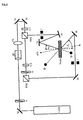
- holographic media prepared as described below were then measured by means of a measuring arrangement according to FIG. 1 tested for holographic properties as follows:
- the beam of a He-Ne laser (emission wavelength 633 nm) was converted into a parallel homogeneous beam by means of the spatial filter (SF) and together with the collimation lens (CL).
- the final cross sections of the signal and reference beam are defined by the iris diaphragms (I).
- the diameter of the iris aperture is 0.4 cm.
- the polarization-dependent beam splitters (PBS) divide the laser beam into two coherent identically polarized beams. Through the ⁇ / 2 plates, the power of the reference beam was set to 0.5 mW and the power of the signal beam to 0.65 mW. The performances were determined with the semiconductor detectors (D) with the sample removed.
- the angle of incidence ( ⁇ 0 ) of the reference beam is -21.8 °
- the angle of incidence. ( ⁇ 0 ) of the signal beam is 41.8 °.
- the angles are measured from the sample standard to the beam direction. According to FIG. 1 Therefore, ⁇ 0 has a negative sign and ⁇ 0 has a positive sign.
- the interference field of the two overlapping beams produced a grid of bright and dark stripes perpendicular to the bisector of the two beams incident on the sample (Reflection hologram).
- the stripe distance A, also called the grating period, in the medium is ⁇ 225 nm (the refractive index of the medium assumed to be ⁇ 1.504).
- RD reference direction of the turntable.
- the written holograms have now been read out in the following way.
- the shutter of the signal beam remained closed.
- the shutter of the reference beam was open.
- the iris diaphragm of the reference beam was closed to a diameter ⁇ 1 mm. It was thus achieved that for all rotation angles ( ⁇ ) of the medium, the beam was always located completely in the previously written hologram.
- the turntable computer controlled the angular range from ⁇ min to ⁇ max with an angle increment of 0.05 °.
- ⁇ is measured from the sample standard to the reference direction of the turntable.
- ⁇ 0 -31.8 °.
- the powers of the beam transmitted in the zeroth order were measured by means of the corresponding detector D and the powers of the beam deflected to the first order by means of the detector D.
- P D is the power in the detector of the diffracted beam and P T is the power in the detector of the transmitted beam.
- the Bragg curve was measured, it describes the diffraction efficiency ⁇ as a function of the angle of rotation ⁇ of the written hologram and stored in a computer.
- the intensity transmitted in the zeroth order was also recorded against the angle of rotation ⁇ and stored in a computer.
- the maximum diffraction efficiency (DE ⁇ max ) of the hologram, ie its peak value, was determined during ⁇ reconstruction . It may be necessary to change the position of the detector of the diffracted beam to determine this maximum value.
- the refractive index contrast ⁇ n and the thickness d of the photopolymer layer has now been determined by means of the coupled wave theory (cf. H. Kogelnik, The Bell System Technical Journal, Volume 48, November 1969, Number 9 Page 2909 - Page 2947 ) to the measured Bragg curve and the angle profile of the transmitted intensity. It should be noted that due to the thickness shrinkage occurring due to the photopolymerization, the strip spacing A 'of the hologram and the orientation of the strips (slant) may deviate from the strip spacing A of the interference pattern and its orientation.
- ⁇ ⁇ 1 1 - 1 - ⁇ / ⁇ 2 sin 2 ⁇ ⁇ 2 - ⁇ 2 .
- v is the grid strength
- ⁇ is the detuning parameter
- ⁇ is the orientation (slant) of the refractive index grid that was written.
- ⁇ 'and ⁇ ' correspond to the angles ⁇ 0 and ⁇ 0 of the interference field when writing the hologram, but measured in the medium and valid for the lattice of the hologram (after thickness shrinkage).
- n is the average refractive index of the photopolymer and was set to 1,504.
- ⁇ is the wavelength of the laser light in a vacuum.
- the detector for the diffracted light can detect only a finite angular range
- the Bragg curve of broad fathoms (small d ') in an ⁇ -scan is not fully detected but only the central area, with appropriate detector positioning. Therefore, the complementary to the Bragg curve shape of the transmitted intensity to adjust the layer thickness d 'is additionally used.
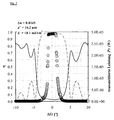
- FIG. 2 shows the measured transmitted power P T (right y -axis) plotted against the angular detection ⁇ as a solid line, the measured diffraction efficiency ⁇ (left y- axis) plotted as solid circles against the angular detection ⁇ (as far as the finite size of the detector allowed) and the adaptation of the Kogelnik theory as a dashed line (left y- axis).
- this procedure may be repeated several times for different exposure times t on different media to determine at which average absorbed dose of the incident laser beam is going to saturate upon writing the hologram DE.
- the powers of the partial beams have been adjusted so that the same power density is achieved in the medium at the angles ⁇ 0 and ⁇ 0 used.
- the maximum value in ⁇ n is reported in each case, the doses used are between 4 and 64 mJ / cm 2 per arm.
- a pressure of 0.5 bar was set by means of nitrogen and introduced 100 g of ethylene oxide (EO) and 150 g of PO in parallel to the start of the polymerization.
- EO ethylene oxide
- the pressure rose to 2.07 bar.
- the pressure had fallen back to 0.68 bar and it was over a period of 1h 53 min.
- a further 5.166 kg of EO and 7.558 kg of PO were introduced as a mixture at 2.34 bar. 31 minutes after the end of the epoxide dosing, vacuum was applied at a residual pressure of 2.16 bar and completely degassed.
- the product was stabilized by addition of 7.5 g of Irganox 1076 and obtained as a slightly cloudy, viscous liquid (OH number 27.1 mg KOH / g, viscosity at 25 ° C: 1636 mPas).
- a difunctional polytetrahydrofuran polyether polyol (equivalent weight 500 g / mol OH) were weighed into a 1 l stainless steel reactor and 21.4 mg of DMC catalyst were added.
- air was exchanged for nitrogen, and then heated to 125 ° C with stirring at about 800 U / min.
- nitrogen was passed through the mixture from below for 30 minutes while the vacuum pump was running at a pressure of about 0.1 bar.
- a mixture of 218 g of PO and 145 g of EO was then metered into the reactor while stirring (800 rpm) for 70 minutes.
- additives 2 to 36 described below in Table 1 were prepared in the same manner as described for Additive 1 in the indicated compositions.
- additive Surname Isocyanate and amount Alcohol and quantity Catalyst and quantity Temp [° C] description 2 2,2,2-trifluoroethyl-hexylcarbamate n-hexyl trifluoroethanol Desmorapid Z. 60 ° C colorless liquid 55.9 g 44.0 g 0.05 g 3 1,1,1,3,3,3-hexafluoropropane-2-yl-hexylcarbamate n-hexyl Hexafluoro-2-propanol Desmorapid Z.
- 70 ° C colorless oil 3.60 g 11.39 g 0.02 g 12 2,2,3,3,4,4,5,5,6,6,7,7-dodecafluoroheptyl-hexylcarbamate n-hexyl 2,2,3,3,4,4,5,5,6,6,7,7-Dodecafluorheptan-1-ol Desmorapid Z.
- 70 ° C colorless liquid 4.15 g 10.84 g 0.02 g 13 2,2,3,3,4,4,5,5,6,6,7,7-dodecafluoroheptyl-propane-2-ylcarbamate i-propyl 2,2,3,3,4,4,5,5,6,6,7,7-Dodecafluorheptan-1-ol Desmorapid Z.
- 70 ° C colorless oil 4.73 g 10.25 g 0.02 g 36 2,2,3,3,4,4,5,5,6,6,7,7,8,8,9,9-Hexadecafluornonyl-cyclohexylcarbamate cyclohexyl 2,2,3,3,4,4,5,5,6,6,7,7, 8,8,9,9-hexadecafluornonan-1-ol Desmorapid Z. 70 ° C colorless solid 3.37 g 11.61 g 0.02 g
- the photoinitiator or photoinitiators (together component e)) in pure form or in dilute solution in N-ethylpyrrolidone (part of component g)) is weighed out and mixed again for 1 minute. If necessary, it is heated to 60 ° C. in the drying oven for a maximum of 10 minutes. Then the isocyanate component (component a)) is added and mixed again in 1 minute. In the following, a solution of the catalyst (component f)) is added and mixed again in 1 minute. The resulting mixture is degassed with stirring at ⁇ 1 mbar for a maximum of 30 seconds, then it is distributed on glass plates of 50 x 75 mm and these each covered with another glass plate.
- the curing of the PU formulation is carried out under 15 kg weights over several hours (usually overnight). In some cases, the media are post-cured for 2 hours at 60 ° C in light-tight packaging.
- the thickness d of the photopolymer layer results from the diameter of the glass spheres used to 20 microns. Since different formulations with different initial viscosity and different curing rate of the matrix do not always lead to the same layer thicknesses d of the photopolymer layer, d is determined separately for each sample on the basis of the characteristics of the written holograms. Analogously to this procedure, the media of Comparative Examples 1 to 27 and Examples 1 to 118 were prepared.
- Example 27 1 0.0253 Example 28 2 0.0238 Example 29 3 0.0302 Example 30 4 0.0305 Example 31 5 0.0205 Example 32 6 0.0310 Example 33 7 0.0175 Example 34 8th 0.0365 Example 35 9 0.0348 Example 36 10 0.0295 Example 37 11 0.0320 Example 38 12 0.0310 Example 39 13 0.0310 Example 40 14 0.0245 Example 41 15 0.0250 Example 42 16 0.0250 Example 43 17 0.0230 Example 44 18 0.0260 Example 45 19 0.0225 Example 46 20 0.0239 Example 47 21 0.0286 Example 48 22 0.0283 Example 49 23 0.0220 Example 50 24 0.0229 Example 51 25 0.0235 Example 52 26 0.0245 Example 53 27 0.0184 Example 54 28 0.0260 Example 55 29 .0269 Example 56 30 0.0305
Landscapes
- Chemical & Material Sciences (AREA)
- Health & Medical Sciences (AREA)
- Chemical Kinetics & Catalysis (AREA)
- Medicinal Chemistry (AREA)
- Polymers & Plastics (AREA)
- Organic Chemistry (AREA)
- Physics & Mathematics (AREA)
- General Physics & Mathematics (AREA)
- Polyurethanes Or Polyureas (AREA)
- Holo Graphy (AREA)
- Compositions Of Macromolecular Compounds (AREA)
- Graft Or Block Polymers (AREA)
- Optical Record Carriers And Manufacture Thereof (AREA)
Priority Applications (1)
| Application Number | Priority Date | Filing Date | Title |
|---|---|---|---|
| EP10773075.6A EP2497083B1 (de) | 2009-11-03 | 2010-11-02 | Photopolymer-formulierung mit verschiedenen schreibcomonomeren |
Applications Claiming Priority (3)
| Application Number | Priority Date | Filing Date | Title |
|---|---|---|---|
| EP09013769 | 2009-11-03 | ||
| EP10773075.6A EP2497083B1 (de) | 2009-11-03 | 2010-11-02 | Photopolymer-formulierung mit verschiedenen schreibcomonomeren |
| PCT/EP2010/066594 WO2011054797A1 (de) | 2009-11-03 | 2010-11-02 | Photopolymer-formulierung mit verschiedenen schreibcomonomeren |
Publications (2)
| Publication Number | Publication Date |
|---|---|
| EP2497083A1 EP2497083A1 (de) | 2012-09-12 |
| EP2497083B1 true EP2497083B1 (de) | 2013-12-25 |
Family
ID=41665175
Family Applications (1)
| Application Number | Title | Priority Date | Filing Date |
|---|---|---|---|
| EP10773075.6A Active EP2497083B1 (de) | 2009-11-03 | 2010-11-02 | Photopolymer-formulierung mit verschiedenen schreibcomonomeren |
Country Status (7)
| Country | Link |
|---|---|
| US (1) | US8889322B2 (enExample) |
| EP (1) | EP2497083B1 (enExample) |
| JP (1) | JP5638085B2 (enExample) |
| KR (1) | KR101782182B1 (enExample) |
| CN (1) | CN102667935B (enExample) |
| TW (1) | TWI489205B (enExample) |
| WO (1) | WO2011054797A1 (enExample) |
Families Citing this family (51)
| Publication number | Priority date | Publication date | Assignee | Title |
|---|---|---|---|---|
| IL200722A0 (en) * | 2008-10-01 | 2010-06-30 | Bayer Materialscience Ag | Photopolymer compositions for optical elements and visual displays |
| CN102171267B (zh) * | 2008-10-01 | 2014-09-03 | 拜尔材料科学股份公司 | 基于自显影聚合物的体全息记录用介质 |
| CN102741925B (zh) * | 2009-11-03 | 2015-12-16 | 拜尔材料科学股份公司 | 生产全息膜的方法 |
| ES2381808T3 (es) | 2009-11-03 | 2012-05-31 | Bayer Materialscience Ag | Formulaciones de fotopolímeros con módulo mecánico ajustable Guv |
| TWI489209B (zh) * | 2009-11-03 | 2015-06-21 | Bayer Materialscience Ag | 在光聚合物配製物中作為添加劑的胺甲酸乙酯 |
| RU2542981C9 (ru) * | 2009-11-03 | 2015-12-10 | Байер Матириальсайенс Аг | Способ изготовления голографических сред |
| ES2433235T3 (es) * | 2009-11-03 | 2013-12-10 | Bayer Intellectual Property Gmbh | Fluorouretanos como aditivos en una formulación de fotopolímero |
| EP2497085B1 (de) * | 2009-11-03 | 2014-02-12 | Bayer Intellectual Property GmbH | Verfahren zur herstellung eines holographischen films |
| EP2496588B1 (de) * | 2009-11-03 | 2017-01-11 | Covestro Deutschland AG | Urethanacrylate mit hohem brechungsindex und reduzierter doppelbindungsdichte |
| US20120237856A1 (en) * | 2009-11-03 | 2012-09-20 | Bayer Intellectual Property Gmbh | Selection method for additives in photopolymers |
| KR20120125270A (ko) * | 2010-02-02 | 2012-11-14 | 바이엘 인텔렉쳐 프로퍼티 게엠베하 | 트리아진-기재 기록 단량체를 갖는 광중합체 배합물 |
| CN102754026B (zh) * | 2010-02-02 | 2015-10-07 | 拜耳知识产权有限责任公司 | 具有酯基书写单体的光聚合物制剂 |
| EP2372454A1 (de) * | 2010-03-29 | 2011-10-05 | Bayer MaterialScience AG | Photopolymer-Formulierung zur Herstellung sichtbarer Hologramme |
| EP2450387A1 (de) * | 2010-11-08 | 2012-05-09 | Bayer MaterialScience AG | Photopolymer-Formulierung für die Herstellung holographischer Medien |
| WO2013053771A1 (de) | 2011-10-12 | 2013-04-18 | Bayer Intellectual Property Gmbh | Schwefelhaltige kettenübertragungsreagenzien in polyurethan-basierten photopolymer-formulierungen |
| EP2766903A1 (de) | 2011-10-12 | 2014-08-20 | Bayer Intellectual Property GmbH | Kettenübertragungsreagenzien in polyurethan-basierten photopolymer-formulierungen |
| EP2613319A1 (de) * | 2012-01-05 | 2013-07-10 | Bayer MaterialScience AG | Schichtverbund aus einem Photopolymerfilm und einer Klebstoffschicht |
| EP2613318B1 (de) | 2012-01-05 | 2014-07-30 | Bayer Intellectual Property GmbH | Schichtaufbau mit einer Schutzschicht und einer belichteten Photopolymerschicht |
| US20140302425A1 (en) * | 2012-04-30 | 2014-10-09 | Bayer Intellectual Property Gmbh | Method for producing holographic media |
| EP2700510B1 (de) | 2012-08-23 | 2015-09-16 | Bayer MaterialScience AG | Polycarbonatbasierte Sicherheits- und/oder Wertdokumente mit Hologramm im Kartenkörper |
| EP2772917A1 (de) | 2013-02-27 | 2014-09-03 | Bayer MaterialScience AG | Schutzlacke auf Basis von strahlenvernetzbaren Polyurethandispersionen |
| TWI640428B (zh) | 2013-02-27 | 2018-11-11 | 拜耳材料科學股份有限公司 | 以丙烯酸酯為基底之保護塗層與黏著劑 |
| JP6497850B2 (ja) | 2013-05-08 | 2019-04-10 | コベストロ、ドイチュラント、アクチエンゲゼルシャフトCovestro Deutschland Ag | ハロー防止層を有するホログラフィック記録媒体およびその製造 |
| US10001703B2 (en) | 2013-10-17 | 2018-06-19 | Covestro Deutschland Ag | Photopolymer formulation for production of holographic media comprising borates with low TG |
| TWI684782B (zh) * | 2014-08-01 | 2020-02-11 | 德商拜耳材料科學股份有限公司 | 含光聚合物層與基材層之層狀結構 |
| CN107001246B (zh) * | 2014-12-12 | 2021-02-02 | 科思创德国股份有限公司 | 作为光聚合物用书写单体的萘基丙烯酸酯 |
| TW201718523A (zh) * | 2015-06-23 | 2017-06-01 | 科思創德意志股份有限公司 | 作為光起始劑之新型三及其製備 |
| EP3166109A1 (de) | 2015-11-09 | 2017-05-10 | Covestro Deutschland AG | Kit-of-parts enthaltend versiegellungsschicht und photopolymer |
| US11535713B2 (en) | 2016-08-23 | 2022-12-27 | The Regents Of The University Of Colorado, A Body Corporate | Network polymers and methods of making and using same |
| KR102009421B1 (ko) | 2017-04-25 | 2019-08-12 | 주식회사 엘지화학 | 포토폴리머 조성물 |
| EP3401909A1 (de) | 2017-05-09 | 2018-11-14 | Covestro Deutschland AG | Folienaufbau enthaltend eine photopolymerschicht zur holographischen belichtung und eine lackschicht hoher beständigkeit |
| EP3622352B1 (de) | 2017-05-09 | 2025-07-23 | Covestro Deutschland AG | System aus zwei trocken übertragbaren uv-härtenden lackschichten für den schutz eines hologramms in einem photopolymer-folienverbund |
| EP3401910A1 (de) | 2017-05-09 | 2018-11-14 | Covestro Deutschland AG | Holographisches medium enthaltend eine photopolymerschicht zur holographischen belichtung und eine lackschicht hoher beständigkeit |
| TW201906730A (zh) | 2017-05-09 | 2019-02-16 | 德商科思創德意志股份有限公司 | 用於保護光聚合物膜複合物中之全像圖之含uv硬化性黏著層的塑膠膜 |
| TW201906882A (zh) | 2017-05-09 | 2019-02-16 | 德商科思創德意志股份有限公司 | 含有用於全像照射的光聚合物層及高度耐性漆層之薄膜結構 |
| JP2020519943A (ja) | 2017-05-09 | 2020-07-02 | コベストロ、ドイチュラント、アクチエンゲゼルシャフトCovestro Deutschland Ag | ホログラフィック露光用のフォトポリマー層と高耐性コーティング層を含むホログラフィック媒体 |
| EP3435156A1 (de) | 2017-07-26 | 2019-01-30 | Covestro Deutschland AG | Schutzschicht für photopolymer |
| KR102268129B1 (ko) * | 2017-10-16 | 2021-06-22 | 주식회사 엘지화학 | 비반응성 불소계 화합물 및 이를 포함하는 광중합성 조성물 |
| EP3495886A1 (de) | 2017-12-06 | 2019-06-12 | Covestro Deutschland AG | Klebstofffreier photopolymerschichtaufbau |
| KR102244648B1 (ko) | 2017-12-08 | 2021-04-26 | 주식회사 엘지화학 | 포토폴리머 조성물 |
| KR102166846B1 (ko) * | 2017-12-11 | 2020-10-16 | 주식회사 엘지화학 | 포토폴리머 조성물 |
| DE102018207251B4 (de) | 2018-05-09 | 2025-10-16 | Bundesdruckerei Gmbh | Verfahren zum Herstellen eines Sicherheitselements mit zwei Sicherheitsmerkmalen und Verwendung des Verfahrens |
| US12071515B2 (en) | 2018-06-08 | 2024-08-27 | The Regents Of The University Of Colorado, A Body Corporate | High dynamic range two-stage photopolymers |
| US12391780B2 (en) | 2019-02-18 | 2025-08-19 | The Regents Of The University Of Colorado, A Body Corporate | Network polymers and methods of making and using same |
| US20200354594A1 (en) * | 2019-05-08 | 2020-11-12 | Facebook Technologies, Llc | Thermally reversible and reorganizable crosslinking polymers for volume bragg gratings |
| CN111045295B (zh) * | 2019-12-25 | 2023-10-31 | 杭州光粒科技有限公司 | 金属纳米颗粒掺杂的光致聚合物组合物以及光栅 |
| CN113527143B (zh) * | 2020-04-20 | 2023-06-20 | 杭州光粒科技有限公司 | 书写单体及其制备方法以及光致聚合物组合物及其光栅 |
| KR20230007435A (ko) | 2020-06-15 | 2023-01-12 | 쌩-고벵 글래스 프랑스 | 홀로그래픽 요소를 갖는 복합 판유리 및 그 생산 방법 |
| WO2021254872A1 (de) | 2020-06-15 | 2021-12-23 | Saint-Gobain Glass France | Verbundscheibe mit einem holographischen element und verfahren zu deren herstellung |
| CN121195304A (zh) | 2023-03-29 | 2025-12-23 | 三菱化学株式会社 | 全息记录用感光性组合物、全息记录介质、聚合物、大容量存储器、光学元件、ar导光板以及ar眼镜 |
| WO2026084847A1 (en) * | 2024-10-15 | 2026-04-23 | Nitto Denko Corporation | Mesh size control of holographic photopolymer and method for making the same |
Family Cites Families (73)
| Publication number | Priority date | Publication date | Assignee | Title |
|---|---|---|---|---|
| DE3374869D1 (en) * | 1983-09-22 | 1988-01-21 | Toray Industries | Resin material for plastic lens and lens composed thereof |
| EP0223587B1 (en) | 1985-11-20 | 1991-02-13 | The Mead Corporation | Photosensitive materials containing ionic dye compounds as initiators |
| JP3339873B2 (ja) * | 1992-03-23 | 2002-10-28 | 大日本印刷株式会社 | ホログラム形成材料 |
| US5712216A (en) | 1995-05-15 | 1998-01-27 | Arco Chemical Technology, L.P. | Highly active double metal cyanide complex catalysts |
| US5470813A (en) | 1993-11-23 | 1995-11-28 | Arco Chemical Technology, L.P. | Double metal cyanide complex catalysts |
| JP3050769B2 (ja) * | 1994-03-18 | 2000-06-12 | シャープ株式会社 | 液晶表示素子及びその製造方法 |
| GB9410578D0 (en) * | 1994-05-26 | 1994-07-13 | London Hospital Med Coll | Novel (meth)acrylate monomers and denture base compositions prepared therefrom |
| US5482908A (en) | 1994-09-08 | 1996-01-09 | Arco Chemical Technology, L.P. | Highly active double metal cyanide catalysts |
| US5679710A (en) * | 1994-11-01 | 1997-10-21 | London Hospital Medical College | High refractive index and/or radio-opaque resins systems |
| US5725970A (en) * | 1994-11-07 | 1998-03-10 | E. I. Du Pont De Nemours And Company | Broad band reflection holograms and a dry process for making same |
| US5545601A (en) | 1995-08-22 | 1996-08-13 | Arco Chemical Technology, L.P. | Polyether-containing double metal cyanide catalysts |
| US5627120A (en) | 1996-04-19 | 1997-05-06 | Arco Chemical Technology, L.P. | Highly active double metal cyanide catalysts |
| US5714428A (en) | 1996-10-16 | 1998-02-03 | Arco Chemical Technology, L.P. | Double metal cyanide catalysts containing functionalized polymers |
| JP3951344B2 (ja) * | 1997-03-19 | 2007-08-01 | Jsr株式会社 | 感光性樹脂組成物 |
| US6482551B1 (en) * | 1998-03-24 | 2002-11-19 | Inphase Technologies | Optical article and process for forming article |
| DE19905611A1 (de) | 1999-02-11 | 2000-08-17 | Bayer Ag | Doppelmetallcyanid-Katalysatoren für die Herstellung von Polyetherpolyolen |
| US6627354B1 (en) * | 1999-03-01 | 2003-09-30 | Lucent Technologies Inc. | Photorecording medium, process for fabricating medium, and process for holography using medium |
| US6403702B1 (en) * | 1999-12-03 | 2002-06-11 | Bayer Corporation | Diurethane plasticizer containing one-shot polyurethane cast elastomers |
| JP2004525394A (ja) * | 2000-11-10 | 2004-08-19 | デュランド テクノロジー リミテッド | 光学記録材料 |
| JP2003165807A (ja) * | 2001-11-30 | 2003-06-10 | Sumitomo Chem Co Ltd | 光散乱シート用樹脂組成物及びそれの液晶表示分野への使用 |
| JP4071525B2 (ja) * | 2002-04-08 | 2008-04-02 | メモリーテック株式会社 | 光情報記録媒体 |
| JP2003307733A (ja) * | 2002-04-18 | 2003-10-31 | Nitto Denko Corp | 反射型液晶表示装置 |
| US6864019B2 (en) | 2002-06-27 | 2005-03-08 | Imation Corp. | Recording material formulations for holographic media |
| AU2003254775A1 (en) * | 2002-07-30 | 2004-02-16 | Toagosei Co., Ltd. | Composition for holography, method of curing the same, and cured article |
| JP4095474B2 (ja) * | 2003-03-13 | 2008-06-04 | 株式会社東芝 | 光情報記録媒体および情報記録方法 |
| JP4466141B2 (ja) * | 2003-09-17 | 2010-05-26 | コニカミノルタエムジー株式会社 | ホログラフィック記録用組成物、ホログラフィック記録メディア、ホログラフィック記録方法及びホログラフィック情報メディア |
| JP4466140B2 (ja) | 2003-11-27 | 2010-05-26 | コニカミノルタエムジー株式会社 | ホログラフィック記録メディア、ホログラフィック記録方法およびホログラフィック情報メディア |
| US20070172742A1 (en) * | 2004-02-13 | 2007-07-26 | Kentarou Yachi | Volume hologram recording material and volume hologram recording medium |
| JP2005241820A (ja) * | 2004-02-25 | 2005-09-08 | Toshiba Corp | ホログラム記録媒体及びその記録方法 |
| WO2005109114A1 (ja) * | 2004-05-10 | 2005-11-17 | Konica Minolta Medical & Graphic, Inc. | ホログラフィック記録メディア、ホログラフィック記録方法及びホログラフィック情報メディア |
| JP2006152105A (ja) * | 2004-11-29 | 2006-06-15 | Jsr Corp | 光硬化性樹脂組成物及び光学部材 |
| US8941904B2 (en) * | 2005-07-04 | 2015-01-27 | Dai Nippon Printing Co., Ltd. | Hologram sheet and hologram observation sheet using same, and blinding device |
| TW200702954A (en) * | 2005-07-11 | 2007-01-16 | Toagosei Co Ltd | Volume hologram recording material, the method of processing thereof and the recording medium |
| JP2007041160A (ja) * | 2005-08-01 | 2007-02-15 | Fujifilm Corp | 光記録用組成物及び光記録媒体 |
| JP2008081726A (ja) * | 2006-08-30 | 2008-04-10 | Sanyo Electric Co Ltd | 有機無機複合体形成用材料及び有機無機複合体並びにそれを用いた光学素子 |
| EP2110718B1 (en) * | 2007-02-05 | 2012-10-10 | Nippon Steel Chemical Co., Ltd. | Volume phase hologram recording material and optical information recording medium |
| JP4785001B2 (ja) * | 2007-03-20 | 2011-10-05 | 日本電信電話株式会社 | 光記録媒体 |
| JPWO2008123302A1 (ja) * | 2007-03-30 | 2010-07-15 | ダイキン工業株式会社 | 含フッ素体積型ホログラム記録用感光性組成物ならびにそれを用いた含フッ素体積型ホログラム記録用感光性媒体および含フッ素体積型ホログラム |
| WO2008123303A1 (ja) * | 2007-03-30 | 2008-10-16 | Daikin Industries, Ltd. | 含フッ素体積型ホログラム光情報記録材料用組成物およびそれを用いた含フッ素体積型ホログラム光情報記録媒体 |
| CN101034257B (zh) * | 2007-04-06 | 2010-09-08 | 上海复旦天臣新技术有限公司 | 用于全息记录的感光薄膜及其制备方法 |
| CA2683882A1 (en) | 2007-04-11 | 2008-10-23 | Bayer Materialscience Ag | Aromatic urethane acrylates having a high refractive index |
| ATE501193T1 (de) | 2007-04-11 | 2011-03-15 | Bayer Materialscience Ag | Strahlungsvernetzende und wärmevernetzende pu- systeme auf der basis von isocyanat-reaktiven blockcopolymeren |
| RU2009141372A (ru) * | 2007-04-11 | 2011-05-20 | Байер МатириальСайенс АГ (DE) | Предпочтительные запоминающие среды для голографических применений |
| RU2009141369A (ru) * | 2007-04-11 | 2011-05-20 | Байер МатириальСайенс АГ (DE) | Радиационно-сшиваемые и термически-сшиваемые полиуретановые системы, содержащие иминооксадиазиндион |
| JP2008268514A (ja) * | 2007-04-19 | 2008-11-06 | Fujifilm Corp | 光記録用組成物およびホログラフィック記録媒体 |
| US8435701B2 (en) * | 2007-11-27 | 2013-05-07 | Southbourne Investments Ltd. | Holographic recording medium |
| CN101320208B (zh) * | 2008-07-21 | 2011-06-01 | 上海复旦天臣新技术有限公司 | 反射全息薄膜及其制备方法 |
| DE502008002161D1 (de) * | 2008-08-08 | 2011-02-10 | Bayer Materialscience Ag | Phenylisocyanat-basierte Urethanacrylate mit hohem Brechungsindex |
| CA2738835A1 (en) * | 2008-10-01 | 2010-04-08 | Bayer Materialscience Ag | Prepolymer-based polyurethane formulations for producing holographic media |
| IL200722A0 (en) * | 2008-10-01 | 2010-06-30 | Bayer Materialscience Ag | Photopolymer compositions for optical elements and visual displays |
| IL200996A0 (en) * | 2008-10-01 | 2010-06-30 | Bayer Materialscience Ag | Photopolymer formulations having a low crosslinking density |
| IL200997A0 (en) * | 2008-10-01 | 2010-06-30 | Bayer Materialscience Ag | Special polyether-based polyurethane formulations for the production of holographic media |
| CN102171267B (zh) * | 2008-10-01 | 2014-09-03 | 拜尔材料科学股份公司 | 基于自显影聚合物的体全息记录用介质 |
| IL200995A0 (en) * | 2008-10-01 | 2010-06-30 | Bayer Materialscience Ag | Polyether-based polyurethane formulations for the production of holographic media |
| EP2218742A1 (de) * | 2009-02-12 | 2010-08-18 | Bayer MaterialScience AG | Photopolymerzusammensetzungen als verdruckbare Formulierungen |
| EP2218743A1 (de) * | 2009-02-12 | 2010-08-18 | Bayer MaterialScience AG | Prepolymerbasierte Polyurethanformulierungen zur Herstellung holographischer Filme |
| EP2218744A1 (de) * | 2009-02-12 | 2010-08-18 | Bayer MaterialScience AG | Methode zur Herstellung von holografischen Photopolymeren auf Polymerfolien |
| EP2219073B1 (de) * | 2009-02-17 | 2020-06-03 | Covestro Deutschland AG | Holografische Medien und Photopolymerzusammensetzungen |
| JP2010230911A (ja) * | 2009-03-26 | 2010-10-14 | Tdk Corp | 光学デバイス |
| EP2496588B1 (de) * | 2009-11-03 | 2017-01-11 | Covestro Deutschland AG | Urethanacrylate mit hohem brechungsindex und reduzierter doppelbindungsdichte |
| ES2433235T3 (es) * | 2009-11-03 | 2013-12-10 | Bayer Intellectual Property Gmbh | Fluorouretanos como aditivos en una formulación de fotopolímero |
| WO2011054818A2 (de) * | 2009-11-03 | 2011-05-12 | Bayer Materialscience Ag | Neue, nicht kristallisierende methacrylate, deren herstellung und verwendung |
| ES2381808T3 (es) * | 2009-11-03 | 2012-05-31 | Bayer Materialscience Ag | Formulaciones de fotopolímeros con módulo mecánico ajustable Guv |
| RU2542981C9 (ru) * | 2009-11-03 | 2015-12-10 | Байер Матириальсайенс Аг | Способ изготовления голографических сред |
| US20120237856A1 (en) * | 2009-11-03 | 2012-09-20 | Bayer Intellectual Property Gmbh | Selection method for additives in photopolymers |
| TWI489209B (zh) * | 2009-11-03 | 2015-06-21 | Bayer Materialscience Ag | 在光聚合物配製物中作為添加劑的胺甲酸乙酯 |
| EP2497085B1 (de) * | 2009-11-03 | 2014-02-12 | Bayer Intellectual Property GmbH | Verfahren zur herstellung eines holographischen films |
| CN102741925B (zh) * | 2009-11-03 | 2015-12-16 | 拜尔材料科学股份公司 | 生产全息膜的方法 |
| CN102754026B (zh) * | 2010-02-02 | 2015-10-07 | 拜耳知识产权有限责任公司 | 具有酯基书写单体的光聚合物制剂 |
| KR20120125270A (ko) * | 2010-02-02 | 2012-11-14 | 바이엘 인텔렉쳐 프로퍼티 게엠베하 | 트리아진-기재 기록 단량체를 갖는 광중합체 배합물 |
| EP2372454A1 (de) * | 2010-03-29 | 2011-10-05 | Bayer MaterialScience AG | Photopolymer-Formulierung zur Herstellung sichtbarer Hologramme |
| KR20130099932A (ko) * | 2010-08-11 | 2013-09-06 | 바이엘 인텔렉쳐 프로퍼티 게엠베하 | 이관능성 (메트)아크릴레이트 기록 단량체 |
| EP2450893A1 (de) * | 2010-11-08 | 2012-05-09 | Bayer MaterialScience AG | Photopolymer-Formulierung zur Herstellung holographischer Medien mit hoch vernetzten Matrixpolymeren |
-
2010
- 2010-11-02 KR KR1020127014345A patent/KR101782182B1/ko active Active
- 2010-11-02 TW TW099137565A patent/TWI489205B/zh not_active IP Right Cessation
- 2010-11-02 EP EP10773075.6A patent/EP2497083B1/de active Active
- 2010-11-02 CN CN201080060489.1A patent/CN102667935B/zh active Active
- 2010-11-02 WO PCT/EP2010/066594 patent/WO2011054797A1/de not_active Ceased
- 2010-11-02 US US13/504,429 patent/US8889322B2/en active Active
- 2010-11-02 JP JP2012537366A patent/JP5638085B2/ja active Active
Also Published As
| Publication number | Publication date |
|---|---|
| CN102667935B (zh) | 2016-01-20 |
| EP2497083A1 (de) | 2012-09-12 |
| TW201133139A (en) | 2011-10-01 |
| TWI489205B (zh) | 2015-06-21 |
| KR20130006421A (ko) | 2013-01-16 |
| KR101782182B1 (ko) | 2017-09-26 |
| JP5638085B2 (ja) | 2014-12-10 |
| WO2011054797A1 (de) | 2011-05-12 |
| US8889322B2 (en) | 2014-11-18 |
| CN102667935A (zh) | 2012-09-12 |
| JP2013510204A (ja) | 2013-03-21 |
| US20120231377A1 (en) | 2012-09-13 |
Similar Documents
| Publication | Publication Date | Title |
|---|---|---|
| EP2317511B1 (de) | Photopolymerformulierungen mit einstellbarem mechanischem Modul Guv | |
| EP2497082B1 (de) | Fluorurethane als additive in einer photopolymer-formulierung | |
| EP2497085B1 (de) | Verfahren zur herstellung eines holographischen films | |
| EP2172503B1 (de) | Spezielle Polyetherbasierte Polyurethanformulierungen zur Herstellung holografischer Medien | |
| EP2342249B1 (de) | Prepolymerbasierte polyurethanformulierungen zur herstellung holografischer medien | |
| EP2496588B1 (de) | Urethanacrylate mit hohem brechungsindex und reduzierter doppelbindungsdichte | |
| WO2011054797A1 (de) | Photopolymer-formulierung mit verschiedenen schreibcomonomeren | |
| EP2172502B1 (de) | Polyetherbasierte polyurethanformulierungen zur herstellung holografischer medien | |
| EP2172504B1 (de) | Photopolymerformulierungen mit niedriger Vernetzungsdichte | |
| EP2497081B1 (de) | Verfahren zur herstellung von holographischen medien | |
| EP2497080B1 (de) | Verfahren zur herstellung eines holographischen films | |
| EP2531892B1 (de) | Verwendung einer photopolymer-formulierung mit triazin-basierten schreibmonomeren | |
| EP2219075B1 (de) | Glycidyletheracrylaturethane Schreibmonomere | |
| EP2172505B1 (de) | Photopolymerzusammensetzungen für optische Elemente und visuelle Darstellungen | |
| EP2218745B1 (de) | Prepolymerbasierte Polyurethanformulierungen zur Herstellung holographischer Filme | |
| EP2531889B1 (de) | Verwendung einer photopolymer-formulierung mit ester-basierten schreibmonomeren zur herstellung holographischer medien | |
| EP2497084B1 (de) | Auswahlverfahren für additive in photopolymeren | |
| EP2496549B1 (de) | Neue, nicht kristallisierende methacrylate, deren herstellung und verwendung | |
| EP2354845B1 (de) | Photopolymer-Formulierung zur Herstellung holographischer Medien | |
| EP2496617B1 (de) | Urethane als additive in einer photopolymer-formulierung |
Legal Events
| Date | Code | Title | Description |
|---|---|---|---|
| PUAI | Public reference made under article 153(3) epc to a published international application that has entered the european phase |
Free format text: ORIGINAL CODE: 0009012 |
|
| 17P | Request for examination filed |
Effective date: 20120604 |
|
| AK | Designated contracting states |
Kind code of ref document: A1 Designated state(s): AL AT BE BG CH CY CZ DE DK EE ES FI FR GB GR HR HU IE IS IT LI LT LU LV MC MK MT NL NO PL PT RO RS SE SI SK SM TR |
|
| DAX | Request for extension of the european patent (deleted) | ||
| RAP1 | Party data changed (applicant data changed or rights of an application transferred) |
Owner name: BAYER INTELLECTUAL PROPERTY GMBH |
|
| GRAP | Despatch of communication of intention to grant a patent |
Free format text: ORIGINAL CODE: EPIDOSNIGR1 |
|
| INTG | Intention to grant announced |
Effective date: 20130708 |
|
| GRAS | Grant fee paid |
Free format text: ORIGINAL CODE: EPIDOSNIGR3 |
|
| GRAA | (expected) grant |
Free format text: ORIGINAL CODE: 0009210 |
|
| AK | Designated contracting states |
Kind code of ref document: B1 Designated state(s): AL AT BE BG CH CY CZ DE DK EE ES FI FR GB GR HR HU IE IS IT LI LT LU LV MC MK MT NL NO PL PT RO RS SE SI SK SM TR |
|
| REG | Reference to a national code |
Ref country code: GB Ref legal event code: FG4D Free format text: NOT ENGLISH |
|
| REG | Reference to a national code |
Ref country code: CH Ref legal event code: EP |
|
| REG | Reference to a national code |
Ref country code: AT Ref legal event code: REF Ref document number: 646970 Country of ref document: AT Kind code of ref document: T Effective date: 20140115 |
|
| REG | Reference to a national code |
Ref country code: IE Ref legal event code: FG4D Free format text: LANGUAGE OF EP DOCUMENT: GERMAN |
|
| REG | Reference to a national code |
Ref country code: DE Ref legal event code: R096 Ref document number: 502010005784 Country of ref document: DE Effective date: 20140213 |
|
| PG25 | Lapsed in a contracting state [announced via postgrant information from national office to epo] |
Ref country code: NO Free format text: LAPSE BECAUSE OF FAILURE TO SUBMIT A TRANSLATION OF THE DESCRIPTION OR TO PAY THE FEE WITHIN THE PRESCRIBED TIME-LIMIT Effective date: 20140325 Ref country code: HR Free format text: LAPSE BECAUSE OF FAILURE TO SUBMIT A TRANSLATION OF THE DESCRIPTION OR TO PAY THE FEE WITHIN THE PRESCRIBED TIME-LIMIT Effective date: 20131225 Ref country code: LT Free format text: LAPSE BECAUSE OF FAILURE TO SUBMIT A TRANSLATION OF THE DESCRIPTION OR TO PAY THE FEE WITHIN THE PRESCRIBED TIME-LIMIT Effective date: 20131225 Ref country code: SE Free format text: LAPSE BECAUSE OF FAILURE TO SUBMIT A TRANSLATION OF THE DESCRIPTION OR TO PAY THE FEE WITHIN THE PRESCRIBED TIME-LIMIT Effective date: 20131225 Ref country code: FI Free format text: LAPSE BECAUSE OF FAILURE TO SUBMIT A TRANSLATION OF THE DESCRIPTION OR TO PAY THE FEE WITHIN THE PRESCRIBED TIME-LIMIT Effective date: 20131225 |
|
| REG | Reference to a national code |
Ref country code: NL Ref legal event code: VDEP Effective date: 20131225 |
|
| REG | Reference to a national code |
Ref country code: LT Ref legal event code: MG4D |
|
| PG25 | Lapsed in a contracting state [announced via postgrant information from national office to epo] |
Ref country code: LV Free format text: LAPSE BECAUSE OF FAILURE TO SUBMIT A TRANSLATION OF THE DESCRIPTION OR TO PAY THE FEE WITHIN THE PRESCRIBED TIME-LIMIT Effective date: 20131225 Ref country code: RS Free format text: LAPSE BECAUSE OF FAILURE TO SUBMIT A TRANSLATION OF THE DESCRIPTION OR TO PAY THE FEE WITHIN THE PRESCRIBED TIME-LIMIT Effective date: 20131225 |
|
| PG25 | Lapsed in a contracting state [announced via postgrant information from national office to epo] |
Ref country code: IS Free format text: LAPSE BECAUSE OF FAILURE TO SUBMIT A TRANSLATION OF THE DESCRIPTION OR TO PAY THE FEE WITHIN THE PRESCRIBED TIME-LIMIT Effective date: 20140425 Ref country code: EE Free format text: LAPSE BECAUSE OF FAILURE TO SUBMIT A TRANSLATION OF THE DESCRIPTION OR TO PAY THE FEE WITHIN THE PRESCRIBED TIME-LIMIT Effective date: 20131225 |
|
| PG25 | Lapsed in a contracting state [announced via postgrant information from national office to epo] |
Ref country code: ES Free format text: LAPSE BECAUSE OF FAILURE TO SUBMIT A TRANSLATION OF THE DESCRIPTION OR TO PAY THE FEE WITHIN THE PRESCRIBED TIME-LIMIT Effective date: 20131225 Ref country code: RO Free format text: LAPSE BECAUSE OF FAILURE TO SUBMIT A TRANSLATION OF THE DESCRIPTION OR TO PAY THE FEE WITHIN THE PRESCRIBED TIME-LIMIT Effective date: 20131225 Ref country code: CZ Free format text: LAPSE BECAUSE OF FAILURE TO SUBMIT A TRANSLATION OF THE DESCRIPTION OR TO PAY THE FEE WITHIN THE PRESCRIBED TIME-LIMIT Effective date: 20131225 Ref country code: NL Free format text: LAPSE BECAUSE OF FAILURE TO SUBMIT A TRANSLATION OF THE DESCRIPTION OR TO PAY THE FEE WITHIN THE PRESCRIBED TIME-LIMIT Effective date: 20131225 Ref country code: PT Free format text: LAPSE BECAUSE OF FAILURE TO SUBMIT A TRANSLATION OF THE DESCRIPTION OR TO PAY THE FEE WITHIN THE PRESCRIBED TIME-LIMIT Effective date: 20140428 Ref country code: SK Free format text: LAPSE BECAUSE OF FAILURE TO SUBMIT A TRANSLATION OF THE DESCRIPTION OR TO PAY THE FEE WITHIN THE PRESCRIBED TIME-LIMIT Effective date: 20131225 Ref country code: CY Free format text: LAPSE BECAUSE OF FAILURE TO SUBMIT A TRANSLATION OF THE DESCRIPTION OR TO PAY THE FEE WITHIN THE PRESCRIBED TIME-LIMIT Effective date: 20131225 |
|
| REG | Reference to a national code |
Ref country code: DE Ref legal event code: R097 Ref document number: 502010005784 Country of ref document: DE |
|
| PG25 | Lapsed in a contracting state [announced via postgrant information from national office to epo] |
Ref country code: DK Free format text: LAPSE BECAUSE OF FAILURE TO SUBMIT A TRANSLATION OF THE DESCRIPTION OR TO PAY THE FEE WITHIN THE PRESCRIBED TIME-LIMIT Effective date: 20131225 |
|
| PLBE | No opposition filed within time limit |
Free format text: ORIGINAL CODE: 0009261 |
|
| STAA | Information on the status of an ep patent application or granted ep patent |
Free format text: STATUS: NO OPPOSITION FILED WITHIN TIME LIMIT |
|
| PG25 | Lapsed in a contracting state [announced via postgrant information from national office to epo] |
Ref country code: PL Free format text: LAPSE BECAUSE OF FAILURE TO SUBMIT A TRANSLATION OF THE DESCRIPTION OR TO PAY THE FEE WITHIN THE PRESCRIBED TIME-LIMIT Effective date: 20131225 |
|
| 26N | No opposition filed |
Effective date: 20140926 |
|
| REG | Reference to a national code |
Ref country code: DE Ref legal event code: R097 Ref document number: 502010005784 Country of ref document: DE Effective date: 20140926 |
|
| PGFP | Annual fee paid to national office [announced via postgrant information from national office to epo] |
Ref country code: IT Payment date: 20141110 Year of fee payment: 5 |
|
| PG25 | Lapsed in a contracting state [announced via postgrant information from national office to epo] |
Ref country code: SI Free format text: LAPSE BECAUSE OF FAILURE TO SUBMIT A TRANSLATION OF THE DESCRIPTION OR TO PAY THE FEE WITHIN THE PRESCRIBED TIME-LIMIT Effective date: 20131225 |
|
| PG25 | Lapsed in a contracting state [announced via postgrant information from national office to epo] |
Ref country code: LU Free format text: LAPSE BECAUSE OF FAILURE TO SUBMIT A TRANSLATION OF THE DESCRIPTION OR TO PAY THE FEE WITHIN THE PRESCRIBED TIME-LIMIT Effective date: 20141102 Ref country code: MC Free format text: LAPSE BECAUSE OF FAILURE TO SUBMIT A TRANSLATION OF THE DESCRIPTION OR TO PAY THE FEE WITHIN THE PRESCRIBED TIME-LIMIT Effective date: 20131225 Ref country code: BE Free format text: LAPSE BECAUSE OF NON-PAYMENT OF DUE FEES Effective date: 20141130 |
|
| REG | Reference to a national code |
Ref country code: IE Ref legal event code: MM4A |
|
| REG | Reference to a national code |
Ref country code: FR Ref legal event code: PLFP Year of fee payment: 6 |
|
| PG25 | Lapsed in a contracting state [announced via postgrant information from national office to epo] |
Ref country code: IE Free format text: LAPSE BECAUSE OF NON-PAYMENT OF DUE FEES Effective date: 20141102 |
|
| REG | Reference to a national code |
Ref country code: DE Ref legal event code: R081 Ref document number: 502010005784 Country of ref document: DE Owner name: COVESTRO DEUTSCHLAND AG, DE Free format text: FORMER OWNER: BAYER INTELLECTUAL PROPERTY GMBH, 40789 MONHEIM, DE |
|
| PG25 | Lapsed in a contracting state [announced via postgrant information from national office to epo] |
Ref country code: SM Free format text: LAPSE BECAUSE OF FAILURE TO SUBMIT A TRANSLATION OF THE DESCRIPTION OR TO PAY THE FEE WITHIN THE PRESCRIBED TIME-LIMIT Effective date: 20131225 |
|
| PG25 | Lapsed in a contracting state [announced via postgrant information from national office to epo] |
Ref country code: GR Free format text: LAPSE BECAUSE OF FAILURE TO SUBMIT A TRANSLATION OF THE DESCRIPTION OR TO PAY THE FEE WITHIN THE PRESCRIBED TIME-LIMIT Effective date: 20140326 Ref country code: BG Free format text: LAPSE BECAUSE OF FAILURE TO SUBMIT A TRANSLATION OF THE DESCRIPTION OR TO PAY THE FEE WITHIN THE PRESCRIBED TIME-LIMIT Effective date: 20131225 |
|
| PG25 | Lapsed in a contracting state [announced via postgrant information from national office to epo] |
Ref country code: MT Free format text: LAPSE BECAUSE OF FAILURE TO SUBMIT A TRANSLATION OF THE DESCRIPTION OR TO PAY THE FEE WITHIN THE PRESCRIBED TIME-LIMIT Effective date: 20131225 Ref country code: TR Free format text: LAPSE BECAUSE OF FAILURE TO SUBMIT A TRANSLATION OF THE DESCRIPTION OR TO PAY THE FEE WITHIN THE PRESCRIBED TIME-LIMIT Effective date: 20131225 Ref country code: HU Free format text: LAPSE BECAUSE OF FAILURE TO SUBMIT A TRANSLATION OF THE DESCRIPTION OR TO PAY THE FEE WITHIN THE PRESCRIBED TIME-LIMIT; INVALID AB INITIO Effective date: 20101102 Ref country code: IT Free format text: LAPSE BECAUSE OF NON-PAYMENT OF DUE FEES Effective date: 20151102 |
|
| REG | Reference to a national code |
Ref country code: GB Ref legal event code: 732E Free format text: REGISTERED BETWEEN 20160922 AND 20160928 |
|
| REG | Reference to a national code |
Ref country code: FR Ref legal event code: PLFP Year of fee payment: 7 |
|
| REG | Reference to a national code |
Ref country code: FR Ref legal event code: TP Owner name: COVESTRO DEUTSCHLAND AG, DE Effective date: 20161115 |
|
| PGFP | Annual fee paid to national office [announced via postgrant information from national office to epo] |
Ref country code: AT Payment date: 20161025 Year of fee payment: 7 |
|
| REG | Reference to a national code |
Ref country code: FR Ref legal event code: PLFP Year of fee payment: 8 |
|
| PG25 | Lapsed in a contracting state [announced via postgrant information from national office to epo] |
Ref country code: MK Free format text: LAPSE BECAUSE OF FAILURE TO SUBMIT A TRANSLATION OF THE DESCRIPTION OR TO PAY THE FEE WITHIN THE PRESCRIBED TIME-LIMIT Effective date: 20131225 |
|
| REG | Reference to a national code |
Ref country code: AT Ref legal event code: MM01 Ref document number: 646970 Country of ref document: AT Kind code of ref document: T Effective date: 20171102 |
|
| PG25 | Lapsed in a contracting state [announced via postgrant information from national office to epo] |
Ref country code: AT Free format text: LAPSE BECAUSE OF NON-PAYMENT OF DUE FEES Effective date: 20171102 |
|
| REG | Reference to a national code |
Ref country code: FR Ref legal event code: PLFP Year of fee payment: 9 |
|
| PG25 | Lapsed in a contracting state [announced via postgrant information from national office to epo] |
Ref country code: AL Free format text: LAPSE BECAUSE OF FAILURE TO SUBMIT A TRANSLATION OF THE DESCRIPTION OR TO PAY THE FEE WITHIN THE PRESCRIBED TIME-LIMIT Effective date: 20131225 |
|
| PGFP | Annual fee paid to national office [announced via postgrant information from national office to epo] |
Ref country code: CH Payment date: 20221103 Year of fee payment: 13 |
|
| REG | Reference to a national code |
Ref country code: CH Ref legal event code: PL |
|
| PG25 | Lapsed in a contracting state [announced via postgrant information from national office to epo] |
Ref country code: CH Free format text: LAPSE BECAUSE OF NON-PAYMENT OF DUE FEES Effective date: 20231130 |
|
| PG25 | Lapsed in a contracting state [announced via postgrant information from national office to epo] |
Ref country code: CH Free format text: LAPSE BECAUSE OF NON-PAYMENT OF DUE FEES Effective date: 20231130 |
|
| PGFP | Annual fee paid to national office [announced via postgrant information from national office to epo] |
Ref country code: DE Payment date: 20251022 Year of fee payment: 16 |
|
| PGFP | Annual fee paid to national office [announced via postgrant information from national office to epo] |
Ref country code: GB Payment date: 20251016 Year of fee payment: 16 |
|
| PGFP | Annual fee paid to national office [announced via postgrant information from national office to epo] |
Ref country code: FR Payment date: 20251023 Year of fee payment: 16 |