EP2474314A1 - Antiphlogistic, antioncotic and analgesic chinese herbal composition preparative method and usage thereof - Google Patents
Antiphlogistic, antioncotic and analgesic chinese herbal composition preparative method and usage thereof Download PDFInfo
- Publication number
- EP2474314A1 EP2474314A1 EP09848872A EP09848872A EP2474314A1 EP 2474314 A1 EP2474314 A1 EP 2474314A1 EP 09848872 A EP09848872 A EP 09848872A EP 09848872 A EP09848872 A EP 09848872A EP 2474314 A1 EP2474314 A1 EP 2474314A1
- Authority
- EP
- European Patent Office
- Prior art keywords
- chinese herbal
- herbal medicine
- medicinal materials
- organic solvent
- preparation
- Prior art date
- Legal status (The legal status is an assumption and is not a legal conclusion. Google has not performed a legal analysis and makes no representation as to the accuracy of the status listed.)
- Granted
Links
Images



Classifications
-
- A—HUMAN NECESSITIES
- A61—MEDICAL OR VETERINARY SCIENCE; HYGIENE
- A61K—PREPARATIONS FOR MEDICAL, DENTAL OR TOILETRY PURPOSES
- A61K36/00—Medicinal preparations of undetermined constitution containing material from algae, lichens, fungi or plants, or derivatives thereof, e.g. traditional herbal medicines
- A61K36/18—Magnoliophyta (angiosperms)
- A61K36/185—Magnoliopsida (dicotyledons)
- A61K36/71—Ranunculaceae (Buttercup family), e.g. larkspur, hepatica, hydrastis, columbine or goldenseal
-
- A—HUMAN NECESSITIES
- A61—MEDICAL OR VETERINARY SCIENCE; HYGIENE
- A61K—PREPARATIONS FOR MEDICAL, DENTAL OR TOILETRY PURPOSES
- A61K31/00—Medicinal preparations containing organic active ingredients
- A61K31/11—Aldehydes
-
- A—HUMAN NECESSITIES
- A61—MEDICAL OR VETERINARY SCIENCE; HYGIENE
- A61K—PREPARATIONS FOR MEDICAL, DENTAL OR TOILETRY PURPOSES
- A61K31/00—Medicinal preparations containing organic active ingredients
- A61K31/12—Ketones
- A61K31/121—Ketones acyclic
-
- A—HUMAN NECESSITIES
- A61—MEDICAL OR VETERINARY SCIENCE; HYGIENE
- A61K—PREPARATIONS FOR MEDICAL, DENTAL OR TOILETRY PURPOSES
- A61K31/00—Medicinal preparations containing organic active ingredients
- A61K31/33—Heterocyclic compounds
- A61K31/335—Heterocyclic compounds having oxygen as the only ring hetero atom, e.g. fungichromin
- A61K31/365—Lactones
- A61K31/366—Lactones having six-membered rings, e.g. delta-lactones
-
- A—HUMAN NECESSITIES
- A61—MEDICAL OR VETERINARY SCIENCE; HYGIENE
- A61K—PREPARATIONS FOR MEDICAL, DENTAL OR TOILETRY PURPOSES
- A61K31/00—Medicinal preparations containing organic active ingredients
- A61K31/33—Heterocyclic compounds
- A61K31/335—Heterocyclic compounds having oxygen as the only ring hetero atom, e.g. fungichromin
- A61K31/365—Lactones
- A61K31/366—Lactones having six-membered rings, e.g. delta-lactones
- A61K31/37—Coumarins, e.g. psoralen
-
- A—HUMAN NECESSITIES
- A61—MEDICAL OR VETERINARY SCIENCE; HYGIENE
- A61K—PREPARATIONS FOR MEDICAL, DENTAL OR TOILETRY PURPOSES
- A61K31/00—Medicinal preparations containing organic active ingredients
- A61K31/70—Carbohydrates; Sugars; Derivatives thereof
- A61K31/7028—Compounds having saccharide radicals attached to non-saccharide compounds by glycosidic linkages
- A61K31/7034—Compounds having saccharide radicals attached to non-saccharide compounds by glycosidic linkages attached to a carbocyclic compound, e.g. phloridzin
- A61K31/704—Compounds having saccharide radicals attached to non-saccharide compounds by glycosidic linkages attached to a carbocyclic compound, e.g. phloridzin attached to a condensed carbocyclic ring system, e.g. sennosides, thiocolchicosides, escin, daunorubicin
-
- A—HUMAN NECESSITIES
- A61—MEDICAL OR VETERINARY SCIENCE; HYGIENE
- A61K—PREPARATIONS FOR MEDICAL, DENTAL OR TOILETRY PURPOSES
- A61K36/00—Medicinal preparations of undetermined constitution containing material from algae, lichens, fungi or plants, or derivatives thereof, e.g. traditional herbal medicines
- A61K36/18—Magnoliophyta (angiosperms)
- A61K36/185—Magnoliopsida (dicotyledons)
- A61K36/23—Apiaceae or Umbelliferae (Carrot family), e.g. dill, chervil, coriander or cumin
- A61K36/232—Angelica
-
- A—HUMAN NECESSITIES
- A61—MEDICAL OR VETERINARY SCIENCE; HYGIENE
- A61K—PREPARATIONS FOR MEDICAL, DENTAL OR TOILETRY PURPOSES
- A61K36/00—Medicinal preparations of undetermined constitution containing material from algae, lichens, fungi or plants, or derivatives thereof, e.g. traditional herbal medicines
- A61K36/18—Magnoliophyta (angiosperms)
- A61K36/185—Magnoliopsida (dicotyledons)
- A61K36/23—Apiaceae or Umbelliferae (Carrot family), e.g. dill, chervil, coriander or cumin
- A61K36/237—Notopterygium
-
- A—HUMAN NECESSITIES
- A61—MEDICAL OR VETERINARY SCIENCE; HYGIENE
- A61K—PREPARATIONS FOR MEDICAL, DENTAL OR TOILETRY PURPOSES
- A61K36/00—Medicinal preparations of undetermined constitution containing material from algae, lichens, fungi or plants, or derivatives thereof, e.g. traditional herbal medicines
- A61K36/18—Magnoliophyta (angiosperms)
- A61K36/185—Magnoliopsida (dicotyledons)
- A61K36/32—Burseraceae (Frankincense family)
- A61K36/324—Boswellia, e.g. frankincense
-
- A—HUMAN NECESSITIES
- A61—MEDICAL OR VETERINARY SCIENCE; HYGIENE
- A61K—PREPARATIONS FOR MEDICAL, DENTAL OR TOILETRY PURPOSES
- A61K36/00—Medicinal preparations of undetermined constitution containing material from algae, lichens, fungi or plants, or derivatives thereof, e.g. traditional herbal medicines
- A61K36/18—Magnoliophyta (angiosperms)
- A61K36/185—Magnoliopsida (dicotyledons)
- A61K36/32—Burseraceae (Frankincense family)
- A61K36/328—Commiphora, e.g. mecca myrrh or balm of Gilead
-
- A—HUMAN NECESSITIES
- A61—MEDICAL OR VETERINARY SCIENCE; HYGIENE
- A61K—PREPARATIONS FOR MEDICAL, DENTAL OR TOILETRY PURPOSES
- A61K36/00—Medicinal preparations of undetermined constitution containing material from algae, lichens, fungi or plants, or derivatives thereof, e.g. traditional herbal medicines
- A61K36/18—Magnoliophyta (angiosperms)
- A61K36/185—Magnoliopsida (dicotyledons)
- A61K36/48—Fabaceae or Leguminosae (Pea or Legume family); Caesalpiniaceae; Mimosaceae; Papilionaceae
- A61K36/484—Glycyrrhiza (licorice)
-
- A—HUMAN NECESSITIES
- A61—MEDICAL OR VETERINARY SCIENCE; HYGIENE
- A61K—PREPARATIONS FOR MEDICAL, DENTAL OR TOILETRY PURPOSES
- A61K36/00—Medicinal preparations of undetermined constitution containing material from algae, lichens, fungi or plants, or derivatives thereof, e.g. traditional herbal medicines
- A61K36/18—Magnoliophyta (angiosperms)
- A61K36/185—Magnoliopsida (dicotyledons)
- A61K36/54—Lauraceae (Laurel family), e.g. cinnamon or sassafras
-
- A—HUMAN NECESSITIES
- A61—MEDICAL OR VETERINARY SCIENCE; HYGIENE
- A61K—PREPARATIONS FOR MEDICAL, DENTAL OR TOILETRY PURPOSES
- A61K36/00—Medicinal preparations of undetermined constitution containing material from algae, lichens, fungi or plants, or derivatives thereof, e.g. traditional herbal medicines
- A61K36/18—Magnoliophyta (angiosperms)
- A61K36/185—Magnoliopsida (dicotyledons)
- A61K36/70—Polygonaceae (Buckwheat family), e.g. spineflower or dock
- A61K36/708—Rheum (rhubarb)
-
- A—HUMAN NECESSITIES
- A61—MEDICAL OR VETERINARY SCIENCE; HYGIENE
- A61K—PREPARATIONS FOR MEDICAL, DENTAL OR TOILETRY PURPOSES
- A61K36/00—Medicinal preparations of undetermined constitution containing material from algae, lichens, fungi or plants, or derivatives thereof, e.g. traditional herbal medicines
- A61K36/18—Magnoliophyta (angiosperms)
- A61K36/88—Liliopsida (monocotyledons)
- A61K36/898—Orchidaceae (Orchid family)
-
- A—HUMAN NECESSITIES
- A61—MEDICAL OR VETERINARY SCIENCE; HYGIENE
- A61K—PREPARATIONS FOR MEDICAL, DENTAL OR TOILETRY PURPOSES
- A61K36/00—Medicinal preparations of undetermined constitution containing material from algae, lichens, fungi or plants, or derivatives thereof, e.g. traditional herbal medicines
- A61K36/18—Magnoliophyta (angiosperms)
- A61K36/88—Liliopsida (monocotyledons)
- A61K36/906—Zingiberaceae (Ginger family)
- A61K36/9068—Zingiber, e.g. garden ginger
-
- A—HUMAN NECESSITIES
- A61—MEDICAL OR VETERINARY SCIENCE; HYGIENE
- A61K—PREPARATIONS FOR MEDICAL, DENTAL OR TOILETRY PURPOSES
- A61K9/00—Medicinal preparations characterised by special physical form
- A61K9/48—Preparations in capsules, e.g. of gelatin, of chocolate
- A61K9/50—Microcapsules having a gas, liquid or semi-solid filling; Solid microparticles or pellets surrounded by a distinct coating layer, e.g. coated microspheres, coated drug crystals
- A61K9/5089—Processes
-
- A—HUMAN NECESSITIES
- A61—MEDICAL OR VETERINARY SCIENCE; HYGIENE
- A61P—SPECIFIC THERAPEUTIC ACTIVITY OF CHEMICAL COMPOUNDS OR MEDICINAL PREPARATIONS
- A61P25/00—Drugs for disorders of the nervous system
- A61P25/20—Hypnotics; Sedatives
-
- A—HUMAN NECESSITIES
- A61—MEDICAL OR VETERINARY SCIENCE; HYGIENE
- A61P—SPECIFIC THERAPEUTIC ACTIVITY OF CHEMICAL COMPOUNDS OR MEDICINAL PREPARATIONS
- A61P29/00—Non-central analgesic, antipyretic or antiinflammatory agents, e.g. antirheumatic agents; Non-steroidal antiinflammatory drugs [NSAID]
-
- A—HUMAN NECESSITIES
- A61—MEDICAL OR VETERINARY SCIENCE; HYGIENE
- A61P—SPECIFIC THERAPEUTIC ACTIVITY OF CHEMICAL COMPOUNDS OR MEDICINAL PREPARATIONS
- A61P35/00—Antineoplastic agents
-
- A—HUMAN NECESSITIES
- A61—MEDICAL OR VETERINARY SCIENCE; HYGIENE
- A61K—PREPARATIONS FOR MEDICAL, DENTAL OR TOILETRY PURPOSES
- A61K2236/00—Isolation or extraction methods of medicinal preparations of undetermined constitution containing material from algae, lichens, fungi or plants, or derivatives thereof, e.g. traditional herbal medicine
- A61K2236/30—Extraction of the material
- A61K2236/39—Complex extraction schemes, e.g. fractionation or repeated extraction steps
Definitions
- the invention relates a Chinese herbal medicine composition used for antiinflammation, detumescence and acesodyne; and more specifically, to a Chinese herbal medicine extractive used for antiinflammation, detumescence and acesodyne and a preparation method and use thereof.
- Chinese herbal medicine patch is convenient for external use, what is needed is only to place Chinese herbal medicine patch on the skin of area which suffers from pain or discomfort, and efficacy can work by making the ingredients in Chinese herbal medicine patch penetrate into the skin of body.
- Panchrest plaster has been used for curing the symptoms of body ache and discomfort etc. since ancient times, therefore efficacy has been confirmed for a long time, the formula is composed of 17 kinds of medicinal materials, such as Radix Aconiti, Momordica Cochinchinensis, Radix Aconiti Kusnezoffii, Radix Rehmanniae, Ampelopsis Japonica, Rhizoma Bletillae, Cortex Cinnamon, Radix Angelicae Formosanae, Radix Angelicae Sinensis, Radix Paeoniae Rubra, Rhizoma Notopterygii, Radix Sophorae Flavescentis, Radix Linderae, Glycyrrhiza, Radix Angelicae Pubescentis, Radix Scrophulariae, Radix Et Rhizoma Rhei.
- medicinal materials such as Radix Aconiti, Momordica Cochinchinchinensis, Radix Aconiti Kusnezoffii, Radix Rehmanniae,
- mice In "Zhen Zhu Nang Bu Yi Yao Xing Fu”, was acrid and bitter, hot in nature, extremely poisonous, floating, yang within yang Toxicity: In "Chinese Materia Medica”, mice was given Radix Aconiti apozem by gavage, LD50 was 18.0 ⁇ 0.034 g/kg. People was given Aconitine by oral administration, fatal dosage was about 2-5 mg, LD50 by subcutaneous injection was 0.32 mg/kg for mice, mice was given mesaconitine by subcutaneous injection, fatal dosage was 0.3-0.5 mg/kg. Cautions: In “Chinese Materia Medica”, Radix Aconiti soaked and decocted with wine may cause toxicity, people should be cautious.
- the symptom includes tongue, limbs and systematic numbness, salivation, nausea, vomit, diarrhea, dizziness, blur version, dry mouth, slow pulse, dyspnea, tetany, insanity, gatism, blood pressure and temperature dropped.
- Momordica Cochinchinensis Medicine properties bitter and slightly sweet in taste, warm in nature, poisonous Momordica Cochinchinensis has effect on detumescence and lump dissipation, detoxication, chasing wind and pain-alleviating, but had high irritation 1.
- “Wang Mu” bitter and slightly sweet in taste, mildly poisonous 2.
- mice In "Xin Xiu Ben Cao”, acrid sweet, warm in taste, great hot, extremely poisonous Toxicity: In "Chinese Materia Medica”, mice was given with Aconitum Carmichaelii (Radix Aconiti Kusnezoffii) extract by oral administration, LD50 (dried herb) was 1827 ⁇ 11.4 mg/kg, 5780 ⁇ 4.4 mg/kg for Aconitum Kusnezoffii. LD50 of Aconitum Carmichaelii by intraperitoneal injection was 1.62 ⁇ 1.1 mg/kg, 435 ⁇ 4.4 mg/kg for Aconitum Kusnezoffii.
- Panchrest plaster from ancient formula mainly applies oleum sesami to extract the effective ingredients, which can destroy the ingredients in medicinal materials because of high temperature, or lead to the incomplete extraction of the effective ingredients, it is not easy to manage and when molding, due to add lots of zinc oxide, the problem of heavy metal residue is caused.
- the present invention provides a Chinese herbal medicine composition used for antiinflammation, detumescence and acesodyne, comprising a first type of medicinal materials and a second type of medicinal materials, wherein the first type of medicinal materials include Rhizoma Bletillae, Cortex Cinnamomi, Radix Angelicae Formosanae, Radix Angelicae Sinensis, Paeonia Lactiflora, Rhizoma Notopterygii, Radix Linderae, Glycyrrhizae, Radix Angelicae Pubescentis, and Radix Et Rhizoma Rhei, the second type of medicinal materials is one, two or three selected from the group cosisting of Zingiber Officinale, Olibanum and Myrrha.
- the first type of medicinal materials include Rhizoma Bletillae, Cortex Cinnamomi, Radix Angelicae Formosanae, Radix Angelicae Sinensis, Paeonia Lactiflora, Rhizoma Notopter
- the present invention further provides a Chinese herbal medicine extractive, prepared by a process comprising the following steps: providing a first type of medicinal materials and a second type of medicinal materials, wherein the first type of medicinal materials include Rhizoma Bletillae, Cortex Cinnamomi, Radix Angelicae Formosanae, Radix Angelicae Sinensis, Paeonia Lactiflora, Rhizoma Notopterygii, Radix Linderae, Glycyrrhizae, Radix Angelicae Pubescentis, and Radix Et Rhizoma Rhei, which are basic medicinal materials, and the second type of medicinal materials is one, two or three selected from the group consisting of Zingiber Officinale, Olibanum and Myrrha, which are added medicinal materials; adding the first type of medicinal materials and teh second type of medicinal materials into a container with organic solvent, making the percent by weight of the first and second type of medicinal materials with the organic solvent reach 1 : N, so as to form a first mixed solution
- the present invention further provides a preparation method of a Chinese herbal medicine extractive, wherein the preparation method comprises the following steps: providing a first type of medicinal materials and a second type of medicinal materials, wherein the first type of medicinal materials include Rhizoma Bletillae, Cortex Cinnamomi, Radix Angelicae Formosanae, Radix Angelicae Sinensis, Paeonia Lactiflora, Rhizoma Notopterygii, Radix Linderae, Glycyrrhizae, Radix Angelicae Pubescentis, and Radix Et Rhizoma Rhei, which are basic medicinal materials, and the second type of medicinal materials is one, two or three selected from the group consisting of Zingiber Officinale, Olibanum and Myrrha, which are added medicinal materials; adding the first and second type of medicinal materials into a container with organic solvent, making the percent by weight of the first and second type of medicinal materials with the organic solvent reach 1 : N, so as to form a first mixed solution, wherein N
- the present invention further provides an use of the Chinese herbal medicine composition, for example, the Chinese herbal medicine composition is used for Chinese herbal medicine patch, Chinese herbal medicine paste and oral preparation.
- the present invention provides a Chinese herbal medicine composition used for antiinflammation, detumescence and acesodyne, which does not comprise Radix Aconiti, Momordica Cochinchinchinensis, Radix Aconiti Kusnezoffii, Radix Rehmanniae, Ampelopsis Japonica, Radix Sophorae Flavescentis, Radix Scrophulariae.
- the Chinese herbal medicine composition used for antiinflammation, detumescence and acesodyne according to the present invention is completely different from original formula of panchrest plaster.
- the Chinese herbal medicine composition according to the present invention does not have defects which original formula of panchrest plaster has. Additionally, compared with original formula of panchrest plaster, the Chinese herbal medicine composition according to the present invention further comprises the added medicinal materials (such as Zingiber Officinale, Olibanum and Myrrha) so as to enhance efficacy.
- the added medicinal materials such as Zingiber Officinale, Olibanum and Myrrha
- the present invention chooses effective Chinese herbal medicine which has no irritation and anaphylaxis on skin and body, and applies special extraction and preparation method and animal test methods to verify the efficacy of antiinflammation, detumescence and acesodyne, which is different from the traditional panchrest plaster and commercial Chinese herbal medicine patch.
- the invention is illustrated in detail combined with figures below.
- the invention provides a Chinese herbal medicine composition; the composition comprises a first type of medicinal materials and a second type of medicinal materials.
- the first type of medicinal materials include Rhizoma Bletillae, Cortex Cinnamomi, Radix Angelicae Formosanae, Radix Angelicae Sinensis, Paeonia Lactiflora (such as Radix Paeoniae Rubra), Rhizoma Notopterygii, Radix Linderae, Glycyrrhizae, Radix Angelicae Pubescentis, and Radix Et Rhizoma Rhei, which are basic medicinal materials.
- the second type of medicinal materials is one, two or three selected from the group cosisting of Zingiber Officinale, Olibanum and Myrrha, which are added medicinal materials.
- the Chinese herbal medicine composition according to the present invention includes seven kinds of combinations of medicinal materials as shown in Table 2 Table 2 Basic medicinal materials Added medicinal materials Medicinal materials of the invention Rhizoma Bletil lae Cortex Cinnamomi Radix Angelicae Form osan ae Radix Angelicae Sinensis Paeonia Lactif lora Rhizoma Noto pterygii Radix Lin derae Glycyrrhizae Radix Angelica e Pubes centis Radix Et Rhizoma Rhei Zingiber Officinale Olibanum Myrrha There are 11 kinds in the first combination Yes Yes Yes Yes Yes Yes Yes Yes Yes Yes Yes None None There are 11 kinds in the second combination Yes Yes Yes Yes Yes Yes Yes Yes Yes Yes None Yes None There are 11 kinds in the third combination Yes Yes Yes Yes Yes Yes Yes
- the Chinese herbal medicine composition contains 11 kinds of medicinal materials, percent by weight of each medicinal material is in the range of 9.09% ⁇ 5%b .
- the Chinese herbal medicine composition contains 12 kinds of medicinal materials, percent by weight of each medicinal material is in the range of 8.33% ⁇ 5%.
- the Chinese herbal medicine composition contains 13 kinds of medicinal materials, percent by weight of each medicinal material is in the range of 7.69% ⁇ 5%.
- the first type of medicinal materials is basic medicinal materials
- the second type of medicinal materials is added medicinal materials.
- 7 kinds of combinations of medicinal materials in Table 2 all have efficacy of the invention.
- the seventh combination which comprises 13 kinds of medicinal materials in the Chinese herbal medicine composition (that is, Rhizoma Bletillae, Cortex Cinnamomi, Radix Angelicae Formosanae, Radix Angelicae Sinensis, Paeonia Lactiflora, Rhizoma Notopterygii, Radix Linderae, Glycyrrhizae, Radix Angelicae Pubescentis, Radix Et Rhizoma Rhei, Zingiber Officinale, Olibanum and Myrrha), the other 6 combinations can be carried out in the similar means, so it is not necessary to give more details here.
- Table 3 shows the comparision between the formula of the Chinese herbal medicine composition used for antiinflammation, detumescence and acesodyne according to one embodiment of the present invention and original formula of panchrest plaster.
- the Chinese herbal medicine composition used for antiinflammation, detumescence and acesodyne of the present invention does not comprise Radix Aconiti, Momordica Cochinchinchinensis, Radix Aconiti Kusnezoffii, Radix Rehmanniae, Ampelopsis Japonica, Radix Sophorae Flavescentis, Radix Scrophulariae.
- the Chinese herbal medicine composition used for antiinflammation, detumescence and acesodyne according to the present invention is completely different from original formula of panchrest plaster.
- the Chinese herbal medicine composition according to the present invention does not have defects which original formula of panchrest plaster has. Additionally, compared with original formula of panchrest plaster, the Chinese herbal medicine composition according to the present invention further comprises the added medicinal materials (such as Zingiber Officinale, Olibanum and Myrrha) so as to enhance efficacy.
- the added medicinal materials such as Zingiber Officinale, Olibanum and Myrrha
- the Chinese herbal medicine composition used for antiinflammation, detumescence and acesodyne according to the present invention, the efficacy of medicinal materials recorded in the literature is shown in Table 4.
- Table 4 Medicinal materials Characters and ingredients Pharmacological action Taste, nature and efficacy Glycyrrhizae (Leguminosae sp.) Alias: sweet grass, sweet grass root, Glycyrrhiza uralensis Fisch Use part: rhizome, root Characters The root is round in the form of long strip, no branches, 60.5-98.6 mm in length.
- Glycyrrhizin enhancing the weight of immune organs and raise the number of leucocyte.
- Glycyrrhiza polysaccharide inducing r-interferon which has immunoregulation effect
- Glycyrrhizin having immunoregulation effect and inhibiting or relieving the growth of tumour. Sweet in taste, neutral in nature.
- Triterpenoids 1. Glycyrrhetinic acid (Glycyrrhizin) Sweet ingredients in Glycyrrhizae 2.
- Glycyrrhiza saponins A 3 , A 2 , C 2 7-8 3.
- Flavonoid Glycyrrhiza flavonoids Glycyrrhiza Liquiritin and so on 4.
- Polysaccharide 5 Alkaloid Glycyrrhiza flavonoids: antioxidation, eliminating superoxide anion and hydroxy radical Treating ulcer and protecting liver, anticoagulation and reducing blood lipids Inhibiting gastric secretion, having the effect of ulcer resistance, enhancing pancreatic juice secretion.
- Glycyrrhizin can inhibit copy of SARS virus and has the effect of detoxication Antiinflammation and detumescence
- Glycyrrhetinic acid and derivative thereof can inhibit blood permeability of histamine, can be made into antiinflammation and antiallergic preparation used for rheumatic arthritis, allergic dermatitis and asthma Cosmetics Reducing or removing toxic substances in cosmetics, preventing allergic reaction on somebody, additionally, strongly inhibiting tyrosinase action cough, relieving spasm and pain, it is used for fatigue caused by qi deficiency, palpitation, and burnout, palpitation and severe palpitation, qi deficiency and blood less, knotted clavus, ulcer and swelling, sore throat, cough and much sputum, lung-heat and cough and panting, lung-cold and cough and panting, acute pain in
- Zingiber Officinale Use part: dried rhizome Characters Flat and in the form of irregular mass, having digitate branches. Length: 1-6 cm, thickness: 0.4- 2 cm. Surface is gray or yellowish gray, rough, having longitudinal wrinkles and obvious rings, have scale leaves remaining in ramose place. Appearance of medicinal materials without bark is yellow white or light brown, smooth and have lognitudinal pinstripe. It is solid in texture, section is graininess, gray or light yellow, one with soft texture has visual venation, thin grease oil balls and obvious rings, aromatic in smell atmosphere, spicy in taste.
- Olibanoresin is an anti-inflammatory ingredient, can reduce glycosaminoglycan in skin, liver, kidney and spleen of rats after eating, which is related with anti-inflammatory effect.
- Reduce cholesterin Feeding rats can reduce the synthesis of cholesterin in liver.
- Acesodyne Olibanum has obvious acesodyne effect verified by writhing experiment induced by acetic acis Spicy and bitter in taste, warm in nature.
- Function includes activating blood analgesia, detumescence and promoting granulation. It is used for pain in the abdomen, Rheumatic arthralgia, physical injuries, line of abdominal pain, ulcer and swelling or slow-healing after ulceration etc.
- Paeonia Lactiflora (Ranunculaceae) Alias: wood Paeonia lactiflora Use part: root Character: Root is cylindrical, slightly curved, 4-8.5 cm in length, about 9.1-11.1 mm in diameter, surface is dark brown with thick and deep longitudinal wrinkles, bark is easy to fall off to show Antitumor function: Water or ethanol extractive of Radix Paeoniae Rubra can increase the content of cyclic adenosine monophosphate (cAMP) in tumor cells, so as to enhance anticancer action. Bitter in taste, slightly cold in nature, go into liver and spleen channel. Function white or light brown cortex, texture thereof is hard and brittle, broken off easily.
- cAMP cyclic adenosine monophosphate
- the section is fibroid, yellow white, mealiness, has obvious rings and chrysanthemum core, has characteristic flavor, sweet in taste.
- Ingredients 0.72% of benzoic acid volatile oil, fatty oil, resin tannin sugar, starch lymphatic temperament protein paeoniflorin 1.8% ⁇ 7.3%
- Antibacterial action It can inhibit shigella dysenteriae, pseudomonas aeruginosa, staphylococcus aureus, and damage the effect of aflatoxin B1.
- Benzoic acid can be used as preservative with other Chinese herbal medicine, has good curative effect on infectious acne.
- Paeoniflorin, d-catechin and analogous prostacyclin are powerful blood vessel relaxation agent, and inhibit platelet aggregation to have antithrombotic function.
- Whitening effect Since having obvious effect on activating blood and dissolving stasis, it has effect on butterfly rash, freckle and pigment precipitate; it can be used for a long time because it is non-hormonal whitening expelling spot agent without any side effects.
- Paeoniflorin also has sedation, analgesic, relieving spasm and anti-inflammatory effect.
- Radix Paeoniae Rubra contains tannins which can affect the activity of SOD, therefore it has a powerful antioxidant ability.
- Radix Linderae (Lauraceae) Alias: TongQianCai, TianTaiWuYao, Short ZhangGen Use part: dry root Characters: It is cylindrical or spindle, nodular enlargement, 5-15 cm in length, 0.5-2.5 cm in diameter, appearance is yellow brown to dark brown, have fine wrinkle ring crack and lateral root mark, the bark is easy to peel off and show fibrous wood, texture thereof is solid and is hard to break off.
- Section of part without bark is spherelike or irregular shape, cutting surface is light brown and reddish, radicals and annual rings are visible, aromatic in smell, slight flavour in taste, and has irritative cool.
- Gastrointestinal regulatory role It has bidirectional effect on gastrointestinal smooth muscle, can promote or inhibit gastrointestinal activities. Antibacterial aciton and treating herpes simplex virus Cultivating with virus can restrain virus with high efficiency.
- Radix Linderae powder can obviously reduce plasma calcification time, and promote blood coagulation.
- Antihistamine action Alcohol extractive of Radix Linderae root has antihistamine role on trachea of guinea pigs.
- Spicy in taste, warm in nature. The function includes promoting qi circulation and relieving pain, warming kidney and eliminating cold. It is used for chest distress and costalgia, pain in gastral cavity, regurgitation and vomit, pain in belly caused by cold, line of abdominal pain, frequent urination and enuresis etc..
- Function includes expelling wind and relieving angelica dahurica Use part :root brown grease spots scatter in cortex, form ring, xylem accounts for about a third of the section, strongly fragrant in smell, taste sweet and slightly bitter.
- Ingredients Containing volatile oil, many kinds of coumarin derivatives Antipyretic, analgesia and anti- inflammatory action Water extractive has a certain effect on detumescence for relieving pain and skin pruritus. Cosmetics It has the effect of whitening skin, sunscreen, prevent UV, but because containing furan coumarin compounds, it has photosensitivity Effect on fat metabolism It can enhance the fat decomposition function induced by adrenaline and ACTH, and inhibit glucose induced by insulin from changing into fat.
- Radix Angelicae Pubescentis (Umbelliferae) Alias: Fragrant angelicae Pubescentis, Large angelicae Pubescentis, Chuan angelicae Pubescentis,Yu Huo Use part: rhizome Characters Taproot is slightly cylindrical, has branches, 10-30 cm in length. Reed head is enlargement, has many horizontal wrinkles, and has a diameter of 1.5-3 cm. There is stem and leaf residual bases or depression on the top, surface is greyish brown or brown, has longitudinal wrinkles, and has protuberance lenticel on bark in transverse and protuberant fine root marks. It is hard in texture, section has brown rings, bark is grey-white, brown grease spots scattered is visible; xylem is sallow to yellowish-brown.
- Powder of Radix Angelicae Pubescentis is milder than Rhizoma Notopterygii, it gets into shaoyin channel (kidney channel), is good at treating wind of shaoyin channel, mainly used for pain of waist, knees and foot shin.
- shaoyin channel Kidney channel
- Directly dilating blood vessels and lower blood pressure Dogs and cats are given crude preparation of Radix Angelicae Pubescentis by intravenous Spicy and bitter in taste, slightly warm in nature. Function inludes expelling rheumatism, relieving pain, removing obstruction, eliminating cold and relieving exterior.
- LD50 are respectively 160 mg/kg, 945 mg/kg. syndrome with damp evil etc., is also applied for diaphoresis, sedation, diuresis and shrinking blood vessels.
- Radix Angelicae Sinensis (Umbelliferae) Alias: Yun Gui, Gan Gui, Qing Gui, Xi Dang Gui Use part: root Characters: Root head and Taproot are rough, there are bud mark, stem base and petiole base remained on the top. There are more than 10 tails under root head and taproot, tail is thick above and thin below, many of which is distortion. Surface has fibrous root mark like knots.
- Ferulic acid can inhibit lipid peroxidation, and directly eliminate radicals. Sweet and spicy in taste, warm in nature. Function includes hematogenesis and activating blood circulation, constipation with laxatives. It is used for blood deficiency and chlorosis, palpitations and dizziness, abnormal menstruation, amenorrhea and dysmenorrhea, deficiency-cold abdominal pain, intestinal dry constipation, rheumatic arthralgia, traumatic injury, carbuncle and ulcer. Used with alcohol can activate blood circulation and have emmenagogic effect.
- Use part resin spilled from myrrha bark Characters: It is irregular particles, or sticks into mass, with a diameter of about 2.5 cm, has smaller or larger ones. Surface is red brown or yellow brown, rough, is covered with powder. It is hard and brittle in texture, easy to craze, the section is in the form of particle, has brown luster, is translucent, often has white spots or texture, has characteristic flavor, very bitter in taste.
- the part containing resin oil can reduce high cholesterol of male rabbit fed with hydrogenated oil, can prevent the formation of artery wall plague, also reduce rabbit weight.
- Convergent effect Myrrh tincture has the convergent effect on mucous membrane, it can be used as oral lotion when occurring oral cavity and pharynx ulcer, and it is also used for stimulating intestines and stomach peristalsis.
- Anti-inflammatory, analgesic and defervescence 500 mg/kg of Myrrh extractive is Bitter and spicy in taste, neutral in nature, nontoxic.
- Myrrh Function includes activating blood circulation and removing blood-stasis, removing bruises and relieving pains, treating traumatic injury, pain in bones and Myrrh terpenol includes eugenol, meta-cresol, cuminaldehyde, pinene, cinene, limonene, cinnamaldehyde, heerabolene, etc. Gum is hydrolyzed into arab sugar, galactose and xylose. applied to rat by stomach irrigation; it has significant inhibition effect on inflammation, which is called defervescence reaction. Antibacterial action Water extractive of Myrrh has different degree of effect on various pathogenic fungi such as tinea bacteria in tube.
- Rhizoma Notopterygii (Umbelliferae) Alias: Chuan Qiang, Kuan Ye Qiang Huo, Chan Qiang, Hei Yao Use part: dry root, rhizome Charaters: Rhizome is cylindrical, has different length, with a diameter of 1-3 cm.
- Appearance is brown-black, node is dense in the upper section, and rare in the lower section, has ridgy rings, has many bud mark like strumae, has stem mark on the top.
- Root is cylinder or cone with microgroove and branch root mark. It is loose in texture, section is not smooth, yellow white, delicate fragrance, slightly spicy and bitter later in taste.
- Cross section or oblique section slice is round or oblate, there is chrysanthemum texture on the surface, the bark is brownish red, xylem is white, medulla is brown to black in the center, loose into hollow.
- Ingredients Main ingredients: including volatile oil which is identified to be 20 types, accounting for 97.13%.
- Non-volatile oil contains columbianadin, notopterol, ferulic acid and coumarin.
- Antipyretic, analgesic and anti-inflammatory effect Rats test shows that it has antipyretic ability, clippling tail and burning tail test shows that Rhizoma Notopterygii has obvious analgesic effect, additionally, anti-swelling experiment shows that Rhizoma Notopterygii has antiphlogistic effect. Effect against myocardial ischemia Volatile oil of Rhizoma Notopterygii can dilate coronary artery, increase coronary artery flow, and improve the state of the myocardial ischemia.
- Rhizoma Notopterygii oil has obviously inhibiting effect on dysentery bacillus, escherichia coli, pseudomonas aeruginosa, and golden staphylococcus aureus. Bitter and spicy in taste, warm in nature. Function includes expelling wind and relieving exterior, relieving pain and spasmolysis. It is used for cold, fever by cold, rheumatic arthralgia, headache, body pain, tetanus etc. It has antibacterial action, diaphoresis, antipyretic action and analgesia.
- Cortex Cinnamomi (Lauraceae) Characters It is in the form of shallow groove or cannular, with a Dilated effect on peripheral vessel Increasing myocardial Bitter and sweet in taste, hot in nature.
- Inner is brownish red and smooth, has fine lines. It is hard and brittle in texture, section is graininess, outer layer is brown, inner layer is red brown and oily, there is a light yellow line (stone cells band) between two layers.
- Anticoagulation Cortex Cinnamomi extractive with methanol can inhibit platelet aggregation
- cinnamic acid has antithrombin action. strengthening the stomach action and removing spasmodic pain of stomach
- Cortex Cinnamomi oil is aromatic stomachic carminative, can relieve the irritation on stomach and intestine, can enhance secretion of saliva and gastric juice, and remove smooth muscle spasm of stomach and intestine.
- Antiinflammation Cortex Cinnamomi has a certain inhibiting effect on acute and chronic inflammation, can inhibit feet swelling of rats and increase of capillary permeability.
- Antibacterial action Cinnamaldehyde has strong bactericidal action, especially for dermatophytes. Function includes warm middle and relieve cold, warm kidney and promote yang, get through the meridians, warm qi and blood.
- Rhizoma Bletillae Alias : Bai Ji, Lian Ji Cao, Bai Ji, Gan Gen, Zi Lan Gen Use part: rhizome Characters It is flat like palm, young rhizome is fleshy, and branches are short. Surface is smooth and almost white, with a diameter of 2-3 cm and a thickness of about 3 mm, has stem scars, root tuber mark below, fine roots mark with brown tache, scale leaves like membrane. It is hard in texture, and is not easy to break off.
- Decoction pieces and transverse section slice are Hemostasis Film prepared with extractive solution of Rhizoma Bletillae root tuber can be used for experimental wound bleeding of dogs and rabbits Protection for mucous membrane Reducing the damage of mucous membrane reduced by hydrochloric acid, but has no effect on gastric secretion.
- Anti-tumor effects Rhizoma Bletillae and Glucose Bitter and sweet in taste, cold in nature. Function includes relieving cough, removing heat and detoxicating, promoting tissue regeneration, astringing translucent and keroid, have scattered vascular bundle points. It has no flavor, light taste, is viscous .
- Tuber contains bibenzyl compounds, biphenanthrene compounds, biphenanthrene ethers compounds, dihydro-phenanthrene pyranoid compounds, phenanthrene derivative of spironolactone, glucoside compound of phenanthrene, benzyl compounds, anthracene compounds, acid substances and aldehyde. Injection have obviously inhibiting effect on liver cancer of rats. wound. It is used for phthisis, cough, hemoptysis and traumatic injury.
- Radix Et Rhizoma Rhei (Polygonaceae) Alias: Huang Liang, Jiang Jun, Huo Shen, Fu Ru Use part : rhizome Characters
- One, north Radix Et Rhizoma Rhei is conical or toroidal shape, with a length of 5-17 cm and a diameter of 3-10 cm, bark therof has been removed or retains a little.
- Outer bark is yellowish-brown or reddish brown, has almost white rhombus mesh texture, which is commonly called as "Jin Wen", or has spiral "star” like chrysanthemum, one end often has rope hole. It is hard in texture, cross section is yellowish-brown, and has Effect on digestive system 1. Protecting liver and gallbladder.
- Main ingredients are anthraquinones derivative and tannin.
- the content of anthraquinones derivative accounts for about 1-5%, free anthraquinones derivative contains rhein, archen, chrysophanol, aloe-emodin and physcion.
- Combined anthraquinones derivative contains double anthraquinone glycosides and single anthraquinone glycoside.
- the content of tannin accounts for about 5%, contains galloyl glycosides, catechin, gallic acid and tetrarin.
- Antiinflammation Radix Et Rhizoma Rhei has obvious inhibiting effect on various animal trial inflammation, can be used for traumatic injury, pain from stasis.
- the powder can be placed on the wound besides internal use, which can improve blood circulation and relieve bruises and relieving pain
- Hemostasis Radix Et Rhizoma Rhei is used for hemostasis for a long time, especially, efficacy in treating digestive tract bleeding has been confirmed in recent years mass in the abdomen by hot, diarrhea dysentery resulted from dampness and heat, jaundice, clap, edema and full abdomen, difficult urination, hot eyes, sore throat, tongue festered, stomach heat with vomiting, traumatic injury, pyretic toxicity, carbuncle and ulcer.
- the Chinese herbal medicine extractive of the present invention can be prepared by the process according to the first emdobiment of the present invention.
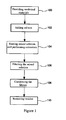
- process according to the first embodiment of the present application comprises the following steps: in step 100, providing the first type of medicinal materials and the second type of medicinal materials, wherein, the first type of medicinal materials include Rhizoma Bletillae, Cortex Cinnamomi, Radix Angelicae Formosanae, Radix Angelicae Sinensis, Paeonia Lactiflora (such as Radix Paeoniae Rubra, Radix Paeoniae Alba), Rhizoma Notopterygii, Radix Linderae, Glycyrrhizae, Radix Angelicae Pubescentis, and Radix Et Rhizoma Rhei, which are basic medicinal materials.
- the first type of medicinal materials include Rhizoma Bletillae, Cortex Cinnamomi, Radix Angelicae Formosanae, Radix Angelicae Sinensis, Paeonia Lactiflora
- the second type of medicinal materials is one, two or three selected from the group cosisting of Zingiber Officinale (such as Rhizoma Zingiberis, Zingiber Officinale Roscoe), Olibanum and Myrrha, which are added medicinal materials.
- step 102 adding organic solvent (such as one or more selected from methanol, ethanol, acetone, methyl ethyl ketone, kerosene (petroleum ether) and hexane), putting the first and second type of medicinal materials and the organic solvent in the first container (that is extraction bucket), make the percent by weight between the first and second type of medicinal materials and the organic solvent reach 1 : N, so as to form the mixed solution, N is a number between 3 and 12.
- N is 8.
- step 104 heating the mixed solution to a predetermined temperature and performing the extraction for a predetermined time, so as to carry out the extraction, wherein the predetermined temperature is between 30°C and 100°C. If the organic solvent is ethanol, the predetermined temperature is prefereably within the range of boiling point of ethanol ⁇ 5°C. The predetermined time is between 1h and 6h.
- step 106 filtering the mixed solution while hot, achieving the filtrate and transferring it to the second container (that is measuring glass).
- step 108 condensing the filtrate into an extractum with a water content in the range of 10-40% by weight and a content of the organic solvent in the range of 3-30% by weight.
- step 110 condensing the filtrate into an extractum with a water content in the range of 10-20% by weight and a content of organic solvent in the range of 5-10% by weight.
- the extractum is an intermediate product, which is convenient to be transported and saled, so as to prepare the final product.
- step 110 removing the residue from the container.
- the Chinese herbal medicine extractive of the present invention can be prepared by the process according to the second embodiment of the present application.
- the process according to the second embodiment comprises the following steps: in step 200, providing the first type of medicinal materials and the second type of medicinal materials, wherein, the first type of medicinal materials include Rhizoma Bletillae, Cortex Cinnamomi, Radix Angelicae Formosanae, Radix Angelicae Sinensis, Paeonia Lactiflora, Rhizoma Notopterygii, Radix Linderae, Glycyrrhizae, Radix Angelicae Pubescentis, and Radix Et Rhizoma Rhei, which are basic medicinal materials.
- the second type of medicinal materials is one, two or three selected from the group cosisting of Zingiber Officinale, Olibanum and Myrrha, which are added medicinal materials.
- step 202 adding organic solvent, putting the first and second type of medicinal materials in the first container with organic solvent (that is extraction bucket), make the percent by weight of the first and second type of medicinal materials with the organic solvent reach 1 : N, so as to form the mixed solution, N is a number between 3 and 12.
- N is 8.
- heating the mixed solution to a first predetermined temperature and performing the extraction for a first predetermined time, so as to carry out a first extraction, wherein the first predetermined temperature is between 30°C and 100°C.
- the first predetermined temperature is prefereably within the range of boiling point of ethanol ⁇ 5°C.
- the first predetermined time is between 1h and 6h.
- filtering the first mixed solution while hot achieving the filtrate and transferring it to the second container (that is measuring glass).
- step 208 reserving the residue from the first extraction.
- adding the organic solvent again making the percent by weight of the above medicinal materials with the organic solvent reach 1 : N again, so as to form a second mixed solution
- N is a number between 3 and 12.
- N is 8.
- step 212 heating the second mixed solution to a second predetermined temperature and performing the extraction for a second predetermined time, so as to carry out the second extraction, wherein the second predetermined temperature is between 30°C and 100°C. lf the organic solvent is ethanol, the second predetermined temperature is within the range of boiling point of ethanol ⁇ 5°C. The second predetermined time is between 1h and 6h.
- step 214 filtering the second mixed solution while hot, achieving the filtrate of the second extraction.
- step 216 mixing the filtrate of the first extraction and the filtrate of the second extraction.
- step 220 remove the residue of the second extraction from the container.
- the Chinese herbal medicine extractive of the present invention can be used in Chinese herbal medicine patch 300.
- the Chinese herbal medicine patch 300 comprises adhesive tape layer 310 and Chinese herbal medicine layer 320.
- the Chinese herbal medicine layer 320 is formed on the adhesive tape layer 310.
- the Chinese herbal medicine layer comprises diluent and extractum of the Chinese herbal medicine according to the present invention.
- the extractum of the Chinese herbal medicine (intermediate product) is mixed with the diluent, so as to form the Chinese herbal medicine layer (final product).
- the diluent includes ethanol, water and water-based glue.
- the Chinese herbal medicine patch 300 has a content of the Chinese herbal medicine extractive in the range of 50-3500 mg/14g (each piece of the Chinese herbal medicine patch).
- the Chinese herbal medicine extractive of the present invention can be used in Chinese herbal medicine spray.
- the Chinese herbal medicine spray 400 comprises diluent and the extractum of the Chinese herbal medicine according to the invention.
- the extractum of the Chinese herbal medicine (intermediate product) is mixed with the diluent, so as to form the Chinese herbal medicine spray (final product).
- the diluent includes ethanol, polyalcohol and water.
- the Chinese herbal medicine spray has a content of the Chinese herbal medicine extractive in the range of 10-500 mg/g.
- the Chinese herbal medicine spray does not contain the extractum obtained by condensed (intermediate product), but contains the filtrate obtained by the extractive without condensing (that is also an intermediate product), such that reducing the condensing procedures, leading to the shorten preparation time and reduced preparation cost.
- the Chinese herbal medicine extractive can be used in Chinese herbal medicine paste 500, which can be divieded into ointment, hydrogel and cream.
- the Chinese herbal medicine paste 500 comprises diluent and the extractum of the Chinese herbal medicine extractive according to the present application.
- the extractum of the Chinese herbal medicine extractive (intermediate product) is mixed with the diluent, so as to form the Chinese herbal medicine paste (final product).
- the diluent comprises vaseline, white wax and nonionic surfactant; as for the hydrogel, the diluent comprises ethanol, water and nonionic surfactant; as for the cream, the diluent comprises grease, wax and emulsifier.
- the Chinese herbal medicine paste 500 has an average content of the Chinese herbal medicine extractive in the range of 10-500 mg/g.
- the Chinese herbal medicine extractive of the present invention can be used for oral preparation, which can be divided into powder, pills and lozenge.
- the oral preparation comprises diluent and the extractum of the Chinese herbal medicine extractive of the present application.
- the extractum of the Chinese herbal medicine extractive (intermediate product) is mixed with the diluent, so as to form the oral preparation (final product).
- the diluent comprises starch and saccharides (such as sugar or honey); as for the lozenge, the diluent mainly comprises crystalline cellulose.
- the oral preparation has a content of the Chinese herbal medicine extractive in the range of 3-250 mg/g.
- Chinese herbal medicine extractive comprises the following 9 types of main indicative ingredients: Paeoniflorin, Ferulic acid, Cinnamaldehyde, Glycyrrhizin, Rhein, Imperatorin, Osthol, Isoimperatorin and Gingerol.
- the content of the indicative ingredients is respectively that, Paeoniflorin is 4.466-1.488 mg, Ferulic acid is 0.382-0.127 mg, Cinnamaldehyde is 2.159-0.720 mg, Glycyrrhizin is 9.677-3.226 mg, Rhein is 1.013-0.338 mg, Imperatorin is 0.727-0.242mg, Osthol is 1.389-0.463 mg, Isoimperatorin is 0.709-0.236 mg, Gingerol is 0.144-0.432 mg.
- the invention is futher illustrated by the following test examples and test data.
- each medicinal material in original formula of Panchrest plaster and the formula of the Chinese herbal medicine composition in the present invention is respectively put in an extractor with 95 wt% ethanol at a ratio of 1 : 8 by weight, and is extracted for 3h at 80°C, the extractive is repeated twice, two parts of extracting solution are collected, then filtrated separeately, the filtrate is condensed by a reduced pressure concentrator. 25 ⁇ L of the extractum, positive control and negative control substance is respectively applied to the skin of an animal eliminated the hair on the back. After irritation for 24h, the skin reaction is observed and recorded after 24h, 48h and 72h.
- Figure 6A is the HPLC fingerprint of Radix Paeoniae Rubra and the indicative ingredient is Paeoniflorin
- Figure 6B is the HPLC fingerprint of Radix Paeoniae Sinensis and the indicative ingredient is Ferulic acid
- Figure 6C is the HPLC fingerprint of Cortex Cinnamon and the indicative ingredient is Cinnamaldehyde
- Figure 6D is the HPLC fingerprint of Glycyrrhiza and the indicative ingredient is Glycyrrhizin
- Figure 6E is the HPLC fingerprint of Radix Et Rhizoma Rhei and the indicative ingredient is Rhein
- Figure 6F is the HPLC fingerprint of Radix Angelicae Formosanae and the indicative ingredient is Imperatorin or Isopsoralen
- Figure 6G is the HPLC fingerprint of Radix Angelicae Pubescentis and the indicative ingredient is Osthol or Osthole
- Figure 6H is the HPLC fingerprint of Rhizoma Notopterygii and the indicative ingredient is Isoimperatorin
- Figure 6I is the HPLC fingerprint
- HPLC chromatograms for the Chinese herbal medicine composition formula in the present invention 1g of each kind of medicinal materials in the Chinese herbal medicine composition formula of the present invention is mixed each other and to obtain 13g mixture, the mixture is added into an extractor with 104 g of 95wt% ethanol, then extracted for 3h at 80°C, and filterd and the filtrate is achieved, the resulted residue is treated by the above-mentioned procedure again, two parts of extracting solution are collected and filterd, and the filtrate is condensed into an extractum by a reduced pressure concentrator, and then quantified into 150.0 mL by adding methanol (MeOH) as test solution.
- the high performance liquid chromatography analysis is performed by injecting 10 ⁇ L of the test solution, and then the fingerprints as shown in Figure 7 are established.
- Test animals are Wistar rats (weight was about 250 g). During the test, test animals can eat and drink water freely.
- Test sample is the extractum from the Chinese herbal medicine. Rats are killed by breaking the cervical vertebrae, and are shaved off the belly hair with electric shaver, then the belly skin is removed. The removed skin, inner of which is moisted by normal saline, is clamped between the Donor cell and Receptor cell of Transdermal Franz Cell System. The test sample is dissolved in proper solvent, then placed in the Donor cell. Receptor cell is full of normal saline (containing 20wt% of polyethylene glycol 400).
- the percutaneous experiment is carried at a constant temperature of 37°C and at a fixed stiring speed of 500 rpm, ans is sampled at a time of 3h, 6h, 12h, 24h, 36h and 72h.
- the sample is injected into the high performance liquid chromatograph spectrometer to analyze the content according to the indicative ingredients of the Chinese herbal medicine patch.
- percutaneous ingredients that can be detected by HPLC is the following medicinal materials ingredients such as Radix Angelicae Sinensis, Paeonia Lactiflora and Cortex Cinnamomi and so on, which contains the above three indicative ingredients.
- the HPLC fingerprint is shown in Figure 8 .
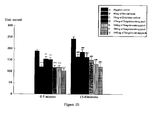
- Test animals are ICR mice (male, 6-8 weeks). During the experiment, test animals can eat and drink freely. Before the experiment, animals should fast for 24h. Experiment is divided into three groups, which are respectively negative control group (patch containing no medicine), positive control group (commercial Indomethacin or Diclofenac sodium patch) and experiment group (using 4 different dosages of patch for the experiment), 12 mice in each group.
- mice are weighed and made numbers, then fixed the limbs to the flat plate and shaved off the belly hair.
- the patch (2cmx3cm) is adhered to the belly of mice for 3h, then removed off (or do not remove the patch).
- the mice are injected with 0.6 wt% of acetic acid by intraperitoneal injection.
- the writhing time of mice is observed in 10 minutes and recorded the average value of writhing, the result is shown in Figure 9 .
- the average value of writhing for the Chinese herbal medicine patch in the present invention is lower than that of the negative control group (patch containing no medicine); therefore, the Chinese herbal medicine patch in the present invention definitely has analgesic effect.
- mice may lick their feet or stamp their feet because feet is stimulated by formalin to produce pain
- the licking feet time taken by initial pain caused by the injected formalin in 0-5 minutes is called early stage, pain reaction is mainly caused by substance P and bradykinin released through directly irritating pain reaction acceptor.
- the licking feet time consumed in 15-40 minutes is called later stage, which is mainly caused by some chemical transmitters such as histamine, serotonin, prostaglandin and kinin etc., released from the damaged cells due to inflammatory reaction.
- licking feet behavior caused by pain of white mice induced by formalin can evaluate effectively activity and mechanism of analgesic treating inflammatory and noninflammatory pain.
- Test animals are ICR white mice (male, 6-8 weeks). During the experiment, test animals can eat and drink freely. Before the experiment, animals should fast for 24h. Experiment is divided into three groups, which are respectively negative control group (patch containing no medicine), positive control group (commercial Indomethacin or Diclofenac sodium patch) and experiment group (using 4 different dosages of patch for the experiment), 12 mice in each group.
- mice are weighed and made numbers.
- the patch (2cmx3cm) is cut into four equal parts, then adhered to the instep of mice, and then fixed with breathable tape.
- the patch is removed after 3h, and the mice are applied with 20 ⁇ L of 1wt% freshly formalin solution on instep by subcutaneous injection.
- the licking feet time during 0-5 minutes and 15-40 minutes is calculated, and the result is shown in Figure 10 .
- edema caused by injecting ⁇ -carrageenin into plantar is a biphasic effect, after injected with ⁇ -carrageenin, different substances can be released to induce inflammation and swelling in different time period, that is to say, histamine, serotonin and platelet activating factor (PAF) can be released in the time period of 0-1.5 h or 20 minutes to 1h (the first stage), and kinin can be released in the time period of 1.5-2.5 h (the second stage), then prostaglandin and leukotriens can be released after 2.5 h (the third stage), leading to inflammation and swelling.
- PAF platelet activating factor
- Test animals are SD white rats (male, 6-8 weeks). During the experiment, test animals can eat and drink freely. Before the experiment, animals should fast for 24h. Experiment is divided into three groups, which are respectively negative control group (patch containing no medicine), positive control group (commercial Indomethacin or Diclofenac sodium patch) and experiment group (using 4 different dosages of patch for the experiment), 8 rats in each group.
- the white rats are weighed and made numbers, drawn a measuring line on the plantar of white rats with sighning pen.
- the volume of the plantar is firstly measured by a swelling tester.
- the white rats are dresses with corset elastic bandage to avoid the Chinese herbal medicine patch bited by the white rats.
- of the white rats in each group are applied with 0.1 mL of Carrageenan (10 mg/mL in saline) by subcutaneous injection in plantar.
- the Chinese herbal medicine patch (2cmx3cm) are adhered to the plantar for positive control group and experiment group, and fixed with breathable tape, swelling percent is measured in the time of 0h, 2h, 4h, 6h and 24h with a swelling tester (changing the Chinese herbal medicine patch after determining in different time). Observing the swelling condition in different time and draw swelling curve of experiment group and comparison group, identifying if it is of biometrical differences, as shown in Figure 11 .
Landscapes
- Health & Medical Sciences (AREA)
- Natural Medicines & Medicinal Plants (AREA)
- Life Sciences & Earth Sciences (AREA)
- Veterinary Medicine (AREA)
- Chemical & Material Sciences (AREA)
- Medicinal Chemistry (AREA)
- Pharmacology & Pharmacy (AREA)
- Animal Behavior & Ethology (AREA)
- General Health & Medical Sciences (AREA)
- Public Health (AREA)
- Epidemiology (AREA)
- Engineering & Computer Science (AREA)
- Biotechnology (AREA)
- Medical Informatics (AREA)
- Mycology (AREA)
- Alternative & Traditional Medicine (AREA)
- Microbiology (AREA)
- Botany (AREA)
- Chemical Kinetics & Catalysis (AREA)
- General Chemical & Material Sciences (AREA)
- Nuclear Medicine, Radiotherapy & Molecular Imaging (AREA)
- Organic Chemistry (AREA)
- Bioinformatics & Cheminformatics (AREA)
- Molecular Biology (AREA)
- Neurology (AREA)
- Biomedical Technology (AREA)
- Neurosurgery (AREA)
- Anesthesiology (AREA)
- Pain & Pain Management (AREA)
- Rheumatology (AREA)
- Medicines Containing Plant Substances (AREA)
- Medicinal Preparation (AREA)
Abstract
Description
- The invention relates a Chinese herbal medicine composition used for antiinflammation, detumescence and acesodyne; and more specifically, to a Chinese herbal medicine extractive used for antiinflammation, detumescence and acesodyne and a preparation method and use thereof.
- The life of modern people has become more and more stress and busy, they have not much time to do exercises, and they always stand or sit, thus modem people often have many civilization diseases, such as nerve or bones and muscles inflammation, muscle ache and so on. If lacking treatment, the result is that vicious circle forms, qi and blood cannot circulate smoothly.
- From the earliest times, it has been several thousand years since Chinese people used Chinese herbal medicine to treat diseases. All the time, they apply the method of consolidating the constitution and resisting the pathogen to cure foreign diseases, and solve the intrinsic inflammation or ache, which make Chinese herbal medicine continue today.
- At present, workers in Chinese herbal medicine industry still develop Chinese herbal medicine patch. The Chinese herbal medicine patch is convenient for external use, what is needed is only to place Chinese herbal medicine patch on the skin of area which suffers from pain or discomfort, and efficacy can work by making the ingredients in Chinese herbal medicine patch penetrate into the skin of body.
- Panchrest plaster has been used for curing the symptoms of body ache and discomfort etc. since ancient times, therefore efficacy has been confirmed for a long time, the formula is composed of 17 kinds of medicinal materials, such as Radix Aconiti, Momordica Cochinchinensis, Radix Aconiti Kusnezoffii, Radix Rehmanniae, Ampelopsis Japonica, Rhizoma Bletillae, Cortex Cinnamon, Radix Angelicae Formosanae, Radix Angelicae Sinensis, Radix Paeoniae Rubra, Rhizoma Notopterygii, Radix Sophorae Flavescentis, Radix Linderae, Glycyrrhiza, Radix Angelicae Pubescentis, Radix Scrophulariae, Radix Et Rhizoma Rhei. However, a part of medicinal materials in the above formula, such as Radix Aconiti, Momordica Cochinchinensis, Radix Aconiti Kusnezoffii, have been verified to be toxic and have dermal irritation, which may cause skin discomfort after using, as showed in Table 1.
Table 1 Medicinal materials: Efficacy and defects of Radix Aconiti, Momordica Cochinchinensis and Radix Aconiti Kusnezoffii Medicinal materials Medicine properties Efficacy and defects Radix Aconiti Medicine properties: acrid and bitter in taste, hot in nature, extremely poisonous Radix Aconiti had obvious effect on antiinflammation and acesodyne, but has toxicity 1. Aconitum Carmichaelii in "Wu Pu's Meteria Madica", Shen Nong, Lei Gong, Tong Jun, Yellow Emperor: was sweet, poisonous. 2. Aconitum Carmichaelii in "Bie Lu", was sweet, graet heat, extremely poisonous 3. In "Yao Xing Lun", was bitter, acrid, great heat, extremely poisonous 4. In "Zhen Zhu Nang Bu Yi Yao Xing Fu", was acrid and bitter, hot in nature, extremely poisonous, floating, yang within yang Toxicity: In "Chinese Materia Medica", mice was given Radix Aconiti apozem by gavage, LD50 was 18.0 ± 0.034 g/kg. People was given Aconitine by oral administration, fatal dosage was about 2-5 mg, LD50 by subcutaneous injection was 0.32 mg/kg for mice, mice was given mesaconitine by subcutaneous injection, fatal dosage was 0.3-0.5 mg/kg. Cautions: In "Chinese Materia Medica", Radix Aconiti soaked and decocted with wine may cause toxicity, people should be cautious. If it was used improperly to lead to poisoning, the symptom includes tongue, limbs and systematic numbness, salivation, nausea, vomit, diarrhea, dizziness, blur version, dry mouth, slow pulse, dyspnea, tetany, insanity, gatism, blood pressure and temperature dropped. One with severe poisoning might die resulted from the respiratory and circulatory failure and severe cardiac arrhythmia. Momordica Cochinchinensis Medicine properties: bitter and slightly sweet in taste, warm in nature, poisonous Momordica Cochinchinensis has effect on detumescence and lump dissipation, detoxication, chasing wind and pain-alleviating, but had high irritation 1. In "Wang Mu", bitter and slightly sweet in taste, mildly poisonous 2. In "Yao Xing Qie Yong", bitter in taste, great cold in nature 3. In "Yao Xing Kao", mildly poisonous, cool Cautions: pregnant woman and persons with body weakness must not take in. 1. In "Collected Works of Materia Medica", people with stomach deficiency, whose large intestine is not material and true origin has no damage, can not use. 2. In "Sheng Cao Yao Xing Bei Yao", fishy in taste, poisonous, can not be taken in. Radix Aconiti Kusnezoffii Medicine properties: acrid and bitter in taste, hot in nature, extremely poisonous Radix Aconiti Kusnezoffii has obvious effect on antiinflammation and acesodyne, but has toxicity 1. Aconitum Carmichaelii in "Wu Pu's Meteria Madica", Shen Nong, Lei Gong, Tong Jun, Yellow Emperor: was sweet, poisonous. 2. Aconitum Carmichaelii in "Bie Lu", was sweet, great heat, extremely poisonous 3. In "Yao Xing Lun", was bitter, acrid, great heat, extremely poisonous 4. In "Xin Xiu Ben Cao", acrid sweet, warm in taste, great hot, extremely poisonous Toxicity: In "Chinese Materia Medica", mice was given with Aconitum Carmichaelii (Radix Aconiti Kusnezoffii) extract by oral administration, LD50 (dried herb) was 1827 ±11.4 mg/kg, 5780 ±4.4 mg/kg for Aconitum Kusnezoffii. LD50 of Aconitum Carmichaelii by intraperitoneal injection was 1.62 ±1.1 mg/kg, 435 ±4.4 mg/kg for Aconitum Kusnezoffii. Cautions: In "Chinese Materia Medica", Radix Aconiti soaked and decocted with wine may cause toxicity, people should be cautious. Excessive dosage might cause toxicity, poisoning symptom might refer to "Radix Aconiti". - Additionally, Panchrest plaster from ancient formula mainly applies oleum sesami to extract the effective ingredients, which can destroy the ingredients in medicinal materials because of high temperature, or lead to the incomplete extraction of the effective ingredients, it is not easy to manage and when molding, due to add lots of zinc oxide, the problem of heavy metal residue is caused.
- Therefore, it is necessary to provide a Chinese herbal medicine composition used for antiinflammation, detumescence and acesodyne, so as to solve the above problems.
- The present invention provides a Chinese herbal medicine composition used for antiinflammation, detumescence and acesodyne, comprising a first type of medicinal materials and a second type of medicinal materials, wherein the first type of medicinal materials include Rhizoma Bletillae, Cortex Cinnamomi, Radix Angelicae Formosanae, Radix Angelicae Sinensis, Paeonia Lactiflora, Rhizoma Notopterygii, Radix Linderae, Glycyrrhizae, Radix Angelicae Pubescentis, and Radix Et Rhizoma Rhei, the second type of medicinal materials is one, two or three selected from the group cosisting of Zingiber Officinale, Olibanum and Myrrha.
- The present invention further provides a Chinese herbal medicine extractive, prepared by a process comprising the following steps: providing a first type of medicinal materials and a second type of medicinal materials, wherein the first type of medicinal materials include Rhizoma Bletillae, Cortex Cinnamomi, Radix Angelicae Formosanae, Radix Angelicae Sinensis, Paeonia Lactiflora, Rhizoma Notopterygii, Radix Linderae, Glycyrrhizae, Radix Angelicae Pubescentis, and Radix Et Rhizoma Rhei, which are basic medicinal materials, and the second type of medicinal materials is one, two or three selected from the group consisting of Zingiber Officinale, Olibanum and Myrrha, which are added medicinal materials; adding the first type of medicinal materials and teh second type of medicinal materials into a container with organic solvent, making the percent by weight of the first and second type of medicinal materials with the organic solvent reach 1 : N, so as to form a first mixed solution, wherein N is a number between 3 and 12; heating the first mixed solution to a first predetermined temperature and performing the extraction for a first predtermined time, so as to carry out first extraction, filtering the first mixed solution while hot, to achieve filtrate from the first extraction.
- The present invention further provides a preparation method of a Chinese herbal medicine extractive, wherein the preparation method comprises the following steps: providing a first type of medicinal materials and a second type of medicinal materials, wherein the first type of medicinal materials include Rhizoma Bletillae, Cortex Cinnamomi, Radix Angelicae Formosanae, Radix Angelicae Sinensis, Paeonia Lactiflora, Rhizoma Notopterygii, Radix Linderae, Glycyrrhizae, Radix Angelicae Pubescentis, and Radix Et Rhizoma Rhei, which are basic medicinal materials, and the second type of medicinal materials is one, two or three selected from the group consisting of Zingiber Officinale, Olibanum and Myrrha, which are added medicinal materials; adding the first and second type of medicinal materials into a container with organic solvent, making the percent by weight of the first and second type of medicinal materials with the organic solvent reach 1 : N, so as to form a first mixed solution, wherein N is a number between 3 and 12; heating the first mixed solution to a first predetermined temperature and performing the extraction for a first predtermined time, so as to carry out a first extraction, filtering the first mixed solution while hot achieving a filtrate from the first extraction.
- The present invention further provides an use of the Chinese herbal medicine composition, for example, the Chinese herbal medicine composition is used for Chinese herbal medicine patch, Chinese herbal medicine paste and oral preparation.
- The present invention provides a Chinese herbal medicine composition used for antiinflammation, detumescence and acesodyne, which does not comprise Radix Aconiti, Momordica Cochinchinensis, Radix Aconiti Kusnezoffii, Radix Rehmanniae, Ampelopsis Japonica, Radix Sophorae Flavescentis, Radix Scrophulariae. Thus, the Chinese herbal medicine composition used for antiinflammation, detumescence and acesodyne according to the present invention, is completely different from original formula of panchrest plaster. Moreover, it has been verified that Radix Aconiti, Momordica Cochinchinensis, Radix Aconiti Kusnezoffii have toxicity and dermal irritation; therefore, the Chinese herbal medicine composition according to the present invention does not have defects which original formula of panchrest plaster has. Additionally, compared with original formula of panchrest plaster, the Chinese herbal medicine composition according to the present invention further comprises the added medicinal materials (such as Zingiber Officinale, Olibanum and Myrrha) so as to enhance efficacy.
- The present invention chooses effective Chinese herbal medicine which has no irritation and anaphylaxis on skin and body, and applies special extraction and preparation method and animal test methods to verify the efficacy of antiinflammation, detumescence and acesodyne, which is different from the traditional panchrest plaster and commercial Chinese herbal medicine patch. The invention is illustrated in detail combined with figures below.
- Further advantages, features and potential applications of the present invention may be gathered from the description which follows, in conjunction with the embodiments illustrated in the drawings.
- Throughout the description, the claims and the drawings, those terms and associated reference signs will be used as are notable from the enclosed list of reference signs. In the drawings
- Fig. 1
- is a flow chart for illustrating the first embodiment of the preparation method according to the present invention;
- Fig. 2
- is a flow chart for illustrating the second embodiment of the preparation method according to the present invention;
- Fig. 3
- is a stereoscopic diagram for showing the Chinese herbal medicine patch having the Chinese herbal medicine composition according to the present invention;
- Fig. 4
- is a section drawing for showing the Chinese herbal medicine spray having the Chinese herbal medicine composition according to the present invention;
- Fig. 5
- is a stereoscopic diagram for showing the Chinese herbal medicine paste having the Chinese herbal medicine composition according to the present invention;
- Figs. 6A to 6L
- are fingerprints for each kind of medicinal material analyzed by HPLC;
- Fig. 7
- is a fingerprint for the Chinese herbal medicine composition according to the present invention analyzed by HPLC;
- Fig. 8
- is a diagram of HPLC results for the percutaneous experiment of extractum having the medicinal material ingredients according to the present invention;
- Fig. 9
- shows average value of writhing determined by mice acetic acid writhing test;
- Fig. 10
- shows licking feet time determined by mice Formalin test, and
- Fig. 11
- shows results of antiinflammation, detumescence and acesodyne test for the Chinese herbal medicine patch according to the present invention.
- The invention provides a Chinese herbal medicine composition; the composition comprises a first type of medicinal materials and a second type of medicinal materials. Wherein, the first type of medicinal materials include Rhizoma Bletillae, Cortex Cinnamomi, Radix Angelicae Formosanae, Radix Angelicae Sinensis, Paeonia Lactiflora (such as Radix Paeoniae Rubra), Rhizoma Notopterygii, Radix Linderae, Glycyrrhizae, Radix Angelicae Pubescentis, and Radix Et Rhizoma Rhei, which are basic medicinal materials. The second type of medicinal materials is one, two or three selected from the group cosisting of Zingiber Officinale, Olibanum and Myrrha, which are added medicinal materials. Specifically, the Chinese herbal medicine composition according to the present invention includes seven kinds of combinations of medicinal materials as shown in Table 2
Table 2 Basic medicinal materials Added medicinal materials Medicinal materials of the invention Rhizoma Bletil lae Cortex Cinnamomi Radix Angelicae Form osan ae Radix Angelicae Sinensis Paeonia Lactif lora Rhizoma Noto pterygii Radix Lin derae Glycyrrhizae Radix Angelica e Pubes centis Radix Et Rhizoma Rhei Zingiber Officinale Olibanum Myrrha There are 11 kinds in the first combination Yes Yes Yes Yes Yes Yes Yes Yes Yes Yes Yes None None There are 11 kinds in the second combination Yes Yes Yes Yes Yes Yes Yes Yes Yes Yes None Yes None There are 11 kinds in the third combination Yes Yes Yes Yes Yes Yes Yes Yes Yes Yes None None Yes There are 12 kinds in the forth combination Yes Yes Yes Yes Yes Yes Yes Yes Yes Yes Yes Yes None There are 12 kinds in the fifth combination Yes Yes Yes Yes Yes Yes Yes Yes Yes Yes Yes None Yes There are 12 kinds in the sixth combination Yes Yes Yes Yes Yes Yes Yes Yes Yes Yes None Yes Yes There are 13 kinds in the seventh combination Yes Yes Yes Yes Yes Yes Yes Yes Yes Yes Yes Yes Yes - When the second type of medicinal materials is one selected from the group consisting of Zingiber Officinale, Olibanum and Myrrha, the Chinese herbal medicine composition contains 11 kinds of medicinal materials, percent by weight of each medicinal material is in the range of 9.09%±5%b. When the second type of medicinal materials is two selected from the group consisting of Zingiber Officinale, Olibanum and Myrrha, the Chinese herbal medicine composition contains 12 kinds of medicinal materials, percent by weight of each medicinal material is in the range of 8.33%±5%. When the second type of medicinal materials is three selected from the group consisting of Zingiber Officinale, Olibanum and Myrrha, the Chinese herbal medicine composition contains 13 kinds of medicinal materials, percent by weight of each medicinal material is in the range of 7.69%±5%.
- In the present invention, the first type of medicinal materials is basic medicinal materials, and the second type of medicinal materials is added medicinal materials. 7 kinds of combinations of medicinal materials in Table 2 all have efficacy of the invention. In the context below, only take the seventh combination for example, which comprises 13 kinds of medicinal materials in the Chinese herbal medicine composition (that is, Rhizoma Bletillae, Cortex Cinnamomi, Radix Angelicae Formosanae, Radix Angelicae Sinensis, Paeonia Lactiflora, Rhizoma Notopterygii, Radix Linderae, Glycyrrhizae, Radix Angelicae Pubescentis, Radix Et Rhizoma Rhei, Zingiber Officinale, Olibanum and Myrrha), the other 6 combinations can be carried out in the similar means, so it is not necessary to give more details here.
- Table 3 shows the comparision between the formula of the Chinese herbal medicine composition used for antiinflammation, detumescence and acesodyne according to one embodiment of the present invention and original formula of panchrest plaster.

- The Chinese herbal medicine composition used for antiinflammation, detumescence and acesodyne of the present invention does not comprise Radix Aconiti, Momordica Cochinchinensis, Radix Aconiti Kusnezoffii, Radix Rehmanniae, Ampelopsis Japonica, Radix Sophorae Flavescentis, Radix Scrophulariae. Thus, the Chinese herbal medicine composition used for antiinflammation, detumescence and acesodyne according to the present invention, is completely different from original formula of panchrest plaster. Moreover, it has been verified that Radix Aconiti, Momordica Cochinchinensis, Radix Aconiti Kusnezoffii have toxicity and dermal irritation; therefore, the Chinese herbal medicine composition according to the present invention does not have defects which original formula of panchrest plaster has. Additionally, compared with original formula of panchrest plaster, the Chinese herbal medicine composition according to the present invention further comprises the added medicinal materials (such as Zingiber Officinale, Olibanum and Myrrha) so as to enhance efficacy.
- The Chinese herbal medicine composition used for antiinflammation, detumescence and acesodyne according to the present invention, the efficacy of medicinal materials recorded in the literature is shown in Table 4.
Table 4 Medicinal materials Characters and ingredients Pharmacological action Taste, nature and efficacy Glycyrrhizae (Leguminosae sp.) Alias: sweet grass, sweet grass root, Glycyrrhiza uralensis Fisch Use part: rhizome, root Characters The root is round in the form of long strip, no branches, 60.5-98.6 mm in length. As for one with bark, tightness of surface differs, wrinkle is obvious, the fibrous roots and scale leaves thereof is red brown, brown or grey brown; the texture thereof is solid, and the cutting surface on both ends is smooth, the section is fibroid, yellow white, Immunoregulation, anticancer and anti-aging Glycyrrhizin: enhancing the weight of immune organs and raise the number of leucocyte. Glycyrrhiza polysaccharide: inducing r-interferon which has immunoregulation effect Glycyrrhizin: having immunoregulation effect and inhibiting or relieving the growth of tumour. Sweet in taste, neutral in nature. Having the effect of invigorating spleen-stomach and replenishing qi, heat-clearing and etoxifying, expelling phlegm to stop mealiness, has obvious ring pattern and chrysanthemum core, has characteristic flavor, sweet in taste. As for one without bark, it is light yellow, appearance thereof is fibroid, cross section of rhizome has obvious cambium in two-thirds of radius, medulla is small in the center, xylem and phloem are radial, and section is fibroid. Ingredients Triterpenoids: 1. Glycyrrhetinic acid (Glycyrrhizin) Sweet ingredients in Glycyrrhizae 2. Glycyrrhiza saponins A3, A2, C2..... 3. Flavonoid Glycyrrhiza flavonoids Glycyrrhiza Liquiritin and so on 4.Polysaccharide 5. AlkaloidGlycyrrhiza flavonoids: antioxidation, eliminating superoxide anion and hydroxy radical Treating ulcer and protecting liver, anticoagulation and reducing blood lipids Inhibiting gastric secretion, having the effect of ulcer resistance, enhancing pancreatic juice secretion. Protecting liver, reducing blood lipids, antiarrhythmic and inhibiting platelet aggregation Antibacterial action and antitoxin High dosage of Glycyrrhizin can inhibit copy of SARS virus and has the effect of detoxication Antiinflammation and detumescence Glycyrrhetinic acid and derivative thereof can inhibit blood permeability of histamine, can be made into antiinflammation and antiallergic preparation used for rheumatic arthritis, allergic dermatitis and asthma Cosmetics Reducing or removing toxic substances in cosmetics, preventing allergic reaction on somebody, additionally, strongly inhibiting tyrosinase action cough, relieving spasm and pain, it is used for fatigue caused by qi deficiency, palpitation, and burnout, palpitation and severe palpitation, qi deficiency and blood less, knotted clavus, ulcer and swelling, sore throat, cough and much sputum, lung-heat and cough and panting, lung-cold and cough and panting, acute pain in the abdomen etc. It is also used for relieving medicine nature, gastric and duodenum ulcer, heat stranguria and dysuria, AIDS. Zingiber Officinale (Zingiberaceae) Use part: dried rhizome Characters Flat and in the form of irregular mass, having digitate branches. Length: 1-6 cm, thickness: 0.4- 2 cm. Surface is gray or yellowish gray, rough, having longitudinal wrinkles and obvious rings, have scale leaves remaining in ramose place. Appearance of medicinal materials without bark is yellow white or light brown, smooth and have lognitudinal pinstripe. It is solid in texture, section is graininess, gray or light yellow, one with soft texture has visual venation, thin grease oil balls and obvious rings, aromatic in smell atmosphere, spicy in taste. Ingredients β-Pinene Myrcene γ-Selinene, Nonanol β-Sesquiphe-I landrene Gingerol Zingiberone Zingerone Zonaren Shogaol Sedation, acesodyne and antiinflammation Extracting solution from zingiber Officinale by methanol, can lengthen the sleeping time of anaesthetic mice, obviously inhibit writhing reaction reduced by acetic acid in mice, can also inhibit blood permeability caused by acetic acid, and treat rheumatic arthritis Effect on heart and blood Zingiber Officinale extractive can lead to transient rise of blood pressure in rats by intravenous injection. Effect on digestive system Water extractive from fresh zingiber Officinale can inhibit tonicity gastric ulcer and stimulate obviously and cause intestinal canal to contract Antihypoxic effect Ether exactive from zingiber Officinale can reduce amount of oxygen consumption in mice, and extend survival time after potassium hydroxide poisoning. Bitter in taste, warm in nature, non-toxic. Function is warming the middle-Jiao mildly and removing cold, eliminating dampness and removing phlegm, stopping vomit and diarrhea, strengthening stomachic and analgesia, warming channels and stopping bleeding. It is mainly used for loin pain and blood stasis. Olibanum (Burseraceae) Alias: Rushixiang, Taxiang, Tianjinxiang Use part: resin spilled from bark of lentisk Characters: Lentisks are small shrubs, the trunk is thick and slippery, can be peeled off like paper. It is in the form of spherelike, guttate particle or irregular small mass, some is sticky and form mass, is light yellow, light blue-green or palm red, translucent. It is solid in texture, aromatic in smell, very bitter in taste, it becomes soft to be gum when chewing. Ingredients: resin 60∼70% a-boswellic acid, β-boswellic acid, lactic acid resin hydrocarbon..... gum 27∼35% Arab tanning polysaccharide acidvolatile oil 3∼8% amyrenone, pinocamphone, phellandral...Effect on treating stomach and duodenum ulcer Feeding rats for a long time, can redue obviously ulcer index and free acidity of gastric contents Antiinflammation Olibanoresin is an anti-inflammatory ingredient, can reduce glycosaminoglycan in skin, liver, kidney and spleen of rats after eating, which is related with anti-inflammatory effect. Reduce cholesterin Feeding rats can reduce the synthesis of cholesterin in liver. Acesodyne Olibanum has obvious acesodyne effect verified by writhing experiment induced by acetic acis Spicy and bitter in taste, warm in nature. Function includes activating blood analgesia, detumescence and promoting granulation. It is used for pain in the abdomen, Rheumatic arthralgia, physical injuries, line of abdominal pain, ulcer and swelling or slow-healing after ulceration etc. Paeonia Lactiflora (Ranunculaceae) Alias: wood Paeonia lactiflora Use part: root Character: Root is cylindrical, slightly curved, 4-8.5 cm in length, about 9.1-11.1 mm in diameter, surface is dark brown with thick and deep longitudinal wrinkles, bark is easy to fall off to show Antitumor function: Water or ethanol extractive of Radix Paeoniae Rubra can increase the content of cyclic adenosine monophosphate (cAMP) in tumor cells, so as to enhance anticancer action. Bitter in taste, slightly cold in nature, go into liver and spleen channel. Function white or light brown cortex, texture thereof is hard and brittle, broken off easily. The section is fibroid, yellow white, mealiness, has obvious rings and chrysanthemum core, has characteristic flavor, sweet in taste. Ingredients: 0.72% of benzoic acid volatile oil, fatty oil, resin tannin sugar, starch lymphatic temperament protein paeoniflorin 1.8%∼7.3% Antibacterial action: It can inhibit shigella dysenteriae, pseudomonas aeruginosa, staphylococcus aureus, and damage the effect of aflatoxin B1. Benzoic acid can be used as preservative with other Chinese herbal medicine, has good curative effect on infectious acne. Antithrombotic action Paeoniflorin, d-catechin and analogous prostacyclin are powerful blood vessel relaxation agent, and inhibit platelet aggregation to have antithrombotic function. Whitening effect: Since having obvious effect on activating blood and dissolving stasis, it has effect on butterfly rash, freckle and pigment precipitate; it can be used for a long time because it is non-hormonal whitening expelling spot agent without any side effects. Paeoniflorin also has sedation, analgesic, relieving spasm and anti-inflammatory effect. Radix Paeoniae Rubra contains tannins which can affect the activity of SOD, therefore it has a powerful antioxidant ability. includes clearing away heat and cooling blood, activating blood and dissolving stasis, detumescence analgesic. It is used for pyreticosis and eruption, traumatic injury, hot eyes etc.. In recent years, it can be used for treating arteria coronaria rencently. Radix Linderae (Lauraceae) Alias: TongQianCai, TianTaiWuYao, Short ZhangGen Use part: dry root Characters: It is cylindrical or spindle, nodular enlargement, 5-15 cm in length, 0.5-2.5 cm in diameter, appearance is yellow brown to dark brown, have fine wrinkle ring crack and lateral root mark, the bark is easy to peel off and show fibrous wood, texture thereof is solid and is hard to break off. Section of part without bark is spherelike or irregular shape, cutting surface is light brown and reddish, radicals and annual rings are visible, aromatic in smell, slight flavour in taste, and has irritative cool. Ingredients linderalactone, isolinderalactone, isolinderoxide, linderene, neolinderalactone, isohexylfuran, laurolitsine, sesquiterpenoids. Gastrointestinal regulatory role It has bidirectional effect on gastrointestinal smooth muscle, can promote or inhibit gastrointestinal activities. Antibacterial aciton and treating herpes simplex virus Cultivating with virus can restrain virus with high efficiency. Stop bleeding and promoting blood coagulation Vitro experiments prove Radix Linderae powder can obviously reduce plasma calcification time, and promote blood coagulation. Antihistamine action Alcohol extractive of Radix Linderae root has antihistamine role on trachea of guinea pigs. Spicy in taste, warm in nature. The function includes promoting qi circulation and relieving pain, warming kidney and eliminating cold. It is used for chest distress and costalgia, pain in gastral cavity, regurgitation and vomit, pain in belly caused by cold, line of abdominal pain, frequent urination and enuresis etc.. Radix Angelicae Formosanae (Umbelliferae) Alias: Fragrant angelica dahurica, Aromatic chuan Characters: Root is cone, surface is gray yellow to yellow brown. Hole in the bark is visible and scatters protuberantly in transverse, which is called "geda ding". Section is mealiness, and Antimicrobial effect It has a certain inhibition effect on escherichia coli, shigella dysenteriae, typhoid bacillus coli, paratyphoid bacillus, pseudomonas aeruginosa and proteus, choleraic vibrio etc.. Spicy in taste, warm in nature. Function includes expelling wind and relieving angelica dahurica Use part :root brown grease spots scatter in cortex, form ring, xylem accounts for about a third of the section, strongly fragrant in smell, taste sweet and slightly bitter. Ingredients: Containing volatile oil, many kinds of coumarin derivatives Antipyretic, analgesia and anti- inflammatory action Water extractive has a certain effect on detumescence for relieving pain and skin pruritus. Cosmetics It has the effect of whitening skin, sunscreen, prevent UV, but because containing furan coumarin compounds, it has photosensitivity Effect on fat metabolism It can enhance the fat decomposition function induced by adrenaline and ACTH, and inhibit glucose induced by insulin from changing into fat. exterior, relieving pain, treating nasal obstruction, detumescence and apocenosis, eliminating dampness and arrestin. It is used for headache by cold, superciliary ridge pain, gum pain, feeling fullness in the head, nasal obstruction, turbid nasal mucus, acute and chronic sinusitis, cold wet leucorrhea, clear leucorrhea, swelling and boils, acute mastitis pain, expelling wind and relieving itching, pruritus by wind etc.. Radix Angelicae Pubescentis (Umbelliferae) Alias: Fragrant angelicae Pubescentis, Large angelicae Pubescentis, Chuan angelicae Pubescentis,Yu Huo Use part: rhizome Characters Taproot is slightly cylindrical, has branches, 10-30 cm in length. Reed head is enlargement, has many horizontal wrinkles, and has a diameter of 1.5-3 cm. There is stem and leaf residual bases or depression on the top, surface is greyish brown or brown, has longitudinal wrinkles, and has protuberance lenticel on bark in transverse and protuberant fine root marks. It is hard in texture, section has brown rings, bark is grey-white, brown grease spots scattered is visible; xylem is sallow to yellowish-brown. Ingredients: Coumarins such as Angelicon Angelol Bergapten Angelical Psoralen Byakangelicin Treat arthritis, analgesic and sedation Rhizoma Notopterygii and Radix Angelicae Pubescentis can expel rheumatism, but efficacy of Rhizoma Notopterygii is larger and acute, it gets into taiyang (bladder) channel, is good at treating headache caused by rheumatism (one with more severe occipital pain, the efficacy is better), limbs pain and body pain. Powder of Radix Angelicae Pubescentis is milder than Rhizoma Notopterygii, it gets into shaoyin channel (kidney channel), is good at treating wind of shaoyin channel, mainly used for pain of waist, knees and foot shin. Directly dilating blood vessels and lower blood pressure Dogs and cats are given crude preparation of Radix Angelicae Pubescentis by intravenous Spicy and bitter in taste, slightly warm in nature. Function inludes expelling rheumatism, relieving pain, removing obstruction, eliminating cold and relieving exterior. It is used for wind-cold-dampness arthralgia,arthralgia, achiness in loin and knees, paralysis in two feet, stretch disadvantage and wind-cold exterior injection, which has antihypertensive effect, but is not lasting, additionally, it has the effect of shrinking blood vessels. Effect on platelet aggregation It has influence on platelet aggregation of rats, and may reduce the formation of vein thrombosis. Photosensitive role Radix Angelicae Pubescentis contains furan coumarin compounds such as Bergapten, xanthotoxin, which are photosensitive, can lead to photo sensitivity when shined by sun or UV. Antibacterial action Furan coumarin compounds in the status of light sensitivity generally have no obvious antibacterial activity, but can kill bacteria upon exposure. But rats are given xanthotoxin and bergapten by intravenous injection, LD50 are respectively 160 mg/kg, 945 mg/kg. syndrome with damp evil etc., is also applied for diaphoresis, sedation, diuresis and shrinking blood vessels. Radix Angelicae Sinensis (Umbelliferae) Alias: Yun Gui, Gan Gui, Qing Gui, Xi Dang Gui Use part: root Characters: Root head and Taproot are rough, there are bud mark, stem base and petiole base remained on the top. There are more than 10 tails under root head and taproot, tail is thick above and thin below, many of which is distortion. Surface has fibrous root mark like knots. It is dry, hard in texture, become soft and pliable in texture when absorbing moisture. Section is yellow white with cranny; there are light brown rings and many brown oil spots in the middle layer. Greatly fragrant in smell, sweet and slightly spicy in taste. Ingredients Volatile oil: Acidity: (2%; palmitic acid, phthalic anhydride) Phenolic: (10%; carvacrol) Neutral: (88%, two kinds of sesquiterpene, n-butylidene phthalide, angelica ketone) Water-solubility: ferulic acid, angelica polysaccharide, stigmasterol-D-glucoside etc. Cholate, 17 kinds of amino acid 23 kinds of inorganic elements Have anti-thrombotic and antanemic effect, improve liver and lung Relieving thrombus formation, promoting the generation of hemoglobin and the red blood cells. For chronic liver disease, relieving the liver fibrosis and promoting liver cell function recover. Improving lung ventilation function, strengthening physical strength. Have immune and anticancer effect, antiinflammation and Antibacterial action Ferulic acid sodium and angelica polysaccharide can ascend phagocytosis of macrophages, promote lymphocyte transformation, can be used for the treatment of cancer, especially for gynecological tumors. The effect of angelica extractive on vascular permeability and inhibiting platelet causing inflammation is similar with aspirin. Inhibiting golden staphylococcus, pseudomonas aeruginosa and colibacillus. Anti-aging action Ferulic acid can inhibit lipid peroxidation, and directly eliminate radicals. Sweet and spicy in taste, warm in nature. Function includes hematogenesis and activating blood circulation, constipation with laxatives. It is used for blood deficiency and chlorosis, palpitations and dizziness, abnormal menstruation, amenorrhea and dysmenorrhea, deficiency-cold abdominal pain, intestinal dry constipation, rheumatic arthralgia, traumatic injury, carbuncle and ulcer. Used with alcohol can activate blood circulation and have emmenagogic effect. It is used for treating amenorrhea and dysmenorrhea. Myrrha (Burseraceae) Alias: Mo Yao, Ming Mei Yao Use part: resin spilled from myrrha bark Characters: It is irregular particles, or sticks into mass, with a diameter of about 2.5 cm, has smaller or larger ones. Surface is red brown or yellow brown, rough, is covered with powder. It is hard and brittle in texture, easy to craze, the section is in the form of particle, has brown luster, is translucent, often has white spots or texture, has characteristic flavor, very bitter in taste. Main ingredients: Resin is 25-35%, volatile oil is 2.5-9%, gum is about 57-65%, water and various kinds of tannins is about 3-4%. Antiatheroscloresis The part containing resin oil can reduce high cholesterol of male rabbit fed with hydrogenated oil, can prevent the formation of artery wall plague, also reduce rabbit weight. Convergent effect Myrrh tincture has the convergent effect on mucous membrane, it can be used as oral lotion when occurring oral cavity and pharynx ulcer, and it is also used for stimulating intestines and stomach peristalsis. Anti-inflammatory, analgesic and defervescence 500 mg/kg of Myrrh extractive isBitter and spicy in taste, neutral in nature, nontoxic. Function includes activating blood circulation and removing blood-stasis, removing bruises and relieving pains, treating traumatic injury, pain in bones and Myrrh terpenol includes eugenol, meta-cresol, cuminaldehyde, pinene, cinene, limonene, cinnamaldehyde, heerabolene, etc. Gum is hydrolyzed into arab sugar, galactose and xylose. applied to rat by stomach irrigation; it has significant inhibition effect on inflammation, which is called defervescence reaction. Antibacterial action Water extractive of Myrrh has different degree of effect on various pathogenic fungi such as tinea bacteria in tube. heart, abdominal mass, gynecological mass, amenorrhea, ulcer and swelling, anal fistula, invisibility. The action of activating blood circulation and removing blood-stasis, removing bruises and relieving pains is similar with Olibanum. It is mainly applied for traumatic pain and amenorrhea etc., also used for chest pain in heart and chest caused by qi stagnancy and blood stasis. Rhizoma Notopterygii (Umbelliferae) Alias: Chuan Qiang, Kuan Ye Qiang Huo, Chan Qiang, Hei Yao Use part: dry root, rhizome Charaters: Rhizome is cylindrical, has different length, with a diameter of 1-3 cm. Appearance is brown-black, node is dense in the upper section, and rare in the lower section, has ridgy rings, has many bud mark like strumae, has stem mark on the top. Root is cylinder or cone with microgroove and branch root mark. It is loose in texture, section is not smooth, yellow white, delicate fragrance, slightly spicy and bitter later in taste. Cross section or oblique section slice is round or oblate, there is chrysanthemum texture on the surface, the bark is brownish red, xylem is white, medulla is brown to black in the center, loose into hollow. Ingredients: Main ingredients: including volatile oil which is identified to be 20 types, accounting for 97.13%. Non-volatile oil contains columbianadin, notopterol, ferulic acid and coumarin. Antipyretic, analgesic and anti-inflammatory effect Rats test shows that it has antipyretic ability, clippling tail and burning tail test shows that Rhizoma Notopterygii has obvious analgesic effect, additionally, anti-swelling experiment shows that Rhizoma Notopterygii has antiphlogistic effect. Effect against myocardial ischemia Volatile oil of Rhizoma Notopterygii can dilate coronary artery, increase coronary artery flow, and improve the state of the myocardial ischemia. Antibacterial action In culture dish test, Rhizoma Notopterygii oil has obviously inhibiting effect on dysentery bacillus, escherichia coli, pseudomonas aeruginosa, and golden staphylococcus aureus. Bitter and spicy in taste, warm in nature. Function includes expelling wind and relieving exterior, relieving pain and spasmolysis. It is used for cold, fever by cold, rheumatic arthralgia, headache, body pain, tetanus etc. It has antibacterial action, diaphoresis, antipyretic action and analgesia. Cortex Cinnamomi (Lauraceae) Characters It is in the form of shallow groove or cannular, with a Dilated effect on peripheral vessel Increasing myocardial Bitter and sweet in taste, hot in nature. Alias: Da Gui, Mu Gui, Yu Gui, La Gui, Jun Gui and Tong Gui Use part: bark length of 30-50 cm, a width or diameter of 3-10 cm, and a thickness of 2-8 mm. Surface is grey brown, a light coarse, with horizontally protruding skin holes and fine wrinkles. Inner is brownish red and smooth, has fine lines. It is hard and brittle in texture, section is graininess, outer layer is brown, inner layer is red brown and oily, there is a light yellow line (stone cells band) between two layers. The bark which is closer to the center of the trunk, has higher quality. Strong fragrant in smell, taste sweet and spicy. Ingredients: Volatile oil: cinnamaldehyde, cinnamyl acetate contractility and times of heart beat, and dilating arteria coronaria, increasing blood flow Anticoagulation Cortex Cinnamomi extractive with methanol can inhibit platelet aggregation, cinnamic acid has antithrombin action. strengthening the stomach action and removing spasmodic pain of stomach Cortex Cinnamomi oil is aromatic stomachic carminative, can relieve the irritation on stomach and intestine, can enhance secretion of saliva and gastric juice, and remove smooth muscle spasm of stomach and intestine. Antiinflammation Cortex Cinnamomi has a certain inhibiting effect on acute and chronic inflammation, can inhibit feet swelling of rats and increase of capillary permeability. Antibacterial action Cinnamaldehyde has strong bactericidal action, especially for dermatophytes. Function includes warm middle and relieve cold, warm kidney and promote yang, get through the meridians, warm qi and blood. It is used for pain by spleen and stomach deficiency and cold, chill and limbs cold, impotence and frequent micturition, yang deficiency of spleen and kidney, pain in belly and loose stool, amenorrhea by cold, pain in belly by amenorrhea, pain by cold and dampness, aeipathia weakness, weak qi and blood deficiency, swelling from yin carbuncle, there is no ulcer even if purulence forms, ulcer which is not healed for a long time, bladder deficiency and cold, urinary obstruction etc.. Rhizoma Bletillae (Orchidaceae) Alias : Bai Ji, Lian Ji Cao, Bai Ji, Gan Gen, Zi Lan Gen Use part: rhizome Characters It is flat like palm, young rhizome is fleshy, and branches are short. Surface is smooth and almost white, with a diameter of 2-3 cm and a thickness of about 3 mm, has stem scars, root tuber mark below, fine roots mark with brown tache, scale leaves like membrane. It is hard in texture, and is not easy to break off. Decoction pieces and transverse section slice are Hemostasis Film prepared with extractive solution of Rhizoma Bletillae root tuber can be used for experimental wound bleeding of dogs and rabbits Protection for mucous membrane Reducing the damage of mucous membrane reduced by hydrochloric acid, but has no effect on gastric secretion. Anti-tumor effects Rhizoma Bletillae and Glucose Bitter and sweet in taste, cold in nature. Function includes relieving cough, removing heat and detoxicating, promoting tissue regeneration, astringing translucent and keroid, have scattered vascular bundle points. It has no flavor, light taste, is viscous . Ingredients: Tuber contains bibenzyl compounds, biphenanthrene compounds, biphenanthrene ethers compounds, dihydro-phenanthrene pyranoid compounds, phenanthrene derivative of spironolactone, glucoside compound of phenanthrene, benzyl compounds, anthracene compounds, acid substances and aldehyde. Injection have obviously inhibiting effect on liver cancer of rats. wound. It is used for phthisis, cough, hemoptysis and traumatic injury. Radix Et Rhizoma Rhei (Polygonaceae) Alias: Huang Liang, Jiang Jun, Huo Shen, Fu Ru Use part : rhizome Characters One, north Radix Et Rhizoma Rhei is conical or toroidal shape, with a length of 5-17 cm and a diameter of 3-10 cm, bark therof has been removed or retains a little. Outer bark is yellowish-brown or reddish brown, has almost white rhombus mesh texture, which is commonly called as "Jin Wen", or has spiral "star" like chrysanthemum, one end often has rope hole. It is hard in texture, cross section is yellowish-brown, and has Effect on digestive system 1. Protecting liver and gallbladder. 2 Treating gastric and duodenum ulcer. 3 Cathasis. 4 Has effect on smooth muscle of bowel Effect on pathogene, microorganism and virus Have effect on bacteria, fungus and virus Effect on antitumor Mice are given rhein and emodin by intraperitoneal injection, have good inhibiting effect on melanin tumour and ehrlich ascites tumor of miceBitter in taste, cold in nature. Function includes eliminating dampness and heat, discharging fire, cooling blood, eliminating stasis and detoxicating. It is mainly used for material constipation, particles, slightly oily. In nearly peripheral place, it accidentally has dark cambium and radial orange bending lines, special smell, taste bitter and puckery slightly. Two, South Radix Et Rhizoma Rhei is loose in texture, very fibrous, has weak smell, the other is similar with north Radix Et Rhizoma Rhei. Ingredients; Main ingredients are anthraquinones derivative and tannin. The content of anthraquinones derivative accounts for about 1-5%, free anthraquinones derivative contains rhein, archen, chrysophanol, aloe-emodin and physcion. Combined anthraquinones derivative contains double anthraquinone glycosides and single anthraquinone glycoside. The content of tannin accounts for about 5%, contains galloyl glycosides, catechin, gallic acid and tetrarin. Antiinflammation Radix Et Rhizoma Rhei has obvious inhibiting effect on various animal trial inflammation, can be used for traumatic injury, pain from stasis. The powder can be placed on the wound besides internal use, which can improve blood circulation and relieve bruises and relieving pain Hemostasis Radix Et Rhizoma Rhei is used for hemostasis for a long time, especially, efficacy in treating digestive tract bleeding has been confirmed in recent years mass in the abdomen by hot, diarrhea dysentery resulted from dampness and heat, jaundice, clap, edema and full abdomen, difficult urination, hot eyes, sore throat, tongue festered, stomach heat with vomiting, traumatic injury, pyretic toxicity, carbuncle and ulcer. - The Chinese herbal medicine extractive of the present invention can be prepared by the process according to the first emdobiment of the present invention. As shown in
Figure 1 , process according to the first embodiment of the present application comprises the following steps: instep 100, providing the first type of medicinal materials and the second type of medicinal materials, wherein, the first type of medicinal materials include Rhizoma Bletillae, Cortex Cinnamomi, Radix Angelicae Formosanae, Radix Angelicae Sinensis, Paeonia Lactiflora (such as Radix Paeoniae Rubra, Radix Paeoniae Alba), Rhizoma Notopterygii, Radix Linderae, Glycyrrhizae, Radix Angelicae Pubescentis, and Radix Et Rhizoma Rhei, which are basic medicinal materials. The second type of medicinal materials is one, two or three selected from the group cosisting of Zingiber Officinale (such as Rhizoma Zingiberis, Zingiber Officinale Roscoe), Olibanum and Myrrha, which are added medicinal materials. Instep 102, adding organic solvent (such as one or more selected from methanol, ethanol, acetone, methyl ethyl ketone, kerosene (petroleum ether) and hexane), putting the first and second type of medicinal materials and the organic solvent in the first container (that is extraction bucket), make the percent by weight between the first and second type of medicinal materials and the organic solvent reach 1 : N, so as to form the mixed solution, N is a number between 3 and 12. Preferably, N is 8. Instep 104, heating the mixed solution to a predetermined temperature and performing the extraction for a predetermined time, so as to carry out the extraction, wherein the predetermined temperature is between 30°C and 100°C. If the organic solvent is ethanol, the predetermined temperature is prefereably within the range of boiling point of ethanol ± 5°C. The predetermined time is between 1h and 6h. Instep 106, filtering the mixed solution while hot, achieving the filtrate and transferring it to the second container (that is measuring glass). Instep 108, condensing the filtrate into an extractum with a water content in the range of 10-40% by weight and a content of the organic solvent in the range of 3-30% by weight. Preferably, condensing the filtrate into an extractum with a water content in the range of 10-20% by weight and a content of organic solvent in the range of 5-10% by weight. The extractum is an intermediate product, which is convenient to be transported and saled, so as to prepare the final product. Instep 110, removing the residue from the container. - The Chinese herbal medicine extractive of the present invention can be prepared by the process according to the second embodiment of the present application. As shown in
Figure 2 , the process according to the second embodiment comprises the following steps: instep 200, providing the first type of medicinal materials and the second type of medicinal materials, wherein, the first type of medicinal materials include Rhizoma Bletillae, Cortex Cinnamomi, Radix Angelicae Formosanae, Radix Angelicae Sinensis, Paeonia Lactiflora, Rhizoma Notopterygii, Radix Linderae, Glycyrrhizae, Radix Angelicae Pubescentis, and Radix Et Rhizoma Rhei, which are basic medicinal materials. The second type of medicinal materials is one, two or three selected from the group cosisting of Zingiber Officinale, Olibanum and Myrrha, which are added medicinal materials. Instep 202, adding organic solvent, putting the first and second type of medicinal materials in the first container with organic solvent (that is extraction bucket), make the percent by weight of the first and second type of medicinal materials with the organic solvent reach 1 : N, so as to form the mixed solution, N is a number between 3 and 12. Preferably, N is 8. Instep 204, heating the mixed solution to a first predetermined temperature and performing the extraction for a first predetermined time, so as to carry out a first extraction, wherein the first predetermined temperature is between 30°C and 100°C. If the organic solvent is ethanol, the first predetermined temperature is prefereably within the range of boiling point of ethanol ± 5°C. The first predetermined time is between 1h and 6h. Instep 206, filtering the first mixed solution while hot, achieving the filtrate and transferring it to the second container (that is measuring glass). Instep 208, reserving the residue from the first extraction. Instep 210, adding the organic solvent again, making the percent by weight of the above medicinal materials with the organic solvent reach 1 : N again, so as to form a second mixed solution, N is a number between 3 and 12. Preferably, N is 8. Instep 212, heating the second mixed solution to a second predetermined temperature and performing the extraction for a second predetermined time, so as to carry out the second extraction, wherein the second predetermined temperature is between 30°C and 100°C. lf the organic solvent is ethanol, the second predetermined temperature is within the range of boiling point of ethanol ± 5°C. The second predetermined time is between 1h and 6h. Instep 214, filtering the second mixed solution while hot, achieving the filtrate of the second extraction. Instep 216, mixing the filtrate of the first extraction and the filtrate of the second extraction. Instep 218, condensing the mixed filtrate into an extractum with a water content in the range of 10-40% by weight and a content of organic solvent in the range of 3-30% by weight. Preferably, condensing the mixed filtrate into an extractum with a water content in the range of 10-20% by weight and a content of organic solvent in the range of 5-10% by weight. The extractum is an intermediate product, which is convenient to be transported and saled, so as to prepare the final product. Instep 220, remove the residue of the second extraction from the container. - As shown in
Figure 3 , the Chinese herbal medicine extractive of the present invention can be used in Chineseherbal medicine patch 300. Wherein the Chineseherbal medicine patch 300 comprisesadhesive tape layer 310 and Chineseherbal medicine layer 320. The Chineseherbal medicine layer 320 is formed on theadhesive tape layer 310. In the embodiment, the Chinese herbal medicine layer comprises diluent and extractum of the Chinese herbal medicine according to the present invention. The extractum of the Chinese herbal medicine (intermediate product) is mixed with the diluent, so as to form the Chinese herbal medicine layer (final product). The diluent includes ethanol, water and water-based glue. The Chineseherbal medicine patch 300 has a content of the Chinese herbal medicine extractive in the range of 50-3500 mg/14g (each piece of the Chinese herbal medicine patch). - As shown in
Figure 4 , the Chinese herbal medicine extractive of the present invention can be used in Chinese herbal medicine spray. In the embodiment, the Chineseherbal medicine spray 400 comprises diluent and the extractum of the Chinese herbal medicine according to the invention. The extractum of the Chinese herbal medicine (intermediate product) is mixed with the diluent, so as to form the Chinese herbal medicine spray (final product). The diluent includes ethanol, polyalcohol and water. The Chinese herbal medicine spray has a content of the Chinese herbal medicine extractive in the range of 10-500 mg/g. In another embodiment, the Chinese herbal medicine spray does not contain the extractum obtained by condensed (intermediate product), but contains the filtrate obtained by the extractive without condensing (that is also an intermediate product), such that reducing the condensing procedures, leading to the shorten preparation time and reduced preparation cost. - As shown in
Figure 5 , in the embodiment of the invention, the Chinese herbal medicine extractive can be used in Chineseherbal medicine paste 500, which can be divieded into ointment, hydrogel and cream. The Chineseherbal medicine paste 500 comprises diluent and the extractum of the Chinese herbal medicine extractive according to the present application. The extractum of the Chinese herbal medicine extractive (intermediate product) is mixed with the diluent, so as to form the Chinese herbal medicine paste (final product). As for the ointment, the diluent comprises vaseline, white wax and nonionic surfactant; as for the hydrogel, the diluent comprises ethanol, water and nonionic surfactant; as for the cream, the diluent comprises grease, wax and emulsifier. The Chineseherbal medicine paste 500 has an average content of the Chinese herbal medicine extractive in the range of 10-500 mg/g. - Furthermore, the Chinese herbal medicine extractive of the present invention can be used for oral preparation, which can be divided into powder, pills and lozenge. In the embodiment, the oral preparation comprises diluent and the extractum of the Chinese herbal medicine extractive of the present application. The extractum of the Chinese herbal medicine extractive (intermediate product) is mixed with the diluent, so as to form the oral preparation (final product). As for the powder and pills, the diluent comprises starch and saccharides (such as sugar or honey); as for the lozenge, the diluent mainly comprises crystalline cellulose. The oral preparation has a content of the Chinese herbal medicine extractive in the range of 3-250 mg/g.
- Additionally, the above-mentioned Chinese herbal medicine extractive comprises the following 9 types of main indicative ingredients: Paeoniflorin, Ferulic acid, Cinnamaldehyde, Glycyrrhizin, Rhein, Imperatorin, Osthol, Isoimperatorin and Gingerol. Based on 1 g of the Chinese herbal medicine extractive, the content of the indicative ingredients is respectively that, Paeoniflorin is 4.466-1.488 mg, Ferulic acid is 0.382-0.127 mg, Cinnamaldehyde is 2.159-0.720 mg, Glycyrrhizin is 9.677-3.226 mg, Rhein is 1.013-0.338 mg, Imperatorin is 0.727-0.242mg, Osthol is 1.389-0.463 mg, Isoimperatorin is 0.709-0.236 mg, Gingerol is 0.144-0.432 mg.
- The invention is futher illustrated by the following test examples and test data.
- The irritant of each extractum of the Chinese herbal medicine on animal skin is tested.
- The each medicinal material in original formula of Panchrest plaster and the formula of the Chinese herbal medicine composition in the present invention is respectively put in an extractor with 95 wt% ethanol at a ratio of 1 : 8 by weight, and is extracted for 3h at 80°C, the extractive is repeated twice, two parts of extracting solution are collected, then filtrated separeately, the filtrate is condensed by a reduced pressure concentrator. 25µL of the extractum, positive control and negative control substance is respectively applied to the skin of an animal eliminated the hair on the back. After irritation for 24h, the skin reaction is observed and recorded after 24h, 48h and 72h. According to the dermal irritation scoring system evaluation method (as shown in Table 5) and Primary Dermal Irritation Index (as shown in Table 6), the degree of dermal irritation is evaluated (as shown in Table 7).
Table 5 Dermal irritation scoring system evaluation method Dermal response Score Erythema and Eschar Formation No erythema 0 Very slight erythema (barely perceptible) 1 Well-defined erythema 2 Moderate to severe erythema 3 Severe erythema (beet redness) to slight eschar formation (injuries in depth) 4 Necrosis (depth of tissue) +N Eschar (sloughing or scab formation) +E Edema Formation No edema 0 Very slight edema (barely perceptible) 1 Slight edema (edges of area well-defined by definite raising) 2 Moderate edema (raised approximately one millimeter) 3 Severe edema (raised more than one millimeter and extending beyond the area of exposure) 4 Table 6 Primary Dermal Irritation Index Primary Dermal Irritation Index (PDII) = score/observed times Observed times = Observed days×number of tested animals
Results: the higher PDll score is, the stronger dermal irritant isPDII = 0 Nonirritant PDII = 0.0-0.5 Negligible irritant PDII = 0.5-2.0 Mild irritant PDII = 2.0-5.0 Moderate irritant PDII = 5.0-8.0 Severe irritant Table 7 Degree of dermal irritation Ingredient PDII Ingredient PDII Ingredient PDII Ingredient PDll 1 PC 1.33 8 Radix Rehmanniae 0.56 15 Radix Aconiti 1.00 22 Panchrest plaster 2.78 2 Radix Angelicae Formosanae 0.33 9 Ampelopsis Japonica 0.22 16 Radix Angelicae Sinensis 0.78 23 Extractum of the present invention 0.00 3 Rhizoma Notopterygii 1.00 10 Glycyrrhiza 0.22 17 Radix Angelicae Pubescentis 0.44 4 Radix Sophorae Flavescentis 0.00 11 Radix Linderae 0.33 18 Radix Et Rhizoma Rhei 0.33 24 NC 0.00 5 Rhizoma Bletillae 0.56 12 Radix Paeoniae Rubra 0.33 19 Rhizoma Zingiberis 1.80 6 Momordica Cochinchinensis 4.00 13 Cortex Cinnamon 0.78 20 Olibanum 0.00 7 Radix Scrophulariae 0.56 14 Radix Aconiti Kusnezoffii 0.89 21 Myrrha 0.00 Note: PC (positive control) is 1wt% 2,4-Dinitrochlorobenzen
NC (negative control) is H2O. - As shown in Table 7, although a part of medicinal materials in the Chinese herbal medicine composition of the present invention have mild irritation, the extractum of the present invention is nonirritant. However, panchrest plaster has moderate irritant.
- Preferable extraction condition for the medicinal materials in the Chinese herbal medicine composition formula of the present invention
- Thirteen kinds of medicinal materials in the Chinese herbal medicine composition formula in the present invention are mixted at equal proportion or various proportion, and extracted and condensed at different conditions (temperature, organic solvent), then detected by high performance liquid chromatography (HPLC) after proper dilution, and the content of indicative ingredients (Paeonia Lactiflora, Radix Angelicae Sinensis, Cortex Cinnamomi, Glycyrrhizae, Radix Et Rhizoma Rhei, Radix Angelicae Formosanae, Radix Angelicae Pubescentis, Rhizoma Notopterygii) is calculated respectively, by comparing the extraction results of medicinal materials under different conditions, the optimal medicinal materials extraction condition is optimized. The result is shown in Table 8.
Table 8 Different extraction condition for 13 kinds of medicinal materials in the Chinese herbal medicine composition formula in the present invention No. Filtrating solition Temperature Ratio between medicinal materials and filtrating solution Extracting time PN-1 95 wt% ethanol 80°C (boiling) 1 : 8 Three hours for twice PN-2 75 wt% ethanol 80°C (boiling) 1 : 8 Three hours for twice PN-3 50 wt% ethanol 80°C (boiling) 1 : 8 Three hours for twice PN-4 25 wt% ethanol 80°C (boiling) 1 : 8 Three hours for twice PN-5 0 wt% ethanol 80°C (boiling) 1 : 8 Three hours for twice PN-7 95 wt% ethanol 50°C 1 : 8 Three hours for twice PN-8 95 wt% ethanol 0°C 1 : 8 Three hours for twice - The average content of the indicative ingredients by milligram in 1g of the extracting solution of medicinal materials by HPLC under different conditions (n=3), the result is shown in Table 9. As can be seen from Table 9, the 95wt% to 50wt% of ethanol or higher temperature is used; more indicative ingredients can be achieved by extracting.
Table 9 No. Paeoniflorin Ferulic acid Cinnamaldehyde Glycyrrhizin Rhein Imperatorin or isopsoralen Osthol or osthole Isoimperatorin Gingerol PN-1 2.97792 0.25490 1.43932 6.45148 0.67543 0.48444 0.92621 0.47271 0.28772 PN-2 2.29726 0.20914 1.07004 4.06984 0.48820 0.36641 0.66010 0.37264 0.27733 PN-3 2.26606 0.23524 0.47223 4.63019 0.43297 0.29041 0.64084 0.28347 0.27321 PN-4 1.89943 0.18855 0.08628 3.79355 0.35678 0.07382 0.19051 0.06720 0.24432 PN-5 2.04702 0.16077 0.00000 1.97975 0.19599 0.00000 0.02403 0.01587 0.13765 PN-7 1.95302 0.09867 1.32801 2.35790 0.39206 0.39484 0.58352 0.36948 0.23519 PN-8 1.63157 0.07588 1.29591 1.17364 0.21043 0.32561 0.70000 0.32067 0.17769 - HPLC chromatograms for each kind of medicinal materials in the Chinese herbal medicine composition formula in the present invention.
- 1g of each kind of medicinal materials is respectively put into an extractor with 8 g of 95 wt% ethanol, and extracted for 3h at 80°C, the extraction is repeated twice, and two parts of extracting solution are collected, then filterd separately, the obtained filtrate is condensed into extractum by a reduced pressure concentraor, and then quantified to 150.0 mL by adding methanol (MeOH) as test solution. The high performance liquid chromatography analysis is performed by injecting 10 µL of the test solution, and then the fingerprints as shown in
Figures 6A to 6L are established. - Wherein,
Figure 6A is the HPLC fingerprint of Radix Paeoniae Rubra and the indicative ingredient is Paeoniflorin;
Figure 6B is the HPLC fingerprint of Radix Paeoniae Sinensis and the indicative ingredient is Ferulic acid;
Figure 6C is the HPLC fingerprint of Cortex Cinnamon and the indicative ingredient is Cinnamaldehyde;
Figure 6D is the HPLC fingerprint of Glycyrrhiza and the indicative ingredient is Glycyrrhizin;
Figure 6E is the HPLC fingerprint of Radix Et Rhizoma Rhei and the indicative ingredient is Rhein;
Figure 6F is the HPLC fingerprint of Radix Angelicae Formosanae and the indicative ingredient is Imperatorin or Isopsoralen;
Figure 6G is the HPLC fingerprint of Radix Angelicae Pubescentis and the indicative ingredient is Osthol or Osthole;
Figure 6H is the HPLC fingerprint of Rhizoma Notopterygii and the indicative ingredient is Isoimperatorin;
Figure 6I is the HPLC fingerprint of Rhizoma Zingiberis;
Figure 6J is the HPLC fingerprint of Rhizoma Bletillae;
Figure 6K is the HPLC fingerprint of Olibanum;
Figure 6L is the HPLC fingerprint of Radix Linderae. - HPLC chromatograms for the Chinese herbal medicine composition formula in the present invention 1g of each kind of medicinal materials in the Chinese herbal medicine composition formula of the present invention is mixed each other and to obtain 13g mixture, the mixture is added into an extractor with 104 g of 95wt% ethanol, then extracted for 3h at 80°C, and filterd and the filtrate is achieved, the resulted residue is treated by the above-mentioned procedure again, two parts of extracting solution are collected and filterd, and the filtrate is condensed into an extractum by a reduced pressure concentrator, and then quantified into 150.0 mL by adding methanol (MeOH) as test solution. The high performance liquid chromatography analysis is performed by injecting 10 µL of the test solution, and then the fingerprints as shown in
Figure 7 are established. - Percutaneous experiment of the medicine materials ingredient according to the present invention Test animals are Wistar rats (weight was about 250 g). During the test, test animals can eat and drink water freely. Test sample is the extractum from the Chinese herbal medicine. Rats are killed by breaking the cervical vertebrae, and are shaved off the belly hair with electric shaver, then the belly skin is removed. The removed skin, inner of which is moisted by normal saline, is clamped between the Donor cell and Receptor cell of Transdermal Franz Cell System. The test sample is dissolved in proper solvent, then placed in the Donor cell. Receptor cell is full of normal saline (containing 20wt% of polyethylene glycol 400). The percutaneous experiment is carried at a constant temperature of 37°C and at a fixed stiring speed of 500 rpm, ans is sampled at a time of 3h, 6h, 12h, 24h, 36h and 72h. The sample is injected into the high performance liquid chromatograph spectrometer to analyze the content according to the indicative ingredients of the Chinese herbal medicine patch.
- The result is that, percutaneous ingredients that can be detected by HPLC is the following medicinal materials ingredients such as Radix Angelicae Sinensis, Paeonia Lactiflora and Cortex Cinnamomi and so on, which contains the above three indicative ingredients. The HPLC fingerprint is shown in
Figure 8 . - Analgesic experiment of the Chinese herbal medicine patch in the present invention
- Principle: if the animals are stimulated by chemical substances, for example, apply acetic acid, bradykinin or K+ etc. by intraperitoneal injection to stimulate peritoneum or contact skin, in order to induce pain reaction in the chemical sensitivity acceptor, and show writhing behaviors such as abdomen shrinkage invagination, hind limb extension, body torsion or worming and so on.
- Test animals are ICR mice (male, 6-8 weeks). During the experiment, test animals can eat and drink freely. Before the experiment, animals should fast for 24h. Experiment is divided into three groups, which are respectively negative control group (patch containing no medicine), positive control group (commercial Indomethacin or Diclofenac sodium patch) and experiment group (using 4 different dosages of patch for the experiment), 12 mice in each group.
- The mice are weighed and made numbers, then fixed the limbs to the flat plate and shaved off the belly hair. The patch (2cmx3cm) is adhered to the belly of mice for 3h, then removed off (or do not remove the patch). The mice are injected with 0.6 wt% of acetic acid by intraperitoneal injection. The writhing time of mice is observed in 10 minutes and recorded the average value of writhing, the result is shown in
Figure 9 . - The result is that, the average value of writhing for the Chinese herbal medicine patch in the present invention is lower than that of the negative control group (patch containing no medicine); therefore, the Chinese herbal medicine patch in the present invention definitely has analgesic effect.
- Principle: pain raction of central and peripheral nervous system can be observed in the rats and house mice applied with diluted formalin by subcutaneous injection, and Formalin licking feet experiment is set up early in 1977 by Dubuisson and Dennis, the experiment is a kind of effective and reliable model for the selection of most of analgesic drugs. If people is applied with formalin by subcutaneous injection, formalin can cause strong and acute burning sensation after 4-5 minutes, in the following 30-60 minutes, continuous pain occurs. If house mice are applied with formalin, they may lick their feet or stamp their feet because feet is stimulated by formalin to produce pain, the licking feet time taken by initial pain caused by the injected formalin in 0-5 minutes is called early stage, pain reaction is mainly caused by substance P and bradykinin released through directly irritating pain reaction acceptor. The licking feet time consumed in 15-40 minutes is called later stage, which is mainly caused by some chemical transmitters such as histamine, serotonin, prostaglandin and kinin etc., released from the damaged cells due to inflammatory reaction. In all, licking feet behavior caused by pain of white mice induced by formalin, can evaluate effectively activity and mechanism of analgesic treating inflammatory and noninflammatory pain. Additionally, pain reaction caused by formalin, concentration of which is an important factor. When the concentration of formalin is in the range of 0.02-0.2 wt%, it can only induce licking feet reaction in early stage, identified by optical microscope, and the change is slight, when the concentration of formalin is 1 wt% or more, it can induce licking feet reaction in early stage and later stage, when the concentration of formalin is 5 wt%, acute inflammatory reaction, damage and swelling of granulocytes can be seen from histological identification after 30 minutes.
- Test animals are ICR white mice (male, 6-8 weeks). During the experiment, test animals can eat and drink freely. Before the experiment, animals should fast for 24h. Experiment is divided into three groups, which are respectively negative control group (patch containing no medicine), positive control group (commercial Indomethacin or Diclofenac sodium patch) and experiment group (using 4 different dosages of patch for the experiment), 12 mice in each group.
- The white mice are weighed and made numbers. The patch (2cmx3cm) is cut into four equal parts, then adhered to the instep of mice, and then fixed with breathable tape. The patch is removed after 3h, and the mice are applied with 20 µL of 1wt% freshly formalin solution on instep by subcutaneous injection. The licking feet time during 0-5 minutes and 15-40 minutes is calculated, and the result is shown in
Figure 10 . - The result is that, licking feet time for the Chinese herbal medicine patch in the present invention is lower than that of the negative control group (patch containing no medicine); therefore, the Chinese herbal medicine patch in the present invention definitely has analgesic effect.
- Antiinflammation and detumescence test on the Chinese herbal medicine patch in the present invention Principle: edema caused by injecting γ-carrageenin into plantar is a biphasic effect, after injected with γ-carrageenin, different substances can be released to induce inflammation and swelling in different time period, that is to say, histamine, serotonin and platelet activating factor (PAF) can be released in the time period of 0-1.5 h or 20 minutes to 1h (the first stage), and kinin can be released in the time period of 1.5-2.5 h (the second stage), then prostaglandin and leukotriens can be released after 2.5 h (the third stage), leading to inflammation and swelling.
- Test animals are SD white rats (male, 6-8 weeks). During the experiment, test animals can eat and drink freely. Before the experiment, animals should fast for 24h. Experiment is divided into three groups, which are respectively negative control group (patch containing no medicine), positive control group (commercial Indomethacin or Diclofenac sodium patch) and experiment group (using 4 different dosages of patch for the experiment), 8 rats in each group.
- The white rats are weighed and made numbers, drawn a measuring line on the plantar of white rats with sighning pen. The volume of the plantar is firstly measured by a swelling tester. The white rats are dresses with corset elastic bandage to avoid the Chinese herbal medicine patch bited by the white rats. of the white rats in each group are applied with 0.1 mL of Carrageenan (10 mg/mL in saline) by subcutaneous injection in plantar. The Chinese herbal medicine patch (2cmx3cm) are adhered to the plantar for positive control group and experiment group, and fixed with breathable tape, swelling percent is measured in the time of 0h, 2h, 4h, 6h and 24h with a swelling tester (changing the Chinese herbal medicine patch after determining in different time). Observing the swelling condition in different time and draw swelling curve of experiment group and comparison group, identifying if it is of biometrical differences, as shown in
Figure 11 . - The result is that, swelling percent for the Chinese herbal medicine patch in the present invention is lower than negative control group (patch containing no medicine); therefore, the Chinese herbal medicine patch in the present invention definitely has antiinflammation and detumescence effect.
- Although the present invention has described the above examples, these examples do not use to define the present invention, a person skill in the art with common knowledge of this field can make various changes and modification without departing from the spirit of the present invention. Thus, the protection scope of the present invention should be that defined by the claims.
-
- 100
- step
- 102
- step
- 104
- step
- 106
- step
- 108
- step
- 110
- step
- 200
- step
- 202
- step
- 204
- step
- 206
- step
- 208
- step
- 210
- step
- 212
- step
- 214
- step
- 216
- step
- 218
- step
- 220
- step
- 300
- Chinese herbal medicine patch
- 310
- tape layer
- 320
- Chinese herbal medicine layer
- 400
- the Chinese herbal medicine spray
- 500
- Chinese herbal medicine paste
Claims (73)
- A Chinese herbal medicine composition, characterized in that comprising:a first type of medicinal materials including Rhizoma Bletillae, Cortex Cinnamomi, Radix Angelicae Formosanae, Radix Angelicae Sinensis, Paeonia Lactiflora, Rhizoma Notopterygii, Radix Linderae, Glycyrrhizae, Radix Angelicae Pubescentis, and Radix Et Rhizoma Rhei;a second type of medicinal materials, which is one, two or three selected from the group cosisting of Zingiber Officinale, Olibanum and Myrrha.
- The Chinese herbal medicine composition according to claim 1, wherein the second type of medicinal materials is one selected from the group consisting of Zingiber Officinale, Olibanum and Myrrha, the Chinese herbal medicine composition contains 11 kinds of medicinal materials, percent by weight of each medicinal material is in the range of 9.09% ± 5%.
- The Chinese herbal medicine composition according to claim 1, wherein the second type of medicinal materials is two selected from the group consisting of Zingiber Officinale, Olibanum and Myrrha, the Chinese herbal medicine composition contains 12 kinds of medicinal materials, percent by weight of each medicinal material is in the range of 8.33%±5%.
- The Chinese herbal medicine composition according to claim 1, wherein the second type of medicinal materials is three selected from the group consisting of Zingiber Officinale, Olibanum and Myrrha, the Chinese herbal medicine composition contains 13 kinds of medicinal materials, percent by weight of each medicinal material is in the range of 7.69%±5%.
- The Chinese herbal medicine composition according to any one of claims 1-4, wherein the first type of medicinal materials is basic medicinal materials, and the second type of medicinal materials is added medicinal materials.
- A Chinese herbal medicine exactive, characterized in that prepared by a process comprising the following steps:providing a first type of medicinal materials and a second type of medicinal materials, wherein the first type of medicinal materials include Rhizoma Bletillae, Cortex Cinnamomi, Radix Angelicae Formosanae, Radix Angelicae Sinensis, Paeonia Lactiflora, Rhizoma Notopterygii, Radix Linderae, Glycyrrhizae, Radix Angelicae Pubescentis, and Radix Et Rhizoma Rhei, which are basic medicinal materials, and the second type of medicinal materials is one, two or three selected from the group cosisting of Zingiber Officinale, Olibanum and Myrrha, which are added medicinal materials;adding the first type of medicinal materials and the second type of medicinal materials into the container with organic solvent, making the percent by weight of the first type of medicinal materials and second type of medicinal materials with the organic solvent reach 1 : N, so as to form a first mixed solution, N is a number between 3 and 12;heating the first mixed solution to a first predetermined temperature and performing the extraction for a first predetermined time, so as to carry out first extraction; and filtering the first mixed solution while hot, to achieve filtrate from the first extraction.
- The Chinese herbal medicine exactive according to claim 6, wherein the first predetermined temperature is between 30°C and 100°C.
- The Chinese herbal medicine exactive according to claim 6, wherein the first predetermined temperature is within the range of boiling point of the organic solvent ± 5°C.
- The Chinese herbal medicine exactive according to claim 8, wherein if the organic solvent is ethanol, the first predetermined temperature is within the range of boiling point of ethanol ± 5°C.
- The Chinese herbal medicine exactive according to claim 6, wherein the first predetermined time is between 1h and 6h.
- The Chinese herbal medicine exactive according to claim 6, the process further comprises the following steps:condensing the filtrate from the first extraction into a extratum with a water content of 10-40% by weight and a content of the organic solvent of 3-30% by weight.
- The Chinese herbal medicine exactive according to claim 11, wherein the water content is 10-20% by weight, the content of the organic solvent is 5-10% by weight.
- The Chinese herbal medicine exactive according to claim 11, wherein the process further comprises the following steps:reserving residue from the first extraction;adding the organic solvent again, making the percent by weight of the medicinal materials with the organic solvent be 1 : N, so as to form second mixed solution, N is a number between 3 and 12;heating the second mixed solution to a second predetermined temperature and performing second extraction for a second predetermined time, so as to carry out second extraction; and filtering the second mixed solution while hot, to achieve filtrate of the second extraction.
- The Chinese herbal medicine exactive according to claim 13, wherein the second predetermined temperature is between 30°C and 100°C.
- The Chinese herbal medicine exactive according to claim 13, wherein the second predetermined temperature is within the range of boiling point of the organic solvent ± 5°C.
- The Chinese herbal medicine exactive according to claim 15, wherein if the organic solvent is ethanol, the second predetermined temperature is within the range of boiling point of ethanol ± 5°C.
- The Chinese herbal medicine exactive according to claim 13, wherein the second predetermined time is between 1h and 6h.
- The Chinese herbal medicine exactive according to claim 13, the process further comprises the following steps:mixing the filtrate of the first extraction and the filtrate of the second extraction, and condensing the mixed filtrate into a extractum with a water content of 10-40% by weight and a content of the organic solvent of 3-30% by weight.
- The Chinese herbal medicine exactive according to claim 18, wherein the water content is 10-20% by weight, the content of the organic solvent is 5-10% by weight.
- The Chinese herbal medicine exactive according to claim 18, wherein the process further comprises the following steps:removing residue of the second extraction from the container.
- The Chinese herbal medicine exactive according to claim 6, wherein the organic solvent is at least one selected from the group consisiting of methanol, ethanol, acetone, methyl ethyl ketone, kerosene (petroleum ether) and hexane.
- The Chinese herbal medicine exactive according to claim 6, wherein, N is 8.
- A preparation method of Chinese herbal medicine exactive, characterized in that comprising the following steps:providing first type of medicinal materials and second type of medicinal materials, wherein the first type of medicinal materials include Rhizoma Bletillae, Cortex Cinnamomi, Radix Angelicae Formosanae, Radix Angelicae Sinensis, Paeonia Lactiflora, Rhizoma Notopterygii, Radix Linderae, Glycyrrhizae, Radix Angelicae Pubescentis, and Radix Et Rhizoma Rhei, which are basic medicinal materials; the second type of medicinal materials is one or two or three selected from the group cosisting of Zingiber Officinale, Olibanum and Myrrha, which are added medicinal materials;adding the first type of medicinal materials and the second type of medicinal materials into a container with organic solvent, making the percent by weight of the Chinese herbal medicine composition and the organic solvent be 1 : N, so as to form first mixed solution, N is a munber between 3 and 12;heating the first mixed solution to a first predetermined temperature and performing extraction for a first predetermined time, so as to carry out first extraction; and filtering the first mixed solution while hot, to achieve filtrate of the first extraction.
- The preparation method according to claim 23, wherein the first predetermined temperature is between 30°C and 100°C.
- The preparation method according to claim 23, wherein the first predetermined temperature is within the range of boiling point of the organic solvent ± 5°C.
- The preparation method according to claim 25, wherein if the organic solvent is ethanol, the first predetermined temperature is within the range of boiling point of ethanol ± 5°C.
- The preparation method according to claim 23, wherein the first predetermined time is between 1 h and 6h.
- The preparation method according to claim 23, wherein the preparation method further comprises the following steps:condensing the filtrate from the first extraction into an extractum with a water content of 10-40% by weight and a content of the organic solvent of 3-30% by weight.
- The preparation method according to claim 28, wherein the water content is 10-20% by weight, the content of the organic solvent is 5-10% by weight.
- The preparation method according to claim 23, wherein the preparation method further comprises the following steops:reserving residue from the first extraction;adding the organic solvent again, making the percent by weight of the medicinal materials with the organic solvent be 1 : N, so as to form second mixed solution, N is a number between 3 and 12;heating the second mixed solution to a second predetermined temperature and performing second extraction for a second predetermined time, so as to carry out second extraction; and filtering the second mixed solution while hot, to achieve filtrate of the second extraction.
- The preparation method according to claim 30, wherein boiling point of the organic solvent is T°C, the second predetermined temperature is between 30°C and 100°C.
- The preparation method according to claim 30, wherein the second predetermined temperature is within the range of boiling point of the organic solvent ± 5°C.
- The preparation method according to claim 32, wherein if the organic solvent is ethanol, the second predetermined temperature is within the range of boiling point of ethanol ± 5°C.
- The preparation method according to claim 23, wherein the first predetermined time is between 1 h and 6h.
- The preparation method according to claim 30, wherein the preparation method further comprises the following steps:mixing the filtrate of the first extraction and the filtrate of the second extraction, and condensing the mixed filtrate into a extractum with a water content of 10-40% by weight and a content of the organic solvent of 3-30% by weight.
- The preparation method according to claim 35, wherein the water content is 10-20% by weight, the content of the organic solvent is 5-10% by weight.
- The preparation method according to claim 35, wherein the preparation method further comprises the following steops:removing residue of the second extraction from the container.
- The preparation method according to claim 23, wherein the organic solvent is at least one selected from the group consisting of methanol, ethanol, acetone, methyl ethyl ketone, kerosene (petroleum ether) and hexane.
- The preparation method according to claim 23, wherein, N is 8.
- A Chinese herbal medicine patch, characterized in that comprising:adhesive tape layer; andChinese herbal medicine layer formed on the adhesive tape layer, wherein the Chinese herbal medicine layer comprises the extractum described in claim 11.
- The Chinese herbal medicine patch according to claim 40, wherein the Chinese herbal medicine layer further comprises diluent, and the extractum is mixed with the diluent.
- The Chinese herbal medicine patch according to claim 41, wherein the diluent includes ethanol, water and water-based glue.
- The Chinese herbal medicine patch according to claim 42, wherein the Chinese herbal medicine patch has a content of the Chinese herbal medicine extractive in the range of 50-3500 mg/14g.
- A Chinese herbal medicine patch, characterized in that the Chinese herbal medicine patch comprising:adhesive tape layer; andChinese herbal medicine layer formed on the adhesive tape layer, wherein the Chinese herbal medicine layer comprises the extractum described in claim 18.
- The Chinese herbal medicine patch according to claim 44, wherein the Chinese herbal medicine layer further comprises diluent, and the extractum is mixed with the diluent.
- The Chinese herbal medicine patch according to claim 45, wherein the diluent includes ethanol, water and water-based glue.
- The Chinese herbal medicine patch according to claim 46, wherein the Chinese herbal medicine patch has a content of the Chinese herbal medicine extractive in the range of 50-3500 mg/14g.
- A Chinese herbal medicine spray, characterized in that comprising extracted filtrate described in claim 6.
- The Chinese herbal medicine spray according to claim 48, wherein the Chinese herbal medicine spray further comprises diluent, and the extractum is mixed with the diluent.
- The Chinese herbal medicine spray according to claim 49, wherein the diluent includes ethanol, polyalcohol and water.
- The Chinese herbal medicine spray according to claim 50, wherein the Chinese herbal medicine spray has a content of the Chinese herbal medicine extractive in the range of 10-500 mg/g.
- A Chinese herbal medicine spray, characterized in that comprising the extractum described in claim 11.
- The Chinese herbal medicine spray according to claim 52, wherein the Chinese herbal medicine spray further comprises diluent, and the extractum is mixed with the diluent.
- The Chinese herbal medicine spray according to claim 53, wherein the diluent includes ethanol, polyalcohol and water.
- The Chinese herbal medicine spray according to claim 54, wherein the Chinese herbal medicine spray has a content of the Chinese herbal medicine extractive in the range of 10-500 mg/g.
- A Chinese herbal medicine paste, characterized in that the Chinese herbal medicine paste comprises the extractum described in claim 11.
- The Chinese herbal medicine paste according to claim 56, wherein the Chinese herbal medicine paste further comprises diluent, and the extractum is mixed with the diluent.
- The Chinese herbal medicine paste according to claim 57, wherein the Chinese herbal medicine paste is one of ointment, hydrogel and cream.
- The Chinese herbal medicine paste according to claim 58, wherein the Chinese herbal medicine paste has a content of the Chinese herbal medicine extractive in the range of 10-500 mg/g.
- A Chinese herbal medicine paste, characterized in that comprising the extractum described in claim 18.
- The Chinese herbal medicine paste according to claim 60, wherein the Chinese herbal medicine paste further comprises diluent, and the extractum is mixed with the diluent.
- The Chinese herbal medicine paste according to claim 61, wherein the Chinese herbal medicine paste is one of ointment, hydrogel and cream.
- The Chinese herbal medicine paste according to claim 62, wherein the Chinese herbal medicine paste has a content of the Chinese herbal medicine extractun in the range of 10-500 mg/g.
- An oral preparation, characterized in that comprising the extractum described in claim 11.
- The oral Preparation according to claim 64, wherein the oral preparation further comprises diluent, and the extractum is mixed with the diluent.
- The oral preparation according to claim 65, wherein the oral preparation is one of powder, pills and lozenge.
- The oral preparation according to claim 66, wherein the oral preparation has a content of the Chinese herbal medicine extractive in the range of 3-250 mg/g.
- An oral preparation, characterized in that comprising the extractum described in claim 18.
- The oral preparation according to claim 68, wherein the oral preparation further comprises diluent, and the extractum is mixed with the diluent.
- The oral preparation according to claim 69, wherein the oral preparation is one of powder, pills and lozenge.
- The oral preparation according to claim 70, wherein the oral preparation has a content of the Chinese herbal medicine extractive in the range of 3-250 mg/g.
- A Chinese herbal medicine extractive, characterized in that comprising the following 9 types of indicative ingredients: Paeoniflorin, Ferulic acid, Cinnamaldehyde, Glycyrrhizin, Rhein, Imperatorin, Osthol, Isoimperatorin and Gingerol.
- The Chinese herbal medicine extractive according to claim 72, wherein based on 1 g of the Chinese herbal medicine extractive, the content of the each indicative ingredient is the following: Paeoniflorin is 4.466-1.488 mg, Ferulic acid is 0.382-0.127 mg, Cinnamaldehyde is 2.159-0.720 mg, Glycyrrhizin is 9.677-3.226 mg, Rhein is 1.013-0.338 mg, Imperatorin is 0.727-0.242 mg, Osthol is 1.389-0.463 mg, Isoimperatorin is 0.709-0.236 mg, and Gingerol is 0.144-0.432 mg.
Applications Claiming Priority (1)
| Application Number | Priority Date | Filing Date | Title |
|---|---|---|---|
| PCT/CN2009/073664 WO2011026267A1 (en) | 2009-09-01 | 2009-09-01 | Antiphlogistic, antioncotic and analgesic chinese herbal composition,preparative method and usage thereof |
Publications (3)
| Publication Number | Publication Date |
|---|---|
| EP2474314A1 true EP2474314A1 (en) | 2012-07-11 |
| EP2474314A4 EP2474314A4 (en) | 2013-03-06 |
| EP2474314B1 EP2474314B1 (en) | 2014-11-05 |
Family
ID=43648834
Family Applications (1)
| Application Number | Title | Priority Date | Filing Date |
|---|---|---|---|
| EP09848872.9A Active EP2474314B1 (en) | 2009-09-01 | 2009-09-01 | Antiphlogistic, antioncotic and analgesic chinese herbal composition preparative method and usage thereof |
Country Status (6)
| Country | Link |
|---|---|
| US (1) | US8632828B2 (en) |
| EP (1) | EP2474314B1 (en) |
| JP (1) | JP6039421B2 (en) |
| KR (1) | KR101445010B1 (en) |
| CN (1) | CN102573871B (en) |
| WO (1) | WO2011026267A1 (en) |
Cited By (7)
| Publication number | Priority date | Publication date | Assignee | Title |
|---|---|---|---|---|
| CN103083451A (en) * | 2013-02-21 | 2013-05-08 | 河南中医学院 | Traditional Chinese medical ointment for treating shoulder-hand syndrome as well as preparation method thereof |
| CN103550383A (en) * | 2013-11-15 | 2014-02-05 | 黄翠萍 | Traditional Chinese medicine composition for treating cervical spondylosis |
| RU2517282C1 (en) * | 2013-03-12 | 2014-05-27 | Федеральное государственное бюджетное учреждение "Научно-исследовательский институт фармакологии" Сибирского отделения Российской академии медицинских наук ФГБУ "НИИ фармаколоии" СО РАМН | Cerebroprotective agent |
| CN104337989A (en) * | 2014-11-07 | 2015-02-11 | 成都华熹科技有限公司 | Traditional Chinese medicine composition containing centipeda minima and frankincense for treating gout |
| CN104623040A (en) * | 2015-02-04 | 2015-05-20 | 王清 | Nursing composition with wound sterilization and inflammation diminishment effects and preparation method thereof |
| CN112245436A (en) * | 2020-11-25 | 2021-01-22 | 中国农业大学 | Application of 18β-glycyrrhetinic acid in the preparation of products for enhancing the body's anti-fatigue ability |
| WO2025177216A1 (en) * | 2024-02-21 | 2025-08-28 | Evithe Limited | Compounds, combinations, and methods of preparation and uses therefor |
Families Citing this family (22)
| Publication number | Priority date | Publication date | Assignee | Title |
|---|---|---|---|---|
| CN102526230B (en) * | 2012-01-21 | 2013-11-20 | 北京亚东生物制药有限公司 | Traditional Chinese composition for curing liver disease and preparation method, quality detection method and application thereof |
| CN102526242B (en) * | 2012-02-09 | 2014-03-19 | 孟霞 | Pain Relief and Swelling Lotion |
| CN103330660B (en) * | 2013-06-07 | 2014-12-10 | 郑州市嘉蓓丽生物科技有限公司 | Skin-care health-care massage cream for waist and legs and preparation method thereof |
| CN103494896B (en) * | 2013-10-11 | 2015-03-04 | 哈尔滨欧替药业有限公司 | Cnidium monnieri and rheum officinale vaginal dilation suppository as well as preparation method and detection method thereof |
| CN103784521B (en) * | 2014-01-21 | 2015-12-09 | 李桂霞 | A kind ofly coordinate Chinese medicine composition of operative treatment peritoneal abscess and preparation method thereof |
| CN103784515B (en) * | 2014-02-11 | 2016-02-10 | 王思成 | One treats oral cavity herpes zoster gargarism |
| CN103875675B (en) * | 2014-04-11 | 2015-12-09 | 山东省烟台市农业科学研究院 | The complex composition of Osthole and imazalil and application thereof |
| KR20160149765A (en) | 2015-06-19 | 2016-12-28 | 신은경 | Antiphlogistic, antioncotic and analgesic chinese herbal composition, preparative method and usage thereof |
| CN105012239B (en) * | 2015-07-27 | 2017-12-12 | 南京农业大学 | A kind of preparation method of licorice polysaccharide liposome |
| CN107638497B (en) * | 2017-05-16 | 2021-04-23 | 谢席胜 | Traditional Chinese medicine composition for treating venomous snake bite and preparation method and application thereof |
| CN107411070A (en) * | 2017-07-28 | 2017-12-01 | 望江县碧春源蜂业有限责任公司 | A kind of clearing heat and promoting diuresis honey slow-releasing granules electuary |
| CN107334158A (en) * | 2017-07-28 | 2017-11-10 | 望江县碧春源蜂业有限责任公司 | One kind reason spleen and stomach antidiarrheal honey slow-releasing granules electuary |
| CN108976193B (en) * | 2018-09-19 | 2023-04-11 | 南方医科大学 | Method for extracting osthole |
| CN110279676A (en) * | 2018-12-31 | 2019-09-27 | 大姚彝药堂彝医药研究所 | A kind of drug paste that treating traumatic injury activating microcirculation and removing stasis medicinal reunion of bone is applied and preparation method |
| JP7233243B2 (en) * | 2019-02-19 | 2023-03-06 | 公益財団法人東洋食品研究所 | Method for reducing furocoumarins |
| KR102215158B1 (en) * | 2019-09-10 | 2021-02-10 | 강성익 | Composition of pain relief patch and method of making the patch |
| CN110638806B (en) * | 2019-10-17 | 2022-11-22 | 上海海洋大学 | Application of a seaweed sesquiterpene compound in the preparation of antibacterial drugs |
| KR102321162B1 (en) * | 2019-11-25 | 2021-11-02 | 강원대학교 산학협력단 | A feed supplement composition for reducing zinc oxide of feed comprising Phellodendron Cortex extract as an effective ingredient |
| CN112129860B (en) * | 2020-10-21 | 2022-09-30 | 天津中医药大学 | A kind of method for determining the content of unihocoumarin components |
| CN112773860B (en) * | 2021-01-18 | 2022-02-08 | 澳邦制药(横琴)有限公司 | Wanying ointment and preparation method thereof |
| CN113125620B (en) * | 2021-04-09 | 2022-05-31 | 江苏卫生健康职业学院 | Fingerprint detection method of traditional Chinese medicine composition with kidney tonifying and yang strengthening effects |
| KR20240171994A (en) | 2023-05-30 | 2024-12-09 | 주식회사 알에이치마케팅 | Candy composition for removing puffiness |
Family Cites Families (11)
| Publication number | Priority date | Publication date | Assignee | Title |
|---|---|---|---|---|
| JP3717189B2 (en) * | 1992-01-27 | 2005-11-16 | ダイト株式会社 | Analgesic anti-inflammatory agent |
| CN2216416Y (en) | 1995-03-17 | 1996-01-03 | 王平 | Life gate umbilicus therapy health care bag |
| US6607756B1 (en) * | 1998-11-09 | 2003-08-19 | Leonie Rosenstiel | Method and topical compound for treatment of edema |
| CN1080572C (en) * | 1999-04-19 | 2002-03-13 | 金生银 | Pain stopping ointment and its preparation |
| CN1116051C (en) | 2000-04-24 | 2003-07-30 | 傅乃新 | Black ointment |
| CN1201765C (en) | 2002-10-11 | 2005-05-18 | 梁建柱 | Chinese medicine ointment for treating arthrosis |
| CN100341557C (en) * | 2005-01-26 | 2007-10-10 | 孙炳阳 | Externally applied plaster |
| CN101002900A (en) * | 2007-01-05 | 2007-07-25 | 梁进 | Plaster for detumescence and drawing out poison |
| CN101273837A (en) | 2007-03-31 | 2008-10-01 | 浙江苏泊尔家电制造有限公司 | Separator of cooker |
| KR100947278B1 (en) * | 2007-08-27 | 2010-03-11 | 한국과학기술연구원 | Herbal Medicine Composition Having Carbohydrate and Fat Absorption Inhibitory Activity Based on Lower Leaf Extract and Its Manufacturing Method |
| JP5224834B2 (en) * | 2008-01-25 | 2013-07-03 | 小林製薬株式会社 | Tablets containing processed plant products and panthetins |
-
2009
- 2009-09-01 EP EP09848872.9A patent/EP2474314B1/en active Active
- 2009-09-01 US US13/393,559 patent/US8632828B2/en active Active
- 2009-09-01 CN CN200980161055.8A patent/CN102573871B/en active Active
- 2009-09-01 WO PCT/CN2009/073664 patent/WO2011026267A1/en not_active Ceased
- 2009-09-01 JP JP2012525842A patent/JP6039421B2/en active Active
- 2009-09-01 KR KR1020127008191A patent/KR101445010B1/en active Active
Cited By (7)
| Publication number | Priority date | Publication date | Assignee | Title |
|---|---|---|---|---|
| CN103083451A (en) * | 2013-02-21 | 2013-05-08 | 河南中医学院 | Traditional Chinese medical ointment for treating shoulder-hand syndrome as well as preparation method thereof |
| RU2517282C1 (en) * | 2013-03-12 | 2014-05-27 | Федеральное государственное бюджетное учреждение "Научно-исследовательский институт фармакологии" Сибирского отделения Российской академии медицинских наук ФГБУ "НИИ фармаколоии" СО РАМН | Cerebroprotective agent |
| CN103550383A (en) * | 2013-11-15 | 2014-02-05 | 黄翠萍 | Traditional Chinese medicine composition for treating cervical spondylosis |
| CN104337989A (en) * | 2014-11-07 | 2015-02-11 | 成都华熹科技有限公司 | Traditional Chinese medicine composition containing centipeda minima and frankincense for treating gout |
| CN104623040A (en) * | 2015-02-04 | 2015-05-20 | 王清 | Nursing composition with wound sterilization and inflammation diminishment effects and preparation method thereof |
| CN112245436A (en) * | 2020-11-25 | 2021-01-22 | 中国农业大学 | Application of 18β-glycyrrhetinic acid in the preparation of products for enhancing the body's anti-fatigue ability |
| WO2025177216A1 (en) * | 2024-02-21 | 2025-08-28 | Evithe Limited | Compounds, combinations, and methods of preparation and uses therefor |
Also Published As
| Publication number | Publication date |
|---|---|
| JP6039421B2 (en) | 2016-12-07 |
| US20120164249A1 (en) | 2012-06-28 |
| CN102573871A (en) | 2012-07-11 |
| KR20120084723A (en) | 2012-07-30 |
| WO2011026267A1 (en) | 2011-03-10 |
| KR101445010B1 (en) | 2014-09-26 |
| EP2474314B1 (en) | 2014-11-05 |
| JP2013503114A (en) | 2013-01-31 |
| CN102573871B (en) | 2015-05-20 |
| US8632828B2 (en) | 2014-01-21 |
| EP2474314A4 (en) | 2013-03-06 |
Similar Documents
| Publication | Publication Date | Title |
|---|---|---|
| US8632828B2 (en) | Chinese herbal medicine composition used for antiinflammation, detumescence and acesodyne, and preparation method and use thereof | |
| JPH01172341A (en) | Preventive and remedy for infectious disease of clostridium perfringens of domestic animal and domestic fowl | |
| CN101879297B (en) | Prostate recovery capsules of Chinese medicinal compound preparation, preparation process and application thereof | |
| Ashraf et al. | Genus Gleditsia: A phytochemical and biological review (2015-2020) | |
| CN120459251A (en) | Mongolian medicinal tea for relieving respiratory system abnormalities, preparation method and application thereof | |
| CN105267906A (en) | Chocolate herbal Chinese medicine compound composition for treating and improving women's menstrual period and menstrual syndrome | |
| CN104127685A (en) | Application of external-use plaster composition in preparation of drug used for treating skin injury | |
| Kalam et al. | Therapeutic potential of rhizomatous plants used in Unani medicare system | |
| CN105288096A (en) | Acne treatment drug | |
| CN110652552A (en) | Wound healing formula and preparation method | |
| CN116440210A (en) | Traditional Chinese medicine composition for treating diabetic foot and application thereof | |
| CN106421283A (en) | Traditional Chinese medicine ointment for treating skin diseases | |
| CN104771601B (en) | A kind of combination agent for improving blood viscosity and hematoblastic aggregation | |
| Mitra et al. | Anti Diabetic Plants of Sikkim & Darjeeling Himalayas (India) | |
| CN105535895B (en) | Traditional Chinese medicine composition for treating productive coughs | |
| CN109568496B (en) | A kind of detection method of traditional Chinese medicine composition for treating diabetes | |
| CN106362100A (en) | Traditional-Chinese-medicine compound preparation for treating damaged function of islet of 2-type diabetes mellitus and preparation method thereof | |
| CN108904649B (en) | Traditional Chinese medicine for treating urinary system infection and preparation method thereof | |
| CN106390034A (en) | Traditional Chinese medicine compound preparation for curing 2-diabetes | |
| Bharathajothi et al. | Medicinal plants used in peptic ulcer—a review | |
| CN106267039A (en) | Compound Chinese medicinal preparation for the treatment of type 2 diabetes mellitus and preparation method thereof | |
| CN104666468A (en) | Pharmaceutical composition for treating hyperthyroidism and scrofula | |
| CN105891401B (en) | Money Hymecromone granular mass control method | |
| CN103861017B (en) | Traditional Chinese medicine composition for treating tuberculous pleural effusion and preparation method thereof | |
| CN105288516A (en) | Traditional Chinese medicine composition for treating chronic cholecystitis |
Legal Events
| Date | Code | Title | Description |
|---|---|---|---|
| PUAI | Public reference made under article 153(3) epc to a published international application that has entered the european phase |
Free format text: ORIGINAL CODE: 0009012 |
|
| 17P | Request for examination filed |
Effective date: 20120330 |
|
| AK | Designated contracting states |
Kind code of ref document: A1 Designated state(s): AT BE BG CH CY CZ DE DK EE ES FI FR GB GR HR HU IE IS IT LI LT LU LV MC MK MT NL NO PL PT RO SE SI SK SM TR |
|
| DAX | Request for extension of the european patent (deleted) | ||
| A4 | Supplementary search report drawn up and despatched |
Effective date: 20130201 |
|
| RIC1 | Information provided on ipc code assigned before grant |
Ipc: A61K 31/366 20060101ALI20130128BHEP Ipc: A61K 31/19 20060101ALI20130128BHEP Ipc: A61K 36/232 20060101ALI20130128BHEP Ipc: A61K 36/708 20060101ALI20130128BHEP Ipc: A61K 31/704 20060101ALI20130128BHEP Ipc: A61K 31/7048 20060101ALI20130128BHEP Ipc: A61K 36/328 20060101ALI20130128BHEP Ipc: A61K 31/11 20060101ALI20130128BHEP Ipc: A61K 36/9068 20060101AFI20130128BHEP Ipc: A61K 9/12 20060101ALI20130128BHEP Ipc: A61K 9/107 20060101ALI20130128BHEP Ipc: A61K 36/237 20060101ALI20130128BHEP Ipc: A61K 36/484 20060101ALI20130128BHEP Ipc: A61P 29/00 20060101ALI20130128BHEP Ipc: A61K 36/324 20060101ALI20130128BHEP Ipc: A61K 36/71 20060101ALI20130128BHEP Ipc: A61K 31/12 20060101ALI20130128BHEP Ipc: A61K 31/37 20060101ALI20130128BHEP Ipc: A61K 36/54 20060101ALI20130128BHEP Ipc: A61K 9/06 20060101ALI20130128BHEP Ipc: A61K 36/898 20060101ALI20130128BHEP |
|
| 17Q | First examination report despatched |
Effective date: 20140108 |
|
| GRAP | Despatch of communication of intention to grant a patent |
Free format text: ORIGINAL CODE: EPIDOSNIGR1 |
|
| INTG | Intention to grant announced |
Effective date: 20140522 |
|
| GRAS | Grant fee paid |
Free format text: ORIGINAL CODE: EPIDOSNIGR3 |
|
| GRAA | (expected) grant |
Free format text: ORIGINAL CODE: 0009210 |
|
| AK | Designated contracting states |
Kind code of ref document: B1 Designated state(s): AT BE BG CH CY CZ DE DK EE ES FI FR GB GR HR HU IE IS IT LI LT LU LV MC MK MT NL NO PL PT RO SE SI SK SM TR |
|
| REG | Reference to a national code |
Ref country code: GB Ref legal event code: FG4D |
|
| REG | Reference to a national code |
Ref country code: CH Ref legal event code: EP |
|
| REG | Reference to a national code |
Ref country code: AT Ref legal event code: REF Ref document number: 694237 Country of ref document: AT Kind code of ref document: T Effective date: 20141115 |
|
| REG | Reference to a national code |
Ref country code: IE Ref legal event code: FG4D |
|
| REG | Reference to a national code |
Ref country code: DE Ref legal event code: R096 Ref document number: 602009027648 Country of ref document: DE Effective date: 20141218 |
|
| REG | Reference to a national code |
Ref country code: NL Ref legal event code: T3 |
|
| REG | Reference to a national code |
Ref country code: CH Ref legal event code: NV Representative=s name: AMMANN PATENTANWAELTE AG BERN, CH |
|
| REG | Reference to a national code |
Ref country code: AT Ref legal event code: MK05 Ref document number: 694237 Country of ref document: AT Kind code of ref document: T Effective date: 20141105 |
|
| REG | Reference to a national code |
Ref country code: LT Ref legal event code: MG4D |
|
| PG25 | Lapsed in a contracting state [announced via postgrant information from national office to epo] |
Ref country code: ES Free format text: LAPSE BECAUSE OF FAILURE TO SUBMIT A TRANSLATION OF THE DESCRIPTION OR TO PAY THE FEE WITHIN THE PRESCRIBED TIME-LIMIT Effective date: 20141105 Ref country code: FI Free format text: LAPSE BECAUSE OF FAILURE TO SUBMIT A TRANSLATION OF THE DESCRIPTION OR TO PAY THE FEE WITHIN THE PRESCRIBED TIME-LIMIT Effective date: 20141105 Ref country code: PT Free format text: LAPSE BECAUSE OF FAILURE TO SUBMIT A TRANSLATION OF THE DESCRIPTION OR TO PAY THE FEE WITHIN THE PRESCRIBED TIME-LIMIT Effective date: 20150305 Ref country code: IS Free format text: LAPSE BECAUSE OF FAILURE TO SUBMIT A TRANSLATION OF THE DESCRIPTION OR TO PAY THE FEE WITHIN THE PRESCRIBED TIME-LIMIT Effective date: 20150305 Ref country code: NO Free format text: LAPSE BECAUSE OF FAILURE TO SUBMIT A TRANSLATION OF THE DESCRIPTION OR TO PAY THE FEE WITHIN THE PRESCRIBED TIME-LIMIT Effective date: 20150205 Ref country code: LT Free format text: LAPSE BECAUSE OF FAILURE TO SUBMIT A TRANSLATION OF THE DESCRIPTION OR TO PAY THE FEE WITHIN THE PRESCRIBED TIME-LIMIT Effective date: 20141105 |
|
| PG25 | Lapsed in a contracting state [announced via postgrant information from national office to epo] |
Ref country code: HR Free format text: LAPSE BECAUSE OF FAILURE TO SUBMIT A TRANSLATION OF THE DESCRIPTION OR TO PAY THE FEE WITHIN THE PRESCRIBED TIME-LIMIT Effective date: 20141105 Ref country code: GR Free format text: LAPSE BECAUSE OF FAILURE TO SUBMIT A TRANSLATION OF THE DESCRIPTION OR TO PAY THE FEE WITHIN THE PRESCRIBED TIME-LIMIT Effective date: 20150206 Ref country code: SE Free format text: LAPSE BECAUSE OF FAILURE TO SUBMIT A TRANSLATION OF THE DESCRIPTION OR TO PAY THE FEE WITHIN THE PRESCRIBED TIME-LIMIT Effective date: 20141105 Ref country code: LV Free format text: LAPSE BECAUSE OF FAILURE TO SUBMIT A TRANSLATION OF THE DESCRIPTION OR TO PAY THE FEE WITHIN THE PRESCRIBED TIME-LIMIT Effective date: 20141105 Ref country code: PL Free format text: LAPSE BECAUSE OF FAILURE TO SUBMIT A TRANSLATION OF THE DESCRIPTION OR TO PAY THE FEE WITHIN THE PRESCRIBED TIME-LIMIT Effective date: 20141105 Ref country code: AT Free format text: LAPSE BECAUSE OF FAILURE TO SUBMIT A TRANSLATION OF THE DESCRIPTION OR TO PAY THE FEE WITHIN THE PRESCRIBED TIME-LIMIT Effective date: 20141105 Ref country code: CY Free format text: LAPSE BECAUSE OF FAILURE TO SUBMIT A TRANSLATION OF THE DESCRIPTION OR TO PAY THE FEE WITHIN THE PRESCRIBED TIME-LIMIT Effective date: 20141105 |
|
| PG25 | Lapsed in a contracting state [announced via postgrant information from national office to epo] |
Ref country code: DK Free format text: LAPSE BECAUSE OF FAILURE TO SUBMIT A TRANSLATION OF THE DESCRIPTION OR TO PAY THE FEE WITHIN THE PRESCRIBED TIME-LIMIT Effective date: 20141105 Ref country code: CZ Free format text: LAPSE BECAUSE OF FAILURE TO SUBMIT A TRANSLATION OF THE DESCRIPTION OR TO PAY THE FEE WITHIN THE PRESCRIBED TIME-LIMIT Effective date: 20141105 Ref country code: SK Free format text: LAPSE BECAUSE OF FAILURE TO SUBMIT A TRANSLATION OF THE DESCRIPTION OR TO PAY THE FEE WITHIN THE PRESCRIBED TIME-LIMIT Effective date: 20141105 Ref country code: EE Free format text: LAPSE BECAUSE OF FAILURE TO SUBMIT A TRANSLATION OF THE DESCRIPTION OR TO PAY THE FEE WITHIN THE PRESCRIBED TIME-LIMIT Effective date: 20141105 Ref country code: RO Free format text: LAPSE BECAUSE OF FAILURE TO SUBMIT A TRANSLATION OF THE DESCRIPTION OR TO PAY THE FEE WITHIN THE PRESCRIBED TIME-LIMIT Effective date: 20141105 |
|
| REG | Reference to a national code |
Ref country code: DE Ref legal event code: R097 Ref document number: 602009027648 Country of ref document: DE |
|
| PLBE | No opposition filed within time limit |
Free format text: ORIGINAL CODE: 0009261 |
|
| STAA | Information on the status of an ep patent application or granted ep patent |
Free format text: STATUS: NO OPPOSITION FILED WITHIN TIME LIMIT |
|
| REG | Reference to a national code |
Ref country code: FR Ref legal event code: PLFP Year of fee payment: 7 |
|
| 26N | No opposition filed |
Effective date: 20150806 |
|
| PG25 | Lapsed in a contracting state [announced via postgrant information from national office to epo] |
Ref country code: IT Free format text: LAPSE BECAUSE OF FAILURE TO SUBMIT A TRANSLATION OF THE DESCRIPTION OR TO PAY THE FEE WITHIN THE PRESCRIBED TIME-LIMIT Effective date: 20141105 |
|
| PG25 | Lapsed in a contracting state [announced via postgrant information from national office to epo] |
Ref country code: SI Free format text: LAPSE BECAUSE OF FAILURE TO SUBMIT A TRANSLATION OF THE DESCRIPTION OR TO PAY THE FEE WITHIN THE PRESCRIBED TIME-LIMIT Effective date: 20141105 |
|
| PG25 | Lapsed in a contracting state [announced via postgrant information from national office to epo] |
Ref country code: MC Free format text: LAPSE BECAUSE OF FAILURE TO SUBMIT A TRANSLATION OF THE DESCRIPTION OR TO PAY THE FEE WITHIN THE PRESCRIBED TIME-LIMIT Effective date: 20141105 Ref country code: LU Free format text: LAPSE BECAUSE OF FAILURE TO SUBMIT A TRANSLATION OF THE DESCRIPTION OR TO PAY THE FEE WITHIN THE PRESCRIBED TIME-LIMIT Effective date: 20150901 |
|
| REG | Reference to a national code |
Ref country code: IE Ref legal event code: MM4A |
|
| PG25 | Lapsed in a contracting state [announced via postgrant information from national office to epo] |
Ref country code: IE Free format text: LAPSE BECAUSE OF NON-PAYMENT OF DUE FEES Effective date: 20150901 |
|
| REG | Reference to a national code |
Ref country code: FR Ref legal event code: PLFP Year of fee payment: 8 |
|
| PG25 | Lapsed in a contracting state [announced via postgrant information from national office to epo] |
Ref country code: MT Free format text: LAPSE BECAUSE OF FAILURE TO SUBMIT A TRANSLATION OF THE DESCRIPTION OR TO PAY THE FEE WITHIN THE PRESCRIBED TIME-LIMIT Effective date: 20141105 |
|
| PG25 | Lapsed in a contracting state [announced via postgrant information from national office to epo] |
Ref country code: BG Free format text: LAPSE BECAUSE OF FAILURE TO SUBMIT A TRANSLATION OF THE DESCRIPTION OR TO PAY THE FEE WITHIN THE PRESCRIBED TIME-LIMIT Effective date: 20141105 Ref country code: HU Free format text: LAPSE BECAUSE OF FAILURE TO SUBMIT A TRANSLATION OF THE DESCRIPTION OR TO PAY THE FEE WITHIN THE PRESCRIBED TIME-LIMIT; INVALID AB INITIO Effective date: 20090901 Ref country code: SM Free format text: LAPSE BECAUSE OF FAILURE TO SUBMIT A TRANSLATION OF THE DESCRIPTION OR TO PAY THE FEE WITHIN THE PRESCRIBED TIME-LIMIT Effective date: 20141105 |
|
| REG | Reference to a national code |
Ref country code: FR Ref legal event code: PLFP Year of fee payment: 9 |
|
| PG25 | Lapsed in a contracting state [announced via postgrant information from national office to epo] |
Ref country code: TR Free format text: LAPSE BECAUSE OF FAILURE TO SUBMIT A TRANSLATION OF THE DESCRIPTION OR TO PAY THE FEE WITHIN THE PRESCRIBED TIME-LIMIT Effective date: 20141105 |
|
| PG25 | Lapsed in a contracting state [announced via postgrant information from national office to epo] |
Ref country code: BE Free format text: LAPSE BECAUSE OF FAILURE TO SUBMIT A TRANSLATION OF THE DESCRIPTION OR TO PAY THE FEE WITHIN THE PRESCRIBED TIME-LIMIT Effective date: 20141105 |
|
| PG25 | Lapsed in a contracting state [announced via postgrant information from national office to epo] |
Ref country code: MK Free format text: LAPSE BECAUSE OF FAILURE TO SUBMIT A TRANSLATION OF THE DESCRIPTION OR TO PAY THE FEE WITHIN THE PRESCRIBED TIME-LIMIT Effective date: 20141105 |
|
| REG | Reference to a national code |
Ref country code: FR Ref legal event code: PLFP Year of fee payment: 10 |
|
| REG | Reference to a national code |
Ref country code: CH Ref legal event code: NV Representative=s name: LANGPATENT ANWALTSKANZLEI IP LAW FIRM, CH Ref country code: CH Ref legal event code: PCOW Free format text: NEW ADDRESS: NO. 71, KEJI 5TH RD., ANNAN DIST., TAINAN CITY 709 (TW) |
|
| REG | Reference to a national code |
Ref country code: DE Ref legal event code: R082 Ref document number: 602009027648 Country of ref document: DE Representative=s name: LANGPATENT ANWALTSKANZLEI IP LAW FIRM, DE |
|
| PGFP | Annual fee paid to national office [announced via postgrant information from national office to epo] |
Ref country code: FR Payment date: 20240613 Year of fee payment: 16 |
|
| PGFP | Annual fee paid to national office [announced via postgrant information from national office to epo] |
Ref country code: NL Payment date: 20240815 Year of fee payment: 16 |
|
| PGFP | Annual fee paid to national office [announced via postgrant information from national office to epo] |
Ref country code: GB Payment date: 20240704 Year of fee payment: 16 |
|
| REG | Reference to a national code |
Ref country code: CH Ref legal event code: U11 Free format text: ST27 STATUS EVENT CODE: U-0-0-U10-U11 (AS PROVIDED BY THE NATIONAL OFFICE) Effective date: 20251001 |
|
| PGFP | Annual fee paid to national office [announced via postgrant information from national office to epo] |
Ref country code: DE Payment date: 20250904 Year of fee payment: 17 |
|
| PGFP | Annual fee paid to national office [announced via postgrant information from national office to epo] |
Ref country code: CH Payment date: 20251001 Year of fee payment: 17 |
|
| REG | Reference to a national code |
Ref country code: NL Ref legal event code: MM Effective date: 20251001 |
|
| GBPC | Gb: european patent ceased through non-payment of renewal fee |
Effective date: 20250901 |
|
| PG25 | Lapsed in a contracting state [announced via postgrant information from national office to epo] |
Ref country code: NL Free format text: LAPSE BECAUSE OF NON-PAYMENT OF DUE FEES Effective date: 20251001 |
|
| PG25 | Lapsed in a contracting state [announced via postgrant information from national office to epo] |
Ref country code: GB Free format text: LAPSE BECAUSE OF NON-PAYMENT OF DUE FEES Effective date: 20250901 |
|
| PG25 | Lapsed in a contracting state [announced via postgrant information from national office to epo] |
Ref country code: FR Free format text: LAPSE BECAUSE OF NON-PAYMENT OF DUE FEES Effective date: 20250930 |