EP2296483B1 - Maillard-duftstoffzusammensetzungen und verfahren zur herstellung solcher zusammensetzungen - Google Patents
Maillard-duftstoffzusammensetzungen und verfahren zur herstellung solcher zusammensetzungen Download PDFInfo
- Publication number
- EP2296483B1 EP2296483B1 EP09798237.5A EP09798237A EP2296483B1 EP 2296483 B1 EP2296483 B1 EP 2296483B1 EP 09798237 A EP09798237 A EP 09798237A EP 2296483 B1 EP2296483 B1 EP 2296483B1
- Authority
- EP
- European Patent Office
- Prior art keywords
- oil
- maillard
- lipid phase
- composition
- reactant
- Prior art date
- Legal status (The legal status is an assumption and is not a legal conclusion. Google has not performed a legal analysis and makes no representation as to the accuracy of the status listed.)
- Active
Links
Images


Classifications
-
- A—HUMAN NECESSITIES
- A23—FOODS OR FOODSTUFFS; TREATMENT THEREOF, NOT COVERED BY OTHER CLASSES
- A23D—EDIBLE OILS OR FATS, e.g. MARGARINES, SHORTENINGS OR COOKING OILS
- A23D7/00—Edible oil or fat compositions containing an aqueous phase, e.g. margarines
- A23D7/01—Other fatty acid esters, e.g. phosphatides
- A23D7/011—Compositions other than spreads
-
- A—HUMAN NECESSITIES
- A23—FOODS OR FOODSTUFFS; TREATMENT THEREOF, NOT COVERED BY OTHER CLASSES
- A23D—EDIBLE OILS OR FATS, e.g. MARGARINES, SHORTENINGS OR COOKING OILS
- A23D7/00—Edible oil or fat compositions containing an aqueous phase, e.g. margarines
- A23D7/005—Edible oil or fat compositions containing an aqueous phase, e.g. margarines characterised by ingredients other than fatty acid triglycerides
- A23D7/0053—Compositions other than spreads
-
- A—HUMAN NECESSITIES
- A23—FOODS OR FOODSTUFFS; TREATMENT THEREOF, NOT COVERED BY OTHER CLASSES
- A23K—FODDER
- A23K20/00—Accessory food factors for animal feeding-stuffs
- A23K20/10—Organic substances
-
- A—HUMAN NECESSITIES
- A23—FOODS OR FOODSTUFFS; TREATMENT THEREOF, NOT COVERED BY OTHER CLASSES
- A23K—FODDER
- A23K20/00—Accessory food factors for animal feeding-stuffs
- A23K20/10—Organic substances
- A23K20/158—Fatty acids; Fats; Products containing oils or fats
-
- A—HUMAN NECESSITIES
- A23—FOODS OR FOODSTUFFS; TREATMENT THEREOF, NOT COVERED BY OTHER CLASSES
- A23K—FODDER
- A23K50/00—Feeding-stuffs specially adapted for particular animals
- A23K50/40—Feeding-stuffs specially adapted for particular animals for carnivorous animals, e.g. cats or dogs
-
- A—HUMAN NECESSITIES
- A23—FOODS OR FOODSTUFFS; TREATMENT THEREOF, NOT COVERED BY OTHER CLASSES
- A23L—FOODS, FOODSTUFFS OR NON-ALCOHOLIC BEVERAGES, NOT OTHERWISE PROVIDED FOR; PREPARATION OR TREATMENT THEREOF
- A23L27/00—Spices; Flavouring agents or condiments; Artificial sweetening agents; Table salts; Dietetic salt substitutes; Preparation or treatment thereof
- A23L27/20—Synthetic spices, flavouring agents or condiments
- A23L27/21—Synthetic spices, flavouring agents or condiments containing amino acids
- A23L27/215—Synthetic spices, flavouring agents or condiments containing amino acids heated in the presence of reducing sugars, e.g. Maillard's non-enzymatic browning
Definitions
- the invention relates generally to flavor compositions and methods for making flavor compositions and particularly to Maillard flavor compositions, methods for making Maillard compositions, and their use for enhancing palatability of comestible compositions.
- nonenzymic browning comprises pyrolysis, carmelization, and Maillard reactions.
- Maillard reaction may be the most significant.
- the Maillard reaction is actually a group of complex chemical reactions between available carbonyl groups and available amino groups.
- reducing groups can be found on reducing sugars and amino groups can be found on free amino acids, peptides, and proteins.
- a reactive carbonyl group of a reducing sugar condenses with a free amino group, with a concomitant loss of a water molecule.
- the resultant N-substituted glycoaldosylamine is not stable.
- the aldosylamine compound rearranges, through an Amadori rearrangement, to form a ketosamine.
- Ketosamines that are so-formed may further react through any of the following three pathways: (a) further dehydration to form reductones and dehydroreductones; (b) hydrolytic fission to form short chain products, such as diacetyl, acetol, pyruvaldehyde, and the like, which can, in turn, undergo Strecker degradation with additional amino groups to form aldehydes, and condensation, to form aldols; and (c) loss of water molecules, followed by reaction with additional amino groups and water, followed by condensation and/or polymerization into melanoids.
- Factors that affect the rate and/or extent of Maillard reactions include among others the temperature, water activity (A w ), and pH.
- the Maillard reaction is enhanced by high temperature, low moisture levels (e.g., Aw from about 0.6 to about 0.7), and alkaline pH.
- Aw water activity
- alkaline pH alkaline pH
- Emulsions in food systems are also well known. Both oil-in-water (e.g. , salad dressings, milk) and water-in-oil (e.g., butter, margarine) emulsions are common.
- WO9962357 discloses emulsions used for various purposes in the food industry, including delivery of flavor compositions.
- US20080038428 proposes using emulsions with an aqueous continuous phase as a means of conducting Maillard reactions.
- WO2007060177 discloses an oil-in-water emulsion wherein the oil droplets are structured using emulsifiers that can be useful for performing a Maillard reaction.
- WO200033671 discloses processes for producing Maillard reaction aroma products in an emulsifier and water mixture. However, no oil is used and the processes result in a product that is solid at temperatures lower than 80°C, which makes the product very difficult to handle and introduce into food products. These systems are useful but inefficient for conducting Maillard reactions and delivering Maillard compositions useful for enhancing palatability. There is, therefore, a need for new and efficient methods for producing Maillard reaction products and Maillard compositions that are useful for enhancing palatability.
- compositions that enhance palatability of foods, dietary supplements, medicaments, or other comestible materials.
- the compositions comprise a structured lipid phase comprising a continuous lipid phase comprising a lipid and a dispersed aqueous phase comprising an aqueous solvent.
- the aqueous phase contains at least a first reactant having a free carbonyl group and a second reactant having an amino group available for reaction with the free carbonyl on the first reactant.
- a Maillard reaction occurs between the first reactant and the second reactant. This reaction produces at least one Maillard reaction product.
- These Maillard flavor compositions are useful for enhancing the palatability of products to an animal, e.g., food compositions.
- structured lipid or “structured lipid phase” means a water-in-lipid dispersion comprising a continuous lipid phase made of liquid oil, with optional lipohilic additives, and a dispersed aqueous phase featuring water domains that are dispersed, emulsified, or microemulsified within the lipidic phase.
- Preferred embodiments of the structured lipid further comprise one or more lipophilic additives (also called emulsifiers) that emulsify or stabilize the structured lipid phase by reducing the surface tension between the continuous and dispersed phases.
- Structured lipids may be present alone or coexist with a product, excess water, or an excess of any other food constituent.
- An “excess of water” is any water that is not solubilized or dispersed and therefore forming domains having a diameter larger than 1 ⁇ m, preferably larger than 10 ⁇ m, and even more preferably larger than 100 ⁇ m.
- Structured lipids encompass lipids with or without art-recognized structures such as water-in-oil emulsions, water-in-oil microemulsions, reversed microemulsions, liquid crystalline structures (e.g., reversed micellar cubic, reversed bicontinuous cubic, or reversed hexagonal structures), lamellar liquid crystalline structures, sponge phases (L3) or the like, or any combinations thereof.
- a reversed structure is defined as a structure in which the stabilizing film is curved towards water.
- Preferred structured lipids include reversed water-in-oil microemulsions, water-in-oil structures or emulsions, or combinations thereof.
- Reversed microemulsions are preferably of the L2 or bicontinuous type.
- Preferred water-in-oil reversed microemulsions show a phase separation when diluted with water, and dilution with water or with an aqueous phase results in a two phase or in a multi-phase system: reversed microemulsion plus water or aqueous phase or other phases.
- the structured lipid includes any structure that has the characteristic of a water-in-oil emulsion, water-in-oil microemulsion, reversed microemulsion, liquid crystalline structure ( e.g.
- lipophilic additive or "emulsifier” means a compound or composition that comprises one or more molecules, compounds, or ingredients for emulsifying or stabilizing a water-in-oil emulsion or a water-in-oil microemulsion.
- the lipophilic additive or emulsifier can also be defined using its hydrophilic-hydrophobic balance (HLB).
- HLB hydrophilic-hydrophobic balance
- Suitable emulsifiers or emulsifier mixtures have a HLB lower than 8, preferably lower than 7.
- Emulsifiers include monoglycerides, including saturated and unsaturated monoglycerides, diglycerides, phospholipids, lecithins, polyglycerol esters of fatty acids, propylene glycerol esters of fatty acids, polyglycerol polyricinoleates, stearoyl lactylates, sorbitan esters of fatty acids, derivatives of the foregoing, salts of the foregoing, particularly sodium and/or calcium salts, or any combinations of the foregoing.
- emulsifiers are mono- or diglyceride esters of fatty acids, for example, esters of tartaric acid, acetic acid, citric acid, lactic acid, sorbic acid, or other edible, food-grade, or food-compatible acids, monoglyceride phosphates, and other derivatives or salts of mono- or diglycerides.
- lipophilic additives are long-chain alcohols, fatty acids, pegylated fatty acids, glycerol fatty acid esters, derivatives of monodiglycerides, pegylated vegetable oils, sorbitan esters, polyoxyethylene sorbitan esters, propylene glycol mono- or diesters, phosphatides, cerebrosides, gangliosides, cephalins, lipids, glycolipids, sulfatides, sugar esters, sugar ethers, sucrose esters, sterols, polyglycerol esters, myristic acid, oleic acid, lauric acid, stearic acid, palmitic acid, PEG 1-4 stearate, PEG 2-4 oleate, PEG-4 dilaurate, PEG-4 dioleate, PEG-4 distearate, PEG-6 dioleate, PEG-6 distearate, PEG-8-dioleate, PEG-3-16 castor oil
- emulsifiers herein include Dimodan® Distilled Monoglycerides, Panodan® DATEM (Diacetyl Tartaric Acid Esters), GrindstedTM ACETEM (Acetic Acid Esters of Monoglycerides), GrindstedTM CITREM (Citric Acid Esters of Monoglycerides), GrindstedTM LACTEM (Lactic Acid Esters of Monoglycerides), GrindstedTM Mono-Di (Mono and Diglycerides), GrindstedTM PGE or PGPR (Polyglycerol Esters of Fatty Acids, Polyglycerol Polyricinoleate), GrindstedTM PGMS (Propylene Glycerol Esters of Fatty Acids), and GrindstedTM SMS or STS (Sorbitan Monostearate, Sorbitan Tri
- one or more proteins with emulsifying properties may also be useful as emulsifiers, alone, or more preferably, in combination with any other emulsifier or combination thereof.
- Presently preferred emulsifiers comprise saturated or unsaturated monoglycerides, lecithins, phospholipids, or any combination thereof.
- microemulsion means an immiscible lipid-aqueous system in which a dispersed phase is dispersed within a continuous phase and wherein the droplets, domains, or channels of the dispersed phase are of an average nominal size on the order of less than about 300 nm in diameter. More preferably they average 100 nm, 80 nm, 50 nm, or less.
- the microemulsion contains micelles, droplets, domains, or channels that range in size from about 0.5 to about 300 nm.
- the aqueous phase ranges in size from 2 to about 200 nm, or 10 to 100 nm.
- Microemulsions are generally thermodynamically stable and can be clear or nearly clear.
- microemulsified When an immiscible lipid-aqueous system has been prepared so as to form a microemulsion, it is sometimes referred to herein as "microemulsified.”
- Presently preferred structure lipids encompass microemulsions having an L2 structure.
- the water droplet size is about 100 times smaller than in a normal water-in-oil emulsion.
- the dispersed phase droplets are known as "micelles.”
- a normal or standard "emulsion” refers to an immiscible lipid-aqueous system where a dispersed phase is dispersed within a continuous phase, and wherein the dispersed phase includes droplets, domains, or channels of nominal size larger than about 250 nm in diameter, or in some embodiments, larger than 300 nm to about 1 ⁇ m. These emulsions are generally thermodynamically unstable and at least slightly turbid. The immiscible phases will generally separate given time, depending on temperature and other factors. The skilled artisan will appreciate that many emulsions contain at least some droplets, domains, or channels of less than 200, 100, 50, or even 10 nm.
- Emulsions are nonetheless generally differentiated from microemulsions, which exclude such large droplets, domains and channels.
- an immiscible lipid-aqueous system When an immiscible lipid-aqueous system has been prepared so as to form an emulsion, it is sometimes referred to herein as "emulsified.”
- emulsified When an immiscible lipid-aqueous system has been prepared so as to form an emulsion, it is sometimes referred to herein as “emulsified.”
- emulsion also means emulsions like oil-in-water-in-oil double emulsion.
- water-in-oil emulsion or microemulsion means that the continuous phase is lipid and the dispersed phase is aqueous.
- emulsions and microemulsions may be solid, semi-solid or liquid.
- an aqueous dispersed phase can comprise any manner, variety, or combination of micelles, droplets, domains, or channels.
- the aqueous phase can comprise any aqueous solvent, and any solutes or combination of solutes may be dissolved therein to the limit of their solubility, including reducing reactants, amino reactants, catalysts, salts, buffers, acids, and the like.
- the aqueous phase is predominantly water having one or more reducing sugars and amino acids or proteins dissolved therein.
- the aqueous phase contains phosphate-containing or carboxylate-containing compounds, such as salts, acids, or buffers. Such compounds are useful for adjusting the pH, buffering against pH changes, and catalyzing Maillard reactions.
- reducing reactant means a reactant that comprises a reactive aldehyde (-CHO) or keto (-CO-) group, e.g., a reactant with a free or available carbonyl group, such that the carbonyl group is available to react with an amino group on a reactant in a Maillard reaction.
- the reducing reactant is a reducing sugar, e.g., a sugar that can reduce a test reagent, e.g., can reduce Cu 2+ to Cu + , or can be oxidized by such reagents.
- Monosaccharides, disaccharides, oligosaccharides, polysaccharides e.g.
- dextrins, starches, and edible gums are suitable reducing reactants if they have at least one reducing group that can participate in a Maillard reaction.
- Reducing sugars include aldoses or ketoses such as glucose, fructose, maltose, lactose, glyceraldehyde, dihydoxyacetone, arabinose, xylose, ribose, mannose, erythrose, threose, and galactose.
- Other reducing reactants include uronic acids ( e.g. , glucuronic acid and galacturonic acid) or Maillard reaction intermediates bearing at least one carbonyl group such as aldehydes, ketones, alpha-hydroxycarbonyl or dicarbonyl compounds.
- amino reactant means a reactant having a free amino group that is available to react with a reducing reactant in a Maillard reaction.
- Amino reactants include amino acids, peptides (including dipeptides, tripeptides, and oligopeptides), proteins, proteolytic or nonenzymatic digests thereof, and other compounds that react with reducing sugars and similar compounds in a Maillard reaction.
- the amino reactant also provides one or more sulfur-containing groups.
- Maillard reaction product means any compound produced by a Maillard reaction.
- the Maillard reaction product is a compound that provides flavor ("Maillard flavor”), color (“Maillard color”), or a combination thereof.
- flavor includes “odor” and "taste.”
- Maillard flavor composition means a composition comprising a structured lipid, a first reducing reactant, a second amino reactant, and any Maillard reaction products produced by a Maillard reaction between the first and second reactants.
- animal means any animal that could benefit from enhanced palatability resulting from Maillard compositions, including human, avian, bovine, canine, equine, feline, hicrine, lupine, murine, ovine, or porcine animals.
- ком ⁇ онент means domesticated animals such as cats, dogs, rabbits, guinea pigs, ferrets, hamsters, mice, gerbils, horses, cows, goats, sheep, donkeys, pigs, and the like.
- palatability refer to a quality of a food, food supplement, food additive, dietary supplement, medicament, or the like, that makes it appealing or pleasing to one or more of an animal's senses, particularly the senses of taste and smell. Accordingly, palatability is determined subjectively. As used herein, whenever an animal shows a preference for one of two or more foods, the preferred food has greater or enhanced palatability. For companion animals and other non-human species, the relative palatability of one food compared to one or more other foods can be determined, for example, in side-by-side, free-choice comparisons, e.g., by relative consumption of the foods, or other appropriate measures of preference indicative of palatability.
- palatability can be considered both independently and interdependently.
- initial appeal is an aspect of palatability that induces an animal to initially taste or try a food, dietary supplement, or medicament.
- Continuous consumption palatability' is an aspect of palatability that induces an animal to continue consuming a product that has been initially only tasted or tried.
- Repeated presentation palatability or “repeated feeding palatability” is an aspect of palatability evident when a food composition, dietary supplement, or medicament, which has previously been both tasted and consumed, is presented repeatedly to the animal for consumption over time. For example, a complete and nutritionally-balanced food composition that is fed daily to an animal will hopefully provide palatability for each repeated presentation of feeding, such that the animal continues to consume adequate quantities of the food.
- palatability enhancer means any compound, composition, formulation, or other material useful for enhancing the palatability of a comestible composition such as a food composition, supplement, medicament, or the like. Palatability enhancers enhance palatability at any one or more of the aspects of palatability. Thus, such palatability enhancers may contribute to initial appeal, continued consumption, or repeated presentation aspects of palatability, or any combination thereof. Examples of palatability enhancers include fats ( e.g. , tallow), flavors, aromas, extracts, digests, and the like.
- animal digest means a material that results from chemical and/or enzymatic hydrolysis of clean, undecomposed animal tissue.
- animal digest as used herein, is fully consistent with the definition of animal digest promulgated by the Association of American Feed Control Officials, Inc. (AAFCO).
- Animal digest is preferably derived from animal tissues, including cold-blooded marine animals, excluding hair, horns, teeth, hooves, and feathers. The skilled artisan will appreciate that while such tissues are not preferred, trace amounts might be found unavoidably even under good manufacturing practices. Also not included are visceral contents or foreign or fecal matter, although trace contaminant amounts are sometimes present.
- Animal digests in accordance herewith are suitable for use in food or feed compositions. Specifically included are (1) Digest of Beef (or Poultry, Pork, Lamb, Fish, etc): material from beef (poultry, pork, etc.) which results from chemical and/or enzymatic hydrolysis of clean and undecomposed tissue; (2) Digest of Beef (or Pork, Lamb, etc) By-Products: material from beef (poultry, pork, etc.) which results from chemical and/or enzymatic hydrolysis of clean and undecomposed tissue from non-rendered clean parts from cattle (pigs, lambs, fish, etc), other than meat, for example lungs, spleen, kidneys, brain, livers, blood, bone, partially-defatted low-temperature fatty tissue, and stomachs and intestines, freed of their contents; and (3) Digest of Poultry By-Products: material which results from chemical and/or enzymatic hydrolysis of clean and undecomposed tissue; and (3) Digest of Poultry By-
- the term "effective amount” means an amount of a compound, material, composition, medicament, or other material that is effective to achieve a particular desired result. Such results include, but are not limited to, one or more of the following: (a) enhancing palatability; (b) inducing an animal to consume more of a particular food or other material than the animal otherwise would, in either a single feeding or over the course of multiple feedings; or (c) inducing an animal to consume a medicament or a food or dietary supplement that the animal might not otherwise voluntarily consume.
- the term "food” or “food composition” means a product or composition that is intended for ingestion by an animal, including a human, and provides at least one nutrient or comestible ingredient to the animal.
- the term “food” includes any food, feed, snack, food supplement, treat, meal substitute, or meal replacement, whether intended for a human or another animal.
- Food encompasses such products in any form, solids, liquids, gels, or mixtures or combinations thereof. Thus, beverages of any type are clearly encompassed within the term “food.”
- the skilled artisan will appreciate that the ingredients or components of a food composition are comestible or edible by an animal in the normal course, and such ingredients or components do not include compounds that are toxic or otherwise deleterious to health in the amounts used in the food composition.
- pet food or "pet food composition” or the like, means a composition intended for consumption by a non-human animal, preferably by a companion animal.
- Nutritionally-balanced pet food compositions are widely known and used in the art.
- a “nutritionally-complete,” “nutritionally-balanced,” or “complete and nutritionally-balanced” food is one that contains all known required nutrients for the intended recipient or consumer of the food, in appropriate amounts and proportions, based, for example, on recommendations of recognized or competent authorities in the field of companion animal nutrition. Such foods are therefore capable of serving as a sole source of dietary intake to maintain life or promote production, without the addition of supplemental nutritional sources.
- the terms include any food, feed, snack, food supplement, treat, meal substitute, or meal replacement, whether intended for a human or another animal, in any form, including solids, liquids, gels and the like.
- Such foods, when intended for companion animals are frequently in the form of extruded pet foods, such as kibble-type foods for dogs and/or cats.
- dietary supplement means a product that is intended to be ingested in addition to the normal animal diet.
- Dietary supplements may be in any form, e.g., solid, liquid, gel, tablets, capsules, powder, and the like. Preferably they are provided in convenient dosage forms.
- dietary supplements are provided in bulk consumer packages such as bulk powders, liquids, gels, or oils.
- supplements are provided in bulk quantities to be included in other food items such as snacks, treats, supplement bars, beverages, and the like.
- a Maillard flavor composition for enhancing palatability of a food composition or the like, and that food composition or the like whose palatability is to be enhanced, are administered to an animal (1) together in a food composition, or the like ( e.g. , dietary supplement, or medicament), or (2) separately, at the same or different frequency, using the same or different administration routes, at about the same time, or periodically.
- Periodically means that the Maillard flavor composition is administered on a dosage schedule acceptable for that specific palatability enhancer and that the food, dietary supplement, or medicament, is provided to an animal routinely as appropriate for the particular animal.
- “About the same time” generally means that the food, dietary supplement, or medicament, and the Maillard flavor composition are administered at the same time or within about 72 hours of each other.
- “In conjunction” specifically includes administration schemes wherein a palatability enhancer is administered for a predetermined, prescribed, or desired period, and the compositions disclosed herein are administered within a defined window of time before, during, or after providing the food, dietary supplement, or medicament whose palatability is to be enhanced, the window being between from about 0 to about 240 minutes before the start of, and after the completion of, e.g., the animal's normal feeding time, supplement time, or medicament administration time.
- single package means that the components of a kit are physically associated, in or with one or more containers, and considered a unit for manufacture, distribution, sale, or use.
- Containers include, but are not limited to, bags, boxes or cartons, bottles, packages of any type or design or material, over-wrap, shrink-wrap, affixed components ( e.g. , stapled, adhered, or the like), or combinations thereof.
- a single package may be containers of individual Maillard flavor compositions and comestible compositions, e.g. , food ingredients or food compositions, physically associated such that they are considered a unit for manufacture, distribution, sale, or use.
- kits are associated by directions on one or more physical or virtual kit components instructing the user how to obtain the other components, e.g. , in a bag or other container containing one component and directions instructing the user to go to a website, contact a recorded message or a fax-back service, view a visual message, or contact a caregiver or instructor to obtain instructions on how to use the kit, or safety or technical information about one or more components of a kit.
- Examples of information that can be provided as part of a virtual kit include instructions for use; safety information such as material safety data sheets; poison control information; information on potential adverse reactions; clinical study results; dietary information such as food composition or caloric composition; general information on improving palatability in the diet, or Maillard reaction products for such us, or increasing appetite in an animal in need thereof; health consequences stemming from a decrease in nutrient intake, or from inadequate nutrient intake; or general information on nutrition or providing optimal nutrition; self-help relating to nutrition and appetite; caregiver information for those caring for animals with nutritional challenges, and diseases that result in decreased body weight, wasting, or the like, or other loss of appetite challenges; improving acceptance of orally-administered dietary supplements or medicaments, and use, benefits, and potential side-effects or counter-indications, if any, for the compositions described herein, e.g., palatability enhancers.
- safety information such as material safety data sheets; poison control information; information on potential adverse reactions; clinical study results
- dietary information such as
- ranges herein are stated in shorthand, so as to avoid having to set out at length and describe each and every value within the range. Any appropriate value within the range can be selected, where appropriate, as the upper value, lower value, or the terminus of the range.
- a range of 0.1 to 1.0 represents the terminal values of 0.1 and 1.0 and the intermediate values of 0.2, 0.3, 0.4, 0.5, 0.6, 0.7, 0.8, 0.9, and all intermediate ranges encompassed within 0.1 to 1.0, such as 0.2 to 0.5, 0.2 to 0.8, 0.7 to 1.0, and so on.
- references “a”, “an”, and “the” are generally inclusive of the plurals of the respective terms.
- reference to “a palatability enhancer”, “a method”, or “a food” includes a plurality of such “palatability enhancers”, “methods”, or “foods.”
- Reference herein, for example to “an antioxidant” includes a plurality of such antioxidants, whereas reference to “pieces” includes a single piece.
- the words “comprise”, “comprises”, and “comprising” are to be interpreted inclusively rather than exclusively.
- the invention provides methods for making Maillard flavor compositions suitable for enhancing the palatability of foods, dietary supplements, medicaments, or other comestible materials.
- the methods comprise (a) making a structured lipid phase comprising a continuous lipid phase made of liquid oil, and a dispersed aqueous phase comprising an aqueous solvent, wherein the aqueous phase contains at least a first reactant having a free carbonyl group, and a second reactant having an amino group available for reaction with the free carbonyl on the first reactant; and (b) incubating the structured lipid phase under conditions of time and temperature sufficient for a Maillard reaction to occur between the first and second reactants, such that at least one Maillard reaction product is formed.
- the Maillard flavor compositions comprise one or more Maillard reaction products, including Maillard flavors, Maillard colors, and Maillard aromas.
- the Maillard reaction products are generally produced in structured lipids, e.g., water-in-oil emulsions or water-in-oil microemulsions.
- the emulsions and microemulsions comprise a structured lipid phase having a continuous lipid phase made of liquid oil and a dispersed aqueous phase.
- the aqueous phase contains at least a first reactant having a free carbonyl group, and a second reactant having an amino group available for reaction with the free carbonyl on the first reactant, such that, upon incubating the structured lipid phase at a suitable temperature for a suitable time, a Maillard reaction occurs between the first and second reactants, and at least one Maillard reaction product is formed.
- the invention also provides the Maillard flavor compositions produced using these methods.
- the Maillard reaction that occurs within the structured lipid occurs within the micelles, dispersed droplets, domains, and/or channels of the dispersed aqueous phase.
- the water-soluble reactants are concentrated in the aqueous phase, and perhaps with the interfacial areas between the continuous and dispersed phases of the structured lipid phase, e.g., water-in-oil emulsions and microemulsions.
- the first, or reducing reactant, the second, or amino reactant, and other Maillard reactants are water-soluble and cannot migrate out of the micelles, aqueous domains, droplets, and/or channels of the dispersed aqueous phase.
- the hydrophilic reactants e.g., sugars and amino acids
- the hydrophilic reactants do not migrate out of the aqueous domains into the oil; they remain concentrated in the hydrophilic micelles, droplets, and/or channels. This keeps their concentration relatively high and therefore increases the Maillard reaction rate.
- many reaction products resulting from the Maillard reaction are hydrophobic. In prior systems, the reaction products accumulate and gradually shift the equilibrium away from product formation. This decreases the reaction rate or decreases the extent of conversion of reactant to product.
- the hydrophobic Maillard reaction products migrate out of the micelle into the continuous lipid phase (e.g., oil).
- This migration removes the Maillard reaction products from the micelles, droplets, and/or channels and shifts the equilibrium of the Maillard reaction to product formation. This results in an increase in the reaction rate and ultimately the extent of the conversion from reactants to products, i.e., the production of Maillard reaction products and Maillard compositions.
- the reactants remain concentrated within the hydrophilic micelles, droplets, domains, and/or channels while the hydrophobic reaction products migrate out into the lipophilic environment of the continuous lipid phase.
- the Maillard reaction products produced by the methods of the invention have a different flavor profile and different concentrations as compared to control reactions conducted in water, normal oil-in-water emulsions, structured oil-in-water emulsions, other bulk aqueous phase systems, or other reported Maillard reaction environments.
- the Maillard reactions products and compositions obtained herein are easier to make, more economical to make, easier to store, easier to maintain, easier to use, and easier to introduce in products, particularly foods and related compositions.
- the structured lipid phase comprises from about 0.1% to about 99.7% lipid and from about 0.3% to about 95% aqueous phase.
- the structured lipid phase can comprise any relative proportions of lipid to aqueous phase provided that the structured lipid phase can be prepared, e.g ., as a water-in-oil emulsion or microemulsion.
- a continuous lipid phase is comprised made of a liquid oil.
- the structured lipid phase comprises from about 0.5% to about 99.5% lipid, preferably from about 1% to about 99.5% lipid, more preferably from about 5% to about 95% lipid, and from about 0.5% to about 90% aqueous phase, preferably from about 1% to about 85% aqueous phase, more preferably from about 1% to about 80% aqueous phase.
- Oil is used in the broad sense.
- An oil in the context of the present invention is liquid at room temperature.
- Possible oils for making the structured lipid are mineral oils, hydrocarbons, vegetable oils, animal oils, alcohols, fatty acids, mono-, di-, tri-acylglycerols, essential oils, flavoring oils, lipophilic vitamins, esters, nutraceuticals, terpins, terpenes and mixtures thereof.
- Possible oils for making the structured lipids also comprise oils, such as those described above, which have been partially hydrolyzed. These oils may be hydrolyzed by any suitable hydrolysis procedure, such as alkaline hydrolysis, steam stripping or enzymatic hydrolysis.
- the first reactant is a reducing reactant such as an aldose, ketose, uronic acid, or Maillard reaction intermediates bearing at least one carbonyl group, particularly a monosaccharide, a disaccharide, an oligosaccharide, a polysaccharide, or their hydrolysis products, provided that it has at least one reducing group.
- the saccharide can have any number of carbon atoms, and thus may be a triose, a tetrose, a pentose, a hexose, a heptose, and so on, or any combination thereof.
- the first reactant is a reducing sugar.
- Preferred reducing sugars for use herein are glucose, fructose, mannose, maltose, lactose, xylose, arabinose, or any combination thereof.
- Preferred reducing sugars are readily-available reducing sugars that are food-derived, or generally regarded as safe (GRAS) ingredients.
- the second reactant is any amino reactant with an available amino group that can participate in a Maillard reaction.
- the second reactant is an amino acid, peptide, hydrolyzed protein, polypeptide, or any combination thereof.
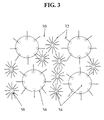
- the step of making the structured lipid phase comprises mixing the lipid and the aqueous solvent to generate a structured lipid phase wherein the mixing step is sufficient to form a water-in-oil emulsion such as the emulsion shown in FIG. 2 , a water-in-oil microemulsion such as the emulsion shown in FIG. 1 , or other structured lipid phase such as a mixture between a water-in-oil emulsion and a water-in-oil microemulsion shown in FIG. 3 .
- Mixing as used herein is a very broad term intended to encompass any act of combining the lipid and aqueous phases into the form of an emulsion or microemulsion.
- the skilled artisan has available a large number of methods, and devices for forming structured lipid phases. Any such methods or devices known in the art for forming an emulsion or microemulsion are useful herein.
- the microemulsion may be a fully- or partially-self-assembling microemulsion.
- a water-in-oil microemulsion comprises an oil 10, an emulsifier 12, and an aqueous domain 14.
- the size of the water or aqueous domain is between 0.5 and 100 nanometers, typically about 10 nanometers.
- a water-in-oil emulsion comprises an oil 20, an emulsifier 22, and an aqueous domain 24.
- the size of the water or aqueous domain is between 50 nanometers and about 1 millimeter, typically about 10 micrometers.
- a mixture between a water-in-oil emulsion and a water-in-oil microemulsion comprises an oil 30, an emulsifier 32, an aqueous domain 34, a water-in-oil microemulsion droplet 36, and a water-in-oil emulsion droplet 38.
- the size of the water or aqueous domains is typically the size of a water-in-oil emulsion droplet or of an oil-in-water microemulsion droplet as described in FIG. 1 and FIG. 2 .
- the Maillard reactants tend to be water-soluble. Therefore, the water soluble reactants are dissolved or dispersed within the aqueous phase before the mixing step. In one embodiment, at least the first and second reactants are dissolved in the aqueous solvent before the mixing. In other embodiments, additional water-soluble compounds are dissolved in the aqueous solvent. Such compounds may include additional Maillard reactants, catalysts, buffers, compounds for adjusting pH such as acids, buffers, or salts, emulsifiers, and stabilizers. In various embodiments, the aqueous solvent comprises from about 0.001% to about 50% reducing reactants, about 0.001% to about 50% amino reactants, and from about 0.001% to about 50% other solutes or additives.
- the step of making the structured lipid phase generally comprises adding one or more emulsifiers before or during the mixing step.
- the emulsifiers are useful for emulsifying or stabilizing, or both, the structured lipid phase.
- the emulsifiers have a hydrophilic lipophilic balance (HLB) of less than about 8, preferably less than 7.
- the structured lipid phase comprises from about 0.1% to about 99.6% emulsifier.
- the emulsifier can comprise any one or more emulsifying compounds, and preferably, the emulsifier is suitable for use in a food system, or as a food additive, or is GRAS.
- the emulsifier is a monoglyceride, a diglyceride, a polyglycerol ester, or a phospholipid, a lecithin, or any combination thereof.
- the emulsifier can encompass a saturated or unsaturated molecule, such as mono- or di-glycerides.
- the lipid phase preferably comprises a lipid derived from a plant or animal that is an edible or comestible lipid.
- the lipid comprises soy oil, sunflower oil, palm oil, cotton seed oil, rapeseed oil, coconut oil, corn oil, canola oil, olive oil, or any combination thereof in various embodiments.
- the lipid phase comprises lipids such as those described above that have been partially hydrolyzed. These lipids may be hydrolyzed by any suitable hydrolysis procedure, such as alkaline hydrolysis, steam stripping, or enzymatic hydrolysis.
- hydrolyzed lipid phase produced by these processes is unlikely to be completely hydrolyzed in that amounts of mono-, di- and/or triglycerides will be present in the hydrolyzed lipid phase. If desired, these glycerides may be removed by conventional separation techniques, but this is not necessary.
- the method comprises a further step of adding at least a portion of the structured lipid to at least one comestible ingredient, food composition, dietary supplement, medicament, or other material.
- the adding step is conducted before, during, or after the incubating step, or a combination thereof.
- the adding step is conducted before the incubation step, or before the conclusion of the incubation.
- the incubation step is conducted at least in part, in conjunction with a further step of processing the comestible ingredient, food composition, dietary supplement, or medicament.
- the incubation step is conducted, and thus further Maillard reaction products form, at least in part, during storage, or during shipment of the comestible ingredient, food composition, dietary supplement, or medicament.
- the adding step is conducted prior to the incubating step, and preferably the incubating step is conducted, at least in part, in conjunction with a thermal process applied to the food composition, dietary supplement, or medicament.
- a thermal process applied to the food composition, dietary supplement, or medicament.
- Any type or kind of thermal process used the arts of food processing or pharmaceutical processing may be useful for the methods herein.
- Preferred thermal process comprises extrusion, retorting, baking, or pasteurization.
- the adding step comprises adding at least one additional composition that provides or enhances palatability of the comestible ingredient, food composition, dietary supplement, medicament, or other material.
- additional composition that provides or enhances palatability of the comestible ingredient, food composition, dietary supplement, medicament, or other material.
- the additional palatability enhancer is an animal digest.
- the method can be conducted in a variety of manners to produce the structure lipid phase.
- the making step comprises dissolving at least the first and second reactants in the aqueous solvent; mixing the aqueous solvent with one or more lipids and one or more emulsifiers; and forming a water-in-oil emulsion or microemulsion therebetween.
- Energy input in the form of mixing, agitating, emulsifying, blending, micronizing, and the like is preferably used in the making step.
- the incubating step comprises allowing the reactants to interact at any temperature conductive for conducting a Maillard reaction, e.g., room temperature or lower depending on the reactants.
- incubating step comprises heating to a temperature of from about 60°C to about 180°C.
- the temperatures for incubating or heating are from about 80°C to 150°C, or preferably, the temperatures are from about 90°C to 120°C.
- the time for the incubating step is from about 1 minute to about 12 hours.
- the incubation time is from about 1 minute to about 640 minutes.
- Other preferred times for incubation are from about 5 minutes to about 300 minutes, preferably from about 10 minutes to about 180 minutes.
- the time and temperature combination are sufficient for a Maillard reaction to occur within the water-in-oil system.
- the Maillard reaction occurs during a retorting process.
- the required times and temperature may differ substantially from those required in bulk aqueous Maillard reactions, or even other complex food systems. Accordingly, the time and temperature for the nonenzymic reactions can be readily determined by observing or measuring an increase in reaction product(s) or a decrease in reactants. Incubation temperatures can be obtained using any suitable heating method such as microwave heating or can be obtained in any suitable process such as baking or retorting.
- the aqueous solvent further comprises one or more of a catalyst suitable for enhancing the rate of Maillard reactions, or a compound for adjusting the pH of the aqueous solvent.
- the catalyst preferably comprises a compound having a phosphate or a carboxylate group, or other known Maillard reaction catalyst or enhancer.
- the structured lipid phase comprises more than 0.3% water, more than 0.1% lipid, and more than 0.1% emulsifier, wherein the lipid is an oil or fat.
- the structured lipid phase comprises from about 0.5% to about 25% water, and from about 75% to about 99.5% lipid plus emulsifier ("lipid plus emulsifier" means the content of lipid phase plus the content of the emulsifier).
- the HLB of the emulsifier is less than about 8, preferably less than about 7.
- the emulsions and microemulsions feature micelles, droplets, domain, channels of varied size and varied average size as defined herein.
- the average size of the water droplets, domains, or channels is about 50 nm.
- the methods for making the Maillard flavor compositions have proven to provide enhanced conversions of Maillard reactants into Maillard reaction products, including Maillard flavors and Maillard colors.
- the methods provide a conversion of Maillard reactants into Maillard reaction products in the structured lipid phase that exceeds the conversion of Maillard reactants into Maillard reaction products in a control Maillard reaction conducted under the same conditions with the same reactants in an aqueous system, e.g., a "bulk-phase" aqueous reaction.
- the conversion of Maillard reactants is at least 10% greater than the conversion in the control reaction resulting in an enhanced formation of Maillard reaction products, particularly in some key compounds like furfuryl thiol (FFT) or methyl furyl thiol (MFT).
- the conversion of Maillard reactants is at least 50% higher than in the control reaction.
- the reaction is nearly complete, providing a conversion of reactants of at least 80, 85, 90, 95%, or more.
- the invention provides products made using the methods of the invention.
- the invention provides Maillard flavor compositions comprising a structured lipid phase and at least one Maillard reaction product.
- the structured lipid phase comprises any amounts or proportions of lipid, emulsifier, and aqueous solvent that can form a water-in-oil emulsion or microemulsion.
- the structured lipid phase comprises from about 0.3% to about 95% aqueous solvent and from about 5% to about 99.7% lipid plus emulsifier. More preferably, the structured lipid phase comprises from about 0.5% to about 75% aqueous solvent, most preferably from about 0.5 to about 25%.
- the emulsifier has a HLB less than 8 and the lipid comprises a comestible oil or fat.
- the Maillard reaction product is produced within and is within the structured lipid phase.
- the Maillard flavor compositions are produced by the methods of the invention.
- the Maillard flavor composition is produced by a method comprising (a) making a structured lipid phase comprising a continuous lipid phase made of liquid oil and a dispersed aqueous phase comprising an aqueous solvent, wherein the aqueous phase contains at least a first reactant the reactant having a free carbonyl group, and a second reactant having an amino group available for reaction with the free carbonyl on the first reactant; and (b) incubating the structured lipid phase under conditions of time and temperature sufficient for a Maillard reaction to occur between the first and second reactants, such that at least one Maillard reaction product is formed.
- the structured lipid phase is a microemulsion.
- the microemulsion can exist at suitable temperature.
- microemulsion has a temperature lower than 50°C, more preferably lower than 40°C.
- the emulsifier comprises a saturated or unsaturated monoglyceride in certain embodiments.
- the composition can further comprise at least one catalyst of a Maillard reaction, at least one additional palatability enhancer, or both.
- the invention provides comestible compositions comprising at least one comestible ingredient and at least one Maillard flavor composition.
- the comestible composition comprises from about 0.001% to about 50% Maillard flavor composition.
- the comestible composition is a food, dietary supplement, medicament, or other comestible material, most preferably a food composition.
- the comestible composition further comprises at least one additional palatability enhancer such as an animal digest.
- the comestible composition with the added Maillard flavor composition has measurably enhanced palatability compared to a control comestible composition that does not contain the Maillard flavor composition.
- the comestible composition is preferred by at least a factor of 10% more than the control comestible composition. It other embodiments, an improvement of 20, 30, 40, or 50% is observed. In other embodiments, the comestible composition is preferred up to 2:1, 3:1 or more over the control comestible composition.
- the comestible composition is a food composition.
- the food composition is formulated as an animal food such as a pet food or companion animal food.
- methods for enhancing palatability of a comestible composition comprise adding to a comestible composition at least one Maillard flavor composition in an amount effective for enhancing palatability of the comestible composition compared to a control that does not have the Maillard flavor composition added.
- the amount of Maillard flavor composition added is preferably from about 0.001% to about 50% of the comestible composition.
- the invention also provides the comestible compositions produced using these methods.
- the food compositions comprising at least one comestible ingredient and a water-in-oil emulsion, microemulsion, or another reversed structured phase comprising a continuous lipid phase made of a comestible liquid oil and a dispersed aqueous phase comprising an aqueous solvent.
- the aqueous solvent has dissolved therein at least a comestible reducing reactant having a free carbonyl, and a comestible second reactant containing an amino group, and an emulsifier having an HLB less than 8.
- the reducing reactant and the second reactant can undergo a Maillard reaction to form at least one Maillard reaction product under suitable conditions.
- the emulsion or microemulsion comprises from about 0.3% to about 95% aqueous solvent and from about 5% to about 99.7% lipid plus emulsifier. More preferably, the structured lipid phase comprises from about 0.5% to about 75% aqueous solvent, most preferably from about 0.5 to about 25%.
- Preferred emulsifiers include saturated and unsaturated monoglycerides.
- the food composition may be subjected to a thermal processing step or storage conditions under which at least one Maillard reaction product is formed from the reducing reactant and the second reactant. Any thermal processing step above ambient temperature at which a Maillard reaction product can form is useful herein.
- the food composition is a pet food composition in one embodiment.
- the composition comprises at least one additional palatability enhancer.
- comestible compositions comprising (1) one or more comestible ingredients and (2) one or more structured lipids comprising a continuous lipid phase comprising a liquid oil and a dispersed aqueous phase comprising an aqueous solvent, wherein the aqueous phase contains at least a first reactant having a free carbonyl group, and a second reactant having an amino group available for reaction with the free carbonyl on the first reactant.
- the comestible ingredients are any comestible ingredients compatible with the structured lipids.
- the comestible ingredients are ones that require or are made more palatable by heating, e.g., by warming or by cooking.
- the comestible compositions are made by combining one or more comestible ingredients with one or more structured lipids.
- the compositions can be stored or otherwise retained until needed, e.g., for consumption or for further preparation and subsequent consumption.
- compositions can be consumed as made but are preferably heated before consumption.
- the first and second reactants react to produce Maillard reaction products that increase the palatability of the comestible compositions. Although the reaction occurs, it is generally slower than optimal.
- the compositions are heated to temperatures useful to prepare the comestible ingredients for consumption, generally by cooking or otherwise heating the compositions.
- the first and second reactants react to produce one or more Maillard reaction products. Heating facilitates the reaction process and produces more Maillard reaction products than would not have been produced without heating.
- Such Maillard reaction products increase the palatability of the comestible compositions, particularly when produced in amounts made by heating.
- any temperature suitable for preparing the comestible compositions and for causing a Maillard reaction is suitable.
- the compositions are heated to temperatures of from about 60°C to about 400°C.
- the compositions are heated to temperatures of from about 60°C to 350°C, 300°C, 250°C, 233°C, or 220°C.
- the compositions are heated to temperatures of from about 70°C to 180°C, from about 80°C to 120°C, or from about 80°C to 100°C.
- Heating the compositions containing the structured lipids causes the first and second reactants react and form Maillard reaction products that increase the palatability of the compositions.
- the comestible compositions can be heated by any suitable means.
- the compositions are baked or cooked in an oven; heated on a stove or by a fire, e.g., in a pan, pot, or other suitable container; steam heated; or heated using a microwave oven.
- the first and second reactants can be any such reactant compatible with the comestible ingredients in the composition.
- the first and second reactants are (1) one or more reducing sugars and one or more amino acids or (2) one or more reducing sugars and one or more proteins.
- the structured lipids are mixed with the comestible ingredients, topically applied to the comestible ingredients, added onto or into preferred locations or sections in or on the ingredients, or otherwise distributed evenly or unevenly in or on the ingredients.
- food compositions that will be heated for serving comprise the product ingredients and one or more one or more structured lipids.
- the product is placed in an oven and heated to a temperature suitable for baking the product.
- the heat induces a reaction involving the first and second reactants.
- the reaction produces Maillard reaction products that enhance the palatability of the comestible composition.
- the comestible compositions are food compositions suitable for consumption by an animal, more preferably food compositions suitable for consumption by a companion animal, most preferably food compositions suitable for consumption by pets.
- the comestible composition is a pet food suitable for warming in a microwave oven. The pet food is heated sufficiently to produce Maillard reaction products in the food and served to the pet.
- the invention provides compositions made by heating comestible compositions comprising (1) one or more comestible ingredients and (2) one or more structured lipids comprising a continuous lipid phase comprising a liquid oil and a dispersed aqueous phase comprising an aqueous solvent, wherein the aqueous phase contains at least a first reactant having a free carbonyl group, and a second reactant having an amino group available for reaction with the free carbonyl on the first reactant.
- the compositions have an enhanced palatability due to the presence of Maillard reaction products resulting from heating the compositions as described herein.
- kits suitable for enhancing palatability of a comestible composition comprise in separate containers in a single package or in separate containers in a virtual package, as appropriate for the kit component, one or more Maillard flavor composition and one or more of (1) one or more ingredients suitable for consumption by an animal, (2) one or more palatability enhancers, (3) instructions for combining kit components to produce a composition useful for enhancing palatability of a food composition, (4) instructions for using Maillard reaction products, Maillard flavor compositions, or other components of the kit for the benefit of the animal, (5) a vessel for preparing or combining the kit components to produce a composition for administration to an animal, such as bowl, container, bag, or the like, (6) a means for admixing one or more kit components, such as a spoon, a spatula, or other suitable utensil, or (7) a means for administering combined or prepared kit components to an animal, such as a bowl, a spoon, a bottle, a cup, or the like.
- the Maillard flavor composition may comprise at least one Maillard reaction product and a structured lipid phase comprising, for example, at least 0.1% aqueous solvent, and at least 50% lipid plus emulsifier.
- the emulsifier has a HLB less than 8, and the lipid is a comestible oil or fat.
- the Maillard reaction product is produced within the structured lipid phase.
- kits suitable for enhancing palatability of a food composition comprising, in separate containers in a single package, or in separate containers in a virtual package, a water-in-oil emulsion or microemulsion comprising a continuous lipid phase comprising a comestible fat or oil and a dispersed aqueous phase comprising an aqueous solvent having dissolved therein at least a comestible reducing reactant having a free carbonyl, and a comestible second reactant containing an amino group, and an emulsifier.
- the emulsifier has an HLB less than 8.
- the reducing reactant and the second reactant can preferably undergo a Maillard reaction to form at least one Maillard reaction product under suitable conditions.
- kits further comprise one or more of (1) one or more ingredients suitable for consumption by an animal, (2) one or more palatability enhancers, (3) instructions for combining kit components to produce a composition useful for enhancing palatability of a food composition, (4) instructions on applying a thermal processing step to combined or uncombined kit components to produce one or more Maillard reaction products (5) instructions for using Maillard reaction products, Maillard flavor compositions, and other components of the kit for the benefit of the animal, (6) a vessel for preparing or combining the kit components to produce a composition for administration to an animal, such as a bowl, container, bag, box or the like, (7) a means for admixing one or more kit components, such as a spoon, spatula, or other utensil, or (8) a means for administering combined or prepared kit components to an animal, such
- means for communicating information about, or instruction for use of, a Maillard flavor composition comprising at least one Maillard reaction product and a structured lipid phase comprising at least 0.1% aqueous solvent, and at least 50% lipid plus emulsifier; wherein the emulsifier has a HLB less than 8, the lipid comprising a comestible oil or fat, wherein the Maillard reaction product is produced within the structured lipid phase, wherein the information is about, or the instructions are for, one or more of: (1) instructions for administering the composition to an animal in conjunction with at least one comestible ingredient; (2) instructions for one or more methods of using the composition for enhancing palatability of a food composition; (3) information on providing proper nutrition, including the use of the composition, to an animal in need of foods having enhanced palatability, or an animal having a diminished appetite due to a disease or other health condition; (4) information about palatability and appetite; (5) information regarding physical, cellular and biochemical results of under-nutrition, conditions causing loss of appetite,
- the means of communicating may comprise a physical or electronic document, digital storage media, optical storage media, audio presentation, audiovisual display, or visual display containing the information or instructions.
- the means can be a displayed web site, visual display kiosk, brochure, product label, package insert, advertisement, handout, public announcement, audiotape, videotape, DVD, CD-ROM, computer readable chip, computer readable card, computer readable disk, USB device, FireWire device, computer memory, or any combination thereof.
- the disclosure described furthermore packages comprising a Maillard flavor composition generally comprising at least one Maillard reaction product and a structured lipid phase comprising at least 0.1% aqueous solvent, and at least 50% lipid plus emulsifier; wherein the emulsifier has a HLB less than 8, the lipid comprising a comestible liquid oil wherein the Maillard reaction product is produced within the structured lipid phase.
- the package contains a word or words, picture, design, logo, graphic, symbol, acronym, slogan, phrase, or other device, or combination thereof, either directly on the package or on a label affixed thereto, indicating that the composition is useful for enhancing palatability of a food composition.
- the Maillard flavor composition in the package may be a component of a comestible composition.
- the Maillard flavor composition in the package may be a component of a food composition.
- Method 1 The following method (“Method 1") was used to prepare the compositions used in some of the Examples. Reducing sugars, amino acids, catalysts (where used), and acids or bases (where used) were added to water and agitated until dissolved, resulting in an aqueous solution. Without adjusting the pH, the aqueous solution was mixed with fat or oil and lipophilic additives. The resulting mixture was agitated at 500 to 3000 rpm, for 1 to 5 minutes, to generate a water-in-oil emulsion comprising a continuous structured lipid phase, having dispersed water phase featuring water domains that are emulsified or microemulsified within the lipidic phase. Such water-in-oil emulsions are referred to herein as "structured lipid phase.”
- the structured lipid phase was heated to about 85°C to 180°C for 5 to 180 minutes. Agitation was continued during heating. The temperature was then lowered to about 45°C to 60°C, with agitation to ensure homogenous cooling.
- Method 1 produces a flavor composition (a "Maillard flavor composition") containing Maillard reaction products, e.g., Maillard flavors.
- the Maillard flavor composition is stored at 10°C to 60°C until use.
- the Maillard flavor composition can be conveniently added to a fat or oil that is sprayed onto, or added to the food composition in amounts of from about 0.001% to about 9%, by weight, based on total food composition.
- the other flavors including flavors prepared by using hydrolytic enzymes to clean animal tissue, including liver and/or viscera, e.g., animal digests, can be added to or applied to the food composition.
- Method 2 The following method (“Method 2") was used to prepare the compositions used in some of the Examples. The steps of Method 1 were repeated except that the pH was adjusted to 5.5 before mixing the aqueous solution with fat or oil and lipophilic additives. Maillard flavor compositions prepared according to Method 2 are added to a fat or oil that is sprayed onto or added into the food composition in amounts of from about 0.001% to about 9% by weight based on total food composition. When used with other flavors, the other flavors were added to or applied onto the food composition.
- Method 3 The following method (“Method 3") was used to prepare the compositions used in some of the Examples. The steps of Method 1 were repeated except that the pH was adjusted to 7.5 before mixing the aqueous solution with fat or oil and lipophilic additives.
- the Maillard flavor composition was added to a fat or oil that was sprayed onto or added to the food composition in amounts of from about 0.001% to about 30%, by weight based on total food composition.
- the other flavors were added to or applied to the food composition.
- Xylose was analyzed by HPAEC using a Dionex ion chromatography system (DX500, Dionex, Sunnyvale, CA) composed of an autosampler (model AS-50 with a 10 ⁇ L sample loop), a gradient pump (model GP-50) with on-line degas and an electrochemical detector (model ED-40). The separation was accomplished on a 250 mm x 2 mm i.d. CarboPac PA-1 anion exchange column (Dionex) and a 50 mm x 2 mm i.d. CarboPac PA-1 guard column (Dionex).
- DX500 Dionex ion chromatography system
- CA Dionex ion chromatography system
- a first Maillard flavor composition was made using Method 1. Glycine and xylose were used as reactants for the Maillard reaction. To make the first composition, a solution containing 2.43g xylose, 1.215g glycine and 6.355g phosphate buffer (0.2mol/L; pH 6) was prepared. An aliquot of the solution (0.09g), Dimodan U (0.54g) and soy bean oil (0.27g) were placed into a Pyrex tube and the tube was heated in a water bath at 40°C. When the temperature of the sample reached 40°C, the tube was agitated with a vortex to homogenize the phase and then cooled down to room temperature. A water-in-oil microemulsion was obtained.
- the sample was placed in a silicone bath at 120°C and heated for 30 minutes. After cooling down, diethyl ether (10mL) was added to the water-in-oil microemulsion and the mixture was shaken during 45 min to disintegrate the water-in-oil microemulsion. Then water (20mL) was added and the mixture was shaken during 30 min. Finally, the mixture was centrifuged at 4000 rpm for 20 min to separate water and organic phase. The water phase was filtered through a PVDF filter (polyvinylidene fluoride, 0.22 ⁇ m / 25mm) and analysed by high performance anion exchange chromatography (HPAEC). This is a composition of the present invention.
- HPAEC high performance anion exchange chromatography
- a second Maillard flavor composition was made using the methods disclosed in WO2007060177A1 , also using glycine and xylose as reactants.
- a solution containing 2.43g xylose, 1.215g glycine and 6.355g phosphate buffer (0.2mol/L; pH 6) was prepared.
- An aliquot of the solution (0.09g), Dimodan U (0.54g) and soy bean oil (0.27g) were placed into a Pyrex tube and the tube was heated in a water bath at 40°C. When the temperature of the sample reached 40°C, the tube was agitated with a vortex to homogenize the phase and then cooled down to room temperature.
- a third Maillard flavor composition was made using the methods disclosed in WO2007060177A1 , also using glycine and xylose as reactants and a Maillard reaction was performed in water as reaction matrix.
- a solution of glycine (0.011g, 0.14 mmol) and xylose (0.021g, 0.14 mmol) in 10 mL of phosphate buffer (0.2 mol/L; pH 6.0) was heated in a 30 mL pyrex tube for 30 min at 120 °C. After cooling down, the reaction mixture was diluted 20-times with deionized water, filtered through a PVDF filter (polyvinylidene fluoride, 0.22 ⁇ m/25 mm), and analysed by HPAEC.
- PVDF filter polyvinylidene fluoride, 0.22 ⁇ m/25 mm
- compositions each contained 0.2% xylose and 0.1% glycine by weight. All three compositions were heated to the same temperature and for the same time, i.e., at 120°C for 30 minutes, to cause a Maillard reaction using xylose. After 30 minutes, the amount of residual xylose in the different samples was determined as a measure of the extent of the Maillard reaction.
- the residual xylose in the first composition was 1.5%; the residual xylose in the second composition was 75.8%; and the residual xylose in the third composition was 77.7%.
- Method 2 was used to prepare a Maillard flavor composition using the components shown in Table 1.
- the structured lipid phase was heated to a temperature of 95°C for 120 minutes.
- a food composition suitable for consumption by dogs was prepared in two portions, one containing the Maillard flavor composition (test), and one without the Maillard flavor composition (control).
- the test food composition was prepared by adding the Maillard flavor composition at 5% into a fat or oil, then this flavored fat or oil was coated externally at 8.6% based on the weight of the food composition.
- the control food composition was prepared without adding the Maillard flavor composition; therefore fat or oil was directly sprayed externally at 8.6% based on the weight of the food composition.
- a paired t-test was used to determine if the percent consumption of the test food composition was significantly different from the control food composition (p ⁇ .05). The results of the trial showed that the dogs significantly preferred (p ⁇ .05) the test food composition over the control food composition. The average percent consumption for the test food composition was 72%. The average percent consumption for the control food composition was 28%.
- Method 2 was used to prepare a Maillard flavor composition using the ingredients shown in Table 1.
- the structured lipid phase was heated to a temperature of 95°C for 120 minutes.
- a food composition suitable for consumption by cats was prepared in two portions, one containing the Maillard flavor composition (test) and one without the Maillard flavor composition (control).
- the test food composition was prepared by adding the Maillard flavor composition at 5% into a fat or oil. Then this flavored fat or oil was coated externally at 8.5 % based on the weight of the food composition.
- the control food composition was prepared without adding the Maillard flavor composition, therefore fat or oil is directly coated externally at 8.5 % based on the weight of the food composition.
- Method 3 was used to prepare a Maillard flavor composition using the components shown in Table 2.
- the structured lipid phase was heated to a temperature of 105°C for 60 minutes.
- the resulting Maillard flavor composition exhibited a dark-brown coloration.
- Table 2 Ingredients % in Formula Glucose 0.51 Xylose 0.86 Glycine 1.09 Cysteine 0.35 Proline 0.89 Water 9.67 Chicken fat 30.55 Distilled monoglycerides 56.08 Total 100.00
- a control sample was prepared as follows: a mixture of glucose (3.84%), xylose (6.42%), glycine (8.13%), cysteine (2.60%), and proline (6.65%) in water (72.36%) was heated to a temperature of 105°C for 60 minutes. This aqueous solution (10.00%) was then added to a mixture of Chicken fat (31.60%) and distilled monoglycerides (58.40%) and the resulting mixture was stirred at room temperature for 1 minute to generate a structured lipid phase. The obtained structured lipid phase, containing Maillard products reacted in water, exhibited a light-orange coloration indicating a lesser advancement of the Maillard reaction in water than in the structured lipid phase.
- the Maillard flavor composition and the control sample were diluted in Chicken fat (25:75 Maillard flavor composition or control sample:Chicken fat).
- the Chicken fat flavored with the Maillard flavor composition was preferred over the Chicken fat containing the control sample because of its stronger roasted chicken flavor.
- the Chicken fat flavored with the Maillard flavor composition was also preferred for its well-balanced chicken flavor.
- the Chicken fat containing the control sample was affected by sulfury off-notes. When added to boiling water, the Maillard flavor composition provided a pleasant roasted chicken flavor (at 0.1%). In contrast, the control sample provided only faintly perceivable meaty flavor.
- the Maillard flavor composition When added to boiling water (at 0.1%) containing an appropriate amount of chicken bouillon (Maggi), the Maillard flavor composition exhausted the chicken flavor of the bouillon and gave a more roasted character, whereas the control sample did not provide any perceivable flavor changes when compared to the chicken bouillon alone.
- HS-SPME-GC-MS gas chromatography coupled to mass spectrometry
- GC-MS analysis was performed on a GC 6890A coupled to an MSD 5973N (both Agilent, Palo Alto, CA) equipped with a HP-PONA capillary column (Agilent): 50 m x 0.20 mm, film thickness 0.50 ⁇ m.
- Helium was used as a carrier gas (1.0 mL/min, constant flow).
- the oven temperature program was as follows: 25 °C (2min), 40°C/min to 50°C (1 min), 6 °C/min to 240 °C (10 min).
- the electron impact (EI) MS spectra were generated at 70 eV.
- the temperature of the ion source was 280 °C.
- a structured lipid phase was prepared using the components shown in Table 3. Reducing sugars and amino acids were added to water and agitated until dissolved, resulting in an aqueous solution.
- PGPR was mixed with Palm olein, at 60°C, in a large beaker till forming an homogeneous solution.
- carrageenan was mixed with the aqueous solution also at 60°C till complete dissolution.
- the lipophilic mixture formed was maintained at 60°C and then agitated by a helix.
- the water solution was slowly added to the lipophilic mixture. The mixture was agitated for 20 minutes. After that, the helix was removed and a Polytron tip was used with a speed increasing from 0 to 6.5 for a total of 2 minutes.
- the structured lipid phase was coated externally on a chilled bread dough (at 0.5% based on the weight of the food product).
- the coated bread dough (test food product) was then stored overnight at +4°C.
- a control sample was prepared as follows: glucose (4.75%), rhamnose (0.95%), fructose (5.70%), cysteine (2.85%), and proline (18.90%) were added to water (66.85%) and agitated until dissolved, resulting in an aqueous solution. This aqueous solution was then coated externally on a chilled bread dough (at 0.35% based on the weight of the food product, to ensure similar reducing sugars and amino acids levels between the control and test food products). The coated bread dough (control food product) was then stored overnight at +4°C.
- test food product and the control food product were heated in a microwave oven (1 min 30 s, 750 W).
- the aroma perceived in the room during microwave heating and the flavor of the microwave heated food products were evaluated by a selected panel.
- the panel found the aroma and flavor from the control food product to be almost indistinguishable from those of a non-coated chilled bread dough (yeast-leavened bread aroma/flavor), whereas the test food product gave a rich, freshly baked bread aroma/flavor impression.
- a structured lipid phase was prepared using the components shown in Table 4. Reducing sugars and amino acids were added to water and agitated until dissolved, resulting in an aqueous solution. Without adjusting the pH, the aqueous solution was mixed with fat or oil and lipophilic additives. Rapseed oil and Dimodan U were mixed together at 60°C till obtaining an homogeneous solution. The resulting mixture was heated at 60°C and mixed with a Vortex till obtaining an homogeneous mixture.
- Table 4 Ingredients % in Formula Glucose 0.47 Rhamnose 0.09 Fructose 0.57 Cysteine 0.29 Proline 1.89 Water 6.69 Rapeseed oil 30.00 Distilled monoglycerides 60.00 Total 100.00
- the structured lipid phase was coated externally on a chilled bread dough (at 1.5% based on the weight of the food product).
- the coated bread dough (test food product) was then stored overnight at +4°C.
- a control sample was prepared as follows: glucose (4.75%), rhamnose (0.95%), fructose (5.70%), cysteine (2.85%) and proline (18.90%) were added to water (66.85%) and agitated until dissolved, resulting in an aqueous solution. This aqueous solution was then coated externally on a chilled bread dough (at 0.15% based on the weight of the food product, to ensure similar reducing sugars and amino acids levels between the control and test food products). The coated bread dough (control food product) was then stored overnight at +4°C.
- test food product and the control food product were heated in a microwave oven (1 min 30 s, 750 W).
- the aroma perceived in the room during microwave heating and the flavor of the microwave heated food products were evaluated by a selected panel.
- the panel found the aroma and flavor from the control food product to be almost indistinguishable from those of a non-coated chilled bread dough (yeast-leavened bread aroma/flavor), whereas the test food product gave a rich, freshly baked bread aroma/flavor impression.
- a structured lipid phase was prepared using the components shown in Table 5. Reducing sugars and amino acids were added to water and agitated until dissolved, resulting in an aqueous solution. Dimodan U was mixed with Palm olein, at 60°C, in a large beaker till forming an homogeneous solution. In another baker, the aqueous solution was heated till 60°C. The lipophilic mixture formed was maintained heated at 60°C and then was agitated by a helix. The water solution was slowly added to the lipophilic mixture. Agitation was left for a total of 20 minutes. After that, the helix was removed and a Polytron tip was used with a speed increasing from 0 to 6.5 for a total of 2 minutes. Table 5 Ingredients % in Formula Glucose 2.37 Rhamnose 0.47 Fructose 2.84 Cysteine 1.44 Proline 9.46 Water 33.42 Palm olein 42.00 Distilled monoglycerides 8.00 Total 100.00
- the structured lipid phase was coated externally on a chilled bread dough (at 0.7% based on the weight of the food product).
- the coated bread dough (test food product) was then stored overnight at +4°C.
- a control sample was prepared as follows: glucose (4.75%), rhamnose (0.95%), fructose (5.70%), cysteine (2.85%) and proline (18.90%) were added to water (66.85%) and agitated until dissolved, resulting in an aqueous solution. This aqueous solution was then coated externally on a chilled bread dough (at 0.35% based on the weight of the food product, to ensure similar reducing sugars and amino acids levels between the control and test food products). The coated bread dough (control food product) was then stored overnight at +4°C.
- test food product and the control food product were heated in a microwave oven (1 min 30 s, 750 W).
- the aroma perceived in the room during microwave heating and the flavor of the microwave heated food products were evaluated by a selected panel.
- the panel found the aroma and flavor from the control food product to be almost indistinguishable from those of a non-coated chilled bread dough (yeast-leavened bread aroma/flavor), whereas the test food product gave a rich, freshly baked bread aroma/flavor impression.
Landscapes
- Chemical & Material Sciences (AREA)
- Life Sciences & Earth Sciences (AREA)
- Polymers & Plastics (AREA)
- Engineering & Computer Science (AREA)
- Food Science & Technology (AREA)
- Animal Husbandry (AREA)
- Zoology (AREA)
- Oil, Petroleum & Natural Gas (AREA)
- Health & Medical Sciences (AREA)
- Nutrition Science (AREA)
- Proteomics, Peptides & Aminoacids (AREA)
- Birds (AREA)
- Fodder In General (AREA)
- Coloring Foods And Improving Nutritive Qualities (AREA)
- General Preparation And Processing Of Foods (AREA)
- Seasonings (AREA)
- Medicinal Preparation (AREA)
- Feed For Specific Animals (AREA)
- Bakery Products And Manufacturing Methods Therefor (AREA)
- Edible Oils And Fats (AREA)
- Acyclic And Carbocyclic Compounds In Medicinal Compositions (AREA)
Claims (14)
- Maillard-Aromazusammensetzung mit einer strukturierten Lipidphase und mindestens einem Maillard-Reaktionsprodukt, die durch ein Verfahren mit den folgenden Schritten hergestellt wird:a) Herstellen der strukturierten Lipidphase mit einer durchgehenden Lipidphase aus flüssigem Öl und einer dispergierten wässrigen Phase mit einem wässrigen Lösungsmittel,
wobei die wässrige Phase mindestens ein erstes Reaktionsmittel, das eine freie Carbonylgruppe aufweist, und ein zweites Reaktionsmittel enthält, das eine zur Reaktion mit dem freien Carbonyl auf dem ersten Reaktionsmittel verfügbare Aminogruppe aufweist,
wobei der Schritt des Herstellens der strukturierten Lipidphase das Mischen des Lipids und des wässrigen Lösungsmittels zur Erzeugung einer strukturierten Lipidphase umfasst, wobei der Vermischungsschritt ausreicht, um eine Wasser-in-Öl-Emulsion oder eine Wasser-in-Öl-Mikroemulsion zu bilden, und wobei der Schritt des Herstellens der strukturierten Lipidphase das Zusetzen von einem oder mehreren Emulgatoren vor oder während des Vermischens umfasst, wobei der Emulgator die strukturierte Lipidphase emulgiert oder stabilisiert oder beides; sowieb) Inkubieren der strukturierten Lipidphase bei einer Temperatur von 60°C bis 180°C und über einen Zeitraum von 1 Minute bis 12 Stunden, der ausreicht, dass eine Maillard-Reaktion zwischen dem ersten und zweiten Reaktionsmittel derart stattfindet, dass das mindestens eine Maillard-Reaktionsprodukt gebildet wird. - Zusammensetzung gemäß Anspruch 1, wobei die strukturierte Lipidphase eine umgekehrte Mikroemulsion oder eine Wasser-in-Öl-Emulsion ist.
- Zusammensetzung gemäß Anspruch 1, weiterhin mit mindestens einem Katalysator einer Maillard-Reaktion.
- Zusammensetzung gemäß Anspruch 1, weiterhin mit mindestens einem zusätzlichen Schmackhaftigkeitsverstärker.
- Zusammensetzung gemäß Anspruch 1, wobei die strukturierte Lipidphase zwischen 0,3% und 95% einer wässrigen Lösung und zwischen 5% und 99,7% eines Lipids plus Emulgator umfasst; wobei der Emulgator einen HLB-Wert von weniger als 8 aufweist, wobei das Lipid ein essbares Öl enthält, wobei das Maillard-Reaktionsprodukt innerhalb der strukturierten Lipidphase liegt; wahlweise wobei der Emulgator ein gesättigtes oder ungesättigtes Monoglycerid umfasst.
- Verfahren zur Herstellung einer Maillard-Aromazusammensetzung mit den Schritten:a) Herstellen einer strukturierten Lipidphase mit einer durchgehenden Lipidphase bestehend aus flüssigem Öl und einer dispergierten wässrigen Phase mit einem wässrigen Lösungsmittel,
wobei die wässrige Phase mindestens ein erstes Reaktionsmittel mit einer freien Carbonylgruppe und ein zweites Reaktionsmittel mit einer Aminogruppe enthält, die zur Reaktion mit der freien Carbonylgruppe auf dem ersten Reaktionsmittel verfügbar ist,
wobei der Schritt des Herstellens der strukturierten Lipidphase das Vermischen des Lipids und der wässrigen Lösung umfasst, um eine strukturierte Lipidphase zu erzeugen, wobei der Vermischungsschritt ausreicht, um eine Wasser-in-Öl-Emulsion oder eine Wasser-in-Öl-Mikroemulsion zu bilden, und wobei der Schritt des Herstellens der strukturierten Lipidphase das Zusetzen von einem oder mehreren Emulgatoren vor oder während der Vermischung umfasst, wobei der Emulgator die strukturierte Lipidphase emulgiert oder stabilisiert oder beides; sowieb) Inkubieren der strukturierten Lipidphase bei einer Temperatur von 60°C bis 180°C und über einen Zeitraum von 1 Minute bis 12 Stunden, die ausreicht, dass eine Maillard-Reaktion zwischen dem ersten und zweiten Reaktionsmittel derart stattfindet, dass mindestens ein Maillard-Reaktionsprodukt gebildet wird. - Verfahren gemäß Anspruch 6, wobei die strukturierte Lipidphase zwischen 0,1% und 99,7% eines Lipids und zwischen 0,3% und 95% einer wässrigen Lösung enthält, und wobei das Lipid aus einem Öl oder Fett besteht.
- Verfahren gemäß Anspruch 6, wobei das erste Reaktionsmittel aus einer Aldose, Ketose oder Uronsäure besteht, die ein Monosaccharid, ein Disaccharid, ein Oligosaccharid, ein Polysaccharid oder Hydrolyseprodukte von diesen darstellt.
- Verfahren gemäß Anspruch 6, wobei das erste Reaktionsmittel eine Pentose, eine Hexose oder eine Kombination aus diesen ist.
- Verfahren gemäß Anspruch 6, wobei das erste Reaktionsmittel aus Glukose, Fruktose, Mannose, Maltose, Laktose, Xylose, Arabinose oder einer beliebigen Kombination aus diesen besteht.
- Verfahren gemäß Anspruch 6, wobei das erste Reaktionsmittel ein Maillard-Reaktionszwischenprodukt ist, welches mindestens eine Carbonylgruppe trägt, die aus Aldehyd, Keton, alpha-Hydroxycarbonyl oder einer Dicarbonylverbindung besteht.
- Verfahren gemäß Anspruch 6, wobei das zweite Reaktionsmittel eine Aminosäure, ein Peptid, ein hydrolysiertes Protein, ein Polypeptid oder eine beliebige Kombination aus diesen enthält.
- Verfahren gemäß Anspruch 6, wobei(a) der Emulgator einen HLB-Wert von weniger als 8 aufweist; oder(b) die strukturierte Lipidphase zwischen 0,1 und 99,6% eines Emulgators umfasst; oder(c) der Emulgator ein Monoglycerid, ein Diglycerid, einen Polyglycerol-Ester oder ein Phospholipid, ein Lecithin oder eine beliebige Kombination aus diesen enthält.
- Verfahren gemäß Anspruch 6, wobei die Lipidphase ein von einer Pflanze oder einem Tier stammendes Lipid umfasst; wahlweise wobei das Lipid Sojaöl, Sonnenblumenöl, Palmöl, Baumwollsamenöl, Rapsöl, Kokosöl, Maiskeimöl, Canola-Rapsöl, Olivenöl oder eine beliebige Kombination aus diesen enthält.
Applications Claiming Priority (2)
| Application Number | Priority Date | Filing Date | Title |
|---|---|---|---|
| US13297608P | 2008-06-24 | 2008-06-24 | |
| PCT/US2009/003711 WO2010008452A1 (en) | 2008-06-24 | 2009-06-22 | Maillard flavor compositions and methods for making such compositions |
Publications (3)
| Publication Number | Publication Date |
|---|---|
| EP2296483A1 EP2296483A1 (de) | 2011-03-23 |
| EP2296483A4 EP2296483A4 (de) | 2013-09-04 |
| EP2296483B1 true EP2296483B1 (de) | 2015-11-11 |
Family
ID=41550608
Family Applications (1)
| Application Number | Title | Priority Date | Filing Date |
|---|---|---|---|
| EP09798237.5A Active EP2296483B1 (de) | 2008-06-24 | 2009-06-22 | Maillard-duftstoffzusammensetzungen und verfahren zur herstellung solcher zusammensetzungen |
Country Status (12)
| Country | Link |
|---|---|
| US (1) | US8920862B2 (de) |
| EP (1) | EP2296483B1 (de) |
| JP (1) | JP6055182B2 (de) |
| CN (1) | CN102076223A (de) |
| AU (1) | AU2009271740B2 (de) |
| BR (1) | BRPI0914693B1 (de) |
| CA (1) | CA2728087C (de) |
| ES (1) | ES2556800T3 (de) |
| MX (2) | MX2010014490A (de) |
| RU (1) | RU2505067C2 (de) |
| WO (1) | WO2010008452A1 (de) |
| ZA (1) | ZA201100567B (de) |
Families Citing this family (49)
| Publication number | Priority date | Publication date | Assignee | Title |
|---|---|---|---|---|
| BR112012014938A2 (pt) * | 2009-12-18 | 2015-08-25 | Nestec Sa | Composições de sabor de maillard com solventes polares diferentes de água e métodos para produzir tais composições |
| JP5930357B2 (ja) * | 2011-05-11 | 2016-06-08 | ミヨシ油脂株式会社 | 焼成食品用艶出し剤および焼成食品の製造方法 |
| CA2857235A1 (en) * | 2011-12-12 | 2013-06-20 | Tuong Huynh-Ba | Enzymatically hydrolysed lipids as flavour ingredients |
| RU2605353C2 (ru) * | 2011-12-27 | 2016-12-20 | Нестек С.А. | Образование вкуса и аромата при микроволновом нагревании |
| JP2015503339A (ja) * | 2012-01-03 | 2015-02-02 | ネステク ソシエテ アノニム | 熱処理された、保存安定性のある乳製品をベースとする組成物及びその製造方法 |
| EP2644602A1 (de) | 2012-03-26 | 2013-10-02 | Nestec S.A. | Verwendung von Oxazolinen als Aroma-/Geschmacksvorläufer |
| JP5743335B2 (ja) | 2012-09-20 | 2015-07-01 | ユニ・チャーム株式会社 | ペットフード及びペットフードの製造方法 |
| EP2934174B1 (de) * | 2012-12-19 | 2017-04-12 | Hill's Pet Nutrition, Inc. | Geschmacksverbesserer, der tierisches fett enthält |
| JP6163698B2 (ja) * | 2013-03-21 | 2017-07-19 | 国立大学法人 千葉大学 | マクロファージマンノース受容体を認識する新規多糖金属錯体化合物、及び、その医薬組成物 |
| WO2015048640A1 (en) | 2013-09-30 | 2015-04-02 | Bedoukian Research, Inc. | Vortex mixing apparatus and method of use thereof |
| US10561162B2 (en) | 2013-11-22 | 2020-02-18 | Colgate-Palmolive Company | Method of preparing palatability enhancer |
| EP3082445B3 (de) * | 2013-12-18 | 2025-01-08 | Spécialités Pet Food | Schmackhaftigkeitsverstärker für tiernahrung, verfahren zur herstellung und verwendungen davon |
| JP6048905B2 (ja) * | 2013-12-19 | 2016-12-21 | 二村 芳弘 | 養生文化を応用した長寿遺伝子Sirt1の発現量増加作用を呈するウロン酸誘導体 |
| CN103875754B (zh) * | 2014-03-06 | 2016-03-23 | 天津科技大学 | 一种深红棕色及高光泽度的焙烤食品表皮涂布液及利用该表皮涂布液加工焙烤食品的方法 |
| MX370407B (es) * | 2014-05-15 | 2019-12-11 | Specialites Pet Food | Mejoradores de palatabilidad que comprenden reactivos amino y compuestos de carbonilo para uso en alimento para gatos. |
| US11425923B1 (en) | 2018-05-08 | 2022-08-30 | Epc Natural Products Co., Ltd. | Tasteful natural sweetener and flavor |
| US11751593B2 (en) | 2018-05-08 | 2023-09-12 | EPC Natural Products Co., Ltd | Sweetener and flavor compositions, methods of making and methods of use thereof |
| WO2016016823A1 (en) * | 2014-07-30 | 2016-02-04 | Nestec Sa | Palatant compositions from fats, oils or fatty acids |
| CN104237403B (zh) * | 2014-09-03 | 2015-10-28 | 上海应用技术学院 | 一种对鸡肉香基进行区分的方法 |
| US11096897B2 (en) * | 2014-12-15 | 2021-08-24 | Societe Des Produits Nestle S.A. | Controlled release of caffeine |
| CN104642799A (zh) * | 2015-01-30 | 2015-05-27 | 西藏自治区农牧科学院 | 适合西藏农区奶牛围产前期专用预混料及其生产方法 |
| BR112017023059B1 (pt) | 2015-04-28 | 2022-07-05 | Mars, Incorporated | Processo para preparar um produto de ração úmida esterilizada, produto de ração úmida esterilizada, e seu uso |
| CN105166834B (zh) * | 2015-09-07 | 2017-12-05 | 浙江工业大学 | 一种裂片石莼多糖与明胶肽美拉德反应产物的制备方法 |
| CN105170051B (zh) * | 2015-09-17 | 2017-05-17 | 沈阳农业大学 | 含脂美拉德反应微乳体系的制备 |
| WO2017133863A1 (en) | 2016-02-05 | 2017-08-10 | Unilever Plc | Frozen confection |
| CN105797131B (zh) * | 2016-04-22 | 2019-06-18 | 金硒康(苏州)生物科技有限公司 | 硒肽纳米自乳化粉剂、其制备方法和应用 |
| WO2017203358A1 (en) * | 2016-05-24 | 2017-11-30 | Team Foods Colombia S.A. | Lipid powder composition comprising a salt mixture |
| WO2018054265A1 (zh) * | 2016-09-20 | 2018-03-29 | 张碧婷 | 亲水性脂类组合物的包装组合物,其制备及调配方法和应用 |
| BR112019010627B1 (pt) * | 2016-12-16 | 2023-05-02 | Société des Produits Nestlé S.A. | Uso de um iso-oligossacarídeo, e método para geração de sabor em um produto alimentício termicamente tratado |
| US11311039B2 (en) * | 2017-04-19 | 2022-04-26 | Kerry Group Services International Limited | Methods of reducing a concentration of formaldehyde in aqueous solutions of sugar carbonyls |
| WO2018202863A1 (en) * | 2017-05-05 | 2018-11-08 | Nestec S.A. | Process for the preparation of heat treated cereal based food products |
| JP6329302B2 (ja) * | 2017-05-10 | 2018-05-23 | 国立大学法人千葉大学 | マクロファージマンノース受容体を認識する新規多糖金属錯体化合物、及び、その医薬組成物 |
| CN110996679A (zh) * | 2017-06-15 | 2020-04-10 | 特种宠物食品公司 | 素食性犬适口性增强剂 |
| CN107981156A (zh) * | 2017-11-27 | 2018-05-04 | 江南大学 | 一种促进食品微波加热过程中褐变的方法及其配料 |
| JP6533846B1 (ja) * | 2018-01-31 | 2019-06-19 | 三栄源エフ・エフ・アイ株式会社 | 香味増強剤、ならびに該増強剤および香料を含有する組成物 |
| WO2019217269A1 (en) * | 2018-05-08 | 2019-11-14 | Epc Natural Products Co., Ltd. | A tasteful natural sweetener and flavor |
| AU2019264701A1 (en) * | 2018-05-08 | 2020-12-24 | Epc Natural Products Co., Ltd. | Sweetener and flavor compositions, methods of making and methods of use thereof |
| WO2019214567A1 (en) * | 2018-05-08 | 2019-11-14 | Epc Natural Products Co., Ltd. | Sweetener and flavor compositions, methods of making and methods of use thereof |
| US11154079B2 (en) | 2018-05-08 | 2021-10-26 | Epc Natural Products Co., Ltd. | Tasteful natural sweetener and flavor |
| EP3790410A4 (de) * | 2018-05-08 | 2022-03-30 | EPC Natural Products Co., Ltd. | Süssstoff und aromazusammensetzungen, verfahren zu ihrer herstellung und ihre verwendung |
| CN109043125A (zh) * | 2018-07-17 | 2018-12-21 | 上海应用技术大学 | 一种香菇源犬粮诱食剂及其制备方法 |
| JP7632965B2 (ja) * | 2019-09-13 | 2025-02-19 | アサヒグループ食品株式会社 | ローストフレーバー付与用組成物、ロースト色付与用組成物、飲食品、又はペットフード用嗜好性向上剤の製造方法 |
| CN114980748A (zh) * | 2019-11-26 | 2022-08-30 | 前场欧洲有限公司 | 含脂肪产品 |
| JP2020103315A (ja) * | 2020-03-09 | 2020-07-09 | スペスィアリテ、ペット、フードSpecialites Pet Food | キャットフードに用いるためのアミノ反応体およびカルボニル化合物を含む嗜好性向上剤 |
| JP2024508889A (ja) * | 2021-03-03 | 2024-02-28 | パラゴン フレイバーズ、インコーポレイテッド | プラントベースの肉類似物のためのオレオゲル組成物及びフレーバーデリバリーシステム |
| CN113214896A (zh) * | 2021-04-25 | 2021-08-06 | 武汉轻工大学 | 一种浓香菜籽油的生产方法 |
| IL322327A (en) * | 2023-01-27 | 2025-09-01 | Soci?T? Des Produits Nestl? S A | Lecithin Oleogel for use as a fat system in plant-based alternatives |
| CN120751933A (zh) * | 2023-03-15 | 2025-10-03 | 雀巢产品有限公司 | 用于制备食物风味产品的挤出方法 |
| WO2024247292A1 (ja) | 2023-05-26 | 2024-12-05 | 天野エンザイム株式会社 | アルデヒド化合物の製造方法及びその応用 |
Family Cites Families (20)
| Publication number | Priority date | Publication date | Assignee | Title |
|---|---|---|---|---|
| US4171381A (en) * | 1978-01-27 | 1979-10-16 | Union Carbide Corporation | Smoke colored food casing and method of producing same by use of a Maillard reaction product and an albumin |
| ATE42890T1 (de) * | 1986-02-21 | 1989-05-15 | Unilever Nv | Butteraehnliches konzentrat. |
| SU1400588A1 (ru) * | 1986-07-09 | 1988-06-07 | Литовский Филиал Всесоюзного Научно-Исследовательского Института Маслодельной И Сыродельной Промышленности | Способ производства сладко-сливочного масла |
| US4968522A (en) * | 1988-11-15 | 1990-11-06 | Mallinckrodt, Inc. | Browning agent for foodstuffs |
| US5043173A (en) * | 1988-11-15 | 1991-08-27 | Fries & Fries, Inc. | Browning agent for foodstuffs |
| JPH0854B2 (ja) * | 1991-08-29 | 1996-01-10 | ユニリーバー・ナームローゼ・ベンノートシヤープ | プロセス風味剤の製造方法 |
| GB9811691D0 (en) | 1998-06-01 | 1998-07-29 | Kerry Ingredients Uk Limited | Flavour delivery systems |
| EP1008305A1 (de) * | 1998-12-10 | 2000-06-14 | Societe Des Produits Nestle S.A. | Aromaprodukt, welches gesättigte C16 und C18 Monoglyceride enthält |
| DE19932494A1 (de) * | 1999-07-12 | 2001-01-18 | Haarmann & Reimer Gmbh | 4-Alkanoyl-3-thazoline und deren Verwendung als Riech- und Aromastoffe |
| AU1142001A (en) * | 2000-10-19 | 2002-04-29 | Dsm N.V. | Protein hydrolysates |
| GB0026717D0 (en) * | 2000-11-01 | 2000-12-20 | Nestle Sa | Flavour enhanced chocolate crumb |
| JP3593072B2 (ja) * | 2001-08-01 | 2004-11-24 | ハウス食品株式会社 | 混合香辛料及び食品の製造方法 |
| ATE440505T1 (de) * | 2001-10-01 | 2009-09-15 | Nestle Sa | Peptide als geschmacksstoffe |
| ATE383773T1 (de) * | 2001-12-19 | 2008-02-15 | Unilever Nv | Stabile dispersion von partikeln in essbarem öl |
| EP1476030B1 (de) * | 2002-02-22 | 2009-09-30 | Genencor International, Inc. | Bräunungsmittel |
| WO2005053710A2 (en) * | 2003-11-21 | 2005-06-16 | Nestec S.A. | Food composition comprising glucosamine |
| DE602005012071D1 (de) * | 2004-04-06 | 2009-02-12 | Quest Int Serv Bv | Verfahren zur herstellung von maillard-geschmacks-präparaten |
| US20060240156A1 (en) * | 2005-04-26 | 2006-10-26 | Joseph Panarisi | Enhancing kit for comestible products |
| US20070280964A1 (en) * | 2005-10-06 | 2007-12-06 | Ruth Knorr | Compositions and methods useful for modulating immunity, enhancing vaccine efficacy, decreasing morbidity associated with chronic FHV-1 infections, and preventing or treating conjunctivitis |
| WO2007060177A1 (en) | 2005-11-22 | 2007-05-31 | Nestec S.A. | Oil-in-water emulsion and its use for the delivery of functionality |
-
2009
- 2009-06-22 EP EP09798237.5A patent/EP2296483B1/de active Active
- 2009-06-22 AU AU2009271740A patent/AU2009271740B2/en not_active Ceased
- 2009-06-22 CA CA2728087A patent/CA2728087C/en active Active
- 2009-06-22 WO PCT/US2009/003711 patent/WO2010008452A1/en not_active Ceased
- 2009-06-22 BR BRPI0914693-8A patent/BRPI0914693B1/pt not_active IP Right Cessation
- 2009-06-22 CN CN200980124353XA patent/CN102076223A/zh active Pending
- 2009-06-22 RU RU2011102390/13A patent/RU2505067C2/ru active
- 2009-06-22 MX MX2010014490A patent/MX2010014490A/es active IP Right Grant
- 2009-06-22 ES ES09798237.5T patent/ES2556800T3/es active Active
- 2009-06-22 JP JP2011514630A patent/JP6055182B2/ja not_active Expired - Fee Related
- 2009-06-22 MX MX2012012931A patent/MX355738B/es unknown
- 2009-06-22 US US12/737,247 patent/US8920862B2/en active Active
-
2011
- 2011-01-21 ZA ZA2011/00567A patent/ZA201100567B/en unknown
Also Published As
| Publication number | Publication date |
|---|---|
| CA2728087C (en) | 2017-03-28 |
| US8920862B2 (en) | 2014-12-30 |
| ES2556800T3 (es) | 2016-01-20 |
| CA2728087A1 (en) | 2010-01-21 |
| EP2296483A4 (de) | 2013-09-04 |
| WO2010008452A1 (en) | 2010-01-21 |
| CN102076223A (zh) | 2011-05-25 |
| BRPI0914693A2 (pt) | 2017-03-28 |
| AU2009271740B2 (en) | 2014-07-31 |
| RU2011102390A (ru) | 2012-07-27 |
| ZA201100567B (en) | 2012-06-27 |
| EP2296483A1 (de) | 2011-03-23 |
| MX2010014490A (es) | 2011-02-23 |
| US20110189367A1 (en) | 2011-08-04 |
| JP2011526781A (ja) | 2011-10-20 |
| AU2009271740A1 (en) | 2010-01-21 |
| MX355738B (es) | 2018-04-27 |
| JP6055182B2 (ja) | 2016-12-27 |
| BRPI0914693B1 (pt) | 2018-04-10 |
| RU2505067C2 (ru) | 2014-01-27 |
Similar Documents
| Publication | Publication Date | Title |
|---|---|---|
| CA2728087C (en) | Maillard flavor compositions and methods for making such compositions | |
| AU2010333115B2 (en) | Maillard flavor compositions with polar solvents different from water and methods for making such compositions | |
| EP1483973B1 (de) | Fett- oder Ölzusammensetzung | |
| US5143737A (en) | Method to produce unsaturated milk fat and meat from ruminant animals | |
| ES2302838T3 (es) | Composicion de aceite. | |
| US20110124743A1 (en) | Palatability enhancers and methods for enhancing palatability | |
| Su et al. | Analytics and applications of polyglycerol polyricinoleate (PGPR)—Current research progress | |
| EP0970615A1 (de) | Lebensmittel enthaltendes fett oder öl | |
| JP3482253B2 (ja) | 調理用油脂 | |
| JPH1025253A (ja) | 苦味低減化剤及び苦味低減化法 | |
| AU2019340651A1 (en) | Compositions containing linoleic acid | |
| JP4119537B2 (ja) | 減塩食用乳化物 | |
| JPH0391460A (ja) | 酸性水中油型乳化組成物 | |
| WO2004107875A1 (ja) | リン脂質含有乳化性組成物 | |
| JPH04262761A (ja) | 酸性水中油型乳化組成物 |
Legal Events
| Date | Code | Title | Description |
|---|---|---|---|
| PUAI | Public reference made under article 153(3) epc to a published international application that has entered the european phase |
Free format text: ORIGINAL CODE: 0009012 |
|
| 17P | Request for examination filed |
Effective date: 20101223 |
|
| AK | Designated contracting states |
Kind code of ref document: A1 Designated state(s): AT BE BG CH CY CZ DE DK EE ES FI FR GB GR HR HU IE IS IT LI LT LU LV MC MK MT NL NO PL PT RO SE SI SK TR |
|
| AX | Request for extension of the european patent |
Extension state: AL BA RS |
|
| DAX | Request for extension of the european patent (deleted) | ||
| A4 | Supplementary search report drawn up and despatched |
Effective date: 20130806 |
|
| RIC1 | Information provided on ipc code assigned before grant |
Ipc: A23D 7/00 20060101AFI20130731BHEP Ipc: A23D 9/00 20060101ALI20130731BHEP |
|
| 17Q | First examination report despatched |
Effective date: 20140331 |
|
| GRAP | Despatch of communication of intention to grant a patent |
Free format text: ORIGINAL CODE: EPIDOSNIGR1 |
|
| INTG | Intention to grant announced |
Effective date: 20150529 |
|
| GRAS | Grant fee paid |
Free format text: ORIGINAL CODE: EPIDOSNIGR3 |
|
| GRAA | (expected) grant |
Free format text: ORIGINAL CODE: 0009210 |
|
| AK | Designated contracting states |
Kind code of ref document: B1 Designated state(s): AT BE BG CH CY CZ DE DK EE ES FI FR GB GR HR HU IE IS IT LI LT LU LV MC MK MT NL NO PL PT RO SE SI SK TR |
|
| REG | Reference to a national code |
Ref country code: GB Ref legal event code: FG4D |
|
| REG | Reference to a national code |
Ref country code: CH Ref legal event code: EP |
|
| REG | Reference to a national code |
Ref country code: IE Ref legal event code: FG4D |
|
| REG | Reference to a national code |
Ref country code: AT Ref legal event code: REF Ref document number: 759967 Country of ref document: AT Kind code of ref document: T Effective date: 20151215 |
|
| REG | Reference to a national code |
Ref country code: DE Ref legal event code: R096 Ref document number: 602009034853 Country of ref document: DE |
|
| REG | Reference to a national code |
Ref country code: ES Ref legal event code: FG2A Ref document number: 2556800 Country of ref document: ES Kind code of ref document: T3 Effective date: 20160120 |
|
| REG | Reference to a national code |
Ref country code: NL Ref legal event code: FP |
|
| REG | Reference to a national code |
Ref country code: LT Ref legal event code: MG4D |
|
| REG | Reference to a national code |
Ref country code: AT Ref legal event code: MK05 Ref document number: 759967 Country of ref document: AT Kind code of ref document: T Effective date: 20151111 |
|
| PG25 | Lapsed in a contracting state [announced via postgrant information from national office to epo] |
Ref country code: LT Free format text: LAPSE BECAUSE OF FAILURE TO SUBMIT A TRANSLATION OF THE DESCRIPTION OR TO PAY THE FEE WITHIN THE PRESCRIBED TIME-LIMIT Effective date: 20151111 Ref country code: NO Free format text: LAPSE BECAUSE OF FAILURE TO SUBMIT A TRANSLATION OF THE DESCRIPTION OR TO PAY THE FEE WITHIN THE PRESCRIBED TIME-LIMIT Effective date: 20160211 Ref country code: HR Free format text: LAPSE BECAUSE OF FAILURE TO SUBMIT A TRANSLATION OF THE DESCRIPTION OR TO PAY THE FEE WITHIN THE PRESCRIBED TIME-LIMIT Effective date: 20151111 Ref country code: IS Free format text: LAPSE BECAUSE OF FAILURE TO SUBMIT A TRANSLATION OF THE DESCRIPTION OR TO PAY THE FEE WITHIN THE PRESCRIBED TIME-LIMIT Effective date: 20160311 |
|
| REG | Reference to a national code |
Ref country code: FR Ref legal event code: PLFP Year of fee payment: 8 |
|
| PG25 | Lapsed in a contracting state [announced via postgrant information from national office to epo] |
Ref country code: GR Free format text: LAPSE BECAUSE OF FAILURE TO SUBMIT A TRANSLATION OF THE DESCRIPTION OR TO PAY THE FEE WITHIN THE PRESCRIBED TIME-LIMIT Effective date: 20160212 Ref country code: PT Free format text: LAPSE BECAUSE OF FAILURE TO SUBMIT A TRANSLATION OF THE DESCRIPTION OR TO PAY THE FEE WITHIN THE PRESCRIBED TIME-LIMIT Effective date: 20160311 Ref country code: SE Free format text: LAPSE BECAUSE OF FAILURE TO SUBMIT A TRANSLATION OF THE DESCRIPTION OR TO PAY THE FEE WITHIN THE PRESCRIBED TIME-LIMIT Effective date: 20151111 Ref country code: LV Free format text: LAPSE BECAUSE OF FAILURE TO SUBMIT A TRANSLATION OF THE DESCRIPTION OR TO PAY THE FEE WITHIN THE PRESCRIBED TIME-LIMIT Effective date: 20151111 Ref country code: AT Free format text: LAPSE BECAUSE OF FAILURE TO SUBMIT A TRANSLATION OF THE DESCRIPTION OR TO PAY THE FEE WITHIN THE PRESCRIBED TIME-LIMIT Effective date: 20151111 Ref country code: PL Free format text: LAPSE BECAUSE OF FAILURE TO SUBMIT A TRANSLATION OF THE DESCRIPTION OR TO PAY THE FEE WITHIN THE PRESCRIBED TIME-LIMIT Effective date: 20151111 Ref country code: FI Free format text: LAPSE BECAUSE OF FAILURE TO SUBMIT A TRANSLATION OF THE DESCRIPTION OR TO PAY THE FEE WITHIN THE PRESCRIBED TIME-LIMIT Effective date: 20151111 |
|
| PG25 | Lapsed in a contracting state [announced via postgrant information from national office to epo] |
Ref country code: CZ Free format text: LAPSE BECAUSE OF FAILURE TO SUBMIT A TRANSLATION OF THE DESCRIPTION OR TO PAY THE FEE WITHIN THE PRESCRIBED TIME-LIMIT Effective date: 20151111 |
|
| REG | Reference to a national code |
Ref country code: DE Ref legal event code: R097 Ref document number: 602009034853 Country of ref document: DE |
|
| PG25 | Lapsed in a contracting state [announced via postgrant information from national office to epo] |
Ref country code: DK Free format text: LAPSE BECAUSE OF FAILURE TO SUBMIT A TRANSLATION OF THE DESCRIPTION OR TO PAY THE FEE WITHIN THE PRESCRIBED TIME-LIMIT Effective date: 20151111 Ref country code: RO Free format text: LAPSE BECAUSE OF FAILURE TO SUBMIT A TRANSLATION OF THE DESCRIPTION OR TO PAY THE FEE WITHIN THE PRESCRIBED TIME-LIMIT Effective date: 20151111 Ref country code: EE Free format text: LAPSE BECAUSE OF FAILURE TO SUBMIT A TRANSLATION OF THE DESCRIPTION OR TO PAY THE FEE WITHIN THE PRESCRIBED TIME-LIMIT Effective date: 20151111 Ref country code: SK Free format text: LAPSE BECAUSE OF FAILURE TO SUBMIT A TRANSLATION OF THE DESCRIPTION OR TO PAY THE FEE WITHIN THE PRESCRIBED TIME-LIMIT Effective date: 20151111 |
|
| PLBE | No opposition filed within time limit |
Free format text: ORIGINAL CODE: 0009261 |
|
| STAA | Information on the status of an ep patent application or granted ep patent |
Free format text: STATUS: NO OPPOSITION FILED WITHIN TIME LIMIT |
|
| 26N | No opposition filed |
Effective date: 20160812 |
|
| PG25 | Lapsed in a contracting state [announced via postgrant information from national office to epo] |
Ref country code: SI Free format text: LAPSE BECAUSE OF FAILURE TO SUBMIT A TRANSLATION OF THE DESCRIPTION OR TO PAY THE FEE WITHIN THE PRESCRIBED TIME-LIMIT Effective date: 20151111 |
|
| PG25 | Lapsed in a contracting state [announced via postgrant information from national office to epo] |
Ref country code: BE Free format text: LAPSE BECAUSE OF FAILURE TO SUBMIT A TRANSLATION OF THE DESCRIPTION OR TO PAY THE FEE WITHIN THE PRESCRIBED TIME-LIMIT Effective date: 20151111 |
|
| PG25 | Lapsed in a contracting state [announced via postgrant information from national office to epo] |
Ref country code: MC Free format text: LAPSE BECAUSE OF FAILURE TO SUBMIT A TRANSLATION OF THE DESCRIPTION OR TO PAY THE FEE WITHIN THE PRESCRIBED TIME-LIMIT Effective date: 20151111 |
|
| REG | Reference to a national code |
Ref country code: CH Ref legal event code: PL |
|
| REG | Reference to a national code |
Ref country code: IE Ref legal event code: MM4A |
|
| PG25 | Lapsed in a contracting state [announced via postgrant information from national office to epo] |
Ref country code: LI Free format text: LAPSE BECAUSE OF NON-PAYMENT OF DUE FEES Effective date: 20160630 Ref country code: CH Free format text: LAPSE BECAUSE OF NON-PAYMENT OF DUE FEES Effective date: 20160630 |
|
| REG | Reference to a national code |
Ref country code: FR Ref legal event code: PLFP Year of fee payment: 9 |
|
| PG25 | Lapsed in a contracting state [announced via postgrant information from national office to epo] |
Ref country code: IE Free format text: LAPSE BECAUSE OF NON-PAYMENT OF DUE FEES Effective date: 20160622 |
|
| REG | Reference to a national code |
Ref country code: FR Ref legal event code: PLFP Year of fee payment: 10 |
|
| PG25 | Lapsed in a contracting state [announced via postgrant information from national office to epo] |
Ref country code: CY Free format text: LAPSE BECAUSE OF FAILURE TO SUBMIT A TRANSLATION OF THE DESCRIPTION OR TO PAY THE FEE WITHIN THE PRESCRIBED TIME-LIMIT Effective date: 20151111 Ref country code: HU Free format text: LAPSE BECAUSE OF FAILURE TO SUBMIT A TRANSLATION OF THE DESCRIPTION OR TO PAY THE FEE WITHIN THE PRESCRIBED TIME-LIMIT; INVALID AB INITIO Effective date: 20090622 |
|
| PG25 | Lapsed in a contracting state [announced via postgrant information from national office to epo] |
Ref country code: MK Free format text: LAPSE BECAUSE OF FAILURE TO SUBMIT A TRANSLATION OF THE DESCRIPTION OR TO PAY THE FEE WITHIN THE PRESCRIBED TIME-LIMIT Effective date: 20151111 Ref country code: MT Free format text: LAPSE BECAUSE OF NON-PAYMENT OF DUE FEES Effective date: 20160630 Ref country code: TR Free format text: LAPSE BECAUSE OF FAILURE TO SUBMIT A TRANSLATION OF THE DESCRIPTION OR TO PAY THE FEE WITHIN THE PRESCRIBED TIME-LIMIT Effective date: 20151111 Ref country code: LU Free format text: LAPSE BECAUSE OF NON-PAYMENT OF DUE FEES Effective date: 20160622 |
|
| PG25 | Lapsed in a contracting state [announced via postgrant information from national office to epo] |
Ref country code: BG Free format text: LAPSE BECAUSE OF FAILURE TO SUBMIT A TRANSLATION OF THE DESCRIPTION OR TO PAY THE FEE WITHIN THE PRESCRIBED TIME-LIMIT Effective date: 20151111 |
|
| REG | Reference to a national code |
Ref country code: NL Ref legal event code: PD Owner name: SOCIETE DES PRODUITS NESTLE S.A.; CH Free format text: DETAILS ASSIGNMENT: CHANGE OF OWNER(S), MERGE; FORMER OWNER NAME: NESTEC S.A. Effective date: 20190620 |
|
| REG | Reference to a national code |
Ref country code: GB Ref legal event code: 732E Free format text: REGISTERED BETWEEN 20190801 AND 20190807 |
|
| REG | Reference to a national code |
Ref country code: ES Ref legal event code: PC2A Owner name: SOCIETE DES PRODUITS NESTLE S.A. Effective date: 20191211 |
|
| REG | Reference to a national code |
Ref country code: DE Ref legal event code: R082 Ref document number: 602009034853 Country of ref document: DE Representative=s name: MITSCHERLICH, PATENT- UND RECHTSANWAELTE PARTM, DE Ref country code: DE Ref legal event code: R081 Ref document number: 602009034853 Country of ref document: DE Owner name: SOCIETE DES PRODUITS NESTLE S.A., CH Free format text: FORMER OWNER: NESTEC S.A., VEVEY, CH |
|
| P01 | Opt-out of the competence of the unified patent court (upc) registered |
Effective date: 20230527 |
|
| PGFP | Annual fee paid to national office [announced via postgrant information from national office to epo] |
Ref country code: NL Payment date: 20240515 Year of fee payment: 16 |
|
| PGFP | Annual fee paid to national office [announced via postgrant information from national office to epo] |
Ref country code: GB Payment date: 20240502 Year of fee payment: 16 |
|
| PGFP | Annual fee paid to national office [announced via postgrant information from national office to epo] |
Ref country code: DE Payment date: 20240502 Year of fee payment: 16 |
|
| PGFP | Annual fee paid to national office [announced via postgrant information from national office to epo] |
Ref country code: IT Payment date: 20240513 Year of fee payment: 16 Ref country code: FR Payment date: 20240509 Year of fee payment: 16 |
|
| PGFP | Annual fee paid to national office [announced via postgrant information from national office to epo] |
Ref country code: ES Payment date: 20240703 Year of fee payment: 16 |
|
| REG | Reference to a national code |
Ref country code: DE Ref legal event code: R119 Ref document number: 602009034853 Country of ref document: DE |
|
| REG | Reference to a national code |
Ref country code: NL Ref legal event code: MM Effective date: 20250701 |
|
| GBPC | Gb: european patent ceased through non-payment of renewal fee |
Effective date: 20250622 |
|
| PG25 | Lapsed in a contracting state [announced via postgrant information from national office to epo] |
Ref country code: NL Free format text: LAPSE BECAUSE OF NON-PAYMENT OF DUE FEES Effective date: 20250701 |
|
| PG25 | Lapsed in a contracting state [announced via postgrant information from national office to epo] |
Ref country code: GB Free format text: LAPSE BECAUSE OF NON-PAYMENT OF DUE FEES Effective date: 20250622 |
|
| PG25 | Lapsed in a contracting state [announced via postgrant information from national office to epo] |
Ref country code: DE Free format text: LAPSE BECAUSE OF NON-PAYMENT OF DUE FEES Effective date: 20260101 |
|
| PG25 | Lapsed in a contracting state [announced via postgrant information from national office to epo] |
Ref country code: IT Free format text: LAPSE BECAUSE OF NON-PAYMENT OF DUE FEES Effective date: 20250622 |
|
| PG25 | Lapsed in a contracting state [announced via postgrant information from national office to epo] |
Ref country code: FR Free format text: LAPSE BECAUSE OF NON-PAYMENT OF DUE FEES Effective date: 20250630 |