EP1745539B1 - Spule mit einer kontakthülse zur elektrischen verbindung - Google Patents
Spule mit einer kontakthülse zur elektrischen verbindung Download PDFInfo
- Publication number
- EP1745539B1 EP1745539B1 EP05734855.9A EP05734855A EP1745539B1 EP 1745539 B1 EP1745539 B1 EP 1745539B1 EP 05734855 A EP05734855 A EP 05734855A EP 1745539 B1 EP1745539 B1 EP 1745539B1
- Authority
- EP
- European Patent Office
- Prior art keywords
- sleeve
- coil
- winding wire
- region
- cable
- Prior art date
- Legal status (The legal status is an assumption and is not a legal conclusion. Google has not performed a legal analysis and makes no representation as to the accuracy of the status listed.)
- Expired - Lifetime
Links
Images










Classifications
-
- H—ELECTRICITY
- H01—ELECTRIC ELEMENTS
- H01F—MAGNETS; INDUCTANCES; TRANSFORMERS; SELECTION OF MATERIALS FOR THEIR MAGNETIC PROPERTIES
- H01F5/00—Coils
- H01F5/04—Arrangements of electric connections to coils, e.g. leads
-
- H—ELECTRICITY
- H01—ELECTRIC ELEMENTS
- H01R—ELECTRICALLY-CONDUCTIVE CONNECTIONS; STRUCTURAL ASSOCIATIONS OF A PLURALITY OF MUTUALLY-INSULATED ELECTRICAL CONNECTING ELEMENTS; COUPLING DEVICES; CURRENT COLLECTORS
- H01R4/00—Electrically-conductive connections between two or more conductive members in direct contact, i.e. touching one another; Means for effecting or maintaining such contact; Electrically-conductive connections having two or more spaced connecting locations for conductors and using contact members penetrating insulation
- H01R4/10—Electrically-conductive connections between two or more conductive members in direct contact, i.e. touching one another; Means for effecting or maintaining such contact; Electrically-conductive connections having two or more spaced connecting locations for conductors and using contact members penetrating insulation effected solely by twisting, wrapping, bending, crimping, or other permanent deformation
- H01R4/18—Electrically-conductive connections between two or more conductive members in direct contact, i.e. touching one another; Means for effecting or maintaining such contact; Electrically-conductive connections having two or more spaced connecting locations for conductors and using contact members penetrating insulation effected solely by twisting, wrapping, bending, crimping, or other permanent deformation by crimping
- H01R4/187—Electrically-conductive connections between two or more conductive members in direct contact, i.e. touching one another; Means for effecting or maintaining such contact; Electrically-conductive connections having two or more spaced connecting locations for conductors and using contact members penetrating insulation effected solely by twisting, wrapping, bending, crimping, or other permanent deformation by crimping combined with soldering or welding
-
- H—ELECTRICITY
- H01—ELECTRIC ELEMENTS
- H01F—MAGNETS; INDUCTANCES; TRANSFORMERS; SELECTION OF MATERIALS FOR THEIR MAGNETIC PROPERTIES
- H01F5/00—Coils
- H01F5/02—Coils wound on non-magnetic supports, e.g. formers
-
- H—ELECTRICITY
- H01—ELECTRIC ELEMENTS
- H01R—ELECTRICALLY-CONDUCTIVE CONNECTIONS; STRUCTURAL ASSOCIATIONS OF A PLURALITY OF MUTUALLY-INSULATED ELECTRICAL CONNECTING ELEMENTS; COUPLING DEVICES; CURRENT COLLECTORS
- H01R13/00—Details of coupling devices of the kinds covered by groups H01R12/70 or H01R24/00 - H01R33/00
- H01R13/40—Securing contact members in or to a base or case; Insulating of contact members
- H01R13/405—Securing in non-demountable manner, e.g. moulding, riveting
- H01R13/41—Securing in non-demountable manner, e.g. moulding, riveting by frictional grip in grommet, panel or base
Definitions
- the invention relates to a coil, a brake and an electric motor.
- Coil carriers for winding wire wound coils are well known.
- a brake coil with a center tap ( Fig. 4 , Reference numeral 6) is known, which can be used as a brake for an electric motor.
- the disadvantage here is that the production is complicated and expensive. It is important that every additional contact of the winding wire during manufacture causes effort and costs.
- the invention is therefore the object of developing a coil to make them cheaper and easier, in particular velvet contacting.
- This also relates to coils with at least one center tap .
- the object is achieved in the coil according to claim 1 and in the brake according to the claim 8 and in the electric motor according to the features specified in claim 9.
- Essential features of the invention in the coil are that it comprises at least a coil carrier and a winding wire, wherein at least one sleeve is electrically connected to the winding wire, the sleeve establishing an electrical connection between the winding wire and a strand of a cable, wherein the electrical connection belongs to a center tap of the coil, wherein the coil carrier comprises at least one channel which is formed as a pocket, in which the sleeve is inserted and is fastened in a force-locking and / or form-fitting manner, wherein the sleeve comprises one or more deformed regions, wherein the sleeve comprises a first support portion, which is provided as a support and / or guide for the winding wire by the sleeve having a wall portion and bent away from the wall portion first tongues on both sides, which have a cutout in the region of the bend, one side of which as a support acts on which the winding wire is placed and guided, wherein the sleeve deformed at
- the advantage here is that the sleeve allows a cost-effective electrical connection.
- the sleeve itself is manufactured as a cost-effective stamped and bent part made of sheet metal. Since it has deformable regions, winding wire sections or stranded sections can be clamped in by means of these regions, that is to say they can be frictionally connected. By appropriate heating then welded joints can be produced. By means of other deformable areas and other parts of the cable can be clamped and thus a strain relief for the cable with strand realized.
- the sleeve comprises at least a first support region, which is provided as a support and / or guide for the winding wire, wherein the sleeve comprises at least a second, designed as a tongue area, which is deformable for non-positive connection with the winding wire and for producing a Welded connection with the winding wire is providable, wherein the sleeve comprises at least a third portion which is provided for welding connection to the strand of a cable.
- the advantage here is that the winding wire is easily einfädelbar and then comes to rest on the support surface, so it is precisely positioned.
- the threading is so well executed by shaping the sleeve that the winding wire is inserted into the second region, ie in the region of the deformable tongue.
- This is deformable, ie in particular easily pressed against a wall part for clamping, so non-positive connection of the winding wire with the sleeve.
- the clamped winding wire is then quickly and easily welded.
- the welded connection is well protected against stressful forces, because the non-positive connection continues to act and thus relieves the weld joint.
- the sleeve is designed to make an electrical connection between the winding wire and the electric wire or a strand suitable.
- the advantage here is that a conductive metal and a particularly suitable for producing a welded metal is selectable, which is also inexpensive and is produced by means of a stamping and bending process.
- the sleeve is fixed in the coil carrier non-positively and / or positively.
- the sleeve comprises at least one barb, in particular for hooking in the channel.
- the areas are connected to a wall part.
- the advantage here is that the areas are stable rainbowhaltbar means of the wall part.
- the coil comprises a center tap.
- the advantage here is that particularly fast switchable brake are executable.
- the sleeve comprises at least a fourth region, as a trained as a tongue area, which is for non-positive connection with a cable, in particular with the insulation of the cable, deformable .
- the coating of the winding wire during manufacture of a welded connection is removable at least in the region of the electrical contact point, in particular by the heating occurring during the production of the welded connection.
- the coil comprises potting compound, in particular in the region of the channel and / or the winding.
- potting compound in particular in the region of the channel and / or the winding.
- the coil carrier comprises a holder for winding wire and / or cable.
- the advantage here is that the holder is already produced in the injection molding of the bobbin and thus no further operation is necessary.
- the brake coil of the brake is designed in the manner of the aforementioned coil.
- the advantage here is that a cost-effective brake coil can be realized even with center tap.
- three sleeves are necessary with which litz wire is tapped at the beginning, in the middle and at the end of the winding wire winding of the coil.
- the electric motor comprises a brake with a brake coil or a coil, as described above. , Is of advantage that the electric motor with little effort and cost is manufacturable and in the manufacture a high automatable ungs grad achievable.
- a coil carrier 2 is shown in the FIG. 1 . It is advantageously manufactured as a plastic injection molded part and has a holder 7 as attachment for an outgoing cable.
- FIG. 2 three sleeves 1 are shown, which are insertable at three locations on the circumference in the bobbin.
- FIG. 3 In the FIG. 3 is a cable 3, comprising electrically conductive wire and insulation, shown, which is insertable into the lower part of the sleeve 1, before they are inserted into the coil carrier.
- FIG. 4 the three cables 3 are shown, which are connected to corresponding sleeves 1, before they are inserted into the bobbin 1.
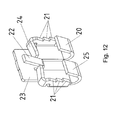
- FIG. 5 shows the connected to the sleeve 1 cable 3 increases, wherein FIG. 12 the sleeve 1 itself enlarged without cable represents.
- the left bending part 25 is deformed such that the insulation is fixed to the sleeve 1 and thus a strain relief for the right part of the cable is provided.
- the right bending part 20 is electrically conductively connected to the strand of the cable 3, in particular welded.
- FIG. 6 shows the bobbin 2, wherein the cables 1 connected to the cables are inserted.
- FIG. 7 shows the channel 4, in which the sleeves 1 are inserted, more clearly.
- the channel 4 is designed as a bag.
- FIG. 8 shows how FIG. 7 the inserted sleeves, wherein the cables are guided through the eyelet of the holder 7.
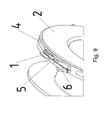
- FIG. 9 shows a holder 6 for fixing a first end of a winding wire 5, which is guided over the sleeve 1 and rests on the tongues 24 of the sleeve 1, wherein FIG. 12 the sleeve 1 itself enlarged without cable represents.
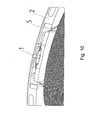
- FIG. 10 shows a guided over the sleeve 1 winding wire. 5
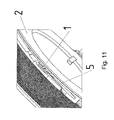
- FIG. 11 shows the sleeve 1 in the inserted into the bobbin state.
- the sleeve is shown larger than in FIG. 13a ,
- the sleeve is designed as a stamped and bent part and has a wall portion 23 on which a tongue 22, bent away.
- FIG. 13b In the FIG. 13b is shown how the bending state of the tongues 20,25 is when a cable is inserted with its insulation coming from the left and the insulation with the left tongue 25 is fixed. This fixation causes a strain relief for the stripped right end of the cable, so bare strand. This strand piece is compressed with the tongue 20 and then electrically welded. Thus, a very good electrically conductive connection of the strand is created with the sleeve, which tolerates high mechanical loads due to the strain relief.
- FIG. 13c the bending state of the tongue 22 is shown, which fixes the winding wire and with which the winding wire is welded.
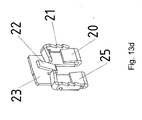
- FIG. 13d shows in contrast to FIG. 13b the cable feed from the right, thus the tongue 20 is less bent to fix the cable with insulation and the tongue 25 is bent more to fix the strand of the stripped cable end piece.
- Figure 14a and 14b show the bobbin 2 in different orientations, wherein the executed as a pocket channel 4 is shown and also the slot 9 for insertion of the Winding wire is shown. The winding wire is then wound and led at the end over a corner and the sleeve 1 to the holder 6, as in FIG. 9 clearly shown.
- the holder 6 can also be omitted on the bobbin and instead be provided on the tool.
- the channel is potted at the end of the production with a potting compound.
- the coil is particularly advantageous as a brake coil an electromagnetically actuated brake providable.
- This brake can advantageously be used in an electric motor and integrated.
- FIGS. 15 to 27 An embodiment of the invention is in the FIGS. 15 to 27 shown.
- FIG. 15 shows the developed sleeve 101 with the wall portion 123.
- the first tongues 124 have in this embodiment positioning function for the winding wire.
- the winding wire 105 is held between the wall portion 123 and the first tongues 124. In this case it rests on the bearing surfaces 125 for winding wire.
- the winding wire is pressed with the second tongue 122 to the wall portion 123 and is welded there to make the electrical connection.
- this course of the wire is shown exactly.
- the wall portions 120 are provided for connection to stripped cable 103 comprising strand and insulation.
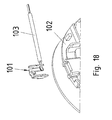
- the stranded wires are there welded or soldered to a wall portion 120, as in FIG. 18 is shown in more detail.
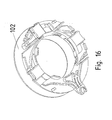
- FIG. 16 shows the bobbin 102, in which up to three sleeves 101 are insertable.
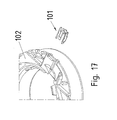
- FIG. 17 the sleeve 101 before insertion into the coil carrier 102nd
- FIG. 18 shows the connection with the cable 103 with insulation, wherein the stripped end portions of the cable 103 are welded.
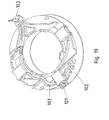
- FIG. 19 shows the inserted into the bobbin 102 sleeve 101 and inserted into a channel cable 103rd
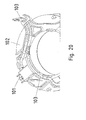
- FIG. 20 shows an associated different perspective.
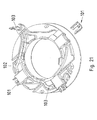
- FIG. 21 shows the bobbin with two inserted sleeves 101 and a sleeve 101 before insertion.
- FIG. 22 shows the winding wire 105, which is attached to a bracket 108 and runs over the bearing surfaces 125 of the sleeve. In between, the winding wire 105 is inserted into the still open second tongue 122.
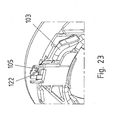
- FIG. 23 and 24 each shows a different view.
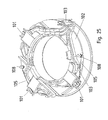
- FIG. 25 shows the bobbin 102 with three inserted sleeves 101, wherein the second tongue 122 is closed, that is pressed against the wall portion 123. In this way, the winding wire is easy to weld.
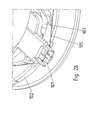
- FIG. 26 shows an enlarged section.
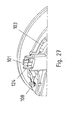
- FIG. 27 shows a different perspective.
Landscapes
- Engineering & Computer Science (AREA)
- Power Engineering (AREA)
- Insulation, Fastening Of Motor, Generator Windings (AREA)
- Connections Effected By Soldering, Adhesion, Or Permanent Deformation (AREA)
- Coils Or Transformers For Communication (AREA)
- Electromagnets (AREA)
Description
- Die Erfindung betrifft eine Spule, eine Bremse und einen Elektromotor.
- Spulenträger für mit Wicklungsdraht bewickelte Spulen sind allgemein bekannt.
- Aus der
DE 36 13 294 ist eine Bremsspule mit einem Mittelabgriff (Fig. 4 , Bezugszeichen 6) bekannt, die als Bremse für einen Elektromotor verwendbar ist. Nachteilig ist dabei, dass die Fertigung aufwendig und kostspielig ist. Dabei ist wichtig, dass jeder zusätzliche Kontakt des Wicklungsdrahtes beim Herstellen Aufwand und Kosten verursacht. - Aus der
DE 79 23 585 U1 ist ein Verbinden von Draht bekannt, wobei der Wicklungsdraht der Spule um das stiftförmige Ende mehrfach herumgewickelt werden muss ("herumschlingen" Seite 4, 3. Absatz, Zeile 4 - 5)und dann angelötet werden muss. Dies ist sehr aufwendig und kostspielig. - Aus der
DE 34 07 758 A1 ist ein Haken an einem Anschlussstück bekannt, der zum Sichern gegen das Herausziehen vorgesehen ist (E2, Seite 9, Zeile 11). Nachteilig ist wiederum, dass das Verbinden des Wicklungsdrahtes sehr aufwendig und kompliziert ist. - Aus der
US 4 633 110 A ist ein Elektromotor mit Statorwicklungen bekannt, dessen Statorwicklungsdraht an einem Kontaktelement elektrisch verbunden wird, das auf einer Leiterplatte angeordnet ist. - Aus der
US 4 720 646 A ist eine Spule mit Spulenträger und Wicklungsdraht bekannt, wobei ein Kontaktelement mit dem Spulenträger verbindbar ist, an dem Wicklungsdraht und eine elektrische Leitung angelötet werden. - Der Erfindung liegt daher die Aufgabe zugrunde, eine Spule weiterzubilden, um sie kostengünstiger und einfacher zu fertigen, insbesondere samt Kontaktierung. Dies betrifft erfindungsgemäß auch Spulen mit mindestens einem Mittelabgriff.
- Erfindungsgemäß wird die Aufgabe bei der Spule nach den in Anspruch 1 und bei der Bremse nach den in Anspruch 8 und bei dem Elektromotor nach den in Anspruch 9 angegebenen Merkmalen gelöst.
- Wesentliche Merkmale der Erfindung bei der Spule sind, dass sie zumindest einen Spulenträger und einen Wicklungsdraht umfasst,
wobei mindestens eine Hülse mit dem Wicklungsdraht elektrisch verbunden ist,
wobei die Hülse zwischen Wicklungsdraht und einer Litze eines Kabels eine elektrische Verbindung herstellt,
wobei die elektrische Verbindung zu einem Mittelabgriff der Spule gehört,
wobei der Spulenträger zumindest einen Kanal umfasst, der als Tasche ausgebildet ist, in welchem die Hülse eingeführt ist und kraftschlüssig und/oder formschlüssig befestigt ist,
wobei die Hülse einen oder mehrere verformte Bereiche umfasst,
wobei die Hülse einen ersten Auflagebereich umfasst, der als Auflage und/oder Führung für den Wicklungsdraht vorgesehen ist, indem die Hülse ein Wandteil aufweist und vom Wandteil weggebogene erste Zungen beidseitig aufweist, welche im Bereich der Biegung einen Ausschnitt haben, dessen eine Seite als Auflage fungiert, auf welcher der Wicklungsdraht aufgelegt und geführt ist,
wobei die Hülse zumindest einen zweiten, als zweite Zunge ausgebildeten, zum elektrischen und kraftschlüssigen Verbinden mit dem Wicklungsdraht verformten Bereich umfasst, mit welchem der Wicklungsdraht kraftschlüssig verbunden und verschweißt ist,
wobei die Hülse zumindest einen dritten Bereich im Wandteil, umfasst, an welchem die Litze eines Kabels schweißverbunden ist, wobei die Hülse als Stanz-Biege-Teil ausgeführt ist. - Von Vorteil ist dabei, dass die Hülse eine kostengünstige elektrische Verbindungsart ermöglicht. Die Hülse ist selbst als kostengünstiges Stanz-Biegeteil aus Blech hergestellt. Da sie verformbare Bereiche aufweist, sind mittels dieser Bereiche Wicklungsdraht-Abschnitte oder Litzen-Abschnitte einklemmbar, also kraftschlüssig verbindbar. Durch entsprechendes Erhitzen sind dann Schweißverbindungen herstellbar. Mittels weiterer verformbarer Bereiche sind auch andere Teile des Kabels einklemmbar und somit eine Zugentlastung für das Kabel mit Litze realisierbar.
Erfindungsgemäß umfasst die Hülse mindestens einen ersten Auflagebereich, der als Auflage und/oder Führung für den Wicklungsdraht vorgesehen ist, wobei die Hülse zumindest einen zweiten, einen als Zunge ausgebildeten Bereich, umfasst, der zum kraftschlüssigen Verbinden mit dem Wicklungsdraht verformbar ist und zum Herstellen einer Schweißverbindung mit dem Wicklungsdraht vorsehbar ist, wobei die Hülse zumindest einen dritten Bereich umfasst, der zum Schweißverbinden mit der Litze eines Kabels vorgesehen ist. - Von Vorteil ist dabei, dass der Wicklungsdraht leicht einfädelbar ist und dann auf der Auflagefläche zum liegen kommt, also genau positionierbar ist. Auf diese Weise ist das einfädeln derart gut durch Formgebung der Hülse ausführbar, dass der Wicklungsdraht in den zweiten Bereich eingeführt wird, also in den Bereich der verformbaren Zunge. Diese ist verformbar, also insbesondere leicht andrückbar gegen ein Wandteil zum Einklemmen, also kraftschlüssigen Verbinden des Wicklungsdrahtes mit der Hülse. Der eingeklemmte Wicklungsdraht ist aber dann schnell und einfach verschweißbar. Die Schweißverbindung ist gut geschützt gegen belastende Kräfte, weil die kraftschlüssige Verbindung weiter wirkt und somit die Schweißverbindung entlastet.
- Die Hülse ist zur Herstellung einer elektrischen Verbindung zwischen Wicklungsdraht und der elektrischen Leitung oder einer Litze geeignet ausgeführt. Von Vorteil ist dabei, dass ein leitfähiges Metall und ein zum Herstellen einer Schweißverbindung besonders gut geeignetes Metall auswählbar ist, das darüber hinaus kostengünstig ist und mittels eines Stanz-Biege-Prozesses hergestellt wird.
- Außerdem ist die Hülse im Spulenträger kraftschlüssig und/oder formschlüssig befestigt. Insbesondere umfasst die Hülse mindestens einen Widerhaken, insbesondere zum Einhaken im Kanal. Von Vorteil ist dabei, dass die Befestigung mit einfachen und kostengünstigen Mitteln erreichbar ist.
- Bei der Erfindung sind die Bereiche an einem Wandteil verbunden. Von Vorteil ist dabei, dass die Bereiche stabil zusammenhaltbar sind mittels des Wandteils.
- Außerdem umfasst die Spule einen Mittelabgriff. Von Vorteil ist dabei, dass besonders schnell schaltbare Bremse ausführbar sind.
- Bei einer vorteilhaften Ausgestaltung umfasst die Hülse zumindest einen vierten Bereich, als einen als Zunge ausgebildeten Bereich, der zum kraftschlüssigen Verbinden mit einem Kabel, insbesondere mit der Isolierung des Kabels, verformbar ist.
- Von Vorteil ist dabei, dass mit einfachsten und kostengünstigsten Mitteln eine Zugentlastung vorsehbar ist.
- Bei einer vorteilhaften Ausgestaltung ist die Lackierung des Wicklungsdrahtes beim Herstellen einer Schweißverbindung zumindest im Bereich der elektrischen Kontaktstelle entfernbar, insbesondere durch das beim Herstellen der Schweißverbindung auftretende Erhitzen. Von Vorteil ist dabei, dass kein spezieller Abisolier-Arbeitsgang notwendig ist, sondern das bloße Verschweißen ausreichend ist.
- Bei einer vorteilhaften Ausgestaltung umfasst die Spule Vergussmasse, insbesondere im Bereich des Kanals und/oder der Wicklung. Von Vorteil ist dabei, dass ein chemischer und mechanischer Schutz erreichbar ist. Außerdem sind auch die elektrischen Isolationswerte verbesserbar bei geeigneter Auswahl der Vergussmasse.
- Bei einer vorteilhaften Ausgestaltung umfasst der Spulenträger eine Halterung für Wicklungsdraht und/oder Kabel. Von Vorteil ist dabei, dass die Halterung schon bei der Spritzgussherstellung des Spulenträgers herstellbar ist und somit kein weiterer Arbeitsgang notwendig ist.
- Wesentliche Merkmale der Erfindung bei der Bremse sind, dass die Bremsspule der Bremse nach Art der vorgenannten Spule ausgeführt ist. Von Vorteil ist dabei, dass eine kostengünstige Bremsspule sogar mit Mittelabgriff realisierbar ist. Für den Mittelabgriff sind drei Hülsen notwendig, mit denen Litzendraht am Anfang, in der Mitte und am Ende der mit Wicklungsdraht ausgeführten Wicklung der Spule abgegriffen wird.
- Wesentliche Merkmale der Erfindung bei dem Elektromotor sind, dass der Elektromotor eine Bremse mit Bremsspule oder eine Spule umfasst, wie oben beschrieben. Von Vorteil ist dabei, dass der Elektromotor mit wenig Aufwand und Kosten fertigbar ist und bei der Fertigung ein hoher Automatisierungsgrad erreichbar ist.
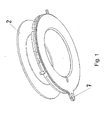
- In der
Figur 1 ist ein Spulenträger 2 gezeigt. Er ist vorteiligerweise als Kunststoff-Spritzgussteil fertigbar und weist eine Halterung 7 auf als Befestigung für ein abgehendes Kabel. - In der
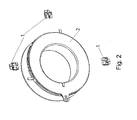
Figur 2 sind drei Hülsen 1 gezeigt, die an drei Stellen am Umfang in den Spulenträger einführbar sind. - Den genaueren Aufbau der Hülsen 1 zeigen die
Figuren 12 und13 . - In der
Figur 3 ist ein Kabel 3, umfassend elektrisch leitfähige Litze und Isolierung, gezeigt, das in den unteren Teil der Hülse 1 einführbar ist, bevor diese in den Spulenträger einsteckbar sind. - In der
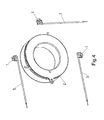
Figur 4 sind die drei Kabel 3 gezeigt, welche mit entsprechenden Hülsen 1 verbunden sind, bevor sie in den Spulenträger 1 eingeführt werden. -
Figur 5 zeigt das mit der Hülse 1 verbundene Kabel 3 vergrößert, wobeiFigur 12 die Hülse 1 selbst ohne Kabel vergrößert darstellt. Das linke Biegeteil 25 ist derart verformt, dass die Isolierung mit der Hülse 1 fixiert ist und somit eine Zugentlastung für den rechten Teil des Kabels vorgesehen ist. Das rechte Biegeteil 20 ist mit der Litze des Kabels 3 elektrisch leitfähig verbunden, insbesondere verschweißt. -
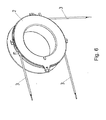
Figur 6 zeigt den Spulenträger 2, wobei die mit den Kabeln verbundenen Hülsen 1 eingeführt sind. -
Figur 7 zeigt den Kanal 4, in welchen die Hülsen 1 eingeschoben sind, deutlicher. Der Kanal 4 ist als Tasche ausgeführt. -
Figur 8 zeigt wieFigur 7 die eingeschobenen Hülsen, wobei die Kabel durch die Öse der Halterung 7 geführt sind. -
Figur 9 zeigt eine Halterung 6 zur Fixierung eines ersten Endes eines Wicklungsdrahtes 5, welcher über die Hülse 1 geführt wird und auf den Zungen 24 der Hülse 1 aufliegt, wobeiFigur 12 die Hülse 1 selbst ohne Kabel vergrößert darstellt. -
Figur 10 zeigt einen über die Hülse 1 geführten Wicklungsdraht 5. -
Figur 11 zeigt die Hülse 1 im in den Spulenträger eingeschobenen Zustand. - In der
Figur 12 ist die Hülse größer gezeigt als inFigur 13a . Die Hülse ist als Stanz-Biegeteil ausgeführt und weist ein Wandteil 23 auf, an dem eine Zunge 22, weggebogen ist. - Bereiche mit Widerhaken 21 und weiteren Zungen 24 sind rechts und links angeordnet und sind ebenfalls weggebogen. Am unteren Ende des Wandteils 23 sind eine rechte Zunge 20 und eine linke Zunge 25 angeordnet und wiederum weggebogen.
- In der
Figur 13b ist gezeigt, wie der Biegezustand der Zungen 20,25 ist, wenn ein Kabel mit seiner Isolierung von links kommend eingeführt ist und die Isolierung mit der linken Zunge 25 fixiert ist. Diese Fixierung bewirkt eine Zugentlastung für den abisolierten rechten Endteil des Kabels, also blanke Litze. Dieses Litzenstück wird mit der Zunge 20 zusammengedrückt und dann elektrisch verschweißt. Somit ist eine elektrisch sehr gut leitfähige Verbindung der Litze mit der Hülse geschaffen, die wegen der Zugentlastung hohe mechanische Belastungen erträgt. - In der
Figur 13c ist der Biegezustand der Zunge 22 gezeigt, die den Wicklungsdraht fixiert und mit welcher der Wicklungsdraht verschweißt wird. -
Figur 13d zeigt im Unterschied zuFigur 13b die Kabelzuführung von rechts, wobei somit die Zunge 20 weniger verbogen ist zur Fixierung des Kabels mit Isolierung und die Zunge 25 stärker verbogen ist zur Fixierung der Litze des abisolierten Kabelendstückes. -
Figur 14a und14b zeigen den Spulenträger 2 in verschiedenen Orientierungen, wobei der als Tasche ausgeführte Kanal 4 gezeigt ist und auch der Schlitz 9 zum Einführen des Wicklungsdrahtes gezeigt ist. Der Wicklungsdraht wird dann bewickelt und am Ende über ein Eck und die Hülse 1 an die Halterung 6 geführt, wie inFigur 9 deutlich gezeigt ist. - In weiteren Ausführungsbeispielen kann die Halterung 6 auch am Spulenträger weggelassen werden und stattdessen am Werkzeug vorgesehen werden.
- In weiteren Ausführungsbeispielen wird der Kanal am Ende der Herstellung mit einer Vergussmasse vergossen. Somit ist ein mechanischer und auch chemischer Schutz erreichbar für die Spulenwicklung.
- Die Spule ist insbesondere vorteilhaft als Bremsspule einer elektromagnetisch betätigbaren Bremse vorsehbar. Diese Bremse kann vorteiligerweise in einem Elektromotor eingesetzt und integriert vorgesehen werden.
- Eine erfindungsgemäße Ausführung ist in den
Figuren 15 bis 27 dargestellt. -
Figur 15 zeigt die weitergebildete Hülse 101 mit dem Wandteil 123. Die erste Zungen 124 haben bei diesem Ausführungsbeispiel Positionierfunktion für den Wicklungsdraht. Der Wicklungsdraht 105 wird gehalten zwischen Wandteil 123 und den ersten Zungen 124. Dabei liegt er auf den Auflageflächen 125 für Wicklungsdraht auf. Der Wicklungsdraht wird dabei mit der zweiten Zunge 122 ans Wandteil 123 gedrückt und ist dort verschweißbar zum Herstellen der elektrischen Verbindung. In denFiguren 26 und27 ist dieser Verlauf des Drahtes genau gezeigt. Zur Verbindung mit abisoliertem Kabel 103, umfassend Litze und Isolierung, sind die Wandteilbereiche 120 vorgesehen. Die Litzendrähte sind dort verschweißbar oder verlötbar mit einem Wandteilbereich 120, wie inFigur 18 genauer gezeigt ist. -
Figur 16 zeigt den Spulenträger 102, in welchen bis zu drei Hülsen 101 einführbar sind. -
Figur 17 die Hülse 101 vor dem Einschieben in den Spulenträger 102.Figur 18 zeigt die Verbindung mit dem Kabel 103 mit Isolierung, wobei die abisolierten Endbereiche des Kabels 103 verschweißt werden. -
Figur 19 zeigt die in den Spulenträger 102 eingeschobene Hülse 101 und das in einen Kanal eingelegte Kabel 103.Figur 20 zeigt eine zugehörige andere Perspektive.Figur 21 zeigt den Spulenträger mit zwei eingeschobenen Hülsen 101 und einer Hülse 101 vor dem Einschieben. -
Figur 22 zeigt den Wicklungsdraht 105, der an einer Halterung 108 befestigt ist und über die Auflageflächen 125 der Hülse läuft. Dazwischen ist der Wicklungsdraht 105 eingelegt in die noch offene zweite Zunge 122.Figur 23 und24 zeigt jeweils eine andere Ansicht. -
Figur 25 zeigt den Spulenträger 102 mit drei eingeschobenen Hülsen 101, wobei die zweite Zunge 122 geschlossen, also an das Wandteil 123 angedrückt ist. Auf diese Weise ist der Wicklungsdraht leicht verschweißbar.Figur 26 zeigt hierzu einen vergrößerten Ausschnitt.Figur 27 zeigt eine andere Perspektive. -
- 1
- Hülse
- 2
- Spulenträger
- 3
- Litze mit Isolierung
- 4
- Kanal
- 5
- Wicklungsdraht
- 6
- Halterung
- 7
- Halterung mit Öse für Kabel
- 8
- Halterung
- 9
- Schlitz
- 10
- Eck
- 20
- Zunge
- 21
- Widerhaken
- 22
- Zunge
- 23
- Wandteil
- 24
- Zunge
- 25
- Zunge
- 101
- Hülse
- 102
- Spulenträger
- 103
- Kabel, umfassend Litze und Isolierung
- 105
- Wicklungsdraht
- 108
- Halterung
- 120
- Wandteilbereich
- 122
- zweite Zunge
- 123
- Wandteil
- 124
- erste Zunge
- 125
- Auflagefläche für Wicklungsdraht
Claims (9)
- Spule, umfassend zumindest einen Spulenträger (102) und einen Wicklungsdraht (105),
wobei mindestens eine Hülse (101) mit dem Wicklungsdraht (105) elektrisch verbunden ist,
wobei die Hülse (101) zwischen Wicklungsdraht (105) und einer Litze eines Kabels (103) eine elektrische Verbindung herstellt,
wobei die elektrische Verbindung zu einem Mittelabgriff der Spule gehört,
wobei der Spulenträger (2) zumindest einen Kanal umfasst, der als Tasche ausgebildet ist, in welchem die Hülse (101) eingeführt ist und kraftschlüssig und/oder formschlüssig befestigt ist,
wobei die Hülse (101) einen oder mehrere verformte Bereiche umfasst,
wobei die Hülse (101) einen ersten Auflagebereich (125) umfasst, der als Auflage und/oder Führung für den Wicklungsdraht (105) vorgesehen ist, indem die Hülse (101) ein Wandteil (123) aufweist und vom Wandteil weggebogene erste Zungen (124) beidseitig aufweist, welche im Bereich der Biegung einen Ausschnitt haben, dessen eine Seite als Auflage (125) fungiert, auf welcher der Wicklungsdraht (105) aufgelegt und geführt ist,
wobei die Hülse (101) zumindest einen zweiten, als zweite Zunge (122) ausgebildeten, zum elektrischen und kraftschlüssigen Verbinden mit dem Wicklunasdraht (105) verformten Bereich umfasst, mit welchem der Wicklungsdraht (105) kraftschlüssig verbunden und verschweißt ist,
wobei die Hülse (101) zumindest einen dritten Bereich (120) im Wandteil (123), umfasst, an welchem die Litze eines Kabels (103) schweißverbunden ist,
wobei die Hülse (101) als Stanz-Biege-Teil ausgeführt ist. - Spule nach Anspruch 1,
dadurch gekennzeichnet, dass
die Hülse (101) mindestens einen Widerhaken (21) zum Einhaken im Kanal (4) umfasst. - Spule nach mindestens einem der vorangegangenen Ansprüche,
dadurch gekennzeichnet, dass
der dritte Bereich der Hülse mit der Litze (103) auch kraftschlüssig verbunden ist. - Spule nach mindestens einem der vorangegangenen Ansprüche,
dadurch gekennzeichnet, dass
die Hülse (101) zumindest einen vierten Bereich, als einen als Zunge (25) ausgebildeten Bereich, umfasst, der zum kraftschlüssigen Verbinden mit einem Kabel, insbesondere mit der Isolierung des Kabels, verformbar ist. - Spule nach mindestens einem der vorangegangenen Ansprüche,
dadurch gekennzeichnet, dass
die Lackierung des Wicklungsdrahtes durch das beim Herstellen der Schweißverbindung auftretende Erhitzen zumindest im Bereich der elektrischen Kontaktstelle entfernt ist. - Spule nach mindestens einem der vorangegangenen Ansprüche,
dadurch gekennzeichnet, dass
die Spule Vergussmasse umfasst, insbesondere im Bereich des Kanals und/oder der Wicklung. - Spule nach mindestens einem der vorangegangenen Ansprüche,
dadurch gekennzeichnet, dass
der Spulenträger (2) eine Halterung (6) für Wicklungsdraht (5) und/oder Kabel umfasst. - Bremse
wobei eine Spule nach mindestens einem der vorangegangenen Ansprüche als Bremsspule in einem Elektromagneten vorgesehen ist. - Elektromotor
dadurch gekennzeichnet, dass
der Elektromotor eine Bremse nach Anspruch 8 umfasst.
Applications Claiming Priority (2)
| Application Number | Priority Date | Filing Date | Title |
|---|---|---|---|
| DE102004022254A DE102004022254B3 (de) | 2004-05-04 | 2004-05-04 | Spule |
| PCT/EP2005/003515 WO2005109606A1 (de) | 2004-05-04 | 2005-04-04 | Spule mit einer kontakkthülse zur elektrischen verbindung |
Publications (2)
| Publication Number | Publication Date |
|---|---|
| EP1745539A1 EP1745539A1 (de) | 2007-01-24 |
| EP1745539B1 true EP1745539B1 (de) | 2015-06-10 |
Family
ID=34625853
Family Applications (1)
| Application Number | Title | Priority Date | Filing Date |
|---|---|---|---|
| EP05734855.9A Expired - Lifetime EP1745539B1 (de) | 2004-05-04 | 2005-04-04 | Spule mit einer kontakthülse zur elektrischen verbindung |
Country Status (9)
| Country | Link |
|---|---|
| US (1) | US7839252B2 (de) |
| EP (1) | EP1745539B1 (de) |
| JP (1) | JP4886677B2 (de) |
| CN (1) | CN1950987B (de) |
| AU (1) | AU2005241611B2 (de) |
| BR (1) | BRPI0509618B1 (de) |
| CA (1) | CA2561197C (de) |
| DE (1) | DE102004022254B3 (de) |
| WO (1) | WO2005109606A1 (de) |
Families Citing this family (14)
| Publication number | Priority date | Publication date | Assignee | Title |
|---|---|---|---|---|
| DE102006034049B4 (de) * | 2006-07-20 | 2014-08-07 | Sew-Eurodrive Gmbh & Co Kg | Elektromagnetisch betätigbare Bremse oder Kupplung mit Lüftspule, Verfahren zum Betreiben derselben und Antrieb |
| DE102008034413B4 (de) | 2008-07-23 | 2020-01-09 | Sew-Eurodrive Gmbh & Co Kg | Kontakthaken und elektromagnetisch betätigbare Bremse |
| US8602658B2 (en) * | 2010-02-05 | 2013-12-10 | Baker Hughes Incorporated | Spoolable signal conduction and connection line and method |
| DE102010014860B4 (de) * | 2010-04-13 | 2018-12-20 | Sew-Eurodrive Gmbh & Co Kg | Spule und Bremse |
| GB2485205B (en) | 2010-11-05 | 2016-08-17 | Rolls Royce Plc | A superconductor device |
| US9151921B2 (en) * | 2014-02-13 | 2015-10-06 | Siemens Energy, Inc. | Apparatus for making uniform optical fiber bundles in power generators |
| DE102015009620A1 (de) | 2014-09-08 | 2016-03-10 | Sew-Eurodrive Gmbh & Co Kg | Elektromotor mit einer aus Wicklungsdrahtabschnitten ausgeführten Statorwicklung |
| CN104538815B (zh) * | 2014-12-02 | 2016-08-24 | 国网河南省电力公司洛阳供电公司 | 一种压接管的校正装置 |
| CN106297315A (zh) * | 2016-08-26 | 2017-01-04 | 杭州研智科技有限公司 | 一种停车场车位占用感应装置 |
| CN109399401A (zh) * | 2018-11-29 | 2019-03-01 | 刘禄军 | 一种卷线装置 |
| CN116246871B (zh) * | 2023-05-10 | 2023-08-01 | 四川富美高电子有限公司 | 一种变压器骨架 |
| CN120958700A (zh) * | 2023-05-11 | 2025-11-14 | 索尤若驱动有限及两合公司 | 线材引导元件、对轴进行制动的制动器和具有制动器的制动电机 |
| DE102025129622A1 (de) * | 2024-08-26 | 2026-02-26 | Sew-Eurodrive Gmbh & Co Kg | Verfahren zum Herstellen einer Bremsanordnung, Bremsanordnung und Elektromotor mit Bremsanordnung |
| CN119306065B (zh) * | 2024-11-20 | 2026-08-11 | 盐城中大三协汽车装备有限公司 | 一种全自动自洁式卷管器 |
Citations (1)
| Publication number | Priority date | Publication date | Assignee | Title |
|---|---|---|---|---|
| US4720646A (en) * | 1985-12-03 | 1988-01-19 | Mitsubishi Denki Kabushiki Kaisha | Connection terminal assembly for stator coil |
Family Cites Families (36)
| Publication number | Priority date | Publication date | Assignee | Title |
|---|---|---|---|---|
| US559046A (en) * | 1896-04-28 | Stirrup | ||
| US3461413A (en) * | 1966-11-10 | 1969-08-12 | Teletype Corp | Shielded electrical inductor component |
| DE2236241A1 (de) * | 1972-07-24 | 1974-02-07 | Siemens Ag | Spulenkoerper |
| CH642765A5 (de) | 1979-05-31 | 1984-04-30 | Landis & Gyr Ag | Spule mit einem spulentopf mit anschlussfahnen fuer elektrische geraete. |
| DE7923585U1 (de) * | 1979-08-18 | 1980-08-07 | Harting Elektronik Gmbh, 4992 Espelkamp | Elektrische spule |
| DE8026597U1 (de) | 1980-10-04 | 1981-01-29 | Licentia Patent-Verwaltungs-Gmbh, 6000 Frankfurt | In eine der beiden zur isolierung der stirnflaechen des staenderblechpakets elektrischer maschinen mit ausgepraegten polen dienenden endscheiben eingesetzte anschlussklemmen |
| US4588973A (en) * | 1981-07-30 | 1986-05-13 | Emhart Industries, Inc. | Coil bobbin having novel means for terminating fine wires |
| JPS5891871A (ja) * | 1981-11-26 | 1983-05-31 | 日本エステル株式会社 | 詰綿用ポリエステル繊維油剤 |
| JPS5891871U (ja) * | 1981-12-17 | 1983-06-21 | 三菱電機株式会社 | 接続端子 |
| DE8234030U1 (de) * | 1982-12-03 | 1984-05-17 | Robert Bosch Gmbh, 7000 Stuttgart | Elektrische spule mit eisenkern |
| DE3407758A1 (de) * | 1984-03-02 | 1985-09-12 | Standard Elektrik Lorenz Ag, 7000 Stuttgart | Automatengerechter spulenkoerper fuer elektrische geraete |
| US4633110A (en) * | 1985-03-20 | 1986-12-30 | Rotron, Inc. | Motor with stator on printed circuit assembly |
| JPS61237375A (ja) * | 1985-04-11 | 1986-10-22 | アンプ インコ−ポレ−テツド | レセプタクル端子 |
| JPS62165764A (ja) * | 1986-01-18 | 1987-07-22 | Matsushita Electric Ind Co Ltd | カ−トリツジデイスク装置 |
| JPS62170470A (ja) * | 1986-01-22 | 1987-07-27 | Hitachi Ltd | ハフニウム基合金 |
| JPH0424783Y2 (de) * | 1986-04-10 | 1992-06-11 | ||
| JPS62170470U (de) * | 1986-04-18 | 1987-10-29 | ||
| DE3613294A1 (de) * | 1986-04-19 | 1987-10-22 | Sew Eurodrive Gmbh & Co | Bremse fuer einen motor |
| US4728916A (en) * | 1986-06-05 | 1988-03-01 | Lectron Products, Inc. | Solenoid operated fluid control valve |
| JPS6476704A (en) * | 1987-09-17 | 1989-03-22 | Aisin Seiki | Solenoid device |
| JPH0218980A (ja) * | 1988-07-07 | 1990-01-23 | Sumitomo Electric Ind Ltd | ダイヤモンドレーザ素子の作製方法 |
| JPH0218980U (de) * | 1988-07-25 | 1990-02-08 | ||
| JPH0625945Y2 (ja) * | 1988-08-05 | 1994-07-06 | 東洋電装株式会社 | エンジンの点火コイル |
| JPH033704A (ja) * | 1989-05-31 | 1991-01-09 | Tsugami Corp | 回転磁気ヘッド用固定シリンダの加工方法 |
| JPH03112113A (ja) * | 1989-09-26 | 1991-05-13 | Matsushita Electric Works Ltd | コイルの端末処理方法 |
| DE4118166C3 (de) * | 1991-06-03 | 1995-10-26 | Siemens Ag | Schweißverfahren zur Verbindung eines Wicklungsdrahtes einer Spule mit einem Anschlußelement und Metall-Hülse zur Anwendung bei diesem Verfahren |
| JPH0595184U (ja) * | 1992-05-22 | 1993-12-24 | 株式会社三協精機製作所 | 電機子 |
| JP3048485B2 (ja) * | 1993-03-15 | 2000-06-05 | 矢崎総業株式会社 | 端子と電線のビーム溶接方法 |
| DE4340638A1 (de) | 1993-11-27 | 1995-06-01 | Bosch Gmbh Robert | Elektrische Verbindungsanordnung |
| JP2965127B2 (ja) * | 1995-03-13 | 1999-10-18 | 協伸工業株式会社 | 基板用接続端子 |
| JPH11234940A (ja) * | 1998-02-16 | 1999-08-27 | Mitsubishi Electric Corp | 電動機用固定子 |
| US6252485B1 (en) * | 1998-07-14 | 2001-06-26 | Ching-Jen Lin | Rotation coil bobbin for picture tube |
| JP4183155B2 (ja) * | 2000-01-12 | 2008-11-19 | 東芝キヤリア株式会社 | 電動機 |
| US6633216B2 (en) * | 2001-01-12 | 2003-10-14 | Kelsey-Hayes Company | Self-locating coil assembly |
| JP3952750B2 (ja) * | 2001-11-20 | 2007-08-01 | Nok株式会社 | ソレノイド |
| US6903647B2 (en) * | 2002-05-08 | 2005-06-07 | Kelsey-Hayes Company | Solenoid valve coil having an integrated bobbin and flux ring assembly |
-
2004
- 2004-05-04 DE DE102004022254A patent/DE102004022254B3/de not_active Expired - Lifetime
-
2005
- 2005-04-04 BR BRPI0509618-9A patent/BRPI0509618B1/pt active IP Right Grant
- 2005-04-04 JP JP2007511899A patent/JP4886677B2/ja not_active Expired - Lifetime
- 2005-04-04 US US11/579,774 patent/US7839252B2/en active Active
- 2005-04-04 EP EP05734855.9A patent/EP1745539B1/de not_active Expired - Lifetime
- 2005-04-04 WO PCT/EP2005/003515 patent/WO2005109606A1/de not_active Ceased
- 2005-04-04 CN CN200580014127.8A patent/CN1950987B/zh not_active Expired - Lifetime
- 2005-04-04 CA CA2561197A patent/CA2561197C/en not_active Expired - Lifetime
- 2005-04-04 AU AU2005241611A patent/AU2005241611B2/en not_active Expired
Patent Citations (1)
| Publication number | Priority date | Publication date | Assignee | Title |
|---|---|---|---|---|
| US4720646A (en) * | 1985-12-03 | 1988-01-19 | Mitsubishi Denki Kabushiki Kaisha | Connection terminal assembly for stator coil |
Also Published As
| Publication number | Publication date |
|---|---|
| BRPI0509618A (pt) | 2007-09-18 |
| US7839252B2 (en) | 2010-11-23 |
| JP4886677B2 (ja) | 2012-02-29 |
| AU2005241611A1 (en) | 2005-11-17 |
| CA2561197A1 (en) | 2005-11-17 |
| CA2561197C (en) | 2011-01-04 |
| DE102004022254B3 (de) | 2005-06-30 |
| AU2005241611B2 (en) | 2009-11-12 |
| US20070222312A1 (en) | 2007-09-27 |
| BRPI0509618B1 (pt) | 2018-03-06 |
| EP1745539A1 (de) | 2007-01-24 |
| CN1950987B (zh) | 2014-07-23 |
| JP2007536751A (ja) | 2007-12-13 |
| WO2005109606A1 (de) | 2005-11-17 |
| CN1950987A (zh) | 2007-04-18 |
Similar Documents
| Publication | Publication Date | Title |
|---|---|---|
| DE102004022254B3 (de) | Spule | |
| EP1774545B1 (de) | Halterung für eine elektrische komponente | |
| DE3787514T2 (de) | Kommutator. | |
| EP2837061B1 (de) | Kontaktierungsvorrichtung zum anbinden eines elektrischen leiters | |
| EP1555865B1 (de) | Montage einer Sperrkreisanordnung mit diskreten, passiven elektronischen Bauteilen | |
| EP1667285A2 (de) | Leitungshalter | |
| EP1474814B1 (de) | Spulenk rper und spule f r leiterplattenmontage | |
| DE602005002323T2 (de) | Antenne und Funkkommunikationsendgerät mit dieser Antenne | |
| EP2933804B1 (de) | Induktionsbauteil | |
| EP1182735B1 (de) | Elektrische Reihenklemme | |
| EP2471144B1 (de) | Anordnung zum elektrischen verbinden, insbesondere elektrischen kontaktieren, eines mehradrigen koaxialkabels mit einer leiterplatte, schaltungsanordnung und elektrogerät | |
| DE8911461U1 (de) | Anker für einen Elektromotor | |
| DE102006036607A1 (de) | Elektromagnetisches Schweißverfahren und Leitermodul | |
| DE102010014860B4 (de) | Spule und Bremse | |
| WO1991011818A1 (de) | Elektromagnetisches relais | |
| EP0258664A2 (de) | Baugruppe zum Sichern von elektrischen Leitungen in Telekommunikationsanlagen | |
| DE2752847B2 (de) | Gehäuse mit einem darin angeordneten elektrischen Bauelement | |
| WO1997039496A1 (de) | Elektrische anschlussvorrichtung und elektrisches verbindungselement zur verwendung in einer elektrischen anschlussvorrichtung | |
| DE3316456A1 (de) | Spulenkoerper | |
| EP1480290B1 (de) | Kontaktanordnung mit einer Drahtverbindung | |
| DE102021110661B4 (de) | Elektrisches Leiteranschlusselement mit Kontaktfeder | |
| DE10353162A1 (de) | Struktur und Verfahren für die Bearbeitungs des Endes von Flachkabeln | |
| EP2161786A1 (de) | Kabelanschlusselement | |
| DE19730603A1 (de) | Anschlußklemmeinrichtung | |
| DE102013208176A1 (de) | Stabkerndrossel |
Legal Events
| Date | Code | Title | Description |
|---|---|---|---|
| PUAI | Public reference made under article 153(3) epc to a published international application that has entered the european phase |
Free format text: ORIGINAL CODE: 0009012 |
|
| 17P | Request for examination filed |
Effective date: 20061204 |
|
| AK | Designated contracting states |
Kind code of ref document: A1 Designated state(s): AT BE BG CH CY CZ DE DK EE ES FI FR GB GR HU IE IS IT LI LT LU MC NL PL PT RO SE SI SK TR |
|
| 17Q | First examination report despatched |
Effective date: 20070215 |
|
| RIN1 | Information on inventor provided before grant (corrected) |
Inventor name: LAMBLING, JEAN-PIERRE Inventor name: FLOERCHINGER, GERHARD Inventor name: CRIQUI, LAURENT Inventor name: SCHUELER, GERD Inventor name: HEINRICH, PASCAL |
|
| DAX | Request for extension of the european patent (deleted) | ||
| GRAP | Despatch of communication of intention to grant a patent |
Free format text: ORIGINAL CODE: EPIDOSNIGR1 |
|
| INTG | Intention to grant announced |
Effective date: 20150123 |
|
| GRAS | Grant fee paid |
Free format text: ORIGINAL CODE: EPIDOSNIGR3 |
|
| GRAA | (expected) grant |
Free format text: ORIGINAL CODE: 0009210 |
|
| AK | Designated contracting states |
Kind code of ref document: B1 Designated state(s): AT BE BG CH CY CZ DE DK EE ES FI FR GB GR HU IE IS IT LI LT LU MC NL PL PT RO SE SI SK TR |
|
| REG | Reference to a national code |
Ref country code: GB Ref legal event code: FG4D Free format text: NOT ENGLISH |
|
| REG | Reference to a national code |
Ref country code: CH Ref legal event code: EP |
|
| REG | Reference to a national code |
Ref country code: AT Ref legal event code: REF Ref document number: 731256 Country of ref document: AT Kind code of ref document: T Effective date: 20150715 |
|
| REG | Reference to a national code |
Ref country code: DE Ref legal event code: R096 Ref document number: 502005014813 Country of ref document: DE |
|
| REG | Reference to a national code |
Ref country code: IE Ref legal event code: FG4D Free format text: LANGUAGE OF EP DOCUMENT: GERMAN |
|
| PG25 | Lapsed in a contracting state [announced via postgrant information from national office to epo] |
Ref country code: ES Free format text: LAPSE BECAUSE OF FAILURE TO SUBMIT A TRANSLATION OF THE DESCRIPTION OR TO PAY THE FEE WITHIN THE PRESCRIBED TIME-LIMIT Effective date: 20150610 Ref country code: LT Free format text: LAPSE BECAUSE OF FAILURE TO SUBMIT A TRANSLATION OF THE DESCRIPTION OR TO PAY THE FEE WITHIN THE PRESCRIBED TIME-LIMIT Effective date: 20150610 Ref country code: FI Free format text: LAPSE BECAUSE OF FAILURE TO SUBMIT A TRANSLATION OF THE DESCRIPTION OR TO PAY THE FEE WITHIN THE PRESCRIBED TIME-LIMIT Effective date: 20150610 |
|
| REG | Reference to a national code |
Ref country code: NL Ref legal event code: MP Effective date: 20150610 |
|
| PG25 | Lapsed in a contracting state [announced via postgrant information from national office to epo] |
Ref country code: GR Free format text: LAPSE BECAUSE OF FAILURE TO SUBMIT A TRANSLATION OF THE DESCRIPTION OR TO PAY THE FEE WITHIN THE PRESCRIBED TIME-LIMIT Effective date: 20150911 Ref country code: BG Free format text: LAPSE BECAUSE OF FAILURE TO SUBMIT A TRANSLATION OF THE DESCRIPTION OR TO PAY THE FEE WITHIN THE PRESCRIBED TIME-LIMIT Effective date: 20150910 |
|
| PG25 | Lapsed in a contracting state [announced via postgrant information from national office to epo] |
Ref country code: EE Free format text: LAPSE BECAUSE OF FAILURE TO SUBMIT A TRANSLATION OF THE DESCRIPTION OR TO PAY THE FEE WITHIN THE PRESCRIBED TIME-LIMIT Effective date: 20150610 |
|
| REG | Reference to a national code |
Ref country code: FR Ref legal event code: PLFP Year of fee payment: 12 |
|
| PG25 | Lapsed in a contracting state [announced via postgrant information from national office to epo] |
Ref country code: IS Free format text: LAPSE BECAUSE OF FAILURE TO SUBMIT A TRANSLATION OF THE DESCRIPTION OR TO PAY THE FEE WITHIN THE PRESCRIBED TIME-LIMIT Effective date: 20151010 Ref country code: CZ Free format text: LAPSE BECAUSE OF FAILURE TO SUBMIT A TRANSLATION OF THE DESCRIPTION OR TO PAY THE FEE WITHIN THE PRESCRIBED TIME-LIMIT Effective date: 20150610 Ref country code: RO Free format text: LAPSE BECAUSE OF NON-PAYMENT OF DUE FEES Effective date: 20150610 Ref country code: PL Free format text: LAPSE BECAUSE OF FAILURE TO SUBMIT A TRANSLATION OF THE DESCRIPTION OR TO PAY THE FEE WITHIN THE PRESCRIBED TIME-LIMIT Effective date: 20150610 Ref country code: SK Free format text: LAPSE BECAUSE OF FAILURE TO SUBMIT A TRANSLATION OF THE DESCRIPTION OR TO PAY THE FEE WITHIN THE PRESCRIBED TIME-LIMIT Effective date: 20150610 Ref country code: PT Free format text: LAPSE BECAUSE OF FAILURE TO SUBMIT A TRANSLATION OF THE DESCRIPTION OR TO PAY THE FEE WITHIN THE PRESCRIBED TIME-LIMIT Effective date: 20151012 |
|
| REG | Reference to a national code |
Ref country code: DE Ref legal event code: R097 Ref document number: 502005014813 Country of ref document: DE |
|
| PLBE | No opposition filed within time limit |
Free format text: ORIGINAL CODE: 0009261 |
|
| STAA | Information on the status of an ep patent application or granted ep patent |
Free format text: STATUS: NO OPPOSITION FILED WITHIN TIME LIMIT |
|
| PG25 | Lapsed in a contracting state [announced via postgrant information from national office to epo] |
Ref country code: DK Free format text: LAPSE BECAUSE OF FAILURE TO SUBMIT A TRANSLATION OF THE DESCRIPTION OR TO PAY THE FEE WITHIN THE PRESCRIBED TIME-LIMIT Effective date: 20150610 Ref country code: IT Free format text: LAPSE BECAUSE OF FAILURE TO SUBMIT A TRANSLATION OF THE DESCRIPTION OR TO PAY THE FEE WITHIN THE PRESCRIBED TIME-LIMIT Effective date: 20150610 |
|
| 26N | No opposition filed |
Effective date: 20160311 |
|
| PG25 | Lapsed in a contracting state [announced via postgrant information from national office to epo] |
Ref country code: SI Free format text: LAPSE BECAUSE OF FAILURE TO SUBMIT A TRANSLATION OF THE DESCRIPTION OR TO PAY THE FEE WITHIN THE PRESCRIBED TIME-LIMIT Effective date: 20150610 |
|
| PG25 | Lapsed in a contracting state [announced via postgrant information from national office to epo] |
Ref country code: BE Free format text: LAPSE BECAUSE OF NON-PAYMENT OF DUE FEES Effective date: 20160430 |
|
| REG | Reference to a national code |
Ref country code: CH Ref legal event code: PL |
|
| PG25 | Lapsed in a contracting state [announced via postgrant information from national office to epo] |
Ref country code: LU Free format text: LAPSE BECAUSE OF FAILURE TO SUBMIT A TRANSLATION OF THE DESCRIPTION OR TO PAY THE FEE WITHIN THE PRESCRIBED TIME-LIMIT Effective date: 20160404 |
|
| REG | Reference to a national code |
Ref country code: IE Ref legal event code: MM4A |
|
| PG25 | Lapsed in a contracting state [announced via postgrant information from national office to epo] |
Ref country code: CH Free format text: LAPSE BECAUSE OF NON-PAYMENT OF DUE FEES Effective date: 20160430 Ref country code: LI Free format text: LAPSE BECAUSE OF NON-PAYMENT OF DUE FEES Effective date: 20160430 |
|
| REG | Reference to a national code |
Ref country code: FR Ref legal event code: PLFP Year of fee payment: 13 |
|
| PG25 | Lapsed in a contracting state [announced via postgrant information from national office to epo] |
Ref country code: IE Free format text: LAPSE BECAUSE OF NON-PAYMENT OF DUE FEES Effective date: 20160404 |
|
| REG | Reference to a national code |
Ref country code: AT Ref legal event code: MM01 Ref document number: 731256 Country of ref document: AT Kind code of ref document: T Effective date: 20160404 |
|
| PG25 | Lapsed in a contracting state [announced via postgrant information from national office to epo] |
Ref country code: SE Free format text: LAPSE BECAUSE OF FAILURE TO SUBMIT A TRANSLATION OF THE DESCRIPTION OR TO PAY THE FEE WITHIN THE PRESCRIBED TIME-LIMIT Effective date: 20150610 Ref country code: NL Free format text: LAPSE BECAUSE OF FAILURE TO SUBMIT A TRANSLATION OF THE DESCRIPTION OR TO PAY THE FEE WITHIN THE PRESCRIBED TIME-LIMIT Effective date: 20150610 |
|
| PG25 | Lapsed in a contracting state [announced via postgrant information from national office to epo] |
Ref country code: AT Free format text: LAPSE BECAUSE OF NON-PAYMENT OF DUE FEES Effective date: 20160404 |
|
| REG | Reference to a national code |
Ref country code: FR Ref legal event code: PLFP Year of fee payment: 14 |
|
| PG25 | Lapsed in a contracting state [announced via postgrant information from national office to epo] |
Ref country code: HU Free format text: LAPSE BECAUSE OF FAILURE TO SUBMIT A TRANSLATION OF THE DESCRIPTION OR TO PAY THE FEE WITHIN THE PRESCRIBED TIME-LIMIT; INVALID AB INITIO Effective date: 20050404 Ref country code: CY Free format text: LAPSE BECAUSE OF FAILURE TO SUBMIT A TRANSLATION OF THE DESCRIPTION OR TO PAY THE FEE WITHIN THE PRESCRIBED TIME-LIMIT Effective date: 20150610 |
|
| PG25 | Lapsed in a contracting state [announced via postgrant information from national office to epo] |
Ref country code: TR Free format text: LAPSE BECAUSE OF FAILURE TO SUBMIT A TRANSLATION OF THE DESCRIPTION OR TO PAY THE FEE WITHIN THE PRESCRIBED TIME-LIMIT Effective date: 20150610 Ref country code: MC Free format text: LAPSE BECAUSE OF FAILURE TO SUBMIT A TRANSLATION OF THE DESCRIPTION OR TO PAY THE FEE WITHIN THE PRESCRIBED TIME-LIMIT Effective date: 20150610 |
|
| PGFP | Annual fee paid to national office [announced via postgrant information from national office to epo] |
Ref country code: GB Payment date: 20240229 Year of fee payment: 20 |
|
| PGFP | Annual fee paid to national office [announced via postgrant information from national office to epo] |
Ref country code: FR Payment date: 20240308 Year of fee payment: 20 |
|
| PGFP | Annual fee paid to national office [announced via postgrant information from national office to epo] |
Ref country code: DE Payment date: 20240430 Year of fee payment: 20 |
|
| REG | Reference to a national code |
Ref country code: DE Ref legal event code: R071 Ref document number: 502005014813 Country of ref document: DE |
|
| REG | Reference to a national code |
Ref country code: GB Ref legal event code: PE20 Expiry date: 20250403 |
|
| PG25 | Lapsed in a contracting state [announced via postgrant information from national office to epo] |
Ref country code: GB Free format text: LAPSE BECAUSE OF EXPIRATION OF PROTECTION Effective date: 20250403 |