EP1662632B1 - Schutzschaltung eines Batteriepacks - Google Patents
Schutzschaltung eines Batteriepacks Download PDFInfo
- Publication number
- EP1662632B1 EP1662632B1 EP05111410A EP05111410A EP1662632B1 EP 1662632 B1 EP1662632 B1 EP 1662632B1 EP 05111410 A EP05111410 A EP 05111410A EP 05111410 A EP05111410 A EP 05111410A EP 1662632 B1 EP1662632 B1 EP 1662632B1
- Authority
- EP
- European Patent Office
- Prior art keywords
- voltage
- battery cell
- protective circuit
- coupled
- fet device
- Prior art date
- Legal status (The legal status is an assumption and is not a legal conclusion. Google has not performed a legal analysis and makes no representation as to the accuracy of the status listed.)
- Expired - Lifetime
Links
Images

Classifications
-
- H—ELECTRICITY
- H01—ELECTRIC ELEMENTS
- H01M—PROCESSES OR MEANS, e.g. BATTERIES, FOR THE DIRECT CONVERSION OF CHEMICAL ENERGY INTO ELECTRICAL ENERGY
- H01M10/00—Secondary cells; Manufacture thereof
- H01M10/42—Methods or arrangements for servicing or maintenance of secondary cells or secondary half-cells
- H01M10/46—Accumulators structurally combined with charging apparatus
-
- H—ELECTRICITY
- H01—ELECTRIC ELEMENTS
- H01M—PROCESSES OR MEANS, e.g. BATTERIES, FOR THE DIRECT CONVERSION OF CHEMICAL ENERGY INTO ELECTRICAL ENERGY
- H01M10/00—Secondary cells; Manufacture thereof
- H01M10/42—Methods or arrangements for servicing or maintenance of secondary cells or secondary half-cells
- H01M10/48—Accumulators combined with arrangements for measuring, testing or indicating the condition of cells, e.g. the level or density of the electrolyte
- H01M10/482—Accumulators combined with arrangements for measuring, testing or indicating the condition of cells, e.g. the level or density of the electrolyte for several batteries or cells simultaneously or sequentially
-
- H—ELECTRICITY
- H01—ELECTRIC ELEMENTS
- H01M—PROCESSES OR MEANS, e.g. BATTERIES, FOR THE DIRECT CONVERSION OF CHEMICAL ENERGY INTO ELECTRICAL ENERGY
- H01M50/00—Constructional details or processes of manufacture of the non-active parts of electrochemical cells other than fuel cells, e.g. hybrid cells
- H01M50/50—Current conducting connections for cells or batteries
- H01M50/569—Constructional details of current conducting connections for detecting conditions inside cells or batteries, e.g. details of voltage sensing terminals
-
- H—ELECTRICITY
- H02—GENERATION; CONVERSION OR DISTRIBUTION OF ELECTRIC POWER
- H02H—EMERGENCY PROTECTIVE CIRCUIT ARRANGEMENTS
- H02H7/00—Emergency protective circuit arrangements specially adapted for specific types of electric machines or apparatus or for sectionalised protection of cable or line systems, and effecting automatic switching in the event of an undesired change from normal working conditions
- H02H7/18—Emergency protective circuit arrangements specially adapted for specific types of electric machines or apparatus or for sectionalised protection of cable or line systems, and effecting automatic switching in the event of an undesired change from normal working conditions for batteries; for accumulators
-
- H—ELECTRICITY
- H02—GENERATION; CONVERSION OR DISTRIBUTION OF ELECTRIC POWER
- H02J—ELECTRIC POWER NETWORKS; CIRCUIT ARRANGEMENTS OR SYSTEMS FOR SUPPLYING OR DISTRIBUTING ELECTRIC POWER; SYSTEMS FOR STORING ELECTRIC ENERGY
- H02J7/00—Circuit arrangements for charging or discharging batteries or for supplying loads from batteries
- H02J7/60—Circuit arrangements for charging or discharging batteries or for supplying loads from batteries including safety or protection arrangements
- H02J7/663—Circuit arrangements for charging or discharging batteries or for supplying loads from batteries including safety or protection arrangements using battery or load disconnect circuits
-
- G—PHYSICS
- G01—MEASURING; TESTING
- G01R—MEASURING ELECTRIC VARIABLES; MEASURING MAGNETIC VARIABLES
- G01R31/00—Arrangements for testing electric properties; Arrangements for locating electric faults; Arrangements for electrical testing characterised by what is being tested not provided for elsewhere
- G01R31/36—Arrangements for testing, measuring or monitoring the electrical condition of accumulators or electric batteries, e.g. capacity or state of charge [SoC]
- G01R31/382—Arrangements for monitoring battery or accumulator variables, e.g. SoC
- G01R31/3842—Arrangements for monitoring battery or accumulator variables, e.g. SoC combining voltage and current measurements
-
- G—PHYSICS
- G01—MEASURING; TESTING
- G01R—MEASURING ELECTRIC VARIABLES; MEASURING MAGNETIC VARIABLES
- G01R31/00—Arrangements for testing electric properties; Arrangements for locating electric faults; Arrangements for electrical testing characterised by what is being tested not provided for elsewhere
- G01R31/36—Arrangements for testing, measuring or monitoring the electrical condition of accumulators or electric batteries, e.g. capacity or state of charge [SoC]
- G01R31/396—Acquisition or processing of data for testing or for monitoring individual cells or groups of cells within a battery
-
- H—ELECTRICITY
- H02—GENERATION; CONVERSION OR DISTRIBUTION OF ELECTRIC POWER
- H02H—EMERGENCY PROTECTIVE CIRCUIT ARRANGEMENTS
- H02H3/00—Emergency protective circuit arrangements for automatic disconnection directly responsive to an undesired change from normal electric working condition with or without subsequent reconnection ; integrated protection
- H02H3/08—Emergency protective circuit arrangements for automatic disconnection directly responsive to an undesired change from normal electric working condition with or without subsequent reconnection ; integrated protection responsive to excess current
- H02H3/087—Emergency protective circuit arrangements for automatic disconnection directly responsive to an undesired change from normal electric working condition with or without subsequent reconnection ; integrated protection responsive to excess current for DC applications
-
- H—ELECTRICITY
- H02—GENERATION; CONVERSION OR DISTRIBUTION OF ELECTRIC POWER
- H02H—EMERGENCY PROTECTIVE CIRCUIT ARRANGEMENTS
- H02H3/00—Emergency protective circuit arrangements for automatic disconnection directly responsive to an undesired change from normal electric working condition with or without subsequent reconnection ; integrated protection
- H02H3/20—Emergency protective circuit arrangements for automatic disconnection directly responsive to an undesired change from normal electric working condition with or without subsequent reconnection ; integrated protection responsive to excess voltage
-
- Y—GENERAL TAGGING OF NEW TECHNOLOGICAL DEVELOPMENTS; GENERAL TAGGING OF CROSS-SECTIONAL TECHNOLOGIES SPANNING OVER SEVERAL SECTIONS OF THE IPC; TECHNICAL SUBJECTS COVERED BY FORMER USPC CROSS-REFERENCE ART COLLECTIONS [XRACs] AND DIGESTS
- Y02—TECHNOLOGIES OR APPLICATIONS FOR MITIGATION OR ADAPTATION AGAINST CLIMATE CHANGE
- Y02E—REDUCTION OF GREENHOUSE GAS [GHG] EMISSIONS, RELATED TO ENERGY GENERATION, TRANSMISSION OR DISTRIBUTION
- Y02E60/00—Enabling technologies; Technologies with a potential or indirect contribution to GHG emissions mitigation
- Y02E60/10—Energy storage using batteries
Definitions
- the present invention relates to a protective circuit of a battery pack. More particularly, the present invention relates to a protective circuit of a battery pack, capable of detecting disconnection of a sensing wire, which senses a voltage of a battery cell, while preventing overcharge of the battery cell.
- a battery cell is typically not used as a power source for a notebook personal computer and the like because the battery cell has low capacity and operational voltage.
- a battery pack or a battery cell module including a plurality of battery cells coupled to each other in series is used as a power source for the notebook personal computer.
- Such a battery pack is assembled with a protective circuit in order to control the charge/discharge state of the battery cell while protecting the battery pack from various hazards derived from the overcharge or over-discharge of the battery cell.
- a sensing wire is coupled to the protective circuit in order to detect the voltage of each battery cell. For instance, when the battery pack includes three battery cells coupled to each other in series, four sensing wires are required.
- a first sensing wire is coupled to a negative electrode of a first battery cell in order to detect a minimum voltage
- a second sensing wire is coupled between a positive electrode of the first battery cell and a negative electrode of the second battery cell so as to detect a maximum voltage of the first battery cell (or, a minimum voltage of the second battery cell)
- a third sensing wire is coupled between a positive electrode of the second battery cell and a negative electrode of the third battery cell so as to detect a maximum voltage of the second battery cell (or, a minimum voltage of the third battery cell)
- a fourth wire is coupled to a positive electrode of the third battery cell in order to detect a maximum voltage of the third battery cell.
- the voltage of the first battery cell is detected by means of first and second wires
- the voltage of the second battery cell is detected by means of second and third wires
- the voltage of the third battery cell is detected by means of third and fourth wires, respectively.
- the voltage of each battery cell can be detected, so the overcharge of all battery cells or a specific battery cell can be detected. If the overcharge of the battery cell is detected, the charge operation for the battery cell is instantly stopped.
- the conventional protective circuit presents a problem in that there is no apparatus or method for detecting disconnection of a specific sensing wire. For instance, if the second wire is disconnected, the total voltage of the battery cells can be detected by means of the first and fourth wires, but the voltage of the first battery cell cannot be detected. That is, an average voltage value of the first and second battery cells is only detected by means of the first and third wires. In this case, it is impossible to precisely detect the overcharge of the first battery cell even if the first battery cell has been subject to the overcharge state. Accordingly, the first battery cell may be continuously overcharged, thereby causing explosion or ignition of the first battery cell. In addition, it is also difficult to precisely detect the voltage of the second battery cell, so that the secondary battery cell may also be subject to the overcharge.
- a device which comprises a protective circuit of a battery pack, wherein the protective circuit comprises a battery cell; a cell voltage detecting unit, a switch unit and a control unit.
- the protective circuit disconnects a battery when the voltage exceeds a limit.
- the present invention has been made to address one or more of the above-mentioned problems occurring in the prior art, and embodiments of the invention provide a protective circuit of a battery pack, capable of detecting disconnection of a sensing wire, which senses a voltage of a battery cell, while preventing overcharge of the battery cell by shutting off a high current being applied to the battery cell.
- the present invention provides a protective circuit of a battery pack having at least one battery cell, which is coupled in series.
- a cell voltage detecting unit is coupled to negative and positive electrodes of the battery cell through a sensing wire so as to detect a voltage of the battery cell.
- a switch unit is coupled to a high current line in series between one terminal of the battery cell and an external terminal.
- a control unit receives a signal from the cell voltage detecting unit and generates a predetermined control signal based on the signal of the cell voltage detecting unit in order to turn off the switch unit when the battery cell is overcharged or the sensing wire is disconnected.
- FIG. 1 is a block diagram illustrating the structure of a protective circuit of a battery pack according to one embodiment of the present invention.
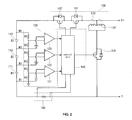
- FIG. 2 is a circuit view illustrating a protective circuit of a battery pack according to one embodiment of the present invention.
- a protective circuit 100 of a battery pack includes at least one battery cell 111, 112 or 113, a cell voltage detecting unit 120 for detecting the voltage of the battery cell 111, 112 or 113, a switch unit 130 coupled to a high current line in series, and a control unit 140 adapted to operate the switch unit 130 based on a signal of the cell voltage detecting unit 120.
- the switch unit 130 may be adapted to shut off the high current upon overcharge of the battery cell 111, 112 or 113 or upon disconnection of sensing wires w1, w2, w3 or w4 coupled with the battery cell 111, 112 or 113.
- the battery cells 111, 112 and 113 are coupled to external terminals P+ and P-, i.e., positive and negative electrode terminals, respectively, and a current detecting unit 150 for detecting the charge current is coupled to the high current line in series.
- the first, second and third battery cells 111, 112 and 113 are coupled to each other in series.
- the first sensing wire w1 is coupled to a negative electrode of the first battery cell 111
- the second sensing wire w2 is coupled between a positive electrode of the first battery cell 111 and a negative electrode of the second battery cell 112
- the third sensing wire w3 is coupled between a positive electrode of the second battery cell 112 and a negative electrode of the third battery cell 113
- the fourth sensing wire w4 is coupled to a positive electrode of the third battery cell 113, respectively.
- the voltage of the first battery cell 111 is detected by means of first and second wires w1 and w2
- the voltage of the second battery cell 112 is detected by means of second and third wires w2 and w3
- the voltage of the third battery cell 113 is detected by means of third and fourth wires w3 and w4, respectively.
- the cell voltage detecting unit 120 includes a number of voltage-dividing resistors R1 to R6 and a number of comparators 121, 122 and 123.
- the voltage-dividing resistors R1 and R2 are coupled to the first battery cell 111 in a row, in which the voltage-dividing resistor R1 is grounded.
- a reference voltage is supplied through a ground terminal of the voltage-dividing resistor R1.
- a reference voltage source is coupled to a non-inverting terminal of the comparator 121.
- an inverting terminal of the comparator 121 is coupled between the voltage-dividing resistors R1 and R2.
- the comparator 121 sends an inverting signal to the control unit 140, so that the control unit 140 can recognize the overcharge state of the first battery cell 111.
- the voltage-dividing resistors R3 and R4 and the comparator 122 are coupled to the second battery cell 112, and the voltage-dividing resistors R5 and R6 and the comparator 123 are coupled to the third battery cell 113 in order to perform the above-mentioned operation.
- the voltage-dividing resistors R1 and R2, the voltage-dividing resistors R3 and R4, and the voltage-dividing resistors R5 and R6 may each have voltage values different from each other. The reason for this will be described below later.
- the cell voltage detecting unit 120 can be fabricated in the form of an integrated circuit (IC) together either with the control unit 140 or separately from the control unit 140. Since the cell voltage detecting unit 120 is an analog circuit and the control unit 140 is a logic circuit, an analog signal processing unit and a logic signal processing unit can be designed to be integrally installed in one semiconductor chip or to be separately installed in two semiconductor chips.
- IC integrated circuit
- the switch unit 130 is coupled to the high current line between the positive electrode of the third battery cell 113 and the external positive electrode terminal P+.
- the switch unit 130 may include a charge FET device 131 and a discharge FET device 132.
- the charge FET device 131 and the discharge FET device 132 may be provided with parasitic diodes in which a gate of each of the FET devices receives a control signal from the control unit 140.
- the charge FET device 131 becomes an off state when the battery cell is overcharged and the discharge FET device 132 becomes an off state when the battery cell is over-discharged.
- the switch unit 130 may further include a self control protector.
- the self control protector may include a fuse 133 coupled to the high current line in series, a coil 134 for melting the fuse 133, and an FET device 135 for applying current to the coil 134.
- the coil 134 may be a resistive heating coil.
- a gate of the FET device 135 may also receive an output signal of the control unit 140.
- the high current is applied to the coil 134 when the control unit 140 outputs a predetermined electric signal to the FET device 135 so that the coil 134 generates heat and the fuse 133 is melted as a result of the heat generated from the coil 134.
- the control unit 140 may include a typical IC, a logic circuit, or a microcomputer. Upon receiving information related to the overcharge of the battery cells 111, 112 and 113 or disconnection of the sensing wires w1 to w4 from the cell voltage detecting unit 120, the control unit 140 operates the switch unit 130 so as to prevent the battery cells 111, 112 and 113 from being overcharged.
- control unit 140 can receive a signal from the current detecting unit 150, which is coupled to the high current line in series. In this case, the control unit 140 operates the switch unit 130 in such a manner that the overcharge current is not applied to the battery cells 111, 112 and 113. For instance, since the current detecting unit 150 is a resistance device, and the control unit 140 already knows the resistance value of the current detecting unit 150, the control unit 140 can calculate the current value applied to the current detecting unit 150 by sensing the voltage applied to both ends of the current detecting unit 150.
- VB1 means the voltage of the first battery cell 111.
- the reference voltage is being applied to the non-inverting terminal of the comparator 121.
- the reference voltage has been set to a level lower than the overcharge voltage of the first battery cell 111.
- the comparator 121 sends a state-inverting signal to the control unit 140.
- the control unit 140 Upon receiving the state-inverting signal from the comparator 121, the control unit 140 operates the switch unit 130. For instance, the control unit 140 sends a predetermined control signal to the gate of the charge FET device 131, thereby tuming off the FET device 131. Since the charge FET device 131 is provided with the parasitic diode aligned in the direction reverse to the charge current, the high current being applied to the battery cells 111, 112 and 113 can be instantly shut off. In the meantime, the charge current may be continuously applied to the battery cells 111, 112 and 113 even if the charge FET device 131 does not operate. This means that the charge FET device 131 malfunctions.
- the control unit 140 sends a predetermined control signal to the gate of another FET device 135, thereby operating the self control protector.
- a predetermined current is applied to the coil 134, so that the fuse 133 is melted by means of heat generated from the coil 134.
- the self control protector may operate when the charge FET device malfunctions in order to shut off the high current being applied to the battery cells 111, 112 and 113.
- the charge FET device 131 reversibly operates, the self control protector may irreversibly operate.
- the voltage of the first battery cell 111 applied to the voltage-dividing resistor R1 before the disconnection of the second sensing wire w2 coupled to the positive electrode of the first battery cell 111 can be calculated as follows.
- the voltage of the first battery cell 111 applied to the voltage-dividing resistor R1 before the disconnection of the second sensing wire w2 is approximately 2V. Since the voltage 2V is lower than the reference voltage, the comparator 121 may not send the inverting signal to the control unit 140.
- the voltages of the first and second battery cells 111 and 112 are applied to the voltage-dividing resistor R1.
- the voltage (2.28V) applied to the voltage-dividing resistor R1 is higher than the voltage (2V) applied to the voltage-dividing resistor R1 before the second sensing wire w2 is disconnected.
- the voltage (2.28V) applied to the voltage-dividing resistor R1 when the second sensing wire w2 is disconnected is higher than the reference voltage, so the comparator 121 sends the inverting signal to the control unit 140 in the same manner as when the first battery cell 111 is overcharged.
- control unit 140 operates the switch unit 130. That is, the control unit 140 operates the charge FET device 131 or the self control protector, thereby stopping the charge operation and completing the operation of the protective circuit of the battery pack according to the present invention.
- the voltage of the second battery cell 112 applied to the voltage-dividing resistor R3 before the disconnection of the third sensing wire w3 coupled to the positive electrode of the second battery cell 112 can be calculated as follows.
- V R3 [R3/(R3+R4)]*VB2.
- the voltage of the second battery cell 112 applied to the voltage-dividing resistor R3 before the disconnection of the third sensing wire w3 is approximately 2V. Since the voltage 2V is lower than the reference voltage, the comparator 122 may not send the inverting signal to the control unit 140.
- the voltage (2.4V) applied to the voltage-dividing resistor R3 is higher than the voltage (2V) applied to the voltage-dividing resistor R3 before the third sensing wire w3 is disconnected.
- the voltage (2.4V) applied to the voltage-dividing resistor R3 when the third sensing wire w3 is disconnected is set to be higher than the reference voltage, so the comparator 122 sends the inverting signal to the control unit 140 as if the second battery cell 112 is overcharged.
- control unit 140 operates the switch unit 130. That is, the control unit 140 operates the charge FET device 131 or the self control protector, thereby stopping the charge operation and completing the operation of the protective circuit of the battery pack according to the present invention.
- the protective circuit of the battery pack according to the present invention can precisely detect the disconnection of the sensing wires, which sense the voltage of each battery cell, and instantly shut off the high current being applied to the battery cells when the sensing wires are disconnected, thereby preventing the battery cells from being overcharged.
Landscapes
- Chemical & Material Sciences (AREA)
- Chemical Kinetics & Catalysis (AREA)
- Electrochemistry (AREA)
- General Chemical & Material Sciences (AREA)
- Engineering & Computer Science (AREA)
- Manufacturing & Machinery (AREA)
- Power Engineering (AREA)
- Protection Of Static Devices (AREA)
- Emergency Protection Circuit Devices (AREA)
- Charge And Discharge Circuits For Batteries Or The Like (AREA)
- Secondary Cells (AREA)
Claims (21)
- Eine Schutzschaltung eines Batteriepacks (100), wobei die Schutzschaltung Folgendes umfasst:mindestens eine Batteriezelle (111, 112, 113);eine Zellenspannungsdetektionseinheit (120), die durch einen Messdraht (W1, W2, W3, W4) mit negativen und positiven Elektroden der Batteriezelle verbunden ist, um eine Spannung der Batteriezelle (111, 112, 113) zu detektieren;eine Schalteinheit (130), die zwischen einem Anschluss der Batteriezelle und einem ersten externen Anschluss (P+) mit einer Hochstromleitung in Reihe geschaltet ist; dadurch gekennzeichnet, dassdie Schutzschaltung (100) ferner eine Steuereinheit (140) umfasst, die dazu ausgelegt ist, ein Signal von einer Zellenspannungsdetektionseinheit (120) zu empfangen und basierend auf dem Signal der Zellenspannungsdetektionseinheit ein vorbestimmtes Steuersignal zu erzeugen, wobei das Signal der Zellenspannungsdetektionseinheit auf der detektierten Spannung basiert, um die Schalteinheit (130) zu betätigen, wenn der Messdraht (W1, W2, W3, W4) getrennt wird.
- Die Schutzschaltung (100) nach Anspruch 1, wobei die Zellenspannungsdetektionseinheit (120) Folgendes umfasst:einen mit der Batteriezelle (B1, B2, B3) verbundenen Spannungsteilerwiderstand (R1, R2 ... R6);eine mit dem Spannungsteilerwiderstand (R1, R3, R5) verbundene Bezugsspannungsquelle; undeinen Komparator (121, 122, 123) mit:einem mit dem Spannungsteilerwiderstand verbundenen ersten Eingangsanschluss;einem mit der Bezugsspannungsquelle verbundenen zweiten Eingangsanschluss; undeinem mit der Steuereinheit (140) verbundenen Ausgangsanschluss.
- Die Schutzschaltung (100) nach Anspruch 1, wobei die Zellenspannungsdetektionseinheit (120) Folgendes umfasst:mindestens einen durch den Messdraht (W1, W2, W3, W4) zwischen negativen und positiven Elektroden der Batteriezelle (B1, B2, B3) geschalteten Spannungsteilerwiderstand (R1, R2 ... R6);eine mit der negativen Elektrode der Batteriezelle verbundene Bezugsspannungsquelle; undeinen Komparator (121, 122, 123) mit:einem mit der Bezugsspannungsquelle verbundenen nicht invertierenden Anschluss; undeinem mit dem Spannungsteilerwiderstand verbundenen invertierenden Anschluss zum Senden eines invertierenden Signals an die Steuereinheit, wenn eine an den nicht invertierenden Anschluss angelegte Spannung höher ist als eine an den invertierenden Anschluss angelegte Spannung.
- Die Schutzschaltung (100) nach Anspruch 3, wobei sämtliche einer Vielzahl von Widerstandswerten (R1, R2 ... R6) der mit den Batteriezellen verbundenen Spannungsteilerwiderstände voneinander verschieden sind.
- Die Schutzschaltung (100) nach Anspruch 3, wobei der Komparator (121, 122, 123) bei Trennung des mit der Batteriezelle (B1, B2, B3) verbundenen Messdrahtes (W1, W2, W3, W4) das invertierende Signal an die Steuereinheit (140) sendet.
- Die Schutzschaltung (100) nach Anspruch 1, wobei die Steuereinheit das Steuersignal an die Schalteinheit (130) sendet, um die Schalteinheit auszuschalten, wenn ein invertierendes Signal von der Zellenspannungsdetektionseinheit (120) dazu übertragen wird.
- Die Schutzschaltung (100) nach Anspruch 1, ferner umfassend eine Stromdetektionseinheit (150), die zwischen der Batteriezelle (B1, B2, B3) und einem zweiten externen Anschluss (P-) mit der Hochstromleitung in Reihe geschaltet ist, um einen an die Batteriezelle (B1, B2, B3) angelegten Strom zu detektieren.
- Die Schutzschaltung (100) nach Anspruch 1, wobei die Schalteinheit (130) ein Ladungs-FET-Bauteil (131) und ein Entladungs-FET-Bauteil (132) beinhaltet, die miteinander in Reihe geschaltet sind, und das Steuersignal der Steuereinheit (140) in Gates des Ladungs-FET-Bauteils (131) und des Entladungs-FET-Bauteils (132) eingegeben wird.
- Die Schutzschaltung (100) nach Anspruch 8, wobei das Ladungs-FET-Bauteil (131) der Schalteinheit ausgeschaltet wird, wenn aufgrund einer Trennung des Messdrahtes (W1, W2, W3, W4) das Steuersignal der Steuereinheit (140) an das Ladungs-FET-Bauteil (131) angelegt wird.
- Die Schutzschaltung (100) nach Anspruch 1, wobei die Schalteinheit (130) Folgendes umfasst:eine Selbststeuerungsschutzeinheit (133, 134); undein FET-Bauteil (135) zum Betreiben der Selbststeuerungsschutzeinheit (133, 134).
- Die Schutzschaltung (100) nach Anspruch 10, wobei die Selbststeuerungsschutzeinheit (133, 134) Folgendes umfasst:mindestens eine Sicherung (133), die zwischen der Batteriezelle (B1, B2, B3) und dem externen Anschluss (P+) mit der Hochstromleitung in Reihe geschaltet ist, undeine zwischen Sicherungen (133) ausgerichtete Spule (134) zum Zuführen von Wärme an die Sicherung (133), wobei die Spule durch das FET-Bauteil (135) mit der Batteriezelle verbunden ist und ein Gate des FET-Bauteils (135) das Steuersignal der Steuereinheit (140) empfängt.
- Die Schutzschaltung (100) nach Anspruch 11, wobei die Steuereinheit (140) bei der Trennung des Messdrahtes (W1, W2, W3, W4) das Steuersignal an das Gate des FET-Bauteils (135) sendet, so dass die Selbststeuerungsschutzeinheit (133, 134) einen Strom an die Spule (134) anlegt und dadurch die Sicherung (133) aufgrund von von der Spule (134) erzeugter Hitze schmilzt.
- Die Schutzschaltung (100) nach Anspruch 8, wobei die Schalteinheit (130) eine Selbststeuerungsschutzeinheit (133, 134) sowie ein FET-Bauteil (135) zum Betreiben der Selbststeuerungsschutzeinheit umfasst.
- Die Schutzschaltung (100) nach Anspruch 1, wobei die Zellenspannungsdetektionseinheit (120) zusammen mit der Steuereinheit (140) eine integrierte Schaltung bildet.
- Die Schutzschaltung (100) nach Anspruch 1, wobei die Zellenspannungsdetektionseinheit (120) getrennt von der Steuereinheit (140) in Form einer integrierten Schaltung hergestellt ist.
- Die Schutzschaltung (100) nach Anspruch 1, wobei die Zellenspannungsdetektionseinheit (120) eine Spannung der Batteriezelle (B1, B2, B3) detektiert und die Steuereinheit (140) die Schalteinheit (130) betätigt, wenn die Batteriezelle überladen ist.
- Die Schutzschaltung (100) nach Anspruch 16, wobei die Schalteinheit (130) ein Ladungs-FET-Bauteil (131) und ein Entladungs-FET-Bauteil (132) beinhaltet, die miteinander in Reihe geschaltet sind, und das Steuersignal der Steuereinheit (140) in Gates des Ladungs-FET-Bauteils (131) und des Entladungs-FET-Bauteils (132) eingegeben wird.
- Die Schutzschaltung (100) nach Anspruch 17, wobei das Ladungs-FET-Bauteil (131) der Schalteinheit ausgeschaltet wird, wenn aufgrund einer Überladung der Batteriezelle (B1, B2, B3) das Steuersignal der Steuereinheit (140) an das Ladungs-FET-Bauteil (131) angelegt ist.
- Die Schutzschaltung (100) nach Anspruch 16, wobei die Steuereinheit (140) bei Überladung der Batteriezelle (B1, B2, B3) das Steuersignal an das Gate des FET-Bauteils (135) sendet, so dass die Selbststeuerungsschutzeinheit (133, 134) einen Strom an die Spule (134) anlegt und dadurch die Sicherung (133) aufgrund von von der Spule (134) erzeugter Hitze schmilzt.
- Ein Verfahren zur Bestimmung, ob ein Messdraht (W1, W2, W3, W4) in einer Schutzschaltung (100) eines Batteriepacks getrennt ist, dadurch gekennzeichnet, dass das Verfahren Folgendes umfasst:Detektieren einer Spannung einer Batteriezelle (B1, B2, B3);Empfangen eines Signals, das anzeigt, ob ein vorbestimmter Messdraht (W1, W2, W3, W4) getrennt ist, wobei das Signal auf der detektierten Spannung basiert; undErzeugen eines vorbestimmten Steuersignals, um das Laden der Batteriezelle (B1, B2, B3) einzustellen, als Antwort auf das empfangene Signal, das anzeigt, dass der vorbestimmte Messdraht (W1, W2, W3, W4) getrennt ist.
- Das Verfahren zur Bestimmung, ob ein Messdraht (W1, W2, W3, W4) in einer Schutzschaltung (100) eines Batteriepacks getrennt ist, nach Anspruch 20, wobei das Verfahren ferner Folgendes umfasst:Empfangen eines Signals, das anzeigt, ob die Batteriezelle (B1, B2, B3) überladen ist; undErzeugen eines vorbestimmten Steuersignals, um das Laden der Batteriezelle einzustellen, als Antwort auf das empfangene Signal, das anzeigt, dass die Batteriezelle (B1, B2, B3) überladen ist, wobei das Signal auf der detektierten Spannung basiert.
Applications Claiming Priority (1)
| Application Number | Priority Date | Filing Date | Title |
|---|---|---|---|
| KR1020040098834A KR100624944B1 (ko) | 2004-11-29 | 2004-11-29 | 배터리 팩의 보호회로 |
Publications (2)
| Publication Number | Publication Date |
|---|---|
| EP1662632A1 EP1662632A1 (de) | 2006-05-31 |
| EP1662632B1 true EP1662632B1 (de) | 2009-09-16 |
Family
ID=35559369
Family Applications (1)
| Application Number | Title | Priority Date | Filing Date |
|---|---|---|---|
| EP05111410A Expired - Lifetime EP1662632B1 (de) | 2004-11-29 | 2005-11-29 | Schutzschaltung eines Batteriepacks |
Country Status (6)
| Country | Link |
|---|---|
| US (1) | US7638977B2 (de) |
| EP (1) | EP1662632B1 (de) |
| JP (1) | JP4171742B2 (de) |
| KR (1) | KR100624944B1 (de) |
| CN (1) | CN1790857B (de) |
| DE (1) | DE602005016643D1 (de) |
Families Citing this family (71)
| Publication number | Priority date | Publication date | Assignee | Title |
|---|---|---|---|---|
| KR100669434B1 (ko) | 2005-04-07 | 2007-01-15 | 삼성에스디아이 주식회사 | 이차 전지 모듈 제어방법 |
| KR100740097B1 (ko) | 2005-10-20 | 2007-07-16 | 삼성에스디아이 주식회사 | 배터리의 soc 추정 방법 및 이를 이용한 배터리 관리시스템 |
| KR100739054B1 (ko) | 2005-10-20 | 2007-07-12 | 삼성에스디아이 주식회사 | 배터리 관리 시스템 및 배터리의 셀 전압 측정방법 |
| EP2919295B1 (de) | 2005-10-31 | 2018-08-29 | Black & Decker, Inc. | Verfahren zum anordnen die komponenten eines batteriepacks |
| WO2007119682A1 (ja) * | 2006-04-13 | 2007-10-25 | Panasonic Corporation | 電池パックおよびその断線検知方法 |
| KR100796668B1 (ko) | 2006-09-26 | 2008-01-22 | 삼성에스디아이 주식회사 | 배터리 관리 시스템 및 그의 구동 방법 |
| KR100859688B1 (ko) | 2006-10-12 | 2008-09-23 | 삼성에스디아이 주식회사 | 배터리 관리 시스템 및 그의 구동 방법 |
| KR100814884B1 (ko) | 2006-10-16 | 2008-03-20 | 삼성에스디아이 주식회사 | 배터리 관리 시스템 및 그 구동방법 |
| KR100785321B1 (ko) * | 2006-10-25 | 2007-12-17 | 넥스콘 테크놀러지 주식회사 | 배터리팩의 2차 보호회로 ic 출력 오동작 방지회로 |
| KR100839381B1 (ko) | 2006-11-01 | 2008-06-20 | 삼성에스디아이 주식회사 | 배터리 관리 시스템 및 그 구동방법 |
| KR100882913B1 (ko) * | 2007-03-19 | 2009-02-10 | 삼성에스디아이 주식회사 | 배터리 팩 |
| JP4598815B2 (ja) * | 2007-11-27 | 2010-12-15 | 株式会社タムラ製作所 | 二次電池用充電回路 |
| KR101429771B1 (ko) * | 2007-12-07 | 2014-08-19 | 삼성에스디아이 주식회사 | 배터리 팩 |
| JP5134396B2 (ja) * | 2008-02-27 | 2013-01-30 | セイコーインスツル株式会社 | バッテリ保護回路及びバッテリ装置 |
| US7609049B1 (en) * | 2008-05-28 | 2009-10-27 | Vimicro Corporation | Accurate scan-mode voltage detection circuit |
| US7839019B2 (en) * | 2008-05-30 | 2010-11-23 | Chun-Chieh Chang | Multipurpose portable storage and supply system |
| JP2010091520A (ja) * | 2008-10-10 | 2010-04-22 | Toshiba Corp | 電池モジュール異常検出回路及びその検出方法 |
| JP2010257750A (ja) * | 2009-04-24 | 2010-11-11 | Sanyo Electric Co Ltd | バッテリモジュール、バッテリシステムおよび電動車両 |
| WO2011013384A1 (ja) * | 2009-07-31 | 2011-02-03 | パナソニック株式会社 | 保護回路、電池パック、及び充電システム |
| KR101093888B1 (ko) | 2009-12-28 | 2011-12-13 | 삼성에스디아이 주식회사 | 배터리 팩 및 이의 단선 검출 방법 |
| KR101113415B1 (ko) * | 2009-12-29 | 2012-03-02 | 삼성에스디아이 주식회사 | 배터리 팩의 보호 회로 |
| JP5415318B2 (ja) * | 2010-02-19 | 2014-02-12 | デクセリアルズ株式会社 | 保護回路、バッテリ制御装置、及び、バッテリパック |
| KR101058682B1 (ko) * | 2010-06-18 | 2011-08-22 | 주식회사 엘지화학 | 배터리 팩의 충방전 전류를 제어하는 배터리 팩 보호 장치와 이를 포함하는 배터리 팩 및 멀티 배터리 팩 시스템 |
| JP2012021867A (ja) * | 2010-07-14 | 2012-02-02 | Ricoh Co Ltd | 二次電池を複数個直列に接続した組電池の保護用半導体装置、該保護用半導体装置を内蔵した電池パックおよび電子機器 |
| JP4898982B1 (ja) * | 2010-08-31 | 2012-03-21 | パナソニック株式会社 | 電池電源装置、及び電池電源システム |
| KR101579195B1 (ko) | 2010-09-30 | 2015-12-21 | 주식회사 엘지화학 | 배터리 시스템의 가변적 단선 장치 및 가변적 단선 제어 방법 |
| US8797043B2 (en) * | 2010-10-04 | 2014-08-05 | Intersil Americas Inc. | System and method for detection of open connections between an integrated circuit and a multi-cell battery pack |
| WO2012046613A1 (ja) * | 2010-10-08 | 2012-04-12 | 三洋電機株式会社 | 地絡検出回路及び地絡検出装置 |
| JP2012208120A (ja) | 2011-03-17 | 2012-10-25 | Ricoh Co Ltd | 二次電池の保護用半導体装置 |
| JP5683372B2 (ja) * | 2011-04-27 | 2015-03-11 | デクセリアルズ株式会社 | 充放電制御装置、バッテリパック、電気機器、及び、充放電制御方法 |
| KR101147937B1 (ko) | 2011-12-19 | 2012-06-01 | 국방과학연구소 | 자가복구형 배터리 및 이의 제어방법, 자가복구형 배터리 시스템 |
| KR101440888B1 (ko) * | 2011-12-27 | 2014-09-17 | 삼성에스디아이 주식회사 | 배터리 보호 회로 |
| KR101434093B1 (ko) * | 2012-03-19 | 2014-08-25 | 가부시키가이샤 리코 | 2차 전지의 보호용 반도체 장치 |
| WO2014045745A1 (ja) * | 2012-09-18 | 2014-03-27 | Necエナジーデバイス株式会社 | 蓄電システムおよび電池保護方法 |
| TWM446423U (zh) * | 2012-09-21 | 2013-02-01 | 易速達休閒育樂股份有限公司 | 電池組串聯及並聯矩陣聯接應用模組 |
| US9837837B2 (en) * | 2012-11-19 | 2017-12-05 | Byd Company Limited | Protective device and protective system for battery assembly which detects discontinuities through voltage monitoring |
| BR112015012706A2 (pt) * | 2012-12-03 | 2017-07-11 | Toyota Motor Co Ltd | sistema de armazenamento de eletricidade |
| US9966584B2 (en) | 2013-03-11 | 2018-05-08 | Atieva, Inc. | Bus bar for battery packs |
| US9041454B2 (en) | 2013-03-15 | 2015-05-26 | Atieva, Inc. | Bias circuit for a switched capacitor level shifter |
| US10901019B2 (en) | 2013-03-15 | 2021-01-26 | Atieva, Inc. | Method of connecting cell voltage sensors |
| US10084214B2 (en) * | 2013-03-15 | 2018-09-25 | Atieva, Inc. | Automatic switchover from cell voltage to interconnect voltage monitoring |
| US10063071B2 (en) | 2013-03-15 | 2018-08-28 | Atieva, Inc. | Balance resistor and low pass filter |
| CN104062515A (zh) * | 2013-03-18 | 2014-09-24 | 深圳市铂飞特启动电池技术有限公司 | 一种汽车启动用锂离子电池保护板检测仪 |
| KR101644217B1 (ko) | 2013-07-02 | 2016-07-29 | 주식회사 엘지화학 | 배터리 팩 보호 장치 및 방법 |
| KR20150012425A (ko) | 2013-07-25 | 2015-02-04 | 에스케이이노베이션 주식회사 | 배터리 과충전 방지 장치 |
| US20150044511A1 (en) * | 2013-08-08 | 2015-02-12 | Samsung Sdi Co., Ltd. | Battery pack |
| KR101658863B1 (ko) * | 2013-10-07 | 2016-09-22 | 주식회사 엘지화학 | 오작동 방지 알고리즘을 포함하는 배터리 관리 장치 및 방법 |
| JP6418874B2 (ja) * | 2014-01-15 | 2018-11-07 | 株式会社マキタ | バッテリパック |
| KR102234290B1 (ko) | 2014-04-04 | 2021-03-31 | 삼성에스디아이 주식회사 | 에너지 저장 시스템 및 그의 구동방법 |
| DE102014005745B4 (de) * | 2014-04-17 | 2023-11-09 | Infineon Technologies Ag | Batteriezelle |
| KR102227844B1 (ko) * | 2014-09-02 | 2021-03-15 | 현대모비스 주식회사 | 배터리 센서 및 배터리 모니터링 시스템 |
| US9871390B2 (en) * | 2014-09-02 | 2018-01-16 | Silergy Corp. | Battery protection integrated circuit applied to battery charging/discharging system and method for determining resistances of voltage divider of battery protection integrated circuit |
| US20170338674A1 (en) * | 2016-05-19 | 2017-11-23 | Brocere Electronics company limited | Method for controlling charge states of battery cells connected in series and associated charge system |
| CN106129509B (zh) * | 2016-06-28 | 2019-07-30 | 北方工业大学 | 一种充放电控制器集成蓄电池 |
| CN106159356B (zh) * | 2016-06-30 | 2019-07-26 | 联想(北京)有限公司 | 一种电池及电子设备 |
| KR102221618B1 (ko) * | 2017-01-04 | 2021-03-02 | 한국전자통신연구원 | 배터리 모듈 및 이를 포함하는 전자 디바이스 |
| CN108732448A (zh) * | 2017-04-24 | 2018-11-02 | 凹凸电子(武汉)有限公司 | 电池管理系统中的断线检测方法及断线解除检测方法 |
| US11264653B2 (en) | 2017-10-16 | 2022-03-01 | Neapco Intellectual Property Holdings, Llc | Battery cell monitoring system |
| US11223074B2 (en) | 2017-10-16 | 2022-01-11 | Neapco Intellectual Property Holdings, Llc | Battery cell monitoring system |
| KR102565347B1 (ko) * | 2017-12-18 | 2023-08-16 | 현대자동차주식회사 | 셀 전압센싱 회로 |
| KR102633187B1 (ko) * | 2018-11-22 | 2024-02-01 | 주식회사 엘지에너지솔루션 | 이차 전지의 과충전 방지 장치 및 방법 |
| WO2021025537A1 (ko) | 2019-08-08 | 2021-02-11 | 주식회사 엘지화학 | 배터리 팩 전원 차단 장치 |
| US11637434B2 (en) | 2020-05-29 | 2023-04-25 | Google Llc | Protection of parallel battery cells in a battery |
| CN112397503A (zh) * | 2020-11-05 | 2021-02-23 | 珠海迈巨微电子有限责任公司 | 监测装置、集成电路装置及电子设备 |
| JP7494137B2 (ja) * | 2021-03-24 | 2024-06-03 | 株式会社東芝 | 半導体装置 |
| KR20230039565A (ko) * | 2021-09-14 | 2023-03-21 | 에이블릭 가부시키가이샤 | 셀 밸런스 회로, 셀 밸런스 장치, 충방전 제어 회로, 충방전 제어 장치 및 배터리 장치 |
| KR102591536B1 (ko) | 2021-10-12 | 2023-10-20 | 엘지전자 주식회사 | 에너지 저장장치 |
| CN114376270B (zh) * | 2021-12-30 | 2024-04-26 | 西安稳先半导体科技有限责任公司 | 一种电池保护电路、电池组件及电子烟 |
| US12100864B2 (en) | 2022-02-17 | 2024-09-24 | Atieva, Inc. | Continuous wire bonds for battery module |
| US12399228B2 (en) * | 2022-03-07 | 2025-08-26 | The Governing Council Of The University Of Toronto | Method and system for improved state estimation accuracy in battery management systems with cell balancing |
| CN120433132A (zh) * | 2025-07-08 | 2025-08-05 | 深圳超特科技股份有限公司 | 电池保护系统及方法 |
Family Cites Families (28)
| Publication number | Priority date | Publication date | Assignee | Title |
|---|---|---|---|---|
| US4442706A (en) * | 1981-03-02 | 1984-04-17 | Kabushiki Kaisha Kobe Seiko Sho | Probe and a system for detecting wear of refractory wall |
| JP2564510B2 (ja) * | 1985-12-25 | 1996-12-18 | 本田技研工業株式会社 | 内燃エンジンの排気ガス濃度センサの異常検出方法 |
| US5001465A (en) * | 1988-01-11 | 1991-03-19 | Siegel Vernon H | Crane boom electrostatic . . . alarm |
| US5670861A (en) * | 1995-01-17 | 1997-09-23 | Norvik Tractions Inc. | Battery energy monitoring circuits |
| US5642030A (en) * | 1995-06-30 | 1997-06-24 | Seelye Equipment Specialists | Charge control circuit |
| US5811959A (en) * | 1996-12-27 | 1998-09-22 | Kejha; Joseph B. | Smart circuit board for multicell battery protection |
| GB9701936D0 (en) * | 1997-01-30 | 1997-03-19 | Delphi Automotive Systems Gmbh | Battery protection system |
| JP3043704B2 (ja) * | 1998-03-02 | 2000-05-22 | 米沢日本電気株式会社 | バッテリパックの過充放電防止制御方法および装置 |
| US6331763B1 (en) | 1998-04-15 | 2001-12-18 | Tyco Electronics Corporation | Devices and methods for protection of rechargeable elements |
| AU5320599A (en) * | 1998-07-27 | 2000-02-21 | Midtronics, Inc. | Apparatus and method for carrying out diagnostic tests on batteries and for rapidly charging batteries |
| JP3982078B2 (ja) * | 1998-08-26 | 2007-09-26 | ソニー株式会社 | 電池保護回路及び電子装置 |
| DE60045183D1 (de) * | 1999-05-17 | 2010-12-16 | Panasonic Corp | Schaltung und vorrichtung zum schutz einer sekundärbatterie |
| JP2000340267A (ja) | 1999-05-28 | 2000-12-08 | Sanyo Electric Co Ltd | パック電池 |
| JP2001035542A (ja) | 1999-07-26 | 2001-02-09 | Nec Saitama Ltd | 電池パックの検出方法及び移動端末 |
| JP3300309B2 (ja) | 1999-10-19 | 2002-07-08 | 本田技研工業株式会社 | 電池電圧測定装置 |
| JP3655171B2 (ja) * | 2000-06-22 | 2005-06-02 | 富士通株式会社 | 充放電制御回路及び二次電池装置 |
| US6636016B2 (en) * | 2000-10-16 | 2003-10-21 | Toshiba Battery Co., Ltd. | Battery pack and backup power supply device utilizing the battery pack |
| JP3546856B2 (ja) * | 2001-04-25 | 2004-07-28 | 松下電器産業株式会社 | 電池パック及び電池パックの故障診断方法 |
| JP3696124B2 (ja) | 2001-05-17 | 2005-09-14 | 三洋電機株式会社 | 組電池の電圧検出回路 |
| DE10137875C1 (de) * | 2001-08-02 | 2003-04-30 | Dialog Semiconductor Gmbh | Lade/Entlade-Schutzschaltung |
| JP4605952B2 (ja) * | 2001-08-29 | 2011-01-05 | 株式会社日立製作所 | 蓄電装置及びその制御方法 |
| EP1451921A4 (de) * | 2001-11-02 | 2006-01-11 | Aker Wade Power Technologies L | Schnelles ladegerät für batterien mit hoher kapazität |
| JP2004007950A (ja) * | 2002-04-15 | 2004-01-08 | Fuji Electric Holdings Co Ltd | スイッチング電源装置 |
| US7253585B2 (en) * | 2002-11-22 | 2007-08-07 | Milwaukee Electric Tool Corporation | Battery pack |
| US6850039B2 (en) * | 2003-05-02 | 2005-02-01 | O2Micro International Limited | Battery pack and a battery charging/discharging circuit incorporating the same |
| JP2005160169A (ja) * | 2003-11-21 | 2005-06-16 | Texas Instr Japan Ltd | バッテリ保護回路 |
| JP4075785B2 (ja) | 2003-12-01 | 2008-04-16 | 日産自動車株式会社 | 組電池の異常検出装置 |
| US7746242B2 (en) * | 2004-07-21 | 2010-06-29 | Honeywell International Inc. | Low battery indicator |
-
2004
- 2004-11-29 KR KR1020040098834A patent/KR100624944B1/ko not_active Expired - Lifetime
-
2005
- 2005-11-29 DE DE602005016643T patent/DE602005016643D1/de not_active Expired - Lifetime
- 2005-11-29 JP JP2005343978A patent/JP4171742B2/ja not_active Expired - Lifetime
- 2005-11-29 CN CN2005101265509A patent/CN1790857B/zh not_active Expired - Lifetime
- 2005-11-29 US US11/292,416 patent/US7638977B2/en not_active Expired - Lifetime
- 2005-11-29 EP EP05111410A patent/EP1662632B1/de not_active Expired - Lifetime
Also Published As
| Publication number | Publication date |
|---|---|
| US20060139008A1 (en) | 2006-06-29 |
| EP1662632A1 (de) | 2006-05-31 |
| KR100624944B1 (ko) | 2006-09-18 |
| JP4171742B2 (ja) | 2008-10-29 |
| CN1790857A (zh) | 2006-06-21 |
| JP2006158195A (ja) | 2006-06-15 |
| CN1790857B (zh) | 2010-10-06 |
| KR20060059680A (ko) | 2006-06-02 |
| US7638977B2 (en) | 2009-12-29 |
| DE602005016643D1 (de) | 2009-10-29 |
Similar Documents
| Publication | Publication Date | Title |
|---|---|---|
| EP1662632B1 (de) | Schutzschaltung eines Batteriepacks | |
| US6624614B2 (en) | Charge and discharge controller | |
| TWI411185B (zh) | 藉由偵測電池組中感測電阻破壞之電池組保護裝置及方法 | |
| US5703463A (en) | Methods and apparatus for protecting battery cells from overcharge | |
| USRE46673E1 (en) | Over voltage and over current protection integrated circuit | |
| KR100341133B1 (ko) | 충전/방전 제어회로 및 충전식 전원장치 | |
| KR101182890B1 (ko) | 배터리 팩 충전 제어 시스템 | |
| US20230282895A1 (en) | Secondary battery protection apparatus and battery pack | |
| JP4080408B2 (ja) | 電池用保護icおよびそれを利用した電池パック | |
| US6172485B1 (en) | Power supply monitoring integrated circuit device and battery pack | |
| CN103227484A (zh) | 带保护功能的充电控制装置和电池组 | |
| US6614205B2 (en) | Charge/discharge control circuit and a charging-type power-supply unit | |
| KR101201139B1 (ko) | 배터리 팩의 보호 회로 장치 | |
| EP3751693B1 (de) | Batterieschutzschaltung und batteriepack damit | |
| US20080185997A1 (en) | Charged control device and battery pack employing it | |
| JP2008206349A (ja) | 電子機器 | |
| KR100479881B1 (ko) | 전원 감시용 집적회로장치 | |
| KR20070105219A (ko) | 배터리 팩의 보호 회로 | |
| KR20180049456A (ko) | 하나의 전류 센싱 저항을 갖는 배터리 보호 회로 | |
| US7372234B2 (en) | Charge control device and battery pack employing it | |
| JP2025133424A (ja) | 電池監視モジュール及び電源システム | |
| KR20070109084A (ko) | 배터리 팩 | |
| JP2025160545A (ja) | 充電制御装置、及び、電池パック | |
| JPH10243564A (ja) | 端子未接続検出回路 |
Legal Events
| Date | Code | Title | Description |
|---|---|---|---|
| PUAI | Public reference made under article 153(3) epc to a published international application that has entered the european phase |
Free format text: ORIGINAL CODE: 0009012 |
|
| AK | Designated contracting states |
Kind code of ref document: A1 Designated state(s): AT BE BG CH CY CZ DE DK EE ES FI FR GB GR HU IE IS IT LI LT LU LV MC NL PL PT RO SE SI SK TR |
|
| AX | Request for extension of the european patent |
Extension state: AL BA HR MK YU |
|
| 17P | Request for examination filed |
Effective date: 20061130 |
|
| AKX | Designation fees paid |
Designated state(s): DE FR GB |
|
| GRAP | Despatch of communication of intention to grant a patent |
Free format text: ORIGINAL CODE: EPIDOSNIGR1 |
|
| GRAS | Grant fee paid |
Free format text: ORIGINAL CODE: EPIDOSNIGR3 |
|
| GRAA | (expected) grant |
Free format text: ORIGINAL CODE: 0009210 |
|
| AK | Designated contracting states |
Kind code of ref document: B1 Designated state(s): DE FR GB |
|
| REG | Reference to a national code |
Ref country code: GB Ref legal event code: FG4D |
|
| REF | Corresponds to: |
Ref document number: 602005016643 Country of ref document: DE Date of ref document: 20091029 Kind code of ref document: P |
|
| PLBE | No opposition filed within time limit |
Free format text: ORIGINAL CODE: 0009261 |
|
| STAA | Information on the status of an ep patent application or granted ep patent |
Free format text: STATUS: NO OPPOSITION FILED WITHIN TIME LIMIT |
|
| 26N | No opposition filed |
Effective date: 20100617 |
|
| REG | Reference to a national code |
Ref country code: FR Ref legal event code: PLFP Year of fee payment: 11 |
|
| REG | Reference to a national code |
Ref country code: FR Ref legal event code: PLFP Year of fee payment: 12 |
|
| REG | Reference to a national code |
Ref country code: FR Ref legal event code: PLFP Year of fee payment: 13 |
|
| REG | Reference to a national code |
Ref country code: FR Ref legal event code: PLFP Year of fee payment: 14 |
|
| P01 | Opt-out of the competence of the unified patent court (upc) registered |
Effective date: 20230528 |
|
| PGFP | Annual fee paid to national office [announced via postgrant information from national office to epo] |
Ref country code: DE Payment date: 20241029 Year of fee payment: 20 |
|
| PGFP | Annual fee paid to national office [announced via postgrant information from national office to epo] |
Ref country code: GB Payment date: 20241024 Year of fee payment: 20 |
|
| PGFP | Annual fee paid to national office [announced via postgrant information from national office to epo] |
Ref country code: FR Payment date: 20241111 Year of fee payment: 20 |
|
| REG | Reference to a national code |
Ref country code: DE Ref legal event code: R071 Ref document number: 602005016643 Country of ref document: DE |
|
| REG | Reference to a national code |
Ref country code: GB Ref legal event code: PE20 Expiry date: 20251128 |