EP1588880B2 - Rollo für ein Schiebedachsystem - Google Patents
Rollo für ein Schiebedachsystem Download PDFInfo
- Publication number
- EP1588880B2 EP1588880B2 EP04025214.0A EP04025214A EP1588880B2 EP 1588880 B2 EP1588880 B2 EP 1588880B2 EP 04025214 A EP04025214 A EP 04025214A EP 1588880 B2 EP1588880 B2 EP 1588880B2
- Authority
- EP
- European Patent Office
- Prior art keywords
- roller blind
- guide element
- guide
- sliding roof
- cross
- Prior art date
- Legal status (The legal status is an assumption and is not a legal conclusion. Google has not performed a legal analysis and makes no representation as to the accuracy of the status listed.)
- Expired - Lifetime
Links
- 239000000463 material Substances 0.000 claims description 5
- 229910000639 Spring steel Inorganic materials 0.000 claims 1
- 238000004804 winding Methods 0.000 description 11
- 238000004873 anchoring Methods 0.000 description 2
- 238000006073 displacement reaction Methods 0.000 description 2
- 230000007704 transition Effects 0.000 description 2
- 241000238631 Hexapoda Species 0.000 description 1
- 230000001419 dependent effect Effects 0.000 description 1
- 230000000694 effects Effects 0.000 description 1
- 239000004744 fabric Substances 0.000 description 1
- 239000002184 metal Substances 0.000 description 1
- 239000002985 plastic film Substances 0.000 description 1
- 229920006255 plastic film Polymers 0.000 description 1
Images


Classifications
-
- B—PERFORMING OPERATIONS; TRANSPORTING
- B60—VEHICLES IN GENERAL
- B60J—WINDOWS, WINDSCREENS, NON-FIXED ROOFS, DOORS, OR SIMILAR DEVICES FOR VEHICLES; REMOVABLE EXTERNAL PROTECTIVE COVERINGS SPECIALLY ADAPTED FOR VEHICLES
- B60J7/00—Non-fixed roofs; Roofs with movable panels, e.g. rotary sunroofs
- B60J7/0007—Non-fixed roofs; Roofs with movable panels, e.g. rotary sunroofs moveable head-liners, screens, curtains or blinds for ceilings
- B60J7/0015—Non-fixed roofs; Roofs with movable panels, e.g. rotary sunroofs moveable head-liners, screens, curtains or blinds for ceilings roller blind
-
- B—PERFORMING OPERATIONS; TRANSPORTING
- B60—VEHICLES IN GENERAL
- B60J—WINDOWS, WINDSCREENS, NON-FIXED ROOFS, DOORS, OR SIMILAR DEVICES FOR VEHICLES; REMOVABLE EXTERNAL PROTECTIVE COVERINGS SPECIALLY ADAPTED FOR VEHICLES
- B60J7/00—Non-fixed roofs; Roofs with movable panels, e.g. rotary sunroofs
Definitions
- the invention relates to a motor vehicle sliding roof system roller blind, which consists of a flexible material and has two guide elements which extend along the longitudinal edges of the roller blind and are intended to engage in a guide for the corresponding longitudinal edge.
- Such a blind may be mounted below an opening in a vehicle roof to more or less cover the opening as desired by the vehicle occupants. If the opening is to be released, the roller blind on a winding axis disadvantagewickeit of this can be deducted, so that it covers the opening. So that the blind, if it is below the opening in the vehicle roof, does not sag into the vehicle interior, the longitudinal edges of the blinds are received in a guide, so that it can be kept taut across the direction of displacement. Usually, the longitudinal edges of the blind are angled and inserted into guide grooves of a guide rail (see the EP 1 010 559 A1 ). In this way, the desired tension can be applied in the transverse direction.
- the disadvantage here is that due to the angled longitudinal edges a larger height is required. This reduces headroom in the vehicle interior.
- the transition region from the winding axis to the entry into the guide grooves must be covered by a veneer, which means that the veneer is wider.
- the GB 1 416 431 shows a blackout panel for an aircraft window.
- the US 4,825,921 shows an insect screen that can be attached to windows or doors.
- the object of the invention is to provide a roller blind, which can be accommodated with little effort and small footprint in a guide, so that it can be kept taut in the transverse direction.
- the invention is based on the fundamental consideration, the blind no longer angle laterally to penetrate it into a guide so that it can be kept taut, but along the longitudinal edges of the blinds applied as a flat strip guide elements apply substantially straight, ie without that they must be angled, can run into a guide associated with the corresponding longitudinal edge.
- the guide elements are received in the guide so that the desired bias in the transverse direction can be obtained.
- a guide element having a first cross-sectional shape in the initial state which serves to receive the guide element in the guide, and it can be brought into a second cross-sectional shape, which makes it possible to wind the blind
- a second cross-sectional shape which makes it possible to wind the blind
- the guide element can be taken on the one hand suitable in the associated guide, but on the other hand can be wound flat on a winding axis together with the roller blind.
- Particularly suitable for this is a curved cross-sectional shape of the guide element.
- the guide element When the guide element is curved, it has a comparatively large height, which can be used for secure anchoring inside the corresponding guide.
- the guide element is pressed flat, it has a comparatively small height, which corresponds substantially to the material thickness. In this state, the guide element can be wound up to save space together with the roller blind.
- the guide element is designed as a flat strip with a rectangular cross-section. This can, in particular if it is only partially connected to the roller blind, also be used for secure anchoring in the guide.
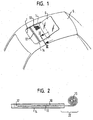
- FIG. 1 a vehicle roof 5 can be seen, which is provided with an opening 7
- the opening 7 is associated with a cover 9 of a sliding roof system.
- the lid 9 can between a closed position in which it closes the opening 7, and a in FIG. 1 shown, open position.
- the roller blind 10 can be moved forwards and backwards relative to the vehicle. When the shade 10 is fully pushed back, the opening 7 is fully released. Fresh air and sunlight then have free access to the vehicle interior. When the shade 10 is fully pushed forward, the opening 7 is covered by the shade. Fresh air and sunlight can thus reach the vehicle interior only to a limited extent.
- the shade 10 is made of a flexible material, such as fabric or a plastic film.
- a bow 12 is provided, on which a vehicle occupant can attack to move the blind forward or backward.
- two guides 14 extend, in which the two longitudinal edges of the roller blind, so viewed in the vehicle longitudinal direction of the right and the left edge of the blind 10, are added.
- a Wikkelachse 16 is added in the region of the rear end of the opening 7 in the region of the rear end of the opening 7 .
- the winding axis 16 is usually acted upon by a spring, so that the blind 10 is automatically recorded on the winding axis 16 when the bow 12 is moved backwards.
- each roller blind is provided with a guide element 18, which in the embodiment of FIG. 3 is designed as a thin metal strip of spring plate.
- the guide member 18 has in its initial state, so if no external forces act on it, in FIG. 3 visible, curved cross-sectional shape.
- the blind 10 is connected to the guide member 18 only on the outer half of the guide member 18 with this, so from the outer edge to about the apex of the guide element 18. This area is in FIG. 3 designated by the reference numeral 20.
- the roller blind 10 may be glued to the guide member 18 in particular.
- the guide 14 has in section a generally rectangular cross-section, in the interior of which the guide element 18 is fastened together with the edge section of the roller blind 10 attached to it.
- the guide On the side directed towards the center of the vehicle, the guide has a leg 22 which engages between the roller blind 10 and the section of the guide element 18 directed toward the vehicle center, ie into the area in which the roller blind 10 is not glued to the guide element 18.
- the guide member 18 can thereby be supported below the leg to keep the shade 10 stretched in the transverse direction.
- the guide element 18 is made of the in FIG. 3 shown first cross-sectional shape brought into a second cross-sectional shape. This is in FIG. 4 shown (see the transition area indicated by the arrow P).
- the guide member 18 is pressed flat so that it has a rectangular cross-section, the height of the material thickness of the guide member 18 corresponds. In this state, the shade 10 can be wound together with the guide elements 18 to save space.
- the guide member 18 may also be curved in the longitudinal direction, so that it rolls up automatically. In this way, can be dispensed with the usual Aufrollfeder on Wikkelachse 16. At the same time you get a constant pulling force. Another effect is an increase in the displacement force, so that it receives a self-locking. Thus, a manually operated roller blind stops in any intermediate position, without an additional roller brake is necessary.
- FIG. 5 an alternative embodiment is shown.
- the same reference numerals are used, and reference is made to the above explanations in this respect.
- FIG. 5 shown guide element 18 has a flat, rectangular cross section of the house.
- the blind 10 is connected to only one half of the guide member 18, so that the other half can be taken behind the leg 22.
Landscapes
- Engineering & Computer Science (AREA)
- Mechanical Engineering (AREA)
- Operating, Guiding And Securing Of Roll- Type Closing Members (AREA)
- Curtains And Furnishings For Windows Or Doors (AREA)
Description
- Die Erfindung betrifft ein Kraftfahrzeugschiebedachsystem-Rollo, das aus einem flexiblen Material besteht und zwei Führungselemente aufweist, die sich entlang den Längsrändern des Rollos erstrecken und dafür vorgesehen sind, in eine Führung für den entsprechenden Längsrand einzugreifen.
- Ein solches Rollo kann unterhalb einer Öffnung in einem Fahrzeugdach angebracht sein, um die Öffnung je nach Wunsch der Fahrzeuginsassen mehr oder weniger abzudecken. Wenn die Öffnung freigegeben sein soll, ist das Rollo auf einer Wickelachse aufgewickeit Von dieser kann es abgezogen werden, so dass es die Öffnung abdeckt. Damit das Rollo, wenn es sich unterhalb der Öffnung im Fahrzeugdach befindet, nicht in den Fahrzeuginnenraum hinein durchhängt, sind die Längsränder des Rollos in einer Führung aufgenommen, so dass es quer zur Verschieberichtung gespannt gehalten werden kann. Üblicherweise werden die Längsränder des Rollos abgewinkelt und in Führungsnuten einer Führungsschiene eingeführt (siehe die
EP 1 010 559 A1 ). Auf diese Weise kann die gewünschte Spannung in der Querrichtung aufgebracht werden. Nachteilig dabei ist, dass aufgrund der abgewinkelten Längsränder eine größere Bauhöhe erforderlich ist. Dies verringert die Kopffreiheit im Fahrzeuginnenraum. Außerdem muss der Übergangsbereich von der Wickelachse bis zum Eintritt in die Führungsnuten von einer Verblendung abgedeckt werden, was dazu führt, das die Verblendung breiter wird. - Aus der
DE 1 269 782 ist eine Vorrichtung zum Führen der seitlichen Ränder eines Vorhanges im Innern von Gleitschienen mit schmalem Schlitz bekannt. - Die
GB 1 416 431 - Die
US 4,825,921 zeigt ein Insektenschutzrollo, das an Fenstern oder Türen angebracht werden kann. - Die Aufgabe der Erfindung besteht darin, ein Rollo zu schaffen, welches mit geringem Aufwand und geringem Platzbedarf in einer Führung aufgenommen werden kann, so dass es in Querrichtung straff gehalten werden kann.
- Zur Lösung dieser Aufgabe sind erfindungsgemäß bei einem Kraftfahrzeugschiebedachsystem-Rollo der eingangs genannten Art die Merkmale des kennzeichnenden Teils des Anspruchs 1 vorgesehen.
- Die Erfindung beruht auf der grundsätzlichen Überlegung, das Rollo nicht mehr seitlich abzuwinkeln, um es in eine Führung einzudringen, damit es straff gehalten werden kann, sondern entlang den Längsrändern des Rollos die als flache Streifen ausgeführten Führungselemente aufzubringen, die im wesentlichen gerade, also ohne dass sie abgewinkelt werden müssen, in eine dem entsprechenden Längsrand zugeordnete Führung hineinlaufen können. Die Führungselemente sind in der Führung so aufgenommen, dass die gewünschte Vorspannung in der Querrichtung erhalten werden kann. Die Verwendung eines Führungselements, das im Ausgangszustand eine erste Querschnittsform aufweist, die zur Aufnahme des Führungselementes in der Führung dient, und es in eine zweite Querschnittsform gebracht werden kann, die es ermöglicht, das Rollo aufzuwickeln, ermöglicht es, eine Änderung der Form des Führungselementes dafür zu nutzen, dass das Führungselement einerseits geeignet in der zugeordneten Führung aufgenommen werden kann, jedoch andererseits flach auf eine Wickelachse zusammen mit dem Rollo aufgewickelt werden kann. Besonders geeignet hierfür ist eine gekrümmte Querschnittsform des Führungselementes. Wenn das Führungselement gekrümmt ist, hat es eine vergleichsweise große Höhe, die zur sicheren Verankerung im Inneren der entsprechenden Führung genutzt werden kann. Wenn das Führungselement dagegen flach gedrückt ist, hat es eine vergleichsweise geringe Höhe, die im Wesentlichen der Materialdicke entspricht. In diesem Zustand kann das Führungselement zusammen mit dem Rollo platzsparend aufgewickelt werden.
- Gemäß einer weiteren Ausführungsform der Erfindung kann vorgesehen sein, daß das Führungselement als flacher Streifen mit rechteckigem Querschnitt ausgeführt ist. Dieser kann, insbesondere wenn er nur abschnittsweise mit dem Rollo verbunden ist, ebenfalls zur sicheren Verankerung in der Führung verwendet werden.
- Vorteilhafte Ausführungsformen der Erfindung ergeben sich aus den Unteransprüchen.
- Die Erfindung wird nachfolgend anhand einer bevorzugten Ausführungsform beschrieben, die in den beigefügten Zeichnungen dargestellt ist. In diesen zeigen:
-
Figur 1 eine perspektivische Ansicht eines Fahrzeugdaches mit einem erfindungsgemäßen Rollo; -
Figur 2 eine schematische Seitenansicht eines erfindungsgemäßen Rollos; -
Figur 3 schematisch einen Schnitt entlang der Ebene III-III vonFigur 1 ; -
Figur 4 in vergrößertem Maßstab den Ausschnitt IV vonFigur 2 ; und -
Figur 5 in einer Ansicht entsprechend derjenigen vonFigur 3 eine alternative Ausführungsform der Erfindung. - In
Figur 1 ist ein Fahrzeugdach 5 zu sehen, welches mit einer Öffnung 7 versehen ist Der Öffnung 7 ist ein Deckel 9 eines Schiebedachsystems zugeordnet. Der Deckel 9 kann zwischen einer geschlossenen Stellung, in welcher er die Öffnung- 7 verschließt, und einer inFigur 1 gezeigten, geöffneten Stellung verstellt werden. Unterhalb des Deckels 9 und auch unterhalb der Öffnung 7 ist ein Rollo 10 angeordnet. Das Rollo 10 kann, bezogen auf das Fahrzeug, nach vorne und hinten verschoben werden. Wenn das Rollo 10 vollständig nach hinten geschoben ist, ist die Öffnung 7 vollständig freigegeben. Frischluft und Sonnenlicht haben dann freien Zugang zum Fahrzeuginnenraum. Wenn das Rollo 10 vollständig nach vorne geschoben ist, ist die Öffnung 7 vom Rollo abgedeckt. Frischluft und Sonnenlicht können somit nur in begrenztem Umfang in den Fahrzeuginnenraum gelangen. - Das Rollo 10 besteht aus einem flexiblen Material, beispielsweise Stoff oder einer Kunststofffolie. An seinem vorderen Rand ist ein Spriegel 12 vorgesehen, an dem ein Fahrzeuginsasse angreifen kann, um das Rollo nach vorne oder hinten zu verschieben. Seitlich entlang der Öffnung 7 erstrecken sich zwei Führungen 14, in denen die beiden Längsränder des Rollos, also in der Fahrzeuglängsrichtung betrachtet der rechte und der linke Rand des Rollos 10, aufgenommen sind. Im Bereich des hinteren Endes der Öffnung 7 befindet sich eine Wikkelachse 16, auf der das Rollo 10 aufgewickelt werden kann. Die Wickelachse 16 ist üblicherweise von einer Feder beaufschlagt, so daß das Rollo 10 automatisch auf der Wickelachse 16 aufgenommen wird, wenn der Spriegel 12 nach hinten verschoben wird.
- Entlang den Längsrändern des Rollos 10, also in dem den Führungen 14 zugeordneten Bereich, ist jedes Rollo mit einem Führungselement 18 versehen, das bei der Ausführungsform von
Figur 3 als dünner Metallstreifen aus Federblech ausgebildet ist. Das Führungselement 18 hat in seinem Ausgangszustand, also wenn keine äußeren Kräfte auf es einwirken, die inFigur 3 sichtbare, gekrümmte Querschnittsform. Das Rollo 10 ist mit dem Führungselement 18 nur auf der äußeren Hälfte des Führungselementes 18 mit diesem verbunden, also vom außenliegenden Rand bis etwa zum Scheitelpunkt des Führungselementes 18. Dieser Bereich ist inFigur 3 mit dem Bezugszeichen 20 bezeichnet. Das Rollo 10 kann mit dem Führungselement 18 insbesondere verklebt sein. - Die Führung 14 hat im Schnitt einen allgemein rechteckigen Querschnitt, in dessen Innenraum das Führungselement 18 zusammen mit dem an ihm angebrachten Randabschnitt des Rollos 10 befestigt ist. Auf der zur Fahrzeugmitte gerichteten Seite weist die Führung einen Schenkel 22 auf, der zwischen das Rollo 10 und den zur Fahrzeugmitte gerichteten Abschnitt des Führungselementes 18 eingreift, also in den Bereich, in welchem das Rollo 10 nicht mit dem Führungselement 18 verklebt ist. Das Führungselement 18 kann sich dadurch unterhalb des Schenkels abstützen, um das Rollo 10 in Querrichtung gespannt zu halten.
- Um das Rollo 10 auf der Wickelachse 16 aufzuwickeln, wird das Führungselement 18 aus der in
Figur 3 gezeigten ersten Querschnittsform in eine zweite Querschnittsform gebracht. Dies ist inFigur 4 gezeigt (siehe den mit dem Pfeil P bezeichneten Übergangsbereich). Nach Verlassen der Führung 14 und beim Aufwickeln auf die Wickelachse 16 wird das Führungselement 18 flach zusammengedrückt, so daß es einen rechteckigen Querschnitt hat, dessen Höhe der Materialdicke des Führungselementes 18 entspricht. In diesem Zustand kann das Rollo 10 zusammen mit den Führungselementen 18 platzsparend aufgewickelt werden. - Zusätzlich zur Krümmung in Querrichtung kann das Führungselement 18 auch in Längsrichtung gekrümmt sein, so daß es sich selbsttätig aufrollt. Auf diese Weise kann auf die sonst übliche Aufrollfeder an der Wikkelachse 16 verzichtet werden. Gleichzeitig erzielt man eine konstante Zugkraft. Ein weiterer Effekt ist eine Erhöhung der Verschiebekraft, so daß man darüber eine Selbsthemmung erhält. Somit bleibt ein von Hand betätigtes Rollo in jeder Zwischenposition stehen, ohne daß eine zusätzliche Rollobremse notwendig ist.
- In
Figur 5 ist eine alternative Ausführungsform gezeigt. Für die von der ersten Ausführungsform bekannten Bauteile werden dabei die selben Bezugszeichen verwendet, und es wird insoweit auf die obigen Erläuterungen verwiesen. - Der Unterschied zu der in den
Figuren 3 und 4 dargestellten Ausführungsform besteht darin, daß das inFigur 5 gezeigte Führungselement 18 von Haus aus einen flachen, rechteckigen Querschnitt hat. Zur Aufnahme in der Führung 14 ist, wie bei der Ausführungsform gemäß denFiguren 3 und 4 , das Rollo 10 nur mit einer Hälfte des Führungselementes 18 verbunden, so daß die andere Hälfte hinter dem Schenkel 22 aufgenommen werden kann. - Wenn das Rollo 10 auf der Wickelachse 16 aufgewickelt wird, wird der Randabschnitt des Rollos geringfügig gedreht, so daß sich das Führungselement 18 flach an das Rollo 10 anlegt. In diesem Zustand wird es dann zusammen mit dem Rollo 10 auf der Wickelachse 16 aufgewickelt.
-
- 5
- Fahrzeugdach
- 7
- Öffnung
- 9
- Deckel
- 10
- Rollo
- 12
- Spriegel
- 14
- Führung
- 16
- Wickelachse
- 18
- Führungselement
- 20
- Verbindungsbereich
- 22
- Schenkel
Claims (4)
- Kraftfahrzeugschiebedachsystem-Rollo (10), das aus einem flexiblen Material besteht und zwei Führungselemente (18) aufweist, die sich entlang den Längsrändern des Rollos (10) erstrecken und dafür vorgesehen sind, in eine Führung (14) für den entsprechenden Längsrand einzugreifen, dadurch gekennzeichnet, dass das Führungselement (18) ein flacher Streifen aus Federstahl ist, der an dem entsprechenden Längsrand befestigt ist, so dass er zusammen mit dem Rollo (10) aufgewickelt werden kann, dass das Führungselement (18) im Ausgangszustand eine erste Querschnittsform aufweist, die zur Aufnahme des Führungselementes (18) in der Führung (14) dient, und es in eine zweite Querschnittsform gebracht werden kann, die es ermöglicht, das Rollo (10) platzsparend aufzuwickeln, und dass das Führungselement (18), wenn es die erste Querschnittsform hat, im Schnitt betrachtet gekrümmt verläuft, wobei das Rollo (10), in Längsrichtung betrachtet, nur auf der außenliegenden Seite (20) des Führungselementes (18) befestigt ist, wobei das Rollo (10) auf der vom Krümmungsmittelpunkt abgewandten Seite des Führungselementes (18) befestigt ist und wobei das Rollo (10) mit dem Führungselement (18) nur auf der äußeren Hälfte des Führungselements (18) mit diesem verbunden ist.
- Kraftfahrzeugschiebedachsystem-Rollo nach Anspruch 1, dadurch gekennzeichnet, dass das Führungselement (18) einen rechteckigen Querschnitt hat.
- Kraftfahrzeugschiebedachsystem-Rollo nach einem der vorhergehenden Ansprüche, dadurch gekennzeichnet, dass zwei Führungsschienen (14) vorgesehen sind, in denen jeweils ein Längsrand mit dem zugehörigen Führungselement (18) verschiebbar aufgenommen ist.
- Kraftfahrzeugschiebedachsystem-Rollo nach Anspruch 3, dadurch gekennzeichnet, dass die Führungsschiene (14) im Schnitt betrachtet einen Schenkel (22) aufweist, der zwischen das Rollo (10) und das Führungselement (18) greift.
Applications Claiming Priority (2)
| Application Number | Priority Date | Filing Date | Title |
|---|---|---|---|
| DE102004017459 | 2004-04-08 | ||
| DE102004017459A DE102004017459A1 (de) | 2004-04-08 | 2004-04-08 | Rollo für ein Schiebedachsystem |
Publications (4)
| Publication Number | Publication Date |
|---|---|
| EP1588880A2 EP1588880A2 (de) | 2005-10-26 |
| EP1588880A3 EP1588880A3 (de) | 2007-10-17 |
| EP1588880B1 EP1588880B1 (de) | 2013-03-20 |
| EP1588880B2 true EP1588880B2 (de) | 2018-09-19 |
Family
ID=34895536
Family Applications (2)
| Application Number | Title | Priority Date | Filing Date |
|---|---|---|---|
| EP04025215A Revoked EP1584509B1 (de) | 2004-04-08 | 2004-10-22 | Rollo für ein Schiebedachsystem |
| EP04025214.0A Expired - Lifetime EP1588880B2 (de) | 2004-04-08 | 2004-10-22 | Rollo für ein Schiebedachsystem |
Family Applications Before (1)
| Application Number | Title | Priority Date | Filing Date |
|---|---|---|---|
| EP04025215A Revoked EP1584509B1 (de) | 2004-04-08 | 2004-10-22 | Rollo für ein Schiebedachsystem |
Country Status (5)
| Country | Link |
|---|---|
| US (2) | US7114766B2 (de) |
| EP (2) | EP1584509B1 (de) |
| KR (1) | KR20060045572A (de) |
| CN (2) | CN1680128B (de) |
| DE (1) | DE102004017459A1 (de) |
Families Citing this family (51)
| Publication number | Priority date | Publication date | Assignee | Title |
|---|---|---|---|---|
| DE102005024657C5 (de) | 2004-11-19 | 2016-04-21 | Webasto Ag | Rolloanordnung für ein Fahrzeug |
| DE102005048207B3 (de) * | 2005-10-07 | 2006-11-23 | Webasto Ag | Rolloanordnung für ein Kraftfahrzeug |
| DE102006017538B4 (de) | 2006-04-13 | 2010-08-12 | Webasto Ag | Rolloanordnung für ein Fahrzeug |
| DE102006023370A1 (de) * | 2006-05-16 | 2007-11-22 | Brose Fahrzeugteile Gmbh & Co. Kommanditgesellschaft, Coburg | Rollo für Fensterscheiben von Kraftfahrzeugen |
| DE502006006258D1 (de) | 2006-09-13 | 2010-04-08 | Arvinmeritor Gmbh | Rollosystem für ein Schiebedach |
| EP1908616B1 (de) * | 2006-10-06 | 2013-04-17 | Inalfa Roof Systems Group B.V. | Sonnenblende und Schiebedachkonstruktion mit solch einer Sonnenblende |
| DE102006057273A1 (de) * | 2006-11-23 | 2008-05-29 | Bos Gmbh & Co. Kg | Schutzvorrichtung für einen Laderaum eines Kraftfahrzeugs |
| DE102006062542A1 (de) | 2006-12-29 | 2008-07-03 | Webasto Ag | Abschattungsvorrichtung eines Fahrzeuges mit einem flexiblen Abdeckelement |
| DE502007003134D1 (de) * | 2007-01-31 | 2010-04-29 | Arvinmeritor Gmbh | Führungssystem für ein Rollo eines Schiebedachsystems |
| DE102007021049B4 (de) * | 2007-05-04 | 2009-12-03 | Webasto Ag | Rollovorrichtung, insbesondere für ein Schiebedachsystem |
| DE502007001356D1 (de) * | 2007-05-04 | 2009-10-01 | Webasto Ag | Rollovorrichtung, insbesondere für ein Schiebedachsystem |
| DE102007041298B4 (de) * | 2007-08-31 | 2010-06-10 | Webasto Ag | Rolloanordnung für ein Kraftfahrzeug |
| DE102007047758B4 (de) * | 2007-09-28 | 2009-07-23 | Bos Gmbh & Co. Kg | Schutzvorrichtung für einen Fahrzeuginnenraum |
| DE102008008941B4 (de) | 2008-02-13 | 2023-10-12 | PS : DESIGN+PRODUCTS GmbH | Sonnenschutzanlage mit einem wickelbaren Behang |
| WO2010022769A1 (en) * | 2008-08-27 | 2010-03-04 | Inalfa Roof Systems Group B.V. | Sunshade assembly and open roof construction provided therewith |
| US8316736B2 (en) * | 2008-10-06 | 2012-11-27 | Honda Motor Co., Ltd. | Steering column cover |
| WO2010063312A1 (en) | 2008-12-02 | 2010-06-10 | Inalfa Roof Systems Group B.V. | Sunshade assembly and open roof construction provided therewith |
| JP5458695B2 (ja) * | 2009-06-29 | 2014-04-02 | アイシン精機株式会社 | ロールシェード装置 |
| EP2338716B1 (de) | 2009-12-23 | 2012-11-21 | Inalfa Roof Systems Group B.V. | Sonnenschirmanordnung und damit ausgestattete offene Dachkonstruktion |
| DE102010008766C5 (de) * | 2010-02-22 | 2014-04-17 | Webasto SE | Rolloanordnung für ein Kraftfahrzeug |
| JP2011230705A (ja) * | 2010-04-28 | 2011-11-17 | Toyota Motor Corp | 車両用シェード装置 |
| DE102011010568B4 (de) * | 2011-02-07 | 2013-07-18 | Michael Heidan | Dachsystem für ein Fahrzeug mit einem Heizelement |
| CN102180121A (zh) * | 2011-04-18 | 2011-09-14 | 南车眉山车辆有限公司 | 一种车厢顶盖密封系统 |
| JP2012240500A (ja) * | 2011-05-17 | 2012-12-10 | Aisin Seiki Co Ltd | 車両用ロールシェード装置 |
| EP2529965B1 (de) | 2011-06-01 | 2014-03-12 | Roof Systems Germany GmbH | Rollo für ein Schiebedachsystem |
| DE102011113207B4 (de) * | 2011-09-08 | 2014-07-03 | Webasto Ag | Fahrzeugrolloanordnung und Fahrzeugdach |
| TW201331062A (zh) * | 2012-01-19 | 2013-08-01 | Macauto Ind Co Ltd | 捲簧式天窗遮陽簾 |
| JP5993593B2 (ja) * | 2012-03-21 | 2016-09-14 | 八千代工業株式会社 | サンシェード装置 |
| JP6250917B2 (ja) * | 2012-04-04 | 2017-12-20 | ベバスト ジャパン株式会社 | ロールシェード装置 |
| JP5989378B2 (ja) * | 2012-04-04 | 2016-09-07 | ベバスト ジャパン株式会社 | ロールシェード装置 |
| JP2014189064A (ja) | 2013-03-26 | 2014-10-06 | Aisin Seiki Co Ltd | 車両用ロールシェード装置 |
| JP6118642B2 (ja) | 2013-05-31 | 2017-04-19 | ベバスト ジャパン株式会社 | ロールシェード装置 |
| JP5713077B2 (ja) * | 2013-10-04 | 2015-05-07 | アイシン精機株式会社 | ロールシェード装置 |
| US10216066B2 (en) | 2013-10-24 | 2019-02-26 | Stephen Pilby | Flexible light control grid with collapsible frame |
| DE102014002961A1 (de) * | 2014-03-06 | 2015-09-24 | Roof Systems Germany Gmbh | Rollosystem für ein Schiebedach |
| EP3017985B1 (de) | 2014-11-06 | 2021-01-27 | Inalfa Roof Systems Group B.V. | Sonnenschutzvorrichtung und dazugehöriger flexibler Sonnenschutz |
| EP3064386B1 (de) | 2015-03-04 | 2020-02-12 | Inalfa Roof Systems Group B.V. | Sonnenschirmanordnung und damit ausgestattete offene Dachkonstruktion |
| EP3109080B1 (de) * | 2015-06-22 | 2018-09-19 | Inalfa Roof Systems Group B.V. | Sonnenschutzanordnung und damit ausgestattete offene dachkonstruktion |
| BR112018014365B1 (pt) * | 2016-01-13 | 2024-01-02 | Cornellcookson, Llc | Portas de enrolar, conjunto de porta de enrolar e método para fixar as mesmas a uma guia |
| EP3222452B1 (de) | 2016-03-21 | 2020-05-27 | Inalfa Roof Systems Group B.V. | Gleitträgeranordnung und dachanordnung für ein fahrzeug |
| CN105818655B (zh) * | 2016-04-26 | 2019-12-31 | 昆山隆泰汽车配件有限公司 | 自动翻边防脱式汽车天窗遮阳帘 |
| CN109153318B (zh) * | 2016-05-31 | 2022-07-08 | 英纳法天窗系统集团有限公司 | 用于车辆的开放式车顶构造以及在其中使用的卷帘组件 |
| DE102017129328B4 (de) * | 2017-12-08 | 2023-02-02 | Roof Systems Germany Gmbh | Sonnenschutzrollosystem für ein Kraftfahrzeug |
| DE102019103081A1 (de) * | 2019-02-07 | 2020-08-13 | Webasto SE | Verfahren zur Herstellung eines Textilmoduls für eine Rollobahn |
| EP3711989B1 (de) | 2019-03-20 | 2023-08-16 | Inalfa Roof Systems Group B.V. | Sonnenblende sowie sonnenschutzsystem zur verwendung in einer fahrzeugdachanordnung |
| WO2020252253A1 (en) | 2019-06-12 | 2020-12-17 | Shanghai Yanfeng Jinqiao Automotive Trim Systems Co. Ltd. | Vehicle component |
| CN112440697B (zh) | 2019-08-27 | 2023-11-24 | 英纳法天窗系统集团有限公司 | 遮阳系统及其部件的制造方法 |
| US12054986B2 (en) * | 2020-04-02 | 2024-08-06 | Yachiyo Industry Co., Ltd. | Shade guide structure |
| CN112193033A (zh) * | 2020-10-16 | 2021-01-08 | 北京汽车集团越野车有限公司 | 防水帘总成及车辆 |
| HRP20241665T1 (hr) | 2021-11-26 | 2025-03-14 | Gluetex Gmbh | Sklop plosnatog artikla |
| CN115027229A (zh) * | 2022-05-17 | 2022-09-09 | 杭州福笙家居有限公司 | 一种新能源汽车双曲面不平行天窗遮阳帘 |
Citations (12)
| Publication number | Priority date | Publication date | Assignee | Title |
|---|---|---|---|---|
| US1882982A (en) † | 1930-11-25 | 1932-10-18 | August J Schmiedeskamp | Rolling screen retaining means |
| US2874770A (en) † | 1955-07-15 | 1959-02-24 | Gen Motors Corp | Self-supporting blind |
| DE1401266A1 (de) † | 1958-11-21 | 1968-10-24 | Tigrett John B | Zu einer Spirale gewickeltes Federband |
| GB1304727A (de) † | 1970-09-15 | 1973-01-31 | ||
| DE4202342C1 (en) † | 1992-01-29 | 1993-03-18 | Mercedes-Benz Aktiengesellschaft, 7000 Stuttgart, De | Roller blind for motor car windows - has strip of material wound on rod with cross-strip attached to end of material and can be force down against spiral springs |
| US6047762A (en) † | 1998-03-20 | 2000-04-11 | Prince Corporation | Shade control for a vehicle window |
| US6179373B1 (en) † | 1997-09-11 | 2001-01-30 | Meritor Automotive Gmbh | Sunshade for a vehicle |
| US6309076B1 (en) † | 1994-12-29 | 2001-10-30 | Mcvicker Richard E. | Light barrier, screen or reflector |
| DE10140412C1 (de) † | 2001-08-23 | 2002-11-14 | Daimler Chrysler Ag | Rollo zum Abschirmen eines Fahrzeugfensters |
| DE20309690U1 (de) † | 2003-06-24 | 2003-09-11 | Kuhlemann, Horst, 32825 Blomberg | Sonnenschutzrollo, insbesondere für Kraftfahrzeugfenster |
| DE10216186A1 (de) † | 2002-04-04 | 2003-10-16 | Brose Fahrzeugteile | Sonnenschutzrollo für ein Fahrzeugfenster |
| DE10253816B3 (de) † | 2002-11-18 | 2004-02-05 | Webasto Vehicle Systems International Gmbh | Rollovorrichtung für ein Fahrzeug |
Family Cites Families (10)
| Publication number | Priority date | Publication date | Assignee | Title |
|---|---|---|---|---|
| FR1467839A (fr) | 1965-12-16 | 1967-02-03 | Griesser & Cie | Dispositif pour le guidage des stores dans des glissières |
| GB1416431A (en) | 1972-02-08 | 1975-12-03 | Hawker Siddeley Aviation Ltd | Window blinds especially for aircraft passenger cabins |
| US4707018A (en) * | 1986-02-07 | 1987-11-17 | Irvin Industries, Inc. | Free standing sunshade assembly |
| US4825921A (en) | 1986-05-07 | 1989-05-02 | Rigter Steven M | Blinds, screens, partitions and doors |
| CN2251504Y (zh) * | 1995-10-13 | 1997-04-09 | 周小祥 | 车用遮阳通风窗帘 |
| FR2741658B1 (fr) * | 1995-11-29 | 1999-02-26 | Farnier Et Penin Snc | Store de garniture et d'isolation pour toit ouvrant de vehicule automobile |
| CN2409077Y (zh) * | 1999-12-21 | 2000-12-06 | 萧世理 | 改良的汽车窗帘轨道 |
| DE10019644B4 (de) * | 2000-04-19 | 2004-09-09 | Webasto Vehicle Systems International Gmbh | Sonnenschutzvorrichtung für ein Fahrzeug |
| DE10225360C1 (de) * | 2002-06-06 | 2003-10-23 | Webasto Vehicle Sys Int Gmbh | Rollo mit seitlicher Führung |
| FR2841204B1 (fr) * | 2002-06-21 | 2005-01-14 | Webasto Systemes Carrosserie | Module de pavillon pour vehicule automobile |
-
2004
- 2004-04-08 DE DE102004017459A patent/DE102004017459A1/de not_active Ceased
- 2004-10-22 EP EP04025215A patent/EP1584509B1/de not_active Revoked
- 2004-10-22 EP EP04025214.0A patent/EP1588880B2/de not_active Expired - Lifetime
- 2004-10-25 US US10/973,080 patent/US7114766B2/en not_active Expired - Lifetime
- 2004-10-25 CN CN2004100877170A patent/CN1680128B/zh not_active Ceased
- 2004-10-25 CN CN2004100877132A patent/CN1680127B/zh not_active Expired - Lifetime
- 2004-10-25 US US10/973,081 patent/US7114767B2/en not_active Expired - Lifetime
-
2005
- 2005-04-07 KR KR1020050029021A patent/KR20060045572A/ko not_active Withdrawn
Patent Citations (12)
| Publication number | Priority date | Publication date | Assignee | Title |
|---|---|---|---|---|
| US1882982A (en) † | 1930-11-25 | 1932-10-18 | August J Schmiedeskamp | Rolling screen retaining means |
| US2874770A (en) † | 1955-07-15 | 1959-02-24 | Gen Motors Corp | Self-supporting blind |
| DE1401266A1 (de) † | 1958-11-21 | 1968-10-24 | Tigrett John B | Zu einer Spirale gewickeltes Federband |
| GB1304727A (de) † | 1970-09-15 | 1973-01-31 | ||
| DE4202342C1 (en) † | 1992-01-29 | 1993-03-18 | Mercedes-Benz Aktiengesellschaft, 7000 Stuttgart, De | Roller blind for motor car windows - has strip of material wound on rod with cross-strip attached to end of material and can be force down against spiral springs |
| US6309076B1 (en) † | 1994-12-29 | 2001-10-30 | Mcvicker Richard E. | Light barrier, screen or reflector |
| US6179373B1 (en) † | 1997-09-11 | 2001-01-30 | Meritor Automotive Gmbh | Sunshade for a vehicle |
| US6047762A (en) † | 1998-03-20 | 2000-04-11 | Prince Corporation | Shade control for a vehicle window |
| DE10140412C1 (de) † | 2001-08-23 | 2002-11-14 | Daimler Chrysler Ag | Rollo zum Abschirmen eines Fahrzeugfensters |
| DE10216186A1 (de) † | 2002-04-04 | 2003-10-16 | Brose Fahrzeugteile | Sonnenschutzrollo für ein Fahrzeugfenster |
| DE10253816B3 (de) † | 2002-11-18 | 2004-02-05 | Webasto Vehicle Systems International Gmbh | Rollovorrichtung für ein Fahrzeug |
| DE20309690U1 (de) † | 2003-06-24 | 2003-09-11 | Kuhlemann, Horst, 32825 Blomberg | Sonnenschutzrollo, insbesondere für Kraftfahrzeugfenster |
Also Published As
| Publication number | Publication date |
|---|---|
| DE102004017459A1 (de) | 2005-10-27 |
| CN1680127B (zh) | 2010-04-28 |
| EP1584509B1 (de) | 2013-04-03 |
| EP1584509A3 (de) | 2007-10-17 |
| CN1680127A (zh) | 2005-10-12 |
| KR20060045572A (ko) | 2006-05-17 |
| US7114766B2 (en) | 2006-10-03 |
| CN1680128B (zh) | 2010-09-15 |
| EP1588880B1 (de) | 2013-03-20 |
| CN1680128A (zh) | 2005-10-12 |
| EP1588880A3 (de) | 2007-10-17 |
| US7114767B2 (en) | 2006-10-03 |
| EP1584509A2 (de) | 2005-10-12 |
| EP1588880A2 (de) | 2005-10-26 |
| US20050225122A1 (en) | 2005-10-13 |
| US20050225123A1 (en) | 2005-10-13 |
Similar Documents
| Publication | Publication Date | Title |
|---|---|---|
| EP1588880B1 (de) | Rollo für ein Schiebedachsystem | |
| EP1010559B1 (de) | Sonnenrollo für ein Kraftfahrzeugdach | |
| EP2039547B1 (de) | Seitenfensterrollo mit Einlaufhilfe | |
| DE69202677T2 (de) | Motorisiertes Fensterrolle für gebogenes Fenster. | |
| EP1533158B1 (de) | Seitenfensterrollosystem mit Konturteil | |
| DE102011113207B4 (de) | Fahrzeugrolloanordnung und Fahrzeugdach | |
| EP1932700A2 (de) | Dreiecksfensterrollo für Kraftfahrzeuge | |
| EP1393939A2 (de) | Rollobahn als Sonnenschutz | |
| DE10064513B4 (de) | Rollo | |
| DE102009035427B4 (de) | Rolloanordnung, insbesondere für ein Fahrzeug, und Dachanordnung | |
| EP1900560B1 (de) | Rollosystem für ein Schiebedach | |
| EP1398190B1 (de) | Sonnenschutz-Rollo-Anordnung für Kraftfahrzeugfenster | |
| DE19856868C2 (de) | Dachanordnung | |
| EP2098676B1 (de) | Sonnenschutzanlage mit einem wickelbaren Behang | |
| DE102007021049B4 (de) | Rollovorrichtung, insbesondere für ein Schiebedachsystem | |
| DE60035756T2 (de) | Rollo, insbesondere für Autos, Schutzabdeckung und Montageverfahren hierzu | |
| DE10316785B4 (de) | Rollovorrichtung | |
| DE202005006415U1 (de) | Baugruppe mit einem Rollo | |
| DE102007002857B4 (de) | Rolloanordnung mit Führungselement | |
| DE102012215433A1 (de) | Rollosystem für einen Fahrzeuginnenraum | |
| EP1885571B1 (de) | Verdunkelungsvorrichtung mit aufrollbarer rollobahn für eine lichtdurchlässige scheibe | |
| DE60222372T2 (de) | Fensterrollo für Kraftfahrzeug mit Zugstange mit mobiler Abdeckung | |
| DE69509010T2 (de) | Sperreinrichtung für Rolladen | |
| DE102013217692B3 (de) | Aufnahmevorrichtung für einen Fahrzeuginnenraum | |
| DE10204360C1 (de) | Verstellbare Abdeckvorrichtung für einen transparenten Fahrzeugdachabschnitt |
Legal Events
| Date | Code | Title | Description |
|---|---|---|---|
| PUAI | Public reference made under article 153(3) epc to a published international application that has entered the european phase |
Free format text: ORIGINAL CODE: 0009012 |
|
| AK | Designated contracting states |
Kind code of ref document: A2 Designated state(s): AT BE BG CH CY CZ DE DK EE ES FI FR GB GR HU IE IT LI LU MC NL PL PT RO SE SI SK TR |
|
| AX | Request for extension of the european patent |
Extension state: AL HR LT LV MK |
|
| PUAL | Search report despatched |
Free format text: ORIGINAL CODE: 0009013 |
|
| AK | Designated contracting states |
Kind code of ref document: A3 Designated state(s): AT BE BG CH CY CZ DE DK EE ES FI FR GB GR HU IE IT LI LU MC NL PL PT RO SE SI SK TR |
|
| AX | Request for extension of the european patent |
Extension state: AL HR LT LV MK |
|
| 17P | Request for examination filed |
Effective date: 20080318 |
|
| AKX | Designation fees paid |
Designated state(s): DE FR NL |
|
| 17Q | First examination report despatched |
Effective date: 20100920 |
|
| RAP1 | Party data changed (applicant data changed or rights of an application transferred) |
Owner name: ROOF SYSTEMS GERMANY GMBH |
|
| GRAP | Despatch of communication of intention to grant a patent |
Free format text: ORIGINAL CODE: EPIDOSNIGR1 |
|
| GRAS | Grant fee paid |
Free format text: ORIGINAL CODE: EPIDOSNIGR3 |
|
| GRAA | (expected) grant |
Free format text: ORIGINAL CODE: 0009210 |
|
| AK | Designated contracting states |
Kind code of ref document: B1 Designated state(s): DE FR NL |
|
| REG | Reference to a national code |
Ref country code: DE Ref legal event code: R096 Ref document number: 502004014069 Country of ref document: DE Effective date: 20130516 |
|
| REG | Reference to a national code |
Ref country code: NL Ref legal event code: T3 |
|
| PLBI | Opposition filed |
Free format text: ORIGINAL CODE: 0009260 |
|
| PLBI | Opposition filed |
Free format text: ORIGINAL CODE: 0009260 |
|
| 26 | Opposition filed |
Opponent name: BOS GMBH & CO. KG Effective date: 20131218 |
|
| PLAX | Notice of opposition and request to file observation + time limit sent |
Free format text: ORIGINAL CODE: EPIDOSNOBS2 |
|
| 26 | Opposition filed |
Opponent name: ADVANCED COMFORT SYSTEMS FRANCE SAS-ACS FRANCE Effective date: 20131220 Opponent name: WEBASTO SE Effective date: 20131220 |
|
| REG | Reference to a national code |
Ref country code: DE Ref legal event code: R026 Ref document number: 502004014069 Country of ref document: DE Effective date: 20131218 |
|
| PLAF | Information modified related to communication of a notice of opposition and request to file observations + time limit |
Free format text: ORIGINAL CODE: EPIDOSCOBS2 |
|
| PLBB | Reply of patent proprietor to notice(s) of opposition received |
Free format text: ORIGINAL CODE: EPIDOSNOBS3 |
|
| PLAB | Opposition data, opponent's data or that of the opponent's representative modified |
Free format text: ORIGINAL CODE: 0009299OPPO |
|
| R26 | Opposition filed (corrected) |
Opponent name: ADVANCED COMFORT SYSTEMS FRANCE SAS-ACS FRANCE Effective date: 20131220 |
|
| PLCK | Communication despatched that opposition was rejected |
Free format text: ORIGINAL CODE: EPIDOSNREJ1 |
|
| APBM | Appeal reference recorded |
Free format text: ORIGINAL CODE: EPIDOSNREFNO |
|
| APBP | Date of receipt of notice of appeal recorded |
Free format text: ORIGINAL CODE: EPIDOSNNOA2O |
|
| APAH | Appeal reference modified |
Free format text: ORIGINAL CODE: EPIDOSCREFNO |
|
| REG | Reference to a national code |
Ref country code: FR Ref legal event code: PLFP Year of fee payment: 12 |
|
| APBM | Appeal reference recorded |
Free format text: ORIGINAL CODE: EPIDOSNREFNO |
|
| APBP | Date of receipt of notice of appeal recorded |
Free format text: ORIGINAL CODE: EPIDOSNNOA2O |
|
| APBQ | Date of receipt of statement of grounds of appeal recorded |
Free format text: ORIGINAL CODE: EPIDOSNNOA3O |
|
| APBQ | Date of receipt of statement of grounds of appeal recorded |
Free format text: ORIGINAL CODE: EPIDOSNNOA3O |
|
| REG | Reference to a national code |
Ref country code: FR Ref legal event code: PLFP Year of fee payment: 13 |
|
| REG | Reference to a national code |
Ref country code: FR Ref legal event code: PLFP Year of fee payment: 14 |
|
| APBU | Appeal procedure closed |
Free format text: ORIGINAL CODE: EPIDOSNNOA9O |
|
| PUAH | Patent maintained in amended form |
Free format text: ORIGINAL CODE: 0009272 |
|
| STAA | Information on the status of an ep patent application or granted ep patent |
Free format text: STATUS: PATENT MAINTAINED AS AMENDED |
|
| 27A | Patent maintained in amended form |
Effective date: 20180919 |
|
| AK | Designated contracting states |
Kind code of ref document: B2 Designated state(s): DE FR NL |
|
| REG | Reference to a national code |
Ref country code: DE Ref legal event code: R102 Ref document number: 502004014069 Country of ref document: DE |
|
| REG | Reference to a national code |
Ref country code: FR Ref legal event code: PLFP Year of fee payment: 15 |
|
| REG | Reference to a national code |
Ref country code: NL Ref legal event code: FP |
|
| PGFP | Annual fee paid to national office [announced via postgrant information from national office to epo] |
Ref country code: NL Payment date: 20231019 Year of fee payment: 20 |
|
| PGFP | Annual fee paid to national office [announced via postgrant information from national office to epo] |
Ref country code: FR Payment date: 20231023 Year of fee payment: 20 Ref country code: DE Payment date: 20231026 Year of fee payment: 20 |
|
| P01 | Opt-out of the competence of the unified patent court (upc) registered |
Effective date: 20240117 |
|
| REG | Reference to a national code |
Ref country code: DE Ref legal event code: R071 Ref document number: 502004014069 Country of ref document: DE |
|
| REG | Reference to a national code |
Ref country code: NL Ref legal event code: MK Effective date: 20241021 |