EP1575484B1 - Humanized immunomodulatory monoclonal antibodies for the treatment of neoplastic disease or immunodeficiency - Google Patents
Humanized immunomodulatory monoclonal antibodies for the treatment of neoplastic disease or immunodeficiency Download PDFInfo
- Publication number
- EP1575484B1 EP1575484B1 EP03723038.0A EP03723038A EP1575484B1 EP 1575484 B1 EP1575484 B1 EP 1575484B1 EP 03723038 A EP03723038 A EP 03723038A EP 1575484 B1 EP1575484 B1 EP 1575484B1
- Authority
- EP
- European Patent Office
- Prior art keywords
- antibody
- seq
- cdr
- bat
- humanized
- Prior art date
- Legal status (The legal status is an assumption and is not a legal conclusion. Google has not performed a legal analysis and makes no representation as to the accuracy of the status listed.)
- Expired - Lifetime
Links
Images











Classifications
-
- C—CHEMISTRY; METALLURGY
- C07—ORGANIC CHEMISTRY
- C07K—PEPTIDES
- C07K16/00—Immunoglobulins [IG], e.g. monoclonal or polyclonal antibodies
- C07K16/42—Immunoglobulins [IG], e.g. monoclonal or polyclonal antibodies against immunoglobulins
-
- C—CHEMISTRY; METALLURGY
- C07—ORGANIC CHEMISTRY
- C07K—PEPTIDES
- C07K16/00—Immunoglobulins [IG], e.g. monoclonal or polyclonal antibodies
- C07K16/18—Immunoglobulins [IG], e.g. monoclonal or polyclonal antibodies against material from animals or humans
- C07K16/28—Immunoglobulins [IG], e.g. monoclonal or polyclonal antibodies against material from animals or humans against receptors, cell surface antigens or cell surface determinants
-
- A—HUMAN NECESSITIES
- A61—MEDICAL OR VETERINARY SCIENCE; HYGIENE
- A61P—SPECIFIC THERAPEUTIC ACTIVITY OF CHEMICAL COMPOUNDS OR MEDICINAL PREPARATIONS
- A61P31/00—Antiinfectives, i.e. antibiotics, antiseptics, chemotherapeutics
- A61P31/12—Antivirals
- A61P31/14—Antivirals for RNA viruses
- A61P31/18—Antivirals for RNA viruses for HIV
-
- A—HUMAN NECESSITIES
- A61—MEDICAL OR VETERINARY SCIENCE; HYGIENE
- A61P—SPECIFIC THERAPEUTIC ACTIVITY OF CHEMICAL COMPOUNDS OR MEDICINAL PREPARATIONS
- A61P35/00—Antineoplastic agents
-
- A—HUMAN NECESSITIES
- A61—MEDICAL OR VETERINARY SCIENCE; HYGIENE
- A61P—SPECIFIC THERAPEUTIC ACTIVITY OF CHEMICAL COMPOUNDS OR MEDICINAL PREPARATIONS
- A61P37/00—Drugs for immunological or allergic disorders
- A61P37/02—Immunomodulators
-
- A—HUMAN NECESSITIES
- A61—MEDICAL OR VETERINARY SCIENCE; HYGIENE
- A61P—SPECIFIC THERAPEUTIC ACTIVITY OF CHEMICAL COMPOUNDS OR MEDICINAL PREPARATIONS
- A61P37/00—Drugs for immunological or allergic disorders
- A61P37/02—Immunomodulators
- A61P37/04—Immunostimulants
-
- A—HUMAN NECESSITIES
- A61—MEDICAL OR VETERINARY SCIENCE; HYGIENE
- A61P—SPECIFIC THERAPEUTIC ACTIVITY OF CHEMICAL COMPOUNDS OR MEDICINAL PREPARATIONS
- A61P43/00—Drugs for specific purposes, not provided for in groups A61P1/00-A61P41/00
-
- C—CHEMISTRY; METALLURGY
- C07—ORGANIC CHEMISTRY
- C07K—PEPTIDES
- C07K16/00—Immunoglobulins [IG], e.g. monoclonal or polyclonal antibodies
- C07K16/18—Immunoglobulins [IG], e.g. monoclonal or polyclonal antibodies against material from animals or humans
-
- C—CHEMISTRY; METALLURGY
- C07—ORGANIC CHEMISTRY
- C07K—PEPTIDES
- C07K16/00—Immunoglobulins [IG], e.g. monoclonal or polyclonal antibodies
- C07K16/46—Hybrid immunoglobulins
-
- A—HUMAN NECESSITIES
- A61—MEDICAL OR VETERINARY SCIENCE; HYGIENE
- A61K—PREPARATIONS FOR MEDICAL, DENTAL OR TOILETRY PURPOSES
- A61K39/00—Medicinal preparations containing antigens or antibodies
- A61K2039/505—Medicinal preparations containing antigens or antibodies comprising antibodies
-
- C—CHEMISTRY; METALLURGY
- C07—ORGANIC CHEMISTRY
- C07K—PEPTIDES
- C07K2317/00—Immunoglobulins specific features
- C07K2317/20—Immunoglobulins specific features characterized by taxonomic origin
- C07K2317/24—Immunoglobulins specific features characterized by taxonomic origin containing regions, domains or residues from different species, e.g. chimeric, humanized or veneered
-
- C—CHEMISTRY; METALLURGY
- C07—ORGANIC CHEMISTRY
- C07K—PEPTIDES
- C07K2317/00—Immunoglobulins specific features
- C07K2317/50—Immunoglobulins specific features characterized by immunoglobulin fragments
- C07K2317/56—Immunoglobulins specific features characterized by immunoglobulin fragments variable (Fv) region, i.e. VH and/or VL
-
- C—CHEMISTRY; METALLURGY
- C07—ORGANIC CHEMISTRY
- C07K—PEPTIDES
- C07K2317/00—Immunoglobulins specific features
- C07K2317/70—Immunoglobulins specific features characterized by effect upon binding to a cell or to an antigen
- C07K2317/73—Inducing cell death, e.g. apoptosis, necrosis or inhibition of cell proliferation
Definitions
- the present invention relates to the field of immunotherapy and more specifically concerns humanized monoclonal antibodies useful for therapy of a variety of indications, particularly in the treatment of cancer.
- mAbs monoclonal antibodies
- Monoclonal antibodies derived from mouse hybridomas contain substantial stretches of amino acid sequences that are immunogenic when injected into a human patient, often eliminating the antibody's therapeutic efficacy after an initial treatment. While the production of so called “chimeric antibodies” (i.e., mouse variable regions joined to human constant regions) has proven somewhat successful, a significant immunogenicity impediment remains.
- Recombinant DNA technology has been utilized to produce immunoglobulins containing human framework regions (FRs) combined with complementarity determining regions (CDRs) from a donor mouse or rat immunoglobulin.
- FRs human framework regions
- CDRs complementarity determining regions
- Humanized antibodies are important because they bind to the same antigen as the original antibodies, but are less immunogenic when injected into humans.
- US Patent No. 6,294,654 discloses a modified immunoglobulin molecule or functional fragment or part thereof (Ig), having an antigenic peptide foreign to the Ig incorporated in one or more non-CDR loops, and wherein the main outline of the constant domain framework is maintained. Further disclosed is the use of the modified antibody for therapeutic or prophylactic use.
- Ig immunoglobulin molecule or functional fragment or part thereof
- US Patent No. 6,074,635 discloses a method for antigen independent activation of T cells in vitro comprising contacting T cells in the absence of antigen with a combination of at least two cytokines selected from the group consisting of interleukin-2, interleukin-6, and tumor necrosis factor alpha, or functionally equivalent fragments thereof.
- US Patent No. 5,658,741 discloses a method of inducing the activation and proliferation of T-cells, said method comprising: (a) conjugating a plurality of T-cell specific monoclonal antibodies to an aminodextran molecule having 7-20% by weight amine groups and a molecular weight of at least 100,000 daltons, wherein the molar ratio of said antibodies to said aminodextran is greater than or equal to two; and (b) reacting said conjugate with a sample containing said T-cells to effect the binding of said conjugated antibodies to said T-cells to induce activation and proliferation of said T-cells.
- US Patent 5,585,089 of Queen et al. discloses a humanized immunoglobulin having complementarity determining regions (CDRs) from a donor immunoglobulin and heavy and light chain variable region frameworks from human acceptor immunoglobulin heavy and light chains, which humanized immunoglobulin specifically binds to an antigen with an affinity constant of at least 10 7 M -1 and no greater than about four-fold that of the donor immunoglobulin, wherein said humanized immunoglobulin comprises amino acids from the donor immunoglobulin framework outside the Kabat and Chothia CDRs, wherein the donor amino acids replace corresponding amino acids in the acceptor immunoglobulin heavy or light chain frameworks, and each of said donor amino acids: (I) is adjacent to a CDR in the donor immunoglobulin sequence, or (II) contains an atom within a distance of 4 ⁇ of a CDR in said humanized immunoglobulin.
- CDRs complementarity determining regions
- US Patent 5,225,539, of Winter discloses an altered antibody or antigen-binding fragment thereof, wherein a variable domain of the antibody or antigen-binding fragment has the framework regions of a first immunoglobulin heavy or light chain variable domain and the complementarity determining regions of a second immunoglobulin heavy or light chain variable domain, wherein said second immunoglobulin heavy or light chain variable domain is different from said first immunoglobulin heavy or light chain variable domain in antigen binding specificity, antigen binding affinity, species, class or subclass.
- US Patent No. 5,897,862 of one of the inventors of the present invention which is incorporated herein by reference, discloses a monoclonal antibody or an antigen binding fragment thereof, wherein the monoclonal antibody: (i) is secreted by the hybridoma cell line deposited at the Collection Nationale de Cultures de Microorganismes (CNCM), under Accession No. I-1397, or (ii) recognizes the same antigenic epitope as the antibody under (i).
- the monoclonal antibody disclosed in US5,897,862 is directed against "Daudi" cells, a human B lymphoblastoid cell line, and was shown to stimulate murine lymphocytes and human peripheral blood T cells ( Hardy et al, Cell Immunol.
- mBAT-1 This murine antibody is also termed mBAT-1 hereinafter.
- mBAT-1 also exhibits anti-tumor and immunostimulatory effects in various types of tumors ( Hardy et al., Int. J. Oncol. 19:897, 2001 ) including tumors of human origin ( Hardy et al., Proc. Natl. Acad. Sci. USA 94:5756, 1997 ).
- hBAT-1 humanized monoclonal immunomodulatory antibody
- mBAT-1 murine monoclonal immunomodulatory antibody
- the present disclosure provides a comprehensive description of the humanization process of mBAT-1 along with the rationale for each synthesis step.
- the description of the humanization process provided in the present invention is suitable for humanization of BAT antibodies other than mBAT-1, by a person skilled in the art.
- humanized BAT-1 antibody offers a method for therapeutic prevention, detection or treatment of cancer.
- the present invention is based in part on the unexpected finding that the humanized BAT-1 antibody appears to induce a greater anti-tumor effect than that induced by the parent murine BAT-1 antibody.
- KKKKKKKKKKKKK According to a first aspect, provides a humanized monoclonal antibody having at least one complementarity determining region (CDR) of murine monoclonal antibody BAT-1 (mBAT-1) and a framework region (FR) derived from an acceptor human immunoglobulin wherein the humanized antibody retains the anti-tumor activity of mBAT-1 monoclonal antibody and is less immunogenic in a human subject than said murine antibody.
- CDR complementarity determining region
- mBAT-1 murine monoclonal antibody BAT-1
- FR framework region
- the humanized antibody induces a greater anti-tumor effect than that induced by the parent murine BAT-1 antibody.
- humanized antibody comprises the complementarity-determining regions (CDRs) of murine monoclonal antibody BAT-1 (mBAT-1), wherein the humanized antibody comprises:
- the present invention provides a humanized monoclonal antibody has a genetically modified Fab region comprising the complementarity-determining regions (CDRs) of murine monoclonal antibody BAT-1 (mBAT-1), wherein the genetically modified antibody retains the biological activity of said mBAT-1 and wherein said genetically modified monoclonal antibody comprises an amino acid sequence selected from:
- the framework regions (FRs) are derived from a human antibody.
- humanized monoclonal antibody comprises complementarity-determining regions (CDRs) of murine monoclonal antibody BAT-1 (mBAT-1), wherein said humanized antibody comprises:
- said humanized antibody induces a greater antitumor effect than murine BAT-1 monoclonal antibody; or said humanized antibody induces a greater anti-metastatic effect than murine BAT-1 monoclonal antibody; or the FR of the heavy chain variable region are derived from the FRs of the heavy chain variable region of the human hsighv1295 antibody; or the FRs of the kappa light chain variable region are based on the FRs of the kappa light chain variable region of the human TEL9 antibody; or it has a human kappa constant region; or the antibody is further labeled with a detectable label, immobilized on a solid phase, or conjugated to a heterologous compound; or the humanized monoclonal antibody light chain variable regions are selected from the group consisting of: BATR ⁇ A (SEQ ID NO: 15), BATR ⁇ B (SEQ ID NO: 16), BATR ⁇ C (SEQ ID NO: 17), BATR ⁇ D (SEQ ID NO: 18), and
- the antibody is a full length antibody.
- the antibody is of isotype IgG.
- said isotype subclass is selected from IgG 1 or IgG 4 .
- the present invention provides an antibody fragment derived from the humanized antibody as indicated above, wherein the antibody fragment is selected from the group consisting of: Fv, F(ab'), F(ab') 2 , a single chain antibody.
- the humanized antibody is generated by recombinant DNA technology, utilizing CDR grafting.
- the present invention provides an isolated polynucleotide construct encoding any of the monoclonal antibodies as mentioned above or fragments thereof.
- the isolated polynucleotide construct encodes a kappa light chain variable region selected from the group consisting of: SEQ ID NO: 15, SEQ ID NO: 16, SEQ ID NO: 17, SEQ ID NO: 18.
- the isolated polynucleotide construct is selected from the group consisting of: SEQ ID NO: 87, SEQ ID NO: 88, SEQ ID NO: 89.
- the isolated polynucleotide construct encodes a heavy chain variable region selected from the group consisting of: SEQ ID NO: 20, SEQ ID NO: 21, SEQ ID NO: 22, SEQ ID NO: 23, SEQ ID NO: 24.
- the isolated polynucleotide construct is selected from the group consisting of: SEQ ID NO: 90, SEQ ID NO: 91, SEQ ID NO: 92.
- the present invention provides a vector comprising any of the above polynucleotides.
- the vector further comprises at least one polynucleotide sequence encoding a component selected from the group consisting of: a promoter operatively linked to the polynucleotide encoding the antibody, one or more resistance gene, a Kozak sequence, an origin of replication, one or more selection marker genes, an enhancer element, transcription terminator, a signal peptide, genomic human kappa constant region, genomic human IgG constant region.
- the vector is a plasmid or a virus.
- the vector is selected from the group comprising: pKN110, pG1D200, pG1KD210, pUC or pBR322.
- the vector comprises the polynucleotide sequence of SEQ ID NO: 93.
- the present invention provides a host cell comprising the above vector.
- the host cell is capable of expressing an antibody or fragments thereof; or is selected from eukaryotic and prokaryotic; or is selected from the group consisting of: CHO, CHO dhfr , NSO, COS or COS7 cells.
- the present invention provides a pharmaceutical composition comprising as an active ingredient the above antibody or antibody fragments thereof.
- the pharmaceutical composition further comprises a physiologically acceptable carrier, diluent, or stabilizer.
- the present invention provides the use of the above antibody or antibody fragments for the preparation of a medicament for the treatment of cancer.
- the cancer is selected from melanoma, lung tumors, colorectal cancer or hepatic metastasis.
- the present invention provides the use of the above humanized monoclonal antibody or antibody fragments for the preparation of a pharmaceutical composition comprising an effective amount of said antibody or antibody fragments for inducing proliferative, cytolytic or stimulatory activity of CD4+ T cells.
- the present invention provides the use of the above humanized monoclonal antibody or antibody fragments for the preparation of a pharmaceutical composition comprising an effective amount of said antibody or antibody fragments for increasing the survival of activated CD4+ T cells.
- the pharmaceutical composition is directed to the treatment of a genetic or an acquired immune deficiency.
- the pharmaceutical composition is directed to the treatment of the early stages of HIV infection.
- the pharmaceutical composition is directed to the treatment of AIDS (Acquired Immune Deficiency Syndrome).
- the pharmaceutical composition is directed to the treatment of patients having a blood count that shows a decrease in CD4+ T cells.
- the present invention provides a method for producing the above antibody.
- the method comprises the steps of (i) transfecting a host cell with a vector comprising a polynucleotide sequence encoding said antibody, or co-transfecting the host cell with 2 vectors each comprising a polynucleotide sequence encoding the heavy or light chain regions of said antibody; (ii) culturing the host cell of (i) so that said antibody is expressed; and (iii) recovering the antibody from the host.
- antibody is used in the broadest sense and specifically covers monoclonal antibodies (including full length monoclonal antibodies) and antibody fragments so long as they exhibit the desired biological activity.
- Antibody fragments comprise a portion of a full length antibody, generally the antigen binding or variable region thereof. Examples of antibody fragments include Fab, Fab', F(ab') 2 , and Fv fragments; diabodies; linear antibodies; single-chain antibody molecules; and multispecific antibodies formed from antibody fragments.
- monoclonal antibody refers to antibodies that are highly specific, being directed against a single antigenic site.
- the monoclonal antibodies to be used in accordance with the present invention may be made by recombinant DNA methods (see, e.g., U.S. Patent 4,816,567 of Cabilly et al. ).
- frame region or "FR” residues are those variable domain residues other than the hypervariable region residues as herein defined.
- hypervariable region when used herein refers to the amino acid residues of an antibody which are responsible for antigen binding.
- the hypervariable region comprises amino acid residues from a "complementarity determining region” or "CDR".
- CDRs are primarily responsible for binding to an epitope of an antigen.
- the extent of FRs and CDRs has been precisely defined (see, Kabat et al., ibid).
- humanized antibody refers to an antibody comprising a framework region from a human antibody and one or more CDRs from a non-human (usually a mouse or rat) immunoglobulin. Parts of a humanized immunoglobulin, except possibly the CDRs, are substantially identical to corresponding parts of natural human immunoglobulin sequences. Importantly, the humanized antibody is expected to bind to the same antigen as the donor antibody that provides the CDRs. For further details, see e.g. U.S. Pat. No. 5,225,539 assigned to Medical Research Council, UK.
- human antibody is intended to mean an antibody encoded by a gene actually occurring in a human, or an allele, variant or mutant thereof.
- the term "donor" or “parental” immunoglobulin refers to the non-human immunoglobulin providing the CDRs.
- acceptor immunoglobulin refers to the human immunoglobulin providing the framework.
- expression vector refers to a recombinant DNA molecule containing a desired coding sequence and appropriate nucleic acid sequences necessary for the expression of the operably linked coding sequence in a particular host cell. It is contemplated that the present invention encompasses expression vectors that are integrated into host cell genomes, as well as vectors that remain unintegrated into the host genome.
- genetically modified cells as referred to herein relates to cells being transfected or infected by a vector, as exemplified by a virus encoding a polypeptide of interest, said cells capable of expressing said polypeptide.
- the genetically modified cells are capable of expressing and secreting the antibody of the invention.
- transfection refers to the introduction of DNA into a host cell. It is contemplated that coding sequences may be expressed in transfected cells. Numerous methods of transfection are known to the ordinary skilled artisan, for example, CaPO 4 and electroporation.
- anti-tumor effect refers to a biological effect which can be manifested by a decrease in tumor volume, a decrease in the number of tumor cells, a decrease in the number of metastases, an increase in life expectancy, or amelioration of various physiological symptoms associated with the cancerous condition.
- An "anti-tumor effect” can also be manifested by the ability of the antibody of the invention in prevention of the occurrence of tumor in the first place. Given its properties, the antibody of the invention can be used both in the treatment of acute cancer as well as in cancer prophylaxis.
- excipient refers to an inert substance added to a pharmaceutical composition to further facilitate administration of a compound.
- excipients include calcium carbonate, calcium phosphate, various sugars and types of starch, cellulose derivatives, gelatin, vegetable oils and polyethylene glycols.
- Pharmaceutical compositions may also include one or more additional active ingredients.
- PCR Polymerase Chain Reaction
- the non-human antibody starting material namely mBAT-1 is prepared, following the design and preparation of the humanized variants.
- the murine BAT-1 monoclonal antibody was described previously in US Patent 5,897,862 . Accordingly, a representative hybridoma cell line that produces monoclonal murine BAT-1 antibodies, was deposited at the Collection Nationale de Cultures de Microorganismes (CNCM), Institute Pasteur, 25, Rue du Dondel Roux, 75724, Paris, Cedex 15, under Deposit Accession No. I-1397, on Jan. 28, 1994.
- CNCM Collection Nationale de Cultures de Microorganismes
- the chimeric ⁇ 1/ ⁇ BAT-1 antibody as produced from the murine BAT-1 may be used for the preparation of a humanized BAT-1.
- the chimeric BAT-1 antibody and its production, have been described in PCT application No. WO 00/58363 .
- the present invention discloses procedures for humanization of BAT-1 antibody via a process in which the donor antibody, preferably mouse antibody, is converted into a human-like antibody by combining the CDRs of the donor antibody with a human framework.
- the donor antibody preferably mouse antibody
- the methods applied to select sites for substitution, insertion or deletion, from both the donor BAT-1 antibody and the selected human acceptor antibody, including the selection of acceptor human antibodies are described in detail.
- the extensive analysis and guidelines for antibody humanization which is provided hereinbelow, is not disclosed in the background art and is crucial for the preparation of an active altered antibody.
- the design of a humanized antibody is preferably initiated by sequence analysis of the heavy and light chains of the non-human antibody variable region, also termed hereinafter V H and V L , respectively.
- V H and V L are sequence analysis of the heavy and light chains of the non-human antibody variable region.
- Such analysis includes a comparison between the amino acid sequence of V L and V H of the non-humanized antibody and other mouse variable regions.
- the comparison can be further conducted with consensus sequences of the subgroups into which the variable regions were subdivided in the Kabat database (Kabat et al., ibid).
- the classification of the different elements of the variable region facilitates selection of immunoglobulin variable regions which are similar to the V L and V H of the non-humanized antibody of the present invention and are structurally solved.
- V ⁇ human kappa light chain variable region
- V H human kappa light chain variable region
- the selection of the acceptor human V ⁇ and V H is preferably proceeded by conducting a comparison between V L and V H of the parental non-human antibody of the invention and all the recorded examples of individual sequences of human variable regions publicly available.
- An appropriate human V ⁇ and V H are selected on the basis of closest match to the parental non-human antibody.
- variable regions of both the non-human and humanized antibodies are thus prepared to assist the design of the humanized antibody.
- the modeling of these structures are based on the classifications of the variable region elements that were determined in the analysis procedure and can be obtained, for example, by using homology and ab initio techniques.
- the corresponding X-ray crystallographic structures can be obtained from the Brookhaven database.
- variable region of the non-human antibody of the invention such as FRs, CDRs, and loop structures
- FRs, CDRs, and loop structures are modeled on elements from similar, structurally solved, immunoglobulin variable regions. Steric clashes are identified in the models and consequently mismatched side-chains are selected for substitution.
- a .particularly preferred approach for structure conformation includes categorization of the structural elements according to canonical classes based on those described by Chothia and his colleagues (Chothia et al., 1987, 1989, 1992 ibid; Tramontano et al., ibid).
- a preferred approach for structure prediction includes a database search or CONGEN search ( Bruccoleri, R.E. et al., Biopolymers 26:137, 1987 ).
- CONGEN search Bruccoleri, R.E. et al., Biopolymers 26:137, 1987 ).
- the selected human V ⁇ and V H that would serve as the basis of the humanized antibody are similarly
- Energy minimization is preferably applied after adjusting the models for obvious steric clashes. Energy minimization is implemented here both to relieve unfavorable atomic contacts and to optimize van der Waals and electrostatic interaction.
- the humanized antibody variants of BAT-1 may comprise additional, or substituted conservative amino acid residues which are not found in the recipient antibody or in the donor antibody. Deletion of amino acid residues included in the original acceptor or donor antibodies may also be applied. These modifications are made to refine antibody performance and have substantially no effect on antigen binding or other immunoglobulin functions.
- the sites of greatest interest for modifications include the hypervariable loops, but FR alterations are also contemplated. Hypervariable region residues or FR residues involved in antigen binding are generally substituted in a relatively conservative manner.
- the conservative substitutions that may be applied in the present invention comprise the following options: Val, Ile; Ser, Thr; Lys, Arg; Phe, Tyr; Trp, Leu; Asp, Ser; Cys, Thr; Gln, Lys; Val, Ala; Asn, Ser; Thr, Asn.
- the BAT-1 antibody variants are conventionally prepared in recombinant cell culture, as described in more detail below. Recombinant synthesis is preferred here but it is known to prepare peptides by chemical synthesis or to purify them from natural sources.
- CDR L1 SEQ. ID NO. 9 and SEQ L1 in FIG.5
- CDR L2 SEQ. ID NO. 10 and SEQ L2 in FIG.5
- RTSNL AS SARSS VSYMH
- CDR L3 SEQ. ID NO. 11 and SEQ L3 in FIG.5
- QQRSS FPLT CDR H1 (SEQ. ID NO. 12 and SEQ H1 in FIG.6 ): NYGMN
- CDR H2 SEQ. ID NO. 13 and SEQ H2 in FIG.6
- WINTD SGEST YAEEF KG CDR H3 (SEQ. ID NO. 14 and SEQ H3 in FIG.6 ): VGYDA LDY.
- oligonucleotides encoding these CDRs can be synthesized for use in the present invention.
- the oligonucleotides may contain nucleotides in addition to those of BAT-1 CDRs, to facilitate cloning or to introduce restriction sites, for instance.
- Oligonucleotide synthesis techniques suitable to this aspect of the invention are well known to the skilled artisan and may be carried out using any of several commercially available automated synthesizers.
- DNAs encoding the CDRs set forth herein can be obtained through the services of commercial DNA synthesis vendors. It is thus not necessary to reclone BAT-1 CDRs from a natural source.
- mBAT-1 CDRs are grafted into a human antibody to produce the humanized BAT-1 variants.
- human antibody in this context refers to any antibody that occurs in a human or an engineered antibody that has been designed, in some respect, to be compatible with the human immune system. Particularly preferred for this purpose are antibodies that, broadly, do not engender an adverse immune response in a patient.
- oligonucleotides encoding the BAT-1 CDRs can be integrated into other DNAs encoding antibody heavy and light chains and fragments thereof, using well-known recombinant techniques such as those described in the above references.
- BAT-1 CDRs can be introduced into practically any set of FRs in accordance with the present invention.
- a variety of human antibody genes are available in the form of publicly accessible deposits and suitable antibody genes can be synthesized from these sequences much as described above. Preferred techniques employed in this regard, for cloning and manipulating polynucleotides are illustrated by the methods and examples set forth.
- FR L1 EIVLT QSPSS LSASV GDRVT ITC
- FR L2 SEQ. ID NO. 2
- WXaaQQK PGKAP KLXbbI Y W, L
- FR L3 SEQ. ID NO.
- the oligonucleotides encoding the BAT-1 CDRs and/or specific FR residues originated from human antibodies may be used to introduce codons into the DNA encoding V ⁇ or V H of the humanized BAT-1 variants.
- the additional codons may include those not derived from BAT-1 CDR as well as those that make up the CDR.
- These additional bases may be included to facilitate joining the CDR to the FRs from a heterologous source. They may comprise restriction sites or overlapping complementary regions for this purpose.
- the template DNAs are typically single-stranded DNAs (ssDNAs) vectors.
- the CDRs of the BAT-1 heavy and light chains may also be modified particularly after incorporation into a humanized antibody using well-known recombinant DNA techniques for deleting, inserting and altering bases in a cloned or synthetic DNA or RNA.
- Site-specific mutagenesis techniques suitable to this end are well known to those of skill in the art, and are illustrated in the foregoing references on recombinant DNA techniques. These methods can be used to introduce practically any desired alteration into polynucleotides that encode the BAT-1 CDRs or into other regions of a closed heavy or light chain gene.
- the construction of all versions of the human BAT-1 variable region is preferably carried out as described by Stemmer ( Stemmer et al., GENE 164:49, 1995 ). Essentially, this method is favored for the synthesis of long DNA sequences from large numbers of oligodeoxyribonucleotides (oligos). The method relies on DNA polymerase using conventional PCR technique, to build increasingly longer DNA fragments during assembly process. Once the new variable region gene is synthesized it is preferentially subcloned into a vector which is transformed into competent cells as described in the above references. Putative positive clones can be identified by PCR-screening using appropriate primers and/or by restriction digest.
- Individual clones selected from the confirmed positive clones may be sequenced to double-stranded-DNA (ds-DNA).
- ds-DNA double-stranded-DNA
- the resultant ds-DNAs can be rechecked for PCR-induced errors, by sequencing, and corrected by subcloning correct fragments from other clones.
- DNA of selected clones, from the confirmed positive clone, containing the humanized V ⁇ or V H of the BAT-1 variant may be directly inserted into expression vectors which comprise human light and heavy constant regions, respectively.
- DNA encoding the humanized BAT-1 CDR-grafted complete antibody variant, or the light or the heavy chain regions of the humanized BAT-1 CDR-grafted antibody, has been assembled, it may be inserted into a vector for propagation and expression by conventional techniques. In this manner desired amounts of the antibody may be obtained.
- the invention also provides isolated polynucleotide sequences encoding the complete humanized BAT-1 antibody, the light chain complete or variable region, heavy chain complete or variable region sequence, as well as vectors and host cells comprising the coding nucleic acid.
- the polynucleotide sequence encoding said antibody or its fragments is isolated and inserted into a replicable vector for further cloning, amplification or for expression.
- DNA encoding the antibody is readily isolated and sequenced using conventional procedures (e.g., by using oligonucleotide probes that are capable of binding specifically to genes encoding the heavy and light chains of the antibody).
- Many vectors are available which generally include, but are not limited to, one or more of the following: a signal sequence, an origin of replication, one or more marker genes, an enhancer element, a promoter, and a transcription termination sequence.
- the polynucleotide encoding the humanized BAT-1 antibody or fragments thereof may be cloned into an expression vector.
- An expression control sequence such as an immunoglobulin or viral promoter, is introduced upstream of the polynucleotide.
- Selection markers such as the dhfr gene, or other suitable selectable marker well known to those skilled in the art, are included in the vector to allow selection of host cells which are expressing the said polynucleotide included on the vector.
- the host cell may endogenously produce antibodies, while in an alternative, the cell is genetically modified to produce antibodies.
- Examples of cells that endogenously produce antibodies include, but are not limited to hybridomas, lymphomas, plasmacytomas and EBV transformed cells.
- a cell can be genetically modified to produce antibodies by conventional methods, such as by transfection with a vector encoding an antibody molecule.
- the expression vector comprising the polynucleotide encoding the humanized BAT-1 antibody or fragments thereof, is transfected into cells. Transfection methods are well known in the art and such methods are suitable for employment in the present invention.
- the cells expressing the expression vector are selected using the selectable marker incorporated into the expression vector or a vector used for co-transfection.
- Cells expressing the antibody can be screened by enzyme-linked immunoabsorbent assay (ELISA) assays or other suitable methods well known to those skilled in the art.
- ELISA enzyme-linked immunoabsorbent assay
- the humanized BAT-1 antibody variants are introduced into a host cell by transfection of a vector comprising polynucleotide encoding the complete or Fv fragment of the antibody. Humanized BAT-1 antibody variants is also introduced into a host cells by co-transfection of: (i) a vector comprising polynucleotide encoding the variable or complete light chain region of the antibody and (ii) a vector comprising polynucleotide encoding the variable or complete heavy chain region of the antibody.
- the antibody of the invention may be produced by a transfection of a single vector comprising polynucleotide sequences encoding the light and heavy variable regions of the antibody.
- This vector may further comprise two promoters, each operatively linked to the polynucleotide sequence encoding the light chain and the heavy chain regions of reshaped BAT-1.
- the resulting expression of the BAT-1 antibody is higher than its expression following co-transfection with two vectors, each encoding the light chain or heavy chain regions, of the antibody, whereas the transfection and co-transfection being conducted in a similar host cell.
- the humanized BAT-1 antibody variants can be expressed in any suitable cell type, including but not limited to mammalian, avian, insect, bacterial or yeast cells.
- mammalian cells include, but are not limited to, human, rabbit, rodent (e.g., mouse, rat) and bovine cells.
- the cell may be a myeloma cell, a Chinese hamster ovary (CHO) cell, COS cell, COS7 cell or fibroblast.
- Antibody-producing cell lines may be cultured using techniques well known to the skilled artisan. Such techniques are described in a variety of laboratory manuals and primary publications. For instance, techniques suitable for use in the invention as described below are described in current protocols in immunology, Coligan et al., (Green Publishing Associates and Wiley-Interscience, John Wiley & Sons, N.Y. 1991 ).
- the humanized monoclonal antibodies of the invention can be frozen or lyophilized for storage and reconstituted in a suitable carrier prior to use. This technique has been shown to be effective with conventional immune globulins and art-known lyophilization and reconstitution techniques can be employed. It will be appreciated by those skilled in the art that lyophilization and reconstitution can lead to varying degrees of antibody activity loss and that use levels may have to be adjusted to compensate.
- the antibody can be produced intracellularly, in the periplasmic space, or directly secreted into the medium. If the antibody is produced intracellularly, as a first step the particulate debris, either host cells or lysed fragments, is removed, for example, by centrifugation or ultrafiltration. Carter et al., (Biotechnology 10:163, 1992 ) describe a procedure for isolating antibodies which are secreted to the periplasmic space of E . coli. Briefly, cell paste is thawed in the presence of sodium acetate (pH 3.5), EDTA, and phenylmethylsulfonylfluoride (PMSF) over about 30 min. Cell debris can be removed by centrifugation.
- sodium acetate pH 3.5
- EDTA EDTA
- PMSF phenylmethylsulfonylfluoride
- the antibody of the invention may be secreted into the medium, supernatants from such expression systems are generally first concentrated using a commercially available protein concentration filter, for example, an Amicon or Millipore ultrafiltration unit.
- a protease inhibitor may be included in any of the foregoing steps to inhibit proteolysis and antibiotics may be included to prevent the growth of adventitious contaminants.
- the antibody composition prepared from the cells can be purified using methods well known in the art, for example, hydroxyapatite chromatography, gel electrophoresis, dialysis, and affinity chromatography, with affinity chromatography particularly with protein A, being a preferred purification technique.
- the matrix to which the affinity ligand is attached is most often agarose, but other matrices are available. Mechanically stable matrices, such as controlled pore glass or poly(styrenedivinyl)benzene, allow for faster flow rates and shorter processing times than can be achieved with agarose.
- the antibody comprises a C H 3 domain
- the Bakerbond ABXTM resin J. T. Baker, Phillipsburg, N.J.
- the humanized BAT monoclonal antibodies may be identical in their function or activity to those produced by cells deposited under ATCC # (PTA-5189), on May 9, 2003.
- the invention also provides a composition comprising the antibody of the invention.
- the present invention provides a pharmaceutical composition
- a pharmaceutical composition comprising as an active ingredient the antibody of the invention.
- Said compositions may be in any pharmaceutical form suitable for administration to a patient, including but not limited to solutions, suspensions, lyophilized powders for reconstitution with a suitable vehicle or dilution prior to usage, capsules and tablets.
- the pharmaceutical compositions disclosed in this invention may further comprise any pharmaceutically acceptable diluent or carrier to provide a physiologically acceptable conjugates comprising the antibodies with therapeutic agents for diagnosis, prognosis and therapy, among others.
- compositions of the present invention may be manufactured by processes well known in the art, e.g., by means of conventional mixing, dissolving, granulating, grinding, pulverizing, dragee-making, levigating, emulsifying, encapsulating, entrapping or lyophilizing processes.
- compositions for use in accordance with the present invention thus may be formulated in conventional manner using one or more physiologically acceptable carriers comprising excipients and auxiliaries, which facilitate processing of the active compounds into preparations which, can be used pharmaceutically. Proper formulation is dependent upon the route of administration chosen.
- the compounds of the invention may be formulated in aqueous solutions, preferably in physiologically compatible buffers such as Hank's solution, Ringer's solution, or physiological saline buffer.
- physiologically compatible buffers such as Hank's solution, Ringer's solution, or physiological saline buffer.
- penetrants appropriate to the barrier to be permeated are used in the formulation.
- penetrants for example polyethylene glycol, are generally known in the art.
- Pharmaceutical compositions which can be used orally, include push-fit capsules.
- the molecules for use according to the present invention are conveniently delivered in the form of an aerosol spray presentation from a pressurized pack or a nebulizer with the use of a suitable propellant, e.g., dichlorodifluoromethane, trichlorofluoromethane, dichloro-tetrafluoroethane or carbon dioxide.
- a suitable propellant e.g., dichlorodifluoromethane, trichlorofluoromethane, dichloro-tetrafluoroethane or carbon dioxide.
- the dosage unit may be determined by providing a valve to deliver a metered amount.
- Capsules and cartridges of, e.g., gelatin for use in an inhaler or insufflator may be formulated containing a powder mix of the polypeptide and a suitable powder base such as lactose or starch.
- compositions for parenteral administration include aqueous solutions of the active ingredients in water-soluble form.
- suspensions of the active compounds may be prepared as appropriate oily injection suspensions. Suitable natural or synthetic carriers are well known in the art.
- the suspension may also contain suitable stabilizers or agents, which increase the solubility of the compounds, to allow for the preparation of highly concentrated solutions.
- the active ingredient may be in powder form for reconstitution with a suitable vehicle, e.g., sterile pyrogen-free water, before use.
- compositions suitable for use in context of the present invention include compositions wherein the active ingredients are contained in an amount effective to achieve the intended purpose. All formulations for administration should be in dosages suitable for the chosen route of administration. More specifically, a "therapeutically effective" dose means an amount of a compound effective to prevent, alleviate or ameliorate symptoms of a disease of the subject being treated. Determination of a therapeutically effective amount is well within the capability of those skilled in the art, especially in light of the detailed disclosure provided herein.
- Toxicity and therapeutic efficacy of the compositions described herein can be determined by standard pharmaceutical procedures in cell cultures or experimental animals, e.g., by determining the IC 50 (the concentration which provides 50% inhibition) and the maximal tolerated dose for a subject compound.
- the data obtained from these cell culture assays and animal studies can be used in formulating a range of dosage for use in human.
- the dosage may vary depending upon the dosage form employed and the route of administration utilized. The exact formulation, route of administration and dosage can be chosen by the individual physician in view of the patient's condition.
- dosing can also be a single administration of a slow release composition, with course of treatment lasting from several days to several weeks or until cure is effected or diminution of the disease state is achieved.
- the amount of a composition to be administered will, of course, be dependent on the subject being treated, the severity of the affliction, the manner of administration, the judgment of the prescribing physician, and all other relevant factors.
- the novel hBAT-1 may be used in the treatment of tumor.
- the term "effective amount” should be understood as meaning an amount of an antibody required to achieve a therapeutic effect.
- the effective amount required to achieve the therapeutic end result may depend on a number of factors including, for example, the tumor type and the severity of the patient's condition (i.e. the cancerous state), and whether the antibody is co-administered together with another agent which acts together with the antibody in an additive or synergistic manner.
- the antibody may be administered either following detection of primary or secondary tumors in the subject or, as preventive therapy of a subject having a high risk of developing cancers, such as an individual exposed to radiation or such having a genetic pre-disposition.
- compositions can be typically achieved by means of parenteral administration, e.g., intravenously (i.v.) intraperitoneally (i.p.) or intramuscularly (i.m.).
- parenteral administration e.g., intravenously (i.v.) intraperitoneally (i.p.) or intramuscularly (i.m.).
- Methods of treatment may comprise pharmaceutical compositions of the antibodies according to the invention.
- methods of treatment may include cell therapy, ex-vivo or in-vivo wherein cells are autologous or allogeneic.
- cytokines including but not limited to IL-1 (Interleuken-1), IL-2, IL-6 and IFN- ⁇ (Interferon-a), as well as cell vaccines or additional antibodies, including but not limited to T-cell stimulatory antibodies, or anti-tumor therapeutic antibodies.
- the antibody of the invention may be useful in the therapy of a variety of diseases other than cancer where activation or other effects of the antibody on the immune system's proliferative, cytolytic or stimulatory activity may have a therapeutic effect, such as, for example, in early stages of HIV infection or in patients whose blood count shows a decrease in CD4+ T cells (the causative virus of AIDS, Acquired Immune Deficiency Syndrome), in various autoimmune disorders, or in some cases of genetic or acquired immune deficiencies.
- the antibody may be administered to infected individuals, which have not yet developed any symptoms of the disease, or in individuals at early stages of the HIV infection process.
- the dose of the antibody or composition to be administrated to a subject should be sufficient to effect a beneficial therapeutic response in the subject over time, or to inhibit tumor growth.
- the antibody or composition may be administered to a subject in an amount sufficient to alleviate, reduce, cure or at least partially arrest the disease.
- the dose will be determined by the activity of the therapeutic composition produced and the condition of the subject, as well as the body weight or surface area of the subject to be treated.
- the size of the dose and the dosing regiment also will be determined by the existence, nature, and extent of any adverse side effects that accompany the administration of a particular therapeutic composition in a particular subject.
- the physician In determining the effective amount of the therapeutic composition to be administered, the physician needs to evaluate circulating plasma levels, toxicity, and progression of the disease.
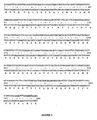
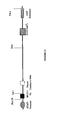
- the DNA and amino acid sequences of the BAT-1 V ⁇ region is shown in FIG. 1 .
- the FRs of the BAT-1 kappa light chain variable region i.e.
- mice subgroup VI The reason for the selection of mouse subgroup VI was related to the canonical classes of the hypervariable loops of the BAT-1 V ⁇ region, as defined by Chothia and his co-workers ( Chothia et al., J. Mol. Biol. 196:901, 1987 ; Nature 34:877, 1989 ; J. Mol. Biol. 227:799, 1992 ; Tramontano et al., ibid ). According to Chothia, each of the CDRs: CDR1 (L1), CDR2 (L2) and CDR3 (L3), were canonical class 1 ( FIG. 2 ). Crucially, the 10 amino acid canonical class 1 L1 hypervariable loop was only seen in mouse V ⁇ regions which fitted Kabat subgroup VI.
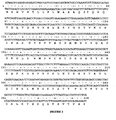
- the DNA and amino acid sequences of the BAT-1 V H region is shown in FIG. 3 .
- An analysis similar to that given in Example 1 was conducted for the BAT-1 V H region which determined that it exhibited the closest match to the consensus sequence of the mouse heavy chain miscellaneous subgroup in the Kabat database (Kabat et al., ibid).
- the first step in the design of the humanized variable regions of the BAT-1 antibody was the selection of the human kappa light chain variable region that would serve as the basis of the humanized BAT-1 V K region.
- the BAT-1 V K region was initially compared to the consensus sequences of the four human kappa light chain variable region subgroups as defined by Kabat and his coworkers (Kabat et al., ibid).
- the mouse BAT-1 light chain variable region was most similar to the consensus sequences of human kappa light chain subgroup I and human kappa light chain subgroup III.
- human kappa light chain subgroup I the mouse BAT-1 V K region displayed a 63.21% identity over the whole variable region and a 70.00% identity within the FRs alone. When measured with respect to similarity, these values increased to 71.70% overall and 80.00% within the FRs alone.
- human kappa light chain subgroup III the mouse BAT-1 V K region displayed a 65.09% identity over the whole variable region and a 68.75% identity within the FRs alone. When measured with respect to similarity, these values increased to 74.53% overall and 80.00% within the FRs alone. Consequently, it generally appeared to match well a broad range of human kappa light chain variable region sequences, however, with respect to FRs in particular, it was marginally more identical to those found within human kappa light chain subgroup I.
- the mouse BAT-1 V ⁇ region was then compared to all the recorded examples of individual sequences of human variable regions publicly available. Table 3 shows the best fifteen matches to the mouse BAT-1 V K region which were identified through this analysis. Overall, the search algorithm selected the human V ⁇ region from antibody TEL9 ( Marks et al., J. Mol. Biol. 222:581, 1991 ) as the closest match to the mouse BAT-1 V ⁇ region (Table 4). This human sequence had an overall identity to the BAT-1 V ⁇ region of 67.93% overall and 72.50% within the FRs alone. When measured with respect to similarity, these values increased to 77.36% overall and 82.50% within the FRs alone.
- the TEL9 kappa light chain variable region FR was selected as the human acceptor sequence for the humanization of the BAT-1 antibody kappa light chain variable region. This then became the basis of the first humanized version of the BAT-1 kappa light chain (BATR ⁇ A ), which essentially comprised the CDRs of the BAT-1 V ⁇ region and the FRs of the TEL9 V ⁇ region.
- the next step in the design process was to study the amino acid sequences of the human acceptor TEL9 V K region FRs to determine if any of these amino acid residues were likely to adversely influence binding to antigen, either directly through interactions with antigen, or indirectly by altering the conformation or orientation of the CDR loops. This was a difficult process which was only made possible through the availability of a model of the BAT-1 variable regions i.e. both the V ⁇ and V H regions. The modeling procedure will be given in detail in Example 5. Nevertheless, any amino acid in the mouse BAT-1 FRs which did appear to affect antigen binding were then considered for conservation in the humanized BAT-1 antibody.
- V ⁇ region amino acids located at the V ⁇ /V H interface as defined by Chothia and colleagues ( Chothia et al., J. Mol. Biol. 186:651, 1985 ), were checked for unusual or rare residues. From this analysis, the only residue position that raised any level of concern was the Phe at position 36 (Phe36) in FR2. Tyr (as found in TEL9) was normally seen at this position, however, in mBAT-1 Phe was present. In addition, position 36 was a recognized position for a Vernier amino acid (Foote et al., ibid). Vernier residues were thought to be important for maintaining CDR loop conformation.
- the third FR change introduced into BATR ⁇ B was located at position 71, which as well as being identified as a Vernier residue position (Foote et al., ibid), was also recognized as being one of the important canonical residue positions for the L1 loop structure.
- These canonical residues were defined by Chothia and his co-workers (Chothia et al., 1987, 1989, 1992 ibid; Tramontano et al., ibid) as being vital for the conservation of the CDR loop structure.
- Many of the canonical amino acids were located within the CDRs, however, a number (such as 71Tyr) were also positioned within the FRs. Although the amino acid change was conservative, the Phe71Tyr change was considered critical for the successful humanization of the BAT-1 kappa light chain.
- the first step in the design of the humanized V H region of the mouse BAT-1 antibody was the selection of the acceptor human heavy chain variable region that would serve as the basis of the humanized BAT-1 V H region.
- the mBAT-1 V H region was initially compared to the consensus sequences of the three human heavy chain variable region subgroups it was found to be most similar to the consensus sequence for human heavy chain subgroup I with a 61.54% identity overall and a 67.82% identity between the FRs alone. When measured with respect to similarity, these values also increased to 70.09% overall and 77.01% within the FRs alone.
- mice BAT-1 V H region was then compared to all the recorded examples of individual sequences of human variable regions publicly available. Tables 6 and 7 show the best fifteen matches to the mouse BAT-1 V H region which were identified through this analysis. Overall, the search algorithm selected the human V H region from antibody hsighv1295 ( Fang et al., J. Exp. Med. 179:1445, 1994 ) as the closest match to the mouse BAT-1 V H region. This human V H region had an overall identity to the BAT-1 V H region of 69.23% (Table 7), a value which increased to 74.71% when the FRs alone were compared. When measured with respect to similarity, these values increased to 75.21% overall and 79.31 % within the FRs alone.
- the next step in the design process was to study the amino acid sequences of the human acceptor hsighv1295 V H region FRs to determine if any of these amino acid residues were likely to adversely influence binding to antigen.
- the molecular models built by OML were crucial to this design process, from which a number of amino acids in the murine BAT-1 V H region FRs were identified for conservation in the first (BATRH A ) and subsequent versions of the humanized BAT-1 antibody (Table 8). There were 22 amino acid differences between the FRs of the donor mouse BAT-1 and the acceptor human hsighv1295 V H regions and up to nine murine residues were considered for conservation in the humanized FRs.
- BATRH A therefore consisted of the CDRs of the mouse BAT-1 antibody V H region genetically inserted into the FRs of the human hsighv1295 antibody V H region. This was the CDR-grafted version of the V H region of the humanized BAT-1 antibody and contained no FR amino acid changes whatsoever.
- residue positions 27-30 were considered part of the H1 loop itself and so were even more critical to the correct conformation and orientation of this loop - justifying their conservation even more strongly.
- residue positions 27-30 represented the sum of the changes made to the FRs of the human hsighv1295 sequence in BATRH B .
- the next step in the design process was to study the amino acid sequences of the human acceptor hsighv1295 V H region FRs to determine if any of these amino acid residues were likely to adversely influence binding to antigen.
- the molecular models built by OML were crucial to this design process, from which a number of amino acids in the murine BAT-1 V H region FRs were identified for conservation in the first (BATRH A ) and subsequent versions of the humanized BAT-1 antibody (Table 8). There were 22 amino acid differences between the FRs of the donor mouse BAT-1 and the acceptor human hsighv1295 V H regions and up to nine murine residues were considered for conservation in the humanized FRs.
- BATRH A therefore consisted of the CDRs of the mouse BAT-1 antibody V H region genetically inserted into the FRs of the human hsighv1295 antibody V H region. This was the CDR-grafted version of the V H region of the humanized BAT-1 antibody and contained no FR amino acid changes whatsoever.
- residue positions 27-30 were considered part of the H1 loop itself and so were even more critical to the correct conformation and orientation of this loop - justifying their conservation even more strongly.
- these two residue positions represented the sum of the changes made to the FRs of the human hsighv1295 sequence in BATRH B .
- the third version of the humanized BAT-1 V H region (BATRH C ) incorporated all the substitutions made in BATRH B and, in addition, contained a further three murine amino acids, which were inserted into the human FRs in place of the corresponding human residues.
- the first of these was the Asn amino acid located at position 76 in FR3.
- the Asn residue was close to CDR H1 and may have been supporting the loop structure.
- the Asn was surface exposed and larger than the Ser in the human hsighv1295 FRs. Consequently, a Ser76Asn substitution was made to the FR.
- This residue was considered a packing residue, as defined by Chothia (Chothia et al., 1985 ibid), important for the correct packing of the V ⁇ and V H regions.
- this was identified as a Vernier residue position, and therefore important for maintaining CDR loop conformation, a classification confirmed by an analysis of the molecular model. Taken together, all the data and molecular analysis suggested that it was appropriate to conserve these three murine residues in the humanized V H region of BATRH C , i.e. Ser76Asn, Ala93Val and Lys94Arg.
- Version D of the humanized BAT-1 V H region (BATRH D ) incorporated all the substitutions made in BATRH C and, in addition, contained one further mouse amino acid located at position 2 in FR1. This location was defined as both a canonical (Martin et al, ibid) and Vernier (Foote et al., ibid) residue position.
- the murine Ile amino acid was close to Tyr27 in FR1, which is itself part of the H1 loop structure.
- the murine Ile and human Val amino acids, at this location in the mouse and human FRs were similar in character and only slightly different in size, i.e. Ile has an extra methyl group. Therefore, it was decided to make the Val2Ile change only at this stage of the humanization procedure and incorporate the mutation into version BATRH D .
- BATRH E humanized BAT-1 heavy chain variable region
- the Arg38Lys modification was made because the model suggested that the Arg, deeply buried in the core of the V H region, was close to Phe63 in CDR H2. However, this was not a previously identified canonical or Vernier residue position. In addition, Arg and Lys are relatively similar in structure, although Arg is bulkier, and so the significance of any amino acid change was hard to judge. Consequently, this was considered as only a tentative possibility and the substitution was only going to be made if the binding affinity of the humanized BAT-1 antibody was found to be poor. The same rationale was also behind the selection of the Gln46Lys modification. The Lys amino acid was half-buried, according to the molecular model, but close to Glu62 and Phe63 in CDR H2.
- the FRs of the BAT-1 variable regions were modeled on FRs from similar, structurally solved immunoglobulin variable regions. While identical amino acid side-chains were kept in their original orientation, mismatched side-chains were substituted as in the original BAT-1 Fv region.
- the backbone atoms of the FAB17-IA V ⁇ region were used for the model of the BAT-1 V ⁇ region, while the FRs of the 409.5.3 V H region were used to model the BAT-1 V H region (Brookhaven PDB codes 1for and 1iai, respectively).
- FR backbone homology is an important factor in the quality of any model, since the use of FR structures that poorly match a sequence being modeled can significantly and adversely affect the position and orientation of the CDR loop structure.
- the loop conformations of the murine BAT-1 V ⁇ region and the humanized BATR ⁇ B sequence were taken from canonical classes used by AbM. These canonical classes are based on those described by Chothia and his colleagues, but they have been modified to take into consideration structures that have become available since the original articles were published (Chothia et al., 1987, 1989, 1992 ibid; Tramontano et al., ibid). Testing the performance of AbM predictions for known loop structures has shown that CDR loops which are created in this way are usually modeled very accurately, i.e. to within 1-1.5 ⁇ RMS deviation.
- the H3 loop in the BAT-1 V H region was eight residues long, so two methods were used for predicting the H3 loop structure.
- a database search for the backbone conformations was used for both methods, but in addition, the conformation of the central five residues in the model were searched more thoroughly using a CONGEN search (Bruccoleri, ibid). Although this took longer to compute, it reassuringly produced a conformation which was very similar to those identified from the database search.
- Putative positive transformants were identified using the PCR-screening assay, restriction digest and then ds-DNA sequenced.
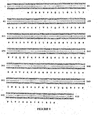
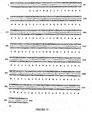
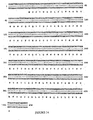
- the humanized V ⁇ genes ( FIGS. 7-9 ; SEQ ID NOS. 15, 16 and 18) were then subcloned into expression plasmids.
- the light chain pKN110 construct included Ampicillin and Neomycin resistance genes.
- the humanized V ⁇ gene variants of BAT-1 i.e. BATR ⁇ A , BATR ⁇ B and BATR ⁇ D
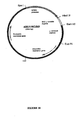
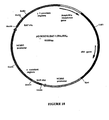
- BATR ⁇ A , BATR ⁇ B and BATR ⁇ D were inserted between the HCMV Immediate Early Promoter and the genomic human kappa constant region resulting in the following expression vectors: pKN110-BATR ⁇ A , pKN110-BATR ⁇ B and pKN110-BATR ⁇ D , respectively (see FIG. 10 for a representative pKN110-BATR ⁇ D vector).
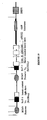
- the BAT-1 light chain expression cassette inserted into an expression vector included a DNA fragment encoding a mouse immunoglobulin signal peptide sequence, Kozak sequence and a signal sequence intron which was added to both sides of the humanized V ⁇ gene variants of BAT-1 ( FIG. 11 ). This cassette was inserted between the HCMV Immediate Early Promoter and the genomic human kappa constant region.
- the complete light chain expression vector also included a BGH polyA transcription terminator and a Neo/G418 selection marker. All constructs were restriction enzyme digested and ds-DNA sequenced to confirm the presence of the correct insert.
- BATRH A The construction of the various versions of the reshaped human BAT-1 heavy chain variable region genes (i.e. BATRH A , BATRH B , BATRH C ) produced an approximately 450 bp product which was then subcloned into pCR2.1TM.
- the PCR reactions were set up using the primers described in Tables 11 and 12.
- Putative positive transformants were again identified in a PCR screen and then ds-DNA sequenced.
- the humanized V H genes (SEQ ID NOS. 20-22) were then subcloned into expression vectors.
- the heavy chain pG1D110 construct included Ampicillin resistance gene and the hamster dhfr as the selectable marker.
- the humanized V H gene variants of BAT-1 were inserted between the HCMV Immediate Early Promoter and the genomic human IgG1 constant region resulting in the following expression vectors: pG1D110-BATRH A , pG1D110-BATRH B , pG1D110-BATRH C (see FIG. 15 for a representative pG1D110.BAT-1.RH C vector).
- the BAT-1 heavy chain expression cassette inserted into an expression vector which included a DNA fragment encoding a mouse immunoglobulin signal peptide sequence, Kozak sequence and a signal sequence intron which was added to both sides of the humanized V ⁇ gene variants of BAT-1 ( FIG. 16 ). This cassette was inserted between the HCMV Immediate Early Promoter and the genomic human IgG1 constant region.
- the complete light chain expression vector also included a BGH polyA transcription terminator and a dhfr selection marker.
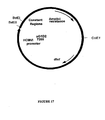
- pG1D200 is another ⁇ 1 immunoglobulin heavy chain mammalian expression vector (AERES Biomedical ; FIG. 17 ). This vector is a V H :C H ⁇ 1 intron minus version of the pG1D110 vector (i.e. it does not have the 71bp intron at the V H :C H junction).
- a Bst EII fragment (219bp) was excised from the pG1D200 vector and gel purified using a Qiagen gel extraction/purification kit. This fragment contained the intron minus V H :C H junction.
- the pG1D110.BAT-1.RH C construct ( FIG. 15 ) was also restriction digested with Bst EII, releasing a 290bp fragment which contained the intron plus VH:CH junction.
- the remaining vector fragment ( ⁇ 7207bp) was gel purified using a Qiagen gel extraction/ purification kit.
- the intron minus Bst EII fragment (219bp) from the pG1D200 vector digest was then ligated into the ⁇ 7207bp Bst EII digested pG1D110.BAT-1.RH C vector. 2 ⁇ l of ligated DNA was transformed into DH5 ⁇ cells (Stratagene) according to the manufacturers instructions. Plasmid DNA was prepared from 10 colonies and each plasmid DNA was analyzed for the presence of the correct Bst EII fragment by DNA sequence analysis.
- the new intron minus construct (pG1D210.BAT-1.RH C ) and the light chain construct pKN110.BAT.R ⁇ D (see FIG. 10 ) were used to construct the pG1KD210.BAT-1.RH C /R ⁇ D single expression vector (SEQ ID NO. 93).
- the BATRH C heavy chain variable region was transferred to the combined (single) expression vector as an Xho 1 to Hind 111 fragment.
- the BATR ⁇ D light chain variable region was transferred to the combined (single) expression vector as an Xba 1 to Bam H1 fragment.
- the internal Xba 1 site in the light chain gene was removed without changing the amino acid sequence.
- the sequences of the BAT-1.R ⁇ D /BAT-1.RH C heavy and light chain variable regions in this vector were confirmed.
- the vector includes genomic human IgG1 and Kappa constant regions. Both heavy and light chain genes were placed under the control of the HCMV Immediate Early promoter.
- the vector includes a mouse dhfr gene as the selectable marker (see FIG. 19 ).
- the same Kozak sequence, signal peptide sequence and intron were added as for the two vector expression system (see Examples 6 and 7).
- the first step in the construction of the BAT-1 ⁇ 4 single expression vector construct was the cloning of the modified BAT-1.RH C gene out of the pG1D110.BAT-1.RH C construct ( FIG. 14 ) by Bam HI and Hind III restriction digest, and ligation of this 430bp fragment into the gamma-4 immunoglobulin heavy chain expression vector pG4D110, again via Bam HI and Hind III restriction sites.
- Plasmid DNA was prepared from 10 colonies and each plasmid DNA was analyzed for the presence of the correct BAT-1.RH C Bam HI/ Hind III fragment by DNA sequence analysis.
- the new gamma-4 construct (pG4D110.BAT-1.RH C ) and the light chain construct pKN110.BAT-1.RK D ( FIG. 10 ) were used to construct the pG4KD110.BAT-1.HR C /R ⁇ D single expression vector in the following way.
- the BAT-1 kappa light chain expression cassette which contained the HCMVi promoter, the BAT-1 kappa light chain variable region gene, and the kappa light chain constant region gene, was restriction enzyme digested ( Eco RI/ Spe I) out of the pKN110.BAT-1.R ⁇ D construct and subsequently ligated into pG4D110.BAT-1.RH C construct via the unique EcoRI and Spe I restriction sites. This ligation resulted in the construction of a single expression vector construct pG4KD110.BAT-1.RH C /R ⁇ D , containing both the heavy and kappa light chains of the BAT-1 humanized antibody RH C /R ⁇ D variant.
- the humanized BAT-1 heavy (pG1D110) and light (pKN110; Example 7) chain expression vectors were co-transfected, at various combinations, into COS7 cells and after 72 hr incubation, the medium was collected, spun to remove cell debris, filtered and analyzed by ELISA for humanized antibody production.
- the concentration of humanized antibody in the COS7 cell supernatants varied with each combination of reshaped human BAT-1 antibody constructs that were tested (Table 13). For example, version BATRH B /BATR ⁇ A expressed the highest antibody levels (4800 ng/ml) whilst the BATRH B BATR ⁇ D version was the poorest expresser (357 ng/ml).
- the Immunopure ⁇ (A) IgG purification kit essentially comprised of a 2 ml column of immobilized Protein A Sepharose column. The antibody was eluted from the column with 5 ml of elution buffer, the eluate of which was collected in 1 ml fractions. The concentration of humanized BAT-1 antibody in each fraction was then assayed using ELISA methods. Table 13 describes the final concentrations of the Protein A purified antibody constructs collected. On average the purification step increased the antibody concentration by approximately 150-fold.
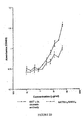
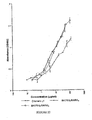
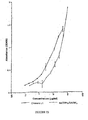
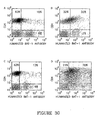
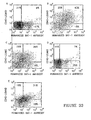
- FIGS. 20-23 show typical examples for these binding experiments. Sigmoidal dose-response curves of Daudi cell binding by the recombinant antibodies were also plotted and the hill slopes of these binding curves were calculated. The combination of the hill slope data and the positions of the dose-response curves relative to the chimeric antibody dose-response curves suggested a qualitative hierarchy with respect to Daudi cell binding among the various humanized BAT-1 antibody constructs tested (Table 14). At the top of this hierarchy was clearly construct BATRH C /BATR ⁇ D , which exhibited a hill slope (i.e.
- construct BATRH A /BATR ⁇ A clearly has the poorest binding characteristics of all the humanized BAT-1 antibody constructs tested (Table 14) and so was ranked sixth in the binding hierarchy.
- the calculated hill slope for this version i.e. 1.2730 ⁇ 0.2688
- BATRH B /BATR ⁇ A i.e. 1.7710 ⁇ 0.6461
- this difference is again not statistically significant.
- FIG. 21 it is clear from FIG. 21 that the CDR-grafted BATRH A /BATR ⁇ A BAT-1 antibody is reaching its maximum binding response at much lower level than the humanized construct BATRH B /BATR ⁇ A - which was ranked fifth in the binding hierarchy.
- BATRH B /BATR ⁇ B ( FIG. 20 ; ranked fourth) and BATRH B /BATR ⁇ D ( FIG. 23 ; ranked third) display intermediate levels of binding between these two sets of extremes. Again these rankings were mainly based upon a subjective interpretation of the binding data available and previous experience.
- Kettleborough Kettleborough et al., Eur. J. Immunol. 23:206, 1993
- DNA 10 ⁇ g each of the kappa light chain expression construct pKN110.BAT-1.R ⁇ D and the heavy chain expression construct pG1D210.BAT-1.RH C , or 13 ⁇ g of the single vector construct pG1KD210.BAT-1.RH C /R ⁇ D
- the electroporated cells were transferred to petri-dishes containing 8 ml of DMEM containing 10% FCS and incubated for 72 hrs in 5%CO 2 at 37°C. After 72 hrs incubation, the medium was collected, spun to remove cell debris, and analyzed by capture ELISA for antibody production.
- the co-transfections, with light chain expression vector and heavy chain expression vector, and transfections with a single-vector expressing both light and heavy chains, were carried out in triplicate. The results are presented in Table 15. The results indicate that expression levels from the single vector are -6 fold higher than the expression levels observed for the co-transfections. TABLE 15 Transfection no.
- CHOdhfr- cells were propagated in a non-selective media consisting of ⁇ -MEM with ribonucleosides and deoxyribonucleosides, supplemented with 10% Fetal Clone II and 50 ⁇ g/ml Gentamicin. Aliquot, 0.7 ml, of 10 7 cells/ml in PBS was transfected with 13 ⁇ g of pG1.KD210.BAT-1.RH C /R ⁇ D at 1900 V, 25 ⁇ F capacitance using a Bio-Rad Gene Pulser. The cells were allowed to recover for 10 minutes at RT before being transferred to 10 cm petri-dishes in 8 ml of non-selective media and then incubated in 5% CO 2 at 37°C for 48 hours.
- the cells were trypsinized, spun down and resuspended in 150 ml of prewarmed selective media ( ⁇ -MEM without ribonucleosides and deoxyribonucleosides, supplemented with 10% dialyzed FBS and 50 ⁇ g/ml Gentamicin, and containing either 10nM, 50nM, 100nM or 500nM Methotrxate) before being divided equally between fifteen 10cm petri-dishes. These were then incubated in 5% CO 2 at 37°C for 20-30 days, the selective media being changed every 3-4 days until foci were clearly visible. After 2 weeks from the initial transfection, foci began to develop on the 10nM plates. Eight days later, one focus developed on the 50nM plates. No other foci developed after 35 days, on the 50nM plates and no foci developed on the 100nM or 500nM plates.
- the method of Kettleborough et al. was followed to transfect the mammalian expression constructs into COS cells. Briefly, the DNA (10 ⁇ g each of the kappa light chain expression construct pKN110.BAT-1.R ⁇ D and the heavy chain expression construct pG4D110.BAT-1.RH C , or 13 ⁇ g of the supervector construct pG4D110.BAT-1.RH C /R ⁇ D ) was added to a 0.7 ml aliquot of 10 7 cells/ml in PBS and pulsed at 1900 V, 25 ⁇ F capacitance using a Bio-Rad Gene Pulser apparatus.
- the electroporated cells were transferred to petri-dishes containing 8 ml of DMEM containing 10% FCS and incubated for 72 hrs in 5%CO 2 at 37°C. After 72 hrs incubation, the medium was collected, spun to remove cell debris, and analyzed by capture ELISA for antibody production.
- CHOdhfr- cells were propagated in a non-selective media consisting of ⁇ -MEM with ribonucleosides and deoxyribonucleosides, supplemented with 10% Fetal Clone II and 50 ⁇ g/ml Gentamicin. Aliquot, 0.7 ml, of 10 7 cells/ml in PBS was transfected with 13 ⁇ g of pG4KD110.BAT-1.RH C /R ⁇ D at 1900 V, 25 ⁇ F capacitance using a Bio-Rad Gene Pulser.
- the cells were allowed to recover for 10 minutes at room temperature before being transferred to 10cm petri-dishes in 8 ml of non-selective media and then incubated in 5% CO 2 at 37°C for 48 hours. Two days following this incubation, the cells were trypsinized, spun down and resuspended in 150 ml of prewarmed selective media ( ⁇ -MEM without ribonucleosides and deoxyribonucleosides, supplemented with 10% dialyzed FBS and 50 ⁇ g/ml Gentamicin, and containing either 10nM 50nM, 100nM or 500nM Methotrexate) before being divided equally between fifteen 10cm petri-dishes. These were then incubated in 5% CO 2 at 37°C for 20-30 days, the selective media being changed every 3-4 days until foci were clearly visible.
- Transfected cells were distributed into 10 96-well plates in Dulbecco's Modified Eagles medium (DMEM) supplemented with 10% Foetal Bovine Serum (FBS) and 1 mg/ml G418 (Gentamicin) medium. After 10 to 14 days when colonies of transfected cells have developed, samples of conditioned medium from the wells were assayed for humanized BAT-1 antibody. Cells from the highest producing wells were picked, and expanded in medium including G418.
- DMEM Dulbecco's Modified Eagles medium
- FBS Foetal Bovine Serum
- G418 Genetamicin
- the transfection was repeated after one week as a back up and to provide more transfected cell clones for selection. After 10 days visible colonies of transfected cells had developed, and conditioned medium from the wells was screened for antibody production.
- ELISA plates were coated with sheep anti-human ⁇ antibody. 25 ⁇ l samples of medium from the wells were transferred to the ELISA plate and diluted to 100 ⁇ l in PBS Tween (PBST).
- the secondary antibody was HRP-conjugated sheep anti-human IgG ( ⁇ chain specific) and color was developed with o-Phenylene Diamine (OPD).
- the combined (single) antibody expression vector described in Example 9 was transfected into the NS0 host cell line by electroporation.
- Transfected cells were distributed into 10 96-well plates in DMEM with 10% FBS. After 2 days an equal amount of medium with 0.1 ⁇ M Methotrexate was added. Half the medium was changed with the same volume of 0.1 ⁇ M MTX-containing medium every 2 days until the 8 th day post transfection. The transfection was repeated after one week as a back up and to provide more transfected cell clones for selection. After 14-21 days visible colonies of transfected cells had developed, and conditioned medium from the wells was screened for antibody production as described in the above Example. Positive wells were examined microscopically and the cells from the highest producing wells were picked into 1.5 ml of DMEM supplemented with 10% FBS and 0.1 ⁇ M Methotrexate in 24 well plates.
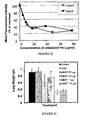
- Daudi cells were incubated with increasing amounts of the humanized BAT-1 or the mouse BAT-1 as control (0-80 ⁇ g/ml). Unbound antibody was discarded and biotinylated murine-BAT-1 (20 ⁇ g/ml) added to the cells and stained with streptavidin-FITC.
- Figure 24 depicts a decreased binding of murine BAT-1 in the presence of increasing concentrations of both the humanized and original mouse mAb, supporting the recognition of the same epitope as expected. Both antibodies show a similar dose dependency, with an IC 50 of approximately 10 ⁇ g/ml, suggesting a similar affinity of antigen binding.
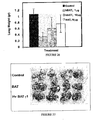
- C57BL mice were inoculated with B16 melanoma cells to induce lung metastases.
- Increasing amounts (1,10 and 20 ⁇ g) of humanized mAb were injected on day 12 post tumor-inoculation and compared to an optimal dose of 10 ⁇ g murine-BAT-1.
- Lung weight measured on Day 24 post tumor inoculation is depicted in FIG. 25 and corresponds to the establishment of a tumor.
- Both non-treated mice and mice treated with an isotype-matched irrelevant human IgG1 had an average lung weight of 0.9 gr.
- the humanized BAT-1 exhibited a dose dependent inhibition of metastases growth with the highest inhibition occurring at a low dose of 1 ⁇ g/mouse.
- Mouse-BAT-1 mAb has been shown to inhibit the formation of human-tumor metastases in the presence of human peripheral blood lymphocytes (hPBL).
- hPBL peripheral blood lymphocytes
- the humanized antibody was studied in a model combining both tumors and lymphocytes of human origin. Severe combined immune-deficient mice (SCID) were engrafted with hPBL to restore immune-competence. Mice were challenged with human melanoma cells (SK-28) and treated with increasing concentrations of the humanized antibody, administered in a single i.v. dose on day 11 post tumor inoculation.
- Fig 26 depicts lung weight that correlates with the number of metastases observed, as measured on day 23. Both concentrations of the humanized antibody induced tumor inhibition in the presence of hPBL. As observed in the mouse tumor model described above, the humanized antibody could more efficiently inhibit tumor growth in vivo, in comparison to mouse BAT-1. A single dose of 1 ⁇ g of this humanized antibody inhibited tumor growth by 68% showing a higher efficacy than 10 ⁇ g of the mouse BAT-1 antibody (30%).
- LIM6 and HM7 are two sub-clones of the human CRC cell line LS174T that were selected for their high mucin synthesis and metastatic potential.
- the tumor cells were injected into the exposed spleen of anesthetized nude mice. After 1 minute, the spleens were removed and the excisions closed. Low doses of murine and humanized BAT-1 antibody were administered 12 days later and mice were sacrificed 35 days post tumor inoculation. The livers were weighed, the number of metastatic nodules was counted, and liver tissue was processed for histology and Immunohistochemistry study.
- Mouse BAT-1 has been shown to bind human lymphocytes, recognizing both CD4+ and CD8+ subsets.
- human Peripheral Blood Lymphocytes PBL were isolated from the blood of normal donors, as described hereinbelow, and analyzed for co-localization of hBAT with known lymphocyte markers.
- PBMC Peripheral blood mononuclear cells
- Figure 28 depicts an example of binding to lymphocytes of a selected donor in which 50% of the isolated PBL were positive for hBAT, including both CD4+ cells (25%) and CD8+ cells (15%). Within these subpopulations, the majority of CD4+ as well as CD8+ cells bound the hBAT mAb (58% and 71% respectively).
- the humanized BATRH C /BATR ⁇ D ⁇ 1 mAb was raised against the membranes of Daudi cells, a human B lymphoma cell-line.
- PBL from normal donors were isolated by ficoll, as described above, followed by adherence to tissue culture plates.
- Non-adherent cells were examined for the co-localization of hBAT with B-cell markers including CD19 and CD20. Binding was performed at 4°C for 1 hr, and determined by flow cytometry on gated lymphocytes.
- Figure 29 depicts the evaluation of binding to the cells of a representative normal donor.
- lymphocytes in the sample were positive for the humanized BAT mAb. These cells included the majority of B cells (70-75%) as demonstrated by both independent markers. 70% of CD20+ were positive for the humanized BAT mAb (Gated on R1 and PI negative; Fig. 29A ) and 75% of CDR19+ were positive for the humanized BAT mAb (Gated on R1 and PI negative). The results suggest that the BAT-binding moiety on the cell surface could be common to peripheral B cells.
- Binding of the mouse BAT antibody has been formerly correlated with lymphocyte activation. This binding activity was further studied for the human mAb and the binding level of the human BAT mAB to human CD4+ T cells, subjected to activation, was examined. Cells were isolated from a normal donor by negative selection and stimulated with beads conjugated to anti-CD3 and anti-CD28 (5 ⁇ l/ml). This treatment was selected in order to exert polyclonal activation through the T-cell receptor and co-stimulatory molecules.
- T cell activation is characterized by cell-surface expression of various molecules, some of which have been shown to be involved in the activation process.
- hBAT was studied for its co-expression with different markers including both early and late activation molecules.
- CD69 an early activation marker, is up-regulated on T cells upon activation.
- Four days following activation cells were examined for binding of hBAT and anti-CD69 (4°C, 1 hr). Analysis was performed by flow cytometry on cells negative for PI staining. Quadrants were determined by isotype controls.
- FIG. 31 A dose-dependent activation of CD4+ T cells from a normal donor is demonstrated in figure 31 .
- Increased time of activation also resulted in increase binding to hBAT beginning at day one of activation.
- Time dependency of activation could also be demonstrated and resulted in an increase in hBAT binding beginning at day one of activation.
- hBAT binding to both CD4+ and CD8+ cells remained high even after CD69 decrease (day 5) suggesting a correlation of binding with multiple stages of lymphocyte activation.
- hBAT binding to CD69+ cells suggests that the expression of hBAT binding protein is correlated with early activation.
- CD25 the high-affinity receptor for IL2
- CD25 is vital for T-cell expansion and is typically increased on the surface of activated cells. Chronologically it follows the appearance of CD69 and its expression is extended several days after the down-regulation of CD69.
- CD4+ T cells were isolated from a normal donor by negative selection and stimulated for several days with beads conjugated to anti-CD3 and anti-CD28 (5 ⁇ l/ml). Cells were examined for binding of hBAT and anti-CD25 (4°C, 1 hr) on day 0 ( Fig. 32A ), day 1 ( Fig. 32B ), and day 5 ( Fig. 32D ) of activation with respect to controls (day 0, Fig. 32A and day 5 of no activation, Fig. 32C ). Analysis was performed by flow cytometry on cells negative for PI staining. Quadrants were determined by isotype controls.
- CD4+ and CD8+ T cells showed a time dependent increase in CD25 expression upon anti-CD3 and anti-CD28 stimulation, beginning at day 1 of stimulation.
- hBAT co-localized with CD25 on these activated cells ( Fig. 32 ).
- CD25 expression increased from 55% of the cells on day 1 ( Fig. 32B ) to 93% on day 5 ( Fig. 32D ) following activation. At both time points the majority of hBAT binding cells were CD25+ (85% and 98% respectively).
- hBAT increases survival of activated CD4+ cells
- hBAT human CD4+ cells were isolated from normal donors by negative selection and activated with a suboptimal concentration (0.25 ⁇ /ml) of anti-CD3/CD28 beads ( FIG. 34 ).
- hBAT 0.5 ⁇ g/ml was added 2 days following activation and its effect was evaluated by determining the number of viable cells.
- the results indicate that hBAT induced a significant increase in the number of viable CD4+ cells isolated from the two separate donors ( Fig. 34A and B ).
- Control nonstimulated cells died within eight days of isolation whereas activated cells expanded in a manner that is typical of lymphocytes, commencing with cell proliferation followed by a stage of stable cell number leading to a stage dominated by cell death.
- the addition of hBAT enhanced the expansion of CD4+ cell and increased the number of cells by 1.5 folds with respect to cells in the absence of the mAb.
- Mouse BAT-1 was raised against membranes of the Daudi B-cell line and has been shown to bind human T cells.
- hBAT was examined for its binding to two human cell lines of myeloid origin: Daudi cells - a human B cell lymphoma line and Jurkat cells - a human T cell leukemia line.
- hBAT conjugated to FITC was incubated with Daudi and Jurkat cells at a concentration of 150ug/ml (4°C for 1 hr). Binding was determined by flow cytometry.
- hBAT is capable of binding human T cells from normal donors.
- PBL were isolated from the blood of a prostate cancer patient by ficoll followed by adherence to tissue culture plates. Non-adherent cells were examined for binding of hBAT and lymphocyte markers. Binding was performed at 4°C for 1 hr, and determined by flow cytometry on gated lymphocytes. Isotype controls were used to determine the quadrants. These patients have formerly undergone therapy that often affects the presence and phenotype of lymphocytes. hBAT binding to these cells is a pre-requisite for its activity and as depicted in figure 36 , resembles the binding to lymphocytes of normal donors. Although total lymphocyte numbers were low, hBAT could still bind a large proportion of the lymphocyte subpopulations which we examined including 39% of CD4+ cells, 60% of CD8+ cells and 68% of B cells.
- the purpose of this study was to examine the cross reactivity of hBAT-1 monoclonal antibody with a range of normal human tissue. This study involved immunohistochemical testing of the monoclonal antibody against-a range of human tissues. A comparison of in vitro cross-reactivity in tissues from cynomologus monkey and CD-1 mice was also undertaken.
- the tissues used in this study were each obtained from three unrelated donors to minimize the chances of donor specific factors affecting antibody binding.
- the human tissue was provided by an ethical source.
- the primate and murine tissues used in this study were obtained from two animals of each species, by an ethical source.
- the murine and primate are potential test systems that may be evaluated in pre-clinical toxicology Studies.
- the tissues selected were those specified in the FDA Points to Consider in the Manufacture and Testing of Monoclonal Antibody Products for Human Use (Office of Biologies Research and Review. Center for Biologies Evaluation and Research FDA. 1997 ) and the Rules Governing Medicinal Products in the European Community Vol. 3a (Production and Quality Control of Monoclonal Antibodies Dec. 1994, 3AB4a).
- the humanized monoclonal hBAT-1 antibody was conjugated to FITC by the Custom Antibody Services Division of Serotec Ltd (ISO 9001, Certification) before the study was started.
- the final concentration of the conjugated antibody was 1.99 mg/ml.
- 3 refers to strong positive-staining
- 2 refers to positive staining
- 1 refers to weak positive staining
- 0 refers to no staining/signal.
- +++ refers to strong visual signal
- ++ refers to good visual signal
- + refers to weak visual signal.
- Negative control reactions in which the antibody was substituted with a buffer, were carried out for each tissue.
- Each detection reaction included positive control cells, Jurkat E6, reacted at the three predetermined dilutions of the antibody. This allowed the consistency of the reaction to be monitored. Sections of thyroid, incubated with anti actin antibody, were included in each assay run as controls for the detection system.
- Sections of each tissue were stained with Haematoxylin and Eosin (H&E) to confirm their identity and suitability for the study. Sections were also incubated with anti smooth muscle actin (SMA; Table 22) or rabbit anti human transferrin control sera, which showed the tissues were suitable for immunohistochemistry. Three sections of each of the tissues were prepared and incubated with the antibody, which had been conjugated to FITC, at concentrations of 1:100, 1:250 and 1:500 as determined during the validation phase. After washing in buffer and blocking with normal serum, the sections were incubated with the appropriate secondary and tertiary antibodies for alkaline-phosphatase detection, and counter-stained with haematoxylin before microscopical examination to determine sites of binding.
- H&E Haematoxylin and Eosin
- the FITC -conjugated staining method with Alkaline Phosphatase detection contained the following steps:
- Endogenous alkaline phosphatase was minimized by using Levamisole incorporated into the chromogen.
- tissues where endogenous alkaline phosphatase activity could not be suppressed human colon, ileum, placenta and endothelium, murine colon and pancreas, primate stomach, ileum and prostate
- horseradish peroxidase conjugated antibody at 1:200 for 2 hours was used, followed by Diaminobenzidene (DAB) reagent for 20 minutes.
- DAB Diaminobenzidene
Landscapes
- Health & Medical Sciences (AREA)
- Chemical & Material Sciences (AREA)
- Organic Chemistry (AREA)
- Immunology (AREA)
- Life Sciences & Earth Sciences (AREA)
- General Health & Medical Sciences (AREA)
- Medicinal Chemistry (AREA)
- Molecular Biology (AREA)
- Biophysics (AREA)
- Biochemistry (AREA)
- General Chemical & Material Sciences (AREA)
- Chemical Kinetics & Catalysis (AREA)
- Nuclear Medicine, Radiotherapy & Molecular Imaging (AREA)
- Proteomics, Peptides & Aminoacids (AREA)
- Pharmacology & Pharmacy (AREA)
- Animal Behavior & Ethology (AREA)
- Genetics & Genomics (AREA)
- Public Health (AREA)
- Veterinary Medicine (AREA)
- Engineering & Computer Science (AREA)
- Bioinformatics & Cheminformatics (AREA)
- Virology (AREA)
- Tropical Medicine & Parasitology (AREA)
- AIDS & HIV (AREA)
- Communicable Diseases (AREA)
- Oncology (AREA)
- Peptides Or Proteins (AREA)
- Medicines Containing Antibodies Or Antigens For Use As Internal Diagnostic Agents (AREA)
- Preparation Of Compounds By Using Micro-Organisms (AREA)
- Micro-Organisms Or Cultivation Processes Thereof (AREA)
- Medicines That Contain Protein Lipid Enzymes And Other Medicines (AREA)
Priority Applications (2)
| Application Number | Priority Date | Filing Date | Title |
|---|---|---|---|
| SI200332448T SI1575484T1 (sl) | 2002-05-23 | 2003-05-22 | Humanizirana imunomodulatorna monoklonska protitelesa za zdravljenje neoplastične bolezni ali imunodeficience |
| CY20151100903T CY1117114T1 (el) | 2002-05-23 | 2015-10-07 | Εξανθρωπισμενα ανοσορρυθμιστικα μονοκλωνικα αντισωματα για την θεραπευτικη αγωγη νεοπλασματικης ασθενειας ή ανοσοανεπαρκειας |
Applications Claiming Priority (3)
| Application Number | Priority Date | Filing Date | Title |
|---|---|---|---|
| IL14982002 | 2002-05-23 | ||
| IL14982002A IL149820A0 (en) | 2002-05-23 | 2002-05-23 | Humanized immunomodulatory monoclonal antibodies for the treatment of neoplastic disease or immunodeficiency |
| PCT/IL2003/000425 WO2003099196A2 (en) | 2002-05-23 | 2003-05-22 | Humanized immunomodulatory monoclonal antibodies for the treatment of neoplastic disease or immunodeficiency |
Publications (3)
| Publication Number | Publication Date |
|---|---|
| EP1575484A2 EP1575484A2 (en) | 2005-09-21 |
| EP1575484A4 EP1575484A4 (en) | 2006-11-22 |
| EP1575484B1 true EP1575484B1 (en) | 2015-07-08 |
Family
ID=28460428
Family Applications (1)
| Application Number | Title | Priority Date | Filing Date |
|---|---|---|---|
| EP03723038.0A Expired - Lifetime EP1575484B1 (en) | 2002-05-23 | 2003-05-22 | Humanized immunomodulatory monoclonal antibodies for the treatment of neoplastic disease or immunodeficiency |
Country Status (14)
| Country | Link |
|---|---|
| US (3) | US7332582B2 (enExample) |
| EP (1) | EP1575484B1 (enExample) |
| JP (2) | JP4764627B2 (enExample) |
| KR (1) | KR101169254B1 (enExample) |
| AU (1) | AU2003230183B2 (enExample) |
| CA (1) | CA2487060C (enExample) |
| CY (1) | CY1117114T1 (enExample) |
| DK (1) | DK1575484T3 (enExample) |
| ES (1) | ES2549303T3 (enExample) |
| HU (1) | HUE025710T2 (enExample) |
| IL (3) | IL149820A0 (enExample) |
| PT (1) | PT1575484E (enExample) |
| SI (1) | SI1575484T1 (enExample) |
| WO (1) | WO2003099196A2 (enExample) |
Cited By (5)
| Publication number | Priority date | Publication date | Assignee | Title |
|---|---|---|---|---|
| US9394365B1 (en) | 2014-03-12 | 2016-07-19 | Yeda Research And Development Co., Ltd | Reducing systemic regulatory T cell levels or activity for treatment of alzheimer's disease |
| US9512227B2 (en) | 2014-03-12 | 2016-12-06 | Yeda Research And Development Co. Ltd | Reducing systemic regulatory T cell levels or activity for treatment of Alzheimer's disease |
| US10519237B2 (en) | 2014-03-12 | 2019-12-31 | Yeda Research And Development Co. Ltd | Reducing systemic regulatory T cell levels or activity for treatment of disease and injury of the CNS |
| US10618963B2 (en) | 2014-03-12 | 2020-04-14 | Yeda Research And Development Co. Ltd | Reducing systemic regulatory T cell levels or activity for treatment of disease and injury of the CNS |
| US10995141B2 (en) | 2019-04-19 | 2021-05-04 | ImmunoBrain Checkpoint, Inc. | Modified anti-PD-L1 antibody and methods and uses for treating a neurodegenerative disease |
Families Citing this family (279)
| Publication number | Priority date | Publication date | Assignee | Title |
|---|---|---|---|---|
| IL129299A0 (en) | 1999-03-31 | 2000-02-17 | Mor Research Applic Ltd | Monoclonal antibodies antigens and diagnosis of malignant diseases |
| AU2002231736A1 (en) | 2000-12-22 | 2002-07-08 | Max-Planck-Gesellschaft Zur Forderung Der Wissenschaften E.V. | Use of repulsive guidance molecule (rgm) and its modulators |
| DE60334303D1 (de) | 2002-07-03 | 2010-11-04 | Tasuku Honjo | Immunpotenzierende zusammensetzungen |
| ES2367430T3 (es) * | 2002-12-23 | 2011-11-03 | Wyeth Llc | Anticuerpos contra pd-1 y sus usos. |
| WO2006021955A2 (en) * | 2004-08-23 | 2006-03-02 | Mor Research Applications Ltd. | Use of bat monoclonal antibody for immunotherapy |
| EP3530736A3 (en) | 2005-05-09 | 2019-11-06 | ONO Pharmaceutical Co., Ltd. | Human monoclonal antibodies to programmed death 1 (pd-1) and methods for treating cancer using anti-pd-1 antibodies alone or in combination with other immunotherapeutics |
| KR101704734B1 (ko) | 2005-07-01 | 2017-02-09 | 이. 알. 스퀴부 앤드 선즈, 엘.엘.씨. | 예정 사멸 리간드 1 (피디-엘1)에 대한 인간 모노클로날 항체 |
| CN101277974A (zh) | 2005-09-30 | 2008-10-01 | 阿伯特有限及两合公司 | 排斥性引导分子(rgm)蛋白质家族的蛋白质的结合结构域及其功能性片段和它们的用途 |
| PT2170959E (pt) | 2007-06-18 | 2014-01-07 | Merck Sharp & Dohme | Anticorpos para o receptor humano de morte programada pd-1 |
| EA021967B1 (ru) * | 2008-01-03 | 2015-10-30 | Дзе Скриппс Рисерч Инститьют | Доставка антител посредством модульного домена распознавания |
| PT2242773T (pt) * | 2008-02-11 | 2017-09-15 | Cure Tech Ltd | Anticorpos monoclonais para o tratamento de tumores |
| US8962803B2 (en) | 2008-02-29 | 2015-02-24 | AbbVie Deutschland GmbH & Co. KG | Antibodies against the RGM A protein and uses thereof |
| UA112050C2 (uk) * | 2008-08-04 | 2016-07-25 | БАЄР ХЕЛСКЕР ЛЛСі | Терапевтична композиція, що містить моноклональне антитіло проти інгібітора шляху тканинного фактора (tfpi) |
| EA201500417A1 (ru) | 2008-08-25 | 2015-11-30 | Эмплиммьюн, Инк. | Композиции антагонистов pd-1 и способы применения |
| NZ616382A (en) | 2009-04-20 | 2015-04-24 | Oxford Biotherapeutics Ltd | Antibodies specific to cadherin-17 |
| PH12012501070A1 (en) | 2009-12-08 | 2017-08-23 | Abbott Gmbh & Co Kg | Monoclonal antibodies against the rgm a protein for use in the treatment of retinal nerve fiber layer degeneration |
| PT2542257T (pt) | 2010-03-01 | 2017-10-09 | Bayer Healthcare Llc | Anticorpos monoclonais otimizados contra inibidor da via do fator tecidual (tfpi) |
| CA2800311A1 (en) | 2010-05-11 | 2011-11-17 | Aveo Pharmaceuticals, Inc. | Anti-fgfr2 antibodies |
| CN103534268B (zh) * | 2010-10-20 | 2016-05-18 | 牛津生物疗法有限公司 | 抗体 |
| DK2734205T3 (en) | 2011-07-21 | 2018-06-14 | Tolero Pharmaceuticals Inc | Heterocyclic Protein Kinase Inhibitors |
| US8686119B2 (en) | 2011-07-24 | 2014-04-01 | Curetech Ltd. | Variants of humanized immunomodulatory monoclonal antibodies |
| AU2013211939C1 (en) | 2012-01-27 | 2018-06-07 | AbbVie Deutschland GmbH & Co. KG | Composition and method for diagnosis and treatment of diseases associated with neurite degeneration |
| US9610250B2 (en) | 2012-04-12 | 2017-04-04 | Yale University | Nanolipogel vehicles for controlled delivery of different pharmaceutical agents |
| JP6279466B2 (ja) * | 2012-04-27 | 2018-02-14 | Jcrファーマ株式会社 | 新規な発現ベクター |
| JP2015520172A (ja) | 2012-05-31 | 2015-07-16 | ソレント・セラピューティクス・インコーポレイテッドSorrento Therapeutics, Inc. | Dll−4に結合する抗原結合蛋白質 |
| CN112587671A (zh) | 2012-07-18 | 2021-04-02 | 博笛生物科技有限公司 | 癌症的靶向免疫治疗 |
| PL3489261T3 (pl) | 2012-08-24 | 2021-08-16 | The Regents Of The University Of California | Przeciwciała i szczepionki do stosowania w leczeniu nowotworów z ekspresją ROR1 i w hamowaniu przerzutu |
| EP2954327A1 (en) | 2013-02-07 | 2015-12-16 | INSERM (Institut National de la Santé et de la Recherche Médicale) | Methods for predicting the survival time of patients suffering from diffuse large b-cell lymphomas |
| RS64268B1 (sr) | 2013-09-20 | 2023-07-31 | Bristol Myers Squibb Co | Kombinacija anti-lag-3 antitela i anti-pd-1 antitela za lečenje tumora |
| EP3049442A4 (en) | 2013-09-26 | 2017-06-28 | Costim Pharmaceuticals Inc. | Methods for treating hematologic cancers |
| KR20190126452A (ko) | 2013-11-01 | 2019-11-11 | 예일 유니버시티 | 면역요법용 모듈러 입자 |
| US9580504B1 (en) | 2013-11-07 | 2017-02-28 | Curetech Ltd. | Pidilizumab monoclonal antibody therapy following stem cell transplantation |
| DE202014010499U1 (de) | 2013-12-17 | 2015-10-20 | Kymab Limited | Targeting von humaner PCSK9 zur Cholesterinbehandlung |
| EP3092256B1 (en) | 2014-01-10 | 2022-05-18 | Birdie Biopharmaceuticals Inc. | Compounds and compositions for immunotherapy |
| UA122479C2 (uk) | 2014-01-24 | 2020-11-25 | Дана-Фарбер Кенсер Інстітьют, Інк. | Виділена молекула антитіла, яка зв’язується з людським білком програмованої смерті-1 (pd-1) |
| PL3099717T3 (pl) | 2014-01-31 | 2019-10-31 | Novartis Ag | Cząsteczki przeciwciała dla TIM-3 i ich zastosowanie |
| EA201691765A1 (ru) | 2014-03-14 | 2016-12-30 | Новартис Аг | Молекулы антител против lag-3 и их применения |
| PL3151921T3 (pl) | 2014-06-06 | 2020-02-28 | Bristol-Myers Squibb Company | Przeciwciała przeciwko receptorowi indukowanego glukokortykoidami czynnika martwicy nowotworu (gitr) i ich zastosowania |
| TWI693232B (zh) | 2014-06-26 | 2020-05-11 | 美商宏觀基因股份有限公司 | 與pd-1和lag-3具有免疫反應性的共價結合的雙抗體和其使用方法 |
| DK4001311T3 (da) | 2014-07-09 | 2026-02-02 | Birdie Biopharmaceuticals Inc | Anti-pd-l1/pd-1-kombinationer til behandling af tumorer |
| EP3186281B1 (en) | 2014-08-28 | 2019-04-10 | Halozyme, Inc. | Combination therapy with a hyaluronan-degrading enzyme and an immune checkpoint inhibitor |
| CN112546238A (zh) | 2014-09-01 | 2021-03-26 | 博笛生物科技有限公司 | 用于治疗肿瘤的抗-pd-l1结合物 |
| EP3191126B1 (en) | 2014-09-13 | 2020-05-13 | Novartis AG | Combination therapies of alk inhibitors |
| AU2015332533B2 (en) | 2014-10-14 | 2018-08-30 | Halozyme, Inc. | Compositions of adenosine deaminase-2 (ADA2), variants thereof and methods of using same |
| JP6805142B2 (ja) | 2014-11-21 | 2020-12-23 | ブリストル−マイヤーズ スクイブ カンパニーBristol−Myers Squibb Company | Cd73に対する抗体およびその使用 |
| ES2826566T3 (es) | 2014-11-21 | 2021-05-18 | Bristol Myers Squibb Co | Anticuerpos que comprenden regiones constantes pesadas modificadas |
| AR103268A1 (es) | 2014-12-23 | 2017-04-26 | Bristol Myers Squibb Co | Anticuerpos contra tigit |
| WO2016127052A1 (en) | 2015-02-05 | 2016-08-11 | Bristol-Myers Squibb Company | Cxcl11 and smica as predictive biomarkers for efficacy of anti-ctla4 immunotherapy |
| HUE045585T2 (hu) | 2015-05-18 | 2020-01-28 | Tolero Pharmaceuticals Inc | Megnövelt biológiai hozzáférhetõséggel rendelkezõ Alvocidib gyógyszer-elõanyagok |
| DK3303394T3 (da) | 2015-05-29 | 2020-07-06 | Agenus Inc | Anti-ctla-4-antistoffer og fremgangsmåder til anvendelse deraf |
| AU2016271111B2 (en) | 2015-05-29 | 2022-04-28 | Bristol-Myers Squibb Company | Antibodies against OX40 and uses thereof |
| US20180153884A1 (en) | 2015-05-31 | 2018-06-07 | Curegenix Corporation | Combination compositions for immunotherapy |
| TWI773646B (zh) | 2015-06-08 | 2022-08-11 | 美商宏觀基因股份有限公司 | 結合lag-3的分子和其使用方法 |
| TWI870335B (zh) | 2015-06-12 | 2025-01-21 | 美商宏觀基因股份有限公司 | 變異的嵌合4d5抗體及其與抗pd-1抗體聯合用於治療癌症的應用 |
| EP3313441B1 (en) | 2015-06-24 | 2024-02-21 | Janssen Biotech, Inc. | Immune modulation and treatment of solid tumors with antibodies that specifically bind cd38 |
| MX2017016502A (es) | 2015-06-29 | 2018-03-12 | Univ Rockefeller | Anticuerpos contra cd40 con actividad agonista mejorada. |
| MX383464B (es) | 2015-07-13 | 2025-03-14 | Cytomx Therapeutics Inc | Anticuerpos anti-pd-1, anticuerpos anti-pd-1 activables, y métodos de uso de los mismos. |
| US20180340025A1 (en) | 2015-07-29 | 2018-11-29 | Novartis Ag | Combination therapies comprising antibody molecules to lag-3 |
| PE20231958A1 (es) | 2015-07-30 | 2023-12-06 | Macrogenics Inc | Moleculas de union a pd-1 y metodos de uso de las mismas |
| BR112018000366A2 (pt) | 2015-08-07 | 2018-09-11 | Pieris Pharmaceuticals Gmbh | polipeptídeo de fusão, muteína de lipocalina, molécula de ácido nucleico, célula hospedeira, métodos de produção de um polipeptídeo de fusão, para inibir simultaneamente os pontos de controle imunes, para aumentar a atividade celular de linfócitos antitumorais e para interferir com a ligação do lag-3 humano e uso do polipeptídeo de fusão |
| JP6869987B2 (ja) | 2015-09-01 | 2021-05-12 | アジェナス インコーポレイテッド | 抗pd−1抗体及びその使用方法 |
| BR112018006237A2 (pt) | 2015-09-29 | 2018-10-09 | Celgene Corp | proteínas de ligação a pd-1 e métodos de uso das mesmas |
| PE20181367A1 (es) | 2015-09-30 | 2018-08-27 | Janssen Biotech Inc | Anticuerpos agonistas que se unen especificamente a cd40 humana y metodos de uso |
| UA128469C2 (uk) | 2015-10-08 | 2024-07-24 | Макродженікс, Інк. | Спосіб лікування в7-н3-експресуючого раку |
| EP3371311B1 (en) | 2015-11-06 | 2021-07-21 | Orionis Biosciences BV | Bi-functional chimeric proteins and uses thereof |
| MX2018006072A (es) | 2015-11-19 | 2018-08-01 | Squibb Bristol Myers Co | Anticuerpos contra receptor de factor de necrosis de tumor inducido por glucocorticoides (gitr) y usos de los mismos. |
| CN108367069B (zh) | 2015-12-14 | 2022-08-23 | 宏观基因有限公司 | 对于pd-1和ctla-4具有免疫反应性的双特异性分子及其使用方法 |
| CN108495651A (zh) | 2015-12-17 | 2018-09-04 | 诺华股份有限公司 | 抗pd-1的抗体分子及其用途 |
| CN106943598A (zh) | 2016-01-07 | 2017-07-14 | 博笛生物科技(北京)有限公司 | 用于治疗肿瘤的抗-her2组合 |
| CN106943597A (zh) | 2016-01-07 | 2017-07-14 | 博笛生物科技(北京)有限公司 | 用于治疗肿瘤的抗-egfr组合 |
| CN106943596A (zh) | 2016-01-07 | 2017-07-14 | 博笛生物科技(北京)有限公司 | 用于治疗肿瘤的抗-cd20组合 |
| CN109071632B (zh) | 2016-02-05 | 2022-12-30 | 奥里尼斯生物科学私人有限公司 | 靶向性治疗剂及其用途 |
| RU2018131123A (ru) | 2016-02-17 | 2020-03-17 | Новартис Аг | Антитела к tgf-бета2 |
| AU2017228470A1 (en) | 2016-03-04 | 2018-08-30 | Bristol-Myers Squibb Company | Combination therapy with anti-CD73 antibodies |
| WO2017155981A1 (en) | 2016-03-07 | 2017-09-14 | Massachusetts Institute Of Technology | Protein-chaperoned t-cell vaccines |
| MA44483A (fr) | 2016-03-24 | 2019-01-30 | Millennium Pharm Inc | Procédés pour traiter des événements indésirables gastro-intestinaux d'origine immunitaire dans des traitements oncologiques immunitaires |
| TW201735949A (zh) | 2016-03-24 | 2017-10-16 | 千禧製藥公司 | 治療抗ctla4及抗pd-1組合治療中的胃腸道免疫相關不良事件之方法 |
| BR112018071307A2 (pt) | 2016-04-18 | 2019-02-26 | Celldex Therapeutics, Inc. | anticorpos agonistas que ligam cd40 humana e usos dos mesmos |
| EP3455245A2 (en) | 2016-05-13 | 2019-03-20 | Orionis Biosciences NV | Therapeutic targeting of non-cellular structures |
| WO2017194783A1 (en) | 2016-05-13 | 2017-11-16 | Orionis Biosciences Nv | Targeted mutant interferon-beta and uses thereof |
| KR102543118B1 (ko) | 2016-05-27 | 2023-06-14 | 아게누스 인코포레이티드 | 항-tim-3 항체 및 이의 사용 방법 |
| WO2017210335A1 (en) | 2016-06-01 | 2017-12-07 | Bristol-Myers Squibb Company | Imaging methods using 18f-radiolabeled biologics |
| CN109715196A (zh) | 2016-06-13 | 2019-05-03 | 转矩医疗股份有限公司 | 用于促进免疫细胞功能的组合物和方法 |
| KR20230047507A (ko) | 2016-06-27 | 2023-04-07 | 더 리젠츠 오브 더 유니버시티 오브 캘리포니아 | 암 치료 조합 |
| US20190248893A1 (en) | 2016-07-14 | 2019-08-15 | Bristol-Myers Squibb Company | Antibodies against tim3 and uses thereof |
| CA3032826A1 (en) | 2016-08-03 | 2018-02-08 | Nextcure, Inc. | Compositions and methods for modulating lair signal transduction |
| WO2018039131A1 (en) | 2016-08-22 | 2018-03-01 | Protiva Biotherapeutics, Inc. | Anti-pd-1 antibodies, or fragments thereof, for treating hepatitis b |
| JP2019533645A (ja) | 2016-09-16 | 2019-11-21 | ザ・ジョンズ・ホプキンス・ユニバーシティー | 標的組織および細胞内送達のための増大した粘膜浸透のタンパク質ナノケージ |
| EP3515944A4 (en) | 2016-09-19 | 2020-05-06 | Celgene Corporation | METHOD FOR TREATING IMMUNE DISEASES USING PD-1 BINDING PROTEINS |
| EP3515943A4 (en) | 2016-09-19 | 2020-05-06 | Celgene Corporation | METHODS OF TREATING VITILIGO WITH PD-1 BINDING PROTEINS |
| EP4360714A3 (en) | 2016-09-21 | 2024-07-24 | Nextcure, Inc. | Antibodies for siglec-15 and methods of use thereof |
| KR102644544B1 (ko) | 2016-09-21 | 2024-03-11 | 넥스트큐어 인코포레이티드 | Siglec-15를 위한 항체 및 이의 사용 방법 |
| KR20230133934A (ko) | 2016-10-11 | 2023-09-19 | 아게누스 인코포레이티드 | 항-lag-3 항체 및 이의 사용 방법 |
| CN110114368B (zh) | 2016-10-24 | 2024-08-02 | 奥睿尼斯生物科学私人有限公司 | 靶向突变干扰素-γ及其用途 |
| US11124577B2 (en) | 2016-11-02 | 2021-09-21 | Engmab Sàrl | Bispecific antibody against BCMA and CD3 and an immunological drug for combined use in treating multiple myeloma |
| WO2018094275A1 (en) | 2016-11-18 | 2018-05-24 | Tolero Pharmaceuticals, Inc. | Alvocidib prodrugs and their use as protein kinase inhibitors |
| WO2018098352A2 (en) | 2016-11-22 | 2018-05-31 | Jun Oishi | Targeting kras induced immune checkpoint expression |
| CN110300599B (zh) | 2016-12-07 | 2024-07-02 | 艾吉纳斯公司 | 抗体和其使用方法 |
| IL307242B1 (en) | 2016-12-07 | 2026-07-01 | Agenus Inc | Anti-CTLA-4 antibodies and methods of using them |
| AU2018207172B2 (en) | 2017-01-13 | 2023-10-12 | Mink Therapeutics, Inc. | T cell receptors that bind to NY-ESO-1 and methods of use thereof |
| WO2018134279A1 (en) | 2017-01-18 | 2018-07-26 | Pieris Pharmaceuticals Gmbh | Novel fusion polypeptides specific for lag-3 and pd-1 |
| US20200237874A1 (en) | 2017-01-20 | 2020-07-30 | Novartis Ag | Combination therapy for the treatment of cancer |
| KR102642385B1 (ko) | 2017-02-06 | 2024-03-04 | 오리오니스 바이오사이언시스 엔브이 | 표적화된 키메라 단백질 및 이의 용도 |
| EP3576765B1 (en) | 2017-02-06 | 2025-07-16 | Orionis Biosciences, Inc. | Targeted engineered interferon and uses thereof |
| CN110290808B (zh) | 2017-02-10 | 2023-07-11 | 诺华股份有限公司 | 1-(4-氨基-5-溴-6-(1h-吡唑-1-基)嘧啶-2-基)-1h-吡唑-4-醇及其在治疗癌症中的用途 |
| BR112019017241A2 (pt) | 2017-04-13 | 2020-04-14 | Agenus Inc. | anticorpos anti-cd137 e métodos de uso dos mesmos |
| CN108728444A (zh) | 2017-04-18 | 2018-11-02 | 长春华普生物技术股份有限公司 | 免疫调节性多核苷酸及其应用 |
| US12460208B2 (en) | 2017-04-18 | 2025-11-04 | Parr Biotechnology Co., Ltd. | Immunomodulatory polynucleotides and uses thereof |
| JP2020517699A (ja) | 2017-04-26 | 2020-06-18 | ブリストル−マイヤーズ スクイブ カンパニーBristol−Myers Squibb Company | ジスルフィド結合の還元を最小限にする抗体製造法 |
| CN108794467A (zh) | 2017-04-27 | 2018-11-13 | 博笛生物科技有限公司 | 2-氨基-喹啉衍生物 |
| LT3618863T (lt) | 2017-05-01 | 2023-10-10 | Agenus Inc. | Anti-tigit antikūnai ir jų panaudojimo būdai |
| WO2018213297A1 (en) | 2017-05-16 | 2018-11-22 | Bristol-Myers Squibb Company | Treatment of cancer with anti-gitr agonist antibodies |
| AR111760A1 (es) | 2017-05-19 | 2019-08-14 | Novartis Ag | Compuestos y composiciones para el tratamiento de tumores sólidos mediante administración intratumoral |
| MX2019013132A (es) | 2017-05-25 | 2020-01-27 | Bristol Myers Squibb Co | Anticuerpos que comprenden regiones constantes pesadas modificadas. |
| WO2018222718A1 (en) | 2017-05-30 | 2018-12-06 | Bristol-Myers Squibb Company | Treatment of lag-3 positive tumors |
| JP2020522495A (ja) | 2017-05-30 | 2020-07-30 | ブリストル−マイヤーズ スクイブ カンパニーBristol−Myers Squibb Company | 抗lag−3抗体、pd−1経路阻害剤および免疫療法剤の組み合わせを含む組成物 |
| JP7301002B2 (ja) | 2017-05-30 | 2023-06-30 | ブリストル-マイヤーズ スクイブ カンパニー | 抗lag-3抗体または抗lag-3抗体および抗pd-1もしくは抗pd-l1抗体を含む組成物 |
| US10933064B2 (en) | 2017-05-31 | 2021-03-02 | Novartis Ag | Crystalline forms of 5-bromo-2,6-di(1H-pyrazol-1-yl)pyrimidin-4-amine and new salts |
| WO2018229715A1 (en) | 2017-06-16 | 2018-12-20 | Novartis Ag | Compositions comprising anti-cd32b antibodies and methods of use thereof |
| US20200172628A1 (en) | 2017-06-22 | 2020-06-04 | Novartis Ag | Antibody molecules to cd73 and uses thereof |
| MX2019015885A (es) | 2017-06-22 | 2020-09-10 | Novartis Ag | Moleculas de anticuerpo que se unen a cd73 y usos de las mismas. |
| FI3641771T3 (fi) | 2017-06-23 | 2026-08-11 | Birdie Biopharmaceuticals Inc | Farmaseuttisia koostumuksia |
| JP7012384B2 (ja) | 2017-06-27 | 2022-02-14 | ニューラクル サイエンス カンパニー リミテッド | 癌治療のための抗fam19a5抗体の用途 |
| CN111050791A (zh) | 2017-06-27 | 2020-04-21 | 诺华股份有限公司 | 用于抗tim-3抗体的给药方案及其用途 |
| WO2019018730A1 (en) | 2017-07-20 | 2019-01-24 | Novartis Ag | DOSAGE REGIMES FOR ANTI-LAG3 ANTIBODIES AND USES THEREOF |
| KR20250020679A (ko) | 2017-08-04 | 2025-02-11 | 젠맵 에이/에스 | Pd-l1 및 cd137에 결합하는 결합제 및 그의 용도 |
| WO2019046856A1 (en) | 2017-09-04 | 2019-03-07 | Agenus Inc. | T-CELL RECEPTORS THAT BIND TO SPECIFIC PHOSPHOPEPTIDES OF MIXED LINEAR LEUKEMIA (MLL) AND METHODS OF USE THEREOF |
| JP7795860B2 (ja) | 2017-09-07 | 2026-01-08 | オーガスタ ユニバーシティ リサーチ インスティテュート,インコーポレーテッド | プログラム細胞死タンパク質1に対する抗体 |
| JP7196160B2 (ja) | 2017-09-12 | 2022-12-26 | スミトモ ファーマ オンコロジー, インコーポレイテッド | Mcl-1阻害剤アルボシジブを用いた、bcl-2阻害剤に対して非感受性である癌の治療レジメン |
| WO2019075090A1 (en) | 2017-10-10 | 2019-04-18 | Tilos Therapeutics, Inc. | ANTI-LAP ANTIBODIES AND USES THEREOF |
| WO2019081983A1 (en) | 2017-10-25 | 2019-05-02 | Novartis Ag | CD32B TARGETING ANTIBODIES AND METHODS OF USE |
| US11603410B2 (en) | 2017-11-01 | 2023-03-14 | Bristol-Myers Squibb Company | Immunostimulatory agonistic antibodies for use in treating cancer |
| MX2020004756A (es) | 2017-11-16 | 2020-08-20 | Novartis Ag | Terapias de combinacion. |
| MX2020005651A (es) | 2017-11-30 | 2020-10-28 | Novartis Ag | Receptor de antigeno quimerico dirigido a bcma y usos del mismo. |
| US11946094B2 (en) | 2017-12-10 | 2024-04-02 | Augusta University Research Institute, Inc. | Combination therapies and methods of use thereof |
| CN111788227B (zh) | 2017-12-27 | 2025-02-25 | 百时美施贵宝公司 | 抗cd40抗体及其用途 |
| US11324774B2 (en) | 2018-01-05 | 2022-05-10 | Augusta University Research Institute, Inc. | Compositions of oral alkaline salts and metabolic acid inducers and uses thereof |
| WO2019136432A1 (en) | 2018-01-08 | 2019-07-11 | Novartis Ag | Immune-enhancing rnas for combination with chimeric antigen receptor therapy |
| JP7358361B2 (ja) | 2018-01-12 | 2023-10-10 | ブリストル-マイヤーズ スクイブ カンパニー | Tim3に対する抗体およびその使用 |
| WO2019140150A1 (en) | 2018-01-12 | 2019-07-18 | Bristol-Myers Squibb Company | Combination therapy with anti-il-8 antibodies and anti-pd-1 antibodies for treating cancer |
| AU2019210332A1 (en) | 2018-01-22 | 2020-09-10 | Pascal Biosciences Inc. | Cannabinoids and derivatives for promoting immunogenicity of tumor and infected cells |
| CN112566934B (zh) | 2018-01-23 | 2024-09-17 | 奈斯科尔公司 | B7-h4抗体及其使用方法 |
| US12655186B2 (en) | 2018-01-26 | 2026-06-16 | Orionis Biosciences, Inc. | Chimeric protein comprising anti-XCR1 antibody and modified interferon alpha 2 |
| AU2019215031C1 (en) | 2018-01-31 | 2026-02-26 | Novartis Ag | Combination therapy using a chimeric antigen receptor |
| CA3090406A1 (en) | 2018-02-05 | 2019-08-08 | Orionis Biosciences, Inc. | Fibroblast binding agents and use thereof |
| WO2019157124A1 (en) | 2018-02-08 | 2019-08-15 | Bristol-Myers Squibb Company | Combination of a tetanus toxoid, anti-ox40 antibody and/or anti-pd-1 antibody to treat tumors |
| WO2019160956A1 (en) | 2018-02-13 | 2019-08-22 | Novartis Ag | Chimeric antigen receptor therapy in combination with il-15r and il15 |
| US20210002373A1 (en) | 2018-03-01 | 2021-01-07 | Nextcure, Inc. | KLRG1 Binding Compositions and Methods of Use Thereof |
| SG11202008593PA (en) | 2018-03-21 | 2020-10-29 | Five Prime Therapeutics Inc | ANTIBODIES BINDING TO VISTA AT ACIDIC pH |
| CA3096674A1 (en) | 2018-04-12 | 2019-10-17 | Bristol-Myers Squibb Company | Anticancer combination therapy with cd73 antagonist antibody and pd-1/pd-l1 axis antagonist antibody |
| US20210147547A1 (en) | 2018-04-13 | 2021-05-20 | Novartis Ag | Dosage Regimens For Anti-Pd-L1 Antibodies And Uses Thereof |
| EP3784688A2 (en) | 2018-04-26 | 2021-03-03 | Agenus Inc. | Heat shock protein-binding peptide compositions and methods of use thereof |
| US12048745B2 (en) | 2018-05-01 | 2024-07-30 | Augusta University Research Institute, Inc. | Methods for detecting and reversing immune therapy resistance |
| UY38247A (es) | 2018-05-30 | 2019-12-31 | Novartis Ag | Anticuerpos frente a entpd2, terapias de combinación y métodos de uso de los anticuerpos y las terapias de combinación |
| WO2019232244A2 (en) | 2018-05-31 | 2019-12-05 | Novartis Ag | Antibody molecules to cd73 and uses thereof |
| PE20210320A1 (es) | 2018-06-01 | 2021-02-16 | Novartis Ag | Moleculas de union contra bcma y usos de las mismas |
| CN112566938B (zh) | 2018-06-03 | 2025-04-01 | 拉姆卡普生物测试有限公司 | 针对ceacam5和cd47的双特异性抗体 |
| MY201995A (en) | 2018-07-09 | 2024-03-28 | Five Prime Therapeutics Inc | Antibodies binding to ilt4 |
| CA3176812A1 (en) | 2018-07-11 | 2020-01-16 | Actym Therapeutics, Inc. | Engineered immunostimulatory bacterial strains and uses thereof |
| AU2019301120A1 (en) | 2018-07-11 | 2021-02-25 | Bristol-Myers Squibb Company | Antibodies binding to VISTA at acidic pH |
| WO2020014583A1 (en) | 2018-07-13 | 2020-01-16 | Bristol-Myers Squibb Company | Ox-40 agonist, pd-1 pathway inhibitor and ctla-4 inhibitor combination for use in a mehtod of treating a cancer or a solid tumor |
| JP7072715B2 (ja) | 2018-07-20 | 2022-05-20 | サーフィス オンコロジー インコーポレイテッド | 抗cd112r組成物及び方法 |
| JP2021531306A (ja) | 2018-07-25 | 2021-11-18 | アドバンスド アクセラレーター アプリケーションズ エスエー | 神経内分泌腫瘍の処置の方法 |
| US20220267369A1 (en) | 2018-07-25 | 2022-08-25 | Merck Sharp & Dohme Corp. | Methods of separating host cell lipases from a production protein in chromatographic processes |
| AU2019309849A1 (en) | 2018-07-26 | 2021-03-18 | Bristol-Myers Squibb Company | LAG-3 combination therapy for the treatment of cancer |
| WO2020021061A1 (en) | 2018-07-26 | 2020-01-30 | Pieris Pharmaceuticals Gmbh | Humanized anti-pd-1 antibodies and uses thereof |
| AU2019328632A1 (en) | 2018-08-27 | 2021-03-25 | Pieris Pharmaceuticals Gmbh | Combination therapies comprising CD137/HER2 bispecific agents and PD-1 axis inhibitors and uses thereof |
| US20210340279A1 (en) | 2018-08-31 | 2021-11-04 | Yale University | Compositions and methods of using cell-penetrating antibodies in combination with immune checkpoint modulators |
| WO2020044252A1 (en) | 2018-08-31 | 2020-03-05 | Novartis Ag | Dosage regimes for anti-m-csf antibodies and uses thereof |
| CN118846110A (zh) | 2018-09-06 | 2024-10-29 | 第一三共株式会社 | 抗体药物偶联物 |
| WO2020049534A1 (en) | 2018-09-07 | 2020-03-12 | Novartis Ag | Sting agonist and combination therapy thereof for the treatment of cancer |
| CN113544144A (zh) | 2018-09-19 | 2021-10-22 | 高山免疫科学股份有限公司 | 变体cd80融合蛋白和相关构建体的方法和用途 |
| EP3863722A2 (en) | 2018-10-10 | 2021-08-18 | Tilos Theapeutics, Inc. | Anti-lap antibody variants and uses thereof |
| CN112867803A (zh) | 2018-10-16 | 2021-05-28 | 诺华股份有限公司 | 单独的或与免疫标志物组合的肿瘤突变负荷作为生物标志物用于预测对靶向疗法的应答 |
| WO2020081928A1 (en) | 2018-10-19 | 2020-04-23 | Bristol-Myers Squibb Company | Combination therapy for melanoma |
| EP3890773A4 (en) | 2018-11-08 | 2022-11-09 | Orionis Biosciences, Inc. | MODULATION OF DENDRITIC CELL LINES |
| CA3119341A1 (en) | 2018-11-16 | 2020-05-22 | Neoimmunetech, Inc. | Method of treating a tumor with a combination of il-7 protein and an immune checkpoint inhibitor |
| JP2022513653A (ja) | 2018-11-28 | 2022-02-09 | ブリストル-マイヤーズ スクイブ カンパニー | 修飾された重鎖定常領域を含む抗体 |
| EA202191201A1 (ru) | 2018-12-03 | 2022-01-26 | Эдженсис, Инк. | Фармацевтические композиции, включающие конъюгаты анти-191p4d12 антитело-лекарственное средство, и способы их применения |
| US11034710B2 (en) | 2018-12-04 | 2021-06-15 | Sumitomo Dainippon Pharma Oncology, Inc. | CDK9 inhibitors and polymorphs thereof for use as agents for treatment of cancer |
| CN109887035A (zh) * | 2018-12-27 | 2019-06-14 | 哈尔滨理工大学 | 基于蝙蝠算法优化bp神经网络双目视觉标定 |
| EP3911302B1 (en) | 2019-01-17 | 2025-09-10 | Georgia Tech Research Corporation | Drug delivery systems containing oxidized cholesterols |
| EP3923940B1 (en) | 2019-02-12 | 2025-12-03 | Novartis AG | Pharmaceutical combination comprising tno155 and a pd-1 inhibitor |
| HUE072069T2 (hu) | 2019-02-12 | 2025-10-28 | Sumitomo Pharma America Inc | 2-((1R,4R)-4-((3-(3-(trifluormetil)fenil)imidazo[1,2- b]piridazin-6-il)amino)ciklohexil)propán-2-ol sósavas sójának kristályos formája |
| JP2022525149A (ja) | 2019-03-20 | 2022-05-11 | スミトモ ダイニッポン ファーマ オンコロジー, インコーポレイテッド | ベネトクラクスが失敗した急性骨髄性白血病(aml)の処置 |
| AU2020245437A1 (en) | 2019-03-22 | 2021-09-30 | Sumitomo Pharma Oncology, Inc. | Compositions comprising PKM2 modulators and methods of treatment using the same |
| WO2020198665A1 (en) | 2019-03-28 | 2020-10-01 | Orionis Biosciences, Inc. | Fibroblast activation protein binding agents and use thereof |
| CA3143634A1 (en) | 2019-06-18 | 2020-12-24 | Janssen Sciences Ireland Unlimited Company | Combination of hepatitis b virus (hbv) vaccines and anti-pd-1 antibody |
| CN114630675A (zh) | 2019-06-18 | 2022-06-14 | 爱尔兰詹森科学公司 | 乙型肝炎病毒(hbv)疫苗和抗pd-1或抗pd-l1抗体的组合 |
| AU2020300619A1 (en) | 2019-07-03 | 2022-01-27 | Sumitomo Pharma Oncology, Inc. | Tyrosine kinase non-receptor 1 (TNK1) inhibitors and uses thereof |
| WO2021024020A1 (en) | 2019-08-06 | 2021-02-11 | Astellas Pharma Inc. | Combination therapy involving antibodies against claudin 18.2 and immune checkpoint inhibitors for treatment of cancer |
| CN114585644A (zh) | 2019-08-30 | 2022-06-03 | 艾吉纳斯公司 | 抗cd96抗体及其使用方法 |
| TW202124446A (zh) | 2019-09-18 | 2021-07-01 | 瑞士商諾華公司 | 與entpd2抗體之組合療法 |
| JP2022548881A (ja) | 2019-09-18 | 2022-11-22 | ノバルティス アーゲー | Entpd2抗体、組合せ療法並びに抗体及び組合せ療法を使用する方法 |
| AU2020350205A1 (en) | 2019-09-18 | 2022-05-12 | Lamkap Bio Alpha AG | Bispecific antibodies against CEACAM5 and CD3 |
| CA3149719A1 (en) | 2019-09-19 | 2021-03-25 | Bristol-Myers Squibb Company | Antibodies binding to vista at acidic ph |
| WO2021079195A1 (en) | 2019-10-21 | 2021-04-29 | Novartis Ag | Tim-3 inhibitors and uses thereof |
| CN114786679A (zh) | 2019-10-21 | 2022-07-22 | 诺华股份有限公司 | 具有维奈托克和tim-3抑制剂的组合疗法 |
| WO2021086909A1 (en) | 2019-10-29 | 2021-05-06 | Eisai R&D Managment Co., Ltd. | Combination of a pd-1 antagonist, a vegfr/fgfr/ret tyrosine kinase inhibitor and a cbp/beta-catenin inhibitor for treating cancer |
| WO2021097256A1 (en) | 2019-11-14 | 2021-05-20 | Cohbar, Inc. | Cxcr4 antagonist peptides |
| WO2021102343A1 (en) | 2019-11-22 | 2021-05-27 | Sumitomo Dainippon Pharma Oncology, Inc. | Solid dose pharmaceutical composition |
| US20210154281A1 (en) | 2019-11-26 | 2021-05-27 | Massachusetts Institute Of Technology | Cell-based cancer vaccines and cancer therapies |
| EP3831849A1 (en) | 2019-12-02 | 2021-06-09 | LamKap Bio beta AG | Bispecific antibodies against ceacam5 and cd47 |
| US11897950B2 (en) | 2019-12-06 | 2024-02-13 | Augusta University Research Institute, Inc. | Osteopontin monoclonal antibodies |
| US20230057071A1 (en) | 2019-12-20 | 2023-02-23 | Novartis Ag | Combination of anti tim-3 antibody mbg453 and anti tgf-beta antibody nis793, with or without decitabine or the anti pd-1 antibody spartalizumab, for treating myelofibrosis and myelodysplastic syndrome |
| EP4090335A1 (en) | 2020-01-17 | 2022-11-23 | Novartis AG | Combination comprising a tim-3 inhibitor and a hypomethylating agent for use in treating myelodysplastic syndrome or chronic myelomonocytic leukemia |
| AU2021213969A1 (en) | 2020-01-30 | 2022-09-01 | ONA Therapeutics S.L. | Combination therapy for treatment of cancer and cancer metastasis |
| IL295626A (en) | 2020-02-28 | 2022-10-01 | Novartis Ag | A triple pharmaceutical combination comprising dabrafenib, an erk inhibitor and a raf inhibitor |
| WO2021176424A1 (en) | 2020-03-06 | 2021-09-10 | Ona Therapeutics, S.L. | Anti-cd36 antibodies and their use to treat cancer |
| US20230140384A1 (en) | 2020-03-09 | 2023-05-04 | Bristol-Myers Squibb Company | Antibodies to cd40 with enhanced agonist activity |
| EP4132971A1 (en) | 2020-04-09 | 2023-02-15 | Merck Sharp & Dohme LLC | Affinity matured anti-lap antibodies and uses thereof |
| MX2022013031A (es) | 2020-04-21 | 2023-01-04 | Novartis Ag | Regimen de dosificacion para el tratamiento de una enfermedad modulada por csf-1r. |
| IL298019A (en) | 2020-05-13 | 2023-01-01 | Massachusetts Inst Technology | Compositions of polymeric microdevices and their use in cancer immunotherapy |
| US20230192867A1 (en) | 2020-05-15 | 2023-06-22 | Bristol-Myers Squibb Company | Antibodies to garp |
| US11767353B2 (en) | 2020-06-05 | 2023-09-26 | Theraly Fibrosis, Inc. | Trail compositions with reduced immunogenicity |
| CN116234568A (zh) | 2020-07-07 | 2023-06-06 | 生物技术公司 | 用于hpv阳性癌症的治疗性rna |
| WO2022009157A1 (en) | 2020-07-10 | 2022-01-13 | Novartis Ag | Lhc165 and spartalizumab combinations for treating solid tumors |
| US12668777B2 (en) | 2020-08-05 | 2026-06-30 | Augusta University Research Institute, Inc. | Chimeric antigen receptor T cells and methods of use thereof |
| US20230416364A1 (en) | 2020-08-13 | 2023-12-28 | Bristol-Myers Squibb Company | Methods of redirecting of il-2 to target cells of interest |
| WO2022043558A1 (en) | 2020-08-31 | 2022-03-03 | Advanced Accelerator Applications International Sa | Method of treating psma-expressing cancers |
| US20230321285A1 (en) | 2020-08-31 | 2023-10-12 | Advanced Accelerator Applications International Sa | Method of treating psma-expressing cancers |
| CA3196496A1 (en) | 2020-10-23 | 2022-04-28 | Laurence David TOMS | Lag-3 antagonist therapy for lung cancer |
| AU2021373366A1 (en) | 2020-11-06 | 2023-06-01 | Novartis Ag | Cd19 binding molecules and uses thereof |
| TW202237119A (zh) | 2020-12-10 | 2022-10-01 | 美商住友製藥腫瘤公司 | Alk﹘5抑制劑和彼之用途 |
| KR20230121772A (ko) | 2020-12-18 | 2023-08-21 | 람카프 바이오 베타 엘티디. | Ceacam5 및 cd47에 대한 이중특이적 항체 |
| WO2022135666A1 (en) | 2020-12-21 | 2022-06-30 | BioNTech SE | Treatment schedule for cytokine proteins |
| WO2022135667A1 (en) | 2020-12-21 | 2022-06-30 | BioNTech SE | Therapeutic rna for treating cancer |
| TW202245808A (zh) | 2020-12-21 | 2022-12-01 | 德商拜恩迪克公司 | 用於治療癌症之治療性rna |
| EP4284510A1 (en) | 2021-01-29 | 2023-12-06 | Novartis AG | Dosage regimes for anti-cd73 and anti-entpd2 antibodies and uses thereof |
| CA3206549A1 (en) | 2021-01-29 | 2022-08-04 | Frederick G. Vogt | Methods of making modified tumor infiltrating lymphocytes and their use in adoptive cell therapy |
| US20240423972A1 (en) | 2021-02-01 | 2024-12-26 | Yale University | Chemotherapeutic bioadhesive particles with immunostimulatory molecules for cancer treatment |
| TW202304506A (zh) | 2021-03-25 | 2023-02-01 | 日商安斯泰來製藥公司 | 涉及抗claudin 18.2抗體的組合治療以治療癌症 |
| TW202304979A (zh) | 2021-04-07 | 2023-02-01 | 瑞士商諾華公司 | 抗TGFβ抗體及其他治療劑用於治療增殖性疾病之用途 |
| TW202309022A (zh) | 2021-04-13 | 2023-03-01 | 美商努法倫特公司 | 用於治療具egfr突變之癌症之胺基取代雜環 |
| WO2022256534A1 (en) | 2021-06-03 | 2022-12-08 | Synthorx, Inc. | Head and neck cancer combination therapy comprising an il-2 conjugate and pembrolizumab |
| WO2023285552A1 (en) | 2021-07-13 | 2023-01-19 | BioNTech SE | Multispecific binding agents against cd40 and cd137 in combination therapy for cancer |
| CA3226281A1 (en) | 2021-07-30 | 2023-02-02 | ONA Therapeutics S.L. | Anti-cd36 antibodies and their use to treat cancer |
| WO2023051926A1 (en) | 2021-09-30 | 2023-04-06 | BioNTech SE | Treatment involving non-immunogenic rna for antigen vaccination and pd-1 axis binding antagonists |
| WO2023057534A1 (en) | 2021-10-06 | 2023-04-13 | Genmab A/S | Multispecific binding agents against pd-l1 and cd137 in combination |
| TW202333802A (zh) | 2021-10-11 | 2023-09-01 | 德商拜恩迪克公司 | 用於肺癌之治療性rna(二) |
| EP4423249A1 (en) | 2021-10-28 | 2024-09-04 | Lyell Immunopharma, Inc. | Methods for culturing immune cells |
| WO2023083439A1 (en) | 2021-11-09 | 2023-05-19 | BioNTech SE | Tlr7 agonist and combinations for cancer treatment |
| EP4452327A1 (en) | 2021-12-20 | 2024-10-30 | Synthorx, Inc. | Head and neck cancer combination therapy comprising an il-2 conjugate and pembrolizumab |
| EP4469065A1 (en) | 2022-01-28 | 2024-12-04 | Iovance Biotherapeutics, Inc. | Cytokine associated tumor infiltrating lymphocytes compositions and methods |
| WO2023147470A2 (en) | 2022-01-28 | 2023-08-03 | Georgiamune Inc. | Antibodies to programmed cell death protein 1 that are pd-1 agonists |
| CN119156403A (zh) | 2022-03-08 | 2024-12-17 | 阿伦蒂斯治疗股份公司 | 抗紧密连接蛋白-1抗体增加t细胞可用性的用途 |
| EP4249498A1 (en) * | 2022-03-23 | 2023-09-27 | Lipotrue, S.L. | Peptides and compositions for use in cosmetics, food and medicine |
| WO2023192478A1 (en) | 2022-04-01 | 2023-10-05 | Bristol-Myers Squibb Company | Combination therapy with anti-il-8 antibodies and anti-pd-1 antibodies for treating cancer |
| CA3253038A1 (en) | 2022-05-12 | 2023-11-16 | Genmab A/S | LIAISON AGENTS CAPABLE OF BINDING TO CD27 IN POLYTHERAPY |
| WO2023230554A1 (en) | 2022-05-25 | 2023-11-30 | Pfizer Inc. | Combination of a braf inhibitor, an egfr inhibitor, and a pd-1 antagonist for the treatment of braf v600e-mutant, msi-h/dmmr colorectal cancer |
| CN119998319A (zh) | 2022-06-16 | 2025-05-13 | 拉姆卡普生物测试有限公司 | 针对ceacam5和cd47的双特异性抗体与针对ceacam5和cd3的双特异性抗体的组合治疗 |
| WO2024040264A1 (en) | 2022-08-19 | 2024-02-22 | Massachusetts Institute Of Technology | Compositions and methods for targeting dendritic cell lectins |
| CN120379691A (zh) | 2022-09-30 | 2025-07-25 | 爱兰蒂斯疗法股份公司 | 耐药性肝细胞癌的治疗 |
| JP2025536260A (ja) | 2022-10-11 | 2025-11-05 | イェール ユニバーシティー | 細胞透過性抗体の組成物および使用方法 |
| WO2024112867A1 (en) | 2022-11-23 | 2024-05-30 | University Of Georgia Research Foundation, Inc. | Compositions and methods of use thereof for increasing immune responses |
| AU2023403103A1 (en) | 2022-12-01 | 2025-07-10 | Medimmune Limited | Combination therapy for treatment of cancer comprising anti-pd-l1 and anti-cd73 antibodies |
| CN120302979A (zh) | 2022-12-01 | 2025-07-11 | 生物技术公司 | 针对CD40和CD137的多特异性抗体与抗PD1 Ab和化学治疗的组合治疗 |
| JP2026501506A (ja) | 2022-12-14 | 2026-01-16 | アステラス・ファーマ・ヨーロッパ・ベスローデン・フェンノートシャップ | Cldn18.2及びcd3に結合する二重特異性結合剤並びに免疫チェックポイント阻害剤を含む併用療法 |
| WO2024150177A1 (en) | 2023-01-11 | 2024-07-18 | Advesya | Treatment methods for solid tumors |
| EP4688160A1 (en) | 2023-04-06 | 2026-02-11 | Genmab A/S | Multispecific binding agents against pd-l1 and cd137 for treating cancer |
| EP4694894A1 (en) | 2023-04-12 | 2026-02-18 | Agenus Inc. | Methods of treating cancer using an anti-ctla4 antibody and an enpp1 inhibitor |
| IL324457A (en) | 2023-05-12 | 2026-01-01 | Genmab As | Antibodies capable of binding to ox40, their variants and uses thereof |
| CN121729432A (zh) | 2023-06-23 | 2026-03-24 | 派克西斯肿瘤学公司 | 抗klrg1抗体及其用途 |
| WO2024261239A1 (en) | 2023-06-23 | 2024-12-26 | Imcheck Therapeutics | Bispecific antibodies targeting btn3a and the pd-1/pd-l1 inhibitory axis |
| WO2025006811A1 (en) | 2023-06-27 | 2025-01-02 | Lyell Immunopharma, Inc. | Methods for culturing immune cells |
| WO2025002264A1 (zh) | 2023-06-30 | 2025-01-02 | 默沙东有限责任公司 | 包含偶联物的药物组合的治疗方法和用途 |
| KR20260042361A (ko) | 2023-06-30 | 2026-03-31 | 머크 샤프 앤드 돔 엘엘씨 | 치료 조합물, 및 이의 용도 및 치료 방법 |
| KR20260057078A (ko) | 2023-08-18 | 2026-04-27 | 브리스톨-마이어스 스큅 컴퍼니 | Bcma 및 cd3에 결합하는 항체를 포함하는 조성물 및 치료 방법 |
| WO2025056180A1 (en) | 2023-09-15 | 2025-03-20 | BioNTech SE | Methods of treatment using agents binding to epcam and cd137 in combination with pd-1 axis binding antagonists |
| CN122249464A (zh) | 2023-11-30 | 2026-06-19 | 金麦安博股份有限公司 | 在组合疗法中的能够结合ox40的抗体 |
| WO2025120866A1 (en) | 2023-12-08 | 2025-06-12 | Astellas Pharma Inc. | Combination therapy involving bispecific binding agents binding to cldn18.2 and cd3 and agents stabilizing or increasing expression of cldn18.2 |
| AR134560A1 (es) | 2023-12-08 | 2026-01-28 | Astellas Pharma Inc | Terapia de combinación que implica agentes de unión biespecíficos que se unen a cldn18.2 y cd3 y agentes que estabilizan o aumentan la expresión de cldn18.2 |
| WO2025120867A1 (en) | 2023-12-08 | 2025-06-12 | Astellas Pharma Inc. | Combination therapy involving bispecific binding agents binding to cldn18.2 and cd3 and anti-vegfr2 antibodies |
| WO2026033885A1 (en) | 2024-08-08 | 2026-02-12 | Astellas Pharma Inc. | Combination therapy involving bispecific binding agents binding to cldn18.2 and cd3 and agents stabilizing or increasing expression of cldn18.2 |
| WO2026006604A1 (en) | 2024-06-26 | 2026-01-02 | Lyell Immunopharma, Inc. | Feeder cell replacement |
| WO2026057739A1 (en) | 2024-09-12 | 2026-03-19 | BioNTech SE | Combination therapy comprising anti-ctla4 antibodies and anti-pd-1 antibodies for platinum-resistant ovarian cancer treatment |
| WO2026125485A1 (en) | 2024-12-11 | 2026-06-18 | BioNTech SE | Anti-ctla4 antibodies for treating non-small cell lung cancer |
| WO2026136792A1 (en) | 2024-12-20 | 2026-06-25 | Nuvalent, Inc. | Heteroaryl compounds as modulators of akt activity |
| CN119841936B (zh) * | 2024-12-30 | 2025-09-30 | 中国农业科学院兰州兽医研究所(中国动物卫生与流行病学中心兰州分中心) | 抗非洲猪瘟病毒p72蛋白中和性单克隆抗体5d2及其应用 |
Family Cites Families (14)
| Publication number | Priority date | Publication date | Assignee | Title |
|---|---|---|---|---|
| US4816567A (en) | 1983-04-08 | 1989-03-28 | Genentech, Inc. | Recombinant immunoglobin preparations |
| US4683202A (en) | 1985-03-28 | 1987-07-28 | Cetus Corporation | Process for amplifying nucleic acid sequences |
| US4683195A (en) | 1986-01-30 | 1987-07-28 | Cetus Corporation | Process for amplifying, detecting, and/or-cloning nucleic acid sequences |
| US4965188A (en) | 1986-08-22 | 1990-10-23 | Cetus Corporation | Process for amplifying, detecting, and/or cloning nucleic acid sequences using a thermostable enzyme |
| US5618920A (en) * | 1985-11-01 | 1997-04-08 | Xoma Corporation | Modular assembly of antibody genes, antibodies prepared thereby and use |
| US5225539A (en) | 1986-03-27 | 1993-07-06 | Medical Research Council | Recombinant altered antibodies and methods of making altered antibodies |
| US5530101A (en) | 1988-12-28 | 1996-06-25 | Protein Design Labs, Inc. | Humanized immunoglobulins |
| GB8928874D0 (en) * | 1989-12-21 | 1990-02-28 | Celltech Ltd | Humanised antibodies |
| AU6920194A (en) | 1993-06-11 | 1995-01-03 | Coulter Corporation | Anti-cd3 antibody-aminodextran conjugates for induction of t-cell activation and proliferation |
| IL108501A (en) * | 1994-01-31 | 1998-10-30 | Mor Research Applic Ltd | Antibodies and pharmaceutical compositions containing them |
| GB9416657D0 (en) | 1994-08-17 | 1994-10-12 | Biocine Spa | T cell activation |
| GB9501079D0 (en) | 1995-01-19 | 1995-03-08 | Bioinvent Int Ab | Activation of T-cells |
| IL129299A0 (en) * | 1999-03-31 | 2000-02-17 | Mor Research Applic Ltd | Monoclonal antibodies antigens and diagnosis of malignant diseases |
| IL145926A0 (en) * | 2001-10-15 | 2002-07-25 | Mor Research Applic Ltd | Peptide epitopes of mimotopes useful in immunomodulation |
-
2002
- 2002-05-23 IL IL14982002A patent/IL149820A0/xx unknown
-
2003
- 2003-05-22 HU HUE03723038A patent/HUE025710T2/en unknown
- 2003-05-22 DK DK03723038.0T patent/DK1575484T3/en active
- 2003-05-22 WO PCT/IL2003/000425 patent/WO2003099196A2/en not_active Ceased
- 2003-05-22 EP EP03723038.0A patent/EP1575484B1/en not_active Expired - Lifetime
- 2003-05-22 JP JP2004506723A patent/JP4764627B2/ja not_active Expired - Fee Related
- 2003-05-22 SI SI200332448T patent/SI1575484T1/sl unknown
- 2003-05-22 KR KR1020047018962A patent/KR101169254B1/ko not_active Expired - Fee Related
- 2003-05-22 ES ES03723038.0T patent/ES2549303T3/es not_active Expired - Lifetime
- 2003-05-22 PT PT37230380T patent/PT1575484E/pt unknown
- 2003-05-22 AU AU2003230183A patent/AU2003230183B2/en not_active Ceased
- 2003-05-22 CA CA2487060A patent/CA2487060C/en not_active Expired - Fee Related
-
2004
- 2004-11-14 IL IL165193A patent/IL165193A/en active IP Right Grant
- 2004-11-19 US US10/994,091 patent/US7332582B2/en not_active Expired - Lifetime
-
2007
- 2007-09-12 US US11/854,160 patent/US7524498B2/en not_active Expired - Lifetime
-
2009
- 2009-03-18 US US12/406,492 patent/US7981416B2/en not_active Expired - Lifetime
-
2010
- 2010-09-05 IL IL207985A patent/IL207985A/en active IP Right Grant
-
2011
- 2011-02-25 JP JP2011039339A patent/JP2011139708A/ja not_active Abandoned
-
2015
- 2015-10-07 CY CY20151100903T patent/CY1117114T1/el unknown
Cited By (22)
| Publication number | Priority date | Publication date | Assignee | Title |
|---|---|---|---|---|
| US10144778B2 (en) | 2014-03-12 | 2018-12-04 | Yeda Research And Development Co. Ltd | Reducing systemic regulatory T cell levels or activity for treatment of disease and injury of the CNS |
| US10214585B2 (en) | 2014-03-12 | 2019-02-26 | Yeda Research And Development Co., Ltd. | Reducing systemic regulatory T cell levels or activity for treatment of disease and injury of the CNS |
| US9512225B2 (en) | 2014-03-12 | 2016-12-06 | Yeda Research And Development Co. Ltd | Reducing systemic regulatory T cell levels or activity for treatment of Alzheimer's disease |
| US9534052B2 (en) | 2014-03-12 | 2017-01-03 | Yeda Research And Development Co. Ltd | Reducing systemic regulatory T cell levels or activity for treatment of Alzheimer's disease |
| US9856318B2 (en) | 2014-03-12 | 2018-01-02 | Yeda Research And Development Co., Ltd. | Reducing systemic regulatory T cell levels or activity for treatment of disease and injury of the CNS |
| US9982049B2 (en) | 2014-03-12 | 2018-05-29 | Yeda Research And Development Co. Ltd. | Reducing systemic regulatory T cell levels or activity for treatment of alzheimer's disease |
| US9982051B2 (en) | 2014-03-12 | 2018-05-29 | Yeda Research And Development Co. Ltd. | Reducing systemic regulatory T cell levels or activity for treatment of disease and injury of the CNS |
| US9982048B2 (en) | 2014-03-12 | 2018-05-29 | Yeda Research And Development Co. Ltd. | Reducing systemic regulatory T cell levels or activity for treatment of Alzheimer's disease |
| US9982050B2 (en) | 2014-03-12 | 2018-05-29 | Yeda Research And Development Co. Ltd. | Reducing systemic regulatory T cell levels or activity for treatment of alzheimer's disease |
| US10519237B2 (en) | 2014-03-12 | 2019-12-31 | Yeda Research And Development Co. Ltd | Reducing systemic regulatory T cell levels or activity for treatment of disease and injury of the CNS |
| US9512227B2 (en) | 2014-03-12 | 2016-12-06 | Yeda Research And Development Co. Ltd | Reducing systemic regulatory T cell levels or activity for treatment of Alzheimer's disease |
| US9394365B1 (en) | 2014-03-12 | 2016-07-19 | Yeda Research And Development Co., Ltd | Reducing systemic regulatory T cell levels or activity for treatment of alzheimer's disease |
| US9982047B2 (en) | 2014-03-12 | 2018-05-29 | Yeda Research And Development Co. Ltd. | Reducing systemic regulatory T cell levels or activity for treatment of Alzheimer's disease |
| US10618963B2 (en) | 2014-03-12 | 2020-04-14 | Yeda Research And Development Co. Ltd | Reducing systemic regulatory T cell levels or activity for treatment of disease and injury of the CNS |
| US10961309B2 (en) | 2014-03-12 | 2021-03-30 | Yeda Research And Development Co. Ltd | Reducing systemic regulatory T cell levels or activity for treatment of disease and injury of the CNS |
| US10981989B2 (en) | 2014-03-12 | 2021-04-20 | Yeda Research And Development Co. Ltd. | Reducing systemic regulatory T cell levels or activity for treatment of disease and injury of the CNS |
| US11884727B2 (en) | 2014-03-12 | 2024-01-30 | Yeda Research And Development Co. Ltd. | Reducing systemic regulatory T cell levels or activity for treatment of amyotrophic lateral sclerosis |
| US11492405B2 (en) | 2014-03-12 | 2022-11-08 | Yeda Research And Development Co. Ltd | Reducing systemic regulatory t cell levels or activity for treatment of disease and injury of the CNS |
| US11643464B2 (en) | 2014-03-12 | 2023-05-09 | Yeda Research and Develpment & Co. Ltd | Reducing systemic regulatory T cell levels or activity for treatment of a retinal degeneration disorder |
| US11884728B2 (en) | 2014-03-12 | 2024-01-30 | Yeda Research And Development Co. Ltd. | Reducing systemic regulatory T cell levels or activity for treatment of amyotrophic lateral sclerosis |
| US11732046B2 (en) | 2019-04-19 | 2023-08-22 | ImmunoBrain Checkpoint, Inc. | Modified anti-PD-L1 antibody and methods and uses for treating a neurodegenerative disease |
| US10995141B2 (en) | 2019-04-19 | 2021-05-04 | ImmunoBrain Checkpoint, Inc. | Modified anti-PD-L1 antibody and methods and uses for treating a neurodegenerative disease |
Also Published As
| Publication number | Publication date |
|---|---|
| AU2003230183B2 (en) | 2009-01-22 |
| US20050180969A1 (en) | 2005-08-18 |
| JP2011139708A (ja) | 2011-07-21 |
| US7981416B2 (en) | 2011-07-19 |
| US7524498B2 (en) | 2009-04-28 |
| CA2487060A1 (en) | 2003-12-04 |
| KR101169254B1 (ko) | 2012-08-03 |
| WO2003099196A2 (en) | 2003-12-04 |
| JP4764627B2 (ja) | 2011-09-07 |
| IL165193A0 (en) | 2005-12-18 |
| US7332582B2 (en) | 2008-02-19 |
| SI1575484T1 (sl) | 2015-11-30 |
| WO2003099196A3 (en) | 2005-07-28 |
| HUE025710T2 (en) | 2016-04-28 |
| IL149820A0 (en) | 2002-11-10 |
| EP1575484A4 (en) | 2006-11-22 |
| PT1575484E (pt) | 2015-11-02 |
| IL207985A0 (en) | 2010-12-30 |
| KR20050008736A (ko) | 2005-01-21 |
| AU2003230183A1 (en) | 2003-12-12 |
| ES2549303T3 (es) | 2015-10-26 |
| DK1575484T3 (en) | 2015-10-12 |
| US20080025980A1 (en) | 2008-01-31 |
| US20090263386A1 (en) | 2009-10-22 |
| CY1117114T1 (el) | 2017-04-05 |
| EP1575484A2 (en) | 2005-09-21 |
| CA2487060C (en) | 2011-01-04 |
| JP2006505244A (ja) | 2006-02-16 |
| IL165193A (en) | 2010-12-30 |
| IL207985A (en) | 2013-10-31 |
Similar Documents
| Publication | Publication Date | Title |
|---|---|---|
| US7332582B2 (en) | Humanized immunomodulatory monoclonal antibodies for the treatment of neoplastic disease or immunodeficiency | |
| US11981733B2 (en) | LAG-3 antibody, antigen-binding fragment thereof, and pharmaceutical application thereof | |
| EP1383785B1 (en) | Recombinant tumor specific antibody and use thereof | |
| JP3653093B2 (ja) | 人化抗体 | |
| US11897955B2 (en) | Monoclonal antibody binding to TIGIT antigen, preparation method and use thereof | |
| EP3851455B1 (en) | Monoclonal antibody specifically binding human and monkey cd38 antigens, preparation method and use thereof | |
| EP3741777A1 (en) | Pd-l1 antibody, antigen-binding fragment thereof, and pharmaceutical use thereof | |
| WO2001023432A1 (en) | Human type complementarity determining region transplantation antibody against ganglioside gd3 and derivatives of antibody against ganglioside gd3 | |
| KR20000034847A (ko) | 인간 4-1비비 분자에 대한 인간화 항체 및 이를 포함하는 약학조성물 | |
| JPWO2001023432A1 (ja) | ガングリオシドgd3に対するヒト型相補性決定領域移植抗体およびガングリオシドgd3に対する抗体の誘導体 | |
| JPH05336989A (ja) | 抗体誘導体 | |
| AU9283098A (en) | Natural human antibody | |
| AU2002308562A1 (en) | Recombinant tumor specific antibody and use thereof | |
| EP4039702A1 (en) | Anti-b7-h3 antibody and application thereof | |
| CN111808192A (zh) | 结合lag3的抗体及其用途 | |
| TW202210518A (zh) | 結合人cd38的抗體、其製備方法和用途 | |
| EP4725965A1 (en) | Anti-bdca2 antibody | |
| WO2002078739A1 (en) | Drugs containing genetically modified antibody against ganglioside gd3 | |
| KR20030070716A (ko) | 가변영역 아미노산 치환을 통한 인간 4-1비비분자에 대한결합 특이성이 증가된 변형 인간화 항체의 제조방법 | |
| JPWO2001023431A1 (ja) | ガングリオシドgm2に対する抗体の誘導体 | |
| HK1100005B (en) | Cd20 antibodies with increased fc receptor binding affinity and effector function | |
| HK1100005A1 (en) | Cd20 antibodies with increased fc receptor binding affinity and effector function | |
| HK1167682B (en) | Antigen binding molecules with increased fc receptor binding affinity and effector function |
Legal Events
| Date | Code | Title | Description |
|---|---|---|---|
| PUAI | Public reference made under article 153(3) epc to a published international application that has entered the european phase |
Free format text: ORIGINAL CODE: 0009012 |
|
| 17P | Request for examination filed |
Effective date: 20041122 |
|
| AK | Designated contracting states |
Kind code of ref document: A2 Designated state(s): AT BE BG CH CY CZ DE DK EE ES FI FR GB GR HU IE IT LI LU MC NL PT RO SE SI SK TR |
|
| RIN1 | Information on inventor provided before grant (corrected) |
Inventor name: JONES, STEVEN TARRAN Inventor name: HARDY, BRITTA Inventor name: KLAPPER, LEAH |
|
| RIC1 | Information provided on ipc code assigned before grant |
Ipc: A61K 6/00 20060101AFI20031205BHEP Ipc: C07K 16/28 20060101ALI20061011BHEP |
|
| A4 | Supplementary search report drawn up and despatched |
Effective date: 20061024 |
|
| 17Q | First examination report despatched |
Effective date: 20070419 |
|
| GRAP | Despatch of communication of intention to grant a patent |
Free format text: ORIGINAL CODE: EPIDOSNIGR1 |
|
| INTG | Intention to grant announced |
Effective date: 20131031 |
|
| GRAP | Despatch of communication of intention to grant a patent |
Free format text: ORIGINAL CODE: EPIDOSNIGR1 |
|
| INTG | Intention to grant announced |
Effective date: 20140516 |
|
| GRAP | Despatch of communication of intention to grant a patent |
Free format text: ORIGINAL CODE: EPIDOSNIGR1 |
|
| INTG | Intention to grant announced |
Effective date: 20150128 |
|
| GRAS | Grant fee paid |
Free format text: ORIGINAL CODE: EPIDOSNIGR3 |
|
| GRAA | (expected) grant |
Free format text: ORIGINAL CODE: 0009210 |
|
| AK | Designated contracting states |
Kind code of ref document: B1 Designated state(s): AT BE BG CH CY CZ DE DK EE ES FI FR GB GR HU IE IT LI LU MC NL PT RO SE SI SK TR |
|
| REG | Reference to a national code |
Ref country code: GB Ref legal event code: FG4D |
|
| REG | Reference to a national code |
Ref country code: AT Ref legal event code: REF Ref document number: 734809 Country of ref document: AT Kind code of ref document: T Effective date: 20150715 Ref country code: CH Ref legal event code: EP |
|
| REG | Reference to a national code |
Ref country code: IE Ref legal event code: FG4D |
|
| REG | Reference to a national code |
Ref country code: DE Ref legal event code: R096 Ref document number: 60347788 Country of ref document: DE |
|
| REG | Reference to a national code |
Ref country code: RO Ref legal event code: EPE |
|
| REG | Reference to a national code |
Ref country code: DK Ref legal event code: T3 Effective date: 20151008 |
|
| REG | Reference to a national code |
Ref country code: CH Ref legal event code: NV Representative=s name: ROMAN VUILLE, CH |
|
| REG | Reference to a national code |
Ref country code: ES Ref legal event code: FG2A Ref document number: 2549303 Country of ref document: ES Kind code of ref document: T3 Effective date: 20151026 |
|
| REG | Reference to a national code |
Ref country code: PT Ref legal event code: SC4A Free format text: AVAILABILITY OF NATIONAL TRANSLATION Effective date: 20151007 |
|
| REG | Reference to a national code |
Ref country code: SE Ref legal event code: TRGR |
|
| REG | Reference to a national code |
Ref country code: EE Ref legal event code: FG4A Ref document number: E011078 Country of ref document: EE Effective date: 20151008 |
|
| REG | Reference to a national code |
Ref country code: NL Ref legal event code: FP |
|
| REG | Reference to a national code |
Ref country code: SK Ref legal event code: T3 Ref document number: E 19478 Country of ref document: SK |
|
| REG | Reference to a national code |
Ref country code: GR Ref legal event code: EP Ref document number: 20150402075 Country of ref document: GR Effective date: 20151209 |
|
| REG | Reference to a national code |
Ref country code: DE Ref legal event code: R097 Ref document number: 60347788 Country of ref document: DE |
|
| REG | Reference to a national code |
Ref country code: HU Ref legal event code: AG4A Ref document number: E025710 Country of ref document: HU |
|
| PLBE | No opposition filed within time limit |
Free format text: ORIGINAL CODE: 0009261 |
|
| STAA | Information on the status of an ep patent application or granted ep patent |
Free format text: STATUS: NO OPPOSITION FILED WITHIN TIME LIMIT |
|
| REG | Reference to a national code |
Ref country code: FR Ref legal event code: PLFP Year of fee payment: 14 |
|
| 26N | No opposition filed |
Effective date: 20160411 |
|
| REG | Reference to a national code |
Ref country code: FR Ref legal event code: PLFP Year of fee payment: 15 |
|
| REG | Reference to a national code |
Ref country code: AT Ref legal event code: UEP Ref document number: 734809 Country of ref document: AT Kind code of ref document: T Effective date: 20150708 |
|
| PGFP | Annual fee paid to national office [announced via postgrant information from national office to epo] |
Ref country code: LU Payment date: 20181122 Year of fee payment: 16 Ref country code: NL Payment date: 20181122 Year of fee payment: 16 |
|
| PG25 | Lapsed in a contracting state [announced via postgrant information from national office to epo] |
Ref country code: CY Free format text: LAPSE BECAUSE OF NON-PAYMENT OF DUE FEES Effective date: 20180522 |
|
| PGFP | Annual fee paid to national office [announced via postgrant information from national office to epo] |
Ref country code: IE Payment date: 20181129 Year of fee payment: 16 Ref country code: PT Payment date: 20181121 Year of fee payment: 16 Ref country code: SK Payment date: 20181121 Year of fee payment: 16 Ref country code: CY Payment date: 20181126 Year of fee payment: 16 Ref country code: MC Payment date: 20181127 Year of fee payment: 16 Ref country code: SE Payment date: 20181126 Year of fee payment: 16 Ref country code: FI Payment date: 20181120 Year of fee payment: 16 Ref country code: GR Payment date: 20181130 Year of fee payment: 16 Ref country code: AT Payment date: 20181123 Year of fee payment: 16 Ref country code: EE Payment date: 20181128 Year of fee payment: 16 Ref country code: HU Payment date: 20181119 Year of fee payment: 16 Ref country code: RO Payment date: 20181122 Year of fee payment: 16 Ref country code: DK Payment date: 20181126 Year of fee payment: 16 |
|
| PGFP | Annual fee paid to national office [announced via postgrant information from national office to epo] |
Ref country code: CH Payment date: 20181126 Year of fee payment: 16 Ref country code: TR Payment date: 20181121 Year of fee payment: 16 Ref country code: SI Payment date: 20181121 Year of fee payment: 16 |
|
| REG | Reference to a national code |
Ref country code: EE Ref legal event code: MM4A Ref document number: E011078 Country of ref document: EE Effective date: 20190531 |
|
| REG | Reference to a national code |
Ref country code: CH Ref legal event code: PL |
|
| REG | Reference to a national code |
Ref country code: DK Ref legal event code: EBP Effective date: 20190531 |
|
| REG | Reference to a national code |
Ref country code: NL Ref legal event code: MM Effective date: 20190601 |
|
| REG | Reference to a national code |
Ref country code: DE Ref legal event code: R082 Ref document number: 60347788 Country of ref document: DE Representative=s name: 2K PATENT- UND RECHTSANWAELTE PARTNERSCHAFT MB, DE |
|
| REG | Reference to a national code |
Ref country code: AT Ref legal event code: MM01 Ref document number: 734809 Country of ref document: AT Kind code of ref document: T Effective date: 20190522 |
|
| PG25 | Lapsed in a contracting state [announced via postgrant information from national office to epo] |
Ref country code: CH Free format text: LAPSE BECAUSE OF NON-PAYMENT OF DUE FEES Effective date: 20190531 Ref country code: CY Free format text: LAPSE BECAUSE OF NON-PAYMENT OF DUE FEES Effective date: 20190522 Ref country code: SK Free format text: LAPSE BECAUSE OF NON-PAYMENT OF DUE FEES Effective date: 20190522 Ref country code: AT Free format text: LAPSE BECAUSE OF NON-PAYMENT OF DUE FEES Effective date: 20190522 Ref country code: PT Free format text: LAPSE BECAUSE OF NON-PAYMENT OF DUE FEES Effective date: 20191122 Ref country code: BG Free format text: LAPSE BECAUSE OF NON-PAYMENT OF DUE FEES Effective date: 20191130 Ref country code: CZ Free format text: LAPSE BECAUSE OF NON-PAYMENT OF DUE FEES Effective date: 20190522 Ref country code: SE Free format text: LAPSE BECAUSE OF NON-PAYMENT OF DUE FEES Effective date: 20190523 Ref country code: LI Free format text: LAPSE BECAUSE OF NON-PAYMENT OF DUE FEES Effective date: 20190531 Ref country code: EE Free format text: LAPSE BECAUSE OF NON-PAYMENT OF DUE FEES Effective date: 20190531 Ref country code: MC Free format text: LAPSE BECAUSE OF NON-PAYMENT OF DUE FEES Effective date: 20190531 Ref country code: RO Free format text: LAPSE BECAUSE OF NON-PAYMENT OF DUE FEES Effective date: 20190522 Ref country code: FI Free format text: LAPSE BECAUSE OF NON-PAYMENT OF DUE FEES Effective date: 20190522 Ref country code: HU Free format text: LAPSE BECAUSE OF NON-PAYMENT OF DUE FEES Effective date: 20190523 |
|
| REG | Reference to a national code |
Ref country code: SK Ref legal event code: MM4A Ref document number: E 19478 Country of ref document: SK Effective date: 20190522 |
|
| REG | Reference to a national code |
Ref country code: BE Ref legal event code: MM Effective date: 20190531 |
|
| PG25 | Lapsed in a contracting state [announced via postgrant information from national office to epo] |
Ref country code: LU Free format text: LAPSE BECAUSE OF NON-PAYMENT OF DUE FEES Effective date: 20190522 Ref country code: SI Free format text: LAPSE BECAUSE OF NON-PAYMENT OF DUE FEES Effective date: 20190523 Ref country code: GR Free format text: LAPSE BECAUSE OF NON-PAYMENT OF DUE FEES Effective date: 20191205 |
|
| PG25 | Lapsed in a contracting state [announced via postgrant information from national office to epo] |
Ref country code: NL Free format text: LAPSE BECAUSE OF NON-PAYMENT OF DUE FEES Effective date: 20190601 Ref country code: IE Free format text: LAPSE BECAUSE OF NON-PAYMENT OF DUE FEES Effective date: 20190522 Ref country code: DK Free format text: LAPSE BECAUSE OF NON-PAYMENT OF DUE FEES Effective date: 20190531 |
|
| REG | Reference to a national code |
Ref country code: SE Ref legal event code: EUG |
|
| PG25 | Lapsed in a contracting state [announced via postgrant information from national office to epo] |
Ref country code: BE Free format text: LAPSE BECAUSE OF NON-PAYMENT OF DUE FEES Effective date: 20190531 |
|
| PGFP | Annual fee paid to national office [announced via postgrant information from national office to epo] |
Ref country code: GB Payment date: 20200921 Year of fee payment: 18 Ref country code: DE Payment date: 20200925 Year of fee payment: 18 Ref country code: FR Payment date: 20200918 Year of fee payment: 18 Ref country code: ES Payment date: 20200922 Year of fee payment: 18 |
|
| PGFP | Annual fee paid to national office [announced via postgrant information from national office to epo] |
Ref country code: IT Payment date: 20200922 Year of fee payment: 18 |
|
| REG | Reference to a national code |
Ref country code: DE Ref legal event code: R119 Ref document number: 60347788 Country of ref document: DE |
|
| GBPC | Gb: european patent ceased through non-payment of renewal fee |
Effective date: 20210522 |
|
| PG25 | Lapsed in a contracting state [announced via postgrant information from national office to epo] |
Ref country code: GB Free format text: LAPSE BECAUSE OF NON-PAYMENT OF DUE FEES Effective date: 20210522 Ref country code: DE Free format text: LAPSE BECAUSE OF NON-PAYMENT OF DUE FEES Effective date: 20211201 |
|
| PG25 | Lapsed in a contracting state [announced via postgrant information from national office to epo] |
Ref country code: FR Free format text: LAPSE BECAUSE OF NON-PAYMENT OF DUE FEES Effective date: 20210531 |
|
| PG25 | Lapsed in a contracting state [announced via postgrant information from national office to epo] |
Ref country code: TR Free format text: LAPSE BECAUSE OF NON-PAYMENT OF DUE FEES Effective date: 20190522 |
|
| REG | Reference to a national code |
Ref country code: ES Ref legal event code: FD2A Effective date: 20220801 |
|
| PG25 | Lapsed in a contracting state [announced via postgrant information from national office to epo] |
Ref country code: ES Free format text: LAPSE BECAUSE OF NON-PAYMENT OF DUE FEES Effective date: 20210523 |
|
| PG25 | Lapsed in a contracting state [announced via postgrant information from national office to epo] |
Ref country code: IT Free format text: LAPSE BECAUSE OF NON-PAYMENT OF DUE FEES Effective date: 20200522 |
|
| PG25 | Lapsed in a contracting state [announced via postgrant information from national office to epo] |
Ref country code: IT Free format text: LAPSE BECAUSE OF NON-PAYMENT OF DUE FEES Effective date: 20210522 |