EP1533784B1 - Appareil et procédé pour contrôler le mode de reproduction - Google Patents
Appareil et procédé pour contrôler le mode de reproduction Download PDFInfo
- Publication number
- EP1533784B1 EP1533784B1 EP04256973A EP04256973A EP1533784B1 EP 1533784 B1 EP1533784 B1 EP 1533784B1 EP 04256973 A EP04256973 A EP 04256973A EP 04256973 A EP04256973 A EP 04256973A EP 1533784 B1 EP1533784 B1 EP 1533784B1
- Authority
- EP
- European Patent Office
- Prior art keywords
- user
- tempo
- replay mode
- replay
- contents
- Prior art date
- Legal status (The legal status is an assumption and is not a legal conclusion. Google has not performed a legal analysis and makes no representation as to the accuracy of the status listed.)
- Expired - Lifetime
Links
Images




Classifications
-
- G—PHYSICS
- G10—MUSICAL INSTRUMENTS; ACOUSTICS
- G10H—ELECTROPHONIC MUSICAL INSTRUMENTS; INSTRUMENTS IN WHICH THE TONES ARE GENERATED BY ELECTROMECHANICAL MEANS OR ELECTRONIC GENERATORS, OR IN WHICH THE TONES ARE SYNTHESISED FROM A DATA STORE
- G10H1/00—Details of electrophonic musical instruments
- G10H1/0008—Associated control or indicating means
- G10H1/0025—Automatic or semi-automatic music composition, e.g. producing random music, applying rules from music theory or modifying a musical piece
-
- G—PHYSICS
- G11—INFORMATION STORAGE
- G11B—INFORMATION STORAGE BASED ON RELATIVE MOVEMENT BETWEEN RECORD CARRIER AND TRANSDUCER
- G11B19/00—Driving, starting, stopping record carriers not specifically of filamentary or web form, or of supports therefor; Control thereof; Control of operating function ; Driving both disc and head
- G11B19/02—Control of operating function, e.g. switching from recording to reproducing
-
- A—HUMAN NECESSITIES
- A63—SPORTS; GAMES; AMUSEMENTS
- A63B—APPARATUS FOR PHYSICAL TRAINING, GYMNASTICS, SWIMMING, CLIMBING, OR FENCING; BALL GAMES; TRAINING EQUIPMENT
- A63B24/00—Electric or electronic controls for exercising apparatus of preceding groups; Controlling or monitoring of exercises, sportive games, training or athletic performances
- A63B24/0003—Analysing the course of a movement or motion sequences during an exercise or trainings sequence, e.g. swing for golf or tennis
-
- A—HUMAN NECESSITIES
- A63—SPORTS; GAMES; AMUSEMENTS
- A63B—APPARATUS FOR PHYSICAL TRAINING, GYMNASTICS, SWIMMING, CLIMBING, OR FENCING; BALL GAMES; TRAINING EQUIPMENT
- A63B71/00—Games or sports accessories not covered in groups A63B1/00 - A63B69/00
- A63B71/06—Indicating or scoring devices for games or players, or for other sports activities
- A63B71/0686—Timers, rhythm indicators or pacing apparatus using electric or electronic means
-
- G—PHYSICS
- G06—COMPUTING OR CALCULATING; COUNTING
- G06F—ELECTRIC DIGITAL DATA PROCESSING
- G06F16/00—Information retrieval; Database structures therefor; File system structures therefor
- G06F16/60—Information retrieval; Database structures therefor; File system structures therefor of audio data
- G06F16/63—Querying
- G06F16/635—Filtering based on additional data, e.g. user or group profiles
- G06F16/636—Filtering based on additional data, e.g. user or group profiles by using biological or physiological data
-
- G—PHYSICS
- G10—MUSICAL INSTRUMENTS; ACOUSTICS
- G10H—ELECTROPHONIC MUSICAL INSTRUMENTS; INSTRUMENTS IN WHICH THE TONES ARE GENERATED BY ELECTROMECHANICAL MEANS OR ELECTRONIC GENERATORS, OR IN WHICH THE TONES ARE SYNTHESISED FROM A DATA STORE
- G10H1/00—Details of electrophonic musical instruments
- G10H1/36—Accompaniment arrangements
- G10H1/40—Rhythm
-
- G—PHYSICS
- G11—INFORMATION STORAGE
- G11B—INFORMATION STORAGE BASED ON RELATIVE MOVEMENT BETWEEN RECORD CARRIER AND TRANSDUCER
- G11B27/00—Editing; Indexing; Addressing; Timing or synchronising; Monitoring; Measuring tape travel
- G11B27/10—Indexing; Addressing; Timing or synchronising; Measuring tape travel
- G11B27/19—Indexing; Addressing; Timing or synchronising; Measuring tape travel by using information detectable on the record carrier
- G11B27/28—Indexing; Addressing; Timing or synchronising; Measuring tape travel by using information detectable on the record carrier by using information signals recorded by the same method as the main recording
-
- A—HUMAN NECESSITIES
- A63—SPORTS; GAMES; AMUSEMENTS
- A63B—APPARATUS FOR PHYSICAL TRAINING, GYMNASTICS, SWIMMING, CLIMBING, OR FENCING; BALL GAMES; TRAINING EQUIPMENT
- A63B71/00—Games or sports accessories not covered in groups A63B1/00 - A63B69/00
- A63B71/06—Indicating or scoring devices for games or players, or for other sports activities
- A63B71/0619—Displays, user interfaces and indicating devices, specially adapted for sport equipment, e.g. display mounted on treadmills
- A63B2071/0658—Position or arrangement of display
- A63B2071/0661—Position or arrangement of display arranged on the user
- A63B2071/0663—Position or arrangement of display arranged on the user worn on the wrist, e.g. wrist bands
-
- A—HUMAN NECESSITIES
- A63—SPORTS; GAMES; AMUSEMENTS
- A63B—APPARATUS FOR PHYSICAL TRAINING, GYMNASTICS, SWIMMING, CLIMBING, OR FENCING; BALL GAMES; TRAINING EQUIPMENT
- A63B2220/00—Measuring of physical parameters relating to sporting activity
- A63B2220/10—Positions
- A63B2220/13—Relative positions
-
- A—HUMAN NECESSITIES
- A63—SPORTS; GAMES; AMUSEMENTS
- A63B—APPARATUS FOR PHYSICAL TRAINING, GYMNASTICS, SWIMMING, CLIMBING, OR FENCING; BALL GAMES; TRAINING EQUIPMENT
- A63B2220/00—Measuring of physical parameters relating to sporting activity
- A63B2220/10—Positions
- A63B2220/16—Angular positions
-
- A—HUMAN NECESSITIES
- A63—SPORTS; GAMES; AMUSEMENTS
- A63B—APPARATUS FOR PHYSICAL TRAINING, GYMNASTICS, SWIMMING, CLIMBING, OR FENCING; BALL GAMES; TRAINING EQUIPMENT
- A63B2220/00—Measuring of physical parameters relating to sporting activity
- A63B2220/17—Counting, e.g. counting periodical movements, revolutions or cycles, or including further data processing to determine distances or speed
-
- A—HUMAN NECESSITIES
- A63—SPORTS; GAMES; AMUSEMENTS
- A63B—APPARATUS FOR PHYSICAL TRAINING, GYMNASTICS, SWIMMING, CLIMBING, OR FENCING; BALL GAMES; TRAINING EQUIPMENT
- A63B2220/00—Measuring of physical parameters relating to sporting activity
- A63B2220/30—Speed
-
- A—HUMAN NECESSITIES
- A63—SPORTS; GAMES; AMUSEMENTS
- A63B—APPARATUS FOR PHYSICAL TRAINING, GYMNASTICS, SWIMMING, CLIMBING, OR FENCING; BALL GAMES; TRAINING EQUIPMENT
- A63B2220/00—Measuring of physical parameters relating to sporting activity
- A63B2220/40—Acceleration
-
- A—HUMAN NECESSITIES
- A63—SPORTS; GAMES; AMUSEMENTS
- A63B—APPARATUS FOR PHYSICAL TRAINING, GYMNASTICS, SWIMMING, CLIMBING, OR FENCING; BALL GAMES; TRAINING EQUIPMENT
- A63B2220/00—Measuring of physical parameters relating to sporting activity
- A63B2220/64—Frequency, e.g. of vibration oscillation
-
- A—HUMAN NECESSITIES
- A63—SPORTS; GAMES; AMUSEMENTS
- A63B—APPARATUS FOR PHYSICAL TRAINING, GYMNASTICS, SWIMMING, CLIMBING, OR FENCING; BALL GAMES; TRAINING EQUIPMENT
- A63B2220/00—Measuring of physical parameters relating to sporting activity
- A63B2220/80—Special sensors, transducers or devices therefor
-
- A—HUMAN NECESSITIES
- A63—SPORTS; GAMES; AMUSEMENTS
- A63B—APPARATUS FOR PHYSICAL TRAINING, GYMNASTICS, SWIMMING, CLIMBING, OR FENCING; BALL GAMES; TRAINING EQUIPMENT
- A63B2220/00—Measuring of physical parameters relating to sporting activity
- A63B2220/80—Special sensors, transducers or devices therefor
- A63B2220/803—Motion sensors
-
- A—HUMAN NECESSITIES
- A63—SPORTS; GAMES; AMUSEMENTS
- A63B—APPARATUS FOR PHYSICAL TRAINING, GYMNASTICS, SWIMMING, CLIMBING, OR FENCING; BALL GAMES; TRAINING EQUIPMENT
- A63B2220/00—Measuring of physical parameters relating to sporting activity
- A63B2220/80—Special sensors, transducers or devices therefor
- A63B2220/83—Special sensors, transducers or devices therefor characterised by the position of the sensor
- A63B2220/836—Sensors arranged on the body of the user
-
- A—HUMAN NECESSITIES
- A63—SPORTS; GAMES; AMUSEMENTS
- A63B—APPARATUS FOR PHYSICAL TRAINING, GYMNASTICS, SWIMMING, CLIMBING, OR FENCING; BALL GAMES; TRAINING EQUIPMENT
- A63B2225/00—Miscellaneous features of sport apparatus, devices or equipment
- A63B2225/20—Miscellaneous features of sport apparatus, devices or equipment with means for remote communication, e.g. internet or the like
-
- A—HUMAN NECESSITIES
- A63—SPORTS; GAMES; AMUSEMENTS
- A63B—APPARATUS FOR PHYSICAL TRAINING, GYMNASTICS, SWIMMING, CLIMBING, OR FENCING; BALL GAMES; TRAINING EQUIPMENT
- A63B2225/00—Miscellaneous features of sport apparatus, devices or equipment
- A63B2225/50—Wireless data transmission, e.g. by radio transmitters or telemetry
-
- A—HUMAN NECESSITIES
- A63—SPORTS; GAMES; AMUSEMENTS
- A63B—APPARATUS FOR PHYSICAL TRAINING, GYMNASTICS, SWIMMING, CLIMBING, OR FENCING; BALL GAMES; TRAINING EQUIPMENT
- A63B2230/00—Measuring physiological parameters of the user
- A63B2230/04—Measuring physiological parameters of the user heartbeat characteristics, e.g. ECG, blood pressure modulations
- A63B2230/06—Measuring physiological parameters of the user heartbeat characteristics, e.g. ECG, blood pressure modulations heartbeat rate only
-
- A—HUMAN NECESSITIES
- A63—SPORTS; GAMES; AMUSEMENTS
- A63B—APPARATUS FOR PHYSICAL TRAINING, GYMNASTICS, SWIMMING, CLIMBING, OR FENCING; BALL GAMES; TRAINING EQUIPMENT
- A63B2230/00—Measuring physiological parameters of the user
- A63B2230/50—Measuring physiological parameters of the user temperature
-
- A—HUMAN NECESSITIES
- A63—SPORTS; GAMES; AMUSEMENTS
- A63B—APPARATUS FOR PHYSICAL TRAINING, GYMNASTICS, SWIMMING, CLIMBING, OR FENCING; BALL GAMES; TRAINING EQUIPMENT
- A63B69/00—Training appliances or apparatus for special sports
- A63B69/0028—Training appliances or apparatus for special sports for running, jogging or speed-walking
-
- G—PHYSICS
- G10—MUSICAL INSTRUMENTS; ACOUSTICS
- G10H—ELECTROPHONIC MUSICAL INSTRUMENTS; INSTRUMENTS IN WHICH THE TONES ARE GENERATED BY ELECTROMECHANICAL MEANS OR ELECTRONIC GENERATORS, OR IN WHICH THE TONES ARE SYNTHESISED FROM A DATA STORE
- G10H2210/00—Aspects or methods of musical processing having intrinsic musical character, i.e. involving musical theory or musical parameters or relying on musical knowledge, as applied in electrophonic musical tools or instruments
- G10H2210/375—Tempo or beat alterations; Music timing control
- G10H2210/385—Speed change, i.e. variations from preestablished tempo, tempo change, e.g. faster or slower, accelerando or ritardando, without change in pitch
-
- G—PHYSICS
- G10—MUSICAL INSTRUMENTS; ACOUSTICS
- G10H—ELECTROPHONIC MUSICAL INSTRUMENTS; INSTRUMENTS IN WHICH THE TONES ARE GENERATED BY ELECTROMECHANICAL MEANS OR ELECTRONIC GENERATORS, OR IN WHICH THE TONES ARE SYNTHESISED FROM A DATA STORE
- G10H2220/00—Input/output interfacing specifically adapted for electrophonic musical tools or instruments
- G10H2220/155—User input interfaces for electrophonic musical instruments
- G10H2220/371—Vital parameter control, i.e. musical instrument control based on body signals, e.g. brainwaves, pulsation, temperature or perspiration; Biometric information
Definitions
- This invention relates to a replay mode control device and a replay mode control method for controlling the replay mode in reproducing music or video contents.
- This invention also relates to a bio-information detection apparatus for outputting the bio-information, indicating the user's movements, to the replay mode control device.
- a device for varying an output of the music or the video responsive to the user's movements For example, with a mobile phone device, disclosed in Japanese Laid-Open Patent Publication 2003-108130 , a magnetic sensor for detecting vibrations is provided to a main body unit of the mobile phone. The tempo or the volume of the music may be varied by the user swinging the main body unit. With an audio control device, disclosed in Patent Publication 2964897, the center of gravity information is measured from the load information of the user and the acoustic effect is varied based on the center-of-gravity information.
- the mobile phone device disclosed in the Japanese Laid-Open Patent Publication 2003-108130 , is convenient for quickening or slowing down the music number, as intended by a user, it is not possible with this mobile phone device to match the music to the user's unconscious body movements, or to vary the replay mode of the music at all times while the user is hearing the music.
- the audio control device disclosed in the Patent Publication 2964897, is applied to a technique presenting the sound generated in the virtual reality, in a stereophonic sound field, in order to indicate the user's position in the virtual reality, and is aimed to impart the meaning of the sound presented in a confined space comprehensively to the user.
- WO 2004/072767 on which the precharacterising portions of the independent claims are based, describes changing a tempo of an audio signal based on user behavior.
- FR 2 827 069 describes a device for changing the rhythm of music in dependence on at least one physiological parameter of a user.
- the present invention as claimed provides a content replay mode control device comprising:
- the present invention as claimed provides a method for controlling the replay mode of contents comprising:
- Embodiments of the present invention may provide a replay mode control device and a replay mode control method in which the replay mode of the video contents or music contents are varied in keeping with a user's movements. That is, the replay mode of the contents may be controlled with the spontaneous movements of a user as the input information, and the tempo or the rhythm may be automatically changed in keeping with body movements of a user when the user walks as he/she listens to the music. This allows the user to enjoy highly varied contents.
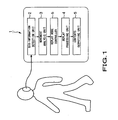
- the present invention is applied to a contents reproducing device 1 for reproducing music or image contents.
- the contents reproducing device 1, embodying the present invention includes a bio-information detection unit 2 for detecting the user's movements as the bio-information, a movement analysis unit 3 for analyzing e.g. the user's movements, based on the bio-information, a replay processing unit 4 for converting the contents into a replay signal, a contents outputting unit 5 for outputting the replay signal as sound or image, and a contents replay mode controller 6 for controlling the replay mode of the contents responsive to the user's movements.
- the bio-information detection unit 2 detects the bio-information that is changed with life activities or movements of the user.
- the bio-information detection unit 2 may be exemplified by an acceleration sensor, a speed sensor, a pressure sensor, a pressure sensor, a body movement acceleration sensor, a gyro sensor and a position sensor.
- the bio-information detection unit 2 is shown in Fig.1 as being integrally enclosed in the contents reproducing device 1, the two may be separated from each other and interconnected by a cable or via wireless communication.
- the movement analysis unit 3 detects the user's movements or features based on the results of detection from the bio-information detection unit 2. For example, from an output of the speed sensor, it may be detected whether the user is walking or running. When the user is walking, more detailed movements, such as the walking pitch of the user (distance the user walks by one step), walking tempo (time needed per step), variations in the walking tempo, habit in walking, walking speed, rotational angular velocity, variations in the body, position or orientation, may be detected.
- more detailed movements such as the walking pitch of the user (distance the user walks by one step), walking tempo (time needed per step), variations in the walking tempo, habit in walking, walking speed, rotational angular velocity, variations in the body, position or orientation, may be detected.
- the replay mode controller 6 varies the replay mode of music contents based on the movement and the bio-information of the user.
- the replay mode controller 6 controls the replay speed of the contents, sound volume, beat sound, sound tone or display of titles of the contents.
- the replay processing unit 4 converts the contents into replay signals, such as speech signals or image signals.
- the contents to be reproduced may be recording mediums, such as Compact Disc or Mini-Disc, or auxiliary recording devices, such as a hard disc drive (HDD).
- the contents to be reproduced may also be downloaded over a network from an external storage device.
- the contents to be reproduced may also be the digitized music information, such as musical instrument digital interface (MIDI) file.
- the replay processing unit 4 is able to change the replay mode of the replay signals, such as replay speed, replay sound volume, beat sound volume, sound tone, or titles of the music contents.
- the replay processing unit 4 changes an output in accordance with a command signal from the replay mode controller 6.
- the contents outputting unit 5 outputs replay signals, generated by the replay processing unit 4, as sound or images.
- the contents outputting unit 5 may be a device for radiating the images or music to outside, such as a loudspeaker or a display, or a device mounted to about a user's ear or eye, such as a headphone or a head mount display, so that the image or the picture is output only to the user.
- the music replay device 10 exercises control for matching the music contents replay speed to the user's walking tempo.
- the music contents are acquired from a recording medium, such as the Compact Disc or Mini-Disc (registered trademark), an auxiliary recording medium, such as HDD (hard disc drive), or from a server on the network.
- the music replay device 10 may be carried about outdoors, with a battery enclosed therein.
- the music replay device 10 is provided with an output terminal for outputting music contents reproduced by a replay processing unit 11.
- the output terminal is provided with a headphone 15.
- the user privately enjoys the music output from the headphone 15.
- This headphone 15 is provided with a vibration sensor 12 for detecting vertical movement of the user as vibrations.
- a walking movement detection unit 13 detects the user's walking tempo based on user's vertical movements.
- a replay mode controller 14 controls the user's walking tempo and the music replay speed.
- the music replay device 10 includes a replay processing unit 11 for converting music contents into replay signals, a vibration sensor 12 for detecting user's vertical movements as vibrations, a walking movement detection unit 13 for detecting the user's walking tempo based on an output of the vibration sensor 12, a replay mode controller 14 for controlling the replay mode of the music contents, responsive to the user's walking, a headphone 15, outputting music contents as sound, an input unit 16/ output unit 17, as a user interface, a recording unit 18, as auxiliary recording means, a CPU (central processing unit) 19, controlling the music replay device 10 in its entirety, a RAM (random access memory) 20, as a work area for the CPU 19, and a ROM (read-only memory) 21, for storing the programs or the setting information.
- a replay processing unit 11 for converting music contents into replay signals
- a vibration sensor 12 for detecting user's vertical movements as vibrations
- a walking movement detection unit 13 for detecting the user's walking tempo based on an output of the vibration sensor 12
- the music replay device 10 also includes a network interface 22 for connection to an external network, a wireless interface 23 for transmitting/ receiving the information over a wireless path, and a bio-information sensor 24 for measuring the bio-information, excepting the user's vertical movements, such as heart rate or skin surface temperature.
- the vibration sensor 12 is mounted on headphones 15a to 15c on the music replay device 10.
- Fig.3 shows a mounting example of the vibration sensor 12.
- Fig.3a shows an overhead type headphone 15a.
- This overhead type headphone 15a is such a headphone in which a connecting part 33 interconnecting left and right loudspeakers 31, 32 is set on the user's scalp.
- the vibration sensor 12 is mounted at the center of the connecting part 33, that is, on the user's scalp.
- Fig.3b shows a neckband type headphone 15b.
- the neckband type headphone 15b is such a headphone in which a connecting part 36 interconnecting left and right loudspeakers 34, 35 is set about the user's occipital zone.
- the vibration sensor 12 is mounted at the center of the connecting portion 36, that is, in rear of the occipital zone of the user.
- Fig.3c shows an example of an inner ear type headphone 15c.
- This inner ear type headphone 15c is such a one in which a loudspeaker is inserted into the user's ear hole.
- vibration sensors 12 are mounted in the left and right loudspeakers 37, 38.
- the vibration sensor 12 detects the vibrations along the vertical axis.
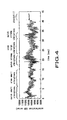
- Fig.4 shows an output example of the vibration sensor 12 during walking.
- the abscissa and the ordinate denote time and acceleration, respectively.
- small quick vibrations are detected within an interval of 0 to 6 seconds as from the start of measurement. Within 6 to 15 seconds small slow vibrations are detected and, within 18 to 22 seconds, strong quick vibrations are detected. Within 23 to 32 seconds, large slow vibrations are detected and, within 32 to 34 seconds, strong quick vibrations are detected.
- the walking movement detection unit 13 detects the user's walking tempo, based on the period of the vibrations, while detecting the strength of tramping, based on the amplitudes of vibrations, and detecting whether or not the user is walking, based on the waveform of the vibrations.
- the replay mode controller 14 compares the user's usual walking tempo to the user's current walking tempo and quickening the replay speed of the music contents when the user's walking tempo is faster than the usual value, while slowing the replay speed of the music contents when the user's walking tempo is faster than the usual value.
- the usual walking tempo is calculated through learning.
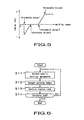
- Fig.5 shows the amount of change of the replay speed relative to the current walking tempo.
- the abscissa and the ordinate of Fig.5 denote the user's current walking tempo and the amount of change of the replay speed, respectively.
- the replay mode controller 14 does not change the replay speed for the music contents. The reason is that, if the output is from "0 to threshold value 1", the user is walking at an extremely slow rate or is at a standstill, and hence it is necessary to prevent music contents from ceasing to be reproduced properly as a result of matching the replay speed for the music contents to the user's walking tempo.
- the replay mode controller 14 deems that the user's walking tempo is slower than usual, and slows down the music replay rate than the actual rate in proportion to the lowering of the user's walking tempo.
- the replay mode controller 14 deems that the user is walking at a usual walking tempo, and keeps the music replay rate unchanged.
- the replay mode controller 14 deems that the user is walking at a tempo faster than the usual rate, and quickens the music replay rate in proportion to the user's walking tempo becoming faster.
- the replay mode controller 14 deems that the user is walking at a tempo appreciably faster than the usual walking tempo, and keeps the fastest music replay rate.
- the music replay device 10 On receipt of a replay start command input from a user, the music replay device 10 commences to detect the user's walking tempo. In detecting the walking tempo, an acceleration sensor, mounted to a part of the user's body, detects the user's vertical movements (step S11). The walking movement detection unit 13 is supplied with the results detected by the acceleration sensor, and detects the user's walking tempo from the input vibration waveform.
- the replay mode controller 14 compares the user's current walking tempo to the usual walking tempo and, if the current walking tempo is faster or slower than the usual walking tempo, the replay mode controller 14 raises or lowers the replay rate of the music contents, respectively (step S13).
- a walking sensor 40 may also be used in place of the acceleration sensor 12 in Example 1.
- the walking sensor 40 is a sensor detecting the touchdown of the user's foot on the floor or ground, and is mounted to a heel of the user's shoe.
- the walking sensor 40 used in Fig.7 , is a foil-shaped general-purpose strain gauge 41 and is mounted to a phosphor bronze plate 42.
- An output terminal 43 of the foil-shaped general-purpose strain gauge 41 is reinforced with a stiffener 44 and is extended in this state to outside the phosphor bronze plate 42.
- the output terminal 43 of the foil-shaped general-purpose strain gauge 41 is connected to an amplifier 45, an output terminal 46 of which is connected to a wireless transmitting unit 47. This wireless transmitting unit 47 transmits an output of the foil-shaped general-purpose strain gauge 41 to the wireless interface 23 of the music replay device 10.
- Fig.8 shows exemplary outputs of the walking sensor 40.
- an output when the user walks with a usual walking tempo an output when the user walks with a slow walking tempo and an output when the user walks with a quicker walking tempo, are shown.
- the output of the walking sensor 40 becomes maximum and minimum when the user's foot contacts the floor or ground and when the user's foot has cleared the floor or ground, respectively.
- the walking sensor 40 may be mounted on each of the left and right feet or may be mounted on only one foot, in which case the interval equal to one half the touchdown interval (stride) is used as the walking tempo.
- the user's walking tempo is the time interval as from the time one of the user's feet contacts the floor or ground until the other foot touches the floor or ground, that is, the time interval as from the time the value of the walking sensor 40 has become maximum until the value of the walking sensor 40 has become maximum.
- a microphone may be mounted to the main body unit of the music replay device 10, the user's apparel, or to the timepiece, to detect the user's movements.
- the mobile phone is provided with a microphone, which may be used for detecting that the user has moved.
- the music replay device 10 is able not only to change the replay speed but also to synchronize the user's touchdown timing with the beat of the music.
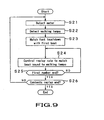
- Fig.9 shows the operation of the replay mode controller 14 when the instant when the user's foot has contacted the floor or ground is synchronized with the beat.
- the replay mode controller 14 detects the meter of music contents and the user's walking tempo.
- the characteristic frequency of the base or the snare may be detected from the frequency distribution of the replay signal or the generation interval of the low-pitch sound may be detected (step S21).
- the walking tempo may be detected on the basis of the user's vertical movements or from an output of the walking sensor, as described above (step S22).
- the replay mode controller 14 Based on the user's walking tempo, the replay mode controller 14 outputs so that the best will be synchronized with the instant the user's foot touches the floor or ground (step S23). The replay mode controller 14 subsequently controls the replay rate of the music contents so that the user's walking tempo is synchronized with the beat sound (step S24).
- step S25 When the music replay has come to a close until the end of a music number, the replay mode controller 14 (step S25; YES), the replay mode controller 14 proceeds to the processing of a step S21 to detect the meter of the next music number. If the replay has not reached the end of a music number (step S25; NO), the replay mode controller 14 shifts the processing to a step S24 to control the replay rate of the music contents.
- step S26 When the music replay has come to a close until the end of the music contents (step S26; YES), the replay mode controller 14 terminates the control of the replay rate. When the music replay has not come to a close until the end of the music contents (step S26; NO), the replay mode controller 14 shifts the processing to a step S21 to detect the meter of the next music number.
- the control of synchronizing the touchdown of the user's foot with the beat of the music may be applied to dancing exercises.
- dancing one may take rhythm with the vertical body movements or do dance steps in timed relation to the sound.
- the beat interval is changed in keeping with the vertical movements of the user's body or the sound of the meter is reproduced simultaneously with stepout.
- the user may learn which swing may be used for which sound and the sound matching for dancing.
- the music replay device 10 is able to change the music replay mode based on the physiological changes in a user.
- the music replay device 10 is provided with a bio-information sensor 24 for detecting the bio-information of the user.
- the bio-information sensor 24 detects the bio-information, such as the pulse, skin sweating, skin resistance, myogenic potential or body surface temperature of the user.
- the bio-information sensor is mounted to an article worn by the user, such as a wrist band, wrist watch, apparel, shoe or clothes.
- the replay mode controller 14 changes the replay mode of the music contents in keeping with the bio-information of the user. Among changes in the replay mode, there are changes in the replay rate, in the replay sound volume, in the beat sound volume, changes in the contents reproduced, and in the sound tone.
Landscapes
- Engineering & Computer Science (AREA)
- General Health & Medical Sciences (AREA)
- Health & Medical Sciences (AREA)
- Theoretical Computer Science (AREA)
- Multimedia (AREA)
- Physics & Mathematics (AREA)
- Physical Education & Sports Medicine (AREA)
- Acoustics & Sound (AREA)
- Biomedical Technology (AREA)
- Physiology (AREA)
- Data Mining & Analysis (AREA)
- Databases & Information Systems (AREA)
- Molecular Biology (AREA)
- General Engineering & Computer Science (AREA)
- General Physics & Mathematics (AREA)
- Biophysics (AREA)
- Life Sciences & Earth Sciences (AREA)
- Electrophonic Musical Instruments (AREA)
- Headphones And Earphones (AREA)
- Television Signal Processing For Recording (AREA)
Claims (13)
- Dispositif de commande de mode de reproduction de contenu (1) comprenant :des moyens de détection d'informations biologiques (2) pour détecter des informations biologiques d'un utilisateur ;des moyens d'analyse de mouvement (3) pour analyser des mouvements de l'utilisateur sur la base desdites informations biologiques ; etdes moyens de commande de mode de reproduction (6) pour commander, en réponse à une modification desdits mouvements analysés dudit utilisateur, une modification de la vitesse de reproduction de contenu,caractérisé en ce queles moyens d'analyse de mouvement sont agencés pour calculer un rythme de mouvement habituel de l'utilisateur, et pour calculer au moins une première valeur de seuil, une deuxième valeur de seuil et une troisième valeur de seuil du rythme de mouvement de l'utilisateur, dans lequelentre les deuxième et troisième valeurs de seuil, un utilisateur est supposé bouger à un rythme habituel ; entre les première et deuxième valeurs de seuil, un utilisateur est supposé bouger à un rythme inférieur au rythme habituel ; et au-dessous de la première valeur de seuil, l'utilisateur est supposé bouger à un rythme encore plus faible, ou ne pas bouger ; et au-dessus de la troisième valeur de seuil l'utilisateur est supposé bouger à un rythme supérieur au rythme habituel, etles moyens de commande de mode de reproduction (6) sont agencés pour :ne pas modifier le mode de reproduction du contenu lorsque les mouvements analysés de l'utilisateur indiquent que l'utilisateur bouge à un rythme inférieur à la première valeur de seuil ou à un rythme entre les deuxième et troisième valeurs de seuil ;modifier le mode de reproduction du contenu lorsque les mouvements analysés de l'utilisateur indiquent que l'utilisateur bouge à un rythme entre les première et deuxième valeurs de seuil ou supérieur à la troisième valeur de seuil.
- Dispositif de commande de mode de reproduction de contenu (1) selon la revendication 1, dans lequel lesdits moyens de commande de mode de reproduction (6) sont agencés, dans la commande de mode de reproduction, pour commander au moins l'un : d'une vitesse de reproduction, d'une sélection de contenu, d'un volume sonore, d'un volume de battement, d'un son de battement, d'une tonalité sonore et d'une indication de titre.
- Dispositif de commande de mode de reproduction de contenu (1) selon la revendication 1 ou 2, dans lequel lesdits moyens de détection d'informations biologiques (2) peuvent être montés (15) sur le corps de l'utilisateur.
- Dispositif de commande de mode de reproduction de contenu (1) selon l'une quelconque des revendications précédentes, dans lequel lesdits moyens d'analyse de mouvement (3) sont agencés pour détecter (S12) un rythme progressif de l'utilisateur et lesdits moyens de commande de mode de reproduction (6) sont agencés pour synchroniser la vitesse de reproduction du contenu avec ledit rythme progressif lorsque ledit rythme progressif est supérieur à ladite première valeur de seuil.
- Dispositif de commande de mode de reproduction (1) selon l'une quelconque des revendications précédentes, dans lequel lesdites informations biologiques sont l'accélération ou la vitesse dans la direction vers le haut et vers le bas de l'utilisateur et lesdits moyens d'analyse de mouvement (3) sont agencés pour détecter (S12) le rythme progressif sur la base du mouvement (S11) dans la direction vers le haut et vers le bas de l'utilisateur.
- Dispositif de commande de mode de reproduction (1) selon l'une quelconque des revendications précédentes, dans lequel lesdits moyens de détection d'informations biologiques (2) sont un capteur de pression (42) pouvant être monté sur le dessous d'une chaussure portée par ledit utilisateur et lesdits moyens d'analyse de mouvement (3) sont agencés pour détecter la pose du dessous de la chaussure portée par l'utilisateur et/ou la séparation du dessous de la chaussure de l'utilisateur de la surface de pose.
- Dispositif de commande de mode de reproduction (1) selon la revendication 6, dans lequel les moyens de commande de mode de reproduction (6) sont agencés pour synchroniser la pose du dessous de la chaussure portée par l'utilisateur avec un son de battement du contenu.
- Procédé de commande du mode de reproduction de contenu comprenant :une étape de détection d'informations biologiques (S11) consistant à détecter des informations biologiques d'un utilisateur ;une étape d'analyse de mouvement (S12) consistant à analyser des mouvements d'un utilisateur sur la base desdites informations biologiques ;une étape de détermination de mode de reproduction (S13) consistant à déterminer une modification d'un mode de reproduction de contenu sur la base desdites informations biologiques ; etune étape de reproduction consistant à reproduire un contenu avec un mode de reproduction déterminé par ladite étape de détermination de mode de reproduction,caractérisé en ce que le procédé consiste en outre à :calculer un rythme de mouvement habituel d'un utilisateur ;calculer au moins des première, deuxième et troisième valeurs de seuil du rythme de mouvement de l'utilisateur, dans lequel :entre les deuxième et troisième valeurs de seuil, l'utilisateur est supposé bouger à un rythme habituel ; entre les première et deuxième valeurs de seuil, un utilisateur est supposé bouger à un rythme inférieur au rythme habituel ; au-dessous de la première valeur de seuil, l'utilisateur est supposé bouger à un rythme encore plus faible, ou ne pas bouger ; et au-dessus de la troisième valeur de seuil, l'utilisateur est supposé bouger à un rythme supérieur au rythme habituel, etsi les mouvements analysés de l'utilisateur indiquent que le rythme de mouvement est inférieur à la première valeur de seuil ou entre les deuxième et troisième valeurs de seuil, ne pas modifier un mode de reproduction de contenu ;si les mouvements analysés de l'utilisateur indiquent que le rythme de mouvement est entre les première et deuxième valeurs de seuil ou supérieur à la troisième valeur de seuil, modifier le mode de reproduction du contenu.
- Procédé de commande du mode de reproduction selon la revendication 8, dans lequel ladite étape de détermination de mode de reproduction (S13) commande, dans la commande de mode de reproduction, au moins l'un : d'une vitesse de reproduction, d'une sélection de contenu, d'un volume sonore, d'un volume de battement, d'un son de battement, d'une tonalité sonore et d'une indication de titre.
- Procédé de commande du mode de reproduction selon la revendication 8 ou 9, dans lequel ladite étape d'analyse de mouvement (S12) comprend la détection d'un rythme progressif de l'utilisateur sur la base desdites informations biologiques et ladite étape de détermination de mode de reproduction (S13) comprend la synchronisation du rythme progressif de l'utilisateur avec la vitesse de reproduction du contenu lorsque le rythme progressif de l'utilisateur est supérieur à la première valeur de seuil.
- Procédé de commande du mode de reproduction selon l'une quelconque des revendications 8 à 10, dans lequel lesdites informations biologiques sont l'accélération ou la vitesse dans la direction vers le haut et vers le bas de l'utilisateur et ladite étape d'analyse de mouvement (S12) comprend la détection d'un rythme progressif sur la base de l'accélération ou de la vitesse de l'utilisateur.
- Procédé de commande du mode de reproduction selon l'une quelconque des revendications 8 à 11, dans lequel ladite étape de détection d'informations biologiques (S11) comprend la détection de la pose du dessous d'une chaussure portée par ledit utilisateur sur une surface de pose et/ou de la séparation du dessous de la chaussure portée par l'utilisateur de la surface de pose et ladite étape d'analyse de mouvement (S12) comprend la détection d'un rythme progressif de l'utilisateur.
- Procédé de commande du mode de reproduction selon la revendication 12, comprend en outre la synchronisation de la pose du dessous de la chaussure portée par l'utilisateur avec un son de battement du contenu.
Applications Claiming Priority (2)
| Application Number | Priority Date | Filing Date | Title |
|---|---|---|---|
| JP2003391359A JP2005156641A (ja) | 2003-11-20 | 2003-11-20 | 再生態様制御装置及び再生態様制御方法 |
| JP2003391359 | 2003-11-20 |
Publications (3)
| Publication Number | Publication Date |
|---|---|
| EP1533784A2 EP1533784A2 (fr) | 2005-05-25 |
| EP1533784A3 EP1533784A3 (fr) | 2005-09-28 |
| EP1533784B1 true EP1533784B1 (fr) | 2010-07-21 |
Family
ID=34431613
Family Applications (1)
| Application Number | Title | Priority Date | Filing Date |
|---|---|---|---|
| EP04256973A Expired - Lifetime EP1533784B1 (fr) | 2003-11-20 | 2004-11-10 | Appareil et procédé pour contrôler le mode de reproduction |
Country Status (6)
| Country | Link |
|---|---|
| US (1) | US7544880B2 (fr) |
| EP (1) | EP1533784B1 (fr) |
| JP (1) | JP2005156641A (fr) |
| KR (1) | KR20050049345A (fr) |
| CN (1) | CN1618400A (fr) |
| DE (1) | DE602004028207D1 (fr) |
Families Citing this family (126)
| Publication number | Priority date | Publication date | Assignee | Title |
|---|---|---|---|---|
| IL130818A (en) | 1999-07-06 | 2005-07-25 | Intercure Ltd | Interventive-diagnostic device |
| WO2004014226A1 (fr) * | 2002-08-09 | 2004-02-19 | Intercure Ltd. | Metronome generalise destine a modifier l'activite biorythmique |
| US8672852B2 (en) | 2002-12-13 | 2014-03-18 | Intercure Ltd. | Apparatus and method for beneficial modification of biorhythmic activity |
| US7236154B1 (en) | 2002-12-24 | 2007-06-26 | Apple Inc. | Computer light adjustment |
| US7521623B2 (en) | 2004-11-24 | 2009-04-21 | Apple Inc. | Music synchronization arrangement |
| US7616097B1 (en) | 2004-07-12 | 2009-11-10 | Apple Inc. | Handheld devices as visual indicators |
| US7894177B2 (en) | 2005-12-29 | 2011-02-22 | Apple Inc. | Light activated hold switch |
| JP2005156641A (ja) * | 2003-11-20 | 2005-06-16 | Sony Corp | 再生態様制御装置及び再生態様制御方法 |
| CA2574642A1 (fr) | 2004-07-23 | 2006-01-26 | Intercure Ltd. | Appareil et procede de determination d'un modele de respiration a l'aide d'un microphone sans contact |
| JP2006114174A (ja) | 2004-10-18 | 2006-04-27 | Sony Corp | コンテンツ再生方法およびコンテンツ再生装置 |
| JP4243862B2 (ja) | 2004-10-26 | 2009-03-25 | ソニー株式会社 | コンテンツ利用装置およびコンテンツ利用方法 |
| JP4713129B2 (ja) * | 2004-11-16 | 2011-06-29 | ソニー株式会社 | 音楽コンテンツの再生装置、音楽コンテンツの再生方法および音楽コンテンツおよびその属性情報の記録装置 |
| US7603414B2 (en) * | 2005-09-09 | 2009-10-13 | Outland Research, Llc | System, method and computer program product for collaborative background music among portable communication devices |
| US20070189544A1 (en) * | 2005-01-15 | 2007-08-16 | Outland Research, Llc | Ambient sound responsive media player |
| US7489979B2 (en) | 2005-01-27 | 2009-02-10 | Outland Research, Llc | System, method and computer program product for rejecting or deferring the playing of a media file retrieved by an automated process |
| US7562117B2 (en) | 2005-09-09 | 2009-07-14 | Outland Research, Llc | System, method and computer program product for collaborative broadcast media |
| JP4247626B2 (ja) * | 2005-01-20 | 2009-04-02 | ソニー株式会社 | 再生装置および再生方法 |
| JP4595555B2 (ja) | 2005-01-20 | 2010-12-08 | ソニー株式会社 | コンテンツ再生装置およびコンテンツ再生方法 |
| US20070213110A1 (en) * | 2005-01-28 | 2007-09-13 | Outland Research, Llc | Jump and bob interface for handheld media player devices |
| US20070106663A1 (en) * | 2005-02-01 | 2007-05-10 | Outland Research, Llc | Methods and apparatus for using user personality type to improve the organization of documents retrieved in response to a search query |
| US8187209B1 (en) * | 2005-03-17 | 2012-05-29 | Great Lakes Neurotechnologies Inc | Movement disorder monitoring system and method |
| JP5225548B2 (ja) * | 2005-03-25 | 2013-07-03 | ソニー株式会社 | コンテンツ検索方法、コンテンツリスト検索方法、コンテンツ検索装置、コンテンツリスト検索装置および検索サーバ |
| KR100594136B1 (ko) * | 2005-03-28 | 2006-06-28 | 삼성전자주식회사 | 휴대단말기에서 하드디스크 드라이브의 파킹판단 장치 및방법 |
| JP4741267B2 (ja) | 2005-03-28 | 2011-08-03 | ソニー株式会社 | コンテンツ推薦システム、通信端末およびコンテンツ推薦方法 |
| US20060241864A1 (en) * | 2005-04-22 | 2006-10-26 | Outland Research, Llc | Method and apparatus for point-and-send data transfer within an ubiquitous computing environment |
| US20060288846A1 (en) * | 2005-06-27 | 2006-12-28 | Logan Beth T | Music-based exercise motivation aid |
| US20080306619A1 (en) * | 2005-07-01 | 2008-12-11 | Tufts University | Systems And Methods For Synchronizing Music |
| JP2007011928A (ja) | 2005-07-04 | 2007-01-18 | Sony Corp | コンテンツ提供システム、コンテンツ提供装置、コンテンツ配信サーバ、コンテンツ受信端末およびコンテンツ提供方法 |
| US7519537B2 (en) * | 2005-07-19 | 2009-04-14 | Outland Research, Llc | Method and apparatus for a verbo-manual gesture interface |
| JP5133508B2 (ja) | 2005-07-21 | 2013-01-30 | ソニー株式会社 | コンテンツ提供システム、コンテンツ提供装置、コンテンツ配信サーバ、コンテンツ受信端末およびコンテンツ提供方法 |
| JP4770313B2 (ja) * | 2005-07-27 | 2011-09-14 | ソニー株式会社 | オーディオ信号の生成装置 |
| JP4492488B2 (ja) * | 2005-08-26 | 2010-06-30 | ソニー株式会社 | 情報処理装置および情報処理方法、並びにプログラム |
| KR100714093B1 (ko) * | 2005-08-30 | 2007-05-02 | 삼성전자주식회사 | 운동 상태 관리 방법 및 그 장치 |
| JP2007075172A (ja) | 2005-09-12 | 2007-03-29 | Sony Corp | 音出力制御装置、音出力制御方法および音出力制御プログラム |
| US8176101B2 (en) | 2006-02-07 | 2012-05-08 | Google Inc. | Collaborative rejection of media for physical establishments |
| KR100664961B1 (ko) * | 2005-09-29 | 2007-01-04 | 삼성전자주식회사 | 다중 음향 출력을 지원하는 모바일 기기 |
| US7577522B2 (en) | 2005-12-05 | 2009-08-18 | Outland Research, Llc | Spatially associated personal reminder system and method |
| US7825319B2 (en) * | 2005-10-06 | 2010-11-02 | Pacing Technologies Llc | System and method for pacing repetitive motion activities |
| US20110072955A1 (en) * | 2005-10-06 | 2011-03-31 | Turner William D | System and method for pacing repetitive motion activities |
| US7586032B2 (en) * | 2005-10-07 | 2009-09-08 | Outland Research, Llc | Shake responsive portable media player |
| SG131781A1 (en) * | 2005-10-07 | 2007-05-28 | Creative Tech Ltd | A portable digital media device with a force sensor |
| DE102005049485B4 (de) * | 2005-10-13 | 2007-10-18 | Fraunhofer-Gesellschaft zur Förderung der angewandten Forschung e.V. | Steuerung der Wiedergabe von Audioinformationen |
| JP2007135737A (ja) * | 2005-11-16 | 2007-06-07 | Sony Corp | 動作支援方法および動作支援装置 |
| KR100735419B1 (ko) * | 2005-12-02 | 2007-07-04 | 삼성전자주식회사 | 발동작을 이용한 휴대기기 조작 시스템 및 방법 |
| JP4654896B2 (ja) * | 2005-12-06 | 2011-03-23 | ソニー株式会社 | オーディオ信号の再生装置および再生方法 |
| WO2007066819A1 (fr) | 2005-12-09 | 2007-06-14 | Sony Corporation | Dispositif et procede d’edition musicale |
| CN101326569B (zh) * | 2005-12-09 | 2012-07-18 | 索尼株式会社 | 音乐编辑设备和音乐编辑方法 |
| EP1959427A4 (fr) | 2005-12-09 | 2011-11-30 | Sony Corp | Dispositif d'edition musicale, procede de creation d' informations d'edition musicale, et support d'enregistrement d' informations d'edition musicale |
| JP5036177B2 (ja) * | 2005-12-12 | 2012-09-26 | オリンパス株式会社 | 情報表示装置 |
| US20070145680A1 (en) * | 2005-12-15 | 2007-06-28 | Outland Research, Llc | Shake Responsive Portable Computing Device for Simulating a Randomization Object Used In a Game Of Chance |
| JP4264752B2 (ja) | 2005-12-16 | 2009-05-20 | ソニー株式会社 | オーディオ信号の再生機および再生方法 |
| JP2007188597A (ja) | 2006-01-13 | 2007-07-26 | Sony Corp | コンテンツ再生装置およびコンテンツ再生方法並びにプログラム |
| JP4415946B2 (ja) | 2006-01-12 | 2010-02-17 | ソニー株式会社 | コンテンツ再生装置および再生方法 |
| JP2007188598A (ja) | 2006-01-13 | 2007-07-26 | Sony Corp | コンテンツ再生装置およびコンテンツ再生方法並びにプログラム |
| JP4839853B2 (ja) * | 2006-01-20 | 2011-12-21 | ヤマハ株式会社 | 音楽再生制御装置及び音楽再生装置 |
| EP1811496B1 (fr) * | 2006-01-20 | 2009-06-17 | Yamaha Corporation | Appareil pour le contrôle de la reproduction de musique et appareil de reproduction de musique |
| JP4702071B2 (ja) * | 2006-01-20 | 2011-06-15 | ヤマハ株式会社 | 音楽再生制御装置及び音楽再生装置 |
| JP2007226935A (ja) | 2006-01-24 | 2007-09-06 | Sony Corp | 音響再生装置、音響再生方法および音響再生プログラム |
| DE102006006773A1 (de) * | 2006-02-13 | 2007-08-23 | Schäfer, Axel | Vorrichtung und Verfahren zum Wiedergeben von Musik |
| JP2007242215A (ja) | 2006-02-13 | 2007-09-20 | Sony Corp | コンテンツ再生リスト生成装置、コンテンツ再生リスト生成方法およびプログラムが記録された記録媒体 |
| JP4811046B2 (ja) | 2006-02-17 | 2011-11-09 | ソニー株式会社 | コンテンツの再生装置、オーディオ再生機およびコンテンツの再生方法 |
| JP2007286812A (ja) * | 2006-04-14 | 2007-11-01 | Sony Corp | 携帯型電子機器、ユーザインターフェイス制御方法、プログラム |
| WO2007138559A1 (fr) * | 2006-06-01 | 2007-12-06 | Koninklijke Philips Electronics N.V. | Système et procédé pour contrôler l'intensité d'un exercice |
| JP2008015595A (ja) | 2006-07-03 | 2008-01-24 | Sony Corp | コンテンツ選択推薦方法、サーバ、コンテンツ再生装置、コンテンツ記録装置およびコンテンツ選択推薦用プログラム |
| JP4305671B2 (ja) | 2006-08-22 | 2009-07-29 | ソニー株式会社 | 健康運動支援システム、携帯型音楽再生装置、サービス情報提供装置、情報処理装置、健康運動支援方法 |
| JP4301270B2 (ja) * | 2006-09-07 | 2009-07-22 | ヤマハ株式会社 | オーディオ再生装置およびオーディオ再生方法 |
| US20080097633A1 (en) * | 2006-09-29 | 2008-04-24 | Texas Instruments Incorporated | Beat matching systems |
| TW200820225A (en) * | 2006-10-25 | 2008-05-01 | Taiwan Chest Disease Ass | Home-based exercise tranining method and system guided by automatically assessment and selecting music |
| US8005768B2 (en) | 2006-11-28 | 2011-08-23 | Samsung Electronics Co., Ltd. | Multimedia file reproducing apparatus and method |
| US7956274B2 (en) * | 2007-03-28 | 2011-06-07 | Yamaha Corporation | Performance apparatus and storage medium therefor |
| JP4311466B2 (ja) * | 2007-03-28 | 2009-08-12 | ヤマハ株式会社 | 演奏装置およびその制御方法を実現するプログラム |
| KR100753481B1 (ko) * | 2007-03-29 | 2007-08-31 | (주)이노비츠아이엔씨 | 보행 중 안전을 위한 휴대용 음원 재생 장치 및 그 제어방법 |
| US9028430B2 (en) | 2007-04-19 | 2015-05-12 | Nike, Inc. | Footwork training system and method |
| US8269093B2 (en) | 2007-08-21 | 2012-09-18 | Apple Inc. | Method for creating a beat-synchronized media mix |
| TWI427573B (zh) | 2007-12-31 | 2014-02-21 | Ind Tech Res Inst | 肢體互動式學習方法與裝置 |
| JP5338104B2 (ja) * | 2008-03-27 | 2013-11-13 | ヤマハ株式会社 | 運動支援装置およびプログラム |
| CN101686573A (zh) * | 2008-09-24 | 2010-03-31 | 鸿富锦精密工业(深圳)有限公司 | 移动通信系统及其控制方法和耳机 |
| US8471679B2 (en) * | 2008-10-28 | 2013-06-25 | Authentec, Inc. | Electronic device including finger movement based musical tone generation and related methods |
| JP5321002B2 (ja) * | 2008-11-18 | 2013-10-23 | オムロンヘルスケア株式会社 | 体動バランス検出装置、体動バランス検出プログラム、体動バランス検出方法 |
| FR2938747A1 (fr) * | 2008-11-26 | 2010-05-28 | Univ Rennes | Multicapteurs de mouvement pour l'asservissement sans appareillage du defilement de videos issues d'une camera en mouvement. |
| JP5543929B2 (ja) | 2009-02-05 | 2014-07-09 | 国立大学法人大阪大学 | 入力デバイス、ウェアラブルコンピュータ、及び入力方法 |
| FR2942344B1 (fr) * | 2009-02-13 | 2018-06-22 | Movea | Dispositif et procede de controle du defilement d'un fichier de signaux a reproduire |
| KR20100099922A (ko) * | 2009-03-04 | 2010-09-15 | 삼성전자주식회사 | 휴대용 단말기의 음량 조절 장치 및 방법 |
| US9946583B2 (en) * | 2009-03-16 | 2018-04-17 | Apple Inc. | Media player framework |
| US8033959B2 (en) * | 2009-05-18 | 2011-10-11 | Adidas Ag | Portable fitness monitoring systems, and applications thereof |
| JP2010278965A (ja) * | 2009-06-01 | 2010-12-09 | Sony Ericsson Mobilecommunications Japan Inc | 携帯情報端末、携帯情報端末の制御方法及び制御プログラム |
| KR101635508B1 (ko) * | 2009-08-28 | 2016-07-04 | 삼성전자주식회사 | 컨텐트 제공 방법 및 장치 |
| JP5499633B2 (ja) | 2009-10-28 | 2014-05-21 | ソニー株式会社 | 再生装置、ヘッドホン及び再生方法 |
| CN102088498A (zh) * | 2009-12-04 | 2011-06-08 | 深圳富泰宏精密工业有限公司 | 手机及利用该手机帮助健身的方法 |
| EP2333778A1 (fr) * | 2009-12-04 | 2011-06-15 | Lg Electronics Inc. | Appareil de reproduction de données numériques et procédé de commande correspondant |
| KR101341483B1 (ko) * | 2009-12-18 | 2013-12-13 | 한국전자통신연구원 | 컨텐츠 재생 장치의 제어 장치 및 방법 |
| US8669842B2 (en) * | 2009-12-18 | 2014-03-11 | Electronics And Telecommunications Research Institute | Apparatus and method for controlling contents player |
| US20110242316A1 (en) * | 2010-03-30 | 2011-10-06 | Ramiro Velazquez Guerrero | Shoe-integrated tactile display for directional navigation |
| JP5771908B2 (ja) * | 2010-06-07 | 2015-09-02 | ヤマハ株式会社 | 楽音再生装置及びプログラム |
| CN102064832B (zh) * | 2010-11-11 | 2013-09-18 | 广东欧珀移动通信有限公司 | 一种随音乐变化振动效果的实现方法 |
| US10363453B2 (en) | 2011-02-07 | 2019-07-30 | New Balance Athletics, Inc. | Systems and methods for monitoring athletic and physiological performance |
| US9642415B2 (en) * | 2011-02-07 | 2017-05-09 | New Balance Athletics, Inc. | Systems and methods for monitoring athletic performance |
| JP5779943B2 (ja) * | 2011-03-31 | 2015-09-16 | ソニー株式会社 | 情報処理装置、情報処理方法、プログラム、及び記録媒体 |
| JP5352634B2 (ja) * | 2011-07-11 | 2013-11-27 | 株式会社エヌ・ティ・ティ・ドコモ | 入力装置 |
| JP6017765B2 (ja) * | 2011-07-25 | 2016-11-02 | ソニー株式会社 | 携帯型電子機器および信号処理方法 |
| ITPG20120027A1 (it) * | 2012-05-21 | 2013-11-22 | Muusa Srl | Sistema per la riproduzione di suoni associati a movimenti e relative tecniche di massaggio |
| US9183822B2 (en) * | 2012-05-23 | 2015-11-10 | Google Inc. | Music selection and adaptation for exercising |
| DE102012210098A1 (de) * | 2012-06-15 | 2013-12-19 | Robert Bosch Gmbh | Verfahren zum Auswählen von Musikstücken |
| CN103024655B (zh) * | 2012-11-19 | 2015-01-28 | 青岛歌尔声学科技有限公司 | 一种耳机振子检测装置、系统和方法 |
| CN103050140A (zh) * | 2012-12-10 | 2013-04-17 | 百度在线网络技术(北京)有限公司 | 音频文件的播放方法及设备 |
| CN103354095B (zh) * | 2013-06-26 | 2016-12-28 | 南京大学 | 音乐楼梯及其乐音播放实现方法 |
| US9269341B1 (en) * | 2013-06-30 | 2016-02-23 | Second Wind Technologies, Inc. | Method for processing music to match runners tempo |
| WO2016011843A1 (fr) * | 2014-07-24 | 2016-01-28 | 歌尔声学股份有限公司 | Procédé de détection de la fréquence cardiaque applicable dans un écouteur et écouteur capable de détecter la fréquence cardiaque |
| WO2016080873A1 (fr) * | 2014-11-18 | 2016-05-26 | Telefonaktiebolaget L M Ericsson (Publ) | Procédé et appareil de traitement vidéo à base de données physiologiques |
| US9710221B2 (en) * | 2014-12-23 | 2017-07-18 | Alistair James MacDonald | Intelligent safer music system for an operating room |
| US9978426B2 (en) | 2015-05-19 | 2018-05-22 | Spotify Ab | Repetitive-motion activity enhancement based upon media content selection |
| US9563268B2 (en) | 2015-05-19 | 2017-02-07 | Spotify Ab | Heart rate control based upon media content selection |
| CN108293162B (zh) * | 2015-08-28 | 2021-05-11 | 索尼公司 | 信息处理设备、信息处理方法和程序 |
| CN105404394B (zh) * | 2015-11-17 | 2019-02-12 | Oppo广东移动通信有限公司 | 显示界面的显示控制方法及移动终端 |
| US9966051B2 (en) * | 2016-03-11 | 2018-05-08 | Yamaha Corporation | Sound production control apparatus, sound production control method, and storage medium |
| JP6271670B2 (ja) * | 2016-09-29 | 2018-01-31 | ソニー株式会社 | 携帯型電子機器及び信号処理方法 |
| CN106527721B (zh) * | 2016-11-09 | 2020-06-16 | 广东小天才科技有限公司 | 一种音乐节奏控制方法及装置 |
| CN107734428B (zh) * | 2017-11-03 | 2019-10-01 | 中广热点云科技有限公司 | 一种3d音频播放设备 |
| WO2019150800A1 (fr) * | 2018-02-02 | 2019-08-08 | ソニー株式会社 | Dispositif de traitement d'informations, procédé de traitement d'informations et programme |
| US11127386B2 (en) * | 2018-07-24 | 2021-09-21 | James S. Brown | System and method for generating music from electrodermal activity data |
| US10524082B1 (en) * | 2018-10-24 | 2019-12-31 | Bose Corporation | Accelerometer-driven automatic volume and tone control |
| JP7363804B2 (ja) * | 2018-11-01 | 2023-10-18 | ソニーグループ株式会社 | 情報処理装置、情報処理方法及び記録媒体 |
| CN110337022B (zh) * | 2019-06-11 | 2022-04-12 | 福建天泉教育科技有限公司 | 基于关注度的视频变速播放方法、存储介质 |
| JP7375644B2 (ja) * | 2020-03-24 | 2023-11-08 | 株式会社Jvcケンウッド | 音入出力制御装置、音入出力制御方法、及びプログラム |
| CN113893139A (zh) * | 2020-07-07 | 2022-01-07 | 株式会社捷太格特 | 步行支援系统 |
| JP7578098B2 (ja) * | 2021-12-22 | 2024-11-06 | カシオ計算機株式会社 | 楽器用張力検出装置 |
Family Cites Families (29)
| Publication number | Priority date | Publication date | Assignee | Title |
|---|---|---|---|---|
| US5137501A (en) * | 1987-07-08 | 1992-08-11 | Mertesdorf Frank L | Process and device for supporting fitness training by means of music |
| JPH0934456A (ja) * | 1995-07-14 | 1997-02-07 | Kawai Musical Instr Mfg Co Ltd | 電子楽器および電子発声装置 |
| US20030171189A1 (en) * | 1997-06-05 | 2003-09-11 | Kaufman Arthur H. | Audible electronic exercise monitor |
| US6493652B1 (en) * | 1997-10-02 | 2002-12-10 | Personal Electronic Devices, Inc. | Monitoring activity of a user in locomotion on foot |
| US6898550B1 (en) * | 1997-10-02 | 2005-05-24 | Fitsense Technology, Inc. | Monitoring activity of a user in locomotion on foot |
| US6301964B1 (en) | 1997-10-14 | 2001-10-16 | Dyhastream Innovations Inc. | Motion analysis system |
| US6230047B1 (en) * | 1998-10-15 | 2001-05-08 | Mchugh David | Musical listening apparatus with pulse-triggered rhythm |
| JP3465628B2 (ja) * | 1999-05-06 | 2003-11-10 | ヤマハ株式会社 | オーディオ信号の時間軸圧伸方法及び装置 |
| JP2002023742A (ja) * | 2000-07-12 | 2002-01-25 | Yamaha Corp | 発音制御システム、操作ユニットおよび電子打楽器 |
| EP1860642A3 (fr) * | 2000-01-11 | 2008-06-11 | Yamaha Corporation | Dispositif et méthod pour détecter le mouvement d'un artiste et commander une interprétation musicale de manière interactive |
| JP2001299080A (ja) | 2000-04-20 | 2001-10-30 | Yamamoto Co Ltd | 育苗用培土の製造方法及び育苗用培土 |
| JP2001299980A (ja) * | 2000-04-21 | 2001-10-30 | Mitsubishi Electric Corp | 運動支援装置 |
| JP2001314385A (ja) * | 2000-05-08 | 2001-11-13 | Mitsubishi Electric Corp | 生体リズム同期化システム |
| US6672991B2 (en) * | 2001-03-28 | 2004-01-06 | O'malley Sean M. | Guided instructional cardiovascular exercise with accompaniment |
| FR2827069A1 (fr) * | 2001-07-03 | 2003-01-10 | Thomson Multimedia Sa | Dispositifs et procede de production de musique en fonction de parametres physiologiques |
| JP3947959B2 (ja) * | 2001-10-02 | 2007-07-25 | カシオ計算機株式会社 | 曲データ配信装置および曲データ配信方法 |
| JP2003177749A (ja) * | 2001-12-11 | 2003-06-27 | Mariko Hagita | ステップに合わせて音楽を流す装置 |
| WO2003094148A1 (fr) * | 2002-04-30 | 2003-11-13 | Nokia Corporation | Type de metadonnees destine a un format de donnees de medias |
| WO2004072767A2 (fr) | 2003-02-12 | 2004-08-26 | Koninklijke Philips Electronics N.V. | Appareil, methode, et produit de programme informatique de reproduction audio |
| US7521623B2 (en) * | 2004-11-24 | 2009-04-21 | Apple Inc. | Music synchronization arrangement |
| JP2005156641A (ja) * | 2003-11-20 | 2005-06-16 | Sony Corp | 再生態様制御装置及び再生態様制御方法 |
| WO2005071662A1 (fr) * | 2004-01-21 | 2005-08-04 | Koninklijke Philips Electronics N.V. | Procede et systeme de determination d'une mesure d'ambiguite de tempo pour un signal d'entree musical |
| EP1842182A2 (fr) * | 2005-01-10 | 2007-10-10 | Eyepoint Ltd. | Entraineur musical pour exercices physiques |
| TWI262782B (en) * | 2005-06-07 | 2006-10-01 | Nat Applied Res Lab Nat Ce | Method for exercise tolerance measurement |
| JP2007075172A (ja) * | 2005-09-12 | 2007-03-29 | Sony Corp | 音出力制御装置、音出力制御方法および音出力制御プログラム |
| EP1811496B1 (fr) * | 2006-01-20 | 2009-06-17 | Yamaha Corporation | Appareil pour le contrôle de la reproduction de musique et appareil de reproduction de musique |
| JP4305671B2 (ja) * | 2006-08-22 | 2009-07-29 | ソニー株式会社 | 健康運動支援システム、携帯型音楽再生装置、サービス情報提供装置、情報処理装置、健康運動支援方法 |
| JP4306754B2 (ja) * | 2007-03-27 | 2009-08-05 | ヤマハ株式会社 | 楽曲データ自動生成装置及び音楽再生制御装置 |
| US7956274B2 (en) * | 2007-03-28 | 2011-06-07 | Yamaha Corporation | Performance apparatus and storage medium therefor |
-
2003
- 2003-11-20 JP JP2003391359A patent/JP2005156641A/ja active Pending
-
2004
- 2004-10-29 US US10/976,731 patent/US7544880B2/en not_active Expired - Fee Related
- 2004-11-08 KR KR1020040090552A patent/KR20050049345A/ko not_active Withdrawn
- 2004-11-10 DE DE602004028207T patent/DE602004028207D1/de not_active Expired - Lifetime
- 2004-11-10 EP EP04256973A patent/EP1533784B1/fr not_active Expired - Lifetime
- 2004-11-19 CN CNA200410095676XA patent/CN1618400A/zh active Pending
Also Published As
| Publication number | Publication date |
|---|---|
| EP1533784A2 (fr) | 2005-05-25 |
| US20050126370A1 (en) | 2005-06-16 |
| CN1618400A (zh) | 2005-05-25 |
| DE602004028207D1 (de) | 2010-09-02 |
| KR20050049345A (ko) | 2005-05-25 |
| US7544880B2 (en) | 2009-06-09 |
| JP2005156641A (ja) | 2005-06-16 |
| EP1533784A3 (fr) | 2005-09-28 |
Similar Documents
| Publication | Publication Date | Title |
|---|---|---|
| US7544880B2 (en) | Playback mode control device and playback mode control method | |
| JP4595555B2 (ja) | コンテンツ再生装置およびコンテンツ再生方法 | |
| US10518161B2 (en) | Sound-output-control device, sound-output-control method, and sound-output-control program | |
| US7737353B2 (en) | Apparatus for controlling music reproduction and apparatus for reproducing music | |
| EP1585134B1 (fr) | Appareil de reproduction du contenu et procédé associé | |
| KR100478953B1 (ko) | 평가프로그램을 기록한 기록매체, 타이밍 평가 장치 및 타이밍 평가 시스템 | |
| JP4311466B2 (ja) | 演奏装置およびその制御方法を実現するプログラム | |
| KR101101385B1 (ko) | 오디오 재생 장치, 피드백 시스템 및 방법 | |
| US20040000225A1 (en) | Music apparatus with motion picture responsive to body action | |
| CN101002985A (zh) | 控制音乐再现的设备和再现音乐的设备 | |
| EP1804235B1 (fr) | Procede de reproduction de contenus et dispositif de reproduction de contenus | |
| CN1937462A (zh) | 内容偏好得分确定方法、内容重放装置及内容重放方法 | |
| US12443280B2 (en) | Decoder for encoded tactile signal indicative of a tactile strength decoding frequency bands in the tactile signal | |
| US7449627B2 (en) | Apparatus and method for reproducing audio signal | |
| KR102290587B1 (ko) | 착용형 음향 장치 및 이의 동작 방법 | |
| KR20150104588A (ko) | 사용 중인 귀에 오디오 신호를 맞추기 위한 시스템 | |
| WO2017010935A1 (fr) | Dispositif de suivi d'exercice avec système de commande de retour | |
| JP2007140224A (ja) | 楽曲コンテンツ選択再生装置、楽曲コンテンツ選択再生方法および楽曲コンテンツ配信再生システム | |
| JP2007157254A (ja) | コンテンツ再生装置、検索サーバおよびコンテンツ選択再生方法 | |
| JP2007156868A (ja) | 楽曲コンテンツ再生装置、楽曲コンテンツ再生方法および楽曲コンテンツ配信再生システム |
Legal Events
| Date | Code | Title | Description |
|---|---|---|---|
| PUAI | Public reference made under article 153(3) epc to a published international application that has entered the european phase |
Free format text: ORIGINAL CODE: 0009012 |
|
| AK | Designated contracting states |
Kind code of ref document: A2 Designated state(s): AT BE BG CH CY CZ DE DK EE ES FI FR GB GR HU IE IS IT LI LU MC NL PL PT RO SE SI SK TR |
|
| AX | Request for extension of the european patent |
Extension state: AL HR LT LV MK YU |
|
| PUAL | Search report despatched |
Free format text: ORIGINAL CODE: 0009013 |
|
| AK | Designated contracting states |
Kind code of ref document: A3 Designated state(s): AT BE BG CH CY CZ DE DK EE ES FI FR GB GR HU IE IS IT LI LU MC NL PL PT RO SE SI SK TR |
|
| AX | Request for extension of the european patent |
Extension state: AL HR LT LV MK YU |
|
| 17P | Request for examination filed |
Effective date: 20060306 |
|
| AKX | Designation fees paid |
Designated state(s): DE FR GB |
|
| 17Q | First examination report despatched |
Effective date: 20061227 |
|
| GRAP | Despatch of communication of intention to grant a patent |
Free format text: ORIGINAL CODE: EPIDOSNIGR1 |
|
| GRAS | Grant fee paid |
Free format text: ORIGINAL CODE: EPIDOSNIGR3 |
|
| GRAA | (expected) grant |
Free format text: ORIGINAL CODE: 0009210 |
|
| AK | Designated contracting states |
Kind code of ref document: B1 Designated state(s): DE FR GB |
|
| REG | Reference to a national code |
Ref country code: GB Ref legal event code: FG4D |
|
| REF | Corresponds to: |
Ref document number: 602004028207 Country of ref document: DE Date of ref document: 20100902 Kind code of ref document: P |
|
| PLBE | No opposition filed within time limit |
Free format text: ORIGINAL CODE: 0009261 |
|
| STAA | Information on the status of an ep patent application or granted ep patent |
Free format text: STATUS: NO OPPOSITION FILED WITHIN TIME LIMIT |
|
| 26N | No opposition filed |
Effective date: 20110426 |
|
| REG | Reference to a national code |
Ref country code: DE Ref legal event code: R097 Ref document number: 602004028207 Country of ref document: DE Effective date: 20110426 |
|
| REG | Reference to a national code |
Ref country code: DE Ref legal event code: R084 Ref document number: 602004028207 Country of ref document: DE |
|
| REG | Reference to a national code |
Ref country code: DE Ref legal event code: R084 Ref document number: 602004028207 Country of ref document: DE Effective date: 20150410 |
|
| REG | Reference to a national code |
Ref country code: FR Ref legal event code: PLFP Year of fee payment: 12 |
|
| REG | Reference to a national code |
Ref country code: FR Ref legal event code: PLFP Year of fee payment: 13 |
|
| PGFP | Annual fee paid to national office [announced via postgrant information from national office to epo] |
Ref country code: FR Payment date: 20161118 Year of fee payment: 13 Ref country code: DE Payment date: 20161121 Year of fee payment: 13 Ref country code: GB Payment date: 20161122 Year of fee payment: 13 |
|
| REG | Reference to a national code |
Ref country code: DE Ref legal event code: R119 Ref document number: 602004028207 Country of ref document: DE |
|
| GBPC | Gb: european patent ceased through non-payment of renewal fee |
Effective date: 20171110 |
|
| REG | Reference to a national code |
Ref country code: FR Ref legal event code: ST Effective date: 20180731 |
|
| PG25 | Lapsed in a contracting state [announced via postgrant information from national office to epo] |
Ref country code: FR Free format text: LAPSE BECAUSE OF NON-PAYMENT OF DUE FEES Effective date: 20171130 Ref country code: DE Free format text: LAPSE BECAUSE OF NON-PAYMENT OF DUE FEES Effective date: 20180602 |
|
| PG25 | Lapsed in a contracting state [announced via postgrant information from national office to epo] |
Ref country code: GB Free format text: LAPSE BECAUSE OF NON-PAYMENT OF DUE FEES Effective date: 20171110 |