EP1585134B1 - Appareil de reproduction du contenu et procédé associé - Google Patents
Appareil de reproduction du contenu et procédé associé Download PDFInfo
- Publication number
- EP1585134B1 EP1585134B1 EP05252114.3A EP05252114A EP1585134B1 EP 1585134 B1 EP1585134 B1 EP 1585134B1 EP 05252114 A EP05252114 A EP 05252114A EP 1585134 B1 EP1585134 B1 EP 1585134B1
- Authority
- EP
- European Patent Office
- Prior art keywords
- user
- contents
- walking
- schedule
- music
- Prior art date
- Legal status (The legal status is an assumption and is not a legal conclusion. Google has not performed a legal analysis and makes no representation as to the accuracy of the status listed.)
- Expired - Lifetime
Links
Images



Classifications
-
- G—PHYSICS
- G11—INFORMATION STORAGE
- G11B—INFORMATION STORAGE BASED ON RELATIVE MOVEMENT BETWEEN RECORD CARRIER AND TRANSDUCER
- G11B27/00—Editing; Indexing; Addressing; Timing or synchronising; Monitoring; Measuring tape travel
- G11B27/10—Indexing; Addressing; Timing or synchronising; Measuring tape travel
- G11B27/102—Programmed access in sequence to addressed parts of tracks of operating record carriers
- G11B27/105—Programmed access in sequence to addressed parts of tracks of operating record carriers of operating discs
-
- A—HUMAN NECESSITIES
- A61—MEDICAL OR VETERINARY SCIENCE; HYGIENE
- A61G—TRANSPORT, PERSONAL CONVEYANCES, OR ACCOMMODATION SPECIALLY ADAPTED FOR PATIENTS OR DISABLED PERSONS; OPERATING TABLES OR CHAIRS; CHAIRS FOR DENTISTRY; FUNERAL DEVICES
- A61G9/00—Bed-pans, urinals or other sanitary devices for bed-ridden persons; Cleaning devices therefor, e.g. combined with toilet-urinals
- A61G9/006—Urinals
-
- A—HUMAN NECESSITIES
- A63—SPORTS; GAMES; AMUSEMENTS
- A63B—APPARATUS FOR PHYSICAL TRAINING, GYMNASTICS, SWIMMING, CLIMBING, OR FENCING; BALL GAMES; TRAINING EQUIPMENT
- A63B71/00—Games or sports accessories not covered in groups A63B1/00 - A63B69/00
- A63B71/06—Indicating or scoring devices for games or players, or for other sports activities
- A63B71/0686—Timers, rhythm indicators or pacing apparatus using electric or electronic means
-
- G—PHYSICS
- G11—INFORMATION STORAGE
- G11B—INFORMATION STORAGE BASED ON RELATIVE MOVEMENT BETWEEN RECORD CARRIER AND TRANSDUCER
- G11B27/00—Editing; Indexing; Addressing; Timing or synchronising; Monitoring; Measuring tape travel
- G11B27/10—Indexing; Addressing; Timing or synchronising; Measuring tape travel
- G11B27/102—Programmed access in sequence to addressed parts of tracks of operating record carriers
-
- A—HUMAN NECESSITIES
- A61—MEDICAL OR VETERINARY SCIENCE; HYGIENE
- A61G—TRANSPORT, PERSONAL CONVEYANCES, OR ACCOMMODATION SPECIALLY ADAPTED FOR PATIENTS OR DISABLED PERSONS; OPERATING TABLES OR CHAIRS; CHAIRS FOR DENTISTRY; FUNERAL DEVICES
- A61G2200/00—Information related to the kind of patient or his position
- A61G2200/30—Specific positions of the patient
- A61G2200/32—Specific positions of the patient lying
- A61G2200/327—Specific positions of the patient lying supine
-
- A—HUMAN NECESSITIES
- A63—SPORTS; GAMES; AMUSEMENTS
- A63B—APPARATUS FOR PHYSICAL TRAINING, GYMNASTICS, SWIMMING, CLIMBING, OR FENCING; BALL GAMES; TRAINING EQUIPMENT
- A63B69/00—Training appliances or apparatus for special sports
- A63B69/0028—Training appliances or apparatus for special sports for running, jogging or speed-walking
-
- G—PHYSICS
- G11—INFORMATION STORAGE
- G11B—INFORMATION STORAGE BASED ON RELATIVE MOVEMENT BETWEEN RECORD CARRIER AND TRANSDUCER
- G11B2220/00—Record carriers by type
- G11B2220/20—Disc-shaped record carriers
-
- G—PHYSICS
- G11—INFORMATION STORAGE
- G11B—INFORMATION STORAGE BASED ON RELATIVE MOVEMENT BETWEEN RECORD CARRIER AND TRANSDUCER
- G11B2220/00—Record carriers by type
- G11B2220/20—Disc-shaped record carriers
- G11B2220/25—Disc-shaped record carriers characterised in that the disc is based on a specific recording technology
- G11B2220/2525—Magneto-optical [MO] discs
- G11B2220/2529—Mini-discs
-
- G—PHYSICS
- G11—INFORMATION STORAGE
- G11B—INFORMATION STORAGE BASED ON RELATIVE MOVEMENT BETWEEN RECORD CARRIER AND TRANSDUCER
- G11B2220/00—Record carriers by type
- G11B2220/20—Disc-shaped record carriers
- G11B2220/25—Disc-shaped record carriers characterised in that the disc is based on a specific recording technology
- G11B2220/2537—Optical discs
- G11B2220/2545—CDs
-
- G—PHYSICS
- G11—INFORMATION STORAGE
- G11B—INFORMATION STORAGE BASED ON RELATIVE MOVEMENT BETWEEN RECORD CARRIER AND TRANSDUCER
- G11B2220/00—Record carriers by type
- G11B2220/60—Solid state media
- G11B2220/61—Solid state media wherein solid state memory is used for storing A/V content
Definitions
- the present invention contains subject matter related to Japanese Patent Application JP 2004-111445 filed in the Japanese Patent Office on April 5, 2004.
- the present invention relates to a contents reproduction apparatus and a method for reproducing contents.
- a portable music reproducer has come into wide use, with use of such a portable music reproduce, a user can enjoy a music while moving, for example, when the user is in transit by train, moving, moving on foot, or jogging around.
- a portable music reproducer which reproduces music contents stored in a recording medium, such as an MD (mini-disc; Registered Trademark), a CD (Compact Disc), etc., or incorporates an HD (Hard Disc) storing music contents, a semiconductor memory and the like.
- a reproducing environment of a music of a portable type music reproducer changes in accordance with a place and time in which the user moves.
- a user's mood always changes.
- the music suitable for the user also changes in response to this.
- the music reproducer reproduces the music contents recorded in a recording medium or a recorder intact.
- the music suitable for a place and time in which the user exists, and the user's mood cannot be reproduced. Therefore, in order that the user may obtain a sense of unity with the music, there exists a music reproducer in which a user's walking pace, (walking pace/running pace simply called "pace" is detected, and the user's walking pace is synchronised with a tempo (rate of speed of the beat of music) of the music reproduced (refer to, for example, Jpn. Pat. Appln. Laid-Open Publication No. 20003-85888 ).
- EP 1378912 discloses a music search system for allowing a user to listen to music matched to a situation.
- a position detecting means detects the user's position and where there is a delay in a scheduled time of arrival or estimated time of arrival, a piece of music which makes the user become aware of the delay may be reproduced.
- this document discloses the selection of a piece of music dependent on the user's position.
- the present invention has been made in view of the above-mentioned subject, and it is desirable to provide contents reproduction apparatus and a method thereof which reproduces contents suitable for a user's environment.
- the contents are generated based on the user's position and the movement of the user's body, when the user moves, such as he or she goes for a walking, jogging, etc., the contents change in response to a user's walking speed and circumferential environment, and the contents suitable for the user can be reproduced. Further, since the contents are changed in response to the user's movement and operation, the user feels a sense of unity with the contents, thereby improving entertainment properties.
- the present invention is applied to a portable contents reproduction apparatus, such as music reproducer, a video reproducer, a portable telephone, a PDA, a laptop computer, a wearable computer.
- the present invention has features to generate contents reproduced for a user who moves around while carrying the contents reproduction apparatus in response to the movement of the user and a user's position, or to change the contents reproduced for the user.
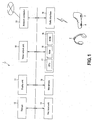
- the contents reproducer 1 is an apparatus for reproducing voice contents and video contents.
- the contents reproducer 1 includes a voice output unit 10 for outputting a voice, and a display unit 11 for outputting an image.
- the voice contents and the video contents are stored in a storage 12.
- the voice contents and the video contents can be downloaded through a network connector 13 via the Internet.
- the contents reproducer 1 includes a key input unit 14, and a microphone 15.
- the key input unit 14 accepts inputting of a command, such as "reproducing”, “stop”, “ temporary stop”, “selection of music”, etc.
- a radio interface 16 performs a radio communication with a walking sensor 2 and a GPS unit 3 to be described later, and receives walking data and position data.
- a CPU (Central Processing Unit) 17 controls the contents reproducer 1.
- a program and setting information necessary to control the contents reproducer 1 are stored in a ROM (Read Only Memory) 18 and the storage 12.
- the CPU 17 forms and processes the contents in accordance with an analysis of user's walking operation, an analysis of user's environment and the contents in response to the user's environment, as a RAM (Random Access Memory) 19 for work area.
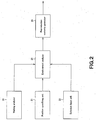
- FIG. 2 shows a software configuration of the contents reproducer 1.
- the contents reproducer 1 includes a walking analyzer 20 for analyzing a user's walking operation based on an output of the walking sensor 2, a position specifying unit 21 for specifying the place where the user exists based on the output of the GPS unit 3 and map data, a schedule input unit 22 for receiving the input of the user's schedule, an environment analyzer 23 for analyzing the user's environment based on the user's walking operation, the user's position and the user's schedule, and a reproduction contents generator 24 for generating the contents in response to the user's environment and processing the contents in response to the user's environment.
- a walking analyzer 20 for analyzing a user's walking operation based on an output of the walking sensor 2
- a position specifying unit 21 for specifying the place where the user exists based on the output of the GPS unit 3 and map data
- a schedule input unit 22 for receiving the input of the user's schedule
- an environment analyzer 23 for analyzing the user's
- the walking analyzer 20 analyzes the user's walking operation based on walking data outputted from the walking sensor 2.
- the walking sensor 2 there are an acceleration sensor 4 for detecting the user's vertical movement and a general-purpose foil strain gage 5 for detecting the user's foot step.
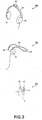
- the acceleration sensor 4 is mounted at a headphone 40 of the contents reproducer 1.
- the headphone 40 is one of the voice output unit 10 shown in FIG. 1 .
- FIG. 3 shows a mounting example of the acceleration sensor 4.
- the acceleration sensor 4 is mounted at a center of the connector 43, that is, the upper part of the user's head top part.
- the acceleration sensor 4 is mounted at a center of the connector 46, that is, at the backside of the user's rear head part.
- each acceleration sensor 4 is mounted at left and right speakers 47 and 48.
- the acceleration sensor 4 detects a vibration of a vertical axis.
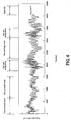
- FIG. 4 shows an output example of the acceleration sensor 4 during walking.
- time is plotted on an abscissa axis
- a value of an acceleration is plotted on an ordinate axis.
- FIG. 4 after the start of a measurement "fast and small vibration” is detected during the time interval from 0 to 6 seconds "slow and small vibration” is detected during the time interval from 6 to 15 seconds, “fast and strong vibration” is detected during the time interval from 18 to 22 seconds, “slow and large vibration” is detected during the time interval from 23 to 32 seconds, and “fast and strong vibration” is detected during the time interval from 32 to 34 seconds.
- the walking operation analyzer analyzes a user walking operation based on a period and vibrating width of the vibration. For example, “fast and small vibration” is judged as walking with short and quick steps, “slow and small vibration” is judged as walking with big and slow steps, “fast and strong shock” is judged as running with short steps, “slow and large shock” is judged as skip, and “fast and strong shock” is judged as running at full speed. In addition, when the vibration is not detected, the walking analyzer judges a stationary state.
- the GPS unit 3 is attached to the headphone 40.
- this GPS unit 3 receives, in addition to the radio wave outputted from a satellite, a radio wave radiated from a radio communication network, a satellite communication network for a portable telephone as position information.
- the mounting positions of the GPS unit 3 and the acceleration sensor 4 may be a head-mounted display, a wrist watch, a shoe, a clothing, an accessory and the like.
- FIG. 5 shows a general-purpose foil strain gage 5 as a specific example of the walking sensor 2.
- the general-purpose foil strain gage 5 converts the force in the bending direction into an electric signal.
- the positive or negative of the electric signal corresponds to the bending direction.
- the walking sensor 2 is mounted so as to output the positive electric signal when the foot is stepped down, and to output the negative electric signal when the foot is separated from the ground.
- the general-purpose foil strain gage 5 is laminated on a phosphor bronze plate 51.
- An output terminal 52 of the general-purpose foil strain gage 5 is reinforced by a reinforcing material 53, and extended outside of the phosphor bronze plate 51.
- the output terminal 52 of the general-purpose foil strain gage 5 is connected to an amplifier 54.
- the amplifier 54 is connected to a radio interface 55.
- the radio interface 55 transmits user's walking data to the contents reproducer 1.
- FIGS. 6A and 6B show an output example of the general-purpose foil strain gage 5.
- an output of the general-purpose foil strain gage 5 when a user walks at a normal walking tempo an output when the user walks at a slow walking tempo, and an output when the user walks at a fast walking tempo, are displayed.
- the output of the general-purpose foil strain gage 5 becomes maximum at a moment that user's foot is grounded, and becomes minimum at a moment that the user's foot is separated from the ground.
- the general purpose foil strain gages 5 may be respectively provided at left and right feet, or may be provided only at one foot, and may be utilized at 1/2 of a grounding interval as a walking tempo.
- FIG. 6A shows an output of the general-purpose foil strain gage 5 attached to the sole of the left foot
- FIG. 6B shows an output of the general-purpose foil strain gage 5 attached to the sole of the right foot.
- the user's walking tempo is a time interval from when the one foot is grounded until the other foot is grounded, that is, the time interval from when the value of the general purpose foil strain gage 5 of one foot becomes maximum to when the value of the general purpose foil strain gage 5 of the other foot becomes maximum.
- the walking data can be detected by the acceleration sensor attached to an arm or a wrist, and a direction indicator attached to a part of the user's body.
- the acceleration sensor attached to the arm or the wrist can detect the shock of a hand synchronized with stepping down of a foot, and the direction indicator can detect the moving direction of the user.
- the position specifying unit 21 reads, when the user's position information is inputted from the GPS unit 3, map information recorded in the storage 12, compares the position information with the map information, and specifies the place where the user exists.
- the schedule input unit 22 receives an input of the user's schedule.
- the schedule input unit 22 can input the schedule of the contents, such as which song the user reproduces while what kind of things he or she is doing, and which song the user reproduces, while what king of mood he or she is in addition to the schedule written in an ordinary schedule book, data and hour, place, and what kind of things the user is planning to do.
- the schedule of the music is recorded in association with a place, time, day of the week, mood, and so forth.
- a jogging course and the schedule of the song played during jogging will be described.
- the jogging course, a place (building, signpost) to be a trigger for changing the music, and the songs to be reproduced during jogging can be specified.
- it is set to repeatedly reproduce the same song between a certain point and next point. Even if the same song is repeatedly reproduced, a melody is changed in accordance with the user's walking tempo, and hence the user never get tired.
- the contents of which element of the music is changed can be inputted as the schedule.
- Input items include a tempo, melody, musical interval, tone, strength.
- the user can select a change of only a tempo, a change of only a musical interval, a change of only a melody, a change of contents and so on, thereby extending the degree of freedoms of selecting.
- the inputted schedule is updated through learning. If the stop of the reproduced song, change of the melody, change of the program of the song reproduced, etc., are instructed by the user, this instruction can be used as learning data, and when the music is reproduced in the same environment, the leaning data becomes a judging material in the case of selecting and changing the music.
- the environment analyzer 23 analyzes the user's circumferential environment and a user's psychological state from a user's position specified by the position specifying unit 21, the user's schedule inputted to the schedule input unit 22, and the user's walking operation analyzed by the walking analyzer 20. For example, a schedule for arranged meeting at an entrance of a department store at 6 o'clock is recorded. When it is 5:50 by the watch, the user locates around the department store, and a user's walking operation is trot, the environment analyzer 23 judges that the user is directed urgently to a meeting place based on these contents.
- the reproduction contents generator 24 generates the contents suitable for the analyzed result of the environment analyzer 23 and processes the contents. As in the above-mentioned example, as a result of the analysis, when it is judged that the user is in a hurry, in order to raise the user's walking pace, the generator 24 makes the rhythm of the music faster, or selects a music having a fast beat. In the case that the music contents are MIDI (Music Instruments Digital Interface), control of the tempo and melody of the music can be facilitated. Further, the reproduction contents generator 24 forms useful contents, such as a required time getting to the arranged meeting place, a present time, etc. and reproduces the contents.
- MIDI Music Instruments Digital Interface
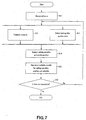
- the operation of the contents reproducer 1 is started from inputting of a user's schedule.
- the schedule input unit 22 records the input from the user in the storage 12 (step S11).
- the user starts moving by carrying the contents reproducer 1.
- the contents reproducer 1 reproduces the music contents and the video contents while the user is moving (step S12).
- the contents reproducer 1 detects the walking data by the walking sensor 2 and detects the position data by the GPS unit 3 (step S13).
- the walking analyzer 20 analyzes the user walking operation based on the walking data.
- the position specifying unit 21 specifies the user's position based on the output of the GPS unit 3 (step S14).
- the environment analyzer 23 analyzes the user psychological state and user's circumferential environment based on the user's walking operation, the user's location, and the user's schedule, and outputs the analyzed result to the reproduction contents generator 24.
- the reproduction contents generator 24 reproduces to the user by changing the melody or rhythm of the contents reproduced at present to meet the user's psychological state and circumferential environment, or generating appropriate information.
- the contents reproduced for the user may be character data or image data.
- the reproduction contents generator 24 may reproduce the contents for the user by way of a vibrating function, or by flashing and/or lighting an LED (Light-Emitting Diode) (step S15).
- the contents reproducer 1 transfers to a process in step S12 when the user does not designate stopping of operation (NO in step S16).
- the contents reproduced by the contents reproducer 1 are dynamically changed by this process. Meanwhile, when the user designates to stop the operation (YES in step S16), the contents reproducer 1 completes the process.
- the user stops at the library, then goes to the friend's house.
- there is a park on the way from the library to the friend's house and the user stops by the park on the way to the friend's house.
- the user wears an earphone of the contents reproducer 1 in his or her ear and listens a music while the user moves along the above-mentioned route.
- the contents reproducer 1 detects the pace and direction of the user while the user moves to the library. A flat road continues from the user's house to the library, and there is no particularly outstanding building or scenery. Therefore, the user's pace is monotonous.
- the environment analyzer 23 judges that the user is a normal state.
- the reproduction contents generator 24 performs normal continuous reproduction without changing the music listening by the user in accordance with the judgment of the environment analyzer 23. When the position specifying unit 21 detects that the user arrives at the library, the reproduction contents generator 24 fades out the volume of the music contents.
- the reproduction contents generator stops reproducing of the music contents while the user exists in the library.
- the reproduction contents generator 24 fades in the volume of the music contents, and reproduces the music by an original volume.
- a message of prompting the user to return the book is displayed on a display unit 11.
- a title of the book, related keyword and the like are displayed on the display unit 11. Such an alarm message is previously inputted to the schedule by the user.
- the position specifying unit 21 detects that the user starts walking a road along a river, and the walking analyzer 20 detects that the user's walking tempo is lowered.
- the environment analyzer 23 judges that the user walks slowly with good mood from the detected result.
- the reproduction contents generator 24 slows the music tempo to keep pace with the walking tempo according to the analyzed result of the environment analyzer 23, and selects the song that matches to the user's walking tempo. Contrarily to the above, when the user moves the road along the river at a trot, the song having a fast tempo is selected to keep pace with the user's walking operation, or increases the tempo of the song being reproduced.
- the environment analyzer 23 judges that the user takes a rest in the part.
- the reproduction contents generator 24 reproduces the music suitable for a rest in the park, for example, a healing music, etc. Further, when the user takes a rest, a video, television program, e-mail, weather forecast and the like may be displayed on the display unit 11.
- the road from the park to the friend's house is an easy road surrounded by greenery.
- the environment analyzer 23 judges that the user makes haste.
- the reproduction contents generator 24 reproduces a song for fastening user's walking pace, an up-tempo song, or accelerates the tempo of the music being reproduced.
- an alarm of "watch out for vehicle", etc. may be displayed on the display unit 11, or an alert sound is inserted to the song being reproduced.
- the reproduction contents generator 24 fades out the music being reproduced.
- the music stops while the user stays in the friend's house.
- the reproduction contents generator 24 fades in the stopped music when the user leaves the friend's house, and reproduces the music in a state before stopping.
- the environment analyzer 23 analyzes that the user completes the schedule and leaves for home.
- the reproduction contents generator 24 selects and reproduces the music suitable for the end of a day finish in accordance with the analyzed result of the environment analyzer 23. Further, when a returning home time is appointed, the alert sound is inserted or the music having a fast tempo is elected so as to be in time for the returning home time.
- the contents reproducer 1 applied with the present invention reproduces the contents suitable for the user's walking operation and the user's position, to the user.
- the contents change in accordance with the user's walking operation and the user's position. Therefore, the entertainment properties of the music reproduced to the user can be improved while the user is out, such as, jogging, walking, etc.
Landscapes
- Health & Medical Sciences (AREA)
- General Health & Medical Sciences (AREA)
- Physical Education & Sports Medicine (AREA)
- Epidemiology (AREA)
- Life Sciences & Earth Sciences (AREA)
- Animal Behavior & Ethology (AREA)
- Public Health (AREA)
- Veterinary Medicine (AREA)
- Mobile Radio Communication Systems (AREA)
- Navigation (AREA)
- Electrophonic Musical Instruments (AREA)
- User Interface Of Digital Computer (AREA)
Claims (6)
- Appareil de reproduction de contenu comprenant :un moyen de détection de position (21) pour détecter la position d'un utilisateur ;un moyen de détection de fonctionnement (2, 4, 5) pour détecter un mouvement du corps de l'utilisateur ; etun moyen de génération et de reproduction de contenu (24) pour générer et reproduire un contenu ;lequel appareil est caractérisé en ce qu'il comprend :un moyen d'analyseur de marche (20) pour déterminer le type d'une opération de marche de l'utilisateur parmi plusieurs types d'opération de marche en fonction du mouvement détecté du corps de l'utilisateur ;un moyen d'entrée de programmation (22) conçu pour recevoir une entrée d'une programmation reproductible de contenu, dans lequel la programmation de contenu comprend quelle chanson l'utilisateur reproduit pendant qu'il effectue un type de chose, quelle chanson l'utilisateur reproduit pendant qu'il est dans un type d'humeur, et la programmation de l'utilisateur comprenant l'heure, le lieu et le type de chose que l'utilisateur envisage de faire ;un analyseur d'environnement (23) conçu pour analyser l'environnement circonférentiel de l'utilisateur et l'état psychologique de l'utilisateur à partir de la position de l'utilisateur spécifiée par l'unité de spécification de position (21), la programmation de l'utilisateur entrée dans l'unité d'entrée de programmation (22), et l'opération de marche effectuée de l'utilisateur analysée par l'analyseur de marche (20), et en ce que ledit moyen de génération et de reproduction de contenu (24) génère les contenus en fonction des résultats analysés de l'analyseur d'environnement (23).
- Appareil de reproduction de contenu selon la revendication 1, dans lequel le moyen de détection de fonctionnement (2, 4, 5) est conçu pour détecter l'un au moins d'un mouvement vertical du tronc et de la tête du corps de l'utilisateur, de la pose d'un pied de l'utilisateur, et d'une direction de l'utilisateur.
- Appareil de reproduction de contenu selon la revendication 1 ou 2, dans lequel le moyen de génération et de reproduction de contenu (24) est conçu pour changer l'un au moins d'un tempo, d'une mélodie, d'un intervalle de musique, d'un ton, d'une dynamique et d'un volume sonore de contenus musicaux.
- Appareil de reproduction de contenu selon la revendication 3, dans lequel les contenus musicaux sont stockés dans l'un au moins d'un disque optique, d'un disque dur et d'une mémoire à semi-conducteur (12).
- Appareil de reproduction de contenu selon l'une quelconque des revendications 1 à 4, dans lequel le moyen de détection de position (21) est conçu pour détecter la position d'un utilisateur en fonction d'une onde radio reçue depuis l'un au moins d'un GPS (système mondial de positionnement) (21), d'un réseau de communication radio, et d'un réseau de communication satellite pour un téléphone portable.
- Procédé de reproduction de contenus consistant à :détecter la position d'un utilisateur (S13) ;détecter un mouvement du corps de l'utilisateur ;générer des contenus et reproduire les contenus générés (S15) ;le procédé étant caractérisé en ce qu'il comprend les étapes consistant à :déterminer un type d'une opération de marche de l'utilisateur parmi plusieurs types d'opération de marche en fonction du mouvement détecté du corps de l'utilisateur ;recevoir une entrée d'une programmation de reproduction de contenus (S11), dans lequel la programmation de contenu comprend quelle chanson l'utilisateur reproduit pendant qu'il effectue un type de chose, quelle chanson l'utilisateur reproduit pendant qu'il est dans un type d'humeur, et la programmation de l'utilisateur comprenant l'heure, le lieu et le type de chose que l'utilisateur envisage de faire ; etanalyser l'environnement circonférentiel de l'utilisateur et l'état psychologique de l'utilisateur à partir de la position de l'utilisateur, de la programmation de l'utilisateur et de l'opération de marche de l'utilisateur ; dans lequelles contenus sont générés en fonction des résultats analysés de l'analyseur d'environnement (23).
Applications Claiming Priority (2)
| Application Number | Priority Date | Filing Date | Title |
|---|---|---|---|
| JP2004111445 | 2004-04-05 | ||
| JP2004111445A JP4052274B2 (ja) | 2004-04-05 | 2004-04-05 | 情報提示装置 |
Publications (2)
| Publication Number | Publication Date |
|---|---|
| EP1585134A1 EP1585134A1 (fr) | 2005-10-12 |
| EP1585134B1 true EP1585134B1 (fr) | 2019-06-05 |
Family
ID=34909478
Family Applications (1)
| Application Number | Title | Priority Date | Filing Date |
|---|---|---|---|
| EP05252114.3A Expired - Lifetime EP1585134B1 (fr) | 2004-04-05 | 2005-04-04 | Appareil de reproduction du contenu et procédé associé |
Country Status (5)
| Country | Link |
|---|---|
| US (1) | US8199937B2 (fr) |
| EP (1) | EP1585134B1 (fr) |
| JP (1) | JP4052274B2 (fr) |
| KR (1) | KR20060044856A (fr) |
| CN (1) | CN100360085C (fr) |
Families Citing this family (36)
| Publication number | Priority date | Publication date | Assignee | Title |
|---|---|---|---|---|
| JP4089651B2 (ja) * | 2004-04-15 | 2008-05-28 | ソニー株式会社 | 信号生成装置及び機械装置 |
| JP2006114174A (ja) | 2004-10-18 | 2006-04-27 | Sony Corp | コンテンツ再生方法およびコンテンツ再生装置 |
| JP4713129B2 (ja) * | 2004-11-16 | 2011-06-29 | ソニー株式会社 | 音楽コンテンツの再生装置、音楽コンテンツの再生方法および音楽コンテンツおよびその属性情報の記録装置 |
| CN101199017A (zh) * | 2005-02-11 | 2008-06-11 | 皇家飞利浦电子股份有限公司 | 基于例如光强度或交通工具速度和位置的动态变化标准的自动个人播放列表生成 |
| JP2007075172A (ja) * | 2005-09-12 | 2007-03-29 | Sony Corp | 音出力制御装置、音出力制御方法および音出力制御プログラム |
| US20110072955A1 (en) * | 2005-10-06 | 2011-03-31 | Turner William D | System and method for pacing repetitive motion activities |
| JP4669776B2 (ja) * | 2005-11-28 | 2011-04-13 | シャープ株式会社 | 検索再生装置 |
| JP4264752B2 (ja) | 2005-12-16 | 2009-05-20 | ソニー株式会社 | オーディオ信号の再生機および再生方法 |
| CN101313344B (zh) * | 2005-12-20 | 2010-05-19 | 松下电器产业株式会社 | 内容出示装置以及内容出示方法 |
| JP4415946B2 (ja) * | 2006-01-12 | 2010-02-17 | ソニー株式会社 | コンテンツ再生装置および再生方法 |
| EP1811496B1 (fr) * | 2006-01-20 | 2009-06-17 | Yamaha Corporation | Appareil pour le contrôle de la reproduction de musique et appareil de reproduction de musique |
| JP2007226935A (ja) * | 2006-01-24 | 2007-09-06 | Sony Corp | 音響再生装置、音響再生方法および音響再生プログラム |
| JP4811046B2 (ja) * | 2006-02-17 | 2011-11-09 | ソニー株式会社 | コンテンツの再生装置、オーディオ再生機およびコンテンツの再生方法 |
| JP4356700B2 (ja) | 2006-02-21 | 2009-11-04 | ソニー株式会社 | 再生装置 |
| US8056112B2 (en) | 2006-03-16 | 2011-11-08 | Apple Inc. | Location-based media presentation |
| US20070254271A1 (en) * | 2006-04-28 | 2007-11-01 | Volodimir Burlik | Method, apparatus and software for play list selection in digital music players |
| US20070260483A1 (en) * | 2006-05-08 | 2007-11-08 | Marja-Leena Nurmela | Mobile communication terminal and method |
| US20070271513A1 (en) * | 2006-05-22 | 2007-11-22 | Nike, Inc. | User Interface for Remotely Controlling a Digital Music Player |
| JP2008015595A (ja) * | 2006-07-03 | 2008-01-24 | Sony Corp | コンテンツ選択推薦方法、サーバ、コンテンツ再生装置、コンテンツ記録装置およびコンテンツ選択推薦用プログラム |
| JP5125084B2 (ja) * | 2006-12-11 | 2013-01-23 | ヤマハ株式会社 | 楽音再生装置 |
| US8615224B2 (en) * | 2006-12-29 | 2013-12-24 | Verizon Patent And Licensing Inc. | Method and apparatus for providing ringtone scheduling |
| JP2009171232A (ja) * | 2008-01-16 | 2009-07-30 | Sharp Corp | コンテンツ再生装置および制御方法 |
| JP4780185B2 (ja) * | 2008-12-04 | 2011-09-28 | ソニー株式会社 | 音楽再生システムおよび情報処理方法 |
| JP5649808B2 (ja) | 2009-01-28 | 2015-01-07 | ソニー株式会社 | 情報処理装置、情報処理方法、プログラム |
| JP5905868B2 (ja) * | 2009-01-28 | 2016-04-20 | ソニー株式会社 | 情報処理装置、情報処理方法、プログラム |
| JP2011165134A (ja) * | 2010-02-15 | 2011-08-25 | Sony Corp | コンテンツ再生装置、携帯機器、及び異常検知方法 |
| US20110206215A1 (en) * | 2010-02-21 | 2011-08-25 | Sony Ericsson Mobile Communications Ab | Personal listening device having input applied to the housing to provide a desired function and method |
| JP2011232871A (ja) | 2010-04-26 | 2011-11-17 | Sony Corp | 情報処理装置、テキスト選択方法及びプログラム |
| JP5779943B2 (ja) * | 2011-03-31 | 2015-09-16 | ソニー株式会社 | 情報処理装置、情報処理方法、プログラム、及び記録媒体 |
| JP2012226564A (ja) * | 2011-04-20 | 2012-11-15 | Sony Corp | 情報処理装置、情報処理方法、およびプログラム |
| JP2013208266A (ja) * | 2012-03-30 | 2013-10-10 | Sony Corp | ペースメーカ装置およびその動作方法、並びにプログラム |
| US9788061B2 (en) | 2013-11-19 | 2017-10-10 | Rovi Guides, Inc. | Methods and systems for recommending media content related to a recently completed activity |
| US9947215B2 (en) * | 2014-09-26 | 2018-04-17 | Harman International Industries, Incorporated | Pedestrian information system |
| US20160149547A1 (en) * | 2014-11-20 | 2016-05-26 | Intel Corporation | Automated audio adjustment |
| US10319072B2 (en) * | 2017-10-09 | 2019-06-11 | Google Llc | Adaptation of presentation speed |
| EP4145854B1 (fr) | 2020-04-27 | 2026-04-22 | Sony Group Corporation | Dispositif de traitement d'informations, procédé de traitement d'informations, dispositif de sortie, procédé de sortie, programme et système de notification |
Citations (1)
| Publication number | Priority date | Publication date | Assignee | Title |
|---|---|---|---|---|
| JP2001299980A (ja) * | 2000-04-21 | 2001-10-30 | Mitsubishi Electric Corp | 運動支援装置 |
Family Cites Families (20)
| Publication number | Priority date | Publication date | Assignee | Title |
|---|---|---|---|---|
| US3865001A (en) | 1971-08-24 | 1975-02-11 | Robert L Hershey | Tempo enhancement device |
| US5081896A (en) * | 1986-11-06 | 1992-01-21 | Yamaha Corporation | Musical tone generating apparatus |
| WO1993022762A1 (fr) | 1992-04-24 | 1993-11-11 | The Walt Disney Company | Appareil et procede pour suivre un mouvement afin de generer un signal de commande |
| JPH0863946A (ja) * | 1994-08-29 | 1996-03-08 | Fujitsu Ten Ltd | カーナビゲーション装置とカーステレオ装置とを一体化したシステム |
| JPH11244383A (ja) * | 1998-03-02 | 1999-09-14 | Pioneer Electron Corp | 音響装置 |
| JP2001050760A (ja) | 1999-08-10 | 2001-02-23 | Sony Corp | ナビゲーション装置 |
| JP3646599B2 (ja) * | 2000-01-11 | 2005-05-11 | ヤマハ株式会社 | 演奏インターフェイス |
| TW587929B (en) * | 2000-05-31 | 2004-05-21 | Matsushita Electric Industrial Co Ltd | Medical checkup network system |
| JP2002114107A (ja) | 2000-10-10 | 2002-04-16 | Nissan Motor Co Ltd | オーディオ装置及び音楽提供方法 |
| EP1241588A3 (fr) | 2001-01-23 | 2006-01-04 | Matsushita Electric Industrial Co., Ltd. | Système de recherche de données audio |
| JP2002230315A (ja) | 2001-01-30 | 2002-08-16 | Nec Corp | データ再生システムおよび方法 |
| JP2002340593A (ja) | 2001-05-22 | 2002-11-27 | Alpine Electronics Inc | ナビゲーション装置 |
| JP4069601B2 (ja) | 2001-09-07 | 2008-04-02 | ソニー株式会社 | 音楽再生装置、音楽再生装置の制御方法 |
| US6623427B2 (en) * | 2001-09-25 | 2003-09-23 | Hewlett-Packard Development Company, L.P. | Biofeedback based personal entertainment system |
| JP2003290175A (ja) * | 2002-03-29 | 2003-10-14 | Sony Corp | 体調検出装置およびプログラム |
| JP2003333126A (ja) * | 2002-05-16 | 2003-11-21 | Yamaha Corp | 携帯端末装置及びその制御方法 |
| JP2004086189A (ja) * | 2002-07-02 | 2004-03-18 | Matsushita Electric Ind Co Ltd | 楽曲検索システム |
| EP1378912A3 (fr) | 2002-07-02 | 2005-10-05 | Matsushita Electric Industrial Co., Ltd. | Système de recherche de musique |
| JP2004159026A (ja) * | 2002-11-06 | 2004-06-03 | Nec Access Technica Ltd | 携帯電話機及びそれに用いる測位切替方法並びにそのプログラム |
| US7521623B2 (en) * | 2004-11-24 | 2009-04-21 | Apple Inc. | Music synchronization arrangement |
-
2004
- 2004-04-05 JP JP2004111445A patent/JP4052274B2/ja not_active Expired - Fee Related
-
2005
- 2005-03-23 US US11/087,166 patent/US8199937B2/en not_active Expired - Fee Related
- 2005-03-28 KR KR1020050025548A patent/KR20060044856A/ko not_active Ceased
- 2005-04-04 EP EP05252114.3A patent/EP1585134B1/fr not_active Expired - Lifetime
- 2005-04-05 CN CNB200510064915XA patent/CN100360085C/zh not_active Expired - Fee Related
Patent Citations (1)
| Publication number | Priority date | Publication date | Assignee | Title |
|---|---|---|---|---|
| JP2001299980A (ja) * | 2000-04-21 | 2001-10-30 | Mitsubishi Electric Corp | 運動支援装置 |
Also Published As
| Publication number | Publication date |
|---|---|
| EP1585134A1 (fr) | 2005-10-12 |
| CN100360085C (zh) | 2008-01-09 |
| KR20060044856A (ko) | 2006-05-16 |
| JP4052274B2 (ja) | 2008-02-27 |
| JP2005292730A (ja) | 2005-10-20 |
| US8199937B2 (en) | 2012-06-12 |
| US20050219055A1 (en) | 2005-10-06 |
| CN1679445A (zh) | 2005-10-12 |
Similar Documents
| Publication | Publication Date | Title |
|---|---|---|
| US8199937B2 (en) | Contents reproduction apparatus and method thereof | |
| JP5225548B2 (ja) | コンテンツ検索方法、コンテンツリスト検索方法、コンテンツ検索装置、コンテンツリスト検索装置および検索サーバ | |
| US7227071B2 (en) | Music search system | |
| US7741554B2 (en) | Apparatus and method for automatically creating music piece data | |
| US7529676B2 (en) | Audio device control device, audio device control method, and program | |
| JP3632644B2 (ja) | ロボット、および、ロボットの動作パターン制御プログラム | |
| EP1736961A1 (fr) | Système et procédé de création de sonnerie améliorées pour téléphone mobile | |
| JP4403415B2 (ja) | コンテンツ再生方法およびコンテンツ再生装置 | |
| JP2004086189A (ja) | 楽曲検索システム | |
| US7060885B2 (en) | Music reproduction system, music editing system, music editing apparatus, music editing terminal unit, music reproduction terminal unit, method of controlling a music editing apparatus, and program for executing the method | |
| JP2005038352A (ja) | 再生装置、再生システム及び再生制御方法 | |
| JP4247626B2 (ja) | 再生装置および再生方法 | |
| JP2006202396A (ja) | コンテンツ再生装置およびコンテンツ再生方法 | |
| JP2007280581A (ja) | コンテンツ検索選択方法、コンテンツ再生装置および検索サーバ | |
| EP1804235B1 (fr) | Procede de reproduction de contenus et dispositif de reproduction de contenus | |
| JP5948901B2 (ja) | 情報処理装置及び情報処理プログラム | |
| US20070157798A1 (en) | Apparatus and method for reproducing audio signal | |
| JP2008242285A (ja) | 演奏装置およびその制御方法を実現するプログラム | |
| JP4533696B2 (ja) | 報知制御装置、報知制御システム、それらの方法、それらのプログラム、および、それらのプログラムを記録した記録媒体 | |
| JP2013050479A (ja) | 楽曲データ処理装置、楽曲データ処理システム、及び、プログラム | |
| JP2007164497A (ja) | 嗜好推定装置、及び制御装置 | |
| CN100517323C (zh) | 内容及内容列表搜索方法及相应的搜索装置和搜索服务器 | |
| JP2004005832A (ja) | データ再生装置、そのシステム、その方法、そのプログラム、および、そのプログラムを記録した記録媒体 | |
| KR101492039B1 (ko) | 음성 인식을 이용하여 검색된 곡을 표시하는 방법 및 시스템 | |
| JP2007156280A (ja) | 音響再生装置、音響再生方法および音響再生プログラム |
Legal Events
| Date | Code | Title | Description |
|---|---|---|---|
| PUAI | Public reference made under article 153(3) epc to a published international application that has entered the european phase |
Free format text: ORIGINAL CODE: 0009012 |
|
| AK | Designated contracting states |
Kind code of ref document: A1 Designated state(s): AT BE BG CH CY CZ DE DK EE ES FI FR GB GR HU IE IS IT LI LT LU MC NL PL PT RO SE SI SK TR |
|
| AX | Request for extension of the european patent |
Extension state: AL BA HR LV MK YU |
|
| 17P | Request for examination filed |
Effective date: 20060315 |
|
| AKX | Designation fees paid |
Designated state(s): DE FR GB |
|
| 17Q | First examination report despatched |
Effective date: 20070720 |
|
| GRAP | Despatch of communication of intention to grant a patent |
Free format text: ORIGINAL CODE: EPIDOSNIGR1 |
|
| STAA | Information on the status of an ep patent application or granted ep patent |
Free format text: STATUS: GRANT OF PATENT IS INTENDED |
|
| INTG | Intention to grant announced |
Effective date: 20190108 |
|
| RIN1 | Information on inventor provided before grant (corrected) |
Inventor name: SHIRAI, KATSUYA Inventor name: SAKO, YOICHIRO Inventor name: INOUE, MAKOTO Inventor name: MAKINO, KENICHI Inventor name: TERAUCHI, TOSHIRO Inventor name: TAKAI, MOTOYUKI Inventor name: ASUKAI, MASAMICHI Inventor name: MIYAJIMA, YASUSHI |
|
| RIC1 | Information provided on ipc code assigned before grant |
Ipc: G11B 27/10 20060101AFI20050711BHEP Ipc: G11C 7/16 20060101ALI20050711BHEP |
|
| GRAS | Grant fee paid |
Free format text: ORIGINAL CODE: EPIDOSNIGR3 |
|
| GRAA | (expected) grant |
Free format text: ORIGINAL CODE: 0009210 |
|
| STAA | Information on the status of an ep patent application or granted ep patent |
Free format text: STATUS: THE PATENT HAS BEEN GRANTED |
|
| REG | Reference to a national code |
Ref country code: DE Ref legal event code: R081 Ref document number: 602005055868 Country of ref document: DE Owner name: SONY CORPORATION, JP Free format text: FORMER OWNER: SONY CORPORATION, TOKIO/TOKYO, JP |
|
| AK | Designated contracting states |
Kind code of ref document: B1 Designated state(s): DE FR GB |
|
| REG | Reference to a national code |
Ref country code: GB Ref legal event code: FG4D |
|
| REG | Reference to a national code |
Ref country code: DE Ref legal event code: R096 Ref document number: 602005055868 Country of ref document: DE |
|
| REG | Reference to a national code |
Ref country code: DE Ref legal event code: R097 Ref document number: 602005055868 Country of ref document: DE |
|
| PLBE | No opposition filed within time limit |
Free format text: ORIGINAL CODE: 0009261 |
|
| STAA | Information on the status of an ep patent application or granted ep patent |
Free format text: STATUS: NO OPPOSITION FILED WITHIN TIME LIMIT |
|
| 26N | No opposition filed |
Effective date: 20200306 |
|
| PG25 | Lapsed in a contracting state [announced via postgrant information from national office to epo] |
Ref country code: FR Free format text: LAPSE BECAUSE OF NON-PAYMENT OF DUE FEES Effective date: 20200430 |
|
| GBPC | Gb: european patent ceased through non-payment of renewal fee |
Effective date: 20200404 |
|
| PG25 | Lapsed in a contracting state [announced via postgrant information from national office to epo] |
Ref country code: GB Free format text: LAPSE BECAUSE OF NON-PAYMENT OF DUE FEES Effective date: 20200404 |
|
| PGFP | Annual fee paid to national office [announced via postgrant information from national office to epo] |
Ref country code: DE Payment date: 20220322 Year of fee payment: 18 |
|
| REG | Reference to a national code |
Ref country code: DE Ref legal event code: R119 Ref document number: 602005055868 Country of ref document: DE |
|
| PG25 | Lapsed in a contracting state [announced via postgrant information from national office to epo] |
Ref country code: DE Free format text: LAPSE BECAUSE OF NON-PAYMENT OF DUE FEES Effective date: 20231103 |