EP1127975A1 - Flächengebilde aus Polyester - Google Patents
Flächengebilde aus Polyester Download PDFInfo
- Publication number
- EP1127975A1 EP1127975A1 EP20000127958 EP00127958A EP1127975A1 EP 1127975 A1 EP1127975 A1 EP 1127975A1 EP 20000127958 EP20000127958 EP 20000127958 EP 00127958 A EP00127958 A EP 00127958A EP 1127975 A1 EP1127975 A1 EP 1127975A1
- Authority
- EP
- European Patent Office
- Prior art keywords
- radicals
- organopolysiloxane
- radical
- functional
- plasticizer
- Prior art date
- Legal status (The legal status is an assumption and is not a legal conclusion. Google has not performed a legal analysis and makes no representation as to the accuracy of the status listed.)
- Withdrawn
Links
- 229920000728 polyester Polymers 0.000 title claims abstract description 33
- 239000004744 fabric Substances 0.000 title description 13
- 229920001296 polysiloxane Polymers 0.000 claims abstract description 45
- 125000000217 alkyl group Chemical group 0.000 claims abstract description 25
- 239000000839 emulsion Substances 0.000 claims description 29
- 238000000034 method Methods 0.000 claims description 11
- 239000000986 disperse dye Substances 0.000 claims description 2
- -1 mercapto, Carboxy Chemical group 0.000 description 64
- 150000003254 radicals Chemical class 0.000 description 37
- 239000004014 plasticizer Substances 0.000 description 27
- XLYOFNOQVPJJNP-UHFFFAOYSA-N water Substances O XLYOFNOQVPJJNP-UHFFFAOYSA-N 0.000 description 14
- 239000004215 Carbon black (E152) Substances 0.000 description 11
- 229930195733 hydrocarbon Natural products 0.000 description 11
- 125000003178 carboxy group Chemical group [H]OC(*)=O 0.000 description 10
- QTBSBXVTEAMEQO-UHFFFAOYSA-N Acetic acid Chemical compound CC(O)=O QTBSBXVTEAMEQO-UHFFFAOYSA-N 0.000 description 9
- KWYUFKZDYYNOTN-UHFFFAOYSA-M Potassium hydroxide Chemical compound [OH-].[K+] KWYUFKZDYYNOTN-UHFFFAOYSA-M 0.000 description 9
- 239000004530 micro-emulsion Substances 0.000 description 9
- 239000002245 particle Substances 0.000 description 9
- 239000003995 emulsifying agent Substances 0.000 description 8
- 150000002191 fatty alcohols Chemical class 0.000 description 7
- HEMHJVSKTPXQMS-UHFFFAOYSA-M Sodium hydroxide Chemical compound [OH-].[Na+] HEMHJVSKTPXQMS-UHFFFAOYSA-M 0.000 description 6
- 239000002253 acid Substances 0.000 description 6
- 229920013822 aminosilicone Polymers 0.000 description 6
- 239000004064 cosurfactant Substances 0.000 description 6
- 125000001495 ethyl group Chemical group [H]C([H])([H])C([H])([H])* 0.000 description 6
- 125000002496 methyl group Chemical group [H]C([H])([H])* 0.000 description 6
- 239000004593 Epoxy Substances 0.000 description 5
- 150000001412 amines Chemical class 0.000 description 5
- OBFQBDOLCADBTP-UHFFFAOYSA-N aminosilicon Chemical compound [Si]N OBFQBDOLCADBTP-UHFFFAOYSA-N 0.000 description 5
- 125000004432 carbon atom Chemical group C* 0.000 description 5
- 238000002156 mixing Methods 0.000 description 5
- 239000000203 mixture Substances 0.000 description 5
- KBPLFHHGFOOTCA-UHFFFAOYSA-N 1-Octanol Chemical compound CCCCCCCCO KBPLFHHGFOOTCA-UHFFFAOYSA-N 0.000 description 4
- 229920000742 Cotton Polymers 0.000 description 4
- AMQJEAYHLZJPGS-UHFFFAOYSA-N N-Pentanol Chemical compound CCCCCO AMQJEAYHLZJPGS-UHFFFAOYSA-N 0.000 description 4
- 150000001735 carboxylic acids Chemical class 0.000 description 4
- 239000000975 dye Substances 0.000 description 4
- 238000004043 dyeing Methods 0.000 description 4
- ZSIAUFGUXNUGDI-UHFFFAOYSA-N hexan-1-ol Chemical compound CCCCCCO ZSIAUFGUXNUGDI-UHFFFAOYSA-N 0.000 description 4
- 125000004435 hydrogen atom Chemical group [H]* 0.000 description 4
- 229910052500 inorganic mineral Inorganic materials 0.000 description 4
- 239000011707 mineral Substances 0.000 description 4
- XNLICIUVMPYHGG-UHFFFAOYSA-N pentan-2-one Chemical compound CCCC(C)=O XNLICIUVMPYHGG-UHFFFAOYSA-N 0.000 description 4
- QTBSBXVTEAMEQO-UHFFFAOYSA-M Acetate Chemical compound CC([O-])=O QTBSBXVTEAMEQO-UHFFFAOYSA-M 0.000 description 3
- DKPFZGUDAPQIHT-UHFFFAOYSA-N Butyl acetate Natural products CCCCOC(C)=O DKPFZGUDAPQIHT-UHFFFAOYSA-N 0.000 description 3
- 239000004907 Macro-emulsion Substances 0.000 description 3
- LRHPLDYGYMQRHN-UHFFFAOYSA-N N-Butanol Chemical compound CCCCO LRHPLDYGYMQRHN-UHFFFAOYSA-N 0.000 description 3
- MUBZPKHOEPUJKR-UHFFFAOYSA-N Oxalic acid Chemical compound OC(=O)C(O)=O MUBZPKHOEPUJKR-UHFFFAOYSA-N 0.000 description 3
- 150000007513 acids Chemical class 0.000 description 3
- 239000000654 additive Substances 0.000 description 3
- PGMYKACGEOXYJE-UHFFFAOYSA-N anhydrous amyl acetate Natural products CCCCCOC(C)=O PGMYKACGEOXYJE-UHFFFAOYSA-N 0.000 description 3
- BTANRVKWQNVYAZ-UHFFFAOYSA-N butan-2-ol Chemical compound CCC(C)O BTANRVKWQNVYAZ-UHFFFAOYSA-N 0.000 description 3
- 238000006243 chemical reaction Methods 0.000 description 3
- KRKNYBCHXYNGOX-UHFFFAOYSA-N citric acid Chemical compound OC(=O)CC(O)(C(O)=O)CC(O)=O KRKNYBCHXYNGOX-UHFFFAOYSA-N 0.000 description 3
- 230000006866 deterioration Effects 0.000 description 3
- SBZXBUIDTXKZTM-UHFFFAOYSA-N diglyme Chemical group COCCOCCOC SBZXBUIDTXKZTM-UHFFFAOYSA-N 0.000 description 3
- 235000013870 dimethyl polysiloxane Nutrition 0.000 description 3
- 239000000835 fiber Substances 0.000 description 3
- QQZOPKMRPOGIEB-UHFFFAOYSA-N n-butyl methyl ketone Natural products CCCCC(C)=O QQZOPKMRPOGIEB-UHFFFAOYSA-N 0.000 description 3
- 239000003921 oil Substances 0.000 description 3
- 125000001997 phenyl group Chemical group [H]C1=C([H])C([H])=C(*)C([H])=C1[H] 0.000 description 3
- 229920000435 poly(dimethylsiloxane) Polymers 0.000 description 3
- 125000001436 propyl group Chemical group [H]C([*])([H])C([H])([H])C([H])([H])[H] 0.000 description 3
- 150000003839 salts Chemical class 0.000 description 3
- 229920006395 saturated elastomer Polymers 0.000 description 3
- 238000005406 washing Methods 0.000 description 3
- BBMCTIGTTCKYKF-UHFFFAOYSA-N 1-heptanol Chemical compound CCCCCCCO BBMCTIGTTCKYKF-UHFFFAOYSA-N 0.000 description 2
- OAYXUHPQHDHDDZ-UHFFFAOYSA-N 2-(2-butoxyethoxy)ethanol Chemical compound CCCCOCCOCCO OAYXUHPQHDHDDZ-UHFFFAOYSA-N 0.000 description 2
- CETWDUZRCINIHU-UHFFFAOYSA-N 2-heptanol Chemical compound CCCCCC(C)O CETWDUZRCINIHU-UHFFFAOYSA-N 0.000 description 2
- ZPVFWPFBNIEHGJ-UHFFFAOYSA-N 2-octanone Chemical compound CCCCCCC(C)=O ZPVFWPFBNIEHGJ-UHFFFAOYSA-N 0.000 description 2
- RHLVCLIPMVJYKS-UHFFFAOYSA-N 3-octanone Chemical compound CCCCCC(=O)CC RHLVCLIPMVJYKS-UHFFFAOYSA-N 0.000 description 2
- YVBCULSIZWMTFY-UHFFFAOYSA-N 4-Heptanol Natural products CCCC(O)CCC YVBCULSIZWMTFY-UHFFFAOYSA-N 0.000 description 2
- HCFAJYNVAYBARA-UHFFFAOYSA-N 4-heptanone Chemical compound CCCC(=O)CCC HCFAJYNVAYBARA-UHFFFAOYSA-N 0.000 description 2
- QGZKDVFQNNGYKY-UHFFFAOYSA-N Ammonia Chemical compound N QGZKDVFQNNGYKY-UHFFFAOYSA-N 0.000 description 2
- RTZKZFJDLAIYFH-UHFFFAOYSA-N Diethyl ether Chemical compound CCOCC RTZKZFJDLAIYFH-UHFFFAOYSA-N 0.000 description 2
- RZKSECIXORKHQS-UHFFFAOYSA-N Heptan-3-ol Chemical compound CCCCC(O)CC RZKSECIXORKHQS-UHFFFAOYSA-N 0.000 description 2
- VEXZGXHMUGYJMC-UHFFFAOYSA-N Hydrochloric acid Chemical compound Cl VEXZGXHMUGYJMC-UHFFFAOYSA-N 0.000 description 2
- WMFOQBRAJBCJND-UHFFFAOYSA-M Lithium hydroxide Chemical compound [Li+].[OH-] WMFOQBRAJBCJND-UHFFFAOYSA-M 0.000 description 2
- OFOBLEOULBTSOW-UHFFFAOYSA-N Malonic acid Chemical compound OC(=O)CC(O)=O OFOBLEOULBTSOW-UHFFFAOYSA-N 0.000 description 2
- IGFHQQFPSIBGKE-UHFFFAOYSA-N Nonylphenol Natural products CCCCCCCCCC1=CC=C(O)C=C1 IGFHQQFPSIBGKE-UHFFFAOYSA-N 0.000 description 2
- 229920000297 Rayon Polymers 0.000 description 2
- NINIDFKCEFEMDL-UHFFFAOYSA-N Sulfur Chemical compound [S] NINIDFKCEFEMDL-UHFFFAOYSA-N 0.000 description 2
- DTQVDTLACAAQTR-UHFFFAOYSA-N Trifluoroacetic acid Chemical compound OC(=O)C(F)(F)F DTQVDTLACAAQTR-UHFFFAOYSA-N 0.000 description 2
- 125000003118 aryl group Chemical group 0.000 description 2
- QVGXLLKOCUKJST-UHFFFAOYSA-N atomic oxygen Chemical group [O] QVGXLLKOCUKJST-UHFFFAOYSA-N 0.000 description 2
- 239000002585 base Substances 0.000 description 2
- WPYMKLBDIGXBTP-UHFFFAOYSA-N benzoic acid Chemical compound OC(=O)C1=CC=CC=C1 WPYMKLBDIGXBTP-UHFFFAOYSA-N 0.000 description 2
- XUPYJHCZDLZNFP-UHFFFAOYSA-N butyl butanoate Chemical compound CCCCOC(=O)CCC XUPYJHCZDLZNFP-UHFFFAOYSA-N 0.000 description 2
- 125000000484 butyl group Chemical group [H]C([*])([H])C([H])([H])C([H])([H])C([H])([H])[H] 0.000 description 2
- HUCVOHYBFXVBRW-UHFFFAOYSA-M caesium hydroxide Chemical compound [OH-].[Cs+] HUCVOHYBFXVBRW-UHFFFAOYSA-M 0.000 description 2
- 239000007957 coemulsifier Substances 0.000 description 2
- MLIREBYILWEBDM-UHFFFAOYSA-N cyanoacetic acid Chemical compound OC(=O)CC#N MLIREBYILWEBDM-UHFFFAOYSA-N 0.000 description 2
- 229940028356 diethylene glycol monobutyl ether Drugs 0.000 description 2
- GRWZHXKQBITJKP-UHFFFAOYSA-L dithionite(2-) Chemical compound [O-]S(=O)S([O-])=O GRWZHXKQBITJKP-UHFFFAOYSA-L 0.000 description 2
- 125000003700 epoxy group Chemical group 0.000 description 2
- 150000002148 esters Chemical class 0.000 description 2
- 238000009998 heat setting Methods 0.000 description 2
- CATSNJVOTSVZJV-UHFFFAOYSA-N heptan-2-one Chemical compound CCCCCC(C)=O CATSNJVOTSVZJV-UHFFFAOYSA-N 0.000 description 2
- NGAZZOYFWWSOGK-UHFFFAOYSA-N heptan-3-one Chemical compound CCCCC(=O)CC NGAZZOYFWWSOGK-UHFFFAOYSA-N 0.000 description 2
- QNVRIHYSUZMSGM-UHFFFAOYSA-N hexan-2-ol Chemical compound CCCCC(C)O QNVRIHYSUZMSGM-UHFFFAOYSA-N 0.000 description 2
- ZOCHHNOQQHDWHG-UHFFFAOYSA-N hexan-3-ol Chemical compound CCCC(O)CC ZOCHHNOQQHDWHG-UHFFFAOYSA-N 0.000 description 2
- AOGQPLXWSUTHQB-UHFFFAOYSA-N hexyl acetate Chemical compound CCCCCCOC(C)=O AOGQPLXWSUTHQB-UHFFFAOYSA-N 0.000 description 2
- 150000002430 hydrocarbons Chemical group 0.000 description 2
- 125000000959 isobutyl group Chemical group [H]C([H])([H])C([H])(C([H])([H])[H])C([H])([H])* 0.000 description 2
- 125000001449 isopropyl group Chemical group [H]C([H])([H])C([H])(*)C([H])([H])[H] 0.000 description 2
- JVTAAEKCZFNVCJ-UHFFFAOYSA-N lactic acid Chemical compound CC(O)C(O)=O JVTAAEKCZFNVCJ-UHFFFAOYSA-N 0.000 description 2
- 239000011777 magnesium Substances 0.000 description 2
- 150000007522 mineralic acids Chemical class 0.000 description 2
- YKYONYBAUNKHLG-UHFFFAOYSA-N n-Propyl acetate Natural products CCCOC(C)=O YKYONYBAUNKHLG-UHFFFAOYSA-N 0.000 description 2
- GQPLMRYTRLFLPF-UHFFFAOYSA-N nitrous oxide Inorganic materials [O-][N+]#N GQPLMRYTRLFLPF-UHFFFAOYSA-N 0.000 description 2
- 239000004745 nonwoven fabric Substances 0.000 description 2
- SNQQPOLDUKLAAF-UHFFFAOYSA-N nonylphenol Chemical compound CCCCCCCCCC1=CC=CC=C1O SNQQPOLDUKLAAF-UHFFFAOYSA-N 0.000 description 2
- SJWFXCIHNDVPSH-UHFFFAOYSA-N octan-2-ol Chemical compound CCCCCCC(C)O SJWFXCIHNDVPSH-UHFFFAOYSA-N 0.000 description 2
- NMRPBPVERJPACX-UHFFFAOYSA-N octan-3-ol Chemical compound CCCCCC(O)CC NMRPBPVERJPACX-UHFFFAOYSA-N 0.000 description 2
- JCGNDDUYTRNOFT-UHFFFAOYSA-N oxolane-2,4-dione Chemical compound O=C1COC(=O)C1 JCGNDDUYTRNOFT-UHFFFAOYSA-N 0.000 description 2
- 229910052760 oxygen Inorganic materials 0.000 description 2
- 239000001301 oxygen Substances 0.000 description 2
- JYVLIDXNZAXMDK-UHFFFAOYSA-N pentan-2-ol Chemical compound CCCC(C)O JYVLIDXNZAXMDK-UHFFFAOYSA-N 0.000 description 2
- AQIXEPGDORPWBJ-UHFFFAOYSA-N pentan-3-ol Chemical compound CCC(O)CC AQIXEPGDORPWBJ-UHFFFAOYSA-N 0.000 description 2
- FDPIMTJIUBPUKL-UHFFFAOYSA-N pentan-3-one Chemical compound CCC(=O)CC FDPIMTJIUBPUKL-UHFFFAOYSA-N 0.000 description 2
- 229920002647 polyamide Polymers 0.000 description 2
- 125000002924 primary amino group Chemical group [H]N([H])* 0.000 description 2
- 230000002829 reductive effect Effects 0.000 description 2
- CPRMKOQKXYSDML-UHFFFAOYSA-M rubidium hydroxide Chemical compound [OH-].[Rb+] CPRMKOQKXYSDML-UHFFFAOYSA-M 0.000 description 2
- 239000011734 sodium Substances 0.000 description 2
- 239000000126 substance Substances 0.000 description 2
- 239000011593 sulfur Substances 0.000 description 2
- 229910052717 sulfur Inorganic materials 0.000 description 2
- 229920002554 vinyl polymer Polymers 0.000 description 2
- 210000002268 wool Anatomy 0.000 description 2
- ULPMRIXXHGUZFA-UHFFFAOYSA-N (R)-4-Methyl-3-hexanone Natural products CCC(C)C(=O)CC ULPMRIXXHGUZFA-UHFFFAOYSA-N 0.000 description 1
- FKTXDTWDCPTPHK-UHFFFAOYSA-N 1,1,1,2,3,3,3-heptafluoropropane Chemical compound FC(F)(F)[C](F)C(F)(F)F FKTXDTWDCPTPHK-UHFFFAOYSA-N 0.000 description 1
- DURPTKYDGMDSBL-UHFFFAOYSA-N 1-butoxybutane Chemical compound CCCCOCCCC DURPTKYDGMDSBL-UHFFFAOYSA-N 0.000 description 1
- RRQYJINTUHWNHW-UHFFFAOYSA-N 1-ethoxy-2-(2-ethoxyethoxy)ethane Chemical compound CCOCCOCCOCC RRQYJINTUHWNHW-UHFFFAOYSA-N 0.000 description 1
- BMVXCPBXGZKUPN-UHFFFAOYSA-N 1-hexanamine Chemical compound CCCCCCN BMVXCPBXGZKUPN-UHFFFAOYSA-N 0.000 description 1
- SBASXUCJHJRPEV-UHFFFAOYSA-N 2-(2-methoxyethoxy)ethanol Chemical group COCCOCCO SBASXUCJHJRPEV-UHFFFAOYSA-N 0.000 description 1
- ZWEHNKRNPOVVGH-UHFFFAOYSA-N 2-Butanone Chemical compound CCC(C)=O ZWEHNKRNPOVVGH-UHFFFAOYSA-N 0.000 description 1
- QNVRIHYSUZMSGM-LURJTMIESA-N 2-Hexanol Natural products CCCC[C@H](C)O QNVRIHYSUZMSGM-LURJTMIESA-N 0.000 description 1
- WLJVXDMOQOGPHL-PPJXEINESA-N 2-phenylacetic acid Chemical compound O[14C](=O)CC1=CC=CC=C1 WLJVXDMOQOGPHL-PPJXEINESA-N 0.000 description 1
- 125000003903 2-propenyl group Chemical group [H]C([*])([H])C([H])=C([H])[H] 0.000 description 1
- SLRMQYXOBQWXCR-UHFFFAOYSA-N 2154-56-5 Chemical compound [CH2]C1=CC=CC=C1 SLRMQYXOBQWXCR-UHFFFAOYSA-N 0.000 description 1
- NMRPBPVERJPACX-QMMMGPOBSA-N 3-Octanol Natural products CCCCC[C@@H](O)CC NMRPBPVERJPACX-QMMMGPOBSA-N 0.000 description 1
- PFCHFHIRKBAQGU-UHFFFAOYSA-N 3-hexanone Chemical compound CCCC(=O)CC PFCHFHIRKBAQGU-UHFFFAOYSA-N 0.000 description 1
- AFPHTEQTJZKQAQ-UHFFFAOYSA-N 3-nitrobenzoic acid Chemical compound OC(=O)C1=CC=CC([N+]([O-])=O)=C1 AFPHTEQTJZKQAQ-UHFFFAOYSA-N 0.000 description 1
- OTLNPYWUJOZPPA-UHFFFAOYSA-N 4-nitrobenzoic acid Chemical compound OC(=O)C1=CC=C([N+]([O-])=O)C=C1 OTLNPYWUJOZPPA-UHFFFAOYSA-N 0.000 description 1
- PSBKJPTZCVYXSD-UHFFFAOYSA-N 5-methylheptan-3-one Chemical compound CCC(C)CC(=O)CC PSBKJPTZCVYXSD-UHFFFAOYSA-N 0.000 description 1
- QGZKDVFQNNGYKY-UHFFFAOYSA-O Ammonium Chemical compound [NH4+] QGZKDVFQNNGYKY-UHFFFAOYSA-O 0.000 description 1
- 239000005711 Benzoic acid Substances 0.000 description 1
- OKTJSMMVPCPJKN-UHFFFAOYSA-N Carbon Chemical group [C] OKTJSMMVPCPJKN-UHFFFAOYSA-N 0.000 description 1
- ZAMOUSCENKQFHK-UHFFFAOYSA-N Chlorine atom Chemical compound [Cl] ZAMOUSCENKQFHK-UHFFFAOYSA-N 0.000 description 1
- SNRUBQQJIBEYMU-UHFFFAOYSA-N Dodecane Natural products CCCCCCCCCCCC SNRUBQQJIBEYMU-UHFFFAOYSA-N 0.000 description 1
- VGGSQFUCUMXWEO-UHFFFAOYSA-N Ethene Chemical compound C=C VGGSQFUCUMXWEO-UHFFFAOYSA-N 0.000 description 1
- XEKOWRVHYACXOJ-UHFFFAOYSA-N Ethyl acetate Natural products CCOC(C)=O XEKOWRVHYACXOJ-UHFFFAOYSA-N 0.000 description 1
- PXGOKWXKJXAPGV-UHFFFAOYSA-N Fluorine Chemical compound FF PXGOKWXKJXAPGV-UHFFFAOYSA-N 0.000 description 1
- WJYIASZWHGOTOU-UHFFFAOYSA-N Heptylamine Chemical compound CCCCCCCN WJYIASZWHGOTOU-UHFFFAOYSA-N 0.000 description 1
- OAKJQQAXSVQMHS-UHFFFAOYSA-N Hydrazine Chemical compound NN OAKJQQAXSVQMHS-UHFFFAOYSA-N 0.000 description 1
- FYYHWMGAXLPEAU-UHFFFAOYSA-N Magnesium Chemical compound [Mg] FYYHWMGAXLPEAU-UHFFFAOYSA-N 0.000 description 1
- NTIZESTWPVYFNL-UHFFFAOYSA-N Methyl isobutyl ketone Chemical compound CC(C)CC(C)=O NTIZESTWPVYFNL-UHFFFAOYSA-N 0.000 description 1
- UIHCLUNTQKBZGK-UHFFFAOYSA-N Methyl isobutyl ketone Natural products CCC(C)C(C)=O UIHCLUNTQKBZGK-UHFFFAOYSA-N 0.000 description 1
- 239000004677 Nylon Substances 0.000 description 1
- 239000004435 Oxo alcohol Substances 0.000 description 1
- CYTYCFOTNPOANT-UHFFFAOYSA-N Perchloroethylene Chemical compound ClC(Cl)=C(Cl)Cl CYTYCFOTNPOANT-UHFFFAOYSA-N 0.000 description 1
- OAICVXFJPJFONN-UHFFFAOYSA-N Phosphorus Chemical compound [P] OAICVXFJPJFONN-UHFFFAOYSA-N 0.000 description 1
- 239000004952 Polyamide Substances 0.000 description 1
- XUIMIQQOPSSXEZ-UHFFFAOYSA-N Silicon Chemical group [Si] XUIMIQQOPSSXEZ-UHFFFAOYSA-N 0.000 description 1
- DKGAVHZHDRPRBM-UHFFFAOYSA-N Tert-Butanol Chemical compound CC(C)(C)O DKGAVHZHDRPRBM-UHFFFAOYSA-N 0.000 description 1
- YUDRVAHLXDBKSR-UHFFFAOYSA-N [CH]1CCCCC1 Chemical compound [CH]1CCCCC1 YUDRVAHLXDBKSR-UHFFFAOYSA-N 0.000 description 1
- 238000010521 absorption reaction Methods 0.000 description 1
- MLFHJEHSLIIPHL-UHFFFAOYSA-N acetic acid isopentyl ester Natural products CC(C)CCOC(C)=O MLFHJEHSLIIPHL-UHFFFAOYSA-N 0.000 description 1
- 239000004480 active ingredient Substances 0.000 description 1
- 150000001298 alcohols Chemical class 0.000 description 1
- 239000003619 algicide Substances 0.000 description 1
- 125000001931 aliphatic group Chemical group 0.000 description 1
- 239000003513 alkali Substances 0.000 description 1
- 229910000272 alkali metal oxide Inorganic materials 0.000 description 1
- 150000001340 alkali metals Chemical class 0.000 description 1
- 229910001860 alkaline earth metal hydroxide Inorganic materials 0.000 description 1
- 125000004183 alkoxy alkyl group Chemical group 0.000 description 1
- 125000003545 alkoxy group Chemical group 0.000 description 1
- 125000002877 alkyl aryl group Chemical group 0.000 description 1
- 125000002947 alkylene group Chemical group 0.000 description 1
- 125000003368 amide group Chemical group 0.000 description 1
- 229910021529 ammonia Inorganic materials 0.000 description 1
- 150000003863 ammonium salts Chemical class 0.000 description 1
- 125000005428 anthryl group Chemical group [H]C1=C([H])C([H])=C2C([H])=C3C(*)=C([H])C([H])=C([H])C3=C([H])C2=C1[H] 0.000 description 1
- 230000000844 anti-bacterial effect Effects 0.000 description 1
- 150000005840 aryl radicals Chemical class 0.000 description 1
- 239000003899 bactericide agent Substances 0.000 description 1
- 235000010233 benzoic acid Nutrition 0.000 description 1
- 230000000740 bleeding effect Effects 0.000 description 1
- HQABUPZFAYXKJW-UHFFFAOYSA-N butan-1-amine Chemical compound CCCCN HQABUPZFAYXKJW-UHFFFAOYSA-N 0.000 description 1
- 150000004652 butanoic acids Chemical class 0.000 description 1
- 229910052799 carbon Inorganic materials 0.000 description 1
- 239000000460 chlorine Substances 0.000 description 1
- 229910052801 chlorine Inorganic materials 0.000 description 1
- FOCAUTSVDIKZOP-UHFFFAOYSA-N chloroacetic acid Chemical compound OC(=O)CCl FOCAUTSVDIKZOP-UHFFFAOYSA-N 0.000 description 1
- 229940106681 chloroacetic acid Drugs 0.000 description 1
- 238000004140 cleaning Methods 0.000 description 1
- 239000000084 colloidal system Substances 0.000 description 1
- 150000001875 compounds Chemical class 0.000 description 1
- 239000012141 concentrate Substances 0.000 description 1
- 230000007797 corrosion Effects 0.000 description 1
- 238000005260 corrosion Methods 0.000 description 1
- 125000000753 cycloalkyl group Chemical group 0.000 description 1
- 125000000582 cycloheptyl group Chemical group [H]C1([H])C([H])([H])C([H])([H])C([H])([H])C([H])(*)C([H])([H])C1([H])[H] 0.000 description 1
- 125000000113 cyclohexyl group Chemical group [H]C1([H])C([H])([H])C([H])([H])C([H])(*)C([H])([H])C1([H])[H] 0.000 description 1
- 125000004956 cyclohexylene group Chemical group 0.000 description 1
- 125000001511 cyclopentyl group Chemical group [H]C1([H])C([H])([H])C([H])([H])C([H])(*)C1([H])[H] 0.000 description 1
- 229940019778 diethylene glycol diethyl ether Drugs 0.000 description 1
- 238000010790 dilution Methods 0.000 description 1
- 239000012895 dilution Substances 0.000 description 1
- 239000004205 dimethyl polysiloxane Substances 0.000 description 1
- FOBPTJZYDGNHLR-UHFFFAOYSA-N diphosphorus Chemical compound P#P FOBPTJZYDGNHLR-UHFFFAOYSA-N 0.000 description 1
- 238000001035 drying Methods 0.000 description 1
- 239000003792 electrolyte Substances 0.000 description 1
- 150000002170 ethers Chemical class 0.000 description 1
- QUPDWYMUPZLYJZ-UHFFFAOYSA-N ethyl Chemical compound C[CH2] QUPDWYMUPZLYJZ-UHFFFAOYSA-N 0.000 description 1
- LYCAIKOWRPUZTN-UHFFFAOYSA-N ethylene glycol Natural products OCCO LYCAIKOWRPUZTN-UHFFFAOYSA-N 0.000 description 1
- 238000011156 evaluation Methods 0.000 description 1
- 238000002474 experimental method Methods 0.000 description 1
- 238000000605 extraction Methods 0.000 description 1
- 239000000945 filler Substances 0.000 description 1
- 229910052731 fluorine Inorganic materials 0.000 description 1
- 239000011737 fluorine Substances 0.000 description 1
- 239000003205 fragrance Substances 0.000 description 1
- 230000000855 fungicidal effect Effects 0.000 description 1
- 239000000417 fungicide Substances 0.000 description 1
- 238000005858 glycosidation reaction Methods 0.000 description 1
- 125000003187 heptyl group Chemical group [H]C([*])([H])C([H])([H])C([H])([H])C([H])([H])C([H])([H])C([H])([H])C([H])([H])[H] 0.000 description 1
- FUZZWVXGSFPDMH-UHFFFAOYSA-N hexanoic acid Chemical compound CCCCCC(O)=O FUZZWVXGSFPDMH-UHFFFAOYSA-N 0.000 description 1
- 150000002402 hexoses Chemical class 0.000 description 1
- 239000008240 homogeneous mixture Substances 0.000 description 1
- 125000004356 hydroxy functional group Chemical group O* 0.000 description 1
- 125000002887 hydroxy group Chemical group [H]O* 0.000 description 1
- WGCNASOHLSPBMP-UHFFFAOYSA-N hydroxyacetaldehyde Natural products OCC=O WGCNASOHLSPBMP-UHFFFAOYSA-N 0.000 description 1
- 238000011065 in-situ storage Methods 0.000 description 1
- 239000003112 inhibitor Substances 0.000 description 1
- GJRQTCIYDGXPES-UHFFFAOYSA-N iso-butyl acetate Natural products CC(C)COC(C)=O GJRQTCIYDGXPES-UHFFFAOYSA-N 0.000 description 1
- 125000001972 isopentyl group Chemical group [H]C([H])([H])C([H])(C([H])([H])[H])C([H])([H])C([H])([H])* 0.000 description 1
- JMMWKPVZQRWMSS-UHFFFAOYSA-N isopropanol acetate Natural products CC(C)OC(C)=O JMMWKPVZQRWMSS-UHFFFAOYSA-N 0.000 description 1
- OQAGVSWESNCJJT-UHFFFAOYSA-N isovaleric acid methyl ester Natural products COC(=O)CC(C)C OQAGVSWESNCJJT-UHFFFAOYSA-N 0.000 description 1
- 150000002576 ketones Chemical class 0.000 description 1
- 239000004310 lactic acid Substances 0.000 description 1
- 235000014655 lactic acid Nutrition 0.000 description 1
- 239000007788 liquid Substances 0.000 description 1
- 229910052749 magnesium Inorganic materials 0.000 description 1
- 238000004519 manufacturing process Methods 0.000 description 1
- 125000000956 methoxy group Chemical group [H]C([H])([H])O* 0.000 description 1
- 125000001570 methylene group Chemical group [H]C([H])([*:1])[*:2] 0.000 description 1
- 230000003641 microbiacidal effect Effects 0.000 description 1
- 229940124561 microbicide Drugs 0.000 description 1
- 239000002855 microbicide agent Substances 0.000 description 1
- 125000004108 n-butyl group Chemical group [H]C([H])([H])C([H])([H])C([H])([H])C([H])([H])* 0.000 description 1
- 125000003136 n-heptyl group Chemical group [H]C([H])([H])C([H])([H])C([H])([H])C([H])([H])C([H])([H])C([H])([H])C([H])([H])* 0.000 description 1
- 125000001280 n-hexyl group Chemical group C(CCCCC)* 0.000 description 1
- 125000000740 n-pentyl group Chemical group [H]C([H])([H])C([H])([H])C([H])([H])C([H])([H])C([H])([H])* 0.000 description 1
- 125000004123 n-propyl group Chemical group [H]C([H])([H])C([H])([H])C([H])([H])* 0.000 description 1
- 125000001624 naphthyl group Chemical group 0.000 description 1
- 125000001971 neopentyl group Chemical group [H]C([*])([H])C(C([H])([H])[H])(C([H])([H])[H])C([H])([H])[H] 0.000 description 1
- 229920001778 nylon Polymers 0.000 description 1
- IOQPZZOEVPZRBK-UHFFFAOYSA-N octan-1-amine Chemical compound CCCCCCCCN IOQPZZOEVPZRBK-UHFFFAOYSA-N 0.000 description 1
- WOFPPJOZXUTRAU-UHFFFAOYSA-N octan-4-ol Chemical compound CCCCC(O)CCC WOFPPJOZXUTRAU-UHFFFAOYSA-N 0.000 description 1
- 235000006408 oxalic acid Nutrition 0.000 description 1
- 125000003854 p-chlorophenyl group Chemical group [H]C1=C([H])C(*)=C([H])C([H])=C1Cl 0.000 description 1
- 125000001037 p-tolyl group Chemical group [H]C1=C([H])C(=C([H])C([H])=C1*)C([H])([H])[H] 0.000 description 1
- DPBLXKKOBLCELK-UHFFFAOYSA-N pentan-1-amine Chemical compound CCCCCN DPBLXKKOBLCELK-UHFFFAOYSA-N 0.000 description 1
- IGEIPFLJVCPEKU-UHFFFAOYSA-N pentan-2-amine Chemical compound CCCC(C)N IGEIPFLJVCPEKU-UHFFFAOYSA-N 0.000 description 1
- 150000002972 pentoses Chemical group 0.000 description 1
- 125000001147 pentyl group Chemical group C(CCCC)* 0.000 description 1
- 125000000951 phenoxy group Chemical group [H]C1=C([H])C([H])=C(O*)C([H])=C1[H] 0.000 description 1
- 239000011574 phosphorus Substances 0.000 description 1
- 229910052698 phosphorus Inorganic materials 0.000 description 1
- 239000000049 pigment Substances 0.000 description 1
- 239000010695 polyglycol Substances 0.000 description 1
- 229920000151 polyglycol Polymers 0.000 description 1
- 229920000137 polyphosphoric acid Polymers 0.000 description 1
- BHRZNVHARXXAHW-UHFFFAOYSA-N sec-butylamine Chemical compound CCC(C)N BHRZNVHARXXAHW-UHFFFAOYSA-N 0.000 description 1
- 229910052710 silicon Inorganic materials 0.000 description 1
- 159000000000 sodium salts Chemical class 0.000 description 1
- 239000007787 solid Substances 0.000 description 1
- 238000010186 staining Methods 0.000 description 1
- 238000003756 stirring Methods 0.000 description 1
- 239000000758 substrate Substances 0.000 description 1
- 125000000542 sulfonic acid group Chemical group 0.000 description 1
- 239000004094 surface-active agent Substances 0.000 description 1
- 125000000999 tert-butyl group Chemical group [H]C([H])([H])C(*)(C([H])([H])[H])C([H])([H])[H] 0.000 description 1
- JAELLLITIZHOGQ-UHFFFAOYSA-N tert-butyl propanoate Chemical compound CCC(=O)OC(C)(C)C JAELLLITIZHOGQ-UHFFFAOYSA-N 0.000 description 1
- YBRBMKDOPFTVDT-UHFFFAOYSA-N tert-butylamine Chemical compound CC(C)(C)N YBRBMKDOPFTVDT-UHFFFAOYSA-N 0.000 description 1
- 125000001973 tert-pentyl group Chemical group [H]C([H])([H])C([H])([H])C(*)(C([H])([H])[H])C([H])([H])[H] 0.000 description 1
- 239000004753 textile Substances 0.000 description 1
- 239000002562 thickening agent Substances 0.000 description 1
- JSPLKZUTYZBBKA-UHFFFAOYSA-N trioxidane Chemical compound OOO JSPLKZUTYZBBKA-UHFFFAOYSA-N 0.000 description 1
- 125000000391 vinyl group Chemical group [H]C([*])=C([H])[H] 0.000 description 1
- 125000005023 xylyl group Chemical group 0.000 description 1
Classifications
-
- D—TEXTILES; PAPER
- D06—TREATMENT OF TEXTILES OR THE LIKE; LAUNDERING; FLEXIBLE MATERIALS NOT OTHERWISE PROVIDED FOR
- D06M—TREATMENT, NOT PROVIDED FOR ELSEWHERE IN CLASS D06, OF FIBRES, THREADS, YARNS, FABRICS, FEATHERS OR FIBROUS GOODS MADE FROM SUCH MATERIALS
- D06M15/00—Treating fibres, threads, yarns, fabrics, or fibrous goods made from such materials, with macromolecular compounds; Such treatment combined with mechanical treatment
- D06M15/19—Treating fibres, threads, yarns, fabrics, or fibrous goods made from such materials, with macromolecular compounds; Such treatment combined with mechanical treatment with synthetic macromolecular compounds
- D06M15/37—Macromolecular compounds obtained otherwise than by reactions only involving carbon-to-carbon unsaturated bonds
- D06M15/643—Macromolecular compounds obtained otherwise than by reactions only involving carbon-to-carbon unsaturated bonds containing silicon in the main chain
-
- D—TEXTILES; PAPER
- D06—TREATMENT OF TEXTILES OR THE LIKE; LAUNDERING; FLEXIBLE MATERIALS NOT OTHERWISE PROVIDED FOR
- D06M—TREATMENT, NOT PROVIDED FOR ELSEWHERE IN CLASS D06, OF FIBRES, THREADS, YARNS, FABRICS, FEATHERS OR FIBROUS GOODS MADE FROM SUCH MATERIALS
- D06M15/00—Treating fibres, threads, yarns, fabrics, or fibrous goods made from such materials, with macromolecular compounds; Such treatment combined with mechanical treatment
- D06M15/01—Treating fibres, threads, yarns, fabrics, or fibrous goods made from such materials, with macromolecular compounds; Such treatment combined with mechanical treatment with natural macromolecular compounds or derivatives thereof
- D06M15/03—Polysaccharides or derivatives thereof
-
- D—TEXTILES; PAPER
- D06—TREATMENT OF TEXTILES OR THE LIKE; LAUNDERING; FLEXIBLE MATERIALS NOT OTHERWISE PROVIDED FOR
- D06P—DYEING OR PRINTING TEXTILES; DYEING LEATHER, FURS OR SOLID MACROMOLECULAR SUBSTANCES IN ANY FORM
- D06P1/00—General processes of dyeing or printing textiles, or general processes of dyeing leather, furs, or solid macromolecular substances in any form, classified according to the dyes, pigments, or auxiliary substances employed
- D06P1/44—General processes of dyeing or printing textiles, or general processes of dyeing leather, furs, or solid macromolecular substances in any form, classified according to the dyes, pigments, or auxiliary substances employed using insoluble pigments or auxiliary substances, e.g. binders
- D06P1/46—General processes of dyeing or printing textiles, or general processes of dyeing leather, furs, or solid macromolecular substances in any form, classified according to the dyes, pigments, or auxiliary substances employed using insoluble pigments or auxiliary substances, e.g. binders using compositions containing natural macromolecular substances or derivatives thereof
- D06P1/48—Derivatives of carbohydrates
-
- D—TEXTILES; PAPER
- D06—TREATMENT OF TEXTILES OR THE LIKE; LAUNDERING; FLEXIBLE MATERIALS NOT OTHERWISE PROVIDED FOR
- D06P—DYEING OR PRINTING TEXTILES; DYEING LEATHER, FURS OR SOLID MACROMOLECULAR SUBSTANCES IN ANY FORM
- D06P1/00—General processes of dyeing or printing textiles, or general processes of dyeing leather, furs, or solid macromolecular substances in any form, classified according to the dyes, pigments, or auxiliary substances employed
- D06P1/44—General processes of dyeing or printing textiles, or general processes of dyeing leather, furs, or solid macromolecular substances in any form, classified according to the dyes, pigments, or auxiliary substances employed using insoluble pigments or auxiliary substances, e.g. binders
- D06P1/52—General processes of dyeing or printing textiles, or general processes of dyeing leather, furs, or solid macromolecular substances in any form, classified according to the dyes, pigments, or auxiliary substances employed using insoluble pigments or auxiliary substances, e.g. binders using compositions containing synthetic macromolecular substances
- D06P1/5264—Macromolecular compounds obtained otherwise than by reactions involving only unsaturated carbon-to-carbon bonds
- D06P1/5292—Macromolecular compounds obtained otherwise than by reactions involving only unsaturated carbon-to-carbon bonds containing Si-atoms
-
- D—TEXTILES; PAPER
- D06—TREATMENT OF TEXTILES OR THE LIKE; LAUNDERING; FLEXIBLE MATERIALS NOT OTHERWISE PROVIDED FOR
- D06P—DYEING OR PRINTING TEXTILES; DYEING LEATHER, FURS OR SOLID MACROMOLECULAR SUBSTANCES IN ANY FORM
- D06P5/00—Other features in dyeing or printing textiles, or dyeing leather, furs, or solid macromolecular substances in any form
- D06P5/02—After-treatment
- D06P5/04—After-treatment with organic compounds
- D06P5/08—After-treatment with organic compounds macromolecular
-
- D—TEXTILES; PAPER
- D06—TREATMENT OF TEXTILES OR THE LIKE; LAUNDERING; FLEXIBLE MATERIALS NOT OTHERWISE PROVIDED FOR
- D06M—TREATMENT, NOT PROVIDED FOR ELSEWHERE IN CLASS D06, OF FIBRES, THREADS, YARNS, FABRICS, FEATHERS OR FIBROUS GOODS MADE FROM SUCH MATERIALS
- D06M2101/00—Chemical constitution of the fibres, threads, yarns, fabrics or fibrous goods made from such materials, to be treated
- D06M2101/16—Synthetic fibres, other than mineral fibres
- D06M2101/30—Synthetic polymers consisting of macromolecular compounds obtained otherwise than by reactions only involving carbon-to-carbon unsaturated bonds
- D06M2101/32—Polyesters
-
- D—TEXTILES; PAPER
- D06—TREATMENT OF TEXTILES OR THE LIKE; LAUNDERING; FLEXIBLE MATERIALS NOT OTHERWISE PROVIDED FOR
- D06M—TREATMENT, NOT PROVIDED FOR ELSEWHERE IN CLASS D06, OF FIBRES, THREADS, YARNS, FABRICS, FEATHERS OR FIBROUS GOODS MADE FROM SUCH MATERIALS
- D06M2200/00—Functionality of the treatment composition and/or properties imparted to the textile material
- D06M2200/50—Modified hand or grip properties; Softening compositions
-
- Y—GENERAL TAGGING OF NEW TECHNOLOGICAL DEVELOPMENTS; GENERAL TAGGING OF CROSS-SECTIONAL TECHNOLOGIES SPANNING OVER SEVERAL SECTIONS OF THE IPC; TECHNICAL SUBJECTS COVERED BY FORMER USPC CROSS-REFERENCE ART COLLECTIONS [XRACs] AND DIGESTS
- Y10—TECHNICAL SUBJECTS COVERED BY FORMER USPC
- Y10T—TECHNICAL SUBJECTS COVERED BY FORMER US CLASSIFICATION
- Y10T442/00—Fabric [woven, knitted, or nonwoven textile or cloth, etc.]
- Y10T442/20—Coated or impregnated woven, knit, or nonwoven fabric which is not [a] associated with another preformed layer or fiber layer or, [b] with respect to woven and knit, characterized, respectively, by a particular or differential weave or knit, wherein the coating or impregnation is neither a foamed material nor a free metal or alloy layer
- Y10T442/2352—Coating or impregnation functions to soften the feel of or improve the "hand" of the fabric
Definitions
- the invention relates to a fabric, the polyester contains.
- the polyester When finishing fabrics, the polyester contain, these have amino functional plasticizers serious disadvantages. It is particularly annoying Deterioration in the fastness to washing of dyeings and prints.
- the object of the invention is to overcome the disadvantages of State of the art.
- the invention relates to sheet-like structures Polyester, characterized in that there is at least one Organopolysiloxane and at least one alkyl polyglycoside.
- Sheets made of polyester can be made from blended fabrics Be polyester with cotton, wool or other fabrics or are only made of polyester, are fabrics, knitwear or Nonwovens used as clothing, tablecloths, covers, Tents, transport containers, such as sacks, backpacks etc. are used.
- Sheets containing polyester are made in the usual way dyed or printed with disperse dyes and have a dye fixation by treatment under pressure 130 ° C.
- the organopolysiloxanes are preferably Organopolysiloxanes (a), which polar groups on Si-C-bonded Have hydrocarbon residues, such as preferably Amino, ammonium, epoxy, hydroxy, amido, mercapto, Carboxy and / or sulfonic acid groups, their salts or esters.
- a Organopolysiloxanes
- hydrocarbon residues such as preferably Amino, ammonium, epoxy, hydroxy, amido, mercapto, Carboxy and / or sulfonic acid groups, their salts or esters.
- the sum n + m preferably has an average value of 1.9 to 2.1.
- hydrocarbon radicals R are preferably alkyl radicals, such as methyl, ethyl, n-propyl, iso-propyl, n-butyl, iso-butyl, tert-butyl, n-pentyl, iso-pentyl -, neo-pentyl, tert-pentyl; Hexyl radicals, such as the n-hexyl radical; Heptyl residues, such as the n-heptyl residue; Octyl radicals, such as the n-octyl radical and iso-octyl radicals, such as the 2,2,4-trimethylpentyl radical; Nonyl radicals, such as the n-nonyl radical; Decyl radicals, such as the n-decyl radical; Dodecyl radicals, such as the n-dodecyl radical; Octadecyl radicals, such as the n-
- optionally substituted hydrocarbyloxy R are preferably a directly bonded to a silicon atom of oxygen atom-bonded substituted or unsubstituted hydrocarbon radicals R according to the examples above-mentioned, in particular alkoxy groups having 1 to 18 carbon atoms and phenoxy radicals, especially the methoxy, ethoxy, n-propoxy , iso-propoxy and phenoxy.
- Preferably at most 5% of the radicals R are optionally substituted hydrocarbonoxy radicals.
- Examples of the divalent C 1 to C 18 hydrocarbon radicals R 1 are preferably saturated straight-chain or branched-chain or cyclic alkylene radicals, such as the methylene and ethylene radical, and also propylene, butylene, pentylene, hexylene, 2-methylpropylene and cyclohexylene - And octadecylene radicals or unsaturated alkylene or arylene radicals such as the hexenylene radical and phenylene radicals, the n-propylene radical and the 2-methylpropylene radical being particularly preferred.
- alkylene radicals such as the methylene and ethylene radical, and also propylene, butylene, pentylene, hexylene, 2-methylpropylene and cyclohexylene - And octadecylene radicals or unsaturated alkylene or arylene radicals such as the hexenylene radical and phenylene radicals, the n-propylene radical
- hydrocarbon radicals R 2 are preferably the examples given for R.
- halogen-substituted hydrocarbon radicals R 2 are haloalkyl radicals, such as the 3,3,3-trifluoro-n-propyl radical, the 2,2,2,2 ', 2', 2'-hexafluoroisopropyl radical, the heptafluoroisopropyl radical, and haloaryl radicals, such as the above -, mouth p-chlorophenyl residue.
- Linear polydimethylsiloxanes are particularly preferred, which optionally have as radicals R in addition to methyl radicals at most 5% C 1 -C 3 -alkoxy or hydroxyl end groups.
- these polydimethylsiloxanes have, as R 'represent the radicals H 2 N (CH 2) 2 NH (CH 2) 3 -, H 2 N (CH 2) 2 NHCH 2 CH (CH 3) CH 2 -, on.
- Examples of mineral acids that deal with the above mentioned amino-functional hydrocarbon radicals to the have the corresponding ammonium-functional residues implemented, are preferably salt, perchlor, sulfur, sulfurous, Nitrous, nitrous, river, phosphorus, diphosphorus and Polyphosphoric acids.
- suitable carboxylic acids are preferably formic, acetic, propionic, butanoic acids, Citric acid, trichloric, dichloric and chloroacetic acid, Trifluoroacetic acid, cyanoacetic acid, phenylacetic acid, Benzoic acid, m- and p-nitrobenzoic acid, oxalic acid, malonic acid and lactic acid.
- Those with acetic acid are particularly preferred available ammonium-functional hydrocarbon residues.
- amino-functional radicals are preferably the ⁇ -acetamidopropyl radical, partially or fully acetylated ⁇ -aminoethyl- ⁇ -aminopropyl residues.
- epoxy-functional radicals R ' are radicals of the general formulas (III) and (IV) where A is an alkyl, alkoxyalkyl, aryl or alkaryl radical.
- Particularly preferred epoxy-functional radicals R ' are
- the preferred epoxy numbers of the epoxy functional ones Organopolysiloxanes (a) are 0.5 - 0.001 (equiv./100 g), especially at 0.2 - 0.01 (equiv./100 g).
- the epoxy number of an epoxy-functional organopolysiloxane indicates the number Equivalents of epoxy, namely the number of moles of epoxy groups, which is contained in 100 grams of organopolysiloxane (a).
- the radicals R ' are particularly preferred as the carboxy-functional radicals - (CH 2 ) 10 -COOH, -CH 2 CH (CH 3 ) -COOH and - (CH 2 ) 2 -S-CH 2 -COOH
- Examples of bases for reaction with organopolysiloxanes (a) containing carboxy-functional radicals R ' are preferably ammonia, amines, alkali metal and alkaline earth metal hydroxides, such as LiOH, NaOH, KOH, RbOH, CsOH, Mg (OH) 2 , Ca (OH) 2 , Sr (OH) 2 and Ba (OH) 2 .
- the preferred acid numbers of the carboxy functional Organopolysiloxanes (a) are 1 - 100 (mg KOH / g), preferably 5-50 and especially 10-30 Acid number of a carboxy-functional organopolysiloxane (a) indicates the number of milligrams of potassium hydroxide required is to neutralize the free acids in a gram of the carboxy-functional organopolysiloxane (a) are contained.
- the radicals R are preferably methyl, ethyl, phenyl, methoxy and / or vinyl radicals. Because of the easier accessibility, preferably 50% of the R radicals, in particular at least 80% of the R radicals, are methyl radicals.
- Organopolysiloxane (a) preferably one of the Formula (I) can be used; several can also be used Organopolysiloxanes are used.
- the organopolysiloxane (mixture) used in emulsions is preferably liquid.
- the organopolysiloxanes used in the process according to the invention preferably each have viscosities from 100 mPa * s to 1,000,000 mPa * s, each measured at 25 ° C.
- an amino-functional organopolysiloxane is used to prepare the ammonium-functional organopolysiloxane (a) which is preferably used in the emulsions according to the invention, it is preferred that it has an amine number from 0.1 to 3.0, in particular from 0.2 to 0.9.
- the amine number of an amino-functional substance is determined as the consumption in cm 3 of in hydrochloric acid when titrating 1 g of the amino-functional substance.
- Alkyl polyglycosides with a saturated content are particularly preferred Alkyl radical with an average of 8 to 14 carbon atoms and one average degree of glycosidation n between 1.1 and 3.
- Another object of the invention is a method for Treatment of a fabric containing polyester, in which at least one organopolysiloxane and at least one Alkyl polyglycoside can be applied.
- organopolysiloxanes and alkyl polyglycosides have the above given meaning.
- the emulsions used according to the invention have a higher one Stability against foreign electrolytes, such as magnesium and Sodium salts, on as corresponding emulsions, in which Alkyl polyglycol ethers can be used as emulsifiers.
- the emulsions used according to the invention contain relatively small amounts of emulsifiers, in particular 5 to 100 Parts by weight of alkyl polyglycosides (b) per 100 parts by weight organopolysiloxanes containing polar groups (a).
- the emulsions used according to the invention have a discontinuous oil phase, which is the polar groups containing organopolysiloxanes (a), and a continuous water phase.
- the proportions of the organopolysiloxane (a) and the continuous Water phase can vary widely depending according to what solids content used in the invention Emulsions and microemulsions is sought.
- the proportion of organopolysiloxane (a) is between 20 and 70 Weight percent, but especially between 40 and 60 % By weight of the total weight of the emulsion.
- the emulsions used according to the invention preferably have an average particle size of at most 1 ⁇ m, in particular of at most 300 nm.
- the used according to the invention Microemulsions preferably have an average particle size of at most 150 nm, in particular of at most 20 nm, on.
- the term "emulsions" is used throughout the text Microemulsions.
- the term “microemulsions” refers only on emulsions with an average particle size of 150 nm at most, which are transparent to optically clear. Microemulsions of organopolysiloxanes with alkyl polyglycosides as emulsifiers are not previously described.
- the emulsions used according to the invention especially the microemulsions, also cosurfactants, preferably in amounts of 0 to 30 parts by weight, in particular at most 20 parts by weight, each based on 100 parts by weight of Organopolysiloxanes (a).
- Co-surfactants are understood to mean polar compounds of medium molecular weight, such as preferably alcohols of molecular size C 4 to C 8 , suitable glycol ethers, amines, esters or ketones.
- Examples of particularly suitable cosurfactants are preferred 1-butanol, 2-butanol, 2-methyl-2-propanol, 1-pentanol, 2-pentanol, 3-pentanol, 1-hexanol, 2-hexanol, 3-hexanol, 1-heptanol, 2-heptanol, 3-heptanol, 4-heptanol, 1-octanol, 2-octanol, 3-octanol and 4-octanol; Diethylene glycol monomethyl, ethyl and butyl ether; Diethylene glycol dimethyl and ethyl ether; 1-aminobutane, 2-aminobutane, 2-amino-2-methylpropane, 1-aminopentane, 2-aminopentane, 1-aminohexane, 1-aminoheptane and 1-aminooctane; Ethyl, propyl, isopropyl, But
- Examples of preferred cosurfactants are 1-alkanols of the examples given above with C 5 to C 8 chains, diethylene glycol monobutyl ether, diethylene glycol dimethyl and diethylene glycol diethyl ether, propyl, butyl and pentyl acetate and 2-pentanone.
- 1-Pentanol and 1-hexanol are particularly preferred as cosurfactants and 1-octanol, diethylene glycol monobutyl ether, Diethylene glycol dimethyl ether and butyl acetate.
- organopolysiloxane (a), alkyl polyglycosides (b), water and optionally cosurfactant can be used according to the invention used emulsions still contain additives. They are in particular bactericide, fungicide, algicide, microbicide, Fragrances, corrosion inhibitors, dyes, pigments, Thickeners and fillers.
- the invention Emulsions used contain additives, preferably in Amounts from 0 to 1 percent by weight, in particular from 0 to 0.2 Weight percent, based in each case on the total weight of the finished emulsion.
- Emulsion used can be in any order Use emulsifiers or by stirring together without High shear forces occur. However, it is preferred that first a homogeneous mixture of organopolysiloxane (a), Alkyl polyglycosides (b) and water produced and in this Mix the cosurfactants and additives, if used, be stirred in without applying high shear forces.
- the one exercised on the respective components or mixtures Pressure is preferably that which may be due to the action of Mixing elements increased (atmospheric) pressure; the corresponding the prevailing temperature is preferably the one where appropriate due to the action of the mixing elements increased (room) temperature.
- ammonium-functional organopolysiloxane used which is preferably contained in the emulsions used according to the invention (a) can be prepared by adding mineral acids or carboxylic acids to corresponding amino-functional organopolysiloxanes. This addition of acid to the organopolysiloxane (a) can take place before the organopolysiloxane (a) is used.
- Organopolysiloxanes (a) become the ammonium-functional residues however in situ when mixing organopolysiloxane (a), Alkyl polyglycosides (b) and water by adding the above described mineral and / or carboxylic acids, in particular Acetic acid.
- the emulsions used according to the invention can are basically manufactured in any turbulent mixer, which has also been used to make emulsions.
- mixers that can be used are stirrers such as Beam, anchor, grid, screw, propeller, disc, Impeller, turbine, planetary stirrers, single and Twin screw mixers, mixing turbines, colloid mills, Ultrasonic mixers, in-line mixers, pumps, homogenizers, such as high pressure, turbine and circulation homogenizers.
- the samples thus obtained were made together with multi-fiber tape (Acetate, Cotton, Poyamide 6.6; Polyester, Polyacrylonitryl and Wool) after a wash fastness test C4A at 60 degrees Celsius Marks & Spencer subjected.
- multi-fiber tape Acetate, Cotton, Poyamide 6.6; Polyester, Polyacrylonitryl and Wool
- Polyester fabric (PES filament) was printed all over with a printing paste of the following recipe:
- Subjects A - G were then on for 60 seconds Dried and heat set at 185 degrees Celsius.
- the fastness to washing of the plasticizer according to the invention Subjects treated compared to those with water treated tissues practically not deteriorated.
Landscapes
- Engineering & Computer Science (AREA)
- Textile Engineering (AREA)
- Chemical & Material Sciences (AREA)
- Chemical Kinetics & Catalysis (AREA)
- Health & Medical Sciences (AREA)
- Life Sciences & Earth Sciences (AREA)
- Molecular Biology (AREA)
- Treatments For Attaching Organic Compounds To Fibrous Goods (AREA)
Abstract
Flächengebilde, enthaltend Polyester, wobei es zumindest ein Organopolysiloxan und zumindest ein Alkylpolyglykosid aufweist.
Description
Die Erfindung betrifft ein Flächengebilde, das Polyester
enthält.
Es ist bekannt textile Flächengebilde wie Gewebe, Strickwaren
oder Nonwovens mit Siliconweichmachern auszurüsten, um einen
weichen, gefälligen Griff zu erzeugen.
Besonders bewährt haben sich hierbei aminofunktionelle
Silicone, deren Weichgriff unübertroffen ist. Diese Wirkstoffe
werden zumeist in Form von Micro- oder Macroemulsionen im Markt
angeboten.
Bei der Ausrüstung von Flächengebilden, die Polyester
enthalten, haben diese aminofunktionellen Weichmacher
gravierende Nachteile. Besonders störend ist die
Verschlechterung der Waschechtheiten von Färbungen und Drucken.
Aufgabe der Erfindung ist die Überwindung der Nachteile des
Standes der Technik.
Diese Aufgabe wird durch die Erfindung gelöst
Gegenstand der Erfindung sind Flächengebilde enthaltend
Polyester, dadurch gekennzeichnet, daß es zumindest ein
Organopolysiloxan und zumindest ein Alkylpolyglykosid aufweist.
Überraschend wurde nun gefunden, daß die beschriebenen
Nachteile nicht auftreten, wenn man als Weichmacher Emulsionen
einsetzt, deren Siliconanteil aus den bekannten Aminoiliconen
besteht, die erfindungsgemäß Alkylpolyglycoside als Emulgatoren
enthalten.
Flächengebilde, die Polyester aufweisen, können Mischgewbe aus
Polyester mit Baumwolle, Wolle oder anderen Stoffen sein oder
nur aus Polyester bestehen, sind Gewebe, Strickwaren oder
Nonwovens, die als Kleidungsstücke, Tischdecken, Abdeckungen,
Zelte, Transportbehälter, wie Säcke, Rucksäcke etc. dienen.
Flächengebilde, enthaltend Polyester, werden in üblicher Weise
mit Dispersionsfarbstoffen gefärbt oder bedruckt und weisen
eine Farbstoff-Fixierung durch Behandlung unter Druck bei
130 °C auf.
Bei den Organopolysiloxanen handelt es sich vorzugsweise um
Organopolysiloxane (a), welche polare Gruppen an Si-C-gebundenen
Kohlenwasserstoffresten aufweisen, wie vorzugsweise
Amino-, Ammonium-, Epoxy-, Hydroxy-, Amido-, Mercapto-,
Carboxy- und/oder Sulfonsäuregruppen, deren Salze oder Ester.
Vorzugsweise weisen die Organopolysiloxane (a) die allgemeine
Formel (I)
RnR'mSiO(4-n-m)/2
auf, worin
- R
- vorzugsweise gleiche oder verschiedene, gegebenenfalls substituierte Kohlenwasserstoffreste oder Kohlenwasserstoffoxyreste mit jeweils 1 bis 18 Kohlenstoffatomen, Wasserstoffatome oder Hydroxyreste,
- R'
- vorzugsweise gleiche oder verschiedene, Si-C-gebundene, polare Gruppen enthaltende substituierte Kohlenwasserstoffreste,
- n
- eine ganze Zahl im Wert von 0, 1, 2 oder 3,
- m
- eine ganze Zahl im Wert von 0, 1, 2 oder 3
Vorzugsweise besitzt die Summe n + m einen durchschnittlichen
Wert von 1,9 bis 2,1.
Beispiele für Kohlenwasserstoffreste R sind vorzugsweise
Alkylreste, wie der Methyl-, Ethyl-, n-Propyl-, iso-Propyl-, n-Butyl-,
iso-Butyl-, tert.-Butyl-, n-Pentyl-, iso-Pentyl-, neo-Pentyl-,
tert.-Pentylrest; Hexylreste, wie der n-Hexylrest;
Heptylreste, wie der n-Heptylrest; Octylreste, wie der n-Octylrest
und iso-Octylreste, wie der 2,2,4-Trimethylpentylrest;
Nonylreste, wie der n-Nonylrest;
Decylreste, wie der n-Decylrest; Dodecylreste, wie der n-Dodecylrest;
Octadecylreste, wie der n-Octadecylrest;
Alkenylreste, wie der Vinyl-, Allyl- und der 5-Hexen-1-ylrest;
Cycloalkylreste, wie Cyclopentyl-, Cyclohexyl-,
Cycloheptylreste und Methylcyclohexylreste; Arylreste, wie der
Phenyl-, Naphthyl- und Anthryl- und Phenanthrylrest;
Alkarylreste, wie o-, m-, p-Tolylreste, Xylylreste und
Ethylphenylreste; Aralkylreste, wie der Benzylrest, der alpha-und
der β-Phenylethylrest.
Beispiele für gegebenfalls substituierte
Kohlenwasserstoffoxyreste R sind vorzugsweise über ein direkt
an ein Siliciumatom gebundenes Sauerstoffatom gebundene
substituierte und unsubstituierte Kohlenwasserstoffreste R
gemäß den vorstehend genannten Beispielen, insbesondere
Alkoxyreste mit 1 bis 18 Kohlenstoffatomen und Phenoxyreste,
speziell der Methoxy-, Ethoxy-, n-Propoxy-, iso-Propoxy- und
Phenoxyrest. Vorzugsweise sind höchstens 5 % der Reste R
gegebenfalls substituierte Kohlenwasserstoffoxyreste.
Beispiele für bevorzugte aminofunktionelle Reste R' sind Reste
der allgemeinen Formel (II)
-R1-[NR2(CH2)a]bNHR2,
und deren durch Umsetzung mit Mineral- oder Carbonsäuren
herstellbare Ammoniumsalze, wobei
- R1
- vorzugsweise einen zweiwertigen C1- bis C18-Kohlenwasserstoffrest bedeutet,
- R2
- vorzugsweise ein Wasserstoffatom oder einen gegebenenfalls Fluor-, Chlor- oder Brom-substituierten C1- bis C18-Kohlenwasserstoffrest bedeutet,
- a
- die Werte 2, 3, 4, 5 oder 6 hat und
- b
- die Werte 0, 1, 2, 3 oder 4 hat.
Beispiele für die zweiwertigen C1- bis C18-Kohlenwasserstoffreste
R1 sind vorzugsweise gesättigte gerad-oder
verzweigtkettige oder cyclische Alkylenreste, wie der
Methylen- und Ethylenrest, sowie Propylen-, Butylen-, Pentylen,
Hexylen-, 2-Methylpropylen-, Cyclohexylen- und
Octadecylenreste oder ungesättigte Alkylen- oder Arylenreste
wie der Hexenylenrest und Phenylenreste, wobei der n-Propylenrest
und der 2-Methylpropylenrest besonders bevorzugt
sind.
Beispiele für die Kohlenwasserstoffreste R2 vorzugsweise sind
die für R angegebenen Beispiele. Beispiele für
halogensubstituierte Kohlenwasserstoffreste R2 sind
Halogenalkylreste, wie der 3,3,3-Trifluor-n-propylrest, der
2,2,2,2',2',2'-Hexafluorisopropylrest, der
Heptafluorisopropylrest, und Halogenarylreste, wie der o-, mund
p-Chlorphenylrest.
In der vorstehenden allgemeinen Formel (II) bedeuten
vorzugsweise
- R1
- einen zweiwertigen C2- bis C6-Kohlenwasserstoffrest,
- R2
- ein Wasserstoffatom, einen Methyl- oder Cyclohexylrest,
- a
- die Werte 2 oder 3 und
- b
- die Werte 0 oder 1.
Besonders bevorzugt sind lineare Polydimethylsiloxane, die
gegebenenfalls als Reste R neben Methylresten höchstens 5 % C1-bis
C3-Alkoxy- oder Hydroxyendgruppen aufweisen. Vorzugsweise
weisen diese Polydimethylsiloxane als Reste R' die Reste
H2N (CH2)2NH (CH2)3-, H2N (CH2)2NHCH2CH (CH3)CH2-,
 auf.
auf.
Beispiele für Mineralsäuren, die sich mit den vorstehend
genannten aminofunktionellen Kohlenwasserstoffresten zu den
entsprechenden ammoniumfunktionellen Resten umsetzen lassen,
sind vorzugsweise Salz-, Perchlor-, Schwefel-, schweflige,
Salpeter-, salpetrige, Fluß-, Phosphor-, Diphosphor- und
Polyphosphorsäuren. Beispiele für geeignete Carbonsäuren sind
vorzugsweise Ameisen-, Essig-, Propion-, Butansäuren,
Citronensäure, Trichlor-, Dichlor- und Chloressigsäure,
Trifluoressigsäure, Cyanessigsäure, Phenylessigsäure,
Benzoesäure, m- und p-Nitrobenzoesäure, Oxalsäure, Malonsäure
und Milchsäure. Besonders bevorzugt sind die mit Essigsäure
erhältlichen ammoniumfunktionellen Kohlenwasserstoffreste.
Beispiele für aminofunktionelle Reste sind vorzugsweise der γ-Acetamidopropylrest,
teil- oder vollacetylierte β-Aminoethyl-γ-aminopropylreste.
Beispiele für epoxyfunktionelle Reste R' sind Reste der
allgemeinen Formeln (III) und (IV)

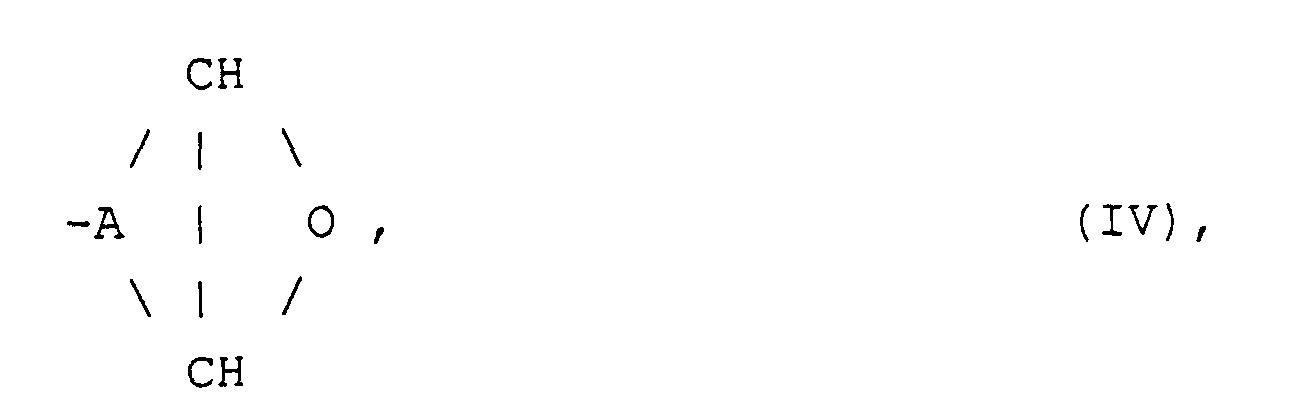 wobei A einen Alkyl-, Alkoxyalkyl-, Aryl- oder
Alkarylrest bedeutet.
wobei A einen Alkyl-, Alkoxyalkyl-, Aryl- oder
Alkarylrest bedeutet.
Beispiele für bevorzugte epoxyfunktionelle Reste R' sind

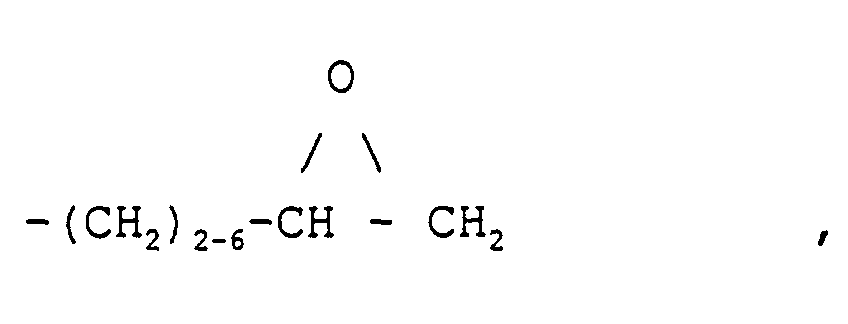
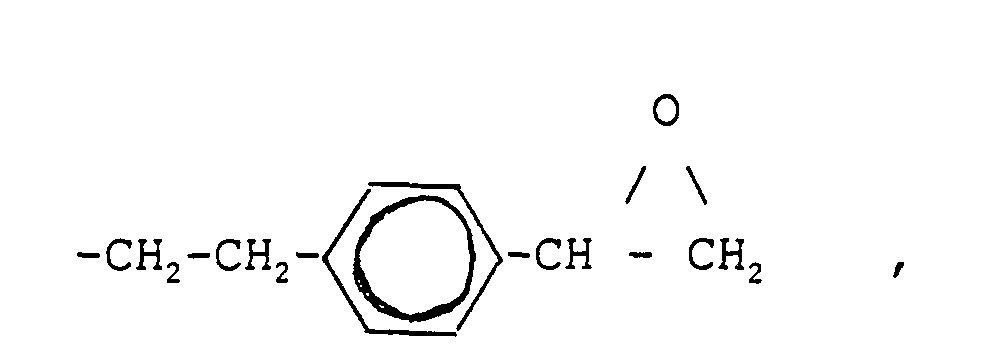

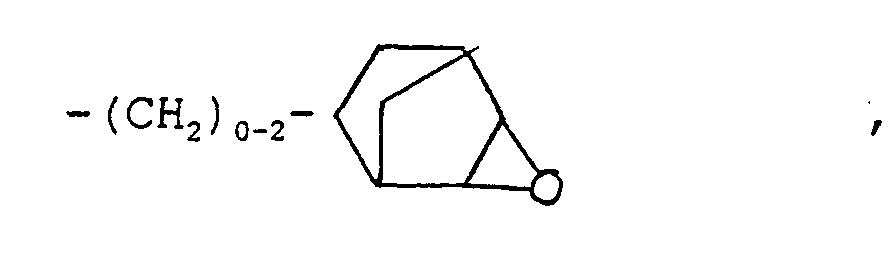
Besonders bevorzugte epoxyfunktionelle Reste R' sind
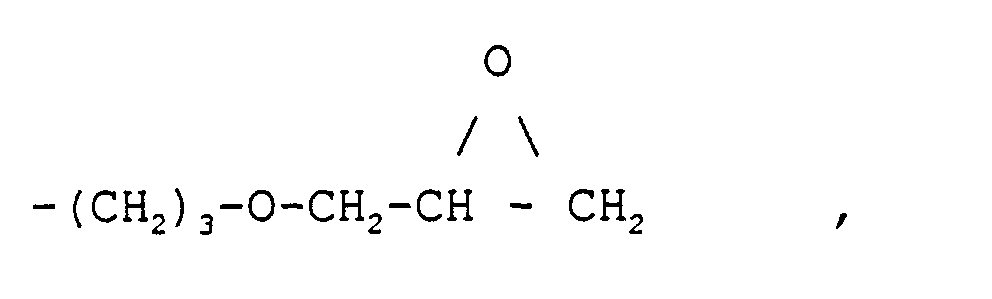

Die bevorzugten Epoxydzahlen der epoxyfunktionellen
Organopolysiloxane (a) liegen bei 0,5 - 0,001 (equiv./100 g),
insbesondere bei 0,2 - 0,01 (equiv./100 g). Die Epoxydzahl
eines epoxyfunktionellen Organopolysiloxans gibt die Anzahl an
Equivalenten Epoxyd, nämlich die Molzahl an Epoxydgruppen, an,
die in 100 Gramm Organopolysiloxan (a) enthalten ist.
Beispiele für bevorzugte carboxyfunktionelle Reste R' sind
Reste der allgemeinen Formel (V)
-X-(COOH)p
und deren durch Umsetzung mit Basen herstellbare Salze, wobei
- X
- einen linearen, verzweigten aliphatischen, aromatischen oder gemischt aliphatisch-aromatischen Kohlenwasserstoffrest bedeutet, dessen Kohlenstoffgerüst durch zweiwertige Schwefel-, Sauerstoff- oder Carbonsäureesterreste unterbrochen sein kann und
- p
- den Wert 1 oder 2 hat.
Als carboxyfunktionelle Reste R' sind besonders bevorzugt die
Reste
- (CH2)4-10-COOH,
-CH2CH(CH3)-COOH,
-(Phenyl)-COOH ,
-CH2CHR3-S-CH2-COOH,
wobei R3 vorzugsweise ein Wasserstoffatom, einen Methyl- oder
Ethylrest bedeutet,
-(CH2)3O-(C=O)-(CH2)2-COOH,


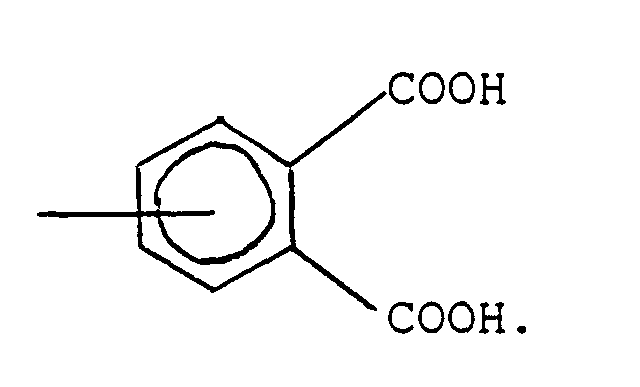 Insbesondere bevorzugt als carboxyfunktionelle Reste R' sind
vorzugsweise die Reste
Insbesondere bevorzugt als carboxyfunktionelle Reste R' sind
vorzugsweise die Reste
- (CH2)10-COOH,
-CH2CH (CH3)-COOH und
- (CH2)2-S-CH2-COOH
Beispiele für Basen zur Umsetzung mit carboxyfunktionellen
Resten R' aufweisenden Organopolysiloxanen (a) sind
vorzugsweise Ammoniak, Amine, Alkali- und Erdalkalihydroxide,
wie LiOH, NaOH, KOH, RbOH, CsOH, Mg(OH)2, Ca(OH)2, Sr(OH)2 und
Ba(OH)2.
Die bevorzugten Säurezahlen der carboxyfunktionellen
Organopolysiloxane (a) liegen bei 1 - 100 (mg KOH/g),
vorzugsweise bei 5 - 50 und insbesondere bei 10 - 30. Die
Säurezahl eines carboxyfunktionellen Organopolysiloxans (a)
gibt die Anzahl an Milligramm Kaliumhydroxid an, die notwendig
ist, um die freien Säuren zu neutralisieren, die in einem Gramm
des carboxyfunktionellen Organopolysiloxans (a) enthalten sind.
Vorzugsweise sind die Reste R Methyl-, Ethyl-, Phenyl-,
Methoxy- und/oder Vinylreste. Wegen der leichteren
Zugänglichkeit sind vorzugsweise 50 % der Reste R, insbesondere
mindestens 80 % der Reste R, Methylreste.
Es kann ein Organopolysiloxan (a), vorzugsweise ein solches der
Formel (I), eingesetzt werden; es können auch mehrere
Organopolysiloxane eingesetzt werden.
Das in Emulsionen eingesetzte Organopolysiloxan(gemisch) ist
vorzugsweise flüssig. Insbesondere besitzen die im
erfindungsgemäßen Verfahren eingesetzten Organopolysiloxane
vorzugsweise jeweils Viskositäten von 100 mPa*s bis
1.000.000 mPa*s, jeweils gemessen bei 25 °C.
Wird ein aminofunktionelles Organopolysiloxan zur Herstellung
des vorzugsweise in den erfindungsgemäßen Emulsionen
eingesetzten ammoniumfunktionellen Organopolysiloxans (a)
verwendet, so ist bevorzugt, daß es eine Aminzahl von 0,1 bis
3,0, insbesondere von 0,2 bis 0,9, besitzt. Die Aminzahl eines
aminofunktionellen Stoffes wird bestimmt als Verbrauch in cm3 an
In Salzsäure bei der Titration von 1 g des aminofunktionellen
Stoffes.
Als Alkylpolyglykoside können beispielsweise die in der
EP-A 418 479 beschriebenen Alkylpolyglykoside der allgemeinen
Formel (VI)
R''-O-Zo,
eingesetzt werden,
wobei
wobei
- R''
- vorzugsweise einen linearen oder verzweigten, gesättigten oder ungesättigten Alkylrest mit im Mittel 8 bis 24 Kohlenstoffatomen, vorzugsweise 8 bis 16 Kohlenstoffatomen, und
- Zo
- vorzugsweise einen Oligoglycosidrest mit im Mittel o = 1 bis 10, vorzugsweise 1 bis 5, Hexose- oder Pentoseeinheiten oder Gemischen davon bedeuten.
Besonders bevorzugt sind Alkylpolyglykoside mit gesättigtem
Alkylrest mit im Mittel 8 bis 14 Kohlenstoffatomen und einem
mittleren Glykosidierungsgrad n zwischen 1,1 und 3.
Ein weiterer Gegenstand der Erfindung ist ein Verfahren zur
Behandlung eines Flächengebildes, enthaltend Polyester, bei dem
zumindest ein Organopolysiloxan und zumindest ein
Alkylpolyglykosid aufgebracht werden.
Dies wird vorzugsweise durch die Behandlung des
Flächengebildes, enthaltend Polyester mit einer wäßrigen
Emulsion auf der Grundlage von
Die Organopolysiloxane und Alkylpolyglykoside haben die oben
angegebene Bedeutung.
Im Gegensatz zu den wäßrigen Emulsionen von Polydimethylsiloxanölen
und Polydiphenylsiloxanölen mit Alkylpolyglykosiden
weisen die erfindungsgemäß eingesetzten Emulsionen eine höhere
Stabilität gegenüber Fremdelektrolyten, wie Magnesium- und
Natriumsalzen, auf als entsprechende Emulsionen, bei denen
Alkylpolyglykolether als Emulgatoren verwendet werden.
Die erfindungsgemäß eingesetzten Emulsionen enthalten relativ
geringe Mengen an Emulgatoren, insbesondere 5 bis 100
Gewichtsteile an Alkylpolyglykosiden (b) pro 100 Gewichtsteile
polare Gruppen enthaltender Organopolysiloxane (a).
Die erfindungsgemäß eingesetzten Emulsionen weisen eine
diskontinuierliche Ölphase, welche die polare Gruppen
enthaltenden Organopolysiloxane (a) enthält, und eine
kontinuierliche Wasserphase auf.
Die Anteile des Organopolysiloxans (a) und der kontinuierlichen
Wasserphase können in weiten Bereichen variiert werden, je
nachdem, welcher Festgehalt in den erfindungsgemäß eingesetzten
Emulsionen und Mikroemulsionen angestrebt wird. Vorzugsweise
liegt der Anteil des Organopolysiloxans (a) zwischen 20 und 70
Gewichtsprozent, insbesondere jedoch zwischen 40 und 60
Gewichtsprozent des Gesamtgewichts der Emulsion.
Die erfindungsgemäß eingesetzten Emulsionen weisen vorzugsweise
eine mittlere Teilchengröße von höchstens 1 µm, insbesondere
von höchstens 300 nm auf. Die erfindungsgemäß eingesetzten
Mikroemulsionen weisen vorzugsweise eine mittlere Teilchengröße
von höchstens 150 nm, insbesondere von höchstens 20 nm,
auf. Der Ausdruck "Emulsionen" umfaßt im ganzen Text auch
Mikroemulsionen. Der Ausdruck "Mikroemulsionen" bezieht sich
nur auf Emulsionen mit einer mittleren Teilchengröße von
höchstens 150 nm, die transparent bis optisch klar sind.
Mikroemulsionen von Organopolysiloxanen mit Alkylpolyglykosiden
als Emulgatoren sind nicht vorbeschrieben.
Beispielsweise zur Verkleinerung der Teilchengröße und zur
Verringerung der benötigten Menge an Alkylpolyglycosiden (b)
können die erfindungsgemäß eingesetzten Emulsionen,
insbesondere die Mikroemulsionen, auch Cotenside, vorzugsweise
in Mengen von 0 bis 30 Gewichtsteilen, insbesondere höchstens
20 Gewichtsteilen, jeweils bezogen auf 100 Gewichtsteile der
Organopolysiloxane (a), enthalten.
Unter Cotensiden versteht man polare Verbindungen mittlerer
Molmasse, wie vorzugsweise Alkohole der Molekülgröße C4 bis C8,
geeignete Glykolether, Amine, Ester oder Ketone.
Beispiele für besonders geeignete Cotenside sind vorzugsweise
1-Butanol, 2-Butanol, 2-Methyl-2-propanol, 1-Pentanol, 2-Pentanol,
3-Pentanol, 1-Hexanol, 2-Hexanol, 3-Hexanol, 1-Heptanol,
2-Heptanol, 3-Heptanol, 4-Heptanol, 1-Octanol, 2-Octanol,
3-Octanol und 4-Octanol; Diethylenglycolmonomethyl-,-ethyl-,
und -butylether; Diethylenglycoldimethyl- und -
ethylether; 1-Aminobutan, 2-Aminobutan, 2-Amino-2-methylpropan,
1-Aminopentan, 2-Aminopentan, 1-Aminohexan, 1-Aminoheptan
und 1-Aminooctan; Ethyl-, Propyl-, Isopropyl-,
Butyl-, Iso-butyl-, Pentyl-, Isopentyl- und Hexylacetat;
Methyl-, Ethyl-und tert.-Butylpropionat; Methyl-, Ethyl-,
Propyl- und Butylbutyrat; 2-Butanon, 2-Pentanon, 3-Pentanon, 4-Methyl-2-pentanon,
2-Hexanon, 3-Hexanon, 2-Heptanon, 3-Heptanon,
4-Heptanon, 5-Methyl-3-Heptanon, 2-Octanon und 3-Octanon.
Beispiele für bevorzugte Cotenside sind 1-Alkanole der
vorstehend aufgeführten Beispiele mit C5- bis C8-Ketten,
Diethylenglycolmonobutylether, Diethylenglycoldimethyl- und
Diethylenglycoldiethylether, Propyl-, Butyl- und Pentylacetat
sowie 2-Pentanon.
Als Cotenside besonders bevorzugt sind 1-Pentanol, 1-Hexanol
und 1-Octanol, Diethylenglycolmonobutylether,
Diethylenglycoldimethylether und Butylacetat.
Außer Organopolysiloxan (a), Alkylpolyglykosiden (b), Wasser
und gegebenenfalls Cotensid können die erfindungsgemäß
eingesetzten Emulsionen noch Zusatzstoffe enthalten. Die sind
insbesondere Bactericide, Fungicide, Algicide, Mikrobicide,
Duftstoffe, Korrosionsinhibitoren, Farbstoffe, Pigmente,
Verdickungsmittel und Füllstoffe. Die erfindungsgemäß
eingesetzten Emulsionen enthalten Zusatzstoffe, vorzugsweise in
Mengen von 0 bis 1 Gewichtsprozent, insbesondere von 0 bis 0,2
Gewichtsprozent, jeweils bezogen auf das Gesamtgewicht der
fertigen Emulsion.
Das Vermischen aller Komponenten der erfindungsgemäß
eingesetzten Emulsion kann in beliebiger Reihenfolge unter
Verwendung von Emulgiergeräten oder durch Zusammenrühren ohne
Aufbietung hoher Scherkräfte erfolgen. Es ist jedoch bevorzugt,
daß zuerst eine homogene Mischung von Organopolysiloxan (a),
Alkylpolyglykosiden (b) und Wasser hergestellt und in diese
Mischung die Cotenside und Zusatzstoffe, sofern eingesetzt,
ohne Aufbietung hoher Scherkräfte eingerührt werden.
Der auf die jeweiligen Komponenten bzw. Mischungen ausgeübte
Druck ist vorzugsweise der gegebenenfalls durch Einwirkung der
Mischorgane erhöhte (Atmosphären-)Druck; die entsprechend
herrschende Temperatur ist vorzugsweise die gegebenenfalls
durch Einwirkung der Mischorgane erhöhte (Raum-)Temperatur.
Das vorzugsweise in den erfindungsgemäß eingesetzten Emulsionen
enthaltene eingesetzte ammoniumfunktionelle Organopolysiloxan
(a) kann hergestellt werden durch Zugabe von Mineralsäuren oder Carbonsäuren zu entsprechenden aminofunktionellen Organopolysiloxanen. Diese Zugabe von Säure zum Organopolysiloxan (a) kann erfolgen, bevor das Organopolysiloxan (a) eingesetzt wird.
(a) kann hergestellt werden durch Zugabe von Mineralsäuren oder Carbonsäuren zu entsprechenden aminofunktionellen Organopolysiloxanen. Diese Zugabe von Säure zum Organopolysiloxan (a) kann erfolgen, bevor das Organopolysiloxan (a) eingesetzt wird.
In einer besonders bevorzugten Ausführungsform zur Herstellung
der erfindungsgemäß eingesetzten Emulsionen unter Einsatz
besonders bevorzugter amino- und/oder ammoniumfunktioneller
Organopolysiloxane (a) werden die ammoniumfunktionellen Reste
jedoch in situ beim Mischen von Organopolysiloxan (a),
Alkylpolyglykosiden (b) und Wasser durch Zugabe der vorstehend
beschriebenen Mineral- und/oder Carbonsäuren, insbesondere
Essigsäure, erzeugt.
Die erfindungsgemäß eingesetzten Emulsionen können
grundsätzlich in jedem turbulenten Mischer hergestellt werden,
der auch bisher zur Herstellung von Emulsionen verwendet wurde.
Beispiele für verwendbare Mischer sind Rührer, wie Blatt-,
Balken-, Anker-, Gitter-, Schnecken-, Propeller-, Scheiben-,
Impeller-, Turbinen-, Planetenrührer, Ein- und
Doppelschneckenmischer, Mischturbinen, Kolloidmühlen,
Ultraschallmischer, In-line-Mischer, Pumpen, Homogenisatoren,
wie Hochdruck-, Turbinen- und Umlaufhomogenisatoren.
Verschiedene Polyester (PES)-Qualitäten wurden bedruckt bzw. im
Jet mit unterschiedlichen, aber als empfindlich bekannten
Farbstoffen carrierfrei bei 130 Grad Celsius während 30 - 45
Minuten gefärbt. Nach dem Färben wurden unterschiedliche
Siliconweichmacher im Foulard- bzw. Ausziehverfahren
appliziert. Anschließend erfolgte Trocknen und Thermofixieren
während 60 Sekunden bei 185 Grad Celsius.
Die so erhaltenen Muster wurden zusammen mit Mehrfaserband
(Acetat, Baumwolle, Poyamid 6,6; Polyester, Polyacrylnitryl und
Wolle) einer Waschechtheitsprüfung C4A bei 60 Grad Celsius nach
Marks & Spencer unterzogen.
Beurteilt wurden das Anbluten der diversen Begleitgewebe und
die Farbtonänderung des gefärbten Gewebes. Beides erfolgte nach
dem Graumaßstab (DIN 54002). Die Bewertung erfolgte in den
Noten 1 - 5 wobei 5 eine sehr gute, 1 eine schlechte
Beurteilung darstellt. Bei dieser Beurteilung wird das Anbluten
von Acetat und Nylon bewertet, da diese Substrate am
aussagekräftigsten sind.
Alle nachfolgenden %-Angaben sind Gewichts-%.
Als Weichmacher (WM) wurden verwendet:
Polyestergewebe (PES-Filament) wurde vollflächig mit einer
Druckpaste folgender Rezeptur bedruckt:

Der Druck wurde durch Thermosolieren (210 Grad Celsius, 60
Sekunden) fixiert und anschließend bei 60 ° C gespült.
Es erfolgte eine reduktive Nachreinigung mit 5 g/L Lauge und 3
g/L
Hydrosulfit, gefolgt von einem Spülprozess bei 80 °C. Die Probanden wurden am Foulard bei einer Flottenaufnahme von 65 % mit Weichmachern ausgerüstet
Hydrosulfit, gefolgt von einem Spülprozess bei 80 °C. Die Probanden wurden am Foulard bei einer Flottenaufnahme von 65 % mit Weichmachern ausgerüstet
Die Probanden A - G wurden anschließend 60 Sekunden bei
185 Grad Celsius getrocknet und thermofixiert.
Nach der Vorschrift C4A (siehe oben) wurden die Probanden
zusammen mit Mehrfaserband gewaschen.
| Ergebnis: | |||||||
| A | B | C | D | E | F | G | |
| Farbton-Änderung | 4 - 5 | 4 - 5 | 4 - 5 | 4 - 5 | 4 - 5 | 4-5 | 4-5 |
| CA | 2-3 | 2 | 1-2 | 3 | 3 | 3 | 3-4 |
| CO | 4-5 | 4 | 3-4 | 5 | 5 | 5 | 5 |
| PA 6.6 | 2-3 | 2 | 1-2 | 3 | 3 | 3 | 3-4 |
| PES | 4-5 | 4 | 3-4 | 5 | 5 | 5 | 5 |
PES- Gewebe (aus texturierten Garnen, vor dem Färben nicht
fixiert) wurde im JET mit folgenden als gut fixierecht
bekannten Farbstoffkombinationen aus dem Dianix-Sortiment von
Dystar gefärbt:
Die Färbung erfolgte bei pH 4,5 (eingestellt mit Essigsäure)
45 Minuten bei 130 °C unter Zusatz von 1 g/L Dispersogen PN und
2 g/L Na-Acetat.
Reduktive Nachbehandlung mit 5g/L NaOH 38 ° Be und 3 g/L Na-Hydrosulfit 15 Minuten bei 80 °C.
Die Probanden wurden in Reihe 1 am Foulard mit FA 65 % mit folgenden Flotten bei pH 6,0 ausgerüstet:
Reduktive Nachbehandlung mit 5g/L NaOH 38 ° Be und 3 g/L Na-Hydrosulfit 15 Minuten bei 80 °C.
Die Probanden wurden in Reihe 1 am Foulard mit FA 65 % mit folgenden Flotten bei pH 6,0 ausgerüstet:
In Reihe 2 wurde 20 Minuten bei 60 Grad im Ausziehverfahren
gearbeitet
Wie üblich wurde 1 Minute bei 185 Grad Celsius getrocknet und
thermofixiert. Beim Waschen nach M & S in beschriebener Weise
zusammen mit DW-Mehrfaserband wurden folgende Werte erhalten:
| Rotfärbung Foulard/Ausziehverfahren | |||||||
| A | B | C | D | E | F | G | |
| CA | 2-3/ 2- 3 | 2/ 2 | 1-2/ 1- 2 | 3/ 3 | 3/ 3 | 3/ 3 | 3/ 3 |
| CO | 5/ 5 | 4-5/ 4- 5 | 4/ 4 | 5/ 5 | 5/ 5 | 5/ 5 | 5/ 5 |
| PA 6.6 | 3/ 3-4 | 2-3/ 2- 3 | 2/ 2 | 4/ 4 | 4/ 4 | 4/ 4 | 4/ 4 |
| PES | 4-5/ 4- 5 | 4/ 4 | 3-4/ 3- 4 | 5/ 5 | 5/5 | 5/ 5 | 5/ 5 |
| Schwarzfärbung Foulard /Ausziehverfahren | |||||||
| A | B | C | D | E | F | G | |
| CA | 2-3/ 3 | 2/ 2 | 1-2/ 2 | 3-4/ 3-4 | 3-4/ 3-4 | 3-4/ 3-4 | 3-4/ 3-4 |
| CO | 4-5/ 4-5 | 4/ 4 | 3-4/ 3-4 | 4-5/ 4-5 | 4-5/ 4-5 | 4-5/ 4-5 | 5/ 5 |
| PA 6.6 | 3/ 4 | 2-3/ 3 | 2/ 2 | 4/ 4-5 | 4/ 4-5 | 4/ 4-5 | 4-5/ 4-5 |
| PES | 4-5/ 4-5 | 3-4/ 3-4 | 3/ 3 | 4-5/ 4-5 | 4-5/ 4-5 | 4-5/ 4-5 | 5/ 5 |
PES-Gewebe wurde, wie unter Beispiel 2 beschrieben, auch in
Blau gefärbt mit 0,98 % Dianix Dunkelblau KR + Dianix Schwarz
KB 0,31 %. Die Probanden wurden in Reihe I foulardiert, in
Reihe II im Ausziehverfahren behandelt.
Als Weichmacher dienten:
Als Weichmacher dienten:
Das Foulardieren erfolgte mit 65 % Flottenaufnahme.
Im Ausziehverfahren wurde 20 Minuten bei 60 Grad Celsius und pH 6 gearbeitet.
Thermofixiert wurde, wie üblich 1 Minute bei 185 Grad Celsius.
Im Ausziehverfahren wurde 20 Minuten bei 60 Grad Celsius und pH 6 gearbeitet.
Thermofixiert wurde, wie üblich 1 Minute bei 185 Grad Celsius.
| Ergebnisse (Blau) Foulard/ Ausziehverfahren | |||||||
| A | B | C | D | E | F | G | |
| CA | 3/ 3 | 2-3/ 3 | 3/ 3 | 2/ 2 | 4/ 4 | 4/ 4 | 4/ 4 |
| CO | 4/ 4 | 4/ 4 | 4/ 4 | 3-4/ 3-4 | 4-5/ 4-5 | 4-5/ 4-5 | 4-5/ 4-5 |
| PA 6.6 | 2-3/ 3 | 2-3/ 3 | 3/ 2-3 | 2/ 2 | 3-4/ 3-4 | 3-4/ 3-4 | 4/ 4 |
| PES | 4/ 4 | 3/ 3 | 4/ 4 | 3/ 3 | 4-5/ 4-5 | 4-5/ 4-5 | 4-5/ 4-5 |
Als Ergebnis und Schlußfolgerung dieser Versuchsreihen hat sich
eindeutig erwiesen:
Die Waschechtheiten der mit erfindungsgemäßem Weichmacher
behandelten Probanden haben sich gegenüber den mit Wasser
behandelten Geweben praktisch nicht verschlechtert.
Konventionelle Weichmacher dagegen ergaben Verschlechterungen
bis zu. 2 Notenstufen, wobei eine Korrelation zwischen der
Notenverschlechterung und dem spezifischen Gehalt an
ethoxylierten Emulgatoren beobachtet wurde.
Claims (6)
- Flächengebilde enthaltend Polyester, dadurch gekennzeichnet, daß es zumindest ein Organopolysiloxan und zumindest ein Alkylpolyglykosid aufweist.
- Flächengebilde enthaltend Polyester nach Anspruch 1, dadurch gekennzeichnet, daß es einen Dispersionsfarbstoff oder Druck aufweist.
- Flächengebilde enthaltend Polyester nach Anspruch 1 oder 2, dadurch gekennzeichnet, daß das Organopolysiloxan ein aminofunktionelles Organopolysiloxan ist.
- Flächengebilde enthaltend Polyester nach einem oder mehreren der Ansprüche 1 bis 3, dadurch gekennzeichnet, daß das Gewichtsverhältnis Organopolysiloxan zu dem Alkylpolyglykosid 10 : 1 bis 0,5 : 1 beträgt.
- Verfahren zur Behandlung eines Flächengebildes, enthaltend Polyester nach einem oder mehreren der Ansprüche 1 bis 4, dadurch gekennzeichnet, daß zumindest ein Organopolysiloxan und zumindest ein Alkylpolyglykosid aufgebracht werden.
- Verfahren zur Behandlung eines Flächengebildes, enthaltend Polyester nach Anspruch 5, dadurch gekennzeichnet, daß zumindest ein Organopolysiloxan und zumindest ein Alkylpolyglykosid in Form einer Emulsion aufgebracht werden.
Applications Claiming Priority (2)
| Application Number | Priority Date | Filing Date | Title |
|---|---|---|---|
| DE10005855 | 2000-02-10 | ||
| DE10005855A DE10005855A1 (de) | 2000-02-10 | 2000-02-10 | Flächengebilde aus Polyester |
Publications (1)
| Publication Number | Publication Date |
|---|---|
| EP1127975A1 true EP1127975A1 (de) | 2001-08-29 |
Family
ID=7630433
Family Applications (1)
| Application Number | Title | Priority Date | Filing Date |
|---|---|---|---|
| EP20000127958 Withdrawn EP1127975A1 (de) | 2000-02-10 | 2000-12-21 | Flächengebilde aus Polyester |
Country Status (8)
| Country | Link |
|---|---|
| US (1) | US20010018305A1 (de) |
| EP (1) | EP1127975A1 (de) |
| KR (1) | KR20010082092A (de) |
| CN (1) | CN1311357A (de) |
| BR (1) | BR0100459A (de) |
| DE (1) | DE10005855A1 (de) |
| HK (1) | HK1040268A1 (de) |
| ID (1) | ID29216A (de) |
Families Citing this family (1)
| Publication number | Priority date | Publication date | Assignee | Title |
|---|---|---|---|---|
| WO2021182338A1 (ja) * | 2020-03-10 | 2021-09-16 | 京セラドキュメントソリューションズ株式会社 | インクジェット用処理液、インクジェット捺染装置、及びインクジェット捺染方法 |
Citations (7)
| Publication number | Priority date | Publication date | Assignee | Title |
|---|---|---|---|---|
| EP0094118A1 (de) * | 1982-05-10 | 1983-11-16 | THE PROCTER & GAMBLE COMPANY | Phosphatarme Wäschewaschmittelzusammensetzungen |
| EP0418479A1 (de) * | 1989-08-04 | 1991-03-27 | Hüls Aktiengesellschaft | Emulgatoren zur Herstellung von lagerstabilen, wässrigen Polysiloxan-bzw. Polysiloxan-Paraffinöl-Emulsionen |
| DE4131551A1 (de) * | 1991-09-21 | 1993-03-25 | Pfersee Chem Fab | Waessrige dispersionen von stickstoffhaltigen polysiloxanen |
| EP0622397A1 (de) * | 1993-03-04 | 1994-11-02 | Wacker-Chemie GmbH | Emulsionen polare Gruppen enthaltender Organopolysiloxane mit Alkylpolyglykosiden als Emulgatoren |
| EP0769548A1 (de) * | 1995-10-18 | 1997-04-23 | Hüls Aktiengesellschaft | Entschäumerdispersionen für wässrige Tensidsysteme |
| EP0879842A2 (de) * | 1997-05-23 | 1998-11-25 | Hüls Silicone Gesellschaft mit beschränkter Haftung | Aminosiliconöl-Microemulsionen |
| EP0881325A1 (de) * | 1997-05-30 | 1998-12-02 | Wacker-Chemie GmbH | Siliconweichmacher für Jeans |
Family Cites Families (2)
| Publication number | Priority date | Publication date | Assignee | Title |
|---|---|---|---|---|
| DE4133551A1 (de) * | 1991-10-10 | 1993-04-15 | Kloeckner Humboldt Deutz Ag | Verfahren und vorrichtung zur direktsaat waehrend eines erntevorgangs |
| DE4328917A1 (de) * | 1993-08-27 | 1995-03-02 | Wacker Chemie Gmbh | Herstellung von Organopolysiloxan-Microemulsionen |
-
2000
- 2000-02-10 DE DE10005855A patent/DE10005855A1/de not_active Ceased
- 2000-12-21 EP EP20000127958 patent/EP1127975A1/de not_active Withdrawn
-
2001
- 2001-02-05 ID ID20010112D patent/ID29216A/id unknown
- 2001-02-06 US US09/778,196 patent/US20010018305A1/en not_active Abandoned
- 2001-02-08 BR BR0100459A patent/BR0100459A/pt not_active IP Right Cessation
- 2001-02-09 KR KR1020010006365A patent/KR20010082092A/ko not_active Ceased
- 2001-02-09 CN CN01103700A patent/CN1311357A/zh active Pending
-
2002
- 2002-03-01 HK HK02101597.3A patent/HK1040268A1/zh unknown
Patent Citations (7)
| Publication number | Priority date | Publication date | Assignee | Title |
|---|---|---|---|---|
| EP0094118A1 (de) * | 1982-05-10 | 1983-11-16 | THE PROCTER & GAMBLE COMPANY | Phosphatarme Wäschewaschmittelzusammensetzungen |
| EP0418479A1 (de) * | 1989-08-04 | 1991-03-27 | Hüls Aktiengesellschaft | Emulgatoren zur Herstellung von lagerstabilen, wässrigen Polysiloxan-bzw. Polysiloxan-Paraffinöl-Emulsionen |
| DE4131551A1 (de) * | 1991-09-21 | 1993-03-25 | Pfersee Chem Fab | Waessrige dispersionen von stickstoffhaltigen polysiloxanen |
| EP0622397A1 (de) * | 1993-03-04 | 1994-11-02 | Wacker-Chemie GmbH | Emulsionen polare Gruppen enthaltender Organopolysiloxane mit Alkylpolyglykosiden als Emulgatoren |
| EP0769548A1 (de) * | 1995-10-18 | 1997-04-23 | Hüls Aktiengesellschaft | Entschäumerdispersionen für wässrige Tensidsysteme |
| EP0879842A2 (de) * | 1997-05-23 | 1998-11-25 | Hüls Silicone Gesellschaft mit beschränkter Haftung | Aminosiliconöl-Microemulsionen |
| EP0881325A1 (de) * | 1997-05-30 | 1998-12-02 | Wacker-Chemie GmbH | Siliconweichmacher für Jeans |
Also Published As
| Publication number | Publication date |
|---|---|
| CN1311357A (zh) | 2001-09-05 |
| BR0100459A (pt) | 2001-09-11 |
| US20010018305A1 (en) | 2001-08-30 |
| KR20010082092A (ko) | 2001-08-29 |
| ID29216A (id) | 2001-08-16 |
| HK1040268A1 (zh) | 2002-05-31 |
| DE10005855A1 (de) | 2001-08-23 |
Similar Documents
| Publication | Publication Date | Title |
|---|---|---|
| EP0622397B1 (de) | Emulsionen polare Gruppen enthaltender Organopolysiloxane mit Alkylpolyglykosiden als Emulgatoren | |
| DE667744C (de) | Verfahren zur Herstellung von in Wasser loeslichen oder leicht verteilbaren Kondensationsprodukten | |
| WO1988008436A1 (fr) | Emulsions aux silicones aqueuses optiquement claires | |
| DE10120754A1 (de) | Amidofunktionelle Polydiorganosiloxane | |
| DE2625707A1 (de) | Netz- und schaumdaempfungsmittel | |
| CH631734A5 (de) | Fluessige farbstoffpraeparationen, verfahren zu ihrer herstellung und ihre verwendung. | |
| EP0881325B1 (de) | Siliconweichmacher für Jeans | |
| DE10005855A1 (de) | Flächengebilde aus Polyester | |
| EP2260140B1 (de) | Verwendung von polyamino- und/oder polyammonium-polysiloxan-copolymer-verbindungen | |
| DE1910587A1 (de) | Verfahren zum kontinuierlichen Faerben oder Bedrucken von anionisch modifizierten Polyacrylnitril-,Polyamid- und Polyesterfasermaterialien | |
| DE2658268A1 (de) | Reaktive disazofarbstoffe mit monochlortriazin-reaktivgruppen | |
| DE2802304A1 (de) | Verfahren zum faerben von wollhaltigem fasermaterial | |
| DE1518149A1 (de) | Erzeugung egaler Faerbungen auf Textilien | |
| CH366661A (de) | Baukonstruktion für Schnellbaugebäude | |
| EP0457777B1 (de) | Verfahren zum färben und bedrucken von mischgeweben aus polyester und natürlichen fasermaterialien | |
| DE102008014762A1 (de) | Verwendung von Polyamino- und/oder Polyammonium-Polysiloxan-Copolymer-Verbindungen | |
| DE2251451A1 (de) | Verfahren zur nachbehandlung von textildrucken | |
| MXPA98004314A (en) | Silicon softener for je | |
| DE232276C (de) | ||
| CH361559A (de) | Zur Fertigstellung von Textilfärbungen geeignetes beständiges Präparat | |
| DE1255112B (de) | Emulgier- und Dispergiermittel bzw. Wasch- und Reinigungsmittel | |
| DE4332756A1 (de) | Verwendung von Novolak-Derivaten beim Färben von Polyester-Cellulose-Mischgeweben und Verfahren zum Kontinue-Färben von solchen Mischgeweben | |
| DE2032381C (de) | Verfahren zur Herstellung von Emul sionen von Organopolysiloxanen, die an Silicium gebundene Wasserstoffatome ent halten | |
| DE204799C (de) | ||
| DE849096C (de) | Verfahren zum Bedrucken von Superpolyamidfasern |
Legal Events
| Date | Code | Title | Description |
|---|---|---|---|
| PUAI | Public reference made under article 153(3) epc to a published international application that has entered the european phase |
Free format text: ORIGINAL CODE: 0009012 |
|
| 17P | Request for examination filed |
Effective date: 20001221 |
|
| AK | Designated contracting states |
Kind code of ref document: A1 Designated state(s): AT BE CH CY DE DK ES FI FR GB GR IE IT LI LU MC NL PT SE TR |
|
| AX | Request for extension of the european patent |
Free format text: AL;LT;LV;MK;RO;SI |
|
| 17Q | First examination report despatched |
Effective date: 20020204 |
|
| AKX | Designation fees paid |
Free format text: DE IT |
|
| STAA | Information on the status of an ep patent application or granted ep patent |
Free format text: STATUS: THE APPLICATION IS DEEMED TO BE WITHDRAWN |
|
| 18D | Application deemed to be withdrawn |
Effective date: 20020615 |