EP0903335A1 - Esterverbindungen und schmieröl-zusammensetzungen - Google Patents
Esterverbindungen und schmieröl-zusammensetzungen Download PDFInfo
- Publication number
- EP0903335A1 EP0903335A1 EP96931289A EP96931289A EP0903335A1 EP 0903335 A1 EP0903335 A1 EP 0903335A1 EP 96931289 A EP96931289 A EP 96931289A EP 96931289 A EP96931289 A EP 96931289A EP 0903335 A1 EP0903335 A1 EP 0903335A1
- Authority
- EP
- European Patent Office
- Prior art keywords
- ester compound
- acid
- lubricating oil
- koh
- ratio
- Prior art date
- Legal status (The legal status is an assumption and is not a legal conclusion. Google has not performed a legal analysis and makes no representation as to the accuracy of the status listed.)
- Granted
Links
- -1 Ester compounds Chemical class 0.000 title claims abstract description 261
- 239000000203 mixture Substances 0.000 title claims abstract description 175
- 239000010687 lubricating oil Substances 0.000 title claims abstract description 102
- 229910052751 metal Inorganic materials 0.000 claims abstract description 82
- 239000002184 metal Substances 0.000 claims abstract description 82
- 125000002887 hydroxy group Chemical group [H]O* 0.000 claims abstract description 64
- 239000002253 acid Substances 0.000 claims abstract description 63
- 239000012530 fluid Substances 0.000 claims abstract description 43
- 150000001735 carboxylic acids Chemical class 0.000 claims abstract description 32
- 125000004432 carbon atom Chemical group C* 0.000 claims abstract description 21
- RWRIWBAIICGTTQ-UHFFFAOYSA-N difluoromethane Chemical compound FCF RWRIWBAIICGTTQ-UHFFFAOYSA-N 0.000 claims description 113
- OILUAKBAMVLXGF-UHFFFAOYSA-N 3,5,5-trimethyl-hexanoic acid Chemical compound OC(=O)CC(C)CC(C)(C)C OILUAKBAMVLXGF-UHFFFAOYSA-N 0.000 claims description 40
- OBETXYAYXDNJHR-SSDOTTSWSA-M (2r)-2-ethylhexanoate Chemical compound CCCC[C@@H](CC)C([O-])=O OBETXYAYXDNJHR-SSDOTTSWSA-M 0.000 claims description 38
- OBETXYAYXDNJHR-UHFFFAOYSA-N alpha-ethylcaproic acid Natural products CCCCC(CC)C(O)=O OBETXYAYXDNJHR-UHFFFAOYSA-N 0.000 claims description 38
- WXZMFSXDPGVJKK-UHFFFAOYSA-N pentaerythritol Chemical compound OCC(CO)(CO)CO WXZMFSXDPGVJKK-UHFFFAOYSA-N 0.000 claims description 35
- GTLACDSXYULKMZ-UHFFFAOYSA-N pentafluoroethane Chemical compound FC(F)C(F)(F)F GTLACDSXYULKMZ-UHFFFAOYSA-N 0.000 claims description 35
- LVGUZGTVOIAKKC-UHFFFAOYSA-N 1,1,1,2-tetrafluoroethane Chemical compound FCC(F)(F)F LVGUZGTVOIAKKC-UHFFFAOYSA-N 0.000 claims description 26
- CVKMFSAVYPAZTQ-UHFFFAOYSA-N 2-methylhexanoic acid Chemical compound CCCCC(C)C(O)=O CVKMFSAVYPAZTQ-UHFFFAOYSA-N 0.000 claims description 25
- BAZMYXGARXYAEQ-UHFFFAOYSA-N alpha-ethyl valeric acid Chemical compound CCCC(CC)C(O)=O BAZMYXGARXYAEQ-UHFFFAOYSA-N 0.000 claims description 25
- 239000002199 base oil Substances 0.000 claims description 25
- 238000002156 mixing Methods 0.000 claims description 25
- XEEYBQQBJWHFJM-UHFFFAOYSA-N Iron Chemical compound [Fe] XEEYBQQBJWHFJM-UHFFFAOYSA-N 0.000 claims description 24
- 238000000034 method Methods 0.000 claims description 24
- XLYOFNOQVPJJNP-UHFFFAOYSA-N water Substances O XLYOFNOQVPJJNP-UHFFFAOYSA-N 0.000 claims description 16
- ZJCCRDAZUWHFQH-UHFFFAOYSA-N Trimethylolpropane Chemical compound CCC(CO)(CO)CO ZJCCRDAZUWHFQH-UHFFFAOYSA-N 0.000 claims description 15
- RYGMFSIKBFXOCR-UHFFFAOYSA-N Copper Chemical compound [Cu] RYGMFSIKBFXOCR-UHFFFAOYSA-N 0.000 claims description 12
- LFQSCWFLJHTTHZ-UHFFFAOYSA-N Ethanol Chemical compound CCO LFQSCWFLJHTTHZ-UHFFFAOYSA-N 0.000 claims description 12
- 229910052802 copper Inorganic materials 0.000 claims description 12
- 239000010949 copper Substances 0.000 claims description 12
- 229910052742 iron Inorganic materials 0.000 claims description 12
- SLCVBVWXLSEKPL-UHFFFAOYSA-N neopentyl glycol Chemical compound OCC(C)(C)CO SLCVBVWXLSEKPL-UHFFFAOYSA-N 0.000 claims description 11
- 239000011521 glass Substances 0.000 claims description 10
- 238000007872 degassing Methods 0.000 claims description 9
- 150000002763 monocarboxylic acids Chemical class 0.000 claims description 8
- 238000007789 sealing Methods 0.000 claims description 8
- 125000001931 aliphatic group Chemical group 0.000 claims description 7
- 229910052782 aluminium Inorganic materials 0.000 claims description 7
- XAGFODPZIPBFFR-UHFFFAOYSA-N aluminium Chemical compound [Al] XAGFODPZIPBFFR-UHFFFAOYSA-N 0.000 claims description 7
- 230000015556 catabolic process Effects 0.000 claims description 3
- 238000006731 degradation reaction Methods 0.000 claims description 3
- 238000012360 testing method Methods 0.000 abstract description 66
- 150000001298 alcohols Chemical class 0.000 abstract description 8
- 150000007942 carboxylates Chemical class 0.000 description 42
- 150000001732 carboxylic acid derivatives Chemical class 0.000 description 35
- 239000003921 oil Substances 0.000 description 22
- 150000002148 esters Chemical class 0.000 description 17
- WWZKQHOCKIZLMA-UHFFFAOYSA-N octanoic acid Chemical compound CCCCCCCC(O)=O WWZKQHOCKIZLMA-UHFFFAOYSA-N 0.000 description 12
- NQPDZGIKBAWPEJ-UHFFFAOYSA-N valeric acid Chemical compound CCCCC(O)=O NQPDZGIKBAWPEJ-UHFFFAOYSA-N 0.000 description 12
- MNWFXJYAOYHMED-UHFFFAOYSA-N heptanoic acid Chemical compound CCCCCCC(O)=O MNWFXJYAOYHMED-UHFFFAOYSA-N 0.000 description 8
- 125000002252 acyl group Chemical group 0.000 description 6
- 230000000052 comparative effect Effects 0.000 description 6
- 230000003647 oxidation Effects 0.000 description 6
- 238000007254 oxidation reaction Methods 0.000 description 6
- 238000013112 stability test Methods 0.000 description 6
- 238000011156 evaluation Methods 0.000 description 5
- 238000002844 melting Methods 0.000 description 5
- 230000008018 melting Effects 0.000 description 5
- 150000002739 metals Chemical class 0.000 description 5
- 239000003507 refrigerant Substances 0.000 description 5
- FFRUQSUMDFNBLG-UHFFFAOYSA-N 2-(2,4,5-trichlorophenoxy)ethyl 2,2,2-trichloroacetate Chemical compound ClC1=CC(Cl)=C(OCCOC(=O)C(Cl)(Cl)Cl)C=C1Cl FFRUQSUMDFNBLG-UHFFFAOYSA-N 0.000 description 4
- WLAMNBDJUVNPJU-UHFFFAOYSA-N 2-methylbutyric acid Chemical compound CCC(C)C(O)=O WLAMNBDJUVNPJU-UHFFFAOYSA-N 0.000 description 4
- IJGRMHOSHXDMSA-UHFFFAOYSA-N Atomic nitrogen Chemical compound N#N IJGRMHOSHXDMSA-UHFFFAOYSA-N 0.000 description 4
- 125000002915 carbonyl group Chemical group [*:2]C([*:1])=O 0.000 description 4
- 235000014113 dietary fatty acids Nutrition 0.000 description 4
- 229930195729 fatty acid Natural products 0.000 description 4
- 239000000194 fatty acid Substances 0.000 description 4
- 150000004665 fatty acids Chemical class 0.000 description 4
- FUZZWVXGSFPDMH-UHFFFAOYSA-N hexanoic acid Chemical compound CCCCCC(O)=O FUZZWVXGSFPDMH-UHFFFAOYSA-N 0.000 description 4
- UAXOELSVPTZZQG-UHFFFAOYSA-N tiglic acid Natural products CC(C)=C(C)C(O)=O UAXOELSVPTZZQG-UHFFFAOYSA-N 0.000 description 4
- 238000006243 chemical reaction Methods 0.000 description 3
- 238000010586 diagram Methods 0.000 description 3
- 230000003068 static effect Effects 0.000 description 3
- 238000005979 thermal decomposition reaction Methods 0.000 description 3
- UJPMYEOUBPIPHQ-UHFFFAOYSA-N 1,1,1-trifluoroethane Chemical compound CC(F)(F)F UJPMYEOUBPIPHQ-UHFFFAOYSA-N 0.000 description 2
- XDOFQFKRPWOURC-UHFFFAOYSA-N 16-methylheptadecanoic acid Chemical compound CC(C)CCCCCCCCCCCCCCC(O)=O XDOFQFKRPWOURC-UHFFFAOYSA-N 0.000 description 2
- OWEMTCOXFULTNW-UHFFFAOYSA-N 2,3-dimethyl-2-propan-2-ylbutanoic acid Chemical compound CC(C)C(C)(C(C)C)C(O)=O OWEMTCOXFULTNW-UHFFFAOYSA-N 0.000 description 2
- OXQGTIUCKGYOAA-UHFFFAOYSA-N 2-Ethylbutanoic acid Chemical compound CCC(CC)C(O)=O OXQGTIUCKGYOAA-UHFFFAOYSA-N 0.000 description 2
- NKBWMBRPILTCRD-UHFFFAOYSA-N 2-Methylheptanoic acid Chemical compound CCCCCC(C)C(O)=O NKBWMBRPILTCRD-UHFFFAOYSA-N 0.000 description 2
- YSEQNZOXHCKLOG-UHFFFAOYSA-N 2-methyl-octanoic acid Chemical compound CCCCCCC(C)C(O)=O YSEQNZOXHCKLOG-UHFFFAOYSA-N 0.000 description 2
- OVBFMEVBMNZIBR-UHFFFAOYSA-N 2-methylvaleric acid Chemical compound CCCC(C)C(O)=O OVBFMEVBMNZIBR-UHFFFAOYSA-N 0.000 description 2
- NZQMQVJXSRMTCJ-UHFFFAOYSA-N 3-Methyl-hexanoic acid Chemical compound CCCC(C)CC(O)=O NZQMQVJXSRMTCJ-UHFFFAOYSA-N 0.000 description 2
- ATUUSOSLBXVJKL-UHFFFAOYSA-N 3-ethylpentanoic acid Chemical compound CCC(CC)CC(O)=O ATUUSOSLBXVJKL-UHFFFAOYSA-N 0.000 description 2
- IGIDLTISMCAULB-UHFFFAOYSA-N 3-methylvaleric acid Chemical compound CCC(C)CC(O)=O IGIDLTISMCAULB-UHFFFAOYSA-N 0.000 description 2
- MHPUGCYGQWGLJL-UHFFFAOYSA-N 5-methyl-hexanoic acid Chemical compound CC(C)CCCC(O)=O MHPUGCYGQWGLJL-UHFFFAOYSA-N 0.000 description 2
- OEOIWYCWCDBOPA-UHFFFAOYSA-N 6-methyl-heptanoic acid Chemical compound CC(C)CCCCC(O)=O OEOIWYCWCDBOPA-UHFFFAOYSA-N 0.000 description 2
- FERIUCNNQQJTOY-UHFFFAOYSA-N Butyric acid Chemical compound CCCC(O)=O FERIUCNNQQJTOY-UHFFFAOYSA-N 0.000 description 2
- 239000005635 Caprylic acid (CAS 124-07-2) Substances 0.000 description 2
- YSMRWXYRXBRSND-UHFFFAOYSA-N TOTP Chemical compound CC1=CC=CC=C1OP(=O)(OC=1C(=CC=CC=1)C)OC1=CC=CC=C1C YSMRWXYRXBRSND-UHFFFAOYSA-N 0.000 description 2
- NIJJYAXOARWZEE-UHFFFAOYSA-N Valproic acid Chemical compound CCCC(C(O)=O)CCC NIJJYAXOARWZEE-UHFFFAOYSA-N 0.000 description 2
- 150000007513 acids Chemical class 0.000 description 2
- 239000000654 additive Substances 0.000 description 2
- QVGXLLKOCUKJST-UHFFFAOYSA-N atomic oxygen Chemical compound [O] QVGXLLKOCUKJST-UHFFFAOYSA-N 0.000 description 2
- 229910052799 carbon Inorganic materials 0.000 description 2
- 239000003795 chemical substances by application Substances 0.000 description 2
- 238000001816 cooling Methods 0.000 description 2
- XBDQKXXYIPTUBI-UHFFFAOYSA-N dimethylselenoniopropionate Natural products CCC(O)=O XBDQKXXYIPTUBI-UHFFFAOYSA-N 0.000 description 2
- USIUVYZYUHIAEV-UHFFFAOYSA-N diphenyl ether Chemical class C=1C=CC=CC=1OC1=CC=CC=C1 USIUVYZYUHIAEV-UHFFFAOYSA-N 0.000 description 2
- POULHZVOKOAJMA-UHFFFAOYSA-N dodecanoic acid Chemical compound CCCCCCCCCCCC(O)=O POULHZVOKOAJMA-UHFFFAOYSA-N 0.000 description 2
- 239000004519 grease Substances 0.000 description 2
- KEMQGTRYUADPNZ-UHFFFAOYSA-N heptadecanoic acid Chemical compound CCCCCCCCCCCCCCCCC(O)=O KEMQGTRYUADPNZ-UHFFFAOYSA-N 0.000 description 2
- IPCSVZSSVZVIGE-UHFFFAOYSA-N hexadecanoic acid Chemical compound CCCCCCCCCCCCCCCC(O)=O IPCSVZSSVZVIGE-UHFFFAOYSA-N 0.000 description 2
- 125000004435 hydrogen atom Chemical group [H]* 0.000 description 2
- 230000007062 hydrolysis Effects 0.000 description 2
- 238000006460 hydrolysis reaction Methods 0.000 description 2
- VKOBVWXKNCXXDE-UHFFFAOYSA-N icosanoic acid Chemical compound CCCCCCCCCCCCCCCCCCCC(O)=O VKOBVWXKNCXXDE-UHFFFAOYSA-N 0.000 description 2
- KQNPFQTWMSNSAP-UHFFFAOYSA-N isobutyric acid Chemical compound CC(C)C(O)=O KQNPFQTWMSNSAP-UHFFFAOYSA-N 0.000 description 2
- FGKJLKRYENPLQH-UHFFFAOYSA-N isocaproic acid Chemical compound CC(C)CCC(O)=O FGKJLKRYENPLQH-UHFFFAOYSA-N 0.000 description 2
- SIOLDWZBFABPJU-UHFFFAOYSA-N isotridecanoic acid Chemical compound CC(C)CCCCCCCCCC(O)=O SIOLDWZBFABPJU-UHFFFAOYSA-N 0.000 description 2
- GWYFCOCPABKNJV-UHFFFAOYSA-N isovaleric acid Chemical compound CC(C)CC(O)=O GWYFCOCPABKNJV-UHFFFAOYSA-N 0.000 description 2
- 238000005555 metalworking Methods 0.000 description 2
- 229910052757 nitrogen Inorganic materials 0.000 description 2
- ISYWECDDZWTKFF-UHFFFAOYSA-N nonadecanoic acid Chemical compound CCCCCCCCCCCCCCCCCCC(O)=O ISYWECDDZWTKFF-UHFFFAOYSA-N 0.000 description 2
- FBUKVWPVBMHYJY-UHFFFAOYSA-N nonanoic acid Chemical compound CCCCCCCCC(O)=O FBUKVWPVBMHYJY-UHFFFAOYSA-N 0.000 description 2
- 229960002446 octanoic acid Drugs 0.000 description 2
- 239000001301 oxygen Substances 0.000 description 2
- 229910052760 oxygen Inorganic materials 0.000 description 2
- 238000005191 phase separation Methods 0.000 description 2
- SZHOJFHSIKHZHA-UHFFFAOYSA-N tridecanoic acid Chemical compound CCCCCCCCCCCCC(O)=O SZHOJFHSIKHZHA-UHFFFAOYSA-N 0.000 description 2
- 239000010723 turbine oil Substances 0.000 description 2
- ZDPHROOEEOARMN-UHFFFAOYSA-N undecanoic acid Chemical compound CCCCCCCCCCC(O)=O ZDPHROOEEOARMN-UHFFFAOYSA-N 0.000 description 2
- 229940005605 valeric acid Drugs 0.000 description 2
- WXGNWUVNYMJENI-UHFFFAOYSA-N 1,1,2,2-tetrafluoroethane Chemical compound FC(F)C(F)F WXGNWUVNYMJENI-UHFFFAOYSA-N 0.000 description 1
- NPNPZTNLOVBDOC-UHFFFAOYSA-N 1,1-difluoroethane Chemical compound CC(F)F NPNPZTNLOVBDOC-UHFFFAOYSA-N 0.000 description 1
- GYSCBCSGKXNZRH-UHFFFAOYSA-N 1-benzothiophene-2-carboxamide Chemical compound C1=CC=C2SC(C(=O)N)=CC2=C1 GYSCBCSGKXNZRH-UHFFFAOYSA-N 0.000 description 1
- YETXGSGCWODRAA-UHFFFAOYSA-N 17-methyloctadecanoic acid Chemical compound CC(C)CCCCCCCCCCCCCCCC(O)=O YETXGSGCWODRAA-UHFFFAOYSA-N 0.000 description 1
- UCDAVJCKGYOYNI-UHFFFAOYSA-N 18-methylnonadecanoic acid Chemical compound CC(C)CCCCCCCCCCCCCCCCC(O)=O UCDAVJCKGYOYNI-UHFFFAOYSA-N 0.000 description 1
- CBQQWWYZSKCIRS-UHFFFAOYSA-N 2,2,3,3-tetramethylpentanoic acid Chemical compound CCC(C)(C)C(C)(C)C(O)=O CBQQWWYZSKCIRS-UHFFFAOYSA-N 0.000 description 1
- NPMHELYJLOUPIZ-UHFFFAOYSA-N 2,2,3,4-tetramethylpentanoic acid Chemical compound CC(C)C(C)C(C)(C)C(O)=O NPMHELYJLOUPIZ-UHFFFAOYSA-N 0.000 description 1
- UDILKAAYNUPREE-UHFFFAOYSA-N 2,2,4,4-tetramethylpentanoic acid Chemical compound CC(C)(C)CC(C)(C)C(O)=O UDILKAAYNUPREE-UHFFFAOYSA-N 0.000 description 1
- YTTWDTVYXAEAJA-UHFFFAOYSA-N 2,2-dimethyl-hexanoic acid Chemical compound CCCCC(C)(C)C(O)=O YTTWDTVYXAEAJA-UHFFFAOYSA-N 0.000 description 1
- VUAXHMVRKOTJKP-UHFFFAOYSA-N 2,2-dimethylbutyric acid Chemical compound CCC(C)(C)C(O)=O VUAXHMVRKOTJKP-UHFFFAOYSA-N 0.000 description 1
- QRMMMWOSHHVOCJ-UHFFFAOYSA-N 2,2-dimethylheptanoic acid Chemical compound CCCCCC(C)(C)C(O)=O QRMMMWOSHHVOCJ-UHFFFAOYSA-N 0.000 description 1
- IKNDGHRNXGEHTO-UHFFFAOYSA-N 2,2-dimethyloctanoic acid Chemical compound CCCCCCC(C)(C)C(O)=O IKNDGHRNXGEHTO-UHFFFAOYSA-N 0.000 description 1
- GMWSHXONQKXRHS-UHFFFAOYSA-N 2,4-dimethylhexanoic acid Chemical compound CCC(C)CC(C)C(O)=O GMWSHXONQKXRHS-UHFFFAOYSA-N 0.000 description 1
- XMKDPSQQDXTCCK-UHFFFAOYSA-N 2,4-dimethylpentanoic acid Chemical compound CC(C)CC(C)C(O)=O XMKDPSQQDXTCCK-UHFFFAOYSA-N 0.000 description 1
- CMSQGEKXSUSONG-UHFFFAOYSA-N 2-(4,4-dimethylpentan-2-yl)-4,6,6-trimethylheptanoic acid Chemical compound CC(C)(C)CC(C)CC(C(O)=O)C(C)CC(C)(C)C CMSQGEKXSUSONG-UHFFFAOYSA-N 0.000 description 1
- QBTIHZIVENIGSW-UHFFFAOYSA-N 2-(4,4-dimethylpentan-2-yl)-5,7,7-trimethyloctanoic acid Chemical compound CC(C)(C)CC(C)CCC(C(O)=O)C(C)CC(C)(C)C QBTIHZIVENIGSW-UHFFFAOYSA-N 0.000 description 1
- TXBCBTDQIULDIA-UHFFFAOYSA-N 2-[[3-hydroxy-2,2-bis(hydroxymethyl)propoxy]methyl]-2-(hydroxymethyl)propane-1,3-diol Chemical compound OCC(CO)(CO)COCC(CO)(CO)CO TXBCBTDQIULDIA-UHFFFAOYSA-N 0.000 description 1
- DSKYSDCYIODJPC-UHFFFAOYSA-N 2-butyl-2-ethylpropane-1,3-diol Chemical compound CCCCC(CC)(CO)CO DSKYSDCYIODJPC-UHFFFAOYSA-N 0.000 description 1
- OARDBPIZDHVTCK-UHFFFAOYSA-N 2-butyloctanoic acid Chemical compound CCCCCCC(C(O)=O)CCCC OARDBPIZDHVTCK-UHFFFAOYSA-N 0.000 description 1
- SXJBHJCKWQIWHA-UHFFFAOYSA-N 2-ethyl-2,3,3-trimethylbutanoic acid Chemical compound CCC(C)(C(O)=O)C(C)(C)C SXJBHJCKWQIWHA-UHFFFAOYSA-N 0.000 description 1
- VNAWKNVDKFZFSU-UHFFFAOYSA-N 2-ethyl-2-methylpropane-1,3-diol Chemical compound CCC(C)(CO)CO VNAWKNVDKFZFSU-UHFFFAOYSA-N 0.000 description 1
- JOYFPRCUHVNXEU-UHFFFAOYSA-N 2-ethyltridecanoic acid Chemical compound CCCCCCCCCCCC(CC)C(O)=O JOYFPRCUHVNXEU-UHFFFAOYSA-N 0.000 description 1
- UWORJOUXMWXRPU-UHFFFAOYSA-N 2-heptyldecanoic acid Chemical compound CCCCCCCCC(C(O)=O)CCCCCCC UWORJOUXMWXRPU-UHFFFAOYSA-N 0.000 description 1
- YLZIMEJTDZWVJG-UHFFFAOYSA-N 2-heptylundecanoic acid Chemical compound CCCCCCCCCC(C(O)=O)CCCCCCC YLZIMEJTDZWVJG-UHFFFAOYSA-N 0.000 description 1
- FYSUCIRARGQXCJ-UHFFFAOYSA-N 2-hexylnonanoic acid Chemical compound CCCCCCCC(C(O)=O)CCCCCC FYSUCIRARGQXCJ-UHFFFAOYSA-N 0.000 description 1
- NJHQOQAEEYIWOB-UHFFFAOYSA-N 2-methyl-2-propan-2-ylpropane-1,3-diol Chemical compound CC(C)C(C)(CO)CO NJHQOQAEEYIWOB-UHFFFAOYSA-N 0.000 description 1
- XEFOHUNTIRSZAC-UHFFFAOYSA-N 2-methylpentadecanoic acid Chemical compound CCCCCCCCCCCCCC(C)C(O)=O XEFOHUNTIRSZAC-UHFFFAOYSA-N 0.000 description 1
- BWCZFWIRIAYLHO-UHFFFAOYSA-N 2-methyltetradecanoic acid Chemical compound CCCCCCCCCCCCC(C)C(O)=O BWCZFWIRIAYLHO-UHFFFAOYSA-N 0.000 description 1
- MLMQPDHYNJCQAO-UHFFFAOYSA-N 3,3-dimethylbutyric acid Chemical compound CC(C)(C)CC(O)=O MLMQPDHYNJCQAO-UHFFFAOYSA-N 0.000 description 1
- BYEAKDMXKORVIB-UHFFFAOYSA-N 3,4-dimethylhexanoic acid Chemical compound CCC(C)C(C)CC(O)=O BYEAKDMXKORVIB-UHFFFAOYSA-N 0.000 description 1
- KTWWTCBUJPAASC-UHFFFAOYSA-N 3,5-dimethylhexanoic acid Chemical compound CC(C)CC(C)CC(O)=O KTWWTCBUJPAASC-UHFFFAOYSA-N 0.000 description 1
- DGGBNSXAFVNQJU-UHFFFAOYSA-N 3,7-dimethyloctanoic acid Chemical compound CC(C)CCCC(C)CC(O)=O DGGBNSXAFVNQJU-UHFFFAOYSA-N 0.000 description 1
- DVESMWJFKVAFSP-UHFFFAOYSA-N 3-Methyl-heptanoic acid Chemical compound CCCCC(C)CC(O)=O DVESMWJFKVAFSP-UHFFFAOYSA-N 0.000 description 1
- UWWDUVVCVCAPNU-UHFFFAOYSA-N 3-ethylhexanoic acid Chemical compound CCCC(CC)CC(O)=O UWWDUVVCVCAPNU-UHFFFAOYSA-N 0.000 description 1
- YKSWLQPMYFCNBG-UHFFFAOYSA-N 3-methyl-octanoic acid Chemical compound CCCCCC(C)CC(O)=O YKSWLQPMYFCNBG-UHFFFAOYSA-N 0.000 description 1
- HHGZJCMMPUJXIF-UHFFFAOYSA-N 4,5-dimethylhexanoic acid Chemical compound CC(C)C(C)CCC(O)=O HHGZJCMMPUJXIF-UHFFFAOYSA-N 0.000 description 1
- UBZVHBGJWPQSSU-UHFFFAOYSA-N 5-methyl-2-pentan-2-yloctanoic acid Chemical compound CCCC(C)CCC(C(O)=O)C(C)CCC UBZVHBGJWPQSSU-UHFFFAOYSA-N 0.000 description 1
- UHZHGTDYWMXYNX-UHFFFAOYSA-N 6-methyl-2-(3-methylhexyl)nonanoic acid Chemical compound CCCC(C)CCCC(C(O)=O)CCC(C)CCC UHZHGTDYWMXYNX-UHFFFAOYSA-N 0.000 description 1
- PXNZPBJBBUWVNV-UHFFFAOYSA-N 7-methyl-2-(3-methylbutyl)octanoic acid Chemical compound CC(C)CCCCC(C(O)=O)CCC(C)C PXNZPBJBBUWVNV-UHFFFAOYSA-N 0.000 description 1
- NHWXVYRPCJYWAL-UHFFFAOYSA-N 7-methyl-2-(3-methylhexyl)decanoic acid Chemical compound CCCC(C)CCCCC(C(O)=O)CCC(C)CCC NHWXVYRPCJYWAL-UHFFFAOYSA-N 0.000 description 1
- OKTJSMMVPCPJKN-UHFFFAOYSA-N Carbon Chemical compound [C] OKTJSMMVPCPJKN-UHFFFAOYSA-N 0.000 description 1
- VOPWNXZWBYDODV-UHFFFAOYSA-N Chlorodifluoromethane Chemical compound FC(F)Cl VOPWNXZWBYDODV-UHFFFAOYSA-N 0.000 description 1
- GHVNFZFCNZKVNT-UHFFFAOYSA-N Decanoic acid Natural products CCCCCCCCCC(O)=O GHVNFZFCNZKVNT-UHFFFAOYSA-N 0.000 description 1
- TUNFSRHWOTWDNC-UHFFFAOYSA-N Myristic acid Natural products CCCCCCCCCCCCCC(O)=O TUNFSRHWOTWDNC-UHFFFAOYSA-N 0.000 description 1
- 235000021314 Palmitic acid Nutrition 0.000 description 1
- 239000005643 Pelargonic acid Substances 0.000 description 1
- 235000021355 Stearic acid Nutrition 0.000 description 1
- 150000008065 acid anhydrides Chemical class 0.000 description 1
- 125000003158 alcohol group Chemical group 0.000 description 1
- 125000000217 alkyl group Chemical group 0.000 description 1
- ZRYCZAWRXHAAPZ-UHFFFAOYSA-N alpha,alpha-dimethyl valeric acid Chemical compound CCCC(C)(C)C(O)=O ZRYCZAWRXHAAPZ-UHFFFAOYSA-N 0.000 description 1
- 239000002518 antifoaming agent Substances 0.000 description 1
- 239000003963 antioxidant agent Substances 0.000 description 1
- 150000001721 carbon Chemical group 0.000 description 1
- 150000001733 carboxylic acid esters Chemical class 0.000 description 1
- 229940125904 compound 1 Drugs 0.000 description 1
- 150000001875 compounds Chemical class 0.000 description 1
- 239000003599 detergent Substances 0.000 description 1
- 230000006866 deterioration Effects 0.000 description 1
- 238000007599 discharging Methods 0.000 description 1
- 239000002270 dispersing agent Substances 0.000 description 1
- 238000010828 elution Methods 0.000 description 1
- 238000005516 engineering process Methods 0.000 description 1
- 230000032050 esterification Effects 0.000 description 1
- 238000005886 esterification reaction Methods 0.000 description 1
- RTZKZFJDLAIYFH-UHFFFAOYSA-N ether Substances CCOCC RTZKZFJDLAIYFH-UHFFFAOYSA-N 0.000 description 1
- 125000004494 ethyl ester group Chemical group 0.000 description 1
- JMOLZNNXZPAGBH-UHFFFAOYSA-N hexyldecanoic acid Chemical compound CCCCCCCCC(C(O)=O)CCCCCC JMOLZNNXZPAGBH-UHFFFAOYSA-N 0.000 description 1
- 229950004531 hexyldecanoic acid Drugs 0.000 description 1
- 239000010720 hydraulic oil Substances 0.000 description 1
- YAQXGBBDJYBXKL-UHFFFAOYSA-N iron(2+);1,10-phenanthroline;dicyanide Chemical compound [Fe+2].N#[C-].N#[C-].C1=CN=C2C3=NC=CC=C3C=CC2=C1.C1=CN=C2C3=NC=CC=C3C=CC2=C1 YAQXGBBDJYBXKL-UHFFFAOYSA-N 0.000 description 1
- 238000004519 manufacturing process Methods 0.000 description 1
- 239000006078 metal deactivator Substances 0.000 description 1
- 150000004702 methyl esters Chemical class 0.000 description 1
- 239000002480 mineral oil Substances 0.000 description 1
- 235000010446 mineral oil Nutrition 0.000 description 1
- 239000010705 motor oil Substances 0.000 description 1
- WQEPLUUGTLDZJY-UHFFFAOYSA-N n-Pentadecanoic acid Natural products CCCCCCCCCCCCCCC(O)=O WQEPLUUGTLDZJY-UHFFFAOYSA-N 0.000 description 1
- 125000001971 neopentyl group Chemical group [H]C([*])([H])C(C([H])([H])[H])(C([H])([H])[H])C([H])([H])[H] 0.000 description 1
- QIQXTHQIDYTFRH-UHFFFAOYSA-N octadecanoic acid Chemical compound CCCCCCCCCCCCCCCCCC(O)=O QIQXTHQIDYTFRH-UHFFFAOYSA-N 0.000 description 1
- OQCDKBAXFALNLD-UHFFFAOYSA-N octadecanoic acid Natural products CCCCCCCC(C)CCCCCCCCC(O)=O OQCDKBAXFALNLD-UHFFFAOYSA-N 0.000 description 1
- 239000010702 perfluoropolyether Substances 0.000 description 1
- IUGYQRQAERSCNH-UHFFFAOYSA-N pivalic acid Chemical compound CC(C)(C)C(O)=O IUGYQRQAERSCNH-UHFFFAOYSA-N 0.000 description 1
- XRVCFZPJAHWYTB-UHFFFAOYSA-N prenderol Chemical compound CCC(CC)(CO)CO XRVCFZPJAHWYTB-UHFFFAOYSA-N 0.000 description 1
- 229950006800 prenderol Drugs 0.000 description 1
- 235000019260 propionic acid Nutrition 0.000 description 1
- IUVKMZGDUIUOCP-BTNSXGMBSA-N quinbolone Chemical compound O([C@H]1CC[C@H]2[C@H]3[C@@H]([C@]4(C=CC(=O)C=C4CC3)C)CC[C@@]21C)C1=CCCC1 IUVKMZGDUIUOCP-BTNSXGMBSA-N 0.000 description 1
- 239000011541 reaction mixture Substances 0.000 description 1
- 239000007858 starting material Substances 0.000 description 1
- 239000010689 synthetic lubricating oil Substances 0.000 description 1
- 238000005809 transesterification reaction Methods 0.000 description 1
- QXJQHYBHAIHNGG-UHFFFAOYSA-N trimethylolethane Chemical compound OCC(C)(CO)CO QXJQHYBHAIHNGG-UHFFFAOYSA-N 0.000 description 1
- 229960000604 valproic acid Drugs 0.000 description 1
- DYWSVUBJGFTOQC-UHFFFAOYSA-N xi-2-Ethylheptanoic acid Chemical compound CCCCCC(CC)C(O)=O DYWSVUBJGFTOQC-UHFFFAOYSA-N 0.000 description 1
Images


Classifications
-
- C—CHEMISTRY; METALLURGY
- C09—DYES; PAINTS; POLISHES; NATURAL RESINS; ADHESIVES; COMPOSITIONS NOT OTHERWISE PROVIDED FOR; APPLICATIONS OF MATERIALS NOT OTHERWISE PROVIDED FOR
- C09K—MATERIALS FOR MISCELLANEOUS APPLICATIONS, NOT PROVIDED FOR ELSEWHERE
- C09K5/00—Heat-transfer, heat-exchange or heat-storage materials, e.g. refrigerants; Materials for the production of heat or cold by chemical reactions other than by combustion
- C09K5/02—Materials undergoing a change of physical state when used
- C09K5/04—Materials undergoing a change of physical state when used the change of state being from liquid to vapour or vice versa
- C09K5/041—Materials undergoing a change of physical state when used the change of state being from liquid to vapour or vice versa for compression-type refrigeration systems
- C09K5/044—Materials undergoing a change of physical state when used the change of state being from liquid to vapour or vice versa for compression-type refrigeration systems comprising halogenated compounds
- C09K5/045—Materials undergoing a change of physical state when used the change of state being from liquid to vapour or vice versa for compression-type refrigeration systems comprising halogenated compounds containing only fluorine as halogen
-
- C—CHEMISTRY; METALLURGY
- C07—ORGANIC CHEMISTRY
- C07C—ACYCLIC OR CARBOCYCLIC COMPOUNDS
- C07C69/00—Esters of carboxylic acids; Esters of carbonic or haloformic acids
- C07C69/02—Esters of acyclic saturated monocarboxylic acids having the carboxyl group bound to an acyclic carbon atom or to hydrogen
- C07C69/22—Esters of acyclic saturated monocarboxylic acids having the carboxyl group bound to an acyclic carbon atom or to hydrogen having three or more carbon atoms in the acid moiety
- C07C69/28—Esters of acyclic saturated monocarboxylic acids having the carboxyl group bound to an acyclic carbon atom or to hydrogen having three or more carbon atoms in the acid moiety esterified with dihydroxylic compounds
-
- C—CHEMISTRY; METALLURGY
- C07—ORGANIC CHEMISTRY
- C07C—ACYCLIC OR CARBOCYCLIC COMPOUNDS
- C07C69/00—Esters of carboxylic acids; Esters of carbonic or haloformic acids
- C07C69/02—Esters of acyclic saturated monocarboxylic acids having the carboxyl group bound to an acyclic carbon atom or to hydrogen
- C07C69/22—Esters of acyclic saturated monocarboxylic acids having the carboxyl group bound to an acyclic carbon atom or to hydrogen having three or more carbon atoms in the acid moiety
- C07C69/30—Esters of acyclic saturated monocarboxylic acids having the carboxyl group bound to an acyclic carbon atom or to hydrogen having three or more carbon atoms in the acid moiety esterified with trihydroxylic compounds
-
- C—CHEMISTRY; METALLURGY
- C07—ORGANIC CHEMISTRY
- C07C—ACYCLIC OR CARBOCYCLIC COMPOUNDS
- C07C69/00—Esters of carboxylic acids; Esters of carbonic or haloformic acids
- C07C69/02—Esters of acyclic saturated monocarboxylic acids having the carboxyl group bound to an acyclic carbon atom or to hydrogen
- C07C69/22—Esters of acyclic saturated monocarboxylic acids having the carboxyl group bound to an acyclic carbon atom or to hydrogen having three or more carbon atoms in the acid moiety
- C07C69/33—Esters of acyclic saturated monocarboxylic acids having the carboxyl group bound to an acyclic carbon atom or to hydrogen having three or more carbon atoms in the acid moiety esterified with hydroxy compounds having more than three hydroxy groups
-
- C—CHEMISTRY; METALLURGY
- C09—DYES; PAINTS; POLISHES; NATURAL RESINS; ADHESIVES; COMPOSITIONS NOT OTHERWISE PROVIDED FOR; APPLICATIONS OF MATERIALS NOT OTHERWISE PROVIDED FOR
- C09K—MATERIALS FOR MISCELLANEOUS APPLICATIONS, NOT PROVIDED FOR ELSEWHERE
- C09K5/00—Heat-transfer, heat-exchange or heat-storage materials, e.g. refrigerants; Materials for the production of heat or cold by chemical reactions other than by combustion
- C09K5/02—Materials undergoing a change of physical state when used
- C09K5/04—Materials undergoing a change of physical state when used the change of state being from liquid to vapour or vice versa
-
- C—CHEMISTRY; METALLURGY
- C10—PETROLEUM, GAS OR COKE INDUSTRIES; TECHNICAL GASES CONTAINING CARBON MONOXIDE; FUELS; LUBRICANTS; PEAT
- C10M—LUBRICATING COMPOSITIONS; USE OF CHEMICAL SUBSTANCES EITHER ALONE OR AS LUBRICATING INGREDIENTS IN A LUBRICATING COMPOSITION
- C10M105/00—Lubricating compositions characterised by the base-material being a non-macromolecular organic compound
- C10M105/08—Lubricating compositions characterised by the base-material being a non-macromolecular organic compound containing oxygen
- C10M105/32—Esters
- C10M105/38—Esters of polyhydroxy compounds
-
- C—CHEMISTRY; METALLURGY
- C10—PETROLEUM, GAS OR COKE INDUSTRIES; TECHNICAL GASES CONTAINING CARBON MONOXIDE; FUELS; LUBRICANTS; PEAT
- C10M—LUBRICATING COMPOSITIONS; USE OF CHEMICAL SUBSTANCES EITHER ALONE OR AS LUBRICATING INGREDIENTS IN A LUBRICATING COMPOSITION
- C10M171/00—Lubricating compositions characterised by purely physical criteria, e.g. containing as base-material, thickener or additive, ingredients which are characterised exclusively by their numerically specified physical properties, i.e. containing ingredients which are physically well-defined but for which the chemical nature is either unspecified or only very vaguely indicated
- C10M171/008—Lubricant compositions compatible with refrigerants
-
- C—CHEMISTRY; METALLURGY
- C10—PETROLEUM, GAS OR COKE INDUSTRIES; TECHNICAL GASES CONTAINING CARBON MONOXIDE; FUELS; LUBRICANTS; PEAT
- C10M—LUBRICATING COMPOSITIONS; USE OF CHEMICAL SUBSTANCES EITHER ALONE OR AS LUBRICATING INGREDIENTS IN A LUBRICATING COMPOSITION
- C10M2207/00—Organic non-macromolecular hydrocarbon compounds containing hydrogen, carbon and oxygen as ingredients in lubricant compositions
- C10M2207/28—Esters
- C10M2207/281—Esters of (cyclo)aliphatic monocarboxylic acids
-
- C—CHEMISTRY; METALLURGY
- C10—PETROLEUM, GAS OR COKE INDUSTRIES; TECHNICAL GASES CONTAINING CARBON MONOXIDE; FUELS; LUBRICANTS; PEAT
- C10M—LUBRICATING COMPOSITIONS; USE OF CHEMICAL SUBSTANCES EITHER ALONE OR AS LUBRICATING INGREDIENTS IN A LUBRICATING COMPOSITION
- C10M2207/00—Organic non-macromolecular hydrocarbon compounds containing hydrogen, carbon and oxygen as ingredients in lubricant compositions
- C10M2207/28—Esters
- C10M2207/282—Esters of (cyclo)aliphatic oolycarboxylic acids
-
- C—CHEMISTRY; METALLURGY
- C10—PETROLEUM, GAS OR COKE INDUSTRIES; TECHNICAL GASES CONTAINING CARBON MONOXIDE; FUELS; LUBRICANTS; PEAT
- C10M—LUBRICATING COMPOSITIONS; USE OF CHEMICAL SUBSTANCES EITHER ALONE OR AS LUBRICATING INGREDIENTS IN A LUBRICATING COMPOSITION
- C10M2207/00—Organic non-macromolecular hydrocarbon compounds containing hydrogen, carbon and oxygen as ingredients in lubricant compositions
- C10M2207/28—Esters
- C10M2207/283—Esters of polyhydroxy compounds
-
- C—CHEMISTRY; METALLURGY
- C10—PETROLEUM, GAS OR COKE INDUSTRIES; TECHNICAL GASES CONTAINING CARBON MONOXIDE; FUELS; LUBRICANTS; PEAT
- C10M—LUBRICATING COMPOSITIONS; USE OF CHEMICAL SUBSTANCES EITHER ALONE OR AS LUBRICATING INGREDIENTS IN A LUBRICATING COMPOSITION
- C10M2207/00—Organic non-macromolecular hydrocarbon compounds containing hydrogen, carbon and oxygen as ingredients in lubricant compositions
- C10M2207/28—Esters
- C10M2207/286—Esters of polymerised unsaturated acids
-
- C—CHEMISTRY; METALLURGY
- C10—PETROLEUM, GAS OR COKE INDUSTRIES; TECHNICAL GASES CONTAINING CARBON MONOXIDE; FUELS; LUBRICANTS; PEAT
- C10M—LUBRICATING COMPOSITIONS; USE OF CHEMICAL SUBSTANCES EITHER ALONE OR AS LUBRICATING INGREDIENTS IN A LUBRICATING COMPOSITION
- C10M2211/00—Organic non-macromolecular compounds containing halogen as ingredients in lubricant compositions
- C10M2211/02—Organic non-macromolecular compounds containing halogen as ingredients in lubricant compositions containing carbon, hydrogen and halogen only
- C10M2211/022—Organic non-macromolecular compounds containing halogen as ingredients in lubricant compositions containing carbon, hydrogen and halogen only aliphatic
-
- C—CHEMISTRY; METALLURGY
- C10—PETROLEUM, GAS OR COKE INDUSTRIES; TECHNICAL GASES CONTAINING CARBON MONOXIDE; FUELS; LUBRICANTS; PEAT
- C10M—LUBRICATING COMPOSITIONS; USE OF CHEMICAL SUBSTANCES EITHER ALONE OR AS LUBRICATING INGREDIENTS IN A LUBRICATING COMPOSITION
- C10M2211/00—Organic non-macromolecular compounds containing halogen as ingredients in lubricant compositions
- C10M2211/06—Perfluorinated compounds
-
- C—CHEMISTRY; METALLURGY
- C10—PETROLEUM, GAS OR COKE INDUSTRIES; TECHNICAL GASES CONTAINING CARBON MONOXIDE; FUELS; LUBRICANTS; PEAT
- C10N—INDEXING SCHEME ASSOCIATED WITH SUBCLASS C10M RELATING TO LUBRICATING COMPOSITIONS
- C10N2040/00—Specified use or application for which the lubricating composition is intended
-
- C—CHEMISTRY; METALLURGY
- C10—PETROLEUM, GAS OR COKE INDUSTRIES; TECHNICAL GASES CONTAINING CARBON MONOXIDE; FUELS; LUBRICANTS; PEAT
- C10N—INDEXING SCHEME ASSOCIATED WITH SUBCLASS C10M RELATING TO LUBRICATING COMPOSITIONS
- C10N2040/00—Specified use or application for which the lubricating composition is intended
- C10N2040/30—Refrigerators lubricants or compressors lubricants
-
- C—CHEMISTRY; METALLURGY
- C10—PETROLEUM, GAS OR COKE INDUSTRIES; TECHNICAL GASES CONTAINING CARBON MONOXIDE; FUELS; LUBRICANTS; PEAT
- C10N—INDEXING SCHEME ASSOCIATED WITH SUBCLASS C10M RELATING TO LUBRICATING COMPOSITIONS
- C10N2040/00—Specified use or application for which the lubricating composition is intended
- C10N2040/32—Wires, ropes or cables lubricants
-
- C—CHEMISTRY; METALLURGY
- C10—PETROLEUM, GAS OR COKE INDUSTRIES; TECHNICAL GASES CONTAINING CARBON MONOXIDE; FUELS; LUBRICANTS; PEAT
- C10N—INDEXING SCHEME ASSOCIATED WITH SUBCLASS C10M RELATING TO LUBRICATING COMPOSITIONS
- C10N2040/00—Specified use or application for which the lubricating composition is intended
- C10N2040/34—Lubricating-sealants
-
- C—CHEMISTRY; METALLURGY
- C10—PETROLEUM, GAS OR COKE INDUSTRIES; TECHNICAL GASES CONTAINING CARBON MONOXIDE; FUELS; LUBRICANTS; PEAT
- C10N—INDEXING SCHEME ASSOCIATED WITH SUBCLASS C10M RELATING TO LUBRICATING COMPOSITIONS
- C10N2040/00—Specified use or application for which the lubricating composition is intended
- C10N2040/36—Release agents or mold release agents
-
- C—CHEMISTRY; METALLURGY
- C10—PETROLEUM, GAS OR COKE INDUSTRIES; TECHNICAL GASES CONTAINING CARBON MONOXIDE; FUELS; LUBRICANTS; PEAT
- C10N—INDEXING SCHEME ASSOCIATED WITH SUBCLASS C10M RELATING TO LUBRICATING COMPOSITIONS
- C10N2040/00—Specified use or application for which the lubricating composition is intended
- C10N2040/38—Conveyors or chain belts
-
- C—CHEMISTRY; METALLURGY
- C10—PETROLEUM, GAS OR COKE INDUSTRIES; TECHNICAL GASES CONTAINING CARBON MONOXIDE; FUELS; LUBRICANTS; PEAT
- C10N—INDEXING SCHEME ASSOCIATED WITH SUBCLASS C10M RELATING TO LUBRICATING COMPOSITIONS
- C10N2040/00—Specified use or application for which the lubricating composition is intended
- C10N2040/40—Generators or electric motors in oil or gas winning field
-
- C—CHEMISTRY; METALLURGY
- C10—PETROLEUM, GAS OR COKE INDUSTRIES; TECHNICAL GASES CONTAINING CARBON MONOXIDE; FUELS; LUBRICANTS; PEAT
- C10N—INDEXING SCHEME ASSOCIATED WITH SUBCLASS C10M RELATING TO LUBRICATING COMPOSITIONS
- C10N2040/00—Specified use or application for which the lubricating composition is intended
- C10N2040/42—Flashing oils or marking oils
-
- C—CHEMISTRY; METALLURGY
- C10—PETROLEUM, GAS OR COKE INDUSTRIES; TECHNICAL GASES CONTAINING CARBON MONOXIDE; FUELS; LUBRICANTS; PEAT
- C10N—INDEXING SCHEME ASSOCIATED WITH SUBCLASS C10M RELATING TO LUBRICATING COMPOSITIONS
- C10N2040/00—Specified use or application for which the lubricating composition is intended
- C10N2040/44—Super vacuum or supercritical use
-
- C—CHEMISTRY; METALLURGY
- C10—PETROLEUM, GAS OR COKE INDUSTRIES; TECHNICAL GASES CONTAINING CARBON MONOXIDE; FUELS; LUBRICANTS; PEAT
- C10N—INDEXING SCHEME ASSOCIATED WITH SUBCLASS C10M RELATING TO LUBRICATING COMPOSITIONS
- C10N2040/00—Specified use or application for which the lubricating composition is intended
- C10N2040/50—Medical uses
Definitions
- the present invention relates to an ester compound, a lubricating oil composition and a working fluid composition for a refrigerating machine. More specifically, the present invention relates to an ester compound to which an excellent thermal stability in the presence of a metal is imparted by limiting the structure of the ester compound to a specific structure (by selecting an ester compound having a specific structure), and to a lubricating oil composition and a working fluid composition for a refrigerating machine which contain the ester compound as the main component.
- esters in particular hindered esters, are used for engine base oils, grease base oils, working fluids, turbine oils, heat carrier oils, metal working oils and refrigerating oils.
- Esters are subject to thermal decomposition in the presence of a metal at high temperatures, causing the problem of generating carboxylic acids or metal carboxylates.
- the above problem occurs with a lubricating oil used for compressors of refrigerating machines, such as refrigerators, where a hindered ester is used as a refrigerating oil for a substitute refrigerant.
- hydrofluorocarbon mixture makes the pressure inside a compressor higher as compared with the use of 1,1,1,2-tetrafluoroethane (HFC134a) which is currently used for refrigerators.
- HFC134a 1,1,1,2-tetrafluoroethane
- ester compounds having a particular structure that is, those formed from branched carboxylic acids, have an excellent performance as a lubricating oil.
- hindered esters prepared from 5-90% neopentyl branched fatty acids and 95-10% linear fatty acids and/or ⁇ -branched fatty acids are excellent in heat resistance.
- esters to be used with hydrofluorocarbons containing HFC 32 are disclosed in Japanese Patent Laid-Open Nos. 5-17789, 5-32985, 5-239480, 6-17073, and 8-502769, and the ratio of branched acyl groups to the entire acyl groups is specified in some of the above publications. However, all these publications only mention the compatibility with hydrofluorocarbons containing HFC 32.
- esters for which the ratio of branched acyl groups to the entire acyl groups is specified are disclosed in Japanese Patent Laid-Open Nos. 3-200895, 4-311797, 4-314793, and 5-209171. However, these publications only mention the compatibility with HFC134a and the hydrolysis resistance.
- Japanese Patent Laid-Open No. 6-108076 discloses esters for which the ratio of branched acyl groups to the entire acyl groups and hydroxyl value are specified. However, it only mentions hydrolysis resistance in the presence of HFC134a.
- the first object of the present invention is to provide a hindered ester compound which has a good thermal stability in the presence of a metal.
- the second object of the present invention is to provide a lubricating oil composition and a working fluid composition for a refrigerating machine comprising the ester compound as the main component.
- the third object of the present invention is to provide a method for improving the thermal stability of the lubricating oil in the presence of a metal by blending the ester compound with the lubricating oil.
- the present inventors made intensive studies to achieve the above objects. As a result, they found that a hindered ester compound obtained from a hindered alcohol and a particular branched carboxylic acid has a significantly improved thermal stability even in the presence of a metal, and have completed the present invention.
- the gist of the present invention concerns:
- the ester compound of the present invention is thermally stable in the presence of a metal, which is characterized in that the ester compound is formed between a dihydric to nonahydric hindered alcohol having 5 to 15 carbon atoms and a saturated aliphatic monocarboxylic acid having 3 to 20 carbon atoms or a derivative thereof, wherein the ratio of a branched carboxylic acid or a derivative thereof to the entire carboxylic acids or derivatives thereof is not less than 50 mol%, wherein the hydroxyl value of the ester compound is not more than 30 mg KOH/g, and the acid value of the ester compound is not more than 10 mg KOH/g, the acid value being measured after carrying out the steps comprising adjusting the water concentration of 5 g of the ester compound to not more than 10 ppm, placing the ester compound, along with iron, copper and aluminum pieces each having a diameter of 1.6 mm and a length of 100 mm, in a glass vessel with an inner volume of about 15 ml, degassing the
- the hindered alcohol used in the present invention is an alcohol which has no hydrogen atoms on the carbon at the ⁇ -position of a hydroxyl group. It has a better thermal stability as compared with a conventional alcohol which has a hydrogen atom at the ⁇ -position.
- the number of carbon atoms of the hindered alcohol is 5 to 15, and the number of hydroxyl groups is 2 to 9.
- the number of hydroxyl groups is two or more from the viewpoint of imparting appropriate viscosity to the ester compound, and 9 or less from the viewpoint of avoiding unnecessarily high viscosity.
- the number of hydroxyl groups is preferably 2 to 6, more preferably 2 to 4.
- the structure having no ether bonds in the molecule is preferred from the viewpoint of imparting thermal stability to the alcohol backbone.
- hindered alcohols examples include neopentyl glycol, 2-ethyl-2-methyl-1,3-propanediol, 2-isopropyl-2-methyl-1,3-propanediol, 2,2-diethyl-1,3-propanediol, 2-ethyl-2-n-butyl-1,3-propanediol, trimethylolethane, trimethylolpropane, pentaerythritol, and dipentaerythritol.
- the above hindered alcohols may be used singly or in combination of two or more kinds according to necessity.
- the number of carbon atoms of the saturated aliphatic monocarboxylic acid (carboxylic acid moiety in case of a carboxylic acid derivative) used in the present invention is 3 to 20, preferably 4 to 18, more preferably 5 to 12.
- the number of carbon atoms of the carboxylic acid is 3 or more, preferably 4 or more, more preferably 5 or more, still more preferably 7 or more from the viewpoint of suppressing corrosiveness to metals and imparting viscosity suitable for lubricating oils, and it is 20 or less, preferably 18 or less, more preferably 12 or less from the viewpoint of avoiding unnecessarily high viscosity.
- the number of carbon atoms is preferably 4 to 12, more preferably 4 to 9, still more preferably 5 to 9, particularly preferably 7 to 9. From the viewpoint of the solubility in hydrofluorocarbons, it is preferably 12 or less, more preferably 9 or less.
- the ratio of a branched carboxylic acid or a derivative thereof to the entire carboxylic acids or derivatives thereof is 50 mol% or more, preferably 60 mol% or more, more preferably 70 mol% or more, still more preferably 80 mol% or more, still more preferably 90 mol% or more, still more preferably 95 mol% or more, particularly preferably 98 mol% or more, very preferably 99 mol% or more.
- the branched ratio less than 50 mol% is undesirable because it tends to become difficult to obtain an expected thermal stability of ester compounds in the presence of a metal.
- saturated aliphatic branched monocarboxylic acids having 3 to 20 carbon atoms used in the present invention include isobutyric acid, pivalic acid, 2-methylbutyric acid, 2-methylvaleric acid, 3-methylvaleric acid, 4-methylvaleric acid, 2,2-dimethylbutyric acid, 2-ethylbutyric acid, tert-butylacetic acid, 2,2-dimethylpentanoic acid, 2,4-dimethylpentanoic acid, 2-ethylpentanoic acid, 3-ethylpentanoic acid, 2-methylhexanoic acid, 3-methylhexanoic acid, 5-methylhexanoic acid, 2-ethylhexanoic acid, 3-ethylhexanoic acid, 3,5-dimethylhexanoic acid, 2,4-dimethylhexanoic acid, 3,4-dimethylhexanoic acid, 4,5-dimethylhexanoic acid, 2,2-d
- carboxylic acids presented above those having 4 to 12 carbon atoms are suitably used as a saturated aliphatic monocarboxylic acid, when the ester compound of the present invention is used for a working fluid composition for a refrigerating machine.
- Particular preference is given to 2-methylbutyric acid, 3-methylbutyric acid, 2-ethylbutyric acid, 2-methylhexanoic acid, 2-ethylpentanoic acid, 2-ethylhexanoic acid and 3,5,5-trimethylhexanoic acid from the viewpoint of availability.
- the ester compound of the present invention in order to improve the thermal stability in the presence of a metal of the ester compound of the present invention, contact of carbonyl groups with a metal surface is blocked.
- the ester compound it is desired for the ester compound to have a large number of branched chains in the structure and branched chains at the ⁇ -position of the carbonyl group.
- neo acids having a quaternary carbon atom at the ⁇ - or ⁇ -position of the carbonyl group are particularly preferred, but from the viewpoint of fluidity of the ester compound at low temperatures, branched carboxylic acids other than neo acids are preferred.
- 2-methylhexanoic acid, 2-ethylpentanoic acid, 2-ethylhexanoic acid, and 3,5,5-trimethylhexanoic acid are preferred; 2-ethylhexanoic acid and 3,5,5-trimethylhexanoic acid are more preferred, with particular preference being given to 2-ethylhexanoic acid.
- the number of carbon atoms of an aliphatic linear carboxylic acid (the moiety of carboxylic acid in case of a carboxylic acid derivative) which may be blended with an aliphatic branched monocarboxylic acid used in the present invention is 3 to 20, preferably 4 to 18, more preferably 5 to 12.
- the number of carbon atoms of the carboxylic acid is 3 or more, preferably 4 or more and more preferably 5 or more from the viewpoint of suppressing corrosiveness to metals and imparting viscosity suitable for lubricating oils, and the number of carbon atoms is 20 or less, preferably 18 or less and more preferably 12 or less from the viewpoint of avoiding unnecessarily high viscosity and imparting fluidity at low temperatures.
- the number of carbon atoms is preferably 4 to 12, more preferably 4 to 8, and particularly preferably 5 to 8; and from the viewpoint of solubility in hydrofluorocarbons, it is 12 or less, particularly preferably 8 or less.
- Examples of the mixable saturated aliphatic linear monocarboxylic acid having 3 to 20 carbon atoms include propionic acid, butyric acid, valeric acid, caproic acid, enanthic acid, caprylic acid, pelargonic acid, decanoic acid, undecanoic acid, dodecanoic acid, tridecanoic acid, tetradecanoic acid, pentadecanoic acid, hexadecanoic acid, heptadecanoic acid, octadecanoic acid, nonadecanoic acid, and eicosanoic acid.
- those having 4 to 12 carbon atoms are used as a mixable saturated aliphatic linear monocarboxylic acid, when the ester compound of the present invention is used for a working fluid composition for a refrigerating machine.
- carboxylic acids particular preference is given to valeric acid, caproic acid, enanthic acid, and caprylic acid.
- esters of lower alkyls having 1 to 3 carbon atoms such as methyl ester and ethyl ester as well as acid anhydrides, are included.
- the above carboxylic acids or derivatives thereof may be used singly or in combination of two or more kinds.
- the ester compound used in the present invention can be formed between the above-mentioned hindered alcohol and monocarboxylic acid or a derivative thereof by conventional esterification or transesterification.
- the alcohols or carboxylic acids may be mixed prior to the reaction, or ester compounds, each prepared by the reaction between one alcohol and one carboxylic acid, may be blended to obtain a desired composition.
- the kinematic viscosity at 40°C is normally 2 to 1000 mm 2 /s from the viewpoint of easiness in handling, energy saving, wear resistance, and lubricity. It is preferably 2 to 500 mm 2 /s, more preferably 2 to 200 mm 2 /s, still more preferably 5 to 200 mm 2 /s, still more preferably 8 to 200 mm 2 /s, still more preferably 15 to 200 mm 2 /s, still more preferably 15 to 100 mm 2 /s, still more preferably 20 to 90 mm 2 /s, and particularly preferably 20 to 75 mm 2 /s.
- the kinematic viscosity at 40°C of the ester compound of the present invention is preferably 40 to 90 mm 2 /s, more preferably 50 to 75 mm 2 /s, particularly preferably 55 to 75 mm 2 /s, and most preferably 60 to 75 mm 2 /s from the viewpoint of energy saving and wear resistance.
- the melting point or the pour point of the ester compound of the present invention is as low as possible from the viewpoint of low operation temperatures of machines and facilitating the starting of machines. It is normally 0°C or less, preferably -10°C or less, more preferably -20°C or less.
- Ester compounds having such preferable kinematic viscosity, low pour point and low melting point include ester compounds formed between two or more carboxylic acids and one or more hindered alcohols.
- ester compounds formed between two or more carboxylic acids selected from the group consisting of 2-methylhexanoic acid, 2-ethylpentanoic acid, 2-ethylhexanoic acid, 3,5,5-trimethylhexanoic acid and derivatives thereof and one or more hindered alcohols are preferred.
- the carboxylate mixtures mentioned below are exemplified.
- the carboxylate mixtures are particularly preferred when the ester compound, as a lubricating oil composition for a refrigerating machine, is used for a working fluid composition for a refrigerating machine.
- the acid value of the ester compound of the present invention is as low as possible from the viewpoint of corrosiveness to metals and thermal stability of the ester compound in the presence of metals. It is normally 0.5 mg KOH/g or less, more preferably 0.1 mg KOH/g or less, more preferably 0.05 mg KOH/g or less, still more preferably 0.03 mg KOH/g or less, particularly preferably 0.01 mg KOH/g or less.
- hydroxyl value of the ester compound of the present invention is preferably 0.01 to 30 mg KOH/g.
- the lower limit of the above hydroxyl value is more preferably 0.1 mg KOH/g.
- the upper limit of the above hydroxyl value is more preferably 20 mg KOH/g, more preferably 15 mg KOH/g, still more preferably 10 mg KOH/g, still more preferably 8 mg KOH/g, particularly preferably 5 mg KOH/g.
- the range of hydroxyl value is more preferably 0.01 to 20 mg KOH/g, more preferably 0.01 to 15 mg KOH/g, more preferably 0.01 to 10 mg KOH/g, more preferably 0.01 to 8 mg KOH/g, more preferably 0.01 to 5 mg KOH/g.
- the range is still more preferably 0.1 to 20 mg KOH/g, still more preferably 0.1 to 15 mg KOH/g, still more preferably 0.1 to 10 mg KOH/g, still more preferably 0.1 to 8 mg KOH/g, particularly preferably 0.1 to 5 mg KOH/g.
- the acid value as mentioned above is preferably 5 mg KOH/g or less, more preferably 2 mg KOH/g or less.
- the above procedures are referred to as a sealed tube test, which is conducted to evaluate thermal stability of an ester compound in the presence of a metal under static conditions.
- thermal stability in the presence of a metal means resistance to thermal decomposition observed when an ester compound is made to coexist with a metal for a certain period of time at a high temperature under the conditions where the influence of oxygen is eliminated.
- thermal stability is evaluated by measuring acid value of the test oil after a test comprising placing 10 g of a test oil (an ester compound) which has been sufficiently degassed and adjusted to have a water content of 10 ppm or less in advance and an iron piece having a diameter of 1.6 mm and a length of 150 mm in a glass vessel with an inner volume of about 30 ml, sufficiently degassing the inside of the vessel to 1.3 Pa or less, sealing the vessel, and keeping the vessel at 250°C for 3 days.
- a test oil an ester compound
- the acid value measured after the test is preferably 10 mg KOH/g or less, more preferably 5 mg KOH/g or less, particularly preferably 3 mg KOH/g or less, most preferably 1 mg KOH/g or less.
- the evaluation method specified in JIS K-2540 is not preferable because the evaluation is carried out in the absence of a metal.
- the evaluation methods specified in JIS K-2276 and JIS K-2242 are not preferable because the evaluation is carried out employing conditions for evaluating oxidation stability.
- a 1kW rotary compressor G515QB1X manufactured by Hitachi, Ltd.
- the above mentioned acid value is more preferably 0.8 mg KOH/g or less, most preferably 0.7 mg KOH/g.
- the above test is referred to as a compressor test, which evaluates thermal stability of ester compounds in the presence of hydrofluorocarbons and a metal under dynamic conditions.
- the amount of the above flon mixture used in the compressor test is not particularly limited as long as the temperature and pressure conditions as mentioned above are satisfied.
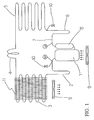
- FIG. 1 is a diagram of an apparatus used for a compressor test.
- Numeral 1 is a compressor, which is a 1kW rotary compressor (G515QB1X manufactured by Hitachi, Ltd.).
- a copper pipe 2 is connected to the discharging side of the compressor 1, the pipe 2 having an outer diameter of 6.35 mm, an inner diameter of 4.72 mm, and a length of 700 mm.
- the pipe 2 is further connected to another copper pipe 3 at its end, the pipe 3 having an outer diameter of 9.52 mm, an inner diameter of 7.92 mm, and a length of 6000 mm.
- An aluminum heat exchanger 11 is fixed onto the pipe 3.
- Numeral 8 is an accumulator which is originally attached to the compressor 1.
- a copper pipe 7 having an outer diameter of 9.52 mm, an inner diameter of 7.92 mm, and a length of 100 mm is connected.
- another copper pipe 6 having an outer diameter of 6.35 mm, an inner diameter of 4.72 mm and a length of 700 mm is connected.
- another copper pipe 5 having an outer diameter of 9.52 mm, an inner diameter of 7.92 mm, and a length of 4000 mm is connected.
- a copper capillary tube 4 having an inner diameter of 2 mm and a length of 400 mm connects the pipe 3 to the pipe 5.
- Numeral 9 is a cooling fan for controlling the conditions of the compressor test, which operates in connection with the temperature of the compressor.
- Numeral 10 is a valve for sealing an ester compound as a test oil, and flon. HP and LP respectively indicate a pressure gauge.
- the branched ratio of the carboxylic acid moiety is not less than 50 mol%, and the hydroxyl value of the ester compound is not more than 30 mg KOH/g.
- the following are examples of ester compounds having a preferred combination of branched ratio and hydroxyl value.
- the ester compound of the above combination 1) has a desired property with respect to thermal stability under static conditions evaluated by a sealed tube test
- the ester compounds of the above combinations 2) and 3) have a desired property with respect to thermal stability under both static and dynamic conditions which are evaluated by a sealed tube test and a compressor test, respectively.
- the ester compound of the above combination 4) has a high thermal stability in the absence of oxygen and hydrofluorocarbons.
- the ester compound of the present invention is usable as a base oil for a lubricating oil composition, and a lubricating oil composition containing the ester compound of the present invention as the main component can be used in combination with hydrofluorocarbons as a working fluid composition for a refrigerating machine.
- the lubricating oil composition of the present invention having an excellent thermal stability in the presence of a metal can be suitably used as engine oils, grease, hydraulic oils, turbine oils, heat transfer oils, metal working oils, refrigerating oils, etc., among which it is particularly suitable for refrigerating oils.
- refrigerating oils it is particularly suitably used as a refrigerating oil for rotary compressors or scroll compressors because the temperature and pressure inside such compressors become so high that thermal stability of refrigerating oils in the presence of a metal is highly required.
- the lubricating oil composition of the present invention which has an excellent thermal stability in the presence of a metal is particularly suitable for use in combination with hydrofluorocarbons containing difluoromethane (HFC32), especially hydrofluorocarbons containing difluoromethane and pentafluoroethane (HFC125) or hydrofluorocarbons containing difluoromethane, pentafluoroethane and 1,1,1,2-tetrafluoroethane (HFC134a), because the inside of a compressor is exposed to a higher temperature and a higher pressure as compared with the case where only 1,1,1,2-tetrafluoroethane is used.
- HFC32 hydrofluorocarbons containing difluoromethane
- HFC125 hydrofluorocarbons containing difluoromethane and pentafluoroethane
- HFC134a 1,1,1,2-tetrafluoroethane
- the lubricating oil composition of the present invention is suitably used as lubricating oils for hermetic compressors of refrigerators, refrigerating machines for industrial use, room air conditioners and packaged air conditioners, where thermal stability in the presence of a metal is highly required.
- it is suitably used as lubricating oils for hermetic compressors of room air conditioners and packaged air conditioners where a good thermal stability in the presence of a metal is particularly needed.
- the ratio of the ester compound of the present invention contained in the lubricating oil composition is preferably not less than 20% by weight, more preferably not less than 50% by weight, particularly preferably not less than 80% by weight, most preferably not less than 90% by weight from the viewpoint of thermal stability in the presence of a metal.
- Other lubricating oils blended therewith are not particularly limited, and it is desired to use lubricating oils which do not impair the thermal stability of the lubricating oil composition in the presence of a metal.
- the ratio of the ester compound of the present invention in the lubricating oil composition is preferably 80% by weight or more, more preferably 90% by weight or more, particularly preferably 95% by weight or more, most preferably 98% by weight or more.
- the ratio of the ester compound of the present invention is preferably 90% by weight or more, more preferably 95% by weight or more, particularly preferably 98% by weight or more, most preferably 99% by weight or more.
- Kinematic viscosity at 40°C of the lubricating oil composition of the present invention is preferably 2 to 500 mm 2 /s, more preferably 2 to 200 mm 2 /s, still more preferably 5 to 200 mm 2 /s, still more preferably 8 to 200 mm 2 /s, still more preferably 15 to 200 mm 2 /s, still more preferably 15 to 100 mm 2 /s, still more preferably 20 to 90 mm 2 /s, particularly preferably 20 to 75 mm 2 /s.
- kinematic viscosity at 40°C of the lubricating oil composition of the present invention is preferably 40 to 90 mm 2 /s, more preferably 50 to 75 mm 2 /s, particularly preferably 55 to 75 mm 2 /s, most preferably 60 to 75 mm 2 /s from the viewpoint of energy saving and wear resistance.
- the melting point or the pour point of the lubricating oil composition of the present invention is as low as possible and it is usually not higher than 0°C, preferably not higher than -10°C, more preferably not higher than -20°C.
- additives for lubricating oils may be used in an amount so as not to impair thermal stability.
- additives include antioxidants, extreme pressure agents, oiliness improvers, defoaming agents, detergent dispersants, anticorrosive agents, demulsifiers, viscosity index improvers, metal deactivators, and pour point depressants.
- the working fluid composition for a refrigerating machine of the present invention contains the above-mentioned lubricating oil composition of the present invention and hydrofluorocarbons.
- the working fluid composition for a refrigerating machine of the present invention is suitably used as a working fluid composition for a refrigerating machine for rotary compressors and scroll compressors because of its excellent thermal stability in the presence of a metal. Since the working fluid composition for a refrigerating machine of the present invention has an excellent thermal stability in the presence of a metal, it is particularly suitably used as a working fluid composition for a refrigerating machine for compressors of room air conditioners and packaged air conditioners.
- the working fluid composition for a refrigerating machine of the present invention has an excellent thermal stability in the presence of a metal, it is particularly effective when used in combination with hydrofluorocarbons containing difluoromethane (HFC32), particularly those containing difluoromethane and pentafluoroethane or those containing difluoromethane, pentafluoroethane and 1,1,1,2-tetrafluoroethane.
- HFC32 hydrofluorocarbons containing difluoromethane
- the temperature of two-phase separation with hydrofluorocarbons is desirably low, and it is not higher than 10°C, preferably not higher than 0°C, more preferably not higher than -10°C, particularly preferably not higher than -30°C, most preferably not higher than -50°C.
- the working fluid composition for a refrigerating machine of the present invention gives good results in the following evaluation on the thermal stability. Namely, 5 g of a test oil, which has been sufficiently degassed and adjusted to have a water content of not more than 10 ppm, is placed in a glass vessel with an inner volume of about 15 ml along with iron, copper and aluminum pieces each having a diameter of 1.6 mm and a length of 100 mm.
- ester compound of the present invention When the ester compound of the present invention is used as a lubricating oil composition for a refrigerating machine in a working fluid composition for a refrigerating machine, it is desired that the ester compound has a branched ratio of not lower than 50 mol% and a hydroxyl value of not higher than 30 mg KOH/g. Moreover, examples of preferred combinations of branched ratio and hydroxyl value include the following combinations 1) to 3):
- Examples of preferred ester compounds used for the working fluid composition for a refrigerating machine include a carboxylate mixture formed between pentaerythritol and n-pentanoic acid/2-methylbutyric acid/3,5,5-trimethylhexanoic acid, a carboxylate mixture formed between pentaerythritol and n-pentanoic acid/3,5,5-trimethylhexanoic acid, a carboxylate mixture formed between neopentyl glycol and 2-ethylpentanoic acid/2-methylhexanoic acid/2-ethylhexanoic acid, a carboxylate mixture formed between trimethylolpropane and 2-ethylpentanoic acid/2-methylhexanoic acid/2-ethylhexanoic acid, a carboxylate mixture formed between pentaerythritol and 2-ethylpentanoic acid/2-methylhexanoic acid/2-ethyl
- neopentyl glycol di-2-ethyl hexanate trimethylolpropane tri-2-ethyl hexanate, pentaerythritol tetra-2-ethyl hexanate, a carboxylate mixture formed between trimethylolpropane and 2-ethylhexanoic acid/3,5,5-trimethylhexanoic acid, a carboxylate mixture formed between pentaerythritol and 2-ethylhexanoic acid/3,5,5-trimethylhexanoic acid, a carboxylate mixture formed between trimethylolpropane and 2-ethylpentanoic acid/2-methylhexanoic acid/2-ethylhexanoic acid, a carboxylate mixture formed between pentaerythritol and 2-ethylpentanoic acid/2-
- the ester compound used for the working fluid composition for a refrigerating machine of the present invention has a kinematic viscosity at 40°C of preferably 40 to 90 mm 2 /s, more preferably 50 to 75 mm 2 /s.
- ester compounds include a carboxylate mixture formed between pentaerythritol and n-pentanoic acid/3,5,5-trimethylhexanoic acid, a carboxylate mixture formed between pentaerythritol and n-pentanoic acid/2-methylbutyric acid/3,5,5-trimethylhexanoic acid, a carboxylate mixture formed between pentaerythritol and n-heptanoic acid/3,5,5-trimethylhexanoic acid, a carboxylate mixture formed between pentaerythritol and n-octanoic acid/3,5,5-trimethylhexanoic acid, a carboxylate mixture formed between pentaerythritol and n-octanoic acid/2-ethylhexanoic acid/3,5,5-trimethylhexanoic acid, trimethylolpropane tri-3,5,5-trimethyl hexanate,
- an ester formed between a carboxylic acid mixture containing 3,5,5-trimethylhexanoic acid and pentaerythritol is more preferred because an ester with a desired viscosity can be prepared.
- a carboxylate mixture formed between pentaerythritol and 2-ethylhexanoic acid/3,5,5-trimethylhexanoic acid and a carboxylate mixture formed between pentaerythritol and 2-ethylpentanoic acid/2-methylhexanoic acid/2-ethylhexanoic acid/3,5,5-trimethylhexanoic acid.
- the mixing ratio of 2-ethylhexanoic acid to 3,5,5-trimethyl hexanoic acid is preferably 80:20 to 35:65 (molar ratio), more preferably 76:24 to 48:52 from the viewpoint of compatibility with hydrofluorocarbons, melting point and viscosity.
- the mixing ratio (molar ratio) of the carboxylic acids is preferably 1-12:6-47:5-42:6-72, more preferably 3-10:17-39:5-13:45-72, particularly preferably 3-9:17-35:5-11:50-67 from the viewpoint of compatibility with hydrofluorocarbons, melting point and viscosity.
- hydrofluorocarbons used here are not particularly limited as long as they are conventionally used as a component of a working fluid composition for a refrigerating machine, and preferred examples include difluoromethane (HFC32), 1,1-difluoroethane (HFC152a), 1,1,1-trifluoroethane (HFC143a), 1,1,1,2-tetrafluoroethane (HFC134a), 1,1,2,2-tetrafluoroethane (HFC 134) and pentafluoroethane (HFC125), with particular preference given to difluoromethane, pentafluoroethane, 1,1,1,2-tetrafluoroethane, and 1,1,1-trifluoroethane.
- difluoromethane HFC32
- 1,1-difluoroethane HFC152a
- HFC143a 1,1,1,2-tetrafluoroethane
- HFC134a 1,1,2,2-tetrafluoroethan
- hydrofluorocarbons may be used singly or in combination of two or more hydrofluorocarbons.
- a hydrofluorocarbon mixture containing difluoromethane (HFC32) is preferred, with particular preference being given to a mixture of difluoromethane, pentafluoroethane and 1,1,1,2-tetrafluoroethane, and a mixture of difluoromethane and pentafluoroethane, and a mixture of difluoromethane and 1,1,1,2-tetrafluoroethane.
- hydrofluorocarbon mixtures are, for example, that comprising 23% by weight of difluoromethane/25% by weight of pentafluoromethane/52% by weight of 1,1,1,2-tetrafluoroethane, or that comprising 40 to 60% by weight of difluoromethane/60 to 40% by weight of pentafluoroethane, though the mixing ratio is not particularly limited.
- the ester compound of the present invention has an excellent thermal stability in the presence of a metal, and, therefore, the thermal stability of a lubricating oil in the presence of a metal can significantly be increased by blending therewith the ester compound of the present invention.
- the present invention further provides methods for increasing the thermal stability in the presence of a metal.
- a 1-liter four-necked flask was equipped with a stirrer, a thermometer, a nitrogen inlet, and a dehydrating column with a condenser.
- 102 g (1.00 mol) of neopentyl glycol, 77.9 g (0.60 mol) of 2-ethylpentanoic acid, and 181.8 g(1.40 mol) of 2-methylhexanoic acid were placed.
- the reaction mixture was made to react at 250°C for 2 hours in a stream of nitrogen at atmospheric pressure, the reaction mixture was subjected to reduced pressure at 20000 Pa for 6 hours.
- unreacted monocarboxylic acid was distilled away under reduced pressure to obtain ester compound 1 of the present invention.
- Example 1 With the ester compounds obtained in Example 1, a thermal stability test was carried out under the following conditions in order to evaluate the thermal stability in the presence of a metal in both cases where the carboxylic acid moiety is branched and where the carboxylic acid moiety is linear with no branches. Specifically, 10 g of an inventive product or a comparative product, which had been adjusted to have a water content of 10 ppm in advance and sufficiently degassed, was placed in a glass vessel with an inner diameter of 15 mm, length of 170 mm and inner volume of about 30 ml, in which an iron wire having a diameter of 1.6 mm and a length of 150 mm was placed as a piece of metal. Then, the pressure inside the vessel was reduced to not higher than 1.3 Pa and the vessel was sealed. After the test was continued at 250°C for 3 days, the acid value of the ester compound was measured. The results are shown in Table 6.
- Example 1 With the ester compounds obtained in Example 1 (the present inventive products and comparative products), a thermal stability test was carried out under the conditions as shown in Test Example 1 in order to further evaluate thermal stability in the presence of a metal in both cases where the carboxylic acid moiety is branched and where the carboxylic acid moiety is linear with no branches. The results are shown in Table 7. Ester compound Acid value of oil after thermal stability test (mgKOH/g) Present Inventive Product 1 1.5 2 0.24 3 0.88 4 3.9 5 0.68 6 2.0 7 6.7 8 1.2 9 3.3 10 0.71 11 0.54 Comparative Product A 37.2 B 15.2 C 65.4 D 22.9 E 89.0 F 36.6
- ester compounds with a branched ratio of not lower than 80 mol% show a better thermal stability in the presence of a metal with showing less increase in acid value, as compared with ester compounds having a branched ratio of lower than 80 mol%. Also, when hydroxyl value of ester compounds before the test was not higher than 15 mg KOH/g, the increase in acid value after the test was suppressed, demonstrating a good thermal stability in the presence of a metal. Also, there observed a tendency that the higher the acid value of ester compounds before the test, the higher the acid value after the test.
- ester compounds having a branched ratio of not lower than 50 mol% and a hydroxyl value of not higher than 30 mg KOH/g in particular those having a branched ratio of not lower than 70 mol% and a hydroxyl value of not higher than 20 mg KOH/g, those having a branched ratio of not lower than 50 mol% and a hydroxyl value of not higher than 10 mg KOH/g and those having a branched ratio of not lower than 90 mol% and a hydroxyl value of not higher than 30 mg KOH/g were found to have remarkably good thermal stability in the presence of a metal.
- the working fluid composition for a refrigerating machine using an ester compound having a kinematic viscosity at 40°C of not lower than 40 mm 2 /s has a better wear resistance than that using an ester compound having a kinematic viscosity of lower than 40 mm 2 /s.
- the working fluid compositions for a refrigerating machine which use, among the ester compounds having a kinematic viscosity at 40°C of not lower than 40 mm 2 /s and a branched carboxylic acid ratio of not lower than 80 mol%, a carboxylate mixture formed between pentaerythritol and 2-ethylhexanoic acid/3,5,5-trimethylhexanoic acid or a carboxylate mixture formed between pentaerythritol and 2-ethylpentanoic acid/2-methylhexanoic acid/2-ethylhexanoic acid/3,5,5-trimethylhexanoic acid, are excellent.
- Ester compound Viscosity of ester compound at 40°C (mm 2 /s) Branched ratio (%) Wear amount ( ⁇ m) Acid value of ester compound after test (mgKOH/g) 13 61.8 100 19 0.55 14 70.2 100 14 0.49 28 60.4 100 18 0.64 19 68.3 100 15 0.60 6 52.1 100 25 0.98 16 30.7 100 30 ⁇ 3 ⁇ 17 31.5 100 30 ⁇ 3 ⁇ H 68.8 76 18 1.51 O 56.7 79 28 3 ⁇
- ester compounds 14, H, I, o, v, and M which have a hydroxyl value of not higher than 10 mg KOH/g, indicate that those having a branched ratio of not lower than 50 mol% have good thermal stability, with showing a small increase in acid value after the test.
- the present invention provides an ester compound having a markedly good thermal stability in the presence of a metal, a lubricating oil composition and a working fluid composition for a refrigerating machine containing the ester compound as the main component.
- the present invention further provides a method for preventing thermal degradation of a lubricating oil when the ester compound is used as a base oil in the lubricating oil in the presence of a metal, especially in the presence of a refrigerant containing difluoromethane.
- the ester compound of the present invention by blending as a base oil the ester compound of the present invention with a lubricating oil for rotary compressors or scroll compressors for refrigerating machines, a high thermal stability in the presence of a metal, especially in the presence of a metal and a refrigerant containing difluoromethane, can be maintained. Furthermore, by blending as a base oil the ester compound of the present invention with a lubricating oil for compressors of room air conditioners or packaged air conditioners, a high thermal stability in the presence of a metal, especially in the presence of a metal and a refrigerant containing difluoromethane, can be maintained.
Landscapes
- Chemical & Material Sciences (AREA)
- Organic Chemistry (AREA)
- Chemical Kinetics & Catalysis (AREA)
- Engineering & Computer Science (AREA)
- General Chemical & Material Sciences (AREA)
- Oil, Petroleum & Natural Gas (AREA)
- Health & Medical Sciences (AREA)
- Emergency Medicine (AREA)
- Physics & Mathematics (AREA)
- Combustion & Propulsion (AREA)
- Thermal Sciences (AREA)
- Materials Engineering (AREA)
- Lubricants (AREA)
- Organic Low-Molecular-Weight Compounds And Preparation Thereof (AREA)
Applications Claiming Priority (7)
| Application Number | Priority Date | Filing Date | Title |
|---|---|---|---|
| JP272040/95 | 1995-09-25 | ||
| JP27204095 | 1995-09-25 | ||
| JP27204095 | 1995-09-25 | ||
| JP35448995 | 1995-12-28 | ||
| JP354489/95 | 1995-12-28 | ||
| JP35448995 | 1995-12-28 | ||
| PCT/JP1996/002738 WO1997011933A1 (en) | 1995-09-25 | 1996-09-20 | Ester compounds and lubricating oil composition |
Publications (3)
| Publication Number | Publication Date |
|---|---|
| EP0903335A4 EP0903335A4 (de) | 1999-03-24 |
| EP0903335A1 true EP0903335A1 (de) | 1999-03-24 |
| EP0903335B1 EP0903335B1 (de) | 2002-11-27 |
Family
ID=26550004
Family Applications (1)
| Application Number | Title | Priority Date | Filing Date |
|---|---|---|---|
| EP96931289A Revoked EP0903335B1 (de) | 1995-09-25 | 1996-09-20 | Verwendung von esterverbindungen in schmierölzusammensetzungen |
Country Status (7)
| Country | Link |
|---|---|
| US (1) | US6228820B1 (de) |
| EP (1) | EP0903335B1 (de) |
| JP (1) | JP3391798B2 (de) |
| KR (1) | KR19990063738A (de) |
| CN (1) | CN1119316C (de) |
| DE (1) | DE69625088T2 (de) |
| WO (1) | WO1997011933A1 (de) |
Cited By (3)
| Publication number | Priority date | Publication date | Assignee | Title |
|---|---|---|---|---|
| WO2005118756A1 (de) * | 2004-05-27 | 2005-12-15 | Cognis Ip Management Gmbh | Polyolester für transformatoren |
| DE102012013969A1 (de) | 2012-07-13 | 2014-01-16 | Oxea Gmbh | Isononansäure ausgehend von 2-Ethylhexanol, Verfahren zu ihrer Herstellung sowie die Herstellung ihrer Folgeprodukte |
| WO2014008974A1 (de) | 2012-07-13 | 2014-01-16 | Oxea Gmbh | Verfahren zur herstellung von isononansäureestern, ausgehend von 2-ethylhexanol |
Families Citing this family (37)
| Publication number | Priority date | Publication date | Assignee | Title |
|---|---|---|---|---|
| KR100671391B1 (ko) * | 1999-05-10 | 2007-01-22 | 신닛폰 리카 가부시키가이샤 | 냉동기용 윤활유, 냉동기용 작동 유체 조성물 및 냉동기의윤활 방법 |
| US20010019120A1 (en) | 1999-06-09 | 2001-09-06 | Nicolas E. Schnur | Method of improving performance of refrigerant systems |
| JP5021865B2 (ja) * | 2000-03-09 | 2012-09-12 | Jx日鉱日石エネルギー株式会社 | 潤滑油組成物、作動流体及び冷凍装置 |
| US20020055442A1 (en) * | 2000-04-26 | 2002-05-09 | Schnur Nicholas E. | Method of reducing wear of metal surfaces and maintaining a hydrolytically stable environment in refrigeration equipment during the operation of such equipment |
| KR100390773B1 (ko) * | 2000-09-25 | 2003-07-10 | 한국화학연구원 | 금속가공유용 수용성 내마모제 |
| JP2002129179A (ja) * | 2000-10-24 | 2002-05-09 | Mitsubishi Electric Corp | 冷凍機 |
| JP5265068B2 (ja) * | 2000-10-30 | 2013-08-14 | Jx日鉱日石エネルギー株式会社 | 冷凍機用流体組成物 |
| JP4876331B2 (ja) * | 2001-05-29 | 2012-02-15 | 日油株式会社 | 冷凍機潤滑油組成物および冷凍機作動流体用組成物 |
| CA2487587C (en) * | 2003-11-21 | 2012-04-24 | Nof Corporation | A polyol ester for use within a refrigeration lubricant composition compatible with chlorine-free hydrofluorocarbon refrigerants |
| JP4936656B2 (ja) * | 2003-11-21 | 2012-05-23 | 日油株式会社 | 冷凍機用潤滑油組成物 |
| WO2007089835A2 (en) * | 2006-01-30 | 2007-08-09 | Inolex Investment Corp. | Improved high temperature lubricant compositions |
| JP5914912B2 (ja) * | 2007-02-27 | 2016-05-11 | Jxエネルギー株式会社 | 冷凍機油および冷凍機用作動流体組成物 |
| JP2009074018A (ja) * | 2007-02-27 | 2009-04-09 | Nippon Oil Corp | 冷凍機油および冷凍機用作動流体組成物 |
| JP5572284B2 (ja) * | 2007-02-27 | 2014-08-13 | Jx日鉱日石エネルギー株式会社 | 冷凍機油および冷凍機用作動流体組成物 |
| JP5143545B2 (ja) * | 2007-03-06 | 2013-02-13 | Jx日鉱日石エネルギー株式会社 | 冷凍機油および冷凍機用作動流体組成物 |
| BRPI0810112B1 (pt) * | 2007-04-18 | 2018-04-24 | Idemitsu Kosan Co., Ltd. | Composição de óleo lubrificante para refrigeradores que usam refrigerante |
| JP5537317B2 (ja) * | 2010-07-26 | 2014-07-02 | Jx日鉱日石エネルギー株式会社 | 冷凍機油 |
| JP5150790B2 (ja) * | 2010-08-24 | 2013-02-27 | Khネオケム株式会社 | ペンタエリスリトールのテトラエステル |
| KR101640292B1 (ko) * | 2010-08-24 | 2016-07-15 | 케이에이치 네오켐 가부시키가이샤 | 펜타에리스리톨의 테트라에스테르 |
| US8772531B2 (en) | 2010-08-24 | 2014-07-08 | Kh Neochem Co., Ltd. | Neopentyl glycol diester |
| JP5848903B2 (ja) * | 2011-07-01 | 2016-01-27 | 出光興産株式会社 | 圧縮型冷凍機用潤滑油組成物 |
| JP2013014673A (ja) * | 2011-07-01 | 2013-01-24 | Idemitsu Kosan Co Ltd | 圧縮型冷凍機用潤滑油組成物 |
| TWI583783B (zh) * | 2011-07-13 | 2017-05-21 | Kh Neochem Co Ltd | Pentaerythritol tetra ester |
| US8980808B2 (en) * | 2011-08-03 | 2015-03-17 | Cognis Ip Management Gmbh | Lubricant compositions with improved oxidation stability and service life |
| JP5989989B2 (ja) * | 2011-12-27 | 2016-09-07 | 日本サン石油株式会社 | 冷凍機油組成物 |
| CN104039939A (zh) * | 2011-12-27 | 2014-09-10 | 日本太阳石油株式会社 | 冷冻机油组合物 |
| WO2013115160A1 (ja) * | 2012-02-01 | 2013-08-08 | Khネオケム株式会社 | 混合多価アルコールとカルボン酸との混合エステル |
| WO2013115296A1 (ja) * | 2012-02-01 | 2013-08-08 | Khネオケム株式会社 | 混合エステル |
| JP2015096470A (ja) * | 2012-02-23 | 2015-05-21 | Khネオケム株式会社 | 混合エステル |
| US9523058B2 (en) | 2012-03-23 | 2016-12-20 | Kh Neochem Co., Ltd. | Mixed ester |
| JP6012878B2 (ja) * | 2013-09-05 | 2016-10-25 | 東芝キヤリア株式会社 | 圧縮機および冷凍サイクル装置 |
| CN105764497A (zh) | 2013-11-14 | 2016-07-13 | 奥特吉尼克斯制药公司 | 三酸甘油酯的固体组合物及其用途 |
| JP5696237B2 (ja) * | 2014-01-17 | 2015-04-08 | Jx日鉱日石エネルギー株式会社 | 冷凍機油及び冷凍機用流体組成物 |
| JP2015172204A (ja) * | 2015-06-02 | 2015-10-01 | 出光興産株式会社 | 圧縮型冷凍機用潤滑油組成物 |
| CN104987855B (zh) * | 2015-06-29 | 2018-06-12 | 广东月福汽车用品有限公司 | 一种有助于增强汽车空调制冷效果的节能增效剂 |
| CN105061203A (zh) * | 2015-07-16 | 2015-11-18 | 中国石油化工股份有限公司 | 一种季戊四醇酯的制备方法 |
| EP4209726A4 (de) * | 2020-09-04 | 2024-10-09 | Daikin Industries, Ltd. | Verwendung von kältemittel in einer kältekreislaufvorrichtung sowie kältekreislaufvorrichtung |
Family Cites Families (14)
| Publication number | Priority date | Publication date | Assignee | Title |
|---|---|---|---|---|
| US3115519A (en) | 1960-09-19 | 1963-12-24 | Shell Oil Co | Stable esters |
| US3282971A (en) | 1963-06-19 | 1966-11-01 | Exxon Research Engineering Co | Fatty acid esters of polyhydric alcohols |
| JPS618076A (ja) * | 1984-06-21 | 1986-01-14 | 宮川 宏治 | バンカ−シヨツト練習器 |
| JPS6184575A (ja) * | 1984-10-03 | 1986-04-30 | Nec Corp | 超音波送信装置 |
| US4826633A (en) * | 1986-10-16 | 1989-05-02 | Hatco Chemical Corporation | Synthetic lubricant base stock of monopentaerythritol and trimethylolpropane esters |
| DK0435253T3 (da) | 1989-12-28 | 1994-06-20 | Nippon Oil Co Ltd | Køleolier til brug sammen med hydrogenholdige halogencarbonkølemidler |
| JP2573111B2 (ja) | 1990-09-12 | 1997-01-22 | 花王 株式会社 | 冷凍機作動流体用組成物 |
| JP2931426B2 (ja) * | 1991-01-09 | 1999-08-09 | 株式会社ジャパンエナジー | 冷凍機用潤滑油 |
| ES2104738T3 (es) | 1991-01-17 | 1997-10-16 | Cpi Eng Services Inc | Composicion lubricante para refrigerantes fluorados. |
| GB9220573D0 (en) | 1991-10-11 | 1992-11-11 | Ici Plc | Lubricants |
| JP2613526B2 (ja) * | 1992-07-04 | 1997-05-28 | 花王株式会社 | 冷凍機作動流体用組成物 |
| GB9221217D0 (en) | 1992-10-09 | 1992-11-25 | Ici Plc | Working fluid composition |
| ZA938322B (en) * | 1992-12-17 | 1994-06-07 | Exxon Chemical Patents Inc | Refrigeration working fluid compositions containing trifluoroethane |
| JPH06184575A (ja) * | 1992-12-18 | 1994-07-05 | Tonen Corp | 冷凍機油 |
-
1996
- 1996-09-20 JP JP51327897A patent/JP3391798B2/ja not_active Expired - Fee Related
- 1996-09-20 DE DE69625088T patent/DE69625088T2/de not_active Revoked
- 1996-09-20 CN CN96198441A patent/CN1119316C/zh not_active Expired - Lifetime
- 1996-09-20 WO PCT/JP1996/002738 patent/WO1997011933A1/ja not_active Ceased
- 1996-09-20 KR KR1019980702205A patent/KR19990063738A/ko not_active Ceased
- 1996-09-20 EP EP96931289A patent/EP0903335B1/de not_active Revoked
-
1997
- 1997-05-23 US US08/863,049 patent/US6228820B1/en not_active Expired - Lifetime
Non-Patent Citations (2)
| Title |
|---|
| No further relevant documents disclosed * |
| See also references of WO9711933A1 * |
Cited By (7)
| Publication number | Priority date | Publication date | Assignee | Title |
|---|---|---|---|---|
| WO2005118756A1 (de) * | 2004-05-27 | 2005-12-15 | Cognis Ip Management Gmbh | Polyolester für transformatoren |
| DE102012013969A1 (de) | 2012-07-13 | 2014-01-16 | Oxea Gmbh | Isononansäure ausgehend von 2-Ethylhexanol, Verfahren zu ihrer Herstellung sowie die Herstellung ihrer Folgeprodukte |
| WO2014008974A1 (de) | 2012-07-13 | 2014-01-16 | Oxea Gmbh | Verfahren zur herstellung von isononansäureestern, ausgehend von 2-ethylhexanol |
| WO2014008975A1 (de) | 2012-07-13 | 2014-01-16 | Oxea Gmbh | Verfahren zur herstellung von isononansäuren aus 2-ethylhexanol |
| DE102012013968A1 (de) | 2012-07-13 | 2014-04-03 | Oxea Gmbh | Carbonsäureester der Isononansäure ausgehend von 2-Ethylhexanol, Verfahren zu ihrer Herstellung sowie ihre Verwendung |
| US9434672B2 (en) | 2012-07-13 | 2016-09-06 | Oxea Gmbh | Method for producing isononanoic acids from 2-ethyl hexanol |
| US9434675B2 (en) | 2012-07-13 | 2016-09-06 | Oxga Gmbh | Method for producing isononanoic acid esters, starting from 2-ethyl hexanol |
Also Published As
| Publication number | Publication date |
|---|---|
| US6228820B1 (en) | 2001-05-08 |
| EP0903335B1 (de) | 2002-11-27 |
| CN1119316C (zh) | 2003-08-27 |
| KR19990063738A (ko) | 1999-07-26 |
| DE69625088T2 (de) | 2003-07-24 |
| EP0903335A4 (de) | 1999-03-24 |
| DE69625088D1 (de) | 2003-01-09 |
| JP3391798B2 (ja) | 2003-03-31 |
| WO1997011933A1 (en) | 1997-04-03 |
| CN1202880A (zh) | 1998-12-23 |
Similar Documents
| Publication | Publication Date | Title |
|---|---|---|
| EP0903335B1 (de) | Verwendung von esterverbindungen in schmierölzusammensetzungen | |
| JPWO1997011933A1 (ja) | エステル化合物及び潤滑油組成物 | |
| JP3097970B2 (ja) | 圧縮冷却装置用フッ素化冷却剤のための潤滑組成物 | |
| EP0678115B1 (de) | Kühlarbeitsflüssigkeitzusammensetzungen enthaltend difluorethan oder pentafluorethan | |
| JPH04249593A (ja) | 機械蒸気圧縮型伝熱装置用潤滑剤/作動流体組成物及び潤滑剤 | |
| JP3386467B2 (ja) | トリフルオロエタンを含有する冷却作動流体組成物 | |
| JPH1046170A (ja) | 冷凍機作動流体用組成物 | |
| JP2000508691A (ja) | ヒンダードアルコールのエステルを含む冷凍機油 | |
| AU666346C (en) | Refrigeration working fluid compositions | |
| KR100306350B1 (ko) | 합성윤활유및냉동기용작동유체조성물 | |
| JPH05132684A (ja) | 冷熱媒HFC−134aの使用機器用潤滑油基油及び潤滑油組成物 | |
| JPH0532985A (ja) | 冷凍機油組成物 | |
| JP3214811B2 (ja) | 冷凍機作動流体用組成物 | |
| JPH02140297A (ja) | フロン雰囲気下で用いる潤滑油 | |
| JPH08302372A (ja) | 合成潤滑油および冷凍機作動流体組成物 | |
| JPH07224290A (ja) | 潤滑油および電気絶縁油 |
Legal Events
| Date | Code | Title | Description |
|---|---|---|---|
| PUAI | Public reference made under article 153(3) epc to a published international application that has entered the european phase |
Free format text: ORIGINAL CODE: 0009012 |
|
| 17P | Request for examination filed |
Effective date: 19980324 |
|
| A4 | Supplementary search report drawn up and despatched |
Effective date: 19981103 |
|
| AK | Designated contracting states |
Kind code of ref document: A4 Designated state(s): DE FR GB Kind code of ref document: A1 Designated state(s): DE FR GB |
|
| 17Q | First examination report despatched |
Effective date: 20010102 |
|
| RTI1 | Title (correction) |
Free format text: USE OF ESTER COMPOUNDS IN LUBRICATING OIL COMPOSITIONS |
|
| GRAG | Despatch of communication of intention to grant |
Free format text: ORIGINAL CODE: EPIDOS AGRA |
|
| RTI1 | Title (correction) |
Free format text: USE OF ESTER COMPOUNDS IN LUBRICATING OIL COMPOSITIONS |
|
| GRAG | Despatch of communication of intention to grant |
Free format text: ORIGINAL CODE: EPIDOS AGRA |
|
| GRAH | Despatch of communication of intention to grant a patent |
Free format text: ORIGINAL CODE: EPIDOS IGRA |
|
| GRAH | Despatch of communication of intention to grant a patent |
Free format text: ORIGINAL CODE: EPIDOS IGRA |
|
| GRAA | (expected) grant |
Free format text: ORIGINAL CODE: 0009210 |
|
| AK | Designated contracting states |
Kind code of ref document: B1 Designated state(s): DE FR GB |
|
| REG | Reference to a national code |
Ref country code: GB Ref legal event code: FG4D |
|
| REF | Corresponds to: |
Ref document number: 69625088 Country of ref document: DE Date of ref document: 20030109 |
|
| ET | Fr: translation filed | ||
| PLBQ | Unpublished change to opponent data |
Free format text: ORIGINAL CODE: EPIDOS OPPO |
|
| PLBI | Opposition filed |
Free format text: ORIGINAL CODE: 0009260 |
|
| PLBQ | Unpublished change to opponent data |
Free format text: ORIGINAL CODE: EPIDOS OPPO |
|
| PLAX | Notice of opposition and request to file observation + time limit sent |
Free format text: ORIGINAL CODE: EPIDOSNOBS2 |
|
| 26 | Opposition filed |
Opponent name: IMPERIAL CHEMICAL INDUSTRIES PLC Effective date: 20030826 Opponent name: THE LUBRIZOL CORPORATION Effective date: 20030826 |
|
| PLAX | Notice of opposition and request to file observation + time limit sent |
Free format text: ORIGINAL CODE: EPIDOSNOBS2 |
|
| PLBB | Reply of patent proprietor to notice(s) of opposition received |
Free format text: ORIGINAL CODE: EPIDOSNOBS3 |
|
| RDAF | Communication despatched that patent is revoked |
Free format text: ORIGINAL CODE: EPIDOSNREV1 |
|
| APBP | Date of receipt of notice of appeal recorded |
Free format text: ORIGINAL CODE: EPIDOSNNOA2O |
|
| APAH | Appeal reference modified |
Free format text: ORIGINAL CODE: EPIDOSCREFNO |
|
| APBQ | Date of receipt of statement of grounds of appeal recorded |
Free format text: ORIGINAL CODE: EPIDOSNNOA3O |
|
| PGFP | Annual fee paid to national office [announced via postgrant information from national office to epo] |
Ref country code: DE Payment date: 20070913 Year of fee payment: 12 |
|
| PGFP | Annual fee paid to national office [announced via postgrant information from national office to epo] |
Ref country code: GB Payment date: 20070919 Year of fee payment: 12 |
|
| APBU | Appeal procedure closed |
Free format text: ORIGINAL CODE: EPIDOSNNOA9O |
|
| PGFP | Annual fee paid to national office [announced via postgrant information from national office to epo] |
Ref country code: FR Payment date: 20070914 Year of fee payment: 12 |
|
| RDAG | Patent revoked |
Free format text: ORIGINAL CODE: 0009271 |
|
| STAA | Information on the status of an ep patent application or granted ep patent |
Free format text: STATUS: PATENT REVOKED |
|
| 27W | Patent revoked |
Effective date: 20080220 |
|
| GBPR | Gb: patent revoked under art. 102 of the ep convention designating the uk as contracting state |
Effective date: 20080220 |