EP0660097A2 - Verfahren und Apparat zur Simulation des Seitenaufpralls auf KFZ - Google Patents
Verfahren und Apparat zur Simulation des Seitenaufpralls auf KFZ Download PDFInfo
- Publication number
- EP0660097A2 EP0660097A2 EP94118874A EP94118874A EP0660097A2 EP 0660097 A2 EP0660097 A2 EP 0660097A2 EP 94118874 A EP94118874 A EP 94118874A EP 94118874 A EP94118874 A EP 94118874A EP 0660097 A2 EP0660097 A2 EP 0660097A2
- Authority
- EP
- European Patent Office
- Prior art keywords
- door structure
- sled
- seat
- air bag
- impacting
- Prior art date
- Legal status (The legal status is an assumption and is not a legal conclusion. Google has not performed a legal analysis and makes no representation as to the accuracy of the status listed.)
- Granted
Links
Images




Classifications
-
- G—PHYSICS
- G01—MEASURING; TESTING
- G01M—TESTING STATIC OR DYNAMIC BALANCE OF MACHINES OR STRUCTURES; TESTING OF STRUCTURES OR APPARATUS, NOT OTHERWISE PROVIDED FOR
- G01M99/00—Subject matter not provided for in other groups of this subclass
-
- G—PHYSICS
- G01—MEASURING; TESTING
- G01M—TESTING STATIC OR DYNAMIC BALANCE OF MACHINES OR STRUCTURES; TESTING OF STRUCTURES OR APPARATUS, NOT OTHERWISE PROVIDED FOR
- G01M17/00—Testing of vehicles
- G01M17/007—Wheeled or endless-tracked vehicles
- G01M17/0078—Shock-testing of vehicles
Definitions
- the present invention relates to a method and apparatus which are used with a test dummy to simulate vehicle side impacts.
- the present invention provides a new and improved method and apparatus for use with a test dummy to simulate vehicle side impacts.
- the apparatus includes a door structure which simulates a vehicle door.
- a seat is disposed adjacent to an inner side of the door structure to support the test dummy in a desired spatial relationship with the door structure.
- a sled impacts against the outer side of the door structure to move the door structure relative to the seat.
- a connector assembly connects the door structure with the sled.
- An air bag may be inflated between the door structure and the test dummy upon engagement of the sled with the door structure.
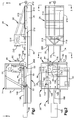
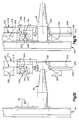
- FIG. 1-4 An apparatus 20 for simulating vehicle side impacts is illustrated in Figs. 1-4.
- the apparatus 20 is used with a test dummy 22.
- the apparatus 20 includes a target sled 24 and a bullet sled 26.
- the target sled 24 and bullet sled 26 are both movable along a main track 30.
- the main track 30 includes a pair of parallel rails 32 and 34.
- a drive assembly is operable to move the bullet sled 26 along the main track 30 into engagement with the target sled 24.
- the drive assembly 38 is then effective to move the target sled 24 and bullet sled 26 together along the main track 30.
- the drive assembly 38 may have many different known constructions. However, in the illustrated embodiment of the invention, the drive assembly 38 includes a motor which moves the bullet sled 26 toward the right (as viewed in Fig. 1) along the main track 30 against the influence of a relatively strong elastic bungee cord 40. Although only a single bungee cord 40 has been shown in Figs. 1 and 2 as being connected with the bullet sled 26, it is contemplated that a plurality of bungee cords will be connected with the bullet sled. As the drive assembly 38 moves the bullet sled 26 rightward along the main track 30 to the initial position shown in Figs. 1 and 2, the bungee cord 40 is stretched. Upon releasing of the bullet sled 26, the bungee cord 40 drives the bullet sled toward the target sled 24.
- the test dummy 22 is mounted on a seat 44 disposed on the target sled 24.
- the seat 44 is disposed adjacent to a door structure 46 which is also mounted on the target sled 24.
- the door structure 46 simulates a vehicle door.
- the door structure 46 is engageable by the bullet sled 26 as the bullet sled is moved by the bungee cord 40.
- the target sled 24 includes a rectangular base 50 (Fig. 1).
- the rectangular base 50 is supported on the main track 30 by a plurality of rollers 52.
- the door structure 46 is mounted on a frame 54 which is connected with the base 50.
- the door structure 46 (Figs. 5 and 6) includes a core (not shown) formed of aluminum tubing having a rectangular cross sectional configuration.
- a sheet of plywood (Fig. 5) forms an inner side 58 of the door structure.
- a sheet of aluminum (Fig. 6) forms an outer side 60 of the door structure 46.
- the outer side 60 of the door structure 46 extends parallel to the inner side 58 of the door structure.
- the door structure 46 is mounted on the frame 54 with the inner side 58 facing toward the test dummy 22 and seat 44.
- the door structure 46 is relatively light and has a weight of approximately 100 pounds.
- a pair of handling straps 62 and 64 extend upwardly from the door structure 46 to facilitate handling of the door structure.
- the door structure 46 could be a door of a vehicle.
- the vehicle door may be mounted directly on the frame 54 in the same manner as the door structure 46 or may be mounted on the inner side of the door structure 46.
- the door structure 46 is provided with a plurality of latch assemblies 68, 70, 72 and 74 (Fig. 5) which are mounted on the inner side 58 of the door structure adjacent to the four corners of the door structure.
- the latch assemblies 68-74 have the same construction.
- Each latch assembly 68-74 includes a latch bolt 76 which is slidable relative to a retainer 78.
- Each of the latch bolts 76 is movable between a retracted position in which the latch bolt does not extend outward from the door structure and an extended position (shown in Fig. 5) in which the latch bolt extends outward from the door structure.
- a pair of alignment pins 82 and 84 (Fig. 6) are mounted on the outer side 60 of the door structure 46.
- Each of the alignment pins 82 and 84 has a cylindrical main section 86 and an axially tapered end section 88.
- the alignment pins 82 and 84 have parallel central axes which extend perpendicular to the outer side 60 of the door structure 46.
- a pair of parallel cylindrical latch bars 92 and 94 are mounted on the outer side 60 of the door structure 46.
- the latch bars 92 and 94 have central axes which extend parallel to the outer side 60 of the door structure 46.
- the central axes of the latch bars 92 and 94 are vertical (Fig. 4).
- the latch bars 92 and 94 are secured to the inner side 60 of the door structure 46 by mounting brackets 98 (Fig. 6).
- Door support assemblies 102, 104, 106, and 108 are connected with the frame 54.
- the door support assemblies 102, 104, 106, and 108 are engaged by the latch assemblies 68, 70, 72, and 74 (Fig. 5) to support the door structure 46 on the frame 54 with the inner and outer sides 58 (Fig. 5) and 60 (Fig. 6) of the door structure in parallel vertical planes.
- the extended latch bolt 76 in the latch assembly 68 (Fig. 5) engages the door support assembly 102 (Fig. 4).
- the extended latch bolts 76 in the latch assemblies 70, 72 and 74 engage the door support assemblies 104, 106 and 108 respectively.
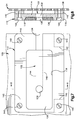
- the door support assembly 106 (Fig. 7) includes a rigid metal retainer frame 112.
- the rigid metal retainer frame 112 is formed as one piece and includes a flat base 114 (Fig. 8).
- a rectangular rim 116 projects from the base 114 and cooperates with the base to define a rectangular recess 118.
- a horizontal linear slot 122 (Figs. 7 and 8) is formed in the base 114 and extends through the rim 116.
- a generally rectangular body 126 of cardboard is disposed in the recess 118.
- the body 126 of cardboard has a circular opening 128 which is offset to the left (as viewed in Fig. 7) of the center of the body 126 of cardboard.
- the circular opening 128 is aligned with a closed end portion 132 (Fig. 8) of the slot 122.
- An open end portion 134 of the linear slot 122 is formed in the rim 116.
- the retainer frame 112 is mounted on a plate 138 (Fig. 8) which forms part of the frame 54.
- the retainer frame 112 is connected with the plate 138 by suitable fasteners 140 (Fig. 7).
- Spacer blocks 142 maintain the retainer frame 112 in a spaced apart relationship with the plate 138 (Fig. 8).
- the retainer frame 112 is mounted such that opposite linear sides 144 and 146 (Fig. 7) of the slot 122 are horizontal.
- the open end 134 of the slot 122 is disposed adjacent to the seat 44.
- the door support assembly 106 has been shown in Figs. 7 and 8, it should be understood that the door support assemblies 102, 104 and 108 have the same construction as the door support assembly 106.
- the open ends of the horizontal slots 122 in the support assemblies 102, 104 and 108 are disposed adjacent to the inner side 58 of the door structure 46 and the seat 44.
- the latch bolts 76 in the latch assemblies 68, 70, 72 and 74 are received in the circular openings 128 in the bodies 126 of cardboard and are received in the slots 122 in the door support assemblies 102, 104, 106 and 108, respectively.
- bodies 126 of cardboard in the recesses 118 in the door support assemblies 102-108, it is contemplated that bodies of other material could be mounted in the recesses if desired.
- a seat track assembly 152 (Figs. 2 and 9) is connected to the base 50 (Fig. 2) of the target sled 24.
- the seat track assembly 152 includes a pair of parallel rails 154 and 156.
- the rails 154 and 156 of the seat track assembly 152 extend parallel to the rails 32 and 34 of the main track 30 (Fig. 2).
- the rails 154 and 156 of the seat track assembly 152 are connected to a flat base plate 160 (Fig. 9).
- the base plate 160 is secured to the base 50 of the target sled 24 (Fig. 2).
- An end wall 162 extends horizontally between the rails 154 and 156 and perpendicular to the rails.
- the end wall 162 also extends vertically perpendicular to the base plate 160.
- a pair of shock absorber assemblies 164 and 166 are mounted on the end wall 162.
- Each of the shock absorber assemblies 164 and 166 includes a cylinder 168 which is fixedly connected to the end wall 162.
- the shock absorber assemblies 164 and 166 also include piston rods 170 which extend from the end wall 162 in a direction parallel to the rails 154 and 156.
- a carriage 174 (Fig. 2) is movable along the rails 154 and 156 of the seat track assembly 152.
- the carriage 174 is connected with the rails 154 and 156 by rollers (not shown) at the four corners of the generally rectangular carriage.
- the rails 154 and 156 guide movement of the carriage 174 along a path which is aligned with the rails 32 and 34 of the main track 30.
- the carriage 174 is movable along the seat track assembly 152 relative to the target sled 24.
- the target sled 24 is, itself, movable along the rails 32 and 34 of the main track 30.
- the carriage 174 is initially secured to the rails 154 and 156 by shear pins. When a predetermined force is applied against the carriage 174, the shear pins are broken and the carriage 174 moves relative to the target sled 24 along the rails 154 and 156. Alternatively, if desired, friction clamps could be used to secure the carriage 174 to the rails 154 and 156.
- the seat 44 is secured to the carriage 174 by suitable bolts.
- the seat 44 can be located at any one of many positions relative to the carriage 174 to enable the position of the seat 44 to be adjusted relative to the door structure 46. This enables the seat 44 and test dummy 22 to be located at a desired distance and/or angle from the door structure 46.
- a netting 176 (Figs. 3 and 4) is connected with the left (as viewed in Fig. 1) end of the frame 54.
- a safety apparatus 178 (Figs. 2 and 10) is secured to the seat 44. Since the position of the seat 44 relative to the carriage 174 can be varied, the safety apparatus 178 can be located at a desired distance from the door structure 46.
- the specific safety apparatus 178 illustrated in Fig. 10 includes an air bag 182 and an inflator assembly 184 which contains a source of fluid for inflating the air bag.
- the inflator assembly 184 is mounted on a lower portion of the frame of the seat 44 by suitable bolts. It is contemplated that safety apparatus having many different constructions will be tested with the apparatus 20 which simulates vehicle side impacts.
- the inflator assembly 184 Since the inflator assembly 184 is mounted on the lower portion of the seat 44, the inflator assembly can be accurately positioned relative to the test dummy 22 on the seat 44 and the door structure 46. Although the inflator assembly 184 could have many different constructions, it is contemplated that the inflator assembly may be constructed in a manner similar to that disclosed in U.S. Patent Nos. 4,902,036 and 4,907,819. The manner in which the safety apparatus 178 is connected with the seat 44 is the same as is disclosed in U.S. Patent No. 5,251,931.
- the safety apparatus 178 is mounted on the door structure 46. If desired, the safety apparatus 178 could be mounted on the carriage 174 adjacent to both the door structure 46 and the seat 44. Since the seat 44 is secured to the carriage 174 and since the carriage 174 and the door structure 46 are connected with the base 50 of the target sled 24, the space between the seat 44 and the door structure 46 remains constant prior to impact of the bullet sled 26 with the door structure. This facilitates evaluation of the safety apparatus 178 and allows the test dummy 22 to be located in any desired position relative to the seat 44 and door structure 46 prior to impact.
- a rod or probe 188 (Fig. 2) is fixedly secured to the base 50 of the target sled 24.
- the rod 188 extends into engagement with an energy absorber 198.
- the energy absorber 198 has a known construction and resists movement of the rod 188 and target sled 24 toward the left. As the target sled 24 and rod 188 are moved toward the left (as viewed in Fig. 2), the energy absorber 198 absorbs energy transmitted from the target sled 24 through the rod 188 to the energy absorber 198.
- a body 202 (Fig. 1) of energy absorbing material is mounted on the base 50 of the target sled 24 immediately below the door structure 46.
- the body 202 of energy absorbing material extends below the door structure for a distance which is approximately equal to the distance between the rails 32 and 34 of the main track 30.
- the body 202 of energy absorbing material is crushable to absorb energy.
- a suitable shock absorber structure could be used.
- a sensor 206 is mounted on the target sled 24.
- the sensor 206 cooperating with flag 254 may be of either the photo electric type or the contact type.
- the sensor 206 detects when the bullet sled 26 is in a predetermined position relative to the target sled 24 and door structure 46. If desired, the sensor could be of the inertia type which responds to impacts against the door structure 46.
- the bullet sled 26 (Figs. 1, 2 and 3) includes a base 210 which is connected with the rails 32 and 34 of the main track 30 by rollers 212.
- the rollers 212 guide movement of the bullet sled 26 along the main track 30.
- the drive assembly 38 and bungee cord 40 are connected with the base 210 of the bullet sled 26. It should be understood that a drive assembly having a different construction could be used. For example, an explosive, pneumatic or electric drive assembly could be used to accelerate the bullet sled 26 toward the target sled 24.
- a rigid frame 216 is connected to the base 210 of the bullet sled 26.
- the frame 216 includes an overhang portion 218 which extends outwardly from the base 210 toward the target sled 24 (Figs. 1 and 2).
- a bumper 219 is disposed beneath the overhang portion 218 and is aligned with the body 202 (Fig. 1) of energy absorbing material.
- the overhang portion 218 includes a rectangular impact wall 220.
- the impact wall 220 is parallel to the door structure 46 on the target sled 24.
- the impact wall 220 could have may different constructions, in the illustrated embodiment of the invention, the impact wall 220 includes a layer 224 of plywood (Figs. 12 and 13).
- the layer 224 of plywood is a shock absorbing material and faces toward the door structure 46.
- a plate 226 of steel is disposed immediately behind the layer 224 of plywood. The steel plate 226 is connected with the overhang portion 218 of the frame 216.
- a cylindrical alignment bushing 232 is connected with the impact wall 220 and overhang portion 218 of the frame 216.
- the cylindrical alignment bushing is horizontally aligned with the alignment pin 84 on the door structure 46.
- the horizontal central axis of the alignment pin 84 is coincident with the horizontal central axis of the alignment bushing 232.
- the coincident central axes of the alignment pin 84 and alignment bushing 232 extend parallel to the rails 32 and 34 of the main track 30 and perpendicular to the impact wall 220 and door structure 46.
- a connector latch assembly 238 (Figs. 12 and 13) is mounted on the impact wall 220.
- the connector assembly 238 includes a pair of jaws 240 and 242 which are engageable with the latch bar 94 upon engagement of the impact wall 220 with the door structure 46.
- Spring biased jaws 240 and 242 are retained in the initial position shown in Fig. 12 until the jaws engage the latch bar 94.
- the jaws 240 and 242 engage the latch bar 94, the jaws are engaged by a detent 244 and firmly grip the latch bar 94 to interconnect the door structure 46 and the impact wall 220 securely.
- a second alignment bushing having the same structure as the alignment bushing 232, on the impact wall 220.
- This second alignment bushing cooperates with the alignment pin 82 in the same manner as in which the alignment bushing 232 cooperates with the alignment pin 84.
- a second connector assembly having the same construction as the connector assembly 238 cooperates with the latch bar 92 to interconnect the impact wall 220 and the door structure 46.
- the latch assembly was similar to a front door latch in a 1980 Ford Motor Company pickup truck, except the cam profiles, material thicknesses, shape and the material hardness of the jaws 240, 242 and detent 244 were changed to meet the performance requirements of this higher speed application.
- a plurality of bodies 250 of energy absorbing material are mounted on the impact wall 220.
- the bodies 250 of energy absorbing material are crushable to absorb energy and minimize any tendency for the door structure 46 and impact wall 220 to move away from each other before the latch assembly 238 has gripped the latch bar 94.
- a flag or panel 254 (Fig. 1) is mounted on the overhang portion 218 of the frame 216.
- the flag 254 is received in an opening formed in the sensor 206 when the impact wall 220 engages the door structure 46.
- the sensor 206 detects the presence of the flag 254
- the sensor provides a signal which initiates operation of the inflator 184 (Fig. 10) to inflate the air bag 182.
- inflation of the air bag 182 by the inflator assembly 184 could be initiated by an inertia sensor mounted in any desired location on the target sled 24.
- an inertia sensor mounted in any desired location on the target sled 24.
- inflation of the air bag is initiated when the impact wall 220 is in a predetermined position relative to the door structure 46.
- an inertia sensor is used to initiate inflation of the air bag 182
- inflation of the air bag is initiated when a predetermined force is transmitted to the inertia sensor.
- the inertia sensor may have the construction disclosed in U.S. Patent No. 5,178,264.
- the seat 44 When the apparatus 20 is to be used to simulate a vehicle side impact, the seat 44 is positioned in a desired location on the carriage 174 (Fig. 2).
- the carriage 174 is secured to the rails 154 and 156 of the seat track assembly 152 by shear pins or friction clamps. This results in the seat 44 being secured in a desired location relative to the target sled 24.
- the door structure 46 is mounted on the frame 54.
- the door structure 46 is supported on the frame 54 by the latch assemblies 68-74 (Fig. 5).
- the latch bolts 76 extend into the door support assemblies 102, 104, 106 and 108.
- the latch bolt 76 of the latch assembly 72 extends into the opening 128 (Figs. 7 and 8) formed in the body 126 of cardboard and into the slot 122 formed in the base 114 of the retainer frame 112. A portion of the weight of the door structure is transmitted to the lower side 146 of the slot 122 by engagement of the latch bolt 76 of the latch assembly 68 with the lower side of the slot.
- the safety apparatus 178 is disposed adjacent to the door structure 46 and the vehicle seat 44. If desired, the safety apparatus 178 may be connected to the vehicle seat 44 in the manner shown in Fig. 10. Alternatively, the safety apparatus 178 may be connected to the door structure 46 in the manner illustrated in Fig. 11. Further, if desired, the safety apparatus 178 could be mounted on the carriage 174 adjacent to the door structure 46 and seat 44.
- a section of sheet metal 180 attached to the base of the seat 44 is formed to a shape to simulate a vehicle floor pan profile. As simulated in a side impact crash, this floor pan acts to guide the seat mounted air bag above the door bottom and crushes into the seat base.
- test dummy 22 is then positioned on the seat 44. Although it is believed that it will be preferred to use seat belts to connect the test dummy 22 with the seat 44 in a known manner, the use of seat belts may be omitted if desired.
- seat belts may be omitted if desired.
- the drive assembly 38 is operated to move the bullet sled 26 to the initial position shown in Figs. 1 and 2. Movement of the bullet sled 26 to the initial position shown in Figs. 1 and 2 elastically stretches the bungee cord 40.
- the drive assembly 38 is then operated to release the bullet sled 26 for movement toward the target sled 24 under the influence of the bungee cord 40.
- the bungee cord 40 moves the bullet sled 26 along the main track 30 toward the stationary target sled 24, the alignment pins 82 and 84 move into alignment bushings 232 on the impact wall 220 of the bullet sled 26. If the impact wall 220 is slightly misaligned with the door structure 46, the cooperation between the alignment pins 82 and 84 and alignment bushings 232 will align the impact wall 220 with the door structure 46.
- the bodies 250 of energy absorbing material on the impact wall 220 move into engagement with the door structure 46 (Fig. 13).
- the connector assemblies 238 on the impact wall 220 engage the latch bars 92 and 94 (Fig. 6) on the door structure 46. This results in the door structure 46 and the impact wall 220 being interconnected by the connector assemblies 238 and the latch bars 92 and 94.
- the connector assemblies 238 are being actuated to grip the latch bars 92 and 94 on the door structure 46, the force applied against the door structure by the impact wall 220 moves the door structure relative to the door support assemblies 102-108.
- the latch bolts 76 in the latch assemblies 68-74 tear the bodies 126 of cardboard and move along the slots 122 in the retainer frames 112 of the door support assemblies 102-108.
- the door structure 46 is moved relative to the door support assemblies 102-108 under the influence of force transmitted from the impact wall 220 of the bullet sled 26 to the door structure.
- the door structure 46 When the impact wall 220 initially engages the door structure 46, there is a tendency for the door structure to rebound or move away from the impact wall. Any tendency for the door structure 46 to rebound is eliminated by the combined effects of the bodies 250 of energy absorbing material on the impact wall 220 and the bodies 126 of cardboard in the door support assemblies 102-108. Thus, the bodies 250 of energy absorbing material are crushed and absorb energy as the impact wall 220 moves into engagement with the door structure 46. In addition, the resistance provided by the bodies 126 of cardboard to tearing by the latch bolts 76 resists movement of the door structure 46 away from the impact wall 220.
- the flag 254 on the bullet sled 26 is detected by the sensor assembly 206 on the target sled 24 (Fig. 14).
- a control signal is transmitted from the sensor assembly 206 to effect operation of the inflator assembly 184 to initiate inflation of the air bag 182 (Fig. 15).
- a flow of fluid from the inflator assembly 184 inflates the air bag 182 so that a portion of the air bag is disposed between the seat 44 and door structure 46 and another portion of the air bag is disposed between the test dummy 22 and the door structure.
- the inflated air bag 182 protects the test dummy 22 from the full force applied by the bullet sled 26 against the door structure 46. However, force is transmitted from the bullet sled 26 through the door structure 46 and air bag 182 to the seat 44. The force applied against the seat 44 tends to cause the seat to move relative to the test dummy.
- the bullet sled continues to move forward from the position shown in Fig. 14 toward the position shown in Fig. 16. As this occurs, the latch bolts 76 move out of the slots 122 in the support assemblies 102, 104, 106 and 108. When this occurs, the door structure 46 and impact wall 220 are interconnected and move as a unit relative to the target sled 24.
- the force transmitted to the seat 44 from the door structure 46 and bullet sled 26 severs the shear pins which hold the carriage 174 against movement along the rails 154 and 156. Therefore, the carriage 174 and seat 44 move along the rails 154 and 156 with the impact wall 220 of the bullet sled 26 and the door structure 46. At this time, the target sled 24 is stationary on the main track 30.
- the path of movement of the carriage 174 and seat 44 is aligned with the path of movement of the bullet sled 26.
- the bumper 219 on the bullet sled 26 moves into engagement with the body 202 of crushable material on the stationary target sled 24 (Fig. 16).
- the overhang portion 218 of the frame 216 of the bullet sled 26 will have moved the door structure 46 through a predetermined distance relative to the target sled 24.
- the impact wall 220 will have moved the door structure 46 through approximately 24 inches relative to the rails 154 and 156 of the seat track assembly 152.
- the target sled 24 Prior to engagement of the bumper 219 on the bullet sled 26 with the body 202 of energy absorbing material, the target sled 24 remains stationary on the main track 30. Thus, the energy absorber 198 has sufficient resistance to withstand forces transmitted from the bullet sled 26 through the door structure 46 to the target sled 24.
- the door structure 46 When the body 202 of energy absorbing material has been completely crushed, the door structure 46 will have moved the carriage 174 to a position in which the carriage engages the shock absorbers 164 and 166. Continued movement of the bullet sled 26 and target sled 24 together results in the absorption of energy by the energy absorber 198. At the same time, the shock absorbers 164 and 166 arrest movement of the seat carriage 174 and seat 44 relative to the tracks 154 and 156. In one specific embodiment of the invention, the door structure 46 moved through eight inches as the body 202 of energy absorbing material was crushed by the bumper 219.
- test dummy may be subjected to severe forces which will cause parts of the test dummy and/or seat 44 to move into engagement with the netting 176 on the left (as viewed in the drawings) wall of the frame 54.
- the netting 176 on the frame 54 absorbs impact forces and restrains movement of members which engage the netting.
Landscapes
- Physics & Mathematics (AREA)
- General Physics & Mathematics (AREA)
- Air Bags (AREA)
- Time Recorders, Dirve Recorders, Access Control (AREA)
Applications Claiming Priority (2)
| Application Number | Priority Date | Filing Date | Title |
|---|---|---|---|
| US08/174,884 US5485758A (en) | 1993-12-27 | 1993-12-27 | Method and apparatus for simulating vehicle side impacts |
| US174884 | 1993-12-27 |
Publications (3)
| Publication Number | Publication Date |
|---|---|
| EP0660097A2 true EP0660097A2 (de) | 1995-06-28 |
| EP0660097A3 EP0660097A3 (de) | 1996-03-06 |
| EP0660097B1 EP0660097B1 (de) | 1998-11-04 |
Family
ID=22637935
Family Applications (1)
| Application Number | Title | Priority Date | Filing Date |
|---|---|---|---|
| EP94118874A Expired - Lifetime EP0660097B1 (de) | 1993-12-27 | 1994-11-30 | Verfahren und Apparat zur Simulation eines Seitenaufpralls auf ein Kraftfahrzeug |
Country Status (6)
| Country | Link |
|---|---|
| US (1) | US5485758A (de) |
| EP (1) | EP0660097B1 (de) |
| JP (1) | JP2869014B2 (de) |
| KR (1) | KR0146010B1 (de) |
| CA (1) | CA2136678C (de) |
| DE (1) | DE69414356T2 (de) |
Cited By (14)
| Publication number | Priority date | Publication date | Assignee | Title |
|---|---|---|---|---|
| WO1997046859A1 (en) * | 1996-06-03 | 1997-12-11 | Alliedsignal Deutschland Gmbh | Test rig |
| RU2231038C2 (ru) * | 2003-02-17 | 2004-06-20 | Пащенко Владимир Александрович | Стенд для испытаний устройств защиты оператора самоходных машин и тракторов |
| WO2005029442A1 (en) * | 2003-09-19 | 2005-03-31 | Eaton Corporation | System and method for estimating displacement of a seat-belted occupant |
| KR100683592B1 (ko) | 2005-08-30 | 2007-02-15 | 한국철도기술연구원 | 이동식 반력벽을 이용한 철도차량 충돌시험장치 |
| ES2303806A1 (es) * | 2008-03-17 | 2008-08-16 | Fundacion Cidaut | Sistema de ensayo de las puertas de un vehiculo ante una colision lateral y procedimiento de ajuste. |
| CN104833473A (zh) * | 2015-05-06 | 2015-08-12 | 清华大学苏州汽车研究院(相城) | 汽车碰撞试验假人胸部标定设备 |
| CN107402135A (zh) * | 2016-05-20 | 2017-11-28 | 重庆长安汽车股份有限公司 | 用于侧面柱碰撞模拟试验的滑动试验平台 |
| CN107957337A (zh) * | 2017-11-09 | 2018-04-24 | 江苏科技大学 | 一种模拟轿车侧面碰撞试验用台车 |
| CN107991104A (zh) * | 2017-11-09 | 2018-05-04 | 江苏科技大学 | 一种模拟轿车侧面碰撞试验用座椅安装基座及试验用台车 |
| CN107991105A (zh) * | 2017-11-09 | 2018-05-04 | 江苏科技大学 | 一种模拟轿车侧面碰撞试验用柱撞工装及试验用台车 |
| GB2555707A (en) * | 2016-09-13 | 2018-05-09 | Ford Global Tech Llc | Airbag testing apparatus |
| CN108593311A (zh) * | 2018-06-19 | 2018-09-28 | 中国汽车技术研究中心有限公司 | 一种儿童座椅台车侧面碰撞试验装置及试验方法 |
| US10094737B2 (en) | 2016-02-19 | 2018-10-09 | Ford Global Technologies, Llc | Airbag testing apparatus having an anthropomorphic test device |
| DE102017219083A1 (de) | 2017-10-25 | 2019-04-25 | Takata AG | Kollisionstestanordnung und Verfahren zum Durchführen eines Kollisionstests |
Families Citing this family (62)
| Publication number | Priority date | Publication date | Assignee | Title |
|---|---|---|---|---|
| DE19529801C1 (de) * | 1995-08-14 | 1996-07-18 | Ford Werke Ag | Vorrichtung zur Durchführung eines Crashtests bei einem Fahrzeug |
| US5783739A (en) * | 1996-08-20 | 1998-07-21 | Mga Research Corporation | Sled docking system |
| US5861544A (en) * | 1997-08-08 | 1999-01-19 | Chrysler Corporation | Method and apparatus for offset impact testing of vehicle components at a sub-system level |
| US5872321A (en) * | 1997-12-08 | 1999-02-16 | The United States Of America As Represented By The Secretary Of The Navy | Side impact injury test apparatus |
| DE29721927U1 (de) * | 1997-12-11 | 1998-05-14 | Trw Occupant Restraint Systems Gmbh, 73551 Alfdorf | Vorrichtung zum Testen von Fahrzeuginsassen-Rückhaltesystemen für einen Seitenaufprall |
| US5929348A (en) * | 1998-01-21 | 1999-07-27 | Autoliv Asp, Inc. | Micro sled impact test device |
| DE19908739A1 (de) * | 1999-03-01 | 2000-09-07 | Opel Adam Ag | Testeinrichtung zur Bestimmung der Schutzwirkung von Verkleidungsteilen |
| DE29910483U1 (de) * | 1999-06-15 | 1999-12-02 | TRW Occupant Restraint Systems GmbH & Co. KG, 73553 Alfdorf | Prüfstand für Fahrzeugteile |
| KR100325211B1 (ko) * | 1999-12-10 | 2002-03-04 | 이계안 | 차량의 측면 폴 충돌 시험용 롤러장치 |
| US6675631B1 (en) * | 2000-05-09 | 2004-01-13 | Dsd Dr. Steffan Datentechnik Ges. M.B.H. | Method for conducting crash tests using a carriage and corresponding device |
| US6598456B2 (en) * | 2000-09-01 | 2003-07-29 | Gerald R. Potts | Method and systems for control of acceleration pulses generated by HYGE type crash simulation sleds |
| US6622541B2 (en) | 2001-03-01 | 2003-09-23 | Autoliv Asp, Inc. | Rollover sled test device and method |
| KR100428122B1 (ko) * | 2001-06-27 | 2004-04-28 | 현대자동차주식회사 | 자동차의 충돌시험용 도어 구조 |
| FR2830620B1 (fr) * | 2001-10-05 | 2004-01-16 | Thales Sa | Dispositif de securisation du deplacement d'un organe mobile |
| KR100411010B1 (ko) * | 2001-11-19 | 2003-12-18 | 기아자동차주식회사 | 차량의 측면 폴 충돌 시험용 롤링 타이어 장치 |
| DE10222086A1 (de) * | 2002-05-17 | 2003-11-27 | Trw Repa Gmbh | Anlage und Verfahren zum Simulieren eines Fahrzeugunfalls |
| DE20210946U1 (de) * | 2002-07-19 | 2002-11-21 | TRW Occupant Restraint Systems GmbH & Co. KG, 73553 Alfdorf | Teststand zur Simulation eines Fahrzeug-Seitenaufpralls |
| KR100489073B1 (ko) * | 2002-09-02 | 2005-05-12 | 현대자동차주식회사 | 측면충돌에 대한 사이드도어 잠금장치의 강도측정시스템 |
| DE10244355B3 (de) * | 2002-09-24 | 2004-04-08 | Brose Fahrzeugteile Gmbh & Co. Kommanditgesellschaft, Coburg | Fahrzeugkomponentenprüfstand |
| WO2005010478A1 (en) * | 2003-07-23 | 2005-02-03 | Mts Systems Corporation | Force element for vehicle impact crash simulator |
| DE102004063916A1 (de) * | 2004-01-21 | 2005-11-10 | TÜV Automotive GmbH TÜV SÜD Gruppe | Mehrspuriges Fahrzeug zum Durchführen von Crash-Versuchen |
| AT8091U1 (de) * | 2004-06-09 | 2006-01-15 | Magna Steyr Fahrzeugtechnik Ag | Vorrichtung zur simulation einer seitenkollision eines kraftfahrzeuges |
| US20060028005A1 (en) * | 2004-08-03 | 2006-02-09 | Dell Eva Mark L | Proximity suppression system tester |
| DE102005011753B3 (de) * | 2005-03-15 | 2006-05-18 | Daimlerchrysler Ag | Prüfstand für Fahrzeugseitenteile und Verfahren zur Simulation einer Seitenkollision eines Fahrzeugs |
| DE102005020068A1 (de) * | 2005-04-22 | 2006-10-26 | Brose Fahrzeugteile Gmbh & Co. Kommanditgesellschaft, Coburg | Prüfstand für Kraftfahrzeugkomponenten |
| US20060293820A1 (en) * | 2005-06-22 | 2006-12-28 | Hicks Lawrence G | Air bag safety demonstration vehicle and method |
| DE202005012077U1 (de) | 2005-08-01 | 2006-01-19 | Dsd Dr. Steffan Datentechnik Gmbh | Vorrichtung zum Einbringen zusätzlicher Kräfte bei der Durchführung von Crash-Versuchen und dazugehöriger Versuchsaufbau |
| DE102005042260B4 (de) * | 2005-09-02 | 2009-12-03 | Iav Gmbh Ingenieurgesellschaft Auto Und Verkehr | Anlage zur Simulation eines Seitencrashs mit einer Schlittenanlage |
| US7455314B2 (en) * | 2005-11-04 | 2008-11-25 | Ford Global Technologies, Llc | Occupant protection system |
| US7472922B2 (en) * | 2005-11-04 | 2009-01-06 | Ford Global Technologies, Llc | Rocker trim packaged side impact airbag system |
| US7299677B2 (en) * | 2005-12-07 | 2007-11-27 | Chrysler Llc | Vehicle occupant analysis model for vehicle impacts |
| FR2901882B1 (fr) * | 2006-05-30 | 2008-08-29 | Cie Europ De Dev Ind C E D I S | Procede de conception de vetements ou equipements de protection pour le maintien de l'ordre,et procede d'homologation de tels vetements ou equipements |
| US20080011047A1 (en) * | 2006-07-17 | 2008-01-17 | Toyota Engineering & Manufacturing North America, Inc. | Vehicle simulated crash test apparatus |
| US7610821B2 (en) * | 2006-07-19 | 2009-11-03 | Toyoda Gosei Co., Ltd. | Side impact dynamic intrusion simulator |
| DE112008001870B4 (de) * | 2007-07-17 | 2014-10-09 | Honda Motor Co., Ltd. | Hindernis-Einrichtung für ein Fahrzeug-Fahrerlebnis |
| US7802809B2 (en) * | 2008-09-30 | 2010-09-28 | Ford Global Technologies, Llc | Occupant protection system |
| US9217691B2 (en) * | 2009-08-19 | 2015-12-22 | Frontone Gmbh | System for investigating a test body |
| DE102009038455A1 (de) * | 2009-08-21 | 2011-02-24 | GM Global Technology Operations, Inc., Detroit | Verfahren zum Betrieb einer Crashsimulationseinrichtung, Zusatzvorrichtung für eine Crashsimulationseinrichtung und Crashsimulationseinrichtung mit einer solchen Zusatzvorrichtung |
| CN101718630B (zh) * | 2009-11-13 | 2013-01-23 | 上海汽车集团股份有限公司 | 车门内饰板冲击器及确定车门内饰板刚度值的方法 |
| US20110226037A1 (en) * | 2010-01-09 | 2011-09-22 | Arjuna Indraeswaran Rajasingham | Vehicle occupant support testing methodology - assessment of both the car and the restraint |
| JP5484938B2 (ja) * | 2010-02-03 | 2014-05-07 | タカタ株式会社 | 衝突試験装置及び衝突試験方法 |
| US8662898B2 (en) * | 2010-03-15 | 2014-03-04 | Joan Bellontine | Goal achievement game and method |
| JP5614294B2 (ja) | 2011-01-12 | 2014-10-29 | トヨタ自動車株式会社 | 衝突試験装置、車両の設計方法、及び車両 |
| DE102011082373B4 (de) * | 2011-09-08 | 2013-06-06 | Airbus Operations Gmbh | Verfahren und Vorrichtung zum Abbilden eines Schlagereignisses |
| US8776575B2 (en) | 2011-11-15 | 2014-07-15 | Toyota Motor Engineering & Manufacturing North America, Inc. | Impact test fixtures |
| US9453786B2 (en) * | 2012-04-05 | 2016-09-27 | Biodynamic Research Corporation | System force-deformation modeling apparatuses and methods |
| CN103033331B (zh) * | 2012-12-06 | 2015-06-17 | 中国汽车技术研究中心 | 一种提高碰撞试验中车载摄像质量的方法 |
| US20140165695A1 (en) * | 2012-12-10 | 2014-06-19 | United States Of America As Represented By The Secretary Of The Navy | Improvised Explosive Device (IED) Test Fixture |
| CN103411746B (zh) * | 2013-08-08 | 2016-01-20 | 中国汽车技术研究中心 | 车辆被动安全试验中假人的定位方法 |
| KR101628521B1 (ko) | 2014-11-06 | 2016-06-08 | 현대자동차주식회사 | 자동차의 도어 아웃사이드 핸들 오픈 구현용 시험기 |
| US10190937B2 (en) * | 2015-03-07 | 2019-01-29 | Omnitek Partners Llc | High-G shock testing machine |
| US9976935B2 (en) * | 2016-06-07 | 2018-05-22 | Ford Global Technologies, Llc | Method and system for evaluating structural vehicle component performance |
| KR20230164195A (ko) | 2017-02-28 | 2023-12-01 | 고쿠사이 게이소쿠키 가부시키가이샤 | 시험 장치 |
| JP6927573B2 (ja) * | 2017-08-21 | 2021-09-01 | 国際計測器株式会社 | 衝撃試験装置 |
| US9994181B1 (en) * | 2017-03-31 | 2018-06-12 | Ford Global Technologies, Llc | Vehicle seat including airbag |
| JP6944727B2 (ja) * | 2017-08-21 | 2021-10-06 | 国際計測器株式会社 | 衝撃試験装置 |
| DE102018122037A1 (de) * | 2018-09-10 | 2020-03-12 | Dalphi Metal Espana, S.A. | Vorrichtung, anordnung und verfahren zum testen eines insassenrückhaltesystems |
| CN109855831B (zh) * | 2019-01-23 | 2021-03-30 | 重庆电子工程职业学院 | 一种用于汽车侧门碰撞吸能的实时检测系统 |
| CN110411693A (zh) * | 2019-08-15 | 2019-11-05 | 重庆理工大学 | 一种自动驾驶汽车碰撞测试系统和碰撞试验车 |
| JP7368838B2 (ja) * | 2019-12-27 | 2023-10-25 | 国際計測器株式会社 | 衝撃試験装置 |
| US12214397B2 (en) | 2022-09-07 | 2025-02-04 | Steven Hopf | Vehicle body element dent system and method |
| CN116165538B (zh) * | 2023-02-27 | 2026-01-02 | 奇瑞汽车股份有限公司 | 电驱动总成的自动化测试方法、装置、车辆及存储介质 |
Family Cites Families (15)
| Publication number | Priority date | Publication date | Assignee | Title |
|---|---|---|---|---|
| US1583109A (en) * | 1921-11-21 | 1926-05-04 | Edward A Banschbach | Buffer-testing device |
| US3757562A (en) * | 1971-10-20 | 1973-09-11 | Budd Co | Method of impact testing a metallic structure |
| US4524603A (en) * | 1983-09-06 | 1985-06-25 | Ford Motor Company | Method of impact testing motor vehicles |
| US5231253A (en) * | 1989-02-23 | 1993-07-27 | Automotive Technologies, International | Side impact sensors |
| US5098124A (en) * | 1990-09-06 | 1992-03-24 | Automotive Technologies International Inc. | Padding to reduce injuries in automobile accidents |
| DE4119788A1 (de) * | 1991-06-15 | 1992-07-23 | Daimler Benz Ag | Seitenaufprallschutzeinrichtung |
| US5326133A (en) * | 1991-11-20 | 1994-07-05 | Automotive Technologies International Inc. | Sensor and bracket assembly |
| US5322326A (en) * | 1991-11-09 | 1994-06-21 | Ohm Hang Sup | Triggering mechanism for inflating an air bag |
| US5333899A (en) * | 1992-02-25 | 1994-08-02 | Volkswagen Ag | Side airbag safety arrangement for vehicle occupants |
| US5224733A (en) * | 1992-02-27 | 1993-07-06 | Simsic Joseph C | Arm rest safety bag apparatus |
| US5251931A (en) * | 1992-03-09 | 1993-10-12 | Trw Vehicle Safety Systems Inc. | Safety apparatus |
| SE470096B (sv) * | 1992-04-10 | 1993-11-08 | Volvo Ab | Luftkuddesystem för sidokollisioner |
| DE4407256C2 (de) * | 1993-03-15 | 1996-02-01 | Volkswagen Ag | Komponentenprüfstand für Kraftfahrzeugseitenbauteile und Kraftfahrzeugsitze |
| US5340148A (en) * | 1993-11-03 | 1994-08-23 | Trw Vehicle Safety Systems Inc. | Air bag inflator with composite stored gas container |
| DE9408056U1 (de) * | 1994-05-16 | 1994-09-01 | Georg Fritzmeier GmbH & Co, 85655 Großhelfendorf | Deformationselement |
-
1993
- 1993-12-27 US US08/174,884 patent/US5485758A/en not_active Expired - Fee Related
-
1994
- 1994-11-25 CA CA002136678A patent/CA2136678C/en not_active Expired - Fee Related
- 1994-11-30 DE DE69414356T patent/DE69414356T2/de not_active Expired - Fee Related
- 1994-11-30 EP EP94118874A patent/EP0660097B1/de not_active Expired - Lifetime
- 1994-12-05 KR KR1019940032775A patent/KR0146010B1/ko not_active Expired - Fee Related
- 1994-12-27 JP JP6326249A patent/JP2869014B2/ja not_active Expired - Lifetime
Cited By (21)
| Publication number | Priority date | Publication date | Assignee | Title |
|---|---|---|---|---|
| US6035728A (en) * | 1996-06-03 | 2000-03-14 | Breed Automotive Technology, Inc. | Test rig |
| WO1997046859A1 (en) * | 1996-06-03 | 1997-12-11 | Alliedsignal Deutschland Gmbh | Test rig |
| RU2231038C2 (ru) * | 2003-02-17 | 2004-06-20 | Пащенко Владимир Александрович | Стенд для испытаний устройств защиты оператора самоходных машин и тракторов |
| WO2005029442A1 (en) * | 2003-09-19 | 2005-03-31 | Eaton Corporation | System and method for estimating displacement of a seat-belted occupant |
| KR100683592B1 (ko) | 2005-08-30 | 2007-02-15 | 한국철도기술연구원 | 이동식 반력벽을 이용한 철도차량 충돌시험장치 |
| ES2303806A1 (es) * | 2008-03-17 | 2008-08-16 | Fundacion Cidaut | Sistema de ensayo de las puertas de un vehiculo ante una colision lateral y procedimiento de ajuste. |
| ES2303806B1 (es) * | 2008-03-17 | 2009-05-05 | Fundacion Cidaut | Sistema de ensayo de las puertas de un vehiculo ante una colision lateral y procedimiento de ajuste. |
| CN104833473B (zh) * | 2015-05-06 | 2018-07-27 | 清华大学苏州汽车研究院(相城) | 汽车碰撞试验假人胸部标定设备 |
| CN104833473A (zh) * | 2015-05-06 | 2015-08-12 | 清华大学苏州汽车研究院(相城) | 汽车碰撞试验假人胸部标定设备 |
| US10094737B2 (en) | 2016-02-19 | 2018-10-09 | Ford Global Technologies, Llc | Airbag testing apparatus having an anthropomorphic test device |
| CN107402135A (zh) * | 2016-05-20 | 2017-11-28 | 重庆长安汽车股份有限公司 | 用于侧面柱碰撞模拟试验的滑动试验平台 |
| CN107402135B (zh) * | 2016-05-20 | 2019-07-05 | 重庆长安汽车股份有限公司 | 用于侧面柱碰撞模拟试验的滑动试验平台 |
| GB2555707A (en) * | 2016-09-13 | 2018-05-09 | Ford Global Tech Llc | Airbag testing apparatus |
| US10227056B2 (en) | 2016-09-13 | 2019-03-12 | Ford Global Technologies, Llc | Airbag testing apparatus |
| DE102017219083A1 (de) | 2017-10-25 | 2019-04-25 | Takata AG | Kollisionstestanordnung und Verfahren zum Durchführen eines Kollisionstests |
| CN107991104A (zh) * | 2017-11-09 | 2018-05-04 | 江苏科技大学 | 一种模拟轿车侧面碰撞试验用座椅安装基座及试验用台车 |
| CN107991105A (zh) * | 2017-11-09 | 2018-05-04 | 江苏科技大学 | 一种模拟轿车侧面碰撞试验用柱撞工装及试验用台车 |
| CN107957337A (zh) * | 2017-11-09 | 2018-04-24 | 江苏科技大学 | 一种模拟轿车侧面碰撞试验用台车 |
| CN107957337B (zh) * | 2017-11-09 | 2019-12-10 | 江苏科技大学 | 一种模拟轿车侧面碰撞试验用台车 |
| CN107991104B (zh) * | 2017-11-09 | 2020-03-31 | 江苏科技大学 | 一种模拟轿车侧面碰撞试验用座椅安装基座及试验用台车 |
| CN108593311A (zh) * | 2018-06-19 | 2018-09-28 | 中国汽车技术研究中心有限公司 | 一种儿童座椅台车侧面碰撞试验装置及试验方法 |
Also Published As
| Publication number | Publication date |
|---|---|
| EP0660097B1 (de) | 1998-11-04 |
| JP2869014B2 (ja) | 1999-03-10 |
| EP0660097A3 (de) | 1996-03-06 |
| US5485758A (en) | 1996-01-23 |
| KR0146010B1 (ko) | 1998-08-17 |
| KR950019691A (ko) | 1995-07-24 |
| CA2136678C (en) | 1999-08-03 |
| DE69414356D1 (de) | 1998-12-10 |
| CA2136678A1 (en) | 1995-06-28 |
| JPH07215246A (ja) | 1995-08-15 |
| DE69414356T2 (de) | 1999-06-17 |
Similar Documents
| Publication | Publication Date | Title |
|---|---|---|
| US5485758A (en) | Method and apparatus for simulating vehicle side impacts | |
| US6256601B1 (en) | Rollover test sled | |
| DE69520858T2 (de) | Vorrichtung und Verfahren zur Seitenaufprall-Prüfung | |
| US5167421A (en) | Safety seat equipped in automobile | |
| US5929348A (en) | Micro sled impact test device | |
| US5482230A (en) | Vehicle bulkhead safety system | |
| US6522998B1 (en) | Sled test apparatus and method for simulating pre-impact crash event | |
| US4674911A (en) | Energy absorbing pneumatic crash cushion | |
| US5842737A (en) | Child safety seat | |
| CN206818424U (zh) | 一种汽车侧面碰撞模拟试验系统 | |
| US11022531B2 (en) | Seat belt test apparatus | |
| US20190241141A1 (en) | Occupant protection system | |
| CN107101835B (zh) | 安全气囊测试装置 | |
| CN107817111B (zh) | 安全气囊测试装置 | |
| CN113465943B (zh) | 一种汽车子系统碰撞试验装置及方法 | |
| US20060290160A1 (en) | Structure and system for occupant protection in a side impact automobile collision and methods of use thereof | |
| CN213336800U (zh) | 一种车辆侧面模拟碰撞试验装置 | |
| DE102018122037A1 (de) | Vorrichtung, anordnung und verfahren zum testen eines insassenrückhaltesystems | |
| KR100611411B1 (ko) | 진자 방식의 자동차 충돌 성능 시험 장치 | |
| CN119958845A (zh) | 一种智能门锁零部件生产用强度检测装置 | |
| KR20010059102A (ko) | 차량의 측면 충돌 시험용 슬래드 장치 | |
| US7585023B2 (en) | Support structure for roof reinforcement | |
| Yaniv et al. | Rollover ejection mitigation using an inflatable tubular structure (ITS) | |
| KR101834311B1 (ko) | 스몰오버랩 충돌시험장치 및 충돌시험방법 | |
| KR101951112B1 (ko) | 자동차용 시트백 충돌시험장치 |
Legal Events
| Date | Code | Title | Description |
|---|---|---|---|
| PUAI | Public reference made under article 153(3) epc to a published international application that has entered the european phase |
Free format text: ORIGINAL CODE: 0009012 |
|
| 17P | Request for examination filed |
Effective date: 19941130 |
|
| AK | Designated contracting states |
Kind code of ref document: A2 Designated state(s): DE FR GB IT NL |
|
| PUAL | Search report despatched |
Free format text: ORIGINAL CODE: 0009013 |
|
| AK | Designated contracting states |
Kind code of ref document: A3 Designated state(s): DE FR GB IT NL |
|
| 17Q | First examination report despatched |
Effective date: 19970611 |
|
| GRAG | Despatch of communication of intention to grant |
Free format text: ORIGINAL CODE: EPIDOS AGRA |
|
| GRAG | Despatch of communication of intention to grant |
Free format text: ORIGINAL CODE: EPIDOS AGRA |
|
| GRAH | Despatch of communication of intention to grant a patent |
Free format text: ORIGINAL CODE: EPIDOS IGRA |
|
| GRAH | Despatch of communication of intention to grant a patent |
Free format text: ORIGINAL CODE: EPIDOS IGRA |
|
| GRAA | (expected) grant |
Free format text: ORIGINAL CODE: 0009210 |
|
| AK | Designated contracting states |
Kind code of ref document: B1 Designated state(s): DE FR GB IT NL |
|
| REF | Corresponds to: |
Ref document number: 69414356 Country of ref document: DE Date of ref document: 19981210 |
|
| ET | Fr: translation filed | ||
| PLBE | No opposition filed within time limit |
Free format text: ORIGINAL CODE: 0009261 |
|
| STAA | Information on the status of an ep patent application or granted ep patent |
Free format text: STATUS: NO OPPOSITION FILED WITHIN TIME LIMIT |
|
| PGFP | Annual fee paid to national office [announced via postgrant information from national office to epo] |
Ref country code: NL Payment date: 19990921 Year of fee payment: 6 |
|
| PGFP | Annual fee paid to national office [announced via postgrant information from national office to epo] |
Ref country code: GB Payment date: 19991004 Year of fee payment: 6 |
|
| 26N | No opposition filed | ||
| PGFP | Annual fee paid to national office [announced via postgrant information from national office to epo] |
Ref country code: FR Payment date: 19991103 Year of fee payment: 6 |
|
| PGFP | Annual fee paid to national office [announced via postgrant information from national office to epo] |
Ref country code: DE Payment date: 19991125 Year of fee payment: 6 |
|
| PG25 | Lapsed in a contracting state [announced via postgrant information from national office to epo] |
Ref country code: GB Free format text: LAPSE BECAUSE OF NON-PAYMENT OF DUE FEES Effective date: 20001130 |
|
| PG25 | Lapsed in a contracting state [announced via postgrant information from national office to epo] |
Ref country code: NL Free format text: LAPSE BECAUSE OF NON-PAYMENT OF DUE FEES Effective date: 20010601 |
|
| GBPC | Gb: european patent ceased through non-payment of renewal fee |
Effective date: 20001130 |
|
| PG25 | Lapsed in a contracting state [announced via postgrant information from national office to epo] |
Ref country code: FR Free format text: LAPSE BECAUSE OF NON-PAYMENT OF DUE FEES Effective date: 20010731 |
|
| NLV4 | Nl: lapsed or anulled due to non-payment of the annual fee |
Effective date: 20010601 |
|
| PG25 | Lapsed in a contracting state [announced via postgrant information from national office to epo] |
Ref country code: DE Free format text: LAPSE BECAUSE OF NON-PAYMENT OF DUE FEES Effective date: 20010801 |
|
| REG | Reference to a national code |
Ref country code: FR Ref legal event code: ST |
|
| PG25 | Lapsed in a contracting state [announced via postgrant information from national office to epo] |
Ref country code: IT Free format text: LAPSE BECAUSE OF NON-PAYMENT OF DUE FEES;WARNING: LAPSES OF ITALIAN PATENTS WITH EFFECTIVE DATE BEFORE 2007 MAY HAVE OCCURRED AT ANY TIME BEFORE 2007. THE CORRECT EFFECTIVE DATE MAY BE DIFFERENT FROM THE ONE RECORDED. Effective date: 20051130 |