EP0445075B1 - Neue Farbsalze der Anthrachinonfarbstoffreihe - Google Patents
Neue Farbsalze der Anthrachinonfarbstoffreihe Download PDFInfo
- Publication number
- EP0445075B1 EP0445075B1 EP91810112A EP91810112A EP0445075B1 EP 0445075 B1 EP0445075 B1 EP 0445075B1 EP 91810112 A EP91810112 A EP 91810112A EP 91810112 A EP91810112 A EP 91810112A EP 0445075 B1 EP0445075 B1 EP 0445075B1
- Authority
- EP
- European Patent Office
- Prior art keywords
- formula
- c4alkyl
- hydrogen
- group
- dye
- Prior art date
- Legal status (The legal status is an assumption and is not a legal conclusion. Google has not performed a legal analysis and makes no representation as to the accuracy of the status listed.)
- Expired - Lifetime
Links
- 0 *Nc(cc(c(N)c1C(c2ccccc22)=O)S(O)(=O)=O)c1C2=O Chemical compound *Nc(cc(c(N)c1C(c2ccccc22)=O)S(O)(=O)=O)c1C2=O 0.000 description 4
Classifications
-
- C—CHEMISTRY; METALLURGY
- C08—ORGANIC MACROMOLECULAR COMPOUNDS; THEIR PREPARATION OR CHEMICAL WORKING-UP; COMPOSITIONS BASED THEREON
- C08K—Use of inorganic or non-macromolecular organic substances as compounding ingredients
- C08K5/00—Use of organic ingredients
- C08K5/36—Sulfur-, selenium-, or tellurium-containing compounds
- C08K5/41—Compounds containing sulfur bound to oxygen
- C08K5/42—Sulfonic acids; Derivatives thereof
-
- C—CHEMISTRY; METALLURGY
- C09—DYES; PAINTS; POLISHES; NATURAL RESINS; ADHESIVES; COMPOSITIONS NOT OTHERWISE PROVIDED FOR; APPLICATIONS OF MATERIALS NOT OTHERWISE PROVIDED FOR
- C09B—ORGANIC DYES OR CLOSELY-RELATED COMPOUNDS FOR PRODUCING DYES, e.g. PIGMENTS; MORDANTS; LAKES
- C09B69/00—Dyes not provided for by a single group of this subclass
- C09B69/02—Dyestuff salts, e.g. salts of acid dyes with basic dyes
- C09B69/04—Dyestuff salts, e.g. salts of acid dyes with basic dyes of anionic dyes with nitrogen containing compounds
Definitions
- the present application relates to new coloring salts of sulfo-containing anthraquinone dyes and their use for coloring organic solutions of polymers.
- New color salts of anthraquinone dyes containing sulfo groups have now been found, which have surprisingly good properties, such as e.g. Purity, high saturation, optimal absorption band shape, good adhesion, storage, migration, light and weather resistance and solubility in organic solvents.
- R is a group of the formulas means in which R1 is C1-C4-alkyl, R2 and R3 independently of one another are hydrogen, CH2X, SO2Y or NHCOZ, R4 is hydrogen or C1-C4-alkyl and R5 is CH2X, SO2Y or NHCOZ, X is a group NHCOR6 or NR7SO2R6, Y NR8R9 or N (R8) 2 and Z are C1-C4-alkyl or NHR9, R6 C1-C4-alkyl, unsubstituted or substituted by C1-C4-alkyl or halogen phenyl, R7 hydrogen or C1-C4-alkyl and R8 hydrogen, C1-C4 alkyl or a group means, and R9 is hydrogen, C1-C4-alkyl or phenyl, and R ', R''andR''' are alkyl radical
- any substituents are C1-C4-alkyl, it is methyl, ethyl, n-propyl, isopropyl, n-butyl, sec-butyl or tert-butyl.
- Halogen means e.g. Bromine, iodine or especially chlorine.
- the color salts according to the invention can be prepared by methods known per se, for example by reacting an aminoanthraquinone sulfonic acid of the formula where R has the meaning given above, with an amine of the formula wherein R ', R''andR''' have the meaning given above.
- ®PRIMENE 81-R and ®PRIMENE JM-T are particularly suitable amines for the preparation of the color salts according to the invention. These are a mixture of amines, which of the formula correspond, wherein PRIMENE 81-R have a total of 12 to 14 and PRIMENE JM-T have a total of 18 to 22 carbon atoms.
- aminoanthraquinone sulfonic acids of the formula II are known products. If some of them are still new, they can be produced in analogy to methods known per se.
- the salt formation is expediently carried out according to the generally known methods in such a way that a solution or suspension of an alkali salt of the dye sulfonic acid is reacted with the aqueous solution of a water-soluble salt of the amine, preferably one with a lower carboxylic acid, in particular formic acid or acetic acid . It is advantageous to work at temperatures between 40-80 ° C and a pH below 7.
- the color salts are insoluble in the aqueous reaction medium, they can be isolated by filtration.
- the reaction can also be carried out in organic solvents alone or in mixtures with water.
- a preferred embodiment consists in that the to an aqueous solution or suspension of an alkali salt of dye sulfonic acid Solution of the amine in a water-soluble organic solvent, acidifies the whole with an inorganic or organic acid and mixed thoroughly.
- the amine salt of the dye sulfonic acid goes into the organic phase and can be isolated by evaporation of the solvent after layer separation.
- the reaction in a two-phase system is carried out at temperatures between 10 ° C and the boiling point of the solvent-water mixture.
- Chlorinated hydrocarbons such as methylene chloride, chloroform or chlorobenzene, ethers such as diisopropyl or dioctyl ether, ketones such as methyl isobutyl or diisopropyl ketone, esters such as ethyl acetate, butyl acetate or t-butyl propionate or alcohols such as n-butanol are preferably used as organic solvents. iso- or t-amyl alcohol used.
- the invention accordingly also relates to a process for the preparation of color salts of the formula I.
- R, R ', R''andR''' have the meaning given above, characterized in that the alkali salt of an aminoanthraquinone sulfonic acid of the formula wherein R has the meaning given above, with 1 to 1.1 times the molar amount of an amine salt of the formula in which R ', R''andR''' have the meaning given above, X is the anion of a mineral acid and n is the number 1 to 3, in a lower alkyl alcohol, preferably at room temperature and at a pH of 3-5, and the reaction product is isolated by customary methods.
- Mineral acid means e.g. Sulfuric acid, phosphoric acid or especially hydrochloric acid.
- Lower alkyl alcohol means e.g. Ethanol, propanol, isopropanol, n-butanol, n-pentanol and especially methanol.
- the new color salts have excellent alcohol solubility, especially in lower alkanols such as methanol, ethanol, n-propanol or isopropanol in alkylene glycol monoalkyl ethers, e.g. Ethylene glycol monomethyl or ethyl ether, in alkylene glycols, such as in propylene glycols, or in araliphatic alcohols, such as in benzyl alcohol, or in mixtures of such alcohols, furthermore in lower aliphatic ketones, e.g. Acetone, methyl ethyl ketone, methyl isobutyl ketone or also in cyclohexanone, furthermore in carboxylic acid esters, e.g.
- lower alkanols such as methanol, ethanol, n-propanol or isopropanol
- alkylene glycol monoalkyl ethers e.g. Ethylene glycol monomethyl or ethy
- halogenated hydrocarbons preferably lower aliphatic hydrocarbons, such as chloroform, methylene chloride, ethylene chloride or carbon tetrachloride
- the solutions of the color salts according to the invention are distinguished by good storage stability, i.e. they show little tendency to flocculation or sedimentation when stored for long periods.
- the color salts obtainable according to the invention are suitable for dyeing cellulose-2 1/2 acetate in the dope; Thanks to their good solubility in halogenated, lower aliphatic hydrocarbons, especially chloroform and methylene chloride / methanol 9: 1, they can also be used for the spin dyeing of cellulose triacetate.
- the spun-dyed fiber material is characterized by the purity and strength of the color, by the perfect distribution of the color body and by very good fastness properties, such as high wash, water, bleach, overdye, dry wash, rub, iron, dry heat and Lightfastness.
- the new color salts are particularly suitable for dyeing film-forming polymers.
- Alcoholic and / or ester-containing solutions of film-forming polymers are to be understood here in particular as liquid lacquers which are suitable for use in printing inks for flexographic printing. They are also very suitable for use in ink-jet printing inks.
- These solutions contain, for example, natural resins such as polymers Shellac or Manilakopal, or cellulose derivatives, for example cellulose ethers, such as ethyl cellulose or cellulose esters, such as nitrocellulose, also maleate resins or phenyl formaldehyde resins, which are preferably modified with rosin, such as the products described in US Pat. No.
- polyamide resins ie Polycondensation products of polyamines with polycarboxy compounds, which are described, for example, in US Pat. No. 2,663,649, formaldehyde-urea and formaldehyde-melamine condensates, ketone-formaldehyde condensates, polyvinyl acetates or polyacrylic acid resins, for example polybutyl acrylate resin or mixtures thereof, and also polycondensation products of polyvalent products , such as glycerin or pentaerythritol, with polybasic acids, such as maleic acid or phthalic acid, alone or in combination with unsaturated fatty acids such as those of linseed and castor oil.
- polyvalent products such as glycerin or pentaerythritol
- polybasic acids such as maleic acid or phthalic acid
- solutions of film-forming polymers can also contain auxiliaries that are common in the coating industry, such as wetting agents, e.g. higher fatty acid bis-hydroxyalkylamides, such as coconut oil fatty acid bis (- ⁇ -hydroxyethyl) amide, plasticizers, such as e.g. Phthalic acid, and other additives such as silicone oils.
- wetting agents e.g. higher fatty acid bis-hydroxyalkylamides, such as coconut oil fatty acid bis (- ⁇ -hydroxyethyl) amide
- plasticizers such as e.g. Phthalic acid
- other additives such as silicone oils.
- solutions of film-forming polymers containing color salts according to the invention are suitable, for example, for printing various types of materials, such as metal, e.g. Aluminum foils, paper, glass, resin foils and films and the like.
- the solutions of film-forming polymers are also suitable for painting a wide variety of surfaces, e.g. of metal parts, molded parts made of plastics or wooden panels. They are stable in storage and result in well-adhering, level, strong-colored, waterproof, overpainted, heat, light and weather-resistant coatings on the materials mentioned.
- the color salts according to the invention are also suitable for the production of printing inks for inkjet printers. Because of their good solubility and the low content of inorganic salts, inks with excellent general properties, e.g. high stability during storage and printing. The printed image is e.g. with good image sharpness and water resistance.
- the printing ink can be adapted to the inkjet printing system using generally customary methods in order to obtain optimal values for e.g. Obtain viscosity, surface tension and specific conductivity.
- Example 1 A moist press cake containing 28 g of the dye of the formula is suspended in 300 ml of methyl isobutyl ketone. A solution of 12.5 ml of ®PRIMENE 81-R (from Rohm and Haas) and 3 ml of formic acid in 300 ml of water is added within half an hour. The reaction mixture is then stirred at room temperature for 5 hours before the phases are separated. The organic phase is extracted 3 times with 250 ml of water and then evaporated to dryness under reduced pressure. Yield: 32 g of the desired blue color salt. C. H N Analysis: Ber .: 59.5% 6.8% 7.6% Found: 58.7% 7.1% 7.0%
- Example 3 45.8 g of a dry dye of the formula are suspended in 900 ml of water and heated to 70 ° C. Then 350 ml of methyl isobutyl ketone and 27.4 ml of ®PRIMENE 81-R are added. After 30 minutes approx. 11 ml HCl 32% was added dropwise until the pH of the aqueous phase had dropped to 4 ⁇ 0.5. After a further 30 minutes, the phases are separated. The organic phase is extracted with 100 ml of water again for 30 minutes at 70 ° C. After another phase separation, the organic phase is evaporated to dryness under reduced pressure and the blue product is dried in a vacuum drying cabinet at 120 ° C. This gives 56 g of a blue colored salt. C. H N Analysis: Ber .: 67.8% 7.7% 6.7% Found: 67.4% 7.6% 6.6%
- Example 4 35 g of the dye of the formula V (as in Example 2) are suspended in 800 ml of water, heated to 90 ° C., stirred for 2 hours and then cooled to 50 ° C. A solution of 12.5 ml of ®PRIMENE 81-R and 3 ml of formic acid in 150 ml of water is then added dropwise. The mixture is then stirred for 2 hours and filtered off at 50 ° C. The residue is washed with cold water and dried. 43 g of a blue color salt are obtained which have the same properties as those of Example 2 in terms of quality. C. H N Analysis: Ber .: 68.8% 7.1% 7.8% Found: 67.0% 6.8% 7.6%
- Examples 6-11 Further color salts are obtained if, analogously to Example 3, dyes of the formula begins, wherein R10, R11 and R12 have the meaning given in the table below: Examples R10 R11 R12 Product analysis% C.
- Example 12 In Example 3, replace the 27.4 ml ®PRIMENE 81-R with 44.9 ml ®PRIMENE JM-T, you get a product with equally good properties.
- Example 13 600 ml of methanol are placed in a 1 liter flat-bottomed flask and 256 g (0.558 mol) of the dye of the formula VI (as in Example 3) and 117 g (0.614 mol) of ®PRIMENE 81-R are introduced in succession. Subsequently, the pH is adjusted to 5.0 with about 72 g (0.62 mol) of hydrochloric acid (32%) and the mixture is stirred for about 15 minutes. The clear solution prepared in this way is poured into 2000 ml of cold water with good stirring within about 30 minutes. The product precipitates in a form that is easy to filter. It is filtered, the filter cake is washed and then dried to constant weight. Yield: 336 g (97% of theory).
- Example 14 5 g of the color salt obtained according to Example 1 are introduced into 95 g of a nitrocellulose lacquer, produced from 15 g of alcohol-soluble, low-viscosity nitrocellulose with approx. 18% dibutyl phthalate, 10 g of ethylene glycol monoethyl ether, 20 g of ethyl acetate and 50 g of 94% ethanol. The mixture is stirred until the color body is evenly distributed. The lacquer is then applied to opaline paper or to an aluminum laminating film using a film-pulling device (handcoater from RK Chemical Co. Ltd., Royston, GB) in a wet film thickness of approximately 12 »m. After drying, there is a non-stick, uniform, strong blue paint that is highly resistant to exposure to light and treatment with water and butter.
- a nitrocellulose lacquer produced from 15 g of alcohol-soluble, low-viscosity nitrocellulose with approx. 18% dibutyl phthalate, 10 g of
- Example 16 20 g of the color salt obtainable according to Example 1, 30 g of bleached wax-free shellac, 5 g of dibutyl phthalate and 45 g of ethanol are mixed.
- Example 17 In 90 g of a solution consisting of 25% of a spirit-soluble polyamide resin modified with esters (for example prepared according to Example 7 of US Pat. No. 2,663,649), 2% of water, 5% of gasoline from the 80-100 ° C. fraction, 48 % Ethanol and 20% isopropanol are stirred in 10 g of the color salt obtainable according to Example 2.
- a spirit-soluble polyamide resin modified with esters for example prepared according to Example 7 of US Pat. No. 2,663,649
- a printing ink is obtained which, in flexographic printing, dyes cellular glass with a blue hue of good adhesive strength and high purity.
- Example 18 1.3 g of the color salt according to Example 1 are sprinkled on 1000 g of a solution of acetyl cellulose in acetone with a solids content of 26%. Then add 20 ml acetone and roll the mixture in a well-sealed bottle on the roller block until the dye is completely dissolved. The colored spinning solution is then pressed through nozzles. The thread formed runs through a longer heated tube and can then be wound up immediately.
- the dyed material shows a pure blue color and has excellent fastness properties, in particular flawless washing, water, bleaching, over-dyeing, dry washing, rubbing, ironing, dry heat and light fastness.
- Example 19 6 g of the color salt obtained according to Example 13 and 1 g of the ketone resin ®SPRITHARZ SK (Hüls) are mixed with 80 g of methyl ethyl ketone, 8 g of isopropyl acetate and 5 g of ethoxypropanol, dissolved with vigorous stirring and then through a sieve of 0.2 »M filtered.
- the printing ink obtained in this way is excellently suitable for use in the customary inkjet printing processes.
Landscapes
- Chemical & Material Sciences (AREA)
- Organic Chemistry (AREA)
- Health & Medical Sciences (AREA)
- Chemical Kinetics & Catalysis (AREA)
- Medicinal Chemistry (AREA)
- Polymers & Plastics (AREA)
- Coloring (AREA)
- Inks, Pencil-Leads, Or Crayons (AREA)
Description
- Die vorliegende Anmeldung betrifft neue Farbsalze von sulfogruppenhaltigen Anthrachinonfarbstoffen und ihre Verwendung zum Farben von organischen Lösungen von Polymeren.
- Aus der US-PS 3 994 872 sind unter vielen anderen Farbsalzen auch solche von 1-Amino-4-phenylamino-anthrachinon-2-sulfonsäure, 1-Amino-4-p-toluylamino-anthrachinon-2-sulfonsäure, 1-Amino-4-(3,4-dimethylphenylamino)-antbrachinon-2-sulfonsäure und 1-Amino-4-cyclohexylamino-anthrachinon-2-sulfonsäure bekannt. Diese Farbsalze genügen nicht immer den heutigen Anforderungen der Technik.
- Es sind nun neue Farbsalze von sulfogruppenhaltigen Anthrachinonfarbstoffen gefunden worden, die sich durch überraschend gute Eigenschaften, wie z.B. Reinheit, hohe Sättigung, optimale Absorptionsbandenform, gute Haftung, Lager-, Migrations-, Licht- und Wetterbeständigkeit und Löslichkeit in organischen Lösungsmitteln, auszeichnen.
- Die vorliegende Erfindung betrifft demnach Farbsalze der Formel

worin R eine Gruppe der Formeln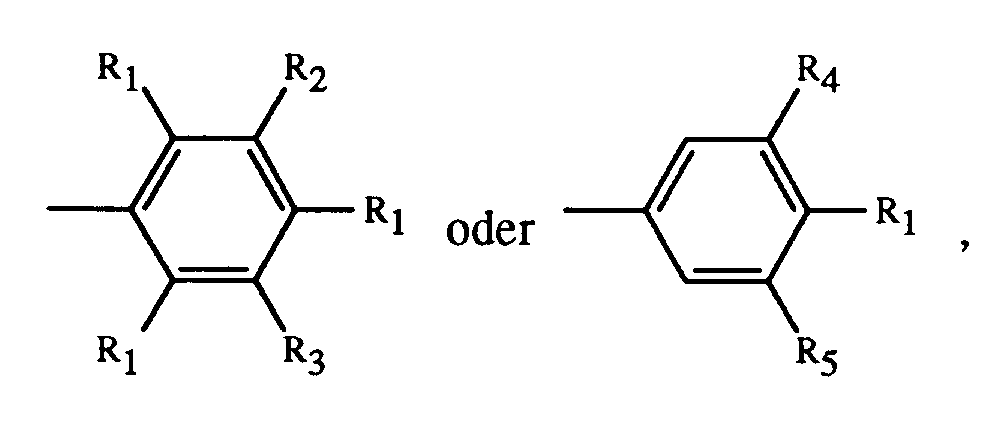
bedeutet, worin R₁ C₁-C₄-Alkyl, R₂ und R₃ unabhängig voneinander Wasserstoff, CH₂X, SO₂Y oder NHCOZ bedeuten, R₄ Wasserstoff oder C₁-C₄-Alkyl ist und R₅ CH₂X, SO₂Y oder NHCOZ bedeutet, X eine Gruppe NHCOR₆ oder NR₇SO₂R₆, Y NR₈R₉ oder N(R₈)₂ und Z C₁-C₄-Alkyl oder NHR₉ bedeuten, R₆ C₁-C₄-Alkyl, unsubstituiertes oder durch C₁-C₄-Alkyl oder Halogen substituiertes Phenyl, R₇ Wasserstoff oder C₁-C₄-Alkyl und R₈ Wasserstoff, C₁-C₄-Alkyl oder eine Gruppe
bedeutet, und R₉ Wasserstoff, C₁-C₄-Alkyl oder Phenyl ist, und R', R'' und R''' Alkylreste mit zusammen 10 bis 24 Kohlenstoffatomen bedeuten, sowie Gemische solcher Farbsalze. - Bedeuten etwaige Substituenten C₁-C₄-Alkyl, so handelt es sich um Methyl, Ethyl, n-Propyl, Isopropyl, n-Butyl, sec.-Butyl oder tert.-Butyl.
- Halogen bedeutet z.B. Brom, Jod oder insbesondere Chlor.
- Von besonderer Bedeutung sind die Farbsalze der Formel I, worin R₁ Methyl oder Ethyl ist und vornehmlich diejenigen, worin R₁ Methyl, R₂ und R₃ unabhängig voneinander Wasserstoff oder CH₂X, R₄ Methyl und R₅ SO₂Y bedeuten, X eine Gruppe NHCOR₆ und Y NHR₈ sind, wobei R₆, R₇ und R₈ die oben angegebene Bedeutung haben.
- Bevorzugt sind die Farbsalze der Formel I, worin R eine Gruppe der Formel
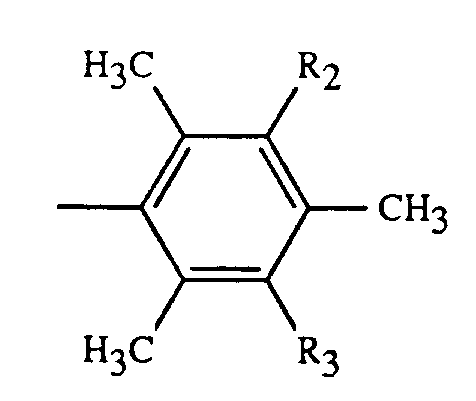
ist, worin R₂ und R₃ unabhängig voneinander Wasserstoff oder eine Gruppe CH₂-NHCOC₆H₅ bedeuten, und diejenigen der Formel I, worin R eine Gruppe der Formel
ist. - Die erfindungsgemässen Farbsalze kann man nach an sich bekannten Methoden herstellen, z.B. durch Umsetzung einer Aminoanthrachinonsulfonsäure der Formel

worin R die oben angegebene Bedeutung hat,
mit einem Amin der Formel
worin R', R'' und R''' die oben angegebene Bedeutung haben. - Als besonders geeignete Amine für die Herstellung der erfindungsgemässen Farbsalze sind die unter den Handelsnamen ®PRIMENE 81-R und ®PRIMENE JM-T der Fa. Rohm und Haas Co. erhältlichen Produkte. Diese stellen eine Mischung von Aminen dar, welche der Formel

entsprechen, wobei PRIMENE 81-R insgesamt 12 bis 14 und PRIMENE JM-T insgesamt 18 bis 22 Kohlenstoffatome aufweisen. - Bei den Aminoanthrachinonsulfonsäuren der Formel II handelt es sich um bekannte Produkte. Sollten einige davon noch neu sein, so können sie in Analogie zu an sich bekannten Methoden hergestellt werden.
- Die Salzbildung führt man nach den allgemein bekannten Methoden zweckmässig in der Weise durch, dass man eine Lösung oder Suspension eines Alkalisalzes der Farbstoffsulfonsäure mit der wässrigen Lösung eines wasserlöslichen Salzes des Amins, vorzugsweise eines solchen mit einer niederen Carbonsäure, insbesondere der Ameisensäure oder Essigsäure, umsetzt. Man arbeitet mit Vorteil bei Temperaturen zwischen 40-80°C und einem pH-Wert unterhalb 7.
- Da die Farbsalze im wässrigen Reaktionsmedium unlöslich sind, können sie durch Abfiltrieren isoliert werden.
- Man kann die Umsetzung auch in organischen Lösungsmitteln allein oder in Gemischen mit Wasser durchführen. Eine bevorzugte Ausführungsform besteht darin, dass man zu einer wässrigen Lösung oder Suspension eines Alkalisalzes der Farbstoffsulfonsäure die Lösung des Amins in einem nur beschränkt wasserlöslichen organischen Lösungsmittel gibt, das Ganze mit einer anorganischen oder organischen Säure sauer stellt und intensiv durchmischt. Das Aminsalz der Farbstoffsulfonsäure geht dabei in die organische Phase und kann nach Schichtentrennung durch Verdampfen des Lösungsmittels isoliert werden. Die Umsetzung im Zweiphasensystem wird bei Temperaturen zwischen 10°C und dem Siedepunkt des Lösungsmittel-Wasser-Gemischs vorgenommen. Als organische Lösungsmittel werden vorzugsweise chlorierte Kohlenwasserstoffe, wie Methylenchlorid, Chloroform oder Chlorbenzol, Ether, wie Diisopropyl- oder Dioctylether, Ketone, wie Methylisobutyl- oder Diisopropylketon, Ester, wie Ethylacetat, Butylacetat oder t-Butylpropionat oder aber Alkohole, wie n-Butanol, iso- oder t-Amylalkohol, verwendet.
- Dank der erfolgreichen Kombination einiger bestimmter Parameter ist es aber gelungen ein neues Verfahren zu entwickeln, das es erlaubt überraschend vorteilhaft Produkte ausgezeichneter Qualität herzustellen.
- Gegenstand der Erfindung ist demnach auch ein Verfahren zur Herstellung von Farbsalzen der Formel I

worin R, R', R'' und R''' die oben angegebene Bedeutung haben, dadurch gekennzeichnet, dass man das Alkalisalz einer Aminoanthrachinonsulfonsäure der Formel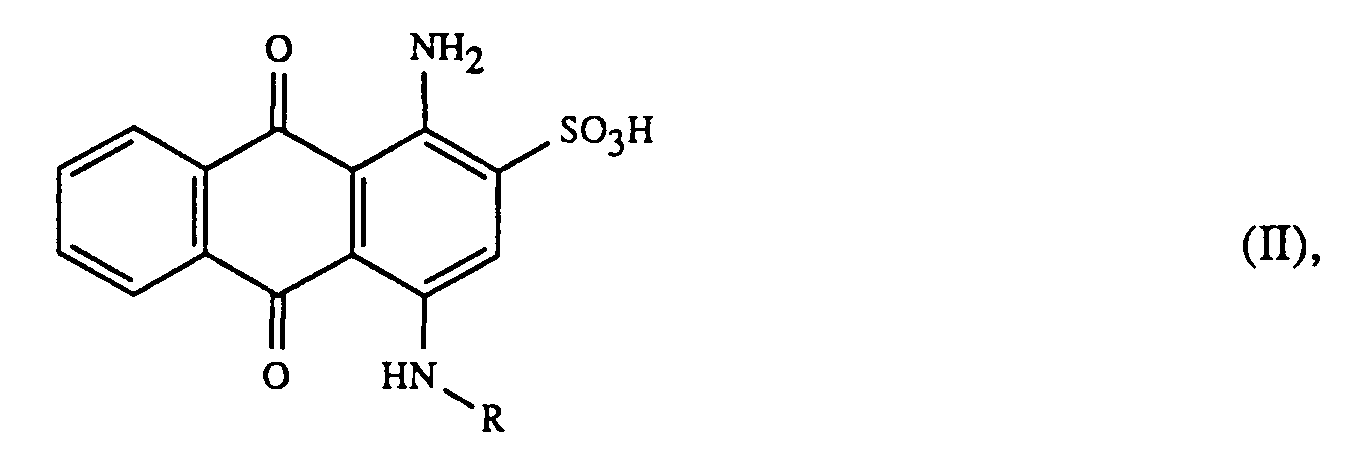
worin R die oben angegebene Bedeutung hat, mit der 1 bis 1,1-fachen molaren Menge eines Aminsalzes der Formel
worin R', R'' und R''' die oben angegebene Bedeutung haben, X das Anion einer Mineralsäure und n die Zahlen 1 bis 3 bedeuten,
in einem Niederalkylalkohol, vorzugsweise bei Raumtemperatur und bei einem pH von 3-5, umsetzt und das Reaktionsprodukt nach üblichen Methoden isoliert. - Unter Mineralsäure versteht man z.B. Schwefelsäure, Phosphorsäure oder insbesondere Salzsäure.
- Niederalkylalkohol bedeutet z.B. Ethanol, Propanol, Isopropanol, n-Butanol, n-Pentanol und insbesondere Methanol.
- Gegenüber den bisher üblichen Verfahren erreicht man mit dem erfindungsgemässen Verfahren einige bedeutende Vorteile:
- Gegenüber rein wässerigen Herstellungsverfahren, wie z.B. im US-Patent 3,994,872 beschrieben,
- kürzere Reaktionszeit und vollständigere Umsetzung;
- weniger Probleme bei der Isolierung;
- gleichmässigere Qualität.
- Gegenüber 2-Phasenverfahren (Wasser/nur beschränkt wasserlösliches Lösungsmittel), wie z.B. aus dem US-Patent 4,359,418 bekannt,
- Trennung der Wasserphase fällt weg;
- weniger Trocknungsprobleme;
- weniger Geruchsprobleme;
- geringere Neigung zum Zusammenbacken während des Trocknungsprozesses.
- Gegenüber reinen Lösungsmittelverfahren, wie z.B. im US-Patent 4,005,066 und im GB-Patent 944,409 beschrieben,
- Arbeiten bei Raumtemperatur;
- kein grosser Ueberschuss an Amin;
- weniger Geruchsprobleme.
- Die neuen Farbsalze weisen eine ausgezeichnete Alkohollöslichkeit auf, insbesondere in niederen Alkanolen, wie Methanol, Ethanol, n-Propanol oder Isopropanol, in Alkylenglykolmonoalkylethern, z.B. Ethylenglykol-monomethyl- oder ethylether, in Alkylenglykolen, wie in Propylenglykolen, oder in araliphatischen Alkoholen, wie in Benzylalkohol, oder in Gemischen derartiger Alkohole, ferner in niederen aliphatischen Ketonen, z.B. Aceton, Methylethylketon, Methylisobutylketon oder auch in Cyclohexanon, ferner in Carbonsäureestern, z.B. Methylacetat, Ethylacetat, Butylacetat oder Glykolmonoacetat, sowie in halogenierten Kohlenwasserstoffen, vorzugsweise niederen aliphatischen Kohlenwasserstoffen, wie Chloroform, Methylenchlorid, Ethylenchlorid oder Kohlenstofftetrachlorid, aber auch in Mischungen solcher Lösungsmittel untereinander und in Mischungen solcher Lösungsmittel mit Wasser.
- Die Lösungen der erfindungsgemässen Farbsalze zeichnen sich durch eine gute Lagerbeständigkeit aus, d.h. sie zeigen bei längerem Lagern nur eine geringe Neigung zur Flokkulation oder Sedimentation.
- Wegen ihrer guten Löslichkeit in den oben genannten Ketonen, besonders Aceton, eignen sich die erfindungsgemäss erhältlichen Farbsalze zum Färben von Cellulose-2 1/2-acetat in der Spinnmasse; dank ihrer guten Löslichkeit in halogenierten, niederen aliphatischen Kohlenwasserstoffen, besonders Chloroform und Methylenchlorid/Methanol 9:1, können sie auch für die Spinnfärbung von Cellulosetriacetat verwendet werden. Das spinngefärbte Fasermaterial zeichnet sich durch Reinheit und Stärke des Farbtons, durch einwandfreie Verteilung des Farbkörpers und durch sehr gute Echtheiten, wie beispielsweise hohe Wasch-, Wasser-, Bleich-, Ueberfärbe-, Trockenwasch-, Reib-, Bügel-, Trockenhitze- und Lichtechtheit aus.
- Infolge ihrer guten Löslichkeit in Alkoholen, Estern sowie deren Mischungen, sind die neuen Farbsalze besonders geeignet zum Färben von filmbildenden Polymeren.
- Als alkoholische und/oder esterhaltige Lösungen filmbildender Polymerer sind hier insbesondere solche flüssige Lacke zu verstehen, die sich zur Verwendung in Druckfarben für den Flexodruck eignen. Sie eignen sich auch sehr gut für die Anwendung in Ink-Jet Drucktinten. Als Polymere enthalten diese Lösungen beispielsweise Naturharze, wie Schellack oder Manilakopal, oder Cellulosederivate, beispielsweise Celluloseether, wie Ethylcellulose oder Celluloseester, wie Nitrocellulose, ferner Maleinatharze oder Phenyl-Formaldehyd-harze, die vorzugsweise mit Kolophonium modifiziert sind, wie die in der US-PS 2 347 923 beschriebenen Produkte, Polyamidharze, d.h. Polykondensationsprodukte von Polyaminen mit Polycarboxyverbindungen, die z.B. in der US-PS 2 663 649 beschrieben sind, Formaldehyd-Harnstoff- und Formaldehyd-Melamin-Kondensate, Keton-Formaldehyd-Kondensate, Polyvinylacetate oder Polyacrylsäureharze, z.B. Polybutylacrylatharz oder deren Gemische, ferner Polykondensationsprodukte mehrwertiger Alkohole, wie Glycerin oder Pentaerythrit, mit mehrbasischen Säuren, wie Maleinsäure oder Phthalsäure allein oder in Kombination mit ungesättigten Fettsäuren wie jenen des Lein- und Ricinusöls.
- Daneben können die Lösungen filmbildender Polymerer noch in der Lackindustrie übliche Hilfsstoffe, wie Netzmittel, z.B. höhere Fettsäure-bis-hydroxyalkylamide, wie Cocosölfettsäure-bis(-β-hydroxyethyl)-amid, Weichmacher, wie z.B. Phthalsäure, und weitere Zusätze, wie Siliconöle, enthalten.
- Diese Lösungen filmbildender Polymerer mit einem Gehalt an erfindungsgemässen Farbsalzen eignen sich beispielsweise zum Bedrucken verschiedenartiger Stoffe, wie von Metall-, z.B. Aluminiumfolien, von Papier, Glas, Kunstharzfolien und -filmen und dergleichen. Die Lösungen filmbildender Polymerer eignen sich weiter zum Lackieren verschiedenster Oberflächen, z.B. von Metallteilen, Formteilen aus Kunststoffen oder Holzplatten. Sie sind lagerbeständig und ergeben auf den genannten Materialien gut haftende, egale, farbstarke, wasserfeste, überlackier-, hitze-, licht- und wetterbeständige Ueberzüge.
- Die erfindungsgemässen Farbsalze eignen sich ebenfalls zur Herstellung von Drucktinten für Tintenstrahl-Drucker (ink-jet printers). Wegen ihrer guten Löslichkeit und dem geringen Gehalt an anorganischen Salzen ergeben sich Tinten mit ausgezeichneten allgemeinen Eigenschaften, wie z.B. hohe Stabilität bei der Lagerung und im Druckbetrieb. Das Druckbild zeichnet sich z.B. durch gute Bildschärfe und Wasserbeständigkeit aus.
- Im Bedarfsfall kann die Drucktinte nach allgemein üblichen Methoden dem Tintenstrahldrucksystem angepasst werden, um optimale Werte für z.B. Viskosität, Oberflächenspannung und spezifische Leitfähigkeit zu erhalten.
- Die folgenden Beispiele erläutern die Erfindung. Prozente bedeuten, sofern nichts anderes angegeben, Gewichtsprozente.
- Beispiel 1: Ein feuchter Presskuchen enthaltend 28 g des Farbstoffes der Formel

wird in 300 ml Methylisobutylketon suspendiert. Innerhalb einer halben Stunde wird eine Lösung von 12,5 ml ®PRIMENE 81-R (Fa. Rohm und Haas) und 3 ml Ameisensäure in 300 ml Wasser zugegeben. Anschliessend wird das Reaktionsgemisch 5 Stunden bei Raumtemperatur gerührt, bevor die Phasen getrennt werden. Die organische Phase wird 3 Mal mit 250 ml Wasser extrahiert und abschliessend unter vermindertem Druck zur Trockne abgedampft. Ausbeute: 32 g des gewünschten blauen Farbsalzes.C H N Analyse: Ber.: 59,5 % 6,8 % 7,6 % Gef.: 58,7 % 7,1 % 7,0 % - Beispiel 2: Ersetzt man den in Beispiel 1 eingesetzten Farbstoff (IV) mit 35 g eines Farbstoffes der Formel

wobei
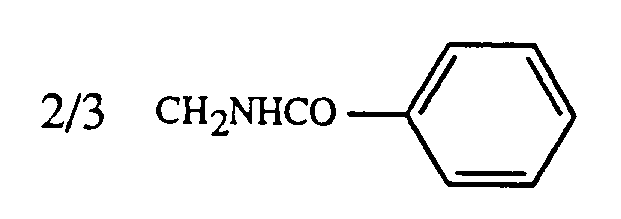
ist,
verfährt man sonst aber genau wie in Beispiel 1 beschrieben, so erhält man 39 g eines blauen Farbsalzes, das qualitativ die gleichen Eigenschaften, wie dasjenige von Beispiel 1 aufweist.C H N Analyse: Ber.: 68,8 % 7,1 % 7,8 % Gef.: 68,2 % 7,3 % 7,4 % - Beispiel 3: 45,8 g eines trockenen Farbstoffes der Formel

werden in 900 ml Wasser suspendiert und auf 70°C erwärmt. Danach werden 350 ml Methylisobutylketon und 27,4 ml ®PRIMENE 81-R zugegeben. Nach 30 Minuten werden ca 11 ml HCl 32 % zugetropft bis der pH der wässrigen Phase auf 4±0,5 gesunken ist. Nach weiteren 30 Minuten werden die Phasen getrennt. Die organische Phase wird mit 100 ml Wasser nochmals während 30 Minuten bei 70°C extrahiert Nach erneuter Phasentrennung wird die organische Phase unter vermindertem Druck zur Trockne eingedampft und das blaue Produkt im Vacuumtrockenschrank bei 120°C nachgetrocknet. Dies ergibt 56 g eines blauen Farbsalzes.C H N Analyse: Ber.: 67,8 % 7,7 % 6,7 % Gef.: 67,4 % 7,6 % 6,6 % - Beispiel 4: 35 g des Farbstoffes der Formel V (wie in Beispiel 2) werden in 800 ml Wasser suspendiert, auf 90°C erhitzt, 2 Stunden gerührt und anschliessend auf 50°C abgekühlt. Danach wird tropfenweise eine Lösung von 12,5 ml ®PRIMENE 81-R und 3 ml Ameisensäure in 150 ml Wasser zugegeben. Dann wird 2 Stunden gerührt und bei 50°C abfiltriert. Der Rückstand wird mit kaltem Wasser gewaschen und getrocknet. Man erhält 43 g eines blauen Farbsalzes, das qualitativ die gleichen Eigenschaften, wie diejenigen von Beispiel 2 aufweist.
C H N Analyse: Ber.: 68,8 % 7,1 % 7,8 % Gef.: 67,0 % 6,8 % 7,6 % - Beispiel 5: 30 g des Farbstoffs der Formel V, worin


ist, werden in 250 ml Wasser aufgeschlämmt und auf 70°C erhitzt. Nach einer halben Stunde wird eine Lösung von 14 ml ®PRIMENE 81-R in 200 ml Methylisobutylketon zugegeben. Nach einer weiteren halben Stunde werden ca. 6 ml konzentrierte Salzsäure zugetropft, bis der pH der wässrigen Phase 4-4,5 beträgt. Nach einer Stunde Rühren wird auf Raumtemperatur abgekühlt, die Phasen werden getrennt, die organische Phase wird einmal mit 200 ml Wasser bei 70°C (ca. 30 Minuten) gewaschen, vom Wasser getrennt und unter vermindertem Druck zur Trockne eingedampft. Man erhält 42 g eines blauen Farbsalzes.C H N Analyse: Ber.: 68,6 % 7,2 % 7,4 % Gef.: 68,5 % 7,5 % 7,0 % - Beispiele 6-11: Weitere Farbsalze erhält man, wenn man in Analogie zu Beispiel 3 Farbstoffe der Formel

einsetzt,
worin R₁₀, R₁₁ und R₁₂ die in der nachfolgenden Tabelle angegebene Bedeutung haben:Beispiele R₁₀ R₁₁ R₁₂ Produktanalyse % C N S 6 3-NHCOCH₃ 4-CH₃ H 64,4 8,2 4,8 7 3-SO₂NHCH₂CH₂OH 4-CH₃ H 58,7 7,5 8,7 8 3-SO₂NHCH₂CH₃ 4-CH₃ 5-CH₃ 60,3 7,4 8,8 9 3-SO₂N(CH₂CH₃)₂ 4-CH₃ 5-CH₃ 61,0 7,2 8,6 10 3-SO₂N(CH₃)₂ 4-CH₃ 5-CH₃ 60,4 7,5 8,9 11 3-SO₂N(CH₃)CH₂CH₂OH 4-CH₃ 5-CH₃ 59,2 7,4 8,4 - Beispiel 12: Ersetzt man in Beispiel 3 die 27,4ml ®PRIMENE 81-R mit 44,9 ml ®PRIMENE JM-T, so erhält man ein Produkt mit ebensoguten Eigenschaften.
- Beispiel 13: In einem 1 Liter Planschliffkolben werden 600 ml Methanol vorgelegt und nacheinander 256 g (0,558 Mol) des Farbstoffes der Formel VI (wie in Beispiel 3) und 117 g (0,614 Mol) ®PRIMENE 81-R eingetragen. Anschliessend stellt man mit ca. 72 g (0,62 Mol) Salzsäure (32 %) auf pH 5,0 ein und lässt ca. 15 Minuten rühren. Die so hergestellte klare Lösung wird innert ca. 30 Minuten unter gutem Rühren auf 2000 ml kaltes Wasser ausgetragen. Das Produkt fällt in gut filtrierbarer Form aus. Man filtriert, wäscht das Nutschgut und trocknet anschliessend bis zur Gewichtskonstanz. Ausbeute: 336g (97 % d.Th.).
- Beispiel 14: 5 g des nach Beispiel 1 erhaltenen Farbsalzes werden in 95 g eines Nitrocelluloselackes, hergestellt aus 15 g alkohollöslicher niedrigviskoser Nitrocellulose mit ca. 18 % Dibutylphthalat, 10 g Ethylenglykolmonoethylether, 20 g Ethylacetat und 50 g 94%-igem Ethanol, eingetragen. Die Mischung wird bis zur gleichmässigen Verteilung des Farbkörpers gerührt. Anschliessend wird der Lack mit einem Filmziehgerät (handcoater der Fa. RK Chemical Co. Ltd., Royston, GB) in einer Nassfilmdicke von ca. 12 »m auf Opalinpapier oder auf eine Aluminium-Kaschierfolie aufgetragen. Nach dem Trocknen liegt eine haftfeste, gleichmässige, kräftige blaue Lackierung vor, die gegenüber Belichtung sowie Behandlung mit Wasser und Butter hohe Beständigkeiten aufweist.
- Beispiel 15: Eine Zweischichtlackierung von Aluminiumblech wird in folgenden Schritten aufgebaut:
- a) Bindemittel: 67,5 g eines nichtrocknenden Alkydharzes in Form einer 60%igen Lösung in Xylol (®Alkydal F 27 der Firma Bayer), 26,4 g eines teilweise veresterten Melamin-Formaldehyd-Vorkondensates als 55%ige Lösung in Butanol/Xylol 1:1 (®Maprenal TTX der Firma Cassella), 1,1 g Xylol, 4 g Ethylenglykolmonoethylether und 1 g der 1%igen Lösung eines Silikonöls in Xylol werden zu einer homogenen Masse vermischt.
- b) 1. Schicht: 5 g eines handelsüblichen feinteiligen Aluminiumpulvers werden in 10 g Methylethylketon und 10 g Butylacetat angeschlämmt. In die Suspension werden 75 g des im Abschnitt a) beschriebenen Bindemittels eingearbeitet. Die so erhaltene Dispersion wird mit dem Lösungsmittelgemisch aus 60 % Xylol, 20 % Butanol und 20 % Ethylenglykolmonoethylether auf die Verarbeitungsviskosität eingestellt und auf ein Aluminiumblech appliziert Durch 30-minütiges Trocknen bei 80°C werden die Lösungsmittel verdampft.
- c) 2. Schicht: 1 g des nach Beispiel 1 hergestellten Farbsalzes wird in 99 g des in Abschnitt a) beschriebenen Bindemittels gelöst und die Lösung mit dem in Abschnitt b) angegebenen Lösungsmittelgemisch auf Spritzviskosität eingestellt. Mittels Spritzpistole wird die Lösung als 2. Schicht auf das vorbehandelte Aluminiumblech aufgetragen. Durch 30-minütiges Trocknen und Einbrennen bei 130°C wird die Einfärbung fertiggestellt. Es resultiert eine farbstarke blaue Lackierung von guter Wetter- und Lichtechtheit.
- Beispiel 16: Es werden 20 g des gemäss Beispiel 1 erhältlichen Farbsalzes, 30 g gebleichter wachsfreier Schellack, 5 g Dibutylphthalat und 45 g Ethanol vermischt.
- Man erhält so eine Druckfarbe von guter Lagerbeständigkeit, welche als solche oder in Verdünnung mit Ethanol für den Flexodruck auf Papier- und Aluminiumfolien verwendbar ist. Mit dieser Druckfarbe erhält man auf den genannten Materialien brillante und farbstarke blaue Drucke von guter Haftfestigkeit.
- Beispiel 17: In 90 g einer Lösung, bestehend aus 25 % eines spritlöslichen mit Estern modifizierten Polyamidharzes (z.B. hergestellt gemäss Beispiel 7 der US-PS 2 663 649), 2 % Wasser, 5 % Benzin der Fraktion 80-100°C, 48 % Ethanol und 20 % Isopropanol werden 10 g des gemäss Beispiel 2 erhältlichen Farbsalzes eingerührt.
- Man erhält eine Druckfarbe, welche im Flexodruck Zellglas mit blauem Farbton von guter Haftfestigkeit und hoher Reinheit färbt.
- Beispiel 18: Auf 1000 g einer Lösung von Acetylcellulose in Aceton mit einem Festkörpergehalt von 26 % werden 1,3 g des Farbsalzes gemäss Beispiel 1 gestreut. Dann setzt man 20 ml Aceton zu und rollt die Mischung in einer gut verschlossenen Flasche auf den Rollblock bis der Farbstoff vollkommen gelöst ist. Anschliessend wird die gefärbte Spinnlösung durch Düsen gepresst. Der gebildete Faden läuft durch ein längeres geheiztes Rohr und kann dann unmittelbar aufgespult werden. Das gefärbte Material zeigt einen reinen blauen Farbton und weist ausgezeichnete Echtheiten auf, insbesondere einwandfreie Wasch-, Wasser-, Bleich-, Ueberfärbe-, Trockenwasch-, Reib-, Bügel-, Trockenhitze- und Lichtechtheit.
- Beispiel 19: 6 g des nach Beispiel 13 erhaltenen Farbsalzes und 1 g des Ketonharzes ®SPRITHARZ SK (Hüls) werden mit 80 g Methylethylketon, 8 g Isopropylacetat und 5 g Ethoxypropanol vermischt, unter intensivem Rühren gelöst und anschliessend durch ein Sieb von 0,2 »m filtriert. Die so erhaltene Druckfarbe eignet sich ausgezeichnet für den Einsatz in den üblichen Tintenstrahl-Druckverfahren.
Claims (10)
- Farbsalze der Formel


- Farbsalze gemäss Anspruch 1, worin R₁ Methyl oder Ethyl bedeutet.
- Farbsalze gemäss Anspruch 1, worin R₁ Methyl, R₂ und R₃ unabhängig voneinander Wasserstoff oder CH₂X, R₄ Methyl und R₅ SO₂Y bedeuten, X eine Gruppe NHCOR₆ und Y NHR₈ sind, wobei R₆, R₇ und R₈ die in Anspruch 1 angegebene Bedeutung haben.
- Farbsalze gemäss Anspruch 1 der Formel I, worin R eine Gruppe der Formel
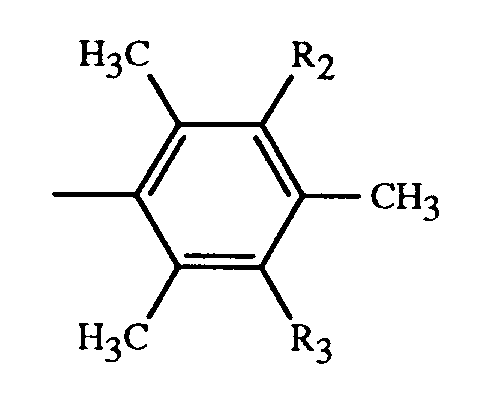
- Farbsalze gemäss Anspruch 1 der Formel I, worin R eine Gruppe der Formel

- Verfahren zur Herstellung von Farbsalzen gemäss Anspruch 1 der Formel I


- Verfahren gemäss Anspruch 6, dadurch gekennzeichnet, dass die Umsetzung bei Raumtemperatur und bei einem pH von 3 bis 5 durchgeführt wird.
- Verfahren gemäss Anspruch 6, dadurch gekennzeichnet, dass der Niederalkylalkohol Methanol ist.
- Verwendung der Farbsalze gemäss Anspruch 1 zum Färben organischer Lösungen von Polymeren.
- Polymere enthaltend Farbsalze gemäss Anspruch 1.
Applications Claiming Priority (2)
| Application Number | Priority Date | Filing Date | Title |
|---|---|---|---|
| CH62990 | 1990-02-27 | ||
| CH629/90 | 1990-02-27 |
Publications (2)
| Publication Number | Publication Date |
|---|---|
| EP0445075A1 EP0445075A1 (de) | 1991-09-04 |
| EP0445075B1 true EP0445075B1 (de) | 1994-09-21 |
Family
ID=4191464
Family Applications (1)
| Application Number | Title | Priority Date | Filing Date |
|---|---|---|---|
| EP91810112A Expired - Lifetime EP0445075B1 (de) | 1990-02-27 | 1991-02-20 | Neue Farbsalze der Anthrachinonfarbstoffreihe |
Country Status (4)
| Country | Link |
|---|---|
| US (1) | US5416227A (de) |
| EP (1) | EP0445075B1 (de) |
| JP (1) | JP2934031B2 (de) |
| DE (1) | DE59102977D1 (de) |
Families Citing this family (4)
| Publication number | Priority date | Publication date | Assignee | Title |
|---|---|---|---|---|
| EP0859034B1 (de) * | 1997-02-10 | 2002-04-24 | Ciba SC Holding AG | Farbstoffmischungen und deren Verwendung |
| US6033445A (en) * | 1997-02-10 | 2000-03-07 | Ciba Specialty Chemicals Corporation | Dye mixtures and their use |
| GB0130316D0 (en) * | 2001-12-19 | 2002-02-06 | Clariant Int Ltd | Composition for printing recording materials |
| CN103275510B (zh) * | 2013-06-06 | 2014-11-05 | 恒升化工(启东)有限公司 | 一种含活性基团的酸性蓝色染料的生产方法 |
Family Cites Families (9)
| Publication number | Priority date | Publication date | Assignee | Title |
|---|---|---|---|---|
| NL121826C (de) * | 1959-07-24 | |||
| DE1260652B (de) * | 1960-08-09 | 1968-02-08 | Basf Ag | Verfahren zur Herstellung von Ammoniumsalzen von Metallkomplexfarbstoffen |
| CH487222A (de) * | 1967-04-05 | 1970-03-15 | Geigy Ag J R | Verfahren zur Herstellung von sauren Anthrachinonfarbstoffen |
| US3859283A (en) * | 1967-04-05 | 1975-01-07 | Ciba Geigy Ag | 1 amino-4-(4,5 dialkyl-3-sulfamoyl-phenylamino) anthraquinone-2-sulfonic acids |
| CH566382A5 (en) * | 1971-08-10 | 1975-09-15 | Ciba Geigy Ag | Dyestuffs - comprising amine salts of anionic dyes, with good alcohol solubility |
| US3994872A (en) * | 1971-08-10 | 1976-11-30 | Ciba-Geigy Corporation | Tertiary-alkylamine salts of metal complex dyestuffs |
| NL7408543A (nl) * | 1973-07-05 | 1975-01-07 | Basf Ag | Werkwijze ter bereiding van isotridecylammo- niumzouten van complexe chroom- of kobalt-1:2- -azokleurstoffen. |
| US4359418A (en) * | 1979-03-12 | 1982-11-16 | Ciba-Geigy Corporation | Amine salts of azo dyestuffs of the pyridone series |
| JPS60115592A (ja) * | 1983-11-28 | 1985-06-22 | Shin Etsu Chem Co Ltd | ペンタメチルシクロトリシロキサンの製造方法 |
-
1991
- 1991-02-20 EP EP91810112A patent/EP0445075B1/de not_active Expired - Lifetime
- 1991-02-20 DE DE59102977T patent/DE59102977D1/de not_active Expired - Lifetime
- 1991-02-27 JP JP3032610A patent/JP2934031B2/ja not_active Expired - Lifetime
-
1994
- 1994-02-14 US US08/195,741 patent/US5416227A/en not_active Expired - Lifetime
Also Published As
| Publication number | Publication date |
|---|---|
| DE59102977D1 (de) | 1994-10-27 |
| JP2934031B2 (ja) | 1999-08-16 |
| EP0445075A1 (de) | 1991-09-04 |
| US5416227A (en) | 1995-05-16 |
| JPH04216874A (ja) | 1992-08-06 |
Similar Documents
| Publication | Publication Date | Title |
|---|---|---|
| DE1914271C3 (de) | Verfahren zur Herstellung farbstarker transparenter Pigmente der Isoindolinreihe | |
| CH681154A5 (de) | ||
| EP2169009B1 (de) | Anthrapyridon-Farbstoffe, ihre Herstellung und Verwendung | |
| EP0009720B1 (de) | Chinacridon-Gemische, Verfahren zu ihrer Herstellung und ihre Verwendung als Pigmente | |
| CH634091A5 (de) | Verfahren zur herstellung eines aminosaeure-farbstoffsalzes. | |
| DE2302481B2 (de) | Disazopigment, Verfahren zu seiner Herstellung und seiner Verwendung | |
| EP0649881A1 (de) | Neue Kupferphthalocyanin-Farbstoffe und deren Verwendung | |
| EP1031614B1 (de) | Monoazofarbstoffe, deren Herstellung und Verwendung | |
| EP0445075A1 (de) | Neue Farbsalze der Anthrachinonfarbstoffreihe | |
| DE1795051A1 (de) | Neue wasserunloesliche Monoazofarbstoffe und Verfahren zu ihrer Herstellung | |
| EP0005222B1 (de) | Azofarbstoffsulfonsäuresalze und deren Verwendung | |
| DE2347532B1 (de) | Monoazopigmente,Verfahren zu ihrer Herstellung und ihre Verwendung | |
| DE2434215A1 (de) | Tetra-(alkylsulfamoyl)-kupferphthalocyanine und verfahren zu deren herstellung | |
| DE69917897T2 (de) | Gelbes pteridin mit einem farbton-winkel von mindestens 98 | |
| DE2027537B2 (de) | Feste Farbstoffpräparate und deren Verwendung | |
| DE2013791B2 (de) | Basische farbstoffe, verfahren zu deren herstellung und ihre verwendung zum faerben und bedrucken von textilmaterialien und leder, sowie zur herstellung von druckpasten und schreibfluessigkeiten | |
| DE2043482C3 (de) | Monoazopigment, Verfahren zu seiner Herstellung und Verwendung | |
| CH629521A5 (de) | Verfahren zur herstellung von neuen disazoverbindungen und deren verwendung. | |
| EP0657506A1 (de) | Neue Azofarbstoffe, deren Herstellung und Verwendung | |
| DE2020477C3 (de) | Gelber Pigmentfarbstoff und dessen Verwendung | |
| DE2317532C2 (de) | Monoazoplgment, Verfahren zu seiner Herstellung und seine Verwendung | |
| DE2110349C3 (de) | Monoazopigment, Verfahren zu seiner Herstellung und Verwendung | |
| DE2130040B2 (de) | Wasserunlösliche Monoazoverbindungen, Verfahren zu ihrer Herstellung und ihre Verwendung | |
| DE1795052C3 (de) | Wasserunlösliche Monoazoverbindungen, Verfahren zu ihrer Herstellung und Ihre Verwendung afs Pigmente | |
| DE1278039B (de) | Verfahren zur Herstellung von Azofarbstoffen |
Legal Events
| Date | Code | Title | Description |
|---|---|---|---|
| PUAI | Public reference made under article 153(3) epc to a published international application that has entered the european phase |
Free format text: ORIGINAL CODE: 0009012 |
|
| 17P | Request for examination filed |
Effective date: 19910222 |
|
| AK | Designated contracting states |
Kind code of ref document: A1 Designated state(s): DE FR GB IT |
|
| 17Q | First examination report despatched |
Effective date: 19931222 |
|
| GRAA | (expected) grant |
Free format text: ORIGINAL CODE: 0009210 |
|
| AK | Designated contracting states |
Kind code of ref document: B1 Designated state(s): DE FR GB IT |
|
| REF | Corresponds to: |
Ref document number: 59102977 Country of ref document: DE Date of ref document: 19941027 |
|
| ITF | It: translation for a ep patent filed | ||
| GBT | Gb: translation of ep patent filed (gb section 77(6)(a)/1977) |
Effective date: 19941115 |
|
| ET | Fr: translation filed | ||
| PLBE | No opposition filed within time limit |
Free format text: ORIGINAL CODE: 0009261 |
|
| 26N | No opposition filed | ||
| REG | Reference to a national code |
Ref country code: GB Ref legal event code: 732E |
|
| REG | Reference to a national code |
Ref country code: FR Ref legal event code: TP |
|
| REG | Reference to a national code |
Ref country code: GB Ref legal event code: IF02 |
|
| PGFP | Annual fee paid to national office [announced via postgrant information from national office to epo] |
Ref country code: IT Payment date: 20080204 Year of fee payment: 18 |
|
| PGFP | Annual fee paid to national office [announced via postgrant information from national office to epo] |
Ref country code: FR Payment date: 20080115 Year of fee payment: 18 |
|
| REG | Reference to a national code |
Ref country code: FR Ref legal event code: ST Effective date: 20091030 |
|
| PG25 | Lapsed in a contracting state [announced via postgrant information from national office to epo] |
Ref country code: FR Free format text: LAPSE BECAUSE OF NON-PAYMENT OF DUE FEES Effective date: 20090302 |
|
| PGFP | Annual fee paid to national office [announced via postgrant information from national office to epo] |
Ref country code: GB Payment date: 20100226 Year of fee payment: 20 |
|
| PGFP | Annual fee paid to national office [announced via postgrant information from national office to epo] |
Ref country code: DE Payment date: 20100430 Year of fee payment: 20 |
|
| REG | Reference to a national code |
Ref country code: DE Ref legal event code: R071 Ref document number: 59102977 Country of ref document: DE |
|
| REG | Reference to a national code |
Ref country code: GB Ref legal event code: PE20 Expiry date: 20110219 |
|
| PG25 | Lapsed in a contracting state [announced via postgrant information from national office to epo] |
Ref country code: IT Free format text: LAPSE BECAUSE OF NON-PAYMENT OF DUE FEES Effective date: 20090220 |
|
| PG25 | Lapsed in a contracting state [announced via postgrant information from national office to epo] |
Ref country code: GB Free format text: LAPSE BECAUSE OF EXPIRATION OF PROTECTION Effective date: 20110219 |
|
| PG25 | Lapsed in a contracting state [announced via postgrant information from national office to epo] |
Ref country code: DE Free format text: LAPSE BECAUSE OF EXPIRATION OF PROTECTION Effective date: 20110220 |