EP0409981B1 - Ferrocenderivate, diese enthaltende oberflächenaktive stoffe und verfahren zur herstellung dünner organischer filme - Google Patents
Ferrocenderivate, diese enthaltende oberflächenaktive stoffe und verfahren zur herstellung dünner organischer filme Download PDFInfo
- Publication number
- EP0409981B1 EP0409981B1 EP88902937A EP88902937A EP0409981B1 EP 0409981 B1 EP0409981 B1 EP 0409981B1 EP 88902937 A EP88902937 A EP 88902937A EP 88902937 A EP88902937 A EP 88902937A EP 0409981 B1 EP0409981 B1 EP 0409981B1
- Authority
- EP
- European Patent Office
- Prior art keywords
- group
- ferrocene
- micelle
- thin film
- ferrocene derivatives
- Prior art date
- Legal status (The legal status is an assumption and is not a legal conclusion. Google has not performed a legal analysis and makes no representation as to the accuracy of the status listed.)
- Expired - Lifetime
Links
- XDTMQSROBMDMFD-UHFFFAOYSA-N C1CCCCC1 Chemical compound C1CCCCC1 XDTMQSROBMDMFD-UHFFFAOYSA-N 0.000 description 2
- 0 CC1C*(C)=CCC1 Chemical compound CC1C*(C)=CCC1 0.000 description 2
- AHQZRFBZJSCKAV-UHFFFAOYSA-N CC1=CCC=C1 Chemical compound CC1=CCC=C1 AHQZRFBZJSCKAV-UHFFFAOYSA-N 0.000 description 1
Images







Classifications
-
- C—CHEMISTRY; METALLURGY
- C09—DYES; PAINTS; POLISHES; NATURAL RESINS; ADHESIVES; COMPOSITIONS NOT OTHERWISE PROVIDED FOR; APPLICATIONS OF MATERIALS NOT OTHERWISE PROVIDED FOR
- C09K—MATERIALS FOR MISCELLANEOUS APPLICATIONS, NOT PROVIDED FOR ELSEWHERE
- C09K23/00—Use of substances as emulsifying, wetting, dispersing, or foam-producing agents
-
- C—CHEMISTRY; METALLURGY
- C07—ORGANIC CHEMISTRY
- C07F—ACYCLIC, CARBOCYCLIC OR HETEROCYCLIC COMPOUNDS CONTAINING ELEMENTS OTHER THAN CARBON, HYDROGEN, HALOGEN, OXYGEN, NITROGEN, SULFUR, SELENIUM OR TELLURIUM
- C07F17/00—Metallocenes
- C07F17/02—Metallocenes of metals of Groups 8, 9 or 10 of the Periodic Table
-
- C—CHEMISTRY; METALLURGY
- C09—DYES; PAINTS; POLISHES; NATURAL RESINS; ADHESIVES; COMPOSITIONS NOT OTHERWISE PROVIDED FOR; APPLICATIONS OF MATERIALS NOT OTHERWISE PROVIDED FOR
- C09B—ORGANIC DYES OR CLOSELY-RELATED COMPOUNDS FOR PRODUCING DYES, e.g. PIGMENTS; MORDANTS; LAKES
- C09B67/00—Influencing the physical, e.g. the dyeing or printing properties of dyestuffs without chemical reactions, e.g. by treating with solvents grinding or grinding assistants, coating of pigments or dyes; Process features in the making of dyestuff preparations; Dyestuff preparations of a special physical nature, e.g. tablets, films
- C09B67/0032—Treatment of phthalocyanine pigments
-
- C—CHEMISTRY; METALLURGY
- C09—DYES; PAINTS; POLISHES; NATURAL RESINS; ADHESIVES; COMPOSITIONS NOT OTHERWISE PROVIDED FOR; APPLICATIONS OF MATERIALS NOT OTHERWISE PROVIDED FOR
- C09B—ORGANIC DYES OR CLOSELY-RELATED COMPOUNDS FOR PRODUCING DYES, e.g. PIGMENTS; MORDANTS; LAKES
- C09B67/00—Influencing the physical, e.g. the dyeing or printing properties of dyestuffs without chemical reactions, e.g. by treating with solvents grinding or grinding assistants, coating of pigments or dyes; Process features in the making of dyestuff preparations; Dyestuff preparations of a special physical nature, e.g. tablets, films
- C09B67/0071—Process features in the making of dyestuff preparations; Dehydrating agents; Dispersing agents; Dustfree compositions
- C09B67/0084—Dispersions of dyes
- C09B67/0085—Non common dispersing agents
-
- C—CHEMISTRY; METALLURGY
- C09—DYES; PAINTS; POLISHES; NATURAL RESINS; ADHESIVES; COMPOSITIONS NOT OTHERWISE PROVIDED FOR; APPLICATIONS OF MATERIALS NOT OTHERWISE PROVIDED FOR
- C09D—COATING COMPOSITIONS, e.g. PAINTS, VARNISHES OR LACQUERS; FILLING PASTES; CHEMICAL PAINT OR INK REMOVERS; INKS; CORRECTING FLUIDS; WOODSTAINS; PASTES OR SOLIDS FOR COLOURING OR PRINTING; USE OF MATERIALS THEREFOR
- C09D5/00—Coating compositions, e.g. paints, varnishes or lacquers, characterised by their physical nature or the effects produced; Filling pastes
- C09D5/44—Coating compositions, e.g. paints, varnishes or lacquers, characterised by their physical nature or the effects produced; Filling pastes for electrophoretic applications
- C09D5/448—Coating compositions, e.g. paints, varnishes or lacquers, characterised by their physical nature or the effects produced; Filling pastes for electrophoretic applications characterised by the additives used
-
- Y—GENERAL TAGGING OF NEW TECHNOLOGICAL DEVELOPMENTS; GENERAL TAGGING OF CROSS-SECTIONAL TECHNOLOGIES SPANNING OVER SEVERAL SECTIONS OF THE IPC; TECHNICAL SUBJECTS COVERED BY FORMER USPC CROSS-REFERENCE ART COLLECTIONS [XRACs] AND DIGESTS
- Y10—TECHNICAL SUBJECTS COVERED BY FORMER USPC
- Y10S—TECHNICAL SUBJECTS COVERED BY FORMER USPC CROSS-REFERENCE ART COLLECTIONS [XRACs] AND DIGESTS
- Y10S516/00—Colloid systems and wetting agents; subcombinations thereof; processes of
- Y10S516/01—Wetting, emulsifying, dispersing, or stabilizing agents
- Y10S516/02—Organic and inorganic agents containing, except water
-
- Y—GENERAL TAGGING OF NEW TECHNOLOGICAL DEVELOPMENTS; GENERAL TAGGING OF CROSS-SECTIONAL TECHNOLOGIES SPANNING OVER SEVERAL SECTIONS OF THE IPC; TECHNICAL SUBJECTS COVERED BY FORMER USPC CROSS-REFERENCE ART COLLECTIONS [XRACs] AND DIGESTS
- Y10—TECHNICAL SUBJECTS COVERED BY FORMER USPC
- Y10S—TECHNICAL SUBJECTS COVERED BY FORMER USPC CROSS-REFERENCE ART COLLECTIONS [XRACs] AND DIGESTS
- Y10S516/00—Colloid systems and wetting agents; subcombinations thereof; processes of
- Y10S516/01—Wetting, emulsifying, dispersing, or stabilizing agents
- Y10S516/06—Protein or carboxylic compound containing
-
- Y—GENERAL TAGGING OF NEW TECHNOLOGICAL DEVELOPMENTS; GENERAL TAGGING OF CROSS-SECTIONAL TECHNOLOGIES SPANNING OVER SEVERAL SECTIONS OF THE IPC; TECHNICAL SUBJECTS COVERED BY FORMER USPC CROSS-REFERENCE ART COLLECTIONS [XRACs] AND DIGESTS
- Y10—TECHNICAL SUBJECTS COVERED BY FORMER USPC
- Y10S—TECHNICAL SUBJECTS COVERED BY FORMER USPC CROSS-REFERENCE ART COLLECTIONS [XRACs] AND DIGESTS
- Y10S516/00—Colloid systems and wetting agents; subcombinations thereof; processes of
- Y10S516/01—Wetting, emulsifying, dispersing, or stabilizing agents
- Y10S516/07—Organic amine, amide, or n-base containing
-
- Y—GENERAL TAGGING OF NEW TECHNOLOGICAL DEVELOPMENTS; GENERAL TAGGING OF CROSS-SECTIONAL TECHNOLOGIES SPANNING OVER SEVERAL SECTIONS OF THE IPC; TECHNICAL SUBJECTS COVERED BY FORMER USPC CROSS-REFERENCE ART COLLECTIONS [XRACs] AND DIGESTS
- Y10—TECHNICAL SUBJECTS COVERED BY FORMER USPC
- Y10S—TECHNICAL SUBJECTS COVERED BY FORMER USPC CROSS-REFERENCE ART COLLECTIONS [XRACs] AND DIGESTS
- Y10S516/00—Colloid systems and wetting agents; subcombinations thereof; processes of
- Y10S516/905—Agent composition per se for colloid system making or stabilizing, e.g. foaming, emulsifying, dispersing, or gelling
- Y10S516/914—The agent contains organic compound containing nitrogen, except if present solely as NH4+
-
- Y—GENERAL TAGGING OF NEW TECHNOLOGICAL DEVELOPMENTS; GENERAL TAGGING OF CROSS-SECTIONAL TECHNOLOGIES SPANNING OVER SEVERAL SECTIONS OF THE IPC; TECHNICAL SUBJECTS COVERED BY FORMER USPC CROSS-REFERENCE ART COLLECTIONS [XRACs] AND DIGESTS
- Y10—TECHNICAL SUBJECTS COVERED BY FORMER USPC
- Y10S—TECHNICAL SUBJECTS COVERED BY FORMER USPC CROSS-REFERENCE ART COLLECTIONS [XRACs] AND DIGESTS
- Y10S516/00—Colloid systems and wetting agents; subcombinations thereof; processes of
- Y10S516/905—Agent composition per se for colloid system making or stabilizing, e.g. foaming, emulsifying, dispersing, or gelling
- Y10S516/914—The agent contains organic compound containing nitrogen, except if present solely as NH4+
- Y10S516/916—The compound contains repeating -OCnH2n-, i.e. repeating unsubstituted oxyalkylene
-
- Y—GENERAL TAGGING OF NEW TECHNOLOGICAL DEVELOPMENTS; GENERAL TAGGING OF CROSS-SECTIONAL TECHNOLOGIES SPANNING OVER SEVERAL SECTIONS OF THE IPC; TECHNICAL SUBJECTS COVERED BY FORMER USPC CROSS-REFERENCE ART COLLECTIONS [XRACs] AND DIGESTS
- Y10—TECHNICAL SUBJECTS COVERED BY FORMER USPC
- Y10S—TECHNICAL SUBJECTS COVERED BY FORMER USPC CROSS-REFERENCE ART COLLECTIONS [XRACs] AND DIGESTS
- Y10S516/00—Colloid systems and wetting agents; subcombinations thereof; processes of
- Y10S516/905—Agent composition per se for colloid system making or stabilizing, e.g. foaming, emulsifying, dispersing, or gelling
- Y10S516/917—The agent contains organic compound containing oxygen
- Y10S516/92—The compound contains repeating unsubstituted oxyalkylene
Definitions
- the present invention relates to novel ferrocene derivatives, to surfactants containing them and to a process for producing organic thin films using various ferrocene derivatives including said novel ferrocene derivatives.
- coloring matters such as phthalocyanine or its derivatives are insoluble in water. Although they are soluble in organic solvents such as dimethylformamide (DMF) and tetrahydrofuran (THF) their soluble amounts are small and the solubility is only several milligrams (mg).
- DMF dimethylformamide
- THF tetrahydrofuran
- the present inventors have made extensive investigations to develop surfactants to make coloring matters such as phthalocyanine or its derivatives, or water-insoluble polymers, soluble in water.
- an object of the present invention is to provide novel ferrocene derivatives. Another object of the present invention is to provide surfactants having superior performance, containing the novel ferrocene derivatives. A further object of the present invention is to provide a process for efficiently producing thin films of hydrophobic organic substances.
- the present invention relates to ferrocene derivatives represented by the general formula: (wherein R 1 and R 2 are each a hydrogen, a methyl group, an ethyl group, a methoxy group or a carbomethoxy group, R 3 is a hydrogen, a methyl group, an ethyl group, a methoxy group, a carbomethoxy group, a hydroxyl group, a carboxyl group or a sulfonic acid group, X is a halogen, and C n H 2n is a straight chain or branched chain alkylene group having 4 to 16 carbon atoms), or by the general formula: (wherein w is an integer of 2 to 18, s is a real number of 2.0 to 50.0 and R 1 and R 2 are the same as described above).
- the present invention relates to surfactants containing the novel ferrocene derivatives represented by the above general formula (I) or (II).
- the present invention relates to a process for producing organic thin films which comprises making hydrophobic organic substances soluble in an aqueous medium by the use of surfactants (micelle forming agents) comprising ferrocene derivatives including those of formulae (I) and (II) and electrolyzing the micelle solution thus obtained to form a thin film of the above hydrophobic organic substance on an electrode.
- surfactants micelle forming agents
- ferrocene derivatives including those of formulae (I) and (II)
- novel ferrocene derivatives of the present invention are the compounds represented by the general formula (I) or (II).
- these novel ferrocene derivatives or other ferrocene derivatives as surfactants, thin films of hydrophobic organic substances can be formed efficiently and further in the desired thickness.
- Fig. 1 is a view schematically illustrating the principle of the process of the present invention, wherein 1 indicates a ferrocene derivative; 2, a hydrophobic organic substance; 3, micelle; 4, an oxidized ferrocene derivative; 5, an anode; 6, a cathode; Fc, ferrocene; and e-, an electron.
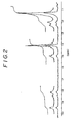
- Fig. 2 is a proton nuclear magnetic resonance ( 1 HNMR) spectrum of the ferrocene derivative obtained in Example 1.
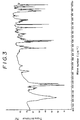
- Fig. 3 is an infrared (IR) absorption spectrum of the ferrocene derivative.
- Fig. 4 is an ultraviolet-visible (UV-VIS) absorption spectrum of the ferrocene derivative.
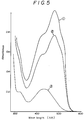
- Fig. 5 indicates UV-VIS absorption spectra of the supernatants obtained in Example 2 and Comparative Example 1.
- Fig. 6 is an electron micrograph showing the surface structure of the thin film formed in Example 3.
- Fig. 7 indicates ultraviolet (UV) absorption spectra of the ethanol solutions of the thin films formed in Examples 3 and 4.
- Fig. 8 is an electron micrograph showing the surface structure of the thin film formed in Example 4.
- Fig. 9 is 1 H-NMR of the ferrocene derivative obtained in Example 5.
- Fig. 10 is 1 H-NMR of the ferrocene derivative obtained in Example 6.
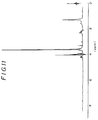
- Fig. 11 is 1 H-NMR of the ferrocene derivative obtained in Example 7.
- Fig. 12 indicates visible (VIS) absorption spectra of the supernatants obtained in Examples 8 to 12.
- Fig. 13 indicates visible absorption spectra of the coloring matter thin films on ITO as obtained in Examples 13 and 14.
- Fig. 14 is an electron micrograph showing the surface structure of the thin film formed in Example 13.
- Fig. 15 indicates UV absorption spectra of the ethanol solutions of the thin films formed in Examples 4, 15 and 16.
- Fig. 16 is an electron micrograph showing the surface structure of the thin film formed in Example 17.
- Fig. 17 is a UV absorption spectrum of the methanol solution of the thin film formed in Example 18.
- Fig. 18 is an electron micrograph showing the surface structure of the thin film formed in Example 19.
- Fig. 19(a) is an electron micrograph showing the surface structure of the thin film before post-treatment as formed in Example 20.
- Fig. 19(b) is an electron micrograph showing the surface structure of the thin film after post-treatment as formed in Example 20.
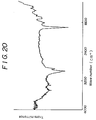
- Fig. 20 is a Fourier transformation infrared absorption spectrum of the thin film formed in Example 20.
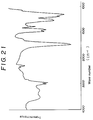
- Fig. 21 is a IR absorption spectrum using a KBr pellet of the polymer used in Example 20.
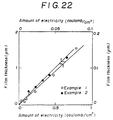
- Fig. 22 is a graph showing a relation between the film thickness of the thin film formed in Examples 20 and 21, and the amount of electricity having passed per unit area of ITO.
- Fig. 23 is a UV absorption spectrum of the thin film formed in Example 21.
- Fig. 24 is an electron micrograph showing the surface structure of the thin film formed in Example 21.
- R 1 and R 2 are each a hydrogen, a methyl group, an ethyl group, a methoxy group or a carbomethoxy group
- R 3 is a hydrogen, a methyl group, an ethyl group, a methoxy group, a carbomethoxy group, a hydroxyl group, a carboxyl group or a sulfonic acid group
- X is a halogen, that is, chlorine, bromine, iodine, and fluorine.
- C n H 2n indicates a straight or branched alkylene group having 4 to 16 carbon atoms (that is, n is an integer of 4 to 16 ).
- Specific examples are straight alkylene groups exemplified by polymethylene groups: (CH 2 ) n , such as a tetramethylene group, a pentamethylene group,an octamethylene group, an undecamethylene group, a dodecamethylene group, and a hexadecamethylene group, or branched alkylene groups such as a 2-methylundecamethylene group, and a 4-ethylundecamethylene group.
- the ferrocene derivatives represented by the general formula (I) can be produced by various methods. For example, they can be produced by adding pyridine-based compounds represented by the general formula: (wherein R 3 is the same as described above) to halogen-containing ferrocene derivatives represented by the general formula: (wherein R 1 , R 2 , X and C n H 2n are the same as described above) and reacting them for about 1 to 5 hours in an atmosphere of inert gas such as nitrogen gas at a temperature of 20 to 70°C while sufficiently stirring. Thereafter, the product is washed e.g.
- w is an integer of 2 to 18, and s is a real number of 2.0 to 50.0.
- s means not only an integer between 2.0 to 50.0 but also a real number including them, and indicates an average repeating number of the oxyethylene group (-CH 2 CH 2 O-) constituting the ferrocene derivative.
- the ferrocene derivatives of the general formula (II) can be produced by various methods. For example, they are produced as follows:
- the ferrocene derivatives represented by the general formula (II) are obtained by adding concentrated sulfuric acid to polyethylene glycol represented by the general formula: HO( ⁇ CH 2 CH 2 O) ⁇ s H (II-a) (wherein s is the same as described above), stirring the resulting mixture for several minutes to several days at a temperature of ordinary temperature to 200°C, adding carboxyl group-containing ferrocene compounds represented by the general formula: (wherein R 1 , R 2 and w are the same as described above), reacting with stirring, and then extracting and purifying. That is, in accordance with this method, the ferrocene derivatives represented by the general formula (II) are obtained.
- ferrocene derivatives of the present invention as represented by the general formula (I) or (II) which are obtained by the methods as described above are effective as surfactants and can be used particularly as surfactants (micelle forming agents) to make hydrophobic organic substances soluble in water or an aqueous medium.
- surfactants micelle forming agents
- ferrocene derivatives of the general formula (II) in which w is 7 to 15 are particularly suitably used as surfactants.
- the surfactants of the present invention contain the ferrocene derivatives of the general formula (I) or (II) as the major component, and other various additives can be added thereto, if necessary.
- various hydrophobic organic substances can be made soluble in water or in an aqueous medium.
- the ferrocene derivatives are used as surfactants (micelle forming agents).
- the ferrocene derivatives not only the ferrocene derivatives of the above general formula (I) or (IIA) but also various other ferrocene derivatives can be used.
- ferrocene derivatives examples include, as well as those represented by the general formula (I) or (II) ferrocene derivatives of the general formula (III) (wherein r is an integer of 2 to 18, s is a real number of 2.0 to 50.0, and R 1 and R 2 are the same as described above) and ferrocene derivatives in which a ferrocene compound (ferrocene or ferrocene having a suitable substitutent (an alkyl group, an acetyl group and the like)) is bonded to a cationic surfactant of the ammonium type (preferably the quaternary ammonium type) having a main chain having 4 to 16 carbon atoms (preferably 8 to 14).
- a ferrocene compound ferrocene or ferrocene having a suitable substitutent (an alkyl group, an acetyl group and the like)
- a cationic surfactant of the ammonium type preferably the quaternary ammoni
- the ferrocene compound is bonded to the surfactant in various embodiments.
- Main embodiments are an embodiment in which the ferrocene compound is bonded to the terminal of the main chain of the surfactant, an embodiment in which the ferrocene compound is bonded to an intermediate point of the main chain, directly or through an alkyl group, and an embodiment in which the ferrocene compound is incorporated in the main chain.
- Ferrocene derivatives of this type are represented by the general formula: (wherein R 4 and R 5 are each a hydrogen or an alkyl group having 1 to 4 carbon atoms (but not exceeding t as described hereinafter), M and T are each a hydrogen or a substituent, X is a halogen, and t and u are integers satisfying the requirements: t ⁇ 0, u ⁇ 0, and 4 ⁇ t + u ⁇ 16), the general formula: (wherein R 4 , R 5 , X, M and T are the same as described above (provided that the number of carbon atoms of R 4 and R 5 does not exceed h as described hereinafter), and h, j and k are integers satisfying the requirements: h ⁇ 0, j ⁇ 0, k ⁇ 1 and 3 ⁇ h + j + k ⁇ 15), the general formula: (wherein R 4 , R 5 , X, M and T are the same as described above (provided that the number of carbon atoms
- ferrocene derivatives to be used as the micelle forming agent those derived by replacing a part of the alkyl chain of the general surfactant (surface active agent) with ferrocene can be used.
- ferrocene compounds as the micelle forming agent (surfactant) are shown below.
- a surfactant comprising the aforementioned ferrocene derivative, a supporting salt and a hydrophobic organic substance are introduced in an aqueous medium and thoroughly dispersed by the use of supersonic waves, a homogenizer, or a stirrer to form a micelle and then, if necessary, an excess of the hydrophobic organic substance is removed and the micelle solution thus obtained is subjected to electrolytic treatment using the aforementioned electrode while allowing it to stand or somewhat stirring it.
- a surfactant micelle forming agent
- the hydrophobic organic substance may be supplementarily added to the micelle solution, or there may be provided a recycle circuit in which the micelle solution in the vicinity of the anode is withdrawn out of the system, the hydrophobic organic substance is added to the withdrawn micelle solution and thoroughly stirred, and then the resulting solution is returned to the vicinity of the cathode.
- Electrolytic conditions are determined appropriately depending on various circumstances.
- the liquid temperature is 0 to 70°C and preferably 20 to 30°C
- the voltage is 0.03 to 1.5 V and preferably 0.1 to 0.5 V
- the current density is not more than 10 mA/cm 2 and preferably 50 to 300 ⁇ A/cm 2 .
- the reaction as illustrated in Fig. 1 proceeds.
- Fe 2+ is converted into Fe 3+ on the anode, leading to break-down of the micelle, and particles (about 600 to 900 ⁇ ) of the hydrophobic organic substance are deposited on the anode.
- Fe 3+ oxidized on the anode is reduced to Fe 2+ , recovering the original micelle and, therefore, a film forming operation can be carried out repeatedly using the same solution.
- the supporting salt (supporting electrolyte) to be used in the process of the present invention is added, if necessary, in order to control the electrical conductance of the aqueous medium.
- the amount of the supporting salt added is usually about 10 to 300 times and preferably about 50 to 200 times that of the above surfactant (micelle forming agent).
- the type of the supporting salt is not critical as long as it is able to control the electric conductance of the aqueous medium without inhibiting the formation of the micelle and the deposition of the above hydrophobic organic substance.
- sulfuric acid salts e.g. salts of lithium, potassium, sodium, rubidium, and aluminum
- acetic acid salts e.g. salts of lithium, potassium, sodium, rubidium, magnesium, calcium, strontium, barium, and aluminum
- the electrode to be used in the process of the present invention may be a metal more noble than the oxidation potential (against +0.15 V saturated calomel electrode) of ferrocene, or an electrically conductive substance. More specifically, ITO (mixed oxide of indium oxide and tin oxide), platinum, gold, silver, glassy carbon, an electrically conductive metal oxide, and an electrically conductive organic polymer can be used.
- hydrophobic organic substances can be used in the production of organic thin films according to the process of the present invention.
- coloring matters for optical memory and organic coloring matters such as phthalocyanine, metal complexes thereof, and derivatives thereof, naphthalocyanine, metal complexes thereof and derivatives thereof, porphyrin and its metal complexes, electrochromic materials such as 1,1',-diheptyl-4,4'-bipyridinium dibromide, 1,1'didodecyl-4,4'-bipyridinium dibromide, lightsensitive materials (photochromic materials) and light sensor materials, such as 6-nitro-1,3,3-trimethylspiro-(2'H-1'benzopyran-2,2'-indoline) (commonly called spiropyran), liquid crystal display coloring matters such as p-azoxyanisole and the like, electrically conductive organic materials and gas sensor materials, such as the 1:1 complex of 7,7,8,8-tetracyanoquinone
- water-insoluble polymers for example, general purpose polymers such as polycarbonate, polystyrene, polyethylene, polypropylene, polyamide, polyphenylene sulfide (PPS), polyphenylene oxide (PPO), and polyacrylonitrile (PAN), polyphenylene, polypyrrole, polyaniline, polythiophene, acetyl cellulose, polyvinyl acetate, polyvinyl butyral, and various polymers (such as polyvinyl pyridine) and copolymers (such as a copolymer of methyl methacrylate and methacrylic acid) can be used.
- general purpose polymers such as polycarbonate, polystyrene, polyethylene, polypropylene, polyamide, polyphenylene sulfide (PPS), polyphenylene oxide (PPO), and polyacrylonitrile (PAN), polyphenylene, polypyrrole, polyaniline, polythiophene, acetyl cellulose, polyvinyl
- Example 2 To 100 ml of water, 99.6 mg of the ferrocene derivative obtained in Example 1 as a surfactant (micelle forming agent) and 2.56 g of lithium sulfate as a supporting salt were added, and 10 mg of 1-phenylazo-2-naphthol was added and dispersed and dissolved by application of supersonic waves for 10 minutes. The resulting mixture was further stirred for two days and nights with a stirrer, and then the micelle solution thus obtained was subjected to centrifugal separation at 2,000 rpm for one hour. A UV-VIS absorption spectrum of the supernatant is shown in Fig. 5 (indicated by (1)).
- a surfactant such as a surfactant (micelle forming agent)
- 2.56 g of lithium sulfate as a supporting salt
- 10 mg of 1-phenylazo-2-naphthol was added and dispersed and dissolved application of supersonic waves for 10 minutes.
- the resulting mixture was further stirred for two days and nights by the use of a stirrer, and the micelle solution thus obtained was subjected to centrifugal separation at 2,000 rpm for one hour.
- a UV-VIS absorption spectrum of the supernatant is shown in Fig. 5 (indicated by (2)).
- the solubility of the 1-phenylazo-2-naphthol was 38 ⁇ M/2mM micelle forming agent solution.
- Example 2 In 100 ml of water, 0.02 mol of lithium sulfate as a supporting salt was dissolved, and as a micelle forming agent, 0.2 m mol of the ferrocene derivative obtained in Example 1 was added and dispersed by application of supersonic waves to form a micelle. Then, 0.2 m mol of a coloring matter (1-phenylazo-2-naphthol, which was a hydrophobic organic substance, was added and incorporated in the micelle by application of supersonic waves. After the mixture was stirred for two days and nights, an excess of the coloring matter was removed by centrifugal separation to obtain a micelle solution.
- a coloring matter (1-phenylazo-2-naphthol, which was a hydrophobic organic substance
- FIG. 6 A scanning type electron microscope (SEM) photograph (magnification, 35,000 using JSM-T220 produced by Nippon Denshi Co., Ltd.) of the coloring matter thin film formed is shown in Fig. 6.
- SEM scanning type electron microscope
- Fig. 7 A UV absorption spectrum of the thin film dissolved in ethanol is shown in Fig. 7 (Curve (3)).
- Fig. 7 A UV absorption spectrum of the above coloring matter in ethanol is shown in Fig. 7 (Curve (1)). Since the absorption peaks of Curves (3) and (1) are in agreement with each other, it can be seen that the thin film on the ITO is made of the above coloring matter.
- the deposited amount of the thin film was 18 nano mol/cm 2 .
- FIG. 8 A scanning type electron microscope (SEM) photograph (magnification, 35,000, using JSM-T220 produced by Nippon Denshi Co., Ltd.) of the coloring matter thin film formed is shown in Fig. 8.
- a UV absorption spectrum of the thin film dissolved in ethanol is shown in Fig. 7 (Curve (2)).
- Fig. 7 (Curve (1)) A UV absorption spectrum of the above coloring matter dissolved in ethanol is shown in Fig. 7 (Curve (1)). Since the absorption peaks of Curves (2) and (1) are in agreement with each other, it can be seen that the thin film on the ITO is made of the above coloring matter.
- the deposited amount of the thin film was 12 nano mol/cm 2 .
- Example 5 The procedure of Example 5 was repeated with the exception that as the polyethylene glycol, polyethylene glycol having an average molecular weight of 1,000 was used.
- the yield was 31% and the amount was 2.15 g.
- the results of measurement of 1 H-NMR of the purified product are as shown in Fig. 10.
- Example 5 The procedure of Example 5 was repeated with the exception that 6 g of polyethylene glycol (average molecular weight, 600) and 0.1 cc of concentrated sulfuric acid were added to 0.29 g of ferrocenyldodecanic acid and reacted at 80 °C for 6 hours.
- the yield was 62% and the amount was 0.44 g.
- the results of measurement of 1 H-NMR of the purified product are as shown in Fig. 11.
- Example 5 To 31.5 ml of water, 1.13 mg of the ferrocene derivative obtained in Example 5 as a surfactant (micelle forming agent) was added, and 10 mg of phthalocyanine was added and dispersed and dissolved by stirring for 10 minutes with supersonic waves. The mixture was further stirred for two days and nights by the use of a stirrer, and then the micelle solution thus obtained was subjected to centrifugal separation at 2,000 rpm for one hour. A visible absorption spectrum of the supernatant is shown in Fig. 12 (indicated by A). This confirmed that the phthalocyanine was made soluble in the micelle solution. The solution was 4.4 mM/4 mM micelle forming agent solution.
- Example 8 The procedure of Example 8 was repeated with the exception that the phthalocyanine was replaced by a phthalocyanine-iron complex. A visible absorption spectrum of the supernatant is shown in Fig. 12 (indicated by B). This confirmed that the phthalocyanine was made soluble in the micelle solution. The solubility was 0.72 mM/4 mM micelle forming agent solution.
- Example 8 The procedure of Example 8 was repeated with the exception that the phthalocyanine was replaced by a phthalocyaninecobalt complex. A visible absorption spectrum of the supernatant is shown in Fig. 12 (indicated by C). This confirmed that the phthalocyanine was made soluble in the micelle solution. The solubility was 0.22 mM/4 mM micelle forming agent solution.
- Example 8 The procedure of Example 8 was repeated with the exception that the phthalocyanine was replaced by a phthalocyanine-zinc complex. A visible absorption spectrum of the supernatant is shown in Fig. 12 (indicated by E). This confirmed that the phthalocyanine was made soluble in the micelle solution. The solubility was 0.41 mM/4 mM micelle forming agent solution.
- Example 8 To 10 ml of the micelle solution prepared in Example 8 was added 0.22 g of lithium sulfate (Li 2 SO 4 ) to obtain a 0.44 mM phthalocyanine/2 mM micelle forming agent/ 0.2 M lithium sulfate solution. Using this solution as an electrolyte, ITO as the anode, platinum as the cathode and a saturated calomel electrode as a reference electrode, constant voltage electrolysis of applied voltage 0.5 V and current 7 ⁇ A was performed at 25°C for 2 hours. As a result, a coloring matter thin film having primary particles having an average particle size of 1,000 ⁇ was formed on the ITO. A SEM photograph (magnification, 20,000, using JSM-T220 produced by Nippon Denshi Co., Ltd.) of the coloring matter thin film is shown in Fig. 14.
- FIG. 13 A visible absorption spectrum of the coloring matter thin film thus formed is shown in Fig. 13 (indicated by B).
- B the coloring matter thin film
- Example 4 The procedure of Example 4 was repeated with the exception that platinum was used as the anode and the current density was changed to 38 ⁇ A/cm 2 .
- FIG. 15 A UV absorption spectrum of the formed thin film dissolved in ethanol is shown in Fig. 15 (Curve B).
- Fig. 15 A UV absorption spectrum of the coloring matter (1-phenylazo-2-naphthol) dissolved in ethanol is shown in Fig. 15 (Curve C), and a UV absorption spectrum of the thin film formed in Example 4, as dissolved in ethanol is shown in Fig. 15 (Curve D).
- Example 7 To 31.5 ml of water was added 1.13 mg of the ferrocene derivative obtained in Example 7, as a surfactant (micelle forming agent), and 10 mg of phthalocyanine was added and dispersed and dissolved by stirring for 10 minutes with supersonic waves. The mixture was further stirred for two days and nights by the use of a stirrer, and micelle solution thus obtained was subjected to centrifugal separation at 2,000 rpm for one hour. A visible absorption spectrum of the supernatant confirmed that the phthalocyanine was made soluble in the micelle solution. The solubility was 8.9 mM/4 mM micelle forming agent solution.
Landscapes
- Chemical & Material Sciences (AREA)
- Organic Chemistry (AREA)
- Life Sciences & Earth Sciences (AREA)
- Engineering & Computer Science (AREA)
- Materials Engineering (AREA)
- Chemical Kinetics & Catalysis (AREA)
- Health & Medical Sciences (AREA)
- Molecular Biology (AREA)
- Wood Science & Technology (AREA)
- Dispersion Chemistry (AREA)
- Organic Low-Molecular-Weight Compounds And Preparation Thereof (AREA)
Claims (3)
- Ferrocen-Derivat, dargestellt durch die allgemeine Formel:


- Ein oberflächenaktiver Stoff, der das Ferrocen-Derivat nach Anspruch 1 enthält.
- Verfahren zur Herstellung eines organischen dünnen Films, das umfaßt: Löslichmachung einer hydrophoben organischen Substanz in einem wäßrigen Medium durch die Verwendung eines Mizellen-bildenden Mittels, das ein Ferrocen-Derivat umfaßt, und Elektrolysieren der erhaltenen Mizell-Lösung, um einen dünnen Film der obigen hydrophoben organischen Substanz auf einer Elektrode zu bilden.
Applications Claiming Priority (9)
| Application Number | Priority Date | Filing Date | Title |
|---|---|---|---|
| JP75930/87 | 1987-03-31 | ||
| JP7593087A JPS63243298A (ja) | 1987-03-31 | 1987-03-31 | 有機薄膜の製造方法 |
| JP21271887 | 1987-08-28 | ||
| JP212718/87 | 1987-08-28 | ||
| JP4750188A JPH01222087A (ja) | 1988-03-02 | 1988-03-02 | 有機薄膜の製造方法 |
| JP47501/88 | 1988-03-02 | ||
| JP63052696A JPH01226894A (ja) | 1988-03-08 | 1988-03-08 | 新規フェロセン誘導体およびそれを含有する界面活性剤ならびにそれを用いる有機薄膜の製造法 |
| JP52696/88 | 1988-03-08 | ||
| PCT/JP1988/000323 WO1988007538A1 (fr) | 1987-03-31 | 1988-03-30 | Derives de ferrocene et procede de preparation d'un film organique mince |
Publications (3)
| Publication Number | Publication Date |
|---|---|
| EP0409981A4 EP0409981A4 (de) | 1990-10-10 |
| EP0409981A1 EP0409981A1 (de) | 1991-01-30 |
| EP0409981B1 true EP0409981B1 (de) | 1997-01-22 |
Family
ID=27462050
Family Applications (1)
| Application Number | Title | Priority Date | Filing Date |
|---|---|---|---|
| EP88902937A Expired - Lifetime EP0409981B1 (de) | 1987-03-31 | 1988-03-30 | Ferrocenderivate, diese enthaltende oberflächenaktive stoffe und verfahren zur herstellung dünner organischer filme |
Country Status (4)
| Country | Link |
|---|---|
| US (1) | US5082539A (de) |
| EP (1) | EP0409981B1 (de) |
| DE (1) | DE3855770T2 (de) |
| WO (1) | WO1988007538A1 (de) |
Families Citing this family (11)
| Publication number | Priority date | Publication date | Assignee | Title |
|---|---|---|---|---|
| US5185074A (en) * | 1988-08-15 | 1993-02-09 | Idemitsu Kosan Co., Ltd. | Process for producing color filter |
| EP0369289A1 (de) * | 1988-11-14 | 1990-05-23 | Idemitsu Kosan Company Limited | Verfahren zur Herstellung von dünnen anorganischen Schichten |
| US5203974A (en) * | 1988-12-17 | 1993-04-20 | Idemitsu Kosan Co., Ltd. | Process for producing thin films |
| US5122247A (en) * | 1988-12-17 | 1992-06-16 | Idemitsu Kosan Co., Ltd. | Process for producing thin films |
| US5863911A (en) * | 1994-10-12 | 1999-01-26 | Modelisation Et Mise Au Point De Molecules Medicinales | Diarylethylene metallocene derivatives, their processes of preparation and pharmaceutical compositions containing said derivatives |
| DE19516517C1 (de) * | 1995-05-05 | 1997-02-06 | Pluto Chem Betriebe | Ferrocenverbindungen, Verfahren zu deren Herstellung sowie der Zwischenprodukte |
| AUPS044502A0 (en) * | 2002-02-11 | 2002-03-07 | Commonwealth Scientific And Industrial Research Organisation | Novel catalysts and processes for their preparation |
| US7224532B2 (en) * | 2002-12-06 | 2007-05-29 | Chevron U.S.A. Inc. | Optical uses diamondoid-containing materials |
| DE102005061286B4 (de) * | 2005-12-20 | 2008-06-26 | SCHWÄBISCH, Reiner | Umlaufkolbenmaschine mit zwei auf einer Achse angeordneten Kolbenträgern |
| AU2014333542B2 (en) | 2013-10-08 | 2019-08-01 | Atlas Genetics Limited | Labelling compounds and their use in assays |
| CN115232319A (zh) * | 2021-04-22 | 2022-10-25 | 四川大学 | 一种基于聚-β-环糊精与二茂铁主客体作用的超分子多醛化合物及其制备方法 |
Family Cites Families (5)
| Publication number | Priority date | Publication date | Assignee | Title |
|---|---|---|---|---|
| US4132608A (en) * | 1977-03-09 | 1979-01-02 | Bell Telephone Laboratories, Incorporated | Technique for electrodeposition of water-based polymeric coating |
| US4650658A (en) * | 1983-05-12 | 1987-03-17 | Nippon Silica Industrial Co., Ltd. | Stable crystals of sodium bromite trihydrate |
| DD234274A1 (de) * | 1984-12-27 | 1986-03-26 | Adw Ddr | Verfahren zur herstellung nichtionischer und anionischer grenzflaechenaktiver ferrocenderivate |
| DE3600274A1 (de) * | 1986-01-08 | 1987-07-09 | Basf Ag | Verfahren zur selektiven regenerierung von mediatoren und katalysator dafuer |
| JPS63243290A (ja) * | 1987-03-31 | 1988-10-11 | Shioda Seisakusho:Goushi | コイル状にした金属の脱脂装置 |
-
1988
- 1988-03-30 EP EP88902937A patent/EP0409981B1/de not_active Expired - Lifetime
- 1988-03-30 DE DE3855770T patent/DE3855770T2/de not_active Expired - Fee Related
- 1988-03-30 WO PCT/JP1988/000323 patent/WO1988007538A1/ja not_active Ceased
-
1990
- 1990-01-24 US US07/469,299 patent/US5082539A/en not_active Expired - Lifetime
Also Published As
| Publication number | Publication date |
|---|---|
| WO1988007538A1 (fr) | 1988-10-06 |
| US5082539A (en) | 1992-01-21 |
| DE3855770T2 (de) | 1997-05-07 |
| EP0409981A4 (de) | 1990-10-10 |
| DE3855770D1 (de) | 1997-03-06 |
| EP0409981A1 (de) | 1991-01-30 |
Similar Documents
| Publication | Publication Date | Title |
|---|---|---|
| JPH09120709A (ja) | 自己ドーピング機能を有する高分子導電体及びその製造方法 | |
| US5041582A (en) | Novel ferrocene derivatives, surfactants containing same and process for producing organic thin films | |
| FR2536079A1 (fr) | Polymeres electro-actifs et leur procede de production | |
| EP0409981A1 (de) | Ferrocenderivate, diese enthaltende oberflächenaktive stoffe und verfahren zur herstellung dünner organischer filme | |
| EP0331745B1 (de) | Ferrocenderivate, oberflächenaktive mittel, die diese enthalten und verfahren zur herstellung dünner organischer filme | |
| US5135637A (en) | Eerrocene derivatives, surfactants containing same and process for producing organic thin films | |
| EP0431547B1 (de) | Ladungsübertragunssalze und Anwendungen derselben | |
| EP0374643A2 (de) | Verfahren zur Herstellung von dünnen Schichten | |
| US5015748A (en) | Novel ferrocene derivatives, surfactants containing same and a process for producing organic thin films | |
| CA1329622C (en) | Ferrocene derivatives, surfactants containing them and process for producing organic thin film | |
| CA1339135C (en) | Ferrocene derivatives and process for producing organic thim films | |
| JPH0693497A (ja) | 有機薄膜の製造方法 | |
| JPH0296585A (ja) | 新規フェロセン誘導体,界面活性剤及び有機薄膜の製造方法 | |
| JPH01226894A (ja) | 新規フェロセン誘導体およびそれを含有する界面活性剤ならびにそれを用いる有機薄膜の製造法 | |
| JPH02256693A (ja) | 新規フェロセン誘導体,それを含有する界面活性剤及び有機薄膜の製造方法 | |
| JPWO1989001939A1 (ja) | フェロセン誘導体及びそれを含有する界面活性剤 | |
| JPH0633298B2 (ja) | フェロセン誘導体及びそれを含有する界面活性剤 | |
| JPH02256692A (ja) | 新規フェロセン誘導体,それを含有する界面活性剤及び有機薄膜の製造方法 | |
| US5135619A (en) | Process for producing organic thin films | |
| JPH0826476B2 (ja) | 有機薄膜の製造方法 | |
| JPH0283387A (ja) | 新規フェロセン誘導体,それを含有する界面活性剤及び有機薄膜の製造方法 | |
| JPH02235895A (ja) | 新規フェロセン誘導体,それを含有する界面活性剤及び有機薄膜の製造方法 | |
| JPH01261873A (ja) | 光電変換素子 | |
| JPH0725782B2 (ja) | 新規フェロセン誘導体,界面活性剤及び有機薄膜の製造方法 | |
| JPH0751594B2 (ja) | 新規フェロセン誘導体,その製造方法及び薄膜の製造方法 |
Legal Events
| Date | Code | Title | Description |
|---|---|---|---|
| PUAI | Public reference made under article 153(3) epc to a published international application that has entered the european phase |
Free format text: ORIGINAL CODE: 0009012 |
|
| 17P | Request for examination filed |
Effective date: 19890329 |
|
| AK | Designated contracting states |
Kind code of ref document: A1 Designated state(s): BE CH DE FR GB IT LI NL SE |
|
| 17Q | First examination report despatched |
Effective date: 19930802 |
|
| GRAH | Despatch of communication of intention to grant a patent |
Free format text: ORIGINAL CODE: EPIDOS IGRA |
|
| GRAH | Despatch of communication of intention to grant a patent |
Free format text: ORIGINAL CODE: EPIDOS IGRA |
|
| GRAA | (expected) grant |
Free format text: ORIGINAL CODE: 0009210 |
|
| AK | Designated contracting states |
Kind code of ref document: B1 Designated state(s): BE CH DE FR GB IT LI NL SE |
|
| REG | Reference to a national code |
Ref country code: CH Ref legal event code: NV Representative=s name: A. BRAUN, BRAUN, HERITIER, ESCHMANN AG PATENTANWAE Ref country code: CH Ref legal event code: EP |
|
| REF | Corresponds to: |
Ref document number: 3855770 Country of ref document: DE Date of ref document: 19970306 |
|
| ET | Fr: translation filed | ||
| ITF | It: translation for a ep patent filed | ||
| PLBE | No opposition filed within time limit |
Free format text: ORIGINAL CODE: 0009261 |
|
| STAA | Information on the status of an ep patent application or granted ep patent |
Free format text: STATUS: NO OPPOSITION FILED WITHIN TIME LIMIT |
|
| 26N | No opposition filed | ||
| PGFP | Annual fee paid to national office [announced via postgrant information from national office to epo] |
Ref country code: SE Payment date: 20010306 Year of fee payment: 14 |
|
| PGFP | Annual fee paid to national office [announced via postgrant information from national office to epo] |
Ref country code: FR Payment date: 20010313 Year of fee payment: 14 |
|
| PGFP | Annual fee paid to national office [announced via postgrant information from national office to epo] |
Ref country code: GB Payment date: 20010328 Year of fee payment: 14 |
|
| PGFP | Annual fee paid to national office [announced via postgrant information from national office to epo] |
Ref country code: NL Payment date: 20010330 Year of fee payment: 14 |
|
| PGFP | Annual fee paid to national office [announced via postgrant information from national office to epo] |
Ref country code: BE Payment date: 20010515 Year of fee payment: 14 |
|
| REG | Reference to a national code |
Ref country code: GB Ref legal event code: IF02 |
|
| PG25 | Lapsed in a contracting state [announced via postgrant information from national office to epo] |
Ref country code: GB Free format text: LAPSE BECAUSE OF NON-PAYMENT OF DUE FEES Effective date: 20020330 |
|
| PG25 | Lapsed in a contracting state [announced via postgrant information from national office to epo] |
Ref country code: SE Free format text: LAPSE BECAUSE OF NON-PAYMENT OF DUE FEES Effective date: 20020331 Ref country code: BE Free format text: LAPSE BECAUSE OF NON-PAYMENT OF DUE FEES Effective date: 20020331 |
|
| BERE | Be: lapsed |
Owner name: *IDEMITSU KOSAN CY LTD Effective date: 20020331 |
|
| PG25 | Lapsed in a contracting state [announced via postgrant information from national office to epo] |
Ref country code: NL Free format text: LAPSE BECAUSE OF NON-PAYMENT OF DUE FEES Effective date: 20021001 |
|
| EUG | Se: european patent has lapsed |
Ref document number: 88902937.7 |
|
| GBPC | Gb: european patent ceased through non-payment of renewal fee |
Effective date: 20020330 |
|
| PG25 | Lapsed in a contracting state [announced via postgrant information from national office to epo] |
Ref country code: FR Free format text: LAPSE BECAUSE OF NON-PAYMENT OF DUE FEES Effective date: 20021129 |
|
| NLV4 | Nl: lapsed or anulled due to non-payment of the annual fee |
Effective date: 20021001 |
|
| REG | Reference to a national code |
Ref country code: FR Ref legal event code: ST |
|
| PGFP | Annual fee paid to national office [announced via postgrant information from national office to epo] |
Ref country code: CH Payment date: 20030331 Year of fee payment: 16 |
|
| PGFP | Annual fee paid to national office [announced via postgrant information from national office to epo] |
Ref country code: DE Payment date: 20030409 Year of fee payment: 16 |
|
| PG25 | Lapsed in a contracting state [announced via postgrant information from national office to epo] |
Ref country code: LI Free format text: LAPSE BECAUSE OF NON-PAYMENT OF DUE FEES Effective date: 20040331 Ref country code: CH Free format text: LAPSE BECAUSE OF NON-PAYMENT OF DUE FEES Effective date: 20040331 |
|
| PG25 | Lapsed in a contracting state [announced via postgrant information from national office to epo] |
Ref country code: DE Free format text: LAPSE BECAUSE OF NON-PAYMENT OF DUE FEES Effective date: 20041001 |
|
| REG | Reference to a national code |
Ref country code: CH Ref legal event code: PL |
|
| PG25 | Lapsed in a contracting state [announced via postgrant information from national office to epo] |
Ref country code: IT Free format text: LAPSE BECAUSE OF NON-PAYMENT OF DUE FEES Effective date: 20050330 |