EP0219789A2 - Lösemittel zum Entfernen von Photoresists - Google Patents
Lösemittel zum Entfernen von Photoresists Download PDFInfo
- Publication number
- EP0219789A2 EP0219789A2 EP86114147A EP86114147A EP0219789A2 EP 0219789 A2 EP0219789 A2 EP 0219789A2 EP 86114147 A EP86114147 A EP 86114147A EP 86114147 A EP86114147 A EP 86114147A EP 0219789 A2 EP0219789 A2 EP 0219789A2
- Authority
- EP
- European Patent Office
- Prior art keywords
- alkyl
- bis
- water
- propylene glycol
- soluble
- Prior art date
- Legal status (The legal status is an assumption and is not a legal conclusion. Google has not performed a legal analysis and makes no representation as to the accuracy of the status listed.)
- Granted
Links
Classifications
-
- G—PHYSICS
- G03—PHOTOGRAPHY; CINEMATOGRAPHY; ANALOGOUS TECHNIQUES USING WAVES OTHER THAN OPTICAL WAVES; ELECTROGRAPHY; HOLOGRAPHY
- G03F—PHOTOMECHANICAL PRODUCTION OF TEXTURED OR PATTERNED SURFACES, e.g. FOR PRINTING, FOR PROCESSING OF SEMICONDUCTOR DEVICES; MATERIALS THEREFOR; ORIGINALS THEREFOR; APPARATUS SPECIALLY ADAPTED THEREFOR
- G03F7/00—Photomechanical, e.g. photolithographic, production of textured or patterned surfaces, e.g. printing surfaces; Materials therefor, e.g. comprising photoresists; Apparatus specially adapted therefor
-
- G—PHYSICS
- G03—PHOTOGRAPHY; CINEMATOGRAPHY; ANALOGOUS TECHNIQUES USING WAVES OTHER THAN OPTICAL WAVES; ELECTROGRAPHY; HOLOGRAPHY
- G03F—PHOTOMECHANICAL PRODUCTION OF TEXTURED OR PATTERNED SURFACES, e.g. FOR PRINTING, FOR PROCESSING OF SEMICONDUCTOR DEVICES; MATERIALS THEREFOR; ORIGINALS THEREFOR; APPARATUS SPECIALLY ADAPTED THEREFOR
- G03F7/00—Photomechanical, e.g. photolithographic, production of textured or patterned surfaces, e.g. printing surfaces; Materials therefor, e.g. comprising photoresists; Apparatus specially adapted therefor
- G03F7/26—Processing photosensitive materials; Apparatus therefor
- G03F7/42—Stripping or agents therefor
- G03F7/422—Stripping or agents therefor using liquids only
- G03F7/425—Stripping or agents therefor using liquids only containing mineral alkaline compounds; containing organic basic compounds, e.g. quaternary ammonium compounds; containing heterocyclic basic compounds containing nitrogen
Definitions
- the present invention describes new solvent systems for removing photoresists based on water-soluble amino derivatives and propylene glycol compounds.
- Photoresists are used in the manufacture of integrated components, printed circuit boards and in related technologies as masks for structuring processes, such as Etching or implantation processes used. They are usually removed afterwards; Solvent mixtures are very often used for this purpose, which - depending on the mode of action - are referred to in the Anglo-Saxon literature as strippers or removers.
- Such systems are e.g. by W. S. De Forest (Photoresist: Materials and Processes, pages 203 ff., Mc. Graw-Hill Book Co., New York, 1975).
- chlorinated hydrocarbons such as methylene chloride
- polar solvents such as dimethylformamide, N-methyl-2-pyrrolidone, monoethanolamine
- Glycol ethers such as ethylene glycol monoethyl ether, ethylene glycol monobutyl ether or their acetates
- strong bases such as tetramethylammonium hydroxide or strong acids such as sulfuric acid-H2O2 mixtures.
- EP-A 0 075 329 describes a mixture of a 2-pyrrolidone derivative and a diethylene glycol monoalkyl ether. However, the performance of such mixtures is poor. In the examples given, a bath temperature of 75 ° C. is considered necessary to remove photoresist that has been post-dried at 150 ° C.
- EP-A 0 145 973 lists a system consisting of a piperazine derivative and an N-alkyl-2-pyrrolidone.
- the preferred N-aminoethylpiperazine is classified as toxic, while the N-hydroxyethylpiperazine has little effectiveness.
- the solvent systems described are suitable both for removing positive-working resists and for photopolymerizable resists. Resists that can be developed with aqueous alkaline solutions are preferably removed.
- mixtures of water-soluble propylene glycol ethers and amino compounds according to the invention can be used as removal agents for photoresists which do not have the above-mentioned disadvantages of the prior art.
- Mixtures can preferably be used which, owing to the high boiling point of the individual components of ⁇ 180 ° C., show only a slight loss in mass if the composition is used at high temperatures for a prolonged period becomes.
- a particularly preferred mixture consists of N- (2-aminoethyl) ethanolamine and tripropylene glycol methyl ether.
- the agent according to the invention the high-boiling propylene glycol ether derivatives, e.g. Tripropylene glycol methyl ether, still shows good properties even at room temperature.
- the invention described here is advantageous insofar as such an agent can be used effectively both at room temperature and - due to the favorable evaporation behavior - at high bath temperatures.
- agents whose individual components have boiling points of 160 ° C. or more can also be regarded as preferred. Mixtures of dipropylene glycol methyl ether and isopropanolamine are particularly preferred.
- the advantages listed above also apply to systems of this type, ie they can be used both at room temperature and at higher temperatures - albeit due to the higher evaporation rates, the use of these agents at lower bath temperatures temperatures is preferred - and they have a synergetic effect.
- propylene glycol ethers such as the dipropylene glycol methyl ethers or tripropylene glycol methyl ethers preferred here, can be regarded as significantly more hydrophobic than the analog ethylene glycol ether products and therefore have good dissolving properties for organic polymers, the agents mentioned here can easily be rinsed off with water without the formation of residues.
- Mixtures which contain 10 to 90% by weight, in particular 20 to 70% by weight, of the amine and 10 to 90% by weight, in particular 30 to 80% by weight, of the propylene glycol derivative are preferably used. These ratios are particularly preferably maintained when isopropanolamine and / or N- (2-aminoethyl) ethanolamine and di- or tripropylene glycol methyl ether are used.
- mixtures of one or more amines (s) with one or more propylene glycol derivative (s) can also be used.
- the agents according to the invention can also be used in other processes, e.g. Use spray or puddle method.
- the effectiveness of the removal agent was tested on photoresist layers, as are usually used in the manufacture of integrated circuits.
- a commercial photoresist based on diazoquinone / novolak (AZ 1350 J) was spun onto silicon wafers at 4,000 rpm and dried at 90 ° C. for 30 minutes. The layer thickness was determined to be 1.8 ⁇ m. The substrates were then heated at 200 ° C. for 30 minutes.
- composition was chosen such that the same molar amounts were used in each case.
- test conditions were the same as in Examples 1 to 5, but the substrates had been heated to 160 ° C for 30 min; the bath temperature was 22 ° C. The resist layer thickness was again measured; the dissolving time was set at 10 minutes.
- Table 4 shows that optimum effectiveness is observed with a mixture ratio of 22.5% by weight of isopropanolamine and 77.5% by weight of dipropylene glycol methyl ether.
- compositions against aluminum layers were tested by heating the compositions according to Examples 13 and 19 to 80 ° C. and being able to act on wafers coated with aluminum for 30 minutes. No attack on the aluminum layer was observed.
Landscapes
- Physics & Mathematics (AREA)
- General Physics & Mathematics (AREA)
- Photosensitive Polymer And Photoresist Processing (AREA)
- Exposure Of Semiconductors, Excluding Electron Or Ion Beam Exposure (AREA)
- Detergent Compositions (AREA)
Abstract
- a) 10 bis 100 Gew.-% wenigstens eines wasserlösli chen Amins der allgemeinen Formel

n, m = 0 bis 2
o = 1 bis 3 bedeuten und - b) 0 bis 90 Gew.-% wenigstens eines wasserlöslichen Propylenglykolderivats der allgemeinen Formel
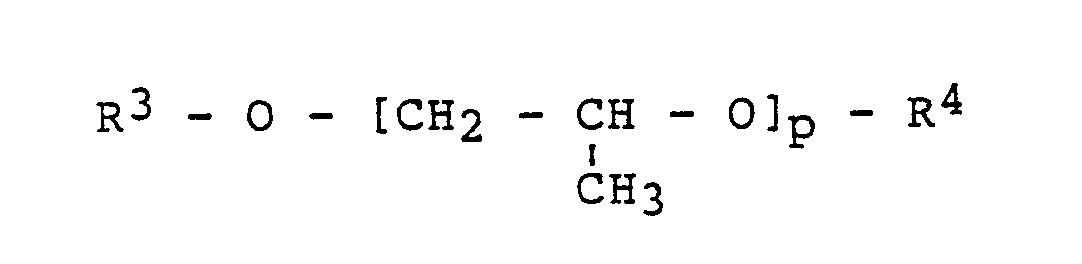 -Alkyl, p = 1 bis 3
bedeuten.
Description
- Die vorliegende Erfindung beschreibt neue Lösemittelsysteme zum Entfernen von Photoresists auf der Basis von wasserlöslichen Aminoderivaten und Propylenglykolverbindungen.
- Photoresists werden bei der Herstellung von integrierten Bauelementen, Leiterplatten und in verwandten Technologien als Masken für Strukturierungsverfahren, wie z.B. Atz- oder Implantationsprozesse eingesetzt. Sie werden anschließend in der Regel wieder entfernt; sehr häufig werden dazu Lösemittelgemische verwendet, die - je nach Wirkungsweise - in der angelsächsischen Literatur als Stripper oder Remover bezeichnet werden.
- Derartige Systeme sind z.B. von W. S. De Forest (Photoresist: Materials and Processes, Seiten 203 ff., Mc. Graw-Hill Book Co., New York, 1975) beschrieben worden. Sie enthalten beispielsweise chlorierte Kohlenwasserstoffe wie Methylenchlorid; polare Lösemittel wie Dimethylformamid, N-Methyl-2-pyrrolidon, Monoethanolamin; Glykolether wie Ethylenglykolmonoethylether, Ethylenglykolmonobutylether oder deren Acetate; starke Basen wie Tetramethylammoniumhydroxid oder starke Säuren wie Schwefelsäure-H₂O₂-Mischungen.
- In der US-A 3,673,099 wird ein Gemisch aus N-Methyl-2-pyrrolidon und einer starken Base wie Tetramethylammo niumhydroxid, beschrieben. Derartige Mischungen sind dafür bekannt, daß sie empfindliche Substrate, wie z.B. Aluminiumschichten, angreifen, wenn Wasser zugesetzt wird. Es ist aber wünschenswert, ein Produkt zum Ablösen von Photoresistschichten, sowohl von empfindlichen als auch von weniger empfindlichen Substratschichten, einsetzen zu können, da häufig beide Schichttypen gleichzeitig vorkommen.
- Es ist ferner bekannt, daß sich Tetramethylammoniumhydroxid bei Erwärmung leicht zersetzt und dadurch die Standzeit des Entfernungsmittels bei höheren Temperaturen sehr kurz ist.
- In der US-A 3,796,602 wird ein System beschrieben, das ein mit Wasser partiell mischbares organisches Lösemittel enthält. Die genannten Verbindungen, wie Ethylenglykolmonobutylether und Monoaminoethanol, sind jedoch als toxikologisch bedenklich anzusehen. Darüber hinaus sind diese Verbindungen aufgrund ihrer niedrigen Siedepunkte leicht verdampfbar und damit für den Einsatz bei hohen Temperaturen ungeeignet.
- In der EP-A 0 075 329 wird ein Gemisch aus einem 2-Pyrrolidonderivat und einem Diethylenglykolmonoalkylether beschrieben. Die Leistungsfähigkeit derartiger Gemische ist jedoch gering. So wird in den aufgeführten Beispielen eine Badtemperatur von 75 °C für erforderlich gehalten, um Photoresist zu entfernen, der bei 150 °C nachgetrocknet wurde.
- In der EP-A 0 145 973 wird ein System aus einem Piperazinderivat und einem N-Alkyl-2-pyrrolidon aufgeführt. Das bevorzugt genannte N-Aminoethylpiperazin ist als giftig klassifiziert, während das N-Hydroxyethylpiperazin nur eine geringe Wirksamkeit besitzt.
- Es stellte sich somit die Aufgabe, ein Entfernungsmittel für Photoresists zu finden, das sowohl bei hohen als auch bei niedrigen Temperaturen einsetzbar, toxikologisch unbedenklich und mit Wasser abspülbar ist und keine oder nur äußerst geringe Aggressivität gegenüber empfindlichen Substraten zeigt.
- Die beschriebenen Lösemittelsysteme sind sowohl zum Entfernen von positiv arbeitenden Resists als auch von photopolymerisierbaren Resists geeignet. Bevorzugt werden Resists abgelöst, die mit wäßrig-alkalischen Lösungen entwickelt werden können.
- Gelöst wird die vorstehend genannte Aufgabe durch ein Mittel zum Entfernen von Photoresists bestehend aus
- a) 10 bis 100 Gew.-% wenigstens eines wasserlöslichen Amins der allgemeinen Formel

n, m = 0 bis 2
o = 1 bis 3
bedeuten und - b) 0 bis 90 Gew.-% wenigstens eines wasserlöslichen Propylenglykolderivats der allgemeinen Formel
 -Alkyl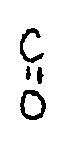
p= 1 bis 3
bedeuten. - Es wurde festgestellt, daß die erfindungsgemäßen Gemische aus wasserlöslichen Propylenglykolethern und Aminoverbindungen als Entfernungsmittel für Photoresists verwendet werden können, die die obengenannten Nachteile des Standes der Technik nicht aufweisen. Bevorzugt lassen sich Mischungen einsetzen, die aufgrund des hohen Siedepunktes der Einzelkomponenten von ≧ 180 °C nur einen geringen Masseverlust zeigen, wenn das Mittel über längere Zeit bei hohen Temperaturen eingesetzt wird. Eine besonders bevorzugte Mischung besteht aus N-(2-Aminoethyl)-ethanolamin und Tripropylenglykolmethylether.
- Es war nicht vorhersehbar, daß das erfindungsgemäße Mittel, das hochsiedende Propylenglykoletherderivate, wie z.B. Tripropylenglykolmethylether, enthält, auch bei Raumtemperatur noch gute Eigenschaften zeigt. Für den vorgesehenen Einsatzzweck ist die hier beschriebene Erfindung damit insoweit vorteilhaft, als ein derartiges Mittel sowohl bei Raumtemperatur als auch - aufgrund des günstigen Verdunstungsverhaltens - bei hohen Badtemperaturen effektiv eingesetzt werden kann.
- Zusätzlich wurde festgestellt, daß die besonders bevorzugte Formulierung aus Tripropylenglykolmethylether und N-(2-Aminoethyl)-ethanolamin einen synergetischen Effekt aufweist.
- Da in der Praxis häufig auch Photoresistschichten entfernt werden müssen, die keinen hohen Temperaturen ausgesetzt waren, können auch Mittel als bevorzugt angesehen werden, deren Einzelkomponenten Siedepunkte von 160 °C oder mehr aufweisen. Besonders bevorzugt sind hierbei Mischungen aus Dipropylenglykolmethylether und Isopropanolamin. Auch für derartige Systeme gelten die oben aufgeführten Vorteile, d.h., sie sind sowohl bei Raumtemperatur als auch bei höheren Temperaturen einsetzbar - wenn auch aufgrund der höheren Verdunstungsraten der Einsatz dieser Mittel bei niedrigeren Badtem peraturen bevorzugt ist -, und sie weisen einen synergetischen Effekt auf.
- Obwohl die Propylenglykolether, wie die hier bevorzugten Dipropylenglykolmethylether oder Tripropylenglykolmethylether als deutlich hydrophober im Vergleich zu den analogen Ethylenglykoletherprodukten anzusehen sind und daher gute Löseeigenschaften für organische Polymere aufweisen, lassen sich die hier genannten Mittel ohne Bildung von Rückständen leicht mit Wasser abspülen.
- Trotz ihrer hohen Wirksamkeit verhalten sich die genannten Mischungen gegenüber empfindlichen Substraten, wie z.B. Aluminiumschichten, nicht aggressiv.
- Bevorzugt werden Mischungen eingesetzt, die 10 bis 90 Gew.-%, insbesondere 20 bis 70 Gew.-%, des Amins und 10 bis 90 Gew.-%, insbesondere 30 bis 80 Gew.-%, des Propylenglykolderivats enthalten. Besonders bevorzugt werden diese Verhältnisse beim Einsatz von Isopropanolamin und/oder N-(2-Aminoethyl)-ethanolamin und Di- oder Tripropylenglykolmethylether eingehalten.
- Für alle genannten Systeme kann neben sehr geringer Toxität als weiterer Vorteil die Tatsache festgestellt werden, daß die verwendeten Verbindungen nur einen geringen Eigengeruch aufweisen und damit beispielsweise auch in offenen Bädern eingesetzt werden können.
- Es versteht sich im Rahmen der Erfindung, daß auch Mischungen eines oder mehrerer Amine(s) mit einem oder mehreren Propylenglykolderivat(en) eingesetzt werden können.
- Obwohl es dem Stand der Technik entspricht, Photoresists im Tauchverfahren zu entfernen, wobei üblicherweise die mit Photoresist beschichteten Substrate in einem Bad bewegt werden bzw. das Bad z.B. durch Umpumpen in Bewegung gehalten wird, lassen sich die erfindungsgemäßen Mittel auch in anderen Verfahren, wie z.B. Sprüh- oder Puddle-Verfahren, einsetzen.
- Die Erfindung wird anhand folgender Beispiele näher erläutert, ohne jedoch auf die gezeigten Ausführungsformen beschränkt zu sein.
- Die Wirksamkeit des Entfernungsmittels wurde an Photoresistschichten geprüft, wie sie bei der Herstellung von integrierten Schaltkreisen üblicherweise Verwendung finden. Dazu wurde ein handelsüblicher Photoresist auf der Basis von Diazochinon/Novolak (AZ 1350 J) mit 4.000 U/min auf Siliciumwafer aufgeschleudert und bei 90 °C für 30 min getrocknet. Die Schichtdicke wurde mit 1,8 µm bestimmt. Anschließend wurden die Substrate bei 200 °C für 30 min erhitzt.
- Die Ablöseversuche wurden in einem gerührten, temperierten Bad bei 80 °C durchgeführt. Nach 10 min Badzeit wurden die Wafer mit entionisiertem Wasser gespült und die verbleibende Resistschichtdicke gemessen. Die Ergebnisse, die in Tabelle 1 wiedergegeben sind, zeigen deutlich die überlegene Wirksamkeit von erfindungsgemäß eingesetztem N-(2-Aminoethyl)-ethanolamin (AEEA) und Isopropanolamin (IPA). Verhältnismäßig gute Entfernungseigenschaften zeigt zwar auch Triethylentetramin, das jedoch aufgrund seiner toxikologischen Eigenschaft als nicht bevorzugt angesehen werden kann.
- Die in dem Vergleich aufgeführten Amine wurden in jeweils äquimolaren Mengen eingesetzt.
- In den folgenden Beispielen wurde ebenfalls die Wirksamkeit verschiedener Aminoverbindungen geprüft. Auch in diesem Fall wurde die Zusammensetzung so gewählt, daß jeweils gleiche molare Mengen eingesetzt wurden.
- Die Versuchsbedingungen waren die gleichen wie bei den Beispielen 1 bis 5, jedoch waren die Substrate auf 160 °C für 30 min erhitzt worden; die Badtemperatur betrug 22 °C. Es wurde wiederum die Resistschichtdicke gemessen; die Lösezeit war auf 10 min festgelegt worden.
- Die in Tabelle 2 wiedergegebenen Ergebnisse zeigen, daß N-(2-Aminoethyl)-ethanolamin und Triethylentetramin auch bei 22 °C überlegene Löseeigenschaften zeigen. Während die Kombination von Isopropanolamin mit Tripro pylenglykolmethylether (TPM) in diesem Fall als weniger bevorzugt anzusehen ist, zeigt das Gemisch aus Isopropanolamin und Dipropylenglykolmethylether bei Raumtemperatur gute Eigenschaften.
- Analog zu den Beispielen 1 bis 5 wurden verschiedene Gemische aus N-(2-Aminoethyl)-ethanolamin und Tripropylenglykolmethylether geprüft. Die Substrate waren bei 200 °C für 30 min erhitzt worden; die Badtemperatur betrug 80 °C.
- Die Ergebnisse für eine Badzeit von 4 min sind in Tabelle 3 wiedergegeben. Unter diesen Bedingungen werden die Photoresistschichten noch nicht vollständig entfernt, andererseits läßt sich der synergetische Effekt zwischen N-(2-Aminoethyl)-ethanolamin und Tripropylenglykolmethylether durch die Messung der Resistschichtdicken von unvollständig gelöstem Photoresist eindrucksvoll demonstrieren. Als optimale Zusammensetzung wurde ein Gemisch aus 51 Gew.-% N-(2-Aminoethyl)-ethanolamin und 49 Gew.-% Tripropylenglykolmethylether ermittelt.
- Analog zu den Beispielen 13 bis 18 wurde der synergetische Effekt zwischen Isopropanolamin und Dipropylenglykolmethylether (DPM) bestimmt. Auch in diesem Fall war die Badzeit so gewählt worden, daß noch meßbare Resistschichten zurückblieben.
- Das in Tabelle 4 wiedergegebene Ergebnis zeigt, daß eine optimale Wirksamkeit bei einem Mischungsverhältnis aus 22,5 Gew.-% Isopropanolamin und 77,5 Gew.-% Dipropylenglykolmethylether beobachtet wird.
- Das Verhalten der Mittel gegen Aluminiumschichten wurde dadurch geprüft, daß die Mittel gemäß den Beispielen 13 und 19 auf 80 °C erwärmt wurden und 30 min lang auf mit Aluminium beschichtete Wafer einwirken konnten. Es war kein Angriff auf die Aluminiumschicht zu beobachten.


- Die Wirksamkeit der Entfernungsmittel wurde an photopolymerisierbaren, wäßrig-alkalisch entwickelbaren Photoresists geprüft, wie sie üblicherweise in der Leiterplattenherstellung eingesetzt werden. Dazu wurde ein handelsüblicher Trockenresist (Ozatec(R) T 138, Hersteller: Hoechst AG) auf ein kupferkaschiertes Laminat bei 115 °C laminiert, mit einem 5 kw MH-Brenner im Abstand von 60 cm für 8 sec belichtet und in einer 1%igen wäßrigen Na₂CO₃-Lösung in 70 sec bei 30 °C entwickelt.
- Die Ablöseversuche wurden in einem gerührten, temperierten Bad bei + 50 °C durchgeführt. Nach 10 min Badzeit waren die in Tabelle 5 aufgeführten Ergebnisse erzielt worden. Es sind sowohl die unverdünnten Entfernungsmittel als auch mit Wasser verdünnte Formulierungen zum Ablösen der Resists geeignet.

Claims (6)

n, m = 0 bis 2
o = 1 bis 3
bedeuten und


p = 1 bis 3
bedeuten.
Applications Claiming Priority (2)
| Application Number | Priority Date | Filing Date | Title |
|---|---|---|---|
| DE19853537441 DE3537441A1 (de) | 1985-10-22 | 1985-10-22 | Loesemittel zum entfernen von photoresists |
| DE3537441 | 1985-10-22 |
Publications (3)
| Publication Number | Publication Date |
|---|---|
| EP0219789A2 true EP0219789A2 (de) | 1987-04-29 |
| EP0219789A3 EP0219789A3 (en) | 1988-03-16 |
| EP0219789B1 EP0219789B1 (de) | 1992-02-26 |
Family
ID=6284093
Family Applications (1)
| Application Number | Title | Priority Date | Filing Date |
|---|---|---|---|
| EP86114147A Expired - Lifetime EP0219789B1 (de) | 1985-10-22 | 1986-10-13 | Lösemittel zum Entfernen von Photoresists |
Country Status (5)
| Country | Link |
|---|---|
| US (1) | US4765844A (de) |
| EP (1) | EP0219789B1 (de) |
| JP (1) | JPH0782238B2 (de) |
| KR (1) | KR940007792B1 (de) |
| DE (2) | DE3537441A1 (de) |
Cited By (9)
| Publication number | Priority date | Publication date | Assignee | Title |
|---|---|---|---|---|
| EP0221428A3 (en) * | 1985-10-28 | 1987-12-16 | Hoechst Celanese Corporation | Liquid for the treatment of a photoresist composition, and process therefor |
| GB2193346A (en) * | 1986-07-18 | 1988-02-03 | Tokyo Ohka Kogyo Co Ltd | A method for the rinse treatment of a substrate |
| EP0301756A3 (de) * | 1987-07-30 | 1990-11-14 | Ekc Technology, Inc. | Triamin-Entschichtungslösung für positive Photolacke |
| EP0485161A1 (de) * | 1990-11-05 | 1992-05-13 | Ekc Technology, Inc. | Entschichtungsmittel und Verfahren zum Entfernen von Fotolacken von Oberflächen |
| EP0613053A1 (de) * | 1993-02-10 | 1994-08-31 | MICROPARTS GESELLSCHAFT FÜR MIKROSTRUKTURTECHNIK mbH | Verfahren zum Beseitigen von Kunststoffen aus Mikrostrukturen |
| WO1997048023A1 (en) * | 1996-06-10 | 1997-12-18 | Philips Electronics N.V. | Stripping composition |
| EP0851305A1 (de) * | 1996-12-26 | 1998-07-01 | Clariant International Ltd. | Reinigung- und Entschichtungsverfahren für die Lithographie |
| EP0578507B1 (de) * | 1992-07-09 | 2005-09-28 | Ekc Technology, Inc. | Reinigungsmittelzusammensetzung, das einem Redox Aminverbindung enthält |
| CN100472331C (zh) * | 2003-01-09 | 2009-03-25 | 三菱瓦斯化学株式会社 | 光致抗蚀剂脱除剂 |
Families Citing this family (33)
| Publication number | Priority date | Publication date | Assignee | Title |
|---|---|---|---|---|
| US4808513A (en) * | 1987-04-06 | 1989-02-28 | Morton Thiokol, Inc. | Method of developing a high contrast, positive photoresist using a developer containing alkanolamine |
| AU5076890A (en) * | 1989-03-13 | 1990-09-20 | Safety-Kleen Corp. | Cleaning compositions and methods |
| US20040018949A1 (en) * | 1990-11-05 | 2004-01-29 | Wai Mun Lee | Semiconductor process residue removal composition and process |
| US7205265B2 (en) * | 1990-11-05 | 2007-04-17 | Ekc Technology, Inc. | Cleaning compositions and methods of use thereof |
| US6000411A (en) * | 1990-11-05 | 1999-12-14 | Ekc Technology, Inc. | Cleaning compositions for removing etching residue and method of using |
| US6110881A (en) * | 1990-11-05 | 2000-08-29 | Ekc Technology, Inc. | Cleaning solutions including nucleophilic amine compound having reduction and oxidation potentials |
| US6121217A (en) | 1990-11-05 | 2000-09-19 | Ekc Technology, Inc. | Alkanolamine semiconductor process residue removal composition and process |
| US6242400B1 (en) | 1990-11-05 | 2001-06-05 | Ekc Technology, Inc. | Method of stripping resists from substrates using hydroxylamine and alkanolamine |
| US5556482A (en) * | 1991-01-25 | 1996-09-17 | Ashland, Inc. | Method of stripping photoresist with composition containing inhibitor |
| IT1245398B (it) * | 1991-03-22 | 1994-09-20 | Silvani Antincendi Spa | Composizione per il lavaggio e la pulizia degli stampi di vulcanizzazione |
| US5207838A (en) * | 1991-08-29 | 1993-05-04 | Martin Marietta Energy Systems, Inc. | Nonhazardous solvent composition and method for cleaning metal surfaces |
| US5190595A (en) * | 1991-09-03 | 1993-03-02 | International Business Machines Corporation | Ozone safe stripping solution for thermal grease |
| JP3095296B2 (ja) * | 1991-12-19 | 2000-10-03 | 株式会社日立製作所 | レジスト剥離方法、これを用いた薄膜回路素子の製造方法、および、レジスト剥離液 |
| US5480585A (en) * | 1992-04-02 | 1996-01-02 | Nagase Electronic Chemicals, Ltd. | Stripping liquid compositions |
| US7144849B2 (en) * | 1993-06-21 | 2006-12-05 | Ekc Technology, Inc. | Cleaning solutions including nucleophilic amine compound having reduction and oxidation potentials |
| US6896826B2 (en) * | 1997-01-09 | 2005-05-24 | Advanced Technology Materials, Inc. | Aqueous cleaning composition containing copper-specific corrosion inhibitor for cleaning inorganic residues on semiconductor substrate |
| US6224785B1 (en) | 1997-08-29 | 2001-05-01 | Advanced Technology Materials, Inc. | Aqueous ammonium fluoride and amine containing compositions for cleaning inorganic residues on semiconductor substrates |
| US6755989B2 (en) | 1997-01-09 | 2004-06-29 | Advanced Technology Materials, Inc. | Aqueous cleaning composition containing copper-specific corrosion inhibitor for cleaning inorganic residues on semiconductor substrate |
| US5962197A (en) * | 1998-03-27 | 1999-10-05 | Analyze Inc. | Alkaline organic photoresist stripper |
| JP4224651B2 (ja) | 1999-02-25 | 2009-02-18 | 三菱瓦斯化学株式会社 | レジスト剥離剤およびそれを用いた半導体素子の製造方法 |
| JP2000284506A (ja) | 1999-03-31 | 2000-10-13 | Sharp Corp | フォトレジスト剥離剤組成物および剥離方法 |
| US6194366B1 (en) | 1999-11-16 | 2001-02-27 | Esc, Inc. | Post chemical-mechanical planarization (CMP) cleaning composition |
| US6723691B2 (en) | 1999-11-16 | 2004-04-20 | Advanced Technology Materials, Inc. | Post chemical-mechanical planarization (CMP) cleaning composition |
| US6455479B1 (en) | 2000-08-03 | 2002-09-24 | Shipley Company, L.L.C. | Stripping composition |
| US7671001B2 (en) | 2003-10-29 | 2010-03-02 | Mallinckrodt Baker, Inc. | Alkaline, post plasma etch/ash residue removers and photoresist stripping compositions containing metal-halide corrosion inhibitors |
| KR101088568B1 (ko) * | 2005-04-19 | 2011-12-05 | 아반토르 퍼포먼스 머티리얼스, 인크. | 갈바닉 부식을 억제하는 비수성 포토레지스트 스트립퍼 |
| JP5236217B2 (ja) * | 2006-06-22 | 2013-07-17 | 東進セミケム株式会社 | レジスト除去用組成物 |
| US9481854B2 (en) | 2008-02-21 | 2016-11-01 | S. C. Johnson & Son, Inc. | Cleaning composition that provides residual benefits |
| US8980813B2 (en) | 2008-02-21 | 2015-03-17 | S. C. Johnson & Son, Inc. | Cleaning composition having high self-adhesion on a vertical hard surface and providing residual benefits |
| US8143206B2 (en) | 2008-02-21 | 2012-03-27 | S.C. Johnson & Son, Inc. | Cleaning composition having high self-adhesion and providing residual benefits |
| MX2010009161A (es) | 2008-02-21 | 2010-09-14 | Johnson & Son Inc S C | Composicion de limpieza que tiene autoadhesion superior y proporciona beneficios residuales. |
| US9410111B2 (en) | 2008-02-21 | 2016-08-09 | S.C. Johnson & Son, Inc. | Cleaning composition that provides residual benefits |
| US8993502B2 (en) | 2008-02-21 | 2015-03-31 | S. C. Johnson & Son, Inc. | Cleaning composition having high self-adhesion to a vertical hard surface and providing residual benefits |
Family Cites Families (10)
| Publication number | Priority date | Publication date | Assignee | Title |
|---|---|---|---|---|
| US3673099A (en) * | 1970-10-19 | 1972-06-27 | Bell Telephone Labor Inc | Process and composition for stripping cured resins from substrates |
| US3796602A (en) * | 1972-02-07 | 1974-03-12 | Du Pont | Process for stripping polymer masks from circuit boards |
| US4077896A (en) * | 1975-01-15 | 1978-03-07 | Minnesota Mining And Manufacturing Company | Wax-stripping cleaning composition |
| DE3023201A1 (de) * | 1980-06-21 | 1982-01-07 | Hoechst Ag, 6000 Frankfurt | Positiv arbeitendes strahlungsempfindliches gemisch |
| US4428871A (en) * | 1981-09-23 | 1984-01-31 | J. T. Baker Chemical Company | Stripping compositions and methods of stripping resists |
| JPS60131535A (ja) * | 1983-12-20 | 1985-07-13 | エッチエムシー・パテンツ・ホールディング・カンパニー・インコーポレーテッド | ポジのホトレジスト用のストリツピング組成物 |
| JPS60147736A (ja) * | 1984-01-11 | 1985-08-03 | Hitachi Chem Co Ltd | フエノ−ル系樹脂含有感光性組成物の剥離液 |
| DE3406927A1 (de) * | 1984-02-25 | 1985-08-29 | Hoechst Ag, 6230 Frankfurt | Strahlungsempfindliches gemisch auf basis von saeurespaltbaren verbindungen |
| US4592787A (en) * | 1984-11-05 | 1986-06-03 | The Dow Chemical Company | Composition useful for stripping photoresist polymers and method |
| US4617251A (en) * | 1985-04-11 | 1986-10-14 | Olin Hunt Specialty Products, Inc. | Stripping composition and method of using the same |
-
1985
- 1985-10-22 DE DE19853537441 patent/DE3537441A1/de not_active Withdrawn
-
1986
- 1986-10-13 EP EP86114147A patent/EP0219789B1/de not_active Expired - Lifetime
- 1986-10-13 DE DE8686114147T patent/DE3683982D1/de not_active Expired - Lifetime
- 1986-10-20 JP JP61247671A patent/JPH0782238B2/ja not_active Expired - Fee Related
- 1986-10-20 US US06/920,665 patent/US4765844A/en not_active Expired - Lifetime
- 1986-10-21 KR KR1019860008809A patent/KR940007792B1/ko not_active Expired - Lifetime
Cited By (12)
| Publication number | Priority date | Publication date | Assignee | Title |
|---|---|---|---|---|
| EP0221428A3 (en) * | 1985-10-28 | 1987-12-16 | Hoechst Celanese Corporation | Liquid for the treatment of a photoresist composition, and process therefor |
| GB2193346A (en) * | 1986-07-18 | 1988-02-03 | Tokyo Ohka Kogyo Co Ltd | A method for the rinse treatment of a substrate |
| GB2193346B (en) * | 1986-07-18 | 1990-04-04 | Tokyo Ohka Kogyo Co Ltd | A method of rinsing a substrate from which the resist layer has been removed |
| EP0301756A3 (de) * | 1987-07-30 | 1990-11-14 | Ekc Technology, Inc. | Triamin-Entschichtungslösung für positive Photolacke |
| EP0846984A3 (de) * | 1987-07-30 | 2000-03-22 | Ekc Technology, Inc. | Wärmebehandlungsverfahren zum Erleichtern der Entfernung eines positiven Photoresists mit Entschichtungslösungen |
| EP0485161A1 (de) * | 1990-11-05 | 1992-05-13 | Ekc Technology, Inc. | Entschichtungsmittel und Verfahren zum Entfernen von Fotolacken von Oberflächen |
| EP0578507B1 (de) * | 1992-07-09 | 2005-09-28 | Ekc Technology, Inc. | Reinigungsmittelzusammensetzung, das einem Redox Aminverbindung enthält |
| EP0613053A1 (de) * | 1993-02-10 | 1994-08-31 | MICROPARTS GESELLSCHAFT FÜR MIKROSTRUKTURTECHNIK mbH | Verfahren zum Beseitigen von Kunststoffen aus Mikrostrukturen |
| US5631303A (en) * | 1993-02-10 | 1997-05-20 | Microparts | Process for removing plastics from microstructures |
| WO1997048023A1 (en) * | 1996-06-10 | 1997-12-18 | Philips Electronics N.V. | Stripping composition |
| EP0851305A1 (de) * | 1996-12-26 | 1998-07-01 | Clariant International Ltd. | Reinigung- und Entschichtungsverfahren für die Lithographie |
| CN100472331C (zh) * | 2003-01-09 | 2009-03-25 | 三菱瓦斯化学株式会社 | 光致抗蚀剂脱除剂 |
Also Published As
| Publication number | Publication date |
|---|---|
| JPS6295531A (ja) | 1987-05-02 |
| KR870004335A (ko) | 1987-05-08 |
| EP0219789B1 (de) | 1992-02-26 |
| KR940007792B1 (ko) | 1994-08-25 |
| DE3537441A1 (de) | 1987-04-23 |
| JPH0782238B2 (ja) | 1995-09-06 |
| DE3683982D1 (de) | 1992-04-02 |
| US4765844A (en) | 1988-08-23 |
| EP0219789A3 (en) | 1988-03-16 |
Similar Documents
| Publication | Publication Date | Title |
|---|---|---|
| EP0219789B1 (de) | Lösemittel zum Entfernen von Photoresists | |
| DE69921350T2 (de) | Nicht-korrodierende entfernungs-und reinigungszusammensetzung | |
| DE69718202T2 (de) | Nicht korrodierendes reinigungsmittel zur entfernung von plasmaätzrückständen | |
| DE69811660T2 (de) | Nichtkorrosive abbeiz- und reinigungszusammensetzung | |
| DE69314279T2 (de) | Alkalische Photoresist-Stripper-Zusammensetzung, die zu verringerter Metallkorrosion führt | |
| DE69620848T2 (de) | Photolack-Entfernungslösung und Verfahren zur Entfernung von Photolack unter Verwendung derselben | |
| DE60030877T2 (de) | Nichtkorrosive reinigungszusammensetzung zur entfernung von plasmaätzrückständen | |
| DE10239768B4 (de) | Photoresist-Stripplösung und Verfahren zum Strippen von Photoresists unter Verwendung derselben | |
| DE60212366T2 (de) | Reinigerzusammensetzung | |
| DE69834931T2 (de) | Verfahren zum entfernen von rückständen von einem halbleitersubstrat | |
| DE69927809T2 (de) | Reinigungszusammensetzungen sowie verfahren zum entfernen von rückständen | |
| US4824762A (en) | Method for rinse treatment of a substrate | |
| DE60118015T2 (de) | Fotoresist-entfernungs-/reinigungszusammensetzungen mit aromatischen säureinhibitoren | |
| DE3831574C2 (de) | Entfernerlösung für Resists | |
| DE3828513A1 (de) | Abloesemittel fuer fotoresists | |
| DE69717900T2 (de) | Reinigungsmittelzusammensetzung für Photoresist und Verfahren zur Herstellung eines halbleitenden integrierten Schaltkreises | |
| DE69113139T2 (de) | Mittel und Verfahren zum Entfernen von Lötflussmitteln auf Kolophoniumbasis. | |
| EP0595881B1 (de) | Verwendung von halogenkohlenwasserstoff-freien reinigungsmitteln zur fluxentfernung von elektronischen und elektrischen baugruppen | |
| KR20100017192A (ko) | 포토레지스트 박리제조성물 | |
| DE69025594T2 (de) | Nichttoxische, nichtentflammbare reiniger zum reinigen von gedruckten schaltungen | |
| US20020068684A1 (en) | Stripping and cleaning compositions | |
| WO1994005766A1 (de) | Reinigungsmittel zum reinigen von gedruckten schaltungen und elektronischen bauteilen, verfahren zu seiner herstellung und seine verwendung | |
| KR20040098751A (ko) | 포토레지스트용 스트리퍼 조성물 | |
| DE69416564T2 (de) | Positiv arbeitender elektronenstrahlresist | |
| DE60001008T2 (de) | Zusammensetzung zur Entschichtung von Photolack in der Herstellung von integrierten Schaltungen |
Legal Events
| Date | Code | Title | Description |
|---|---|---|---|
| PUAI | Public reference made under article 153(3) epc to a published international application that has entered the european phase |
Free format text: ORIGINAL CODE: 0009012 |
|
| AK | Designated contracting states |
Kind code of ref document: A2 Designated state(s): BE CH DE FR GB IT LI NL SE |
|
| PUAL | Search report despatched |
Free format text: ORIGINAL CODE: 0009013 |
|
| AK | Designated contracting states |
Kind code of ref document: A3 Designated state(s): BE CH DE FR GB IT LI NL SE |
|
| 17P | Request for examination filed |
Effective date: 19880802 |
|
| 17Q | First examination report despatched |
Effective date: 19900925 |
|
| GRAA | (expected) grant |
Free format text: ORIGINAL CODE: 0009210 |
|
| AK | Designated contracting states |
Kind code of ref document: B1 Designated state(s): BE CH DE FR GB IT LI NL SE |
|
| REF | Corresponds to: |
Ref document number: 3683982 Country of ref document: DE Date of ref document: 19920402 |
|
| ET | Fr: translation filed | ||
| ITF | It: translation for a ep patent filed | ||
| GBT | Gb: translation of ep patent filed (gb section 77(6)(a)/1977) | ||
| PLBE | No opposition filed within time limit |
Free format text: ORIGINAL CODE: 0009261 |
|
| STAA | Information on the status of an ep patent application or granted ep patent |
Free format text: STATUS: NO OPPOSITION FILED WITHIN TIME LIMIT |
|
| 26N | No opposition filed | ||
| PGFP | Annual fee paid to national office [announced via postgrant information from national office to epo] |
Ref country code: CH Payment date: 19940915 Year of fee payment: 9 |
|
| PGFP | Annual fee paid to national office [announced via postgrant information from national office to epo] |
Ref country code: SE Payment date: 19940923 Year of fee payment: 9 |
|
| PGFP | Annual fee paid to national office [announced via postgrant information from national office to epo] |
Ref country code: BE Payment date: 19941007 Year of fee payment: 9 |
|
| ITTA | It: last paid annual fee | ||
| PGFP | Annual fee paid to national office [announced via postgrant information from national office to epo] |
Ref country code: NL Payment date: 19941031 Year of fee payment: 9 |
|
| EAL | Se: european patent in force in sweden |
Ref document number: 86114147.1 |
|
| PG25 | Lapsed in a contracting state [announced via postgrant information from national office to epo] |
Ref country code: SE Effective date: 19951014 |
|
| PG25 | Lapsed in a contracting state [announced via postgrant information from national office to epo] |
Ref country code: BE Effective date: 19951031 Ref country code: LI Effective date: 19951031 Ref country code: CH Effective date: 19951031 |
|
| BERE | Be: lapsed |
Owner name: HOECHST A.G. Effective date: 19951031 |
|
| PG25 | Lapsed in a contracting state [announced via postgrant information from national office to epo] |
Ref country code: NL Effective date: 19960501 |
|
| REG | Reference to a national code |
Ref country code: CH Ref legal event code: PL |
|
| EUG | Se: european patent has lapsed |
Ref document number: 86114147.1 |
|
| NLV4 | Nl: lapsed or anulled due to non-payment of the annual fee |
Effective date: 19960501 |
|
| REG | Reference to a national code |
Ref country code: GB Ref legal event code: 732E |
|
| REG | Reference to a national code |
Ref country code: FR Ref legal event code: TP |
|
| REG | Reference to a national code |
Ref country code: GB Ref legal event code: IF02 |
|
| PGFP | Annual fee paid to national office [announced via postgrant information from national office to epo] |
Ref country code: GB Payment date: 20050914 Year of fee payment: 20 |
|
| PGFP | Annual fee paid to national office [announced via postgrant information from national office to epo] |
Ref country code: FR Payment date: 20051006 Year of fee payment: 20 |
|
| PGFP | Annual fee paid to national office [announced via postgrant information from national office to epo] |
Ref country code: IT Payment date: 20051013 Year of fee payment: 20 |
|
| PGFP | Annual fee paid to national office [announced via postgrant information from national office to epo] |
Ref country code: DE Payment date: 20051031 Year of fee payment: 20 |
|
| PG25 | Lapsed in a contracting state [announced via postgrant information from national office to epo] |
Ref country code: GB Free format text: LAPSE BECAUSE OF EXPIRATION OF PROTECTION Effective date: 20061012 |
|
| REG | Reference to a national code |
Ref country code: GB Ref legal event code: PE20 |