EP0122232B1 - 20-Spiroxane und Analoge mit geöffnetem Ring E, Verfahren zu ihrer Herstellung, sowie pharmazeutische Präparate davon - Google Patents
20-Spiroxane und Analoge mit geöffnetem Ring E, Verfahren zu ihrer Herstellung, sowie pharmazeutische Präparate davon Download PDFInfo
- Publication number
- EP0122232B1 EP0122232B1 EP84810179A EP84810179A EP0122232B1 EP 0122232 B1 EP0122232 B1 EP 0122232B1 EP 84810179 A EP84810179 A EP 84810179A EP 84810179 A EP84810179 A EP 84810179A EP 0122232 B1 EP0122232 B1 EP 0122232B1
- Authority
- EP
- European Patent Office
- Prior art keywords
- compound
- formula
- und
- hydroxy
- oxo
- Prior art date
- Legal status (The legal status is an assumption and is not a legal conclusion. Google has not performed a legal analysis and makes no representation as to the accuracy of the status listed.)
- Expired
Links
- QSVFENAPNQPXGO-UHFFFAOYSA-N C(C1)C11C2(C3)C1C3C(C1)C1C2 Chemical compound C(C1)C11C2(C3)C1C3C(C1)C1C2 QSVFENAPNQPXGO-UHFFFAOYSA-N 0.000 description 1
- 0 CC1O*C([C@@](C)C(C(C)CC(*)C=CC2)N)[C@@]12N=* Chemical compound CC1O*C([C@@](C)C(C(C)CC(*)C=CC2)N)[C@@]12N=* 0.000 description 1
Classifications
-
- C—CHEMISTRY; METALLURGY
- C07—ORGANIC CHEMISTRY
- C07J—STEROIDS
- C07J41/00—Normal steroids containing one or more nitrogen atoms not belonging to a hetero ring
- C07J41/0033—Normal steroids containing one or more nitrogen atoms not belonging to a hetero ring not covered by C07J41/0005
- C07J41/0094—Normal steroids containing one or more nitrogen atoms not belonging to a hetero ring not covered by C07J41/0005 containing nitrile radicals, including thiocyanide radicals
-
- A—HUMAN NECESSITIES
- A61—MEDICAL OR VETERINARY SCIENCE; HYGIENE
- A61P—SPECIFIC THERAPEUTIC ACTIVITY OF CHEMICAL COMPOUNDS OR MEDICINAL PREPARATIONS
- A61P5/00—Drugs for disorders of the endocrine system
- A61P5/38—Drugs for disorders of the endocrine system of the suprarenal hormones
-
- A—HUMAN NECESSITIES
- A61—MEDICAL OR VETERINARY SCIENCE; HYGIENE
- A61P—SPECIFIC THERAPEUTIC ACTIVITY OF CHEMICAL COMPOUNDS OR MEDICINAL PREPARATIONS
- A61P7/00—Drugs for disorders of the blood or the extracellular fluid
- A61P7/10—Antioedematous agents; Diuretics
-
- C—CHEMISTRY; METALLURGY
- C07—ORGANIC CHEMISTRY
- C07J—STEROIDS
- C07J1/00—Normal steroids containing carbon, hydrogen, halogen or oxygen, not substituted in position 17 beta by a carbon atom, e.g. estrane, androstane
- C07J1/0003—Androstane derivatives
- C07J1/0011—Androstane derivatives substituted in position 17 by a keto group
-
- C—CHEMISTRY; METALLURGY
- C07—ORGANIC CHEMISTRY
- C07J—STEROIDS
- C07J13/00—Normal steroids containing carbon, hydrogen, halogen or oxygen having a carbon-to-carbon double bond from or to position 17
- C07J13/005—Normal steroids containing carbon, hydrogen, halogen or oxygen having a carbon-to-carbon double bond from or to position 17 with double bond in position 16 (17)
-
- C—CHEMISTRY; METALLURGY
- C07—ORGANIC CHEMISTRY
- C07J—STEROIDS
- C07J21/00—Normal steroids containing carbon, hydrogen, halogen or oxygen having an oxygen-containing hetero ring spiro-condensed with the cyclopenta(a)hydrophenanthrene skeleton
-
- C—CHEMISTRY; METALLURGY
- C07—ORGANIC CHEMISTRY
- C07J—STEROIDS
- C07J21/00—Normal steroids containing carbon, hydrogen, halogen or oxygen having an oxygen-containing hetero ring spiro-condensed with the cyclopenta(a)hydrophenanthrene skeleton
- C07J21/001—Lactones
- C07J21/003—Lactones at position 17
-
- C—CHEMISTRY; METALLURGY
- C07—ORGANIC CHEMISTRY
- C07J—STEROIDS
- C07J21/00—Normal steroids containing carbon, hydrogen, halogen or oxygen having an oxygen-containing hetero ring spiro-condensed with the cyclopenta(a)hydrophenanthrene skeleton
- C07J21/005—Ketals
- C07J21/008—Ketals at position 17
-
- C—CHEMISTRY; METALLURGY
- C07—ORGANIC CHEMISTRY
- C07J—STEROIDS
- C07J5/00—Normal steroids containing carbon, hydrogen, halogen or oxygen, substituted in position 17 beta by a chain of two carbon atoms, e.g. pregnane and substituted in position 21 by only one singly bound oxygen atom, i.e. only one oxygen bound to position 21 by a single bond
- C07J5/0046—Normal steroids containing carbon, hydrogen, halogen or oxygen, substituted in position 17 beta by a chain of two carbon atoms, e.g. pregnane and substituted in position 21 by only one singly bound oxygen atom, i.e. only one oxygen bound to position 21 by a single bond substituted in position 17 alfa
- C07J5/0053—Normal steroids containing carbon, hydrogen, halogen or oxygen, substituted in position 17 beta by a chain of two carbon atoms, e.g. pregnane and substituted in position 21 by only one singly bound oxygen atom, i.e. only one oxygen bound to position 21 by a single bond substituted in position 17 alfa not substituted in position 16
-
- C—CHEMISTRY; METALLURGY
- C07—ORGANIC CHEMISTRY
- C07J—STEROIDS
- C07J53/00—Steroids in which the cyclopenta(a)hydrophenanthrene skeleton has been modified by condensation with a carbocyclic rings or by formation of an additional ring by means of a direct link between two ring carbon atoms, including carboxyclic rings fused to the cyclopenta(a)hydrophenanthrene skeleton are included in this class
- C07J53/002—Carbocyclic rings fused
- C07J53/004—3 membered carbocyclic rings
- C07J53/007—3 membered carbocyclic rings in position 6-7
-
- C—CHEMISTRY; METALLURGY
- C07—ORGANIC CHEMISTRY
- C07J—STEROIDS
- C07J53/00—Steroids in which the cyclopenta(a)hydrophenanthrene skeleton has been modified by condensation with a carbocyclic rings or by formation of an additional ring by means of a direct link between two ring carbon atoms, including carboxyclic rings fused to the cyclopenta(a)hydrophenanthrene skeleton are included in this class
- C07J53/002—Carbocyclic rings fused
- C07J53/004—3 membered carbocyclic rings
- C07J53/008—3 membered carbocyclic rings in position 15/16
-
- C—CHEMISTRY; METALLURGY
- C07—ORGANIC CHEMISTRY
- C07J—STEROIDS
- C07J71/00—Steroids in which the cyclopenta(a)hydrophenanthrene skeleton is condensed with a heterocyclic ring
- C07J71/0005—Oxygen-containing hetero ring
- C07J71/001—Oxiranes
- C07J71/0015—Oxiranes at position 9(11)
Definitions
- the invention relates to new 20-spiroxanes and analogous compounds with an open oxygen-containing ring E of the general formula
- the invention also relates to processes for the preparation of these compounds and pharmaceutical compositions containing these compounds, and to production processes for such compositions.
- the invention also relates to the therapeutic use of the compounds and compositions mentioned, in particular as aldosterone-antagonizing diuretics.
- organic radicals denoted by "lower” in the present disclosure contain at most 7, preferably 1-4, carbon atoms.
- a lower alkoxycarbonyl radical is preferably one which is derived from an alkyl having 1-4 carbon atoms, such as methyl, ethyl, propyl, isopropyl, butyl, isobutyl, sec-butyl and tert-butyl; methoxycarbonyl, ethoxycarbonyl and isopropoxycarbonyl are particularly preferred.
- a lower alkoxy radical is preferably one which is derived from one of the abovementioned C 1 -C 4 -alkyl radicals, in particular a primary one; methoxy is particularly preferred.
- a lower alkanoyl radical is preferably one which is derived from a straight-chain alkyl having 1-7 carbon atoms; formyl and acetyl are particularly preferred.
- a methylene bridge in the 6,7- and / or 15,16-position is preferably ⁇ -oriented.
- Preferred compounds of formula I are those in which Y 1 and Y 2 together represent the oxygen bridge -0-.
- Particularly preferred compounds of formula 1 are those in which X is oxo.
- 17 ⁇ -hydroxy-21-carboxylic acids can also be present in the form of their salts.
- metal and ammonium salts such as alkali metal and alkaline earth metal, for. B. sodium, calcium, magnesium and preferably potassium salts or ammonium salts derived from ammonia or a suitable, preferably physiologically compatible, organic nitrogenous base. Both amines, e.g. B.
- lower alkylamines such as triethylamine
- hydroxy-lower alkylamines such as 2-hydroxyethylamine, di- (2-hydroxyethyl) amine or tri- (2-hydroxyethyl) amine
- cycloalkylamines such as dicyclohexylamine
- benzylamines such as benzylamine and N, N'-dibenzylethylenediamine
- nitrogen-containing heterocyclic compounds e.g. B.
- aromatic character such as pyridine or quinoline
- heterocyclic ring such as N-ethylpiperidine, morpholine, piperazine or N, N'-dimethylpiperazine
- Preferred compounds also include alkali metal salts, in particular potassium salts of the compounds of the formula I, in which R 'and R 2 together represent a methylene group or especially R' is hydrogen and R 2 is a lower alkoxycarbonyl, where X is oxo and Y 1 and Y 2 are each hydroxyl stands.
- the compounds according to the invention are distinguished by favorable biological properties and are therefore valuable pharmaceutical active ingredients. They have a strong aldosterone-antagonistic effect in that they reduce and normalize excessive sodium retention and potassium excretion caused by aldosterone. Therefore, as potassium-sparing diuretics, they find an important application in therapy, e.g. B. in the treatment of hypertension, heart failure or liver cirrhosis.
- the former compound proves to be about 20 times (after a 2-hour test period) in a specific quantitative test in vitro, in which the binding of the test substance to androgen receptors in homogenates of ventral prostate of the rat is measured as a measure of antiandrogenic activity ) up to 27 times (after a 20-hour test period) less binding than the comparison compound mentioned above.
- Process variant a), d. H. the epoxidation of the 9 (11) double bond is carried out in a manner known per se by treating the starting material of the formula II with a peroxy acid, preferably an organic peroxy acid, e.g. B. an aliphatic peroxy acid, such as in particular performic acid or peracetic acid, or preferably an aromatic peroxy acid.
- a peroxy acid preferably an organic peroxy acid, e.g. B. an aliphatic peroxy acid, such as in particular performic acid or peracetic acid, or preferably an aromatic peroxy acid.
- perbenzoic acid or a substituted perbenzoic acid such as m-chloroperbenzoic acid or monoperoxyphthalic acid (perphthalic acid) is advantageously used.
- the reaction is primarily carried out in an inert organic solvent, e.g. B.
- reaction temperature should generally not exceed one at which the spontaneous decomposition of the reactant proceeds faster than the epoxidation reaction, primarily at room temperature or preferably below this down to about -20 ° C., in particular between -10 to + 10 ° C. .
- Starting materials of formula II can be prepared by analogy methods known per se, e.g. B. analogous to one of the process variants b) - k) described below, or their combination, starting from known starting materials, for. B. of appropriately substituted 17-oxo derivatives of the androstane series by the conventional structure of the 3-hydroxypropyl side chain or the spiro ring.
- B. of appropriately substituted 17-oxo derivatives of the androstane series by the conventional structure of the 3-hydroxypropyl side chain or the spiro ring.
- one can also dehydrate a compound which is analogous to a compound of formula 1 but contains an 11 ⁇ - or 11ß-hydroxyl group instead of the 9,11-epoxy ring; the 11-hydroxy compound can e.g. B. can be obtained by microbiological hydroxylation of a 9,11-unsubstituted compound.
- Process variant b) is also carried out in a manner known per se using conventional oxidizing agents and processes which are customary for converting a hydroxyl group into the oxo group.
- Compounds of hexavalent chromium such as chromium trioxide, chromic acid and their metal salts, in particular alkali metal salts, are used as preferred oxidizing agents, and lower alkane carboxylic acids, such as acetic and propionic acid, or pyridine or acetone, optionally with dilution with a halogenated lower alkane, such as, are used as the preferred reaction medium Dichloromethane or chloroform.
- the reaction conditions can be more closely adapted to the specific character of the hydroxyl group in the starting material and the oxo group in the product.
- mild conditions such as cooling to a temperature below room temperature, e.g. B. preferred to about -10 to + 10 ° C;
- the oxidation to the carboxyl group be it the free or the lactonized carboxyl group, more vigorous conditions are expedient, such as extended reaction time, reaction temperatures in the range or above (up to about 50 ° C.) room temperature and / or aqueous sulfuric acid as a solvent for the oxidizing agent (e.g. B. in the form of an 8N solution as a so-called Jones reagent).
- the oxidation of an allylic 3-hydroxyl group can also be carried out using manganese dioxide in a halogenated lower alkane, such as chloroform, at temperatures from room temperature to the boiling point of the reaction mixture, or using aluminum isopropylate and a ketone, such as, in particular, acetone or cyclohexanone, at temperatures of Carry out room temperature up to the boiling point of the mixture.
- a halogenated lower alkane such as chloroform
- a starting material of formula 111 wherein Z 1 for oxo and Y 1 , Y 2 and Z 2 each for hydroxyl (the latter symbol additionally containing a hydrogen) is obtained by giving an appropriate 17-oxo compound under temporary protection the 3-oxo group with an organometallic derivative of the formula wherein Met represents an alkali metal or the halogen magnesium group of a corresponding Grignard reagent and R a each represents a lower alkyl or both together CH 2 -CH 2 or trimethylene, and the oxo protective groups are split off.
- the product obtained is in the form of a mixture of several tautomeric forms, some of which are also hydrated, such as those of the partial formulas correspond, which, however, behave uniformly during oxidation.
- Process variant c) is also carried out in a manner known per se using conventional hydrogenation agents under generally known reaction conditions for catalytic hydrogenation. It works with hydrogen gas at normal or elevated pressure under conditions of heterogeneous or homogeneous catalysis.
- catalysts for the former are finely divided metals, e.g. B. Raney metals, such as Raney nickel, or noble metals, such as palladium, platinum or rhodium, which are optionally distributed on a support, such as calcium carbonate or barium sulfate, are particularly suitable.
- Complex rhodium compounds e.g. B. tris (triphenylphosphine) rhodium (I) chloride. The conditions should be chosen so that the 1,2- and / or 4,5-double bond is not reduced.
- the ethynyl radical introduced can then be carboxylated in a second stage by replacing the terminal hydrogen atom in it by treatment with a Grignard compound and the subsequent reaction of the ⁇ -magnesium halide formed with carbon dioxide for a carboxyl group.
- the 3-oxo group is usually protected in the usual way during this reaction.
- a suitable organometallic derivative of propiolic acid can be used in an analogous manner.
- process variant d) is carried out by simultaneous cleavage of the leaving group Y o and the hydrogen atom of the 17 ⁇ -hydroxyl group Y l to form the oxygen bridge -0-.
- known analogy methods of closing organic chemistry which are customary to close a saturated furan ring, are used, taking into account specific properties of the leaving group Y o when selecting reaction conditions and agents.
- a preferred leaving group Y o in compounds of the formula V where X is oxo is an amino group Am.
- the conversion of such a starting material into a lactone of the formula in which Y 1 and Y 2 together represent the oxygen bridges -O- and X represents oxo is carried out in a manner known per se by acidic agents, primarily by treatment with an acidic ion exchanger in H- Cycle.
- the amidic starting material can be z. B. by making a corresponding 17-oxo compound with temporary conventional protection of the 3-oxo group (z. B. as a ketal or thioketal) in dimethylsulfonium methylide, for. B. according to the process described in US Pat. No.
- Y o which is particularly suitable for compounds in which X is two hydrogen atoms, is a quaternary ammonium group Am + in the form of the base; preferably the group Am + is a tri-lower alkylammonium group such as in particular the trimethylammonium group.
- the cyclization of the quaternary base of the formula V, in which X represents two hydrogen atoms and Y o represents Am + OH-, to give the compound of the formula 1 in which Y 1 and Y 2 together represent the oxygen bridge, is carried out by heating the base, optionally in a high-boiling point organic solvents such as ethylene glycol to the decomposition temperature.
- the corresponding Starting material can be prepared in a manner known per se. To this end, a corresponding 17-oxo compound is treated with a temporary conventional protection of the 3-oxo group with an organometallic compound of the formula R c - (CH 2 ) 3 -M, in which
- M represents a group MgX, in which X is a halogen atom, or an alkali metal atom, in particular a lithium atom, and
- R c is a di-lower alkylamino group, preferably the dimethylamino group,
- a resulting 17ß-hydroxy-17a (3-diniederalkylaminopropyl) compound is then by the addition of a lower alkyl ester of a strong acid, e.g. B. a lower alkyl sulfate or lower alkyl halide, such as in particular methyl iodide, converted into a corresponding quaternary tri-lower alkyl ammonium salt.
- a strong base preferably a metal hydroxide, e.g. B. silver hydroxide or an alkali metal or alkaline earth metal hydroxide, such as potassium, sodium or barium hydroxide.
- Another advantageous leaving group Y in compounds of formula V, in which X represents two hydrogen atoms, is a reactive esterified hydroxyl group.
- the ester-forming component is z.
- a sulfonic acid such as an aliphatic or aromatic carbocyclic sulfonic acid
- methane, ethane, trifluoromethane, or benzene, p-toluene, or p-bromobenzene sulfonic acid e.g. B.
- Organic basic agents for this purpose are, for example, tertiary bases of aliphatic character, such as tertiary amines derived from lower alkyl and benzyl residues (e.g. triethylamine, benzyldimethylamine, diisopropylethylamine, diisopropylbenzylamine, dibenzylmethyl) amine or dimethylbutylamine) and their heterocyclic saturated analogues (e.g.
- aromatic heterocyclic bases such as pyridine and its C. -methylated analogs (e.g. collidine) or quinoline.
- a reactive esterified hydroxyl group formed in the reaction mixture is split off in situ, ie immediately afterwards, when it is in the same reaction medium by the esterification of the terminal hydroxyl group (ie the one designated by the symbol Y 2 ) in one Compound of formula I is formed by means of a reactive acid derivative in a basic medium.
- a reactive acid derivative is in particular an acid halide, such as acid chloride, which is derived from one of the above-mentioned oxygen-containing inorganic and organic acids.
- an acid halide such as acid chloride
- methanesulfochloride and particularly p-toluenesulfochloride are preferred, and an aromatic heterocyclic base such as pyridine is particularly suitable as the reaction medium.
- Process variant e) is also carried out in a manner known per se.
- the conversion of the acid of formula VI into the desired ester of formula I is usually carried out by one of the numerous conventional esterification methods, e.g. B. by treatment with a lower alkanol or a reactive derivative thereof, optionally in the presence of catalysts, especially acidic catalysts, and / or dehydrating agents, for. B. a symmetrically substituted carbodiimide, such as in particular the N, N'-dicyclohexylcarbodiimide.
- Acidic catalysts include, above all, strong inorganic acids, such as sulfuric, phosphoric and perchloric acids, and also organic sulfonic acids, such as methane, benzene or p-toluenesulfonic acid; the corresponding alcohol is taken in excess, usually at the same time as a solvent.
- organic sulfonic acids such as methane, benzene or p-toluenesulfonic acid
- methane, benzene or p-toluenesulfonic acid the corresponding alcohol is taken in excess, usually at the same time as a solvent.
- Process variant f) is also carried out in a manner known per se using conventional analogy processes for the attachment of the methylene group to a double bond.
- the attachment takes place z. B. according to a preferred variant, by reacting a 6,7-dehydro compound of the formula VII with dimethyloxosulfonium methylide.
- This variant also has the main advantage that it is a has very high stereospecificity and predominantly 6,7-methylene compounds of one, mostly of the a-configuration, which provides methylene group.
- the implementation is e.g. B.
- a mineral oil dispersion of sodium hydride with trimethylsulfoxonium iodide is brought together under an inert gas, such as in a nitrogen atmosphere and with the exclusion of moisture, and dimethyl sulfoxide is added, whereupon the formation of the dimethyloxosulfonium methylide takes place.
- the 6,7-unsaturated steroid starting material in a molar ratio (reagent: steroid) of about 1: 1 to 5: 1 is added to this reagent prepared in situ.
- the reaction is allowed to proceed at about room temperature and the reaction mixture is treated with water, after which the steroid is isolated by customary methods.
- the decomposition of the reaction mixture is expediently controlled in such a way that the pH remains in the neutral or weakly acidic range as far as possible.
- This method is also suitable for introducing the methylene group into various intermediates in the preparation of the starting materials of the formulas II to VI. -
- the starting materials of formula VII required for this variant, if they are not known, can be obtained by known analogy methods, for. B. by the elimination of water (dehydration) of the corresponding 11a or 11 ⁇ -hydroxy compounds or by dehydration of corresponding 6,7-saturated intermediates.
- 1,2-saturated compounds are dehydrogenated to the corresponding 1,2-dehydro derivatives in a manner known per se.
- biological dehydration processes e.g. B. dehydrate by means of the microorganisms Corynebacterium simplex or Septomyxa affinis or their enzyme systems, or with selenium dioxide in an organic solvent, e.g. B. treat tert-butyl alcohol.
- dehydrated with 2,3-dichloro-5,6-dicyan-1,4-benzoquinone for several, e.g. B. 6 - 24 hours, and if necessary at boiling point, in organic solvents, for. B.
- aromatic hydrocarbons such as benzene or xylene, lower aliphatic alcohols such as ethanol, propanol or tert-butyl alcohol, lower aliphatic ketones such as acetone or 2-butanone, aliphatic esters such as ethyl acetate, or cyclic ethers such as dioxane or tetrahydrofuran.
- lower aliphatic alcohols such as ethanol, propanol or tert-butyl alcohol
- lower aliphatic ketones such as acetone or 2-butanone
- aliphatic esters such as ethyl acetate
- cyclic ethers such as dioxane or tetrahydrofuran.
- cyclization of an open-chain end product to a cyclic one according to process variant h) is also carried out in a manner known per se.
- Cyclization of compounds of formula 1, wherein X is two hydrogens takes place, for. B. in the manner described in process variant d).
- End products of formula I, wherein X is oxo and each Y 1 and Y 2 is hydroxyl, ie free 17ß-hydroxy-21-carboxylic acids are cyclized (lactonized) in a manner known per se by z. B. with a water-reducing agent, e.g. B.
- Lactonization can also occur spontaneously, especially under acidic conditions and / or at elevated temperature, and is e.g. B. completed by azeotropic drainage.
- the oxidation of the methylene group in the spiro ring E to the carbonyl group to be carried out according to process variant i) also takes place by means of methods known per se for the oxidation of a tetrahydrofuran ring to the corresponding lactone ring.
- Compounds of hexavalent chromium are primarily used for this, and the reaction is carried out under analogous conditions, as described, for. B. under process variant b) for the oxidation of corresponding open-chain compounds, wherein Y 2 is hydroxyl and X are two hydrogen atoms, to free carboxylic acids has been described above.
- the process variant j) to be carried out, if desired, is carried out in accordance with generally known customary esterification processes, preferably by treatment with a lower alkanoic acid, such as, in particular, formic acid, alone, or else with a reactive derivative thereof, such as anhydride or halide, in particular chloride, preferably in the presence of an organic base, in particular a tertiary amine, such as triethylamine, dimethylbenzylamine or N, N-dimethylaniline, a saturated tertiary heterocyclic base, such as N-ethylpiperidine or N, N'-dimethylpiperazine, or an aromatic heterocyclic base, such as quinoline, collidine, lutidine and especially pyridine .
- a tertiary amine such as triethylamine, dimethylbenzylamine or N, N-dimethylaniline
- a saturated tertiary heterocyclic base such as N-ethylpiper
- Lactones and 22-esters obtained can be prepared in a manner known per se in the corresponding 17 ⁇ -hydroxy-21-carboxylic acids or salts thereof, for. B. convert it by hydrolyzing it with an alkali or alkaline earth base, whereupon, if desired, if the free acid is desired, it is released by acidification.
- alkali or. Alkaline earth bases are used e.g. B. corresponding hydroxides, such as sodium and especially potassium hydroxide, carbonates, such as sodium and potassium carbonate, or hydrogen carbonates, such as sodium and potassium hydrogen carbonate; Mixtures of water with one or more organic solvents, preferably with those which are miscible with water, z. B. with lower alkanols, such as methanol, ethanol or isopropyl alcohol, with cyclic ethers, such as tetrahydrofuran or dioxane, with lower alkanones, such as acetone or 2-butanone, or with lower alkylamides of lower aliphatic carboxylic acids, including in particular with N, N-dimethylformamide.
- lower alkanols such as methanol, ethanol or isopropyl alcohol
- cyclic ethers such as tetrahydrofuran or dioxane
- lower alkanones such as acetone or 2-butanone
- the alkali metal or alkaline earth metal salts obtained in this way can be converted into the corresponding free 17 ⁇ -hydroxy-21-carboxylic acids by acidifying a solution or suspension of a salt in water or a water-containing organic solvent.
- the salts can also, e.g. B. with a lower alkyl sulfate or lower alkyl halide, are converted into the esters.
- - Free 17ß-hydroxy-21-carboxylic acids can also, if desired, by treatment with an appropriate base in salts, for. B. in ammonium salts and salts of organic bases, or, for. B. in a manner described under e), esterify.
- the invention also relates to those embodiments of the above processes in which one starts from a compound obtainable as an intermediate at any stage and carries out the missing steps, or in which a starting material is formed under the reaction conditions.
- compositions of the present invention containing a compound of formula 1, or a salt thereof can be used in particular for the treatment of hyperaldosteronism of various forms. They contain an effective amount of the active ingredient alone or in a mixture with inorganic or organic, solid or liquid, pharmaceutically usable excipients and, if desired, also with other pharmacologically or therapeutically valuable substances, and are particularly suitable for enteral, e.g. B. oral or rectal, or for parenteral administration.
- active ingredient throughout the text below means a compound of the formula I, or a salt thereof, as defined at the outset.
- the present invention relates in particular to pharmaceutical compositions containing as active ingredient a compound of the formula I (including salts) according to the invention in the form of a sterile and / or isotonic aqueous solution, or else in a mixture with at least one solid or semi-solid carrier.
- the present invention also relates to medicaments, and in particular medicaments in the form of dosage units which contain at least one of the active compounds according to the invention, alone or in a mixture with one or more carriers, in particular those in solid form.
- the invention relates in particular to pharmaceuticals in the form of tablets (including lozenges, granules and lozenges), dragées, capsules, pills, ampoules, dry vials or suppositories containing the active substance defined above, alone or in a mixture with one or more carriers.
- a special form of these pharmaceutical compositions and medicaments according to the invention are also those which, in addition to the aldosterone-antagonizing compound of the formula I (including salts) according to the invention, which is referred to in this connection as component A, are also diuretic which is unspecific in relation to electrolytes Component B included.
- the ratio of component A to component B, based on the respective average effective dose is about 4: 1 to about 1: 4, preferably about 3: 2 to about 2: 3. Since the average effective Dose of each specific component is a known value, or a value that can be easily determined by known pharmacological test methods, is easily possible for the person skilled in the art, within the abovementioned limits, a suitable ratio of both components to each patient according to their specific ailment, general state of health, individual responsiveness and age, and also to prescribe its gender.
- such combination preparations contain 5 to 150 mg, in particular 10 to 50 mg, of a compound of the formula I or a salt thereof as component A and, as component B, for example 10-100 mg, in particular 25-50 mg, 2-chloro-5 per unit dose - [3-hydroxy-1-oxo-isoindolyl- (3)] - benzenesulfonamide or 4- (2-methylene-butyryl) -2,3-dichlorophenoxyacetic acid, 5 - 50 mg, especially 12 - 25 mg 6-chloro -7-sulfamyl-3,4-dihydro-1,2,4-benzothiadiazine-1,1-dioxide or 2-chloro-4-furfurylamino-5-carboxybenzenesulfonamide, 2 - 20 mg, in particular 5 - 10 mg, 2-phenoxy -3- [3- (1-pyrrolyl) propyl] -5- carboxybenzenesulfonamide, 0.1-1.0 mg, in
- 1-3 dose units are taken daily, which contain the active substances in amounts by weight which are at the higher limit of the above-mentioned particularly preferred dosage; a moderate case of essential hypertension is e.g. B. treated with 1-3 dose units, the active ingredient content of which is at the lower, particularly preferred, quantity limit.
- the term “medicament” is used to designate individual, separate portions of uniform composition which are suitable for medical administration.
- pharmaceuticals in the form of dosage units is used in this description to denote individual, separate portions of uniform composition which are suitable for medical administration and each individually contain a specific amount of the active compound according to the invention which comprises about 0.05 to about 2. preferably corresponds to about 0.1 to about 1 daily dose.
- the carriers for use in the pharmaceutical compositions are well known materials.
- compositions according to the invention preferably contain from about 0.1 to about 99.5, in particular from about 1 to about 90% by weight of the active ingredient.
- the recommended daily dose of the active ingredient of formula I (including salts) for a 75 kg warm-blooded animal is about 5-200 mg, preferably about 10-100 mg, but it can vary within wide limits depending on the species, age and individual responsiveness and exceed the upper quantity.
- compositions, preparations, pharmaceuticals and pharmaceuticals in the form of dosage units are produced by means of conventional, known manufacturing processes in the pharmaceutical industry, e.g. B. by means of conventional mixing, granulating, tableting, coating, solution and lyophilization processes, if desired working under aseptic conditions or an intermediate or a finished product is sterilized.
- the present invention also relates to the use of the compounds of the formula I (including salts) for combating a wide variety of forms of hyperaldosteronism in humans and other warm-blooded animals, and to a corresponding therapeutic method, by administering an effective dose of at least one of the active compounds according to the invention, alone or together is characterized with one or more carriers or in a pharmaceutical form.
- the active compounds according to the invention are enterally, for. B. rectally or especially orally, or parenterally, such as intravenously, administered.
- a particular application of the compounds according to the invention is characterized in that a compound of the formula I according to the invention, or a salt thereof, as the aldosterone-antagonizing steroid component A, and a diuretic component (component B) which is unspecific with regard to electrolyte excretion at the same time or administered together, in particular in the form of a corresponding pharmaceutical composition or a medicament.
- a solution of 100 mg of 7a-methoxycarbonyl-20-spiroxa-4,9 (11) -diene-3,21-dione in 2 ml of methylene chloride is mixed with 75 mg of 90% m-chloroperbenzoic acid and 18 hours at approx. 4 ° and then left for 7 hours at room temperature. After dilution with methylene chloride, the mixture is washed successively with 10% potassium iodide solution, 10% sodium thiosulfate solution, ice-cold saturated sodium bicarbonate solution and water, dried and evaporated in a water jet vacuum. The amorphous crude product is separated by preparative thin layer chromatography on silica gel in the methylene chloride-acetone (85:15) system.
- the main zone is eluted with 100 ml of ethyl acetate and evaporated.
- the resulting crystalline 9 ⁇ , 11 ⁇ -epoxy-7 ⁇ -methoxycarbonyl-20-spirox-4-en-3,21-dione is redissolved from methylene chloride / ether, mp. 239-2410.
- a mixture of 3.9 g of 7a-methoxycarbonyl-20-spiroxa-4.9 (11) -diene-3,21-dione, 1.95 g of dipotassium hydrogen phosphate, 5.85 ml of trichloroacetonitrile, 17.5% of 30% aqueous hydrogen peroxide solution and 89 ml of methylene chloride are stirred intensively at room temperature for 2 hours, diluted with further methylene chloride, washed successively with 10% potassium iodide solution, 10% sodium thiosulfate solution, ice-cold saturated sodium hydrogen carbonate solution and water, dried and evaporated in a water jet vacuum.
- the amorphous crude product is separated by preparative thin layer chromatography on silica gel in the methylene chloride-acetone (85:15) system.
- the main zone is eluted with 100 ml of ethyl acetate and evaporated.
- the resulting crystalline 9a, 11a-epoxy-7a-methoxycarbonate-20-spirox-4-en-3,21-dione of mp. 239-241 ° is identical to the product of Example 1.
- a solution of 570 mg of 3,21-dioxo-20-spiroxa-4,9 (11) -diene-7a-carboxylic acid (see Example 1c) in 11.4 ml of methylene chloride is mixed with 430 mg of 90% m-chloroperbenzoic acid added and left for 3 hours at room temperature.
- An ethereal diazomethane solution is added to this mixture while cooling with ice until nitrogen evolution is no longer visible.
- the reaction solution diluted with methylene chloride is washed successively with a 10% potassium iodide solution, 10% sodium thiosulfate solution and ice-cold saturated sodium hydrogen carbonate solution, dried and evaporated in a water jet vacuum.
- the gel-like crude product is chromatographed on 100 times the amount by weight of silica gel with a mixture of methylene chloride-acetone (96: 4).
- the 9a, 11a-epoxy-7a-methoxycarbonyl-20-spirox-4-en-3,21-dione obtained is identical to the product of Example 1, mp. 239-241 (after redissolving twice from methylene chloride ether).
- the powdery sodium salt of 7a-carboxylic acid is suspended in 4.9 ml of dimethylformamide, mixed with 1.9 ml of isopropyl iodide and stirred at 40 ° for 16 hours.
- the cooled reaction mixture is diluted with ice water and acidified with dilute hydrochloric acid.
- the precipitate is filtered off, washed with water and dissolved in methylene chloride; the solution is evaporated after drying in a water jet vacuum.
- a solution of 15.7 g of 6 ⁇ , 7ß-methylene-20-spiroxa-4,9 (11) -diene-3,21-dione in 628 ml of chloroform is mixed with 11.3 g of 80% p-nitroperbenzoic acid and left for 2 hours at room temperature. After dilution with methylene chloride, the mixture is washed successively once each with 10% potassium iodide solution, 10% sodium thiosulfate solution and with ice-cold dilute sodium hydroxide solution, and the organic Phase evaporated after drying in a water jet vacuum.
- a mixture of 2.0 g of 9a, 11a-epoxy-6ß, 7ß-methylene-20-spirox-4-en-3,21-dione, 40 ml of methyl alcohol and 2.45 ml of a 2N aqueous solution of potassium hydroxide turns 16 Stirred at 60 ° for hours.
- the reaction solution is evaporated in a water jet vacuum and freed from the remaining water by evaporating three times with absolute ethyl alcohol.
- the residue is dissolved in hot methanol and precipitated crystalline with ethyl acetate.
- katium-9a, 11a-epoxy-17ß-hydroxy-6ß, 7ß-methyten-3-oxo-17a-pregn-4-en-21-carboxylate is dried in a high vacuum at 80 °. Analysis: calculated 8.83% K; found 8.76% K.
- the same potassium salt is obtained using an analogous procedure starting from an equivalent amount of 9a, 11a-epoxy-17 ⁇ -hydroxy-6ß, 7ß-methylene-3-oxo-17a-pregn-4-en-21-carboxylic acid methyl ester.
- a suspension of 1.8 g of 9 ⁇ , 11 ⁇ -epoxy-6ß.7ß-methylene-20-spirox-4.-en-3,21-dione in 18 ml of methyl alcohol is mixed with 1.5 ml of 4-N methanolic potassium hydroxide solution added and boiled at reflux for 1 hour. At normal pressure, about 12 ml of the solvent are distilled off, 18 ml of ethyl acetate are added, and the mixture is concentrated to about 12 ml in a water jet vacuum.
- the amorphous crude product is applied to a 30-fold amount by weight of silica gel and eluted with a mixture of methylene chloride-acetone (95: 5).
- the combined uniform fractions after a single redissolution from methylene chloride ether 9 ⁇ , 11 ⁇ -epoxy-17ß-hydroxy-6ß, 7ß-methylene-3-oxo-17 ⁇ -pregn-4-en-21-carboxylic acid methyl ester, mp. 189 - 191 °.
- a mixture of 1.3 g of 9a, 11a-epoxy-7a-methoxycarbonyl-20-spirox-4-en-3,21-dione, 17 ml of methyl alcohol and 1.41 ml of a 2N aqueous solution of potassium hydroxide is added for 16 hours Room temperature and then stirred at 60 ° for 20 minutes.
- the reaction solution is evaporated in a water jet vacuum and freed from the remaining water by evaporating three times with absolute ethyl alcohol.
- the crystalline residue is stirred with 40 ml of ethyl acetate, suction filtered and washed out on a filter with ethyl acetate and ether.
- a mixture of 1.25 g of 9a.11a-epoxy-7a-isopropoxycarbonyl-20-spirox-4-en-3,21-dione, 15.6 ml of methyl alcohol and 1.27 ml of a 2N aqueous solution of potassium hydroxide turns 16 Stirred for hours at room temperature and then 20 minutes under reflux.
- the reaction solution is evaporated in a water jet vacuum and freed from the remaining water by evaporating three times with absolute ethyl alcohol.
- the crystalline residue is stirred with 40 ml of ethyl acetate, suction filtered and washed out on a filter with ethyl acetate and ether.
- a mixture of 5.7 g of trimethylsulfoxonium iodide in 19 ml of dimethyl sulfoxide is stirred under strict moisture exclusion with 0.82 g of a 72% (w / v) suspension of sodium hydride in mineral oil for 1 hour at room temperature, with 1.46 g of 9a, 11a-epoxy-20-spiroxa-4,6-diene-3,21-dione [cf. J. Med. Chem., 6, (1963) 732-735] were added, rinsed with 1.46 ml of dimethyl sulfoxide and stirring was continued for 3.5 hours at room temperature.
- the reaction mixture is diluted with 146 ml of ice water, acidified with dilute hydrochloric acid and extracted with ethyl acetate.
- the organic phase is washed successively with saturated sodium chloride solution, ice-cold dilute sodium hydroxide solution and again with saturated sodium chloride solution, dried over sodium sulfate and evaporated in a water jet vacuum.
- the amorphous crude product obtained is chromatographed on a 100-fold amount by weight of silica gel. Elution with a mixture of toluene-acetone (95: 5) and evaporation gives the 9a, 11a-epoxy-6a, 7a-methylene-20-spirox-4-en-3,21-dione, mp. 262-264 ° (after redissolving once from methylene chloride / ether).
- a mixture of 10 g of 9a, 11a-epoxy-7a-methoxycarbonyl-20 spirox-4-ene-3,21-dione, 100 ml of methyl alcohol and 7.5 ml of 4-N methanolic solution of potassium hydroxide is boiled under reflux for 1 hour .
- About 80 ml are distilled off from the reaction mixture at normal pressure, 60 ml of ethyl acetate are added and the suspension is concentrated to about 20 ml in a water jet vacuum.
- the mixture is left to stand at room temperature for 30 minutes, after which the precipitate is filtered off with suction and washed twice with ether.
- the powdery residue is suspended in 46 ml of dimethylformamide and, after the addition of 4.6 ml of methyl iodide, stirred for 40 hours under lock and key at room temperature. After dilution with 300 ml of ice water, the precipitate is separated off, washed with water, dissolved in ethyl acetate and, after drying, the solution is evaporated in a water jet vacuum. The crude product obtained is chromatographed on 30 times the amount of silica gel.
- 9a, 11a-epoxy-7a-methoxy-15ß, 16ß-methylene-20-spirox-4-en-3,21-dione can be used for 9a, 11a-epoxy-17ß-hydroxy-15ß, 16ß- convert methylene-3-oxo-17a-pregn-4-en-7a, 21-dicarboxylic acid dime t hylester.
- Tablets containing about 20 mg of active ingredient e.g. B. 9a, 11a-epoxy-7a-methoxycarbonyl-20-spirox-4-en-3,21-dione or 9a, 11a-epoxy-6ß, 7ß-methylene-20-spirox-4-en-3,21- dion, are manufactured as follows:
- the active ingredient is mixed with the powdered sugar and the arabic gum, sieved and granulated using an approximately 35 percent aqueous sorbitol solution.
- the granules are passed through a sieve, dried, sieved again and intimately mixed with the other auxiliaries (talc, magnesium stearate, mineral oil and carboxymethyl cellulose sodium salt).
- the mixture is compressed into tablets of 120 mg in the usual way.
- Gelatin capsules containing about 25 mg of active ingredient e.g. B. 9 ⁇ , 11 ⁇ -epoxy-6ß, 7ß-methylene-20-spirox-4-en-3,21-dione are produced as follows:
- composition for 1000 capsules Composition for 1000 capsules
- Active ingredient finely ground 25 g
- the active ingredient and the lactose are mixed intimately, triturated and sieved, and the powder obtained is filled into portions of 50 mg each in gelatin capsules.
- Tablets containing approx. 25 mg component A and approx. 25 mg component B are produced as follows:
- composition of a tablet is Composition of a tablet:
- 2.5 kg of component A, micronized, 2.5 kg of component B, micronized, and 5.0 kg of corn starch are mixed with 0.5 kg of colloidal silica and with a solution of 0.5 kg of gelatin in 5.0 kg of distilled water (30 ° C) processed into a moist mass. This is passed through a sieve with a mesh size of 3 mm and dried at 45 ° C. (fluidized bed dryer). The dry granules are pressed through a sieve with a mesh size of 0.8, mixed with a previously sieved mixture of 7.5 kg of microcrystalline cellulose and 2.0 kg of sodium carboxymethyl starch and 0.15 kg of magnesium stearate, and compressed into tablets of 306.5 mg in weight .
Landscapes
- Chemical & Material Sciences (AREA)
- Organic Chemistry (AREA)
- Health & Medical Sciences (AREA)
- General Health & Medical Sciences (AREA)
- Medicinal Chemistry (AREA)
- Life Sciences & Earth Sciences (AREA)
- Diabetes (AREA)
- Toxicology (AREA)
- Chemical Kinetics & Catalysis (AREA)
- General Chemical & Material Sciences (AREA)
- Engineering & Computer Science (AREA)
- Nuclear Medicine, Radiotherapy & Molecular Imaging (AREA)
- Pharmacology & Pharmacy (AREA)
- Bioinformatics & Cheminformatics (AREA)
- Animal Behavior & Ethology (AREA)
- Public Health (AREA)
- Veterinary Medicine (AREA)
- Hematology (AREA)
- Endocrinology (AREA)
- Steroid Compounds (AREA)
- Pharmaceuticals Containing Other Organic And Inorganic Compounds (AREA)
- Nitrogen And Oxygen Or Sulfur-Condensed Heterocyclic Ring Systems (AREA)
Description
- Die Erfindung betrifft neue 20-Spiroxane und analoge Verbindungen mit geöffnetem sauerstoffhaltigen Ring E der allgemeinen Formel
-

- R1 Wasserstoff und
- R2 ein a-orientiertes Niederalkoxycarbonyl, oder
- R' und R2 zusammen ein a- oder β-orientierter Methylenrest,
- -B-B- die Gruppe -CH2-CH2- oder eine a- oder β-orientierte Gruppe

- Y1 und Y2 zusammen die Sauerstoffbrücke -0- oder
- Y1 Hydroxyl und
- Y2 Hydroxyl, Niederalkoxy oder, falls X gleich H2 ist, auch Niederalkanoyloxy ist,
sowie Salze von Verbindungen, worin X Oxo und Y2 Hydroxyl ist, d. h. von entsprechenden 17ß-Hydroxy-21-carbonsäuren. - Die Erfindung betrifft auch Verfahren zur Herstellung dieser Verbindungen und pharmazeutische Zusammensetzungen enthaltend diese Verbindungen, sowie Herstellungsverfahren für solche Zusammensetzungen. Die Erfindung betrifft auch die therapeutische Verwendung der genannten Verbindungen und Zusammensetzungen, insbesondere als Aldosteron-antagonisierende Diuretika.
- Wenn nicht anders angegeben, enthalten in der vorliegenden Offenbarung mit "nieder" bezeichnete organische Reste höchstens 7, vorzugsweise 1 - 4 Kohlenstoffatome.
- Ein Niederalkoxycarbonylrest ist vorzugsweise ein solcher, der sich von einem Alkyl mit 1 - 4 Kohlenstoffatomen, wie Methyl, Ethyl, Propyl, Isopropyl, Butyl, Isobutyl, sec.-Butyl und tert.-Butyl ableitet; besonders bevorzugt ist Methoxycarbonyl, Ethoxycarbonyl und Isopropoxycarbonyl. Ein Niederalkoxyrest ist vorzugsweise ein solcher, der sich von einem der oben genannten C1-C4-Alkylreste, insbesondere einem primären, ableitet; besonders bevorzugt ist Methoxy. Ein Niederalkanoylrest ist vorzugsweise ein solcher, der sich von einem geradkettigen Alkyl mit 1 - 7 Kohlenstoffatomen ableitet; besonders bevorzugt ist Formyl und Acetyl.
- Eine Methylenbrücke in 6,7- und/oder 15,16-Stellung ist vorzugsweise β-orientiert.
- Bevorzugte Verbindungen der Formel I sind diejenigen, worin Y1 und Y2 zusammen die Sauerstoffbrücke -0- bedeuten.
- Besonders bevorzugte Verbindungen der Formel 1 sind diejenigen, worin X Oxo bedeutet.
- Unter Verbindungen der Formel I, worin R' Wasserstoff, R2 Niederalkoxycarbonyl und X Oxo bedeuten, sind ganz besonders diejenigen bevorzugt, worin Y1 zusammen mit Y2 die Sauerstoffbrücke -0- darstellen.
- 17ß-Hydroxy-21-carbonsäuren können, wie bereits erwähnt wurde, auch in Form ihrer Salze vorliegen. In Frage kommen insbesondere Metall- und Ammoniumsalze, wie Alkalimetall- und Erdalkalimetall-, z. B. Natrium-, Calcium-, Magnesium- und vorzugsweise Kaliumsalze, bzw. Ammoniumsalze abgeleitet von Ammoniak oder einer geeigneten, vorzugsweise physiologisch verträglichen, organischen stickstoffhaltigen Base. Als Base kommen sowohl Amine, z. B. Niederalkylamine, (wie Triethylamin), Hydroxyniederalkylamine [wie 2-Hydroxyethylamin, Di-(2-hydroxyethyl)-amin oder Tri-(2-hydroxyethyl)-amin], Cycloalkylamine (wie Dicyclohexylamin) oder Benzylamine (wie Benzylamin und N,N'-Dibenzylethylendiamin), als auch stickstoffhaltige heterocyclische Verbindungen, z. B. solche aromatischen Charakters (wie Pyridin oder Chinolin) oder solche mit einem mindestens teilweise gesättigten heterocyclischen Ring (wie N-Ethylpiperidin, Morpholin, Piperazin oder N,N'-Dimethylpiperazin) in Betracht.
- Zu bevorzugten Verbindungen gehören auch Alkalimetallsalze, insbesondere Kaliumsalze der Verbindungen der Formel I, worin R' und R2 zusammen eine Methylengruppe oder vor allem R' Wasserstoff und R2 ein Niederalkoxycarbonyl bedeuten, wobei X für Oxo und Y1 und Y2 je für Hydroxyl steht.
- Besonders bevorzugte Verbindungen der Formel 1 sind z. B. die folgenden:
- 9α,11α-Epoxy-7α-methoxycarbonyl-20-spirox-4-en-3,21-dion,
- 9a,11a-Epoxy-7a-ethoxycarbonyl-20-spirox-4-en-3,21-dion,
- 9a,11a-Epoxy-7a-isopropoxycarbonyl-20-spirox-4-en-3,21-dion
- sowie das 1,2-Dehydro-Analoge jeder von diesen Verbindungen,
- 9a, 11α-Epoxy-6α,7α-methylen-20-spirox-4-en-3,21-dion,
- 9a, 11a-Epoxy-6ß,7ß-methylen-20-spirox-4-en-3,21-dion,
- 9α,11α-Epoxy-6ß,7ß;15ß,16ß-bismethylen-20-spirox-4-en-3,21-dion,
- sowie das 1,2-Dehydro-Analoge jeder von diesen Verbindungen,
- 9a,11a-Epoxy-7a-methoxycarbonyl-17ß-hydroxy-3-oxo-pregn-4-en-21-carbonsäure,
- 9α,11 α-Epoxy-7α-ethoxycarbonyl-17ß-hydroxy-3-oxo-pregn-4-en-21-carbonsäure,
- 9a,11 a-Epoxy-7a-isopropoxycarbonyl-17ß-hydroxy-3-oxo-pregn-4-en-21-carbonsäure,
- 9α,11α-Epoxy-17β-hydroxy-6α,7α-methylen-3-oxo-pregn-4-en-21-carbonsäure,
- 9α,11 α-Epoxy-17β-hydroxy-6α,7α-methylen-3-oxo-pregn-4-en-21-carbonsäure,
- 9α,11 α-Epoxy-17ß-hydroxy-6ß,7ß; 15ß,16ß-bismethy)en-3-oxo-pregn-4-en-21 -carbonsäure,
- sowie Alkalimetallsalze, vor allem das Kaliumsalz, jeder dieser Säuren und auch ein entsprechendes 1,2-Dehydro-Analoges, jeder der genannten Carbonsäure oder eines Salzes davon,
- 9α,11α-Epoxy-15ß,16ß-methylen-3,21-dioxo-20-spirox-4-en-7α-carbonsäure-methylester, -ethylester und -isopropylester,
- 9a,11a-Epoxy-15ß,16ß-methylen-3,21-dioxo-20-spiroxa-1,4-dien-7a-carbonsäure-methylester, -ethylester und -isopropylester, sowie auch
- 9a,11a-Epoxy-3-oxo-20-spirox-4-en-7a-carbonsäure-methylester, -ethylester und -isopropylester,
- 9a,11 la-Epoxy-6ß,7ß-methylen-20-spirox-4-en-3-on,
- 8α,11α-Epoxy-6ß,7ß;15ß,16ß-bismethylen-20-spirox-4-en-3-on, und ferner auch
- 9a,1 1α-Epoxy-17ß-hydroxy-17α-(3-hydroxypropyl)-3-oxo-androst-4-en-7α-carbonsäure-methylester, -ethylester und -isopropylester,
- 9α,11α-Epoxy-17ß-hydroxy-17α-(3-hydroxypropyl)-6a,7a-methylen-androst-4-en-3-on,
- 9α,11α -Epoxy-17ß-hydroxy-17α-(3-hydroxypropyl)-6ß,7ß-methylen-androst-4-en-3-on,
- 9a,1 la-Epoxy-17ß-hydroxy-17a-(3-hydroxypropyl)-6ß,7ß;15ß,16ß-bis-methylen-androst-4-en-3-on, einschliesslich 17a-(3-Acetoxypropyl)- und
- 17a-(3-Formyloxypropyl)-Analoga der genannten Androstan-Verbindungen, sowie auch
- 1,2-Dehydro-Analoga aller genannten Verbindungen der Androst-4-en-3-on- und 20-Spirox-4-en-3-on-Reihe.
- Die erfindungsgemässen Verbindungen zeichnen sich durch günstige biologische Eigenschaften aus und stellen somit wertvolle pharmazeutische Wirkstoffe dar. So weisen sie eine starke Aldosteron-antagonistische Wirkung auf, indem sie durch Aldosteron hervorgerufene übermässige Natrium-Retention und Kalium-Exkretion herabsetzen und normalisieren. Deshalb finden sie als Kalium-sparende Diuretika eine wichtige Anwendung in der Therapie, z. B. bei Behandlung der Hypertension, Herzinsuffizienz oder Leberzirrhose.
- 20-Spiroxan-Derivate mit Aldosteron-antagonisierender Wirkung sind bekannt, vgl. z. B. Fieser und Fieser: Steroids; Seite 708 (Reinhold Publ. Corp., New York, 1959) und Britische Patentschrift Nr. 1 041 534; bekannt sind auch analog wirksame 17ß-Hydroxy-21-carbonsäuren und ihre Salze, vgl. z. B. U.S. Patentschrift 3 849 404. Bisher in der Therapie angewendete Verbindungen dieser Art haben jedoch einen beträchtlichen Nachteil, indem sie immer eine gewisse sexual-spezifische Aktivität besitzen, welche sich bei der üblichen langdauernden Therapie früher oder später störend auswirkt. Besonders unerwünscht sind dabei Störungen, die auf die antiandrogene Wirksamkeit der bekannten Antialdosteron-Präparate zurückzuführen sind.
- Es wurde jetzt gefunden, dass die oben charakterisierten 9a,11a-Epoxy-Verbindungen der Formel I überraschenderweise diese unerwünschten Nebenwirkungen in einem wesentlich geringeren Ausmass aufweisen, obwohl sie die günstige Antialdosteron-Wirkung von analog gebauten, aber in 9,11-Stellung nicht substituierten Verbindungen völlig beibehalten. So weist z. B. 9α,11α-Epoxy-6ß,7ß-methylen-20-spirox-4-en-3,21-dion an adrenal-ektomisierten männlichen Ratten im Kagawa-Test [Kagawa et al.: Proc. Soc. Exptl. Biol. Med. (N.Y.) 115, (1964) 837 - 840] im ganzen getesteten Dosisbereich von 1 - 10 mg/kg eine gleich grosse, wenn nicht stärkere, Aldosteron-antagonisierende Wirksamkeit als die entsprechende 9,11-unsubstituierte Vergleichssubstanz 6ß,7ß-Methylen-20-spirox-4-en-3,21-dion (J.F. Zawadzki et al.: U.S. Patent 3 849 404) auf. Dagegen aber erweist sich die erstere Verbindung in einem spezifischen quantitativen Test in vitro, in welchem als Maßstab antiandrogener Wirkung die Bindung der Testsubstanz an Androgen-Rezeptore in Homogenaten von ventraler Prostata der Ratte gemessen wird, als etwa 20-mal (nach 2-stündiger Testzeit) bis sogar 27-mal (nach 20-stündiger Testzeit) schwächer bindend als die obengenannte Vergleichsverbindung.
- Die chemischen Namen von Verbindungen der Formel I und von analogen Verbindungen mit denselben charakteristischen Strukturmerkmalen werden im Sinne der geläufigen Nomenklatur folgendermassen abgeleitet:
- für Verbindungem, worin Y1 zusammen mit Y2 für -0- stehen, von 20-Spiroxan (z. B. eine Verbindung der Formel 1, worin X für Oxo und Y1 zusammen mit Y2 für -0- stehen, wird von 20-Spiroxan-21-on abgeleitet);
- für diejenigen, worin je Y1 und Y2 Hydroxyl und X Oxo ist, vom 17ß-Hydroxy-17a-pregnan-21-carbonsäure; und für diejenigen, worin je Y1 und Y2 Hydroxyl und X zwei Wasserstoffatome bedeutet, von 17ß-Hydroxy-17a-(3-hydroxypropyl)-androstan.
- Da die cyclischen und offenkettigen Formen, d. h. Lactone bzw. 17ß-Hydroxy-21-carbonsäuren und ihre Salze, zueinander in einem so engen Verhältnis sind, dass die letzteren lediglich als eine hydratisierte Form der ersteren betrachtet werden können, sind bevor- und nachstehend, sofern nicht anders spezifisch angegeben ist, sowohl bei den Endstoffen der Formel I wie auch bei analog gebauten Ausgangsstoffen und Zwischenprodukten jeweils alle genannten Formen zusammen zu verstehen.
- Die eingangs charakterisierten Verbindungen der Formel 1 können durch an sich bekannte Analogieverfahren hergestellt werden, z. B. dadurch, dass man
- a) eine Verbindung der Formel

- b) eine Verbindung der Formel

- c) zur Herstellung einer Verbindung, worin Y1 Hydroxyl und die übrigen Symbole die obengenannten Bedeutungen haben, eine Verbindung der Formel

- d) zur Herstellung einer Verbindung der Formel I, worin Yl und Y2 zusammen die Sauerstoffbrücke -0- bedeuten und die übrigen Symbole die obengenannten Bedeutungen haben, eine Verbindung der Formel

- e) zur Herstellung einer Verbindung der Formel I, worin R1 Wasserstoff und R2 eine Niederalkoxycarbonylgruppe bedeutet und die übrigen Symbole die obengenannten Bedeutungen haben, eine Verbindung der Formel

- f) zur Herstellung einer Verbindung, worin R1 und R2 zusammen eine Methylenbrücke darstellen und die übrigen Symbole die obengenannten Bedeutungen haben, an eine Verbindung der Formel

- g) eine erhaltene Verbindung der Formel I, worin A-A für -CH2-CH2-steht, mit einem Dehydrierungsmittel zur Einführung der 1,2-Doppelbindung behandelt, und/oder
- h) eine erhaltene Verbindung der Formel I, worin Y1 und Y2 je eine Hydroxylgruppe bedeutet, durch Abspaltung der Elemente von Wasser zur Verbindung der Formel I, worin Y1 und Y2 zusammen die Sauerstoffbrücke darstellen, cyclisiert, und/oder
- i) eine erhaltene Verbindung der Formel I, worin X für zwei Wasserstoffatome steht, zu einer entsprechenden Verbindung, worin X für Oxo steht, oxidiert, und/oder
- j) in einer erhaltenen Verbindung der Formel I, worin X zwei Wasserstoffatome bedeutet und je Yl und Y2 eine freie Hydroxylgruppe darstellen, die endständige Hydroxylgruppe acyliert, und/oder
- k) eine erhaltene Verbindung der Formel I, worin X für Oxo, Yl für Hydroxyl und Y2 für Hydroxyl oder Niederalkoxy stehen, oder beide zusammen die Sauerstoffbrücke -0- darstellen, in ein Salz der entsprechenden 17ß-Hydroxy-21-carbonsäure der Formel I, worin X für Oxo und je Yl und Y2 für Hydroxyl stehen, überführt und/oder ein solches Salz zur freien Säure und/oder die freie Säure oder ein Salz davon zum Niederalkylester umwandelt.
- Verfahrensvariante a), d. h. die Epoxidierung der 9(11)-Doppelbindung, erfolgt in an sich bekannter Weise durch das Behandeln des Ausgangsmaterials der Formel II mit einer Peroxysäure, vorzugsweise einer organischen Peroxysäure, z. B. einer aliphatischen Peroxysäure, wie insbesondere Perameisensäure oder Peressigsäure, oder vorzugsweise einer aromatischen Peroxysäure. Von den letztgenannten verwendet man vorteilhaft die Perbenzoesäure oder eine substituierte Perbenzoesäure, wie m-Chlorperbenzoesäure oder Monoperoxyphthalsäure (Perphthalsäure). Die Reaktion wird vornehmlich in einem inerten organischen Lösungsmittel ausgeführt, z. B. in einem Alkan, wie Pentan, Hexan oder Heptan, einem halogenierten Niederalkan, wie insbesondere Methylenchlorid, Chloroform oder 1,2-Dichlorethan, oder einem offenkettigen oder cyclischen Ether, wie insbesondere Diethylether, Dioxan oder Tetrahydrofuran, oder einem zweckmässigen Gemisch davon. Die Reaktionstemperatur soll in der Regel nicht eine solche übersteigen, bei welcher die spontane Zersetzung des Reaktionsmittels schneller als die Epoxidierungsreaktion verläuft, vornehmlich arbeitet man bei Zimmertemperatur oder vorzugsweise unterhalb dieser bis zu etwa -20°C, insbesondere zwischen -10 bis +10°C.
- Ausgangsstoffe der Formel II, sofern sie nicht bekannt sind, können durch an sich bekannte Analogieverfahren hergestellt werden, z. B. analog einer der nachfolgend beschriebenen Verfahrensvarianten b) - k), oder deren Kombination, ausgehend von bekannten Ausgangsmaterialien, z. B. von entsprechend substituierten 17-Oxoderivaten der Androstan-Reihe durch den konventionellen Aufbau der 3-Hydroxypropyl-Seitenkette bzw. des Spiro-Rings. Alternativ kann man auch eine Verbindung, die analog einer Verbindung der Formel 1 ist, aber anstelle des 9,11-Epoxyrings eine 11α- oder 11ß-Hydroxylgruppe enthält, dehydratisieren; die 11-Hydroxyverbindung kann z. B. durch mikrobiologisches Hydroxylieren einer 9,11-unsubstituierten Verbindung erhalten werden.
- Verfahrensvariante b) erfolgt ebenfalls in an sich bekannter Weise unter Anwendung von konventionellen Oxidations-Mitteln und -Verfahren, die zur Umwandlung einer Hydroxylgruppe in die Oxogruppe gebräuchlich sind. Als bevorzugte Oxidationsmittel verwendet man dabei Verbindungen des 6-wertigen Chroms, wie Chromtrioxid, Chromsäure und ihre Metallsalze, insbesondere Alkalimetallsalze, und als bevorzugtes Reaktionsmedium Niederalkancarbonsäuren, wie Essig- und Propionsäure, oder Pyridin oder Aceton, gegebenenfalls unter Verdünnung mit einem halogenierten Niederalkan, wie Dichlormethan oder Chloroform. Die Reaktionsbedingungen kann man dem spezifischen Charakter der Hydroxylgruppe im Ausgangsmaterial und der Oxogruppe im Produkt näher anpassen: für die Oxidation einer allylischen 3-Hydroxylgruppe werden milde Bedingungen, wie Kühlung zu einer Temperatur unterhalb Zimmertemperatur, z. B. auf etwa -10 bis +10°C bevorzugt; für die Oxidation zur Carboxylgruppe, sei es die freie oder die lactonisierte Carboxylgruppe, sind energischere Bedingungen zweckmässig, wie verlängerte Reaktionszeit, Reaktionstemperaturen im Bereich oder oberhalb (bis etwa 50°C) der Zimmertemperatur und/oder wässrige Schwefelsäure als Lösungsmittel für das Oxidationsmittel (z. B. in Form einer 8N-Lösung als s.g. Jones-Reagens). Alternativ kann man die Oxidation einer allylischen 3-Hydroxylgruppe auch mit Mangandioxid in einem halogenierten Niederalkan, wie Chloroform, bei Temperaturen von der Zimmertemperatur bis zur Siedetemperatur des Reaktionsgemisches, oder aber mit Aluminiumisopropylat und einem Keton, wie insbesondere Aceton oder Cyclohexanon, bei Temperaturen von der Zimmertemperatur bis zur Siedetemperatur des Gemisches, durchführen.
- Ausgangsstoffe der Formel 111, sofern sie nicht bekannt sind, sind durch an sich bekannte Verfahren der Steroidchemie, z. B. durch die unter Verfahrensvarianten a) und/oder c) - k) beschriebenen Methoden, und deren zweckmässige Kombination erhältlich. So wird z. B. ein Ausgangsstoff der Formel 111, worin Z1 für Oxo und Yl, Y2 und Z2 je für Hydroxyl (wobei das letztgenannte Symbol zusätzlich ein Wasserstoff enthält) steht, dadurch erhalten, dass man eine entsprechende 17-Oxoverbindung unter vorübergehendem Schutz der 3-Oxogruppe mit einem Organometallderivat der Formel


- Auch Verfahrensvariante c) erfolgt in an sich bekannter Weise unter Anwendung von konventionellen Hydrierungsmitteln unter allgemein bekannten Reaktionsbedingungen der katalytischen Hydrierung. Dabei arbeitet man mit Wasserstoffgas bei normalem oder erhöhtem Druck unter Bedingungen der heterogenen oder homogenen Katalyse. Als Katalysatore für die erstere sind fein verteilte Metalle, z. B. Raney-Metalle, wie Raney-Nickel, oder Edelmetalle, wie Palladium, Platin oder Rhodium, welche gegebenenfalls auf einem Träger, wie Calciumcarbonat oder Bariumsulphat, verteilt sind, besonders gut geeignet. Für die homogene Katalyse verwendet man insbesondere komplexe Rhodiumverbindungen, z. B. Tris-(triphenylphosphin)-rhodium(I)chlorid. Die Bedingungen sind so zu wählen, dass die 1,2- und/oder 4,5-Doppelbindung nicht mitreduziert wird.
- Ausgangsstoffe der Formel IV, sofern sie nicht bekannt sind, sind durch an sich bekannte Analogieverfahren der Steroidchemie, z. B. durch die unter Verfahrensvarianten a), b) und/oder d) bis k) beschriebenen Methoden, und deren zweckmässige Kombination erhältlich. So wird z. B. ein Ausgangsstoff der Formel IV, worin W den Rest -CgC- darstellt, erhalten, indem man eine geeignete 17-Oxoverbindung mit einer Ethinyl-Organometall-Verbindung, insbesondere Ethinyl-Alkalimetallverbindung, z. B. Natrium- oder Kaliumacetylid oder insbesondere Lithiumacetylid, umsetzt. Im letzten Fall ist besonders vorteilhaft, das Lithiumacetylid in Form seines Komplexes mit Ethylendiamin zu verwenden. Den eingeführten Ethinylrest kann man dann in zweiter Stufe carboxylieren, indem man in ihm das endständige Wasserstoffatom durch Behandlung mit einer Grignard-Verbindung und die nachfolgende Umsetzung des entstandenen ω-Magnesiumhalogenids mit Kohlendioxid gegen eineCarboxylgruppe austauscht. Die 3-Oxogruppe wird in der Regel bei dieser Umsetzung in der üblichen Weise geschützt. Alternativ kann man auch ein geeignetes Organometallderivat der Propiolsäure in analoger Weise einsetzen.
- Rein formell, ungeachtet des Reaktionsmechanismus, erfolgt Verfahrensvariante d) durch gleichzeitiges Abspalten der Abgangsgruppe Yo und des Wasserstoffatoms der 17ß-Hydroxylgruppe Yl unter Bildung der Sauerstoffbrücke -0-. Bei praktischer Durchführung wendet man an sich bekannte, zur Schliessung eines gesättigten Furanrings gebräuchliche Analogieverfahren der organischen Chemie an, wobei man bei der Auswahl von Reaktionsbedingungen und -mitteln jeweils spezifische Eigenschaften der Abgangsgruppe Yo berücksichtigt.
- Eine bevorzugte Abgangsgruppe Yo in Verbindungen der Formel V, worin X für Oxo steht, ist eine Aminogruppe Am. Die Aminogruppe Am ist vorzugsweise eine tertiäre Aminogruppe, insbesondere eine Diniederalkylaminogruppe, wie vor allem die Dimethylamino- und Diethylaminogruppe, und bildet mit der benachbarten Carbonylgruppe eine gegebenenfalls N,Ndisubstituierte 21-Carboxamid-Gruppierung -C(=0)-Am, worin Am die obige Bedeutung hat. Die Überführung eines solchen Ausgangsstoffes in ein Lacton der Formel worin Y1 und Y2 zusammen die Sauerstoffbrucke -O- darstellen und X für Oxo steht, erfolgt in an sich bekannter Weise durch saure Mittel, vornehmlich durch die Behandlung mit einem sauren lonenaustauscher in H-Cyclus. - Der amidische Ausgangsstoff kann man in an sich bekannter Weise z. B. dadurch herstellen, das man eine entsprechende 17-Oxoverbindung unter vorübergehendem konventionellem Schutz der 3-Oxogruppe (z. B. als Ketal oder Thioketal) in Dimethylsulfoniummethylid, z. B. gemäss dem in der U.S. Patentschrift Nr. 3 320 242 beschriebenen Verfahren, umsetzt und das erhaltene 17ß,20-Epoxy-17a-methyl-steroid mit dem a-Carbanion eines N,N-Diniederalkylacetamids (bzw. einem am Methyl durch ein Alkalimetall, wie Natrium oder Lithium, metallierten N,N-Diniederalkylacetamid) in an sich bekannter Weise kondensiert.
- Eine andere vorteilhafte Abgangsgruppe Yo, die insbesondere für Verbindungen, worin X zwei Wasserstoffatome bedeutet, geeignet ist, ist eine quaternäre Ammoniumgruppe Am+ in Form der Base; vorzugsweise ist die Gruppe Am+ eine Triniederalkylammoniumgruppe wie insbesondere die Trimethylammoniumgruppe. Die Cyclisierung der quaternären Base der Formel V, worin X für zwei Wasserstoffatome und Yo für Am+ OH- steht, zur Verbindung der Formel 1, worin Yl und Y2 zusammen die Sauerstoffbrücke darstellen, erfolgt durch Erhitzen der Base, gegebenenfalls in einem hochsiedenden organischen Lösungsmittel, wie Ethylenglykol, auf die Zersetzungstemperatur. Den entsprechenden Ausgangsstoff kann man in an sich bekannter Weise herstellen. Dazu behandelt man eine entsprechende 17-Oxoverbindung unter vorübergehendem konventionellem Schutz der 3-Oxogruppe mit einer Organometallverbindung der Formel Rc-(CH2)3-M, worin
- M für eine Gruppierung MgX, in welcher X ein Halogenatom ist, oder für ein Alkalimetallatom, insbesondere ein Lithiumatom, steht, und
- Rc eine Diniederalkylaminogruppe, vorzugsweise die Dimethylaminogruppe,
- bedeutet. Eine dadurch entstandene 17ß-Hydroxy-17a-(3-diniederalkylaminopropyl)-Verbindung wird dann durch die Anlagerung eines Niederalkylesters einer starken Säure, z. B. eines Niederalkylsulfats oder Niederalkylhalogenids, wie insbesondere Methyljodids, in ein entsprechendes quaternäres Triniederalkylammoniumsalz umgewandelt. Aus diesem wird die entsprechende quaternäre Base durch Behandeln mit einer starken Base, vorzugsweise einem Metallhydroxid, z. B. Silberhydroxid oder einem Alkalimetall- oder Erdalkalimetallhydroxid, wie Kalium-, Natrium- oder Bariumhydroxid, freigesetzt.
- Eine andere vorteilhafte Abgangsgruppe Y in Verbindungen der Formel V, worin X zwei Wasserstoffatome bedeutet, ist eine reaktive veresterte Hydroxylgruppe. Die Ester-bildende Komponente ist dabei z. B. eine sauerstoffhaltige anorganische Säure, wie Schwefelsäure, schweflige Säure, Phosphorsäure, phosphorige Säure oder ein Substitutionsderivat davon, in welchem eine oder mehrere der Hydroxylgruppen durch Halogen, insbesondere Chlor, ersetzt sind (d.h. ein Säurerest vom Typ CISO2-, CISO-, C12P-, C12P(=0)- oder C14P-), oder eine sauerstofffreie anorganische Säure, insbesondere eine Halogenwasserstoffsäure, wie Chlor-, Brom- oder Jodwasserstoffsäure, oder aber eine starke organische Säure, z. B. Oxalsäure oder insbesondere eine Sulfonsäure, wie eine aliphatische oder aromatische carbocyclische Sulfonsäure, z. B. insbesondere Methan-, Ethan-, Trifluormethan-, bzw. Benzol-, p-Toluol-, oder p-Brombenzol-sulfonsäure. - Die Cyclisierung durch die Abspaltung einer solchen reaktiven veresterten Hydroxylgruppe erfolgt durch Behandeln mit einem anorganischen oder organischen basischen Mittel. Anorganische basische Mittel zu diesem Zweck sind z. B. Hydroxide von Alkali- und Erdalkalimetallen, wie Natrium oder Kalium bzw. Barium oder Calcium, sowie deren Salze mit schwachen anorganischen oder organischen Säuren, wie insbesondere Carbonate und Hydrocarbonate bzw. Acetate und Formiate. Organische basische Mittel zu diesem Zweck sind beispielsweise tertiäre Basen aliphatischen Charakters, wie tertiäre Amine abgeleitet von Niederalkyl- und Benzyl-Resten (z. B. Triethylamin Benzyl-dimethyl-amin, Diisopropyl-ethyl-amin, Diisopropyl-benzyl-amin Dibenzyl-methyl-amin oder Dimethyl-butyl-amin) und ihre heterocyclischen gesättigten Analoga (z. B. N-Methylpyrrolidin, N-Methylpiperidin, N-Benzylpiperidin oder N,N'-Dimethylpiperazin), oder insbesondere aromatische heterocyclische Basen, wie Pyridin und seine C-methylierten Analoga (z. B. Collidin) oder Chinolin. - Eine besonders vorteilhafte Durchführung dieser Verfahrensvariante besteht darin, das man eine im Reaktionsgemisch gebildete reaktive veresterte Hydroxylgruppe in situ abspaltet, d. h. unmittelbar danach, als sie im selben Reaktionsmedium durch die Veresterung der endständigen Hydroxylgruppe (d. h. der durch das Symbol Y2 bezeichneten) in einer Verbindung der Formel I mittels eines reaktionsfähigen Säurederivats in einem basischen Medium entstanden ist. Ein reaktionsfähiges Säurederivat ist dabei insbesondere ein Säurehalogenid, wie Säurechlorid, das sich von einer der oben genannten sauerstoffhaltigen anorganischen und organischen Säuren ableitet. Als ein typisches derartiges Reaktionsmittel ist Methansulfochlorid und ganz besonders p-Toluolsulfochlorid bevorzugt, als Reaktionsmedium kommt vor allem eine aromatische heterocyclische Base, wie Pyridin, in Betracht. Auf diese Weise werden Endstoffe der Formel I, worin X für zwei H-Atome und je y' und Y2 für Hydroxyl stehen, zu Endstoffen der Formel worin X für zwei H-Atome und Y' zusammen mit Y2 für -0- stehen, cyclisiert.
- Verfahrensvariante e) wird auch in an sich bekannter Weise durchgeführt. Üblicherweise erfolgt die Umwandlung der Säure der Formel VI in den gewünschten Ester der Formel I durch eine der zahlreichen konventionellen Veresterungsmethoden, z. B. durch Behandeln mit einem Niederalkanol oder einem reaktionsfähigen Derivat davon, gegebenenfalls in Gegenwart von Katalysatoren, insbesondere sauren Katalysatoren, und/oder wasserentziehenden Mitteln, z. B. eines symmetrisch substituierten Carbodiimids, wie insbesondere des N,N'-Dicyclohexylcarbodiimids. Unter sauren Katalysatoren kommen vor allem starke anorganische Sauren, wie Schwefel-, Phosphor- und Perchlorsäure, sowie organische Sulfonsäuren, wie Methan-, Benzol- oder p-Toluolsulfonsäure, in Betracht; der entsprechende Alkohol wird im Überschuss, meistenfalls zugleich als Lösungsmittel, genommen. Alternativ kann man auch mit einem Diazoalkan, vor allem Diazomethan, in an sich bekannter Weise verestern oder die freie Säure in ein reaktionsfähiges Derivat davon, wie ein Chlorid oder Anhydrid, z. B. gemischtes Anhydrid mit Trifluoressigsäure, umwandeln und dieses mit dem entsprechenden Niederalkanol reagieren lassen. - Ausgangsstoffe der Formel VI, sofern sie nicht bekannt sind, werden durch an sich bekannte Analogieverfahren hergestellt, z. B. durch Anlagerung von Cyanwasserstoff an die 6,7-Doppelbindung einer geeigneten 3-Oxo-4,6-dien-Verbindung (siehe unten) und eine konventionelle Umwandlung der Cyanogruppe in die Carboxylgruppe (z. B. durch Hydrolyse oder durch Reduktion zur Formylgruppe und anschliessende Oxidation).
- Verfahrensvariante f) wird auch in an sich bekannter Weise unter Anwendung von konventionellen Analogieverfahren zur Anlagerung der Methylengruppe an eine Doppelbindung durchgeführt. Die Anlagerung erfolgt z. B. gemäss einer bevorzugten Variante dadurch, dass man eine 6,7-Dehydroverbindung der Formel VII mit Dimethyloxosulfoniummethylid umsetzt. Diese Variante hat auch den wesentlichen Vorteil, dass sie eine sehr hohe Stereospezifität aufweist und vorwiegend 6,7-Methylenverbindungen einer, meistens der a-Konfiguration, der Methylengruppe liefert. Die Umsetzung wird z. B. zweckmässig so ausgeführt, dass man unter einem inerten Gas, wie in der Stickstoffatmosphäre, und unter Ausschluss von Feuchtigkeit eine Mineralöl-Dispersion von Natriumhydrid mit Trimethylsulfoxoniumjodid zusammenbringt und Dimethylsulfoxid zusetzt, worauf die Bildung des Dimethyloxosulfoniummethylids stattfindet. Zu diesem in situ hergestellten Reagens wird der 6,7-ungesättigte Steroidausgangsstoff im Mol-Verhältnis (Reagens : Steroid) von etwa 1 : 1 bis 5 : 1 gegeben. Man lässt die Reaktion bei etwa Raumtemperatur ablaufen und behandelt das Reaktionsgemisch mit Wasser, wonach man das Steroid nach üblichen Methoden isoliert. Bei solchen Endstoffen, die alkali-empfindliche Gruppen, wie Lacton- oder Ester-Gruppen enthalten, ist die Zersetzung des Reaktionsgemisches zweckmässig so zu lenken, dass das pH möglichst im neutralen oder schwach sauren Bereich bleibt. Diese Methode ist auch zur Einführung der Methylengruppe in verschiedene Zwischenprodukte bei Herstellung der Ausgangsstoffe der Formeln II bis VI geeignet. - Die für diese Variante benötigten Ausgangsstoffe der Formel VII, sofern sie nicht bekannt sind, können durch an sich bekannte Analogieverfahren erhalten werden, z. B. durch die Wasserabspaltung (Dehydratisieren) der entsprechenden 11a- oder llß-Hydroxyverbindungen oder durch Dehydrieren von entsprechenden 6,7-gesättigten Zwischenprodukten.
- Gemäss der gewünschtenfalls durchzuführenden Endstoff-Endstoff-Umwandlung g) werden 1,2-gesättigte Verbindungen zu den entsprechenden 1,2-Dehydroderivaten in an sich bekannter Weise dehydriert. Man kann dazu biologische Dehydrierungsverfahren anwenden, z. B. mittels der Mikroorganismen Corynebacterium simplex oder Septomyxa affinis oder ihrer Enzymsysteme dehydrieren, oder mit Selendioxid in einem organischen Lösungsmittel, z. B. tert.-Butylalkohol, behandeln. Vorzugsweise dehydriert man jedoch mit 2,3-Dichlor-5,6-dicyan-1,4-benzochinon während mehreren, z. B. 6 - 24 Stunden, und gegebenenfalls bei Siedehitze, in organischen Lösungsmitteln, z. B. aromatischen Kohlenwasserstoffen, wie Benzol oder Xylol, niederen aliphatischen Alkoholen, wie Ethanol, Propanol oder tert.-Butylalkohol, niederen aliphatischen Ketonen, wie Aceton oder 2-Butanon, aliphatischen Estern, wie Ethylacetat, oder cyclischen Ethern, wie Dioxan oder Tetrahydrofuran.
- Die gewünschtenfalls durchzuführende Cyclisierung eines offenkettigen Endstoffes zu einem cyclischen gemäss Verfahrensvariante h) erfolgt auch in an sich bekannter Weise. Cyclisierung von Verbindungen der Formel 1, worin X für zwei Wasserstoffe steht, erfolgt z. B. in der bei Verfahrensvariante d) beschriebenen Weise. Endstoffe der Formel I, worin X für Oxo und je Yl und Y2 für Hydroxyl stehen, d. h. freie 17ß-Hydroxy-21-carbonsäuren, werden in an sich bekannter Weise cyclisiert (lactonisiert), indem man sie z. B. mit einem Wasser-abnehmenden Mittel, z. B. Essigsäureanhydrid, wasserfreiem Kupfersulfat, Molekularsieben oder Dicyclohexylcarbodiimid, in einem inerten organischen Lösungsmittel behandelt. Die Lactonisierung kann auch spontan, besonders unter sauren Bedingungen und/oder bei erhöhter Temperatur, eintreten und wird z. B. durch azeotropische Entwässerung vervollständigt.
- Die gewünschtenfalls durchzuführende Oxidation der Methylengruppe im Spiro-Ring E zur Carbonylgruppe gemäss Verfahrensvariante i) erfolgt auch mittels an sich bekannter Methoden zur Oxidation eines Tetrahydrofuranrings zum entsprechenden Lactonring. Vornehmlich werden dazu Verbindungen des sechswertigen Chroms verwendet und die Reaktion wird unter analogen Bedingungen durchgeführt, wie es z. B. unter Verfahrensvariante b) für die Oxidation von entsprechenden offenkettigen Verbindungen, worin Y2 für Hydroxyl und X für zwei Wasserstoffatome stehen, zu freien Carbonsäuren oben beschrieben wurde.
- Die gewünschtenfalls durchzuführende Verfahrensvariante j) erfolgt gemäss allgemein bekannten üblichen Veresterungsverfahren, vorzugsweise durch Behandeln mit einer Niederalkansäure, wie insbesondere der Ameisensäure, allein, oder aber mit einem reaktionsfähigen Derivat davon, wie Anhydrid oder Halogenid, insbesondere Chlorid, vorzugsweise in Gegenwart einer organischen Base, insbesondere eines tertiären Amins, wie Triethylamin, Dimethylbenzylamin oder N,N-Dimethylanilin, einer gesättigten tertiären heterocyclischen Base, wie N-Ethylpiperidin oder N,N'-Dimethylpiperazin, oder einer aromatischen heterocyclischen Base, wie Chinolin, Collidin, Lutidin und vor allem Pyridin. Man kann auch zusätzlich von inerten aprotischen organischen Lösungsmitteln als Reaktionsmedium Gebrauch machen.
- Die gewünschtenfalls durchzuführenden Umwandlungen gemäss Verfahrensvariante k) werden mittels allgemein bekannter, konventioneller Methoden durchgeführt. Erhaltene Lactone und 22-Ester kann man in an sich bekannter Weise in die entsprechenden 17ß-Hydroxy-21-carbonsäuren bzw. Salze davon z. B. dadurch umwandeln dass man sie mit einer Alkali- oder Erdalkalibase hydrolysiert, worauf man gegebenenfalls, wenn die freie Säure erwünscht ist, diese durch Ansäuern freisetzt.
- Als Alkali-bzw. Erdalkalibasen verwendet man z. B. entsprechende Hydroxide, wie Natrium- und insbesondere Kaliumhydroxid, Carbonate, wie Natrium- und Kaliumcarbonat, oder Hydrogenacarbonate, wie Natrium- und Kaliumhydrogencarbonat; als Reaktionsmedium verwendet man zweckmässig Gemische von Wasser mit einem oder mehreren organischen Lösungsmitteln, vorzugsweise mit solchen, die mit Wasser mischbar sind, z. B. mit Niederalkanolen, wie Methanol, Ethanol oder Isopropylalkohol, mit cyclischen Ethern, wie Tetrahydrofuran oder Dioxan, mit Niederalkanonen, wie Aceton oder 2-Butanon, oder mit Niederalkylamiden niederaliphatischer Carbonsäuren, unter diesen insbesondere mit N,N-Dimethylformamid. Vorzugsweise verwendet man nicht mehr als eine äquivalente Menge Base und vermeidet energische Reaktionsbedingungen, welche andere Sauerstofffunktionen beeinträchtigen könnten. Wenn eine EsterGruppe in der 7-Stellung vorhanden ist, so kann sie unter den oben geschilderten milden Bedingungen in der Regel intakt beibehalten werden, da sie wesentlich langsamer als die veresterte oder lactonisierte 21-Carboxylgruppe hydrolysiert wird.
- Die derart erhaltenen Alkalimetall- oder Erdalkalimetallsalze können in die entsprechenden freien 17ß-Hydroxy-21-carbonsäuren umgewandelt werden, indem eine Lösung, bzw. Suspension eines Salzes in Wasser oder einem Wasser enthaltenden organischen Lösungsmittel angesäuert wird. Die Salze können auch, z. B. mit einem Diniederalkylsulfat oder Niederalkylhalogenid, in die Ester umgewandelt werden. - Freie 17ß-Hydroxy-21-carbonsäuren kann man auch gewünschtenfalls durch Behandeln mit einer entsprechenden Base in Salze, z. B. in Ammoniumsalze und Salze organischer Basen, umwandeln, oder aber, z. B. in einer unter e) beschriebenen Weise, verestern.
- Die Erfindung betrifft auch diejenigen Ausführungsformen der obigen Verfahren, bei denen man von einer auf irgendeiner Stufe als Zwischenprodukt erhältlichen Verbindung ausgeht und die fehlenden Schritte durchführt, oder bei denen ein Ausgangsstoff unter den Reaktionsbedingungen gebildet wird.
- Pharmazeutische Präparate der vorliegenden Erfindung enthaltend eine Verbindung der Formel 1, oder ein Salz davon, können insbesondere zur Behandlung von Hyperaldosteronismus verschiedenster Formen verwendet werden. Sie enthalten eine wirksame Menge des Wirkstoffes allein oder im Gemisch mit anorganischen oder organischen, festen oder flüssigen, pharmazeutisch verwendbaren Trägerstoffen und, wenn erwünscht, auch mit anderen pharmakologisch bzw. therapeutisch wertvollen Stoffen, und eignen sich insbesondere zu enteralen, z. B. oralen oder rektalen, oder zur parenteralen Verabreichung.
- Ohne eine nähere spezifische Angabe ist unter dem Begriff "Wirkstoff" im ganzen nachfolgenden Text eine Verbindung der Formel I, oder ein Salz davon, wie sie eingangs definiert sind, gemeint.
- Die vorliegende Erfindung betrifft insbesondere pharmazeutische Zusammensetzungen enthaltend als Wirkstoff eine erfindungsgemässe Verbindung der Formel I (einschliesslich Salze) in Form einer sterilen und/oder isotonischen wässrigen Lösung, oder aber im Gemisch mit mindestens einem festen oder halbfesten Trägerstoff.
- Die vorliegende Erfindung betrifft auch Arzneimittel, sowie insbesondere Arzneimittel in Form von Dosierungseinheiten, welche mindestens einender erfindungsgemässen Wirkstoffe allein oder im Gemisch mit einem oder mehreren Trägerstoffen enthalten, insbesondere solche in fester Form.
- Die Erfindung betrifft insbesondere Arzneimittel in Form von Tabletten (einschliesslich Lutschtabletten, Granulen und Pastillen), Dragees, Kapseln, Pillen, Ampullen, Trockenvials oder Suppositorien enthaltend den oben definierten Wirkstoff allein oder im Gemisch mit einem oder mehreren Trägerstoffen. Als eine besondere Form dieser erfindungsgemässen pharmazeutischen Zusammensetzungen und Arzneimittel kommen auch solche in Betracht, die neben der erfindungsgemässen Aldosteron-antagonisierenden Verbindung der Formel I (einschliesslich Salze), die in diesem Zusammenhang als Komponente A bezeichnet wird, noch eine in bezug auf Elektrolyte unspezifische diuretische Komponente B enthalten.
- Als solche in bezug auf Elektrolyt-Ausscheidung unspezifische diuretische Komponente B kommen herkömmliche "klassische" Diuretika oder deren Gemische in Betracht, die sowohl durch renale als auch durch extrarenale Wirkung auf Gewebe die Diurese erhöhen, insbesondere Substanzen mit hemmender Wirkung auf die Rückresorption im Tubulus, wie Saluretika oder Ethacrinsäure und deren Analoge. Insbesondere geeignet als die Elektrolyt-unspezifische Komponente B sind Benzothiadiazin-Derivate, wie Thiazide und Hydrothiazide, ferner Benzolsulfonamide, Phenoxyessigsäuren, Benzofuran-2-carbonsäuren und 2,3-Dihydro-benzofuran-2-carbonsäuren. Die Elektrolyt-unspezifische Komponente B kann aus einem einzelnen Wirkstoff oder einer zweckmässigen Kombination mehrerer Wirkstoffe bestehen, wobei die Wirkstoffe auch mehreren der genannten Stoffgruppen angehören können. - Ganz besonders kommen als Komponente B die folgenden herkömmlichen Diuretika in Betracht:
- 1-Oxo-3-(3-sulfamyl-4-chlor-phenyl)-3-hydroxyisoindolin,
- 6-Chlor-7-sulfamyl-3,4-dihydro-1,2,4-benzothiadiazin-1,1-dioxid,
- 3-Cyclopentyl-methyl-6-chlor-7-sulfamyl-3,4-dihydro-1,2,4-benzothiadiazin-1,1-dioxid, 4-(2-Methylenbutyryl)-2,3-dichlor-phenoxyessigsäure,
- 4-Thenoyl-2,3-dichlor-phenoxyessigsäure,
- (1 -Oxo-2-methyl-2-phenyl-6,7-dichlor-5-indanyloxy)-essigsäure,
- 2-Chlor-4-furfurylamino-5-carboxybenzolsulfonamid,
- 2-Phenoxy-3-butylamino-5-carboxybenzolsulfonamid und
- 2-Phenoxy-3-[3-(1-pyrrolyl)-propyl]-5-carboxybenzolsulfonamid.
- In derartigen erfindungsgemässen pharmazeutischen Zusammensetzungen und Arzneimitteln beträgt das Verhältnis der Komponente A zur Komponente B, bezogen auf die jeweilige mittlere effektive Dosis, etwa 4 : 1 bis etwa 1 : 4, vorzugsweise etwa 3 : 2 bis etwa 2 : 3. Da die mittlere effektive Dosis jeder spezifischen Komponente ein bekannter, oder durch bekannte pharmakologische Testmethoden einfach feststellbarer Wert ist, ist dem Fachmann leicht möglich, innerhalb der oben genannten Grenzen ein geeignetes Verhältnis beider Komponenten jedem Patienten gemäss seinem spezifischen Leiden, allgemeinen Gesundheitszustand, individueller Ansprechbarkeit und Alter, sowie auch dessen Geschlecht, zu verordnen.
- Beispielsweise enthalten derartige Kombinationspräparate pro Dosiseinheit 5 bis 150 mg, insbesondere 10 bis 50 mg einer Verbindung der Formel I oder eines Salzes davon als Komponente A und, als Komponente B, beispielsweise 10 - 100 mg, insbesondere 25 - 50 mg 2-Chlor-5-[3-hydroxy-1-oxo-isoindolyl-(3)]-benzolsulfonamid oder 4-(2-Methylen-butyryl)-2,3-dichlorphenoxy-essigsäure, 5 - 50 mg, insbesondere 12 - 25 mg 6-Chlor-7-sulfamyl-3,4-dihydro-1,2,4-benzothiadiazin-1,1-dioxid oder 2-Chlor-4-furfurylamino-5-carboxybenzolsulfonamid, 2 - 20 mg, insbesondere 5 - 10 mg 2-Phenoxy-3-[3-(1-pyrrolyl)-propyl]-5-carboxybenzolsulfonamid, 0,1 - 1,0 mg, insbesondere 0,25 - 0,5 mg 3-Cyclopentylmethyl-6-chlor-7-sulfamyl-3,4-dihydro-1,2,4-benzothiadiazin-1,1-dioxid oder 2-Phenoxy-3-butylamino-5-carboxybenzolsulfonamid, 100 - 400 mg, insbesondere 200 mg 4-Thenoyl-2,3-dichlor-phenoxyessigsäure und 5 - 25 mg, insbesondere 10 mg racemische (1-Oxo-2-methyl-2-phenyl-6,7-dichlor-5-indanyloxy)-essigsäure, oder eine halbe Menge der laevo-Form dieser Säure.
- - Für die Ödembehandlung in einem mittelschweren Fall werden beispielsweise 1 - 3 Dosiseinheiten täglich genommen, die die Wirkstoffe in Gewichtsmengen enthalten, welche an der höheren Grenze der oben erwähnten besonders bevorzugten Dosierung liegen; ein mittelschwerer Fall der essentiellen Hypertonie wird z. B. mit 1 - 3 Dosiseinheiten behandelt, deren Wirkstoffgehalt an der unteren besonders bevorzugten Mengengrenze liegt.
- Der Ausdruck "Arzneimittel" ist angewendet zur Bezeichnung von einzelnen abgetrennten Portionen einheitlicher Zusammensetzung, welche für die medizinische Verabreichung geeignet sind. Der Ausdruck "Arzneimittel in Form von Dosierungseinheiten" ist in dieser Beschreibung angewendet zur Bezeichnung von einzelnen abgetrennten Portionen einheitlicher Zusammensetzung, welche für die medizinische Verabreichung geeignet sind und je einzeln eine spezifische Menge des erfindungsgemässen Wirkstoffes enthalten, die etwa 0,05 bis etwa 2, vorzugsweise etwa 0,1 bis etwa 1 Tagesdosis entspricht.
- Die Trägerstoffe zur Verwendung in den pharmazeutischen Zusammensetzungen sind allgemein bekannte Materialien.
- Die erfindungsgemässen pharmazeutischen Zusammensetzungen enthalten vorzugsweise von etwa 0,1 bis zu etwa 99,5, insbesondere von etwa 1 bis zu etwa 90 Gewichts-% des Wirkstoffes.
- Die empfohlene Tagesdosis des Wirkstoffes der Formel I (einschliesslich Salze) für einen 75 kg schweren Warmblüter beträgt etwa 5 - 200 mg, vorzugsweise etwa 10 -100 mg, sie kann jedoch innerhalb weiten Grenzen in Abhängigkeit von Species, Alter und der individuellen Ansprechbarkeit variieren und die obere Mengengrösse überschreiten.
- Die Herstellung der obgenannten erfindungsgemässen pharmazeutischen Zusammensetzungen, Präparaten, Arzneimitteln und Arzneimitteln in Form von Dosierungseinheiten erfolgt mittels konventioneller, an sich bekannter Herstellungsverfahren der pharmazeutischen Industrie, z. B. mittels üblicher Misch-, Granulier-, Tablettier-, Dragier-, Lösungs- und Lyophilisierungsverfahren, wobei gewünschtenfalls unter keimfreien Bedingungen gearbeitet wird oder ein Zwischenprodukt oder ein fertiges Produkt sterilisiert wird.
- Die vorliegende Erfindung betrifft auch die Anwendung der Verbindungen der Formel I (einschliesslich Salze) zur Bekämpfung von verschiedensten Formen des Hyperaldosteronismus im Mensch und anderen Warmblütern, sowie eine entsprechende therapeutische Methode, die durch die Verabreichung einer wirksamen Dosis mindestens eines der erfindungsgemässen Wirkstoffe allein oder zusammen mit einem oder mehreren Trägerstoffen oder in einer Arzneimittelform charakterisiert ist. Die erfindungsgemässen Wirkstoffe werden dabei enteral, z. B. rektal oder vor allem oral, oder parenteral, wie insbesondere intravenös, verabreicht. Eine besondere Anwendung der erfindungsgemässen Verbindungen ist dadurch gekennzeichnet, dass man eine erfindungsgemässe Verbindung der Formel I, oder ein Salz davon, als die Aldosteron-antagonisierende Steroid-Komponente A, und eine in bezug auf die Elektrolytausscheidung unspezifische diuretische Komponente (Komponente B) gleichzeitig bzw. gemeinsam, insbesondere in Form einer entsprechenden pharmazeutischen Zusammensetzung oder eines Arzneimittels, verabreicht.
- In den folgenden Beispielen, welche die Erfindung weiter illustrieren, ohne sie dabei einzuschränken, sind die Temperaturen in Celsiusgraden angegeben. Alle Schmelzpunkte sind unkorrigiert.
- Eine Lösung von 100 mg 7a-Methoxycarbonyl-20-spiroxa-4,9(11)-dien-3,21-dion in 2 ml Methylenchlorid wird mit 75 mg 90-%-iger m-Chlorperbenzoesäure versetzt und 18 Stunden bei ca. 4° und anschliessend noch 7 Stunden bei Zimmertemperatur stehen gelassen. Nach dem Verdünnen mit Methylenchlorid wird das Gemisch nacheinander mit 10-%-iger Kaliumjodidlösung, 10-%-iger Natriumthiosulfatlösung, eiskalter gesättigter Natriumhydrogencarbonatlösung und Wasser gewaschen, getrocknet und im Wasserstrahlvakuum eingedampft. Das amorphe Rohprodukt wird durch präparative Dünnschichtchromatographie an Kieselgel im System Methylenchlorid-Aceton (85 : 15) getrennt. Die Hauptzone wird mit 100 ml Ethylacetat eluiert und eingedampft. Das resultierende kristalline 9α,11α-Epoxy-7α-methoxycarbonyl-20-spirox-4-en-3,21-dion wird aus Methylenchlorid/Ether umgelöst, Smp. 239 - 2410.
- In analoger Weise wird 7α-Methoxycarbonyl-15ß,16ß-methylen-20-spiroxa-4.9(11)-dien-3,21-dion zum 9a,11a-Epoxy-7a-methoxycarbonyl-15ß,16ß-methylen-20-spirox-4-en-3,21-dion umgewandelt.
- Der Ausgangsstoff kann folgendermassen hergestellt werden:
- a) Eine eiskalte Lösung von 0,636 ml wasserfreier Blausäure in 6,44 ml Benzol wird unter Feuchtigkeitsausschluss innert 1,5 St. unter Eiskühlung und Rühren mit einer Lösung von 3,54 ml Triethylaluminium in 9,66 ml Benzol versetzt und anschliessend 16 Stunden bei Zimmertemperatur rühren gelassen. Die erhaltene Diethylaluminiumcyanid-Lösung wird zu einer Lösung von 2,0 g 20-Spiroxa-4,6,9(11)-trien-3,21-dion [vgl. J. Med. Chem., 6, (1963) 732 - 735] in 40 ml Tetrahydrofuran zugegeben, 30 Minuten unter Rückfluss erhitzt und abgekühlt. Die Reaktionslösung wird unter Rühren in 40 ml 1 N Natriumhydroxid-Lösung gegossen und zweimal mit Ethylacetat extrahiert. Die organische Phase wird nacheinander mit gesättigter Kochsalzlösung und eiskalter verdünnter Salzsäure gewaschen, getrocknet und im Wasserstrahlvakuum eingedampft. Das erhaltene ölige Rohprodukt liefert nach Chromatographie an Kieselgel durch Eluieren mit einem Gemisch von Hexan-Ether-Methanol (2 :9 : 1) 7a-Cyano-20-spiroxa-4,9(11)-dien-3,21-dion, Smp. 241 - 243°.
In analoger Weise wird 15ß,16ß-Methylen-20-spiroxa-4,6,9(11)-trien-3,21-dion (siehe Beispiel 7, Herstellung der Ausgangsstoffe) zum 7a-Cyano-15ß,16ß-methyten-20-spiroxa-4,9(11)-dien-3,21-dion umgewandelt. - b) 400 mg 7a-Cyano-20-spiroxa-4,9(11)-dien-3,21-dion aus Stufe a) werden in 16 ml Benzol gelöst, bei einer Temperatur von 10° mit 4,8 ml einer 20-%-igen (G/V)-Lösung von Diisobutyl-aluminiumhydrid in Toluol versetzt und 30 Minuten unter Eiskühlung gerührt. Das Gemisch wird auf Zimmertemperatur erwärmt, weitere 10 Minuten gerührt, mit 8,0 ml Benzol verdünnt und nochmals 20 Minuten bei Zimmertemperatur weitergerührt. Unter Kühlung mit Eis-Kochsalz werden zum Reaktionsgemisch bei einer Innentemperatur von max. 10° zuerst 4,8 ml Ethylalkohol und anschliessend 48 ml Wasser zugetropft, und das Gemisch wird während 5 Stunden unter Rückfluss erhitzt und anschliessend abgekühlt. Das Gemisch wird mit eiskalter verdünnter Salzsäure angesäuert, mit Chloroform extrahiert und die organische Phase im Wasserstrahlvakuum eingedampft.
In analoger Weise erhält man aus 7a-Cyano-15ß,16ß-methylen-20-spiroxa-4,9(11)-dien-3,21-dion das entsprechende 7a-Formyl-15ß,16ß-methylen-20-spiroxa-4,9(11)-dien-3,21-dion. - c) Das rohe 7a-Formyl-20-spiroxa-4,9(11)-dien-3,21-dion aus Stufe b) wird in 20 ml Aceton gelöst, bei einer Temperatur von 7 - 10° mit 1,2 ml einer 8-N Lösung von Chromtrioxid in wässriger Schwefelsäure versetzt und 1 Stunde unter Eiskühlung gerührt. Das Gemisch wird mit Eiswasser verdünnt, mit Chloroform extrahiert und die organische Phase einmal mit Wasser gewaschen und zweimal mit je 40 ml gesättigter Natriumhydrogencarbonat-Lösung extrahiert. Die vereinigten alkalischen Auszüge werden unter Eiskühlung mit 4-N Salzsäure angesäuert und 10 Minuten stehen gelassen. Aus dem milchigen Gemisch wird das Produkt in Chloroform aufgenommen und nach Trocknen im Wasserstrahlvakuum eingedampft.
Die resultierende amorphe 3,21-Dioxo-20-spiroxa-4,9(11)-dien-7a-carbonsäure wird ohne zusätzliches Reinigen weiterverarbeitet.
In analoger Weise erhält man aus 7a-Formyl-15ß,16ß-methylen-20-spiroxa-4,9(11)-dien-3,21-dion die 3,21-Dioxo-15ß,16ß-methylen-20-spiroxa-4,9(1 1)-dien-7α-carbonsäure. - d) Eine etherische Diazomethanlösung wird zu einer Lösung von 235 mg 3,21-Dioxo-20-spiroxa-4,9(11)-dien-7a-carbonsäure in 2,35 ml Methylenchlorid solange zugetropft, bis die Entwicklung von Stickstoff aufhört. Nach 20 Minuten bei Zimmertemperatur wird die gelbe Reaktionslösung vorsichtig eingedampft und der Rückstand einmal aus Methylenchlorid-Ether-Petrolether umgelöst, wodurch 7a-Methoxycarbonyt-20-spiroxa-4,9(11)-dien-3,21-dion, Smp. 205 - 206°, resultiert.
In analoger Weise, ausgehend von der 3,21-Dioxo-15ß,16ß-methylen-20-spiroxa-4,9(11)-dien-7a-carbonsäure, erhält man ihren entsprechenden Methylester. - Ein Gemisch von 3,9 g 7a-Methoxycarbonyl-20-spiroxa-4,9(11)-dien-3,21-dion, 1,95 g Dikaliumhydrogenphosphat, 5,85 ml Trichloracetonitril, 17,5 30-%-iger wässriger Wasserstoffperoxidlösung und 89 ml Methylenchlorid wird bei Raumtemperatur 2 Stunden intensiv gerührt, mit weiterem Methylenchlorid verdünnt, nacheindander mit 10-%-iger Kaliumjodidlösung, 10-%-iger Natriumthiosulfatlösung, eiskalter gesättigter Natriumhydrogencarbonatlösung und Wasser gewaschen, getrocknet und im Wasserstrahlvakuum eingedampft. Das amorphe Rohprodukt wird durch präparative Dünnschichtchromatographie an Kieselgel im System Methylenchlorid-Aceton (85 : 15) getrennt. Die Hauptzone wird mit 100 ml Ethylacetat eluiert und eingedampft. Das resultierende kristalline 9a,11a-Epoxy-7a-methoxycarbonyt-20-spirox-4-en-3,21-dion vom Smp. 239-241° ist mit dem Produkt des Beispiels 1 identisch.
-
- a) Eine Suspension von 13,0 g 3,21-Dioxo-20-spiroxa-4,9(11)-dien-7a-carbonsäure (vgl. Beispiel 1c), 5,2 ml 1,5-Diazabicyclo(5,4,0)undec-5-en und 9,5 ml Isopropylbromid in 80 ml Benzol wird 3 Stunden unter Rückfluss gerührt. Nach Abkühlen wird das Reaktionsgemisch mit 800 ml gesättigter NaCI-Lösung versetzt und zweimal mit Ethylacetat extrahiert. Die organischen Phasen werden nacheinander mit verdünnter Salzsäure, verdünnter Natronlauge und gesättigter NaCI-Lösung gewaschen, getrocknet und eingedampft. Das Rohprodukt wird in Chloroform an 30-facher Gewichtsmenge Kieselgel chromatographiert. Die einheitlichen Fraktionen ergeben nach Umlösen aus Methylenchlorid/Ether den 3,21-Dioxo-20-spiroxa-4,9(11)-dien-7a-carbonsäureisopropylester, Smp. 138 - -139°.
- b) Eine Lösung von 0,2 g 3,21-Dioxo-20-spiroxa-4,9(11)-dien-7a-carbonsäureisopropylester in 1,6 ml Methylenchlorid und 0,4 ml Trichloracetonitril wird mit 0,5 ml einer Lösung von 1,1 g Dikaliumhydrogenphosphat in 2,5 ml 30-%-iger Wasserstoffperoxid-Lösung versetzt und 5 Stunden bei 40° gerührt. Nach erneuter Zugabe von 0,4 ml 30-%-iger Wasserstoffperoxid-Lösung wird 21 Stunden bei 40° weitergerührt. Die übliche Aufarbeitung liefert ein amorphes Rohprodukt, das an 50-facher Gewichtsmenge Kieselgel im System Methylenchlorid-Aceton (98 : 2) chromatographiert wird. Durch Kristallisation der einheitlichen Fraktionen aus Methylenchlorid-Ether erhält man das 9a,11a-Epoxy-7a-isopropoxycarbonyl-20- spirox-4-en-3,21-dion, Smp. 207 - 209°.
-
- a) Eine Suspension von 7,2 g 3,21-Dioxo-20-spiroxa-4,9(11)-dien-7a-carbonsäure (vgl. Beispiel 1c), 2,88 ml 1,5-Diazabicyclo(5,4,0)undec-5-en und 5,6 ml Ethylbromid in 43 ml Benzol wird 3 Stunden unter Rückfluss gerührt. Nach Abkühlen wird das Reaktionsgemisch mit 400 ml gesättigter NaCI-Lösung versetzt und zweimal mit Ethylacetat extrahiert. Die organischen Phasen werden nacheinander mit verdünnter Salzsäure, verdünnter Natronlauge und gesättigter NaCI-Lösung gewaschen, getrocknet und eingedampft. Das Rohprodukt wird in Chloroform an 30-facher Gewichtsmenge Kieselgel chromatographiert. Die einheitlichen Fraktionen ergeben nach Umlösen aus Methylenchlorid/Ether den 3,21-Dioxo-20-spiroxa-4,9(11)-dien-7a-carbonsäureethylester, Smp.128 -129°.
- b) Ein Gemisch von 1,93 g 3,21-Dioxo-20-spiroxa-4,9(11)-dien-7a-carbonsäureethylester, 19,3 ml Methylenchlorid, 2,89 ml Trichloracetonitril, 365 ml Dikaliumhydrogenphosphat und 8,68 ml 30-%-iger Wasserstoffperoxid-Lösung wird 6 Stunden bei 40° gerührt. Die übliche Aufarbeitung liefert ein amorphes Rohprodukt, das an 50-facher Gewichtsmenge Kieselgel im System Methylenchlorid-Aceton (95 : 5) chromatographiert wird. Durch Kristallisation der einheitlichen Fraktionen aus Methylenchlorid-Ether erhält man das 9α,11α-Epoxy-7α-ethoxycarbonyl-20-spirox-4-en-3,21-dion, Smp. 177 -179°.
- Eine Lösung von 570 mg 3,21-Dioxo-20-spiroxa-4,9(11)-dien-7a-carbonsäure (siehe Beispiel 1c) in 11,4 ml Methylenchlorid wird mit 430 mg 90-%-iger m-Chlorperbenzoesäure versetzt und 3 Stunden bei Zimmertemperatur stehen gelassen. Unter Eiskühlung wird zu diesem Gemisch eine etherische Diazomethanlösung solange zugegeben, bis keine Stickstoffentwicklung mehr sichtbar ist. Die mit Methylenchlorid verdünnte Reaktionslösung wird nacheinander mit einer 10-%-iger Kaliumjodid-Lösung, 10-%- iger Natriumthiosulfat-Lösung und eiskalter gesättigter Natriumhydrogencarbonat-Lösung gewaschen, getrocknet und im Wasserstrahlvakuum eingedampft. Das gelartige Rohprodukt wird an der 100-fachen Gewichtsmenge Kieselgel mit einem Gemisch von Methylenchlorid-Aceton (96 : 4) chromatographiert. Das erhaltene 9a,11a-Epoxy-7a-methoxycarbonyl-20-spirox-4-en-3,21-dion ist mit dem Produkt von Beispiel 1 identisch, Smp. 239 - 241 (nach zweimaligem Umlösen aus Methylenchlorid-Ether).
- Eine Lösung von 980 mg 3,21-Dioxo-20-spiroxa-4,9(11)-dien-7a-carbonsäure (vgl. Beispiel 1c) und 735 mg 90- %-iger m-Chlorperbenzoesäure in 19,6 ml Methylenchlorid wird 3 Stunden bei Zimmertemperatur stehen gelassen. Nach Verdünnen mit Methylenchlorid wird das Gemisch nacheinander mit 10-%-iger Kaliumjodid- Lösung und 10-%-iger Natriumthiosulfat-Losung gewaschen und mit einer eiskalten 0,5-N NatriumcarbonatLösung extrahiert. Die wässrige Phase wird mit Ether gewaschen und gefriergetrocknet. Das pulverige Natriumsalz der 7a-Carbonsäure wird in 4,9 ml Dimethylformamid suspendiert, mit 1,9 ml Isopropyljodid versetzt und 16 Stunden bei 40° gerührt. Das abgekühlte Reaktionsgemisch wird mit Eiswasser verdünnt und mit verdünnter Salzsäure angesäuert. Der ausgefallene Niederschlag wird abgenutscht, mit Wasser nachgewaschen und in Methylenchlorid gelöst; die Lösung wird nach Trocknen im Wasserstrahlvakuum eingedampft. Das ölige Rohprodukt ergibt nach Lösen in Methylenchlorid, Filtrieren durch Aluminiumoxid (neutral) und Eindampfen das amorphe 9α,11α-Epoxy-7α-isopropoxycarbonyl-20-spirox-4-en-3,21-dion, welches nach Umlösen aus Methylenchlorid-Ether bei 207 - 209° schmilzt.
- Eine Lösung von 15,7 g 6ß,7ß-Methylen-20-spiroxa-4,9(11)-dien-3,21-dion in 628 ml Chloroform wird mit 11,3 g 80-%-iger p-Nitroperbenzoesäure versetzt und 2 Stunden bei Zimmertemperatur stehen gelassen. Nach Verdünnen mit Methylenchlorid wird das Gemisch nacheinander je einmal mit 10-%-iger Kaliumjodid-Lösung, 10-%-iger Natriumthiosulfat-Lösung und mit eiskalter verdünnter Natronlauge gewaschen, und die organische Phase nach Trocknen im Wasserstrahlvakuum eingedampft. Durch Chromatographie auf einer 150-fachen Gewichtsmenge Kieselgel und Elution mit einem Gemisch von Toluol-Ethylacetat (80 : 20) wird das 9a,11a-Epoxy-6ß,7ß-methylen-20-spirox-4-en-3,21-dion erhalten, das nach einmaligem Umlösen aus Methylenchlorid- Ether den Schmelzpunkt von 299 - 301° aufweist.
- In analoger Weise kann 6ß,7ß;15ß16ß-Bis-methylen-20-spiroxa-4,9(11)-dien-3,21-dion zum 9α,11α-Epoxy-6ß,7ß;15ß 16ß-bis-methylen-20-spirox-4-en-3,21-dion umgewandelt werden.
- Die benötigten Ausgangsstoffe können folgendermassen hergestellt werden:
- Unter strengem Ausschluss von Feuchtigkeit wird ein Gemisch von 30,4 g Trimethylsulfoxoniumjodid und 102 ml Dimethylsulfoxid mit 4,37 g einer 72-%-igen (G/V) Suspension von Natriumhydrid in Mineralöl versetzt und 1 Stunde bei Zimmertemperatur gerührt. Dieses Gemisch wird mit 7,80 g 20-Spiroxa-4,6,9(11)-trien-3,21-dion [vg1. J. Med. Chem., 6, (1963) 732-735] versetzt und nach dem Nachspülen mit 7,8 ml Dimethylsulfoxid 2 Stunden bei Zimmertemperatur gerührt. Unter gutem Rühren wird das Reaktionsgemisch auf Eiswasser gegossen, mit verdünnter Salzsäure angesäuert und zweimal mit Ethylacetat extrahiert. Die organische Phase wird nacheinander mit einer gesättigten Kochsalz-Lösung, eiskalter verdünnter Natronlauge und nochmals mit der Kochsalz-Lösung gewaschen, getrocknet und im Wasserstrahlvakuum eingedampft. Das Rohprodukt wird anschliessend an einer 50-fachen Gewichtsmenge Kieselgel chromatographiert und mit einem Gemisch von Toluol-Ethylacetat (85 : 15) eluiert Nach Abdampfen der Lösungsmittel resultiert 6ß,7ß-Methylen-20-spiroxa-4,9(11)-dien-3,21-dion, Smp. 174 -178° (nach doppeltem Umlösen aus Methylenchlorid-Ether).
- In analoger Weise wird auch 6ß,7ß;15ß,16ß-Bis-methylen-20-spiroxa-4,9(11)-dien-3,21-dion ausgehend vom 15ß,16ß-Methylen-20-spiroxa-4,6,9(11)-trien-3,21-dion hergestellt; das letztere kann folgendermassen erhalten werden:
- a) Eine Lösung von 20 g 17a,20;20,21-Bis-methylendioxy-pregn-5-en-3ß,llß-diol (U.S. Patent 3409 610) in 150 ml Pyridin und 150 g Acetanhydrid wird 1 Stunde unter Rückfluss erhitzt. Die abgekühlte Reaktionslösung wird auf 3000 g Eisflocken unter Rühren gegossen und bis zum Auftauen weiter gerührt. Der Niederschlag wird abgenutscht und an der Luft getrocknet, das rohe 3ß,11ß-Diacetoxy-17a,20;20,21-bis-methytendioxy-pregn-5-en wird ohne Reinigung weiterverarbeitet.
- b) 20,3 g des luftgetrockneten 3,11-Diacetats wird unter Aussenkühlung mit Eiswasser unter Rühren portionsweise in 71 ml einer Lösung eingetragen, die durch Einleiten, bei ca. 0°, von 141 g gasförmigem Fluorwasserstoff in eine Lösung bestehend aus 100 ml lsopropylalkohol, 48 g Harnstoff und 9,6 ml Wasser vorher zubereitet wird.
Das Reaktionsgemisch wird unter der Eiswasserkühlung 1 Stunde gerührt, vorsichtig in eine eiskalte Lösung von 142 g Natriumsulfit in 1015 ml Wasser gegossen und 20 Minuten gerührt. Das Gemisch wird mit Ethylacetat extrahiert und nacheinander mit gesättigter Natriumchloridlösung, eiskalter verdünnter Salzsäure, eiskalter verdünnter Natronlauge und wieder mit verdünnter Kochsalzlösung gewaschen, getrocknet und im Wasserstrahlvakuum eingedampft. Der Rückstand wird an einer 10-fachen Gewichtsmenge Kieselgel chromatographiert. Durch Elution mit einem Gemisch von Methylenchlorid-Aceton (95 : 5) werden einheitliche Fraktionen erhalten, die nach einmaligem Umlösen aus Methylenchlorid-Methanol-Ether 3ß,11ß-Diacetoxy-17a,21-dihydroxy-pregn-5-en-20-on vom Schmelzpunkt 231 - 233° liefern. - c) Eine Lösung von 13,8 g der letzgenannten Verbindung in 207 ml Dioxan wird mit 69 g feinpulverigen Mangandioxid versetzt und 3 Stunden am Rückfluss gekocht. Nach Abkühlen auf Zimmertemperatur wird der feste Anteil durch Abnutschen entfernt und mit Chloroform gut nachgewaschen. Das Filtrat wird eingedampft, in Methylenchlorid gelöst und durch eine 10-fache Gewichtsmenge neutrales Aluminiumoxid filtriert. Durch Abdampfen des Lösungsmittels wird kristallines 3ß,11ß-Diacetoxy-androst-5-en-17-on erhalten, das nach einmaligem Umkristallisieren aus Methylenchlorid-Petrolether bei 177 179° schmilzt.
- d) Ein Gemisch von 7,5 g 3ß,11ß-Diacetoxy-androst-5-en-17-on und 150 mg p-Toluolsulfonsäure in 450 ml Benzol und 7,5 ml Ethylenglykol wird 16 Stunden am Wasserabschneider unter Rückfluss gekocht. Nach Abkühlen wird die Lösung mit Ethylacetat verdünnt und sofort mit 225 ml eiskalter gesättigter Natriumchloridlösung gewaschen. Die organische Phase wird nach Trocknen im Wasserstrahlvakuum eingedampft und das ölige 3ß,llß-Diacetoxy-17,17-ethylendioxy-androst-5-en für die nächste Stufe ohne Reinigung verwendet.
- e) Zu einer gerührten Suspension von 2,35 g Lithiumaluminiumhydrid in 95 ml Tetrahydrofuran wird bei der Innentemperatur von 5 - 10° eine Lösung von 4,7 g 3ß,11ß-Diacetoxy-17,17-ethylendioxy-androst-5-en in 140 ml Tetrahydrofuran zugetropft, mit 9 ml Tetrahydrofuran nachgespült, und das Gemisch 12 Stunden unter Rückfluss gekocht. Das Reaktionsgemisch wird bei einer Innentemperatur von max. 5° durch vorsichtiges Zutropfen eines Gemisches von 9 ml Tetrahydrofuran und 14 ml Ethylacetat und anschliessend eines Gemisches von 9 ml Tetrahydrofuran und 14 ml Wasser zersetzt und nach Zugabe von 70 g wasserfreiem Natriumsulfat noch 30 Minuten ohne Kühlung gerührt. Feste Anteile werden durch Abnutschen über eine Kieselgurschicht (Nachwaschen mit Tetrahydrofuran) entfernt, und das Filtrat im Wasserstrahlvakuum eingeengt. Der amorphe Rückstand wird an einer 50-fachen Gewichtsmenge Kieselgel chromatographiert. Durch Elution mit einem Gemisch von Methylenchlorid-Aceton (93 : 7) und Abdampfen des Lösungsmittels wird einheitliches 17,17-Ethylendioxy-androst-5-en-3ß,11ß-diol erhalten, das nach einmaligem Umlösen aus Methylenchlorid-Ether bei 123 -125° schmilzt.
- f) Eine Lösung von 16,8 g 17,17-Ethylendioxy-androst-5-en-3ß,11ß-diol in 102 ml Tetrahydrofuran wird mit 36,3 g Pyridinhydrobromidperbromid versetzt und 2 1/2 Stunden bei Zimmertemperatur gerührt. Das Gemisch wird mit 26,9 g Natriumjodid versetzt, weitere 30 Minuten gerührt, nacheinander mit einer Lösung von 36,3 g :Natriumthiosulfat in 50,4 ml Wasser und mit 100 ml Pyridin versetzt und nochmals 2 Stunden bei Zimmertemperatur gerührt. Das Reaktionsgemisch wird mit 100 ml Wasser verdünnt und im Wasserstrahlvakuum bei ca. 45° eingeengt. Der Rückstand wird in Ethylacetat aufgenommen und nacheinander mit gesättigter Kochsalzlösung, eiskalter verdünnter Salzsäure, eiskalter verdünnter Natronlauge und nochmals mit gesättigter Kochsalzlosung gewaschen und über Natriumsulfat getrocknet. Durch Abdestillieren der Lösungsmittel im Wasserstrahlvakuum resultiert ein amorpher Rückstand von rohem 16a-Brom-17,17-ethylendioxy-androst-5-en-3ß,11ß-diol. Das erhaltene Rohprodukt (13 g) wird in 143 ml Dimethylsulfoxid gelöst, im Laufe von 30 Minuten bei 45° unter Rühren mit einem Gemisch von 7 g Kalium-tert-butoxid in 13 ml Dimethylsulfoxid versetzt und 20 Stunden bei 50° (Badtemperatur) gerührt. Das Gemisch wird auf die Raumtemperatur abgekühlt, mit ca. 1300 ml einer gesättigten Ammoniumchloridlösung verdünnt und in Ethylacetat aufgenommen; die organische Phase wird dreimal mit einer gesättigten Kochsalzlösung gewaschen und über Natriumsulfat getrocknet. Durch Abdestillieren der Lösungsmittel im Wasserstrahlvakuum wird amorphes 17,17-Ethylendioxy-androsta-5,15-dien-3ß,llß-diol erhalten, dessen Reinheit für die Weiterverarbeitung genügt.
- g) Eine Lösung von 800 mg 17,17-Ethylendioxy-androsta-5,15-dien-3ß,11ß-diol in 40 ml Aceton wird mit 4 ml einer Lösung von 100 mg p-Toluolsulfonsäure in 10 ml Wasser versetzt und 6 Stunden bei Zimmertemperatur gerührt. Nach dem Verdünnen mit 40 ml Wasser wird das Aceton am Wasserstrahlvakuum abdestilliert, der ölige Rückstand in Chloroform aufgenommen und 1x mit eiskalter gesättigter Natriumhydrogencarbonatlösung gewaschen. Nach Abdampfen der organischen Lösungsmittel wird amorphes 3β,11β-Dihydroxy-androsta-5,16-dien-17-on erhalten, das ohne weitere Reinigung für die nächste Stufe verwendet werden kann.
- h) Dimethylsulfoxid (64 ml) wird unter Stickstoffatmosphäre mit 1,52 g 55 bis 60-%-igem Natriumhydrid (als Mineralöl-Suspension) und 7,57 g Trimethylsulfoxoniumjodid versetzt und zuerst 30 Minuten bei Zimmertemperatur und anschliessend noch weitere 30 Minuten bei einer Aussentemperatur von 34 - 40° gerührt. Dem auf Zimmertemperatur abgekühlten Gemisch wird 8 g 3ß,11ß-Dihydroxy-androsta-5,15-dien-17-on zugegeben und mit 26 ml Dimethylsulfoxid nachgespült. Das Reaktionsgemisch wird 3 Stunden bei Zimmertemperatur gerührt, auf 1 Liter eiskalte gesättigte Kochsalzlösung gegossen mit wenig Methylalkohol und Wasser nachgespült, mit verdünnter Salzsäure angesäuert und 30 Minuten gerührt. Das abgeschiedene Öl wird in Ethylacetat aufgenommen und die organische Phase hintereinander mit gesättigter Kochsalzlösung, eiskalter verdünnter Natronlauge und wieder mit gesättigter Kochsalzlösung gewaschen. Nach dem Trocknen werden die Lösungsmittel im Wasserstrahlvakuum abgedampft und das resultierende amorphe 3ß,11ß-Dihydroxy-15ß,16ß-methylen-androst-5-en-17-on ohne Reinigung der anschliessenden Acetylierung unterworfen.
- i) Eine Lösung von 7,9 g 3ß,11ß-Dihydroxy-15ß,16ß-methylen-androst-5-en-17-on in 39,5 ml Pyridin und 39,5 ml Essigsäureanhydrid wird 5 Stunden bei Zimmertemperatur stehen gelassen, mit 800 ml Eiswasser verdünnt und nach einstündigem Stehen mit Ethylacetat extrahiert. Die organische Phase wird nacheinander mit gesättigter Kochsalzlösung, eiskalter verdünnter Salzsäure, eiskalter verdünnter Natronlauge und nochmals mit gesättigter Kochsalzlösung gewaschen, getrocknet und im Wasserstrahlvakuum eingeengt. Durch Chromatographie des Rohproduktes an einer 30-fachen Gewichtsmenge Kieselgel und Elution mit einem Gemisch von Methylenchlorid-Aceton (98 : 2) wird 3ß-Acetoxy-11ß-hydroxy-15ß,16ß-methyten-androst-5-en-17-on erhalten, das nach einmaligem Umlösen aus Methylenchlorid-Ether-Petrolether bei 209 - 211° schmilzt.
- j) Eine Lösung von 1,75 g 3ß-Acetoxy-11ß-hydroxy-15ß,16ß-methylen-androst-5-en-17-on in 10,5 ml Dimethylformamid und 3,5 ml y-Collidin wird mit 2,6 ml einer Lösung von 5 Gewichts-% Schwefeldioxid in Methansulfonsäurechlorid versetzt und 20 Minuten gerührt, wobei man die Innentemperatur auf etwa 45° steigen lässt. Das Gemisch samt dem ausgefällten Niederschlag wird auf 17,5 ml Eiswasser unter Rühren gegossen und noch weitere 10 Minuten gerührt. Das ausgeschiedene Öl wird in Ethylacetat aufgenommen und nacheinander mit gesättigter Kochsalzlösung, eiskalter verdünnter Salzsäure, eiskalter verdünnter Natronlauge und nochmals mit gesättigter Kochsalzlösung gewaschen. Nach dem Abdampfen der Lösungsmittel resultiert dünnschichtchromatographisch einheitliches 3ß-Acetoxy-15ß,16ß-methylen-androsta-5,9(11)-dien-17-on, das ohne Reinigung weiterverarbeitet wird.
- k) Eine Lösung von 5,2 g 3ß-Acetoxy-15ß,16ß-methylen-androsta-5,9(11)-dien-17-on in 127,5 ml Tetrahydrofuran wird unter Eiswasserkühlung mit 1,78 g Lithiumdraht (Stücke von ca. 5 mm Länge) und danach innert 10 Minuten mit einer Lösung von 12,75 ml cyclischem Ethylenacetal des β-Chlorpropionaldehyds in 12,75 ml Tetrahydrofuran tropfenweise versetzt und anschliessend eine Stunde unter Eiskühlung und 16 Stunden bei Zimmertemperatur gerührt. Das Reaktionsgemisch wird mit 330 ml Ethylacetat versetzt und 45 Minuten gerührt, mit weiterem Ethylacetat verdünnt, nacheinander mit gesättigter Kochsalzlösung, eiskalter verdünnter Salzsäure, eiskalter verdünnter Natronlauge und nochmals mit gesättigter Kochsalzlösung gewaschen, getrocknet und im Wasserstrahlvakuum eingeengt. Das ölige Rohprodukt wird in einem Gemisch von Toluol-Ethylacetat (90 : 10) gelöst und durch eine 10-fache Gewichtsmenge Kieselgel filtriert. Das Filtrat liefert nach Abdampfen der Lösungsmittel 4,84 g amorphe Substanz. Diese wird in 363 ml Chloroform gelöst, mit 242 g saurem Aluminiumoxid (Aktivitäts-Stufe 1) versetzt und 2 1/2 Stunden bei Rückfluss Temperatur gerührt, mit weiteren 363 ml Chloroform verdünnt und noch weitere 5 Minuten gerührt und abgekühlt. Das Gemisch wird über Kieselgur genutscht, der Filterkuchen mit Chloroform nachgewaschen, und das Filtrat im Wasserstrahlvakuum eingeengt. Das erhaltene rohe 21-Carbaldehyd (4 g) wird in 20 ml Methylenchlorid und 80 ml Aceton gelöst, bei 5° während 5 Minuten mit 8 ml einer 8-N-Chrom(VI)-schwefelsäure-Lösung versetzt und 45 Minuten unter Eiskühlung gerührt. Das Gemisch wird mit 80 ml eiskaltem Wasser verdünnt, 10 Minuten ohne Kühlung gerührt und mit Methylenchlorid extrahiert. Die organische Phase wird mit eiskalter gesättigter Natriumhydrogencarbonatlösung gewaschen und getrocknet. Durch Abdestillieren der Lösungsmittel im Wasserstrahlvakuum erhält man kristallines Rohprodukt, welches in einer Lösung in Methylenchlorid durch eine 5-fache Gewichtsmenge neutrales Aluminiumoxid filtriert wird. Durch Abdestillieren des Lösungsmittels aus der Hauptfraktion werden Kristalle erhalten, die nach einmaligem Umlösen aus Methylenchlorid-Ether das 3ß-Acetoxy-15ß,16ß-methylen-20-spiroxa-5,9(11)-dien-21-on vom Smp. 241 - 243° liefert.
- 1) Zu einer Suspension von 1,9 g 3ß-Acetoxy-15ß,16ß-methylen-20-spiroxa-5,9(11)-dien-21-on in 26,6 ml Chloroforn und 190 ml Methylalkohol werden 19 ml einer 1-N Natriumhydroxidlösung zugegeben. Das Gemisch wird 1 Stunde bei Zimmertemperatur gerührt, mit 190 ml Wasser verdünnt und mit je einer Portion von Chloroform und eines Gemisches von Chloroform-Methanol (90 : 10) extrahiert. Die vereinigten organischen Phasen werden nach Trocknen im Wasserstrahlvakuum eingeengt und das kristalline Rohprodukt wird einmal aus Methylenchlorid-Ether-Petrolether umkristallisiert. Das erhaltene 3ß-Hydroxy-15ß,16ß-methylen-20-spiroxa-5,9(11)-dien-21-on schmilzt bei 244- 246°.
- m) Aus einer Suspension von 400 mg 3ß-Hydroxy-15ß,16ß-methylen-20-spiroxa-5,9(11)-dien-21-on in 20 ml Toluol und 3 ml Cyclohexanon werden bei Normaldruck 4 ml Lösungsmittel abdestilliert. Es wird auf eine Innentemperatur von ca. 80° abgekühlt 480 mg Aluminiumisopropylat zugesetzt und zwei Stunden unter Rückfluss gerührt. Die Lösung wird auf Zimmertemperatur abgekühlt, mit einer Lösung von 0,4 ml Essigsäure in 0,8 ml Toluol versetzt und viermal mit je 5 ml Wasser im Wasserstrahlvakuum zur Trockne abgedampft. Der ölige Rückstand wird in Chloroform aufgenommen, nacheinander mit eiskalter verdünnter Salzsäure, Wasser, eiskalter Natronlauge und nochmals Wasser gewaschen, die organische Phase getrocknet und im Wasserstrahlvakuum abgedampft. Das amorphe Rohprodukt wird auf eine 50-fache Gewichtsmenge Kieselgel aufgetragen und mit einem Gemisch von Methylenchlorid-Aceton (98 : 2) chromatographiert. Das erhaltene 15ß,16ß-Methylen-20-spiroxa-4,9(11)-dien-3,21-dion schmilzt nach einmaligem Umlösen aus Methylenchlorid- Ether-Petrolether bei 172 -174°.
- n) Eine Lösung von 3,27 g 15ß,16ß-Methylen-20-spiroxa-4,9(11)-dien-3,21-dion in 16,35 ml Dioxan und 6,54 ml Orthoameisensäuretrimethylester wird mit 0,654 ml einer Lösung von 900 mg p-Toluolsulfonsäure in 10 ml Dioxan und 2 ml Ethylalkohol vermischt, 4 Stunden bei Raumtemperatur gerührt, unter Rühren in 430 ml einer eiskalten 0,2-N-Natriumhydroxidlösung gegossen und 15 Minuten intensiv gerührt. Der Niederschlag wird abgenutscht, mit Wasser gewaschen und auf der Nutsche getrocknet. Das erhaltene rohe 3-Ethoxy-15ß,16ß- methylen-20-spiroxa-3,5,9(11)-trien-21-on wird in 105 ml Aceton gelöst und nacheinander mit einer Lösung von 1,13 g Natriumacetat (Trihydrat) in 8,84 ml Wasser und, unter Kühlung auf -5°, mit 1,55 g N-Bromacetamid und 1,13 ml Essigsäure behandelt. Das Gemisch wird 30 Minuten bei einer Innentemperatur von ca. -3° und nachher noch 15 Minuten ohne Kühlung gerührt, mit einer Lösung von 0,88 g Kaliumjodid in 17,7 ml Wasser und einer Lösung von 5,58 g Natriumthiosulfat in 17,7 ml Wasser nacheinander versetzt, noch weitere 5 Minuten gerührt und mit 88 ml Wasser verdünnt. Das Gemisch wird mit Chloroform extrahiert und die organische Phase mit eiskalter gesättigter Natriumhydrogencarbonatlösung gewaschen. Durch Trocknen und Einengen der organischen Phase wird der amorphe Rückstand erhalten, der in 78 ml Dimethylformamid gelöst, mit 3,89 g Lithiumcarbonat und 3,89 g Lithiumbromid versetzt und 3 Stunden bei 100° gerührt wird. Das abgekühlte Gemisch wird unter Rühren auf 750 ml Eiswasser gegossen, und der Niederschlag abgenutscht und mit Wasser gewaschen. Der Filterkuchen wird in Chloroform gelöst, mit Natriumsulfat getrocknet und im Wasserstrahlvakuum zur Trockne abgedampft. Die Lösung des erhaltenen Rückstands in Methylenchlorid wird durch eine Säule von neutralem Aluminiumoxid (Aktivität 11) filtiert und mit weiteren Anteilen desselben Lösungsmittels eluiert. Die Eluate werden eingeengt und das gewünschte 15ß,16ß-Methylen-20-spiroxa-4,6,9(11)-trien-3,21-dion in amorpher Form durch Zugabe von Ether gefällt. Das Produkt ist gemäss Dünnschichtchromatographie einheitlich und zur Weiterverarbeitung geeignet.
- Ein Gemisch von 2,0 g 9a,11a-Epoxy-6ß,7ß-methylen-20-spirox-4-en-3,21-dion, 40 ml Methylalkohol und 2,45 ml 2-N wässriger Lösung von Kaliumhydroxid wird 16 Stunden bei 60° gerührt. Die Reaktionslösung wird im Wasserstrahlvakuum eingedampft und durch dreimaliges Eindampfen mit absolutem Ethylalkohol vom restlichen Wasser befreit. Der Rückstand wird in heissem Methanol gelöst und mit Ethylacetat kristallinisch gefällt. Das resultierende Katium-9a,11a-epoxy-17ß-hydroxy-6ß,7ß-methyten-3-oxo-17a-pregn-4-en-21-carboxylat wird im Hochvakuum bei 80° getrocknet. Analyse: berechnet 8,83 % K; gefunden 8,76 % K.
- Dasselbe Kaliumsalz wird unter analoger Arbeitsweise ausgehend von einer äquivalenten Menge 9a,11a-Epoxy-17ß-hydroxy-6ß,7ß-methylen-3-oxo-17a-pregn-4-en-21-carbonsäure-methylester erhalten.
- In analoger Weise kann auch 9a,11a-Epoxy-6ß,7ß;15ß,16ß-bis-methylen-ZO-spirox-4-en-3,21-dion bzw. 9a,11a-Epoxy-17ß-hydroxy-6ß,7ß;15ß,16ß-bis-methylen-3-oxo-17a-pregn-4-en-21-carbonsäure-methylester zum Kaliumsalz der letztgenannten Säure umgewandelt werden.
- Eine Suspension von 1,8 g 9α,11α-Epoxy-6ß.7ß-methylen-20-spirox-4.-en-3,21-dion in 18 ml Methylalkohol wird mit 1,5 ml 4-N methanolischer Kaliumhydroxid-Lösung versetzt und 1 Stunde am Rückfluss gekocht. Bei Normaldruck werden ca. 12 ml des Lösungsmittels abdestilliert, 18 ml Ethylacetat zugegeben, und das Gemisch wird im Wasserstrahlvakuum bis auf ca. 12 ml eingeengt. Nach erneuter Zugabe von 18 ml Ethylacetat wird der gebildete kristalline Niederschlag noch 10 Minuten verrührt, abgenutscht, mit Ethylacetat und Ether gewaschen und auf der Nutsche getrocknet. Das gelbliche Pulver wird in 9 ml Dimethylformamid gelöst, mit 0,9 ml Methyljodid versetzt und 40 Stunden unter Verschluss bei Zimmertemperatur gerührt. Das Gemisch wird mit Eiswasser verdünnt und 15 Minuten gerührt. Der ausgefallene Niederschlag wird abgenutscht, mit Wasser ausgewaschen, in Chloroform gelöst und die organische Phase nach Trocknen im Wasserstrahlvakuum eingedampft. Das amorphe Rohprodukt wird auf eine 30-fache Gewichtsmenge Kieselgel aufgetragen und mit einem Gemisch von Methylenchlorid-Aceton (95 : 5) eluiert. Die vereinigten einheitlichen Fraktionen ergeben nach einmaligem Umlösen aus Methylenchlorid-Ether 9α,11α-Epoxy-17ß-hydroxy-6ß,7ß-methylen-3-oxo-17α-pregn-4-en-21-carbonsäure-methylester, Smp.189 -191 °.
- In analoger Weise kann man anstelle von Methyljodid mit einer äquivalenten Menge Dimethylsulfat umsetzen.
- Eine Lösung von 1,3 g 9a, 11a-Epoxy-6ß, 7ß-methylen-20-spirox-4-en-3,21-dion und 1,3 g DDQ (2,3-Dichlor-5,6-dicyanbenzochinon) in 26 ml Dioxan wird 15 Stunden bei 100° gerührt. Das dunkle Reaktionsgemisch wird dreimal mit Toluol im Wasserstrahlvakuum eingedampft, der Rückstand in Methylenchlorid gelöst und durch eine 10-fache Gewichtsmenge Aluminiumoxid (neutral) filtriert. Die erhaltenen Kristalle ergeben nach einmaligem Umlösen aus Methylenchlorid-Ether das gewünschte 9a,11a-Epoxy-6ß,7ß-methyien-20-spiroxa-1,4-dien-3,21-dion, Smp. 295 - 296°.
- Ein Gemisch von 1,3 g 9a,11a-Epoxy-7a-methoxycarbonyl-20-spirox-4-en-3,21-dion, 17 ml Methylalkohol und 1,41 ml 2-N wässriger Lösung von Kaliumhydroxid wird 16 Stunden bei Zimmertemperatur und anschliessend 20 Minuten bei 60° gerührt. Die Reaktionslösung wird im Wasserstrahlvakuum eingedampft und durch dreimaliges Eindampfen mit absolutem Ethylalkohol vom restlichen Wasser befreit. Der kristalline Rückstand wird mit 40 ml Ethylacetat verrührt, abgenutscht und am Filter mit Ethylacetat und Ether ausgewaschen. Das resultierende flockige Kalium-9α,11α-epoxy-17ß-hydroxy-7α-methoxycarbonyl-3-oxo-17α-pregn-4-en-21-carboxylat wird im Hochvakuum bei 80° getrocknet. Analyse: berechnet 8,31 % K; gefunden 8,02 % K. Dasselbe Salz wird auch durch analoges Umsetzen einer äquivalenten Menge 9a,11a-Epoxy-17ß-hydroxy-3-oxo-17ß-pregn-4-en-7a,21-dicarbonsäure-dimethylester erhalten.
- Ein Gemisch von 1,25 g 9a.11a-Epoxy-7a-isopropoxycarbonyl-20-spirox-4-en-3,21-dion, 15,6 ml Methylalkohol und 1,27 ml 2-N wässriger Lösung von Kaliumhydroxid wird 16 Stunden bei Zimmertemperatur und anschliessend 20 Minuten unter Rückfluss gerührt. Die Reaktionslösung wird im Wasserstrahlvakuum eingedampft und durch dreimaliges Eindampfen mit absolutem Ethylalkohol vom restlichen Wasser befreit. Der kristalline Rückstand wird mit 40 ml Ethylacetat verrührt, abgenutscht und am Filter mit Ethylacetat und Ether ausgewaschen. Das resultierende flockige Kalium-9a,lla-epoxy-17ß-hydroxy-7a-isopropoxycarbonyl-3-oxo-17a-pregn-4-en-21-carboxylat wird im Hochvakuum bei 80° getrocknet. Analyse: berechnet 7,66 % K; gefunden 7,15 % K.
- In analoger Weise wird ausgehend von einer äquivalenten Menge 9a,11a-Epoxy-7a-ethoxycarbonyl-20- spirox-4-en-3,21-dion oder 9α,11α-Epoxy-17ß-hydroxy-3-oxo-17ß-pregn-4-en-7α,21-dicarbonsäure-7-ethylester-21-methylester das Kaliumsalz der 9α,11α-Epoxy-7α-ethoxycarbonyl-17ß-hydroxy-3-oxo-17ß-pregn-4-en-21-carbonsäure erhalten, dessen Analyse (Kaliumgehalt) der Theorie entspricht.
- Ein Gemisch von 5,7 g Trimethylsulfoxoniumjodid in 19 ml Dimethylsulfoxid wird unter strengem Feuchtigkeitsausschluss mit 0,82 g einer 72-%-iger (G/V) Suspension von Natriumhydrid in Mineralöl 1 Stunde bei Zimmertemperatur gerührt, mit 1,46 g 9a,11a-Epoxy-20-spiroxa-4,6-dien-3,21-dion [vgl. J. Med. Chem., 6, (1963) 732 - 735] versetzt, mit 1,46 ml Dimethylsulfoxid nachgespült und während 3,5 Stunden bei Zimmertemperatur weitergerührt. Das Reaktionsgemisch wird mit 146 ml Eiswasser verdünnt, mit verdünnter Salzsäure angesauert und mit Ethylacetat extrahiert. Die organische Phase wird nacheinander mit gesättigter Kochsalz-Lösung, eiskalter verdünnter Natronlauge und wieder mit gesättigter Kochsalz-Lösung gewaschen, über Natriumsulfat getrocknet und im Wasserstrahlvakuum eingedampft. Das erhaltene amorphe Rohprodukt wird an einer 100-fachen Gewichtsmenge Kieselgel chromatographiert. Durch Eluieren mit einem Gemisch von Toluol-Aceton (95 : 5) und Eindampfen resultiert das 9a,11a-Epoxy-6a,7a-methylen-20-spirox-4-en-3,21-dion, Smp. 262 - 264° (nach einmaligem Umlösen aus Methylenchlorid/Ether).
- Ein Gemisch von 10 g 9a,11a-Epoxy-7a-methoxycarbonyl-20 spirox-4-en-3,21-dion, 100 ml Methylalkohol und 7,5 ml 4-N methanolischer Lösung von Kaliumhydroxid wird während 1 Stunde am Rückfluss gekocht. Aus dem Reaktionsgemisch werden bei Normaldruck ca. 80 ml abdestilliert, 60 ml Ethylacetat zugesetzt und die Suspension im Wasserstrahlvakuum auf ca. 20 ml eingeengt. Nach erneutem Verdünnen mit 60 ml Ethylacetat wird das Gemisch 30 Minuten bei Zimmertemperatur stehen gelassen, worauf der Niederschlag abgenutscht und zweimal mit Ether ausgewaschen wird. Der pulverige Rückstand wird in 46 ml Dimethylformamid suspendiert und nach der Zugabe von 4,6 ml Methyljodid während 40 Stunden unter Verschluss bei Zimmertemperatur gerührt. Nach dem Verdünnen mit 300 ml Eiswasser wird der Niederschlag abgetrennt, mit Wasser gewaschen, in Ethylacetat gelöst und die Lösung nach Trocknen im Wasserstrahlvakuum eingedampft. Das erhaltene Rohprodukt wird an 30-facher Menge Kieselgel chromatographiert. Die mit einem Gemisch von Methylenchlorid-Aceton (92 : 8) eluierten einheitlichen Fraktionen liefern nach dem Bespritzen mit Ether und einmaligem Fällen des gebildeten Niederschlags aus Methylenchlorid mit Ether den gewünschten 9a,11a-Epoxy-17ß-hydroxy-3-oxo-17a-pregn-4-en-7a,21-dicarbonsäure-dimethylester in amorpher Form.
- In analoger Weise kann man 9a,11a-Epoxy-7a-methoxy-15ß,16ß-methylen-20-spirox-4-en-3,21-dion zum 9a,11 a-Epoxy-17ß-hydroxy-15ß,16ß-methylen-3-oxo-17a-pregn-4-en-7a,21-dicarbonsäure-dimethylester umwandeln.
- Tabletten, enthaltend ca. 20 mg Wirkstoff, z. B. 9a,11a-Epoxy-7a-methoxycarbonyl-20-spirox-4-en-3,21-dion oder 9a,11a-Epoxy-6ß,7ß-methylen-20-spirox-4-en-3,21-dion, werden wie folgt hergestellt:
-

- Der Wirkstoff wird mit dem Puderzucker und dem arabischen Gummi vermischt, gesiebt und mittels einer etwa 35-prozentigen wässrigen Sorbit-Lösung granuliert. Das Granulat wird durch ein Sieb getrieben, getrocknet, nochmals gesiebt und mit den übrigen Hilfsstoffen (Talk, Magnesiumstearat, Mineralöl und Carboxymethylcellulose-Natriumsalz) innig vermischt. Die Mischung wird in üblicher Weise zu Tabletten von 120 mg verpresst.
- Gelatinekapseln enthaltend ca. 25 mg Wirkstoff, z. B. 9α,11α-Epoxy-6ß,7ß-methylen-20-spirox-4-en-3,21-dion, werden folgendermassen hergestellt:
- Der Wirkstoff und die Lactose werden innig vermischt, verrieben und gesiebt, und das erhaltene Pulver in Portionen zu je 50 mg in Gelatinekapseln abgefüllt.
- Tabletten, enthaltend ca. 25 mg Komponente A und ca. 25 mg Komponente B, werden folgendermassen hergestellt:
-

- 2,5 kg Komponente A, mikronisiert, 2,5 kg Komponente B, mikronisiert, und 5,0 kg Maisstärke werden mit 0,5 kg kolloidaler Kieselsäure gemischt und mit einer Lösung von 0,5 kg Gelatine in 5,0 kg destilliertem Wasser (30°C) zu einer feuchten Masse verarbeitet. Diese wird durch ein Sieb von 3 mm Maschenweite getrieben und bei 45°C getrocknet (Wirbelschichttrockner). Das trockene Granulat wird durch ein Sieb von 0,8 Maschenweite gedrückt, mit einer im voraus gesiebten Mischung von 7,5 kg mirkokristalliner Cellulose und 2,0 kg Natriumcarboxymethylstärke sowie 0,15 kg Magnesiumstearat gemischt und zu Tabletten von 306,5 mg Gewicht verpresst.
- Als Komponente A wird z. B.:
- 9α,11α-Epoxy-7α(methoxycarbonyl oder isopropoxycarbonyl)-20-spirox-4-en-3,21-dion, 9α,11α-Epoxy-6ß,7ß- methylen-20-spirox-4-en-3,21-dion oder
- 9a,11a-Epoxy-6ß,7ß;15ß,16ß-bis-methylen-20-spirox-4-en-3,21-dion,
- als Komponente B:
- 6-Chlor-7-sulfamyl-3,4-dihydro-1,2,4-benzothiadiazin-1,1-dioxid verwendet.
- In analoger Weise kann man auch in äquivalenten Mengen die folgenden Wirkstoffe einsetzen:
- Als Komponente A:
- Das Kalium- oder Natriumsalz der
- 9α,11α-Epoxy-17ß-hydroxy-6ß,7ß-methylen-3-oxo-17α-pregn-4-en-21-carbonsäure (50 mg) oder 9a,11a-Epoxy-17ß-hydroxy-7a-methoxycarbonyt-3-oxo-17a-pregn-4-en-21-carbonsäure (30 mg);
- als Komponente B:
- 2-Chlor-5-(3-hydroxy-1-oxo-isoindolyl-3)-benzolsulfonamid oder
- 4-(2-Methylenbutyryl)-2,3-dichlorphenoxyessigsäure (je 50 mg),
- 6-Chlor-7-sulfamyl-3,4-dihydro-1,2,4-benzothiadiazin-1,1-dioxid (25 mg),
- 2-Phenoxy-3-butylamino-5-carboxybenzolsulfonamid (0,5 mg),
- (1-0xo-2-methyl)-2-phenyl)-6,7-dichlor-indanyl-5-oxy)-esslgsäure (als Razemat 20 mg, als die laevo-Form 10 mg) oder
- 3-Cyclopentylmethyl-6-chlor-7-sulfamyl-3,4-dihydro-1,2,4-benzothiadiazin-1,1-dioxid (0,5 mg).
Claims (11)


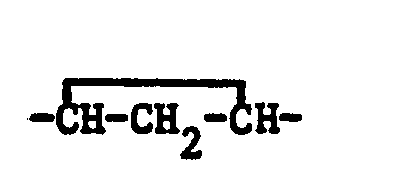


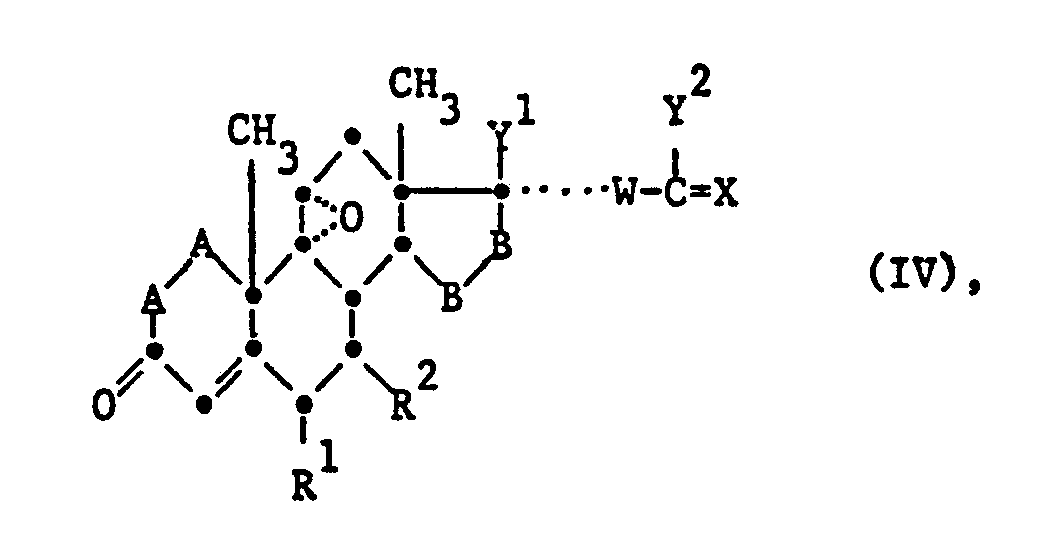


Applications Claiming Priority (2)
| Application Number | Priority Date | Filing Date | Title |
|---|---|---|---|
| CH198183 | 1983-04-13 | ||
| CH1981/83 | 1983-04-13 |
Publications (2)
| Publication Number | Publication Date |
|---|---|
| EP0122232A1 EP0122232A1 (de) | 1984-10-17 |
| EP0122232B1 true EP0122232B1 (de) | 1988-12-14 |
Family
ID=4223123
Family Applications (1)
| Application Number | Title | Priority Date | Filing Date |
|---|---|---|---|
| EP84810179A Expired EP0122232B1 (de) | 1983-04-13 | 1984-04-10 | 20-Spiroxane und Analoge mit geöffnetem Ring E, Verfahren zu ihrer Herstellung, sowie pharmazeutische Präparate davon |
Country Status (23)
| Country | Link |
|---|---|
| US (1) | US4559332A (de) |
| EP (1) | EP0122232B1 (de) |
| JP (1) | JPS59231100A (de) |
| AR (4) | AR241918A1 (de) |
| AT (1) | ATE39256T1 (de) |
| AU (1) | AU565017B2 (de) |
| CA (1) | CA1220781A (de) |
| DD (2) | DD251144A5 (de) |
| DE (2) | DE3475622D1 (de) |
| DK (1) | DK163988C (de) |
| ES (4) | ES8602846A1 (de) |
| FI (1) | FI77669C (de) |
| GR (1) | GR81834B (de) |
| HU (1) | HU191406B (de) |
| IE (1) | IE57541B1 (de) |
| IL (1) | IL71504A (de) |
| LU (1) | LU91072I2 (de) |
| NL (1) | NL300144I2 (de) |
| NO (1) | NO159800C (de) |
| NZ (1) | NZ207826A (de) |
| PH (1) | PH19997A (de) |
| PT (1) | PT78413B (de) |
| ZA (1) | ZA842710B (de) |
Families Citing this family (104)
| Publication number | Priority date | Publication date | Assignee | Title |
|---|---|---|---|---|
| US4670551A (en) * | 1984-06-21 | 1987-06-02 | Ciba-Geigy Corporation | Epoxy steroids |
| US5248807A (en) * | 1991-01-29 | 1993-09-28 | Shionogi & Co., Ltd. | Triterpene derivatives |
| US6245755B1 (en) | 1992-04-21 | 2001-06-12 | Curators Of The Unversity Of Missouri | Use of aldosterone antagonists to inhibit myocardial fibrosis |
| US6150347A (en) * | 1992-04-21 | 2000-11-21 | The Curators Of The University Of Missouri | Use of aldosterone antagonists to inhibit myocardial fibrosis |
| JPH05329410A (ja) * | 1992-05-29 | 1993-12-14 | Sekisui Plastics Co Ltd | マスキング材 |
| US6262277B1 (en) | 1994-09-13 | 2001-07-17 | G.D. Searle And Company | Intermediates and processes for the preparation of benzothiepines having activity as inhibitors of ileal bile acid transport and taurocholate uptake |
| US6268392B1 (en) | 1994-09-13 | 2001-07-31 | G. D. Searle & Co. | Combination therapy employing ileal bile acid transport inhibiting benzothiepines and HMG Co-A reductase inhibitors |
| US6642268B2 (en) | 1994-09-13 | 2003-11-04 | G.D. Searle & Co. | Combination therapy employing ileal bile acid transport inhibiting benzothipines and HMG Co-A reductase inhibitors |
| CN1142793C (zh) * | 1995-06-07 | 2004-03-24 | G·D·瑟尔公司 | 环氧-甾族化合物醛甾酮拮抗剂和血管紧张肽ⅱ拮抗剂联合治疗用于治疗充血性心衰 |
| AU6039296A (en) * | 1995-06-07 | 1996-12-30 | G.D. Searle & Co. | Method to treat cardiofibrosis with a combination therapy of an angiotensin ii antagonist and an epoxy-steroidal aldoste rone antagonist |
| US20050267302A1 (en) * | 1995-12-11 | 2005-12-01 | G.D. Searle & Co. | Eplerenone crystalline form exhibiting enhanced dissolution rate |
| US20020038021A1 (en) * | 1995-12-11 | 2002-03-28 | Barton Kathleen P. | Eplerenone crystalline form exhibiting enhanced dissolution rate |
| US20020045746A1 (en) * | 1995-12-11 | 2002-04-18 | Barton Kathleen P. | Eplerenone crystalline form |
| AU747959B2 (en) * | 1995-12-11 | 2002-05-30 | G.D. Searle & Co. | Processes and intermediates for the preparation of 9, 11-epoxy steroids |
| EP1167380A3 (de) * | 1995-12-11 | 2004-12-08 | G.D. Searle & Co. | 11.alpha.-Hydroxy-Steroid-4,6-dien-3-on Verbindungen und ein Verfahren zu ihrer Herstellung |
| US20050159594A1 (en) * | 1995-12-11 | 2005-07-21 | Pharmacia Corporation | Eplerenone crystal form exhibiting enhanced dissolution rate |
| WO1997021720A2 (en) | 1995-12-11 | 1997-06-19 | G.D. Searle And Co. | Processes for preparation of 7 alpha-carboxyl 9,11-epoxy steroids and intermediates useful therein and a general process for the epoxidation of olifinic double bonds |
| EP1148061B1 (de) * | 1996-12-11 | 2007-10-17 | G.D. Searle LLC. | Epoxidierungsverfahren |
| NZ336004A (en) | 1996-12-11 | 2001-04-27 | G | Process for preparation of 3-keto-7-alpha-alkoxycarbonyl substituted delta-4,5-steroid by reacting 4,5-dihydro-5,7-lactone steroid substrate in the presence of a base |
| US6887991B1 (en) * | 1996-12-11 | 2005-05-03 | G. D. Searle & Company | Processes for preparation of 9, 11-epoxy steroids and intermediates useful therein |
| ZA9711038B (en) * | 1996-12-11 | 1999-01-25 | Searle & Co | Spr process for preparation of 9,11-Epoxy steroids and intermediates useful therein |
| CA2298453A1 (en) * | 1998-05-29 | 1999-12-09 | Kyowa Hakko Kogyo Co., Ltd. | Process for producing seasoning liquors with flavor of vegetables pickled in salted rice bran paste |
| HUP0104249A3 (en) * | 1998-11-06 | 2002-06-28 | G D Searle & Co Chicago | Pharmaceutical composition for combination therapy of angiotensin converting enzyme inhibitor and aldosterone antagonist for reducing morbidity and mortality from cardiovascular disease |
| UA74141C2 (uk) * | 1998-12-09 | 2005-11-15 | Дж.Д. Сірл Енд Ко. | Фармацевтична композиція на основі тонкоподрібненого еплеренону (варіанти), спосіб її одержання та спосіб лікування розладів, опосередкованих альдостероном (варіанти) |
| AU2157500A (en) | 1998-12-23 | 2000-07-31 | G.D. Searle Llc | Combinations of cholesteryl ester transfer protein inhibitors and bile acid sequestering agents for cardiovascular indications |
| EA004877B1 (ru) | 1998-12-23 | 2004-08-26 | Джи.Ди.Сирл Ллс | Сочетания ингибиторов транспорта желчных кислот в подвздошной кишке и агентов, секвестрирующих желчные кислоты, для сердечно-сосудистых показаний |
| AU3103800A (en) * | 1998-12-23 | 2000-07-31 | G.D. Searle Llc | Combinations of cholesteryl ester transfer protein inhibitors and nicotinic acidderivatives for cardiovascular indications |
| DE69911058T2 (de) * | 1998-12-23 | 2004-06-03 | G.D. Searle Llc, Chicago | Kombinationen einem ibat inhibitor und einem mtp inhibitor für kardiovaskuläre indikationen |
| AU2157400A (en) | 1998-12-23 | 2000-07-31 | G.D. Searle & Co. | Combinations of cholesteryl ester transfer protein inhibitors and hmg coa reductase inhibitors for cardiovascular indications |
| BR9916486A (pt) | 1998-12-23 | 2002-02-05 | Searle Llc | Combinações de inibidores do transporte de ácidos biliares no ìleo e inibidores da proteìna de transferência do ester colesteril para indicações cardiovasculares |
| DK1140189T3 (da) * | 1998-12-23 | 2003-09-15 | Searle Llc | Kombinationer af ileal galdesyre-transportinhibitorer og fibrinsyrederivater til cardiovaskulære indikationer |
| US6458850B1 (en) * | 1998-12-23 | 2002-10-01 | G.D. Searle, Llc | Combinations of cholesteryl ester transfer protein inhibitors and fibric acid derivatives for cardiovascular indications |
| US20030203884A1 (en) * | 1999-11-09 | 2003-10-30 | Pharmacia Corporation | Methods for the treatment or prophylaxis of aldosterone-mediated pathogenic effects in a subject using an epoxy-steroidal aldosterone antagonist |
| US20030096798A1 (en) * | 1999-11-09 | 2003-05-22 | Williams Gordon H. | Methods for the treatment or prophylaxis of aldosterone-mediated pathogenic effects in a subject using an epoxy-steroidal aldosterone antagonist |
| EP1527782A1 (de) * | 1999-12-08 | 2005-05-04 | Pharmacia Corporation | Nanopartikelzusammensetzungen enthaltend Eplerenon |
| US20030083493A1 (en) * | 1999-12-08 | 2003-05-01 | Barton Kathleen P. | Eplerenone drug substance having high phase purity |
| CN1152886C (zh) * | 1999-12-08 | 2004-06-09 | 法马西亚公司 | 表现出溶解速度加快的依匹乐酮晶形 |
| EP1505072A3 (de) * | 1999-12-08 | 2006-06-21 | Pharmacia Corporation | Kristalline Form von Eplerenon mit verbesserter Lösegeschwindigkeit |
| AU2041101A (en) * | 1999-12-08 | 2001-06-18 | Pharmacia Corporation | Eplerenone crystalline form |
| WO2001041770A2 (en) * | 1999-12-08 | 2001-06-14 | Pharmacia Corporation | Nanoparticulate eplerenone compositions |
| EP1286984A2 (de) | 2000-03-10 | 2003-03-05 | Pharmacia Corporation | Verfahren zur herstellung von tetrahydrobenzothiepinen |
| WO2001068096A2 (en) * | 2000-03-10 | 2001-09-20 | Pharmacia Corporation | Combination therapy for the prophylaxis and treatment of hyperlipidemic conditions and disorders |
| WO2001087284A2 (en) * | 2000-05-11 | 2001-11-22 | Pharmacia Corporation | Aldosterone antagonist composition for release during aldosterone acrophase |
| AU1604001A (en) * | 2000-06-13 | 2001-12-24 | Pharmacia Corp | Use of an aldosterone antagonist for the treatment or prohpylaxis of aldosterone-mediated pathogenic effects |
| US20040235809A1 (en) * | 2000-07-27 | 2004-11-25 | Alexander John C | Epoxy steroidal aldosterone antagonist and beta-adremergic antagonist combination therepy for treatment of congestive heart failure |
| US6716829B2 (en) | 2000-07-27 | 2004-04-06 | Pharmacia Corporation | Aldosterone antagonist and cyclooxygenase-2 inhibitor combination therapy to prevent or treat inflammation-related cardiovascular disorders |
| DK1313485T3 (da) * | 2000-08-28 | 2005-12-27 | Pharmacia Corp | Anvendelse af en aldosteronreceptorantagonist til forbedring af kognitiv funktion |
| WO2002046386A2 (en) * | 2000-10-30 | 2002-06-13 | Pharmacia Corporation | Aspergillus ochraceus 11 alpha hydroxylase and oxidoreductase |
| DE60129838T2 (de) * | 2000-11-09 | 2008-04-30 | Astrazeneca Ab | Orale pharmazeutische zusammensetzung mit einem blockcopolymer |
| US8168616B1 (en) | 2000-11-17 | 2012-05-01 | Novartis Ag | Combination comprising a renin inhibitor and an angiotensin receptor inhibitor for hypertension |
| US20040077625A1 (en) * | 2001-07-25 | 2004-04-22 | Tremont Samuel J. | Novel 1,4-benzothiazepine and 1,5-benzothiazepine compounds as inhibitors of apical sodium codependent bile acid transport abd taurocholate uptake |
| US20030220310A1 (en) * | 2001-07-27 | 2003-11-27 | Schuh Joseph R. | Epoxy-steroidal aldosterone antagonist and calcium channel blocker combination therapy for treatment of congestive heart failure |
| BR0213501A (pt) * | 2001-11-02 | 2004-08-24 | Searle Llc | Compostos de benzotiepina mono- e di-fluorada como inibidores de transporte de ácido biliar co-dependente de sódio apical (asbt) e captação de taurocolato |
| WO2003049745A1 (en) | 2001-12-12 | 2003-06-19 | Pharmacia Corporation | Method of treating ophthalmic disorders with epoxy-steroidal aldosterone receptor antagonists |
| MXPA04006255A (es) | 2002-01-17 | 2004-09-27 | Pharmacia Corp | Compuestos novedosos de alquil/aril hidroxi o ceto tiepina como inhibidores del transporte del acido biliar codependiente del sodio apical y la captacion de taurocolato. |
| KR20040107481A (ko) * | 2002-03-18 | 2004-12-20 | 파마시아 코포레이션 | 알도스테론 수용체 길항물질 및 담즙산 격리제의 혼합물 |
| MXPA04009033A (es) * | 2002-03-18 | 2005-01-25 | Pharmacia Corp | Combinacion de un antagonista de receptor de aldosterona y acido nicotinico o un derivado de acido nicotinico. |
| EP1487540A2 (de) * | 2002-03-20 | 2004-12-22 | Pharmacia Corporation | Lagerfähige eplerenon-formulierung |
| EP1487859B1 (de) * | 2002-03-22 | 2008-08-13 | Pharmacia & Upjohn Company LLC | Verfahren zur herstellung von eplerenon |
| US7235655B2 (en) * | 2002-03-22 | 2007-06-26 | Pharmacia & Upjohn Company | Processes to prepare eplerenone |
| US20070066579A1 (en) * | 2002-08-16 | 2007-03-22 | White Michael J | 5-androsten-3beta-ol steroid intermediates and processs for their preparation |
| DE60308388T2 (de) * | 2002-08-16 | 2007-09-20 | Pharmacia & Upjohn Co. Llc, Kalamazoo | 5-Androsten-3beta-ol-Steroide und Verfahren für ihre Herstellung |
| US7196208B2 (en) * | 2002-11-06 | 2007-03-27 | Peter Guillaume Marie Wuts | Processes for preparing 7-carboxy substituted steroids |
| RS20050339A (sr) * | 2002-11-07 | 2007-08-03 | Pharmacia & Upjohn Company Llc., | Postupci za dobijanje c-7 supstituisanih 5-androstena |
| CL2004000544A1 (es) * | 2003-03-18 | 2005-01-28 | Pharmacia Corp Sa Organizada B | Uso de una combinacion farmaceutica, de un antagonista del receptor de aldosterona y un inhibidor de endopeptidasa neutral, util para el tratamiento y prevencion de una condicion patologica relacionada con hipertension, disfuncion renal, insulinopati |
| CL2004000545A1 (es) * | 2003-03-18 | 2005-01-28 | Pharmacia Corp Sa Organizada B | Uso de un antagonista de los receptores de aldosterona y un antagonista de receptores de endotelina para el tratamiento o profilaxis de una condicion patologica relacionada con hipertension, disfuncion renal, insulinopatia y enfermedades cardiovascul |
| CL2004000574A1 (es) * | 2003-03-21 | 2005-02-11 | Pharmacia Corp Sa Organizada B | Proceso para preparar un compuesto 17-espirolactona o la sal de lactona abierta por carbonilacion del correspondiente 17-alquenil o alquinil derivado, los intermediarios que se usan y su proceso de obtencion. |
| WO2004100871A2 (en) * | 2003-05-09 | 2004-11-25 | Pharmacia Corporation | Combination of an aldosterone receptor antagonist and a renin inhibitor |
| US20040265948A1 (en) * | 2003-06-27 | 2004-12-30 | White Michael Jon | Microbial method for hydrolysis and oxidation of androst-5-ene and pregn-5-ene steroid esters |
| GB0327839D0 (en) | 2003-12-01 | 2003-12-31 | Novartis Ag | Organic compounds |
| CN1934126A (zh) * | 2004-03-22 | 2007-03-21 | 法玛西雅厄普约翰有限责任公司 | 9,11环氧甾族化合物的改进制备方法 |
| US20070196471A1 (en) * | 2004-04-02 | 2007-08-23 | Thosar Shilpa S | Micronized Eplerenone Compositions |
| US20050232957A1 (en) * | 2004-04-14 | 2005-10-20 | Katz Kenneth A | Compositions and methods for moisturizing skin |
| CN1321128C (zh) * | 2005-07-15 | 2007-06-13 | 浙江医药股份有限公司新昌制药厂 | 孕甾-4-烯-7,21-二甲酸,9,11-环氧-17-羟基-3-氧代,γ-内酯,甲酯,(7α,11α,17α)-的制备方法 |
| WO2007025780A2 (en) * | 2005-09-02 | 2007-03-08 | Recordati Ireland Limited | Aldosterone receptor antagonists |
| EP1842543A1 (de) | 2006-04-05 | 2007-10-10 | Speedel Pharma AG | Pharmazeutishe Zusammensetzung enthaltend einen Aldosteron-Synthase-Inhibitor und einen Mineralkorticoidrezeptor-Antagonist |
| US20070248665A1 (en) * | 2006-04-24 | 2007-10-25 | Sherman Bernard C | Compositions comprising co-precipitate of eplerenone and a water-soluble excipient |
| DE102006028032A1 (de) * | 2006-06-14 | 2007-12-20 | Henkel Kgaa | Aufhell- und/oder Färbemittel mit Nitrilen |
| WO2008074098A1 (en) * | 2006-12-21 | 2008-06-26 | Alphapharm Pty Ltd | Pharmaceutical composition |
| CA2582496A1 (en) * | 2007-03-20 | 2008-09-20 | Apotex Pharmachem Inc. | Improved process for the preparation and purification of eplerenone |
| FR2917975B1 (fr) | 2007-06-26 | 2009-10-16 | Ceva Sante Animale Sa | Compositions et traitement de l'insuffisance cardiaque chez les animaux mammiferes non humains |
| DE102008026793A1 (de) * | 2008-06-02 | 2009-12-03 | Bayer Schering Pharma Aktiengesellschaft | C-Ring-substituierte Pregn-4-en-21,17-carbolactone, sowie diese enthaltende pharmazeutische Präparate |
| CN101863951B (zh) * | 2009-04-15 | 2012-06-06 | 浙江省天台县奥锐特药业有限公司 | 依普利酮的制备方法 |
| CA2763565A1 (en) | 2009-05-28 | 2010-12-02 | Novartis Ag | Substituted aminobutyric derivatives as neprilysin inhibitors |
| PL2435409T3 (pl) | 2009-05-28 | 2015-01-30 | Novartis Ag | Podstawione pochodne aminopropionowe jako inhibitory neprylizyny |
| JO2967B1 (en) | 2009-11-20 | 2016-03-15 | نوفارتس ايه جي | Acetic acid derivatives of carbamoyl methyl amino are substituted as new NEP inhibitors |
| US10231976B2 (en) * | 2010-02-08 | 2019-03-19 | Prairie Pharmaceuticals LLC | Methods for the use of progestogen as a glucocorticoid sensitizer |
| EP2568986B1 (de) | 2010-05-10 | 2016-01-13 | INSERM (Institut National de la Santé et de la Recherche Médicale) | Verfahren und Zusammensetzungen zur Behandlung von Flüssigkeitsansammlung in und/oder unter der Netzhaut |
| EP2582365B1 (de) | 2010-06-16 | 2019-03-20 | INSERM (Institut National de la Santé et de la Recherche Médicale) | Zusammensetzungen zur stimulierung der reepithelialisation während der wundheilung |
| TR201007653A2 (tr) | 2010-09-20 | 2012-04-24 | Bi̇lgi̇ç Mahmut | Eplerenon içeren farmasötik kompozisyon |
| US8673974B2 (en) | 2010-11-16 | 2014-03-18 | Novartis Ag | Substituted amino bisphenyl pentanoic acid derivatives as NEP inhibitors |
| US8877815B2 (en) | 2010-11-16 | 2014-11-04 | Novartis Ag | Substituted carbamoylcycloalkyl acetic acid derivatives as NEP |
| WO2012107513A1 (en) * | 2011-02-10 | 2012-08-16 | Crystal Pharma, S.A.U. | Process for obtaining drospirenone |
| ITMI20121037A1 (it) * | 2012-06-14 | 2013-12-15 | Ind Chimica Srl | Processo per la preparazione di nitrili utili come intermedi per la sintesi di molecole ad attivita' farmacologica |
| SG11201506018PA (en) | 2013-02-14 | 2015-08-28 | Novartis Ag | Substituted bisphenyl butanoic phosphonic acid derivatives as nep (neutral endopeptidase) inhibitors |
| CN104262450A (zh) * | 2014-09-19 | 2015-01-07 | 江苏嘉逸医药有限公司 | 依普利酮的制备及精制方法 |
| ES2699923T3 (es) | 2014-10-17 | 2019-02-13 | Ind Chimica Srl | Proceso para la preparación de 7alfa-(metoxicarbonil)-3-oxo-17alfa-pregn-4,9(11)-dien-21,17-carbolactona, un intermedio útil para la síntesis de moléculas con actividad farmacológica |
| WO2017055248A1 (en) | 2015-09-28 | 2017-04-06 | INSERM (Institut National de la Santé et de la Recherche Médicale) | Methods and pharmaceutical compositions for the treatment of heart failure |
| US20180280414A1 (en) | 2015-10-13 | 2018-10-04 | Inserm (Institut National De La Sante Et De La Recherche Medicale) | Methods and pharmaceutical compositions for the treatment of choroidal neovascularisation |
| CN105753930A (zh) * | 2016-03-30 | 2016-07-13 | 北京万全德众医药生物技术有限公司 | 依普利酮的一种合成方法 |
| EP3490606B8 (de) | 2016-07-26 | 2024-04-10 | INSERM (Institut National de la Santé et de la Recherche Médicale) | Mineralocorticoid-receptor-antagonist zur behandlung von osteoarthritis |
| JOP20190086A1 (ar) | 2016-10-21 | 2019-04-18 | Novartis Ag | مشتقات نافثيريدينون جديدة واستخدامها في معالجة عدم انتظام ضربات القلب |
| UY38072A (es) | 2018-02-07 | 2019-10-01 | Novartis Ag | Compuestos derivados de éster butanoico sustituido con bisfenilo como inhibidores de nep, composiciones y combinaciones de los mismos |
| WO2023031277A1 (en) | 2021-08-31 | 2023-03-09 | INSERM (Institut National de la Santé et de la Recherche Médicale) | Methods for the treatment of ocular rosacea |
Family Cites Families (8)
| Publication number | Priority date | Publication date | Assignee | Title |
|---|---|---|---|---|
| US3095412A (en) * | 1961-12-19 | 1963-06-25 | Searle & Co | 9alpha, 11alpha-epoxy and 11beta-chloro-9alpha-hydroxy 17alpha-(2-carboxyethyl)-17beta-hydroxyandrost-4-en-3-one gamma-lactones and delta1 and delta6 analogs |
| GB1041534A (en) * | 1963-04-24 | 1966-09-07 | Merck & Co Inc | 20-spiroxane compounds |
| US3729491A (en) * | 1970-06-15 | 1973-04-24 | Searle & Co | 3,5-dioxo-a-nor-b-homo steroidal spirolactones |
| GB1368006A (en) * | 1972-08-24 | 1974-09-25 | Searle & Co | 4alpha,7alpha-carbonyl-5-cyano-17-hzydroxy-3-oxo-5beta,17alpha- pregnane-21-carboxylic acid ypsilon-lactone |
| US3849404A (en) * | 1973-03-09 | 1974-11-19 | Searle & Co | Purification of 6,7-dihydro-17-hydroxy-3-oxo-3'h-cyclopropa(6,7)-17alpha-pregna-4,6-diene-21-carboxylic acid gamma-lactones |
| DE2652761C2 (de) * | 1976-11-16 | 1985-11-21 | Schering AG, 1000 Berlin und 4709 Bergkamen | 15,16-Methylen-Spirolactone, Verfahren zu deren Herstellung und diese enthaltende Arzneimittel |
| DE2922500A1 (de) * | 1979-05-31 | 1980-12-04 | Schering Ag | 6 beta .7 beta |
| DE3111951A1 (de) * | 1981-03-23 | 1982-09-30 | Schering Ag, 1000 Berlin Und 4619 Bergkamen | 7(alpha)-alkoxycarbonyl-15ss-methylen-4-androstene, verfahren zu ihrer herstellung und verwendung als arzneimittel |
-
1984
- 1984-04-09 US US06/598,109 patent/US4559332A/en not_active Expired - Lifetime
- 1984-04-09 FI FI841400A patent/FI77669C/fi not_active IP Right Cessation
- 1984-04-10 EP EP84810179A patent/EP0122232B1/de not_active Expired
- 1984-04-10 AT AT84810179T patent/ATE39256T1/de not_active IP Right Cessation
- 1984-04-10 DE DE8484810179T patent/DE3475622D1/de not_active Expired
- 1984-04-10 LU LU91072C patent/LU91072I2/fr unknown
- 1984-04-11 GR GR74371A patent/GR81834B/el unknown
- 1984-04-11 IL IL71504A patent/IL71504A/xx not_active IP Right Cessation
- 1984-04-11 DD DD84261867A patent/DD251144A5/de not_active IP Right Cessation
- 1984-04-11 ES ES531517A patent/ES8602846A1/es not_active Expired
- 1984-04-11 DD DD84276211A patent/DD233375A5/de not_active IP Right Cessation
- 1984-04-11 CA CA000451691A patent/CA1220781A/en not_active Expired
- 1984-04-12 DK DK189484A patent/DK163988C/da active Protection Beyond IP Right Term
- 1984-04-12 HU HU841435A patent/HU191406B/hu unknown
- 1984-04-12 AU AU26853/84A patent/AU565017B2/en not_active Expired
- 1984-04-12 JP JP59071900A patent/JPS59231100A/ja active Granted
- 1984-04-12 PH PH30539A patent/PH19997A/en unknown
- 1984-04-12 ZA ZA842710A patent/ZA842710B/xx unknown
- 1984-04-12 NZ NZ207826A patent/NZ207826A/en unknown
- 1984-04-12 PT PT78413A patent/PT78413B/pt unknown
- 1984-04-12 IE IE906/84A patent/IE57541B1/en active Protection Beyond IP Right Term
- 1984-04-12 NO NO841465A patent/NO159800C/no not_active IP Right Cessation
- 1984-04-13 AR AR84296305A patent/AR241918A1/es active
-
1985
- 1985-07-01 ES ES544768A patent/ES8705459A1/es not_active Expired
- 1985-07-01 ES ES544770A patent/ES8705461A1/es not_active Expired
- 1985-07-01 ES ES544769A patent/ES8705460A1/es not_active Expired
-
1986
- 1986-08-01 AR AR86305012A patent/AR242223A1/es active
- 1986-08-21 AR AR86305011A patent/AR242222A1/es active
- 1986-08-21 AR AR86305013A patent/AR242221A1/es active
-
2004
- 2004-03-25 NL NL300144C patent/NL300144I2/nl unknown
- 2004-04-08 DE DE200412000012 patent/DE122004000012I1/de active Granted
Also Published As
Similar Documents
| Publication | Publication Date | Title |
|---|---|---|
| EP0122232A1 (de) | 20-Spiroxane und Analoge mit geöffnetem Ring E, Verfahren zu ihrer Herstellung, sowie pharmazeutische Präparate davon | |
| EP2178899B1 (de) | 17beta-cyano-18a-homo-19-nor-androst-4-en-derivat, dessen verwendung und das derivat enthaltende arzneimittel | |
| EP0283428A1 (de) | 19,11beta-Überbrückte Steroide, deren Herstellung und diese enthaltende pharmazeutische Präparate | |
| CH668599A5 (de) | Substituierte androsta-1,4-dien-3,17-dione und verfahren zu deren herstellung. | |
| EP2038294B1 (de) | 18-methyl-19-nor-androst-4-en-17,17-spiroether (18-methyl-19-nor-20- spirox-4-en-3-one), sowie diese enthaltende pharmazeutische präparate | |
| EP0277089A1 (de) | 11 Beta-alkinyl-estrene und -estradiene, deren Herstellung und diese enthaltende pharmezeutische Präparate | |
| DE102004063864A1 (de) | 18-Methyl-19-nor-17-pregn-4-en21,17-carbolactone, sowie diese enthaltende pharmazeutische Präparate | |
| DE2631915A1 (de) | 16-dehydroandrostan-derivate | |
| EP0165902B1 (de) | Epoxysteroide | |
| CH632279A5 (en) | Process for the preparation of polyhalogenated steroids | |
| DE2744255A1 (de) | Verfahren zur herstellung neuer steroidverbindungen mit 19-staendiger sauerstoffunktion | |
| DE2711516C2 (de) | 17-Spirosultin-Derivate, Zwischenprodukte und Verfahren zu deren Herstellung und diese enthaltende pharmazeutische Zusammensetzungen | |
| EP0149464A2 (de) | 6-Alpha,16-beta-Dimethylkortikoide | |
| DE2823239A1 (de) | Verbindungen der pregnanreihe mit 19- staendiger sauerstoffunktion, verfahren zu ihrer herstellung und pharmazeutische praeparate enthaltend diese verbindungen | |
| DE2309328A1 (de) | 3-keto-7(alpha,beta)-nied.-alkyldelta hoch 5-steroide und verfahren zu ihrer herstellung | |
| DE1518994A1 (de) | Verfahren zur Herstellung von neuen Beta,10Alpha-Steroiden | |
| DD158778A5 (de) | Verfahren zur herstellung halogenierter steroide | |
| EP0122882A1 (de) | Neue Steroide der 20-Spiroxanreihe, Verfahren zu ihrer Herstellung, pharmazeutische Präparate enthaltend solche Verbindungen und Verwendung der letzteren | |
| DE1618493A1 (de) | Verfahren zur Herstellung von halogenierten Steroiden | |
| DE102007063503A1 (de) | 17-Hydroxy-19-nor-21-carbonsäure-Steroid y-Lacton-Derivat, dessen Verwendung und das Derivat enthaltende Arzneimittel | |
| DE3622841C2 (de) | Substituierte Androsta-1,4-dien-3,17-dione und Verfahren zu deren Herstellung | |
| DE1643054C3 (de) | 1 alpha,2alpha-Methylen-4-chlor-DeHa hoch 4- bzw. Delta hoch 4,6 -7-methyl-Verbindungen der Pregnan-relhe, Verfahren zu ihrer Herstellung sowie diese enthaltende Arzneimittel | |
| EP0000368B1 (de) | D-Homosteroide und solche enthaltende Präparate sowie Verfahren zur Herstellung solcher D-Homosteroide | |
| DE1643054A1 (de) | Neue 7-Methylsteroide | |
| DD238801A5 (de) | Verfahren zur herstellung neuer epoxysteroide |
Legal Events
| Date | Code | Title | Description |
|---|---|---|---|
| PUAI | Public reference made under article 153(3) epc to a published international application that has entered the european phase |
Free format text: ORIGINAL CODE: 0009012 |
|
| 17P | Request for examination filed |
Effective date: 19840412 |
|
| AK | Designated contracting states |
Designated state(s): AT BE CH DE FR GB IT LI LU NL SE |
|
| 17Q | First examination report despatched |
Effective date: 19861203 |
|
| D17Q | First examination report despatched (deleted) | ||
| GRAA | (expected) grant |
Free format text: ORIGINAL CODE: 0009210 |
|
| AK | Designated contracting states |
Kind code of ref document: B1 Designated state(s): AT BE CH DE FR GB IT LI LU NL SE |
|
| REF | Corresponds to: |
Ref document number: 39256 Country of ref document: AT Date of ref document: 19881215 Kind code of ref document: T |
|
| REF | Corresponds to: |
Ref document number: 3475622 Country of ref document: DE Date of ref document: 19890119 |
|
| ITF | It: translation for a ep patent filed | ||
| ET | Fr: translation filed | ||
| GBT | Gb: translation of ep patent filed (gb section 77(6)(a)/1977) | ||
| PLBE | No opposition filed within time limit |
Free format text: ORIGINAL CODE: 0009261 |
|
| STAA | Information on the status of an ep patent application or granted ep patent |
Free format text: STATUS: NO OPPOSITION FILED WITHIN TIME LIMIT |
|
| 26N | No opposition filed | ||
| ITTA | It: last paid annual fee | ||
| EPTA | Lu: last paid annual fee | ||
| EAL | Se: european patent in force in sweden |
Ref document number: 84810179.6 |
|
| REG | Reference to a national code |
Ref country code: CH Ref legal event code: PFA Free format text: CIBA-GEIGY AG TRANSFER- NOVARTIS AG |
|
| REG | Reference to a national code |
Ref country code: GB Ref legal event code: 732E |
|
| NLS | Nl: assignments of ep-patents |
Owner name: NOVARTIS AG |
|
| REG | Reference to a national code |
Ref country code: FR Ref legal event code: TP |
|
| REG | Reference to a national code |
Ref country code: GB Ref legal event code: IF02 |
|
| PGFP | Annual fee paid to national office [announced via postgrant information from national office to epo] |
Ref country code: AT Payment date: 20030311 Year of fee payment: 20 |
|
| PGFP | Annual fee paid to national office [announced via postgrant information from national office to epo] |
Ref country code: FR Payment date: 20030314 Year of fee payment: 20 |
|
| PGFP | Annual fee paid to national office [announced via postgrant information from national office to epo] |
Ref country code: BE Payment date: 20030317 Year of fee payment: 20 |
|
| PGFP | Annual fee paid to national office [announced via postgrant information from national office to epo] |
Ref country code: NL Payment date: 20030318 Year of fee payment: 20 |
|
| PGFP | Annual fee paid to national office [announced via postgrant information from national office to epo] |
Ref country code: GB Payment date: 20030321 Year of fee payment: 20 |
|
| PGFP | Annual fee paid to national office [announced via postgrant information from national office to epo] |
Ref country code: SE Payment date: 20030325 Year of fee payment: 20 Ref country code: DE Payment date: 20030325 Year of fee payment: 20 Ref country code: CH Payment date: 20030325 Year of fee payment: 20 |
|
| PGFP | Annual fee paid to national office [announced via postgrant information from national office to epo] |
Ref country code: LU Payment date: 20030328 Year of fee payment: 20 |
|
| PG25 | Lapsed in a contracting state [announced via postgrant information from national office to epo] |
Ref country code: SE Free format text: LAPSE BECAUSE OF NON-PAYMENT OF DUE FEES Effective date: 20031219 |
|
| PG25 | Lapsed in a contracting state [announced via postgrant information from national office to epo] |
Ref country code: LI Free format text: LAPSE BECAUSE OF EXPIRATION OF PROTECTION Effective date: 20040409 Ref country code: GB Free format text: LAPSE BECAUSE OF EXPIRATION OF PROTECTION Effective date: 20040409 Ref country code: CH Free format text: LAPSE BECAUSE OF EXPIRATION OF PROTECTION Effective date: 20040409 |
|
| PG25 | Lapsed in a contracting state [announced via postgrant information from national office to epo] |
Ref country code: NL Free format text: LAPSE BECAUSE OF EXPIRATION OF PROTECTION Effective date: 20040410 Ref country code: LU Free format text: LAPSE BECAUSE OF NON-PAYMENT OF DUE FEES Effective date: 20040410 Ref country code: AT Free format text: LAPSE BECAUSE OF EXPIRATION OF PROTECTION Effective date: 20040410 |
|
| BE20 | Be: patent expired |
Owner name: *NOVARTIS A.G. Effective date: 20040410 |
|
| REG | Reference to a national code |
Ref country code: CH Ref legal event code: PL |
|
| REG | Reference to a national code |
Ref country code: GB Ref legal event code: PE20 |
|
| REG | Reference to a national code |
Ref country code: DE Ref legal event code: R065 Ref document number: P3475622 Country of ref document: DE Free format text: PRODUCT NAME: EPLERENON UND PHARMAZEUTISCH VERTRAEGLICHE SALZE HIERVON; AUTHORISATION NO/DATE: RVG/29963 20040316; RVG/29964 20040316 Spc suppl protection certif: 122004000012 |
|
| EUG | Se: european patent has lapsed | ||
| NLV7 | Nl: ceased due to reaching the maximum lifetime of a patent |
Effective date: 20040410 |
|
| REG | Reference to a national code |
Ref country code: NL Ref legal event code: KC1 Free format text: 300144, 20040410, EXPIRES: 20090409 Spc suppl protection certif: 300144 Filing date: 20040410 Expiry date: 20090409 Ref country code: NL Ref legal event code: AC1 Spc suppl protection certif: 300144 Filing date: 20040325 |
|
| REG | Reference to a national code |
Ref country code: LU Ref legal event code: CCP Free format text: 91072, EXPIRES: 20090410 Spc suppl protection certif: 91072 Expiry date: 20090410 |
|
| REG | Reference to a national code |
Ref country code: GB Ref legal event code: CTFF Free format text: SPC/GB04/023: 20040407 Spc suppl protection certif: SPC/GB04/023 Filing date: 20040407 |
|
| REG | Reference to a national code |
Ref country code: NL Ref legal event code: BC1 |
|
| REG | Reference to a national code |
Ref country code: SE Ref legal event code: SPCF Free format text: PRODUCT NAME: EPLERENON OCH FARMACEUTISKT GODTAGBARA SALTER DAERAV; NAT REG. NO/DATE: NL RVG 29963 20040316; FIRST REG.: SE 21030 20040820 Spc suppl protection certif: 04900064.L |
|
| REG | Reference to a national code |
Ref country code: SE Ref legal event code: SPCG Spc suppl protection certif: 04900064.L |
|
| REG | Reference to a national code |
Ref country code: DE Ref legal event code: R067 Ref document number: P3475622 Country of ref document: DE Free format text: PRODUCT NAME: EPLERENON UND PHARMAZEUTISCH VERTRAEGLICHE SALZE HIERVON; AUTHORISATION NO/DATE: RVG/29963 20040316; RVG/29964 20040316 Spc suppl protection certif: 122004000012 |
|
| REG | Reference to a national code |
Ref country code: GB Ref legal event code: CTFR Free format text: SPC/GB04/023: 20050422 Spc suppl protection certif: SPC/GB04/023 Filing date: 20050422 |
|
| REG | Reference to a national code |
Ref country code: DE Ref legal event code: SPC6 Ref document number: P3475622 Country of ref document: DE Free format text: PRODUCT NAME: EPLERENON UND PHARMAZEUTISCH VERTRAEGLICHE SALZE HIERVON; AUTHORISATION NO/DATE: RVG/29963 20040316; RVG/29964 20040316 Spc suppl protection certif: 122004000012 |
|
| REG | Reference to a national code |
Ref country code: DE Ref legal event code: R067 Ref document number: P3475622 Country of ref document: DE Free format text: PRODUCT NAME: EPLERENON UND PHARMAZEUTISCH VERTRAEGLICHE SALZE HIERVON; AUTHORISATION NO/DATE: RVG/29963 20040316; RVG/29964 20040316 Spc suppl protection certif: 122004000012 Ref country code: DE Ref legal event code: SPC7 Ref document number: P3475622 Country of ref document: DE Free format text: PRODUCT NAME: EPLERENON UND PHARMAZEUTISCH VERTRAEGLICHE SALZE HIERVON; AUTHORISATION NO/DATE: RVG/29963 20040316; RVG/29964 20040316 Spc suppl protection certif: 122004000012 |
|
| REG | Reference to a national code |
Ref country code: DE Ref legal event code: R069 Ref document number: P3475622 Country of ref document: DE Free format text: PRODUCT NAME: EPLERENON UND PHARMAZEUTISCH VERTRAEGLICHE SALZE HIERVON; AUTHORISATION NO/DATE: RVG/29963 20040316; RVG/29964 20040316 Spc suppl protection certif: 122004000012 |
|
| REG | Reference to a national code |
Ref country code: DE Ref legal event code: SP71 Ref document number: P3475622 Country of ref document: DE Free format text: PRODUCT NAME: EPLERENON UND PHARMAZEUTISCH VERTRAEGLICHE SALZE HIERVON; AUTHORISATION NO/DATE: RVG/29963 20040316; RVG/29964 20040316 Spc suppl protection certif: 122004000012 |
|
| REG | Reference to a national code |
Ref country code: BE Ref legal event code: CCRE Free format text: PRODUCT NAME: EPLERENONE; NATIONAL REGISTRATION NO/DATE: 241 IS 188 F3 20041220; FIRST REGISTRATION: NL RVG 29963 20040316 Spc suppl protection certif: 2004C/008 Filing date: 20040407 Expiry date: 20040410 Extension date: 20090410 |
|
| REG | Reference to a national code |
Ref country code: FR Ref legal event code: SPCL Free format text: PRODUCT NAME: EPLERENONE; NAT. REGISTRATION NO/DATE: NL 30325 20040407; FIRST REGISTRATION: RVG 29963 20040316 Spc suppl protection certif: 04C0009 Filing date: 20040407 |