EP0106828A2 - Rekombinante DNS-Moleküle die Hepatitis-B-Oberflächenantigen kodieren, deren Herstellung und abgeleitete Vakzine - Google Patents
Rekombinante DNS-Moleküle die Hepatitis-B-Oberflächenantigen kodieren, deren Herstellung und abgeleitete Vakzine Download PDFInfo
- Publication number
- EP0106828A2 EP0106828A2 EP83870090A EP83870090A EP0106828A2 EP 0106828 A2 EP0106828 A2 EP 0106828A2 EP 83870090 A EP83870090 A EP 83870090A EP 83870090 A EP83870090 A EP 83870090A EP 0106828 A2 EP0106828 A2 EP 0106828A2
- Authority
- EP
- European Patent Office
- Prior art keywords
- fragment
- hbsag
- regulatory region
- yeast
- sequence
- Prior art date
- Legal status (The legal status is an assumption and is not a legal conclusion. Google has not performed a legal analysis and makes no representation as to the accuracy of the status listed.)
- Granted
Links
Images


Classifications
-
- C—CHEMISTRY; METALLURGY
- C12—BIOCHEMISTRY; BEER; SPIRITS; WINE; VINEGAR; MICROBIOLOGY; ENZYMOLOGY; MUTATION OR GENETIC ENGINEERING
- C12P—FERMENTATION OR ENZYME-USING PROCESSES TO SYNTHESISE A DESIRED CHEMICAL COMPOUND OR COMPOSITION OR TO SEPARATE OPTICAL ISOMERS FROM A RACEMIC MIXTURE
- C12P21/00—Preparation of peptides or proteins
-
- C—CHEMISTRY; METALLURGY
- C07—ORGANIC CHEMISTRY
- C07K—PEPTIDES
- C07K14/00—Peptides having more than 20 amino acids; Gastrins; Somatostatins; Melanotropins; Derivatives thereof
- C07K14/005—Peptides having more than 20 amino acids; Gastrins; Somatostatins; Melanotropins; Derivatives thereof from viruses
-
- A—HUMAN NECESSITIES
- A61—MEDICAL OR VETERINARY SCIENCE; HYGIENE
- A61P—SPECIFIC THERAPEUTIC ACTIVITY OF CHEMICAL COMPOUNDS OR MEDICINAL PREPARATIONS
- A61P31/00—Antiinfectives, i.e. antibiotics, antiseptics, chemotherapeutics
- A61P31/12—Antivirals
-
- C—CHEMISTRY; METALLURGY
- C12—BIOCHEMISTRY; BEER; SPIRITS; WINE; VINEGAR; MICROBIOLOGY; ENZYMOLOGY; MUTATION OR GENETIC ENGINEERING
- C12N—MICROORGANISMS OR ENZYMES; COMPOSITIONS THEREOF; PROPAGATING, PRESERVING, OR MAINTAINING MICROORGANISMS; MUTATION OR GENETIC ENGINEERING; CULTURE MEDIA
- C12N15/00—Mutation or genetic engineering; DNA or RNA concerning genetic engineering, vectors, e.g. plasmids, or their isolation, preparation or purification; Use of hosts therefor
-
- C—CHEMISTRY; METALLURGY
- C12—BIOCHEMISTRY; BEER; SPIRITS; WINE; VINEGAR; MICROBIOLOGY; ENZYMOLOGY; MUTATION OR GENETIC ENGINEERING
- C12N—MICROORGANISMS OR ENZYMES; COMPOSITIONS THEREOF; PROPAGATING, PRESERVING, OR MAINTAINING MICROORGANISMS; MUTATION OR GENETIC ENGINEERING; CULTURE MEDIA
- C12N15/00—Mutation or genetic engineering; DNA or RNA concerning genetic engineering, vectors, e.g. plasmids, or their isolation, preparation or purification; Use of hosts therefor
- C12N15/09—Recombinant DNA-technology
- C12N15/63—Introduction of foreign genetic material using vectors; Vectors; Use of hosts therefor; Regulation of expression
- C12N15/79—Vectors or expression systems specially adapted for eukaryotic hosts
- C12N15/80—Vectors or expression systems specially adapted for eukaryotic hosts for fungi
- C12N15/81—Vectors or expression systems specially adapted for eukaryotic hosts for fungi for yeasts
-
- A—HUMAN NECESSITIES
- A61—MEDICAL OR VETERINARY SCIENCE; HYGIENE
- A61K—PREPARATIONS FOR MEDICAL, DENTAL OR TOILETRY PURPOSES
- A61K38/00—Medicinal preparations containing peptides
-
- C—CHEMISTRY; METALLURGY
- C12—BIOCHEMISTRY; BEER; SPIRITS; WINE; VINEGAR; MICROBIOLOGY; ENZYMOLOGY; MUTATION OR GENETIC ENGINEERING
- C12N—MICROORGANISMS OR ENZYMES; COMPOSITIONS THEREOF; PROPAGATING, PRESERVING, OR MAINTAINING MICROORGANISMS; MUTATION OR GENETIC ENGINEERING; CULTURE MEDIA
- C12N2730/00—Reverse transcribing DNA viruses
- C12N2730/00011—Details
- C12N2730/10011—Hepadnaviridae
- C12N2730/10111—Orthohepadnavirus, e.g. hepatitis B virus
- C12N2730/10122—New viral proteins or individual genes, new structural or functional aspects of known viral proteins or genes
Definitions
- the invention relates to recombinant DNA molecules encoding the hepatitis B surface antigen, their preparation and the vaccines derived therefrom.
- the invention relates to the cloning of a gene which codes for the hepatitis B surface antigen in yeast by application of so-called recombinant DNA techniques as well as to the preparation of a hepatitis B virus vaccine from the yeast antigen.
- Hepatitis B virus (HBV) infection is a serious and universal health problem.
- the infection can appear in the acute or chronic phase.
- the number of acute hepatitis cases in the United States is estimated to be at least 100,000 per year with a clinical mortality rate of 1 to 2%.
- the prevalence of chronic HBV carriers among healthy adults varies between 0.1 and 1% depending on age and social class.
- the prevalence of chronic carriers is around 1 to 3%, in U.R.S.S. and in southern Europe, by around 3 to 6% and in Asia and Africa, by more than 10%.
- the particles of Dane which are believed to be virions of hepatitis B and which can be isolated from infected patients, have a diameter of approximately 42 nm.
- Each particle consists of an envelope containing the hepatitis B surface antigen (HBsAg), a capsid (HBcAg), an endogenous polymerase and a DNA genome.
- the genome is circular and double-stranded with a single-stranded region comprising about 200 bases.
- the single-stranded region can be synthesized in vitro by the action of endogenous polymerase.
- the longest strand contains approximately 3,200 bases.
- Valenzuela et al. Nature, Volume 298, 347-350 (1982) mention the synthesis of HBsAg in yeast using an expression vector in which the sequence coding for HBsAg is a TaqI-HpaI fragment of 835 base pairs (bp) and the promoter is the yeast alcohol dehydrogenase I promoter.
- bp base pairs
- HBV antigenic components such as HBsAg
- HBsAg have been prepared in bacteria after the insertion of a recombinant DNA molecule containing a gene that codes for the antigen.
- Murray et al. European patent application No. 12828, describe the preparation of a recombinant vector which can code for HBV antigens, including HBsAg, in the HB 101 strain of E. coli.
- the vector is prepared from the DNA of the Dane particle and from plasmid pBr 322.
- useful hosts may include other bacterial hosts, yeasts and other fungi, animal or plant cells and other hosts, although the only host demonstrated is E. coli.
- a bacteriophage comprising a fusion of the f-galactosidase gene and the structural gene for HBsAg.
- the bacteriophage directs the synthesis of a fusion protein comprising the antigenic determinants of HBsAg and ⁇ -galactosidase.
- HBV DNA has also been cloned into mammalian cells. These include human, mouse and human hepatoma cell lines.
- mammalian cells include human, mouse and human hepatoma cell lines.
- Dubois et al. Proc. Natl. Acad. Sci. U.S., Volume 77, Number 8, 4549-4553 (1980)
- one dose of vaccine represented 1 ml of purified formalin-treated HBsAg containing 2-10 ⁇ g / ml protein (Lowry's method) and 0.1% aluminum hydroxide.
- HBV vaccines include those of Maupas et al., Respectively on pages 3, 37, and 57 of Hepatitis B Vaccine INSERM Symposium No. 18, edited by Maupas & Guesry, 1981, Elsevier / North Holland Biomedical Press.
- Yeasts have been used as host organisms for certain other DNA sequences.
- Fraser et al. UK patent application no. 2068969, describe the preparation of chicken ovalbumin in yeast; Scrip N ° 640, p. 11 (November 4, 1981) contains a report that a type of interferon is prepared in yeast.
- European Patent No. 11562 (Derwent No. 38762C) hybrid yeast plasmids containing the ura gene are described. of yeast in the plasmid 2 ⁇ .
- the invention relates to the preparation of a recombinant DNA molecule comprising a nucleotide sequence which can code for HBsAg and a regulatory region originating from the yeast arg3 gene which can effect the transcription of the sequence of HBsAg in yeast. Saccharomyces cerevisiae.
- the molecule comprises vectors into which the HBsAg sequence and the regulatory region have been inserted, which vectors can be used to prepare a yeast carrier or to conserve HBsAg and the regulatory regions.
- the invention also comprises a plasmid having the regulatory region arg3 and a restriction site close to it for the insertion of a coding sequence, such as an HBsAg sequence, so that the protein synthesized by expression of the coding sequence is free of foreign amino acid residues.
- a coding sequence such as an HBsAg sequence
- the invention also includes a vaccine intended to stimulate protection against HBV infection in humans and which contains a vaccine amount of HBsAg prepared according to the present invention as well as a suitable excipient.
- the invention includes methods for preparing the recombinant DNA molecule and the microorganisms containing the molecules as well as methods for preparing the HBsAg and the vaccine containing the HBsAg.
- the recombinant DNA molecule of the invention is prepared by fusion of a nucleotide sequence which comprises a structural gene for HBsAg with the regulatory region arg3 of yeast, which regulatory region can direct the transcription of the sequence of HBsAb in yeast thereby achieving its express if we.
- recombinant DNA molecule is meant a DNA fragment which contains the sequence coding for HBsAg and the regulatory region as well as other DNA molecules containing the fragment, such as plasmids or vector phages.
- regulatory region is meant a sequence which contains a promoter region and other sequences necessary for transcription.
- the yeast arg3 regulatory region is particularly advantageous because it can be a powerful promoter for the expression of a sequence coding for HBsAg.
- HBsAg is meant a protein which is structurally identical to the authentic HbsAg or which actually has the same antigenic determinants as the authentic HBsAg, that is to say a protein capable of stimulating the production of antibodies. which specifically recognize and react with authentic HBsAg or a protein specifically recognized by anti-HBsAg antibodies.
- the sequence encoding HbsAg can be isolated from DNA extracted from Dane particles in human serum by synthesizing the complementary fiber to the single-stranded region using DNA polymerase, preferably endogenous polymerase, followed by digestion using a restriction endonuclease.
- DNA polymerase preferably endogenous polymerase
- the choice of endonuclease will depend in part on the Dane particles.
- the sequence coding for HbsAg of the HBV DNA of certain Dane particles of serotype adw can be isolated on a simple BamHI fragment; the sequence coding for HBsAg of the HBV DNA of certain Dane particles of serotype ayw can be isolated on an HhaI fragment.
- DNA isolated from Dane particles of the same serotype may also have different patterns of restriction sites.
- the restriction of DNA with a view to preparing the DNA fragments used in the invention, the ligation of such fragments to prepare the recombinant DNA molecules used in the invention and the insertion into microorganisms are carried out according to known techniques such as the techniques described in the references cited above and later.
- the conditions are chosen so as to avoid denaturation of DNA and that of enzymes. For example, buffers the pH to maintain it between 7 and 11 and the temperature maintained below 60 * C. performs restriction preferably at a temperature of about 30 to 40 ° C and ligation is carried out at about 0 to 10 * C.
- the restriction enzymes and ligases used in the practice of the present invention are commercially available and should be used in accordance with the guidelines included therein. T4 DNA ligase is the preferred ligase.
- Fusion of the HBsAg sequence to the regulatory region can be accomplished using intermediate vectors, as illustrated in the examples below.
- the HBsAg sequence can also be inserted directly into a vector which contains the regulatory region.
- This vector is DNA which can transport and store the DNA fragment of the invention including, for example, phages and plasmids. Techniques for cloning DNA fragments into phages are described, for example, by Charnay et al., Nature, Volume 286, 893-895 (1980) and Tiollais, UK patent application no. 2034323.
- the HBsAg sequence is positioned with respect to the regulatory region so that the HBsAg synthesized by expression of the HBsAg sequence is practically free of residues of foreign amino acids.
- a regulatory region that has been found to be particularly useful comes from the yeast arg3 gene which codes for ornithine carbamoyltransferase (OCT).
- OCT carbamoyltransferase
- the use of the arg3 control region is advantageous because its activity is subject to both specific and general control mechanisms. It was cloned into E. coli on the plasmid pYeura3arg3 as reported by Crabeel et al., Proc. Natl. Acad. Sci. U.S.A., Volume 78, 5026 (1981).
- the preferred hosts are the strains of S. cerevisiae, in particular the strain lcll697d, in which the biosynthetic pathway for arginine is depressed. The use of such strains results in increased expression from the arg3 promoter compared to the other strain, the DCS strain, which was used in the examples.
- the preferred vector for cloning the DNA fragment fused into yeast is the plasmid YEpl3, which is capable of replication and conservation in both E. coli and S. cerevisiae and is therefore known as the vector "shuttle ".
- yeast vectors are known and available. HBsAg and regulatory regions can be inserted sequentially into a yeast vector or, as illustrated in the examples below, simultaneously. Transformation with plasmid vectors will normally result in the incorporation of the DNA molecule of the invention in the form of a plasmid. However, other reactions, such as recombination events, can result in the incorporation of the DNA molecule into chromosomal DNA.
- Vaccines intended to stimulate protection against HBV infection in humans and which comprise the HBsAg produced by the yeast according to the invention and a suitable excipient can be prepared by known techniques.
- the use of an adjuvant such as aluminum hydroxide is desirable.
- the HBsAg thus produced can also be combined with other antigens to prepare combinations of vaccines.
- HBV vaccines and vaccine combinations can be administered, for example, subcutaneously, intravenously or intramuscularly.
- DNA hybridization techniques and various immunoassays the DNA fragment of the invention and the HBsAg thus produced can also be used as a probe to detect HBV in biological samples.
- Example 1 Preparation of the intermediate plasmid pRIT10601 by combining the HBV DNA with pBR322.
- HBsAg serum ayw serotype positive was defibrinated by addition of CaCl 2 to a tinal concentration of 0.28% and centrifuged for 2 hours at 27,000 rpm in a SW27 rotor on sucrose gradients at 10-20% prepared in a buffer (pH 7.5) containing 10 mM tromethamine-HCl, 1 M NaCl and 1 mM EDTA.
- a clear pellet containing the Dane particles was resuspended in the same buffer and centrifuged on 20% buffered sucrose layered on a 65% sucrose pad. An opalescent strip was recovered at the interface of the cushion and was centrifuged for 4 hours at 200,000 G to pellet the Dane particles.
- Digestion of the DNA by the restriction endonuclease BamHI provided two radioactive fragments having dimensions of approximately 1450 bp and 2600 bp as estimated by agarose gel electrophoresis and by autoradiography of the gel.
- the mixture was extracted with phenol, it was precipitated with ethanol, centrifuged, dried and resuspended in 12 ml of a mixture (pH 7.5) containing 50 mM tromethamine-HCl, 1 mM ATP, 10 mM MgCl 2 , 10 mM dithiothreitol, 50 ⁇ g / ml gelatin and 2 units / ml T4 DNA ligase.
- the suspension was incubated at 10 ° for 4 h. and it was then kept on ice for 18 h.
- the ligated DNA mixture was used to transform competent cells of E. coli K12 strain C600 prepared according to the method of Cohen et al., Proc. Natl. Acad. Sci. U.S., Volume 69, 2110 (1972). The transformants were selected on a solid medium containing ampicillin (200 ⁇ g / ml). The isolated colonies were screened for loss of resistance to tetracycline, which indicated the insertion of a foreign DNA fragment into the BamHI site of pBR322.
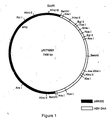
- a transforming clone contains a plasmid pRIT10601, which, by digestion with the endonuclease BamHI, provided a pBR322 fragment of 4360 bp and HBV DNA fragments of 1600 bp and 1450 bp.
- a culture of E. coli K12 strain C600 (pRIT10601) was deposited on June 2, 1982, in accordance with the provisions of the European Patent Convention (EPC) and the Budapest Treaty, at the American Type Culture Collection, Rockville , Maryland, EUA, under order number ATCC 39132.
- EPC European Patent Convention
- a cleavage map of the plasmid by the restriction endonuclease pRIT10601 is given in FIG. 1.
- the sizes of the fragments generated by diqection of the DNA of the Dane particle and of pRIT10601 with various restriction enzymes were compared as follows.
- the DNA of the Dane particle i.e., HBV DNA
- the labeled HBV DNA was mixed with pRIT10601, the mixture was treated with a restriction endonuclease and electrophoresis was carried out on an agarose gel. The gel was stained with ethidium bromide and photographed under UV radiation to locate the DNA fragments, it was then dried and autoradiographed to locate the radioactive HBV DNA fragments.
- HBV fragments were found to correspond exactly to the size of the fragments of pRIT 10601: the BamHI fragments of 1450 bp and 1600 bp; a 1330 bp HpaI fragment and a 1130 bp BamHI-XhOI fragment.
- the labeled DNA of the Dane particle also hybridized specifically with the two fragments of 1450 bp and 1600 bp released by digestion with BamHI of pRIT10601 by following the transfer of these fragments from an agarose gel onto a nitrocellulose filter according to the technique of Southern J. Mol. Biol., Volume 98, 503 (1975).
- PRIT10601 was used to prepare pRIT10671 in Example 10 below.
- Example 2 Preparation of the intermediate plasmid pRIT10601 by combining the DNA of HBV with pACYCl84.
- Dane particles were isolated from the serum HBsAg serotype adw, as described above. Analysis by re- endonuclease t r i c tio n of HBV DNA labeled with 32 P indicated that the DNA contained an EcoRI site.
- the HBV DNA supplemented by the endogenous polymerase reaction using unlabeled nucleotides was digested with EcoRI.
- the digested DNA was mixed with the plasmid pACYC184 which had been previously digested with EcoRI and treated with alkaline phosphatase.
- the plasmid pACYC184 is in deposit and accessible without restriction, to the American Type Culture Collection, under order number 37033.
- the mixture of T4 DNA ligase was ligated. The ligated DNA mixture was used to transform the competent cells of E. coli strain C600.
- the transformants were selected on a tetracycline medium (15 ⁇ g / ml) and they were screened for the loss of resistance to chloramphenicol, which denoted the insertion of pACYC184 into the EcoRI site. It has been found that a transformed colony contains a plasmid pRIT10616, which consists of pACYC184 provided with a 3200 bp insert comprising HBV DNA at the EcoRI site.
- a restriction map of pRIT10616 is given in Figure 2.
- the E. coli K12 strain C600 (pRIT 10616) was deposited on June 2, 1982, in accordance with the provisions of the EPC and the Budapest Treaty, in American Type Culture Collection under order number ATCC 39131.
- Example 3 Preparation of the intermediate plasmid, pRIT10640, containing a nucleotide sequence coding for HBsAG, by combining pRIT10616 with pBR313.
- PRIT10616 was purified by density gradient centrifugation of a CsCl / ethidium bromide mixture, in substance, as described by Kahn et al., Methods in enzymology, Volume 68, 268 (1979).
- the DNA was digested with the endonuclease BamHI, mixed with the DNA of the plasmid pBR313 digested with BamHI and treated with alkaline phosphatase, ligated and used to transform the cells. competent of the C600 strain of E. coli K12 in substance, as described in Example 1.
- the plasmid pBR 313 is in deposit and accessible without restriction to the American Type Culture Collection under the order number 37018.
- the transformants were selected on agar containing ampicillin and screened as a function of the loss of resistance to tetracycline, which indicated the insertion of pBR313 at the BamHI site.
- a transformed colony was found to contain a plasmid pRIT10640, which consists of pBR313 provided with a 1350 bp insert at the BamHI site.
- the insert is a nucleotide sequence which can code for HbsAg. It codes for the processing of a possible precursor protein of HbsAg and the total surface antigen comprises 565 bp of 3 'non-coding sequences.
- Example 4 Preparation of the intermediate plasmid pMC200, containing the regulatory region arg3 by combining the yeast arg3 gene with pBR322.
- a 3300 bp yeast DNA fragment containing the arg3 gene was obtained by digestion of pYeura3arg3 with HindIII.
- the plasmid pYeura3arg 3 has been described by Crabeel et al., Proc. Natl. Acad. Sci. US Volume 78, 5026 (1981).
- the 3300 bp fragment was cloned into the HindIII site of pBR322 and transformed into the MM294 strain of E. coli K12, in essence, as described above.
- the transformants were selected on ampicillin medium and screened for resistance to tetracycline.
- a transformed colony has been shown to contain a plasmid pMC200 which includes pBR322 provided with an insert at the HindIII site.
- This plasmid contains the arg3 regulatory region which can transcribe a nucleotide sequence of HBsAg in yeast cells as described in the following examples.
- the E. coli K12 strain MM294 was deposited on June 2, 1982 in accordance with the provisions of the EPC and the Budapest Treaty, at the American Type Culture Collection, under order number ATCC 39130.
- the nucleotide sequence of the part of the arg3 gene, including the part of the N-terminal sequences coding for ornithine carbamoyltransferase (OCT) and the portion of the 5 'untranslated region was determined by Huyghen et al., Arch. Intl. Physical. Biochem., Volume 89, B172 (1981).
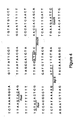
- Figure 4 illustrates a 210 bp fragment of the known sequence.
- the 210 bp fragment contains unique HincII, BglII and EcoRI sites on the yeast DNA inserted in the form of HindIII of 3300 bp into pMC200.
- the initiation codon for the coding sequence for the OCT protein is believed to correspond to the boxed ATG codon.
- Example 5 Preparation of the intermediate plasmids pRIT10671 and pRIT10672, containing HbsAg and the regulatory regions by combining pRIT10641 with pMC200.
- 5 ⁇ g of pMC200 are digested with 6.4 units of BglII for 2.5 h. at 37 °, they were diluted with an equal volume of a buffer (pH 10.5) containing 0.1 M glycine, 0.01 M MgCl 2 6H 2 0 and 0.1 mM ZnCl 2 and incubated them with 0.5 units of alkaline phosphatase from calf intestine for 30 minutes at 37 ° so as to remove the 5 'terminal phosphate residues. The mixture was extracted twice with saturated phenol in a buffer and three times with ether. The DNA was precipitated with ethanol and dissolved in 0.01 M of tromethamine buffer.
- 25 ⁇ g of pRIT10640 were digested with the BamHI endonuclease in order to cut the 1350 bp BamHI fragment by preparative electrophoresis on agarose gel and by electroelution.
- the eluted DNA was recovered and concentrated by precipitation with ethanol and dissolved in 20 ⁇ l of 0.01 M tromethamine buffer (pH 7).
- An aliquot of the BamHI fragment (0.3 ⁇ g) which contains the coding sequence for HBsAg was mixed with 0.5 ⁇ g of BglII digested pMC200 and the mixture ligated by incubation with T4 DNA ligase.
- the ligated DNA was used to transform competent cells of the E. coli K12 strain MM294.
- the transformants were selected on agar plates containing 200 ⁇ g / ml of ampicillin. Twelve resistant colonies were isolated by successive passages on ampicillin agar and the plasmids were isolated according to the method described by Birnboim et al., Nucl. Acid. Res. Volume 7, 1513 (1979). Analysis by agarose gel electrophoresis showed that all the plasmids were digested with HpaI, which indicates the insertion of the BamHI fragment and that the two orientations of the inserted fragment were present among the twelve transformed colonies.
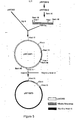
- a plasmid, pRIT10671 contains the BamHI fragment fused to the BglII site in the correct orientation for the transcription of the sequence coding for HBsAg so as to generate a fusion protein of 286 amino acids comprising 18 N-terminal amino acids of OCT, 42 amino acids of the possible precursor protein of HBsAg and the 226 amino acids of HBsAg.
- the fusion protein is HBsAg as indicated in Example 8 above.
- the transformants containing pRIT10671 are called strain E. coli MM294 K12 (pRIT10671). pRIT10671 is illustrated in Figure 5.
- pRIT10640 as an intermediate plasmid is not essential.
- the BamHI fragment could have been excised from pRIT10616.
- pRIT10672 Another plasmid, pRIT10672, containing the BamHI fragment in the incorrect layout for transcription of the sequence coding for HBsAg.
- the transformants containing this plasmid are called strain MM294 of E. coli K12 (pRIT10672).
- Example 5 Preparation of the plasmids, the "shuttle" vectors pRIT10673 and pRIT10674, by combination of pRIT10671 and pRIT10672 with the "shuttle" vector YEpl3.
- the vector YEp13 is a "shuttle" vector between S. cerevisiae and E. coli. It has been described by Broach et al. Gene, Volume 8, 121 (1979). It is provided by J. Hicks, Cold Spring Harbor Laboratories, New York, E.U.A.
- a small HindIII fragment of the plasmid was excised by digestion with HindIII and the plasmid was religated to prepare a derived plasmid, YEpl3 HindIII which contains a unique HindIII site.
- the purified YEp13 ⁇ HindIII was digested with HindIII and treated with alkaline phosphatase to prevent religation. The DNA was recovered by phenol extraction and ethanol precipitation.
- the purified pRIT10671 and pRIT10672 were digested with BamHI and treated with alkaline phosphatase to prevent reformation of the pBR322 fragment.
- the treated DNA was further digested with HindIII in order to release a 4650 bp HindIII fragment which contains the fusion of the HBsAg gene with the regulatory region, the samples were extracted with phenol and they were precipitated to ethanol.
- We mixed Sepa 0.4 ⁇ g of each of the DNA preparations derived from pRIT10671 and from pRIT10672 are added with 0.4 ⁇ g of HindIII digested YEp13 ⁇ HindIII- and the mixtures are incubated with T4 DNA ligase.
- a transformant colony, strain E. coli K12 MM294 (pRIT10673) contains a plasmid, pRIT10673, which contains the HindIII fragment originating from pRIT10671 and inserted into YEpl3 ⁇ HindIII, as illustrated in FIG. 6.
- Another transformant colony , the E. coli K12 strain MM204 (pRIT10674), contains a plasmid, pRIT10674, which contains the HindIII fragment originating from pRIT10672 and inserted into YEpl3 ⁇ HindIII.
- Plasmids pRIT10673 and pRIT10674 were isolated from the thinned lysates of strains MM294 (pRIT10673) and MM294 (pRIT10674) from E. coli K12 by density gradient centrifugation of a CsCl-ethidium bromide mixture.
- the DC5 strain of S. cerevisiae (leu 2-3, leu 2-112, his 3, can 1-11) described by Broach et al., Gene, Volume 8, 121 (1979) was provided by J. Hicks, Cold Spring Harbor Laboratories, New York, USA and was deposited on June 2, 1982 in accordance with the provisions of the EPC and the Budapest Treaty at the American Type Culture Collection in Rockville, Maryland, USA, under order number ATCC 20630.
- the cells of the DC5 strain were cultivated and prepared for their transformation according to the methods described by Hinnen et al., Proc. Natl. Acad. Sci.
- the colonies which grew in the regeneration agar were recovered and streaked on a solid medium containing 0.67% of a nitrogen-based medium for yeast devoid of amino acids, 2% of glucose, 2% of agar and 80 ⁇ g / ml of histidine and they were cultured at 30 ° C.
- a colony of the strain DC5 was transformed with pRIT10673 and it is called strain of S. cerevisiae DC5 (pRIT10673).
- Another colony had been transformed by pRIT10674 and it is called strain of S. cerevisiae DC5 (pRIT10674).
- Cultures of the strains DC5 (pRIT10673) and DC5 (pRIT10674) were grown in a nitrogenous base medium for yeast supplemented with 80 ⁇ l / ml of histidine up to optical densities of 0.33 to 1 to 620 ⁇ m.
- the latter strain is useful as a negative control because it contains the coding sequence for HBsAg fused to the regulatory region in the incorrect orientation.
- the cells were recovered by centrifugation, washed with phosphate buffered saline (PBS) and concentrated 20 to 160 times by suspension in 5 ml of PBS supplemented with 1 mM phenylmethyl sulfonyl fluoride (PMSF).
- PBS phosphate buffered saline
- PMSF phenylmethyl sulfonyl fluoride
- the cells were broken by two passes through a French pressure cell at 12,000 psi (83 MPa) and the lysate was centrifuged at 7700 x G for 15 minutes and then at 30,000 x G for 30 minutes. The supernatants were collected and filtered through a Millex GV membrane.
- the supernatants were tested on the basis of the presence of proteins which react with specific anti-HBsAg antibodies according to the Ausria® radioimmunoassay methods.
- the clarified cell extracts of the strain of S. cerevisiae DC5 (pRIT10673) produced in this way gave positive reactions in this radioimmunoassay even when tested at 16 to 256 fold dilutions in PBS.
- the extracts of the strain DC5 (pRIT10674) were negative in this test.
- the S. cerevisiae strain lc1697d was deposited on June 2, 1982 in accordance with the provisions of the EPC and the Budapest Treaty, at the American Type Culture Collection under order number ATCC 20631.
- the bradytrophic strain for arginine 1c1697d (argJ +, leu 2-1) was transformed with pRIT10673 and pRIT10674.
- a leucine colony independent of the bradytrophic strain was transformed by pRIT10673 and it is called S. cerevisiae strain lc1697d (pRIT10673).
- Another independent leucine colony which has been transformed by pRIT10674 is called strain of S. cerevisiae lc1697d (pRIT10674).
- the cultures of the strains lcl697d (pRIT10673) and lcl697d (pRIT10674) were grown in a nitrogenous base medium for yeast supplemented with 20 ⁇ g / ml of arginine. We collected the cells and we prepared the extracted from cells as described above. The extracts of clarified cells of the strain lcl697d (pRIT10673) gave positive results in the radioimmunoassay Ausria® at dilutions of up to 1/2048 while the extracts of the strain 1c1697d (pRIT10674) were found to be uniformly negative in this test.
- yeast cells of the DC5 and lc697d strains transformed with pRIT10673 specifically synthesize HBsAg in the form of a fusion protein possessing the determinants of HBsAg.
- Example 8 Immunization of rabbits with HBsAg from the strain of S. cerevisiae lc1697d (pRIT10673).
- the strain of S. cerevisiae lc1697 was cultivated to an optical density of 0.60 to 620 ⁇ m and was collected by centrifugation. The concentrated cells were resuspended 40 times in PBS supplemented with 1 mM PMSF. A clarified cell extract was prepared as described in Example 7. A clarified cell extract of the strain lc1697d (pRIT10674) was prepared. These extracts have been used to immunize rabbits. A first group of 6 rabbits received parenteral injections of 1 ml of extract of the strain lc1697d ((pRIT10673) mixed with 1 ml of complete Freund's adjuvant on days 0, 9, 15, 30 and 37.
- Example 9 Preparation of the plasmid pRIT10749 containing the arg3 regulatory region from pMC200.
- HincII-purified pMC200 was digested and subjected to electrophoresis on 10% acrylamide gel.
- a 1940 bp fragment containing the arg3 regulatory region was recovered from the gel by electroelution and ethanol precipitation.
- About 4 ⁇ g of the fragment was incubated with 0.2 units of exonuclease 'Ba131 for 1 to 3 seconds at 30 ° in 100 ⁇ l of buffer (pH 8) containing 12.5 mM of MgCl 2 , 12.5 mM of CaCl 2, 200 mM NaCl, 1 mM EDTA and 200 mM tromethamine-HCl.
- the treated DNA was extracted with phenol and precipitated with ethanol.
- a 1 ⁇ g aliquot was incubated with T4 DNA polymerase in the presence of deoxynucleotide triphosphates in order to repair all the single-strand ends and it was then digested with the endonuclease EcoRI.
- This process generated DNA fragments of varying lengths due to the Ba131 resertion.
- Each fragment has a fixed EcoRI extension at one end, the other end being a blunt end and located some distance from the original HincII site and from the initiation codon of the OCT protein.
- the approximately 1480 bp fragments containing the arg3 regulatory region were isolated by electrophoresis on 7.5% acrylamide gel followed by electroelution and ethanol precipitation. This shortened regulatory region is preferred because it allows transcription leading to the synthesis of a protein devoid of amino acid sequences of the OCT, as described in the example below.
- pMC200 was digested by Xbal and the 5 'single-stranded ends were synthesized or blunt-ended by incubation with T4 DNA polymerase and the deoxynu cleotides triphosphates.
- This DNA was digested by EcoRI and a large EcoRI-T4 / XbaI fragment of approximately 5700 bp containing the yeast DNA sequences located 3 ′ at the XbaI site plus the sequences of pBR322 was purified by electrophoresis, electroelution. and ethanol precipitation. This fragment was mixed and ligated to fragments containing the 1480 bp promoter.
- the ligation mixture was used to transform competent cells of coli K12 strain MM294. The transformants were selected on agar based on ampicillin. Plasma DNA was isolated from transformant colonies by the method described by Birnboim et al., Nucl. Aci. Res., Volume 7; 1513 (1979) and screened for the presence of an XbaI site by digestion with XbaI. An XbaI site was present only in these plasmids in which the XbaI site synthesized on a fragment from the second series of reactions was ligated to another fragment from the first series which ended in a 3'T residue so as to restore a XbaI, TCTAGA recognition sequence to a new location.
- a plasmid with an XbaI site has been identified as pRIT10749.
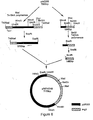
- a diagram illustrating these manipulations is provided in FIG. 6.
- the E. coli K12 strain MM294 (pRIT10749) was deposited on June 2, 1982 in accordance with the conventions of the EPC and the Budapest Treaty at the American Type Culture Collection, Rockville , Maryland, USA, under serial number ATCC 39133.
- a sample of pRIT10749 was digested with a combination of BstEII and XbaI.
- the size of the deleted arg3 regulatory region was estimated to be approximately 210 bp relative to pMC200 which was digested analogously with BstEII and XbaI and relative to the known molecular weights of the DNA fragments of the phage ⁇ x 174 described by Fuchs et al., Gene, Volume 4, 1 (1978).
- the plasma DNA was digested with BstEII, it was labeled with ⁇ - 32 P ATP, by exchange kination and had it digested with the BamHI endonuclease in order to release a 2000 bp fragment which was purified by electroelution and by ethanol precipitation.
- the labeled fragment was sequenced according to the chemical modification method described by Maxam et al., Methods in Enzymology, Volume 65, 499 (1980). Part of this sequence was determined to be CCC A TAACTTGTACACTCGTCTAGA.
- the underlined nucleotides were from the 5700 bp EcoRI-T4 / XbaI fragment. A comparison with the appropriate region of the DNA sequence given in FIG. 4 shows that the restored XbaI site is located in the 5 ′ non-coding region, nine nucleotides upstream from the original HincII site present in the insert. PMC200 yeast DNA.
- Example 10 Preparation of the plasmids pRIT10759 and pRIT10671 containing HBsAg and the regulatory regions by combination of pRIT10749 with pRIT10601.
- PRIT10671 was digested with the endonuclease HhaI and subjected to electrophoresis on a 0.7% acrylamide gel. An 1100 bp fragment was recovered by electroelution and ethanol precipitation. The DNA sequence of the part of this fragment contains sequences corresponding to the known N-terminal amino acid sequence of the HBsAg of serotype ayw as described by Peterson et al., Viral Hepatitis, GN Vyas, SN Cohen and R Schmid, Eds., Franklin Institute Press, Philadelphia, USA, 1978, p 569. The fragment contains 6 nucleotides located 5 ′ by rap port to the initiation codon of HBsAg, the total sequence coding for HBsAg and approximately 390 3 'untranslated nucleotides.
- the plasmid pRIT10749 DNA was digested with XbaI and about 400 ng of this DNA was mixed with about 280 ng of the purified HhaI fragment.
- the mixture was incubated with 0.5 units of T4 DNA polymerase for 30 minutes at 37 ° in 20 ⁇ l of buffer (pH 7.5) containing 20 mM of tromethamine-HCl, 10 mM of MgCl 2 , 1 mM of dithiothreitol and 33 mM from each of the dATP, dCTP, dGTP and dTTP.
- buffer pH 7.5
- To this reaction mixture was added 2.5 ⁇ l of 1 mM ATP, 2.5 ⁇ l of 10 mM EDTA and 2 P l (2 units) of T4 DNA ligase and the mixture was incubated for 16 h. at 15 °.
- the ligated mixture was used to transform competent cells of the E. coli K12 strain MM294 by selection according to the ampicillin resistant transformants. Plasmid preparations were made from several of these transformants and analyzed by restriction endonuclease digestion and gel electrophoresis. The results show that the blunt end HBV fragment was inserted in the two possible orientations inside the pRIT10749 digested with XbaI.
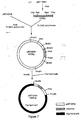
- Such a plasmid pRIT10761 contained the 1100 bp insert in the correct orientation for transcription of the HBsAg sequence from the arg3 promoter and provided a 271 bp fragment after sequential digestion with BstEII and XbaI. This is illustrated in Figure 7.
- a second plasmid, pRIT10759 contained the insert in the incorrect orientation and gave rise to a fragment evaluated at 1175 bp by digestion with a combination of BstEII and Xbal endonucleases.
- the nucleotide sequence was determined at the junction of the arg3 regulatory region and the HBsAg insert for pRIT10761, by sequencing the 271 bp BstEII-XbaI fragment using the chemical modification methods Maxam et al., Methods in Enzymology, Volume 65, 499 (1980), after exchange kination labeling of the XbaI end with 1 'ATP ⁇ - 32 P.
- the sequence determined for the HbsAg arg3 insert control region junction is TACACTCGTCTACTGAACATG. It can be seen that the XbaI restriction site has not been completely repaired by T4 DNA polymerase and that we lost a guanidine residue.
- the untranslated leader region arg3 is immediately followed by six nucleotides of HBV origin, CTGAAC, followed by the initiation codon of HBsAg, ATG and the coding sequence of the structural gene of HBsAg.
- the initiation codon encountered downstream of the arg3 promoter. Consequently, the translation of mRNa transcribed from DNA will start at this codon and the synthesized HBsAg will be free of foreign amino acid residues.
- the synthesized HBsAg is not a fusion protein, it actually has a structure identical to that of authentic HBsAg.
- Example 11 Preparation of the plasmids pRIT10764 and pRIT10765 by combination of pRIT10761 with Yep13, HindIII.
- PRIT10761 and pRIT10759 were digested separately with PstI and BamHI in order to destroy the replicon fragment of pBR322 and then with HindIII in order to release the DNA fragment carrying the inserted HBV DNA and the regulatory region.
- the DNAs were extracted with phenol, precipitated with ethanol and dissolved in a buffer (pH 7.5) containing 0.01 M tromethamine-HCl and 0.001 M EDTA.
- a part of 0.6 ug of each DNA preparation was mixed separately with 0.3 ug of Yep13 ⁇ HindIII DNA digested with HindIII and treated with alkaline phosphatase prepared as described above and the mixture was ligated.
- the ligated mixture was used to transform competent cells of the E. coli K12 strain MM294 by selection according to the ampicillin resistant transformants. It has been shown that a transformant contains a plasmid pRIT10764, consisting of the HindIII fragment originating from pRIT10761 inserted on Yep ⁇ 13HindIII. Another transformant was shown to contain a plasmid, pRIT10765, consisting of the HindIII fragment from pRIT10759 inserted on Yep ⁇ HindIII.
- Figure 7 A diagram illustrating the preparation of pRIT01761 AND PRIT10764 is provided in Figure 7.
- PRIT10764 and pRIT10765 were isolated from the cultures of the transformants prepared in Example 11, by density gradient centrifugation of a CsCl-ethidium bromide mixture and 10 ⁇ g of each was used to transform the cells of the yeast strain lcl697d as described in Example 7, by selecting according to the independent leucine transformants on regeneration agar. An independent leucine colony resulting from these transformations is called strain lcll697d (pRIT10764). Another transformant is called lcll697d strain of S. cerevisiae (pRIT10765).
- the cultures of these strains were grown at 30 ° in a nitrogenous base medium for yeast supplemented with 2% glucose and 20 ⁇ g of arginine to an optical density of 0.8 to 0.88 to 620 ⁇ m.
- the cells were harvested, the cell-free extracts were prepared and they were tested for HBsAg by radio immunoassay Ausria® as described in Example 7.
- the extracts from lcl697d (pRIT10764) gave positive results in this test, at dilutions in PBS up to 1/1024 while the undiluted extracts of the strain 1c1697d (pRIT10765) were uniformly negative in this test. From genetic and radioimmunoassay data, it was concluded that cells of S. cerevisiae strain 1c11967d (pRIT10764) synthesize HBsAg which can be used without serious side effects in a vaccine to stimulate protection against HBV infection in humans.
Landscapes
- Life Sciences & Earth Sciences (AREA)
- Health & Medical Sciences (AREA)
- Chemical & Material Sciences (AREA)
- Organic Chemistry (AREA)
- Genetics & Genomics (AREA)
- Engineering & Computer Science (AREA)
- Zoology (AREA)
- Wood Science & Technology (AREA)
- General Health & Medical Sciences (AREA)
- Bioinformatics & Cheminformatics (AREA)
- General Engineering & Computer Science (AREA)
- Biotechnology (AREA)
- Molecular Biology (AREA)
- Biochemistry (AREA)
- Biomedical Technology (AREA)
- Microbiology (AREA)
- Biophysics (AREA)
- Medicinal Chemistry (AREA)
- Virology (AREA)
- Plant Pathology (AREA)
- Chemical Kinetics & Catalysis (AREA)
- General Chemical & Material Sciences (AREA)
- Mycology (AREA)
- Physics & Mathematics (AREA)
- Pharmacology & Pharmacy (AREA)
- Communicable Diseases (AREA)
- Nuclear Medicine, Radiotherapy & Molecular Imaging (AREA)
- Animal Behavior & Ethology (AREA)
- Gastroenterology & Hepatology (AREA)
- Oncology (AREA)
- Veterinary Medicine (AREA)
- Proteomics, Peptides & Aminoacids (AREA)
- Public Health (AREA)
- Medicines Containing Antibodies Or Antigens For Use As Internal Diagnostic Agents (AREA)
- Micro-Organisms Or Cultivation Processes Thereof (AREA)
- Preparation Of Compounds By Using Micro-Organisms (AREA)
- Peptides Or Proteins (AREA)
- Saccharide Compounds (AREA)
- Pharmaceuticals Containing Other Organic And Inorganic Compounds (AREA)
- Coloring Foods And Improving Nutritive Qualities (AREA)
Priority Applications (2)
| Application Number | Priority Date | Filing Date | Title |
|---|---|---|---|
| AT83870090T ATE91718T1 (de) | 1982-09-08 | 1983-09-06 | Rekombinante dns-molekuele die hepatitis-boberfl|chenantigenkodieren, deren herstellung und abgeleitete vakzine. |
| MYPI87002209A MY102920A (en) | 1982-09-08 | 1987-09-29 | Hepatitis b virus vaccine. |
Applications Claiming Priority (2)
| Application Number | Priority Date | Filing Date | Title |
|---|---|---|---|
| US41578982A | 1982-09-08 | 1982-09-08 | |
| US415789 | 1982-09-08 |
Publications (3)
| Publication Number | Publication Date |
|---|---|
| EP0106828A2 true EP0106828A2 (de) | 1984-04-25 |
| EP0106828A3 EP0106828A3 (en) | 1985-11-21 |
| EP0106828B1 EP0106828B1 (de) | 1993-07-21 |
Family
ID=23647197
Family Applications (1)
| Application Number | Title | Priority Date | Filing Date |
|---|---|---|---|
| EP83870090A Expired - Lifetime EP0106828B1 (de) | 1982-09-08 | 1983-09-06 | Rekombinante DNS-Moleküle die Hepatitis-B-Oberflächenantigen kodieren, deren Herstellung und abgeleitete Vakzine |
Country Status (22)
| Country | Link |
|---|---|
| EP (1) | EP0106828B1 (de) |
| JP (5) | JPS5971694A (de) |
| KR (1) | KR840006014A (de) |
| AT (1) | ATE91718T1 (de) |
| AU (4) | AU584580B2 (de) |
| CA (1) | CA1222707A (de) |
| CY (1) | CY1932A (de) |
| DE (1) | DE3382704T2 (de) |
| DK (1) | DK406483A (de) |
| ES (4) | ES525439A0 (de) |
| FI (1) | FI833205L (de) |
| GR (1) | GR78982B (de) |
| HK (1) | HK1004570A1 (de) |
| HU (1) | HU196625B (de) |
| IE (1) | IE60387B1 (de) |
| IL (1) | IL69202A (de) |
| MA (1) | MA19895A1 (de) |
| MY (1) | MY102920A (de) |
| NO (1) | NO833198L (de) |
| NZ (1) | NZ204952A (de) |
| PT (1) | PT77265B (de) |
| ZA (1) | ZA836658B (de) |
Cited By (6)
| Publication number | Priority date | Publication date | Assignee | Title |
|---|---|---|---|---|
| EP0211767A1 (de) * | 1985-08-05 | 1987-02-25 | Merck & Co. Inc. | Verfahren zur Steigerung der Produktion von rekombinantem Protein in Hefearten der Gattung Saccharomyces |
| EP0226846A1 (de) * | 1985-11-26 | 1987-07-01 | Phillips Petroleum Company | Herstellung von Hepatitis-B-Oberflächen-Antigen-(HBsAg) mittels Hefe |
| US4683294A (en) * | 1985-04-03 | 1987-07-28 | Smith Kline Rit, S.A. | Process for the extraction and purification of proteins from culture media producing them |
| US4778761A (en) * | 1982-08-16 | 1988-10-18 | Juridical Foundation The Chemosero-Therapeutic Research Institute | Recombinant plasmid inserted with hepatitis B virus gene, yeast transformed with said recombinant plasmid, and production of hepatitis B virus surface antigen |
| EP0278940A3 (de) * | 1987-01-30 | 1988-12-07 | Smithkline Biologicals S.A. | Hepatitis-B-Virus-Oberflächenantigene und sie enthaltende hybride Antigene |
| US5707862A (en) * | 1982-08-20 | 1998-01-13 | Juridical Foundation The Chemi-Sero-Therapeutic Research Institute | Shuttle vector |
Families Citing this family (9)
| Publication number | Priority date | Publication date | Assignee | Title |
|---|---|---|---|---|
| WO1986007384A1 (fr) * | 1985-06-03 | 1986-12-18 | Takeda Chemical Industries, Ltd. | Procede de preparation de l'antigene p31 de surface du virus de l'hepatite b |
| WO1986001534A1 (fr) * | 1984-09-04 | 1986-03-13 | Takeda Chemical Industries, Ltd. | Adn recombinant et son utilisation |
| WO1986003411A1 (fr) * | 1984-12-12 | 1986-06-19 | Takeda Chemical Industries, Ltd. | Procede de preparation d'une nouvelle proteine |
| ATE93891T1 (de) * | 1987-03-09 | 1993-09-15 | Merck & Co Inc | Reinigung von rekombiniertem hepatitis-boberfl|chen-antigen. |
| NZ229260A (en) * | 1988-06-03 | 1994-02-25 | Merck & Co Inc | Hepatitis b virus, expression cassette for pre-s domain, host cells and |
| US4962656A (en) * | 1989-06-30 | 1990-10-16 | The United States Of America As Represented By The United States Department Of Energy | Control and monitoring method and system for electromagnetic forming process |
| LT3988B (en) | 1992-02-17 | 1996-06-25 | Fermentas Biotech Inst | Recombinant plasmides pfs19, pfps2-48 and pjlfds1 codingsynthesis of human hepatite b of surfice virus antigenes, methods fof producing thereof |
| TW340132B (en) * | 1994-10-20 | 1998-09-11 | Ibm | Structure for use as an electrical interconnection means and process for preparing the same |
| JP4028850B2 (ja) * | 2004-02-04 | 2007-12-26 | 株式会社名機製作所 | ディスク基板の成形用金型 |
Family Cites Families (5)
| Publication number | Priority date | Publication date | Assignee | Title |
|---|---|---|---|---|
| LU88258I2 (de) * | 1978-12-22 | 1994-02-03 | ||
| NZ199722A (en) * | 1981-02-25 | 1985-12-13 | Genentech Inc | Dna transfer vector for expression of exogenous polypeptide in yeast;transformed yeast strain |
| GR76274B (de) * | 1981-08-04 | 1984-08-04 | Univ California | |
| NZ201705A (en) * | 1981-08-31 | 1986-03-14 | Genentech Inc | Recombinant dna method for production of hepatitis b surface antigen in yeast |
| GB2125047B (en) * | 1982-08-09 | 1986-02-19 | Ciba Geigy Ag | Yeast hybrid vectors and their use for the production of polypeptides |
-
1983
- 1983-07-12 IL IL69202A patent/IL69202A/xx not_active IP Right Cessation
- 1983-07-12 AU AU16750/83A patent/AU584580B2/en not_active Ceased
- 1983-07-19 NZ NZ204952A patent/NZ204952A/en unknown
- 1983-08-29 PT PT77265A patent/PT77265B/pt not_active IP Right Cessation
- 1983-08-31 GR GR72346A patent/GR78982B/el unknown
- 1983-09-06 CY CY193283A patent/CY1932A/xx unknown
- 1983-09-06 KR KR1019830004194A patent/KR840006014A/ko not_active Ceased
- 1983-09-06 DE DE83870090T patent/DE3382704T2/de not_active Expired - Fee Related
- 1983-09-06 AT AT83870090T patent/ATE91718T1/de not_active IP Right Cessation
- 1983-09-06 EP EP83870090A patent/EP0106828B1/de not_active Expired - Lifetime
- 1983-09-07 DK DK406483A patent/DK406483A/da not_active Application Discontinuation
- 1983-09-07 NO NO833198A patent/NO833198L/no unknown
- 1983-09-07 JP JP58165829A patent/JPS5971694A/ja active Pending
- 1983-09-07 ZA ZA836658A patent/ZA836658B/xx unknown
- 1983-09-07 ES ES525439A patent/ES525439A0/es active Granted
- 1983-09-07 MA MA20118A patent/MA19895A1/fr unknown
- 1983-09-07 CA CA000436153A patent/CA1222707A/en not_active Expired
- 1983-09-07 IE IE209983A patent/IE60387B1/en not_active IP Right Cessation
- 1983-09-07 FI FI833205A patent/FI833205L/fi not_active Application Discontinuation
- 1983-09-08 HU HU833136A patent/HU196625B/hu not_active IP Right Cessation
-
1984
- 1984-05-23 ES ES532731A patent/ES8602120A1/es not_active Expired
- 1984-05-23 ES ES532730A patent/ES8600938A1/es not_active Expired
- 1984-05-23 ES ES532732A patent/ES8600939A1/es not_active Expired
-
1987
- 1987-09-29 MY MYPI87002209A patent/MY102920A/en unknown
-
1988
- 1988-05-06 AU AU15692/88A patent/AU1569288A/en not_active Abandoned
- 1988-10-05 JP JP63251723A patent/JPH02116A/ja active Pending
- 1988-10-05 JP JP63251724A patent/JPH02464A/ja active Pending
- 1988-10-05 JP JP63251725A patent/JP2522825B2/ja not_active Expired - Lifetime
-
1989
- 1989-03-14 AU AU31318/89A patent/AU3131889A/en not_active Abandoned
-
1991
- 1991-12-24 AU AU90014/91A patent/AU9001491A/en not_active Abandoned
-
1995
- 1995-09-26 JP JP7247478A patent/JP2702899B2/ja not_active Expired - Lifetime
-
1998
- 1998-04-28 HK HK98103620A patent/HK1004570A1/xx not_active IP Right Cessation
Cited By (8)
| Publication number | Priority date | Publication date | Assignee | Title |
|---|---|---|---|---|
| US4778761A (en) * | 1982-08-16 | 1988-10-18 | Juridical Foundation The Chemosero-Therapeutic Research Institute | Recombinant plasmid inserted with hepatitis B virus gene, yeast transformed with said recombinant plasmid, and production of hepatitis B virus surface antigen |
| US5707862A (en) * | 1982-08-20 | 1998-01-13 | Juridical Foundation The Chemi-Sero-Therapeutic Research Institute | Shuttle vector |
| US4683294A (en) * | 1985-04-03 | 1987-07-28 | Smith Kline Rit, S.A. | Process for the extraction and purification of proteins from culture media producing them |
| EP0199698A3 (en) * | 1985-04-03 | 1989-05-24 | Smith Kline - Rit Societe Anonyme Dite: | Process for the extraction and purification of proteins fom culture media producing them |
| EP0211767A1 (de) * | 1985-08-05 | 1987-02-25 | Merck & Co. Inc. | Verfahren zur Steigerung der Produktion von rekombinantem Protein in Hefearten der Gattung Saccharomyces |
| EP0226846A1 (de) * | 1985-11-26 | 1987-07-01 | Phillips Petroleum Company | Herstellung von Hepatitis-B-Oberflächen-Antigen-(HBsAg) mittels Hefe |
| US4895800A (en) * | 1985-11-26 | 1990-01-23 | Phillips Petroleum Company | Yeast production of hepatitis B surface antigen |
| EP0278940A3 (de) * | 1987-01-30 | 1988-12-07 | Smithkline Biologicals S.A. | Hepatitis-B-Virus-Oberflächenantigene und sie enthaltende hybride Antigene |
Also Published As
Similar Documents
| Publication | Publication Date | Title |
|---|---|---|
| EP0724642B2 (de) | Nukleinsäurevektor, einen solchen vektor enthaltene verbindung und impfstoff zur immunisierung gegen hepatitis | |
| DE3789399T2 (de) | Herstellung von Vakkzinen gegen Hepatitis B-Virus. | |
| AP56A (en) | Hepatitis B virus surface antigens and hybrid antigehs containing them. | |
| EP0586266B1 (de) | DNA-Fragmente, die für die Untereinheiten von dem Neisseria Meningitidis Rezeptor kodieren | |
| EP0712414B1 (de) | Rekombinanter vektor mit gensequenz von lipoproteine zur nukleotidefrequenzen expression | |
| EP0106828B1 (de) | Rekombinante DNS-Moleküle die Hepatitis-B-Oberflächenantigen kodieren, deren Herstellung und abgeleitete Vakzine | |
| EP0201416B1 (de) | Partikel mit immunogenen HBs-Antigen-Eigenschaften und mit einer mit dem HBs-Antigen-Epitopen nichtverwandten antigenischen Stelle, Vektoren und tierische Zellen für die Herstellung dieser kombinierten Impfstoffartikel | |
| FR2480779A2 (fr) | Vecteur contenant une sequence nucleotidique de l'antigene de surface du virus de l'hepatite b et procede de fabrication d'une molecule immunogene mettant en oeuvre ce vecteur | |
| EP0038765A1 (de) | Impfstoff gegen Hepatitis B Virus, Verfahren und transformierte eukaryotische Zellen zur Herstellung dieses Impfstoffes | |
| HK1004570B (en) | Recombinant dna molecules encoding for hepatitis b surface antigen, their preparation and derived vaccines | |
| WO1987003301A1 (fr) | ANTIGENES PURIFIES AYANT DES PROPRIETES VACCINANTES CONTRE B. PERTUSSIS, MOYENS NOTAMMENT ADNs RECOMBINANTS POUR LES PRODUIRE ET COMPOSITIONS DE VACCINS LES CONTENANT | |
| EP0156712B1 (de) | Zubereitung für die Herstellung von Hepatitis B Virus-Oberflächenantigen und polymerisierten Humanserumalbuminrezeptor tragende Partikel enthaltenden Vakzinen, tierische Zellen für die Herstellung von diesen Partikeln und Verfahren für ihre Erhaltung | |
| US6096879A (en) | Nucleotide sequence comprising the genome of hepatitis B virus, nucleotide sequence coding the surface antigen of the hepatitis B virus, vectors containing the nucleotide sequences, process for the preparation thereof, and antigen obtained thereby | |
| CA2000570A1 (fr) | Polypeptides recombinants biologiquement purs, acides nucleiques les codant, application de ces polypeptides a la vaccination contre le virus de la septicemie hemorragique virale du poisson | |
| DD274052A5 (de) | Verfahren zur Herstellung von Rekombinanten Hbv-, Hiv- oder Plasmodium-Oberflächenproteinen bzw. Hybridpartikeln | |
| JPWO2002012454A1 (ja) | ウイルス様微粒子及びその製造方法 | |
| JPS63283586A (ja) | 酵母によるピー・ファルシパルム・サーカムスポロゾイトタンパク質の発現 |
Legal Events
| Date | Code | Title | Description |
|---|---|---|---|
| PUAI | Public reference made under article 153(3) epc to a published international application that has entered the european phase |
Free format text: ORIGINAL CODE: 0009012 |
|
| 17P | Request for examination filed |
Effective date: 19831006 |
|
| AK | Designated contracting states |
Designated state(s): AT BE CH DE FR GB IT LI LU NL SE |
|
| RAP1 | Party data changed (applicant data changed or rights of an application transferred) |
Owner name: SMITH KLINE - RIT SOCIETE ANONYME DITE: |
|
| PUAL | Search report despatched |
Free format text: ORIGINAL CODE: 0009013 |
|
| AK | Designated contracting states |
Designated state(s): AT BE CH DE FR GB IT LI LU NL SE |
|
| 17Q | First examination report despatched |
Effective date: 19870903 |
|
| RAP1 | Party data changed (applicant data changed or rights of an application transferred) |
Owner name: SMITHKLINE BIOLOGICALS S.A. |
|
| GRAA | (expected) grant |
Free format text: ORIGINAL CODE: 0009210 |
|
| AK | Designated contracting states |
Kind code of ref document: B1 Designated state(s): AT BE CH DE FR GB IT LI LU NL SE |
|
| REF | Corresponds to: |
Ref document number: 91718 Country of ref document: AT Date of ref document: 19930815 Kind code of ref document: T |
|
| ITF | It: translation for a ep patent filed | ||
| REF | Corresponds to: |
Ref document number: 3382704 Country of ref document: DE Date of ref document: 19930826 |
|
| GBT | Gb: translation of ep patent filed (gb section 77(6)(a)/1977) |
Effective date: 19931018 |
|
| PLBE | No opposition filed within time limit |
Free format text: ORIGINAL CODE: 0009261 |
|
| STAA | Information on the status of an ep patent application or granted ep patent |
Free format text: STATUS: NO OPPOSITION FILED WITHIN TIME LIMIT |
|
| 26N | No opposition filed | ||
| EPTA | Lu: last paid annual fee | ||
| EAL | Se: european patent in force in sweden |
Ref document number: 83870090.4 |
|
| PGFP | Annual fee paid to national office [announced via postgrant information from national office to epo] |
Ref country code: NL Payment date: 19980623 Year of fee payment: 16 |
|
| PGFP | Annual fee paid to national office [announced via postgrant information from national office to epo] |
Ref country code: LU Payment date: 19980724 Year of fee payment: 16 |
|
| PGFP | Annual fee paid to national office [announced via postgrant information from national office to epo] |
Ref country code: GB Payment date: 19980806 Year of fee payment: 16 Ref country code: AT Payment date: 19980806 Year of fee payment: 16 |
|
| PGFP | Annual fee paid to national office [announced via postgrant information from national office to epo] |
Ref country code: FR Payment date: 19980902 Year of fee payment: 16 |
|
| PGFP | Annual fee paid to national office [announced via postgrant information from national office to epo] |
Ref country code: SE Payment date: 19980903 Year of fee payment: 16 |
|
| PGFP | Annual fee paid to national office [announced via postgrant information from national office to epo] |
Ref country code: DE Payment date: 19980928 Year of fee payment: 16 |
|
| PGFP | Annual fee paid to national office [announced via postgrant information from national office to epo] |
Ref country code: BE Payment date: 19981012 Year of fee payment: 16 |
|
| PGFP | Annual fee paid to national office [announced via postgrant information from national office to epo] |
Ref country code: CH Payment date: 19981013 Year of fee payment: 16 |
|
| PG25 | Lapsed in a contracting state [announced via postgrant information from national office to epo] |
Ref country code: LU Free format text: LAPSE BECAUSE OF NON-PAYMENT OF DUE FEES Effective date: 19990906 Ref country code: GB Free format text: LAPSE BECAUSE OF NON-PAYMENT OF DUE FEES Effective date: 19990906 Ref country code: AT Free format text: LAPSE BECAUSE OF NON-PAYMENT OF DUE FEES Effective date: 19990906 |
|
| PG25 | Lapsed in a contracting state [announced via postgrant information from national office to epo] |
Ref country code: SE Free format text: THE PATENT HAS BEEN ANNULLED BY A DECISION OF A NATIONAL AUTHORITY Effective date: 19990929 |
|
| PG25 | Lapsed in a contracting state [announced via postgrant information from national office to epo] |
Ref country code: LI Free format text: LAPSE BECAUSE OF NON-PAYMENT OF DUE FEES Effective date: 19990930 Ref country code: CH Free format text: LAPSE BECAUSE OF NON-PAYMENT OF DUE FEES Effective date: 19990930 Ref country code: BE Free format text: LAPSE BECAUSE OF NON-PAYMENT OF DUE FEES Effective date: 19990930 |
|
| BERE | Be: lapsed |
Owner name: S.A. SMITHKLINE BIOLOGICALS Effective date: 19990930 |
|
| PG25 | Lapsed in a contracting state [announced via postgrant information from national office to epo] |
Ref country code: NL Free format text: LAPSE BECAUSE OF NON-PAYMENT OF DUE FEES Effective date: 20000401 |
|
| GBPC | Gb: european patent ceased through non-payment of renewal fee |
Effective date: 19990906 |
|
| EUG | Se: european patent has lapsed |
Ref document number: 83870090.4 |
|
| REG | Reference to a national code |
Ref country code: CH Ref legal event code: PL |
|
| PG25 | Lapsed in a contracting state [announced via postgrant information from national office to epo] |
Ref country code: FR Free format text: LAPSE BECAUSE OF NON-PAYMENT OF DUE FEES Effective date: 20000531 |
|
| NLV4 | Nl: lapsed or anulled due to non-payment of the annual fee |
Effective date: 20000401 |
|
| PG25 | Lapsed in a contracting state [announced via postgrant information from national office to epo] |
Ref country code: DE Free format text: LAPSE BECAUSE OF NON-PAYMENT OF DUE FEES Effective date: 20000701 |
|
| REG | Reference to a national code |
Ref country code: FR Ref legal event code: ST |