WO2022215653A1 - ポリヒドロキシアルカン酸(pha)を含む微粒子及びその製造方法 - Google Patents
ポリヒドロキシアルカン酸(pha)を含む微粒子及びその製造方法 Download PDFInfo
- Publication number
- WO2022215653A1 WO2022215653A1 PCT/JP2022/016649 JP2022016649W WO2022215653A1 WO 2022215653 A1 WO2022215653 A1 WO 2022215653A1 JP 2022016649 W JP2022016649 W JP 2022016649W WO 2022215653 A1 WO2022215653 A1 WO 2022215653A1
- Authority
- WO
- WIPO (PCT)
- Prior art keywords
- pha
- acid
- polyhydroxyalkanoic acid
- fine particles
- microparticles
- Prior art date
- Legal status (The legal status is an assumption and is not a legal conclusion. Google has not performed a legal analysis and makes no representation as to the accuracy of the status listed.)
- Ceased
Links
Images




Classifications
-
- C—CHEMISTRY; METALLURGY
- C08—ORGANIC MACROMOLECULAR COMPOUNDS; THEIR PREPARATION OR CHEMICAL WORKING-UP; COMPOSITIONS BASED THEREON
- C08L—COMPOSITIONS OF MACROMOLECULAR COMPOUNDS
- C08L101/00—Compositions of unspecified macromolecular compounds
- C08L101/16—Compositions of unspecified macromolecular compounds the macromolecular compounds being biodegradable
-
- C—CHEMISTRY; METALLURGY
- C08—ORGANIC MACROMOLECULAR COMPOUNDS; THEIR PREPARATION OR CHEMICAL WORKING-UP; COMPOSITIONS BASED THEREON
- C08J—WORKING-UP; GENERAL PROCESSES OF COMPOUNDING; AFTER-TREATMENT NOT COVERED BY SUBCLASSES C08B, C08C, C08F, C08G or C08H
- C08J3/00—Processes of treating or compounding macromolecular substances
- C08J3/12—Powdering or granulating
-
- C—CHEMISTRY; METALLURGY
- C08—ORGANIC MACROMOLECULAR COMPOUNDS; THEIR PREPARATION OR CHEMICAL WORKING-UP; COMPOSITIONS BASED THEREON
- C08G—MACROMOLECULAR COMPOUNDS OBTAINED OTHERWISE THAN BY REACTIONS ONLY INVOLVING UNSATURATED CARBON-TO-CARBON BONDS
- C08G63/00—Macromolecular compounds obtained by reactions forming a carboxylic ester link in the main chain of the macromolecule
- C08G63/02—Polyesters derived from hydroxycarboxylic acids or from polycarboxylic acids and polyhydroxy compounds
- C08G63/06—Polyesters derived from hydroxycarboxylic acids or from polycarboxylic acids and polyhydroxy compounds derived from hydroxycarboxylic acids
-
- C—CHEMISTRY; METALLURGY
- C08—ORGANIC MACROMOLECULAR COMPOUNDS; THEIR PREPARATION OR CHEMICAL WORKING-UP; COMPOSITIONS BASED THEREON
- C08L—COMPOSITIONS OF MACROMOLECULAR COMPOUNDS
- C08L67/00—Compositions of polyesters obtained by reactions forming a carboxylic ester link in the main chain; Compositions of derivatives of such polymers
- C08L67/04—Polyesters derived from hydroxycarboxylic acids, e.g. lactones
-
- C—CHEMISTRY; METALLURGY
- C12—BIOCHEMISTRY; BEER; SPIRITS; WINE; VINEGAR; MICROBIOLOGY; ENZYMOLOGY; MUTATION OR GENETIC ENGINEERING
- C12P—FERMENTATION OR ENZYME-USING PROCESSES TO SYNTHESISE A DESIRED CHEMICAL COMPOUND OR COMPOSITION OR TO SEPARATE OPTICAL ISOMERS FROM A RACEMIC MIXTURE
- C12P7/00—Preparation of oxygen-containing organic compounds
- C12P7/62—Carboxylic acid esters
-
- C—CHEMISTRY; METALLURGY
- C12—BIOCHEMISTRY; BEER; SPIRITS; WINE; VINEGAR; MICROBIOLOGY; ENZYMOLOGY; MUTATION OR GENETIC ENGINEERING
- C12P—FERMENTATION OR ENZYME-USING PROCESSES TO SYNTHESISE A DESIRED CHEMICAL COMPOUND OR COMPOSITION OR TO SEPARATE OPTICAL ISOMERS FROM A RACEMIC MIXTURE
- C12P7/00—Preparation of oxygen-containing organic compounds
- C12P7/62—Carboxylic acid esters
- C12P7/625—Polyesters of hydroxy carboxylic acids
-
- C—CHEMISTRY; METALLURGY
- C08—ORGANIC MACROMOLECULAR COMPOUNDS; THEIR PREPARATION OR CHEMICAL WORKING-UP; COMPOSITIONS BASED THEREON
- C08G—MACROMOLECULAR COMPOUNDS OBTAINED OTHERWISE THAN BY REACTIONS ONLY INVOLVING UNSATURATED CARBON-TO-CARBON BONDS
- C08G2230/00—Compositions for preparing biodegradable polymers
-
- C—CHEMISTRY; METALLURGY
- C08—ORGANIC MACROMOLECULAR COMPOUNDS; THEIR PREPARATION OR CHEMICAL WORKING-UP; COMPOSITIONS BASED THEREON
- C08J—WORKING-UP; GENERAL PROCESSES OF COMPOUNDING; AFTER-TREATMENT NOT COVERED BY SUBCLASSES C08B, C08C, C08F, C08G or C08H
- C08J2367/00—Characterised by the use of polyesters obtained by reactions forming a carboxylic ester link in the main chain; Derivatives of such polymers
- C08J2367/04—Polyesters derived from hydroxy carboxylic acids, e.g. lactones
-
- C—CHEMISTRY; METALLURGY
- C08—ORGANIC MACROMOLECULAR COMPOUNDS; THEIR PREPARATION OR CHEMICAL WORKING-UP; COMPOSITIONS BASED THEREON
- C08L—COMPOSITIONS OF MACROMOLECULAR COMPOUNDS
- C08L2201/00—Properties
- C08L2201/06—Biodegradable
Definitions
- the present invention provides microparticles containing polyhydroxyalkanoic acid (PHA), containing 3-hydroxybutanoic acid (3-HB) units as repeating units of polyhydroxyalkanoic acid (PHA), and having a particle diameter of 0.2 to
- PHA polyhydroxyalkanoic acid
- 3-HB 3-hydroxybutanoic acid
- the present invention relates to microparticles having a size of less than 10 ⁇ m and a method for producing the same.
- Fine particles made of synthetic resin are used as modifiers such as modifiers for plastic resins and modifiers for cosmetics, as additives for paints, additives for toners, additives for cosmetics, liquid crystals, etc.
- DDS drug delivery systems
- test particles for medical diagnostics It has become an indispensable material in the industrial field.
- fine particles made of synthetic resin have the problem of unstable supply of raw materials due to fluctuations in the price of petroleum as a raw material. After being used later, either directly or through wastewater treatment plants and flowing into rivers, oceans, etc., various problems arise, and solutions on a global scale are under pressure.
- Non-Patent Document 2 Non-Patent Document 2
- Patent Document 3 discloses biocompatible and biodegradable polymer-injectable microparticles using a copolymer of 3-hydroxybutanoic acid and 4-hydroxybutanoic acid (poly(4 -hydroxybutyrate-co-3-hydroxybutyrate)) is described.
- Patent Document 4 describes a cosmetic composition in the form of fine particles containing polyhydroxyalkanoate (PHA).
- Patent Document 5 discloses porous resin particles containing polyhydroxyalkanoate, wherein the polyhydroxyalkanoate is a copolymer of 3-hydroxybutyrate units and 3-hydroxyhexanoate units. Poly(3-hydroxybutyrate-co-3-hydroxyhexanoate) is mentioned as a suitable example.
- US Pat. No. 6,200,000 discloses a nonwoven fabric comprising polyhydroxyalkanoate, more preferably poly-4-hydroxybutyrate and copolymers thereof, prepared by a dry spinning process comprising fine fibers having a specific average diameter and burst strength. Nonwovens are described.
- poly-3-hydroxybutanoic acid has physical properties such as brittleness and hardness, and is expensive to produce and refine. Practical use of fine particles having
- the present inventors have found that: preparing a microorganism that produces polyhydroxyalkanoic acid (PHA); growing the microorganism in a medium; Based on the finding that polyhydroxyalkanoic acid (PHA) having excellent melt fluidity is produced by a method comprising the step of ingesting and the step of recovering polyhydroxyalkanoic acid (PHA) from excrement of the animal, To complete the present invention by discovering that fine particles containing 3-hydroxybutanoic acid (3-HB) as a repeating unit of polyhydroxyalkanoic acid (PHA) and having a particle size of 0.2 to less than 10 ⁇ m have desired physical properties.
- 3-hydroxybutanoic acid 3-hydroxybutanoic acid
- the polyhydroxyalkanoic acid (PHA) further contains a 4-hydroxybutanoic acid (4-HB) unit as its repeating unit.
- PHA polyhydroxyalkanoic acid
- Mw average molecular weight
- Step 1 preparing a microorganism that produces polyhydroxyalkanoic acid (PHA);
- Step 2 growing the microorganisms of step 1 in a medium;
- Step 3 a step of ingesting the grown microorganisms into an animal;
- Step 4 A step of recovering and purifying polyhydroxyalkanoic acid (PHA) from the excrement of the animal in Step 3;
- Step 5 A step of micronizing the polyhydroxyalkanoic acid (PHA) obtained in Step 4.
- step 5 is a step of micronizing the resin composition containing polyhydroxyalkanoic acid (PHA) obtained in step 4.
- microparticles comprising polyhydroxyalkanoic acid (PHA), comprising 3-hydroxybutanoic acid (3-HB) as a repeating unit of the polyhydroxyalkanoic acid (PHA), such polyhydroxyalkane Microparticles containing acid (PHA) are excellent in biodegradability and workability in the natural environment. Further, since the particle diameter of the fine particles containing polyhydroxyalkanoic acid (PHA) is 0.2 to less than 10 ⁇ m, the physical properties that can be used in a wide range of applications are melting point, particle diameter, and porosity. It can have properties such as elasticity, compressive strength, and substance retention.
- microparticles containing polyhydroxyalkanoic acid (PHA) that are biodegradable, have excellent processability, are biocompatible, and have physical properties that can be used in a wide range of applications.
- the microparticles according to the present invention can be provided as microparticles having excellent biodegradability in the natural environment, they can contribute to solving problems such as marine pollution and microplastics.
- biodegradation treatment is possible in disposal, the effect of reducing incineration treatment and reducing the burden on the environment can be expected.
- the fine particles according to the present invention can have physical properties that can be used in a wide range of applications in addition to the biocompatibility and biodegradability of polyhydroxyalkanoic acid (PHA). In addition, it has a high possibility of being widely used in medical applications.
- PHA polyhydroxyalkanoic acid
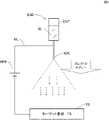
- FIG. 1 is a conceptual diagram showing the basic configuration of an electrospray deposition apparatus.
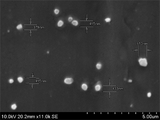
- 2 is an SEM observation image of fine particles produced from P(3-HB) in Example 1.
- FIG. 3 is an SEM observation image of porous fine particles produced from P(3-HB) in Example 2.
- FIG. 4 is an SEM observation image of fine particles produced from P(3-HB-co-3-HH) in Example 3.
- FIG. 5 is an SEM observation image of fine particles produced from P(3-HB-co-4-HB) in Example 4.
- FIG. FIG. 6 is an SEM observation image showing that fine particles produced from P(3-HB) in Example 5 retained silica particles on their surfaces.
- FIG. 7 is an SEM observation image showing that the fine particles produced from P(3-HB) in Example 5 retained silica particles inside.
- FIG. 8 is an SEM BSE observation image showing that fine particles produced from P(3-HB) in Example 5 retained silica particles.
- Polyhydroxyalkanoic acid (PHA) is a polyester of hydroxyalkanoic acid exemplified by the following chemical formula (1), and is a biodegradable polymer.
- R represents an alkyl group.
- the 3-hydroxyalkanoic acid unit (3-HA) as the repeating unit of the polyhydroxyalkanoic acid (PHA) according to the present invention is represented by the chemical formula (2), and the 4-hydroxyalkanoic acid unit (4-HA) is represented by the chemical formula (3). as described below.
- R represents an alkyl group.
- the 3-hydroxyalkanoic acid unit (3-HA) includes, as the alkyl group (R), a methyl group, an ethyl group, a propyl group, a butyl group, a pentyl group, a hexyl group, a heptyl group, an octyl group, a nonyl group, and a decyl group. , an undecyl group, a dodecyl group, a tridecyl group, etc., but the repeating unit of the polyhydroxyalkanoic acid (PHA) according to the present invention is 3-hydroxybutanoic acid ( 3-HB: characterized by including the following chemical formula (4)).
- 3-hydroxyhexanoic acid (3-HH: the following chemical formula (5)) in which the alkyl group is a propyl group is included as a repeating unit of polyhydroxyalkanoic acid (PHA).
- PHA polyhydroxyalkanoic acid
- the polyhydroxyalkanoic acid (PHA) according to the present invention contains 3-hydroxybutanoic acid units (3-HB) and 3-hydroxyheptanoic acid units (3-HH) as repeating units, the following It is preferably contained as a copolymer (P(3-HB-co-3-HH)) of 3-hydroxybutanoic acid (3-HB) and 3-hydroxyhexanoic acid (3-HH) exemplified in .
- the proportion of 3-hydroxyhexanoic acid (3-HH) in the repeating unit of the polyhydroxyalkanoic acid (PHA) according to the present invention is It is 30% or less (weight ratio), preferably 27% or less, relative to the total amount of repeating units of alkanoic acid (PHA).
- Porous microparticles can be produced when the proportion of 3-hydroxyhexanoic acid (3-HH) is 27% or less with respect to the total amount of repeating units of polyhydroxyalkanoic acid. %, it may be difficult to produce porous microparticles.
- 4-hydroxybutanoic acid represented by the above chemical formula (3) is used as the repeating unit of the polyhydroxyalkanoic acid (PHA) according to the present invention.
- (4-HB) 4-hydroxybutanoic acid unit
- the 3-hydroxy It is preferably included as a copolymer of butanoic acid (3-HB) and 4-hydroxybutanoic acid (4-HB) (P(3-HB-co-4-HB)).
- the proportion of 4-hydroxybutanoic acid (4-HB) in the repeating units of the polyhydroxyalkanoic acid (PHA) according to the present invention is 40 to 50% (weight ratio), preferably at a rate of 40 to 45%, more preferably at a rate of 40 to 42%.
- 4-hydroxybutanoic acid (4-HB) is contained within the range of the ratio described above with respect to the total amount of repeating units of polyhydroxyalkanoic acid (PHA), good biocompatibility and biodegradability are obtained. can be expected, and it is possible to produce fine particles that can be widely used in medical applications. Therefore, it may be difficult to manufacture fine particles that can be widely used in medical applications.
- the polyhydroxyalkanoic acid (PHA) has a weight average molecular weight of 1.0 ⁇ 10 5 to 13.0 ⁇ 10 5 g/mol, It is preferably 3.0 ⁇ 10 5 to 10.0 ⁇ 10 5 g/mol, more preferably 3.0 ⁇ 10 5 to 8.0 ⁇ 10 5 g/mol.
- the weight average molecular weight of the polyhydroxyalkanoic acid (PHA) is within the above range, it is possible to control the solubility in solvents and the hardness, softness, heat resistance and durability of fine particles. Hydroxyalkanoic acid (PHA) can be provided, but if the amount is outside the above range, such effects may not be obtained.
- the melting point of the polyhydroxyalkanoic acid (PHA) is 55° C. or higher and 170° C. or lower, preferably 60° C. to 160° C., more preferably is from 80°C to 120°C.
- the melting point of polyhydroxyalkanoic acid (PHA) may be measured by any method, but can be measured by DSC analysis, for example.
- the method for producing the polyhydroxyalkanoic acid (PHA) according to the present invention may be any method as long as the polyhydroxyalkanoic acid (PHA) having the characteristics of the polyhydroxyalkanoic acid according to the present invention can be obtained. It is not particularly limited.
- one embodiment of the method for producing polyhydroxyalkanoic acid (PHA) of the present invention can include the following steps. Step 1: preparing a microorganism that produces polyhydroxyalkanoic acid (PHA); Step 2: growing the microorganisms of step 1 in a medium; Step 3: A step of ingesting the grown microorganisms into an animal, and Step 4: A step of recovering and purifying polyhydroxyalkanoic acid (PHA) from the excreta of the animal in Step 3.
- the polyhydroxyalkanoic acid (PHA) according to the present invention is preferably produced using microorganisms.
- microorganisms include microorganisms capable of producing polyhydroxyalkanoic acid, such as Bacillus megaterium, Cupriavidus necator, Ralstonia eutropha, and Alcaligenes latus. .
- Capriavidus necator is particularly preferred.
- the microorganism is preferably a microorganism in which a gene involved in the synthesis of polyhydroxyalkanoic acid (PHA) has been deleted or introduced.
- PHA polyhydroxyalkanoic acid
- the content of 3-hydroxyhexanoic acid units (3-HB) contained in the polyhydroxyalkanoic acid can be increased.
- to produce a copolymer P (3HB-co-3HH) composed of 3-hydroxybutanoic acid (3-HB) and 3-hydroxyhexanoic acid (3-HH) which has high melt fluidity and excellent processability. can be done.
- the medium used for culturing microorganisms is not particularly limited as long as the microorganisms grow.
- carbon sources include alcohols such as methanol, ethanol and butanol;
- a medium containing fatty acids such as unsaturated fatty acids, sugars such as glucose and fructose, organic acids such as lactic acid, and oils and fats containing a large amount of saturated/unsaturated fatty acids having 10 or more carbon atoms.
- oils and fats include vegetable oils such as coconut oil, palm kernel oil, palm oil, palm olein, rapeseed oil, soybean oil, rice oil and sesame oil, animal oils such as lard and beef tallow, and fish oils.
- oils and fats unrefined oils and waste cooking oils can also be used. Palm kernel oil or coconut oil containing lauric acid is preferable as fats and oils added to the medium as a carbon source.
- the content of polyhydroxyalkanoic acid (PHA) can be increased by including palm kernel oil or coconut oil.
- Aerobic conditions are preferred as conditions for culturing microorganisms for producing the polyhydroxyalkanoic acid (PHA) according to the present invention.
- a nitrogen source or an inorganic substance may be added.
- Nitrogen sources include ammonia, ammonium salts such as ammonium chloride, ammonium sulfate and ammonium phosphate.
- examples of inorganic substances include monopotassium phosphate, dipotassium phosphate, magnesium phosphate, magnesium sulfate, and sodium chloride.
- the culture temperature is preferably 20°C to 40°C, more preferably 25°C to 35°C. Although the culture time is not particularly limited, it is preferably 48 to 72 hours.
- 3-hydroxybutanoic acid (3-HB) and 3-hydroxyhexanoic acid (3-HH) content of 3-hydroxyhexanoic acid (3-HH) can be controlled.
- 3-hydroxybutanoic acid (3-HB) and 3-hydroxyhexanoic acid (3-hydroxybutanoic acid (3-HB) and 3-hydroxyhexanoic acid ( 3-HH) it is possible to control the content of 3-hydroxyhexanoic acid (3-HH).
- the method for recovering and purifying polyhydroxyalkanoic acid is not particularly limited, but a method of recovering from the medium by centrifugation and extracting with a solvent or the like, or a method of digesting and absorbing the above-mentioned microorganisms by animals and recovering them as excrement. etc.
- a method of digesting and absorbing microorganisms by animals and recovering granular polyhydroxyalkanoic acid (PHA) contained in excrement is preferable.
- the above animals include animals such as rodents, goats, sheep, cattle, and birds, aquatic organisms, beetles, insects, and the like.
- larvae of beetles such as mealworms are preferable, and 35-day-old housefly larvae (Tenebrio molitor) are more preferable.
- fecal pellets are collected, sieved using a mesh, washed with water and a base such as sodium hydroxide, and dried to obtain polyhydroxyalkanes.
- Acid (PHA) can be recovered.
- PHA polyhydroxyalkanoic acid
- Method for producing P(3-HB) Using Cupriavidus necator H16 strain, 10 g/L after pre-culture The mixture was transferred to a 500 mL conical flask containing palm oil, 0.54 g/L urea and 100 ⁇ L of MM composition (the composition is described in (3) below), and cultured at 30° C. with shaking at 200 rpm for 24 hours. After culturing, the cells were freeze-dried, and about 5 g thereof was dissolved in 500 mL of chloroform and stirred at room temperature for 5 days. Cell residue was separated from the liquid with a filter.
- the solution was concentrated on a rotary evaporator, added dropwise to cold methanol, stirred for about 2 hours until a precipitate formed, and polyhydroxyalkanoic acid (PHA), poly3 without 3-hydroxyhexanoic acid (3-HH), was used.
- PHA polyhydroxyalkanoic acid
- 3-HH 3-hydroxyhexanoic acid
- -Hydroxybutanoic acid P(3-HB) was purified.
- the resulting precipitate was vacuum filtered through a 0.2 ⁇ m PTFE filter and dried.
- the polyhydroxyalkanoic acid (PHA) of the present invention can be mixed with other additives to form a resin composition as long as its physical properties are not impaired.
- resins other than the polyhydroxyalkanoic acid (PHA) of the present invention antioxidants, ultraviolet absorbers, plasticizers, flame retardants, inorganic fillers, crystal nucleating agents, etc. can be used. .
- thermoplastic resins such as polyethylene and polypropylene, polyimides, polyamides, polyphenylene ethers, and polyether ketones. , polyether ketone ketone, polybutadiene, polystyrene, polyester, polylactic acid, phenol resin, poly(meth)acrylic acid, norbornene resin and the like. Among these, biodegradable resins are desirable.
- the shape of the fine particles containing the polyhydroxyalkanoic acid (PHA) of the present invention can take various shapes such as spherical, plate-like, spindle-like, and needle-like, but a spherical shape is preferable.
- the particle size of the microparticles containing polyhydroxyalkanoic acid (PHA) of the present invention is 0.2 to less than 10 ⁇ m, preferably 7 ⁇ m or less, in consideration of application to medical applications.
- the method for measuring the particle size of the microparticles containing polyhydroxyalkanoic acid (PHA) of the present invention will be described in detail below, but processing using SEM observation images and software (ImageJ) and dynamic light scattering method are used. Using. Additionally, the microparticles containing the polyhydroxyalkanoic acid (PHA) of the present invention can have a porous morphology to increase surface area.
- the microparticles containing polyhydroxyalkanoic acid (PHA) of the present invention can retain other substances not only on the surface of the microparticles but also inside.
- Other substances are not particularly limited as long as the characteristics of the fine particles containing polyhydroxyalkanoic acid of the present invention are not impaired, but examples include calcium carbonate, aluminum oxide, magnesium oxide, magnesium carbonate, mica, talc, Examples include inorganic powdery substances such as silica, organic powdery substances such as magnesium stearate and zinc stearate, and solvent-soluble substances.
- the fine particles containing polyhydroxyalkanoic acid (PHA) of the present invention can have a 10% compressive strength of 0.23 to 2.20 MPa.
- the 10% compressive strength of the fine particles according to the present invention can be adjusted, for example, by mixing a resin such as cellulose.
- the fine particles containing polyhydroxyalkanoic acid (PHA) of the present invention include a mode in which they can be dispersed in an aqueous solvent.
- the water-based solvent is exemplified by water, but is not limited to water, and may be a mixed solvent of water and a hydrophilic solvent such as alcohol.
- the microparticles containing polyhydroxyalkanoic acid (PHA) according to the present invention can be dispersed in an aqueous solvent, so that it can be expected to have the effect of being applicable to various uses.
- PHA polyhydroxyalkanoic acid
- various methods such as a spray drying method and a dispersion method can be applied.
- the electrospray deposition method is suitable because it is possible, the particle size and strength of the fine particles can be varied in a wide range, and the manufacturing process is simple.
- the electrospray deposition method (ESD method) will be described below, but the method for producing fine particles from the polyhydroxyalkanoic acid (PHA) according to the present invention is not limited to the electrospray deposition method. .
- Electrospray deposition method The principle of the electrospray deposition method used as a specific embodiment of the present invention and the electrospray deposition apparatus (ESD: electrostatic atomization apparatus) used for carrying out the electrospray deposition method will be described.
- ESD electrostatic atomization apparatus
- Fig. 1 shows a conceptual diagram showing the basic configuration of an electrospray deposition apparatus.
- the container CNT contains the sample solution SL.
- the sample solution SL is, for example, an organic polymer solution or a polymer solution.
- the sample solution is a polyhydroxyalkanoic acid (PHA) solution dissolved in a solvent, or a silica fine particle dispersion.
- PHA polyhydroxyalkanoic acid
- the ESD method is a very complex physical phenomenon, and the entire process has not been elucidated, but it is generally considered to be the following phenomenon.
- a sample solution is contained in a thin capillary-shaped nozzle NZL, and a voltage of several thousand to several tens of thousands of volts is applied to a target substrate TS (counter electrode) facing it.
- a target substrate TS counter electrode
- a strong electric field is generated due to the effect of electric field concentration, and charged microdroplets gather on the liquid surface to form a cone (called a Taylor cone).
- the sample solution from this tip breaks the surface tension and becomes a jet.
- the jet is strongly charged and becomes a spray due to the repulsion of the electrostatic force (Coulombic explosion).
- the droplets formed by spraying are very small, and the solvent evaporates and dries within a short period of time, forming fine nanoparticles and nanofibers.
- the charged fine nanoparticles and narrow-diameter nanofibers are attracted to the target substrate TS functioning as a counter electrode by electrostatic force.
- the deposited pattern can be controlled by an insulator mask and auxiliary electrodes (not shown).
- the sample is not limited to a solution as long as it is liquid, and may be a dispersion liquid.
- the sample solution in the container CNT is pushed out toward the nozzle NZL side by a pneumatic/syringe pump, plunger, or the like (ejection means, not shown).
- Pushing pressure is applied, for example, by a stepping motor and a screw feed mechanism (not shown).
- the sample solution SL subjected to the pushing pressure increases the internal pressure inside the container CNT and is discharged from the tip of the nozzle NZL.
- an adjustment mechanism stepping motor and screw feed mechanism
- the nozzle NZL is made of metal and is supplied with a positive voltage from a high voltage power supply HPS via a conductor wire WL.
- the negative side of the high voltage power supply HPS is connected to the target substrate TS (substrate serving as a counter electrode).
- a positive voltage is applied to the sample solution SL via the nozzle NZL, and the solution is positively charged.
- the polarity of the voltage applied to the sample solution SL may be negative.
- the material that is sprayed becomes fibers and droplets, and due to the repulsion caused by the electric charge, it repeatedly splits while flying, forming nanofibers and nanoparticles. Since the sprayed material is nano-sized and has a large surface area, it is almost dry when it reaches the substrate or liquid receiving tank.
- the shape and size can be changed depending on the spray conditions. For example, when using a polymer solution, thick nanofibers are formed if the molecular weight is high and the concentration is high, and thin nanofibers or nanoparticles are formed if the molecular weight is low and the concentration is low. be done.
- various conditions such as the voltage and distance between the nozzle and the substrate, ambient temperature and humidity have an effect.
- various solvent-soluble polyhydroxyalkanoic acids were used as samples, microparticles were produced under various conditions, and the particle size, shape, surface shape, etc. of the microparticles were confirmed by the method described in Examples. .
- the electrospray deposition apparatus not only the apparatus described above but also other types of ESD apparatus can be used, and especially for mass production, the air flow described in Retable 2009/060898 is used. A method is preferred.
- any solvent that sufficiently dissolves the PHA polymer, strongly suppresses the formation of nanofibers, promotes the formation of fine particles, and has a useful effect of changing the particle size can be used as the solvent. It is not particularly limited. From this point of view, chloroform and dimethyl carbonate were used as suitable solvents in the following examples.
- Example 1 Production of fine particles from P(3-HB) 1.5 g of P(3-HB) resin consisting of 3-HB without containing 3-HH as a repeating unit of polyhydroxyalkanoic acid (PHA) was dissolved in chloroform to prepare 100 g of a sample solution having a concentration of 1.5% by weight. 1 mL of this sample solution is placed in a container CNT of a glass syringe (Tsubasa Kogyo white hard syringe 1 mL) equipped with a metal double nozzle NZL (Musashi Engineering Co., Ltd. DN-24G) with an inner diameter of 0.29 mm shown in FIG.
- an electrospray deposition apparatus (Esprayer ES-2000 manufactured by Fuence Co., Ltd.).
- the electrospray conditions at this time were as follows: voltage between nozzle NZL and collector (target substrate TS): 25 KV, nozzle-collector distance: 4 cm, liquid flow rate: 20 ⁇ l/min. and dispersed to obtain fine particles of P(3-HB).
- a solution containing fine particles of P(3-HB) was obtained with a solution concentration of 0.7 to 3.0% by weight and the other conditions being the same. By drying the liquid, fine particles shown in FIG. 2 were obtained.
- the average particle size was determined from this SEM observation image by particle size analysis using ImageJ, the average particle size was 6.70 ⁇ m.
- Example 2 Production of porous fine particles from P(3-HB) Resin 1 of P(3-HB) consisting of 3-HB without containing 3-HH as a repeating unit of polyhydroxyalkanoic acid (PHA) 0.5 g was dissolved in chloroform to prepare 100 g of a sample solution having a concentration of 1.5% by weight. 1 mL of this sample solution was placed in a container CNT of a glass syringe (Tsubasa Kogyo white hard syringe 1 mL) equipped with a metal nozzle NZL (Musashi Engineering Co., Ltd. 27G) with an inner diameter of 0.21 mm shown in FIG.
- a glass syringe Tsubasa Kogyo white hard syringe 1 mL
- NZL Metal nozzle NZL
- Liquids containing fine particles of P(3-HB) were also obtained under the conditions of other nozzle diameters and flow velocities with a solution concentration of 0.7 to 3.0% by weight. By drying the liquid, fine particles shown in FIG. 3 were obtained.
- the SEM observation image confirmed that the fine particles had a spherical shape and a porous surface.
- the average particle size was about 6.4 ⁇ m. It is considered that the physical properties of the resin itself are related to the factors that make it porous. When it is large, no porous fine particles are generated. was hardly seen.
- Example 3 Production of fine particles from P(3-HB-co-3-HH) P(3-HB-co-3-HH containing 27% 3-hydroxyhexanoic acid (3-HH) as a repeating unit ) was dissolved in chloroform to prepare 100 g of a sample solution having a concentration of 1.5% by weight. 1 mL of this sample solution is placed in a container CNT of a glass syringe (Tsubasa Kogyo white hard syringe 1 ml) equipped with a metal nozzle NZL (Musashi Engineering Co., Ltd. SNA-22G) with an inner diameter of 0.42 mm shown in FIG.
- the liquid containing fine particles of P(3-HB-co-3-HH) was prepared under the same conditions (metal nozzles 24G, 21G, DN-24) with a solution concentration of 0.7 to 3.0% by weight. Obtained. By drying the liquid, the microparticles shown in FIG. 4 were obtained. An SEM observation image revealed that the fine particles had a substantially spherical shape, and almost no porosity was observed. When the particle size was measured using an SEM observation image and software (ImageJ) in the same manner as in Example 1, the average particle size was about 6.6 ⁇ m.
- Example 4 Production of microparticles from P(3-HB-co-4-HB) P(3-HB-co-4-HB containing 42% 4-hydroxybutanoic acid (4-HB) as a repeating unit ) was dissolved in dimethyl carbonate to prepare 150 g of a sample solution having a concentration of 1.0% by weight. 1 mL of this sample solution is placed in a container CNT of a glass syringe (Tsubasa Kogyo white hard syringe 1 mL) equipped with a metal nozzle NZL (Musashi Engineering Co., Ltd. DN-24G) with an inner diameter of 0.29 mm shown in FIG.
- the particle size of the obtained fine particles was measured by a measurement method based on SEM observation images and software (ImageJ) processing, and by a dynamic scattered light intensity method.
- the measurement conditions are as described above.
- the particle size measured by the SEM observation image and software (ImageJ) processing was 0.42 ⁇ m as the average particle size.
- the mode diameter measured by the dynamic scattered light intensity method was 0.34 ⁇ m (335.1 nm). Therefore, the particle diameter 420 nm (0.42 ⁇ m) measured by the SEM observation image and software (ImageJ) processing and the mode diameter 335.1 nm measured by the dynamic scattered light intensity method show very similar results. It was confirmed that the measurement of particle size by image and software (ImageJ) processing is a highly reliable measurement method.
- Example 5 Production of fine particles holding other compounds 1.5 g of P(3-HB) resin consisting only of 3-HB as the repeating unit of polyhydroxyalkanoic acid (PHA), 0.5 g of the weight % silica particles ADMAFINE SC2500-SPJ (manufactured by Admatechs) was added and dissolved in chloroform to prepare about 100 g of a 1.5% by weight solution of P(3-HB). 1 mL of this sample solution is placed in a container CNT of a glass syringe (Tsubasa Kogyo white hard syringe 1 mL) equipped with a metal nozzle NZL (Musashi Engineering Co., Ltd.
- DN-24G with an inner diameter of 0.29 mm shown in FIG. It was mounted on an electrospray deposition apparatus (Esprayer ES-2000 manufactured by Fuence Co., Ltd.).
- the electrospray conditions at this time were as follows: nozzle NZL-collector (target substrate TS) voltage 25 KV, nozzle-collector distance 4 cm, liquid flow rate 20 ⁇ l/min (double nozzle, 10 ⁇ l/min per nozzle).
- the particle diameter of the fine particles was about 6-10 ⁇ m, and silica particles were held on the surface thereof.
- the silica particles were also held inside the P(3-HB) fine particles.
- Surface exposure was performed by the ultra-thin section method according to the following procedure, and observed with an SEM. 1) Place the sample on a slide glass. 2) Place a drop of embedding resin on top of the powder and allow it to harden. EPON812 (epoxy resin) was used, and the test was performed at 60° C. for 48 hours. 3) Cover the cured resin with the beam capsule filled with the embedding resin. 4) The embedding resin is cured (60°C for 48 hours). 5) Peel off the beam capsule in which the embedding resin is hardened by warming the slide glass.
- FIG. 7 shows an observation image of a BSE image of SEM.
- the BSE image of the SEM is a backscattered electron image of the SEM, and is a technique that allows confirmation of the composition distribution in the sample. It was confirmed that particles with different chemical compositions were retained.
- Example 6 Compressive strength measurement of fine particles containing polyhydroxyalkanoic acid (PHA) Breaking strength and deformation strength as physical properties of fine particles are practically important when considering the application of such fine particles to various uses. Since it is a factor, the fine particles containing polyhydroxyalkanoic acid (PHA) according to the present invention were subjected to a compression test to confirm the 10% compressive strength. The following were used as samples. Sample (1) Fine particles produced from P(3-HB) (fine particles produced in Example 1) Sample (2) Fine particles produced from P(3-HB-co-3-HH) (produced in Example 3 fine particles) The compression test was performed using a Shimadzu Micro Compression Tester MCT-510 under the following conditions. A very small amount of the sample was dispersed on a glass plate, and a compression test was performed on each fine particle. The test results were evaluated as average values.
- the sample of fine particles containing polyhydroxyalkanoic acid (PHA) according to the present invention showed 0.23 to 2.20 (MPa) as 10% compressive strength. It was confirmed to have In addition, the microparticles produced from P(3-HB) are 10% higher than the microparticles produced from P(3-HB-co-3-HH) containing 27% 3-hydroxyhexanoic acid (3-HH) as a repeating unit. A high value as a % compressive strength was shown, and it was confirmed that the strength was higher.
- the fine particles containing polyhydroxyalkanoic acid (PHA) according to the present invention can be adjusted in strength by adjusting the blending ratio of 3-hydroxyhexanoic acid (3-HH) as the repeating unit, and can be used in various ways. It can be applied according to the environment and usage.
- Example 7 Thermal properties of polyhydroxyalkanoic acid (PHA) polymer
- PHA polyhydroxyalkanoic acid
- the melting point is a factor for applying the microparticles to actual applications. It is one of the important physical properties from the standpoint of ease of processing and the like, and if it becomes possible to change the melting point, it can be an advantageous physical property in processing.
- the melting point of P (3-HB) which has been relatively studied so far, is reported to be 170 to 180 ° C. in many cases.
- the melting point of P (3-HB-co-3-HH) containing % is unknown, and the melting point of P (3-HB-co-4-HB) varies considerably depending on the literature, so the following method Confirmed with The measurement was performed with a differential scanning calorimeter DSC8500 manufactured by PerkinElmer. The measurement conditions were as follows: about 6 mg of sample was used, and the temperature was raised from 5.00°C to 200.00°C at a rate of 5.00°C/min in a nitrogen gas atmosphere. gone. As a result, it was confirmed that the melting point of P(3-HB-co-3-HH) was 79.8°C and the melting point of P(3-HB-co-4-HB) was 56°C.
- the fine particles containing polyhydroxyalkanoic acid (PHA) according to the present invention are excellent in processability, biodegradability in natural environments, biocompatibility, biodegradability, etc., and have a wide melting point, particle diameter, and moderate compressive strength. It can be used for many industrial and medical purposes, and does not cause any environmental problems such as microplastics.
Landscapes
- Chemical & Material Sciences (AREA)
- Organic Chemistry (AREA)
- Health & Medical Sciences (AREA)
- Chemical Kinetics & Catalysis (AREA)
- Medicinal Chemistry (AREA)
- Polymers & Plastics (AREA)
- Zoology (AREA)
- Engineering & Computer Science (AREA)
- Wood Science & Technology (AREA)
- Life Sciences & Earth Sciences (AREA)
- Biotechnology (AREA)
- General Chemical & Material Sciences (AREA)
- Microbiology (AREA)
- Biochemistry (AREA)
- Bioinformatics & Cheminformatics (AREA)
- General Engineering & Computer Science (AREA)
- General Health & Medical Sciences (AREA)
- Genetics & Genomics (AREA)
- Biological Depolymerization Polymers (AREA)
Priority Applications (5)
| Application Number | Priority Date | Filing Date | Title |
|---|---|---|---|
| CN202280040426.2A CN117460764A (zh) | 2021-04-06 | 2022-03-31 | 包含多羟基烷酸(pha)的微粒及其制造方法 |
| US18/285,809 US20240368355A1 (en) | 2021-04-06 | 2022-03-31 | Microparticles containing polyhydroxyalkanoic acid (pha) and method for producing same |
| JP2023512999A JPWO2022215653A1 (https=) | 2021-04-06 | 2022-03-31 | |
| KR1020237036769A KR20230167379A (ko) | 2021-04-06 | 2022-03-31 | 폴리하이드록시알칸산(pha)을 포함하는 미립자 및 그 제조방법 |
| EP22784637.5A EP4321557A4 (en) | 2021-04-06 | 2022-03-31 | Microparticules containing polyhydroxyalkanoic acid (PHA) and process for producing the same |
Applications Claiming Priority (2)
| Application Number | Priority Date | Filing Date | Title |
|---|---|---|---|
| JP2021-064686 | 2021-04-06 | ||
| JP2021064686 | 2021-04-06 |
Publications (1)
| Publication Number | Publication Date |
|---|---|
| WO2022215653A1 true WO2022215653A1 (ja) | 2022-10-13 |
Family
ID=83546119
Family Applications (1)
| Application Number | Title | Priority Date | Filing Date |
|---|---|---|---|
| PCT/JP2022/016649 Ceased WO2022215653A1 (ja) | 2021-04-06 | 2022-03-31 | ポリヒドロキシアルカン酸(pha)を含む微粒子及びその製造方法 |
Country Status (6)
| Country | Link |
|---|---|
| US (1) | US20240368355A1 (https=) |
| EP (1) | EP4321557A4 (https=) |
| JP (1) | JPWO2022215653A1 (https=) |
| KR (1) | KR20230167379A (https=) |
| CN (1) | CN117460764A (https=) |
| WO (1) | WO2022215653A1 (https=) |
Families Citing this family (1)
| Publication number | Priority date | Publication date | Assignee | Title |
|---|---|---|---|---|
| CN120192646B (zh) * | 2025-05-27 | 2025-12-26 | 都佰城新材料技术(上海)有限公司 | 一种pha纳米水性悬浮液及其制备方法与应用 |
Citations (13)
| Publication number | Priority date | Publication date | Assignee | Title |
|---|---|---|---|---|
| US20060177513A1 (en) | 2005-01-28 | 2006-08-10 | Tepha, Inc. | Embolization using poly-4-hydroxybutyrate particles |
| WO2009060898A1 (ja) | 2007-11-07 | 2009-05-14 | Fuence Co., Ltd. | 固定化装置 |
| JP5133478B2 (ja) | 2001-06-12 | 2013-01-30 | ユニチカ株式会社 | 生分解性ポリエステル樹脂微粒子の製造方法 |
| JP2013534978A (ja) | 2010-06-15 | 2013-09-09 | テファ, インコーポレイテッド | ポリ−4−ヒドロキシブチレートおよびコポリマーの乾式紡糸不織布を含む医療装置 |
| JP2015001590A (ja) * | 2013-06-14 | 2015-01-05 | コニカミノルタ株式会社 | 静電荷像現像用トナー、その製造方法、及び画像形成方法 |
| WO2017056908A1 (ja) | 2015-09-30 | 2017-04-06 | 積水化成品工業株式会社 | 多孔質樹脂微粒子及びその製造方法 |
| WO2017159461A1 (ja) * | 2016-03-16 | 2017-09-21 | 株式会社カネカ | 飼料組成物、動物プランクトンの製造方法、動物プランクトン、並びに動物プランクトンの成長促進剤及び生残率向上剤 |
| WO2018178899A1 (en) | 2017-03-30 | 2018-10-04 | Bio-On S.P.A. | Cosmetic composition comprising a biodegradable polyester and an oily phase |
| WO2018186278A1 (ja) * | 2017-04-05 | 2018-10-11 | 株式会社カネカ | ポリヒドロキシアルカノエート粒子及びその水分散液 |
| JP2019086889A (ja) | 2017-11-02 | 2019-06-06 | オムロン株式会社 | 評価装置、評価システム、車両、およびプログラム |
| US10463619B2 (en) | 2008-06-27 | 2019-11-05 | Tepha, Inc. | Injectable delivery of microparticles and compositions therefor |
| WO2020218565A1 (ja) * | 2019-04-26 | 2020-10-29 | 株式会社フューエンス | ポリヒドロキシアルカン酸及びその製造方法 |
| WO2021059762A1 (ja) * | 2019-09-25 | 2021-04-01 | 株式会社カネカ | ポリヒドロキシアルカン酸の製造方法 |
Family Cites Families (5)
| Publication number | Priority date | Publication date | Assignee | Title |
|---|---|---|---|---|
| JP2003033007A (ja) | 2001-07-09 | 2003-01-31 | Sanyo Electric Co Ltd | チャージポンプ回路の制御方法 |
| TW200508393A (en) * | 2003-01-20 | 2005-03-01 | Kaneka Corp | Method of collecting highly pure polyhydroxyalkanoate from microbial cells |
| JP2004250629A (ja) * | 2003-02-21 | 2004-09-09 | Kanegafuchi Chem Ind Co Ltd | ポリヒドロキシアルカン酸の製造方法 |
| KR101790959B1 (ko) | 2015-11-16 | 2017-10-30 | 한국항공우주연구원 | 다이어프램 방식 극저온 밸브 |
| US20200268637A1 (en) * | 2019-02-26 | 2020-08-27 | Micro Powders, Inc. | Ultrafine Polyhydroxyalkanoates |
-
2022
- 2022-03-31 US US18/285,809 patent/US20240368355A1/en active Pending
- 2022-03-31 KR KR1020237036769A patent/KR20230167379A/ko active Pending
- 2022-03-31 EP EP22784637.5A patent/EP4321557A4/en active Pending
- 2022-03-31 WO PCT/JP2022/016649 patent/WO2022215653A1/ja not_active Ceased
- 2022-03-31 JP JP2023512999A patent/JPWO2022215653A1/ja active Pending
- 2022-03-31 CN CN202280040426.2A patent/CN117460764A/zh active Pending
Patent Citations (14)
| Publication number | Priority date | Publication date | Assignee | Title |
|---|---|---|---|---|
| JP5133478B2 (ja) | 2001-06-12 | 2013-01-30 | ユニチカ株式会社 | 生分解性ポリエステル樹脂微粒子の製造方法 |
| US20060177513A1 (en) | 2005-01-28 | 2006-08-10 | Tepha, Inc. | Embolization using poly-4-hydroxybutyrate particles |
| WO2009060898A1 (ja) | 2007-11-07 | 2009-05-14 | Fuence Co., Ltd. | 固定化装置 |
| US10463619B2 (en) | 2008-06-27 | 2019-11-05 | Tepha, Inc. | Injectable delivery of microparticles and compositions therefor |
| JP2013534978A (ja) | 2010-06-15 | 2013-09-09 | テファ, インコーポレイテッド | ポリ−4−ヒドロキシブチレートおよびコポリマーの乾式紡糸不織布を含む医療装置 |
| JP2015001590A (ja) * | 2013-06-14 | 2015-01-05 | コニカミノルタ株式会社 | 静電荷像現像用トナー、その製造方法、及び画像形成方法 |
| WO2017056908A1 (ja) | 2015-09-30 | 2017-04-06 | 積水化成品工業株式会社 | 多孔質樹脂微粒子及びその製造方法 |
| WO2017159461A1 (ja) * | 2016-03-16 | 2017-09-21 | 株式会社カネカ | 飼料組成物、動物プランクトンの製造方法、動物プランクトン、並びに動物プランクトンの成長促進剤及び生残率向上剤 |
| WO2018178899A1 (en) | 2017-03-30 | 2018-10-04 | Bio-On S.P.A. | Cosmetic composition comprising a biodegradable polyester and an oily phase |
| JP2020512365A (ja) * | 2017-03-30 | 2020-04-23 | バイオ−オン エス.ピー.エイBio−On S.P.A. | 生分解性ポリエステルと油相を含む化粧品組成物 |
| WO2018186278A1 (ja) * | 2017-04-05 | 2018-10-11 | 株式会社カネカ | ポリヒドロキシアルカノエート粒子及びその水分散液 |
| JP2019086889A (ja) | 2017-11-02 | 2019-06-06 | オムロン株式会社 | 評価装置、評価システム、車両、およびプログラム |
| WO2020218565A1 (ja) * | 2019-04-26 | 2020-10-29 | 株式会社フューエンス | ポリヒドロキシアルカン酸及びその製造方法 |
| WO2021059762A1 (ja) * | 2019-09-25 | 2021-04-01 | 株式会社カネカ | ポリヒドロキシアルカン酸の製造方法 |
Non-Patent Citations (3)
| Title |
|---|
| "Microparticles, Microspheres, and Microcapsules for Advanced Drug Delivery", SCI. PHARM., vol. 87, 2019, pages 20 |
| JFE TECHNO-RESEARCH CORPORATION: "FY 2016 Report on a Survey Commissioned by the Ministry of Economy, Trade and Industry; FY 2016 Report on Safety Measures for Chemical Substances", FACT-FINDING SURVEY ON DOMESTIC MICROPLASTIC EMISSION, February 2017 (2017-02-01) |
| See also references of EP4321557A4 |
Also Published As
| Publication number | Publication date |
|---|---|
| EP4321557A4 (en) | 2025-04-16 |
| CN117460764A (zh) | 2024-01-26 |
| US20240368355A1 (en) | 2024-11-07 |
| EP4321557A1 (en) | 2024-02-14 |
| KR20230167379A (ko) | 2023-12-08 |
| JPWO2022215653A1 (https=) | 2022-10-13 |
Similar Documents
| Publication | Publication Date | Title |
|---|---|---|
| Wang et al. | “Tree to bone”: lignin/polycaprolactone nanofibers for hydroxyapatite biomineralization | |
| Cui et al. | Hydroxyapatite nucleation and growth mechanism on electrospun fibers functionalized with different chemical groups and their combinations | |
| KR101777975B1 (ko) | 나노섬유-나노선 복합체 및 그 제조방법 | |
| JP7063513B2 (ja) | ポリヒドロキシアルカン酸及びその製造方法 | |
| US9707734B2 (en) | Microstructured composite particles | |
| More et al. | Graphene oxide reinforcement enhances the piezoelectric and mechanical properties of poly (3-hydroxybutyrate-co-3-hydroxy valerate)-based nanofibrous scaffolds for improved proliferation of chondrocytes and ECM production | |
| Lo et al. | Fabrication of biodegradable PLA-PHBV medical textiles via electrospinning for healthcare apparel and personal protective equipment | |
| Shimpi et al. | Biodegradation of isotactic polypropylene (iPP)/poly (lactic acid)(PLA) and iPP/PLA/nano calcium carbonates using phanerochaete chrysosporium | |
| Arcana et al. | Study on properties of polymer blends from polypropylene with polycaprolactone and their biodegradability | |
| WO2022215653A1 (ja) | ポリヒドロキシアルカン酸(pha)を含む微粒子及びその製造方法 | |
| Pryadko et al. | Comprehensive study on the reinforcement of electrospun PHB scaffolds with composite magnetic Fe3O4–rGO fillers: structure, physico-mechanical properties, and piezoelectric response | |
| CN117651748A (zh) | 包含生物降解性生物聚合物的粘接性组合物、粘接剂以及改变粘接剂的粘接强度的方法 | |
| EP3467176B1 (en) | Nanofiber structure constituted of polyhydroxyalkanoic acid, and non-woven fabric | |
| JP2021195470A (ja) | ポリヒドロキシアルカン酸の製造方法およびその利用 | |
| US20250368786A1 (en) | Novel sargassum-based polymer composite filaments for 3d printing and method of making the same | |
| JP7779327B2 (ja) | 2種以上の1価有機アニオンを有する海洋生分解促進剤及び海洋生分解性組成物 | |
| WO2020013163A1 (ja) | ポリ乳酸共重合体及びその製造方法 | |
| CN113753933A (zh) | 一种Fucoidan/碳酸钙杂化纳米棒及其制备方法 | |
| US20250011570A1 (en) | Marine biodegradation promoter having hydrocarbon group, and marine biodegradable composition | |
| Chobchuenchom et al. | Production of medium chain length polyhydroxyalkanoates by Pseudomonas putida ATCC47054 using glycerol and sodium octanoate as substrates | |
| JP4328170B2 (ja) | 被覆樹脂粒子の製造方法 | |
| Sharhan et al. | Crystallization and thermal behaviour of poly (3-hydroxybutyric acid)/poly (vinyl acetate) blend films | |
| JP2006198874A (ja) | 燐酸カルシウム被覆微小球体、及び、その製造方法 | |
| Tong et al. | Electrospinning of Nanocomposite Scaffolds for Bone Tissue Engineering: Emitting Electrode Polarity and Charge Retention | |
| WO2013133543A1 (ko) | 칼슘 용기, 칼슘 킬레이트화된 pha 미립체 및 이를 포함하는 미생물 |
Legal Events
| Date | Code | Title | Description |
|---|---|---|---|
| 121 | Ep: the epo has been informed by wipo that ep was designated in this application |
Ref document number: 22784637 Country of ref document: EP Kind code of ref document: A1 |
|
| WWE | Wipo information: entry into national phase |
Ref document number: 2023512999 Country of ref document: JP |
|
| ENP | Entry into the national phase |
Ref document number: 20237036769 Country of ref document: KR Kind code of ref document: A |
|
| WWE | Wipo information: entry into national phase |
Ref document number: 202317074681 Country of ref document: IN |
|
| WWE | Wipo information: entry into national phase |
Ref document number: 2022784637 Country of ref document: EP |
|
| NENP | Non-entry into the national phase |
Ref country code: DE |
|
| ENP | Entry into the national phase |
Ref document number: 2022784637 Country of ref document: EP Effective date: 20231106 |
|
| WWE | Wipo information: entry into national phase |
Ref document number: 202280040426.2 Country of ref document: CN |