WO2021241534A1 - 飛行撮影システム及び方法 - Google Patents
飛行撮影システム及び方法 Download PDFInfo
- Publication number
- WO2021241534A1 WO2021241534A1 PCT/JP2021/019701 JP2021019701W WO2021241534A1 WO 2021241534 A1 WO2021241534 A1 WO 2021241534A1 JP 2021019701 W JP2021019701 W JP 2021019701W WO 2021241534 A1 WO2021241534 A1 WO 2021241534A1
- Authority
- WO
- WIPO (PCT)
- Prior art keywords
- millimeter
- flight
- drone
- millimeter wave
- image
- Prior art date
- Legal status (The legal status is an assumption and is not a legal conclusion. Google has not performed a legal analysis and makes no representation as to the accuracy of the status listed.)
- Ceased
Links
Images




Classifications
-
- G—PHYSICS
- G01—MEASURING; TESTING
- G01M—TESTING STATIC OR DYNAMIC BALANCE OF MACHINES OR STRUCTURES; TESTING OF STRUCTURES OR APPARATUS, NOT OTHERWISE PROVIDED FOR
- G01M5/00—Investigating the elasticity of structures, e.g. deflection of bridges or air-craft wings
- G01M5/0091—Investigating the elasticity of structures, e.g. deflection of bridges or air-craft wings by using electromagnetic excitation or detection
-
- B—PERFORMING OPERATIONS; TRANSPORTING
- B64—AIRCRAFT; AVIATION; COSMONAUTICS
- B64C—AEROPLANES; HELICOPTERS
- B64C39/00—Aircraft not otherwise provided for
- B64C39/02—Aircraft not otherwise provided for characterised by special use
- B64C39/024—Aircraft not otherwise provided for characterised by special use of the remote controlled vehicle type, i.e. RPV
-
- B—PERFORMING OPERATIONS; TRANSPORTING
- B64—AIRCRAFT; AVIATION; COSMONAUTICS
- B64D—EQUIPMENT FOR FITTING IN OR TO AIRCRAFT; FLIGHT SUITS; PARACHUTES; ARRANGEMENT OR MOUNTING OF POWER PLANTS OR PROPULSION TRANSMISSIONS IN AIRCRAFT
- B64D47/00—Equipment not otherwise provided for
-
- B—PERFORMING OPERATIONS; TRANSPORTING
- B64—AIRCRAFT; AVIATION; COSMONAUTICS
- B64U—UNMANNED AERIAL VEHICLES [UAV]; EQUIPMENT THEREFOR
- B64U20/00—Constructional aspects of UAVs
- B64U20/80—Arrangement of on-board electronics, e.g. avionics systems or wiring
- B64U20/87—Mounting of imaging devices, e.g. mounting of gimbals
-
- G—PHYSICS
- G01—MEASURING; TESTING
- G01C—MEASURING DISTANCES, LEVELS OR BEARINGS; SURVEYING; NAVIGATION; GYROSCOPIC INSTRUMENTS; PHOTOGRAMMETRY OR VIDEOGRAMMETRY
- G01C5/00—Measuring height; Measuring distances transverse to line of sight; Levelling between separated points; Surveyors' levels
- G01C5/005—Measuring height; Measuring distances transverse to line of sight; Levelling between separated points; Surveyors' levels altimeters for aircraft
-
- G—PHYSICS
- G01—MEASURING; TESTING
- G01M—TESTING STATIC OR DYNAMIC BALANCE OF MACHINES OR STRUCTURES; TESTING OF STRUCTURES OR APPARATUS, NOT OTHERWISE PROVIDED FOR
- G01M5/00—Investigating the elasticity of structures, e.g. deflection of bridges or air-craft wings
- G01M5/0033—Investigating the elasticity of structures, e.g. deflection of bridges or air-craft wings by determining damage, crack or wear
-
- G—PHYSICS
- G01—MEASURING; TESTING
- G01M—TESTING STATIC OR DYNAMIC BALANCE OF MACHINES OR STRUCTURES; TESTING OF STRUCTURES OR APPARATUS, NOT OTHERWISE PROVIDED FOR
- G01M5/00—Investigating the elasticity of structures, e.g. deflection of bridges or air-craft wings
- G01M5/0075—Investigating the elasticity of structures, e.g. deflection of bridges or air-craft wings by means of external apparatus, e.g. test benches or portable test systems
-
- G—PHYSICS
- G01—MEASURING; TESTING
- G01N—INVESTIGATING OR ANALYSING MATERIALS BY DETERMINING THEIR CHEMICAL OR PHYSICAL PROPERTIES
- G01N22/00—Investigating or analysing materials by the use of microwaves or radio waves, i.e. electromagnetic waves with a wavelength of one millimetre or more
-
- G—PHYSICS
- G01—MEASURING; TESTING
- G01N—INVESTIGATING OR ANALYSING MATERIALS BY DETERMINING THEIR CHEMICAL OR PHYSICAL PROPERTIES
- G01N22/00—Investigating or analysing materials by the use of microwaves or radio waves, i.e. electromagnetic waves with a wavelength of one millimetre or more
- G01N22/02—Investigating the presence of flaws
-
- G—PHYSICS
- G01—MEASURING; TESTING
- G01S—RADIO DIRECTION-FINDING; RADIO NAVIGATION; DETERMINING DISTANCE OR VELOCITY BY USE OF RADIO WAVES; LOCATING OR PRESENCE-DETECTING BY USE OF THE REFLECTION OR RERADIATION OF RADIO WAVES; ANALOGOUS ARRANGEMENTS USING OTHER WAVES
- G01S13/00—Systems using the reflection or reradiation of radio waves, e.g. radar systems; Analogous systems using reflection or reradiation of waves whose nature or wavelength is irrelevant or unspecified
- G01S13/86—Combinations of radar systems with non-radar systems, e.g. sonar, direction finder
-
- G—PHYSICS
- G01—MEASURING; TESTING
- G01S—RADIO DIRECTION-FINDING; RADIO NAVIGATION; DETERMINING DISTANCE OR VELOCITY BY USE OF RADIO WAVES; LOCATING OR PRESENCE-DETECTING BY USE OF THE REFLECTION OR RERADIATION OF RADIO WAVES; ANALOGOUS ARRANGEMENTS USING OTHER WAVES
- G01S13/00—Systems using the reflection or reradiation of radio waves, e.g. radar systems; Analogous systems using reflection or reradiation of waves whose nature or wavelength is irrelevant or unspecified
- G01S13/86—Combinations of radar systems with non-radar systems, e.g. sonar, direction finder
- G01S13/865—Combination of radar systems with lidar systems
-
- G—PHYSICS
- G01—MEASURING; TESTING
- G01S—RADIO DIRECTION-FINDING; RADIO NAVIGATION; DETERMINING DISTANCE OR VELOCITY BY USE OF RADIO WAVES; LOCATING OR PRESENCE-DETECTING BY USE OF THE REFLECTION OR RERADIATION OF RADIO WAVES; ANALOGOUS ARRANGEMENTS USING OTHER WAVES
- G01S13/00—Systems using the reflection or reradiation of radio waves, e.g. radar systems; Analogous systems using reflection or reradiation of waves whose nature or wavelength is irrelevant or unspecified
- G01S13/86—Combinations of radar systems with non-radar systems, e.g. sonar, direction finder
- G01S13/867—Combination of radar systems with cameras
-
- G—PHYSICS
- G01—MEASURING; TESTING
- G01S—RADIO DIRECTION-FINDING; RADIO NAVIGATION; DETERMINING DISTANCE OR VELOCITY BY USE OF RADIO WAVES; LOCATING OR PRESENCE-DETECTING BY USE OF THE REFLECTION OR RERADIATION OF RADIO WAVES; ANALOGOUS ARRANGEMENTS USING OTHER WAVES
- G01S13/00—Systems using the reflection or reradiation of radio waves, e.g. radar systems; Analogous systems using reflection or reradiation of waves whose nature or wavelength is irrelevant or unspecified
- G01S13/88—Radar or analogous systems specially adapted for specific applications
- G01S13/89—Radar or analogous systems specially adapted for specific applications for mapping or imaging
-
- G—PHYSICS
- G01—MEASURING; TESTING
- G01S—RADIO DIRECTION-FINDING; RADIO NAVIGATION; DETERMINING DISTANCE OR VELOCITY BY USE OF RADIO WAVES; LOCATING OR PRESENCE-DETECTING BY USE OF THE REFLECTION OR RERADIATION OF RADIO WAVES; ANALOGOUS ARRANGEMENTS USING OTHER WAVES
- G01S17/00—Systems using the reflection or reradiation of electromagnetic waves other than radio waves, e.g. lidar systems
- G01S17/02—Systems using the reflection of electromagnetic waves other than radio waves
- G01S17/06—Systems determining position data of a target
- G01S17/08—Systems determining position data of a target for measuring distance only
-
- G—PHYSICS
- G05—CONTROLLING; REGULATING
- G05D—SYSTEMS FOR CONTROLLING OR REGULATING NON-ELECTRIC VARIABLES
- G05D1/00—Control of position, course, altitude or attitude of land, water, air or space vehicles, e.g. using automatic pilots
- G05D1/10—Simultaneous control of position or course in three dimensions
-
- H—ELECTRICITY
- H04—ELECTRIC COMMUNICATION TECHNIQUE
- H04N—PICTORIAL COMMUNICATION, e.g. TELEVISION
- H04N23/00—Cameras or camera modules comprising electronic image sensors; Control thereof
- H04N23/60—Control of cameras or camera modules
- H04N23/67—Focus control based on electronic image sensor signals
- H04N23/671—Focus control based on electronic image sensor signals in combination with active ranging signals, e.g. using light or sound signals emitted toward objects
-
- H—ELECTRICITY
- H04—ELECTRIC COMMUNICATION TECHNIQUE
- H04N—PICTORIAL COMMUNICATION, e.g. TELEVISION
- H04N7/00—Television systems
- H04N7/18—Closed-circuit television [CCTV] systems, i.e. systems in which the video signal is not broadcast
- H04N7/183—Closed-circuit television [CCTV] systems, i.e. systems in which the video signal is not broadcast for receiving images from a single remote source
- H04N7/185—Closed-circuit television [CCTV] systems, i.e. systems in which the video signal is not broadcast for receiving images from a single remote source from a mobile camera, e.g. for remote control
-
- B—PERFORMING OPERATIONS; TRANSPORTING
- B64—AIRCRAFT; AVIATION; COSMONAUTICS
- B64U—UNMANNED AERIAL VEHICLES [UAV]; EQUIPMENT THEREFOR
- B64U2101/00—UAVs specially adapted for particular uses or applications
- B64U2101/30—UAVs specially adapted for particular uses or applications for imaging, photography or videography
-
- B—PERFORMING OPERATIONS; TRANSPORTING
- B64—AIRCRAFT; AVIATION; COSMONAUTICS
- B64U—UNMANNED AERIAL VEHICLES [UAV]; EQUIPMENT THEREFOR
- B64U2201/00—UAVs characterised by their flight controls
- B64U2201/10—UAVs characterised by their flight controls autonomous, i.e. by navigating independently from ground or air stations, e.g. by using inertial navigation systems [INS]
- B64U2201/104—UAVs characterised by their flight controls autonomous, i.e. by navigating independently from ground or air stations, e.g. by using inertial navigation systems [INS] using satellite radio beacon positioning systems, e.g. GPS
-
- B—PERFORMING OPERATIONS; TRANSPORTING
- B64—AIRCRAFT; AVIATION; COSMONAUTICS
- B64U—UNMANNED AERIAL VEHICLES [UAV]; EQUIPMENT THEREFOR
- B64U2201/00—UAVs characterised by their flight controls
- B64U2201/20—Remote controls
-
- B—PERFORMING OPERATIONS; TRANSPORTING
- B64—AIRCRAFT; AVIATION; COSMONAUTICS
- B64U—UNMANNED AERIAL VEHICLES [UAV]; EQUIPMENT THEREFOR
- B64U30/00—Means for producing lift; Empennages; Arrangements thereof
- B64U30/20—Rotors; Rotor supports
-
- B—PERFORMING OPERATIONS; TRANSPORTING
- B64—AIRCRAFT; AVIATION; COSMONAUTICS
- B64U—UNMANNED AERIAL VEHICLES [UAV]; EQUIPMENT THEREFOR
- B64U50/00—Propulsion; Power supply
- B64U50/10—Propulsion
- B64U50/19—Propulsion using electrically powered motors
-
- G—PHYSICS
- G01—MEASURING; TESTING
- G01C—MEASURING DISTANCES, LEVELS OR BEARINGS; SURVEYING; NAVIGATION; GYROSCOPIC INSTRUMENTS; PHOTOGRAMMETRY OR VIDEOGRAMMETRY
- G01C11/00—Photogrammetry or videogrammetry, e.g. stereogrammetry; Photographic surveying
- G01C11/02—Picture taking arrangements specially adapted for photogrammetry or photographic surveying, e.g. controlling overlapping of pictures
-
- H—ELECTRICITY
- H04—ELECTRIC COMMUNICATION TECHNIQUE
- H04N—PICTORIAL COMMUNICATION, e.g. TELEVISION
- H04N23/00—Cameras or camera modules comprising electronic image sensors; Control thereof
- H04N23/60—Control of cameras or camera modules
- H04N23/61—Control of cameras or camera modules based on recognised objects
Definitions
- an imaging system that captures images of vertically long structures (steel towers, towers, high-rise buildings, etc.) with a camera mounted on a flight device such as a drone (Patent Document 1).
- the imaging system described in Patent Document 1 includes a flight control unit that executes an imaging step of imaging a structure with a camera while the flight device autonomously moves from one side to the other in the vertical direction of the structure.
- flight control for limiting the descent is performed.
- Patent Document 2 describes a millimeter-wave band electromagnetic wave imaging system that avoids the influence of the uneven structure existing on the surface of the structure as much as possible and allows the deteriorated portion generated in the structure to be seen through with higher accuracy. ..
- the electromagnetic wave imaging system described in Patent Document 2 is an image imaging device that captures an image of the surface of a structure, an electromagnetic wave generator that irradiates a structure with electromagnetic waves in the millimeter wave band, and detects reflected waves of electromagnetic waves in the millimeter wave band1. It is equipped with a three-dimensional detector array, a distance sensor that measures the movement distance, etc., and generates a perspective image of the structure based on the intensity of the reflected wave detected by the one-dimensional detector array and the movement distance measured by the distance sensor. There is.
- the frequency of the millimeter wave band electromagnetic wave according to the degree of the irregularities of the surface layer cover is specified, and the millimeter wave band electromagnetic wave of the specified frequency is specified.
- the degree of unevenness of the surface layer cover is determined by analyzing the image of the surface of the structure taken by the image capturing apparatus.
- Patent Document 1 photographs a structure with a camera mounted on a flight device, but there is no description of using a millimeter-wave radar to acquire information on the structure.
- the electromagnetic wave imaging system described in Patent Document 2 is described as acquiring information on a structure by using electromagnetic waves in a millimeter wave band, but it is a handy type device having a size that can be operated with one hand, and is a structure. It can be moved by hand along the surface of the.
- the present invention has been made in view of such circumstances.
- An unmanned vehicle equipped with a visible camera and a millimeter-wave radar is used, and a structure is photographed by the visible camera and the millimeter-wave radar mounted on the unmanned vehicle. It is an object of the present invention to provide a flight photography system and method suitable for the case.
- the altitude of the unmanned aircraft is measured from the reference plane by the altitude measuring instrument mounted on the unmanned aircraft, and the processing to acquire the altitude information indicating the measured altitude is performed, and the altitude information is the unmanned flight. Used when flying the body.
- the structure by the visible camera mounted on the unmanned vehicle is used. It is possible to acquire a visible image of an object and information on the structure by the first millimeter wave radar. Further, during the flight of the unmanned aircraft, the altitude of the unmanned aircraft from the reference plane can be measured by the altitude measuring instrument mounted on the unmanned aircraft and used for the flight control of the unmanned aircraft.
- the laser rangefinder further measures the distance from the unmanned flying object to the structure. This measured distance can be used when the unmanned flying object is positioned at a desired distance (shooting distance) with respect to the structure.
- the reference plane is provided with a reference plane detecting unit for detecting whether or not the reference plane is a reference plane that is difficult to detect by the laser range finder, and the laser range finder is provided with a reference plane having a laser distance.
- a reference plane detecting unit for detecting whether or not the reference plane is a reference plane that is difficult to detect by the laser range finder
- the laser range finder is provided with a reference plane having a laser distance.
- the reference plane detection unit is preferably a second millimeter wave radar.
- the structure is a concrete structure
- the millimeter wave image is an image showing an internal defect of the concrete structure.
- the invention according to the twelfth aspect is a flight photographing method in which an unmanned vehicle equipped with a visible camera and a first millimeter-wave radar and a flight are controlled by a processor, and each process of the processor photographs a structure.
- Altitude information is used when flying an unmanned aircraft.
- a visible image of the structure by a visible camera mounted on the unmanned vehicle is used.
- the information about the structure by the first millimeter wave radar can be acquired.
- the altitude of the unmanned aircraft from the reference plane can be measured by the altitude measuring instrument mounted on the unmanned aircraft and used for the flight control of the unmanned aircraft.
- FIG. 1 is a diagram showing a schematic configuration of a flight photography system according to the present invention.
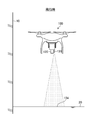
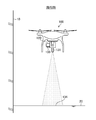
- FIG. 2 is a diagram showing an outline of a first embodiment of the flight photography system according to the present invention, and is a diagram showing a state of a drone during flight.
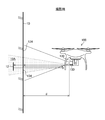
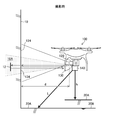
- FIG. 3 is a diagram showing an outline of a first embodiment of the flight imaging system according to the present invention, and is a diagram showing a state of a drone at the time of imaging.
- FIG. 4 is a diagram showing the relationship between the visible image and the millimeter wave image.
- FIG. 5 is a table showing the relationship between a plurality of distances and the coordinates of four points of the millimeter wave image at each distance.
- FIG. 1 is a diagram showing a schematic configuration of a flight photography system according to the present invention.
- FIG. 2 is a diagram showing an outline of a first embodiment of the flight photography system according to the present invention, and is a diagram showing a state of a drone during flight.
- FIG. 3 is
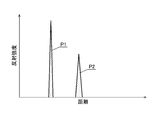
- FIG. 6 is a diagram schematically showing the relationship between the reflection intensity of the millimeter wave and the distance at a certain pixel position of the millimeter wave image.
- FIG. 7 is a diagram showing the relationship between a visible image and a millimeter-wave image showing an internal defect.
- FIG. 8 is a diagram showing an outline of a second embodiment of the flight photography system according to the present invention.
- FIG. 9 is a diagram showing an outline of a third embodiment of the flight photography system according to the present invention, and is a diagram showing a state of a drone during flight.
- FIG. 10 is a diagram showing an outline of a third embodiment of the flight imaging system according to the present invention, and is a diagram showing a state of a drone at the time of imaging.
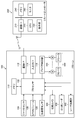
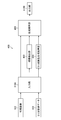
- FIG. 11 is a block diagram showing an embodiment of the hardware configuration of the flight photography system according to the present invention.
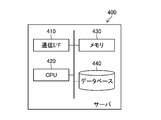
- FIG. 12 is a block diagram showing an embodiment of a server applied to the flight photography system according to the present invention.
- FIG. 13 is a functional block diagram showing the functions of the server shown in FIG.
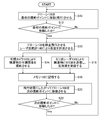
- FIG. 14 is a flowchart showing an embodiment of the flight photography method according to the present invention.
- the flight photography system 1 shown in FIG. 1 is composed of a drone 100, a remote controller 200, a user terminal 300, and a server 400, which are unmanned aerial vehicles.
- the user terminal 300 may be a PC (Personal Computer) (notebook PC, tablet PC), a smartphone, or the like capable of communicating with the server 400.
- PC Personal Computer
- This flight photographing system 1 sequentially moves to each shooting point by the drone 100, shoots a structure with a visible camera 120 at each shooting point, acquires a visible image of the surface layer of the structure, and corresponds to the visible image.
- a millimeter wave is transmitted from the millimeter wave radar 130 toward the structure at each shooting point, and the reflected wave of the millimeter wave from the structure is received.
- Milli-wave reflected waves from a structure are reflected on the surface of the structure, but some reach a certain distance (for example, several centimeters) from the surface of the structure, so millimeters received from the millimeter-wave area.
- the wave reception data includes three-dimensional information up to a certain distance from the surface of the structure.
- acquiring millimeter-wave reception data is also referred to as taking a millimeter-wave image with a millimeter-wave radar.
- the structure 10 shown in FIGS. 2 and 3 is a social infrastructure structure such as a bridge or a tunnel, and a building.
- the drone 100 for example, autonomously flies along a predetermined flight route, or semi-autonomously flies in response to an instruction from the remote controller 200.
- the flight route is preferably designed so as to connect each shooting point of the structure with the shortest route.
- the rotation angle of the millimeter wave radar 130 is controlled so that the transmission / reception direction of the millimeter wave from the millimeter wave radar 130 is in the downward direction of the drone 100.
- the visible camera 120 and the millimeter wave radar 130 are integrated and the rotation angle is controlled at the same time, but the rotation angle may be individually controlled.
- “in flight” or “in flight” of the drone 100 shall include flight when the drone 100 is moving in the air and stationary flight (hovering) in which the drone 100 is stationary in the air.
- the beam switching method is a method in which a plurality of fixed beams having a narrow beam width whose directivity is slightly different are formed and the fixed beam is electrically switched by time division.
- the phased array method uses a phased array antenna in which multiple element antennas are arranged at regular intervals, and the beam is emitted in the high frequency band by controlling the phase of the signal with a phase device connected to the multiple element antennas. This is a method of forming and scanning.
- the digital beam formation method uses a phased array antenna, detects signals received by multiple element antennas in the reception, converts them into baseband signals, and then converts them into digital signals. , A method of forming a beam by signal processing calculation. Since this method stores the waveform information of the received signal as numerical data, it is possible to form a beam or the like having various characteristics and shapes by calculation.
- the millimeter wave radar 130 When the millimeter wave radar 130 is controlled so that the transmission / reception direction of the millimeter wave from the millimeter wave radar 130 is downward of the drone 100, the millimeter wave radar 130 transmits / receives a millimeter wave area (millimeter wave transmission / reception) on the reference surface 20 of the ground or water surface. Area) 134 can measure the distance. The shortest distance among the distances measured in the millimeter wave area 134 is the height (altitude) from the reference plane 20 of the drone 100.
- a drone is equipped with a GPS (Global Positioning System) module, which receives GPS signals transmitted from a plurality of GPS satellites and performs positioning calculation processing based on the received multiple GPS signals. It can be executed to detect position information consisting of the GPS module's latitude, longitude, and altitude.
- GPS Global Positioning System
- the GPS module has a drawback that it cannot acquire position information (altitude information) in places where GPS signals cannot be received, such as in tunnels and under bridges.
- the altitude of the drone 100 can be measured under any environment, and the measured altitude can be used for autonomous flight of the drone 100 and the like.
- the visible camera 120 and the millimeter wave radar 130 are rotated and controlled so as to face the structure 10.
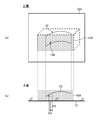
- FIG. 4 is a diagram showing the relationship between the visible image and the millimeter wave image.
- the distance d is changed, and the coordinates of the four points A, B, C, and D of the millimeter wave area 134 are obtained for each of a plurality of distances (d1, d2, d3, ).
- FIG. 5 is a table showing the relationship between a plurality of distances and the coordinates of four points of the millimeter wave image at each distance.
- the distance d between the drone 100 and the structure 10 is measured, and the table shown in FIG. 5 shows which pixel positions A, B, C, and D of the millimeter wave area 134 are in the visible image. Estimate using. If the measured distance d does not exist in the table, the pixel positions of the four points A, B, C, and D corresponding to the distances before and after the measured distance d are linearly interpolated.
- FIG. 6 is a diagram schematically showing the relationship between the reflection intensity of millimeter waves and the distance at a certain pixel position of the millimeter wave image.
- FIG. 7 is a diagram showing the relationship between a visible image and a millimeter-wave image showing an internal defect.
- the millimeter wave image becomes an image showing the internal defect 12. Further, since the positional relationship between the visible image and the millimeter wave image can be specified based on the table shown in FIG. 6, the millimeter wave image can be combined with the visible image.
- 136 represents a pixel having a millimeter-wave image. Further, it is preferable that the millimeter wave image has a color different from that of the visible image such as red, and is represented by a shade according to the depth and the reflection intensity so as to be distinguishable from the visible image of the surface layer of the structure 10.
- the distance d measured by the millimeter wave radar 130 can be used when reading the coordinates of the four points A, B, C, and D of the millimeter wave area 134 from the table shown in FIG. Further, the distance d can be used to control the position of the shooting point of the drone 100 when the shooting distance from the drone 100 to the structure 10 is maintained at a desired shooting distance, and further, the shooting lens of the visible camera 120. Can be used for focusing.
- the millimeter wave radar (first millimeter wave radar) 130 is aimed at the structure 10 and is used for taking a millimeter wave image of the structure 10, and the millimeter wave radar (second millimeter wave radar) 131 is It is directed downwards on the drone 100 and functions as an altitude measuring instrument that measures the altitude of the drone 100.
- FIGS. 9 and 10 are diagrams showing an outline of a third embodiment of the flight photography system according to the present invention, FIG. 9 shows a state of the drone during flight, and FIG. 10 shows a state of the drone at the time of shooting. Is shown.
- FIGS. 9 and 10 the same reference numerals are given to the parts common to the flight photographing system of the first embodiment shown in FIG. 2 and the like, and detailed description thereof will be omitted.
- the altitude h of the drone 100 during stationary flight of the drone 100 is measured by the laser rangefinder 140. This is because the laser rangefinder 140 can measure the distance (altitude) more accurately than the millimeter wave radar 130.
- the millimeter-wave radar 130 detects that the reference plane in the vertical downward direction of the drone 100 is a plane (water surface) that is difficult to detect by the laser rangefinder 140, it is newly set so that it can be detected by the laser rangefinder 140.
- the reference plane (ground) is used as the reference plane for altitude measurement of the drone 100.
- the intensity of the reflected wave from the water surface area changes with time due to the influence of the wave on the water surface, whereas the intensity of the reflected wave from the ground area hardly changes with time.
- the laser range finder 140 detects obstacles on the flight route during the moving flight of the drone 100, and measures the distance d from the drone 100 to the structure 10.
- the information of the object measured by the laser range finder 140 is used when the drone 100 is made to fly autonomously or semi-autonomously. For example, it can be used for autonomous flight of the drone 100 so as to maintain the distance d between the drone 100 and the structure 10 at a desired distance.
- the ground corresponding to the ground area is set as the reference surface 20A, and the distance to the reference surface 20A is measured by the laser range finder 140. Then, the drone 100 acquires the shortest distance among the distances measured by the laser range finder 140 as the altitude h (h1) of the drone 100.
- a new reference surface 20A (ground other than the vertical direction) that can be detected by the laser rangefinder 140 is used instead of the reference surface 20B corresponding to the water surface area.
- the reference plane of the ground corresponding to the area) is set, and the distance L between the drone 100 and the new reference plane 20A is measured by the laser range finder 140.
- the visible camera 120 automatically shoots a visible image of the surface layer of the structure 10. Further, the millimeter wave radar 130 is used to capture a millimeter wave image.
- the processor 102 is a part that reads various programs and the like from the memory 110 and controls each part in an integrated manner. It controls the flight of the drone 100, controls the shooting of visible images by the visible camera 120, and controls the shooting of millimeter-wave images by the millimeter-wave radar 130. And the measurement of altitude, the measurement of altitude with the laser range finder 140, etc. are carried out.
- each output signal of the gyro sensor 104, the GPS module 106, and the acceleration sensor 108 is input to the processor 102.
- the processor 102 can know the attitude, the angular velocity, and the angular acceleration of the drone 100 based on the output signal of the gyro sensor 104. Further, the processor 102 can know the position (latitude, longitude, altitude) of the drone 100 based on the GPS signal of the GPS module 106. Further, the processor 102 can know the acceleration of the drone 100 based on the output signal of the acceleration sensor 108.
- the processor 102 controls a plurality of motors 118 via the propeller control unit 116 based on the output signals of the gyro sensor 104, the GPS module 106, and the acceleration sensor 108, respectively, so that the flight is set in advance by the flight plan. It executes various operations of autonomous flight such as takeoff, mobile flight, hovering, turning and landing of the drone 100 according to the route, or semi-autonomous flight in which a part of the flight receives an instruction from the remote controller 200 and flies.
- autonomous flight such as takeoff, mobile flight, hovering, turning and landing of the drone 100 according to the route, or semi-autonomous flight in which a part of the flight receives an instruction from the remote controller 200 and flies.
- the drone 100 can fly arbitrarily based on the flight instruction from the remote controller 200, in addition to the autonomous flight or the semi-autonomous flight. Further, at the time of hovering, it is possible to automatically control to hold the position and attitude of the drone 100 based on the detection output of the gyro sensor 104 and the acceleration sensor 108. Further, the gyro sensor 104 can detect the angular velocity due to the movement of the drone 100, and can detect the angle by the integral calculation of the angular velocity, and the acceleration sensor 108 can detect the inclination (direction of gravity) of the drone 100, parallel movement, and integration. It is possible to detect the speed etc. by
- the processor 102 is a process of capturing a visible image of the surface layer of a structure by a visible camera 120, transmitting a millimeter wave from a millimeter wave radar 130 toward the structure, and receiving a reflected wave of the millimeter wave from the structure to receive millimeter waves.
- the millimeter-wave radar 130 measures the altitude from the reference plane during the moving flight of the drone 100, which is a process for capturing a wave image
- the laser rangefinder 140 measures the altitude from the reference plane during the stationary flight of the drone 100.
- the altitude information indicating these altitudes is used for flight control of the drone 100.
- This drone 100 uses information such as altitude and distance to a structure measured by a millimeter-wave radar 130 and a laser rangefinder 140 to make autonomous flight or semi-autonomous flight in an environment where GPS radio waves do not reach. It can be performed.
- the drone 100 can fly while keeping the distance (altitude) from the reference plane measured by the millimeter wave radar 130 or the laser rangefinder 140 and the distance to the structure 10 constant.
- the altitude to be flown by the drone 100 and the distance from the structure 10 can be acquired from the memory 110 as flight plan information such as a flight route, or can be received from the remote controller 200 by a user instruction.
- the remote controller 200 is used to remotely control the drone 100 by user operation, and includes a communication I / F 210, a CPU (Central Processing Unit) 220, an operation unit 230, a memory 240, and a monitor 250.
- a communication I / F 210 includes a communication I / F 210, a CPU (Central Processing Unit) 220, an operation unit 230, a memory 240, and a monitor 250.
- a CPU Central Processing Unit
- the CPU 220 controls each part collectively by executing the firmware stored in the memory 240.
- the processor 102 of the drone 100 and the CPU 220 of the remote controller 200 can exchange necessary information via the communication I / F 112 and 210, and the remote controller 200 has a live view taken by the visible camera 120.
- the image can be received via the communication I / F 112 and 210 and displayed on the monitor 250.
- the user can operate the operation unit 230 while viewing the live view image displayed on the monitor 250 to guide the flight of the drone 100 to the first shooting point of the structure 10. If the flight route to the first shooting point is in an environment where GPS radio waves can be received, by setting the flight route to the drone 100 in advance, the drone 100 captures the current position with the GPS module 106. You can fly autonomously to the first shooting point. In this case, the user gives the drone 100 an instruction for autonomous flight from the remote controller 200 to the first shooting point.
- the drone 100 moves to the next shooting point after shooting at a certain shooting point.
- the distance between the shooting points can be preset based on the shooting area on the structure 10 corresponding to the visible image to be shot. For example, the distance between each shooting point is shorter than the length of the long side of the shooting area when the drone 100 is moved horizontally, and the shooting area is set when the drone 100 is moved vertically. It is preferable that the distance is shorter than the length of the short side of the. This is because, when panoramic composition of captured visible images, overlapping image areas are required between adjacent visible images.
- the user can operate the operation unit 230 while viewing the live view image displayed on the monitor 250 to return the drone 100. Further, in an environment where GPS radio waves can be received, the user can automatically return the drone 100 by instructing the return from the remote controller 200.
- the CPU 220 centrally controls each part by executing a program stored in the memory 240, and detects damage appearing on the surface layer of the structure 10 based on a visible image as described later, from the surface layer of the structure.
- a process of generating a millimeter-wave image inside a structure from millimeter-wave received data including three-dimensional information up to a predetermined depth, a process of synthesizing a visible image and a millimeter-wave image, and the like are performed.
- the server 400 shown in FIG. 13 mainly includes an input unit 410A, a damage detection unit 422, a millimeter wave image generation processing unit 424, a composition processing unit 426, and an output unit 410B.
- the damage detection unit 422 may be performed by an image processing algorithm or may be performed by artificial intelligence (AI: artificial intelligence).
- AI artificial intelligence
- a trained model by a convolutional neural network (CNN) can be used.
- each step shown in FIG. 14 is performed by, for example, the processor 102 of the drone 100 shown in FIG.
- step S13 the aircraft makes a stationary flight at the shooting point and measures the altitude of the drone 100 with the laser rangefinder 140. Let me.
- the processor 102 repeats the processes from step S13 to step S22 until the shooting at all the shooting points is completed.
Landscapes
- Engineering & Computer Science (AREA)
- Remote Sensing (AREA)
- Physics & Mathematics (AREA)
- Radar, Positioning & Navigation (AREA)
- General Physics & Mathematics (AREA)
- Aviation & Aerospace Engineering (AREA)
- Electromagnetism (AREA)
- Computer Networks & Wireless Communication (AREA)
- Microelectronics & Electronic Packaging (AREA)
- Mechanical Engineering (AREA)
- Multimedia (AREA)
- Signal Processing (AREA)
- Health & Medical Sciences (AREA)
- Life Sciences & Earth Sciences (AREA)
- Chemical & Material Sciences (AREA)
- Analytical Chemistry (AREA)
- Biochemistry (AREA)
- General Health & Medical Sciences (AREA)
- Immunology (AREA)
- Pathology (AREA)
- Automation & Control Theory (AREA)
- Radar Systems Or Details Thereof (AREA)
Priority Applications (2)
| Application Number | Priority Date | Filing Date | Title |
|---|---|---|---|
| JP2022526553A JP7436657B2 (ja) | 2020-05-29 | 2021-05-25 | 飛行撮影システム及び方法 |
| US18/050,833 US12235191B2 (en) | 2020-05-29 | 2022-10-28 | Flight imaging system and method |
Applications Claiming Priority (2)
| Application Number | Priority Date | Filing Date | Title |
|---|---|---|---|
| JP2020094326 | 2020-05-29 | ||
| JP2020-094326 | 2020-05-29 |
Related Child Applications (1)
| Application Number | Title | Priority Date | Filing Date |
|---|---|---|---|
| US18/050,833 Continuation US12235191B2 (en) | 2020-05-29 | 2022-10-28 | Flight imaging system and method |
Publications (1)
| Publication Number | Publication Date |
|---|---|
| WO2021241534A1 true WO2021241534A1 (ja) | 2021-12-02 |
Family
ID=78744402
Family Applications (1)
| Application Number | Title | Priority Date | Filing Date |
|---|---|---|---|
| PCT/JP2021/019701 Ceased WO2021241534A1 (ja) | 2020-05-29 | 2021-05-25 | 飛行撮影システム及び方法 |
Country Status (3)
| Country | Link |
|---|---|
| US (1) | US12235191B2 (https=) |
| JP (1) | JP7436657B2 (https=) |
| WO (1) | WO2021241534A1 (https=) |
Cited By (7)
| Publication number | Priority date | Publication date | Assignee | Title |
|---|---|---|---|---|
| CN114383576A (zh) * | 2022-01-19 | 2022-04-22 | 西北大学 | 一种空地一体化滑坡监测方法及其监测装置 |
| CN114593710A (zh) * | 2022-03-04 | 2022-06-07 | 沃飞长空科技(成都)有限公司 | 一种无人机测量方法、系统、电子设备及介质 |
| JP2023101176A (ja) * | 2022-01-07 | 2023-07-20 | 日本製鉄株式会社 | レーダー探傷装置およびレーダー探傷方法 |
| CN116873243A (zh) * | 2023-07-11 | 2023-10-13 | 汤慈鸿 | 一种无人机用激光雷达发射装置 |
| WO2024209729A1 (ja) * | 2023-04-07 | 2024-10-10 | 横浜ゴム株式会社 | マリンホースの監視システムおよび方法 |
| CN119478304A (zh) * | 2024-09-29 | 2025-02-18 | 中国航空工业集团公司雷华电子技术研究所 | 一种毫米波雷达高压线探测的3d矢量重构方法 |
| CN120522689A (zh) * | 2025-05-20 | 2025-08-22 | 南京泰弘讯达科技有限公司 | 一种空地协同毫米波通感智能感知与决策系统 |
Families Citing this family (5)
| Publication number | Priority date | Publication date | Assignee | Title |
|---|---|---|---|---|
| US20240319039A1 (en) * | 2023-03-24 | 2024-09-26 | Unm Rainforest Innovations | Monitoring Reference-Free Contact-Free Total Displacements And Movements With A UAS Equipped With Lasers And Computer-Vision |
| CN116203554B (zh) * | 2023-05-06 | 2023-07-07 | 武汉煜炜光学科技有限公司 | 一种环境点云数据扫描方法和系统 |
| CN118393492B (zh) * | 2024-07-01 | 2024-09-13 | 四会市土地储备中心 | 山体高度测量装置及测量方法 |
| KR102807127B1 (ko) * | 2024-07-30 | 2025-05-16 | (주)한국종합안전연구원 | 드론으로 구조물의 외관을 측정하고 관리하기 위한 방법 및 시스템 |
| CN118583892B (zh) * | 2024-08-06 | 2024-10-15 | 佛山蓝谱达科技有限公司 | 一种基于无人机的电磁测量系统 |
Citations (7)
| Publication number | Priority date | Publication date | Assignee | Title |
|---|---|---|---|---|
| US20050110672A1 (en) * | 2003-10-10 | 2005-05-26 | L-3 Communications Security And Detection Systems, Inc. | Mmw contraband screening system |
| JP2007121214A (ja) * | 2005-10-31 | 2007-05-17 | Nippon Telegr & Teleph Corp <Ntt> | 電磁波イメージングシステム及び移動型電磁波照射・検知装置 |
| JP2008203123A (ja) * | 2007-02-21 | 2008-09-04 | Japan Aerospace Exploration Agency | 航空機用水面及び地面観測装置 |
| JP2016111414A (ja) * | 2014-12-03 | 2016-06-20 | コニカミノルタ株式会社 | 飛行体の位置検出システム及び飛行体 |
| JP2019027908A (ja) * | 2017-07-28 | 2019-02-21 | 株式会社TonTon | 外面材調査システム |
| JP2019130927A (ja) * | 2018-01-29 | 2019-08-08 | 株式会社プロドローン | 無人航空機 |
| JP2020504811A (ja) * | 2016-12-08 | 2020-02-13 | ユニバーシティ オブ ワシントンUniversity of Washington | ミリ波および/またはマイクロ波撮像システム、および、区分化インバース、拡張分解能モードおよび撮像デバイスの例を含む方法、 |
Family Cites Families (47)
| Publication number | Priority date | Publication date | Assignee | Title |
|---|---|---|---|---|
| JP3279781B2 (ja) | 1993-11-30 | 2002-04-30 | 第一高周波工業株式会社 | コンクリート中の鉄筋の発錆進行状況判定方法 |
| JPH1183996A (ja) | 1997-09-03 | 1999-03-26 | Omron Corp | ミリ波検出装置 |
| JPH1183754A (ja) | 1997-09-04 | 1999-03-26 | Mitsui High Tec Inc | リードフレーム検査装置 |
| JPH11259656A (ja) | 1998-03-10 | 1999-09-24 | Teito Rapid Transit Authority | トンネル壁面判定装置 |
| JP2000193611A (ja) | 1998-12-24 | 2000-07-14 | Koji Otsuka | アスファルト舗装下のコンクリ―ト橋梁床版のひび割れ等の劣化状態をx線造影撮影法により検査する方法 |
| JP4588901B2 (ja) | 2001-03-02 | 2010-12-01 | 株式会社竹中工務店 | コンクリートの欠陥検査方法およびコンクリートの欠陥検査装置 |
| JP3778004B2 (ja) | 2001-05-23 | 2006-05-24 | 株式会社日立製作所 | 電波が伝播できる検査対象の検査装置 |
| JP4319834B2 (ja) | 2002-12-27 | 2009-08-26 | 財団法人鉄道総合技術研究所 | コンクリート表面及び建築物の外壁の撮像装置、並びにコンクリート表面及び建築物の外壁の撮像方法 |
| JP4287187B2 (ja) | 2003-04-24 | 2009-07-01 | 株式会社東芝 | 欠陥検査装置 |
| JP2005037366A (ja) | 2003-06-24 | 2005-02-10 | Constec Engi Co | 赤外線構造物診断システム及び赤外線構造物診断方法 |
| JP2005016995A (ja) | 2003-06-24 | 2005-01-20 | Railway Technical Res Inst | 赤外線構造物診断方法 |
| JP4372658B2 (ja) | 2004-10-07 | 2009-11-25 | ソニーケミカル&インフォメーションデバイス株式会社 | 欠陥マーキング装置及び欠陥マーキング方法 |
| JP2006132973A (ja) | 2004-11-02 | 2006-05-25 | Fujimitsu Komuten:Kk | コンクリート構造物のクラック検査装置及びクラック検査方法 |
| JP5005218B2 (ja) | 2005-12-28 | 2012-08-22 | 愛知機械工業株式会社 | 検査装置および検査方法 |
| JP4288265B2 (ja) | 2006-01-10 | 2009-07-01 | 日本電信電話株式会社 | 電磁波イメージングシステム、構造物透視装置および構造物透視方法 |
| JP5085115B2 (ja) | 2006-12-11 | 2012-11-28 | 東北発電工業株式会社 | 水車構造物の三次元欠陥検査装置 |
| JP4526570B2 (ja) | 2008-03-10 | 2010-08-18 | 西日本高速道路エンジニアリング四国株式会社 | 赤外線カメラによる構造物調査方法 |
| CN101614814B (zh) * | 2009-07-29 | 2012-02-01 | 武汉大学 | 用于天基激光测高的智能化数据采集方法及系统 |
| JP5113810B2 (ja) | 2009-08-07 | 2013-01-09 | 日本電信電話株式会社 | 画像処理方法、画像処理装置及びひび割れ検知システム |
| JP5275968B2 (ja) | 2009-12-24 | 2013-08-28 | 株式会社パスコ | 内部変状検出支援装置及び内部変状検出支援プログラム |
| US8054464B2 (en) * | 2010-01-25 | 2011-11-08 | Sigma Space Corp. | Polarization switching lidar device and method |
| CN101950436A (zh) * | 2010-09-29 | 2011-01-19 | 中国科学院国家天文台 | 利用激光高度计数据制作数字高程模型的方法 |
| WO2012073722A1 (ja) | 2010-12-01 | 2012-06-07 | コニカミノルタホールディングス株式会社 | 画像合成装置 |
| CN102095755B (zh) | 2010-12-09 | 2012-10-03 | 重庆建工市政交通工程有限责任公司 | 一种混凝土结构的无损检测方法 |
| JP5591165B2 (ja) | 2011-03-25 | 2014-09-17 | 公益財団法人鉄道総合技術研究所 | コンクリート表面の変状領域の検出方法 |
| JP5894013B2 (ja) | 2012-05-30 | 2016-03-23 | 公益財団法人鉄道総合技術研究所 | コンクリート表面の変状管理方法 |
| JP6029870B2 (ja) | 2012-06-27 | 2016-11-24 | 公益財団法人鉄道総合技術研究所 | コンクリート表面の変状検出方法及び装置 |
| KR101492336B1 (ko) | 2013-09-24 | 2015-02-11 | 서울여자대학교 산학협력단 | 금속품의 크랙 자동 검출 시스템 및 그 검출 방법 |
| JP2015219014A (ja) | 2014-05-14 | 2015-12-07 | コニカミノルタ株式会社 | 物体診断装置 |
| JP6413058B2 (ja) | 2014-06-20 | 2018-10-31 | 西日本高速道路エンジニアリング四国株式会社 | コンクリート構造物のはく落予測診断方法 |
| CN105068065B (zh) * | 2015-07-29 | 2017-06-27 | 武汉大学 | 星载激光测高仪在轨检校方法及系统 |
| WO2017119154A1 (ja) | 2016-01-07 | 2017-07-13 | 三菱電機株式会社 | 検出装置および検出方法 |
| JP6700054B2 (ja) | 2016-02-04 | 2020-05-27 | 学校法人桐蔭学園 | 非接触音響探査システム |
| JP2017161452A (ja) | 2016-03-11 | 2017-09-14 | Ntn株式会社 | 振動検査装置 |
| JP6609057B2 (ja) | 2016-08-22 | 2019-11-20 | 富士フイルム株式会社 | 画像処理装置 |
| JP6574747B2 (ja) | 2016-09-26 | 2019-09-11 | 日本製鉄株式会社 | 煙道又は煙突の調査方法 |
| JP6708163B2 (ja) | 2017-04-26 | 2020-06-10 | 三菱電機株式会社 | 移動型探傷装置 |
| JP6939255B2 (ja) | 2017-08-28 | 2021-09-22 | 積水ハウス株式会社 | シーリング目地検査方法 |
| JP2019070627A (ja) | 2017-10-11 | 2019-05-09 | 日本無線株式会社 | 非破壊検査システム |
| JP6734583B2 (ja) | 2018-02-23 | 2020-08-05 | 株式会社市川工務店 | 橋梁などの構造物を検査するための画像処理システム、画像処理方法及びプログラム |
| JP2019158793A (ja) | 2018-03-16 | 2019-09-19 | 公益財団法人鉄道総合技術研究所 | ひび割れ調査装置 |
| JP7304060B2 (ja) | 2018-07-26 | 2023-07-06 | 直人 今西 | 構造内部変状特性検出装置 |
| WO2020059706A1 (ja) | 2018-09-20 | 2020-03-26 | 富士フイルム株式会社 | 学習用データ収集装置、学習用データ収集方法、及びプログラム |
| JP6717452B2 (ja) | 2018-09-26 | 2020-07-01 | 技建開発株式会社 | 鉄筋コンクリート構造物の内部異常状態検出方法 |
| JP7033045B2 (ja) | 2018-10-17 | 2022-03-09 | 株式会社神戸製鋼所 | 学習装置、推定装置、亀裂検出装置、亀裂検出システム、学習方法、推定方法、亀裂検出方法、及びプログラム |
| JP6611147B1 (ja) | 2019-05-16 | 2019-11-27 | 株式会社センシンロボティクス | 撮像システム及び撮像方法 |
| JP2020016667A (ja) | 2019-10-25 | 2020-01-30 | 東急建設株式会社 | 変状部の検査装置 |
-
2021
- 2021-05-25 WO PCT/JP2021/019701 patent/WO2021241534A1/ja not_active Ceased
- 2021-05-25 JP JP2022526553A patent/JP7436657B2/ja active Active
-
2022
- 2022-10-28 US US18/050,833 patent/US12235191B2/en active Active
Patent Citations (7)
| Publication number | Priority date | Publication date | Assignee | Title |
|---|---|---|---|---|
| US20050110672A1 (en) * | 2003-10-10 | 2005-05-26 | L-3 Communications Security And Detection Systems, Inc. | Mmw contraband screening system |
| JP2007121214A (ja) * | 2005-10-31 | 2007-05-17 | Nippon Telegr & Teleph Corp <Ntt> | 電磁波イメージングシステム及び移動型電磁波照射・検知装置 |
| JP2008203123A (ja) * | 2007-02-21 | 2008-09-04 | Japan Aerospace Exploration Agency | 航空機用水面及び地面観測装置 |
| JP2016111414A (ja) * | 2014-12-03 | 2016-06-20 | コニカミノルタ株式会社 | 飛行体の位置検出システム及び飛行体 |
| JP2020504811A (ja) * | 2016-12-08 | 2020-02-13 | ユニバーシティ オブ ワシントンUniversity of Washington | ミリ波および/またはマイクロ波撮像システム、および、区分化インバース、拡張分解能モードおよび撮像デバイスの例を含む方法、 |
| JP2019027908A (ja) * | 2017-07-28 | 2019-02-21 | 株式会社TonTon | 外面材調査システム |
| JP2019130927A (ja) * | 2018-01-29 | 2019-08-08 | 株式会社プロドローン | 無人航空機 |
Cited By (8)
| Publication number | Priority date | Publication date | Assignee | Title |
|---|---|---|---|---|
| JP2023101176A (ja) * | 2022-01-07 | 2023-07-20 | 日本製鉄株式会社 | レーダー探傷装置およびレーダー探傷方法 |
| CN114383576A (zh) * | 2022-01-19 | 2022-04-22 | 西北大学 | 一种空地一体化滑坡监测方法及其监测装置 |
| CN114593710A (zh) * | 2022-03-04 | 2022-06-07 | 沃飞长空科技(成都)有限公司 | 一种无人机测量方法、系统、电子设备及介质 |
| CN114593710B (zh) * | 2022-03-04 | 2024-02-06 | 四川傲势科技有限公司 | 一种无人机测量方法、系统、电子设备及介质 |
| WO2024209729A1 (ja) * | 2023-04-07 | 2024-10-10 | 横浜ゴム株式会社 | マリンホースの監視システムおよび方法 |
| CN116873243A (zh) * | 2023-07-11 | 2023-10-13 | 汤慈鸿 | 一种无人机用激光雷达发射装置 |
| CN119478304A (zh) * | 2024-09-29 | 2025-02-18 | 中国航空工业集团公司雷华电子技术研究所 | 一种毫米波雷达高压线探测的3d矢量重构方法 |
| CN120522689A (zh) * | 2025-05-20 | 2025-08-22 | 南京泰弘讯达科技有限公司 | 一种空地协同毫米波通感智能感知与决策系统 |
Also Published As
| Publication number | Publication date |
|---|---|
| US12235191B2 (en) | 2025-02-25 |
| JP7436657B2 (ja) | 2024-02-21 |
| US20230101728A1 (en) | 2023-03-30 |
| JPWO2021241534A1 (https=) | 2021-12-02 |
Similar Documents
| Publication | Publication Date | Title |
|---|---|---|
| JP7436657B2 (ja) | 飛行撮影システム及び方法 | |
| JP7022559B2 (ja) | 無人航空機の制御方法および無人航空機の制御用プログラム | |
| JP7025156B2 (ja) | データ処理装置、データ処理方法およびデータ処理用プログラム | |
| JP7141538B2 (ja) | 森林計測を行う方法、森林計測システム、無人航空機の飛行経路を決定する方法、撮影方法、散布方法およびコンピュータプログラム | |
| JP7007137B2 (ja) | 情報処理装置、情報処理方法および情報処理用プログラム | |
| EP4063985A1 (en) | Aerial inspection system | |
| JP2011183824A (ja) | 空中撮影システム | |
| CN112335190A (zh) | 无线电链路覆盖图和减损系统及方法 | |
| US20210229810A1 (en) | Information processing device, flight control method, and flight control system | |
| JP2017201757A (ja) | 画像取得システム、画像取得方法、画像処理方法 | |
| JP7652851B2 (ja) | 飛行体、システムおよびプログラム | |
| JP2017037008A (ja) | 構造物の状態検査方法 | |
| JP2019056562A (ja) | 制御装置、無人航空機、制御処理方法および制御処理用プログラム | |
| JP2023100642A (ja) | 検査システム | |
| JP3001866B1 (ja) | 飛行体を用いた測量方法及びその装置 | |
| JP2019039867A (ja) | 位置測定装置、位置測定方法および位置測定用プログラム | |
| CN117315037A (zh) | 联合标定方法、其装置、电子设备及无人机 | |
| KR102821363B1 (ko) | 드론에 장착된 라이다 센서를 기초로 하는 수심 측량 시스템 | |
| JP2023099565A (ja) | 飛行体、点検方法及び点検システム | |
| TWI766427B (zh) | 無人機裝置及無人機工作區的部署方法 | |
| KR102899316B1 (ko) | 3차원 측위 및 지도작성 시스템 및 방법 | |
| JP7765520B2 (ja) | 制御装置、撮像システム及び撮像方法 | |
| US20240111311A1 (en) | Control apparatus, base station, control method, and program | |
| US12146964B2 (en) | Image processing method, image processing apparatus, and image processing program | |
| JP2020160018A (ja) | 船舶の積載物の数量検収システム |
Legal Events
| Date | Code | Title | Description |
|---|---|---|---|
| 121 | Ep: the epo has been informed by wipo that ep was designated in this application |
Ref document number: 21812954 Country of ref document: EP Kind code of ref document: A1 |
|
| ENP | Entry into the national phase |
Ref document number: 2022526553 Country of ref document: JP Kind code of ref document: A |
|
| NENP | Non-entry into the national phase |
Ref country code: DE |
|
| 122 | Ep: pct application non-entry in european phase |
Ref document number: 21812954 Country of ref document: EP Kind code of ref document: A1 |