WO2021153783A1 - 炎症抑制剤 - Google Patents
炎症抑制剤 Download PDFInfo
- Publication number
- WO2021153783A1 WO2021153783A1 PCT/JP2021/003391 JP2021003391W WO2021153783A1 WO 2021153783 A1 WO2021153783 A1 WO 2021153783A1 JP 2021003391 W JP2021003391 W JP 2021003391W WO 2021153783 A1 WO2021153783 A1 WO 2021153783A1
- Authority
- WO
- WIPO (PCT)
- Prior art keywords
- wavelength
- skin
- vitamin
- ultraviolet rays
- composition
- Prior art date
- Legal status (The legal status is an assumption and is not a legal conclusion. Google has not performed a legal analysis and makes no representation as to the accuracy of the status listed.)
- Ceased
Links
Images

Classifications
-
- A—HUMAN NECESSITIES
- A61—MEDICAL OR VETERINARY SCIENCE; HYGIENE
- A61K—PREPARATIONS FOR MEDICAL, DENTAL OR TOILETRY PURPOSES
- A61K8/00—Cosmetics or similar toiletry preparations
- A61K8/18—Cosmetics or similar toiletry preparations characterised by the composition
- A61K8/19—Cosmetics or similar toiletry preparations characterised by the composition containing inorganic ingredients
- A61K8/27—Zinc; Compounds thereof
-
- A—HUMAN NECESSITIES
- A61—MEDICAL OR VETERINARY SCIENCE; HYGIENE
- A61Q—SPECIFIC USE OF COSMETICS OR SIMILAR TOILETRY PREPARATIONS
- A61Q17/00—Barrier preparations; Preparations brought into direct contact with the skin for affording protection against external influences, e.g. sunlight, X-rays or other harmful rays, corrosive materials, bacteria or insect stings
- A61Q17/04—Topical preparations for affording protection against sunlight or other radiation; Topical sun tanning preparations
-
- A—HUMAN NECESSITIES
- A61—MEDICAL OR VETERINARY SCIENCE; HYGIENE
- A61K—PREPARATIONS FOR MEDICAL, DENTAL OR TOILETRY PURPOSES
- A61K8/00—Cosmetics or similar toiletry preparations
- A61K8/18—Cosmetics or similar toiletry preparations characterised by the composition
- A61K8/19—Cosmetics or similar toiletry preparations characterised by the composition containing inorganic ingredients
- A61K8/24—Phosphorous; Compounds thereof
-
- A—HUMAN NECESSITIES
- A61—MEDICAL OR VETERINARY SCIENCE; HYGIENE
- A61K—PREPARATIONS FOR MEDICAL, DENTAL OR TOILETRY PURPOSES
- A61K8/00—Cosmetics or similar toiletry preparations
- A61K8/18—Cosmetics or similar toiletry preparations characterised by the composition
- A61K8/30—Cosmetics or similar toiletry preparations characterised by the composition containing organic compounds
- A61K8/64—Proteins; Peptides; Derivatives or degradation products thereof
-
- A—HUMAN NECESSITIES
- A61—MEDICAL OR VETERINARY SCIENCE; HYGIENE
- A61K—PREPARATIONS FOR MEDICAL, DENTAL OR TOILETRY PURPOSES
- A61K8/00—Cosmetics or similar toiletry preparations
- A61K8/18—Cosmetics or similar toiletry preparations characterised by the composition
- A61K8/30—Cosmetics or similar toiletry preparations characterised by the composition containing organic compounds
- A61K8/67—Vitamins
- A61K8/671—Vitamin A; Derivatives thereof, e.g. ester of vitamin A acid, ester of retinol, retinol, retinal
-
- A—HUMAN NECESSITIES
- A61—MEDICAL OR VETERINARY SCIENCE; HYGIENE
- A61K—PREPARATIONS FOR MEDICAL, DENTAL OR TOILETRY PURPOSES
- A61K8/00—Cosmetics or similar toiletry preparations
- A61K8/18—Cosmetics or similar toiletry preparations characterised by the composition
- A61K8/30—Cosmetics or similar toiletry preparations characterised by the composition containing organic compounds
- A61K8/67—Vitamins
- A61K8/673—Vitamin B group
-
- A—HUMAN NECESSITIES
- A61—MEDICAL OR VETERINARY SCIENCE; HYGIENE
- A61P—SPECIFIC THERAPEUTIC ACTIVITY OF CHEMICAL COMPOUNDS OR MEDICINAL PREPARATIONS
- A61P17/00—Drugs for dermatological disorders
Definitions
- the present invention relates to an anti-inflammatory agent containing a wavelength converting substance, a composition and a product containing such an anti-inflammatory agent, and a method for suppressing inflammation in the skin using them.
- the harmful effects of ultraviolet rays on the skin include, for example, skin cancer, photoaging, age spots, wrinkles, and inflammation, which are not preferable from the viewpoint of health and beauty.
- UV-cut film Therefore, many measures have been taken to protect the skin from UV rays. For example, the use of sunscreen, indoor activities that are not exposed to sunlight, UV-cut hats and clothing, and the use of UV-cut film.
- An object of the present invention is to provide a novel anti-inflammatory agent utilizing the modulation of the wavelength of ultraviolet rays.
- the present inventors have conducted diligent research so that ultraviolet rays can be effectively used for the skin. As a result, they found that when skin cells were irradiated with ultraviolet rays via a wavelength-converting substance that converts the wavelength of ultraviolet rays, the expression of inflammatory substances decreased, and they came up with an anti-inflammatory agent containing a wavelength-converting substance.
- the wavelength conversion substance is an anti-inflammatory agent that converts the wavelength of ultraviolet rays contained in incident light and emits emitted light having a wavelength longer than the wavelength of the ultraviolet rays.
- the anti-inflammatory agent according to (1) or (2), wherein the emitted light has a peak wavelength in the range of 450 nm to 700 nm.
- the wavelength converting substance is selected from allophycocyanin, C-phycocyanin, R-phycocyanin, phycoerythrinin, B-phycoerythrin, b-phycoerythrin, C-phycoerythrin, and R-phycoerythrin.
- One or more phycocyanin proteins selected from zinc oxide phosphors, magnesium titanate phosphors, and calcium phosphate phosphors; vitamin A, ⁇ -carotenoids, vitamin K, vitamins Selected from B1, Vitamin B2, Vitamin B6, Vitamin B12, Folic Acid, Niacin, Lycopine, Cutinashi, Benibana, Ukon, Cochinil, Perilla, Red Cabbage, Flavonoids, Carotenoids, Kinoids, Porphyrins, Anthocyanins, and Polyphenols 1 Species or multiple components; and / or Red 401, Red 227, Red 504, Red 218, Orange 205 P, Yellow 4, Yellow 5, Green 201, Phycocyanin Conch, Blue 1, Selected from 2,4-diaminophenoxyethanol hydrochloride, Arizulin purple SS, purple 401, black 401, herringdon pink, yellow 401, phycocyanin yellow G, blue 404, red 104, and metaamin
- the anti-inflammatory agent according to any one of (1) to (3), which contains one or more pigments.
- the wavelength converting substance is selected from allophycocyanin, C-phycocyanin, R-phycocyanin, phycoerythrinin, B-phycoerythrin, b-phycoerythrin, C-phycoerythrin, and R-phycoerythrin.
- the anti-inflammatory agent according to (4) which comprises one or more kinds of vitamin B selected from vitamin B6 and vitamin B12.
- composition according to (6), wherein the composition is a composition for external use on the skin, and is for suppressing inflammation in the skin by exposing the skin to light containing ultraviolet rays.
- the composition according to (6) or (7), wherein the composition is a composition for suppressing, preventing, or treating erythema.
- the composition, wherein the wavelength-converting substance converts the wavelength of ultraviolet rays contained in incident light and emits emitted light having a wavelength longer than the wavelength of the ultraviolet rays.
- composition according to any one of (6) to (9) is applied to the target skin; and the skin after application is exposed to light containing ultraviolet rays; A cosmetological method for suppressing inflammation in the subject's skin.
- (11) A product containing the anti-inflammatory agent according to any one of (1) to (5) or the composition according to any one of (6) to (9).
- (12) The product according to (11), wherein the product is for suppressing inflammation in the skin by exposing the skin to light after passing light containing ultraviolet rays through the product.
- (13) Passing light containing ultraviolet rays through the product according to (11) or (12); and exposing the skin of the subject to the passing light; A cosmetological method for suppressing inflammation in the subject's skin.
- a method for the control, prevention, or treatment of erythema in subjects who suffer from or require control or prevention of erythema The process of applying a wavelength converting substance to the skin as an active ingredient; Including, including The method according to the method, wherein the wavelength conversion substance converts the wavelength of ultraviolet rays contained in the incident light and emits emitted light having a wavelength longer than the wavelength of the ultraviolet rays.
- the present invention can suppress inflammation in skin cells by effectively utilizing ultraviolet rays. This is based on the finding that it has a positive effect on the skin. Furthermore, according to the present invention, erythema can be suppressed, prevented or treated in the skin.
- the present invention also provides new uses for the above-mentioned compounds that have been conventionally mainly used as pigments, pigments, ultraviolet scattering agents, ultraviolet absorbers, nutritional components, antioxidants, and the like. Further, the present invention may lead to improvement of quality of life such that even a person who has avoided ultraviolet rays as much as possible for beauty and health reasons can feel like going out positively.
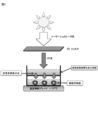
- FIG. 1 is a schematic diagram of Experiment 1.
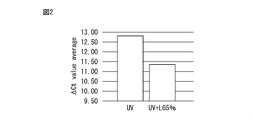
- FIG. 2 shows the change in the expression level of IL-8 in cultured cells when UV was irradiated using Lumate G as a wavelength conversion substance in Experiment 3.
- the vertical axis is the average of ⁇ Ct values.
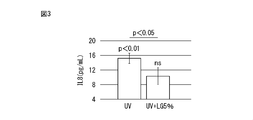
- FIG. 3 shows the amount of IL-8 protein in the culture supernatant when UV was irradiated using Lumate G as a wavelength conversion substance in Experiment 4.
- the vertical axis shows the amount of IL-8 protein (pg / ⁇ l).
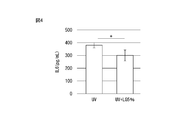
- FIG. 4 shows the amount of IL-6 protein in the culture supernatant when UV was irradiated using Lumate G as a wavelength conversion substance in Experiment 4.
- the vertical axis shows the amount of IL-6 protein (pg / ⁇ l).
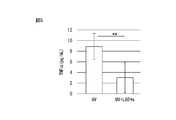
- FIG. 5 shows the amount of TNF- ⁇ protein in the culture supernatant when UV was irradiated using Lumate G as a wavelength conversion substance in Experiment 4.
- the vertical axis shows the amount of TNF- ⁇ protein (pg / ⁇ l).
- FIG. 6 shows the degree of redness in the UV-irradiated skin when Lumate G was applied to the skin as a wavelength conversion substance and irradiated with UV in Experiment 5.
- the anti-inflammatory agent of the present invention contains a wavelength converting substance as an active ingredient.
- the wavelength conversion substance refers to a substance that converts the wavelength of ultraviolet rays contained in incident light and emits emitted light having a wavelength longer than the wavelength of the ultraviolet rays.
- Ultraviolet rays may include UVA, UVB, UVC and the like.
- ultraviolet light is light having a peak wavelength between 200 nm and 400 nm.
- the incident light such as sunlight may contain ultraviolet rays.
- the incident light may be ultraviolet rays, or artificially generated ultraviolet rays may be used.
- Ultraviolet rays can have various effects on the skin. As an example, it is known that ultraviolet rays cause sunburn such as sunburn and tanning, and cause DNA damage to cells. In addition, it is known that ultraviolet rays, especially UV-A, act on the dermis layer and denature various proteins including collagen. Ultraviolet rays, especially UV-B, are known to cause inflammation.
- the emitted light emitted by the wavelength converting substance has a longer wavelength than ultraviolet rays, and preferably has a peak wavelength of 450 nm to 700 nm.
- the emitted light is, for example, but not limited to, 450 nm, 460 nm, 470 nm, 480 nm, 490 nm, 500 nm, 510 nm, 520 nm, 530 nm, 540 nm, 550 nm, 560 nm, 570 nm, 580 nm, 590 nm, 600 nm, 610 nm, 620 nm, 630 nm, 640 nm, It may have one or more peaks in 650nm, 660nm, 670nm, 680nm, 690nm, 700nm, or any range of these values, or in red light, orange light, green light, blue light, etc. There may be.
- the wavelength converter exhibits a
- wavelength converters include: allophicocyanin, C-phycocyanin, R-phycocyanin, phycoerythrinin, B-phycoerythrin, b-phycoerythrin, C-phycoerythrin, R-phy Phycoerythrin and other phycocyanins; vitamin A, ⁇ -carotene, vitamin K, vitamin B1, vitamin B2, vitamin B6, vitamin B12, folic acid, niacin, lycopene, cutinashi, benibana, turmeric, cochineal, perilla, red cabbage, flavonoids, carotenoids , Kinoids, porphyrins, anthocyanins, polyphenols, etc.
- Red 401, Red 227, Red 504, Red 218, Orange 205 P Yellow 4, Yellow 5, Green 201 No., Pyranin Conc, Blue No. 1, Hydrochloride 2,4-diaminophenoxyethanol, Arizulin Purple SS, Purple No. 401, Black No. 401, Herringdon Pink, Yellow No. 401, Benchin Yellow G, Blue No. 404, Red No. 104, Dyes such as metaaminophenol; phosphors doped with inorganic compounds to have fluorescence, for example, blue phosphors containing the amorphous silica particles described in Patent No. 6424656, cerium, phosphorus and / or magnesium.
- a red phosphor containing a compound in which europium is activated in a mixed crystal of alkaline earth metal sulfide and gallium compound described in Patent No. 6361416 zinc oxide phosphor described in International Publication No. 2018/004006, special feature.
- Examples thereof include the zinc oxide phosphor described in Kai 2018-131422; the inorganic phosphor described in JP-A-5-117127; and the like.
- the inorganic phosphor can represent zinc oxide as ZnO: Zn, Zn 1 + z , ZnO 1-x , as described in WO 2018/004006, eg, zinc sulfide, zinc sulfate.
- the wavelength conversion substance may be obtained from natural products such as animals, plants, and algae by a method such as extraction, or may be obtained by an artificial method such as chemical synthesis.
- the phycobiliprotein is algae such as blue-green algae such as Spirulina platensis and red algae such as Porphyridium purpureum. It may be prepared by extraction.
- the zinc oxide phosphor may be produced, for example, by the methods described in International Publication No. 2018/004006, JP-A-2018-131422, and JP-A-5-117127.
- the magnesium titanate phosphor may be produced by the method described in JP-A-2017-88719.
- the calcium phosphate phosphor may be produced by the method described in WO 2018/117117.
- wavelength conversion substances may be composed of the components exemplified above, may be contained, or may be used alone or in combination of a plurality of types, as long as the wavelength conversion effect of the present invention is not impaired. good.
- other wavelength converting substances such as vitamin B (vitamin B1, vitamin B2, vitamin B6, vitamin B12, etc.) may be mixed with the phycobiliprotein or the inorganic phosphor to aim for a synergistic effect.
- these components are examples, and any substance exhibiting the wavelength conversion effect of the present invention can be used.
- the content of the wavelength converting substance in the anti-inflammatory agent, composition or product of the present invention is not particularly limited as long as the wavelength conversion effect of the present invention is not impaired, and the type of the wavelength converting substance and the use of the anti-inflammatory agent or composition. Can be determined as appropriate. For example, it is arbitrary within the range of 0.01 to 99.99% by weight, 0.1% to 999% by weight, and the like.
- the anti-inflammatory agent of the present invention When the anti-inflammatory agent of the present invention is irradiated with ultraviolet rays, emitted light is generated, and the emitted light can reduce the expression of inflammation-related proteins in skin cells.
- Inflammatory proteins include inflammatory cytokines or chemokines. Examples of such inflammatory substances include interleukin 1 ⁇ (IL-1 ⁇ ), interleukin 8 (IL-8), interleukin 6 (IL-6), tumor necrosis factor ⁇ (TNF- ⁇ ), and the like. At least one is selected.
- the anti-inflammatory agent of the present invention can suppress inflammation by absorbing ultraviolet rays and emitting emitted light.
- Inflammation may be UV-induced inflammation caused by unabsorbed UV radiation, or in inflammation that originally occurred, such as dermatitis, atopic dermatitis, psoriasis, contact dermatitis, urticaria, etc. There may be.
- Sunburn is an example of UV-induced inflammation. Sunburn is roughly divided into blackening (suntan) caused by UV-A (wavelength 315 ⁇ m to 400 ⁇ m) and erythema and sunburn caused by UV-B (wavelength 280 ⁇ m to 315 ⁇ m).
- Erythema is a condition accompanied by redness that occurs on the surface of the skin due to telangiectasia.
- erythema There are various causes of erythema such as infections, massages, allergies, sunburns, and radiation damage.
- erythema it can be distinguished from purple spots and pigmentation by whether or not it disappears by compression.
- the erythema suppressed, prevented, or treated by the present invention may be erythema of any cause, but is particularly UV-induced erythema.
- IL-1 ⁇ is a type of inflammatory cytokine and is involved in immune response, inflammatory response, and hematopoietic response. IL-1 ⁇ activates IL-1 receptor-related kinase by binding to interleukin-1 receptor, thereby activating NF- ⁇ B and MAP kinase, which are involved in the inflammatory reaction.
- Interleukin 8 is one of the chemokines produced by macrophages, epithelial cells, airway smooth muscle cells, vascular endothelial cells, and the like. Interleukin 8 induces neutrophil and granulocyte chemotaxis and is involved in inflammation, especially local inflammation.
- Interleukin 6 is one of the cytokines that contribute to hematopoiesis and inflammatory response. It is produced by various cells such as T cells, B cells, and macrophages. By binding to the IL-6 receptor, it induces signal transduction such as the JAK-STAT pathway and the MAP kinase pathway.
- Tumor necrosis factor ⁇ is one of the cytokines produced by macrophages, monocytes, T cells, NK cells, smooth muscle cells, adipocytes, etc. It is involved in infection protection and antitumor action by inducing apoptosis, producing inflammatory mediators (IL-1, IL-6, etc.) and enhancing antibody production via TNF receptors, but overexpression causes joints. It is involved in various diseases such as rheumatism and psoriasis, especially inflammatory diseases.
- the administration form of the anti-inflammatory agent and the composition of the present invention is arbitrary, but external preparations for the skin such as pharmaceuticals, quasi-drugs, and cosmetics are used to suppress inflammation in the skin by exposing the skin to light containing ultraviolet rays. It may be preferable.
- the anti-inflammatory agent or composition of the present invention is used as an external preparation for skin, the dosage form, application method, number of administrations and the like can be arbitrarily determined. For example, go out regularly or irregularly, for example, once to several times a day in the form of lotion, spray, oil, cream, milky lotion, gel, sunscreen, suntan, etc. , Outdoor activities, marine sports, skiing, etc. It may be applied to the skin each time before it is expected to be exposed to the sun.
- the anti-inflammatory agent and composition of the present invention may be used, for example, as an excipient, a preservative, a thickener, a binder, a disintegrant, a dispersant, a stabilizer, a gelling agent, and an antioxidant.
- the present invention contains the anti-inflammatory agent of the present invention and is used for suppressing inflammation in the skin, for example, sun visor, hat, clothing, gloves, screen film, window spray or cream, window material, wall material, etc.
- the use of additives and the like in the product of the present invention and the form of the product are also arbitrary.
- the present invention also provides a method for producing the anti-inflammatory agent, composition or product of the present invention. It also provides a method for suppressing inflammation in a subject's skin, a method for suppressing, preventing, or treating erythema, wherein the method comprises the subject's skin with the anti-inflammatory agent or composition of the present invention. And the skin after application of the anti-inflammatory agent or composition is exposed to light containing ultraviolet rays; or the product of the present invention is allowed to pass light containing ultraviolet rays, and the passing light is targeted.
- the anti-inflammatory agent, composition and product convert the wavelength of the ultraviolet light contained in the incident light to emit an emitted light having a wavelength longer than the wavelength of the ultraviolet light, preferably 200 nm.
- Ultraviolet rays having a peak wavelength of about 400 nm are passed through as light having a peak wavelength of 450 nm to 700 nm, for example, 500 nm to 700 nm.
- the methods for controlling inflammation in the subject's skin are for cosmetic purposes and may not be the treatment methods used by doctors and healthcare professionals.
- the present invention also provides a cosmetological counseling method that supports a cosmetological act of the subject, including presenting the cosmetological method, anti-inflammatory agent, composition or product of the present invention to the subject.
- a method for suppressing, preventing, or treating erythema includes a step of applying a wavelength converting substance as an active ingredient to the skin in a subject who suffers from erythema or needs to suppress or prevent erythema.
- the wavelength converting substance applied to the skin converts the wavelength of the ultraviolet rays contained in the incident light and emits the emitted light having a wavelength longer than the wavelength of the ultraviolet rays.
- Such emitted light reduces the amount of inflammatory substances and can suppress, prevent or treat erythema.
- the subject may suffer from erythema caused by any cause, especially UV-induced erythema.
- wavelength converters may be applied to the skin for cosmetic purposes. Wavelength converting substances can be applied to the skin by being blended in sunscreens, basic cosmetics, makeup cosmetics, and the like.
- Experiment 1 Changes in gene expression due to application of various wavelength conversion substances
- Experiment 1-1 Preparation of wavelength conversion substances
- Zinc oxide phosphor is used as the wavelength conversion substance and dispersed in alcohol to prepare 5% and 10% dispersions. did.
- As the zinc oxide phosphor Lumate G manufactured by Sakai Chemical Industry Co., Ltd. was used.
- Lumate G is a zinc oxide phosphor obtained by doping ZnO with a sulfur-containing compound and then firing it as described in International Publication No. 2018/004006.
- the absorption spectrum has a peak wavelength at 365 nm, and the emission spectrum peaks at 510 nm. Had a wavelength.
- Experiment 1-2 Preparation of cell sample A cell sample was prepared as follows. 1. Human skin keratinized cells manufactured by Normal Human Epidermal Keratinocytes PromoCell were used. The cell suspension (1 mL) stored in liquid nitrogen was thawed in a hot water bath (37 ° C.) to the extent that small ice pellets remained, and then diluted with 9 mL of warm KGM medium. 2. The dilutions were gently mixed, then transferred to a T75 flask and incubated overnight at 37 ° C. 3. The next day, the medium was replaced with 10 mL of fresh medium. 4. The medium was changed regularly (in 2-3 days) and cell growth continued.
- the cells were observed using a microscope to confirm that the cells were growing in the correct morphology. 5. Cells were passaged after reaching approximately 80% confluence. 6. Cell passage was performed by washing the cells once with 10 mL of warm PBS and then aspirating. 7. 5 mL of warm trypsin was added to the T75 flask, the bottom of the flask was covered with trypsin solution, and the flask was aspirated at room temperature for 1 minute. 8. For keratinocytes, the flask was allowed to stand in an oven at 37 ° C for (maximum) 5 minutes. The cells were observed using a microscope, and it was confirmed that the cells were small and oval. 9.
- the side of the T75 flask was tapped to release the cells.
- the cells were observed using a microscope, and it was confirmed that the cells were moving freely. 10.
- For keratinized cells they were resuspended in 5 mL of warm trypsin neutralized solution and transferred to sterile 50 mL falcon tubes. The flask was further rinsed with 5 mL of warm FGM and added to the Falcon tube to ensure transfer of all cells. 11.
- the cells were centrifuged at 10,000 rpm for 5 minutes (4 ° C) and the supernatant was removed, being careful not to disturb the cell pellet. 12.
- Keratinocytes were resuspended in KGM at a concentration of 4 ⁇ 10 4 cells / well (500 ⁇ L) and seeded on collagen-coated glass bottom 4-well chamber slides. 13. Medium was changed every 2-3 days and cells were grown to reach 60-70% confluence (depending on the type of experiment). 14. Twenty-four hours before irradiation, the medium was changed to a supplement-free medium.
- Experiment 1-3 UV irradiation 1. At least 30 minutes before irradiation, the solar simulator was turned on to warm up the lamp. The solar simulator was set to use the UG11 filter. The UG11 filter is a filter that allows only UVB to pass and cuts light of other wavelengths. The UV light that passed through the UG11 filter had a peak wavelength between 300 nm and 385 nm. 2. The temperature control plate was turned on and set to 33 ° C. 3. The cells prepared in Experiment 1-2 were washed once with warm PBS. 4.
- Martinez solution (145 mM NaCl warmed of 0.5mL to each well, 5.5mM KCl, 1.2mM MgCl 2 .6H 2 O, 1.2mM NaH 2 PO 4 .2H 2 O, 7.5mM HEPES, 1mM CaCl 2, 10mM D -Glucose) was added. 5. As shown in Fig. 1, the cell wells were placed on the plate, and 0.4 ml of the solution containing the wavelength converting substance prepared in Experiment 1-1 was injected into each hole of the 24-well plate.
- the cells were placed so as to cover the wells containing the cells so that the UV light passed through the solution of the wavelength-converting substance and was irradiated to the cell solution without directly contacting the solution of the wavelength-converting substance. 6. Irradiation was performed so that the total dose was 100 mJ / cm 2. As controls, a sample in which the cells were directly irradiated with UV light without placing a plate of a wavelength converting substance on the cell wells and a sample in which the cells were cultured in a dark place without irradiating UV light were prepared. 7. After irradiation, the Martinez solution was replaced with warm KGM (without supplements), the plate was returned to the 37 ° C. incubator and incubated for 24 hours.
- Experiment 2 Microarray Experiment 2-1: RNA extraction 1. The cell samples incubated in Experiment 1-3 for 24 hours after UV irradiation were washed with 500 ⁇ l warm PBS and the PBS was completely aspirated. RNA was extracted using the Qiagen RNeasy Mini Kit prep (Qiagen, 74106) according to the product description.
- Experiment 2-2 Microarray Human gene expression microarray SurePrint G3 Human GE Microarray 8x60K Ver. 3.0 (Agilent technology) was used to analyze the RNA extracted in Experiment 2-1. Hybridization samples were prepared by labeling, amplifying, purifying, and quantifying cRNA of the extracted RNA according to the protocol provided by Agilent Technologies. Microarrays were observed with the AGILENT C MICROARRY SCANNER, and genes whose expression was significantly reduced or increased depending on the presence or absence of wavelength converting substances were identified. Gene expression of inflammation-related genes IL-1 ⁇ and TNF- ⁇ was significantly reduced.
- Experiment 3 RT-PCR Experiment 3-1: RNA extraction 1. RNA was extracted from cell samples incubated in Experiment 1-3 for 24 hours after UV irradiation using the RNeasy Kit (Qiagen) according to the product instructions. 2. Concentrations and A260 / 280 values were recorded for each sample.
- Experiment 3-2 Reverse transcription 1. Use the SuperScript VILO cDNA synthesis kit according to the product manual, add 1 pg to 2.5 ⁇ g of RNA per container, and store at 25 ° C for 10 minutes, 42 ° C for 60 minutes, 85 ° C for 5 minutes, and 4 ° C. The PCR system was put into operation.
- RT-PCR The reverse-transcribed sample was diluted 50-fold with RNase-free water, a dilution series of 5-fold was prepared, and the following reaction system was prepared and measured by a real-time PCR device (Applied Biosystems). ⁇ Ct was calculated based on the Ct value of IL-8 of the test sample and the Ct value of GAPDH, which is an internal standard (Fig. 2).
- Experiment 4 Measurement of protein amount by ELISA
- Experiment 4-1 The culture supernatant of the cell sample incubated for 24 hours after irradiation with ultraviolet rays in Experiment 1-3 was collected and Quantikine HS Human IL-8 ELISA Kit (R & D Systems). The amount of IL-8 protein in the culture supernatant was measured using the product (manufactured by) according to the product description (Fig. 3).
- Experiment 4-2 In Experiment 1-3, the culture supernatant of the cell sample incubated for 24 hours after UV irradiation was separated, and the Quantikine HS Human IL-6 ELISA Kit (manufactured by R & D Systems) was installed according to the product description. Using, the amount of IL-6 protein in the culture supernatant was measured (Fig. 4). As a control, a culture supernatant of a cell sample not irradiated with UV and a culture supernatant of a cell sample obtained by irradiating with UV without using a wavelength conversion substance (Lumate G) were used.
- Experiment 4-3 In Experiment 1-3, the culture supernatant of the cell sample incubated for 24 hours after irradiation with ultraviolet rays was collected, and the Quantikine HS Human TNF- ⁇ ELISA Kit (manufactured by R & D Systems) was installed according to the product description. Using, the amount of TNF- ⁇ protein in the culture supernatant was measured (Fig. 5). As a control, a culture supernatant of a cell sample not irradiated with UV was used. As a control, a culture supernatant of a cell sample not irradiated with UV and a culture supernatant of a cell sample obtained by irradiating with UV without using a wavelength conversion substance (Lumate G) were used.
- irradiation of the wavelength-converting substance with UV reduces the amount of any of the inflammatory substances IL-8, IL-6, and TNF- ⁇ , and has the effect of suppressing inflammation.
- IL-8, IL-6, and TNF- ⁇ the amount of any of the inflammatory substances IL-8, IL-6, and TNF- ⁇ .
- inflammation is suppressed in skin cells, it is expected to prevent and improve wrinkles, age spots, skin aging, photoaging, erythema, etc.
- Experiment 5 Suppression of erythema by wavelength converting substance
- each test site was 20 mJ, 25 mJ, 30 mJ, 36 mJ, 43 mJ, 52 mJ, 62 mJ, 75 mJ.
- the subjects who were prone to sunburn were irradiated with UV-B at 20 mJ to 75 mJ, and the other subjects were irradiated with UV-B at 8 levels of intensity of 25 mJ to 90 mJ (day 0).
- erythema was observed at each test site of the subjects, and the minimum amount of erythema (MED) for each subject was visually determined.
- the back was wiped with a non-alcoholic wet tissue and allowed to acclimatize to the surrounding environment (23 ° C. and 45% humidity) for 15 minutes.
- Two new test sites about 2 cm square on the back of the subject were marked and photographs were taken. Redness ⁇ a was measured for the marked test site using a spectrophotometer (CM700d). Next, it was set to 1.2 MED for each subject, and UV-B was irradiated with a distance to the light source of 60 cm.
- CM700d spectrophotometer
- UV-B was irradiated for 30 minutes at 0.34 W through a film coated with 5% fluorescent zinc oxide (ZnO) on one side (1st day). After 24 hours, the back was wiped with a non-alcoholic wet tissue and allowed to acclimatize to the surrounding environment (23 ° C. and 45% humidity) for 15 minutes. Photographs were taken of the test site marked on the first day. Redness ⁇ a was measured with a color difference meter using a spectrophotometer (CM700d) (day 2).
- CM700d spectrophotometer
- the redness ( ⁇ a) measured by the spectrophotometer before UV-B irradiation on the first day and the redness ( ⁇ a) measured on the second day were each measured by UV-B irradiation with fluorescent zinc oxide (ZnO) 5 It was measured and graphed with and without a% coated film (Fig. 6).
- the redness ⁇ a at the site irradiated with UV-B without passing through the film was defined as the redness at the control site.
- UV-B irradiation through the film significantly reduced redness ( ⁇ a) (p ⁇ 0.05: Wilcoxon Signed-rank test). From this result, it was shown that inflammation, especially erythema, was reduced by irradiation with ultraviolet rays via a wavelength converter. Therefore, such a wavelength converting substance can be referred to as an anti-inflammatory agent or a composition for suppressing, preventing, or treating erythema.
Landscapes
- Health & Medical Sciences (AREA)
- Life Sciences & Earth Sciences (AREA)
- Animal Behavior & Ethology (AREA)
- General Health & Medical Sciences (AREA)
- Public Health (AREA)
- Veterinary Medicine (AREA)
- Birds (AREA)
- Epidemiology (AREA)
- Dermatology (AREA)
- Chemical & Material Sciences (AREA)
- Inorganic Chemistry (AREA)
- Chemical Kinetics & Catalysis (AREA)
- Medicinal Chemistry (AREA)
- Nuclear Medicine, Radiotherapy & Molecular Imaging (AREA)
- Organic Chemistry (AREA)
- Pharmacology & Pharmacy (AREA)
- General Chemical & Material Sciences (AREA)
- Bioinformatics & Cheminformatics (AREA)
- Engineering & Computer Science (AREA)
- Cosmetics (AREA)
- Medicines That Contain Protein Lipid Enzymes And Other Medicines (AREA)
Abstract
Description
(1)波長変換物質を有効成分として含有する炎症抑制剤であって,
前記波長変換物質は,入射光に含まれる紫外線の波長を変換して前記紫外線の波長よりも長い波長の出射光を放出する,炎症抑制剤。
(2)前記紫外線は,200nm~400nmにピーク波長を有する,(1)に記載の炎症抑制剤。
(3)前記出射光は,450nm~700nmにピーク波長を有する,(1)又は(2)に記載の炎症抑制剤。
(4)前記波長変換物質は,アロフィコシアニン,C-フィコシアニン,R-フィコシアニン,フィコエリスロシアニン,B-フィコエリスリン,b-フィコエリスリン,C-フィコエリスリン,およびR-フィコエリスリンから選択される1種又は複数種のフィコビリ蛋白;酸化亜鉛蛍光体,チタン酸マグネシウム蛍光体,およびリン酸カルシウム蛍光体から選択される1種又は複数種の無機蛍光体;ビタミンA,βカロテン,ビタミンK,ビタミンB1,ビタミンB2,ビタミンB6,ビタミンB12,葉酸,ナイアシン,リコピン,クチナシ,ベニバナ,ウコン,コチニール,シソ,赤キャベツ,フラボノイド,カロテノイド,キノイド,ポルフィリン類,アントシアニン類,およびポリフェノール類から選択される1種又は複数種の成分;並びに/あるいは,赤色401号,赤色227号,赤色504号,赤色218号,橙色205号P,黄色4号,黄色5号,緑色201号,ピラニンコンク,青色1号,塩酸2,4-ジアミノフェノキシエタノール,アリズリンパープルSS,紫色401号,黒色401号,へリンドンピンク,黄色401号,ベンチジンエローG,青色404号,赤色104号,およびメタアミノフェノールから選択される1種又は複数種の色素を含む,(1)~(3)のいずれか1項に記載の炎症抑制剤。
(5)前記波長変換物質は,アロフィコシアニン,C-フィコシアニン,R-フィコシアニン,フィコエリスロシアニン,B-フィコエリスリン,b-フィコエリスリン,C-フィコエリスリン,およびR-フィコエリスリンから選択される1種又は複数種のフィコビリ蛋白;酸化亜鉛蛍光体,チタン酸マグネシウム蛍光体,およびリン酸カルシウム蛍光体から選択される1種又は複数種の無機蛍光体;並びに/あるいは,ビタミンB1,ビタミンB2,ビタミンB6,およびビタミンB12から選択される1種又は複数種のビタミンBを含む,(4)に記載の炎症抑制剤。
(6)(1)~(5)のいずれか1項に記載の炎症抑制剤を含有する組成物。
(7)前記組成物は皮膚外用組成物であり,皮膚に紫外線を含む光を浴びせることにより皮膚において炎症を抑制するためのものである,(6)に記載の組成物。
(8)前記組成物が,紅斑の抑制,予防,又は治療用の組成物である, (6)又は(7)に記載の組成物。
(9)波長変換物質を有効成分として含有する紅斑の抑制,予防,又は治療用の皮膚外用組成物であって,
前記波長変換物質は,入射光に含まれる紫外線の波長を変換して前記紫外線の波長よりも長い波長の出射光を放出する,前記組成物。
(10)(6)~(9)のいずれか1項に記載の組成物を対象の皮膚に塗布すること;および
前記組成物を塗布後の皮膚に紫外線を含む光を浴びせること;を含む,
対象の皮膚において炎症を抑制するための美容方法。
(11)(1)~(5)のいずれか1項に記載の炎症抑制剤,又は(6)~(9)のいずれか一項に記載の組成物を含有する製品。
(12)前記製品は,紫外線を含む光を該製品に通過させた後の光を皮膚に浴びせることにより皮膚において炎症を抑制するためのものである,(11)に記載の製品。
(13)(11)又は(12)に記載の製品に紫外線を含む光を通過させること;および
前記通過光を対象の皮膚に浴びせること;を含む,
対象の皮膚において炎症を抑制するための美容方法。
(14)紅斑を患うか、又は紅斑の抑制又は予防を必要とする対象において、紅斑の抑制,予防,又は治療のための方法であって,
波長変換物質を有効成分として、皮膚に塗布する工程;
を含むを含み、
前記波長変換物質は,入射光に含まれる紫外線の波長を変換して前記紫外線の波長よりも長い波長の出射光を放出する,前記方法。
(15)さらに、波長変換物質を塗布後の皮膚に、紫外線を含む光を浴びせる工程を含む、(14)に記載の方法。
(16)皮膚に適用することにより紅斑の抑制,予防,又は治療において使用するための波長変換物質であって、前記波長変換物質は,入射光に含まれる紫外線の波長を変換して前記紫外線の波長よりも長い波長の出射光を放出する,波長変換物質。
(17)炎症性物質の抑制を介して、紅斑を抑制,予防,又は治療する、(16)に記載の波長変換物質。
(18)皮膚に適用することにより紅斑の抑制,予防,又は治療するための組成物を製造するための、波長変換物質の使用であって、前記波長変換物質は,入射光に含まれる紫外線の波長を変換して前記紫外線の波長よりも長い波長の出射光を放出する,前記使用。
(19) 炎症性物質の抑制を介して、紅斑を抑制,予防,又は治療する、(18)に記載の使用。
実験1-1:波長変換物質の調製
波長変換物質として,酸化亜鉛蛍光体を用い,アルコールに分散し5%及び10%の分散液を調製した。
酸化亜鉛蛍光体としては,堺化学工業株式会社製のLumate Gを使用した。Lumate Gは,国際公開第2018/004006号に記載のようにZnOを硫黄含有化合物でドープ後焼成した酸化亜鉛蛍光体であり,吸収スペクトルは365nmにピーク波長を有し,発光スペクトルは510nmにピーク波長を有していた。
細胞試料を以下のように調製した。
1. Normal Human Epidermal Keratinocytes PromoCell社製のヒト皮膚角化細胞を使用した。液体窒素で保存されていた細胞懸濁液(1mL)を湯浴(37℃)にかけ小さな氷ペレットが残る程度に解凍し,次いで9mLの温KGM培地で希釈した。
2. 希釈物を穏やかに混合してからT75フラスコに移し,37℃で一晩インキュベートした。
3. 翌日,培地を10mLの新鮮培地に交換した。
4. 培地を定期的に(2~3日で)交換し,細胞の増殖を継続した。その間,顕微鏡を用いて細胞を観察し,細胞が正しい形態で増殖していることを確認した。
5. 細胞が約80%のコンフルエントに達してから,細胞を継代した。
6. 細胞の継代は,10mLの温PBSで細胞を1回洗浄してから吸引することにより行った。
7. 5mLの温トリプシンをT75フラスコに加え,トリプシン溶液でフラスコの底面をカバーし1分間室温においてから吸引した。
8. 角化細胞では(最大)5分間,フラスコを37℃のオーブン内に静置した。顕微鏡を用いて細胞を観察し,細胞が小さく楕円形であることを確認した。
9. その後,T75フラスコの側面を軽く叩いて細胞を遊離させた。顕微鏡を用いて細胞を観察し,細胞が自由に動いていることを確認した。
10. 角化細胞では,5mLの温トリプシン中和溶液に再懸濁し,滅菌50mLファルコンチューブに移した。フラスコをさらに5mLの温FGMで洗い流してファルコンチューブに加えることにより確実に全ての細胞を移すようにした。
11. 細胞を10,000rpmで5分間遠心し(4℃),細胞ペレットを乱さないよう注意しながら上清を除去した。
12. 角化細胞は4×10⁴cells/well(500μL)の濃度でKGMに再懸濁し,コラーゲン被膜ガラスボトム4ウェルチャンバースライドに播種した。
13.培地を2~3日毎に交換し,60~70%のコンフルエント(実験の種類により異なる)に達するまで細胞を増殖させた。
14. 照射の24時間前に,サプリメント無添加の培地に変更した。
1. 照射の少なくとも30分前にソーラーシミュレータの電源を入れてランプをウォームアップした。ソーラーシミュレータは,UG11フィルターを使用する設定にした。UG11フィルターは,UVBのみを通過させ他の波長光をカットするフィルターである。UG11フィルターを通過したUV光は300nm~385nmにピーク波長を有していた。
2. 温度制御プレートをオンにして33℃に設定した。
3. 実験1-2で調製した細胞を温PBSで1回洗浄した。
4. 各ウェルに0.5mLの温めたMartinez溶液(145mM NaCl, 5.5mM KCl, 1.2mM MgCl2.6H2O, 1.2mM NaH2PO4.2H2O, 7.5mM HEPES, 1mM CaCl2, 10mM D-グルコース)を加えた。
5. 図1に示すように,細胞ウェルをプレート上に載置し,更にその上に,実験1-1で調製した波長変換物質を含む溶液を24ウェルプレートの各穴に0.4ml注入し,細胞入りのウェルを覆うように載置し,波長変換物質の溶液が細胞溶液と直接触れずに,UV光が波長変換物質の溶液を通過して細胞溶液に照射されるようにした。
6. 合計が100mJ/cm2の線量になるよう照射を行った。また,対照として,細胞ウェルの上に波長変換物質のプレートを載せず細胞に直接UV光を照射した試料と,細胞にUV光を照射せず暗所で培養した試料を作成した。
7. 照射後,Martinez溶液を温めたKGM(サプリメント無添加)と交換し,プレートを37℃のインキュベータに戻し,24時間インキュベートした。
実験2-1:RNA抽出
1.実験1-3で紫外線照射後24時間インキュベートされた細胞試料を500μlの温PBSで洗浄し,PBSを完全に吸引した。Qiagen RNeasy Mini Kit prep (Qiagen,74106)を製品説明書に従って用いてRNAを抽出した。
Human遺伝子発現用マイクロアレイ SurePrint G3 Human GE Microarray 8x60K Ver. 3.0(Agilent technology)を用いて,実験2-1で抽出されたRNAの解析を行った。抽出されたRNAについての標識反応,増幅反応,精製,cRNAの定量をAgilent Technology社が提供するプロトコルに従い行ってハイブリダイゼーションサンプルを調製した。マイクロアレイをAGILENT C MICROARRY SCANNERで観察し,波長変換物質の有無により,発現が有意に低下又は増加した遺伝子を特定した。炎症関連遺伝子であるIL-1α及びTNF-αの遺伝子発現が有意に低下した。
実験3-1:RNA抽出
1.実験1-3で紫外線照射後24時間インキュベートされた細胞試料に対して,RNeasy Kit (Qiagen)を製品説明書に沿って使用してRNAを抽出した。
2.各サンプルについて濃度及びA260/280値を記録した。
1.SuperScript VILO cDNA合成キットを製品説明書に沿って使用し,1容器あたり1pg~2.5μgのRNAを添加し,25℃10分,42℃60分,85℃5分,4℃で貯蔵の設定でPCRシステムを稼働した。
逆転写されたサンプルをRNaseフリー水で50倍に希釈し,さらに5倍づつの希釈系列を調製し,下記の反応系を調製し,リアルタイムPCR装置(Applied Biosystems)により測定を行った。試験試料のIL-8についてのCt値と内部標準であるGAPDHのCt値に基づきΔCtを求めた(図2)。


実験4-1:実験1-3で紫外線照射後24時間インキュベートされた細胞試料の培養上清を分取し,Quantikine HS Human IL-8 ELISA Kit(R&D Systems社製)を製品説明書に沿って使用して,培養上清中のIL-8タンパク質量を測定した(図3)。
15名の男性被験者の背中において,1cm四方の複数の被験部位をマークし,各被験部位に対して20mJ,25mJ,30mJ,36mJ,43mJ,52mJ,62mJ,75mJ,及び90mJのうち被験者の申告により,日焼けしやすい被験者については,20mJ~75mJ,それ以外の被験者については25mJ~90mJの8段階の強さでUV-Bを照射した(0日目)。24時間後,被験者の各被験部位の紅斑を観察し,各被験者についての最小紅斑量(MED)を視感判定した。背中をノンアルコールのウェットティッシュで清拭し,15分間,周囲環境(23℃湿度45%)に馴化させた。被験者の背中の約2cm四方の被験部位を新たに2か所マークし,写真撮影を行った。分光測色計(CM700d)を用い,マークされた被験部位について赤みΔaを測色した。次に各被験者毎に1.2MEDとなるように設定し,UV-Bを光源までの距離を60cmとして照射した。次いで,片方に蛍光酸化亜鉛(ZnO)5%をコーティングしたフィルムを介して,0.34Wに設定してUV-Bを30分間照射した(1日目)。
24時間後背中をノンアルコールのウェットティッシュで清拭し,15分間,周囲環境(23℃湿度45%)に馴化させた。1日目にマークされた被験部位について,写真撮影を行った。分光測色計(CM700d)を用い,色差計にて赤みΔaを測色した(2日目)。
Claims (13)
- 波長変換物質を有効成分として含有する炎症抑制剤であって,
前記波長変換物質は,入射光に含まれる紫外線の波長を変換して前記紫外線の波長よりも長い波長の出射光を放出する,炎症抑制剤。 - 前記紫外線は,200nm~400nmにピーク波長を有する,請求項1に記載の炎症抑制剤。
- 前記出射光は,450nm~700nmにピーク波長を有する,請求項1又は2に記載の炎症抑制剤。
- 前記波長変換物質は,アロフィコシアニン,C-フィコシアニン,R-フィコシアニン,フィコエリスロシアニン,B-フィコエリスリン,b-フィコエリスリン,C-フィコエリスリン,およびR-フィコエリスリンから選択される1種又は複数種のフィコビリ蛋白;酸化亜鉛蛍光体,チタン酸マグネシウム蛍光体,およびリン酸カルシウム蛍光体から選択される1種又は複数種の無機蛍光体;ビタミンA,βカロテン,ビタミンK,ビタミンB1,ビタミンB2,ビタミンB6,ビタミンB12,葉酸,ナイアシン,リコピン,クチナシ,ベニバナ,ウコン,コチニール,シソ,赤キャベツ,フラボノイド,カロテノイド,キノイド,ポルフィリン類,アントシアニン類,およびポリフェノール類から選択される1種又は複数種の成分;並びに/あるいは,赤色401号,赤色227号,赤色504号,赤色218号,橙色205号P,黄色4号,黄色5号,緑色201号,ピラニンコンク,青色1号,塩酸2,4-ジアミノフェノキシエタノール,アリズリンパープルSS,紫色401号,黒色401号,へリンドンピンク,黄色401号,ベンチジンエローG,青色404号,赤色104号,およびメタアミノフェノールから選択される1種又は複数種の色素を含む,請求項1~3のいずれか1項に記載の炎症抑制剤。
- 前記波長変換物質は,アロフィコシアニン,C-フィコシアニン,R-フィコシアニン,フィコエリスロシアニン,B-フィコエリスリン,b-フィコエリスリン,C-フィコエリスリン,およびR-フィコエリスリンから選択される1種又は複数種のフィコビリ蛋白;酸化亜鉛蛍光体,チタン酸マグネシウム蛍光体,およびリン酸カルシウム蛍光体から選択される1種又は複数種の無機蛍光体;並びに/あるいは,ビタミンB1,ビタミンB2,ビタミンB6,およびビタミンB12から選択される1種又は複数種のビタミンBを含む,請求項4に記載の炎症抑制剤。
- 請求項1~5のいずれか1項に記載の炎症抑制剤を含有する組成物。
- 前記組成物は皮膚外用組成物であり,皮膚に紫外線を含む光を浴びせることにより皮膚において炎症を抑制するためのものである,請求項6に記載の組成物。
- 前記組成物が,紅斑の抑制,予防,又は治療用の皮膚外用組成物である,請求項6又は7に記載の組成物。
- 波長変換物質を有効成分として含有する紅斑の抑制,予防,又は治療用の皮膚外用組成物であって,
前記波長変換物質は,入射光に含まれる紫外線の波長を変換して前記紫外線の波長よりも長い波長の出射光を放出する,前記組成物。 - 請求項6~9のいずれか一項に記載の組成物を対象の皮膚に塗布すること;および
前記組成物を塗布後の皮膚に紫外線を含む光を浴びせること;を含む,
対象の皮膚において炎症を抑制するための美容方法。 - 請求項1~5のいずれか1項に記載の炎症抑制剤,又は請求項6~9のいずれか一項に記載の組成物を含有する製品。
- 前記製品は,紫外線を含む光を該製品に通過させた後の光を皮膚に浴びせることにより皮膚において炎症を抑制するためのものである,請求項11に記載の製品。
- 請求項11又は12に記載の製品に紫外線を含む光を通過させること;および
前記通過光を対象の皮膚に浴びせること;を含む,
対象の皮膚において炎症を抑制するための美容方法。
Priority Applications (3)
| Application Number | Priority Date | Filing Date | Title |
|---|---|---|---|
| CN202180011708.5A CN115023213A (zh) | 2020-01-31 | 2021-01-29 | 炎症抑制剂 |
| US17/796,580 US12472131B2 (en) | 2020-01-31 | 2021-01-29 | Inflammation-suppressing agent |
| JP2021574725A JP7874413B2 (ja) | 2020-01-31 | 2021-01-29 | 炎症抑制剤 |
Applications Claiming Priority (2)
| Application Number | Priority Date | Filing Date | Title |
|---|---|---|---|
| JP2020015815 | 2020-01-31 | ||
| JP2020-015815 | 2020-01-31 |
Publications (1)
| Publication Number | Publication Date |
|---|---|
| WO2021153783A1 true WO2021153783A1 (ja) | 2021-08-05 |
Family
ID=77078149
Family Applications (1)
| Application Number | Title | Priority Date | Filing Date |
|---|---|---|---|
| PCT/JP2021/003391 Ceased WO2021153783A1 (ja) | 2020-01-31 | 2021-01-29 | 炎症抑制剤 |
Country Status (4)
| Country | Link |
|---|---|
| US (1) | US12472131B2 (ja) |
| JP (1) | JP7874413B2 (ja) |
| CN (1) | CN115023213A (ja) |
| WO (1) | WO2021153783A1 (ja) |
Families Citing this family (1)
| Publication number | Priority date | Publication date | Assignee | Title |
|---|---|---|---|---|
| SE2430596A1 (en) * | 2024-11-24 | 2026-05-25 | Quantum Pharmaceuticals Sa | New method and composition |
Family Cites Families (123)
| Publication number | Priority date | Publication date | Assignee | Title |
|---|---|---|---|---|
| GB639086A (en) | 1947-01-17 | 1950-06-21 | British Thomson Houston Co Ltd | Improvements in and relating to magnesium titanate phosphors |
| US2613206A (en) | 1949-12-14 | 1952-10-07 | Nat Starch Products Inc | Free-flowing starch esters |
| US3577537A (en) | 1970-03-09 | 1971-05-04 | Merck & Co Inc | Topical administration of vitamin b-12 |
| JPS56127305A (en) | 1980-02-22 | 1981-10-06 | Yoshida Kogyo Kk <Ykk> | Filling and solidifying method of cosmetic |
| JPS56128107A (en) | 1980-02-18 | 1981-10-07 | Shiseido Co Ltd | Cosmetic filling and solidifying method and apparatus and compact produced therefrom |
| US4374796A (en) | 1980-02-18 | 1983-02-22 | Shiseido Company, Ltd. | Method for loading cosmetic material into hollow space |
| JPS62408A (ja) | 1985-06-26 | 1987-01-06 | Nippon Carbide Ind Co Ltd | 新規な植物生長調節剤 |
| US5221534A (en) | 1989-04-26 | 1993-06-22 | Pennzoil Products Company | Health and beauty aid compositions |
| JP2805373B2 (ja) | 1990-03-30 | 1998-09-30 | 株式会社資生堂 | 蛍光化粧料 |
| JP3091270B2 (ja) | 1990-09-28 | 2000-09-25 | 協和醗酵工業株式会社 | 美白化粧料 |
| JPH05117127A (ja) * | 1991-10-02 | 1993-05-14 | Shiseido Co Ltd | 蛍光化粧料 |
| CA2134979A1 (en) | 1992-05-05 | 1993-11-11 | Spencer Guang Lin | Acne treating composition |
| JP3303942B2 (ja) | 1993-10-26 | 2002-07-22 | 大日本インキ化学工業株式会社 | 天然赤色色素の製造法 |
| JPH07206651A (ja) | 1994-01-12 | 1995-08-08 | Shiseido Co Ltd | 紫外線吸収剤 |
| JPH0930926A (ja) | 1995-07-20 | 1997-02-04 | Kanebo Ltd | 高分子粉体・粉体混合物および配合化粧料 |
| JPH10265321A (ja) | 1997-03-19 | 1998-10-06 | Shiseido Co Ltd | 皮膚外用剤 |
| US5998789A (en) | 1997-04-28 | 1999-12-07 | Kovalsky; Alvin | Converting ultraviolet light to visible light with fluorescent dyed polymer for photography and analysis of electrophoresis gels |
| JPH1192688A (ja) | 1997-09-17 | 1999-04-06 | Shiseido Co Ltd | 複合粉末 |
| JP3188906B2 (ja) | 1997-12-01 | 2001-07-16 | 株式会社資生堂 | 複合粉末及びこれを含む着色用組成物、並びにこの複合粉末乃至着色用組成物の使用方法 |
| JPH11193207A (ja) | 1997-12-26 | 1999-07-21 | Shiseido Co Ltd | 皮膚外用剤 |
| JPH11222421A (ja) | 1998-01-31 | 1999-08-17 | Naris Cosmetics Co Ltd | 紫外線防御剤及び紫外線防御剤の製造方法並びに化粧料 |
| JP2000219607A (ja) * | 1999-01-28 | 2000-08-08 | Shiseido Co Ltd | 外用組成物 |
| EP1090974A1 (en) | 1999-03-31 | 2001-04-11 | Somar Corporation | Luminance improver and method of improving luminance for phosphorescent substance, high-luminance phosphorescent compositions, and high-luminance phosphorescent sheet made using the same |
| TWI285113B (en) | 1999-11-25 | 2007-08-11 | Shiseido Co Ltd | Manufacturing method of cosmetics |
| JP3608778B2 (ja) | 1999-11-25 | 2005-01-12 | 株式会社資生堂 | 粉末固形化粧料の製造方法 |
| JP2001335442A (ja) | 2000-05-30 | 2001-12-04 | Shiseido Co Ltd | 洗浄剤組成物 |
| DE60115646T2 (de) | 2000-06-27 | 2006-07-20 | E-L Management Corp. | Verwendung von grün-licht emittierenden materialen in pharmazeutischen zusammensetzungen |
| JP4145496B2 (ja) | 2000-08-31 | 2008-09-03 | 三好化成株式会社 | 新規複合粉体及びこれを配合した化粧料 |
| JP4453995B2 (ja) | 2000-12-05 | 2010-04-21 | 信越石英株式会社 | フッ素系樹脂被覆石英ガラス製キャリアボート |
| JP2002212033A (ja) | 2001-01-15 | 2002-07-31 | Nonogawa Shoji Kk | 乳化型メイクアップ化粧料 |
| JP4833452B2 (ja) | 2001-08-10 | 2011-12-07 | パナソニック電工株式会社 | 床用配線器具 |
| JP2003212745A (ja) | 2002-01-24 | 2003-07-30 | Shiseido Co Ltd | 日焼け止め化粧料 |
| JP3671013B2 (ja) | 2002-03-07 | 2005-07-13 | 株式会社資生堂 | 複合粉末、それを配合したメークアップ化粧料、及び複合粉末の製造方法 |
| US7682604B2 (en) | 2002-03-07 | 2010-03-23 | Shiseido Co., Ltd. | Composite powder, cosmetics containing the same, and process for producing composite powder |
| WO2003099039A1 (en) | 2002-05-23 | 2003-12-04 | Anglia Polytechnic University | Drink containing fluorescent agent |
| JP4048420B2 (ja) | 2002-06-26 | 2008-02-20 | 大日本インキ化学工業株式会社 | フィコシアニン色素液の精製方法 |
| EP1470824A1 (en) | 2002-12-10 | 2004-10-27 | L-MAbs B.V. | Affinity proteins for controlled application of cosmetic substances |
| JP2005041861A (ja) | 2003-07-09 | 2005-02-17 | Takeda Chem Ind Ltd | 皮膚角層水分量低下抑制剤 |
| CN101090702B (zh) | 2003-10-03 | 2011-06-08 | 宝洁公司 | 局部用组合物 |
| ES2998457T3 (en) | 2003-11-21 | 2025-02-20 | Nestle Sa | Food composition comprising glucosamine |
| FR2869229B1 (fr) | 2004-04-26 | 2006-08-25 | Sederma Soc Par Actions Simpli | Utilisation d'un inducteur des ugt par voie topique |
| JP2006022050A (ja) | 2004-07-08 | 2006-01-26 | Kanebo Cosmetics Inc | 化粧料 |
| US20080183250A1 (en) | 2005-02-11 | 2008-07-31 | Hanafi Tanojo | Compositions and methods for treating or preventing skin inflammation via restoration of skin barrier function |
| JP4677250B2 (ja) | 2005-02-24 | 2011-04-27 | Dicライフテック株式会社 | 藍藻類からのフィコシアニンの抽出方法 |
| JP2006282593A (ja) | 2005-03-31 | 2006-10-19 | Naris Cosmetics Co Ltd | 皮膚外用剤 |
| FR2885520B1 (fr) | 2005-05-10 | 2007-10-05 | Oreal | Composition cosmetique |
| US20060275231A1 (en) | 2005-05-10 | 2006-12-07 | L'oreal | Cosmetic composition, a packaging device and a method of application |
| JP5422092B2 (ja) | 2005-07-29 | 2014-02-19 | 株式会社 資生堂 | 粉末化粧料の製造方法 |
| US20090220627A1 (en) | 2005-09-16 | 2009-09-03 | Kiyotaka Hasegawa | Novel vascular endothelial growth factor expression inhibitors |
| JP2007084508A (ja) | 2005-09-26 | 2007-04-05 | Shiseido Co Ltd | 新規血管内皮増殖因子発現阻害剤 |
| US20070154426A1 (en) | 2006-01-05 | 2007-07-05 | Hansen Angela M | Powdered water cosmetic compositions and related methods |
| US8088570B2 (en) | 2006-04-18 | 2012-01-03 | Kao Corporation | Method for screening an agent for preventing or ameliorating wrinkles |
| JP4847820B2 (ja) | 2006-08-10 | 2011-12-28 | 株式会社 資生堂 | 粉末化粧料の製造方法 |
| JP5137503B2 (ja) | 2006-09-15 | 2013-02-06 | 株式会社日本触媒 | 化粧料用紫外線カット剤およびそれを用いた化粧料 |
| JP2007056035A (ja) | 2006-10-19 | 2007-03-08 | Fancl Corp | 正常ヒト表皮角化細胞の分化抑制剤 |
| JP4858977B2 (ja) | 2007-02-08 | 2012-01-18 | 株式会社 資生堂 | 粉末化粧料の製造方法及び粉末化粧料 |
| FR2918876B1 (fr) | 2007-07-16 | 2012-10-05 | Oreal | Utilisation de lumiere verte pour activer la l-amino acide oxydase |
| JP2009137900A (ja) | 2007-12-07 | 2009-06-25 | Shiseido Co Ltd | 油中水型固形乳化化粧料及びその製造方法 |
| FR2924607B1 (fr) | 2007-12-10 | 2009-12-18 | Chanel Parfums Beaute | Composition cosmetique renfermant un gel anhydre et un ester de glyceryle |
| EP2328542B1 (en) | 2007-12-14 | 2018-04-25 | Basf Se | Sunscreen compositions comprising colour pigmens |
| FR2926985B1 (fr) | 2008-02-06 | 2010-05-21 | Oreal | Association d'un rayonnement lumineux et d'un substrat de la cytochrome c oxydase pour ameliorer notamment l'apparence de la peau et/ou du cheveu |
| JP2009209093A (ja) | 2008-03-04 | 2009-09-17 | Shiseido Co Ltd | 皮膚バリアー機能回復促進剤及び皮膚外用剤 |
| FR2930437B1 (fr) | 2008-04-25 | 2012-06-15 | Oreal | Composition cosmetique a effet chauffant comprenant un derive d'acide salicylique. |
| JP2010090113A (ja) | 2008-09-11 | 2010-04-22 | Shiseido Co Ltd | 皮膚化粧料 |
| JP2010195694A (ja) | 2009-02-24 | 2010-09-09 | Miyoshi Kasei Inc | 粉体分散物とこの粉体分散物を含有する化粧料 |
| US20100247693A1 (en) | 2009-03-24 | 2010-09-30 | Marini Jan L | Cosmetic formulation to treat rosacea telangiectasia |
| MX341475B (es) | 2009-07-31 | 2016-08-19 | Akzo Nobel N V * | Composiciones de copolimero hibrido para aplicaciones de cuidado personal. |
| JP2011042624A (ja) | 2009-08-21 | 2011-03-03 | Shiseido Co Ltd | 皮膚バリアー機能回復促進剤 |
| JP5553377B2 (ja) | 2009-09-24 | 2014-07-16 | 株式会社 資生堂 | 日焼け止め化粧料 |
| JP2011102270A (ja) | 2009-11-11 | 2011-05-26 | Rohto Pharmaceutical Co Ltd | 抗糖化剤 |
| JP2011184308A (ja) | 2010-03-04 | 2011-09-22 | Shiseido Co Ltd | 皮膚外用剤 |
| JP2012020989A (ja) | 2010-06-17 | 2012-02-02 | Shiseido Co Ltd | 肌改善皮膚化粧料 |
| TW201216997A (en) | 2010-10-26 | 2012-05-01 | Yen-Horng Tsou | for preventing skin tissue damage due to short wavelength light irradiation and reflecting fluorescent colors to achieve the effect of make-up |
| CN102048654B (zh) | 2010-12-22 | 2012-07-18 | 曹才建 | 抗皮肤衰老原液 |
| CN103338851A (zh) | 2011-01-27 | 2013-10-02 | 日本乐敦制药株式会社 | 含有机荧光剂的微胶囊 |
| JP5792493B2 (ja) | 2011-03-28 | 2015-10-14 | 株式会社 資生堂 | 油中水型乳化化粧料 |
| JP2013177356A (ja) | 2012-02-29 | 2013-09-09 | Shiseido Co Ltd | 紫外線曝露によって促進される血管新生を抑制するための組成物 |
| FR2995531B1 (fr) | 2012-09-20 | 2014-10-10 | Ecosystem | Procede d'extraction et de stabilisation de phycocyanine et ses applications |
| JP5583259B1 (ja) | 2013-10-08 | 2014-09-03 | 芳弘 二村 | コラーゲン産生作用を有する新規な誘導体及びその製造方法 |
| JP6279457B2 (ja) | 2013-11-19 | 2018-02-14 | 株式会社 資生堂 | 水中油型乳化化粧料 |
| CN105980042B (zh) | 2014-02-24 | 2020-03-13 | 日产化学工业株式会社 | 凝胶的制造方法 |
| JP6490342B2 (ja) | 2014-03-12 | 2019-03-27 | 株式会社再春館製薬所 | 不知火菊抽出物を含む抗皮膚老化剤 |
| WO2015166895A1 (ja) | 2014-04-28 | 2015-11-05 | 堺化学工業株式会社 | 化粧料 |
| JP6361416B2 (ja) | 2014-09-24 | 2018-07-25 | 堺化学工業株式会社 | 赤色蛍光体の製造方法 |
| JP6486636B2 (ja) | 2014-09-30 | 2019-03-20 | 花王株式会社 | 水中油型日焼け止め化粧料 |
| WO2016068300A1 (ja) | 2014-10-31 | 2016-05-06 | 株式会社 資生堂 | 日焼け止め化粧料 |
| US20170172888A1 (en) | 2014-11-28 | 2017-06-22 | Shiseido Company, Ltd. | Oil-in-Water Emulsion Cosmetic |
| US9650714B2 (en) | 2014-12-08 | 2017-05-16 | Kennametal Inc. | Nanocomposite refractory coatings and applications thereof |
| JP6424656B2 (ja) | 2015-02-04 | 2018-11-21 | 堺化学工業株式会社 | 青色蛍光体、化粧料及び青色蛍光体の製造方法 |
| WO2016142129A2 (en) | 2015-03-10 | 2016-09-15 | Unilever N.V. | A personal care composition |
| US9545371B2 (en) | 2015-03-20 | 2017-01-17 | Elc Management Llc | Method of making an optically-activated system |
| US9572767B2 (en) | 2015-05-20 | 2017-02-21 | Jan Marini Skin Research | Luminate hand cream |
| TW201613750A (en) * | 2015-08-13 | 2016-04-16 | Zheng-Hong Shi | Pulsed color light dressing film product |
| CN105055251B (zh) * | 2015-08-29 | 2018-06-15 | 云南蓝钻生物科技股份有限公司 | 一种抗衰老化妆品及其制备方法 |
| US9993402B2 (en) | 2015-09-03 | 2018-06-12 | International Business Machines Corporation | Sunscreen additives for enhancing vitamin D production |
| WO2017069157A1 (ja) | 2015-10-20 | 2017-04-27 | ロート製薬株式会社 | 皮膚外用組成物 |
| JP6512070B2 (ja) | 2015-11-09 | 2019-05-15 | 堺化学工業株式会社 | 赤色蛍光体 |
| US20180311117A1 (en) | 2015-11-13 | 2018-11-01 | Rohm And Haas Company | Formulation comprising encapsulated metal oxide particles |
| JP6690947B2 (ja) | 2016-01-08 | 2020-04-28 | 花王株式会社 | 油中水型皮膚化粧料 |
| JP6689608B2 (ja) * | 2016-01-08 | 2020-04-28 | 花王株式会社 | 水中油型皮膚化粧料 |
| JP7343976B2 (ja) * | 2016-02-18 | 2023-09-13 | ロート製薬株式会社 | 皮膚外用組成物 |
| US11318084B2 (en) | 2016-05-31 | 2022-05-03 | Shiseido Company, Ltd. | Elastomer |
| EP3480279A4 (en) | 2016-06-30 | 2020-01-01 | Sakai Chemical Industry Co., Ltd. | ZINC OXIDE FLUORESCENT BODY, AND MANUFACTURING METHOD THEREOF |
| CN106309272A (zh) | 2016-08-24 | 2017-01-11 | 广东芭薇生物科技股份有限公司 | 一种美白霜及其制备方法 |
| WO2018062469A1 (ja) | 2016-09-29 | 2018-04-05 | ロート製薬株式会社 | 皮膚外用組成物 |
| JP2018076308A (ja) | 2016-10-28 | 2018-05-17 | ロート製薬株式会社 | 外用組成物 |
| JP2018076277A (ja) | 2016-11-11 | 2018-05-17 | 大東化成工業株式会社 | 粉体化粧料 |
| JP7412068B2 (ja) | 2016-12-16 | 2024-01-12 | 株式会社 資生堂 | 水中油型組成物 |
| JP6984612B2 (ja) | 2016-12-20 | 2021-12-22 | 堺化学工業株式会社 | 化粧料用蛍光体及び化粧料 |
| JP2018131422A (ja) | 2017-02-17 | 2018-08-23 | 堺化学工業株式会社 | 肌色補正剤 |
| JP6608874B2 (ja) * | 2017-06-15 | 2019-11-20 | 株式会社東洋新薬 | 美容組成物 |
| KR20190005369A (ko) | 2017-07-06 | 2019-01-16 | 한국 한의학 연구원 | 씨-피코시아닌을 유효성분으로 함유하는 피부 주름의 예방 또는 개선용 조성물 |
| TR201711917A2 (tr) | 2017-08-11 | 2019-02-21 | Dokuz Eyluel Ueniversitesi Rektoerluegue | Uv işiği kirmizi işiğa dönüştüren fosfor bazli güneş koruyucu |
| JP6894628B2 (ja) | 2017-09-06 | 2021-06-30 | 日本メナード化粧品株式会社 | 油中水型乳化化粧料 |
| WO2019065963A1 (ja) | 2017-09-29 | 2019-04-04 | 株式会社 資生堂 | 水中油型乳化化粧料 |
| JP7234510B2 (ja) * | 2017-11-29 | 2023-03-08 | 堺化学工業株式会社 | 化粧料 |
| JP7294770B2 (ja) | 2017-12-19 | 2023-06-20 | ロート製薬株式会社 | 皮膚外用組成物、紫外線吸収剤の機能低下抑制用組成物及び紫外線吸収剤の機能低下抑制方法 |
| JP7077037B2 (ja) | 2018-02-07 | 2022-05-30 | 株式会社 資生堂 | とろみ状組成物 |
| JP7146429B2 (ja) | 2018-03-30 | 2022-10-04 | 株式会社コーセー | 紫外線吸収剤含有組成物とそれを含有する化粧料 |
| JP7602861B2 (ja) | 2018-10-25 | 2024-12-19 | ロート製薬株式会社 | 複合粉体、皮膚外用組成物、及び無機蛍光粉体の蛍光強度増強方法 |
| WO2020202764A1 (ja) | 2019-04-05 | 2020-10-08 | 株式会社 資生堂 | 細胞賦活剤 |
| JP2020183356A (ja) * | 2019-05-08 | 2020-11-12 | Dic株式会社 | フィコシアニンを有効成分として含有することを特徴とする化粧料 |
| JP7421001B1 (ja) | 2023-06-19 | 2024-01-23 | 米久かがやき株式会社 | 原料肉振動機 |
-
2021
- 2021-01-29 WO PCT/JP2021/003391 patent/WO2021153783A1/ja not_active Ceased
- 2021-01-29 CN CN202180011708.5A patent/CN115023213A/zh active Pending
- 2021-01-29 JP JP2021574725A patent/JP7874413B2/ja active Active
- 2021-01-29 US US17/796,580 patent/US12472131B2/en active Active
Non-Patent Citations (1)
| Title |
|---|
| "Shining new cosmetic raw material, Inorganic fluorescent powder Lumate@ series", LUMATE FREGRANCE JOURNAL, July 2015 (2015-07-01), pages 62 - 63 * |
Also Published As
| Publication number | Publication date |
|---|---|
| CN115023213A (zh) | 2022-09-06 |
| US20230074242A1 (en) | 2023-03-09 |
| JPWO2021153783A1 (ja) | 2021-08-05 |
| JP7874413B2 (ja) | 2026-06-16 |
| US12472131B2 (en) | 2025-11-18 |
Similar Documents
| Publication | Publication Date | Title |
|---|---|---|
| JP7569308B2 (ja) | 細胞賦活剤 | |
| EP2499234B1 (en) | Bioactive fractions from stress-induced photosynthetic organisms and methods of their manufacture and use | |
| WO2020204193A1 (ja) | 紫外線波長変換物質を含有する組成物 | |
| US12472131B2 (en) | Inflammation-suppressing agent | |
| EP3950000A1 (en) | Emulsion composition comprising ultraviolet wavelength conversion substance and organic oily phase thickener | |
| JP2024031642A (ja) | 可視光によりリボフラビンの生理作用を増強するための美容方法 | |
| JP7794889B2 (ja) | 紫外線波長変換物質を含有する組成物 | |
| WO2021153785A1 (ja) | コラーゲン産生能の維持または促進剤 | |
| JP7773378B2 (ja) | 皮膚バリア機能亢進剤 | |
| WO2021153773A1 (ja) | 光老化抑制剤 | |
| WO2021153776A1 (ja) | 血管新生抑制剤 | |
| WO2021153771A1 (ja) | ヒアルロン酸産生促進剤 | |
| JP7817833B2 (ja) | 抗酸化剤又は皮膚ストレス抑制剤 | |
| WO2021153781A1 (ja) | コラーゲン糖化抑制剤 | |
| JP7509541B2 (ja) | 紫外線波長変換物質及び有機系油相増粘剤を含有する乳化組成物 | |
| JP2024031635A (ja) | 可視光によりフラボノイドの生理作用を増強するための美容方法 | |
| JP2024164571A (ja) | 皮脂産生抑制剤 | |
| JP2021107367A (ja) | 紫外線波長変換物質を含有する水中油型乳化組成物 | |
| WO2024232264A1 (ja) | 光応答性抗酸化剤の抗酸化作用を増強するための美容方法 |
Legal Events
| Date | Code | Title | Description |
|---|---|---|---|
| 121 | Ep: the epo has been informed by wipo that ep was designated in this application |
Ref document number: 21747736 Country of ref document: EP Kind code of ref document: A1 |
|
| ENP | Entry into the national phase |
Ref document number: 2021574725 Country of ref document: JP Kind code of ref document: A |
|
| NENP | Non-entry into the national phase |
Ref country code: DE |
|
| 122 | Ep: pct application non-entry in european phase |
Ref document number: 21747736 Country of ref document: EP Kind code of ref document: A1 |
|
| WWG | Wipo information: grant in national office |
Ref document number: 17796580 Country of ref document: US |