WO2015068635A1 - 純水の製造方法及び装置 - Google Patents
純水の製造方法及び装置 Download PDFInfo
- Publication number
- WO2015068635A1 WO2015068635A1 PCT/JP2014/078912 JP2014078912W WO2015068635A1 WO 2015068635 A1 WO2015068635 A1 WO 2015068635A1 JP 2014078912 W JP2014078912 W JP 2014078912W WO 2015068635 A1 WO2015068635 A1 WO 2015068635A1
- Authority
- WO
- WIPO (PCT)
- Prior art keywords
- water
- pure water
- hydrogen peroxide
- ppb
- ultraviolet oxidation
- Prior art date
- Legal status (The legal status is an assumption and is not a legal conclusion. Google has not performed a legal analysis and makes no representation as to the accuracy of the status listed.)
- Ceased
Links
Images


Classifications
-
- C—CHEMISTRY; METALLURGY
- C02—TREATMENT OF WATER, WASTE WATER, SEWAGE, OR SLUDGE
- C02F—TREATMENT OF WATER, WASTE WATER, SEWAGE, OR SLUDGE
- C02F1/00—Treatment of water, waste water, or sewage
- C02F1/42—Treatment of water, waste water, or sewage by ion-exchange
-
- C—CHEMISTRY; METALLURGY
- C02—TREATMENT OF WATER, WASTE WATER, SEWAGE, OR SLUDGE
- C02F—TREATMENT OF WATER, WASTE WATER, SEWAGE, OR SLUDGE
- C02F1/00—Treatment of water, waste water, or sewage
- C02F1/30—Treatment of water, waste water, or sewage by irradiation
- C02F1/32—Treatment of water, waste water, or sewage by irradiation with ultraviolet light
- C02F1/325—Irradiation devices or lamp constructions
-
- B—PERFORMING OPERATIONS; TRANSPORTING
- B01—PHYSICAL OR CHEMICAL PROCESSES OR APPARATUS IN GENERAL
- B01D—SEPARATION
- B01D15/00—Separating processes involving the treatment of liquids with solid sorbents; Apparatus therefor
- B01D15/08—Selective adsorption, e.g. chromatography
- B01D15/26—Selective adsorption, e.g. chromatography characterised by the separation mechanism
- B01D15/36—Selective adsorption, e.g. chromatography characterised by the separation mechanism involving ionic interaction, e.g. ion-exchange, ion-pair, ion-suppression or ion-exclusion
- B01D15/361—Ion-exchange
- B01D15/363—Anion-exchange
-
- B—PERFORMING OPERATIONS; TRANSPORTING
- B01—PHYSICAL OR CHEMICAL PROCESSES OR APPARATUS IN GENERAL
- B01J—CHEMICAL OR PHYSICAL PROCESSES, e.g. CATALYSIS OR COLLOID CHEMISTRY; THEIR RELEVANT APPARATUS
- B01J31/00—Catalysts comprising hydrides, coordination complexes or organic compounds
- B01J31/26—Catalysts comprising hydrides, coordination complexes or organic compounds containing in addition, inorganic metal compounds not provided for in groups B01J31/02 - B01J31/24
- B01J31/28—Catalysts comprising hydrides, coordination complexes or organic compounds containing in addition, inorganic metal compounds not provided for in groups B01J31/02 - B01J31/24 of the platinum group metals, iron group metals or copper
-
- C—CHEMISTRY; METALLURGY
- C02—TREATMENT OF WATER, WASTE WATER, SEWAGE, OR SLUDGE
- C02F—TREATMENT OF WATER, WASTE WATER, SEWAGE, OR SLUDGE
- C02F1/00—Treatment of water, waste water, or sewage
- C02F1/28—Treatment of water, waste water, or sewage by sorption
- C02F1/283—Treatment of water, waste water, or sewage by sorption using coal, charred products, or inorganic mixtures containing them
-
- C—CHEMISTRY; METALLURGY
- C02—TREATMENT OF WATER, WASTE WATER, SEWAGE, OR SLUDGE
- C02F—TREATMENT OF WATER, WASTE WATER, SEWAGE, OR SLUDGE
- C02F1/00—Treatment of water, waste water, or sewage
- C02F1/30—Treatment of water, waste water, or sewage by irradiation
- C02F1/32—Treatment of water, waste water, or sewage by irradiation with ultraviolet light
-
- C—CHEMISTRY; METALLURGY
- C02—TREATMENT OF WATER, WASTE WATER, SEWAGE, OR SLUDGE
- C02F—TREATMENT OF WATER, WASTE WATER, SEWAGE, OR SLUDGE
- C02F1/00—Treatment of water, waste water, or sewage
- C02F1/44—Treatment of water, waste water, or sewage by dialysis, osmosis or reverse osmosis
- C02F1/444—Treatment of water, waste water, or sewage by dialysis, osmosis or reverse osmosis by ultrafiltration or microfiltration
-
- C—CHEMISTRY; METALLURGY
- C02—TREATMENT OF WATER, WASTE WATER, SEWAGE, OR SLUDGE
- C02F—TREATMENT OF WATER, WASTE WATER, SEWAGE, OR SLUDGE
- C02F1/00—Treatment of water, waste water, or sewage
- C02F1/72—Treatment of water, waste water, or sewage by oxidation
- C02F1/722—Oxidation by peroxides
-
- C—CHEMISTRY; METALLURGY
- C02—TREATMENT OF WATER, WASTE WATER, SEWAGE, OR SLUDGE
- C02F—TREATMENT OF WATER, WASTE WATER, SEWAGE, OR SLUDGE
- C02F9/00—Multistage treatment of water, waste water or sewage
-
- C—CHEMISTRY; METALLURGY
- C02—TREATMENT OF WATER, WASTE WATER, SEWAGE, OR SLUDGE
- C02F—TREATMENT OF WATER, WASTE WATER, SEWAGE, OR SLUDGE
- C02F1/00—Treatment of water, waste water, or sewage
- C02F1/72—Treatment of water, waste water, or sewage by oxidation
- C02F1/725—Treatment of water, waste water, or sewage by oxidation by catalytic oxidation
-
- C—CHEMISTRY; METALLURGY
- C02—TREATMENT OF WATER, WASTE WATER, SEWAGE, OR SLUDGE
- C02F—TREATMENT OF WATER, WASTE WATER, SEWAGE, OR SLUDGE
- C02F1/00—Treatment of water, waste water, or sewage
- C02F1/42—Treatment of water, waste water, or sewage by ion-exchange
- C02F2001/422—Treatment of water, waste water, or sewage by ion-exchange using anionic exchangers
-
- C—CHEMISTRY; METALLURGY
- C02—TREATMENT OF WATER, WASTE WATER, SEWAGE, OR SLUDGE
- C02F—TREATMENT OF WATER, WASTE WATER, SEWAGE, OR SLUDGE
- C02F2103/00—Nature of the water, waste water, sewage or sludge to be treated
- C02F2103/02—Non-contaminated water, e.g. for industrial water supply
- C02F2103/04—Non-contaminated water, e.g. for industrial water supply for obtaining ultra-pure water
-
- C—CHEMISTRY; METALLURGY
- C02—TREATMENT OF WATER, WASTE WATER, SEWAGE, OR SLUDGE
- C02F—TREATMENT OF WATER, WASTE WATER, SEWAGE, OR SLUDGE
- C02F2201/00—Apparatus for treatment of water, waste water or sewage
- C02F2201/32—Details relating to UV-irradiation devices
-
- C—CHEMISTRY; METALLURGY
- C02—TREATMENT OF WATER, WASTE WATER, SEWAGE, OR SLUDGE
- C02F—TREATMENT OF WATER, WASTE WATER, SEWAGE, OR SLUDGE
- C02F2303/00—Specific treatment goals
- C02F2303/18—Removal of treatment agents after treatment
-
- C—CHEMISTRY; METALLURGY
- C02—TREATMENT OF WATER, WASTE WATER, SEWAGE, OR SLUDGE
- C02F—TREATMENT OF WATER, WASTE WATER, SEWAGE, OR SLUDGE
- C02F2305/00—Use of specific compounds during water treatment
- C02F2305/10—Photocatalysts
Definitions
- the present invention relates to a method and apparatus for producing pure water, and more particularly to a method and apparatus for producing pure water using an ultraviolet oxidation device and a hydrogen peroxide removal device.
- pure water includes ultrapure water.
- An ultrapure water production device for cleaning semiconductors and electronic materials is usually composed of a pretreatment system, a primary pure water system, a subsystem, and the like.
- Each system consists of devices that remove various impurities such as turbidity, salts, and TOC.
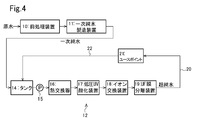
- FIG. 4 is a flowchart showing an example of the ultrapure water production apparatus.
- ultrapure water is raw water (industrial water, city water, water) in an ultrapure water production facility comprising a pretreatment device 10, a primary pure water production device 11, and a secondary pure water production device (subsystem) 12. Manufactured by treating wells).
- the pretreatment device 10 comprising agglomeration, pressurized flotation (precipitation), filtration (membrane filtration) device, etc. removes suspended substances and colloidal substances in raw water. In this process, it is also possible to remove high molecular organic substances, hydrophobic organic substances, and the like.
- the primary pure water production apparatus 11 equipped with a reverse osmosis membrane separation device, a deaeration device, and an ion exchange device (such as a mixed bed type or a 4-bed 5-tower type) removes ions and organic components in the raw water.
- the reverse osmosis membrane separation apparatus removes salts and ionic and colloidal TOC.
- the ion exchange apparatus removes salts and removes the TOC component adsorbed or ion exchanged by the ion exchange resin.
- inorganic carbon (IC) and dissolved oxygen are removed.
- the primary pure water from the primary pure water production apparatus 11 is passed from the tank 14 to the heat exchanger 16 by the pump 15, and then the ultraviolet (UV) irradiation apparatus (low-pressure UV oxidation apparatus in FIG. 4) 17 is used. Then, it is processed by the ion exchange device 18 and the ultrafiltration (UF) membrane separation device 19 to produce ultrapure water.
- UV irradiation apparatus low-pressure UV oxidation apparatus in FIG. 4
- TOC is decomposed into an organic acid and further to CO 2 by UV having a wavelength of 185 nm irradiated from a UV lamp.
- Organic substances and CO 2 produced by the decomposition are removed by an ion exchange device (usually a mixed bed type ion exchange device) 18 in the subsequent stage. Fine particles are removed in the UF membrane separation device 19, and ion exchange resin debris flowing out from the ion exchange device 18 is also removed.
- the ultrapure water obtained in this way is supplied to the use point 21 through the pipe 20, and surplus ultrapure water is returned to the tank 14 through the pipe 22.
- Oxidation treatment by ultraviolet irradiation in the ultraviolet oxidizer 17 decomposes organic matter (TOC component) in water to produce organic acid and carbonic acid.
- the oxidative decomposition mechanism of the TOC component in this ultraviolet oxidation apparatus is to oxidize and decompose water to generate OH radicals, and oxidatively decompose the TOC component by this OH radicals.
- the amount of UV irradiation is excessive irradiation that can sufficiently oxidatively decompose TOC in water.
- JP 2007-185587 discloses, as a method for removing hydrogen peroxide in ultrapure water, to-be-treated water containing hydrogen peroxide discharged from an ultraviolet oxidizer of an ultrapure water production apparatus.
- a method is described in which metal nanocolloid particles are brought into contact with a hydrogen peroxide decomposition catalyst supported on an anion exchange resin carrier to decompose hydrogen peroxide in water to be treated to 1 ppb or less.
- the present invention solves the above-mentioned conventional problems, and prevents deterioration of the catalyst (including suppression) in a method and apparatus for producing pure water by contacting ultraviolet oxidation water from an ultraviolet oxidation apparatus with a platinum-based catalyst. It is an object of the present invention to provide a method and an apparatus for producing pure water that can stably decompose hydrogen peroxide over a long period of time.
- the method for producing pure water according to the present invention is the method for producing pure water, wherein the water to be treated is subjected to an ultraviolet oxidation treatment with an ultraviolet oxidation device and then subjected to a hydrogen peroxide removal treatment with a hydrogen peroxide removal device using a platinum catalyst.
- the TOC of water supplied to the ultraviolet oxidation device is 5 ppb or less.
- the inorganic carbonate ion concentration of water supplied to the ultraviolet oxidation apparatus is less than 1 ppb, and the inorganic carbonate ion concentration of ultraviolet oxidation treated water treated by the ultraviolet oxidation apparatus is 1 ppb or more. It is preferable.
- the hydrogen peroxide removal treatment is performed by the hydrogen peroxide removal device.
- An apparatus for producing pure water according to the present invention is an apparatus for producing pure water comprising an ultraviolet ray oxidizer and a hydrogen peroxide removing device having a platinum-based catalyst provided in a subsequent stage.
- a means for setting the TOC to 5 ppb or less is provided.
- the pure water production apparatus of the present invention preferably includes an anion exchange means between the ultraviolet oxidation apparatus and the hydrogen peroxide removal apparatus.
- the TOC component in the water to be treated is oxidatively decomposed by the ultraviolet oxidation treatment in the ultraviolet oxidation apparatus, and an organic acid and carbonic acid are generated.
- the organic acid concentration in the effluent water of the ultraviolet oxidizer is lowered and installed in the subsequent stage of the ultraviolet oxidizer. Poisoning (deterioration) of the platinum-based catalyst for removing hydrogen peroxide is prevented, and the life of this catalyst can be kept long.
- the inorganic carbonate ion concentration of the feed water to the ultraviolet oxidizer is less than 1 ppb
- the ultraviolet oxidation treatment conditions so that the inorganic carbonate ion concentration in the effluent of the ultraviolet oxidizer is 1 ppb or more
- the proportion of organic matter that is decomposed to CO 2 increases, and as a result, the amount of hydrogen peroxide generated decreases. Thereby, the lifetime of a platinum-type catalyst can be extended.
- the water to be treated is treated by the ultraviolet oxidation device 2 and then the hydrogen peroxide removal treatment is performed by the hydrogen peroxide removal device 4 having a platinum catalyst.
- the hydrogen peroxide removal device 4 having a platinum catalyst.
- the quality of primary pure water from the primary pure water production equipment is usually electrical specific resistance: 18 M ⁇ ⁇ cm or more (metal ion concentration: 5 ng / L or less, residual ion concentration: 10 ng / L or less) Number of fine particles: 5 fine particles of 0.1 ⁇ m or more in 1 mL.
- the inorganic carbonate ion concentration in the water to be treated such as primary pure water is preferably less than 1 ppb.
- concentration of inorganic carbonate ions in the water to be treated is 1 ppb or more
- decarbonation treatment is performed by using a decarboxylation device such as a decarboxylation tower, anion exchange device, vacuum degassing device, or degassing membrane device alone or in combination
- the inorganic carbonic acid concentration is preferably less than 1 ppb.
- the water to be treated is supplied to the ultraviolet oxidizer 2 as it is.
- the TOC reducing means 1 sets the TOC concentration to 5 ppb or less, preferably 3 ppb or less.
- a UV oxidation apparatus an ion (mainly anion) exchange apparatus, an organic substance adsorption apparatus using activated carbon, an accelerated oxidation treatment apparatus (an oxidation accelerator such as UV oxidation + H 2 O 2 or persulfuric acid), or the like is used.
- a UV oxidation device and an ion exchange device are preferable.
- the TOC component is oxidatively decomposed by the ultraviolet oxidation treatment in the ultraviolet oxidation apparatus 2 to generate an organic acid and carbonic acid, and hydrogen peroxide is generated.
- the organic acid concentration in the effluent water of the ultraviolet oxidizer 2 is lowered,
- the installed platinum catalyst for removing hydrogen peroxide is prevented from being poisoned, and the life of the catalyst can be kept long.
- the treatment conditions of the ultraviolet oxidizer 2 so that the inorganic carbonate ion concentration in the effluent of the ultraviolet oxidizer 2 is 1 ppb or more For example, it is preferable to set input power, water flow rate, and the like. Thus, the proportion of the organic is increased, which is decomposed into CO 2, the amount of this result the organic acid is reduced. Thereby, the lifetime of a platinum-type catalyst can be extended.
- the inorganic carbonate ion concentration of water supplied to the ultraviolet oxidizer 2 is less than 1 ppb in order to reduce the load on the subsequent processing.
- the anion exchange means is preferably an anion exchange resin, particularly a strongly acidic anion exchange resin, and the anion exchange resin may be used in a state mixed with a cation exchange resin. Carbonic acid is removed together with the organic acid by the anion exchange treatment.
- the water flow SV through the anion exchange resin is preferably about 10 to 200 h ⁇ 1 .
- the effluent water from the anion exchange means 3 is passed through the hydrogen peroxide removing device 4 to remove hydrogen peroxide.
- a device using a platinum catalyst is employed as this hydrogen peroxide removing device 4.
- the platinum-based catalyst is preferably a platinum-based metal colloidal particle, particularly a nano-colloidal particle supported on a carrier.
- platinum-based metals examples include ruthenium, rhodium, palladium, osmium, iridium, and platinum. These platinum group metals can be used singly, in combination of two or more, can be used as two or more alloys, or can be a refinement of a naturally produced mixture. It is also possible to use the product without separating it into a single unit. Among these, platinum, palladium, a platinum / palladium alloy alone or a mixture of two or more of them is particularly suitable because of its strong catalytic activity.
- platinum metal nanocolloid particles there is no particular limitation on the method of producing platinum metal nanocolloid particles, and examples thereof include a metal salt reduction reaction method and a combustion method.
- the metal salt reduction reaction method can be suitably used because it is easy to produce and stable metal nanocolloid particles can be obtained.
- the metal salt reduction reaction method for example, 0.1 to 0.4 mmol / L aqueous solution of platinum-based metal chloride, nitrate, sulfate, metal complex, etc., alcohol, citric acid or a salt thereof, formic acid, acetone
- platinum-based metal nanocolloid particles can be produced by adding 4 to 20 equivalents of a reducing agent such as acetaldehyde and boiling for 1 to 3 hours.
- platinum metal salts such as hexachloroplatinic acid and potassium hexachloroplatinate in an aqueous polyvinylpyrrolidone solution at 1-2 mmol / L
- a reducing agent such as ethanol
- the average particle size of the platinum-based metal nanocolloid particles is preferably 1 to 50 nm, more preferably 1.2 to 20 nm, and still more preferably 1.4 to 5 nm. This particle size is a value obtained from electron microscope imaging.
- Examples of the carrier for supporting platinum-based metal nanocolloid particles include magnesia, titania, alumina, silica-alumina, zirconia, activated carbon, zeolite, diatomaceous earth, and ion exchange resin.
- an anion exchange resin can be particularly preferably used.
- the platinum-based metal nanocolloid particles have an electric double layer and are negatively charged. Therefore, the platinum-based metal nanocolloid particles are stably supported on the anion exchange resin and are difficult to peel off.
- Platinum-based metal nanocolloid particles supported on an anion exchange resin exhibit a strong catalytic activity for the decomposition and removal of hydrogen peroxide.
- the exchange group of the anion exchange resin is preferably in the OH form. In the OH-type anion exchange resin, the resin surface becomes alkaline and promotes decomposition of hydrogen peroxide.
- the amount of platinum-based metal nanocolloid particles supported on the anion exchange resin is preferably 0.01 to 0.2% by weight, and more preferably 0.04 to 0.1% by weight.
- hydrogen peroxide in water is decomposed by a reaction of 2H 2 O 2 ⁇ 2H 2 O + O 2. Is done.
- the method for contacting the hydrogen peroxide-containing water with the hydrogen peroxide decomposition catalyst is not particularly limited, but it is preferable to pass the water through a hydrogen peroxide decomposition apparatus filled with the hydrogen peroxide decomposition catalyst.
- the water flow direction may be either an upward flow or a downward flow, but is preferably a downward flow in which the catalyst does not flow.
- the water flow rate of the hydrogen peroxide-containing water through the hydrogen peroxide removal catalyst packed bed is preferably a space velocity SV of 100 to 2,000 h ⁇ 1 , more preferably 500 to 1,500 h ⁇ 1 . Since the platinum-based catalyst has a very high decomposition rate of hydrogen peroxide, hydrogen peroxide is sufficiently decomposed even when the water passing space velocity SV is 100 h ⁇ 1 or more. However, when the water passing space velocity SV exceeds 2,000 h ⁇ 1 , the pressure loss of the water passing becomes excessive, and the decomposition and removal of hydrogen peroxide may be insufficient.
- the concentration of hydrogen peroxide contained in the treated water in contact with the hydrogen peroxide decomposition catalyst is preferably 5 ppb (weight ratio) or less, and more preferably 1 ppb (weight ratio) or less. If the concentration of hydrogen peroxide contained in ultrapure water is 5 ppb (weight ratio) or less, it is possible to perform treatments such as cleaning using ultrapure water without adversely affecting semiconductor and liquid crystal components. .
- an anion exchange resin tower and a hydrogen peroxide removal apparatus are arranged in this order between the low pressure UV oxidation apparatus 17 and the mixed bed ion exchange apparatus 18. It is preferable to install them in series.
- IPA is injected into ultrapure water by an IPA addition device 5 comprising a tank and a pump to prepare a quantitative primary IP water containing IPA containing a TOC concentration of 3, 5 or 10 ppb. 6 kW, UV wavelength 185 nm) at 10 L / min.
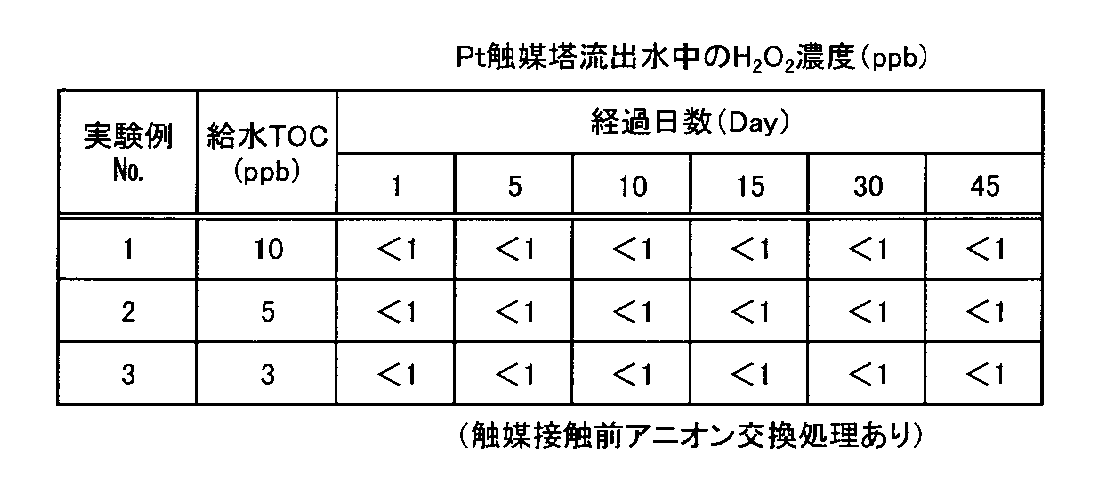
- Table 1 shows the change over time in the hydrogen peroxide concentration in the effluent of the low-pressure ultraviolet oxidizer 7, and Table 2 shows the change over time in the hydrogen peroxide concentration in the treated water from the Pt catalyst tower 9.
- the hydrogen peroxide concentration in the effluent water of the low-pressure ultraviolet oxidizer 7 was the same regardless of whether the TOC concentration in the feed water to the low-pressure ultraviolet oxidizer 7 was 3, 5, or 10 ppb.
- the TOC decomposition product by the ultraviolet oxidation device reduces the hydrogen peroxide resolution of the platinum-based catalyst, but the TOC of the water supply of the ultraviolet oxidation device is set to 5 ppb or less, and preferably at the front stage of the hydrogen peroxide decomposition catalyst device. It was recognized that the frequency of replacement of the platinum-based hydrogen peroxide decomposition catalyst was significantly reduced by removing the TOC decomposition product with an anion exchange resin.
Landscapes
- Chemical & Material Sciences (AREA)
- Organic Chemistry (AREA)
- Engineering & Computer Science (AREA)
- Environmental & Geological Engineering (AREA)
- Water Supply & Treatment (AREA)
- Life Sciences & Earth Sciences (AREA)
- Hydrology & Water Resources (AREA)
- Chemical Kinetics & Catalysis (AREA)
- Toxicology (AREA)
- Health & Medical Sciences (AREA)
- Inorganic Chemistry (AREA)
- Materials Engineering (AREA)
- Analytical Chemistry (AREA)
- Physical Water Treatments (AREA)
- Treatment Of Water By Ion Exchange (AREA)
- Catalysts (AREA)
- Removal Of Specific Substances (AREA)
- Treatment Of Water By Oxidation Or Reduction (AREA)
Abstract
Description
電気比抵抗;18MΩ・cm以上
(金属イオン濃度:5ng/L以下、残留イオン濃度:10ng/L以下)
微粒子数;1mL中に0.1μm以上の微粒子5個以下
である。
超純水にIPA(イソプロピルアルコール)を添加した合成一次純水を図2のフローに従って処理した。
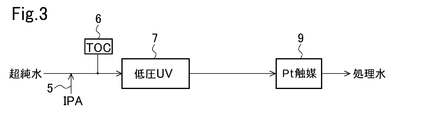
図3の通り、アニオン交換樹脂塔8を省略し、低圧紫外線酸化装置7からの流出水をそのままPt触媒塔9に通水するようにしたこと以外は実験例1~3と全く同様にして処理を行った。Pt触媒塔9からの処理水中の過酸化水素濃度の経時変化を表3に示す。


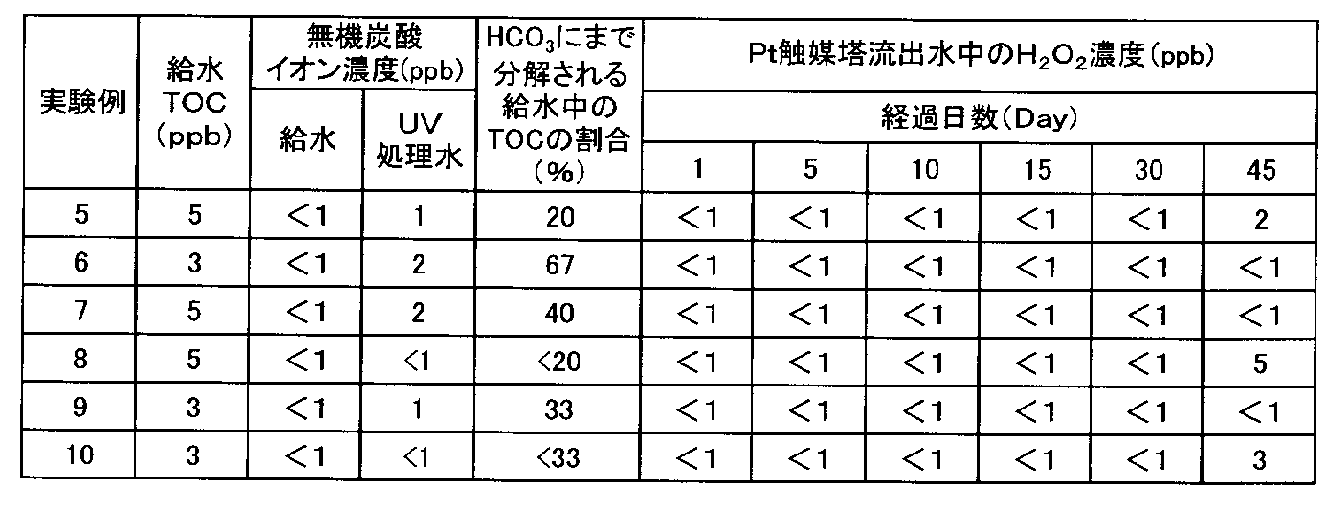
実験例5及び6において、低圧紫外線酸化装置7の流出水(UV処理水)の無機炭酸イオン濃度が表4のようになるよう、低圧紫外線酸化装置7の紫外線照射量を変化させて処理した場合の結果を、実験例5及び6の結果とともにあわせて示す。
本出願は、2013年11月11日付で出願された日本特許出願2013-233125に基づいており、その全体が引用により援用される。
2 紫外線酸化装置
3 アニオン交換手段
4 過酸化水素除去装置
7 低圧紫外線酸化装置
Claims (10)
- 被処理水を紫外線酸化装置で紫外線酸化処理した後、白金系触媒を用いた過酸化水素除去装置により過酸化水素除去処理する純水の製造方法において、該紫外線酸化装置への給水のTOCを5ppb以下とすることを特徴とする純水の製造方法。
- 請求項1に記載の純水の製造方法において、前記紫外線酸化装置への給水の無機炭酸イオン濃度が1ppb未満であり、該紫外線酸化装置で処理された紫外線酸化処理水の無機炭酸イオン濃度が1ppb以上であることを特徴とする純水の製造方法。
- 請求項1又は2に記載の純水の製造方法において、前記紫外線酸化装置からの紫外線酸化処理水をアニオン交換処理した後、前記過酸化水素除去装置により過酸化水素除去処理することを特徴とする純水の製造方法。
- 請求項1ないし3のいずれか1項に記載の純水の製造方法において、前記白金系触媒は、白金系金属のコロイド粒子をアニオン交換樹脂に担持させたものであることを特徴とする純水の製造方法。
- 請求項1ないし4のいずれか1項の純水の製造方法において、前記被処理水を、UV酸化装置、イオン交換装置、活性炭による有機物吸着装置、又は促進酸化処理装置で処理することにより、TOC5ppb以下とすることを特徴とする純水の製造方法。
- 請求項1ないし5のいずれか1項の純水の製造方法において、前記過酸化水素除去処理された水の過酸化水素濃度が5ppb以下であることを特徴とする純水の製造方法。
- 紫外線酸化装置と、その後段に設けられた、白金系触媒を有する過酸化水素除去装置とを備えた純水の製造装置において、該紫外線酸化装置の給水のTOCを5ppb以下とする手段を備えたことを特徴とする純水の製造装置。
- 請求項7に記載の純水の製造装置において、前記紫外線酸化装置と過酸化水素除去装置との間にアニオン交換手段を設けたことを特徴とする純水の製造装置。
- 請求項7又は8の純水の製造装置において、前記TOCを5ppb以下とする手段が、UV酸化装置、イオン交換装置、活性炭による有機物吸着装置、又は促進酸化処理装置であることを特徴とする純水の製造装置。
- 請求項6ないし9のいずれか1項において、前処理システム、一次純水システム及びサブシステムを含む超純水製造装置のサブシステムに適用されることを特徴とする純水の製造装置。
Priority Applications (5)
| Application Number | Priority Date | Filing Date | Title |
|---|---|---|---|
| CN201480048525.0A CN105517957B (zh) | 2013-11-11 | 2014-10-30 | 纯水的制造方法及装置 |
| KR1020177014937A KR101978080B1 (ko) | 2013-11-11 | 2014-10-30 | 순수의 제조 방법 및 장치 |
| US15/021,157 US20160221841A1 (en) | 2013-11-11 | 2014-10-30 | Method and apparatus for producing pure water |
| KR1020167005775A KR20160042927A (ko) | 2013-11-11 | 2014-10-30 | 순수의 제조 방법 및 장치 |
| US15/598,938 US20170253499A1 (en) | 2013-11-11 | 2017-05-18 | Method and apparatus for producing pure water |
Applications Claiming Priority (2)
| Application Number | Priority Date | Filing Date | Title |
|---|---|---|---|
| JP2013233125A JP2015093226A (ja) | 2013-11-11 | 2013-11-11 | 純水製造方法及び装置 |
| JP2013-233125 | 2013-11-11 |
Related Child Applications (2)
| Application Number | Title | Priority Date | Filing Date |
|---|---|---|---|
| US15/021,157 A-371-Of-International US20160221841A1 (en) | 2013-11-11 | 2014-10-30 | Method and apparatus for producing pure water |
| US15/598,938 Continuation US20170253499A1 (en) | 2013-11-11 | 2017-05-18 | Method and apparatus for producing pure water |
Publications (1)
| Publication Number | Publication Date |
|---|---|
| WO2015068635A1 true WO2015068635A1 (ja) | 2015-05-14 |
Family
ID=53041415
Family Applications (1)
| Application Number | Title | Priority Date | Filing Date |
|---|---|---|---|
| PCT/JP2014/078912 Ceased WO2015068635A1 (ja) | 2013-11-11 | 2014-10-30 | 純水の製造方法及び装置 |
Country Status (6)
| Country | Link |
|---|---|
| US (2) | US20160221841A1 (ja) |
| JP (1) | JP2015093226A (ja) |
| KR (2) | KR20160042927A (ja) |
| CN (1) | CN105517957B (ja) |
| TW (1) | TWI640482B (ja) |
| WO (1) | WO2015068635A1 (ja) |
Cited By (6)
| Publication number | Priority date | Publication date | Assignee | Title |
|---|---|---|---|---|
| JP2021181069A (ja) * | 2020-05-20 | 2021-11-25 | オルガノ株式会社 | ホウ素除去装置及びホウ素除去方法、並びに、純水製造装置及び純水の製造方法 |
| WO2021235130A1 (ja) * | 2020-05-20 | 2021-11-25 | オルガノ株式会社 | Toc除去装置及びtoc除去方法 |
| WO2021261145A1 (ja) * | 2020-06-23 | 2021-12-30 | オルガノ株式会社 | 水処理装置及び水処理方法 |
| WO2021261143A1 (ja) * | 2020-06-23 | 2021-12-30 | オルガノ株式会社 | 過酸化水素の除去方法及び除去装置並びに純水製造装置 |
| WO2021261144A1 (ja) * | 2020-06-23 | 2021-12-30 | オルガノ株式会社 | 水処理装置、超純水製造装置及び水処理方法 |
| JP2022002829A (ja) * | 2020-06-23 | 2022-01-11 | オルガノ株式会社 | 過酸化水素除去方法および過酸化水素除去装置並びに純水製造装置 |
Families Citing this family (9)
| Publication number | Priority date | Publication date | Assignee | Title |
|---|---|---|---|---|
| CN105517960A (zh) * | 2013-10-04 | 2016-04-20 | 栗田工业株式会社 | 超纯水制造装置 |
| JP6439777B2 (ja) * | 2016-12-05 | 2018-12-19 | 栗田工業株式会社 | 超純水製造装置及び超純水製造装置の運転方法 |
| JP6846185B2 (ja) * | 2016-12-14 | 2021-03-24 | 野村マイクロ・サイエンス株式会社 | 固体触媒担持体の劣化診断方法、劣化診断装置及び処理対象物質の測定装置 |
| WO2018123156A1 (ja) * | 2016-12-28 | 2018-07-05 | 栗田工業株式会社 | 過酸化水素除去方法及び装置 |
| JP7489689B2 (ja) | 2018-11-28 | 2024-05-24 | 株式会社日本フォトサイエンス | 紫外線処理方法及びシステム |
| JP7825938B2 (ja) * | 2020-06-23 | 2026-03-09 | オルガノ株式会社 | 純水製造装置及び純水製造方法 |
| JP7724067B2 (ja) | 2021-03-10 | 2025-08-15 | オルガノ株式会社 | 水処理方法及び装置 |
| JP7778505B2 (ja) * | 2021-09-08 | 2025-12-02 | オルガノ株式会社 | 樹脂の製造方法及び超純水製造方法 |
| CN119281119B (zh) * | 2024-09-23 | 2025-09-16 | 珠海格力电器股份有限公司 | 净水设备控制方法、装置、计算机设备以及净水设备 |
Citations (5)
| Publication number | Priority date | Publication date | Assignee | Title |
|---|---|---|---|---|
| JPH05138162A (ja) * | 1991-11-18 | 1993-06-01 | Nippon Rensui Kk | 超純水の製造法 |
| JP2002159979A (ja) * | 2000-11-24 | 2002-06-04 | Sumitomo Heavy Ind Ltd | 廃水処理方法及び廃水処理装置 |
| JP2002345400A (ja) * | 2001-05-28 | 2002-12-03 | Daikin Ind Ltd | 鮮度保持雰囲気供給装置 |
| JP2007125519A (ja) * | 2005-11-07 | 2007-05-24 | Kurita Water Ind Ltd | 超純水製造方法および装置 |
| JP2007185587A (ja) * | 2006-01-12 | 2007-07-26 | Kurita Water Ind Ltd | 過酸化水素の除去方法及び除去装置 |
Family Cites Families (8)
| Publication number | Priority date | Publication date | Assignee | Title |
|---|---|---|---|---|
| JPH04293553A (ja) * | 1991-03-25 | 1992-10-19 | Kurita Water Ind Ltd | 復水処理用混床式イオン交換装置の再生方法 |
| JP2003117391A (ja) * | 2001-10-09 | 2003-04-22 | Katayama Chem Works Co Ltd | オゾン分解用固体触媒およびそれを用いたオゾンの分解方法 |
| JP2003145177A (ja) * | 2001-11-15 | 2003-05-20 | Kurita Water Ind Ltd | 脱酸素処理方法及び脱酸素処理装置 |
| US20070221581A1 (en) * | 2004-03-31 | 2007-09-27 | Kurita Water Industries Ltd. | Ultrapure Water Production Plant |
| US20070154896A1 (en) * | 2005-02-11 | 2007-07-05 | International Business Machines Corporation | System and method for identification of MicroRNA target sites and corresponding targeting MicroRNA sequences |
| US7925701B2 (en) * | 2005-07-25 | 2011-04-12 | Sony Ericsson Mobile Communications Ab | Mobile communication terminal supporting information sharing |
| JP5019774B2 (ja) * | 2006-03-31 | 2012-09-05 | 大阪瓦斯株式会社 | 水素を利用する有機物含有廃水の処理方法 |
| CN101983175A (zh) * | 2008-03-31 | 2011-03-02 | 栗田工业株式会社 | 纯水制造方法及纯水制造装置 |
-
2013
- 2013-11-11 JP JP2013233125A patent/JP2015093226A/ja active Pending
-
2014
- 2014-10-30 KR KR1020167005775A patent/KR20160042927A/ko not_active Ceased
- 2014-10-30 KR KR1020177014937A patent/KR101978080B1/ko active Active
- 2014-10-30 US US15/021,157 patent/US20160221841A1/en not_active Abandoned
- 2014-10-30 WO PCT/JP2014/078912 patent/WO2015068635A1/ja not_active Ceased
- 2014-10-30 CN CN201480048525.0A patent/CN105517957B/zh active Active
- 2014-11-06 TW TW103138552A patent/TWI640482B/zh active
-
2017
- 2017-05-18 US US15/598,938 patent/US20170253499A1/en not_active Abandoned
Patent Citations (5)
| Publication number | Priority date | Publication date | Assignee | Title |
|---|---|---|---|---|
| JPH05138162A (ja) * | 1991-11-18 | 1993-06-01 | Nippon Rensui Kk | 超純水の製造法 |
| JP2002159979A (ja) * | 2000-11-24 | 2002-06-04 | Sumitomo Heavy Ind Ltd | 廃水処理方法及び廃水処理装置 |
| JP2002345400A (ja) * | 2001-05-28 | 2002-12-03 | Daikin Ind Ltd | 鮮度保持雰囲気供給装置 |
| JP2007125519A (ja) * | 2005-11-07 | 2007-05-24 | Kurita Water Ind Ltd | 超純水製造方法および装置 |
| JP2007185587A (ja) * | 2006-01-12 | 2007-07-26 | Kurita Water Ind Ltd | 過酸化水素の除去方法及び除去装置 |
Cited By (18)
| Publication number | Priority date | Publication date | Assignee | Title |
|---|---|---|---|---|
| JP2021181069A (ja) * | 2020-05-20 | 2021-11-25 | オルガノ株式会社 | ホウ素除去装置及びホウ素除去方法、並びに、純水製造装置及び純水の製造方法 |
| WO2021235130A1 (ja) * | 2020-05-20 | 2021-11-25 | オルガノ株式会社 | Toc除去装置及びtoc除去方法 |
| JPWO2021235130A1 (ja) * | 2020-05-20 | 2021-11-25 | ||
| WO2021235107A1 (ja) * | 2020-05-20 | 2021-11-25 | オルガノ株式会社 | ホウ素除去装置及びホウ素除去方法、並びに、純水製造装置及び純水の製造方法 |
| US12338152B2 (en) | 2020-05-20 | 2025-06-24 | Organo Corporation | Boron removal device and boron removal method, and pure water production device and pure water production method |
| JP7383141B2 (ja) | 2020-05-20 | 2023-11-17 | オルガノ株式会社 | Toc除去装置及びtoc除去方法 |
| JP7368310B2 (ja) | 2020-05-20 | 2023-10-24 | オルガノ株式会社 | ホウ素除去装置及びホウ素除去方法、並びに、純水製造装置及び純水の製造方法 |
| JP7012196B1 (ja) * | 2020-06-23 | 2022-01-27 | オルガノ株式会社 | 水処理装置、超純水製造装置、水処理方法及び再生型イオン交換塔 |
| JP2022002829A (ja) * | 2020-06-23 | 2022-01-11 | オルガノ株式会社 | 過酸化水素除去方法および過酸化水素除去装置並びに純水製造装置 |
| JP2022036290A (ja) * | 2020-06-23 | 2022-03-04 | オルガノ株式会社 | 水処理装置、純水製造装置、超純水製造装置及び水処理方法 |
| JP7109691B2 (ja) | 2020-06-23 | 2022-07-29 | オルガノ株式会社 | 水処理装置、純水製造装置、超純水製造装置及び水処理方法 |
| CN115605441A (zh) * | 2020-06-23 | 2023-01-13 | 奥加诺株式会社(Jp) | 水处理装置以及水处理方法 |
| US20230192515A1 (en) * | 2020-06-23 | 2023-06-22 | Organo Corporation | Water treatment apparatus and water treatment method |
| US20230264985A1 (en) * | 2020-06-23 | 2023-08-24 | Organo Corporation | Water treatment apparatus, apparatus for producing ultrapure water and water treatment method |
| WO2021261144A1 (ja) * | 2020-06-23 | 2021-12-30 | オルガノ株式会社 | 水処理装置、超純水製造装置及び水処理方法 |
| WO2021261143A1 (ja) * | 2020-06-23 | 2021-12-30 | オルガノ株式会社 | 過酸化水素の除去方法及び除去装置並びに純水製造装置 |
| JP7519823B2 (ja) | 2020-06-23 | 2024-07-22 | オルガノ株式会社 | 過酸化水素除去方法および過酸化水素除去装置並びに純水製造装置 |
| WO2021261145A1 (ja) * | 2020-06-23 | 2021-12-30 | オルガノ株式会社 | 水処理装置及び水処理方法 |
Also Published As
| Publication number | Publication date |
|---|---|
| TW201532977A (zh) | 2015-09-01 |
| CN105517957B (zh) | 2018-08-24 |
| US20170253499A1 (en) | 2017-09-07 |
| JP2015093226A (ja) | 2015-05-18 |
| TWI640482B (zh) | 2018-11-11 |
| CN105517957A (zh) | 2016-04-20 |
| KR20170064563A (ko) | 2017-06-09 |
| US20160221841A1 (en) | 2016-08-04 |
| KR101978080B1 (ko) | 2019-05-13 |
| KR20160042927A (ko) | 2016-04-20 |
Similar Documents
| Publication | Publication Date | Title |
|---|---|---|
| WO2015068635A1 (ja) | 純水の製造方法及び装置 | |
| JP5454468B2 (ja) | 純水製造方法及び純水製造装置 | |
| JP5124946B2 (ja) | 超純水製造装置における超純水中の過酸化水素の除去方法 | |
| JP5499753B2 (ja) | 水処理方法及び装置 | |
| JP6439777B2 (ja) | 超純水製造装置及び超純水製造装置の運転方法 | |
| TWI868365B (zh) | 純水製造裝置及超純水製造裝置,以及純水製造方法及超純水製造方法 | |
| WO2022190608A1 (ja) | 水処理方法及び装置 | |
| JP6451824B2 (ja) | 過酸化水素除去方法及び装置 | |
| JP5854163B2 (ja) | 超純水の製造方法及び超純水製造設備 | |
| JP6848415B2 (ja) | 超純水製造装置及び超純水製造装置の運転方法 | |
| JP5499433B2 (ja) | 超純水製造方法及び装置並びに電子部品部材類の洗浄方法及び装置 | |
| JP7741652B2 (ja) | 純水製造装置及び純水製造方法 | |
| JP6627321B2 (ja) | 白金族金属担持体の前処理方法および前処理装置 | |
| JP2019107631A (ja) | 紫外線酸化処理方法 |
Legal Events
| Date | Code | Title | Description |
|---|---|---|---|
| 121 | Ep: the epo has been informed by wipo that ep was designated in this application |
Ref document number: 14859705 Country of ref document: EP Kind code of ref document: A1 |
|
| ENP | Entry into the national phase |
Ref document number: 20167005775 Country of ref document: KR Kind code of ref document: A |
|
| WWE | Wipo information: entry into national phase |
Ref document number: 15021157 Country of ref document: US |
|
| NENP | Non-entry into the national phase |
Ref country code: DE |
|
| 122 | Ep: pct application non-entry in european phase |
Ref document number: 14859705 Country of ref document: EP Kind code of ref document: A1 |