WO2014192247A1 - 緊急通報システム - Google Patents
緊急通報システム Download PDFInfo
- Publication number
- WO2014192247A1 WO2014192247A1 PCT/JP2014/002633 JP2014002633W WO2014192247A1 WO 2014192247 A1 WO2014192247 A1 WO 2014192247A1 JP 2014002633 W JP2014002633 W JP 2014002633W WO 2014192247 A1 WO2014192247 A1 WO 2014192247A1
- Authority
- WO
- WIPO (PCT)
- Prior art keywords
- vehicle
- occupant
- detection unit
- impact
- injury
- Prior art date
- Legal status (The legal status is an assumption and is not a legal conclusion. Google has not performed a legal analysis and makes no representation as to the accuracy of the status listed.)
- Ceased
Links
Images
Classifications
-
- B—PERFORMING OPERATIONS; TRANSPORTING
- B60—VEHICLES IN GENERAL
- B60R—VEHICLES, VEHICLE FITTINGS, OR VEHICLE PARTS, NOT OTHERWISE PROVIDED FOR
- B60R22/00—Safety belts or body harnesses in vehicles
- B60R22/48—Control systems, alarms, or interlock systems, for the correct application of the belt or harness
-
- A—HUMAN NECESSITIES
- A61—MEDICAL OR VETERINARY SCIENCE; HYGIENE
- A61B—DIAGNOSIS; SURGERY; IDENTIFICATION
- A61B5/00—Measuring for diagnostic purposes; Identification of persons
- A61B5/68—Arrangements of detecting, measuring or recording means, e.g. sensors, in relation to patient
- A61B5/6887—Arrangements of detecting, measuring or recording means, e.g. sensors, in relation to patient mounted on external non-worn devices, e.g. non-medical devices
- A61B5/6893—Cars
-
- A—HUMAN NECESSITIES
- A61—MEDICAL OR VETERINARY SCIENCE; HYGIENE
- A61B—DIAGNOSIS; SURGERY; IDENTIFICATION
- A61B5/00—Measuring for diagnostic purposes; Identification of persons
- A61B5/72—Signal processing specially adapted for physiological signals or for diagnostic purposes
- A61B5/7271—Specific aspects of physiological measurement analysis
- A61B5/7282—Event detection, e.g. detecting unique waveforms indicative of a medical condition
-
- G—PHYSICS
- G08—SIGNALLING
- G08B—SIGNALLING SYSTEMS, e.g. PERSONAL CALLING SYSTEMS; ORDER TELEGRAPHS; ALARM SYSTEMS
- G08B25/00—Alarm systems in which the location of the alarm condition is signalled to a central station, e.g. fire or police telegraphic systems
-
- G—PHYSICS
- G08—SIGNALLING
- G08B—SIGNALLING SYSTEMS, e.g. PERSONAL CALLING SYSTEMS; ORDER TELEGRAPHS; ALARM SYSTEMS
- G08B25/00—Alarm systems in which the location of the alarm condition is signalled to a central station, e.g. fire or police telegraphic systems
- G08B25/01—Alarm systems in which the location of the alarm condition is signalled to a central station, e.g. fire or police telegraphic systems characterised by the transmission medium
- G08B25/016—Personal emergency signalling and security systems
-
- G—PHYSICS
- G08—SIGNALLING
- G08B—SIGNALLING SYSTEMS, e.g. PERSONAL CALLING SYSTEMS; ORDER TELEGRAPHS; ALARM SYSTEMS
- G08B25/00—Alarm systems in which the location of the alarm condition is signalled to a central station, e.g. fire or police telegraphic systems
- G08B25/01—Alarm systems in which the location of the alarm condition is signalled to a central station, e.g. fire or police telegraphic systems characterised by the transmission medium
- G08B25/10—Alarm systems in which the location of the alarm condition is signalled to a central station, e.g. fire or police telegraphic systems characterised by the transmission medium using wireless transmission systems
-
- B—PERFORMING OPERATIONS; TRANSPORTING
- B60—VEHICLES IN GENERAL
- B60R—VEHICLES, VEHICLE FITTINGS, OR VEHICLE PARTS, NOT OTHERWISE PROVIDED FOR
- B60R22/00—Safety belts or body harnesses in vehicles
- B60R22/48—Control systems, alarms, or interlock systems, for the correct application of the belt or harness
- B60R2022/4808—Sensing means arrangements therefor
- B60R2022/4816—Sensing means arrangements therefor for sensing locking of buckle
-
- G—PHYSICS
- G08—SIGNALLING
- G08G—TRAFFIC CONTROL SYSTEMS
- G08G1/00—Traffic control systems for road vehicles
- G08G1/20—Monitoring the location of vehicles belonging to a group, e.g. fleet of vehicles, countable or determined number of vehicles
- G08G1/205—Indicating the location of the monitored vehicles as destination, e.g. accidents, stolen, rental
Definitions
- This disclosure relates to an emergency call system that determines an injury level of an occupant and makes an emergency call to a predetermined report destination.
- an emergency call system mounted on a vehicle is known.
- Patent Document 1 it is determined whether the emergency state of the occupant is “severe” or “mild” based on the operation state of the notification switch and the collision detection state by the collision detection unit that detects the collision of the vehicle.
- An emergency call system for making an emergency call to a predetermined call destination is disclosed.
- the emergency state of the occupant is determined as “severe” only when a collision is detected by the collision detection unit.
- the emergency state of the occupant may become “severe” depending on whether the occupant is wearing a seat belt or a change in speed until the vehicle stops. That is, the conventional emergency call system cannot properly determine the emergency state of the occupant when the vehicle does not collide. For this reason, overtriage and undertriage occur, and there are cases where it is not possible to perform appropriate medical treatment according to the emergency state of the occupant.
- the present disclosure has been made in view of the above points, and an object of the present disclosure is to provide an emergency call system that can appropriately determine an injury level of an occupant and prevent an emergency call when a vehicle collision is prevented. There is to do.
- An emergency notification system includes a seat belt detection unit that detects the wearing of a seat belt of a vehicle occupant in a state in which a collision prevention process for preventing a vehicle collision is performed and the vehicle is stopped.
- a speed change detection unit that detects a change in the speed of the vehicle from when the collision prevention process is performed until the vehicle stops, and a detection level of the occupant is determined based on detection results of the seat belt detection unit and the speed change detection unit.
- An injury determination unit, and an emergency notification unit that makes an emergency notification of a passenger's injury level determined by the injury determination unit to a predetermined report destination are provided.
- the emergency call system it is possible to appropriately determine the passenger's injury level when a vehicle collision is prevented and to make an emergency call.
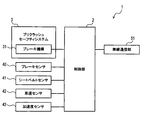
- FIG. 1 is an explanatory diagram illustrating a configuration of an emergency call system according to Embodiment 1 of the present disclosure.
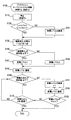
- FIG. 2 is a flowchart illustrating emergency call processing in the first embodiment.
- the emergency notification system 1 of the present embodiment includes a control unit 2, a pre-crash safety system 3, a brake sensor 40, a seat belt sensor 41, a vehicle speed sensor 42, an acceleration sensor 43, and a wireless communication unit 51. Configured.
- the pre-crash safety system 3 is mounted on a vehicle, and is for predicting a vehicle collision and preventing the collision in advance. Specifically, the pre-crash safety system 3 controls a pre-crash sensor (not shown) that predicts a vehicle collision, a brake mechanism 31 of the vehicle, a brake control device (not shown) that controls the brake mechanism 31, and a brake control device. And a pre-crash control unit (not shown).
- the pre-crash sensor is mainly composed of a millimeter wave radar device that detects a target such as a preceding vehicle by transmitting and receiving radar waves and acquires target information including the position and speed of the target vehicle and the host vehicle. Has been. The pre-crash sensor then outputs the acquired target information to the pre-crash control unit.
- the pre-crash sensor is arranged so as to capture the traveling direction of the host vehicle, and detects a target such as a preceding vehicle by transmitting and receiving a laser beam, an in-vehicle camera that acquires target information based on the captured image.
- the laser radar device or the like that acquires the target information may be mainly configured, or may be configured by combining these (the aforementioned millimeter wave radar, the in-vehicle camera, and the laser radar device).
- the pre-crash control unit is mainly composed of a microcomputer composed of a CPU, ROM, RAM and the like.
- the pre-crash control unit determines the possibility of collision of the vehicle based on the output from the pre-crash sensor, and controls the brake control device based on the determination result.
- the brake sensor 40 detects the operation (automatic braking) of the brake mechanism 31 by the pre-crash control device.
- the brake sensor 40 outputs the information to the control unit 2.
- the seat belt sensor 41 detects whether or not the occupant's seat belt is worn, and outputs the detection result to the control unit 2.
- the vehicle speed sensor 42 detects the traveling speed of the vehicle. Specifically, a change in the speed of the vehicle is detected.
- the vehicle speed sensor 42 detects a speed change in each of the vehicle front-rear direction, the left-right direction, and the up-down direction, and outputs the detection result to the control unit 2.
- the acceleration sensor 43 detects the acceleration of the vehicle. Specifically, an impact on the vehicle (the magnitude of the impact) is detected.
- the acceleration sensor 43 detects the acceleration (impact magnitude) in each of the vehicle front-rear direction, the left-right direction, and the up-down direction, and outputs the detection result to the control unit 2.
- the acceleration sensor 43 can also be used as an auxiliary device that assists the detection of the speed change by the vehicle speed sensor 42.
- the control unit 2 is mainly configured by a microcomputer including a CPU, a ROM, a RAM, and the like. Information from the brake sensor 40, the seat belt sensor 41, the vehicle speed sensor 42, and the acceleration sensor 43 is input to the control unit 2. Then, the control unit 2 determines an occupant injury level based on the input information, and makes an emergency call to the emergency call center (not shown) by the wireless communication unit 51 of the determined occupant injury level.
- the wireless communication unit 51 performs wireless communication with the emergency call center via a wide area communication network. Specifically, the occupant injury level determined by the control unit 2 is output to the wireless communication unit 51. And the wireless communication part 51 transmits the information of the passenger
- the emergency call center selects an emergency team dispatched to the site or a medical institution that performs medical treatment according to the injury level of the occupant, and transmits this information.
- This process is started by the activation of the pre-crash safety system 3 (S100). Specifically, the process is started when the brake sensor 40 detects automatic braking by the pre-crash control device and the information is input to the control unit 2. The time at this time is Ta, and the vehicle speed is Va. Thereafter, the vehicle is stopped by automatic braking by the pre-crash safety system 3 (S110), and the vehicle is prevented from colliding in advance. This time is Tb.
- S140 it is determined whether the speed change is equal to or less than a specified value.
- a specified value it is determined whether each speed change in the front-rear direction, the left-right direction, and the up-down direction of the vehicle is equal to or less than a specified value. And when the speed change of all the directions is below a regulation value, it determines with the damage level 1 (S141). On the other hand, if the speed change in either direction exceeds the specified value, it is determined that the damage level is 2 (S142).
- the determined damage level is notified to the emergency call center through the wireless communication unit 51 (S150).
- the numerical value is subtracted from the damage level determined in S141 and S142 and notified.
- the magnitude of the impact is below a specified value. Is determined (S160). Here, it is determined whether or not the respective impact magnitudes in the front-rear direction, the left-right direction, and the up-down direction of the vehicle are equal to or less than a specified value.
- the numerical value of the injury level notified in S150 is incremented by 1 (S161), and the injury level is again notified to the emergency notification center through the wireless communication unit 51. (S162). Thereafter, it is determined whether the reported injury level is 2 or more (S163). When the damage level is lower than 2, the process proceeds to S170. On the other hand, when the damage level is 2 or more, the present process is terminated.
- the process performed by the pre-crash safety system 3 is a collision prevention process
- the seat belt sensor 41 is a seat belt detection unit
- the vehicle speed sensor 42 is a speed change detection unit
- the acceleration sensor 43 is an impact detection unit
- a control unit S120, S140, and S160 executed in Step 2 correspond to the damage determination unit
- S150 and S162 correspond to the emergency notification unit.
- the brake sensor 40 corresponds to a collision prevention detection unit.
- the control unit 2 determines the injury level of the occupant based on the detection results of the seat belt sensor 41 and the vehicle speed sensor 42. That is, the pre-crash safety system 3 prevents the vehicle from colliding, and when the vehicle does not collide, the occupant's seat belt wearing state and the speed change until the vehicle stops are detected. Based on the detection result Determine the injury level of the passenger.
- the vehicle speed sensor 42 detects a speed change in the longitudinal direction, the lateral direction, and the vertical direction of the vehicle. Therefore, it is possible to more accurately detect the speed change until the vehicle is stopped after the pre-crash safety system 3 is activated, and the determination accuracy of the occupant's injury level can be improved.
- the emergency call system 1 further includes an acceleration sensor 43 that detects an impact on the vehicle.
- the acceleration sensor 43 detects an impact on the vehicle from the time (Tb) when the pre-crash safety system 3 is activated and the vehicle stops to a predetermined time (X seconds)
- the control unit 2 Based on the detection result, the injury level of the occupant is determined again, and the determined injury level of the occupant is urgently notified again.
- the acceleration sensor 43 detects an impact on the vehicle from the time (Tb) when the vehicle is stopped until the elapse of a predetermined time (X seconds)
- the injury level of the occupant is again set based on the detection result of the acceleration sensor 43.
- Judge and make an emergency call again Thereby, an occupant's injury level can be determined in two steps, and the information can be notified in an emergency.
- the acceleration sensor 43 detects the magnitude of impact in the longitudinal direction, the lateral direction, and the vertical direction of the vehicle. Therefore, the impact on the vehicle can be detected more accurately, and the determination accuracy of the injury level of the occupant can be increased.
- the emergency call system 1 that can appropriately determine the injury level of the occupant when the collision of the vehicle is prevented and can make an emergency call.
- the execution of the collision prevention process is the brake control (automatic brake) by the activation of the pre-crash safety system 3, but may be the brake control by the occupant.
- the collision prevention process may be executed when the occupant steps on a brake exceeding a specified amount, or when a deceleration exceeding a specified amount occurs due to the occupant pressing the brake. These can be detected by the brake sensor 40 of the first embodiment.
- the emergency call system 1 of the first embodiment is a system that is completed within the vehicle, a part of the processing may be performed outside the vehicle.
- a server is installed outside the vehicle, and the detection results of the brake sensor 40, seat belt sensor 41, vehicle speed sensor 42, acceleration sensor 43, etc. are transmitted as data to a server outside the vehicle, and the server determines the injury level of the passenger.
- it may be a system for making an emergency call.
- the speed change detection unit vehicle speed sensor 42 or the like
- the speed change detection unit vehicle speed sensor 42 or the like
- the speed change in the front-rear direction of the vehicle when the speed change in the front-rear direction of the vehicle is greater than or equal to a specified value, it can be estimated that the occupant may hit the chest. Moreover, when the speed change in the left-right direction of the vehicle is equal to or greater than a specified value, it can be estimated that the occupant is likely to hit the head. Further, when the speed change in the vertical direction of the vehicle is equal to or greater than a specified value, it can be estimated that the occupant may hit the top of the head.
- the impact detection unit by detecting the magnitude of impact (impact amount) in each direction of the vehicle by means of the impact detection unit (acceleration sensor 43 or the like), it is possible to estimate to some extent the occupant's injuries (injury location). By making an emergency report of the estimated information on the injured person's injury along with the injured level, a more appropriate medical treatment can be performed on the occupant.
- the amount of impact in the front-rear direction of the vehicle when the amount of impact in the front-rear direction of the vehicle is greater than or equal to a specified value, it can be estimated that the occupant may hit the chest.
- the amount of impact in the left-right direction of the vehicle when the amount of impact in the left-right direction of the vehicle is equal to or greater than a specified value, it can be estimated that there is a risk that the occupant may hit the head side.
- the amount of impact in the vertical direction of the vehicle is equal to or greater than a specified value, it can be estimated that the occupant may hit the top of the head.
- the above disclosure includes the following aspects.
- the emergency call system 1 includes a seat belt detection unit 41 that detects the wearing of a passenger's seat belt in a state in which a collision prevention process for preventing a vehicle collision is executed and the vehicle is stopped, and a collision prevention
- a speed change detection unit 42 that detects a change in the speed of the vehicle from when the process is executed until the vehicle stops, and a passenger's seat belt wearing state and a vehicle speed change state are determined, and a passenger's injury level is determined.
- a control unit 2 is provided for urgently reporting a passenger's injury level to a predetermined report destination.
- the control unit 2 includes an injury determination unit that determines an injury level of the occupant based on a seat belt wearing state of the occupant and a vehicle speed change state, and an occupant injury level determined by the injury determination unit. Functions as an emergency call department to make emergency calls.
- the emergency call system 1 determines the injury level of the occupant based on the detection results of the seat belt detection unit 41 and the speed change detection unit 42 when the collision prevention process is executed. In other words, the collision prevention process is executed in advance to prevent the collision of the vehicle, and when the vehicle does not collide, the passenger's seat belt wearing state and the speed change until the vehicle stops are detected. Determine the injury level of the passenger.
- an emergency medical department can make an emergency call of the determined injury level of the occupant to a predetermined report destination, thereby enabling appropriate medical treatment according to the occupant's injury level. Thereby, generation
- an emergency call system that can appropriately determine an injury level of an occupant and prevent an emergency call when a vehicle collision is prevented.
- the speed change detection unit 42 may be configured to detect at least a speed change in any one of the front-rear direction, the left-right direction, and the up-down direction of the vehicle. In this case, it is possible to more accurately detect the speed change from when the collision prevention process is executed until the vehicle stops, and to improve the determination accuracy of the occupant's injury level.
- the speed change detection unit 42 by detecting the speed change in each direction of the vehicle by the speed change detection unit 42, it is possible to estimate the occupant's injury injuries (location of injury) to some extent. By making an emergency report of the estimated information on the injured person's injury along with the injured level, a more appropriate medical treatment can be performed on the occupant.
- the speed change in the front-rear direction of the vehicle when the speed change in the front-rear direction of the vehicle is greater than or equal to a specified value, it can be estimated that the occupant may hit the chest. Moreover, when the speed change in the left-right direction of the vehicle is equal to or greater than a specified value, it can be estimated that the occupant is likely to hit the head. Further, when the speed change in the vertical direction of the vehicle is equal to or greater than a specified value, it can be estimated that the occupant may hit the top of the head.
- the emergency call system 1 further includes an impact detection unit 43 that detects an impact on the vehicle, and the impact detection unit 43 detects an impact on the vehicle after a predetermined time elapses after the collision prevention process is executed and the vehicle stops. If detected, the injury determination unit again determines the occupant's injury level based on the detection result of the impact detection unit, and the emergency notification unit makes an emergency call again about the occupant's injury level determined again by the injury determination unit. Also good.
- the impact detection unit 43 detects an impact on the vehicle between the time when the vehicle is stopped and a lapse of a predetermined time, the passenger's injury level is determined again based on the detection result of the impact detection unit 43, Make an emergency call again. Thereby, an occupant's injury level can be determined in two steps, and the information can be notified in an emergency.
- the impact detector 43 may be configured to detect at least the magnitude of the impact in any one of the front-rear direction, the left-right direction, and the up-down direction of the vehicle. In this case, the impact on the vehicle can be detected more accurately, and the determination accuracy of the injury level of the occupant can be increased.
- the impact detection unit 43 by detecting the magnitude of the impact (impact amount) in each direction of the vehicle by the impact detection unit 43, it is possible to estimate to some extent the injured behavior (injury location) of the occupant. By making an emergency report of the estimated information on the injured person's injury along with the injured level, a more appropriate medical treatment can be performed on the occupant.
- the amount of impact in the front-rear direction of the vehicle when the amount of impact in the front-rear direction of the vehicle is greater than or equal to a specified value, it can be estimated that the occupant may hit the chest.
- the amount of impact in the left-right direction of the vehicle when the amount of impact in the left-right direction of the vehicle is equal to or greater than a specified value, it can be estimated that there is a risk that the occupant may hit the head side.
- the amount of impact in the vertical direction of the vehicle is equal to or greater than a specified value, it can be estimated that the occupant may hit the top of the head.
- the collision prevention process may include a process performed by a pre-crash safety system mounted on the vehicle.
- a pre-crash safety system mounted on the vehicle.
- execution (invocation) of the pre-crash safety system includes, for example, brake control by the pre-crash safety system.
- the execution of the collision prevention process includes brake control by the occupant in addition to the brake control by the pre-crash safety system described above. For example, when the occupant steps on a brake exceeding a predetermined amount, or when a deceleration exceeding a specified amount occurs due to the occupant pressing the brake, the case where the collision prevention process is executed may be used.
- the emergency call system 1 may further include a collision prevention detection unit that detects that the collision prevention process has been executed. In this case, the detection by the seat belt detection unit 41 and the speed change detection unit 42 performed after the collision prevention process is performed can be performed more accurately.
Landscapes
- Engineering & Computer Science (AREA)
- Health & Medical Sciences (AREA)
- Life Sciences & Earth Sciences (AREA)
- Physics & Mathematics (AREA)
- Business, Economics & Management (AREA)
- Emergency Management (AREA)
- General Physics & Mathematics (AREA)
- Biomedical Technology (AREA)
- Public Health (AREA)
- Biophysics (AREA)
- Pathology (AREA)
- Animal Behavior & Ethology (AREA)
- Heart & Thoracic Surgery (AREA)
- Medical Informatics (AREA)
- Molecular Biology (AREA)
- Surgery (AREA)
- Veterinary Medicine (AREA)
- General Health & Medical Sciences (AREA)
- Computer Security & Cryptography (AREA)
- Computer Vision & Pattern Recognition (AREA)
- Psychiatry (AREA)
- Computer Networks & Wireless Communication (AREA)
- Artificial Intelligence (AREA)
- Physiology (AREA)
- Signal Processing (AREA)
- Automation & Control Theory (AREA)
- Mechanical Engineering (AREA)
- Alarm Systems (AREA)
- Emergency Alarm Devices (AREA)
Abstract
Description
本発明の実施形態を図面と共に説明する。
Claims (5)
- 車両の衝突を未然に防ぐための衝突防止処理が実行されて車両が停止した状態において、車両の乗員のシートベルトの装着を検出するシートベルト検出部(41)と、
前記衝突防止処理が実行されてから車両が停止するまでの車両の速度変化を検出する速度変化検出部(42)と、
前記シートベルト検出部(41)及び前記速度変化検出部(42)の検出結果に基づいて乗員の受傷レベルを判定する受傷判定部(S120、S140)と、
該受傷判定部(S120、S140)により判定された乗員の受傷レベルを所定の通報先に緊急通報する緊急通報部(S150)とを備えている緊急通報システム。 - 前記速度変化検出部(42)は、少なくとも、車両の前後方向、左右方向及び上下方向のいずれかの方向の速度変化を検出する請求項1に記載の緊急通報システム。
- 車両に対する衝撃を検出する衝撃検出部(43)をさらに備え、
前記衝突防止処理が実行されて車両が停止した時間から所定時間経過後までに前記衝撃検出部(43)が車両に対する衝撃を検出した場合、前記受傷判定部(S160)が前記衝撃検出部(43)の検出結果に基づいて乗員の受傷レベルを再度判定し、前記緊急通報部(S162)が前記受傷判定部(S160)により再度判定された乗員の受傷レベルを再度緊急通報する請求項1又は2に記載の緊急通報システム。 - 前記衝撃検出部(43)は、少なくとも、車両の前後方向、左右方向及び上下方向のいずれかの方向の衝撃の大きさを検出する請求項3に記載の緊急通報システム(1)。
- 前記衝突防止処理は、車両に搭載されたプリクラッシュセーフティシステム(3)により行われる処理を含む請求項1~4のいずれか1項に記載の緊急通報システム(1)。
Priority Applications (2)
| Application Number | Priority Date | Filing Date | Title |
|---|---|---|---|
| DE112014002648.4T DE112014002648B4 (de) | 2013-05-29 | 2014-05-20 | Notfallmeldesytem |
| US14/893,449 US9707926B2 (en) | 2013-05-29 | 2014-05-20 | Emergency reporting system |
Applications Claiming Priority (2)
| Application Number | Priority Date | Filing Date | Title |
|---|---|---|---|
| JP2013-113145 | 2013-05-29 | ||
| JP2013113145A JP6248419B2 (ja) | 2013-05-29 | 2013-05-29 | 緊急通報システム |
Publications (1)
| Publication Number | Publication Date |
|---|---|
| WO2014192247A1 true WO2014192247A1 (ja) | 2014-12-04 |
Family
ID=51988300
Family Applications (1)
| Application Number | Title | Priority Date | Filing Date |
|---|---|---|---|
| PCT/JP2014/002633 Ceased WO2014192247A1 (ja) | 2013-05-29 | 2014-05-20 | 緊急通報システム |
Country Status (4)
| Country | Link |
|---|---|
| US (1) | US9707926B2 (ja) |
| JP (1) | JP6248419B2 (ja) |
| DE (1) | DE112014002648B4 (ja) |
| WO (1) | WO2014192247A1 (ja) |
Families Citing this family (11)
| Publication number | Priority date | Publication date | Assignee | Title |
|---|---|---|---|---|
| US9701307B1 (en) * | 2016-04-11 | 2017-07-11 | David E. Newman | Systems and methods for hazard mitigation |
| JP6540594B2 (ja) * | 2016-05-11 | 2019-07-10 | 株式会社デンソー | 車両制御システムおよび車両制御装置 |
| DE102016225437A1 (de) * | 2016-12-19 | 2018-06-21 | Volkswagen Aktiengesellschaft | Vorrichtung, Verfahren und Computerprogramm für ein Fahrzeug zum Bereitstellen einer Unfallmeldung über einen Unfall an eine Notrufstelle |
| US10820349B2 (en) | 2018-12-20 | 2020-10-27 | Autonomous Roadway Intelligence, Llc | Wireless message collision avoidance with high throughput |
| US10816635B1 (en) | 2018-12-20 | 2020-10-27 | Autonomous Roadway Intelligence, Llc | Autonomous vehicle localization system |
| US10939471B2 (en) | 2019-06-13 | 2021-03-02 | David E. Newman | Managed transmission of wireless DAT messages |
| US10713950B1 (en) | 2019-06-13 | 2020-07-14 | Autonomous Roadway Intelligence, Llc | Rapid wireless communication for vehicle collision mitigation |
| US10820182B1 (en) | 2019-06-13 | 2020-10-27 | David E. Newman | Wireless protocols for emergency message transmission |
| US11153780B1 (en) | 2020-11-13 | 2021-10-19 | Ultralogic 5G, Llc | Selecting a modulation table to mitigate 5G message faults |
| US20220183068A1 (en) | 2020-12-04 | 2022-06-09 | David E. Newman | Rapid Uplink Access by Parallel Signaling on a 5G Random-Access Channel |
| CN113479161A (zh) * | 2021-08-13 | 2021-10-08 | 戴姆勒股份公司 | 能够确定胸部受伤等级的安全带系统及车辆 |
Citations (2)
| Publication number | Priority date | Publication date | Assignee | Title |
|---|---|---|---|---|
| JP2002127857A (ja) * | 2000-10-20 | 2002-05-09 | Nissan Motor Co Ltd | 自動車用の緊急通報システム |
| JP2004148998A (ja) * | 2002-10-30 | 2004-05-27 | Toyota Motor Corp | 車両用安全装置 |
Family Cites Families (29)
| Publication number | Priority date | Publication date | Assignee | Title |
|---|---|---|---|---|
| DE2912547C2 (de) | 1979-03-29 | 1984-05-17 | Repa Feinstanzwerk Gmbh, 7071 Alfdorf | Automatisches Notrufsystem für Fahrzeuge |
| US6204757B1 (en) * | 1998-05-29 | 2001-03-20 | Francis Christopher Evans | Seatbelt usage and safety data accounting system |
| US6431872B1 (en) * | 1998-12-25 | 2002-08-13 | Honda Kigen Kogyo Kabushiki Kaisha | Drive simulation apparatus |
| DE19909538A1 (de) | 1999-03-04 | 2000-09-14 | Siemens Ag | Verfahren und Vorrichtung zur Steuerung der Auslösung eines Kraftfahrzeug-Insassenschutzsystems |
| DE19917207C2 (de) | 1999-04-16 | 2001-09-27 | Bosch Gmbh Robert | Notrufeinrichtung für Fahrzeuge |
| JP2001247010A (ja) * | 1999-12-28 | 2001-09-11 | Takata Corp | 乗員保護装置 |
| JP4357084B2 (ja) | 2000-06-02 | 2009-11-04 | 富士通テン株式会社 | 緊急通報装置 |
| US6728616B1 (en) * | 2000-10-20 | 2004-04-27 | Joseph A. Tabe | Smart seatbelt control system |
| US20040169411A1 (en) * | 2001-04-05 | 2004-09-02 | Murray Constance S. | Add-on safety harness for vehicles |
| JP4448626B2 (ja) * | 2001-07-18 | 2010-04-14 | 本田技研工業株式会社 | 乗員保護装置 |
| DE10220566A1 (de) | 2002-05-08 | 2003-11-20 | Volkswagen Ag | Verfahren und Vorrichtung zur Minimierung von Unfallfolgen bei Kraftfahrzeugen |
| JP4004342B2 (ja) * | 2002-07-02 | 2007-11-07 | 日本発条株式会社 | 乗員拘束装置 |
| US6746049B2 (en) * | 2002-07-24 | 2004-06-08 | Visteon Global Technologies, Inc. | Adaptive seat belt tensioning system |
| US20070096447A1 (en) * | 2003-10-07 | 2007-05-03 | Tabe Joseph A | Smart seatbelt control system |
| KR20060014765A (ko) * | 2004-08-12 | 2006-02-16 | 주식회사 현대오토넷 | 텔레매틱스 시스템을 이용한 긴급 구난 서비스 시스템 및방법 |
| JP4679125B2 (ja) * | 2004-12-06 | 2011-04-27 | タカタ株式会社 | シートベルト装置 |
| US7343999B2 (en) * | 2005-04-07 | 2008-03-18 | Ford Global Technologies, Llc | Seat belt retractor system |
| JP5215549B2 (ja) * | 2006-11-24 | 2013-06-19 | タカタ株式会社 | シートベルト巻き取り装置 |
| US7937202B2 (en) * | 2007-05-01 | 2011-05-03 | Ronald Van Houten | Seat belt/accelerator behavioral system |
| WO2009158338A1 (en) * | 2008-06-27 | 2009-12-30 | Ford Global Technologies, Llc | System and method for controlling an entertainment device in a vehicle based on driver status and a predetermined vehicle event |
| DE102009002015A1 (de) | 2009-03-31 | 2010-10-07 | Robert Bosch Gmbh | Verfahren und Anordnung zur Versendung eines Notruf |
| JP2011160303A (ja) * | 2010-02-03 | 2011-08-18 | Alpine Electronics Inc | 緊急通報用電話切換システム |
| JP5603680B2 (ja) * | 2010-07-01 | 2014-10-08 | タカタ株式会社 | シートベルトリトラクタおよびこれを備えたシートベルト装置 |
| KR101305812B1 (ko) * | 2011-10-05 | 2013-09-06 | 아우토리브 디벨롭먼트 아베 | 차량용 시트벨트의 웨빙가이드 회전장치 및 그 회전 제어방법 |
| US8840184B2 (en) * | 2011-10-06 | 2014-09-23 | Thorley Industries Llc | Child restraint system with automated installation |
| JP5576453B2 (ja) * | 2012-10-16 | 2014-08-20 | 本田技研工業株式会社 | シートベルト装置 |
| US20140188347A1 (en) * | 2012-12-31 | 2014-07-03 | Joseph Akwo Tabe | Smart supplemental restraint and occupant classification system |
| US9751534B2 (en) * | 2013-03-15 | 2017-09-05 | Honda Motor Co., Ltd. | System and method for responding to driver state |
| US8983720B2 (en) * | 2013-05-20 | 2015-03-17 | GM Global Technology Operations LLC | Engine running notice and automatic shut-off |
-
2013
- 2013-05-29 JP JP2013113145A patent/JP6248419B2/ja active Active
-
2014
- 2014-05-20 DE DE112014002648.4T patent/DE112014002648B4/de active Active
- 2014-05-20 WO PCT/JP2014/002633 patent/WO2014192247A1/ja not_active Ceased
- 2014-05-20 US US14/893,449 patent/US9707926B2/en active Active
Patent Citations (2)
| Publication number | Priority date | Publication date | Assignee | Title |
|---|---|---|---|---|
| JP2002127857A (ja) * | 2000-10-20 | 2002-05-09 | Nissan Motor Co Ltd | 自動車用の緊急通報システム |
| JP2004148998A (ja) * | 2002-10-30 | 2004-05-27 | Toyota Motor Corp | 車両用安全装置 |
Also Published As
| Publication number | Publication date |
|---|---|
| US9707926B2 (en) | 2017-07-18 |
| JP2014232438A (ja) | 2014-12-11 |
| DE112014002648B4 (de) | 2025-11-06 |
| JP6248419B2 (ja) | 2017-12-20 |
| US20160107609A1 (en) | 2016-04-21 |
| DE112014002648T5 (de) | 2016-02-25 |
Similar Documents
| Publication | Publication Date | Title |
|---|---|---|
| JP6248419B2 (ja) | 緊急通報システム | |
| JP5905846B2 (ja) | 横断判定装置およびプログラム | |
| US11172347B2 (en) | Method and device for providing a piece of injury information about an injury of an unprotected road user in the event of a collision with a vehicle | |
| EP3501911B1 (en) | Apparatus and method for controlling vehicular active seatbelt | |
| JP6451623B2 (ja) | 走行支援装置 | |
| JP2016068905A (ja) | 乗員状態推定システム及び車載装置 | |
| JP2016501150A (ja) | 予測式衝突認識ユニットを有する車両の、シートベルトに接続されたシートベルト装置を制御する方法および装置 | |
| US20150140947A1 (en) | Method for placing an emergency call in a vehicle | |
| EP2682318A1 (en) | Motor vehicle collision warning system | |
| JP2017516706A (ja) | 車両の乗員保護方法及び車両の乗員保護装置 | |
| JP2015147557A (ja) | 車両制御装置、及び、車両制御システム | |
| US11535184B2 (en) | Method for operating an occupant protection device | |
| JP2015110377A (ja) | 車両用非常通報装置 | |
| JP2015207049A (ja) | 車両事故状況予測装置及び車両事故状況予測システム、車両事故通報装置 | |
| JP2016068751A (ja) | 車両の乗員保護装置 | |
| KR20230072569A (ko) | 차량 승객 사고 방지 시스템 및 그 제어 방법 | |
| JP5780225B2 (ja) | 車両用乗員属性判別装置 | |
| JP2015205648A (ja) | 衝突回避支援装置 | |
| JP2005211229A (ja) | 車両用体調監視装置 | |
| JP2007025782A (ja) | 車車間通信による走行支援装置 | |
| JP7845331B2 (ja) | 車両制御装置及びプログラム | |
| JP2013220675A (ja) | 衝突検知装置 | |
| KR100666360B1 (ko) | 차량 동역학에 근거한 충돌예방 안전장치 | |
| JP6394950B2 (ja) | 衝突検知装置および車両用非常通報装置 | |
| JP6311648B2 (ja) | 衝突緩和装置 |
Legal Events
| Date | Code | Title | Description |
|---|---|---|---|
| 121 | Ep: the epo has been informed by wipo that ep was designated in this application |
Ref document number: 14804851 Country of ref document: EP Kind code of ref document: A1 |
|
| WWE | Wipo information: entry into national phase |
Ref document number: 14893449 Country of ref document: US |
|
| WWE | Wipo information: entry into national phase |
Ref document number: 112014002648 Country of ref document: DE |
|
| 122 | Ep: pct application non-entry in european phase |
Ref document number: 14804851 Country of ref document: EP Kind code of ref document: A1 |
|
| WWG | Wipo information: grant in national office |
Ref document number: 112014002648 Country of ref document: DE |