EP4218845B1 - Negative pressure wound treatment apparatus with integrated electronics - Google Patents
Negative pressure wound treatment apparatus with integrated electronics Download PDFInfo
- Publication number
- EP4218845B1 EP4218845B1 EP23155161.5A EP23155161A EP4218845B1 EP 4218845 B1 EP4218845 B1 EP 4218845B1 EP 23155161 A EP23155161 A EP 23155161A EP 4218845 B1 EP4218845 B1 EP 4218845B1
- Authority
- EP
- European Patent Office
- Prior art keywords
- wound
- layer
- dressing
- electronics
- pump
- Prior art date
- Legal status (The legal status is an assumption and is not a legal conclusion. Google has not performed a legal analysis and makes no representation as to the accuracy of the status listed.)
- Active
Links
Images









Classifications
-
- A—HUMAN NECESSITIES
- A61—MEDICAL OR VETERINARY SCIENCE; HYGIENE
- A61F—FILTERS IMPLANTABLE INTO BLOOD VESSELS; PROSTHESES; DEVICES PROVIDING PATENCY TO, OR PREVENTING COLLAPSING OF, TUBULAR STRUCTURES OF THE BODY, e.g. STENTS; ORTHOPAEDIC, NURSING OR CONTRACEPTIVE DEVICES; FOMENTATION; TREATMENT OR PROTECTION OF EYES OR EARS; BANDAGES, DRESSINGS OR ABSORBENT PADS; FIRST-AID KITS
- A61F13/00—Bandages or dressings; Absorbent pads
- A61F13/02—Adhesive bandages or dressings
- A61F13/0203—Adhesive bandages or dressings with fluid retention members
- A61F13/022—Adhesive bandages or dressings with fluid retention members having more than one layer with different fluid retention characteristics
-
- A—HUMAN NECESSITIES
- A61—MEDICAL OR VETERINARY SCIENCE; HYGIENE
- A61F—FILTERS IMPLANTABLE INTO BLOOD VESSELS; PROSTHESES; DEVICES PROVIDING PATENCY TO, OR PREVENTING COLLAPSING OF, TUBULAR STRUCTURES OF THE BODY, e.g. STENTS; ORTHOPAEDIC, NURSING OR CONTRACEPTIVE DEVICES; FOMENTATION; TREATMENT OR PROTECTION OF EYES OR EARS; BANDAGES, DRESSINGS OR ABSORBENT PADS; FIRST-AID KITS
- A61F13/00—Bandages or dressings; Absorbent pads
- A61F13/05—Bandages or dressings; Absorbent pads specially adapted for use with sub-pressure or over-pressure therapy, wound drainage or wound irrigation, e.g. for use with negative-pressure wound therapy [NPWT]
-
- A—HUMAN NECESSITIES
- A61—MEDICAL OR VETERINARY SCIENCE; HYGIENE
- A61M—DEVICES FOR INTRODUCING MEDIA INTO, OR ONTO, THE BODY; DEVICES FOR TRANSDUCING BODY MEDIA OR FOR TAKING MEDIA FROM THE BODY; DEVICES FOR PRODUCING OR ENDING SLEEP OR STUPOR
- A61M1/00—Suction or pumping devices for medical purposes; Devices for carrying-off, for treatment of, or for carrying-over, body-liquids; Drainage systems
- A61M1/90—Negative pressure wound therapy devices, i.e. devices for applying suction to a wound to promote healing, e.g. including a vacuum dressing
-
- A—HUMAN NECESSITIES
- A61—MEDICAL OR VETERINARY SCIENCE; HYGIENE
- A61M—DEVICES FOR INTRODUCING MEDIA INTO, OR ONTO, THE BODY; DEVICES FOR TRANSDUCING BODY MEDIA OR FOR TAKING MEDIA FROM THE BODY; DEVICES FOR PRODUCING OR ENDING SLEEP OR STUPOR
- A61M1/00—Suction or pumping devices for medical purposes; Devices for carrying-off, for treatment of, or for carrying-over, body-liquids; Drainage systems
- A61M1/90—Negative pressure wound therapy devices, i.e. devices for applying suction to a wound to promote healing, e.g. including a vacuum dressing
- A61M1/96—Suction control thereof
- A61M1/962—Suction control thereof having pumping means on the suction site, e.g. miniature pump on dressing or dressing capable of exerting suction
-
- A—HUMAN NECESSITIES
- A61—MEDICAL OR VETERINARY SCIENCE; HYGIENE
- A61M—DEVICES FOR INTRODUCING MEDIA INTO, OR ONTO, THE BODY; DEVICES FOR TRANSDUCING BODY MEDIA OR FOR TAKING MEDIA FROM THE BODY; DEVICES FOR PRODUCING OR ENDING SLEEP OR STUPOR
- A61M1/00—Suction or pumping devices for medical purposes; Devices for carrying-off, for treatment of, or for carrying-over, body-liquids; Drainage systems
- A61M1/90—Negative pressure wound therapy devices, i.e. devices for applying suction to a wound to promote healing, e.g. including a vacuum dressing
- A61M1/96—Suction control thereof
- A61M1/964—Suction control thereof having venting means on or near the dressing
-
- A—HUMAN NECESSITIES
- A61—MEDICAL OR VETERINARY SCIENCE; HYGIENE
- A61M—DEVICES FOR INTRODUCING MEDIA INTO, OR ONTO, THE BODY; DEVICES FOR TRANSDUCING BODY MEDIA OR FOR TAKING MEDIA FROM THE BODY; DEVICES FOR PRODUCING OR ENDING SLEEP OR STUPOR
- A61M39/00—Tubes, tube connectors, tube couplings, valves, access sites or the like, specially adapted for medical use
- A61M39/22—Valves or arrangement of valves
- A61M39/24—Check- or non-return valves
-
- A—HUMAN NECESSITIES
- A61—MEDICAL OR VETERINARY SCIENCE; HYGIENE
- A61M—DEVICES FOR INTRODUCING MEDIA INTO, OR ONTO, THE BODY; DEVICES FOR TRANSDUCING BODY MEDIA OR FOR TAKING MEDIA FROM THE BODY; DEVICES FOR PRODUCING OR ENDING SLEEP OR STUPOR
- A61M2205/00—General characteristics of the apparatus
- A61M2205/02—General characteristics of the apparatus characterised by a particular materials
- A61M2205/0227—Materials having sensing or indicating function, e.g. indicating a pressure increase
-
- A—HUMAN NECESSITIES
- A61—MEDICAL OR VETERINARY SCIENCE; HYGIENE
- A61M—DEVICES FOR INTRODUCING MEDIA INTO, OR ONTO, THE BODY; DEVICES FOR TRANSDUCING BODY MEDIA OR FOR TAKING MEDIA FROM THE BODY; DEVICES FOR PRODUCING OR ENDING SLEEP OR STUPOR
- A61M2205/00—General characteristics of the apparatus
- A61M2205/33—Controlling, regulating or measuring
-
- A—HUMAN NECESSITIES
- A61—MEDICAL OR VETERINARY SCIENCE; HYGIENE
- A61M—DEVICES FOR INTRODUCING MEDIA INTO, OR ONTO, THE BODY; DEVICES FOR TRANSDUCING BODY MEDIA OR FOR TAKING MEDIA FROM THE BODY; DEVICES FOR PRODUCING OR ENDING SLEEP OR STUPOR
- A61M2205/00—General characteristics of the apparatus
- A61M2205/33—Controlling, regulating or measuring
- A61M2205/3306—Optical measuring means
-
- A—HUMAN NECESSITIES
- A61—MEDICAL OR VETERINARY SCIENCE; HYGIENE
- A61M—DEVICES FOR INTRODUCING MEDIA INTO, OR ONTO, THE BODY; DEVICES FOR TRANSDUCING BODY MEDIA OR FOR TAKING MEDIA FROM THE BODY; DEVICES FOR PRODUCING OR ENDING SLEEP OR STUPOR
- A61M2205/00—General characteristics of the apparatus
- A61M2205/33—Controlling, regulating or measuring
- A61M2205/3368—Temperature
-
- A—HUMAN NECESSITIES
- A61—MEDICAL OR VETERINARY SCIENCE; HYGIENE
- A61M—DEVICES FOR INTRODUCING MEDIA INTO, OR ONTO, THE BODY; DEVICES FOR TRANSDUCING BODY MEDIA OR FOR TAKING MEDIA FROM THE BODY; DEVICES FOR PRODUCING OR ENDING SLEEP OR STUPOR
- A61M2205/00—General characteristics of the apparatus
- A61M2205/50—General characteristics of the apparatus with microprocessors or computers
-
- A—HUMAN NECESSITIES
- A61—MEDICAL OR VETERINARY SCIENCE; HYGIENE
- A61M—DEVICES FOR INTRODUCING MEDIA INTO, OR ONTO, THE BODY; DEVICES FOR TRANSDUCING BODY MEDIA OR FOR TAKING MEDIA FROM THE BODY; DEVICES FOR PRODUCING OR ENDING SLEEP OR STUPOR
- A61M2205/00—General characteristics of the apparatus
- A61M2205/58—Means for facilitating use, e.g. by people with impaired vision
- A61M2205/587—Lighting arrangements
-
- A—HUMAN NECESSITIES
- A61—MEDICAL OR VETERINARY SCIENCE; HYGIENE
- A61M—DEVICES FOR INTRODUCING MEDIA INTO, OR ONTO, THE BODY; DEVICES FOR TRANSDUCING BODY MEDIA OR FOR TAKING MEDIA FROM THE BODY; DEVICES FOR PRODUCING OR ENDING SLEEP OR STUPOR
- A61M2205/00—General characteristics of the apparatus
- A61M2205/75—General characteristics of the apparatus with filters
- A61M2205/7518—General characteristics of the apparatus with filters bacterial
-
- A—HUMAN NECESSITIES
- A61—MEDICAL OR VETERINARY SCIENCE; HYGIENE
- A61M—DEVICES FOR INTRODUCING MEDIA INTO, OR ONTO, THE BODY; DEVICES FOR TRANSDUCING BODY MEDIA OR FOR TAKING MEDIA FROM THE BODY; DEVICES FOR PRODUCING OR ENDING SLEEP OR STUPOR
- A61M2205/00—General characteristics of the apparatus
- A61M2205/82—Internal energy supply devices
- A61M2205/8206—Internal energy supply devices battery-operated
Definitions
- Embodiments described herein relate to apparatuses, systems, and methods the treatment of wounds, for example using dressings in combination with negative pressure wound therapy.
- Negative pressure wound therapy (NPWT) systems currently known in the art commonly involve placing a cover that is impermeable or semi-permeable to fluids over the wound, using various means to seal the cover to the tissue of the patient surrounding the wound, and connecting a source of negative pressure (such as a vacuum pump) to the cover in a manner so that negative pressure is created and maintained under the cover. It is believed that such negative pressures promote wound healing by facilitating the formation of granulation tissue at the wound site and assisting the body's normal inflammatory process while simultaneously removing excess fluid, which may contain adverse cytokines and/or bacteria.
- further improvements in NPWT are needed to fully realize the benefits of treatment.
- wound dressings are known for aiding in NPWT systems. These different types of wound dressings include many different types of materials and layers, for example, gauze, pads, foam pads or multi-layer wound dressings.
- a multi-layer wound dressing is the PICO dressing, available from Smith & Nephew, which includes a superabsorbent layer beneath a backing layer to provide a canister-less system for treating a wound with NPWT.
- the wound dressing may be sealed to a suction port providing connection to a length of tubing, which may be used to pump fluid out of the dressing and/or to transmit negative pressure from a pump to the wound dressing.
- Prior art dressings for use in negative pressure such as those described above have included a negative pressure source located in a remote location from the wound dressing. Negative pressure sources located remote from the wound dressing have to be held by or attached to the user or other pump support mechanism. Additionally, a tubing or connector is required to connect the remote negative pressure source to the wound dressing. The remote pump and tubing can be cumbersome and difficult to hide in or attach to patient clothing. Depending on the location of the wound dressing, it can be difficult to comfortably and conveniently position the remote pump and tubing. When used, wound exudate may soak into the dressing, and the moisture from the wound has made it difficult to incorporate electronic components into the dressing.
- WO2016174048A1 discloses apparatuses for wound treatment.
- a negative pressure wound therapy apparatus includes one or more electronic components configured to be incorporated into layers of the wound dressing or integrated on top of the wound dressing.
- a negative pressure source is incorporated into the wound dressing. The negative pressure source can be sealed between two moisture vapor permeable cover layers or enclosed in a moisture vapor permeable pouch, and may be received in a recess of an absorbent layer or spacer layer of a wound dressing apparatus.
- the invention is defined by the appended claims, which relate to a wound treatment apparatus and a wound dressing comprising the wound treatment apparatus. Aspects or embodiments that fall outside the scope of the claims, for example aspects or embodiments relating to methods for wound treatment, are provided for understanding of the invention only.
- Embodiments of the present disclosure relate to apparatuses and methods for wound treatment.
- Some of the wound treatment apparatuses described herein comprise a negative pressure source or a pump system for providing negative pressure to a wound.
- Wound treatment apparatuses may also comprise wound dressings that may be used in combination with the negative pressure sources and pump assemblies described herein.
- a negative pressure source is incorporated into a wound dressing apparatus so that the wound dressing and the negative pressure source are part of an integral or integrated wound dressing structure that applies the wound dressing and the negative pressure source simultaneously to a patient's wound.
- the negative pressure source and/or electronic components may be positioned between a wound contact layer and a cover layer of the wound dressing.
- the electronics assembly can comprise an electronics unit comprising a negative pressure source, a housing comprising a plate, a flexible film and a window comprising a porous material, wherein the electronics unit is enclosed within the flexible film and the plate, wherein the at least one absorbent layer and the cover layer comprise recesses configured to receive the electronics assembly and the at least one absorbent layer is configured to be in fluid communication with the window of the electronics assembly.
- the wound dressing apparatus of the preceding paragraph or in other embodiments can include one or more of the following features.
- the window can comprise a hydrophobic material configured to prevent fluid from entering the electronics assembly.
- the window can comprise a bacterial filter.
- the electronics unit can further comprise an outlet or exhaust mechanism positioned on an outlet of the negative pressure source, the outlet or exhaust mechanism comprising a vent aperture configured to expel air exhausted from the negative pressure source, and a flexible circuit board, wherein the flexible circuit board comprises one or more of a sensor, a switch, a vent hole, and/or a light or LED indicators.
- the vent hole of the flexible circuit board can be configured to be in fluid communication with the vent aperture of the outlet or exhaust mechanism.
- the vent hole of the flexible circuit board and the vent aperture of the outlet or exhaust mechanism can comprise an antibacterial membrane and/or a non-return valve.
- the wound dressing apparatus can further comprising an electronics label configured to cover and provide communication with the one or more sensors, a switch, vent hole, and/or light or LED indicators of the flexible circuit board.
- the plate can comprise an electronics label configured to cover the one or more sensors, a switch, vent hole, and/or light or LED indicators of the flexible circuit board.
- the electronics unit can comprise one or more power sources.
- the wound dressing can further comprise a transmission layer comprising a proximal wound-facing face and a distal face, the transmission layer positioned over the distal face of the wound contact layer.
- a wound dressing apparatus can comprise a wound contact layer comprising a proximal wound-facing face and a distal face, wherein the proximal wound-facing face is configured to be positioned in contact with a wound, at least one absorbent layer over the wound contact layer, a cover layer configured to cover and form a seal over the wound contact layer and the at least one absorbent layer, and an electronics assembly comprising an electronics unit comprising a negative pressure source and an inlet protection mechanism configured to prevent wound exudate from entering the negative pressure source, a housing comprising a plate and a flexible film comprising an aperture, wherein the electronics unit is enclosed within the flexible film and the plate and wherein the inlet protection mechanism is sealed to the aperture in the flexible film, wherein the at least one absorbent layer and the cover layer comprise recesses configured to receive the electronics assembly and the at least one absorbent layer is configured to be in fluid communication with the inlet protection mechanism of the electronics unit.
- the wound dressing apparatus can further comprise an electronics label configured to cover and provide communication with the one or more sensors, a switch, vent hole, and/or light or LED indicators of the flexible circuit board.
- the plate can comprise an electronics label configured to cover the one or more sensors, a switch, vent hole, and/or light or LED indicators of the flexible circuit board.
- the electronics unit can comprise one or more power sources.
- the wound dressing can further comprise a transmission layer comprising a proximal wound-facing face and a distal face, the transmission layer positioned over the distal face of the wound contact layer.
- the at least one absorbent layer can comprise a first absorbent layer comprising a proximal wound-facing face and a distal face, the first absorbent layer positioned on the distal face of the transmission layer and a second absorbent comprising a proximal wound-facing face and a distal face, the second absorbent layer positioned on the distal face of the first absorbent layer.
- Embodiments disclosed herein relate to apparatuses and methods of treating a wound with reduced pressure, including a source of negative pressure and wound dressing components and apparatuses.
- the apparatuses and components comprising the wound overlay and packing materials, if any, are sometimes collectively referred to herein as dressings.
- wound is to be broadly construed and encompasses open and closed wounds in which skin is torn, cut or punctured or where trauma causes a contusion, or any other superficial or other conditions or imperfections on the skin of a patient or otherwise that benefit from reduced pressure treatment.
- a wound is thus broadly defined as any damaged region of tissue where fluid may or may not be produced.
- wounds include, but are not limited to, abdominal wounds or other large or incisional wounds, either as a result of surgery, trauma, sterniotomies, fasciotomies, or other conditions, dehisced wounds, acute wounds, chronic wounds, subacute and dehisced wounds, traumatic wounds, flaps and skin grafts, lacerations, abrasions, contusions, burns, diabetic ulcers, pressure ulcers, stoma, surgical wounds, trauma and venous ulcers or the like.
- reduced or negative pressure levels represent pressure levels relative to normal ambient atmospheric pressure, which can correspond to 760 mmHg (or 1 atm, 29.93 inHg, 101.325 kPa, 14.696 psi, etc.).
- a negative pressure value of -X mmHg reflects absolute pressure that is X mmHg below 760 mmHg or, in other words, an absolute pressure of (760-X) mmHg.
- negative pressure that is "less” or "smaller” than X mmHg corresponds to pressure that is closer to atmospheric pressure (e.g.,-40 mmHg is less than -60 mmHg).
- the negative pressure range for some embodiments of the present disclosure can be approximately -80 mmHg, or between about -20 mmHg and -200 mmHg. Note that these pressures are relative to normal ambient atmospheric pressure, which can be 760 mmHg. Thus, -200 mmHg would be about 560 mmHg in practical terms.
- the pressure range can be between about -40 mmHg and -150 mmHg.
- a pressure range of up to -75 mmHg, up to -80 mmHg or over -80 mmHg can be used.
- a pressure range of below -75 mmHg can be used.
- a pressure range of over approximately -100 mmHg, or even -150 mmHg can be supplied by the negative pressure apparatus.
- increased wound contraction can lead to increased tissue expansion in the surrounding wound tissue.
- This effect may be increased by varying the force applied to the tissue, for example by varying the negative pressure applied to the wound over time, possibly in conjunction with increased tensile forces applied to the wound via embodiments of the wound closure devices.
- negative pressure may be varied over time for example using a sinusoidal wave, square wave, and/or in synchronization with one or more patient physiological indices (e.g., heartbeat). Examples of such applications where additional disclosure relating to the preceding may be found include U.S. Patent No. 8,235,955, titled "Wound treatment apparatus and method," issued on August 7, 2012 ; and U.S. Patent No. 7,753,894, titled "Wound cleansing apparatus with stress,” issued July 13, 2010 .
- Embodiments of the wound dressings, wound treatment apparatuses and methods described herein relating to wound dressings with electronics incorporated into the dressing may also be used in combination or in addition to those described in PCT Application Number PCT/EP2017/055225 (published as WO2017/153357A1), filed March 6, 2017 , titled “WOUND TREATMENT APPARATUSES AND METHODS WITH NEGATIVE PRESSURE SOURCE INTEGRATED INTO WOUND DRESSING,”, including further details relating to embodiments of wound dressings, the wound dressing components and principles, and the materials used for the wound dressings.
- a source of negative pressure (such as a pump) and some or all other components of the TNP system, such as power source(s), sensor(s), connector(s), user interface component(s) (such as button(s), switch(es), speaker(s), screen(s), etc.) and the like, can be integral with the wound dressing.
- the wound dressing can include various material layers described here and described in further detail in International Application No. PCT/EP2017/055225 (published as WO2017/153357A1), filed March 6, 2017 , entitled WOUND TREATMENT APPARATUSES AND METHODS WITH NEGATIVE PRESSURE SOURCE INTEGRATED INTO WOUND DRESSING.
- the material layers can include a wound contact layer, one or more absorbent layers, one or more transmission or spacer layers, and a backing layer or cover layer covering the one or more absorbent and transmission or spacer layers.
- the wound dressing can be placed over a wound and sealed to the wound with the pump and/or other electronic components contained under the cover layer within the wound dressing.
- the dressing can be provided as a single article with all wound dressing elements (including the pump) pre-attached and integrated into a single unit.
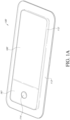
- a periphery of the wound contact layer can be attached to the periphery of the cover layer enclosing all wound dressing elements as illustrated in Figure 1A-1C .
- the dressing can comprise a wound contact layer 110 (not shown in Figures 1A-1B ) and a moisture vapor permeable film or cover layer 113 positioned above the contact layer and other layers of the dressing.
- the wound dressing layers and components of the electronics area as well as the absorbent area can be covered by one continuous cover layer 113 as shown in Figures 1A-1C .
- the dressing can comprise a wound contact layer 110, a transmission layer 111, an absorbent layer 112, a moisture vapor permeable film or cover layer 113, 113 positioned above the wound contact layer, transmission layer, absorbent layer, or other layers of the dressing.
- the wound contact layer can be configured to be in contact with the wound.
- the wound contact layer can include an adhesive on the patient facing side for securing the dressing to the surrounding skin or on the top side for securing the wound contact layer to a cover layer or other layer of the dressing.
- the wound contact layer can be configured to provide unidirectional flow so as to facilitate removal of exudate from the wound while blocking or substantially preventing exudate from returning to the wound.
- the wound contact layer 110 can be a polyurethane layer or polyethylene layer or other flexible layer which is perforated, for example via a hot pin process, laser ablation process, ultrasound process or in some other way or otherwise made permeable to liquid and gas.
- the wound contact layer 110 has a lower surface and an upper surface.
- the perforations preferably comprise through holes in the wound contact layer 110 which enable fluid to flow through the layer 110.
- the wound contact layer 110 helps prevent tissue ingrowth into the other material of the wound dressing.
- the perforations are small enough to meet this requirement while still allowing fluid to flow therethrough.
- perforations formed as slits or holes having a size ranging from 0.025 mm to 1.2 mm are considered small enough to help prevent tissue ingrowth into the wound dressing while allowing wound exudate to flow into the dressing.
- the wound contact layer 110 may help maintain the integrity of the entire dressing 100 while also creating an air tight seal around the absorbent pad in order to maintain negative pressure at the wound.
- the wound contact layer 110 may also act as a carrier for an optional lower and upper adhesive layer (not shown).
- a lower pressure sensitive adhesive may be provided on the lower surface of the wound dressing 100 whilst an upper pressure sensitive adhesive layer may be provided on the upper surface of the wound contact layer.
- the pressure sensitive adhesive which may be a silicone, hot melt, hydrocolloid or acrylic based adhesive or other such adhesives, may be formed on both sides or optionally on a selected one or none of the sides of the wound contact layer. When a lower pressure sensitive adhesive layer is utilized it may be helpful to adhere the wound dressing 100 to the skin around a wound site.
- the wound contact layer may comprise perforated polyurethane film.
- the lower surface of the film may be provided with a silicone pressure sensitive adhesive and the upper surface may be provided with an acrylic pressure sensitive adhesive, which may help the dressing maintain its integrity.
- a polyurethane film layer may be provided with an adhesive layer on both its upper surface and lower surface, and all three layers may be perforated together.
- a layer 111 of porous material can be located above the wound contact layer 110.
- the terms porous material, spacer, and/or transmission layer can be used interchangeably to refer to the layer of material in the dressing configured to distribute negative pressure throughout the wound area.
- This porous layer, or transmission layer, 111 allows transmission of fluid including liquid and gas away from a wound site into upper layers of the wound dressing.
- the transmission layer 111 preferably ensures that an open air channel can be maintained to communicate negative pressure over the wound area even when the absorbent layer has absorbed substantial amounts of exudates.
- the layer 111 should preferably remain open under the typical pressures that will be applied during negative pressure wound therapy as described above, so that the whole wound site sees an equalized negative pressure.
- the layer 111 may be formed of a material having a three dimensional structure. For example, a knitted or woven spacer fabric (for example Baltex 7970 weft knitted polyester) or a non-woven fabric could be used.
- the transmission layer assists in distributing negative pressure over the wound site and facilitating transport of wound exudate and fluids into the wound dressing.
- the transmission layer can be formed at least partially from a three dimensional (3D) fabric.
- the transmission layer 111 comprises a 3D polyester spacer fabric layer including a top layer (that is to say, a layer distal from the wound-bed in use) which is a 84/144 textured polyester, and a bottom layer (that is to say, a layer which lies proximate to the wound bed in use) which is a 10 denier flat polyester and a third layer formed sandwiched between these two layers which is a region defined by a knitted polyester viscose, cellulose or the like monofilament fiber. Other materials and other linear mass densities of fiber could of course be used.
- top spacer fabric thus has more filaments in a yarn used to form it than the number of filaments making up the yarn used to form the bottom spacer fabric layer.
- This differential between filament counts in the spaced apart layers helps control moisture flow across the transmission layer.
- the top layer is made from a yarn having more filaments than the yarn used in the bottom layer, liquid tends to be wicked along the top layer more than the bottom layer.
- this differential tends to draw liquid away from the wound bed and into a central region of the dressing where the absorbent layer 112 helps lock the liquid away or itself wicks the liquid onwards towards the cover layer 113 where it can be transpired.
- the 3D fabric may be treated with a dry cleaning agent (such as, but not limited to, Perchloro Ethylene) to help remove any manufacturing products such as mineral oils, fats or waxes used previously which might interfere with the hydrophilic capabilities of the transmission layer.
- a dry cleaning agent such as, but not limited to, Perchloro Ethylene
- an additional manufacturing step can subsequently be carried in which the 3D spacer fabric is washed in a hydrophilic agent (such as, but not limited to, Feran Ice 30g/l available from the Rudolph Group). This process step helps ensure that the surface tension on the materials is so low that liquid such as water can enter the fabric as soon as it contacts the 3D knit fabric. This also aids in controlling the flow of the liquid insult component of any exudates.
- an absorbent layer (such as layer 112) for absorbing and retaining exudate aspirated from the wound can be utilized.
- a superabsorbent material can be used in the absorbent layer 112.
- the absorbent includes a shaped form of a superabsorber layer.
- a layer 112 of absorbent material is provided above the transmission layer 111.
- the absorbent material which comprise a foam or non-woven natural or synthetic material, and which may optionally comprise a super-absorbent material, forms a reservoir for fluid, particularly liquid, removed from the wound site.
- the layer 111 may also aid in drawing fluids towards the cover layer 113.
- the material of the absorbent layer 112 may also prevent liquid collected in the wound dressing from flowing freely within the dressing, and preferably acts so as to contain any liquid collected within the dressing.
- the absorbent layer 112 also helps distribute fluid throughout the layer via a wicking action so that fluid is drawn from the wound site and stored throughout the absorbent layer. This helps prevent agglomeration in areas of the absorbent layer.
- the capacity of the absorbent material must be sufficient to manage the exudates flow rate of a wound when negative pressure is applied. Since in use the absorbent layer experiences negative pressures the material of the absorbent layer is chosen to absorb liquid under such circumstances. A number of materials exist that are able to absorb liquid when under negative pressure, for example superabsorber material.
- the absorbent layer 112 may typically be manufactured from ALLEVYN TM foam, Freudenberg 114-224-4 or Chem-Posite TM 11C-450.
- the absorbent layer 112 may comprise a composite comprising superabsorbent powder, fibrous material such as cellulose, and bonding fibers.
- the composite is an airlaid, thermally-bonded composite.
- the absorbent layer 112 is a layer of non-woven cellulose fibers having super-absorbent material in the form of dry particles dispersed throughout.
- Use of the cellulose fibers introduces fast wicking elements which help quickly and evenly distribute liquid taken up by the dressing.
- the juxtaposition of multiple strand-like fibers leads to strong capillary action in the fibrous pad which helps distribute liquid. In this way, the super-absorbent material is efficiently supplied with liquid.
- the wicking action also assists in bringing liquid into contact with the upper cover layer to aid increase transpiration rates of the dressing.
- cover layer and/or backing layer can be used interchangeably to refer to the layer of material in the dressing configured to cover the underlying dressing layers and seal to the wound contact layer and/or the skin surrounding the wound.
- the cover layer can include a moisture vapor permeable material that prevents liquid exudate removed from the wound and other liquids from passing through, while allowing gases through.
- the cover layer 113 is preferably gas impermeable, but moisture vapor permeable, and can extend across the width of the wound dressing 100.
- the cover layer 113 which may for example be a polyurethane film (for example, Elastollan SP9109) having a pressure sensitive adhesive on one side, is impermeable to gas and this layer thus operates to cover the wound and to seal a wound cavity over which the wound dressing is placed. In this way an effective chamber is made between the cover layer 113 and a wound site where a negative pressure can be established.
- the cover layer 113 is preferably sealed to the wound contact layer 110 in a border region around the circumference of the dressing, ensuring that no air is drawn in through the border area, for example via adhesive or welding techniques.
- the cover layer 113 protects the wound from external bacterial contamination (bacterial barrier) and allows liquid from wound exudates to be transferred through the layer and evaporated from the film outer surface.
- the cover layer 113 preferably comprises two layers; a polyurethane film and an adhesive pattern spread onto the film.
- the polyurethane film is preferably moisture vapor permeable and may be manufactured from a material that has an increased water transmission rate when wet.
- the moisture vapor permeability of the cover layer increases when the cover layer becomes wet.
- the moisture vapor permeability of the wet cover layer may be up to about ten times more than the moisture vapor permeability of the dry cover layer.
- the electronics area 161 can include a source of negative pressure (such as a pump) and some or all other components of the TNP system, such as power source(s), sensor(s), connector(s), user interface component(s) (such as button(s), switch(es), speaker(s), screen(s), etc.) and the like, that can be integral with the wound dressing.
- a source of negative pressure such as a pump
- the electronics area 161 can include a button or switch 114 as shown in Figures 1A-1B .
- the button or switch 114 can be used for operating the pump (e.g., turning the pump on/off).
- the absorbent area 160 can include an absorbent material 112 and can be positioned over the wound site.
- the electronics area 161 can be positioned away from the wound site, such as by being located off to the side from the absorbent area 160.
- the electronics area 161 can be positioned adjacent to and in fluid communication with the absorbent area 160 as shown in Figures 1A-1C .
- each of the electronics area 161 and absorbent area 160 may be rectangular in shape and positioned adjacent to one another.
- the electronics area 161 is noted as area "A" and the absorbent area 160 is noted as area "B".
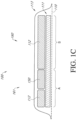
- electronic components 150 can be positioned within a recess or cut out of the absorbent material 112 but off to the side of the absorbent area. As shown in the cross sectional view of the wound dressing layers in Figure 1C , the absorbent material 112 can be positioned on both sides of the electronic components 150.
- additional layers of dressing material can be included in the electronics area 161, the absorbent area 160, or both areas.
- the dressing can comprise one or more transmission or spacer layers and/or one or more absorbent layer positioned above the wound contact layer 110 and below the cover layer 113 of the dressing.
- the electronics area 161 of the dressing can comprise electronic components 150.
- the electronics area 161 of the dressing can comprise one or more layers of transmission or spacer material and/or absorbent material and electronic components 150 can be embedded within the one or more layers of transmission or spacer material and/or absorbent material.
- the layers of transmission or absorbent material can have recesses or cut outs to embed the electronic components 150 within whilst providing structure to prevent collapse.
- the electronic components 150 can include a pump, power source, controller, and/or an electronics package.
- a pump exhaust can be provided to exhaust air from the pump to the outside of the dressing.
- the pump exhaust can be in communication with the electronics area 161 and the outside of the dressing.
- the upper layer, top layer, or layer above refers to a layer furthest from the surface of the skin or wound while the dressing is in use and positioned over the wound.
- the lower surface, lower layer, bottom layer, or layer below refers to the layer that is closest to the surface of the skin or wound while the dressing is in use and positioned over the wound.
- the layers can have a proximal wound-facing face referring to a side or face of the layer closest to the skin or wound and a distal face referring to a side or face of the layer furthest from the skin or wound.
- Figure 1A-1C illustrates a wound dressing apparatus incorporating the pump and/or other electronic components within the wound dressing and offset from the absorbent layer.
- the absorbent area 160 comprises a transmission layer 111 positioned above the wound contact layer 110.
- An absorbent layer 112 can be provided above the transmission layer 111.
- the electronics area 161 can include an electronics unit (shown in Figures 2A-2B ).
- the electronics unit is provided directly over the wound contact layer.
- the electronics unit can be placed above a layer of wicking material, absorbent material, or transmission material that sits above the wound contact layer 110 of the dressing.
- the electronics unit 150 may be positioned over the transmission layer 111.
- the transmission layer 111 can be a single layer of material extending below the electronics unit 150 and the absorbent material 112.
- the transmission layer 111 extends continuously through the absorbent area 160 and the electronics area 161.
- the transmission layer below the electronics unit can be a different transmission layer than the transmission layer below the absorbent material 112.
- the transmission layer 111, absorbent material 112, and electronics unit 150 can be covered with a cover layer 113 that seals to a perimeter of the wound contact layer 110 as shown in Figures 1A-1C .
- the electronics area 161 can include an electronics unit 150 positioned below the cover layer 113 of the dressing.
- the electronics unit can be surrounded by a material to enclose or encapsulate a negative pressure source and electronics components by surrounding the electronics. In some embodiments, this material can be a casing.
- the electronics unit can be encapsulated or surrounded by a protective coating, for example, a hydrophobic coating as described herein.
- the electronics unit can be in contact with the dressing layers in the absorbent area 160 and covered by the cover layer 113.
- the electronics unit includes a lower or wound facing surface that is closest to the wound and an opposite, upper surface, furthest from the wound when the wound dressing is placed over a wound.
- Figure 1C illustrates an embodiment of a wound dressing incorporating an electronics unit 150 within the dressing.
- the electronics sub assembly or electronics unit 150 can be embedded in an aperture or hole in an absorbent layer 112 towards one end of the dressing, as depicted in Figure 1C .
- the absorbent components and electronics components can be overlapping but offset.
- a portion of the electronics area can overlap the absorbent area, for example overlapping the superabsorber layer, but the electronics area is not completely over the absorbent area. Therefore, a portion of the electronics area can be offset from the absorbent area.
- the dressing layer and electronic components can be enclosed in a wound contact layer 110 positioned below the lower most layer and a cover layer 113 positioned above the absorbent layer 112 and electronics 150.
- the wound contact layer 110 and cover layer 113 can be sealed at a perimeter enclosing the dressing components.
- the cover layer can be in direct physical contact with the absorbent material, and/or the electronics unit.
- the cover layer can be sealed to a portion of the electronics unit and/or casing, for example, in areas where holes or apertures are used to accommodate the electronic components (e.g. a switch and/or exhaust).
- the electronics unit 267 can include single button or switch 265 on the upper surface of the unit.
- the single button or switch 265 can be used as an on/off button or switch to stop and start operation of the pump and/or electronic components.
- the switch 265 can be a dome type switch configured to sit on the top of the pump. Because the switch is situated within the dressing the cover layer can be easily sealed around or over the switch. In some embodiments, the cover layer can have an opening or hole positioned above the switch. The cover layer can be sealed to the outer perimeter of the switch 265 to maintain negative pressure under the wound cover.
- the switch can be placed on any surface of the electronics unit and can be in electrical connection with the pump.
- the electronics unit 267 can also include one or more vents or exhausts aperture 264 on the flexible circuit board for expelling the air exhausted from the pump.
- a pump outlet exhaust mechanism 274 can be attached to the outlet of the pump 272.
- the vent or exhaust aperture 264 can be in fluid communication with a pump exhaust mechanism 274 positioned at the outlet of the pump and extending to the lower surface of the flexible circuit board.
- an exhaust vent 264 on the flexible circuit board can provide communication with the top surface of the dressing and allow the pump exhaust to be vented from the electronics unit.
- the exhaust mechanism 274 can be attached to the outlet end of the pump and can extend out from the pump at a 90-degree angle from the pump orientation to communicate with the bottom surface of the flexible circuit board.
- the exhaust mechanism 274 can include an antibacterial membrane and/or a non-return valve.
- the exhaust vent 264 can include an antibacterial membrane and/or a non-return valve.
- the exhausted air from the pump can pass through the pump outlet and exhaust mechanism 274.
- the cover layer 113 can include apertures or holes positioned above the exhaust vent 264 and/or membrane. The cover layer 113 can be sealed to the outer perimeter of the exhaust 264 to maintain negative pressure under the wound cover 113.
- the exhausted air can be exhausted through the gas permeable material or moisture vapor permeable material of the cover layer.
- the cover layer does not need to contain apertures or holes over the exhaust and the exhausted air is expelled through the cover layer.
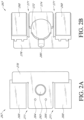
- the pump outlet mechanism 274 can be a custom part formed to fit around the pump as shown in Figure 2B .
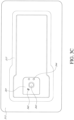
- the electronic unit 267 can include a pump inlet protection mechanism 280 as shown in Figure 2C positioned on the portion of the electronic unit closest to the absorbent area and aligned with the inlet of the pump 272.
- the pump inlet protection mechanism 280 is positioned between the pump inlet and the absorbent area or absorbent layer of the dressing.
- the pump inlet protection mechanism 280 can be formed of a hydrophobic material to prevent fluid from entering the pump 272.
- the upper surface of the electronics unit can include one or more indicators 266 for indicating a condition of the pump and/or level of pressure within the dressing.
- the indicators can be small LED lights or other light source that are visible through the dressing components or through holes in the dressing components above the indicators.
- the indicators can be green, yellow, red, orange, or any other color. For example, there can be two lights, one green light and one orange light. The green light can indicate the device is working properly and the orange light can indicate that there is some issue with the pump (e.g. dressing leak, saturation level of the dressing, and/or low battery).
- FIG. 2A-2B illustrates an embodiment of an electronics unit 267.
- the electronics unit 267 can include a pump 272 and one or more batteries 268 or other power source to power the pump 272 and other electronics.
- the pump can operate at about 27 volts or about 30 volts.
- the two batteries can allow for a more efficient voltage increase (6 volts to 30 volts) than would be possible with a single battery.
- the batteries 268 can be in electrical communication with a flexible circuit board 276.
- one or more battery connections are connected to a surface of the flexible circuit board 276.
- the flexible circuit board can have other electronics incorporated within.
- the flexible circuit board may have various sensors including, but not limited to, one or more pressure sensors, temperature sensors, optic sensors and/or cameras, and/or saturation indicators.
- the components of the electronics unit 267 may include a protective coating to protect the electronics from the fluid within the dressing.
- the coating can provide a means of fluid separation between the electronics unit 267 and the absorbent materials of the dressing.
- the coating can be a hydrophobic coating including, but not limited to, a silicone coating or polyurethane coating.
- the electronics unit 267 can be encapsulated in a protective housing or enclosure as described in more detail herein.
- the pump inlet component or pump inlet protection mechanism can be used to protect the pump from fluid on the inlet and the pump outlet mechanism can include a non-return valve that protects fluid from entering the outlet as described in more detail with reference to PCT International Application No.
- PCT/EP2017/055225 (published as WO2017/153357A1), filed March 6, 2017 , titled WOUND TREATMENT APPARATUSES AND METHODS WITH NEGATIVE PRESSURE SOURCE INTEGRATED INTO WOUND DRESSING and PCT International Application No. PCT/EP2017/059883 (published as WO2017/186771A1), filed April 26, 2017 , titled WOUND DRESSINGS AND METHODS OF USE WITH INTEGRATED NEGATIVE PRESSURE SOURCE HAVING A FLUID INGRESS INHIBITION COMPONENT.
- the pump inlet component or pump inlet protection mechanism can be a component that inhibits fluid ingress.
- the pump inlet component or pump inlet protection mechanism can allow gas (e.g., air) but inhibit liquid (e.g., wound exudate) from passing through.
- the pump inlet component or pump inlet protection mechanism can be a porous structure that provides a plurality of flow paths between an interior of the wound dressing and the pump. The plurality of flow paths can inhibit occlusion (e.g., from wound exudate) of the pump.
- the component can be made of or coated with a hydrophobic material that repels wound exudate, thereby inhibiting the ingress of fluid into the component and ultimately the pump.
- the electronics unit 267 includes one or more slits, grooves or recesses 271 in the unit between the pump and the two batteries.
- the slits, grooves or recesses 271 can allow for the electronics unit 267 to be flexible and conform to the shape of the wound.
- the unit 267 can have two parallel slits, grooves or recesses 271 forming three segments of the electronics unit 267.
- the slits, grooves or recesses 271 of the unit 267 create hinge points or gaps that allows for flexibility of the electronics unit at that hinge point.
- the pump exhaust vent 264, switch 265, and indicator 266 are shown on the top surface of the electronics unit 267.
- one embodiment of the electronics unit 267 has two hinge points to separate the unit into three regions or panels, for example one to contain one battery, one to contain the pump, and one to contain another battery.
- the slits, grooves or recesses may extend parallel with a longitudinal axis of the dressing that extends along the length of the dressing through the electronics area of the dressing through the absorbent area of the dressing.
- Figure 3A illustrates an embodiment of wound dressing layers incorporating the electronic components within the wound dressing.
- Figure 3A illustrates a wound dressing with a wound contact layer 310 configured to contact the wound.
- the wound contact layer 310 can be a similar material and have a similar function as the wound contact layer described with reference to Figures 1A-1C .
- a transmission layer or spacer layer 311 is provided over the wound contact layer.
- the transmission layer or spacer layer 311 can be a similar material and have a similar function as the transmission layer or spacer layer described with reference to Figures 1A-1C .
- the transmission layer 311 can assist in transmitting and distributing negative pressure over the wound site.
- a first layer of apertured absorbent material 351 can be provided over the transmission layer 311.
- the first apertured absorbent layer 351 can include one or more apertures 329.
- the apertures 329 can be sized and shaped to fit the electronics unit 350 therein.
- the first apertured absorbent layer 351 can be sized and shaped to the size of the electronics area and does not extend into the absorbent area.
- the apertures 329 can be shaped and sized to fit the individual components of the electronics unit 350.
- a second apertured absorbent layer 322 can be provided over the first absorbent layer 351.
- the second absorbent layer 322 includes one or more apertures 328.
- the second absorbent layer 322 can be sized and shaped to the size of the electronics area and the absorbent area.
- the apertures 328 can be shaped and sized to fit the individual components of the electronics unit 350.
- the first and second absorbent layers 351 and 322 can be a similar material and have a similar function as the absorbent layer described with reference to Figures 1A-1C .
- An electronics unit 350 can be positioned in the apertures 328 and 329 of the first and second absorbent material 351 and 322.
- the electronics unit 350 can be similar to the electronics unit described with reference to Figures 2A-2B .
- the electronics unit 350 can include a pump 327, power source 326, and a printed circuit board 381.
- the pump 327 can include a pump inlet mechanism 710 and an outlet mechanism 382.
- the printed circuit board 381 can include electronics including but not limited to a switch, sensors, and LEDs as described herein.
- the circuit board 381 can include one or more hole to be positioned over one or more exhaust vents (not shown) in the outlet mechanism 382 as described in more detail herein.
- An overlay layer 317 can be provided over the electronics components 350 and absorbent layer 322.
- the overlay layer 317 can be one or more layers of absorbent and/or transmission material as described herein.
- the overlay layer 317 can comprise a conformable material overlaying and overbordering the perimeter of the lower layers of transmission and absorbent materials.
- the overlay layer 317 can soften the edges of the wound dressing layers by decreasing the profile around the edges of the dressing layers.
- the overlay layer 317 can protect the cover layer from being punctured by the lower layers when the cover layer is sealed over the dressing layers below.
- the overlay layer 317 can include an aperture 371 to allow access to at least a portion of the electronics unit 350 positioned below.
- a cover layer or backing layer 313 can be positioned over the overlay layer 317.
- the cover layer or backing layer 313 can be a similar material and have a similar function as the cover layer or backing layer described with reference to Figures 1A-1C .
- the cover layer or backing layer 313 can be provided above absorbent layers 322, and/or electronic components 350.
- the cover layer 313 can form a seal to the wound contact layer 310 at a perimeter region enclosing the overlay layer 317, absorbent layers 322 and 351, electronic components 350, and the transmission layer 311.
- the cover layer 313 can be a flexible sheet of material that forms and molds around the dressing components when they are applied to the wound.
- the cover layer 313 can be a material that is preformed or premolded to fit around the dressing components as shown in Figure 3A .
- cover layer and backing layer can be used interchangeably to refer to the layer of material in the dressing configured to cover the layers of the wound dressing.
- the cover layer or backing layer 313 can include an aperture 372.
- the aperture 372 can be positioned over at least a portion of the aperture 371 in the overlay layer 317 to allow access to at least a portion of the electronics unit 350 positioned below.
- the apertures 371 and 372 can allow access to the switch and/or venting holes of the pump exhaust.
- a label 341 can be provided over the apertures 371 and 372 and positioned over the exposed portion of the electronic components 350.
- the label can include the vent holes 342, indicator portions 344, and/or switch cover 343.
- the indicator portions 344 can include holes or transparent regions 344 for positioning over the one or more indicators or LEDs on the printed circuit board 381 below the label 341.
- the holes or transparent regions 344 can allow for the indicators or LEDs to be visible through the label 341.
- the switch cover 343 can include a dome shaped cover positioned over the switch on the printed circuit board 381.
- the label 341 can include embossed features for the switch cover 343.
- the embossed features of the switch cover 343 can prevent accidental activation or deactivation of the device.
- the switch or switch cover 343 can include a tab on the switch to prevent accidental activation or deactivation.
- the vent holes 342 of the label can allow exhaust from the pump outlet mechanism to pass through the label and exit the wound dressing to be exhausted to the atmosphere.
- the label can be positioned on top of the cover layer or backing layer 313.
- the label can seal to the cover layer to form a seal over the wound.
- the label 341 can be positioned above the overlay layer 371 and below the cover layer or backing layer 313.
- the cover layer 313 can have one or more apertures over one or more components of the label 341.
- the cover layer 313 can have apertures over the vent holes 342, indicator portions 344, and/or switch cover 343.
- Figure 3B illustrates a cross sectional layout of the material layers of the wound dressing incorporating an electronics assembly within the dressing.
- the dressing 300 included multiple material layers and an electronics assembly 350.
- the wound dressing 300 can include an electronics area 361 including the electronics and an absorbent area or dressing area 360 that is intended to be applied to the wound as described with reference to Figures 1A-1C .
- the one or more material layers can extend into both the electronics area 361 and the dressing area 360.
- the dressing 300 can include a wound contact layer 310, transmission layer 311, absorbent layers 322 and 351, an overlay layer 317, and a cover or backing layer 313 as illustrated in Figure 3B .
- the absorbent layers 322 and 351 can include recesses or cutouts to receive the components of the electronics assembly 350 as described herein.
- the small apertured absorbent layer 351 can be positioned on top of the large apertured absorbent layer 322.
- the small apertured absorbent layer 351 can be positioned on below of the large apertured absorbent layer 322.
- the overlay layer 317 and/or the cover layer 313 can include a cut out or aperture positioned over the switch and/or indicators of the electronics assembly 350.
- a label or covering 341 can be positioned over at least a portion of the electronics assembly 350 and any cutouts in the overlay layer 317 and/or the cover layer 313.
- the label or covering 341 can be similar to the label or covering 341 as described previously with reference to Figure 3A .
- the dressing can include a delivery layer 345 adhered to the bottom surface of the wound contact layer.
- the delivery layer 345 can cover adhesive or apertures on the bottom surface of the wound contact layer 310.
- the delivery layer 345 can provided support for the dressing and can assist in sterile and appropriate placement of the dressing over the wound and skin of the patient.
- the delivery layer 345 can include handles 346 that can be used by the user to separate the delivery layer 345 from the wound contact layer 310 before applying the dressing 300 to a wound and skin of a patient.
- Figure 3C illustrates a top view of an embodiment of the wound dressing incorporating an electronic assembly within the dressing.
- Figure 3C shows a cover layer 313 and electronics covering 341 covering the overlay layer 317 and underlying dressing and electronics components.
- the cover layer 313 can seal to the wound contact layer 310 at a perimeter region of the wound contact layer 310.
- the label or electronics covering 341 can be positioned over the cover layer 313.
- the cover layer 313 can seal over the electronics covering 341.
- the cover layer 313 can include one or more holes in the cover layer 313 positioned over the switch and/or pump outlet vent(s).
- the cover layer 313 can include a single hole that is positioned over the switch cover 343, visual indicators 344, and/or pump outlet vent(s) 342 in the covering or label 341 as shown in Figure 3C .
- the label can include embossed features for the switch cover 343.
- the embossed features of the switch cover 343 can prevent accidental activation or deactivation of the device.
- the switch or switch cover 343 can include a tab on the switch to prevent accidental activation or deactivation.
- the visual indicators 344 can provide an indication of operation of the negative pressure source and/or an indication of the level of negative pressure that is applied to the wound.
- the visual indicators can include one or more light sources or LEDs.
- the visual indicator light sources an illuminate to indicate a condition or change of condition.
- the light source can illuminate in a particular sequence and/or color that indicates a condition.
- the light source can flash to notify the user that the device is operating properly.
- the light source can automatically flash periodically and/or the light source can be activated by the switch or other button to light up and indicate a condition.
- the switch can be pressed and/or held down to power the dressing and electronics on and off.
- the pump and associated colored LED for example, green colored LED
- the pump and dressing can enter the fault state indicated by a colored LED, for example, orange colored LED.
- the wound dressing described herein can utilize the embedded electronic assembly to generate negative pressure under the dressing. However, it can be important to protect the assembly from wound exudate or other bodily fluids that would corrode the electronics. It can also be important to protect the patient from the electric and electronic components.
- the electronics assembly can incorporate a pump that pull air from the dressing and exhaust to the environment in order to produce the required negative pressure differential. Therefore, it can be difficult to protect the electronics assembly and allow fluid communication between the electronic assembly and the dressing and environment surrounding the dressing. For example, complete encapsulation or potting of the assembly could prevent the movement of air from the dressing and atmosphere to the pump.
- the electronic components of the electronics assembly can be protected from the environment by partial encapsulation, potting, and/or a conformable coating.
- potting of electronic components can include a process of filling a complete electronic assembly with a solid or gelatinous compound for resistance to shock and vibration, exclusion of moisture, and/or exclusion of corrosive agents.
- An electronics assembly can be used that includes an electronics unit positioned within an enclosure or housing, as illustrated in Figure 4A , to be incorporated into a wound dressing.
- the electronics unit enclosed in the housing can be similar to the electronics unit described with reference to Figures 2A-2B but the electronics unit can be positioned within an enclosure or housing.
- the housing with the electronics unit enclosed within can be placed in the dressing.
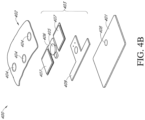
- Figures 4A-4B illustrates an embodiment of an electronics assembly 400 enclosing an electronics unit 403 within a housing.
- the housing of the electronics assembly 400 can include a plate 401 and flexible film 402 enclosing the electronics unit 403 within.
- the electronics unit 403 can include a pump 405, inlet protection mechanism 410 (shown in Figure 4B ), pump exhaust mechanism 406, power source 407, and flexible circuit board 409.
- the electronics unit 403 and pump 405 can be used without the inlet protection mechanism 410.
- the flexible film 402 can be attached to the plate 401 by welding (heat welding) or adhesive bonding to form a fluid tight seal and enclosure around the electronic components.
- the flexible film 402 can be attached to the plate at a perimeter of the plate by heat welding, adhesive bonding, ultrasonic welding, RF welding, or any other attachment or bonding technique.
- the flexible film 402 can be a flexible plastic polymeric film.
- the flexible film 402 can be formed from any material flexible polymeric film or any flexible material that confirms around the electronics.
- the flexible film can maintain conformability and flexibility while protecting and insulating the components within.
- the flexible film 402 can be formed from a flexible or stretchable material, such as one or more of polyurethane, thermoplastic polyurethane (TPU), silicone, polycarbonate, polyethylene, methylated polyethylene, polyimide, polyamide, polyester, polyethelene tetraphthalate (PET), polybutalene tetreaphthalate (PBT), polyethylene naphthalate (PEN), polyetherimide (PEI), along with various fluropolymers (FEP) and copolymers, or another suitable material.
- TPU thermoplastic polyurethane
- silicone silicone
- polycarbonate polyethylene
- PET polyethelene tetraphthalate
- PBT polybutalene tetreaphthalate
- PEN polyethylene naphthalate
- PEI polyetherimide
- FEP fluropolymers
- copolymers or another suitable material.
- the flexible film 402 can be formed from polyurethane.
- the plate 401 can be a plastic polymer plate.
- the plate can be a flexible material to allow conformability to movement or flexing of the dressing when it is applied to a wound.
- the plate can be integrated with the components of the label described with reference to Figures 3A-3C .
- the label can be a separate component attached to the top surface of the plate 401.
- the flexible film 402 and plate 401 can be waterproof to protect the electronics unit 403 from fluid within the dressing.
- the flexible film 402 can be sized appropriately so as not to limit the flexibility of the assembly.
- the electronics assembly 400 can be thermoformed or vacuum formed to assist in the function of maintaining the flexibility of the assembly.
- the electronics unit 403 can be bonded or adhered to the plate 401 within the housing such that the electronics unit 403 cannot move within.
- the housing can include one or more windows 404.
- the windows 404 can be a porous film or membrane that can allow gas to pass through.
- the windows 404 can be a hydrophobic film or membrane.
- the hydrophobic nature of the window 404 can repel wound fluids and prevent the leak of fluids into the electronics assembly 400.
- the windows 404 can include a bacterial filter.
- the windows 404 can have the porosity that enables them to act as a bacterial filter and preventing bacterial release from the body fluids into the environment. The windows 404 can also prevent the ingress of bacteria from the environment to the wound site.
- the electronics assembly 400 can have more than one window 404 or a larger window 404 to provide a sufficiently large area for air movement therethrough, thus minimizing the pressure drop across the membrane and hence the power consumption of the system in achieving the pressure differential.
- the electronics assembly 400 can include several windows with a small area. In other embodiments, the electronics assembly can include a window with a single large area.
- the electronics assembly 400 illustrated in Figures 4A-4B can be incorporated within the wound dressing such that, once the dressing is applied to the body of the patient, air from within the dressing can pass through the windows 404 to be pumped out in the direction shown by the arrow on the pump 405.
- the exhausted air from the pump can pass out of the pump assembly through the pump exhaust mechanism 406 and be exhausted or vented from the housing of the electronics assembly 400 through an aperture or vent 408 in the plate 401.
- the flexible circuit board 409 can be positioned between the exhaust mechanism 406 and the plate 401.
- the flexible circuit board 409 can also include an aperture or vent aligned with the exhaust hole in the exhaust mechanism as described with reference to Figures 2A-2B .
- vent hole or apertures in the exhaust mechanism 406, flexible circuit board 409, and plate 401 can be aligned and sealed to each other. This seal can ensure the pump exhaust is exhausted from the electronics assembly 400 through the vent 408 in the plate 401.
- the exhaust mechanism 406 of the electronics unit 403 can be positioned on and bonded directly to the plate 401 with an air tight seal.
- the top side of the plate 401 (not shown in Figures 4A-4B ) can include a label similar to the label described with reference to Figures 3A-3C .
- the top side of the plate 401 can integrate the components of the label described with reference to Figure 3A-3C within the plate 401. In such embodiments, a separate label is not needed.
- the plate 401 in addition to the vent holes, can include the indicator portions and/or a switch cover described previously herein.
- the electronics assembly 400 can be embedded within the wound dressing in the same manner as the electronics unit described with reference to Figures 3A-3C .
- the dressing can have one or more absorbent layers within the dressing and the absorbent layers can have a single aperture or recess for receiving the electronics assembly within.
- the electronics assembly can be positioned below the overlay layer similar to the electronics unit described with reference to Figures 3A-3C .
- the overlay layer would include an aperture to allow access to at least a portion of the top surface of the plate 401.
- the electronics assembly 400 When the electronics assembly 400 is positioned within the dressing it can be positioned below the wound cover and the overlay layer similar to the electronics unit described with reference to Figures 3A-3C . In other embodiments, an overlay layer is not used and the electronics assembly 400 is positioned directly below the cover layer or backing layer.
- the cover layer or backing layer can include an aperture exposing a portion of, most of, or all of the top surface of the plate 401.
- the aperture in the cover layer can be positioned over at least a portion of the plate 401 to allow access to at least a portion of the plate 401 positioned below the cover layer.
- the cover layer can have a plurality of apertures over one or more components of the label or top surface of the plate 401.
- the cover layer can have apertures over the vent holes, indicator portions, and/or switch cover.
- the cover layer can have a single aperture over the one or more components of the label or top surface of the plate 401 including but not limited to the vent holes, indicator portions, and/or switch cover.
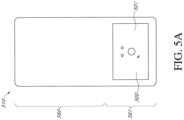
- Figures 5A-5B illustrate embodiments of the electronics assembly 500 positioned within an aperture in wound dressing 510 layers.
- the dressing 510 can include an absorbent area 560 and an electronics area 561 similar to the corresponding components described with reference to Figures 1A-1C and 3A-3C.
- the dressing can have one or more dressing layers similar to the layers described with reference to Figures 1A-1C and 3A-3C.
- the dressing layers can have a single aperture or recess for receiving the electronics assembly within.
- the wound dressing 510 can be formed from a wound contact layer, a transmission layer, and one or more absorbent layers as shown in Figures 1A-C and 3A-3C .
- the one or more absorbent layers can have a single aperture to receive the electronics assembly 500.
- the transmission layer and one or more absorbent materials can be covered with a cover layer 513 that seals to a perimeter of the wound contact layer as described with reference to Figures 1A-1C . As illustrated in Figures 5A-5B , the overlay layer is not used.
- the aperture in the one or more absorbent layers can be aligned with the aperture 520 in the cover layer 513.
- Figure 5A illustrates a top view of the electronics assembly 500 positioned in an electronics area 561 of the dressing 510.
- Figure 5A illustrates a cover layer 513 of the dressing 510 with an electronics assembly 500 positioned in a recess in the dressing. The other layers of the wound dressing below the cover layer are not shown.
- the electronics assembly 500 can be similar to the electronics assembly described with reference to Figures 4A-4B .
- the electronics assembly 500 can include an electronics unit enclosed within a housing including a plate 501 and a flexible film 502.
- the plate 501 shown in Figure 5A can include the features of the label including the one or more vents 542, one or more indicator portions 544, and/or a button or switch 543.
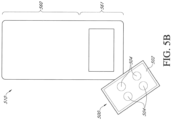
- Figure 5B illustrates an embodiment of the electronics assembly 500 removed from the electronics area 561 of the dressing 510.
- the electronics assembly 500 is shown upside down with the windows facing up.
- the electronics assembly can have a first side positioned on the wound facing side of the electronics assembly 500 when the dressing 510 is positioned over the wound.
- the flexible film 502 and windows 504 can form the first wound facing side of the electronics assembly 500 in contact with the dressing layer and facing the wound when the dressing is positioned over the wound.
- the electronics assembly 500 can have a second side opposite the first side.
- the plate 501 can form the second side of the electronics assembly and can be in contact with the environment when the dressing is positioned over the wound.
- the flexible film 502 can have windows 504.
- the windows 504 are in fluid communication with the layers within the wound dressing allowing the electronics assembly to generate negative pressure under the dressing 510.
- Figure 6 illustrates an embodiment of an electronics assembly 600 enclosing an electronics unit within a housing.
- the housing of the electronics assembly 600 can include a plate 601 and flexible film 602 enclosing the electronics unit 603 within.
- the electronics unit 603 can include a pump 605, inlet protection mechanism 610, pump exhaust mechanism 606, power source 607, and flexible circuit board 609.
- the pump exhaust mechanism 606 can be similar to the pump exhaust mechanism 406. However, the pump exhaust mechanism 606 and the pump 605 can sit within an extended casing 616.
- the flexible film 602 can be attached to the plate 601 by welding (heat welding) or adhesive bonding to form a fluid tight seal and enclosure around the electronic components.
- the flexible film 602 can be attached to the plate at a perimeter of the plate by heat welding, adhesive bonding, ultrasonic welding, RF welding, or any other attachment or bonding technique.
- the flexible film 602 can be a flexible plastic polymeric film.
- the flexible film 602 can be formed from any material flexible polymeric film or any flexible material that confirms around the electronics.
- the flexible film can maintain conformability and flexibility while protecting and insulating the components within.
- the flexible film 602 can be formed from a flexible or stretchable material, such as one or more of polyurethane, thermoplastic polyurethane (TPU), silicone, polycarbonate, polyethylene, methylated polyethylene, polyimide, polyamide, polyester, polyethelene tetraphthalate (PET), polybutalene tetreaphthalate (PBT), polyethylene naphthalate (PEN), polyetherimide (PEI), along with various fluropolymers (FEP) and copolymers, or another suitable material.
- TPU thermoplastic polyurethane
- silicone silicone
- polycarbonate polyethylene
- PET polyethelene tetraphthalate
- PBT polybutalene tetreaphthalate
- PEN polyethylene naphthalate
- PEI polyetherimide
- FEP fluropolymers
- copolymers or another suitable material.
- the flexible film 602 can be formed from polyurethane.
- the plate 601 can be a plastic polymer plate.
- the plate can be a flexible material to allow conformability to movement or flexing of the dressing when it is applied to a wound.
- the plate can be integrated with the components of the label described with reference to Figures 3A-3C .
- the label can be a separate component attached to the top surface of the plate 601.
- the plate and/or label can have a larger surface area than the flexible circuit board and/or the electronics unit so that the flexible film 602 can seal to the outer perimeter of the plate and/or label around the flexible circuit board and/or the electronics unit
- the flexible film 602 and plate 601 can be waterproof to protect the electronics unit 603 from fluid within the dressing.
- the flexible film 602 can be sized appropriately so as not to limit the flexibility of the assembly.
- the electronics assembly 600 can be thermoformed or vacuum formed to assist in the function of maintaining the flexibility of the assembly.
- the electronics unit 603 can be bonded or adhered to the plate 601 within the housing such that the electronics unit 603 cannot move within.
- the flexible film 603 can include an aperture 611.
- the aperture 611 can allow the inlet protection mechanism 610 to be in fluid communication with the absorbent and/or transmission layers of the wound dressing.
- the perimeter of the aperture 611 of the flexible film 603 can be sealed or attached to the inlet protection mechanism 610 by welding (heat welding) or adhesive bonding to form a fluid tight seal and enclosure around the inlet protection mechanism 610 allowing the electronic components 603 to remain protected from fluid within the dressing.
- the flexible film 602 can be attached to the inlet protection mechanism 610 at a perimeter of the inlet protection mechanism 610 by heat welding, adhesive bonding, ultrasonic welding, RF welding, or any other attachment or bonding technique.
- the inlet protection mechanism 610 can prevent wound exudate or liquids from the wound and collected in the absorbent area 660 of the wound dressing from entering the pump and/or electronic components of the electronics assembly 600.
- the electronics assembly 600 illustrated in Figure 6 can be incorporated within the wound dressing such that, once the dressing is applied to the body of the patient, air from within the dressing can pass through the inlet protection mechanism 610 to be pumped out toward the pump exhaust mechanism 606 in communication with an aperture in the casing 616 and flexible circuit board 609 as described herein.
- the casing 616 can include an aperture or vent to allow the air exhausted from the pump exhaust mechanism 606 to pass through.
- the exhausted air from the pump can pass out of the pump assembly through the pump exhaust mechanism 606 and casing 616 and be exhausted or vented from the housing of the electronics assembly 600 through an aperture or vent in the plate 601.
- the flexible circuit board 609 can be positioned between the exhaust mechanism 606 and the plate 601.
- the flexible circuit board 409 can also include an aperture or vent aligned with the exhaust hole in the exhaust mechanism as described with reference to Figures 2A-2B .
- the vent hole or apertures in the exhaust mechanism 606, casing 616, flexible circuit board 609, and plate 601 can be aligned and sealed to each other. This seal can ensure the pump exhaust is exhausted from the electronics assembly 600 through the vent in the plate 601.
- the exhaust mechanism 606 of the electronics unit 603 can be positioned on and bonded directly to the plate 601 with an air tight seal.
- the top side of the plate 601 (not shown in Figure 6 ) can include a label similar to the label described with reference to Figures 3A-3C .
- the top side of the plate 601 can integrate the components of the label described with reference to Figure 3A-3C within the plate 601. In such embodiments, a separate label is not needed.
- the plate 601 in addition to the vent holes, can include the indicator portions and/or a switch cover as described herein.
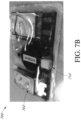
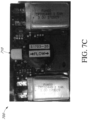
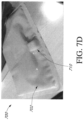
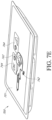
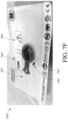
- Figures 7A-7D show a lower wound facing surface of an electronics assembly 700.
- Figures 7A-7D illustrate embodiments of an electronics assembly including a pump inlet protection mechanism 710 sealed to the exterior of the flexible film 702 as described herein with reference to Figure 6 .
- Figures 7E-7G show an upper surface of the plate 701 of the electronics assembly 700.
- the upper surface of the plate can include an on/off switch or button cover 743, indicator portions 744, and/or vent holes 742.
- the on/off switch cover or button 743, indicator portions 744, and/or vent holes 342 can be similar to the switch cover or button and indictor portions described with reference to Figures 3A-3C , 4A-4B , and 5A-5B .
- the switch or button cover 743 can be positioned over the switch on the flexible circuit board of the electronics components as described herein.
- the plate can include embossed features for the switch cover 743.
- the embossed features of the switch cover 743 can prevent accidental activation or deactivation of the device.
- the switch or switch cover 743 can include a tab on the switch to prevent accidental activation or deactivation.
- the indicator portions can include visual symbols or words to indicate the condition of the wound dressing and electronics.
- one indicator portion can read "OK".
- the LED or light source associated with the "OK" indicator portion is illuminated the user is provided an indication that the dressing or electronics are functioning properly.
- An indicator portion can have a symbol, for example, a caution symbol similar to the symbol shown in Figures 7E-7G .
- the LED or light source associated with the caution symbol on the indicator portion is illuminated the user is provided an indication that the dressing or electronics may not be functioning properly and/or there may be a leak.
- vent holes 742 of the plate can allow exhaust from the pump outlet mechanism to pass through the plate and exit the wound dressing to be exhausted to the atmosphere.
- Figure 7H illustrates an embodiment of a top surface of a flexible circuit board of the electronics unit.
- the top surface of the flexible circuit board can include light or LED indicators 762, switch or button 763, and vent apertures 764 as illustrated in Figure 7H and described in more detail herein.
- Figure 7I illustrates a side view of an embodiment of the electronics assembly 700 and the pump inlet protection mechanism 710 is visible.
- the electronics assembly 700 with the pump inlet protection mechanism 710 extending from and sealed to the film 702 can be positioned within the aperture 520 in the cover layer 513 and absorbent layer(s) (not shown) as shown in Figures 5A-5B and described in more detail herein.
- the perimeter of the electronics assembly 700 can be sealed to a top surface of the outer perimeter of the aperture 520 in the cover layer 513 as shown in Figures 5A-5B and described in more detail with reference to Figures 9A-9B herein.
- the electronics assembly 700 is sealed to the cover layer 513 with a sealant gasket, adhesive, heat welding, adhesive bonding, ultrasonic welding, RF welding, or any other attachment or bonding technique.
- the electronics assembly 700 can be permanently sealed to the cover layer 513 and could not be removed from the cover layer without destroying the dressing.
- the electronics assembly 700 can be utilized in a single dressing and disposed of with the dressing. In other embodiments, the electronics assembly 700 can be utilized in a series of dressings.
- Figure 8 illustrates an embodiment of wound dressing layers for a wound dressing that can be used with the incorporates electronics components and/or electronics assembly described herein.
- the dressing layers and components of Figure 8 can be similar to the dressing layers and components described in Figure 3A .
- the wound dressing illustrated in Figure 8 can incorporate electronic components and negative pressure source enclosed within an electronics assembly similar to the electronics assembly 400, 500, 600, and 700 described with reference to Figures 4A-4B , Figures 5A-5B , Figure 6 , and Figures 7A-7I .
- Figure 8 illustrates a wound dressing with a wound contact layer 810 configured to contact the wound.
- a transmission layer or spacer layer 811 is provided over the wound contact layer. The transmission layer 811 can assist in transmitting and distributing negative pressure over the wound site.
- a first layer of apertured absorbent material 851 can be provided over the transmission layer 811.
- the first apertured absorbent layer 851 can include one or more apertures 829.
- the aperture 829 can be sized and shaped to fit an electronics assembly and/or electronics unit therein.
- the first apertured absorbent layer 851 can be sized and shaped to the size of the electronics area 861 and does not extend into the absorbent area 860.
- the aperture 829 can be shaped and sized to fit the electronics assembly formed from the plate and film described with reference to Figures 4A-7I .
- a second apertured absorbent layer 822 can be provided over the first absorbent layer 851.
- the second absorbent layer 822 includes one or more apertures 828.
- the second absorbent layer 822 can be sized and shaped to the size of the electronics area 861 and the absorbent area 860.
- the aperture 828 can be shaped and sized to fit the electronics assembly formed from the plate and film described with reference to Figures 4A-7I .
- a cover layer or backing layer 813 can be positioned over the absorbent material 822.
- the cover layer 813 can form a seal to the wound contact layer 810 at a perimeter region enclosing the absorbent layers 822 and 851 and the transmission layer 811.
- the cover layer 813 can be a flexible sheet of material that forms and molds around the dressing components when they are applied to the wound.
- the cover layer 813 can be a material that is preformed or premolded to fit around the dressing components.
- the terms cover layer and backing layer can be used interchangeably to refer to the layer of material in the dressing configured to cover the layers of the wound dressing.
- the cover layer or backing layer 813 can include an aperture 872.
- the aperture 372 can be positioned over at least a portion of the aperture 828 in the absorbent layer 822 to allow access and fluid communication to at least a portion of the absorbent layers 822 and 851, transmission layer 811, and would contact layer 810 positioned below.
- the wound contact layer, the transmission layer, and/or the absorbent layer can be optional layers and the wound dressing can be formed without any of these layers.
- An electronics assembly can be positioned in the apertures 828, 829, and 872 of the first and second absorbent material 851 and 822 and the cover layer 813.
- the electronics assembly can include a pump, power source, and a printed circuit board as described with reference to Figures 4A-5B , 6 , and 7A-7I .
- the dressing can include one or more delivery layers 846 adhered to the bottom surface of the wound contact layer.
- the delivery layer 846 can cover adhesive or apertures on the bottom surface of the wound contact layer 810.
- the delivery layer 846 can provided support for the dressing and can assist in sterile and appropriate placement of the dressing over the wound and skin of the patient.
- the delivery layer 846 can include handles that can be used by the user to separate the delivery layer 846 from the wound contact layer 810 before applying the dressing to a wound and skin of a patient.
- Figure 9A illustrates an embodiment of a wound dressing incorporating an electronics assembly 900 within the wound dressing layers 990.
- the electronics assembly 900 can be provided within the aperture 872 in the cover layer and apertures 829 and 828 in the first and second absorbent layers.
- the electronics assembly 900 can seal to the outer perimeter of the aperture 872 of the cover layer.
- the electronics assembly 900 can include the pump inlet protection mechanism extending from and sealed to the film as described in Figures 6 and 7A-7I .
- the electronics assembly 900 can be positioned within the apertures 872, 829, 828 in the cover layer and absorbent layer(s) as shown in Figure 9A .
- the perimeter of the electronics assembly 900 can be sealed to a top surface of the outer perimeter of the aperture 872 in the cover layer as shown in Figure 9A .
- the electronics assembly 700 is sealed to the cover layer 813 with a sealant gasket, adhesive, heat welding, adhesive bonding, ultrasonic welding, RF welding, or any other attachment or bonding technique.
- the electronics assembly 900 can be permanently sealed to the cover layer 813 and could not be removed from the cover layer without destroying the dressing.
- the electronics assembly 900 can be utilized in a single dressing and disposed of with the dressing. In other embodiments, the electronics assembly 900 can be utilized or re-used (e.g., after sterilization) in a series of dressings.
- Figure 9B illustrates a cross sectional layout of the material layers of the wound dressing incorporating an electronics assembly within the dressing.
- the dressing included multiple material layers and an electronics assembly 900.
- the wound dressing can include an electronics area 961 including the electronics and an absorbent area or dressing area 960 that is intended to be applied to the wound as described with reference to Figures 1A-1C .
- the one or more material layers can extend into both the electronics area 961 and the dressing area 960.
- the dressing can include a wound contact layer 810, transmission layer 811, absorbent layers 822 and 851, and a cover or backing layer 813 as illustrated in Figure 9B .
- the absorbent layers 822 and 851 and cover layer 813 can include recesses or cutouts to receive the components of the electronics assembly 900 as described with reference to Figure 9A .
- the small apertured absorbent layer 851 can be positioned on top of the large apertured absorbent layer 822. In other embodiments, as illustrated in Figures 9A-9B the small apertured absorbent layer 851 can be positioned below of the large apertured absorbent layer 922.
- the electronics assembly 900 can be inserted and affixed in the dressing layers. As illustrated in Figure 9A , the lower wound facing face of the film enclosing the electronics assembly can be sealed directly to the upper surface of the cover layer 813 of the dressing.
- the dressing can include a delivery layer 846 adhered to the bottom surface of the wound contact layer 810.
- the delivery layer 846 can cover adhesive or apertures on the bottom surface of the wound contact layer 810.
- the delivery layer 846 can provided support for the dressing and can assist in sterile and appropriate placement of the dressing over the wound and skin of the patient.
- the delivery layer 846 can include handles that can be used by the user to separate the delivery layer 846 from the wound contact layer 810 before applying the dressing to a wound and skin of a patient.
- FIGS 10A-10E illustrate embodiments of various shapes and sizes for the wound dressing incorporating an electronics assembly.
- the wound dressing with embedded electronics assembly can be any shape or size to accommodate various types of wounds and conform to the shapes and contours of the patient's body.
- the wound dressing with embedded electronics can have a rectangular, rounded rectangular, square, T shaped, or any other shape or design.
- the wound dressing can have a longitudinal length that is parallel to a longitudinal axis that extends the length of the dressing passing through the electronics area and absorbent area.
- the absorbent area can have a longitudinal axis extending parallel to the longitudinal axis of the dressing.
- the dressing has a length that is longer parallel to the longitudinal axis than it is wide.
- the electronics assembly can have a longitudinal axis that is perpendicular to the longitudinal axis of the absorbent area. In some embodiments, electronics assembly can have a length parallel to its longitudinal axis that is longer than it is wide.
- the absorbent area of the wound dressing can be an elongated rectangular shape that includes a length of the absorbent area that is greater than the width of the absorbent area as illustrated in Figures 10A-10C , and 10E . In some embodiments, the absorbent area of the wound dressing can have a square shape that includes a length of the absorbent area that is substantially equal to or equal to the width of the absorbent area as illustrated in Figure 10D .
- the wound dressings with embedded electronics described herein can be rectangular or rounded rectangular shaped as illustrated with reference to Figures 1A-2B and 5A-5B . In other embodiments, the wound dressings with embedded electronics described herein can be a T shaped as illustrated with reference to Figures 3A-3C and Figures 8-10E .
Landscapes
- Health & Medical Sciences (AREA)
- Heart & Thoracic Surgery (AREA)
- General Health & Medical Sciences (AREA)
- Engineering & Computer Science (AREA)
- Biomedical Technology (AREA)
- Life Sciences & Earth Sciences (AREA)
- Animal Behavior & Ethology (AREA)
- Public Health (AREA)
- Veterinary Medicine (AREA)
- Vascular Medicine (AREA)
- Anesthesiology (AREA)
- Hematology (AREA)
- Pulmonology (AREA)
- Media Introduction/Drainage Providing Device (AREA)
Applications Claiming Priority (4)
| Application Number | Priority Date | Filing Date | Title |
|---|---|---|---|
| US201762558267P | 2017-09-13 | 2017-09-13 | |
| GBGB1718070.4A GB201718070D0 (en) | 2017-11-01 | 2017-11-01 | Negative pressure wound treatment apparatuses and methods with integrated electronics |
| PCT/EP2018/074701 WO2019053106A1 (en) | 2017-09-13 | 2018-09-13 | APPARATUS AND METHODS FOR NEGATIVE PRESSURE WOUND TREATMENT WITH INTEGRATED ELECTRONICS |
| EP18772781.3A EP3681451B1 (en) | 2017-09-13 | 2018-09-13 | Negative pressure wound treatment apparatus with integrated electronics |
Related Parent Applications (1)
| Application Number | Title | Priority Date | Filing Date |
|---|---|---|---|
| EP18772781.3A Division EP3681451B1 (en) | 2017-09-13 | 2018-09-13 | Negative pressure wound treatment apparatus with integrated electronics |
Publications (2)
| Publication Number | Publication Date |
|---|---|
| EP4218845A1 EP4218845A1 (en) | 2023-08-02 |
| EP4218845B1 true EP4218845B1 (en) | 2024-12-25 |
Family
ID=60580138
Family Applications (2)
| Application Number | Title | Priority Date | Filing Date |
|---|---|---|---|
| EP23155161.5A Active EP4218845B1 (en) | 2017-09-13 | 2018-09-13 | Negative pressure wound treatment apparatus with integrated electronics |
| EP18772781.3A Active EP3681451B1 (en) | 2017-09-13 | 2018-09-13 | Negative pressure wound treatment apparatus with integrated electronics |
Family Applications After (1)
| Application Number | Title | Priority Date | Filing Date |
|---|---|---|---|
| EP18772781.3A Active EP3681451B1 (en) | 2017-09-13 | 2018-09-13 | Negative pressure wound treatment apparatus with integrated electronics |
Country Status (10)
| Country | Link |
|---|---|
| US (2) | US11564845B2 (enExample) |
| EP (2) | EP4218845B1 (enExample) |
| JP (2) | JP7293203B2 (enExample) |
| CN (1) | CN111050712A (enExample) |
| AU (1) | AU2018331956B2 (enExample) |
| CA (1) | CA3074781A1 (enExample) |
| GB (1) | GB201718070D0 (enExample) |
| SG (1) | SG11202001903YA (enExample) |
| WO (1) | WO2019053106A1 (enExample) |
| ZA (1) | ZA202001292B (enExample) |
Families Citing this family (35)
| Publication number | Priority date | Publication date | Assignee | Title |
|---|---|---|---|---|
| GB0808376D0 (en) | 2008-05-08 | 2008-06-18 | Bristol Myers Squibb Co | Wound dressing |
| GB0817796D0 (en) | 2008-09-29 | 2008-11-05 | Convatec Inc | wound dressing |
| GB201020236D0 (en) | 2010-11-30 | 2011-01-12 | Convatec Technologies Inc | A composition for detecting biofilms on viable tissues |
| CA2819475C (en) | 2010-12-08 | 2019-02-12 | Convatec Technologies Inc. | Integrated system for assessing wound exudates |
| DK2648795T3 (da) | 2010-12-08 | 2023-03-27 | Convatec Technologies Inc | System til fjernelse af eksudater fra en sårposition |
| CN103347562B (zh) | 2010-12-08 | 2016-08-10 | 康沃特克科技公司 | 伤口分泌液系统附件 |
| GB201115182D0 (en) | 2011-09-02 | 2011-10-19 | Trio Healthcare Ltd | Skin contact material |
| GB2497406A (en) | 2011-11-29 | 2013-06-12 | Webtec Converting Llc | Dressing with a perforated binder layer |
| MX2015007771A (es) | 2012-12-20 | 2015-09-04 | Convatec Technologies Inc | Procesamiento de fibras celulosicas quimicamente modificadas. |
| GB2543544A (en) | 2015-10-21 | 2017-04-26 | Brightwake Ltd | Wound dressing |
| JP2019513238A (ja) | 2016-03-30 | 2019-05-23 | クオリザイム・ダイアグノスティクス・ゲゼルシャフト・ミット・ベシュレンクテル・ハフツング・ウント・コムパニー・コマンディットゲゼルシャフトQualizyme Diagnostics Gmbh And Co. Kg | 創傷における微生物感染の検出 |
| JP7183146B2 (ja) | 2016-03-30 | 2022-12-05 | コンバテック・テクノロジーズ・インコーポレイテッド | 創傷における微生物感染の検出 |
| GB201608099D0 (en) | 2016-05-09 | 2016-06-22 | Convatec Technologies Inc | Negative pressure wound dressing |
| KR20190026858A (ko) | 2016-07-08 | 2019-03-13 | 컨바텍 테크놀러지스 인크 | 가요성 부압 시스템 |
| DK3481360T3 (da) | 2016-07-08 | 2022-03-28 | Convatec Technologies Inc | Fluidstrømningsmåling |
| BR112019000284A2 (pt) | 2016-07-08 | 2019-04-16 | Convatec Technologies Inc. | aparelho de coleta de fluido |
| JP2019528957A (ja) | 2016-09-30 | 2019-10-17 | スミス アンド ネフュー ピーエルシーSmith & Nephew Public Limited Company | 一体化された電子機器を備えた陰圧創傷治療装置及び方法 |
| US11564847B2 (en) | 2016-09-30 | 2023-01-31 | Smith & Nephew Plc | Negative pressure wound treatment apparatuses and methods with integrated electronics |
| CN110582257B (zh) | 2017-03-08 | 2022-03-15 | 史密夫及内修公开有限公司 | 存在故障条件时的负压伤口治疗装置控制 |
| CA3062507A1 (en) | 2017-05-09 | 2018-11-15 | Smith & Nephew Plc | Redundant controls for negative pressure wound therapy systems |
| GB201718070D0 (en) | 2017-11-01 | 2017-12-13 | Smith & Nephew | Negative pressure wound treatment apparatuses and methods with integrated electronics |
| AU2018331954B2 (en) | 2017-09-13 | 2024-07-04 | Smith & Nephew Plc | Negative pressure wound treatment apparatuses and methods with integrated electronics |
| GB201718072D0 (en) | 2017-11-01 | 2017-12-13 | Smith & Nephew | Negative pressure wound treatment apparatuses and methods with integrated electronics |
| US11497653B2 (en) | 2017-11-01 | 2022-11-15 | Smith & Nephew Plc | Negative pressure wound treatment apparatuses and methods with integrated electronics |
| GB201718054D0 (en) | 2017-11-01 | 2017-12-13 | Smith & Nephew | Sterilization of integrated negative pressure wound treatment apparatuses and sterilization methods |
| EP3710074B1 (en) | 2017-11-16 | 2024-03-20 | ConvaTec Limited | Fluid collection apparatus |
| USD898925S1 (en) | 2018-09-13 | 2020-10-13 | Smith & Nephew Plc | Medical dressing |
| GB201903774D0 (en) * | 2019-03-20 | 2019-05-01 | Smith & Nephew | Negative pressure wound treatment apparatuses and methods with integrated electronics |
| GB201907716D0 (en) | 2019-05-31 | 2019-07-17 | Smith & Nephew | Systems and methods for extending operational time of negative pressure wound treatment apparatuses |
| EP3962544B1 (en) | 2019-06-03 | 2023-11-08 | Convatec Limited | Methods and devices to disrupt and contain pathogens |
| US11771819B2 (en) | 2019-12-27 | 2023-10-03 | Convatec Limited | Low profile filter devices suitable for use in negative pressure wound therapy systems |
| US11331221B2 (en) | 2019-12-27 | 2022-05-17 | Convatec Limited | Negative pressure wound dressing |
| GB202006588D0 (en) * | 2020-05-04 | 2020-06-17 | Medtrade Products Ltd | Absorbent wound dressing |
| GB202110240D0 (en) * | 2021-07-16 | 2021-09-01 | Smith & Nephew | Reduced pressure apparatuses and methods |
| CN114795658B (zh) * | 2022-03-11 | 2023-05-16 | 河北医科大学第二医院 | 一种带有负压装置的vsd贴 |
Family Cites Families (363)
| Publication number | Priority date | Publication date | Assignee | Title |
|---|---|---|---|---|
| US3874387A (en) | 1972-07-05 | 1975-04-01 | Pasquale P Barbieri | Valved hemostatic pressure cap |
| US4224941A (en) | 1978-11-15 | 1980-09-30 | Stivala Oscar G | Hyperbaric treatment apparatus |
| US4398910A (en) | 1981-02-26 | 1983-08-16 | Blake L W | Wound drain catheter |
| US4534356A (en) | 1982-07-30 | 1985-08-13 | Diamond Shamrock Chemicals Company | Solid state transcutaneous blood gas sensors |
| US4569674A (en) | 1982-08-03 | 1986-02-11 | Stryker Corporation | Continuous vacuum wound drainage system |
| DE3323973A1 (de) | 1983-07-02 | 1985-01-03 | Boehringer Mannheim Gmbh, 6800 Mannheim | Erythrozyten-rueckhaltesubstrate |
| US4624656A (en) | 1983-07-25 | 1986-11-25 | Hospitak, Inc. | Hyperbaric gas treatment device |
| DE3441891A1 (de) | 1984-11-16 | 1986-05-28 | Walter Beck | Verfahren und vorrichtung zum absaugen von sekretfluessigkeit aus einer wunde |
| DE3601363A1 (de) | 1986-01-18 | 1988-12-29 | Stierlen Maquet Ag | Elektrisches schaltelement |
| US5527293A (en) | 1989-04-03 | 1996-06-18 | Kinetic Concepts, Inc. | Fastening system and method |
| US5056510A (en) | 1989-04-13 | 1991-10-15 | The Kendall Company | Vented wound dressing |
| US4979944A (en) | 1989-08-21 | 1990-12-25 | The Pullman Company | Surgical vacuum evacuation device |
| US5181905A (en) | 1989-11-28 | 1993-01-26 | Eric Flam | Method of monitoring the condition of the skin or wound |
| US5152757A (en) | 1989-12-14 | 1992-10-06 | Brigham And Women's Hospital | System for diagnosis and treatment of wounds |
| US5055198A (en) | 1990-03-07 | 1991-10-08 | Shettigar U Ramakrishna | Autologous blood recovery membrane system and method |
| US5340968A (en) | 1991-05-07 | 1994-08-23 | Nippondenso Company, Ltd. | Information storage medium with electronic and visual areas |
| JPH04354722A (ja) | 1991-05-30 | 1992-12-09 | Nippondenso Co Ltd | 電子荷札 |
| US5636643A (en) | 1991-11-14 | 1997-06-10 | Wake Forest University | Wound treatment employing reduced pressure |
| US7198046B1 (en) | 1991-11-14 | 2007-04-03 | Wake Forest University Health Sciences | Wound treatment employing reduced pressure |
| US5266928A (en) | 1992-05-29 | 1993-11-30 | Johnson Lonnie G | Wet diaper detector |
| US5964723A (en) | 1992-06-19 | 1999-10-12 | Augustine Medical, Inc. | Normothermic tissue heating wound covering |
| USD357743S (en) | 1992-12-31 | 1995-04-25 | Alza Corporation | Electrotransport drug delivery system |
| US5902256A (en) | 1993-02-12 | 1999-05-11 | Jb Research, Inc. | Massage unit with replaceable hot and cold packs |
| GB9400994D0 (en) | 1994-01-20 | 1994-03-16 | Bristol Myers Squibb Co | Wound dressing |
| US5549584A (en) | 1994-02-14 | 1996-08-27 | The Kendall Company | Apparatus for removing fluid from a wound |
| US5989245A (en) * | 1994-03-21 | 1999-11-23 | Prescott; Marvin A. | Method and apparatus for therapeutic laser treatment |
| CA2198243C (en) | 1994-08-22 | 2007-06-26 | Cesar Z. Lina | Wound drainage equipment |
| US5643189A (en) | 1994-12-07 | 1997-07-01 | Masini; Michael A. | Composite wound dressing including inversion means |
| US6599262B1 (en) | 1994-12-07 | 2003-07-29 | Masini Michael A | Bandage with thermal insert |
| US6225523B1 (en) | 1994-12-07 | 2001-05-01 | Masini Michael A | Invertible wound dressings and method of making the same |
| US6261276B1 (en) | 1995-03-13 | 2001-07-17 | I.S.I. International, Inc. | Apparatus for draining surgical wounds |
| US5779657A (en) | 1995-07-21 | 1998-07-14 | Daneshvar; Yousef | Nonstretchable wound cover and protector |
| GB9523253D0 (en) | 1995-11-14 | 1996-01-17 | Mediscus Prod Ltd | Portable wound treatment apparatus |
| US6783328B2 (en) | 1996-09-30 | 2004-08-31 | Terumo Cardiovascular Systems Corporation | Method and apparatus for controlling fluid pumps |
| DE19722075C1 (de) | 1997-05-27 | 1998-10-01 | Wilhelm Dr Med Fleischmann | Vorrichtung zur Applikation von Wirkstoffen an einer Wundoberfläche |
| US6071267A (en) | 1998-02-06 | 2000-06-06 | Kinetic Concepts, Inc. | Medical patient fluid management interface system and method |
| US6458109B1 (en) | 1998-08-07 | 2002-10-01 | Hill-Rom Services, Inc. | Wound treatment apparatus |
| US6168800B1 (en) | 1998-08-20 | 2001-01-02 | Medwrap Corporation | Antimcrobial multi-layer island dressing |
| DE19844355A1 (de) | 1998-09-28 | 2000-04-06 | Rainer E Sachse | Wundverband mit integrierter Saugvorrichtung |
| GB9822341D0 (en) | 1998-10-13 | 1998-12-09 | Kci Medical Ltd | Negative pressure therapy using wall suction |
| JP2003502091A (ja) | 1999-06-18 | 2003-01-21 | ユニバーシティ オブ バージニア パテント ファウンデーション | 流体輸送用器具及びその関連方法 |
| US6261283B1 (en) | 1999-08-31 | 2001-07-17 | Alcon Universal Ltd. | Liquid venting surgical system and cassette |
| CZ20021868A3 (cs) | 1999-11-29 | 2002-11-13 | Hill-Rom Services, Inc. | Zařízení pro oąetřování ran |
| US6183438B1 (en) | 2000-01-04 | 2001-02-06 | Ramon Berguer | Catheter with centering wire |
| US20050119737A1 (en) | 2000-01-12 | 2005-06-02 | Bene Eric A. | Ocular implant and methods for making and using same |
| DE20000887U1 (de) | 2000-01-19 | 2001-06-07 | Riesinger, geb. Dahlmann, Birgit, 48346 Ostbevern | Auffangbeutel mit Aufsaugvorrichtung |
| US6794554B2 (en) | 2000-02-01 | 2004-09-21 | Ferris Pharmaceuticals, Inc. | Wound packing material |
| MXPA02011416A (es) | 2000-05-22 | 2004-08-12 | Arthur C Coffey | Combinacion de submucosa del intestino delgado y vendaje a vacio, y su metodo de utilizacion. |
| US6685681B2 (en) | 2000-11-29 | 2004-02-03 | Hill-Rom Services, Inc. | Vacuum therapy and cleansing dressing for wounds |
| US6855135B2 (en) | 2000-11-29 | 2005-02-15 | Hill-Rom Services, Inc. | Vacuum therapy and cleansing dressing for wounds |
| US6976977B2 (en) | 2000-12-06 | 2005-12-20 | Sherwood Services Ag | Vacuum setting and indication system for a drainage device |
| CN1529621A (zh) | 2001-01-18 | 2004-09-15 | - | 敷料和用于所述敷料的治疗溶液 |
| US7070584B2 (en) | 2001-02-20 | 2006-07-04 | Kci Licensing, Inc. | Biocompatible wound dressing |
| US7700819B2 (en) | 2001-02-16 | 2010-04-20 | Kci Licensing, Inc. | Biocompatible wound dressing |
| US7108683B2 (en) | 2001-04-30 | 2006-09-19 | Kci Licensing, Inc | Wound therapy and tissue management system and method with fluid differentiation |
| JP2004534595A (ja) | 2001-07-12 | 2004-11-18 | ヒル−ロム サービシズ,インコーポレイテッド | 真空度変化率の制御 |
| US7004915B2 (en) | 2001-08-24 | 2006-02-28 | Kci Licensing, Inc. | Negative pressure assisted tissue treatment system |
| US6787682B2 (en) | 2001-11-05 | 2004-09-07 | Hollister Incorporated | Absorbent foam wound dressing |
| US7645253B2 (en) | 2001-11-16 | 2010-01-12 | National Quality Care, Inc. | Wearable ultrafiltration device |
| US6648862B2 (en) | 2001-11-20 | 2003-11-18 | Spheric Products, Ltd. | Personally portable vacuum desiccator |
| GB2382305B (en) | 2001-11-23 | 2004-12-15 | Johnson & Johnson Medical Ltd | Absorbent wound dressings containing a hydrogel layer |
| EP1627662B1 (en) | 2004-06-10 | 2011-03-02 | Candela Corporation | Apparatus for vacuum-assisted light-based treatments of the skin |
| EP2623138B1 (en) | 2001-12-26 | 2020-08-05 | KCI Licensing, Inc. | Vented vacuum bandage with irrigation for wound healing and method |
| DE60225480T2 (de) | 2001-12-26 | 2009-03-19 | Hill-Rom Services, Inc., Batesville | Vakuumbindenverpackung |
| ATE526918T1 (de) | 2002-02-28 | 2011-10-15 | Kci Medical Resources | Externer katheterzugang zu einem vakuumverband |
| US6942633B2 (en) | 2002-03-22 | 2005-09-13 | Twin Star Medical, Inc. | System for treating tissue swelling |
| EP3424472A1 (en) | 2002-04-10 | 2019-01-09 | KCI Medical Resources | Access openings in vacuum bandage |
| DE20207356U1 (de) | 2002-05-08 | 2003-06-12 | Riesinger, Birgit, 48346 Ostbevern | Absorptionskörper zum Anschluß an Haut- und Schleimhautoberflächen |
| US20030212357A1 (en) | 2002-05-10 | 2003-11-13 | Pace Edgar Alan | Method and apparatus for treating wounds with oxygen and reduced pressure |
| ES2642724T3 (es) | 2002-05-31 | 2017-11-17 | Kci Medical Resources | Aparato de tratamiento de heridas |
| EP1545644B2 (en) | 2002-08-21 | 2018-02-28 | KCI Medical Resources | Wound packing for preventing wound closure |
| US7846141B2 (en) | 2002-09-03 | 2010-12-07 | Bluesky Medical Group Incorporated | Reduced pressure treatment system |
| US6979324B2 (en) | 2002-09-13 | 2005-12-27 | Neogen Technologies, Inc. | Closed wound drainage system |
| US7520872B2 (en) | 2002-09-13 | 2009-04-21 | Neogen Technologies, Inc. | Closed wound drainage system |
| US7815616B2 (en) | 2002-09-16 | 2010-10-19 | Boehringer Technologies, L.P. | Device for treating a wound |
| GB0224986D0 (en) | 2002-10-28 | 2002-12-04 | Smith & Nephew | Apparatus |
| US20040087884A1 (en) | 2002-10-31 | 2004-05-06 | Haddock Teresa H. | Textured breathable films and their use as backing material for bandages |
| US7612248B2 (en) | 2002-12-19 | 2009-11-03 | 3M Innovative Properties Company | Absorbent medical articles |
| US6951553B2 (en) | 2002-12-31 | 2005-10-04 | Kci Licensing, Inc | Tissue closure treatment system and method with externally-applied patient interface |
| AU2003294366B2 (en) | 2002-12-31 | 2009-11-05 | Bsn Medical Gmbh | Wound dressing |
| US7976519B2 (en) | 2002-12-31 | 2011-07-12 | Kci Licensing, Inc. | Externally-applied patient interface system and method |
| AU2004258575A1 (en) | 2003-07-07 | 2005-01-27 | Avery Dennison Corporation | RFID device with changeable characteristics |
| US7094064B2 (en) | 2003-07-11 | 2006-08-22 | Tribotek, Inc. | Multiple-contact woven electrical switches |
| US20050033211A1 (en) | 2003-08-08 | 2005-02-10 | Samuel Scheinberg | Friction reducing bandage |
| US7942866B2 (en) | 2003-08-28 | 2011-05-17 | Boehringer Technologies, L.P. | Device for treating a wound |
| US7361184B2 (en) | 2003-09-08 | 2008-04-22 | Joshi Ashok V | Device and method for wound therapy |
| JP2007504882A (ja) | 2003-09-10 | 2007-03-08 | パワー ペーパー リミティド | 使い捨て電気包帯 |
| US7531711B2 (en) | 2003-09-17 | 2009-05-12 | Ossur Hf | Wound dressing and method for manufacturing the same |
| US20050065471A1 (en) | 2003-09-23 | 2005-03-24 | Charles Kuntz | Continuous safe suction device |
| GB2432320B (en) | 2003-09-30 | 2007-10-17 | Synapse Medical Solutions Ltd | Control unit for tissue treatment |
| GB0325129D0 (en) | 2003-10-28 | 2003-12-03 | Smith & Nephew | Apparatus in situ |
| JP4660171B2 (ja) | 2004-02-05 | 2011-03-30 | 阿蘇製薬株式会社 | 救急用絆創膏 |
| US6927344B1 (en) * | 2004-02-27 | 2005-08-09 | Motorola, Inc. | Flexible circuit board assembly |
| US8062272B2 (en) | 2004-05-21 | 2011-11-22 | Bluesky Medical Group Incorporated | Flexible reduced pressure treatment appliance |
| US7776028B2 (en) | 2004-04-05 | 2010-08-17 | Bluesky Medical Group Incorporated | Adjustable overlay reduced pressure wound treatment system |
| US7753894B2 (en) | 2004-04-27 | 2010-07-13 | Smith & Nephew Plc | Wound cleansing apparatus with stress |
| US8529548B2 (en) | 2004-04-27 | 2013-09-10 | Smith & Nephew Plc | Wound treatment apparatus and method |
| GB0508528D0 (en) | 2005-04-27 | 2005-06-01 | Smith & Nephew | SAI with macrostress |
| GB2415382A (en) | 2004-06-21 | 2005-12-28 | Johnson & Johnson Medical Ltd | Wound dressings for vacuum therapy |
| MY139135A (en) | 2004-06-30 | 2009-08-28 | Uni Charm Corp | Disposable wearing article |
| US7104767B2 (en) | 2004-07-19 | 2006-09-12 | Wilson Greatbatch Technologies, Inc. | Diaphragm pump for medical applications |
| ATE495771T1 (de) | 2004-09-20 | 2011-02-15 | Medela Holding Ag | Saugpumpe mit einem sicherheitsventil |
| US7030329B1 (en) | 2004-10-22 | 2006-04-18 | Solectron Invotronics | Switch contact |
| DE202004017052U1 (de) | 2004-11-02 | 2005-06-09 | Riesinger, Birgit | Vorrichtung zur Wundbehandlung unter Einsatz von Unterdruck |
| US7371270B2 (en) | 2004-11-24 | 2008-05-13 | Welland Medical Limited | Odour absorbing filters |
| DE202004018245U1 (de) | 2004-11-24 | 2005-07-07 | Riesinger, Birgit | Drainagevorrichtung zur Wundbehandlung unter Einsatz von Unterdruck |
| US7161056B2 (en) | 2005-01-28 | 2007-01-09 | Ossur Hf | Wound dressing and method for manufacturing the same |
| DE102005007016A1 (de) | 2005-02-15 | 2006-08-24 | Fleischmann, Wilhelm, Dr.med. | Vorrichtung zur Behandlung von Wunden |
| GB0508194D0 (en) | 2005-04-22 | 2005-06-01 | The Technology Partnership Plc | Pump |
| US20080097291A1 (en) | 2006-08-23 | 2008-04-24 | Hanson Ian B | Infusion pumps and methods and delivery devices and methods with same |
| US7503910B2 (en) | 2006-02-01 | 2009-03-17 | Carmeli Adahan | Suctioning system, method and kit |
| US7837673B2 (en) | 2005-08-08 | 2010-11-23 | Innovative Therapies, Inc. | Wound irrigation device |
| CA2619929A1 (en) | 2005-09-06 | 2007-03-15 | Tyco Healthcare Group Lp | Self contained wound dressing with micropump |
| CN101257938A (zh) | 2005-09-07 | 2008-09-03 | 泰科保健集团有限合伙公司 | 具有真空储存器的伤口敷料 |
| CN101257876B (zh) | 2005-09-07 | 2012-07-04 | 泰科保健集团有限合伙公司 | 整装的伤口敷料装置 |
| CA2628295C (en) | 2005-11-02 | 2016-02-23 | Birgit Riesinger | Absorptive element to be mounted on human or animal skin surfaces |
| EP1947987B1 (en) | 2005-11-09 | 2010-05-12 | Hill-Rom Services, Inc. | Pneumatic valve assembly for a patient support |
| CA2633910C (en) | 2006-01-23 | 2012-07-03 | Kci Licensing, Inc. | System and method for treating a wound using ultrasonic debridement |
| JP2009525085A (ja) | 2006-02-02 | 2009-07-09 | コロプラスト アクティーゼルスカブ | 創傷治療のためのポンプ及びシステム |
| US20070255187A1 (en) | 2006-04-26 | 2007-11-01 | Branch Alan P | Vibrating therapy device |
| US7914611B2 (en) | 2006-05-11 | 2011-03-29 | Kci Licensing, Inc. | Multi-layered support system |
| US7615036B2 (en) | 2006-05-11 | 2009-11-10 | Kalypto Medical, Inc. | Device and method for wound therapy |
| US7779625B2 (en) | 2006-05-11 | 2010-08-24 | Kalypto Medical, Inc. | Device and method for wound therapy |
| USD574500S1 (en) | 2006-05-19 | 2008-08-05 | Altea Therapeutic Corporation | Disposable microporation porator |
| WO2009098696A2 (en) | 2008-02-10 | 2009-08-13 | Empire Bio-Medical Devices Inc. | Device and method for enhanced wound treatment |
| US8257245B2 (en) | 2006-07-21 | 2012-09-04 | Specialties Remeex International, S.L. | Adjustable sling as a support of internal organs or anatomical tissues |
| US8212100B2 (en) | 2006-08-04 | 2012-07-03 | Quandra Innovations International, LLC | Apparatus, system, and method for protecting and treating a traumatic wound |
| EP1884223A1 (en) | 2006-08-04 | 2008-02-06 | IP Randwyck B.V. | Wound-stimulating unit |
| US7858838B2 (en) | 2006-08-10 | 2010-12-28 | 3M Innovative Properties Company | Conformable wound dressing |
| ATE456383T1 (de) | 2006-09-28 | 2010-02-15 | Tyco Healthcare | Tragbares wundtherapiesystem |
| RU2417110C2 (ru) | 2006-10-13 | 2011-04-27 | КейСиАй Лайсензинг Инк. | Система подачи пониженного давления, имеющая активируемый вручную насос для обеспечения лечения ран низкой степени тяжести |
| JP5548454B2 (ja) | 2006-10-17 | 2014-07-16 | ブルースカイ・メディカル・グループ・インコーポレーテッド | 補助動力陰圧創傷治療装置および方法 |
| KR101217918B1 (ko) | 2007-02-09 | 2013-01-02 | 케이씨아이 라이센싱 인코포레이티드 | 조직 부위에서의 감압을 관리하기 위한 장치 및 방법 |
| AU2008216870B2 (en) | 2007-02-09 | 2013-05-23 | Solventum Intellectual Properties Company | A breathable interface system for topical reduced pressure |
| DE102008020553A1 (de) | 2007-04-29 | 2008-10-30 | Iskia Gmbh & Co.Kg | Flachdrainage für Wundbehandlungen |
| US7687678B2 (en) | 2007-05-10 | 2010-03-30 | Cisco Technology, Inc. | Electronic bandage with flexible electronic controller |
| GB0710846D0 (en) | 2007-06-06 | 2007-07-18 | Bristol Myers Squibb Co | A wound dressing |
| SE531259C2 (sv) | 2007-06-27 | 2009-02-03 | Moelnlycke Health Care Ab | Anordning för behandling av sår med reducerat tryck |
| DE102007029796A1 (de) | 2007-06-27 | 2009-01-08 | Paul Hartmann Ag | Wundverband |
| GB0715211D0 (en) | 2007-08-06 | 2007-09-12 | Smith & Nephew | Apparatus |
| EP2178598A4 (en) | 2007-08-17 | 2012-08-15 | Isis Biopolymer Llc | IONTOPHORETIC DRUG DISTRIBUTION SYSTEM |
| GB2452720A (en) | 2007-09-11 | 2009-03-18 | Ethicon Inc | Wound dressing with an antimicrobial absorbent layer and an apertured cover sheet |
| AU2008310622B2 (en) | 2007-10-11 | 2014-01-09 | Solventum Intellectual Properties Company | Closed incision negative pressure wound therapy device and methods of use |
| WO2009052496A1 (en) | 2007-10-18 | 2009-04-23 | Convatec Inc. | Aspiration system for removing liquid discharged by the human body, and liquid sensor therefor |
| GB0720373D0 (en) | 2007-10-18 | 2007-11-28 | Dallison Adam | Supports |
| TWI340653B (en) | 2007-11-09 | 2011-04-21 | Ind Tech Res Inst | Detachable pump and the negative pressure wound therapy system using the same |
| WO2009066106A1 (en) | 2007-11-21 | 2009-05-28 | Smith & Nephew Plc | Wound dressing |
| AU2008327660B2 (en) | 2007-11-21 | 2014-02-13 | Smith & Nephew Plc | Wound dressing |
| GB0723852D0 (en) | 2007-12-06 | 2008-01-16 | Smith & Nephew | Wound fillers |
| GB2455962A (en) | 2007-12-24 | 2009-07-01 | Ethicon Inc | Reinforced adhesive backing sheet, for plaster |
| US8377017B2 (en) | 2008-01-03 | 2013-02-19 | Kci Licensing, Inc. | Low-profile reduced pressure treatment system |
| EP2240244A4 (en) | 2008-02-15 | 2011-08-17 | Piezo Resonance Innovations Inc | TRANSDERMIC MICROPASTILLE |
| US8449508B2 (en) | 2008-03-05 | 2013-05-28 | Kci Licensing, Inc. | Dressing and method for applying reduced pressure to and collecting and storing fluid from a tissue site |
| BRPI0906095A2 (pt) | 2008-03-05 | 2016-06-21 | Kci Licensing Inc | curativo com pressão reduzida para aplicar um tratamento com pressão reduzida a um sítio tecidual, método para coletar fluido em um curativo posicionado em um sítio tecidual e curativo com pressão reduzida adaptado para distribuir uma pressão reduzida a um sítio tecidual. |
| US8313449B2 (en) | 2008-03-13 | 2012-11-20 | Kci Licensing, Inc. | Foot manifolds, apparatuses, systems, and methods for applying reduced pressure to a tissue site on a foot |
| WO2009114775A1 (en) | 2008-03-13 | 2009-09-17 | Kci Licensing, Inc. | System and method for reduced pressure charging |
| WO2009120951A2 (en) | 2008-03-28 | 2009-10-01 | Nordson Corporation | Automated conformal coating inspection system and methods of use |
| JP2011516167A (ja) | 2008-04-04 | 2011-05-26 | スリーエム イノベイティブ プロパティズ カンパニー | マイクロポンプを有する創傷ドレッシング |
| SE533170C2 (sv) | 2008-04-09 | 2010-07-13 | Moelnlycke Health Care Ab | Anordning för att behandla sår med undertryck |
| EP2687244B2 (en) | 2008-05-02 | 2019-10-30 | KCI Licensing, Inc. | Manually-actuated reduced pressure pump having regulated pressure capabilities |
| US8007481B2 (en) | 2008-07-17 | 2011-08-30 | Tyco Healthcare Group Lp | Subatmospheric pressure mechanism for wound therapy system |
| US8414519B2 (en) | 2008-05-21 | 2013-04-09 | Covidien Lp | Wound therapy system with portable container apparatus |
| CA2726240C (en) | 2008-05-30 | 2013-02-12 | Kci Licensing, Inc. | Reduced pressure, compression systems and apparatuses for use on joints |
| EP2829287B1 (en) | 2008-05-30 | 2019-07-03 | KCI Licensing, Inc. | Reduced-pressure, linear-wound treatment system |
| GB2461048C (en) | 2008-06-18 | 2012-11-21 | Jake Timothy | Improved wound dressing |
| US8603074B2 (en) | 2008-06-25 | 2013-12-10 | Kci Licensing, Inc. | Absorbable, reduced-pressure manifolds and systems |
| US20100022990A1 (en) | 2008-07-25 | 2010-01-28 | Boehringer Technologies, L.P. | Pump system for negative pressure wound therapy and improvements thereon |
| CA127437S (en) | 2008-08-06 | 2009-03-16 | Ray Arbesman | Adhesive carpal tunnel brace |
| BRPI0911941A2 (pt) | 2008-08-08 | 2019-09-24 | Kci Licensing Inc | "sistema de tratamento com pressão reduzida para o tratamento de um sítio de um tecido em um paciente, sistema de pressão reduzida, método de manufatura de um sistema de pressão reduzida" |
| US9414968B2 (en) | 2008-09-05 | 2016-08-16 | Smith & Nephew, Inc. | Three-dimensional porous film contact layer with improved wound healing |
| WO2010033769A1 (en) | 2008-09-18 | 2010-03-25 | Kci Licensing, Inc. | A system and method for delivering reduced pressure to subcutaneous tissue |
| JP5318957B2 (ja) | 2008-09-18 | 2013-10-16 | ケーシーアイ ライセンシング インコーポレイテッド | 治療送達システムおよび方法 |
| CN102143770B (zh) | 2008-09-18 | 2015-08-12 | 凯希特许有限公司 | 用于在组织部位施加减压的层流敷料和系统 |
| US8158844B2 (en) | 2008-10-08 | 2012-04-17 | Kci Licensing, Inc. | Limited-access, reduced-pressure systems and methods |
| EP2349478A4 (en) | 2008-10-16 | 2012-04-25 | Carl Frederick Edman | METHOD AND DEVICES FOR AUTOMATICALLY ADJUSTING A PHOTOTHERAPEUTIC INTERVENTION |
| WO2010048480A1 (en) | 2008-10-24 | 2010-04-29 | 3M Innovative Properties Company | Wound dressing |
| BRPI0914367A2 (pt) | 2008-10-29 | 2019-09-24 | Kci Licensing Inc | sistema do fechamento de ferimento com pressão reduzida modular para gerar uma força de fechamento em uma ferimento de superfície em um paciente, método de fabricação de um sistema de fechamento de ferimento com pressão reduzida modular para gerar um força de fechamento em um ferumnento de superfície em um paciente, método para gerar uma força de fechamento em um ferimento de superfície em um paciente, e, sistema de tratamento e fechmaneto de ferimento com pressão reduzida para prover uma força de fechamento a um ferimento de superfície e para aplicar a pressão reduzida a um local do tecido. |
| RU2011114002A (ru) | 2008-11-14 | 2012-12-20 | КейСиАй ЛАЙСЕНЗИНГ, ИНК. | Карман для текучей среды, система и способ хранения текучей среды из участка ткани |
| RU2011114003A (ru) | 2008-11-18 | 2012-12-27 | КейСиАй ЛАЙСЕНЗИНГ, ИНК. | Составные магистрали пониженного давления |
| KR20110097852A (ko) | 2008-11-19 | 2011-08-31 | 케이씨아이 라이센싱 인코포레이티드 | 동적 감압 치료 시스템 및 방법 |
| EP2358425B1 (en) | 2008-11-25 | 2014-11-12 | Spiracur Inc. | Device for delivery of reduced pressure to body surfaces |
| FR2939320B1 (fr) | 2008-12-05 | 2010-12-31 | Ind Tech Res Inst | Pompe detachable et systeme de traitement de plaie par pression negative utilisant ce dispositif. |
| TWI396525B (zh) | 2008-12-19 | 2013-05-21 | Ind Tech Res Inst | 液體收集裝置 |
| US8529528B2 (en) | 2008-12-24 | 2013-09-10 | Kci Licensing, Inc. | Reduced-pressure wound treatment systems and methods employing microstrain-inducing manifolds |
| CN102264416B (zh) | 2008-12-30 | 2012-12-12 | 凯希特许有限公司 | 利用减压的存在来管理与组织部位相关联的液体流的装置、系统和方法 |
| CA2745462C (en) | 2008-12-31 | 2014-07-15 | Kci Licensing, Inc. | Tissue roll scaffolds |
| CN102264406B (zh) | 2008-12-31 | 2015-01-14 | 凯希特许有限公司 | 用于将减压施加于皮下组织部位的套筒、歧管和系统 |
| ES2908946T3 (es) | 2009-01-15 | 2022-05-04 | Convatec Technologies Inc | Apósito para heridas por aspiración |
| US8167869B2 (en) | 2009-02-10 | 2012-05-01 | Tyco Healthcare Group Lp | Wound therapy system with proportional valve mechanism |
| JP2012517324A (ja) | 2009-02-12 | 2012-08-02 | パーフュジア メディカル インコーポレーテッド | 患者の循環系の循環を操作するための装置及び方法 |
| CA129778S (en) | 2009-02-18 | 2010-01-21 | Ray Arbesman | Adhesive elbow support brace |
| US9452088B2 (en) | 2009-03-26 | 2016-09-27 | Medical Devices, Inc. | Vented emergency wound dressings |
| GB0905290D0 (en) | 2009-03-27 | 2009-05-13 | First Water Ltd | Multilayer compositions and dressings |
| DK2416816T3 (en) | 2009-04-10 | 2014-12-01 | Spiracur Inc | Methods and devices for use of a treatment with negative pressure in a closed incision |
| US8444614B2 (en) | 2009-04-10 | 2013-05-21 | Spiracur, Inc. | Methods and devices for applying closed incision negative pressure wound therapy |
| US8663132B2 (en) | 2009-04-14 | 2014-03-04 | Kci Licensing, Inc. | Reduced-pressure treatment systems and methods employing a variable cover |
| JP5286481B2 (ja) | 2009-04-24 | 2013-09-11 | アルケア株式会社 | 傷手当用品とその製造方法 |
| CA2764332C (en) | 2009-06-03 | 2016-11-01 | The Technology Partnership Plc | Fluid disc pump |
| CN102459899B (zh) | 2009-06-03 | 2016-05-11 | Kci医疗资源有限公司 | 具有盘形腔的泵 |
| GB2470940A (en) | 2009-06-10 | 2010-12-15 | Systagenix Wound Man Ip Co Bv | Vacuum wound dressing with hydrogel layer |
| EP3586805B1 (en) | 2009-06-16 | 2022-04-13 | 3M Innovative Properties Company | Conformable medical dressing with self supporting substrate |
| DE102009031992A1 (de) | 2009-07-06 | 2011-01-13 | Paul Hartmann Ag | Vorrichtung zur Unterdrucktherapie von Wunden |
| EP2467086B1 (en) | 2009-08-21 | 2016-10-26 | 3M Innovative Properties Company | Kits and products for reducing tissue trauma using water-resistant stress-distributing materials |
| US20110054429A1 (en) | 2009-08-25 | 2011-03-03 | Sns Nano Fiber Technology, Llc | Textile Composite Material for Decontaminating the Skin |
| US8690844B2 (en) | 2009-08-27 | 2014-04-08 | Kci Licensing, Inc. | Re-epithelialization wound dressings and systems |
| US10071196B2 (en) | 2012-05-15 | 2018-09-11 | West Pharma. Services IL, Ltd. | Method for selectively powering a battery-operated drug-delivery device and device therefor |
| WO2011038949A1 (de) | 2009-09-30 | 2011-04-07 | Gunnar Loske | Vakuumschwammdrainage |
| US8529526B2 (en) | 2009-10-20 | 2013-09-10 | Kci Licensing, Inc. | Dressing reduced-pressure indicators, systems, and methods |
| DE102009055951A1 (de) | 2009-11-27 | 2011-06-01 | Glatfelter Falkenhagen Gmbh | Absorbierende Struktur |
| US8870837B2 (en) | 2010-01-20 | 2014-10-28 | Kci Licensing, Inc. | Wound-connection pads for fluid instillation and negative pressure wound therapy, and systems and methods |
| EP3569376B1 (en) | 2010-01-20 | 2022-12-14 | 3M Innovative Properties Company | Method for making foam wound insert with regions of higher and lower densities |
| CA2784139C (en) | 2010-01-20 | 2019-01-08 | Kci Licensing, Inc. | Leak-resistant bandage systems and methods with hydrophilic foam wound insert for fluid-instillation and/or negative-pressure wound therapies |
| US8371829B2 (en) | 2010-02-03 | 2013-02-12 | Kci Licensing, Inc. | Fluid disc pump with square-wave driver |
| US8646479B2 (en) | 2010-02-03 | 2014-02-11 | Kci Licensing, Inc. | Singulation of valves |
| US8500776B2 (en) | 2010-02-08 | 2013-08-06 | Covidien Lp | Vacuum patch for rapid wound closure |
| US8721606B2 (en) | 2010-03-11 | 2014-05-13 | Kci Licensing, Inc. | Dressings, systems, and methods for treating a tissue site |
| US8430867B2 (en) | 2010-03-12 | 2013-04-30 | Kci Licensing, Inc. | Reduced-pressure dressing connection pads, systems, and methods |
| US8814842B2 (en) | 2010-03-16 | 2014-08-26 | Kci Licensing, Inc. | Delivery-and-fluid-storage bridges for use with reduced-pressure systems |
| CN201664463U (zh) | 2010-04-08 | 2010-12-08 | 上海理工大学 | 一种手持式的低功耗创面负压治疗仪 |
| GB201006323D0 (en) | 2010-04-15 | 2010-06-02 | Systagenix Wound Man Ip Co Bv | Leakage-reducing dressing |
| US20190381222A9 (en) | 2010-04-16 | 2019-12-19 | Kci Licensing, Inc. | Reduced-Pressure Sources, Systems, And Methods Employing A Polymeric, Porous, Hydrophobic Material |
| US8604265B2 (en) | 2010-04-16 | 2013-12-10 | Kci Licensing, Inc. | Dressings and methods for treating a tissue site on a patient |
| JP5866338B2 (ja) | 2010-04-22 | 2016-02-17 | スリーエム イノベイティブ プロパティズ カンパニー | 化学的に活性な微粒子を含有する不織布繊維ウェブ及びそれを作製及び使用する方法 |
| GB201008347D0 (en) | 2010-05-19 | 2010-07-07 | Smith & Nephew | Wound protection |
| GB201006983D0 (en) | 2010-04-27 | 2010-06-09 | Smith & Nephew | Wound dressing |
| US9061095B2 (en) | 2010-04-27 | 2015-06-23 | Smith & Nephew Plc | Wound dressing and method of use |
| US8623047B2 (en) | 2010-04-30 | 2014-01-07 | Kci Licensing, Inc. | System and method for sealing an incisional wound |
| US8409160B2 (en) | 2010-05-18 | 2013-04-02 | Kci Licensing, Inc. | Reduced-pressure treatment systems and methods employing a fluidly isolated pump control unit |
| US20110288535A1 (en) | 2010-05-18 | 2011-11-24 | Christopher Brian Locke | Systems and methods for measuring reduced pressure employing an isolated fluid path |
| US9456508B2 (en) | 2010-05-28 | 2016-09-27 | Apple Inc. | Methods for assembling electronic devices by internally curing light-sensitive adhesive |
| ES2443966T3 (es) | 2010-06-10 | 2014-02-21 | Medskin Solutions Dr. Suwelack Ag | Biomatrices perforadas estratificadas |
| DE102010036371A1 (de) | 2010-07-13 | 2012-01-19 | Birgit Riesinger | Wundpflegeartikel zur Wundbehandlung unter Einsatz von Unterdruck enthaltend Mikrofasern |
| CN102971020B (zh) | 2010-07-16 | 2016-02-10 | 凯希特许有限公司 | 用于接口连接一个减压敷件的系统和方法 |
| US8795257B2 (en) | 2010-07-19 | 2014-08-05 | Kci Licensing, Inc. | Systems and methods for electrically detecting the presence of exudate in dressings |
| CA2805102A1 (en) | 2010-08-09 | 2012-02-16 | Kci Licensing, Inc. | System and method for measuring pressure applied by a piezo-electric pump |
| CA140189S (en) | 2010-10-15 | 2011-11-07 | Smith & Nephew | Medical dressing |
| US20120109034A1 (en) | 2010-10-27 | 2012-05-03 | Kci Licensing, Inc. | Interactive, wireless reduced-pressure dressings, methods, and systems |
| EP2632613B1 (en) | 2010-10-28 | 2017-08-30 | 3M Innovative Properties Company | Engineered surfaces for reducing bacterial adhesion |
| CN103189080B (zh) | 2010-11-17 | 2016-01-06 | 凯希特许有限公司 | 用于在多个伤口部位管理减压的系统以及方法 |
| JP6262531B2 (ja) | 2010-12-29 | 2018-01-17 | スリーエム イノベイティブ プロパティズ カンパニー | 弾性ストリップ |
| US9107990B2 (en) | 2011-02-14 | 2015-08-18 | Kci Licensing, Inc. | Reduced-pressure dressings, systems, and methods for use with linear wounds |
| US8439894B1 (en) | 2011-03-07 | 2013-05-14 | Larry W. Miller | Negative pressure bandage with internal storage chamber |
| USRE47285E1 (en) | 2011-03-11 | 2019-03-12 | Lohmann & Rauscher Gmbh & Co. Kg | Vacuum system and endoscopy arrangement for endoscopic vacuum therapy |
| WO2012142001A1 (en) | 2011-04-12 | 2012-10-18 | Kci Licensing, Inc. | Reduced-pressure interfaces, systems, and methods employing a coanda device |
| CA2844279A1 (en) | 2011-05-25 | 2012-11-29 | Kci Licensing, Inc. | Wound healing system using positive pressure to promote granulation at a tissue site |
| JP6195826B2 (ja) | 2011-05-27 | 2017-09-13 | ケーシーアイ ライセンシング インコーポレイテッド | 創傷治療ドレッシングに流体を供給するシステムおよび方法 |
| US9452087B2 (en) | 2011-07-12 | 2016-09-27 | 3M Innovative Properties Company | Wound dressing assembly |
| US9877872B2 (en) | 2011-07-14 | 2018-01-30 | Smith & Nephew Plc | Wound dressing and method of treatment |
| AU2012287137B2 (en) | 2011-07-26 | 2017-02-23 | 3M Innovative Properties Company | Systems and methods for treating a tissue site with reduced pressure involving a reduced-pressure interface having a cutting element |
| US10543303B2 (en) | 2013-11-08 | 2020-01-28 | Leviticus Cardio Ltd. | Batteries for use in implantable medical devices |
| EP2755696B1 (en) | 2011-09-13 | 2016-04-06 | KCI Licensing, Inc. | Reduced-pressure canisters having hydrophobic pores |
| US9393354B2 (en) | 2011-11-01 | 2016-07-19 | J&M Shuler Medical, Inc. | Mechanical wound therapy for sub-atmospheric wound care system |
| US9084845B2 (en) | 2011-11-02 | 2015-07-21 | Smith & Nephew Plc | Reduced pressure therapy apparatuses and methods of using same |
| DE102011055782A1 (de) | 2011-11-28 | 2013-05-29 | Birgit Riesinger | Wundpflegevorrichtung zur behandlung von wunden mittels atmosphärischem unterdruck |
| AU2012352000B2 (en) | 2011-12-16 | 2017-06-29 | Solventum Intellectual Properties Company | Releasable medical drapes |
| EP2965768B1 (en) | 2012-01-10 | 2017-11-29 | KCI Licensing, Inc. | Systems for delivering fluid to a wound therapy dressing |
| US8944659B2 (en) | 2012-02-21 | 2015-02-03 | Apple Inc. | Methods for assembling electronic devices using embedded light guide structures |
| EP2636417B1 (de) | 2012-03-05 | 2017-04-26 | Lohmann & Rauscher GmbH | Wundversorgungsanordnung und Abdeckeinrichtung dafür |
| RU2014136477A (ru) | 2012-03-12 | 2016-05-10 | СМИТ ЭНД НЕФЬЮ ПиЭлСи | Устройство и способы сниженного давления |
| RU131622U1 (ru) | 2012-03-21 | 2013-08-27 | Владимир Николаевич Оболенский | Устройство для лечения инфицированных и гнойных ран |
| US10286129B2 (en) * | 2012-03-28 | 2019-05-14 | Kci Licensing, Inc. | Reduced-pressure systems, dressings, and methods facilitating separation of electronic and clinical component parts |
| US20180021178A1 (en) | 2012-03-28 | 2018-01-25 | Kci Licensing, Inc. | Reduced-Pressure Systems, Dressings, Pump Assemblies And Methods |
| US10265219B2 (en) * | 2012-04-12 | 2019-04-23 | Elwha Llc | Wound dressing monitoring systems including appurtenances for wound dressings |
| EP2861869B1 (en) | 2012-04-19 | 2016-07-06 | KCI Licensing, Inc. | Disc pump valve with performance enhancing valve flap |
| WO2013158659A1 (en) | 2012-04-19 | 2013-10-24 | Kci Licensing, Inc. | Disc pump with perimeter valve configuration |
| US9427505B2 (en) | 2012-05-15 | 2016-08-30 | Smith & Nephew Plc | Negative pressure wound therapy apparatus |
| BR112014029100A2 (pt) * | 2012-05-23 | 2017-06-27 | Smith & Nephew | aparelhos e métodos para terapia de ferida por pressão negativa |
| US20150141949A1 (en) | 2012-06-26 | 2015-05-21 | 3M Innovative Properties Company | Medical dressing with multiple adhesives |
| EP3597227A1 (en) | 2012-06-28 | 2020-01-22 | KCI Licensing, Inc. | Wound connection pad with rfid and integrated strain gauge pressure sensor |
| US9709042B2 (en) | 2012-07-05 | 2017-07-18 | Kci Licensing, Inc. | Systems and methods for regulating the resonant frequency of a disc pump cavity |
| EP2879633B1 (en) | 2012-07-30 | 2018-08-22 | KCI Licensing, Inc. | Reduced-pressure absorbent dressing, system for treating a tissue site, and method of manufacturing the dressing |
| MX2015001520A (es) | 2012-08-01 | 2015-08-20 | Smith & Nephew | Apósito para heridas. |
| AU2013298195B2 (en) | 2012-08-01 | 2017-07-13 | Smith & Nephew Plc | Wound dressing |
| US20150202354A1 (en) | 2012-09-04 | 2015-07-23 | Integrated Healing Technolgies, LLC | Wound Dressing |
| JP6158922B2 (ja) | 2012-09-24 | 2017-07-05 | コーニンクレッカ フィリップス エヌ ヴェKoninklijke Philips N.V. | 搾乳器システム及びその使用方法 |
| US9320840B2 (en) | 2012-10-05 | 2016-04-26 | Luis F. Angel | Catheter vacuum dressing apparatus and methods of use |
| AU2013344686B2 (en) | 2012-11-16 | 2018-06-21 | Solventum Intellectual Properties Company | Medical drape with pattern adhesive layers and method of manufacturing same |
| WO2014099709A1 (en) | 2012-12-21 | 2014-06-26 | 3M Innovative Properties Company | Medical dressing comprising a flap |
| EP2941280B1 (en) | 2013-01-03 | 2018-10-24 | KCI Licensing, Inc. | Recharging negative-pressure wound therapy |
| CN104968309B (zh) | 2013-01-16 | 2020-04-07 | 凯希特许有限公司 | 用于负压伤口治疗的具有不对称吸收芯的敷料 |
| BR112015017477A2 (pt) * | 2013-01-23 | 2020-02-04 | Avery Dennison Corp | emplastros de sensor sem fio e métodos de fabricação |
| GB2511523B8 (en) | 2013-03-05 | 2016-06-22 | Jake Timothy | A vacuum Indicator |
| WO2014163733A2 (en) | 2013-03-13 | 2014-10-09 | Kci Licensing, Inc. | Expandable fluid collection canister |
| WO2014152319A2 (en) | 2013-03-14 | 2014-09-25 | Kci Licensing, Inc. | Absorbent substrates for harvesting skin grafts |
| EP3238674B1 (en) | 2013-03-14 | 2019-01-30 | KCI Licensing, Inc. | Absorbent dressing with hybrid drape |
| US9737649B2 (en) | 2013-03-14 | 2017-08-22 | Smith & Nephew, Inc. | Systems and methods for applying reduced pressure therapy |
| EP2968871B8 (en) | 2013-03-15 | 2017-08-23 | KCI Licensing, Inc. | Topical vacuum-press surgical incisional dressings |
| US20160120706A1 (en) | 2013-03-15 | 2016-05-05 | Smith & Nephew Plc | Wound dressing sealant and use thereof |
| AU2014229779B2 (en) * | 2013-03-15 | 2017-11-02 | Smith & Nephew Plc | Wound dressing sealant and use thereof |
| EP3030286B1 (en) | 2013-08-05 | 2019-10-09 | Cam Med LLC | Conformable patch pump |
| US10117978B2 (en) | 2013-08-26 | 2018-11-06 | Kci Licensing, Inc. | Dressing interface with moisture controlling feature and sealing function |
| BR112016007156B1 (pt) | 2013-10-02 | 2022-12-13 | 3M Innovative Properties Company | Sistema de pressão reduzida |
| US10946124B2 (en) | 2013-10-28 | 2021-03-16 | Kci Licensing, Inc. | Hybrid sealing tape |
| WO2015065616A1 (en) | 2013-10-30 | 2015-05-07 | Kci Licensing, Inc. | Dressing with sealing and retention intereface |
| EP3513773A1 (en) | 2013-10-30 | 2019-07-24 | KCI Licensing, Inc. | Condensate absorbing and dissipating system |
| EP3821859A1 (en) | 2013-10-30 | 2021-05-19 | 3M Innovative Properties Co. | Dressing with differentially sized perforations |
| US9925092B2 (en) | 2013-10-30 | 2018-03-27 | Kci Licensing, Inc. | Absorbent conduit and system |
| US10286127B2 (en) | 2013-11-13 | 2019-05-14 | 3M Innovative Properties Company | Pouch-shaped wound dressing system |
| DE102013113905A1 (de) | 2013-12-12 | 2015-06-18 | Reinhausen Plasma Gmbh | Anordnung zur Behandlung von Wunden |
| EP3488880B1 (en) | 2014-01-30 | 2020-07-01 | Murata Manufacturing Co., Ltd. | Suction device |
| US9248221B2 (en) | 2014-04-08 | 2016-02-02 | Incuvate, Llc | Aspiration monitoring system and method |
| CA2947302C (en) | 2014-05-09 | 2023-05-23 | Kci Licensing, Inc. | Dressing with contracting layer for linear tissue sites |
| EP3821858B1 (en) | 2014-05-09 | 2024-06-26 | Solventum Intellectual Properties Company | Debriding dressing for use with negative pressure and fluid instillation |
| AU2015255726B2 (en) | 2014-05-09 | 2020-03-05 | Solventum Intellectual Properties Company | Disruptive dressing for use with negative pressure and fluid instillation |
| AU2015269359B2 (en) | 2014-06-05 | 2019-08-15 | Kci Licensing, Inc. | Dressing with fluid acquisition and distribution characteristics |
| US9579868B2 (en) | 2014-07-01 | 2017-02-28 | Isola Usa Corp. | Prepregs and laminates having a UV curable resin layer |
| WO2016006457A1 (ja) | 2014-07-07 | 2016-01-14 | 株式会社村田製作所 | 陰圧閉鎖治療装置 |
| JP6455515B2 (ja) | 2014-07-08 | 2019-01-23 | 株式会社村田製作所 | 陰圧閉鎖治療装置 |
| EP3960216A1 (en) | 2014-07-18 | 2022-03-02 | 3M Innovative Properties Co. | Instillation cartridge and therapy system for negative-pressure and instillation therapy |
| US10124095B2 (en) | 2014-07-18 | 2018-11-13 | Kci Licensing, Inc. | Instillation cartridge for vacuum actuated fluid delivery |
| TR201905946T4 (tr) | 2014-07-24 | 2019-05-21 | Kci Licensing Inc | Akışkan damlatma ve negatif basınçlı sargı kombinasyonu. |
| USD787690S1 (en) | 2014-08-19 | 2017-05-23 | Kt Health, Llc | Kinesiology tape with an x-shaped configuration |
| CN107073180B (zh) | 2014-09-10 | 2020-06-02 | 凯希特许有限公司 | 具有一体化流体导器和噪声衰减的治疗设备 |
| JP6832845B2 (ja) | 2014-09-10 | 2021-02-24 | ケーシーアイ ライセンシング インコーポレイテッド | 点滴を伴う動的陰圧療法 |
| JP6802155B2 (ja) | 2014-10-06 | 2020-12-16 | ケーシーアイ ライセンシング インコーポレイテッド | 負圧治療用多機能ドレッシング構造 |
| US9483726B2 (en) | 2014-12-10 | 2016-11-01 | VivaLnk Inc. | Three dimensional electronic patch |
| EP3034054B1 (en) | 2014-12-16 | 2021-01-20 | Absorbest AB | Wound dressing with a sensor and method for manufacturing the same |
| EP4509714A3 (en) | 2014-12-22 | 2025-05-07 | Smith & Nephew plc | Negative pressure wound therapy apparatus and methods |
| JP2018510035A (ja) | 2014-12-29 | 2018-04-12 | スミス アンド ネフュー ピーエルシーSmith & Nephew Public Limited Company | 陰圧閉鎖治療器及び器具を動作させる方法 |
| TWM506601U (zh) | 2015-01-08 | 2015-08-11 | Benq Materials Corp | 負壓傷口敷料 |
| EP3441051B1 (en) | 2015-01-14 | 2021-07-21 | 3M Innovative Properties Company | Closed abdominal manifold dressing |
| CN107405433B (zh) | 2015-02-02 | 2021-05-28 | 3M创新知识产权公司 | 压力操作式开关 |
| US11376357B2 (en) | 2015-02-17 | 2022-07-05 | Sommetrics, Inc. | Medical pump filtration device, and methods of manufacture and use thereof |
| US10285867B2 (en) | 2015-02-24 | 2019-05-14 | Scott Rapp | Pressure-sensing compression bandage |
| US10022073B2 (en) * | 2015-03-20 | 2018-07-17 | Intel Corproation | Wearable apparatus with a stretch sensor |
| EP3597228B1 (en) | 2015-04-06 | 2023-05-03 | 3M Innovative Properties Company | Apparatus for controlling negative-pressure treatment |
| DK3288508T3 (da) | 2015-04-27 | 2020-03-09 | Smith & Nephew | Anordninger med reduceret tryk |
| US11246975B2 (en) | 2015-05-08 | 2022-02-15 | Kci Licensing, Inc. | Low acuity dressing with integral pump |
| JP7060959B2 (ja) | 2015-07-07 | 2022-04-27 | スリーエム イノベイティブ プロパティズ カンパニー | 多方向流体管理 |
| CN106510960B (zh) | 2015-09-15 | 2020-02-28 | 华星科技股份有限公司 | 智能护理耗材及具有其的生理监控装置 |
| US20190336347A9 (en) | 2015-10-27 | 2019-11-07 | Hill-Rom Services, Inc. | Dressing and Dressing Assembly for Preventing Pressure Ulcers |
| WO2017075381A1 (en) | 2015-10-30 | 2017-05-04 | Lorain County Community College Innovation Foundation | Wound therapy device and method |
| WO2017079174A1 (en) | 2015-11-03 | 2017-05-11 | Kci Licensing, Inc. | Apparatus and methods for regulating negative pressure in a negative pressure wound therapy system |
| EP3370825A1 (en) | 2015-12-03 | 2018-09-12 | SABIC Global Technologies B.V. | Flexible phototherapy device for wound treatment |
| US20170202711A1 (en) * | 2016-01-19 | 2017-07-20 | Andrei Cernasov | Wound treatment system and method |
| JP6911043B2 (ja) * | 2016-03-07 | 2021-07-28 | スミス アンド ネフュー ピーエルシーSmith & Nephew Public Limited Company | 陰圧源が創傷被覆材内に一体化された創傷治療装置及び方法 |
| AU2017256692B2 (en) | 2016-04-26 | 2022-03-03 | Smith & Nephew Plc | Wound dressings and methods of use with integrated negative pressure source having a fluid ingress inhibition component |
| WO2017191149A1 (en) | 2016-05-03 | 2017-11-09 | Smith & Nephew Plc | Optimizing power transfer to negative pressure sources in negative pressure therapy systems |
| EP3452131B1 (en) | 2016-05-03 | 2025-01-01 | Smith & Nephew plc | Systems and methods for driving negative pressure sources in negative pressure therapy systems |
| WO2017191154A1 (en) | 2016-05-03 | 2017-11-09 | Smith & Nephew Plc | Negative pressure wound therapy device activation and control |
| WO2017192810A1 (en) * | 2016-05-04 | 2017-11-09 | Parasol Medical LLC | Portable pump for negative pressure wound therapy |
| GB201608099D0 (en) | 2016-05-09 | 2016-06-22 | Convatec Technologies Inc | Negative pressure wound dressing |
| TWI595902B (zh) | 2016-05-10 | 2017-08-21 | 明基材料股份有限公司 | 攜帶型負壓裝置 |
| EP3503857B1 (en) | 2016-08-25 | 2024-04-17 | Smith & Nephew plc | Absorbent negative pressure wound therapy dressing |
| WO2018056060A1 (ja) | 2016-09-23 | 2018-03-29 | 株式会社村田製作所 | 陰圧閉鎖療法器具 |
| US11564847B2 (en) | 2016-09-30 | 2023-01-31 | Smith & Nephew Plc | Negative pressure wound treatment apparatuses and methods with integrated electronics |
| JP2019528957A (ja) | 2016-09-30 | 2019-10-17 | スミス アンド ネフュー ピーエルシーSmith & Nephew Public Limited Company | 一体化された電子機器を備えた陰圧創傷治療装置及び方法 |
| EP3558184A1 (en) | 2016-12-22 | 2019-10-30 | Fleming Medical Ltd. | A dressing system |
| WO2018156730A1 (en) | 2017-02-22 | 2018-08-30 | Cornell University | Mechanical vacuum dressing for mechanically managing, protecting and suctioning small incisional wounds |
| CA3054467A1 (en) | 2017-02-28 | 2018-09-07 | T.J.Smith And Nephew,Limited | Multiple dressing negative pressure wound therapy system |
| CN110382013B (zh) | 2017-03-06 | 2022-08-30 | 3M创新知识产权公司 | 用于通过滞环控制来改善便携式负压疗法的电池寿命的系统和方法 |
| CN110582257B (zh) | 2017-03-08 | 2022-03-15 | 史密夫及内修公开有限公司 | 存在故障条件时的负压伤口治疗装置控制 |
| US10046095B1 (en) | 2017-04-04 | 2018-08-14 | Aatru Medical, LLC | Wound therapy device and method |
| JP7113845B2 (ja) | 2017-04-04 | 2022-08-05 | エフ ホフマン-ラ ロッシュ アクチェン ゲゼルシャフト | 身体着用可能な医療用装置 |
| DE102017003826A1 (de) | 2017-04-20 | 2018-10-25 | Lohmann & Rauscher Gmbh | Wundversorgungsanordnung für die Unterdrucktherapie |
| CA3062507A1 (en) | 2017-05-09 | 2018-11-15 | Smith & Nephew Plc | Redundant controls for negative pressure wound therapy systems |
| US12036353B2 (en) | 2017-07-29 | 2024-07-16 | Edward D. Lin | Apparatus and methods for pressure management within a wound chamber |
| AU2018331954B2 (en) | 2017-09-13 | 2024-07-04 | Smith & Nephew Plc | Negative pressure wound treatment apparatuses and methods with integrated electronics |
| GB201718070D0 (en) * | 2017-11-01 | 2017-12-13 | Smith & Nephew | Negative pressure wound treatment apparatuses and methods with integrated electronics |
| US11497653B2 (en) | 2017-11-01 | 2022-11-15 | Smith & Nephew Plc | Negative pressure wound treatment apparatuses and methods with integrated electronics |
| GB201718072D0 (en) | 2017-11-01 | 2017-12-13 | Smith & Nephew | Negative pressure wound treatment apparatuses and methods with integrated electronics |
| GB201718054D0 (en) | 2017-11-01 | 2017-12-13 | Smith & Nephew | Sterilization of integrated negative pressure wound treatment apparatuses and sterilization methods |
| GB201805584D0 (en) | 2018-04-05 | 2018-05-23 | Smith & Nephew | Negative pressure wound treatment apparatuses and methods with integrated electronics |
-
2017
- 2017-11-01 GB GBGB1718070.4A patent/GB201718070D0/en not_active Ceased
-
2018
- 2018-09-13 US US16/645,780 patent/US11564845B2/en active Active
- 2018-09-13 EP EP23155161.5A patent/EP4218845B1/en active Active
- 2018-09-13 AU AU2018331956A patent/AU2018331956B2/en active Active
- 2018-09-13 SG SG11202001903YA patent/SG11202001903YA/en unknown
- 2018-09-13 CA CA3074781A patent/CA3074781A1/en active Pending
- 2018-09-13 EP EP18772781.3A patent/EP3681451B1/en active Active
- 2018-09-13 CN CN201880058451.7A patent/CN111050712A/zh active Pending
- 2018-09-13 JP JP2020514168A patent/JP7293203B2/ja active Active
- 2018-09-13 WO PCT/EP2018/074701 patent/WO2019053106A1/en not_active Ceased
-
2020
- 2020-02-28 ZA ZA2020/01292A patent/ZA202001292B/en unknown
-
2023
- 2023-01-27 US US18/102,606 patent/US12447058B2/en active Active
- 2023-06-06 JP JP2023093520A patent/JP7580531B2/ja active Active
Also Published As
| Publication number | Publication date |
|---|---|
| JP2020533094A (ja) | 2020-11-19 |
| US20200268560A1 (en) | 2020-08-27 |
| US11564845B2 (en) | 2023-01-31 |
| AU2018331956B2 (en) | 2024-06-06 |
| WO2019053106A1 (en) | 2019-03-21 |
| JP7580531B2 (ja) | 2024-11-11 |
| CN111050712A (zh) | 2020-04-21 |
| EP3681451A1 (en) | 2020-07-22 |
| JP2023121753A (ja) | 2023-08-31 |
| EP3681451B1 (en) | 2023-02-15 |
| CA3074781A1 (en) | 2019-03-21 |
| JP7293203B2 (ja) | 2023-06-19 |
| SG11202001903YA (en) | 2020-04-29 |
| US20230240898A1 (en) | 2023-08-03 |
| AU2018331956A1 (en) | 2020-03-19 |
| ZA202001292B (en) | 2021-05-26 |
| GB201718070D0 (en) | 2017-12-13 |
| EP4218845A1 (en) | 2023-08-02 |
| US12447058B2 (en) | 2025-10-21 |
Similar Documents
| Publication | Publication Date | Title |
|---|---|---|
| US12447058B2 (en) | Negative pressure wound treatment apparatuses and methods with integrated electronics | |
| US12324729B2 (en) | Negative pressure wound treatment apparatuses and methods with integrated electronics | |
| US12127919B2 (en) | Negative pressure wound treatment apparatuses and methods with integrated electronics | |
| US12128170B2 (en) | Negative pressure wound treatment apparatuses and methods with integrated electronics | |
| WO2019193141A1 (en) | Negative pressure wound treatment apparatuses and methods with integrated electronics | |
| EP3941402B1 (en) | Negative pressure wound treatment apparatuses and methods with integrated electronics | |
| US20250332035A1 (en) | Negative pressure wound treatment apparatuses and methods with integrated electronics |
Legal Events
| Date | Code | Title | Description |
|---|---|---|---|
| PUAI | Public reference made under article 153(3) epc to a published international application that has entered the european phase |
Free format text: ORIGINAL CODE: 0009012 |
|
| STAA | Information on the status of an ep patent application or granted ep patent |
Free format text: STATUS: THE APPLICATION HAS BEEN PUBLISHED |
|
| AC | Divisional application: reference to earlier application |
Ref document number: 3681451 Country of ref document: EP Kind code of ref document: P |
|
| AK | Designated contracting states |
Kind code of ref document: A1 Designated state(s): AL AT BE BG CH CY CZ DE DK EE ES FI FR GB GR HR HU IE IS IT LI LT LU LV MC MK MT NL NO PL PT RO RS SE SI SK SM TR |
|
| STAA | Information on the status of an ep patent application or granted ep patent |
Free format text: STATUS: REQUEST FOR EXAMINATION WAS MADE |
|
| 17P | Request for examination filed |
Effective date: 20240202 |
|
| RBV | Designated contracting states (corrected) |
Designated state(s): AL AT BE BG CH CY CZ DE DK EE ES FI FR GB GR HR HU IE IS IT LI LT LU LV MC MK MT NL NO PL PT RO RS SE SI SK SM TR |
|
| STAA | Information on the status of an ep patent application or granted ep patent |
Free format text: STATUS: EXAMINATION IS IN PROGRESS |
|
| 17Q | First examination report despatched |
Effective date: 20240320 |
|
| GRAP | Despatch of communication of intention to grant a patent |
Free format text: ORIGINAL CODE: EPIDOSNIGR1 |
|
| STAA | Information on the status of an ep patent application or granted ep patent |
Free format text: STATUS: GRANT OF PATENT IS INTENDED |
|
| RIC1 | Information provided on ipc code assigned before grant |
Ipc: A61F 13/05 20240101ALI20240621BHEP Ipc: A61F 13/0203 20240101ALI20240621BHEP Ipc: A61M 1/00 20060101AFI20240621BHEP |
|
| INTG | Intention to grant announced |
Effective date: 20240718 |
|
| GRAS | Grant fee paid |
Free format text: ORIGINAL CODE: EPIDOSNIGR3 |
|
| GRAA | (expected) grant |
Free format text: ORIGINAL CODE: 0009210 |
|
| STAA | Information on the status of an ep patent application or granted ep patent |
Free format text: STATUS: THE PATENT HAS BEEN GRANTED |
|
| P01 | Opt-out of the competence of the unified patent court (upc) registered |
Free format text: CASE NUMBER: APP_57543/2024 Effective date: 20241022 |
|
| AC | Divisional application: reference to earlier application |
Ref document number: 3681451 Country of ref document: EP Kind code of ref document: P |
|
| AK | Designated contracting states |
Kind code of ref document: B1 Designated state(s): AL AT BE BG CH CY CZ DE DK EE ES FI FR GB GR HR HU IE IS IT LI LT LU LV MC MK MT NL NO PL PT RO RS SE SI SK SM TR |
|
| REG | Reference to a national code |
Ref country code: GB Ref legal event code: FG4D |
|
| REG | Reference to a national code |
Ref country code: CH Ref legal event code: EP |
|
| REG | Reference to a national code |
Ref country code: DE Ref legal event code: R096 Ref document number: 602018078051 Country of ref document: DE |
|
| REG | Reference to a national code |
Ref country code: IE Ref legal event code: FG4D |
|
| REG | Reference to a national code |
Ref country code: LT Ref legal event code: MG9D |
|
| PG25 | Lapsed in a contracting state [announced via postgrant information from national office to epo] |
Ref country code: HR Free format text: LAPSE BECAUSE OF FAILURE TO SUBMIT A TRANSLATION OF THE DESCRIPTION OR TO PAY THE FEE WITHIN THE PRESCRIBED TIME-LIMIT Effective date: 20241225 |
|
| PG25 | Lapsed in a contracting state [announced via postgrant information from national office to epo] |
Ref country code: FI Free format text: LAPSE BECAUSE OF FAILURE TO SUBMIT A TRANSLATION OF THE DESCRIPTION OR TO PAY THE FEE WITHIN THE PRESCRIBED TIME-LIMIT Effective date: 20241225 |
|
| PG25 | Lapsed in a contracting state [announced via postgrant information from national office to epo] |
Ref country code: BG Free format text: LAPSE BECAUSE OF FAILURE TO SUBMIT A TRANSLATION OF THE DESCRIPTION OR TO PAY THE FEE WITHIN THE PRESCRIBED TIME-LIMIT Effective date: 20241225 |
|
| PG25 | Lapsed in a contracting state [announced via postgrant information from national office to epo] |
Ref country code: NO Free format text: LAPSE BECAUSE OF FAILURE TO SUBMIT A TRANSLATION OF THE DESCRIPTION OR TO PAY THE FEE WITHIN THE PRESCRIBED TIME-LIMIT Effective date: 20250325 |
|
| PG25 | Lapsed in a contracting state [announced via postgrant information from national office to epo] |
Ref country code: LV Free format text: LAPSE BECAUSE OF FAILURE TO SUBMIT A TRANSLATION OF THE DESCRIPTION OR TO PAY THE FEE WITHIN THE PRESCRIBED TIME-LIMIT Effective date: 20241225 Ref country code: GR Free format text: LAPSE BECAUSE OF FAILURE TO SUBMIT A TRANSLATION OF THE DESCRIPTION OR TO PAY THE FEE WITHIN THE PRESCRIBED TIME-LIMIT Effective date: 20250326 |
|
| PG25 | Lapsed in a contracting state [announced via postgrant information from national office to epo] |
Ref country code: RS Free format text: LAPSE BECAUSE OF FAILURE TO SUBMIT A TRANSLATION OF THE DESCRIPTION OR TO PAY THE FEE WITHIN THE PRESCRIBED TIME-LIMIT Effective date: 20250325 |
|
| REG | Reference to a national code |
Ref country code: NL Ref legal event code: MP Effective date: 20241225 |
|
| PG25 | Lapsed in a contracting state [announced via postgrant information from national office to epo] |
Ref country code: NL Free format text: LAPSE BECAUSE OF FAILURE TO SUBMIT A TRANSLATION OF THE DESCRIPTION OR TO PAY THE FEE WITHIN THE PRESCRIBED TIME-LIMIT Effective date: 20241225 |
|
| REG | Reference to a national code |
Ref country code: AT Ref legal event code: MK05 Ref document number: 1753658 Country of ref document: AT Kind code of ref document: T Effective date: 20241225 |
|
| PG25 | Lapsed in a contracting state [announced via postgrant information from national office to epo] |
Ref country code: SM Free format text: LAPSE BECAUSE OF FAILURE TO SUBMIT A TRANSLATION OF THE DESCRIPTION OR TO PAY THE FEE WITHIN THE PRESCRIBED TIME-LIMIT Effective date: 20241225 |
|
| PG25 | Lapsed in a contracting state [announced via postgrant information from national office to epo] |
Ref country code: PL Free format text: LAPSE BECAUSE OF FAILURE TO SUBMIT A TRANSLATION OF THE DESCRIPTION OR TO PAY THE FEE WITHIN THE PRESCRIBED TIME-LIMIT Effective date: 20241225 |
|
| PG25 | Lapsed in a contracting state [announced via postgrant information from national office to epo] |
Ref country code: ES Free format text: LAPSE BECAUSE OF FAILURE TO SUBMIT A TRANSLATION OF THE DESCRIPTION OR TO PAY THE FEE WITHIN THE PRESCRIBED TIME-LIMIT Effective date: 20241225 |
|
| PG25 | Lapsed in a contracting state [announced via postgrant information from national office to epo] |
Ref country code: IS Free format text: LAPSE BECAUSE OF FAILURE TO SUBMIT A TRANSLATION OF THE DESCRIPTION OR TO PAY THE FEE WITHIN THE PRESCRIBED TIME-LIMIT Effective date: 20250425 |
|
| PG25 | Lapsed in a contracting state [announced via postgrant information from national office to epo] |
Ref country code: PT Free format text: LAPSE BECAUSE OF FAILURE TO SUBMIT A TRANSLATION OF THE DESCRIPTION OR TO PAY THE FEE WITHIN THE PRESCRIBED TIME-LIMIT Effective date: 20250428 |
|
| PG25 | Lapsed in a contracting state [announced via postgrant information from national office to epo] |
Ref country code: EE Free format text: LAPSE BECAUSE OF FAILURE TO SUBMIT A TRANSLATION OF THE DESCRIPTION OR TO PAY THE FEE WITHIN THE PRESCRIBED TIME-LIMIT Effective date: 20241225 |
|
| PG25 | Lapsed in a contracting state [announced via postgrant information from national office to epo] |
Ref country code: RO Free format text: LAPSE BECAUSE OF FAILURE TO SUBMIT A TRANSLATION OF THE DESCRIPTION OR TO PAY THE FEE WITHIN THE PRESCRIBED TIME-LIMIT Effective date: 20241225 Ref country code: AT Free format text: LAPSE BECAUSE OF FAILURE TO SUBMIT A TRANSLATION OF THE DESCRIPTION OR TO PAY THE FEE WITHIN THE PRESCRIBED TIME-LIMIT Effective date: 20241225 |
|
| PG25 | Lapsed in a contracting state [announced via postgrant information from national office to epo] |
Ref country code: SK Free format text: LAPSE BECAUSE OF FAILURE TO SUBMIT A TRANSLATION OF THE DESCRIPTION OR TO PAY THE FEE WITHIN THE PRESCRIBED TIME-LIMIT Effective date: 20241225 |
|
| PG25 | Lapsed in a contracting state [announced via postgrant information from national office to epo] |
Ref country code: CZ Free format text: LAPSE BECAUSE OF FAILURE TO SUBMIT A TRANSLATION OF THE DESCRIPTION OR TO PAY THE FEE WITHIN THE PRESCRIBED TIME-LIMIT Effective date: 20241225 |
|
| PG25 | Lapsed in a contracting state [announced via postgrant information from national office to epo] |
Ref country code: IT Free format text: LAPSE BECAUSE OF FAILURE TO SUBMIT A TRANSLATION OF THE DESCRIPTION OR TO PAY THE FEE WITHIN THE PRESCRIBED TIME-LIMIT Effective date: 20241225 |
|
| PG25 | Lapsed in a contracting state [announced via postgrant information from national office to epo] |
Ref country code: SE Free format text: LAPSE BECAUSE OF FAILURE TO SUBMIT A TRANSLATION OF THE DESCRIPTION OR TO PAY THE FEE WITHIN THE PRESCRIBED TIME-LIMIT Effective date: 20241225 |
|
| REG | Reference to a national code |
Ref country code: DE Ref legal event code: R097 Ref document number: 602018078051 Country of ref document: DE |
|
| PG25 | Lapsed in a contracting state [announced via postgrant information from national office to epo] |
Ref country code: DK Free format text: LAPSE BECAUSE OF FAILURE TO SUBMIT A TRANSLATION OF THE DESCRIPTION OR TO PAY THE FEE WITHIN THE PRESCRIBED TIME-LIMIT Effective date: 20241225 |
|
| PGFP | Annual fee paid to national office [announced via postgrant information from national office to epo] |
Ref country code: DE Payment date: 20250702 Year of fee payment: 8 |
|
| PGFP | Annual fee paid to national office [announced via postgrant information from national office to epo] |
Ref country code: GB Payment date: 20250703 Year of fee payment: 8 |
|
| PGFP | Annual fee paid to national office [announced via postgrant information from national office to epo] |
Ref country code: FR Payment date: 20250703 Year of fee payment: 8 |
|
| PLBE | No opposition filed within time limit |
Free format text: ORIGINAL CODE: 0009261 |
|
| STAA | Information on the status of an ep patent application or granted ep patent |
Free format text: STATUS: NO OPPOSITION FILED WITHIN TIME LIMIT |
|
| 26N | No opposition filed |
Effective date: 20250926 |