EP4215548A1 - Anti-bcma heavy chain-only antibodies - Google Patents
Anti-bcma heavy chain-only antibodies Download PDFInfo
- Publication number
- EP4215548A1 EP4215548A1 EP23159815.2A EP23159815A EP4215548A1 EP 4215548 A1 EP4215548 A1 EP 4215548A1 EP 23159815 A EP23159815 A EP 23159815A EP 4215548 A1 EP4215548 A1 EP 4215548A1
- Authority
- EP
- European Patent Office
- Prior art keywords
- antibody
- heavy chain
- bcma
- antibodies
- binding
- Prior art date
- Legal status (The legal status is an assumption and is not a legal conclusion. Google has not performed a legal analysis and makes no representation as to the accuracy of the status listed.)
- Pending
Links
Images



Classifications
-
- C—CHEMISTRY; METALLURGY
- C07—ORGANIC CHEMISTRY
- C07K—PEPTIDES
- C07K16/00—Immunoglobulins [IG], e.g. monoclonal or polyclonal antibodies
- C07K16/18—Immunoglobulins [IG], e.g. monoclonal or polyclonal antibodies against material from animals or humans
- C07K16/28—Immunoglobulins [IG], e.g. monoclonal or polyclonal antibodies against material from animals or humans against receptors, cell surface antigens or cell surface determinants
- C07K16/2878—Immunoglobulins [IG], e.g. monoclonal or polyclonal antibodies against material from animals or humans against receptors, cell surface antigens or cell surface determinants against the NGF-receptor/TNF-receptor superfamily, e.g. CD27, CD30, CD40, CD95
-
- A—HUMAN NECESSITIES
- A61—MEDICAL OR VETERINARY SCIENCE; HYGIENE
- A61K—PREPARATIONS FOR MEDICAL, DENTAL OR TOILETRY PURPOSES
- A61K35/00—Medicinal preparations containing materials or reaction products thereof with undetermined constitution
- A61K35/12—Materials from mammals; Compositions comprising non-specified tissues or cells; Compositions comprising non-embryonic stem cells; Genetically modified cells
- A61K35/14—Blood; Artificial blood
- A61K35/17—Lymphocytes; B-cells; T-cells; Natural killer cells; Interferon-activated or cytokine-activated lymphocytes
-
- A—HUMAN NECESSITIES
- A61—MEDICAL OR VETERINARY SCIENCE; HYGIENE
- A61K—PREPARATIONS FOR MEDICAL, DENTAL OR TOILETRY PURPOSES
- A61K40/00—Cellular immunotherapy
- A61K40/10—Cellular immunotherapy characterised by the cell type used
- A61K40/11—T-cells, e.g. tumour infiltrating lymphocytes [TIL] or regulatory T [Treg] cells; Lymphokine-activated killer [LAK] cells
-
- A—HUMAN NECESSITIES
- A61—MEDICAL OR VETERINARY SCIENCE; HYGIENE
- A61K—PREPARATIONS FOR MEDICAL, DENTAL OR TOILETRY PURPOSES
- A61K40/00—Cellular immunotherapy
- A61K40/30—Cellular immunotherapy characterised by the recombinant expression of specific molecules in the cells of the immune system
- A61K40/31—Chimeric antigen receptors [CAR]
-
- A—HUMAN NECESSITIES
- A61—MEDICAL OR VETERINARY SCIENCE; HYGIENE
- A61P—SPECIFIC THERAPEUTIC ACTIVITY OF CHEMICAL COMPOUNDS OR MEDICINAL PREPARATIONS
- A61P17/00—Drugs for dermatological disorders
- A61P17/02—Drugs for dermatological disorders for treating wounds, ulcers, burns, scars, keloids, or the like
-
- A—HUMAN NECESSITIES
- A61—MEDICAL OR VETERINARY SCIENCE; HYGIENE
- A61P—SPECIFIC THERAPEUTIC ACTIVITY OF CHEMICAL COMPOUNDS OR MEDICINAL PREPARATIONS
- A61P35/00—Antineoplastic agents
-
- A—HUMAN NECESSITIES
- A61—MEDICAL OR VETERINARY SCIENCE; HYGIENE
- A61P—SPECIFIC THERAPEUTIC ACTIVITY OF CHEMICAL COMPOUNDS OR MEDICINAL PREPARATIONS
- A61P35/00—Antineoplastic agents
- A61P35/02—Antineoplastic agents specific for leukemia
-
- A—HUMAN NECESSITIES
- A61—MEDICAL OR VETERINARY SCIENCE; HYGIENE
- A61P—SPECIFIC THERAPEUTIC ACTIVITY OF CHEMICAL COMPOUNDS OR MEDICINAL PREPARATIONS
- A61P37/00—Drugs for immunological or allergic disorders
-
- A—HUMAN NECESSITIES
- A61—MEDICAL OR VETERINARY SCIENCE; HYGIENE
- A61P—SPECIFIC THERAPEUTIC ACTIVITY OF CHEMICAL COMPOUNDS OR MEDICINAL PREPARATIONS
- A61P37/00—Drugs for immunological or allergic disorders
- A61P37/02—Immunomodulators
-
- A—HUMAN NECESSITIES
- A61—MEDICAL OR VETERINARY SCIENCE; HYGIENE
- A61P—SPECIFIC THERAPEUTIC ACTIVITY OF CHEMICAL COMPOUNDS OR MEDICINAL PREPARATIONS
- A61P43/00—Drugs for specific purposes, not provided for in groups A61P1/00-A61P41/00
-
- C—CHEMISTRY; METALLURGY
- C07—ORGANIC CHEMISTRY
- C07K—PEPTIDES
- C07K16/00—Immunoglobulins [IG], e.g. monoclonal or polyclonal antibodies
- C07K16/18—Immunoglobulins [IG], e.g. monoclonal or polyclonal antibodies against material from animals or humans
- C07K16/28—Immunoglobulins [IG], e.g. monoclonal or polyclonal antibodies against material from animals or humans against receptors, cell surface antigens or cell surface determinants
- C07K16/2803—Immunoglobulins [IG], e.g. monoclonal or polyclonal antibodies against material from animals or humans against receptors, cell surface antigens or cell surface determinants against the immunoglobulin superfamily
- C07K16/2809—Immunoglobulins [IG], e.g. monoclonal or polyclonal antibodies against material from animals or humans against receptors, cell surface antigens or cell surface determinants against the immunoglobulin superfamily against the T-cell receptor (TcR)-CD3 complex
-
- C—CHEMISTRY; METALLURGY
- C12—BIOCHEMISTRY; BEER; SPIRITS; WINE; VINEGAR; MICROBIOLOGY; ENZYMOLOGY; MUTATION OR GENETIC ENGINEERING
- C12N—MICROORGANISMS OR ENZYMES; COMPOSITIONS THEREOF; PROPAGATING, PRESERVING, OR MAINTAINING MICROORGANISMS; MUTATION OR GENETIC ENGINEERING; CULTURE MEDIA
- C12N5/00—Undifferentiated human, animal or plant cells, e.g. cell lines; Tissues; Cultivation or maintenance thereof; Culture media therefor
- C12N5/06—Animal cells or tissues; Human cells or tissues
- C12N5/0602—Vertebrate cells
- C12N5/0634—Cells from the blood or the immune system
- C12N5/0636—T lymphocytes
-
- A—HUMAN NECESSITIES
- A61—MEDICAL OR VETERINARY SCIENCE; HYGIENE
- A61K—PREPARATIONS FOR MEDICAL, DENTAL OR TOILETRY PURPOSES
- A61K39/00—Medicinal preparations containing antigens or antibodies
- A61K2039/505—Medicinal preparations containing antigens or antibodies comprising antibodies
-
- C—CHEMISTRY; METALLURGY
- C07—ORGANIC CHEMISTRY
- C07K—PEPTIDES
- C07K2317/00—Immunoglobulins specific features
- C07K2317/20—Immunoglobulins specific features characterized by taxonomic origin
- C07K2317/21—Immunoglobulins specific features characterized by taxonomic origin from primates, e.g. man
-
- C—CHEMISTRY; METALLURGY
- C07—ORGANIC CHEMISTRY
- C07K—PEPTIDES
- C07K2317/00—Immunoglobulins specific features
- C07K2317/30—Immunoglobulins specific features characterized by aspects of specificity or valency
- C07K2317/31—Immunoglobulins specific features characterized by aspects of specificity or valency multispecific
-
- C—CHEMISTRY; METALLURGY
- C07—ORGANIC CHEMISTRY
- C07K—PEPTIDES
- C07K2317/00—Immunoglobulins specific features
- C07K2317/50—Immunoglobulins specific features characterized by immunoglobulin fragments
- C07K2317/56—Immunoglobulins specific features characterized by immunoglobulin fragments variable (Fv) region, i.e. VH and/or VL
-
- C—CHEMISTRY; METALLURGY
- C07—ORGANIC CHEMISTRY
- C07K—PEPTIDES
- C07K2317/00—Immunoglobulins specific features
- C07K2317/50—Immunoglobulins specific features characterized by immunoglobulin fragments
- C07K2317/56—Immunoglobulins specific features characterized by immunoglobulin fragments variable (Fv) region, i.e. VH and/or VL
- C07K2317/565—Complementarity determining region [CDR]
-
- C—CHEMISTRY; METALLURGY
- C07—ORGANIC CHEMISTRY
- C07K—PEPTIDES
- C07K2317/00—Immunoglobulins specific features
- C07K2317/50—Immunoglobulins specific features characterized by immunoglobulin fragments
- C07K2317/56—Immunoglobulins specific features characterized by immunoglobulin fragments variable (Fv) region, i.e. VH and/or VL
- C07K2317/569—Single domain, e.g. dAb, sdAb, VHH, VNAR or nanobody®
-
- C—CHEMISTRY; METALLURGY
- C07—ORGANIC CHEMISTRY
- C07K—PEPTIDES
- C07K2317/00—Immunoglobulins specific features
- C07K2317/70—Immunoglobulins specific features characterized by effect upon binding to a cell or to an antigen
- C07K2317/73—Inducing cell death, e.g. apoptosis, necrosis or inhibition of cell proliferation
- C07K2317/732—Antibody-dependent cellular cytotoxicity [ADCC]
-
- C—CHEMISTRY; METALLURGY
- C07—ORGANIC CHEMISTRY
- C07K—PEPTIDES
- C07K2317/00—Immunoglobulins specific features
- C07K2317/70—Immunoglobulins specific features characterized by effect upon binding to a cell or to an antigen
- C07K2317/76—Antagonist effect on antigen, e.g. neutralization or inhibition of binding
-
- C—CHEMISTRY; METALLURGY
- C07—ORGANIC CHEMISTRY
- C07K—PEPTIDES
- C07K2317/00—Immunoglobulins specific features
- C07K2317/90—Immunoglobulins specific features characterized by (pharmaco)kinetic aspects or by stability of the immunoglobulin
- C07K2317/92—Affinity (KD), association rate (Ka), dissociation rate (Kd) or EC50 value
-
- C—CHEMISTRY; METALLURGY
- C12—BIOCHEMISTRY; BEER; SPIRITS; WINE; VINEGAR; MICROBIOLOGY; ENZYMOLOGY; MUTATION OR GENETIC ENGINEERING
- C12N—MICROORGANISMS OR ENZYMES; COMPOSITIONS THEREOF; PROPAGATING, PRESERVING, OR MAINTAINING MICROORGANISMS; MUTATION OR GENETIC ENGINEERING; CULTURE MEDIA
- C12N2510/00—Genetically modified cells
Definitions
- the present invention concerns anti-BCMA heavy chain-only antibodies (HCAb).
- HCAb heavy chain-only antibodies
- the invention further concerns methods of making such antibodies, compositions, including pharmaceutical compositions, comprising such antibodies, and their use to treat a B-cell disorder characterized by the expression of BCMA.
- BCMA B-Cell Maturation Antigen
- BCMA also known as tumor necrosis factor superfamily member 17 (TNFRSF17) (UniProt Q02223), is a cell surface receptor exclusively expressed on plasma cells and plasmablasts.
- BCMA is a receptor for two ligands in the tumor necrosis factor (TNF) superfamily: APRIL (a proliferation-inducing ligand, also known as TNFSF13; TALL-2 and TRDL-1; the high affinity ligand for BCMA) and B cell activation factor (BAFF) (also known as BLyS; TALL-1; THANK; zTNF4; TNFSF20; and D8Ertd387e; the low affinity ligand for BCMA).
- APRIL and BAFF are growth factors that bind BCMA and promote survival of plasma cells.
- BCMA is also highly expressed on malignant plasma cells in human multiple myeloma (MM).
- Antibodies binding to BCMA are described, for example, in Gras et al., 1995, Int. Immunol. 7:1093-1106 , WO200124811 and WO200124812 .
- Anti-BCMA antibodies that cross-react with TACI are described in WO2002/066516 .
- Bispecific antibodies against BCMA and CD3 are described, for example, in US 2013/0156769 A1 and US 2015/0376287 A1 .
- the association of the heavy chain and light chain is due in part to a hydrophobic interaction between the light chain constant region and the CH1 constant domain of the heavy chain.
- HCAbs lack the first domain of the constant region (CH1) which is present in the genome, but is spliced out during mRNA processing.
- CH1 domain explains the absence of the light chain in the HCAbs, since this domain is the anchoring place for the constant domain of the light chain.
- Such HCAbs naturally evolved to confer antigen-binding specificity and high affinity by three CDRs from conventional antibodies or fragments thereof ( Muyldermans, 2001; J Biotechnol 74:277-302 ; Revets et al., 2005; Expert Opin Biol Ther 5:111-124 ).
- IgNAR immunoglobulin
- vNARs single heavy chain polypeptide
- Heavy chain-only antibodies devoid of light chain to bind antigen was established in the 1960s ( Jaton et al. (1968) Biochemistry, 7, 4185-4195 ). Heavy chain immunoglobulin physically separated from light chain retained 80% of antigen-binding activity relative to the tetrameric antibody. Sitia et al. (1990) Cell, 60, 781-790 demonstrated that removal of the CH1 domain from a rearranged mouse ⁇ gene results in the production of a heavy chain-only antibody, devoid of light chain, in mammalian cell culture. The antibodies produced retained VH binding specificity and effector functions.
- Heavy chain antibodies with a high specificity and affinity can be generated against a variety of antigens through immunization ( van der Linden, R. H., et al. Biochim. Biophys. Acta. 1431, 37-46 (1999 )) and the VHH portion can be readily cloned and expressed in yeast ( Frenken, L. G. J., et al. J. Biotechnol. 78, 11-21 (2000 )). Their levels of expression, solubility and stability are significantly higher than those of classical F(ab) or Fv fragments ( Ghahroudi, M. A. et al. FEBS Lett. 414, 521-526 (1997 )).
- mice in which the ⁇ (lambda) light (L) chain locus and/or the ⁇ and ⁇ (kappa) L chain loci have been functionally silenced and antibodies produced by such mice are described in U.S. Patent Nos. 7,541,513 and 8,367,888 .
- Recombinant production of heavy chain-only antibodies in mice and rats has been reported, for example, in WO2006008548 ; U.S. Application Publication No. 20100122358 ; Nguyen et al., 2003, Immunology; 109(1), 93-101 ; Brüggemann et al., Crit. Rev.
- CAR-T structures comprising single-domain antibodies as binding (targeting) domain are described, for example, in Iri-Sofla et al., 2011, Experimental Cell Research 317:2630-2641 and Jamnani et al., 2014, Biochim Biophys Acta, 1840:378-386 .
- the present invention concerns anti-BCMA antibodies.
- the invention concerns a heavy chain-only antibody binding to human B-Cell Maturation Antigen (BCMA) comprising a heavy chain variable region comprising:
- the CDR1, CDR2, and CDR3 sequences are present in a human framework.
- the anti-BCMA heavy chain-only antibody further comprises a heavy chain constant region sequence in the absence of a CH1 sequence.
- the heavy chain-only antibody comprises:
- the anti-BCMA heavy chain-only antibody comprises:
- the heavy chain-only anti-BCMA antibody comprises a heavy chain variable region having at least 95% sequence identity to any of the sequences of SEQ ID NOs: 20 to 53.
- the heavy chain-only anti-BCMA antibody comprises a heavy chain variable region sequence selected from the group consisting of SEQ ID NOs: 20 to 53.
- the invention concerns a heavy chain-only antibody binding to human B-Cell Maturation Antigen (BCMA) comprising a heavy chain variable region comprising a heavy chain variable comprising
- BCMA B-Cell Maturation Antigen
- the invention concerns a heavy chain-only antibody binding to human B-Cell Maturation Antigen (BCMA) comprising a heavy chain variable region comprising CDR1, CDR2 and CDR3 sequences in a human VH framework wherein the CDR sequences are a sequence with at least 95% identity to a CDR sequence selected from the group consisting of SEQ ID NOs:1-19.
- BCMA B-Cell Maturation Antigen
- such antibody comprises a heavy chain variable region comprising CDR1, CDR2 and CDR3 sequences in a human VH framework wherein the CDR sequences are selected from the group consisting of SEQ ID NOs: 1-19.
- the invention concerns a heavy chain-only antibody binding to human B-Cell Maturation Antigen (BCMA) comprising a heavy chain variable region comprising
- the heavy chain-only antibody is multi-specific, such as bispecific.
- the heavy chain-only antibody has binding affinity to two different BCMA proteins.
- the heavy chain-only antibody has binding affinity to two different epitopes on the same BCMA protein.
- the heavy chain-only antibody has binding affinity to an effector cell.
- the heavy chain-only antibody has binding affinity to a T-cell antigen.
- the heavy chain-only antibody has binding affinity to CD3.
- the heavy chain-only antibody hereinabove described is in a CAR-T format.
- the invention concerns a pharmaceutical composition comprising an anti-BCMA heavy chain-only antibody herein.
- the invention concerns a method for the treatment of a B-cell disorder characterized by the expression of BCMA comprising administering to a subject with such disorder an anti-BCMA heavy chain-only antibody herein, or a pharmaceutical composition comprising such antibody.
- the B-cell disorder may, for example, be multiple myeloma or systemic lupus erythematosus.
- the invention concerns a polynucleotide encoding an anti-BCMA heavy chain-only antibody herein.
- the invention concerns a vector comprising a polynucleotide encoding an anti-BCMA heavy chain-only antibody herein.
- the invention concerns a cell comprising a polynucleotide encoding an anti-BCMA heavy chain-only antibody herein, or a vector comprising such polynucleotide.
- the invention concerns a method of producing an antibody herein, comprising growing a cell as hereinabove described under conditions permissive for expression of the antibody, and isolating the antibody from the cells.
- the invention concerns a method of making an anti-BCMA heavy chain-only antibody as described herein, comprising immunizing a UniRat animal with BCMA and identifying BCMA-binding heavy chain sequences.
- antibody residues herein are numbered according to the Kabat numbering system (e.g., Kabat et al., Sequences of Immunological Interest. 5th Ed. Public Health Service, National Institutes of Health, Bethesda, Md. (1991 )).
- composition/method/kit By “comprising” it is meant that the recited elements are required in the composition/method/kit, but other elements may be included to form the composition/method/kit etc. within the scope of the claim.
- monoclonal antibody refers to an antibody obtained from a population of substantially homogeneous antibodies, i.e., the individual antibodies comprising the population are identical except for possible naturally occurring mutations that may be present in minor amounts. Monoclonal antibodies are highly specific, being directed against a single antigenic site. Furthermore, in contrast to conventional (polyclonal) antibody preparations which typically include different antibodies directed against different determinants (epitopes), each monoclonal antibody is directed against a single determinant on the antigen.
- heterodimeric HCAbs lack a light chain and thus a VL domain, the antigen is recognized by one single domain, i.e., the variable domain of the heavy chain of a heavy-chain antibody (VH).
- VH variable domain of the heavy chain of a heavy-chain antibody
- the term specifically includes, without limitation, homodimeric antibodies comprising the VH antigen-binding domain and the CH2 and CH3 constant domains, in the absence of the CH1 domain; functional (antigen-binding) variants of such antibodies, soluble VH variants, Ig-NAR comprising a homodimer of one variable domain (V-NAR) and five C-like constant domains (C-NAR) and functional fragments thereof; and soluble single domain antibodies (sdAbs).
- the heavy chain-only antibody is composed of the variable region antigen-binding domain composed of framework 1, CDR1, framework 2, CDR2, framework 3, CDR3, and framework 4.
- the heavy chain-only antibody is composed of an antigen-binding domain, at least part of a hinge region and CH2 and CH3 domains. In another embodiment, the heavy chain-only antibody is composed of an antigen-binding domain, at least part of a hinge region and a CH2 domain. In a further embodiment, the heavy chain-only antibody is composed of an antigen-binding domain, at least part of a hinge region and a CH3 domain. Heavy chain-only antibodies in which the CH2 and/or CH3 domain is truncated are also included herein. In a further embodiment the heavy chain is composed of an antigen binding domain, and at least one CH (CH1, CH2, CH3, or CH4) domain but no hinge region.
- the heavy chain-only antibody can be in the form of a dimer, in which two heavy chains are disulfide bonded other otherwise, covalently or non-covalently attached with each other.
- the heavy chain-only antibody may belong to the IgG subclass, but antibodies belonging to other subclasses, such as IgM, IgA, IgD and IgE subclass, are also included herein.
- the heavy chain antibody is of the IgG1, IgG2, IgG3, or IgG4 subtype, in particular IgG1 subtype.
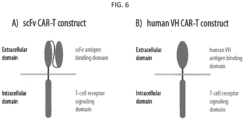
- the heavy chain-only antibodies herein are used as a binding (targeting) domain of a chimeric antigen receptor (CAR).
- CAR chimeric antigen receptor
- variable refers to the fact that certain portions of the antibody variable domains differ extensively in sequence among antibodies and are used in the binding and specificity of each particular antibody for its particular antigen. However, the variability is not evenly distributed throughout the variable domains of antibodies. It is concentrated in three segments called hypervariable regions both in the light chain and the heavy chain variable domains. The more highly conserved portions of variable domains are called the framework regions (FRs).
- the variable domains of native heavy and light chains each comprise four FRs, largely adopting a ⁇ -sheet configuration, connected by three hypervariable regions, which form loops connecting, and in some cases forming part of, the ⁇ -sheet structure.
- the hypervariable regions in each chain are held together in close proximity by the FRs and, with the hypervariable regions from the other chain, contribute to the formation of the antigen-binding site of antibodies (see Kabat et al., Sequences of Proteins of Immunological Interest, 5th Ed. Public Health Service, National Institutes of Health, Bethesda, MD. (1991 )).
- the constant domains are not involved directly in binding an antibody to an antigen, but exhibit various effector functions, such as participation of the antibody in antibody dependent cellular cytotoxicity (ADCC).
- hypervariable region when used herein refers to the amino acid residues of an antibody which are responsible for antigen-binding.
- the hypervariable region generally comprises amino acid residues from a "complementarity determining region” or "CDR" (e.g. residues 31-35 (H1), 50-65 (H2) and 95-102 (H3) in the heavy chain variable domain; Kabat et al., Sequences of Proteins of Immunological Interest, 5th Ed. Public Health Service, National Institutes of Health, Bethesda, MD.
- CDR designations are shown herein, however one of skill in the art will understand that a number of definitions of the CDRs are commonly in use, including the Kabat definition (see “ Zhao et al. A germline knowledge based computational approach for determining antibody complementarity determining regions.” Mol Immunol. 2010;47:694-700 ), which is based on sequence variability and is the most commonly used.
- the Chothia definition is based on the location of the structural loop regions ( Chothia et al. "Conformations of immunoglobulin hypervariable regions.” Nature. 1989; 342:877-883 ).
- CDR definitions of interest include, without limitation, those disclosed by Honegger, "Yet another numbering scheme for immunoglobulin variable domains: an automatic modeling and analysis tool.” J Mol Biol. 2001;309:657-670 ; Ofran et al. "Automated identification of complementarity determining regions (CDRs) reveals peculiar characteristics of CDRs and B cell epitopes.” J Immunol. 2008;181:6230-6235 ; Almagro “Identification of differences in the specificity-determining residues of antibodies that recognize antigens of different size: implications for the rational design of antibody repertoires.” J Mol Recognit. 2004;17:132-143 ; and Padlanet al. "Identification of specificity-determining residues in antibodies.” Faseb J. 1995;9:133-139 ., each of which is herein specifically incorporated by reference.
- an “isolated” antibody is one which has been identified and separated and/or recovered from a component of its natural environment. Contaminant components of its natural environment are materials which would interfere with diagnostic or therapeutic uses for the antibody, and may include enzymes, hormones, and other proteinaceous or nonprotcinaccous solutes.
- the antibody will be purified (1) to greater than 95% by weight of antibody as determined by the Lowry method, and most preferably more than 99% by weight, (2) to a degree sufficient to obtain at least 15 residues of N-terminal or internal amino acid sequence by use of a spinning cup sequenator, or (3) to homogeneity by SDS-PAGE under reducing or nonreducing conditions using Coomassie blue or, preferably, silver stain.
- Isolated antibody includes the antibody in situ within recombinant cells since at least one component of the antibody's natural environment will not be present. Ordinarily, however, isolated antibody will be prepared by at least one purification step.
- Antibodies of the invention include multi-specific antibodies.
- Multi-specific antibodies have more than one binding specificity.
- the term “multi-specific” specifically includes “bispecific” and “trispecific, " as well as higher-order independent specific binding affinities, such as higher-order polyepitopic specificity, as well as tetravalent antibodies and antibody fragments.
- “Multi-specific” antibodies specifically include antibodies comprising a combination of different binding entities as well as antibodies comprising more than one of the same binding entity.
- the terms “multi-specific antibody,” multi-specific single chain-only antibody” and “multi-specific HCAb” are used herein in the broadest sense and cover all antibodies with more than one binding specificity.
- valent refers to a specified number of binding sites in an antibody molecule.
- a “multi-valent” antibody has two or more binding sites.
- the terms “bivalent”, “trivalent”, and “tetravalent” refers to the presence of two binding sites, three binding sites, and four binding sites, respectively.
- a bispecific antibody according to the invention is at least bivalent and may be trivalent, tetravalent, or otherwise multi-valent.
- BsMAB bispecific monoclonal antibodies
- tri-specific antibodies tri-specific antibodies
- bispecific three-chain antibody like molecule or "TCA” is used herein to refer to antibody-like molecules comprising, consisting essentially of, or consisting of three polypeptide subunits, two of which comprise, consist essentially of, or consist of one heavy and one light chain of a monoclonal antibody, or functional antigen-binding fragments of such antibody chains, comprising an antigen-binding region and at least one CH domain.
- This heavy chain/light chain pair has binding specificity for a first antigen.
- the third polypeptide subunit comprises, consists essentially of, or consists of a heavy chain only antibody comprising an Fc portion comprising CH2 and/or CH3 and/or CH4 domains, in the absence of a CH1 domain, and an antigen binding domain that binds an epitope of a second antigen or a different epitope of the first antigen, where such binding domain is derived from or has sequence identity with the variable region of an antibody heavy or light chain.
- Parts of such variable region may be encoded by V H and/or V L gene segments, D and J H gene segments, or J L gene segments.
- the variable region may be encoded by rearranged V H DJ H , V L DJ H , V H J L , or V L J L gene segments.
- a TCA protein makes use of a heavy chain-only antibody as hereinabove defined.
- chimeric antigen receptor or "CAR” is used herein in the broadest sense to refer to an engineered receptor, which grafts a desired binding specificity (e.g. the antigen-binding region of a monoclonal antibody or other ligand) to membrane-spanning and intracellular-signaling domains.
- a desired binding specificity e.g. the antigen-binding region of a monoclonal antibody or other ligand
- the receptor is used to graft the specificity of a monoclonal antibody onto a T cell to create a chimeric antigen receptos (CAR).
- FIG. 6 A representative CAR-T construct comprising a human VH extracellular binding domain is shown in FIG. 6 .
- human idiotype is meant a polypeptide sequence epitope present on a human antibody in the immunoglobulin heavy and/or light chain variable region.
- human idiotype as used herein includes both naturally occurring sequences of a human antibody, as well as synthetic sequences substantially identical to the polypeptide found in naturally occurring human antibodies.
- substantially is meant that the degree of amino acid sequence identity is at least about 85%-95%. Preferably, the degree of amino acid sequence identity is greater than 90%, more preferably greater than 95%.
- a “chimeric antibody” or a “chimeric immunoglobulin” is meant an immunoglobulin molecule comprising amino acid sequences from at least two different Ig loci, e.g., a transgenic antibody comprising a portion encoded by a human Ig locus and a portion encoded by a rat Ig locus.
- Chimeric antibodies include transgenic antibodies with non-human Fc-regions or artificial Fc-regions, and human idiotypes.
- Such immunoglobulins can be isolated from animals of the invention that have been engineered to produce such chimeric antibodies.
- Antibody effector functions refer to those biological activities attributable to the Fc region (a native sequence Fc region or amino acid sequence variant Fc region) of an antibody.
- Examples of antibody effector functions include C1q binding; complement dependent cytotoxicity; Fc receptor binding; antibody-dependent cell-mediated cytotoxicity (ADCC); phagocytosis; down regulation of cell surface receptors (e.g. B cell receptor; BCR), etc.
- Antibody-dependent cell-mediated cytotoxicity and “ADCC” refer to a cell-mediated reaction in which nonspecific cytotoxic cells that express Fc receptors (FcRs) (e.g. Natural Killer (NK) cells, neutrophils, and macrophages) recognize bound antibody on a target cell and subsequently cause lysis of the target cell.
- FcRs Fc receptors
- FcR expression on hematopoietic cells in summarized is Table 3 on page 464 of Ravetch and Kinet, Annu. Rev. Immunol 9:457-92 (1991 ).
- ADCC activity of a molecule of interest may be assessed in vitro, such as that described in US Patent No. 5,500,362 or 5,821,337.
- useful effector cells for such assays include peripheral blood mononuclear cells (PBMC) and Natural Killer (NK) cells.
- PBMC peripheral blood mononuclear cells
- NK Natural Killer
- ADCC activity of the molecule of interest may be assessed in vivo, e.g., in an animal model such as that disclosed in Clynes et al. PNAS (USA) 95:652-656 (1998 ).
- Human effector cells are leukocytes which express one or more FcRs and perform effector functions. Preferably, the cells express at least FcyRIII and perform ADCC effector function. Examples of human leukocytes which mediate ADCC include peripheral blood mononuclear cells (PBMC), natural killer (NK) cells, monocytes, cytotoxic T cells and neutrophils; with PBMCs and NK cells being preferred.
- PBMC peripheral blood mononuclear cells
- NK natural killer cells
- monocytes cytotoxic T cells and neutrophils
- the effector cells may be isolated from a native source thereof, e.g. from blood or PBMCs as described herein.
- “Complement dependent cytotoxicity” or “CDC” refers to the ability of a molecule to lyse a target in the presence of complement.
- the complement activation pathway is initiated by the binding of the first component of the complement system (C1q) to a molecule (e.g. an antibody) complexed with a cognate antigen.
- a CDC assay e.g. as described in Gazzano-Santoro et al., J. Immunol. Methods 202:163 (1996 ), may be performed.
- Binding affinity refers to the strength of the sum total of noncovalent interactions between a single binding site of a molecule (e.g., an antibody) and its binding partner (e.g., an antigen). Unless indicated otherwise, as used herein, "binding affinity” refers to intrinsic binding affinity which reflects a 1:1 interaction between members of a binding pair ( e.g. , antibody and antigen).
- the affinity of a molecule X for its partner Y can generally be represented by the dissociation constant (Kd). Affinity can be measured by common methods known in the art. Low-affinity antibodies generally bind antigen slowly and tend to dissociate readily, whereas high-affinity antibodies generally bind antigen faster and tend to remain bound.
- the "Kd” or “Kd value” refers to a dissociation constant determined by BioLayer Interferometry, using an Octet QK384 instrument (Fortebio Inc., Menlo Park, CA) in kinetics mode.
- anti-mouse Fc sensors are loaded with mouse-Fc fused antigen and then dipped into antibody-containing wells to measure concentration dependent association rates (kon).
- Antibody dissociation rates (koff) arc measured in the final step, where the sensors are dipped into wells containing buffer only.
- the Kd is the ratio of koff/kon.
- epitope is the site on the surface of an antigen molecule to which a single antibody molecule binds.
- an antigen has several or many different epitopes and reacts with many different antibodies.
- the term specifically includes linear epitopes and conformational epitopes.
- Epitope mapping is the process of identifying the binding sites, or epitopes, of antibodies on their target antigens.
- Antibody epitopes may be linear epitopes or conformational epitopes. Linear epitopes are formed by a continuous sequence of amino acids in a protein. Conformational epitopes are formed of amino acids that are discontinuous in the protein sequence, but which are brought together upon folding of the protein into its three-dimensional structure.
- Polyepitopic specificity refers to the ability to specifically bind to two or more different epitopes on the same or different target(s).
- An antibody binds "essentially the same epitope " as a reference antibody, when the two antibodies recognize identical or sterically overlapping epitopes.
- the most widely used and rapid methods for determining whether two epitopes bind to identical or sterically overlapping epitopes are competition assays, which can be configured in all number of different formats, using either labeled antigen or labeled antibody.
- the antigen is immobilized on a 96-well plate, and the ability of unlabeled antibodies to block the binding of labeled antibodies is measured using radioactive or enzyme labels.
- treatment means obtaining a desired pharmacologic and/or physiologic effect.
- the effect may be prophylactic in terms of completely or partially preventing a disease or symptom thereof and/or may be therapeutic in terms of a partial or complete cure for a disease and/or adverse effect attributable to the disease.
- Treatment covers any treatment of a disease in a mammal, and includes: (a) preventing the disease from occurring in a subject which may be predisposed to the disease but has not yet been diagnosed as having it; (b) inhibiting the disease, i.e., arresting its development; or (c) relieving the disease, i.e., causing regression of the disease.
- the therapeutic agent may be administered before, during or after the onset of disease or injury.
- the treatment of ongoing disease, where the treatment stabilizes or reduces the undesirable clinical symptoms of the patient, is of particular interest. Such treatment is desirably performed prior to complete loss of function in the affected tissues.
- the subject therapy may be administered during the symptomatic stage of the disease, and in some cases after the symptomatic stage of the disease.
- a “therapeutically effective amount” is intended for an amount of active agent which is necessary to impart therapeutic benefit to a subject.
- a “therapeutically effective amount” is an amount which induces, ameliorates or otherwise causes an improvement in the pathological symptoms, disease progression or physiological conditions associated with a disease or which improves resistance to a disorder.
- subject means a mammal being assessed for treatment and/or being treated.
- the mammal is a human.
- the terms "subject,” “individual,” and “patient” encompass, without limitation, individuals having cancer, individuals with autoimmune diseases, with pathogen infections, and the like.
- Subjects may be human, but also include other mammals, particularly those mammals useful as laboratory models for human disease, e.g. mouse, rat, etc.
- the present invention provides a family of closely related heavy chain-only antibodies that bind to human BCMA.
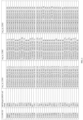
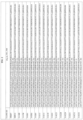
- the antibodies of this family comprise a set of CDR sequences as defined herein and shown in FIG. 1 , and are exemplified by the provided heavy chain variable region (VH) sequences of SEQ ID NOs 20 to 53 set forth in FIG. 2 .
- the families of antibodies provide a number of benefits that contribute to utility as clinically therapeutic agent(s).
- the antibodies include members with a range of binding affinities, allowing the selection of a specific sequence with a desired binding affinity.
- a suitable antibody may be selected from those provided herein for development and therapeutic or other use, including without limitation use as a bispecific or tri-specific antibody, or part of a CAR-T structure. Determination of affinity for a candidate protein can be performed using methods known in the art, such as Biacore measurements.
- Members of the antibody family may have an affinity for BCMA with a Kd of from about 10 -6 to around about 10 -11 , including without limitation: from about 10 -6 to around about 10 -10 ; from about 10 -6 to around about 10 -9 ; from about 10 -6 to around about 10 -8 ; from about 10 -8 to around about 10 -11 ; from about 10 -8 to around about 10 -10 ; from about 10 -8 to around about 10 -9 ; from about 10 -9 to around about 10 -11 ; from about 10 -9 to around about 10 -10 ; or any value within these ranges.
- the affinity selection may be confirmed with a biological assessment for modulating, e.g. blocking, a BCMA biological activity, including in vitro assays, pre-clinical models, and clinical trials, as well as assessment of potential toxicity.
- the family of BCMA specific antibodies herein comprises a VH domain, comprising CDR1, CDR2 and CDR3 sequences in a human VH framework.
- the CDR sequences may be situated, as an example, in the region of around amino acid residues 26-35; 53-59; and 98-117 for CDR1, CDR2 and CDR3, respectively, of the provided exemplary variable region sequences set forth in SEQ ID NO: 20-53. It will be understood by one of skill in the art that the CDR sequences may be in different position if a different framework sequence is selected, although generally the order of the sequences will remain the same.
- the antibodies of the present invention share the CDR3 amino acid sequence of SEQ ID NO: 19.
- the CDR1 and CDR2 sequences of the anti-BCMA antibodies of the present invention may be encompassed by the following structural formulas, where an X indicates a variable amino acid, which may be specific amino acids as indicated below.
- CDR1 GFTFX1 X2 Y A where
- FIG. 1 Representative CDR1, CDR2, and CDR3 sequences are shown in FIG. 1 .
- the anti-BCMA antibody of the invention comprises a CDR1 sequence of SEQ ID NO: 1, 2, 3, or 4.
- the CDR1 sequence is SEQ ID NO: 1 or SEQ ID NO: 2.
- the anti-BCMA antibody of the invention comprises a CDR2 sequence of any one of SEQ ID NOs: 5-18.
- the CDR2 sequence is SEQ ID NO: 5.
- the anti-BCMA antibody of the present invention comprises a CDR1 sequence of SEQ ID NO: 1, a CDR2 sequence of SEQ ID NO: 5 and a CDR3 sequence of SEQ ID NO: 19.
- the anti-BCMA antibody of the present invention comprises a CDR1 sequence of SEQ ID NO: 2, a CDR2 sequence of SEQ ID NO: 5 and a CDR3 sequence of SEQ ID NO: 19.
- the anti-BCMA antibody of the present invention comprises any of the heavy chain amino acid sequences of SEQ ID NOs: 20 to 53 ( FIG. 2 ).
- a CDR sequence of the invention comprises one, two, three or more amino acid substitutions relative to a CDR1, CDR2 and/or CDR3 sequence or set of CDR1, CDR2 and CDR3 sequences in any one of SEQ ID NOs:1 to 19 ( FIG. 1 ).
- said amino acid substitution(s) are one or more of amino acid positions 5 and 6 of CDR1, and/or one or more of the amino acid positions of 1-4 and 6-8 of CDR2, relative to the formulas provided above.
- the CDR sequences of an anti-BCMA antibody herein have a sequence with at least 85% identity, at least 90% identity, at least 95% identity, at least 98% identify, or at least 99% identity relative to a CDR1, CDR2 and/or CDR3 sequence or set of CDR1, CDR2, and CDR3 sequences in any one of SEQ ID NOs: 1 to 19 ( FIG. 1 ).
- the single chain-only anti-BCMA antibodies herein will comprise a heavy chain variable region sequence with at least 85% identity, at least 90% identity, at least 95% identity, at least 98% identity, or at least 99% identity to the heavy chain variable region sequences shown in FIG. 2 .
- bispecific or multispecific antibodies are provided, which may have any of the configurations discussed herein, including without limitation a three chain bispecific antibody.
- Bispecific antibodies comprise at least the heavy chain variable region of an antibody specific for a protein other than BCMA.
- a protein of the invention is a bispecific antibody
- one binding moiety is specific for human BCMA while the other arm may be specific for target cells, tumor associated antigens, targeting antigens, e.g. integrins, etc., pathogen antigens, checkpoint proteins, and the like.
- Target cells specifically include cancer cells, such as hematologic tumors, e.g. B-cell tumors.
- bispecific antibodies arc within the ambit of the invention, including without limitation single chain polypeptides, two chain polypeptides, three chain polypeptides, four chain polypeptides, and multiples thereof.
- the bispecific antibodies herein specifically include T-cell bispecific antibodies binding to BCMA, which is selectively expressed on plasma cells (PCs) and multiple myeloma (MM), and CD3 (anti-BCMA ⁇ anti-CD3 antibodies). Such antibodies induce potent T-cell mediated killing of cells carrying BCMA.
- compositions comprising one or more antibodies of the present invention in admixture with a suitable pharmaceutically acceptable carrier.
- Pharmaceutically acceptable carriers as used herein are exemplified, but not limited to, adjuvants, solid carriers, water, buffers, or other carriers used in the art to hold therapeutic components, or combinations thereof.
- composition of the antibodies used in accordance with the present invention are prepared for storage by mixing proteins having the desired degree of purity with optional pharmaceutically acceptable carriers, excipients or stabilizers (see, e.g. Remington's Pharmaceutical Sciences 16th edition, Osol, A. Ed. (1980 )), such as in the form of lyophilized formulations or aqueous solutions.
- Acceptable carriers, excipients, or stabilizers are nontoxic to recipients at the dosages and concentrations employed, and include buffers such as phosphate, citrate, and other organic acids; antioxidants including ascorbic acid and methionine; preservatives (such as octadecyldimethylbenzyl ammonium chloride; hexamethonium chloride; benzalkonium chloride, benzethonium chloride; phenol, butyl or benzyl alcohol; alkyl parabens such as methyl or propyl paraben; catechol; resorcinol; cyclohexanol; 3-pentanol; and m-cresol); low molecular weight (less than about 10 residues) polypeptides; proteins, such as serum albumin, gelatin, or immunoglobulins; hydrophilic polymers such as polyvinylpyrrolidone; amino acids such as glycine, glutamine, asparagine, histidine,
- Anti-BCMA antibody formulations are disclosed, for example, in U.S. Patent No. 9,034,324 . Similar formulations can be used for the proteins of the present invention.
- compositions herein can be used for the treatment of B-cell related disorders characterized by the expression of BCMA.
- B-cell related disorders include B-cell and plasma cell malignancies and autoimmune disorders, including, without limitation, plasmacytoma, Hodgkins' lymphoma, follicular lymphomas, small non-cleaved cell lymphomas, endemic Burkitt's lymphoma, sporadic Burkitt's lymphoma, marginal zone lymphoma, extranodal mucosa-associated lymphoid tissue lymphoma, nodal monocytoid B cell lymphoma, splenic lymphoma, mantle cell lymphoma, large cell lymphoma, diffuse mixed cell lymphoma, immunoblastic lymphoma, primary mediastinal B cell lymphoma, pulmonary B cell angiocentric lymphoma, small lymphocytic lymphoma, B cell proliferations of uncertain malignant potential, lymphomatoid granulomatosis, post-transplant lymphoproliferative disorder, an immunoregulatory disorder, rheumatoid arthritis
- MM Multiple Myeloma
- Current therapies for MM often cause remissions, but nearly all patients eventually relapse and die.
- myeloma cells in the setting of allogeneic hematopoietic stem cell transplantation; however, the toxicity of this approach is high, and few patients are cured.
- monoclonal antibodies have shown promise for treating MM in preclinical studies and early clinical trials, consistent clinical efficacy of any monoclonal antibody therapy for MM has not been conclusively demonstrated. There is therefore a great need for new therapies, including immunotherapies for MM (see, e.g._ Carpenter et al., Cliln Cancer Res 2013, 19(8):2048-2060 ).
- SLE systemic lupus erythematosus
- SLE is a systemic, autoimmune disease that can affect any part of the body and is represented with the immune system attacking the body's own cells and tissue, resulting in chronic inflammation and tissue damage. It is a Type III hypersensitivity reaction in which antibody-immune complexes precipitate and cause a further immune response ( Inaki & Lee, Nat Rev Rheumatol 2010; 6: 326-337 ).
- the antibodies of the present invention can be used to develop therapeutic agents for the treatment of MM, SLE, and other B-cell disorders characterized by the expression of BCMA, such as those listed above.
- the antibodies herein can be in the form of heavy chain-only anti-BCMA antibody-CAR structures, i.e. heavy chain-only anti-BCMA antibody-CAR-transduccd T cell structures.
- Effective doses of the compositions of the present invention for the treatment of disease vary depending upon many different factors, including means of administration, target site, physiological state of the patient, whether the patient is human or an animal, other medications administered, and whether treatment is prophylactic or therapeutic.
- the patient is a human, but nonhuman mammals may also be treated, e.g. companion animals such as dogs, cats, horses, etc., laboratory mammals such as rabbits, mice, rats, etc., and the like.
- Treatment dosages can be titrated to optimize safety and efficacy.
- Dosage levels can be readily determined by the ordinarily skilled clinician, and can be modified as required, e.g., as required to modify a subject's response to therapy.
- the amount of active ingredient that can be combined with the carrier materials to produce a single dosage form varies depending upon the host treated and the particular mode of administration.
- Dosage unit forms generally contain between from about 1 mg to about 500 mg of an active ingredient.
- the therapeutic dosage the agent may range from about 0.0001 to 100 mg/kg, and more usually 0.01 to 5 mg/kg, of the host body weight.
- dosages can be 1 mg/kg body weight or 10 mg/kg body weight or within the range of 1-10 mg/kg.
- An exemplary treatment regime entails administration once every two weeks or once a month or once every 3 to 6 months.
- Therapeutic entities of the present invention are usually administered on multiple occasions. Intervals between single dosages can be weekly, monthly or yearly. Intervals can also be irregular as indicated by measuring blood levels of the therapeutic entity in the patient.
- therapeutic entities of the present invention can be administered as a sustained release formulation, in which case less frequent administration is required. Dosage and frequency vary depending on the half-life of the polypeptide in the patient.
- compositions are prepared as injectables, either as liquid solutions or suspensions; solid forms suitable for solution in, or suspension in, liquid vehicles prior to injection can also be prepared.
- the preparation also can be emulsified or encapsulated in liposomes or micro particles such as polylactide, polyglycolide, or copolymer for enhanced adjuvant effect, as discussed above. Langer, Science 249: 1527, 1990 and Hanes, Advanced Drug Delivery Reviews 28: 97-119, 1997 .
- the agents of this invention can be administered in the form of a depot injection or implant preparation which can be formulated in such a manner as to permit a sustained or pulsatile release of the active ingredient.
- the pharmaceutical compositions are generally formulated as sterile, substantially isotonic and in full compliance with all Good Manufacturing Practice (GMP) regulations of the U.S. Food and Drug Administration.
- GMP Good Manufacturing Practice
- Toxicity of the antibodies and antibody structures described herein can be determined by standard pharmaceutical procedures in cell cultures or experimental animals, e.g., by determining the LD 50 (the dose lethal to 50% of the population) or the LD 100 (the dose lethal to 100% of the population). The dose ratio between toxic and therapeutic effect is the therapeutic index.
- the data obtained from these cell culture assays and animal studies can be used in formulating a dosage range that is not toxic for use in humans.
- the dosage of the antibodies described herein lies preferably within a range of circulating concentrations that include the effective dose with little or no toxicity. The dosage can vary within this range depending upon the dosage form employed and the route of administration utilized. The exact formulation, route of administration and dosage can be chosen by the individual physician in view of the patient's condition.
- compositions for administration will commonly comprise an antibody or other ablative agent dissolved in a pharmaceutically acceptable carrier, preferably an aqueous carrier.
- a pharmaceutically acceptable carrier preferably an aqueous carrier.
- aqueous carriers can be used, e.g., buffered saline and the like. These solutions are sterile and generally free of undesirable matter.
- These compositions may be sterilized by conventional, well known sterilization techniques.
- the compositions may contain pharmaceutically acceptable auxiliary substances as required to approximate physiological conditions such as pH adjusting and buffering agents, toxicity adjusting agents and the like, e.g., sodium acetate, sodium chloride, potassium chloride, calcium chloride, sodium lactate and the like.
- the concentration of active agent in these formulations can vary widely, and will be selected primarily based on fluid volumes, viscosities, body weight and the like in accordance with the particular mode of administration selected and the patient's needs (e.g., Remington's Pharmaceutical Science (15th ed., 1980 ) and Goodman & Gillman, The Pharmacological Basis of Therapeutics (Hardman et al., eds., 1996 )).
- kits comprising the active agents and formulations thereof, of the invention and instructions for use.
- the kit can further contain a least one additional reagent, e.g. a chemotherapeutic drug, etc.
- Kits typically include a label indicating the intended use of the contents of the kit.
- the term label includes any writing, or recorded material supplied on or with the kit, or which otherwise accompanies the kit.
- a ⁇ human - rat' IgH locus was constructed and assembled in several parts. This involved the modification and joining of rat C region genes downstream of human J H s and subsequently, the upstream addition of the human V H 6 -D-segment region.
- Two BACs with separate clusters of human V H genes [BAC6 and BAC3] were then co-injcctcd with the BAC termed Georg, encoding the assembled and modified region comprising human V H 6 , all Ds, all J H s , and modified rat C ⁇ 2a/1/2b ( ⁇ C H 1).
- Transgenic rats carrying artificial heavy chain immunoglobulin loci in unrearranged configuration were generated.
- the IgG2a( ⁇ C H 1)., igG1( ⁇ C H 1)., IgG2b( ⁇ C H 1) genes lacked the C H 1 segment.
- the constant region genes IgE, IgA and 3' enhancer were included in Georg BAC.
- RT-PCR and serum analysis (ELISA) of transgenic rats revealed productive rearrangement of transgenic immunoglobulin loci and expression of heavy chain only antibodies of various isotypes in serum.
- Transgenic rats were crossbred with rats with mutated endogenous heavy chain and light chain loci previously described in US patent publication 2009/0098134 A1 .
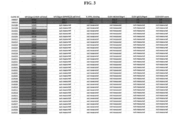
- Serum titer summary information is shown in FIGs. 4 and 5 .
- binding activity for a single 1:500 serum titer dilution was tested by ELISA against a huBCMA+Fc protein and a cynoBCMA+Fc protein produced in eukaryotic cells and two human BCMA proteins from E. coli and wheat germ, respectively.
- serum samples were tested against two off-target proteins, HSA and human IgG1.
- serum from all 12 animals was assayed for binding to NCI-H929 cells (BCMA+, lambda-).
- BVP Baculo Virus Protein Extract
- Two UniAbs were also evaluated for the ability to block APRIL (ligand)/BCMA (receptor) binding in a recombinant protein ELISA-style assay.
- recombinant human BCMA (Sino Biological 10620-H03H) was directly coated on plates followed by incubation with a dilution series of each UniAb.
- HA-tagged recombinant APRIL protein (RnD Systems 5860-AP-010) was then incubated with the BCMA/antibody complexes and binding of APRIL to BCMA was detected using a chicken anti-HA antibody conjugated to HRP (Abcam ab1190).
- a RnD systems anti-BCMA antibody (AF193) was used as a positive control for BCMA/APRIL blocking.
Landscapes
- Health & Medical Sciences (AREA)
- Chemical & Material Sciences (AREA)
- Immunology (AREA)
- Organic Chemistry (AREA)
- Life Sciences & Earth Sciences (AREA)
- General Health & Medical Sciences (AREA)
- Medicinal Chemistry (AREA)
- Animal Behavior & Ethology (AREA)
- Public Health (AREA)
- Veterinary Medicine (AREA)
- Engineering & Computer Science (AREA)
- Pharmacology & Pharmacy (AREA)
- Nuclear Medicine, Radiotherapy & Molecular Imaging (AREA)
- General Chemical & Material Sciences (AREA)
- Chemical Kinetics & Catalysis (AREA)
- Genetics & Genomics (AREA)
- Biochemistry (AREA)
- Bioinformatics & Cheminformatics (AREA)
- Proteomics, Peptides & Aminoacids (AREA)
- Biophysics (AREA)
- Molecular Biology (AREA)
- Biomedical Technology (AREA)
- Hematology (AREA)
- Epidemiology (AREA)
- Cell Biology (AREA)
- Biotechnology (AREA)
- Zoology (AREA)
- Wood Science & Technology (AREA)
- Dermatology (AREA)
- Virology (AREA)
- Microbiology (AREA)
- Oncology (AREA)
- General Engineering & Computer Science (AREA)
- Developmental Biology & Embryology (AREA)
- Peptides Or Proteins (AREA)
- Medicines Containing Antibodies Or Antigens For Use As Internal Diagnostic Agents (AREA)
- Micro-Organisms Or Cultivation Processes Thereof (AREA)
- Medicines Containing Material From Animals Or Micro-Organisms (AREA)
- Preparation Of Compounds By Using Micro-Organisms (AREA)
- Medicinal Preparation (AREA)
Applications Claiming Priority (3)
| Application Number | Priority Date | Filing Date | Title |
|---|---|---|---|
| US201662437588P | 2016-12-21 | 2016-12-21 | |
| PCT/US2017/067870 WO2018119215A1 (en) | 2016-12-21 | 2017-12-21 | Anti-bcma heavy chain-only antibodies |
| EP17829547.3A EP3559035A1 (en) | 2016-12-21 | 2017-12-21 | Anti-bcma heavy chain-only antibodies |
Related Parent Applications (1)
| Application Number | Title | Priority Date | Filing Date |
|---|---|---|---|
| EP17829547.3A Division EP3559035A1 (en) | 2016-12-21 | 2017-12-21 | Anti-bcma heavy chain-only antibodies |
Publications (1)
| Publication Number | Publication Date |
|---|---|
| EP4215548A1 true EP4215548A1 (en) | 2023-07-26 |
Family
ID=60972501
Family Applications (2)
| Application Number | Title | Priority Date | Filing Date |
|---|---|---|---|
| EP23159815.2A Pending EP4215548A1 (en) | 2016-12-21 | 2017-12-21 | Anti-bcma heavy chain-only antibodies |
| EP17829547.3A Pending EP3559035A1 (en) | 2016-12-21 | 2017-12-21 | Anti-bcma heavy chain-only antibodies |
Family Applications After (1)
| Application Number | Title | Priority Date | Filing Date |
|---|---|---|---|
| EP17829547.3A Pending EP3559035A1 (en) | 2016-12-21 | 2017-12-21 | Anti-bcma heavy chain-only antibodies |
Country Status (13)
| Country | Link |
|---|---|
| US (3) | US11434299B2 (https=) |
| EP (2) | EP4215548A1 (https=) |
| JP (3) | JP7254699B2 (https=) |
| KR (4) | KR102745676B1 (https=) |
| CN (2) | CN110431151B (https=) |
| AU (2) | AU2017382251B2 (https=) |
| BR (1) | BR112019012354A2 (https=) |
| CA (1) | CA3047419A1 (https=) |
| IL (3) | IL317134A (https=) |
| MX (2) | MX2019007379A (https=) |
| NZ (2) | NZ795790A (https=) |
| WO (1) | WO2018119215A1 (https=) |
| ZA (1) | ZA201903985B (https=) |
Families Citing this family (29)
| Publication number | Priority date | Publication date | Assignee | Title |
|---|---|---|---|---|
| IL322083A (en) | 2016-08-24 | 2025-09-01 | Teneobio Inc | Non-human transgenic animals that produce modified heavy chain antibodies only |
| PE20241349A1 (es) | 2016-09-14 | 2024-07-03 | Teneobio Inc | Anticuerpos de union a cd3 |
| IL317134A (en) | 2016-12-21 | 2025-01-01 | Teneobio Inc | An antibody containing only heavy chains that binds a human B-cell maturation antigen, a pharmaceutical composition containing the same, its use in the treatment of B-cell disorders and a method for its preparation |
| CN110945026B (zh) | 2017-06-20 | 2024-03-19 | 特纳奥尼股份有限公司 | 仅有重链的抗bcma抗体 |
| KR20250007003A (ko) | 2017-06-20 | 2025-01-13 | 테네오바이오, 인코포레이티드 | 항-bcma 중쇄-단독 항체 |
| US12415844B2 (en) * | 2017-12-20 | 2025-09-16 | Poseida Therapeutics, Inc. | BCMA specific VCAR compositions and methods for use |
| CN111683966B (zh) | 2017-12-22 | 2023-07-11 | 特尼奥生物股份有限公司 | 与cd22结合的重链抗体 |
| KR102870868B1 (ko) | 2018-06-01 | 2025-10-15 | 노파르티스 아게 | Bcma에 대한 결합 분자 및 이의 용도 |
| TWI838389B (zh) | 2018-07-19 | 2024-04-11 | 美商再生元醫藥公司 | 雙特異性抗-BCMAx抗-CD3抗體及其用途 |
| MD3823665T2 (ro) | 2018-07-19 | 2024-05-31 | Regeneron Pharma | Receptori antigenci chimerici cu specificitate BCMA și utilizările acestora |
| BR112020024074A2 (pt) | 2018-07-20 | 2021-02-17 | Teneobio, Inc. | anticorpos de cadeia pesada com ligação a cd19 |
| EP3845244A4 (en) | 2018-08-24 | 2022-09-07 | Shenzhen Pregene Biopharma Co. Ltd. | ANTI-BCMA SINGLE DOMAIN ANTIBODIES AND THEIR USE |
| SG11202102713TA (en) | 2018-09-21 | 2021-04-29 | Teneobio Inc | Methods for purifying heterodimeric, multispecific antibodies |
| KR20210086651A (ko) * | 2018-10-26 | 2021-07-08 | 테네오바이오, 인코포레이티드 | Cd38에 결합하는 중쇄 항체 |
| CA3124103A1 (en) * | 2018-12-20 | 2020-06-25 | Poseida Therapeutics, Inc. | Nanotransposon compositions and methods of use |
| WO2020206330A1 (en) | 2019-04-05 | 2020-10-08 | Teneobio, Inc. | Heavy chain antibodies binding to psma |
| JP7489407B2 (ja) | 2019-05-21 | 2024-05-23 | ノバルティス アーゲー | Cd19結合分子及びその使用 |
| CR20210622A (es) | 2019-06-14 | 2022-06-27 | Teneobio Inc | Anticuerpos multiespecíficos de cadena pesada que se unen a cd22 y cd3 |
| CN112574308A (zh) * | 2019-09-30 | 2021-03-30 | 和铂医药(苏州)有限公司 | 靶向bcma的抗体、双特异性抗体及其用途 |
| CA3171906A1 (en) | 2020-03-16 | 2021-09-23 | University Of Southern California | Novel antigen binding domains and synthetic antigen receptors incorporating the same |
| TW202330622A (zh) | 2020-04-29 | 2023-08-01 | 美商泰尼歐生物公司 | 具有經修飾重鏈恆定區之多特異性重鏈抗體 |
| IL297601A (en) | 2020-04-29 | 2022-12-01 | Teneobio Inc | Multispecific heavy chain antibodies with modified heavy chain constant regions |
| MX2023003041A (es) | 2020-09-16 | 2023-05-09 | Amgen Inc | Métodos para administrar dosis terapéuticas de moléculas de acoplamiento a células t biespecíficas para el tratamiento de cáncer. |
| CN112592405B (zh) * | 2020-12-08 | 2022-05-03 | 博奥信生物技术(南京)有限公司 | 抗人bcma纳米抗体及其制备方法和应用 |
| CN112538115B (zh) * | 2020-12-08 | 2022-05-03 | 博奥信生物技术(南京)有限公司 | 一种抗人bcma纳米抗体及其制备方法和应用 |
| CN115109156B (zh) * | 2021-03-22 | 2024-03-08 | 浙江纳米抗体技术中心有限公司 | 一种靶向bcma的纳米抗体及其应用 |
| CN115521381B (zh) * | 2021-06-24 | 2024-10-29 | 益科思特(北京)医药科技发展有限公司 | 结合bcma和cd3的双特异性抗体及其制备方法与应用 |
| AU2024239150A1 (en) | 2023-03-21 | 2025-10-02 | Biograph 55, Inc. | Cd19/cd38 multispecific antibodies |
| WO2026072671A1 (en) | 2024-09-24 | 2026-04-02 | City Of Hope | Methods comprising oncolytic viruses expressing bcmat and bcma-targeted therapies |
Citations (17)
| Publication number | Priority date | Publication date | Assignee | Title |
|---|---|---|---|---|
| US5500362A (en) | 1987-01-08 | 1996-03-19 | Xoma Corporation | Chimeric antibody with specificity to human B cell surface antigen |
| US5821337A (en) | 1991-06-14 | 1998-10-13 | Genentech, Inc. | Immunoglobulin variants |
| WO2001024812A1 (en) | 1999-10-06 | 2001-04-12 | N.V. Nutricia | USE OF TRANSFORMING GROWTH FACTOR β AND GROWTH FACTORS IN THE TREATMENT AND PREVENTION OF DISEASES OF THE INTESTINAL MUCOSA |
| WO2001024811A1 (en) | 1999-10-06 | 2001-04-12 | Biogen, Inc. | April receptor (bcma) and uses thereof |
| WO2002066516A2 (en) | 2001-02-20 | 2002-08-29 | Zymogenetics, Inc. | Antibodies that bind both bcma and taci |
| WO2006008548A2 (en) | 2004-07-22 | 2006-01-26 | Erasmus University Medical Centre Rotterdam | Binding molecules |
| US20090098134A1 (en) | 2007-06-01 | 2009-04-16 | Omt, Inc. | Compositions and methods for inhibiting endogenous immunoglobulin genes and producing transgenic human idiotype antibodies |
| US7541513B2 (en) | 2001-06-21 | 2009-06-02 | Translocus Limited | Mouse λ light chain locus |
| US20100122358A1 (en) | 2008-06-06 | 2010-05-13 | Crescendo Biologics Limited | H-Chain-only antibodies |
| WO2012066058A1 (en) * | 2010-11-16 | 2012-05-24 | Boehringer Ingelheim International Gmbh | Agents and methods for treating diseases that correlate with bcma expression |
| WO2012143498A1 (en) * | 2011-04-21 | 2012-10-26 | Boehringer Ingelheim International Gmbh | Bcma-based stratification and therapy for multiple myeloma patients |
| WO2012163805A1 (en) * | 2011-05-27 | 2012-12-06 | Glaxo Group Limited | Bcma (cd269/tnfrsf17) -binding proteins |
| US20130156769A1 (en) | 2011-11-15 | 2013-06-20 | Boehringer Ingelheim International Gmbh | Binding molecules for bcma and cd3 |
| US8883150B2 (en) | 2009-03-24 | 2014-11-11 | Erasmus University Medical Center | Soluble “heavy-chain only” antibodies |
| US9034324B2 (en) | 2009-03-10 | 2015-05-19 | Biogen Idec Ma Inc. | Anti-BCMA antibodies |
| US20150376287A1 (en) | 2013-02-05 | 2015-12-31 | Engmab Ag | Bispecific antibodies against cd3 and bcma |
| WO2016094304A2 (en) * | 2014-12-12 | 2016-06-16 | Bluebird Bio, Inc. | Bcma chimeric antigen receptors |
Family Cites Families (173)
| Publication number | Priority date | Publication date | Assignee | Title |
|---|---|---|---|---|
| US4275149A (en) | 1978-11-24 | 1981-06-23 | Syva Company | Macromolecular environment control in specific receptor assays |
| US4816567A (en) | 1983-04-08 | 1989-03-28 | Genentech, Inc. | Recombinant immunoglobin preparations |
| CA1288073C (en) | 1985-03-07 | 1991-08-27 | Paul G. Ahlquist | Rna transformation vector |
| US5225539A (en) | 1986-03-27 | 1993-07-06 | Medical Research Council | Recombinant altered antibodies and methods of making altered antibodies |
| US6548640B1 (en) | 1986-03-27 | 2003-04-15 | Btg International Limited | Altered antibodies |
| US5530101A (en) | 1988-12-28 | 1996-06-25 | Protein Design Labs, Inc. | Humanized immunoglobulins |
| GB8928874D0 (en) | 1989-12-21 | 1990-02-28 | Celltech Ltd | Humanised antibodies |
| US6750325B1 (en) | 1989-12-21 | 2004-06-15 | Celltech R&D Limited | CD3 specific recombinant antibody |
| US5968509A (en) | 1990-10-05 | 1999-10-19 | Btp International Limited | Antibodies with binding affinity for the CD3 antigen |
| GB9206422D0 (en) | 1992-03-24 | 1992-05-06 | Bolt Sarah L | Antibody preparation |
| US7381803B1 (en) | 1992-03-27 | 2008-06-03 | Pdl Biopharma, Inc. | Humanized antibodies against CD3 |
| US6066721A (en) | 1995-07-06 | 2000-05-23 | Stanford University | Method to produce novel polyketides |
| US5595097A (en) | 1995-01-31 | 1997-01-21 | Anderson; Steven P. | Two-sided, multi-angled wrench |
| US5731168A (en) | 1995-03-01 | 1998-03-24 | Genentech, Inc. | Method for making heteromultimeric polypeptides |
| US6037453A (en) | 1995-03-15 | 2000-03-14 | Genentech, Inc. | Immunoglobulin variants |
| US6096871A (en) | 1995-04-14 | 2000-08-01 | Genentech, Inc. | Polypeptides altered to contain an epitope from the Fc region of an IgG molecule for increased half-life |
| JP4046354B2 (ja) | 1996-03-18 | 2008-02-13 | ボード オブ リージェンツ,ザ ユニバーシティ オブ テキサス システム | 増大した半減期を有する免疫グロブリン様ドメイン |
| ATE299938T1 (de) | 1997-05-02 | 2005-08-15 | Genentech Inc | Ein verfahren zur herstellung multispezifischer antikörper die heteromultimere und gemeinsame komponenten besitzen |
| SI1642972T1 (sl) | 1999-01-07 | 2010-05-31 | Zymogenetics Inc | Terapevtske uporabe BR X topnih receptorjev |
| US6326175B1 (en) | 1999-07-13 | 2001-12-04 | Incyte Pharmaceuticals, Inc. | Methods and compositions for producing full length cDNA libraries |
| CN100447244C (zh) | 1999-08-17 | 2008-12-31 | 比奥根艾迪克Ma公司 | Baff受体(bcma),一种免疫调节剂 |
| JP4253826B2 (ja) | 1999-09-07 | 2009-04-15 | カシオ計算機株式会社 | 画像読取装置 |
| JP2003531588A (ja) | 2000-04-11 | 2003-10-28 | ジェネンテック・インコーポレーテッド | 多価抗体とその用途 |
| WO2001087977A2 (en) | 2000-05-12 | 2001-11-22 | Amgen Inc. | Methods and compositions of matter concerning april/g70, bcma, blys/agp-3, and taci |
| US20020066516A1 (en) | 2000-12-01 | 2002-06-06 | Cornell Stephen W. | Mechanism for attaching a lifter to a straw and method therefor |
| AU2002246737B2 (en) | 2000-12-29 | 2007-03-01 | Savient Pharmaceuticals, Inc. | Specific human antibodies for selective cancer therapy |
| CN1195779C (zh) | 2001-05-24 | 2005-04-06 | 中国科学院遗传与发育生物学研究所 | 抗人卵巢癌抗人cd3双特异性抗体 |
| WO2004042017A2 (en) | 2002-10-31 | 2004-05-21 | Genentech, Inc. | Methods and compositions for increasing antibody production |
| EP1585768A2 (en) | 2003-01-23 | 2005-10-19 | Genentech, Inc. | Methods for producing humanized antibodies and improving yield of antibodies or antigen binding fragments in cell culture |
| JP2008501621A (ja) | 2003-05-31 | 2008-01-24 | マイクロメット アクツィエン ゲゼルシャフト | B細胞関連疾患を処置するための二重特異性抗cd3、抗cd19抗体構築物を含む薬学的組成物 |
| RU2005137325A (ru) | 2003-05-31 | 2006-09-10 | Микромет Аг (De) | Фармацевтическая композиция, содержащая конструкт, специфичный к ерсам |
| MXPA06004035A (es) | 2003-10-16 | 2006-08-31 | Micromet Ag | Aglutinantes cd3 de-inmunizados multi-especificos. |
| US20060008548A1 (en) | 2003-11-19 | 2006-01-12 | Invista North America S.A R.L. | Spinneret plate for producing a bulked continuous filament having a three-sided exterior cross-section and a convex six-sided central void |
| PL1691837T3 (pl) | 2003-12-10 | 2012-11-30 | Squibb & Sons Llc | IP-10 przeciwciała i ich zastosowanie |
| US7235641B2 (en) | 2003-12-22 | 2007-06-26 | Micromet Ag | Bispecific antibodies |
| CA2569509C (en) | 2004-06-03 | 2014-08-12 | Novimmune S.A. | Anti-cd3 antibodies and methods of use thereof |
| ES2498794T3 (es) | 2005-02-18 | 2014-09-25 | Medarex, L.L.C. | Anticuerpos monoclonales contra CD30 que carecen de restos fucosilo |
| US20160355591A1 (en) | 2011-05-02 | 2016-12-08 | Immunomedics, Inc. | Subcutaneous anti-hla-dr monoclonal antibody for treatment of hematologic malignancies |
| BRPI0611901A2 (pt) | 2005-06-14 | 2012-08-28 | Amgen, Inc | composição, liofilizado, kit, e, processo para preparar uma composição |
| US7612181B2 (en) | 2005-08-19 | 2009-11-03 | Abbott Laboratories | Dual variable domain immunoglobulin and uses thereof |
| CN101309703A (zh) | 2005-09-12 | 2008-11-19 | 诺维莫尼公司 | 抗cd3抗体组合物 |
| WO2007042289A2 (en) | 2005-10-11 | 2007-04-19 | Ablynx N.V. | Nanobodies™ and polypeptides against egfr and igf-ir |
| EP1940881B1 (en) | 2005-10-11 | 2016-11-30 | Amgen Research (Munich) GmbH | Compositions comprising cross-species-specific antibodies and uses thereof |
| US20080286819A1 (en) | 2005-11-07 | 2008-11-20 | Ravetch Jeffrey V | Reagents, Methods and Systems for Selecting a Cytotoxic Antibody or Variant Thereof |
| ES2618543T3 (es) | 2005-11-23 | 2017-06-21 | Genentech, Inc. | Métodos y composiciones relacionados con ensayos de linfocitos B |
| AU2006323415A1 (en) | 2005-12-06 | 2007-06-14 | Domantis Limited | Bispecific ligands with binding specificity to cell surface targets and methods of use therefor |
| CA2647524C (en) | 2006-04-05 | 2019-11-26 | The Rockefeller University | Polypeptides with enhanced anti-inflammatory and decreased cytotoxic properties and relating methods |
| WO2007117600A2 (en) | 2006-04-07 | 2007-10-18 | Macrogenics, Inc. | Combination therapy for treating autoimmune diseases |
| EP2079483A4 (en) | 2006-07-29 | 2010-10-20 | Robert Lamar Bjork Jr | BISPECIFIC MONOCLONAL ANTIBODIES (SPECIFIC FOR CD3 AND CD11B) THERAPEUTIC MEDICAMENTS |
| CA2662350A1 (en) | 2006-09-05 | 2008-03-13 | Medarex, Inc. | Antibodies to bone morphogenic proteins and receptors therefor and methods for their use |
| RU2769948C2 (ru) | 2007-04-03 | 2022-04-11 | Эмджен Рисерч (Мьюник) Гмбх | CD3-Эпсилон-связывающий домен с межвидовой специфичностью |
| RS53008B2 (sr) | 2007-04-03 | 2022-12-30 | Amgen Res Munich Gmbh | Interspecijski specifičan cd3-epsilon vezujući domen |
| MX2009010611A (es) | 2007-04-03 | 2010-03-26 | Micromet Ag | Enlazadores biespecificos, especificos para especies. |
| EP2195342A1 (en) | 2007-09-07 | 2010-06-16 | Ablynx N.V. | Binding molecules with multiple binding sites, compositions comprising the same and uses thereof |
| ES2595638T3 (es) | 2007-09-26 | 2017-01-02 | Chugai Seiyaku Kabushiki Kaisha | Método para modificar el punto isoeléctrico de un anticuerpo mediante la sustitución de aminoácidos en una CDR |
| WO2009055669A2 (en) | 2007-10-26 | 2009-04-30 | Oklahoma Medical Research Foundation | Monoclonal antibodies against activated and unactivated protein c |
| US20130195888A1 (en) | 2007-11-30 | 2013-08-01 | Abbvie | Ultrafiltration and diafiltration formulation methods for protein processing |
| CA2720682A1 (en) | 2008-04-25 | 2009-10-29 | Zymogenetics, Inc. | Levels of bcma protein expression on b cells and use in diagnostic methods |
| SI2315780T1 (sl) | 2008-07-17 | 2015-11-30 | Novartis Ag | Sestavki in postopki uporabe za terapevtska protitelesa |
| EP2352765B1 (en) | 2008-10-01 | 2018-01-03 | Amgen Research (Munich) GmbH | Cross-species-specific single domain bispecific single chain antibody |
| DK2352763T4 (da) | 2008-10-01 | 2022-10-17 | Amgen Res Munich Gmbh | Bispecifikke enkeltkædede antistoffer med specificitet for højmolekylære målantigener |
| EP2370467B1 (en) | 2008-10-01 | 2016-09-07 | Amgen Research (Munich) GmbH | Cross-species-specific pscaxcd3, cd19xcd3, c-metxcd3, endosialinxcd3, epcamxc d3, igf-1rxcd3 or fapalpha xcd3 bispecific single chain antibody |
| US20110293619A1 (en) | 2008-10-01 | 2011-12-01 | Micromet Ag | CROSS-SPECIES-SPECIFIC PSMAxCD3 BISPECIFIC SINGLE CHAIN ANTIBODY |
| MY192182A (en) | 2009-06-26 | 2022-08-04 | Regeneron Pharma | Readily isolated bispecific antibodies with native immunoglobulin format |
| US9345661B2 (en) | 2009-07-31 | 2016-05-24 | Genentech, Inc. | Subcutaneous anti-HER2 antibody formulations and uses thereof |
| SMT202600080T1 (it) | 2010-02-08 | 2026-03-09 | Regeneron Pharma | Topo con catena leggera comune |
| TWI653333B (zh) | 2010-04-01 | 2019-03-11 | 安進研究(慕尼黑)有限責任公司 | 跨物種專一性之PSMAxCD3雙專一性單鏈抗體 |
| WO2012122512A1 (en) | 2011-03-10 | 2012-09-13 | Hco Antibody, Inc. | Recombinant production of mixtures of single chain antibodies |
| EP2683735A1 (en) | 2011-03-10 | 2014-01-15 | HCO Antibody, Inc. | Bispecific three-chain antibody-like molecules |
| EP2699596A4 (en) | 2011-04-22 | 2015-01-14 | Emergent Product Dev Seattle | PROSTATE-SPECIFIC MEMBRANE-BINDING PROTEINS AND COMPOSITIONS AND METHOD THEREFOR |
| KR102060389B1 (ko) | 2011-05-21 | 2019-12-31 | 마크로제닉스, 인크. | 사람 및 비-사람 cd3에 결합할 수 있는 cd3-결합 분자 |
| UA112434C2 (uk) * | 2011-05-27 | 2016-09-12 | Ґлаксо Ґруп Лімітед | Антигензв'язувальний білок, який специфічно зв'язується з всма |
| ES2893855T3 (es) | 2011-08-11 | 2022-02-10 | Ono Pharmaceutical Co | Agente terapéutico para enfermedades autoinmunes que comprende agonista de PD-1 |
| RU2766608C2 (ru) | 2012-04-11 | 2022-03-15 | Дзе Юнайтед Стейтс Оф Америка, Эз Репрезентед Бай Дзе Секретари, Департмент Оф Хелс Энд Хьюман Сёрвисез | Химерные антигенные рецепторы, нацеленные на антиген созревания b-клеток |
| JP6509724B2 (ja) | 2012-04-20 | 2019-05-08 | アプティーボ リサーチ アンド デベロップメント エルエルシー | Cd3結合ポリペプチド |
| BR112014032916A2 (pt) | 2012-06-28 | 2017-08-01 | Pfizer | anticorpos anti-fármacos e usos destes para o monitoramento de fármaco |
| US20150203591A1 (en) | 2012-08-02 | 2015-07-23 | Regeneron Pharmaceuticals, Inc. | Mutivalent antigen-binding proteins |
| JOP20200236A1 (ar) | 2012-09-21 | 2017-06-16 | Regeneron Pharma | الأجسام المضادة لمضاد cd3 وجزيئات ربط الأنتيجين ثنائية التحديد التي تربط cd3 وcd20 واستخداماتها |
| WO2014068079A1 (en) | 2012-11-01 | 2014-05-08 | Max-Delbrück-Centrum für Molekulare Medizin | An antibody that binds cd269 (bcma) suitable for use in the treatment of plasma cell diseases such as multiple myeloma and autoimmune diseases |
| TW201425336A (zh) | 2012-12-07 | 2014-07-01 | Amgen Inc | Bcma抗原結合蛋白質 |
| PT2931030T (pt) | 2012-12-14 | 2020-08-03 | Open Monoclonal Tech Inc | Polinucleótidos que codificam anticorpos de roedores com idiótipos humanos e animais que os compreendem |
| WO2014112144A1 (ja) | 2013-01-15 | 2014-07-24 | 国立大学法人熊本大学 | 染色体セントロメア由来のサテライトノンコーディングrnaを標的とした核酸抗癌剤、及び該抗癌剤を用いる方法 |
| EP2762496A1 (en) | 2013-02-05 | 2014-08-06 | EngMab AG | Method for the selection of antibodies against BCMA |
| EP2762497A1 (en) | 2013-02-05 | 2014-08-06 | EngMab AG | Bispecific antibodies against CD3epsilon and BCMA |
| AR095374A1 (es) | 2013-03-15 | 2015-10-14 | Amgen Res Munich Gmbh | Moléculas de unión para bcma y cd3 |
| UA118029C2 (uk) | 2013-04-29 | 2018-11-12 | Ф. Хоффманн-Ля Рош Аг | Модифіковане антитіло, що зв'язується з людським fcrn, й способи його застосування |
| US20150118251A1 (en) | 2013-10-31 | 2015-04-30 | Sanofi | Specific anti-cd38 antibodies for treating human cancers |
| ES2825625T3 (es) | 2013-10-31 | 2021-05-17 | Sanofi Sa | Anticuerpos anti-CD38 específicos para tratar cánceres humanos |
| JP2016538275A (ja) | 2013-11-04 | 2016-12-08 | グレンマーク ファーマシューティカルズ, エセ.アー. | T細胞再標的化ヘテロ二量体免疫グロブリン(hetero−dimeric immunoglobulin)の製造 |
| WO2015095412A1 (en) | 2013-12-19 | 2015-06-25 | Zhong Wang | Bispecific antibody with two single-domain antigen-binding fragments |
| DK3105252T3 (da) | 2014-02-12 | 2019-10-14 | Michael Uhlin | Bispecifikke antistoffer til anvendelse ved stamcelletransplantation |
| ES2857226T3 (es) | 2014-03-15 | 2021-09-28 | Novartis Ag | Receptor de antígeno quimérico regulable |
| TWI701042B (zh) | 2014-03-19 | 2020-08-11 | 美商再生元醫藥公司 | 用於腫瘤治療之方法及抗體組成物 |
| EP3699195A3 (en) | 2014-03-28 | 2020-11-04 | Xencor, Inc. | Bispecific antibodies that bind to cd38 and cd3 |
| PE20170441A1 (es) | 2014-06-06 | 2017-04-26 | Bristol Myers Squibb Co | Anticuerpos contra el receptor del factor de necrosis tumoral inducido por glucocorticoides (gitr) y sus usos |
| BR112017001183A2 (pt) | 2014-07-21 | 2017-11-28 | Novartis Ag | tratamento de câncer usando receptor de antígeno quimérico anti-bcma humanizado |
| ES2878449T3 (es) | 2014-07-24 | 2021-11-18 | 2Seventy Bio Inc | Receptores antigénicos quiméricos de BCMA |
| CA2955947A1 (en) | 2014-07-25 | 2016-01-28 | Cytomx Therapeutics, Inc. | Anti-cd3 antibodies, activatable anti-cd3 antibodies, multispecific anti-cd3 antibodies, multispecific activatable anti-cd3 antibodies, and methods of using the same |
| EP2990416B1 (en) | 2014-08-29 | 2018-06-20 | GEMoaB Monoclonals GmbH | Universal chimeric antigen receptor expressing immune cells for targeting of diverse multiple antigens and method of manufacturing the same and use of the same for treatment of cancer, infections and autoimmune disorders |
| MX375669B (es) | 2014-09-26 | 2025-03-06 | Macrogenics Inc | Diacuerpos monovalentes biespecificos que son capaces de unir cd19 y cd3, y usos de los mismos. |
| CN105457024B (zh) * | 2014-10-13 | 2021-03-16 | 李小彦 | 抗butyrophilin-3人源化抗体及其使用 |
| DK3209698T4 (da) | 2014-10-22 | 2022-04-04 | Crescendo Biologics Ltd | Transgene mus |
| PT3221356T (pt) | 2014-11-20 | 2020-10-29 | Hoffmann La Roche | Moléculas de ligação ao antigénio biespecíficas ativadoras das células t contra folr1 e cd3 |
| DK3221357T3 (da) | 2014-11-20 | 2020-08-10 | Hoffmann La Roche | Fælles letkæder og fremgangsmåder til anvendelse |
| EP3023437A1 (en) | 2014-11-20 | 2016-05-25 | EngMab AG | Bispecific antibodies against CD3epsilon and BCMA |
| CN105777906B (zh) | 2014-12-19 | 2019-04-23 | 苏州丁孚靶点生物技术有限公司 | 抗pd-l1全人抗体及其应用 |
| GB201500461D0 (en) | 2015-01-12 | 2015-02-25 | Cresendo Biolog Ltd | Therapeutic molecules |
| WO2016124670A1 (en) | 2015-02-06 | 2016-08-11 | Scil Proteins Gmbh | Novel binding proteins comprising a ubiquitin mutein and antibodies or antibody fragments |
| EP3056512A1 (en) | 2015-02-10 | 2016-08-17 | Medizinische Universität Wien | Antibody construct |
| EA201792546A1 (ru) | 2015-05-20 | 2018-04-30 | Янссен Байотек, Инк. | Антитела к cd38 для лечения амилоидоза легких цепей и прочих cd38-положительных гематологических злокачественных опухолей |
| JOP20160154B1 (ar) | 2015-07-31 | 2021-08-17 | Regeneron Pharma | أجسام ضادة مضاد لل psma، وجزيئات رابطة لمستضد ثنائي النوعية الذي يربط psma و cd3، واستخداماتها |
| WO2018028647A1 (en) | 2016-08-10 | 2018-02-15 | Legend Biotech Usa Inc. | Chimeric antigen receptors targeting bcma and methods of use thereof |
| CN105384825B (zh) | 2015-08-11 | 2018-06-01 | 南京传奇生物科技有限公司 | 一种基于单域抗体的双特异性嵌合抗原受体及其应用 |
| MX2018002043A (es) | 2015-08-17 | 2018-07-06 | Janssen Pharmaceutica Nv | ANTICUERPOS ANTI-BCMA, MOLíCULAS DE UNIíN A ANTíGENOS BIESPECíFICAS QUE SE UNEN A BCMA Y CD3, Y USOS DE ESTOS. |
| AU2016325630B2 (en) | 2015-09-23 | 2022-11-17 | Regeneron Pharmaceuticals, Inc. | Optimized anti-CD3 bispecific antibodies and uses thereof |
| AU2016352676A1 (en) | 2015-11-10 | 2018-05-31 | University Medical Center Hamburg - Eppendorf | ANTIGEN-binding polypeptides directed against CD38 |
| IL313507A (en) | 2016-02-03 | 2024-08-01 | Amgen Res Munich Gmbh | Constructs of bispecific antibodies to BCMA and CD3 that bind to T cells, preparations containing the same and uses thereof |
| KR20250175345A (ko) | 2016-06-21 | 2025-12-16 | 테네오바이오, 인코포레이티드 | Cd3 결합 항체 |
| IL322083A (en) | 2016-08-24 | 2025-09-01 | Teneobio Inc | Non-human transgenic animals that produce modified heavy chain antibodies only |
| PE20241349A1 (es) | 2016-09-14 | 2024-07-03 | Teneobio Inc | Anticuerpos de union a cd3 |
| JP7267914B2 (ja) | 2016-11-02 | 2023-05-02 | エンクマフ エスアーエールエル | Bcma及びcd3に対する二重特異性抗体、及び多発性骨髄腫を治療するために併用して使用される免疫療法薬 |
| GB201621591D0 (en) | 2016-12-19 | 2017-02-01 | Ucb Biopharma Sprl | Antibody molecules and method |
| IL317134A (en) | 2016-12-21 | 2025-01-01 | Teneobio Inc | An antibody containing only heavy chains that binds a human B-cell maturation antigen, a pharmaceutical composition containing the same, its use in the treatment of B-cell disorders and a method for its preparation |
| UY37726A (es) | 2017-05-05 | 2018-11-30 | Amgen Inc | Composición farmacéutica que comprende constructos de anticuerpos biespecíficos para almacenamiento y administración mejorados |
| WO2018224660A1 (en) | 2017-06-09 | 2018-12-13 | Armin Ehninger | Targeting modules for universal chimeric antigen receptor expressing immune cells and use in the treatment of cancer infections and autoimmune disorders |
| CN110945026B (zh) | 2017-06-20 | 2024-03-19 | 特纳奥尼股份有限公司 | 仅有重链的抗bcma抗体 |
| KR20250007003A (ko) | 2017-06-20 | 2025-01-13 | 테네오바이오, 인코포레이티드 | 항-bcma 중쇄-단독 항체 |
| WO2019000223A1 (en) | 2017-06-27 | 2019-01-03 | Nanjing Legend Biotech Co., Ltd. | ENABLERS OF IMMUNE EFFECTOR CELLS OF CHIMERIC ANTIBODIES AND METHODS OF USE THEREOF |
| ES2928296T3 (es) | 2017-06-30 | 2022-11-16 | Us Health | Receptores de antígenos quiméricos anti-antígenos de maduración de linfocitos B con dominios humanos |
| EP3681908A1 (en) | 2017-09-13 | 2020-07-22 | Teneobio, Inc. | Heavy chain antibodies binding to ectoenzymes |
| BR112020007002A2 (pt) | 2017-10-10 | 2020-11-17 | Sanofi | anticorpos anti-cd38 e métodos de uso |
| JP2020536969A (ja) | 2017-10-12 | 2020-12-17 | アンフィヴェナ セラピューティクス,インク. | Cd3結合タンパク質の投薬レジメン |
| CN111683966B (zh) | 2017-12-22 | 2023-07-11 | 特尼奥生物股份有限公司 | 与cd22结合的重链抗体 |
| JP2021508479A (ja) | 2017-12-27 | 2021-03-11 | テネオバイオ, インコーポレイテッド | ヘテロ二量体特異的抗体上のcd3デルタ及びcd3イプシロン |
| MA51747A (fr) | 2018-02-08 | 2020-12-16 | Amgen Inc | Formulation d'anticorps pharmaceutique à ph faible |
| WO2019195535A1 (en) | 2018-04-05 | 2019-10-10 | Novartis Ag | Trispecific binding molecules against cancers and uses thereof |
| UA130542C2 (uk) | 2018-05-16 | 2026-03-18 | Янссен Байотек, Інк. | Антитіло до cd38 та терапевтичний засіб, який перенаправляє т-клітини, для лікування множинної мієломи у суб'єкта |
| EP3801551A4 (en) | 2018-05-24 | 2022-04-06 | Ayala Pharmaceuticals Inc. | COMPOSITIONS WITH BISFLUOROALKYL-1,4-BENZODIAZEPINONE COMPOUNDS AND IMMUNOTHERAPEUTICS AND METHODS OF USE THEREOF |
| EP3581200A1 (en) | 2018-06-13 | 2019-12-18 | GEMoaB Monoclonals GmbH | Reversed universal chimeric antigen receptor expressing immune cells for targeting of diverse multiple antigens and method of manufacturing the same and use of the same for treatment of cancer, infections and autoimmune disorders |
| TWI838389B (zh) | 2018-07-19 | 2024-04-11 | 美商再生元醫藥公司 | 雙特異性抗-BCMAx抗-CD3抗體及其用途 |
| BR112020024074A2 (pt) | 2018-07-20 | 2021-02-17 | Teneobio, Inc. | anticorpos de cadeia pesada com ligação a cd19 |
| CA3105729A1 (en) | 2018-07-31 | 2020-02-06 | Amgen Research (Munich) Gmbh | Dosing regimen for bcma-cd3 bispecific antibodies |
| CA3110513A1 (en) | 2018-08-31 | 2020-03-05 | Regeneron Pharmaceuticals, Inc. | Dosing strategy that mitigates cytokine release syndrome for cd3/c20 bispecific antibodies |
| SG11202102713TA (en) | 2018-09-21 | 2021-04-29 | Teneobio Inc | Methods for purifying heterodimeric, multispecific antibodies |
| JP7644706B2 (ja) | 2018-10-11 | 2025-03-12 | アムジエン・インコーポレーテツド | 二重特異性抗体コンストラクトの下流プロセシング |
| KR20210086651A (ko) | 2018-10-26 | 2021-07-08 | 테네오바이오, 인코포레이티드 | Cd38에 결합하는 중쇄 항체 |
| JP7680358B2 (ja) | 2019-01-30 | 2025-05-20 | ザ ウィスター インスティテュート オブ アナトミー アンド バイオロジー | 癌抗原を標的とするdnaコード化二重特異性t細胞エンゲージャーおよび癌治療薬における使用方法 |
| WO2020172293A1 (en) | 2019-02-20 | 2020-08-27 | Amgen Inc. | Methods of determining protein stability |
| WO2020206330A1 (en) | 2019-04-05 | 2020-10-08 | Teneobio, Inc. | Heavy chain antibodies binding to psma |
| MX2021014644A (es) | 2019-06-13 | 2022-04-06 | Amgen Inc | Control de perfusion basado en biomasa automatizado en la fabricacion de productos biologicos. |
| CR20210622A (es) | 2019-06-14 | 2022-06-27 | Teneobio Inc | Anticuerpos multiespecíficos de cadena pesada que se unen a cd22 y cd3 |
| US20220306741A1 (en) | 2019-09-10 | 2022-09-29 | Amgen Inc. | Purification Method for Bispecific antigen-binding Polypeptides with Enhanced Protein L Capture Dynamic Binding Capacity |
| KR20220099585A (ko) | 2019-10-25 | 2022-07-13 | 암젠 인크 | 낮은 단백질 농도에서 단백질 손실을 최소화하기 위한 조성물 및 방법 |
| CN115279459A (zh) | 2019-11-05 | 2022-11-01 | 百时美施贵宝公司 | 使用针对bcma和cd3的抗体的治疗方法 |
| TW202136300A (zh) | 2019-11-06 | 2021-10-01 | 德商安美基研究(慕尼黑)公司 | 用於在增殖性疾病中使用的多靶向抗原結合分子 |
| LT3819007T (lt) | 2019-11-11 | 2024-10-10 | Amgen Research (Munich) Gmbh | Dozavimo režimas, skirtas anti-bcma agentams |
| US20220396599A1 (en) | 2019-11-13 | 2022-12-15 | Amgen Inc. | Method for Reduced Aggregate Formation in Downstream Processing of Bispecific Antigen-Binding Molecules |
| CN115023441A (zh) | 2019-12-18 | 2022-09-06 | 特诺福尔股份有限公司 | 与cd38结合的重链抗体 |
| IL297601A (en) | 2020-04-29 | 2022-12-01 | Teneobio Inc | Multispecific heavy chain antibodies with modified heavy chain constant regions |
| TW202330622A (zh) | 2020-04-29 | 2023-08-01 | 美商泰尼歐生物公司 | 具有經修飾重鏈恆定區之多特異性重鏈抗體 |
| CN115803057A (zh) | 2020-04-29 | 2023-03-14 | 特纳奥尼公司 | 治疗多发性骨髓瘤的方法 |
| KR20230005936A (ko) | 2020-05-01 | 2023-01-10 | 리제너론 파아마슈티컬스, 인크. | 치료 단백질에 대한 중화 항체 검정 |
| JP2023524875A (ja) | 2020-05-11 | 2023-06-13 | ヤンセン バイオテツク,インコーポレーテツド | 多発性骨髄腫を治療するための方法 |
| CN116472049A (zh) | 2020-06-30 | 2023-07-21 | 特尼奥生物股份有限公司 | 与bcma结合的多特异性抗体 |
| EP4243936A1 (en) | 2020-11-10 | 2023-09-20 | Amgen Inc. | Methods for administering a bcma x cd3 binding molecule |
| TW202233684A (zh) | 2020-11-18 | 2022-09-01 | 美商泰尼歐生物公司 | 結合於葉酸受體α之重鏈抗體 |
| KR20230148828A (ko) | 2021-02-25 | 2023-10-25 | 테네오바이오, 인코포레이티드 | 항-psma 항체 및 car-t 구조 |
| US20240182597A1 (en) | 2021-02-26 | 2024-06-06 | Teneobio, Inc. | Anti-muc1-c antibodies and car-t structures |
| TW202304994A (zh) | 2021-04-02 | 2023-02-01 | 美商泰尼歐生物公司 | 促效性抗il-2r抗體及使用方法 |
| KR20230166090A (ko) | 2021-04-06 | 2023-12-06 | 테네오바이오, 인코포레이티드 | 항-cd19 항체 및 car-t 구조체 |
| CN117337303A (zh) | 2021-04-16 | 2024-01-02 | 特尼奥生物股份有限公司 | 抗cd20抗体及car-t结构 |
| WO2022271987A1 (en) | 2021-06-23 | 2022-12-29 | TeneoFour, Inc. | Anti-cd38 antibodies and epitopes of same |
| WO2023004197A1 (en) | 2021-07-23 | 2023-01-26 | Teneoten, Inc. | Heavy chain antibodies binding to hepatitis b surface antigen |
-
2017
- 2017-12-21 IL IL317134A patent/IL317134A/en unknown
- 2017-12-21 KR KR1020237011552A patent/KR102745676B1/ko active Active
- 2017-12-21 CA CA3047419A patent/CA3047419A1/en active Pending
- 2017-12-21 NZ NZ795790A patent/NZ795790A/en unknown
- 2017-12-21 BR BR112019012354-7A patent/BR112019012354A2/pt active Search and Examination
- 2017-12-21 IL IL267485A patent/IL267485B2/en unknown
- 2017-12-21 MX MX2019007379A patent/MX2019007379A/es unknown
- 2017-12-21 KR KR1020247041801A patent/KR20250004936A/ko active Pending
- 2017-12-21 JP JP2019534110A patent/JP7254699B2/ja active Active
- 2017-12-21 EP EP23159815.2A patent/EP4215548A1/en active Pending
- 2017-12-21 KR KR1020257001288A patent/KR20250016462A/ko active Pending
- 2017-12-21 CN CN201780079499.1A patent/CN110431151B/zh active Active
- 2017-12-21 IL IL300729A patent/IL300729B2/en unknown
- 2017-12-21 WO PCT/US2017/067870 patent/WO2018119215A1/en not_active Ceased
- 2017-12-21 US US16/472,173 patent/US11434299B2/en active Active
- 2017-12-21 CN CN202310141159.4A patent/CN116284402A/zh active Pending
- 2017-12-21 NZ NZ754713A patent/NZ754713A/en unknown
- 2017-12-21 KR KR1020197020979A patent/KR102633423B1/ko active Active
- 2017-12-21 EP EP17829547.3A patent/EP3559035A1/en active Pending
- 2017-12-21 AU AU2017382251A patent/AU2017382251B2/en active Active
-
2019
- 2019-06-19 ZA ZA2019/03985A patent/ZA201903985B/en unknown
- 2019-06-19 MX MX2023006380A patent/MX2023006380A/es unknown
-
2022
- 2022-06-29 US US17/853,794 patent/US12371505B2/en active Active
-
2023
- 2023-02-09 JP JP2023018187A patent/JP7589269B2/ja active Active
-
2024
- 2024-08-02 AU AU2024205477A patent/AU2024205477A1/en active Pending
- 2024-11-13 JP JP2024197991A patent/JP2025037879A/ja active Pending
-
2025
- 2025-01-17 US US19/030,475 patent/US20250270337A1/en active Pending
Patent Citations (19)
| Publication number | Priority date | Publication date | Assignee | Title |
|---|---|---|---|---|
| US5500362A (en) | 1987-01-08 | 1996-03-19 | Xoma Corporation | Chimeric antibody with specificity to human B cell surface antigen |
| US5821337A (en) | 1991-06-14 | 1998-10-13 | Genentech, Inc. | Immunoglobulin variants |
| WO2001024812A1 (en) | 1999-10-06 | 2001-04-12 | N.V. Nutricia | USE OF TRANSFORMING GROWTH FACTOR β AND GROWTH FACTORS IN THE TREATMENT AND PREVENTION OF DISEASES OF THE INTESTINAL MUCOSA |
| WO2001024811A1 (en) | 1999-10-06 | 2001-04-12 | Biogen, Inc. | April receptor (bcma) and uses thereof |
| WO2002066516A2 (en) | 2001-02-20 | 2002-08-29 | Zymogenetics, Inc. | Antibodies that bind both bcma and taci |
| US8367888B2 (en) | 2001-06-21 | 2013-02-05 | Crescendo Biologics Limited | Mouse λ light chain locus |
| US7541513B2 (en) | 2001-06-21 | 2009-06-02 | Translocus Limited | Mouse λ light chain locus |
| WO2006008548A2 (en) | 2004-07-22 | 2006-01-26 | Erasmus University Medical Centre Rotterdam | Binding molecules |
| US20090098134A1 (en) | 2007-06-01 | 2009-04-16 | Omt, Inc. | Compositions and methods for inhibiting endogenous immunoglobulin genes and producing transgenic human idiotype antibodies |
| US20100122358A1 (en) | 2008-06-06 | 2010-05-13 | Crescendo Biologics Limited | H-Chain-only antibodies |
| US9034324B2 (en) | 2009-03-10 | 2015-05-19 | Biogen Idec Ma Inc. | Anti-BCMA antibodies |
| US8883150B2 (en) | 2009-03-24 | 2014-11-11 | Erasmus University Medical Center | Soluble “heavy-chain only” antibodies |
| US9365655B2 (en) | 2009-03-24 | 2016-06-14 | Erasmus University Medical Center | Soluble heavy-chain only antibodies |
| WO2012066058A1 (en) * | 2010-11-16 | 2012-05-24 | Boehringer Ingelheim International Gmbh | Agents and methods for treating diseases that correlate with bcma expression |
| WO2012143498A1 (en) * | 2011-04-21 | 2012-10-26 | Boehringer Ingelheim International Gmbh | Bcma-based stratification and therapy for multiple myeloma patients |
| WO2012163805A1 (en) * | 2011-05-27 | 2012-12-06 | Glaxo Group Limited | Bcma (cd269/tnfrsf17) -binding proteins |
| US20130156769A1 (en) | 2011-11-15 | 2013-06-20 | Boehringer Ingelheim International Gmbh | Binding molecules for bcma and cd3 |
| US20150376287A1 (en) | 2013-02-05 | 2015-12-31 | Engmab Ag | Bispecific antibodies against cd3 and bcma |
| WO2016094304A2 (en) * | 2014-12-12 | 2016-06-16 | Bluebird Bio, Inc. | Bcma chimeric antigen receptors |
Non-Patent Citations (43)
| Title |
|---|
| "A germline knowledge based computational approach for determining antibody complementarity determining regions", MOLIMMUNOL, vol. 47, 2010, pages 694 - 700 |
| "PCR: The Polymerase Chain Reaction", 1994, ACADEMIC PRESS, INC |
| "Remington's Pharmaceutical Sciences", 1980 |
| ALI ET AL., BLOOD, vol. 128, no. 13, 2016, pages 1688 - 700 |
| ALMAGRO: "Identification of differences in the specificity-determining residues of antibodies that recognize antigens of different size: implications for the rational design of antibody repertoires", J MOL RECOGNIT, vol. 17, 2004, pages 132 - 143, XP008147555, DOI: 10.1002/jmr.659 |
| BRIIGGEMANN ET AL., CRIT. REV. IMMUNOL, vol. 26, no. 5, 2006, pages 377 - 90 |
| CARPENTER ET AL., CLILN CANCER RES, vol. 19, no. 8, 2013, pages 2048 - 2060 |
| CARPENTER R O ET AL: "B-cell Maturation Antigen Is a Promising Target for Adoptive T-cell Therapy of Multiple Myeloma", CLINICAL CANCER RESEARCH, THE AMERICAN ASSOCIATION FOR CANCER RESEARCH, US, vol. 19, no. 8, 15 April 2013 (2013-04-15), pages 2048 - 2060, XP002727959, ISSN: 1078-0432, [retrieved on 20130123], DOI: 10.1158/1078-0432.CCR-12-2422 * |
| CHOTHIA ET AL.: "Conformations of immunoglobulin hypervariable regions", NATURE, vol. 342, 1989, pages 877 - 883, XP002030586, DOI: 10.1038/342877a0 |
| CHOTHIALESK, J. MOL. BIOL, vol. 196, 1987, pages 901 - 917 |
| CLYNES ET AL., PNAS (USA, vol. 95, 1998, pages 652 - 656 |
| CONCEPCION, J ET AL., COMB CHEM HIGH THROUGHPUT SCREEN, vol. 12, no. 8, 2009, pages 791 - 800 |
| DOOLEY ET AL., MOLECULAR IMMUNOLOGY, vol. 40, 2003, pages 25 - 33 |
| FRENKEN, L. G. J. ET AL., J. BIOTECHNOL, vol. 78, 2000, pages 11 - 21 |
| GAZZANO-SANTORO ET AL., J. IMMUNOL. METHODS, vol. 202, 1996, pages 163 |
| GEURTS ET AL., SCIENCE, vol. 325, no. 5939, 2009, pages 433 |
| GHAHROUDI, M. A. ET AL., FEBS LETT, vol. 414, 1997, pages 521 - 526 |
| GOODMANGILLMAN ET AL.: "The Pharmacological Basis of Therapeutics", 1996 |
| GRAS ET AL., INT. IMMUNOL, vol. 7, 1995, pages 1093 - 1106 |
| HANES, ADVANCED DRUG DELIVERY REVIEWS, vol. 28, 1997, pages 97 - 119 |
| HONEGGER: "Yet another numbering scheme for immunoglobulin variable domains: an automatic modeling and analysis tool", J MOL BIOL., vol. 309, 2001, pages 657 - 670, XP004626893, DOI: 10.1006/jmbi.2001.4662 |
| HOTZCL, MABS, vol. 4, no. 6, 2012, pages 753 - 760 |
| INAKILEE, NAT REV RHEUMATOL, vol. 6, 2010, pages 326 - 337 |
| INATL CANCER INST, vol. 108, no. 7, 2015, pages dvj439 |
| IRI-SOFLA ET AL., EXPERIMENTAL CELL RESEARCH, vol. 317, 2011, pages 2630 - 2641 |
| JACKSON ET AL., NATURE REVIEWS CLINICAL ONCOLOGY, vol. 13, 2016, pages 370 - 383 |
| JAMNANI ET AL., BIOCHIM BIOPHYS ACTA, vol. 1840, 2014, pages 378 - 386 |
| JATON ET AL., BIOCHEMISTRY, vol. 7, 1968, pages 4185 - 4195 |
| LANGER, SCIENCE, vol. 249, 1990, pages 1527 |
| MUYLDERMANS, JBIOTECHNOL, vol. 74, 2001, pages 277 - 302 |
| NGUYEN ET AL., IMMUNOLOGY, vol. 109, no. 1, 2003, pages 93 - 101 |
| NUTTALL ET AL., EUR. J. BIOCHEM, vol. 270, 2003, pages 3543 - 3554 |
| NUTTALL ET AL., FUNCTION AND BIOINFORMATICS, vol. 55, 2004, pages 187 - 197 |
| OFRAN ET AL.: "Automated identification of complementarity determining regions (CDRs) reveals peculiar characteristics of CDRs and B cell epitopes", J IMMUNOL., vol. 181, 2008, pages 6230 - 6235 |
| PADLANET: "Identification of specificity-determining residues in antibodies", FASEB J, vol. 9, 1995, pages 133 - 139 |
| PERBAL BERNARD V: "A Practical Guide to Molecular Cloning", 1988, COLD SPRING HARBOR LABORATORY |
| RAVETCHKINET, ANNU. REV. IMMUNOL, vol. 9, 1991, pages 457 - 92 |
| REVETS ET AL., EXPERT OPIN BIOL THER, vol. 5, 2005, pages 111 - 124 |
| RYAN MAUREEN C ET AL: "Antibody targeting of B-cell maturation antigen on malignant plasma cells", MOLECULAR CANCER THERAPEUTICS, AACR-NCI-EORTC INTERNATIONAL CONFERENCE: MOLECULAR TARGETS AND CANCER THERAPEUTICS--OCT 19-23, 2013; BOSTON, MA, vol. 6, no. 11, 1 November 2007 (2007-11-01), pages 3009 - 3018, XP002581270, ISSN: 1535-7163 * |
| SITIA ET AL., CELL, vol. 60, 1990, pages 781 - 790 |
| TAI ET AL., BLOOD, vol. 123, no. 20, 2014, pages 3128 - 38 |
| VAN DER LINDEN, R. H ET AL., BIOCHIM. BIOPHYS. ACTA, vol. 1431, 1999, pages 37 - 46 |
| ZOU ET AL., J EXP MED, vol. 204, no. 13, 2007, pages 3271 - 3283 |
Also Published As
Similar Documents
| Publication | Publication Date | Title |
|---|---|---|
| US12371505B2 (en) | Anti-BCMA heavy chain-only antibodies | |
| US20240124599A1 (en) | Anti-bcma heavy chain-only antibodies | |
| US20230060847A1 (en) | Anti-bcma heavy chain-only antibodies | |
| HK40095391A (en) | Anti-bcma heavy chain-only antibodies | |
| RU2781301C2 (ru) | Анти-bcma антитела, содержащие только тяжёлую цепь |
Legal Events
| Date | Code | Title | Description |
|---|---|---|---|
| PUAI | Public reference made under article 153(3) epc to a published international application that has entered the european phase |
Free format text: ORIGINAL CODE: 0009012 |
|
| STAA | Information on the status of an ep patent application or granted ep patent |
Free format text: STATUS: THE APPLICATION HAS BEEN PUBLISHED |
|
| AC | Divisional application: reference to earlier application |
Ref document number: 3559035 Country of ref document: EP Kind code of ref document: P |
|
| AK | Designated contracting states |
Kind code of ref document: A1 Designated state(s): AL AT BE BG CH CY CZ DE DK EE ES FI FR GB GR HR HU IE IS IT LI LT LU LV MC MK MT NL NO PL PT RO RS SE SI SK SM TR |
|
| RAP3 | Party data changed (applicant data changed or rights of an application transferred) |
Owner name: TENEOBIO, INC. |
|
| P01 | Opt-out of the competence of the unified patent court (upc) registered |
Effective date: 20230810 |
|
| STAA | Information on the status of an ep patent application or granted ep patent |
Free format text: STATUS: REQUEST FOR EXAMINATION WAS MADE |
|
| REG | Reference to a national code |
Ref country code: HK Ref legal event code: DE Ref document number: 40095391 Country of ref document: HK |
|
| 17P | Request for examination filed |
Effective date: 20240125 |
|
| RBV | Designated contracting states (corrected) |
Designated state(s): AL AT BE BG CH CY CZ DE DK EE ES FI FR GB GR HR HU IE IS IT LI LT LU LV MC MK MT NL NO PL PT RO RS SE SI SK SM TR |