EP4129897A1 - Isolierfüllstoff und herstellungsverfahren dafür, isoliermaterial mit diesem isolierfüllstoff und herstellungsverfahren dafür - Google Patents
Isolierfüllstoff und herstellungsverfahren dafür, isoliermaterial mit diesem isolierfüllstoff und herstellungsverfahren dafür Download PDFInfo
- Publication number
- EP4129897A1 EP4129897A1 EP21775314.4A EP21775314A EP4129897A1 EP 4129897 A1 EP4129897 A1 EP 4129897A1 EP 21775314 A EP21775314 A EP 21775314A EP 4129897 A1 EP4129897 A1 EP 4129897A1
- Authority
- EP
- European Patent Office
- Prior art keywords
- powder
- particle size
- primary particle
- average primary
- diameter
- Prior art date
- Legal status (The legal status is an assumption and is not a legal conclusion. Google has not performed a legal analysis and makes no representation as to the accuracy of the status listed.)
- Granted
Links
Images

Classifications
-
- C—CHEMISTRY; METALLURGY
- C08—ORGANIC MACROMOLECULAR COMPOUNDS; THEIR PREPARATION OR CHEMICAL WORKING-UP; COMPOSITIONS BASED THEREON
- C08K—Use of inorganic or non-macromolecular organic substances as compounding ingredients
- C08K3/00—Use of inorganic substances as compounding ingredients
- C08K3/18—Oxygen-containing compounds, e.g. metal carbonyls
- C08K3/20—Oxides; Hydroxides
- C08K3/22—Oxides; Hydroxides of metals
-
- H—ELECTRICITY
- H01—ELECTRIC ELEMENTS
- H01B—CABLES; CONDUCTORS; INSULATORS; SELECTION OF MATERIALS FOR THEIR CONDUCTIVE, INSULATING OR DIELECTRIC PROPERTIES
- H01B3/00—Insulators or insulating bodies characterised by the insulating materials; Selection of materials for their insulating or dielectric properties
- H01B3/02—Insulators or insulating bodies characterised by the insulating materials; Selection of materials for their insulating or dielectric properties mainly consisting of inorganic substances
-
- C—CHEMISTRY; METALLURGY
- C01—INORGANIC CHEMISTRY
- C01F—COMPOUNDS OF THE METALS BERYLLIUM, MAGNESIUM, ALUMINIUM, CALCIUM, STRONTIUM, BARIUM, RADIUM, THORIUM, OR OF THE RARE-EARTH METALS
- C01F5/00—Compounds of magnesium
- C01F5/02—Magnesia
-
- C—CHEMISTRY; METALLURGY
- C01—INORGANIC CHEMISTRY
- C01B—NON-METALLIC ELEMENTS; COMPOUNDS THEREOF; METALLOIDS OR COMPOUNDS THEREOF NOT COVERED BY SUBCLASS C01C
- C01B21/00—Nitrogen; Compounds thereof
- C01B21/06—Binary compounds of nitrogen with metals, with silicon, or with boron, or with carbon, i.e. nitrides; Compounds of nitrogen with more than one metal, silicon or boron
- C01B21/064—Binary compounds of nitrogen with metals, with silicon, or with boron, or with carbon, i.e. nitrides; Compounds of nitrogen with more than one metal, silicon or boron with boron
-
- C—CHEMISTRY; METALLURGY
- C01—INORGANIC CHEMISTRY
- C01B—NON-METALLIC ELEMENTS; COMPOUNDS THEREOF; METALLOIDS OR COMPOUNDS THEREOF NOT COVERED BY SUBCLASS C01C
- C01B21/00—Nitrogen; Compounds thereof
- C01B21/06—Binary compounds of nitrogen with metals, with silicon, or with boron, or with carbon, i.e. nitrides; Compounds of nitrogen with more than one metal, silicon or boron
- C01B21/064—Binary compounds of nitrogen with metals, with silicon, or with boron, or with carbon, i.e. nitrides; Compounds of nitrogen with more than one metal, silicon or boron with boron
- C01B21/0648—After-treatment, e.g. grinding, purification
-
- C—CHEMISTRY; METALLURGY
- C01—INORGANIC CHEMISTRY
- C01B—NON-METALLIC ELEMENTS; COMPOUNDS THEREOF; METALLOIDS OR COMPOUNDS THEREOF NOT COVERED BY SUBCLASS C01C
- C01B21/00—Nitrogen; Compounds thereof
- C01B21/06—Binary compounds of nitrogen with metals, with silicon, or with boron, or with carbon, i.e. nitrides; Compounds of nitrogen with more than one metal, silicon or boron
- C01B21/068—Binary compounds of nitrogen with metals, with silicon, or with boron, or with carbon, i.e. nitrides; Compounds of nitrogen with more than one metal, silicon or boron with silicon
-
- C—CHEMISTRY; METALLURGY
- C01—INORGANIC CHEMISTRY
- C01B—NON-METALLIC ELEMENTS; COMPOUNDS THEREOF; METALLOIDS OR COMPOUNDS THEREOF NOT COVERED BY SUBCLASS C01C
- C01B21/00—Nitrogen; Compounds thereof
- C01B21/06—Binary compounds of nitrogen with metals, with silicon, or with boron, or with carbon, i.e. nitrides; Compounds of nitrogen with more than one metal, silicon or boron
- C01B21/068—Binary compounds of nitrogen with metals, with silicon, or with boron, or with carbon, i.e. nitrides; Compounds of nitrogen with more than one metal, silicon or boron with silicon
- C01B21/0687—After-treatment, e.g. grinding, purification
-
- C—CHEMISTRY; METALLURGY
- C01—INORGANIC CHEMISTRY
- C01B—NON-METALLIC ELEMENTS; COMPOUNDS THEREOF; METALLOIDS OR COMPOUNDS THEREOF NOT COVERED BY SUBCLASS C01C
- C01B21/00—Nitrogen; Compounds thereof
- C01B21/06—Binary compounds of nitrogen with metals, with silicon, or with boron, or with carbon, i.e. nitrides; Compounds of nitrogen with more than one metal, silicon or boron
- C01B21/072—Binary compounds of nitrogen with metals, with silicon, or with boron, or with carbon, i.e. nitrides; Compounds of nitrogen with more than one metal, silicon or boron with aluminium
-
- C—CHEMISTRY; METALLURGY
- C01—INORGANIC CHEMISTRY
- C01B—NON-METALLIC ELEMENTS; COMPOUNDS THEREOF; METALLOIDS OR COMPOUNDS THEREOF NOT COVERED BY SUBCLASS C01C
- C01B21/00—Nitrogen; Compounds thereof
- C01B21/06—Binary compounds of nitrogen with metals, with silicon, or with boron, or with carbon, i.e. nitrides; Compounds of nitrogen with more than one metal, silicon or boron
- C01B21/072—Binary compounds of nitrogen with metals, with silicon, or with boron, or with carbon, i.e. nitrides; Compounds of nitrogen with more than one metal, silicon or boron with aluminium
- C01B21/0728—After-treatment, e.g. grinding, purification
-
- C—CHEMISTRY; METALLURGY
- C01—INORGANIC CHEMISTRY
- C01B—NON-METALLIC ELEMENTS; COMPOUNDS THEREOF; METALLOIDS OR COMPOUNDS THEREOF NOT COVERED BY SUBCLASS C01C
- C01B33/00—Silicon; Compounds thereof
- C01B33/113—Silicon oxides; Hydrates thereof
- C01B33/12—Silica; Hydrates thereof, e.g. lepidoic silicic acid
- C01B33/18—Preparation of finely divided silica neither in sol nor in gel form; After-treatment thereof
-
- C—CHEMISTRY; METALLURGY
- C08—ORGANIC MACROMOLECULAR COMPOUNDS; THEIR PREPARATION OR CHEMICAL WORKING-UP; COMPOSITIONS BASED THEREON
- C08J—WORKING-UP; GENERAL PROCESSES OF COMPOUNDING; AFTER-TREATMENT NOT COVERED BY SUBCLASSES C08B, C08C, C08F, C08G or C08H
- C08J3/00—Processes of treating or compounding macromolecular substances
- C08J3/20—Compounding polymers with additives, e.g. colouring
- C08J3/203—Solid polymers with solid and/or liquid additives
-
- C—CHEMISTRY; METALLURGY
- C08—ORGANIC MACROMOLECULAR COMPOUNDS; THEIR PREPARATION OR CHEMICAL WORKING-UP; COMPOSITIONS BASED THEREON
- C08K—Use of inorganic or non-macromolecular organic substances as compounding ingredients
- C08K3/00—Use of inorganic substances as compounding ingredients
- C08K3/34—Silicon-containing compounds
- C08K3/36—Silica
-
- H—ELECTRICITY
- H01—ELECTRIC ELEMENTS
- H01B—CABLES; CONDUCTORS; INSULATORS; SELECTION OF MATERIALS FOR THEIR CONDUCTIVE, INSULATING OR DIELECTRIC PROPERTIES
- H01B3/00—Insulators or insulating bodies characterised by the insulating materials; Selection of materials for their insulating or dielectric properties
- H01B3/02—Insulators or insulating bodies characterised by the insulating materials; Selection of materials for their insulating or dielectric properties mainly consisting of inorganic substances
- H01B3/10—Insulators or insulating bodies characterised by the insulating materials; Selection of materials for their insulating or dielectric properties mainly consisting of inorganic substances metallic oxides
-
- H—ELECTRICITY
- H01—ELECTRIC ELEMENTS
- H01B—CABLES; CONDUCTORS; INSULATORS; SELECTION OF MATERIALS FOR THEIR CONDUCTIVE, INSULATING OR DIELECTRIC PROPERTIES
- H01B3/00—Insulators or insulating bodies characterised by the insulating materials; Selection of materials for their insulating or dielectric properties
- H01B3/02—Insulators or insulating bodies characterised by the insulating materials; Selection of materials for their insulating or dielectric properties mainly consisting of inorganic substances
- H01B3/12—Insulators or insulating bodies characterised by the insulating materials; Selection of materials for their insulating or dielectric properties mainly consisting of inorganic substances ceramics
-
- C—CHEMISTRY; METALLURGY
- C01—INORGANIC CHEMISTRY
- C01P—INDEXING SCHEME RELATING TO STRUCTURAL AND PHYSICAL ASPECTS OF SOLID INORGANIC COMPOUNDS
- C01P2004/00—Particle morphology
- C01P2004/80—Particles consisting of a mixture of two or more inorganic phases
-
- C—CHEMISTRY; METALLURGY
- C01—INORGANIC CHEMISTRY
- C01P—INDEXING SCHEME RELATING TO STRUCTURAL AND PHYSICAL ASPECTS OF SOLID INORGANIC COMPOUNDS
- C01P2006/00—Physical properties of inorganic compounds
- C01P2006/40—Electric properties
-
- C—CHEMISTRY; METALLURGY
- C08—ORGANIC MACROMOLECULAR COMPOUNDS; THEIR PREPARATION OR CHEMICAL WORKING-UP; COMPOSITIONS BASED THEREON
- C08J—WORKING-UP; GENERAL PROCESSES OF COMPOUNDING; AFTER-TREATMENT NOT COVERED BY SUBCLASSES C08B, C08C, C08F, C08G or C08H
- C08J2363/00—Characterised by the use of epoxy resins; Derivatives of epoxy resins
-
- C—CHEMISTRY; METALLURGY
- C08—ORGANIC MACROMOLECULAR COMPOUNDS; THEIR PREPARATION OR CHEMICAL WORKING-UP; COMPOSITIONS BASED THEREON
- C08J—WORKING-UP; GENERAL PROCESSES OF COMPOUNDING; AFTER-TREATMENT NOT COVERED BY SUBCLASSES C08B, C08C, C08F, C08G or C08H
- C08J2367/00—Characterised by the use of polyesters obtained by reactions forming a carboxylic ester link in the main chain; Derivatives of such polymers
-
- C—CHEMISTRY; METALLURGY
- C08—ORGANIC MACROMOLECULAR COMPOUNDS; THEIR PREPARATION OR CHEMICAL WORKING-UP; COMPOSITIONS BASED THEREON
- C08J—WORKING-UP; GENERAL PROCESSES OF COMPOUNDING; AFTER-TREATMENT NOT COVERED BY SUBCLASSES C08B, C08C, C08F, C08G or C08H
- C08J2383/00—Characterised by the use of macromolecular compounds obtained by reactions forming in the main chain of the macromolecule a linkage containing silicon with or without sulfur, nitrogen, oxygen, or carbon only; Derivatives of such polymers
- C08J2383/04—Polysiloxanes
-
- C—CHEMISTRY; METALLURGY
- C08—ORGANIC MACROMOLECULAR COMPOUNDS; THEIR PREPARATION OR CHEMICAL WORKING-UP; COMPOSITIONS BASED THEREON
- C08K—Use of inorganic or non-macromolecular organic substances as compounding ingredients
- C08K3/00—Use of inorganic substances as compounding ingredients
- C08K3/18—Oxygen-containing compounds, e.g. metal carbonyls
- C08K3/20—Oxides; Hydroxides
- C08K3/22—Oxides; Hydroxides of metals
- C08K2003/2217—Oxides; Hydroxides of metals of magnesium
- C08K2003/222—Magnesia, i.e. magnesium oxide
-
- C—CHEMISTRY; METALLURGY
- C08—ORGANIC MACROMOLECULAR COMPOUNDS; THEIR PREPARATION OR CHEMICAL WORKING-UP; COMPOSITIONS BASED THEREON
- C08K—Use of inorganic or non-macromolecular organic substances as compounding ingredients
- C08K3/00—Use of inorganic substances as compounding ingredients
- C08K3/28—Nitrogen-containing compounds
- C08K2003/282—Binary compounds of nitrogen with aluminium
-
- C—CHEMISTRY; METALLURGY
- C08—ORGANIC MACROMOLECULAR COMPOUNDS; THEIR PREPARATION OR CHEMICAL WORKING-UP; COMPOSITIONS BASED THEREON
- C08K—Use of inorganic or non-macromolecular organic substances as compounding ingredients
- C08K3/00—Use of inorganic substances as compounding ingredients
- C08K3/38—Boron-containing compounds
- C08K2003/382—Boron-containing compounds and nitrogen
- C08K2003/385—Binary compounds of nitrogen with boron
-
- C—CHEMISTRY; METALLURGY
- C08—ORGANIC MACROMOLECULAR COMPOUNDS; THEIR PREPARATION OR CHEMICAL WORKING-UP; COMPOSITIONS BASED THEREON
- C08K—Use of inorganic or non-macromolecular organic substances as compounding ingredients
- C08K2201/00—Specific properties of additives
- C08K2201/002—Physical properties
- C08K2201/003—Additives being defined by their diameter
-
- C—CHEMISTRY; METALLURGY
- C08—ORGANIC MACROMOLECULAR COMPOUNDS; THEIR PREPARATION OR CHEMICAL WORKING-UP; COMPOSITIONS BASED THEREON
- C08K—Use of inorganic or non-macromolecular organic substances as compounding ingredients
- C08K2201/00—Specific properties of additives
- C08K2201/002—Physical properties
- C08K2201/005—Additives being defined by their particle size in general
-
- C—CHEMISTRY; METALLURGY
- C08—ORGANIC MACROMOLECULAR COMPOUNDS; THEIR PREPARATION OR CHEMICAL WORKING-UP; COMPOSITIONS BASED THEREON
- C08K—Use of inorganic or non-macromolecular organic substances as compounding ingredients
- C08K2201/00—Specific properties of additives
- C08K2201/011—Nanostructured additives
-
- C—CHEMISTRY; METALLURGY
- C08—ORGANIC MACROMOLECULAR COMPOUNDS; THEIR PREPARATION OR CHEMICAL WORKING-UP; COMPOSITIONS BASED THEREON
- C08K—Use of inorganic or non-macromolecular organic substances as compounding ingredients
- C08K2201/00—Specific properties of additives
- C08K2201/014—Additives containing two or more different additives of the same subgroup in C08K
Definitions
- the present invention relates to an insulating filler containing a magnesium oxide powder and a nitride-based inorganic powder such as aluminum nitride, boron nitride, silicon nitride, etc., as main components, which have high water resistance in addition to high thermal conductivity and a method for producing the same.
- a nitride-based inorganic powder such as aluminum nitride, boron nitride, silicon nitride, etc.
- it relates to an insulating material containing the insulating filler and a method for producing the same.
- "insulating property” means electrically insulating property
- insulating material means a material having electrically insulating property.
- the present application claims priority of Japanese Patent Application No. 2020-055633 filed in Japan on March 26, 2020 , and the contents thereof are incorporated herein by reference.
- insulating materials having high thermal conductivity which contain this kind of insulating filler have been utilized in cooling members for heating elements comprising semiconductor chips, transistors, lithium ion secondary batteries or LED light sources of communication devices and in-vehicle electronic devices, in cooling members for stators built in housings of motors, in cooling members for power conversion devices built in cases of inverters, or in heat radiating members for releasing heat generated in sliding portions or rotating portions of actuators, etc.
- Magnesium oxide (MgO) powder which is one of the materials of insulating fillers, is excellent in thermal conductivity and electric insulation, etc., is inexpensive as compared with aluminum nitride powder and boron nitride powder, has a light specific gravity, and has low Mohs hardness so that it is excellent in handling. Due to such characteristics, a magnesium oxide powder is suitable as an insulating filler having thermal conductivity. However, magnesium oxide has a property that it is hydrolyzed by easily reacting with water to change into magnesium hydroxide.
- nitride-based inorganic powders such as aluminum nitride (AlN) powder, boron nitride (BN) powder, silicon nitride (Si 3 N 4 ) powder, etc., which are other materials of insulating fillers, have a light specific gravity, and are excellent in thermal conductivity and electric insulation, etc. Because of such characteristics, the nitride-based inorganic powder is suitable as an insulating filler having thermal conductivity.
- a nitride including an aluminum nitride powder, has high reactivity with water, so that it has properties that when it comes into contacted with water, it is hydrolyzed to be decomposed to a hydrate such as hydrated aluminum, etc., while generating ammonia.
- the insulating material comprising a resin molded body containing a magnesium oxide powder or a nitride-based inorganic powder in a resin, and there is a fear that magnesium oxide (MgO) or nitrides (AlN, BN, Si 3 N 4 ) is/are reacted with a water content, etc., in the resin, in addition to the moisture in the atmosphere, to deteriorate the quality of the insulating material comprising the resin molded body.
- magnesium oxide MgO
- a method of chemically modifying the surface of the magnesium oxide (MgO) powder or aluminum nitride (AlN) powder to improve the reactivity with water and to heighten water resistance.
- a phosphorus-containing coated magnesium oxide powder which comprises a coated magnesium oxide powder having a coating layer comprising a composite oxide on the surface thereof and further a coating layer comprising a magnesium phosphate-based compound on at least a part of the surface thereof, and a content of the magnesium phosphate-based compound based on the coated magnesium oxide powder is 0.1 to 10% by mass in terms of phosphorus (for example, see Patent Document 1 (Claim 1).).
- aluminum nitride powder having excellent water resistance in which aluminum nitride powder having an aluminum oxide coating layer or a phosphoric acid-based coating layer on the surface thereof is treated with an organic silicon-based coupling agent, an organic phosphoric acid-based coupling agent, or an organic titanium-based coupling agent by adding in an amount of 0.1 to 10 parts by weight based on 100 parts by weight of the aluminum nitride powder (for example, see Patent Document 2 (Claim 1).).
- Patent Document 3 a high thermal conductive insulating material in which aggregates formed by aggregating a relatively small-sized filler around a relatively large-sized filler are dispersed in a polymer base material (for example, Patent Document 3 (see Claims 1 and 2, paragraphs [0010], [0015] to [0017], [0023], Fig. 1, Fig. 2 ).).
- the polymer base material comprises any one kind of silicone, Nylon, PP (polypropylene), PPS (polyphenylene sulfide) and LCP (liquid crystal polymer), and the filler comprises any one kind of silicon carbide, silicon nitride, boron nitride, silica, aluminum oxide, aluminum nitride and magnesium oxide or a mixture thereof.
- the particle size can be formed to be about 1 to 100 um, and the particle size of the small-sized filler can be formed to be about 0.1 to 10 um.
- the aggregates described in Patent Document 1 can be formed by, after forming a coarse filler, a part thereof is pulverized to be subdivided and classified, etc., to form a fine filler having a predetermined size, and these coarse filler and fine filler are mixed.
- heat transfer efficiency between the polymer and the filler can be heightened without increasing the amount of the filler to be filled or increasing the size of the filler.
- the aggregates have a grain structure in which small-sized fillers randomly protrude from the outer periphery of the large-sized fillers, so that the heat transfer direction becomes various direction (isotropic) without having an arbitrary one direction (anisotropic).
- small-sized fillers can exhibit an anchor effect by embedding in the polymer, and as a result, interfacial strength between the polymer and the filler aggregates is heightened, so that mechanical strength of the insulating material can be heightened.
- a first aspect of the present invention is directed to an insulating filler which comprises a mixed powder in which on a surface of a magnesium oxide powder and/or a nitride-based inorganic powder having an average primary particle size D 2 , a hydrophobic fumed oxide powder having an average primary particle size D 1 which is smaller than the average primary particle size D 2 is attached, wherein a ratio D 1 /D 2 of the average primary particle size D 1 to the average primary particle size D 2 is 6 ⁇ 10 -5 to 3 ⁇ 10 -3 , wherein volume resistivity of the mixed powder is 1 ⁇ 10 11 ⁇ m or more, and wherein a content ratio of the hydrophobic fumed oxide powder is 5% by mass to 30% by mass when the mixed powder is made 100% by mass.
- a second aspect of the present invention is an insulating filler which is an invention based on the first aspect, wherein the nitride-based inorganic powder is one or more kinds of powders selected from the group consisting of an aluminum nitride powder, a boron nitride powder and a silicon nitride powder.
- a third aspect of the present invention is an insulating filler which is an invention based on the first aspect, wherein the hydrophobic fumed oxide is hydrophobic fumed silica, hydrophobic fumed alumina or hydrophobic fumed titania.
- a fourth aspect of the present invention is an insulating filler which is an invention based on any of the first to third aspects, wherein when water vapor is absorbed under a constant temperature and constant humidity of a temperature of 32°C and a relative humidity of 80% for 16 days, a lowering rate (%) of volume resistivity by moisture absorption calculated by the following equation (1) is less than +50%.
- Lowering rate % of volume resistivity by moisture absorption volume resistivity before moisture absorption - volume resistivity after moisture absorption / volume resistivity before moisture absorption ⁇ 100
- a fifth aspect of the present invention is a method for producing an insulating filler by mixing a magnesium oxide powder and/or a nitride-based inorganic powder having an average primary particle size D 2 , and a hydrophobic fumed oxide powder having an average primary particle size D 1 which is smaller than the average primary particle size D 2 under room temperature by a dry method, wherein a ratio D 1 /D 2 of the average primary particle size D 1 to the average primary particle size D 2 is 6 ⁇ 10 -5 to 3 ⁇ 10 -3 .
- a seventh aspect of the present invention is a method for producing an insulating material which comprises mixing the insulating filler described in any of the first to fourth aspects and a resin under room temperature, and then, molding to produce a resin molded body having a rate of change (absolute value) of the dielectric breakdown voltage before and after immersion calculated by the above-mentioned equation (2) of 5% or less.
- the insulating filler of the first aspect of the present invention comprises a mixed powder in which, on the surface of a magnesium oxide powder and/or a nitride-based inorganic powder, a hydrophobic fumed oxide powder having an average primary particle size D 1 smaller than an average primary particle size D 2 of the powder is attached, also a ratio D 1 /D 2 is 6 ⁇ 10 -5 to 3 ⁇ 10 -3 , and further a content ratio of the hydrophobic fumed oxide powder is 5% by mass to 30% by mass in the mixed powder, so that the volume resistivity of the mixed powder is 1 ⁇ 10 11 ⁇ m or more, and even when the hydrophobic fumed oxide powder is in a high humidity atmosphere, a moisture absorption amount of the magnesium oxide powder and/or the nitride-based inorganic powder can be reduced. Therefore, the insulating filler has a merit that the volume resistivity due to moisture absorption is difficultly lowered.
- the nitride-based inorganic powder is an aluminum nitride powder, a boron nitride powder or a silicon nitride powder, so that the insulating filler has, in addition to high water resistance, high thermal conductivity and high electric insulation.
- the hydrophobic fumed oxide is hydrophobic fumed silica, hydrophobic fumed alumina or hydrophobic fumed titania, so that the insulating filler has higher water resistance.
- the lowering rate (%) of volume resistivity by moisture absorption calculated by the above-mentioned equation (1) is less than +50%, so that the rate of change in the volume resistivity due to moisture absorption is a little.
- the hydrophobic fumed oxide powder is attached on the surface of the magnesium oxide powder and/or the nitride-based inorganic powder with a relatively simple method.
- the insulating filler produced by the method has a merit that volume resistivity due to moisture absorption is difficultly lowered.
- the insulating filler described in any of the first to the fourth aspects is contained in the resin molded body, so that the resin molded body has a merit that the rate of change (absolute value) of the dielectric breakdown voltage before and after immersion is a little.
- the insulating material comprising the resin molded body is produced by mixing the insulating filler described in any of the first to the fourth aspects and a resin under room temperature and then molding, so that the produced insulating material has a merit that the rate of change (absolute value) of the dielectric breakdown voltage before and after immersion is a little.
- the insulating filler of the present embodiment comprises a mixed powder in which, on the surface of a magnesium oxide powder and/or a nitride-based inorganic powder (hereinafter sometimes referred to as a large-diameter powder.) having an average primary particle size D 2 , a hydrophobic fumed oxide powder (hereinafter sometimes referred to as a small-diameter powder.) having an average primary particle size D 1 which is smaller than the average primary particle size D 2 is attached.
- a magnesium oxide powder and/or a nitride-based inorganic powder hereinafter sometimes referred to as a large-diameter powder.
- a hydrophobic fumed oxide powder hereinafter sometimes referred to as a small-diameter powder.
- a ratio D 1 /D 2 of the average primary particle size D 1 to the average primary particle size D 2 is 6 ⁇ 10 -5 to 3 ⁇ 10 -3 , and preferably 9 ⁇ 10 -4 to 1 ⁇ 10 -3 .
- the volume resistivity of the above-mentioned mixed powder is 1 ⁇ 10 11 ⁇ m or more, and preferably 3 ⁇ 10 11 ⁇ m to 5 ⁇ 10 13 ⁇ m.
- a content ratio of the hydrophobic fumed oxide powder is preferably 5% by mass to 30% by mass, and further preferably 5% by mass to 26% by mass when the mixed powder is made 100% by mass.
- the large-diameter powder having an average primary particle size D 2 there may be exemplified by a magnesium oxide powder and/or a nitride-based inorganic powder capable of causing chemical change by moisture absorption.
- a magnesium oxide powder and/or a nitride-based inorganic powder capable of causing chemical change by moisture absorption.
- an aluminum nitride powder, a boron nitride powder and a silicon nitride powder, etc. may be exemplified.
- the large-diameter powder is one or more kinds of powders selected from the group consisting of a magnesium oxide powder, an aluminum nitride powder, a boron nitride powder and a silicon nitride powder.
- hydrophobic fumed oxide powder which is a small-diameter powder having an average primary particle size D 1
- hydrophobic fumed silica hydrophobic fumed alumina or hydrophobic fumed titania
- the mixed powder of the present embodiment is not limited to a powder in which a single kind of a large-diameter powder and a single kind of a small-diameter powder are mixed, but also a powder in which plural kinds of large-diameter powders and a single kind of a small-diameter powder are mixed, or a powder in which a single kind of a large-diameter powder and plural kinds of small-diameter powders are mixed, etc.
- the combination of these powders is selected according to the use of the insulating filler and the required water resistance, thermal conductivity, electric insulation, etc.
- the average primary particle size D 1 of the hydrophobic fumed oxide powder is measured by the image analysis method of a transmission electron microscope (TEM), and the average primary particle size D 2 of the magnesium oxide powder or the nitride-based inorganic powder is the nominal value of each powder manufacturer.
- the volume resistivity of the mixed powder is measured by using a high resistance-resistivity meter "Hiresta-UX” (manufactured by Mitsubishi Chemical Analytech Co., Ltd.: model number "MCP-HT800”) and a powder resistance measurement system (manufactured by Mitsubishi Chemical Analytech Co., Ltd.: model number "MCP-PD-51").
- the reason why the ratio D 1 /D 2 of the average primary particle size D 1 of the hydrophobic fumed oxide powder and the average primary particle size D 2 of the magnesium oxide powder and/or the nitride-based inorganic powder is set in the range of 6 ⁇ 10 -5 to 3 ⁇ 10 -3 is that if it is less than 6 ⁇ 10 -5 , water resistance of the insulating filler is not sufficient, while if it exceeds 3 ⁇ 10 -3 , electric insulation cannot be improved. Also, the reason why the volume resistivity of the above-mentioned mixed powder is limited to 1 ⁇ 10 11 ⁇ m or more is that if it is less than 1 ⁇ 10 11 ⁇ m, electric insulation ability is insufficient.
- the reason why the preferred upper value of the volume resistivity of the above-mentioned mixed powder is set to be 5 ⁇ 10 11 ⁇ m is that if it exceeds 5 ⁇ 10 11 ⁇ m, the electrical insulation property becomes more than necessary and cost effectiveness is lowered.
- the reason why the preferred content ratio of the hydrophobic fumed oxide powder is limited within the range of 5% by mass to 30% by mass in the mixed powder if it is less than 5% by mass, water resistance and electrical insulation property of the insulating filler are difficultly improved, while if it exceeds 30% by mass, sufficient thermal conductivity and electrical insulation property are difficultly obtained.
- the average primary particle size D 1 of the hydrophobic fumed oxide powder is preferably 7 nm to 40 nm, and further preferably 12 nm to 40 nm.
- the average primary particle size D 2 of the magnesium oxide powder and/or the nitride-based inorganic powder is preferably 15 ⁇ m to 120 um, and further preferably 20 ⁇ m to 108 um.
- the reason why the preferred range of the average primary particle size D 1 of the hydrophobic fumed oxide powder is limited to the range of 7 nm to 40 nm is that if it is less than 7 nm, water resistance of the insulating filler is difficult to be improved sufficiently, while if it exceeds 40 nm, electric insulation of the insulating filler is difficult to be improved sufficiently.
- the reason why the preferred range of the average primary particle size D 2 of the magnesium oxide powder and/or nitride-based inorganic powder is limited to the range of 15 ⁇ m to 120 ⁇ m is that if it is less than 15 ⁇ m, sufficient thermal conductivity and electrical insulation property can be difficultly obtained, while if it exceeds 120 um, it becomes difficult to achieve closest packing.
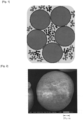
- the ratio D 1 /D 2 of the average primary particle size D 1 of the hydrophobic fumed oxide powder and the average primary particle size D 2 of the magnesium oxide powder and/or the nitride-based inorganic powder is in the above-mentioned range, and the content ratio of the hydrophobic fumed oxide powder is in the above-mentioned range, for example, as shown in the schematic diagram of Fig.
- the small-diameter hydrophobic fumed oxide powder is densely packed between the large-diameter magnesium oxide powder and/or nitride-based inorganic powder, the small-diameter hydrophobic fumed oxide powder is attached on the surface of the large-diameter magnesium oxide powder and/or nitride-based inorganic powder and the small-diameter hydrophobic fumed oxide powder is connected in a bead shape in the voids between the large-diameter magnesium oxide powder and/or nitride-based inorganic powder to form a three-dimensional network structure by the small-diameter hydrophobic fumed oxide powder in the voids.
- the volume resistivity of the mixed powder of the small-diameter filler and the large-diameter filler can be dramatically heightened to 1 ⁇ 10 11 ⁇ m or more without impairing thermal conductivity and simultaneously water resistance of the insulating filler can be improved.
- high thermal conductivity and high electric insulation of the insulating filler which are contrary to each other, can be both achieved at a high level, and the insulating filler can be made highly water resistant.
- Fig. 2 it is shown a mixed powder in which one of the five mixed powders shown in Fig. 1 is photographed by a scanning electron microscope (SEM).
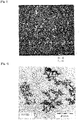
- Fig. 3 is an enlarged SEM photographic diagram of the surface of the mixed powder shown in Fig. 2 , and in Fig. 3 , it is clearly shown that a large number of the small-diameter powders are densely coated on the surface of the large-diameter powder.
- the fumed silica powder is produced by injecting a mixed gas of SiCl 4 , H 2 and O 2 as vaporizing raw materials from a burner.
- aggregated particles which are the smallest particle form in which the primary particles of silica are calcinated, are firstly formed, and then, as shown in Fig. 5 , aggregated particles are gathered by weak interaction of hydrogen bonding or Van der Waals force to form gathered bulk particles.
- a hydrophobic fumed oxide powder can be obtained.
- This hydrophobic fumed oxide powder can be obtained, for example, in the case of a hydrophobic fumed silica powder, by chemically modifying the surface of the fumed silica powder with a silane coupling agent or silicone oil.
- the "hydrophobicity" of the hydrophobic fumed oxide powder means a property having a hydrophobization rate of preferably 80% or more, and further preferably 90% or more. If the hydrophobization rate of less than 80%, hydrophobicity of the fumed oxide powder is lowered, and water resistance of the insulating filler is lowered.
- each powder of the hydrophobic fumed silica, hydrophobic fumed alumina or hydrophobic fumed titania is modified by a (R 1 ) X (R 2 ) Y R 3 ) Z Si- group (R 1 , R 2 and R 3 are alkyl groups, and X, Y and 2 are integers of 0 to 3.).
- hydrophobic fumed silica for example, "RY50”: hydrophobic fumed silica (SiO 2 ) having an average primary particle size of 40 nm available from NIPPON AEROSIL CO., LTD.
- hydrophobic fumed alumina for example, "C805": hydrophobic fumed alumina (Al 2 O 3 ) having an average primary particle size of 13 nm available from Evonik Industries AG
- hydrophobic fumed titania for example, "T805": hydrophobic fumed titania (TiO 2 ) having an average primary particle size of 21 nm available from Evonik Industries AG
- the insulating filler of the present embodiment is prepared by mixing a large-diameter magnesium oxide powder and/or nitride-based inorganic powder and a small-diameter hydrophobic fumed oxide powder under room temperature by a dry method.
- a dry method it is preferable to use a rotating and revolving mixer (manufactured by THINKY CORPORATION: model number "ARE-310"), and at the laboratory level, a planetary stirring mixer (manufactured by THINKY CORPORATION: Awatori Rentarou "R250”), etc., can be used.
- This insulating filler and a resin, etc. are mixed and stirred by the above-mentioned rotating and revolving mixer to prepare a resin composition.
- the resin etc.
- a mixture of an unsaturated polyester resin and a curing agent a mixture of an epoxy resin and a curing agent, a mixture of EPDM rubber (ethylene-propylene-diene ternary copolymer), a silicone resin and a curing agent, etc.
- a mixing ratio of the above-mentioned resin, etc. is preferably 10% by volume to 60% by volume, and further preferably 20% by volume to 30% by volume when the total amount of the insulating filler and the resin, etc., is 100% by volume.
- the reason why the preferred mixing ratio of the resin, etc., is limited to the range of 10% by volume to 60% by volume is that if it is less than 10% by volume, the resin is difficultly molded, while if it exceeds 60% by volume, sufficient water resistance, thermal conductivity and electric insulation can be difficultly imparted to the insulating material which is a resin molded body.
- the above-mentioned resin composition is placed in a mold, and the resin is cured using a heat press (for example, manufactured by Kodaira Seisakusho Co., Ltd.: model number "PY15-EA") at a temperature of 130°C to 200°C by applying a pressure of 1 MPa to 15 MPa (10 kg/cm 2 to 150 kg/cm 2 ) and holding it for 5 minutes to 60 minutes to prepare a resin molded body (high thermal conductive insulating material) having high thermal conductivity, high insulating property and high water resistance.
- a heat press for example, manufactured by Kodaira Seisakusho Co., Ltd.: model number "PY15-EA
- the reason why the preferable temperature of the heat press is limited to the range of 130°C to 200°C is that if it is lower than 130°C, curing failure is likely to occur, while if it exceeds 200°C, the resin is likely to be deteriorated by heat.
- the reason why the preferable pressure of the heat press is limited to the range of 1 MPa to 15 MPa (10 kg/cm 2 to 150 kg/cm 2 ) is that if it is less than 1 MPa (10 kg/cm 2 ), air remains inside thereof and sufficient thermal conductivity is difficultly obtained, while if it exceeds 15 MPa (150 kg/cm 2 ), the load on the compression machine tends to be excessive.
- the reason why the preferable holding time of the heat press is limited to the range of 5 minutes to 60 minutes is that if it is shorter than 5 minutes, curing tends to be insufficient, while if it exceeds 60 minutes, productivity tends to decrease.
- the dielectric breakdown voltage of the resin molded body (high thermal conductive insulating material) is preferably 1 kV/mm or more, and further preferably 3 kV/mm or more.
- the reason why the preferable dielectric breakdown voltage of the resin molded body (high thermal conductive insulating material) is limited to 1 kV/mm or more is that if it is less than 1 kV/mm, it may not have sufficient electric insulation depending on the place of use.
- the dielectric breakdown voltage of the resin molded body (high thermal conductive insulating material) is measured by using an ultra-high voltage withstanding voltage tester "7470 series" (manufactured by Keisoku Giken Co., Ltd.: model number "7473").
- the above-mentioned resin molded body (high thermal conductive insulating material) can be utilized for cooling members of heating elements comprising semiconductor chips or transistors of in-vehicle electronic devices, cooling members of stators built in housings of motors, cooling members of power conversion devices built in cases of inverters, a heat dissipation member of heat generated in a sliding portion or a rotating portion of an actuator, etc.
- a spherical magnesium oxide powder (available from Denka Co., Ltd.: model number "DMG-120” (average primary particle size 108 um)) was prepared as a large-diameter powder, and hydrophobic fumed silica powder (available from NIPPON AEROSIL CO., LTD.: model number "AEROSIL (Registered trademark) R976" (average primary particle size 7 nm)) was prepared as a small-diameter powder.
- Examples 2 to 12 and Comparative Examples 1 to 4 as shown in Table 1, the model number, material and average primary particle size of the large-diameter powder, and the model number, material and the average primary particle size of the small-diameter powder, and a mixing ratio of the large-diameter powder and the small-diameter powder were each changed, and other than the above were carried out in the same manner as in Example 1 to obtain an insulating filler.
- "W15" of the large-diameter powder is a model number of aluminum nitride (AlN) powder having an average primary particle size of 15 ⁇ m available from Toyo Aluminium K.K.
- "DMG-60” of the large-diameter powder is a model number of spherical magnesium oxide (MgO) powder having an average primary particle size of 61 ⁇ m available from Denka Co., Ltd.
- "SGP" of the large-diameter powder is a model number of boron nitride (BN) powder having an average primary particle size of 18 ⁇ m available from Denka Co., Ltd.
- "BSN-S20LGF” of the large-diameter powder is a model number of boron nitride (BN) powder having an average primary particle size of 20 ⁇ m available from Combustion Synthesis Co., Ltd.
- "RY50L” of the small-diameter powder is a model number of hydrophobic fumed silica (SiO 2 ) powder having an average primary particle size of 40 nm available from NIPPON AEROSIL CO., LTD.
- "NAX50" of the small-diameter powder is a model number of hydrophobic fumed silica (SiO 2 ) powder having an average primary particle size of 30 nm available from NIPPON AEROSIL CO., LTD.
- "RY50" of the small-diameter powder is a model number of hydrophobic fumed silica (SiO 2 ) powder having an average primary particle size of 40 nm available from NIPPON AEROSIL CO., LTD.
- "R805" of the small-diameter powder is a model number of hydrophobic fumed silica (SiO 2 ) powder having an average primary particle size of 12 nm available from Evonik Industries AG, "RX200" of the small
- "300" of the small-diameter powder is a model number of hydrophilic fumed silica (SiO 2 ) powder having an average primary particle size of 7 nm available from NIPPON AEROSIL CO., LTD.
- "R7200" of the small-diameter powder is a model number of hydrophobic fumed silica (SiO 2 ) powder having an average primary particle size of 12 nm available from Evonik Industries AG.
- C805" of the small-diameter powder is a model number of hydrophobic fumed alumina (Al 2 O 3 ) powder having an average primary particle size of 13 nm available from Evonik Industries AG
- T805" of the small-diameter powder is a model number of hydrophobic fumed titania (TiO 2 ) powder having an average primary particle size of 21 nm available from Evonik Industries AG.
- AA-3 of the small-diameter powder is a model number of spherical ⁇ -alumina (Al 2 O 3 ) powder having an average primary particle size of 3.4 ⁇ m available from Sumitomo Alumina Co., Ltd.
- "AA-04" of the small-diameter powder is a model number of spherical ⁇ -alumina (Al 2 O 3 ) powder having an average primary particle size of 0.44 ⁇ m available from Sumitomo Alumina Co., Ltd.
- MF of the small-diameter powder is a model number of aluminum nitride (AlN) powder having an average primary particle size of 2.5 ⁇ m available from Toyo Aluminium K.K.
- P25 of the small-diameter powder is a model number of hydrophilic fumed titania (TiO 2 ) powder having an average primary particle size of 13 nm available from NIPPON AEROSIL CO., LTD.
- column-SiO 2 " of the small-diameter powder is colloidal silica powder having an average primary particle size of 12 nm available from Evonik Industries AG.
- the ratio D 1 /D 2 of the average primary particle size of the small-diameter powder having the average primary particle size D 1 and the large-diameter powder having the average primary particle size D 2 of the insulating fillers of Examples 1 to 12 and Comparative Examples 1 to 4 was calculated.
- the volume resistivity of the insulating fillers of Examples 1 to 12 and Comparative Examples 1 to 4 was measured by using a high resistance-resistivity meter "Hiresta-UX" (manufactured by Mitsubishi Chemical Analytech Co., Ltd.: model number "MCP-HT800”) and a powder resistance measurement system (manufactured by Mitsubishi Chemical Analytech Co., Ltd.: model number "MCP-PD-51").
- the mixing ratio of the small-diameter powder was within the suitable range (5% by mass to 30% by mass) as 26% by mass, and the ratio (small-diameter/large-diameter) of the average primary particle size of the small-diameter powder and the large-diameter powder was within the suitable range (6 ⁇ 10 -5 to 3 ⁇ 10 -3 ) as 1 ⁇ 10 -4 , in the insulating filler of Comparative Example 2, the volume resistivity was low as 1 ⁇ 10 9 . It was estimated that it did not have a connection in a bead shape structure.
- the volume resistivity was low as 7 ⁇ 10 8 .
- the volume resistivity was high as 1 ⁇ 10 11 ⁇ m to 1 ⁇ 10 14 ⁇ m.
- the volume resistivity was low as 5 ⁇ 10 8 .
- the mixing ratio of the small-diameter powder was within the suitable range as 5% by mass to 30% by mass
- the ratio (small-diameter/large-diameter) of the average primary particle sizes of the small-diameter powder and the large-diameter powder was within the suitable range as 6 ⁇ 10 -5 to 3 ⁇ 10 -3
- hydrophobic fumed silica, hydrophobic fumed alumina or hydrophobic fumed titania was used as the small-diameter powder and mixed by the dry method, the volume resistivity became high as 1 ⁇ 10 11 ⁇ m to 1 ⁇ 10 14 ⁇ m.
- a spherical magnesium oxide powder (available from Denka Co., Ltd.: model number "DMG-120” (average primary particle size 108 um)) was prepared as a large-diameter powder, and hydrophobic fumed silica powder (available from NIPPON AEROSIL CO., LTD.: model number "RY50L” (average primary particle size 40 nm)) was prepared as a small-diameter powder.
- Example 13 In the same manner as in Example 13 except for using 90% by mass of a spherical magnesium oxide powder (available from Denka Co., Ltd.: model number "DMG-120" (average primary particle size 108 ⁇ m)) as a large-diameter powder, and 10% by mass of a hydrophobic fumed silica powder (available from NIPPON AEROSIL CO., LTD.: model number "RY50L” (average primary particle size 40 nm)) as a small-diameter powder, an insulating filler was obtained.
- a spherical magnesium oxide powder available from Denka Co., Ltd.: model number "DMG-120” (average primary particle size 108 ⁇ m)
- a hydrophobic fumed silica powder available from NIPPON AEROSIL CO., LTD.: model number "RY50L” (average primary particle size 40 nm)
- Example 13 In the same manner as in Example 13 except for using 85% by mass of a spherical magnesium oxide powder (available from Denka Co., Ltd.: model number "DMG-120" (average primary particle size 108 ⁇ m)) as a large-diameter powder, and 15% by mass of a hydrophobic fumed silica powder (available from NIPPON AEROSIL CO., LTD.: model number "RY50L” (average primary particle size 40 nm)) as a small-diameter powder, an insulating filler was obtained.
- a spherical magnesium oxide powder available from Denka Co., Ltd.: model number "DMG-120” (average primary particle size 108 ⁇ m)
- a hydrophobic fumed silica powder available from NIPPON AEROSIL CO., LTD.: model number "RY50L” (average primary particle size 40 nm)
- Example 13 In the same manner as in Example 13 except for using 74% by mass of an aluminum nitride powder (available from Toyo Aluminium K.K.: model number "W15" (average primary particle size 15 ⁇ m)) as a large-diameter powder, and 26% by mass of hydrophobic fumed silica powder (available from NIPPON AEROSIL CO., LTD.: model number "R976" (average primary particle size 7 nm)) as a small-diameter powder, an insulating filler was obtained.
- an aluminum nitride powder available from Toyo Aluminium K.K.: model number "W15" (average primary particle size 15 ⁇ m)
- hydrophobic fumed silica powder available from NIPPON AEROSIL CO., LTD.: model number "R976" (average primary particle size 7 nm)
- Example 13 In the same manner as in Example 13 except for using 74% by mass of an aluminum nitride powder (available from Toyo Aluminium K.K.: model number "W15" (average primary particle size 15 ⁇ m)) as a large-diameter powder, and 26% by mass of a hydrophobic fumed alumina powder (available from Evonik Industries AG: model number "C805" (average primary particle size 13 nm)) as a small-diameter powder, an insulating filler was obtained.
- an aluminum nitride powder available from Toyo Aluminium K.K.: model number "W15" (average primary particle size 15 ⁇ m)
- a hydrophobic fumed alumina powder available from Evonik Industries AG: model number "C805" (average primary particle size 13 nm)
- Example 13 In the same manner as in Example 13 except for using a spherical magnesium oxide powder (available from Denka Co., Ltd.: model number "DMG-120" (average primary particle size 108 ⁇ m)) as a large-diameter powder, and not using the small-diameter powder, an insulating filler was obtained.
- a spherical magnesium oxide powder available from Denka Co., Ltd.: model number "DMG-120" (average primary particle size 108 ⁇ m)
- Example 13 In the same manner as in Example 13 except for using an aluminum nitride powder (available from Toyo Aluminium K.K.: model number "W15" (average primary particle size 15 ⁇ m)) as a large-diameter powder, and not using the small-diameter powder, an insulating filler was obtained.
- an aluminum nitride powder available from Toyo Aluminium K.K.: model number "W15" (average primary particle size 15 ⁇ m)
- the volume resistivity before and after moisture absorption was measured by using a high resistance-resistivity meter "Hiresta-UX” (manufactured by Mitsubishi Chemical Analytech Co., Ltd.: model number "MCP-HT800”) and a powder resistance measurement system (manufactured by Mitsubishi Chemical Analytech Co., Ltd.: model number "MCP-PD-51”).
- Moisture absorption was carried out by leaving the insulating filler in a constant temperature and constant humidity oven (manufactured by Yamato Scientific Co., Ltd.: model number "IG401”) under the conditions of a temperature of 32°C and a relative humidity of 80% for 16 days.
- Comparative Example 5 which consists of a spherical magnesium oxide powder (available from Denka Co., Ltd.: model number "DMG-120" (average primary particle size 108 ⁇ m)) alone as the large-diameter powder without using the small-diameter powder, when moisture was absorbed under constant temperature and high humidity conditions (32°C, a relative humidity of 80%) for 16 days, the volume resistivity was lowered as 4 ⁇ 10 9 ⁇ m with two digits as compared with before moisture absorption.
- a spherical magnesium oxide powder available from Denka Co., Ltd.: model number "DMG-120" (average primary particle size 108 ⁇ m)
- Comparative Example 6 which consists of an aluminum nitride powder (available from Toyo Aluminium K.K.: model number "W15" (average primary particle size 15 ⁇ m)) alone as the large-diameter powder without using the small-diameter powder, when moisture was absorbed under constant temperature and high humidity conditions (32°C, a relative humidity of 80%) for 16 days, the volume resistivity was lowered as 1 ⁇ 10 9 ⁇ m with one digit as compared with before moisture absorption.
- model number "W15" average primary particle size 15 ⁇ m
- the mixture of the above-mentioned resin and the insulating filler were mixed by the above-mentioned rotating and revolving mixer at 2,000 rpm for 5 minutes to prepare a resin composition. Further, this resin composition is placed in a mold having a length ⁇ width ⁇ depth of a cavity of 15 cm ⁇ 15 cm ⁇ 2 mm, and the resin was cured using a heat press (manufactured by Kodaira Seisakusho Co., Ltd.: model number "PY15-EA”) at a temperature of 130°C and applying a pressure of 10 MPa (100 kg/cm 2 ) and maintaining for 10 minutes to prepare an insulating material comprising a resin molded body.
- a heat press manufactured by Kodaira Seisakusho Co., Ltd.: model number "PY15-EA
- a mixed powder A 57.3% by volume of a spherical magnesium oxide powder (available from Denka Co., Ltd.: model number "DMG-120" (average primary particle size 108 ⁇ m)) as a large-diameter powder and 9.8% by volume of a hydrophobic fumed silica powder (available from NIPPON AEROSIL CO., LTD.: model number "RY50L” (average primary particle size 40 nm)) as a small-diameter powder were mixed, and it was mixed with a rotating and revolving mixer (manufactured by THINKY CORPORATION: model number "ARE-310”) at 2,000 rpm for 3 minutes to obtain an insulating filler A.
- a rotating and revolving mixer manufactured by THINKY CORPORATION: model number "ARE-310
- a mixed powder B 10.3% by volume of an aluminum nitride powder (available from Toyo Aluminium K.K. : model number "TFZ-S30P” (average primary particle size 28 ⁇ m)) as a large-diameter powder and 2.1% by volume of a hydrophobic fumed silica powder (available from NIPPON AEROSIL CO., LTD.: model number "VP RX40S” (average primary particle size 40 nm)) as a small-diameter powder were mixed, and it was mixed with a rotating and revolving mixer (manufactured by THINKY CORPORATION: model number "ARE-310”) at 2,000 rpm for 3 minutes to obtain an insulating filler B.
- an aluminum nitride powder available from Toyo Aluminium K.K. : model number "TFZ-S30P” (average primary particle size 28 ⁇ m)
- a hydrophobic fumed silica powder available from NIPPON AEROSIL CO., LTD
- a mixed powder A 56.9% by volume of a spherical magnesium oxide powder (available from Denka Co., Ltd.: model number "DMG-60” (average primary particle size 61 ⁇ m)) as a large-diameter powder and 10.0% by volume of a hydrophobic fumed silica powder (available from NIPPON AEROSIL CO., LTD.: model number "RY50L” (average primary particle size 40 nm)) as a small-diameter powder were mixed, and it was mixed with a rotating and revolving mixer (manufactured by THINKY CORPORATION: model number "ARE-310”) at 2,000 rpm for 3 minutes to obtain an insulating filler A.
- a rotating and revolving mixer manufactured by THINKY CORPORATION: model number "ARE-310
- a mixed powder B 10.5% by volume of an aluminum nitride powder (available from Toyo Aluminium K.K.: model number "TFZ-S30P” (average primary particle size 28 ⁇ m)) as a large-diameter powder and 2.1% by volume of a hydrophobic fumed silica powder (available from NIPPON AEROSIL CO., LTD.: model number "VP RX40S” (average primary particle size 40 nm)) as a small-diameter powder were mixed, and it was mixed with a rotating and revolving mixer (manufactured by THINKY CORPORATION: model number "ARE-310”) at 2,000 rpm for 3 minutes to obtain an insulating filler B.
- an aluminum nitride powder available from Toyo Aluminium K.K.: model number "TFZ-S30P” (average primary particle size 28 ⁇ m)
- a hydrophobic fumed silica powder available from NIPPON AEROSIL CO., LTD.:
- a mixed powder 63.0% by volume of a silicon nitride powder (available from Combustion Synthesis Co., LTd.: model number "BSN-S20LGF” (average primary particle size 20 ⁇ m)) as a large-diameter powder and 12.0% by volume of a hydro-phobic fumed silica powder (available from NIPPON AEROSIL CO., LTD.: model number "RX300” (average primary particle size 7 nm)) as a small-diameter powder were mixed, and it was mixed with a rotating and revolving mixer (manufactured by THINKY CORPORATION: model number "ARE-310”) at 2,000 rpm for 3 minutes to obtain an insulating filler.
- a rotating and revolving mixer manufactured by THINKY CORPORATION: model number "ARE-310
- an epoxy resin available from Mitsubishi Chemical Corporation: model number "JER828" was prepared as a resin. Then, as a mixed powder, 63.5% by volume of a boron nitride powder (available from Denka Co., Ltd.: model number "SGP” (average primary particle size 18 ⁇ m)) as a large-diameter powder and 11.5% by volume of a hydrophobic fumed silica powder (available from NIPPON AEROSIL CO., LTD.: model number "RX200” (average primary particle size 12 nm)) as a small-diameter powder were mixed, and it was mixed with a rotating and revolving mixer (manufactured by THINKY CORPORATION: model number "ARE-310”) at 2,000 rpm for 3 minutes to obtain an insulating filler. In the same manner as in Example 18 except for the above, an insulating material comprising a resin molded body was prepared.
- P such as the resin, etc.
- Q such as the resin, etc.
- R is an epoxy resin with a model number "JER828” available from Mitsubishi Chemical Corporation.
- "DMG-120" of the large-diameter powder is a model number of a spherical magnesium oxide (MgO) powder having an average primary particle size of 108 ⁇ m available from Denka Co., Ltd.
- "DMG-60” of the large-diameter powder is a model number of a spherical magnesium oxide (MgO) powder having an the average primary particle size of 61 ⁇ m available from Denka Co., Ltd.
- "TFZ-S30P” of the large-diameter powder is a model number of an aluminum nitride (AlN) powder having an average primary particle size of 28 ⁇ m available from Toyo Aluminium K.K.
- "BSN-S20LGF” of the large-diameter powder is a model number of a silicon nitride (Si 3 N 4 ) powder having an average primary particle size of 20 ⁇ m available from Combustion Synthesis Co., LTd., and "SGP" of
- "RY50L” of the small-diameter powder is a model number of a hydrophobic fumed silica (SiO 2 ) powder having an average primary particle size of 40 nm available from NIPPON AEROSIL CO., LTD.
- "VP RX40S” of the small-diameter powder is a model number of a hydrophobic fumed silica (SiO 2 ) powder having an average primary particle size of 40 nm available from NIPPON AEROSIL CO., LTD.
- "RX300” of the small-diameter powder is a model number of a hydrophobic fumed silica (SiO 2 ) powder having an average primary particle size of 7 nm available from NIPPON AEROSIL CO., LTD.
- "RX200" of the small-diameter powder is a model number of a hydrophobic fumed silica (SiO 2 ) powder having an average primary particle size of 12 nm available from
- dielectric breakdown voltage before immersion and after immersion was measured using an ultra-high voltage withstanding voltage tester "7470 series" (manufactured by Keisoku Giken Co., Ltd.: model number "7473”), and the value obtained by dividing the value by the thickness (2 mm) was defined as the dielectric breakdown voltage (kV/mm).
- Immersion with water was carried out by immersing an insulating material comprising a resin molded body in ion-exchanged water and holding it at 50°C for 5 days. After immersion, the insulating material comprising the resin molded body was pulled up from water, and dried it at 135°C for 6 hours.
- the rate of change of the dielectric breakdown voltage before immersion and after immersion was calculated based on the above-mentioned equation (2). There are cases where the dielectric breakdown voltage becomes high and becomes low due to immersion, so that the difference of the dielectric breakdown voltage before immersion and after immersion is expressed by an absolute value, and this difference is divided by the dielectric breakdown voltage before immersion and expressed by a percentage. The results are shown in Table 3.
- the ratio (small-diameter/large-diameter) of the average primary particle sizes of the small-diameter powder and the large-diameter powder was in the suitable range (6 ⁇ 10 -5 to 3 ⁇ 10 -3 ) as 4 ⁇ 10 -4 to 1 ⁇ 10 -3
- the hydrophobic fumed silica was used as a small-diameter powder and mixed by the dry method, there occurred substantially no lowering in the dielectric breakdown voltage after immersion and these became high as 3 kV/mm or more whereby these became insulating materials having high reliability to water resistance.
- the rate of change of the dielectric breakdown voltage before and after immersion was 0.3% to 4.5% in the insulating materials of Examples 18 to 23.
- the insulating material containing the insulating filler of the present invention can be utilized in cooling members for heating elements comprising semiconductor chips, transistors, lithium ion secondary batteries or LED light sources of communication devices or in-vehicle electronic devices, in cooling members for stators built in housings of motors, in cooling members for power conversion devices built in cases of inverters, or in heat dissipation members for releasing heat generated in sliding portions or rotating portions of actuators, etc.
Landscapes
- Chemical & Material Sciences (AREA)
- Organic Chemistry (AREA)
- Inorganic Chemistry (AREA)
- Medicinal Chemistry (AREA)
- Polymers & Plastics (AREA)
- Health & Medical Sciences (AREA)
- Chemical Kinetics & Catalysis (AREA)
- Engineering & Computer Science (AREA)
- Ceramic Engineering (AREA)
- Life Sciences & Earth Sciences (AREA)
- Geology (AREA)
- Inorganic Insulating Materials (AREA)
- Compositions Of Macromolecular Compounds (AREA)
- Silicon Compounds (AREA)
Applications Claiming Priority (2)
| Application Number | Priority Date | Filing Date | Title |
|---|---|---|---|
| JP2020055633A JP6950028B2 (ja) | 2020-03-26 | 2020-03-26 | 絶縁性フィラー及びその製造方法、該絶縁性フィラーを含む絶縁材及びその製造方法。 |
| PCT/JP2021/012147 WO2021193690A1 (ja) | 2020-03-26 | 2021-03-24 | 絶縁性フィラー及びその製造方法、該絶縁性フィラーを含む絶縁材及びその製造方法 |
Publications (3)
| Publication Number | Publication Date |
|---|---|
| EP4129897A1 true EP4129897A1 (de) | 2023-02-08 |
| EP4129897A4 EP4129897A4 (de) | 2024-04-24 |
| EP4129897B1 EP4129897B1 (de) | 2025-03-12 |
Family
ID=77890425
Family Applications (1)
| Application Number | Title | Priority Date | Filing Date |
|---|---|---|---|
| EP21775314.4A Active EP4129897B1 (de) | 2020-03-26 | 2021-03-24 | Isolierfüllstoff und herstellungsverfahren dafür, isoliermaterial mit diesem isolierfüllstoff und herstellungsverfahren dafür |
Country Status (7)
| Country | Link |
|---|---|
| US (1) | US11718729B2 (de) |
| EP (1) | EP4129897B1 (de) |
| JP (1) | JP6950028B2 (de) |
| KR (1) | KR102512116B1 (de) |
| CN (1) | CN115298138B (de) |
| TW (1) | TWI800807B (de) |
| WO (1) | WO2021193690A1 (de) |
Families Citing this family (1)
| Publication number | Priority date | Publication date | Assignee | Title |
|---|---|---|---|---|
| EP4445392A4 (de) * | 2021-12-07 | 2025-11-12 | Southwire Co Llc | Beschichteter freileiter |
Family Cites Families (23)
| Publication number | Priority date | Publication date | Assignee | Title |
|---|---|---|---|---|
| JP3396510B2 (ja) | 1993-07-13 | 2003-04-14 | 東洋アルミニウム株式会社 | 耐水性の優れた窒化アルミニウム粉末の製造方法 |
| JP4193052B2 (ja) | 2003-08-25 | 2008-12-10 | 信越化学工業株式会社 | 高熱伝導性シリコーンゴム組成物並びに定着ロール及び定着ベルト |
| JP4576909B2 (ja) * | 2004-07-13 | 2010-11-10 | トヨタ自動車株式会社 | 多孔質体の製造方法 |
| JP4315895B2 (ja) | 2004-12-01 | 2009-08-19 | タテホ化学工業株式会社 | リン含有被覆酸化マグネシウム粉末、その製造方法及びその粉末を含む樹脂組成物 |
| JP2007182493A (ja) * | 2006-01-06 | 2007-07-19 | Sekisui Chem Co Ltd | 絶縁材料用硬化性組成物、絶縁材料、及び電子部品装置の製造方法及び電子部品装置 |
| JP5115029B2 (ja) | 2007-05-28 | 2013-01-09 | トヨタ自動車株式会社 | 高熱伝導絶縁材と絶縁紙、コイルボビンおよび電動機 |
| WO2009031536A1 (ja) * | 2007-09-05 | 2009-03-12 | Sekisui Chemical Co., Ltd. | 絶縁シート及び積層構造体 |
| KR101174971B1 (ko) * | 2007-09-05 | 2012-08-17 | 세키스이가가쿠 고교가부시키가이샤 | 절연 시트 및 적층 구조체 |
| JP2011070930A (ja) * | 2009-09-25 | 2011-04-07 | Sekisui Chem Co Ltd | 多層絶縁シート及び積層構造体 |
| JP2011068757A (ja) * | 2009-09-25 | 2011-04-07 | Konoshima Chemical Co Ltd | 酸化マグネシウム系高耐水性熱伝導フィラー及びその製造方法、樹脂組成物 |
| EP2610277A4 (de) * | 2010-08-26 | 2015-08-19 | Denki Kagaku Kogyo Kk | Harzzusammensetzung, aus der harzzusammensetzung gewonnener formkörper und substratmaterial sowie platine mit dem substratmaterial |
| JP6161864B2 (ja) * | 2011-03-30 | 2017-07-12 | 日立化成株式会社 | 樹脂組成物、樹脂シート、プリプレグ、積層板、金属基板、及びプリント配線板 |
| JP5965899B2 (ja) * | 2011-04-28 | 2016-08-10 | 株式会社トクヤマ | 耐水性窒化アルミニウムの製造方法 |
| CN103289214A (zh) * | 2013-06-27 | 2013-09-11 | 上海三原电缆附件有限公司 | 高压直流电缆附件用三元乙丙橡胶绝缘材料及其制备方法 |
| JP6526451B2 (ja) * | 2015-03-12 | 2019-06-05 | 株式会社トクヤマ | 複合フィラーおよびこれを含む樹脂組成物 |
| KR101931569B1 (ko) | 2015-11-03 | 2018-12-21 | 주식회사 엘지화학 | 소수성의 산화금속-실리카 복합 에어로겔의 제조방법 및 이로부터 제조된 소수성의 산화금속-실리카 복합 에어로겔 |
| CN105542447B (zh) * | 2015-12-04 | 2018-01-02 | 广东工业大学 | 一种低黏度高热导率的导热绝缘塑料及其制备方法 |
| KR101938369B1 (ko) * | 2015-12-09 | 2019-01-14 | 주식회사 엘지화학 | 산화금속-실리카 복합 에어로겔의 제조방법 및 이로부터 제조된 산화금속-실리카 복합 에어로겔 |
| JP2017141386A (ja) * | 2016-02-12 | 2017-08-17 | 古河電気工業株式会社 | 耐熱性シラン架橋樹脂成形体及びその製造方法、並びに、シランマスターバッチ及び耐熱性製品 |
| CN105924952A (zh) * | 2016-05-16 | 2016-09-07 | 南通市东方塑胶有限公司 | Led用导热绝缘复合材料及其制备方法 |
| JP6610429B2 (ja) * | 2016-05-24 | 2019-11-27 | 信越化学工業株式会社 | 熱伝導性シリコーン組成物、その硬化物及びその製造方法 |
| JP7682601B2 (ja) | 2018-03-28 | 2025-05-26 | 大日本印刷株式会社 | 包装材料及び包装材料を備える袋 |
| JP7267032B2 (ja) * | 2019-02-26 | 2023-05-01 | 日本アエロジル株式会社 | フィラー充填材及びその製造方法、並びに高熱伝導絶縁材及びその製造方法 |
-
2020
- 2020-03-26 JP JP2020055633A patent/JP6950028B2/ja active Active
-
2021
- 2021-03-24 TW TW110110599A patent/TWI800807B/zh active
- 2021-03-24 WO PCT/JP2021/012147 patent/WO2021193690A1/ja not_active Ceased
- 2021-03-24 US US17/913,971 patent/US11718729B2/en active Active
- 2021-03-24 CN CN202180023347.6A patent/CN115298138B/zh active Active
- 2021-03-24 KR KR1020227033964A patent/KR102512116B1/ko active Active
- 2021-03-24 EP EP21775314.4A patent/EP4129897B1/de active Active
Also Published As
| Publication number | Publication date |
|---|---|
| JP2021155243A (ja) | 2021-10-07 |
| KR102512116B1 (ko) | 2023-03-20 |
| EP4129897B1 (de) | 2025-03-12 |
| JP6950028B2 (ja) | 2021-10-13 |
| CN115298138A (zh) | 2022-11-04 |
| TWI800807B (zh) | 2023-05-01 |
| EP4129897A4 (de) | 2024-04-24 |
| KR20220139422A (ko) | 2022-10-14 |
| TW202204264A (zh) | 2022-02-01 |
| US20230118996A1 (en) | 2023-04-20 |
| WO2021193690A1 (ja) | 2021-09-30 |
| CN115298138B (zh) | 2023-05-09 |
| US11718729B2 (en) | 2023-08-08 |
Similar Documents
| Publication | Publication Date | Title |
|---|---|---|
| CN115943186B (zh) | 硅酮组合物及具有高热传导性的热传导性硅酮硬化物 | |
| CN111511679B (zh) | 六方氮化硼粉末及其生产方法和使用其的组合物和散热材料 | |
| Liu et al. | Core–shell Cu@ rGO hybrids filled in epoxy composites with high thermal conduction | |
| KR101609199B1 (ko) | 열 전도도의 향상을 위해 탄소함유 화학종으로 관능화된 폴리머 매트릭스 | |
| EP3761355B1 (de) | Isolierende wärmeableitungsfolie | |
| EP3421420A1 (de) | Hexagonales bornitridpulver, herstellungsverfahren dafür, harzzusammensetzung und harzfilm | |
| EP4382574B1 (de) | Zusammensetzung und füllstoffmischung | |
| CN107848801A (zh) | 六方晶氮化硼粉末、其制造方法、树脂组合物及树脂片 | |
| CN103140436A (zh) | 氮化铝粉末及其制造方法 | |
| JP7267032B2 (ja) | フィラー充填材及びその製造方法、並びに高熱伝導絶縁材及びその製造方法 | |
| CN110099865A (zh) | 六方晶氮化硼粉末、其制造方法、树脂组合物和树脂片 | |
| JP4088768B2 (ja) | 窒化アルミニウム系粉末 | |
| EP3875428A1 (de) | Bornitrid-nanomaterial und harzzusammensetzung | |
| KR20220047599A (ko) | 질화 붕소 분말, 질화 붕소 분말의 제조 방법, 수지 재료 및, 수지 재료의 제조 방법 | |
| EP4129897B1 (de) | Isolierfüllstoff und herstellungsverfahren dafür, isoliermaterial mit diesem isolierfüllstoff und herstellungsverfahren dafür | |
| JP7393975B2 (ja) | 複合窒化アルミニウム粉末及びその製造方法 | |
| JP2022183821A (ja) | 表面被覆六方晶窒化ホウ素粒子を製造する方法、及び表面被覆六方晶ホウ素粒子 | |
| CN113574115A (zh) | 导热性组合物及其制造方法 | |
| CN114423825B (zh) | 导热性有机硅组合物及其制造方法、以及半导体装置 | |
| HK40081444B (en) | Insulating filler and production method therefor, insulating material containing said insulating filler and production method therefor | |
| HK40081444A (en) | Insulating filler and production method therefor, insulating material containing said insulating filler and production method therefor | |
| EP4308644B1 (de) | Härtbare zusammensetzung mit polyaziridine und oxidierten bornitridpartikeln, verfahren zur härtung davon und gehärtete zusammensetzung | |
| JPH06305723A (ja) | シリカ質複合粒子及びその用途 |
Legal Events
| Date | Code | Title | Description |
|---|---|---|---|
| STAA | Information on the status of an ep patent application or granted ep patent |
Free format text: STATUS: THE INTERNATIONAL PUBLICATION HAS BEEN MADE |
|
| PUAI | Public reference made under article 153(3) epc to a published international application that has entered the european phase |
Free format text: ORIGINAL CODE: 0009012 |
|
| STAA | Information on the status of an ep patent application or granted ep patent |
Free format text: STATUS: REQUEST FOR EXAMINATION WAS MADE |
|
| 17P | Request for examination filed |
Effective date: 20221013 |
|
| AK | Designated contracting states |
Kind code of ref document: A1 Designated state(s): AL AT BE BG CH CY CZ DE DK EE ES FI FR GB GR HR HU IE IS IT LI LT LU LV MC MK MT NL NO PL PT RO RS SE SI SK SM TR |
|
| DAV | Request for validation of the european patent (deleted) | ||
| DAX | Request for extension of the european patent (deleted) | ||
| A4 | Supplementary search report drawn up and despatched |
Effective date: 20240327 |
|
| RIC1 | Information provided on ipc code assigned before grant |
Ipc: H01B 3/10 20060101ALI20240321BHEP Ipc: H01B 3/02 20060101ALI20240321BHEP Ipc: H01B 3/12 20060101ALI20240321BHEP Ipc: C01B 33/18 20060101ALI20240321BHEP Ipc: C01B 21/072 20060101ALI20240321BHEP Ipc: C01B 21/068 20060101ALI20240321BHEP Ipc: C01B 21/064 20060101AFI20240321BHEP |
|
| GRAP | Despatch of communication of intention to grant a patent |
Free format text: ORIGINAL CODE: EPIDOSNIGR1 |
|
| STAA | Information on the status of an ep patent application or granted ep patent |
Free format text: STATUS: GRANT OF PATENT IS INTENDED |
|
| RIC1 | Information provided on ipc code assigned before grant |
Ipc: H01B 3/10 20060101ALI20241021BHEP Ipc: H01B 3/02 20060101ALI20241021BHEP Ipc: H01B 3/12 20060101ALI20241021BHEP Ipc: C01B 33/18 20060101ALI20241021BHEP Ipc: C01B 21/072 20060101ALI20241021BHEP Ipc: C01B 21/068 20060101ALI20241021BHEP Ipc: C01B 21/064 20060101AFI20241021BHEP |
|
| INTG | Intention to grant announced |
Effective date: 20241108 |
|
| GRAS | Grant fee paid |
Free format text: ORIGINAL CODE: EPIDOSNIGR3 |
|
| GRAA | (expected) grant |
Free format text: ORIGINAL CODE: 0009210 |
|
| STAA | Information on the status of an ep patent application or granted ep patent |
Free format text: STATUS: THE PATENT HAS BEEN GRANTED |
|
| AK | Designated contracting states |
Kind code of ref document: B1 Designated state(s): AL AT BE BG CH CY CZ DE DK EE ES FI FR GB GR HR HU IE IS IT LI LT LU LV MC MK MT NL NO PL PT RO RS SE SI SK SM TR |
|
| P01 | Opt-out of the competence of the unified patent court (upc) registered |
Free format text: CASE NUMBER: APP_5085/2025 Effective date: 20250130 |
|
| REG | Reference to a national code |
Ref country code: GB Ref legal event code: FG4D |
|
| REG | Reference to a national code |
Ref country code: CH Ref legal event code: EP |
|
| REG | Reference to a national code |
Ref country code: DE Ref legal event code: R096 Ref document number: 602021027566 Country of ref document: DE |
|
| REG | Reference to a national code |
Ref country code: IE Ref legal event code: FG4D |
|
| PGFP | Annual fee paid to national office [announced via postgrant information from national office to epo] |
Ref country code: AT Payment date: 20250417 Year of fee payment: 5 |
|
| PG25 | Lapsed in a contracting state [announced via postgrant information from national office to epo] |
Ref country code: RS Free format text: LAPSE BECAUSE OF FAILURE TO SUBMIT A TRANSLATION OF THE DESCRIPTION OR TO PAY THE FEE WITHIN THE PRESCRIBED TIME-LIMIT Effective date: 20250612 |
|
| PG25 | Lapsed in a contracting state [announced via postgrant information from national office to epo] |
Ref country code: FI Free format text: LAPSE BECAUSE OF FAILURE TO SUBMIT A TRANSLATION OF THE DESCRIPTION OR TO PAY THE FEE WITHIN THE PRESCRIBED TIME-LIMIT Effective date: 20250312 |
|
| PG25 | Lapsed in a contracting state [announced via postgrant information from national office to epo] |
Ref country code: ES Free format text: LAPSE BECAUSE OF FAILURE TO SUBMIT A TRANSLATION OF THE DESCRIPTION OR TO PAY THE FEE WITHIN THE PRESCRIBED TIME-LIMIT Effective date: 20250312 |
|
| REG | Reference to a national code |
Ref country code: LT Ref legal event code: MG9D |
|
| PG25 | Lapsed in a contracting state [announced via postgrant information from national office to epo] |
Ref country code: NO Free format text: LAPSE BECAUSE OF FAILURE TO SUBMIT A TRANSLATION OF THE DESCRIPTION OR TO PAY THE FEE WITHIN THE PRESCRIBED TIME-LIMIT Effective date: 20250612 |
|
| PG25 | Lapsed in a contracting state [announced via postgrant information from national office to epo] |
Ref country code: HR Free format text: LAPSE BECAUSE OF FAILURE TO SUBMIT A TRANSLATION OF THE DESCRIPTION OR TO PAY THE FEE WITHIN THE PRESCRIBED TIME-LIMIT Effective date: 20250312 |
|
| REG | Reference to a national code |
Ref country code: NL Ref legal event code: MP Effective date: 20250312 |
|
| PG25 | Lapsed in a contracting state [announced via postgrant information from national office to epo] |
Ref country code: LV Free format text: LAPSE BECAUSE OF FAILURE TO SUBMIT A TRANSLATION OF THE DESCRIPTION OR TO PAY THE FEE WITHIN THE PRESCRIBED TIME-LIMIT Effective date: 20250312 |
|
| PG25 | Lapsed in a contracting state [announced via postgrant information from national office to epo] |
Ref country code: GR Free format text: LAPSE BECAUSE OF FAILURE TO SUBMIT A TRANSLATION OF THE DESCRIPTION OR TO PAY THE FEE WITHIN THE PRESCRIBED TIME-LIMIT Effective date: 20250613 Ref country code: BG Free format text: LAPSE BECAUSE OF FAILURE TO SUBMIT A TRANSLATION OF THE DESCRIPTION OR TO PAY THE FEE WITHIN THE PRESCRIBED TIME-LIMIT Effective date: 20250312 |
|
| REG | Reference to a national code |
Ref country code: AT Ref legal event code: MK05 Ref document number: 1774920 Country of ref document: AT Kind code of ref document: T Effective date: 20250312 |
|
| PG25 | Lapsed in a contracting state [announced via postgrant information from national office to epo] |
Ref country code: NL Free format text: LAPSE BECAUSE OF FAILURE TO SUBMIT A TRANSLATION OF THE DESCRIPTION OR TO PAY THE FEE WITHIN THE PRESCRIBED TIME-LIMIT Effective date: 20250312 |
|
| PG25 | Lapsed in a contracting state [announced via postgrant information from national office to epo] |
Ref country code: SE Free format text: LAPSE BECAUSE OF FAILURE TO SUBMIT A TRANSLATION OF THE DESCRIPTION OR TO PAY THE FEE WITHIN THE PRESCRIBED TIME-LIMIT Effective date: 20250312 |
|
| PG25 | Lapsed in a contracting state [announced via postgrant information from national office to epo] |
Ref country code: SM Free format text: LAPSE BECAUSE OF FAILURE TO SUBMIT A TRANSLATION OF THE DESCRIPTION OR TO PAY THE FEE WITHIN THE PRESCRIBED TIME-LIMIT Effective date: 20250312 |
|
| PG25 | Lapsed in a contracting state [announced via postgrant information from national office to epo] |
Ref country code: PT Free format text: LAPSE BECAUSE OF FAILURE TO SUBMIT A TRANSLATION OF THE DESCRIPTION OR TO PAY THE FEE WITHIN THE PRESCRIBED TIME-LIMIT Effective date: 20250714 |
|
| PG25 | Lapsed in a contracting state [announced via postgrant information from national office to epo] |
Ref country code: IT Free format text: LAPSE BECAUSE OF FAILURE TO SUBMIT A TRANSLATION OF THE DESCRIPTION OR TO PAY THE FEE WITHIN THE PRESCRIBED TIME-LIMIT Effective date: 20250312 Ref country code: PL Free format text: LAPSE BECAUSE OF FAILURE TO SUBMIT A TRANSLATION OF THE DESCRIPTION OR TO PAY THE FEE WITHIN THE PRESCRIBED TIME-LIMIT Effective date: 20250312 |
|
| PG25 | Lapsed in a contracting state [announced via postgrant information from national office to epo] |
Ref country code: AT Free format text: LAPSE BECAUSE OF FAILURE TO SUBMIT A TRANSLATION OF THE DESCRIPTION OR TO PAY THE FEE WITHIN THE PRESCRIBED TIME-LIMIT Effective date: 20250312 |
|
| PG25 | Lapsed in a contracting state [announced via postgrant information from national office to epo] |
Ref country code: CZ Free format text: LAPSE BECAUSE OF FAILURE TO SUBMIT A TRANSLATION OF THE DESCRIPTION OR TO PAY THE FEE WITHIN THE PRESCRIBED TIME-LIMIT Effective date: 20250312 Ref country code: EE Free format text: LAPSE BECAUSE OF FAILURE TO SUBMIT A TRANSLATION OF THE DESCRIPTION OR TO PAY THE FEE WITHIN THE PRESCRIBED TIME-LIMIT Effective date: 20250312 |
|
| REG | Reference to a national code |
Ref country code: CH Ref legal event code: H13 Free format text: ST27 STATUS EVENT CODE: U-0-0-H10-H13 (AS PROVIDED BY THE NATIONAL OFFICE) Effective date: 20251023 |
|
| PG25 | Lapsed in a contracting state [announced via postgrant information from national office to epo] |
Ref country code: RO Free format text: LAPSE BECAUSE OF FAILURE TO SUBMIT A TRANSLATION OF THE DESCRIPTION OR TO PAY THE FEE WITHIN THE PRESCRIBED TIME-LIMIT Effective date: 20250312 |
|
| PG25 | Lapsed in a contracting state [announced via postgrant information from national office to epo] |
Ref country code: SK Free format text: LAPSE BECAUSE OF FAILURE TO SUBMIT A TRANSLATION OF THE DESCRIPTION OR TO PAY THE FEE WITHIN THE PRESCRIBED TIME-LIMIT Effective date: 20250312 |
|
| PG25 | Lapsed in a contracting state [announced via postgrant information from national office to epo] |
Ref country code: IS Free format text: LAPSE BECAUSE OF FAILURE TO SUBMIT A TRANSLATION OF THE DESCRIPTION OR TO PAY THE FEE WITHIN THE PRESCRIBED TIME-LIMIT Effective date: 20250712 |
|
| PG25 | Lapsed in a contracting state [announced via postgrant information from national office to epo] |
Ref country code: LU Free format text: LAPSE BECAUSE OF NON-PAYMENT OF DUE FEES Effective date: 20250324 |
|
| REG | Reference to a national code |
Ref country code: DE Ref legal event code: R097 Ref document number: 602021027566 Country of ref document: DE |
|
| PG25 | Lapsed in a contracting state [announced via postgrant information from national office to epo] |
Ref country code: MC Free format text: LAPSE BECAUSE OF FAILURE TO SUBMIT A TRANSLATION OF THE DESCRIPTION OR TO PAY THE FEE WITHIN THE PRESCRIBED TIME-LIMIT Effective date: 20250312 |
|
| PG25 | Lapsed in a contracting state [announced via postgrant information from national office to epo] |
Ref country code: DK Free format text: LAPSE BECAUSE OF FAILURE TO SUBMIT A TRANSLATION OF THE DESCRIPTION OR TO PAY THE FEE WITHIN THE PRESCRIBED TIME-LIMIT Effective date: 20250312 |
|
| PLBE | No opposition filed within time limit |
Free format text: ORIGINAL CODE: 0009261 |
|
| STAA | Information on the status of an ep patent application or granted ep patent |
Free format text: STATUS: NO OPPOSITION FILED WITHIN TIME LIMIT |
|
| PG25 | Lapsed in a contracting state [announced via postgrant information from national office to epo] |
Ref country code: CH Free format text: LAPSE BECAUSE OF NON-PAYMENT OF DUE FEES Effective date: 20250331 |
|
| PG25 | Lapsed in a contracting state [announced via postgrant information from national office to epo] |
Ref country code: IE Free format text: LAPSE BECAUSE OF NON-PAYMENT OF DUE FEES Effective date: 20250324 |
|
| REG | Reference to a national code |
Ref country code: CH Ref legal event code: L10 Free format text: ST27 STATUS EVENT CODE: U-0-0-L10-L00 (AS PROVIDED BY THE NATIONAL OFFICE) Effective date: 20260121 |
|
| 26N | No opposition filed |
Effective date: 20251215 |
|
| PGFP | Annual fee paid to national office [announced via postgrant information from national office to epo] |
Ref country code: GB Payment date: 20260324 Year of fee payment: 6 |
|
| PGFP | Annual fee paid to national office [announced via postgrant information from national office to epo] |
Ref country code: DE Payment date: 20260319 Year of fee payment: 6 |
|
| PGFP | Annual fee paid to national office [announced via postgrant information from national office to epo] |
Ref country code: BE Payment date: 20260319 Year of fee payment: 6 |
|
| PGFP | Annual fee paid to national office [announced via postgrant information from national office to epo] |
Ref country code: FR Payment date: 20260323 Year of fee payment: 6 |