EP4085997A1 - Rutheniumvorläufer, ammoniak-reaktionskatalysator und herstellungsverfahren dafür - Google Patents
Rutheniumvorläufer, ammoniak-reaktionskatalysator und herstellungsverfahren dafür Download PDFInfo
- Publication number
- EP4085997A1 EP4085997A1 EP20908711.3A EP20908711A EP4085997A1 EP 4085997 A1 EP4085997 A1 EP 4085997A1 EP 20908711 A EP20908711 A EP 20908711A EP 4085997 A1 EP4085997 A1 EP 4085997A1
- Authority
- EP
- European Patent Office
- Prior art keywords
- ruthenium
- catalyst
- reaction catalyst
- integer
- decomposition reaction
- Prior art date
- Legal status (The legal status is an assumption and is not a legal conclusion. Google has not performed a legal analysis and makes no representation as to the accuracy of the status listed.)
- Withdrawn
Links
Images

Classifications
-
- B—PERFORMING OPERATIONS; TRANSPORTING
- B01—PHYSICAL OR CHEMICAL PROCESSES OR APPARATUS IN GENERAL
- B01J—CHEMICAL OR PHYSICAL PROCESSES, e.g. CATALYSIS OR COLLOID CHEMISTRY; THEIR RELEVANT APPARATUS
- B01J23/00—Catalysts comprising metals or metal oxides or hydroxides, not provided for in group B01J21/00
- B01J23/38—Catalysts comprising metals or metal oxides or hydroxides, not provided for in group B01J21/00 of noble metals
- B01J23/40—Catalysts comprising metals or metal oxides or hydroxides, not provided for in group B01J21/00 of noble metals of the platinum group metals
- B01J23/46—Ruthenium, rhodium, osmium or iridium
-
- B—PERFORMING OPERATIONS; TRANSPORTING
- B01—PHYSICAL OR CHEMICAL PROCESSES OR APPARATUS IN GENERAL
- B01J—CHEMICAL OR PHYSICAL PROCESSES, e.g. CATALYSIS OR COLLOID CHEMISTRY; THEIR RELEVANT APPARATUS
- B01J21/00—Catalysts comprising the elements, oxides, or hydroxides of magnesium, boron, aluminium, carbon, silicon, titanium, zirconium, or hafnium
- B01J21/02—Boron or aluminium; Oxides or hydroxides thereof
- B01J21/04—Alumina
-
- B—PERFORMING OPERATIONS; TRANSPORTING
- B01—PHYSICAL OR CHEMICAL PROCESSES OR APPARATUS IN GENERAL
- B01J—CHEMICAL OR PHYSICAL PROCESSES, e.g. CATALYSIS OR COLLOID CHEMISTRY; THEIR RELEVANT APPARATUS
- B01J23/00—Catalysts comprising metals or metal oxides or hydroxides, not provided for in group B01J21/00
- B01J23/10—Catalysts comprising metals or metal oxides or hydroxides, not provided for in group B01J21/00 of rare earths
-
- B—PERFORMING OPERATIONS; TRANSPORTING
- B01—PHYSICAL OR CHEMICAL PROCESSES OR APPARATUS IN GENERAL
- B01J—CHEMICAL OR PHYSICAL PROCESSES, e.g. CATALYSIS OR COLLOID CHEMISTRY; THEIR RELEVANT APPARATUS
- B01J23/00—Catalysts comprising metals or metal oxides or hydroxides, not provided for in group B01J21/00
- B01J23/38—Catalysts comprising metals or metal oxides or hydroxides, not provided for in group B01J21/00 of noble metals
- B01J23/40—Catalysts comprising metals or metal oxides or hydroxides, not provided for in group B01J21/00 of noble metals of the platinum group metals
- B01J23/46—Ruthenium, rhodium, osmium or iridium
- B01J23/462—Ruthenium
-
- B—PERFORMING OPERATIONS; TRANSPORTING
- B01—PHYSICAL OR CHEMICAL PROCESSES OR APPARATUS IN GENERAL
- B01J—CHEMICAL OR PHYSICAL PROCESSES, e.g. CATALYSIS OR COLLOID CHEMISTRY; THEIR RELEVANT APPARATUS
- B01J23/00—Catalysts comprising metals or metal oxides or hydroxides, not provided for in group B01J21/00
- B01J23/38—Catalysts comprising metals or metal oxides or hydroxides, not provided for in group B01J21/00 of noble metals
- B01J23/54—Catalysts comprising metals or metal oxides or hydroxides, not provided for in group B01J21/00 of noble metals combined with metals, oxides or hydroxides provided for in groups B01J23/02 - B01J23/36
- B01J23/56—Platinum group metals
- B01J23/63—Platinum group metals with rare earths or actinides
-
- B—PERFORMING OPERATIONS; TRANSPORTING
- B01—PHYSICAL OR CHEMICAL PROCESSES OR APPARATUS IN GENERAL
- B01J—CHEMICAL OR PHYSICAL PROCESSES, e.g. CATALYSIS OR COLLOID CHEMISTRY; THEIR RELEVANT APPARATUS
- B01J31/00—Catalysts comprising hydrides, coordination complexes or organic compounds
- B01J31/16—Catalysts comprising hydrides, coordination complexes or organic compounds containing coordination complexes
- B01J31/20—Carbonyls
-
- B—PERFORMING OPERATIONS; TRANSPORTING
- B01—PHYSICAL OR CHEMICAL PROCESSES OR APPARATUS IN GENERAL
- B01J—CHEMICAL OR PHYSICAL PROCESSES, e.g. CATALYSIS OR COLLOID CHEMISTRY; THEIR RELEVANT APPARATUS
- B01J35/00—Catalysts, in general, characterised by their form or physical properties
- B01J35/30—Catalysts, in general, characterised by their form or physical properties characterised by their physical properties
- B01J35/391—Physical properties of the active metal ingredient
- B01J35/393—Metal or metal oxide crystallite size
-
- B—PERFORMING OPERATIONS; TRANSPORTING
- B01—PHYSICAL OR CHEMICAL PROCESSES OR APPARATUS IN GENERAL
- B01J—CHEMICAL OR PHYSICAL PROCESSES, e.g. CATALYSIS OR COLLOID CHEMISTRY; THEIR RELEVANT APPARATUS
- B01J37/00—Processes, in general, for preparing catalysts; Processes, in general, for activation of catalysts
- B01J37/009—Preparation by separation, e.g. by filtration, decantation, screening
-
- B—PERFORMING OPERATIONS; TRANSPORTING
- B01—PHYSICAL OR CHEMICAL PROCESSES OR APPARATUS IN GENERAL
- B01J—CHEMICAL OR PHYSICAL PROCESSES, e.g. CATALYSIS OR COLLOID CHEMISTRY; THEIR RELEVANT APPARATUS
- B01J37/00—Processes, in general, for preparing catalysts; Processes, in general, for activation of catalysts
- B01J37/02—Impregnation, coating or precipitation
- B01J37/0201—Impregnation
-
- B—PERFORMING OPERATIONS; TRANSPORTING
- B01—PHYSICAL OR CHEMICAL PROCESSES OR APPARATUS IN GENERAL
- B01J—CHEMICAL OR PHYSICAL PROCESSES, e.g. CATALYSIS OR COLLOID CHEMISTRY; THEIR RELEVANT APPARATUS
- B01J37/00—Processes, in general, for preparing catalysts; Processes, in general, for activation of catalysts
- B01J37/02—Impregnation, coating or precipitation
- B01J37/0201—Impregnation
- B01J37/0203—Impregnation the impregnation liquid containing organic compounds
-
- B—PERFORMING OPERATIONS; TRANSPORTING
- B01—PHYSICAL OR CHEMICAL PROCESSES OR APPARATUS IN GENERAL
- B01J—CHEMICAL OR PHYSICAL PROCESSES, e.g. CATALYSIS OR COLLOID CHEMISTRY; THEIR RELEVANT APPARATUS
- B01J37/00—Processes, in general, for preparing catalysts; Processes, in general, for activation of catalysts
- B01J37/02—Impregnation, coating or precipitation
- B01J37/0201—Impregnation
- B01J37/0207—Pretreatment of the support
-
- B—PERFORMING OPERATIONS; TRANSPORTING
- B01—PHYSICAL OR CHEMICAL PROCESSES OR APPARATUS IN GENERAL
- B01J—CHEMICAL OR PHYSICAL PROCESSES, e.g. CATALYSIS OR COLLOID CHEMISTRY; THEIR RELEVANT APPARATUS
- B01J37/00—Processes, in general, for preparing catalysts; Processes, in general, for activation of catalysts
- B01J37/02—Impregnation, coating or precipitation
- B01J37/0215—Coating
- B01J37/0219—Coating the coating containing organic compounds
-
- B—PERFORMING OPERATIONS; TRANSPORTING
- B01—PHYSICAL OR CHEMICAL PROCESSES OR APPARATUS IN GENERAL
- B01J—CHEMICAL OR PHYSICAL PROCESSES, e.g. CATALYSIS OR COLLOID CHEMISTRY; THEIR RELEVANT APPARATUS
- B01J37/00—Processes, in general, for preparing catalysts; Processes, in general, for activation of catalysts
- B01J37/04—Mixing
-
- B—PERFORMING OPERATIONS; TRANSPORTING
- B01—PHYSICAL OR CHEMICAL PROCESSES OR APPARATUS IN GENERAL
- B01J—CHEMICAL OR PHYSICAL PROCESSES, e.g. CATALYSIS OR COLLOID CHEMISTRY; THEIR RELEVANT APPARATUS
- B01J37/00—Processes, in general, for preparing catalysts; Processes, in general, for activation of catalysts
- B01J37/16—Reducing
-
- B—PERFORMING OPERATIONS; TRANSPORTING
- B01—PHYSICAL OR CHEMICAL PROCESSES OR APPARATUS IN GENERAL
- B01J—CHEMICAL OR PHYSICAL PROCESSES, e.g. CATALYSIS OR COLLOID CHEMISTRY; THEIR RELEVANT APPARATUS
- B01J37/00—Processes, in general, for preparing catalysts; Processes, in general, for activation of catalysts
- B01J37/16—Reducing
- B01J37/18—Reducing with gases containing free hydrogen
-
- C—CHEMISTRY; METALLURGY
- C01—INORGANIC CHEMISTRY
- C01B—NON-METALLIC ELEMENTS; COMPOUNDS THEREOF; METALLOIDS OR COMPOUNDS THEREOF NOT COVERED BY SUBCLASS C01C
- C01B3/00—Hydrogen; Gaseous mixtures containing hydrogen; Separation of hydrogen from mixtures containing it; Purification of hydrogen; Reversible storage of hydrogen
- C01B3/02—Production of hydrogen; Production of gaseous mixtures containing hydrogen
- C01B3/04—Production of hydrogen; Production of gaseous mixtures containing hydrogen by decomposition of inorganic compounds
-
- C—CHEMISTRY; METALLURGY
- C01—INORGANIC CHEMISTRY
- C01B—NON-METALLIC ELEMENTS; COMPOUNDS THEREOF; METALLOIDS OR COMPOUNDS THEREOF NOT COVERED BY SUBCLASS C01C
- C01B3/00—Hydrogen; Gaseous mixtures containing hydrogen; Separation of hydrogen from mixtures containing it; Purification of hydrogen; Reversible storage of hydrogen
- C01B3/02—Production of hydrogen; Production of gaseous mixtures containing hydrogen
- C01B3/04—Production of hydrogen; Production of gaseous mixtures containing hydrogen by decomposition of inorganic compounds
- C01B3/047—Decomposition of ammonia
-
- C—CHEMISTRY; METALLURGY
- C01—INORGANIC CHEMISTRY
- C01F—COMPOUNDS OF THE METALS BERYLLIUM, MAGNESIUM, ALUMINIUM, CALCIUM, STRONTIUM, BARIUM, RADIUM, THORIUM, OR OF THE RARE-EARTH METALS
- C01F17/00—Compounds of rare earth metals
- C01F17/30—Compounds containing rare earth metals and at least one element other than a rare earth metal, oxygen or hydrogen, e.g. La4S3Br6
- C01F17/32—Compounds containing rare earth metals and at least one element other than a rare earth metal, oxygen or hydrogen, e.g. La4S3Br6 oxide or hydroxide being the only anion, e.g. NaCeO2 or MgxCayEuO
- C01F17/34—Aluminates, e.g. YAlO3 or Y3-xGdxAl5O12
-
- C—CHEMISTRY; METALLURGY
- C01—INORGANIC CHEMISTRY
- C01G—COMPOUNDS CONTAINING METALS NOT COVERED BY SUBCLASSES C01D OR C01F
- C01G55/00—Compounds of ruthenium, rhodium, palladium, osmium, iridium, or platinum
-
- C—CHEMISTRY; METALLURGY
- C07—ORGANIC CHEMISTRY
- C07F—ACYCLIC, CARBOCYCLIC OR HETEROCYCLIC COMPOUNDS CONTAINING ELEMENTS OTHER THAN CARBON, HYDROGEN, HALOGEN, OXYGEN, NITROGEN, SULFUR, SELENIUM OR TELLURIUM
- C07F15/00—Compounds containing elements of Groups 8, 9, 10 or 18 of the Periodic Table
- C07F15/0006—Compounds containing elements of Groups 8, 9, 10 or 18 of the Periodic Table compounds of the platinum group
- C07F15/0046—Ruthenium compounds
-
- B—PERFORMING OPERATIONS; TRANSPORTING
- B01—PHYSICAL OR CHEMICAL PROCESSES OR APPARATUS IN GENERAL
- B01J—CHEMICAL OR PHYSICAL PROCESSES, e.g. CATALYSIS OR COLLOID CHEMISTRY; THEIR RELEVANT APPARATUS
- B01J2235/00—Indexing scheme associated with group B01J35/00, related to the analysis techniques used to determine the catalysts form or properties
-
- B—PERFORMING OPERATIONS; TRANSPORTING
- B01—PHYSICAL OR CHEMICAL PROCESSES OR APPARATUS IN GENERAL
- B01J—CHEMICAL OR PHYSICAL PROCESSES, e.g. CATALYSIS OR COLLOID CHEMISTRY; THEIR RELEVANT APPARATUS
- B01J2531/00—Additional information regarding catalytic systems classified in B01J31/00
- B01J2531/02—Compositional aspects of complexes used, e.g. polynuclearity
- B01J2531/0202—Polynuclearity
- B01J2531/0211—Metal clusters, i.e. complexes comprising 3 to about 1000 metal atoms with metal-metal bonds to provide one or more all-metal (M)n rings, e.g. Rh4(CO)12
-
- B—PERFORMING OPERATIONS; TRANSPORTING
- B01—PHYSICAL OR CHEMICAL PROCESSES OR APPARATUS IN GENERAL
- B01J—CHEMICAL OR PHYSICAL PROCESSES, e.g. CATALYSIS OR COLLOID CHEMISTRY; THEIR RELEVANT APPARATUS
- B01J2531/00—Additional information regarding catalytic systems classified in B01J31/00
- B01J2531/80—Complexes comprising metals of Group VIII as the central metal
- B01J2531/82—Metals of the platinum group
- B01J2531/821—Ruthenium
-
- C—CHEMISTRY; METALLURGY
- C01—INORGANIC CHEMISTRY
- C01B—NON-METALLIC ELEMENTS; COMPOUNDS THEREOF; METALLOIDS OR COMPOUNDS THEREOF NOT COVERED BY SUBCLASS C01C
- C01B2203/00—Integrated processes for the production of hydrogen or synthesis gas
- C01B2203/10—Catalysts for performing the hydrogen forming reactions
- C01B2203/1041—Composition of the catalyst
- C01B2203/1047—Group VIII metal catalysts
- C01B2203/1064—Platinum group metal catalysts
-
- Y—GENERAL TAGGING OF NEW TECHNOLOGICAL DEVELOPMENTS; GENERAL TAGGING OF CROSS-SECTIONAL TECHNOLOGIES SPANNING OVER SEVERAL SECTIONS OF THE IPC; TECHNICAL SUBJECTS COVERED BY FORMER USPC CROSS-REFERENCE ART COLLECTIONS [XRACs] AND DIGESTS
- Y02—TECHNOLOGIES OR APPLICATIONS FOR MITIGATION OR ADAPTATION AGAINST CLIMATE CHANGE
- Y02E—REDUCTION OF GREENHOUSE GAS [GHG] EMISSIONS, RELATED TO ENERGY GENERATION, TRANSMISSION OR DISTRIBUTION
- Y02E60/00—Enabling technologies; Technologies with a potential or indirect contribution to GHG emissions mitigation
- Y02E60/30—Hydrogen technology
- Y02E60/36—Hydrogen production from non-carbon containing sources, e.g. by water electrolysis
-
- Y—GENERAL TAGGING OF NEW TECHNOLOGICAL DEVELOPMENTS; GENERAL TAGGING OF CROSS-SECTIONAL TECHNOLOGIES SPANNING OVER SEVERAL SECTIONS OF THE IPC; TECHNICAL SUBJECTS COVERED BY FORMER USPC CROSS-REFERENCE ART COLLECTIONS [XRACs] AND DIGESTS
- Y02—TECHNOLOGIES OR APPLICATIONS FOR MITIGATION OR ADAPTATION AGAINST CLIMATE CHANGE
- Y02E—REDUCTION OF GREENHOUSE GAS [GHG] EMISSIONS, RELATED TO ENERGY GENERATION, TRANSMISSION OR DISTRIBUTION
- Y02E60/00—Enabling technologies; Technologies with a potential or indirect contribution to GHG emissions mitigation
- Y02E60/30—Hydrogen technology
- Y02E60/50—Fuel cells
Definitions
- the present invention relates to a ruthenium precursor compound, and more particularly, to a ruthenium precursor compound for providing ruthenium to an ammonia decomposition reaction catalyst, and a method for preparing a ruthenium-based ammonia reaction catalyst using the same.
- Fossil fuels are currently the most widely used resource, but the indiscriminate use of the fossil fuels causes the emerging problem of global warming. Therefore, research and development of clean energy sources is considered important, and various studies are underway, especially on the production and utilization of hydrogen.
- Representative examples of hydrogen produced by a current hydrogen production technology include fossil fuel-based by-product hydrogen, extracted hydrogen, and renewable energy-based water electrolyzed hydrogen.
- a representative method for producing extracted hydrogen obtained based on fossil fuels includes a method for producing a mixed gas of hydrogen and carbon monoxide by utilizing a steam reforming reaction, and then separating and purifying the mixed gas to produce hydrogen, but the method does not comply with a decarbonization policy from a long-term perspective.
- ammonia can be decomposed only with nitrogen and hydrogen as shown in the following reaction formula, and thus, does not cause environmental problems, unlike hydrogen production through the decomposition of fossil fuels, so that there is a need for active research on ammonia.
- Japanese Registration Patent No. 5778309 discloses a method of using a catalyst including cobalt or nickel, and a metal compound in producing hydrogen by decomposing ammonia
- Korean Registration Patent No. 1938333 discloses a square platinum nanoparticle as a catalyst for an ammonia oxidation reaction.
- Korea Registration Patent No. 1924952 discloses a catalyst for producing hydrogen from ammonia, the catalyst including a metal such as ruthenium, but research on a ruthenium precursor which is essential for preparing such a ruthenium-containing catalyst is insufficient.
- the present invention provides a ruthenium precursor compound, which is a ruthenium precursor compound for providing ruthenium to an ammonia decomposition reaction catalyst.
- the present invention also provides a method for preparing an ammonia decomposition reaction catalyst by using the ruthenium precursor compound.
- the present invention may aim at achieving other objectives that can be easily derived by those skilled in the art from the general description of the present specification.
- the present invention provides a ruthenium precursor compound, which is a ruthenium precursor compound for providing ruthenium to an ammonia decomposition reaction catalyst, wherein the ruthenium precursor is represented by Formula 1 below.
- Formula 1 a ruthenium precursor compound for providing ruthenium to an ammonia decomposition reaction catalyst, wherein the ruthenium precursor is represented by Formula 1 below.
- x is an integer of 3 to 20
- y is an integer from 0 to 32
- z is an integer from 0 to 20
- m is an integer from 0 to 10
- n is an integer from 1 to 3.
- the ruthenium precursor may include a carbonyl group, an ester group, a carboxyl group, nitrile, a nitro group, an amine group, or a carboxylate.
- the ruthenium precursor may not include a halogen element.
- At least one carbonyl may be directly bonded to ruthenium.
- the ruthenium precursor may be selected from the group consisting of ruthenium pentacarbonyl, triruthenium dodecacarbonyl, ruthenium(III) nitrosyl nitrate, ruthenium(III) acetylacetonate, and a mixture thereof.
- ruthenium may form a coordination bond with at least one compound among an unsaturated compound, an aromatic compound, and a nitrogen oxide.
- the ruthenium precursor may be selected from the group consisting of ruthenocene, a ruthenium(III) nitrosyl nitrate solution, bis (ethylcyclopentadienyl) ruthenium(II), bis(ethylcyclopentadienyl)ruthenium(II), bis(cyclopentadienyl)ruthenium(II), bis(2,4-dimethylpentadienyl)ruthenium(II), bis(cyclopentadienylruthenium dicarbonyl) dimer, octamethylruthenocene, ruthenium formate, ruthenium acetate, ruthenium propionate, ruthenium butyrate, tris(acetylacetonate)ruthenium and a mixture thereof.
- ammonia decomposition reaction catalyst may include a support doped with a lanthanoid.
- the lanthanoid may be selected from the group consisting of lanthanum, cerium, and a mixture thereof.
- the support may be selected from the group consisting of SiO 2 , CeO 2 , ZrO 2 , TiO 2 , MgO, Al 2 O 3 , V 2 O 5 , Fe 2 O 3 , Co 3 O 4 , Ce-ZrO x , MgO-Al 2 O 3 , and a mixture thereof.
- ammonia decomposition reaction catalyst may be lanthanum aluminate.
- the present invention provides a method for preparing a ruthenium-based ammonia decomposition reaction catalyst, the method including:
- the ruthenium precursor may include a carbonyl group, an ester group, a carboxyl group, nitrile, a nitro group, an amine group, or a carboxylate.
- At least one carbonyl may be directly bonded to ruthenium.
- the ruthenium precursor may be selected from the group consisting of ruthenium pentacarbonyl, triruthenium dodecacarbonyl, ruthenocene, a ruthenium(III) nitrosyl nitrate solution, bis (ethylcyclopentadienyl) ruthenium (II), bis(ethylcyclopentadienyl)ruthenium(II), bis(cyclopentadienyl)ruthenium(II), bis(2,4-dimethylpentadienyl)ruthenium(II), bis(cyclopentadienylruthenium dicarbonyl) dimer, octamethylruthenocene, ruthenium(III) nitrosyl nitrate, ruthenium(III) acetylacetonate and a mixture thereof.
- ruthenium may form a coordination bond with at least one compound among an unsaturated compound, an aromatic compound, and a nitrogen oxide.
- the ruthenium precursor may be selected from the group consisting of ruthenium formate, ruthenium acetate, ruthenium propionate, ruthenium butyrate, tris(acetylacetonate) ruthenium, and a mixture thereof.
- the solvent may be selected from the group consisting of water, hexane, toluene, and a mixture thereof.
- the catalyst support may include a lanthanoid.
- the lanthanoid may be selected from the group consisting of lanthanum, cerium, and a mixture thereof.
- the catalyst support may be selected from the group consisting of SiO 2 , CeO 2 , ZrO 2 , TiO 2 , MgO, Al 2 O 3 , V 2 O 5 , Fe 2 O 3 , Co 3 O 4 , Ce-ZrO x , MgO-Al 2 O 3 , and a mixture thereof.
- the catalyst support may be lanthanum aluminate.
- the catalyst support may be a powder type, a pellet type, or a monolith type.
- Step (B) removing liquid components by bathing may be further included.
- Step (C) may be performed under the condition of 10 to 100°C, preferably 30 to 90°C, and more preferably 40 to 80°C.
- Step (C) drying may be further included.
- Step (D) may be performed under the condition of 50 to 200°C, preferably 80 to 150°C, and more preferably 100 to 120°C.
- the ruthenium-based ammonia decomposition reaction catalyst may include 100 molar parts of a ruthenium-based ammonia decomposition reaction catalyst, and 0.1 to 100 molar parts, preferably 2 to 60 molar parts, and more preferably 5 to 30 molar parts of lanthanum.
- ammonia decomposition reaction catalyst of the present invention is characterized by being prepared according to the method for preparing a ruthenium-based ammonia decomposition reaction catalyst.
- the ruthenium-based ammonia decomposition reaction catalyst may include 100 parts by weight of a ruthenium-based ammonia decomposition reaction catalyst, and 0.01 to 5 parts by weight, preferably 0.02 to 3 parts by weight, and more preferably 0.1 to 2 parts by weight of ruthenium.
- the ruthenium-based ammonia decomposition reaction catalyst may exhibit an ammonia conversion rate of 65 to 100%, preferably 72 to 100%, more preferably 76.5 to 100% under the following reaction conditions.
- a ruthenium precursor compound according to the present invention may prevent corrosion inside a reactor and deterioration in durability of a device since hydrogen chloride is not produced during the reduction treatment of a ruthenium precursor.
- an ammonia decomposition reaction catalyst according to the present invention has excellent thermal stability, and thus, may suppress sintering at high temperatures and inhibit the growth of a ruthenium metal to maintain a large surface area, so that the performance thereof as a catalyst is excellent.
- a method for preparing an ammonia decomposition reaction catalyst according to the present invention is a method of introducing ruthenium into an ammonia decomposition reaction catalyst using the ruthenium precursor, and the ammonia decomposition reaction catalyst prepared thereby has a very excellent ammonia conversion rate, and thus, has significantly improved performance in producing hydrogen.
- a term such as 'comprise,' 'contain,' or 'have' is intended to refer to the presence of a feature, component (or ingredient), or the like described in the specification, and is not intended to mean that one or more other features or components and the like are not present or cannot be added.
- a ruthenium precursor compound of the present invention is a ruthenium precursor compound for providing ruthenium to an ammonia decomposition reaction catalyst, wherein the ruthenium precursor is represented by Formula 1 below: [Formula 1] C x H y O z N m Ru n wherein X is an integer of 3 to 20, y is an integer of 0 to 32, z is an integer of 0 to 20, m is an integer of 0 to 10, and n is an integer of 1 to 3.
- Table 1 shows the results of performing ion chromatography (IC) analysis to identify the presence of a catalyst phase of the Cl - component and the decrease in the Cl - component following H 2 reduction treatment. From the results, it was confirmed that in a catalyst prepared using a RuCl 3 precursor, approximately 5% of a Cl - component was supported on a catalyst phase during the preparation process, and that the amount of the Cl - component decreased following the H 2 reduction treatment.
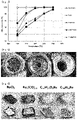
- FIG. 2 shows photographs of a gasket and the internal of a reactor contaminated by hydrogen chloride generated after reduction. Therefore, there was a need to replace a typical ruthenium precursor in order to solve the above problems.
- the ruthenium precursor compound of the present invention is a compound represented by Formula 1 above, the compound characterized by not including a halogen element, and since the ruthenium precursor compound does not contain chlorine in particular, hydrogen chloride is not generated even during a reduction treatment, unlike a ruthenium precursor such as ruthenium chloride. Therefore, the ruthenium precursor compound according to the present invention may prevent the generation of by-products affecting a reactor to solve a typical problem of degrading durability of a device and to achieve high economic feasibility.
- a ruthenium precursor of the present invention may include a carbonyl group, an ester group, nitrile, a nitro group, an amine group, or a carboxyl group, and the ruthenium precursor may be ruthenium(III) nitrosyl nitrate, ruthenium(III) formate, ruthenium(III) acetate, ruthenium(III) propionate, ruthenium(III) butyrate, a ruthenium(III) nitrosyl nitrate solution, bis(ethyl cyclopentadienyl)ruthenium(II), bis(cyclopentadienyl)ruthenium(II), bis(2,4-dimethylpentadienyl)ruthenium(II), bis(cyclopentadienylruthenium dicarbonyl) dimer, but is not limited thereto.
- one or more carbonyls may be directly bonded to ruthenium, and preferably, 2 to 4 carbonyls may be bonded to ruthenium.
- the ruthenium precursor compound is preferably selected from ruthenium pentacarbonyl, triruthenium dodecacarbonyl, and a mixture thereof, but is not limited thereto.
- the ruthenium precursor may have a formula of Ru n (CO) x .
- a ruthenium precursor having the above formula may efficiently provide ruthenium to an ammonia decomposition catalyst, and thus, may exhibit high performance.
- ruthenium may form a coordination bond with at least one compound among an unsaturated compound, an aromatic compound, and a nitrogen oxide.
- a ruthenium precursor composed of the above bond without containing a halogen such as chlorine the performance of the catalyst may be improved without by-products.
- the unsaturated compound may be a carbonyl compound, an enol compound, an ester compound, or a carboxylic acid compound, and the aromatic compound may be an aromatic cyclic hydrocarbon or an aromatic cyclic hydrocarbon having a substituent.
- the above ruthenium precursor is preferably selected from ruthenocene, octamethylruthenocene, ruthenium formate, ruthenium acetate, ruthenium propionate, ruthenium butyrate, tris(acetylacetonate)ruthenium, and a mixture thereof, but is not limited thereto.
- RuCl 3 which is a typical ruthenium precursor
- chlorine may remain in a catalyst after the preparation of the catalyst, and act as a poisonous substance of ruthenium ([ Appl. Catal., A, 1992, 82, 1-12 ] Removal of chlorine ions from Ru_MgO catalysts for ammonia synthesis).
- the present inventors have confirmed that the performance of a catalyst improves when performing an experiment by increasing the reduction temperature of the catalyst to 600 to 700°C, and this is consistent with the result of the above papers that when a catalyst is prepared by using RuCl 3 as a precursor, the amount of residual chlorine component decreases as a reduction temperature increases, which leads to improved catalyst performance.
- the present invention uses a ruthenium precursor not containing a chlorine component, thereby not causing poisoning of ruthenium by chlorine, so that the performance of a catalyst may be significantly improved when compared to using a typical material.
- ammonia decomposition reaction catalyst provided with ruthenium through the ruthenium precursor of the present invention may be a catalyst in which a support is doped with a lanthanum group.
- the lanthanum group may be selected from the group consisting of La, Ce, Pr, Nd, Pm, Sm, Eu, Gd, Tb, Dy, Ho, Er, Tm, Yb, Lu, and a mixture thereof, but lanthanum (La) is preferred.
- the support may be alumina, SiO 2 , CeO 2 , ZrO 2 , TiO 2 , MgO, Al 2 O 3 , V 2 O 5 , Fe 2 O 3 , Co 3 O 4 , Ce-ZrO x , MgO-Al 2 O 3 , or a mixture thereof.
- ruthenium is introduced into lanthanum aluminate (LaAlO 3 ), in which alumina is doped with lanthanum, using the lanthanum precursor according to the present invention, an excellent ammonia conversion rate may be exhibited.
- the ammonia reaction catalyst prepared by using the ruthenium precursor according to the present invention may have a ruthenium particle size of 10 nm or less, 8 nm or less, 5 nm or less, 4 nm or less, 3 nm or less, 2 nm or less, or 1 nm or less under reduction conditions of 650 to 1000°C, 700 to 900°C, or 800 to 900°C, and 60 to 100 hours, 70 to 90 hours, or 75 to 85 hours.
- the lowest limit of the particle size is not particularly limited, but may be 0.01 nm or greater, 0.1 nm or greater, or 0.5 nm or greater.
- the ammonia reaction catalyst according to the present invention is characterized in that growth by sintering of a ruthenium metal at 650 to 1000°C, 700 to 900°C, or 800 to 900°C is significantly suppressed. As a result, the surface area of the metal is maximized, which allows the function of the catalyst to be efficiently exhibited.
- the above feature is a feature of a ruthenium-based catalyst prepared by using the ruthenium precursor according to the present invention, which is in contrast to the fact that an ammonia reaction catalyst prepared by using a ruthenium precursor containing chlorine, such as ruthenium chloride, is disadvantageous in high-temperature operation due to the growth of a ruthenium metal by sintering under the above reduction conditions.
- a method for preparing an ammonia decomposition reaction catalyst of the present invention is characterized by including (A) preparing a ruthenium precursor solution by dissolving a ruthenium precursor represented by Formula 1 below in a solvent, and (B) mixing a catalyst support and the ruthenium precursor solution to provide ruthenium to the catalyst support: [Formula 1] C x H y O z N m Ru n .
- x may be an integer of 3 to 20
- y may be an integer from 0 to 32
- z may be an integer from 0 to 20
- m may be an integer from 0 to 10
- n may be an integer from 1 to 3.
- the method for preparing an ammonia decomposition reaction catalyst according to the present invention has a technical feature in using a ruthenium precursor according to the present invention represented by Formula 1 described above.
- a ruthenium precursor according to the present invention represented by Formula 1 described above.
- a ruthenium precursor represented by Formula 1 above is dissolved in a solvent to prepare a ruthenium precursor solution.
- the solvent may be selected from the group consisting of water, hexane, toluene, and a mixture thereof, and it is preferable that the water is pure water (D.I.water).
- the ruthenium precursor does not contain a halogen such as chlorine, and may include a carbonyl group, an ester group, a carboxyl group, nitrile, a nitro group, an amine group, or a carboxylic acid salt, and may include two or more functional groups thereof.
- a carbonyl group may be directly bonded to each ruthenium element, and preferably, 2 to 5 carbonyls, more preferably, 4 or 5 carbonyls may be bonded thereto.
- the catalyst support may include a lanthanoid, preferably lanthanum (La).
- the catalyst support doped with a lanthanum group is preferably a powder type, a pellet type, or a monolith type in terms of the performance of the catalyst.
- the method for preparing an ammonia decomposition reaction catalyst may further include, after Step (B), (C) removing liquid components by bathing, wherein the removing step may be performed under the conditions of 10 to 100°C, preferably 30 to 90°C, and more preferably 40 to 80°C for 1 hour to 6 hours, preferably 1 hour to 4 hours, and more preferably 1 hour to 3 hours, and an evaporator may be used.
- the reaction temperature exceeds the above range, the solvent is volatilized too rapidly to allow components included in the precursor to be non-uniformly supported, and on the other hand, when less than the above range, the precursor is not sufficiently dissolved in the solvent, which may also cause the components included in the precursor to be non-uniformly supported.
- the method for preparing an ammonia decomposition reaction catalyst of the present invention may further include, after Step (C), (D) drying, wherein the drying step may be performed under the conditions of 50 to 200°C, preferably 80 to 150°C, and more preferably 100 to 120°C for 8 hours to 16 hours, preferably 9 hours to 15 hours, and more preferably 10 hours to 12 hours.
- the drying temperature exceeds the above range, due to non-uniform drying of the catalyst surface caused by too rapid drying, partially supported Ru may be lost.
- a ruthenium-based ammonia decomposition reaction catalyst according to the present invention is characterized by including 100 molar parts of a ruthenium-based ammonia decomposition reaction catalyst, and 0.1 to 100 molar parts, preferably 2 to 60 molar parts, and more preferably 5 to 30 molar parts of lanthanum.
- the content of lanthanum exceeds the above range, the specific surface area is significantly reduced, which may result in a decrease in the degree of dispersion of Ru, which is an active metal.
- ammonia decomposition reaction catalyst according to the present invention is characterized by being prepared using the ruthenium precursor of the present invention, thereby containing ruthenium, and may be prepared by the method for preparing an ammonia decomposition reaction catalyst according to the present invention.
- the ammonia decomposition reaction catalyst according to the present invention may include 100 parts by weight of a ruthenium-based ammonia decomposition reaction catalyst, and 0.01 to 5 parts by weight, preferably 0.02 to 3 parts by weight, and more preferably 0.1 to 2 parts by weight of ruthenium.
- the parts by weight of ruthenium is less than the above range, the effect of improving catalyst performance is insignificant, and when greater than the above range, efficiency is reduced and a problem of high cost arises.
- the ammonia decomposition reaction catalyst prepared as described above may exhibit an ammonia conversion rate of 65 to 100%, preferably 72 to 100%, and more preferably 76.5 to 100% under the following reaction conditions.
- the ammonia conversion rate refers to the amount of ammonia gas decomposed relative to the amount of ammonia gas introduced.
- FIG. 3 shows images of the outside (first row) and inside (second row) of catalysts before a reaction, the catalysts prepared by varying a ruthenium precursor
- FIG. 4 shows images of the outside (first row) and inside of catalysts after the reaction, and from the left, the images respectively show the results when RuCl 3 , Ru 3 (CO) 12 , C 16 H 22 O 2 Ru, and C 18 H 26 Ru were used as a ruthenium precursor.
- the ruthenium precursor may be supported outside a pellet, so that a large amount of ruthenium may be present on the surface of the catalyst, and it can be seen that the ruthenium may be actively involved in the reaction of ammonia to greatly improve the conversion rate of the ammonia.
- a solution was prepared by mixing 63.72 g of lanthanum(III) nitrate hydrate 98.0% (SAMCHUN) with 200 mL of pure water (D.I. Water), and then bathed at 60°C. Thereafter, 60 g of a pellet-type gamma alumina (Al 2 O 3 ) support (Alfa Aesar) was introduced into the solution, and then liquid components of the solution were removed by using an evaporator at 80°C for 2 hours. A sample was recovered, dried at 100°C for 12 hours, and then fired at 900°C for 5 hours to prepare lanthanum aluminate (LaAlO 3 ).
- SAMCHUN pure water
- Alfa Aesar a pellet-type gamma alumina
- Alfa Aesar a pellet-type gamma alumina
- a sample was recovered, dried at 100°C for 12 hours, and then fired at 900°C for 5 hours to prepare lan
- Ru 3 (CO) 12 triruthenium dodecacarbonyl, DCR
- a pellet-type lanthanum aluminate prepared in Preparation Example 1 was introduced thereto. Thereafter, liquid components in the solution were removed for 2 hours by using an evaporator at a bath temperature of 80°C. 50 g of the sample was recovered and dried at 100°C for 12 hours.
- An ammonia decomposition reaction catalyst was prepared in the same manner as in Example 1, except that RuC1 3 was used as the ruthenium precursor.
- An ammonia decomposition reaction catalyst was prepared in the same manner as in Example 1, except that Ru(C 5 H 7 O 2 ) 3 was used as the ruthenium precursor.
- An ammonia decomposition reaction catalyst was prepared in the same manner as in Example 1, except that C 7 H 9 RuC 7 H 9 was used as the ruthenium precursor.
- a pre-treatment process of the catalyst was performed by reducing the catalyst for 4 hours in the range of 600 to 700°C while supplying 4 to 50% H 2 /N 2 gas to the reactor. Thereafter, while supplying 4 to 50% H 2 /N 2 gas, the temperature of a catalyst layer was dropped to 450°C, and maintained for preparation.
- Ammonia gas was supplied thereto at a flow rate of 100 to 500 sccm, and the ammonia conversion rate was measured in the range of 450 to 550°C under the condition of 1,000 to 5000 ml/h ⁇ g cat of GHSV (see FIG. 1 ).
- ammonia conversion rate measurement results of Example 1 and Comparative Example 1 along with ammonia conversion rate results of a control example in an equilibrium state, are shown in Table 2 below.
- Ammonia conversion (%) 450°C 475°C 500°C 525°C 550° C Equilibrium 99.5 99.6 99.7 99.99 99.99
- Example 1 76.5 91.5 98.5 99.9 99.99 Comparative Example 1 65.1 89.1 98.3 99.9 99.99
- the ammonia decomposition reaction catalyst according to Example 1 that is, the catalyst prepared by using a Ru 3 (CO) 12 compound, exhibited an excellent conversion rate throughout the temperature range, and particularly, had an ammonia conversion rate of 76.5% at 450°C, which is significantly excellent performance compared to the conversion rate of 65.1% obtained when using the ammonia decomposition reaction catalyst of Comparative Example 1 prepared by using ruthenium chloride (RuCl 3 ) as a precursor.
- RuCl 3 ruthenium chloride
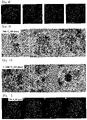
- FIG. 5 and FIG. 6 respectively show results of observing the catalysts prepared by Comparative Example 1 and Example 1, and from the left, the images respectively show the results after reduction treatment performed under the conditions of 700°C (2 H), 800°C (80 H), 900°C (80 H), and the growth of the Ru metal was observed at various scale bars and positions.
- the catalyst prepared using Ru 3 (CO) 12 according to the present invention suppresses the growth of the Ru metal under the conditions in which high-temperature sintering is induced, and it can be expected that the catalyst may be stably operated under high-temperature conditions.
- FIG. 7 and FIG. 8 respectively show results of observing the catalysts prepared by Comparative Example 1 and Example 1, and from the left, the images respectively show the result before reduction, and the results after reduction treatment performed under the conditions of 700°C, 800°C, and 900°C.
- the Ru catalyst according to the present invention has excellent thermal stability, prevents performance decrease caused by sintering under high-temperature operation conditions, and maintains a large surface area, thereby exhibiting excellent performance as a catalyst.
- FIG. 9 shows observation results after performing reduction treatment at 700°C for 2 hours
- FIG. 10 shows observation results after performing reduction treatment at 1000°C for 2 hours, and from the left, the images respectively show the sintering of the Ru metal with scale bar units at the bottom increased to the ranges of 100 nm, 50 nm, and 20 nm.
- a portion marked with a large dotted line box in the left image of FIG. 9 corresponds to the center image of FIG.
- a small dotted line box in the left image of FIG. 9 corresponds to the right image of FIG. 9 .
- a portion marked with a large dotted line box in the left image of FIG. 10 corresponds to the center image of FIG. 10
- a small dotted line box in the left image of FIG. 10 corresponds to the right image of FIG. 10 .
- the Ru metal grew in the range of 5 to 21 nm, and in the case of a sample operated at 1000°C or higher, the Ru metal grew in the range of 9 to 58 nm.
- the increase in metal diameter as described above causes a decrease in metal surface area, and may be a direct cause of a decrease in catalyst performance.
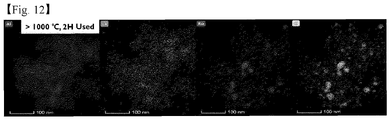
- FIG. 11 shows the result of reduction treatment at 700°C for 2 hours
- FIG. 12 shows the result of reduction treatment at 1000°C for 2 hours, and from the left, the images respectively show the results of observing Al, La, Ru, and Cl.
- Ru metal showed pronounced growth in a sample operated at 1000°C or higher compared to a sample operated at 700°C reduction.
- Ru and Cl were distributed in similar positions, through which it was determined that the presence of Cl had a direct or indirect effect on the growth of Ru.
Landscapes
- Chemical & Material Sciences (AREA)
- Organic Chemistry (AREA)
- Engineering & Computer Science (AREA)
- Materials Engineering (AREA)
- Chemical Kinetics & Catalysis (AREA)
- Inorganic Chemistry (AREA)
- Health & Medical Sciences (AREA)
- General Health & Medical Sciences (AREA)
- Combustion & Propulsion (AREA)
- Life Sciences & Earth Sciences (AREA)
- Geology (AREA)
- Catalysts (AREA)
Applications Claiming Priority (2)
| Application Number | Priority Date | Filing Date | Title |
|---|---|---|---|
| KR20190177727 | 2019-12-30 | ||
| PCT/KR2020/019461 WO2021137643A1 (ko) | 2019-12-30 | 2020-12-30 | 루테늄 전구체, 이를 이용한 암모니아 반응 촉매 및 그 제조방법 |
Publications (2)
| Publication Number | Publication Date |
|---|---|
| EP4085997A1 true EP4085997A1 (de) | 2022-11-09 |
| EP4085997A4 EP4085997A4 (de) | 2023-11-15 |
Family
ID=76686705
Family Applications (1)
| Application Number | Title | Priority Date | Filing Date |
|---|---|---|---|
| EP20908711.3A Withdrawn EP4085997A4 (de) | 2019-12-30 | 2020-12-30 | Rutheniumvorläufer, ammoniak-reaktionskatalysator und herstellungsverfahren dafür |
Country Status (6)
| Country | Link |
|---|---|
| US (1) | US20230041936A1 (de) |
| EP (1) | EP4085997A4 (de) |
| JP (1) | JP7400111B2 (de) |
| KR (1) | KR102465831B1 (de) |
| CN (1) | CN114929381A (de) |
| WO (1) | WO2021137643A1 (de) |
Cited By (2)
| Publication number | Priority date | Publication date | Assignee | Title |
|---|---|---|---|---|
| EP4524098A1 (de) * | 2023-09-13 | 2025-03-19 | Heraeus Precious Metals GmbH & Co. KG | Verfahren zur herstellung von wasserstoff mit einem ruthenium-haltigen trägerkatalysator |
| EP4524099A1 (de) * | 2023-09-13 | 2025-03-19 | Heraeus Precious Metals GmbH & Co. KG | Verfahren zur herstellung von wasserstoff mit einem ruthenium-haltigen trägerkatalysator |
Families Citing this family (4)
| Publication number | Priority date | Publication date | Assignee | Title |
|---|---|---|---|---|
| US12371335B2 (en) | 2021-12-14 | 2025-07-29 | Saudi Arabian Oil Company | Ammonia production from carbon-and water-derived hydrogen |
| US12491506B2 (en) | 2022-08-10 | 2025-12-09 | Saudi Arabian Oil Company | Catalysts for dry reforming and methods of producing the same |
| KR102941739B1 (ko) * | 2023-06-20 | 2026-03-23 | 서울대학교산학협력단 | 염소 발생 반응용 촉매, 염소 발생 반응용 촉매 구조물 및 염소 발생 반응용 촉매의 제조방법 |
| KR102707880B1 (ko) * | 2024-02-05 | 2024-09-25 | (주)원익머트리얼즈 | 암모니아 분해 활성이 우수한 암모니아 분해반응용 루테늄 촉매, 및 이의 제조방법 |
Family Cites Families (12)
| Publication number | Priority date | Publication date | Assignee | Title |
|---|---|---|---|---|
| JP5553484B2 (ja) | 2008-04-17 | 2014-07-16 | 株式会社日本触媒 | アンモニア分解触媒及びアンモニア分解方法 |
| JP5763890B2 (ja) | 2009-03-17 | 2015-08-12 | 株式会社日本触媒 | 水素製造触媒およびそれを用いた水素製造方法 |
| JP2011056488A (ja) | 2009-09-09 | 2011-03-24 | Yusaku Takita | アンモニア改質触媒とこれを用いた水素の製造方法 |
| KR102159678B1 (ko) * | 2012-09-20 | 2020-09-24 | 고쿠리츠켄큐카이하츠호진 카가쿠기쥬츠신코키코 | 수소생성촉매 및 수소의 제조법 |
| JP6280443B2 (ja) * | 2014-05-21 | 2018-02-14 | 株式会社Ihi | 触媒、触媒の製造方法、アンモニア合成方法、アンモニア分解方法 |
| KR101768078B1 (ko) * | 2014-09-15 | 2017-08-14 | 한국과학기술연구원 | 란타늄 알루미네이트에 루테늄이 지지된 촉매 및 그 제조 방법 |
| KR101781412B1 (ko) * | 2015-06-02 | 2017-09-25 | 한국과학기술연구원 | 암모니아 탈수소용 촉매, 이의 제조 방법 및 이를 이용하여 암모니아로부터 수소를 생산하는 방법 |
| CN108348902B (zh) | 2015-11-10 | 2021-02-09 | 国立研究开发法人科学技术振兴机构 | 金属负载物、负载金属催化剂以及使用该催化剂的氨合成法 |
| KR101938333B1 (ko) | 2016-10-07 | 2019-01-14 | 한국과학기술연구원 | 암모니아 산화반응용 정방형 백금 나노입자의 제조방법 |
| KR101924952B1 (ko) | 2016-11-04 | 2018-12-04 | 이화여자대학교 산학협력단 | 중공 복합체, 이를 포함하는 암모니아로부터 수소 제조용 촉매, 및 상기 촉매를 포함하는 연료 전지 |
| JP6984246B2 (ja) * | 2017-02-21 | 2021-12-17 | 日本製鉄株式会社 | 触媒構造体の製造方法、及び、水素の製造方法 |
| CN110252295A (zh) * | 2019-07-16 | 2019-09-20 | 福州大学 | 一种以氧化铈为载体的钌基氨合成催化剂 |
-
2020
- 2020-12-30 JP JP2022540806A patent/JP7400111B2/ja active Active
- 2020-12-30 KR KR1020227022071A patent/KR102465831B1/ko active Active
- 2020-12-30 WO PCT/KR2020/019461 patent/WO2021137643A1/ko not_active Ceased
- 2020-12-30 CN CN202080091145.0A patent/CN114929381A/zh active Pending
- 2020-12-30 US US17/789,640 patent/US20230041936A1/en not_active Abandoned
- 2020-12-30 EP EP20908711.3A patent/EP4085997A4/de not_active Withdrawn
Cited By (4)
| Publication number | Priority date | Publication date | Assignee | Title |
|---|---|---|---|---|
| EP4524098A1 (de) * | 2023-09-13 | 2025-03-19 | Heraeus Precious Metals GmbH & Co. KG | Verfahren zur herstellung von wasserstoff mit einem ruthenium-haltigen trägerkatalysator |
| EP4524099A1 (de) * | 2023-09-13 | 2025-03-19 | Heraeus Precious Metals GmbH & Co. KG | Verfahren zur herstellung von wasserstoff mit einem ruthenium-haltigen trägerkatalysator |
| WO2025056226A1 (de) * | 2023-09-13 | 2025-03-20 | Heraeus Precious Metals Gmbh & Co. Kg | Verfahren zur herstellung von wasserstoff mit einem ruthenium-haltigen trägerkatalysator |
| WO2025056228A1 (de) * | 2023-09-13 | 2025-03-20 | Heraeus Precious Metals Gmbh & Co. Kg | Verfahren zur herstellung von wasserstoff mit einem ruthenium-haltigen trägerkatalysator |
Also Published As
| Publication number | Publication date |
|---|---|
| EP4085997A4 (de) | 2023-11-15 |
| WO2021137643A1 (ko) | 2021-07-08 |
| JP2023517265A (ja) | 2023-04-25 |
| KR20220113419A (ko) | 2022-08-12 |
| CN114929381A (zh) | 2022-08-19 |
| KR102465831B1 (ko) | 2022-11-10 |
| JP7400111B2 (ja) | 2023-12-18 |
| US20230041936A1 (en) | 2023-02-09 |
Similar Documents
| Publication | Publication Date | Title |
|---|---|---|
| EP4085997A1 (de) | Rutheniumvorläufer, ammoniak-reaktionskatalysator und herstellungsverfahren dafür | |
| CN115916395B (zh) | 氨分解催化剂、使用它的氨分解方法及氢生产方法 | |
| US20190210008A1 (en) | Method for manufacturing ammonia synthesis catalyst, and method for manufacturing ammonia | |
| KR101457098B1 (ko) | 촉매, 이를 이용한 전극 및 해당 촉매를 이용한 건식 개질 방법 | |
| CN111183115A (zh) | 复合氧化物、金属担载物以及氨合成催化剂 | |
| CN115485233A (zh) | 用于氨分解的催化剂组合物 | |
| JP2016159209A (ja) | アンモニア分解触媒及び該触媒の製造方法並びに該触媒を用いたアンモニアの分解方法 | |
| JP2022114919A (ja) | アンモニア分解触媒及びそれを用いたアンモニアの分解方法 | |
| US10017385B2 (en) | Catalyst composition and method for producing hydrogen and preparation method thereof | |
| JP7418849B2 (ja) | 酸窒素水素化物、酸窒素水素化物を含む金属担持物、及びアンモニア合成用触媒 | |
| CN112041271A (zh) | 复合氧化物、金属担载物以及氨合成催化剂 | |
| JP6573494B2 (ja) | アンモニア合成触媒用組成物およびその製造方法、ならびにアンモニアの合成方法 | |
| JP2023126493A (ja) | アンモニア合成触媒 | |
| CN107530686A (zh) | 氨合成催化剂及其制备方法 | |
| Khan et al. | γ-Alumina supported copper oxide nanostructures promoted with ruthenium oxide (RuO2-CuO/Al2O3) and palladium oxide (PdO-CuO/Al2O3): Efficient electrodes for heterogeneous catalysis of ammonia electrooxidation | |
| US9079165B2 (en) | Ethanol reforming catalyst composition and method of producing ethanol reforming catalyst | |
| JP3943648B2 (ja) | メタノール合成方法 | |
| KR102670795B1 (ko) | 암모니아 분해반응 촉매 제조용 물질 | |
| CN112717914B (zh) | 一种甲烷二氧化碳重整催化剂及制备方法与应用 | |
| KR102770279B1 (ko) | 암모니아 분해용 비귀금속계 촉매의 제조방법, 및 이 제조방법으로 제조된 암모니아 분해용 비귀금속계 촉매 | |
| JP6909405B2 (ja) | メタン化触媒、その製造方法、及びそれを用いたメタンの製造方法 | |
| US20240424483A1 (en) | Dysprosium-praseodymium oxide support for heterogeneous catalysis | |
| JP2000317307A (ja) | 亜酸化窒素分解触媒及びこれを用いた分解方法 | |
| KR20250000846A (ko) | 암모니아 부분 산화 기반 수소 추출 촉매 및 수소 추출 방법 | |
| KR20250000865A (ko) | 암모니아 부분 산화 기반 수소 추출 촉매 및 수소 추출 방법 |
Legal Events
| Date | Code | Title | Description |
|---|---|---|---|
| STAA | Information on the status of an ep patent application or granted ep patent |
Free format text: STATUS: THE INTERNATIONAL PUBLICATION HAS BEEN MADE |
|
| PUAI | Public reference made under article 153(3) epc to a published international application that has entered the european phase |
Free format text: ORIGINAL CODE: 0009012 |
|
| STAA | Information on the status of an ep patent application or granted ep patent |
Free format text: STATUS: REQUEST FOR EXAMINATION WAS MADE |
|
| 17P | Request for examination filed |
Effective date: 20220711 |
|
| AK | Designated contracting states |
Kind code of ref document: A1 Designated state(s): AL AT BE BG CH CY CZ DE DK EE ES FI FR GB GR HR HU IE IS IT LI LT LU LV MC MK MT NL NO PL PT RO RS SE SI SK SM TR |
|
| DAV | Request for validation of the european patent (deleted) | ||
| DAX | Request for extension of the european patent (deleted) | ||
| RAP1 | Party data changed (applicant data changed or rights of an application transferred) |
Owner name: WONIK MATERIALS CO., LTD. |
|
| A4 | Supplementary search report drawn up and despatched |
Effective date: 20231016 |
|
| RIC1 | Information provided on ipc code assigned before grant |
Ipc: B01J 23/63 20060101ALI20231010BHEP Ipc: B01J 37/18 20060101ALI20231010BHEP Ipc: B01J 35/00 20060101ALI20231010BHEP Ipc: C01G 55/00 20060101ALI20231010BHEP Ipc: C01B 3/04 20060101ALI20231010BHEP Ipc: B01J 23/46 20060101AFI20231010BHEP |
|
| STAA | Information on the status of an ep patent application or granted ep patent |
Free format text: STATUS: THE APPLICATION IS DEEMED TO BE WITHDRAWN |
|
| 18D | Application deemed to be withdrawn |
Effective date: 20240504 |