EP3979367B1 - Kathodenmaterial und herstellungsverfahren dafür und sekundäre lithiumbatterie - Google Patents
Kathodenmaterial und herstellungsverfahren dafür und sekundäre lithiumbatterie Download PDFInfo
- Publication number
- EP3979367B1 EP3979367B1 EP21769625.1A EP21769625A EP3979367B1 EP 3979367 B1 EP3979367 B1 EP 3979367B1 EP 21769625 A EP21769625 A EP 21769625A EP 3979367 B1 EP3979367 B1 EP 3979367B1
- Authority
- EP
- European Patent Office
- Prior art keywords
- cathode material
- lithium
- range
- compound
- oxide
- Prior art date
- Legal status (The legal status is an assumption and is not a legal conclusion. Google has not performed a legal analysis and makes no representation as to the accuracy of the status listed.)
- Active
Links
Images

Classifications
-
- H—ELECTRICITY
- H01—ELECTRIC ELEMENTS
- H01M—PROCESSES OR MEANS, e.g. BATTERIES, FOR THE DIRECT CONVERSION OF CHEMICAL ENERGY INTO ELECTRICAL ENERGY
- H01M4/00—Electrodes
- H01M4/02—Electrodes composed of, or comprising, active material
- H01M4/13—Electrodes for accumulators with non-aqueous electrolyte, e.g. for lithium-accumulators; Processes of manufacture thereof
- H01M4/139—Processes of manufacture
- H01M4/1391—Processes of manufacture of electrodes based on mixed oxides or hydroxides, or on mixtures of oxides or hydroxides, e.g. LiCoOx
-
- C—CHEMISTRY; METALLURGY
- C01—INORGANIC CHEMISTRY
- C01G—COMPOUNDS CONTAINING METALS NOT COVERED BY SUBCLASSES C01D OR C01F
- C01G53/00—Compounds of nickel
- C01G53/40—Complex oxides containing nickel and at least one other metal element
- C01G53/42—Complex oxides containing nickel and at least one other metal element containing alkali metals, e.g. LiNiO2
-
- C—CHEMISTRY; METALLURGY
- C01—INORGANIC CHEMISTRY
- C01G—COMPOUNDS CONTAINING METALS NOT COVERED BY SUBCLASSES C01D OR C01F
- C01G53/00—Compounds of nickel
- C01G53/40—Complex oxides containing nickel and at least one other metal element
- C01G53/66—Complex oxides containing nickel and at least one other metal element containing alkaline earth metals, e.g. SrNiO3 or SrNiO2
-
- H—ELECTRICITY
- H01—ELECTRIC ELEMENTS
- H01M—PROCESSES OR MEANS, e.g. BATTERIES, FOR THE DIRECT CONVERSION OF CHEMICAL ENERGY INTO ELECTRICAL ENERGY
- H01M10/00—Secondary cells; Manufacture thereof
- H01M10/05—Accumulators with non-aqueous electrolyte
- H01M10/052—Li-accumulators
-
- H—ELECTRICITY
- H01—ELECTRIC ELEMENTS
- H01M—PROCESSES OR MEANS, e.g. BATTERIES, FOR THE DIRECT CONVERSION OF CHEMICAL ENERGY INTO ELECTRICAL ENERGY
- H01M10/00—Secondary cells; Manufacture thereof
- H01M10/05—Accumulators with non-aqueous electrolyte
- H01M10/052—Li-accumulators
- H01M10/0525—Rocking-chair batteries, i.e. batteries with lithium insertion or intercalation in both electrodes; Lithium-ion batteries
-
- H—ELECTRICITY
- H01—ELECTRIC ELEMENTS
- H01M—PROCESSES OR MEANS, e.g. BATTERIES, FOR THE DIRECT CONVERSION OF CHEMICAL ENERGY INTO ELECTRICAL ENERGY
- H01M4/00—Electrodes
- H01M4/02—Electrodes composed of, or comprising, active material
- H01M4/36—Selection of substances as active materials, active masses, active liquids
- H01M4/362—Composites
- H01M4/366—Composites as layered products
-
- H—ELECTRICITY
- H01—ELECTRIC ELEMENTS
- H01M—PROCESSES OR MEANS, e.g. BATTERIES, FOR THE DIRECT CONVERSION OF CHEMICAL ENERGY INTO ELECTRICAL ENERGY
- H01M4/00—Electrodes
- H01M4/02—Electrodes composed of, or comprising, active material
- H01M4/36—Selection of substances as active materials, active masses, active liquids
- H01M4/48—Selection of substances as active materials, active masses, active liquids of inorganic oxides or hydroxides
- H01M4/485—Selection of substances as active materials, active masses, active liquids of inorganic oxides or hydroxides of mixed oxides or hydroxides for inserting or intercalating light metals, e.g. LiTi2O4 or LiTi2OxFy
-
- H—ELECTRICITY
- H01—ELECTRIC ELEMENTS
- H01M—PROCESSES OR MEANS, e.g. BATTERIES, FOR THE DIRECT CONVERSION OF CHEMICAL ENERGY INTO ELECTRICAL ENERGY
- H01M4/00—Electrodes
- H01M4/02—Electrodes composed of, or comprising, active material
- H01M4/36—Selection of substances as active materials, active masses, active liquids
- H01M4/48—Selection of substances as active materials, active masses, active liquids of inorganic oxides or hydroxides
- H01M4/52—Selection of substances as active materials, active masses, active liquids of inorganic oxides or hydroxides of nickel, cobalt or iron
- H01M4/525—Selection of substances as active materials, active masses, active liquids of inorganic oxides or hydroxides of nickel, cobalt or iron of mixed oxides or hydroxides containing iron, cobalt or nickel for inserting or intercalating light metals, e.g. LiNiO2, LiCoO2 or LiCoOxFy
-
- H—ELECTRICITY
- H01—ELECTRIC ELEMENTS
- H01M—PROCESSES OR MEANS, e.g. BATTERIES, FOR THE DIRECT CONVERSION OF CHEMICAL ENERGY INTO ELECTRICAL ENERGY
- H01M4/00—Electrodes
- H01M4/02—Electrodes composed of, or comprising, active material
- H01M4/62—Selection of inactive substances as ingredients for active masses, e.g. binders, fillers
-
- H—ELECTRICITY
- H01—ELECTRIC ELEMENTS
- H01M—PROCESSES OR MEANS, e.g. BATTERIES, FOR THE DIRECT CONVERSION OF CHEMICAL ENERGY INTO ELECTRICAL ENERGY
- H01M4/00—Electrodes
- H01M4/02—Electrodes composed of, or comprising, active material
- H01M4/62—Selection of inactive substances as ingredients for active masses, e.g. binders, fillers
- H01M4/624—Electric conductive fillers
-
- H—ELECTRICITY
- H01—ELECTRIC ELEMENTS
- H01M—PROCESSES OR MEANS, e.g. BATTERIES, FOR THE DIRECT CONVERSION OF CHEMICAL ENERGY INTO ELECTRICAL ENERGY
- H01M4/00—Electrodes
- H01M4/02—Electrodes composed of, or comprising, active material
- H01M4/62—Selection of inactive substances as ingredients for active masses, e.g. binders, fillers
- H01M4/628—Inhibitors, e.g. gassing inhibitors, corrosion inhibitors
-
- C—CHEMISTRY; METALLURGY
- C01—INORGANIC CHEMISTRY
- C01P—INDEXING SCHEME RELATING TO STRUCTURAL AND PHYSICAL ASPECTS OF SOLID INORGANIC COMPOUNDS
- C01P2002/00—Crystal-structural characteristics
- C01P2002/50—Solid solutions
- C01P2002/52—Solid solutions containing elements as dopants
-
- C—CHEMISTRY; METALLURGY
- C01—INORGANIC CHEMISTRY
- C01P—INDEXING SCHEME RELATING TO STRUCTURAL AND PHYSICAL ASPECTS OF SOLID INORGANIC COMPOUNDS
- C01P2002/00—Crystal-structural characteristics
- C01P2002/50—Solid solutions
- C01P2002/52—Solid solutions containing elements as dopants
- C01P2002/54—Solid solutions containing elements as dopants one element only
-
- C—CHEMISTRY; METALLURGY
- C01—INORGANIC CHEMISTRY
- C01P—INDEXING SCHEME RELATING TO STRUCTURAL AND PHYSICAL ASPECTS OF SOLID INORGANIC COMPOUNDS
- C01P2002/00—Crystal-structural characteristics
- C01P2002/80—Crystal-structural characteristics defined by measured data other than those specified in group C01P2002/70
- C01P2002/88—Crystal-structural characteristics defined by measured data other than those specified in group C01P2002/70 by thermal analysis data, e.g. TGA, DTA, DSC
-
- C—CHEMISTRY; METALLURGY
- C01—INORGANIC CHEMISTRY
- C01P—INDEXING SCHEME RELATING TO STRUCTURAL AND PHYSICAL ASPECTS OF SOLID INORGANIC COMPOUNDS
- C01P2004/00—Particle morphology
- C01P2004/01—Particle morphology depicted by an image
- C01P2004/03—Particle morphology depicted by an image obtained by SEM
-
- C—CHEMISTRY; METALLURGY
- C01—INORGANIC CHEMISTRY
- C01P—INDEXING SCHEME RELATING TO STRUCTURAL AND PHYSICAL ASPECTS OF SOLID INORGANIC COMPOUNDS
- C01P2004/00—Particle morphology
- C01P2004/51—Particles with a specific particle size distribution
-
- C—CHEMISTRY; METALLURGY
- C01—INORGANIC CHEMISTRY
- C01P—INDEXING SCHEME RELATING TO STRUCTURAL AND PHYSICAL ASPECTS OF SOLID INORGANIC COMPOUNDS
- C01P2004/00—Particle morphology
- C01P2004/60—Particles characterised by their size
- C01P2004/61—Micrometer sized, i.e. from 1-100 micrometer
-
- C—CHEMISTRY; METALLURGY
- C01—INORGANIC CHEMISTRY
- C01P—INDEXING SCHEME RELATING TO STRUCTURAL AND PHYSICAL ASPECTS OF SOLID INORGANIC COMPOUNDS
- C01P2004/00—Particle morphology
- C01P2004/80—Particles consisting of a mixture of two or more inorganic phases
- C01P2004/82—Particles consisting of a mixture of two or more inorganic phases two phases having the same anion, e.g. both oxidic phases
- C01P2004/84—Particles consisting of a mixture of two or more inorganic phases two phases having the same anion, e.g. both oxidic phases one phase coated with the other
-
- C—CHEMISTRY; METALLURGY
- C01—INORGANIC CHEMISTRY
- C01P—INDEXING SCHEME RELATING TO STRUCTURAL AND PHYSICAL ASPECTS OF SOLID INORGANIC COMPOUNDS
- C01P2006/00—Physical properties of inorganic compounds
- C01P2006/12—Surface area
-
- C—CHEMISTRY; METALLURGY
- C01—INORGANIC CHEMISTRY
- C01P—INDEXING SCHEME RELATING TO STRUCTURAL AND PHYSICAL ASPECTS OF SOLID INORGANIC COMPOUNDS
- C01P2006/00—Physical properties of inorganic compounds
- C01P2006/40—Electric properties
-
- C—CHEMISTRY; METALLURGY
- C01—INORGANIC CHEMISTRY
- C01P—INDEXING SCHEME RELATING TO STRUCTURAL AND PHYSICAL ASPECTS OF SOLID INORGANIC COMPOUNDS
- C01P2006/00—Physical properties of inorganic compounds
- C01P2006/80—Compositional purity
-
- H—ELECTRICITY
- H01—ELECTRIC ELEMENTS
- H01M—PROCESSES OR MEANS, e.g. BATTERIES, FOR THE DIRECT CONVERSION OF CHEMICAL ENERGY INTO ELECTRICAL ENERGY
- H01M4/00—Electrodes
- H01M4/02—Electrodes composed of, or comprising, active material
- H01M2004/026—Electrodes composed of, or comprising, active material characterised by the polarity
- H01M2004/028—Positive electrodes
-
- Y—GENERAL TAGGING OF NEW TECHNOLOGICAL DEVELOPMENTS; GENERAL TAGGING OF CROSS-SECTIONAL TECHNOLOGIES SPANNING OVER SEVERAL SECTIONS OF THE IPC; TECHNICAL SUBJECTS COVERED BY FORMER USPC CROSS-REFERENCE ART COLLECTIONS [XRACs] AND DIGESTS
- Y02—TECHNOLOGIES OR APPLICATIONS FOR MITIGATION OR ADAPTATION AGAINST CLIMATE CHANGE
- Y02E—REDUCTION OF GREENHOUSE GAS [GHG] EMISSIONS, RELATED TO ENERGY GENERATION, TRANSMISSION OR DISTRIBUTION
- Y02E60/00—Enabling technologies; Technologies with a potential or indirect contribution to GHG emissions mitigation
- Y02E60/10—Energy storage using batteries
Definitions
- the present application relates to the field of secondary lithium batteries, particularly, to a cathode material and a preparation method thereof and a secondary lithium battery, more particularly, to a nickel-rich ternary cathode material and a preparation method thereof and a secondary lithium battery.
- the cathode material is a key factor affecting the cost, energy density and safety of lithium-ion batteries.
- the energy densities of lithium cobalt oxide, lithium iron phosphate, and lithium manganate are all lower than 180 mAh/g, which cannot meet the increasing demand for energy density in the application field of lithium-ion batteries.
- nickel-rich ternary materials have comprehensive advantages of high energy density, high working voltage and high compact density, and have been widely used in the field of 3C and power batteries.
- the current methods to improve the rate capability and thermal stability of the materials mainly include doping and coating.
- Conventional coating modification not only requires an additional cost of coating accessories, but also requires additional processes, such as mixing and heat treatment, which increases the complexity of the process, resulting in higher requirements for process stability control and higher processing cost.
- Doping modification can be implemented in the two procedures, precursor preparation and sintering, and the biggest problem of doping in the precursor preparation is the increase of process complexity of the precursor preparation.
- the purpose of the present application is to provide a cathode material and a preparation method thereof, and a secondary lithium battery.
- the cathode material provided in the present application can take into account both the rate capability and thermal stability of a cathode material.
- the present application provides a cathode material with a chemical formula Li b Ni 1-x-y Co x Al y M z O 2 , where 0.95 ⁇ b ⁇ 1.10, 0 ⁇ x ⁇ 0.15, 0.01 ⁇ y ⁇ 0.1, 0 ⁇ z ⁇ 0.05, and an M element is a metal element;
- the cathode material satisfies at least one of the following conditions a to c:
- the cathode material satisfies at least one of the following conditions a to f:
- the present application provides a method for preparing a cathode material, the method including the following steps:
- the cathode material satisfies at least one of the following conditions a to e:
- the method satisfies at least one of the following conditions a to f:
- the present application provides a secondary lithium battery, which includes the cathode material of the foregoing first aspect or the cathode material prepared by the method of the foregoing second aspect.
- the present application has the following beneficial effects.
- the present application provides a high-nickel ternary cathode material having high rate capability and high thermal stability as well as the advantages of both doping and coating modifications with a simple process and low cost, and a preparation method thereof.
- the present application provides a cathode material with a chemical formula Li b Ni 1-x-y Co x Al y M z O 2 , where 0.95 ⁇ b ⁇ 1.10, 0 ⁇ x ⁇ 0.15, 0.01 ⁇ y ⁇ 0.1, 0 ⁇ z ⁇ 0.05, and an M element is a metal element;
- the M element is distributed in the interior and the surface of the cathode material particles, and the molar ratio of the M element in the interior to the M element in the surface of the cathode material is greater than 0.5.
- the M element in the interior of the cathode material is mainly present in a doped form.
- the M element in the surface is presented in a form of at least one of M oxide or lithium-M composite oxide to form a LiMO/MO structured coating layer to inhibit the reaction of the cathode material with the electrolyte, which not only protects the surface of the cathode material from being corroded by the electrolyte and improves the thermal stability, but also increases the lithium ion conductivity of the cathode material and the lithium ion diffusion rate, finally enabling the obtained cathode material to have both high rate capability and thermal stability.
- b can take a value of 0.95, 1.0, 1.05, or 1.10, etc.
- x can take a value of 0, 0.01, 0.02, 0.03, 0.05, 0.08, 0.10, 0.12, or 0.15, etc.
- y can be 0.01, 0.02, 0.03, 0.04, 0.05, 0.06, 0.07, 0.08, 0.09, or 0.1, etc.
- z can be 0.001, 0.005, 0.010, 0.015, 0.020, 0.025, 0.030, 0.035, 0.040, 0.045, or 0.050, etc., which are not limited here.
- the M element in Li b Ni 1-x-y Co x Al y M z O 2 can be at least one selected from Al, Mn, Mg, Sr, Ca, Zr, Ti, La, W, Nb, Y, and Gd.
- the M element may also be other metal elements.
- the molar ratio of the M element in the interior to the M element in the surface of the cathode material particles is greater than 0.5, specifically the molar ratio may be 0.55, 0.6, 0.7, 1.0, 1.5 or 2.0, etc.
- the molar ratio of the M element in the interior to the M element in the surface of the cathode material particles is smaller than 0.5, severe Li/Ni cation mixing in the cathode material structure will be caused, and both the structural stability and thermal stability of the cathode material during cycling will decrease; when excess M oxide or lithium-M composite oxide are distributed in the surface, the surface impedance of the cathode material will increase and the lithium ion diffusion coefficient will decrease, finally reducing the rate capability. Therefore, by controlling the molar ratio of the M element in the interior to the M element in the surface in the cathode material particles at 0.5 or more, both the high-rate capability and the high thermal stability of the cathode material can be obtained.
- the M element is derived from an M compound with an average particle size of smaller than 5 ⁇ m, and the M compound and a lithium compound can react at 650°C or lower to generate the lithium-M composite oxide, so that the M element can be doped into the cathode material particle, increasing the M content in the interior of the particle to ensure that the molar ratio of the M element in the interior to the M element in the surface of the cathode material particles is greater than 0.5.
- a total content of the element M in the cathode material is in a range from 500 ppm to 5000 ppm, and specifically can be 500 ppm, 700 ppm, 900 ppm, 1000 ppm, 1200 ppm, 2000 ppm, 2500 ppm, 3000 ppm, 4000 ppm or 5000 ppm, etc.
- the total content of M element in the cathode material is smaller than 500 ppm, the improvement effect on the structural stability of the material is limited, and the cathode material is prone to change in phase during the cycle; when the total content of M element in the cathode material is higher than 5000 ppm, the capacity of the material will decrease while the resistance of the material will increase. Controlling the content of M element within the above range can not only obtain good doping and coating effects, but also have a higher capacity.
- the total content of the M element in the cathode material is in a range from 700 ppm to 2000 ppm.
- the cathode material is a secondary particle composed of primary particles, and has an internally dense structure.
- the primary particle is a single fine crystal particle
- the secondary particle is a particle formed by agglomeration of the primary particles.
- the secondary particle is an aggregate of the primary particles, and the interior of the secondary particle is compact, and the secondary particle is spherical or quasi-spherical, that is, the cathode material can be spherical or quasi-spherical.
- the secondary particle which has an internally dense structure formed by tightly aggregating the primary particles, not only helps to increase the compact density and particle compressive strength of the cathode material, but also effectively prevents the electrolyte from permeating into the particle to corrode the cathode material.
- the spherical structure has higher compact density and lithium ion diffusion coefficients than an irregular topography structure.
- a dense spherical structure is also beneficial to improve the volumetric energy density, rate capability and thermal stability of the secondary lithium battery.
- an average particle size of the cathode material is in a range from 3 ⁇ m to 20 ⁇ m, specifically 3 ⁇ m, 4 ⁇ m, 5 ⁇ m, 7 ⁇ m, 9 ⁇ m, 12 ⁇ m, 15 ⁇ m, 18 ⁇ m, or 20 ⁇ m, etc., preferably in a range from 10 ⁇ m to 13 ⁇ m.
- the cathode material satisfies: D95>20 ⁇ m, for example, 20.5 ⁇ m, 21.5 ⁇ m, 22 ⁇ m, or 25 ⁇ m, etc.
- a specific surface area of the cathode material is 0.5 m 2 /g-2.0 m 2 /g, specifically 0.5 m 2 /g, 0.7 m 2 /g, 0.9 m 2 /g, 1.1 m 2 /g, 1.3 m 2 /g, 1.5 m 2 /g, 1.8 m 2 /g or 2.0 m 2 /g, etc.
- the specific surface area of the cathode material is controlled within the range of 0.5 m 2 /g-2.0 m 2 /g, it is beneficial to improve the cycle performance of the lithium battery produced by the cathode material.
- the specific surface area of the cathode material is in a range from 0.7 m 2 /g-1.5 m 2 /g.
- a lithium content in the surface of the cathode material is in a range from 0.02 wt% to 0.12 wt% of a total mass of the cathode material, and specifically can be 0.02 wt%, 0.05 wt%, 0.10 wt% or 0.12 wt%, etc., preferably in a range from 0.05 wt% to 0.10 wt%. Controlling the lithium content in the surface of the cathode material within a certain range can prevent the residual lithium on the surface from reacting with the electrolyte to produce gas during the cycle of the battery to affect the battery safety.
- a carbon content in the surface of the cathode material is in a range from 0.01 wt% to 0.035 wt% of the total mass of the cathode material, and specifically can be 0.01 wt%, 0.015 wt%, 0.02wt%, 0.025 wt%, 0.03 wt% or 0.035wt%, etc.
- the carbon in the surface of the cathode material exists in a form of lithium carbonate. Controlling the carbon content in the surface of the cathode material within a certain range can suppress the safety problem caused by gas production of the material during the cycle.
- an initial discharge capacity of the cathode material in a 2032 coin cell is greater than or equal to 200 mAh/g.
- an embodiment of the present application also provides a method for preparing a cathode material, as shown in FIG. 1 , the method including the following steps S100 to S200:
- the preparation method provided in the present application can achieve both doping modification and coating modification in one step, which synergizes the advantages of the two modifications with a simple process and a low cost; and by introducing a non-aqueous substance for washing, the surface structure and the lithium content of the surface of the cathode material particle are effectively controlled, the anti-corrosion and the lithium ion conductivity of the particle surface are improved, and the gas production is reduced, thereby effectively obtaining all of the discharge capacity, rate capability, safety performance and cycle performance.
- step S100 sintering a mixture containing at least one of Ni 1-x-y Co x Al y oxide or hydroxide, an M compound, and a lithium compound to obtain a sintered product.
- the M compound is added to achieve the internal doping and surface coating of the cathode material in one step during sintering procedure, which synergizes the advantages of the two modifications, saves the coating procedure, reduces the process complexity, and saves the manufacturing cost.
- the M element may be at least one selected from Al, Mn, Mg, Sr, Ca, Zr, Ti, La, W, Nb, Y, or Gd. In other embodiments, the M element may also be other metal elements.
- the M compound is at least one of a hydroxide or an oxide of M.
- the M compound can also be other substances that can react with a lithium compound at 650°C or lower to generate the lithium-M composite oxide, and therefore it is not limited to the hydroxide or oxide of M.
- An average particle size of the M compound is smaller than 5 ⁇ m.
- an average particle size (D50) of the M hydroxide is in a range from 1 ⁇ m to 5 ⁇ m; specifically, it can be 1 ⁇ m, 1.5 ⁇ m, 2 ⁇ m, 2.5 ⁇ m, 3 ⁇ m, 3.5 ⁇ m, 4 ⁇ m, 4.5 ⁇ m or 5 ⁇ m, etc.; of course, it can also be other values within the above range, which is not limited here.
- an average particle size (D50) of the M oxide is smaller than 200 nm; specifically, it can be 199 nm, 190 nm, 180 nm, 170 nm, 160 nm, 150 nm, 140 nm, etc.; of course, it can also be other values within the above range, which is not limited here.
- the embodiments of the present application can control the molar ratio of the M element in the interior to the M element in the surface of the cathode material by selecting an appropriate type and particle size of the M compound.
- the particle size of the M compound is smaller than 5 ⁇ m.
- the M compound When the particle size of the M compound is greater than 5 ⁇ m, during the sintering process, the M compound tends to exist in a form of large particles on the surface of the cathode material, so that the molar ratio of the M element in the interior of the cathode material to the M element in the surface is relatively small, that is, the M element diffused into the interior of the cathode material is reduced. Moreover, if the particle size of the M compound is too large, the adhesion of the M compound with the surface of the cathode material will be more unstable, uneven coating is likely to occur, the phenomenon of shedding is likely to occur during the battery cycle, and thus the desirable coating cannot be achieved.
- the lithium compound includes at least one of lithium carbonate, lithium hydroxide, lithium acetate, lithium nitrate, or lithium oxalate, and is preferably lithium hydroxide.
- an average particle size of the lithium compound is in a range from 3 ⁇ m to 20 ⁇ m, and specifically can be 3 ⁇ m, 5 ⁇ m, 6 ⁇ m, 10 ⁇ m, 13 ⁇ m, 15 ⁇ m, 18 ⁇ m, or 20 ⁇ m, which is not limited here.
- a ratio of a molar content of lithium in the lithium compound to a sum of molar contents of Ni, Co, Al and M in the mixture is in a range from 0.97:1 to 1.15:1. With the molar ratio controlled within this range, the mixing degree of Li/Ni cations can be effectively reduced, and the lithium residue on the surface of the sintered product can be prevented from to be excessively high to affect processing performance and safety performance.
- a total content of the element M in the cathode material is in a range from 500 ppm to 5000 ppm, and specifically can be 500 ppm, 700 ppm, 900 ppm, 1000 ppm, 1200 ppm, 2000 ppm, 2500 ppm, 3000 ppm, 4000 ppm or 5000 ppm, etc.
- the total content of M element in the cathode material is smaller than 500 ppm, the improvement effect on the structural stability of the material is limited, and the cathode material is prone to change in phase during the cycle; when the total content of M element in the cathode material is higher than 5000 ppm, the capacity of the material will decrease while the resistance of the material will increase.
- Controlling the content of M element within the above range can not only obtain good doping and coating effects, but also have a higher capacity.
- the total content of the M element in the cathode material is in a range from 700 ppm to 2000 ppm.
- the sintering is carried out in an atmosphere with an oxygen content greater than or equal to 90%.
- the atmosphere may include oxygen with a volume ratio of 90% or greater and the remaining inactive gas, such as nitrogen and inert gas.
- the inert gas may be helium, argon, neon, or the like.
- the atmosphere may also be a mixed gas of oxygen and air.
- a temperature of the sintering is in a range from 650°C to 900°C. Within this range, sufficient oxygen can promote the oxidation of divalent nickel to trivalent nickel, reduce the mixing of Li/Ni cations, and increase the capacity of the cathode material. Moreover, this temperature range is conducive to the formation of a layered structure without causing the material to decompose, preferably the temperature is in a range from 700°C to 770°C, such as 700°C, 710°C, 720°C, 730°C, 740°C, 750°C, 760°C or 770°C, etc. However, the temperature is not limited to the listed values, and other unlisted values within this value range are also applicable.
- the sintering lasts for 6 h-30 h, for example, 6 h, 8 h, 10 h, 12 h, 15 h, 18 h, 21 h, 24 h, 27 h or 30 h, etc.
- Controlling the sintering time within the above range can help to uniformly doing the element M within at least one of Ni 1-x-y Co x Al y oxide or hydroxide under the action of thermal diffusion, thereby optimizing various performance indexes of the cathode material.
- the sintering lasts for 6 h-20 h.
- the method further includes: mixing a non-aqueous substance with water to obtain the solvent, wherein the non-aqueous substance is H 3 PO 4 or (NH 4 ) 2 HPO 4 .
- the non-aqueous substance was added in the solvent. Compared with the pure water solvent, the non-aqueous substance can be used as a washing buffer to control the lithium content in the surface of the cathode material while reducing the loss of the lithium ions present in the crystal lattice (hereinafter referred to as "lattice lithium”), so as to better protect the surface structure of the cathode material.
- step S200 subjecting the sintered product to washing with the solvent and drying to obtain the cathode material.
- the non-aqueous substance in the solvent reacts with the residual lithium on the surface of the sintered product to form a coating layer with high lithium ion conductivity, such as Li 3 PO 4 , which not only can increases the rate capability of the material, but also can effectively reduce the degree of corrosion of the surface of the cathode material by the electrolyte, being beneficial to improve the cycle performance of the cathode material.
- a coating layer with high lithium ion conductivity such as Li 3 PO 4
- a concentration of a slurry composed of the sintered product and the solvent is in a range from 500 g/L to 2000 g/L.
- the slurry concentration is too high, the amount of solvent used is insufficient, which is not conducive to removing the lithium contained in the surface of the material. Too much lithium contained in the surface of the cathode material is prone to cause severe gas production and increased surface impedance.
- Controlling the lithium content of the surface of the cathode material by controlling the washing conditions has a very important effect on the performance of the cathode material. Controlling the lithium content of the surface of the cathode material is beneficial to obtain all of the processing performance, rate capability and safety performance of the cathode material.
- embodiments of the present application also provide a secondary lithium battery, which adopts the cathode material provided in the first aspect of the present application or the cathode material obtained according to the preparation method of the second aspect.
- the cathode material was prepared according to the following method:
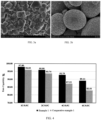
- FIG. 2a and FIG. 2b The scanning electron microscope pictures of the cathode material prepared in this example are shown in FIG. 2a and FIG. 2b . It can be seen from FIG. 2b that the cathode material particles are spherical or quasi-spherical.
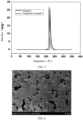
- FIG. 6 The scanning electron microscope picture of a cross-section of the cathode material prepared in this example is shown in FIG. 6 . Table 1 shows the test results of the cathode material prepared in this example.
- the cathode material was prepared according to the following method:
- Table 1 shows the performance test results of the cathode material prepared in this example.
- the cathode material was prepared according to the following method:
- Table 1 shows the performance test results of the cathode material prepared in this example.
- the cathode material was prepared according to the following method:
- Table 1 shows the performance test results of the cathode material prepared in this example.
- the cathode material was prepared according to the following method:
- Table 1 shows the performance test results of the cathode material prepared in this example.
- the cathode material was prepared according to the following method:
- Table 1 shows the performance test results of the cathode material prepared in this example.
- the cathode material was prepared according to the following method:
- Table 1 shows the performance test results of the cathode material prepared in this example.
- the cathode material was prepared according to the following method:
- Table 1 shows the performance test results of the cathode material prepared in this example.
- Table 1 shows the performance test results of the cathode material prepared in this comparative example.
- FIG. 3a and FIG. 3b The scanning electron microscope pictures of the cathode material prepared in this comparative example are shown in FIG. 3a and FIG. 3b .
- Table 1 shows the performance test results of the cathode material prepared in this comparative example.
- Table 1 shows the performance test results of the cathode material prepared in this comparative example.
- a Malvern Mastersizer 2000 laser particle size analyzer was used to test the particle size of the cathode material to obtain the particle size distribution, average particle size (D50) and D95.
- a Mike Tristar3020 specific surface area and pore size analyzer was used to test the specific surface area of the cathode material. A certain mass of powder was weighed and completely degassed under vacuum heating. After the surface adsorbate was removed, the specific surface area of the particle was calculated according to the amount of nitrogen absorbed by the nitrogen adsorption method.
- a scanning electron microscope was used to analyze the morphology of the cathode material, and scanning electron microscope pictures were obtained.
- the electrochemical performances of the prepared cathode material were evaluated by using a coin half cell.
- the specific method is as follows: the cathode material, conductive carbon black Super P and polyvinylidene fluoride (PVDF) were weighed according to a mass ratio of 96:2:2, N-methyl-2-pyrrolidone (NMP) was added based on a solid content of 50%, the mixture was made into a viscous slurry by a high-speed disperser, evenly coated on an aluminum foil with a scraper, dried in an oven at 80°C, and roller pressed. The coated foil was cut into a cathode sheet with a diameter of 14 mm.
- the coin half cell was assembled in a glove box filled with argon.
- ALAND battery test system was used to test capacity, efficiency and rate capability at 25°C and 3.0 V-4.3 V.
- the reference capacity was set at 200 mA/g, and the current density corresponding to 1C was 200 mA/g.
- a potentiometric titrator was used to test the total amount of lithium compounds on the surface of the cathode material, specifically by titration with hydrochloric acid and then conversion of the amount of consumed hydrochloric acid into the amount of lithium compounds.
- An ion beam cutter was used to cut the cathode material particle, and then a high-precision electron spectrometer was used to perform element line scan on the cross section of the cut particle, and then the molar ratio of M distributed in the interior of the particle to M distributed in the surface of the particle according to the line scan element distribution curve.
- a NETZSCH differential scanning calorimeter was used to test the thermal stability of the electrode material in a sealed high-pressure crucible under a nitrogen atmosphere at 5°C/min to obtain a differential scanning heat curve.
- the electrode material was the active material scraped from the electrode sheet of a fully charged coin half-cell after cycling 2.5 cycles at 0.1C.
- Example 1 0.1C discharge capacity mAh/g Efficien cy % 0.5C discharge capacity mAh/g 1C discharge capacity mAh/g 2C discharge capacity mAh/g 4C discharge capacity mAh/g 6C discharge capacity mAh/g Surface lithium content wt% Molar ratio of M in the interior to M in the surface
- Example 1 210.5 90.5 200.1 195.5 191.9 185.6 178.3 0.06 1.2
- Example 2 200.2 88.9 190.3 185.9 182.3 176.5 165.4 0.04 0.9
- Example 3 235.6 90.7 224.2 217.3 212.5 205.8 199.6 0.07 0.7
- Example 4 209.4 90.2 194.0 189.9 186.4 180.9 170.8 0.06 1.3
- Example 5 214.4 90.5 202.1 195.9 191.6 184.3 177.9 0.05 1.0
- Example 6 215.3 90.2 203.4 196.7 192.1 184.8 178.2 0.07 1.5
- Example 7 206.4 90.0 195.2 190.6 187.2 181.9 173.8 0.06 1.1
- the cathode material obtained in Example 1 has no obvious large grains on the surface of the particle, indicating that the Mg or/and Mg compound and the nickel-rich ternary cathode material are efficiently blended together, that is, Mg is successfully doped in the interior of the particle and evenly coated in the surface.
- Example 1 The comparison of the data of Example 1 and Comparative Example 1 in Table 1 shows that the cathode material prepared without the addition of Mg(OH) 2 has a significantly worse rate capability.
- Example 1 Comparative Example 2 in Table 1 shows that when the Mg content increases to 2,4000 ppm, that is, when the M content is too high, the molar ratio of M distributed in the interior to M distributed in the surface is much smaller than 0.5, which increases the internal resistance of the cathode material, leading to a decrease in the capacity and rate capability of the material.
- Example 1 The comparison of the data of Example 1 and Comparative Example 3 in Table 1 shows that when the non-aqueous substance is not added in the washing process, excessively much lattice lithium is lost during the washing process, which damages the surface structure, and meanwhile, no high lithium ion conductor coating layer is formed during the washing process. Based on the above two reasons, the rate capability of the obtained cathode material decreases, and the lithium content of the surface also increases.
Landscapes
- Chemical & Material Sciences (AREA)
- Chemical Kinetics & Catalysis (AREA)
- Electrochemistry (AREA)
- General Chemical & Material Sciences (AREA)
- Organic Chemistry (AREA)
- Inorganic Chemistry (AREA)
- Engineering & Computer Science (AREA)
- Composite Materials (AREA)
- Manufacturing & Machinery (AREA)
- Materials Engineering (AREA)
- Geology (AREA)
- Life Sciences & Earth Sciences (AREA)
- General Life Sciences & Earth Sciences (AREA)
- Battery Electrode And Active Subsutance (AREA)
- Inorganic Compounds Of Heavy Metals (AREA)
Claims (7)
- Kathodenmaterial, wobei eine chemische Formel des Kathodenmaterials LibNi1-x-yCoxAlyMzO2 lautet, wobei 0,95 ≤ b ≤ 1,10, 0 ≤ x ≤ 0,15, 0,01 ≤ y ≤ 0,1, 0 < z ≤ 0,05,und ein M-Element ein metallisches Element ist;das M-Element in einem Inneren und einer Oberfläche des Kathodenmaterials verteilt ist, das in dem Inneren des Kathodenmaterials verteilte M-Element in dotierter Form vorliegt und das in der Oberfläche des Kathodenmaterials verteilte M-Element in Form einer aus M-Oxid und/oder Lithium-M-Verbundoxid ausgebildeten Deckschicht vorliegt;ein Molverhältnis des M-Elements in dem Inneren zu dem M-Element in der Oberfläche größer als 0,5 ist; undein Lithium-Anteil in der Oberfläche des Kathodenmaterials 0,02 Gew.-% bis 0,12 Gew.-% einer Gesamtmasse des Kathodenmaterials beträgt.
- Kathodenmaterial nach Anspruch 1, wobei das Kathodenmaterial mindestens eine der folgenden Bedingungen a bis c erfüllt:a. das M-Element ist aus der Gruppe bestehend aus Al, Mn, Mg, Sr, Ca, Zr, Ti, La, W, Nb, Y, Gd und Kombinationen dieser ausgewählt;b. ein Gesamtanteil des M-Elements in dem Kathodenmaterial liegt in einem Bereich von 500 ppm bis 5000 ppm; und/oderc. ein Kohlenstoffanteil in der Oberfläche des Kathodenmaterials beträgt 0,01 Gew.-% bis 0,035 Gew.-% der Gesamtmasse des Kathodenmaterials.
- Kathodenmaterial nach Anspruch 1 oder 2, wobei das Kathodenmaterial mindestens eine der folgenden Bedingungen a bis f erfüllt:a. das Kathodenmaterial ist ein aus primären Partikeln ausgebildetes sekundäres Partikel, und das sekundäre Partikel weist eine innerlich dichte Struktur auf;b. ein Partikel des Kathodenmaterials ist sphärisch oder quasisphärisch;c. eine mittlere Partikelgröße des Kathodenmaterials liegt in einem Bereich von 3 µm bis 20 µm;d. der D95 des Kathodenmaterials ist größer als 20 µm;e. eine spezifische Oberfläche des Kathodenmaterials liegt in einem Bereich von 0,5 m2/g bis 2,0 m2/g; und/oderf. eine initiale Entladekapazität des Kathodenmaterials in einer 2032-Knopfzelle ist größer oder gleich 200 mAh/g.
- Herstellungsverfahren des Kathodenmaterials nach einem der Ansprüche 1 bis 3, umfassend:Sintern eines Ni1-x-yCoxAly-Oxid und/oder -Hydroxid, eine M-Verbindung und eine Lithium-Verbindung enthaltenden Gemischs, um ein gesintertes Produkt zu erhalten, wobei 0 ≤ x ≤ 0,15, 0,01 ≤ y ≤ 0,1 und ein M-Element ein metallisches Element ist; undWaschen des gesinterten Produkts mit einem Lösungsmittel und Trocknen desselben, um das Kathodenmaterial mit einer chemischen Formel LibNi1-x-yCoxAlyMzO2 zu erhalten, wobei 0,95 ≤ b ≤ 1,10, 0 ≤ x ≤ 0,15, 0,01 ≤ y ≤ 0,1 und 0 < z ≤ 0,05,wobei das Herstellungsverfahren vor dem Waschen des gesinterten Produkts mit dem Lösungsmittel und Trocknen desselben zum Erhalt des Kathodenmaterials des Weiteren Folgendes umfasst: Mischen einer nichtwässrigen Substanz mit Wasser, um das Lösungsmittel zu erhalten, wobei es sich bei der nichtwässrigen Substanz um H3PO4 oder (NH4)2HPO4 handelt,wobei das M-Element in einem Inneren und einer Oberfläche des Kathodenmaterials verteilt ist, das in dem Inneren des Kathodenmaterials verteilte M-Element in dotierter Form vorliegt und das in der Oberfläche des Kathodenmaterials verteilte M-Element in Form einer aus M-Oxid und/oder Lithium-M-Verbundoxid ausgebildeten Deckschicht vorliegt;wobei ein Molverhältnis des M-Elements in dem Inneren zu dem M-Element in der Oberfläche größer als 0,5 ist;wobei ein Verhältnis eines molaren Anteils von Lithium in der Lithium-Verbindung zu einer Summe molarer Anteile von Ni, Co, Al und M in dem Gemisch (0,97 - 1,15) : 1 beträgt;wobei das Sintern in einer Atmosphäre mit einem Sauerstoffgehalt größer odergleich 90 % erfolgt; eine Sintertemperatur in einem Bereich von 650 °C bis 900 °C liegt; und/oder das Sintern 6 h bis 30 h dauert;wobei ein Gesamtanteil des M-Elements in dem Kathodenmaterial in einem Bereich von 500 ppm bis 5000 ppm liegt;wobei ein Anteil der nichtwässrigen Substanz in dem Lösungsmittel 1,0 Gew.-% oder 1,5 Gew.-% beträgt; undwobei eine aus dem gesinterten Produkt und dem Lösungsmittel zusammengesetzte Schlacke eine Konzentration in einem Bereich von 500 g/L bis 2000 g/L aufweist.
- Herstellungsverfahren nach Anspruch 4, wobei das Herstellungsverfahren mindestens eine der folgenden Bedingungen a bis e erfüllt:a. ein Lithium-Anteil in der Oberfläche des Kathodenmaterials beträgt 0,02 Gew.-% bis 0,12 Gew.-% einer Gesamtmasse des Kathodenmaterials;b. ein Kohlenstoffanteil in der Oberfläche des Kathodenmaterials beträgt 0,01 Gew.-% bis 0,035 Gew.-% der Gesamtmasse des Kathodenmaterials;c. eine mittlere Partikelgröße des Kathodenmaterials liegt in einem Bereich von 3 µm bis 20 µm;d. eine spezifische Oberfläche des Kathodenmaterials liegt in einem Bereich von 0,5 m2/g bis 2,0 m2/g; und/odere. eine initiale Entladekapazität des Kathodenmaterials in einer 2032-Knopfzelle ist größer oder gleich 200 mAh/g.
- Herstellungsverfahren nach Anspruch 4 oder 5, wobei das Herstellungsverfahren mindestens eine der folgenden Bedingungen a bis f erfüllt:a. die M-Verbindung ist ein Hydroxid von M und/oder ein Oxid von M;b. das M-Element ist aus der Gruppe bestehend aus Al, Mn, Mg, Sr, Ca, Zr, Ti, La, W, Nb, Y, Gd und Kombinationen dieser ausgewählt;c. die Lithium-Verbindung umfasst Lithiumcarbonat, Lithiumhydroxid, Lithiumacetat, Lithiumnitrat und/oder Lithiumoxalat;d. eine mittlere Partikelgröße der M-Verbindung ist kleiner als 5 µm;e. die M-Verbindung ist das Hydroxid von M, und eine mittlere Partikelgröße des Hydroxids von M liegt in einem Bereich von 1 µm bis 5 µm; und/oderf. die M-Verbindung ist das Oxid von M, und eine mittlere Partikelgröße des Oxids von M ist kleiner als 200 nm.
- Sekundäre Lithiumbatterie, umfassend das Kathodenmaterial nach einem der Ansprüche 1 bis 3 oder das nach dem Herstellungsverfahren nach einem der Ansprüche 4 bis 6 hergestellte Kathodenmaterial.
Applications Claiming Priority (2)
| Application Number | Priority Date | Filing Date | Title |
|---|---|---|---|
| CN202010229098 | 2020-03-27 | ||
| PCT/CN2021/082711 WO2021190559A1 (zh) | 2020-03-27 | 2021-03-24 | 正极材料及其制备方法和二次锂电池 |
Publications (3)
| Publication Number | Publication Date |
|---|---|
| EP3979367A1 EP3979367A1 (de) | 2022-04-06 |
| EP3979367A4 EP3979367A4 (de) | 2022-11-30 |
| EP3979367B1 true EP3979367B1 (de) | 2025-01-29 |
Family
ID=77181097
Family Applications (1)
| Application Number | Title | Priority Date | Filing Date |
|---|---|---|---|
| EP21769625.1A Active EP3979367B1 (de) | 2020-03-27 | 2021-03-24 | Kathodenmaterial und herstellungsverfahren dafür und sekundäre lithiumbatterie |
Country Status (7)
| Country | Link |
|---|---|
| US (1) | US12637363B2 (de) |
| EP (1) | EP3979367B1 (de) |
| JP (1) | JP7419381B2 (de) |
| KR (1) | KR102774052B1 (de) |
| CN (1) | CN113258040B (de) |
| HU (1) | HUE071017T2 (de) |
| WO (1) | WO2021190559A1 (de) |
Families Citing this family (16)
| Publication number | Priority date | Publication date | Assignee | Title |
|---|---|---|---|---|
| KR20230065816A (ko) | 2021-11-05 | 2023-05-12 | 현대모비스 주식회사 | 차량용 제동장치 |
| CN114050258B (zh) * | 2021-11-10 | 2024-02-27 | 深圳博粤新材料科技有限公司 | 一种正极补锂剂、正极片以及制备正极补锂剂的方法 |
| CN114388783B (zh) * | 2022-01-04 | 2024-06-25 | 万华化学集团股份有限公司 | 一种高镍正极材料、其制备方法及其应用 |
| CN114349077A (zh) * | 2022-03-18 | 2022-04-15 | 宜宾锂宝新材料有限公司 | 三元正极材料的制备方法、三元正极材料和应用 |
| US20250379228A1 (en) * | 2022-06-29 | 2025-12-11 | Panasonic Intellectual Property Management Co., Ltd. | Positive electrode active material for nonaqueous electrolyte secondary batteries, method for producing positive electrode active material for nonaqueous electrolyte secondary batteries, and nonaqueous electrolyte secondary battery |
| CN117712300A (zh) * | 2022-09-07 | 2024-03-15 | 北京车和家汽车科技有限公司 | 高镍正极材料及其制备方法与应用 |
| KR20240050838A (ko) | 2022-10-12 | 2024-04-19 | 에스케이온 주식회사 | 양극 활물질, 이의 제조방법 및 이를 포함하는 리튬 이차전지용 양극 |
| CN116344791B (zh) * | 2023-05-26 | 2023-08-08 | 天津巴莫科技有限责任公司 | 正极材料及其制备方法、正极片和电池 |
| CN117420166A (zh) * | 2023-09-01 | 2024-01-19 | 河南科隆新能源股份有限公司 | 一种正极或前驱体材料中添加元素分布状态的鉴定方法 |
| CN116995224B (zh) * | 2023-09-11 | 2024-04-16 | 江门市科恒实业股份有限公司 | 一种层状低钴富镍正极材料及其制备方法 |
| CN120657224A (zh) * | 2024-03-14 | 2025-09-16 | 宁德时代新能源科技股份有限公司 | 钠二次电池电池和用电装置 |
| CN118016864B (zh) * | 2024-04-10 | 2024-07-09 | 深圳市贝特瑞新能源技术研究院有限公司 | 一种层状氧化物正极材料及其制备方法与应用 |
| CN118929784B (zh) * | 2024-07-17 | 2025-11-25 | 天力锂能集团股份有限公司 | 一种表面高熵内部中熵梯次掺杂高镍层状氧化物正极材料及其制备方法 |
| KR20260052647A (ko) * | 2024-10-11 | 2026-04-20 | 삼성에스디아이 주식회사 | 양극 활물질의 제조방법, 양극 활물질, 이를 포함하는 양극, 및 리튬 이차 전지 |
| WO2026127564A1 (ko) * | 2024-12-13 | 2026-06-18 | 주식회사 엘지화학 | 양극 활물질, 이의 제조방법 및 이를 포함하는 양극 |
| CN119650687A (zh) * | 2024-12-26 | 2025-03-18 | 深圳市贝特瑞纳米科技有限公司 | 正极材料、正极极片及二次电池 |
Family Cites Families (36)
| Publication number | Priority date | Publication date | Assignee | Title |
|---|---|---|---|---|
| CN101308925B (zh) * | 2008-07-04 | 2011-02-02 | 深圳市贝特瑞新能源材料股份有限公司 | 锂离子电池复合包覆正极材料及其制备方法 |
| JP2011070789A (ja) * | 2008-09-26 | 2011-04-07 | Sanyo Electric Co Ltd | 非水電解質二次電池 |
| JP2010211925A (ja) * | 2009-03-06 | 2010-09-24 | Panasonic Corp | 非水電解質二次電池用正極活物質、その製造方法、および非水電解質二次電池 |
| CN102544446B (zh) | 2010-12-29 | 2014-04-30 | 清华大学 | 负极复合材料及其制备方法,以及锂离子电池 |
| EP2698351B1 (de) * | 2011-04-14 | 2017-12-27 | Toda Kogyo Corp. | Li-ni-mischoxidpartikelpulver und verfahren zu seiner herstellung sowie sekundärbatterie mit nichtwässrigem elektrolyt |
| CN102832389B (zh) | 2012-09-25 | 2015-04-15 | 湖南长远锂科有限公司 | 表面改性的锂离子电池高镍正极活性材料及其制备方法 |
| KR101567039B1 (ko) | 2012-12-13 | 2015-11-10 | 주식회사 에코프로 | 리튬 이차 전지용 양극활물질의 제조 방법 및 이에 의하여 제조된 리튬 이차 전지용 양극활물질 |
| CN107004851A (zh) * | 2014-12-31 | 2017-08-01 | 北京当升材料科技股份有限公司 | 锂离子电池用梯度结构的多元材料、其制备方法、锂离子电池正极以及锂离子电池 |
| US10833321B2 (en) * | 2015-03-06 | 2020-11-10 | Uchicago Argonne, Llc | Cathode materials for lithium ion batteries |
| CN106299352B (zh) * | 2015-05-26 | 2019-01-15 | 宁德新能源科技有限公司 | 二次锂电池正极材料的制备方法 |
| US20170077496A1 (en) * | 2015-09-11 | 2017-03-16 | Fu Jen Catholic University | Metal gradient-doped cathode material for lithium batteries and its production method |
| CN105140492A (zh) * | 2015-10-14 | 2015-12-09 | 广东天劲新能源科技股份有限公司 | 一种表面包覆锆酸锂的镍钴锰酸锂复合正极材料及制备方法 |
| KR102004457B1 (ko) * | 2015-11-30 | 2019-07-29 | 주식회사 엘지화학 | 이차전지용 양극활물질 및 이를 포함하는 이차전지 |
| US10535874B2 (en) * | 2015-11-30 | 2020-01-14 | Lg Chem, Ltd. | Positive electrode active material for secondary battery, method for preparing same, and secondary battery comprising same |
| US10361423B2 (en) * | 2016-01-18 | 2019-07-23 | Grst International Limited | Method of preparing battery electrodes |
| JP2017188428A (ja) * | 2016-03-30 | 2017-10-12 | Basf戸田バッテリーマテリアルズ合同会社 | 非水電解質二次電池用の正極活物質及びその製造方法、並びにそれを用いた非水電解質二次電池 |
| KR102095930B1 (ko) * | 2016-06-28 | 2020-04-03 | 주식회사 엘지화학 | 도핑 원소를 가진 고전압용 리튬 코발트 산화물을 포함하는 리튬 이차전지용 양극 활물질 및 이를 제조하는 방법 |
| CN105938917A (zh) | 2016-07-01 | 2016-09-14 | 深圳市振华新材料股份有限公司 | 锂离子二次电池钴酸锂正极材料及其制法和应用 |
| WO2018030199A1 (ja) * | 2016-08-09 | 2018-02-15 | 住友金属鉱山株式会社 | 非水系電解質二次電池用正極活物質、非水系電解質二次電池用正極活物質の製造方法 |
| KR102172154B1 (ko) * | 2016-10-19 | 2020-10-30 | 주식회사 엘지화학 | 이차전지용 양극 및 이를 포함하는 이차전지 |
| CN108232182A (zh) * | 2016-12-13 | 2018-06-29 | 天津国安盟固利新材料科技股份有限公司 | 一种改性镍钴锰酸锂正极材料及其制备方法 |
| CN106505193B (zh) | 2017-01-12 | 2020-07-14 | 宁波容百新能源科技股份有限公司 | 单晶镍钴锰酸锂正极材料及其制备方法和锂离子电池 |
| US11038159B2 (en) * | 2017-01-31 | 2021-06-15 | Lg Chem, Ltd. | Positive electrode active material for lithium secondary battery including lithium cobalt oxide having core-shell structure, method for producing the same, and positive electrode and secondary battery including the positive electrode active material |
| CN110720152B (zh) * | 2017-07-27 | 2022-11-04 | 松下知识产权经营株式会社 | 非水电解质二次电池用正极活性物质、非水电解质二次电池用正极活性物质的制造方法和非水电解质二次电池 |
| KR102165118B1 (ko) | 2017-10-26 | 2020-10-14 | 주식회사 엘지화학 | 이차전지용 양극 활물질, 그 제조방법 및 이를 포함하는 리튬 이차전지 |
| JP7143855B2 (ja) * | 2017-10-30 | 2022-09-29 | 住友金属鉱山株式会社 | 非水系電解質二次電池用正極活物質、非水系電解質二次電池用正極活物質の製造方法、リチウム金属複合酸化物粉末の評価方法 |
| CN108023077A (zh) | 2017-11-30 | 2018-05-11 | 宁波容百新能源科技股份有限公司 | 一种快离子导体包覆改性高镍正极材料及其制备方法 |
| KR102313091B1 (ko) * | 2018-01-19 | 2021-10-18 | 주식회사 엘지화학 | 리튬 이차전지용 양극 활물질, 이의 제조방법, 이를 포함하는 리튬 이차전지용 양극 및 리튬 이차전지 |
| TW201939798A (zh) * | 2018-02-27 | 2019-10-01 | 日商積水化學工業股份有限公司 | 鋰離子二次電池用正極材料、正極活性物質層、及鋰離子二次電池 |
| WO2019179219A1 (zh) * | 2018-03-21 | 2019-09-26 | 浙江林奈新能源有限公司 | 镍钴铝三元锂离子电池正极材料、其制备方法和用途、以及锂离子电池 |
| CN108493435B (zh) * | 2018-05-31 | 2021-04-30 | 电子科技大学 | 锂离子电池正极材料Li(Ni0.8Co0.1Mn0.1)1-xYxO2及制备方法 |
| CN109301207B (zh) * | 2018-09-27 | 2021-06-15 | 北京理工大学 | 一种表层掺杂Ce3+且表层包覆CeO2的NCM三元正极材料及其制备方法 |
| CN109546101A (zh) * | 2018-10-18 | 2019-03-29 | 欣旺达电子股份有限公司 | 镍钴铝酸锂正极材料的制备方法及锂离子电池 |
| CN109713251B (zh) * | 2018-11-30 | 2022-05-17 | 贵州高点科技有限公司 | 锂离子电池正极材料及其制备方法和应用 |
| CN109920996B (zh) | 2019-03-19 | 2020-06-26 | 河南大学 | 一种掺杂过程中自包覆双修饰结构的锂离子电池正极材料及其制备方法 |
| CN110054226B (zh) * | 2019-05-24 | 2021-03-26 | 北京理工大学 | 一种低表面残碱镍钴锰三元正极材料的制备方法 |
-
2021
- 2021-03-24 KR KR1020217030233A patent/KR102774052B1/ko active Active
- 2021-03-24 EP EP21769625.1A patent/EP3979367B1/de active Active
- 2021-03-24 JP JP2021538216A patent/JP7419381B2/ja active Active
- 2021-03-24 US US17/442,520 patent/US12637363B2/en active Active
- 2021-03-24 HU HUE21769625A patent/HUE071017T2/hu unknown
- 2021-03-24 CN CN202110312836.5A patent/CN113258040B/zh active Active
- 2021-03-24 WO PCT/CN2021/082711 patent/WO2021190559A1/zh not_active Ceased
Also Published As
| Publication number | Publication date |
|---|---|
| JP2022529760A (ja) | 2022-06-24 |
| KR102774052B1 (ko) | 2025-03-04 |
| US12637363B2 (en) | 2026-05-26 |
| JP7419381B2 (ja) | 2024-01-22 |
| KR20210151791A (ko) | 2021-12-14 |
| WO2021190559A1 (zh) | 2021-09-30 |
| CN113258040B (zh) | 2023-01-03 |
| US20220250938A1 (en) | 2022-08-11 |
| EP3979367A4 (de) | 2022-11-30 |
| CN113258040A (zh) | 2021-08-13 |
| HUE071017T2 (hu) | 2025-07-28 |
| EP3979367A1 (de) | 2022-04-06 |
Similar Documents
| Publication | Publication Date | Title |
|---|---|---|
| EP3979367A1 (de) | Positivelektrodenmaterial und verfahren zu seiner herstellung sowie lithiumsekundärbatterie | |
| EP3930052B1 (de) | Ternäres positives elektrodenmaterial mit niedriger gasausbeute | |
| EP3496189B1 (de) | Verbindung, herstellungsverfahren dafür und verwendung in einer lithium-ionen-sekundärbatterie | |
| EP3550641A1 (de) | Nickelaktivmaterialvorläufer für lithiumsekundärbatterie, verfahren zur herstellung eines nickelaktivmaterialvorläufers, durch das verfahren hergestellter nickelaktivmaterialvorläufer für lithiumsekundärbatterie sowie lithiumsekundärbatterie mit kathode mit nickelaktivmaterial | |
| EP3930051A1 (de) | Positives elektrodenmaterial und verfahren zu seiner herstellung und verwendung | |
| EP4290615A1 (de) | Positivelektrodenmaterial und herstellungsverfahren dafür sowie lithium-ionen-batterie | |
| CN115548314A (zh) | 正极活性材料、正极极片及锂离子二次电池 | |
| EP4535460A1 (de) | Positivelektrodenmaterial und positivelektrodenfolie und batterie damit | |
| EP4170754A1 (de) | Modifiziertes positives elektrodenmaterial mit hohem nickelgehalt und herstellungsverfahren dafür | |
| CN115188941B (zh) | 多元正极材料及其制备方法和锂离子电池 | |
| EP4447156B1 (de) | Ternäres positivelektrodenmaterial, herstellungsverfahren dafür und sekundärbatterie | |
| CN112599736B (zh) | 一种掺硼磷酸锂包覆锂离子电池正极材料及其制备方法 | |
| CN115663139B (zh) | 镍钴锰多元正极材料及其制备方法与应用、锂离子电池 | |
| CN114784246A (zh) | 一种正极材料、其制备方法及应用 | |
| WO2024087387A1 (zh) | 二次电池及用电设备 | |
| EP4618184A1 (de) | Positivelektrodenmaterialzusammensetzung, sekundärbatterie und elektrische vorrichtung | |
| EP4718528A1 (de) | Positivelektrodenmaterial, herstellungsverfahren dafür und verwendung davon | |
| CN114566647A (zh) | 一种磷酸钙包覆高镍三元正极材料及其制备方法与应用 | |
| CN112310351A (zh) | 一种具有双氧化物复合包覆层的富锂锰基正极材料及其制备方法 | |
| CN115986093B (zh) | 正极活性材料、二次电池和用电设备 | |
| KR102125766B1 (ko) | 양극활물질 표면처리용 조성물, 이의 제조방법 및 이에 의하여 표면 처리된 양극활물질 | |
| EP4475220A1 (de) | Positivelektrodenverbundmaterial und herstellungsverfahren dafür, positivelektrodenfolie und batterie | |
| EP4525082A1 (de) | Positivelektrodenmaterial für lithium-ionen-batterie und herstellungsverfahren dafür sowie lithium-ionen-batterie | |
| CN119349662B (zh) | 一种包含掺铌壳层的前驱体材料及制备、正极材料与电池 | |
| EP4525086A1 (de) | Lithiumreiches manganoxid-positivelektrodenmaterial, herstellungsverfahren dafür und verwendung davon sowie positivelektrodenfolie und verwendung davon |
Legal Events
| Date | Code | Title | Description |
|---|---|---|---|
| STAA | Information on the status of an ep patent application or granted ep patent |
Free format text: STATUS: UNKNOWN |
|
| STAA | Information on the status of an ep patent application or granted ep patent |
Free format text: STATUS: THE INTERNATIONAL PUBLICATION HAS BEEN MADE |
|
| PUAI | Public reference made under article 153(3) epc to a published international application that has entered the european phase |
Free format text: ORIGINAL CODE: 0009012 |
|
| STAA | Information on the status of an ep patent application or granted ep patent |
Free format text: STATUS: REQUEST FOR EXAMINATION WAS MADE |
|
| 17P | Request for examination filed |
Effective date: 20210922 |
|
| AK | Designated contracting states |
Kind code of ref document: A1 Designated state(s): AL AT BE BG CH CY CZ DE DK EE ES FI FR GB GR HR HU IE IS IT LI LT LU LV MC MK MT NL NO PL PT RO RS SE SI SK SM TR |
|
| REG | Reference to a national code |
Ref country code: DE Ref legal event code: R079 Free format text: PREVIOUS MAIN CLASS: H01M0004360000 Ipc: C01G0053000000 Ref country code: DE Ref legal event code: R079 Ref document number: 602021025472 Country of ref document: DE Free format text: PREVIOUS MAIN CLASS: H01M0004360000 Ipc: C01G0053000000 |
|
| A4 | Supplementary search report drawn up and despatched |
Effective date: 20221027 |
|
| RIC1 | Information provided on ipc code assigned before grant |
Ipc: H01M 4/36 20060101ALI20221021BHEP Ipc: C01G 53/00 20060101AFI20221021BHEP |
|
| DAV | Request for validation of the european patent (deleted) | ||
| DAX | Request for extension of the european patent (deleted) | ||
| STAA | Information on the status of an ep patent application or granted ep patent |
Free format text: STATUS: EXAMINATION IS IN PROGRESS |
|
| 17Q | First examination report despatched |
Effective date: 20230822 |
|
| GRAP | Despatch of communication of intention to grant a patent |
Free format text: ORIGINAL CODE: EPIDOSNIGR1 |
|
| STAA | Information on the status of an ep patent application or granted ep patent |
Free format text: STATUS: GRANT OF PATENT IS INTENDED |
|
| INTG | Intention to grant announced |
Effective date: 20240822 |
|
| RAP3 | Party data changed (applicant data changed or rights of an application transferred) |
Owner name: SANYO ELECTRIC CO., LTD. Owner name: BTR NANO TECH CO., LTD. |
|
| GRAS | Grant fee paid |
Free format text: ORIGINAL CODE: EPIDOSNIGR3 |
|
| GRAA | (expected) grant |
Free format text: ORIGINAL CODE: 0009210 |
|
| STAA | Information on the status of an ep patent application or granted ep patent |
Free format text: STATUS: THE PATENT HAS BEEN GRANTED |
|
| RAP1 | Party data changed (applicant data changed or rights of an application transferred) |
Owner name: PANASONIC ENERGY CO., LTD. Owner name: BTR NANO TECH CO., LTD. |
|
| AK | Designated contracting states |
Kind code of ref document: B1 Designated state(s): AL AT BE BG CH CY CZ DE DK EE ES FI FR GB GR HR HU IE IS IT LI LT LU LV MC MK MT NL NO PL PT RO RS SE SI SK SM TR |
|
| REG | Reference to a national code |
Ref country code: GB Ref legal event code: FG4D |
|
| REG | Reference to a national code |
Ref country code: CH Ref legal event code: EP |
|
| REG | Reference to a national code |
Ref country code: DE Ref legal event code: R096 Ref document number: 602021025472 Country of ref document: DE |
|
| REG | Reference to a national code |
Ref country code: IE Ref legal event code: FG4D Ref country code: NL Ref legal event code: FP |
|
| PGFP | Annual fee paid to national office [announced via postgrant information from national office to epo] |
Ref country code: AT Payment date: 20250417 Year of fee payment: 5 |
|
| PG25 | Lapsed in a contracting state [announced via postgrant information from national office to epo] |
Ref country code: RS Free format text: LAPSE BECAUSE OF FAILURE TO SUBMIT A TRANSLATION OF THE DESCRIPTION OR TO PAY THE FEE WITHIN THE PRESCRIBED TIME-LIMIT Effective date: 20250429 |
|
| PG25 | Lapsed in a contracting state [announced via postgrant information from national office to epo] |
Ref country code: FI Free format text: LAPSE BECAUSE OF FAILURE TO SUBMIT A TRANSLATION OF THE DESCRIPTION OR TO PAY THE FEE WITHIN THE PRESCRIBED TIME-LIMIT Effective date: 20250129 |
|
| PG25 | Lapsed in a contracting state [announced via postgrant information from national office to epo] |
Ref country code: PL Free format text: LAPSE BECAUSE OF FAILURE TO SUBMIT A TRANSLATION OF THE DESCRIPTION OR TO PAY THE FEE WITHIN THE PRESCRIBED TIME-LIMIT Effective date: 20250129 |
|
| PG25 | Lapsed in a contracting state [announced via postgrant information from national office to epo] |
Ref country code: ES Free format text: LAPSE BECAUSE OF FAILURE TO SUBMIT A TRANSLATION OF THE DESCRIPTION OR TO PAY THE FEE WITHIN THE PRESCRIBED TIME-LIMIT Effective date: 20250129 |
|
| REG | Reference to a national code |
Ref country code: LT Ref legal event code: MG9D |
|
| PG25 | Lapsed in a contracting state [announced via postgrant information from national office to epo] |
Ref country code: IS Free format text: LAPSE BECAUSE OF FAILURE TO SUBMIT A TRANSLATION OF THE DESCRIPTION OR TO PAY THE FEE WITHIN THE PRESCRIBED TIME-LIMIT Effective date: 20250529 Ref country code: NO Free format text: LAPSE BECAUSE OF FAILURE TO SUBMIT A TRANSLATION OF THE DESCRIPTION OR TO PAY THE FEE WITHIN THE PRESCRIBED TIME-LIMIT Effective date: 20250429 |
|
| REG | Reference to a national code |
Ref country code: AT Ref legal event code: MK05 Ref document number: 1763336 Country of ref document: AT Kind code of ref document: T Effective date: 20250129 |
|
| PG25 | Lapsed in a contracting state [announced via postgrant information from national office to epo] |
Ref country code: HR Free format text: LAPSE BECAUSE OF FAILURE TO SUBMIT A TRANSLATION OF THE DESCRIPTION OR TO PAY THE FEE WITHIN THE PRESCRIBED TIME-LIMIT Effective date: 20250129 |
|
| PG25 | Lapsed in a contracting state [announced via postgrant information from national office to epo] |
Ref country code: LV Free format text: LAPSE BECAUSE OF FAILURE TO SUBMIT A TRANSLATION OF THE DESCRIPTION OR TO PAY THE FEE WITHIN THE PRESCRIBED TIME-LIMIT Effective date: 20250129 Ref country code: PT Free format text: LAPSE BECAUSE OF FAILURE TO SUBMIT A TRANSLATION OF THE DESCRIPTION OR TO PAY THE FEE WITHIN THE PRESCRIBED TIME-LIMIT Effective date: 20250529 |
|
| PG25 | Lapsed in a contracting state [announced via postgrant information from national office to epo] |
Ref country code: GR Free format text: LAPSE BECAUSE OF FAILURE TO SUBMIT A TRANSLATION OF THE DESCRIPTION OR TO PAY THE FEE WITHIN THE PRESCRIBED TIME-LIMIT Effective date: 20250430 Ref country code: BG Free format text: LAPSE BECAUSE OF FAILURE TO SUBMIT A TRANSLATION OF THE DESCRIPTION OR TO PAY THE FEE WITHIN THE PRESCRIBED TIME-LIMIT Effective date: 20250129 |
|
| PG25 | Lapsed in a contracting state [announced via postgrant information from national office to epo] |
Ref country code: AT Free format text: LAPSE BECAUSE OF FAILURE TO SUBMIT A TRANSLATION OF THE DESCRIPTION OR TO PAY THE FEE WITHIN THE PRESCRIBED TIME-LIMIT Effective date: 20250129 |
|
| REG | Reference to a national code |
Ref country code: HU Ref legal event code: AG4A Ref document number: E071017 Country of ref document: HU |
|
| PG25 | Lapsed in a contracting state [announced via postgrant information from national office to epo] |
Ref country code: SE Free format text: LAPSE BECAUSE OF FAILURE TO SUBMIT A TRANSLATION OF THE DESCRIPTION OR TO PAY THE FEE WITHIN THE PRESCRIBED TIME-LIMIT Effective date: 20250129 |
|
| PG25 | Lapsed in a contracting state [announced via postgrant information from national office to epo] |
Ref country code: SM Free format text: LAPSE BECAUSE OF FAILURE TO SUBMIT A TRANSLATION OF THE DESCRIPTION OR TO PAY THE FEE WITHIN THE PRESCRIBED TIME-LIMIT Effective date: 20250129 |
|
| REG | Reference to a national code |
Ref country code: CH Ref legal event code: W10 Free format text: ST27 STATUS EVENT CODE: U-0-0-W10-W00 (AS PROVIDED BY THE NATIONAL OFFICE) Effective date: 20251008 |
|
| PG25 | Lapsed in a contracting state [announced via postgrant information from national office to epo] |
Ref country code: DK Free format text: LAPSE BECAUSE OF FAILURE TO SUBMIT A TRANSLATION OF THE DESCRIPTION OR TO PAY THE FEE WITHIN THE PRESCRIBED TIME-LIMIT Effective date: 20250129 |
|
| PG25 | Lapsed in a contracting state [announced via postgrant information from national office to epo] |
Ref country code: MC Free format text: LAPSE BECAUSE OF FAILURE TO SUBMIT A TRANSLATION OF THE DESCRIPTION OR TO PAY THE FEE WITHIN THE PRESCRIBED TIME-LIMIT Effective date: 20250129 |
|
| PG25 | Lapsed in a contracting state [announced via postgrant information from national office to epo] |
Ref country code: IT Free format text: LAPSE BECAUSE OF FAILURE TO SUBMIT A TRANSLATION OF THE DESCRIPTION OR TO PAY THE FEE WITHIN THE PRESCRIBED TIME-LIMIT Effective date: 20250129 |
|
| PG25 | Lapsed in a contracting state [announced via postgrant information from national office to epo] |
Ref country code: CZ Free format text: LAPSE BECAUSE OF FAILURE TO SUBMIT A TRANSLATION OF THE DESCRIPTION OR TO PAY THE FEE WITHIN THE PRESCRIBED TIME-LIMIT Effective date: 20250129 Ref country code: EE Free format text: LAPSE BECAUSE OF FAILURE TO SUBMIT A TRANSLATION OF THE DESCRIPTION OR TO PAY THE FEE WITHIN THE PRESCRIBED TIME-LIMIT Effective date: 20250129 |
|
| REG | Reference to a national code |
Ref country code: CH Ref legal event code: H13 Free format text: ST27 STATUS EVENT CODE: U-0-0-H10-H13 (AS PROVIDED BY THE NATIONAL OFFICE) Effective date: 20251023 |
|
| PG25 | Lapsed in a contracting state [announced via postgrant information from national office to epo] |
Ref country code: RO Free format text: LAPSE BECAUSE OF FAILURE TO SUBMIT A TRANSLATION OF THE DESCRIPTION OR TO PAY THE FEE WITHIN THE PRESCRIBED TIME-LIMIT Effective date: 20250129 |
|
| PG25 | Lapsed in a contracting state [announced via postgrant information from national office to epo] |
Ref country code: SK Free format text: LAPSE BECAUSE OF FAILURE TO SUBMIT A TRANSLATION OF THE DESCRIPTION OR TO PAY THE FEE WITHIN THE PRESCRIBED TIME-LIMIT Effective date: 20250129 |
|
| REG | Reference to a national code |
Ref country code: HU Ref legal event code: HC9C Owner name: BTR NANO TECH CO., LTD., CN Ref country code: HU Ref legal event code: HC9C Owner name: PANASONIC ENERGY CO., LTD., JP |
|
| REG | Reference to a national code |
Ref country code: DE Ref legal event code: R097 Ref document number: 602021025472 Country of ref document: DE |
|
| RAP4 | Party data changed (patent owner data changed or rights of a patent transferred) |
Owner name: BTR NANO TECH CO., LTD. Owner name: PANASONIC ENERGY CO., LTD. |
|
| PG25 | Lapsed in a contracting state [announced via postgrant information from national office to epo] |
Ref country code: LU Free format text: LAPSE BECAUSE OF NON-PAYMENT OF DUE FEES Effective date: 20250324 |
|
| PLBE | No opposition filed within time limit |
Free format text: ORIGINAL CODE: 0009261 |
|
| STAA | Information on the status of an ep patent application or granted ep patent |
Free format text: STATUS: NO OPPOSITION FILED WITHIN TIME LIMIT |
|
| REG | Reference to a national code |
Ref country code: BE Ref legal event code: MM Effective date: 20250331 |
|
| 26N | No opposition filed |
Effective date: 20251030 |
|
| PG25 | Lapsed in a contracting state [announced via postgrant information from national office to epo] |
Ref country code: BE Free format text: LAPSE BECAUSE OF NON-PAYMENT OF DUE FEES Effective date: 20250331 |
|
| PG25 | Lapsed in a contracting state [announced via postgrant information from national office to epo] |
Ref country code: CH Free format text: LAPSE BECAUSE OF NON-PAYMENT OF DUE FEES Effective date: 20250331 |
|
| PG25 | Lapsed in a contracting state [announced via postgrant information from national office to epo] |
Ref country code: IE Free format text: LAPSE BECAUSE OF NON-PAYMENT OF DUE FEES Effective date: 20250324 |
|
| PGFP | Annual fee paid to national office [announced via postgrant information from national office to epo] |
Ref country code: NL Payment date: 20260226 Year of fee payment: 6 |
|
| PGFP | Annual fee paid to national office [announced via postgrant information from national office to epo] |
Ref country code: HU Payment date: 20260225 Year of fee payment: 6 |
|
| PGFP | Annual fee paid to national office [announced via postgrant information from national office to epo] |
Ref country code: GB Payment date: 20260323 Year of fee payment: 6 |
|
| PGFP | Annual fee paid to national office [announced via postgrant information from national office to epo] |
Ref country code: DE Payment date: 20260313 Year of fee payment: 6 |
|
| PGFP | Annual fee paid to national office [announced via postgrant information from national office to epo] |
Ref country code: FR Payment date: 20260330 Year of fee payment: 6 |
|
| PG25 | Lapsed in a contracting state [announced via postgrant information from national office to epo] |
Ref country code: CY Free format text: LAPSE BECAUSE OF FAILURE TO SUBMIT A TRANSLATION OF THE DESCRIPTION OR TO PAY THE FEE WITHIN THE PRESCRIBED TIME-LIMIT Effective date: 20250129 |
|
| PG25 | Lapsed in a contracting state [announced via postgrant information from national office to epo] |
Ref country code: LT Free format text: LAPSE BECAUSE OF FAILURE TO SUBMIT A TRANSLATION OF THE DESCRIPTION OR TO PAY THE FEE WITHIN THE PRESCRIBED TIME-LIMIT Effective date: 20250129 |
|
| PG25 | Lapsed in a contracting state [announced via postgrant information from national office to epo] |
Ref country code: TR Free format text: LAPSE BECAUSE OF FAILURE TO SUBMIT A TRANSLATION OF THE DESCRIPTION OR TO PAY THE FEE WITHIN THE PRESCRIBED TIME-LIMIT Effective date: 20250129 |