EP3744714B1 - (2s)-n-[(1s)-1-cyano-2-phenylethyl]-1,4-oxazepane-2-carboxamides as dipeptidyl peptidase i inhibitors - Google Patents
(2s)-n-[(1s)-1-cyano-2-phenylethyl]-1,4-oxazepane-2-carboxamides as dipeptidyl peptidase i inhibitors Download PDFInfo
- Publication number
- EP3744714B1 EP3744714B1 EP20173862.2A EP20173862A EP3744714B1 EP 3744714 B1 EP3744714 B1 EP 3744714B1 EP 20173862 A EP20173862 A EP 20173862A EP 3744714 B1 EP3744714 B1 EP 3744714B1
- Authority
- EP
- European Patent Office
- Prior art keywords
- compound
- mmol
- oxazepane
- benzoxazol
- methyl
- Prior art date
- Legal status (The legal status is an assumption and is not a legal conclusion. Google has not performed a legal analysis and makes no representation as to the accuracy of the status listed.)
- Active
Links
Images

Classifications
-
- A—HUMAN NECESSITIES
- A61—MEDICAL OR VETERINARY SCIENCE; HYGIENE
- A61K—PREPARATIONS FOR MEDICAL, DENTAL OR TOILETRY PURPOSES
- A61K31/00—Medicinal preparations containing organic active ingredients
- A61K31/33—Heterocyclic compounds
- A61K31/395—Heterocyclic compounds having nitrogen as a ring hetero atom, e.g. guanethidine or rifamycins
- A61K31/55—Heterocyclic compounds having nitrogen as a ring hetero atom, e.g. guanethidine or rifamycins having seven-membered rings, e.g. azelastine, pentylenetetrazole
- A61K31/553—Heterocyclic compounds having nitrogen as a ring hetero atom, e.g. guanethidine or rifamycins having seven-membered rings, e.g. azelastine, pentylenetetrazole having at least one nitrogen and one oxygen as ring hetero atoms, e.g. loxapine, staurosporine
-
- A—HUMAN NECESSITIES
- A61—MEDICAL OR VETERINARY SCIENCE; HYGIENE
- A61K—PREPARATIONS FOR MEDICAL, DENTAL OR TOILETRY PURPOSES
- A61K45/00—Medicinal preparations containing active ingredients not provided for in groups A61K31/00 - A61K41/00
- A61K45/06—Mixtures of active ingredients without chemical characterisation, e.g. antiphlogistics and cardiaca
-
- A—HUMAN NECESSITIES
- A61—MEDICAL OR VETERINARY SCIENCE; HYGIENE
- A61P—SPECIFIC THERAPEUTIC ACTIVITY OF CHEMICAL COMPOUNDS OR MEDICINAL PREPARATIONS
- A61P11/00—Drugs for disorders of the respiratory system
-
- A—HUMAN NECESSITIES
- A61—MEDICAL OR VETERINARY SCIENCE; HYGIENE
- A61P—SPECIFIC THERAPEUTIC ACTIVITY OF CHEMICAL COMPOUNDS OR MEDICINAL PREPARATIONS
- A61P11/00—Drugs for disorders of the respiratory system
- A61P11/06—Antiasthmatics
-
- A—HUMAN NECESSITIES
- A61—MEDICAL OR VETERINARY SCIENCE; HYGIENE
- A61P—SPECIFIC THERAPEUTIC ACTIVITY OF CHEMICAL COMPOUNDS OR MEDICINAL PREPARATIONS
- A61P11/00—Drugs for disorders of the respiratory system
- A61P11/08—Bronchodilators
-
- A—HUMAN NECESSITIES
- A61—MEDICAL OR VETERINARY SCIENCE; HYGIENE
- A61P—SPECIFIC THERAPEUTIC ACTIVITY OF CHEMICAL COMPOUNDS OR MEDICINAL PREPARATIONS
- A61P11/00—Drugs for disorders of the respiratory system
- A61P11/14—Antitussive agents
-
- A—HUMAN NECESSITIES
- A61—MEDICAL OR VETERINARY SCIENCE; HYGIENE
- A61P—SPECIFIC THERAPEUTIC ACTIVITY OF CHEMICAL COMPOUNDS OR MEDICINAL PREPARATIONS
- A61P31/00—Antiinfectives, i.e. antibiotics, antiseptics, chemotherapeutics
- A61P31/04—Antibacterial agents
- A61P31/06—Antibacterial agents for tuberculosis
-
- A—HUMAN NECESSITIES
- A61—MEDICAL OR VETERINARY SCIENCE; HYGIENE
- A61P—SPECIFIC THERAPEUTIC ACTIVITY OF CHEMICAL COMPOUNDS OR MEDICINAL PREPARATIONS
- A61P31/00—Antiinfectives, i.e. antibiotics, antiseptics, chemotherapeutics
- A61P31/12—Antivirals
-
- A—HUMAN NECESSITIES
- A61—MEDICAL OR VETERINARY SCIENCE; HYGIENE
- A61P—SPECIFIC THERAPEUTIC ACTIVITY OF CHEMICAL COMPOUNDS OR MEDICINAL PREPARATIONS
- A61P31/00—Antiinfectives, i.e. antibiotics, antiseptics, chemotherapeutics
- A61P31/12—Antivirals
- A61P31/14—Antivirals for RNA viruses
- A61P31/16—Antivirals for RNA viruses for influenza or rhinoviruses
-
- A—HUMAN NECESSITIES
- A61—MEDICAL OR VETERINARY SCIENCE; HYGIENE
- A61P—SPECIFIC THERAPEUTIC ACTIVITY OF CHEMICAL COMPOUNDS OR MEDICINAL PREPARATIONS
- A61P35/00—Antineoplastic agents
-
- A—HUMAN NECESSITIES
- A61—MEDICAL OR VETERINARY SCIENCE; HYGIENE
- A61P—SPECIFIC THERAPEUTIC ACTIVITY OF CHEMICAL COMPOUNDS OR MEDICINAL PREPARATIONS
- A61P37/00—Drugs for immunological or allergic disorders
- A61P37/08—Antiallergic agents
-
- A—HUMAN NECESSITIES
- A61—MEDICAL OR VETERINARY SCIENCE; HYGIENE
- A61P—SPECIFIC THERAPEUTIC ACTIVITY OF CHEMICAL COMPOUNDS OR MEDICINAL PREPARATIONS
- A61P43/00—Drugs for specific purposes, not provided for in groups A61P1/00-A61P41/00
-
- C—CHEMISTRY; METALLURGY
- C07—ORGANIC CHEMISTRY
- C07D—HETEROCYCLIC COMPOUNDS
- C07D267/00—Heterocyclic compounds containing rings of more than six members having one nitrogen atom and one oxygen atom as the only ring hetero atoms
- C07D267/02—Seven-membered rings
- C07D267/08—Seven-membered rings having the hetero atoms in positions 1 and 4
- C07D267/10—Seven-membered rings having the hetero atoms in positions 1 and 4 not condensed with other rings
-
- C—CHEMISTRY; METALLURGY
- C07—ORGANIC CHEMISTRY
- C07D—HETEROCYCLIC COMPOUNDS
- C07D413/00—Heterocyclic compounds containing two or more hetero rings, at least one ring having nitrogen and oxygen atoms as the only ring hetero atoms
- C07D413/02—Heterocyclic compounds containing two or more hetero rings, at least one ring having nitrogen and oxygen atoms as the only ring hetero atoms containing two hetero rings
- C07D413/12—Heterocyclic compounds containing two or more hetero rings, at least one ring having nitrogen and oxygen atoms as the only ring hetero atoms containing two hetero rings linked by a chain containing hetero atoms as chain links
-
- C—CHEMISTRY; METALLURGY
- C07—ORGANIC CHEMISTRY
- C07D—HETEROCYCLIC COMPOUNDS
- C07D413/00—Heterocyclic compounds containing two or more hetero rings, at least one ring having nitrogen and oxygen atoms as the only ring hetero atoms
- C07D413/14—Heterocyclic compounds containing two or more hetero rings, at least one ring having nitrogen and oxygen atoms as the only ring hetero atoms containing three or more hetero rings
-
- C—CHEMISTRY; METALLURGY
- C07—ORGANIC CHEMISTRY
- C07D—HETEROCYCLIC COMPOUNDS
- C07D417/00—Heterocyclic compounds containing two or more hetero rings, at least one ring having nitrogen and sulfur atoms as the only ring hetero atoms, not provided for by group C07D415/00
- C07D417/02—Heterocyclic compounds containing two or more hetero rings, at least one ring having nitrogen and sulfur atoms as the only ring hetero atoms, not provided for by group C07D415/00 containing two hetero rings
- C07D417/12—Heterocyclic compounds containing two or more hetero rings, at least one ring having nitrogen and sulfur atoms as the only ring hetero atoms, not provided for by group C07D415/00 containing two hetero rings linked by a chain containing hetero atoms as chain links
Definitions
- the technical field relates to certain (2 S )- N -[(1 S )-1-cyano-2-phenylethyl]-1,4-oxazepane-2-carboxamide compounds (including pharmaceutically acceptable salts thereof) that inhibit dipeptidyl peptidase 1 (DPP1; EC 3.4.14.1) activity, to their utility in treating and/or preventing clinical conditions including respiratory diseases, such as asthma and chronic obstructive pulmonary disease (COPD), to their use in therapy, to pharmaceutical compositions containing them and to processes for preparing such compounds.
- DPP1 dipeptidyl peptidase 1
- COPD chronic obstructive pulmonary disease
- DPP1 Dipeptidyl peptidase 1
- EC 3.4.14.1 dipeptidyl peptidase 1
- cathepsin C Dipeptidyl peptidase 1
- DPP1 Dipeptidyl peptidase 1
- EC 3.4.14.1 dipeptidyl peptidase 1
- cathepsin C Dipeptidyl peptidase 1
- DPP1 was first discovered by Gutman and Fruton in 1948 (J Biol Chem, 174, 851-858 ); however, the cDNA of the human enzyme was first described in 1995 ( Paris et al. 1995, FEBS Lett, 369, 326-330 ).
- DPP1 is the only member of the papain family that is functional as a tetramer, consisting of four identical subunits. Each subunit is composed of an N-terminal fragment, a heavy chain and a light chain ( Dolenc et al. 1995, J Biol Chem, 270, 21626-21631
- DPP1 is constitutively expressed in many tissues with highest levels in lung, kidney, liver and spleen. DPP1 catalyses the removal of dipeptides from the N-terminal end of polypeptide substrates with broad specificity. Recent data suggest that besides being an important enzyme in lysosomal protein degradation, DPP1 also functions as a key enzyme in the activation of granule serine proteases in cytotoxic T lymphocytes and natural killer cells (granzymes A and B), mast cells (chymase and tryptase) and neutrophils (cathepsin G, neutrophil elastase and proteinase-3).
- granzymes A and B cytotoxic T lymphocytes and natural killer cells
- mast cells chymase and tryptase
- neutrophils cathepsin G, neutrophil elastase and proteinase-3.
- Mast cells are found in many tissues but are present in greater numbers along the epithelial linings of the body, such as the skin, respiratory tract and gastrointestinal tract. In humans, two types of mast cells have been identified. The T-type, which expresses only tryptase, and the MC-type, which expresses both tryptase and chymase. In humans, the T-type mast cells are located primarily in alveolar tissue and intestinal mucosa while the TC-type cells predominate in skin and conjunctiva. Tryptase and chymase appear to be important mediators of allergic diseases, being involved in processes of inflammation, bronchoconstriction and mucus secretion.
- the powerful serine protease, neutrophil elastase is one of those anti-bacterial compounds that are clearly involved in destroying bacteria. Neutrophil elastase is released into the phagolysome surrounding the microorganism, which it proceeds to destroy.
- Neutrophil elastase is able to attack the outer membrane protein, OmpA, in gram-negative bacteria, helping to directly kill the pathogen by degrading its membrane, as well as enabling other anti-bacterial compounds to gain access to the pathogen.
- neutrophil elastase may help process other anti-bacterial compounds, converting them from inactive pro-peptides into their active states, such as for cathelicidin.
- neutrophil elastase can also cause problems for its host. It is one of the most destructive enzymes in the body, with the capability of degrading extracellular matrix proteins (including collagens, proteoglycan, fibronectin, platelet receptors, complement receptor, thrombomodulin, lung surfactant and cadherins) and key plasma proteins (including coagulation and complement factors, immunoglobulin, several proteases and protease inhibitors). Under physiological conditions, endogenous protease inhibitors, such as ⁇ 1-antitrypsin, tightly regulate the activity of neutrophil elastase.
- extracellular matrix proteins including collagens, proteoglycan, fibronectin, platelet receptors, complement receptor, thrombomodulin, lung surfactant and cadherins
- key plasma proteins including coagulation and complement factors, immunoglobulin, several proteases and protease inhibitors.
- endogenous protease inhibitors such as ⁇ 1-antitrypsin, tightly regulate the activity of
- neutrophil elastase is able to evade regulation, and once unregulated it can induce the release of pro-inflammatory cytokines, such as interleukin-6 and interleukin-8, leading to acute lung injury. It can even impair host defence against infection by degrading phagocyte surface receptors and opsonins. Its negative role is illustrated by its involvement in the tissue destruction and inflammation that characterise numerous diseases, including hereditary emphysema, chronic obstructive pulmonary disease, cystic fibrosis, adult respiratory distress syndrome, ischemic-reperfusion injury and rheumatoid arthritis.
- DPP1 dipeptidyl peptidase 1
- references to methods of treatment in the subsequent paragraphs of this description are to be interpreted as references to the compounds, pharmaceutical compositions and medicaments of the present invention for use in method of treatment of the human (or animal) body by therapy (or diagnosis).
- a pharmaceutical formulation comprising a therapeutically effective amount of a compound of formula ( I ), or a pharmaceutically acceptable salt of a compound of formula ( I ), and a pharmaceutically acceptable adjuvant, diluent, or carrier.
- a compound of formula ( I ), or a pharmaceutically acceptable salt of a compound of formula ( I) for use in treating an obstructive disease of the airway.
- COPD chronic obstruct
- a compound of formula ( I ), or a pharmaceutically acceptable salt of a compound of formula ( I ), for use in treating bronchiectasis for use in treating bronchiectasis.
- a compound of formula ( I ), or a pharmaceutically acceptable salt of a compound of formula ( I ), for use in treating cystic fibrosis for use in treating cystic fibrosis.
- the compounds of formula ( I ) herein exemplified have an IC 50 of less than 100 nmol/L for DPP1 in enzyme activity assays, for example Test A1 or Test A2 described below.
- the compounds of formula ( I ) also display a promising pharmacological profiles by separating desired and undesired effects in vivo.
- C 1-3 means a carbon group having 1, 2 or 3 carbon atoms.
- alkyl includes both straight and branched chain alkyl groups and may be, but is not limited to, methyl, ethyl, n-propyl or i-propyl.
- a pharmaceutically acceptable moiety e.g. a salt, dosage form, or excipient
- a pharmaceutically acceptable moiety has one or more benefits that outweigh any deleterious effect that the moiety may have. Deleterious effects may include, for example, excessive toxicity, irritation, allergic response, and other problems and complications.
- R 1 is selected from
- R 1 is selected from
- R 1 is selected from
- R 1 is selected from
- R 2 is selected from hydrogen, F, Cl or C 1-3 alkyl.
- R 2 is selected from hydrogen, F or C 1-3 alkyl.
- R 3 is selected from hydrogen, F, Cl, Br, CN, CF 3 , SO 2 C 1-3 alkyl, CONH 2 or SO 2 N R 4 R 5 , wherein R 4 and R 5 together with the nitrogen atom to which they are attached form a azetidine, pyrrolidine or piperidine ring.
- R 3 is selected from hydrogen, F, Cl, CN or SO 2 C 1-3 alkyl.
- R 3 is selected from hydrogen, For CN.
- R 6 is selected from C 1-3 alkyl, wherein said C 1-3 alkyl is optionally substituted by 1, 2 or 3 F and optionally by one substituent selected from OH, OC 1-3 alkyl, N(C 1-3 alkyl) 2 , cyclopropyl, or tetrapydropyran.
- R 6 is selected from C 1-3 alkyl, wherein said C 1-3 alkyl is optionally substituted by 1, 2 or 3 F; In still a further embodiment R 6 is selected from methyl and ethyl.
- R 6 is methyl
- R 7 is selected from hydrogen, F, Cl or CH 3 .
- R 7 is hydrogen
- the compounds of formula ( I ) and their pharmaceutically acceptable salts have activity as pharmaceuticals, in particular as inhibitors of dipeptidyl peptidase 1 activity, and thus may be used in the treatment of obstructive diseases of the airways including: asthma, including bronchial, allergic, intrinsic, extrinsic, exercise-induced, drug-induced (including aspirin and NSAID-induced) and dust-induced asthma, both intermittent and persistent and of all severities, and other causes of airway hyper-responsiveness; chronic obstructive pulmonary disease (COPD); bronchitis, including infectious and eosinophilic bronchitis; emphysema; bronchiectasis; cystic fibrosis; sarcoidosis; alpha-1 antitrypsin deficiency; farmer's lung and related diseases; hypersensitivity pneumonitis; lung fibrosis, including cryptogenic fibrosing alveolitis, idiopathic interstitial pneumonias, fibrosis
- the term “therapy” also includes “prophylaxis” unless there are specific indications to the contrary.
- the terms “therapeutic” and “therapeutically” should be construed accordingly.
- Prophylaxis is expected to be particularly relevant to the treatment of persons who have suffered a previous episode of, or are otherwise considered to be at increased risk of, the disease or condition in question.
- Persons at risk of developing a particular disease or condition generally include those having a family history of the disease or condition, or those who have been identified by genetic testing or screening to be particularly susceptible to developing the disease or condition.
- the compounds of the disclosure may be used in the treatment of asthma ⁇ such as bronchial, allergic, intrinsic, extrinsic or dust asthma, particularly chronic or inveterate asthma (for example late asthma or airways hyper-responsiveness) ⁇ , chronic obstructive pulmonary disease (COPD) or allergic rhinitis.
- asthma such as bronchial, allergic, intrinsic, extrinsic or dust asthma, particularly chronic or inveterate asthma (for example late asthma or airways hyper-responsiveness) ⁇ , chronic obstructive pulmonary disease (COPD) or allergic rhinitis.
- COPD chronic obstructive pulmonary disease
- an obstructive airways disease or condition e.g. asthma or COPD
- administering to a patient in need thereof a therapeutically effective amount of a compound of formula ( I ), or a pharmaceutically acceptable salt thereof, as hereinbefore defined.
- the compounds of formula ( I ), or a pharmaceutically acceptable salt thereof, may also be administered in conjunction with other compounds used for the treatment of the above conditions.
- the disclosure further relates to a combination therapy wherein a compound of the disclosure, or a pharmaceutically acceptable salt thereof, and a second active ingredient are administered concurrently, sequentially or in admixture, for the treatment of one or more of the conditions listed above.
- a combination may be used in combination with one or more further active ingredients.
- the present disclosure still further relates to the combination of a compound of the disclosure, or a pharmaceutically acceptable salt thereof, together with a glucocorticoid receptor agonist (steroidal or non-steroidal) such as triamcinolone, triamcinolone acetonide, prednisone, mometasone furoate, loteprednol etabonate, fluticasone propionate, fluticasone furoate, fluocinolone acetonide, dexamethasone cipecilate, desisobutyryl ciclesonide, clobetasol propionate, ciclesonide, butixocort propionate, budesonide, beclomethasone dipropionate, alclometasone dipropionate, 2,2,2-trifluoro-N-[(1S,2R)-2-[1-(4-fluorophenyl)indazol-5-yl]oxy-2-(3-methoxypheny
- the present disclosure still further relates to the combination of a compound of the disclosure, or a pharmaceutically acceptable salt thereof, together with a p38 antagonist such as PH797804 (3-[3-Bromo-4-(2,4-difluoro-benzyloxy)-6-methyl-2-oxo-2H-pyridin-1-yl]-4,N-dimethyl-benzamide), losmapimod, PF03715455 (1-[5-tert-butyl-2-(3-chloro-4-hydroxyphenyl)pyrazol-3-yl]-3-[[2-[[3-[2-(2-hydroxyethylsulfanyl)phenyl]-[1,2,4]triazolo[4,3-a]pyridin-6-yl]sulfanyl]phenyl]methyl]urea) or N-cyclopropyl-3-fluoro-4-methyl-5-[3-[[1-[2-[2-(methylamino)ethoxy]phenyl]cyclo
- the present disclosure still further relates to the combination of a compound of the disclosure, or a pharmaceutically acceptable salt thereof, together with a phosphodiesterase (PDE) inhibitor such as a methylxanthanine including theophylline and aminophylline or a selective PDE isoenzyme inhibitor (including a PDE4 inhibitor or an inhibitor of the isoform PDE4D) such as tetomilast, roflumilast, oglemilast, ibudilast, GPD-1116 (3-benzyl-5-phenyl-1H-pyrazolo[4,3-c][1,8]naphthyridin-4-one), ronomilast, NVP ABE 171 (4-[8-(2,1,3-benzoxadiazol-5-yl)-1,7-naphthyridin-6-yl]benzoic acid), RPL554 (2-[(2E)-9,10-dimethoxy-4-oxo-2-(2,4,6-
- the present disclosure still further relates to the combination of a compound of the disclosure, or a pharmaceutically acceptable salt thereof, together with a modulator of chemokine receptor function such as an antagonist of CCR1, CCR2, CCR2A, CCR2B, CCR3, CCR4, CCR5, CCR6, CCR7, CCR8, CCR9, CCR10 or CCR11 (for the C-C family), for example a CCR1, CCR2B or CCR5 receptor antagonist; CXCR1, CXCR2, CXCR3, CXCR4 or CXCR5 (for the C-X-C family), for example a CXCR2 or CXCR3 receptor antagonist; or CX 3 CR1 for the C-X 3 -C family.
- a modulator of chemokine receptor function such as an antagonist of CCR1, CCR2, CCR2A, CCR2B, CCR3, CCR4, CCR5, CCR6, CCR7, CCR8, CCR9, CCR10 or CCR11 (for the C-C family),
- the present disclosure relates to the combination of a compound of the disclosure with PS-031291 (pyrrolidine-1,2-dicarboxylic acid 2-[(4-chloro-benzyl)-methyl-amide] 1-[(4-trifluoromethyl-phenyl)-amide]), CCX-354 (1-[4-(4-chloro-3-methoxy-phenyl)piperazin-1-yl]-2-[3-(1H-imidazol-2-yl)pyrazolo [3,4-b]pyridin-1-yl]ethanone), vicriviroc, maraviroc, cenicriviroc, navarixin (2-hydroxy-N,N-dimethyl-3-[[2-[[(1R)-1-(5-methyl-2-furyl)propyl] amino] -3,4-dioxo-cyclobuten-1 - yl]amino]benzamide), SB656933 (1-(2-chloro-3-fluoro
- the present disclosure still further relates to the combination of a compound of the disclosure, or a pharmaceutically acceptable salt thereof, together with a leukotriene biosynthesis inhibitor, 5-lipoxygenase (5-LO) inhibitor or 5-lipoxygenase activating protein (FLAP) antagonist such as TA270 (4-hydroxy-1-methyl-3-octyloxy-7-sinapinoylamino-2(1H)-quinolinone), PF-4191834 (2H-pyran-4-carboxamide, tetrahydro-4-[3-[[4-(1-methyl-1H-pyrazol-5-yl)phenyl]thio]phenyl]-), setileuton, CMI977 (1-[4-[(2S,5S)-5-[(4-fluorophenoxy)methyl]tetrahydrofuran-2-yl]but-3-ynyl]-1-hydroxy-urea), fiboflapon (3-[3-tert-butylsulfanyl
- the present disclosure still further relates to the combination of a compound of the disclosure, or a pharmaceutically acceptable salt thereof, together with a CRTh2 antagonist or a DP2 antagonist such as ACT129968 (2-[2-[(5-acetyl-2-methoxy-phenyl)methylsulfanyl]-5-fluoro-benzimidazol-1-yl]acetic acid), AMG853 (2-[4-[4-(tert-butylcarbamoyl)-2-[(2-chloro-4-cyclopropyl-phenyl)sulfonylamino]phenoxy]-5-chloro-2-fluoro-phenyl]acetic acid), AM211 (2-[3-[2-[[benzylcarbamoyl(ethyl)amino]methyl]-4-(trifluoromethyl)phenyl]-4-methoxyphenyl]acetic acid), 2-[4-acetamido-3-(4-chlorophenyl
- the present disclosure still further relates to the combination of a compound of the disclosure, or a pharmaceutically acceptable salt thereof, together with a myeloperoxidase antagonist such as resveratrol, piceatannol, or 1-(2-isopropoxyethyl)-2-thioxo-5H-pyrrolo[3,2-d]pyrimidin-4-one.
- a myeloperoxidase antagonist such as resveratrol, piceatannol, or 1-(2-isopropoxyethyl)-2-thioxo-5H-pyrrolo[3,2-d]pyrimidin-4-one.
- a pharmaceutical composition for example, for use as a medicament for the treatment of one of the diseases or conditions listed herein, such as COPD, asthma or allergic rhinitis
- a pharmaceutical composition comprising a compound of the disclosure, or a pharmaceutically acceptable salt thereof, and at least one active ingredient selected from:
- the compound of the disclosure, or a pharmaceutically acceptable salt thereof is administered concurrently or sequentially with one or more further active ingredients selected from those defined above.
- the compound of the disclosure, or a pharmaceutically acceptable salt thereof may be administered concurrently or sequentially with a further pharmaceutical composition for use as a medicament for the treatment of one of the diseases or conditions listed herein, such as a respiratory tract condition (e.g. COPD, asthma or allergic rhinitis).
- Said further pharmaceutical composition may be a medicament which the patient may already be prescribed (e.g. an existing standard or care medication), and may itself be a composition comprising one or more active ingredients selected from those defined above.
- the dosage administered will vary with the compound employed, the mode of administration, the treatment desired and the disorder indicated.
- the daily dosage of the compound of the disclosure if inhaled, may be in the range from 0.05 micrograms per kilogram body weight ( ⁇ g/kg) to 100 micrograms per kilogram body weight ( ⁇ g/kg).
- the daily dosage of the compound of the disclosure may be in the range from 0.01 micrograms per kilogram body weight ( ⁇ g/kg) to 100 milligrams per kilogram body weight (mg/kg).
- the compounds of formula ( I ), or pharmaceutically acceptable salts thereof, may be used on their own but will generally be administered in the form of a pharmaceutical composition in which the formula ( I ) compound/salt (active ingredient) is in association with pharmaceutically acceptable adjuvant(s), diluents(s) or carrier(s).
- pharmaceutically acceptable adjuvant(s), diluents(s) or carrier(s) Conventional procedures for the selection and preparation of suitable pharmaceutical formulations are described in, for example, " Pharmaceuticals - The Science of Dosage Form Designs", M. E. Aulton, Churchill Livingstone, 2nd Ed. 2002 .
- the pharmaceutical composition will preferably comprise from 0.05 to 99 %w (per cent by weight), more preferably from 0.05 to 80 %w, still more preferably from 0.10 to 70 %w, and even more preferably from 0.10 to 50 %w, of active ingredient, all percentages by weight being based on total composition.
- composition(s) comprising a compound of formula ( I ), or a pharmaceutically acceptable salt thereof, as hereinbefore defined in association with pharmaceutically acceptable adjuvant(s), diluent(s) or carrier(s).
- the disclosure further provides a process for the preparation of a pharmaceutical composition of the disclosure which comprises mixing a compound of formula ( I ), or a pharmaceutically acceptable salt thereof, as hereinbefore defined with pharmaceutically acceptable adjuvant(s), diluents(s) or carrier(s).
- compositions may be administered topically (e.g. to the skin or to the lung and/or airways) in the form, e.g., of creams, solutions, suspensions, heptafluoroalkane (HFA) aerosols and dry powder formulations, for example, formulations in the inhaler device known as the Turbuhaler ® ; or systemically, e.g. by oral administration in the form of tablets, capsules, syrups, powders or granules; or by parenteral administration in the form of a sterile solution, suspension or emulsion for injection (including intravenous, subcutaneous, intramuscular, intravascular or infusion); or by rectal administration in the form of suppositories.
- HFA heptafluoroalkane
- the compound of the disclosure may be admixed with adjuvant(s), diluent(s) or carrier(s), for example, lactose, saccharose, sorbitol, mannitol; starch, for example, potato starch, corn starch or amylopectin; cellulose derivative; binder, for example, gelatine or polyvinylpyrrolidone; disintegrant, for example cellulose derivative, and/or lubricant, for example, magnesium stearate, calcium stearate, polyethylene glycol, wax, and paraffin, and then compressed into tablets.
- adjuvant(s) for example, lactose, saccharose, sorbitol, mannitol
- starch for example, potato starch, corn starch or amylopectin
- cellulose derivative for example, gelatine or polyvinylpyrrolidone
- disintegrant for example cellulose derivative
- lubricant for example, magnesium stearate, calcium stearate
- the cores may be coated with a suitable polymer dissolved or dispersed in water or readily volatile organic solvent(s).
- the tablet may be coated with a concentrated sugar solution which may contain, for example, gum arabic, gelatine, talcum and titanium dioxide.
- the compound of the disclosure may be admixed with, for example, a vegetable oil or polyethylene glycol.
- Hard gelatine capsules may contain granules of the compound using pharmaceutical excipients like the above-mentioned excipients for tablets.
- liquid or semisolid formulations of the compound of the disclosure may be filled into hard gelatine capsules.
- Liquid preparations for oral application may be in the form of syrups, solutions or suspensions. Solutions, for example may contain the compound of the disclosure, the balance being sugar and a mixture of ethanol, water, glycerol and propylene glycol. Optionally such liquid preparations may contain coloring agents, flavoring agents, saccharine and/or carboxymethylcellulose as a thickening agent. Furthermore, other excipients known to those skilled in art may be used when making formulations for oral use.
- the present disclosure further provides a process for the preparation of a compound of formula ( I ) as defined above.
- the present disclosure further provides a process for the preparation of a compound of formula ( I ) or a pharmaceutically acceptable salt thereof as defined above which comprises reacting a compound of formula ( II ), wherein R 1 is as defined in formula ( I ), with a compound of formula ( III ), wherein PG represents a protecting group (e.g. tert-butoxycarbonyl), and optionally thereafter carrying out one or more of the following procedures:
- the process is conveniently carried out in the presence of a base such as DiPEA or TEA and one or more activating agents such as EDCI, 2-pyridinol-1-oxide, or T3P.
- a base such as DiPEA or TEA
- activating agents such as EDCI, 2-pyridinol-1-oxide, or T3P.
- the reaction is conveniently carried out in an organic solvent such as DMF or DCM at a temperature, for example, in the range from 20 °C to 100 °C, in particular at ambient temperature (25 °C).
- Compounds of formula ( II ) may be prepared by reaction of a compound of formula ( IV ), wherein PG represents a protecting group (e.g. tert -butoxycarbonyl), with a suitable reagent to remove the protecting group PG.
- PG represents a protecting group (e.g. tert -butoxycarbonyl)
- a suitable reagent is formic acid.
- Compounds of formula ( IV ) may be prepared by reacting a compound of formula ( V ), wherein PG represents a protecting group (e.g. tert -butoxycarbonyl) and H al represents a halogen (e.g. I or Br), with a compound of formula ( VI ) or an ester thereof, wherein R 1 is as defined in formula ( I ), in the presence of a catalyst such as Pd(dppf)Cl 2 ⁇ DCM or 1,1 bis (di- tert -butylphosphino)ferrocene palladium dichloride and a base such as potassium carbonate or sodium carbonate.
- a catalyst such as Pd(dppf)Cl 2 ⁇ DCM or 1,1 bis (di- tert -butylphosphino)ferrocene palladium dichloride and a base such as potassium carbonate or sodium carbonate.
- the reaction is conveniently carried out in a solvent such as dioxane/water mixture or A
- Compounds of formula ( V ) may be prepared from a compound of formula (VI I ), in which PG represents a protecting group (e.g. tert -butoxycarbonyl) and Hal represents a halogen (e.g. I or Br), using standard literature procedures for the dehydration of an amide, for example with Burgess reagent, or with a reagent such as T3P with or without a base such as DiPEA, in a solvent such as DCM or DMF at a temperature in the range from -20 °C to 100 °C, for example at 0 °C.
- PG represents a protecting group (e.g. tert -butoxycarbonyl)
- Hal represents a halogen (e.g. I or Br)
- a halogen e.g. I or Br
- Compounds of formula ( VII ) may be prepared by reacting a compound of formula ( VIII ), in which PG represents a protecting group (e.g. tert -butoxycarbonyl) and Hal represents a halogen (e.g. I or Br), with an aqueous ammonia solution, using standard literature procedures for the formation of an amide, for example, in the presence of a base such as N -ethyl-morpholine or DiPEA and an activating agent such as TBTU or T3P.
- the reaction is conveniently carried out in an organic solvent such as DMF, at a temperature in the range from -20 °C to 100 °C, for example at 0 °C.
- a process for the preparation of a compound of formula ( I ), or a pharmaceutically acceptable salt thereof, as defined above which comprises reacting a compound of formula ( IX ), wherein R 1 is as defined above and PG represents a protecting group (e.g. tert- butoxycarbonyl), using standard literature procedures for the dehydration of an amide, for example with Burgess reagent or with a reagent such as T3P with or without a base such as DiPEA, in a solvent such as DCM or DMF at a temperature in the range from -20 °C to 100 °C, for example at 25 °C, and thereafter reacting with a suitable reagent to remove the protecting group PG.
- a suitable reagent is formic acid.
- a compound of formula ( IX ) may be prepared by reacting a compound of formula ( X ), wherein PG represents a protecting group (e.g. tert -butoxycarbonyl), with a halide of formula ( XI ), wherein R 1 is defined as in formula ( I ), R 1 - Br/I ( XI ), in the presence of a catalyst such as bis[bis(1,2-diphenylphosphino)ethane]palladium(0), or Pd(dppf)Cl 2 ⁇ DCM, and a base such as potassium carbonate or sodium carbonate.
- the reaction is conveniently carried out in a solvent such as dioxane/water mixture or ACN/water mixture at a temperature, for example, in the range from 20 °C to 100 °C, particularly at 80 °C.
- a compound of formula ( X ) may be prepared by reacting a compound of formula ( XII ), wherein PG represents a protecting group (e.g. tert-butoxycarbonyl), with B 2 Pin 2 in the presence of a suitable catalyst such as Pd(dppf)Cl 2 ⁇ DCM and with or without 1,1'-bis(diphenylphosphino)ferrocene or 1,1- bis (di- tert -butylphosphino)ferrocene palladium dichloride, with a suitable salt such as potassium acetate, in a solvent such as DMSO at a temperature in the range 60 °C to 100 °C, for example at 85 °C.
- a suitable catalyst such as Pd(dppf)Cl 2 ⁇ DCM and with or without 1,1'-bis(diphenylphosphino)ferrocene or 1,1- bis (di- tert -butylphosphino)ferrocene pal
- a compound of formula ( XII ) may be prepared by reacting a compound of formula ( XIII ), with a compound of formula ( III ), wherein PG represents a protecting group (e.g. tert -butoxycarbonyl) in the presence of a base such as DiPEA or TEA and an activating agent such as EDCI, 2-pyridinol-1-oxide, or T3P.
- a base such as DiPEA or TEA
- an activating agent such as EDCI, 2-pyridinol-1-oxide, or T3P.
- the reaction is conveniently carried out in an organic solvent such as DMF or DCM at a temperature, for example, in the range from 20 °C to 100 °C, in particular at ambient temperature (25 °C).
- Compounds of formula ( XIII ) may be prepared by reacting a compound of formula ( XIV ), in which PG is as defined in formula ( VII ), with an aqueous ammonia solution, using standard literature procedures for the formation of an amide, for example, in the presence of a base such as N -ethyl-morpholine or DiPEA and an activating agent such as a "uronium” reagent (for example TBTU), or T3P.
- the reaction is conveniently carried out in an organic solvent such as DMF, at a temperature in the range from -20 °C to 100 °C, for example at 0 °C.
- a compound of formula ( IX ) may be prepared by reacting a compound of formula ( XII ) wherein PG represents a protecting group (e.g. tert -butoxycarbonyl), with a compound of formula ( V I) or a boronate ester thereof, in the presence of a catalyst such as bis [ bis (1,2-diphenylphosphino)ethane]palladium(0) or Pd(dppf)Cl 2 ⁇ DCM and a base such as potassium carbonate or sodium carbonate.
- a catalyst such as bis [ bis (1,2-diphenylphosphino)ethane]palladium(0) or Pd(dppf)Cl 2 ⁇ DCM
- a base such as potassium carbonate or sodium carbonate.
- the reaction is conveniently carried out in a solvent such as dioxane/water or ACN/water mixture at a temperature, for example, in the range from 20 °C to 100 °C, particularly at 80 °C.
- a process for the preparation of a compound of formula ( I ), or a pharmaceutically acceptable salt thereof, as defined above which comprises reacting a compound of formula ( XV ), wherein PG represents a protecting group (e.g. tert -butoxycarbonyl), with a compound of formula ( VI ) or an ester thereof, wherein R 1 is as defined in formula ( I ), in the presence of a catalyst such as Pd(dppf)Cl 2 ⁇ DCM or 1,1 bis (di- tert -butylphosphino)ferrocene palladium dichloride and a base such as potassium carbonate or sodium carbonate.
- a catalyst such as Pd(dppf)Cl 2 ⁇ DCM or 1,1 bis (di- tert -butylphosphino)ferrocene palladium dichloride and a base such as potassium carbonate or sodium carbonate.
- the reaction is conveniently carried out in a solvent such as dioxane/water mixture or ACN/water mixture at a temperature, for example, in the range from 20 °C to 100 °C, particularly at 75 °C, and thereafter reacting with a suitable reagent to remove the protecting group PG.
- a suitable reagent is formic acid.
- Compounds of formula ( XV ) may be prepared from compounds of formula ( XI I ) using standard literature procedures for the dehydration of an amide, for example with Burgess reagent or a reagent such as TBTU or T3P with or without a base such as DiPEA, in a solvent such as DCM or DMF at a temperature in the range from -20 °C to 100 °C, for example at 25 °C.
- a process for the preparation of a compound of formula ( I ) or a pharmaceutically acceptable salt thereof as defined above which comprises reacting a compound of formula ( XVI ), wherein R 1 is as defined in formula ( I ), with a compound of formula ( III ), conveniently carried out in the presence of a base such as DiPEA or TEA and one or more activating agents such as EDCI, 2-pyridinol-1-oxide, or T3P, followed by a dehydrating reagent such as T3P.
- the reaction is conveniently carried out in an organic solvent such as DMF or DCM at a temperature, for example, in the range from 20 °C to 100 °C, in particular at ambient temperature (25 °C).
- Compounds of formula ( XVI ) can be prepared from reacting compounds of formula ( VII ) with compounds of formula ( VI ) or an ester thereof, wherein R 1 is as defined in formula ( I) , in the presence of a catalyst such as Pd(dppf)Cl 2 ⁇ DCM or 1,1 bis (di- tert- butylphosphino)ferrocene palladium dichloride and a base such as potassium carbonate or sodium carbonate.
- a catalyst such as Pd(dppf)Cl 2 ⁇ DCM or 1,1 bis (di- tert- butylphosphino)ferrocene palladium dichloride and a base such as potassium carbonate or sodium carbonate.
- the reaction is conveniently carried out in a solvent such as dioxane/water mixture or ACN/water mixture at a temperature, for example, in the range from 20 °C to 100 °C, particularly at 75 °C, followed by deprotection of PG.
- a compound of formula ( III ), wherein PG represents a protecting group (e.g. tert -butoxycarbonyl) is either commercially available, or may be prepared from a compound of formula ( XVII ), using literature procedures for mild ester hydrolysis (e.g. from Tetr. Lett., 2007, 48, 2497 ), for example with LiBr and a base such as TEA, in a solvent such as ACN/water mixture, for example at 25 °C.
- a compound of formula ( XVII ), wherein PG represents a protecting group (e.g. tert- butoxycarbonyl), may be prepared from a compound of formula ( XVIII ), using a reducing agent, for example BH 3 -DMS, in a solvent such as THF, at a temperature in the range from 0 to 40 °C, for example at 25 °C.
- a reducing agent for example BH 3 -DMS
- a compound of formula ( XVIII ), wherein PG represents a protecting group (e.g. tert- butoxycarbonyl), may be prepared from a compound of formula ( XIX ), using a biocatalytic transformation for chemoselective lactam formation, for example using a lipase such as Novozym 435, in a solvent such as an ether, e.g. dioxane, at a temperature in the range from 0 to 80 °C, for example at 55 °C, followed by conditions for introduction of the protecting group PG.
- a biocatalytic transformation for chemoselective lactam formation for example using a lipase such as Novozym 435
- a solvent such as an ether, e.g. dioxane
- a compound of formula ( XIX ) may be prepared from a compound of formula ( XX ), wherein PG 1 and PG 2 represent protecting groups (e.g. bensyl), using conditions for hydrogenation, for example using H 2 (g), and a reagent such as palladium dihydroxide on carbon, in a solvent such as methanol or dioxane, under a pressure of for example 10 bar, at a temperature in the range from 25 to 80 °C, for example at 40 °C.
- protecting groups e.g. bensyl
- H 2 g
- a reagent such as palladium dihydroxide on carbon
- a compound of formula ( XX ), wherein PG 1 and PG 2 represent protecting groups (e.g. bensyl), may be prepared from a compound of formula ( XXI ), wherein PG 1 and PG 2 represent protecting groups (e.g. bensyl), using conditions for Oxa-Michael reaction, reacting with methyl propynoate, in presence of a base such as 4-methylmorpholine, in a solvent such as toluene, at a temperature in the range from 0 to 100 °C, for example at 25 °C.
- a base such as 4-methylmorpholine
- a compound of formula ( XXI ), wherein PG 1 and P G 2 represent protecting groups (e.g. bensyl), may be prepared from reacting a diprotected bensyl amine (e.g. dibenzylamine) with (S)-methyl oxirane-2-carboxylate, in a solvent such as ethanol, at a temperature in the range from 0 to 78 °C, for example at 70 °C.
- a compound of formula ( III ), wherein PG represents a protecting group may be prepared from oxidation of a compound of formula ( XXII ), for example using reagents such as TEMPO, and sodium hypochlorite, optionally in prescence of a salt such as sodium bromide, in a solvent such as DCM/water, and in presence of a buffer such as NaHCO 3 , and a phase transfer catalyst such as tetrabutylammonium bisulphate, at a temperature in the range from 0 to 100 °C, for example at 25 °C.
- reagents such as TEMPO, and sodium hypochlorite
- a salt such as sodium bromide
- a solvent such as DCM/water
- a buffer such as NaHCO 3
- phase transfer catalyst such as tetrabutylammonium bisulphate
- a compound of formula ( XXII ), wherein PG represents a protecting group (e.g. tert- butoxycarbonyl) may be prepared from a compound of formula ( XXIII ), wherein PG 1 and PG 2 represent protecting groups (e.g. bensyl), reacting with a base such as sodium hydride, in a solvent such as THF, at a temperature in the range from 0 to 60 °C, for example at 25 °C, followed by interconversion of protecting groups PG , PG 1 and PG 2 , as defined in formula ( XXII ) and ( XXIII ).
- a compound of formula ( XXIII ), wherein PG 1 and PG 2 represent protecting groups (e.g. bensyl), may be prepared from reacting protected 3-aminopropanol (e.g. N-bensyl-3-aminopropanol) with (S)-2-((benzyloxy)methyl)oxirane, in a solvent such as ethanol or propanol, at a temperature in the range from 0 to 70 °C, for example at 40 °C, followed by reacting the crude product with methanesulfonyl chloride, in prescence of a base such as DiPEA, in a solvent such as DCM, at a temperature in the range from -10 to 25 °C, for example at -5 °C.
- a base such as DiPEA
- DCM solvent
- a further embodiment encompasses pharmaceutically acceptable salts of the compounds of formula ( I ).
- a salt of a compound of formula ( I ) may be advantageous due to one or more of its chemical or physical properties, such as stability in differing temperatures and humidities, or a desirable solubility in H 2 O, oil, or other solvent.
- a salt may be used to aid in the isolation or purification of the compound.
- the salt is pharmaceutically acceptable.
- pharmaceutically acceptable salts include, but are not limited to, an alkali metal salt, e.g. Na or K, an alkali earth metal salt, e.g. Ca or Mg, or an organic amine salt.
- pharmaceutically acceptable salts include, but are not limited to, inorganic or organic acid addition salts.
- an acid or base co-former is a solid at rt and there is no or only partial proton transfer between the compound of formula ( I ) and such an acid or base co-former, a co-crystal of the co-former and compound of formula ( I ) may result rather than a salt. All such co-crystal forms of the compound of formula ( I ) are encompassed by the present disclosure.
- the compounds of formula ( I ) may form mixtures of its salt and co-crystal forms. It is also to be understood that the present disclosure encompasses salt/co-crystal mixtures of the compound of formula ( I ).
- Salts and co-crystals may be characterized using well known techniques, for example X-ray powder diffraction, single crystal X-ray diffraction (for example to evaluate proton position, bond lengths or bond angles), solid state NMR, (to evaluate for example, C, N or P chemical shifts) or spectroscopic techniques (to measure for example, O-H, N-H or COOH signals and IR peak shifts resulting from hydrogen bonding).
- X-ray powder diffraction for example to evaluate proton position, bond lengths or bond angles
- solid state NMR to evaluate for example, C, N or P chemical shifts
- spectroscopic techniques to measure for example, O-H, N-H or COOH signals and IR peak shifts resulting from hydrogen bonding.
- certain compounds of formula ( I) may exist as racemates and racemic mixtures, single enantiomers, individual diastereomers and diastereomeric mixtures. It is to be understood that the present disclosure encompasses all such isomeric forms. Certain compounds of formula ( I ) may also contain linkages (e.g. carbon-carbon bonds, carbon-nitrogen bonds such as amide bonds) wherein bond rotation is restricted about that particular linkage, e.g. restriction resulting from the presence of a ring bond or double bond. Accordingly, it is to be understood that the present disclosure encompasses all such isomers. Certain compound of formula ( I ) may also contain multiple tautomeric forms. It is to be understood that the present disclosure encompasses all such tautomeric forms. Stereoisomers may be separated using conventional techniques, e.g. chromatography or fractional crystallization, or the stereoisomers may be made by stereoselective synthesis.
- linkages e.g. carbon-carbon bonds, carbon-nitrogen bonds such as amide bonds
- the compounds of formula ( I ) encompass any isotopically-labeled (or "radio-labelled") derivatives of a compound of formula ( I ).
- a derivative is a derivative of a compound of formula ( I ) wherein one or more atoms are replaced by an atom having an atomic mass or mass number different from the atomic mass or mass number typically found in nature.
- radionuclides examples include 2 H (also written as "D" for deuterium).
- the compounds of formula ( I ) may be administered in the form of a prodrug which is broken down in the human or animal body to give a compound of the formula ( I ).
- prodrugs include in vivo hydrolysable esters of a compound of the formula ( I ).
- An in vivo hydrolysable (or cleavable) ester of a compound of the formula ( I ) that contains a carboxy or a hydroxy group is, for example, a pharmaceutically acceptable ester which is hydrolyzed in the human or animal body to produce the parent acid or alcohol.
- ester prodrugs derivatives see: Curr. Drug. Metab. 2003, 4, 461 .
- prodrug derivatives see: Nature Reviews Drug Discovery 2008, 7, 255 and references cited therein.
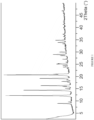
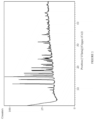
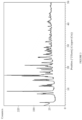
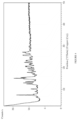
- Samples were mounted on single silicon crystal (SSC) wafer mounts and powder X-ray diffraction was recorded with a PANalytical X'Pert PRO (reflection geometry, wavelength of X-rays 1.5418 ⁇ nickel-filtered Cu radiation, Voltage 45 kV, filament emission 40 mA). Automatic variable divergence and anti scatter slits were used and the samples were rotated during measurement. Samples were scanned from 2-50 °2Theta using a 0.013° step width and 116 or 233 seconds count time using a PIXCEL detector (active length 3.35 °2Theta).
- SSC single silicon crystal
- an X-ray powder diffraction pattern may be obtained which has one or more measurement errors depending on measurement conditions (such as equipment, sample preparation or machine used).
- intensities in an X-ray powder diffraction pattern may fluctuate depending on measurement conditions and sample preparation.
- persons skilled in the art of X-ray powder diffraction will realise that the relative intensities of peaks may vary according to the orientation of the sample under test and on the type and setting of the instrument used.
- the position of reflections can be affected by the precise height at which the sample sits in the diffractometer and the zero calibration of the diffractometer.
- the surface planarity of the sample may also have a small effect.
- a measurement error of a diffraction angle in an X-ray powder diffractogram may be approximately plus or minus 0.1 °2-theta, and such a degree of a measurement error should be taken into account when considering the X-ray powder diffraction data.
- intensities might fluctuate depending on experimental conditions and sample preparation (e.g. preferred orientation). The following definitions have been used for the relative intensity (%): 81 - 100%, vs (very strong); 41 - 80%, str (strong); 21 - 40%, med (medium); 10 - 20%, w (weak); 1 - 9%, vw (very weak).
- CDI (3.09 g, 19.0 mmol) was added to a solution of 2-amino-4-chloro-6-methylphenol (2.5 g, 15.9 mmol) in THF (65 mL). The reaction was heated at reflux for 2.5 h before cooling to rt. The reaction mixture was transferred to a separating funnel and diluted with EtOAc (100 mL). The mixture was washed sequentially with 2 M hydrochloric acid, saturated aqueous solution of sodium hydrogen carbonate and saturated sodium chloride solution. The organic extract was dried (sodium sulfate), filtered and concentrated under reduced pressure to afford the subtitled compound as a light brown solid (2.89 g, 98%).
- 1 H NMR 400 MHz, DMSO-d 6 ): 11.84 (s, 1H), 7.10 (d, 1H), 7.06 (d, 1H), 2.37 (s, 3H).
- the reaction mixture was degassed under nitrogen for 15 min before XPhos (19 mg, 0.040 mmol) and chloro(2-dicyclohexylphosphino-2',4',6'-triisopropyl-1,1'-biphenyl)[2-(2'-amino-1,1'-biphenyl)]palladium(II) (XPhos-Pd-G2, 16 mg, 0.020 mmol) were added.
- the reaction mixture was heated at 80 °C for 3 h.
- Methyl magnesium chloride (1.62 mL, 4.87 mmol, 3 M solution in THF) was added to a solution of 5-bromo-3-(2-oxopropyl)-1,3-benzoxazol-2(3 H )-one (1.31 g, 4.87 mmol) in THF (20 mL) at 0 °C with stirring. After 1 h additional methyl magnesium chloride (0.81 mL, 2.43 mmol) was added. The reaction was warmed to rt and stirred for 1 h before quenching with ammonium chloride (saturated aqueous solution). The reaction mixture was diluted with EtOAc and the layers separated.
- CDI (2.38 g, 14.70 mmol) was added to a solution of 2-amino-4-bromo-6-fluorophenol (2.5g, 12.25 mmol) in THF (65 mL). The reaction was heated at reflux for 2.5 h before cooling to rt. The reaction mixture was transferred to a separating funnel and diluted with EtOAc (100 mL). The mixture was washed sequentially with 2 M hydrochloric acid, saturated aqueous solution of sodium hydrogen carbonate and saturated sodium chloride solution. The organic extracts were dried (sodium sulfate), filtered and concentrated under reduced pressure.
- 2-Dimethylaminoethyl chloride hydrochloride (1.21 g, 8.41 mmol) was added to 5-bromo-1,3-benzoxazol-2(3 H )-one (1.80 g, 8.41 mmol) and potassium carbonate (3.87 g, 28.0 mmol) in DMF (10 mL). The reaction was heated at 125 °C for 3.5 h before cooling to rt and pouring onto ice-water. The aqueous layer was extracted with EtOAc (4 x 100 mL). The combined organic extractes were dried (magnesium sulphate), filtered and concentrated under reduced pressure.
- the reaction mixture was degassed under nitrogen for 40 min before XPhos (311 mg, 0.65 mmol) and chloro(2-dicyclohexylphosphino-2',4',6'-triisopropyl-1,1'-biphenyl)[2-(2'-amino-1,1'-biphenyl)]palladium(II) (XPhos-Pd-G2, 257 mg, 0.33 mmol) were added.
- the reaction mixture was heated at 80 °C for 2 h.
- Potassium carbonate (4.5 g, 36 mmol) was added to a suspension of tert -butyl N -[(1 S )-1-cyano-2-(4-iodophenyl)ethyl]carbamate (prepared according to the procedure in WO2009/74829 , p 47), (5.99 g, 16 mmol) and (4-cyanophenyl)boronic acid (2.64 g, 18 mmol) in 1,4-dioxane (60 mL) and water (8 mL). The suspension was stirred under a stream of nitrogen for 15 min before Pd(dppf)Cl 2 ⁇ DCM (1.3 g) was added.
- the reaction was heated at 75 °C for 45 min before concentrating under reduced pressure.
- the resultant oil was diluted with EtOAc (200 mL), washed with water (100 mL) and saturated sodium chloride solution (50 mL).
- the organic extracts were dried (magnesium sulfate), filtered and evaporated under reduced pressure to afford a brown oil.
- the oil was purified by silica gel column chromatography eluting with 20 - 30% EtOAc in iso -hexane to afford the subtitled compound as a colourless solid (5.9 g, 90%).
- the reaction mixture was degassed under nitrogen for 30 min before potassium carbonate (2.66 g, 19.21 mmol) and Pd(dppf)Cl 2 ⁇ DCM (1.05 g, 1.28 mmol) were added.
- the reaction mixture was heated at 80 °C for 1.5 h. After this time the reaction was concentrated under reduced pressure. The residue was diluted with EtOAc (200 mL) and water (50 mL). The mixture was filtered through celite and the layers separated. The organic extracts were washed with saturated sodium chloride solution, dried (magnesium sulphate), filtered and evaporated.
- the reaction mixture was filtered through celite, washing with EtOAc. The filtrate was evaporated under reduced pressure, dissolved in 1 M sodium carbonate solution (100 mL) and extracted with EtOAc (2 x 200 mL). The aqueous solution was acidified with 2M HCl (150 mL) and extracted with EtOAc (3 x 400 mL). The combined organic extracts were dried (magnesium sulfate), filtered and evaporated under reduced pressure to give the title compound as a colourless solid (7.86 g, 68%).
- LiBr (375 g, 4319 mmol) was added to a mixture of ACN (700 mL), water (30 mL), TEA (187 g, 1851 mmol) and water (30 mL). With a reaction temperature of 30 °C, 4-tert-butyl 2-methyl (2S)-1,4-oxazepane-2,4-dicarboxylate (160 g, 617 mmol) dissolved in ACN (200 mL) was then added. The mixture was stirred vigorously at 20 °C over night.
- tert-Butyl (2S)-2-(hydroxymethyl)-1,4-oxazepane-4-carboxylate 52.5g (assay 85%, 40.7 g) was dissolved in 300 mL of DCM.
- TEMPO 0.5 g was dissolved 100 mL of DCM, Tertrabutylammonium hydrogensulfate, 3.88 g was dissolved in 100 mL of DCM.
- the three DCM solutions were charged to a reactor and 100 mL of water was added.
- 58 mL of sodium bromide, 0.5 M solution was added to the above buffered solution.
- the resulting water solution was added dropwise at 0 °C to the two-phase system consisting of the mixed DCM solutions and water, with high stirring.
- the reaction generated heat.
- the addition could be followed by a color change (yellow to pale yellow) that indicated when the oxidant was consumed.
- the jacket was set to -5 °C to keep the inner temperature at aprox. 10 °C.
- the resulting DCM (800 ml) solution was evaporated to an oil, approx 100g.
- the oil was dissolved in bicarbonate solution, 400 ml, and was extracted with DCM, 2 x 75 ml.
- the residual water phase was acidified to pH 2-3 with potassium hydrogen sulfate, approx 35-40 g, and was extracted with DCM(5 x 75ml).
- the DCM was evaporated to give 40.7 g of white crystals; yield: 40.7 g , 85% yield based on the assay of the starting material.
- Product contained 10% water.
- the resultant oil was dissolved in EtOAc and washed successively with 2 M aqueous hydrochloric acid, saturated aqueous solution of sodium hydrogen carbonate and sodium chloride solution.
- the organic extracts were dried (magnesium sulfate), filtered and concentrated under reduced pressure to afford the title compound as a foaming yellow oil (13.1 g, 79%) which was used without further purification.
- Pin 2 B 2 (0.32 g, 1.26 mmol), potassium acetate (0.28 g, 2.9 mmol) and Pd(dppf)Cl 2 ⁇ DCM (0.039 g, 5 mol%) were added to a stirred solution of tert-butyl (2 S )-2- ⁇ [(2 S )-1-amino-3-(4-iodophenyl)-1-oxopropan-2-yl]carbamoyl ⁇ -1,4-oxazepane-4-carboxylate (Intermediate 4, 0.5 g, 0.97 mmol) in dry DMSO (2.5 mL) under nitrogen. The reaction was heated at 85 °C for 5 h and allowed to stand at rt overnight.
- N-(3-Dimethylaminopropyl)-N'-ethylcarbodiimide hydrochloride (468 mg, 2.44 mmol) and 2-pyridinol 1-oxide (271 mg, 2.44 mmol) were added to a solution of (2S)-4-(tert- butoxycarbonyl)-1,4-oxazepane-2-carboxylic acid (Intermediate 3, 490 mg, 2.0 mmol) in DCM (15 mL).
- the mixture was diluted with water (5.6 L) and stirred for 30 min at rt.
- the mixture was then filtered through a pad of Celite (500 g) to remove undissolved material - very slow filtration; the Celite was checked for product by LC.
- the pad was washed with water (400 ml).
- the layers DCM/dioxane-water were separated.
- the suspension was stirred overnight then the product was filtered off and washed with water (3 x 400 ml).
- the resultant oil was dissolved in EtOAc and washed successively with 2 M aqueous hydrochloric acid, saturated aqueous solution of sodium hydrogen carbonate and sodium chloride solution.
- the organic extracts were dried (magnesium sulfate), filtered and concentrated under reduced pressure to afford the subtitled compound as a yellow oil which was used without further purification in the next step.
- the reaction mixture was degassed under nitrogen for 30 min before the addition of potassium carbonate (73 mg, 0.53 mmol) and Pd(dppf)Cl 2 ⁇ DCM (29 mg, 0.035 mmol).
- the reaction mixture was heated at 80 °C for 1 h. After this time the reaction was concentrated under reduced pressure. Purified by silica gel column chromatography eluting with 8% methanol in EtOAc to afford the subtitled compound as a brown oil (192 mg, 100%). Used without further purification in the next step.
- the crude product was purified by preparative HPLC (Waters XBridge Prep C18 OBD column, 5 ⁇ silica, 19 mm diameter, 150 mm length), using decreasingly polar mixtures of water (containing 0.5% TFA) and MeCN as eluents. Fractions containing the desired compound were evaporated to dryness to afford the title product (130 mg, 63%) as a yellow gum.
- Test A1 Fluorescence assay for recombinant human (RH) DPP1
- the assay was carried out in black 384 well plates in a final volume of 50 ⁇ l at 22 °C.
- the assay conditions contained the following: 25 mM piperazine buffer pH 5.0; 50 mM NaCl, 5 mM DTT; 0.01% (v/v) Triton X-100; 100 ⁇ M H-Gly-Arg-AMC and rhDPP1 (-50 pM).
- Test A2 Fluorescence assay for recombinant human (RH) DPP1
- the assay was carried out in black 384 well plates in a final volume of 10 ⁇ l at rt.
- the assay conditions contained the following: 25 mM piperazine buffer pH 5.0; 50 mM NaCl, 5 mM DTT; 0.005 (v/v) Triton X-100; 50 ⁇ M H-Gly-Arg-AMC and 96.4 pM rhDPP1
- Potential inhibitors were diluted in DMSO to generate 100 x of the final assay concentration.
- the compounds were tested at 10 concentrations with half-log dilution steps (highest concentration typically 1 ⁇ M) and with a final DMSO concentration of 1% (v/v). Routinely, inhibitors were pre-incubated with rhDPP1 for 30 min prior to the addition of the peptide substrate to start the reaction for a further 30 min.
- the pIC 50 were determined using a 4-paramater logistic equation in a non-linear curve fitting routine (Smartfit, Genedata Screener ® ).
- a standard DPP1 inhibitor, 4-amino- N -[(1S)-1-cyano-2-(4'-cyanobiphenyl-4-yl)ethyl]tetrahydro-2 H -pyran-4-carboxamide ( WO2010/128324 , Ex. 3) was used as a positive control and 1% (v/v) DMSO was used as a negative control in the assay.
- Test B in-vitro competitive aortic binding assay
- Test B In-vitro competitive aortic tissue binding assay
- Aortic homogenate was prepared from the thoracic aortae of Han Wistar rats. Freshly isolated thoracic aortae were frozen, and later thawed and stripped of non-elastic material. Stripped aortae were then weighed, cut into small pieces and homogenised first with a rotor-stator homogeniser; and then with a loose-fit, and then a tight-fit, Dounce homogeniser in Puck's saline (137 mM NaCl, 5.37 mM KCl, 4.17 mM NaHCO 3 , and 5.55 mM D-glucose).
- Homogenate concentration was adjusted to 30 mg/mL in Puck's saline, and aliquots were stored at -80 °C until use. Positive and negative control compounds and test compounds were made up to 100 mM in DMSO, and added to 1 mL aliquots of aortic homogenate in Puck's saline for a final concentration of 100 ⁇ M. Homogenate samples were pre-incubated with test compounds at 37 °C, rotating, overnight.
- Precipitate was pelleted by centrifugation at 4,500 x g at 4 °C for 20 min, an aliquot of supernatant was removed for analysis, and the remainder of the supernatant discarded.
- Precipitate was washed by resuspension in 10 mL 80% methanol in distilled water, and re-pelleted by centrifugation at 4,500 x g at 4 °C for 20 min. Washing was repeated for a total of 4 washes in 80% methanol, and 2 further washes in 100% methanol, an aliquot of supernatant being removed for analysis at each stage. After final wash, precipitate was air-dried, and dissolved overnight in 1 mL NCSII Tissue Solubiliser.
- Table 12 The results obtained are shown in Table 12 below. The results are quantified into four different categories: strong binder, medium binder, binder and no binder.
- Table 12 Compound Structure Aortic Tissue Binding WO2010/128324 (Ex. 3) Strong binder (reference) WO2010/128324 (Example 17) Strong binder WO2009/074829 (Example 96) Medium binder WO2009/074829 (Example 24) Binder Example 2 No binder Example 16 No binder
Landscapes
- Chemical & Material Sciences (AREA)
- Organic Chemistry (AREA)
- Health & Medical Sciences (AREA)
- Life Sciences & Earth Sciences (AREA)
- Animal Behavior & Ethology (AREA)
- Medicinal Chemistry (AREA)
- Pharmacology & Pharmacy (AREA)
- General Health & Medical Sciences (AREA)
- Public Health (AREA)
- Veterinary Medicine (AREA)
- Nuclear Medicine, Radiotherapy & Molecular Imaging (AREA)
- General Chemical & Material Sciences (AREA)
- Chemical Kinetics & Catalysis (AREA)
- Epidemiology (AREA)
- Pulmonology (AREA)
- Bioinformatics & Cheminformatics (AREA)
- Engineering & Computer Science (AREA)
- Virology (AREA)
- Communicable Diseases (AREA)
- Oncology (AREA)
- Immunology (AREA)
- Molecular Biology (AREA)
- Pharmaceuticals Containing Other Organic And Inorganic Compounds (AREA)
- Plural Heterocyclic Compounds (AREA)
- Medicines That Contain Protein Lipid Enzymes And Other Medicines (AREA)
- Medicinal Preparation (AREA)
- Heterocyclic Carbon Compounds Containing A Hetero Ring Having Nitrogen And Oxygen As The Only Ring Hetero Atoms (AREA)
- Acyclic And Carbocyclic Compounds In Medicinal Compositions (AREA)
- Epoxy Compounds (AREA)
- Hydrogenated Pyridines (AREA)
Priority Applications (5)
| Application Number | Priority Date | Filing Date | Title |
|---|---|---|---|
| RS20250323A RS66709B1 (sr) | 2014-01-24 | 2015-01-23 | (2s)-n-[(1s)-1-cijano-2-feniletil]-1,4-oksazepan-2-karboksamidi kao inhibitori dipeptidil peptidaze i |
| SI201532060T SI3744714T1 (sl) | 2014-01-24 | 2015-01-23 | (2S)-N-[(1S)-1-ciano-2-feniletil]-1,4-oksazepan-2-karboksamidi kot zaviralci dipeptidil peptidaze I |
| HRP20250302TT HRP20250302T1 (hr) | 2014-01-24 | 2015-01-23 | (2s)-n-[(1s)-1-cijano-2-feniletil]-1,4-oksazepan-2-karboksamidi kao inhibitori dipeptidil peptidaze i |
| EP25150988.1A EP4548972A3 (en) | 2014-01-24 | 2015-01-23 | (2s)-n-[(1s)-1-cyano-2-phenylethyl]-1,4-oxazepane-2-carboxamides as dipeptidyl peptidase i inhibitors |
| SM20250137T SMT202500137T1 (it) | 2014-01-24 | 2015-01-23 | (2s)-n-[(1s)-1-ciano-2-feniletil]-1,4-ossazepan-2-carbossammidi come inibitori di dipeptidil peptidasi i |
Applications Claiming Priority (4)
| Application Number | Priority Date | Filing Date | Title |
|---|---|---|---|
| US201461931090P | 2014-01-24 | 2014-01-24 | |
| EP15701577.7A EP3097086B1 (en) | 2014-01-24 | 2015-01-23 | (2s)-n-[(1s)-1-cyano-2-phenylethyl]-1,4-oxazepane-2-carboxamides as dipeptidyl peptidase i inhibitors |
| EP17195612.1A EP3323814B1 (en) | 2014-01-24 | 2015-01-23 | (2s)-n-[(1s)-1-cyano-2-phenylethyl]-1,4-oxazepane-2-carboxamides as dipeptidyl peptidase i inhibitors |
| PCT/GB2015/050155 WO2015110826A1 (en) | 2014-01-24 | 2015-01-23 | (2s)-n-[(1s)-1-cyano-2-phenylethyl]-1,4-oxazepane-2-carboxamides as dipeptidyl peptidase i inhibitors |
Related Parent Applications (2)
| Application Number | Title | Priority Date | Filing Date |
|---|---|---|---|
| EP15701577.7A Division EP3097086B1 (en) | 2014-01-24 | 2015-01-23 | (2s)-n-[(1s)-1-cyano-2-phenylethyl]-1,4-oxazepane-2-carboxamides as dipeptidyl peptidase i inhibitors |
| EP17195612.1A Division EP3323814B1 (en) | 2014-01-24 | 2015-01-23 | (2s)-n-[(1s)-1-cyano-2-phenylethyl]-1,4-oxazepane-2-carboxamides as dipeptidyl peptidase i inhibitors |
Related Child Applications (1)
| Application Number | Title | Priority Date | Filing Date |
|---|---|---|---|
| EP25150988.1A Division EP4548972A3 (en) | 2014-01-24 | 2015-01-23 | (2s)-n-[(1s)-1-cyano-2-phenylethyl]-1,4-oxazepane-2-carboxamides as dipeptidyl peptidase i inhibitors |
Publications (2)
| Publication Number | Publication Date |
|---|---|
| EP3744714A1 EP3744714A1 (en) | 2020-12-02 |
| EP3744714B1 true EP3744714B1 (en) | 2025-01-15 |
Family
ID=52432834
Family Applications (4)
| Application Number | Title | Priority Date | Filing Date |
|---|---|---|---|
| EP20173862.2A Active EP3744714B1 (en) | 2014-01-24 | 2015-01-23 | (2s)-n-[(1s)-1-cyano-2-phenylethyl]-1,4-oxazepane-2-carboxamides as dipeptidyl peptidase i inhibitors |
| EP15701577.7A Active EP3097086B1 (en) | 2014-01-24 | 2015-01-23 | (2s)-n-[(1s)-1-cyano-2-phenylethyl]-1,4-oxazepane-2-carboxamides as dipeptidyl peptidase i inhibitors |
| EP25150988.1A Pending EP4548972A3 (en) | 2014-01-24 | 2015-01-23 | (2s)-n-[(1s)-1-cyano-2-phenylethyl]-1,4-oxazepane-2-carboxamides as dipeptidyl peptidase i inhibitors |
| EP17195612.1A Active EP3323814B1 (en) | 2014-01-24 | 2015-01-23 | (2s)-n-[(1s)-1-cyano-2-phenylethyl]-1,4-oxazepane-2-carboxamides as dipeptidyl peptidase i inhibitors |
Family Applications After (3)
| Application Number | Title | Priority Date | Filing Date |
|---|---|---|---|
| EP15701577.7A Active EP3097086B1 (en) | 2014-01-24 | 2015-01-23 | (2s)-n-[(1s)-1-cyano-2-phenylethyl]-1,4-oxazepane-2-carboxamides as dipeptidyl peptidase i inhibitors |
| EP25150988.1A Pending EP4548972A3 (en) | 2014-01-24 | 2015-01-23 | (2s)-n-[(1s)-1-cyano-2-phenylethyl]-1,4-oxazepane-2-carboxamides as dipeptidyl peptidase i inhibitors |
| EP17195612.1A Active EP3323814B1 (en) | 2014-01-24 | 2015-01-23 | (2s)-n-[(1s)-1-cyano-2-phenylethyl]-1,4-oxazepane-2-carboxamides as dipeptidyl peptidase i inhibitors |
Country Status (39)
Families Citing this family (41)
| Publication number | Priority date | Publication date | Assignee | Title |
|---|---|---|---|---|
| NO2699580T3 (enExample) | 2014-01-24 | 2018-02-24 | ||
| KR20240091302A (ko) * | 2016-07-29 | 2024-06-21 | 인스메드 인코포레이티드 | 기관지확장증을 치료하기 위한 특정 (2s)-n-[(1s)-1-시아노-2-페닐에틸]-1,4-옥사제판-2-카르복스아미드 |
| CA3089240A1 (en) * | 2018-02-07 | 2019-08-15 | Insmed Incorporated | Certain (2s)-n-[(1s)-1-cyano-2-phenylethyl]-1,4-oxazepane-2-carboxamides for treating anca associated vasculitides |
| HUE070049T2 (hu) | 2018-03-01 | 2025-05-28 | Astrazeneca Ab | (2S)-{(1S)-1-ciano-2-[4-(3-metil-2-oxo-2,3-dihidro-1,3-benzoxazol-5-il)fenil]etil} -1,4-oxazepán-2-karboxamidot tartalmazó gyógyászati készítmények |
| US20210252015A1 (en) * | 2018-07-17 | 2021-08-19 | Insmed Incorporated | Certain (2s)-n-[(1s)-1-cyano-2-phenylethyl]-1,4-oxazepane-2-carboxamides for treating inflammatory bowel disease |
| WO2020018547A1 (en) * | 2018-07-17 | 2020-01-23 | Insmed Incorporated | Certain (2s)-n-[(1s)-1-cyano-2-phenylethyl]-1,4-oxazepane-2-carboxamides for treating lupus nephritis |
| CN111689923B (zh) * | 2019-03-12 | 2022-11-08 | 中国科学院上海药物研究所 | 一个具有逆转肿瘤多药耐药活性的环脂肽化合物、其制备方法及用途 |
| BR112022007623A2 (pt) * | 2019-10-23 | 2022-07-12 | Chong Kun Dang Pharmaceutical Corp | Composições para prevenir ou tratar doenças pulmonares obstrutivas crônicas (dpoc) |
| JP2023533016A (ja) | 2020-07-11 | 2023-08-01 | ファイザー・インク | 抗ウイルス性ヘテロアリールケトン誘導体 |
| EP4182700A4 (en) | 2020-07-20 | 2024-11-13 | Insmed Incorporated | METHODS FOR EXTRACTING NEUTROPHIL SERINE PROTEASES AND TREATMENT OF DIPETIDYL PEPTIDASE-1-MEDIATED DISEASES |
| CN115996923B (zh) | 2020-08-26 | 2025-07-18 | 海思科医药集团股份有限公司 | 一种作为二肽基肽酶1抑制剂的腈衍生物及其用途 |
| US11351149B2 (en) | 2020-09-03 | 2022-06-07 | Pfizer Inc. | Nitrile-containing antiviral compounds |
| CN114159446A (zh) * | 2020-09-11 | 2022-03-11 | 中国科学院上海营养与健康研究所 | 组织蛋白酶c抑制剂在治疗肿瘤转移中的应用 |
| KR20230117738A (ko) * | 2020-12-04 | 2023-08-09 | 레이스톤 바이오파마 컴퍼니 리미티드 | 카텝신 c의 소분자 억제제 및 이의 의약적 용도 |
| CN114591315A (zh) * | 2020-12-04 | 2022-06-07 | 瑞石生物医药有限公司 | 一种组织蛋白酶c小分子抑制剂 |
| WO2022140516A1 (en) * | 2020-12-22 | 2022-06-30 | Insmed Incorporated | Certain (25)-iv-[(ls')~ i-c yan0-2-phenylethyl·]- 1,4-oxazepane-2- carboxamides for treating behcet's disease |
| US20240150335A1 (en) * | 2021-02-05 | 2024-05-09 | Medshine Discovery Inc. | Fused ring derivatives containing 1,4-oxazepane |
| US20240226112A1 (en) * | 2021-04-29 | 2024-07-11 | Insmed Incorporated | Certain n-(1-cyano-2-phenylethyl)-1,4-oxazepane-2-carboxamides for treating cystic fibrosis |
| CA3236069A1 (en) * | 2021-10-29 | 2023-05-04 | Ariel Teper | Certain n-(1-cyano-2-phenylethyl)-1,4-oxazepane-2-carboxamides for treating chronic rhinosinusitis |
| CN115925696A (zh) * | 2021-10-29 | 2023-04-07 | 瑞石生物医药有限公司 | 一种1-氰基-2-苯基乙基甲酰胺衍生物及其用途 |
| CN116332937B (zh) * | 2021-12-23 | 2026-04-10 | 杭州邦顺制药股份有限公司 | 二肽基肽酶ⅰ抑制剂及其用途 |
| EP4450497A4 (en) * | 2022-01-11 | 2025-11-26 | Shanghai Yidian Pharmaceutical Tech Development Co Ltd | NITRILE PEPTIDYL COMPOUND AND ITS USES |
| EP4479059A4 (en) * | 2022-02-16 | 2026-01-28 | Insmed Inc | CERTAIN N-(1-CYANO-2-PHENYLETHYL)-1,4-OXAZEPANE-2-CARBOXAMIDES FOR THE TREATMENT OF HIDRADENITIS SUPPURATIVE |
| TW202333739A (zh) * | 2022-02-22 | 2023-09-01 | 大陸商四川海思科製藥有限公司 | 二肽基肽酶1抑制劑多晶型物及其製備方法和用途 |
| JP2025508792A (ja) * | 2022-02-22 | 2025-04-10 | ハイスコ ファーマスーティカル プライベート リミテッド | ジペプチジルペプチダーゼ阻害化合物の塩及び結晶形態 |
| IL314855A (en) * | 2022-02-22 | 2024-10-01 | Haisco Pharmaceuticals Pte Ltd | Preparation method of nitrogen-containing heterocyclic compound |
| CN114644562B (zh) * | 2022-04-29 | 2023-08-22 | 常州大学 | 具有红移荧光发射的有机小分子荧光化合物、制备方法及应用 |
| EP4538271A4 (en) * | 2022-06-07 | 2025-10-08 | Reistone Biopharma Company Ltd | POLYMORPH OF BENZO[C]CHROMANE COMPOUND, ITS PREPARATION METHOD AND ITS USE |
| TW202404961A (zh) * | 2022-06-07 | 2024-02-01 | 大陸商瑞石生物醫藥有限公司 | 苯并[c]色滿化合物的可藥用鹽、其多晶型及用途 |
| AU2023296161A1 (en) | 2022-06-13 | 2025-01-02 | Alivexis, Inc. | Azacycloalkyl carbonyl cyclic amine compound |
| EP4551554A1 (en) | 2022-07-06 | 2025-05-14 | Chiesi Farmaceutici S.p.A. | Azetidine derivatives and use thereof as dipeptidyl peptidase 1 inhibitors |
| EP4602043A1 (en) | 2022-10-14 | 2025-08-20 | Genesis Therapeutics, Inc. | 4h-pyrido[1,2-a]pyrimidin-4-one derivatives for treating cancer |
| WO2024088307A1 (zh) * | 2022-10-26 | 2024-05-02 | 上海壹迪生物技术有限公司 | 一种新型肽基腈类化合物及其应用 |
| CN115785083A (zh) * | 2022-12-27 | 2023-03-14 | 瑞石生物医药有限公司 | 一种组织蛋白酶c小分子抑制剂及其制备方法 |
| JP2026503035A (ja) * | 2023-01-06 | 2026-01-27 | インスメッド インコーポレイテッド | 新規な可逆性dpp1阻害剤及びその用途 |
| JP2026507449A (ja) * | 2023-02-15 | 2026-03-04 | インスメッド インコーポレイテッド | Dpp1阻害剤としてのある特定の1,4-オキサゼパン-2-カルボキサミドの使用 |
| JP2026510407A (ja) * | 2023-03-23 | 2026-04-02 | ハイスコ ファーマスーティカル プライベート リミテッド | ジペプチジルペプチダーゼ小分子阻害剤を含む医薬組成物 |
| AU2024340032A1 (en) * | 2023-09-15 | 2026-04-09 | Insmed Incorporated | Dipeptidyl peptidase 1 inhibitors and uses thereof |
| USD1099133S1 (en) * | 2024-02-01 | 2025-10-21 | Apple Inc. | Display screen or portion thereof showing a graphical user interface |
| WO2025214073A1 (en) * | 2024-04-12 | 2025-10-16 | Insmed Incorporated | Dipeptidyl peptidase 1 inhibitors and uses thereof |
| WO2025250560A1 (en) * | 2024-05-28 | 2025-12-04 | Insmed Incorporated | Methods for treating bronchiectasis |
Family Cites Families (73)
| Publication number | Priority date | Publication date | Assignee | Title |
|---|---|---|---|---|
| JP2782151B2 (ja) | 1993-07-16 | 1998-07-30 | 博 吉田 | 衝撃吸収柵用の端ストッパ |
| US6297239B1 (en) | 1997-10-08 | 2001-10-02 | Merck & Co., Inc. | Inhibitors of prenyl-protein transferase |
| US6566372B1 (en) | 1999-08-27 | 2003-05-20 | Ligand Pharmaceuticals Incorporated | Bicyclic androgen and progesterone receptor modulator compounds and methods |
| US6462076B2 (en) | 2000-06-14 | 2002-10-08 | Hoffmann-La Roche Inc. | Beta-amino acid nitrile derivatives as cathepsin K inhibitors |
| CA2422057C (en) | 2000-09-08 | 2012-11-27 | Prozymex A/S | Dipeptidyl peptidase i crystal structure and its uses |
| BR0114436A (pt) * | 2000-10-06 | 2003-07-01 | Tanabe Seiyaku Co | Composto com anel de cinco elementos contendo nitrogênio alifático |
| EP1217000A1 (en) | 2000-12-23 | 2002-06-26 | Aventis Pharma Deutschland GmbH | Inhibitors of factor Xa and factor VIIa |
| HUP0402344A2 (hu) | 2001-12-04 | 2005-02-28 | F. Hoffmann-La Roche Ag | Helyettesített 2-amino-cikloalkán-karboxamidok, felhasználásuk cisztein-proteáz-inhibitorként, eljárás az előállításukra és ezeket tartalmazó gyógyszerkészítmények |
| US20040253311A1 (en) | 2002-12-18 | 2004-12-16 | Roger Berlin | Multi-layer tablet comprising non-steroidal anti-inflammatory drugs, decongestants and non-sedating antihist amines |
| WO2004076434A1 (en) | 2003-02-28 | 2004-09-10 | Aic | Dipeptidyl peptidase inhibitors |
| WO2004087153A2 (en) | 2003-03-28 | 2004-10-14 | Chiron Corporation | Use of organic compounds for immunopotentiation |
| EP1633702B1 (en) | 2003-05-30 | 2008-07-02 | Prozymex A/S | Protease inhibitors |
| JP2006527704A (ja) * | 2003-06-18 | 2006-12-07 | プロザイメックス・アクティーゼルスカブ | プロテアーゼ阻害剤 |
| EP3372614B1 (en) | 2004-04-07 | 2022-06-08 | Rinat Neuroscience Corp. | Methods for treating bone cancer pain by administering a nerve growth factor antagonist |
| EP1745292A2 (en) | 2004-04-28 | 2007-01-24 | Bayer HealthCare AG | Diagnostics and therapeutics for diseases associated with dipeptidyl-peptidase 1 (dpp1) |
| US7618981B2 (en) | 2004-05-06 | 2009-11-17 | Cytokinetics, Inc. | Imidazopyridinyl-benzamide anti-cancer agents |
| SE0401657D0 (sv) | 2004-06-24 | 2004-06-24 | Astrazeneca Ab | Chemical compounds |
| PL1916994T3 (pl) | 2004-06-29 | 2014-05-30 | Takeda Pharma As | Wytwarzanie kompozycji farmaceutycznej o szybkim uwalnianiu leków nierozpuszczalnych w wodzie i kompozycje farmaceutyczne otrzymywane sposobem według wynalazku |
| CN103251953A (zh) | 2004-07-19 | 2013-08-21 | 约翰·霍普金斯大学 | 供免疫抑制的flt3抑制剂 |
| KR20070114753A (ko) | 2005-02-18 | 2007-12-04 | 아브락시스 바이오사이언스 인크. | 치료제의 조합 및 투여 방식, 및 조합 요법 |
| WO2007005668A2 (en) | 2005-06-30 | 2007-01-11 | Amgen Inc. | Bis-aryl kinase inhibitors and their use in the treatment of inflammation, angiogenesis and cancer |
| JP2010520293A (ja) | 2007-03-07 | 2010-06-10 | アラントス・フアーマシユーテイカルズ・ホールデイング・インコーポレイテツド | 複素環式部分を含有するメタロプロテアーゼ阻害剤 |
| TW200916447A (en) | 2007-08-29 | 2009-04-16 | Methylgene Inc | Sirtuin inhibitors |
| MX2010003263A (es) | 2007-09-25 | 2010-06-02 | Novartis Ag | Tratamiento de trastornos pulmonares con medicamentos aerosolizados tales como vancomicina. |
| US7902181B2 (en) * | 2007-12-12 | 2011-03-08 | Astrazeneca Ab | Compounds 010 |
| US9315449B2 (en) | 2008-05-15 | 2016-04-19 | Duke University | Substituted pyrazoles as heat shock transcription factor activators |
| PE20100252A1 (es) | 2008-06-06 | 2010-04-12 | Boehringer Ingelheim Int | Nuevas formulaciones farmaceuticas solidas que comprenden dimaleato de 4-[(3-cloro-4-fluorofenil) amino]-6-{[4-(n,n-dimetilamino)-1-oxo-2-buten-1-il] amino}-7-((s)-tetrahidrofuran-3-iloxi)-quinazolina |
| JP5752601B2 (ja) | 2008-12-08 | 2015-07-22 | ブイエム ファーマ エルエルシー | タンパク質受容体チロシンキナーゼ阻害薬の組成物 |
| BRPI1016132B8 (pt) | 2009-04-01 | 2021-05-25 | Bial Portela & Ca Sa | composição, formulação farmacêutica, processo de obtenção de uma formulação farmacêutica estável |
| MX2011011661A (es) * | 2009-05-07 | 2011-11-18 | Astrazeneca Ab | Compuestos 1-cianoetilheterociclilcarboxamida sustituidos 750. |
| WO2010142985A1 (en) * | 2009-06-10 | 2010-12-16 | Astrazeneca Ab | Substituted n-[1-cyano-2-(phenyl)ethyl]piperidin-2-ylcarboxmide compounds 761 |
| HRP20211752T1 (hr) | 2010-04-07 | 2022-02-18 | Vertex Pharmaceuticals Incorporated | Farmaceutski pripravci 3-(6-(1-(2,2-difluorobenzo[d][1,3]dioksol-5-il)ciklopropankarboksamido)-3-metilpiridin-2-il)benzojeve kiseline i njihova primjena |
| WO2011154677A1 (en) * | 2010-06-09 | 2011-12-15 | Astrazeneca Ab | Substituted n-[1-cyano-2-(phenyl)ethyl] 1-aminocycloalk-1-ylcarboxamide compounds - 760 |
| IT1404036B1 (it) | 2010-12-17 | 2013-11-08 | Oto Melara Spa | Veicolo armato con struttura migliorata. |
| US8841463B2 (en) | 2011-02-11 | 2014-09-23 | Glaxosmithkline Intellectual Property Development Limited | Cathepsin C inhibitors |
| WO2012119941A1 (en) | 2011-03-04 | 2012-09-13 | Prozymex A/S | Peptidyl nitrilcompounds as peptidase inhibitors |
| US8999975B2 (en) | 2011-09-19 | 2015-04-07 | Boehringer Ingelheim International Gmbh | Substituted N- [1-cyano-2- (phenyl) ethyl] -2-azabicyclo [2.2.1] heptane-3-carboxamide inhibitors of cathepsin C |
| CN104114557B (zh) | 2012-02-21 | 2017-10-24 | 默克专利股份公司 | 作为syk酪氨酸激酶抑制剂和gcn2丝氨酸激酶抑制剂的8‑取代2‑氨基‑[1,2,4]三唑并[1,5‑a]吡嗪 |
| EP2840083B1 (en) | 2012-04-17 | 2017-09-13 | Astellas Pharma Inc. | Nitrogenated bicyclic aromatic heterocyclic compound |
| WO2014091443A1 (en) | 2012-12-13 | 2014-06-19 | Glaxo Group Limited | Cathepsin c inhibitors for treating cystic fibrosis, non-cystic fibrosis bronchiectasis, and anca-associated vasculitis |
| EP2775304A1 (en) | 2013-03-07 | 2014-09-10 | Universitätsspital Basel | Methods for detecting inflammatory disorder |
| ES2845473T3 (es) | 2013-03-14 | 2021-07-26 | Boehringer Ingelheim Int | (Bencil-ciano-metil)-amidas sustituidas de ácido 2-aza-biciclo[2.2.1]heptano-3-carboxílico inhibidores de la catepsina- C |
| JP6437929B2 (ja) | 2013-03-14 | 2018-12-12 | ベーリンガー インゲルハイム インターナショナル ゲゼルシャフト ミット ベシュレンクテル ハフツング | カテプシンcの置換二環式1−カルボン酸(ベンジル−シアノ−メチル)−アミド阻害剤 |
| EP2970228B1 (en) | 2013-03-14 | 2017-05-10 | Boehringer Ingelheim International GmbH | Substituted 2-aza-bicyclo[2.2.1]heptane-3-carboxylic acid (cyano-methyl)-amides inhibitors of cathepsin c |
| EP2970252B1 (en) | 2013-03-14 | 2020-06-03 | Boehringer Ingelheim International GmbH | Substituted 2-aza-bicyclo[2.2.2]octane-3-carboxylic acid (benzyl-cyano-methyl)-amides inhibitors of cathepsin c |
| UY35400A (es) | 2013-03-15 | 2014-10-31 | Novartis Ag | Compuestos y composiciones para el tratamiento de enfermedades parasitarias |
| AU2014248455B2 (en) | 2013-04-01 | 2018-12-06 | Pulmatrix Operating Company, Inc. | Tiotropium dry powders |
| WO2015027039A1 (en) | 2013-08-22 | 2015-02-26 | Emory University | Devices and methods related to airway inflammation |
| WO2015032942A1 (en) | 2013-09-09 | 2015-03-12 | Prozymex A/S | N-substituted 3,3'-(biphenyl-4,4'-diyl)bis-2-aminopropanenitriles as dppi inhibitors |
| EP3044214B1 (en) | 2013-09-09 | 2017-08-09 | ProZymex A/S | Peptidyl nitril compounds as dipeptidyl peptidase i inhibitors |
| GB201400034D0 (en) | 2014-01-02 | 2014-02-19 | Astrazeneca Ab | Pharmaceutical Compositions comprising AZD9291 |
| NO2699580T3 (enExample) | 2014-01-24 | 2018-02-24 | ||
| GB201402070D0 (en) | 2014-02-07 | 2014-03-26 | Galapagos Nv | Pharmaceutical compositions for the treatment of inflammatory disorders |
| EP3129020A1 (en) | 2014-04-10 | 2017-02-15 | Novartis AG | S1p modulator immediate release dosage regimen |
| LT3466432T (lt) | 2014-05-15 | 2020-12-28 | Insmed Incorporated | Būdai, skirti plaučių netuberkuliozinėms mikobakterinėms infekcijoms gydyti |
| WO2015180687A1 (en) | 2014-05-30 | 2015-12-03 | The University Of Hong Kong | Methods and compositions for use of neutrophil elastase and proteinase 3 as diagnostic biomarkers |
| JP6529575B2 (ja) | 2014-08-01 | 2019-06-12 | ベーリンガー インゲルハイム インターナショナル ゲゼルシャフト ミット ベシュレンクテル ハフツング | 置換オキセタンおよびそれらのカテプシンcの阻害薬としての使用 |
| EP3511331A1 (en) | 2014-09-12 | 2019-07-17 | Boehringer Ingelheim International GmbH | Spirocyclic inhibitors of cathepsin c |
| BR112017009595A2 (pt) | 2014-11-14 | 2017-12-19 | Boehringer Ingelheim Int | morfolina e 1,4-oxazepano amidas como agonistas do subtipo de receptor de somatostatina 4 (sstr4) |
| JP6783426B2 (ja) | 2015-03-05 | 2020-11-11 | ニュープロザイム・セラピューティクス・アンパルトセルスカブNeuprozyme Therapeutics ApS | ジペプチジルペプチダーゼi阻害剤としてのペプチジルニトリル化合物 |
| KR20240091302A (ko) | 2016-07-29 | 2024-06-21 | 인스메드 인코포레이티드 | 기관지확장증을 치료하기 위한 특정 (2s)-n-[(1s)-1-시아노-2-페닐에틸]-1,4-옥사제판-2-카르복스아미드 |
| CA3089240A1 (en) * | 2018-02-07 | 2019-08-15 | Insmed Incorporated | Certain (2s)-n-[(1s)-1-cyano-2-phenylethyl]-1,4-oxazepane-2-carboxamides for treating anca associated vasculitides |
| HUE070049T2 (hu) | 2018-03-01 | 2025-05-28 | Astrazeneca Ab | (2S)-{(1S)-1-ciano-2-[4-(3-metil-2-oxo-2,3-dihidro-1,3-benzoxazol-5-il)fenil]etil} -1,4-oxazepán-2-karboxamidot tartalmazó gyógyászati készítmények |
| US20210252015A1 (en) | 2018-07-17 | 2021-08-19 | Insmed Incorporated | Certain (2s)-n-[(1s)-1-cyano-2-phenylethyl]-1,4-oxazepane-2-carboxamides for treating inflammatory bowel disease |
| WO2020018547A1 (en) | 2018-07-17 | 2020-01-23 | Insmed Incorporated | Certain (2s)-n-[(1s)-1-cyano-2-phenylethyl]-1,4-oxazepane-2-carboxamides for treating lupus nephritis |
| MX2021012548A (es) | 2019-04-17 | 2023-01-05 | Azora Therapeutics Inc | Composiciones topicas y metodos para el tratamiento de enfermedades inflamatorias de la piel. |
| BR112021024310A2 (pt) | 2019-06-05 | 2022-02-15 | Univ Emory | Peptidomiméticos para o tratamento de infecções por coronavírus e picornavírus |
| WO2022140516A1 (en) | 2020-12-22 | 2022-06-30 | Insmed Incorporated | Certain (25)-iv-[(ls')~ i-c yan0-2-phenylethyl·]- 1,4-oxazepane-2- carboxamides for treating behcet's disease |
| CN112920124B (zh) | 2021-01-29 | 2024-03-01 | 安徽医科大学 | 一种嘧啶-2,4-二胺类化合物及其制备方法与应用 |
| US20240226112A1 (en) | 2021-04-29 | 2024-07-11 | Insmed Incorporated | Certain n-(1-cyano-2-phenylethyl)-1,4-oxazepane-2-carboxamides for treating cystic fibrosis |
| WO2022232420A1 (en) | 2021-04-29 | 2022-11-03 | Insmed Incorporated | Certain n-(1-cyano-2-phenylethyl)-1,4-oxazepane-2-carboxamides for treating cancer |
| CA3236069A1 (en) | 2021-10-29 | 2023-05-04 | Ariel Teper | Certain n-(1-cyano-2-phenylethyl)-1,4-oxazepane-2-carboxamides for treating chronic rhinosinusitis |
| EP4479059A4 (en) | 2022-02-16 | 2026-01-28 | Insmed Inc | CERTAIN N-(1-CYANO-2-PHENYLETHYL)-1,4-OXAZEPANE-2-CARBOXAMIDES FOR THE TREATMENT OF HIDRADENITIS SUPPURATIVE |
-
2012
- 2012-04-15 NO NO12774761A patent/NO2699580T3/no unknown
-
2015
- 2015-01-21 US US14/601,371 patent/US9522894B2/en active Active
- 2015-01-23 CN CN201910716882.4A patent/CN110483492B/zh active Active
- 2015-01-23 WO PCT/GB2015/050155 patent/WO2015110826A1/en not_active Ceased
- 2015-01-23 EP EP20173862.2A patent/EP3744714B1/en active Active
- 2015-01-23 UY UY0001035963A patent/UY35963A/es not_active Application Discontinuation
- 2015-01-23 HU HUE17195612A patent/HUE052421T2/hu unknown
- 2015-01-23 NZ NZ722063A patent/NZ722063A/en unknown
- 2015-01-23 DK DK15701577.7T patent/DK3097086T3/en active
- 2015-01-23 SM SM20180058T patent/SMT201800058T1/it unknown
- 2015-01-23 RS RS20180069A patent/RS56919B1/sr unknown
- 2015-01-23 AR ARP150100202A patent/AR099177A1/es active IP Right Grant
- 2015-01-23 DK DK20173862.2T patent/DK3744714T3/da active
- 2015-01-23 EP EP15701577.7A patent/EP3097086B1/en active Active
- 2015-01-23 FI FIEP20173862.2T patent/FI3744714T3/fi active
- 2015-01-23 PL PL17195612T patent/PL3323814T3/pl unknown
- 2015-01-23 HR HRP20250302TT patent/HRP20250302T1/hr unknown
- 2015-01-23 HU HUE15701577A patent/HUE038274T2/hu unknown
- 2015-01-23 SI SI201531287T patent/SI3323814T1/sl unknown
- 2015-01-23 MX MX2016009349A patent/MX368840B/es active IP Right Grant
- 2015-01-23 LT LTEP20173862.2T patent/LT3744714T/lt unknown
- 2015-01-23 SI SI201532060T patent/SI3744714T1/sl unknown
- 2015-01-23 ES ES17195612T patent/ES2808060T3/es active Active
- 2015-01-23 PT PT157015777T patent/PT3097086T/pt unknown
- 2015-01-23 AP AP2016009322A patent/AP2016009322A0/en unknown
- 2015-01-23 HU HUE20173862A patent/HUE070606T2/hu unknown
- 2015-01-23 PT PT201738622T patent/PT3744714T/pt unknown
- 2015-01-23 EA EA201691375A patent/EA032794B1/ru unknown
- 2015-01-23 MY MYPI2016702657A patent/MY194850A/en unknown
- 2015-01-23 RS RS20250323A patent/RS66709B1/sr unknown
- 2015-01-23 KR KR1020167022665A patent/KR102417684B1/ko active Active
- 2015-01-23 BR BR112016016224-2A patent/BR112016016224B1/pt active IP Right Grant
- 2015-01-23 SG SG10201701056QA patent/SG10201701056QA/en unknown
- 2015-01-23 TW TW104102345A patent/TWI690517B/zh active
- 2015-01-23 SG SG11201606052TA patent/SG11201606052TA/en unknown
- 2015-01-23 HR HRP20180116TT patent/HRP20180116T1/hr unknown
- 2015-01-23 PT PT171956121T patent/PT3323814T/pt unknown
- 2015-01-23 PL PL20173862.2T patent/PL3744714T3/pl unknown
- 2015-01-23 SI SI201530170T patent/SI3097086T1/en unknown
- 2015-01-23 EP EP25150988.1A patent/EP4548972A3/en active Pending
- 2015-01-23 PL PL15701577T patent/PL3097086T3/pl unknown
- 2015-01-23 ES ES20173862T patent/ES3018635T3/es active Active
- 2015-01-23 FI FIC20265009C patent/FIC20265009I1/fi unknown
- 2015-01-23 PE PE2016001236A patent/PE20161218A1/es unknown
- 2015-01-23 LT LTEP17195612.1T patent/LT3323814T/lt unknown
- 2015-01-23 DK DK17195612.1T patent/DK3323814T3/da active
- 2015-01-23 SM SM20200433T patent/SMT202000433T1/it unknown
- 2015-01-23 CA CA2935625A patent/CA2935625C/en active Active
- 2015-01-23 RS RS20200858A patent/RS60639B1/sr unknown
- 2015-01-23 CN CN201580005484.1A patent/CN105980367B/zh active Active
- 2015-01-23 AU AU2015208932A patent/AU2015208932C1/en active Active
- 2015-01-23 ES ES15701577.7T patent/ES2658516T3/es active Active
- 2015-01-23 JP JP2016548068A patent/JP6469711B2/ja active Active
- 2015-01-23 NZ NZ734768A patent/NZ734768A/en unknown
- 2015-01-23 SM SM20250137T patent/SMT202500137T1/it unknown
- 2015-01-23 LT LTEP15701577.7T patent/LT3097086T/lt unknown
- 2015-01-23 EP EP17195612.1A patent/EP3323814B1/en active Active
- 2015-01-23 HK HK16114117.1A patent/HK1225730B/en unknown
- 2015-01-23 CR CR20160327A patent/CR20160327A/es unknown
-
2016
- 2016-07-05 IL IL246614A patent/IL246614B/en active IP Right Grant
- 2016-07-13 DO DO2016000175A patent/DOP2016000175A/es unknown
- 2016-07-20 PH PH12016501439A patent/PH12016501439A1/en unknown
- 2016-07-25 CL CL2016001889A patent/CL2016001889A1/es unknown
- 2016-08-23 ZA ZA2016/05856A patent/ZA201605856B/en unknown
- 2016-11-08 US US15/346,411 patent/US9815805B2/en active Active
-
2017
- 2017-01-18 AU AU2017200338A patent/AU2017200338B2/en active Active
- 2017-06-11 IL IL252836A patent/IL252836A0/en active IP Right Grant
- 2017-09-19 US US15/708,634 patent/US10287258B2/en active Active
-
2018
- 2018-01-22 ZA ZA2018/00431A patent/ZA201800431B/en unknown
- 2018-02-05 CY CY20181100132T patent/CY1120049T1/el unknown
- 2018-04-30 AU AU2018202956A patent/AU2018202956B2/en active Active
-
2019
- 2019-01-16 JP JP2019005300A patent/JP6804570B2/ja active Active
- 2019-03-19 US US16/358,091 patent/US10669245B2/en active Active
- 2019-03-25 IL IL265611A patent/IL265611A/en unknown
- 2019-04-17 AU AU2019202675A patent/AU2019202675B2/en active Active
-
2020
- 2020-04-22 US US16/855,522 patent/US11117874B2/en active Active
- 2020-07-23 HR HRP20201147TT patent/HRP20201147T1/hr unknown
- 2020-07-23 CY CY20201100674T patent/CY1123391T1/el unknown
- 2020-12-02 JP JP2020200413A patent/JP7157791B2/ja active Active
-
2021
- 2021-02-08 US US17/170,641 patent/US11667615B2/en active Active
-
2022
- 2022-04-04 JP JP2022062548A patent/JP7336563B2/ja active Active
- 2022-09-09 US US17/942,111 patent/US11773069B2/en active Active
- 2022-09-09 US US17/942,106 patent/US11655221B2/en active Active
- 2022-09-10 US US17/942,121 patent/US11655223B2/en active Active
- 2022-09-10 US US17/942,123 patent/US11814359B2/en active Active
- 2022-09-10 US US17/942,122 patent/US11655224B2/en active Active
- 2022-09-10 US US17/942,120 patent/US11655222B2/en active Active
- 2022-09-10 US US17/942,112 patent/US11673871B2/en active Active
- 2022-09-15 US US17/946,024 patent/US11680049B2/en active Active
- 2022-09-16 US US17/946,112 patent/US11673872B2/en active Active
-
2023
- 2023-04-13 US US18/300,350 patent/US20230250071A1/en not_active Abandoned
- 2023-08-21 JP JP2023133935A patent/JP7628587B2/ja active Active
- 2023-12-08 US US18/533,894 patent/US12054465B2/en active Active
-
2024
- 2024-06-17 US US18/745,710 patent/US20240336582A1/en not_active Abandoned
-
2025
- 2025-01-29 JP JP2025012602A patent/JP7714823B2/ja active Active
- 2025-07-16 JP JP2025119347A patent/JP2025157389A/ja active Pending
- 2025-08-26 US US19/310,264 patent/US20260055067A1/en active Pending
-
2026
- 2026-01-14 JP JP2026004624A patent/JP2026065113A/ja active Pending
Also Published As
Similar Documents
| Publication | Publication Date | Title |
|---|---|---|
| US11773069B2 (en) | Certain (2s)-n-[(1s)-1-cyano-2-phenylethyl]-1,4-oxazepane-2-carboxamides as dipeptidyl peptidase 1 inhibitors | |
| HK1225730A1 (en) | (2s)-n-[(1s)-1-cyano-2-phenylethyl]-1,4-oxazepane-2-carboxamides as dipeptidyl peptidase i inhibitors | |
| HK40120007A (en) | (2s)-n-[(1s)-1-cyano-2-phenylethyl]-1,4-oxazepane-2-carboxamides as dipeptidyl peptidase i inhibitors | |
| HK40042394B (en) | (2s)-n-[(1s)-1-cyano-2-phenylethyl]-1,4-oxazepane-2-carboxamides as dipeptidyl peptidase i inhibitors | |
| HK40042394A (en) | (2s)-n-[(1s)-1-cyano-2-phenylethyl]-1,4-oxazepane-2-carboxamides as dipeptidyl peptidase i inhibitors | |
| HK1255870B (en) | (2s)-n-[(1s)-1-cyano-2-phenylethyl]-1,4-oxazepane-2-carboxamides as dipeptidyl peptidase i inhibitors |
Legal Events
| Date | Code | Title | Description |
|---|---|---|---|
| REG | Reference to a national code |
Ref country code: HR Ref legal event code: TUEP Ref document number: P20250302T Country of ref document: HR |
|
| PUAI | Public reference made under article 153(3) epc to a published international application that has entered the european phase |
Free format text: ORIGINAL CODE: 0009012 |
|
| STAA | Information on the status of an ep patent application or granted ep patent |
Free format text: STATUS: THE APPLICATION HAS BEEN PUBLISHED |
|
| AC | Divisional application: reference to earlier application |
Ref document number: 3097086 Country of ref document: EP Kind code of ref document: P Ref document number: 3323814 Country of ref document: EP Kind code of ref document: P |
|
| AK | Designated contracting states |
Kind code of ref document: A1 Designated state(s): AL AT BE BG CH CY CZ DE DK EE ES FI FR GB GR HR HU IE IS IT LI LT LU LV MC MK MT NL NO PL PT RO RS SE SI SK SM TR |
|
| AX | Request for extension of the european patent |
Extension state: BA ME |
|
| RIN1 | Information on inventor provided before grant (corrected) |
Inventor name: CONNOLLY, STEPHEN Inventor name: KARLSSON, STAFFAN PO Inventor name: SWALLOW, STEVEN Inventor name: LOENN, HANS, ROLAND Inventor name: JONES, GRAHAM PETER Inventor name: VAN DE POEL, AMANDA JANE Inventor name: MACRITCHIE, JAQUELINE ANNE Inventor name: WATSON, DAVID WYN Inventor name: PALMER, NICHOLAS JOHN Inventor name: PONTEN, JOHN FRITIOF Inventor name: AURELL, CARL-JOHAN Inventor name: DOYLE, KEVIN, JAMES |
|
| STAA | Information on the status of an ep patent application or granted ep patent |
Free format text: STATUS: REQUEST FOR EXAMINATION WAS MADE |
|
| 17P | Request for examination filed |
Effective date: 20210526 |
|
| RBV | Designated contracting states (corrected) |
Designated state(s): AL AT BE BG CH CY CZ DE DK EE ES FI FR GB GR HR HU IE IS IT LI LT LU LV MC MK MT NL NO PL PT RO RS SE SI SK SM TR |
|
| REG | Reference to a national code |
Ref country code: HK Ref legal event code: DE Ref document number: 40042394 Country of ref document: HK |
|
| STAA | Information on the status of an ep patent application or granted ep patent |
Free format text: STATUS: EXAMINATION IS IN PROGRESS |
|
| 17Q | First examination report despatched |
Effective date: 20230217 |
|
| P01 | Opt-out of the competence of the unified patent court (upc) registered |
Effective date: 20230414 |
|
| GRAP | Despatch of communication of intention to grant a patent |
Free format text: ORIGINAL CODE: EPIDOSNIGR1 |
|
| STAA | Information on the status of an ep patent application or granted ep patent |
Free format text: STATUS: GRANT OF PATENT IS INTENDED |
|
| INTG | Intention to grant announced |
Effective date: 20240814 |
|
| GRAS | Grant fee paid |
Free format text: ORIGINAL CODE: EPIDOSNIGR3 |
|
| GRAA | (expected) grant |
Free format text: ORIGINAL CODE: 0009210 |
|
| STAA | Information on the status of an ep patent application or granted ep patent |
Free format text: STATUS: THE PATENT HAS BEEN GRANTED |
|
| AC | Divisional application: reference to earlier application |
Ref document number: 3097086 Country of ref document: EP Kind code of ref document: P Ref document number: 3323814 Country of ref document: EP Kind code of ref document: P |
|
| AK | Designated contracting states |
Kind code of ref document: B1 Designated state(s): AL AT BE BG CH CY CZ DE DK EE ES FI FR GB GR HR HU IE IS IT LI LT LU LV MC MK MT NL NO PL PT RO RS SE SI SK SM TR |
|
| REG | Reference to a national code |
Ref country code: CH Ref legal event code: EP Ref country code: GB Ref legal event code: FG4D |
|
| REG | Reference to a national code |
Ref country code: DE Ref legal event code: R096 Ref document number: 602015090878 Country of ref document: DE |
|
| REG | Reference to a national code |
Ref country code: IE Ref legal event code: FG4D |
|
| REG | Reference to a national code |
Ref country code: FI Ref legal event code: FGE |
|
| REG | Reference to a national code |
Ref country code: DK Ref legal event code: T3 Effective date: 20250331 Ref country code: PT Ref legal event code: SC4A Ref document number: 3744714 Country of ref document: PT Date of ref document: 20250407 Kind code of ref document: T Free format text: AVAILABILITY OF NATIONAL TRANSLATION Effective date: 20250401 |
|
| REG | Reference to a national code |
Ref country code: NL Ref legal event code: FP |
|
| REG | Reference to a national code |
Ref country code: HR Ref legal event code: ODRP Ref document number: P20250302T Country of ref document: HR Payment date: 20250313 Year of fee payment: 11 |
|
| PGFP | Annual fee paid to national office [announced via postgrant information from national office to epo] |
Ref country code: SI Payment date: 20250314 Year of fee payment: 11 |
|
| REG | Reference to a national code |
Ref country code: HR Ref legal event code: T1PR Ref document number: P20250302 Country of ref document: HR |
|
| REG | Reference to a national code |
Ref country code: SE Ref legal event code: TRGR |
|
| PGFP | Annual fee paid to national office [announced via postgrant information from national office to epo] |
Ref country code: AL Payment date: 20250313 Year of fee payment: 11 |
|
| REG | Reference to a national code |
Ref country code: ES Ref legal event code: FG2A Ref document number: 3018635 Country of ref document: ES Kind code of ref document: T3 Effective date: 20250516 |
|
| REG | Reference to a national code |
Ref country code: SK Ref legal event code: T3 Ref document number: E 46230 Country of ref document: SK |
|
| REG | Reference to a national code |
Ref country code: GR Ref legal event code: EP Ref document number: 20250400735 Country of ref document: GR Effective date: 20250514 |
|
| REG | Reference to a national code |
Ref country code: EE Ref legal event code: FG4A Ref document number: E025002 Country of ref document: EE Effective date: 20250401 |
|
| REG | Reference to a national code |
Ref country code: HU Ref legal event code: AG4A Ref document number: E070606 Country of ref document: HU |
|
| REG | Reference to a national code |
Ref country code: DE Ref legal event code: R097 Ref document number: 602015090878 Country of ref document: DE |
|
| PLBE | No opposition filed within time limit |
Free format text: ORIGINAL CODE: 0009261 |
|
| STAA | Information on the status of an ep patent application or granted ep patent |
Free format text: STATUS: NO OPPOSITION FILED WITHIN TIME LIMIT |
|
| REG | Reference to a national code |
Ref country code: CH Ref legal event code: L10 Free format text: ST27 STATUS EVENT CODE: U-0-0-L10-L00 (AS PROVIDED BY THE NATIONAL OFFICE) Effective date: 20251126 |
|
| 26N | No opposition filed |
Effective date: 20251016 |
|
| PGFP | Annual fee paid to national office [announced via postgrant information from national office to epo] |
Ref country code: LT Payment date: 20251217 Year of fee payment: 12 Ref country code: GB Payment date: 20251219 Year of fee payment: 12 |
|
| PGFP | Annual fee paid to national office [announced via postgrant information from national office to epo] |
Ref country code: NO Payment date: 20251218 Year of fee payment: 12 Ref country code: MC Payment date: 20251219 Year of fee payment: 12 |
|
| PGFP | Annual fee paid to national office [announced via postgrant information from national office to epo] |
Ref country code: SM Payment date: 20251219 Year of fee payment: 12 Ref country code: MK Payment date: 20251219 Year of fee payment: 12 Ref country code: PT Payment date: 20251218 Year of fee payment: 12 |
|
| PGFP | Annual fee paid to national office [announced via postgrant information from national office to epo] |
Ref country code: FI Payment date: 20251217 Year of fee payment: 12 Ref country code: DK Payment date: 20251217 Year of fee payment: 12 |
|
| PGFP | Annual fee paid to national office [announced via postgrant information from national office to epo] |
Ref country code: LU Payment date: 20251217 Year of fee payment: 12 Ref country code: NL Payment date: 20251217 Year of fee payment: 12 Ref country code: FR Payment date: 20251217 Year of fee payment: 12 |
|
| PGFP | Annual fee paid to national office [announced via postgrant information from national office to epo] |
Ref country code: BE Payment date: 20251217 Year of fee payment: 12 Ref country code: GR Payment date: 20251218 Year of fee payment: 12 |
|
| PGFP | Annual fee paid to national office [announced via postgrant information from national office to epo] |
Ref country code: SE Payment date: 20251217 Year of fee payment: 12 |
|
| PGFP | Annual fee paid to national office [announced via postgrant information from national office to epo] |
Ref country code: IE Payment date: 20251218 Year of fee payment: 12 |
|
| PGFP | Annual fee paid to national office [announced via postgrant information from national office to epo] |
Ref country code: MT Payment date: 20251230 Year of fee payment: 12 Ref country code: LV Payment date: 20251217 Year of fee payment: 12 |
|
| PGFP | Annual fee paid to national office [announced via postgrant information from national office to epo] |
Ref country code: PL Payment date: 20251223 Year of fee payment: 12 |
|
| PGFP | Annual fee paid to national office [announced via postgrant information from national office to epo] |
Ref country code: BG Payment date: 20251229 Year of fee payment: 12 Ref country code: EE Payment date: 20251228 Year of fee payment: 12 |
|
| PGFP | Annual fee paid to national office [announced via postgrant information from national office to epo] |
Ref country code: SK Payment date: 20251223 Year of fee payment: 12 |
|
| REG | Reference to a national code |
Ref country code: HR Ref legal event code: ODRP Ref document number: P20250302 Country of ref document: HR Payment date: 20260112 Year of fee payment: 12 |
|
| REG | Reference to a national code |
Ref country code: CH Ref legal event code: U11 Free format text: ST27 STATUS EVENT CODE: U-0-0-U10-U11 (AS PROVIDED BY THE NATIONAL OFFICE) Effective date: 20260201 |
|
| PGFP | Annual fee paid to national office [announced via postgrant information from national office to epo] |
Ref country code: HU Payment date: 20260119 Year of fee payment: 12 |
|
| PGFP | Annual fee paid to national office [announced via postgrant information from national office to epo] |
Ref country code: ES Payment date: 20260202 Year of fee payment: 12 |
|
| PGFP | Annual fee paid to national office [announced via postgrant information from national office to epo] |
Ref country code: DE Payment date: 20251217 Year of fee payment: 12 |
|
| PGFP | Annual fee paid to national office [announced via postgrant information from national office to epo] |
Ref country code: AT Payment date: 20251218 Year of fee payment: 12 Ref country code: HR Payment date: 20260112 Year of fee payment: 12 |
|
| PGFP | Annual fee paid to national office [announced via postgrant information from national office to epo] |
Ref country code: RO Payment date: 20260105 Year of fee payment: 12 Ref country code: IT Payment date: 20260107 Year of fee payment: 12 |
|
| PGFP | Annual fee paid to national office [announced via postgrant information from national office to epo] |
Ref country code: RS Payment date: 20260113 Year of fee payment: 12 |
|
| PGFP | Annual fee paid to national office [announced via postgrant information from national office to epo] |
Ref country code: IS Payment date: 20260112 Year of fee payment: 12 |
|
| PGFP | Annual fee paid to national office [announced via postgrant information from national office to epo] |
Ref country code: TR Payment date: 20260106 Year of fee payment: 12 |
|
| PGFP | Annual fee paid to national office [announced via postgrant information from national office to epo] |
Ref country code: CZ Payment date: 20260105 Year of fee payment: 12 Ref country code: CH Payment date: 20260201 Year of fee payment: 12 |
|
| PGFP | Annual fee paid to national office [announced via postgrant information from national office to epo] |
Ref country code: CY Payment date: 20251218 Year of fee payment: 12 |