EP3675655B1 - Essbare zusammensetzung aus filamentösen pilzen und bioreaktor zu deren kultivierung - Google Patents
Essbare zusammensetzung aus filamentösen pilzen und bioreaktor zu deren kultivierung Download PDFInfo
- Publication number
- EP3675655B1 EP3675655B1 EP18773901.6A EP18773901A EP3675655B1 EP 3675655 B1 EP3675655 B1 EP 3675655B1 EP 18773901 A EP18773901 A EP 18773901A EP 3675655 B1 EP3675655 B1 EP 3675655B1
- Authority
- EP
- European Patent Office
- Prior art keywords
- biomat
- biomats
- filamentous fungal
- filamentous
- growth
- Prior art date
- Legal status (The legal status is an assumption and is not a legal conclusion. Google has not performed a legal analysis and makes no representation as to the accuracy of the status listed.)
- Active
Links
Images





Classifications
-
- A—HUMAN NECESSITIES
- A23—FOODS OR FOODSTUFFS; TREATMENT THEREOF, NOT COVERED BY OTHER CLASSES
- A23L—FOODS, FOODSTUFFS OR NON-ALCOHOLIC BEVERAGES, NOT OTHERWISE PROVIDED FOR; PREPARATION OR TREATMENT THEREOF
- A23L31/00—Edible extracts or preparations of fungi; Preparation or treatment thereof
-
- A—HUMAN NECESSITIES
- A23—FOODS OR FOODSTUFFS; TREATMENT THEREOF, NOT COVERED BY OTHER CLASSES
- A23C—DAIRY PRODUCTS, e.g. MILK, BUTTER OR CHEESE; MILK OR CHEESE SUBSTITUTES; PREPARATION THEREOF
- A23C9/00—Milk preparations; Milk powder or milk powder preparations
- A23C9/12—Fermented milk preparations; Treatment using microorganisms or enzymes
- A23C9/1203—Addition of, or treatment with, enzymes or microorganisms other than lactobacteriaceae
-
- A—HUMAN NECESSITIES
- A23—FOODS OR FOODSTUFFS; TREATMENT THEREOF, NOT COVERED BY OTHER CLASSES
- A23G—COCOA; COCOA PRODUCTS, e.g. CHOCOLATE; SUBSTITUTES FOR COCOA OR COCOA PRODUCTS; CONFECTIONERY; CHEWING GUM; ICE-CREAM; PREPARATION THEREOF
- A23G3/00—Sweetmeats; Confectionery; Marzipan; Coated or filled products
- A23G3/34—Sweetmeats, confectionery or marzipan; Processes for the preparation thereof
- A23G3/36—Sweetmeats, confectionery or marzipan; Processes for the preparation thereof characterised by the composition containing organic or inorganic compounds
- A23G3/364—Sweetmeats, confectionery or marzipan; Processes for the preparation thereof characterised by the composition containing organic or inorganic compounds containing microorganisms or enzymes; containing paramedical or dietetical agents, e.g. vitamins
- A23G3/366—Sweetmeats, confectionery or marzipan; Processes for the preparation thereof characterised by the composition containing organic or inorganic compounds containing microorganisms or enzymes; containing paramedical or dietetical agents, e.g. vitamins containing microorganisms, enzymes
-
- A—HUMAN NECESSITIES
- A23—FOODS OR FOODSTUFFS; TREATMENT THEREOF, NOT COVERED BY OTHER CLASSES
- A23G—COCOA; COCOA PRODUCTS, e.g. CHOCOLATE; SUBSTITUTES FOR COCOA OR COCOA PRODUCTS; CONFECTIONERY; CHEWING GUM; ICE-CREAM; PREPARATION THEREOF
- A23G9/00—Frozen sweets, e.g. ice confectionery, ice-cream; Mixtures therefor
- A23G9/32—Frozen sweets, e.g. ice confectionery, ice-cream; Mixtures therefor characterised by the composition containing organic or inorganic compounds
- A23G9/36—Frozen sweets, e.g. ice confectionery, ice-cream; Mixtures therefor characterised by the composition containing organic or inorganic compounds containing microorganisms or enzymes; containing paramedical or dietetical agents, e.g. vitamins
-
- A—HUMAN NECESSITIES
- A23—FOODS OR FOODSTUFFS; TREATMENT THEREOF, NOT COVERED BY OTHER CLASSES
- A23J—PROTEIN COMPOSITIONS FOR FOODSTUFFS; WORKING-UP PROTEINS FOR FOODSTUFFS; PHOSPHATIDE COMPOSITIONS FOR FOODSTUFFS
- A23J3/00—Working-up of proteins for foodstuffs
- A23J3/20—Proteins from microorganisms or unicellular algae
-
- A—HUMAN NECESSITIES
- A23—FOODS OR FOODSTUFFS; TREATMENT THEREOF, NOT COVERED BY OTHER CLASSES
- A23J—PROTEIN COMPOSITIONS FOR FOODSTUFFS; WORKING-UP PROTEINS FOR FOODSTUFFS; PHOSPHATIDE COMPOSITIONS FOR FOODSTUFFS
- A23J3/00—Working-up of proteins for foodstuffs
- A23J3/22—Working-up of proteins for foodstuffs by texturising
- A23J3/225—Texturised simulated foods with high protein content
- A23J3/227—Meat-like textured foods
-
- A—HUMAN NECESSITIES
- A23—FOODS OR FOODSTUFFS; TREATMENT THEREOF, NOT COVERED BY OTHER CLASSES
- A23L—FOODS, FOODSTUFFS OR NON-ALCOHOLIC BEVERAGES, NOT OTHERWISE PROVIDED FOR; PREPARATION OR TREATMENT THEREOF
- A23L29/00—Foods or foodstuffs containing additives; Preparation or treatment thereof
- A23L29/065—Microorganisms
-
- A—HUMAN NECESSITIES
- A23—FOODS OR FOODSTUFFS; TREATMENT THEREOF, NOT COVERED BY OTHER CLASSES
- A23L—FOODS, FOODSTUFFS OR NON-ALCOHOLIC BEVERAGES, NOT OTHERWISE PROVIDED FOR; PREPARATION OR TREATMENT THEREOF
- A23L33/00—Modifying nutritive qualities of foods; Dietetic products; Preparation or treatment thereof
- A23L33/10—Modifying nutritive qualities of foods; Dietetic products; Preparation or treatment thereof using additives
- A23L33/17—Amino acids, peptides or proteins
- A23L33/195—Proteins from microorganisms
-
- A—HUMAN NECESSITIES
- A23—FOODS OR FOODSTUFFS; TREATMENT THEREOF, NOT COVERED BY OTHER CLASSES
- A23L—FOODS, FOODSTUFFS OR NON-ALCOHOLIC BEVERAGES, NOT OTHERWISE PROVIDED FOR; PREPARATION OR TREATMENT THEREOF
- A23L5/00—Preparation or treatment of foods or foodstuffs, in general; Food or foodstuffs obtained thereby; Materials therefor
- A23L5/20—Removal of unwanted matter, e.g. deodorisation or detoxification
-
- A—HUMAN NECESSITIES
- A23—FOODS OR FOODSTUFFS; TREATMENT THEREOF, NOT COVERED BY OTHER CLASSES
- A23L—FOODS, FOODSTUFFS OR NON-ALCOHOLIC BEVERAGES, NOT OTHERWISE PROVIDED FOR; PREPARATION OR TREATMENT THEREOF
- A23L5/00—Preparation or treatment of foods or foodstuffs, in general; Food or foodstuffs obtained thereby; Materials therefor
- A23L5/20—Removal of unwanted matter, e.g. deodorisation or detoxification
- A23L5/21—Removal of unwanted matter, e.g. deodorisation or detoxification by heating without chemical treatment, e.g. steam treatment, cooking
-
- A—HUMAN NECESSITIES
- A23—FOODS OR FOODSTUFFS; TREATMENT THEREOF, NOT COVERED BY OTHER CLASSES
- A23L—FOODS, FOODSTUFFS OR NON-ALCOHOLIC BEVERAGES, NOT OTHERWISE PROVIDED FOR; PREPARATION OR TREATMENT THEREOF
- A23L5/00—Preparation or treatment of foods or foodstuffs, in general; Food or foodstuffs obtained thereby; Materials therefor
- A23L5/30—Physical treatment, e.g. electrical or magnetic means, wave energy or irradiation
-
- C—CHEMISTRY; METALLURGY
- C12—BIOCHEMISTRY; BEER; SPIRITS; WINE; VINEGAR; MICROBIOLOGY; ENZYMOLOGY; MUTATION OR GENETIC ENGINEERING
- C12M—APPARATUS FOR ENZYMOLOGY OR MICROBIOLOGY; APPARATUS FOR CULTURING MICROORGANISMS FOR PRODUCING BIOMASS, FOR GROWING CELLS OR FOR OBTAINING FERMENTATION OR METABOLIC PRODUCTS, i.e. BIOREACTORS OR FERMENTERS
- C12M21/00—Bioreactors or fermenters specially adapted for specific uses
-
- C—CHEMISTRY; METALLURGY
- C12—BIOCHEMISTRY; BEER; SPIRITS; WINE; VINEGAR; MICROBIOLOGY; ENZYMOLOGY; MUTATION OR GENETIC ENGINEERING
- C12M—APPARATUS FOR ENZYMOLOGY OR MICROBIOLOGY; APPARATUS FOR CULTURING MICROORGANISMS FOR PRODUCING BIOMASS, FOR GROWING CELLS OR FOR OBTAINING FERMENTATION OR METABOLIC PRODUCTS, i.e. BIOREACTORS OR FERMENTERS
- C12M23/00—Constructional details, e.g. recesses, hinges
- C12M23/24—Gas permeable parts
-
- C—CHEMISTRY; METALLURGY
- C12—BIOCHEMISTRY; BEER; SPIRITS; WINE; VINEGAR; MICROBIOLOGY; ENZYMOLOGY; MUTATION OR GENETIC ENGINEERING
- C12M—APPARATUS FOR ENZYMOLOGY OR MICROBIOLOGY; APPARATUS FOR CULTURING MICROORGANISMS FOR PRODUCING BIOMASS, FOR GROWING CELLS OR FOR OBTAINING FERMENTATION OR METABOLIC PRODUCTS, i.e. BIOREACTORS OR FERMENTERS
- C12M23/00—Constructional details, e.g. recesses, hinges
- C12M23/34—Internal compartments or partitions
-
- C—CHEMISTRY; METALLURGY
- C12—BIOCHEMISTRY; BEER; SPIRITS; WINE; VINEGAR; MICROBIOLOGY; ENZYMOLOGY; MUTATION OR GENETIC ENGINEERING
- C12M—APPARATUS FOR ENZYMOLOGY OR MICROBIOLOGY; APPARATUS FOR CULTURING MICROORGANISMS FOR PRODUCING BIOMASS, FOR GROWING CELLS OR FOR OBTAINING FERMENTATION OR METABOLIC PRODUCTS, i.e. BIOREACTORS OR FERMENTERS
- C12M23/00—Constructional details, e.g. recesses, hinges
- C12M23/40—Manifolds; Distribution pieces
-
- C—CHEMISTRY; METALLURGY
- C12—BIOCHEMISTRY; BEER; SPIRITS; WINE; VINEGAR; MICROBIOLOGY; ENZYMOLOGY; MUTATION OR GENETIC ENGINEERING
- C12N—MICROORGANISMS OR ENZYMES; COMPOSITIONS THEREOF; PROPAGATING, PRESERVING, OR MAINTAINING MICROORGANISMS; MUTATION OR GENETIC ENGINEERING; CULTURE MEDIA
- C12N1/00—Microorganisms; Compositions thereof; Processes of propagating, maintaining or preserving microorganisms or compositions thereof; Processes of preparing or isolating a composition containing a microorganism; Culture media therefor
- C12N1/14—Fungi; Culture media therefor
-
- C—CHEMISTRY; METALLURGY
- C12—BIOCHEMISTRY; BEER; SPIRITS; WINE; VINEGAR; MICROBIOLOGY; ENZYMOLOGY; MUTATION OR GENETIC ENGINEERING
- C12N—MICROORGANISMS OR ENZYMES; COMPOSITIONS THEREOF; PROPAGATING, PRESERVING, OR MAINTAINING MICROORGANISMS; MUTATION OR GENETIC ENGINEERING; CULTURE MEDIA
- C12N1/00—Microorganisms; Compositions thereof; Processes of propagating, maintaining or preserving microorganisms or compositions thereof; Processes of preparing or isolating a composition containing a microorganism; Culture media therefor
- C12N1/14—Fungi; Culture media therefor
- C12N1/145—Fungi isolates
-
- A—HUMAN NECESSITIES
- A23—FOODS OR FOODSTUFFS; TREATMENT THEREOF, NOT COVERED BY OTHER CLASSES
- A23V—INDEXING SCHEME RELATING TO FOODS, FOODSTUFFS OR NON-ALCOHOLIC BEVERAGES AND LACTIC OR PROPIONIC ACID BACTERIA USED IN FOODSTUFFS OR FOOD PREPARATION
- A23V2002/00—Food compositions, function of food ingredients or processes for food or foodstuffs
-
- A—HUMAN NECESSITIES
- A23—FOODS OR FOODSTUFFS; TREATMENT THEREOF, NOT COVERED BY OTHER CLASSES
- A23V—INDEXING SCHEME RELATING TO FOODS, FOODSTUFFS OR NON-ALCOHOLIC BEVERAGES AND LACTIC OR PROPIONIC ACID BACTERIA USED IN FOODSTUFFS OR FOOD PREPARATION
- A23V2200/00—Function of food ingredients
- A23V2200/12—Replacer
- A23V2200/13—Protein replacer
-
- A—HUMAN NECESSITIES
- A23—FOODS OR FOODSTUFFS; TREATMENT THEREOF, NOT COVERED BY OTHER CLASSES
- A23V—INDEXING SCHEME RELATING TO FOODS, FOODSTUFFS OR NON-ALCOHOLIC BEVERAGES AND LACTIC OR PROPIONIC ACID BACTERIA USED IN FOODSTUFFS OR FOOD PREPARATION
- A23V2250/00—Food ingredients
- A23V2250/20—Natural extracts
- A23V2250/208—Fungi extracts
-
- A—HUMAN NECESSITIES
- A23—FOODS OR FOODSTUFFS; TREATMENT THEREOF, NOT COVERED BY OTHER CLASSES
- A23V—INDEXING SCHEME RELATING TO FOODS, FOODSTUFFS OR NON-ALCOHOLIC BEVERAGES AND LACTIC OR PROPIONIC ACID BACTERIA USED IN FOODSTUFFS OR FOOD PREPARATION
- A23V2300/00—Processes
- A23V2300/38—Multiple-step
-
- C—CHEMISTRY; METALLURGY
- C12—BIOCHEMISTRY; BEER; SPIRITS; WINE; VINEGAR; MICROBIOLOGY; ENZYMOLOGY; MUTATION OR GENETIC ENGINEERING
- C12R—INDEXING SCHEME ASSOCIATED WITH SUBCLASSES C12C - C12Q, RELATING TO MICROORGANISMS
- C12R2001/00—Microorganisms ; Processes using microorganisms
- C12R2001/645—Fungi ; Processes using fungi
-
- C—CHEMISTRY; METALLURGY
- C12—BIOCHEMISTRY; BEER; SPIRITS; WINE; VINEGAR; MICROBIOLOGY; ENZYMOLOGY; MUTATION OR GENETIC ENGINEERING
- C12R—INDEXING SCHEME ASSOCIATED WITH SUBCLASSES C12C - C12Q, RELATING TO MICROORGANISMS
- C12R2001/00—Microorganisms ; Processes using microorganisms
- C12R2001/645—Fungi ; Processes using fungi
- C12R2001/77—Fusarium
Definitions
- the Food and Agricultural Organization of the United Nations estimates that if the global population reaches 9.1 billion by 2050, world food production will need to rise by 70% and to double in the developing world. That increase in food production will need to occur despite rising energy costs, decreasing underground aquifer resources, loss of farm land to urban sprawl, and increasingly severe weather due to climate change (e.g. increased temperatures, increased drought, increased flooding, etc.).
- This is a particular challenge for countries such as Africa which, according to 2009 figures, already has inadequate protein intake and countries such as China, India, Pakistan, and Indonesia which are at risk of inadequate protein intake.
- the global demand is forecasted for 2040 to increase by 60% for meat and 50% for dairy.
- Animal based foods provide "complete" proteins as they contain all of the essential amino acids; that is, methionine, leucine, isoleucine, phenylalanine, valine, threonine, histidine, tryptophan and lysine.
- Plant based foods while containing some essential amino acids, generally lack the complete set.
- the protein found in starchy roots lacks the essential amino acid lysine, which must then be obtained from another food in the diet.
- Beans and legumes contain high levels of lysine, but they lack the essential amino acid methionine.
- One non-animal source of a complete protein is obtained from edible filamentous fungi, such as Fusarium venenatum (formerly classified and Fusarium graminearum ) .
- Fusarium venenatum formerly classified and Fusarium graminearum
- protein production from these sources has required significant investment in energy resources and production equipment, such as capital-intensive bioreactors and centrifuges.
- energy resources and production equipment such as capital-intensive bioreactors and centrifuges.
- the current invention solves these problems.
- one area of reducing the logistics supply associated with responding to natural disasters, logistically isolated environments or military and/or space/extraterrestrial missions is the closure of life support loops, particularly waste streams, while providing mission critical products such as nutritional and appetizing foods, fuels, metabolite expression platforms, building materials and/or microbial factories.
- mission critical products such as nutritional and appetizing foods, fuels, metabolite expression platforms, building materials and/or microbial factories.
- these types of environments have no or limited access to sterile facilities and/or require a sealed aseptic system to fully contain the waste stream and/or food, fuel and materials produced.
- a robust and efficient portable self-contained biofilm-biomat reactor system that is able to convert a wide variety of waste streams into a multitude of valuable products addresses these problems.
- the current disclosure describes a simple aseptic bioreactor platform that requires no agitation, no active aeration, no energy source during fermentation (other than temperature control), generates minimal to no waste residues, requires little water, and produces dense, easily harvested, textured biomats.
- the self-contained biofilm-biomat reactor system can be portable and/or scalable for larger, more concentrated missions and/or populations.
- WO 02/090527 discloses a food product comprising non-toxic edible fungal mycelium as a binding agent for food particles. It also discloses use of fungal mycelium as a binding agent for food particles.
- GB 13 56449 discloses a process for extracting water soluble components of the hyphae of edible fungi.
- the invention provides a liquid dispersion formulation of edible filamentous fungi comprising edible filamentous fungal particles, wherein the edible filamentous fungal particles comprise mycelia, fragments of mycelia, hyphae, fragments of hyphae, or combinations thereof, wherein the edible fungal particles are isolated from edible filamentous fungus biomats produced by surface fermentation on a liquid medium.
- the invention also provides methods of preparing a foodstuff, and methods of preparing an edible fungal formulation as defined in the claims.
- the present disclosure provides formulations of edible filamentous fungi as defined in the claims.
- the edible filamentous fungi are grown on liquid media under surface fermentation conditions to produce filamentous fungal biomats.
- a method for surface fermentation production of edible fungal biomats comprising inoculating a liquid synthetic growth media containing a carbon source with planktonic and/or microconidial fungal cells, incubating the inoculated growth media at room temperature and harvesting a cohesive biomat produced by the fungus.
- the inoculated growth media is incubated in open trays or in open trays contained in at least a semi-sterile environment
- the production method for surface fermentation edible fungal biomat production allows harvesting a section of the biomat while maintaining the growth potential of the remaining biomat.
- the filamentous fungus is Fusarium oxysporum strain MK7 (ATCC PTA-10698 deposited with the American Type Culture Collection, 1081 University Boulevard, Manassas, Virginia, USA), which has 46-51% complete protein content with high levels of all essential amino acids, specifically, 42-43% essential amino acids and 4-21% BCAA, which is higher than eggs.
- Fusarium oxysporum strain MK7 has a 8-10% minerals and ash content, including high levels of Calcium (1.3 mg/100 g serving), Iron (5.5 mg/100 g serving), 1-2% nucleic acid, and 6-11% lipid, of which 85% is unsaturated.
- the filamentous fungus is Fusarium venenatum or Fusarium fujikuroi.
- the filamentous fungus is selected from the group consisting of Agaricus bisporus (crimini and white), Boletus edulis (porcinini), Cantarellus cibarius (chantrelle), Calvatia gigantea (giant puffball), Cyclocybe aegerita (velvet piopinni), Ganoderma lucidum (Reishi), Grifola frondosa (maitake), Morchella species (Morel), Hypsizygus tessellatus (clamshell), Hypsizygus ulmarius (elm oyster), Laetiporus species (chicken of the woods), Lentinula edodes (shiitake), Pleurotus eryngii (trumpet royale, king oyster), Calvatia gigantean (giant puffball), Pleurotus ostreatus (pearl oyster), Pleurotus ostreatus var.
- columbinus blue oyster
- other Pleurotus sp. e.g., P. citrinopileatus, tuberregium
- Hypsizygus ulmarius elm oyster
- Pholiota microspora forest nameko
- Sparassis crispa cauliflower
- Tuber species trueffles
- the carbon source is a sugar (e.g. sucrose, maltose, glucose, fructose, rare sugars, etc.), a sugar alcohol (e.g. glycerol, polyol, etc.), a starch (e.g. corn starch, etc.), a starch derivative, a starch hydrolysate, a hydrogenated starch hydrolysate, a lignocellulosic pulp or feedstock (e.g. sugar beet pulp, agricultural pulp, lumber pulp, distiller dry grains, brewery waste, etc.), corn steep liquor, acid whey, sweet whey, milk serum, wheat steep liquor, industrial liquor, food refinery products/waste streams, and/or combinations thereof.
- a sugar e.g. sucrose, maltose, glucose, fructose, rare sugars, etc.
- a sugar alcohol e.g. glycerol, polyol, etc.
- a starch e.g. corn starch, etc.
- a method for surface fermentation production of edible filamentous fungal biomats initiated from the fruiting bodies or spores of filamentous fungi comprises surface sterilizing the fruiting body of the fungus, reducing the size of the sterilized fruiting body of the fungus, surface sterilizing the reduced fruiting body of the fungus, inoculating a synthetic liquid growth media containing a carbon source with cells from the sterilized reduced fruiting body of the fungus, incubating the inoculated growth media at room temperature, and harvesting a cohesive filamentous biomat produced by the fungus.
- the method comprises inoculating a synthetic liquid growth media containing a carbon source with sterile spores, incubating the inoculated growth media at room temperature, and harvesting a cohesive filamentous biomat produced by the fungal spores.
- the fruiting body or spores of the filamentous fungus is selected from the group consisting of Agaricus bisporus (crimini and white), Boletus edulis (porcini), Cantarellus cibarius (chantrelle), Calvatia gigantea (giant puffball), Cyclocybe aegerita (velvet piopinni), Ganoderma lucidum (Reishi), Grifola frondosa (maitake), Morchella species (Morel), Hypsizygus tessellatus (clamshell), Hypsizygus ulmarius (elm oyster), Laetiporus species (chicken of the woods), Lentinula edodes (shiitake), Pleurotus eryngii (trumpet royale), Pleurotus ostreatus (pearl oyster and blue oyster), Pholiota microspora (forest nameko), Sparassis crispa (caulft and white
- the filamentous biomat produced from planktonic cells, microconidia cells, sized reduced fruiting body, or spores of a filamentous fungus comprises less than 5 mm long aggregates of mycelia and/or hyphae.
- the size reduced filamentous biomat comprises aggregates that are greater than 5 mm long.
- the pH of the fruiting body cell inoculated growth media has a pH of about 4.0-4.l.
- the carbon source for the synthetic growth media for fruiting body and/or cell growth comprises glycerol, starch, corn steep liquor, acid whey or combinations thereof and/or the incubation period is about 2-10 days or longer.
- Another embodiment relates to a formulation of edible fungus filamentous biomat comprising edible fungal filamentous biomat particles isolated from the edible fungus filamentous biomats grown via surface fermentation on a synthetic liquid media.
- Still another embodiment relates to a foodstuff comprising the formulation(s) of edible fungus filamentous biomat with or without other ingredients as defined in the claims.
- Additional embodiments are directed to foodstuffs made from the formulation(s) such as meat substitutes, drinks, beverages, yogurt, dessert, confections, or candy, as defined in the claims.
- Another embodiment relates to a foodstuff made from the formulation(s) that is a mousse or a frozen dessert, such as an ice cream analogue, that does not melt at room temperatures , as defined in the claims.
- composition(s) as an ingredient to augment and/or simulate the texture of a meat (e.g. a burger, sausage, hot dog, chicken or turkey nugget, and/or fish filet) in a foodstuff and/or to increase protein content of the foodstuff.
- a meat e.g. a burger, sausage, hot dog, chicken or turkey nugget, and/or fish filet
- liquid dispersion formulation(s) as a milk substitute and/or to increase the protein content of milk, milk products and/or milk substitute products.
- the present disclosure also provides a self-contained biofilm-biomat reactor, useful for illustrating the invention.
- the self-contained biofilm-biomat reactor comprises a container and placed within the container a feedstock, a fungal inoculum, a gas-permeable membrane(s), and optionally a liquid nutrient medium.
- the reactor is a one-time use reactor while in other aspects the reactor can be reused.
- the container in the various aspects is capable of being sealed and may include a container cover in addition to a seal.
- the container is a covered tray.
- the container is a covered petrie dish or other type of covered container.
- the container is a bag.
- the container is a pipe with the upper portion made of a gas permeable membrane (2) (see Figure 23 ).
- the container is comprised of a plurality of growth compartments.
- the container has a manifold design and/or a baffling system.
- the container is produced, either fully or partially, from one or more consumable feedstocks.
- the feedstock is inoculated with an ascomycetes fungal strain, such as Fusarium, examples of which are Fusarium oxysporum strain MK7 (ATCC PTA-10698 deposited with the American Type Culture Collection, 1081 University Boulevard, Manassas, Virginia, USA), Fusarium venenatum, and Fusarium avenaceum, Fusarium fujikuroi, Rhizopus species, Aspergillus species, and/or combinations thereof.
- an ascomycetes fungal strain such as Fusarium
- Fusarium examples of which are Fusarium oxysporum strain MK7 (ATCC PTA-10698 deposited with the American Type Culture Collection, 1081 University Boulevard, Manassas, Virginia, USA)
- Fusarium venenatum and Fusarium avenaceum
- Fusarium fujikuroi Rhizopus species
- Aspergillus species and/or combinations thereof.
- the feedstock is inoculated with a basidiomycetes fungal strain, such as Agaricus bisporus (crimini and white), Boletus edulis (porcinini), Cantarellus cibarius (chantrelle), Calvatia gigantea (giant puffball), Cyclocybe aegerita (velvet piopinni), Ganoderma lucidum (Reishi), Grifola frondosa (maitake), Morchella species (Morel), Hypsizygus tessellatus (clamshell), Hypsizygus ulmarius (elm oyster), Laetiporus species (chicken of the woods), Lentinula edodes (shiitake), Pleurotus eryngii (trumpet royale), Pleurotus ostreatus (pearl oyster and blue oyster), Pholiota microspora (forest nameko), Sparassis crispa (cauliflower), Spar
- the feedstock is a waste product, such as naturally occurring urine and/or feces, as well as food waste and by-products, industrial waste and/or by-products, agricultural waste and by-products, plant material, and/or combinations thereof.
- the feedstock can be a synthesized or manufactured surrogate, such as surrogate human urine.
- that plant material is typically lignocellulosic.
- the lignocellulosic feedstock is selected from the group consisting of agricultural crop residues (e.g. wheat straw, barley straw, rice straw, pea, oat, small grain straw, corn stover, corn fibers (e.g.
- corn fiber gum CFG
- DDG distillers dried grains
- CGM corn gluten meal
- switch grass hay-alfalfa
- sugarcane bagasse non-agricultural biomass (e.g. algal biomass, cyanobacterial biomass, urban tree residue), vegetables (e.g. carrots, broccoli, garlic, potato, beets, cauliflower), forest products and industry residues (e.g., softwood first/secondary mill residue, hard softwood first/secondary mill residue, recycled paper pulp sludge, anaerobic digestate), lignocellulosic containing waste (e.g.
- non-agricultural biomass e.g. algal biomass, cyanobacterial biomass, urban tree residue
- vegetables e.g. carrots, broccoli, garlic, potato, beets, cauliflower
- forest products and industry residues e.g., softwood first/secondary mill residue, hard softwood first/secondary mill residue, recycled paper pulp sludge, anaerobic digestate
- the gas-permeable membrane is in direct contact with and sealed onto the surface of the one or more feedstock, optional liquid media, and inoculum present in the container. In some aspects an optional culturing media is present.
- the gas-permeable membrane is composed of a polymeric material, such as polypropylene, polyethylene, polytetrafluorethylene, polycarbonate, polyamide, polypyrrolone, poly(amidoamine) dendrimer composite, cellulose acetate, butadiene-acrylonitrile, TeflonAF2400, and nylon.
- the pore size for the gas-permeable membrane ranges from 0.05-1.5 ⁇ m, such as 0.2 ⁇ m, 0.45 ⁇ m, and 1.0 ⁇ m.
- the gas-permeable membrane is in the form of a sterile cloth-like material while in others the membrane is in the form of a paper-like material.
- the surface is smooth in texture, in others the surface is rough in texture.
- the path for gas diffusion is essentially direct while in others the path is tortuous.
- the reactor produces a biofilm-biomat that serves as a food source, such as a protein source and/or an oil source.
- the biofilm-biomat serves as a leather analog and/or a bioplastic.
- the biofilm-biomat serves as a source of biofuel precursors or as a biofuel itself.
- the biofilm-biomat serves to produce organic products such as organic acids, antibiotics, enzymes, hormones, lipids, mycotoxins, vitamins, pigments and recombinant heterologous proteins.
- Edible filamentous fungi can be used as a protein source, either alone or incorporated into foodstuffs.
- the protein content for pearl oyster mushrooms is 27.25%, for blue oyster mushrooms 24.65%, for reishi mushrooms 15.05% ( Stamets (2005) Int J Medicinal Mushrooms 7:103-110 ), for giant puffballs 27.3% ( Agrahar-Murugkar and Subbulakshmi (2005) Food Chem 89:599-603 ), and for cauliflower mushrooms 32.61% ( Kimura (2013) BioMed Res. Int. Article ID 982317 ).
- Basidiomycota filamentous fungi such as Agaricus bisporus (crimini and white), Boletus edulis (porcini), Cantarellus cibarius (chanterelle), Ganoderma lucidum (Reishi), Morchella species (Morel), Hypsizygus tessellatus (clamshell), Pleurotus ostreatus (pearl oyster and blue oyster), Pleurotus eryngii (trumpet royale), Pholiota microspora (forest nameko), Sparassis crispa (cauliflower), Hypsizygus ulmarius (elm oyster), Cyclocybe aegerita (velvet pioppini), Grifola frondosa (maitake), Lentinula edodes (shiitake), Laetiporus species (chicken of the woods), Calvatia gigantea (giant puffball), and Tuber species (tru)
- filamentous fungi can form fungal biomats via surface fermentation under anaerobic, microaerobic, or aerobic conditions or a combination thereof.
- the filamentous fungal biomats comprise the fungal species and/or strain and/or progeny thereof primarily in the form of mycelia, fragments of mycelia, hyphae, fragments of hyphae, and to a lesser extent contain conidia, microconidia, macroconidia, or any and all combinations thereof and in some cases can also contain pycnidia and chlamydospores.
- the filamentous biomats are primarily comprised of mycelia; that is, a complex network of interwoven vegetative hyphae filaments.
- the average length of non-broken filaments within the biomat is generally at least 0.1 mm, such as between 0.1 mm - 0.5 mm, 0.5 mm - 50 cm, 0.6 mm - 40 cm, 0.7 mm - 30 cm, 0.8 mm - 25 cm, 1.0 mm - 20 cm, 1.4 mm - 15 cm, 1.6 mm - 10 cm, 1.7 mm - 8 cm, 1.8 mm - 6 cm, 2.5 mm - 4 cm, and 5 mm - 2 cm, 2 cm - 25 cm, 4 cm - 30 cm, 5 cm - 40 cm, 6 cm - 50 cm, 8 cm - 60 cm, 10 cm - 100cm.
- filamentous fungal biomats can be accomplished via surface fermentation. This involves inoculating liquid media containing a carbon source and a nitrogen source with filamentous fungal cells.
- Suitable carbon sources are sugars (e.g. sucrose, maltose, glucose, fructose, Japan rare sugars, etc.), sugar alcohols (e.g. glycerol, polyol, etc.), starch (e.g. corn starch, etc.), starch derivative (e.g. maltodextrin, cyclodextrin, glucose syrup, hydrolysates and modified starch), starch hydrolysates, hydrogenated starch hydrolysates (HSH; e.g.
- sugars e.g. sucrose, maltose, glucose, fructose, Japan rare sugars, etc.
- sugar alcohols e.g. glycerol, polyol, etc.
- starch e.g. corn starch, etc.
- starch derivative e.g. maltodextr
- lignocellulosic pulp or feedstock e.g. sugar beet pulp, agricultural pulp, lumber pulp, distiller dry grains, brewery waste, etc.
- corn steep liquors acid whey, sweet whey, milk serum, wheat steep liquors, carbohydrates, food waste, olive oil processing waste, hydrolysate from lignocellulosic materials, and/or combinations thereof.
- the filamentous fungal cells generate biomats which are located on the surface of the growth media; that is, they essentially float atop the growth media.
- growth media was inoculated with an inoculum comprising planktonic filamentous fungal cells.
- High quality inoculum is composed of planktonic cells, which are defined as single cells that are not clumped or aggregated together, are preferably isolated from an exponential growth phase, and can include microconidia.
- the cells of the inoculum float on the surface of the growth media, such as those cells having a high lipid content, and result in increased growth rate.
- Cells or clumps of cells that are submersed within the growth media negatively affect the cells floating on the surface and the biomats they form. Specifically, the biomats resulting from growth media containing a significant number of clumped submersed cells are typically discolored and tend to not grow homogeneously dense mats.
- spores suspended in deionized water from a spore syringe are used to inoculate approximately 75 mL of growth media in small Pyrex trays.
- 1 cc of spores suspended in deionized water from a spore syringe was plated on a container having malt extract agar media + CF (30 g dry malt extract, 20 g agar, l000 mL water + 0.01% chloramphenicol) using standard sterile conditions.
- Containers were sealed with parafilm and incubated at room temperature until mycelium completely covered the surface of the agar. A segment of mycelium from the agar preparation approximately 2 cm in width cut into a wedge was then diced into the smallest size possible before transferring to a tube with growth media.
- Liquid culture tubes were sealed, incubated at room temperature, and shaken by hand or shaken by mechanical means (i.e. continuous shaking or a continuous stirred tank reactor) for about 1 minute at least five (5) times per day to break up mycelium as much as possible.
- Liquid cultures were incubated until visually turbid, typically three or more days. The liquid cultures were then used to inoculate growth medium in trays at a 10% or 15% of total growth medium volume.
- Basidiomycota fruiting bodies were also used to generate inoculum for initiating filamentous biomats.
- inoculum was prepared by (a) surface sterilizing fruiting bodies, for example in a 5% bleach solution, (b) rinsing with sterile media, (c) grinding under sterile conditions to either less than 5 mm long aggregates or greater than 5 mm aggregates, depending on the final use, (d) surface sterilizing the ground mushroom biomass for example in a 5% bleach solution, and again rinsing with sterile media. 5 grams of the ground surface-sterilized fruiting body biomass was used directly as inoculum. In other instances, a pure culture derived from a fruiting body was used.
- ⁇ 3 mm 3 portions of fruiting body was placed on agar media containing 0.01% chloramphenicol and incubated at room temperature. After 2-5 days of growth, hyphae were transferred onto fresh agar + chloramphenicol media and grown for another 3-7 days. Culture purity was confirmed by extracting and purifying DNA (FastDNA Spin Kit, MP Biomedicals), sequencing the 16S rRNA sequence and/or ITS region, and performing phylogenetic classification of the sequences using Blast (NCBI database).
- the media used in our method can define the protein content of the resulting biomat.
- the natural protein content of the fruiting body of Blue Oyster mushrooms is reported to be 24.65% ( Stamets (2005) Int J Medicinal Mushrooms 7:103-110 ) Blue Oyster biomats grown according to our method on Malt 001 media have a higher moisture corrected protein content of 29.82%, an increase in protein content of 5.71%.
- the protein content of fruiting bodies of Giant Puffball is reported to be 27.3% ( Agrahar-Murugkar and Subbulakshmi (2005) Food Chem 89:599-603 ), yet Giant Puffball biomats grown with our method on Malt 001 media have a moisture corrected protein content of 32.04%, while MK7-1 SF media produces a moisture corrected protein content of 46.33% and Malt 001 + NH 4 NO 3 media produces a moisture corrected protein content of 46.88%, essentially an increase in protein content of 19.85% over that reported by Agrahar-Murugkar and Subbulakshmi.
- Biomats typically occurs after 2-3 days of growth, although in some instances longer growth periods are desirable, such as when thicker or denser biomats are desired/required. For example, growth periods of 3.5 - 4 days, 3-5 days, 4-6 days, 5- 7 days, 6-9 days, 7-10 days, 19-21 days, or even up to 2 months may be desirable. Due to the cohesive structure of the filamentous biomats grown under surface fermentation conditions described in PCT/US2017/020050 and herein, the filamentous biomats have enough tensile strength to be lifted essentially intact from the surface of the media at the end of the growth period. Table 1 presents some examples tensile strength measured.
- Surface fermentation can be carried out under various conditions, including static media conditions (as described in PCT/US2017/020050 ), semi-static media conditions, and continuous media flow conditions.
- Biomats can also be produced under continuous media flow conditions where biomat growth is confined to the surface of the growth media where the medium underneath the mat is continuously refreshed or semi-continuously refreshed.
- Biomat harvesting can also be done on a continuous basis. Continuous removal can be facilitated by a number of mechanisms.
- One such example is a roller wheel that is attached to the mature end of the biomat (see Figure 7 ). The roller wheel slowly turns and harvests the mature biomat and at the same time creates open medium for growth of new biomat at the other end of the surface fermentation container.
- a typical rate of harvesting is 1.56 cm/day, although this can be altered for particular needs or as desired by a user.
- Growth under membrane encapsulated/hermetically sealed bioreactor conditions involves encapsulating liquid growth medium with no gas headspace in an appropriate system/container.
- Appropriate systems/containers are, for example, trays, Petri dishes, or any container having a relatively large surface area to depth ratio.
- Gas permeable membranes are placed directly on the surface of the liquid medium and sealed tightly to the system/container.
- Appropriate membranes include, for example, polypropylene membranes (e.g. KC100 Kimguard, Kimberly-Clark, Roswell, GA), polyester membranes, polycarbonate membranes, silicone membranes, polyamide membranes, cellulose membranes, and ceramic membranes, to name but a few. Gas exchange between the growing biomats and the surrounding atmosphere occurs solely through the semi-permeable membrane.
- UVB light (290-320 nm) can trigger pigment production by filamentous fungi, such as for Fusarium oxysporum strain MK7, producing a pigmented biomat.
- filamentous fungi such as for Fusarium oxysporum strain MK7
- treatment with UVB converts ergosterol present in the fungal cell membranes into vitamin D2 and increases production of carotenoids, such as beta carotene and astaxanthin. Consequently, irradiating filamentous fungi, such as Fusarium oxysporum strain MK7, with UVB can be used to increase vitamin D2 and carotenoids in the resulting biomats.
- the filamentous fungal biomats formed are composed of layers of cells which are uniform in appearance, one surface of the filamentous biomat in contact with the air and one surface in contact with the synthetic media.
- at least two distinct layers are present: an aerial hyphae layer at the top surface and a dense multicellular bottom layer in contact with the synthetic media.
- three distinct layers are present: (a) an aerial hyphae layer at the top surface, (b) a dense bottom layer and (c) a transitional layer between the top and bottom layers.
- the transitional layer may be only loosely attached to the dense bottom layer, in those cases enabling easy separation of the bottom layer from the rest of the biomat. Filament densities of the transitional layer range from slightly less dense than the bottom layer in the zone where the two layers meet, to a density that is comparable to the aerial hyphae near the top of the biomat.
- the inactivation process begins with biomats harvested at least 2 days after cultivation. While biomats can be rinsed to remove excess growth media, biomat rinsing is not required, although in some cases the removal of growth media or excess growth media is preferable. Similarly, biomats can be squeezed to remove excess growth media, again not required, but which may be preferable for some applications.
- filamentous fungal biomats can be treated according to WO 95/23843 or British Patent No 1,440,642 , for example, or incubated at temperatures that destroy the vast majority of the organism's RNA without adversely affecting the organism's protein composition.
- filamentous fungal biomats are exposed to ionizing energy, such as that produced by 60 Co (or infrequently by 137 Cs) radioisotopes, X-rays generated by machines operated below a nominal energy of 5 MeV, and accelerated electrons generated by machines operated below a nominal energy of 10 MeV.
- ionizing energy such as that produced by 60 Co (or infrequently by 137 Cs) radioisotopes, X-rays generated by machines operated below a nominal energy of 5 MeV, and accelerated electrons generated by machines operated below a nominal energy of 10 MeV.
- Steaming is the preferred method for inactivating some filamentous fungal biomats, such as those produced by Fusarium oxysporum strain MK7 and F. venentatum, as steaming can also remove some specific metabolites from the biomat construct if those metabolites are produced.
- biomats are placed such that biomat excreted liquids and condensed steam can easily drip away from the biomats.
- Suitable biomat holding systems include porous plastic mesh and porous trays.
- biomat holding systems include, but are not limited to, systems that secure the biomat in a vertical position, such as systems with a clamping mechanism that clamps at least one end of a biomat while the remaining end(s) of the biomat hang from said clamp and mesh systems which clamp at least two sides of the biomat, to name but a few.
- Biomats are positioned within a steamer such that heated steam, such as steam of a temperature greater than 85 0 C, for example 95 °C, comes into contact with the biomats.
- heated steam such as steam of a temperature greater than 85 0 C, for example 95 °C
- Protection should be of a form which allows steam to contact biomats, thereby de-activating biomat viability, and to also deflect biomat excreted liquids and condensed steam produced at a higher level in the steamer from contacting biomats positioned at a lower level in the steamer.
- a cone is positioned between an upper tray and a lower tray to accomplish this result.
- separation between upper and lower trays also include at least one other geometric shape such as a cylinder, a cube and/or cuboid, a pyramid, a sphere, a tori, and/or other platonic solids.
- trays are separated using at least one cylinder, cube and/or cuboid, pyramid, sphere, tori, other platonic solid, or combinations thereof.
- Biomats are steamed at least to the point where biomat viability is reduced such that further biomat growth and/or cellular reproduction within a biomat is negligible.
- Biomat viability is a function of the original substrate, biomat development, steam/heat transfer characteristics, biomat position in a steamer and biomat orientation relative to evolved steam.
- Fusarium oxysporum strain MK7 biomats grown on a glycerol or acid whey substrate are non-viable after 5 minutes, and in some cases less than 5 minutes, of steaming. Steamed mats can be rinsed and/or squeezed to remove mat excretions and condensed steam.
- the inactivated edible filamentous fungal biomats can be used directly as a protein source, for example in preparing foodstuffs largely comparable to tofu, bacon, and jerky, to name but a few.
- the inactivated edible filamentous fungal biomats can also be size reduced for use as a protein source in foodstuffs.
- the size reduction can occur by mechanical means such as cutting, chopping, dicing, mincing, grinding, blending, etc. or via sonication and is conducted prior to mixing with other ingredients or liquids.
- Size reduced particles can be uniform in size or variable. Typically, the length of the sized reduced particles is between 0.05-500 mm, the width is between 0.03 -7 mm, and height is between 0.03- 1.0 mm.
- flour-type particles typically range between 0.03 mm and 0.4 mm
- jerky-type particles range between 100 mm and 500, etc. Larger size particles can be produced, biomats have been grown in inflatable pools (66" in diameter) producing a single biomat 66" in diameter and completely round. Larger vessels can be used to grow even larger mats.
- the number of size reduced particles produced per biomat is dependent on the initial biomat size and the purpose for which the biomat size reduced particles will be used.
- the size reduced particles contain average unbroken filament lengths of at least 0.1 mm, such as between 0.1 mm - 2.0 mm, 0.5 mm - 10 cm, 0.5 mm - 30 cm, 0.8 mm - 25 cm, 1.0 mm - 20 cm, 1.4 mm - 15 cm, 1.6 mm - 10 cm, 1.7 mm - 8 cm, 1.8 mm - 6 cm, 2.5 mm - 4 cm, 5 mm - 2 cm, 0.5- 2.5 mm, 0.5 - 1.8 mm, 0.5 - 1.7 mm, 0.5 - 1.6 mm, 0.5 - 1.4 mm, 0.5 - 1.0 mm, 0.5 - 0.8 mm, 0.5 - 0.6 mm, 0.6 - 2.5 mm, 0.6 - 1.8 mm, 0.6 - 1.7 mm, 0.6 - 1.4 mm, 0.6 - 1.0 mm, 0.5 - 0.8 mm, 0.5 - 0.6 mm,
- Size reduced particles of the filamentous fungal biomats also contain broken filaments and, in some cases, broken filaments are primarily present, such as 100% broken filaments, 99% broken filaments, 98% broken filaments, 97% broken filaments, 96% broken filaments, and 95% broken filaments. Again, the size of the broken filaments is selected for the ultimate foodstuff produced.
- Average broken filament lengths can range from at least 0.01 mm, such as between 0.01 - 0.10 mm, 0.05 - 0.20 mm, 0.1 - 1.0 mm, 0.50 - 2.5 mm, 1.0 - 5.0 mm , 2.0 - 10.0 mm, 5.0 mm - 15.0 mm, 10.0 mm - 1.0 cm, 1.0 cm - 5.0 cm, 5.0 cm - 10.0 cm, 0.3 mm - 30 cm, 0.8 mm - 25 cm, 1.0 mm - 20 cm, 1.4 mm - 15 cm, 1.6 mm - 10 cm, 1.7 mm - 8 cm, 1.8 mm - 6 cm, 2.5 mm - 4 cm, 5 mm -2 cm, 0.3- 2.0 mm, 0.3 - 1.8 mm, 0.3 - 1.7 mm, 0.3 - 1.6 mm, 0.3 - 1.4 mm, 0.3 - 1.0 mm, 0.3 - 0.8 mm, 0.3 -
- the average broken filament length in the reduced particles of the filamentous fungal biomats is less than 1 um, such as less than 950 nm, less than 900 nm, less than 850 nm, less than 800 nm, less than 750 nm, less than 700 nm, less than 650 nm, less than 600 nm, less than 550 nm, less than 500 nm, or less than 400 nm.
- the reduced particle size of the filamentous fungal biomat can be added as a protein source to augment the protein content of a foodstuff or can be the sole protein component.
- the size reduced particles can be optimized for particular textures, mouth feel, and chewiness.
- a filamentous fungal biomat food shaped and seasoned to resemble a hamburger can have 90% of the particles with lengths less than 1.5 mm and the majority of lengths being 1 mm or less, widths of less than 1 mm, and depths of less than 0.75 mm.
- This type of food is characterized as having a higher perceived density in the mouth, is easier to chew, offers a creamy mouth feel and a more refined food experience.
- Highly processed biomat particles have been compared to the type of burger found in fine dining establishments. For a more heartier food experience similar to the type of burger prepared commonly found in burger restaurants or BBQ's, 90% of the particles have lengths between 4 mm and 10 mm, widths of 1.0 mm to 3 mm, and depths of less than 0.75 mm.
- the ability to alter texture, mouth feel, and chewiness allow customization to accommodate individuals having particular dietary needs, such as those that have trouble chewing, or who require/desire softer foods while still providing the same nutritional and taste experience or those who desired food with more texture, more mouthfeel and more mastication.
- Examples of foods that can be produced using only the reduced particle size of the filamentous fungal biomat, with or without added flavorings, and/or that can be augmented with the reduced particle size of the biomat are meat products (such as ground beef, ground chicken, ground turkey, chicken nuggets, fish sticks or patties, jerky, snacks (e.g. chips), soups, smoothies, beverages, milk analogues, breads, pastas, noodles, dumplings, pastries (e.g. Pate a Choux), cookies, cakes, pies, desserts, frozen desserts, ice cream analogues, yogurt, confections, and candy.
- meat products such as ground beef, ground chicken, ground turkey, chicken nuggets, fish sticks or patties, jerky, snacks (e.g. chips), soups, smoothies, beverages, milk analogues, breads, pastas, noodles, dumplings, pastries (e.g. Pate a Choux), cookies, cakes, pies, desserts, frozen desserts, ice cream ana
- Foods augmented with the reduced particle size of the filamentous fungal biomat can significantly increase the protein content, which is particularly important for individuals following a vegan diet.
- augmenting a cup of soup (227 g) with 68.1 g of MK7 liquid dispersion i.e. 1 part MK7 to 3 parts water
- adding 8.5 g of protein and augmenting a bowl of soup (340 g) with 136 g of MK7 liquid dispersion adds 17 g of protein.
- Use of MK7 liquid dispersion as the primary ingredient, such as in vegan soups, drinks, smoothies, etc. further increases the protein content of these foods. Changing the MK7 to water ratio will in turn change the degree of protein augmentation.
- binders are helpful in achieving the desired texture.
- Approved foodstuff binders are envisaged, such as egg albumen, gluten, chickpea flour, vegetarian binders, arrowroot, gelatin, pectin, guar gum, carrageenan, xanthan gum, whey, chick pea water, ground flax seeds, egg replacer, flour, Chia seeds, psyllium, etc which can be used singularly or in combination.
- the reduced particle size of the filamentous fungal biomat can also be mixed with approved flavors, spices, flavor enhancers, fats, fat replacers, preservatives, sweeteners, color additives, nutrients, emulsifiers, stabilizers, thickeners, pH control agents, acidulants, leavening agents, anti-caking agents, humectants, yeast nutrients, dough strengtheners, dough conditioners, firming agents, enzyme preparations, gasses, and combinations thereof.
- binders, flavors, spices, etc. are selected to meet the demands of a particular population. For example, milk and/or milk solids are not used to accommodate individuals with dairy allergies/sensitivities, wheat flour may not be used to accommodate those with gluten allergies/sensitivities, etc.
- the reduced particle size filamentous fungal biomat can be used in foodstuffs that simulate, chicken nuggets, turkey, pork, fish, burgers, sausages, jerky, bacon, and the like.
- a single type of reduced particle size filamentous fungal biomat can be used or a variety of reduced particle sizes.
- the reduced particle sizes can be from a single source of filamentous fungal biomat or from a combination of different sources of filamentous fungal biomats; e.g. MK7 alone or MK7 + Giant Puffball biomats.
- the reduced particle size filamentous fungal biomat may be dried, ground to a sufficiently small particle size and used as a flour for production of augmented protein baked goods, such as bread, rolls, muffins, cakes, cookies, pies, etc.
- One aspect of introducing protein into a foodstuff is to use a liquid dispersion, made from the filamentous fungal biomat as a replacement ingredient for milk or a milk analogue.
- the liquid dispersion can be used in a number of recipes including soups, ice cream, yogurt, smoothies, fudge, and candies such as caramel and truffles.
- the filamentous fungal biomats produced from different feedstocks/carbon sources result in liquid dispersions having different flavors.
- the feedstock/carbon source is glycerol
- the resulting liquid dispersion produced from Fusarium oxysporum strain MK7 is sweeter while a liquid dispersion resulting from Fusarium oxysporum strain MK7 grown on an acid whey feedstock/carbon source tends to be sourer.
- the native sweetness or sourness of the filamentous fungus e.g. Fusarium oxysporum strain MK7, transfers to the ultimate food product.
- acid whey liquid dispersions lends itself to yogurt
- glycerol liquid dispersions tends to lend itself to mouse, caramel or fudge.
- the filamentous fungal biomat:water ratio can be adjusted to produce a liquid dispersion of the appropriate consistency and density.
- Ratios can be from 1:2 to 10:1, with preferred ratios as 1:3, 1:4, and 7:3.
- a relative density ratio of 1:3 is amenable to ice cream analogues, beverages and yogurt.
- the filamentous fungal biomat can be used as a source of oil, for example truffle oil produced from surface fermentation edible fungal biomats of Tuber species.
- filamentous fungi as valuable microbial factories has been exploited in the past, but has generally required significant infrastructure and/or equipment, energy requirements, expensive reagents, and/or significant human resources.
- Filamentous fungi are well known for having the greatest metabolic diversity of all microorganisms on Earth, including the ability to produce a wide spectrum of organic acids, antibiotics, enzymes, hormones, lipids, mycotoxins, vitamins, organic acids, pigments, and recombinant heterologous proteins ( Wiebi (2002) Myco-protein from Fusarium venenatum: a well-established product for human consumption.
- filamentous fungi The cultivation of filamentous fungi is even more challenging since the filamentous morphology imparts non-Newtonian rheological behavior that further inhibits oxygen transfer to solution ( N ⁇ rregaard et al. (2014) Filamentous Fungi Fermentation. In Industrial Scale Suspension Culture of Living Cells, H.-P. Meyer, and D.R. Schmidhalter, eds. (Wiley-VCH Verlag GmbH & Co. KGaA), pp. 130-162 ). As culture densities increase, the amount of energy required to aerate and mix the cultures increases nonlinearly as well as the energy requirements to aerate dense cultures are very high.
- the disclosed hermetic reactor system (1) addresses these problems and has the following advantages:
- the disclosed hermetic reactor system (1) provides a self-contained biofilm-biomat reactor comprising a container and placed within the container a feedstock, a fungal inoculum, a gas-permeable membrane (2), and optionally a liquid nutrient medium.
- the reactor can be a one-time use reactor or a reusable reactor.
- the container is capable of being sealed and may include a container cover in addition to a seal.
- Some container examples are a covered tray, a covered petrie dish, another type of covered container, or a bag.
- the container has a plurality of growth chambers, for example following a manifold design and/or a baffling system.
- the container is produced from one or more feedstocks; these may or may not be identical to the feedstock placed within the container.
- the feedstock is inoculated with a fungal strain, such as an ascomycetes or basidiomycetes fungal strain.
- a fungal strain such as an ascomycetes or basidiomycetes fungal strain.
- ascomycetes strains are Fusarium oxysporum strain MK7(ATCC PTA-10698 deposited with the American Type Culture Collection, 1081 University Boulevard, Manassas, Virginia, USA), Fusarium venenatum, Fusarium avenaceum, and/or combinations thereof. Inoculation of the feedstock can occur at the time the feedstock is placed within the container or can occur sometime after the feedstock has been placed.
- the hermetic reactor (1) can be primed with freeze-dried filamentous fungal inoculum that is revived upon contact with the feedstock or the feedstock can be directly inoculated after placement in the hermetic reactor channel(s) (4) or the feedstock can be inoculated and then placed in the hermetic reactor channel(s).
- the feedstock can be a waste product, such as naturally occurring urine and/or feces, food waste, plant material, industrial waste such as glycerol, and waste by-products, starch and/or by products of starch hydrolysis, acid whey, sugar alcohol, and/or combinations thereof. Synthesized or manufactured waste surrogates, such as surrogate human urine can also be used.
- Plant material feedstocks are typically lignocellulosic. Some examples of lignocellulosic feedstock are agricultural crop residues (e.g. wheat straw, barley straw, rice straw, small grain straw, corn stover, corn fibers (e.g.
- corn fiber gum CFG
- DDG distillers dried grains
- CGM corn gluten mean
- switch grass sugar beet pulp
- waste streams from palm oil production hay-alfalfa
- forest products and industry residues e.g., softwood first/secondary mill residue, hard softwood first/secondary mill residue, recycled pater pulp sludge
- lignocellulosic containing waste e.g.
- waste paper e.g., waste paper, brewing grains, used rubber tire (URT), municipal organic waste and by-products, yard waste and by-products, clinical organic waste and by-products, and waste and by-products generated during the production of biofuels (e.g. processed algal biomass, glycerol), and combinations thereof.
- UTR used rubber tire
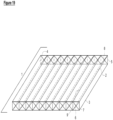
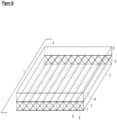
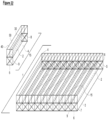
- a gas-permeable membrane(s) (2) allows optimization of the system in several different ways that are illustrated in Figures 19-22 . While the hermetic reactor system illustrated in the Figures has a total of nine channels (4), the skilled artisan appreciates that any number of channels (4) can be present, from a single channel (4) to a plethora of channels (4), depending on the space available for placement the hermetic reactor (1). Similarly, the shape of the channels (4) is not limited to a rectangular prisms or cylinders and can take any shape suitable to fit the available for the hermetic reactor (1).
- the membrane (2) is placed in direct contact with the surface of the feedstock, optional liquid media, and inoculum present in the container as shown in Figure 16 .
- the membrane can also be sealed in contact with the surface of the feedstock, for example, by attaching it to a plastic frame with an integrated rubber gasket.
- the membrane is suspended over the feedstock so that as the fungi grows and consumes oxygen, the membrane drops down towards the mat or onto a baffle system located between the membrane and the feedstock which allow for growth of aerial hyphae.
- a baffle system located between the membrane and the feedstock which allow for growth of aerial hyphae.
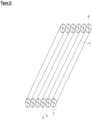
- the hermetic reactor (1) is comprised of multiple channels (4) which initiate at an inlet valve (6) at the front (7) of the reactor, terminate at an outlet valve (8) at the back (5) of the reactor, and are separated by baffles/walls (9).
- a gas permeable membrane (2) forms the top of the reactor.
- the bottom (3) of the reactor can be formed of any suitable substance including, but not limited to both hard and soft plastics such as polyethylene terephthalate, high density polyethylene, polyvinyl chloride, polyactic acid, polycarbonate, acrylic, acetal, nylon, acrylonitrile butadiene styrene, glass, metals such as aluminum, titanium, stainless steel etc. and/or combinations thereof.
- the baffles/walls (9) can be made of similar materials.
- Suitable front (6) and back (8) valves include, but are not limited to, one-way valves, 2-way valves, ball valves, butterfly valves, gate valves, plug valves, globe valves, pinch valves, disc check valves, attached valves, detached valves, and/or combinations thereof.
- the inlet valve (6) serves to provide access to the chamber (4) for delivery of feedstock/media to the chamber while the outlet valve (8) allows removal of exhausted feedstock and/or filamentous fungal biomat.
- the gas-permeable membrane (2) can be composed of a polymeric material, such as polypropylene, polyethylene, polytetrafluorethylene, polycarbonate, polyamide, polypyrrolones, poly(amidoamine) dendrimer composite, cellulose acetate, butadiene-acrylonitrile, TeflonAF2400, and nylon.
- the membrane (2) can be in the form of a sterile cloth-like material or the form of a paper-like material.
- the membrane's surface is smooth in texture, for others the surface is rough in texture.
- the path for gas diffusion can vary from being essentially direct to following a more tortuous path.
- the membrane facilitates ingress of oxygen and egress of other gases produced during fungal growth ( Figure 18 ).
- the hermetic reactor (1) has a gas collection chamber (14) that is immediately atop of the gas permeable membrane (2) (see Figure 20 ).
- the gas collection chamber (14) can be made of similar materials to those used for the walls/baffles (9) or the bottom (3) of the reactor; i.e. both hard and soft plastics such as polyethylene terephthalate, high density polyethylene, polyvinyl chloride, polyactic acid, polycarbonate, acrylic, acetal, nylon, acrylonitrile butadiene styrene, glass, metals such as aluminum, titanium, stainless steel etc. and/or combinations thereof.
- the gas collection chamber is comprised of channels (15) which can mirror the channels (4) of the hermetic reactor (1) or which encompass more than one of the hermetic reactor channels (20) (see Figure 21 ).
- FIG. 22 illustrates such a system.
- two different gas permeable membranes (2, 50) feed into separate gas collection channels (30, 40) and are present over a single reactor channel (4).
- This type of system allows ingress, egress, and/or collection and/or separation of distinct useful gases.
- one membrane might be calibrated for oxygen passage and the second membrane calibrated for carbon dioxide or hydrogen passage or other relevant gas systems.
- the reactor (1) produces a biofilm-biomat that serves as a food source, such as a protein source and/or an oil source.
- the biofilm-biomat can also serve as a leather analog, a bioplastic, a source of biofuel precursors, a biofuel, and/or combinations thereof.
- the biofilm-biomat serves to produce organic products such as organic acids, antibiotics, enzymes, hormones, lipids, mycotoxins, vitamins, pigments and recombinant heterologous proteins.
- the disclosed biofilm-biomat reactor fermentation technology enables growth on standard as well as extreme feedstocks and media, such as human waste (urine/feces), and produces a highly consolidated and textured product without the requirement of a separation or concentration step.
- Relatively high biomass production rates (0.55 g/L/h dry biomass) and high culture densities (100-180 g/L) are achieved without the need for active aeration or agitation.
- Scale-up of the system vertically, horizontally, and/or in more than two dimensions is simple and does not result in decreased productivity.
- the produced biofilm-biomats are typically 0.2 to 2.5 cm thick with a dry matter content of 10-30% and can be readily used for mission critical needs such as meat alternatives, a myriad of other appetizing foods, and building materials.
- the fungal biofilm-biomats grown in the disclosed reactor system are described as pellicles, which in many ways are similar to the microbial biofilms that grow on surfaces, but are suspended in liquid culture at the gas-liquid interface.
- bacterial cells within biofilms have been shown to withstand extreme disinfection treatments with sodium hypochlorite (bleach) and sodium hydroxide (Corcoran, 2013).
- the disclosed reactor system takes advantage of the biofilm structure, enabling growth on harsh human and industrial wastes and by-products that may be generated under extreme conditions such as those generated on space missions or by other harsh conditions caused by natural disasters.
- the disclosed reactor design incorporates a gas-permeable membrane that sits directly on or suspended just above the liquid surface.
- the encapsulated reactor design allows for gas exchange with the exterior atmosphere but is hermetically sealed to keep contaminants from entering or gases/liquids from escaping.
- the encapsulated reactor design can also enable separation of consumable gases from evolved gases by way of gas permeable membrane. To accomplish this, in some instances valves and/or additional porous membranes having the same or different properties are used to form distinct layers between various aspects of the one or more feedstocks and optional liquid culture media.
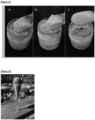
- FIG 17 shows an approximately 7 mm thick biomat grown in reactor where the container was a Petri dish covered with a polypropylene membrane which was laid directly on the feedstock/liquid medium surface. The initial biofilm formed by direct attachment to the membrane and grew downward into the liquid medium over time (see Figure 16 ). By the end of a five-day growth period, essentially all of the feedstock/liquid medium was consumed and dense biomass completely filled the volume underneath the membrane.
- the biofilm-biomats commonly produced in the disclosed reactors are consolidated (110-180 g/L) and, depending on the fungus and growth conditions, exhibit a fibrous texture.
- Production of a fibrous biomass can be crucial for certain mission critical products such as foods that require texture to simulate meat, as well as fibrous materials that simulate leather and wood.
- the consolidated nature of the biomass also enables easy harvesting without the need for a concentration step (e.g., centrifugation, filtration).
- the primary physical force controlling formation and growth of the biofilm-biomat in the disclosed reactor is attachment to the membrane. Without being bound by theory, it is believed that grown in the disclosed reactor will not be impacted by the zero-gravity conditions experienced during space flight. Gravity driven directional growth or growth controlled by physical mixing or flow is not the overriding factor in the system, as it tends to be in gravity environments. Previous experiments in space successfully demonstrated fungal growth European Space Agency, Expeditions 25-28, Growth and Survival of Colored Fungi in Space (CFS-A)), providing an additional measure of confidence that the disclosed reactor system will function in a space environment.
- CFS-A Colored Fungi in Space
- freeze dried inoculum and essential ingredients to support growth on specific feedstocks can be preloaded in the reactor.
- Astronauts and space travelers can then prepare the feedstock, inoculum, and any media components.
- Incubation time is dependent on the feedstocks, the strain of microorganism, and other growth parameters such as pH, temperature and water content.
- the incubation conditions are simple in that fermentation is conducted under static conditions where the reactor is simply allowed to incubate in place. Dense consolidated biomats are harvested by simply opening the reactor closure (e.g. a ziplock ® -type) and removing the mats.
- Example 1 Growth of strain Fusarium oxysporum strain MK7 and other fungi in static tray reactors.
- Example 2 Growth of Fusarium oxysporum strain MK7 biomat on nutrient medium refreshed daily (semi-static conditions).
- Dense Fusarium oxysporum strain MK7 biomats approximately 3 cm thick were grown in 21 days on nutrient medium that was refreshed daily.
- the biomats were generated using sterile MK7-1 liquid medium (described in PCT/US2017/020050 ) containing 7.5% glycerol at pH 3.0 in 12.7 x 17.8 cm Pyrex ® glass trays.
- 200 mLs of the nutrient medium was inoculated with 5% (volume/volume) of Fusarium oxysporum strain MK7 culture in the late exponential growth phase as described previously in PCT/US2017/020050 .
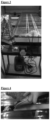
- Figure 2 shows a ⁇ 3 cm thick biomat that developed after a total of 21 days growth using this method.
- a continuous flow bioreactor system was fabricated to demonstrate growth of biomats on the surface of flowing liquid media.
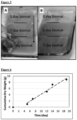
- the system was fabricated from a 2.44 m long clear plastic roofing panel with a series of corrugations that were used as flow channels ( Figure 3 ).
- the ends of each of the channels were dammed with silicon (100% Silicone, DAP Products Inc., Baltimore, MD) enabling liquid to be retained within the channels.
- Flow was facilitated through the channels by delivery of liquid media to one end of the channels via a peristaltic pump, with the liquid exiting the other end of the channels through holes in the bottom of the channels.
- the whole plastic roofing panel system was slanted at an angle of 1 cm rise per 1 m run to enable about 500 mL of liquid to be retained in each channel and a consistent flow being a function of the amount of liquid and the angle of the inclination.
- the panel system was sanitized and wrapped in Saran ® -like plastic wrap to isolate the system from the surrounding room environment. Sterile air was pumped under the plastic wrap at a rate of 400 mL/min creating a positive pressure on the system.
- a 500 mL volume of nutrient medium inoculated with the desired filamentous fungus was added per channel and allowed to incubate under quiescent/static conditions for 4 days.
- the peristaltic pump delivered a continuous pulsed flow of 400 mL/d to "feed" the biomats (ON at 2.016 mL/min for 49 min, 39 sec; OFF for 5 h 10 min 21 sec).
- Two independent experiments were conducted with each experiment using two separate flow channels as replicates ( Figure 3 ).
- Consolidated biomats were harvested after 10 days of growth on the nutrient medium (4 days under quiescent/static conditions followed by 6 days under continuous flow; Figure 4 ). Average dry weight of the produced biomass was an average of 2.38 g for the replicate flow channels. During the continuous flow periods (day 4 to day 10) the average removal rates of C and N from the flowing liquid medium by the growing biomats were 11.9 and 1.2 mg/L/h, respectively. C and N removal rates from the liquid medium were determined by measuring liquid volume and total C and N inputs and outputs from the bioreactor system using a Costech total C and N analyzer (ECS 4010, Costech Analytical Technologies, Valencia, CA). Thus, the continuous flow system supported biomat growth at the surface.
- ECS 4010 Costech total C and N analyzer
- Example 4 Semi-continuous and continuous production of Fusarium oxysporum strain MK7 biomats.
- Dense Fusarium oxysporum strain MK7 biomats were grown and harvested on a semi-continuous basis over a period of 19 days.
- the biomats were generated using acid whey as the feedstock/carbon source supplemented with 1 ⁇ 2 strength MK7-1 medium salts (described in PCT/US2017/020050 ) adjusted to pH 4.0.
- 200 mL of the nutrient medium inoculated with Fusarium oxysporum strain MK7 (5% volume/volume) in the late exponential growth phase was added to sterilized 12.7 x 17.8 cm Pyrex ® glass trays, which were then covered with Saran ® wrap and incubated at room temperature.
- the system is also amenable to continuous harvesting and growth of a biomat whereby continuous removal is facilitated by a roller wheel that is attached to the mature end of the biomat ( Figure 7 ).
- the roller wheel slowly turns and harvests the mature biomat and at the same time creates an open medium for growth of new biomat at the other end of the tray.
- the roller wheel turns and harvests the biomat at a rate of 1.56 cm/day to reproduce the semi-continuous system described above. It is desirable that the nutrients in the liquid medium be replenished at the rate of nutrient removal by the biomat.
- Example 5 Membrane encapsulated bioreactors.
- Dense Fusarium oxysporum strain MK7 biomats were grown in liquid growth medium that was encapsulated in a bioreactor system with no gas headspace.
- Sterile Petri dish bottoms 55 mm diameter
- inoculated MK7-1 medium described in PCT/US2017/020050
- Gas permeable/semi-permeable membranes of polypropylene and polycarbonate were placed directly on the surface of the liquid medium and sealed tightly with rubber bands. No gas headspace was provided at the start of the growth period.
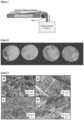
- FIG 8 shows the ⁇ 5 mm and ⁇ 1 mm thick biomats of Fusarium oxysporum strain MK7 that grew directly underneath the polypropylene ( Figure 17 A-C ) and polycarbonate ( Figure 17 D ) membranes in five days, respectively.
- the biomats mildly adhered to the membranes and could be easily harvested by simply peeling away the biomats from the membranes ( Figure 17 ).
- Example 6 Production of pigments and vitamin D2 by irradiation of Fusarium oxysporum MK7 biomats with UVB
- UVB light (290-320 nm) was used to trigger pigment production by Fusarium oxysporum strain MK7 biomats. Fusarium oxysporum strain MK7 biomats produced in 3 days on 7.5% glycerol MK7-1 medium (described in PCT/US2017/020050 ) were irradiated with UVB light for a period of 4 hours. The UVB light was emitted from a 50 W bulb (Slimline Desert 50 UVB T8 fluorescent bulb, 46 cm; Zilla, Franklin, WI) placed 10 cm above the biomat. Orange pigmentation was visually detected after 0.5 h of irradiation and was pronounced after 4 h of irradiation ( Figure 9 ).
- biomats that have not been exposed to UVB light have a vitamin D2 content of less than 50 IU/100 g of biomat whereas after UVB light exposure for approximately 12 hours the vitamin D2 content is increased to approximately 1.2 million IU/100 g biomat.
- Example 7 Fusarium oxysporum strain MK7 biomats grown on a mixture of glycerol, starch and corn steep liquor
- Fusarium oxysporum strain MK7 biomats were produced from a mixture of glycerol, starch, corn steep liquor and MK7-1 salts (described in PCT/US2017/020050 ) in as little as 4 days.
- Glycerol was purchased from Duda Energy LLC (Decatur, AL; 99.7% Purity; USP Grade; Lot# 466135376340); 100% Argo Corn Starch manufactured by Argo Food Companies, Inc (Memphis, TN) was purchased from Albertson's supermarket in Bozeman, MT, and the corn steep liquor was purchased from Santa Cruz Biotechnology, Inc. (Dallas, TX; Lot# B0116).
- the growth medium was a mixture of 7.5% glycerol (weight/weight), 2.5% starch and 2.5% corn steep liquor with MK7-1 salts.
- the mixture was adjusted to pH 3.3 by adding an appropriate amount of HCl and boiled for 15 minutes in a suitable container. After cooling to room temperature, the pH of the mixture was readjusted to 3.3 and then inoculated with 5% Fusarium oxysporum strain MK7 inoculum (vol/vol) as prepared in PCT/US2017/020050 .
- Three 56.7 cm 2 circular portions were cut out and removed from each of the biomats at random positions and these portions were dried at 50 °C for 48 h to obtain dry weights.
- the average biomass dry weight (standard deviation) was 124.6 g/0.25 m 2 (43.4) or 498.4 g/m 2 (173.6).
- the mean thickness of the moist biomats were 7.5 mm and the mean density on a dry weight basis was 0.66 g/cm 3 .
- EPS extracellular polymeric substances
- 1 cm 2 portions (1cm x 1cm) of the biomats were excised with a razor blade immediately before harvesting, and the excised portions were subjected to an ethanol washing/dehydration series by sequentially submersing the samples for the noted times in 40 mL of the ethanol mixtures as follows: 25% ethanol, 75% deionized H 2 O for 20 minutes; 50% ethanol, 50% deionized H 2 O for 20 minutes; 75% ethanol, 25% deionized H 2 O for 20 minutes; 95% ethanol, 5% deionized H 2 O for 20 minutes; 100% ethanol, 0% deionized H 2 O for 60 minutes. The 100% ethanol treatment was repeated 2 more times before storing the samples in 100% ethanol.
- FE-SEM imaging revealed a complex network of interwoven hyphal filaments ( Figure 10 ), very similar to the structure revealed by light microscopy for biomats grown on glycerol as reported in PCT/US2017/020050 .
- Three distinct layers were observed: (a) an aerial hyphae layer at the top surface, (b) a dense bottom layer and (c) a transitional layer between the top and bottom layers.
- the transitional layer was only loosely attached to the dense bottom layer, thus enabling easy separation of the bottom layer from the rest of the biomat. Filament densities of the transitional layer ranged from slightly less dense than the bottom layer in the zone where the two layers met, to a density that was comparable to the aerial hyphae near the top of the biomat.
- Sections of the biomats approximately 2 cm 2 in size were excised from the fresh biomats with a razor blade immediately before harvesting. These sections and then immersed in 35 mL of deionized water in 50 mL conical bottom centrifuge tubes.
- the tubes were sonicated (CP200T Ultrasonic Cleaner, Crest Ultrasonics, Ewing, NJ) for either 0, 40, 90 or 150 seconds to disperse filaments into the liquid and enable microscopic observation. Aliquots of the liquid ( ⁇ 100 uL) from these tubes were placed on a glass slide, covered with a cover slip and observed with a light microscope (B400B, Amscope, Irvine, CA) at 100x magnification.
- the average length (std dev) of non-broken filaments were measured and determined to be 1.1 (0.6), 1.2 (0.4), 1.0 (0.4) and 1.2 (0.2) mm for the 0, 40, 90 and 160 second sonication treatments, respectively.
- the maximum filament length observed in each treatment were 2.5, 1.4, 1.8, and 1.4 mm, respectively. These filament lengths are significantly longer compared to growth of Fusarium oxysporum strain MK7 in submerged shake flask cultures where average lengths are less than 0.02 mm.
- Example 8 Production of chicken nuggets using Fusarium oxysporum strain MK7 biomats grown on a mixture of glycerol, starch and corn steep liquor (reference example)
- Fusarium oxysporum strain MK7 biomat produced as described above, were used to create chicken nuggets. Moist biomats were steamed in a pot steamer at 97 °C for 0.5 hour, cooled to room temperature and used as the base to produce chicken nuggets. Steamed moist biomat (200 g) was chopped into pieces less than 0.5 mm long and homogenized with 4% (weight/weight; 8 g) chicken base and 4% egg white protein (8 g). The resulting mixture comprised more than 90% Fusarium oxysporum strain MK7 biomat. Portions of this biomat mixture ( ⁇ 30 g) were formed into nugget shapes and steamed for in a pot steamer.
- the prepared nuggets were breaded by coating in egg whites and then mixing with bread crumbs that adhered to the surface prior to frying.
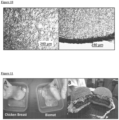
- the prepared nugget exhibited a chicken meat like texture ( Figure 13A ) and exuded the typical aroma of chicken.
- Taste testing by 5 people deemed the nugget to closely simulate actual chicken containing chicken nuggets in terms of taste and texture.
- Example 9 Production of Fusarium oxysporum strain MK7 biomat extract.
- Biomats harvested after 4-16 days of cultivation, as previously described, are rinsed and steamed, drip dried on porous plastic mesh for 5 minutes, and placed in plastic bags and sealed. Sealed bags are frozen at either -20°C or -80°C for 24 hours prior to being incubated at 60°C incubator in the original sealed bags for 48 hours after pH adjustment of the remaining medium liquid to between pH 4-6.
- biomats are pressed through ⁇ 1.5 mm pore size filters and the resulting liquid collected. The collected liquid is boiled for 10 minutes in a non-reactive vessel then dried at 60 °C until water content is -6-8%, forming a sticky paste extract.
- the nutritional value of the extract is similar to the nutritional value of the steamed biomat and flour made from steamed biomats.
- Example 10 Production of yogurt from Fusarium oxysporum strain MK7 biomats grown on acid whey.
- Fusarium oxysporum strain MK7 biomats were used directly to produce yogurt.
- the biomats were grown in trays on an acid whey feedstock/carbon source that was generated as a by-product of Greek yogurt manufacture, harvested after 6 days and were steamed within 20 minutes of harvesting. 200 g of the cooled, moist biomass was blended together with 600 g of drinking quality tap water to produce a milk-like suspension referred to as "MK7 liquid dispersion.”
- the MK7 liquid dispersion was used as an ingredient by itself or in combination with cow's milk to produce yogurt.
- Three mixtures containing different ratios of MK7 liquid dispersion to whole milk were prepared: 1) 25% MK7 liquid dispersion:75% whole milk, 2) 50% MK7 liquid dispersion:50% whole milk, and 3) 100% MK7 liquid dispersion.
- the mixtures were used to make three batches of yogurt by heating each mixture to 83°C and holding at that temperature for 14 minutes with constant stirring. The mixtures were allowed to cool to 43°C and then live yogurt cultures added as inoculum. The resulting mixture was incubated at 44°C in a yogurt maker (Model YM80; EuroCuisine, Los Angeles, CA) for 8 hours. All of the resultant mixtures had the appearance and texture of yogurt ( Figure 14 ), as well as a smell and taste similar to typical yogurt.
- Example 11 Growth of mushroom biomats on glycerol.
- Biomass biomats comprised of Baby Bella Brown Crimini Mushrooms ( Agaricus bisporus ) and White Mushrooms were produced in as little as 10 days using glycerol as the primary carbon source (feedstock). These common edible mushrooms were purchased from Albertson's supermarket in Bozeman, MT and stored at 4°C. The medium used to grow the mushrooms consisted of 1 L of 7.5 % glycerol with MK7-1 salts (described in PCT/US2017/020050 ) that was boiled for 10 minutes followed by cooling to room temperature ( ⁇ 23°C). The pH of the mixture was adjusted to 2.7 and 200 mL of the pH adjusted mixture was poured in two sterile 12.7 x 17.8 cm Pyrex ® trays.
- the inoculum consisted of 5 g of blended, surface-sterilized Crimini or White Mushrooms that was added to the medium in each tray.
- Biomats were observed to develop on the surface of the medium after 3 days of incubation and consolidated biomats were harvested after 10 days of growth.
- Biomats of Crimini Mushrooms covered the entire surface of the liquid medium in the tray while biomat growth of White Mushrooms covered approximately 1/2 the liquid medium as five floating biomat islands.
- the mean thickness of the biomats were 1.5 mm for the Crimini and 1.7 mm for the White Mushrooms.
- Biomass biomats were dried at 50°C for 48 h and the dry weights produced per tray were 1.14 g and 2.12 g for the Crimini and White Mushrooms, respectively. Densities on a dry weight basis for the dry biomass biomats were 0.033 and 0.111 g/cm 3 for the Crimini and White Mushrooms, respectively.
- Biomats were steamed at 97°C for 0.5 hour, cooled to room temperature and used as the base to produce chicken nuggets.
- Steamed moist biomass 2.5 g was mixed with 3% (weight/weight; 75 mg) Better Than Bouillon chicken base (Southeastern Mills, Inc. Rome, GA) and 3% Eggwhite Protein (75 mg; Now Foods, Bloomingdale, IL) and chopped into pieces less than 2 mm long using a razor blade.
- the mixture was formed into a nugget and steamed for 0.5 hour.
- the prepared nugget provided the typical aroma of chicken with a slight mushroom fragrance. When tasted, the nugget had a chicken to neutral flavor.
- Example 12 Growth of mushroom biomats on malt and glycerol media.
- Biomass biomats comprised of Calvatia gigantean (giant puffball), Pleurotus ostreatus (pearl oyster), Pleurotus ostreatus var. columbinus (blue oyster), Hypsizygus ulmarius (elm oyster), Sparassis crispa (cauliflower) and Ganoderma lucidum (reishi) were produced in as little as 5 days using Malt Extract Medium 001, Glycerol Medium 002, Hansen's Medium, MK7-SF Medium, Malt Extract + NH 4 NO 3 Medium 003 (Table 3). All final media contained 0.01 % chloramphenicol.
- Mushroom spores (10 cc syringes) were purchased from MycoDirect (12172 Route 47, Ste 199 Huntley, Il 60142) and received on 8/2/2018.
- Elm Oyster spores were purchased from Everything Mushrooms (1004 Sevier Ave Knoxville, TN 37920) and received on 8/3/2018. Lot Date Produced by Company Blue Oyster 3-P7 2-2018 Pearl Oyster 9P8 12-2017 Giant Puffball N/A 3-2018 Cauliflower Mushroom N/A 4-2018 Elm Oyster (1cc dried) N/A 10-2017
- Inoculation of growth media was preformed using the following methods applied using aseptic technique. All aseptic work in these experiments were performed in Class II biosafety cabinet. Spore syringes were used to directly inoculate approximately 75 mL of growth medium in previously autoclaved, 12.7x 17.8 cm Pyrex ® glass trays. This was done by aseptically transferring liquid medium into an autoclaved Pyrex ® tray and inoculating with 2 cc of the suspension contained in the spore syringe. The tray was covered with sterile aluminum foil and then gently swirled to mix the inoculated medium.
- Malt Extract Agar (MEA; Table 5) plates were prepared aseptically by autoclaving MEA, allowing to cool to 50 °C, and pouring ⁇ 25 mL into 100 x 15 mm sterile Petri dishes. Table 5.
- Ingredients used to prepare Malt Extract Agar Malt Extract Media (MEA) Ingredient Amount Grade Lot # Vendor Location Light Pilsner Malt 30.0 g Food 180526B Homebrewstuff.com Boise, ID Agar 20.0 g Microbiological 2170501 BD Sparks, MD Tap H 2 O 1000 mL N/A N/A N/A Bozeman, MT [156] MEA plates were inoculated by aliquoting 1 cc of liquid from the suspension contained within the spore syringe onto the plates. The agar plates were then sealed with Parafilm ® and placed into a clean dark drawer at room temperature.
- mycelium After mycelium had covered the entire surface of the MEA plates, they were used for inoculation of 1.5 L medium in 2 L baffled shaker flasks. Approximately 2 cm 2 portions of agar medium with mycelium on the surface were excised from the plates with a sterile razor blade and diced into ⁇ 2 mm 2 portions, which were then added to two flasks containing 1.5 L of Malt Extract 001 medium. The medium was incubated for 3 days at room temperature (23 ⁇ 1 °C) with intermittent shaking by hand (flasks were vigorously shaken by hand for 1 minute at a minimum of five times per day).
- the cultures in the shaker flasks were then used as inoculum for 6 L of Malt Extract medium 001 and for 6 L of Malt Extract + NH 4 NO 3 003 medium.
- the media were inoculated with 15% (vol:vol) of inoculum culture and mixed thoroughly.
- Two liters of inoculated media were poured into each of three 0.25 m 2 plastic trays that were placed into a tray rack.
- the racks were wrapped in Saran ® and allowed to incubate for 6 days. Relatively dense biomats covering the entire surface within 4 days and the biomats were harvested after 6 days.
- Biomats from 12.7x 17.8 cm Pyrex ® glass trays and the 0.25 m 2 plastic trays were harvested by lifting the biomats from the trays and gently squeezing by hand. Portions of the biomats (3-50 g) were streamed for 20 minutes over boiling water ( ⁇ 5 cm above surface of water) in a pot steamer set on a kitchen oven burner. After steaming, the biomass was allowed to cool to room temperature and immediately bagged in a Ziploc ® bag and sent to Eurofins (Des Moines, IA) for protein analysis (N by combustion, Test Code QD252). Table 6 .
- Chicken flavored Fusarium oxysporum strain MK7 is a basic ingredient to a number of recipes including chicken nuggets, with or without breading, chicken for Asian dishes, or other chicken dishes as a chicken replacement. Fusarium oxysporum strain MK7 biomats produced from different feedstocks/carbon sources result in slightly different chicken flavors. The glycerol chicken is sweeter and the acid whey chicken tends to be a little bit sourer.
- acceptable chicken nuggets can be produced from a wide variety of biomass sizes. That is, biomass can be cut with a knife, lightly food processed or highly food processed and still result in acceptable chicken analogs.
- a 50 - 20:1:1 ratio of Fusarium oxysporum strain MK7:chicken stock:binder was used with or without approximately a 66.6% Fusarium oxysporum strain MK7:fat ratio.
- Suitable fats include duck fat, coconut butter, and cocoa butter. After mixing, the mixture is steamed for approximately 30 minutes to set the binder; however, some binders may require more or less time. Additional breading can then be added and the resulting nuggets process as typical for such foodstuffs.
- Example 14 Breakfast Sausage and/or Hot Dog and/or Burger (reference example)
- An appropriate spice mix is added to size reduced Fusarium oxysporum strain MK7 biomats as needed to develop the flavors desired, which may be between 10 wt. % of spice mix to a quantity of Fusarium oxysporum strain MK7 up to 20%, oftentimes in a ratio of 10 Fusarium oxysporum strain MK7:1 spice mix, with or without additional ingredients such as onion, binders, and a fat such as cocoa butter.
- the mixture is then fried to remove an appropriate amount of moisture. Additional ingredients can then be added, such as bulgur, vegetable broth, potatoes, etc. prior to shaping in the desired shape and cooking.
- a ratio of approximately 1:3 Fusarium oxysporum strain MK7 biomat:water is generated having a particle size with average filament lengths less than 900 microns.
- This mixture is gently heated until there is no longer a fungal scent and then used in approximately a 4:1 ratio with cashews, optionally with an appropriate amount of xanthan gum and/or flavoring, to generate a mix which may be optionally heated and then cooled to form a mousse.
- the mix is then placed in an ice cream churner and, after churning, frozen to form a non-meltable frozen dessert ( Figure 14 ).
- Oil extract can be prepared from Truffle ( Tuber sp.) biomats grown as described above.
- Truffle biomats were grown in trays in as little as 7 days using malt extract, glucose and peptone as the primary carbon sources (feedstock).
- the edible Truffle mushroom was purchased from IGB Trading LLC on the Amazon Marketplace and stored at 4°C.
- a pure culture of the Tuber sp. fungus was prepared from the purchased truffle by placing ⁇ 3 mm 3 portions of truffle (cut with a sterile razor blade) on Malt Extract Agar + 0.01% chloramphenicol (used to inhibit bacterial growth).
- a Malt Extract Agar was prepared by mixing 20 g of malt extract, 20 g of glucose, 1 g peptone and 20 g of agar in 1 L of deionized water prior to autoclaving for 30 minutes and cooling to 50°C before adding 0.01% chloramphenicol. The sterile mixture was then poured into 9 cm diameter Petri plates and allowed to cool and solidify.
- the fungus was observed to grow on the trays after 3 days. After 4 days of growth, hyphae were picked with a sterile microbiological loop and streaked onto a fresh set of Malt Extract Agar + chloramphenicol plates. The fungus was allowed to grow on said plates for 5 days, after which hyphae were picked with a microbiological loop and used to confirm culture purity by DNA sequencing. Confirmation was accomplished by extracting and purifying the DNA (FastDNA Spin Kit, MP Biomedicals) and sequencing the ITS region of the metagenome followed by phylogenetic classification of the sequences using Blast (NCBI database).
- Malt Extract Broth was prepared by mixing 20 g of malt extract, 20 g of glucose and 1 g peptone in 1 L of deionized water and sterilized. Scrapes of the hyphae with the microbiological loop were also used to inoculate 50 mL of sterile Malt Extract Broth in sterile baffled shaker flasks capped with sterile gauze material. Sterile gauze was used as it allowed exchange of gases into and out of the shaker flask. Shaker flasks were then rotated at 185 rpm for 5 days. The rotated cultures were then used to inoculate 350 mL of sterile Malt Extract Broth in sterile 12.7 x 17.8 cm Pyrex ® glass trays.
- the filamentous biomat formed on the surface was harvested by lifting the biomat from the liquid medium.
- the harvested biomats were dried at 40°C for 48 h. Lipids/oil from these harvested biomats were extracted by either mechanical pressing or by solvent extraction using hexane, although other extraction methodologies can be used. Can also use another extraction method Yuval will send.
- Example 17 MK7 Flour. (reference example)
- Fusarium oxysporum strain MK7 biomat produced as described above, was used to create dried powder similar in particle size and particle size distribution to a standard baking flour.
- moist biomats were steamed in a pot steamer at 97 °C for 0.5 hour, cooled to room temperature and dehydrated in a Cuisinart dehydrator (model DHR-20) for 2 - 8 hours with an average dehydration time being 4 hours.
- Dehydration time is a function of the amount of biomass loaded into the dehydrator, distribution of biomats in the dehydrator which impacts air flow in the dehydrator and the water content of biomats (average water content approximately 75%) and room temperature.
- Water content post dehydration varies between 4 and 14 % with average water content post dehydration being below 12%.
- Dehydrated biomass was size reduced using a coffee grinder (KRUPS, Electric coffee and spice grinder, stainless steel blades F2034251) until finely ground.
- Average particle size for ground biomat flour ranged from 75 microns to 120 microns.
- a small fraction of smaller particles, app. 5 wt% had a particle size smaller than 75 microns. Said smaller particles where off a size which enabled the small particles to remain air borne for extended periods of time.
- Particle size was determined by sifting 100 gram samples of size reduced biomats for 5 minutes in sieves with 180 ⁇ m, 120 ⁇ m and 75 ⁇ m openings. Water content post dehydration and post size reduction below 6% is preferred as higher water contents can lead to clumping of dried and milled biomass.
- Biomat flour was then used as an addition to other standard flours (King Arthur flour, Bob's Red Mill Flour & Bob's Red Mill Wheat Flour) and a variety of baked goods where prepared. Biomat flour was loaded at 5wt%, 10 wt%, 20 wt% and 30 wt% with no deleterious effect on ultimate baked good taste, rising, texture, appearance or smell. Products demonstrated included bread (7 grain, white & wheat), pastries (Pate a Choux), cookies, pasta and dumplings. The resulting products performed well in taste tests and the inclusion of MK7 flour was not detectable to those tasting the products.
- Fusarium oxysporum strain MK7 biomat produced as described above, was used to create particles of biomass that were used as an addition to meat and fish as an extender (i.e. increase the amount of total food product by the addition of MK7 to other exiting foodstuffs).
- Moist biomats were steamed in a pot steamer at 97 °C for 0.5 hour, cooled to room temperature.
- Biomats where size reduced i.e. chopping with a knife or food processing in a food processor) to a desirable particle size distribution. Size reduced biomass was then added to different food products to extend the amount of meat in the case of a meat extender or fish in the case of a fish extender. As an example of meat extension.
- Fish extension was also demonstrated at 10%, 20%, 30% and 40% loadings.
- Fish fillet and fish balls where produced by adding processed MK7 at a variety of different size distributions ranging from small particles (less than 1.0 mm) to large particles (greater than 2 mm) with no deleterious effect on taste, color, smell or over all eating experience.
- small particle size additions resulting foodstuffs had a creamier texture.
- large particle size additions resulting foodstuffs had a firmer texture characterized by larger particles which required more mastication before swallowing.
- Taste tests showed that acceptable food products where produced at all tested loading and size distribution levels.
- Fusarium oxysporum strain MK7 biomat produced as described above, was used to create mycojerky, similar in appearance and taste to meat jerkies (i.e. beef jerky, buffalo jerky, pork jerky, chicken jerky, turkey jerky, etc.). Moist biomats were steamed in a pot steamer at 97 °C for 0.5 hour, cooled to room temperature. Biomats where size reduced to a size consistent with that normally found in jerky products. Size reduced biomat pieces where in some cases seasoned for flavor and dehydrated in a Cuisinart dehydrator (model DHR-20) for 20 - 200 minutes with an average dehydration time being 40 - 120 minutes.
- Dehydration time is a function of the amount of biomass loaded into the dehydrator, distribution of biomats in the dehydrator which impacts air flow in the dehydrator, water content of biomats (average water content approximately 75%), room temperature and desired water content in the final product. Water content post dehydration varied between 8% and 12 % depending on desired product characteristics. In some cases, perforating the biomass before dehydration produced a product that tore more readily into small pieces thereby easing consumption. Perforation of the biomass was performed by using a fork, knife or tenderizer tool which both perforated the biomass as well as disrupted the filament network such that it tore more easily. A large variety of spice mixtures (i.e.
- Example 20 Myco-chips (reference example)
- Fusarium oxysporum strain MK7 biomat produced as described above, were used to chips, similar in appearance and taste to potato chips or corn chips. Moist biomats were steamed in a pot steamer at 97 °C for 0.5 hour, cooled to room temperature. Biomats where size reduced to a size consistent with that normally found in chip products as well as highly processed into a paste and formed into a chip like geometry. Myco-chips where then put into a frying pan of hot oil (temperature app equal to 380 °F (193 °C)) until brown. Cooking times varied as a function of biomass geometry but cooked very fast, usually in under 15 seconds. Produced fried chips proved to be very palatable and capable of offering a wide variety of taste experiences dependent upon spices added to or coated upon the biomass pre-frying.
- Pyrex ® glass trays 12.7 x 17.8 cm as well as 100 x 15 mm Petri dishes are used as the base tray.
- the glass trays are loaded with 200 mL of feedstock mixed with liquid nutrient medium (if required) and inoculum.
- the trays are covered and sealed with the gas-permeable membrane that is attached to a plastic frame with an integrated rubber gasket.
- the sealing system provides an effective aseptic seal between the membrane and the glass trays and enables easy assembly as well as opening/closing of the reactor for sampling and harvesting purposes.
- a suite of different gas permeable membrane materials with different, thicknesses, pore sizes and textures (surface roughness) are used as materials for the gas liquid interface.
- polymeric materials including polypropylene, polyethylene, polytetrafluorethylene, polycarbonates, polyamides, polypyrrolones, poly(amidoamine) dendrimer composite and cellulose acetate (e.g., Specialty Silicone Products, Inc. Corporate Technology Park, NY; Thermo-Fisher, Waltham, MA; Merck Millapore, Burlington, MA ).
- pore sizes are used for the materials (0.2, 0.45, 1.0 ⁇ m) that facilitate gas transfer in addition to the direct diffusion of gasses through the polymers themselves while excluding microorganisms. Additionally, sterile-cloth-like materials with different rough surface textures and tortuous paths for gas diffusion are used. A large selection of such materials are commercially available from other corporate sources including 3M, Solvay, Ube Industry and Saint-Gobain.
- tray reactors are fitted with sensors to monitor temperature, dissolved oxygen and pH as a function of depth across the tray. Ports for sensors and wires crossing membranes into the reactor are sealed with silicone, epoxy, and/or adhesives depending on the membrane material. Septa integrated into the membranes are used as sample ports for collecting liquid samples for analysis by GC-MS, ICP-MS, IC and total C/N. Standard as well as microelectrodes are used to measure pH and electron acceptor flux (O 2 ) in real time across the gas-permeable membrane and within the biomat at regular time intervals (e.g., 6, 12, 24, 36, 48 hours). The flux information is important for matching real-time metabolic demands with membrane gas permeability and the changing concentrations and distributions of electron donors (organics) and nutrients (inorganics) needed for optimal growth and feedstock conversion.
- O 2 pH and electron acceptor flux
- Strain MK7 is an extremophilic fungus that has been shown to thrive on a wide variety of feedstocks including human wastes, food wastes, cyanobacteria and algae biomass, and lignocellulosic materials. Strain MK7 biomats have also been shown to have tolerance to high urea levels (at least 26 g/L) as well as high dissolved organic carbon, and osmotic pressure (300 g/L glycerol).
- the feedstocks tested include: 1) surrogate human urine as the primary source of nitrogen; 2) surrogate food waste (dog food) as the primary carbon source; and 3) plant material (lignocellulose) as an additional carbon source. All feedstocks are extensively analyzed for organic and inorganic constituents, pH, and biological oxygen demand. Surrogate human urine is prepared using a medium composition recommended by NASA scientists or other scientists involved in studying mission wastes.
- the effectiveness of the different gas permeable membranes are measured by conducting comparative biofilm-biomat growth studies wherein different membranes are sealed onto the surface of trays and Petri dishes containing various feedstocks and MK7 inoculum.
- the membranes are in direct contact with the liquid phase and are the only avenue of gas exchange between the gas/vapor exterior environment and the biofilm-biomats/liquid medium.
- Reactors are destructively sampled to measure growth (dry biomass weight, biomat thickness) over time. Growth rates are compared to control trays with no membranes.
- a factorial experimental design consisting of feedstocks and membrane combinations is tested to provide the best match of feedstock and membrane. Additional variables, including initial feedstock pH and inorganic nutrient additions, is also evaluated. Further, the experiments track the viable bacterial cell counts from feedstocks as a function of time to quantify the disinfection kinetics linked to biomat growth.
- the best performing membrane/feedstock combinations are used for additional experiments.
- the flux of gasses through the selected gas permeable membranes is first quantified and modeled by abiotic experiments.
- the flux of O 2 from the vapor phase outside of the reactor into the liquid phase uses the initial slope method and is measured using dissolved oxygen probes and medium that is initially anoxic.
- the flux of carbon dioxide from a carbon dioxide saturated liquid phase into the vapor phase also uses the initial slope method and is measured by total inorganic carbon analysis and with pH probes (a measure of carbonic acid).
- the dissolved inorganic carbon phase is 0%, 0.5% and 5% carbon dioxide initially.
- the data is integrated into the moving front fungal growth models to develop more accurate parameters.
Landscapes
- Life Sciences & Earth Sciences (AREA)
- Chemical & Material Sciences (AREA)
- Health & Medical Sciences (AREA)
- Engineering & Computer Science (AREA)
- Microbiology (AREA)
- Bioinformatics & Cheminformatics (AREA)
- Zoology (AREA)
- Wood Science & Technology (AREA)
- Organic Chemistry (AREA)
- Biotechnology (AREA)
- Genetics & Genomics (AREA)
- Food Science & Technology (AREA)
- Polymers & Plastics (AREA)
- Nutrition Science (AREA)
- Biochemistry (AREA)
- Mycology (AREA)
- Biomedical Technology (AREA)
- General Engineering & Computer Science (AREA)
- General Health & Medical Sciences (AREA)
- Sustainable Development (AREA)
- Virology (AREA)
- Tropical Medicine & Parasitology (AREA)
- Medicinal Chemistry (AREA)
- Botany (AREA)
- Clinical Laboratory Science (AREA)
- Molecular Biology (AREA)
- Proteomics, Peptides & Aminoacids (AREA)
- Cell Biology (AREA)
- Inorganic Chemistry (AREA)
- Micro-Organisms Or Cultivation Processes Thereof (AREA)
- Apparatus Associated With Microorganisms And Enzymes (AREA)
- Coloring Foods And Improving Nutritive Qualities (AREA)
- General Preparation And Processing Of Foods (AREA)
- Confectionery (AREA)
- Immobilizing And Processing Of Enzymes And Microorganisms (AREA)
- Meat, Egg Or Seafood Products (AREA)
- Bakery Products And Manufacturing Methods Therefor (AREA)
- Dairy Products (AREA)
- Noodles (AREA)
- Preparation Of Fruits And Vegetables (AREA)
Claims (13)
- Flüssige Dispersionsformulierung von essbaren fadenförmigen Pilzen, umfassend essbare fadenförmige Pilzpartikel, wobei die essbaren fadenförmigen Pilzpartikel Myzelien, Fragmente von Myzelien, Hyphen, Fragmente von Hyphen oder Kombinationen davon umfassen, wobei die essbaren Pilzpartikel aus essbaren fadenförmigen Pilzbiomaten isoliert werden, die durch Oberflächenfermentation auf einem flüssigen Medium hergestellt werden.
- Formulierung nach Anspruch 1, wobei der fadenförmige Pilz ein fadenförmiger Pilz der Gattung Fusarium ist.
- Formulierung nach Anspruch 1, wobei der Fadenpilz ist:(a) Fusarium venenatum;(b) Fusarium fujikuroi; oder(c) ausgewählt aus der Gruppe, bestehend aus Agaricus bisporus (Crimini und weiß), Boletus edulis (Steinpilze), Cantarellus cibarius (Pfifferling), Calvatia gigantea (Riesenstäubling), Cyclocybe aegerita (Südlicher Ackerling), Ganoderma lucidum (Reishi), Grifola frondosa (Maitake), Morchella-Spezies (Morchel), Hypsizygus tessellatus (Laubholzrasling), Hypsizygus ulmarius (Ulmenrasling), Laetiporus-Spezies (Schwefelporling), Lentinula edodes (Shiitake), Pleurotus eryngii (Brauner Kräuter-Seitling), Pleurotus ostreatus (Austern-Seitling), Pholiota microspora (Japanisches Stockschwämmchen), Sparassis crispa (Krause Glucke), und Tuber-Spezies (Trüffel).
- Formulierung nach einem der Ansprüche 1 bis 3, wobei die Formulierung für die Verwendung als ein Milchersatz geeignet ist.
- Formulierung nach einem der Ansprüche 1 bis 4, wobei das Verhältnis von fadenförmigem Pilzbiomat zu Wasser in einem Bereich von 1 : 4 bis 10 : 1 liegt.
- Nahrungsmittel, umfassend die essbare fadenförmige Pilzformulierung nach einem der Ansprüche 1 bis 5.
- Nahrungsmittel nach Anspruch 6, das ein Joghurt, ein Milchersatz oder ein Dessert ist, optional wobei das Dessert eine Mousse, ein gefrorenes Dessert, ein Eiscreme-Analogon, ein Konfekt oder eine Süßigkeit ist.
- Nahrungsmittel nach Anspruch 6 oder 7, wobei das essbare fadenförmige Pilzbiomat inaktiviert worden ist.
- Verfahren zum Herstellen eines Nahrungsmittels, umfassend:(a) Inberührungbringen der Formulierung nach einem der Ansprüche 1 bis 5 mit einer oder mehreren anderen Zutaten;(b) Einbringen von Protein in ein Nahrungsmittel unter Verwendung einer flüssigen Dispersion nach Anspruch 4 oder 5; und/oder(c) Verwenden einer flüssigen Dispersion nach Anspruch 4 oder 5 als eine Ersatzzutat für Milch oder ein Milchanalogon.
- Verfahren zum Herstellen der essbaren fadenförmigen Pilzformulierung nach Anspruch 1, umfassend:(a) Inokulieren eines flüssigen Wachstumsmediums, das eine Kohlenstoffquelle enthält, mit Mikrokonidien, Sporen oder Myzelien eines essbaren fadenförmigen Pilzes;(b) Inkubieren des inokulierten Wachstumsmediums bei Raumtemperatur;(c) Züchten eines kohäsiven fadenförmigen Pilzbiomats durch Oberflächenfermentation auf dem inokulierten Wachstumsmedium;(d) Ernten des kohäsiven fadenförmigen Pilzbiomats;(e) Reduzieren der Größe des fadenförmigen Pilzbiomats, um wenigstens zwei essbare fadenförmige Pilzpartikel zu erzeugen; und(f) Dispergieren der wenigstens zwei essbaren fadenförmigen Pilzpartikel in Wasser in einem Verhältnis von fadenförmigem Pilzpartikel : Wasser von 1 : 4 bis 10 : 1.
- Verfahren nach Anspruch 10, wobei(a) das Ernten des kohäsiven fadenförmigen Pilzbiomats auf kontinuierlicher Basis erfolgt; oder(b) das Verfahren ferner das Ersetzen des flüssigen Wachstumsmediums während des Inkubationsschritts auf gelegentlicher oder kontinuierlicher Basis umfasst; oder(c) die Kohlenstoffquelle Glycerin, Stärke, Maisquellwasser, Sauermolke, Milchserum, Süßmolke, hydrierte Stärkehydrolysate, Stärkederivate, Weizenquellwasser, Industrielauge, Lebensmittelraffinerieprodukte/Abfallströme oder Kombinationen davon ist.
- Verfahren zum Herstellen der Formulierung nach Anspruch 3, umfassend:(a) Sterilisieren der Oberfläche des Fruchtkörpers des fadenförmigen Pilzes;(b) Reduzieren der Größe des sterilisierten Fruchtkörpers des fadenförmigen Pilzes;(c) Sterilisieren der Oberfläche des gemahlenen Fruchtkörpers des fadenförmigen Pilzes;(d) optionales Wiederholen der Schritte (b) und (c);(e) Inokulieren eines flüssigen Wachstumsmediums, das eine Kohlenstoffquelle enthält, mit dem sterilisierten gemahlenen Fruchtkörper des fadenförmigen Pilzes;(f) Inkubieren des geimpften Wachstumsmediums bei Raumtemperatur;(g) Züchten eines kohäsiven fadenförmigen Pilzbiomats;(h) Ernten des kohäsiven fadenförmigen Pilzbiomats;(i) Reduzieren der Größe des fadenförmigen Pilzbiomats, um wenigstens zwei essbare fadenförmige Pilzpartikel zu erzeugen; und(j) Dispergieren der wenigstens zwei essbaren fadenförmigen Pilzpartikel in einem Verhältnis von fadenförmigem Pilzpartikel : Wasser von 1 : 4 bis 10 : 1.
- Verfahren nach Anspruch 12, wobei(a) das in der Größe reduzierte fadenförmige Pilzbiomat weniger als 5 mm lange Myzelaggregate umfasst;(b) das inokulierte Wachstumsmedium einen pH-Wert von etwa 4,0-4,1 aufweist;(c) die Kohlenstoffquelle Glycerin umfasst; oder(d) die Inkubationszeit 10-20 Tage beträgt.
Priority Applications (1)
| Application Number | Priority Date | Filing Date | Title |
|---|---|---|---|
| EP24194949.4A EP4466984A3 (de) | 2017-08-30 | 2018-08-29 | Essbare zusammensetzung mit fadenpilzen und bioreaktorsystem zu ihrer kultivierung |
Applications Claiming Priority (3)
| Application Number | Priority Date | Filing Date | Title |
|---|---|---|---|
| US201762552093P | 2017-08-30 | 2017-08-30 | |
| US201862722074P | 2018-08-23 | 2018-08-23 | |
| PCT/US2018/048626 WO2019046480A1 (en) | 2017-08-30 | 2018-08-29 | EDIBLE FILAMENTOUS MUSHROOM COMPOSITION AND BIOREACTOR SYSTEM FOR CULTIVATION |
Related Child Applications (1)
| Application Number | Title | Priority Date | Filing Date |
|---|---|---|---|
| EP24194949.4A Division EP4466984A3 (de) | 2017-08-30 | 2018-08-29 | Essbare zusammensetzung mit fadenpilzen und bioreaktorsystem zu ihrer kultivierung |
Publications (3)
| Publication Number | Publication Date |
|---|---|
| EP3675655A1 EP3675655A1 (de) | 2020-07-08 |
| EP3675655B1 true EP3675655B1 (de) | 2024-08-21 |
| EP3675655C0 EP3675655C0 (de) | 2024-08-21 |
Family
ID=63678679
Family Applications (2)
| Application Number | Title | Priority Date | Filing Date |
|---|---|---|---|
| EP18773901.6A Active EP3675655B1 (de) | 2017-08-30 | 2018-08-29 | Essbare zusammensetzung aus filamentösen pilzen und bioreaktor zu deren kultivierung |
| EP24194949.4A Pending EP4466984A3 (de) | 2017-08-30 | 2018-08-29 | Essbare zusammensetzung mit fadenpilzen und bioreaktorsystem zu ihrer kultivierung |
Family Applications After (1)
| Application Number | Title | Priority Date | Filing Date |
|---|---|---|---|
| EP24194949.4A Pending EP4466984A3 (de) | 2017-08-30 | 2018-08-29 | Essbare zusammensetzung mit fadenpilzen und bioreaktorsystem zu ihrer kultivierung |
Country Status (17)
| Country | Link |
|---|---|
| US (16) | US11464251B2 (de) |
| EP (2) | EP3675655B1 (de) |
| JP (3) | JP7692698B2 (de) |
| KR (2) | KR20230127261A (de) |
| CN (3) | CN119014534A (de) |
| AU (4) | AU2018324028B2 (de) |
| BR (1) | BR112020003925A2 (de) |
| CA (1) | CA3073710C (de) |
| CO (1) | CO2020003413A2 (de) |
| IL (1) | IL272918B2 (de) |
| MX (3) | MX2020002249A (de) |
| MY (1) | MY199112A (de) |
| PH (2) | PH12023550290A1 (de) |
| SA (1) | SA520411419B1 (de) |
| SG (2) | SG10201911092WA (de) |
| TW (1) | TWI860980B (de) |
| WO (1) | WO2019046480A1 (de) |
Families Citing this family (61)
| Publication number | Priority date | Publication date | Assignee | Title |
|---|---|---|---|---|
| US9485917B2 (en) | 2006-12-15 | 2016-11-08 | Ecovative Design, LLC | Method for producing grown materials and products made thereby |
| US11277979B2 (en) | 2013-07-31 | 2022-03-22 | Ecovative Design Llc | Mycological biopolymers grown in void space tooling |
| US20150101509A1 (en) | 2013-10-14 | 2015-04-16 | Gavin R. McIntyre | Method of Manufacturing a Stiff Engineered Composite |
| EP3712248A1 (de) | 2014-07-03 | 2020-09-23 | The Fynder Group, Inc. | Acidophiler fusarium oxysporum stamm, verfahren zu dessen wachstum und verfahren zu dessen verwendung |
| US10537070B2 (en) | 2015-04-15 | 2020-01-21 | Ecovative Design Llc | Process for the production of mycelial composite surfaces in a roll-to-roll format |
| CN109153964B (zh) | 2016-03-01 | 2023-06-13 | 芬德集团公司 | 丝状真菌生物垫、及其生产方法和使用方法 |
| BR112019020132B1 (pt) | 2017-03-31 | 2023-12-05 | Ecovative Design, LLC | Material de biopolímero micológico processado e respectivo método de preparação |
| SG10201911092WA (en) | 2017-08-30 | 2020-01-30 | Sustainable Bioproducts Inc | Edible composition with filamentous fungi and bioreactor system for the cultivation thereof |
| US11266085B2 (en) | 2017-11-14 | 2022-03-08 | Ecovative Design Llc | Increased homogeneity of mycological biopolymer grown into void space |
| US11920126B2 (en) | 2018-03-28 | 2024-03-05 | Ecovative Design Llc | Bio-manufacturing process |
| US11293005B2 (en) | 2018-05-07 | 2022-04-05 | Ecovative Design Llc | Process for making mineralized mycelium scaffolding and product made thereby |
| JP2021523676A (ja) | 2018-05-24 | 2021-09-09 | エコベイティブ デザイン エルエルシー | 菌糸体生体材料を生成するプロセス及び装置 |
| US11751596B2 (en) | 2018-06-08 | 2023-09-12 | Emergy Inc. | Edible compositions including fungal mycelium protein |
| EP4707378A2 (de) * | 2018-07-23 | 2026-03-11 | Ecovative LLC | Verfahren zur herstellung eines mykologischen produkts und dadurch hergestelltes produkt |
| US11058137B2 (en) * | 2018-09-20 | 2021-07-13 | The Better Meat Co. | Enhanced aerobic fermentation methods for producing edible fungal mycelium blended meats and meat analogue compositions |
| US12274283B2 (en) | 2018-09-20 | 2025-04-15 | The Better Meat Co. | Enhanced aerobic fermentation methods for producing edible fungal mycelium blended meats and meat analogue compositions |
| US11359174B2 (en) | 2018-10-02 | 2022-06-14 | Ecovative Design Llc | Bioreactor paradigm for the production of secondary extra-particle hyphal matrices |
| US11432575B2 (en) | 2019-02-27 | 2022-09-06 | The Fynder Group, Inc. | Food materials comprising filamentous fungal particles and membrane bioreactor design |
| EP3965584A4 (de) * | 2019-05-08 | 2023-01-25 | Mycotechnology, Inc. | Verfahren zur herstellung von myceliierten füllzusammensetzungen |
| US20220315881A1 (en) * | 2019-05-29 | 2022-10-06 | The Fynder Group, Inc. | Recombinant fungal strains with reduced levels of mycotoxins |
| KR20220024666A (ko) | 2019-06-18 | 2022-03-03 | 더 파인더 그룹, 인크. | 진균 직물 재료 및 가죽 유사체 |
| KR20220024904A (ko) | 2019-06-21 | 2022-03-03 | 테라미노 인코포레이티드 | 곰팡이 발효 조성물로부터 사상균 및 기타 성분을 분리하는 방법 및 분리된 성분의 용도 |
| AU2020322294A1 (en) * | 2019-07-31 | 2021-12-16 | Société des Produits Nestlé S.A. | Process for manufacturing a formed meat analogue product |
| TWI862660B (zh) | 2019-08-12 | 2024-11-21 | 美商特朗米諾有限公司 | 用生產菌絲的真菌結合織構化基底的方法以及以其為原料的食品 |
| CN115380104A (zh) * | 2019-11-05 | 2022-11-22 | 生态创新设计有限责任公司 | 可食用菌丝体及其制备方法 |
| CA3161069A1 (en) | 2019-12-10 | 2021-06-17 | Michael John Harney | Methods for culturing filamentous fungi in fermentation media |
| WO2021163215A1 (en) * | 2020-02-14 | 2021-08-19 | Emergy Inc. | Methods for dehydrating and rehydrating mycelium |
| GB2597237B (en) * | 2020-05-22 | 2024-08-14 | Marlow Foods Ltd | Edible fungi |
| GB2596121B (en) * | 2020-06-18 | 2024-07-24 | Marlow Foods Ltd | Foodstuff |
| CN112415033B (zh) * | 2020-11-13 | 2023-09-08 | 江西科技师范大学 | 一种双导电铝箔胶带的应用 |
| KR102499480B1 (ko) * | 2020-12-16 | 2023-02-14 | 경상남도 | 갈색 느티만가닥버섯과 공동재배가 가능한 백색 느티만가닥버섯 신균주 bw80(kacc93351p) |
| CA3200215A1 (en) | 2020-12-24 | 2022-06-30 | Mushlabs Gmbh | Production of fungal biomass |
| JP2024505059A (ja) * | 2021-01-31 | 2024-02-02 | ザ・フィンダー・グループ・インコーポレイテッド | 糸状性真菌粒子を含むコロイド状食品 |
| EP4299730A4 (de) * | 2021-02-26 | 2025-09-03 | Amano Enzyme Inc | Verfahren zur herstellung eines fermentierten lebensmittels oder getränks und anaerobes fermentationsverfahren |
| TWI753797B (zh) * | 2021-03-15 | 2022-01-21 | 九壽實業股份有限公司 | 培菌濾材之製造方法 |
| JP2024511416A (ja) * | 2021-03-22 | 2024-03-13 | ザ・フィンダー・グループ・インコーポレイテッド | 糸状菌材料を含む食品 |
| AU2022270087A1 (en) | 2021-05-04 | 2023-12-07 | Ecovative Design Llc | Aerial mycelia and methods of making the same |
| EP4352201A4 (de) * | 2021-06-11 | 2025-10-15 | Mycotechnology Inc | Verfahren zur herstellung von myzeliierter biomasse aus einem dattelextrakt |
| GB2610554A (en) | 2021-08-18 | 2023-03-15 | Marlow Foods Ltd | Edible fungus |
| WO2023049391A1 (en) * | 2021-09-23 | 2023-03-30 | Emergy Inc. | Methods for nutritional enhancement of fungal mycelium |
| KR20250021610A (ko) | 2022-02-24 | 2025-02-13 | 머쉬랩스 게엠베하 | 유색 진균 균사체의 생산 |
| CN114793753A (zh) * | 2022-04-14 | 2022-07-29 | 南京高新工大生物技术研究院有限公司 | 一种食用菌菌丝体连续发酵方法 |
| JP2025512473A (ja) * | 2022-04-15 | 2025-04-17 | テラミノ インク. | 糸状菌からバイオマスを生産するための多段階培養法 |
| US11993068B2 (en) | 2022-04-15 | 2024-05-28 | Spora Cayman Holdings Limited | Mycotextiles including activated scaffolds and nano-particle cross-linkers and methods of making them |
| US12012577B1 (en) | 2022-05-03 | 2024-06-18 | Mu Mycology | System and method for continuous growth of fungal material |
| GB2619512A (en) * | 2022-06-06 | 2023-12-13 | Plant Mat Limited | Enhanced fungal material |
| US20250351785A1 (en) * | 2022-06-10 | 2025-11-20 | Mycotechnology, Inc. | Methods for the production of mycelial biomass |
| KR102808172B1 (ko) * | 2022-06-14 | 2025-05-15 | 이은숙 | 다층결 형성효과가 우수한 비건 페이스트리 충전용 유지 조성물 |
| CN119403920A (zh) | 2022-06-29 | 2025-02-07 | 玛仕莱布斯有限公司 | 从啤酒糟生产真菌发酵培养基 |
| GB2620447A (en) * | 2022-07-08 | 2024-01-10 | Marlow Foods Ltd | Foodstuff |
| WO2024215575A2 (en) * | 2023-04-08 | 2024-10-17 | Mycocycle, Inc. | Systems and methods for on-site bioremediation of scrap materials |
| WO2024215746A2 (en) * | 2023-04-10 | 2024-10-17 | The Fynder Group, Inc. | Methods and systems for mycelial biomass production |
| WO2024232821A1 (en) * | 2023-05-09 | 2024-11-14 | Esco Aster Pte. Ltd. | Fungal fermentation method |
| WO2024250176A1 (zh) * | 2023-06-06 | 2024-12-12 | 葡萄王生技股份有限公司 | 丝状真菌的菌丝体及其制造方法 |
| EP4516112A1 (de) * | 2023-08-31 | 2025-03-05 | Green Spot Technologies | Verfahren zur verarbeitung von zuckerrübennebenprodukten |
| WO2025059346A1 (en) * | 2023-09-13 | 2025-03-20 | The Fynder Group, Inc. | Fungal curd compositions |
| EP4530341A1 (de) * | 2023-09-28 | 2025-04-02 | Libre Foods Biotech, S.L. | Biomaterial aus filamentösem pilz, verfahren zur kultivierung dieses filamentösen pilzes, myceliumbasiertes fleischanalogon und entsprechendes fleischanalogherstellungsverfahren |
| US12467171B2 (en) | 2023-10-13 | 2025-11-11 | Spora Cayman Holdings Limited | Large-scale production of mycelium-based textiles at mushroom farm facilities |
| WO2025097045A1 (en) * | 2023-11-03 | 2025-05-08 | The Fynder Group, Inc | Colloidal food base compositions comprising mycelial biomass |
| CN117309186B (zh) * | 2023-11-30 | 2024-05-28 | 烟台华孚制冷设备有限公司 | 制冷冰淇淋机实时温度监测系统及方法 |
| US12529027B2 (en) * | 2024-01-11 | 2026-01-20 | Jiangxi Fushine Biotechnology Co., Ltd | Use of Fusarium brachygibbosum in production of mycelial protein |
Citations (6)
| Publication number | Priority date | Publication date | Assignee | Title |
|---|---|---|---|---|
| US4027427A (en) * | 1976-07-16 | 1977-06-07 | Stoller Benjamin B | Method and apparatus for the production of spawn |
| EP0085928A1 (de) * | 1982-02-03 | 1983-08-17 | Enrico Ramazzotti | Verfahren und Vorrichtung zum Beimpfen von Kompostpackungen mit Myzel zum Kultivieren von Pilzen und Kompostpackung beimpft mit Myzel nach diesem Verfahren |
| WO2004026039A1 (en) * | 2002-09-17 | 2004-04-01 | Marlow Foods Limited | Composition comprising proteinaceous material, its preparation and use |
| US20040197461A1 (en) * | 2001-05-04 | 2004-10-07 | Finnigan Timothy John Andrew | Edible fungi |
| GB2516491A (en) * | 2013-07-24 | 2015-01-28 | Marlow Foods Ltd | Edible Fungi |
| US20180177142A1 (en) * | 2010-02-19 | 2018-06-28 | Glen Babcock | Multi-Compartment Carbon Dioxide Supplementation Device with Delayed Activation Control |
Family Cites Families (216)
| Publication number | Priority date | Publication date | Assignee | Title |
|---|---|---|---|---|
| CA751389A (en) | 1967-01-24 | Loeffler Wolfgang | Antibiotics and their production | |
| US2450055A (en) * | 1945-01-06 | 1948-09-28 | Friedrich F Nord | Food composition containing fusaria |
| US2811442A (en) | 1954-04-12 | 1957-10-29 | Paper Chemistry Inst | Sheets comprising filaments of fungi |
| US2822319A (en) | 1954-08-17 | 1958-02-04 | Monod Jacques | Methods for the cultivation of micro-organisms |
| US3149051A (en) | 1961-08-30 | 1964-09-15 | Noda Inst For Scientific Res | Method of producing a proteolytic enzyme by use of black aspergillus type molds |
| US3151038A (en) | 1962-08-24 | 1964-09-29 | Univ Ohio State Res Found | Process for the production of fungal protein |
| US3937654A (en) | 1970-05-14 | 1976-02-10 | Ranks Hovis Mcdougall Limited | Production of edible protein substances |
| GB1356449A (en) * | 1970-12-30 | 1974-06-12 | Iizuka C | Process for extracting water soluble components of the hyphae of edible fungi |
| GB1408845A (en) | 1973-02-13 | 1975-10-08 | Ranks Hovis Mcdougall Ltd | Production of edible protein containing substances |
| GB1440642A (en) | 1973-09-24 | 1976-06-23 | Ranks Hovis Mcdougall Ltd | Production of edible protein containing substances |
| US4466988A (en) | 1973-02-13 | 1984-08-21 | Ranks Hovis Mcdougall Limited | Edible protein containing substances |
| GB1520511A (en) | 1975-04-18 | 1978-08-09 | Heinz Co H J | Production of mushroom spawn |
| FR2393535A1 (fr) * | 1977-06-07 | 1979-01-05 | Agronomique Inst Nat Rech | Procede pour l'obtention de proteines alimentaires d'origine fongique ou a partir de micro-organismes pluricellulaires, dispositif de fermentation et proteines obtenues |
| SE440442B (sv) * | 1977-11-08 | 1985-08-05 | Bioenterprises Pty Ltd | Sett att framstella en protein-innehallande strukturerad produkt innehallande denaturerat svampmycelium samt den dervid framstellda produkten |
| EP0006671B1 (de) | 1978-07-03 | 1982-09-15 | Firma Dr.Ing. Hans Müller | Verfahren zur Erhaltung lebender Mikroorganismen |
| US4530834A (en) | 1982-09-17 | 1985-07-23 | The United States Of America As Represented By The Secretary Of Agriculture | Preparation of an entomopathogenic fungal insect control agent |
| AT381927B (de) | 1983-02-24 | 1986-12-10 | Biochemie Gmbh | Verfahren zur rekultivierung von mit pflanzen unbewachsenen boeden durch kombinierte anwendung eines duengers aus pilzbiomasse und eines polybutadienoel-erosionsschutzmittels |
| GB8308162D0 (en) | 1983-03-24 | 1983-05-05 | Ranks Hovis Mcdougall Plc | Edible protein containing substances |
| GB8329288D0 (en) | 1983-11-02 | 1983-12-07 | Shirley Inst | Nonwoven fabric |
| AU561719B2 (en) | 1984-05-08 | 1987-05-14 | Unilever Plc | Food processing method |
| GB2165865B (en) | 1984-10-12 | 1987-06-17 | Shirley Inst The | Nonwoven fabric |
| US4960413A (en) | 1985-11-09 | 1990-10-02 | The Shirley Institute | Wound dressing |
| US4800093A (en) | 1986-02-18 | 1989-01-24 | Ralston Purina Company | High moisture animal food product containing a filamentous fungal biomass |
| US4731248A (en) * | 1986-02-18 | 1988-03-15 | Ralston Purina Company | Production of palatability enhancers from the autolysis of filamentous fungi |
| GB8607131D0 (en) | 1986-03-21 | 1986-04-30 | Shirley Inst | Production of textile &c |
| GB8628289D0 (en) | 1986-11-26 | 1986-12-31 | Shirley Inst | Fabric incorporating microfungal hyphae |
| JPH0855B2 (ja) | 1987-10-20 | 1996-01-10 | 呉羽化学工業株式会社 | スエヒロタケの粒状菌系体を配合した食品 |
| SU1575552A1 (ru) | 1988-02-25 | 1997-01-20 | Украинское научно-производственное объединение целлюлозно-бумажной промышленности | Способ получения хитинсодержащего волокнистого материала |
| AU3854689A (en) | 1988-06-14 | 1990-01-12 | Agristar, Inc. | Integument and method for culturing and growing organic material |
| SU1613492A1 (ru) | 1988-06-27 | 1990-12-15 | Сектор Микробиологии Ан Азсср | Способ получени липидов |
| GB8829834D0 (en) * | 1988-12-21 | 1989-02-15 | Unilever Plc | Snack food product |
| US5074959A (en) | 1989-02-10 | 1991-12-24 | Ajinomoto Company, Inc. | Complex of fibers and fungi and a process for preparation thereof |
| CN1059662A (zh) | 1990-09-10 | 1992-03-25 | 黄山秀 | 保健营养品的制备方法 |
| US5258293A (en) | 1991-05-03 | 1993-11-02 | Trustees Of Dartmouth College | Continuous process for ethanol production from lignocellulosic materials without mechanical agitation |
| BR9307722A (pt) | 1992-12-23 | 1999-08-31 | Unilever Nv | Variante de cutinase de uma cutinase originária, processo para produzir uma variante de cutinase, microorganismo modificado no rdna, polinucleotìdeo, vetor de dna recombinante, e, composição detergente enzimática |
| GB9403930D0 (en) | 1994-03-01 | 1994-04-20 | Zeneca Ltd | Production of food |
| ATE294871T1 (de) * | 1994-06-30 | 2005-05-15 | Novozymes Biotech Inc | Nicht-toxisches, nicht-toxigenes, nicht- pathogenes fusarium expressionssystem und darin zu verwendende promotoren und terminatoren |
| GB9500579D0 (en) | 1995-01-12 | 1995-03-01 | Zeneca Ltd | Texturised foodstuffs |
| JPH09313168A (ja) | 1996-05-31 | 1997-12-09 | Mitsui Petrochem Ind Ltd | 糸状菌の気中菌糸生成抑制法 |
| US6264879B1 (en) | 1996-06-05 | 2001-07-24 | Mat, Inc. | Reconstituted leather product and process |
| WO1998051786A1 (en) | 1997-05-13 | 1998-11-19 | Advanced Biological Services, Inc. | Reaction sites for microorganisms used to biodegrade contaminants and methods of use |
| WO1999024555A2 (en) | 1997-11-10 | 1999-05-20 | Dschida William J A | Fungal cell wall production and utilization as a raw resource for textiles |
| US5854056A (en) | 1997-11-28 | 1998-12-29 | Dschida; William J. A. | Fungal cell wall production and utilization as a raw resource for textiles |
| SE515085C2 (sv) | 1998-04-20 | 2001-06-05 | Lizyx Ab | Porös struktur innefattande svampcellväggar |
| EP0986960A1 (de) | 1998-09-15 | 2000-03-22 | Dsm N.V. | Mucorales Pilze zur Verwendung bei der Herstellung von texturierten Produkten für Nahrungsmittel |
| WO2000055297A1 (en) | 1999-03-17 | 2000-09-21 | Biodiversity Limited | Biochemical synthesis apparatus |
| JP2000316512A (ja) * | 1999-05-12 | 2000-11-21 | Mitakado:Kk | 大豆おから発酵食品の製造方法 |
| CN1295125A (zh) * | 1999-11-03 | 2001-05-16 | 中国科学院沈阳应用生态研究所 | 一种丝状真菌传代培养包裹保存方法 |
| KR20070073986A (ko) | 2000-01-28 | 2007-07-10 | 마텍 바이오싸이언스스 코포레이션 | 발효기 내에서 진핵 미생물의 고밀도 배양에 의한고도불포화 지방산을 함유하는 지질의 증진된 생산 방법 |
| EP1133926A1 (de) | 2000-03-17 | 2001-09-19 | Dsm N.V. | Mucoralespilze enthaltende Nahrungsmittel |
| US6558715B1 (en) * | 2000-10-31 | 2003-05-06 | Novozymes Biotech, Inc. | Methods for using lipases in baking |
| AU2002244133A1 (en) | 2001-02-20 | 2002-09-04 | Paul Stamets | Delivery systems for mycotechnologies, mycofiltration and mycoremediation |
| GB0110955D0 (en) | 2001-05-04 | 2001-06-27 | Marlow Foods Ltd | Dough |
| GB0110954D0 (en) | 2001-05-04 | 2001-06-27 | Marlow Foods Ltd | Edible fungi |
| US7393673B2 (en) | 2001-07-28 | 2008-07-01 | Midwest Research Institute | Thermal tolerant exoglucanase from Acidothermus cellulolyticus |
| WO2003012090A2 (en) | 2001-07-28 | 2003-02-13 | Midwest Research Institute | Thermal tolerant avicelase from acidothermus cellulolyticus |
| WO2003012095A1 (en) | 2001-07-28 | 2003-02-13 | Midwest Research Institute | Thermal tolerant exoglucanase from acidothermus cellulolyticus |
| WO2003012109A1 (en) | 2001-07-28 | 2003-02-13 | Midwest Research Institute | Thermal tolerant cellulase from acidothermus cellulolyticus |
| US7364890B2 (en) | 2001-07-28 | 2008-04-29 | Midwest Research Institute | Thermal tolerant avicelase from Acidothermus cellulolyticus |
| US7059993B2 (en) | 2001-07-28 | 2006-06-13 | Midwest Research Institute | Thermal tolerant cellulase from Acidothermus cellulolyticus |
| JP2003158920A (ja) | 2001-11-28 | 2003-06-03 | Marine Bio Kk | バナジウム含有キノコ類およびそれを利用した機能性食品ならびにそれらの製造方法 |
| US6824682B2 (en) | 2001-12-18 | 2004-11-30 | Best Biofuels Llc C/O Smithfield Foods, Inc. | System and method for extracting energy from agricultural waste |
| US6979426B2 (en) | 2002-03-15 | 2005-12-27 | Biodiesel Industries | Biodiesel production unit |
| JP3696579B2 (ja) | 2002-08-08 | 2005-09-21 | 岩手県 | 菌根性茸用接種シートの製造方法 |
| US7700076B2 (en) | 2002-10-25 | 2010-04-20 | Foamix, Ltd. | Penetrating pharmaceutical foam |
| WO2004052103A1 (en) | 2002-12-12 | 2004-06-24 | Department Of Biotechnology | The process of preparing a biopesticide formulation for use against coffee berry borer (cbb) |
| US20050026262A1 (en) | 2003-07-30 | 2005-02-03 | Sonoenergy, Llc | Sonication-enhanced digestion process |
| WO2005021697A1 (en) | 2003-08-29 | 2005-03-10 | Nippon Shokubai Co., Ltd. | Method of production of fatty acid alkyl esters and/or glycerine and fatty acid alkyl ester-containing composition |
| US20070110862A9 (en) | 2003-09-24 | 2007-05-17 | Thorre Doug V | System and method for extracting materials from biomass |
| US7043874B2 (en) | 2003-11-12 | 2006-05-16 | Carmel-Haifa University Economic Corp. Ltd. | Substrate and method for growing shiitake mushrooms [Lentinus edodes (Berk.) singer] and new shiitake strain |
| WO2005053812A1 (en) | 2003-12-08 | 2005-06-16 | Xylon Biotechnologies Ltd. | Plant materials extraction method |
| NZ551783A (en) | 2004-05-18 | 2009-07-31 | Australian Nuclear Science Tec | Membrane bioreactor |
| EP1612267A1 (de) | 2004-07-02 | 2006-01-04 | GBF Gesellschaft für Biotechnologische Forschung mbH | Zellulasen aus Rumen |
| AU2005266664B2 (en) | 2004-07-27 | 2009-03-26 | Unilever Plc | Aerated food products containing hydrophobin |
| US20060177551A1 (en) | 2005-01-06 | 2006-08-10 | Doug Van Thorre | System and method for extracting materials from biomass |
| US20070161095A1 (en) | 2005-01-18 | 2007-07-12 | Gurin Michael H | Biomass Fuel Synthesis Methods for Increased Energy Efficiency |
| CA2601472A1 (en) | 2005-03-08 | 2006-09-14 | Verenium Corporation | Hydrolases, nucleic acids encoding them and methods for improving paper strength |
| KR100754667B1 (ko) | 2005-04-08 | 2007-09-03 | 한미약품 주식회사 | 비펩타이드성 중합체로 개질된 면역글로불린 Fc 단편 및이를 포함하는 약제학적 조성물 |
| CA2605643C (en) | 2005-05-02 | 2012-07-24 | Purdue Research Foundation | Methods for increasing the yield of fermentable sugars from plant stover |
| CA2611071A1 (en) | 2005-05-31 | 2007-05-18 | Verenium Corporation | Hydrolases, nucleic acids encoding them and methods for making and using them |
| BRPI0502891B1 (pt) | 2005-07-06 | 2015-11-24 | Fundação Regional Integrada | processo de produção de biodiesel sem catalisador em meio contínuo |
| US8196388B2 (en) | 2005-09-30 | 2012-06-12 | Korea Institute Of Energy Research | Heating device for exhaust gas in internal combustion engine |
| US20070099278A1 (en) | 2005-11-01 | 2007-05-03 | Aare Palaniswamy R | Production of biodiesel from combination of corn (maize) and other feed stocks |
| US20070122667A1 (en) | 2005-11-28 | 2007-05-31 | Kelley Richard H | Fuel cell system with integrated fuel processor |
| ES2278533B1 (es) | 2006-01-20 | 2008-07-01 | Biodiesel De Andalucia 2004, S.A. | Procedimiento para la obtencion de un biodiesel a partir de aceites vegetales de grado de acidez variable en sistema continuo y combustible biodiesel obtenido. |
| US7420072B2 (en) | 2006-05-05 | 2008-09-02 | Orbitek, Inc. | Apparatus and method for producing biodiesel fuel |
| KR100762848B1 (ko) | 2006-05-25 | 2007-10-04 | 씨제이 주식회사 | 균류 단백질의 제조방법, 이에 의해 제조된 균류 단백질,이 균류 단백질을 포함하는 저칼로리의 인조육 및 천연육고기향 향미제 |
| KR100789273B1 (ko) | 2006-05-25 | 2008-01-02 | 씨제이 주식회사 | 양송이 균사체를 배양하는 방법 및 양송이 균사체 배양용배지 |
| EP1865048A1 (de) | 2006-06-09 | 2007-12-12 | Cognis IP Management GmbH | Verfahren zur Herstellung von Fettsäurealkylestern durch Integrierung von Fermentation mit Veresterung |
| US7897154B2 (en) * | 2006-08-10 | 2011-03-01 | Abr, Llc | Dermal drops |
| EP1889544A1 (de) | 2006-08-17 | 2008-02-20 | Nestec S.A. | Wässriger Schaum, Nahrungsmittelprodukt enthaltend einen wässrige Schaum und dessen Herstellung |
| US20100124583A1 (en) * | 2008-04-30 | 2010-05-20 | Xyleco, Inc. | Processing biomass |
| US9485917B2 (en) | 2006-12-15 | 2016-11-08 | Ecovative Design, LLC | Method for producing grown materials and products made thereby |
| NZ578233A (en) | 2007-01-08 | 2012-03-30 | Ouro Fino Participacooes E Empreendimentos S A | Process to produce biomass and proteins by microalgae by providing a medium including vinasse and additional carbon dioxide |
| US7998225B2 (en) | 2007-02-22 | 2011-08-16 | Powell Scott W | Methods of purifying biodiesel fuels |
| CN101636500B (zh) | 2007-03-08 | 2013-08-28 | 阿德库端木营养控股有限责任公司 | 柠檬酸生产 |
| US20080282606A1 (en) | 2007-04-16 | 2008-11-20 | Plaza John P | System and process for producing biodiesel |
| AU2008247252B2 (en) | 2007-05-02 | 2012-08-30 | Ouro Fino Participacoes E Empreendimentos S.A. | Process to produce biodiesel and/or fuel oil |
| US7923227B2 (en) | 2007-06-08 | 2011-04-12 | Coskata, Inc. | Method of conversion of syngas using microorganism on hydrophilic membrane |
| BRPI0702541A2 (pt) | 2007-06-21 | 2009-02-10 | Petroleo Brasileiro Sa | processo de craqueamento catalÍtico para produÇço de diesel a partir de sementes de oleaginosas |
| WO2009012480A2 (en) | 2007-07-19 | 2009-01-22 | Montana State University | Fungal isolates and their use to confer salinity and drought tolerance in plants |
| US8058484B2 (en) | 2007-08-24 | 2011-11-15 | Syntroleum Corporation | Flexible glycerol conversion process |
| NZ571979A (en) | 2007-10-25 | 2010-05-28 | Unilever Plc | Aerated fat-continuous products |
| US7514247B2 (en) | 2007-11-03 | 2009-04-07 | Wise Landfill Recycling Mining, Inc. | Systems and processes for cellulosic ethanol production |
| US7449313B2 (en) | 2007-11-03 | 2008-11-11 | Rush Stephen L | Systems and processes for cellulosic ethanol production |
| US7452515B1 (en) | 2007-11-06 | 2008-11-18 | Biofuels Allied, Inc. | System for creating a biofuel |
| US20120270302A1 (en) | 2011-04-25 | 2012-10-25 | Eben Bayer | Method for Making Dehydrated Mycelium Elements and Product Made Thereby |
| US9803171B2 (en) | 2007-12-12 | 2017-10-31 | Ecovative Design Llc | Method for making dehydrated mycelium elements and product made thereby |
| DE102007061256A1 (de) | 2007-12-19 | 2009-06-25 | Katrin Von Oppenkowski | Verfahren zur Herstellung einer pflanzlichen Substanz sowie derartige Substanz und deren Verwendung |
| US8001719B2 (en) | 2008-06-16 | 2011-08-23 | Ecovative Design, LLC | Method for producing rapidly renewable chitinous material using fungal fruiting bodies and product made thereby |
| CN101327006A (zh) | 2008-07-14 | 2008-12-24 | 刘晓林 | 食用菌复合保健酸奶加工工艺 |
| WO2010032260A1 (en) | 2008-08-05 | 2010-03-25 | Sameer Sudhir Kulkarni | Stacked basket bioreactor for solid state fermentation |
| US20110275118A1 (en) | 2008-10-09 | 2011-11-10 | De Crecy Eudes | Method of producing fatty acids for biofuel, biodiesel, and other valuable chemicals |
| US9057080B1 (en) * | 2008-11-05 | 2015-06-16 | The United States Of America, As Represented By The Secretary Of Agriculture | Biosynthesis of styrene and 7-methyl-1,3,5-cyclooctatriene |
| CN101531714A (zh) | 2009-04-07 | 2009-09-16 | 山东轻工业学院 | 从发酵法生产衣康酸的废菌丝体中提取蛋白质的方法 |
| AU2015271929A1 (en) * | 2009-04-14 | 2016-01-21 | Terravia Holdings, Inc. | Novel microalgal food compositions |
| US8642088B2 (en) | 2009-09-04 | 2014-02-04 | Wisconsin Alumni Research Foundation | Tannin-chitosan composites |
| US8943763B2 (en) | 2009-09-25 | 2015-02-03 | Vsl International Ag | Method and structure for damping movement in buildings |
| JP5892725B2 (ja) * | 2009-11-26 | 2016-03-23 | 株式会社ロム | アラキドン酸リン脂質含有量の高い菌糸体の製造方法 |
| SG181951A1 (en) | 2010-01-20 | 2012-08-30 | Xyleco Inc | Method and system for saccharifying and fermenting a biomass feedstock |
| US20130224368A1 (en) * | 2010-03-04 | 2013-08-29 | Xianmin Guan | Mushroom food article and method of making the same |
| EP2557937B1 (de) * | 2010-04-14 | 2020-01-22 | Corbion Biotech, Inc. | Lipidreiche nahrungsmittelzusammensetzung mit mikroalgenmehl |
| US20120034344A1 (en) | 2010-05-07 | 2012-02-09 | Menon & Associates, Inc. | Bioreactors comprising fungal strains |
| US8227233B2 (en) | 2010-06-09 | 2012-07-24 | Ford Global Technologies, Llc | Method of making foamed mycelium structure |
| US20110266831A1 (en) | 2010-06-09 | 2011-11-03 | Raymond Edward Kalisz | Cut sheet stock mycelium and method |
| US8227225B2 (en) | 2010-06-09 | 2012-07-24 | Ford Global Technologies, Llc | Plasticized mycelium composite and method |
| US20110306107A1 (en) * | 2010-06-09 | 2011-12-15 | Raymond Edward Kalisz | Hardened mycelium structure and method |
| US8298809B2 (en) | 2010-06-09 | 2012-10-30 | Ford Global Technologies, Llc | Method of making a hardened elongate structure from mycelium |
| US8697404B2 (en) | 2010-06-18 | 2014-04-15 | Butamax Advanced Biofuels Llc | Enzymatic production of alcohol esters for recovery of diols produced by fermentation |
| MX336784B (es) | 2010-07-19 | 2016-02-02 | Xyleco Inc | Biomasa de procesamiento. |
| IT1401776B1 (it) | 2010-08-05 | 2013-08-02 | Mr Bio Food S R L | Prodotto alimentare comprendente un ingrediente di base comprendente semi di cereali |
| CN103547668A (zh) | 2010-11-27 | 2014-01-29 | 菲利普.G.罗斯 | 真菌结构体的生产方法 |
| US8961675B2 (en) | 2010-12-28 | 2015-02-24 | Usg Interiors, Llc | Acoustic building material employing chitosan |
| US20120225471A1 (en) | 2011-03-02 | 2012-09-06 | Mcintyre Gavin | Method for producing a composite material |
| WO2012122092A2 (en) | 2011-03-07 | 2012-09-13 | Ecovative Design Llc | Method of producing a chitinous polymer derived from fungal mycelium |
| US20120315687A1 (en) | 2011-06-08 | 2012-12-13 | Eben Bayer | Substrate Composition and Method for Growing Mycological Materials |
| CA2839244A1 (en) | 2011-06-13 | 2012-12-20 | Entia Biosciences, Inc. | A nutritional approach to the control of anemia, diabetes and other diseases or conditions and prevention of associated comorbid states with the use of ergothioneine |
| US9714180B2 (en) | 2011-09-14 | 2017-07-25 | Ecovative Design Llc | Composite material for absorbing and remediating contaminants and method of making same |
| US20130095560A1 (en) | 2011-09-14 | 2013-04-18 | Gavin McIntyre | Method of Producing Tissue Culture Media Derived from Plant Seed Material and Casting of Mycological Biomaterials |
| KR102312454B1 (ko) | 2011-12-02 | 2021-10-14 | 프레리 아쿠아 테크 | 고 품질의 단백질 농축물을 위한 미생물 기반의 공정 |
| US10154627B2 (en) | 2012-04-05 | 2018-12-18 | Ecovative Design Llc | Method of growing mycological biomaterials |
| US20130309755A1 (en) | 2012-05-04 | 2013-11-21 | Gavin McIntyre | Fungal Leachate and Method of Making Same |
| CZ304651B6 (cs) | 2012-05-11 | 2014-08-20 | Contipro Biotech S.R.O. | Způsob přípravy mikrovláken, způsob výroby krytů ran, kryty ran a zařízení pro přípravu polysacharidových vláken |
| US20150157648A1 (en) | 2012-06-26 | 2015-06-11 | Entia Biosciences, Inc. | Nutritional approach to improving athletic performance and reducing injury with l-ergothioneine and/or vitamin d2 |
| US20140056653A1 (en) | 2012-08-22 | 2014-02-27 | Christopher Scully | Method and Machine for Filling 3D Cavities with Bulk Material |
| US9427008B2 (en) * | 2012-09-06 | 2016-08-30 | Mycotechnology, Inc. | Method of myceliation of agricultural substates for producing functional foods and nutraceuticals |
| US9253889B2 (en) | 2012-09-07 | 2016-02-02 | Ecovative Design Llc | Method of growing electrically conductive tissue |
| EP2719272A1 (de) | 2012-10-11 | 2014-04-16 | Rijk Zwaan Zaadteelt en Zaadhandel B.V. | Gemüse, Pilze oder Kräuter in einer Schachtel |
| US9085763B2 (en) | 2012-10-31 | 2015-07-21 | Ecovative Design Llc | Tissue morphology produced with the fungus pycnoporus cinnabarinus |
| US20140186927A1 (en) | 2013-01-02 | 2014-07-03 | Jacob Michael Winiski | Process for the Production and Utilization of Chlamydospore Rich Slurry Inoculum |
| US9249235B2 (en) | 2013-03-15 | 2016-02-02 | Johannes van Leeuwen | Processes for isolating chitin and chitosan from fungal biomass |
| SG11201507484YA (en) | 2013-03-15 | 2015-10-29 | Mycotechnology Inc | Myceliated products and methods for making myceliated products from cacao and other agricultural substrates |
| CN103393094B (zh) * | 2013-07-19 | 2014-07-09 | 乳山市华隆生物科技有限公司 | 灵芝菌丝片的制备方法 |
| US10144149B2 (en) | 2013-07-31 | 2018-12-04 | Ecovative Design Llc | Stiff mycelium bound part and method of producing stiff mycelium bound parts |
| US11277979B2 (en) | 2013-07-31 | 2022-03-22 | Ecovative Design Llc | Mycological biopolymers grown in void space tooling |
| US9555395B2 (en) | 2013-08-01 | 2017-01-31 | Ecovative Design Llc | Chemically modified mycological materials having absorbent properties |
| BR112016002818A2 (pt) | 2013-08-06 | 2017-08-01 | Prairie Aquatech | métodos de produção de concentrado de proteína não baseado em animais; concentrados de proteína; composições; e método de produção de um ácido graxo poli-insaturado |
| US20150101509A1 (en) | 2013-10-14 | 2015-04-16 | Gavin R. McIntyre | Method of Manufacturing a Stiff Engineered Composite |
| KR101569282B1 (ko) | 2014-06-23 | 2015-11-13 | 안동대학교 산학협력단 | 송이버섯 균사체 배양 방법 및 이에 의한 송이버섯 균사체 매트 |
| US9469838B2 (en) | 2014-06-26 | 2016-10-18 | Ecovative Design, LLC | Biofilm treatment of composite materials containing mycelium |
| EP3712248A1 (de) | 2014-07-03 | 2020-09-23 | The Fynder Group, Inc. | Acidophiler fusarium oxysporum stamm, verfahren zu dessen wachstum und verfahren zu dessen verwendung |
| US10125347B2 (en) | 2014-07-07 | 2018-11-13 | Ecovative Design, LLC | Method for stimulating the expression of specific tissue morphologies in filamentous fungi |
| DE102014012238A1 (de) | 2014-08-21 | 2016-02-25 | Johns Manville Europe Gmbh | Binderverfestigtes, textiles Flächengebilde, Verfahren zu dessen Herstellung und dessen Verwendung |
| EP3185700B1 (de) * | 2014-08-26 | 2021-07-28 | Mycotechnology, Inc. | Verfahren zur herstellung und verwendung von mizellarer flüssiger gewebekultur |
| WO2016049198A1 (en) | 2014-09-24 | 2016-03-31 | Abbott Laboratories | Nutritional compositions containing dairy proteins in combination with alternative protein sources |
| GB201418739D0 (en) | 2014-10-22 | 2014-12-03 | Univ Strathclyde | Bioprocess for corproduction of products |
| CN104480026B (zh) | 2014-12-25 | 2017-11-03 | 赵晶晶 | 一种用于提取木耳多糖的木耳菌丝体的生产方法 |
| GB201501320D0 (en) | 2015-01-27 | 2015-03-11 | Marlow Foods Ltd | Edible fungi |
| JP6695815B2 (ja) | 2015-01-30 | 2020-05-20 | 東洋紡株式会社 | ポリ乳酸含有水系分散体 |
| US9914906B2 (en) | 2015-03-13 | 2018-03-13 | Ecovative Design Llc | Process for solid-state cultivation of mycelium on a lignocellulose substrate |
| US10266695B2 (en) | 2015-04-14 | 2019-04-23 | Ecovative Design Llc | Cultivation of Xylaria species biomass as a binding agent in material production |
| US10537070B2 (en) | 2015-04-15 | 2020-01-21 | Ecovative Design Llc | Process for the production of mycelial composite surfaces in a roll-to-roll format |
| CA3011828A1 (en) * | 2016-01-27 | 2017-08-03 | Synthetic Genomics, Inc. | Protein containing material biomass and methods of production |
| US10604734B2 (en) | 2016-01-28 | 2020-03-31 | University of Alaska Anchorage | Thermal insulation material from mycelium and forestry byproducts |
| CN109153964B (zh) | 2016-03-01 | 2023-06-13 | 芬德集团公司 | 丝状真菌生物垫、及其生产方法和使用方法 |
| US10407675B2 (en) | 2016-03-07 | 2019-09-10 | Ecovative Design Llc | Method of fermenting mycelium composite material |
| GB2551964B (en) * | 2016-06-27 | 2020-01-15 | Marlow Foods Ltd | Method of treating biomass to remove RNA |
| GB2551738B (en) | 2016-06-28 | 2018-11-14 | Marlow Foods Ltd | Foodstuff comprising filamentous fungus and agar |
| WO2018014004A1 (en) | 2016-07-14 | 2018-01-18 | Mycoworks, Inc. | Method of producing fungal materials and objects made therefrom |
| CN106613349A (zh) | 2016-12-15 | 2017-05-10 | 普洱滇洪俊生物科技开发有限公司 | 一种金耳袋料栽培方法 |
| WO2018152632A1 (en) | 2017-02-24 | 2018-08-30 | Dalhousie University | Systems and methods for performing phase-sensitive acoustic vibrations using optical coherence tomography |
| BR112019020132B1 (pt) | 2017-03-31 | 2023-12-05 | Ecovative Design, LLC | Material de biopolímero micológico processado e respectivo método de preparação |
| IS3012B (is) | 2017-07-07 | 2019-04-15 | Embla Productions Hf | Aðferð til vefjavarðveislu |
| WO2019017987A1 (en) | 2017-07-18 | 2019-01-24 | Modern Meadow, Inc. | BIOFABRICATED LEATHER ARTICLES AND ASSOCIATED METHODS |
| SG10201911092WA (en) | 2017-08-30 | 2020-01-30 | Sustainable Bioproducts Inc | Edible composition with filamentous fungi and bioreactor system for the cultivation thereof |
| WO2019067745A1 (en) | 2017-09-27 | 2019-04-04 | Silk, Inc. | SILK-COATED FABRICS, PRODUCTS AND PREPARATION METHODS THEREFOR |
| US11266085B2 (en) | 2017-11-14 | 2022-03-08 | Ecovative Design Llc | Increased homogeneity of mycological biopolymer grown into void space |
| KR20200084344A (ko) | 2017-11-14 | 2020-07-10 | 에코베이티브 디자인 엘엘씨 | 빈 공간으로 성장된 균학적 바이오폴리머의 균질성 증가 |
| GB2570635B (en) | 2017-12-21 | 2023-05-03 | Marlow Foods Ltd | Foodstuff |
| US20190284307A1 (en) | 2018-03-14 | 2019-09-19 | Mycoworks, Inc. | Deacetylation and crosslinking of chitin and chitosan in fungal materials and their composites for tunable properties |
| US11920126B2 (en) | 2018-03-28 | 2024-03-05 | Ecovative Design Llc | Bio-manufacturing process |
| US11293005B2 (en) | 2018-05-07 | 2022-04-05 | Ecovative Design Llc | Process for making mineralized mycelium scaffolding and product made thereby |
| JP2021523676A (ja) | 2018-05-24 | 2021-09-09 | エコベイティブ デザイン エルエルシー | 菌糸体生体材料を生成するプロセス及び装置 |
| US11751596B2 (en) | 2018-06-08 | 2023-09-12 | Emergy Inc. | Edible compositions including fungal mycelium protein |
| US20190390156A1 (en) | 2018-06-22 | 2019-12-26 | Ecovative Design Llc | Open-cell Mycelium Foam and Method of Making Same |
| WO2020006133A1 (en) | 2018-06-26 | 2020-01-02 | Mycoworks, Inc. | Fungal composites comprising mycelium and an embedded material |
| US20200025672A1 (en) | 2018-07-19 | 2020-01-23 | Mycoworks, Inc. | Mycelium with reduced coefficient of friction and abrasion resistance through mechanical alteration of mycelial surface microstructure |
| EP4707378A2 (de) | 2018-07-23 | 2026-03-11 | Ecovative LLC | Verfahren zur herstellung eines mykologischen produkts und dadurch hergestelltes produkt |
| US12274283B2 (en) * | 2018-09-20 | 2025-04-15 | The Better Meat Co. | Enhanced aerobic fermentation methods for producing edible fungal mycelium blended meats and meat analogue compositions |
| US11058137B2 (en) | 2018-09-20 | 2021-07-13 | The Better Meat Co. | Enhanced aerobic fermentation methods for producing edible fungal mycelium blended meats and meat analogue compositions |
| US11359174B2 (en) | 2018-10-02 | 2022-06-14 | Ecovative Design Llc | Bioreactor paradigm for the production of secondary extra-particle hyphal matrices |
| CN112804872A (zh) | 2018-10-18 | 2021-05-14 | 麦克沃克斯股份有限公司 | 具有穿孔层的菌丝体生长床和用于从固态介质生成菌丝体均匀片的相关方法 |
| MX2021004440A (es) | 2018-10-18 | 2021-05-12 | Mycoworks Inc | Lecho de crecimiento micelar. |
| CN112930111B (zh) | 2018-10-24 | 2023-03-24 | 麦克沃克斯股份有限公司 | 一种单核菌丝体团块生产系统和方法 |
| EP3870689A4 (de) | 2018-10-25 | 2023-01-11 | Mycoworks, Inc. | Verbesserte penetration und adhäsion von oberflächenbehandlungen für pilzmaterialien durch solubilisierung, emulsion oder dispersion in wasserlöslichen materialien und verwendung von tensiden |
| MX2021005595A (es) | 2018-11-14 | 2021-06-23 | Bolt Threads Inc | Metodos para generar materiales de micelio con propiedades mejoradas. |
| GB2579351B (en) | 2018-11-19 | 2023-08-02 | Marlow Foods Ltd | Edible fungus |
| WO2020106743A1 (en) | 2018-11-20 | 2020-05-28 | Ecovative Design Llc | Methods of generating mycelial scaffolds and applications thereof |
| US12383006B2 (en) | 2019-01-15 | 2025-08-12 | Nike, Inc. | Wearable article and method for forming a wearable article |
| WO2020150164A1 (en) | 2019-01-15 | 2020-07-23 | Nike, Inc. | Biocomposite material and method for forming a biocomposite material |
| US20200239830A1 (en) | 2019-01-25 | 2020-07-30 | Ecovative Design Llc | Methods of Mycological Biopolymer Production |
| US11432575B2 (en) | 2019-02-27 | 2022-09-06 | The Fynder Group, Inc. | Food materials comprising filamentous fungal particles and membrane bioreactor design |
| TW202112943A (zh) | 2019-05-23 | 2021-04-01 | 美商保爾特紡織品公司 | 複合材料及其製造方法 |
| KR20220024666A (ko) | 2019-06-18 | 2022-03-03 | 더 파인더 그룹, 인크. | 진균 직물 재료 및 가죽 유사체 |
| US20210045409A1 (en) | 2019-08-13 | 2021-02-18 | Givaudan S.A. | Fat delivery system, fat delivery method and food product containing the fat delivery system |
| US20230055130A1 (en) | 2019-12-20 | 2023-02-23 | Bolt Threads, Inc. | Mycelium materials, and methods for production thereof |
-
2018
- 2018-08-29 SG SG10201911092WA patent/SG10201911092WA/en unknown
- 2018-08-29 CN CN202411091303.9A patent/CN119014534A/zh active Pending
- 2018-08-29 US US16/116,836 patent/US11464251B2/en active Active
- 2018-08-29 MX MX2020002249A patent/MX2020002249A/es unknown
- 2018-08-29 CN CN201880035343.8A patent/CN110913706A/zh active Pending
- 2018-08-29 KR KR1020237025201A patent/KR20230127261A/ko not_active Ceased
- 2018-08-29 PH PH1/2023/550290A patent/PH12023550290A1/en unknown
- 2018-08-29 IL IL272918A patent/IL272918B2/en unknown
- 2018-08-29 WO PCT/US2018/048626 patent/WO2019046480A1/en not_active Ceased
- 2018-08-29 CN CN202410345213.1A patent/CN118511986A/zh active Pending
- 2018-08-29 SG SG10201911143SA patent/SG10201911143SA/en unknown
- 2018-08-29 JP JP2020512420A patent/JP7692698B2/ja active Active
- 2018-08-29 EP EP18773901.6A patent/EP3675655B1/de active Active
- 2018-08-29 EP EP24194949.4A patent/EP4466984A3/de active Pending
- 2018-08-29 KR KR1020207009032A patent/KR20200044920A/ko not_active Ceased
- 2018-08-29 MY MYPI2020001022A patent/MY199112A/en unknown
- 2018-08-29 AU AU2018324028A patent/AU2018324028B2/en active Active
- 2018-08-29 CA CA3073710A patent/CA3073710C/en active Active
- 2018-08-29 BR BR112020003925A patent/BR112020003925A2/pt not_active Application Discontinuation
- 2018-08-30 TW TW107130371A patent/TWI860980B/zh active
-
2019
- 2019-06-14 US US16/442,188 patent/US20190307157A1/en not_active Abandoned
-
2020
- 2020-02-26 SA SA520411419A patent/SA520411419B1/ar unknown
- 2020-02-26 PH PH12020550063A patent/PH12020550063A1/en unknown
- 2020-02-27 MX MX2025000511A patent/MX2025000511A/es unknown
- 2020-02-27 MX MX2025006450A patent/MX2025006450A/es unknown
- 2020-03-24 CO CONC2020/0003413A patent/CO2020003413A2/es unknown
- 2020-11-11 US US17/095,724 patent/US11297866B2/en active Active
-
2021
- 2021-11-09 AU AU2021266237A patent/AU2021266237A1/en not_active Abandoned
-
2022
- 2022-05-17 JP JP2022081021A patent/JP2022119834A/ja active Pending
- 2022-08-05 US US17/882,490 patent/US11666080B2/en active Active
- 2022-08-19 US US17/891,873 patent/US11672269B2/en active Active
- 2022-08-19 US US17/891,857 patent/US11672268B2/en active Active
- 2022-10-04 US US17/959,495 patent/US11751595B2/en active Active
- 2022-11-29 AU AU2022279428A patent/AU2022279428A1/en not_active Abandoned
-
2023
- 2023-03-20 US US18/123,744 patent/US12290090B2/en active Active
- 2023-05-19 US US18/320,469 patent/US20230301338A1/en not_active Abandoned
- 2023-05-25 US US18/202,195 patent/US20230320396A1/en not_active Abandoned
- 2023-06-08 US US18/331,812 patent/US20230309596A1/en not_active Abandoned
- 2023-06-30 US US18/345,544 patent/US20240114945A1/en not_active Abandoned
- 2023-09-05 US US18/461,280 patent/US20230413883A1/en active Pending
- 2023-09-13 US US18/367,999 patent/US12029230B2/en active Active
- 2023-09-29 US US18/478,654 patent/US20240032580A1/en active Pending
-
2024
- 2024-09-13 AU AU2024219702A patent/AU2024219702A1/en not_active Withdrawn
-
2025
- 2025-02-07 JP JP2025018898A patent/JP2025087700A/ja active Pending
- 2025-04-03 US US19/169,342 patent/US20250255335A1/en active Pending
Patent Citations (6)
| Publication number | Priority date | Publication date | Assignee | Title |
|---|---|---|---|---|
| US4027427A (en) * | 1976-07-16 | 1977-06-07 | Stoller Benjamin B | Method and apparatus for the production of spawn |
| EP0085928A1 (de) * | 1982-02-03 | 1983-08-17 | Enrico Ramazzotti | Verfahren und Vorrichtung zum Beimpfen von Kompostpackungen mit Myzel zum Kultivieren von Pilzen und Kompostpackung beimpft mit Myzel nach diesem Verfahren |
| US20040197461A1 (en) * | 2001-05-04 | 2004-10-07 | Finnigan Timothy John Andrew | Edible fungi |
| WO2004026039A1 (en) * | 2002-09-17 | 2004-04-01 | Marlow Foods Limited | Composition comprising proteinaceous material, its preparation and use |
| US20180177142A1 (en) * | 2010-02-19 | 2018-06-28 | Glen Babcock | Multi-Compartment Carbon Dioxide Supplementation Device with Delayed Activation Control |
| GB2516491A (en) * | 2013-07-24 | 2015-01-28 | Marlow Foods Ltd | Edible Fungi |
Non-Patent Citations (4)
| Title |
|---|
| ANONYMOUS: "SCOBY Puree - Cultured Food Life", 26 August 2016 (2016-08-26), pages 1 - 3, XP055932638, Retrieved from the Internet <URL:https://www.culturedfoodlife.com/recipe/scoby-puree/> [retrieved on 20220617] * |
| ANONYMOUS: "SCOBY Smoothie - Cultured Food Life", 30 August 2016 (2016-08-30), pages 1 - 3, XP055932642, Retrieved from the Internet <URL:https://www.culturedfoodlife.com/recipe/scoby-smoothie/> [retrieved on 20220617] * |
| CHRISTENSEN EMMA: "How To Make Your Own Kombucha Scoby - Cooking Lessons from The Kitchn | The Kitchn", 22 July 2015 (2015-07-22), pages 1 - 6, XP055933037, Retrieved from the Internet <URL:https://web.archive.org/web/20150722021028/https://www.thekitchn.com/how-to-make-your-own-kombucha-scoby-cooking-lessons-from-the-kitchn-202596> [retrieved on 20220620] * |
| DATABASE GNPD [online] MINTEL; 17 October 2014 (2014-10-17), ANONYMOUS: "Meat Free Chicken Nuggets", XP055522012, retrieved from https://www.gnpd.com/sinatra/recordpage/2732071/ Database accession no. 2732071 * |
Also Published As
Similar Documents
| Publication | Publication Date | Title |
|---|---|---|
| US12029230B2 (en) | Edible foodstuffs and bio reactor design | |
| US20240268430A1 (en) | Edible foodstuffs and bio reactor design | |
| HK40119363A (en) | Edible composition with filamentous fungi and bioreactor system for the cultivation thereof | |
| HK40029853A (en) | Edible composition with filamentous fungi and bioreactor system for the cultivation thereof | |
| HK40029853B (en) | Edible composition with filamentous fungi and bioreactor system for the cultivation thereof | |
| TW202508465A (zh) | 可食用食品及生物反應器設計 |
Legal Events
| Date | Code | Title | Description |
|---|---|---|---|
| STAA | Information on the status of an ep patent application or granted ep patent |
Free format text: STATUS: UNKNOWN |
|
| STAA | Information on the status of an ep patent application or granted ep patent |
Free format text: STATUS: THE INTERNATIONAL PUBLICATION HAS BEEN MADE |
|
| PUAI | Public reference made under article 153(3) epc to a published international application that has entered the european phase |
Free format text: ORIGINAL CODE: 0009012 |
|
| STAA | Information on the status of an ep patent application or granted ep patent |
Free format text: STATUS: REQUEST FOR EXAMINATION WAS MADE |
|
| 17P | Request for examination filed |
Effective date: 20200226 |
|
| AK | Designated contracting states |
Kind code of ref document: A1 Designated state(s): AL AT BE BG CH CY CZ DE DK EE ES FI FR GB GR HR HU IE IS IT LI LT LU LV MC MK MT NL NO PL PT RO RS SE SI SK SM TR |
|
| AX | Request for extension of the european patent |
Extension state: BA ME |
|
| RAP1 | Party data changed (applicant data changed or rights of an application transferred) |
Owner name: THE FYNDER GROUP, INC. |
|
| DAV | Request for validation of the european patent (deleted) | ||
| DAX | Request for extension of the european patent (deleted) | ||
| REG | Reference to a national code |
Ref country code: HK Ref legal event code: DE Ref document number: 40029853 Country of ref document: HK |
|
| STAA | Information on the status of an ep patent application or granted ep patent |
Free format text: STATUS: EXAMINATION IS IN PROGRESS |
|
| 17Q | First examination report despatched |
Effective date: 20220704 |
|
| GRAP | Despatch of communication of intention to grant a patent |
Free format text: ORIGINAL CODE: EPIDOSNIGR1 |
|
| STAA | Information on the status of an ep patent application or granted ep patent |
Free format text: STATUS: GRANT OF PATENT IS INTENDED |
|
| INTG | Intention to grant announced |
Effective date: 20240307 |
|
| GRAS | Grant fee paid |
Free format text: ORIGINAL CODE: EPIDOSNIGR3 |
|
| GRAA | (expected) grant |
Free format text: ORIGINAL CODE: 0009210 |
|
| STAA | Information on the status of an ep patent application or granted ep patent |
Free format text: STATUS: THE PATENT HAS BEEN GRANTED |
|
| AK | Designated contracting states |
Kind code of ref document: B1 Designated state(s): AL AT BE BG CH CY CZ DE DK EE ES FI FR GB GR HR HU IE IS IT LI LT LU LV MC MK MT NL NO PL PT RO RS SE SI SK SM TR |
|
| REG | Reference to a national code |
Ref country code: GB Ref legal event code: FG4D |
|
| REG | Reference to a national code |
Ref country code: CH Ref legal event code: EP |
|
| REG | Reference to a national code |
Ref country code: IE Ref legal event code: FG4D |
|
| REG | Reference to a national code |
Ref country code: DE Ref legal event code: R096 Ref document number: 602018073365 Country of ref document: DE |
|
| U01 | Request for unitary effect filed |
Effective date: 20240904 |
|
| U07 | Unitary effect registered |
Designated state(s): AT BE BG DE DK EE FI FR IT LT LU LV MT NL PT RO SE SI Effective date: 20240923 |
|
| U20 | Renewal fee for the european patent with unitary effect paid |
Year of fee payment: 7 Effective date: 20240924 |
|
| PG25 | Lapsed in a contracting state [announced via postgrant information from national office to epo] |
Ref country code: NO Free format text: LAPSE BECAUSE OF FAILURE TO SUBMIT A TRANSLATION OF THE DESCRIPTION OR TO PAY THE FEE WITHIN THE PRESCRIBED TIME-LIMIT Effective date: 20241121 |
|
| PG25 | Lapsed in a contracting state [announced via postgrant information from national office to epo] |
Ref country code: GR Free format text: LAPSE BECAUSE OF FAILURE TO SUBMIT A TRANSLATION OF THE DESCRIPTION OR TO PAY THE FEE WITHIN THE PRESCRIBED TIME-LIMIT Effective date: 20241122 Ref country code: PL Free format text: LAPSE BECAUSE OF FAILURE TO SUBMIT A TRANSLATION OF THE DESCRIPTION OR TO PAY THE FEE WITHIN THE PRESCRIBED TIME-LIMIT Effective date: 20240821 |
|
| PG25 | Lapsed in a contracting state [announced via postgrant information from national office to epo] |
Ref country code: IS Free format text: LAPSE BECAUSE OF FAILURE TO SUBMIT A TRANSLATION OF THE DESCRIPTION OR TO PAY THE FEE WITHIN THE PRESCRIBED TIME-LIMIT Effective date: 20241221 |
|
| PG25 | Lapsed in a contracting state [announced via postgrant information from national office to epo] |
Ref country code: HR Free format text: LAPSE BECAUSE OF FAILURE TO SUBMIT A TRANSLATION OF THE DESCRIPTION OR TO PAY THE FEE WITHIN THE PRESCRIBED TIME-LIMIT Effective date: 20240821 |
|
| PG25 | Lapsed in a contracting state [announced via postgrant information from national office to epo] |
Ref country code: ES Free format text: LAPSE BECAUSE OF FAILURE TO SUBMIT A TRANSLATION OF THE DESCRIPTION OR TO PAY THE FEE WITHIN THE PRESCRIBED TIME-LIMIT Effective date: 20240821 Ref country code: RS Free format text: LAPSE BECAUSE OF FAILURE TO SUBMIT A TRANSLATION OF THE DESCRIPTION OR TO PAY THE FEE WITHIN THE PRESCRIBED TIME-LIMIT Effective date: 20241121 |
|
| PG25 | Lapsed in a contracting state [announced via postgrant information from national office to epo] |
Ref country code: RS Free format text: LAPSE BECAUSE OF FAILURE TO SUBMIT A TRANSLATION OF THE DESCRIPTION OR TO PAY THE FEE WITHIN THE PRESCRIBED TIME-LIMIT Effective date: 20241121 Ref country code: PL Free format text: LAPSE BECAUSE OF FAILURE TO SUBMIT A TRANSLATION OF THE DESCRIPTION OR TO PAY THE FEE WITHIN THE PRESCRIBED TIME-LIMIT Effective date: 20240821 Ref country code: NO Free format text: LAPSE BECAUSE OF FAILURE TO SUBMIT A TRANSLATION OF THE DESCRIPTION OR TO PAY THE FEE WITHIN THE PRESCRIBED TIME-LIMIT Effective date: 20241121 Ref country code: IS Free format text: LAPSE BECAUSE OF FAILURE TO SUBMIT A TRANSLATION OF THE DESCRIPTION OR TO PAY THE FEE WITHIN THE PRESCRIBED TIME-LIMIT Effective date: 20241221 Ref country code: HR Free format text: LAPSE BECAUSE OF FAILURE TO SUBMIT A TRANSLATION OF THE DESCRIPTION OR TO PAY THE FEE WITHIN THE PRESCRIBED TIME-LIMIT Effective date: 20240821 Ref country code: GR Free format text: LAPSE BECAUSE OF FAILURE TO SUBMIT A TRANSLATION OF THE DESCRIPTION OR TO PAY THE FEE WITHIN THE PRESCRIBED TIME-LIMIT Effective date: 20241122 Ref country code: ES Free format text: LAPSE BECAUSE OF FAILURE TO SUBMIT A TRANSLATION OF THE DESCRIPTION OR TO PAY THE FEE WITHIN THE PRESCRIBED TIME-LIMIT Effective date: 20240821 |
|
| PG25 | Lapsed in a contracting state [announced via postgrant information from national office to epo] |
Ref country code: SM Free format text: LAPSE BECAUSE OF FAILURE TO SUBMIT A TRANSLATION OF THE DESCRIPTION OR TO PAY THE FEE WITHIN THE PRESCRIBED TIME-LIMIT Effective date: 20240821 |
|
| PG25 | Lapsed in a contracting state [announced via postgrant information from national office to epo] |
Ref country code: CZ Free format text: LAPSE BECAUSE OF FAILURE TO SUBMIT A TRANSLATION OF THE DESCRIPTION OR TO PAY THE FEE WITHIN THE PRESCRIBED TIME-LIMIT Effective date: 20240821 |
|
| PG25 | Lapsed in a contracting state [announced via postgrant information from national office to epo] |
Ref country code: SK Free format text: LAPSE BECAUSE OF FAILURE TO SUBMIT A TRANSLATION OF THE DESCRIPTION OR TO PAY THE FEE WITHIN THE PRESCRIBED TIME-LIMIT Effective date: 20240821 |
|
| PLBE | No opposition filed within time limit |
Free format text: ORIGINAL CODE: 0009261 |
|
| STAA | Information on the status of an ep patent application or granted ep patent |
Free format text: STATUS: NO OPPOSITION FILED WITHIN TIME LIMIT |
|
| PG25 | Lapsed in a contracting state [announced via postgrant information from national office to epo] |
Ref country code: MC Free format text: LAPSE BECAUSE OF FAILURE TO SUBMIT A TRANSLATION OF THE DESCRIPTION OR TO PAY THE FEE WITHIN THE PRESCRIBED TIME-LIMIT Effective date: 20240821 |
|
| PG25 | Lapsed in a contracting state [announced via postgrant information from national office to epo] |
Ref country code: IE Free format text: LAPSE BECAUSE OF NON-PAYMENT OF DUE FEES Effective date: 20240829 |
|
| 26N | No opposition filed |
Effective date: 20250522 |
|
| U20 | Renewal fee for the european patent with unitary effect paid |
Year of fee payment: 8 Effective date: 20250723 |
|
| PGFP | Annual fee paid to national office [announced via postgrant information from national office to epo] |
Ref country code: GB Payment date: 20250724 Year of fee payment: 8 |
|
| PGFP | Annual fee paid to national office [announced via postgrant information from national office to epo] |
Ref country code: CH Payment date: 20250901 Year of fee payment: 8 |
|
| PG25 | Lapsed in a contracting state [announced via postgrant information from national office to epo] |
Ref country code: CY Free format text: LAPSE BECAUSE OF FAILURE TO SUBMIT A TRANSLATION OF THE DESCRIPTION OR TO PAY THE FEE WITHIN THE PRESCRIBED TIME-LIMIT; INVALID AB INITIO Effective date: 20180829 |
|
| PG25 | Lapsed in a contracting state [announced via postgrant information from national office to epo] |
Ref country code: HU Free format text: LAPSE BECAUSE OF FAILURE TO SUBMIT A TRANSLATION OF THE DESCRIPTION OR TO PAY THE FEE WITHIN THE PRESCRIBED TIME-LIMIT; INVALID AB INITIO Effective date: 20180829 |