EP4516112A1 - Verfahren zur verarbeitung von zuckerrübennebenprodukten - Google Patents
Verfahren zur verarbeitung von zuckerrübennebenprodukten Download PDFInfo
- Publication number
- EP4516112A1 EP4516112A1 EP23306453.4A EP23306453A EP4516112A1 EP 4516112 A1 EP4516112 A1 EP 4516112A1 EP 23306453 A EP23306453 A EP 23306453A EP 4516112 A1 EP4516112 A1 EP 4516112A1
- Authority
- EP
- European Patent Office
- Prior art keywords
- sugar beet
- product
- morchella
- sugar
- intensity
- Prior art date
- Legal status (The legal status is an assumption and is not a legal conclusion. Google has not performed a legal analysis and makes no representation as to the accuracy of the status listed.)
- Withdrawn
Links
Images


Classifications
-
- A—HUMAN NECESSITIES
- A23—FOODS OR FOODSTUFFS; TREATMENT THEREOF, NOT COVERED BY OTHER CLASSES
- A23K—FODDER
- A23K10/00—Animal feeding-stuffs
- A23K10/30—Animal feeding-stuffs from material of plant origin, e.g. roots, seeds or hay; from material of fungal origin, e.g. mushrooms
-
- A—HUMAN NECESSITIES
- A23—FOODS OR FOODSTUFFS; TREATMENT THEREOF, NOT COVERED BY OTHER CLASSES
- A23K—FODDER
- A23K10/00—Animal feeding-stuffs
- A23K10/10—Animal feeding-stuffs obtained by microbiological or biochemical processes
- A23K10/12—Animal feeding-stuffs obtained by microbiological or biochemical processes by fermentation of natural products, e.g. of vegetable material, animal waste material or biomass
-
- A—HUMAN NECESSITIES
- A23—FOODS OR FOODSTUFFS; TREATMENT THEREOF, NOT COVERED BY OTHER CLASSES
- A23K—FODDER
- A23K10/00—Animal feeding-stuffs
- A23K10/10—Animal feeding-stuffs obtained by microbiological or biochemical processes
- A23K10/16—Addition of microorganisms or extracts thereof, e.g. single-cell proteins, to feeding-stuff compositions
-
- A—HUMAN NECESSITIES
- A23—FOODS OR FOODSTUFFS; TREATMENT THEREOF, NOT COVERED BY OTHER CLASSES
- A23K—FODDER
- A23K10/00—Animal feeding-stuffs
- A23K10/30—Animal feeding-stuffs from material of plant origin, e.g. roots, seeds or hay; from material of fungal origin, e.g. mushrooms
- A23K10/37—Animal feeding-stuffs from material of plant origin, e.g. roots, seeds or hay; from material of fungal origin, e.g. mushrooms from waste material
-
- A—HUMAN NECESSITIES
- A23—FOODS OR FOODSTUFFS; TREATMENT THEREOF, NOT COVERED BY OTHER CLASSES
- A23L—FOODS, FOODSTUFFS OR NON-ALCOHOLIC BEVERAGES, NOT OTHERWISE PROVIDED FOR; PREPARATION OR TREATMENT THEREOF
- A23L31/00—Edible extracts or preparations of fungi; Preparation or treatment thereof
- A23L31/10—Yeasts or derivatives thereof
-
- A—HUMAN NECESSITIES
- A61—MEDICAL OR VETERINARY SCIENCE; HYGIENE
- A61K—PREPARATIONS FOR MEDICAL, DENTAL OR TOILETRY PURPOSES
- A61K36/00—Medicinal preparations of undetermined constitution containing material from algae, lichens, fungi or plants, or derivatives thereof, e.g. traditional herbal medicines
- A61K36/06—Fungi, e.g. yeasts
- A61K36/062—Ascomycota
-
- A—HUMAN NECESSITIES
- A61—MEDICAL OR VETERINARY SCIENCE; HYGIENE
- A61K—PREPARATIONS FOR MEDICAL, DENTAL OR TOILETRY PURPOSES
- A61K2236/00—Isolation or extraction methods of medicinal preparations of undetermined constitution containing material from algae, lichens, fungi or plants, or derivatives thereof, e.g. traditional herbal medicine
- A61K2236/10—Preparation or pretreatment of starting material
- A61K2236/11—Preparation or pretreatment of starting material involving culturing conditions, e.g. cultivation in the dark or under defined water stress
-
- A—HUMAN NECESSITIES
- A61—MEDICAL OR VETERINARY SCIENCE; HYGIENE
- A61K—PREPARATIONS FOR MEDICAL, DENTAL OR TOILETRY PURPOSES
- A61K2236/00—Isolation or extraction methods of medicinal preparations of undetermined constitution containing material from algae, lichens, fungi or plants, or derivatives thereof, e.g. traditional herbal medicine
- A61K2236/10—Preparation or pretreatment of starting material
- A61K2236/19—Preparation or pretreatment of starting material involving fermentation using yeast, bacteria or both; enzymatic treatment
Definitions
- the present invention relates to a method for processing sugar beet by-product, resulting processed sugar beet by-product and uses thereof. More particularly, the method for processing involves a fermentation.
- sugar beet by extracting sugar from sugar beet, generates by-products like sugar beet pulp.
- One ton of sugar beet yields on average 160 kg of sugar, 500 kg of sugar beet pulp, and 38 kg of molasses.
- Sugar beet by-products in particular sugar beet pulp, has an unpleasant smell, as well as an unpleasant taste and a strong bitterness. For these reasons, sugar beet by-products are usually used for landfield spreading, methanisation and in a lesser extend as animal feed for some specific animals that are tolerant to the unpleasant taste and smell. For example, sugar beet pulp can be used as feed for some ruminants or pigs.
- the inventors surprisingly found a method for processing sugar beet by-product allowing to obtain a product that does not present the above-mentioned drawbacks and can be used as food and feed.
- the present invention relates to a method for processing a sugar beet by-product comprising the following steps:
- the method according to the invention makes it possible to reduce or eliminate the taste intensity and/or the smell intensity and/or the bitterness intensity of a sugar beet by-product.
- the method according to the invention make it possible to reduce or eliminate the taste intensity, the smell intensity and the bitterness intensity of a sugar beet by-product.
- reduce the intensity it is intended to meant that the intensity is reduced of at least 15%, preferably at least 30%, more preferably at least 40% and sometimes 60% such as for the bitterness of the initial intensity.
- reducing or eliminating an intensity is different from creating new flavours or aroma compounds that would mask the taste and/or the bitterness and/or the smell.
- sugar beet by-product it is meant a product that is produced incidental to the production process of sugar from sugar beet.
- sugar industry generates several kinds of by-products, including in particular sugar beet pulp such as fresh sugar beet pulp, surpressed sugar beet pulp or dehydrated sugar beet pulp.
- the sugar beet by-product is selected from the group consisting of fresh sugar beet pulp, surpressed sugar beet pulp, dehydrated sugar beet pulp and any mixtures thereof.
- fresh sugar beet pulp a sugar beet by-product obtained after juice extraction of the sugar beets.
- sugar beets are first cleaned and shredded into small pieces named “cossettes” that are driven through a stream of hot water (usually between 60°C and 70°C) to extract the sugar contained in the beets.
- hot water usually between 60°C and 70°C
- the liquid loaded in sugar continues the process of sugar refinery to extract and concentrate more the sugar.
- the fibrous material obtained after juice extraction of the beets is a sugar beet by-product and referred to, at this stage, as fresh sugar beet pulp.
- a fresh sugar beet pulp usually comprises more than 90% water, the percentage being on the total weigh of the fresh sugar beet pulp. Moreover, a sugar beet comprises between about 4-10% by weight of sugar, the percentage being on the total weigh of the dried sugar beet pulp.
- surpressed sugar beet pulp it is meant a sugar beet by-product obtained after a pressing step of the fresh sugar beet pulp. In particular, this pressing step removes water to reach around 70% moisture and to extract residual sugar to return this stream to the sugar refinery process.
- a surpressed sugar beet pulp usually comprises between about 3 and 7% by weight of sugar, the percentage being on the total weigh of the dried surpressed sugar beet pulp.
- dehydrated sugar beet pulp it is meant a sugar beet by-product obtained after a drying step of the fresh sugar beet pulp and/or the surpressed sugar beet pulp.
- a dehydrated sugar beet pulp usually comprises a moisture content around 10% by weigh relative to the total weigh of the product. The drying step usually allows to stabilize the molecules.
- the sugar beet by-product can be used directly at the end of the sugar production process or the sugar beet by-product can be treated with a mechanical treatment selected from the group consisting of cutting, milling, grinding, pressing, shearing and chopping, prior to the preparation step a).
- the dehydrated sugar beet pulp is ground prior to the preparation step a).
- the method according to the invention involves a fermentation step with a fungus from the genus Morchella.
- Morchella Fungi from the genus "Morchella” are filamentous fungi from the Ascomycota division in the family Morchellaceae.
- Morchella can be a natural or engineered Morchella, and may be used under different form such as mycelium (free mycelium or pellet).
- mycelium free mycelium or pellet.
- pellet an aggregate morphology
- the method according to the invention involves a fermentation step with a fungus from the genus Morchella selected from the species Morchella anatolica, Morchella acerina, Morchella anthracina, Morchella anthracophila, Morchella rufobrunnea, Morchella Americana, Morchella castaneae, Morchella diminutiva, Morchella esculenta, Morchella dunensis, Morchella flu via lis, Morchella galilaea, Morchella palazonii, Morchella prava, Morchella sceptriformis, Morchella steppicola, Morchella ulmaria, Morchella vulgaris, Morchella angusticeps, Morchella arbutiphila, Morchella Australiana, Morchella brunnea, Morchella conifericola, Morchella deliciosa, Morchella disparilis, Morchella dunalii, Morchella elat
- the method according to the invention involves a fermentation step with a fungus from the species Morchella hortensis, Morchella esculenta or Morchella brunnea.
- the sugar beet by-product is prepared such that it has a moisture content of between 35% and 95%, preferably between 45% and 80%, more preferably between 55% and 75%, and still more preferably about 70%, the percentage being expressed by weight relative to the total weigh of the sugar beet by-product.
- hydrating a sugar beet by-product it is meant the addition of water to the sugar beet by-product if the sugar beet by-product has a lower moisture content than required.
- the addition of water can be done in one or several times. For example, several amounts of water can be added to the sugar beet by-product over a period of time to ensure the water has been fully absorbed.
- drying a sugar beet by-product it is meant the removing of water from the sugar beet by-product if the sugar beet by-product has a higher moisture content than required.
- drying step of the sugar beet by-product can be performed by conventional means such as pressing or decanting.
- the sugar beet by-product is prepared by a drying step followed by a rehydration step within the required ranges.
- the prepared sugar beet by-product is sterilised.
- the sterilization step is advantageous because it makes it possible to prevent the multiplication of the molds and thus to stabilize the sugar-beet pulp. Without sterilisation, unwanted bacteria and yeasts could develop during fermentation and give an acidic, sour and unpleasant taste.
- the sterilisation step is performed according to any standard sterilisation methods.
- the sterilisation is performed by high temperature sterilisation or low temperature sterilisation, and/or high pressure sterilisation.
- high temperature sterilisation is typically defined as a sterilisation process that uses temperatures above 110°C, with optimal range being between 110°C and 170°C, and more advantageously between 160°C and 170°C, typically taking only a few minutes.
- high pressure sterilisation is typically defined as a sterilisation process that uses high pressures, typically between 0.8 and 3 bar, with more optimal range being between 1 and 2 bar, at temperatures between 105°C and 132°C, with more optimal range being between 115°C and 121°C, and typically taking between 1 and 30 minutes, with more optimal range being between 1 and 20 minutes.
- low temperature sterilisation is typically defined as a sterilisation process that uses temperatures generally lower than those used in high temperature sterilization, i.e., lower than 110°C, and typically takes several hours.
- the sterilisation is performed by high temperature sterilisation and/or high pressure sterilisation. More advantageously, the sterilisation step is performed by high temperature sterilisation and high pressure sterilisation, and in particular at a temperature between 110°C and 130°C, during 1 to 20 min and at a pressure comprised between 0.5 and 2 bar.
- the method comprises a further step of adding a functional additive to the sugar beet by-product prior to inoculation.
- the functional additive is added prior to the sterilization step. Alternatively, or in addition, it can be added after the sterilization step.
- it is selected from the group consisting of mineral salts, vitamins, organic acids such as citric acid and any mixtures thereof.
- the functional additive is a food or feed grade nitrogen source.
- the food or feed grade nitrogen source is selected from the group consisting of ammonium sulphate, glutamic acid, yeast extract, peptone and di-ammonium phosphate (DAP), and any mixtures thereof.
- the food or feed grade nitrogen source is added in an amount comprised between 0.1 wt.% and 25 wt.%, preferably between 0.5 wt.% and 10 wt% relative to the total weight of the prepared sugar beet by-product. More advantageously, the food grade nitrogen is added to the prepared sugar beet by-product at about 1 % by weight relative to the total weight of the substrate.
- the sterilised sugar beet by-product is cooled to room temperature.
- step c) the sterilised sugar beet by-product is inoculated with a fungus from the genus Morchella.
- the fermentation process relies on the use of an active Morchella as inoculant to be used to colonise the sterilised sugar beet by-product as a substrate.
- the fungus from the genus Morchella is added to the sterilised sugar beet by-product under the form of mycelium.
- 0.5 wt% to 30 wt%, preferably 1 wt% to 10 wt% of mycelium of the fungus from the genus Morchella is added, the wt% being relative to total weight of the sterilised sugar beet by-product.
- step d the inoculated sugar beet by-product is incubated.
- incubating it is intended to mean a step during which the microorganism (i.e. the fungus from the genus Morchella) grows, and during which fermentation takes place.
- the microorganism i.e. the fungus from the genus Morchella
- the fermentation is a solid-state fermentation.
- solid-state fermentation it is meant a fermentation using solid substrate, contrary to liquid or submerged fermentation, wherein the microorganisms grow in liquid medium, with high content of free water.
- the required liquid (water) content in solid state fermentation is absorbed by the solid substrate.
- step d) the inoculated sterilised sugar beet by-product is incubated for a period of 1 to 32 days.
- the incubation (step d)) is performed for a period of 5 to 32 days, still more preferably for a period of 10 to 30 days.
- the incubation is performed at a temperature comprised between 5°C and 50°C, more preferably between 12°C and 35°C, still more preferably between 18°C and 30°C.
- Humidity and air flow conditions during incubation can advantageously be controlled to obtain optimal growth of the fungus from the genus Morchella.
- humidity in the incubation space should be kept to a maximum to facilitate fungal growth, preferably between 50-100% humidity.
- air flow around the substrate during incubation should also be managed to prevent build-up of either excessive oxygen or carbon dioxide.
- the CO 2 levels are held between 1% and 30%, preferably between 1% and 10%.
- the O 2 levels are held between 1% and 30%, preferably between 1% and 20%.
- the inoculated sterilised sugar beet by-product is incubated in vessels that can be in glass, plastic or stainless steel.
- the processed sugar beet by-product can be subjected to at least one further step selected from the group consisting of rehydrating, thermal treatment, drying, milling, granulating and any combinations thereof.
- the processed sugar beet by-product is subjected to a thermal treatment, which allows to inactivate the myceliums.
- the thermal treatment is performed at a temperature comprised between 75°C and 121°C, more advantageously between 85°C and 116°C.
- the thermal treatment is performed during a time duration comprised between 1 minutes and 30 minutes, more advantageously between 1 minutes and 12 minutes.
- the processed sugar beet by-product is subjected to a drying step. Drying has the effect of stabilizing the processed sugar beet by-product.
- the step of drying the processed sugar beet by-product is performed at a temperature of between 40°C and 250°C, more advantageously, between 50°C and 150C:
- the drying temperature is maintained below 75°C, such as 60°C.
- the step of drying is performed during a time duration between 10 min and 24 hours, preferably between 1h and 15 hours, most preferably between 2 hours and 10 hours.
- the drying temperature is maintained above 100°C, such as 120°C.
- the step of drying is performed during a time duration between 30 seconds and 10 minutes, preferably between 1 minute and 8 minutes, most preferably between 2 minutes and 6 minutes.
- the combination of the drying temperature and the time duration presented in the two above embodiments advantageously preserves the nutritional value of the composition. In particular, it prevents the breakdown of antioxidants, vitamins or proteins, etc.
- the processed sugar beet by-product is dried until it becomes millable, typically when the moisture content is 10% by weight or less. At moisture content above 10% by weight, microorganisms may grow, affecting the taste, aroma and shelf life of the product.
- the drying step is carried out via any techniques known to the skilled person, such as by drying at the cold or hot air, by under vacuum or by lyophilisation.
- the step of drying occurs under vacuum conditions.
- vacuum conditions it intended to means preferably conditions wherein the pressure inside a sealed container or chamber is significantly reduced below the ambient atmospheric pressure.
- an optimal freeze drying process involves a primary drying phase under low pressure, such as below 200 ⁇ bar, at a temperature below -10°C, such as a primary drying at a pressure of 80 ⁇ bar at -20°C, followed by secondary drying, at a temperature above 0°C and at a pressure below the pressure of the primary drying, such as at a maximum temperature of 40°C and a pressure of 20 ⁇ bar.
- a primary drying phase under low pressure such as below 200 ⁇ bar
- secondary drying at a temperature above 0°C and at a pressure below the pressure of the primary drying, such as at a maximum temperature of 40°C and a pressure of 20 ⁇ bar.
- the processed sugar beet by-product has a lighter or whiter final colour.
- the processed sugar beet by-product is subjected, in the following order, to a thermal treatment, a drying and a milling.
- the milling step is performed by using standard milling techniques.
- the processed sugar beet by-product is subjected, in the following order, to a rehydration, a thermal treatment, a drying and a milling.
- the invention further relates to the use of the method according to the invention, for reducing or eliminating the taste intensity and/or bitterness intensity and/or the smell intensity of a sugar beet by-product.
- the method according to the invention can be a:
- the invention also provides a processed sugar beet by-product obtainable by the method according to the invention.
- processed sugar beet by-product it is meant a sugar beet by-product having the following features:
- the invention also concerns a composition comprising or consisting of sugar beet by-product fermented by a fungus from the genus Morchella.
- the composition comprising or consisting of sugar beet by-product fermented by a fungus from the genus Morchella, contains at least 10% by weight of protein, preferably at least 13% by weight, more preferably at least 15% by weight, as a percentage of the total weight of the dry matter of the fermented sugar beet by-product.
- the composition comprising or consisting of sugar beet by-product fermented by a fungus from the genus Morchella, preferably contains less than 4% by weight of sugar, more preferably less than 3% by weight as a percentage of the total weight of the dry matter of the fermented sugar beet by-product.
- the invention relates to the use of the processed sugar beet by-product according to the invention, as food or feed.
- the invention is particularly adapted to the production of a fermented sugar beet by-product for the food or feed industry.
- a processed sugar beet by-product obtained according to the method of the invention to replace entirely or partially the traditional flour, such as wheat, used for the manufacture of food or feed.
- the food may be, for example, brownie, salty biscuit such as cracker or meat analogue.
- the feed may be, for example, wet dog food.
- Example 1 Method for obtaining a processed sugar beet by-product according to the invention
- Microorganism a fungus from the species Morchella hortensis, Morchella esculenta, or Morchella brunnea was used.
- Sugar beet by-product dehydrated sugar beet pulp was obtained from a sugar refinery based in the North of France. This sugar beet by-product was stored at 20°C until used.
- Culture medium sugar beet by-product was used for the solid-state fermentation. 500g of sugar beet by-product was rehydrated to obtain a substrate with a moisture content of 70% by weight relative to the total weight of the substrate. Then, the substrate was mixed with a 1% by weight of diammonium phosphate (nitrogen source) relative to the total wet weight of the substrate, into a container with caps, suitable for autoclave. The substrate is sterilized by autoclaving at 121°C for 20 minutes and at 1 bar.
- diammonium phosphate nitrogen source
- Inoculum myceliums of Morchella hortensis, Morchella esculenta or Morchella brunnea grown in a Potato Dextrose Agar plate.
- the substrate is inoculated with 1% by weight of mycelium of Morchella hortensis, Morchella esculenta or Morchella brunnea, the percentage being expressed on the total weight of the substrate.
- the inoculated substrate is then incubated at 25°C for 28 days. During this step, the fermentation occurs. After fermentation, a thermal treatment with autoclave at 121°C for 5 min and at 1 bar, is applied on the substrate fermented to inactivate the myceliums.
- the substrate is removed from the container and dried until a moisture lower than 10%, and milled to obtained Flours A, B or C, respectively.
- Sugar beet by-product dehydrated sugar beet by-product was obtained from the same sugar refinery as Examples 1 and 2. This sugar beet by-product was stored at 20°C until used.
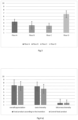
- Example 3 Determination of taste, smell and bitterness intensities of the processed sugar beet by-product according to the invention, compared to a control (unprocessed sugar beet by-product)
- Tasting, smelling and bitterness tests were carried out on an internal panel of 20 persons, on the flours obtained.
- the taste test consists in evaluating the taste and bitterness intensities, whereas the smelling test consists in evaluating the smell intensity.
- Flours A, B, C (as described in example 1), and D (control, non-fermented sugar beet pulp, as described in example 2) were rehydrated at a rate of 1g in 20 mL of water.
- the taste test was carried out in the 6 hours following rehydration of flours.
- each flour was presented in a small pot, foiled with aluminium for the test to be blind.
- Fig. 1 show that the taste intensity of Flours A, B or C according to the invention is significantly reduced compared to the control (Flour D).
- Example 4 Nutritional profile of the processed sugar beet by-product according to the invention
- Processed sugar beet by-product (Flours A, B, or C): the processed sugar beet by-product are obtained according to example 1.
- Table 1 illustrates the variations in composition between a flour made from non-fermented sugar beet (Flour D), sugar beet fermented by Morchella hortensis (Flour A), sugar beet fermented by Morchella esculenta (Flour B) and sugar beet fermented by Morchella brunnea (Flour C). It can be seen that the flour fermented by Morchella hortensis (Flour A) has more proteins and less sugar than the flour made from non-fermented sugar beet (Flour D).
- Example 5 Food product comprising the processed sugar beet by-product according to the invention
- the flour made from fermented sugar beet by-product with Morchella hortensis described in Example 1 is used for the manufacture of brownies and crackers.
- Table 2 Food product according to the invention Control food product Brownie Crackers Brownie Crackers Flour according to the invention (%)* 3.00 3.00 0 0 Wheat flour (%) * 7.84 55.11 10.84 58.11 Sunflower oil (%)* 15.22 14.40 15.22 14.40 Egg (%)* 20.12 14.40 20.12 14.40 White sugar (%)* 18.87 2.88 18.87 2.88 Baking powder (%)* 0.29 0.58 0.29 0.58 Salt (%)* 0.08 2.00 0.08 2.00 Water (%)* 7.63 7.63 Dark chocolate (%)* 18.70 0 18.70 0 Cocoa powder without sugar (%)* 1.55 0 1.55 0 Margarine 70% of fat (%)* 5.07 0 5.07 0 Glucose fructose syrup (%)* 6.29 0 6.29 0 Mono and diglycerides of fatty acids (%)* 0.07 0 0.07 0 Nuts pieces (%)* 2.90 0 2.90 0 * The percentage is expressed by weight relative to
Landscapes
- Life Sciences & Earth Sciences (AREA)
- Chemical & Material Sciences (AREA)
- Engineering & Computer Science (AREA)
- Health & Medical Sciences (AREA)
- Polymers & Plastics (AREA)
- Biotechnology (AREA)
- Microbiology (AREA)
- Mycology (AREA)
- Food Science & Technology (AREA)
- Physiology (AREA)
- Molecular Biology (AREA)
- Animal Husbandry (AREA)
- Zoology (AREA)
- Botany (AREA)
- Biochemistry (AREA)
- Biomedical Technology (AREA)
- Natural Medicines & Medicinal Plants (AREA)
- Medical Informatics (AREA)
- Nutrition Science (AREA)
- Alternative & Traditional Medicine (AREA)
- Sustainable Development (AREA)
- Medicinal Chemistry (AREA)
- Pharmacology & Pharmacy (AREA)
- Epidemiology (AREA)
- Animal Behavior & Ethology (AREA)
- General Health & Medical Sciences (AREA)
- Public Health (AREA)
- Veterinary Medicine (AREA)
- General Preparation And Processing Of Foods (AREA)
- Coloring Foods And Improving Nutritive Qualities (AREA)
Priority Applications (2)
| Application Number | Priority Date | Filing Date | Title |
|---|---|---|---|
| EP23306453.4A EP4516112A1 (de) | 2023-08-31 | 2023-08-31 | Verfahren zur verarbeitung von zuckerrübennebenprodukten |
| PCT/EP2024/074204 WO2025046021A1 (en) | 2023-08-31 | 2024-08-29 | Method for processing sugar beet by-product |
Applications Claiming Priority (1)
| Application Number | Priority Date | Filing Date | Title |
|---|---|---|---|
| EP23306453.4A EP4516112A1 (de) | 2023-08-31 | 2023-08-31 | Verfahren zur verarbeitung von zuckerrübennebenprodukten |
Publications (1)
| Publication Number | Publication Date |
|---|---|
| EP4516112A1 true EP4516112A1 (de) | 2025-03-05 |
Family
ID=88017832
Family Applications (1)
| Application Number | Title | Priority Date | Filing Date |
|---|---|---|---|
| EP23306453.4A Withdrawn EP4516112A1 (de) | 2023-08-31 | 2023-08-31 | Verfahren zur verarbeitung von zuckerrübennebenprodukten |
Country Status (2)
| Country | Link |
|---|---|
| EP (1) | EP4516112A1 (de) |
| WO (1) | WO2025046021A1 (de) |
Citations (3)
| Publication number | Priority date | Publication date | Assignee | Title |
|---|---|---|---|---|
| CN107434581A (zh) * | 2017-09-29 | 2017-12-05 | 武汉马腾科技发展有限公司 | 一种食用菌培养基质及其制备方法 |
| WO2020232347A1 (en) * | 2019-05-16 | 2020-11-19 | Mycotechnology, Inc. | Myceliated protein compositions having improved texture and methods for making |
| CN113331303A (zh) * | 2021-07-19 | 2021-09-03 | 杨波 | 一种动物饲料添加剂及制备方法 |
Family Cites Families (2)
| Publication number | Priority date | Publication date | Assignee | Title |
|---|---|---|---|---|
| US2761246A (en) * | 1953-05-19 | 1956-09-04 | Szuecs Joseph | Mushroom culture |
| SG10201911092WA (en) * | 2017-08-30 | 2020-01-30 | Sustainable Bioproducts Inc | Edible composition with filamentous fungi and bioreactor system for the cultivation thereof |
-
2023
- 2023-08-31 EP EP23306453.4A patent/EP4516112A1/de not_active Withdrawn
-
2024
- 2024-08-29 WO PCT/EP2024/074204 patent/WO2025046021A1/en active Pending
Patent Citations (3)
| Publication number | Priority date | Publication date | Assignee | Title |
|---|---|---|---|---|
| CN107434581A (zh) * | 2017-09-29 | 2017-12-05 | 武汉马腾科技发展有限公司 | 一种食用菌培养基质及其制备方法 |
| WO2020232347A1 (en) * | 2019-05-16 | 2020-11-19 | Mycotechnology, Inc. | Myceliated protein compositions having improved texture and methods for making |
| CN113331303A (zh) * | 2021-07-19 | 2021-09-03 | 杨波 | 一种动物饲料添加剂及制备方法 |
Non-Patent Citations (1)
| Title |
|---|
| VÁZQUEZ-DE-ALDANA BEATRIZ R ET AL: "Cultivation and growth dynamics of endophytic fungi in a solid culture medium based on sugar beet pulp", JOURNAL OF THE SCIENCE OF FOOD AND AGRICULTURE, vol. 100, no. 1, 6 November 2019 (2019-11-06), GB, pages 441 - 446, XP093123820, ISSN: 0022-5142, Retrieved from the Internet <URL:https://onlinelibrary.wiley.com/doi/full-xml/10.1002/jsfa.10030> DOI: 10.1002/jsfa.10030 * |
Also Published As
| Publication number | Publication date |
|---|---|
| WO2025046021A1 (en) | 2025-03-06 |
Similar Documents
| Publication | Publication Date | Title |
|---|---|---|
| TWI444145B (zh) | Ultra - low - salt soy sauce and its manufacturing method | |
| KR101990582B1 (ko) | 혼합발효를 통한 수용성 점질물이 증진된 밀기울 발효물 제조방법 및 이를 이용한 고 식이섬유 제빵 제조방법 | |
| CN105475623A (zh) | 一种生态真菌复合饲料的生产方法及饲喂方法 | |
| Parker et al. | The contribution of flour components to the structure of injera, an Ethiopian fermented bread made from tef (Eragrostis tef) | |
| KR101976503B1 (ko) | 마의 잎을 포함하는 알코올 발효 촉진용 배지 조성물 및 이를 이용한 마잎 발효주 | |
| KR950000977B1 (ko) | 빵품질개선과 저장성 증대를 위한 종(sour dough)의 제조방법 및 그 종을 이용한 빵(sour dough bread)의 제조방법 | |
| RU2116730C1 (ru) | Способ приготовления пшеничного хлеба на опаре | |
| EP4516112A1 (de) | Verfahren zur verarbeitung von zuckerrübennebenprodukten | |
| EP4516113A1 (de) | Verfahren zur verarbeitung von zuckerrübennebenprodukten | |
| DE2933041C2 (de) | ||
| KR102121839B1 (ko) | 효모 및 젖산균 복합발효를 통한 기능성 참외 발효물 제조 방법 | |
| RU2127065C1 (ru) | Способ приготовления корма из грубого растительного сырья | |
| KR100896241B1 (ko) | 녹차성분을 함유하는 느타리버섯 또는 팽이버섯 재배용배지 조성물 및 이를 이용한 느타리버섯 또는 팽이버섯의재배방법 | |
| KR102366791B1 (ko) | 산천어 발효액 제조방법 | |
| KR100445365B1 (ko) | 밤꽃을 이용한 주류 및 그 제조방법 | |
| SK134796A3 (en) | A process for the production of a seasoning sauce | |
| KR100537557B1 (ko) | 한약재첨가누룩의제조방법 | |
| KR101534391B1 (ko) | 사과 재배용 퇴비형 영양제 및 그 제조방법 | |
| SK280909B6 (sk) | Spôsob výroby korenistej omáčky z chleba | |
| KR20220086019A (ko) | 수벌 번데기 발효물을 포함하는 조성물 및 이의 용도 | |
| KR100877975B1 (ko) | 민들레를 함유한 양계용 발효 사료 조성물 및 이의제조방법 | |
| EP1361796B1 (de) | Starterzubereitung für die herstellung von brot und backwaren | |
| KR100255037B1 (ko) | 미생물을 이용한 바닐라 추출액의 제조방법 | |
| KR20220045454A (ko) | 꿀과 화분을 이용한 발효주 제조방법 | |
| CN112335785A (zh) | 一种酸化剂及其制备方法和应用 |
Legal Events
| Date | Code | Title | Description |
|---|---|---|---|
| PUAI | Public reference made under article 153(3) epc to a published international application that has entered the european phase |
Free format text: ORIGINAL CODE: 0009012 |
|
| STAA | Information on the status of an ep patent application or granted ep patent |
Free format text: STATUS: THE APPLICATION HAS BEEN PUBLISHED |
|
| AK | Designated contracting states |
Kind code of ref document: A1 Designated state(s): AL AT BE BG CH CY CZ DE DK EE ES FI FR GB GR HR HU IE IS IT LI LT LU LV MC ME MK MT NL NO PL PT RO RS SE SI SK SM TR |
|
| STAA | Information on the status of an ep patent application or granted ep patent |
Free format text: STATUS: THE APPLICATION IS DEEMED TO BE WITHDRAWN |
|
| 18D | Application deemed to be withdrawn |
Effective date: 20250906 |